
Features
Gallery 1
A symbol of success, one with all the bells and whistles, the kind of car you buy when things are going your way. Range-topping models carry a certain air, a distinction, that sets them apart from their pleb-spec counterparts.
There are, of course, notable Australian range-toppers, fused in our collective memories, like the Holden Caprice and Ford LTD. Then there are the others. Range toppers that either faded out quickly, or simply weren’t worth revisiting – until now
Nissan Pintara Ti
1
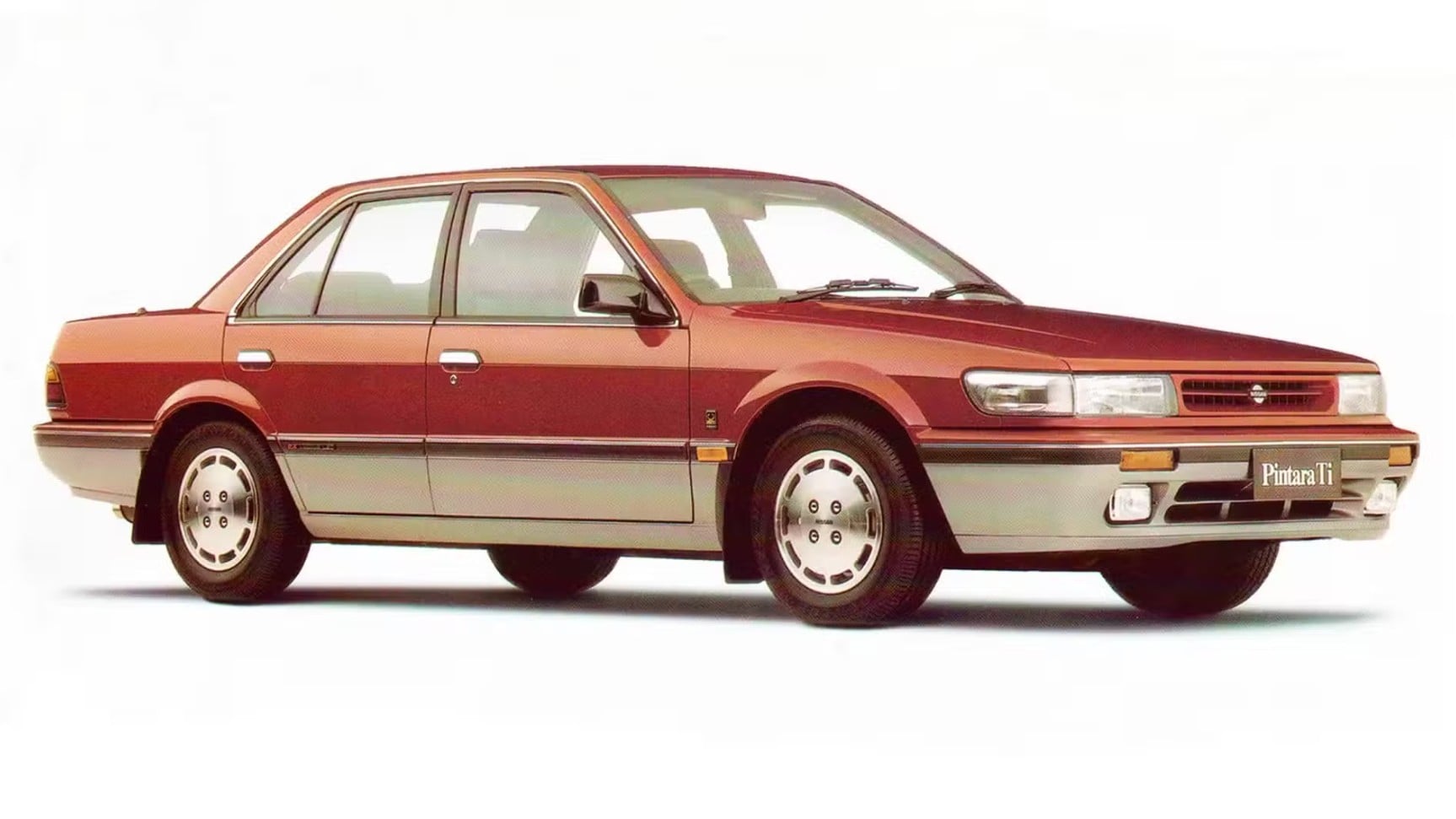
Two-tone paint. Luxury cars have to have two-tone paint. And alloy wheels. And puffy velour trim. The Pintara Ti came with all of that, giving it a very different look to other Pintara models.
Nissan’s mid-sizer managed to look almost handsome in the process, and its aero styling came across as more modern than the rival Camry at the time. Cruise control and climate control came standard, and Nissan loaded the Ti version with equipment to rival full-size family cars.
The 19080s Button Plan for rationalising Australia’s carmaking industry led to some unusual tie-ups, and the Pintara was one of them, available as the Ford Corsair, but even the Corsair Ghia couldn’t match the glitz of a top-spec Pintara.
HSV Jackaroo
1
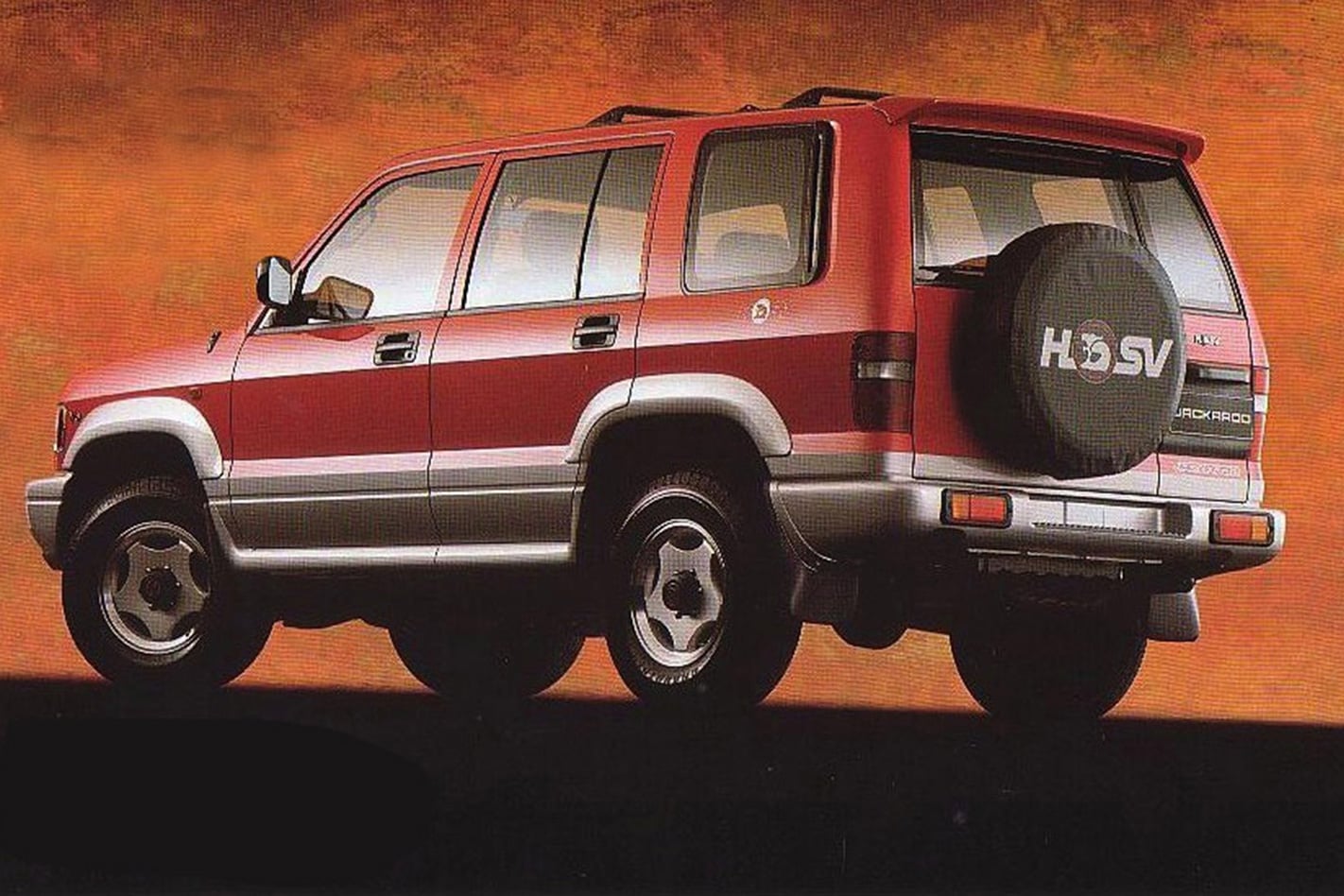
Before HSV fully locked in on its role as Holden’s performance arm, it tried a few unusual avenues first, like the HSV Jackaroo.
Changes were limited to standard alloy wheels, different lower body cladding, and plenty of HSV branding. The usual HSV elements, like an uprated engine or tweaked suspension, didn’t make the cut.
After a brief production run of 313 units, most of which wore Holden, rather than HSV badging, the model was wrapped into the regular Jackaroo range while HSV concentrated on its Commodore-based V8 models.
Toyota Lexcen Newport
1
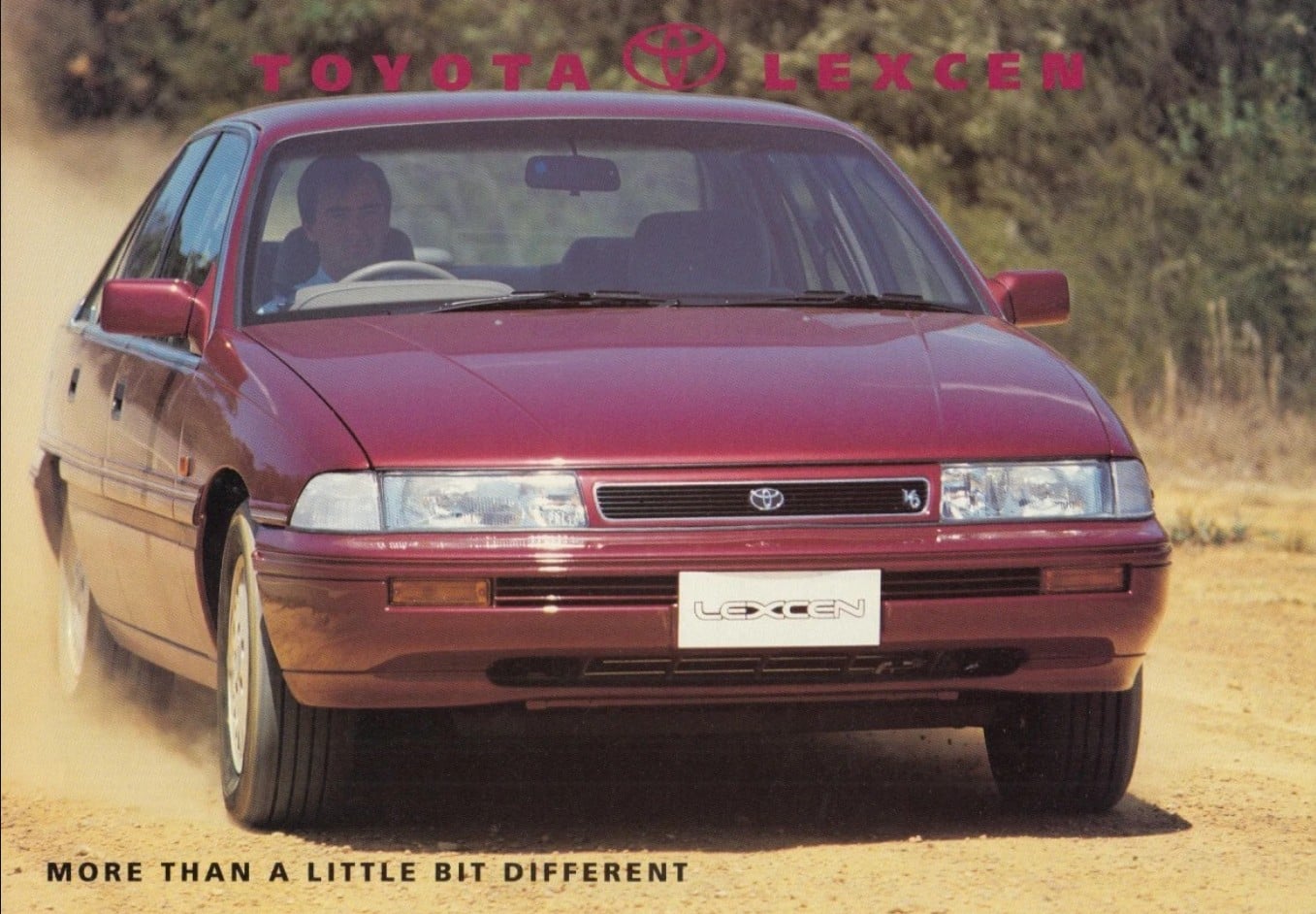
Another product of the Button Plan, the Toyota Lexcen became Toyota’s Holden-supplied large car, with Holden getting Nova and Apollo versions of the Corolla and Camry in return.
At the top of the Lexcen line-up sat the Newport. Introduced in 1991 on the T2 Lexcen, otherwise known as the VP Commodore.
The name? Unimaginatively taken from the suburb across the road from Toyota’s Altona assembly site – despite production being entirely handled 750km away at Holden’s Elizabeth factory in South Australia.
Ford Landau
1
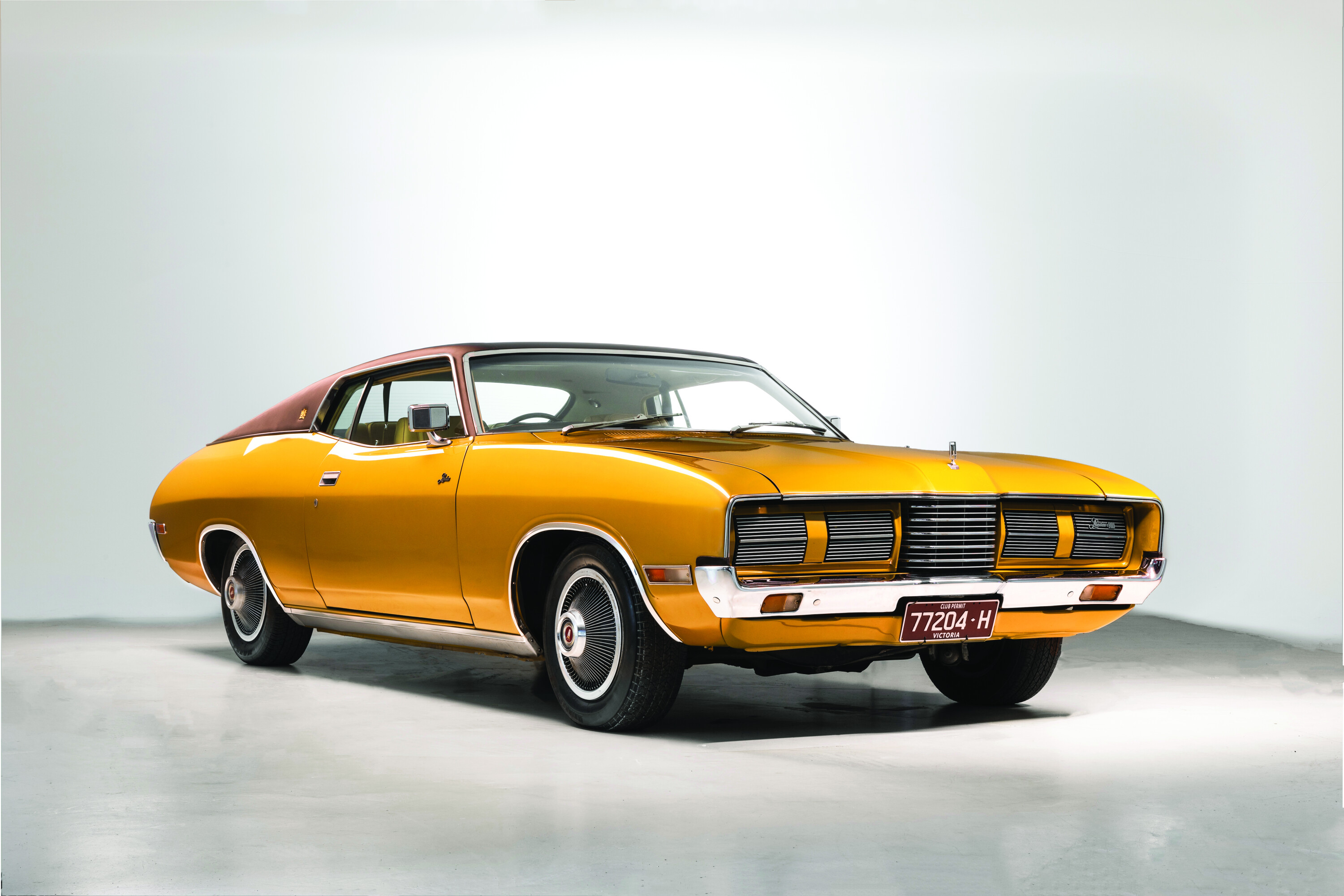
The success of the ‘personal luxury car’ in North America led Ford Australia to conclude that local buyers might also like their upscale luxury delivered in a more hedonistic two-door body.
By combining the front styling of Ford’s P5 LTD sedan with the svelte body of the XA Falcon Hardtop, albeit with a modified glasshouse to really emphasise its padded vinyl roof, the Landau was born.
The heavily chrome-trimmed, softly suspended appeal of the Landau was, however, misjudged. When the P6 LTD came along, an updated Landau was nowhere to be seen, although prototypes were assessed. Just 1385 Landaus were built.
HDT Magnum
1
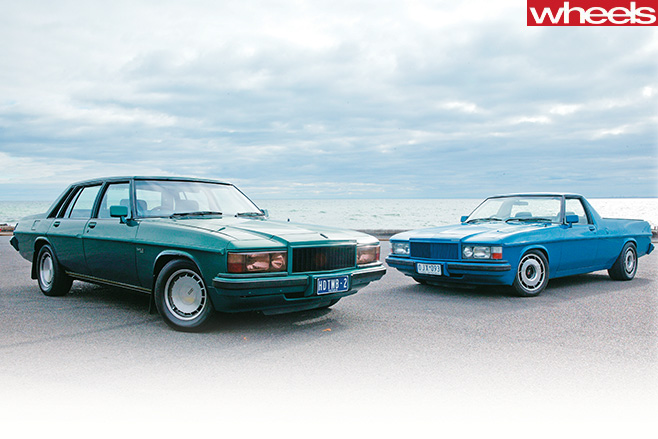
Peter Brock’s Holden Dealer Team Road cars weren’t just a way to get a road-going racing Commodore in your driveway. For the well-heeled, the Magnum wrapped hard-hitting performance in a premium luxury package based on the WB Statesman and Caprice.
Unlike other HDT models, owners could choose which HDT bits made the cut, so the fully-colour-keyed poster car with aero wheels wasn’t indicative of every Magnum out there.
Power jumped from 126kW to a reported 188kW thanks to the HDT tune-up. Suspension and handling also received attention to give the softly-sprung Statesman greater agility, should you ever decide to take to the track.
Mitsubishi Verada
1
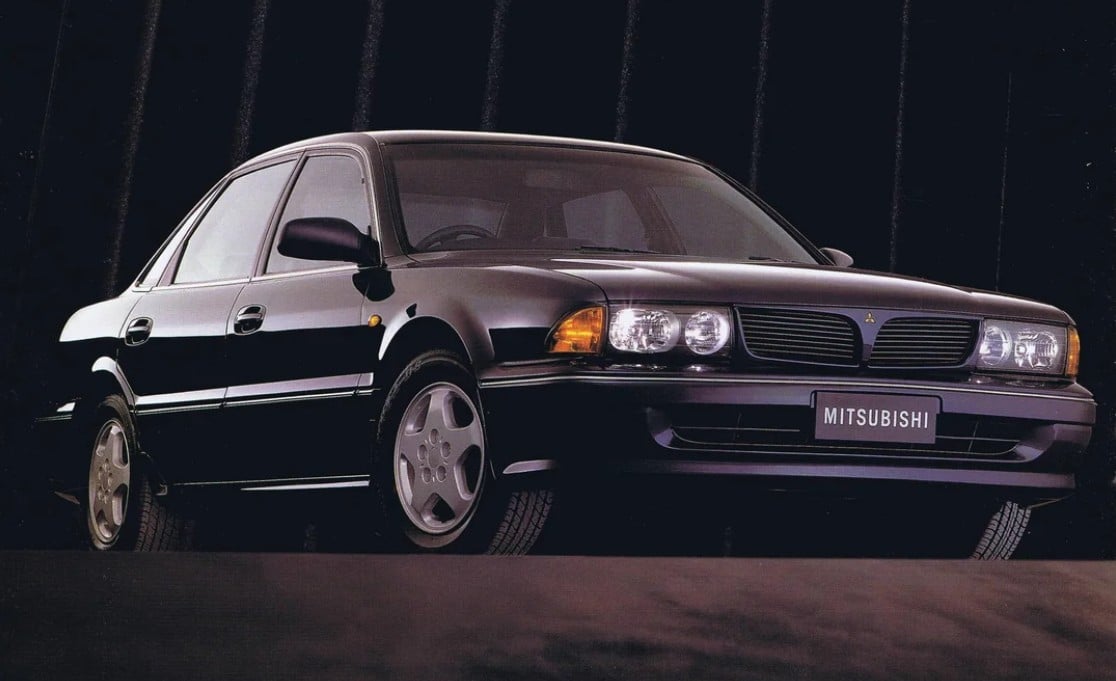
Mimicking how Ford and Holden dropped the Falcon and Commodore names from their upscale models, Mitsubishi spun the fleet-friendly Magna into the Verada with the launch of the second-generation Magna.
When the Verada launched in 1991, it was the first Magna variant with a V6, two years ahead of mainstream models. A styling makeover, thanks to bigger US-spec bumpers, alloy wheels, and full-width taillights, gave it a more premium look.
The Verada also introduced ‘multi-parabola headlights’ to the Australian lexicon, and benefited from some of the luxury features from Mitsubishi’s global portfolio to give it a boost against the Fairmont and Calais.
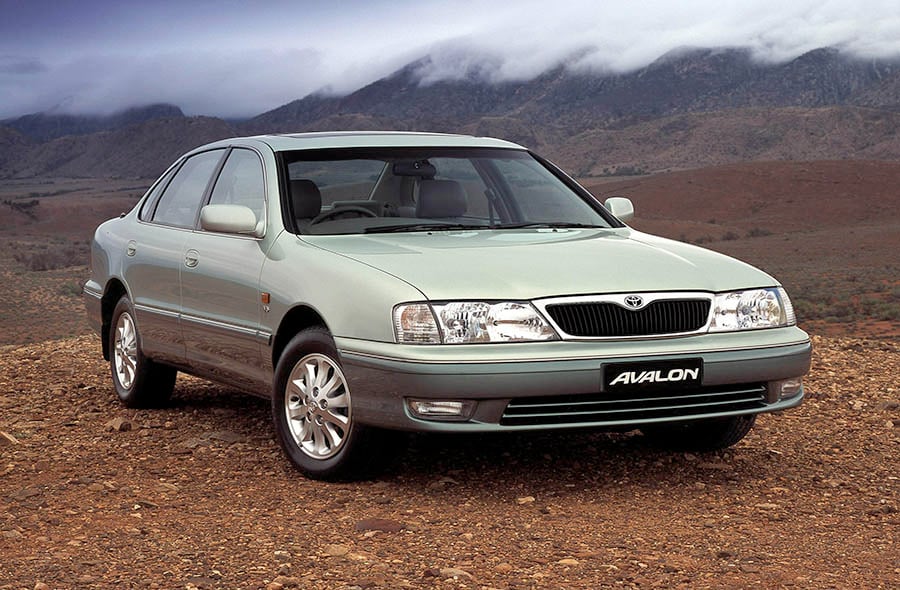
Toyota Avalon Grande
1
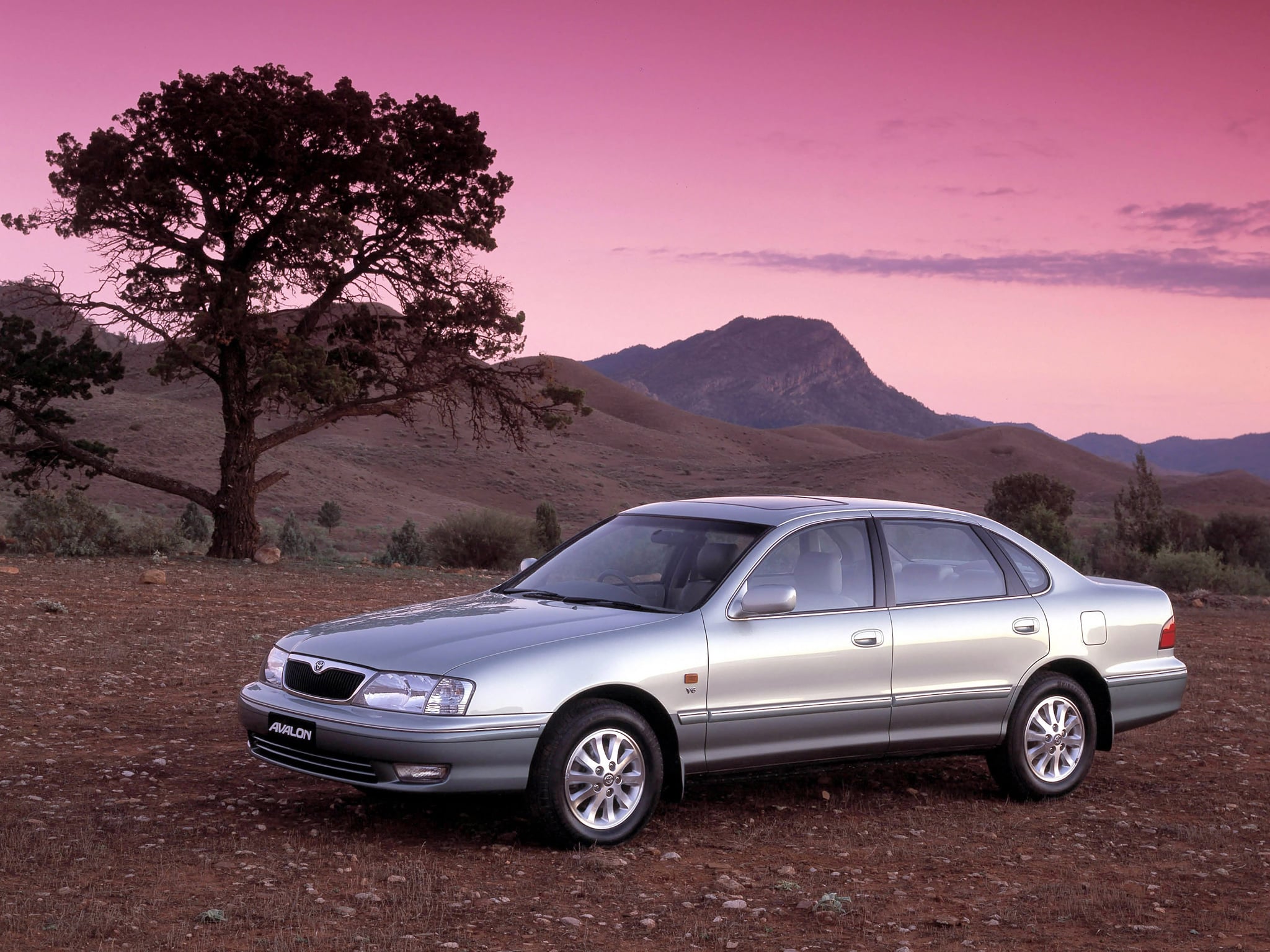
After the Cressida was retired in 1993 and the Lexcen never quite hit the mark, Toyota looked to North America for its next large car, the Avalon.
Debuting in 2000, the Avalon was already a generation old by the time Australians got access to it, and the range-topping Grande managed to look even older, with out-of-style two-tone paint and undersized 15-inch alloy wheels.
Unsurprisingly, the audience for the Avalon Grande skewed towards older buyers, and the Avalon never quite held the same gravitas as a Calais or Fairmont Ghia of the era.
Chrysler by Chrysler
1
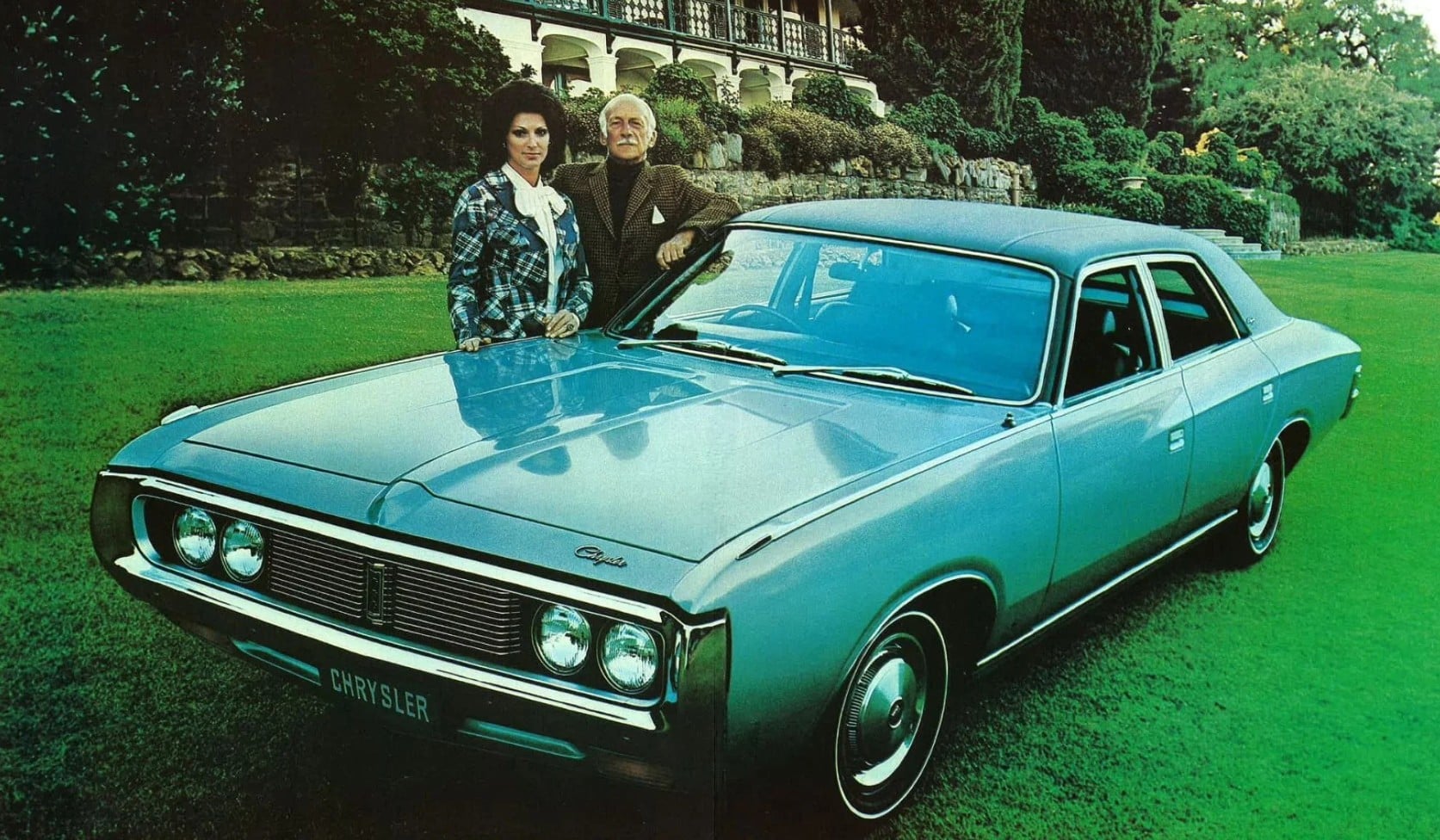
Chrysler attempted its own version of the local long-wheelbase luxury recipe with the Chrysler by Chrysler.
The name itself had some issues, right off the bat, but the features didn’t disappoint. Despite a close relationship to the VH Valiant, the Chrysler by Chrysler rode on a longer wheelbase and came with a chrome-heavy wrap-around front bumper encircling the grille and headlights.
Sedan and coupe versions were initially offered, along with a choice of 4.3-litre inline six, or 5.2 and 5.9 litre V8 power, with sedans spanning from 1971 until 1976, but the coupe only lasting until 1973.
Holden Suburban
2
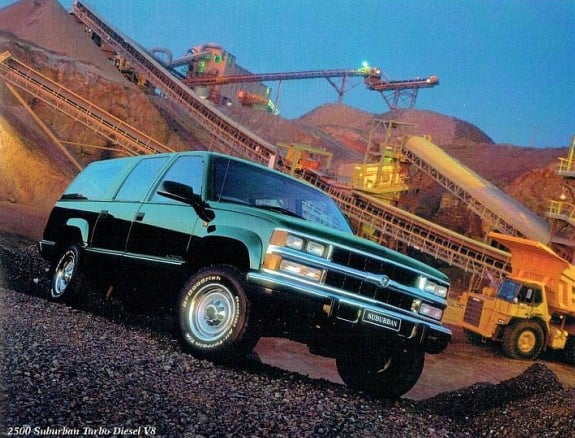
Holden’s pitch for market supremacy in the late 1990s left no stone unturned, resulting in the massive Chevrolet Suburban arriving here adorned with Holden badges.
A factory-built right-hand drive program for GMC ambulances made the project possible, but also meant the Holden Suburban got a lower-spec pick-up dash compared to its US equivalent.
A choice of 5.7-litre petrol or 6.5-litre turbo diesel V8 engines was offered. By the time the Suburban was pulled in 2000, its almost $83,000 price for a fully-loaded petrol V8 was over $16,217 more than a V8 Caprice.
Ford TL50
1
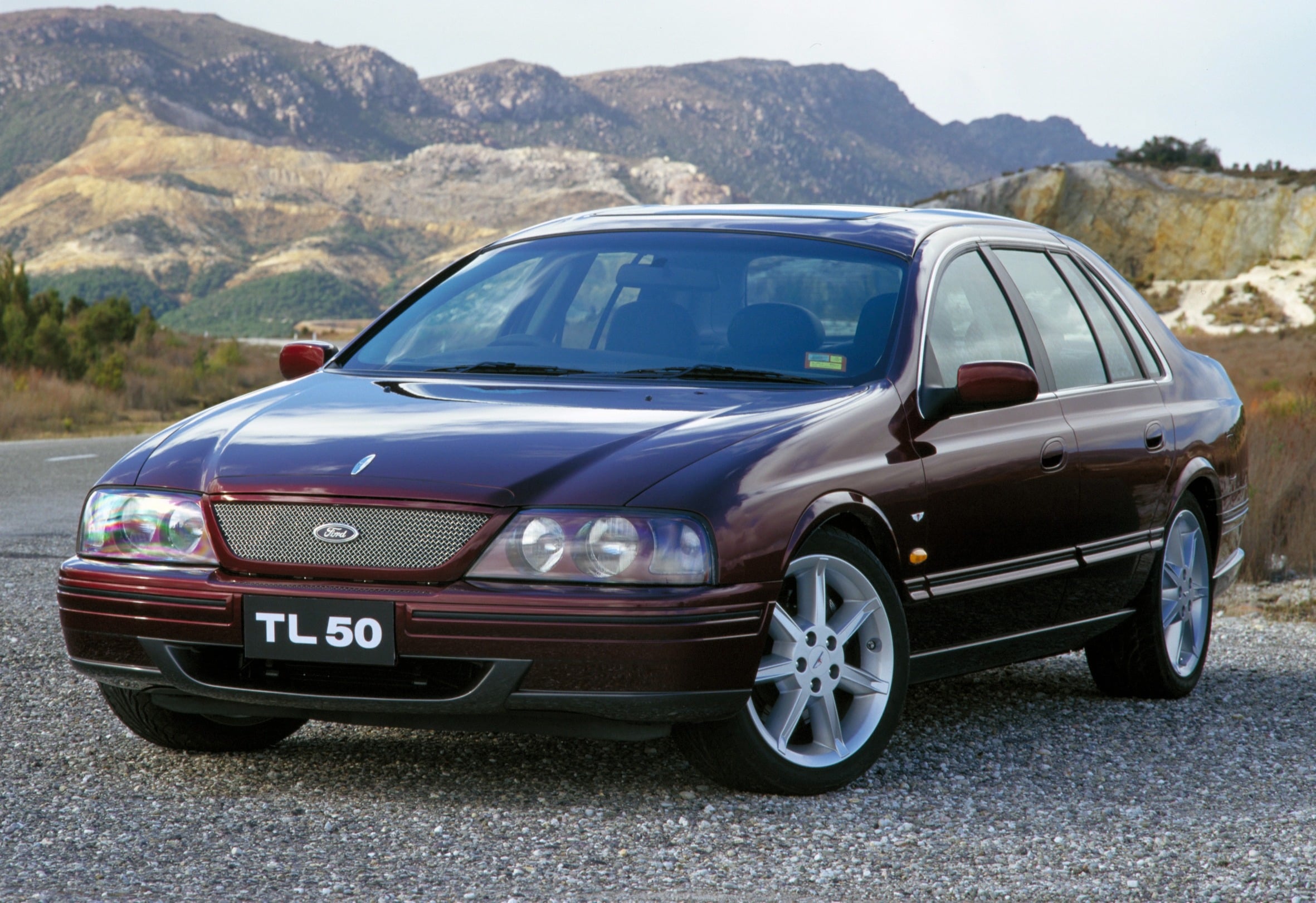
Ford went after HSV in a big way with the AU Falcon and Fairlane, establishing FTE – Ford Tickford Experience – to overhaul the performance and handling for Ford Australia’s mainstream models.
Launched in 1999, the TL50 was exactly what its acronym suggested, a Tickford long-wheelbase with a 5.0-litre engine, although technically its V8 rounded down to 4.9L, as with other AU Falcons.
By the time the third iteration T3 TL50 arrived, its 250kW 5.6-litre stroker engine rivalled HSV’s 255kW 5.7-litre Grange, and its long, low styling over massive wheels and huge brakes looked suitably sinister. Buyers didn’t fully agree, however, and when Ford launched the next-gen BA-based FPV range, no Fairlane-based model made it past concept stage.
Follow WhichCar/Wheels on Google
Click the button below to make WhichCar by Wheels a preferred source for your news.

We recommend
-
 Features
Weirdest cars you could buy in Australia - top 10
With the reliance on volume and market dominance of some new car brands, it's easy to forget that, at one stage, car brands were prepared to get a little bit weird.
-
 Features
Best hybrid models still to come in 2026
Looking for a new hybrid vehicle? There are plenty to choose from, but it might be worth waiting as these 10 new models are set to launch with a bang in what remains of 2026.
-
 Features
Best small SUVs for first-time buyers in 2026
Being a first-time new-car buyer can be daunting so to help you on your journey, we've cut through the noise with our picks of the bunch.
