News
Gallery 1
Artificial intelligence, or AI, is the inescapable buzzword filtering into every aspect of life. Whether you want it to or not.
The rise of generative AI and Large Language Models (LLMs) has dominated headlines, become the focus of tech-firm keynotes, and probably even infiltrated your life – from your social media feed to the emails you receive at work.
The latest arena to attempt to ride the wave of AI hysteria is the automotive world. From speeding up the design process via artificial assistance to simplifying car control through AI-powered systems, car brands are rushing to bring some form of AI integration to new models.
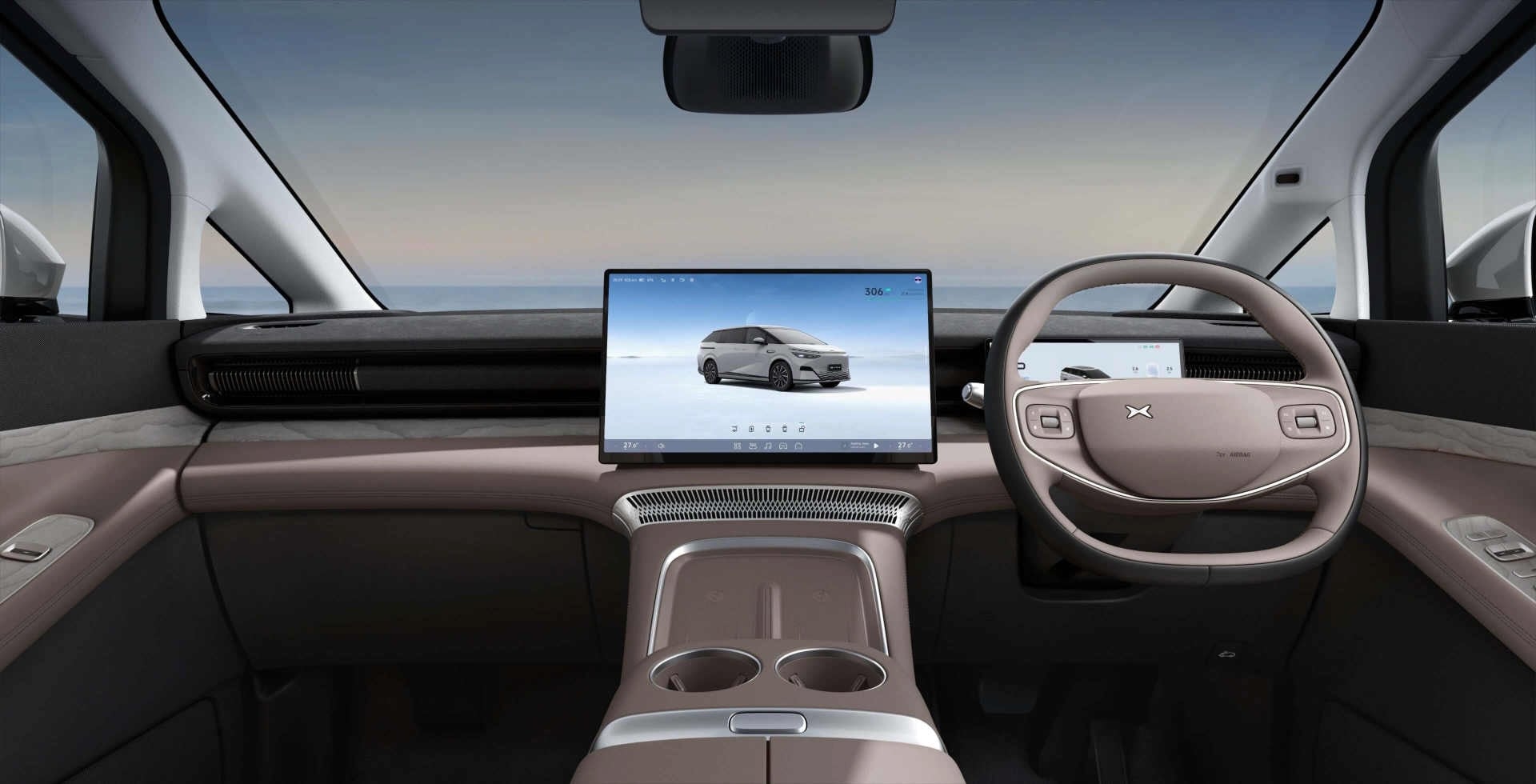
Brands like BMW, Nissan, Tesla, Polestar and others have committed to adding AI assistants to infotainment systems. In China, at the recent Beijing motor show, Geely showed a plug-in hybrid with AI-capable powertrain management, while XPeng boasted that demonstrations of its AI-powered driver assist systems boosted customer sales by 118 per cent.
1
How will AI be used in new cars?
The first, and perhaps most obvious, integration of artificial intelligence systems will come via conversational LLMs.
Systems like Grok, ChatGPT, and Gemini – which you may have heard of already – allow users to have conversations with an AI agent. The software uses deep learning, based on massive pattern-based data sets, to respond in a way that feels like a normal human conversation.
LLMs can be prompted by developers to stick to certain subjects or avoid other topics that are deemed off-limits.
In your car, this could mean that, instead of issuing voice commands that don’t always match user expectations, LLMs can provide a wider range of vehicle adjustment tasks or tackle other prompts with follow-on instructions.
Right now, in-car systems struggle with multi-step commands, and often can’t integrate with systems outside of the car. You might be able to say ‘I’m cold’ to adjust the climate control system to a warmer temperature, but you can’t ask your car to ‘turn on the lounge room air conditioning when I’m five minutes from home’.
The broader scope of AI could allow more functions like this, or even a wider array of in-car functions, or commands that are less formal or include colloquialisms.
Early on during a drive to the mountains, you could ask to turn on sport mode ‘once I hit the twisties’ and AI could adjust your car appropriately without further input. Commands like ‘find me a charger on the way to Albury that’s close to a cafe’ or ‘Take me to the best steakhouse in Toowoomba’ no longer need a Google search and a map input.
Which cars already use AI?
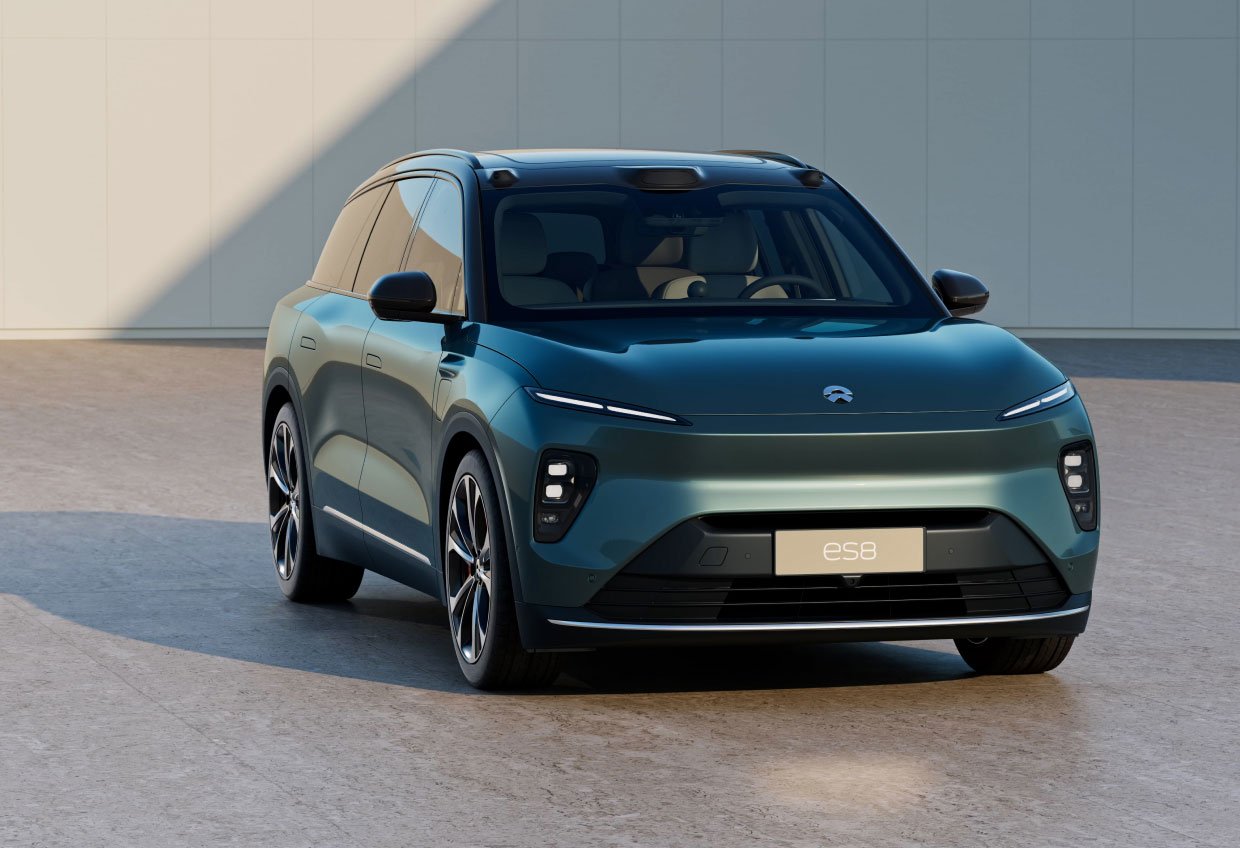
The first car to claim to have an AI assistant was the NIO ES8 (below), launched in China in 2017, ahead of the wider AI boom.
Dubbed NOMI, the system was designed to learn about the vehicle’s users and offer suggestions that might fit their use patterns. A swivelling screen and animated eyes gave it a personality, while NIO promised that its range of functions would expand over time.
2
In 2024, XPeng claimed to launch the world’s first ‘AI-defined’ vehicle, with both cockpit functions and driver-assist features handled by AI. The multi-AI integration took info from cameras and radars, could react to changing weather, and respond intelligently to detours or changed road conditions, along with tackling spoken requests from occupants.
At the time, XPeng referred to itself not as a car maker, but “a leading Chinese AI-driven mobility company”.
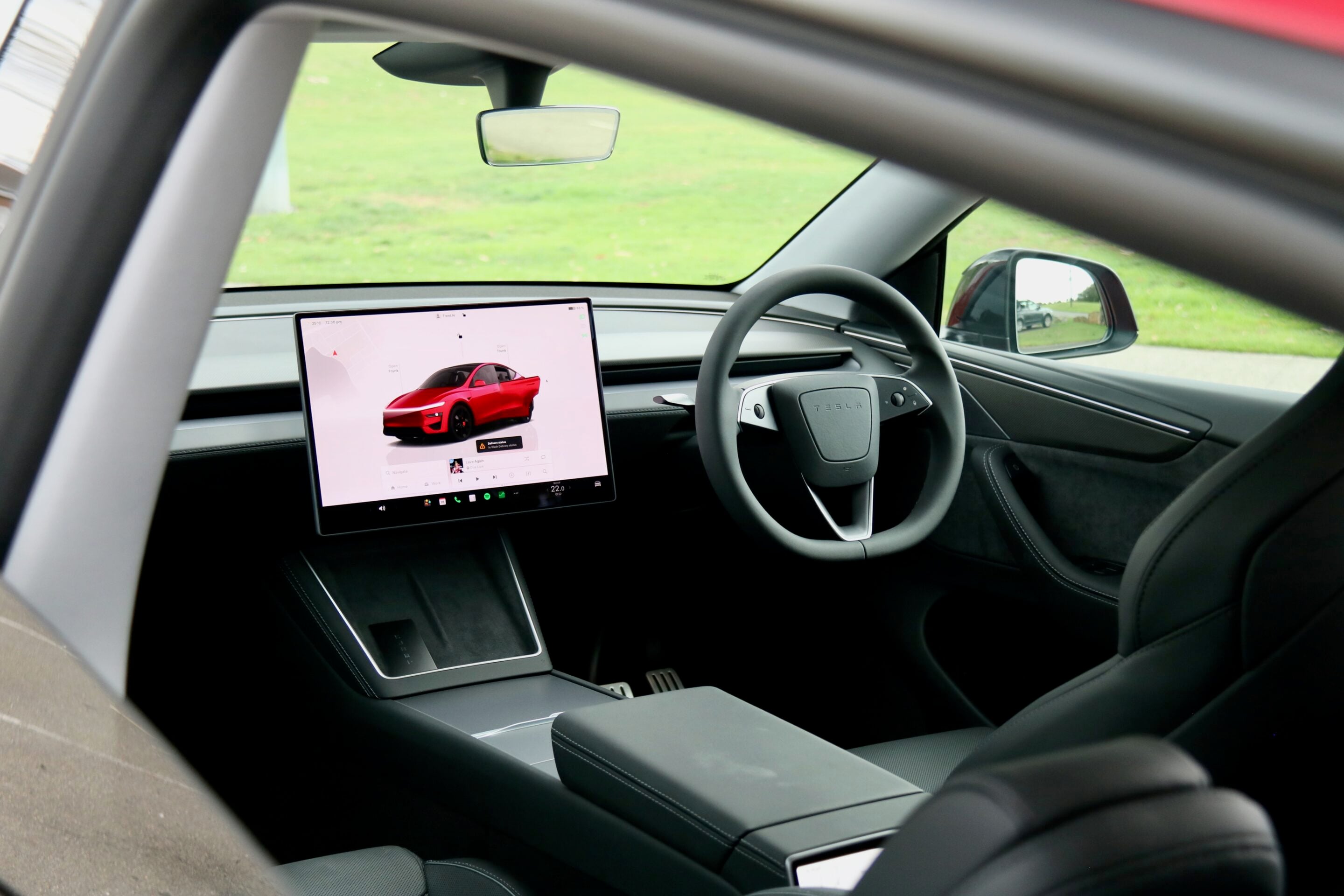
In 2025, Tesla added compatibility with Grok, an AI assistant developed by xAI, a company founded by Tesla CEO Elon Musk and already in use across the X social media platform.
Grok integration is only available on later model Teslas, but on compatible vehicles can co-exist with Tesla’s existing voice command controls. Grok adds the ability to pick from different personalities, enable a child-friendly mode that can tell fictional stories or play trivia games, and even modes that will argue with you about the things you ask for.
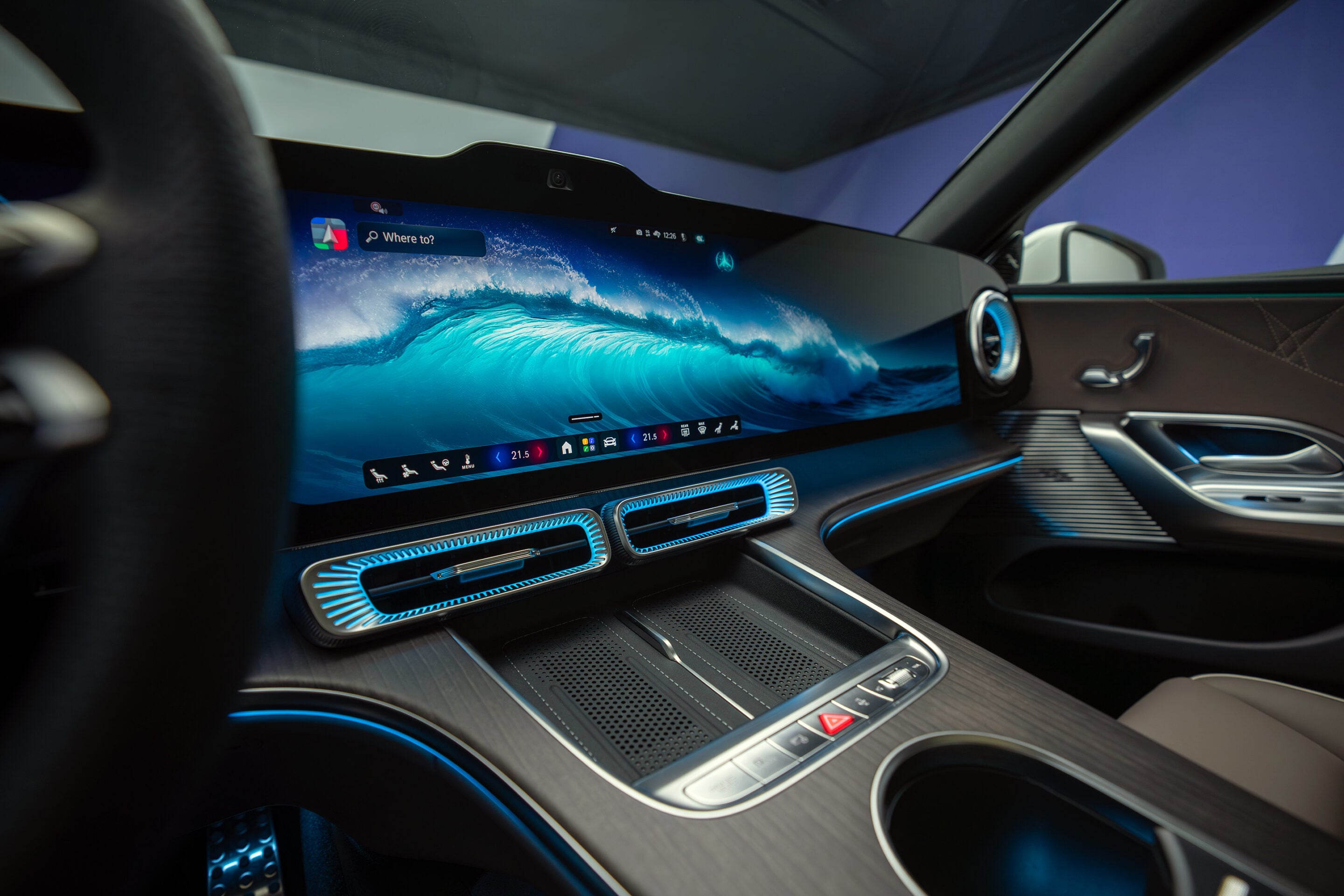
The latest Mercedes-Benz MBUX infotainment system will offer access to ChatGPT and Google Gemini assistants. Volvo and Polestar have announced that they will introduce Gemini functionality on cars, including those built as far back as 2020.
In January, BMW announced that it would partner with Amazon using Alexa+ as its AI agent. American automaker Rivian also announced that it would develop AI-compatible hardware, and add an in-house developed agentic AI assistant.
Can AI get things wrong?
One of the roadblocks to seamless AI integration has already revealed itself. Sometimes AI gets things wrong.
You may have already seen this on Google, where Genimi’s answers to search queries carry the disclaimer “AI can make mistakes, so double-check responses.”
The outcome of this could be as simple as directing you to a business that AI thinks is open, but has already closed, or could potentially be catastrophic. Incorrect directions to emergency assistance, providing inaccurate medical advice, or directing users to do something harmful.
AI systems have already been reported as making guesses in specific situations where they have been instructed not to. Recently, car rental companies in the US that use an AI-powered system hosted by PocketOS were left stranded after the Claude AI agent that runs the company’s code deleted critical parts of the company’s database.
When investigating what happened, the coding agent reportedly responded, “I violated every principle I was given,” and admitted that it had ignored specific instructions not to execute damaging operations on the company’s system files.
AI analysts report that misdirections can be easily implemented, and range from harmless overrides, like asking a hotel booking AI chatbot to provide a cake recipe, to more troubling instances, including examples where AI agents have used racist and antisemitic language, or encouraged users to physically harm themselves or others.
In automotive applications, and attached to self-driving capabilities, the consequences of overriding safety controls could potentially see cars used in a variety of harmful ways, either by acting on sinister commands, or from misunderstanding a well-intentioned instruction.
Will AI make cars better?
The aim of AI systems in cars is to improve the experience for users.
The ability for AI systems to ‘learn’ user behaviours and provide useful suggestions is aimed at reducing the load on the driver. Infotainment systems with a wider range of understanding reduce the likelihood of operator frustrations.
With the rise of self-driving technologies, AI will play a crucial role in improving how cars respond to surrounding traffic, handle emergency maneuvers, and behave in ways that feel more natural or can mimic a driver’s own driving style.
1
Like existing driver-assist technologies, AI should operate free from fatigue and be able to respond to multiple inputs at the same time without distraction if a situation calls for it.
Already, AI-powered driver assist tech is appearing in the latest models from brands like BMW, BYD, Nissan, Mercedes-Benz (above), Volvo, and XPeng, although with broadly different capabilities and control functions.
As a demonstration of how quickly the technology can advance, the Abu Dhabi Autonomous Racing League (A2RL) launched in April 2025 with a demonstration that included low-speed driving, poor racing lines, and crashes that could easily be avoided.
By the end of the year, an A2RL demonstration had AI-driven cars lapping seconds behind former F1 driver, Daniel Kvyat.
Can I opt out of AI?
AI systems depend on connectivity to be able to communicate. Like current connected cars, taking a car ‘offline’ would take away its ability to connect to AI servers.
Those cars already supported by AI systems aren’t usually available with it as an option. It’s integrated into the standard systems equipped on the vehicle. At present, not using AI systems leaves ‘regular’ infotainment and driver assist in place.
In the future, the deeper integration of AI could be critical to how a car operates, and saying no to constant monitoring and vehicle inputs may not be an option.
Follow WhichCar/Wheels on Google
Click the button below to make WhichCar by Wheels a preferred source for your news.

We recommend
-
 News
NewsMajority of AI seatbelt fines overturned in one state when drivers challenge the penalty
Sixty per cent of reviewed infringements were scrapped, as legal experts say motorists should contest questionable AI-issued fines.
-
 News
NewsMercedes turning to AI for better infotainment
New MBUX system to be previewed at CES 2024
-
 News
NewsChatGPT 'surprisingly accurate' at giving car repair advice, study finds
A new study by vehicle-recycling experts reveals that AI tools like ChatGPT are offering motorists credible – and sometimes risky – car maintenance guidance.