News

Gallery 1
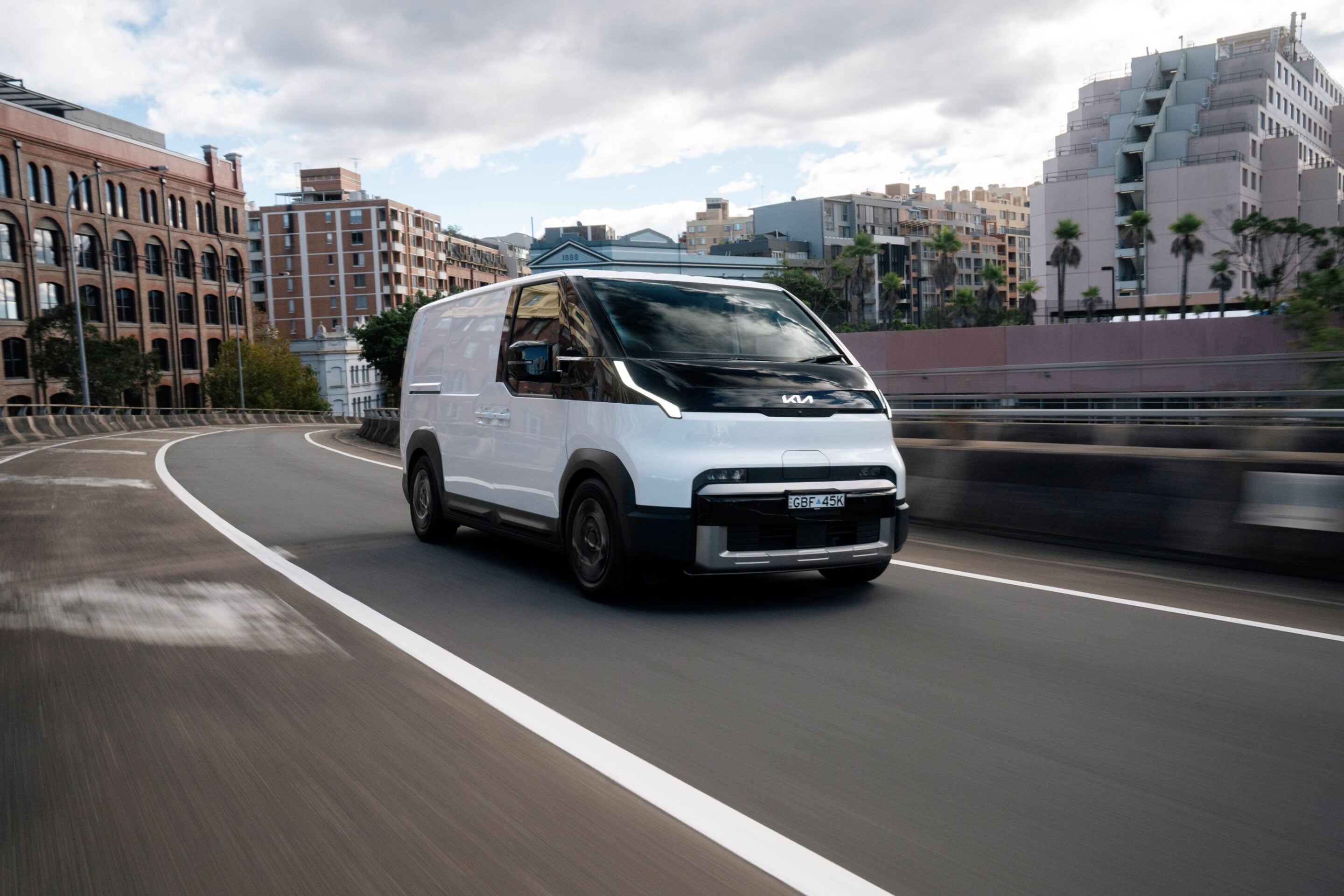
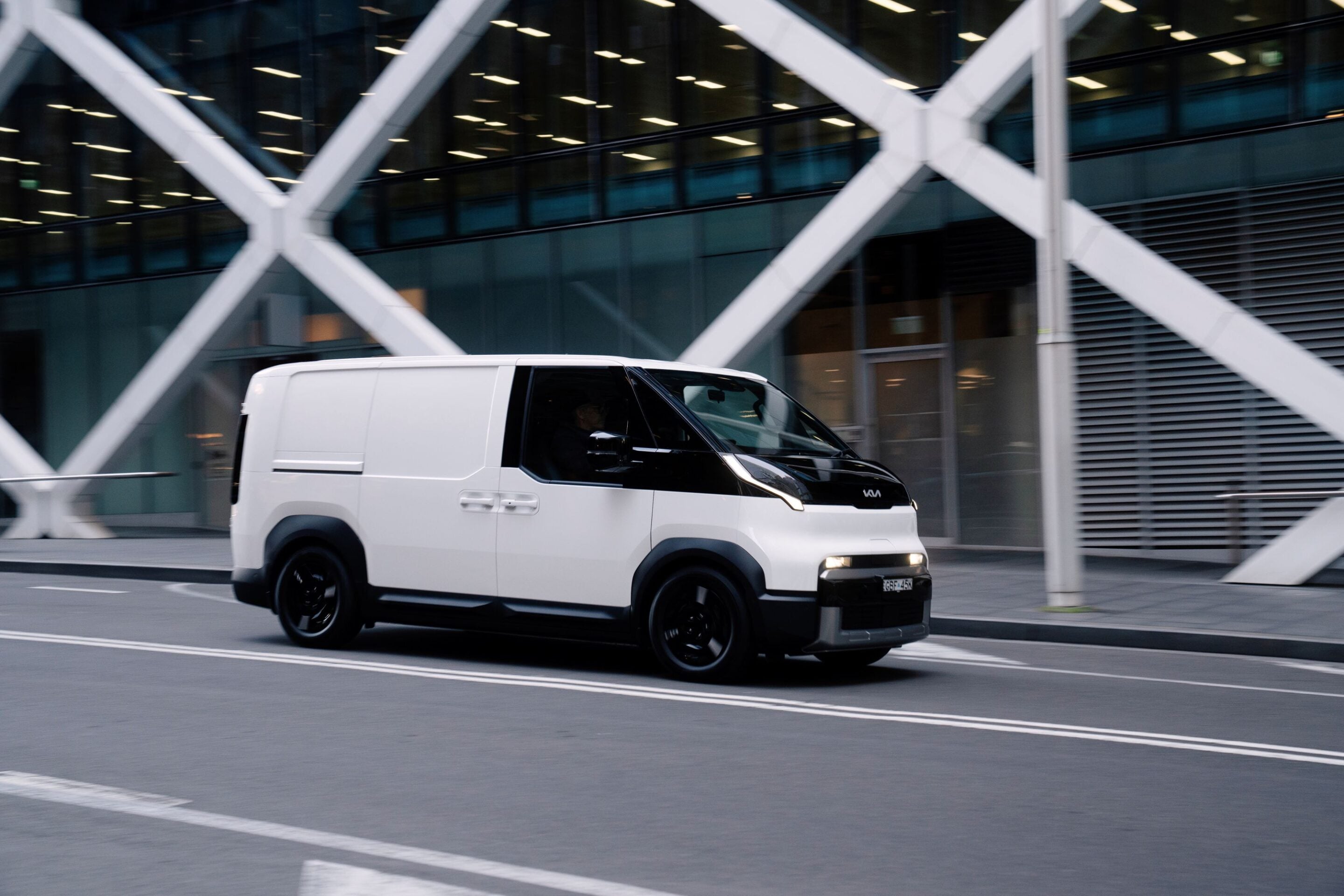
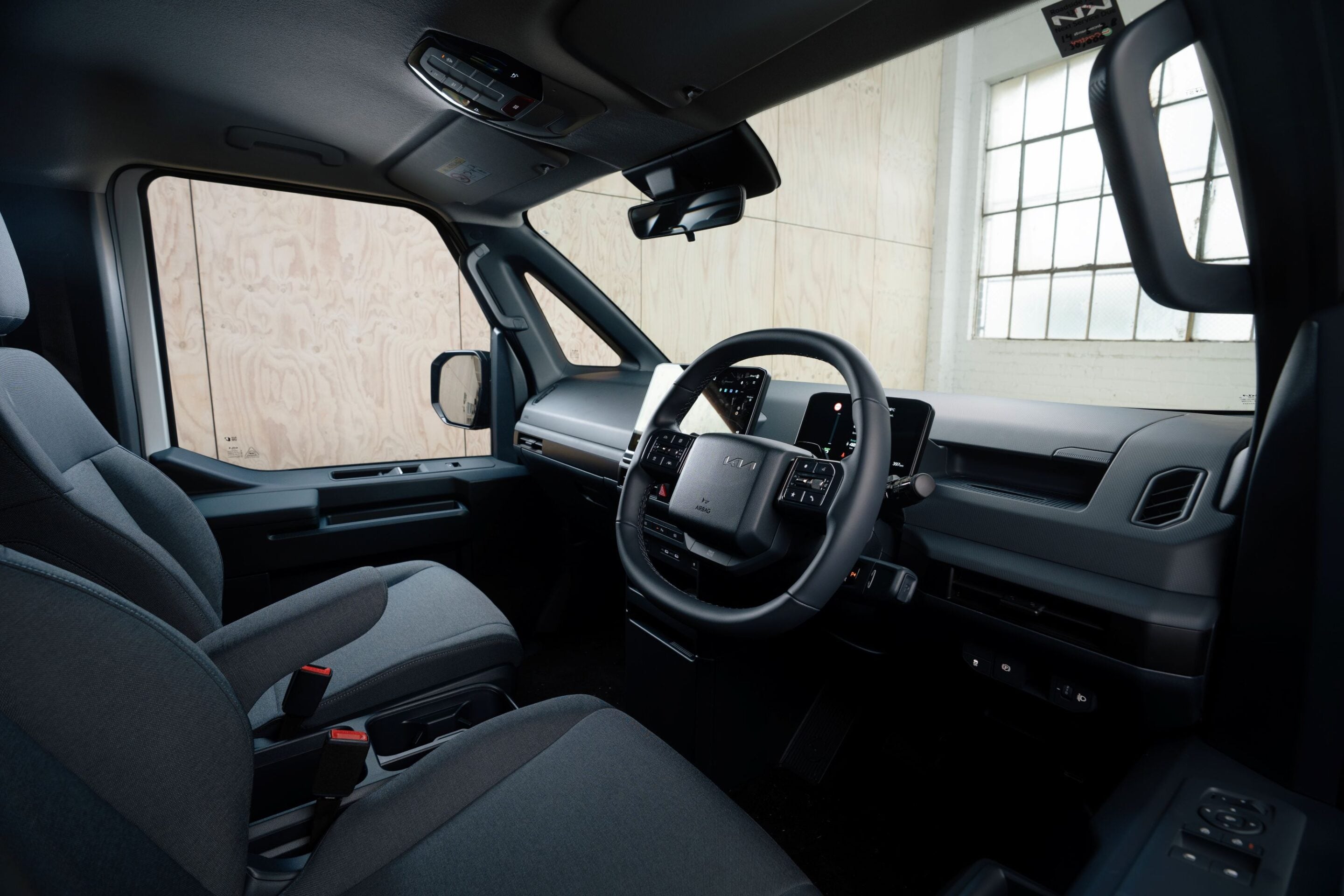
Kia is confident its new PV5 electric van is poised to take market share from established players thanks to its competitive pricing and electrified drivetrain.
Commercial van sales in Australia are dominated by the Toyota HiAce, claiming 46 per cent market share at $53,880 before on-road costs for a diesel automatic HiAce. The Hyundai Staria is also starting to make a dent in sales, priced at $53,978 before on-road costs. Into that battle enters the PV5, starting from $55,990 before on-road costs.
“I think we’re pretty fortunate in that there’s a lot of attention from our global president on PBV (Platform Beyond Vehicle)… it’s one of his projects and he wants to see this succeed,” Roland Rivero, General Manager of Product Planning told WhichCar by Wheels at the launch of the new PV5. “And he trusted our proposal. So we had pretty good support from HQ to ensure that PV5 worked well for the Australian market.”
3
Rivero went on to explain that the PV5 – already outselling Volkswagen’s ID Buzz Cargo in its home market of Germany, for example – has a very strong footing globally, which assists when a smaller market like Australia is looking to lock in pricing.
“It does have a big volume globally,” Rivero said. “Amortising the development cost of PV5 across a bigger international volume also helps at the same time. If it was a very niche product, then having to amortise a small volume makes it difficult, and PV5 has got a lot of attention.”
There’s no doubt Kia is throwing its significant manufacturing might behind the PV5, with the all-electric modular van built at a dedicated PBV manufacturing facility at AutoLand Hwaseong. “It’s got it’s own plant, deliberately developed for that,” Rivero said.
The starting price, attractive as it might be in comparison to others, isn’t necessarily the most important factor when you’re focusing on fleet sales, according to Kia’s General Manager of fleet operations, Chris Forbes.
9
“Because you’re looking at a van which is pretty much strictly going to be business, whether its a small or larger business, to them (purchase) cost is less of a factor behind whole-of-life cost,” Forbes said. “And we’ve done some whole-of-life costing against some of its competitors. And the price, yes, it’s the same or similar to what’s out there, but whole-of-life costs, we see that as being more competitive and that’s more important because to them this is just a tool.”
For private buyers, the sticker price is usually the most attractive lure beyond capped-price servicing, with whole-of-life cost rarely considered. But when it comes to fleet and business buyers, there’s a lot more taken into account beyond the initial purchase price. That includes service intervals and time off the road, as well as running costs.
“Bean counters are wanting to ensure that they’ve got the best bottom line in the business,” Forbes explained. “And so if you go to them and you show them that per kilometre, this is an incredibly good value vehicle to drive over some of the other competition, then they’re going to be able to submit those figures and show they are doing the right thing.”
Forbes is referring to companies that have headquarters overseas, where strict emissions targets must he adhered to, so that in addition to the costing on a spreadsheet the Australian arm can also show that it’s doing its bit to reduce carbon emissions.
Follow WhichCar/Wheels on Google
Click the button below to make WhichCar by Wheels a preferred source for your news.

We recommend
-
 Best Vans
Best Commercial Vans 2026: Large
From fleet operators to owner-drivers, today’s large vans offer greater versatility, stronger safety and more car-like driving manners than ever before
-
 Best Vans
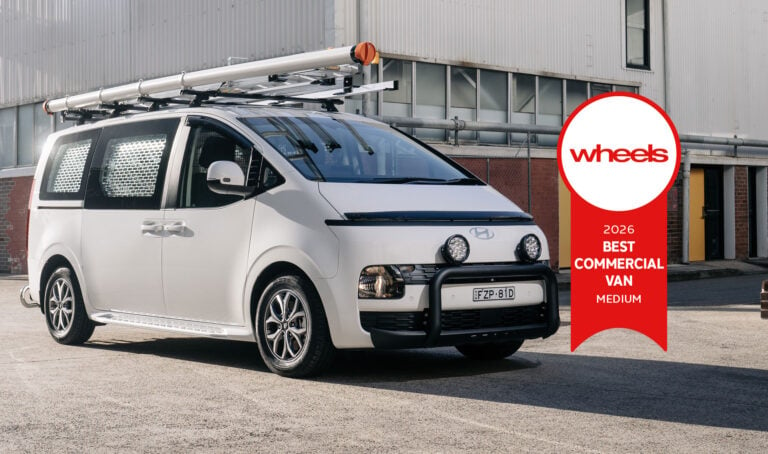
Best Commercial Vans 2026: Medium
Modern medium vans deliver far more than cargo space, combining SUV-like comfort, advanced safety and strong diesel performance for the demands of Australian businesses.
-
 Best Vans
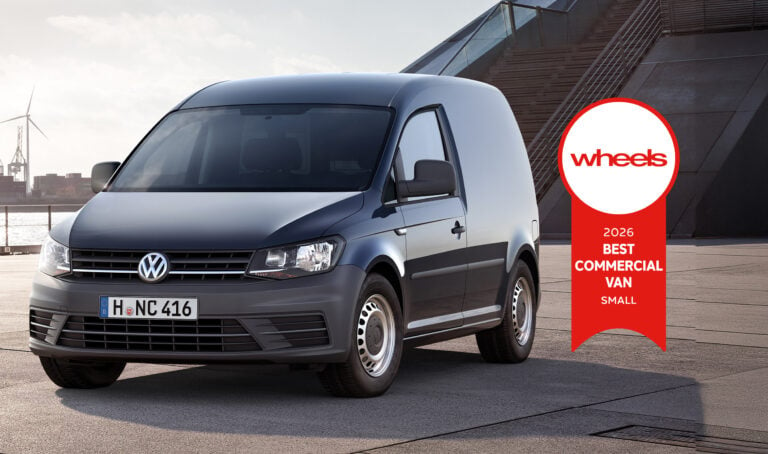
Best Commercial Vans 2026: Small
Small vans prove big capability comes in compact packages, delivering car-like driving manners, strong efficiency and practical cargo solutions for urban businesses.