News
Gallery 1
With one of the broadest brand portfolios in the automotive industry, Stellantis has just announced a major rationalisation program to help it reduce costs, speed development, and allow it to tailor products to the needs of the markets it sells in.
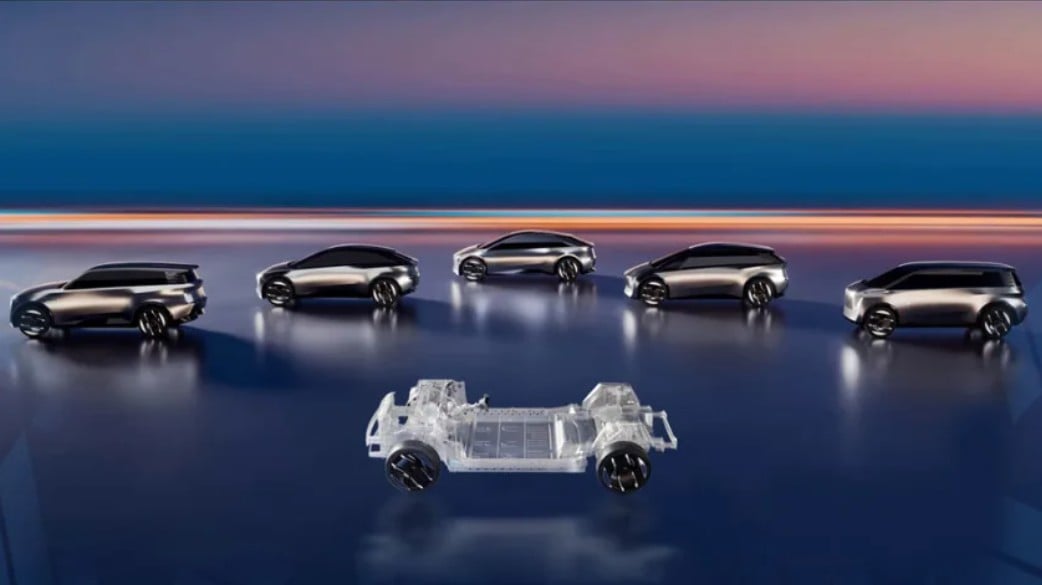
Called STLA One, the new modular platform is designed to underpin almost all of the group’s future B, C, and D segment cars. Everything from the Peugeot 208 and Opel Mokka up to three-row large SUVs like the Peugeot 5008 – a segment which most Stellantis brands don’t currently participate.
The multi-powertrain STLA One platform will support 800-volt electrical drivetrains, with cell-to-body construction to reduce cost and complexity, but will also span a variety of electrified drivetrains from plug-in hybrid to extended range to mild-hybrid, depending on its deployment.

1
STLA One is destined to become one of three platforms that will make up 50 per cent of the company’s production volume, leaving room for specialised underpinnings for low-volume, high-margin products from brands like Maserati and Jeep. Between those three volume platforms, Stallantis is aiming for 70 per cent ‘component reuse’ to drive volume and reduce costs.
The new platform will be used in over 30 new models and, by 2035, is expected to underpin more than 2 million units.
Under the company’s new vision for its broad product range, four brands will become global pillars, with Fiat, Jeep (above), Peugeot, and Ram getting first access to new platforms, and taking a 70 per cent slice of Stellantis’ investment.
Brands like Alfa Romeo (below), Chrysler, Citroen, Dodge, and Opel/Vauxhall will become ‘regional brands’. Outliers like Abarth, Lancia, and DS Automobiles will be viewed as ‘specialty brands’ to be managed as sub-brands of Fiat and Citroen, respectively.
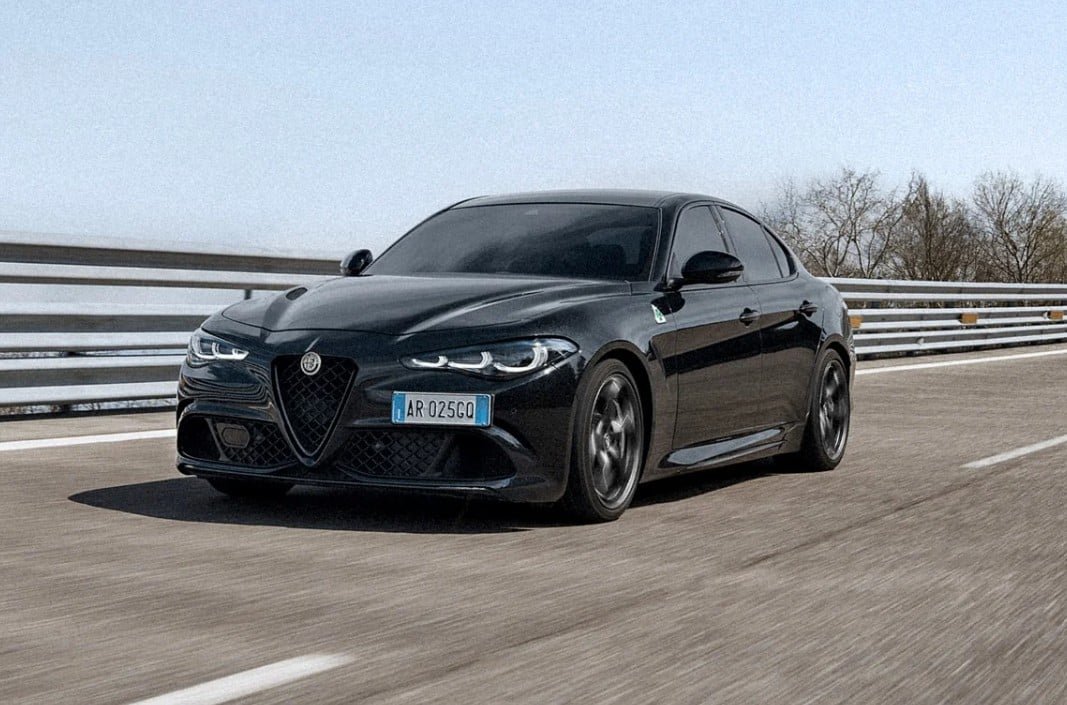
1
Maserati will sit outside the main brand group, with its own product plan to be announced later in the year. Despite having 15 brands to manage, Stellantis has opted to keep all in operation, quashing rumours that slow sellers like Chrysler, Lancia, and DS Automobiles were facing uncertain futures.
Stellantis also announced parallel product plans, including STLA SmartCockpit, in conjunction with robotics and automation specialist Applied Intuition, and STLA Brain; electronics, software and driver assist tech in partnership with Qualcomm.
These new systems will be integrated as part of the STLA One rollout, with the aim of providing a range of in-car tech, infotainment, and autonomous driving features with reduced development costs and faster product integration.
The platform and technology announcements fall under a five-year business plan called FaSTLAne 2030, which represents a €60 billion (A$97.47 billion) investment. The plan includes manufacturing optimisation, platform and powertrain changes, improved management of individual brands, and collaborative agreements with companies like Leapmotor, Dongfeng, and a recently announced Memorandum of Understanding with Jaguar Land Rover.
Follow WhichCar/Wheels on Google
Click the button below to make WhichCar by Wheels a preferred source for your news.

We recommend
-
 News
NewsAuto giant Stellantis teams up with Microsoft in five-year partnership
As legacy automakers scramble to keep pace with technology-focused challenger brands, global giant Stellantis has announced a five-year partnership with Microsoft.
-
 News
NewsStellantis writes down billions as it resets on EV strategy for Jeep, Chrysler, RAM
Jeep, Ram and Chrysler owner joins growing list of automakers rethinking electric ambitions amid slowing uptake.
-
 News
NewsRam 1500 Express Black Edition: New entry-level grade joins best-selling truck range
The new entry-level version of the Ram 1500, dubbed the Black Express, lowers the price of entry into the 1500 range significantly.