Reviews


Gallery 1
8
/10
Score
Score breakdown
8.2
Safety, value and features
7.7
Comfort and space
8.0
Engine and gearbox
8.5
Ride and handling
7.4
Technology
Things we like
- Superb ride comfort
- Clean interior design
- Excellent real-world energy consumption
Not so much
- Trigger-happy driver attention alert
- No spare wheel
- Driving range could be higher
The Lexus ES has long struggled with its identity since launching way back in the very early days of the Toyota spin-off luxury brand. Debuting in 1989, the ES was – somewhat cynically – a Toyota Camry with better clothes.
Every generation since moved the ES further away from the Camry but despite shedding more and more of Toyota’s DNA, the ES was still considered little more than a frocked-up and expensive Toyota.
But that’s all changed with the new Lexus ES range, which not only ditches much of the previous generations’ inherent Toyota-ness, but also tears up the straitlaced conservatism of its predecessors. It’s as if Lexus has swapped its cardigan and flannel trousers for a leather jacket and jeans.
2
The new three-model range is intriguing, with one hybrid and two pure EV variants on offer. What’s interesting is that the jump from petrol-hybrid to fully electric is just $2000. The entry point into the line-up is the $75,000 ES 300h petrol-hybrid. Then it’s just a $2k jump to the single-motor, front-wheel drive ES 350e, while the flagship ES 500e brings two electric motors and all-wheel drive to the table for a sticker price of $84,000. All prices are before on-road costs.
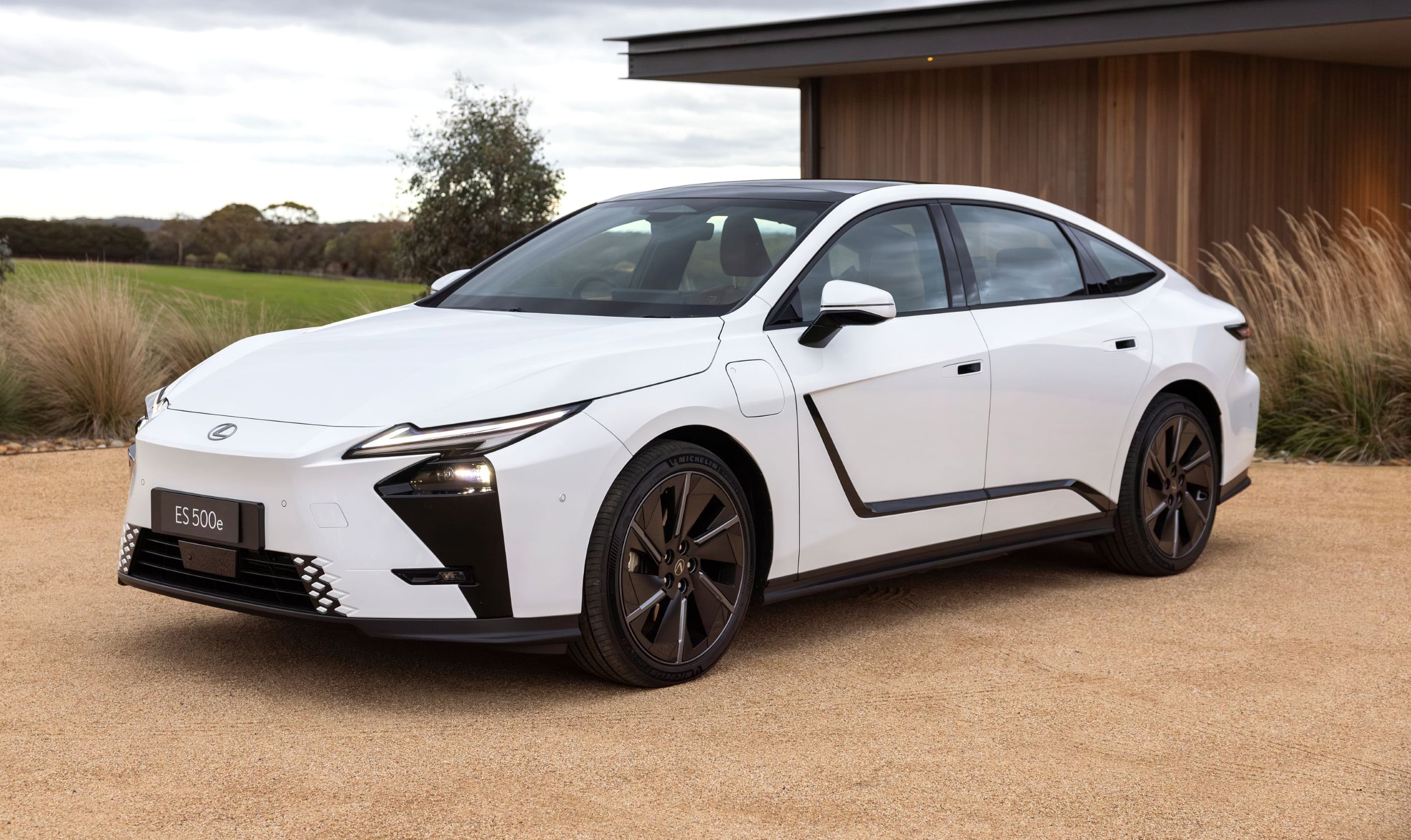
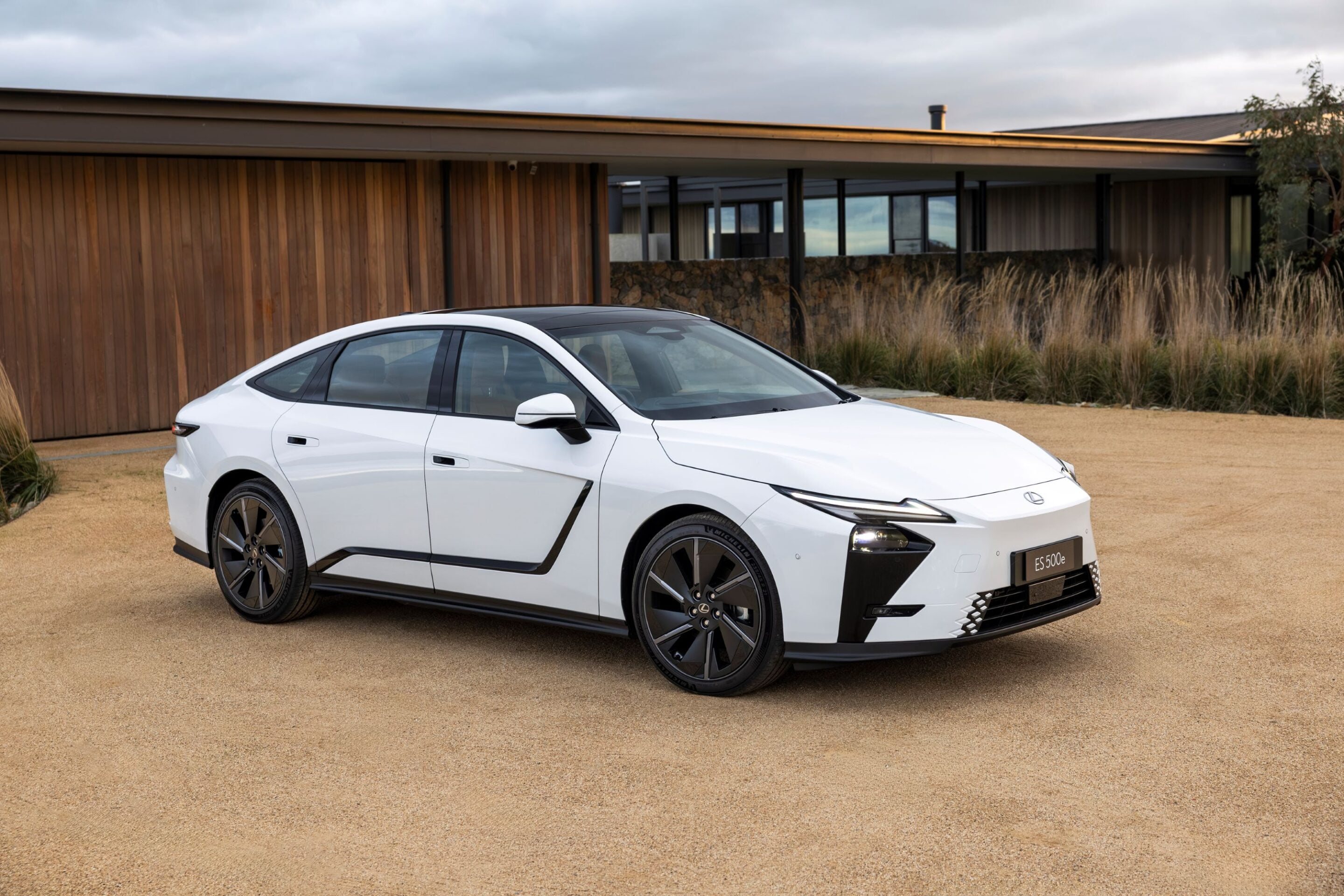
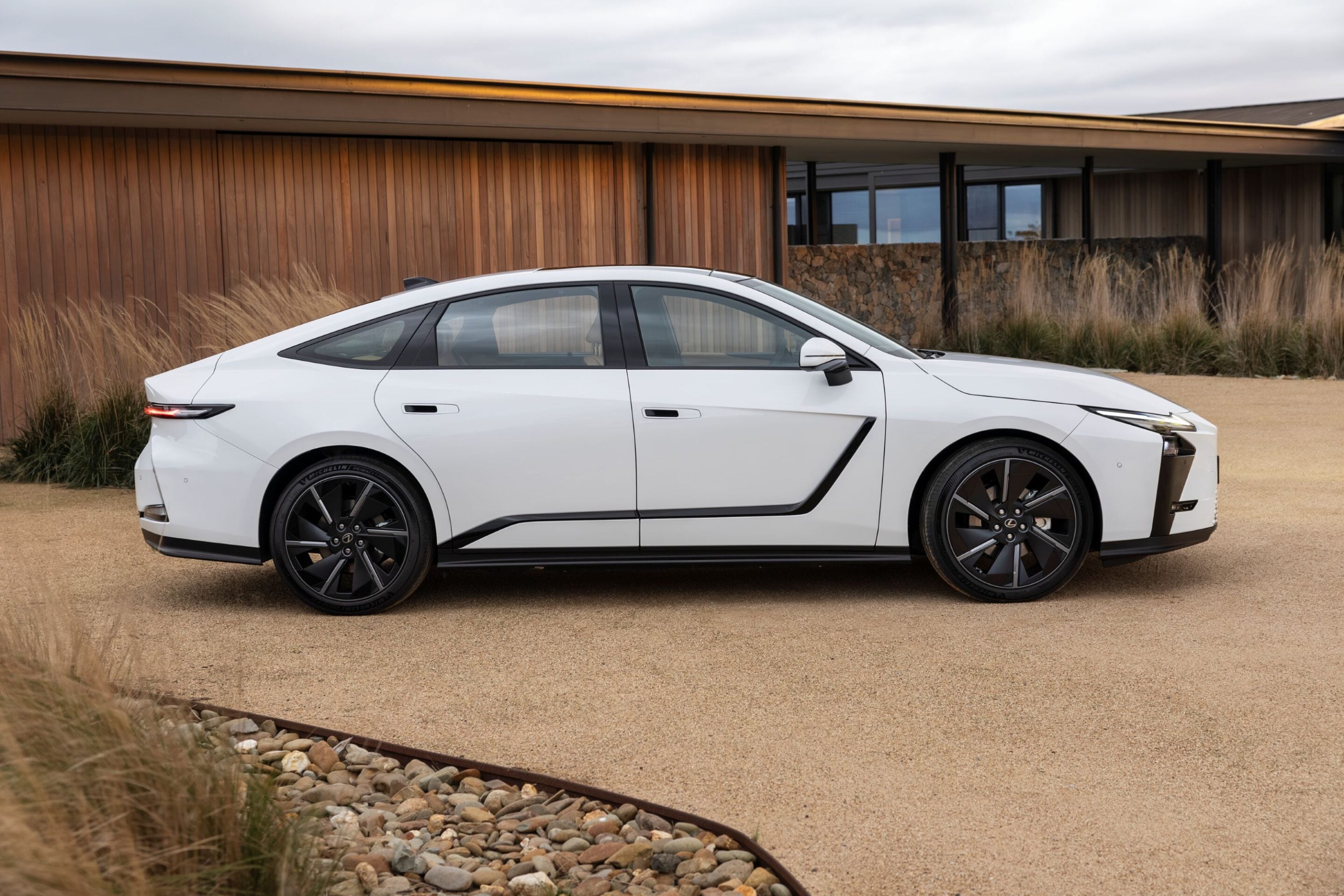
It’s the flagship that found its way into the Wheels garage and it’s immediately apparent that this new model bears no resemblance to the outgoing ES range. For starters, it’s bigger, much bigger – 170mm longer, 55mm wider, 115mm taller, and sitting on a cabin-extending 80mm longer wheelbase.
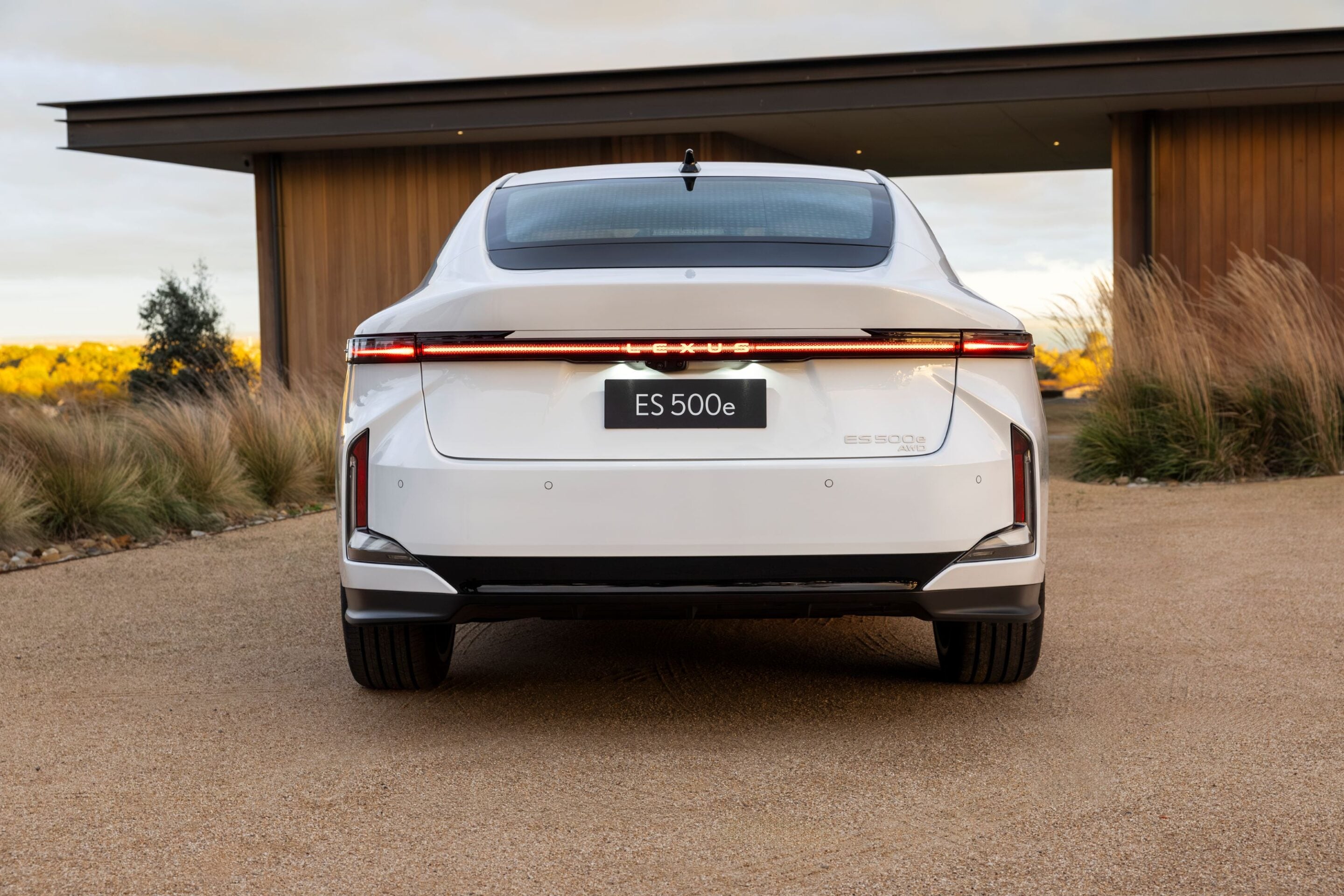
It looks different too, the first model to adopt the brand’s new design language which blends familiar Lexus cues – such as the signature spindle grille, albeit with a modern spin – with bold new styling. A low bonnet line leads into new LED lighting signatures while around the side, aggressive character lines work to break up the sea of remodelled sheet metal.
Of course, being a Lexus brings with it expectations of luxury and refinement. Buyers won’t be disappointed by the ES’s long list of standard equipment that blends quality materials with up-to-the-minute tech and a list of standard gear at the premium end of the scale.
4
Highlights include huge 21-inch alloy wheels, a 17-speaker Mark Levinson sound system, leather-accented seat upholstery, heated seats and steering wheel, a head-up display, 360-degree camera, panoramic roof, and sunshades on the side windows.
Power comes from two electric motors, one at each axle, combining for 252kW and 438Nm. A 74.7kWh lithium-ion battery feeds the motors and is good for a claimed 465km range, based on WLTP testing. That’s down on some similarly priced rivals where 500-plus or even 600km ranges are increasingly the norm.
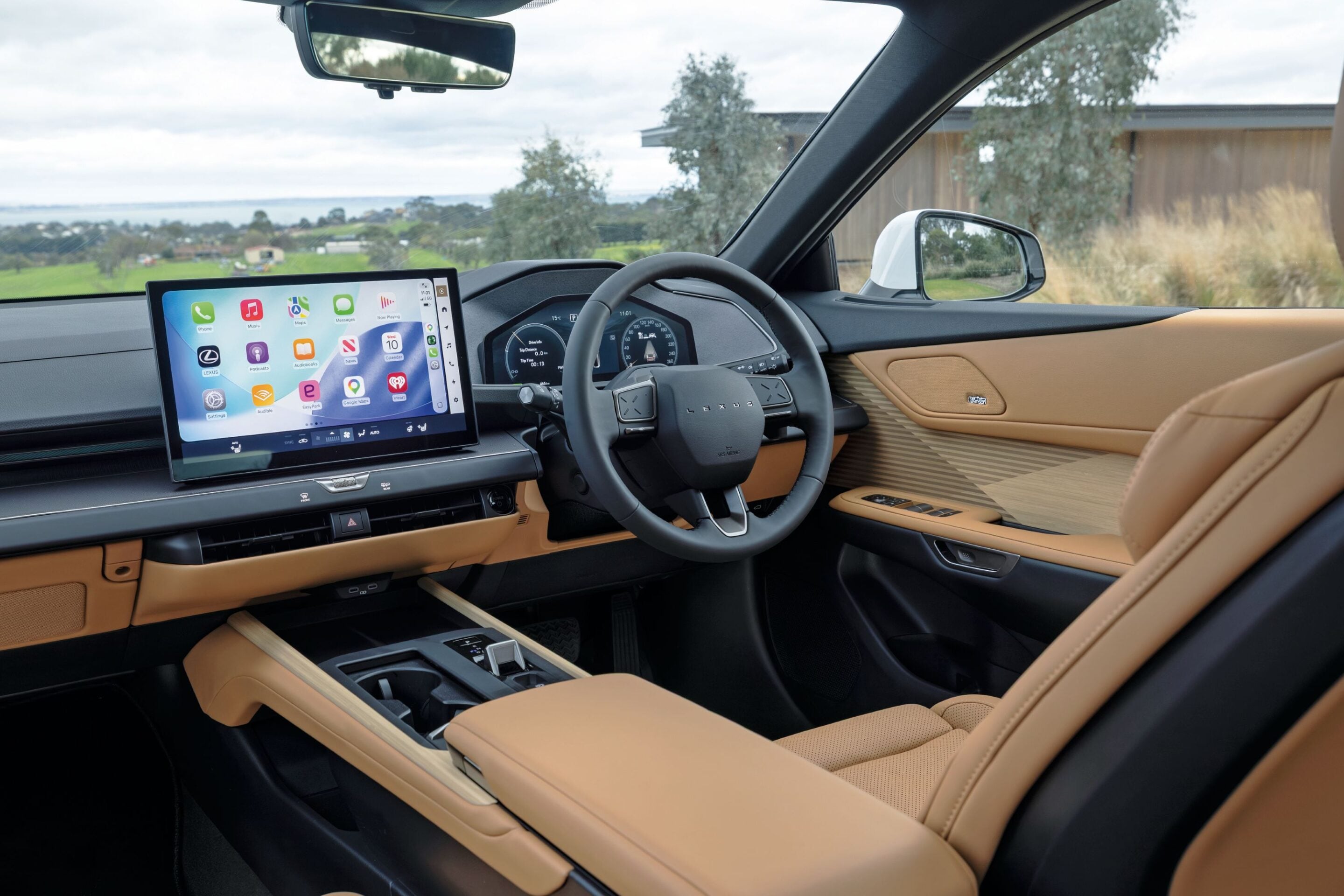
The ES’s interior embraces modernity. Where Lexuses of old always felt like they were designed for the ‘grey brigade’, the new model is at once modern and refreshingly uncluttered on the inside. The build quality and materials throughout are excellent. This might not look like a Lexus of old, but it certainly feels like one – solid, tight, plush.
The bamboo-coloured inlays on the door cards and centre console surround are a highlight, a welcome contrast to the overwhelmingly black and dark grey cabin.
The front seats are comfortable although could use a touch more under-thigh support, especially noticeable over a longer drive.
Finding the ideal seating position is a cinch with power adjustment for both front seats as well as the newly designed steering wheel, which is at odds with the rest of the cabin. Why? Because it’s wrapped in an artificial material called NuLux that feels more like plastic than faux leather.
1
Infotainment is handled by a crisp 14-inch touchscreen running the brand’s latest Arena operating system. It’s a good one too, with a clear, easy-to-use design and wireless smartphone connectivity that proved faultless during Wheels’ custodianship.
Lexus has done away with physical buttons and switches in the ES but the integration of what the brand calls its ‘responsive hidden switches’ on both the dashboard and steering wheel goes some way to alleviating any frustration. Simply, they respond to a hovered finger, illuminating the ‘hidden’ function which can then be activated by a simple press. The ES’s growth spurt pays dividends in the second row where space is in abundance in all key areas. Comfortable seats and a general spaciousness lend this $84k car limo-like qualities.
Boot space comes in at 517 litres, which is pretty decent, although the back seats don’t fold away to free up more space for even more golf bags. Don’t look for a spare wheel because there isn’t one, only a tyre inflation kit.
It’s on the road where the ES 500e really starts to shine, a combination of effortless performance (0-100km/h is dispatched in 5.5 seconds) and a ride quality that is simply sublime.
There’s no hanging about when the big questions are asked of the ES, the 2.2-tonne sedan hunkering down and moving with urgency and a quiet poise.
Power delivery is smooth, whether stuck in the daily grind of peak-hour traffic or powering onto a motorway, the big sedan moving briskly without venturing into silly-fast territory. It feels luxuriant from behind the wheel, an effortless performance that’s only enhanced by the ES’s superb ride quality.
New suspension geometry all round, along with a strengthened chassis, has resulted in what is simply one of the most comfortable cars I’ve driven in years. The standard-fit adaptive dampers are brilliant at ironing out minor road rash and confidently dealing with bigger hits whose attempts to unsettle the big sedan prove futile. I’ve driven cars costing five times as much from upmarket British brands that haven’t felt as smooth on the road as the ES. Remarkable.
1
The steering remains accurate and quick, although it can feel a little numb, even after toggling through the various drive modes in the search for some more tactility. A touch more heft would be a welcome addition.
Large ventilated discs – 340mm up front and 338mm rears – do a good job of pulling up the sedan, although the heavy lifting is mostly done by the ES’s regenerative system, which offers several settings. The transition between the two modes of stopping is seamless.
The biggest gripe comes courtesy of the ES’s driver attention monitor which proved only too happy to set off the gentle but insistent chimes after detecting my wandering eyes undertaking completely innocent tasks such as checking the rear-view mirror. It’s not only annoying but also distracting, everything it’s supposedly trying to minimise.
Lexus says the ES 500e will use energy at the rate of 17.9kWh/100km, a claim we bettered, and by some margin, recording 15.1kWh after a week of testing over a variety of driving conditions. Topping up the battery from 10 to 80 per cent should take around 28 minutes if charging at the maximum DC rate of 150kW.
Stripping off the frumpy clothes of its Toyota counterpart has given the Lexus ES a new outlook. No longer an expensive Camry, it has forged a new and utterly compelling identity. It’s unashamedly luxurious, not only in the cabin, but also on the road, where refinement and smoothness are the hallmarks of a luxury car. The Lexus ES has it in spades.
Specs
| Price | $84,000 plus on-road costs |
|---|---|
| Drivetrain | Two electric motors |
| Transmission | Single-speed, all-wheel drive |
| Power | 252kW (combined) |
| Torque | 438Nm (combined) |
| 0-100km/h (claim) | 5.5 seconds |
| Battery size | 74.7kWh (lithium-ion) |
| Range | 465km (WLTP) |
| Energy use (claim) | 17.9kWh/100km |
| Energy use (as tested) | 15.1kWh/100km |
| Peak charging speed | 22kW (AC) / 150kW (DC) |
| 10-80% DC charge time (claim) | 28 minutes |
| Dimensions (l/w/h/wb) | 5145/1920/1560/2950mm |
| Boot capacity | 517L |
| Spare wheel | Tyre inflation kit |
| Kerb weight | 2280kg |
| Warranty | 5 years, unlimited km (car) / 8 years, 160,000km (battery) |
| Servicing costs | $3125 five years or 75,000km |
8
/10
Score
Score breakdown
8.2
Safety, value and features
7.7
Comfort and space
8.0
Engine and gearbox
8.5
Ride and handling
7.4
Technology
Things we like
- Superb ride comfort
- Clean interior design
- Excellent real-world energy consumption
Not so much
- Trigger-happy driver attention alert
- No spare wheel
- Driving range could be higher
Follow WhichCar/Wheels on Google
Click the button below to make WhichCar by Wheels a preferred source for your news.

We recommend
-
 News
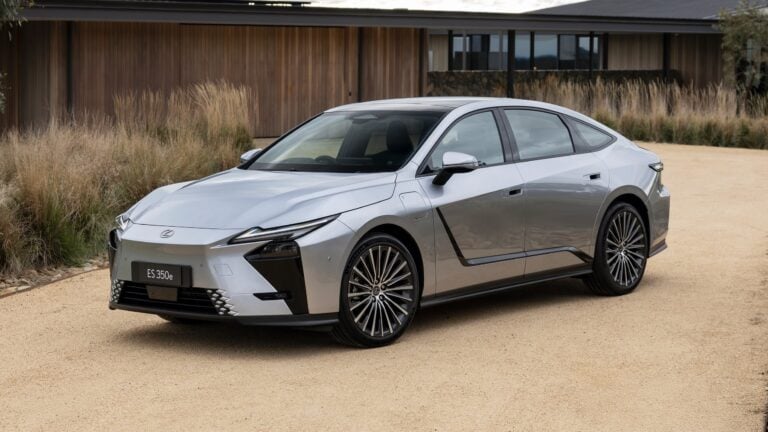
NewsLexus launches ES in Australia with both hybrid and electric drivetrains for the first time
The eighth-generation Lexus ES luxury sedan brings hybrid and electric power for the first time, and combine increased size and technology in a luxury package.
-
 News
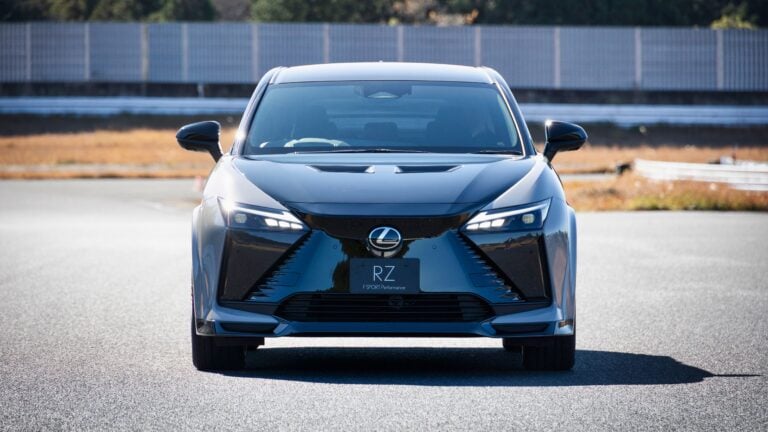
NewsThe wild Lexus RZ600e F Sport Performance will be the brand's most powerful EV when it lands in Australia in extremely limited numbers
The Lexus RZ600e F Sport Performance is heading down under with 313kW and a claimed 4.4-second 0-100km/h time.
-
 Features
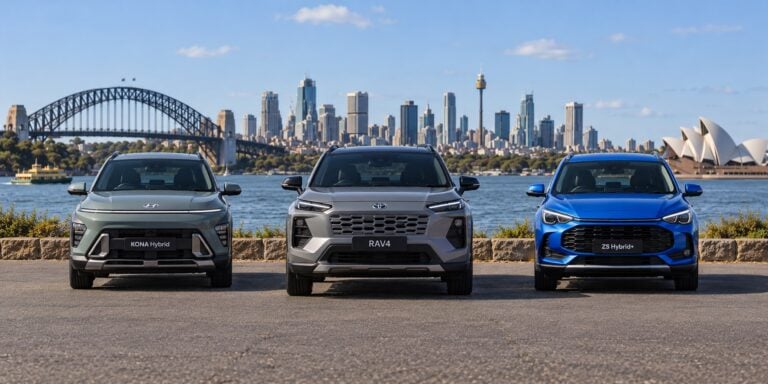
Revealed: Australia’s top 10 most fuel-efficient SUVs as petrol and diesel prices shoot up again
SUVs remain wildly popular in Australia. But with petrol and diesel prices spiking, what's your best bet for saving at the bowser? We've got you covered...