
Comparisons


Gallery 1
For all the talk about SUVs dominating the new car sales charts and taking over our roads, it’s easy to forget that as recently as 2016, traditional passenger cars were still numero uno. Ten years ago, Australians bought just over 486,000 new passenger cars while SUVs accounted for a handful over 441,000.
The following year, the first of two Rubicon crossings when SUVs (465k) outsold passenger cars (450k) in Australia for the first time. And we didn’t have to wait long for the second crossing. In 2018 medium SUVs took over the mantle of Australia’s most popular new car segment, toppling the long-standing small car segment with sales of 206,450 against 199,209. The gap has widened ever since.
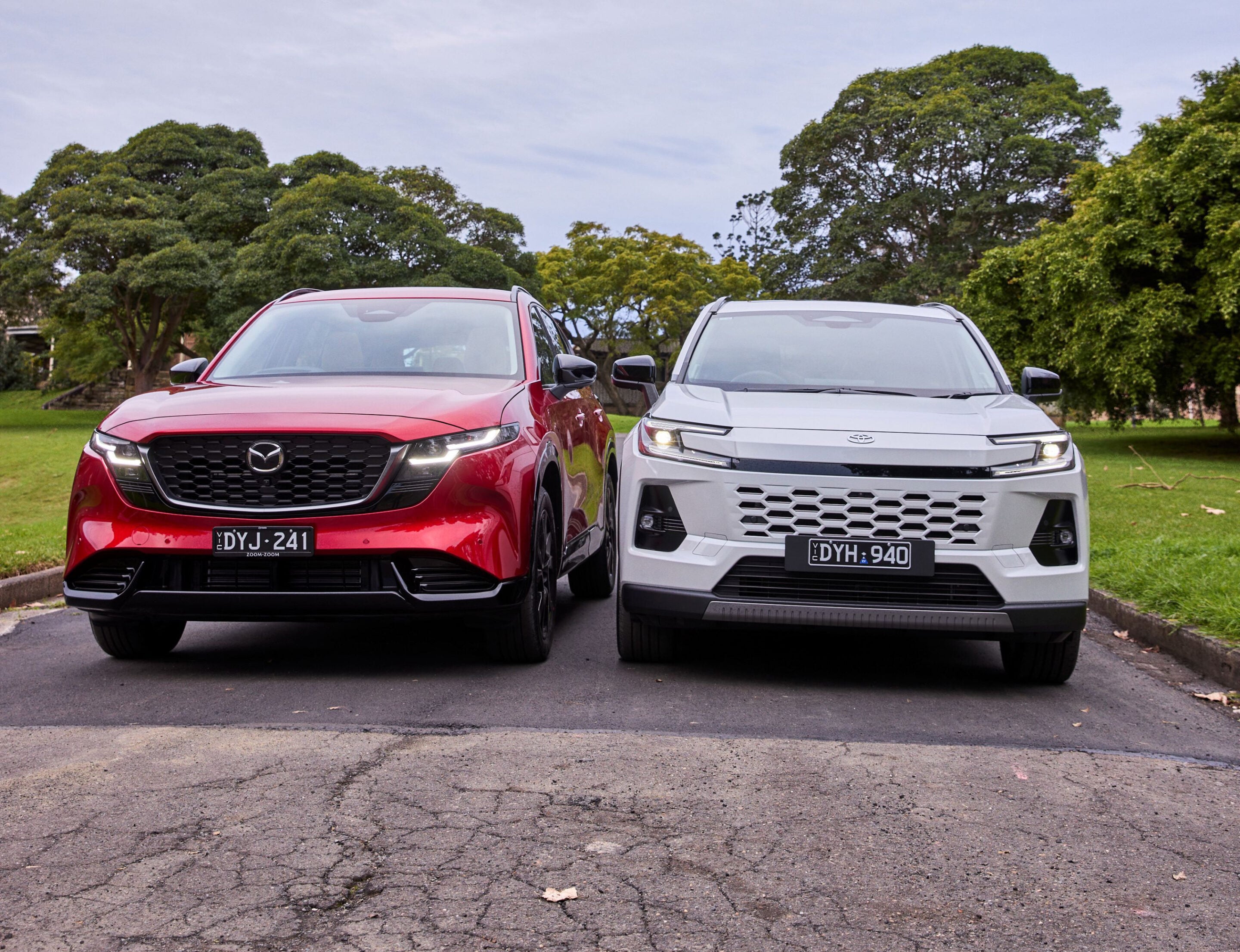
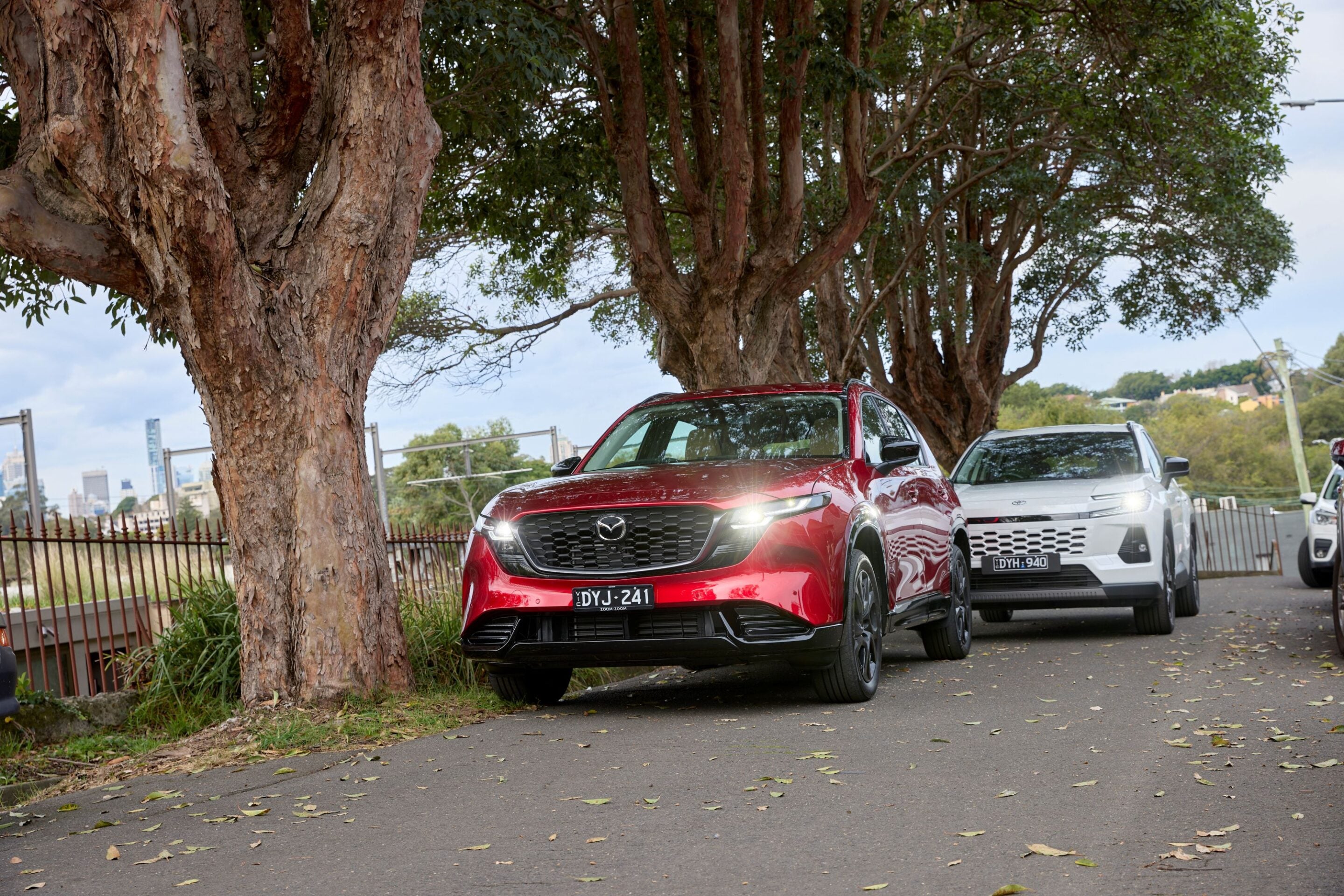
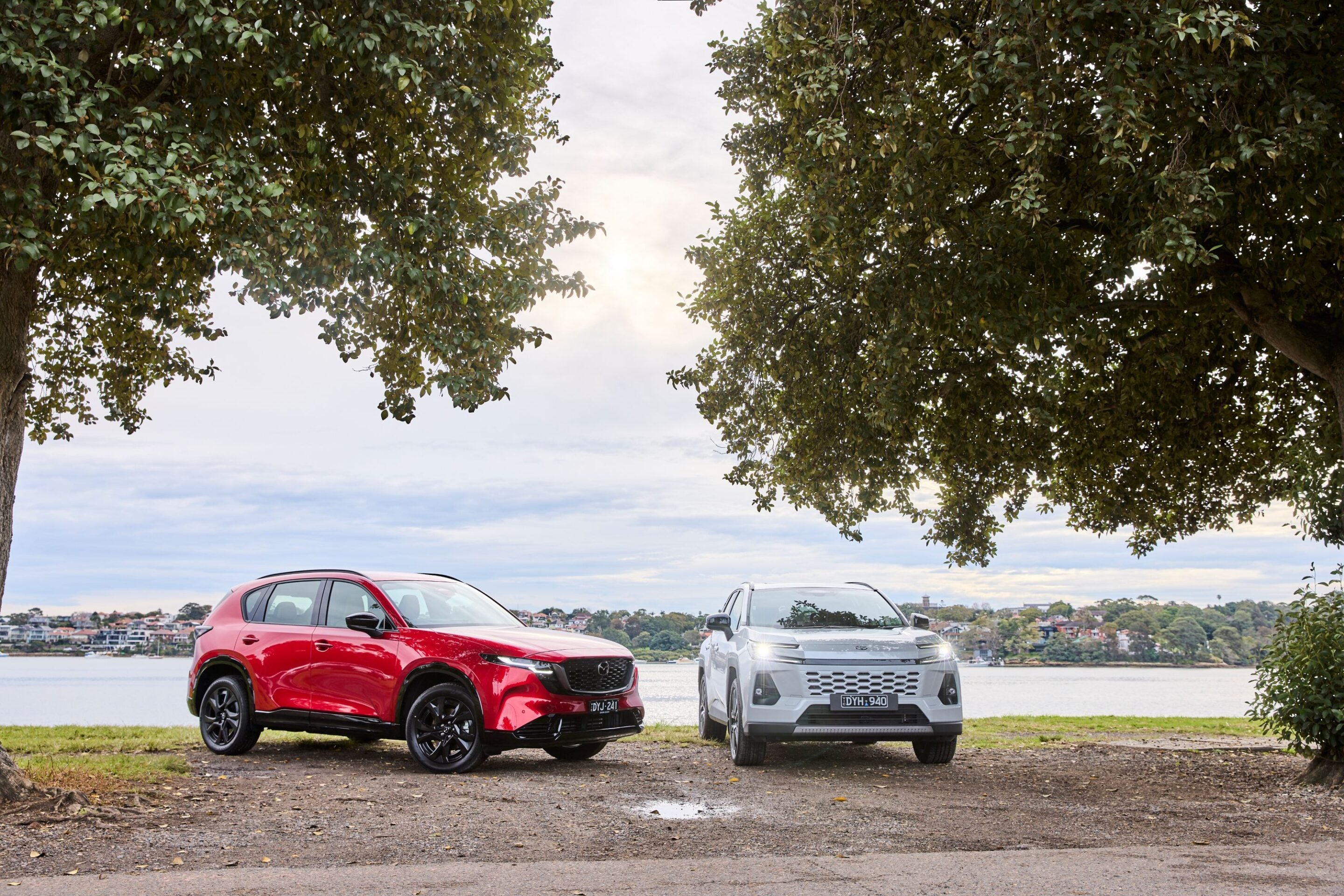
Two models, more than any other, helped drive that transition, in the process creating a new battleground for Aussie new car buyers. While Mazda versus Toyota might not have polarised the nation in the same way Ford and Holden had done for decades prior, when it came to medium SUVs, the CX-5 and RAV4 towered over the rest – the two most popular models in a segment increasingly brimming with options for buyers.
1
The RAV4 might hold bragging rights over its Mazda rival today – and handsomely – but that wasn’t always the case.
When Mazda launched its CX-5 in 2012, it shot straight to the top of the segment. And it remained there for the next eight years, Toyota only clambering over its Japanese rival in 2020 following the introduction of hybrid powertrains to the range. RAV4 has bested its Mazda counterpart ever since, sales peaking at an astonishing 58,718 in 2024.
Fast forward to 2026 and both Mazda and Toyota have brought new generations of their most popular vehicles to the Australian market. And at a time when both have been usurped in the segment by the Tesla Model Y, never has a pair of new models been of greater importance to their respective makers.
Seems only fitting, then, that we pit them against each other in a battle of the mid-size SUV heavyweights.
Shaping up
Mazda has simplified and streamlined its CX-5 range with the launch of this new third-generation model. Trimming the range down to five models has made it a reasonably simple choice for buyers.
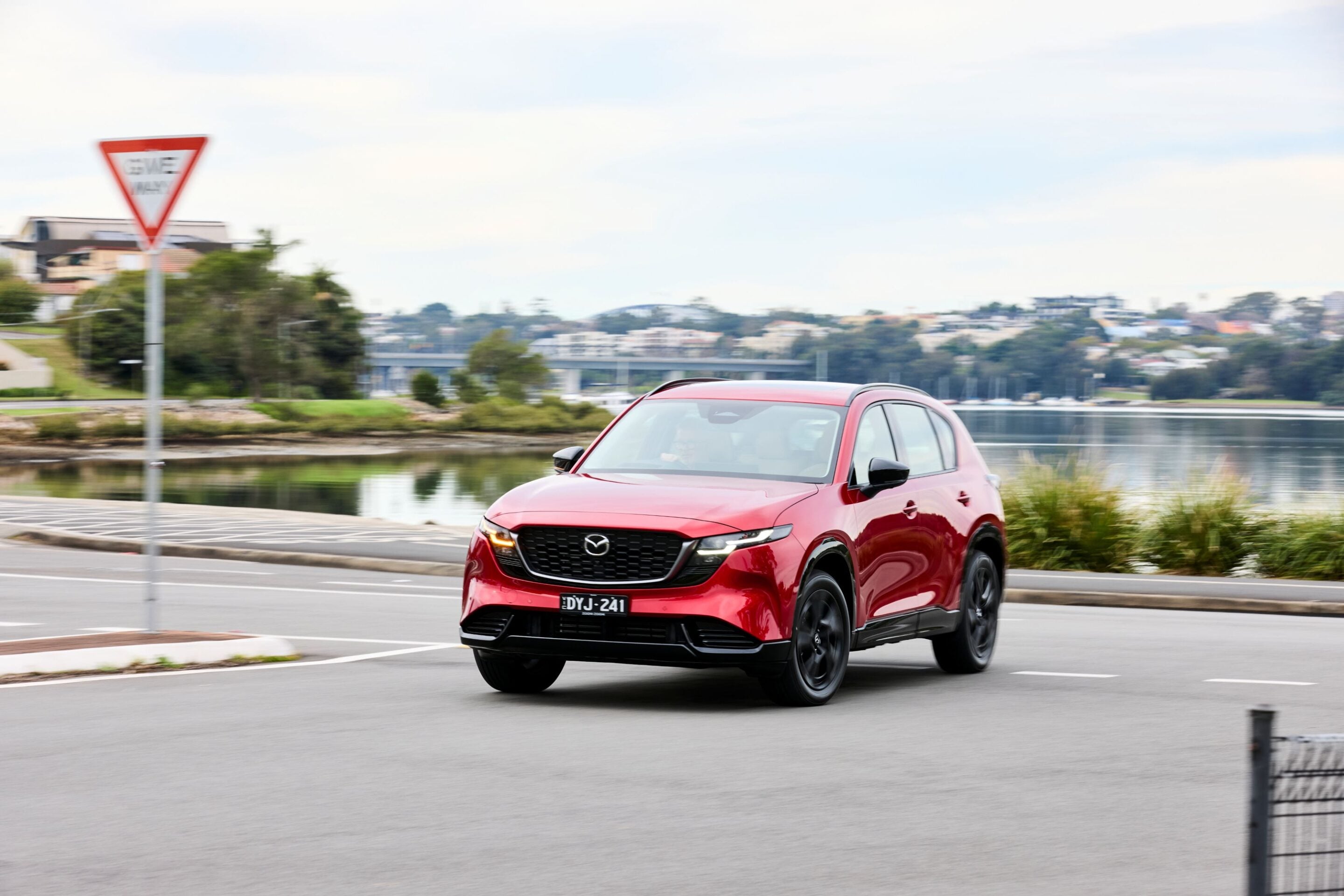
All are powered by the same 2.5-litre naturally aspirated four-cylinder petrol engine making the same 132kW and 242Nm. That’s a slight decrease in power and torque (down by 8kW and 10Nm respectively) over the model it replaces, Mazda seeking to lower its overall emissions with this new model without resorting to turbocharging or hybrid technology.
1
And immediately, that has the CX-5 on the ropes against the new sixth-generation Toyota RAV4, which is now only available in hybrid or plug-in hybrid form, the Japanese brand axing the last of its petrol-only models in 2024.
To give the Mazda a fighting chance, we’ve opted for the $54,990 (plus on-road costs) flagship CX-5 Akera, which brings the full catalogue of premium-inspired goodies.
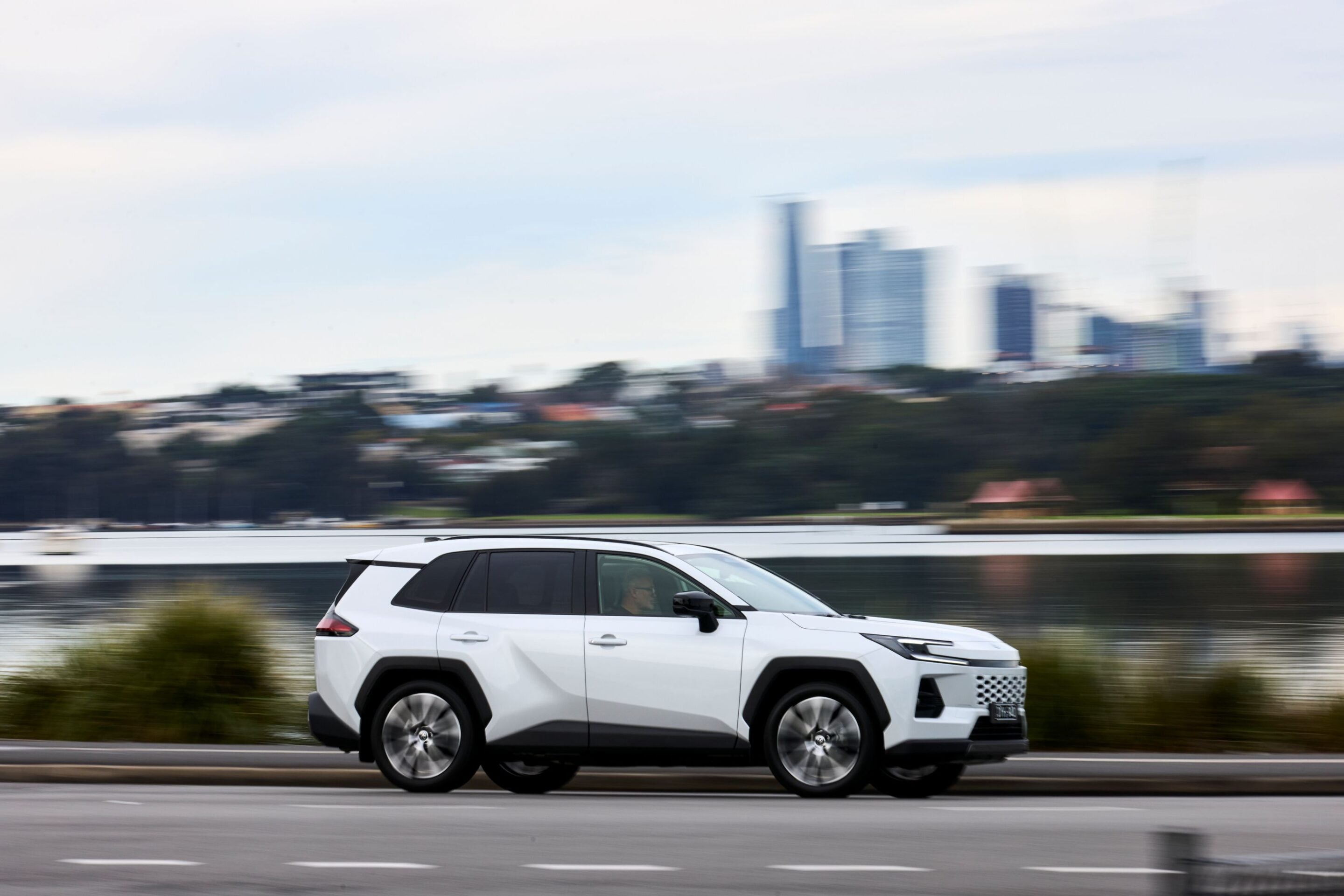
Mazda isn’t alone in neutering the powertrain of its most popular model. The new RAV4 arrived in local dealerships in March and like its Mazda counterpart, its 2.5-litre petrol-hybrid powertrain has been given a snip.
Total system power outputs are now rated at 143kW, down from the 163kW of the previous generation. Torque for the petrol engine remains at 221kW, Toyota not disclosing combined figures for its hybrid system.
To maintain some parity between our two pugilists, we’ve plumped for the top-spec front-wheel drive RAV4 Cruiser. It’s priced from $56,990 before on-road costs and, like the CX-5, brings the full gamut of features and equipment to the bout.
1
Creature features
Generous standard equipment lists across both models highlight the appeal to buyers who want more than just an A-to-B mid-size SUV.
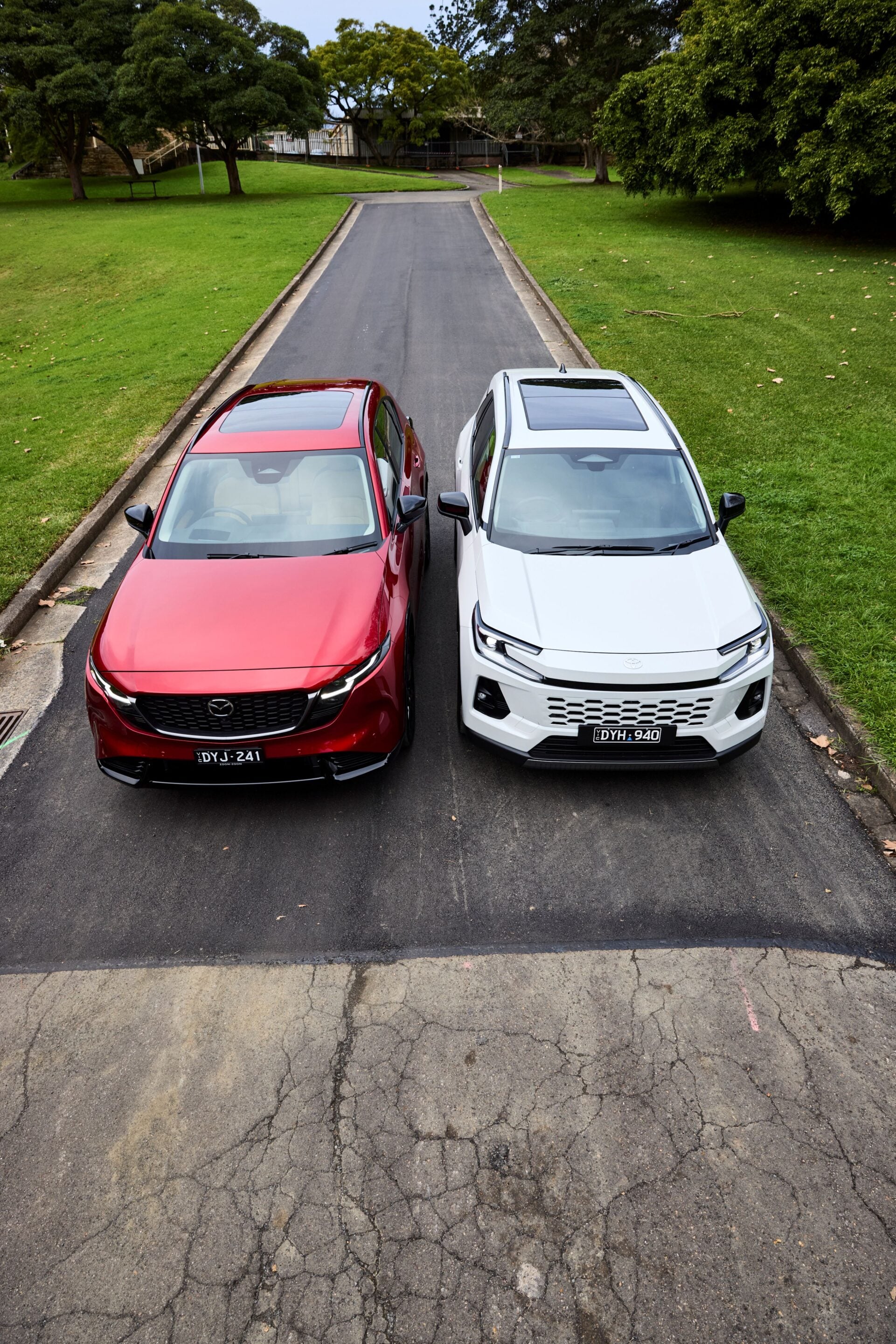
Common to both are niceties like a panoramic sunroof, heated and ventilated front seats, wireless smartphone mirroring, powered tailgate, wireless smartphone charging (although RAV4 has space for two phones), power-adjustable front seats, dual-zone climate controls, head-up display and the full gamut of advanced driver and safety assist systems.
There are some key differences, though, as our two combatants take points off each other on the spec sheet.
In the CX-5 corner, genuine leather seat upholstery trumps the RAV4’s leather-accented seats, while its 12-speaker Bose sound system bests Toyota’s nine-speaker JBL unit, and not just on speaker count. Sound quality is simply sharper and more fulsome in the Mazda.
Buyers who prioritise big screens will find the 15.6-inch infotainment unit in the Mazda to their liking. It easily eclipses the RAV4’s 12.9-inch screen in pure size and presentation. Both systems lose points for burying commonly used functions, like fan speed (Toyota) and temperature controls (Mazda) inside the screen.
The RAV4 sits on 20-inch machined black alloy wheels, the CX-5 rides on 19-inch wheels, also black and gloss in this instance. We’ll take the smaller wheels every time as they not only offer – marginal – improvements to ride comfort, but also provide an extra inch of protection against the dreaded kerb rash.
The Mazda alone features heated rear outboard seats while the RAV4 parries with a larger (12.3-inch) digital instrument cluster. The CX-5’s measures in at 10.25 inches. Both are customisable but the RAV4’s more so. Both models are equipped with a temporary space-saver spare wheel and tyre.
Cabin comfort
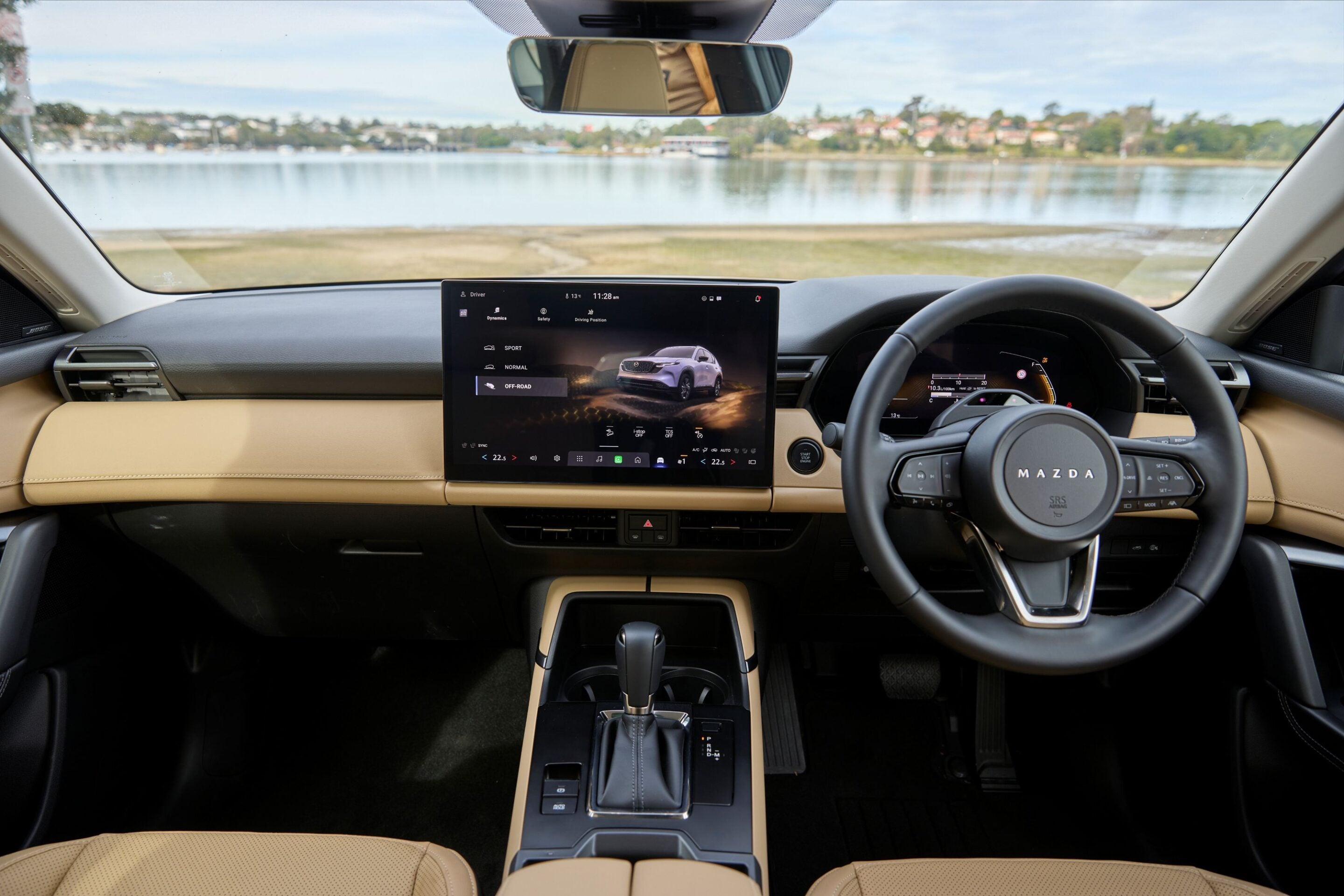
It’s here where the Mazda CX-5 edges ahead. Yes, Toyota has gone to some lengths in ensuring its new RAV4 has undergone a complete interior redecoration, but it lacks the finesse and, dare I say it, design flair of its rival.
4
The overall design is an improvement but there are still plenty of hard, scratchy and unsightly plastics on display, detracting from what is supposed to be a premium RAV4 experience in this Cruiser specification.
Black ‘accented’ leather seats offer the right blend between comfort and support. The driver’s seating position is good and thanks to a dashtop that now sits significantly lower, visibility out front is excellent.
There’s no shortage of in-cabin storage options – a handy tray inset into the passenger-side dash, generous door pockets and the star attraction, a decently-sized centre console where the lid opens towards either the driver or passenger, and can be flipped over to serve as a rudimentary tray table.
Those relegated to the second row won’t feel cramped or uncomfortable. There’s a decent amount of space in offer in all key areas – toe, knee, leg and head – while air vents and USB charging points offer some amenity.
The second-row seats remain fixed in place, although the seatbacks do recline for some added loungeability on longer drives.
Toyota quotes what looks like an optimistic 705 litres of luggage capacity out back, on paper. But reading the fine print reveals that the figure is measured to the roof, an almost meaningless metric. Toyota shies away from providing a capacity measured to the far more common top of the seatbacks.
That said, the visible space is generous, certainly enough to accommodate a couple of larger suitcases and a pram.
And yet for all its interior improvements, the RAV4’s cabin still feels like it’s a generation behind with an overall design that lacks the polish of some of its rivals. Yes, it’s solidly built (it’s a Toyota) but it’s missing that last little bit of flair that buyers are increasingly expecting from their circa-$60k mid-size SUV purchase.
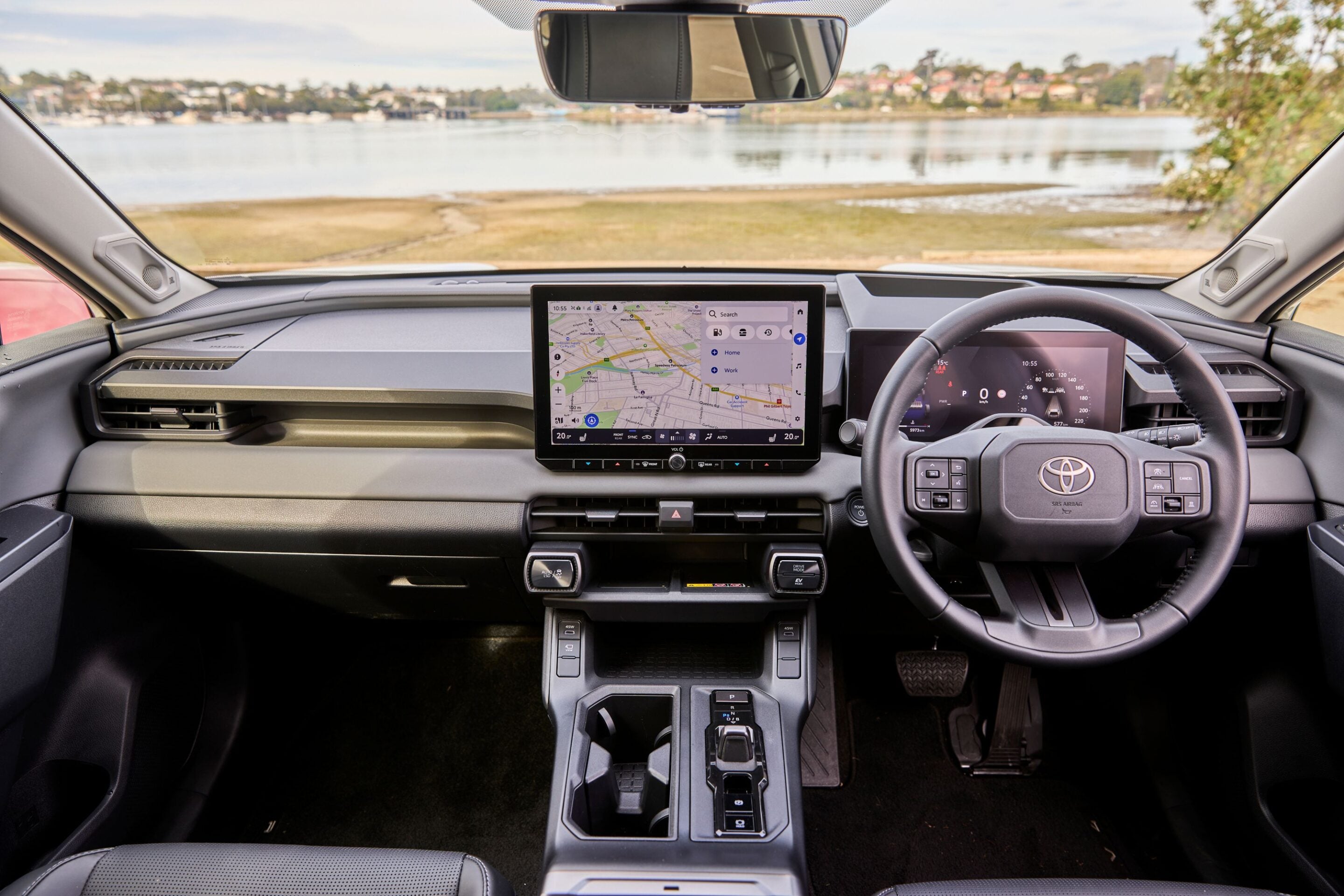
It’s something the Mazda in this grade has in spades. The seats are genuine perforated leather that looks and feels fantastic. Black is standard but for $1000 buyers can option a tan interior. It’s a box well worth ticking, lifting cabin ambience noticeably while adding a genuine premium feeling.
The front seats offer plenty of comfort and support, although could be a touch longer in the squab. The seating position is good, power adjustable (as it is in the RAV4), which affords decent visibility to the road ahead.
The CX-5’s traditional gear lever is a clear win for me over the short, stubby and plasticky electric razor-like number in the RAV4, which never really feels reassuring to use.
The Mazda’s steering wheel feels nicer in hand too, wrapped in soft leather (matching the gear lever), and with a svelte Mazda wordmark across its central hub. It looks distinctive. Classy.
Storage amenities include large door pockets and a big centre console with a beautiful-to-the-touch bi-fold lid finished in the same soft leather as the seats.
5
The CX-5 underwent a growth spurt for this new generation, stopping the tape at 115mm longer and 15mm wider than the model it replaced. That’s most keenly felt in the second row, where passenger comfort is in abundance thanks to its liberal proportions.
The CX-5’s extra length has resulted in longer rear doors, opening to almost 90 degrees, making for easier entry and exit. Parents especially will love the wider aperture.
Second-row ambience and visibility are excellent, thanks in part to the light coloured leather of the interior matched with the CX-5’s panoramic roof. Where the RAV4 can feel a little gloomy from row two, the Mazda feels light and breezy.
Out back, Mazda quotes 466 litres of luggage space to the top of the seatbacks. It’s a good size, if not class-leading (Hyundai Tucson wins that fight with 586 litres). Fold the seats away and the CX-5 claims 1594 litres of storage, although incongruously, this time measured to the roof. There’s a solid case to be made for standardised measurements. Toyota, for its part, shies away from quoting a number with the RAV4’s seats folded away.
It’s an easy win for the CX-5 when it comes to cabin finish and comfort, which feels a class above the RAV4. The materials are of a better quality, the design is more polished and the overall feeling is one of money well spent, something the RAV4 doesn’t quite manage to impart in the same way.
On the road
Don’t go looking for a mechanical revolution when it comes to either of these popular medium SUVs. Whether it’s keeping development costs down or simply not wanting to stray too far from what are tried-and-tested formulae, both the CX-5 and RAV4 take a very familiar approach to the driving experience.
The Mazda’s 2.5-litre atmo-four has been around for a long time now and while it’s been tickled and fettled over the years, primarily for efficiency gains and emissions reductions, its core underpinnings remain the same.
1
Now making 140kW and 252Nm, the CX-5’s performance is best described as adequate. It’s not especially quick off the mark, but neither is it glacially slow. Instead, it just motors away with minimal fuss at city speeds, blending seamlessly into the prevailing traffic conditions.
But – and there’s always a but – it’s a noisy blighter, with even moderate throttle application eliciting a workmanlike drone from under the bonnet, as if the non-turbo, non-hybrid is being asked to do a lot of work for not much gain. Which it is.
That’s especially noticeable out on the highway at motorway speeds, where the engine note rises in a crescendo that’s simply not matched by any urgency in acceleration.
Thankfully, the six-speed auto transmitting drive to all four wheels goes some way to making up for some of the 2.5-litre’s shortcomings. With fewer ratios to play with than the more common eight- or even 10-speeds on the market today, there’s less hunting for the right gear to keep the engine in the torque sweet spot. The result is an altogether smoother drivetrain that feels less busy than some of its rivals.
The CX-5’s on-road manners are a mixed bag. Mazda’s Hiroshima boffins have tweaked the suspension setup with lower spring rates, revised anti-roll bars, and new dampers in an effort to reduce noise, vibration and harshness. And the results are mostly positive. There’s still a brittle edge to the way the CX-5 handles patchy urban roads but it remains, for the most part, comfortable.
2
On the plus side, body control is excellent. Mazda’s mid-sizer is quick to settle over larger hits like speed bumps, while navigating roundabouts and corners elicits very little in the way of body roll. And should you find yourself with a quiet stretch of country road ahead of you, then the CX-5 rewards with a nicely balanced chassis that feels solidly planted.
The steering, always a touch too heavy in previous generations, has been recalibrated. It’s now lighter and unerringly quick and responsive, making for an easy time behind the wheel, especially in and around town.
Mazda’s suite of advanced driver assist and safety systems is well-calibrated too, never feeling the need to intervene at even the slightest provocation. Other car makers, take note.
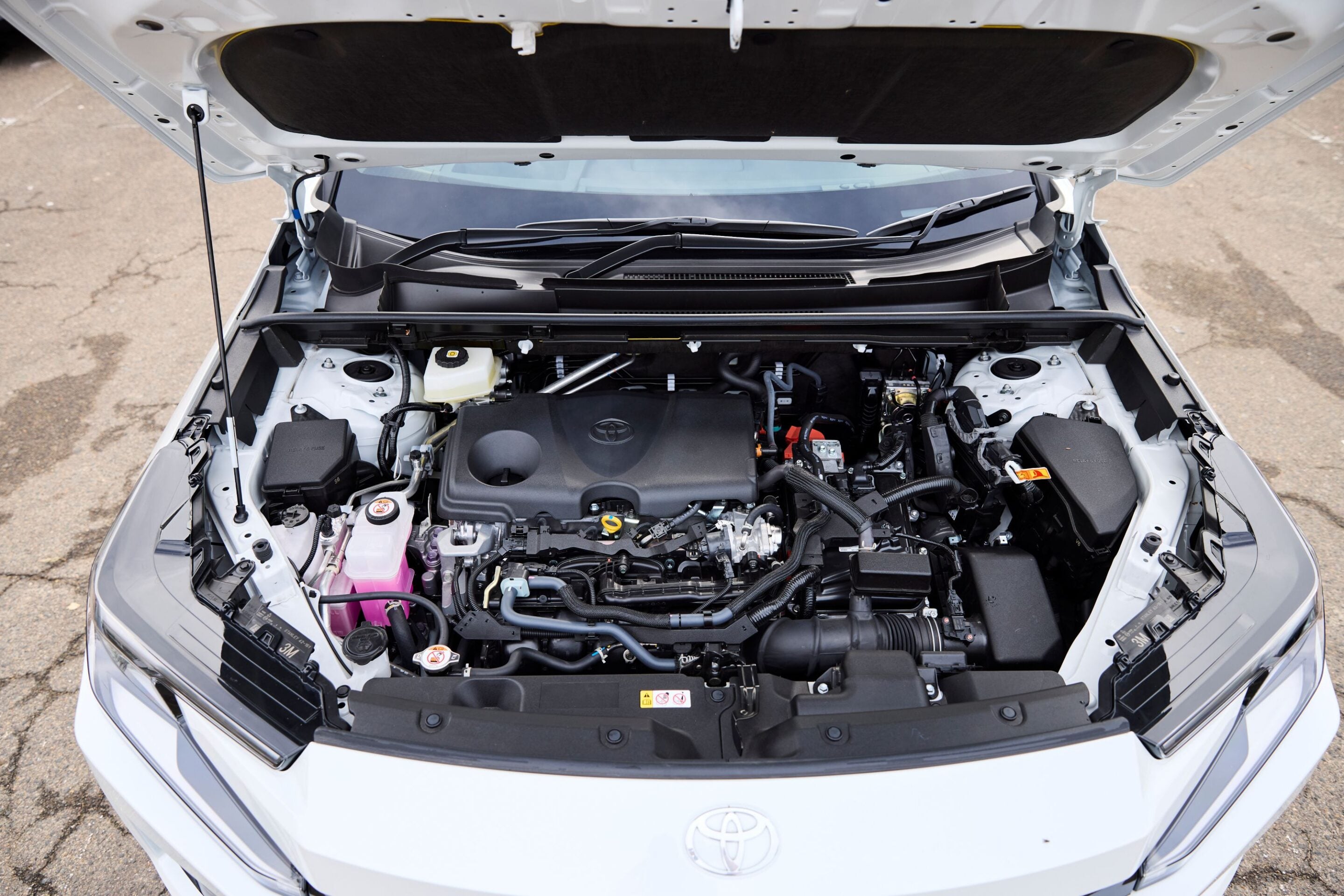
Like Mazda, Toyota ‘detuned’ the RAV4’s petrol-hybrid drivetrain in a quest to keep emissions down. Less powerful than before (by 20kW), the RAV4 nevertheless remains as brisk from takeoff as it was previously.
The small electric motor does all the work getting away from standstill, the petrol engine only kicking in once speeds climb in normal driving conditions.
Of course, mash the accelerator for a speedy getaway and both forms of propulsion combine to unleash everything the RAV4 has to offer. It’s here where the power reduction is most keenly felt, the new model simply not as urgent as before. Still, it feels quicker than the CX-5, no surprise considering the power advantage enjoyed by the RAV4.
Regular driving highlights just how well-sorted Toyota’s hybrid system is, seamlessly transitioning between the two methods of motivation with barely a ripple in the cabin. It’s quieter than the CX-5 too, even under heavy load, the petrol-hybrid powertrain simply not working as hard to maintain highway speeds.
It’s not all wine and roses, though, the RAV4’s ride and handling package edging towards the taut side of the comfort ledger. Perhaps that’s the result of the 20-inch alloys of this Cruiser spec (I’ve previously driven the GXL grade on 17-inch wheels and it was noticeably more refined). Road rash is a constant presence in the cabin, with only smoother surfaces bringing some comfort to the overall experience. It’s not terrible, not by a long stretch, but the RAV4 feels noticeably busy when the streets underneath are anything less than perfect.
1
In good news, added chassis rigidity for the new generation brings improvements to the RAV4’s handling and body control. Like its Mazda counterpart, the RAV4 can tackle winding country roads with a level of composure belying its medium SUV status.
Toyota went in the opposite direction to Mazda when it comes to steering feel. Where the steering in the older model always felt a bit light and twirly, this new model brings some added weight and tactility, improving the feeling of connection to the road.
On the safety front, Toyota’s electronic nannies, especially the overly zealous driver monitoring
system, do a good job of highlighting just how well-tuned Mazda’s systems are.
At the bowser
It’s a hands-down easy win for RAV4 here. Toyota claims the RAV4 will use 4.5L/100km on the combined cycle while Mazda quotes 7.4L/100km. It’s worth noting that the CX-5 is happy to drink 91-octane regular unleaded, besting the RAV4’s thirst for the pricier 95-octane premium unleaded. It’s the only metric Mazda wins.
Out in the real world, the RAV4 returned an indicated 5.4L/100 over a variety of road and driving conditions while the Mazda slaked its thirst at the rate of 9.3L/100km. And that, right there, is why the RAV4 remains so popular among buyers.
Verdict
There is a clear-cut winner and it’s no surprise it’s the RAV4. Yes, the Mazda presents as the more refined medium SUV, especially inside. But the extra polish and refinement of the Mazda, both in the cabin and on the road, is not enough to overcome the one glaring and obvious advantage held by the RAV4: Fuel consumption.
Mazda has promised a hybrid powertrain is coming to the CX-5. But it’s not slated to arrive until at least late 2027, or 2028. Until then, the Toyota RAV4’s excellent fuel economy – in these tough cost-of-living times we find ourselves in – is simply too hard to overlook.
Specs
Mazda CX-5 Akera
3
| Price | $54,990 plus on-road costs |
|---|---|
| Engine | 2488cc naturally aspirated 4-cylinder petrol |
| Power | 132kW @ 6000rpm |
| Torque | 242Nm @ 4000rpm |
| Transmission | 6-speed automatic, all-wheel drive |
| Wheel size | 19-inch |
| Spare wheel | Space saver |
| Claimed fuel consumption | 7.4L/100km |
| Fuel consumption on test | 9.3L/100km |
| Fuel type/tank size | 91 RON unleaded / 57L |
| Dimensions (l/w/h/wb) | 4690/1860/1690/2815mm |
| Boot capacity | 466L (to top of rear seats) / 1594L (to roof, rear seats folded) |
| Kerb weight | 1720kg |
| Warranty | 5 years/unlimited km |
| Servicing costs | $2203 over 5 years/75,000km |
| Overall rating | 7.7 |
Toyota RAV4 Cruiser
2
| Price | $56,990 plus on-road costs |
|---|---|
| Engine | 2487cc naturally aspirated 4-cylinder petrol-hybrid |
| Power | 143kW @ 6000rpm (combined) |
| Torque | 221Nm @ 4000rpm |
| Transmission | Continuously variable, front-wheel drive |
| Wheel size | 20-inch |
| Spare wheel | Space saver |
| Claimed fuel consumption | 4.5L/100km |
| Fuel consumption on test | 5.4L/100km |
| Fuel type/tank size | 95 RON unleaded / 55L |
| Dimensions (l/w/h/wb) | 4600/1855/1680/2690mm |
| Boot capacity | 705L (to roof, rear seats up) |
| Kerb weight | 1710kg (est.) |
| Warranty | 5 years/unlimited km |
| Servicing costs | $1625 over 5 years/75,000km |
| Overall rating | 7.8 |
This story first appeared in the November 2026 issue of Wheels magazine, now on sale. Subscribe here and gain access to 12 issues for $109 plus online access to every Wheels issue since 1953.
Follow WhichCar/Wheels on Google
Click the button below to make WhichCar by Wheels a preferred source for your news.

We recommend
-
 Comparisons
Comparison: Hyundai Ioniq 5 N v Honda Civic Type R
Can the benchmark high-performance electric vehicle mix it with the greatest petrol hot hatch of its generation?
-
 Comparisons
Medium SUV comparison: Honda CR-V v Hyundai Tucson v Toyota RAV4 face-off
Medium SUVs remain the backbone of passenger car sales in the Australian new car market and show no sign of slowing down. This month, our reigning pick in the segment, Hyundai’s excellent Tucson, takes on Toyota’s new RAV4 and Honda’s revised CR-V.
-
 Comparisons
Nissan X-Trail v Mazda CX-5: Medium-size SUVs go head-to-head in hard-fought segment
Upgraded for 2026, the Nissan X-Trail is primed to take the fight to one of the segment favourites, the Mazda CX-5, which is nearing the end of its life as a new model looms on the horizon
