
Comparisons


Gallery 1
Prior to 1976, the debate we’re about to have here was a non-event.
Up until then, if you wanted an affordable sports car, or a sporty car, or something that was engaging to drive, the formula was simple. Engine at the front, driven wheels at the rear, manual gearbox in between. In other words, the front wheels did the steering, and the rear wheels did the driving. It made for an intoxicating mix, the likes of which were tested in Wheels over the decades, igniting the interest of motoring journalists intent on extracting every last drop of fun from any drive. A flick back through the Wheels archives reveals the joy in testing what were, at the time, ground-breaking cars.
That all changed in 1976 when Volkswagen released what is universally acknowledged as the first hot hatch – the Volkswagen Golf GTI. While earlier examples like the 1973 Simca 1100Ti and Autobianchi-tuned versions of the Abarth are often cited as pioneering, it was the Golf GTI that delivered broad, affordable appeal to driving enthusiasts through the front wheels. Annoyingly, Australia missed out on the Mark 1 GTI, having to remain patient until 1984, when the Mark 2 arrived on our shores.
Volkswagen – whether it knew it at the time or not – rewrote the rules, reset the formula and enforced a theory that drivers could have hatch practicality along with that difficult to define driving engagement and genuine sporting aspiration. Connection between car and driver remained paramount, even if the way in which the power was put to the ground was different.
1
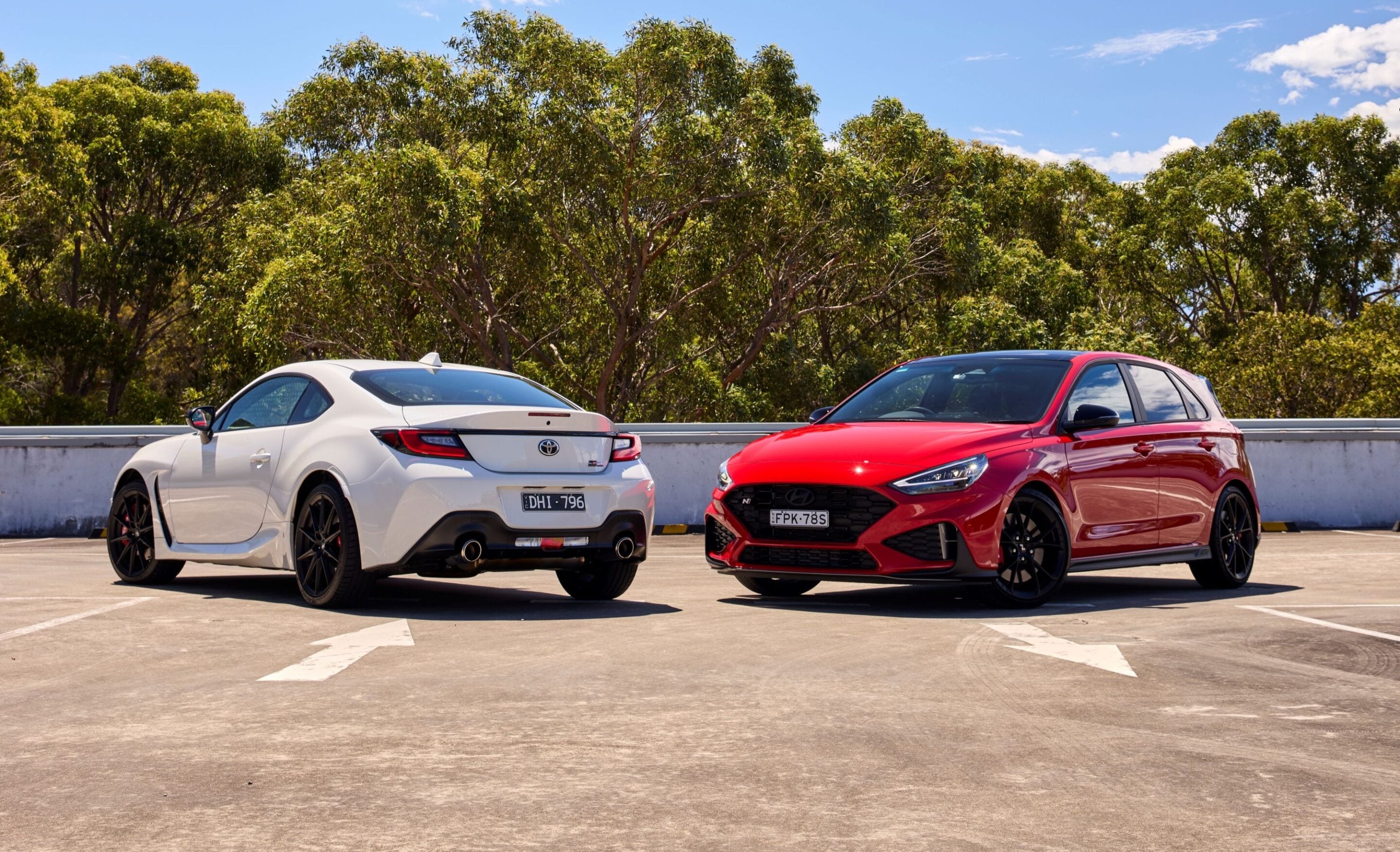
Fast forward 50 years, and the battle between the way it used to be done and the way it is largely done now is arguably as hot as its ever been, as evidenced by our two combatants this month – the 2026 Toyota GR86 GTS and the 2026 Hyundai i30 N Premium – both manual, both sporty, and both significantly more affordable than anything with a European badge on the sheetmetal. You could argue that a subset above the traditional hot hatch has now emerged, with the likes of Volkswagen Golf R, Mercedes-AMG A45 S, BMW M135i and others sending hatchbacks and their performance capability into another dimension. Even the EV movement wants a part, with the likes of Hyundai’s own Ioniq 5N making a heavy-hitting, hatch-bodied statement.
However, within the ranks of affordable hatches, the Golf GTI reigned supreme for a very long time. But a fear years ago, a new contender emerged. I still remember the first time I headed for my favourite back road in the then-new Hyundai i30 N, and not long after heading back to run it up against a Golf GTI. It was immediately evident that Hyundai had a serious performance hatch in its showroom, and one that was absolutely worthy of the hot hatch moniker. Crucially though, the i30 N was no-rushed-to-market thought bubble. It was a properly sorted, fast, engaging and enjoyable hot hatch.
It did everything expected of that type of vehicle, and perhaps most importantly, it felt special. Most impressively, it was a popping and crackling signal of intent from a manufacturer with no previous history of hot hatch execution. The incredible growth and strengthening of the N movement – and its owners – since that launch has been a reminder of our genuine love for cars in this part of the world. Especially cars that stir the soul like the i30 N.
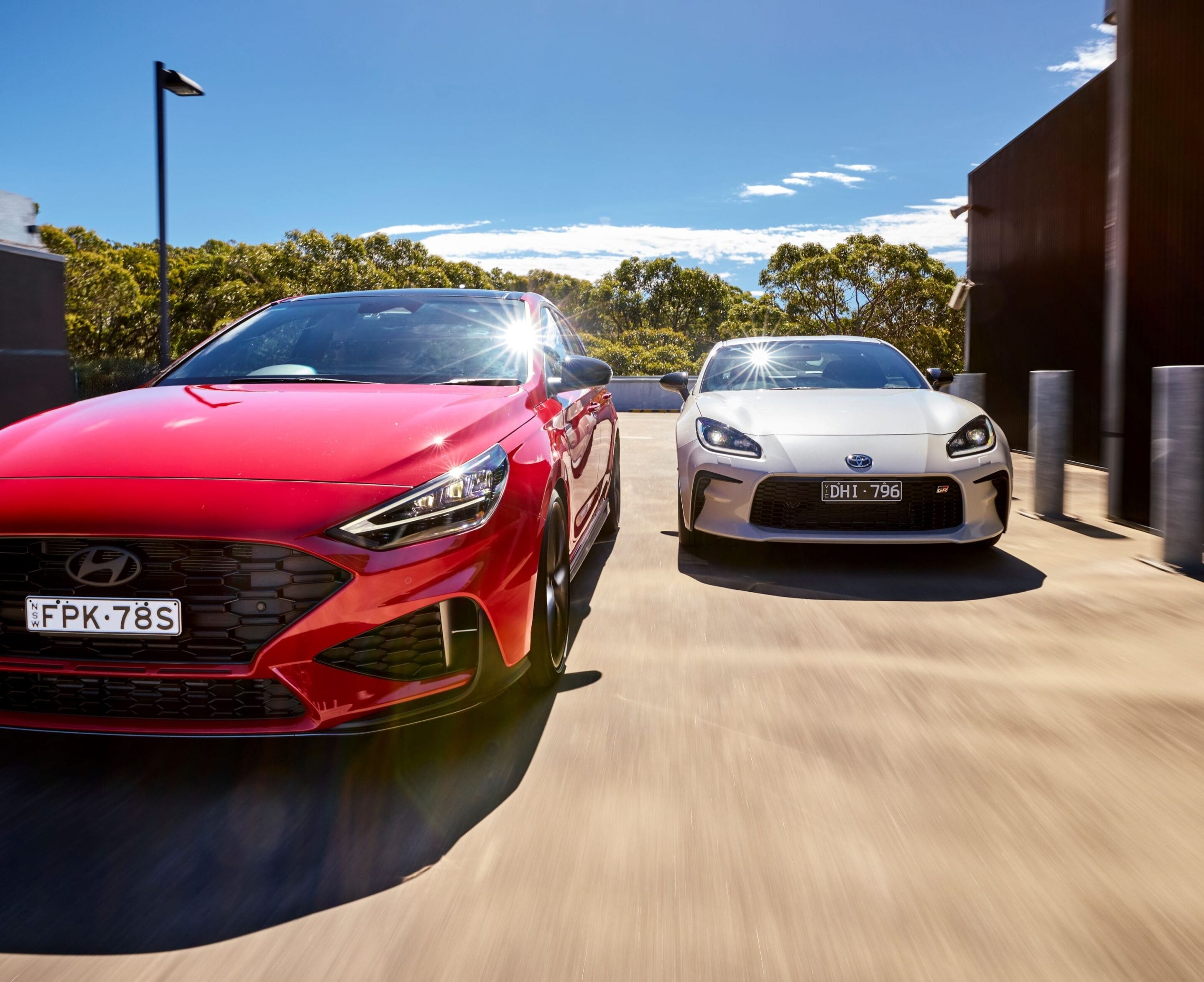
Whether i30 N is still the standard bearer of the front-drive brigade is an argument for another day, but here we have two of the current favourites, even if they come at the prize from very different angles. In the red corner, there’s the rear-drive GR86 and in the blue corner, there’s the front-drive i30 N. Tradition versus the now? Japan versus South Korea? Purity versus practicality?
The differences don’t end at the driven wheels of course. While both are manual (a non negotiable for us for this test), one is turbo, one isn’t; 2.4 litres plays 2.0 litres; flat-four plays inline-four; turbo plays non-turbo and a genuine four seater plays a genuine two seater. This, on every level, is an intriguing matchup.
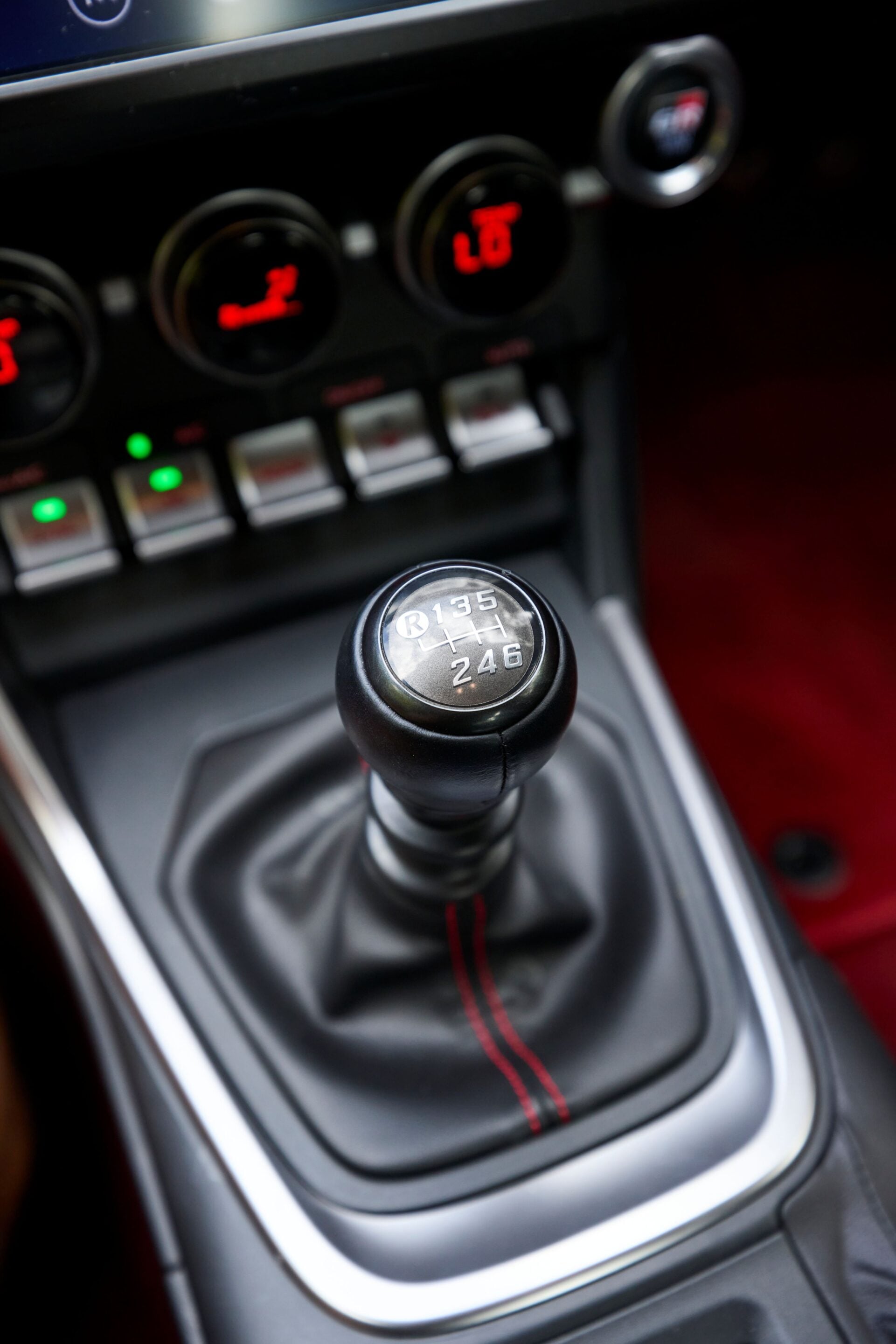
I write that manual transmissions were a must-have for a very important reason. We know that, invariably these days, the automatics on offer are faster and more precise (especially at speed) than us mere mortals can ever be, and they are available in just about every sporty application you can think of. However, the way we see it, while a manual is available it remains the purists’ choice, the more interactive of the two, and the one those of you who truly love driving will always want if you can get it.
I distinctly recall Ferrari announcing that its automatic was, in testing, faster than the reflexes of a certain Michael Schumacher, at the time quite a handy F1 driver. I (and you, I assume) don’t want to try to be Michael Schumacher or, more currently, Max Verstappen.
I do, however, want to feel like I’m directly attached to the driving experience, in the right kind of car. And these are exactly the kinds of cars that should have a manual shifter.
1
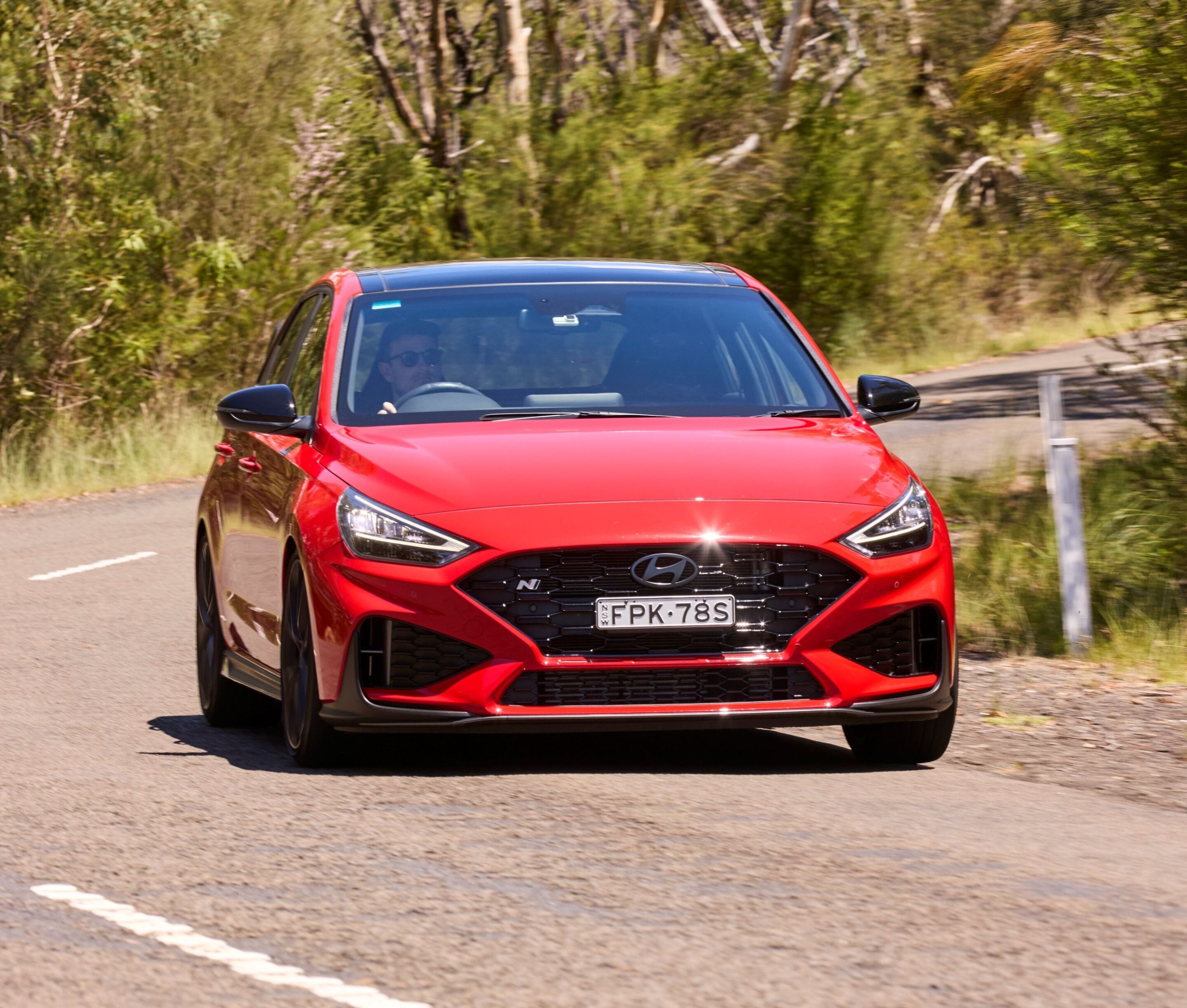
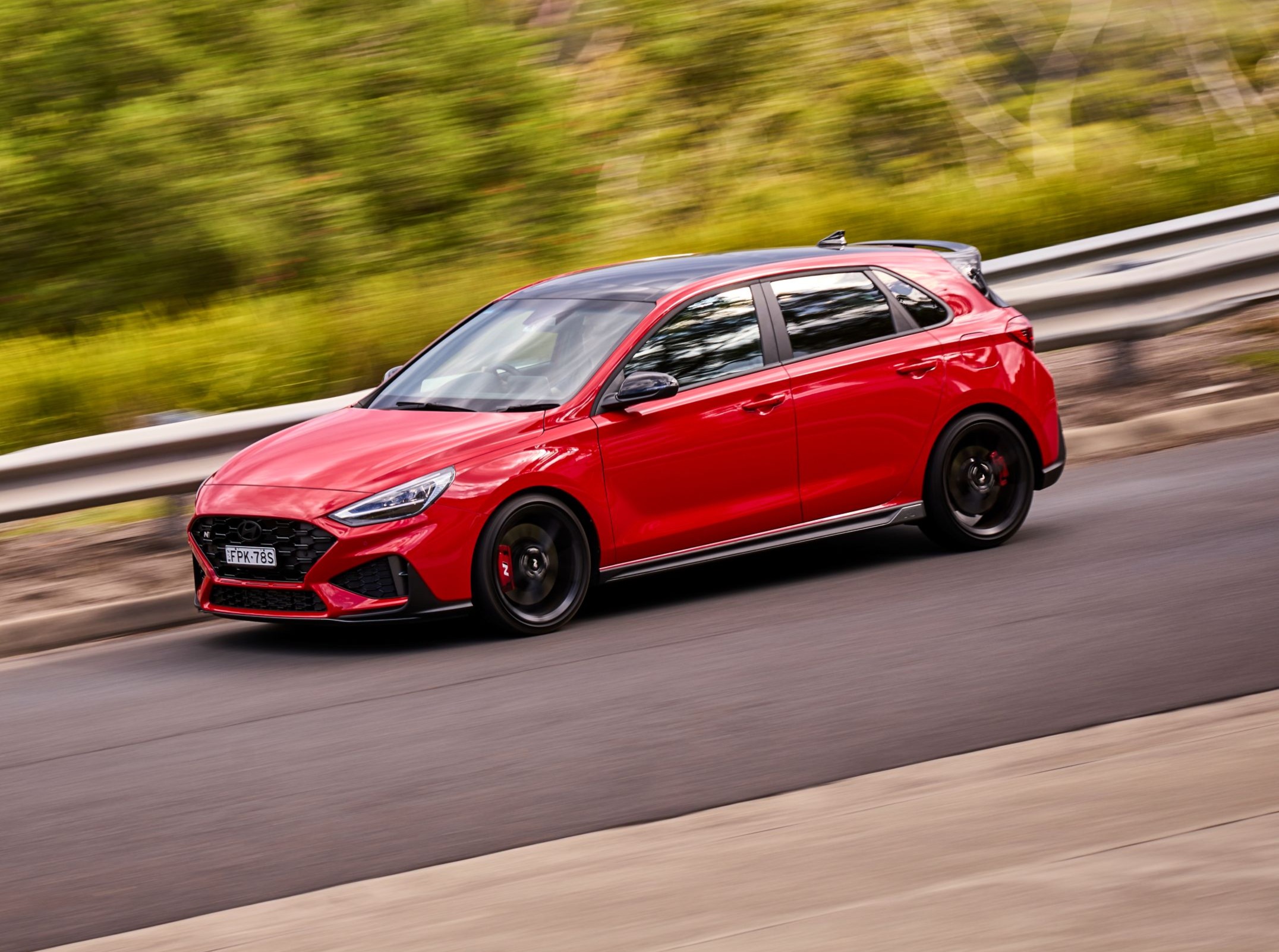
2026 Hyundai i30 N Premium
Let’s start with the Hyundai i30 N, then. At the time of testing, in manual guise, pricing started from $55,500 before on-road costs. And yes, that’s a lot of money for a small Hyundai hatch once you factor driveaway pricing into the equation, but the counterpoint is that you get a lot of car for the money. The 2.0-litre, turbocharged four-cylinder engine makes a healthy 206kW at 6000rpm and 392Nm between 2100rpm and 4700rpm, driving through a six-speed manual.
Hyundai claims a 5.8-second run to 100km/h and combined fuel use of 8.5L/100km. On test we used an indicated 11.9L/100km, keeping in mind Wheels’ interest in – ahem – enthusiastic driving. It drinks 95 RON fuel, the expectation for premium not really a surprise at this performance level.
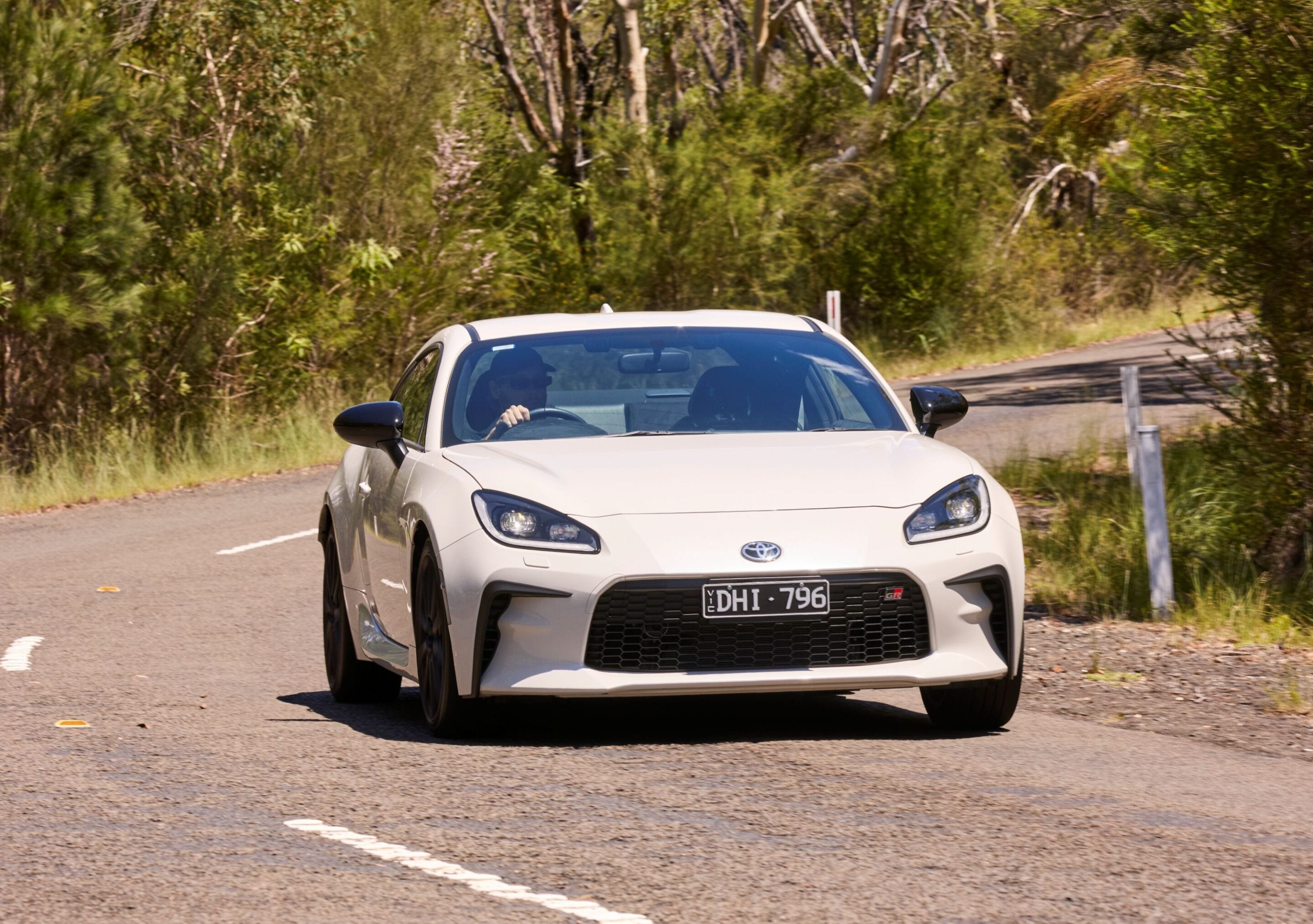
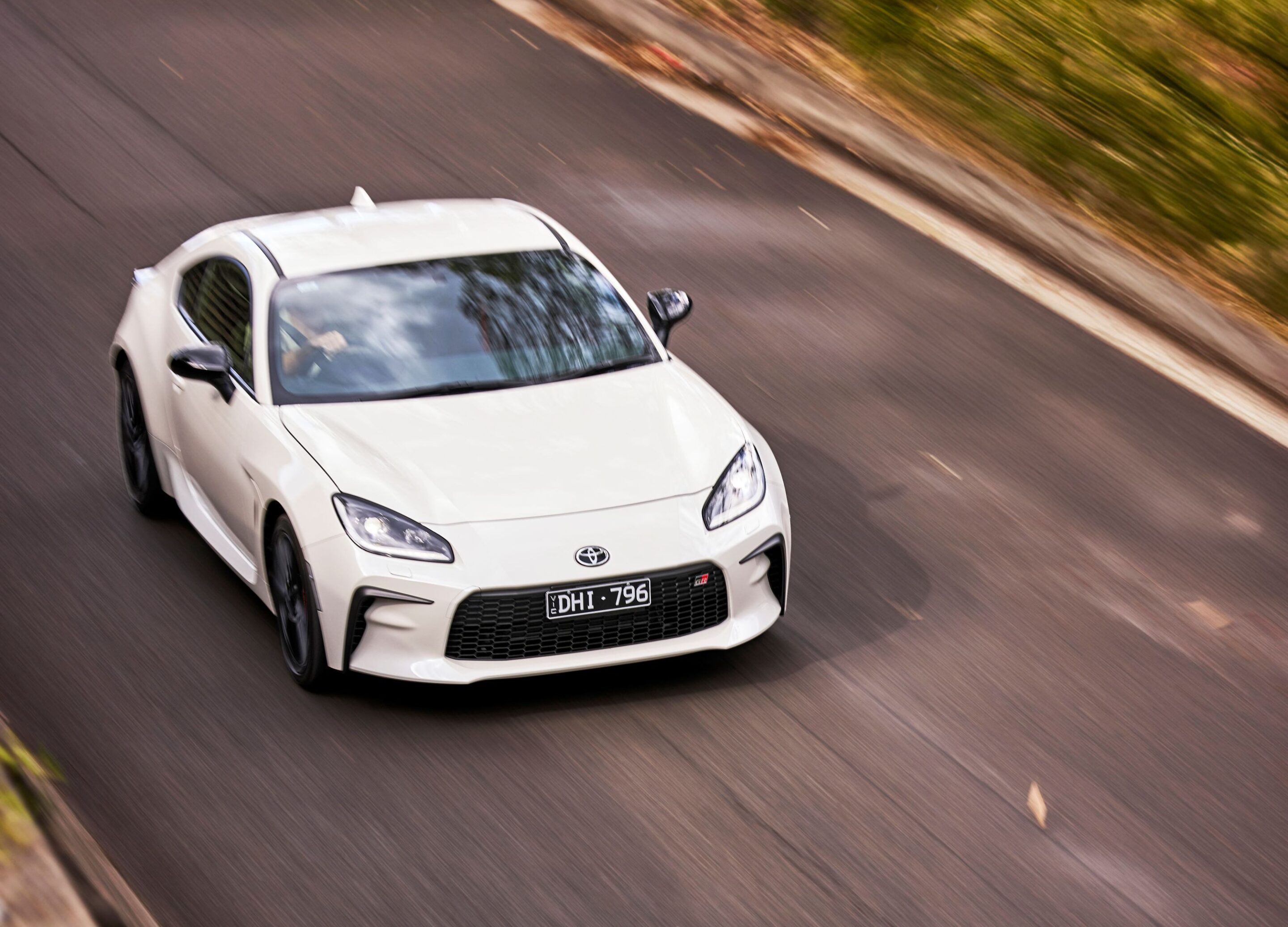
2026 Toyota GR 86 GTS
The GR 86 starts from $46,090 before on-road costs, with the manual transmission, which is a significant saving over the i30 N. You do however get two less doors, rear seats that are for appearance only, a smaller boot, and a far less elegant entry and exit manoeuvre thanks to the lower seat height. The 2.4-litre, horizontally-opposed four-cylinder engine makes 174kW at 7000rpm and 250Nm at 3700rpm, also driving through a six-speed manual, but to the rear wheels.
Toyota says its baby sports car will run to 100km/h in 6.3 seconds and use a claimed 9.5L/100km. Over the same driving roads, the GR86, which asks for 98 RON fuel, was more efficient than the i30 N, using 10.9L/100km.
1
Driving experiences
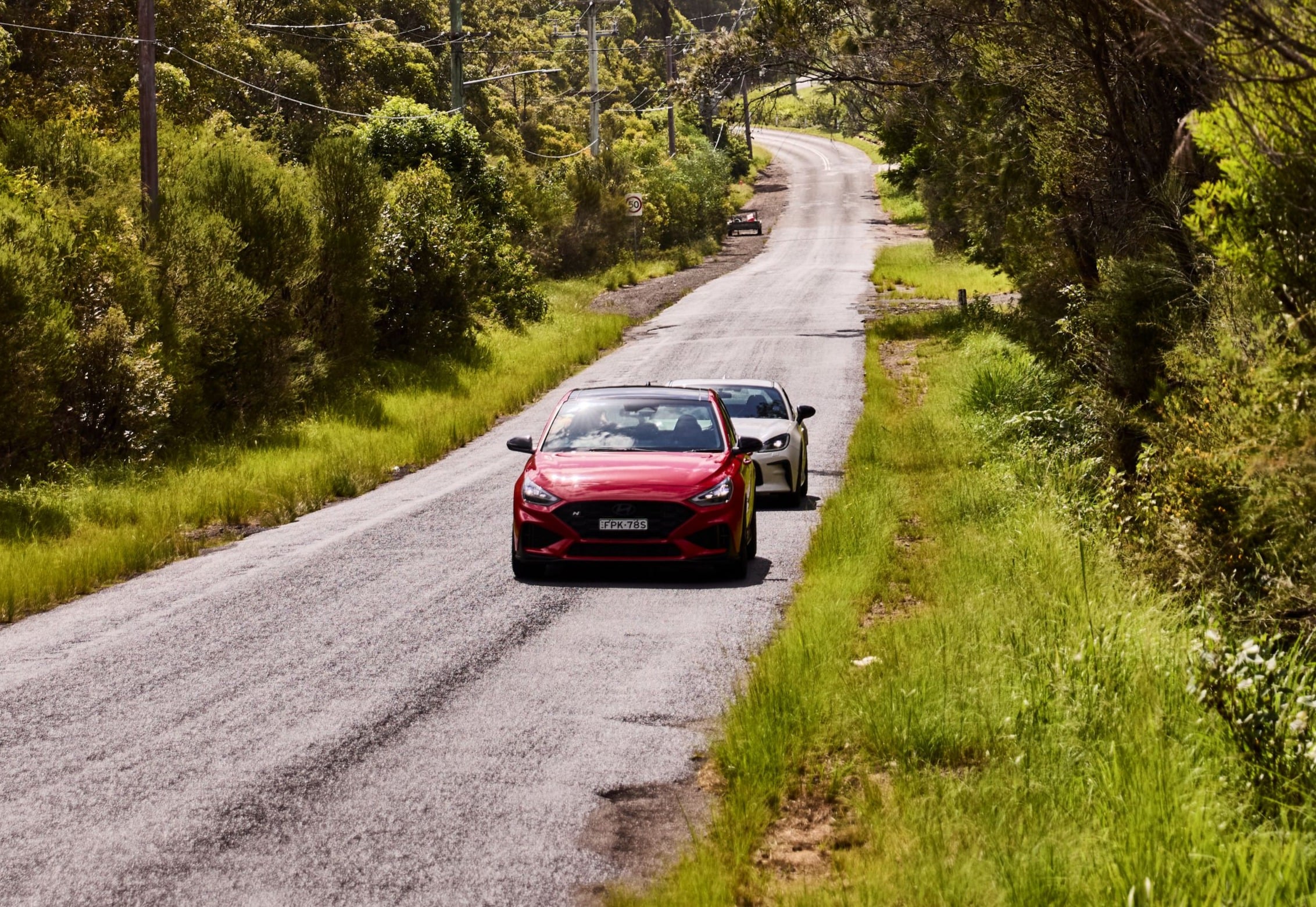
You’d expect the two to feel different in day-to-day driving, and they do. The i30 N is a much easier car to drive smoothly from the minute you get into position, related – we think – to the GR86’s tendency to flare the revs when you change gears, something that takes some getting used to. And it’s worth noting again here that getting into position in the cabin is easier in the hatch. The seat height is more neutral than the GR86, so you step into an i30 N, where you drop down into the GR86. Getting out of the hatch is therefore easier, too, and the Hyundai deals better with tight carparks that don’t allow you to open your door fully. The longer door on the coupe is less practical and calls for a gentler approach so you don’t whack the edge on the wall or the car next to you as you swing the door open. It’s the little things.
Back to driving, though. The shift action, clutch pick-up point and throttle pedal combine to deliver an easy driving experience, which is a big plus when you’re dealing with stop-start traffic. The GR86’s clutch, especially, is much more particular to master, meaning first and second are often a jerky affair if you’re not absolutely dialled in. Compare that with the i30 N, a car you’ll find yourself driving smoothly from the first shift.
There’s a saying that people – even those of us immersed in the motoring way of life – buy on horsepower (kilowatts these days), but drive on torque. That is, the torque – both the peak and the delivery – is what really injects the punch into any given drive. And, if you agree with that concept, it’s a difficult theory to argue when you’re rolling around at five- or six-tenths in these two.
1
The i30 N’s chunky torque peak, found from as low as 2100rpm, gets the hatch up and cranking with an effortless surge, whereas the GR86 feels like it wants more revs on board to feel anywhere near as rapid. That story is borne out in the 0-100km/h sprint times, with the i30 N half-a-second to the good. Yes, the i30 N makes a decent whack more torque anyway, but it’s the earlier delivery of peak torque that’s most felt around town – 2100rpm for the Hyundai where the Toyota requires you to work the rev counter to around 3700rpm before it’s singing its most potent song. Interestingly, if you recall the glory days of
Subaru’s boxer engines in the late 1990s and early 2000s, there’s a lack of the deep gruff growl you might otherwise desire from the GR86. Smooth and refined to suit modern emissions requirements? Maybe.
Once you’re moving though, with revs on board, the full story starts to reveal itself, with a surprising detail you might not have thought would be the case. What is that detail? Power-to-weight ratio. Making 206kW and weighing 1478kg, the i30 N’s power to weight ratio is 139.4kW/tonne while the GR86, with its 174kW and weight of 1229kg, comes in at a slightly superior 141.6kW/tonne. As such, when you’re on the move and both engines are singing in their respective sweet spots, there’s precious little in it and a game of chasing the leader on a winding road is a close fought and fascinating blast.
Driving these cars back-to-back on a country road is also a fascinating assessment of small gains or driver preferences, depending on the mood you’re in. The GR86 feels like it has more in it, much like a Mazda MX-5 always has. It’s less urgent, quieter and more relaxed, with less frenetic energy seemingly being expelled around you. That’s not to say it’s not fast, tactile or responsive. It is, it just does what it does without clipping you around the ears. The i30 N’s rapid fire, shotgun-style exhaust note is more appealing to the ear, and the inner hoon within us, but is absolutely more boy-racer than the GR86, meaning you’re less likely to fly under the radar, if that’s what you prefer.
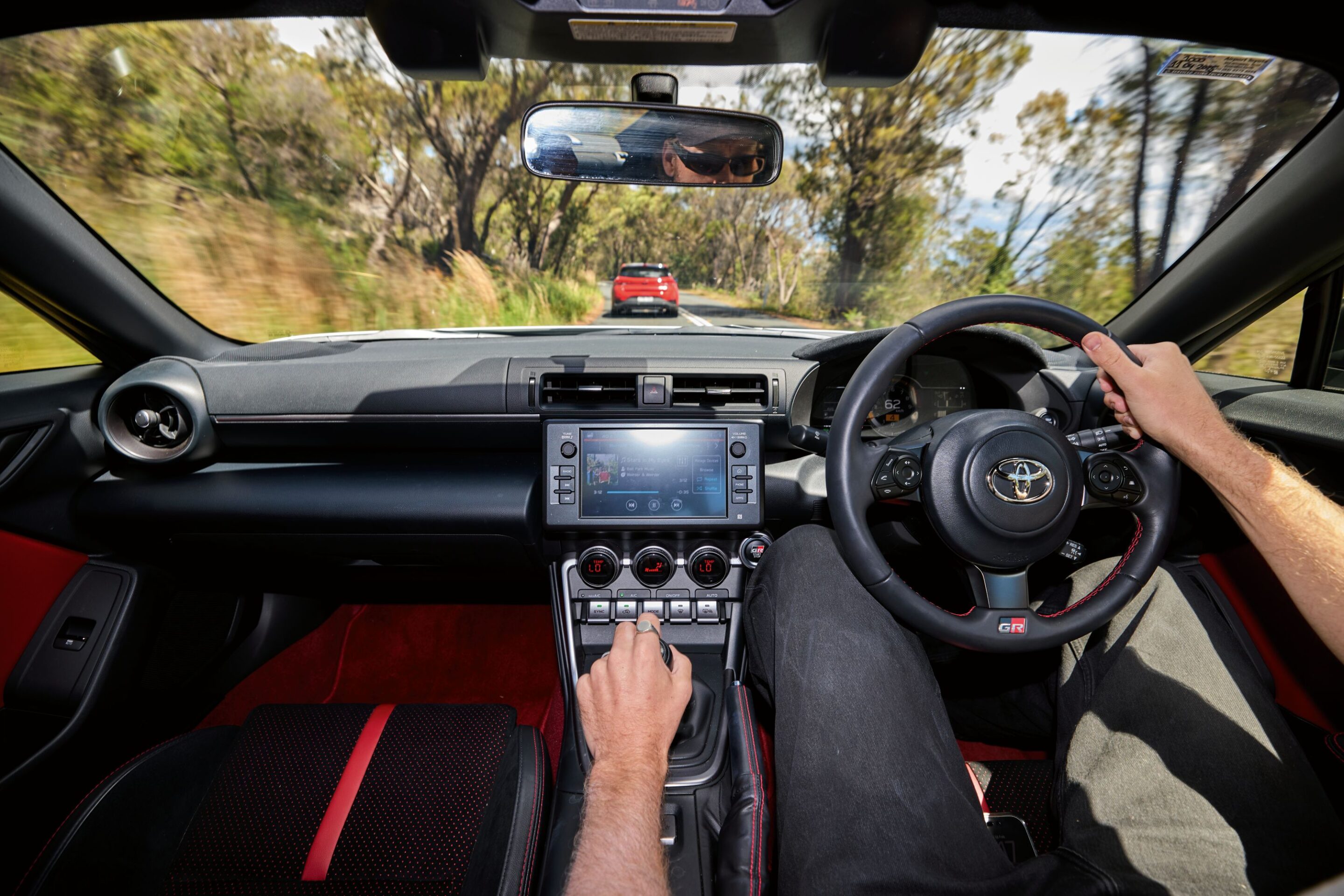
Where these two diverge most, boils down effectively to two crucial areas. First, the i30 N is undoubtedly more practical, and more useful day-to-day. If you need to move four people, carry more than a few bags in the boot, or feel more comfortable with better outward visibility, the GR86 can’t lay a glove on the i30 N. There’s practicality that comes with the hatchback design that the sports car – unless it’s twice the size – can’t match. You feel like you’re sitting on the i30 N rather than down into it, like you do with the GR86. There’s nothing unfair about that assessment, though; one is a sports car, one isn’t. While the Toyota isn’t as easy to get into or out of, once you’re in the seat, the sports car view of the world through the front screen is as intoxicating as it ever was. Still, it will never be as practical as what is effectively a mass-market hatchback body.
2
However, fire the GR86 into the first corner and everything that was always great about lightweight RWD sports cars is fed directly back through the palm of the driver’s hands. The precision of the steering, the balance over the front axle, the light weight and the overall response is sensational. The most recent update brought with it a revised throttle map, specifically aimed at sharper response and linearity, as well as retuned shock absorbers and revised electric power steering. Those changes are felt from behind the wheel.
The driver seemingly only needs to think about where to point the noise and it’s already headed there, such is the razor-sharp nature of the front end particularly. This is a brilliant driver’s car in every sense of the word, slightly underpowered though it might be, beautifully balanced and rarely unsettled on any road. As we’ve always done with the MX-5, though, I’d prefer to think of that slight lack of power as a ringing endorsement of the quality of the chassis, knowing it is proficient enough to deal with significantly more power.
On that score, the ride and bump absorption is a little softer to the seat of our pants, meaning the GR86 soaks up poor surfaces with a modicum more comfort, although it’s not a huge difference. There’s something utterly intoxicating about working the GR86 back from fourth to second, blipping the throttle on the down shift, settling the nose with the brakes, turning into the corner, and working the engine back up to redline as you fire into the next corner. While it doesn’t feel as rapid, it’s certainly as rewarding.
The i30 N – based on our road driving loop of course – would be the one you’d choose for semi-regular track day jaunts if you want to be as fast as possible, making as much noise as possible. It’s a car that will deliver thrills but you have to work a little harder to find them, finessing the hatch through the meaty steering wheel, working out the way to understand it better, and therefore extract its best performance. It doesn’t feel as sharp through the front tyres as the GR86, but that’s to be expected in a FWD versus RWD shootout.
The i30 N, almost all the time, on any road, at any speed, feels more urgent, and more like it’s straining at the leash, wanting to be set free. There’s appeal to that – a gentle lean on the throttle is all it takes for hilarity to ensure. What Hyundai started with its N movement is perhaps still best experienced via a manual i30 N – this is a sensational car to drive in any conditions.
2
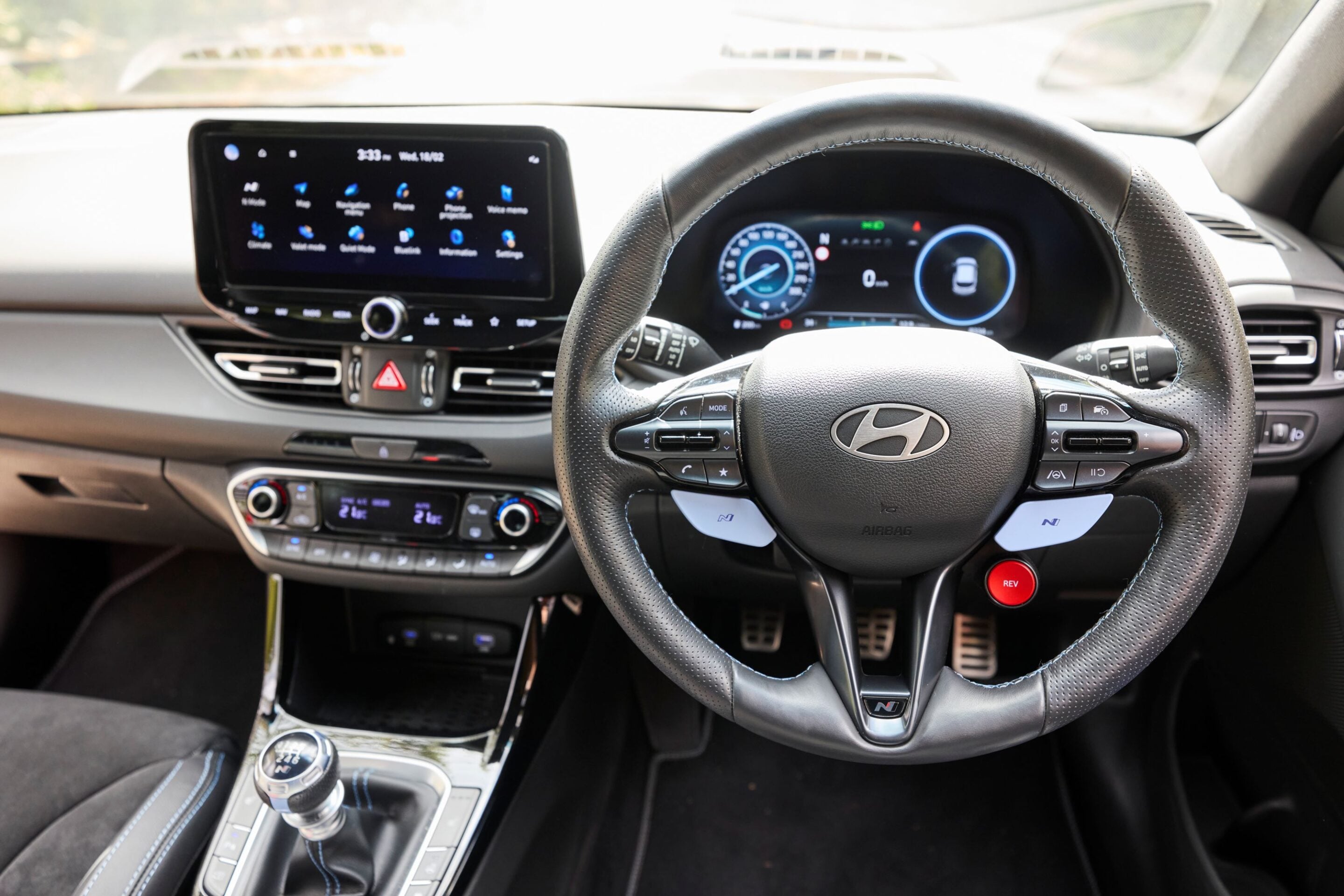
The factors that are less relevant to Wheels in this comparison are in favour of the i30 N. The infotainment interface, the screen, the controls and the way in which you interact with them, all feel a step ahead of Toyota’s, and there’s more practical and useful storage – something you’d expect when comparing a hatch to a sports car. If you’re the owner of a two-car garage, that might not matter to you, but if you’re buying one vehicle to do all things, it means the Hyundai is more practical than the Toyota.
On that note, if the GR86 were mine, I’d have the second row permanently folded down, treating the coupe like a two-seater, with a larger boot, such is their ‘occasional’ nature. And occasional is putting it very mildly – it’s tight back there, even for the shortest of occupants.
Neither car has an ANCAP crash rating – with the regular i30 getting a full five-star ANCAP rating. Neither i30 N or GR86 specifically have been tested by ANCAP, though. Both get five-year warranty coverage, but Hyundai’s can be extended to seven if you service it through Hyundai dealers.
Verdict
It’s easy to fence sit in a comparison such as this one – so different are the two vehicles when pitted head-to-head. The i30 N is a decidedly easier car to drive smoothly at sedate speeds, and it’s therefore much more comfortable just bumbling around town in traffic where it feels effortless all the time. If you value smoothness, there’s real currency in that, too. The punchy nature of the turbocharged engine means you don’t need silly revs on board to get moving at a decent clip. There’s room for four adults to travel in comfort. If you’re buying on practicality, then, the i30 N is the unanimous points winner.
However, if it’s my money sliding across the table – or whooshing across the e-universe more accurately – I’m buying on driving purity. And on that score, the GR86 is the winner. The i30 N feels heavier over the nose and through the steering wheel, the reality of the front wheels doing the driving and the steering. By contrast there’s a razor sharp precision and lightness to the GR86 that makes every corner a cause for celebration.
The response of the naturally-aspirated (and finally right-sized for the vehicle) engine, which definitely needs more right foot work to sing, is a thing of beauty, a sensory pleasure almost lost in a world of ubiquitous forced induction. The linearity of the power delivery, and the way in which it soars to redline deliver what we think is the best modern take on an old school drive you can get, and that includes Mazda’s legendary MX-5.
3
We can only hope that the RWD versus FWD battle rages for decades yet, such is the beauty of
the comparison and the difference of the drive experience. Pick your poison, sure, but one undisputed fact remains. In a world laden with SUVs, dual-cabs and slabs that all too often feel as heavy to drive as they look, these two cars will remind you why you fell in love with driving in the first place.
They will leave you looking for the long way home every time. And they will leave you with a stupid big grin on your face every time you do. And, that’s something worth celebrating.
Specs
1
| Model | Hyundai i30 N Premium manual |
|---|---|
| Price | From $55,500 plus on-road costs |
| Engine | 1998cc turbocharged four-cylinder petrol |
| Peak power | 206kW (@6000rpm) |
| Peak torque | 392Nm (@ 2100 – 4700rpm) |
| Transmission | Six-speed manual, front-wheel drive |
| 0-100km/h | 5.8 seconds (est.) |
| Top speed | 250km/h (electronically limited) |
| Claimed combined fuel consumption | 8.5L/100km |
| Claimed CO2 emissions | 199g/km |
| Fuel type | 95 RON premium unleaded |
| Fuel tank size | 50 litres |
| Dimensions (length/width/height/wheelbase) | 4340/1795/1445/2650mm |
| Boot space | 381 litres (rear seats folded: 1287 litres) |
| Tare mass | 1478kg |
| Warranty | Five-year/unlimited km (extendable to seven years with dealer servicing) |
| Rating | 8.5 |
1
| Model | Toyota GR 86 GTS |
|---|---|
| Price | From $46,090 plus on-road costs |
| Engine | 2387cc naturally aspirated four-cylinder petrol |
| Peak power | 174kW (@7000rpm) |
| Peak torque | 250Nm (@ 3700rpm) |
| Transmission | Six-speed manual, rear-wheel drive |
| 0-100km/h | 6.3 seconds |
| Top speed | 226km/h |
| Claimed combined fuel consumption | 9.5L/100km |
| Claimed CO2 emissions | 217g/km |
| Fuel type | 98 RON premium unleaded |
| Fuel tank size | 50 litres |
| Dimensions (length/width/height/wheelbase) | 4265/1775/1310/2575mm |
| Boot space | 237 litres |
| Tare mass | 1229kg |
| Warranty | Five-year/unlimited km |
| Rating | 8.6 |
This story first appeared in the April 2026 issue of Wheels magazine, now on sale. Subscribe here and gain access to 12 issues for $109 plus online access to every Wheels issue since 1953.
Follow WhichCar/Wheels on Google
Click the button below to make WhichCar by Wheels a preferred source for your news.

We recommend
-
 Comparisons
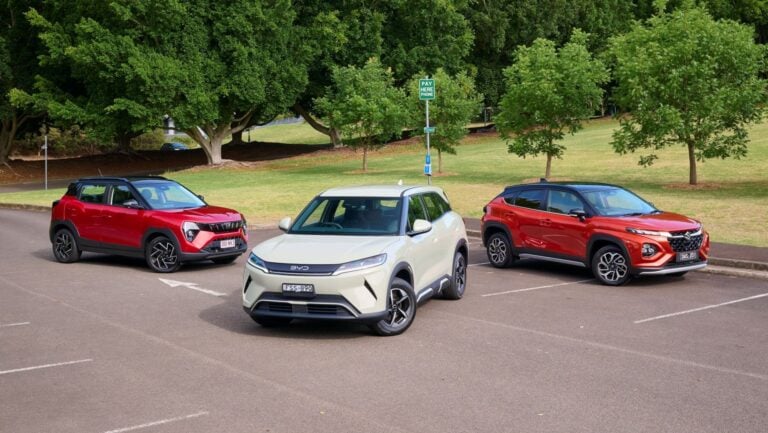
Battle of the budget busters: Three affordable compact SUVs gets the Wheels comparo treatment
Three sharply priced small SUVs from BYD, Mahindra and Suzuki compete for buyers on a tight budget, but as equipment, efficiency and expectations shift, only one contender ultimately delivers true modern-day value.
-
 Comparisons
Powertrain battle! Nissan X-Trail v Tesla Model Y v MG HS Hybrid+
Australian buyers love medium and large SUVs – and the choices have never been more broad than they are right now. The question is, which powertrain suits you? best? Regular hybrid, petrol generator electric, or full electric? Three very different combatants duke it out
