
Reviews


Gallery 1
8.3
/10
Score
Score breakdown
8.5
Safety, value and features
8.5
Comfort and space
8.5
Engine and gearbox
8.0
Ride and handling
7.8
Technology
Things we like
- Styling and execution
- Excellent driving experience
- Fuel efficient and fun
Not so much
- Second row too tight for adults
- More performance would be nice
- Some hard plastic in the cabin
How much does the Honda Prelude cost to buy?
New Prelude is priced from $65,000 drive away, and comprises one model only. Given it’s based on the Civic e:HEV LX, which is priced from $55,900, it’s a decent step up, but you can certainly argue that you get more for more, in every sense. Keep in mind, too, that Honda Australia runs with set pricing, so there’s no haggling.
Prelude gets adaptive dampers standard, along with 19-inch alloy wheels, blue brake calipers, LED headlights, dual-zone climate control, a 9.0-inch touchscreen with wireless smartphone connectivity, a 10.2-inch driver display and an eight-speaker Bose audio system. There’s also heated, leather trimmed seats, a flat-bottomed, leather-trimmed steering wheel, privacy glass, LED headlights, tail lights and running lights, and adaptive high beams.
Standard safety equipment includes ten airbags, autonomous AEB, adaptive cruise control with low speed follow, lane-keep assist, blind-spot monitoring, rear cross-traffic alert, traffic jam assist, traffic sign recognition, post collision braking system, rear-view camera, front and rear parking sensors, and unintended acceleration mitigation system.
3
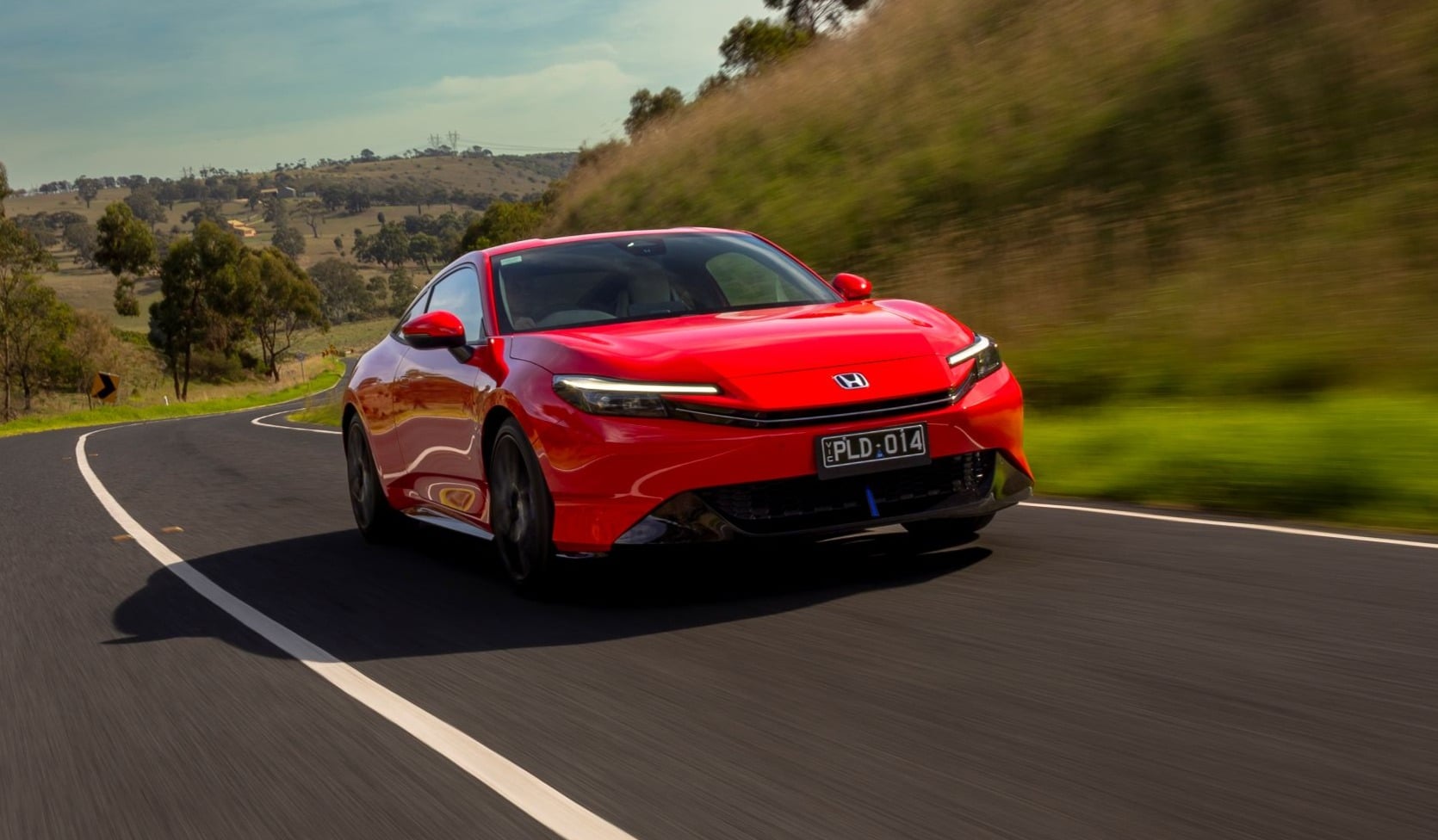
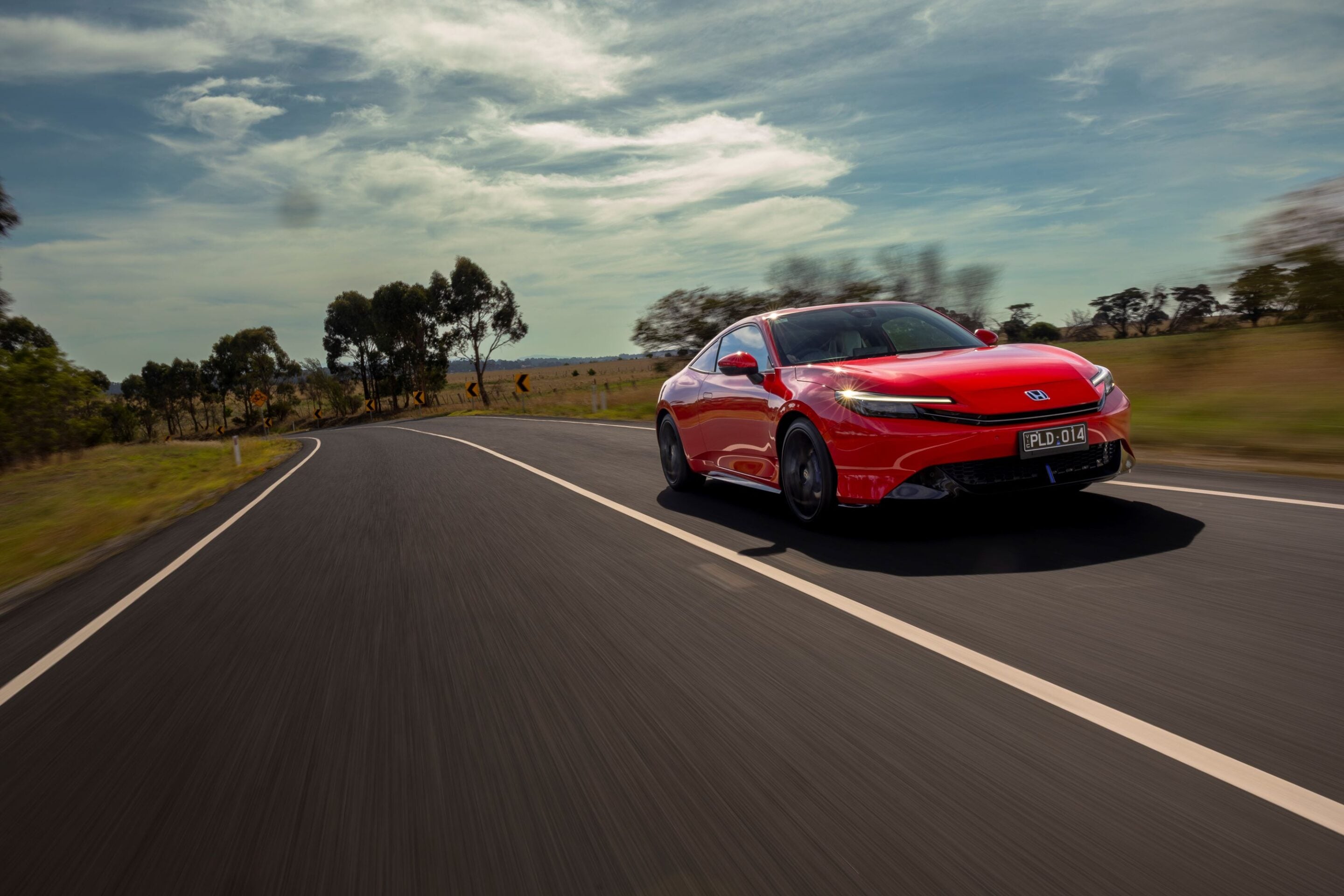
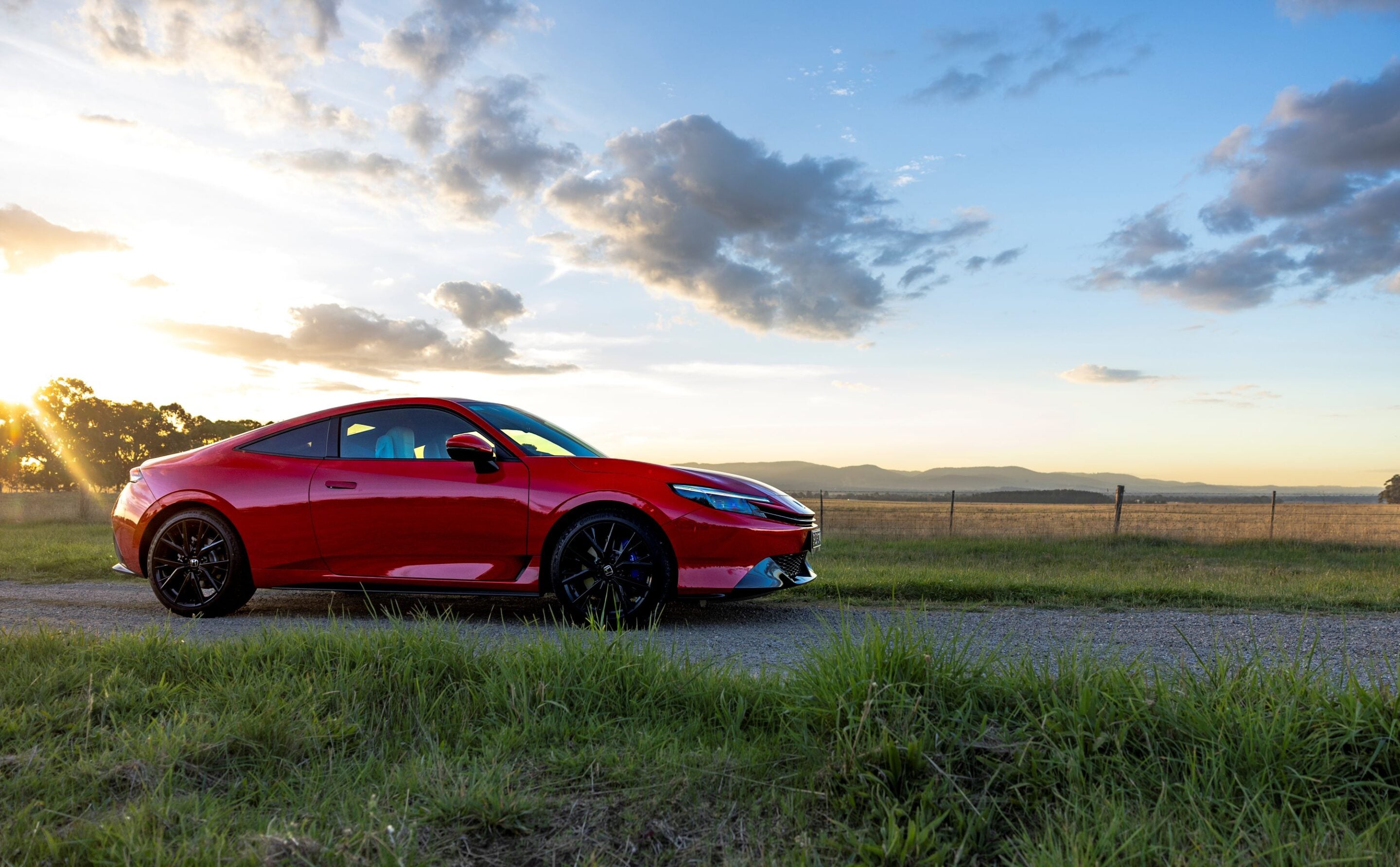
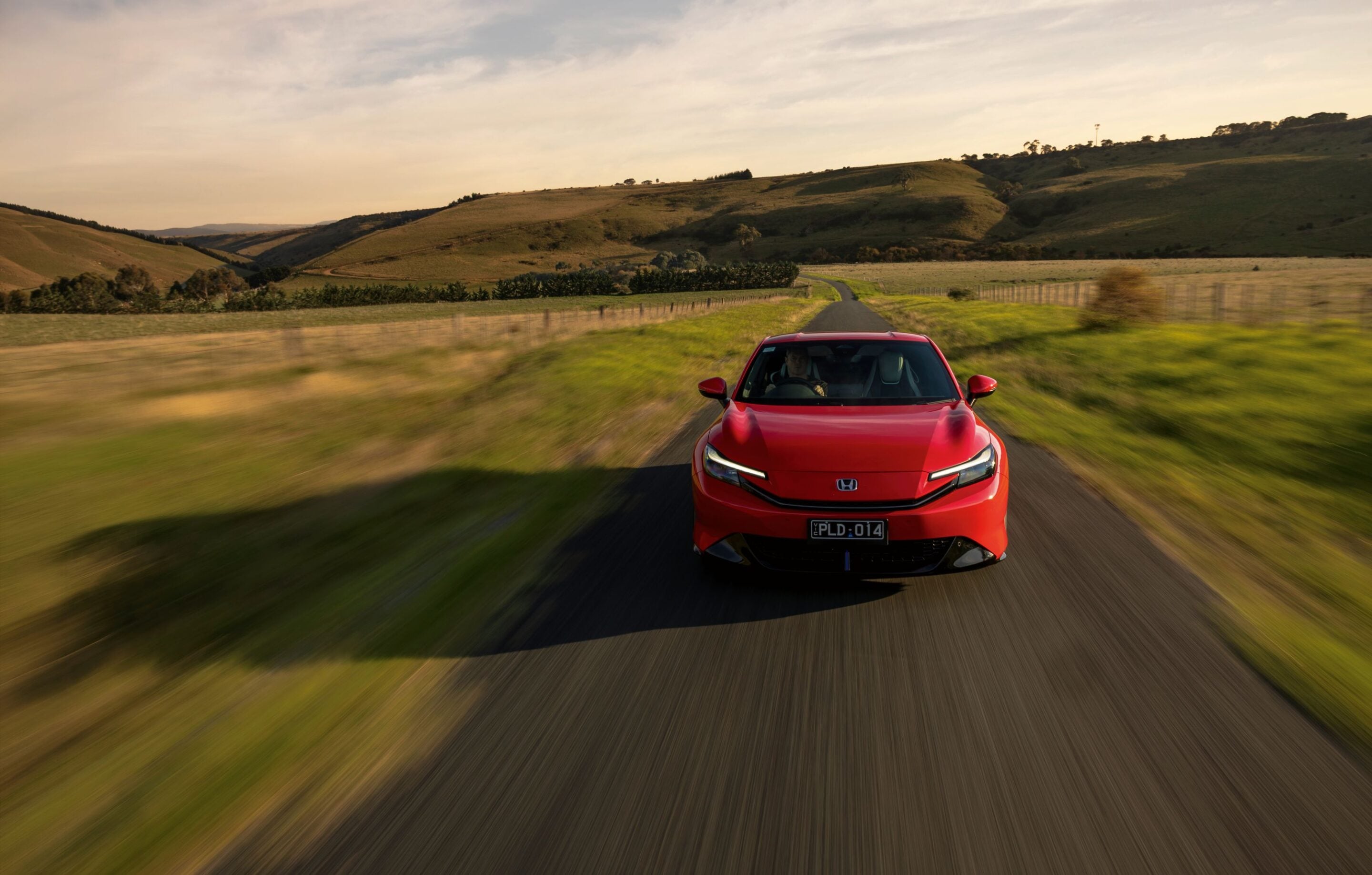
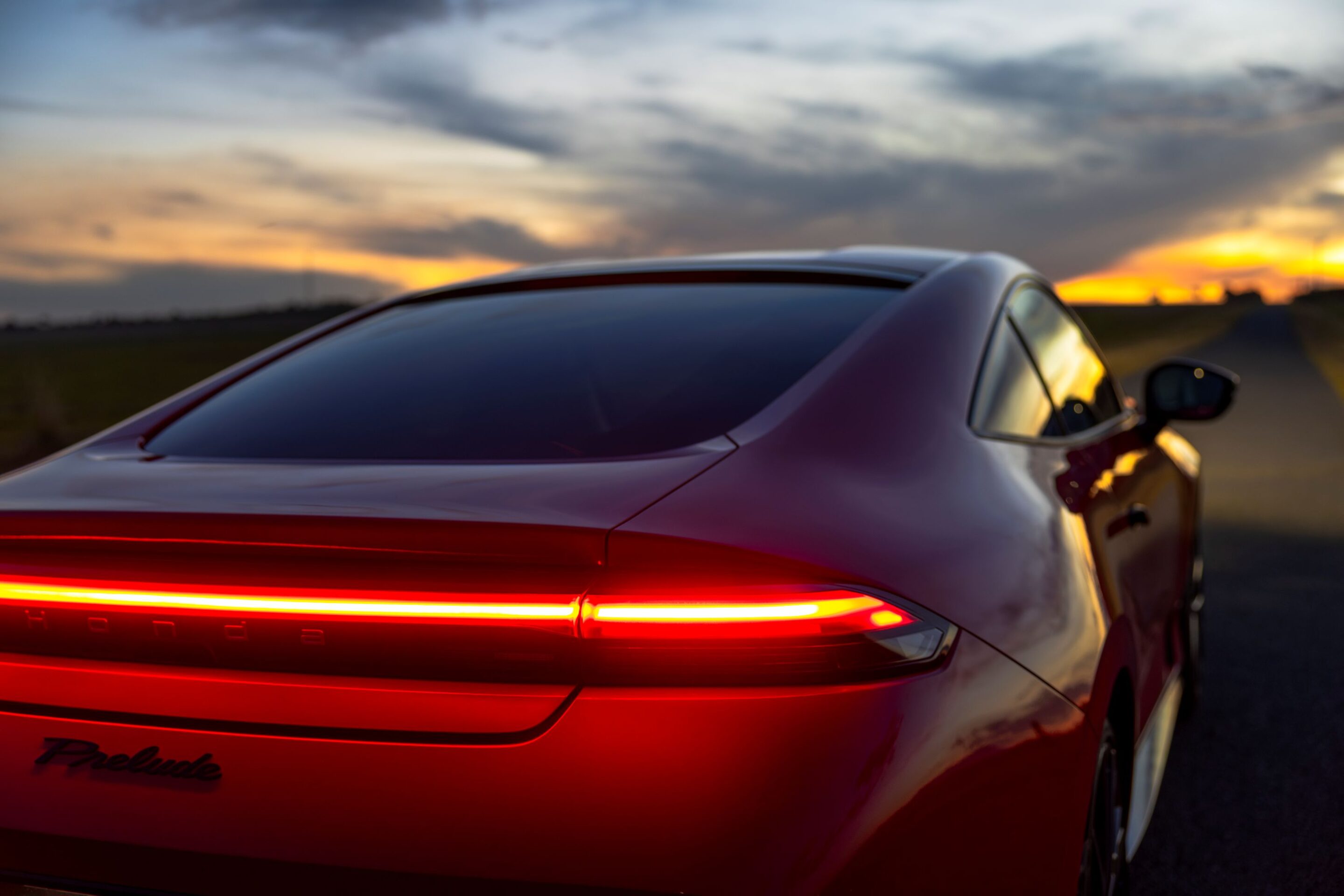
In sixth-generation form, the Prelude cuts a classy, elegant figure on the move. As much, if not more so, than it does when parked. Honda has ticked that box then. In fact, I’ve not driven a car that has garnered quite so much attention for some time. In the city, in the country, thumbs up were given, nods were exchanged, and photos were taken – people love the look of the new Prelude. And, while the blush of a new, not yet broadly seen car is fleeting, there’s real street presence to be witnessed with Honda’s return to form.
How fast is the Honda Prelude?
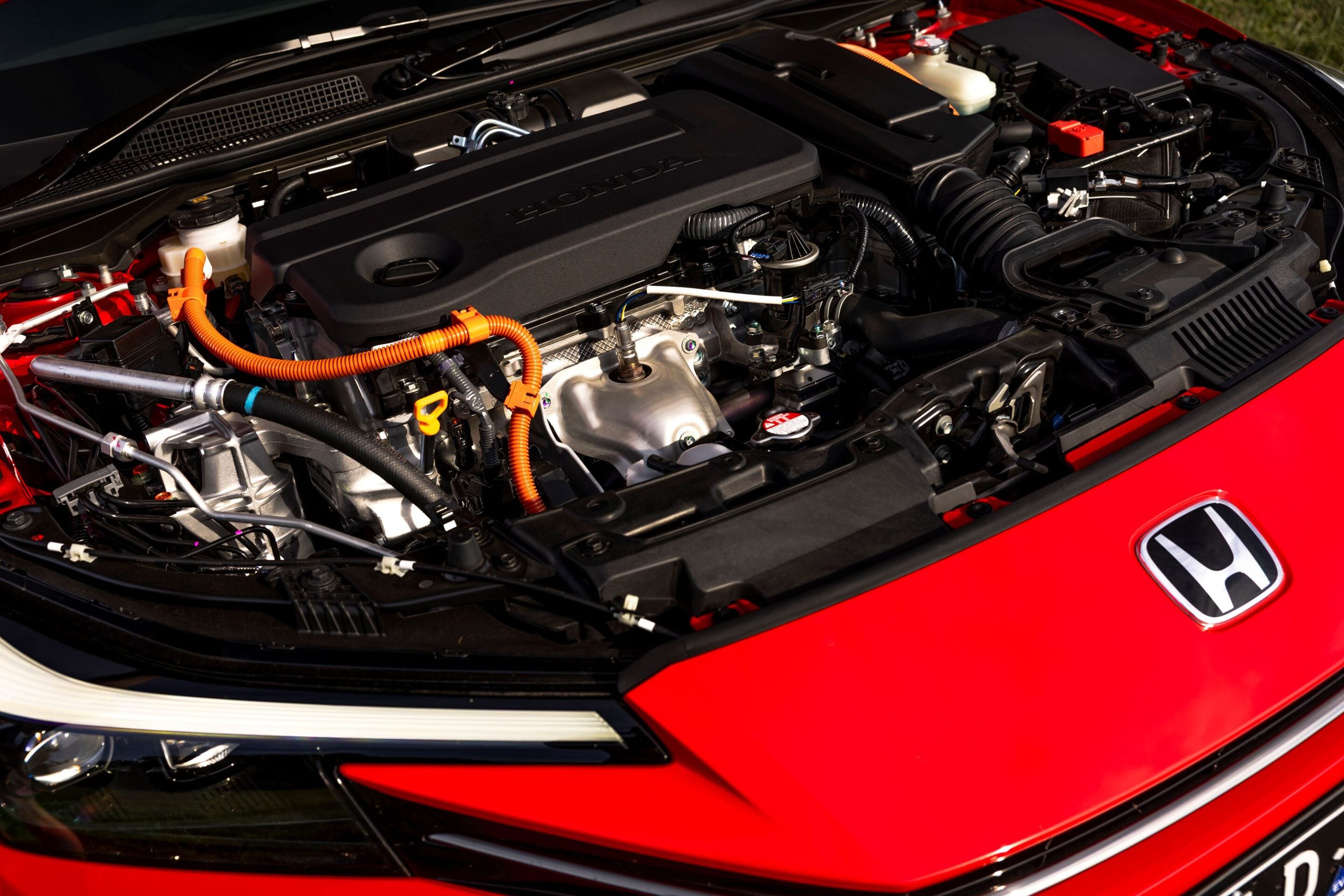
The technological smarts and powertrain that Honda has opted for, are genuinely interesting. And it’s why, once again, the Prelude might well be, more than the sum of its parts. What’s most fascinating though, is the wildly divergent take on a hybrid powertrain.
Speak to Lamborghini for example, and hybrid is a way of making a fast car, even faster. Yet, in a vehicle like the new Prelude the sentiment might be that it’s ‘only’ a hybrid. That would be to misjudge just how good it is, though.
New Prelude is powered, then, by an e:HEV hybrid system, rather than a screaming, naturally aspirated engine. There’s a 2.0-litre, Atkinson-cycle four-cylinder petrol engine, which on its own, generates 104kW and 182Nm. The electric drive motor then adds 133kW and 315Nm. As is the case with powertrains of this nature, the numbers don’t quite add up, with Honda quoting combined system outputs of 147kW and 315Nm, driving the front wheels.
1
While the power figure won’t make your eyes water, consider the healthy 315Nm, delivered instantly by way of the electric motor. As such, the Prelude feels fast from launch, but not scintillating. Honda doesn’t quote an official 0-100km/h time, but initial reports suggest a sprint in the range of 6.5-7.2 seconds is achievable.
The transmission is, for me, the point of most interest. Technically, there isn’t one, with Honda opting for its direct-drive e-CVT system. Here’s the rub, though. To counteract the whiny, power-sapping sensation you get from some CVTs, Honda has come up with the aforementioned S+ Shift system. Paddle shifters are there if you want them, and there’s the simulation of an eight-speed transmission. It’s important to note, too, that this isn’t a CVT with belts and pulleys. It’s an e-CVT as part of a two-motor hybrid combination, where the electric traction motor is primarily driving the front wheels.
Do you need the sensations that come with simulated gearshifts? Maybe not, but they add some flair to the Prelude’s bag of tricks, and satisfy those of us who love to feel as engaged as possible when they
drive.
Under the skin, engine aside, there are some unexpected hot hatch smarts, though. As a way of best harnessing the instant, and healthy, electric torque, Honda has used the dual-axis front suspension from the Civic Type R, specifically designed to control torque steer.
Given Civic Type R has one of the best FWD front ends ever designed, that’s a good start. Prelude also gets the adaptive damper system from the Type R, albeit tuned to suit a more luxurious driving experience as well as Agile Handling Assist, an active braking system that helps keep your corner entry and exit tidy. This is all ably assisted by the quality 235/40/19 Continental tyres contacting the bitumen.
The quality of the chassis, and its components, then, is the reason the front end is firing me through each corner of Black Spur in a way that blurs the line between grand tourer and hot hatch. My chosen drive route is designed to push the performance envelope of the Prelude to find out exactly what it’s capable of.
Prelude isn’t a fast car outright, but it extracts the absolute maximum of what it can deliver because the chassis is capable of so much more than it needs to harness. In fact, the 1480kg Prelude feels lighter than that number would indicate. The balance, the feedback through the wheel, the turn in and Brembo braking system are all so feelsome and capable, you know there’s a Honda engineer somewhere back at HQ working on a Type R version.
1
Exiting a corner at about the halfway mark up Victoria’s famous Black Spur drive, the new Honda Prelude’s duality of character truly reveals itself. A few short hours earlier, I had left Melbourne city in the pre-dawn darkness, intent on avoiding the morning peak hour, making my way out of the urban sprawl and, following a quick coffee stop in Healesville, I headed for one of Australia’s great driving roads.
As the Prelude’s shapely snout pierced the low-hanging mist, a two-door that had been utterly at ease working its way comfortably out of town at banal traffic speeds, lunged for the next corner with the enthusiasm of a far sportier sports car than its specification sheet might suggest it is. Indeed, the Prelude is no hot hatch, nor is it masquerading as one.
Honda would argue there’s a Civic Type R to satisfy such desire. Rather, the Prelude, much as it always was, is targeted at classy, elegant touring. A two-door for the discerning buyer, one who knows that depth of engineering and attention to detail trump boy racer bodykits and noisy exhausts.
And yet, in Sport mode and with S+ Shift engaged, the 2.0-litre engine singing a soulful lullaby, simulated gearshifts bringing with them a blip of the throttle, and the front end doing precisely what I ask of it, I’m struck by how fun this Prelude is to drive. It’s a well-executed car in the way Honda does things, but it’s faster, more engaging and more connected than I expected.
The Black Spur drive is a sensational one – so much so, I pass through Narbethong and reach Marysville, letting the Prelude relax only long enough for me to admire it within the frame of the autumn leaves, before I turn around to head down, and then back up again.
It’s a road that provides corners and surfacing that allows you to test a car within the speed limit, and without the need to stress the car beyond its comfort point. Few Preludes will ever see the track, so this environment, on a beautiful Melbourne day, is where it should feel most at home.
How fuel efficient is the Honda Prelude?
Real-world efficiency – once not even a fleeting thought for the cultured and discerning GT driver, is very much the subject du jour in 2026 and on that front, the Prelude is excellent.
Our tester had only just clocked over 600 total kilometres as it sat ticking on cool down, and over that duration, it had used an average of just 5.6L/100km, despite much of that driving being, let’s say, enthusiastic.
Initial specifications suggested an average fuel use of 5.2L/100km, but Honda officially claims an average figure of 4.3L/100km. The live reading still only displayed mid sevens during our sporty drive. If you want to look good while using as little fuel as possible, then, the Prelude is here to serve. The 40-litre tank provides plenty of cruising range, and it will use regular 91 RON fuel.
3
Is the Honda Prelude practical?
If you’re of the vintage that might be considering buying a Prelude now, lets call it 45-60, you would have come of age in a time when Honda ownership was to be respected. A step above ‘regular’ Japanese cars, a Honda in the driveway wasn’t far off a vastly more expensive Euro badge in terms of credibility. In that sense, this new Prelude will require broad shoulders to carry the weight of its lineage.
Reluctantly, I point the Prelude’s nose back toward Melbourne, understanding that like the dates Prelude was always designed to enhance, all good things must come to an end.
Prelude is without question, the type of car that leaves you looking for the long way home, or one more blast than you had planned as I did earlier in the day. That alone, is the mark of a great car, and the cabin design and execution play a large part in the attraction.
Back into city traffic, Comfort mode selected, and the e-CVT left to its own devices, the Prelude is incredibly smooth, comfortable and competent. The ride quality in Comfort mode (Prelude defaults to GT at start-up) is excellent, soft enough to knock the sharp edges off ruts and speed humps, but without feeling like it wants to pogo after dealing with them. If you feel like the ride is too soft, switch over to Sport mode to firm things up.
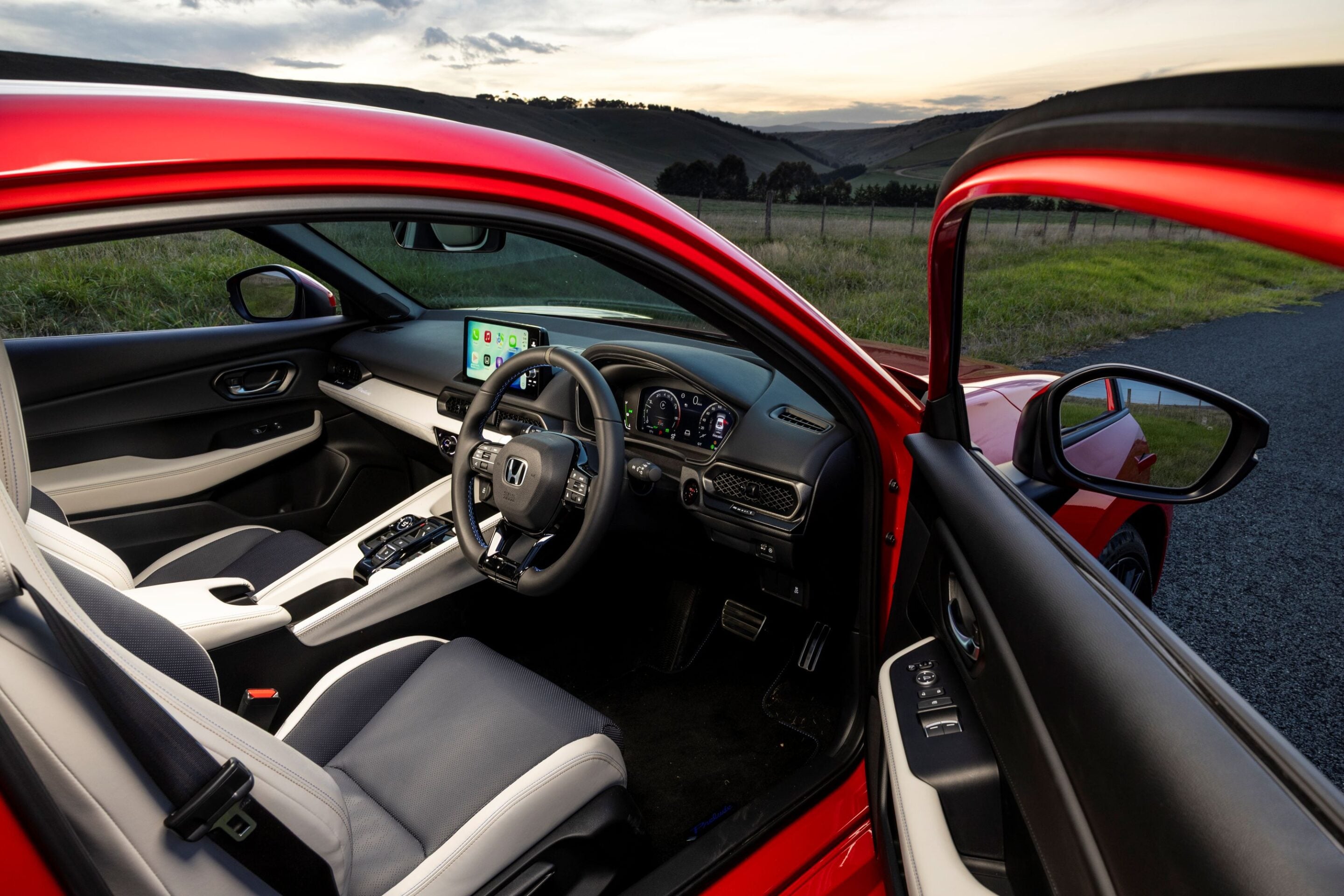
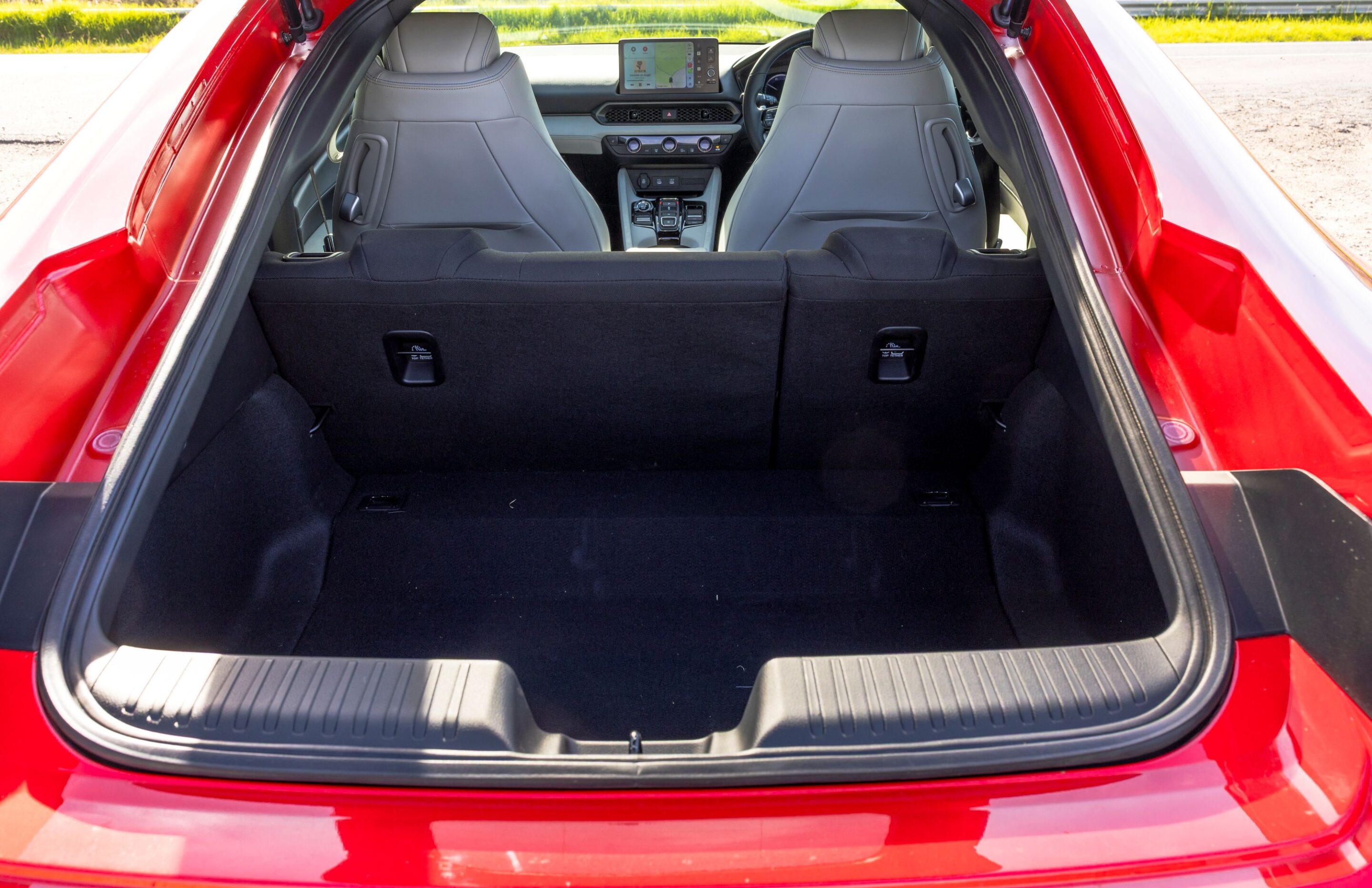
The seating position for my 185cm frame is excellent, driver focused and sporty, without requiring inelegant entry and egress. This is unequivocally a useful two-door, something not all of them can claim. It’s low without being silly, but once you’re in the cabin, there’s room, storage, and visibility to ensure a comfortable drive whether you’re on a road trip or going to work. While the second-row seats are tight for adults, the 663-litre boot is perfect for two-up road trips, accessed by way of a traditional hatch.
The cabin, and all the features we expect to be able to easily use in 2026, are all as expected. Honda’s attention to detail is in evidence in the trim, the choice of materials and even the embroidered Prelude logo on the passenger side of the dash. Connectivity and infotainment control are all as per the current Honda brief. Physical switches and dials for key controls are appreciated and ensure the interaction between driver and car is as good as it can be.
1
What warranty covers the Honda Prelude?
Prelude is backed by the same warranty as other Hondas in the fleet, that being a five-year/unlimited kilometre span, while the hybrid battery gets coverage across eight years.
Service your Prelude at a Honda dealer and you access an additional three years coverage, with roadside assistance included. Servicing is incredibly competitive, with a visit to the service centre required every 12 months or 10,000km and costing just $199 each across the first five years of ownership.
Should I buy a Honda Prelude?
As has always been the case, Prelude enters a market without a segment that comfortably accommodates it. Toyota 86 and Subaru BRZ aren’t really aligned, an Ecoboost Mustang would provide a fun, if irrelevant, comparison, while BMW’s 2 Series Coupe isn’t quite right either.
Prelude was never really defined by a segment and you could mount an argument that it remains so. The first line in my notes, before I’d even opened the door, as I prepared to drive the Prelude was the following: I want the Prelude to be great. It is.
1
Honda Prelude Hybrid
| Price | $65,000 drive away |
|---|---|
| Engine | 2.0-litre, four-cylinder petrol engine |
| Motor | Single electric motor front-wheel drive |
| Engine outputs | 104kW/186Nm |
| Motor outputs | 135kW/315Nm |
| Combined outputs | 135kW/315Nm |
| Transmission | e-CVT with S+ Shift |
| Claimed 0-100km/h | 8.2 seconds |
| Fuel economy (claimed) | 4.3L/100km |
| Fuel on test | 5.6L/100km |
| Dimensions (l/w/h/wb) | 4522mm/1880mm/1355mm/2605mm |
| Boot size | 264L/760L seats folded |
| Kerb weight | 1468kg |
| Fuel | 91 RON unleaded |
| Warranty | 5-year/unlimited km |
| 5-year service cost | $995 |
| On sale | Now |
2
Honda Prelude: Down the generations
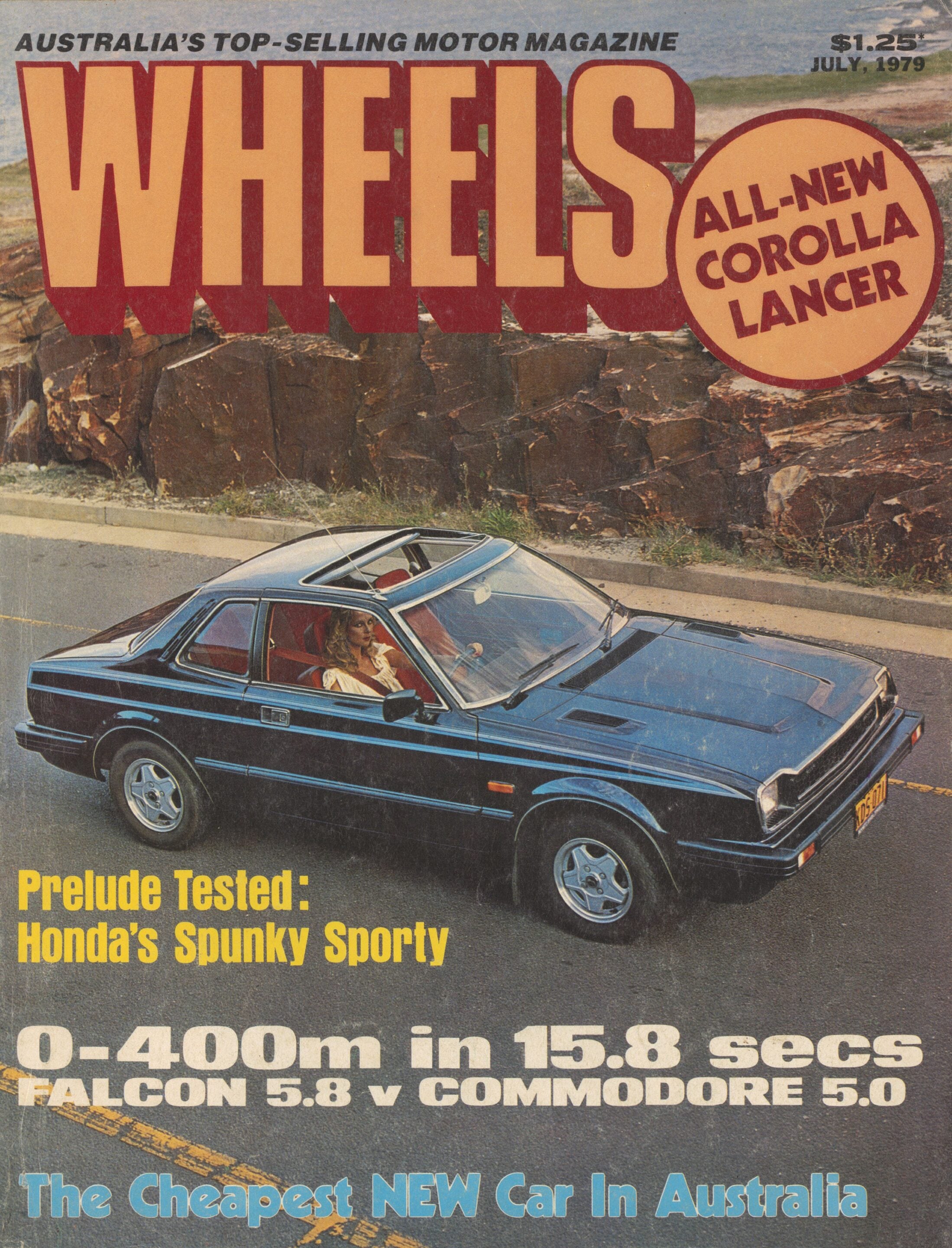
In 1978, Honda released the third element of its reinvention – the Honda Prelude. On the back of the Civic a nd the Accord, the Prelude was based on a shortened Accord platform, and was a forward-thinking, sporty coupe that blended European styling with decent fuel economy and what Wheels described as ‘adequate performance’. When it landed in Australia in 1979, it costs $8549, significantly more than a Toyota Corolla or Holden Commodore SL. Power came from a 1.6-litre, four-cylinder engine, making 59kW and 126Nm.
2
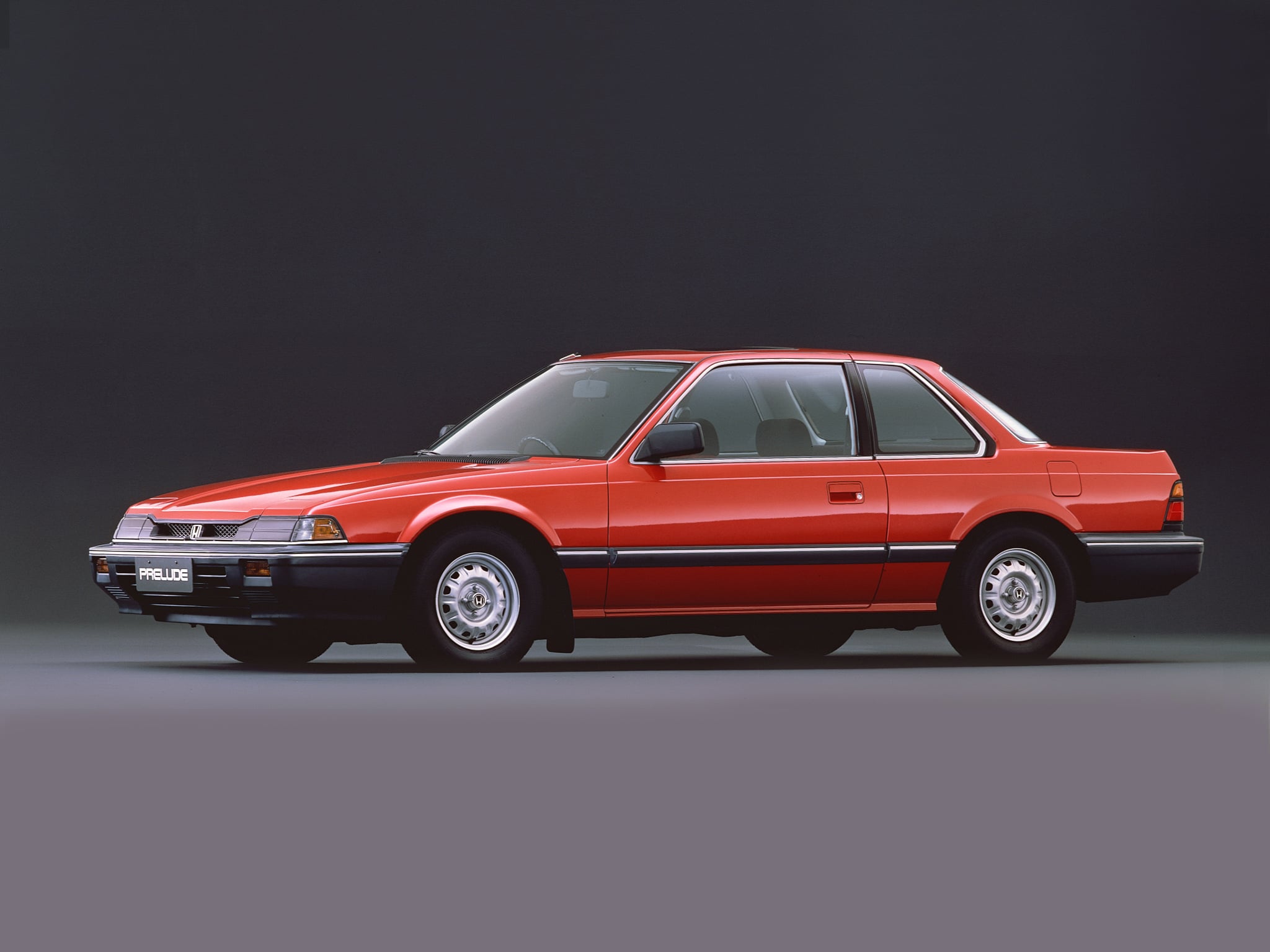
By the time the second generation rolled around, Honda had sold nearly 313,000 units of the first generation, with around 80 percent sold outside Japan. Released globally in 1982 and locally in 1983, Peter Robinson wrote, ‘we are convinced this high-tech Prelude significantly raises Japanese car standards to the point where European coupes are being challenged as never before’. The 1.8-litre, 12-valve four-cylinder was new, and power climbed to 79kW and 155Nm. Prelude also got ABS, the second car in Australia with such technology, behind only the Mercedes-Benz S Class. It was priced at $17,100.
In 1986, a 2.0-litre engine was added to the second-generation line-up with outputs of 85kW and 161Nm and an asking price of $29,000.
1
The third-generation hit showrooms in Australia in 1987 and, while the price had climbed significantly to $33,450, the new model brought with it a serious move forward in technology. It was the first mass-produced car with four-wheel steering, a purely mechanical set up, side stepping the complexity of electronic versions that would follow. A new, fuel-injected 2.0-litre engine made 106kW and 174Nm, with a 0-100km/h sprint time of 9.0 seconds neat.
The fourth generation landed in 1991, with softer edges and curves presenting a farewell to the wedge-obsessed 80s. The body was 70mm wider, 80mm shorter, riding on a 15mm shorter wheelbase and was 15mm lower. Under the skin, the significant change continues with a choice of two four-cylinder engines. There was a 2.2-litre, SOHC 16 valve engine making 96kW and 191Nm or a 2.3-litre 16-valve twin cam making 118kW and 209Nm. A 2.2-litre DOHC VTEC unit would follow in 1994 with the launch of the VTi-R model, making 65.8kW per litre, outpacing 348 and 512 TR Ferraris.
3
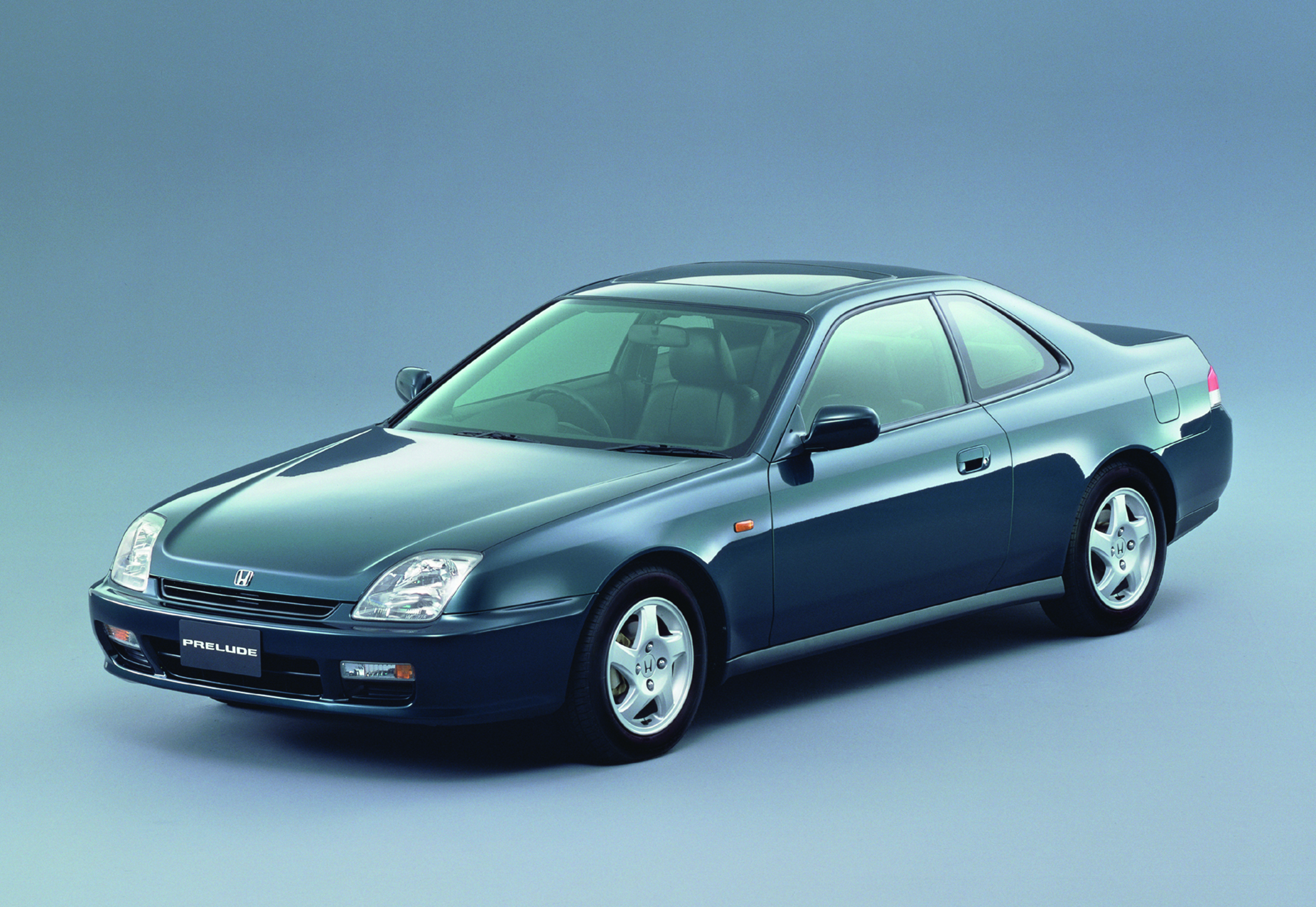
The final Prelude – until the release of this new model of course – landed in Australia in 1997 with the 2.2-litre engine remaining in service. While the styling was’t to everyone’s liking, the 143kW and 212Nm on offer – with either a manual or semi-automatic transmission – made for an engaging drive. Wheels claimed in the March 1997 road test that, ‘when VTEC kicks in, the engine’s note rises in pitch and you instantly feel it awaken – at that point it becomes a screaming pleasure to drive’.
At the time, a manual VTi-R could be had from $44,850, sitting around $5000 cheaper than the model it replaced. Part of the price reduction was attributed to Honda dropping it’s four-wheel steering system, and the Prelude ran out of puff in 2001, consigned to the history books – until now.
1
8.3
/10
Score
Score breakdown
8.5
Safety, value and features
8.5
Comfort and space
8.5
Engine and gearbox
8.0
Ride and handling
7.8
Technology
Things we like
- Styling and execution
- Excellent driving experience
- Fuel efficient and fun
Not so much
- Second row too tight for adults
- More performance would be nice
- Some hard plastic in the cabin
Follow WhichCar/Wheels on Google
Click the button below to make WhichCar by Wheels a preferred source for your news.

We recommend
-
 Reviews
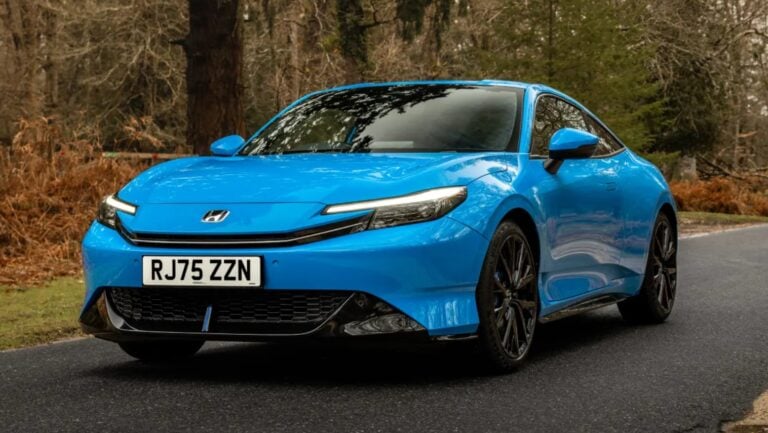
2026 Honda Prelude: Early review of the hybrid coupe as it returns after two decades
Reborn two-door pairs Civic-based hybrid power with Type R hardware, but prioritises comfort and efficiency over outright pace.
-
 News
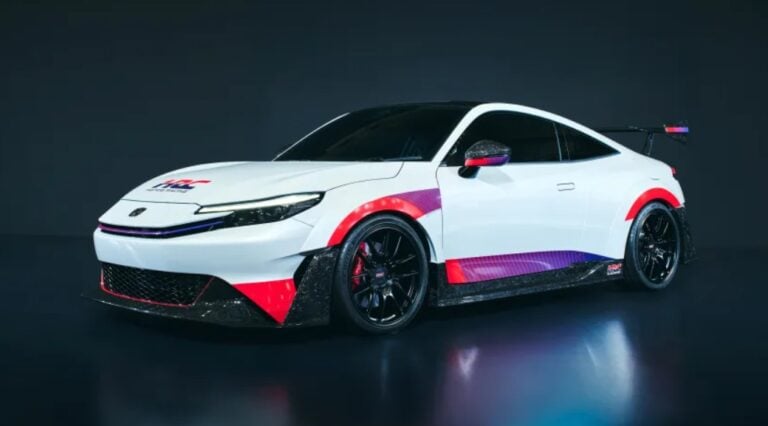
NewsHonda hints at high-performance Prelude future with HRC concept debut
Track-inspired Prelude HRC concept fuels speculation of a new Type R-style coupe.
-
 News
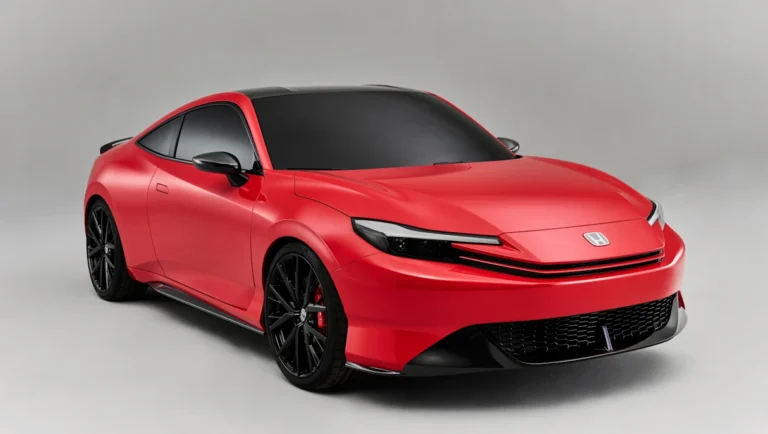
News2026 Honda Prelude: Sixth-gen sports coupe confirmed for Aussie return
After more than two decades of absence, Honda will reintroduce a model beloved by Australians in the 1980s and 90s.
