Reviews

Gallery 1
8.5
/10
Score
Score breakdown
8.0
Safety, value and features
7.5
Comfort and space
9.0
Engine and gearbox
9.0
Ride and handling
9.0
Technology
Things we like
- Prodigious performance on the track
- Superb dynamics
- Comfortable and composed on-road manners
Not so much
- Look, about its exterior styling…
- A bit heavy on power use during regular driving
- Steering and brakes lack that last fraction of finesse
Overview
Hyundai had already rewritten the electric vehicle rule book when it waved its N magic wand over the IONIQ 5 back in 2024. Here was an EV that not only went fast in a straight line, but also proved its performance chops with a dynamic package that thumbed its nose at the prevailing wisdom that cars powered by electricity were deathly dull.
Now it’s the turn of Hyundai’s IONIQ 6, the Korean brand’s Apple mouse-shaped device masquerading as a sedan. But don’t think that Hyundai has taken the easy way out by plonking a sedan body on top of the IONIQ 5 N’s dynamic platform (although it does share its general underpinnings) and calling it a day.
4
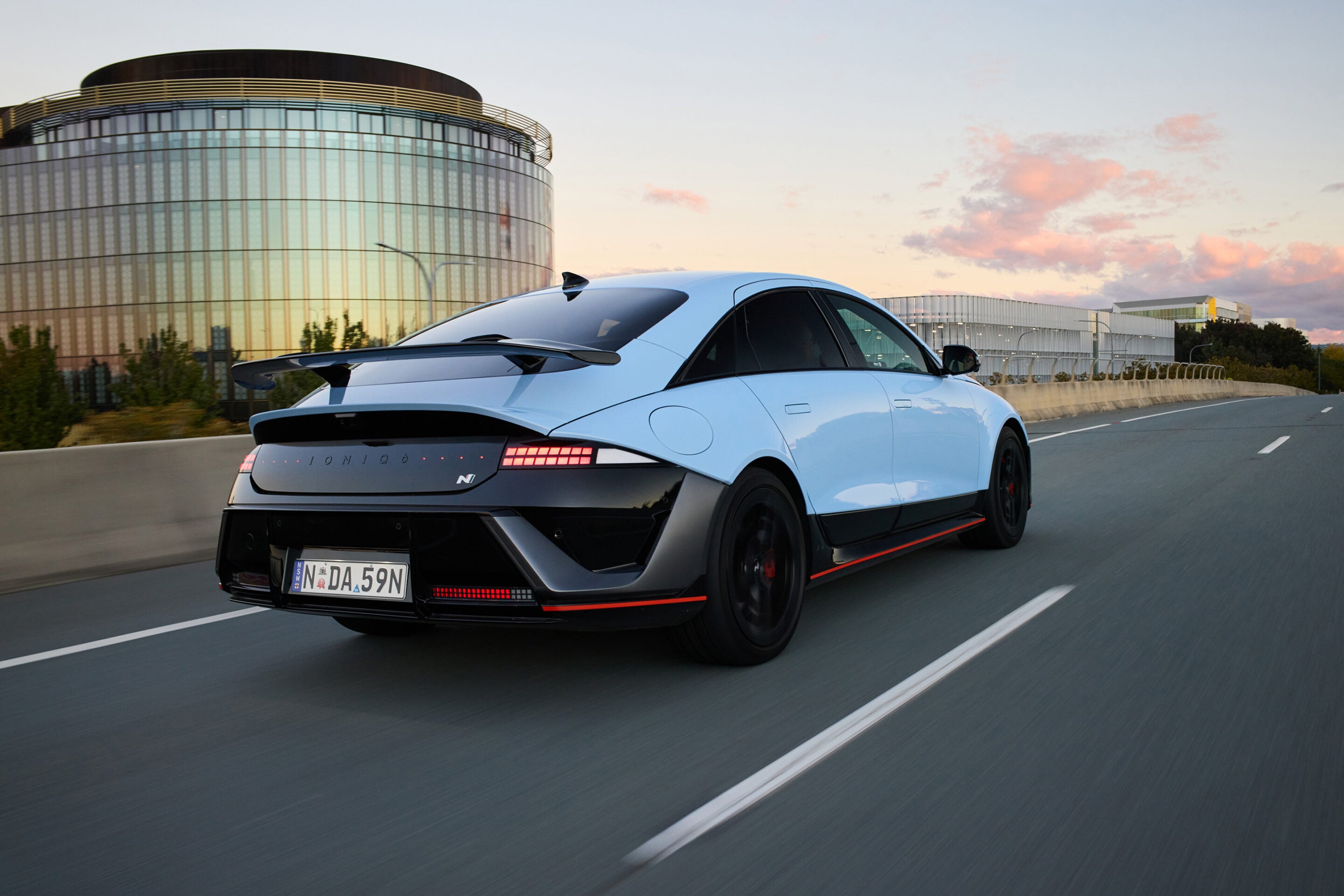
Instead, Hyundai’s engineering magicians have thoroughly reworked its attention-grabbing performance EV platform to better suit the banana wedge that is the IONIQ 6 N. The end result? A hella fun and dynamically capable EV equally at home on the track as it is out on the open road that takes the rulebook already rewritten by the 5 N and adds another chapter. And some appendices.
How much is the IONIQ 6 N
There’s no messing about here, the Hyundai IONIQ 6 N available in a single variant priced from $115,000 plus on-road costs. Premium paint attracts a $750 impost while opting for a matte colour will set you back $1000.
That represents a fairly hefty premium over the range-topper of the regular non-N IONIQ 6 range, the $86,500 (plus on-road costs) Epiq AWD, but we’d venture that the extra $30k or so is money well spent.
2
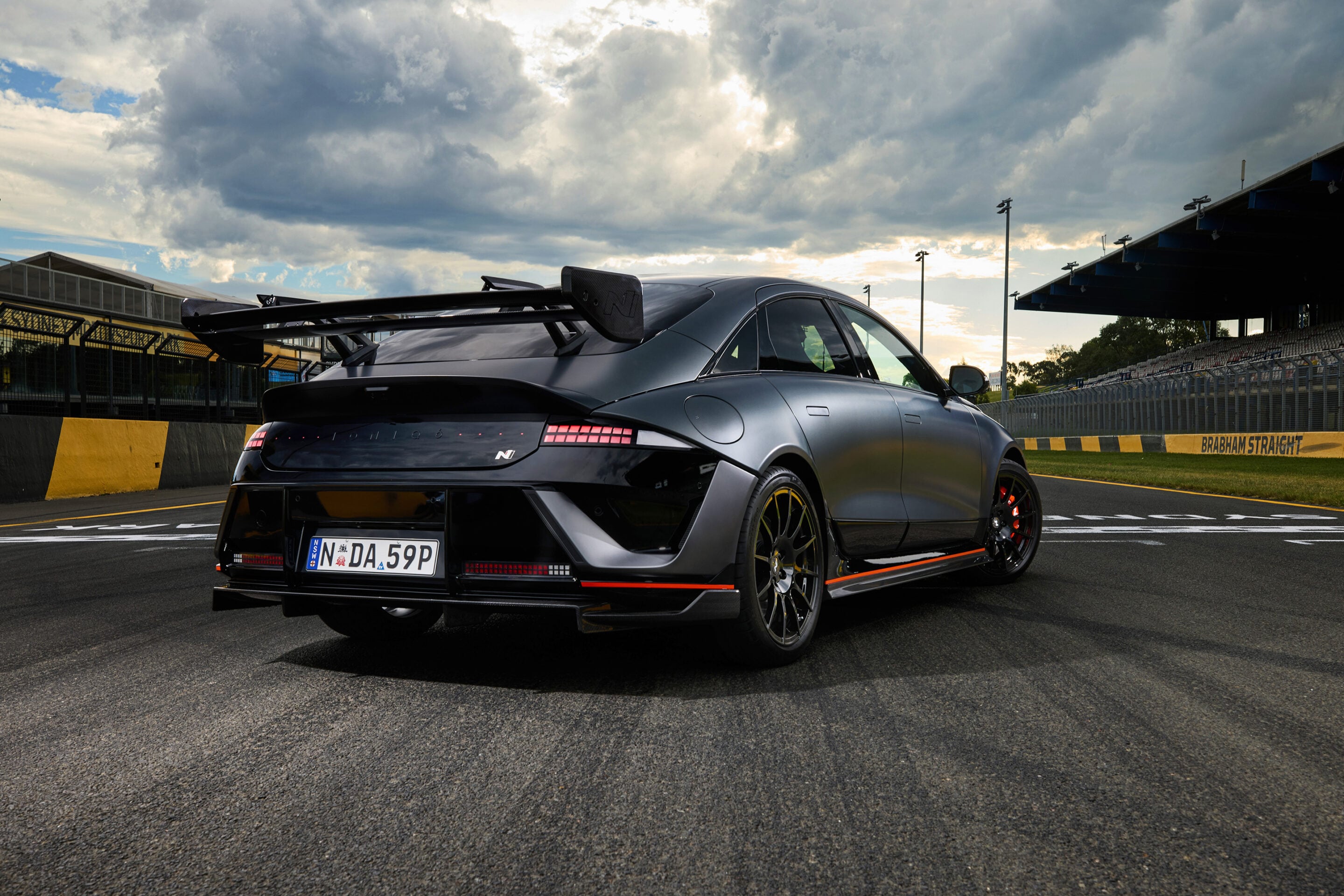
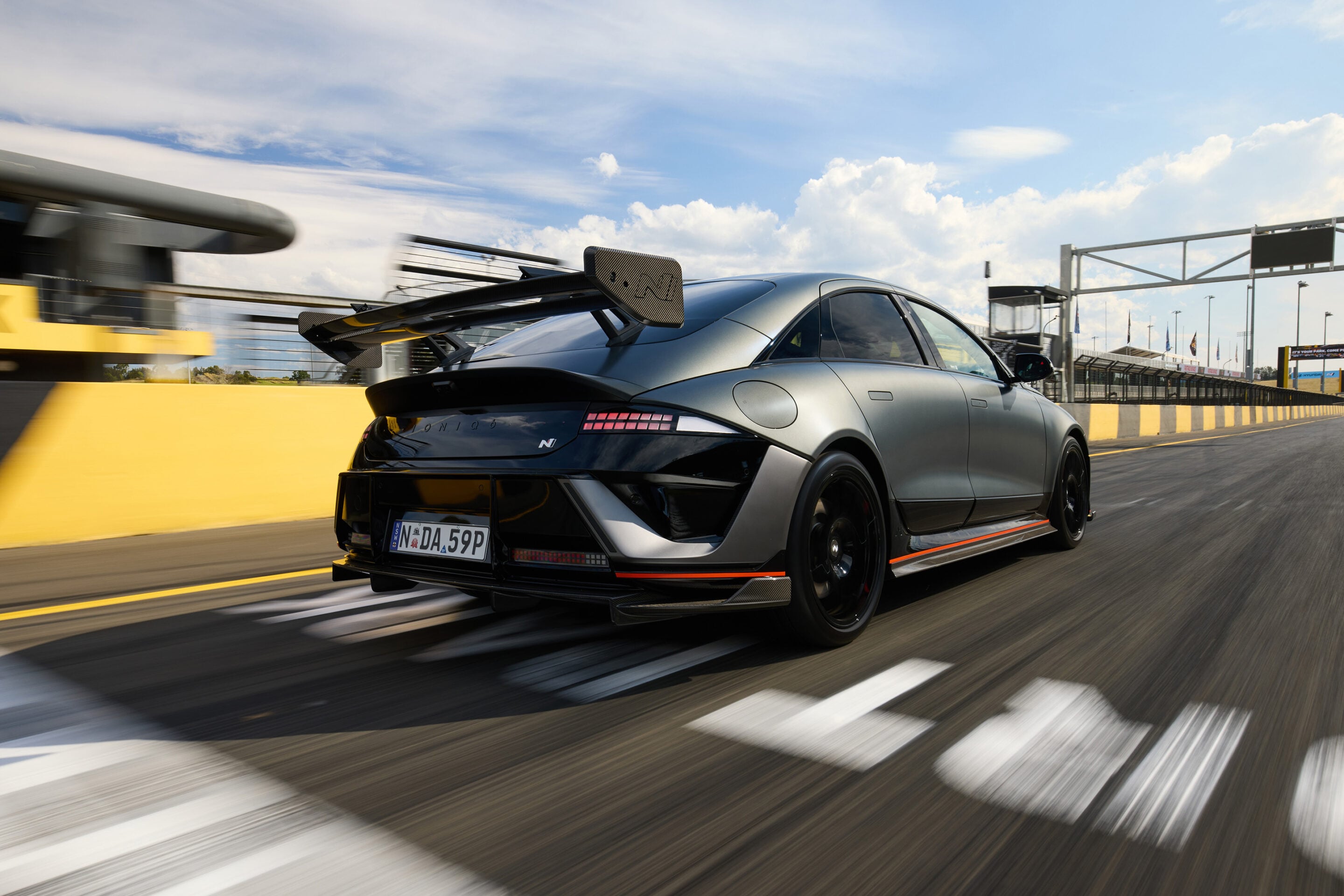
Buyers after the full race-track bred hypercar experience can option the Performance Pack which brings a host of carbon-fibre add-ons including a huge rear wing, front splitter, side skirts, rear diffuser, door sills, and even wheel caps to fit on the Pack’s 20-inch lightweight forged alloy wheels. It’s not cheap, however, commanding a near-$25k premium. If the budget doesn’t quite stretch that far, all the carbon-fibre bits and bobs can be optioned individually to add some spruce to your IONIQ 6 N.
What are the IONIQ 6 N’s key stats?
The IONIQ 6 N’s headline numbers are impressive: two electric motors, combining for 448kW and 740Nm and 0-100km/h in 3.4 seconds in regular non-boost mode, or 3.2 seconds with launch control.
But, one of the IONIQ 6 N’s party tricks (as it is in its 5 N sibling) is the N Grin Boost button on the steering wheel. Tap that, and the electric motors spool up to 478kW and 770Nm, the catch here is that those exalted numbers are only available for a 10-second burst. After that, you have to wait for another 10 seconds before hitting the N Grin factor again.
1
It’s an impressive feature, and one that you can really feel in the deepest part of your body as your organs wobble and dance around while playing catch-up with the laws of physics.
An 84kWh lithium-ion battery brings a claimed driving range of 487km, based on WLTP laboratory testing, while consuming a claimed 18.7kWh/100km.
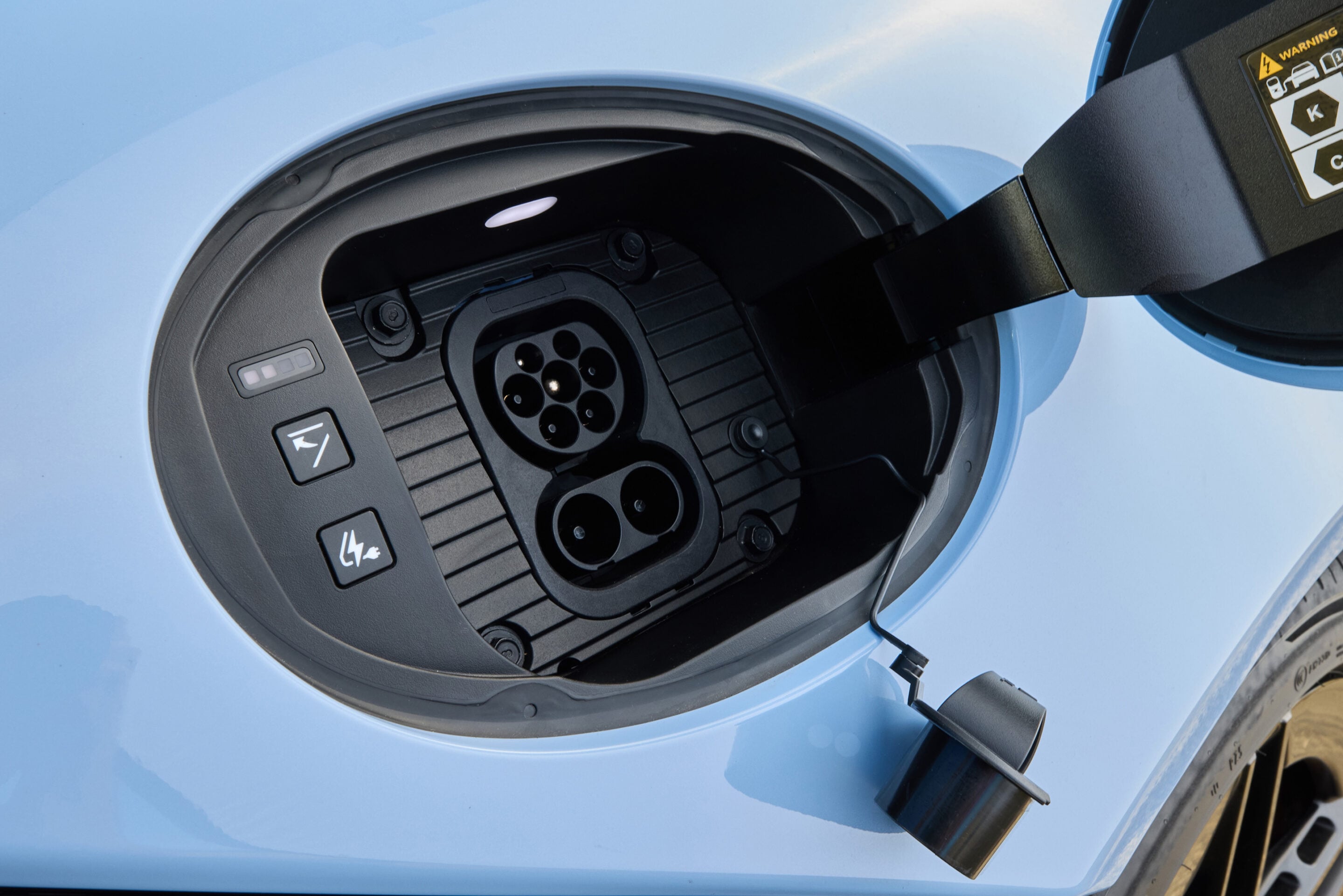
DC fast charging is capped at 263kW with Hyundai claiming a top-up from 10 to 80 per cent will take just 18 minutes. Using a more commonly available 50kW charger blows that out to 81 minutes while a 7.4kW AC home-installed plug will replenish the battery from 10 to 100 per cent in 11h24m.
What makes the IONIQ 6 N an ‘N’ car?
Lotsa things. Hyundai has dared to be different with its twin N electric cars, engineering plenty of track-focussed fun into the package, should you opt to spend a day at your local racetrack to find out if an EV can actually be fun to drive. Let’s break it down.
Firstly, the 84kWh battery itself features several track modes – drag, sprint or endurance – with optimised thermal management ensuring the battery stays cool even during sustained high performance driving.
N Launch Control is pretty standard stuff – switch to Sport mode, hard on the brakes, full throttle, release brakes and feel your innards slosh around as the 6 N completes the dash from zero to 100km/h in a smidge over three seconds.
1
The N Active Sound+ features several soundtracks that can be piped into the cabin including a couple of synthesised and distinctively EV sounds that are best left alone. The star of the concert is the ersatz sound of a thumping V8, complete with a timpani of pops and bangs on over-run and downshifts that sounds remarkably realistic.
Downshifts? In an EV? Yep. The next cab off the N rank is Hyundai’s excellent N e-Shift function that brings authentic sounding and feeling gear changes via the 6 N’s paddle-shifters to the EV party. Yes, your head tells you it’s all artifice, but once you’re out on the race track (as I indeed was) and the sound of a thumping V8 thunders through the cabin, complete with the requisite bangs on up-shifts and crackles and burbles when down-shifting, you quickly forget that this is an EV. There’s even an artificial rev-limiter that literally jolts you into paddle-shifting action, just as a regular combustion-engined car would. If it all sounds a bit chintzy, then park your preconceptions, because what Hyundai has done with its e-Shift is bring driver engagement and aural tactility to a high-performance driving experience where previously there was none. Remarkable stuff.
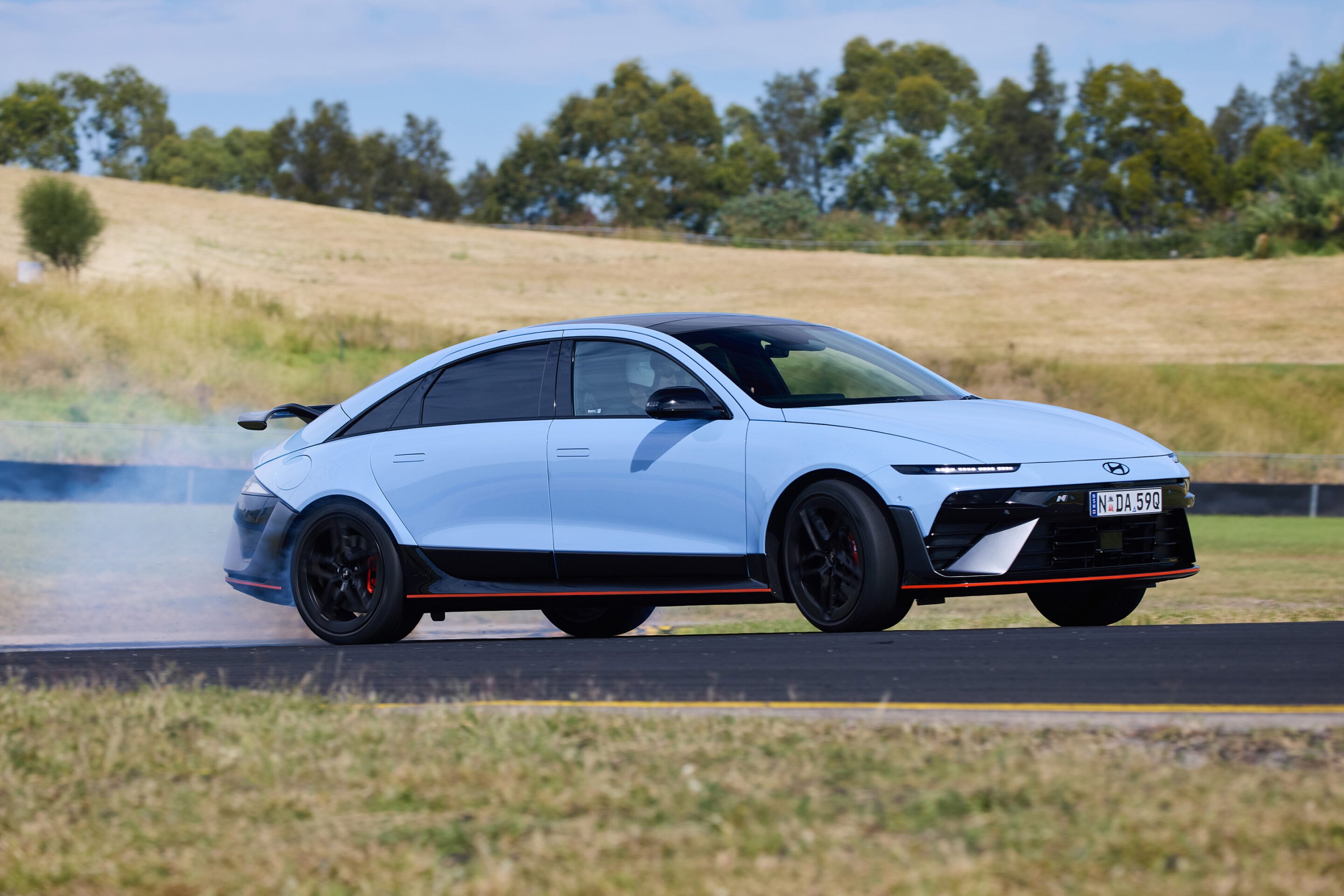
N Grin Boost, as already touched on, acts like a push-to-pass button, upping total power and torque for 10-second bursts, especially helpful on Sydney Motor Sport Park’s long main straight where the 6 N’s speedo nudged around 217km/h without it, and just shy of 230km/h with.
1
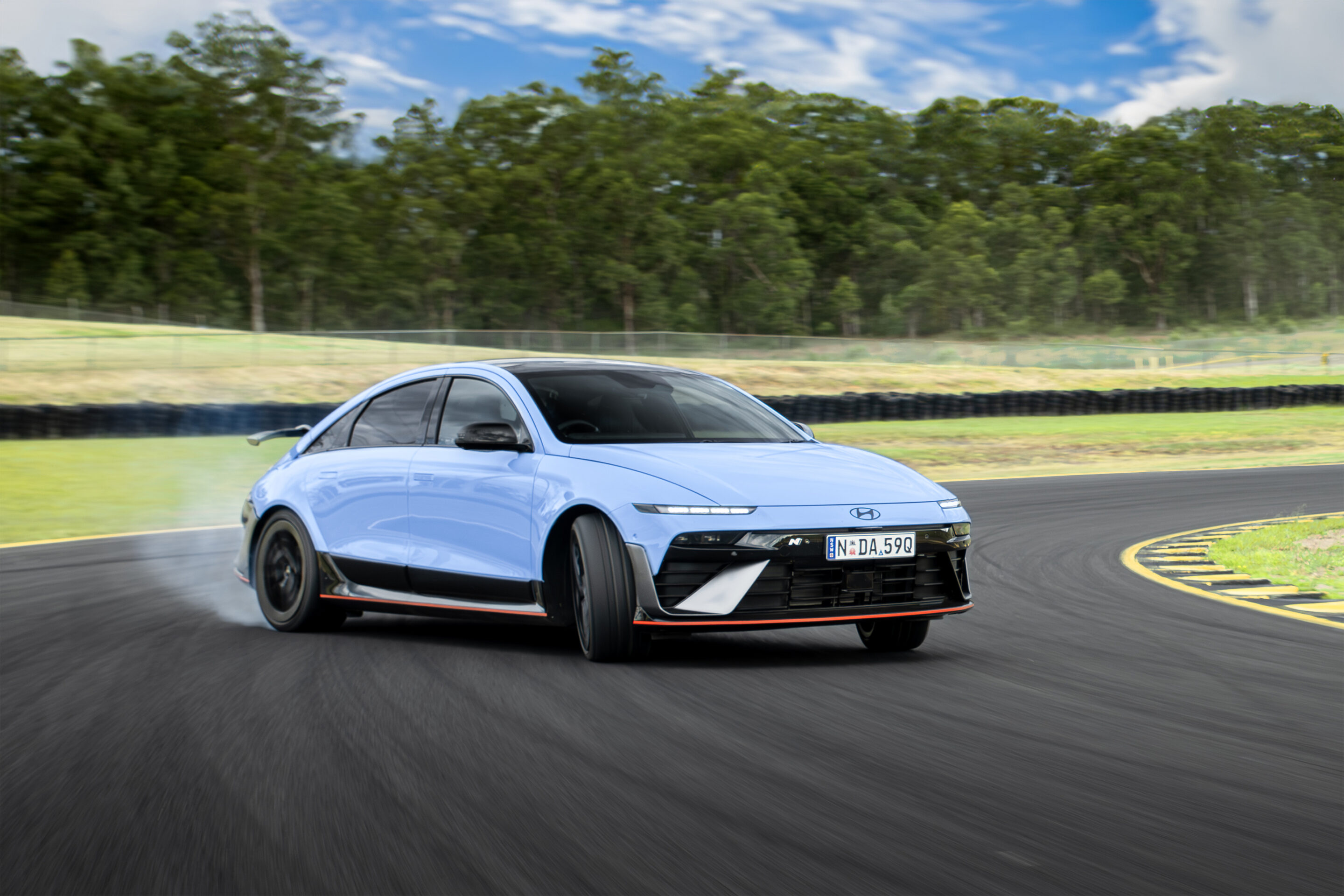
And then there’s N’s Drift Optimiser which can distribute torque 100 per cent to the front or rear and then nudge you along into the perfect sustained drift. We weren’t allowed to use it, so can’t comment on its efficacy. But it’s there for those who want to shred some tyres.
That’s a lot of different settings to play around with to set-up the Hyundai IONIQ 6 N to your liking. For mine, Sport mode was king, with Active Sound set to the thunderous symphony of combustion, aka Ignition, with N e-Shift playing the role of conductor.
Is there anything interesting about the IONIQ 6 N’s design?
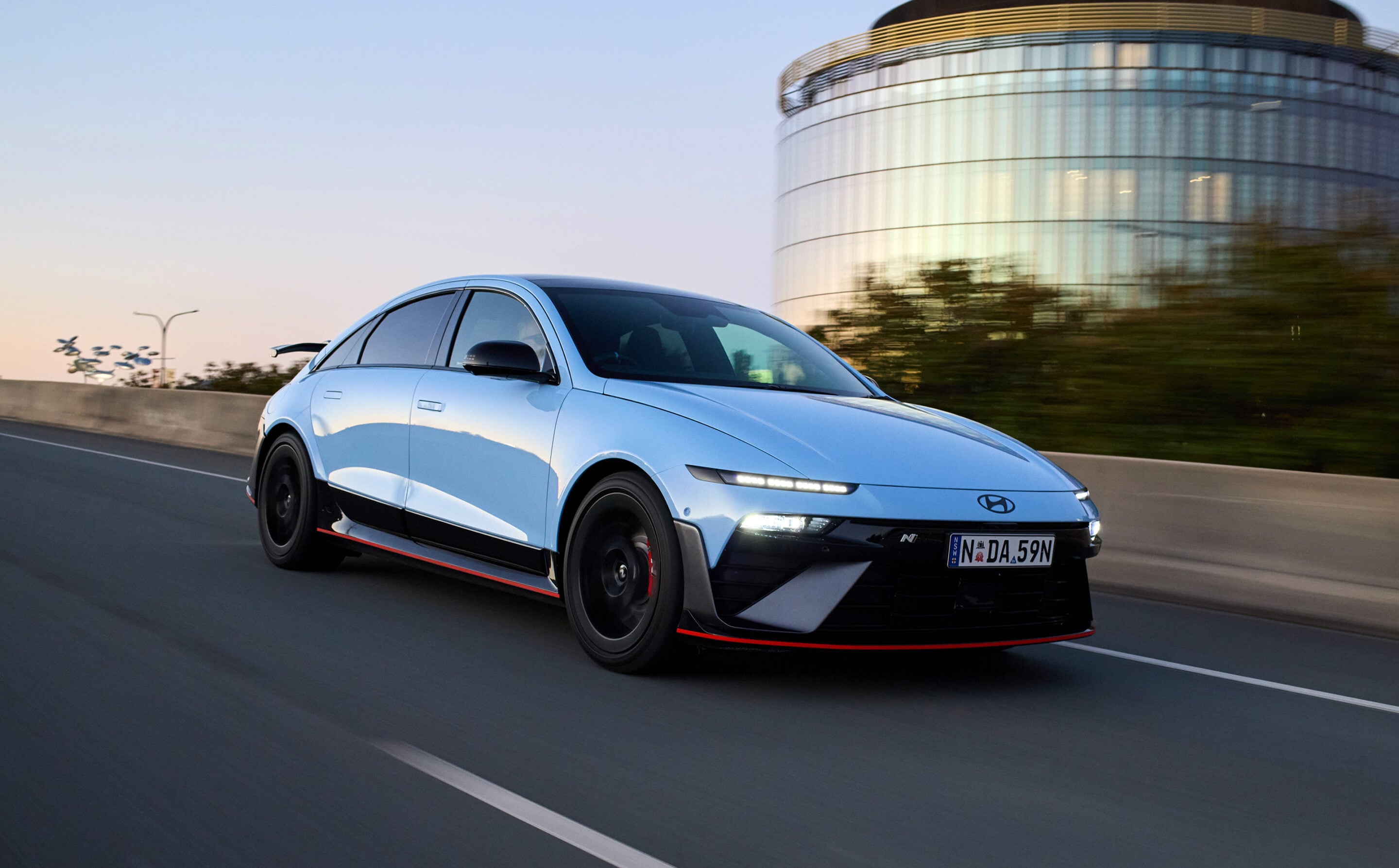
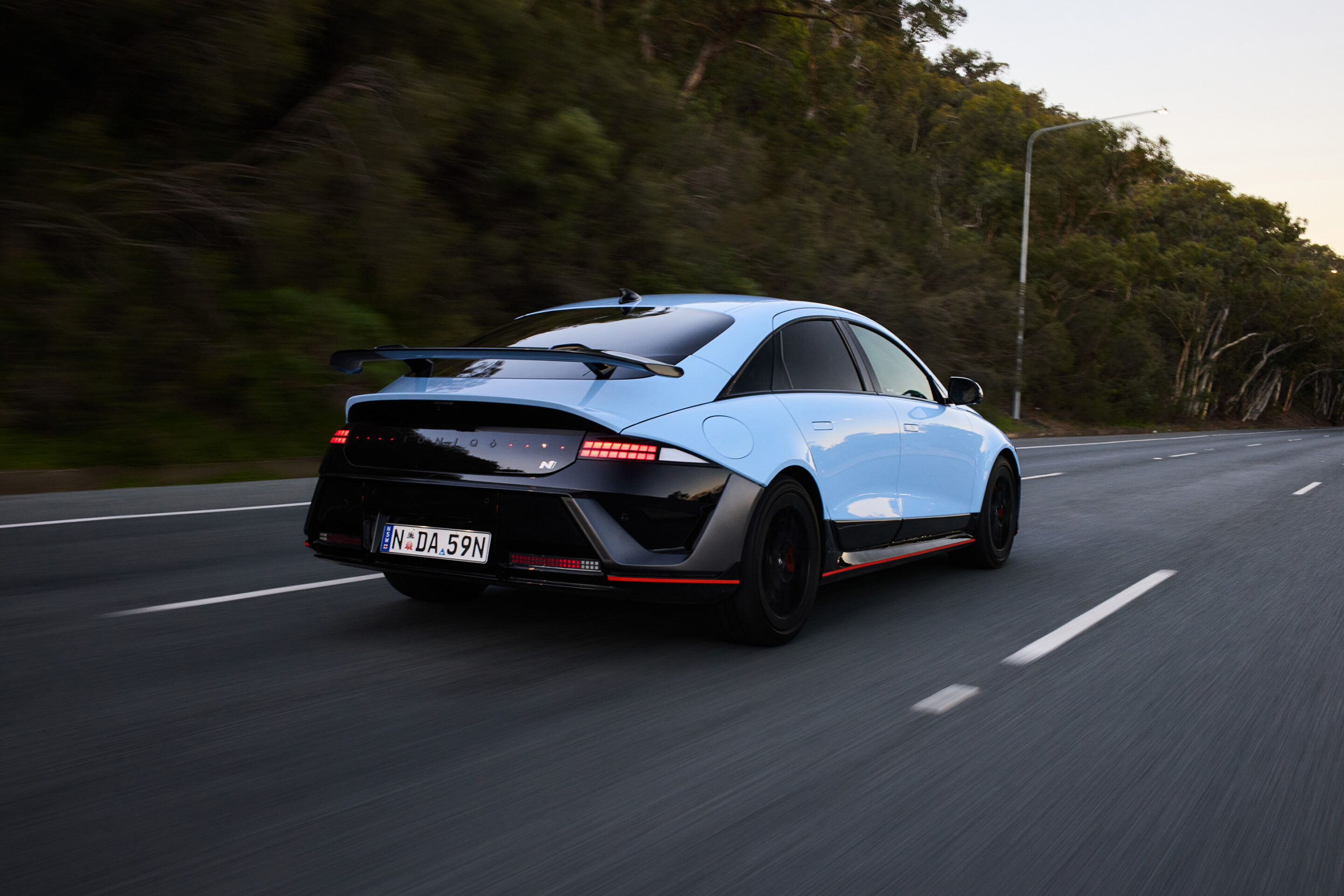
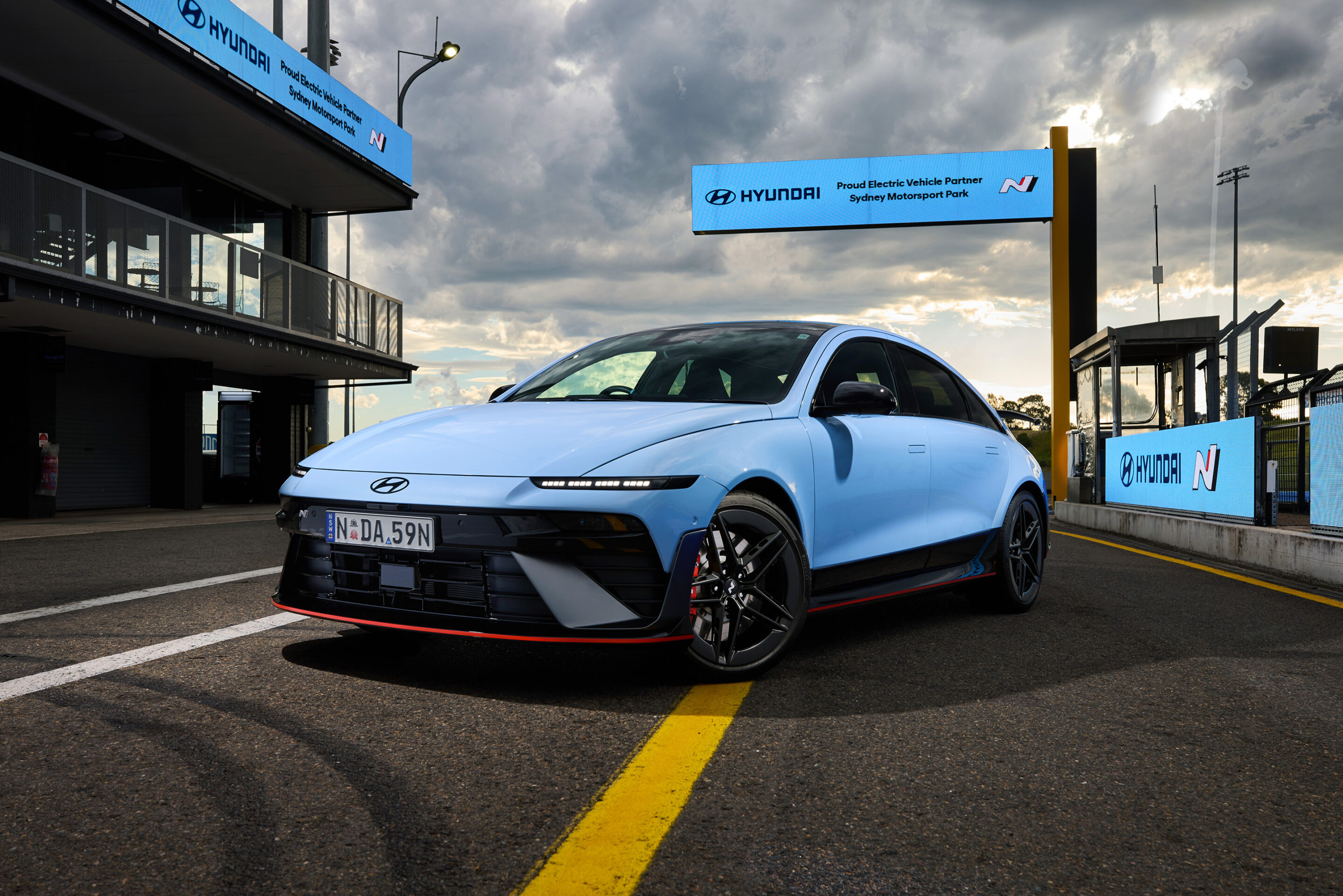
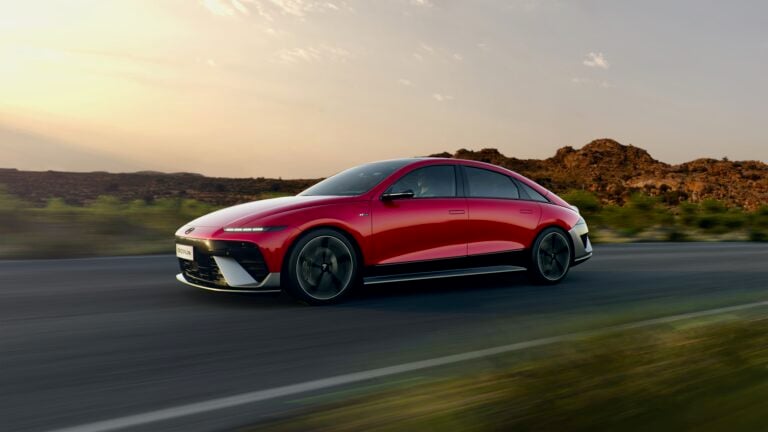
Look, it’s not the prettiest thing on the road, its bulbous profile looking more like an appliance than a passenger car. But that same profile reveals a drag coefficient of just 0.274 Cd improving aero efficiency helping to eke out maximum driving range.
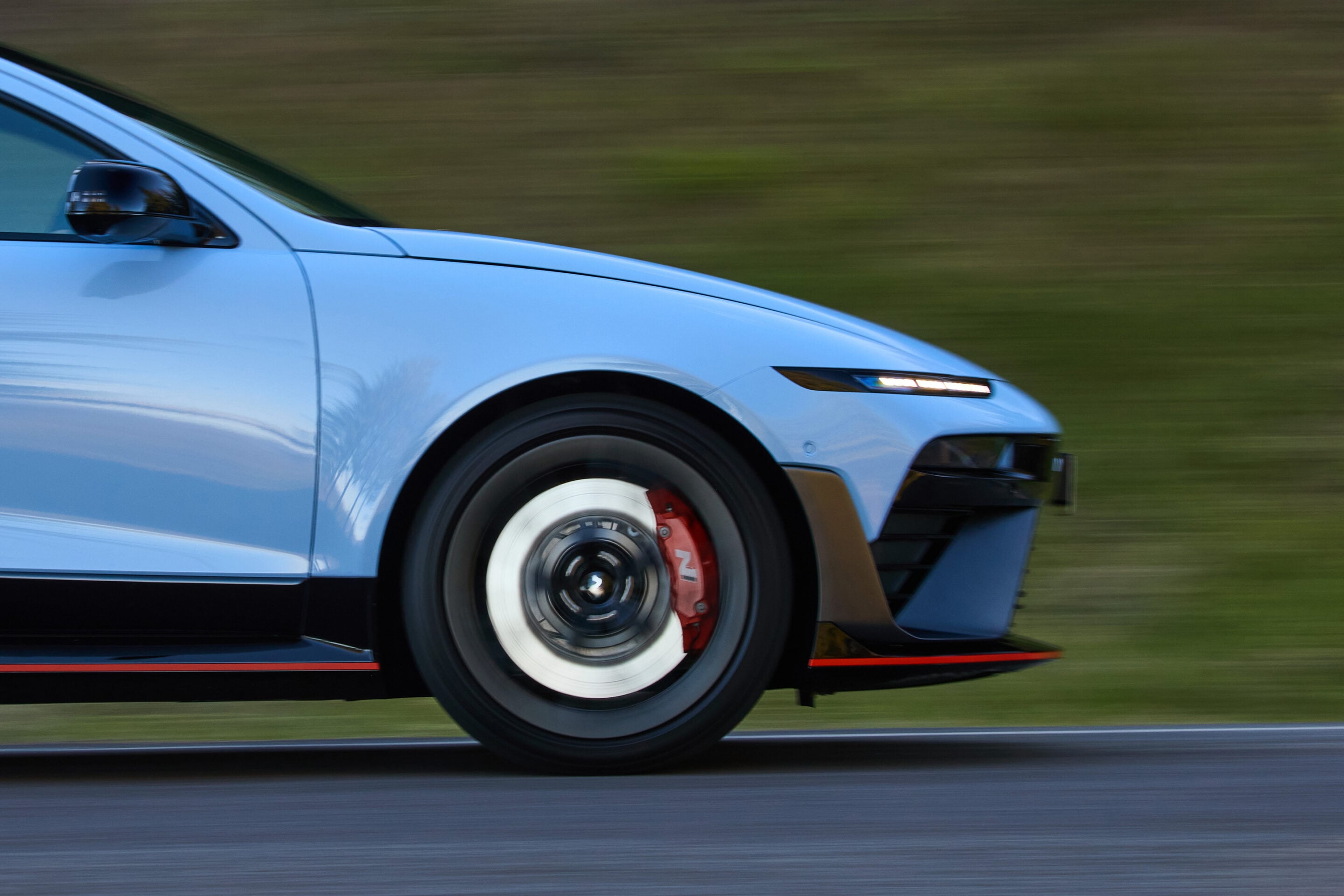
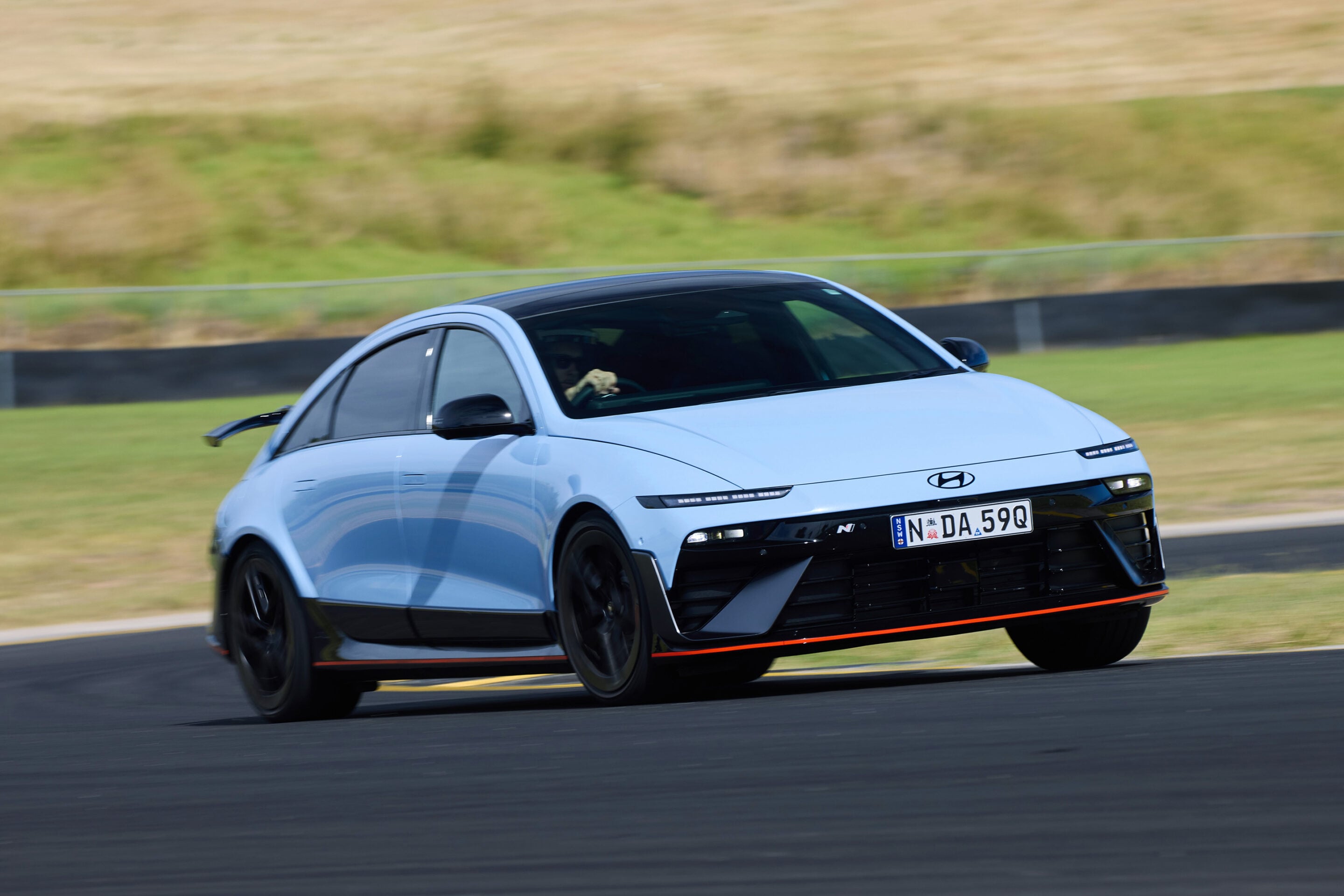
New headlights up front look much sleeker than the old units found on regular IONIQ 6, helping to create a more unified face. There are plenty of N exclusive design elements too – from the front bumper and splitter, deflectors, air curtains, gloss black side sills, a rear wing, bespoke N rear bumper and 20-inch alloy wheels, to the luminous orange strip running the full length of the car – all the hallmarks of Hyundai’s N performance brand are firmly in place.
1
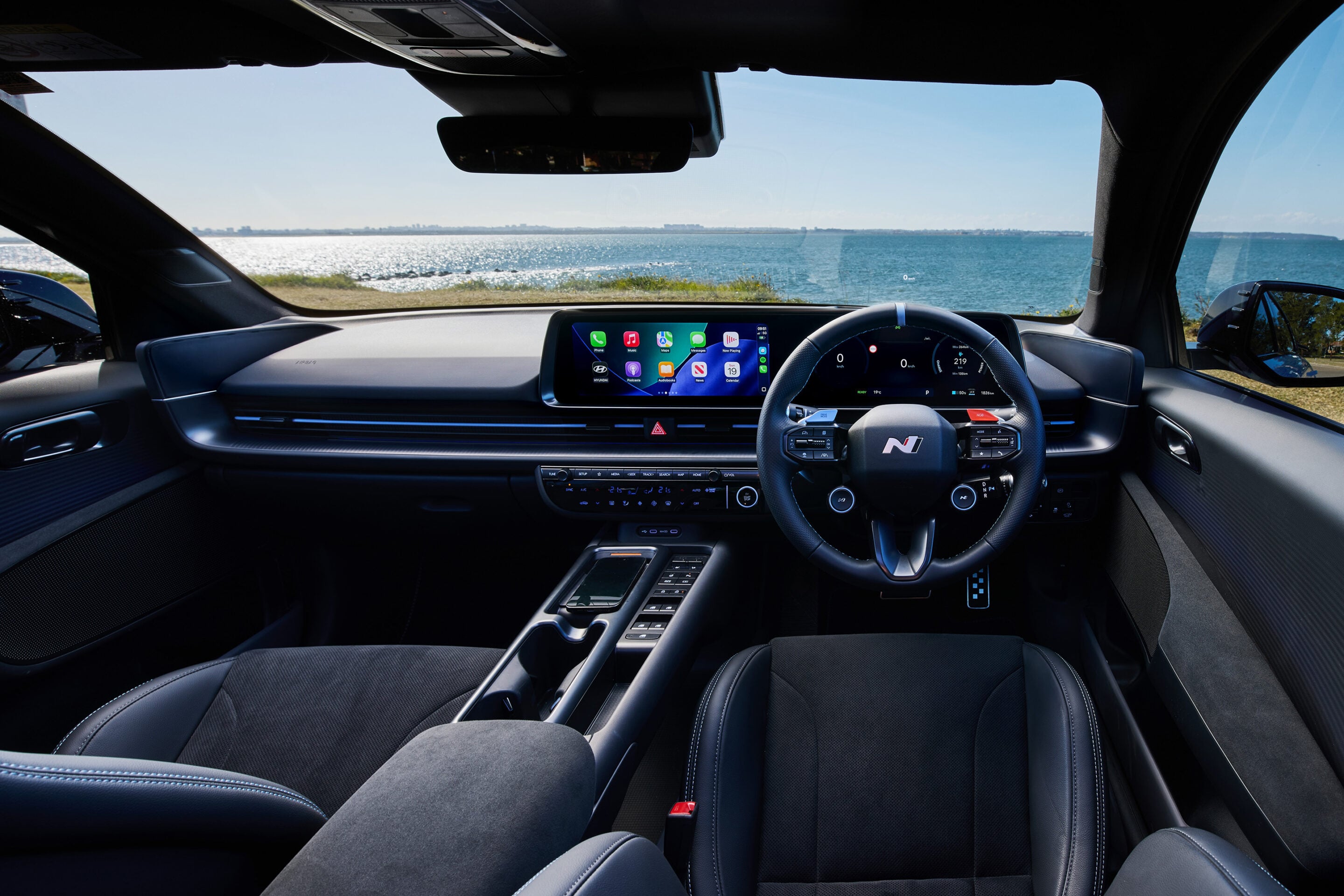
Inside, where more N-exclusive elements distinguish the IONIQ 6 N from lesser mortals in the range – highlights include metal pedals and foot rest, Alcantara and leather trimmed sports seats with N Performance blue stitching, a Pasubio leather wrapped steering wheel with a blue (N blue, of course) centre marking, and a liberal dose of N badges.
It’s a thoughtfully-designed and unashamedly driver-focussed cabin. From the quality of the materials to the solid fit and finish, everything about the 6 N feels properly premium in the cabin, as you’d hope for a car asking for $115k plus on-road costs.
Second row comfort is a mixed bag, especially for anyone taller riding in row two. That sloping roofline impacts available head room, compounded by the standard fit sunroof. It can be deleted for no cost, freeing up valuable millimetres of head room.
8
Need to carry some luggage? There’s 371 litres available in the boot, not ground-breaking by any stretch, but enough for a couple of larger suitcases and/or overnight bags.
What technology comes with the IONIQ 6 N?
We’ve already covered all the go-fast tech that makes the IONIQ 6 N an N. But modern buyers also expect the latest in connectivity. The 6 N brings a 12.3-inch touchscreen with wireless – and wired – Apple carPlay and Android Auto. Satellite navigation is standard, as is the full gamut of radio bandwidths – AM/FM/DAB+.
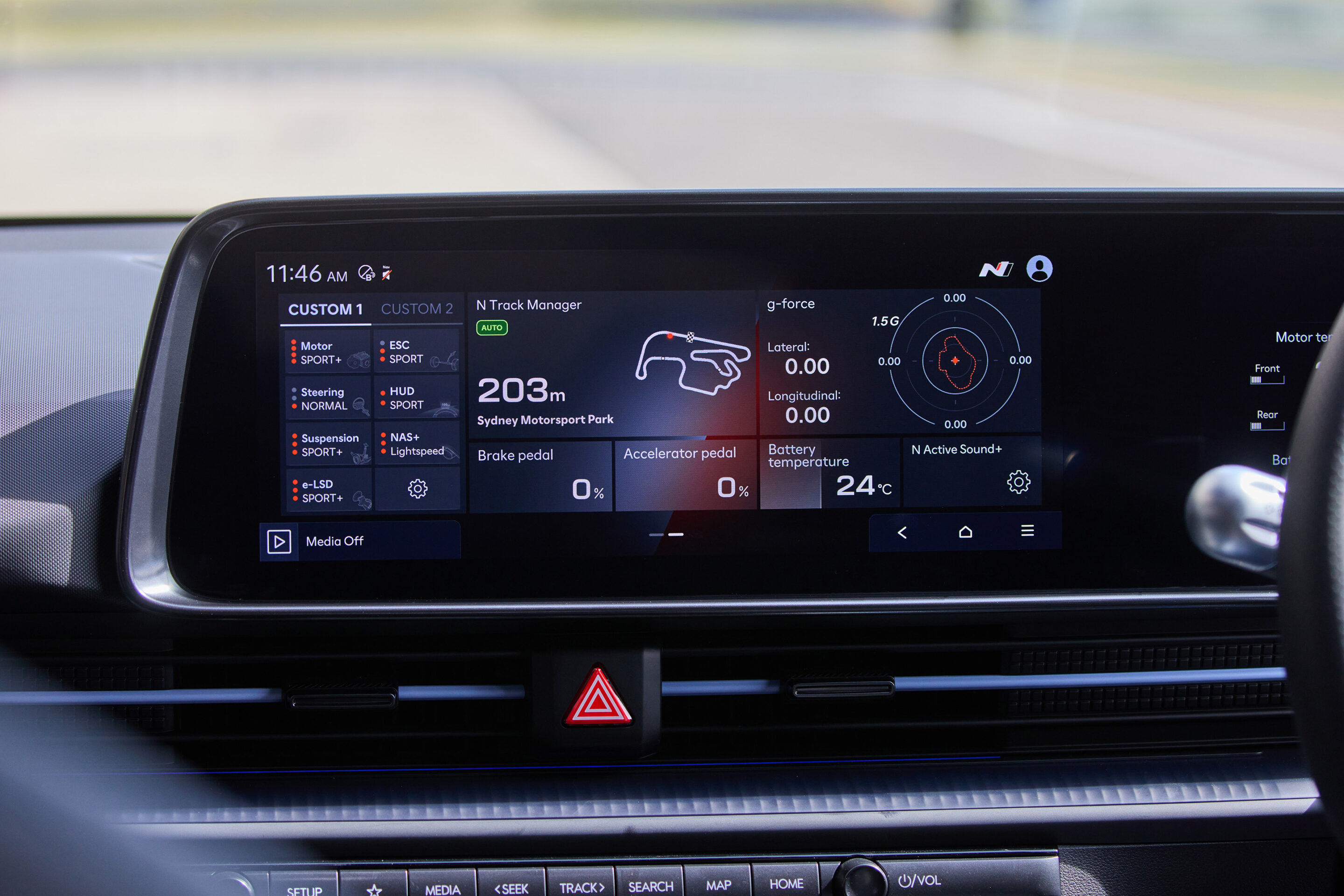
Hyundai’s operating system is straightforward enough, until that is, you delve into the myriad N Performance screens which can be a little overwhelming at first. There’s a lot to navigate, a lot to take-in and make sense of but, with time and extended use comes familiarity.
3
Making things just a little easier, favourite N setting combinations can be stored and accessed via either the N1 or N2 buttons on the steering wheel.
The N-specific digital instrument cluster offers a wealth of driving data while the 6 N’s head-up display can be set up for regular driving or with track-focussed elements in mind, including Hyundai’s e-Shift shift lights.
What’s the IONIQ 6 N like to drive?
Hyundai is so confident in the IONIQ 6 N’s dynamic abilities that it chose to launch its new performance model in Australia at Sydney Motorsport Park. And boy, it did not disappoint.
Forget everything you know about EVs – they’re fast in a straight line but that’s it; they’re heavy; a bit soul-less; and totally uninspiring as a driver’s car.
Because this is a brilliant car, one that can be hustled in anger and at a speed that defies EV logic. And it’s not about straight-line speed – that’s a given – because the IONIQ 6 N can corner with the best of them, a dynamically capable track-day warrior that will leave you sweaty of palm and giddy with excitement for days.
2
Hyundai’s engineers have gone to town on the IONIQ 6 N’s chassis to ensure that this is no regular straight-line attention grabber, tinkering with the suspension geometry, as well as body rigidity, to arrive at a lower roll centre, improving grip and high-speed cornering performance.
New dual-layer bushings enhance handling while also filtering out vibrations resulting in improved road comfort. An electronic limited-slip diff at the rear manages torque distribution left-to-right to improve traction and stability into and out of high-speed corners.
That all sounds good on paper, but how does it feel out in the real world? In a word… brilliant.
Hyundai’s engineers have done a remarkable job imbuing the IONIQ 6 N with the kind of electro-mechanical talent that challenger brands can only dream of. It’s fast, yes, but it’s also a thoroughly exciting car to drive at ten-tenths. It feels lively on the track, but never too lively. After a couple of tentative exploratory laps, it soon becomes apparent that the 6 N can be driven hard, secure in the knowledge that it will do exactly what’s asked of it.
Entering SMP’s turn one at 160km/h does little to ruffle its Performance Blue Pearl feathers, the 6 N staying true to its line before sling-shotting out of the high-speed turn and onwards to turn two and beyond.
The N Active Sound+ and e-Shift technology is hilariously brilliant, a tactile and aural guide to driving a track day car fast. Yes, it’s fake, but that thought is quickly banished as the rev-limiter jolts the car and spurs you into paddle-shifting action. Just for fun, I tried a lap without those two enhancements switched on and while the 6 N’s performance wasn’t diminished one little bit, my enjoyment levels waned.
4
On the downside, the steering, as accurate as it is, lacked a little feel to the road while the brakes which did a brilliant job of slowing the 2.2-tonne sedan, lacked feel and finesse, making mid-corner modulation a little tricky.
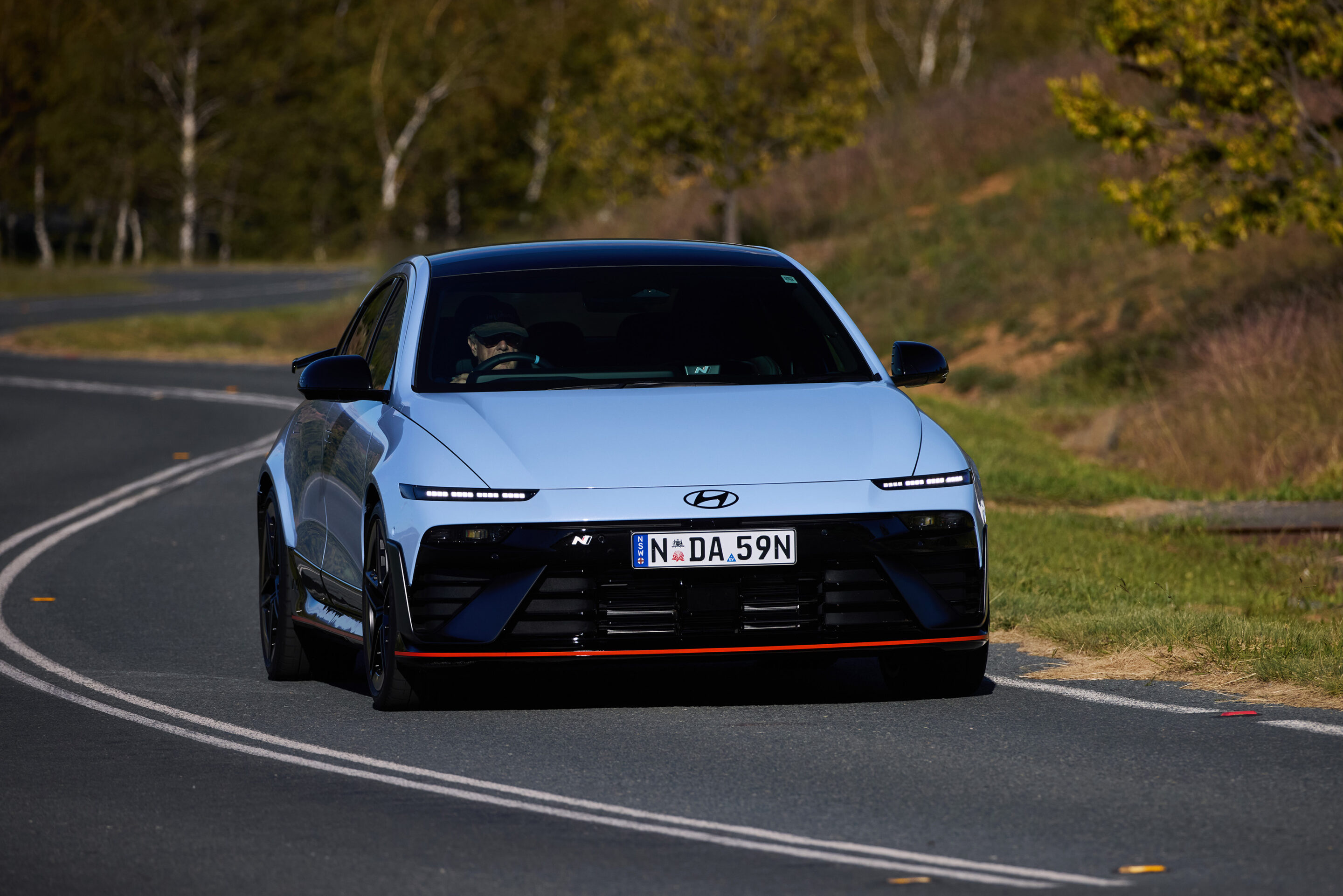
And yet, despite its focussed performance nature, take the IONIQ 6 N out on the open road – as we did the following day – and you’re met by a surprisingly comfortable and serene daily driver.
A 250km round trip taking in suburban traffic, a long motorway stretch and some rural back roads, proved as calm as it was effortless. Here, the 6 N behaved exactly as an EV should – quiet, rapid, comfortable.
That beefed-up suspension had no difficulties in ironing out patchwork road surfaces, while steering remained direct and responsive.
5
Inside, the quietude of electric motoring makes for a serene cabin, as relaxing a drive as you could want but with the knowledge that should you choose, the 6 N will spring into dynamic action at the simple press of an N button on the steering wheel.
Its road-going manners are in stark contrast to its track-day abilities. Usually, cars engineered with at least one eye on extracting maximum performance on the race track can feel compromised out on the road in regular everyday driving. That’s simply not the case with the IONIQ 6 N which switches from ferociously capable track weapon to relaxing daily at the press of a button. It’s a testament to Hyundai’s engineers.
How much energy did the IONIQ 6 N use?
Forget on-track consumption. Driving the 6 N at warp speed means you can watch available range numbers tumble on the dashboard in real time at the rate of around 1km per second. That’s an exaggeration, but you get my point.
1
But take it off the track, and Hyundai’s claim of 18.7kWh doesn’t quite stack up either. Having sated my need for speed the previous day, I treated the 6 N to a relaxed drive through the countryside, never exploiting its dynamic abilities on public roads. And the best consumption number I could muster was 22.3kWh after 256km. That’s well short of Hyundai’s 18.7kWh claim and translates to a real-world range of around 390-400km, also well short of the WLTP-tested 487km claim. To be fair, this is normal in the world of EVs where lab-tested numbers have little bearing out in the open real world
So, what’s the verdict on the IONIQ 6 N?
I’ve already written it twice, but the Hyundai IONIQ 6 N is brilliant. It’s brilliant at thumbing its nose at EV convention, and it’s brilliant at taking on a segment not known for dynamism and resetting the boundaries of what is possible.
Sure, it’s not perfect, and yes, Hyundai’s digital interpretations of analogue go-fast technology will rankle some diehards.
1
But that does little to detract from a car, an EV no less, that is hilariously fun to drive.
Hyundai’s engineers need to be applauded for their out-of-the-box thinking, for daring to try something different and imbue the IONIQ 6 N with the performance and abilities that should make even the most ardent combustion bros sit up and take notice.
Hyundai IONIQ 6 N specs
| Price | $115,000 plus on-road costs |
|---|---|
| Powertrain | Dual-motor electric (AWD) |
| Battery | 84kWh lithium-ion |
| Power | 448kW (478kW with N-Grin Boost) |
| Torque | 740Nm (770Nm with N-Grin Boost) |
| Transmission | Single-speed automatic |
| Drive type | All-wheel drive |
| 0-100km/h (claimed) | 3.4 seconds (3.2 with launch control) |
| Top speed | 257km/h |
| Range (claimed) | 487km (WLTP) |
| Max DC charging rate | Up to 263kW (approx. 10-80% in 18 minutes) |
| Max AC charging rate | 11kW |
| Weight | 2201kg |
| Dimensions (l/w/h/wb) | 4935mm / 1940mm / 1495mm / 2965mm |
| On sale | Now |
8.5
/10
Score
Score breakdown
8.0
Safety, value and features
7.5
Comfort and space
9.0
Engine and gearbox
9.0
Ride and handling
9.0
Technology
Things we like
- Prodigious performance on the track
- Superb dynamics
- Comfortable and composed on-road manners
Not so much
- Look, about its exterior styling…
- A bit heavy on power use during regular driving
- Steering and brakes lack that last fraction of finesse
Follow WhichCar/Wheels on Google
Click the button below to make WhichCar by Wheels a preferred source for your news.

We recommend
-
 COTY
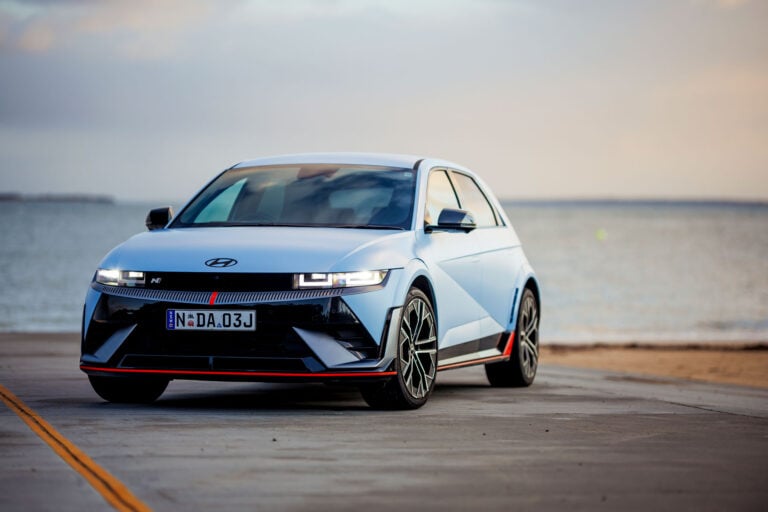
COTYWheels COTY 2024-25 Winner: HYUNDAI IONIQ 5 N
All hail the unanimous winner of Wheels Car of the Year 2024-25, the truly innovative Hyundai IONIQ 5 N – a spectacularly well-realised performance EV destined to put a smile on the face of anyone who gets in one.
-
 News
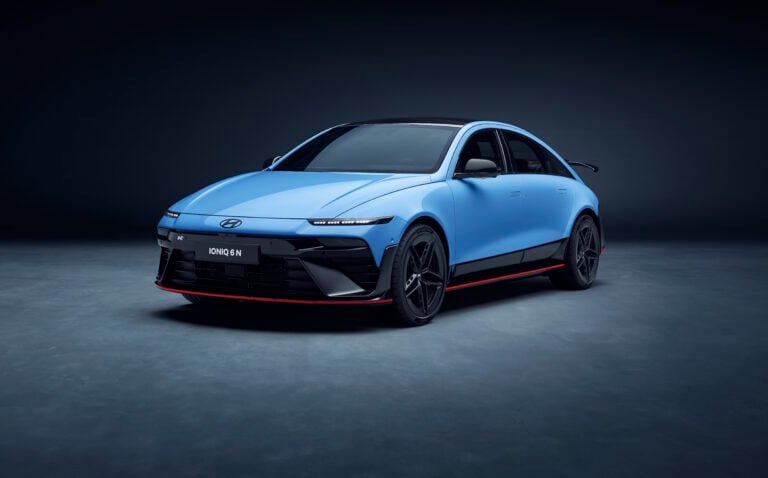
NewsHyundai IONIQ 6 N debuts at UK's Goodwood Festival of Speed
The brand’s second high-performance EV blends track-ready power, digital engagement and travelling comfort.
-
 News
NewsHyundai reveals facelifted IONIQ 6; confirms hot N variant
Hyundai’s electric sedan has been given a big mid-life update while a high-performance variant has also been confirmed.