Reviews
Gallery 1
Things we like
- Bigger, more modern cabin
- Local suspension tune
- Towing and payload
Not so much
- Is it `Nissan’ enough?
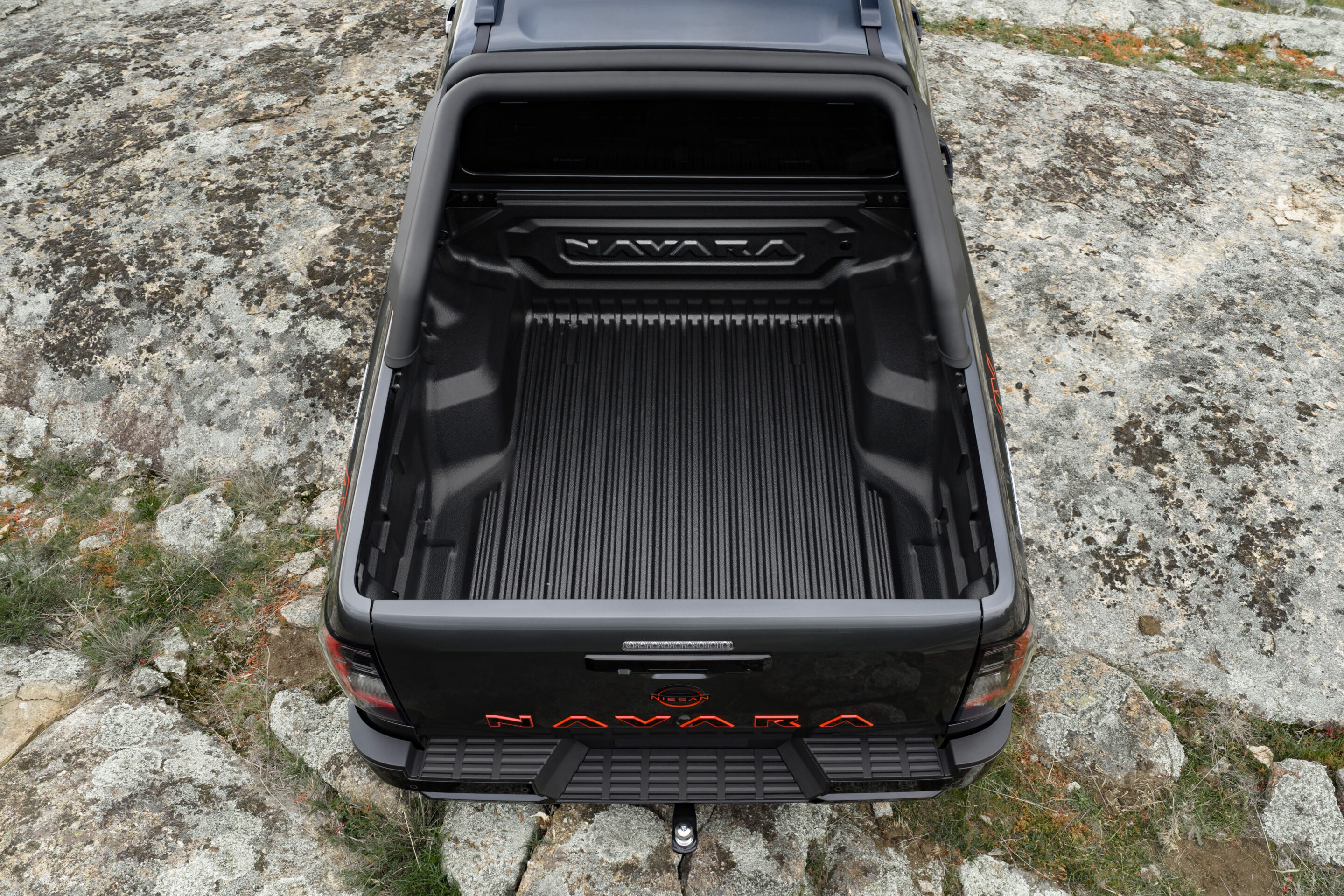
- Sports bar reduces practicality
- No idea on price or spec yet
The dual-cab ute market around the world is looking more like a swinger’s club than an automotive segment right now. Sure, the concept of model-sharing is hardly new, but for a market sector to have embraced the concept of not just partner-sharing, but actual bed-hopping, seems pretty radical in the context of what are otherwise pretty conservative companies. Then again, globalisation can’t be ignored, nor can the corporate-survival instincts behind design, development and engineering cost-sharing be underestimated.
Of course, it’s not just the concept of keys-in-the-bowl that’s raising eyebrows, it’s also the potential for disaster that lurks around every model-sharing corner. Everybody can recall an example of where this process has led a car maker completely up the wrong path, in the process tearing up money at every step along the way. Mercedes-Benz X-Class, anyone?
3
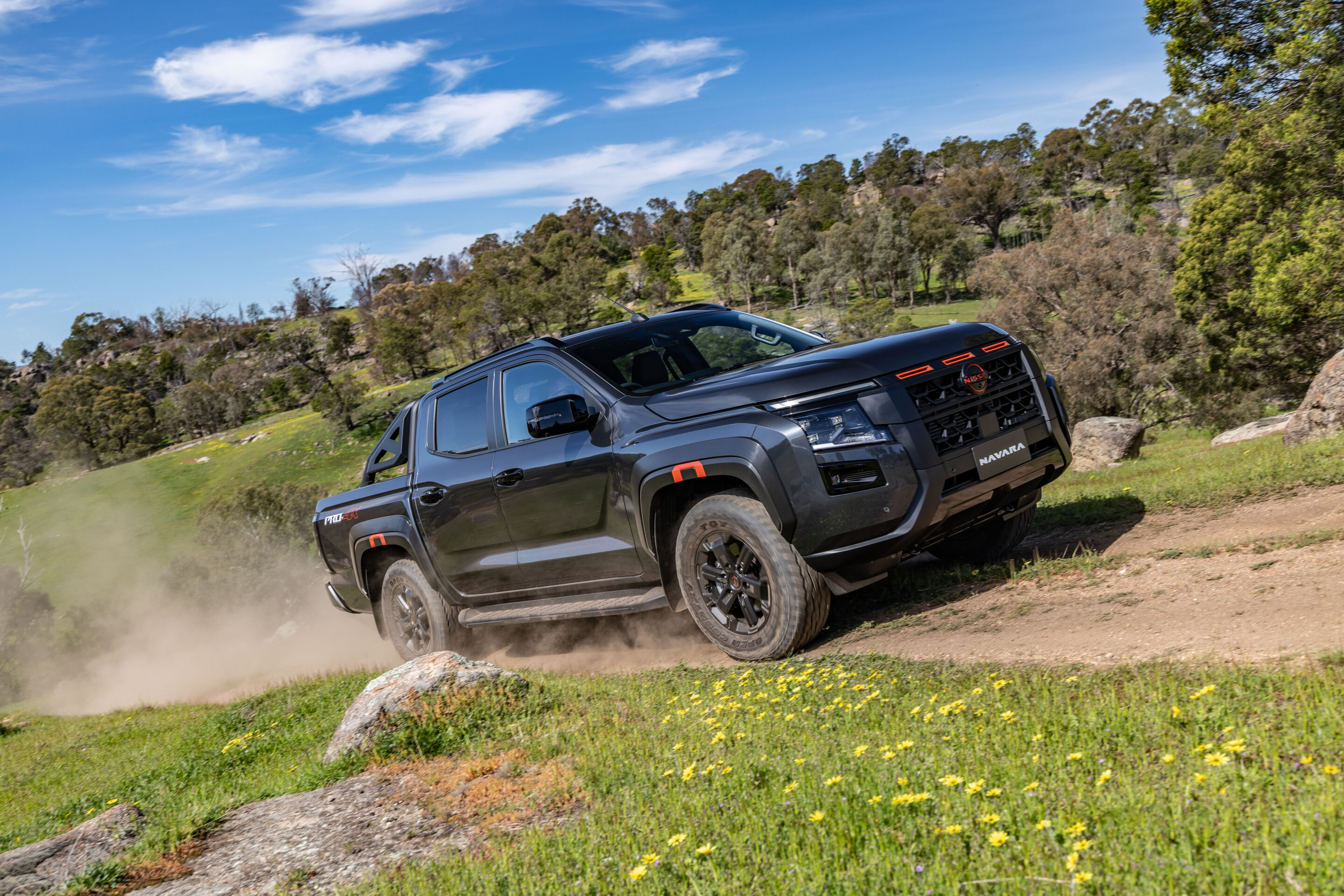
All of which suggests that Nissan – as the willing engineering provider of the doomed X-Class experiment – should understand better than most the perils of a free-love arrangement. And yet here we are, apparently full circle, but with the boot on the other foot as Nissan and Mitsubishi sneak off to the garden shed to return with flushed faces and a brand-new Navara dual-cab made from the genetic material of the current, but still very new, Mitsubishi Triton.
Okay, so sharing development costs makes great sense, but so does protecting your fan-base. In this case, the Navara has sold more than 500,000 units across four generations since the mid-80s in Oceania (Australia and New Zealand). Not to mention the buyers of dual-cab utes tend to be a bit rusted on in terms of their brand allegiances. The question being; exactly what will those half-million think of a Navara largely designed and engineered by Mitsubishi, built in a Mitsubishi factory (Thailand) and sharing every exterior sheet-metal panel with the Triton.
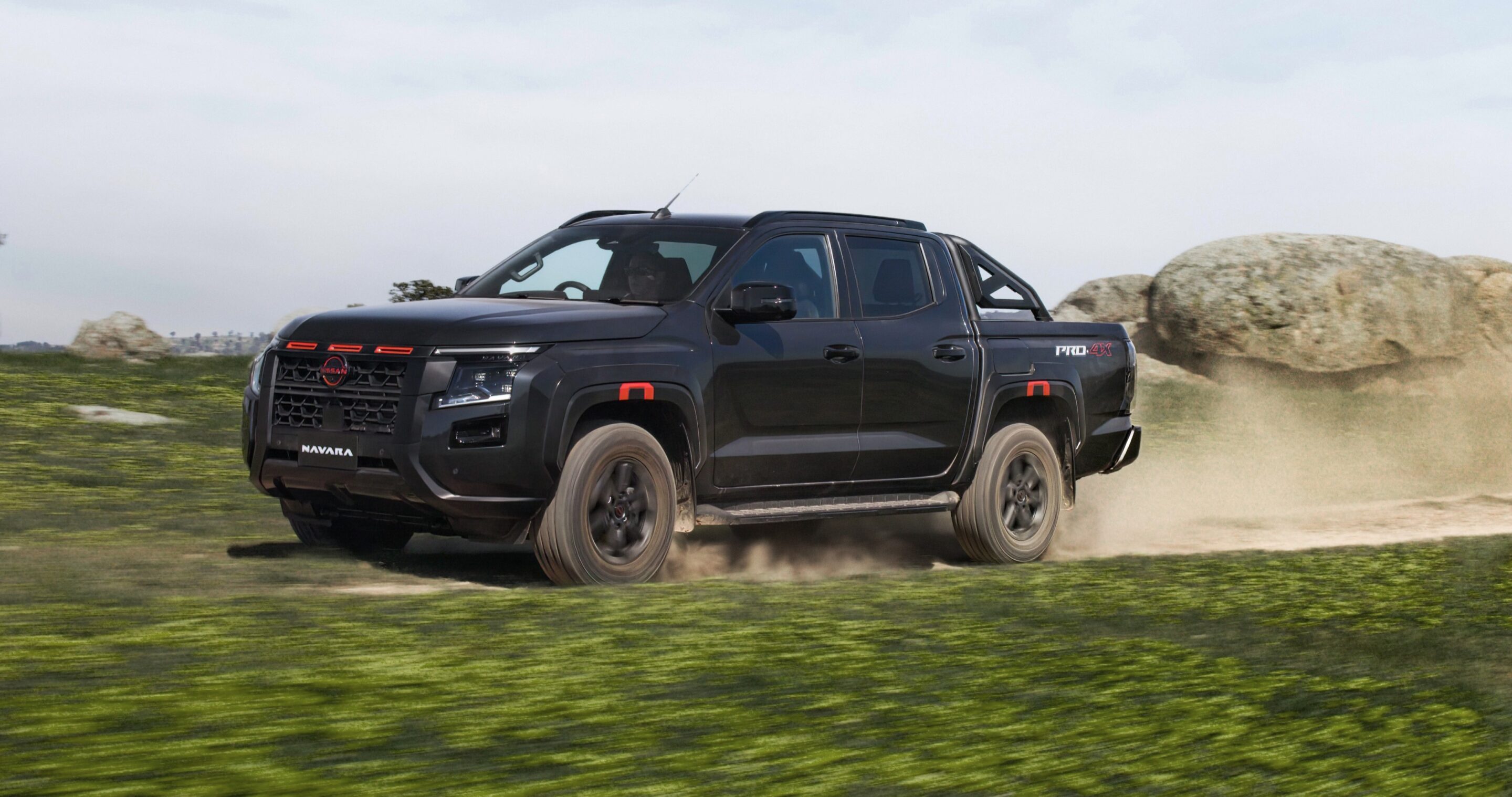
The big “Yeah. But” comes in the form of local engineering input into the Navara’s suspension. Carried out by Melbourne-based Premcar, which also has its fingerprints on a couple of the best off-road Nissans ever made (the Patrol an Navara Warrior franchise), the aim has been to retune the basics for a Navara-based flavour and continue to offer the faithful something on which to hang their flags of loyalty (even if the Navara’s purity ring is lost in the long grass behind that garden shed).
1
Premcar’s engineering boss, Bernie Quinn, told us that the basic Triton chassis (Nissan calls it an `Alliance platform’) was actually pretty good to start with, so changes could be restricted to dampers. That included a switch to twin-tube units (single-tubes tend to get hammered to death in rocky country, says Bernie) and a damper tune that was the result of 18,000km of outback testing, 137 individual damper codes and 550 different internal shims. Springs, bump-stops and bushes remain as per the Triton original, and there’s three distinct tunes for those depending on model and tyre fitment.
What I can’t tell you with any authority is what specific forms the Navara will take when it lobs into local showrooms sometime in the first quarter of next year. Nissan was very tight-lipped about the nitty-gritty, but the smart money says there will be at least an entry-level model, an ST-X and Pro-4X specification and, of course, a Premcar-brewed Warrior version. Prices? Anybody’s guess. But what you won’t see is a two-wheel-drive, single-cab or cab-chassis variant. It’s four-wheel-drive, dual-cab, styleside or nothing at this stage, which is what 90 per cent of Navaras now are and is, therefore, simply a matter of Nissan following the money. As companies looking to stay in business will do.
Mechanically, it’s all Triton, really, so bank on a 2.4-litre bi-turbo-diesel producing 150kW and 470Nm which is not only identical to the Triton, but right about the middle of what the average dual-cab is serving up. A six-speed automatic transmission is standard, while a rear diff-lock will be optional. And, thankfully, you can count on Mitsubishi’s celebrated Super-Select 4WD system that incorporates a switchable centre diff-lock and the ability to run on bitumen in four-wheel-drive. Not all (many) dual-cabs offer this, and for towing a three- tonne excavator on a wet road, 4-Auto is worth its weight in Big-M.
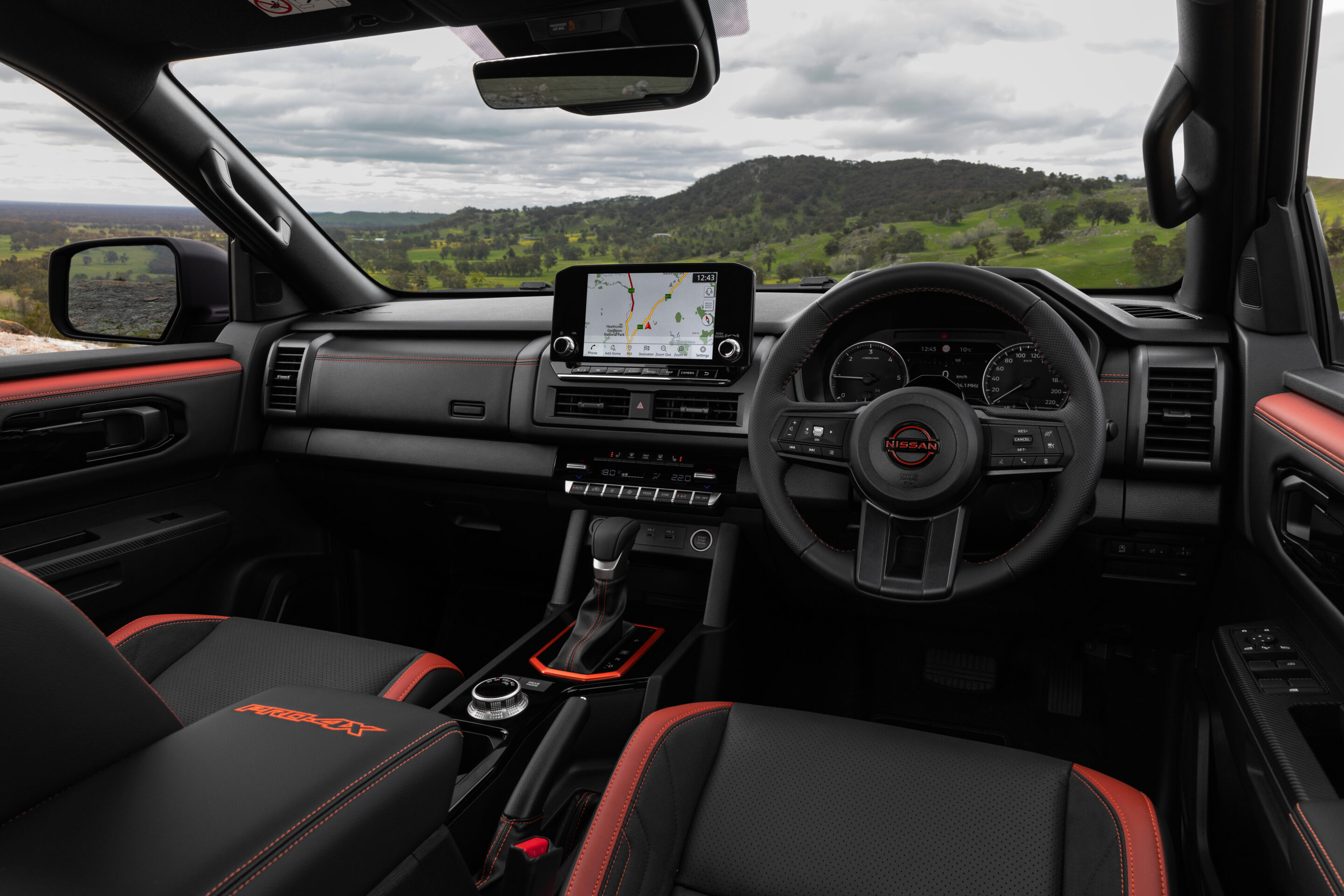
The cabin is a big improvement, which is handy, because both the previous Triton and the Navara needed an interior upgrade. That goes for the tech with a nine-inch central info screen and a seven-inch dashboard unit, wireless charging, full wireless connectivity, a 360-degree camera system, digital radio and plenty of USB charge ports.
4
But crucially, the cabin is wider than ever which, if you sit in the current Navara, you’ll know represents a big improvement. The front seats are actually very good and even the rear seat has a decent cushion, although a bit of adjustment for the rear backrest might have been a nice idea. Overall, of course, if you’ve spent much time in the current Triton, the Navara is going to be a familiar place, right down to the twin gloveboxes (nobody wants gloves strewn everywhere).
Overall, the Navara is a bigger vehicle in every direction apart from overall height, and it’s now a useful 46mm longer in the tray. It’ll legally haul the industry-standard 3500kg and depending on model and specification (whatever those turn out to be) the payload will be between 950 and 1047kg.
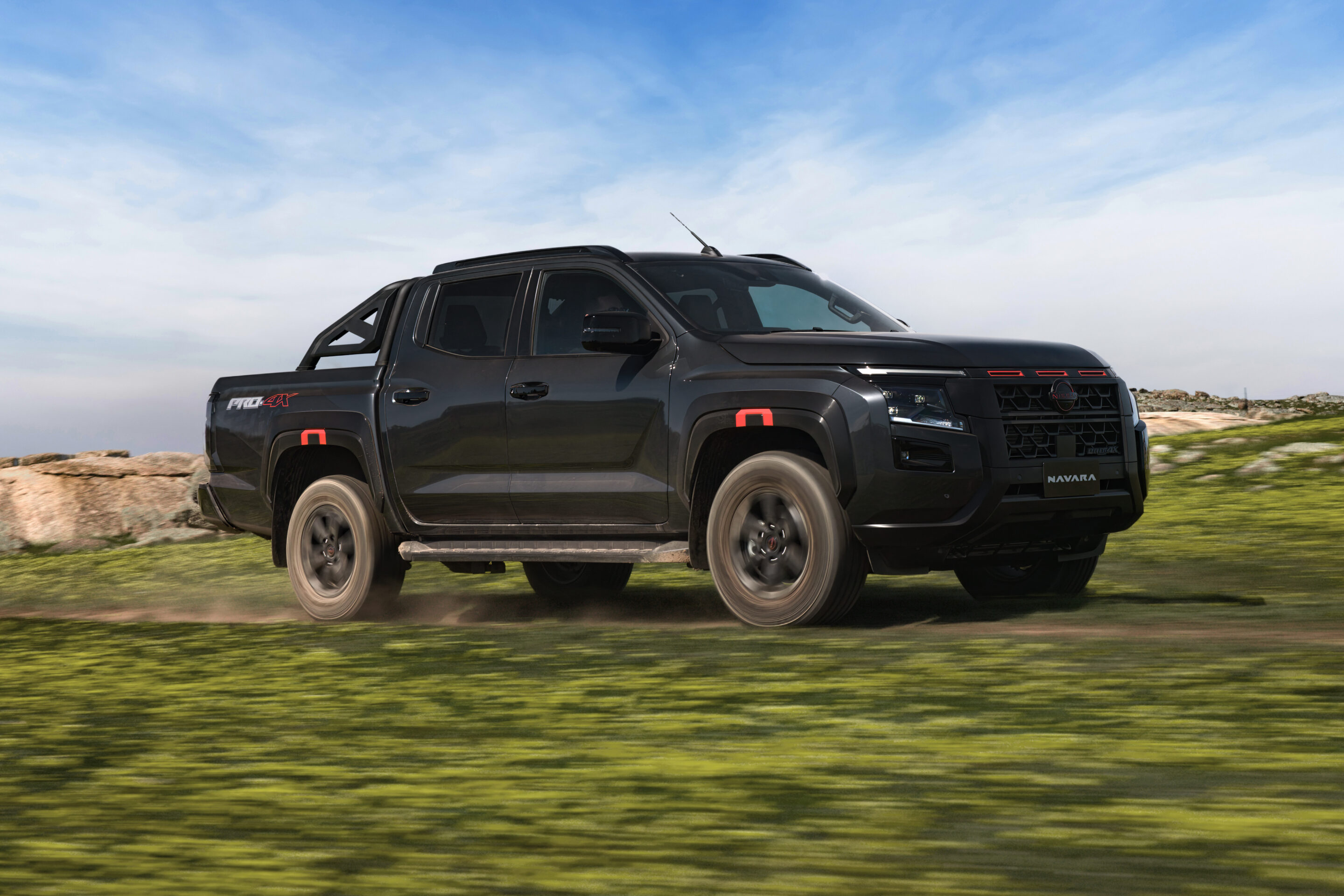
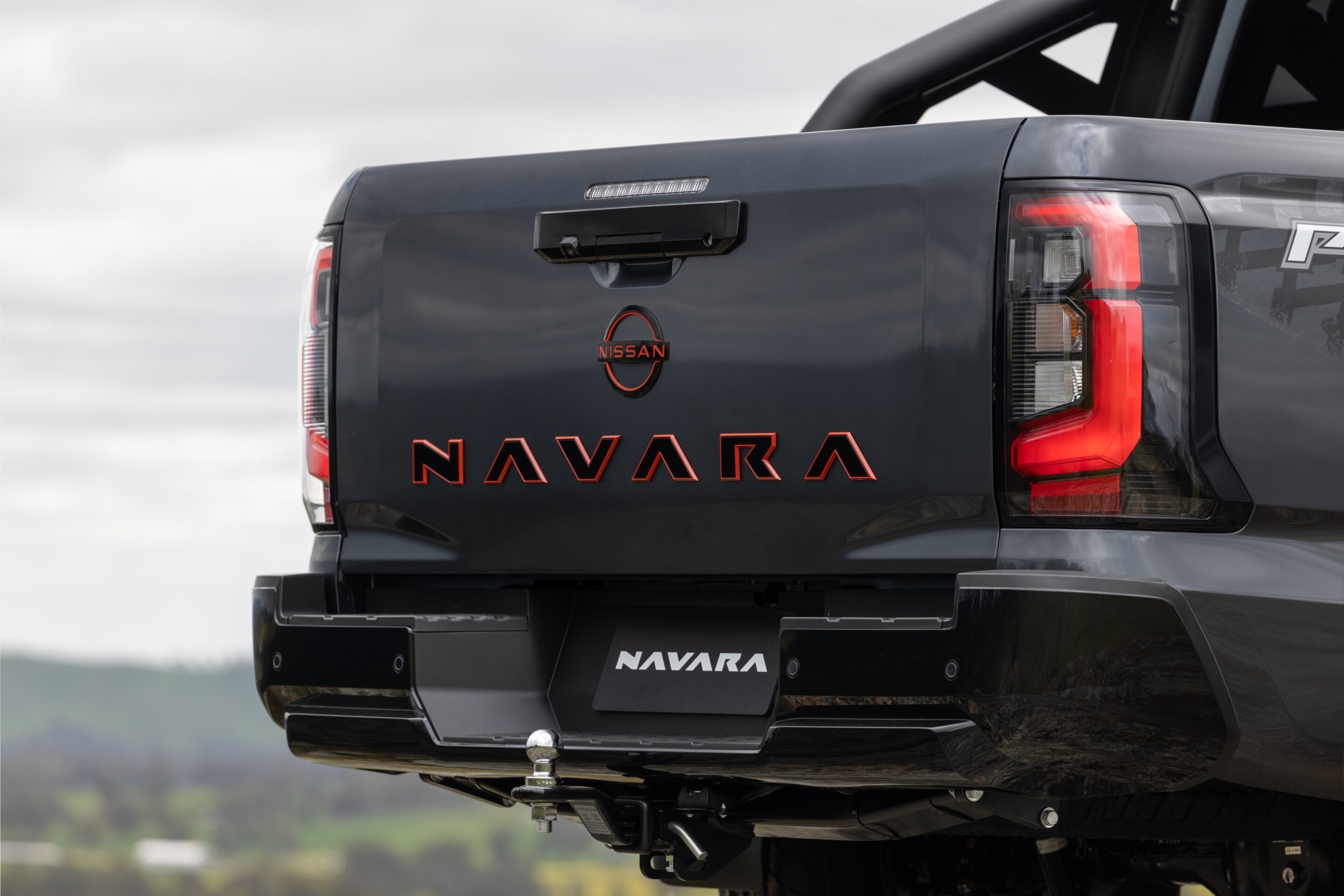
But doesn’t it look just like a Triton? Actually, not as much as you’d imagine. Sure, the doors, bonnet, tailgate, tray sides and glasshouse pressings are carried straight over from Mitsubishi, but just to prove that it’s a car’s face that we remember, the Navara is distinguished by a very Nissan visage. That starts with the Nissan corporate V-shaped grille bars and continues with the Navara-signature three slots in the leading edge of the bonnet. Okay, okay, the slots are actually in the grille, not the metal hood, but you get the idea.
We’ll need a back-to-back drive to really pick the dynamic differences, and our test drive at the global unveiling consisted of about 15 minutes on dry, well-formed tracks with a few steep hills and drop-offs. To be honest, the most dangerous part of the drive was area itself which – apparently – is home to about 70 per cent of South Australia’s snakes. So the story goes, but the thought was enough to prevent anybody venturing off those tracks.
3
Despite the low-speed nature of our drive, it was immediately obvious that the Navara is likely to boast a pretty good secondary (small bump) ride. It was never skittish or intrusive, and even amping up the pace to the maximum you’d ever use on such terrain, it stayed composed and refused to induce any nasty feedback, and not a single thump made it through to the cabin. Exactly what that means for towing, highway speeds or hand-to-hand urban work remains a complete mystery; one that won’t be solved until early next year.
We’ll know a lot more then, of course, including little details like model line-ups, specifications and prices. But even then, the one thing we won’t know is whether a Triton badged as a Nissan will delight or trigger the Navara faithful. Either way, that’s #swingerlife for you.
Specs
| Model | Nissan Navara |
|---|---|
| Price | Yet to be released |
| Peak power | 150kW |
| Peak torque | 470Nm |
| Transmission | Six-speed automatic |
| Fuel tank | 75 litres |
| Fuel consumption (combined) | 7.7 litre per 00km |
| Dimensions (l/w/h/wb) | 5320mm/11865-930mm/1795mm/3130mm |
| Kerb weight | 2120-2140kg |
| Tub dimensions | 1555mm long X 1545mm wide |
| Warranty | 5 years/unlimited km |
| On sale | Q1, 2026 |
1
Things we like
- Bigger, more modern cabin
- Local suspension tune
- Towing and payload
Not so much
- Is it `Nissan’ enough?
- Sports bar reduces practicality
- No idea on price or spec yet
Follow WhichCar/Wheels on Google
Click the button below to make WhichCar by Wheels a preferred source for your news.

We recommend
-
 News
News2026 Nissan Navara: Imminent next-gen ute to be tuned by local specialists for Aussie conditions
Nissan has again utilised Aussie automotive engineering specialists Premcar, this time to tune the new Navara ute and its suspension for local conditions.
-
 Features
Which are the 10 best-selling dual-cab utes in Australia?
It's a segment of the market with lots of interest and lots of new competitors – but which dual-cab ute brands are making the biggest inroads as of late 2025?