Reviews


Gallery 1
8.6
/10
Score
Score breakdown
7.5
Safety, value and features
7.5
Comfort and space
10.0
Engine and gearbox
10.0
Ride and handling
8.0
Technology
Things we like
- Engine still a major event, despite regulatory alterations
- Handling is phenomenal
- More bandwidth than before
Not so much
- Feels as if technology is overtaking the GT3 formula
- Price with options is extremely serious
- Availability is improved but still no cakewalk
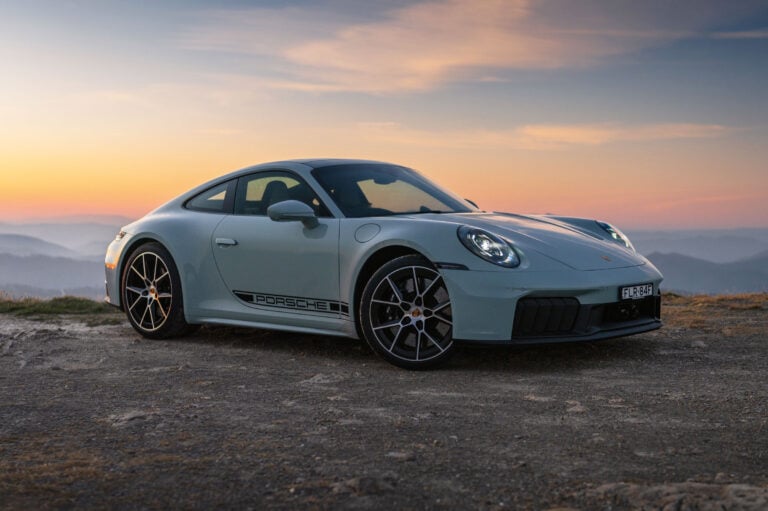
There are quite a few firsts with the new Porsche 911 GT3. Essentially the mid-life update of the 992 generation of the 911, known to marque devotees as the 992.2, the changes to this car look subtle but it’s a vehicle that breaks some new ground, for a GT3 at least. We’ll get to that in a bit, because there’s a big one that you probably weren’t expecting.
The backstory here is that noise and emissions regulations are doing their best to kill cars like the GT3. It’s powered by a naturally-aspirated 4.0-litre flat-six, which makes the same 375kW as its predecessor, while peak torque has fallen by 20Nm to 450Nm. At first glance, this would seem a bit of a capitulation on Porsche’s part, but that’s far from the case.
The base engine in effect develops significantly more power than the old unit, but it then has to exhale through an exhaust with four catalytic converters and two particulate filters. It’s like trying to run a 400m while wearing an N95 mask. In order to win back the losses caused by all of that strangulation, Porsche has had to really go to town on the marginal gains.
3
To that end, the 992.2 GT3 gets camshafts from the prior GT3 RS, which feature a longer duration, flow-optimised throttle valves to improve cylinder filling. This claws back 3kW alone, but more efficient cooling and a host of other small detail changes keep the engine and the spirit of the GT3 alive. To compensate for that torque shortfall, this version of the GT3 now has an eight per cent shorter final drive in both manual and PDK configurations. Slightly long gearing was perhaps the outgoing car’s most significant issue, if you can call it that.
Now, granted, none of these changes are particularly earth-shattering, but they do matter to GT3 buyers, who obsess over the smallest details. They’ll already know that this is the first GT3 that you can buy with a Weissach Package, formerly reserved for the RS models. They’ll also know that the de-winged Touring version of the GT3 also offers rear seats, too. So with this GT3, you can buy a very toned-down four seater with a manual gearbox or a two-seat, paddle-shift track rat with all the stripes and wings. It’s up to you.
With virtually every other 911 GT3, from the 996 in 1999, we’ve wondered how Porsche could improve on what seemed almost like perfection at the time. Each time we’ve been shown that there was quite a lot of headroom in the formula. Of course, given the time frames in which cars are developed, Porsche is already at work on the next model. As ex-Porsche senior engineer Jost Capito once said, he never wanted to buy a car that he’d developed, because by the time it was launched it was an old car and he knew that something better was on the way.
2
That point stands, and it’s why, this time round, the GT3’s place in the world feels different. For the very first time, Porsche has another model in its range that points to a bright future beyond the GT3’s natural aspiration template. The 911 GTS, with its electric turbo and hybrid drive system has strings to its bow that the GT3 can’t possibly match. What’s more, to get into a GT3 after you’ve driven a GTS highlights quite where the next GT3 could be improved. And not slightly. By huge leaps and bounds. Purists may yelp at that, but if anyone can marry the clever electrics of the GTS with the emotion required of a GT3, you’d bet on the white coats at Weissach.
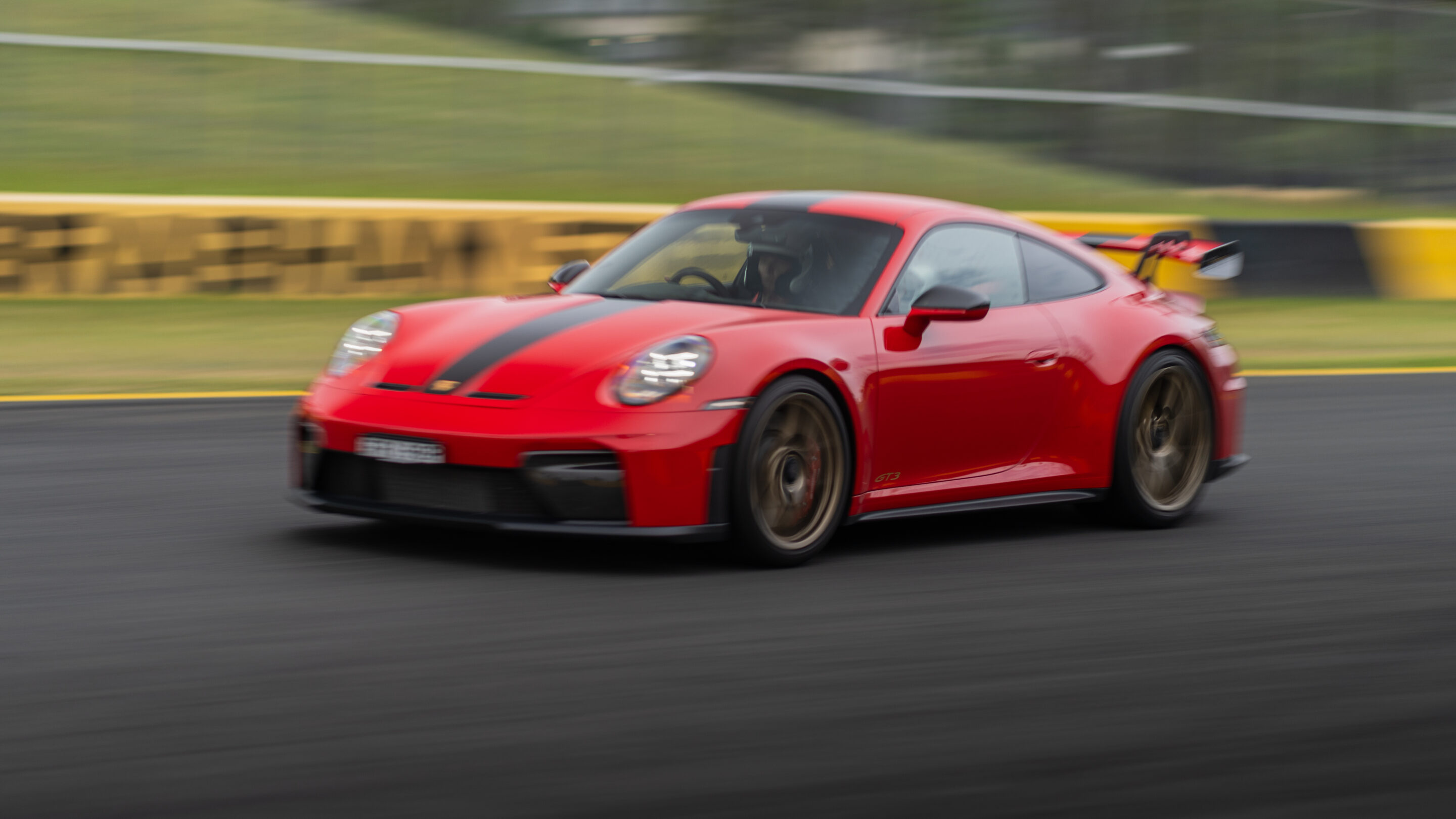
We’re at Sydney Motorsport Park to try the 992.2 GT3, so this is purely a track test of the new car. It seems appropriate, given that there’s no GT3 RS version of the 992 available at the moment, so this is as focused a track 911 as Porsche currently makes. We also get to drive the standard GT3 and the Touring, in both manual and PDK guises.
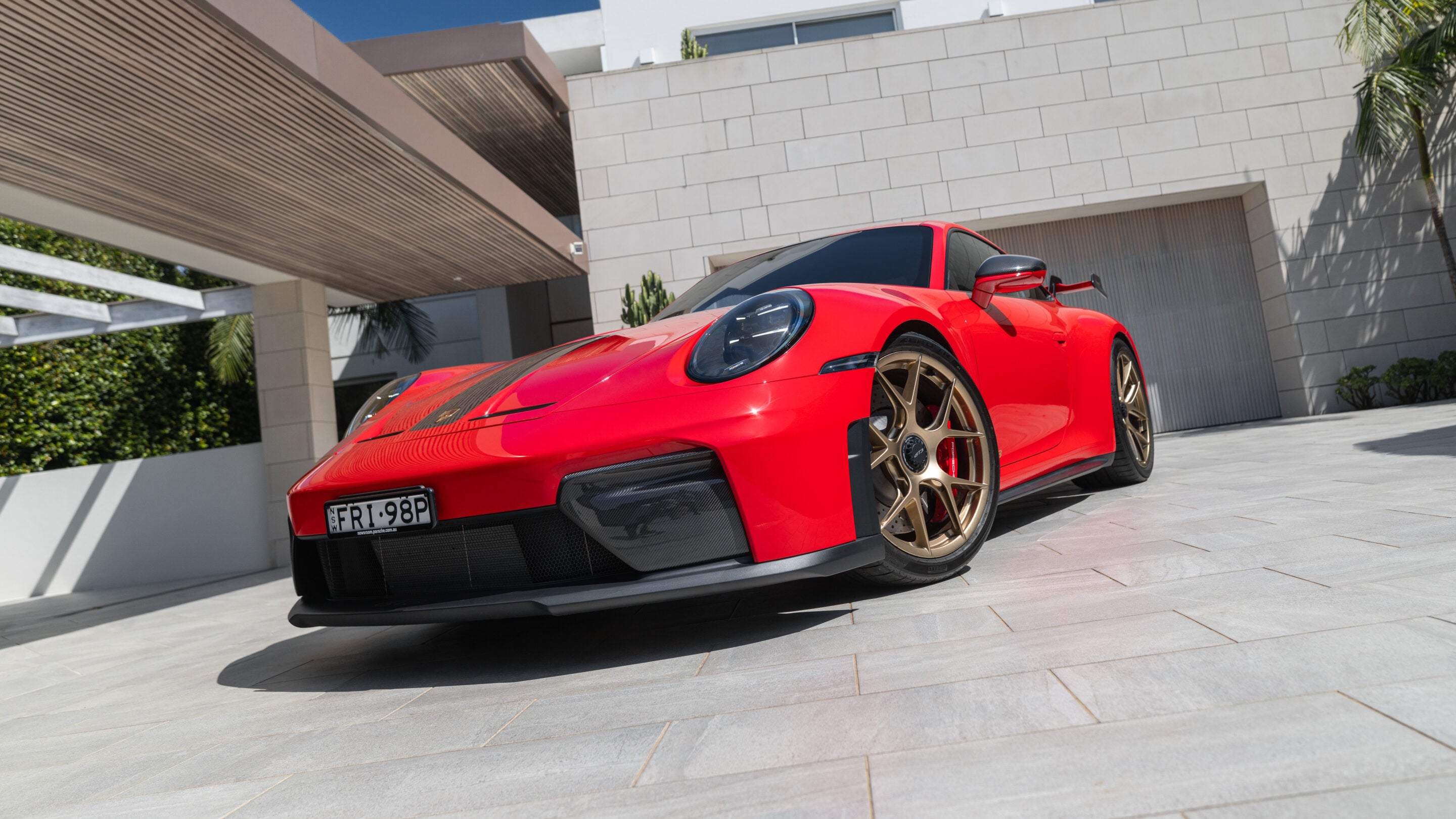
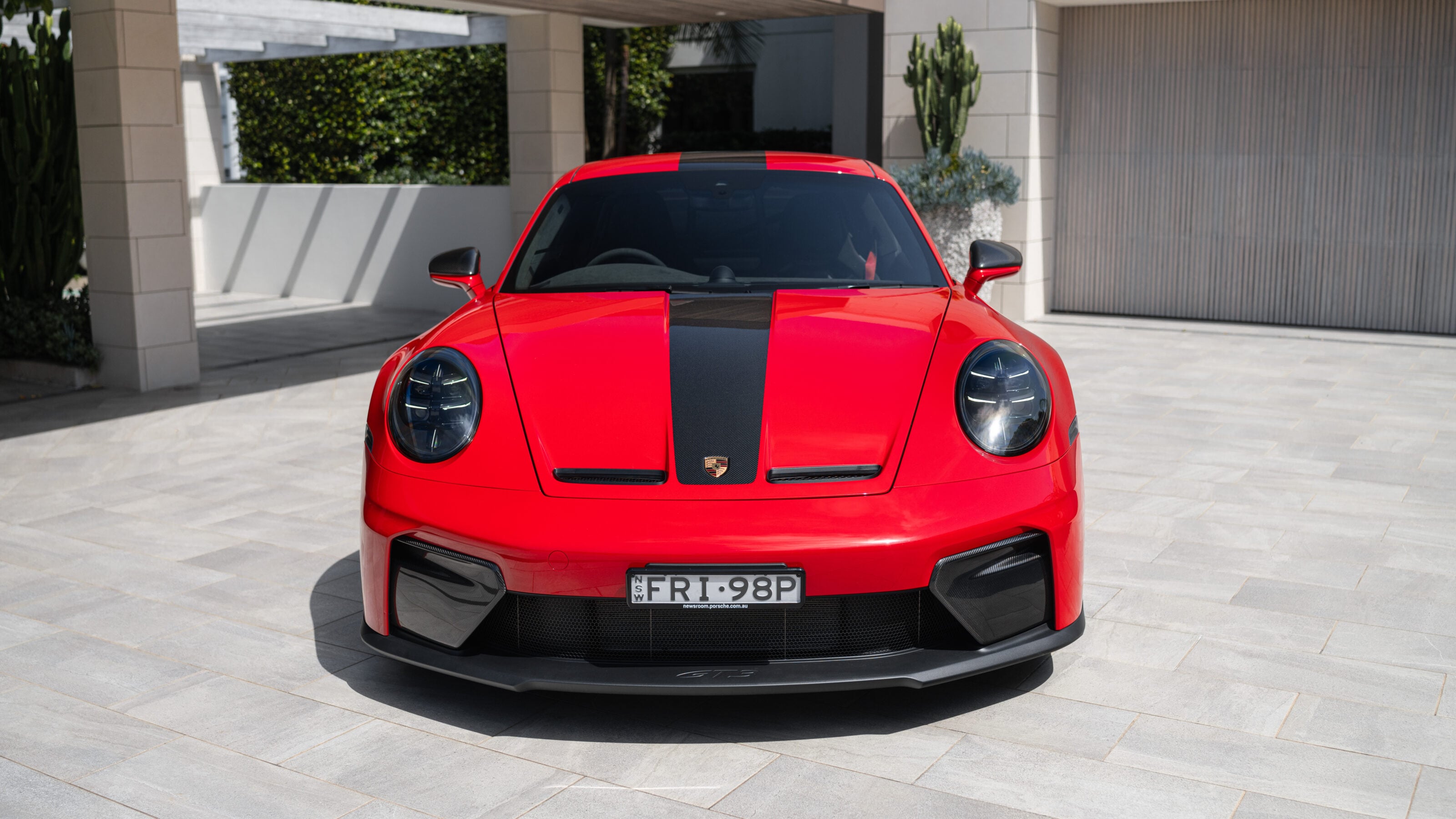
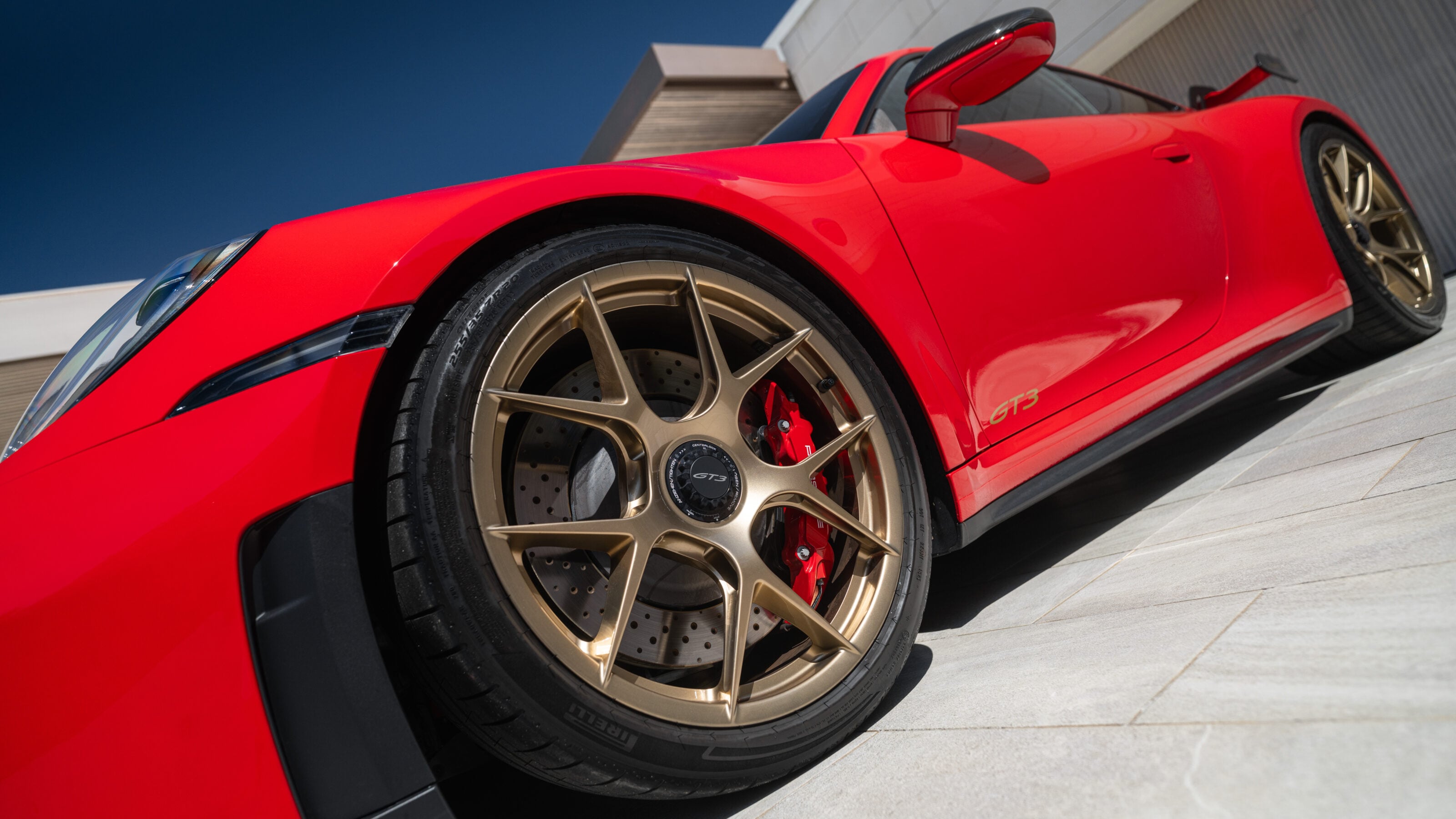
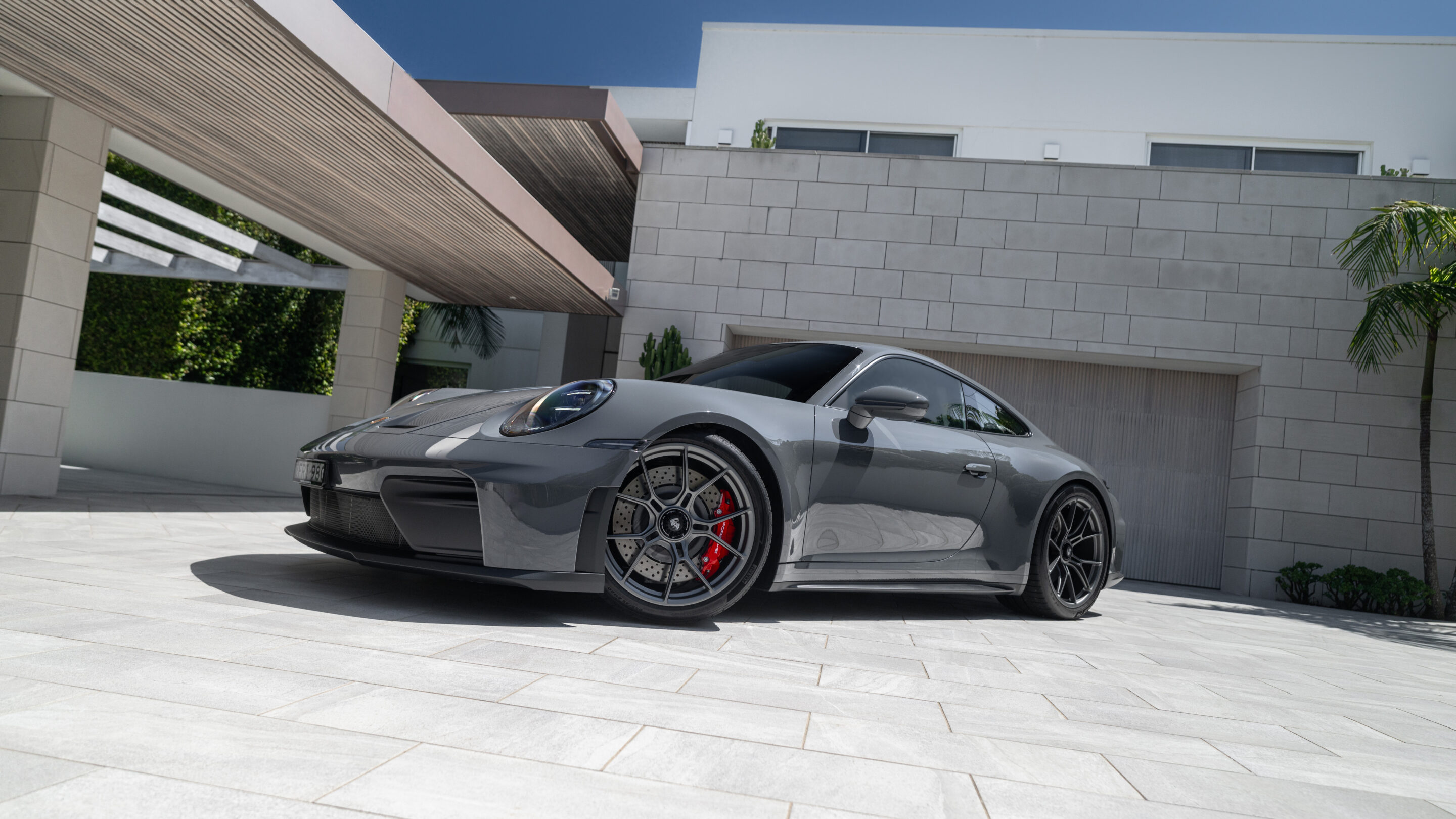
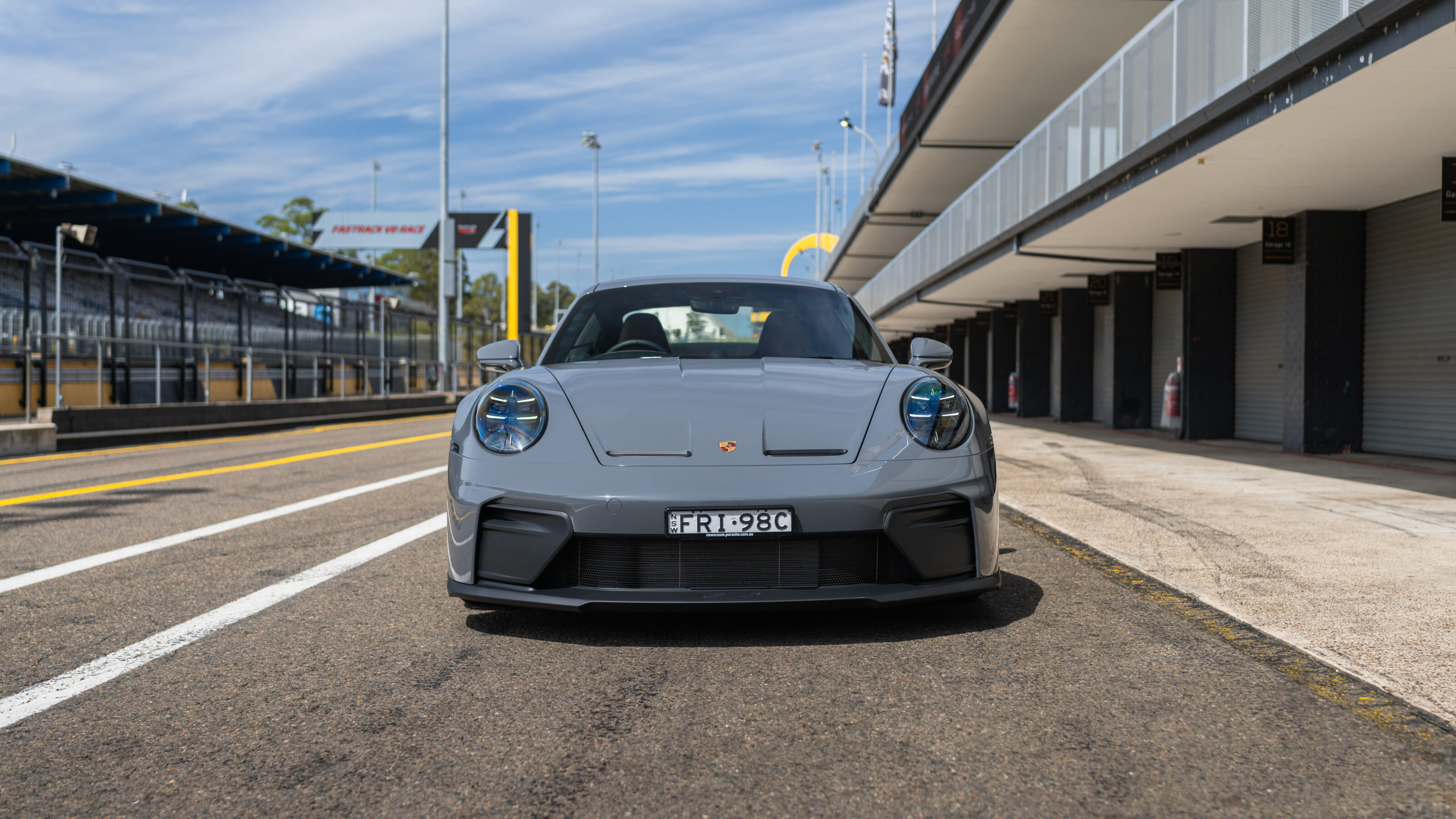
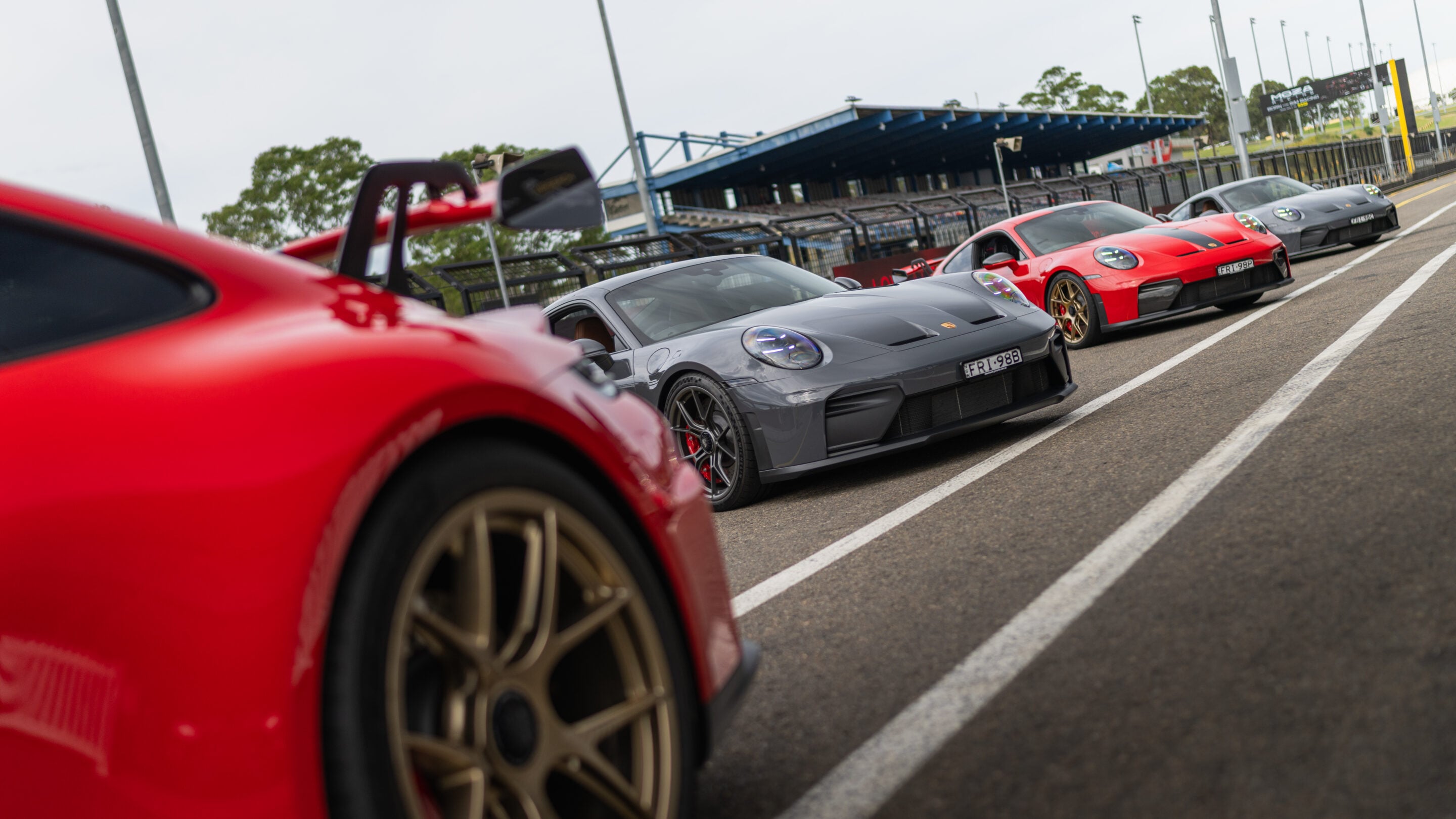
Rather helpfully Porsche have accentuated the difference between the two cars by opting for Guards Red painted GT3s, finished with Weissach Package and gold magnesium alloys. They look incredible, completely at home in the pit lane. By contrast, the Tourings are in blink-and-you’ll-miss-it Slate Grey Neo with an appropriately refined Black and Cohiba Brown two-tone cabin. Debadge one and swap the bonnet panel for one without the twin nostril intakes and many would be hard-pressed to identify it as a GT3.
5
Porsche has worked at giving the GT3 a modest visual refresh and the Touring model is the biggest beneficiary. Gone is the ungainly jutting underbite of the earlier 992 Touring, replaced with a more cohesive and integrated front end. In both variants, the re-contoured front diffuser, the shape of the spoiler lip and modified fins on the underbody serve to increase downforce. The matrix LED headlights can be specified with an optional white accent ring, and now integrate all the lighting functions, without the need to stud the lower apron with any lighting elements. Move round to the back and the air inlets, diffuser and the rear lid have been tidied up. The rear wing of the GT3 now features angled rather than vertical end plates.
Peer beneath the car at the front and you’ll spot new teardrop-shaped trailing arms on the front wishbones, which help brake cooling and, by reducing drag in the front wheel arch, help speed the air through, reducing pressure and increasing downforce. The suspension geometry has changed to introduce more anti-dive up front, borrowing that from the GT3 RS. The dampers have also been modified, with more travel before hitting the smaller bump stops, something that GT3 owners had signalled was an issue when running the car across kerbs on race circuits.
4
The GT3’s new Weissach Package costs $46,371. Alternatively there’s the full Lightweight package for $71,120 which bundles in the roof painted in the exterior colour as well as the stabiliser, coupling rods and shear panel on the rear axle made from carbon fibre. Magnesium forged wheels and lightweight door panels are also part of the package. In conjunction with the standard 6-speed GT sports gearbox, the shortened gear lever from the 911 S/T is used. In front of the gear lever, a plaque with the inscription Leichtbau is a tasty bit of one-upmanship.
3
Should your budget be a little less expansive, a Club Sport package for track use is available for the GT3 at no extra cost. This includes track day fare like a bolted steel roll cage in the rear, a six-point harness for the driver and a hand-held fire extinguisher. You will already need to have specified the lightweight sports bucket seats ($13,120) on the configurator as a prerequisite for the Club Sport pack, as the racy belts won’t work with the normal sports seats.
Unlike the rest of the 911 range, which adopts push button start, you still twist a knurled ‘key’ on the GT3’s dash to fire up the 4.0-litre six. It settles to a high but smooth idle. We’re in the manual Touring first, which gives us a chance to exercise the six-speed manual gearbox. It’s a lovely setup, although the shorter final drive means you’ll have to grab at gears a little quicker than you remember. That’s no great hardship, the shift feel is excellent and the pedals are perfectly set up for heel and toe. Alternatively, switching into Sport mode can enact auto-blipping on downchanges, so you get to compare your footwork against that of the robot. The gear lever is 10mm shorter than in the old GT3, adopting the measurements of that in the limited-run S/T.
4
Up front, Bathurst 1000 winner Luke Youlden is in a 911 GTS. He’s obviously dawdling so that we can keep up, but nevertheless, it’s clear that when accelerating out of the slower corners at SMP, the GT3 just can’t match the electrically-assisted GTS. The Carrera takes tens of metres out of the GT3 here, which we attempt to claw back under brakes and by taking advantage of the GT3’s bigger tyre footprint. Despite the humbling pace of the car up front, the Touring is doing a good job of making us feel reasonably heroic. The dampers certainly seem to be doing a decent job when monstering some of the kerbs, and the brakes – iron discs on all cars – are typically great, with the improved cooling helping to reduce fade on the bigger stops at SMP.
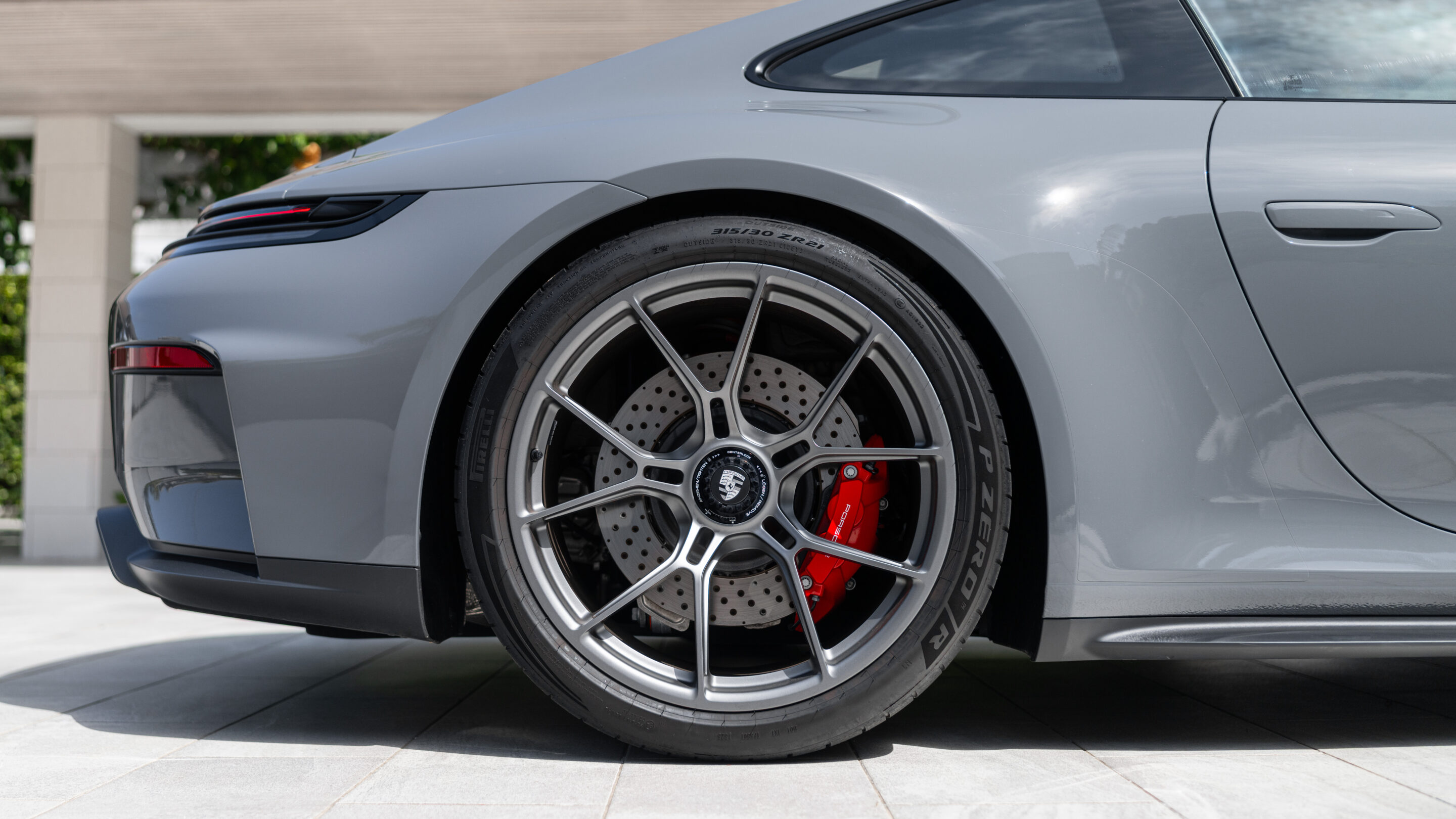
After a few laps, we get to switch into the be-winged GT3 with the Weissach package and seven-speed PDK shift. It instantly feels a good deal more serious, bucket seats hugging your hips and a carbon cage blocking much of the rear-view. Both cars run the same suspension settings and wear the same staggered Pirelli P Zero R rubber: 255/35 ZR20 up front and 315/30 ZR 21 at the rear.
Come barrelling into the near-90-degree right of Turn Four and you can feel where the new GT3 is now more composed. Having exited Turn Three and accelerated cleanly through and over a crest, you’re then into a dip as you attack Four. Under brakes, the nose of the car stays really composed, with the result that the rear of the car feels more stable as you turn in. Even if you get off the brakes a little eagerly to pick up the throttle, the front end won’t wash wide like an old GT3. The car feels flatter, faster, more composed and, as a result, more forgiving.
3
The GT3 feels absolutely imperious through the high-speed sweeper of Turn Seven, and then it’s hard on the brakes and down through the gears for the hairpin of Eight. It’s out of here onto a quasi-straight that you really miss the torque-fill of that GTS, which is making its full quota of 610Nm at 3000rpm, where the GT3 will be developing around a third of that figure. I’m not advocating turning a GT3 into a low-rev lugger, but technology is showing us how the next car’s performance envelope could be significantly enlarged.
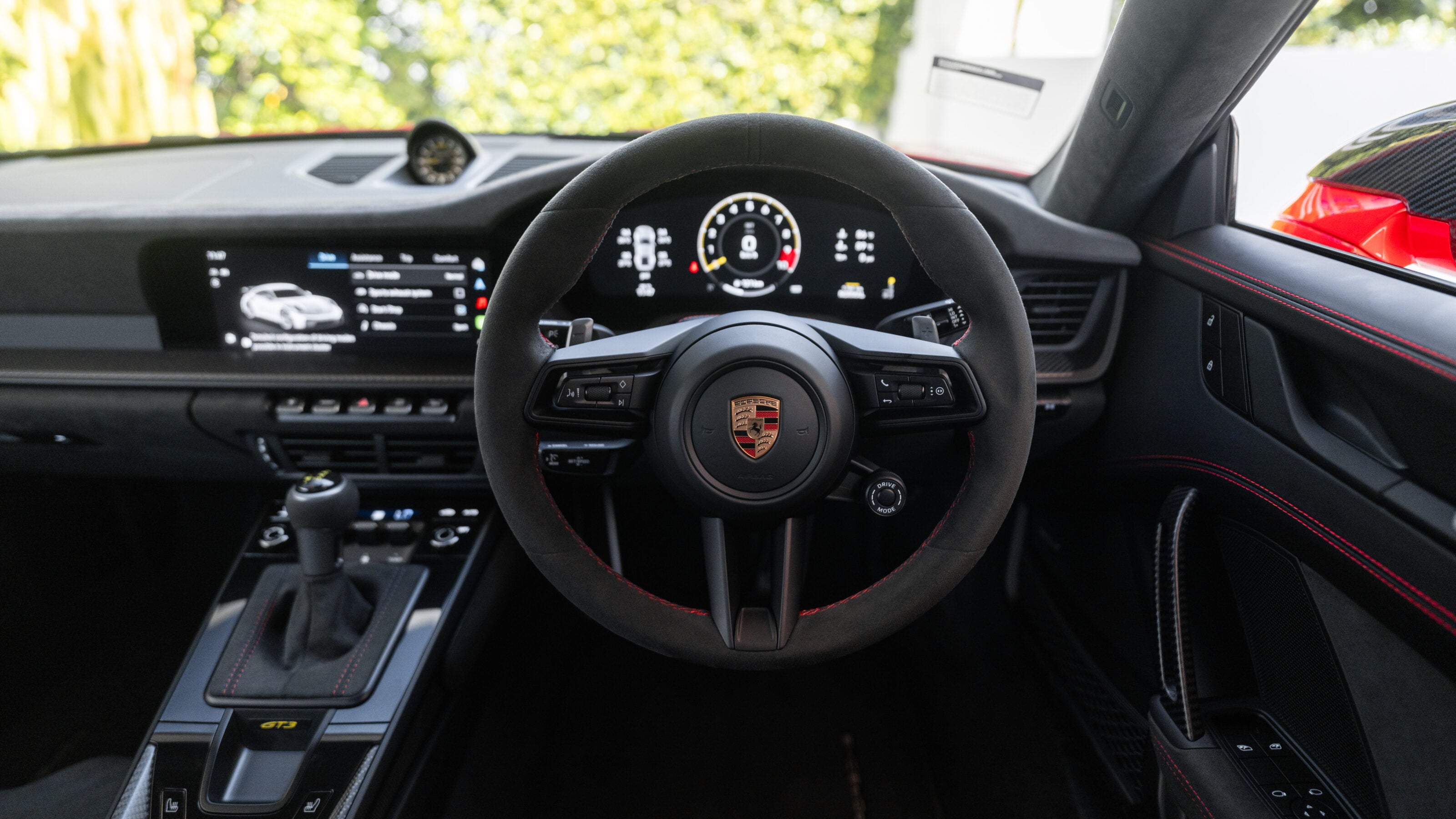
The new digital dash is a neat installation, although die-hards will probably miss the analogue clocks. I love the clarity of the new dial pack, and you can even rotate the rev counter so that the 9000rpm redline is located vertically, like something from the Mille Miglia. It’s a lovely touch. Another piece of thoughtfulness is the fact that the headrest pad is removable. This means that if you’re wearing a helmet, and especially if you’re teaming it with a HANS device, your head isn’t cranked forward by the padding and you can drive in a more natural position on track.
All too quickly we’re directed back to the pit garage. The 992.2 GT3 offers a little more utility and pace without dumbing down the format. Porsche has had to work its socks off just to make tiny improvements over the outgoing model, and that cost and effort doesn’t seem particularly sustainable. It’s a joyous experience, watching that needle rocketing to the redline, knowing that in order to get this car to within 2kg of the last one, a whole heap of internal sound deadening was binned. You still get the same goose bumps and you’ll laugh out loud the first time you soar through those upper registers. It hasn’t lost anything in the way of specialness.
What it might well have lost is the war against progress. Porsche’s drivetrain engineers have developed a new tomorrow, and the GT3 feels a little like the best version of yesterday as a result. Marry the best of both for the next 911 GT3 and we’ll have something very special indeed. Here’s to progress.
1
8.6
/10
Score
Score breakdown
7.5
Safety, value and features
7.5
Comfort and space
10.0
Engine and gearbox
10.0
Ride and handling
8.0
Technology
Things we like
- Engine still a major event, despite regulatory alterations
- Handling is phenomenal
- More bandwidth than before
Not so much
- Feels as if technology is overtaking the GT3 formula
- Price with options is extremely serious
- Availability is improved but still no cakewalk
Follow WhichCar/Wheels on Google
Click the button below to make WhichCar by Wheels a preferred source for your news.