UOTY

Gallery 1
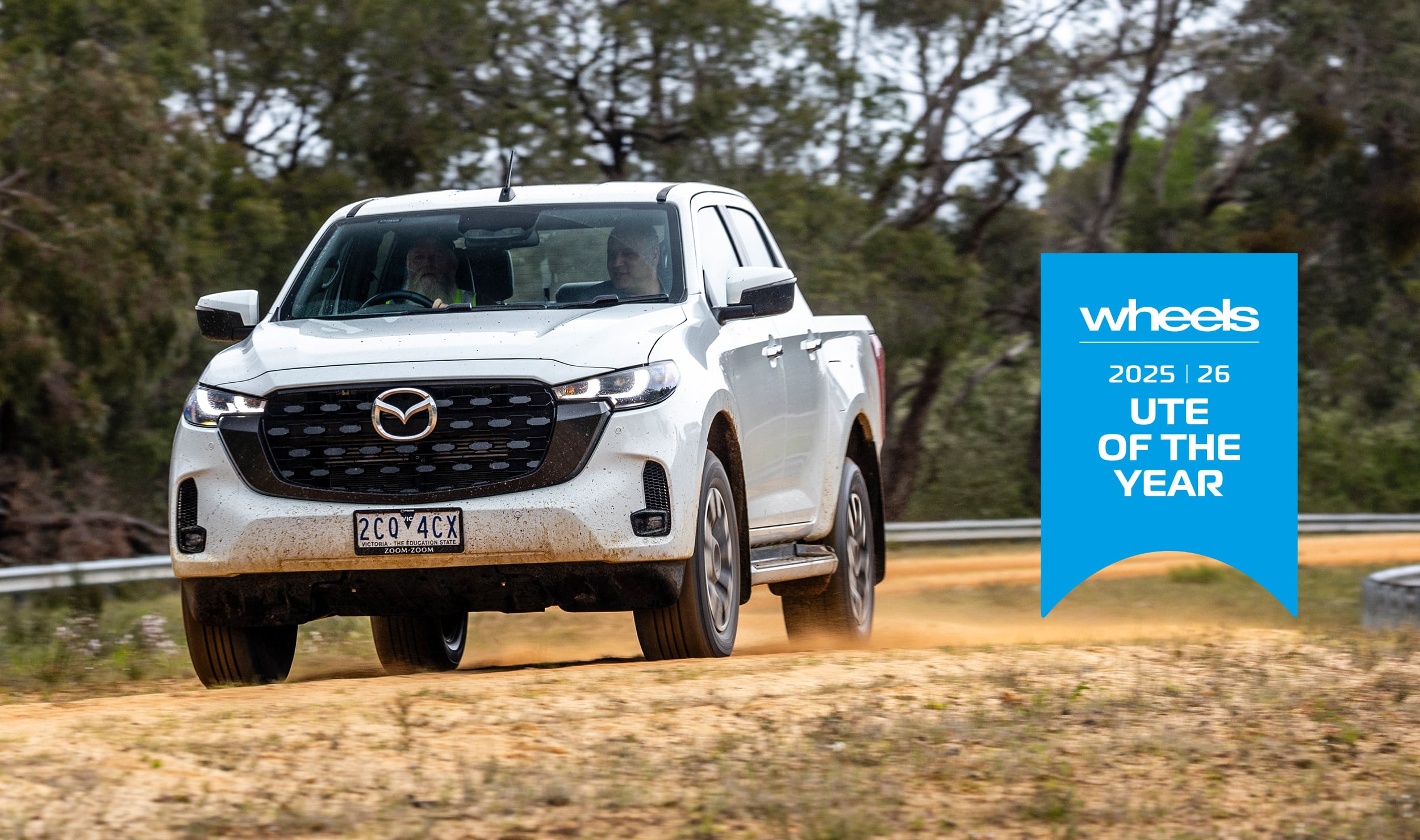
Australians have been buying Mazda utes for decades. Think Bravo, B-Series and, in the last 20 years, the BT-50. Along the way, the Mazda product has grown in size, performance and complexity in line with consumer expectations, and it’s been a big player for the last two decades.
But here’s the weird part: the modern BT-50 is not sold or made in Japan, and isn’t even a Mazda design beyond some detailing. And if you want to be really pedantic about it, the previous model BT-50 was more Australian in design terms than it ever was Japanese or anything else. Now it’s all changed again, anyway.
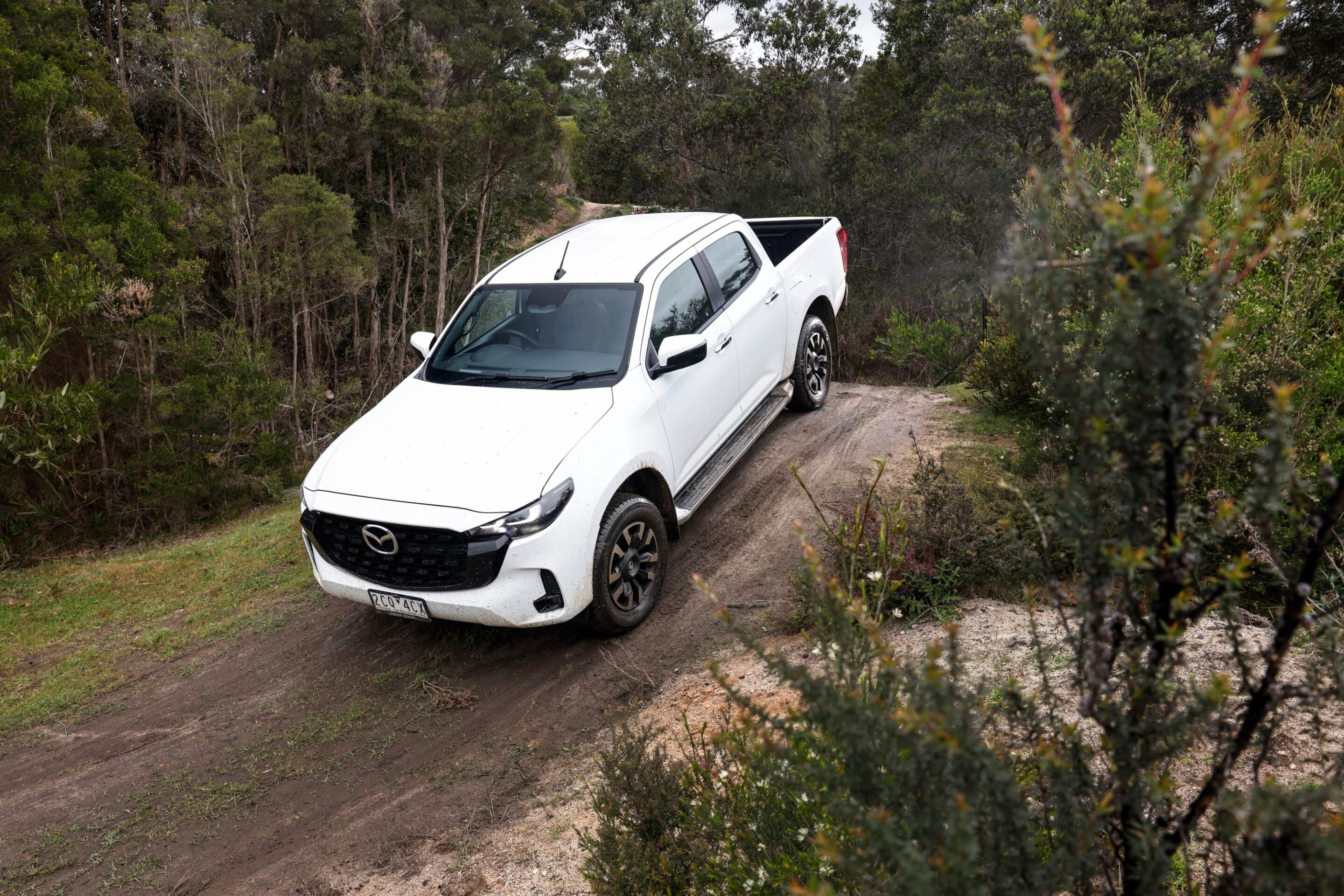
The BT-50 franchise came along in 2006 as a co-designed (call it rebadged) Ford Ranger. It was known for all the things the Ranger was, including a determination to overheat uncontrollably. Much better was to come when the Ranger was redesigned right here in Australia for 2011, carrying the BT-50 along with it, despite a Mazda-specific styling job that only a mother dual-cab could have loved.
4
That deal lasted until 2020 when the new Ranger emerged and Ford booted Mazda out of bed in favour of a tryst with Volkswagen to produce the new Amarok. Mazda took the flat-screen and the dog and shacked up with Isuzu to emerge as a rebadged third-gen D-Max with virtually no Mazda engineering input beyond the front sheet metal, lights and grille. And here we are.
To be honest, there are probably some people within Mazda and some potential buyers who wish that Ford and Mazda had been able to patch things up and stay together. Fundamentally, the Thai-built BT-50 with its Isuzu heart and lungs is not the polished thing it was when it sported Ford giblets.
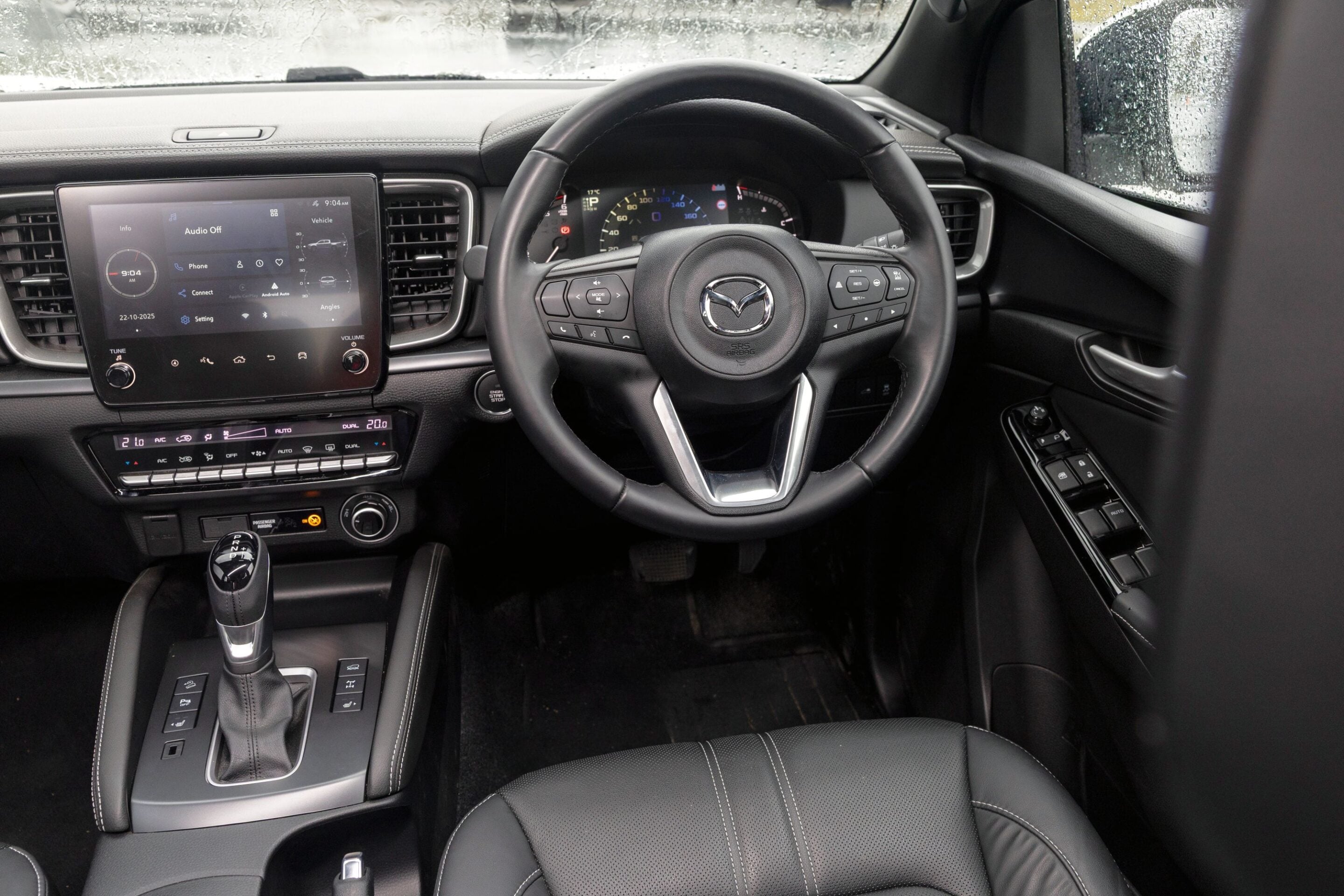
And that starts from the moment you step inside. To be honest, there’s nothing wrong with the interior layout, but the Mazda feels relatively small and narrow inside compared with a lot of the competition.
Actually, it’s kind of refreshing to see lots of analogue instruments and a conventionally placed T-bar gear selector, but there’s no disguising this is as a more budget-conscious vehicle than it used to be.
2
The model we’ve looked at here is the GT 4X4 mid-speccer (there’s always the SP and Thunder models if you want to splash even more cash) which includes lots of kit such as 18-inch alloys, side-steps, keyless entry, dual-zone climate control, embedded sat-nav, leather seats, heated front seats, remote start and front parking sensors. It’s priced at $66,620 (MSRP) plonking it firmly in a hotly contested segment of the market where the established mid-spec players have at it against the Chinese raiders.
As Wheels editor Trent Nikolic noted, ”It was a smart move by Mazda to pair up with Isuzu, given the legendary nature of Isuzu’s drivetrain. While it owes more to the traditional way of the dual-cab world, the BT-50 is a reliable, robust option for those of you who need your dual-cab to work.”
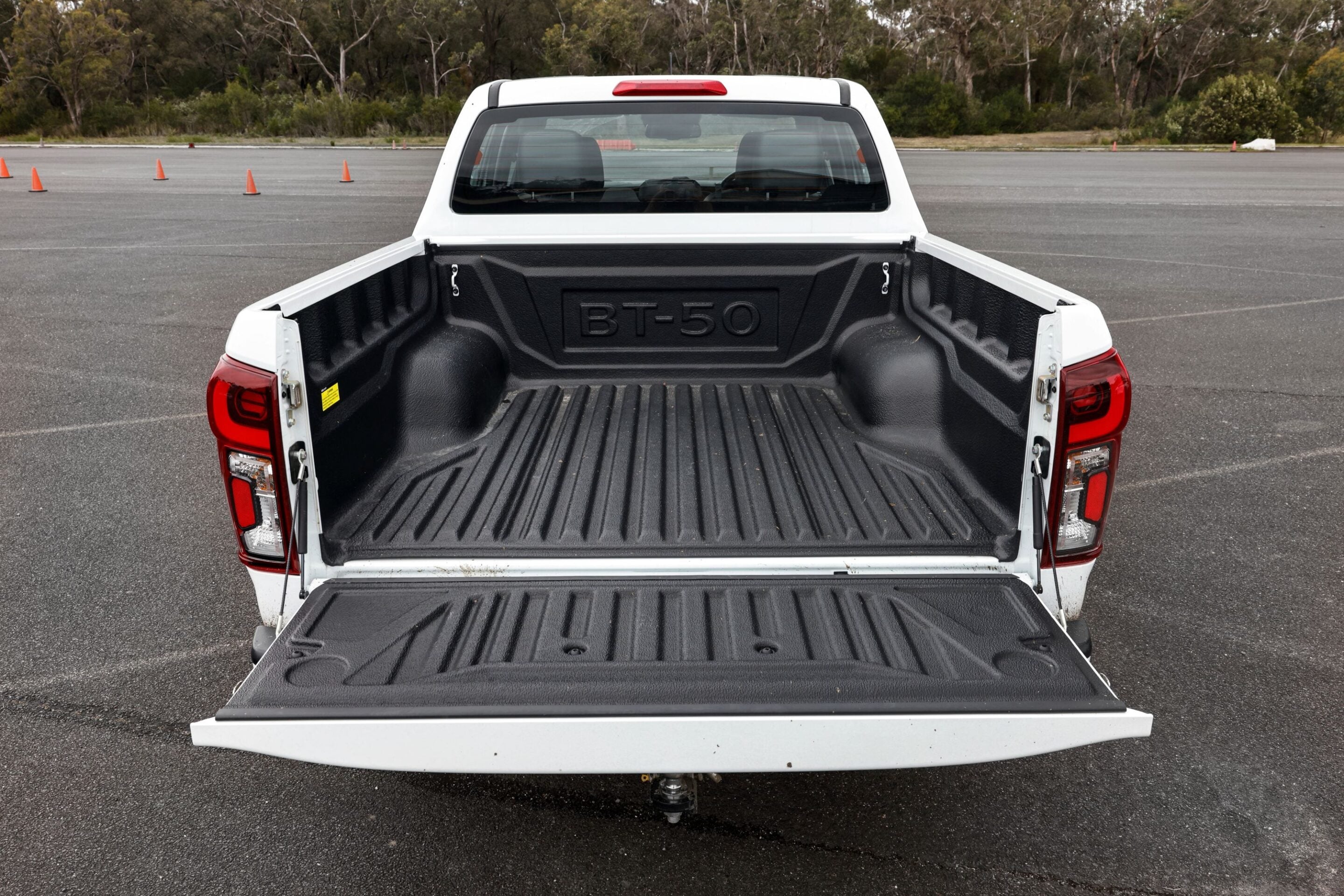
In other respects, the BT-50 hits the right targets. It has a 998kg payload in this form and can tow the usual 3500kg with a braked trailer and the appropriate tow-ball. But it lets things slide a bit in other ways. That includes the warranty which, at five years, is a year less than that offered by the mechanically identical Isuzu D-Max. Some ground is made up with the Mazda’s cover being open-ended on distance, while the D-Max throws you to the wolves at the 150,000km mark.
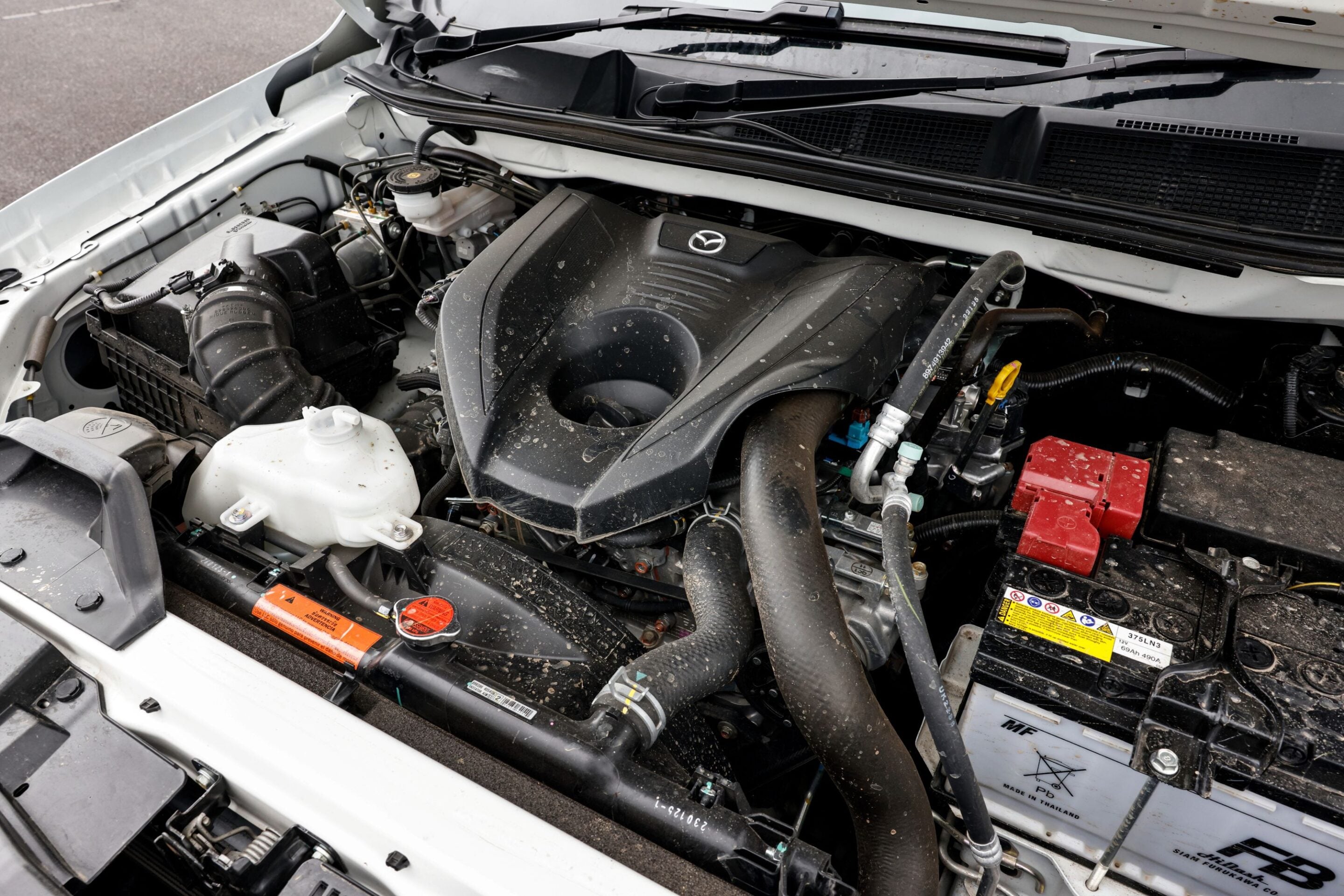
It is, however, when you jump in and hit the starter button that the BT-50’s shortcomings become immediately obvious. Isuzu has gained a great reputation for reliability over the years, by keeping the specification and output of its three-litre turbo-diesel engine conservative. And, of course, that’s precisely the powerplant the Mazda has inherited.
1
And maybe that was okay a few years back when diesel was the new black, and buyers were prepared to trade off refinement and smoothness for that promise of being able to go the distance. But things have changed, certainly in the context of these vehicles as family transport.
And right now, the level of diesel clatter, vibration and industrial soundscape the BT-50 generates
anywhere from idle to redline, is a real spoiler. Even the six-speed transmission feels like it comes up short, especially in an era when a lot of the competition boast eight or even nine forward ratios. And even though the driveline will get you where you need to go, it doesn’t do it with any real flair. For somebody jumping out of a modern petrol-engined hatchback into the BT-50, the culture shock involved would potentially be a deal-breaker.
But it even feels and sounds as though the engineers have pulled a bit of sound-deadening out of the cabin’s surfaces. We’ve noticed this in the BT-50’s smaller-engined brother, the XS model, too, so it’s not just this car or specification.
Actual performance? Nothing to get excited about as the Mazda’s 140kW and 450Nm seem a bit lame for a three-litre engine when many smaller engines in the same marketplace offer more.
3
The other problem is that Mazda has opted for an even firmer suspension tune than the equivalent Isuzu model. At low speeds you can feel the suspension grudgingly taking the edge off things, but as speeds rise, the Mazda flat out refuses to play the game. It’s at its worst when you get a few bigger bumps arriving too fast for the rear suspension (in particular) to relax and recover from the previous one. At that point, it all gets pretty busy in the cabin and you start to wonder if maybe there’s a better way to do this.
Overall, the ride is simply too stiff to make a convincing case as an urban get-around and while that sounds like it’s ignoring the payload and towing limit, it’s simply the way it shakes out when held up against the on-road, family-car criteria we’re working with here. Not to mention the other vehicles vying for the same customer’s money.
Throw in the old-school sound, feel and performance of the BT-50, and the case is pretty much closed.
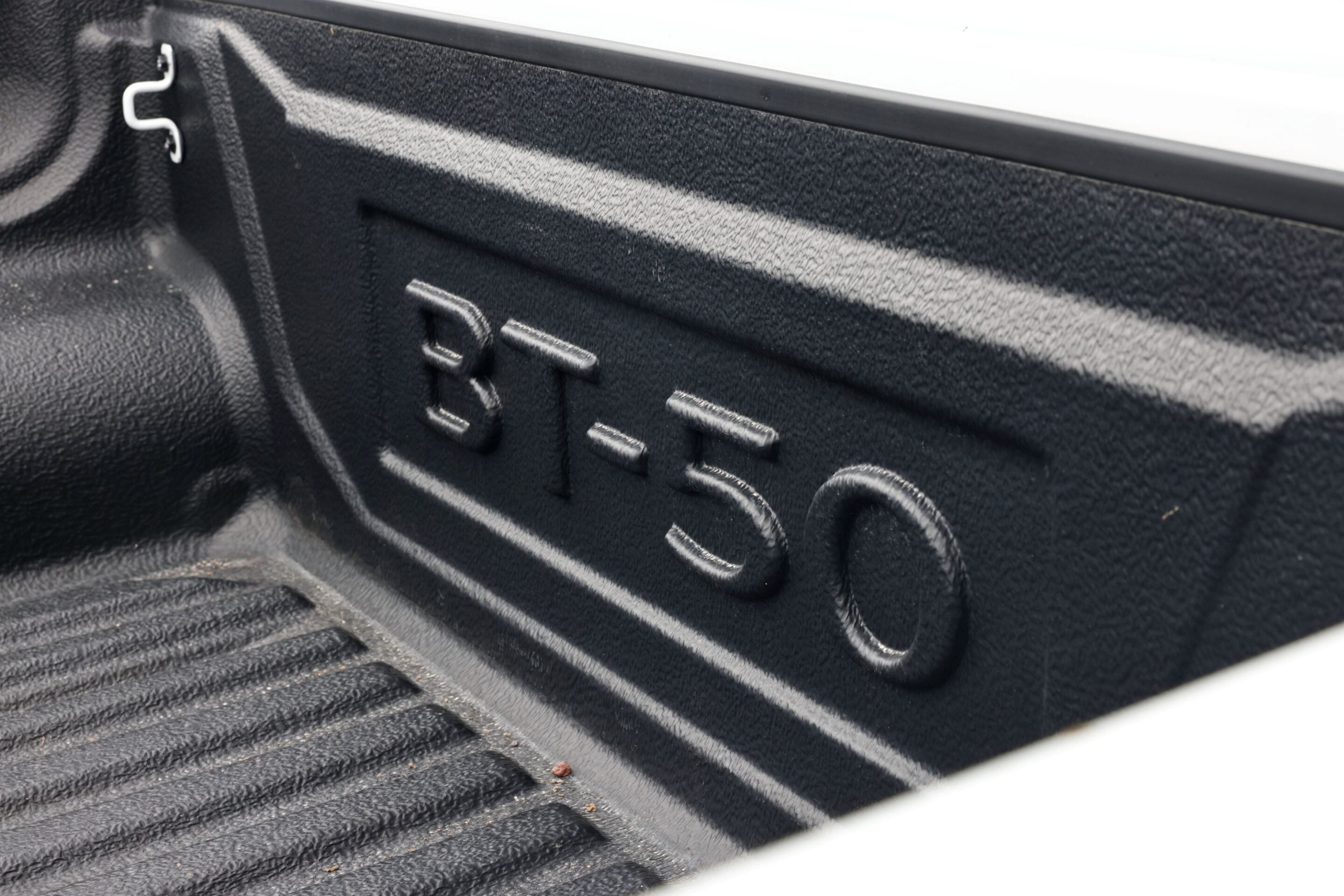
1
Specs
| Price | $66,620 MSRP |
|---|---|
| Body | Dual-cab, five-seat ute |
| Drive | Dual-range 4×4 |
| Drivetrain | 3.0-litre four-cylinder turbo diesel |
| Power | 140kW @ 3600rpm |
| Torque | 450Nm @ 1600-2600rpm |
| Transmission | 6-speed automatic |
| Consumption | 8.0L/100km |
| Kerb weight | 2102kg |
| 0-100km/h | NA |
| L/W/H/W-B | 5280/1870/1790/3125mm |
| Payload | 998kg |
| Warranty | 5yr/unlimited km |
| Safety rating | 5 star ANCAP (2022) |
2025-26 Wheels Ute of the Year
Follow WhichCar/Wheels on Google
Click the button below to make WhichCar by Wheels a preferred source for your news.

We recommend
-
 UOTY
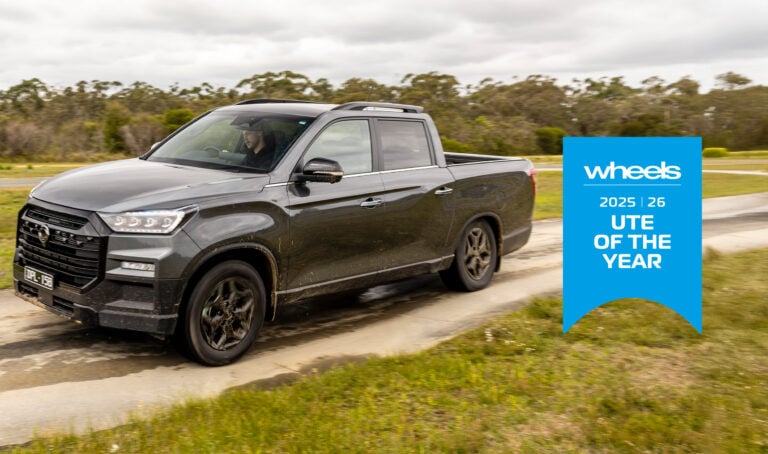
UOTY2025-26 Wheels Ute of the Year, contender: KGM Musso Ultimate Luxury XLV
The ‘other’ challenger brand in this segment is one that some of you might not immediately think of – South Korea’s first dual-cab entrant, the KGM Musso.
-
 UOTY
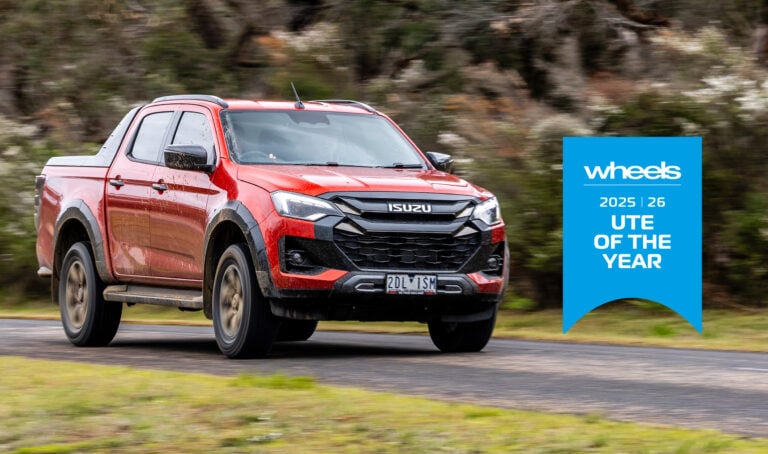
UOTY2025-26 Wheels Ute of the Year, contender: Isuzu D-Max Terrain
Updated and tweaked recently, the D-Max continues to appeal to buyers looking for rugged reliability and all-round capability.