Reviews

Gallery 1
7.6
/10
Score
Score breakdown
8.0
Safety, value and features
8.0
Comfort and space
7.0
Engine and gearbox
7.0
Ride and handling
8.0
Technology
Things we like
- New engine and eight-speed are nicely matched
- On-road ride is comfortable
- Off-road performance is excellent
Not so much
- Price gap to the 3.0-litre isn't wide enough
- Stop/start system can be harsh
- Engine noise under load
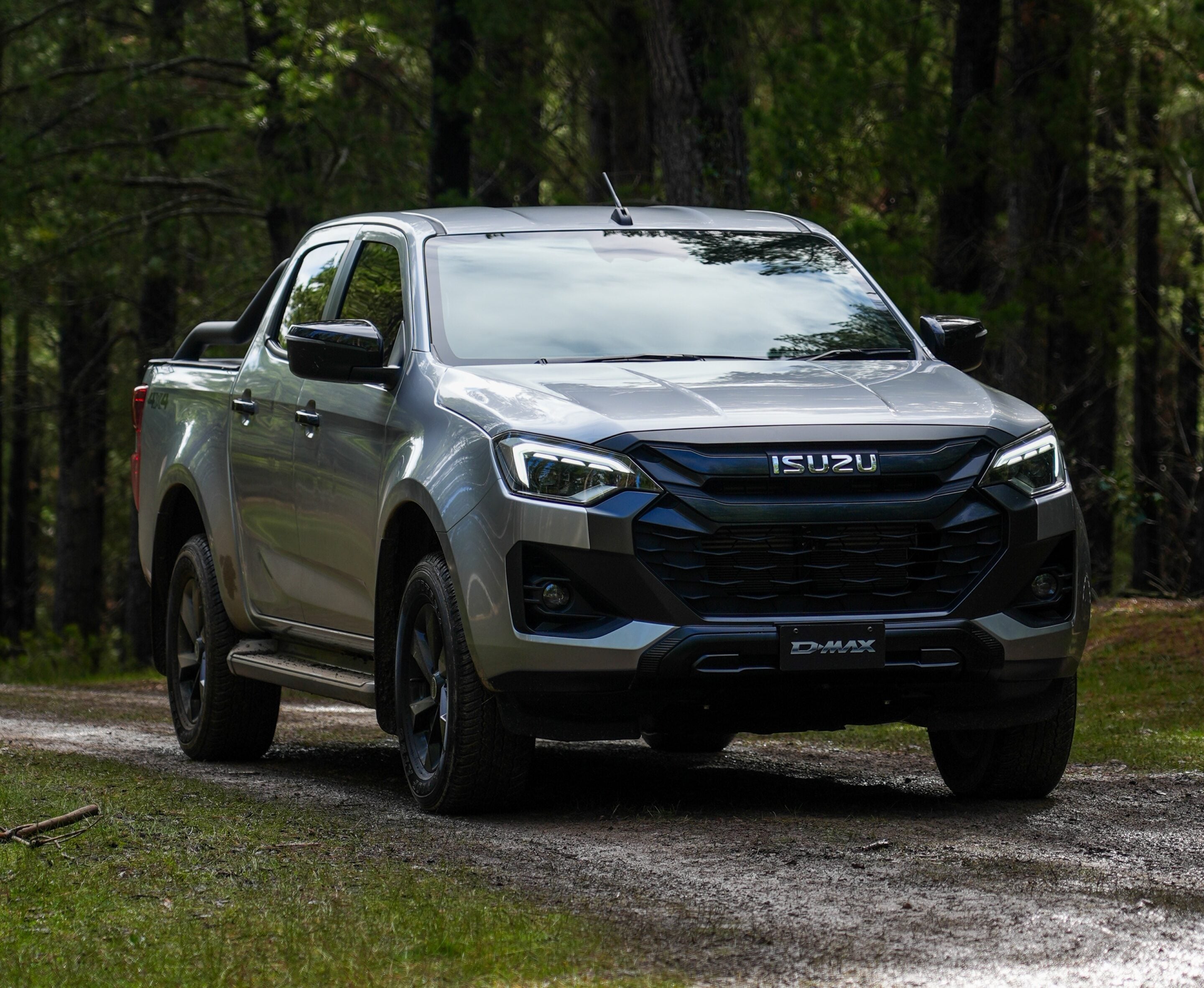
It’s fair to say that Isuzu’s 3.0-litre engine is the stuff of 4WD legend. Tough, reliable, with a long service life, and the ability to tackle heavy loads or difficult off-road work without issue, Isuzu’s big four-cylinder has been a favourite with Australian buyers for years now. Head into any remote town in the outback, and chances are you’ll see an Isuzu D-Max or MU-X rolling through – often with a caravan in tow.
If you’re wondering just how popular Isuzu’s two-model line up is, at the time of the launch of the new 2.2-litre engine, D-Max sat in third behind Ford Ranger and Toyota HiLux (in the 4X4 segment) for monthly sales, while MU-X also sat in third behind Toyota Prado and Ford Everest.
Heavy hitters indeed, and proof that Isuzu is right up there with the best of them. Speak to Isuzu owners, and many of them are repeat customers too, such is the robust quality of the product.
2
This new engine is an interesting move, and it’s not just the engine either with a new transmission backing it. In the 4×4 D-Max range, pricing starts from $50,700, for the SX dual-cab chassis model, before on-road costs. In the 4×4 MU-X range, pricing starts from $55,900 before on-road costs.
Reading the tea leaves, the new 2.2-litre engine is in line to replace the 3.0-litre at some point – probably not too far down the track. What’s most interesting right now though, is the relatively small – $2000 – price premium to step up to the 3.0-litre engine while it’s still available. The case for the new engine isn’t as strong as it might be with the 3.0-litre still available and still that affordable.
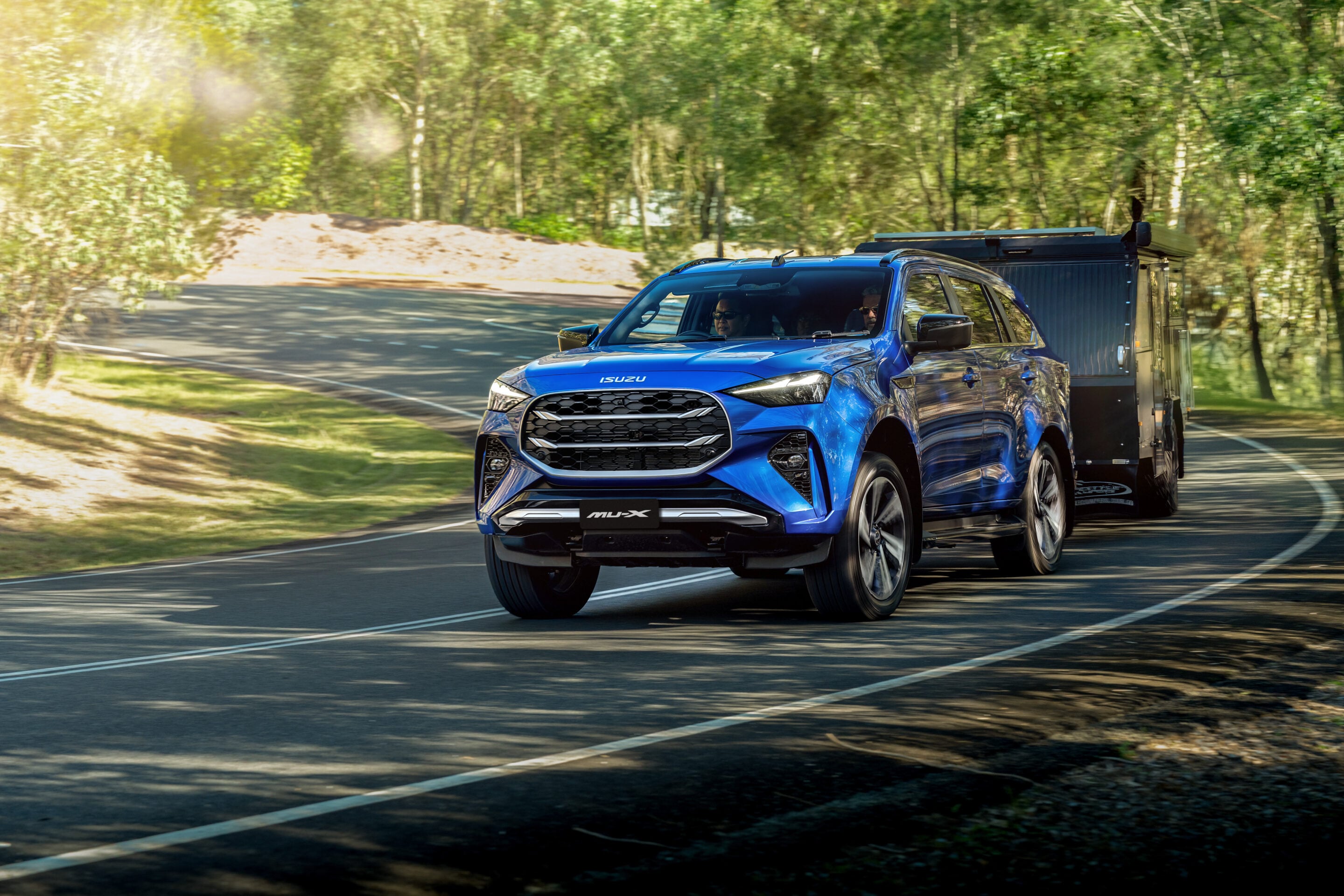
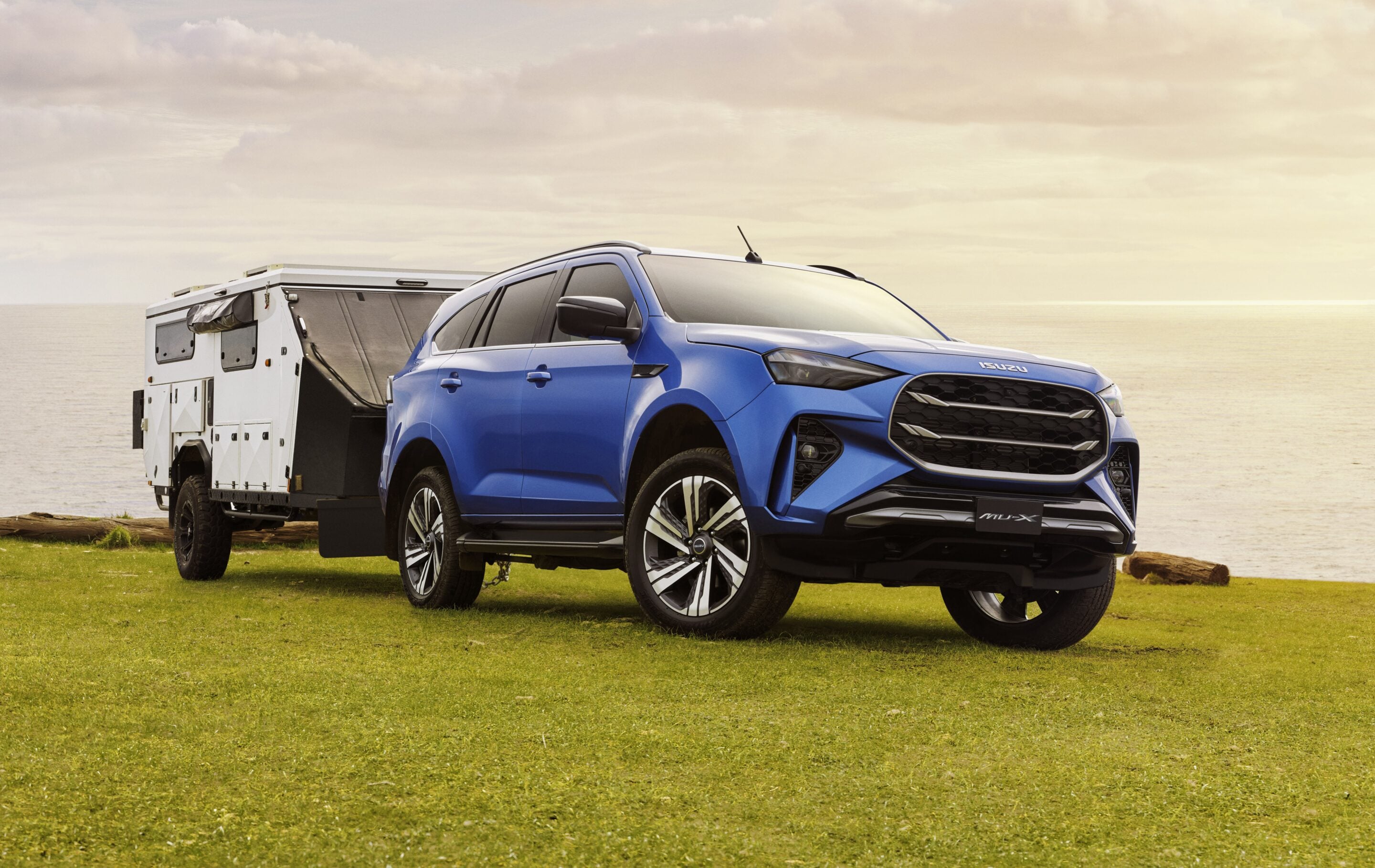
A quality eight-speed automatic comes with the new engine, promising to deliver efficiency and lower emissions while still retaining crucial performance ability such as a rated 3500kg towing capacity (up from the 1.9-litre’s 3000kg rating). The outgoing 1.9-litre generated 110kW and 340Nm, while the new 2.2-litre makes 120kW and 400Nm.
1
Isuzu claims better power from takeoff, and earlier delivery of peak torque as well, which means day-to-day drivability should be easier and better. The previously available manual transmission is no longer and crucially, the new engine drops fuel use down as low as 6.3L/100km and will assist in minimising the fines that the manufacturer has to cop under new CO2 emissions rules implemented by the Australian government.
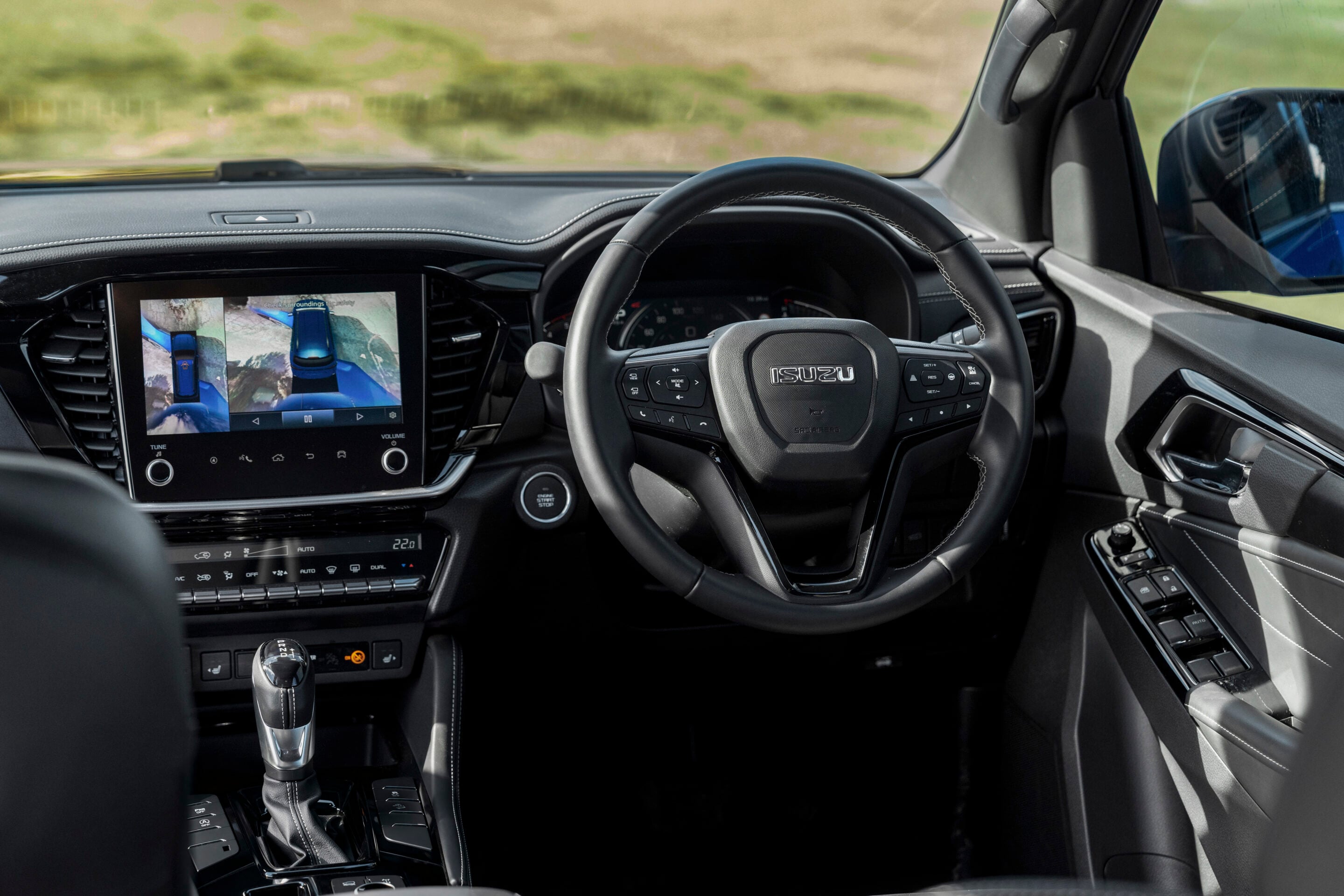
From the outside, and inside the cabin as well, both MU-X and D-Max are as you were. That means if you’re upgrading from an older model, this current generation will feel like your favourite hoodie, or if you test the 3.0-litre back-to-back with the 2.2-litre, the cabin, driving position and controls will remain the same. All the changes are under the skin and only evident when you get behind the wheel.
Our launch drive starts in city traffic, where the strengths of the new engine and gearbox come into play. Isuzu’s stop/start system isn’t as snappy as we would like, and there’s some shudder on start up when you lift off the brake. It won’t always activate, depending on factors like steering angle, and the needs of the powertrain for example, but we did notice the AC doing the thing that most of them do when the engine stops at the lights.
2
That is, it’s not as cold as it is when you’re on the move. You will get used to stop/start though, and if you’re not as picky as we are when it comes to assessment, it’s fair to say it probably won’t bother you.
The other factor you’ll notice in town is the engine noise. You will hear it working, especially when you need a decent hit of throttle to either get up to speed from a standstill or roll on to overtake. It’s not harsh, but it’s there, and we’d need to drive the new engine back-to-back with the existing 3.0-litre to tell you whether it is in fact, quieter. There’s certainly not a revolutionary shift in refinement with the 2.2-litre engine though.
The gearbox is excellent. Eight ratios is probably as many as you need in the real world, without ending up with a transmission that is constantly hunting for gears, and looking to maximise efficiency. There’s nothing wrong with six either, but a quality eight-speed is a really good thing to use in real-world driving scenarios. As such, progress in the new MU-X and D-Max is smooth, with shifts almost imperceptible unless you’re right up at redline.
Once you’re up to cruising speed on the highway, the new engine settles into the same relaxed lope as we’ve come to expect from any previous Isuzu.
We actually did more off-road driving at the launch, which is counter intuitive for most of you reading this, especially if you’re a potential MU-X buyer. Hardcore off-road work, still remains the domain of the minority in a market laden with 4WD alternatives across nearly every sector. As it was on-road though, the new engine is in its element in the rough stuff.
3
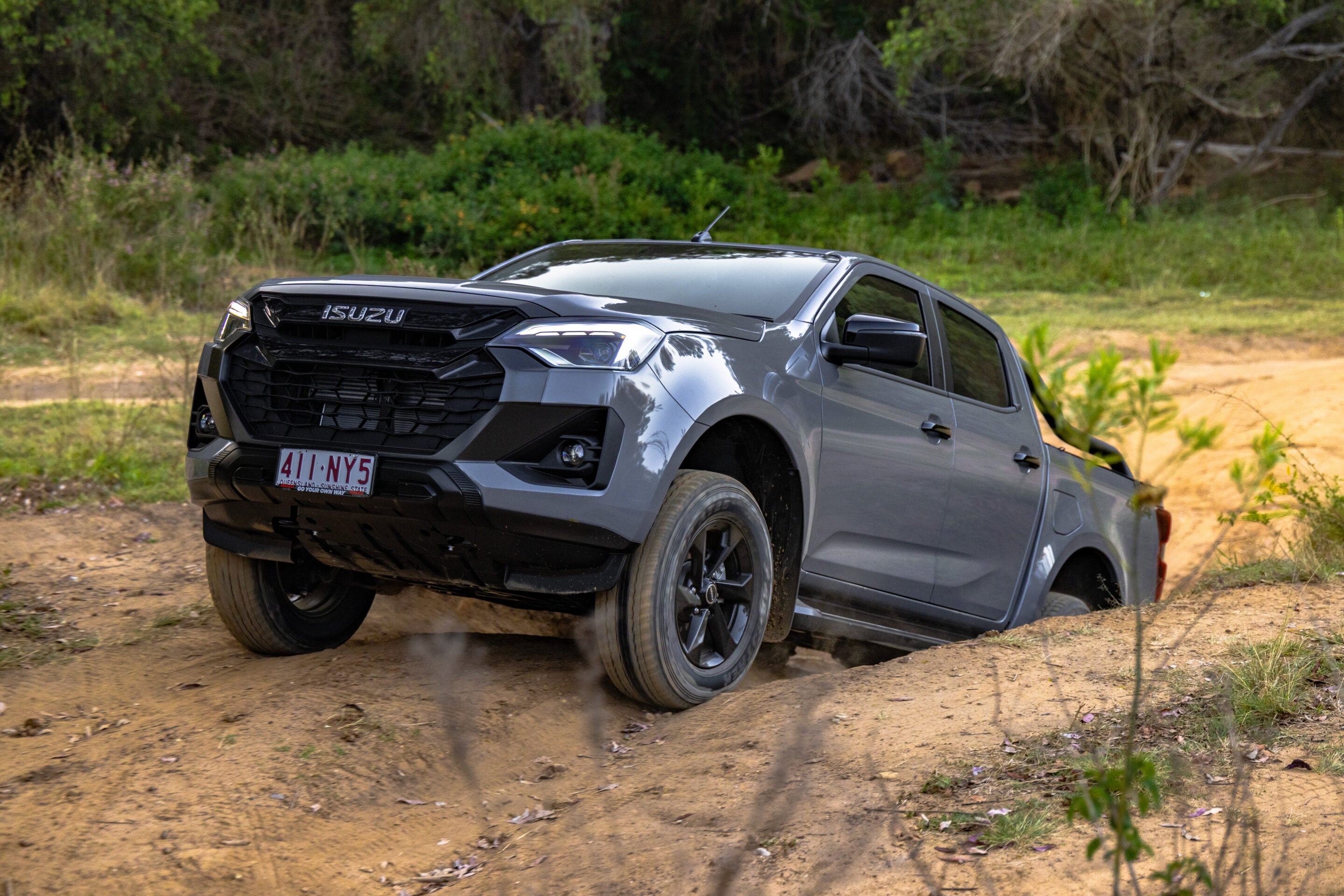
There are still 2WD MU-X variants available for those of you who don’t need 4WD. Key to the ability off-road is the quality of the low-range gearing, a rear diff-lock, off-road focused ground clearance, and Isuzu’s now-excellent ‘Rough Terrain Mode’ traction control tuning, which limits wheel slip, maximises grip at the right tyre, and ensures smooth, fuss-free progress. In practice, whenever you’re in a situation with wheels hanging in the air, and offset grip, hit the switch, and you can drive through with all the confidence in the world. It’s as much a safety feature for tough off-road driving as it is a clever electronic addition and it’s something that even experienced off-roaders will use.
The new engine and gearbox can crawl smoothly in low range either up or downhill, with excellent response to throttle inputs. There’s absolutely nothing jerky about the driving experience even in gnarly terrain off-road, which makes for easy progress on any surface.
We look forward to more on-road testing though, the environment that most of you will use the D-Max and MU-X in.
There’s no doubt the new 2.2-litre engine is a good one – it’s effortless, flexible, works well on and off-road and does what buyers will expect. The headline act, however, is probably the excellent eight-speed automatic, which makes the most of the new engine’s power and torque. In the real world, the 2.2-litre is all you need to do what most large SUV and dual-cab buyers use their vehicles for.
However, if you’re towing regularly or love a long distance road trip, the 3.0-litre still appeals. And, the pricing structure ensures the 2.2-litre isn’t significantly cheaper than the 3.0-litre either, meaning most buyers might opt to pay a little bit more to get a little bit more.
7.6
/10
Score
Score breakdown
8.0
Safety, value and features
8.0
Comfort and space
7.0
Engine and gearbox
7.0
Ride and handling
8.0
Technology
Things we like
- New engine and eight-speed are nicely matched
- On-road ride is comfortable
- Off-road performance is excellent
Not so much
- Price gap to the 3.0-litre isn't wide enough
- Stop/start system can be harsh
- Engine noise under load
Follow WhichCar/Wheels on Google
Click the button below to make WhichCar by Wheels a preferred source for your news.

We recommend
-
 News
NewsElectric Isuzu D-Max launched – but when will it reach Australia?
The first electric Isuzu D-Max has been revealed overnight as the first mid-sized electric ute that can carry a 1000kg payload and tow 3500kg - just like its diesel sibling.
-
 Best Large SUVs
Best Large SUVs 2025: Towing
The caravan, the fully laden trailer – for when you need to haul a load, these are the best options among the large SUVs on the market.