
Reviews

Gallery 1
8.4
/10
Score
Score breakdown
9.0
Safety, value and features
8.0
Comfort and space
9.0
Engine and gearbox
8.0
Ride and handling
8.0
Technology
Things we like
- Australian tuning improves ride and handling
- PHEV drivetrain is punchy and frugal
- PHEV’s infotainment a big improvement
Not so much
- Ride in heavy PHEV still not quite perfect
- Still too many functions buried in the touchscreen
- No spare wheel
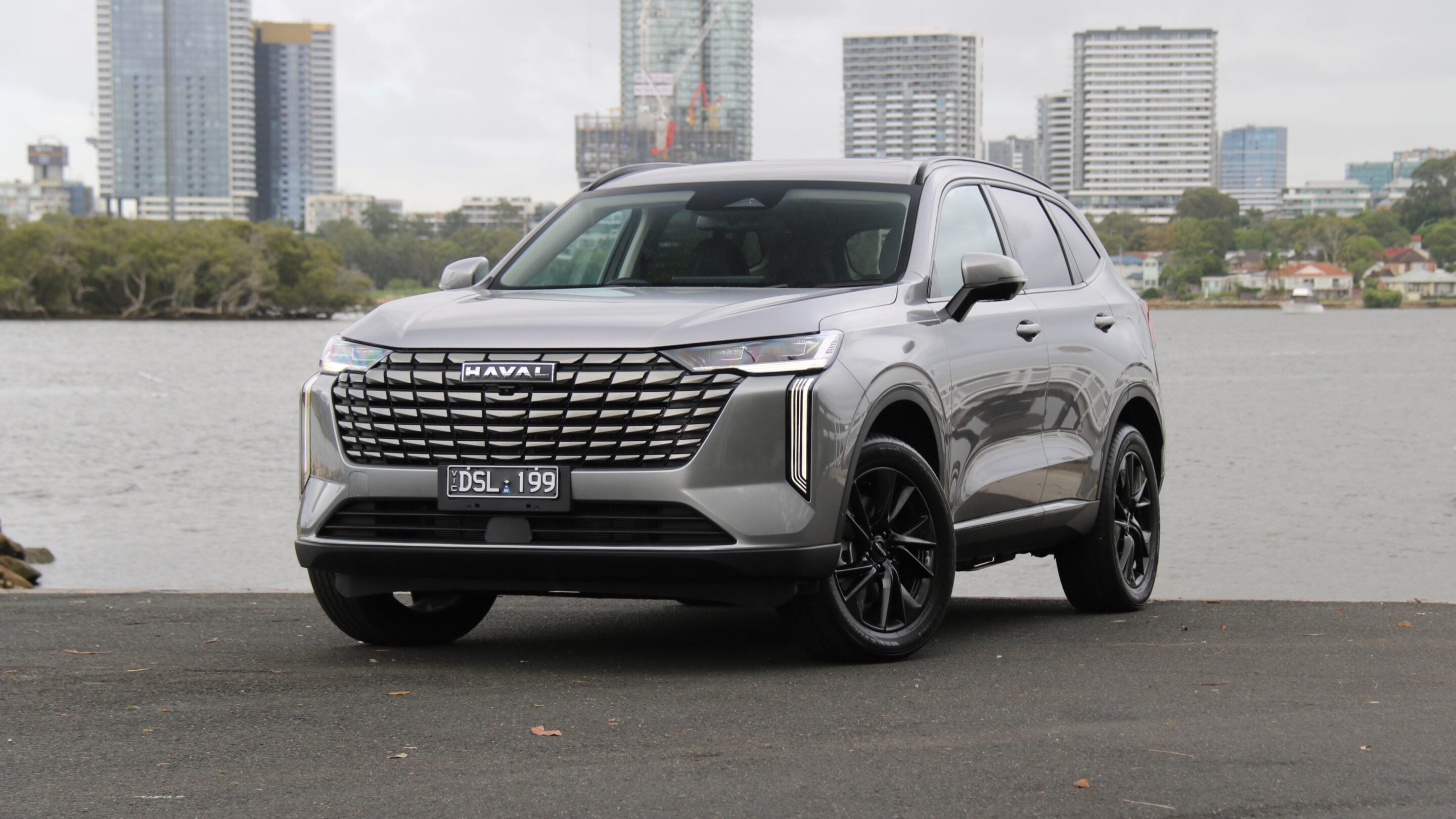
Selling more than 50,000 units for the first time in its Australian story, Chinese giant GWM is marching forward. It’s launched a slew of new product locally, including a range of ‘new energy’ – that’s hybrid or electric – drivetrains, but also new turbo-diesel variants of some products as well. Now, GWM is engaging in yet another area – local tuning. We tested the first locally-tuned GWM product, the Haval H6 PHEV, to see if it’s improved the driving experience.
But didn’t the H6 just get a big facelift, I hear you ask? You’d be correct in saying that – in July 2025, a deep mid-life update of the H6 was released but it didn’t include the local tuning wizardry from former Holden engineer Rob Trubiani. Now it has, and we’ve had the chance to sample it.
How much does the H6 Ultra PHEV cost to buy?
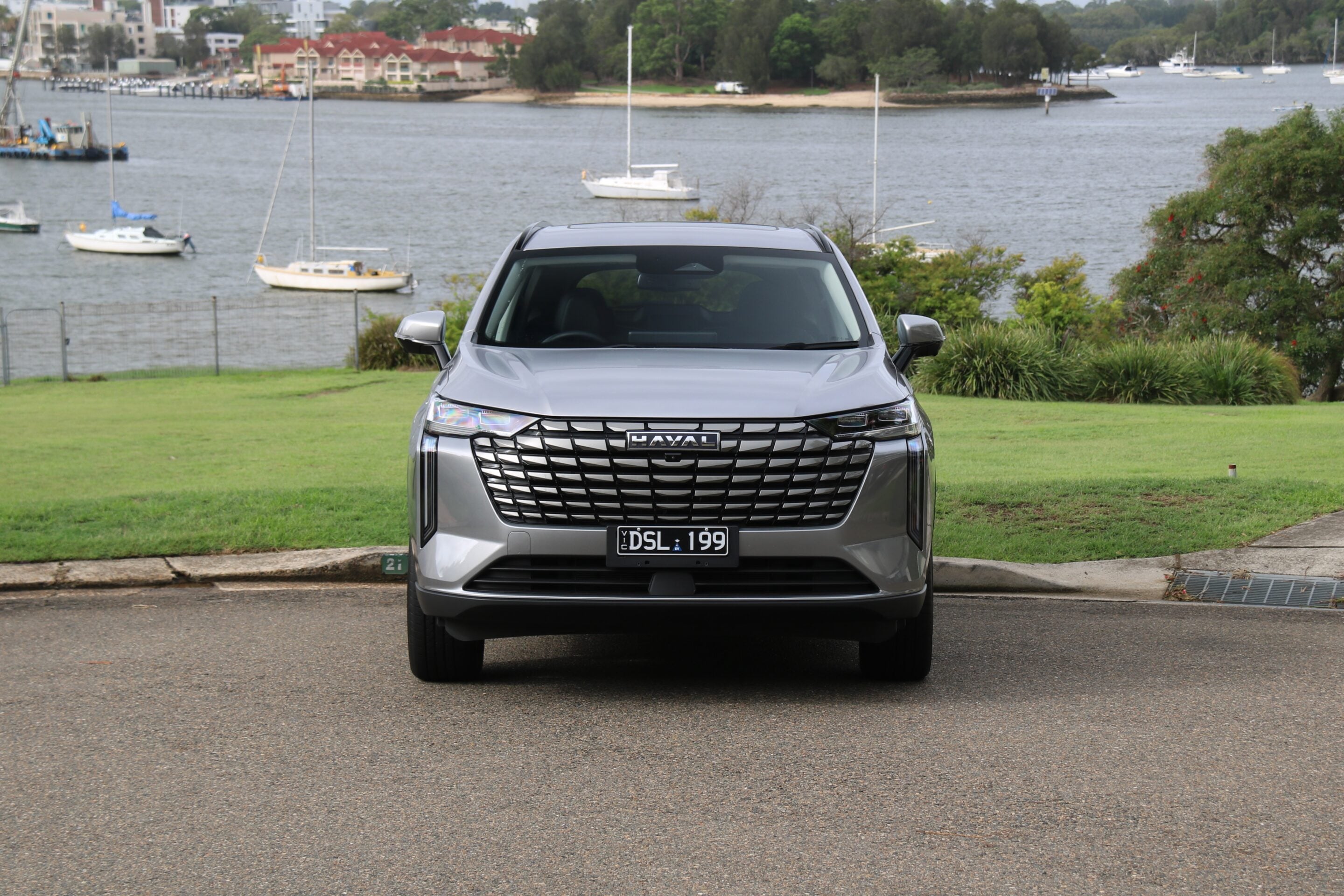
Though the H6 range kicks off from $35,990 in entry-level Lux petrol form, for this review, we’re testing the very top-spec model you can buy: the Ultra Plug-in Hybrid Hi4-T, which is priced at $50,990 drive away. At the time of writing however, it’s available for $43,990 drive away (including a free upgrade to all-wheel drive), which is very sharp value indeed.
4
Scroll down the page to see the full list of standard features, but big ticket items include a panoramic glass roof, synthetic leather upholstery, electrically adjustable/heated/ventilated front seats, a large 14.6-inch touchscreen with GWM’s new ‘Coffee 3.0’ software, live services and a long list of safety features like adaptive cruise control, adaptive lane guidance and a 360-degree camera.
Likely thanks to the government’s NVES scheme, plug-in hybrids are rapidly increasing in sales and there are many options in the mid-size SUV segment for buyers to choose from. In this case, chief competition to the H6 PHEV include the MG HS Super Hybrid, Geely Starray EM-i and BYD’s Sealion 5 and Sealion 6, while cars like the Mitsubishi Outlander, BMW X3, Mercedes-Benz GLC and Audi Q5 all offer PHEV tech for more money.
How far can the H6 Ultra PHEV travel on a charge?
The H6 PHEV features a 19.09kWh LFP battery that’s capable of travelling 100km on a full charge. That’s on the optimistic NEDC cycle, so expect less in the real world – we achieved 90km, which is quite reasonable, though not quite as much as the 120km WLTP range of the HS Super Hybrid.
The combined fuel consumption rating for the H6 PHEV is 1.1L/100km, and we achieved 1.3L/100km in our first 100km of driving. As ever with plug-in hybrids, that will vary with how much the car is charged, but the H6 PHEV certainly does almost what it says on the tin.
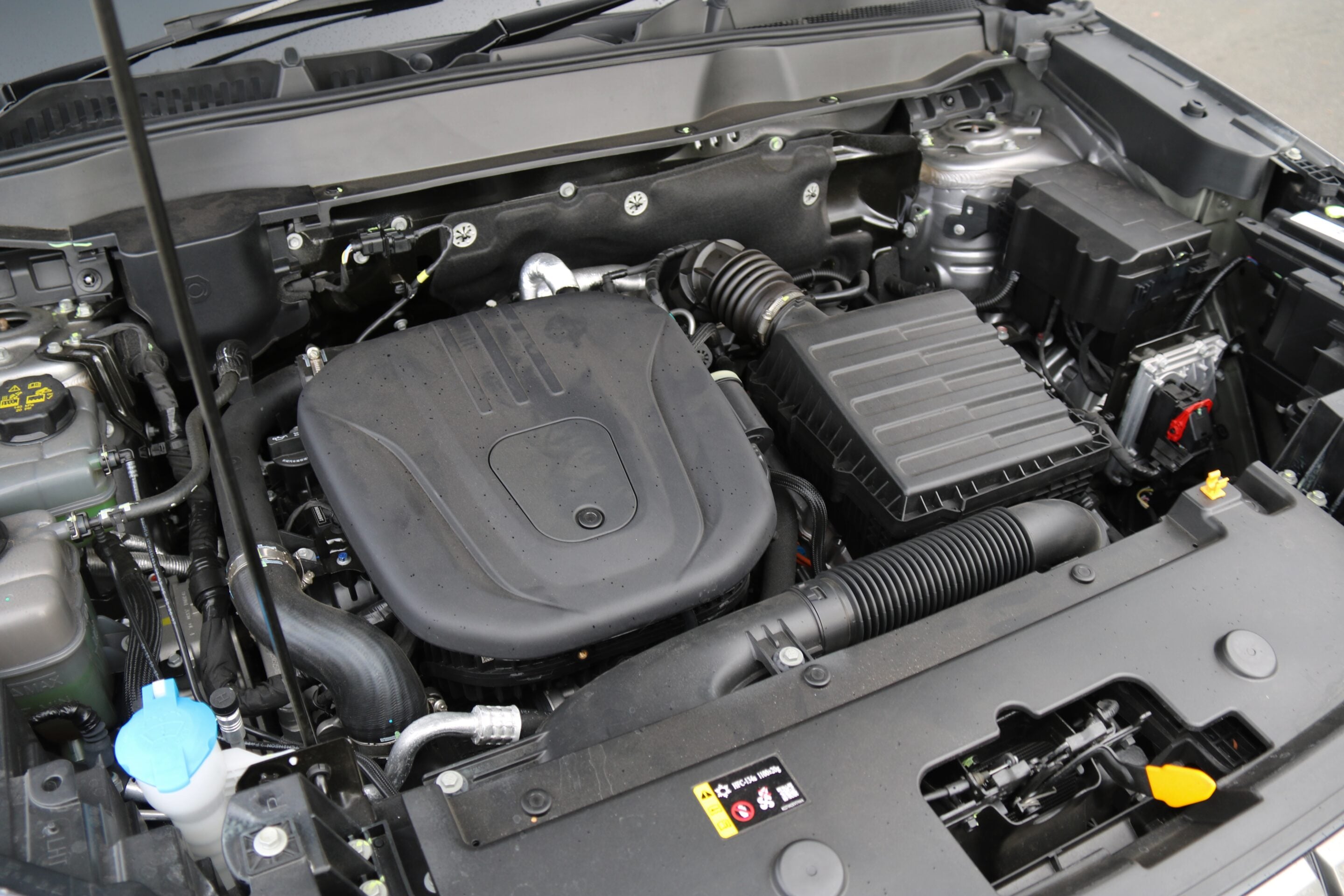
Once the H6 PHEV’s battery is depleted, GWM says that it will use 5.3L/100km of fuel, which is not bad considering it makes 268kW of combined grunt. We achieved 5.5L/100km once depleting the battery, and recharging on a DC fast charger from 10 to 80 per cent takes around 28 minutes thanks to 34kW DC fast charging.
On electric power alone, the H6 PHEV makes 230kW/520Nm, making it more than punchy enough without the petrol engine kicking in. But adding it in makes for even more grunt, with huge 268kW/760Nm available from 0rpm. GWM claims a 0-100km/h sprint time of just 4.8 seconds, and it initially feels even quicker than that thanks to the instant torque of the electric motors. For those wanting to perform that time again and again, the H6 PHEV Hi-4 features launch control. Yes, we’re serious…
What is the H6 Ultra PHEV like to drive?
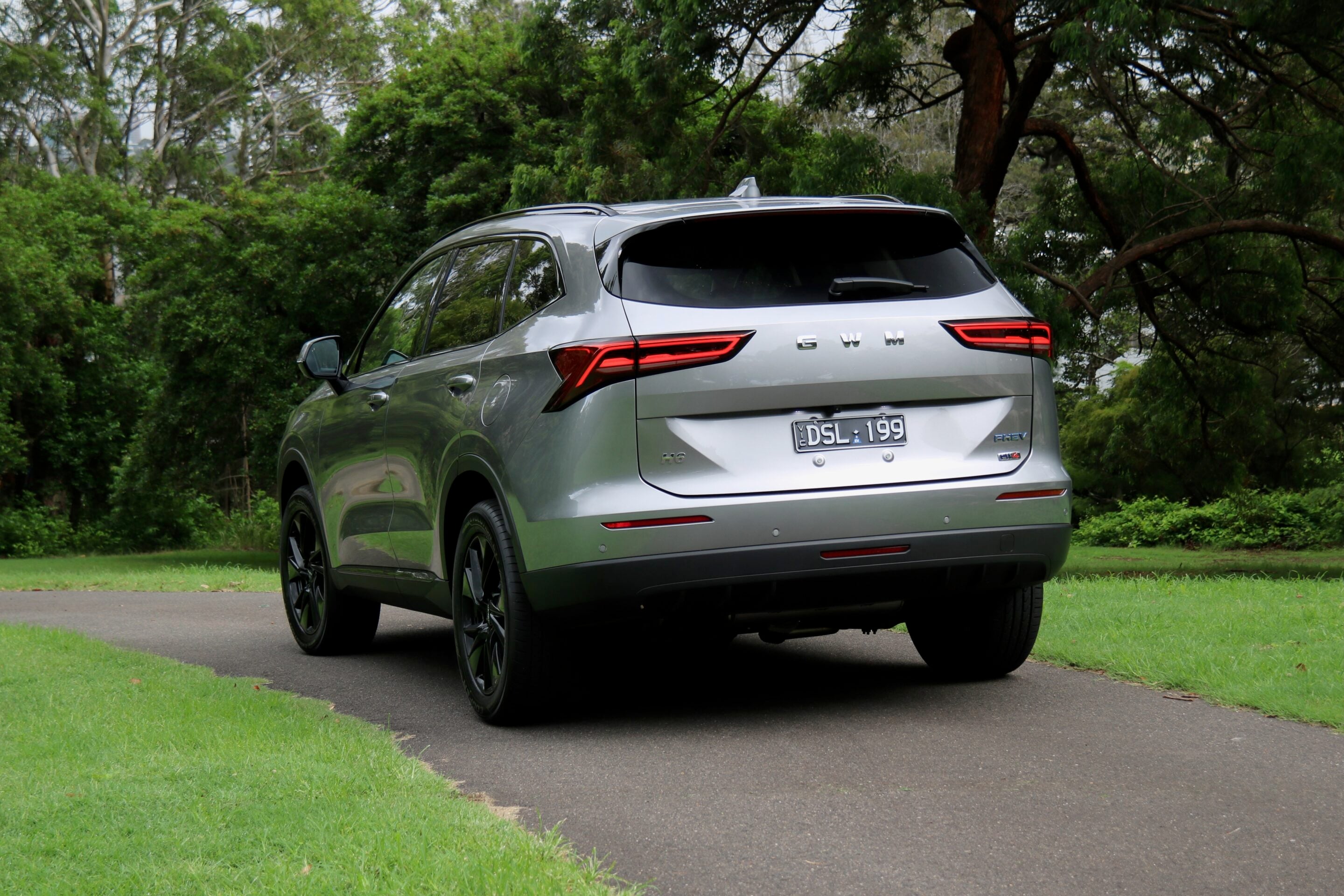
This is where the H6 has moved from also-ran to one of the better options in the mid-size SUV segment. Thanks to GWM’s local tuning team, the ride quality and particularly the steering of the H6 is now much better than before.
4
Whereas the pre-local tune H6 felt underdamped and suffered from even smaller bumps, the revised local tune has given it a much more confident quality that’s better controlled and quicker to respond after hits. It’s not perfect as the PHEV’s weight can be felt in larger bumps, but it’s still better to drive and also more comfortable than before.
While we’re celebrating, the H6’s Aussie-tuned steering is now much better weighted. The pre-local tune model exhibited an annoying lack of feeling just off centre so that you lost a lot communication to the front wheels as soon as you turned the wheel, but now the weighting is much more even throughout the rack. It’s still not the world’s best handling SUV, but the steering alone makes it more confidence-inspiring to drive.
How practical is the H6 Ultra PHEV?
As we saw with the mid-life update to the H6, its cabin is one of the better options in the mid-size SUV segment thanks to a good mix of quality, tech and practicality. There are plenty of synthetic leather trims throughout the cabin – including on the seats so thankfully they’re ventilated as they get hot – that feel nicer to touch than hard plastics that also feature lower down.
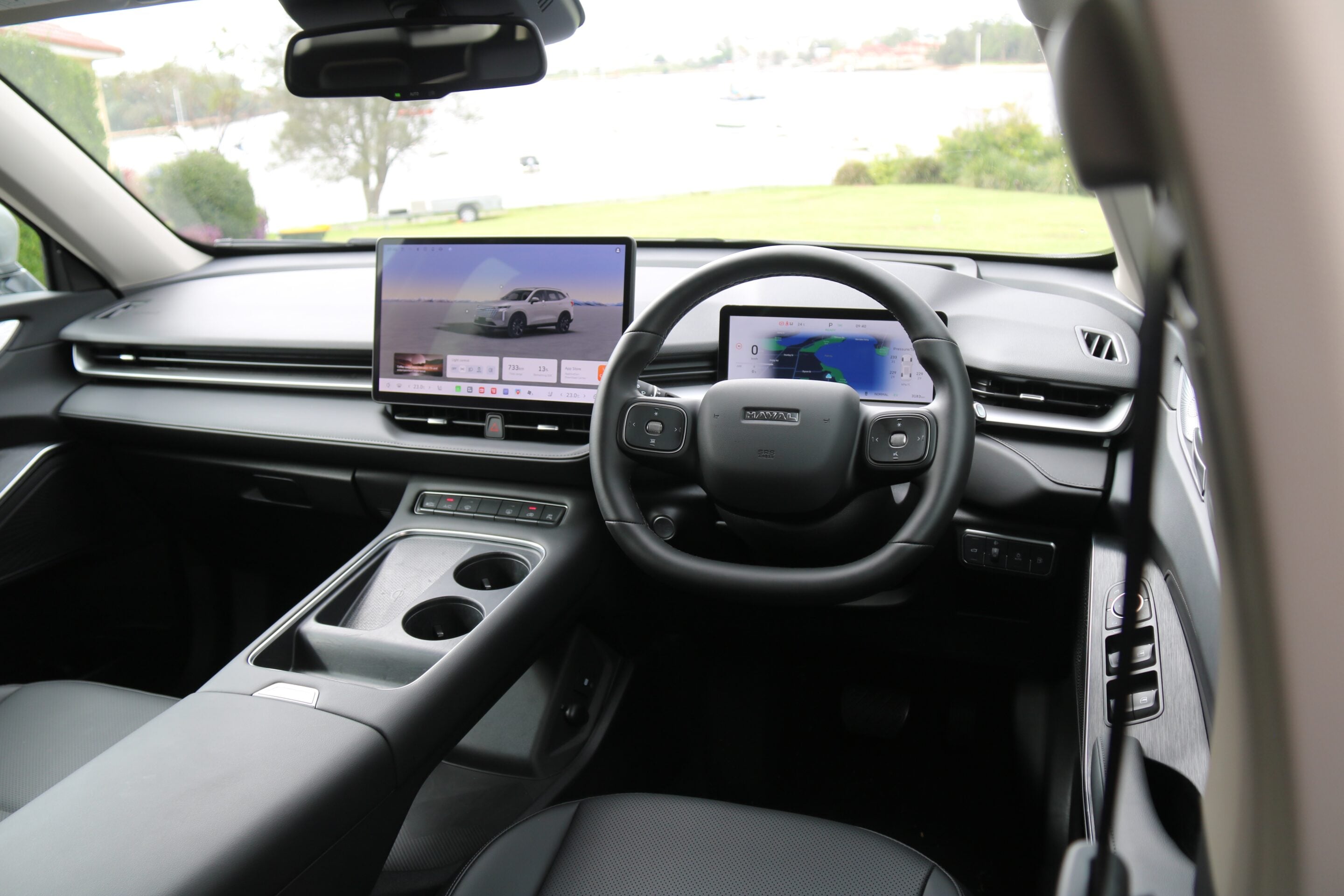
Centre of the H6’s cabin is a 14.6-inch touchscreen, which runs the brand’s ‘Coffee OS 3’ infotainment software in the PHEV variants – all other powertrains still use the older system that debuted in the mid-life update in 2025. Although it’s the same size, the screen itself is sharper to look at, faster to use and its menu structure is easier to use, mostly thanks to the permanent new shortcut icons at the bottom of the screen. The wireless Apple CarPlay and Android Auto is very easy to connect and it now features live music streaming functionality and sat-nav too.
5
It’s a massive improvement and we hope the rest of the GWM range receives it soon, though it could still be easier to use – for instance, in our week with it, we couldn’t find the dedicated heating and ventilation menu, instead using the voice control to activate automatic air blowing. We’re praying it’s not just us… The new steering wheel controls in the PHEV are more satisfying to use than the dated buttons in the rest of the H6 as well, with easier and higher quality controls.
You can’t fault the storage in the H6, with sectioned door bins, a huge tray underneath the centre console, while the new open-tray design is well thought out and a large box underneath the central armrest.
The rear seat of the H6 is easily one of the best in the segment thanks to excellent rear legroom, ample headroom and amenities that include air vents, charging ports, door and map pockets and a central armrest with cup holders.
Behind the rear seat lies a large 560-litre boot with little in the way of extra storage, and no spare wheel, but it opens up to a reasonable 1445 litres with the rear seats folded.
What warranty covers the H6 Ultra PHEV?
The H6 Ultra PHEV is covered by a long seven-year/unlimited km warranty with five years of roadside assistance and an eight-year/unlimited km warranty for the battery. Like the petrol H6, the PHEV’s service intervals are a little odd at 10,000km for the first year and a further 15,000km every year afterwards. Five years/70,000km of servicing costs $2140 or $428 per year.
Should I buy a GWM Haval H6 Ultra PHEV?
It’s clear that the GWM Haval H6 is now up with the pace setting, mid-size SUVs thanks to the quality of the Australian suspension tune, which has made it better and more comfortable to drive. The PHEV is also a winning drivetrain option, thanks to its thrust, efficiency and impressive charging credentials – plus it introduces much improved new centre touchscreen software that is faster and brighter than many competitors.
3
It’s not the perfect mid-size SUV as it still feels heavy, there’s still not enough shortcut buttons or even a volume dial and no spare wheel, but it’s clear that GWM is on a continued mission to make its cars more complete and well-rounded to gain as many sales as possible. The only Chinese manufacturer to properly locally tune a product for Australian tastes, we see more Aussies heading into GWM showrooms in the future, especially if the vehicles are as well rounded as the H6 PHEV.
H6 Ultra PHEV specifications:
- Price: $50,990 driveaway
- Drivetrain: 1499cc turbocharged four-cylinder plug-in hybrid
- Combined power: 268kW
- Combined torque: 760Nm
- 0-100km/h (claimed): 4.8 seconds
- Transmission: Three-speed automatic, all-wheel drive
- Battery: 19.09kWh LFP
- Peak DC charging speed: 34kW (10-80 per cent charge in a claimed 28 minutes)
- Claimed NEDC range: 100km
- Claimed combined fuel consumption: 1.1L/100km (full battery), 5.3L/100km (low battery)
- Claimed CO2 emissions: 25g/km
- Fuel type/tank size: 91 RON regular unleaded, 55 litres
- Dimensions (L/W/H/WB):
- Bootspace: 560 litres (rear seats up), 1445 litres (rear seats folded)
- Kerb weight: 1980kg
- Braked towing capacity: 1500kg
- Warranty: 7-year/unlimited km (vehicle), 8-year/unlimited km (battery)
- On sale: Now
H6 Ultra PHEV standard features:
- 19-inch black alloy wheels
- Dusk-sensing automatic LED lighting
- Rain-sensing automatic wipers
- Keyless entry and push button start
- Heated and auto-folding mirrors with puddle lamps
- Electric tailgate with kick-to-open functionality
- Rear privacy glass
- Panoramic sunroof
- Heated lather steering wheel
- Synthetic leather upholstery
- Eight-way driver/four-way front passenger electric seat adjustment with heating, ventilation and driver’s memory
- Dual-zone automatic climate control with rear air vents
- 10.25-inch digital driver’s display
- 14.6-inch touchscreen
- Live services like music streaming
- Wireless Apple CarPlay and Android Auto
- AM/FM/DAB+ digital radio
- Wireless phone charger (50W)
- 4x USB outlets
- Nine-speaker sound system
- Auto-dimming rear mirror
- 7x airbags
- Autonomous emergency braking (AEB) with pedestrian, cyclist and junction assistance
- Lane keeping assistance with adaptive lane guidance
- Adaptive cruise control with traffic jam assist
- Blind-spot monitoring with rear cross-traffic alert
- Traffic sign recognition
- Driver fatigue monitoring
- Door open warning
- Auto high beam
- Rear parking sensors
- 360-degree camera
- Tyre pressure monitoring
- Head-up display
8.4
/10
Score
Score breakdown
9.0
Safety, value and features
8.0
Comfort and space
9.0
Engine and gearbox
8.0
Ride and handling
8.0
Technology
Things we like
- Australian tuning improves ride and handling
- PHEV drivetrain is punchy and frugal
- PHEV’s infotainment a big improvement
Not so much
- Ride in heavy PHEV still not quite perfect
- Still too many functions buried in the touchscreen
- No spare wheel
Follow WhichCar/Wheels on Google
Click the button below to make WhichCar by Wheels a preferred source for your news.

We recommend
-
 Comparisons
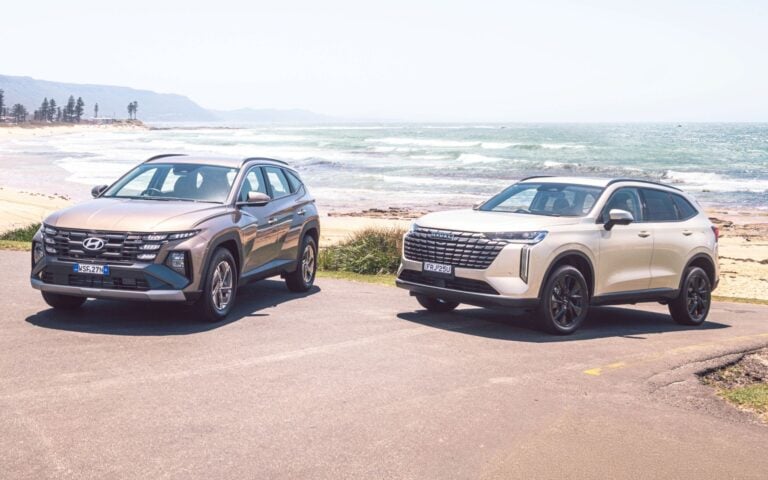
Hyundai Tucson Hybrid v GWM Haval H6 Ultra Hybrid: Front-wheel drive SUV showdown
Medium SUVs are Australia’s favourite way to move a family around, get to and from work, or head off on a road trip. That’s why every manufacturer wants a piece of the pie. If you want a medium SUV though, do you need AWD and all the extras? Wheels looks at two of the more affordable hybrid FWD models on the market.
-
 News
NewsAustralian government relaxes fuel standards for the next 60 days
Lower sulphur limits were enforced in December last year as part of the government’s directive to clean up Australia’s fuel supply, but now higher sulphur fuel will be allowed for the next two months in an effort to ease supply issues.
-
 UOTY
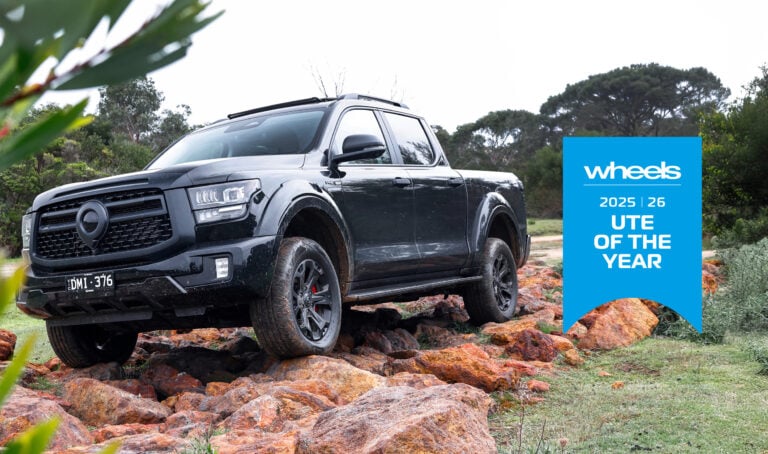
UOTY2025-26 Wheels Ute of the Year, 2nd: GWM Cannon Alpha PHEV
The GWM Cannon Alpha PHEV is disrupting the dual-cab universe with larger overall dimensions and its fuel-sipping plug-in hybrid drivetrain.
