Reviews

Gallery 1
7.7
/10
Score
Score breakdown
8.0
Safety, value and features
8.0
Comfort and space
8.0
Engine and gearbox
7.0
Ride and handling
7.5
Technology
Things we like
- Looks and feels like a premium vehicle
- Real-world efficiency for this segment
- Business-class like cabin is excellent
Not so much
- Electronic driver aids can grate
- Ride is on the firm side for a large SUV
Make no mistake that this segment is big business – and not just in physical size. Some of the most legendary nameplates exist in what is now the upper large SUV segment. That means LandCruiser (now 300 Series), Patrol or even Defender if you want to step into the more premium realm. Those three nameplates alone bring with them the weight of history, expectation, not to mention both on and off-road performance.
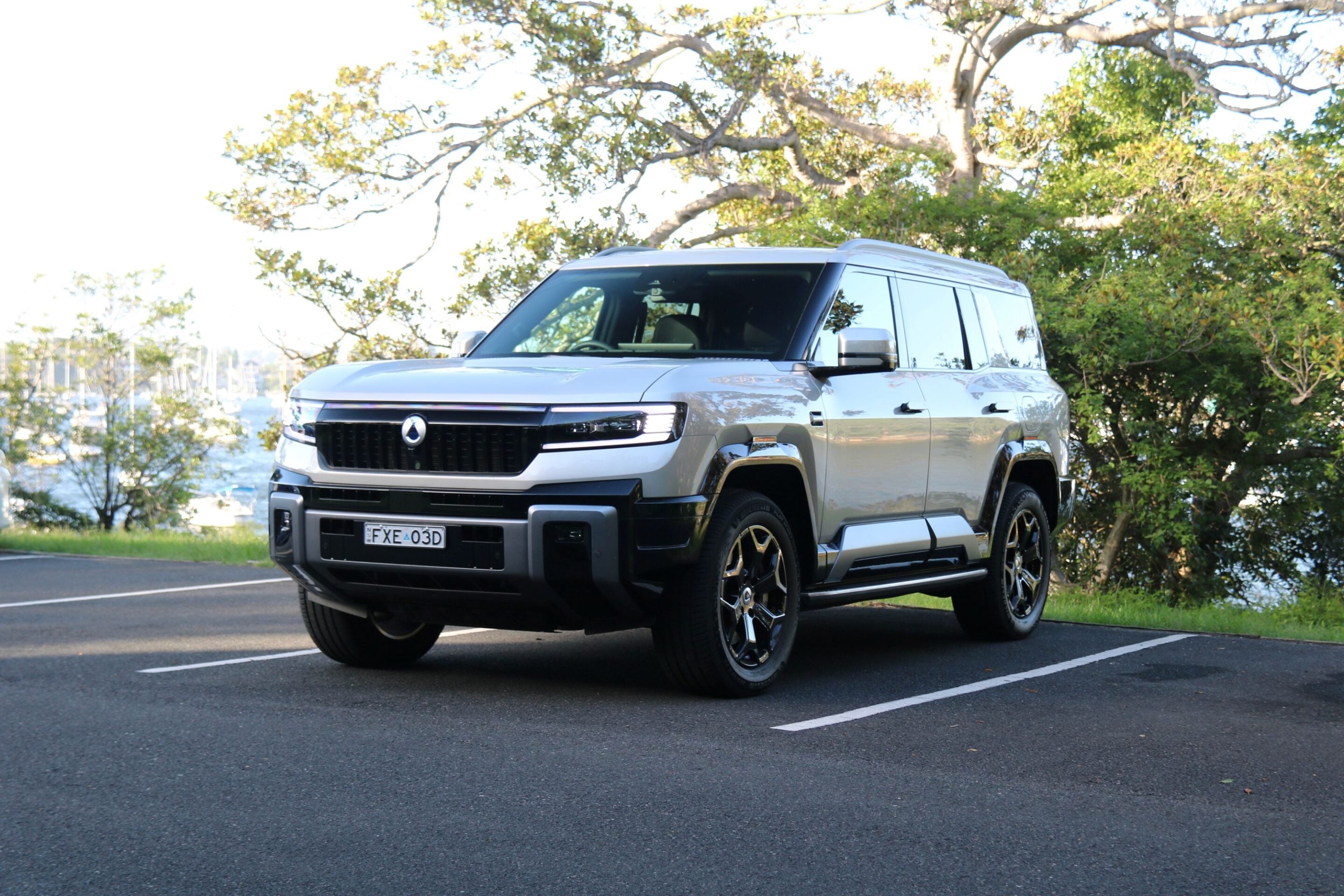
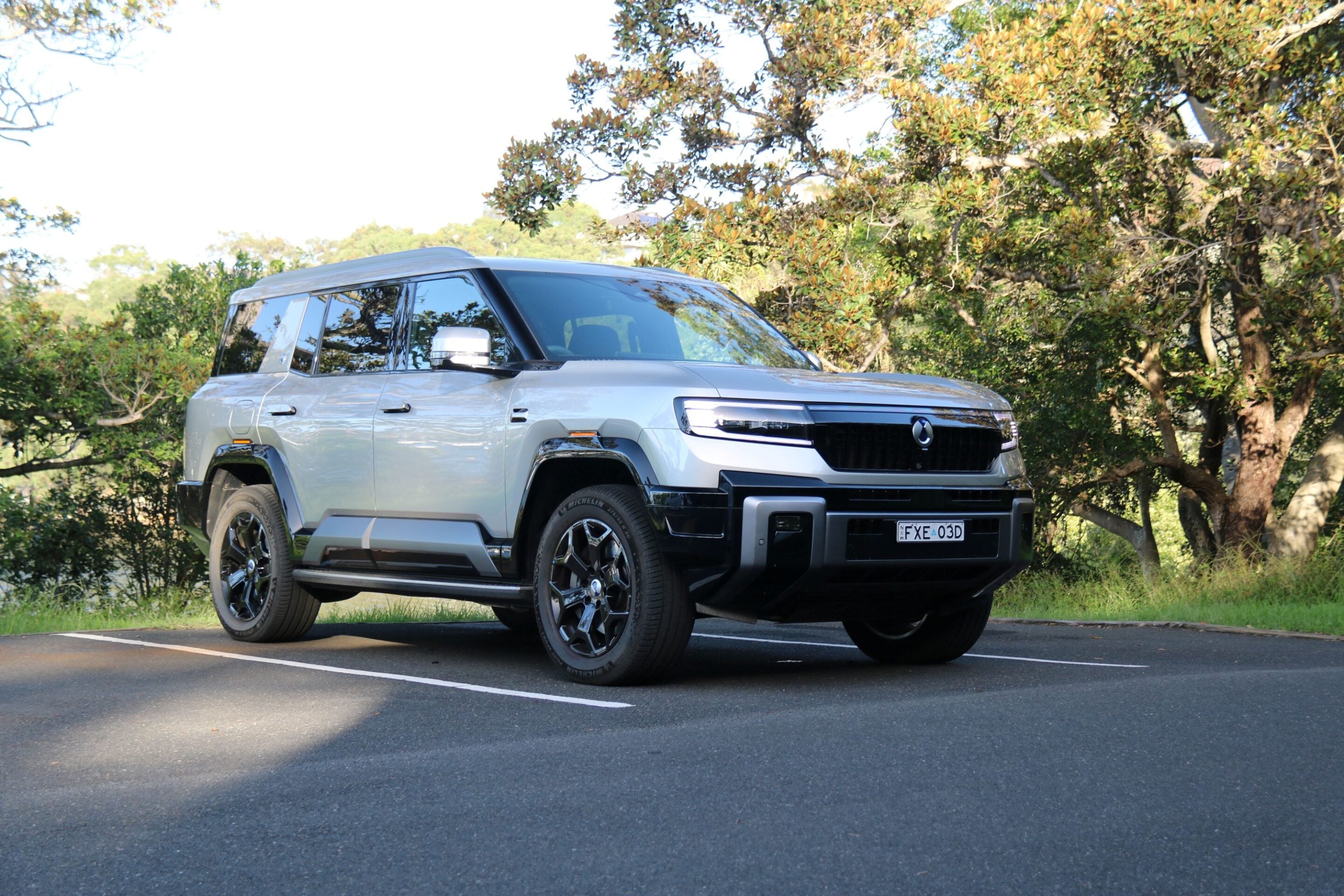
Then, you’ve got the fully-electric Kia EV9 and Hyundai Ioniq 9 entering the fray more recently if you’re focus is specifically on-road. What do you do if you’d like a mix of both then? Well, according to Chinese manufacturer BYD, you divert your gaze toward its premium Denza B8 offering, a vehicle that promises to take the fight right up to the established legends.
Is a sense of quality, value for money and a hefty standard features list enough to entice Aussies to part with their money for what is essentially an unknown quantity from a relatively new brand? Time, and sales figures will tell. However, those of you who are sceptical, need only look at the success of the BYD Shark 6 as just one example, for the counterpoint.
2
How much does the B8 cost to buy?
This is where it gets interesting, because the B8 enters a world where the regular competition sails north of 100k with starting prices of $91,000 or $97,990, both before on-road costs, depending on the variant you choose. The choice is a simple one, too, with no convoluted model names or numbers, simply a six or seven-seat layout. The model we’re testing is the six-seater, and to the mind of WhichCar by Wheels, the luxury feel of the cabin, endorses the six-seater as the one to have.
If you go back to the competition, Toyota LandCruiser 300 Series starts from $99,340 before on-road costs, Nissan Patrol starts from $95,600 before on-road costs, and LandRover Defender starts from $136,000 before on-road costs.
Drill into that a little further, though, and it’s really only the Patrol that keeps the Denza B8 honest, with the price above for the entry-grade Ti model. If you want the sense of luxury the B8 provides, you need to spend $107,100 before on-road costs to get the Ti-L variant.
1
LandCruiser makes the eyes water even more, when you consider the price above is for the genuinely stripped-out GX variant, with a VX starting from $123,510 before on-road costs, or there’s the Sahara, which starts from $140,310 before on-road costs.
Denza is unashamed that it is targeting Australia’s established hierarchy and even luxury brands like Land Rover and Lexus. If you look at the prices above, then look at the list of standard equipment, it’s evident that the Denza push is to deliver the equipment you’d get in a Lexus for less than the cost of a Toyota. It’s a bold move, but for a brand looking to laydown foundations, it could be a smart one.
How practical is the Denza B8?
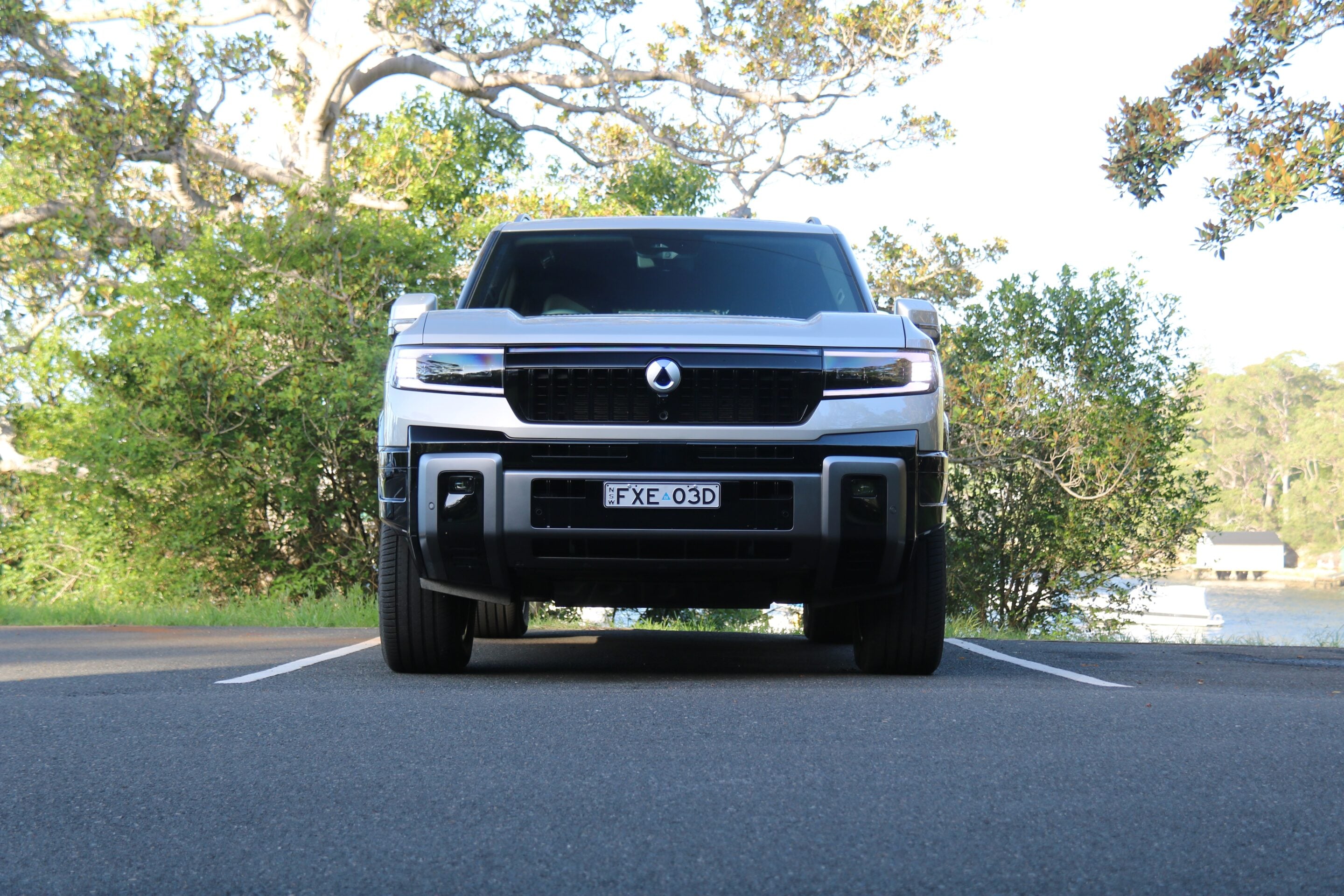
As stated above, the luxurious feel of the six-seat cabin is the way to go unless you absolutely require seven seats of course. Having tested the B5 previously, there’s a lot that links the two, especially inside the cabin. We don’t love the exterior door handles that retract as you move off, but that’s going to be consigned to history soon, one would think.
There is a physical latch hidden in the door pocket, which there has to be, but you’ll use a switch inside the door to open it, as well, another feature that simply isn’t as intuitive as a regular door handle.
The doors are soft close, though, which add an air of luxury to the experience, given there’s no need to slam the doors, but you will of course have to remind every guest you invite into the car. In regard to the other cabin negatives, getting them out of the way early, the lack of cooling for the wireless phone charger, means you will heat your phone up, and that’s about it. The cabin experience, is otherwise luxurious.

2
The chunky steering wheel lends a hefty air to the driving experience, visibility is excellent, there’s a broad spectrum of adjustability within the seat controls to get right where you want to be. Some of those controls are accessed – including cooling and heating – through the infotainment screen, but they are easy to find.
On that note, we love the presence of real buttons and switchgear inside the cabin, with clear identification and clever placement, meaning you can make the adjustments you need to make, on the move, and do it safely. Things like height adjustable cup holders, and the heated and cooled console bin, might appear to be gimmicky but are more handy the more you use them.
The aforementioned infotainment screen is a whopper – measuring in at 17.3 inches – so big in fact, that when you first see your smartphone screen pop up there, it takes a bit of getting used to. It’s physical size means it’s easy to see, but we did find it prone to fingerprints no matter how hard we tried to avoid them. A microfibre cloth in the glovebox is a necessity. There’s deep complexity to the level of information and the control centre through the screen, so much so that we’d recommend a good familiarisation session in the driveway before you head off in the B8 for the first time.
The driver gets a 12.3-inch digital display, which is clear and features plenty of info, but isn’t as customisable as you might have expected. Buttons on the steering wheel control the information it does display, and it’s got what you need without being silly for the sake of it.
We didn’t love the fact that you must use the screen to control the intricacies of the climate control system (beyond on and off), which just makes it a little harder to do than it should be. BYD’s three-finger swipe[e gesture control remains for things like blower speed or temperature control, though. If you’re like me, you won’t use them.

3
Into the second row, and the two-seat layout mirrors the front, with the seats getting heating, ventilation and massage like the front, ratchet-adjustable armrest and electric adjustment as well. It’s comfortable back there, even with tall adults up front, and walking through into the third row, makes accessing that row a lot easier than when you need to fold the outside seats down to climb in.
Use the third row, and as we’d expect, luggage space is a restrictive 147 litres. With the third row folded in the six seater, that expands to a generous 902 litres. Given the claim that the B8 is an off-road capable 4WD, the presence of a full-size spare hanging off the rear door is a welcome sight. You may not like the look of it there, but you’ll only need to have to get the spare out from under the floor once in 40 degree heat either on a dirt road or melting bitumen, to appreciate the civility of having it mounted higher up.

1
How fuel efficient is the Denza B8?
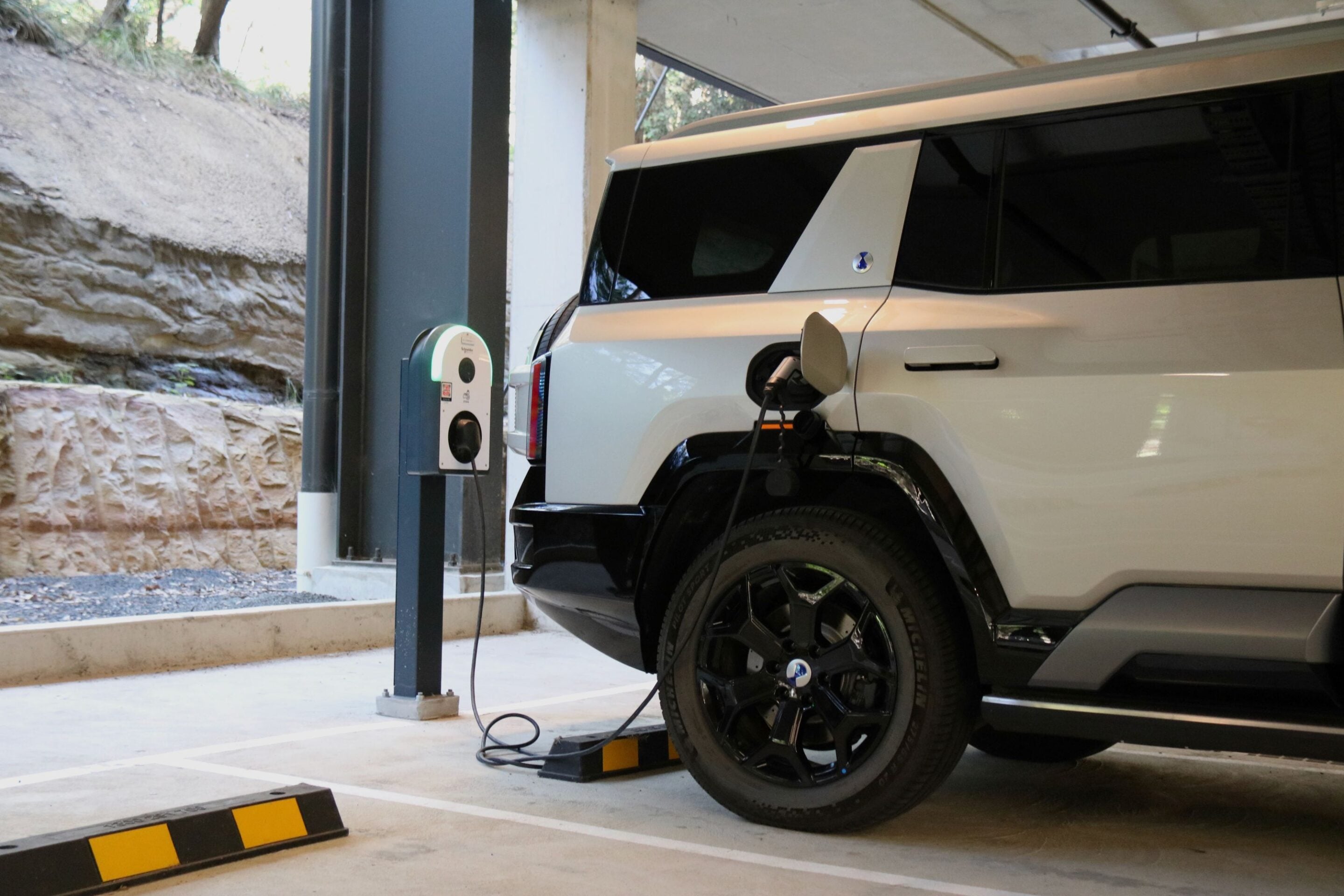
The Denza B8 rides on a ladder-frame chassis, familiar from Shark 6, with dual-motor, electric 4WD, and a turbocharged petrol engine, that can drive the wheels when required for driving range, or when extra torque is required. The petrol engine is a 2.0-litre, four-cylinder petrol, which BYD claims generates 145kW and 350Nm. The B8 also has simulated low-range gearing (in lieu of a mechanical transfer case), and a locking front diff on the six-seat variant we’re driving. We didn’t head off-road for our test, but will in an upcoming assessment. The outputs are impressive when you factor in the two electric motors – combining for 425kW and 760Nm, with BYD claiming a second run to 100km/h.
Thankfully, and somewhat helpfully, manufacturers with PHEV drivetrains in their stables have started quoting fuel use claims that factor in a full charge, and then with a reduced charge. Denza claims 3.9L/100km with the battery charged from 25 percent up to 100 percent, while that climbs to a claimed 11.4L/100km when the state of charge dips below 25 percent. It claims 24.4kWh/100km energy consumption.
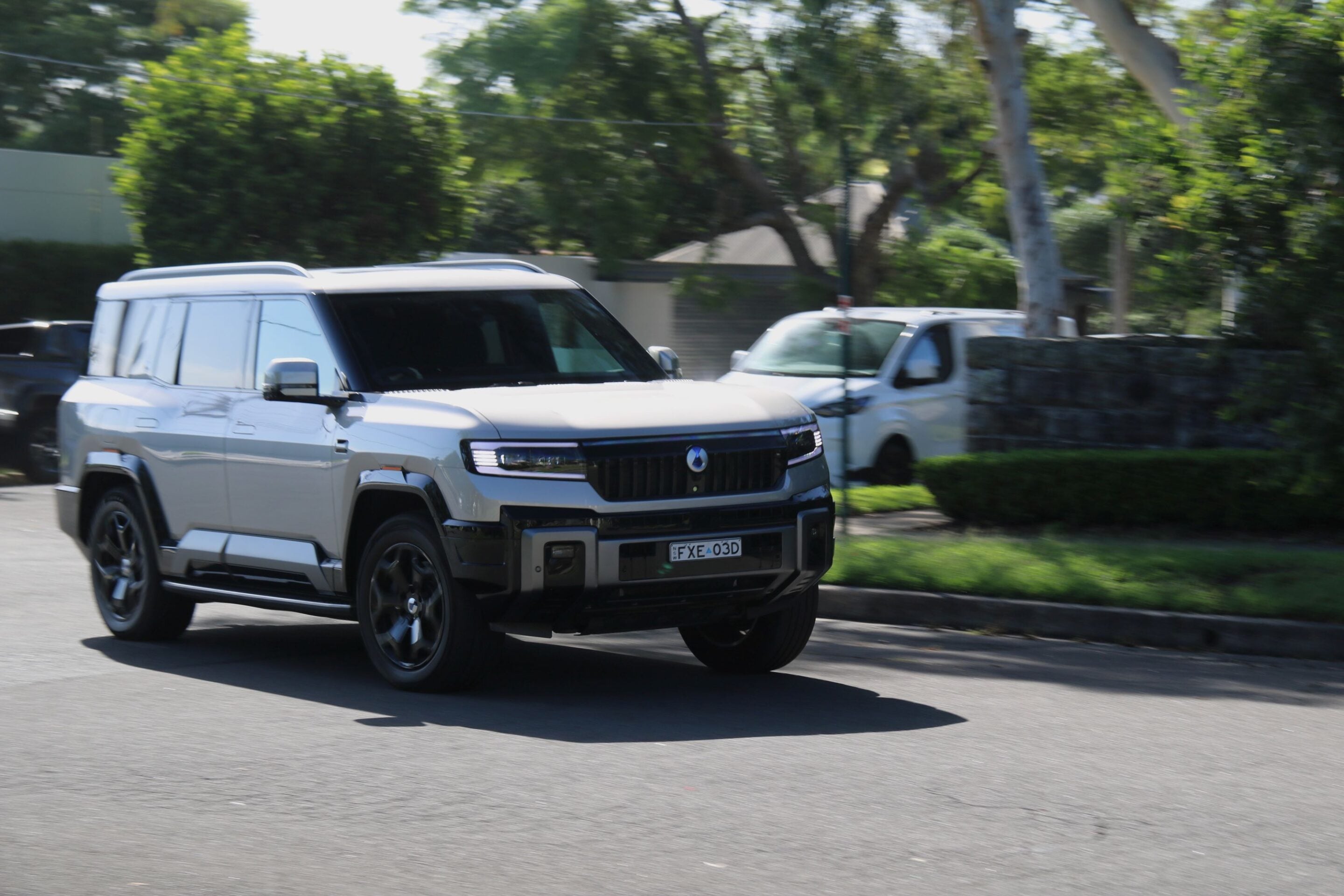
Now, what’s interesting here is our indicated real-world return, which after our 250km test loop of mixed city and highway running, showed an average of 8.7L/100km. That’s impressive for an SUV of this size, with even the 11.4L/100km claim being efficient enough to justify the PHEV concept. This isn’t a light 4WD either, with a 3992kg gross vehicle mass. Consider that the bulk of the first 100km was electric of course, but anything below the 10L/100km mark is noteworthy in a vehicle of this size.
1
On prolonged highway runs with the battery drained as much as the system would allow, the 50km rolling average was showing 10.9L/100km.
Switch the drivetrain into HEV mode via the control on the console and you’ll have the electric motor drives the front wheels and the petrol engine charging the battery pack, therefore getting an efficient driving experience.
What is the Denza B8 like to drive?
For mine, there are only two negatives in the driving experience, which were the electronic safety aids, and the harshness of the ride at the outer edges of the bump absorption. The system kept telling me to watch the road – I was – and to take a break because I was tired – I wasn’t – and I also didn’t like the wheel tugging at my hand when it sensed I was edging too close to the lane markings. Those systems need some finessing so they don’t grate on the driving experience, because it’s otherwise enjoyable.
The suspension and its ability to absorb bumps is an interesting one. Regular road imperfections and surface vagaries were easily handled, but sharp ruts and speed humps were felt through the wheel and in the cabin, and meant that the ride felt a little firmer than we’d like in an SUV of this type. We checked the tyre pressures to make sure they weren’t over-inflated and even at the recommended pressure, there was a sharp edge to the ride that we would like ironed out.
BYD’s DiSus-P suspension is a clever hydraulic system that can adjust to cater to higher ride heights, especially useful off-road, but it is a little firmer on road, over sharp edged ruts and imperfections than we’d like.
1
There’s no hiding the heft of the B8 especially if you hook into a tight corner, with the combination of a ladder-frame chassis, meaty kerb weight, and high-ish centre of gravity ensuring that it moves around quite a bit. Take that into account though, and it’s an otherwise enjoyable SUV to drive.
What’s most impressive though, is the PHEV powertrain, and the inherent smoothness to the way it goes about its work. Even when the petrol engine is working, there’s little in the way of noise or vibration that enters the cabin, and the transition between the two, is also excellent. As you work your way through traffic, and even at speed on the highway, you will definitely notice how refined the driving experience is.
However, despite the 3992kg GVM, the Denza B8 feels rapid. The 0-100km/h time indicates that it is, but it feels it, too, when you’re behind the wheel, with a sharp turn of pace you’d expect from a lighter, smaller vehicle. If you nail the accelerator pedal, the B8’s nose launches skyward and it’s off like a scalded cat. It’s not quite as hardcore as the smaller B5’s acceleration, but it’s not far from it either. Is it too powerful? Maybe, but that’s the malaise of almost all EVs.
We spent our test time toggling between ‘ECO’ and ‘Normal’ drive modes, with some time forcing it into HEV mode, which fires the 2.0-litre into life. Given the way the system, works, you get the benefit of the electric drive experience, without the range anxiety. And, there’s a lot to like about the smooth, near silent, immediacy of a well-sorted electric powertrain. While most of the drive modes pertain to off-road work, there is a somewhat frivolous ‘Race’ mode, but we didn’t feel like we needed the B8 to be any faster than it was in Normal mode.

1
What warranty covers the Denza B8?
Denza Australia – as does parent company BYD – offers a six-year/150,000km warranty, with eight-year/160,000km coverage for the high-voltage battery pack. Servicing is required every 12 months or 20,000km, whichever comes first.
Denza also adds three years of roadside assistance, and a capped-price service plan for the first five years of ownership, which costs $3420 total, averaging out to $684 per year.
Interestingly, the Denza is cheaper to service than even a 300 Series, let alone the Lexus version, and just a little more than a Land Rover Defender – all over that first five-year period.
Should I buy the Denza B8?
The 2026 Denza B8 – and any assessment of it – is fascinating because regardless of how good it is, there’s a significant hurdle a first-time Australian buyer must clear. This is a vehicle they will know little about, from a brand they don’t have any experience with, asking them to part with six figures (once on the road) for the privilege. And, that factor, along with residual value needs to be weighed up.
However, the B8 looks and feels like a luxury 4WD. The tech is impressive and works. The big screens, luxurious interior, and up to date control systems will appear to plenty of buyers looking for the latest and greatest in that regard.
The drive experience to our mind, is let down a little by the overly firm ride, but it’s an otherwise luxurious, comfortable and refined upper large SUV with real-world efficiency and driving response that only an electrified powertrain can deliver. Is that enough to entice Aussie buyers? Time will tell.

4
Specs
| Price | $91,000 plus on-road costs |
|---|---|
| Drivetrain | 1997cc turbocharged four-cylinder plug-in hybrid |
| Combined outputs | 425kW/760Nm |
| Transmission | Single-speed, four-wheel drive |
| 0-100km/h | 4.8 seconds |
| Battery | 36.8kWh LFP |
| Peak DC charging speed | 120kW |
| Claimed electric range (WLTC) | 100km |
| Fuel consumption (WLTC) | 3.9L/100km (fully charged), 11.4L/100km (low state of charge) |
| Energy consumption (claim) | 24.4kWh/100km |
| Fuel type | 91RON regular unleaded |
| Fuel tank size | 91 litres |
| Dimensions (length/width/height/wheelbase) | 5195/1994/1905/2920mm |
| Boot space | 147 litres (third row up)/902-920 litres (all rear seats folded) |
| Kerb weight | 3290kg |
| Braked towing capacity | 3500kg |
| Warranty | 6-year/150,000km (vehicle), 8-year/160,000km (battery) |
| On sale | Now |
7.7
/10
Score
Score breakdown
8.0
Safety, value and features
8.0
Comfort and space
8.0
Engine and gearbox
7.0
Ride and handling
7.5
Technology
Things we like
- Looks and feels like a premium vehicle
- Real-world efficiency for this segment
- Business-class like cabin is excellent
Not so much
- Electronic driver aids can grate
- Ride is on the firm side for a large SUV
Follow WhichCar/Wheels on Google
Click the button below to make WhichCar by Wheels a preferred source for your news.

We recommend
-
 News
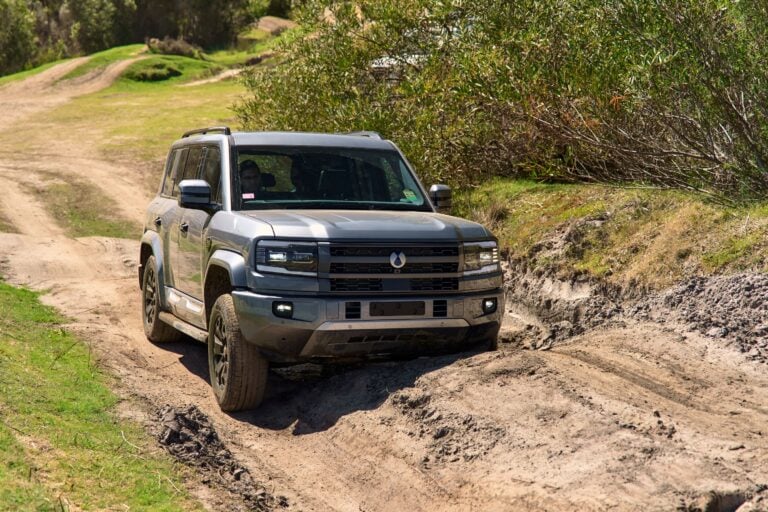
NewsDenza B5 and B8 take on Australia’s famous Beer O’Clock Hill
The Beer O'Clock Hill, one of Australia's toughest off-road tests, has been completed by the Denza B5 and B8 off-roaders with ease.
-
 News
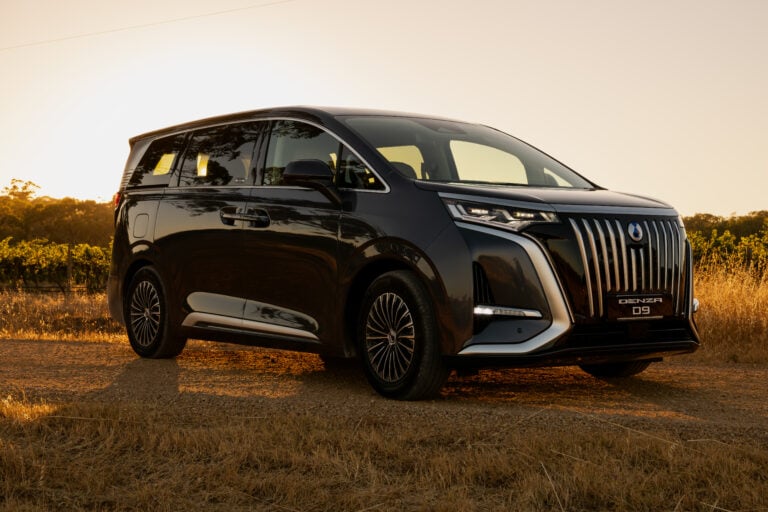
NewsDenza D9: Pricing for electric people mover revealed as brand expands Australian offering
Seven-seat EV offers up to 520km WLTP range, dual-motor AWD option and high-end cabin features
-
 News
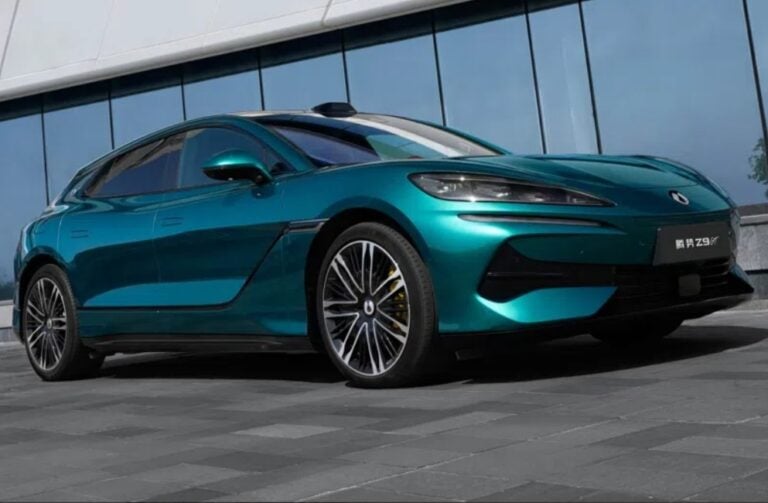
NewsDenza Z9 GT claims astounding 1000km-plus EV range – and could be headed for Australia
BYD’s luxury electric grand tourer promises more than 1030km per charge (CLTC) – and could be headed for Australia.