Reviews


Gallery 1
It was a very different time in the Australian motoring landscape, 1968, and the concept of a truck-based light duty vehicle was something of a novelty. We (by which I mean ‘Australia’) had, of course, invented the concept of the ‘utility vehicle’ but a light truck was a very different proposition.
With more focus on work, and less focus on play, the HiLux made its entry into the Australian new car sales race, and in many ways has never looked back. Fast forward to 2025 and now every manufacturer seemingly wants a shot at the segment that has been our most popular for some years now.
You could argue that Australians are buying dual cabs at such a rate because they can’t access Holden and Ford utilities anymore. You could argue that a modern dual-cab services our needs more than any other vehicle. You could argue that we buy them purely on styling, to make a statement. One thing that you can’t argue though, is how popular they are. Aussies love them, and that shows no sign of slowing down, like it or not.
4
As such, every manufacturer wants a piece of this fiercely competitive segment. Back in 1968, an MG was a British sports car with a predilection for leaving oily stains on your driveway, and GWM, LDV and BYD probably stood for something other than what they do in 2025. In 1968, the segment hadn’t been set and then re-set by the constant improvement of the Ford Ranger, and the idea of a dual-cab with
a Mercedes-Benz badge was utterly preposterous. Or a Volkswagen for that matter. And yet, here we are. Dual cabs available from all and sundry at vastly different price points.
The established brigade remains. Nissan, Ford, Mitsubishi, Isuzu, Mazda and of course, Toyota, have been slugging it out for decades and continue to do so. Today though, buyers have the option of plug-in hybrid technology and even fully-electric dual-cabs from China, plus more conventional diesel engines from South Korea, as well as an Amarok that is actually a Ranger, and a BT-50 that is now a D-Max instead of a Ranger, as it used to be. Confused? You’re not the only one.
Buyers have quite simply never had more choice, and it’s why this updated HiLux has a serious fight on its hands. Toyota can trade off its dealer network, service and parts availability, and outback-forged reliability in remote areas for as long as it wants – that’s a reputation well-earned. What it must do now though, more than ever, is also appeal to the urban buyer, city focused, unlikely to tow a heavy caravan, haul a heavy load, or ever move the 4WD switch over to low range.
4
Furthermore, if every other manufacturer hasn’t been looking at Ford’s strategy with Ranger – offering constant and regular updates and improvements – they have been asleep at the wheel. It’s almost certainly why Ranger has remained so popular for as long as it has.
Toyota Australia told Wheels at the first drive of this new model that it’s ‘the most Australian HiLux ever’, thanks to the level of local engineering and input that has gone into this dual-cab. Toyota will no doubt be hoping that local nous and understanding translates to showroom sales.
Sean Hanley, Toyota Australia’s Vice President Sales, Marketing and Franchise Operations, reckons the new vehicle can continue the legacy of success in our local market. “Whether going to the job site, or the camp site, the HiLux has always been known as an extremely dependable and capable vehicle, which is reflected in its enduring popularity with customers,” he said.
Hanley went on to explain that the new HiLux will offer broad improvements for both on and off-road driving, safety, comfort and the new exterior design. “Furthermore, the introduction of the first-ever HiLux battery electric dual-cab reinforces Toyota’s multi-pathway approach to decarbonisation, which is an exciting step forward for fleets and businesses looking to reduce their carbon footprint,” Hanley said.
Wheels is tipping that apart from fleet buyers and a small cohort of urban buyers, no one is beating down Toyota’s door for an electric HiLux – the sales figures will tell.
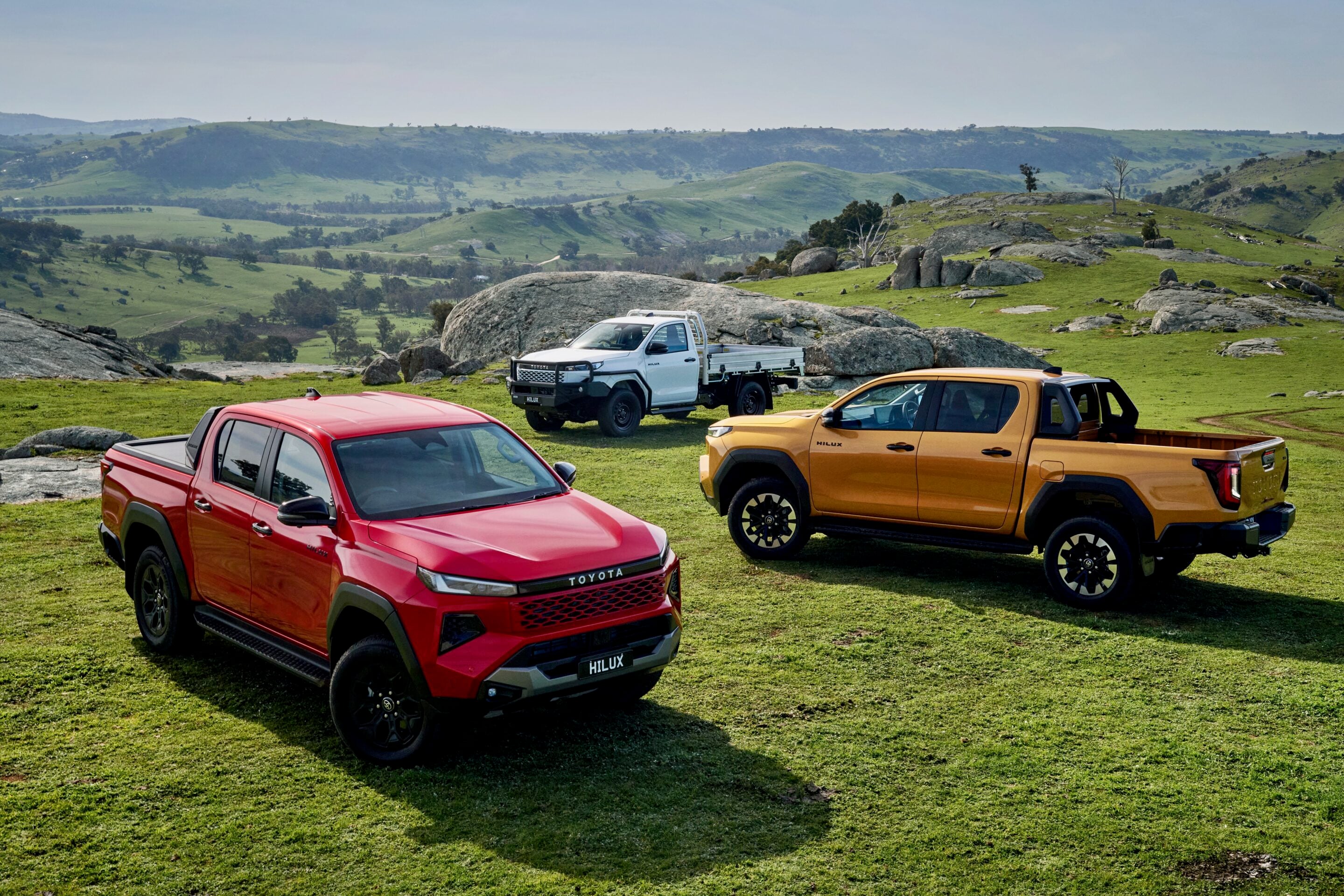
Unsurprisingly, the new HiLux range is extensive, with a choice of 21 different diesel variants across single-cab, extra-cab and double-cab configurations, 2WD and 4WD underpinnings, manual and automatic transmissions, and specification grades already familiar to buyers. They include WorkMate, SR, SR5, Rogue and new Rugged X model grades.
3
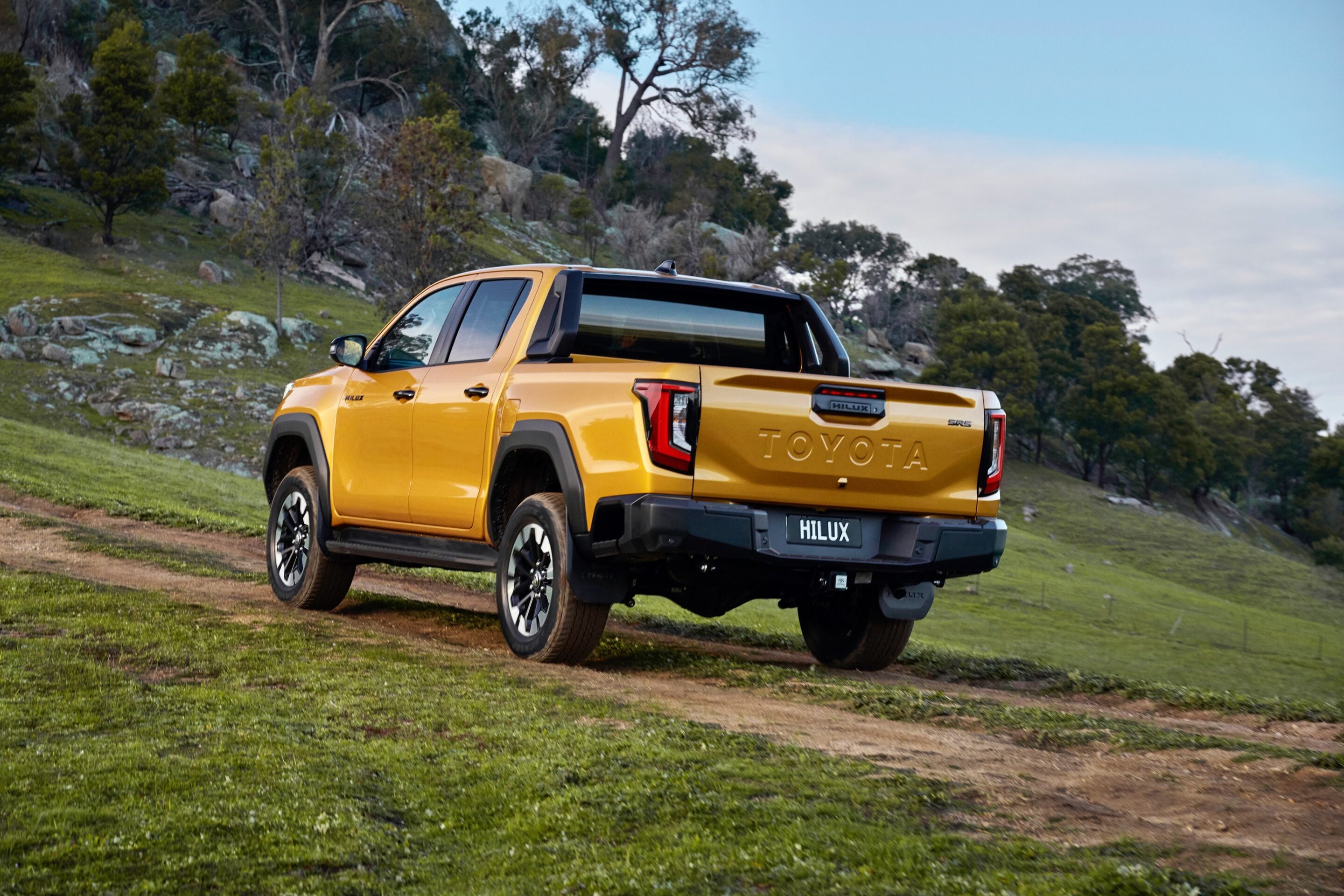
The exterior is where you’ll notice the biggest changes to the revamped HiLux, despite the dimensions of the centre cab-section remaining the same. That also means cabin space remains the same as the model it replaces – an area where the best in segment have made genuine gains.
Aussie design input
Australia’s design and vehicle evaluation teams have been heavily involved in the development of every new HiLux over the past decade and a half, according to Toyota Australia, but for the first time, Toyota Design Australia was given the nod to lead the redesign of the exterior.
“Working on the design of the new HiLux has certainly been a challenge, being such a major global model, but one that Toyota Design Australia has relished,” Nic Hogios, Senior Manager Toyota Design Australia, said. ‘Over the past 10 years, we have been working on significant HiLux updates, special models and off-course accessories for global HiLux family models, alongside our partners at the technical centre in Thailand.”
As such, Hogios believes it was only natural that Toyota HQ selected the Australian team to design the exterior for the next generation, in close collaboration with teams in Japan and Thailand as well as Global HQ.
Based in Altona, Victoria, this project has been in the works since 2021, and core among the considerations was retaining the look and feel that existing HiLux buyers demanded. As the dual-cab segment has morphed into the most popular in Australia, so too has the demands of the buyer, not just in terms of styling but also interior execution, standard equipment, and driveability.
1
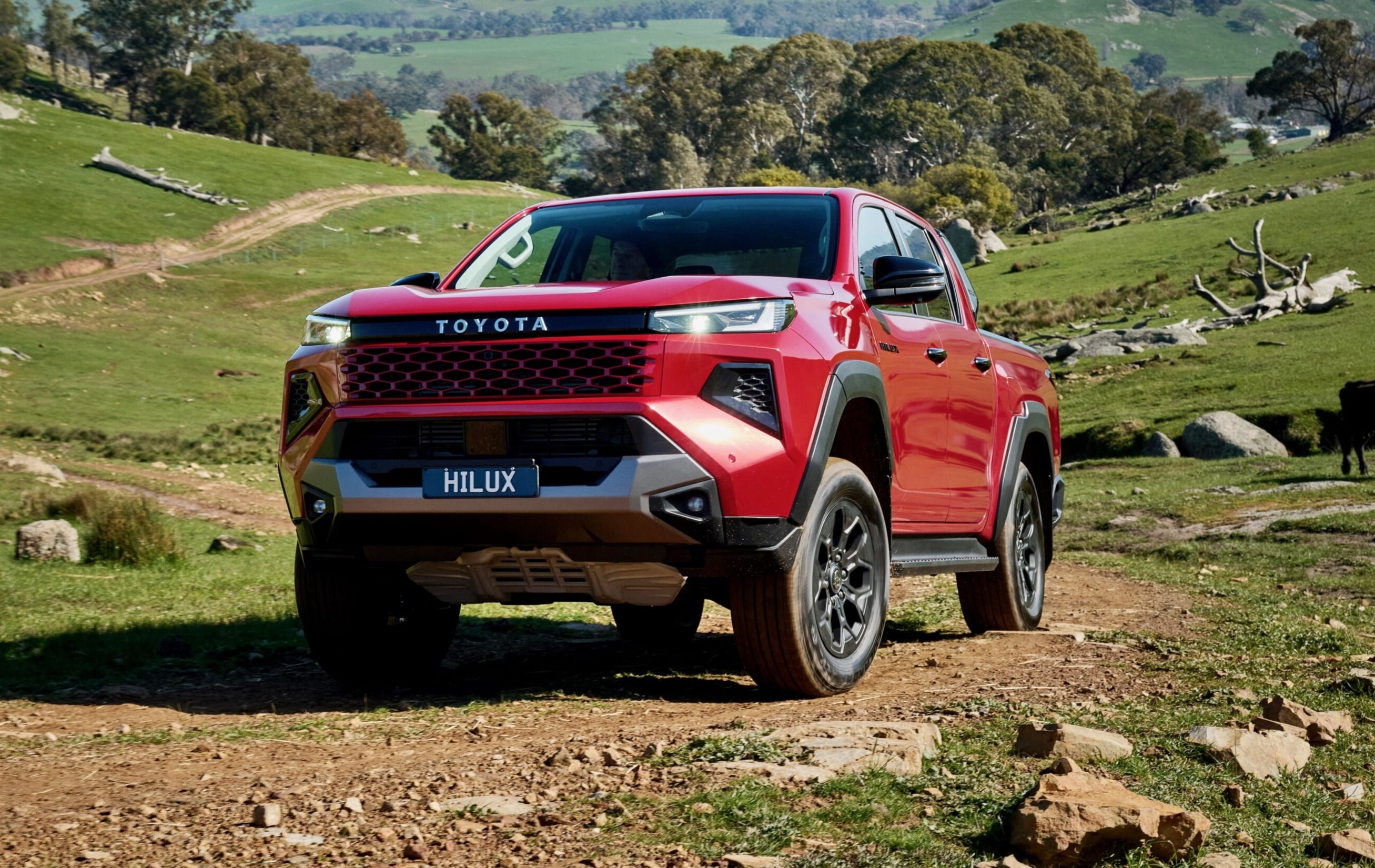
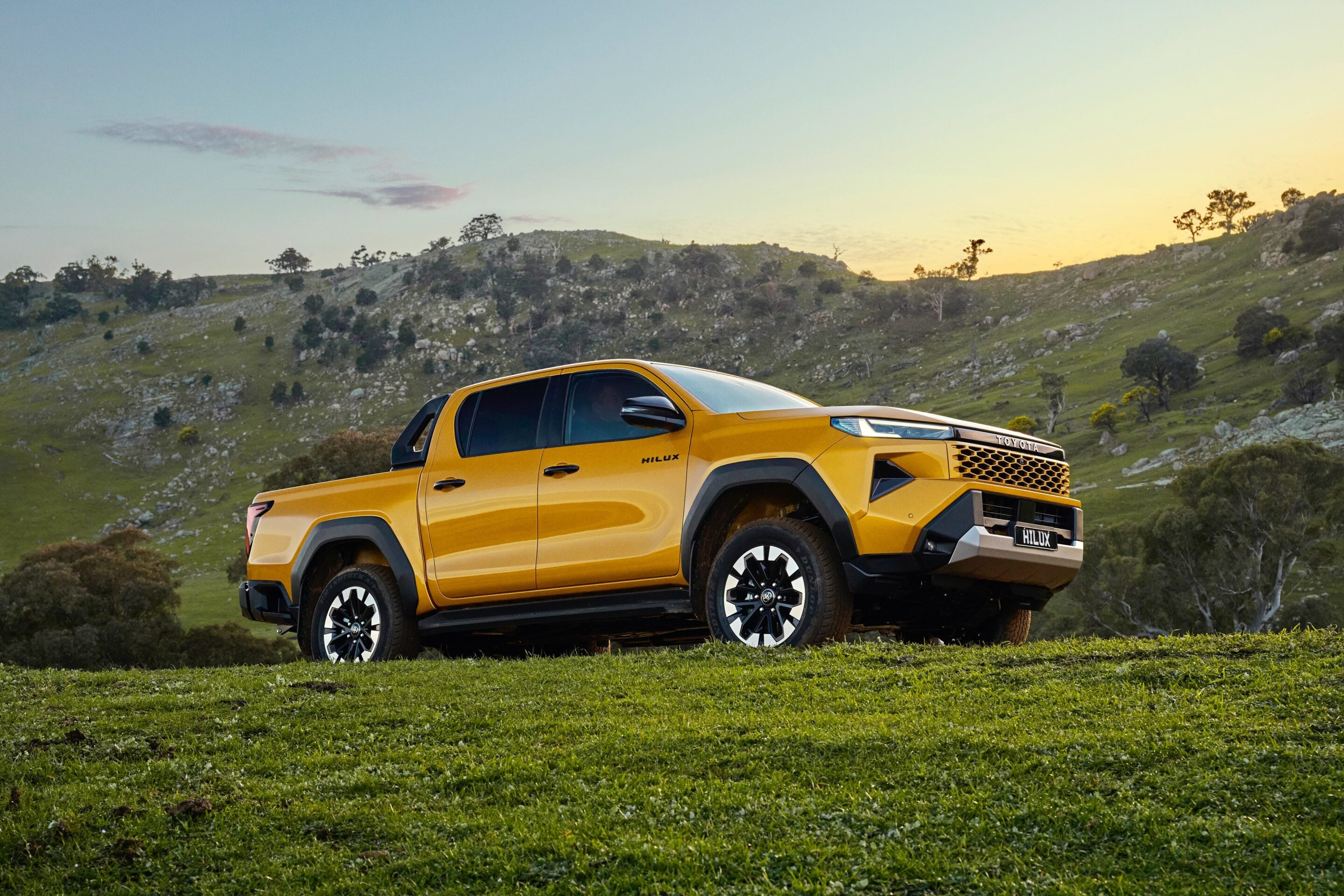
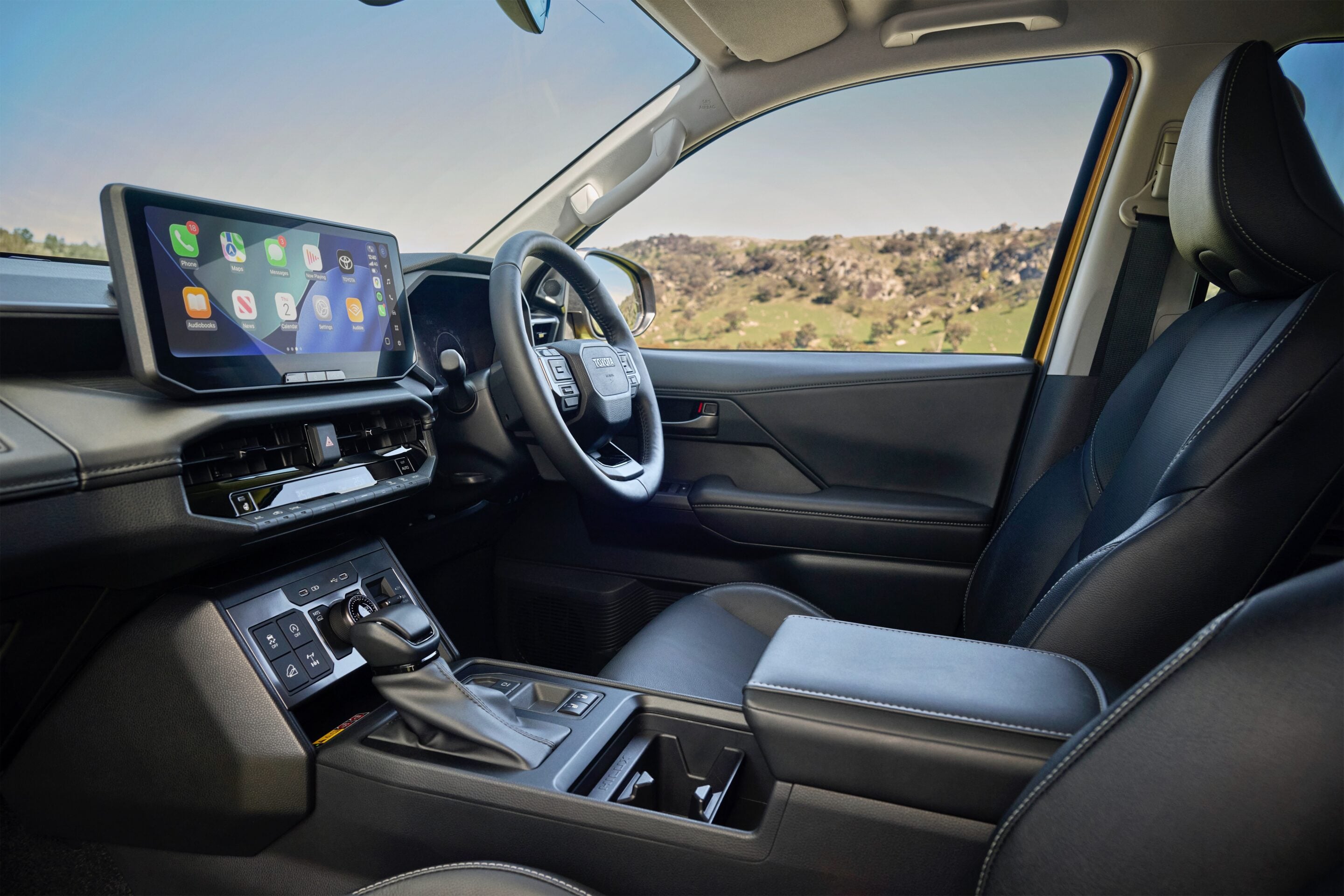
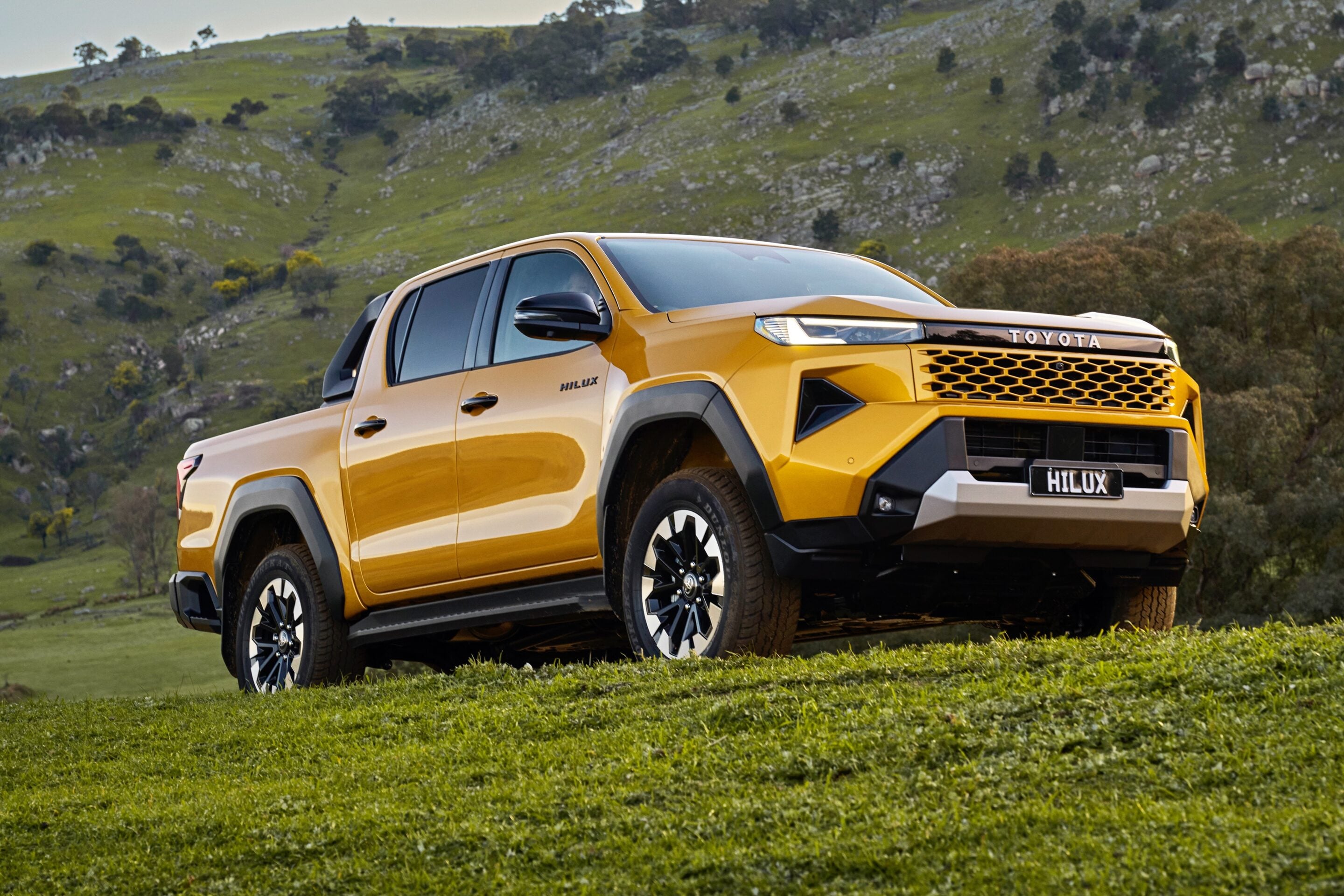
Toyota calls the finished design ‘Cyber Sumo’, and there’s no doubt the new HiLux has a distinctive visage. According to the design team, the front end is inspired by the ‘Sonkyu’ starting pose of a Sumo bout, and while it won’t be to everyone’s taste, it will set the new HiLux apart from the bulk of the segment. Squint a little, and you might just see it.
The way the mesh upper grille has been integrated into the fascia itself is a strong departure from the traditional styling of dual cabs in this segment, and the slim, sharp headlights also deliver a completely different look. In the metal, it’s not too far from some of the renderings we’ve seen, but it’s certainly very different for a HiLux.
Wheels asked at the launch how much work went into the headlights to ensure an aperture so thin could deliver the punch required for more remote areas, but also fit into ADR safety requirements, and the answer was that quite a lot needed to be accounted for. According to Toyota Australia, the new headlights do meet the standards it had set internally.
The other interesting aspect of the exterior redesign is the way in which the cabin – the silhouette of which is common to the current model – had to be made to work with a significantly different style front end especially. From A-pillar to C-pillar, the cab remains the same.
Toyota’s design language is interesting, in that it’s often a year or two post-launch that a new model starts to look at home on the street. An example of this was the then-new 200 Series LandCruiser, which polarised 100 Series owners upon its initial release, only to gain traction with buyers in the following months as the new design started to bed down a little. We suspect the styling of the new HiLux is likely to generate some healthy debate. It won’t be to everyone’s tastes, but it’s hard to argue against the fact it does bring the HiLux into a more modern aesthetic.
2
Interior update
Styling is one thing, but substance is where this fight is now at, especially given the levels of standard equipment from the likes of BYD with the tech-heavy Shark 6 PHEV dual-cab. The new HiLux has benefitted from a significant lift in standard interior equipment, even though cabin dimensions remain the same.
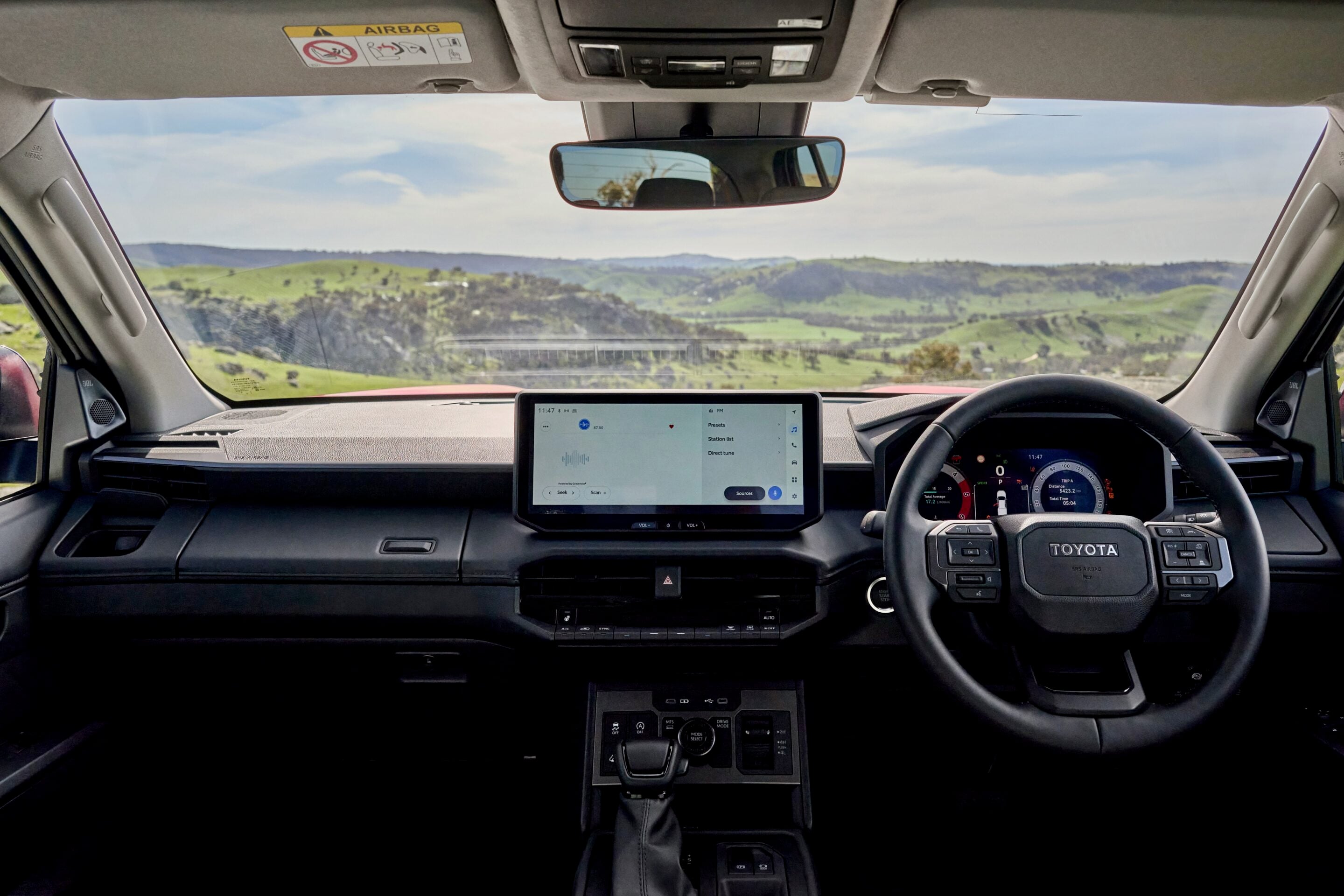
The three-tier dash is significantly different, and the flatter design provides improved forward
visibility, both on and off-road. We noticed it specifically during off-road testing, where sighting and positioning the front corners of the HiLux was easy, thanks to the broad view through the windscreen.
There’s a new digital instrument cluster for the driver as standard equipment, measuring in at 7.0-inches for WorkMate and SR grades, stepping up to 12.3-inch on SR5 and up. Across the range, the big 12.3-inch
infotainment touchscreen is standard. It’s positioned neatly above the centre console, easy to reach and control, but not looking like an afterthought.
HiLux also gets a new generation control system for the multimedia centre, with wireless Apple CarPlay and Android Auto, proprietary satellite navigation voice command and expanded Toyota Connected Services functionality.
2
The centre console is wider, meaning it’s more rigid and less prone to vibration though the cab, and a taller centre console lid, that Toyota says was designed to match the height of the armrest in the door card and can be moved fore and aft.
The front and rear seats – the comfort of which we noted at launch – have been changed, and up to eight-way power adjustment is available. There’s also lumbar support, and leather accented trim depending on which model grade you choose.
Beneath the central infotainment screen, you’ll find the climate control zone with – thankfully – large physical buttons and dials that make tweaking the temperature or the fan control easy – even on the move. If the Tesla way of controlling everything through the touchscreen is the answer to a question nobody asked, the Toyota system is the response to the thought we all assumed was obvious.
The steering wheel has been changed, too, with easy ergonomics and a different layout of controls from the old model, grouped into three options – infotainment, audio and driver assistance. It means you can do whatever you need to do, on the move with ease, and you’re not left fumbling for the right switch to do the right thing. A heated steering wheel is available on some grades as well.
The result of all these changes is a cabin that feels familiar to a degree, even if it looks anything but. One reality to be faced is that the second row, in particular, doesn’t get an improvement in space – especially for taller adults – over the outgoing model, meaning the best in segment will stay out of reach for HiLux. The front two seats are excellent, and I can sit behind my own driving position – but only just.
Under the hood
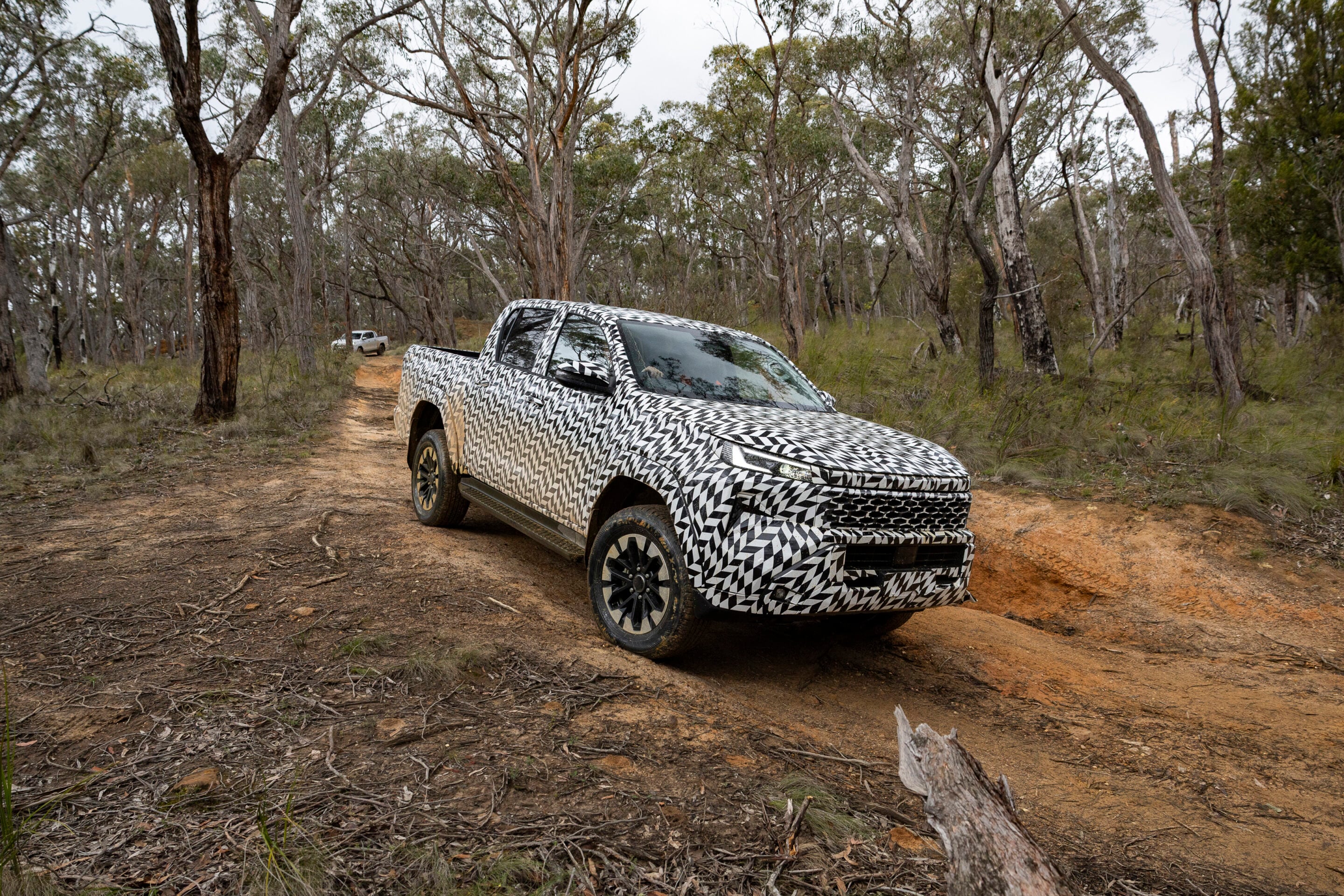
Unsurprisingly, during our short test at launch, the 2026 HiLux performs strongly off-road and reliably on. There are no skeletons in this closet in that it’s a tried and tested driveline. Is it underdone? There’s a fair case to make that argument.
The most significant factor here, then, will be whether a largely unchanged driveline can go toe-to-toe with the most powerful and capable in the segment. In the case of the Isuzu/Mazda twins, there’s a larger, 3.0-litre four-cylinder engine, while the Ford/Volkswagen twins offer up an even more formidable 3.0-litre V6.
Across the new HiLux range, all grades are powered by the familiar 2.8-litre, turbo-diesel four-cylinder, which churns out 150kW and 500Nm through a six-speed automatic. Opt for the manual and torque is reduced to 420Nm.
Additionally, for SR grade and above, Toyota will offer its 48-volt V-Active technology standard (with smooth take off a side benefit) alongside the 8.5kW/65Nm punch the system delivers from take off. Driving the HiLux unladen and without a trailer hitched up, there’s nothing at all wrong with the
power delivery and drive experience. Once the vehicle is launched proper, we’ll take a closer look at its performance under some strain.
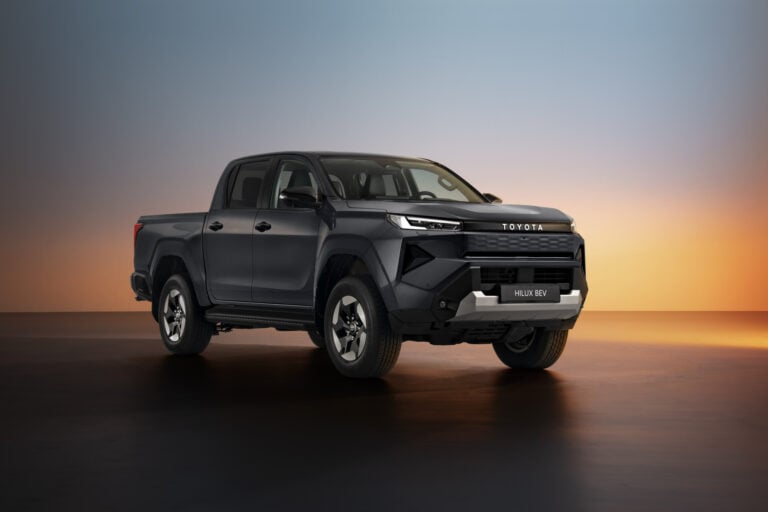
As mentioned above, the electric version of the HiLux will join the range later in 2026 and will use an electric motor at each axle, powered by an as yet unspecified lithium-ion battery pack. Wheels will have more detail on the EV specifications as soon as they are available.
The 300 Series LandCruiser benefited from the work that Toyota Australia’s development team put into the Multi-Terrain Select system, with tangible benefits in mud, sand, dirt and slippery rocky terrain, and so does the new HiLux. Its off-road performance makes tough work look easy, as you’d expect of the badge and the model. Part-time 4WD, proper low-range gearing, and on SR 4×4 and above, a locking rear-diff as standard with Multi-Terrain Select traction control mean the HiLux is formidable as soon as you leave sealed surfaces.
3
An electric power steering system has been added for 2026, and on test we found it to have the meaty feedback we like off-road and the lightness on sealed surfaces that should make the HiLux easy to pilot around town. We didn’t get to test the high-speed response at length, but Toyota claims the system has been tuned to deliver strongly in that environment too, crucial for rural buyers who cover long distances at 100km/h. Further, the addition of electric power steering, has allowed Toyota to refine lane-keep
systems.
An interesting addition to the new range, and a nod to the vastly different buyer profile at either end of the model range, is the two different suspension tunes Toyota will offer. One is directed at hard work and load hauling, the other at comfort and, therefore, the private user less inclined to test the parameters of the chassis’ capability.
Coils up front and leaf springs out the back remain, and they have been revised across the range, but it’s WorkMate and SR that get the heavy duty suspension, while SR5 up is fitted with different rate springs and a different suspension stroke to deliver a lift in unladen ride comfort.
There are smaller changes, too, like new hydraulic engine mounts, and shear-type cab mounts, specifically added to improve rigidity as well as comfort, but also crash capability and reduce vibrations. The ladder-frame chassis itself, is otherwise unchanged.
2
The front suspension tower sheetmetal is thicker, while two of the cross members at the front of the chassis have been changed, too. Toyota claims improved frontal crash performance, although we don’t yet know what the ANCAP crash rating will be. The suite of safety equipment has been enhanced with a first for Toyota – the cabin detection alert system – which uses a radar to detect passengers in the rear seats and notify the occupants when exiting the vehicle.
The new HiLux still feels very much a HiLux to drive, then, with a discernible lift in refinement and insulation. The cabin is quiet and comfortable, even on coarse chip surfaces, but the drive experience feels very familiar from the model it will replace. Back-to-back testing and full specification details closer to launch will tell the full story. We suspect that for the first time in a long time, the new HiLux won’t be able to duke it out in a performance sense with the best in segment. Does that matter? Almost certainly not to the target buyer. Time will tell of course, but it would seem that HiLux sales will continue to tick along with the same inexorable march they always have.
Follow WhichCar/Wheels on Google
Click the button below to make WhichCar by Wheels a preferred source for your news.

We recommend
-
 News
News2026 Toyota Hilux: Specs for the workhorse's first electric version revealed
Toyota Europe spills the beans on the capabilities of the first electric Hilux.
-
 News
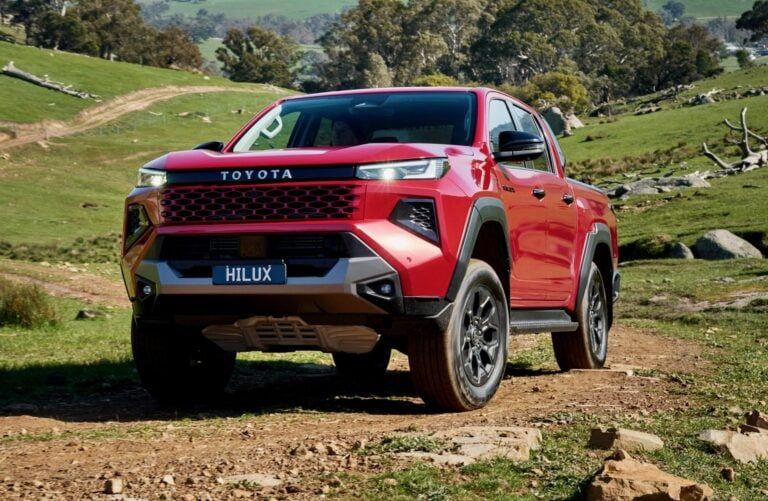
News2026 Toyota HiLux revealed! Discover all the details on the new-gen Aussie favourite
The ninth-generation 2026 Toyota HiLux is finally revealed with a new look and new features the brand hopes will keep it at the top of the Australian sales charts.