News
Gallery 1
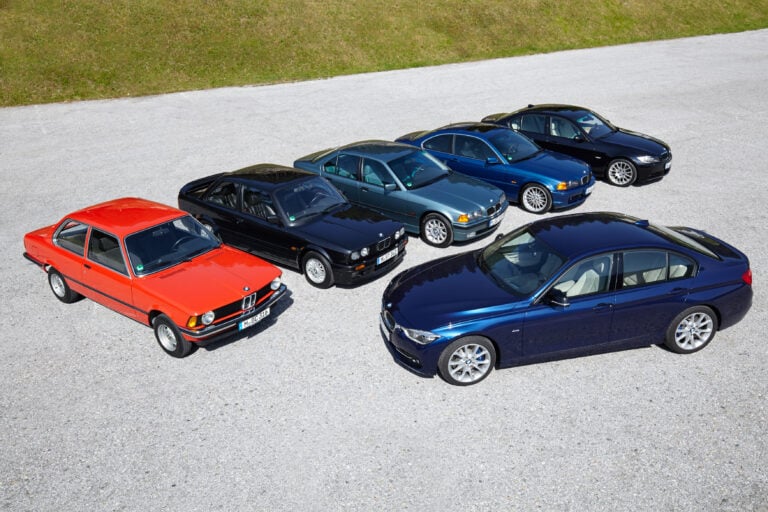
For half a century, the BMW 3 Series has been more than a core model in the German carmaker’s line-up. It has also played a central role in shaping how and where BMW builds its vehicles, acting as a testbed for new manufacturing technologies and a catalyst for the company’s global expansion.
Since production began in 1975, more than 18 million BMW 3 Series vehicles have been built. Assembly has taken place at 18 factories in 13 countries, reflecting the steady growth of BMW’s international manufacturing footprint. Over that period, the model has consistently been used to introduce new production methods aimed at improving efficiency, flexibility and resource use.
3
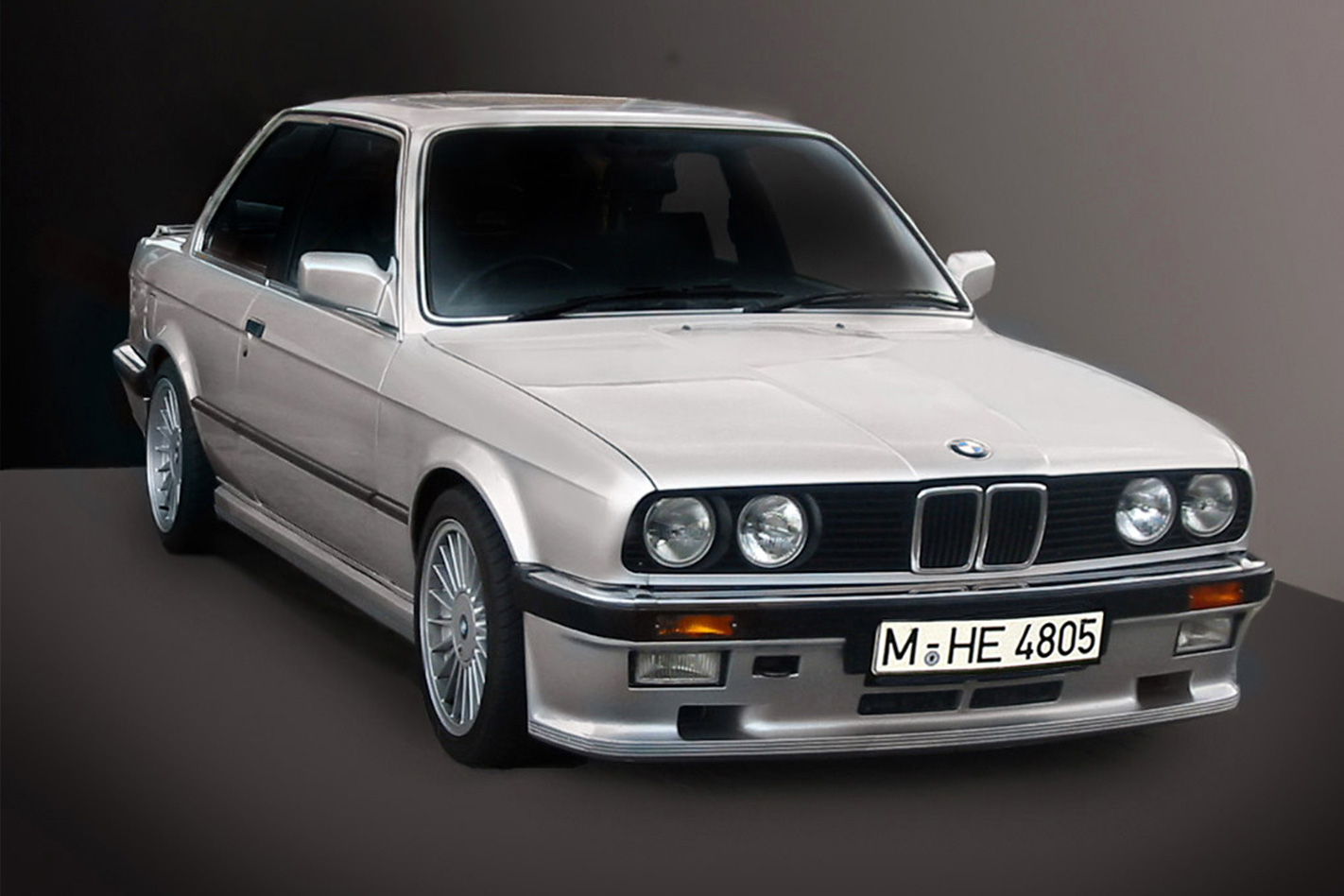
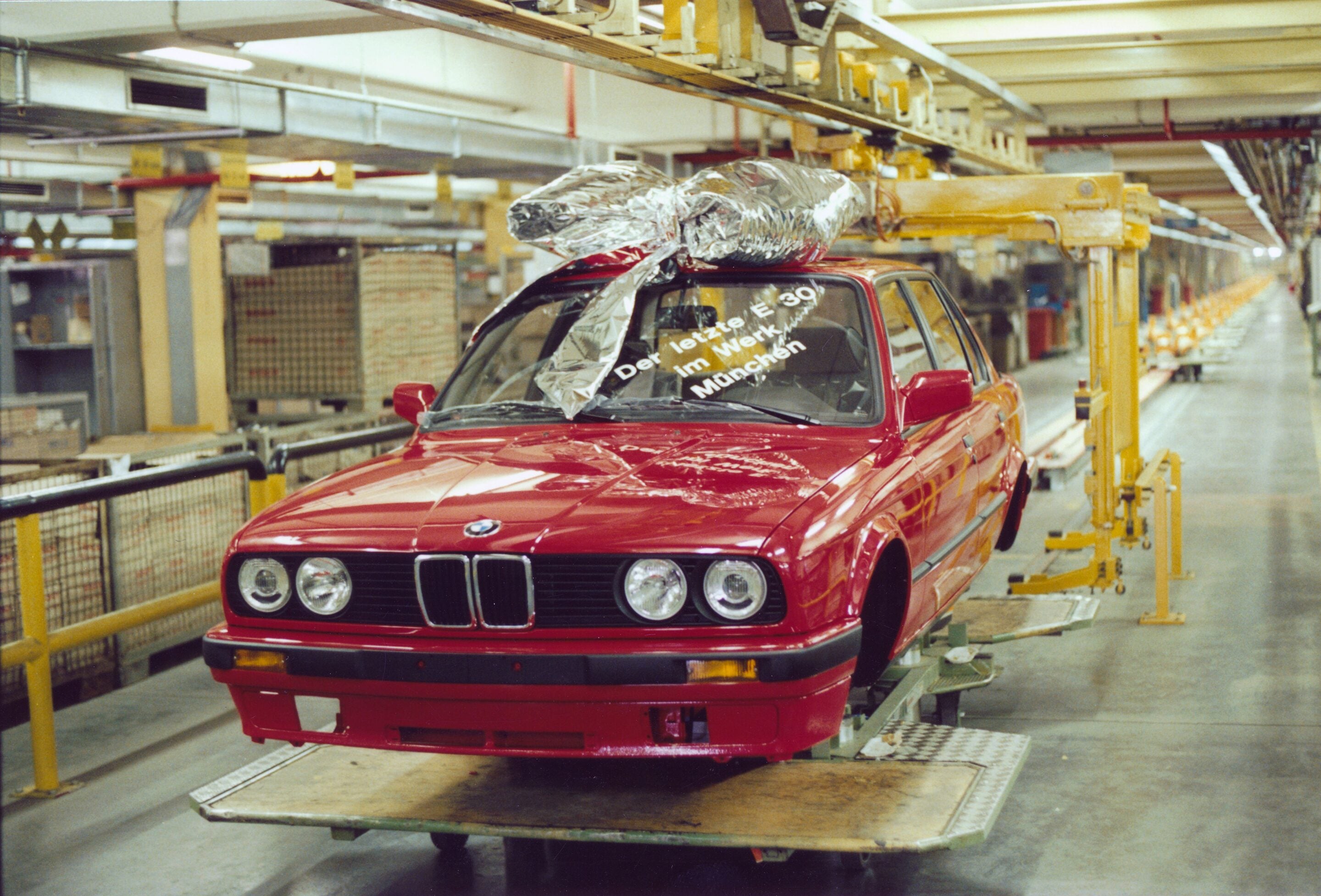
The story begins at BMW Group Plant Munich, where the first 3 Series rolled off the line. From the outset, the factory adopted a flexible approach to manufacturing, using overhead conveyor systems and programmable welding equipment that allowed different variants to be produced side by side. In 1982, with the launch of the second-generation 3 Series, Munich introduced a fully automated body shop. Industrial robots pushed automation levels beyond 90 per cent, a significant step at the time.
Those advances were paired with changes to shift patterns and working-time models, allowing the plant to increase output without major expansion. Over subsequent decades, Munich continued to modernise, introducing new coating processes, computer-controlled engine production and, more recently, digital and AI-supported quality monitoring systems. The 3 Series remained at the centre of these developments, serving as a consistent platform for production innovation.
1
As demand for the model grew, it also drove expansion beyond Munich. In 1980, production was extended to Dingolfing, followed by Regensburg in 1986. The 3 Series soon became a vehicle for BMW’s international ambitions. Manufacturing began in Rosslyn, South Africa, in 1984, marking one of the company’s earliest steps outside Europe. A decade later, the model was part of the ramp-up at Spartanburg in the United States, supporting local supply for the North American market.
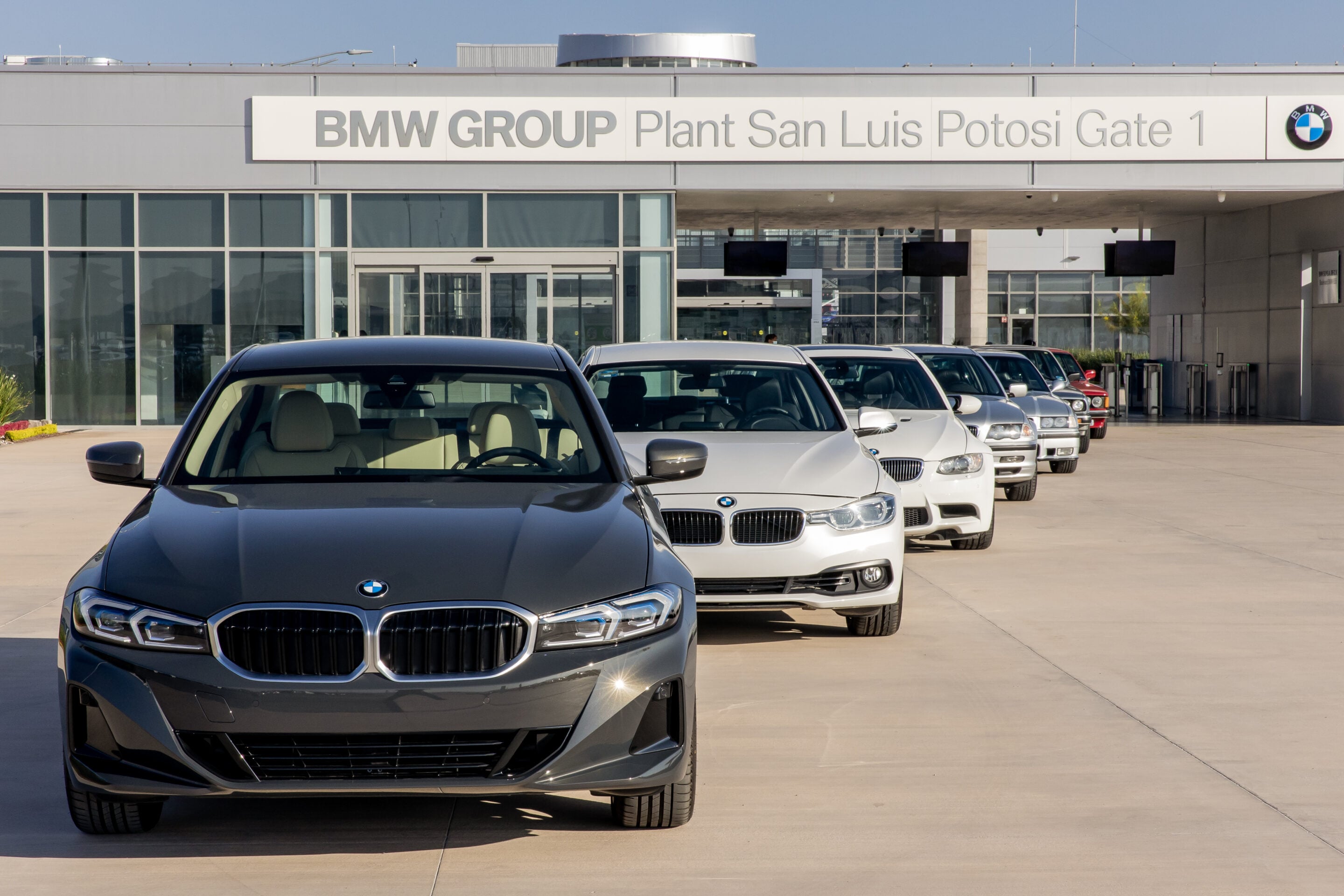
This pattern repeated itself over time. With the exception of the new plant in Debrecen, Hungary, every new BMW factory since Regensburg has launched with the 3 Series. Facilities in Leipzig and San Luis Potosí, as well as BMW Brilliance Automotive’s joint venture plants in China, all relied on the model during their early production phases. Its relatively high volumes and broad appeal made it well suited to stabilising new sites.

2
Across generations, the 3 Series has been built in a wide range of body styles, from sedans and wagons to convertibles and high-performance M variants. These different versions, along with multiple powertrain types, have often been assembled on the same lines. Internal combustion engines, plug-in hybrids and, in some markets, fully electric drivetrains have coexisted within a single production system, underscoring BMW’s emphasis on manufacturing flexibility.
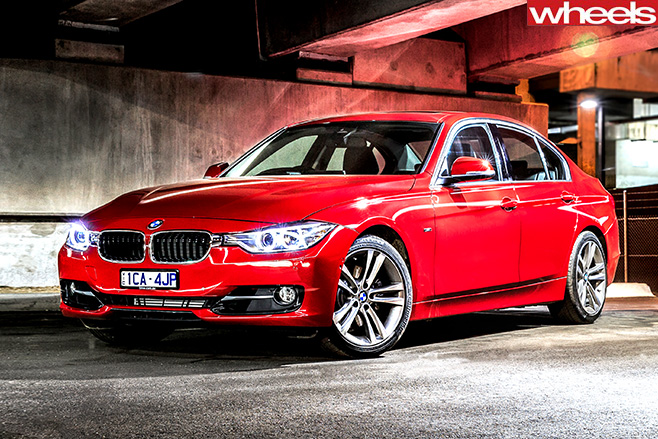
Today, the seventh-generation 3 Series is produced in Munich, Shenyang in China and San Luis Potosí in Mexico, alongside regional plants in India, Thailand and Brazil, and partner facilities in other countries. Production responsibilities are spread to align supply more closely with local markets.
1
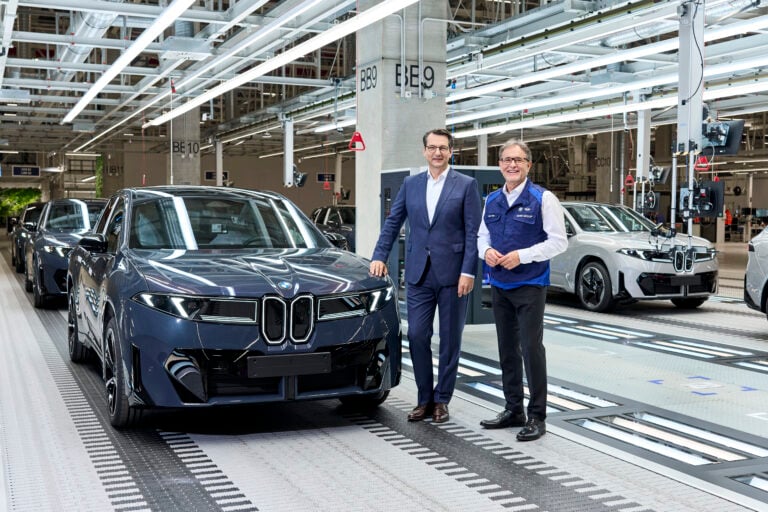
Looking ahead, the model is again set to play a pivotal role. Preparations are under way for the eighth generation, including a fully electric 3 Series that will be built in Munich from the second half of 2026 as part of BMW’s NEUE KLASSE programme. Production is expected to follow in China and Mexico, with plans also in place to return 3 Series manufacturing to Dingolfing.
After 50 years, the BMW 3 Series remains both a commercial mainstay and a practical tool for evolving how the company builds cars — linking its past as a Munich-based manufacturer to its present as a global producer.
| What | Plants | When |
|---|---|---|
| 1st generation 3 SeriesSedan | Munich, Dingolfing | 1975-1983 |
| 2nd generation 3 Series Sedan, Convertible, Touring, M3 (Coupe and Convertible) | Munich, Dingolfing, Regensburg, Rosslyn (South Africa) | 1982-1994 |
| 3rd generation 3 Series Sedan, Coupe, Convertible, Touring, Compact, M3 (Sedan, Coupe, Convertible) | Munich, Dingolfing, Regensburg, Spartanburg (USA), Rosslyn (South Africa) | 1990-2000 |
| 4th generation 3 Series Sedan, Coupe, Convertible, Touring, Compact, M3 (Coupe, Convertible) | Munich, Dingolfing, Regensburg, Rosslyn (South Africa) | 1997-2006 |
| 5th generation 3 Series Sedan, Coupe, Convertible, Touring, M3 (Sedan, Coupe, Convertible) | Munich, Regensburg, Rosslyn (South Africa), Dadong (China), Leipzig | 2004-2013 |
| 6th generation 3 Series Sedan, Touring, Gran Turismo, M3 (Sedan)The Sedan, Touring and Gran Turismo continued to be marketed as the BMW 3 Series, while the Convertible, Coupe and new Gran Coupe formed a separate family for the first time: the BMW 4 Series range. | Munich, Dingolfing, Regensburg, Rosslyn (South Africa), Tiexi (China) | 2011-2021 |
| 7th generation 3 Series Sedan, Touring, M3 (Sedan, Touring), i3 (fully-electric, China only) | Munich, Tiexi (China), San Luis Potosà (Mexico) | since 2018 |
Follow WhichCar/Wheels on Google
Click the button below to make WhichCar by Wheels a preferred source for your news.

We recommend
-
 News
NewsThe BMW 3 Series: 50 years of driving excellence
An automotive icon marks a half-century and announces a new special edition.
-
 News
NewsBMW enters final countdown for Neue Klasse production with iX3 lead model
Debrecen plant in Hungary prepares for first all-electric SUV, showcasing BMW’s new iFACTORY concept with fossil-free operations, AI-driven production, and Gen6 battery technology.