Comparisons


Gallery 1
If you’re ready to make to the leap to an electric vehicle, at the time of testing, the clear standout is anything with a Tesla badge. Good, bad or otherwise, love the founder or hate him, the testing is clear. When it comes to electric vehicles doing things we expect them to do, Tesla does it better than anyone. Range, energy usage, technology and the ownership experience, ensure Tesla sits atop the electric vehicle pile.
What if you’re not quite ready for a full EV? Plenty of you have either tested one, given their slowly growing popularity on Aussie roads. The feedback to Wheels shows though, that many of you aren’t ready to make the leap yet and buy one.
That’s where a vehicle like the Nissan X-Trail e-Power drives into the frame. With a conventional fuel tank used to power a petrol engine working as a generator, the X-Trail behaves like an EV without any of the range anxiety associated with charging. If you can train your mind to dial the sound of the generator out, it feels almost like you’re driving an EV. The word ‘conventional’ is used here advisedly, because the e-Power system is anything but conventional. When the fuel gauge gets low, however, pull into a service station and top up. Easy.
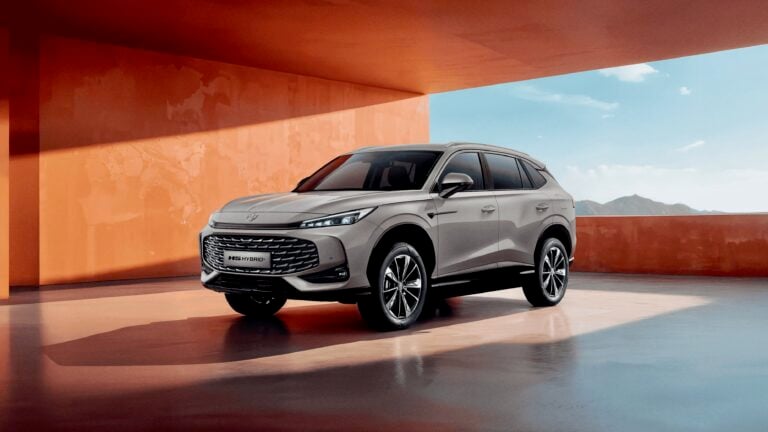
Or, you could do what more and more heavy hitters suggest is actually the most effective and environmentally-friendly way to get from A to B. That is, buy a petrol/electric hybrid. The latest among them as we go to press is the 2026 MG HS Hybrid you see on these pages. Toyota has shown the automotive world the hybrid way for decades now, and other manufacturers want in – MG among them.
1
On the subject of Toyota, its boss Akio Toyoda thinks hybrid is the smart way to go – somewhat unsurprising given Toyota’s position as the hybrid sales leader around the world. That said, when even Volvo is questioning the long-term environmental chops of EVs, you know there might be some weight to it.
“If I were to have made nine million battery electric vehicles in Japan, it would have actually increased the carbon emissions, not reduced them,” Toyoda said. “That is because Japan relies on thermal power plants for electricity.”
That’s not to say that Toyota won’t release EVs, simply that it will not see them as a one size fits all
solution to the environmental problem.
Having completed a lap of the Australian mainland in an EV, I can write one thing unequivocally. Australia is not yet ready – broadly speaking – for hordes of us to be rolling round the countryside in EVs. There’s no strongly prosecuted counter argument. Head a decent distance out of any major city, and you’ll see what I mean. The charging infrastructure, certainly in remote areas, simply isn’t anywhere near where it needs to be, and probably won’t be anytime soon.
It means, then, that if you’re a one-car family, if you drive long distances regularly, if you love road trips, or if you live in a rural area, an EV is too big a leap.
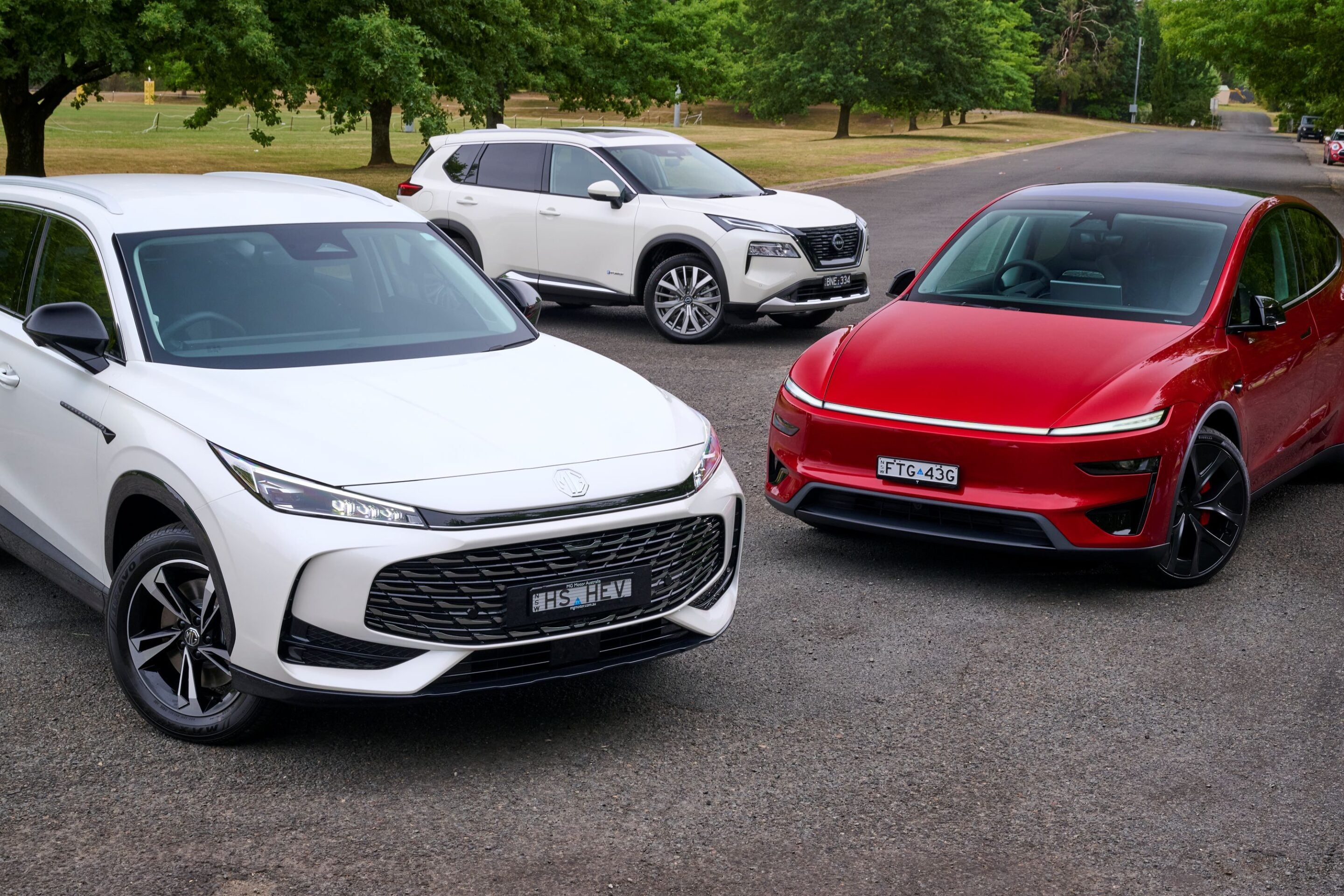
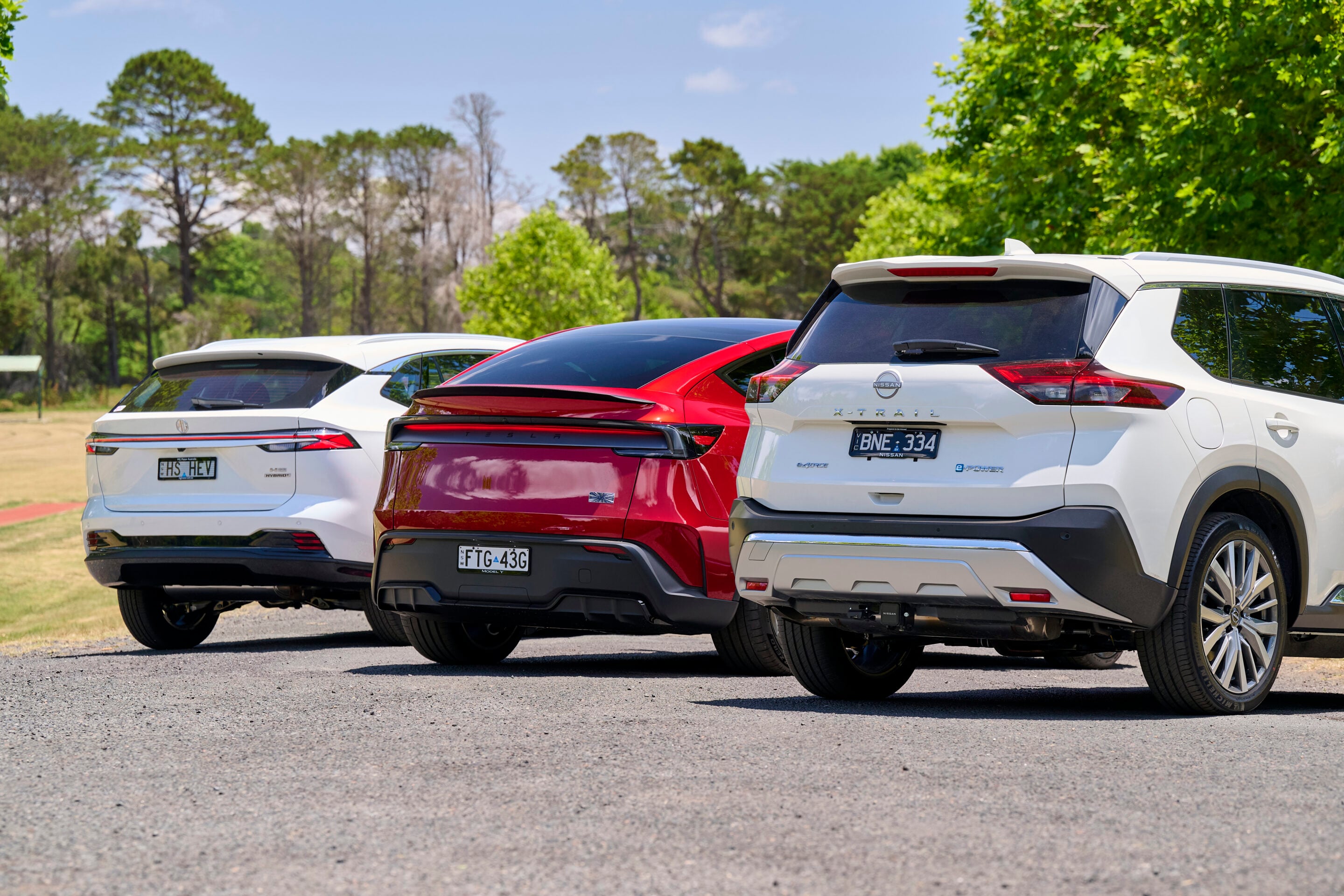
The reality for most Australians is that a fuel tank, feeding a petrol engine of some kind, is still the safest and least intrusive way to make a new car purchase. Most of us live in the cities and rarely head further afield. If you’re part of that cohort, an EV will do everything you want it to do, with a sense of insulated composure. That’s why we headed a few hours out of Sydney with the three vehicles we’ve assembled here, logging the kind of distance the average Aussie family might on a weekend road trip.
Which is the smartest option for you, then? Let’s find out.
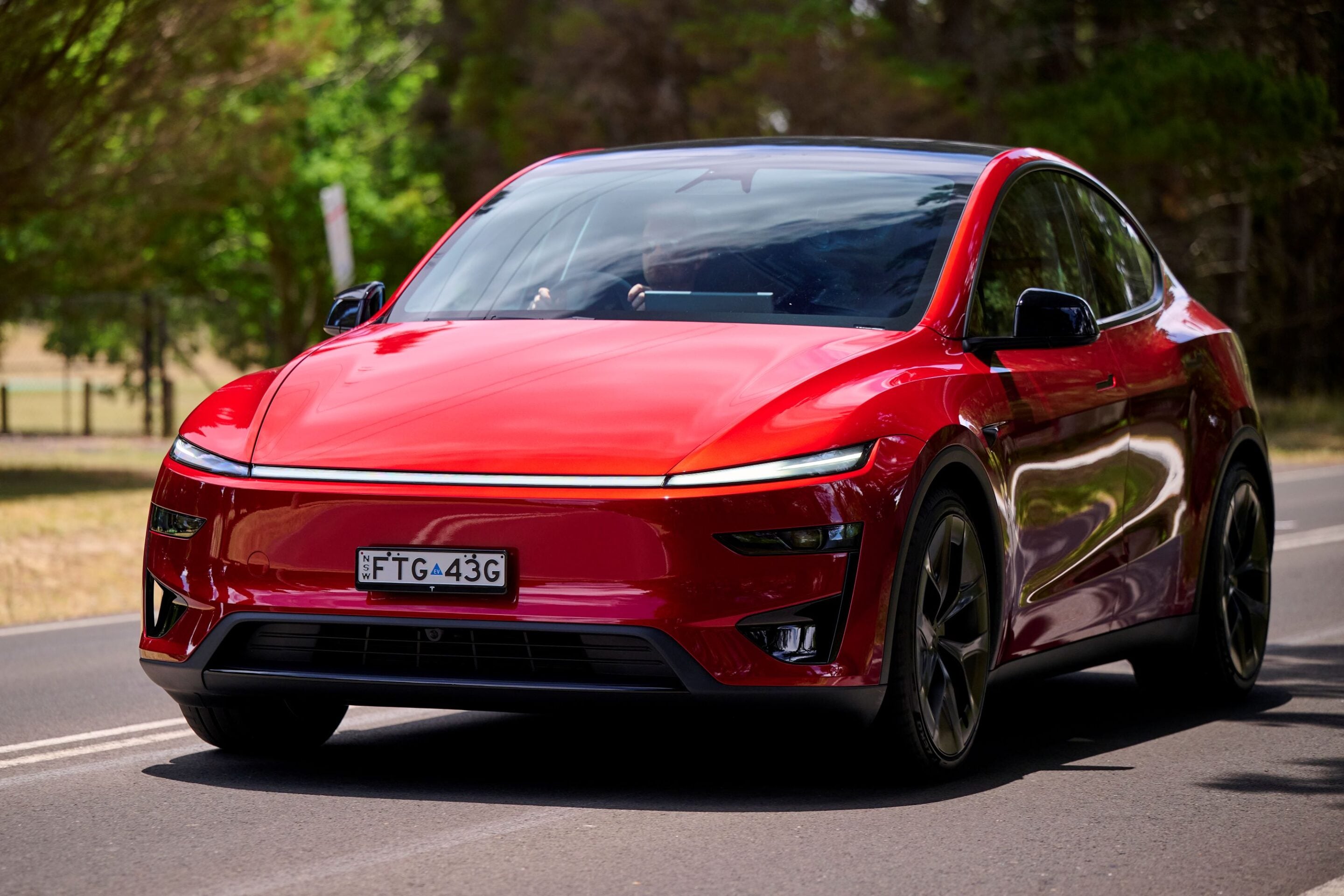
2026 Tesla Model Y Performance
1
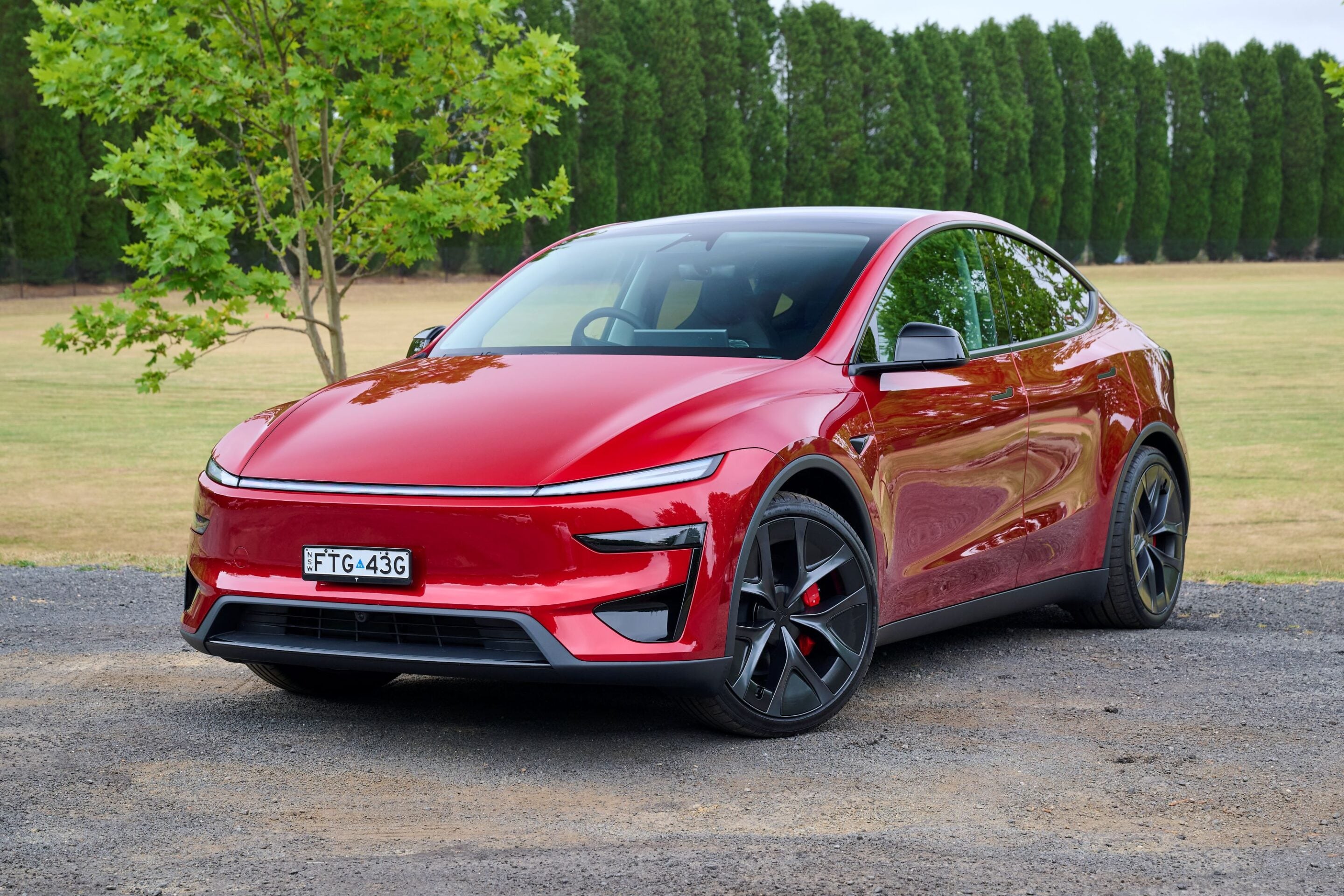
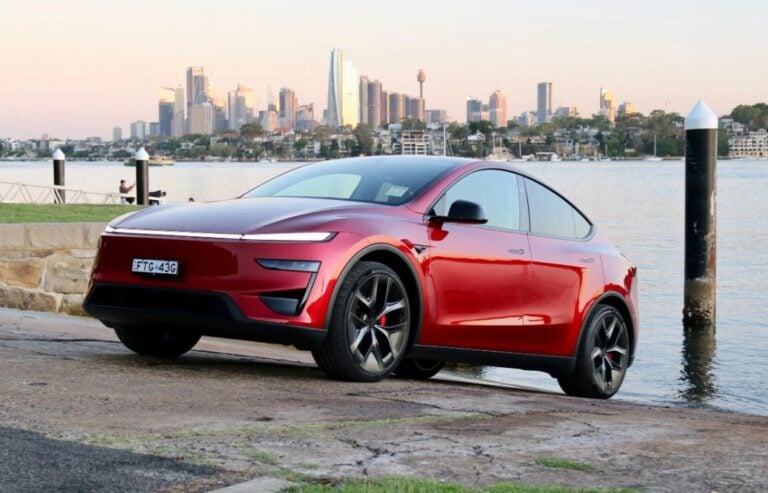
The Tesla Model Y needs no introduction, but for this test we’ve secured the key – or should that be card – for the new Performance model. You can even use the app on your phone and do away with the card if you like, but good luck at the valet parking.
Now, it’s worth noting here you don’t need everything the Performance brings if you’re intent on spending as little money as you can. The Performance is fast, very fast, and most of you won’t need or want such frivolity from your daily driver.
At the time of testing, you could buy the Model Y RWD for $58,900 before on-road costs, while the Long Range AWD started from $68,900 (before ORCs) and the Performance AWD, from $89,400 (before ORCs). Design changes for this current model make it more aerodynamic, bringing range gains between 11km and 18km, and most crucially retuned suspension for a more comfortable ride.
The RWD model is powered by a single electric motor and a 60kWh battery pack, with 466km claimed range from WLTP testing. Opt for the Long Range AWD and you get two electric motors, a 79kWh battery pack and 551km claimed driving range. The Performance we’re testing here gets two electric motors and an 82kWh battery, for a claimed range of 580km. Tesla is cagey when it comes to actual battery capacity and energy usage, but 16.2kWh-16.5kWh/100km is where the Model Y sits based on the testing data we could find.
2
What’s interesting about any Tesla Wheels tests, is how energy efficient they can be in the real world. Our average across a week of testing was 17.1kWh/100km, which included some enthusiastic driving on enjoyable roads, as well as regular city driving and freeway cruising. The live usage figure dropped as low as 13.2kW/h/100km rolling along at 80km/h on a freeway, while high 15s and low 16s were the regular return around town. If you get right into it on a twisty road, usage will climb up as high as the 20.2kWh/100km we saw.
Effectively, if you can drop your average consumption below 14kWh/100km, you’ll beat Tesla’s range claim. But even if you take our average of 17.1kWh/100km, you’re going to cover at least 480km in the real world. Even EV detractors would admit, that real world range close to 500km starts to make a much stronger case for the new technology. What’s interesting, though, is Tesla’s recommendation that you run the nickel-manganese-cobalt battery pack between 20 and 80 per cent most of the time, to keep it in prime health.
With charging the issue for so many buyers, Tesla Europe claims 10 to 80 per cent charging in as little as 34 minutes if you can access a public charger that peaks at 250kW, while DC charging remains capped at 11kW. Tesla’s charging network around the country is more comprehensive, better maintained and more reliable than any of the competitors, meaning so long as you can access a bank of Tesla superchargers where you’re headed, you’ll never have to worry about public fast charging.
1
As we said, you don’t need all that the Performance offers, in an outright ability sense, certainly not for regular driving duties. Considering this is segmented as a large SUV that will be in the sights of family buyers, the explosive acceleration is well beyond what you will ever need. Updated dual electric motors, with more power from the rear drive unit, combine for 343kW (according to Tesla) or 461kW according to an early look at government homologation data we saw before it landed in Australia, which adds together the power output of both motors. Even if the real power output is in the middle of those two figures, the Model Y Performance is still a seriously quick car, and will run from 0-100km/h in just 3.5 seconds.
It feels fast, too, everywhere. Activate Insane mode, and the sharper accelerator response means the
Model Y fires into the distance at the merest hint of pedal pressure. There’s Launch mode as well, but we’d recommend Chill or Standard modes for your regular driving, silly names aside.
The biggest change for this model update that you’ll notice on the road, is the fitment of adaptive suspension, which does a competent job of ironing out the harshest edges of the previous model’s bump absorption – especially around town on choppy surfaces. You’ll get a softer ride and more comfort from the regular Model Y, but the Performance certainly hides its heft quite well in Standard mode.
1
The steering is fast, and light, leading to a slight lack of feel compared to what you might expect from a vehicle of this size and 2033kg weight. Once you dial into the way it responds, though, it does help to make the Y feel smaller and lighter than it really is, meaning you can have a lot of fun on a twisty road.
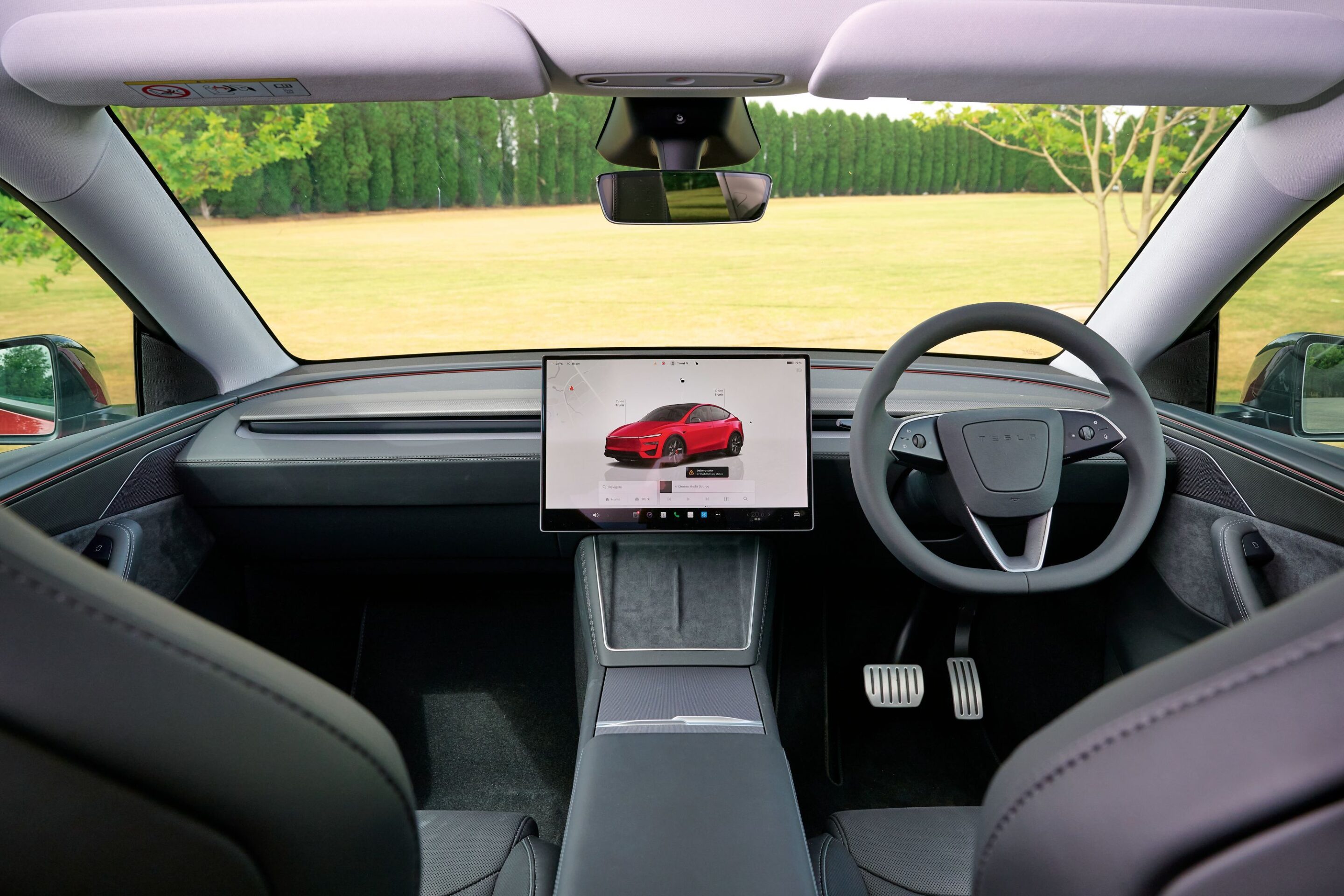
Tesla’s interior is a good one, despite the minor issues we’ve noted in other Wheels tests. The lack of a speedo of any kind in front of the driver is anything but intuitive, the gear shifter that demands touchscreen input, and the lack of smartphone mirroring seems at odds with the tech-savvy nature of the Tesla brand. The glass, UV-coated roof, is a pain – literally – in an Aussie summer, meaning your head gets quite warm at temps anywhere near 30C.
The counter though is Tesla’s infotainment and control systems are the best in the business, as it stands. The huge screen is clear and responsive, and the proprietary sat-nav excellent and never drops in or out.
2
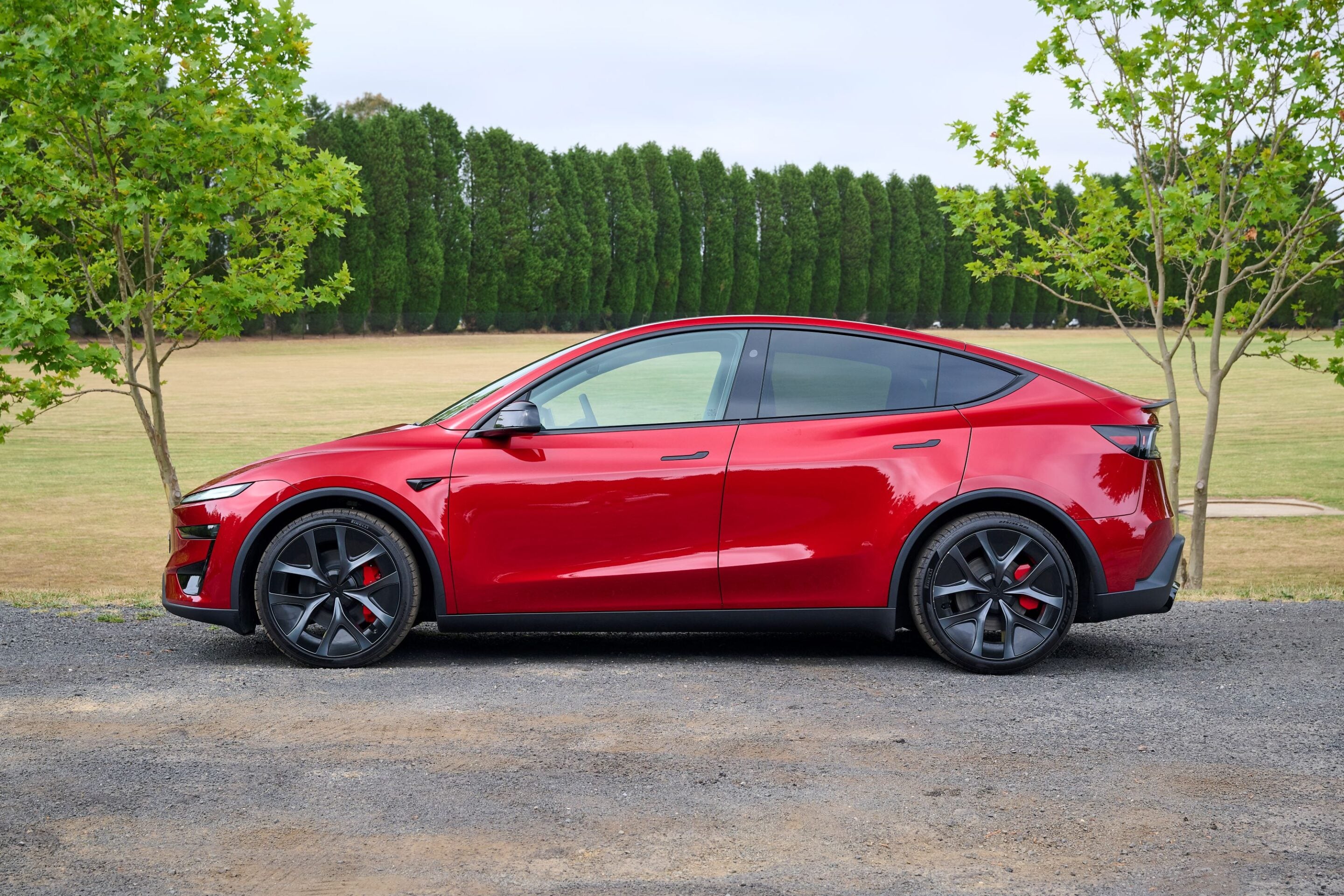
Model Y has been revised and improved in a styling sense, as well as underneath, in areas that you won’t notice until you drive it. Is it perfect? No, but it’s as good, if not better, than any other electric car on the market, and as painful as the founder can be, the cars really do put forward a compelling case.
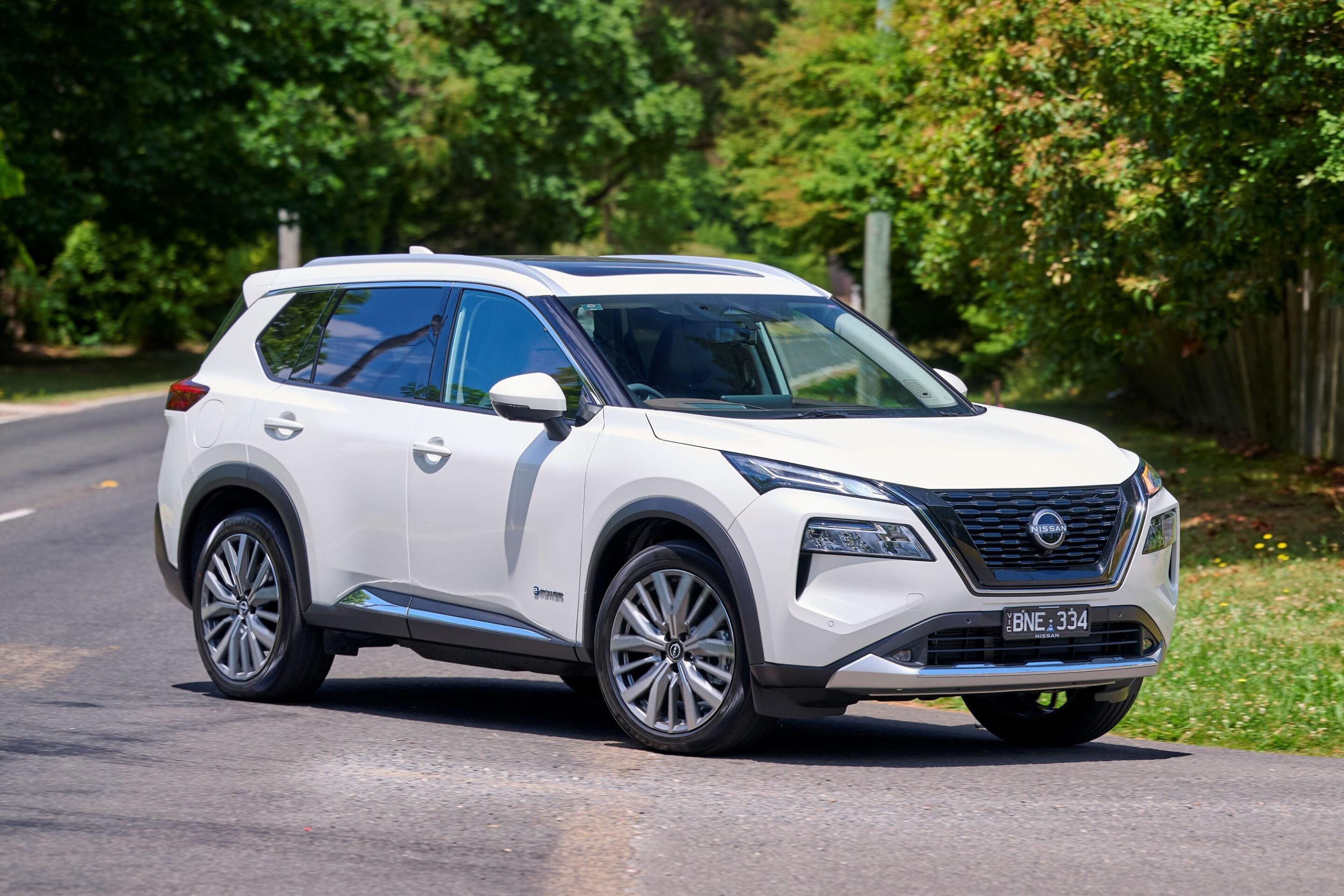
2026 Nissan X-Trail e-Power
1
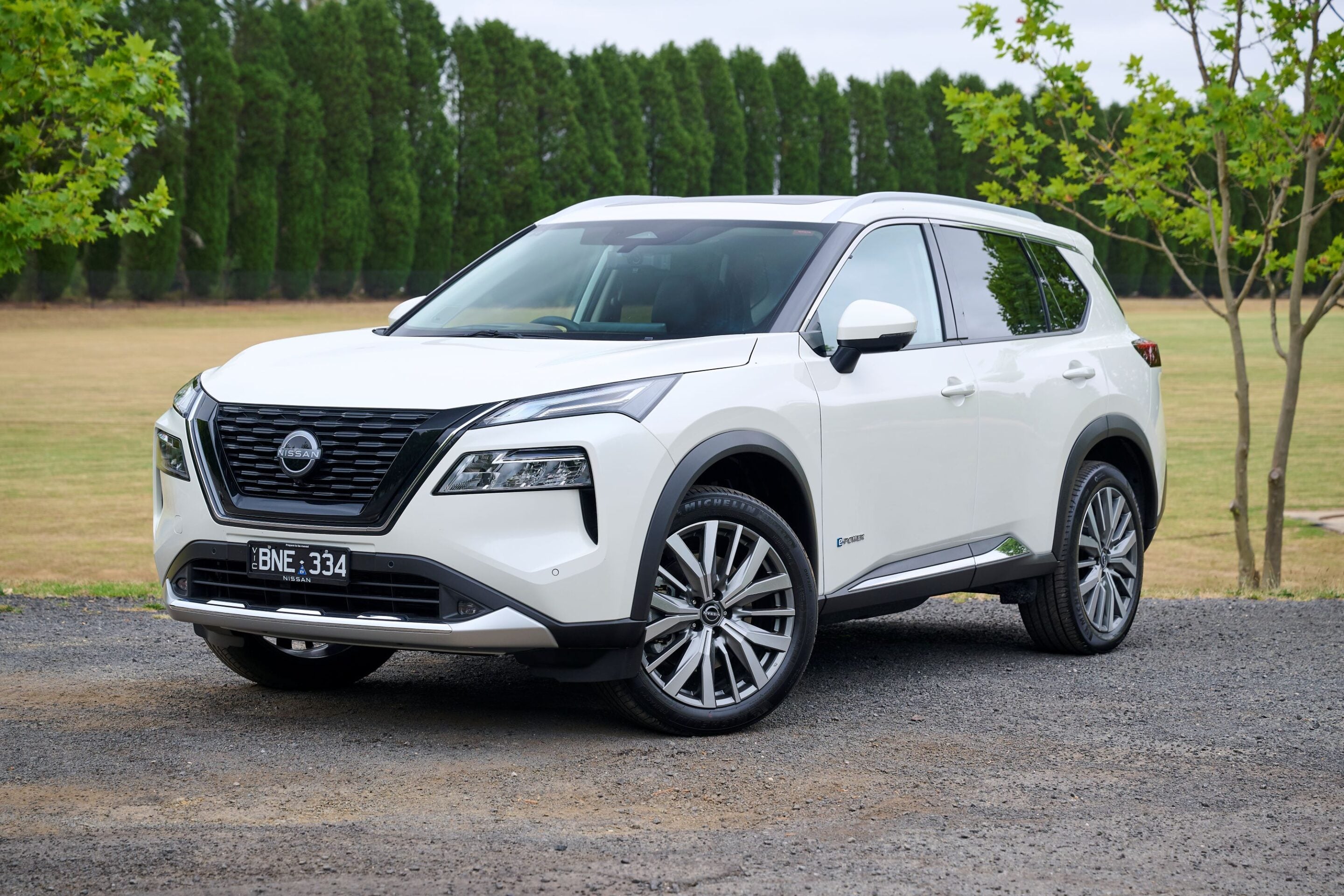
In many ways, the X-Trail is the most interesting vehicle on test here, thanks mainly to its left-field take on the simple act of turning the wheels. Rather than full electric, or regular internal combustion, the X-Trail hedges its bets somewhat, thanks to the use of what Nissan calls e-Power.
First up, e-Power technology is available on ST-L, Ti and Ti-L model grades, with the Ti-L the model we’re testing this month. At the time of testing, you could buy the ST-L grade from $48,990 drive away depending where in the country you live, while the top spec Ti-L was available from $56,990 drive away depending on which state or territory you’re in.
The way e-Power works, you get either single or twin electric motors that drive the wheels at all times. Single electric motor models are FWD, while two electric motors mean you get AWD. Then, there’s a punchy little petrol engine under the bonnet, that works as a generator to charge the 2.1kWh battery pack. The petrol engine doesn’t ever drive the wheels, meaning the revs you’ll hear don’t necessarily match the road speed – something you’ll have to get used to in the beginning. Despite the much smaller size of the battery pack, the X-Trail still weighs in at 1911kg (kerb), not significantly lighter than the Model Y, thanks to both electric motors and a petrol motor as well as the battery pack.
The engine is a turbocharged petrol three-cylinder, measuring in at 1.5 litres in capacity and capable of generating 105kW and 250Nm. The electric motors on the other hand, push 150kW330Nm through the front wheels and 100kW/195Nm through the rears, and there’s a single-speed transmission. Nissan claims 6.1L/100km on the combined cycle, and we used an indicated 6.6L/100km on test. With the fuel tank carrying 55L of 95 RON fuel, that means by our testing you’ve got a 783km cruising range with a 50km safety.
2
Where the X-Trail makes its mark is in the driving, where the fact that it’s driven by electric power means it feels very much like any other EV, but you never have to plug it in to charge. That removes the headache of charging, and everything it entails, but retains the immediacy of the electric power delivery. It’s not as fast as other electric SUVs but that isn’t really the point, and it still feels smooth and effortless.
There’s palpable enjoyment from the driving, too, with the lack of a constantly variable transmission, but the presence of the electric power delivery making for a smooth, engaging, and responsive drive experience. Where a CVT can often rob the driver of the engagement an excellent conventional automatic can deliver, the immediate shove of an electric motor ensures the X-Trail never feels dull.
Crucially, because the three-banger works between its optimal rev band, it never seems to work too hard, and will only intrude into the cabin when you really nail the accelerator pedal and start taxing the battery pack. Otherwise, it hums along quietly under the bonnet, barely making itself known. While the e-Power can’t match the silent meandering of an electric vehicle, it’s not far off, and it’s a relaxed cruiser on the open road, while being nicely insulated around town.
Like the Model Y, AWD means you get a feeling of security behind the wheel, even on ugly road surfaces, or in the wet, and there’s a solid feeling to the drive experience, no matter what sort of driving you’re doing. It’s as much at home on the highway at 110km/h as it is in town at 30km/h in traffic, excelling as either a family hauler, or longer distance tourer.
2
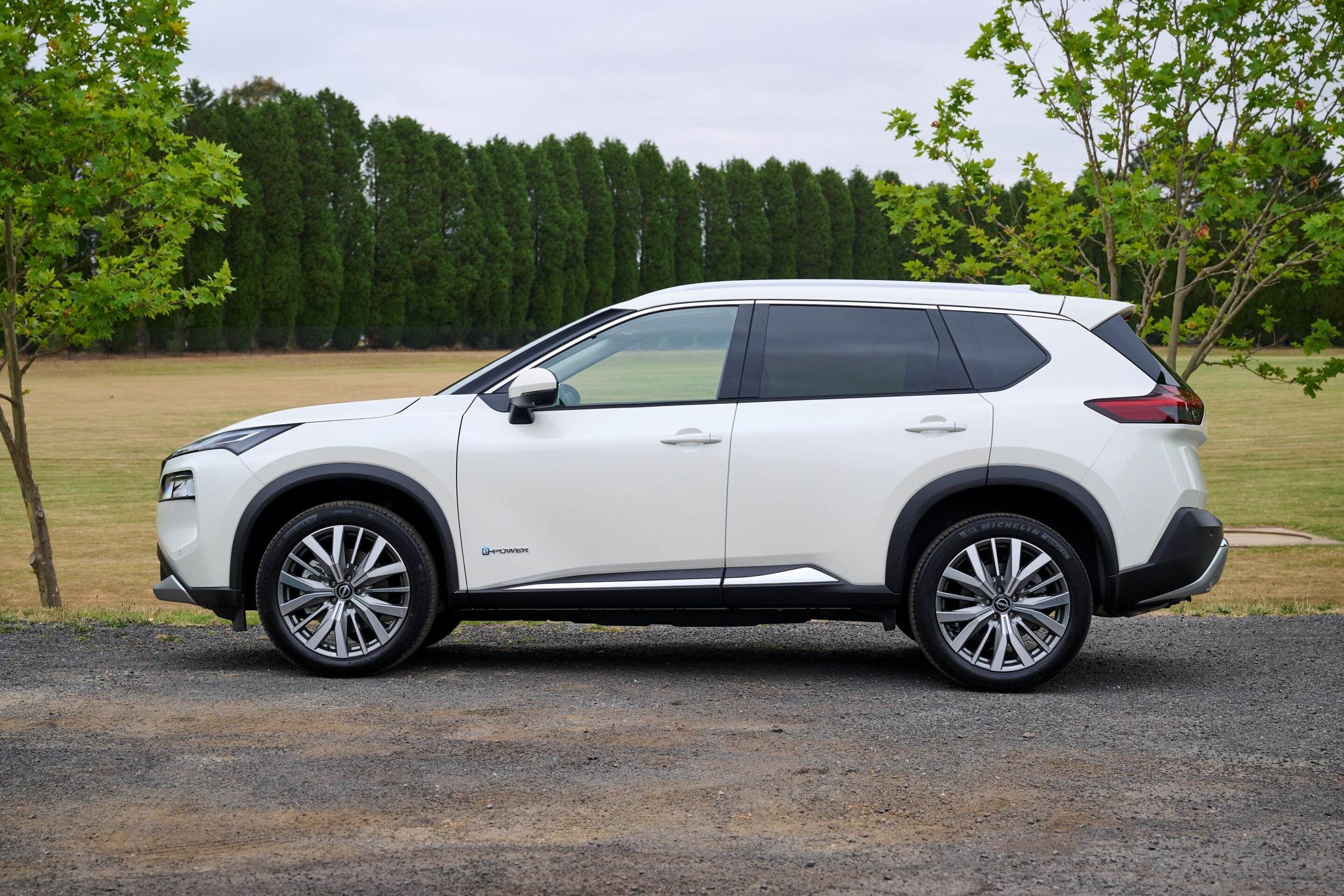
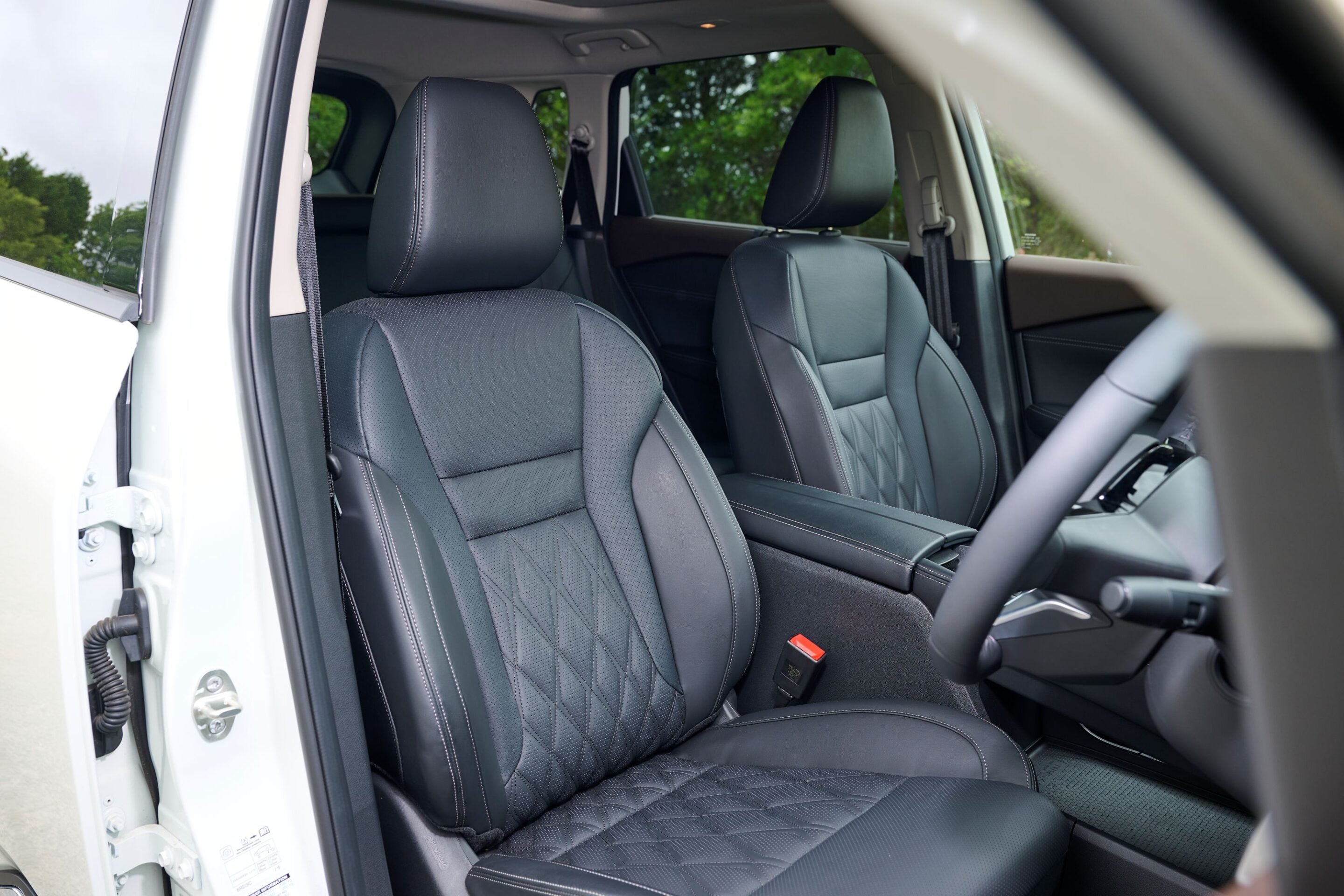
The 19-inch rims and sporty tyres mean the X-Trail doesn’t waft over imperfections, but it doesn’t crash over them either. Wheels reckons it strikes a neat balance between bump absorption and handling, and while the intended driver won’t hook in too often, you can if you want to. While it can be firm over really nasty surfaces, it’s never uncomfortable or harsh.
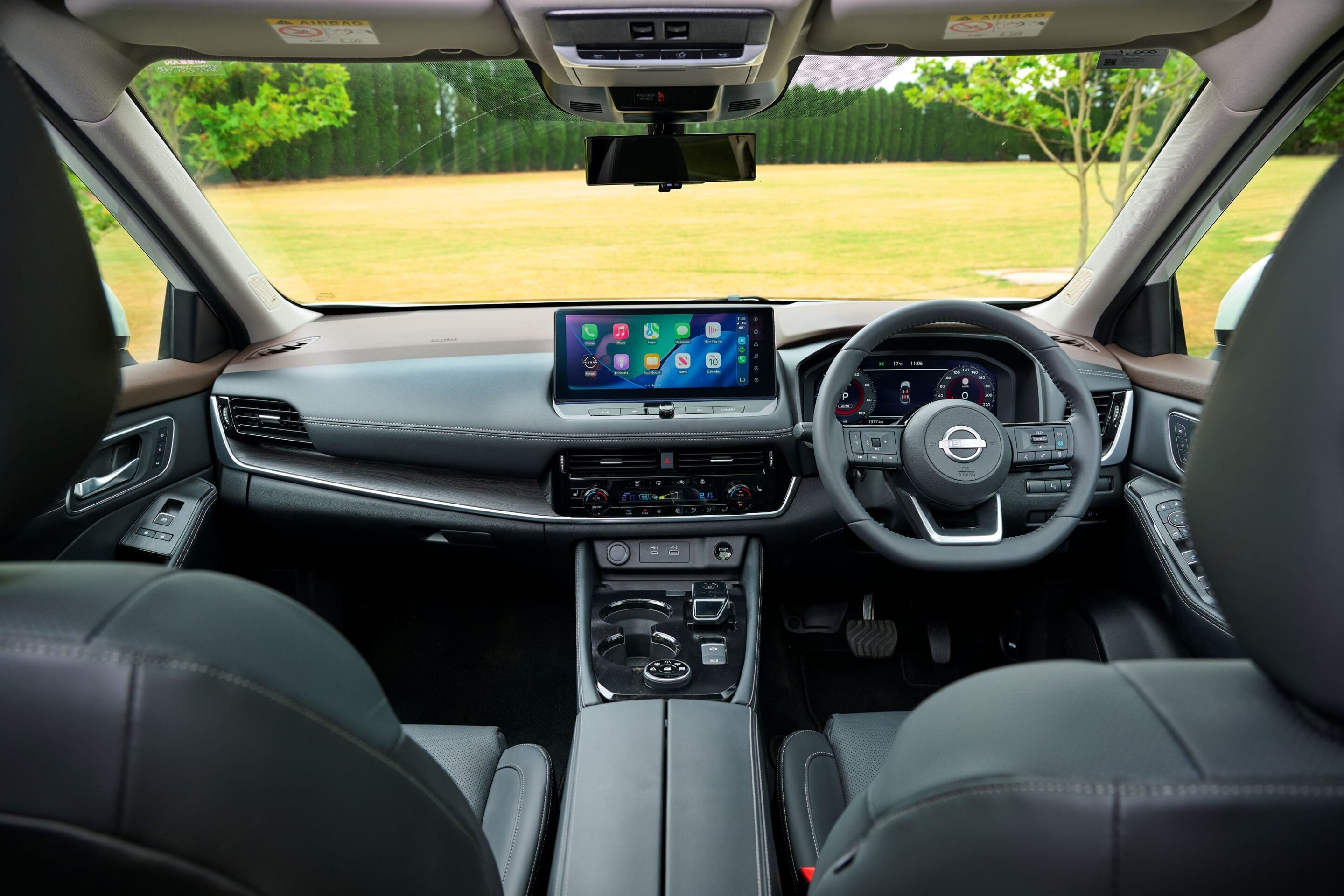
Inside the cabin the X-Trail feels very much like a regular car, and very much like any other 2026 model Nissan. We found the cabled smartphone connection worked well on test, with the screen nicely positioned atop the centre of the dash and the controls working as you’d expect. It’s not as crisp or as large as the Model Y’s, but it doesn’t need to be either. That’s partly because the driver also gets a much more regular-looking gauge screen that delivers all the information we’d rather see Tesla cater to. A conventional speedo readout right in front of the driver, makes more sense than a tiny display in the corner of the centre screen.
You don’t really need to learn anything new to live with the X-Trail e-Power. The infotainment screen displays the information you’ll want to look at if you want to see what the charge system is doing. Otherwise, simply fill the tank and get driving. That’s what will most appeal about this somewhat left-field offering.
3
Wheels enjoyed a week testing with the X-Trail. Its only real negative is the fuel consumption, which isn’t frugal enough to counter the MG HS Hybrid. But, if you’re thinking about an EV and whether the grass is indeed greener, the X-Trail is the safest way to do it.
2026 MG HS Hybrid+
1
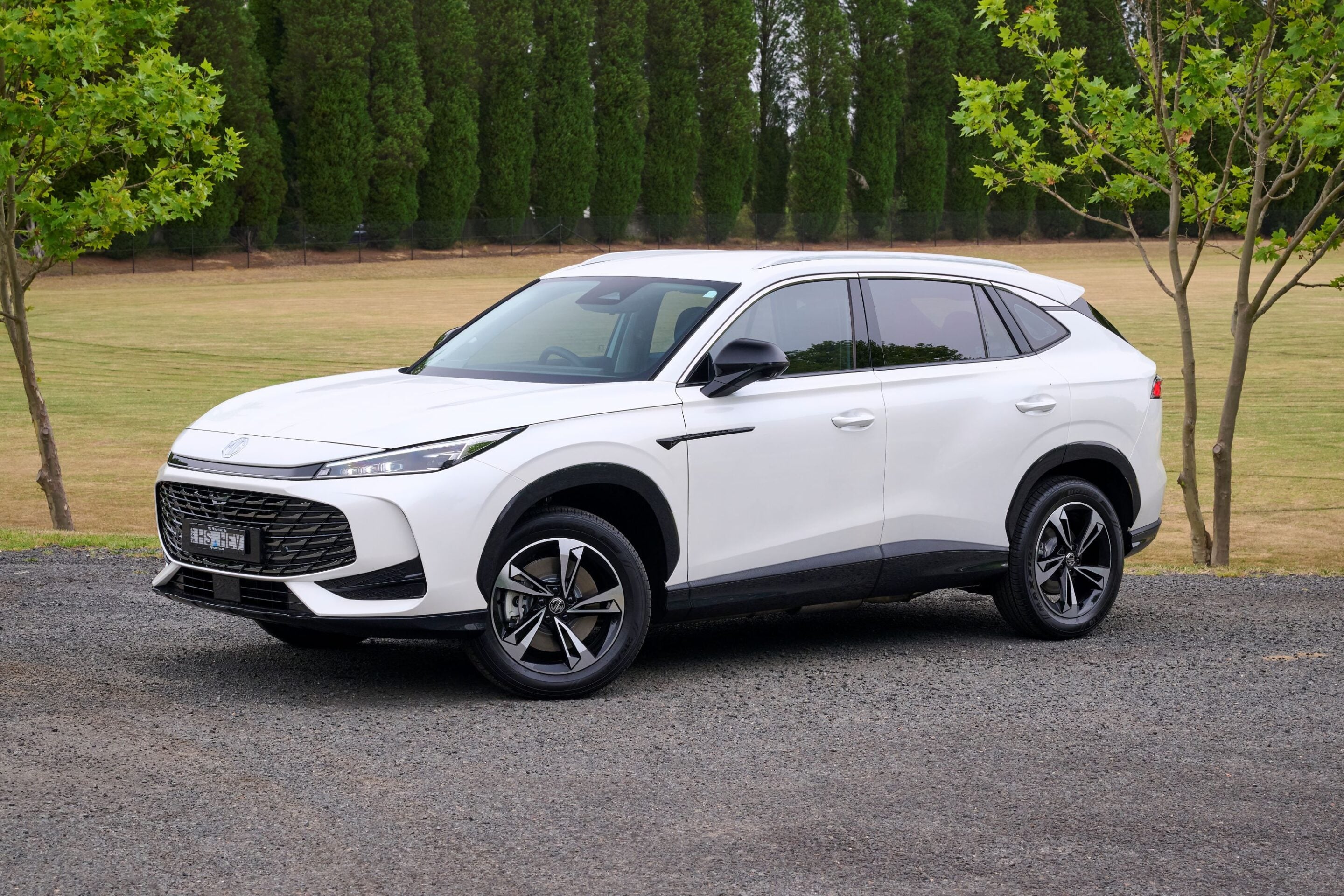
This new medium SUV from MG surprised Wheels testers from the minute we experienced it at our
recent COTY judging week. You’d scarcely believe it was related to the previous model if you drove them back-to-back, such is the leap forward in build quality, engineering and execution.
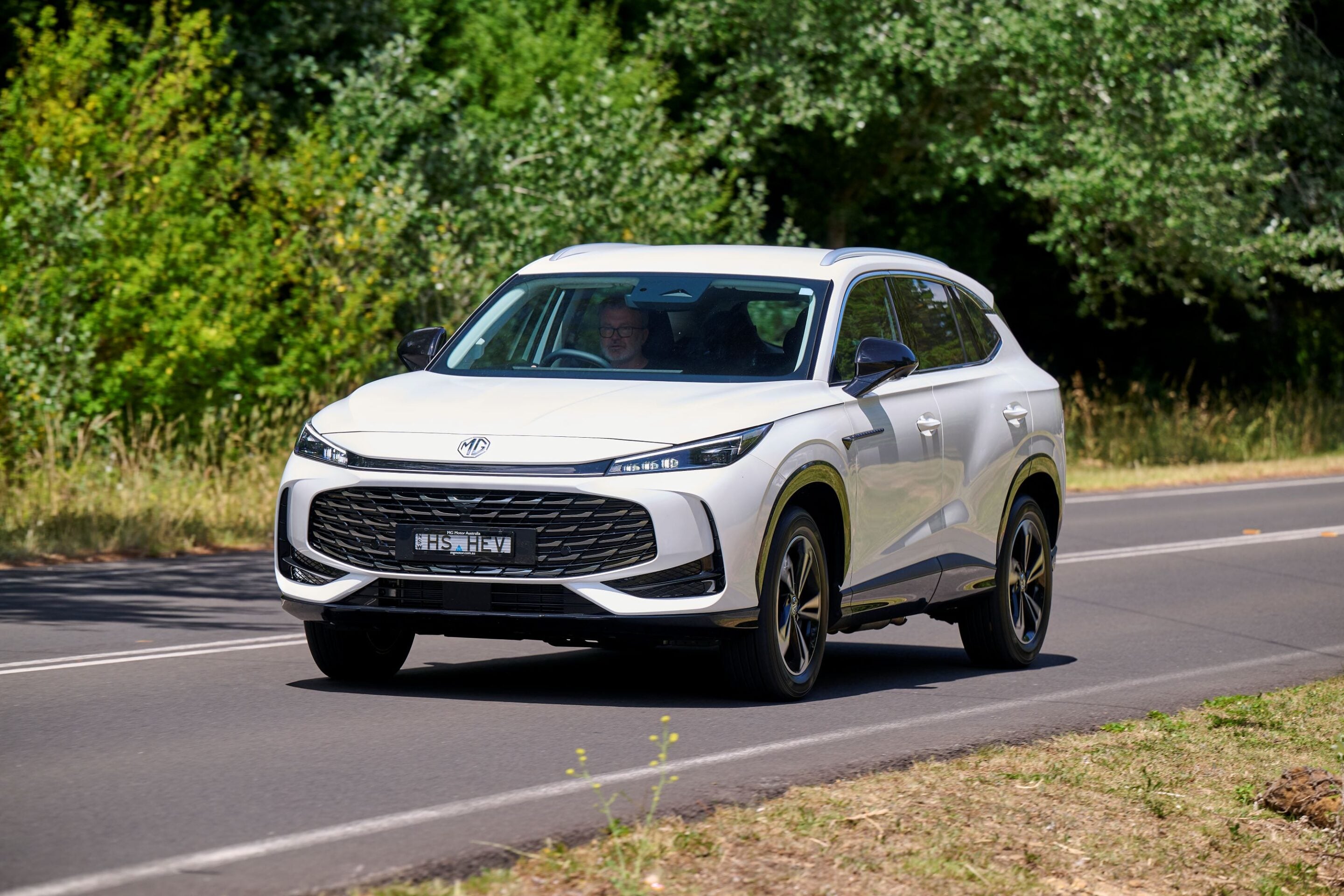
MG calls this model Hybrid+ and from the outset, it promises to be the most ‘normal’ driving experience of this triumvirate. We didn’t expect it to be as efficient as it was, though. Already, if the hybrid system is well engineered, you can expect a near 50 per cent fuel use drop over an equivalent non-hybrid vehicle, but a rock solid 5.8L/100km across a week of testing is unbelievably impressive.
Where the X-Trail demands only a change in mindset in regard to the relationship between what the wheels are doing and the sound the petrol generator engine is making, the MG HS asks for nothing – simply get in and drive.
That’s the beauty of a quality hybrid system. There’s a 1.5-litre, petrol four-cylinder, with combined outputs of 165kW and 340Nm and the fuel claim is 5.2L/100km. You’ll see as low as 4.0L/100km on the live readout when you’re cruising, but we didn’t even try to be efficient in any of the three tested vehicles, mimicking the way the average owner would drive.
1
You can get into an HS Hybrid for as little as $40,990 drive-away for the Excite we’re testing here, while the Essence is $44,990 drive-away. Wheels doesn’t want to be flippant and claim that 41 grand isn’t a lot of money, it is, but you do get a lot of SUV for that price. Like the X-Trail, the HS Hybrid
requires 95 RON as a minimum.
Interestingly, HS Hybrid comes in FWD form only, with no AWD model available. Do you really need AWD in this segment? No, especially if you do all your driving on sealed surfaces. MG quotes a tare weight of 1656kg, meaning the HS is significantly lighter on its tyres than either the Nissan or Tesla. The battery pack is a 1.83kWh unit, and it’s water-cooled, which according to MG aids efficiency and ensures longevity. Time will tell on that front.
As we’ve seen with MGs previously, some of the driver aids can be overly enthusiastic, but not in a manic, make-you-want-to-scream kind of way. Rather, you notice them at work, and might initially be annoyed by them, but they quickly become part of the drive experience. There’s some polish to the cabin execution, and it’s comfortable, insulated and user friendly. Wheels would prefer more physical buttons and controls for things like the audio volume, but there’s not much that grates inside the HS cabin.
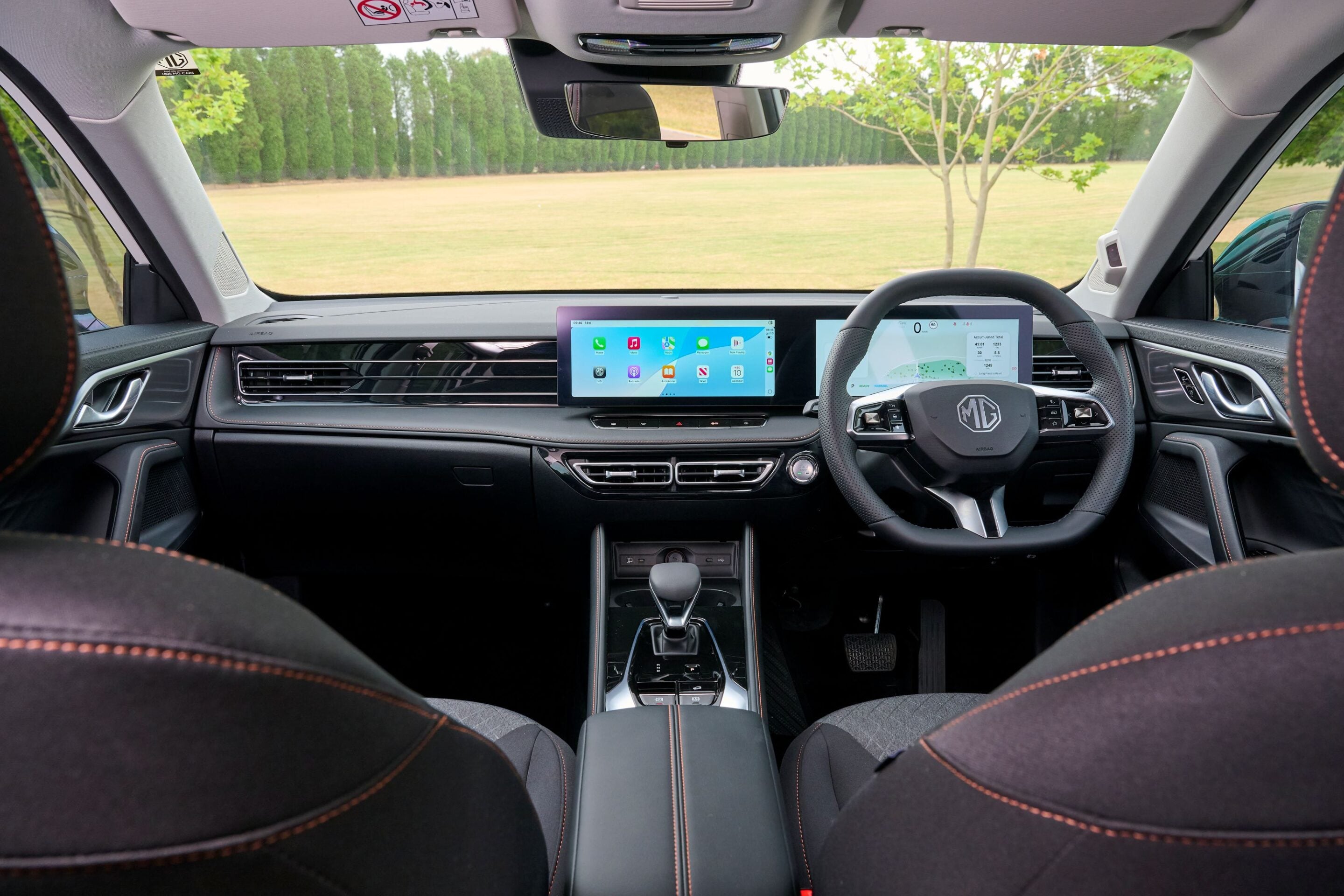
2
MG’s infotainment system and screen worked well for us on test, and the smartphone mirroring was reliable. The screens are clear, easy to read, and easy to decipher. Like Nissan, MG can’t quite match the crisp, tech-guru feel of the Tesla’s system, but it doesn’t feel out of date either. There’s just something about the Tesla’s screen that feels sharper, whether that’s truly the case or not.
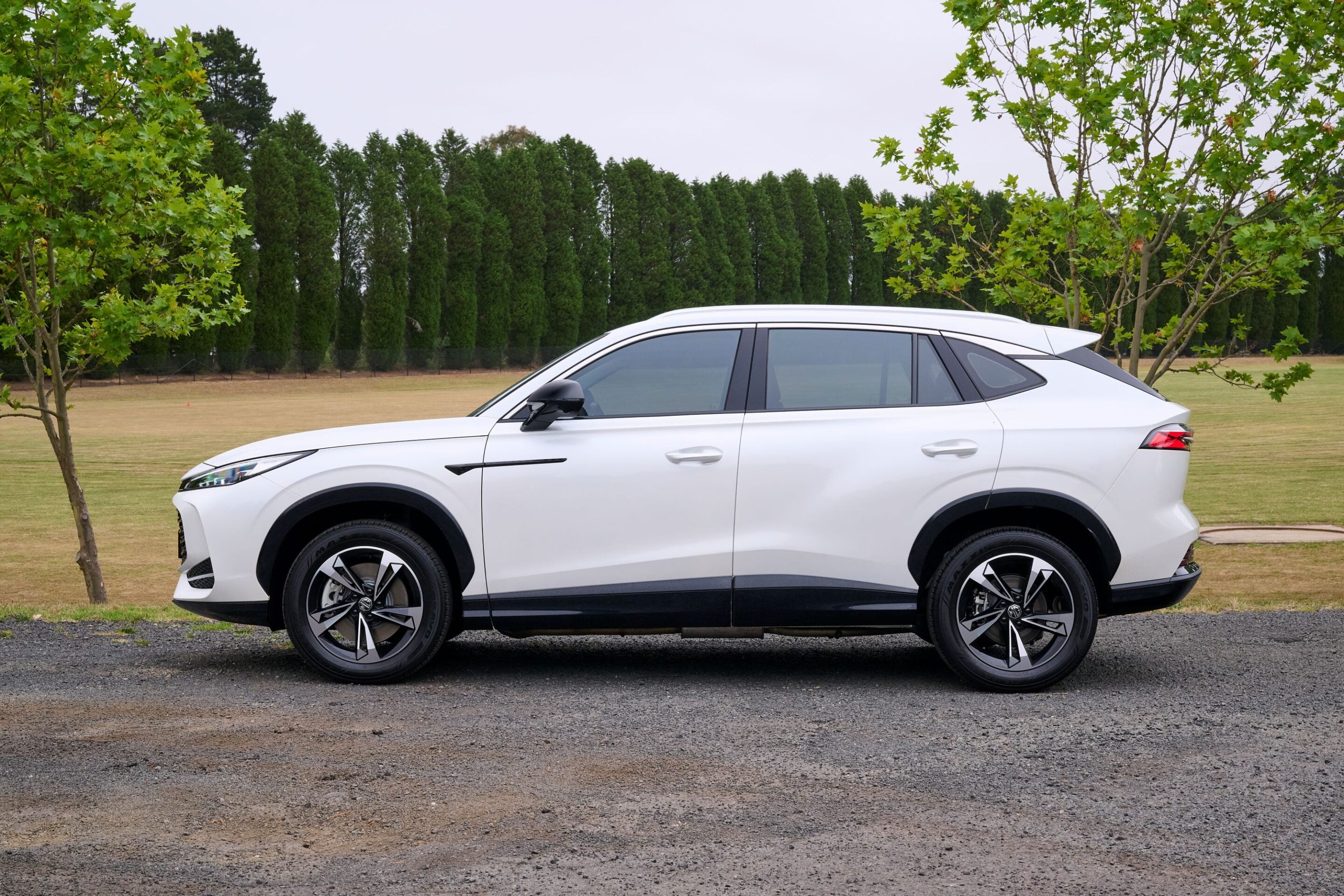
Where the HS excels is in the very environment that Wheels assessed it in – that is, exactly where the average Australian medium or large SUV buyer will use it. HS is quiet, refined, with excellent bump absorption and the suspension settles quickly even over the nastiest of road surfaces. Even longer, corrugated sections off-road, don’t unsettle the MG’s chassis. It doesn’t matter whether you’re negotiating heavy traffic in town at crawling speed, or running down the freeway at 110km/h, the cabin of the HS is a pleasant place to be, even if you’re transporting four adults.
The brakes, steering, all-round balance and feedback are light years ahead of the old model, proving the chops of this new one, which can easily take the fight to the best in class.
MG HS Hybrid gets a 55-litre fuel tank, which when used to factor in our test average, delivers an 898km cruising range, with a 50km safety margin. That’s the longest range on test here by some margin of course, but it also doesn’t require one iota of mental transition to drive either. Like any good hybrid system, the HS only requires you to drive as you normally would.
3
And, that’s the most important string to the HS’s bow. Simply the fact that you won’t have to do anything different if you do buy one. Where both other combatants here require a shift in thinking to some degree, the HS Hybrid asks you to do nothing you don’t already do. We’d like the safety aids to be less intrusive, and the touchscreen to be a little sharper in both appearance and response, but there’s nothing else to dislike about the MG HS Hybrid+, and it’s a vastly superior SUV to the model it replaces.
The Verdict
If you’re a dyed in the wool EV fan, the Tesla Model Y wins this comparison and easily. Even more so in Performance guise. It’s fast, furious, and every bit the consummate electric vehicle. And, shortcomings aside, it’s a good thing to live with, too, something that can’t be said of every electric vehicle on the market.
Nissan’s take on the way forward is an interesting one. As you’ve already read, it isn’t quite efficient enough to justify the technical complexity beneath the skin, despite offering an electric experience without the associated stress. It’s a Nissan, but not as you’ve known them, and it will absolutely work for those of you wanting to hedge your bets. But on test, our average fuel usage of 6.6L/100km simply can’t compete with the MG’s frugal 5.8L/100km, especially when you take into account the effective mechanical complexity beneath the skin.
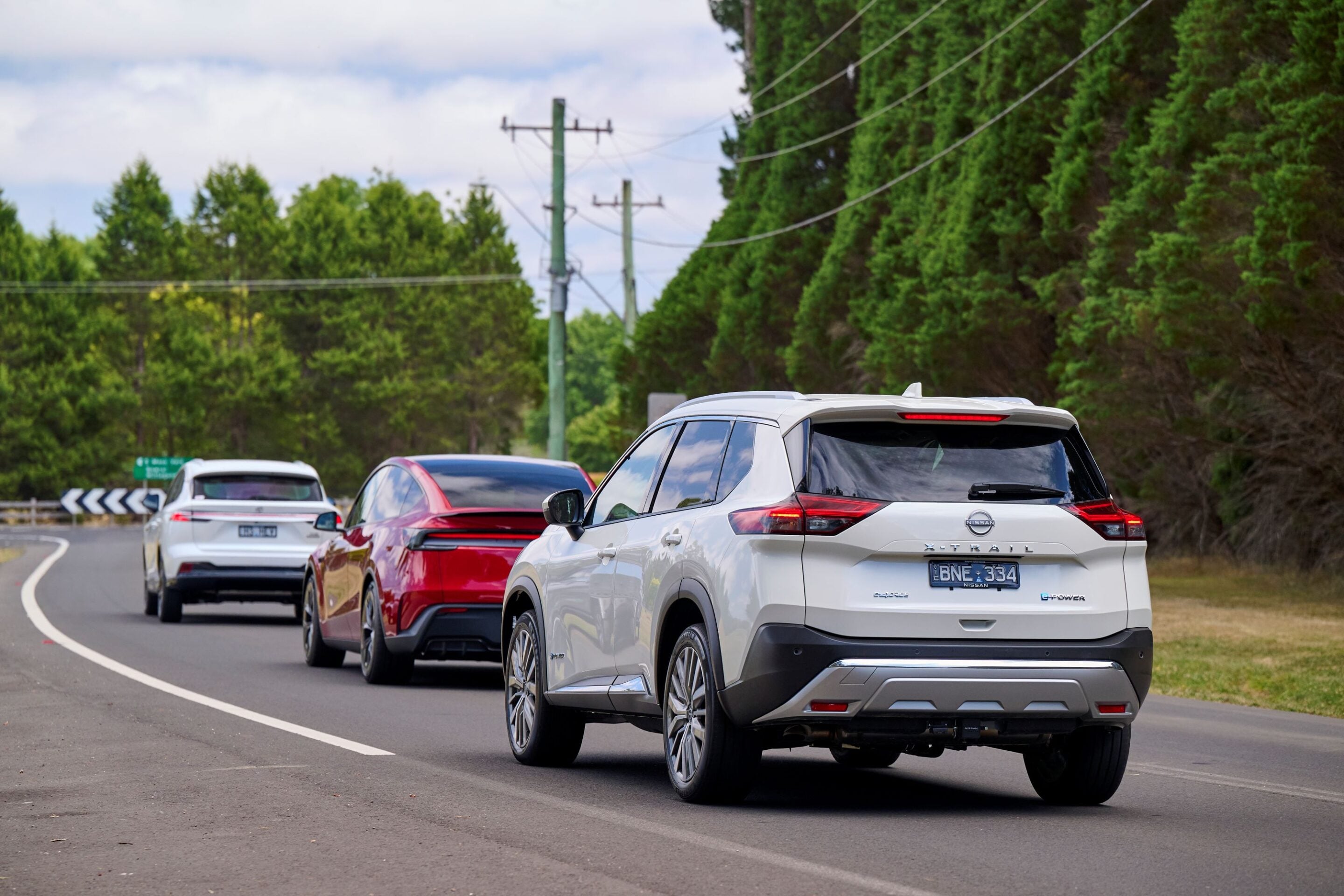
1
In the mind of Wheels then, the theory put forward by the Toyota boss rings true – that is, the benefit of a proper hybrid system is hard to argue. The MG HS is efficient, drives enjoyably whether you’re in town or on a road trip, and doesn’t require you to change your thinking or approach in any way.
Hybrids are many and varied now, and they aren’t all equal, but a medium SUV that uses 5.8L/100km on test will be music to the ears of the budget-conscious Australian new car buyer. Medium and large SUVs, meanwhile, are square in the sights of the family buyer. All three accommodate the family in comfort and safety, and all three will feel like you’ve spent your money smartly. Only one can win this comparison though, and that’s the 2026 MG HS Hybrid+.
Specs
1
| Model | MG HS Hybrid+ Excite |
|---|---|
| Price | $40,990 drive-away |
| Drivetrain | 1.5-litre, four-cylinder petrol |
| Transmission | Two-speed hybrid transmission |
| Power | 165kW |
| Torque | 340Nm |
| Combined fuel usage | 5.2L/100km (claimed) |
| Tested fuel usage | 5.8L/100km |
| Battery capacity | 1.83kWh |
| Dimensions (L/W/H/W-B) | 4670/1890/1663/2765mm |
| Tare weight | 1656kg |
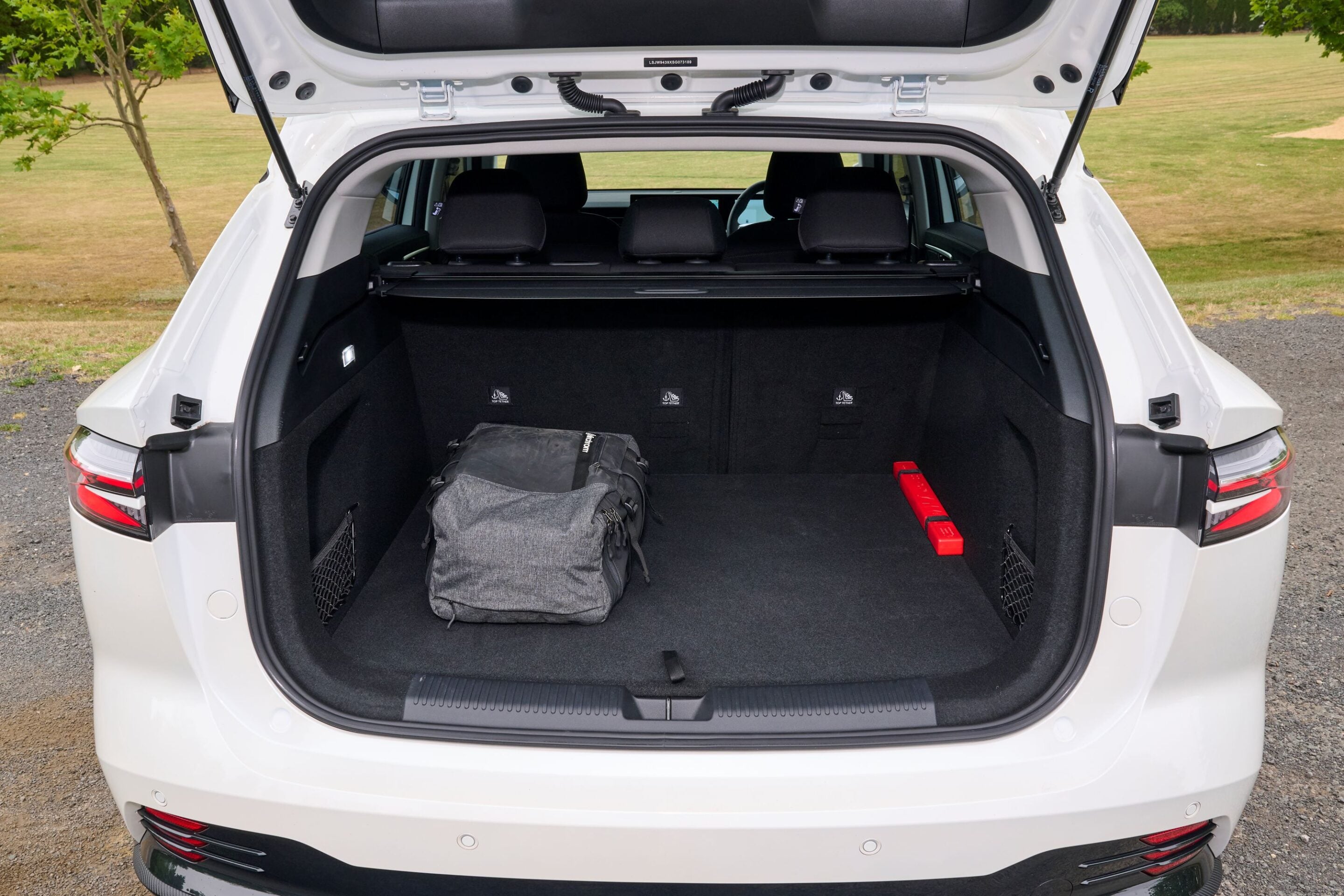
| Boot space | 507L to 1484L |
| Warranty | 7yr/unlimited km (standard), 10yr/250,000km (conditional) |
| Overall rating | 8.0/10 |
1
| Model | Tesla Model Y Performance |
|---|---|
| Price | $89,400 before on-road costs |
| Drivetrain | Dual electric motors |
| Transmission | Single-speed |
| Power | 343kW (claimed) |
| Torque | Not quoted |
| Combined energy efficiency | 16.2kWh/100km to 16.5kWh/100km (estimated) |
| Tested energy efficiency | 17.1kWh/100km |
| Battery capacity | 82kWh |
| Dimensions (L/W/H/W-B) | 4796/1982/1611/2890mm |
| Tare weight | 2033kg |
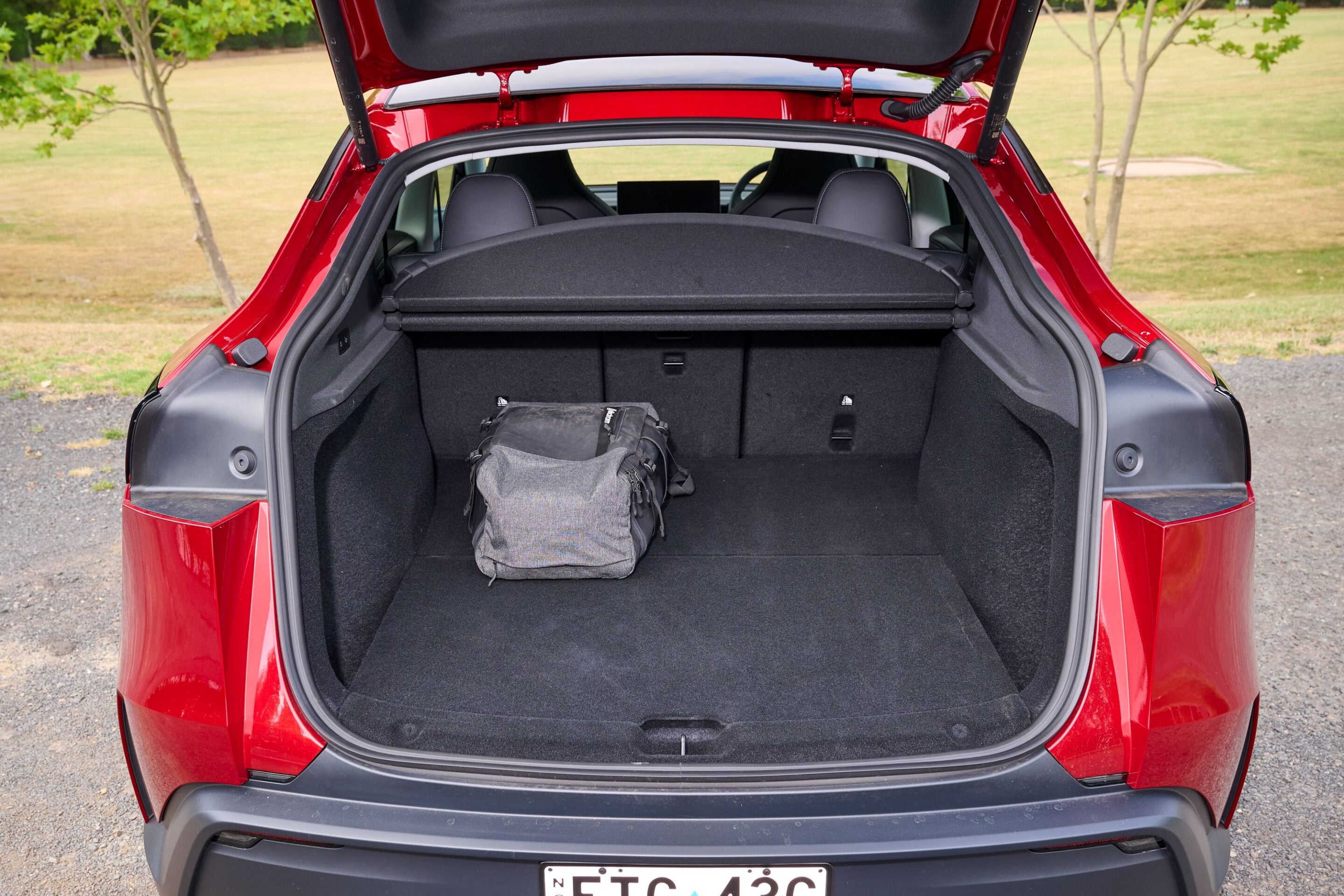
| Boot space | 854L to 2158L |
| Warranty | 5yr/unlimited km |
| Overall rating | 7.5/10 |
1
| Model | Nissan X-Trail e-Power Ti-L |
|---|---|
| Price | $56,990 before on-road costs |
| Drivetrain | 1.5L petrol generator, twin electric motors |
| Transmission | Single-speed |
| Power | 150kW |
| Torque | 330Nm |
| Combined fuel usage | 6.1L/100km (claimed) |
| Tested fuel usage | 6.6L/100km |
| Battery capacity | 2.1kWh |
| Dimensions (L/W/H/W-B) | 4680/1840m/1725/2705mm |
| Kerb weight | 1911kg |
| Boot space | 575L to 1396L |
| Warranty | 5yr/unlimited km |
| Overall rating | 7.0/10 |
This article first appeared in the February 2026 issue of Wheels. Subscribe here and gain access to 12 issues for $109 plus online access to every Wheels issue since 1953.
Follow WhichCar/Wheels on Google
Click the button below to make WhichCar by Wheels a preferred source for your news.

We recommend
-
 News
News2026 Nissan X-Trail: Details revealed for the updated version of the popular mid-sizer
The updated Nissan X-Trail has arrived in Australia with revised styling, new features across the range and longer service intervals.
-
 News
NewsMG HS Hybrid+: Spec details added to pricing reveal ahead of coming release
Pricing for MG HS Hybrid+ has undercut the big-selling Toyota RAV4 hybrid, and is due on sale in Australia in September.
-
 Reviews
Tesla Model Y Performance review: If only all mid-life facelifts were this good
The Performance variant of the hugely successful Tesla Model Y has landed in Australia with even more power and attitude. Will it appeal to Tesla fans and the Tesla-curious?