
Reviews


Gallery 1
7.8
/10
Score
Score breakdown
8.0
Safety, value and features
8.0
Comfort and space
7.0
Engine and gearbox
7.2
Ride and handling
8.5
Technology
Things we like
- Excellent fuel economy and electric energy consumption
- Spacious and well-executed cabin
- Effortless, near silent driving experience in EV mode
Not so much
- Silly side-steps get in the way
- Lack of spare wheel of any kind
- Tetchy safety systems
Initially, plug-in hybrids (PHEV) copped plenty of stick in this market. Motoring journos lined up to pan them, calling them half-baked, half-pregnant, and any other half-cocked criticism you could conjure. Most ignored the reality of the average driver, which is a total daily run of less than 40km. That’s what the stats tell us, at least. But, even in their earliest phase, with a 30-40km electric range, a PHEV could get you to work without using fuel, leaving the petrol tank for the run home.
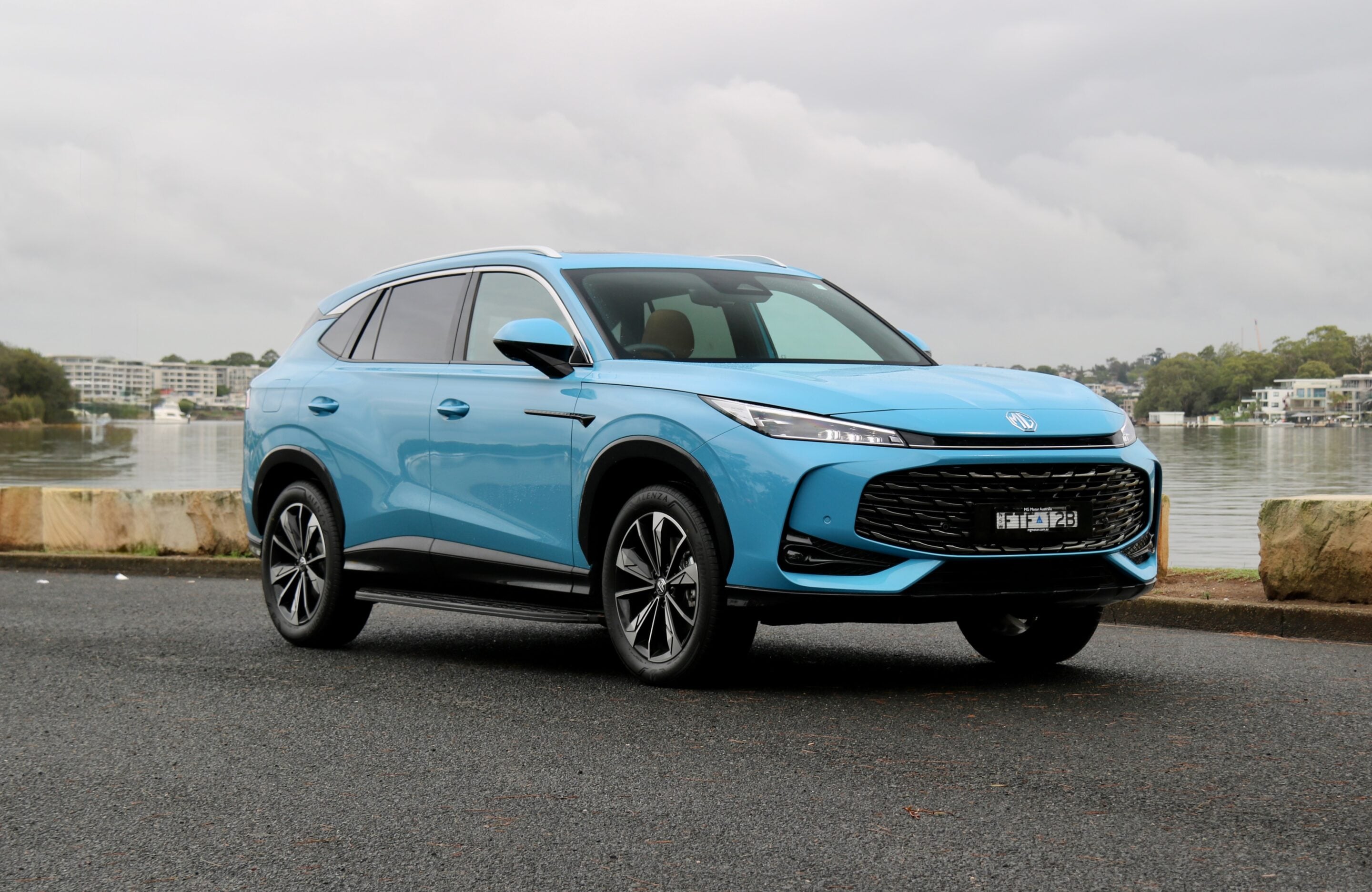
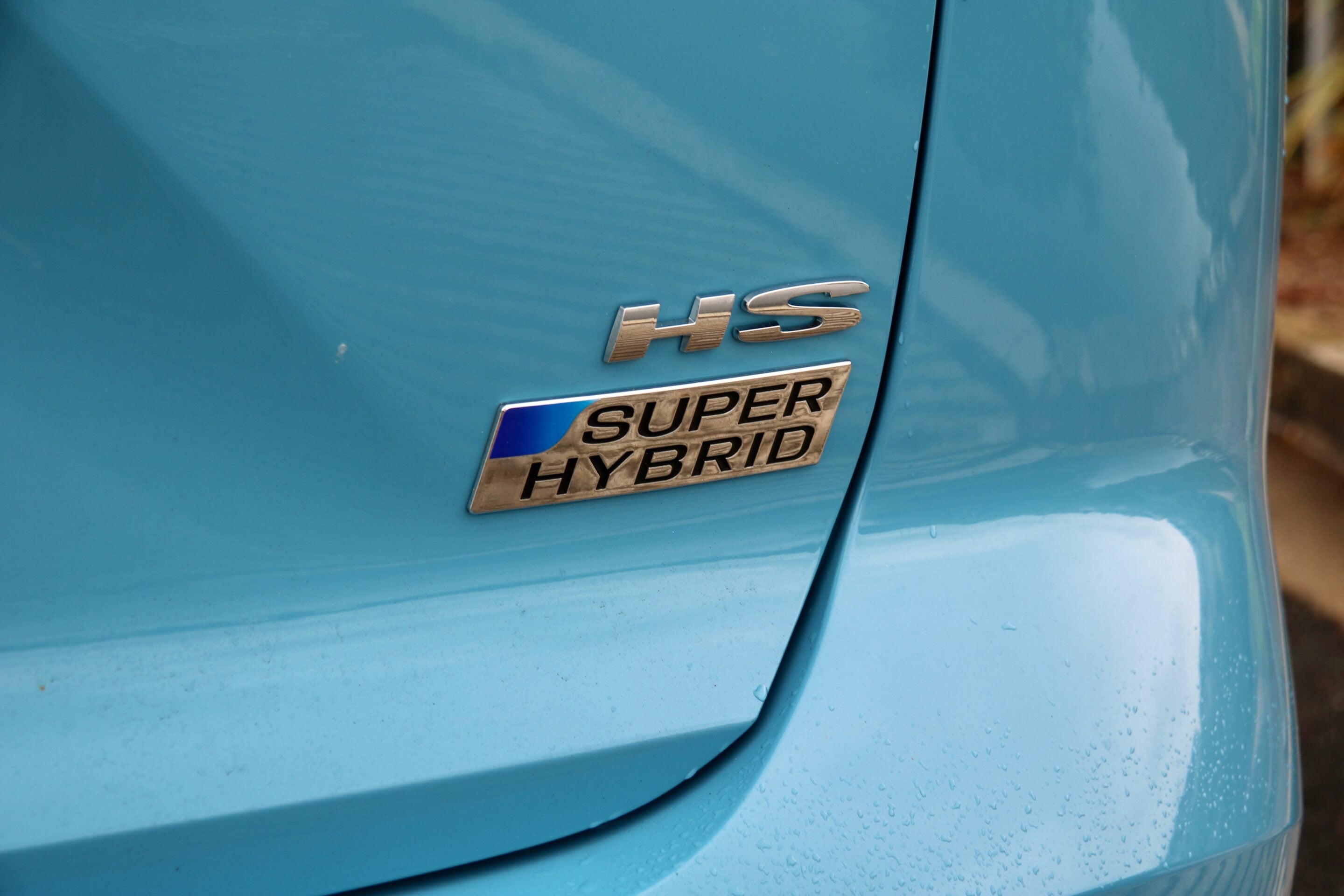
Fast forward to 2026, and the MG HS Super Hybrid now offers a claimed 120km electric range on the WLTP cycle, by way of a 24.7kW/h battery pack. There’s a 1.5-litre, four-cylinder turbocharged petrol engine and two electric motors – one drives the HS, one is used for regeneration. MG claims 220kW and 350Nm as combined peak outputs, which is robust in the medium SUV segment.
Further, MG claims a total range beyond 1000km if you deplete the battery and empty the fuel tank – which is good news for one-car families, or those of you who like touring. Our tester was knocking on the door of 1000km on the combined trip indicator. Over that time, it had averaged 30.1km/h, and used 2.8L/100km, and 7.5kWh/100km. Wheels is often asked about real world usage as opposed to claimed usage and that mix of battery and petrol usage is as real world as it gets. And keeping in mind, this HS would have been charged regularly during the test phase.
2
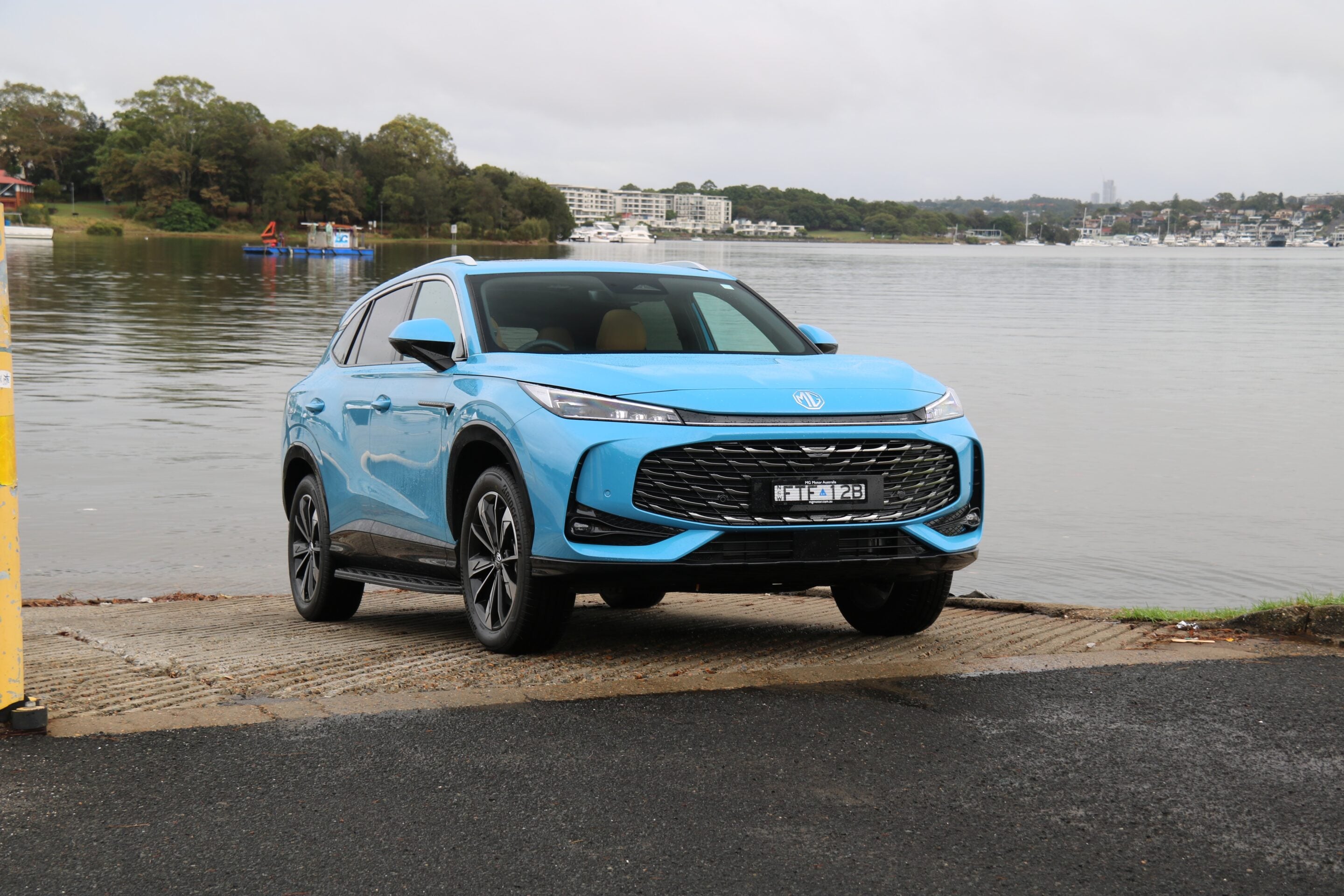
Twice on test, we achieved 110km from a full charge, without driving any differently than we would either an ICE vehicle, or a full EV – genuinely impressive. MG quotes 18kW/h/100km electric use, which if you take into account the usable 23.2kW/h battery capacity, gets you 129km range. Anywhere around the 110km mark that Wheels achieved, makes the HS Super Hybrid effective for the average driver.
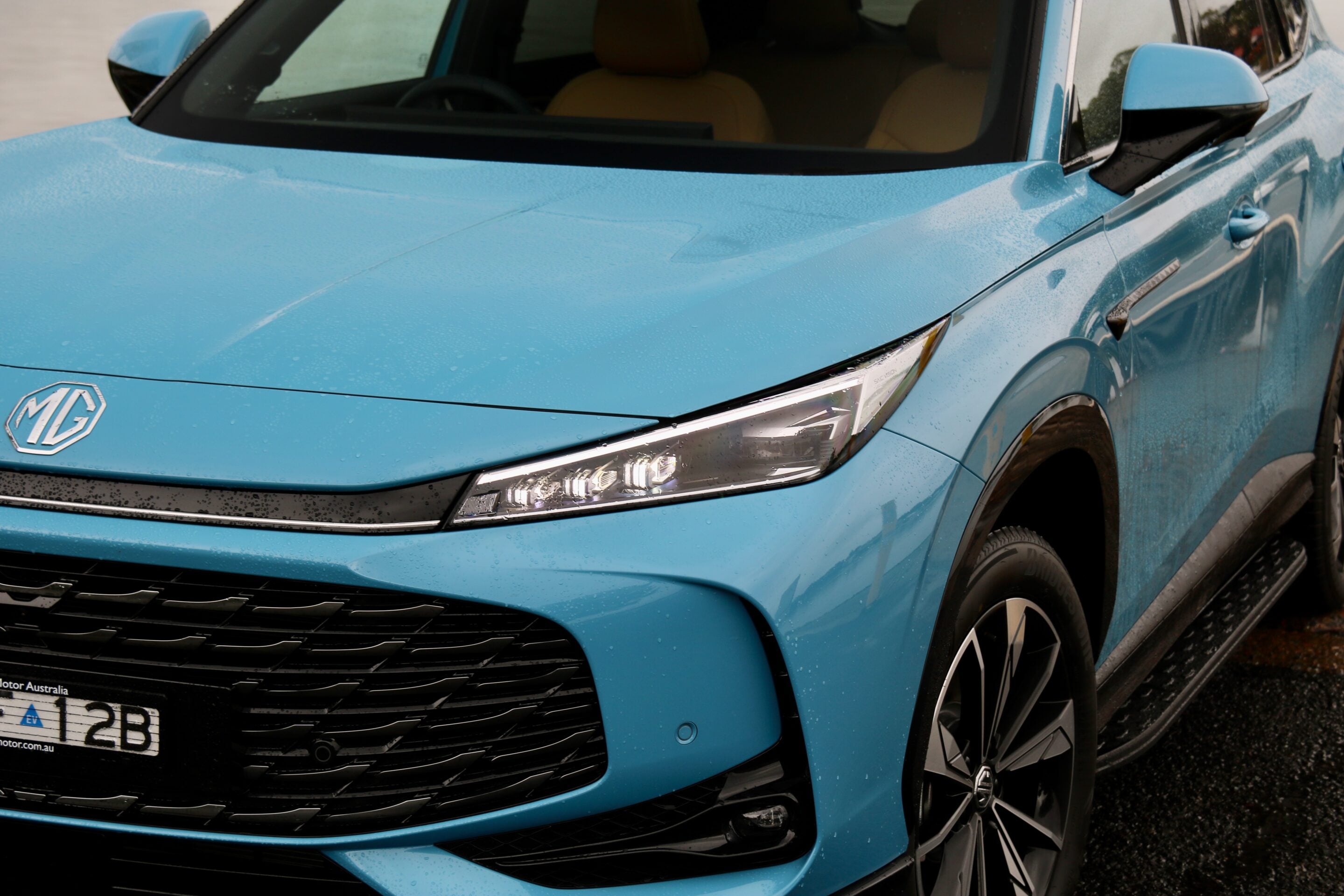
Straight out of the gate, negatives are few, but let’s get them out of the way. Some of the electronic safety aids are a pain – as per the current Chinese-built vehicle brief – and there’s no spare tyre. We’re of the opinion that no car should be sold in this market without a space saver as a minimum.
The electronics are less of an issue, given the fact they can be tweaked and updated to improve their functionality. The speed limit warning was indicating 110km/h for example in a 50km/h zone, but would then start chiming annoyingly at 1km/h over the indicated limit at any given time. Lane departure can also grate.
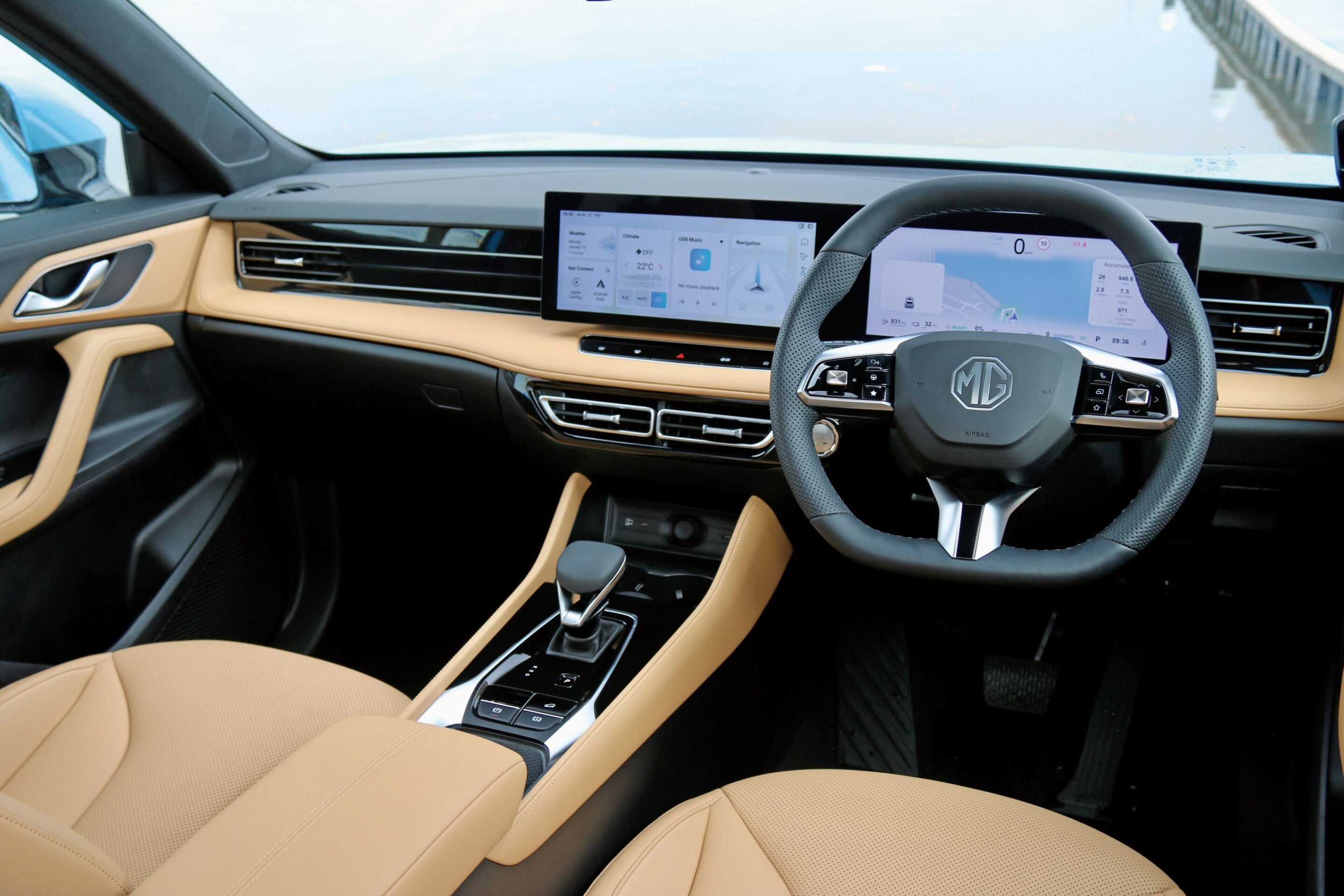
The model grade Wheels is driving this month is the Essence, which is packed with standard equipment for the asking price of $50,990 drive away at the time of testing. Standard features include a panoramic glass roof, dual-zone climate control, faux leather trim, electric driver’s seat with lumbar adjustment and memory function, electric front passenger seat, heated front seats, eight-speaker audio system, 360-degree camera and wireless charging.
5
The pretend leather trim is actually quite comfortable and there’s plenty of space in the second row even if the front seat occupants are taller than six-foot. The screens are clear and easy to navigate, but we’d like their response to be a little snappier, and it would be more practical to not have to access so many features – like AC – through them. The other factor we noticed, as reported by others, was an echo on phone calls – and that happened whether we used the wireless or wired smartphone connection.
In EV mode, the HS is like most other electric vehicles to drive. It’s not as punchy in an outright sense as a regular EV, but it delivers that effortless, near silent forward urge that makes driving an EV so enjoyable. The combined power and torque figures might indicate that it’s fast, but it doesn’t feel as sharp as those stats might make you think, given this system is tuned more toward efficiency.
Steering, braking and general drivability are all what Wheels would expect of a medium SUV, which is not quite that of a well-sorted hatchback, but not that of a large SUV or dual-cab either.
The MG HS Super Hybrid simply does what we expect it to do. It’s more affordable than a full EV and more expensive than a regular hybrid, but it does give you the electric driving experience without the headaches.
2
Specs
| Price | $50,990 (drive-away) |
|---|---|
| EV Range | 120km (WLTP) |
| Engine | 1.5-litre turbocharged petrol four-cylinder |
| Transmission | Two-speed hybrid transmission |
| Electric motors | Two (one driving, one regeneration) |
| Battery capacity | 24.7kWh (23.2kWh usable) |
| Power | 220kW (combined) |
| Torque | 350Nm (combined) |
| Fuel type/tank size | 95 RON premium unleaded/55L |
| Weight | 1870kg (tare) |
| Dimensions L/W/H/W-B | 4670/1890/1663/2765mm |
| Warranty | 7r/unlimited km (standard), 10-year/250,000km (conditional) |
| On sale | Now |
1
This article first appeared in the February 2026 issue of Wheels. Subscribe here and gain access to 12 issues for $109 plus online access to every Wheels issue since 1953.
7.8
/10
Score
Score breakdown
8.0
Safety, value and features
8.0
Comfort and space
7.0
Engine and gearbox
7.2
Ride and handling
8.5
Technology
Things we like
- Excellent fuel economy and electric energy consumption
- Spacious and well-executed cabin
- Effortless, near silent driving experience in EV mode
Not so much
- Silly side-steps get in the way
- Lack of spare wheel of any kind
- Tetchy safety systems
Follow WhichCar/Wheels on Google
Click the button below to make WhichCar by Wheels a preferred source for your news.

We recommend
-
 Features
The cheapest hybrid SUVs in Australia – ranked
Searching for a cheap hybrid SUV? WhichCar by Wheels has the definite top 10 list for under $40,000.
-
 Features
Which are the most practical small SUVs under $40,000?
Small but perfectly formed – it's a phrase that applies to these 10 small SUV models which, despite their size, are also beautifully practical.
-
 COTY
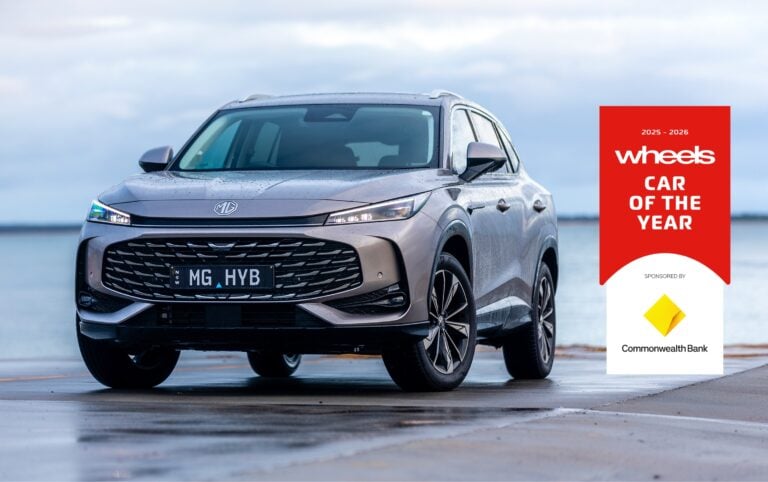
COTY2025-26 Wheels Car of the Year finalists, 2ND: MG HS Hybrid+ Essence
MG’s new HS Hybrid delivers unexpected polish, combining refined handling, smooth hybrid performance and impressive value to stand out in Australia’s crowded mid-size SUV field.
