News

Gallery 1
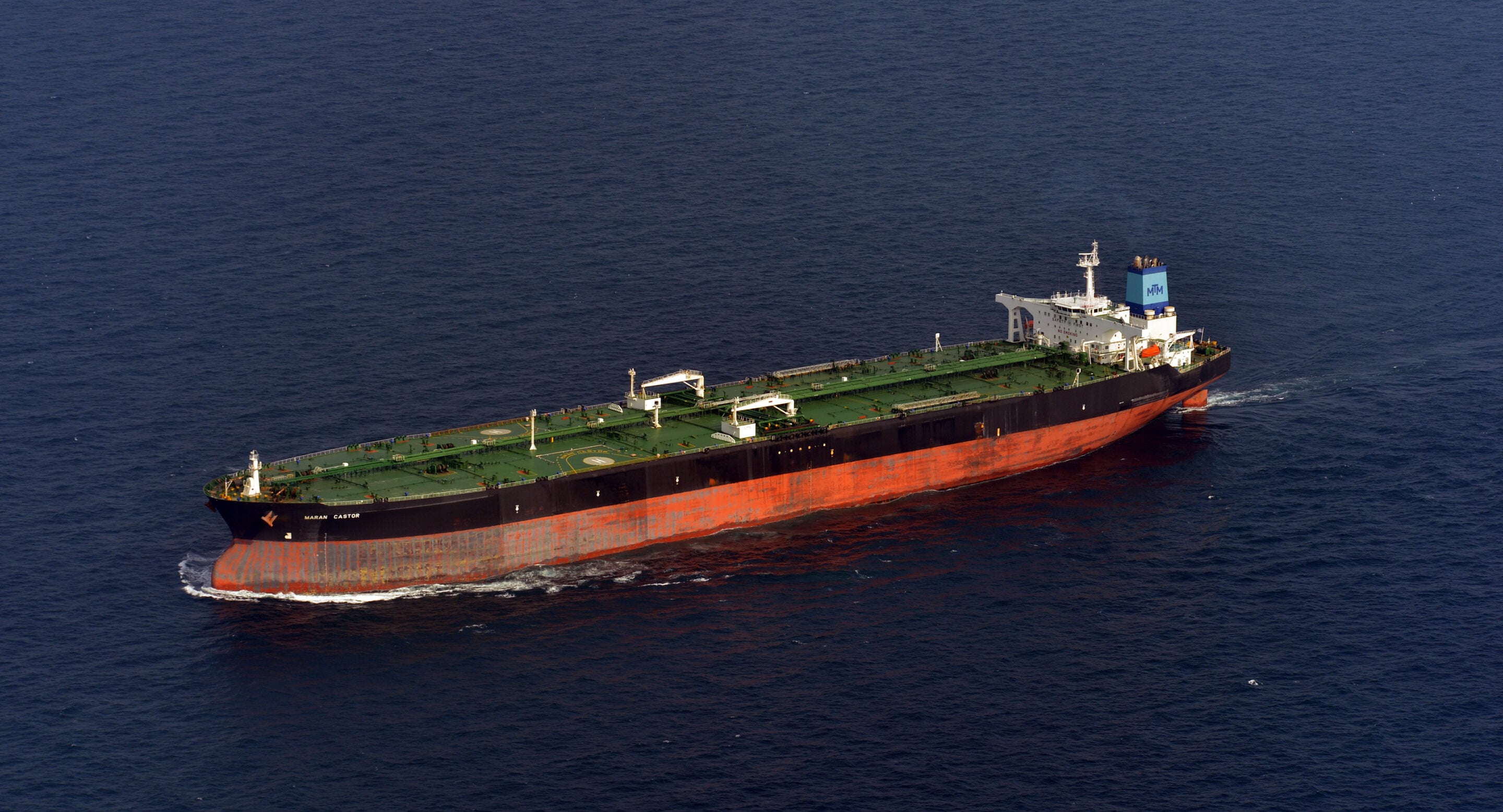
The ongoing conflict in the Middle East has highlighted Australia’s dependence on refined fuel imported from other countries.
As recently as 25 years ago, Australia was producing 98 per cent of its fuel requirements in-house, with eight oil refineries around the country. But six of those eight have since been closed, while the remaining two – Ampol’s Lytton plant in Brisbane and Viva Energy’s refinery in Geelong – remain on life support, heavily dependent on government subsidies to remain open.
That leaves Australia in a precarious situation in these chastened times, with our reliance on imported fuel under the spotlight as the Middle East conflict enters its second month.
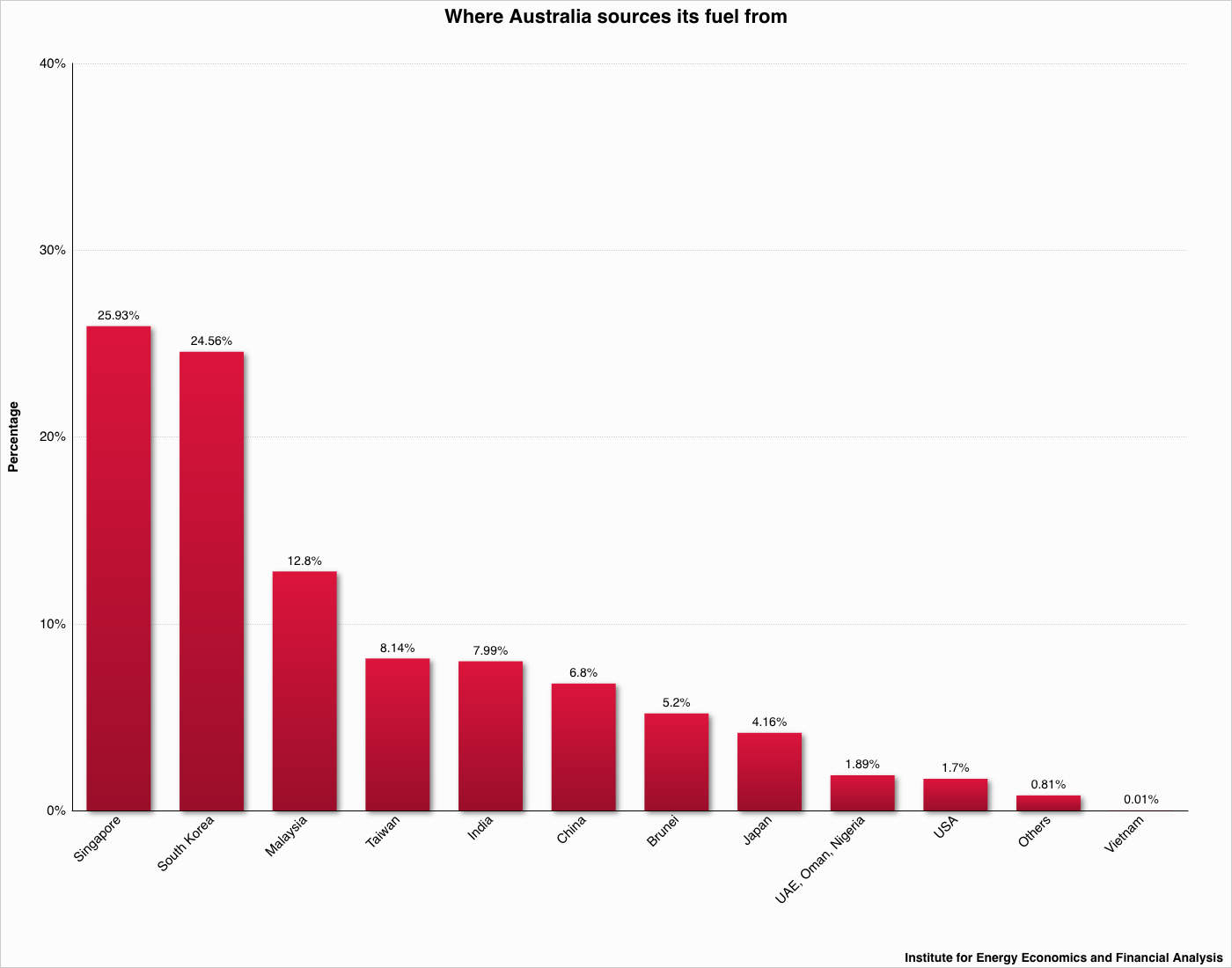
But where exactly do Australia’s fuel imports come from? According to data from the Institute for Energy Economics and Financial Analysis, the bulk of our fuel needs are met by South-East Asian countries with Singapore and South Korea accounting for over 50 per cent of our fuel needs. Malaysia supplies around 13 per cent of our refined fuel followed by Taiwan and India at around eight per cent each.
1
Australia also imports crude oil from other countries – largely from Malaysia (40 per cent) and the US (21 per cent) – despite producing its own to the tune of around 272,000 barrels per day, according to the most recent data from the US Energy Information Agency. But with our daily fuel needs stretching to in excess of 1.1 million barrels, the supply chain for Australia’s fuel needs remains of paramount importance.
So far, the Australian government has reassured Australians that fuel is continuing to flow into the country, revealing earlier this week in a joint statement with Singapore that the Asian nation would continue to “support the flow of essential goods including petroleum oils… and consult each other on any disruptions with ramifications on the trade of energy.”

1
However, Malaysia has sent a warning to its export partners, including Australia, that it would prioritise its own fuel needs ahead of other nations while China has ceased all fuel exports at least until the end of March.
But that steady flow from our trading partners is looking ever more precarious as the conflict in the Middle East drags on, with most relying heavily on fuel from the war-ravaged region. Singapore, our largest supplier, sources around 66 per cent of its crude from the region, oil usually shipped through the Strait of Hormuz which is effectively closed for now, leaving it, and in turn Australia, in a precarious situation.
Follow WhichCar/Wheels on Google
Click the button below to make WhichCar by Wheels a preferred source for your news.

We recommend
-
 Classic Wheels
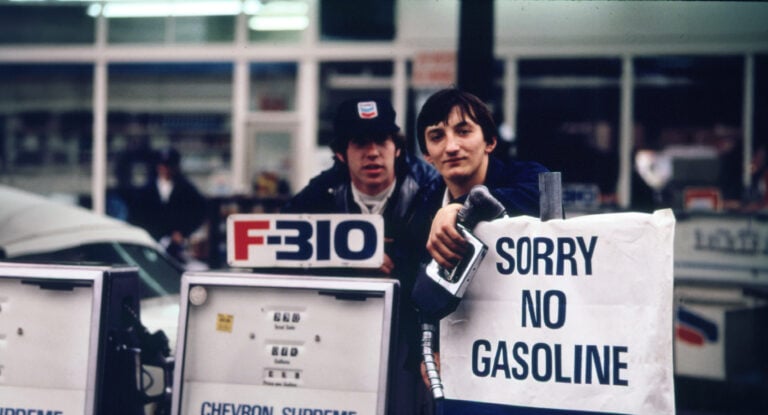
From the Wheels archive: The 1974 oil crisis – when driving on Sunday was banned and Australia had eight years of fuel reserves
Wheels' Peter Robinson was on the ground in 1974 when the oil crisis hit with driving banned on Sundays and car manufacturing slowed to a crawl.
-
 Opinion
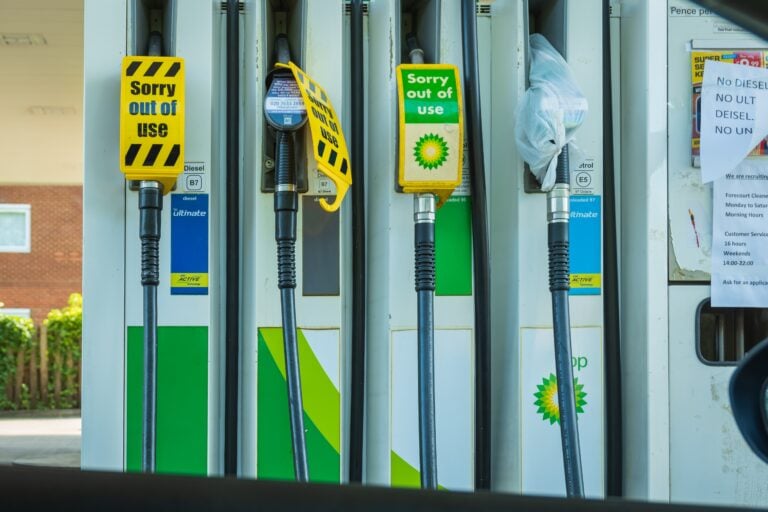
Trent Nikolic: Now is the time to discuss why Australia is not fuel self-sufficient
With talk of fuel such as diesel hitting $4.00/litre, rationing taking effect, or supply drying up, now is the time for Australians to be demanding a return to fuel self-sufficiency... and asking what happened to a 90-day reserve.
-
 News
NewsIt’s been almost 50 years since Australia last rationed fuel… are we about to go there again?
Australia last rationed petrol in 1979 but the federal government has reassured the public rationing is off the table... for now.