
Classic Wheels

Gallery 1
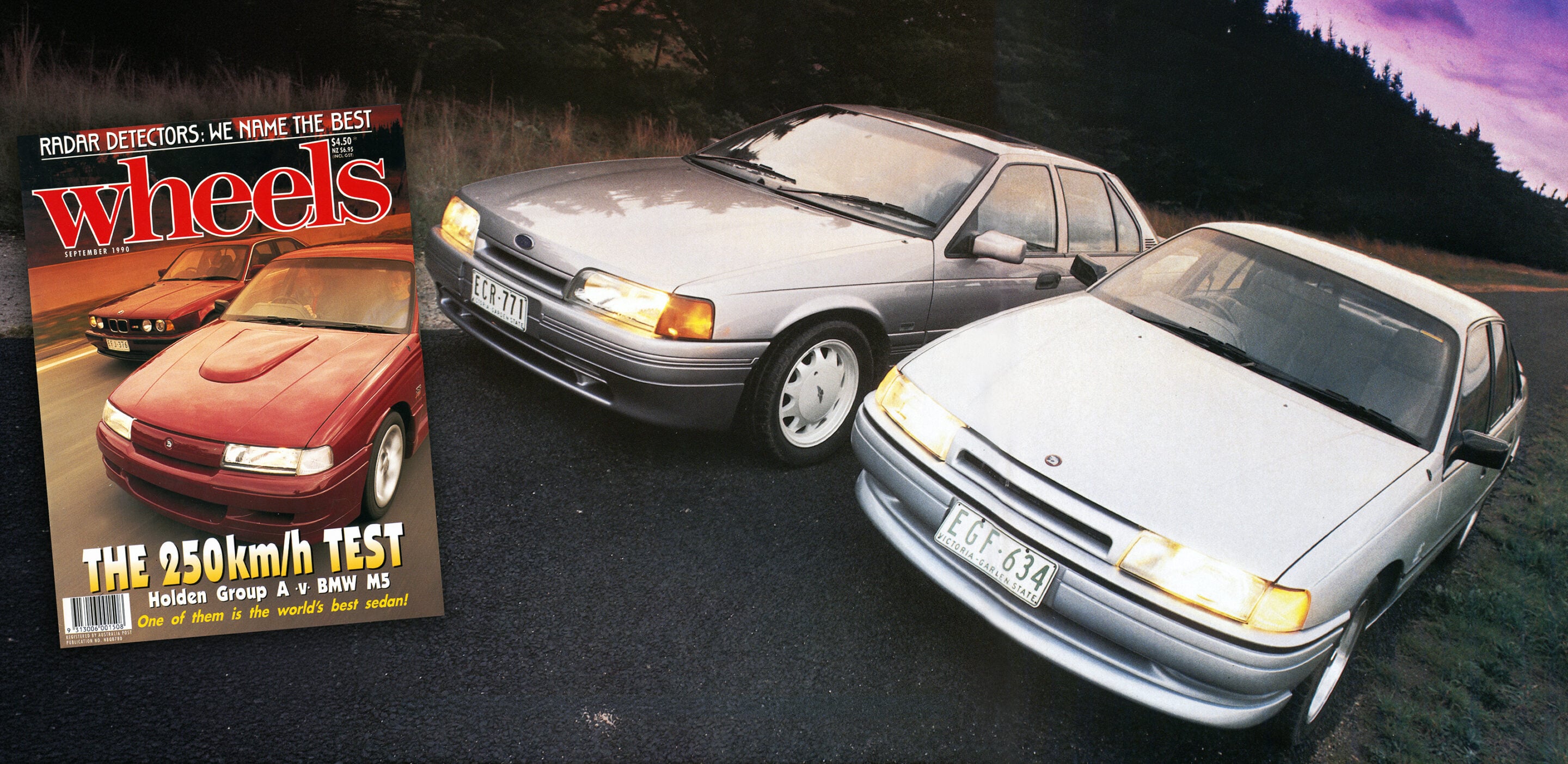
First published in the September 1990 issue of Wheels magazine, Australia’s best car mag since 1953. Subscribe here and gain access to 12 issues for $109 plus online access to every Wheels issue since 1953.
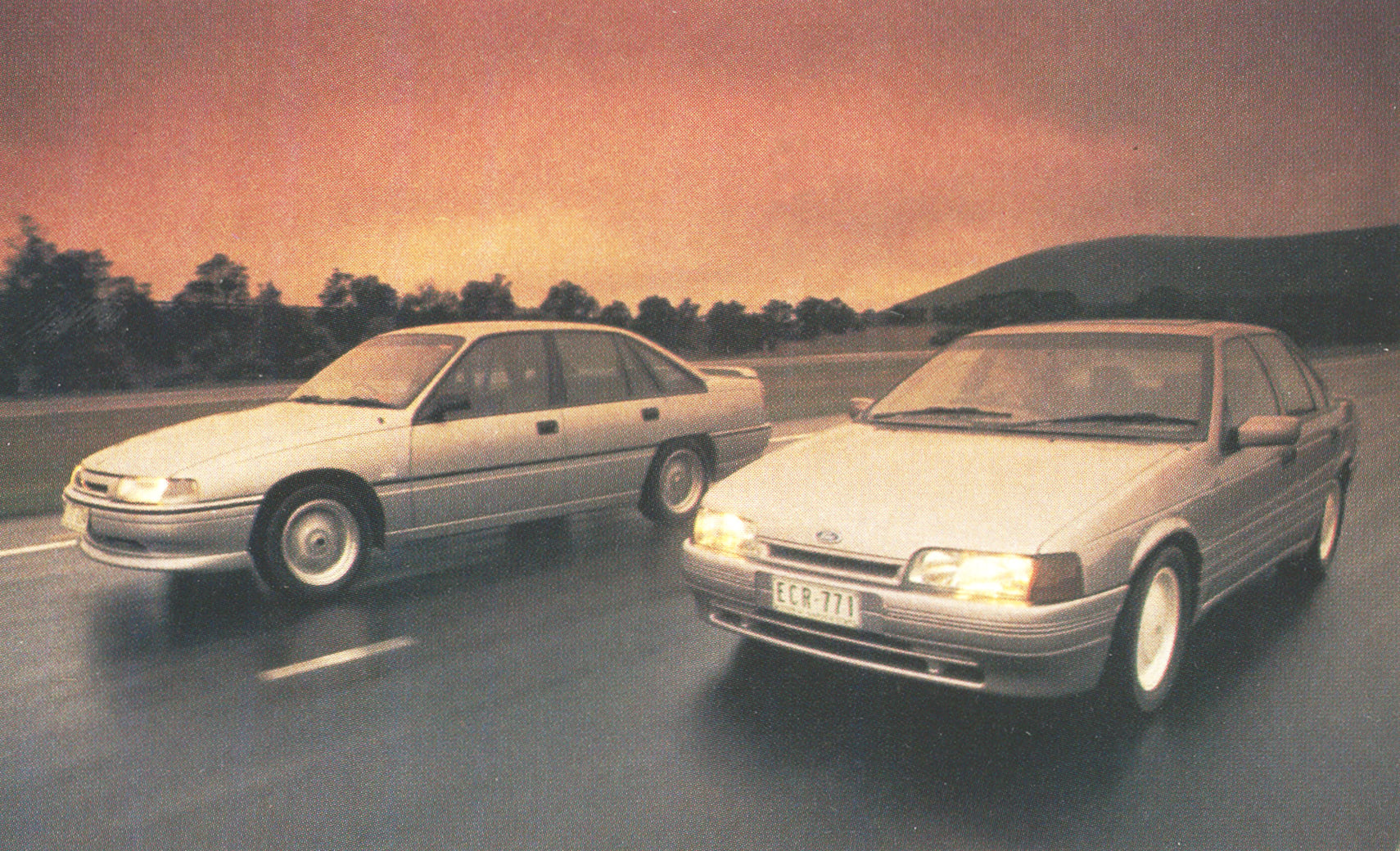
The Hume Highway offers nothing of interest in the Sydney to Melbourne commute. Every radio station seems to be the ABC. Those sad, dying whistle-stop towns are now booming radar-stop towns. Between monitoring the weight gain on one’s right foot and changing the cassette, there’s not a lot to do but drive, and think. I was driving the HSV ClubSport Commodore, and thinking about Peter Brock.
1
It’s an early picture of Brock that has always stuck in my mind; the longish hair, larrikin grin, the faintest scent of a Miss Australia or a Marlboro girl always on the wind nearby. Then I think of Brock’s cars and they’re always the Commodores that shared the same rough diamond personality. Cars like the VH and VK Group Threes, missile-quick but rough as guts. But I rarely dwelt much on the cars or the man, caring neither one way nor the other.
The policeman was also thinking about Peter Brock and Commodores when he pulled me over. I hadn’t been speeding – it was a random breath test unit in Albury – but naturally he wanted to talk about the ClubSport, and the conversation turned to Brock. The policeman thought it funny that Holden Special Vehicles’ V8 was to take part in a comparison test with a Falcon six-pack, Brock mods or not. “The man must have mellowed a lot lately,” said the policeman, and I wholly agreed.
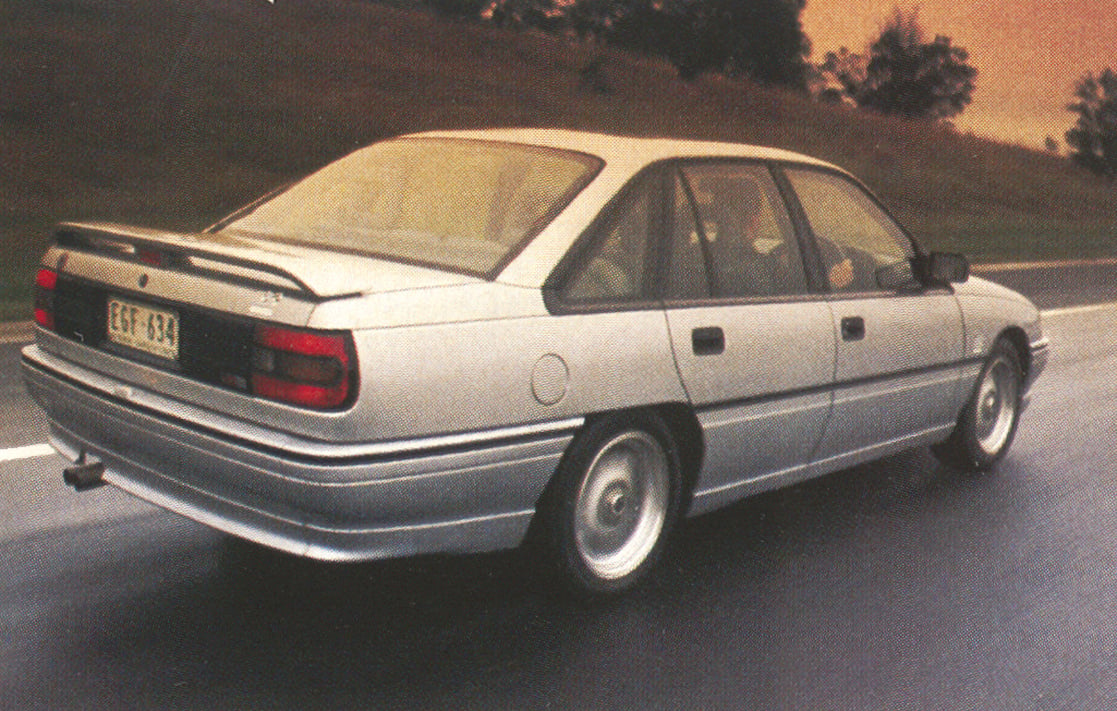
It was ironic that the ClubSport is perhaps the most Brock-like of all the Commodores so far from HSV. The ClubSport Commodore is essentially a parts-bin package of HSV’s 180kW V8 engine, exhaust system, suspension and wheel/tyre combinations from the SV89 Commodore and SV90 Statesman, bolted into the lightest, least lavishly equipped Executive model. While the concept and the name really sprang from Stuttgart, this $34,000 Commodore came about through John Harvey’s continuing involvement with various HSV owner groups and Holden car clubs. The ClubSport is intended as an on-going model, and is available with either manual or recalibrated auto trans.
1
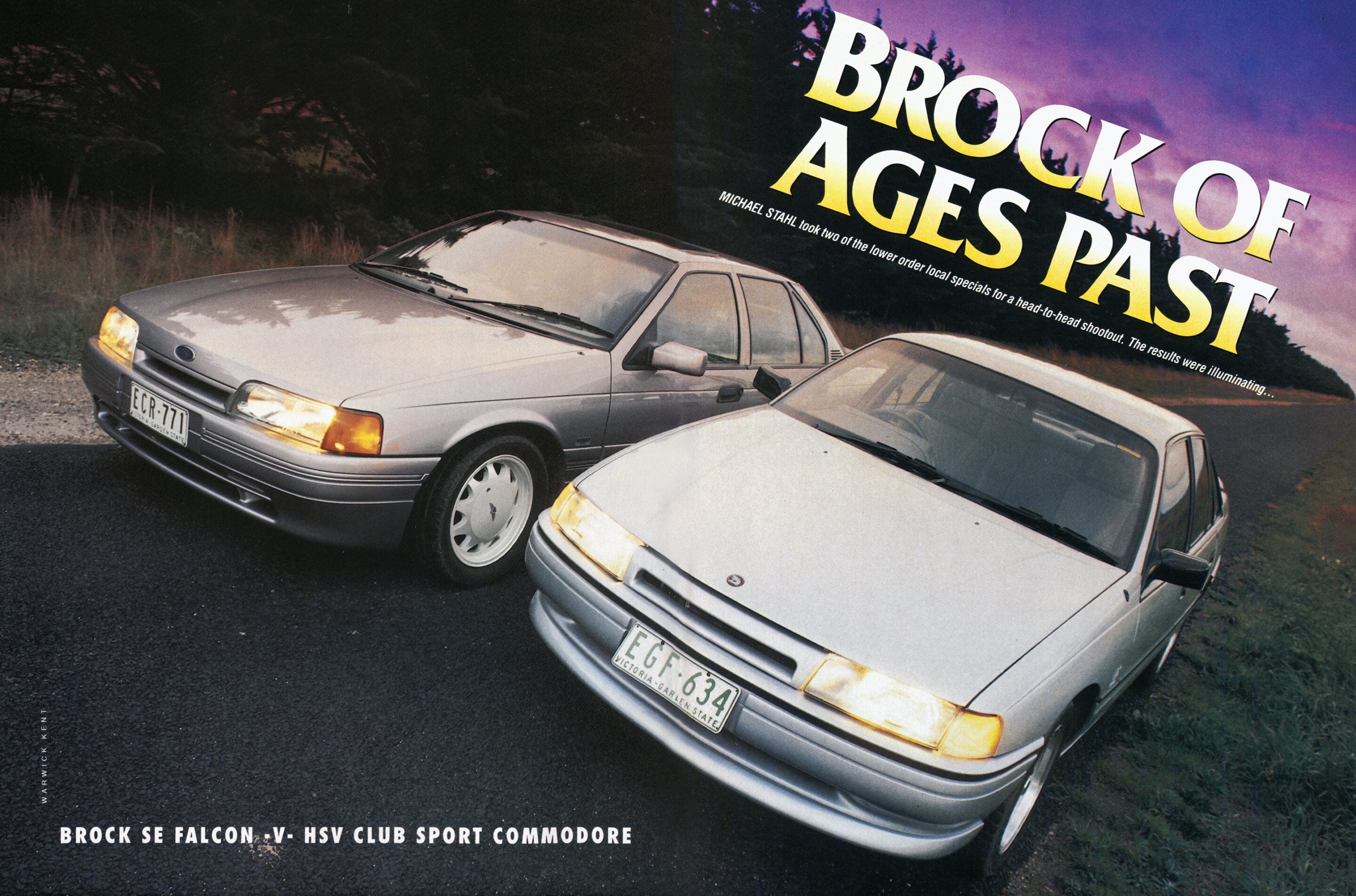
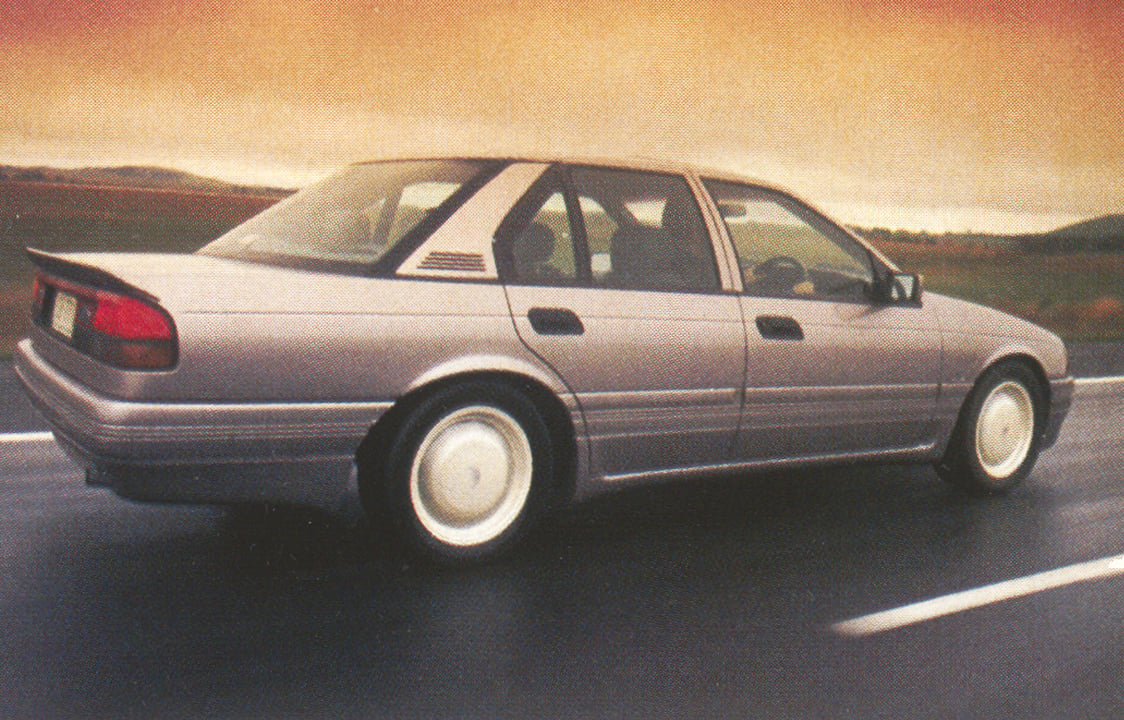
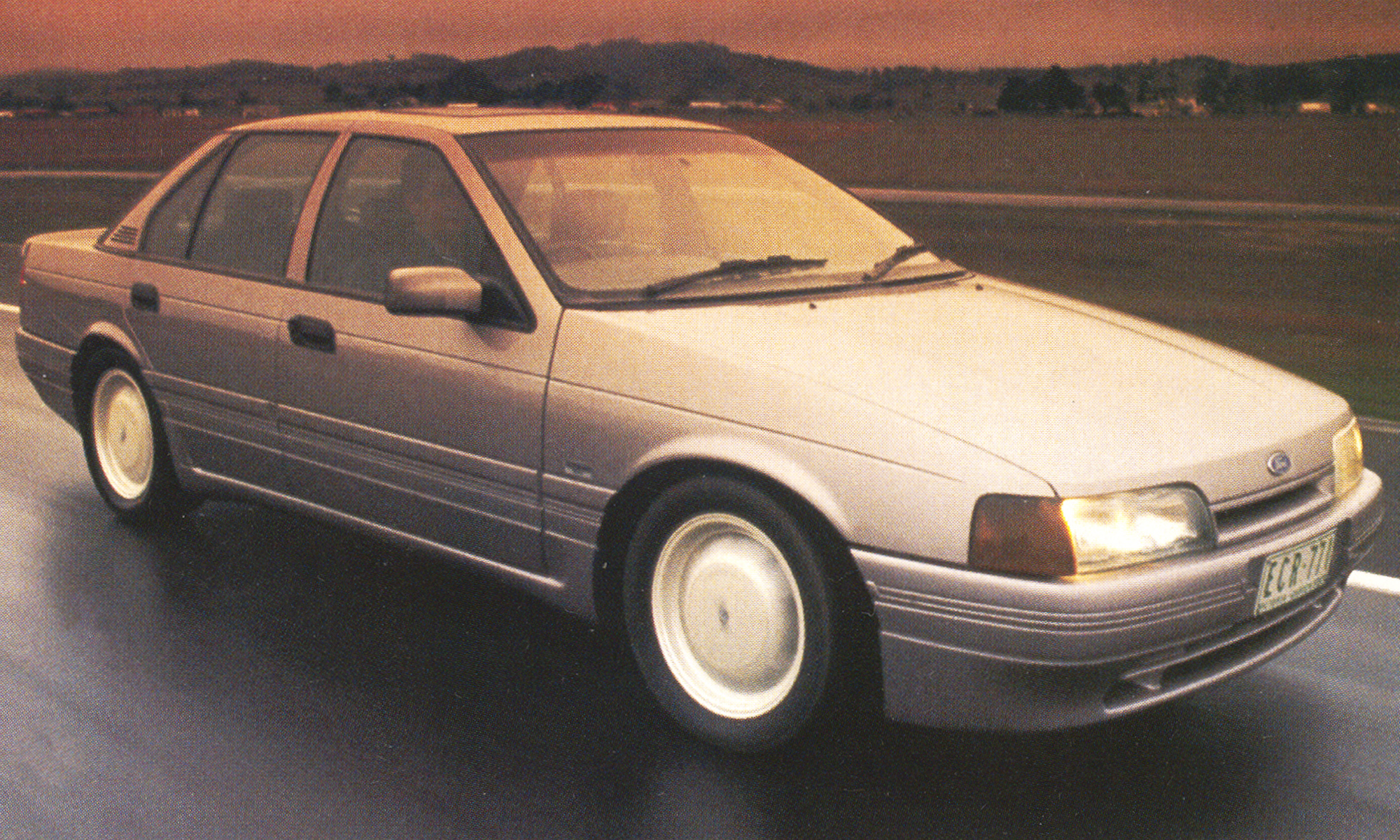
Brock, meantime, has gone full circle with the Falcon SE package, though there’s a trace of the old HDT ‘Group’ mentality in the Brock ‘Executive Performance’ packages, available on the 3.9 EFI Falcon in three levels. EP1 involves lowered suspension, reshaped seats and a leather-bound wheel and gear knob; EP2 adds the “free breathing” engine option, comprising an enlarged air intake, extractors and exhaust system with twin catalytic converters, all claimed to lift power to 164kW; and EP3 further adds a body kit and Brock’s own 16-inch alloy wheels with Semperit tyres.
The Brock SE, meantime, is all this and a bit more, but it wasn’t difficult to sense the palms itching for Ford’s forthcoming V8. The Brock boys already have an example under development, but in the opinion of Brock sidekick David Whitehead, these cars probably won’t ever get to the level of modifications formerly applied to the hottest HDT Commodores.
“The V8’s an easy project because there’s so much bolt-on stuff available straight out of the US,” he says. “It meets Californian emissions so it’s usually pretty straightforward here, and you end up with a 290hp (216kW) engine that’s totally legal.”
Pricing and specs
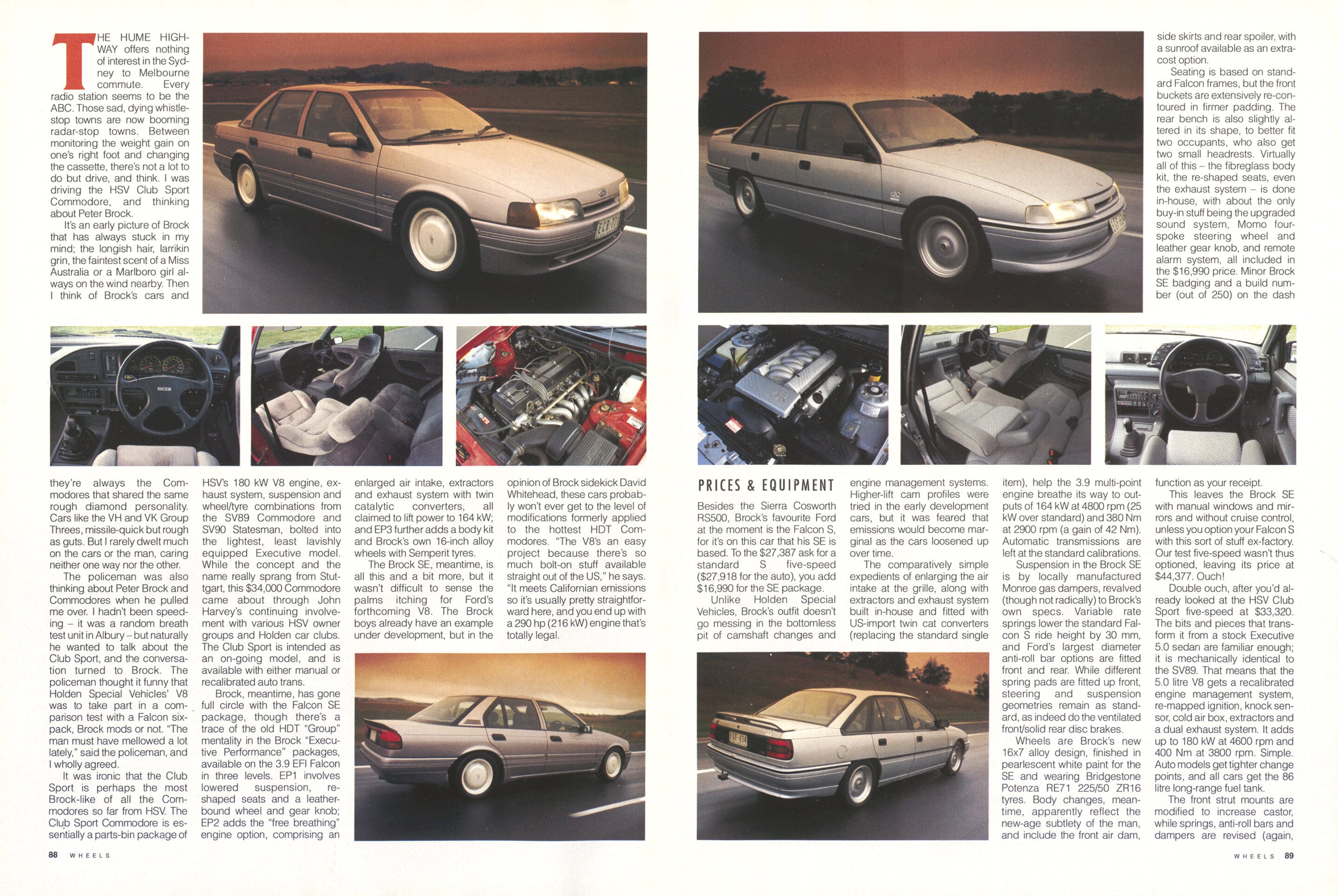
Besides the Sierra Cosworth RS500, Brock’s favourite Ford at the moment is the Falcon S, for it’s on this car that his SE is based. To the $27,387 ask for a standard S five-speed ($27,918 for the auto), you add $16,990 for the SE package.
Unlike Holden Special Vehicles, Brock’s outfit doesn’t go messing in the bottomless pit of camshaft changes and engine management systems. Higher-lift cam profiles were tried in the early development cars, but it was feared that emissions would become marginal as the cars loosened up over time.
1
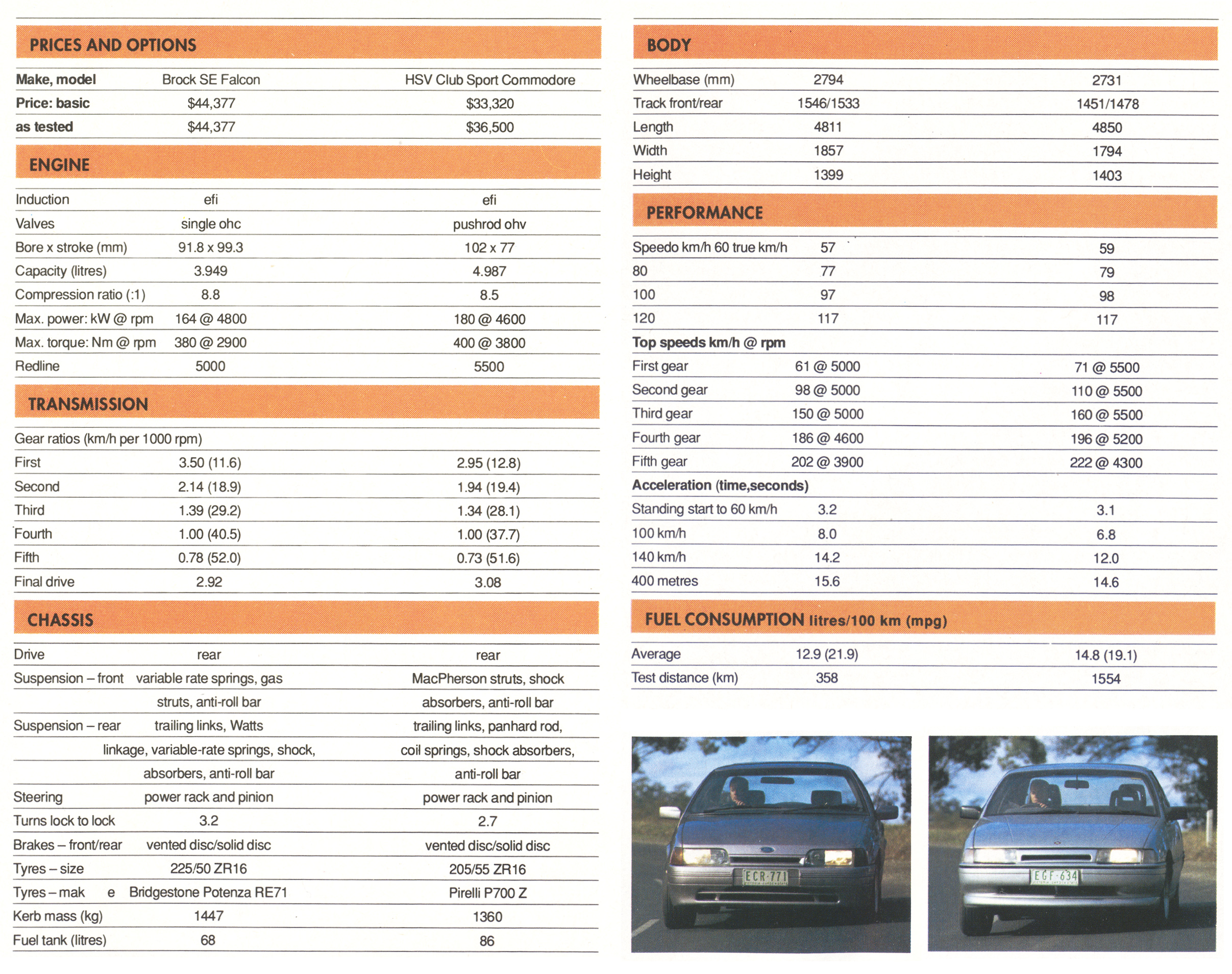
The comparatively simple expedients of enlarging the air intake at the grille, along with extractors and exhaust system built in-house and fitted with US-import twin cat converters (replacing the standard single item), help the 3.9 multi-point engine breathe its way to outputs of 164kW at 4800rpm (25kW over standard) and 380Nm at 2900rpm (a gain of 42Nm). Automatic transmissions are left at the standard calibrations.
Suspension in the Brock SE is by locally manufactured Monroe gas dampers, revalved (though not radically) to Brock’s own specs. Variable rate springs lower the standard Falcon S ride height by 30mm, and Ford’s largest diameter anti-roll bar options are fitted front and rear. While different spring pads are fitted up front, steering and suspension geometries remain as standard, as indeed do the ventilated front/solid rear disc brakes.
Wheels are Brock’s new 16×7 alloy design, finished in pearlescent white paint for the SE and wearing Bridgestone Potenza RE71 225/50 ZR16 tyres. Body changes, meantime, apparently reflect the new-age subtlety of the man, and include the front air dam, side skirts and rear spoiler, with a sunroof available as an extra-cost option.
Seating is based on standard Falcon frames, but the front buckets are extensively re-contoured in firmer padding. The rear bench is also slightly altered in its shape, to better fit two occupants, who also get two small headrests. Virtually all of this – the fibreglass body kit, the re-shaped seats, even the exhaust system – is done in-house, with about the only buy-in stuff being the upgraded sound system, Momo four-spoke steering wheel and leather gear knob, and remote alarm system, all included in the $16,990 price. Minor Brock SE badging and a build number (out of 250) on the dash function as your receipt.
1
This leaves the Brock SE with manual windows and mirrors and without cruise control, unless you option your Falcon S with this sort of stuff ex-factory. Our test five-speed wasn’t thus optioned, leaving its price at $44,377. Ouch!
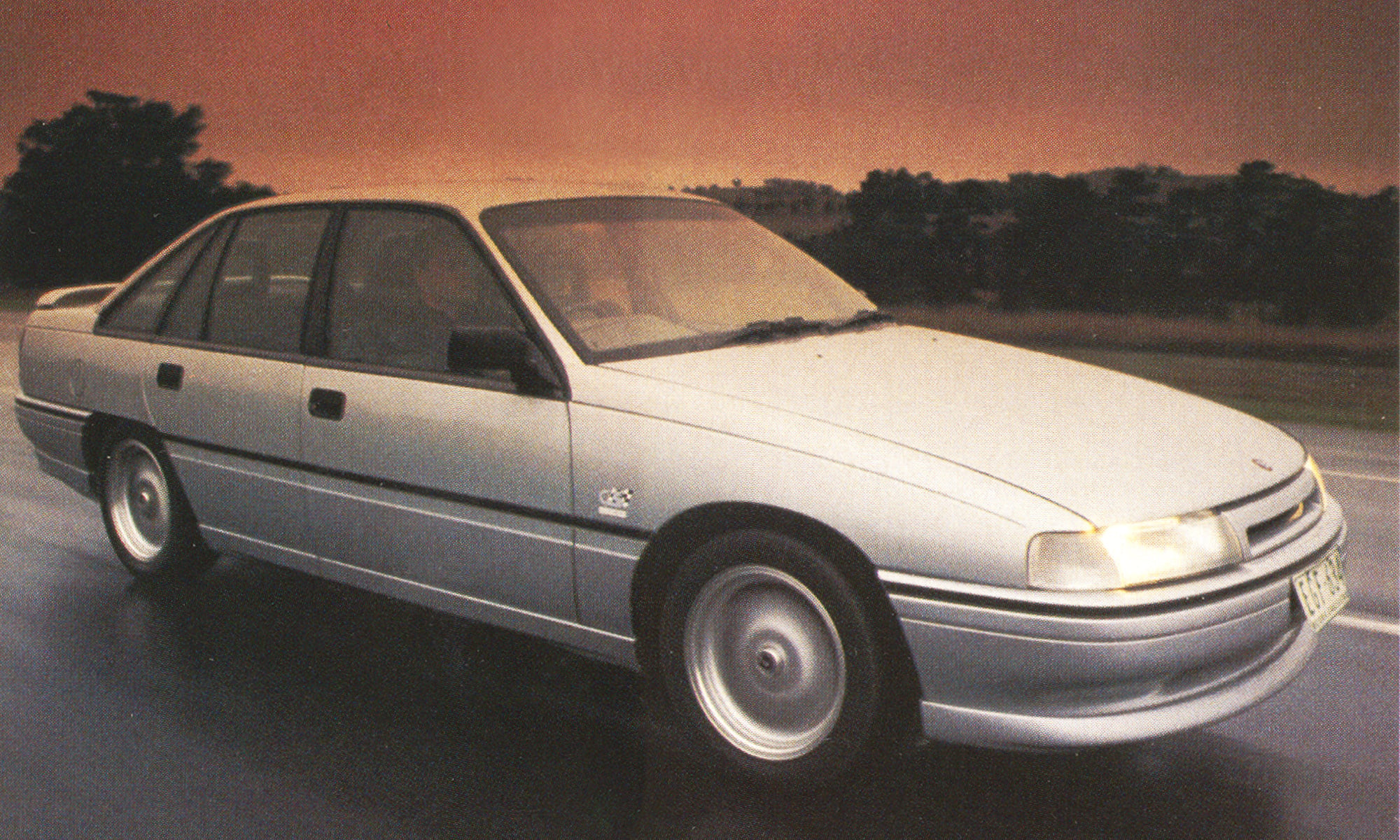
Double ouch, after vou’d already looked at the HSV ClubSport five-speed at $33,320. The bits and pieces that transform it from a stock Executive 5.0 sedan are familiar enough; it is mechanically identical to the SV89. That means that the 5.0-litre V8 gets a recalibrated engine management system, re-mapped ignition, knock sen-sor, cold air box, extractors and a dual exhaust system. It adds up to 180kW at 4600rpm and 400Nm at 3800rpm. Simple. Auto models get tighter change points, and all cars get the 86-litre long-range fuel tank.
The front strut mounts are modified to increase castor, while springs, anti-roll bars and dampers are revised (again, the latter being local Monroe equipment). HSV’s stock of five-spoke, 16×7 inch VL Group A wheels is being gradually depleted and fitted with Pirelli P700-Z 205/55 ZR16 tyres. Brakes are regular Commodore V8 vented/solid discs.
1
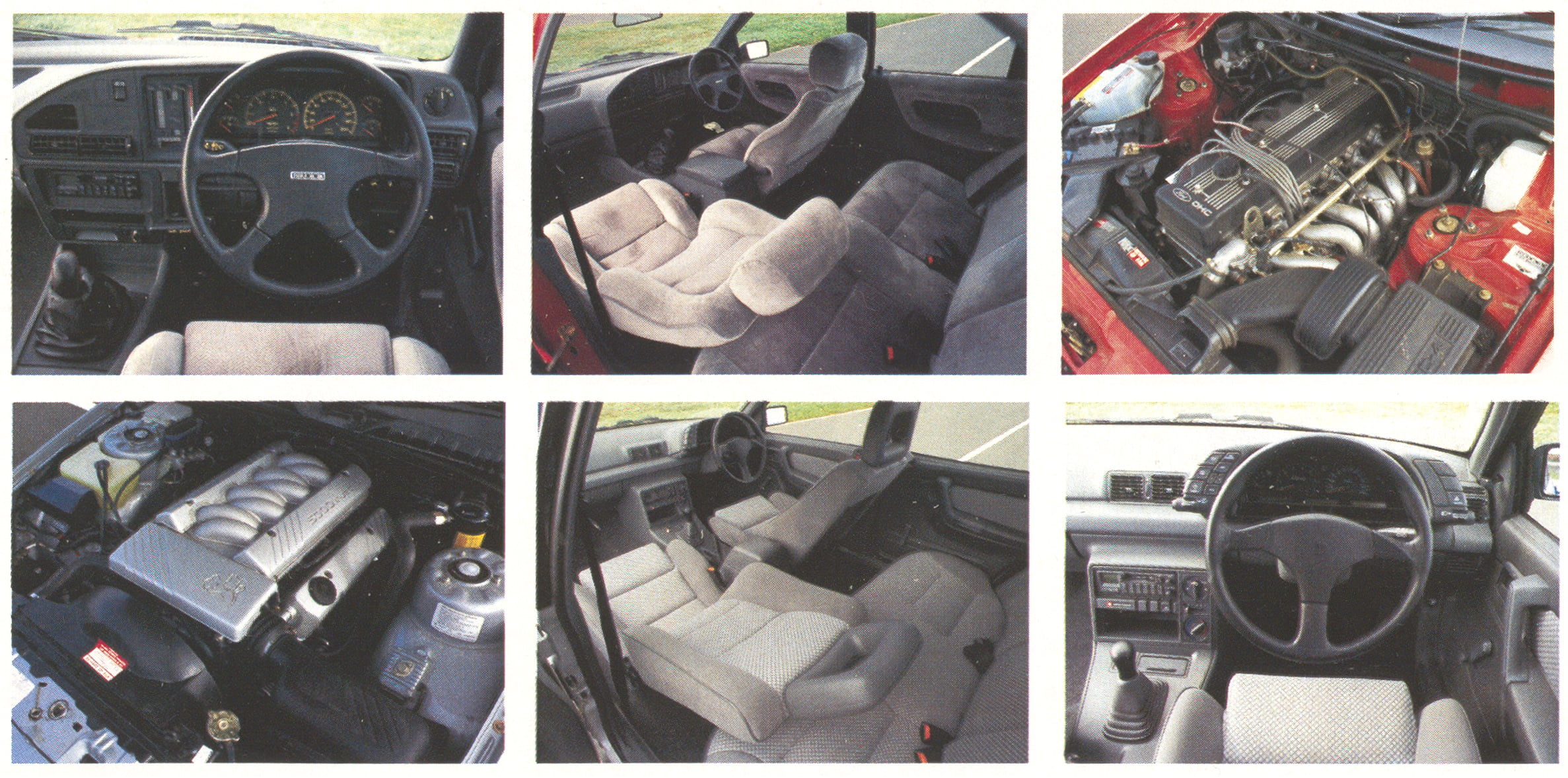
The interior varies only slightly from the standard Executive package, but does so in useful areas. The instrumentation, for instance, is the un-fussed analogue set-up but includes the trip computer usually only available as part of the “power pack” (windows, central locking) Holden option. The standard, so-so front seats can be replaced with the optional sports seats, based on the standard frames but extensively reshaped and still very worthwhile at $2080. Rear head restraints are part of that price. An excellent three-spoke Momo Panther wheel and leather gear knob are standard.
Other options our SV Hume Cruiser carried were the front air dam, side skirts and rear undertray dam ($1100), bringing the test ClubSport’s total price to $36,500. Air conditioning isn’t included in that.
Performance
It’s not really the number of pots and the litres they consume that are significant here, but the kerb weights involved and the resultant weight to power ratios. Umm, for starters, who’da thunk that a five speed Falcon would weigh in at 1447kg when a Commodore V8 Executive manual weighs just 1360kg? These standard kerb weights remain fairly consistent for the Brock SE and HSV ClubSport, meaning weight to power ratios of 7.5kg/kW (Holden) versus 8.8kg/kW for the Ford.
With both cars chockers with fuel – a whole 83 litres (about 63kg worth) in the Holden’s case, and 68 litres (52 kg) in the Ford – the Commodore covered the 400 metres in a serious 14.6 seconds. That is serious, for the $53,000, 200KW SV5000 only manages it in 14.9 seconds, albeit with an auto transmission and 1570kg to carry along.
1
The light weight of the ClubSport does, however, bring out a different character in this 180kW engine. At the risk of repeating ourselves, the bigger and bulkier (1540kg) SV90 Statesman makes this engine feel almost ‘cammy’, needing at least 3000rpm to make any impression on your seat’s back-rest. The much lighter ClubSport surges much more purposefully anywhere from about 1500rpm, is still at its strongest from 3000rpm, but trails off very noticeably beyond the power peak at 4600rpm. Redline, up there at 5500rpm, doesn’t welcome visitors.
Brock’s Ford engine feels mostly like a really well run-in standard unit. There’s a much greater strength felt in its upper-mid range, but the overall impression is of having somebody oiled your billycart wheels for the first time in years.
Our test Brock SE, with a slightly slipping clutch, ran down Calder Park’s 400 metres in 15.6 seconds. This figure, capable of being bettered, still edges out a BMW 535i manual by one-tenth of a second.
1
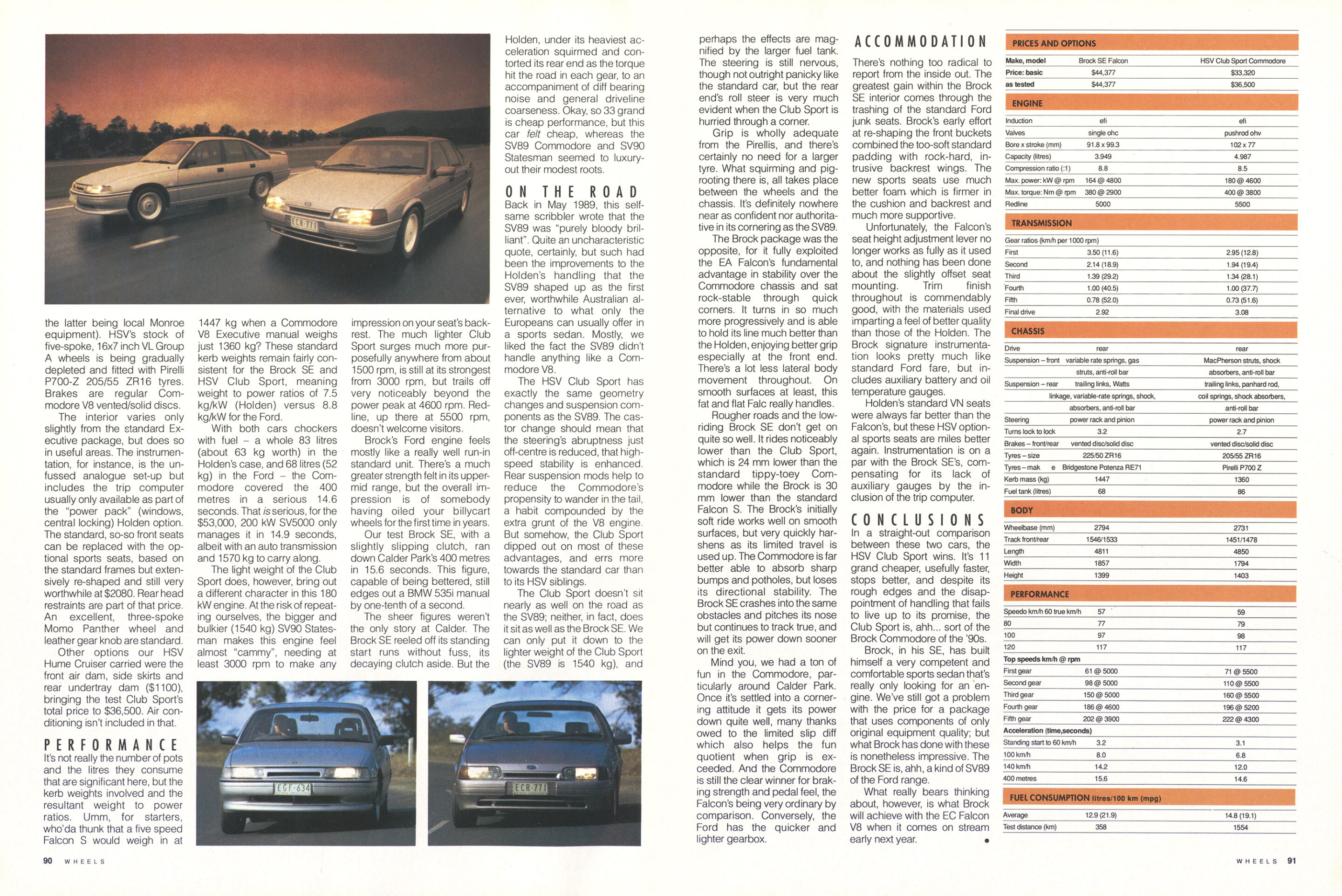
The sheer figures weren’t the only story at Calder. The Brock SE reeled off its standing start runs without fuss, its decaying clutch aside. But the Holden, under its heaviest acceleration squirmed and contorted its rear end as the torque hit the road in each gear, to an accompaniment of diff bearing noise and general driveline coarseness. Okay, so 33 grand is cheap performance, but this car felt cheap, whereas the SV89 Commodore and SV90 Statesman seemed to luxury-out their modest roots.
On the road
Back in May 1989, this selfsame scribbler wrote that the SV89 was “purely bloody brilliant”. Quite an uncharacteristic quote, certainly, but such had been the improvements to the Holden’s handling that the SV89 shaped up as the first ever, worthwhile Australian alternative to what only the Europeans can usually offer in a sports sedan. Mostly, we liked the fact the SV89 didn’t handle anything like a Commodore V8.
The HSV ClubSport has exactly the same geometry changes and suspension components as the SV89. The castor change should mean that the steering’s abruptness just off-centre is reduced, that high-speed stability is enhanced. Rear suspension mods help to reduce the Commodore’s propensity to wander in the tail, a habit compounded by the extra grunt of the V8 engine But somehow, the ClubSport dipped out on most of these advantages, and errs more towards the standard car than to its HSV siblings.
1
The ClubSport doesn’t sit nearly as well on the road as the SV89; neither, in fact, does it sit as well as the Brock SE. We can only put it down to the lighter weight of the ClubSport (the SV89 is 1540kg), and perhaps the effects are magnified by the larger fuel tank. The steering is still nervous, though not outright panicky like the standard car, but the rear end’s roll steer is very much evident when the ClubSport is hurried through a corner.
Grip is wholly adequate from the Pirellis, and there’s certainly no need for a larger tyre. What squirming and pig-rooting there is, all takes place between the wheels and the chassis. It’s definitely nowhere near as confident nor authoritative in its cornering as the SV89.
The Brock package was the opposite, for it fully exploited the EA Falcon’s fundamental advantage in stability over the Commodore chassis and sat rock-stable through quick corners. It turns in so much more progressively and is able to hold its line much better than the Holden, enjoying better grip especially at the front end. There’s a lot less lateral body movement throughout. On smooth surfaces at least, this fat and flat Falc really handles.
1
Rougher roads and the low-riding Brock SE don’t get on quite so well. It rides noticeably lower than the ClubSport, which is 24mm lower than the standard tippy-toey Commodore while the Brock is 30mm lower than the standard Falcon S. The Brock’s initially soft ride works well on smooth surfaces, but very quickly harshens as its limited travel is used up. The Commodore is far better able to absorb sharp bumps and potholes, but loses its directional stability. The Brock SE crashes into the same obstacles and pitches its nose but continues to track true, and will get its power down sooner on the exit.
Mind you, we had a ton of fun in the Commodore, particularly around Calder Park. Once it’s settled into a cornering attitude it gets its power down quite well, many thanks owed to the limited slip diff which also helps the fun quotient when grip is exceeded. And the Commodore is still the clear winner for braking strength and pedal feel, the Falcon’s being very ordinary by comparison. Conversely, the Ford has the quicker and lighter gearbox.
Accommodation
There’s nothing too radical to report from the inside out. The greatest gain within the Brock SE interior comes through the trashing of the standard Ford junk seats. Brock’s early effort at reshaping the front buckets combined the too-soft standard padding with rock-hard, intrusive backrest wings. The new sports seats use much better foam which is firmer in the cushion and backrest and much more supportive.
1
Unfortunately, the Falcon’s seat height adjustment lever no longer works as fully as it used to, and nothing has been done about the slightly offset seat mounting. Trim finish throughout is commendably good, with the materials used imparting a feel of better quality than those of the Holden. The Brock signature instrumentation looks pretty much like standard Ford fare, but includes auxiliary battery and oil temperature gauges.
Holden’s standard VN seats were always far better than the Falcon’s, but these HSV optional sports seats are miles better again. Instrumentation is on a par with the Brock SE’s, compensating for its lack of auxiliary gauges by the inclusion of the trip computer
The Verdict
In a straight-out comparison between these two cars, the HSV ClubSport wins. It’s 11 grand cheaper, usefully faster, stops better, and despite its rough edges and the disappointment of handling that fails to live up to its promise, the ClubSport is, ahh… sort of the Brock Commodore of the ’90s.
1
Brock, in his SE, has built himself a very competent and comfortable sports sedan that’s really only looking for an engine. We’ve still got a problem with the price for a package that uses components of only original equipment quality; but what Brock has done with these is nonetheless impressive. The Brock SE is, ahh, a kind of SV89 of the Ford range.
What really bears thinking about, however, is what Brock will achieve with the EC Falcon V8 when it comes on stream early next year.
Follow WhichCar/Wheels on Google
Click the button below to make WhichCar by Wheels a preferred source for your news.

We recommend
-
 Classic Wheels
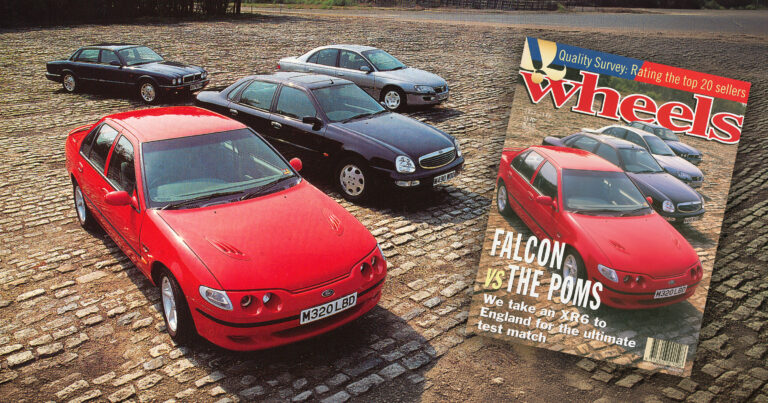
From the Wheels Archive: Ford Falcon smashes the best of British... in England
Wheels took a Ford Falcon XR6 to England to take on The Poms in a battle for the automotive Ashes
-
 Classic Wheels
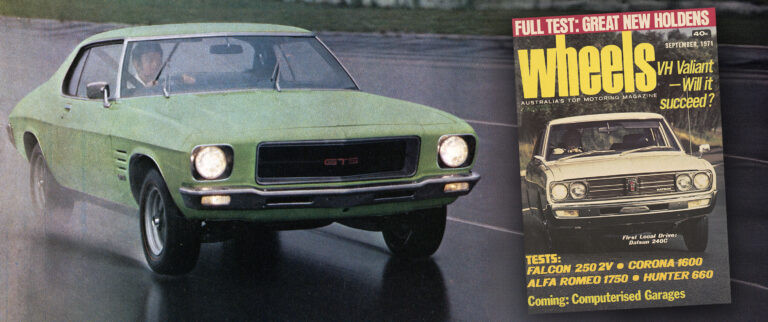
From the Wheels archive: The best Holden ever!
Wheels gushed over the all-new HQ Holden in September 1971, declaring it 'far and away the best Holden ever'.
-
 Classic Wheels
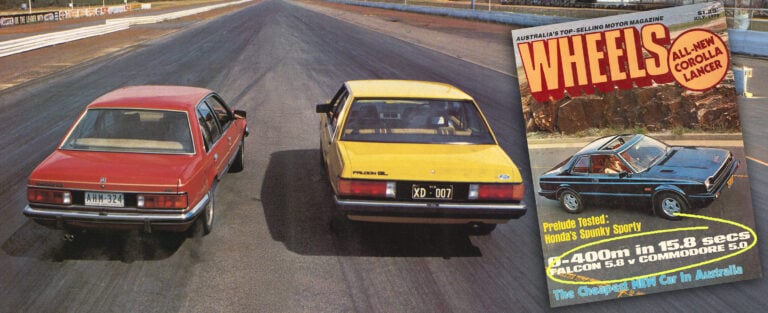
From the Wheels archive: Holden VB Commodore vs Ford XD Falcon in a V8-powered muscle car face-off
In 1979, Wheels pitted the all-new V8-powered Falcon XD and Commodore VB manuals against each other in a battle to crown 'The King of the Hill'.
