
The Lexus ES has long struggled with its identity since launching way back in the very early days of the Toyota spin-off luxury brand. Debuting in 1989, the ES was – somewhat cynically – a Toyota Camry with better clothes.
Every generation since moved the ES further away from the Camry but despite shedding more and more of Toyota’s DNA, the ES was still considered little more than a frocked-up and expensive Toyota.
But that’s all changed with the new Lexus ES range, which not only ditches much of the previous generations’ inherent Toyota-ness, but also tears up the straitlaced conservatism of its predecessors. It’s as if Lexus has swapped its cardigan and flannel trousers for a leather jacket and jeans.
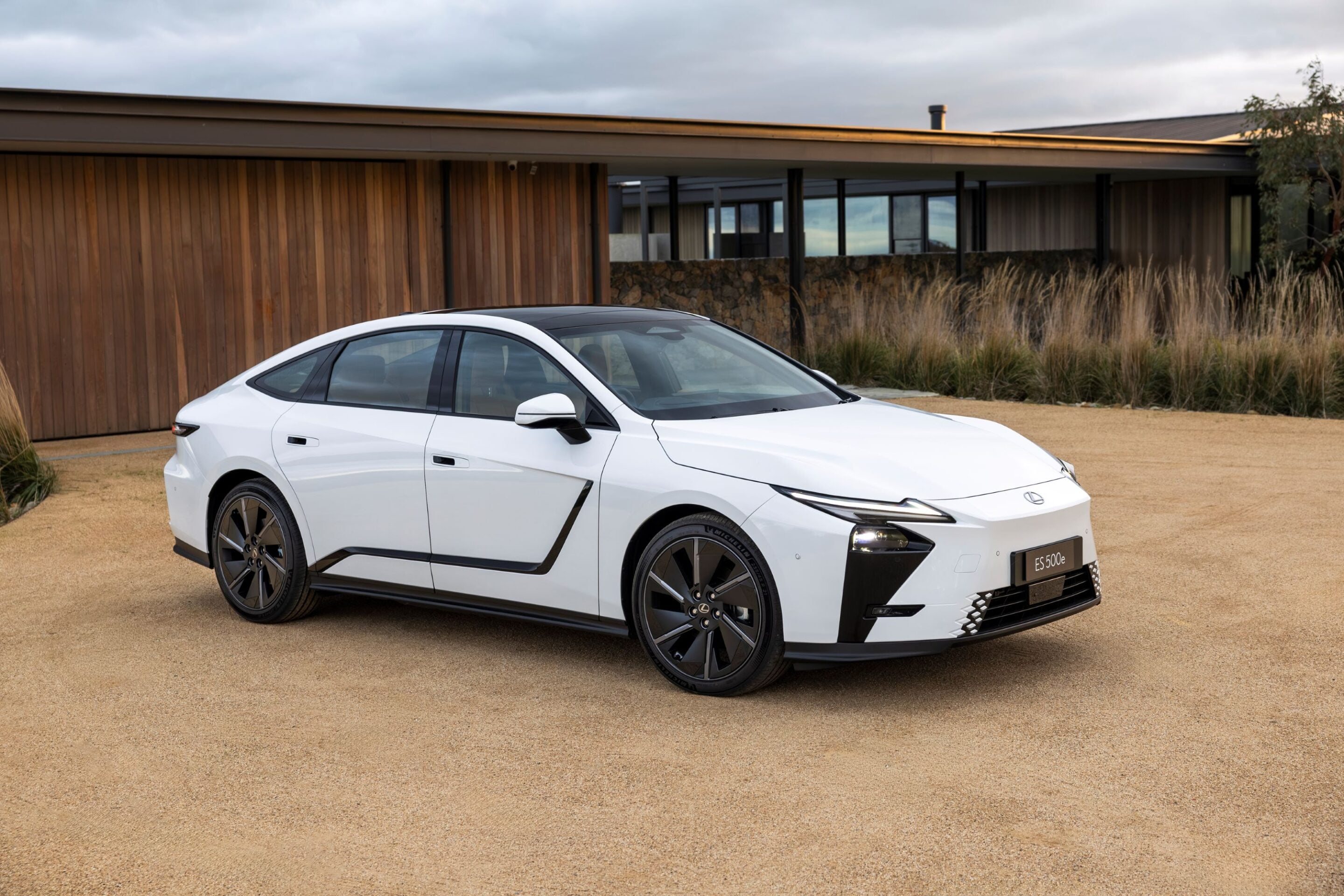
The new three-model range is intriguing, with one hybrid and two pure EV variants on offer. What’s interesting is that the jump from petrol-hybrid to fully electric is just $2000. The entry point into the line-up is the $75,000 ES 300h petrol-hybrid. Then it’s just a $2k jump to the single-motor, front-wheel drive ES 350e, while the flagship ES 500e brings two electric motors and all-wheel drive to the table for a sticker price of $84,000. All prices are before on-road costs.
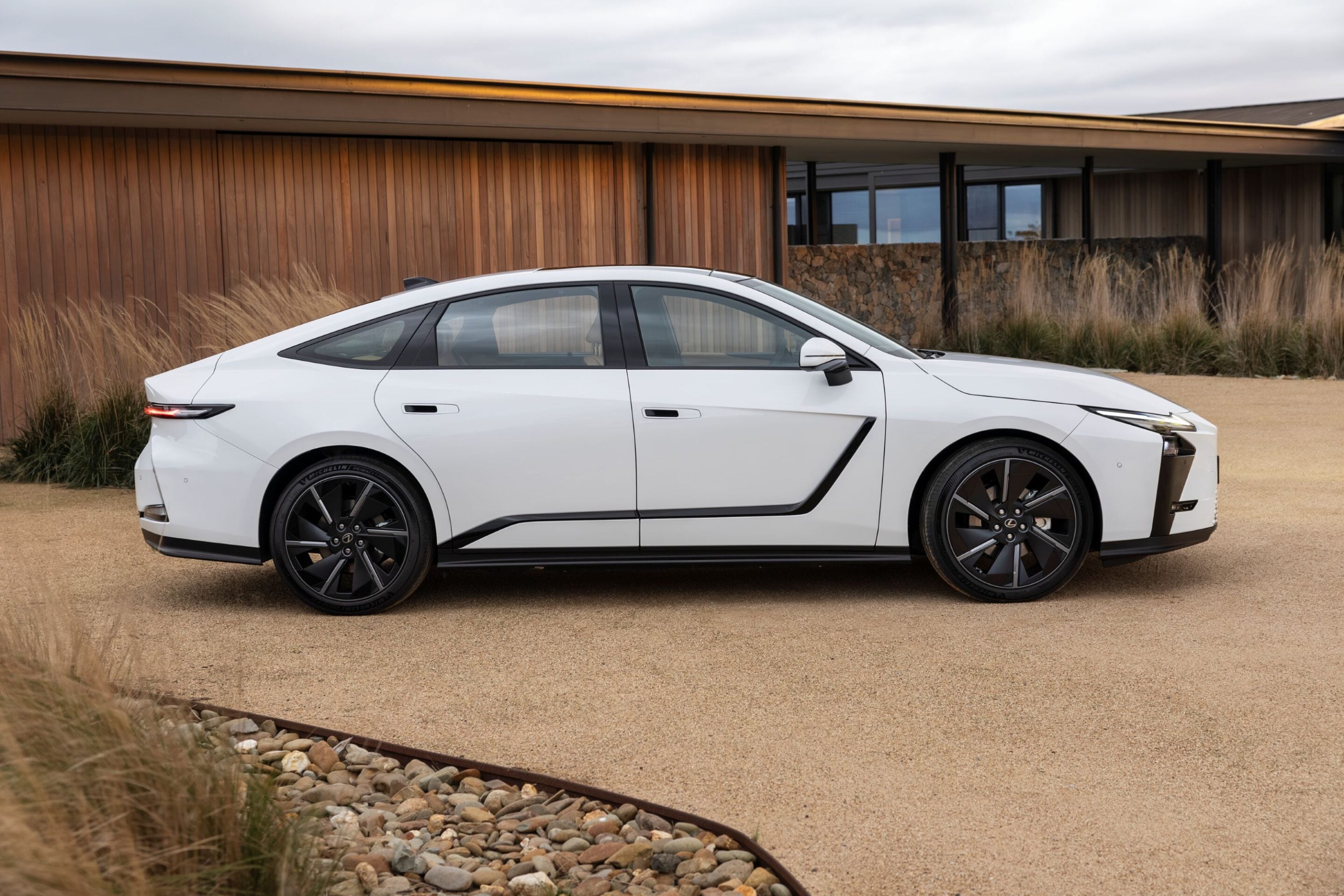
It’s the flagship that found its way into the Wheels garage and it’s immediately apparent that this new model bears no resemblance to the outgoing ES range. For starters, it’s bigger, much bigger – 170mm longer, 55mm wider, 115mm taller, and sitting on a cabin-extending 80mm longer wheelbase.
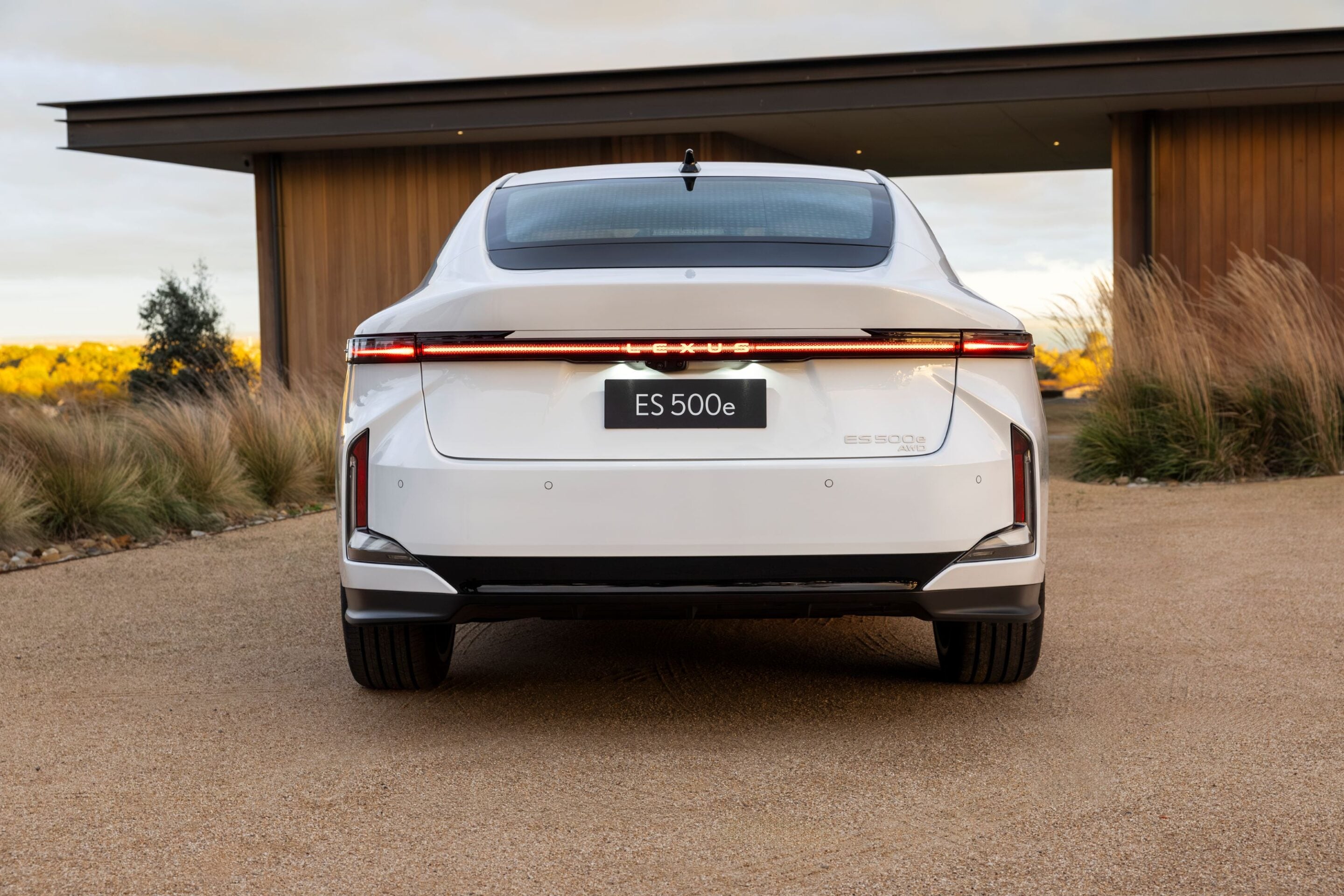
It looks different too, the first model to adopt the brand’s new design language which blends familiar Lexus cues – such as the signature spindle grille, albeit with a modern spin – with bold new styling. A low bonnet line leads into new LED lighting signatures while around the side, aggressive character lines work to break up the sea of remodelled sheet metal.
Of course, being a Lexus brings with it expectations of luxury and refinement. Buyers won’t be disappointed by the ES’s long list of standard equipment that blends quality materials with up-to-the-minute tech and a list of standard gear at the premium end of the scale.
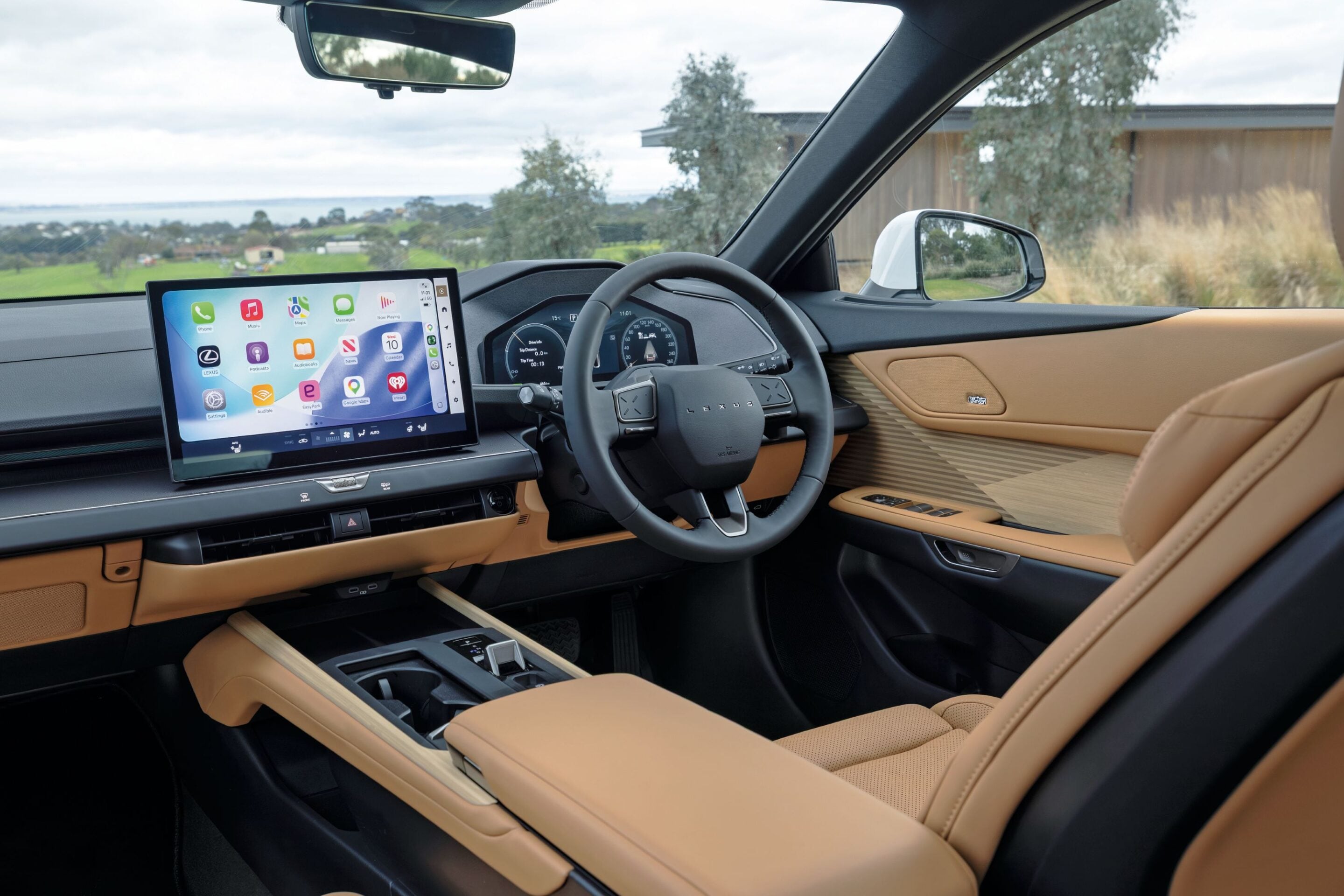
Highlights include huge 21-inch alloy wheels, a 17-speaker Mark Levinson sound system, leather-accented seat upholstery, heated seats and steering wheel, a head-up display, 360-degree camera, panoramic roof, and sunshades on the side windows.
Power comes from two electric motors, one at each axle, combining for 252kW and 438Nm. A 74.7kWh lithium-ion battery feeds the motors and is good for a claimed 465km range, based on WLTP testing. That’s down on some similarly priced rivals where 500-plus or even 600km ranges are increasingly the norm.
The ES’s interior embraces modernity. Where Lexuses of old always felt like they were designed for the ‘grey brigade’, the new model is at once modern and refreshingly uncluttered on the inside. The build quality and materials throughout are excellent. This might not look like a Lexus of old, but it certainly feels like one – solid, tight, plush.
The bamboo-coloured inlays on the door cards and centre console surround are a highlight, a welcome contrast to the overwhelmingly black and dark grey cabin.
The front seats are comfortable although could use a touch more under-thigh support, especially noticeable over a longer drive.
Finding the ideal seating position is a cinch with power adjustment for both front seats as well as the newly designed steering wheel, which is at odds with the rest of the cabin. Why? Because it’s wrapped in an artificial material called NuLux that feels more like plastic than faux leather.
Infotainment is handled by a crisp 14-inch touchscreen running the brand’s latest Arena operating system. It’s a good one too, with a clear, easy-to-use design and wireless smartphone connectivity that proved faultless during Wheels’ custodianship.
Lexus has done away with physical buttons and switches in the ES but the integration of what the brand calls its ‘responsive hidden switches’ on both the dashboard and steering wheel goes some way to alleviating any frustration. Simply, they respond to a hovered finger, illuminating the ‘hidden’ function which can then be activated by a simple press. The ES’s growth spurt pays dividends in the second row where space is in abundance in all key areas. Comfortable seats and a general spaciousness lend this $84k car limo-like qualities.
Boot space comes in at 517 litres, which is pretty decent, although the back seats don’t fold away to free up more space for even more golf bags. Don’t look for a spare wheel because there isn’t one, only a tyre inflation kit.
It’s on the road where the ES 500e really starts to shine, a combination of effortless performance (0-100km/h is dispatched in 5.5 seconds) and a ride quality that is simply sublime.
There’s no hanging about when the big questions are asked of the ES, the 2.2-tonne sedan hunkering down and moving with urgency and a quiet poise.
Power delivery is smooth, whether stuck in the daily grind of peak-hour traffic or powering onto a motorway, the big sedan moving briskly without venturing into silly-fast territory. It feels luxuriant from behind the wheel, an effortless performance that’s only enhanced by the ES’s superb ride quality.
New suspension geometry all round, along with a strengthened chassis, has resulted in what is simply one of the most comfortable cars I’ve driven in years. The standard-fit adaptive dampers are brilliant at ironing out minor road rash and confidently dealing with bigger hits whose attempts to unsettle the big sedan prove futile. I’ve driven cars costing five times as much from upmarket British brands that haven’t felt as smooth on the road as the ES. Remarkable.
The steering remains accurate and quick, although it can feel a little numb, even after toggling through the various drive modes in the search for some more tactility. A touch more heft would be a welcome addition.
Large ventilated discs – 340mm up front and 338mm rears – do a good job of pulling up the sedan, although the heavy lifting is mostly done by the ES’s regenerative system, which offers several settings. The transition between the two modes of stopping is seamless.
The biggest gripe comes courtesy of the ES’s driver attention monitor which proved only too happy to set off the gentle but insistent chimes after detecting my wandering eyes undertaking completely innocent tasks such as checking the rear-view mirror. It’s not only annoying but also distracting, everything it’s supposedly trying to minimise.
Lexus says the ES 500e will use energy at the rate of 17.9kWh/100km, a claim we bettered, and by some margin, recording 15.1kWh after a week of testing over a variety of driving conditions. Topping up the battery from 10 to 80 per cent should take around 28 minutes if charging at the maximum DC rate of 150kW.
Stripping off the frumpy clothes of its Toyota counterpart has given the Lexus ES a new outlook. No longer an expensive Camry, it has forged a new and utterly compelling identity. It’s unashamedly luxurious, not only in the cabin, but also on the road, where refinement and smoothness are the hallmarks of a luxury car. The Lexus ES has it in spades.
Specs
| Price | $84,000 plus on-road costs |
|---|---|
| Drivetrain | Two electric motors |
| Transmission | Single-speed, all-wheel drive |
| Power | 252kW (combined) |
| Torque | 438Nm (combined) |
| 0-100km/h (claim) | 5.5 seconds |
| Battery size | 74.7kWh (lithium-ion) |
| Range | 465km (WLTP) |
| Energy use (claim) | 17.9kWh/100km |
| Energy use (as tested) | 15.1kWh/100km |
| Peak charging speed | 22kW (AC) / 150kW (DC) |
| 10-80% DC charge time (claim) | 28 minutes |
| Dimensions (l/w/h/wb) | 5145/1920/1560/2950mm |
| Boot capacity | 517L |
| Spare wheel | Tyre inflation kit |
| Kerb weight | 2280kg |
| Warranty | 5 years, unlimited km (car) / 8 years, 160,000km (battery) |
| Servicing costs | $3125 five years or 75,000km |
One of Japan’s most celebrated supercars has been given a modern makeover, with Italian design house Pininfarina helping transform the original Honda NSX into a substantially more powerful machine.
Called the JAS Tensei, the project is a collaboration between Pininfarina and JAS Motorsport, which has maintained a motorsport partnership with Honda since 1998.
Tensei translates from Japanese as ‘rebirth’ or ‘reincarnation’, reflecting the intention to preserve the character of the original 1990 NSX while introducing contemporary engineering.
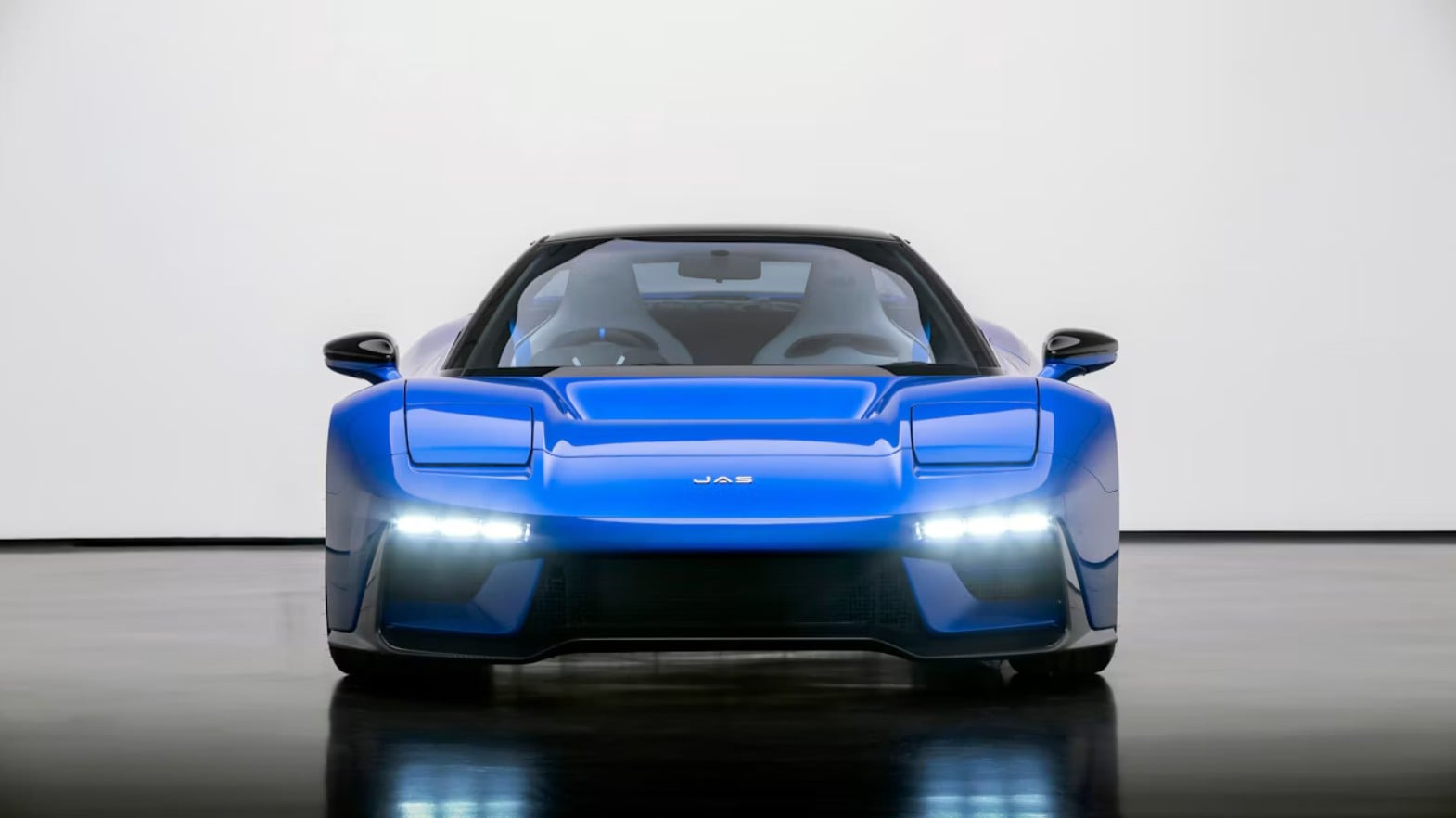
The most significant changes are beneath the bodywork. Engine specialist JUDD Power has enlarged the naturally aspirated V6 from 3.0 to 3.5 litres, increasing output to 317kW – more than 110kW above the original.
The engine now revs to 8500rpm and incorporates individual throttle bodies, a revised exhaust and dry-sump lubrication, allowing it to sit lower in the chassis.
Power reaches the rear wheels through a six-speed manual gearbox, twin-plate carbon clutch and mechanical limited-slip differential.
Weight has been reduced to 1250kg, approximately 120kg below the original, thanks partly to new carbon-fibre exterior panels.
The chassis receives carbon-Kevlar reinforcement, a wheelbase extended by 55mm and a track widened by up to 190mm.
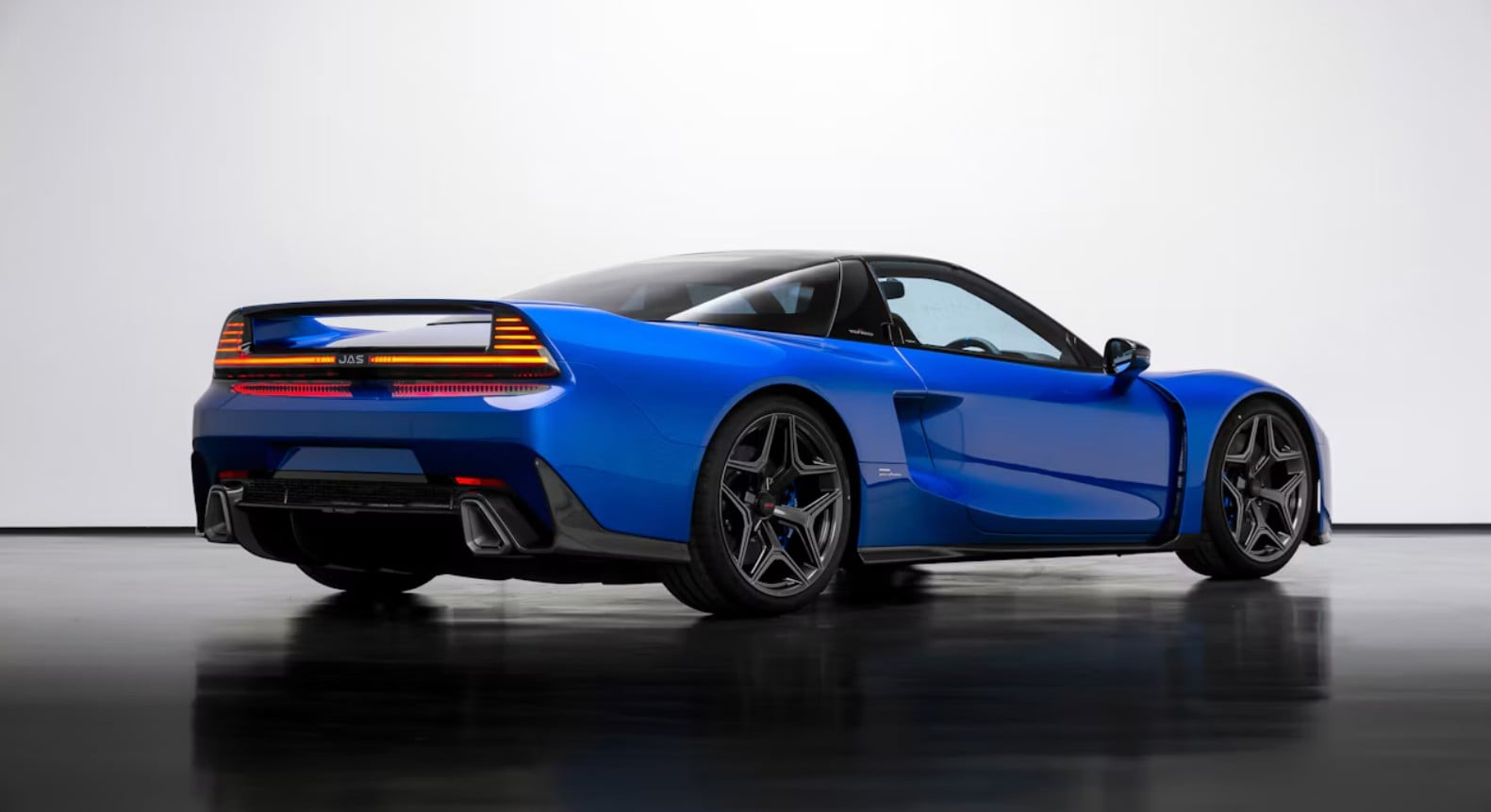
Revised suspension incorporates adjustable KW coilovers, while carbon-ceramic brakes feature six-piston front and four-piston rear calipers. The wheels measure 19 inches at the front and 20 inches at the rear.
Pininfarina’s exterior redesign retains the NSX’s familiar proportions and pop-up headlights, complemented by LED lighting, enlarged cooling ducts and a redesigned rear wing and diffuser.
Despite the extensive modifications, the Tensei remains road-legal rather than a dedicated track car. Pricing, production numbers and availability have yet to be announced.
Pininfarina also has an earlier connection with the NSX. Its 1984 Honda HP-X concept explored a mid-engined sports-car layout that helped establish the direction for Honda’s subsequent production supercar.
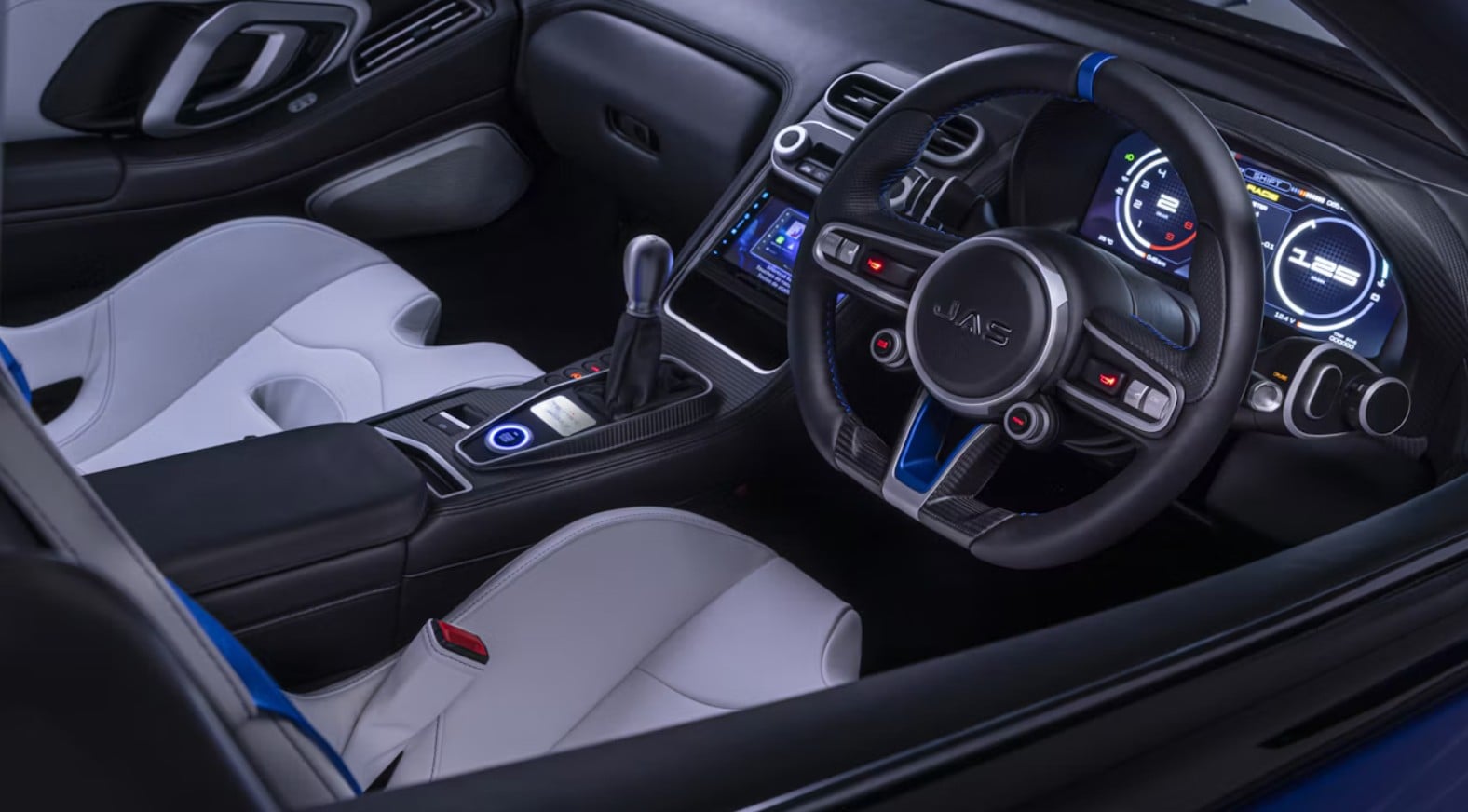
The Tensei therefore brings the Italian design house back to a project it helped inspire more than four decades ago.
Ford is preparing to reveal another version of its Ranger MS-RT at the Paris Motor Show on October 12, offering a more aggressive take on the popular dual-cab ute.
Developed in partnership with M-Sport Road Technology (MS-RT), the latest model has been previewed in a brief teaser video revealing little beyond its front-end styling and a new bonnet stripe.
The appearance suggests a revised or special-edition model, although Ford has yet to reveal the full extent of the changes.
MS-RT has worked with Ford on modified commercial vehicles for several years, producing distinctive versions of the Transit Custom and Transit Connect alongside the Ranger.
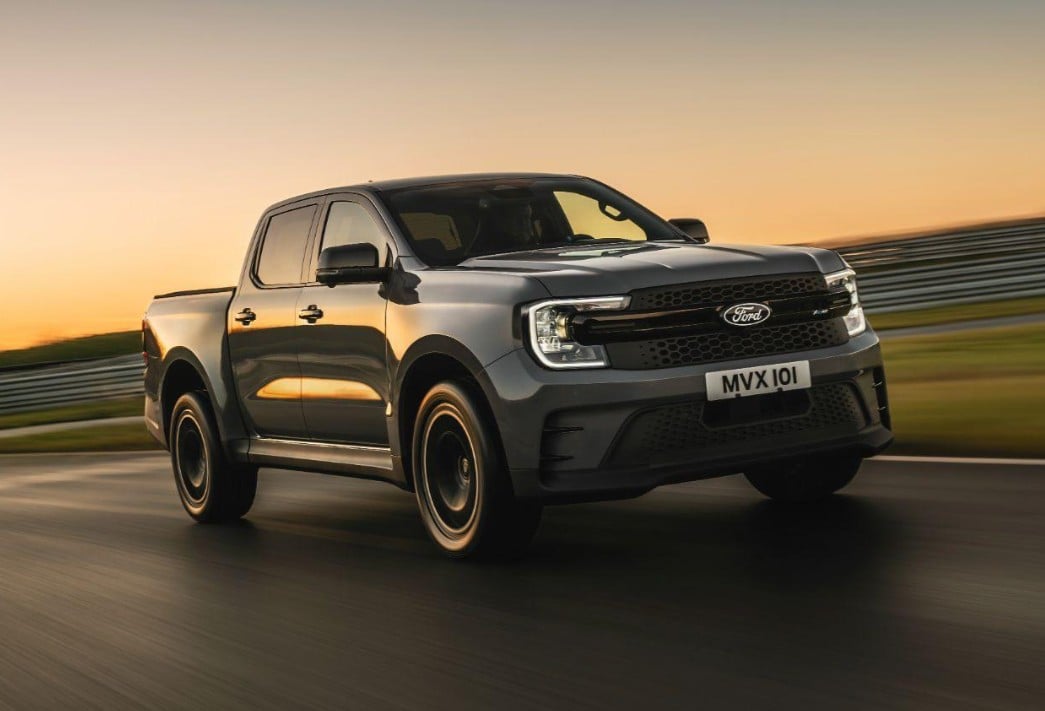
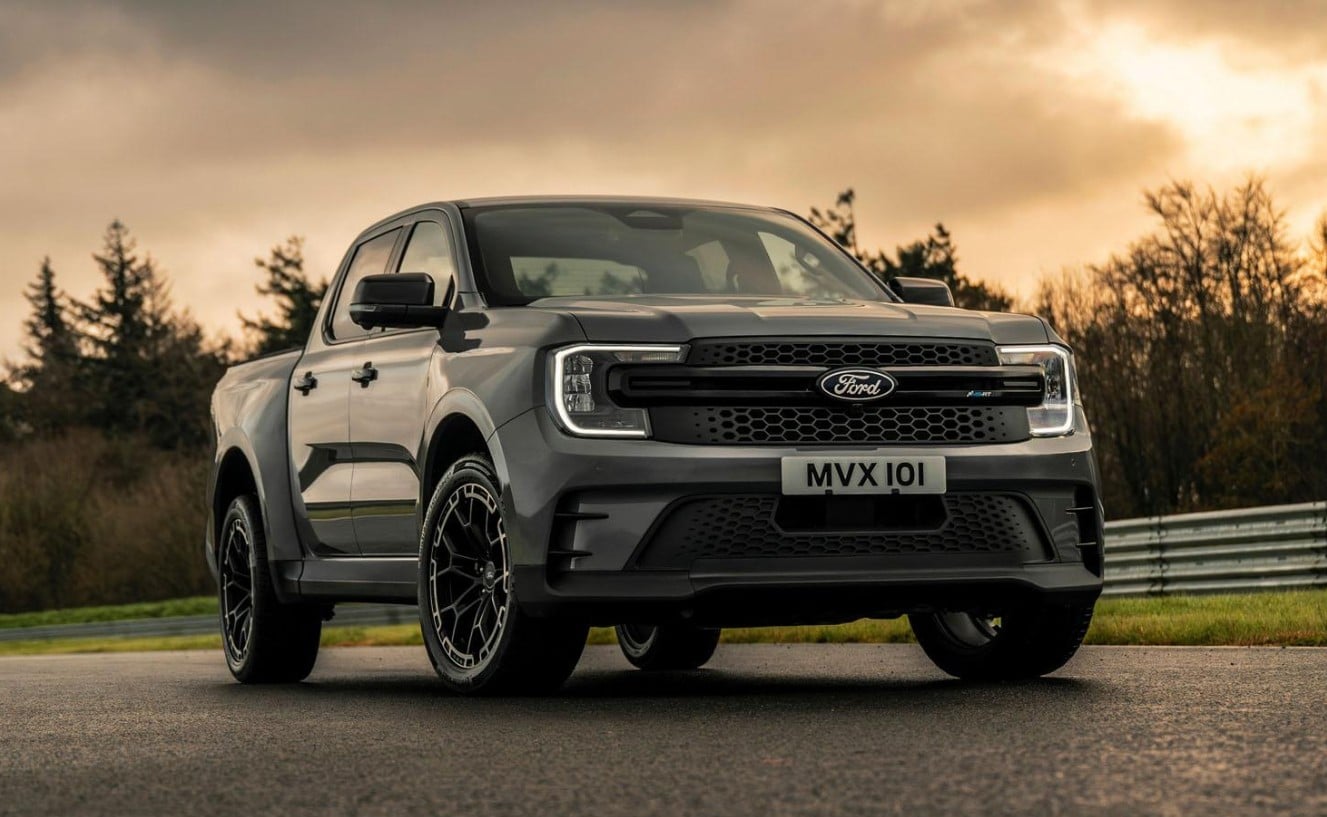
The Ranger MS-RT first appeared in 2021, with the current generation arriving in European markets in 2024 (above).
Unlike the Ranger Raptor, which is engineered primarily for high-speed off-road driving, the MS-RT takes a more road-oriented approach.
Based on the Ranger Wildtrak, the existing model features wider wheel arches, a distinctive honeycomb grille, deeper front bumper with integrated splitter, and 21-inch diamond-cut alloy wheels.
A rear lip spoiler and diffuser-style bumper complete the appearance, while a wider track, larger tyres and suspension lowered by 40mm give it a noticeably different stance from the standard Ranger.
Despite its motorsport-inspired styling, the diesel MS-RT retains the Wildtrak’s familiar 3.0-litre turbocharged V6, producing 177kW and 600Nm through a 10-speed automatic transmission.
That means it offers no substantial increase in engine performance over the regular model, with its appeal resting largely on its appearance and road-focused chassis changes.
In Britain, the existing diesel MS-RT costs just over £52,000 (approximately A$100,000) before VAT, approximately £6000 (approximately A$11,500) more than the equivalent Wildtrak.
However, Australian buyers hoping to purchase one remain out of luck.
Earlier reports suggested Ford was considering introducing the MS-RT locally, but the model has never joined the Australian Ranger range, and no launch has been announced.
Whether the latest version brings more substantial mechanical upgrades remains to be seen.
For now, the MS-RT offers European Ranger buyers an alternative to the Raptor, prioritising distinctive styling and sealed-road driving over serious off-road capability.
Former Wheels deputy editor Jesse Taylor grew up in the shadow of Mount Panorama, so ‘Bathurst Tragic’ was an inescapable affliction. Just the bloke, then, to plunder the archives and trawl the memory bank to assemble, in no particular order, our 50 most memorable ‘Great Race’ moments.
First published in the October 2010 issue of Wheels magazine, Australia’s best car mag since 1953. Subscribe here and gain access to 12 issues for $109 plus online access to every Wheels issue since 1953.
01. BROCK STAR
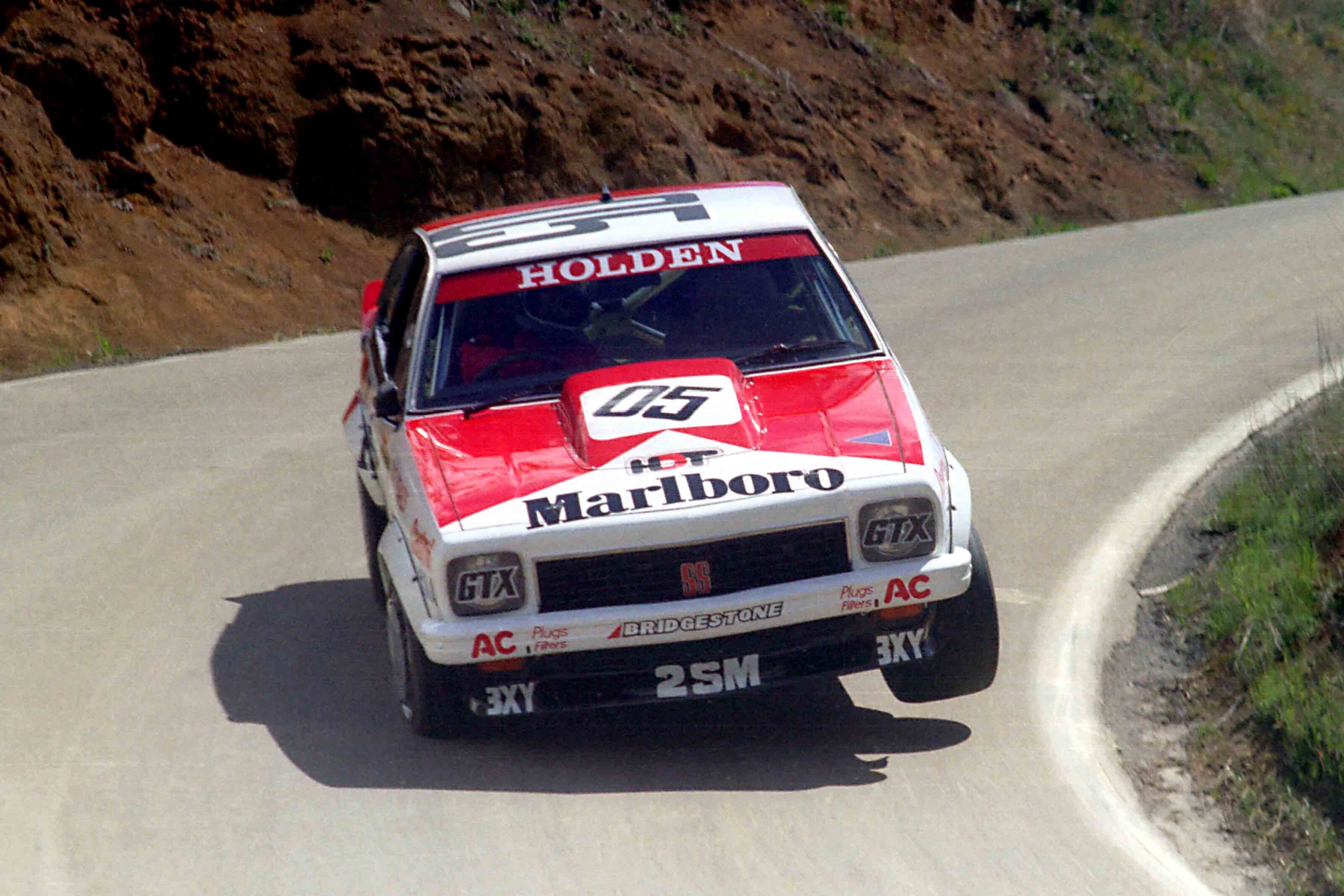
1979 – Peter Brock was never more ‘perfect’ than in 1979. He puts his A9X on pole, despite fumbling with a pack of Marlboros that had popped out of his race suit. In the race, Brock leads the opening lap by three seconds and is never headed. By lap 130, the 05 A9X leads by four laps with Brock setting the lap record on the last lap, taking the flag six laps in front of the Perkins/Janson A9X.
02. FALCON ONE-TWO PUNCH
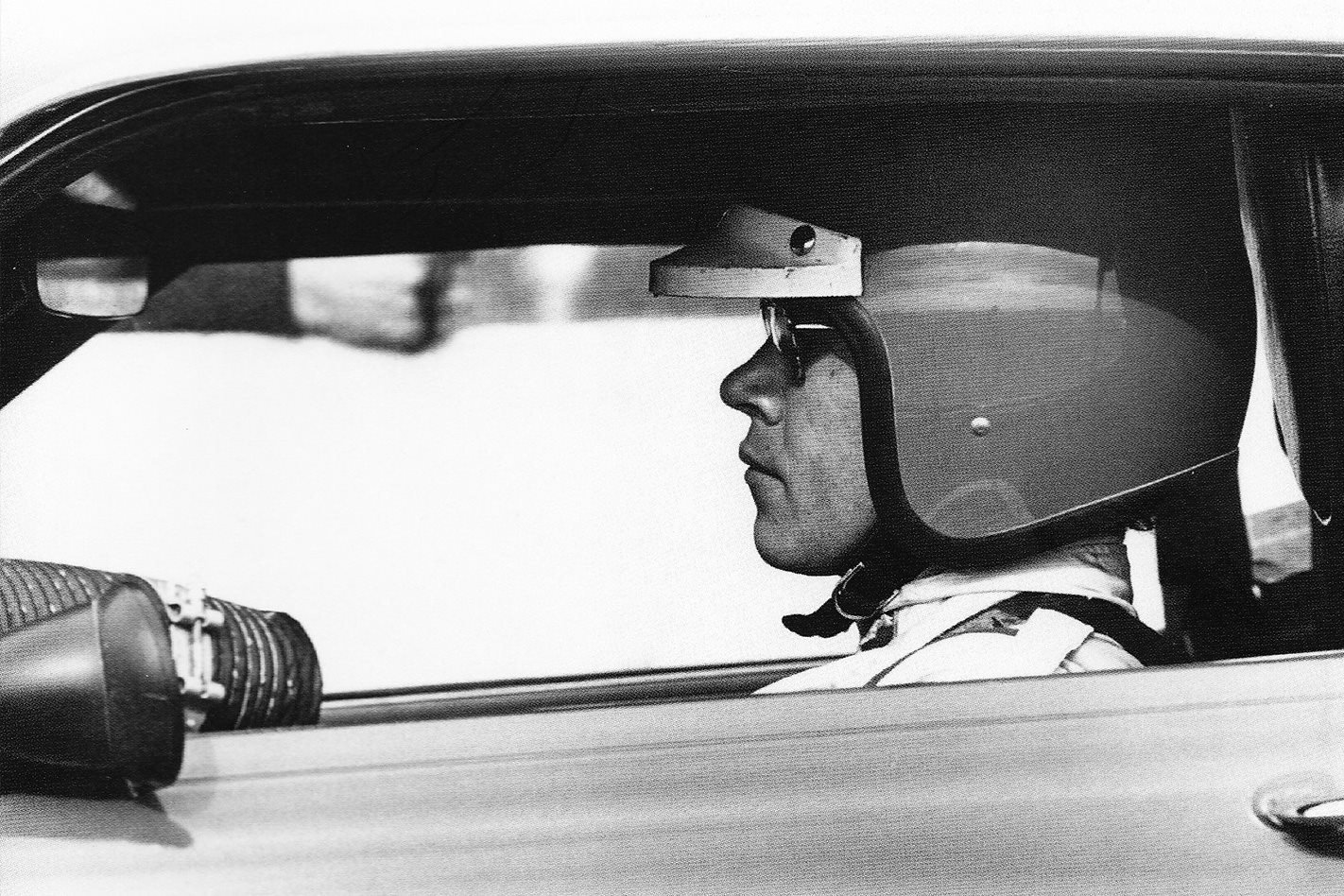
1977 – The footage is trotted out every year, but controversy surrounds the famous Moffat/Bond one-two win in Falcon hardtops. The lead car of Moffat and Le Mans legend Jacky Ickx develops brake problems and could fall prey to the sister car of Colin Bond and Alan Hamilton. But Moffat (pictured above) is lead driver and legendary American team boss Carroll Smith orders Bond to stay behind.
03. PACK MENTALITY
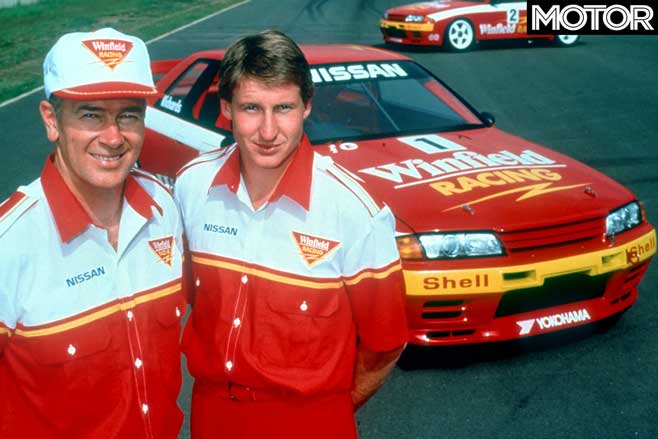
1992 – Jim Richards makes one of the biggest calls in Australian sporting history when he labels the booing crowd “a pack of arseholes”. Emotions are high as the race is stopped on lap 143 after the Richards/Skaife Nissan GT-R (pictured above) has already crashed. Richards’ nerves are raw as he takes the podium because fellow Kiwi and mate Denny Hulme had suffered a fatal heart attack during the race.
04. ROCK BREAKS DICK
1980 – Dick Johnson’s Tru-Blu XD Falcon storms into the lead from second on the grid, pulling away each lap. But on lap 17 the XD hits a 50kg rock on the exit of The Cutting. The impact destroys both left-side wheels, tears the suspension apart, and fires the XD into the wall. The public donates $36,000 to a distraught Johnson, a figure matched by Ford Australia.
05. PUSH AND SHOVE
1973 – After his solo win the previous year, Brock teams up with veteran Doug Chivas. Following team orders to stretch the fuel economy advantage over the faster V8 Falcons, Chivas runs dry in the leading XU-1 on the approach to Murray’s Corner. After trying to drive the car on the starter motor, the diminutive Chivas is forced to push the Torana up pit lane. A frantic Brock and pit crew urge him on but the delay gifts Moffat the win.
06. DAVID V GOLIATH
1972 – Held in the shadow of the ‘Supercar Scare’, the ’72 race is the last over the imperial 500 miles and the last for solo drivers. Of course the race is remembered as the first of Peter Brock’s nine wins. Driving the second of Harry Firth’s Holden Dealer Team Torana XU-1s (Colin Bond is team leader), Brock’s cause is greatly helped by near-constant rain. The nimble six-cylinder Torana finishes a lap up on the John French GT-HO.
07. LAP OF A GOD
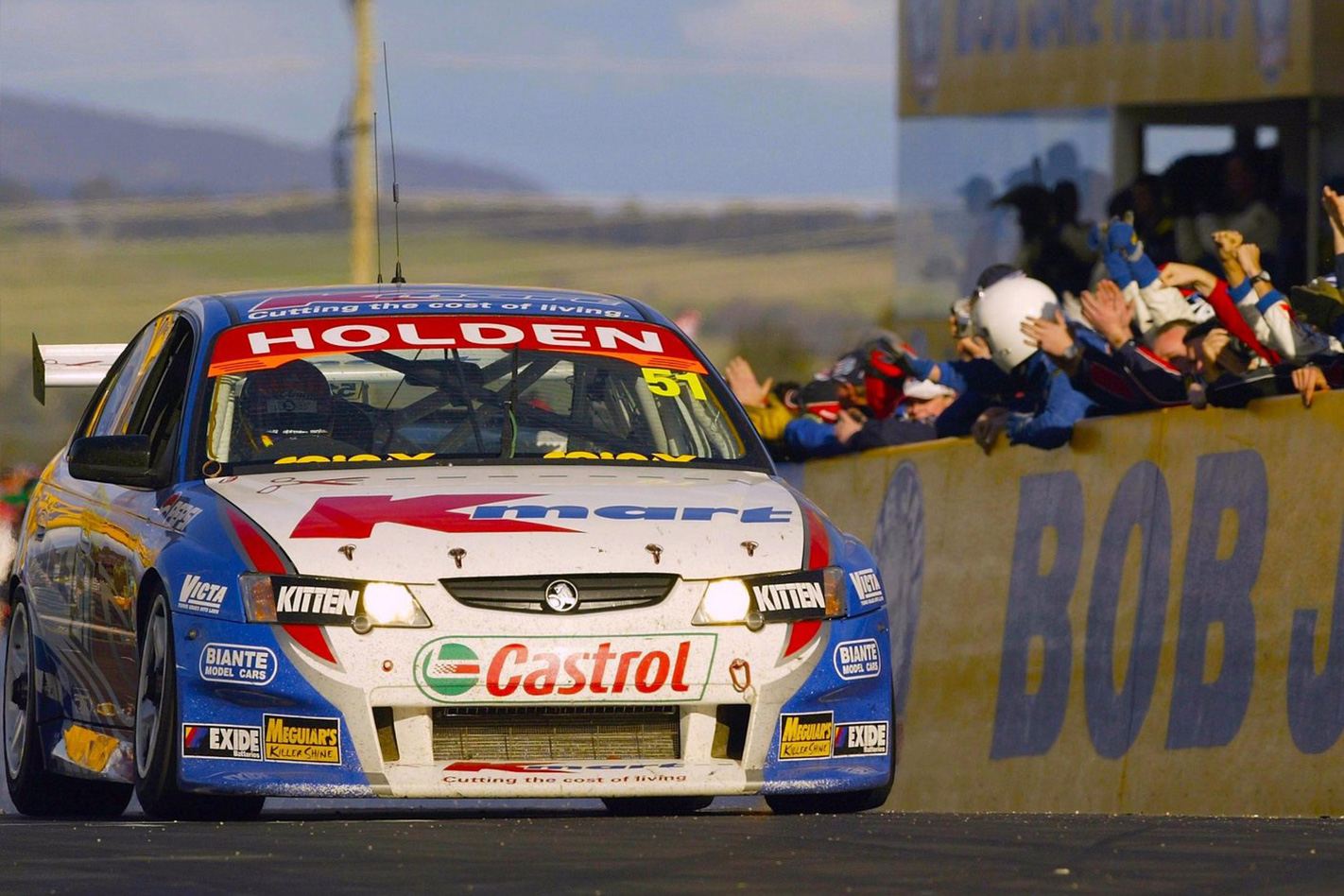
2003 – Greg Murphy’s 2:06.8594 pole position lap breaks the 32-year-old circuit record (set on the shorter, Chase-less version of The Mount) by Neil Allen in a McLaren Formula 5000. And Murphy says it wasn’t a perfect lap, “I wrong-slotted a gear and went from second to first instead of third”.
08. BROCK SWITCHES
1983 – Brock switches mid-race from expired 05 into 25 sister car. In the process he kicks out brother Phil with history recording the victors as Peter Brock, Larry Perkins and John Harvey (Harvey’s only win at Bathurst). Second-place Mazda pilot Moffat (who started in 14th) famously moans, “it took two cars to beat me today.”

09. SETON’S HEARTBREAK
1995 – On the 30th anniversary of his father’s win, Glenn Seton’s (pictured) Bathurst dream ends nine laps from the end when a $5 valve spring fails while he’s in the lead. In the greatest comeback in Bathurst history, the race is won by Perkins/Ingall despite dropping a lap after a startline touch with Craig Lowndes. Channel Seven’s Mike Raymond suggests that Perkins’ “lights-ablaze” VR scared Seto’s Falcon to death.
10. THE JAMES HARDIE 740
1981 – The first of only two great races that don’t go the full distance, the ’81 race stops on lap 120 when Bob Morris and Christine Gibson trigger a multi-car pile-up, blocking the circuit at McPhillamy Park. It’s the first of Dick Johnson’s three wins and the start of a trend where he never takes the chequered flag at Bathurst (John Bowe is driving at the finish of both the ’89 and ’94 wins).
11. BIG-BANG FINALE
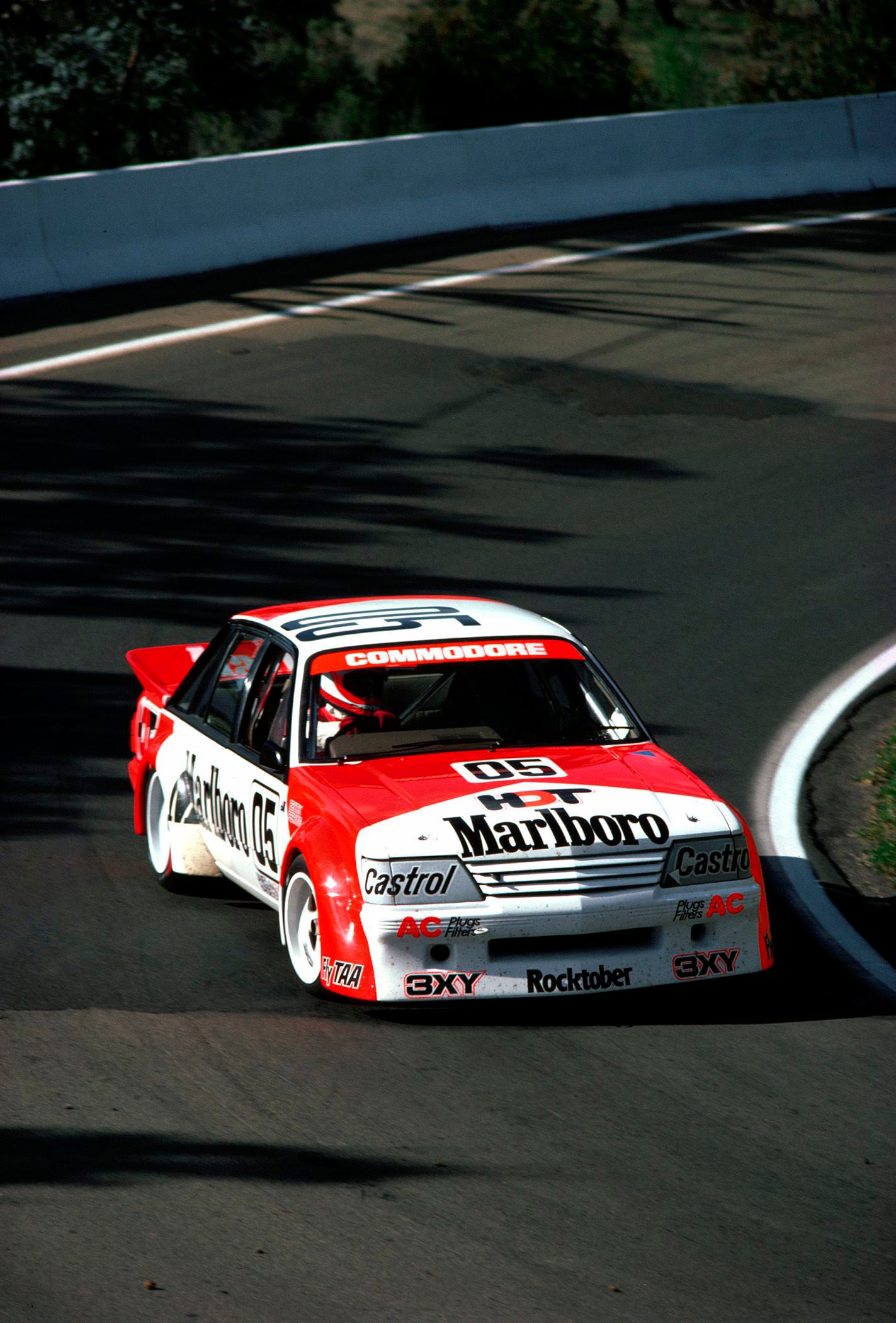
1984 – For Bathurst’s last Group C race, Brock rolls out the best-looking Aussie race car of all time (arguments to the usual address). The day-glo VK (pictured above) qualifies second but gets the jump at the re-start (see below) and is never headed, giving Brock his sixth win in seven years. With the Harvey/Parsons car in second (two laps down) Holden finally gets its one-two to counter Ford’s from seven years earlier.
12. START-STOP TECHNOLOGY
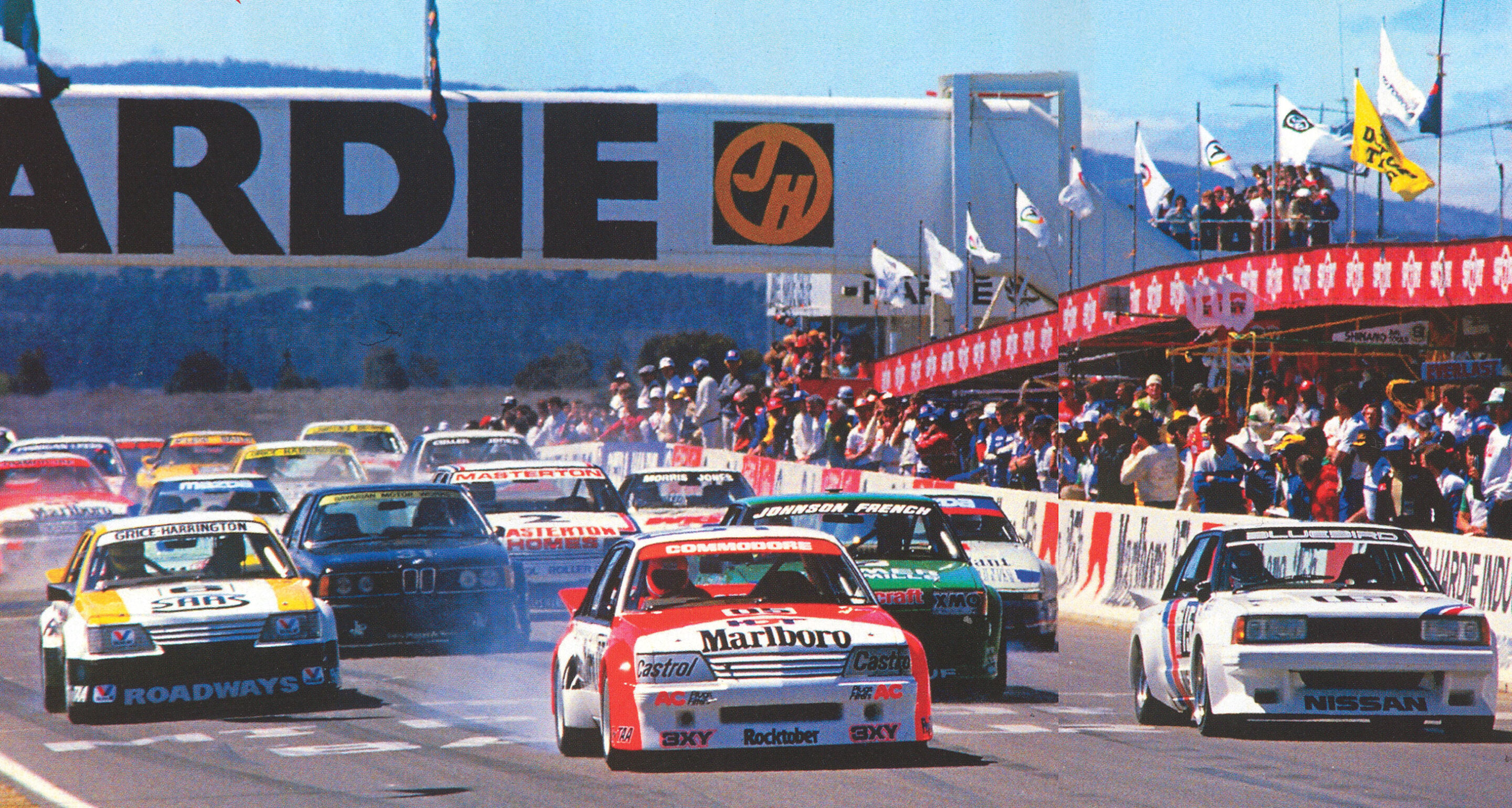
1984 – George Fury puts his Bluebird (pictured right, above) on pole in a time of 2:13.850 (a record for touring cars on the old circuit configuration). At the start Tom Walkinshaw tears the centre out of his Jaguar’s clutch and is freckle-punched by John Tesoriero’s Camaro who then biffs into Peter Williamson’s Supra, blocking the start line for the remaining 13 cars.
13. CALL IT LIKE IT IS
Doug Mulray got plenty of mileage from the brothel-sponsored Daily Planet Commodore. It was a “cock-up” when it caught fire, but when it crashed, Mulray said on air, “The girls in Melbourne will be working hard tonight”. But you’ve got to feel for Neil Crompton, arguably the best motorsport commentator in the biz, when he threw to a break in 2008 with the classic YouTube line, “When the big c##ts, ah, big guns come out”.

14. JAMIE WHINCUP’S FUEL FAIL
The 2014 great race was shaping up to be a belter, as young Ford hopeful Chaz Mostert carved his way back to the front after a fraught day – but Holden’s Jamie Whincup was playing the fuel card strategy, saving like crazy to avoid a final fuel stop. Even though his Triple Eight team were virtually begging him to pit with a handful of laps to run, the seven-time champ ignored the calls, racing Mostert until his Commodore spluttered with a lap to go. Mostert would go on to win his first Bathurst with veteran Paul Morris.
15. ROLLING THUNDER
1971 – In 1969 and ’71 Bill Brown makes a habit of rolling GT-HO Falcons. In ’69 Brown’s opening lap rollover triggers a pile-up that takes out a quarter of the field. Words cannot describe Brown’s 1971 roll along the fence at Skyline so fire up YouTube. The wooden fence cuts the Falcon in half just behind Brown’s head but he escapes with a black eye and mild concussion. The unknown flag marshal walks away without a scratch.
16. JOHN GOSS SPECIAL
1974 – If you’re unkind, you can say that privateer John Goss, co-driving with Kevin Bartlett, takes his first win by default. It’s true Moffat, in the Brut 33 Falcon hardtop, has a shocker in the race and Brock has it shot to bits, leading by six laps only for the engine oil pump to go bang. But the Goss/Bartlett Falcon fights atrocious conditions, even getting caught on slicks during a downpour, but is there when it counts.
17. GRICE GETS HIS WIN
1986 – Before Seton, Allan Grice was the unluckiest Bathurst driver, but he finally gets his win in the Chickadee VK with chicken farmer Graeme Bailey (Grice wins again in ’90). The win isn’t without drama as the Commodore suffers a major oil leak and Bailey has a spin. The bearded bloodnut achieves a unique double in practice, recording the first 100mph lap in a Group A car (something Grice did in his 1982 Group C VH).
18. FIRST GROUP A RACE
1985 – Led by Scot Tom Walkinshaw’s three-car Jaguar team, the foreigners show up in force for the first Group A race. Of the six drivers on the podium, only race winner John Goss (teamed with German Armin Hahne in one of the Jags) is Australian. Brock chases hard in the dying laps, stopping to have his rear window kicked out, but his VK expires three laps from the finish with a broken timing chain.
19. CONQUERING COOPERS
1966 – In the most dominant display by a single model, Minis take the first nine places of the Gallaher 500, led by Bob Holden and Rauno Aaltonen. It will be 19 years before another British car (Jaguar XJS) wins Bathurst and 22 years before another four-cylinder is victorious (turbocharged Ford Sierra). Brock’s 1979 six-lap demolition led the second most dominant single-model run, with the first eight places filled by A9X Toranas.
20. A LITTLE BIT FANCY
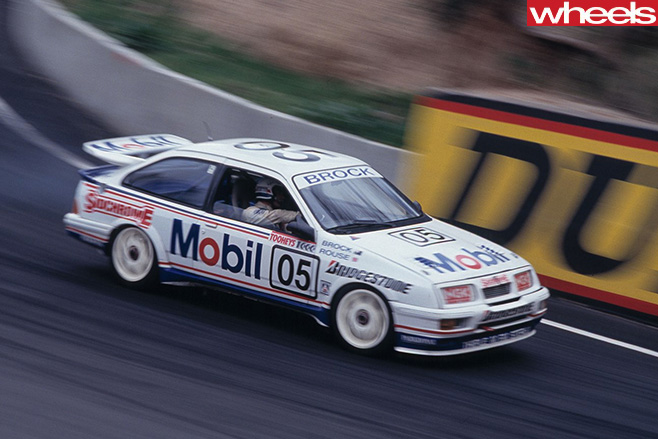
1989 – Brock switches camps to Ford and puts his Sierra on pole, but is later fined for unsportsmanlike conduct – he’d pointed the under-bonnet extinguisher at the intercooler during the Top 10 shoot-out. Johnson’s Sierra takes the lead from Brock on lap one and never relinquishes it. Greeting the flag, co-driver John Bowe exclaims with classic Tasmanian understatement, “Fancy doing that”.
21. THE LONG AND THE SHORT OF IT
1991 – This is one Bathurst record likely to stand forever. The Nissan GT-R of Richards/Skaife becomes the first Japanese car to win outright – and in a record time of 6 hours 19 minutes. While there are safety cars in 1991, they are not deployed with the frequency of today. A modern V8 Supercar is around six seconds per lap faster than the GT-R, but the average race time of the last five years is 6 hours 38 minutes.
22. AND THE WINNER IS…
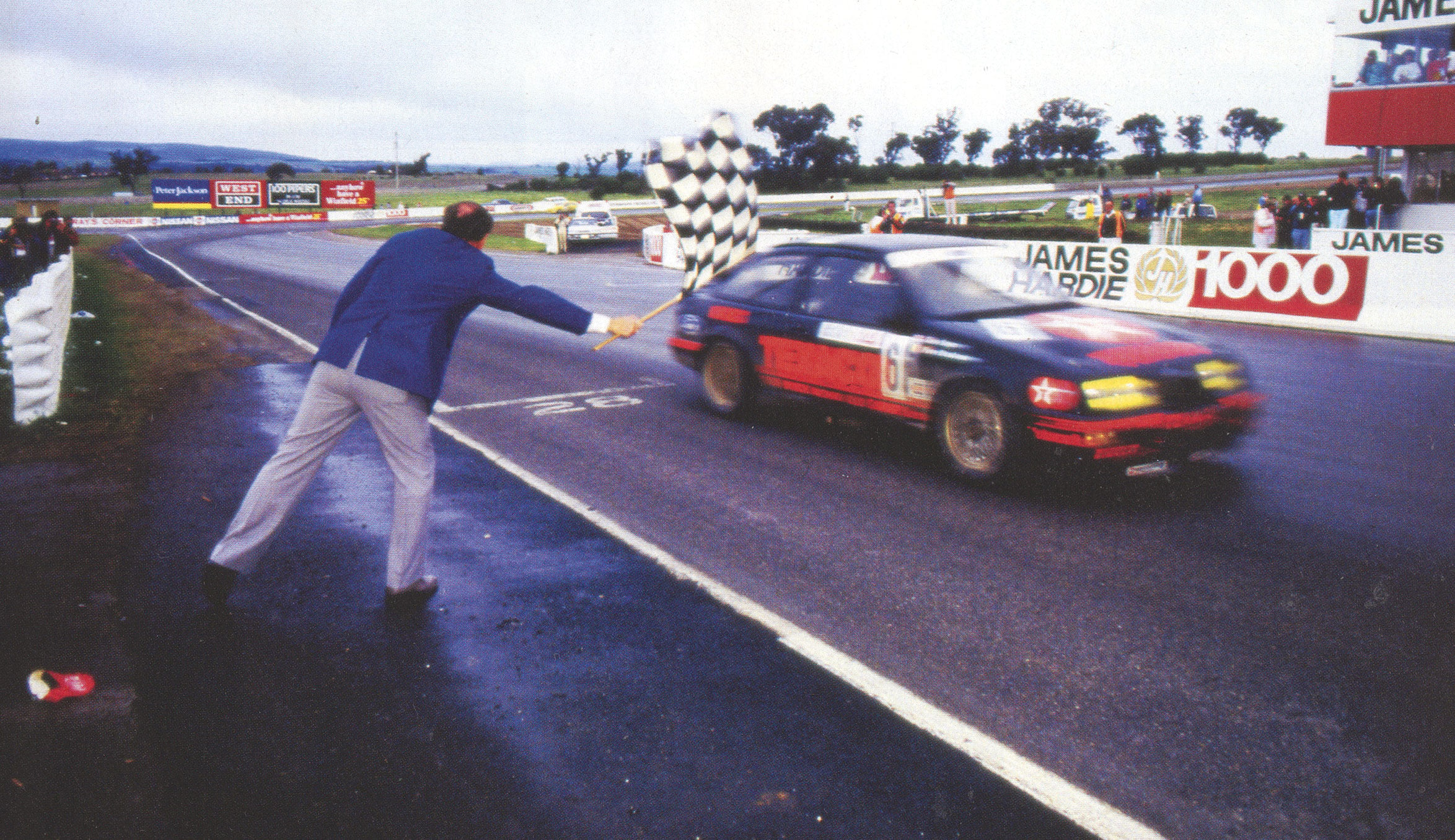
1987 – As a round of the World Touring Car Championship, Bathurst is dominated by the Swiss Texaco Sierras despite several protests about their legality. For the second time in his career, VL-driving Brock changes horses mid-race but finishes third, five laps down. The crowd believes Brock is the rightful winner, something confirmed on March 14, 1988 – 162 days after the Texaco cars crossed one-two. It’s Brock’s ninth and final win.
23. NKOTB
1994 – Twenty-year-old rookie Craig Lowndes carves the first notch on his Bathurst belt. Paired with Brad Jones, the Lowndes VP qualifies in seventh and circulates at the pointy end all day. On lap 148, in one of the greatest passes seen at The Mount, Lowndes takes the lead from John Bowe on the outside of Repco Bend. Bowe gets him back two laps later when Lowndes is baulked by the Fahey/Cribbin VL at Murray’s Corner, and goes on to win.
24. PACING PHASE
1971 – Allan Moffat leads a Phase III whitewash of the podium, paying Holden back for its 1968 clean sweep. Moffat’s pole time is an incredible 10 seconds quicker than his effort the year before in the Phase II. The Ford-driving Canadian leads all day, but is forced to make an unscheduled stop to remove a beer carton from the radiator.
25. V8S RULE
1967 & ’68 – The beginning of the Ford v Holden V8 rivalry. Harry Firth and Fred Gibson take the ’67 race in Australia’s first muscle car, Ford’s XR GT. Holden responds the following year, filling the podium with its Monaro GTS 327. Of the 47 Bathurst enduros, 37 have been won by V8 models, six by four-pots, three by sixes and one by a V12. V8s have powered all but one of Holden’s 26 wins, and 12 of Ford’s 17 victories.
26. OLD-SCHOOL LARRY
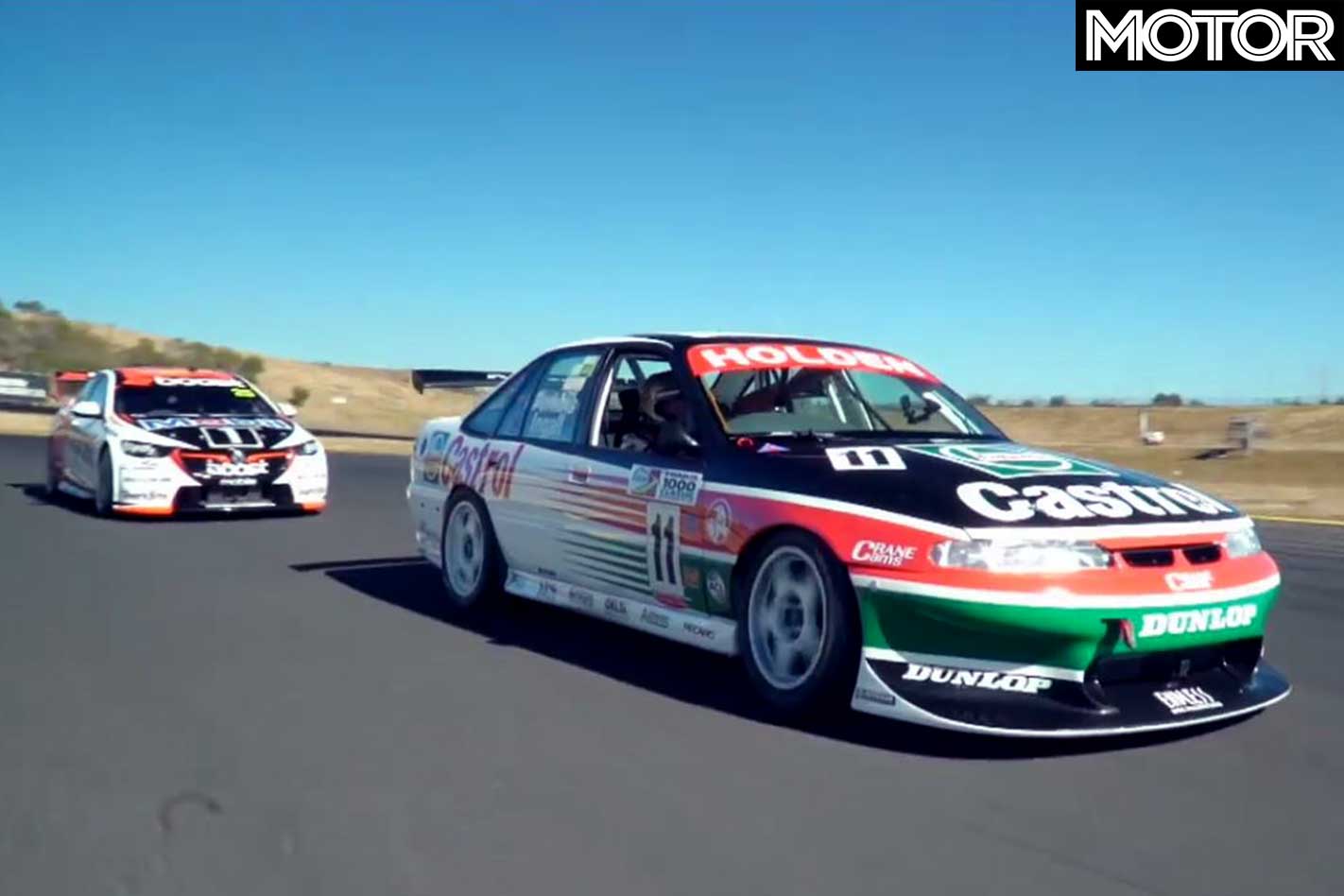
1992 – Larry Perkins (pictured above in the Commodore he took to victory in Bathurst in 1997) puts a four-year-old Walkinshaw on the front row beside the pole-sitting Sierra of Johnson/Bowe and ahead of the winning GT-R. Tony Longhurst uses Perkins for a tow and qualifies his underpowered BMW M3 in fifth (dropping to ninth in the Top 10 shoot-out). In 1996, a year after winning in a VR Commodore, Perkins brings an older VP to The Mount and finishes sixth.
27. SHIFTING SPANNER
1986 – Engineering brothers Graham and John Lusty get lateral when the shifter in their VK Commodore busts. The crafty crew fashions a gearlever from a set of vice-grips. Having started in 37th position, the brothers storm home in 15th, only one place behind their best-ever result. Nowadays the vice-grips are back in the brothers’ business building bulk haulage trailers.
28. THE GREAT RACE
Larry Perkins won six times at The Mount but never troubled the engravers for a touring car title. In fact, he won only eight other ATCC/V8 Supercar non-enduro races. Brock won nine times at both Sandown and Bathurst, but only three ATCC crowns. A similar syndrome applied to the race cars; Commodore dominated Bathurst, winning seven times from 1980-’90, but only took the ATCC title once in the same period (with Brock, in 1980.)
29. WEIRD SPONSORS INC
As touring car racing in Australia has become more professional, the variety and sheer weirdness of sponsors has disappeared from the grid. The 1980s was the high point, with such gems as the Wang Computers Jaguar XJS, OXO Supercube Sierra, Peanut Slab Sierra, Daily Planet VL Walkinshaw, Mistic Mould Destroyer VL and the Ray Ellis VK Commodore with an original Pro Hart painting on the bonnet.
30. FEEL LIKE A TOOHEYS
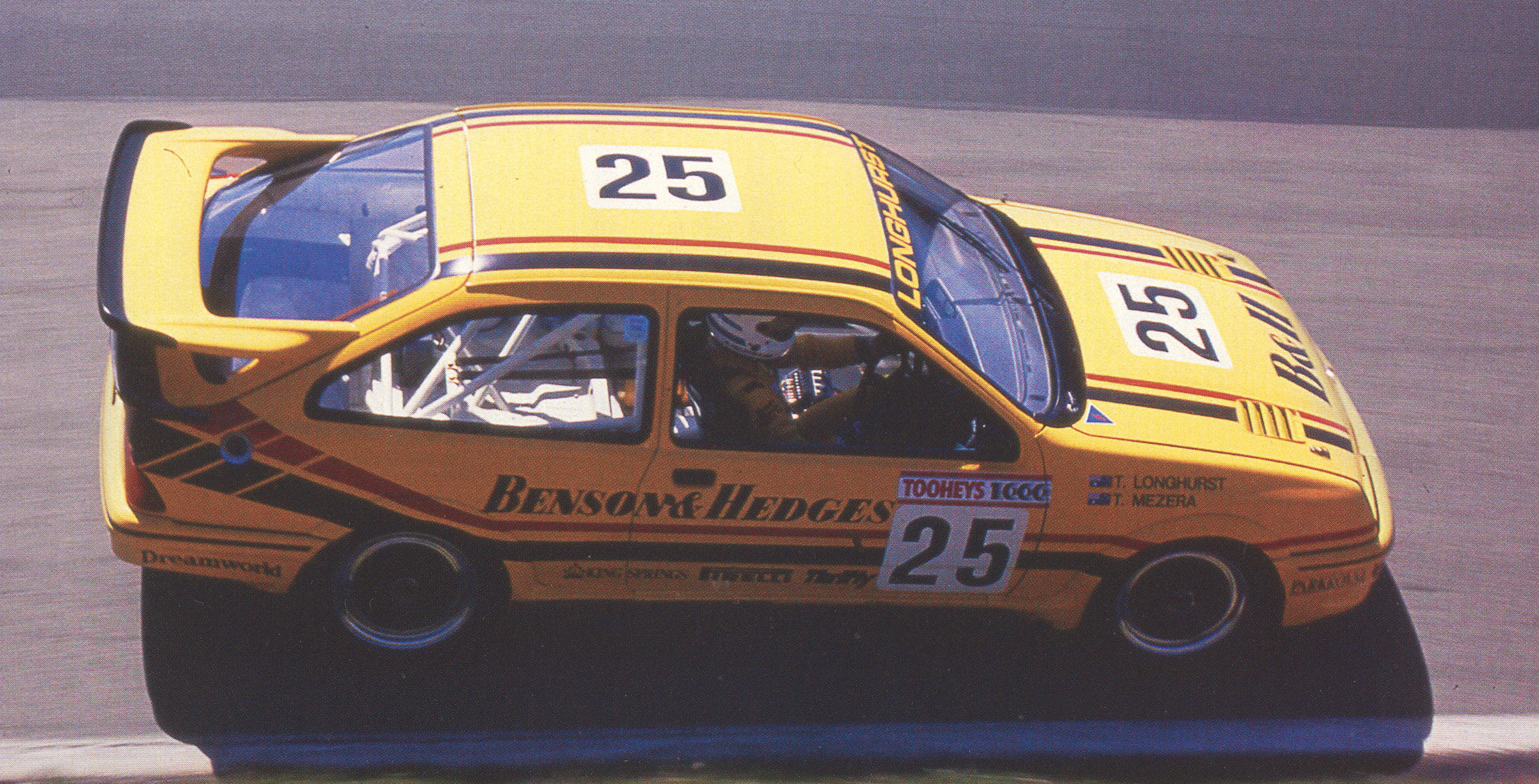
1988 – In response to the protest debacle of ’87 (see item 22), James Hardie withdraws its 20-year sponsorship; Tooheys jumps on board for the next eight years. It’s the one and only rolling start of the Great Race, with Tony Longhurst (pictured above) and Tomas Mezera taking a surprise win. After falling out with Holden, Brock reunites with Jim Richards in a BMW M3 but because of capacity regs/numbering system, Brock is forced to give up 05 and runs number 56.
31. GREEN STUFFED
1983 – Along with Bill Brown’s 1971 rollover, Johnson’s effort in the Hardies Heroes shootout ranks as the worst non-fatal accident at The Mount. Johnson and co-driver Kevin Bartlett grid up the following day in a car borrowed from another competitor but stuffed with DJR running gear. It DNF’d.
32. GREG’S GOTTA GO
2002 – Greg Murphy’s leading VX Commodore gets dropped off the jacks while the fuel rig is still plugged in. Murphy fires out of the pit box and the resultant fuel spill earns the fiery Kiwi a five-minute stop/go penalty. When Murph takes his stop on lap 61 he unbuckles and unzips to make the most of his five minutes. YouTube it to see the poor pit crew trying to tell him to get back in the car. Murph finished 13th.
33. SKAIFE & RICHO: LESS BUMMED
2002 – Ten years after being booed by the ‘pack of arseholes’, Skaife and Richards reunite in victory. This time the crowd cheers the HRT Commodore-driving pair. To their credit, some of the original pack did see the funny side of Richards’ 1992 comments; a popular T-shirt from 1993 proclaimed, ‘I’m an arsehole. Jim Richards told me’.
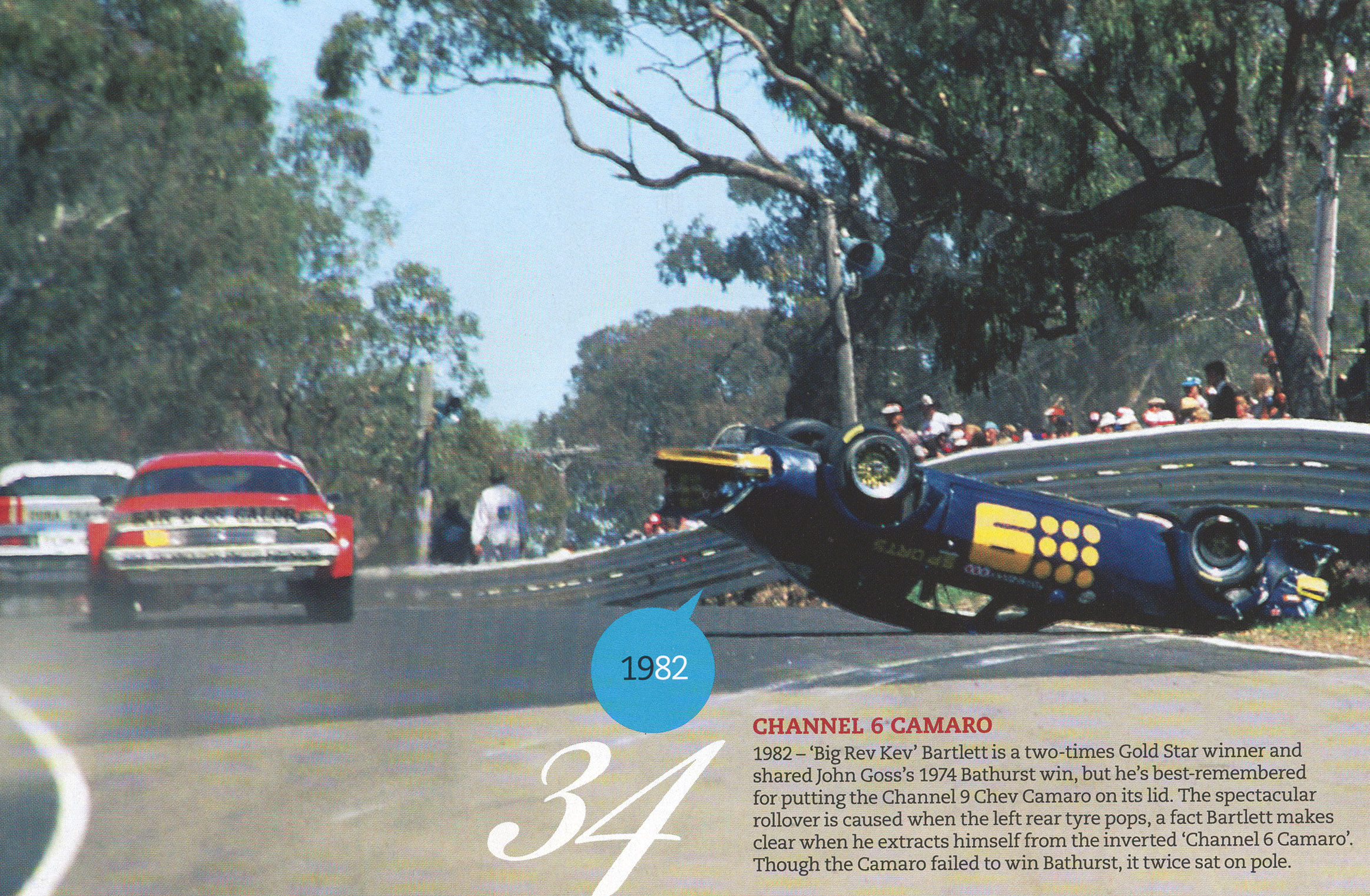
34. CHANNEL 6 CAMARO
1982 – ‘Big Rev Kev’ Bartlett is a two-times Gold Star winner and shared John Goss’s 1974 Bathurst win, but he’s best-remembered for putting the Channel 9 Chev Camaro on its lid. The spectacular rollover is caused when the left rear tyre pops, a fact Bartlett makes clear when he extracts himself from the inverted ‘Channel 6 Camaro’. Though the Camaro failed to win Bathurst, it twice sat on pole.
35. CATCHING HIS DRIFT
1986 – YouTube Gary Scott’s sensationally sideways lap as he puts his Skyline DR30 on pole. And as you watch, remember this model had v-a-g-u-e recirculating ball steering. The car finishes third the following day; the first time a Japanese or turbocharged car has run full race distance. Nissan will grab pole again in 1991, racking up wins in ’91 and ’92, along with three ATCC titles from 1990-’92.
36. UP IN SMOKE
1996 – The end of big-dollar cigarette sponsorship sees the former Peter Jackson team cheekily wear ‘Pack Leader’ livery for the 1996 race. Irony gets the last laugh, however, when the race-leading Alan Jones car catches fire after a fuel line comes adrift. Though the fire happened on lap 25, Jones was the only driver to have passed eventual race winner Lowndes.
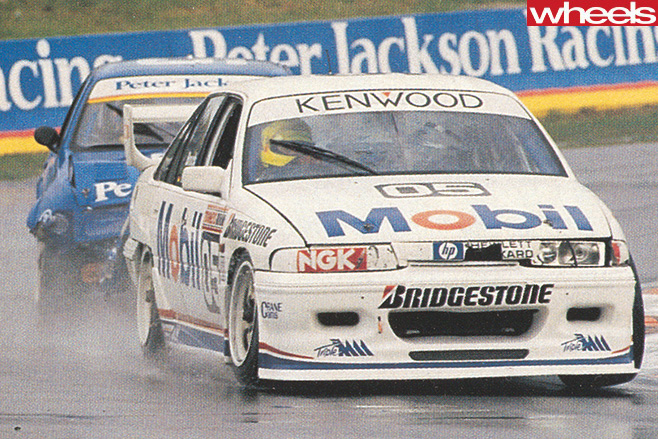
37. TAIL SPIN
1992 – Brock enters an older VN Group A for Andrew Miedecke and Troy Dunstan, and the newer VP for himself and German Manuel Reuter. The newer car uses a two-piece tailshaft for fewer vibrations, but guess which part snaps when Brock launches from eighth on the grid? Urban legend has it that a road car in the car park donates its tailshaft to get Brock back into the race. He finishes 27th, 25 laps down. The VN finishes 7th.
38. HARRY FIRTH & BOB JANE
1963 – After three years at Victoria’s Phillip Island, the ’63 Armstrong 500 moves to Mount Panorama where it’s won in 7 hours 47 minutes by the Harry Firth/Bob Jane Ford Cortina GT. If you include Jane’s two wins at Phillip Island, he’s the only driver to have won four Great Races in a row; beating the three of Brock/Richards, Brock/Perkins and Lowndes/Whincup.
39. ANIMAL INVASION
Over the years, horses, roos and dogs have all invaded the track. A dog is hit on Mountain Straight during practice for the 1987 race, but the only race fatality comes in 2004 when a roo destroys Jim Richards’ Commodore while the car is running seventh. A week before the 2009 race Bathurst City Council orders the culling of 140 roos.
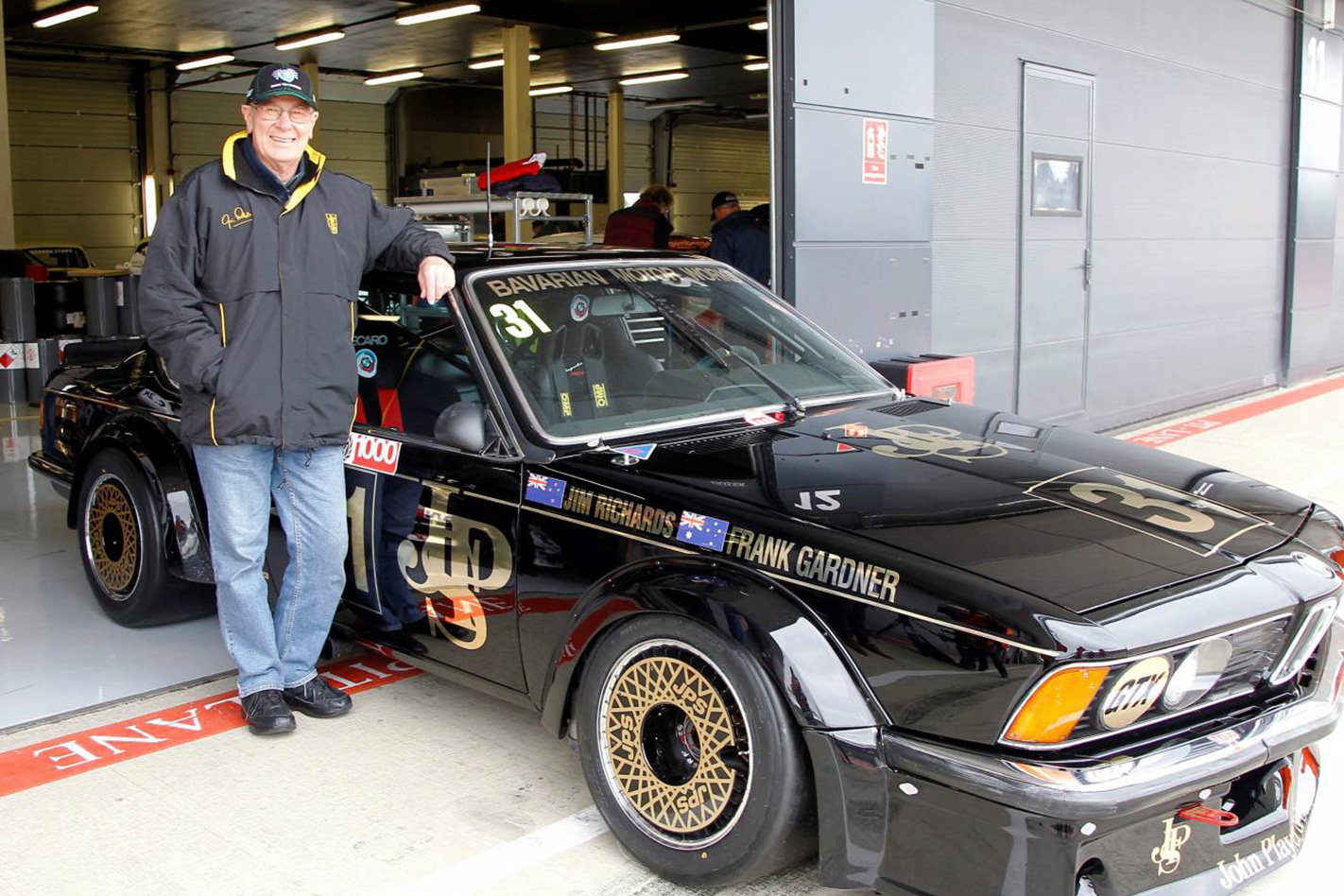
40. LOOKS BUT NO LUCK
1980-87 – The Frank Gardner-led JPS team turns out some of the best-looking race cars of the era (and they won the ’85 and ’87 ATCC) but luck is never on their side at Bathurst. In 1982, Gardner claims sabotage when fuel problems strike the team but the 1985 debacle is all their own doing. Richards and George Fury manage to stick both JPS BMWs into the same sand trap at Hell Corner … at the same time.
41. STIRLING’S EFFORT
1976 – 47-year-old Stirling Moss, the greatest driver to never win a Formula One title, comes out of retirement to race with triple world champion Jack Brabham. Moss has to get clearance from his insurers but the challenge doesn’t amount to much when Brabham stalls on the grid and is rear-ended by the Triumph Dolomite Sprint of John Dellaca and Kerry Wade.
42. MIKE BURGMANN
1986 – On lap six, Mike Burgmann’s VK Commodore passes Garry Willmington’s Jaguar XJS but the rear end gets light over Conrod’s second hump. Burgmann becomes the first fatality in the Great Race when his car slams into the base of the JPS bridge at over 200km/h. The Chase is added the following year, not because of this accident, but to gain FISA (now FIA) accreditation to host a round of the World Touring Car Championship.
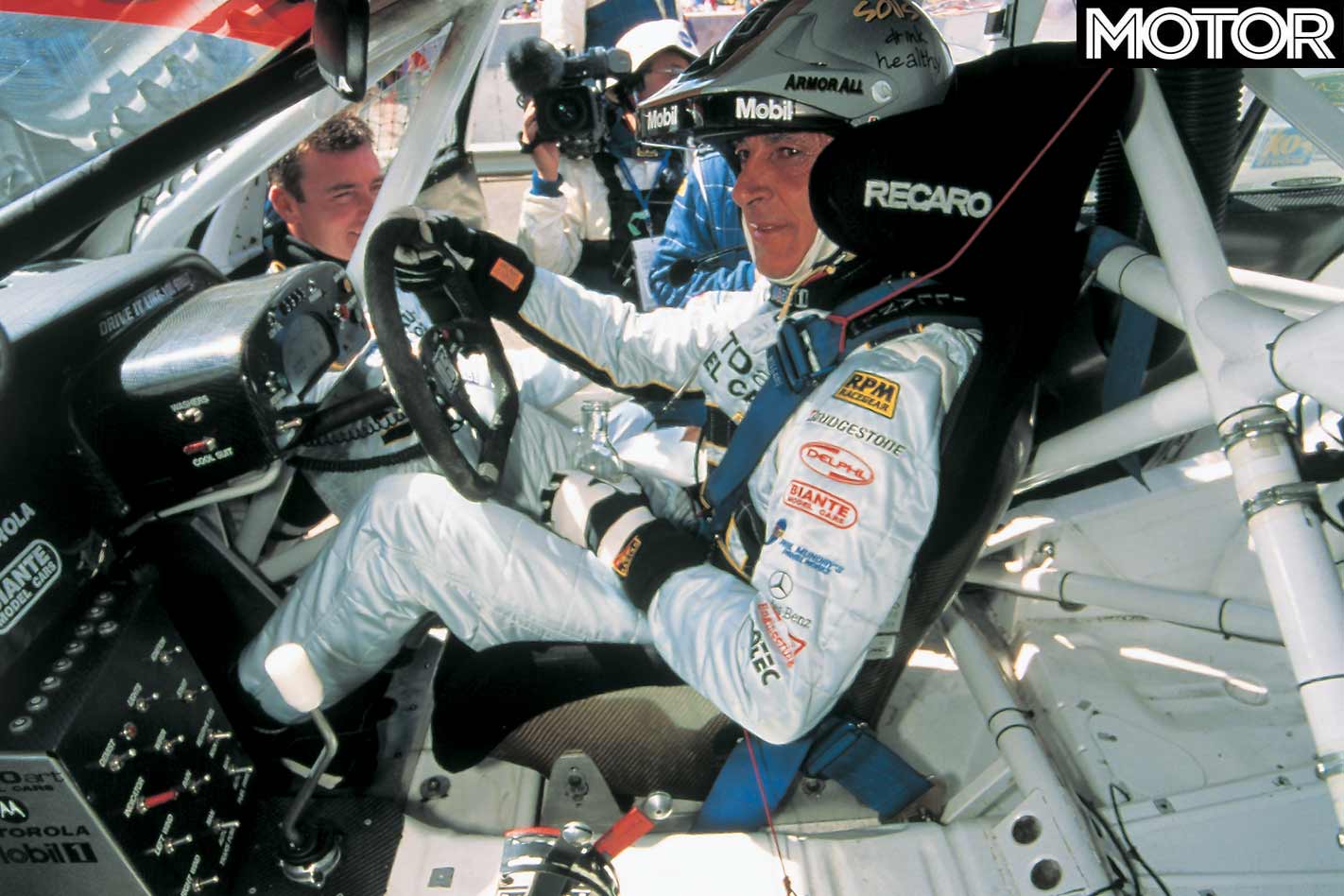
43. DREAM TEAM NIGHTMARE
1986 – Plenty of punters do their dough on the ‘sure bet’ dream-teaming of Brock and Moffat. In Friday practice Moffat puts 05 into the McPhillamy Park wall, causing Brock to miss Saturday’s Hardies Heroes shoot-out. But from 11th on the grid, Brock charges into second place by lap three. However, on lap 77, Moffat’s shocker continues when he tears the oil-cooler off the car on the pit lane kerbs. Brock fumes in the car as a lap is lost. He finishes fifth.
44. BAD NEWS BEAR
1992 – 56-year-old Kiwi Denny Hulme complains to his pit of blurred vision shortly before bouncing gently along the Conrod Straight wall. Urban legend claims Hulme’s last words to the first marshall on the scene were, “Don’t stop the race.” But most believe the 1967 F1 World Champion has died of a massive heart attack before the M3 stops.
45. NINE OUT OF 10
1994 – Whether Brock had the pace to catch Lowndes and Bowe will never be known, but he was trying hard for a 10th win when, on his 138th lap, he lost the back of his VP at McPhillamy Park. It was only the second time Brock had crashed out of the Great Race (in 1988 his BMW M3 hit a stray wheel on Conrod Straight).
46. BROCK FACTOR
2006 – Four weeks after Brock’s death, the heavy atmosphere descends farther when Mark Porter is killed in a support race. Lowndes’ win is emotion-charged, his voice breaking when he thanks his team as he takes the flag. It’s the start of a Brock-equalling three-year reign for Lowndes and Whincup (right, lifting the Peter Brock Trophy).
47. WET-WEATHER REIGN MEN
1987 – Huge downpour catches plenty off guard and on slick tyres. Fire up YouTube and watch a still-baby-faced Glenn Seton give a Skyline master class in car control (it’s a Wheels office favourite). Some bloke named Brock also proves a dab hand behind the wheel of his slick-shod VL Commodore.
48. ON A ROLL
1997 – As the fastest corner in Australian motorsport, The Chase has seen some huge accidents since its debut in 1987, but none funnier than Tomas Mezera’s rollover in the Bottle Magic Commodore. Nothing funny about the crash itself, but interviewed immediately afterwards, the uninjured and unintentionally hilarious Mezera states, “I was actually very happy when the car started to roll.”
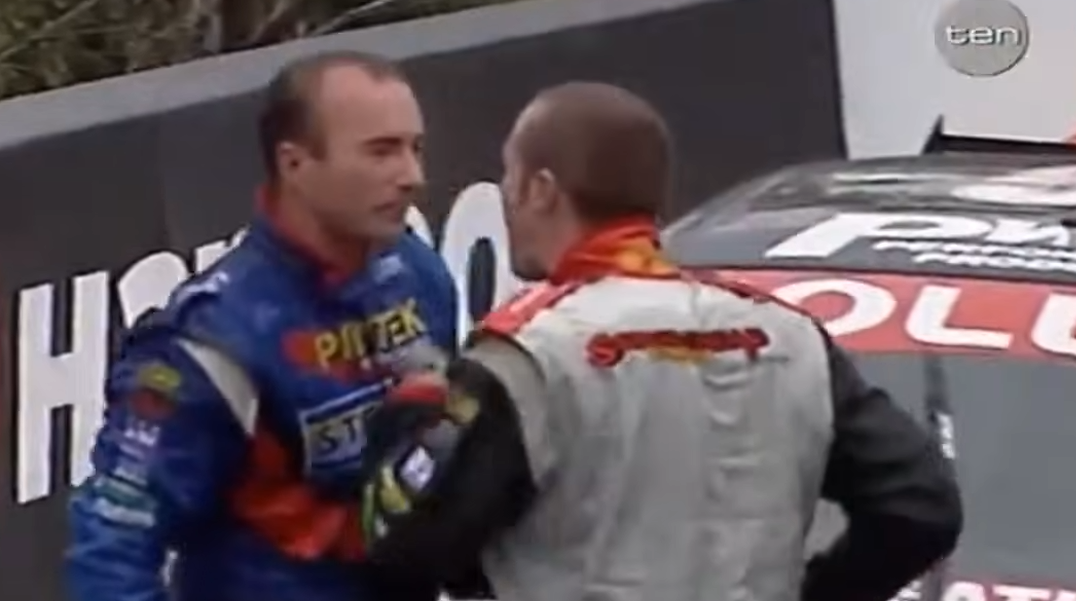
49. AMBROSE & MURPHY GO AT IT
2005 – On lap 144, Marcos Ambrose and Greg Murphy tangle at The Cutting, briefly blocking the circuit and almost triggering a red flag. NASCAR-bound Ambrose is two-time defending series champion and this loss of points gifts Russell Ingall the title. Meanwhile, Murphy is two-time defending Bathurst champ. No wonder they continue the argy bargy out of the car. Skaife goes on to win his fifth Bathurst.
50. GNAT’S NASTY
2009 – Safety cars cop the blame for ruining the racing, but the top 12 cars across the line are separated by just 13 seconds, all thanks to a SC intervention that bunches up the field for the run to the flag. And the winning Garth Tander/Will Davison HRT VE flashes across the finish line just 0.7599 seconds ahead of the Jason Richards/Cam McConville Team BOC car. It’s the closest non-staged finish in Bathurst history.
The current-generation Honda HR-V has always been one of the more well-rounded members of the small SUV class, reinforced by the fact it won the Wheels Best Small SUV 2026 title earlier this year. It doesn’t chase enormous screens, huge power outputs or bargain-basement pricing, instead relying on clever packaging, solid driving manners and Honda’s excellent e:HEV hybrid system. Now the new RS flagship is carrying that flame.
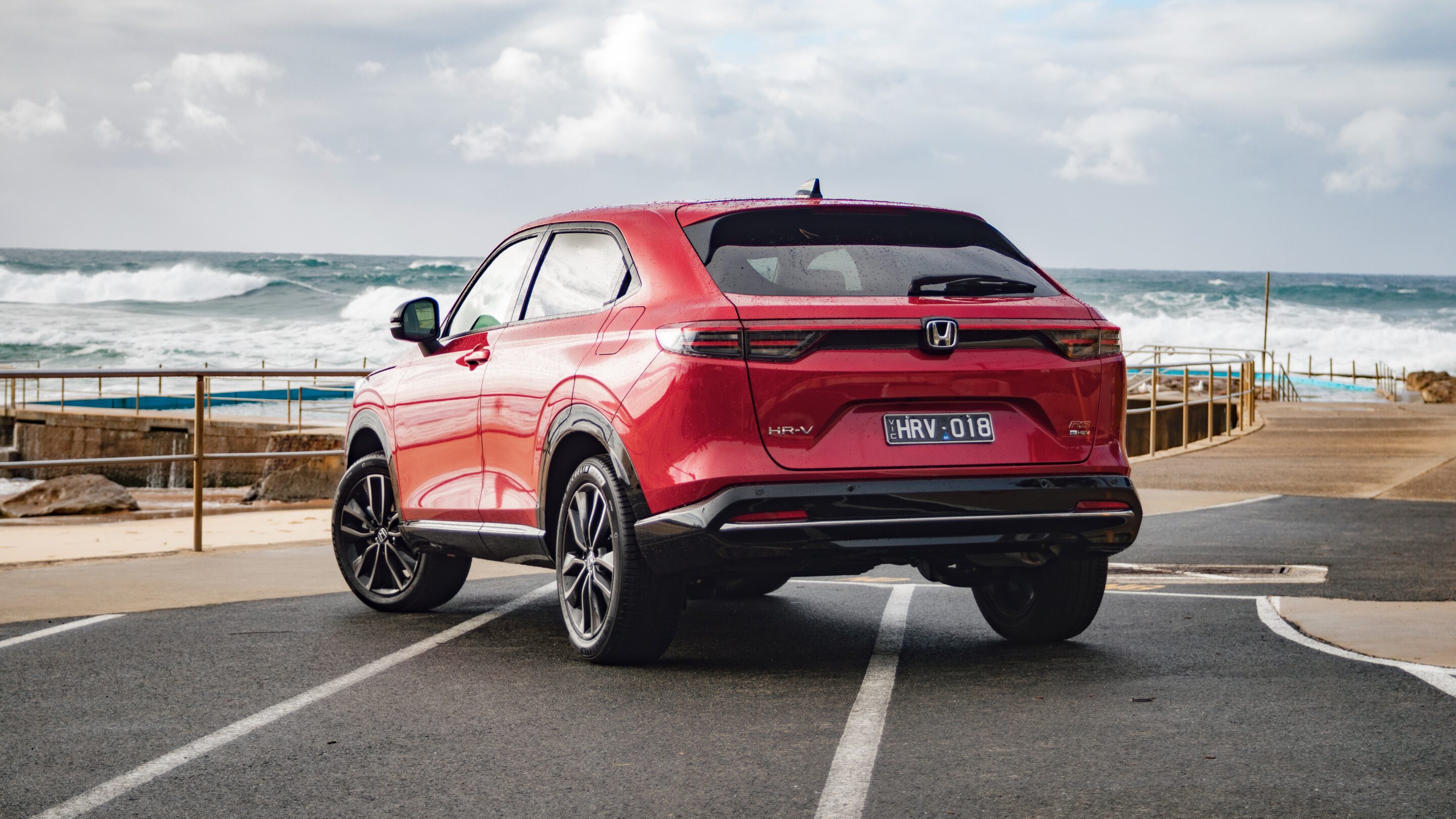
RS badges have traditionally suggested something a little sportier in Honda-speak, but don’t expect a Civic Type R SUV here. The changes are all cosmetic with black exterior detailing, unique 18-inch wheels and a more colourful cabin – while leaving the familiar hybrid drivetrain untouched.
At $44,400 driveaway, it’s also the most expensive HR-V you can buy. So does the extra attitude make Honda’s smallest SUV more appealing?
How much does the Honda HR-V e:HEV RS cost to buy?
The HR-V e:HEV RS is priced from $44,400 drive-away, placing it $1500 above the e:HEV L, $4500 above the entry hybrid e:HEV X and $11,500 above the entry petrol Vi X. As pointed out above, if you’re expecting changes under the bonnet, you may be disappointed as the RS makeover is purely visual.
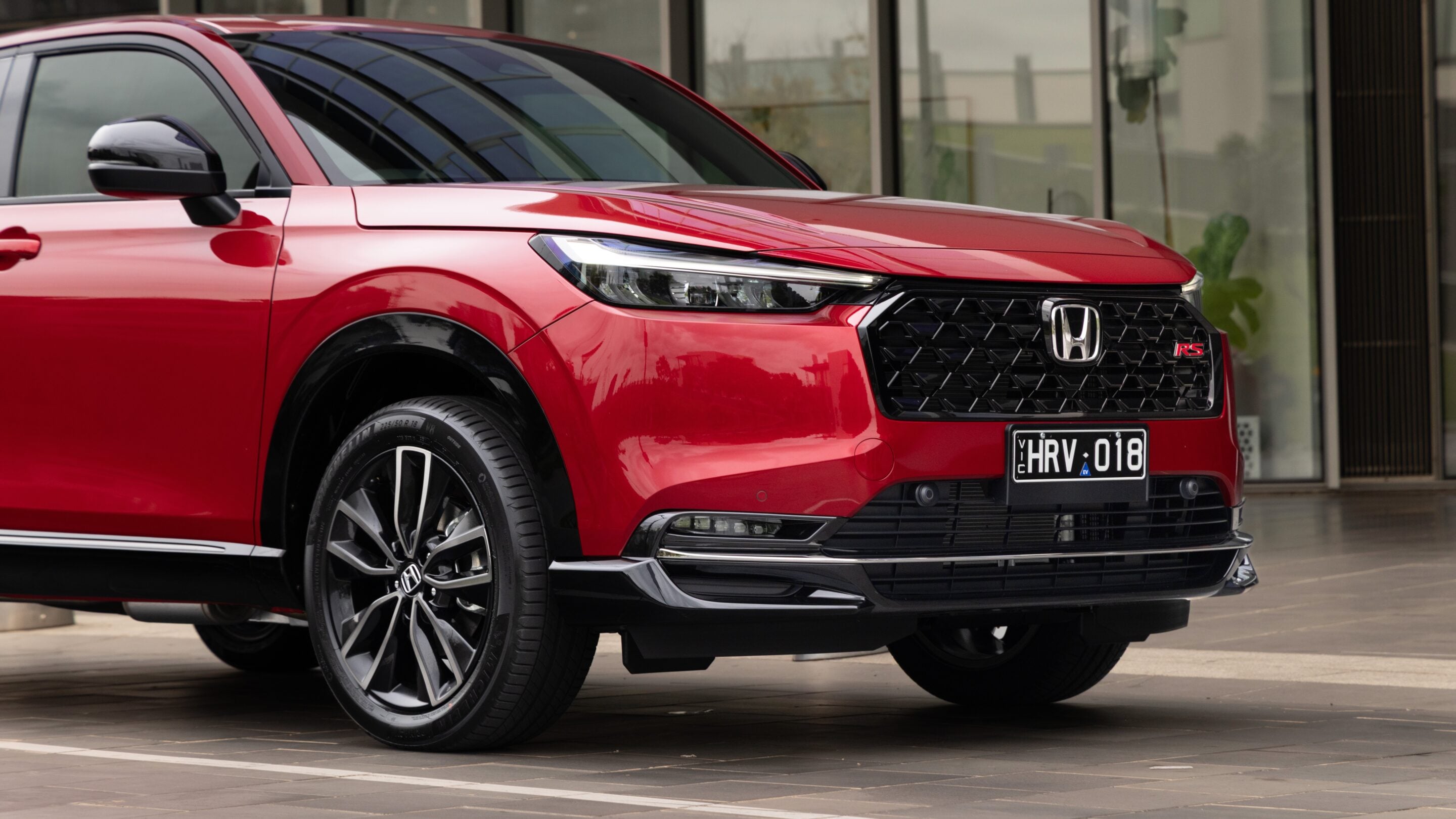
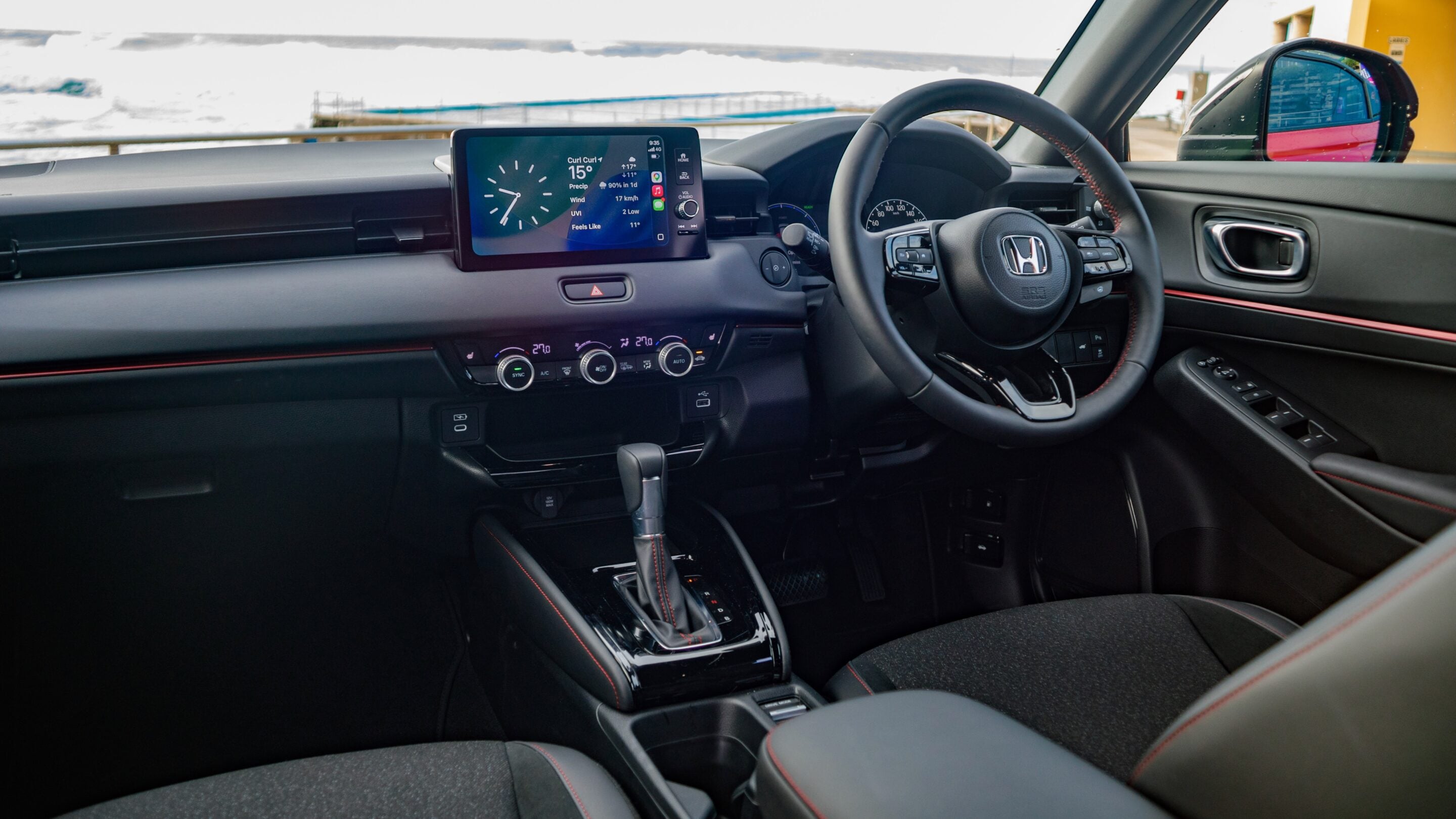
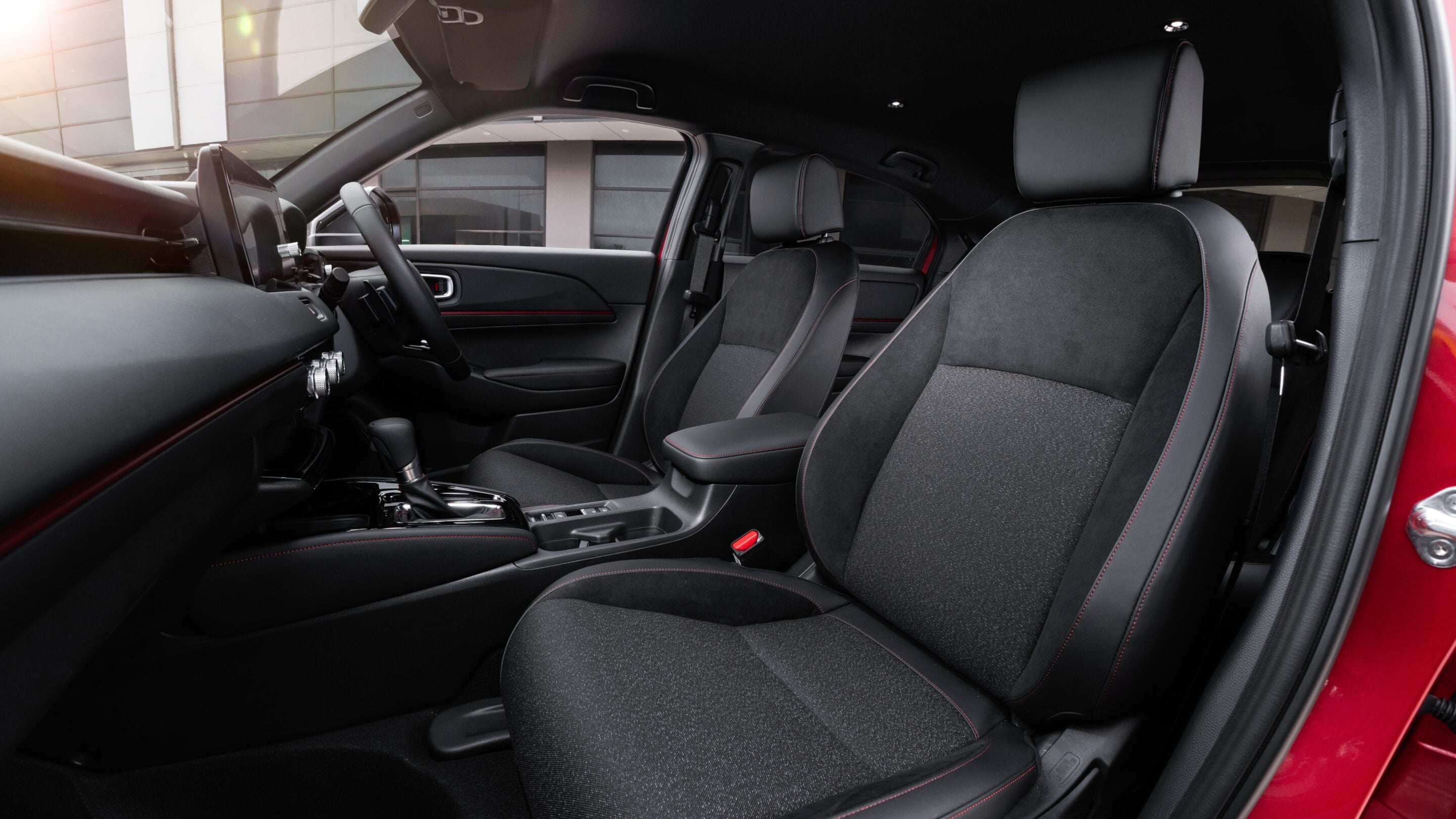
Outside, there’s a black RS-specific grille, black mirror caps, lower door and bumper garnishes, RS badging and those 18-inch alloy wheels. The cabin receives a similar makeover, with black synthetic leather, suede and cloth upholstery with red stitching and red trim across the dashboard and doors.
Otherwise, the standard equipment of the RS mirrors the already well-equipped e:HEV L, including heated front seats, a heated steering wheel, dual-zone automatic climate control with rear air vents, a hands-free powered tailgate, keyless entry and start and automatic LED lighting.
Features I think would made the HR-V better value not offered on the Australian-spec HR-V e:HEV RS include a panoramic glass roof and upgraded 10-speaker audio system, while a wireless phone charger is a $640 dealer-fit accessory instead of being standard.
How practical is the HR-V e:HEV RS?
Part of the HR-V’s appeal has always been how insanely practical it is for a small SUV, and thankfully, the new RS model doesn’t change that. Its boot capacity is a not huge at 304 litres with the rear seats upright, but the figure expands to a large 1274L when folded.
Honda’s excellent ‘Magic Seats’, which are standard across the HR-V range, are arguably its most clever feature and give the HR-V a unique selling point in the small SUV segment. The rear seat bases can flip upwards to create a tall storage area behind the front seats, but the backrests also fold almost completely flat. If you’re a small SUV buyer who regularly has to lug large amounts of shopping, the HR-V is the one for you.
There is one catch, however: the HR-V remains a four-seater because there’s no centre rear seatbelt. Nevertheless, for four occupants, the HR-V makes excellent use of its relatively small footprint. While the boot could be larger, the rear-seat area is quite spacious for the segment, and two taller adults will be more than comfortable.
Moving forward, the classy RS treatment works best inside, where the red accents and stitching combine with synthetic leather, suede and cloth upholstery to give the cabin the sort of extra personality that’s missing on lower HR-V models, but without going overboard.
More importantly, the HR-V’s fundamentals remain excellent. Honda continues to use plenty of physical controls for important functions such as climate control and the touchscreen, while the dashboard is very logically laid out and easy to understand. The 9.0-inch infotainment display may look a bit small compared with the enormous screens fitted to many newer rivals, but it’s responsive and breathtakingly easy to use. Front-seat comfort is good too, although I wish there was lumbar adjustment on offer for longer journeys.
How fuel efficient is the HR-V e:HEV RS?
The RS uses the same 1.5-litre petrol-electric hybrid drivetrain as the other hybrid HR-V models, producing adequate peak outputs of 96kW and 253Nm. The system is well suited to urban driving, where it will frequently shut down the petrol engine and rely on the electric motor for propulsion and fuel savings. Regenerative braking strength can also be adjusted using steering wheel paddles, but they don’t also control the stepped e-CVT transmission.
Honda claims combined fuel consumption of just 4.3L/100km with claimed CO2 emissions of 98g/km, and I achieved pretty close to that at 4.6L/100km in a range of driving scenarios. Importantly considering the current high fuel prices, the HR-V can run on 91 RON regular unleaded fuel, while its 40-litre fuel tank won’t cost too much to fill up. Importantly, at the fuel consumption I achieved, it’ll travel more than 850km on a tank.
What is the HR-V e:HEV RS like to drive?
Don’t let that RS badge get you too excited. Despite the sportier looks, there are no upgrades beneath the skin, unlike the Japanese-spec HR-V RS with its 15mm-lower suspension and revised steering providing a sportier driving experience. The result is the HR-V e:HEV RS still drives well for the segment with a comfortable ride and light steering, but the RS badge gives a false sense of a performance-focused edge. A boggo Mazda CX-3, for example, is more fun to drive.
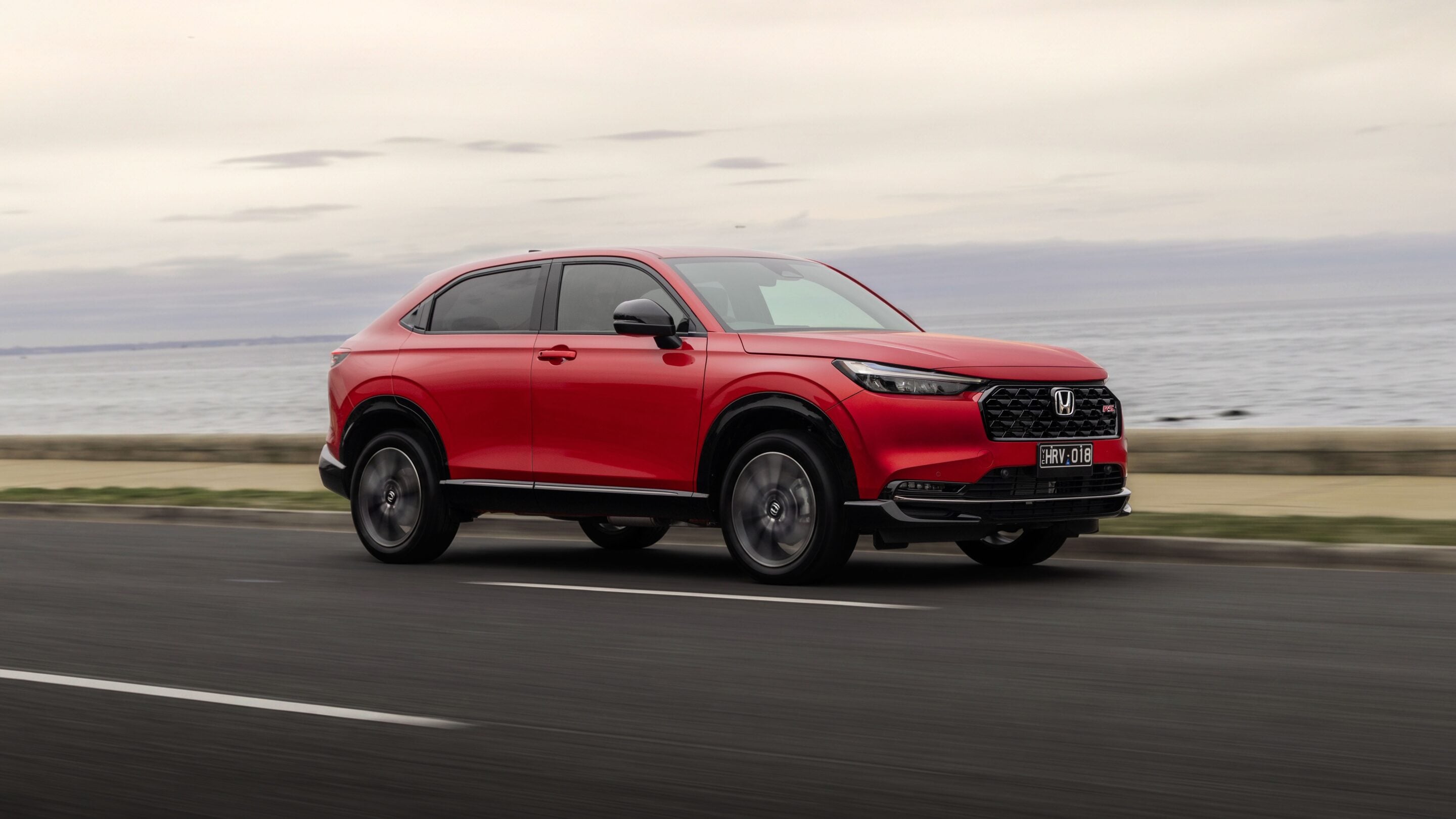
Honda doesn’t quote a 0-100km/h sprint time, and straight-line performance certainly isn’t the HR-V’s strongest attribute. But it’s peppier than you might imagine, with the electric motor kicking in from 0rpm. Around town, it feels livelier than the numbers suggest and the smooth hybrid system lacks a noticeable jump between electric and petrol propulsion, though the drivetrain is more vocal at highway speeds.
How much does the HR-V e:HEV RS cost to service?
Honda Australia’s ownership credentials are strong, and it backs the HR-V with a five-year/unlimited km warranty for the car with five years of roadside assistance and an eight-year/160,000km hybrid battery warranty. Service the HR-V at a Honda dealership and you can unlock up to eight years of warranty coverage for the car, which is long by industry standards.
As for the servicing itself, maintenance is required every 12 months or 10,000km (whichever comes first), with the first five scheduled services priced at $279 each. That equates to $1395 over five years or 50,000km, which has been recently made more expensive by $80 per service. However, it remains some of the cheapest service pricing on the market.
Should I buy a Honda HR-V e:HEV RS?
The new e:HEV RS is a polished small SUV, but it’s not the sweet spot of the HR-V range. Sure, its hybrid system is smooth and fuel efficient, the interior is well made and well featured, the Magic Seats are genuinely clever and it still drives with a level of maturity that many small SUV rivals lack.
But so does a lower-spec HR-V e:HEV X or e:HEV L, and they cost at least $1500 less. The RS badge is a misnomer, too – it doesn’t drive badly at all, but it’s also not what you’d call sporty. If Honda Australia adopted the Japanese model’s dynamic changes or perhaps the turbocharged 1.5-litre petrol engine offered in some markets, we think it would be worth the extra cash, but as it stands, lesser HR-V models are better buys. The Honda HR-V is still an excellent small SUV, just not in e:HEV RS spec.
HR-V e:HEV RS specifications:
| Price | $44,400 driveaway |
|---|---|
| Engine | 1498cc naturally aspirated four-cylinder hybrid |
| Max power | 96kW (@ 4000 – 8000rpm) |
| Max torque | 253Nm (@ 0 – 3500rpm) |
| Transmission | e-CVT automatic |
| Combined claimed fuel consumption | 4.3L/100km |
| Dimensions (L/W/H/WB) | 4345/1790/1590/2610mm |
| Boot space | 304 litres (rear seats up) – 1274 litres (rear seats folded) |
| Kerb weight | 1385kg |
| On sale | Now |
HR-V e:HEV RS standard features:
- 18-inch alloy wheels (with a tyre repair kit)
- Dusk- and rain-activated automatic LED exterior lighting
- Rain-sensing automatic wipers
- Heated/auto-folding mirrors
- Keyless entry with push button start and automatic walk away locking
- Electric tailgate with walkaway close functionality
- Rear privacy glass
- Cloth/suede/synthetic leather interior trim
- Heated front seats
- Heated leather steering wheel
- Dual-zone automatic climate control with rear air vents
- 7.0-inch digital driver’s display
- 9.0-inch touchscreen with live services
- Satellite navigation
- Wireless Apple CarPlay and Android Auto
- Bluetooth audio and streaming
- AM/FM/DAB+ digital radio
- Six-speaker sound system
- 4x USB ports
- 6x airbags
- Autonomous emergency braking
- Adaptive cruise control with traffic jam assist
- Lane keeping assistance with adaptive lane guidance
- Blind-spot monitoring with rear cross-traffic alert
- Adaptive high beam
- Traffic sign recognition
- Front and rear parking sensors
- Reversing camera
- Anti-theft alarm
- Tyre pressure monitoring
Former Apple design boss Sir Jony Ive has defended the styling of Ferrari’s first all-electric car, the Luce, following widespread criticism of its unconventional appearance.
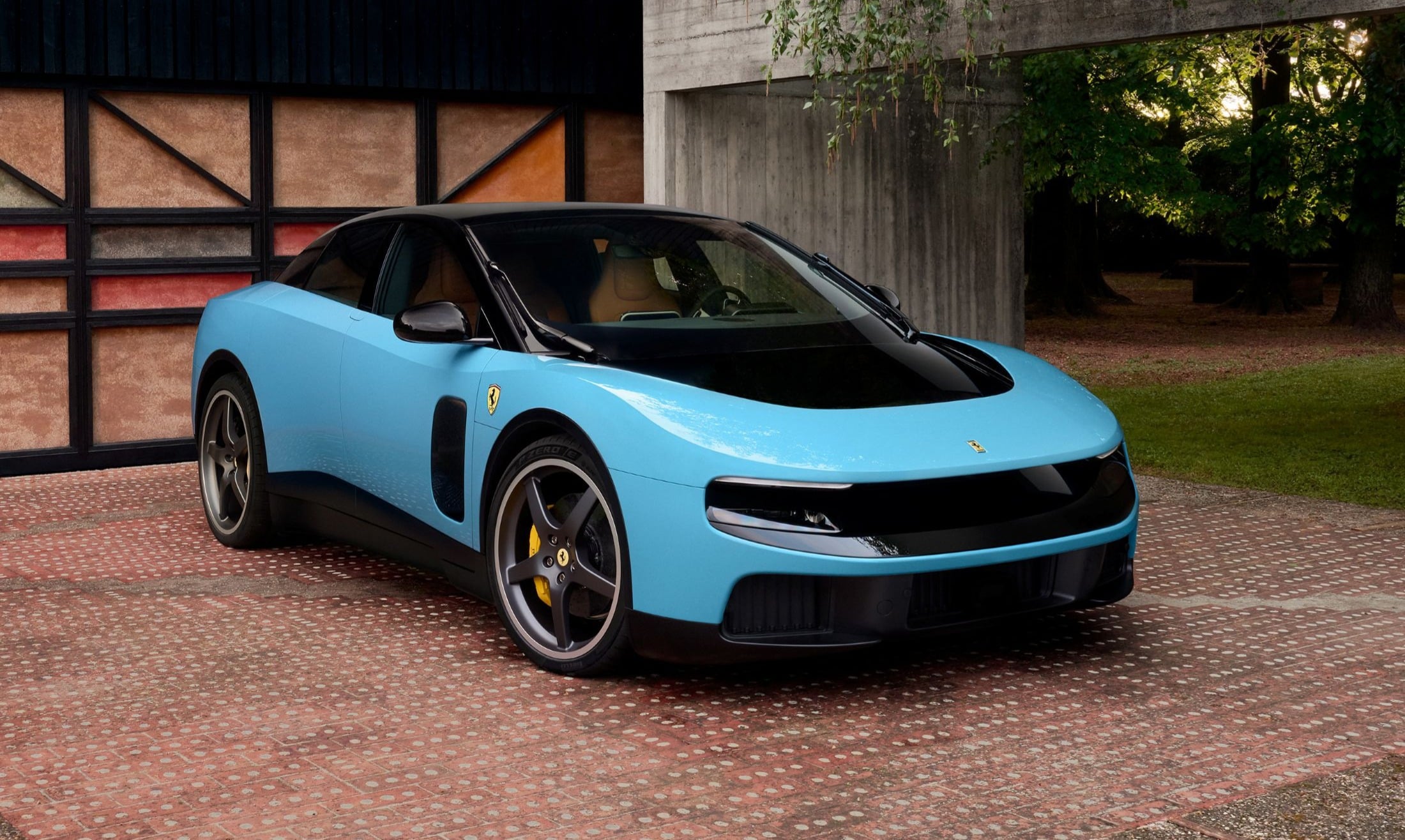
The €550,000 (approximately A$900,000) four-door, five-seat EV was unveiled in May, immediately dividing opinion with its relatively simple surfaces, upright proportions and minimalist interior – a considerable departure from Ferrari’s traditional sports-car designs.
Speaking at the Wave by Vento technology conference in Turin, Ive told Bloomberg that the reaction to the Luce had been markedly different among people who had seen the car in person compared with those judging it from photographs.
“You can make something new and different that’s rubbish. That’s very easy,” Ive said.
“It’s very hard to make something that is new and different, and its newness is a consequence of it being better, and that’s what we’ve tried to do.”
The comments represent a rare public response from Ive to the criticism surrounding Ferrari’s first battery-electric production model.
After it’s unveiling, former Ferrari president and chairman, Luca di Montezemolo described the vehicle as risking “the destruction of a legend”.
“I just hope that the little horse comes off.” he said, referencing Ferrari’s prancing horse logo. “This is certainly a machine that the Chinese, at least, won’t copy from us. They won’t need to.”
Ive, who played a central role in designing Apple products including the iPhone, iMac and iPad, worked on the Luce through LoveFrom, the creative collective he established with fellow designer Marc Newson.
The partnership represented a significant departure for Ferrari, whose designs have traditionally been developed by its in-house team in Maranello.
LoveFrom was given considerable freedom by Ferrari to develop the vehicle’s exterior and interior.
After an initial briefing, the designers reportedly spent six months working independently before returning with two books outlining their proposals. Those early concepts were already close to the finished vehicle.
The resulting design places considerable emphasis on simplicity, with a large glazed cabin, clean body surfaces and relatively few decorative elements.
Inside, the influence of Ive’s industrial design background is particularly evident.
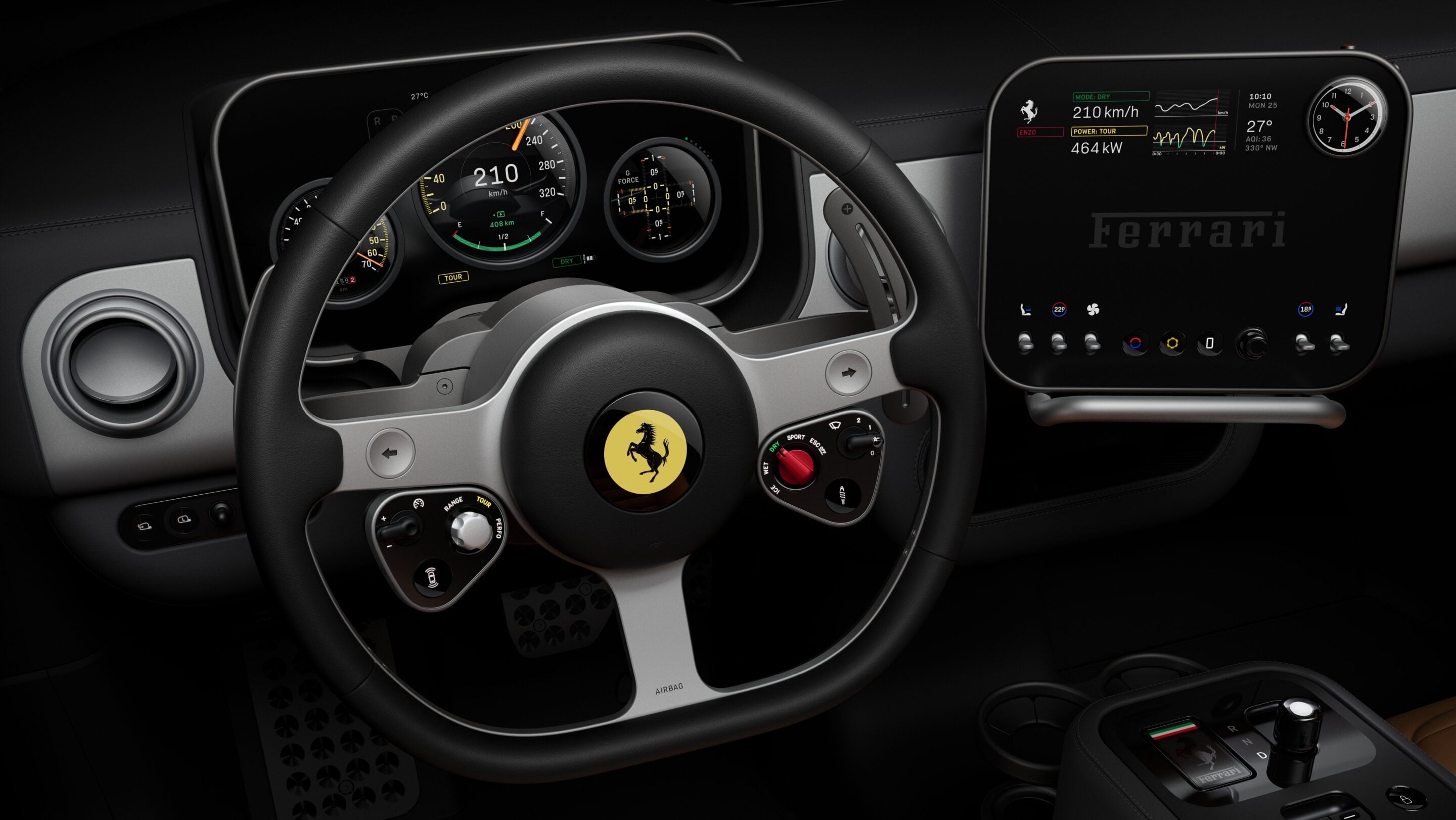
Rather than relying entirely on touchscreens, the Luce incorporates physical switches and controls designed to be operated without drivers having to divert their attention from the road.
The dashboard uses machined aluminium, while glass features extensively throughout the cabin, including the gear selector and several controls.
An instrument display attached to the steering column moves with the steering wheel, while the central touchscreen can be angled towards either front occupant.
Ive told Bloomberg that the development team had also explored ways of making the experience of starting an electric Ferrari more engaging, including a special key that changes colour when placed inside the vehicle.
Ferrari chairman John Elkann, who appeared alongside Ive in Turin, revealed that his thinking about an electric Ferrari began around a decade ago following a conversation with Amazon founder Jeff Bezos.
According to Reuters, the discussion helped set in motion the project that eventually became the Luce, which was developed over approximately five years.
The car’s arrival has nevertheless prompted questions about whether its styling and electric drivetrain are compatible with Ferrari’s established identity.
Some commentators have compared its appearance with mainstream electric cars, while others have questioned whether its restrained design delivers the visual drama traditionally associated with the Italian marque.
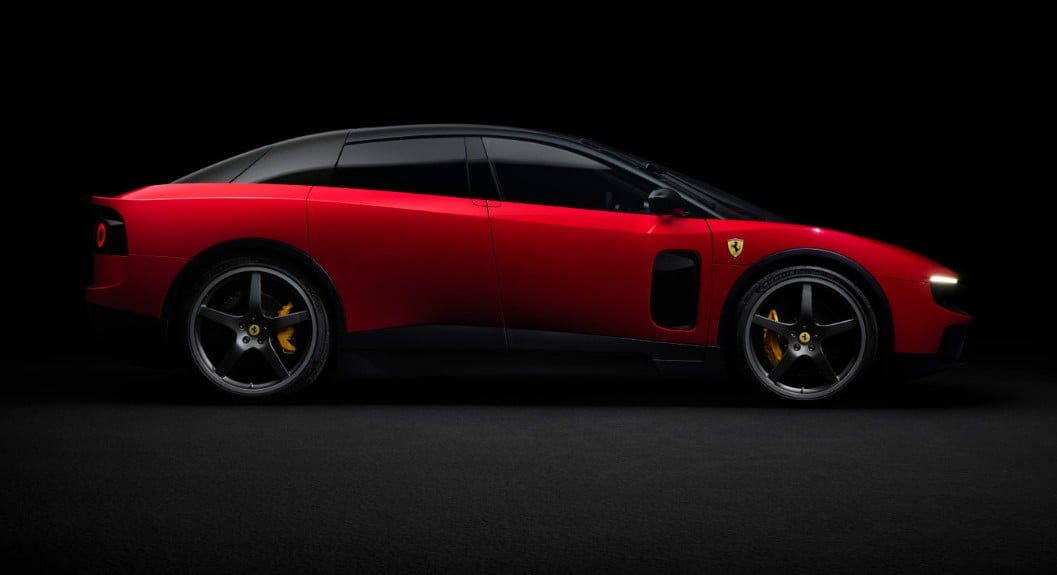
Ive acknowledged that designers ultimately cannot control how customers respond to their work, but maintained that the Luce was intended to introduce something genuinely different rather than simply reinterpret Ferrari’s past.
For Ferrari, the Luce also represents an attempt to attract buyers who might not previously have considered one of its combustion-powered models.
Despite the controversy, the company has reported early customer interest in the electric model.
Ive, meanwhile, stressed that the Luce should not be interpreted as a replacement for Ferrari’s existing identity or its traditional sports cars.
“It’s not the future, but it’s a part of the future of Ferrari,” he said.
Looking to buy or sell your car but wary of online marketplaces?
Commonwealth Bank has expanded its Cars for CommBank platform into private used-car sales, creating a marketplace where CommBank customers will be able to buy and sell vehicles directly with each other. The new service will extend Cars for CommBank beyond its existing dealer and manufacturer listings and into a substantial part of Australia’s second-hand vehicle market.
It also represents another step in CommBank’s move beyond simply providing vehicle finance. Cars for CommBank already allows customers to search new and used petrol, hybrid and electric vehicles, browse finance options and sell vehicles through an instant-quote service. The private marketplace aims to tackle some of the less appealing aspects of person-to-person vehicle transactions.
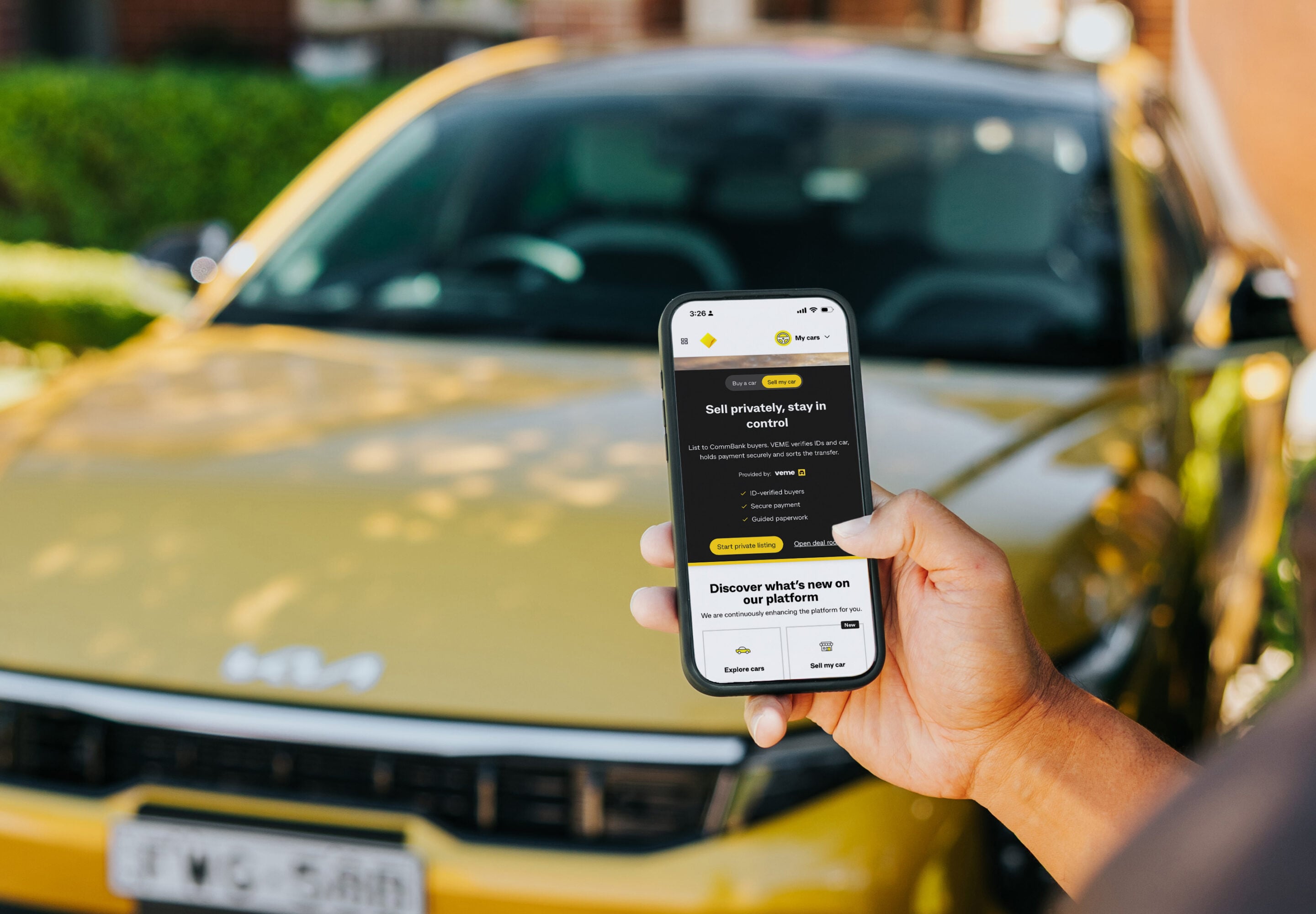
“The primary point of difference is the focus on helping customers navigate the private-sale journey with greater confidence,” says Tim Burdon, CommBank’s Executive Manager, Cars & Home Energy.
“Cars for CommBank combines listings with authentication, verification, transaction management and settlement support provided by VEME, alongside access to financing options for eligible customers. The aim is to help address the trust, payment and coordination challenges customers commonly face when buying and selling vehicles privately.”
Customers can access the marketplace using their existing credentials, with buyers and sellers required to complete verification processes with VEME before progressing with a sale or purchase. The marketplace also allows parties to communicate within the platform before exchanging personal contact information.
CommBank already works with VEME for private vehicle purchases. Now, VEME will verify identities, check vehicle registration and history and facilitate payments as part of the Cars for CommBank marketplace. VEME is an independent company and is not part of the CommBank Group. Its existing process illustrates the safeguards likely to be important to the broader marketplace. VEME can conduct PPSR checks covering areas including outstanding finance and vehicle history, while buyer funds can be placed in a regulated trust account rather than transferred directly to the seller. Money is released after required conditions are satisfied and the vehicle has been handed over.
VEME also assists with sales agreements and other paperwork associated with completing the transaction. Identity verification is performed through ConnectID.
“Cars for CommBank does not charge a listing fee,” explains Burdon. “VEME charges sellers $29 for verification and, where a sale proceeds, a $99 settlement fee. Buyers are not charged VEME verification or settlement fees. Any fees are disclosed before customers proceed. CommBank car finance is available to eligible customers but is not mandatory, and customers can use other supported payment methods.
“Anyone can browse listings, however they must log in as a CommBank customer to create a listing, submit an enquiry or participate in the Deal Room experience,” continues Burdon. “Customer authentication is an important part of the platform’s trust and safety design, helping create confidence in the people participating in a transaction. Authentication is complemented by separate verification processes managed by VEME.”
Should something go awry – a vehicle is not as described or a buyer has second thoughts, for example – the platform offers ready-made procedures to achieve a resolution.
“Customers will be supported through defined complaints, incident management and remediation processes established between CommBank customers, Vyro, and VEME,” says Burdon. “VEME manages identity verification, sales agreements, payment, settlement and handover activities, while Vyro provides access to the Cars for CommBank platform and listing.”
A timely response to the concerns of customers about the risk and time-consuming nature of car transactions between buyers and sellers, Cars for CommBank’s new offering will provide access to a one-stop online location for safe dealings between the parties.
“Customers consistently tell us they are concerned about who they are dealing with, whether a vehicle is legitimate, how to transfer large amounts of money safely, and how to manage the paperwork and settlement process,” says Burdon.
“Many existing platforms focus primarily on connecting buyers and sellers. Cars for CommBank is designed to help support customers through more of the end-to-end transaction journey with confidence.”
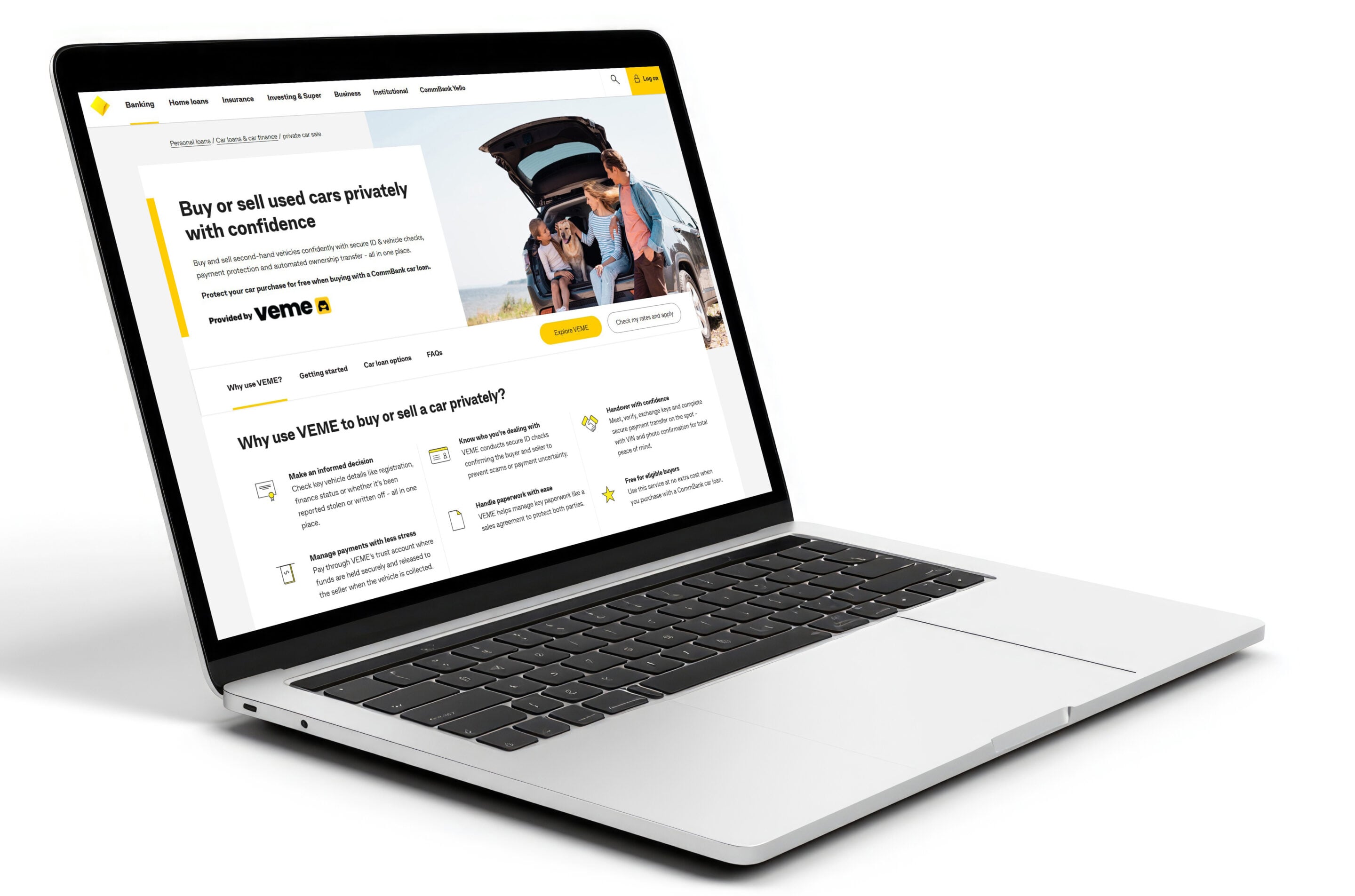
Buy and sell with confidence with Cars for CommBank
Key advantages
- Confidence in who you’re dealing with – buyers and sellers must be verified CommBank customers before they can enquire, list or negotiate.
- Free vehicle listings – there is no charge to advertise a vehicle on Cars for CommBank.
- Low seller transaction costs – sellers pay VEME $29 for verification and $99 for settlement if the vehicle sells; buyers pay no VEME verification or settlement fees.
- More than a conventional classifieds platform – listing, enquiries, negotiation, verification, payment and settlement support are brought together within one seamless process.
- Structured Deal Room – provides a dedicated environment for buyers and sellers to communicate and negotiate.
- Vehicle information and history reporting – gives customers access to additional information to help assess a vehicle before proceeding.
- Identity and transaction verification – VEME provides separate verification processes in addition to CommBank customer authentication.
- Guided settlement process – VEME manages sales agreements, payments, settlement and handover activities, reducing the administrative burden on buyers and sellers.
- Greater payment security – payments and settlement are handled through a defined transaction process rather than being arranged informally between private parties.
- Finance integrated into the buying journey – CommBank customers can arrange car finance as part of the process rather than sourcing it separately.
- Defined complaints and incident processes – complaints, transaction incidents and remediation are covered by established processes involving CommBank customers, Vyro and VEME.
- Combines private and dealer vehicles – the addition of customer-owned vehicles gives shoppers access to both private and dealer inventory through Cars for CommBank
Visit www.carsforcommbank.com.au to discover more
CommBank
* Vehicle sales via the platform are not conducted by CommBank. CommBank is not responsible for vehicle sales and car listings and advertising appearing on the platform.
CommBank does not recommend or endorse any particular product on this platform (including any product mentioned on a chat service available on this platform), other than CBA finance options. With the exception of any information relating to CBA finance options CBA does not warrant, guarantee or endorse the accuracy or completeness of, or the representations made in, the material on the platform (including any chat service available on this platform) or any information received as a result of placing an enquiry about a vehicle. You are responsible for assessing the accuracy of the material and any such information and rely on it at your own risk, and to the extent permitted by law, CommBank is not liable for any loss or damage relating to your use of, or reliance on the material or information.
VEME
The VEME platform, and the services associated with it, are hosted and managed by Vehicle Exchange Online Pty Ltd (ABN 97 665 759 106) (VEME). VEME is not part of the Commonwealth Bank of Australia (CommBank) Group. Vehicle sales and transactions conducted via the VEME platform are not carried out by CommBank. CommBank is not responsible for any vehicle sales or transactions on the platform. CommBank does not warrant, guarantee, or endorse the accuracy, completeness, or reliability of any information or representations on the VEME platform. You use VEME’s services at your own discretion and assume responsibility for your use. To the extent permitted by law, CommBank is not liable for any loss or damage arising from your use of, or reliance on, the VEME platform or its content.
Electric vehicle owners in Queensland have received a big boost, with new regulations allowing faster home charging without the need for additional network management equipment. Effective from October 1 2026, the changes remove previous restrictions that limited some single-phase home EV chargers to just 20 amps, equivalent to 4.6kW of charging power.
Under the new rules, Queensland households can now install a 32-amp single-phase charger operating at up to 7.4kW without requiring a network management device, which has brought the state into line with the rest of the country.
Previously, homeowners wanting to charge above 20 amps were required to install equipment allowing electricity companies to remotely manage charging during periods of high demand. Owners could accept the lower charging speed to avoid the additional equipment, although that would obviously mean longer recharging times.
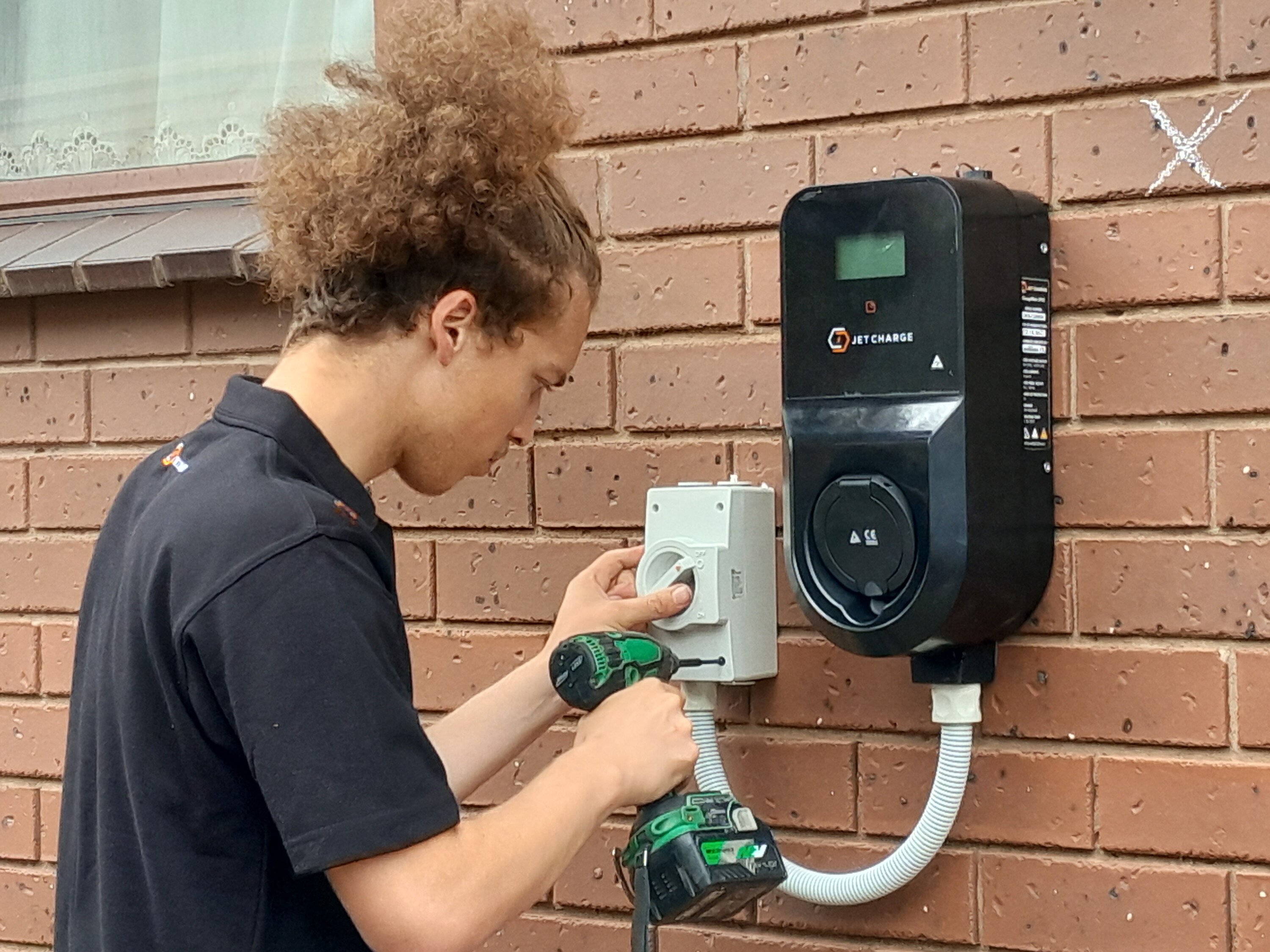
According to EV charging equipment manufacturer Evnex, removing these restrictions allows compatible home chargers to deliver 60 per cent more power, potentially adding up to 50 kilometres of driving range per hour, depending on the vehicle.
The announcement follows another recent development that could help Queensland EV owners reduce their running costs.
As previously reported by WhichCar by Wheels, the Federal Government’s Solar Sharer Offer, which was introduced in July, provides eligible households with three hours of free electricity each day, allowing for significant savings when charging an electric vehicle at home.
In South East Queensland, the free electricity period runs from 11am to 2pm, although households must have a smart meter and opt into an eligible electricity plan to participate. Modelling from the Institute for Energy Economics and Financial Analysis suggests households with one EV could save up to $800 annually with the offer, while those with two electric vehicles could save as much as $1900.
This means that, combined with the removal of charging restrictions, the changes represent a big improvement for Queensland EV owners, as home charging will be now faster and potentially cheaper.
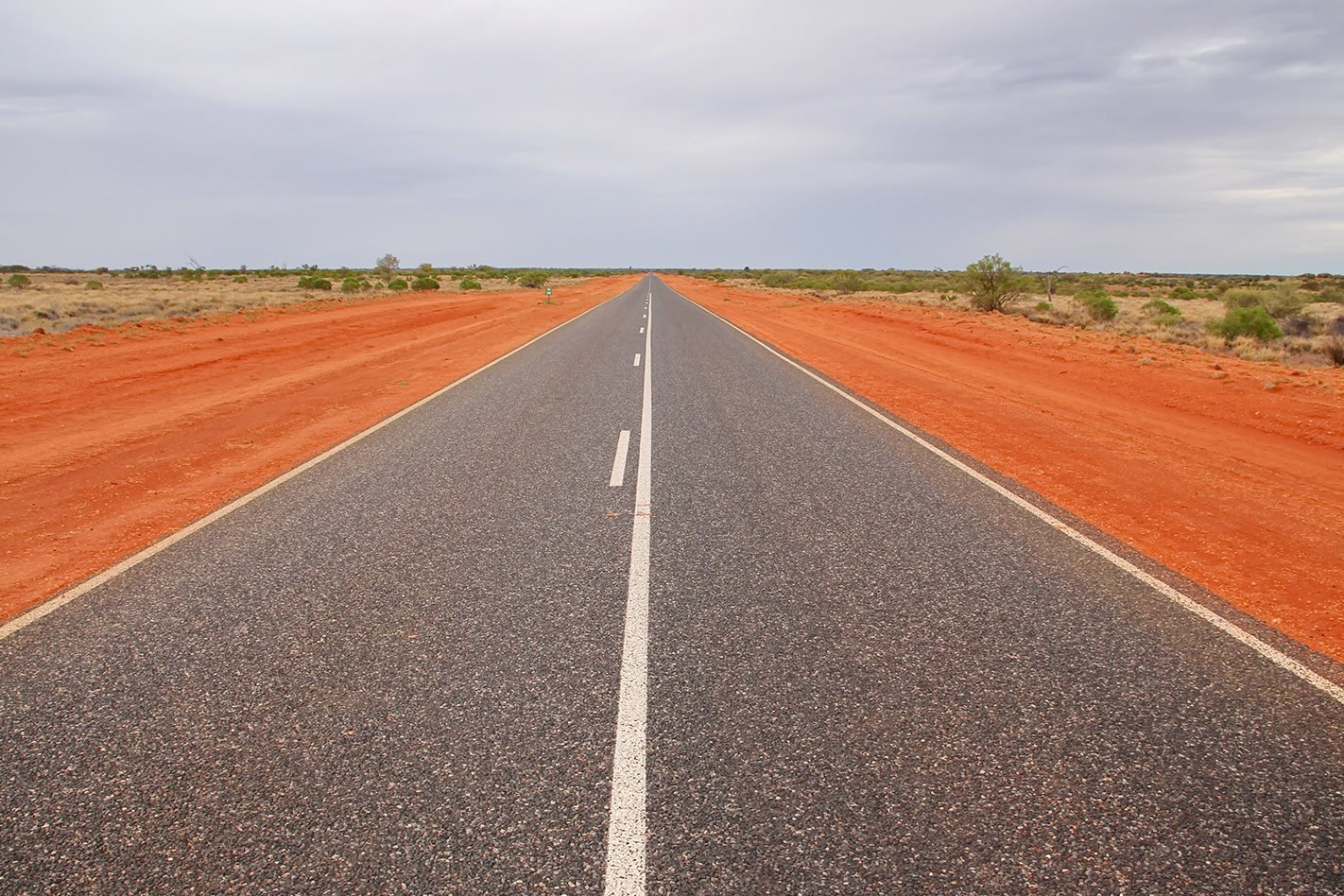
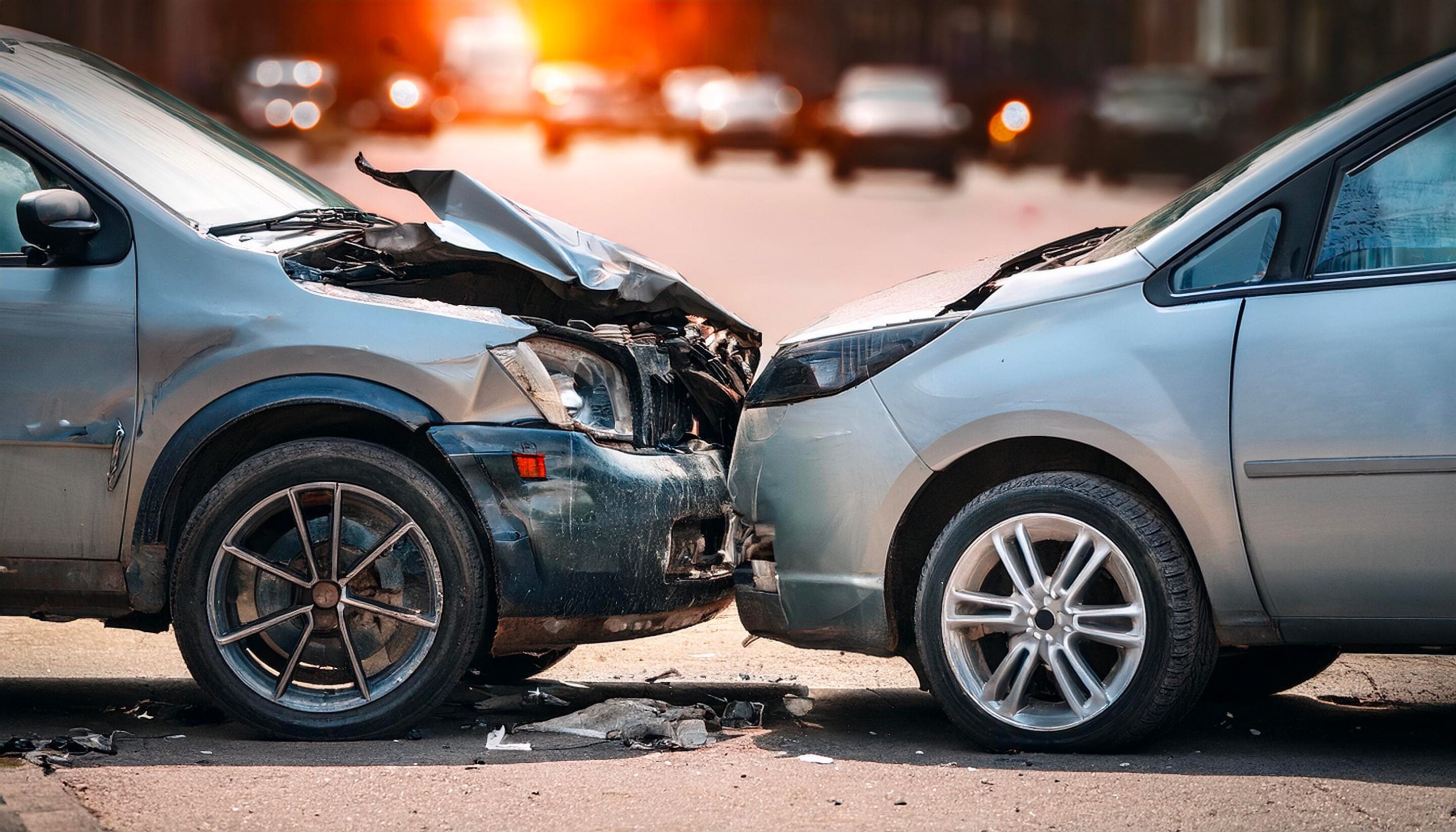
The Northern Territory has been named the deadliest place to drive in Australia in a new study that found the ACT and NSW have the safest roads by far. In a twist, the results from insurance giant iSelect found that falling crash rates don’t necessarily make for an overall lower risk for motorists.
The research – which also came up with ratings for the US and UK – combined crash and fatality data with weather conditions and the state of road infrastructure to come up with a “total danger score”, and the Territory gapped the rest of the country by some margin.
Its crash rate of 14.21 per 100,000 people was far above that of the next-worst result in that category, Tasmania’s mark of 7.43. However, collisions in the NT were down 36.7 per cent year on year, while the Apple Isle recorded a shocking increase of 38.7 per cent.
The Top End’s crash risk score of 75 and weather risk score of 72.07 were also easily the worst marks recorded in the study and made big contributions to its total danger score of 60.14 – again, far ahead of the next-worst spot, WA, with 46.33.
In contrast, the ACT had a total danger score of just 28.35, driven by its remarkably low crash rate of 1.85, although its infrastructure is lacking with a risk score of 69.12. NSW was second-safest with a total danger score of 28.44.
Victoria was the fifth-most dangerous driving spot in last year’s study, and it has climbed to third this year. That’s largely down to its poor infrastructure, which WhichCar by Wheels has reported on recently. The parlous state of Vic’s roads saw it get the worst infrastructure risk score at 70.23, significantly worse than its Queensland with 60.02.
The Sunshine State was the fourth-most dangerous place in the country for motorists, followed by Tassie, South Australia, then NSW and the ACT.
According to iSelect, “The findings highlight how assessing road risk involves more than considering historical crashes alone. A location may experience improving crash figures while still presenting challenging driving conditions because of weather or characteristics of its road network.”
The NT’s result is also far worse than the most dangerous spot in the USA, Mississippi, with a total danger rating of 57.43. Bradford, the riskiest place to drive in the UK, also lagged behind the Top End with a mark of 60.52.
BMW has expanded its iX3 electric medium SUV range with the new high-performance M60 xDrive model, which produces 450kW of power and 875Nm of torque. Revealed alongside the new iX4 electric SUV coupe, which will also be available in M60 form, the iX3 M60 is the most powerful version of BMW’s Neue Klasse electric SUV yet, with a big performance increase over the existing iX3 50 xDrive.
The additional grunt comes courtesy of an upgraded electric drivetrain, including a more powerful rear electric motor, and enables the iX3 M60 to accelerate from 0-100km/h in just 3.9 seconds. That’s a full second quicker than the 50 xDrive, and its top speed also increases to 240km/h.
Despite the lift in performance, the iX3 M60 still returns an impressive driving range of up to 754km on the WLTP cycle, compared with up to 805km for the 50 xDrive. Both models feature a 108.7kWh battery and an 800-volt architecture for DC fast charging at up to 400kW.
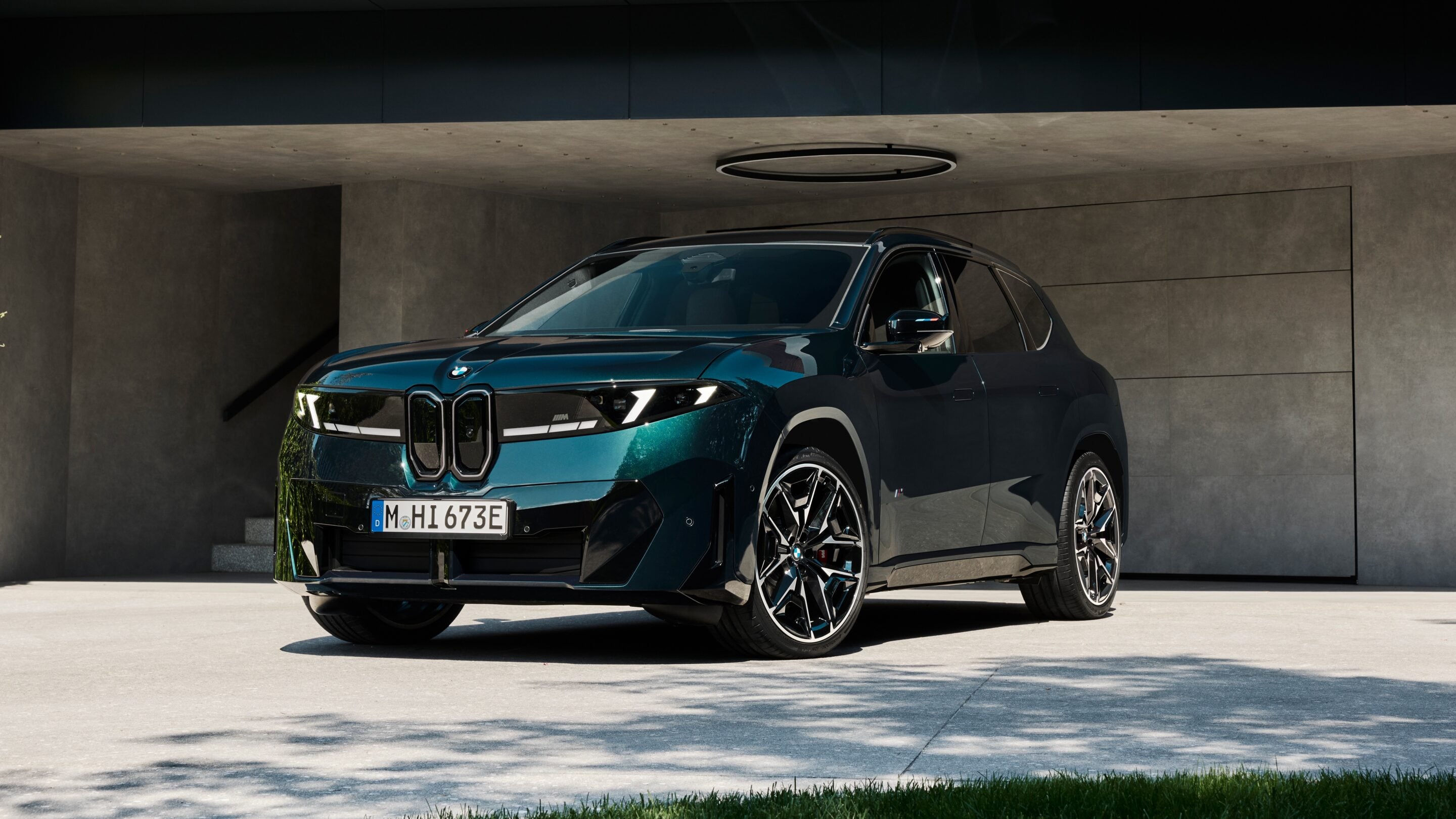
Beyond the additional power, the M60 introduces a number of chassis upgrades to improve handling and driver engagement. Adaptive M suspension with electronically controlled dampers, variable sport steering, an M Sport differential and upgraded M Sport brakes are all included as well so that the iX3 drives like a performance BMW should.
Externally, the M60 features new 21-inch M alloy wheels, M-specific exterior detailing and distinctive yellow lighting apparently inspired by BMW’s motorsport vehicles. Inside, a new sports steering wheel, upgraded sports seats and additional M-specific displays and driving modes also feature.
Production of the iX3 M60 will commence in the first half of 2027, with international order books opening in January. Australian availability is yet to be confirmed, although the iX4 M60 has been confirmed for Australia sometime in 2027, so it’s likely that the iX3 M60 will also launch here at some point.
