
Hongqi, China’s oldest passenger-car brand, will launch in Australia under the shortened HQ name with three electric SUVs confirmed to arrive and first customer deliveries expected from January 2027.
Owned by Chinese automotive giant FAW Group, Hongqi was created in 1958 and has a long history of producing luxury vehicles for Chinese government officials. In Australia, however, HQ will reportedly position itself as a technology-focused luxury alternative to established brands such as Mercedes-Benz, BMW, Audi and Range Rover.
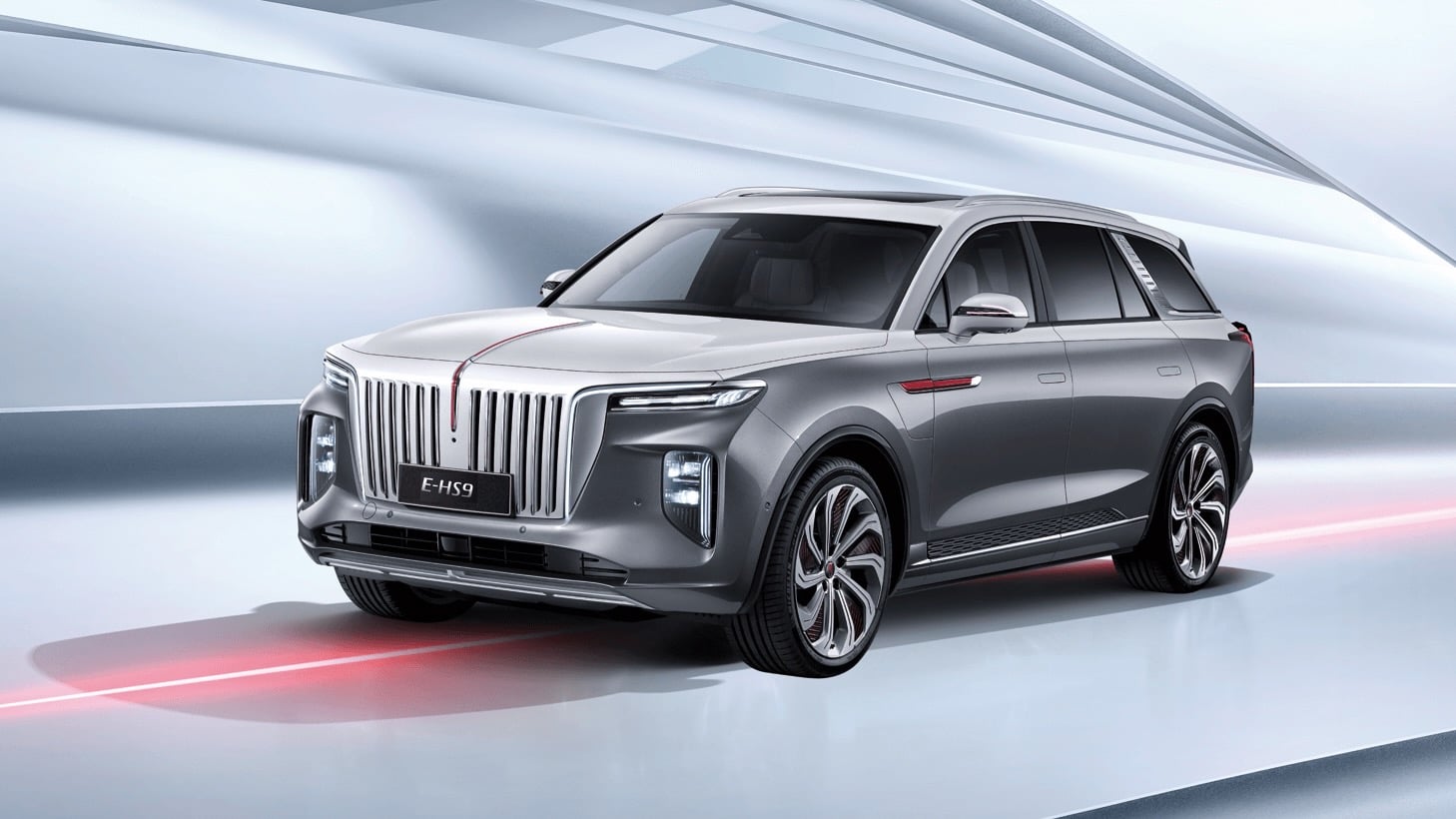
Hongqi has already appointed a local CEO and managing director, Jim Wu, who has outlined the brand’s local ambitions, saying it expects to take market share from luxury rivals. HQ vehicles are expected to be priced below German marques, but still offer high levels of standard equipment and technology.
The first Hongqi product to launch locally will be the E-HS9 (pictured), which is a seven-seat large electric SUV that measures more than 5200mm in length. Overseas versions feature a dual-motor all-wheel drive drivetrain making 320kW of power and 600Nm of torque, with a 120kWh battery offering up to 515km of driving range on the WLTP cycle. The first Australian customer deliveries of the E-HS9 are expected in January, with local specifications yet to be announced.
The E-HS9 will be joined by the smaller EHS4 and EHS5 electric SUVs within six months, allowing the brand to cover the small, medium and large sections of the extremely popular market segment. The EHS4 is expected to compete with models like the BMW iX1, while the larger EHS5 will target the larger BMW iX3, as well as volume sellers such as the Tesla Model Y and Zeekr 7X.
A fourth model is also on the cards, with HQ confirming plans for an electric sedan roughly comparable in size to the BMW i5 and Mercedes-Benz EQE. That model could be the EH7, which is already sold in some overseas markets with up to 655km of WLTP driving range.
The company is targeting around 1000 sales per month once all three SUVs are established locally, with a longer-term goal of 30,000 annual sales. It also plans a 15-dealer national network, including company-operated flagship locations in Sydney, Melbourne, Brisbane, Adelaide and Perth.
Unlike Hongqi’s domestic range, which also includes hybrid and ICE-powered models, its line-up down under will be electric-only. We’ll know more about the Australian HQ range closer to its early 2027 local launch.
After its global reveal back in April, more details about the next-generation Nissan X-Trail medium SUV have been revealed thanks to its Rogue identical twin, which goes on sale in North America later this year.
The previous X-Trail also debuted much later than the Rogue in markets like Europe, Japan and Australia, so we’re not expecting it to launch locally until at least the final quarter of 2027. Until that happens, we can use North American-spec model as a preview of what we’re likely to see.
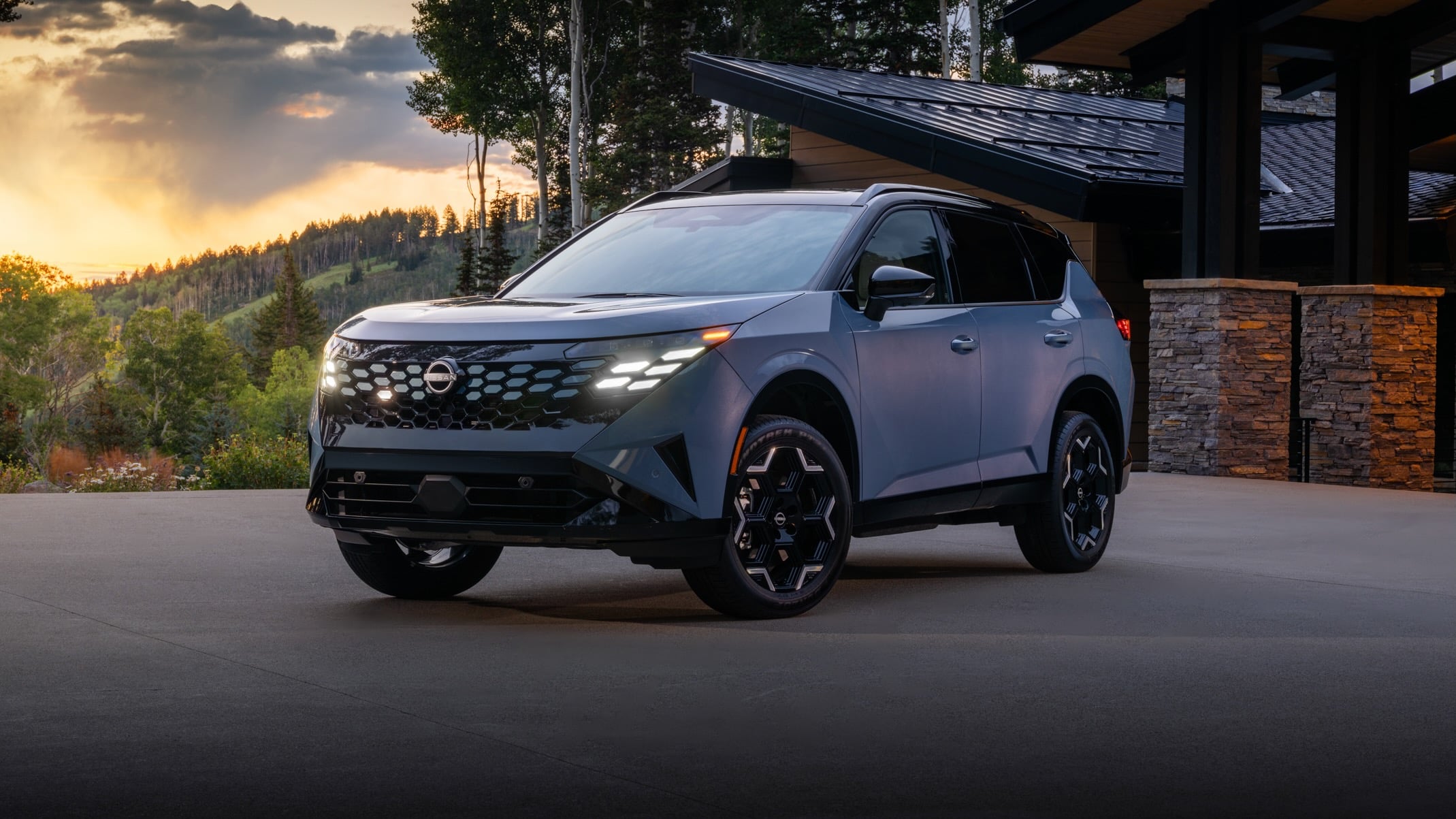
The new Rogue rides on an updated version of the same platform that the current model uses, and its dimensions haven’t changed much, either. It measures 4651mm long, 1849mm wide, 1720mm tall and rides on an unchanged 2705mm wheelbase, making it 30mm shorter in length, 9mm wider and 5mm shorter in height than the current model. Its reported weight is 1844kg to 1890kg, which is around 30kg lighter.
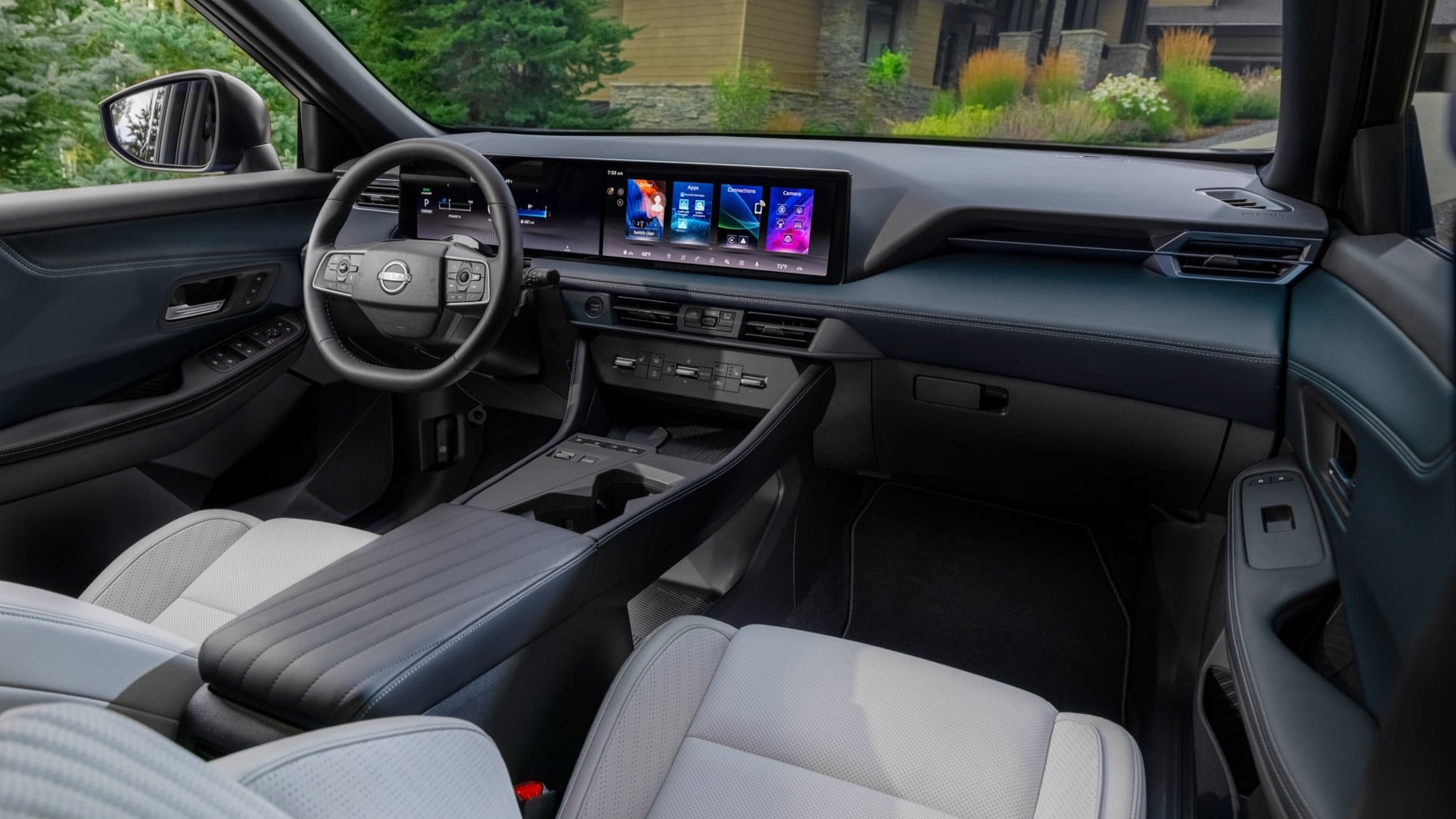
The new Rogue’s styling is a clear evolution on the previous model, with a similar but more angular overall look but with more modern detailing throughout, such as the new hexagonal shapes in the grille. It’s also more modern inside, with more angular shaping for the dashboard tops and air vents, and a more open centre console that joins a large dual-14.3-inch display for the driver and touchscreen.
There are many physical buttons for the climate and transmission selectors, while available features include Google Built-in features like Google Maps and Gemini AI, magnetic wireless phone chargers, ventilated front seats, a head-up display and 64-colour ambient lighting.
Available new safety tech includes Nissan’s ‘ProPilot’ adaptive lane guidance with new hands-off traffic jam assistance, a 360-degree camera with an invisible bonnet mode and up to nine airbags.
In a move that may surprise given how popular it already is in the Aussie X-Trail, this is the first time that North American markets will receive the ‘e-Power’ hybrid system. It appears to be the same drivetrain that we see down under in the Qashqai small SUV.
Using a 1.5-litre turbocharged three-cylinder engine to charge the 1.67kWh lithium-ion battery, which then powers the wheels, the system outputs 165kW of total power, up 8kW on the current model. In the US, the Rogue e-Power AWD is rated at 6.2L/100km, a figure we expect to drop once it eventually arrives on local soil thanks to a different testing cycle, plus we’ll also receive a front-wheel drive version.
Nissan Australia is yet to confirm local availability for the next-generation Nissan X-Trail but we’re predicting its arrival to be at least 12 months away.
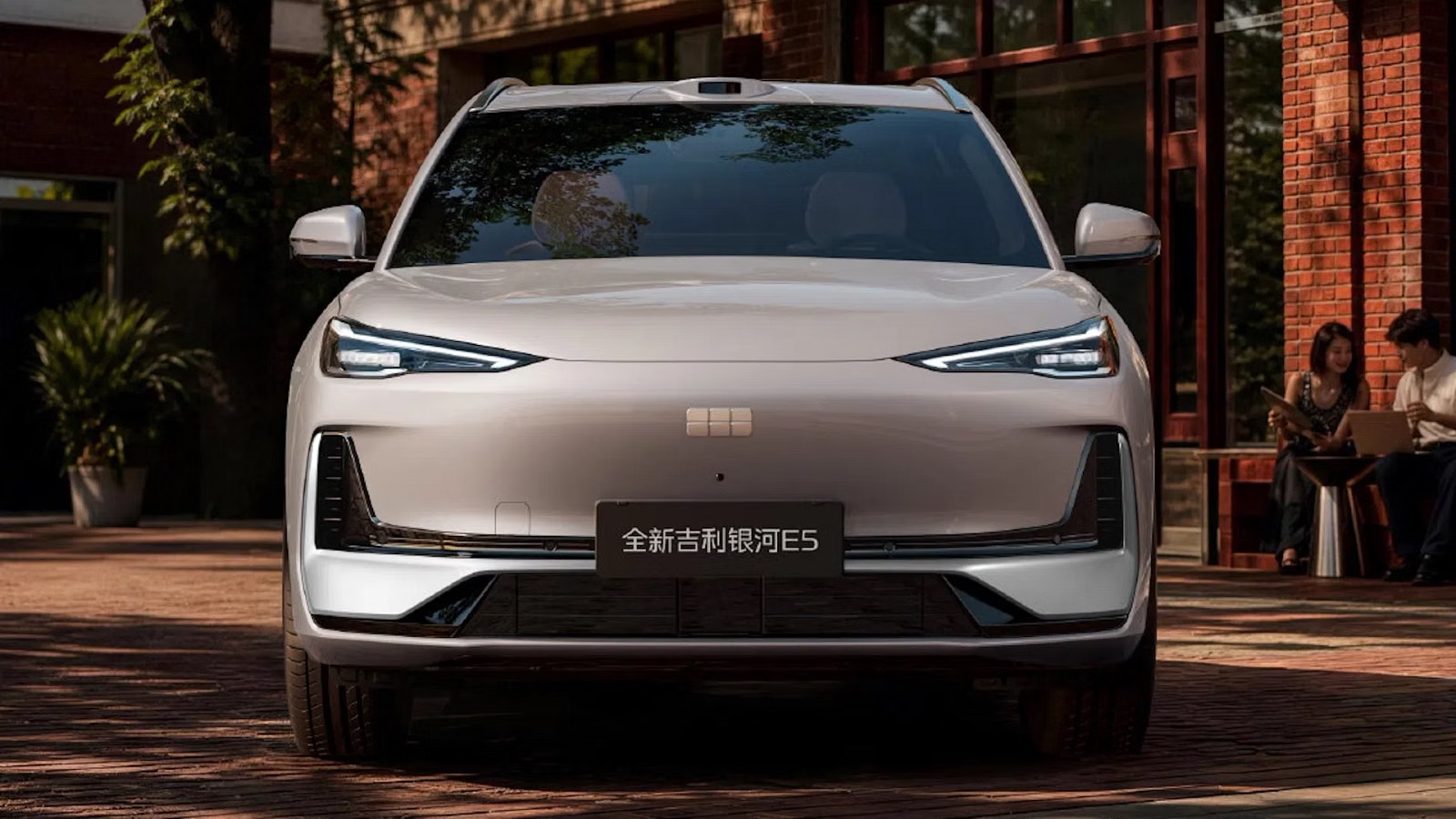
Geely’s upcoming EX5 has broken cover with its official launch in China, sporting a few revisions to its looks but far more significant changes under its panelwork as it looks to cement its place as one of Australia’s most popular medium SUVs.
The headline change is the switch from front-wheel drive to rear-wheel drive, complete with a huge jump in power. When it goes on sale, the updated EX5 will have ditched the 160kW/320Nm e-motor that currently drives the fronts in favour of a 245kW unit powering the rear rubber.
An upgrade to an 800-volt electrical system is also on the way, according to launch details revealed by CarNews China. While the current EX5 has a 68.4kWh battery, the newer version will get a choice of a 61.5kWh or 70kWh pack, delivering a claimed 451km and 521km of range respectively – an improvement over the 430-475km of the model that’s on sale now.
The switch to rear-wheel drive – which matches competitors like the BYD Atto 3 – has opened up a luggage compartment under the bonnet, claimed to be 160 litres, with an electrically powered hood. The new EX5 is slightly bigger than the current version at 4636mm long, 1920mm wide and 1670mm high.
Changes to the exterior don’t exactly jump out at first glance, but they are meaningful. The front bumper is new, with accents in matte chrome, and the pop-out door handles of the outgoing EX5 have been replaced with conventional items due to Chinese design rules.
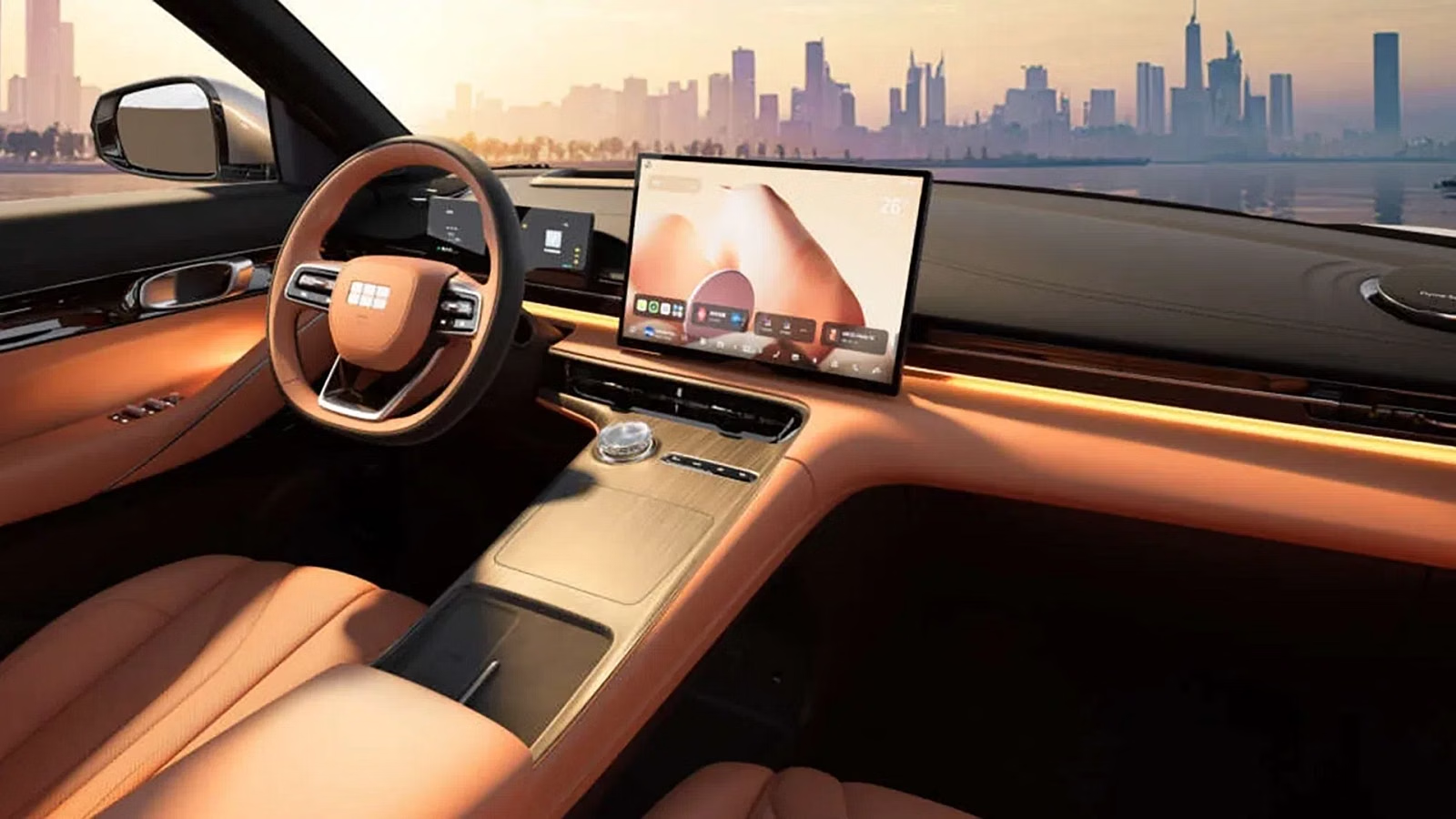
The front wheel arches get black trim, the wheels have grown to 19 inches from the previous 18, additional sensors have been placed in the front fenders and there’s a LiDAR unit mounted on the roof. The only noticeable interior changes are the flat-bottom steering wheel and brown option for the upholstery.
Contacted for comment about Aussie pricing and availability, Geely told WhichCar by Wheels, “We have no updates to share regarding the Geely EX5 at this time. Any new developments or changes will be communicated in due course.”
Transport is one of the biggest drains on the Aussie household budget – especially in light of the way petrol and diesel prices have spiked since the federal government’s fuel excise relief ended. According to the Australian Institute of Petroleum, the national average price of petrol is 227.3 cents a litre, with the average cost of diesel at 273.6 cents a litre… and climbing.
Fuel consumption matters for another reason, too. While Australians continue to favour larger vehicles such as SUVs, choosing a more efficient model can help reduce both running costs and emissions – without necessarily making the jump to a plug-in hybrid or fully electric vehicle.
So, if you want the practicality of an SUV without the hefty fuel bills, which models are the most economical? Here’s the WhichCar by Wheels guide to the 10 most fuel-efficient non-plug-in SUVs currently on sale in Australia:
Toyota Yaris Cross 2WD and Lexus LBX: 3.8L/100km
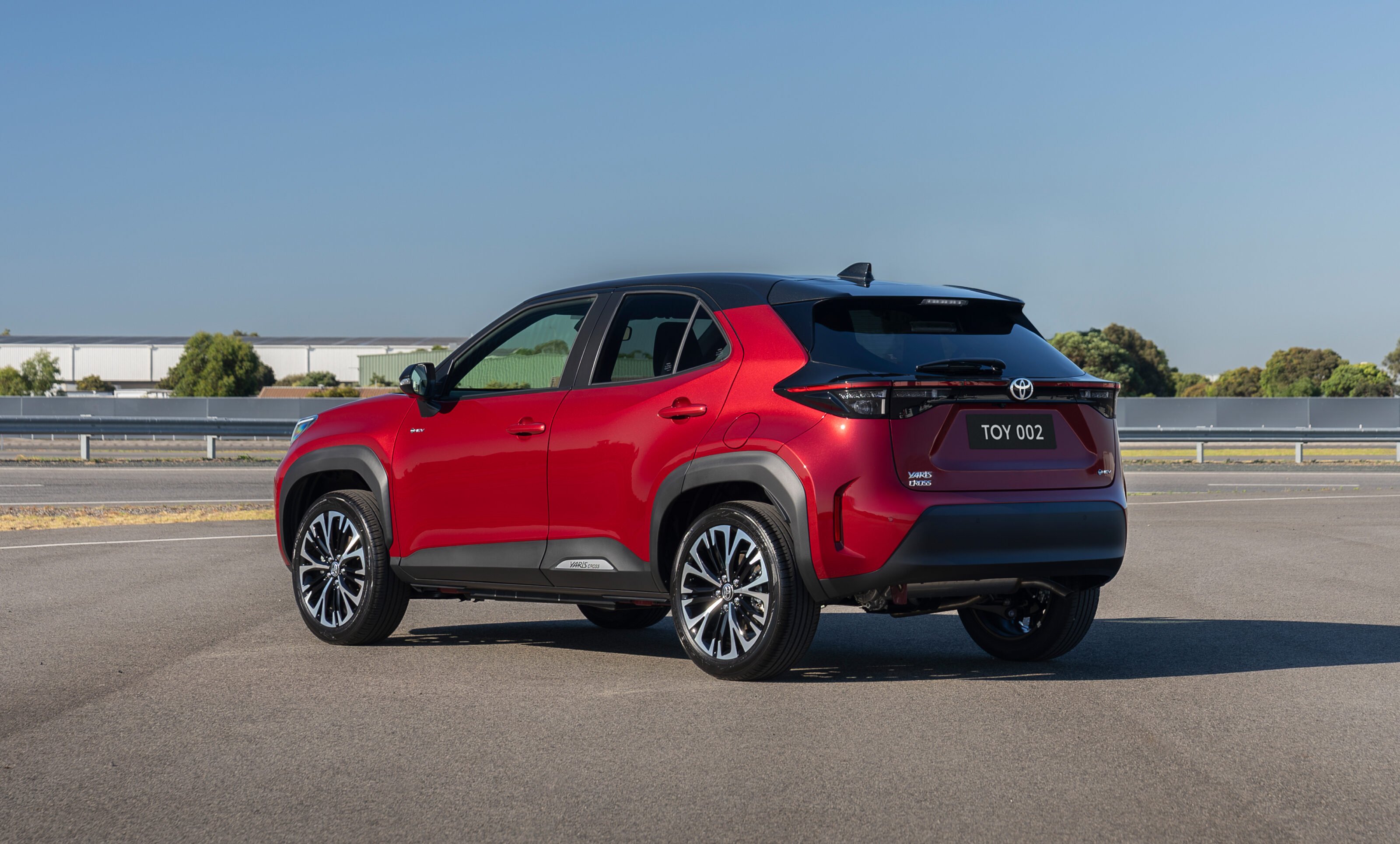
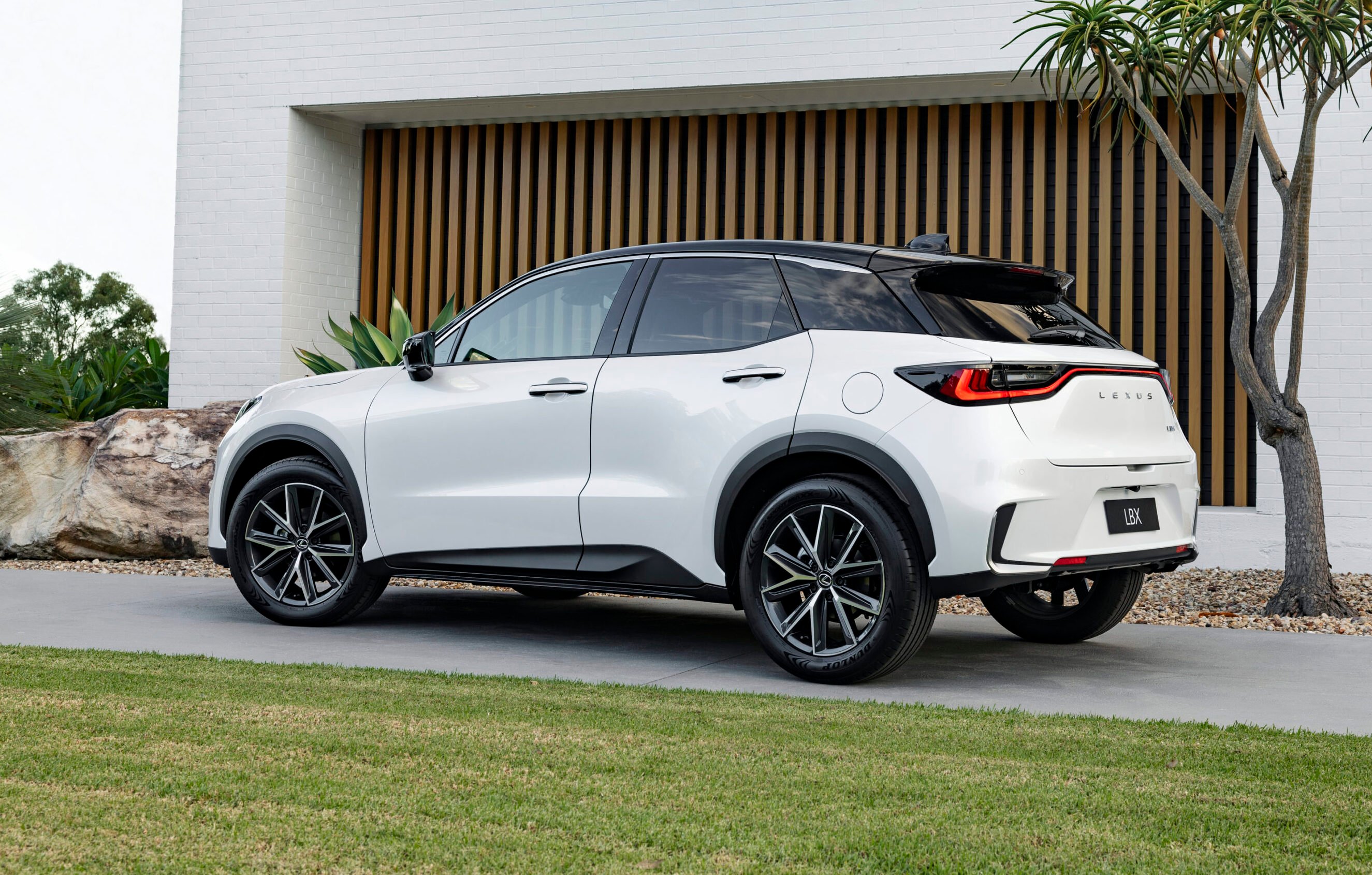
Flexing Toyota’s muscle in hybrid vehicle efficiency, the Yaris Cross small SUV and its luxury cousin, the Lexus LBX, are the most fuel-efficient SUVs in Australia with a claimed combined fuel consumption rating of just 3.8L/100km. Both also have very low CO2 emissions: 86g/km for the Yaris Cross and 85g/km for the LBX.
Both use a 1.5-litre three-cylinder petrol hybrid drivetrain making 85kW of total power in the Yaris Cross and 100kW in the LBX. The Yaris Cross is priced from $31,790 plus on-road costs and the LBX is $47,550 +ORC, though both have more expensive and better-equipped grades for buyers to choose. Using the same platform, both the Yaris Cross and LBX drive well and they’re practical for their size, too.
Hyundai Kona Hybrid: 3.9L/100km
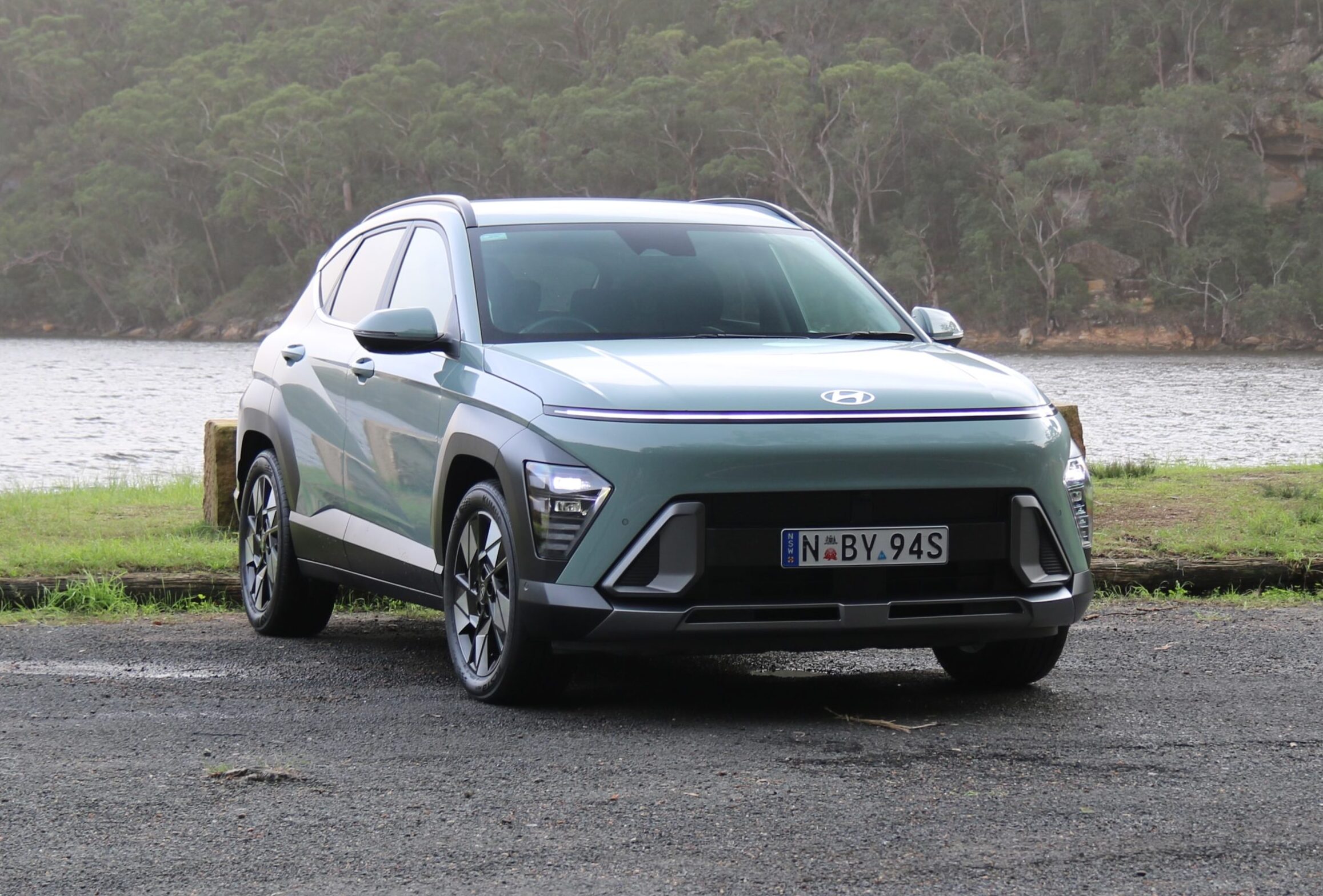
Coming in just behind the Yaris Cross and LBX is the Hyundai Kona Hybrid, which uses a 1.6-litre four-cylinder hybrid drivetrain for a claimed combined fuel consumption rating of just 3.9L/100km and combined CO2 emissions of 88g/km.
The Kona Hybrid is priced from $36,500 +ORC and is also available in sportier-looking N Line and more luxurious Premium forms for buyers who want more features. Unlike the Toyota hybrids, the Kona uses a six-speed dual-clutch automatic transmission for a refined and natural driving feel, and the Kona is also quite well equipped across the range.
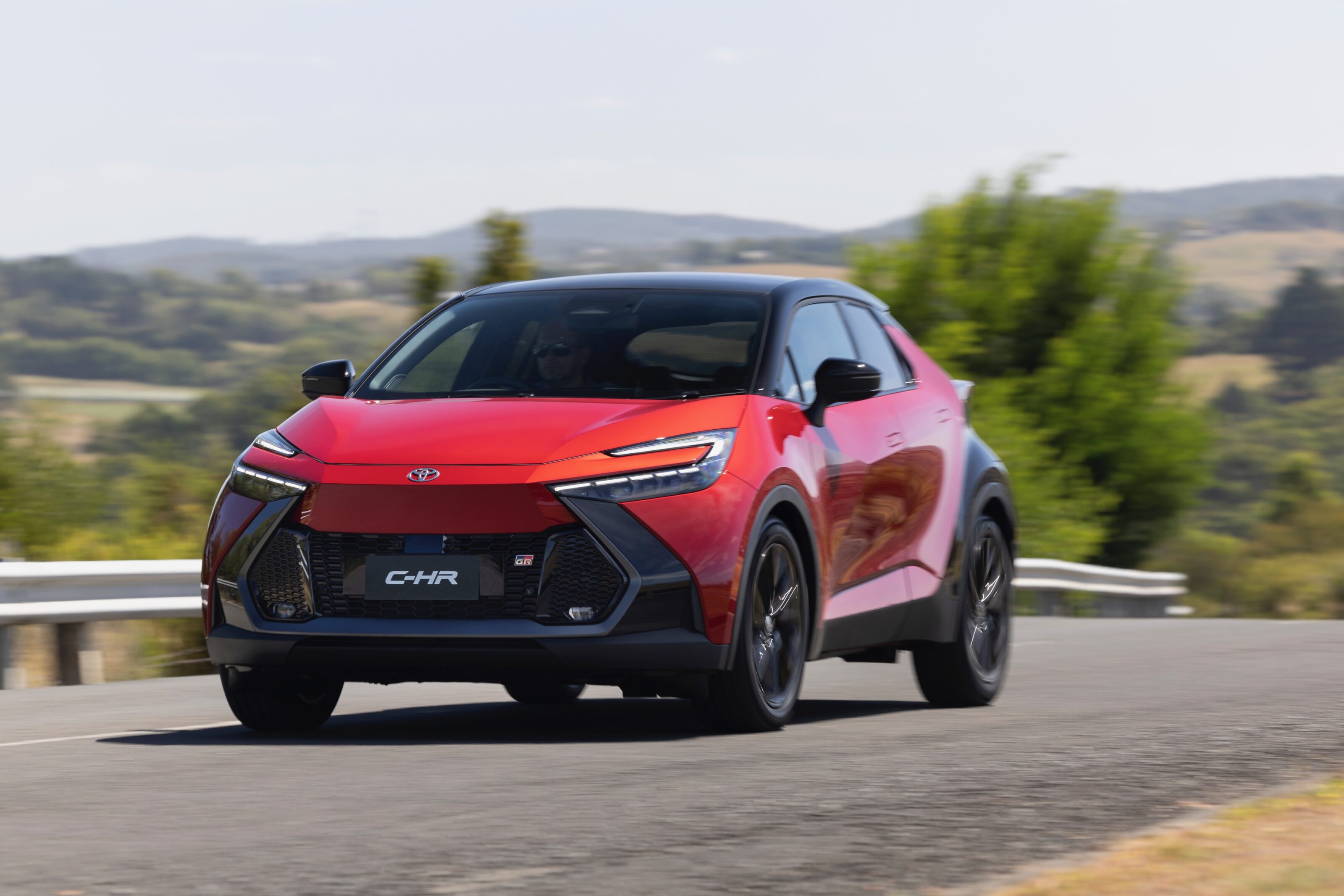
Toyota Yaris Cross AWD and Toyota C-HR: 4.0L/100km
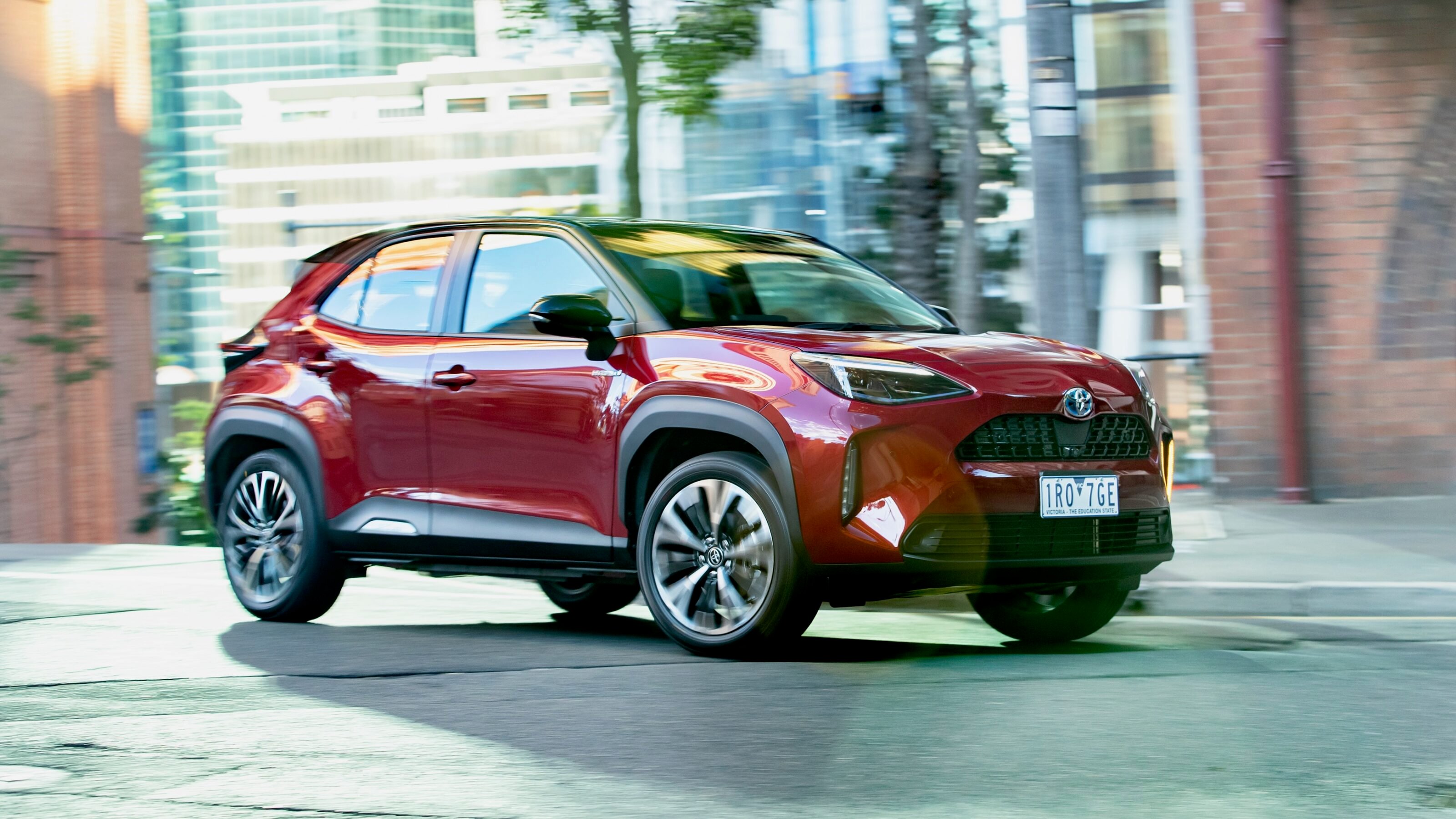
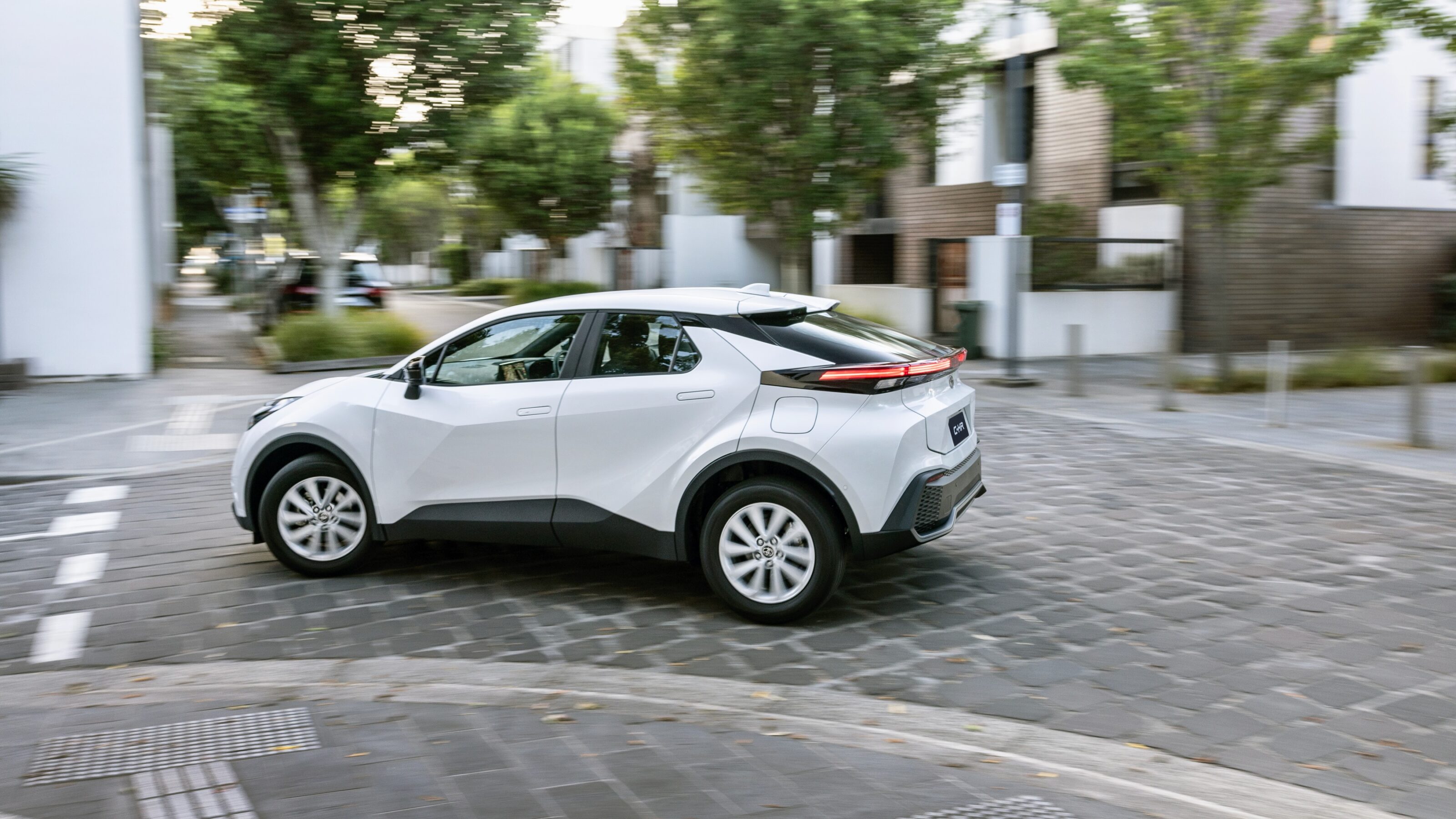
Rounding out the top three are the all-wheel drive version of the Yaris Cross and the slightly larger Toyota C-HR. Unlike most all-wheel drive cars on the market, the Yaris Cross employs an electric motor on the rear axle so that there’s no mechanical link between the front and rear wheels. As a result, its rating is just 0.2L/100km above the front-drive version and for keener drivers, the AWD replaces the 2WD model’s torsion beam with an independent set-up for better ride and handling. However, that also gives it a smaller boot.
The larger C-HR (priced from $42,990 +ORC) uses a 103kW 1.8-litre hybrid drivetrain, yet gets the same 4.0L/100km rating as the Yaris Cross. Priced from $45,000 +ORC, the Kia Niro Hybrid uses a 104kW 1.6-litre hybrid drivetrain with a six-speed dual-clutch automatic transmission. Importantly, all three drive quite well – especially the Kia with its locally tuned suspension and geared transmission making it feel more natural to steer than Toyota’s e-CVT.
Nissan Qashqai e-Power, Alfa Romeo Junior Ibrida and Toyota C-HR GR Sport: 4.1L/100km
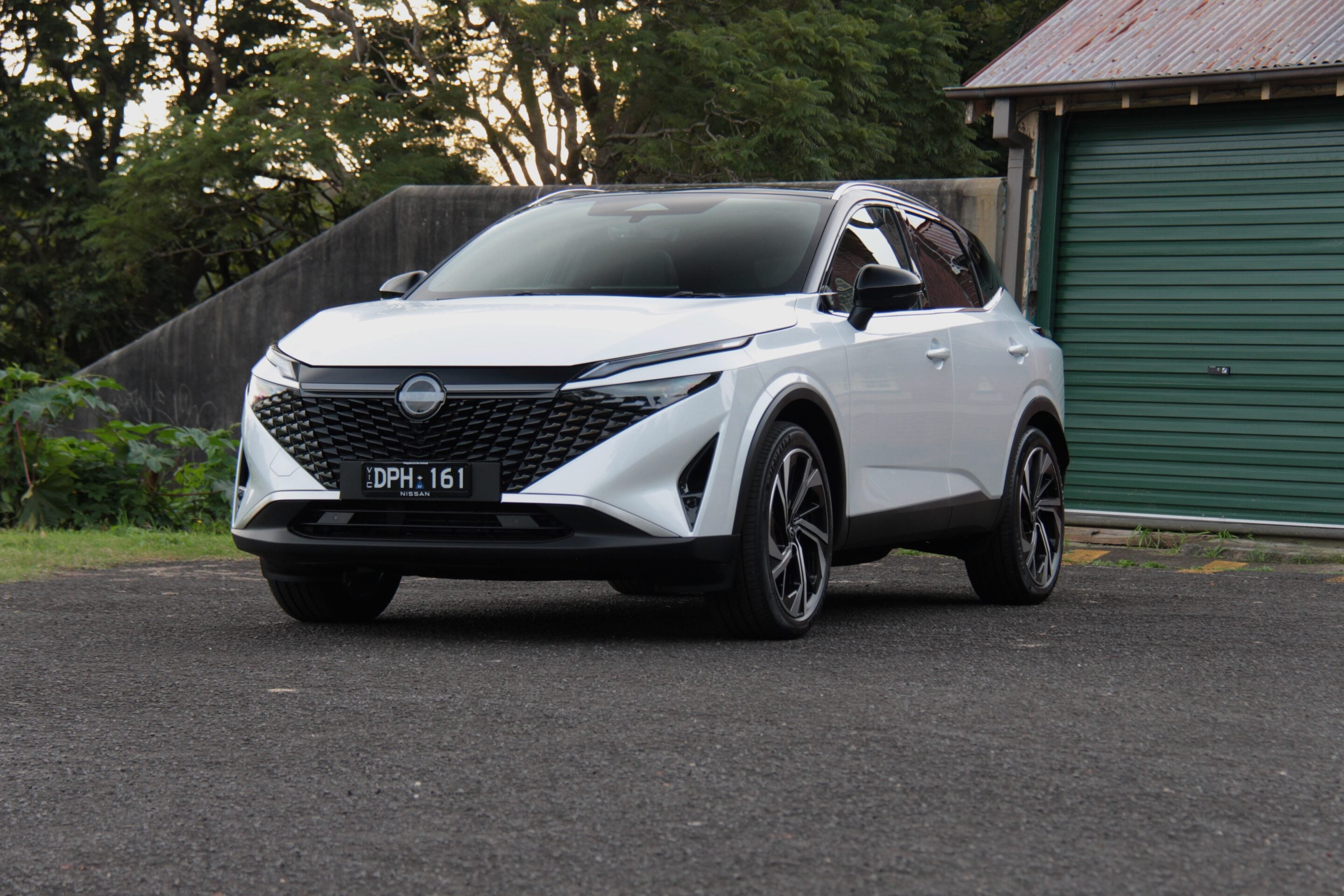
Nissan Qashqai
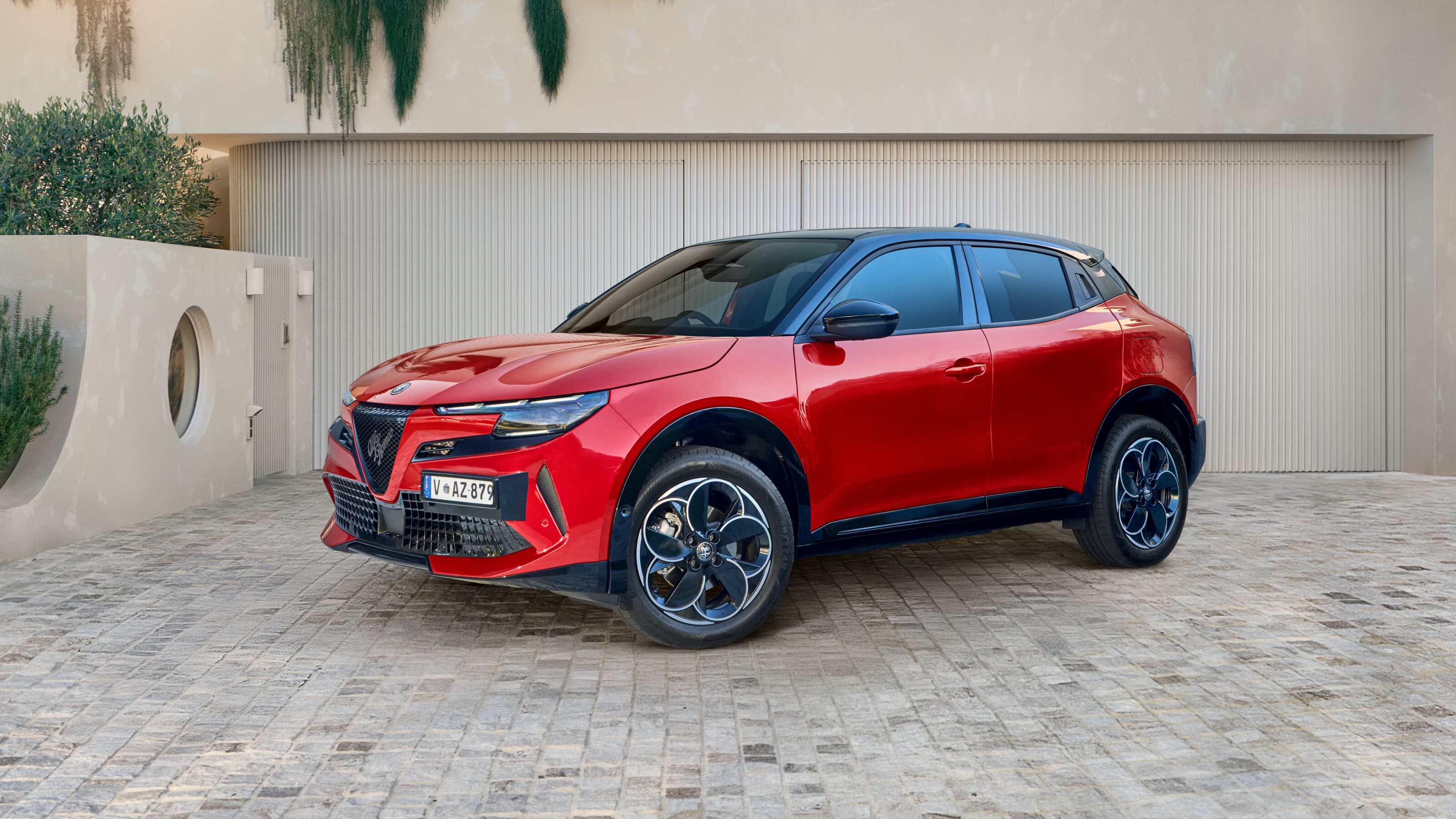
Alfa Romeo Junior
The updated Nissan Qashqai launched locally earlier this year and while it doesn’t appear all that updated on the outside, it’s a different story underneath. The brand gave it its latest e-Power drivetrain with upgraded internals and an even lower combined fuel consumption rating of just 4.1L/100km, which is especially remarkable given that it makes 140kW of power.
The Alfa Romeo Junior is a new model that launched in Australia in 2025. It uses the same 1.2-litre turbocharged mild-hybrid drivetrain seen in Peugeot products locally thanks to parent company Stellantis, and because of its small sizing, it’s also rated at 4.1L/100km on the combined cycle. Producing 107kW of power and 230Nm of torque, the Junior is peppier than you’d imagine.
The C-HR GR Sport’s larger 146kW, 2.0-litre hybrid drivetrain makes 43kW more than the smaller 1.8-litre hybrid system in lesser C-HR models, but official figures say it only uses 0.1L/100km more of fuel at just 4.1L/100km. The C-HR GR Sport is rated at 94g/km for CO2 emissions as well.
Lexus UX300h: 4.2L/100km
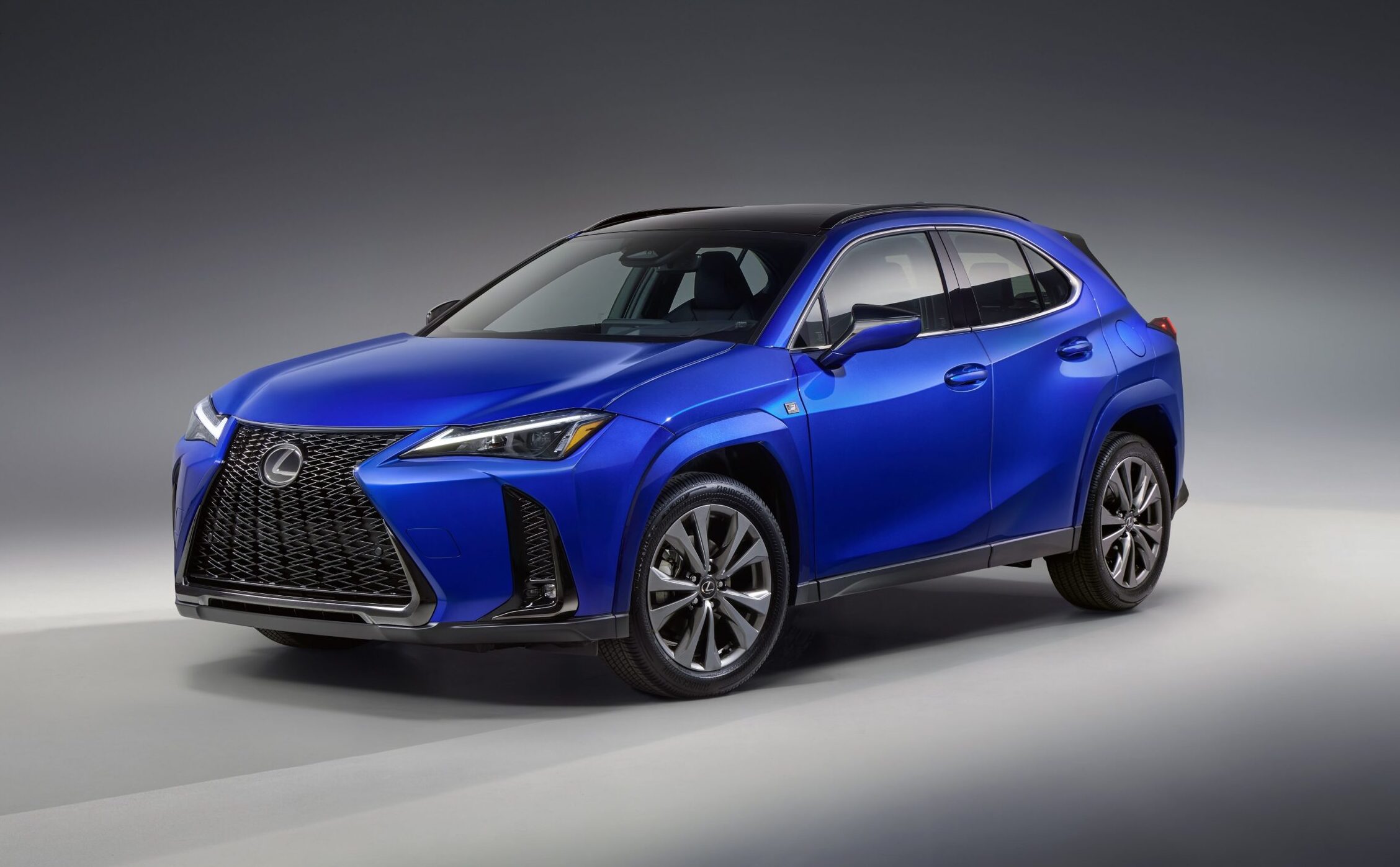
Using the same 2.0-litre hybrid drivetrain as the C-HR GR Sport, the Lexus UX300h – formerly known as the UX250h – is rated at just 4.2L/100km and 99g/km for CO2 emissions.
Pricing for the UX300h starts at $55,370 +ORC for the entry-level Luxury – just $380 more than the C-HR GR Sport – and extends to $73,210 +ORC for the top-spec F Sport.
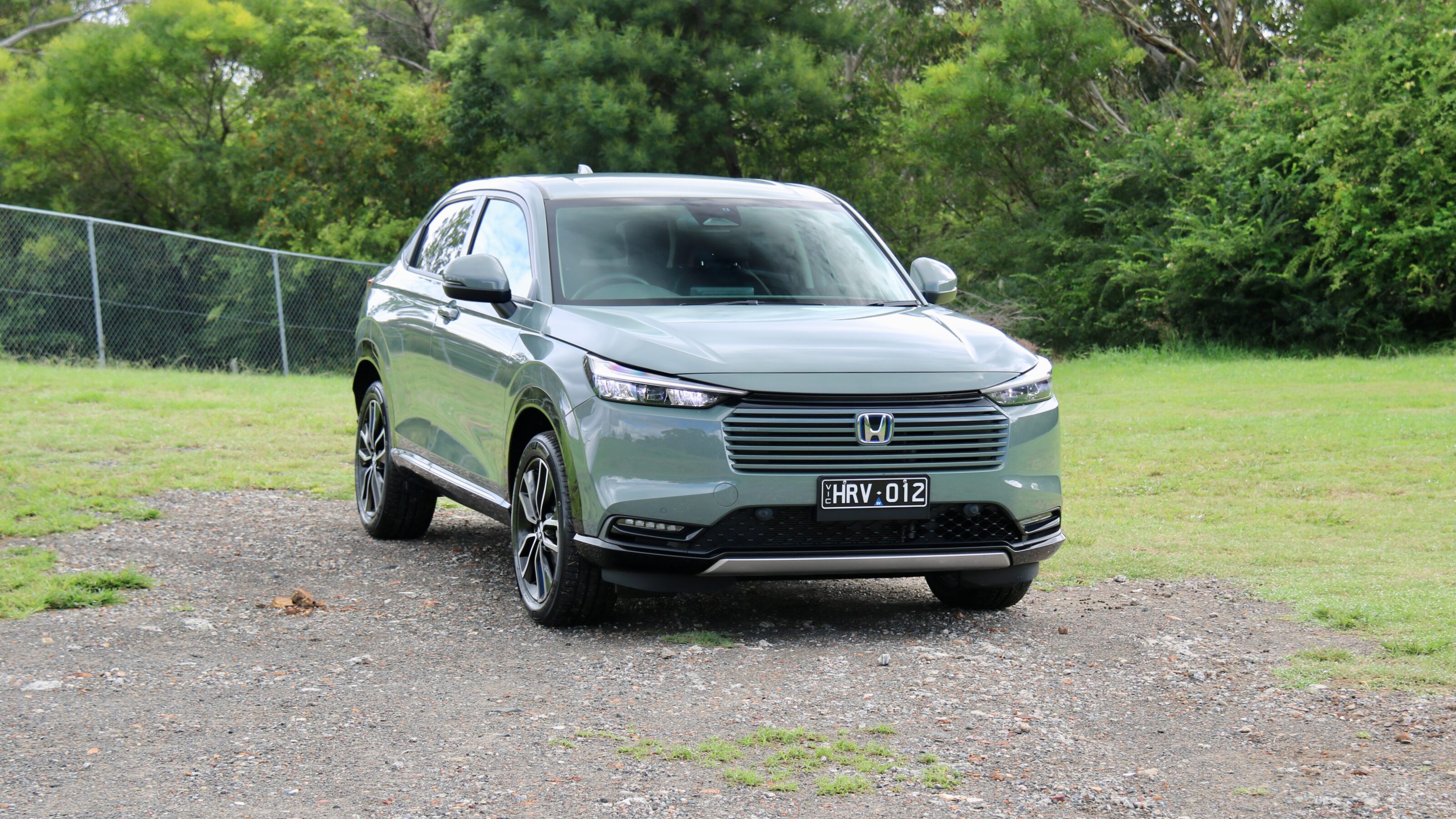
Toyota Corolla Cross 2WD and Honda HR-V Hybrid: 4.3L/100km
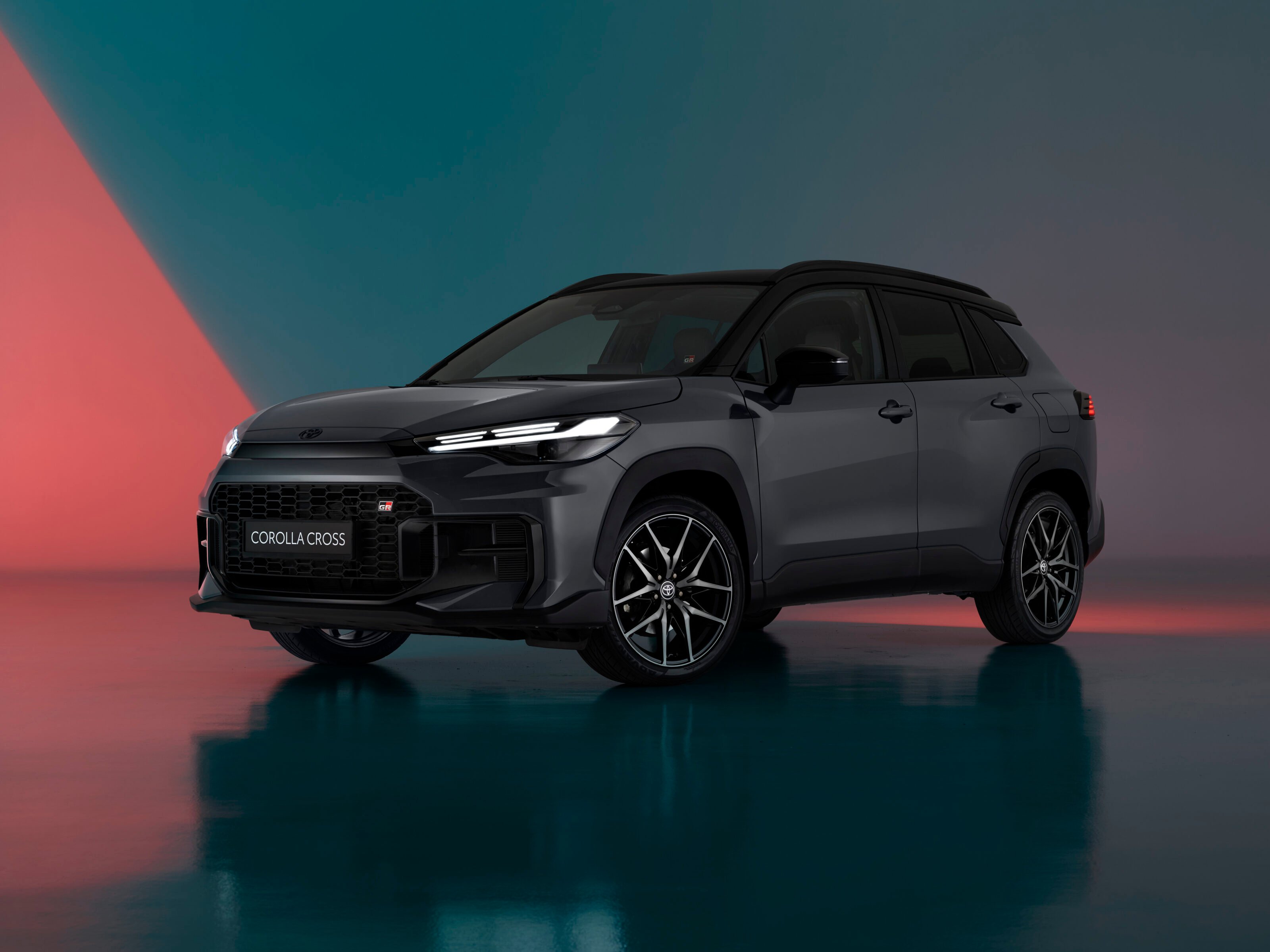
The 2.0-litre hybrid system in the Corolla Cross is both powerful and frugal, though its larger body makes it thirstier than the C-HR with the same drivetrain.
Honda makes it to this list with the HR-V Hybrid small SUV, which uses a 1.5-litre hybrid drivetrain making 96kW of power and an insanely practical body.
Toyota Corolla Cross AWD and Peugeot 2008 Hybrid: 4.4L/100km
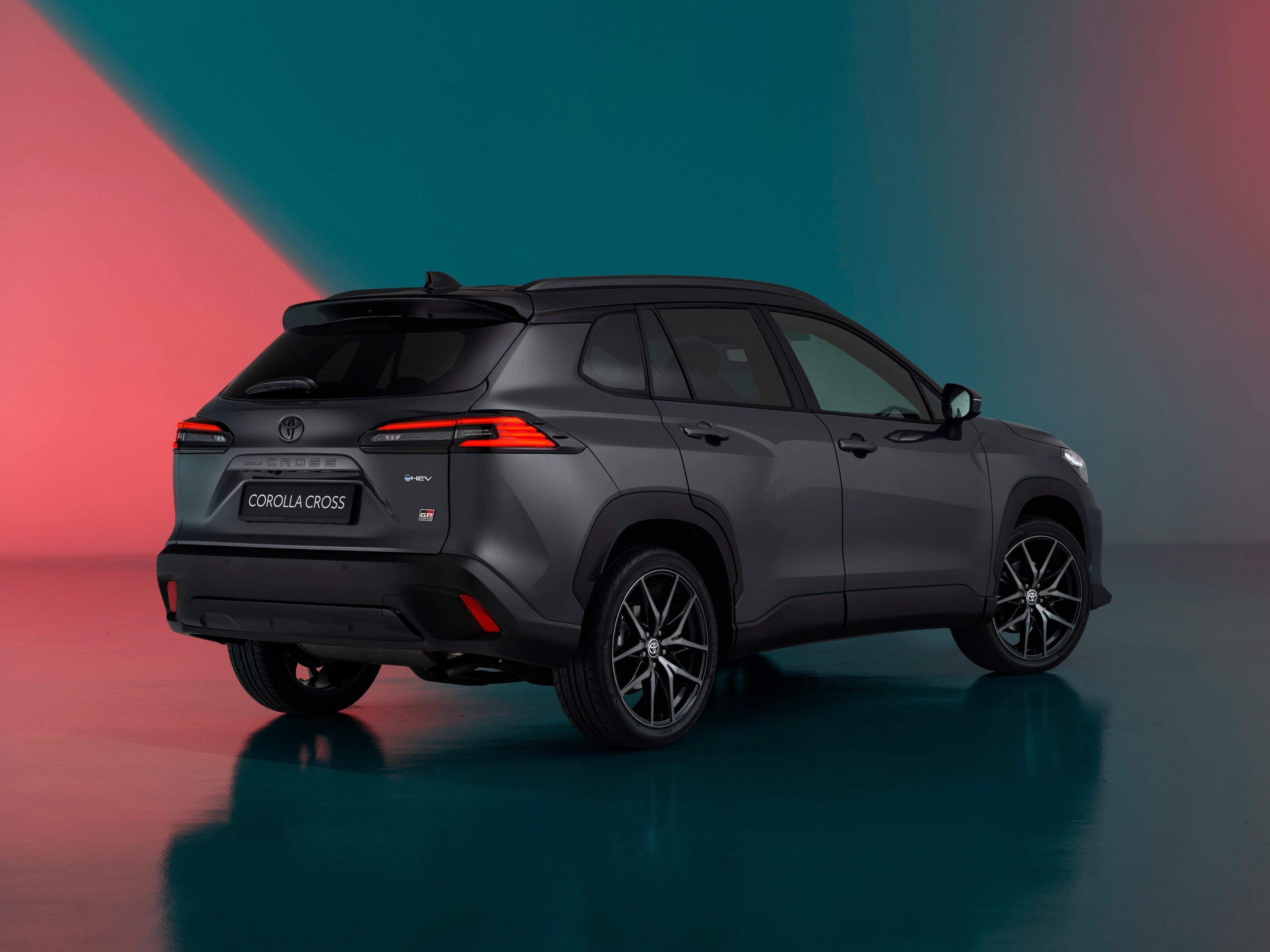
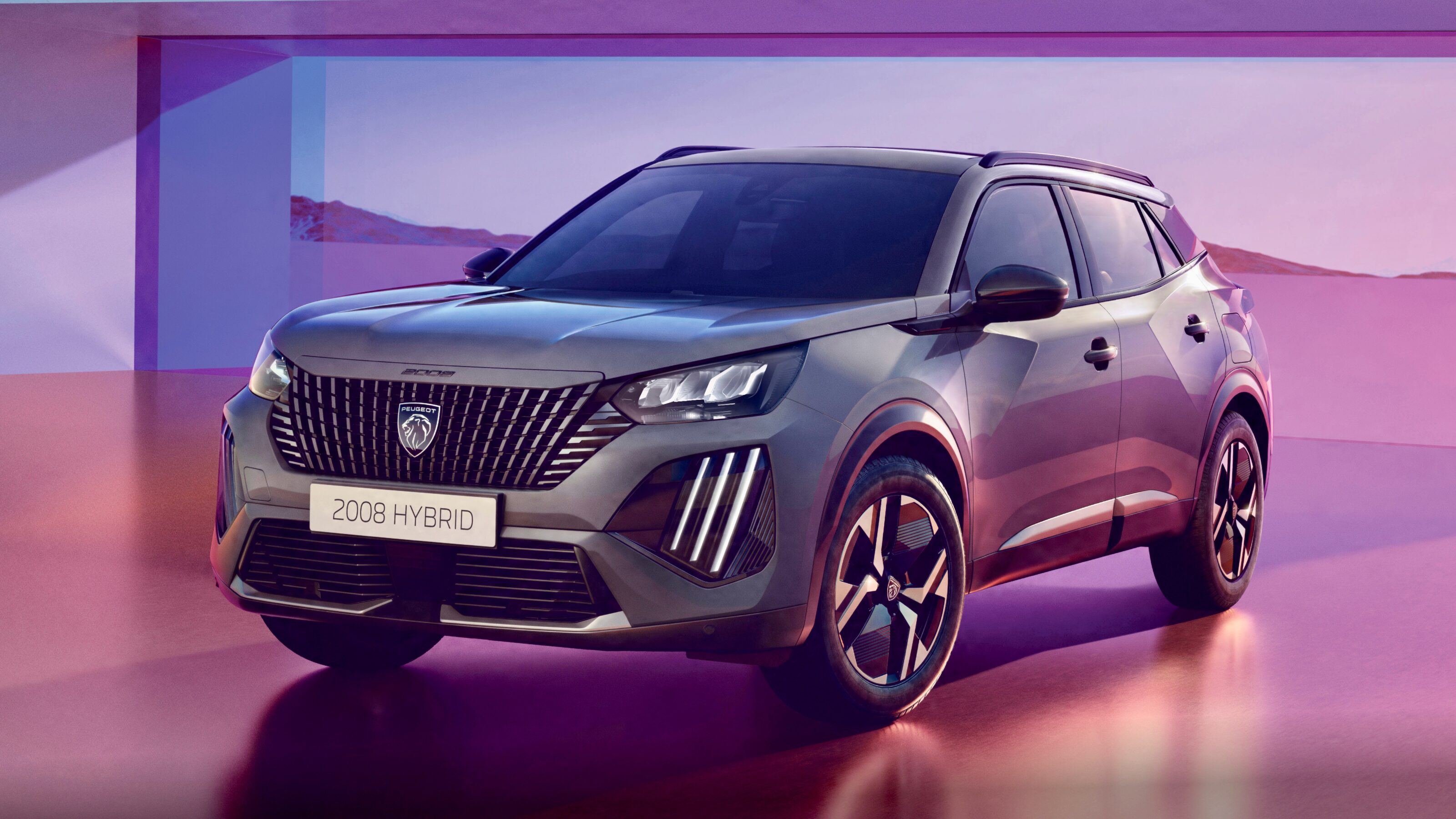
The all-wheel drive Corolla Cross is slightly less frugal than the two-wheel drive model – not enough to likely notice in the real world, however – and it’s the same story with the 2008, which is 0.2L/100km off its lower 308 sibling.
While the Corolla Cross uses a naturally aspirated 2.0-litre engine, the 2008 uses a turbocharged 1.2-litre hybrid drivetrain mated to a six-speed dual-clutch drivetrain for the same 4.4L/100km rating. Running costs for the Corolla Cross are helped by the fact it runs on 91RON regular unleaded, whereas the 2008 must be filled with minimum 95RON premium unleaded.
Toyota RAV4 2WD: 4.5L/100km
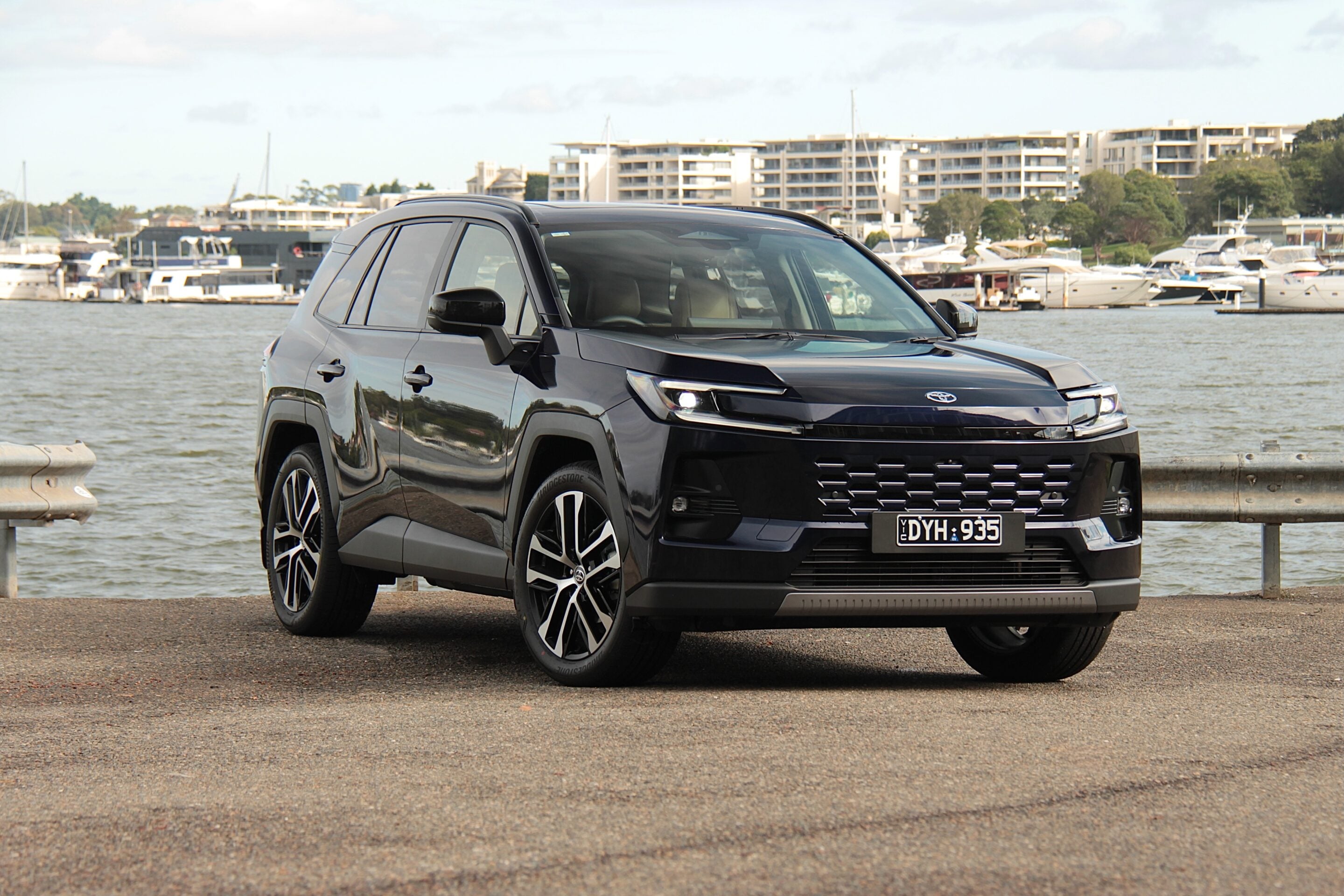
Toyota RAV4
Toyota’s best-selling product globally makes it on to this list for the first time with impressive efficiency that is undoubtedly one of the reasons why it’s so popular. The new-generation model launched earlier in the year with a switch to a newer 2.5-litre hybrid system, which is now rated to Euro 6 emissions standards and makes 143kW of power (19kW down on the last model) and it now uses even less fuel at just 4.5L/100km combined.
Toyota RAV4 AWD: 4.6L/100km
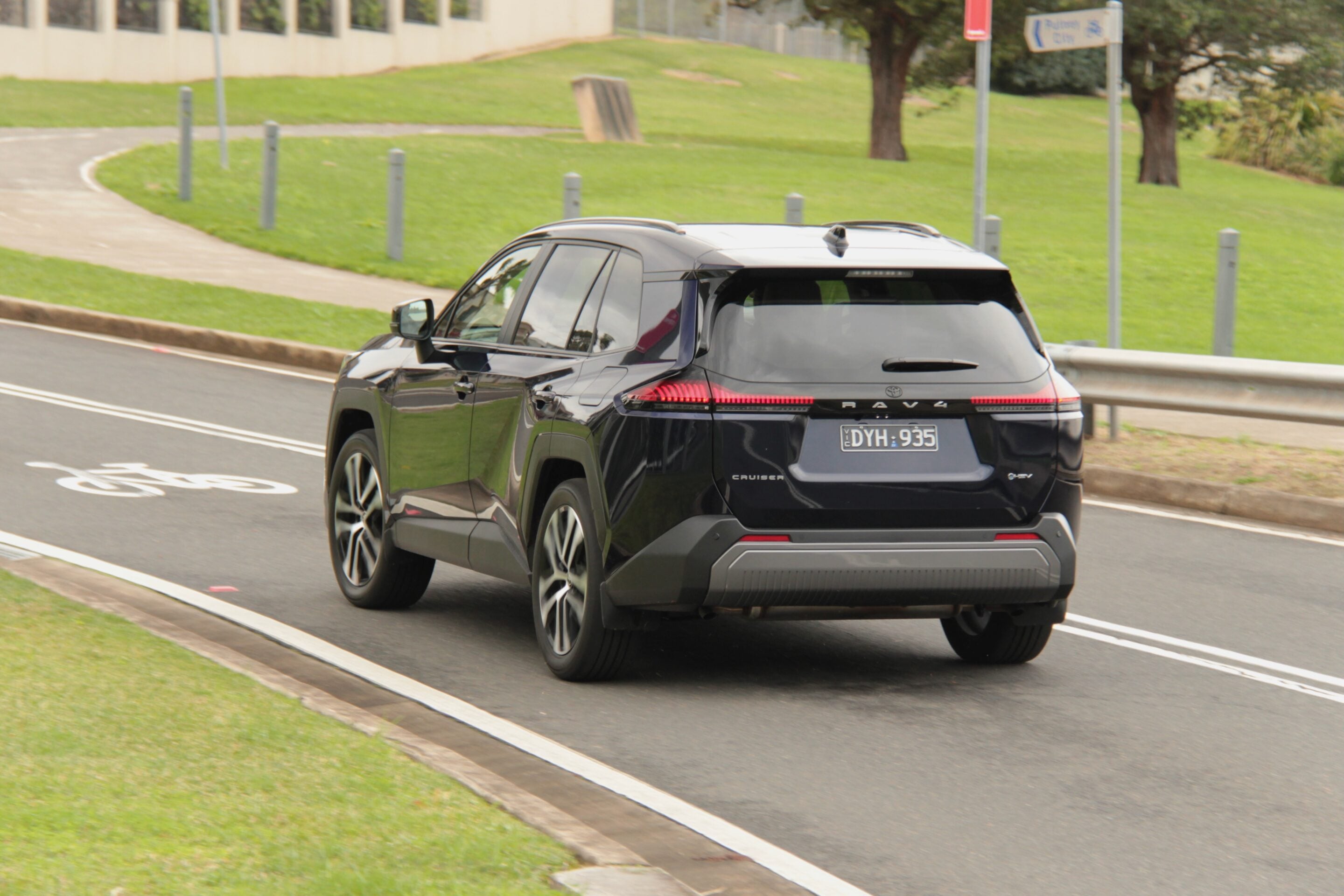
Toyota RAV4 AWD
As with the previous RAV4, the new model features an all-wheel drive system on most models that runs through an electric motor on the rear axle instead of using a traditional mechanical link between the front and rear wheels. According to Toyota, that reduces weight and also gives the RAV4 superior traction because e-motors are faster and offer more torque. Compared to the front-wheel drive car, it officially uses just 0.1L/100km more fuel – an amount so small we doubt you’d notice during real-world driving.
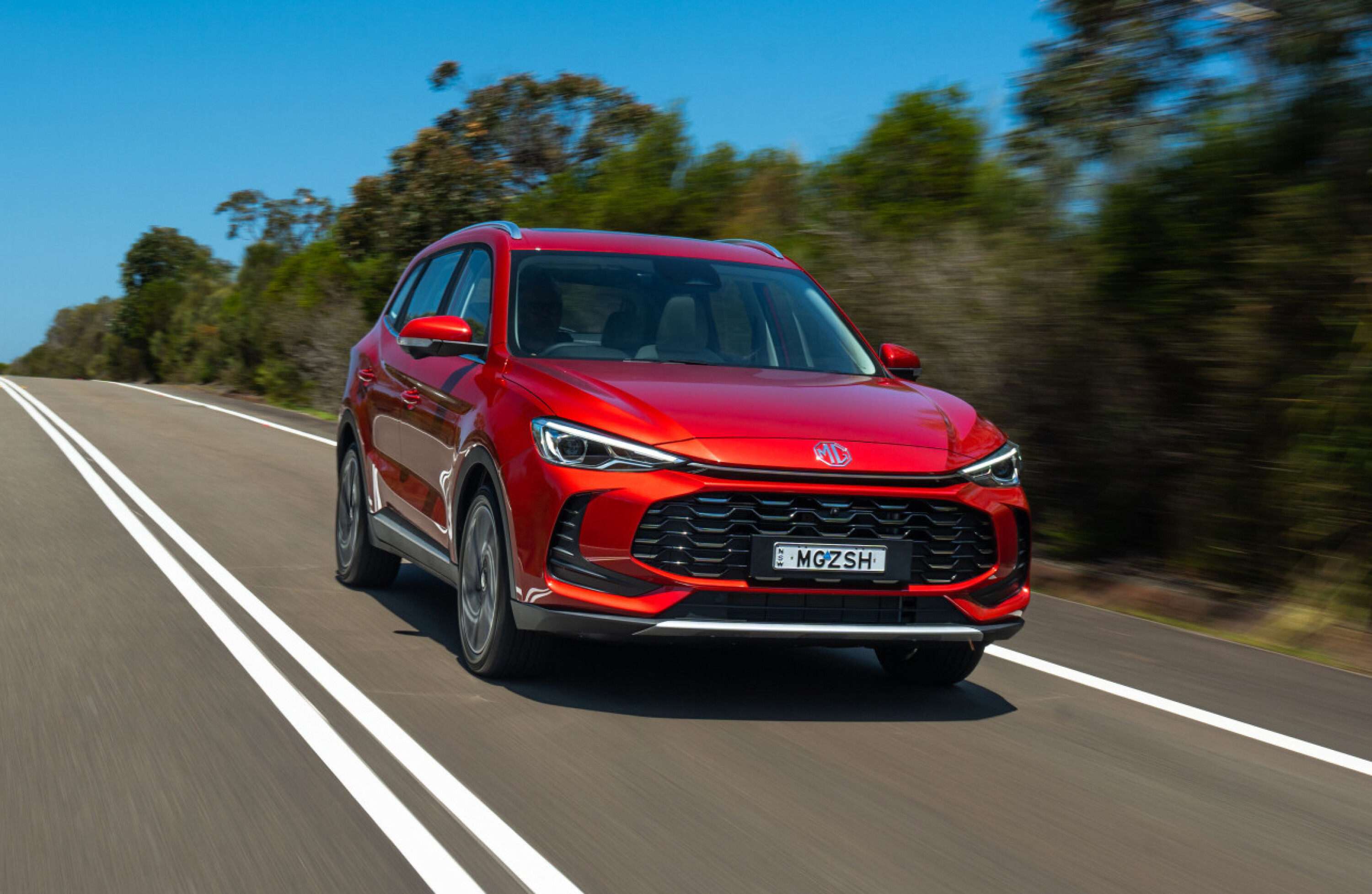
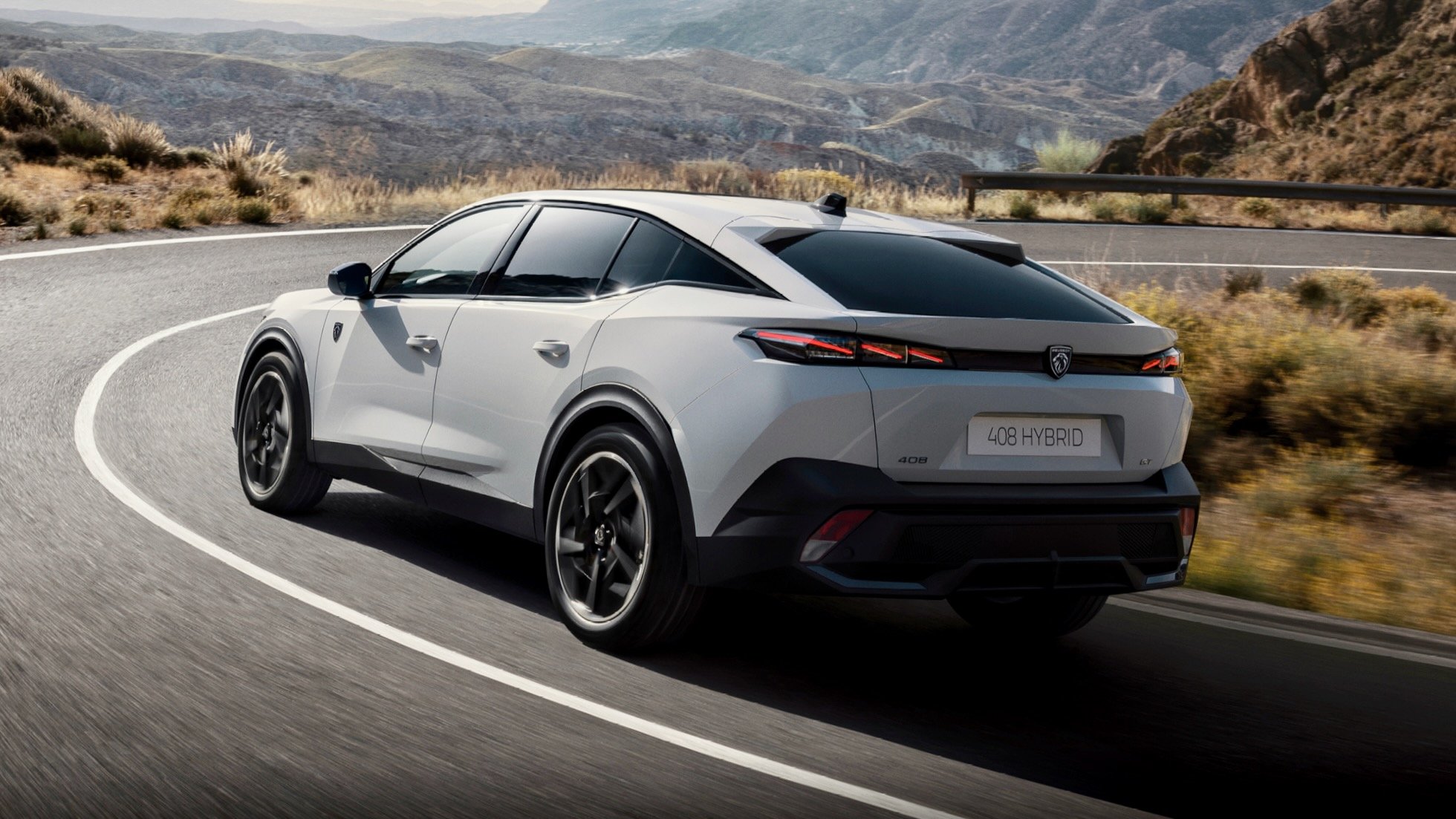
MG ZS Hybrid+, Renault Symbioz and Peugeot 408 Hybrid: 4.7L/100km
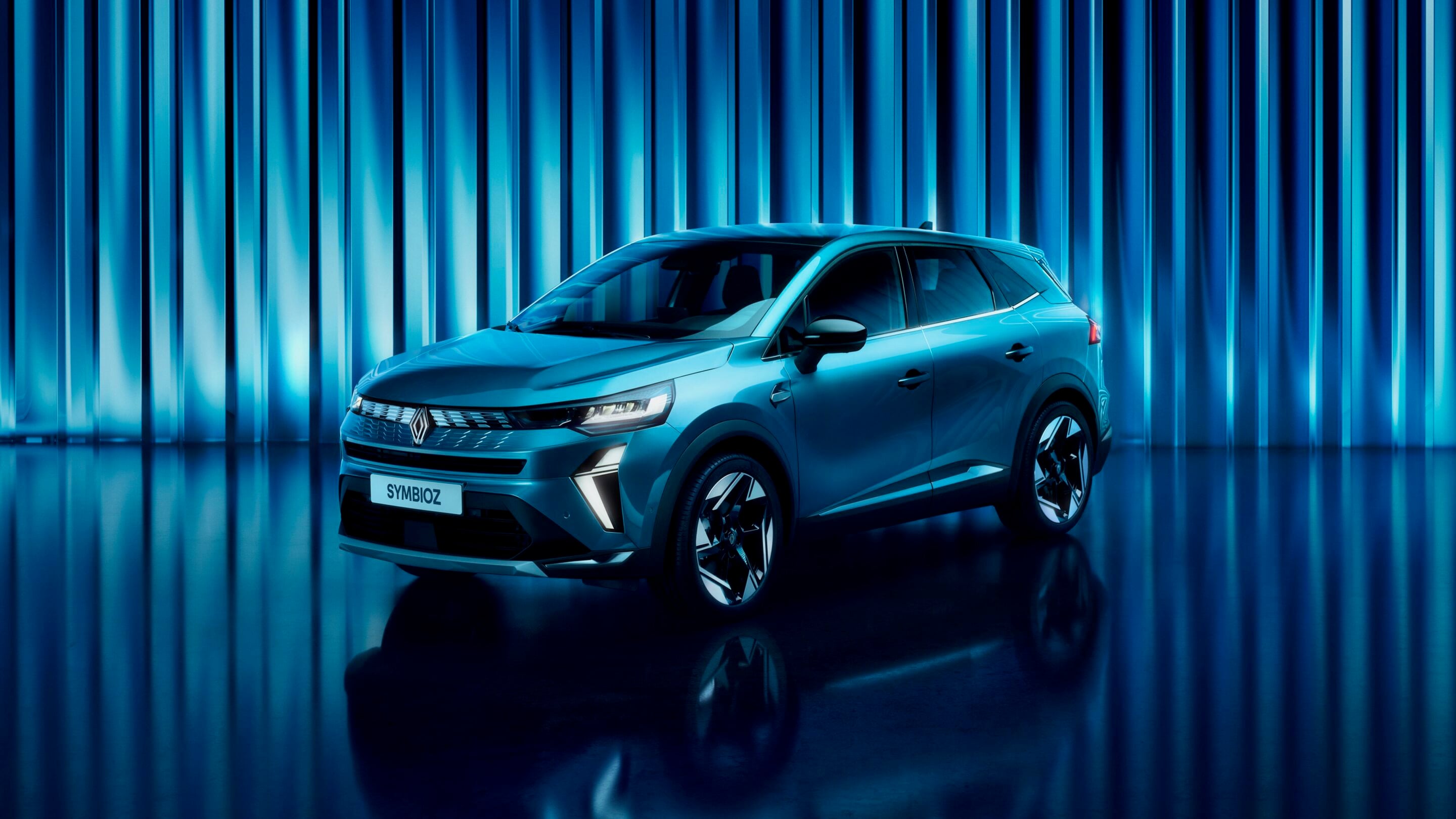
Renault Symbioz
The MG ZS Hybrid+ – priced from $30,990 drive away – is also impressively frugal. It runs the MG3’s hybrid system, which is rated for 155kW of peak power and makes it one of the most powerful entries on this list. However, it’s rated at just 0.4L/100km more than that model.
A newcomer to Australian shores also makes its debut on this list: the Renault Symbioz, which uses a 1.8-litre four-cylinder hybrid drivetrain making 116kW of power but consumes just 4.7L/100km on the combined cycle.
Finally, yet another Peugeot has earned a spot: the $57,990 +ORC 408 coupe SUV with its new 1.2-litre turbo-petrol hybrid system, which launched in Australia earlier this year after its maker decided on hybrid power to replace the former plug-in hybrid drivetrain.
With fuel prices and household expenses showing little sign of easing, choosing more fuel-efficient SUVs can make meaningful difference to running costs. And as this list shows, you don’t necessarily need to plug in to save fuel, with conventional hybrids now delivering impressive efficiency across a broad range of SUV sizes and price points.
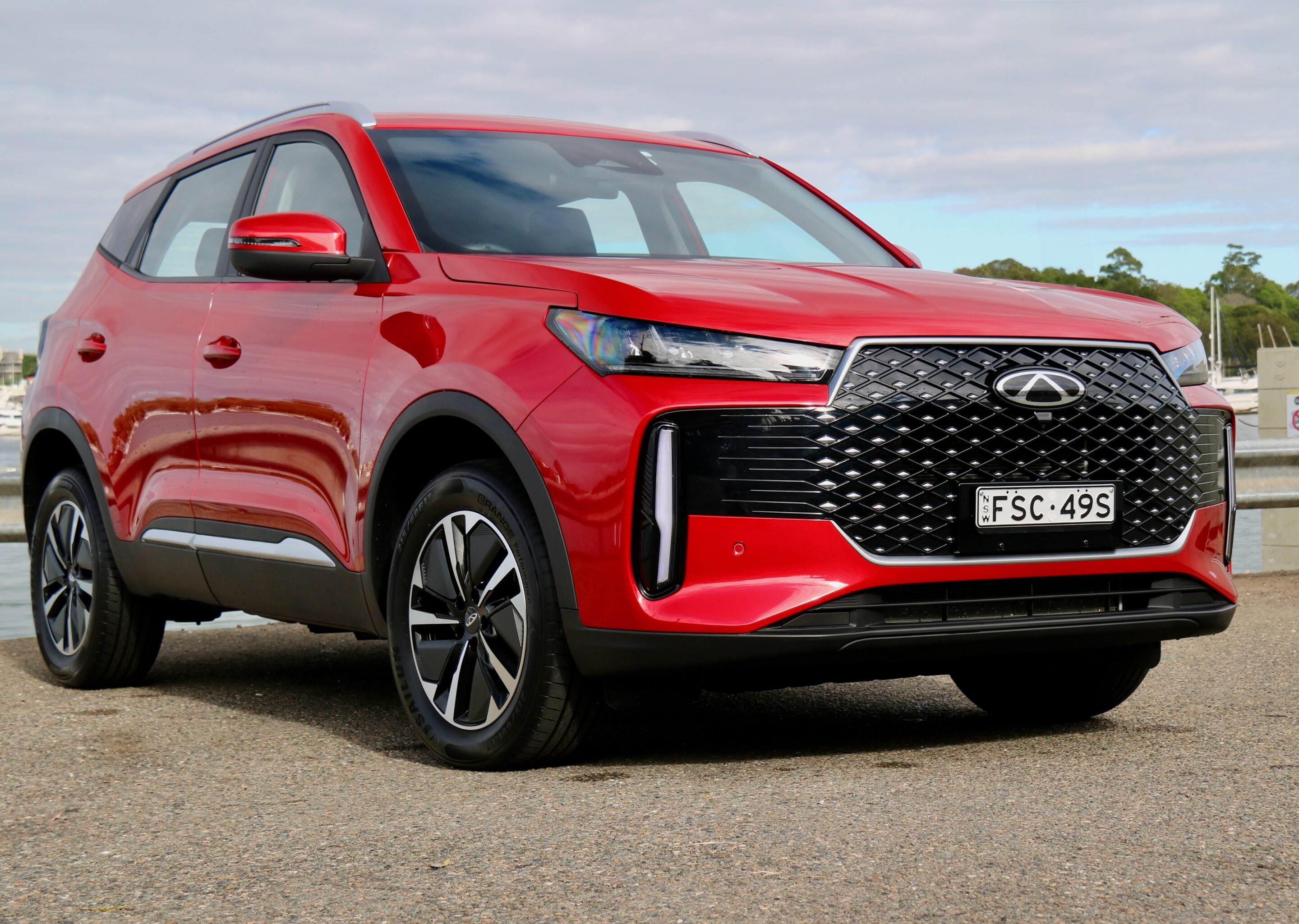
Chery Australia has announced a range of factory bonuses on several of its most popular models, but with two catches: they only last until September 30, and they apply to slightly older models built in 2025.
The offers provide discounts on the advertised drive-away prices for each model. The Tiggo 4 range has had $1500 knocked off, the Tiggo 7 gets markdowns ranging from $2000 to $5000, the Tiggo 8 becomes $5000 cheaper, and the Tiggo 9 sits at the top of the savings tree with $7000 lopped off its price.
In more good news, the terms and conditions state that the discounts can be combined with other retail offers from Chery. However, the price reductions do not apply to fleet, national fleet, government, rental, business and not-for-profit purchases, and they cannot be redeemed for cash.
Here’s how the offers chop down the drive-away prices for the various models…
The Tiggo 4 Urban goes from $23,990 to $22,490, leaving it tied with the Mahindra XUV3XO as the cheapest new SUV in Australia. The Tiggo 4 Ultimate petrol goes from $26,990 to $25,490, the Tiggo 4 Hybrid Urban drops from $29,990 to $28,490, and the Tiggo 4 Hybrid Ultimate goes from $32,990 to $31,490.
Discounts for the Tiggo 7 are as follows: $2000 off the Super Hybrid Urban, which is now $32,990; $2000 off the Super Hybrid Ultimate, which is now $36,990; and $3000 off the Urban, making it $30,990.
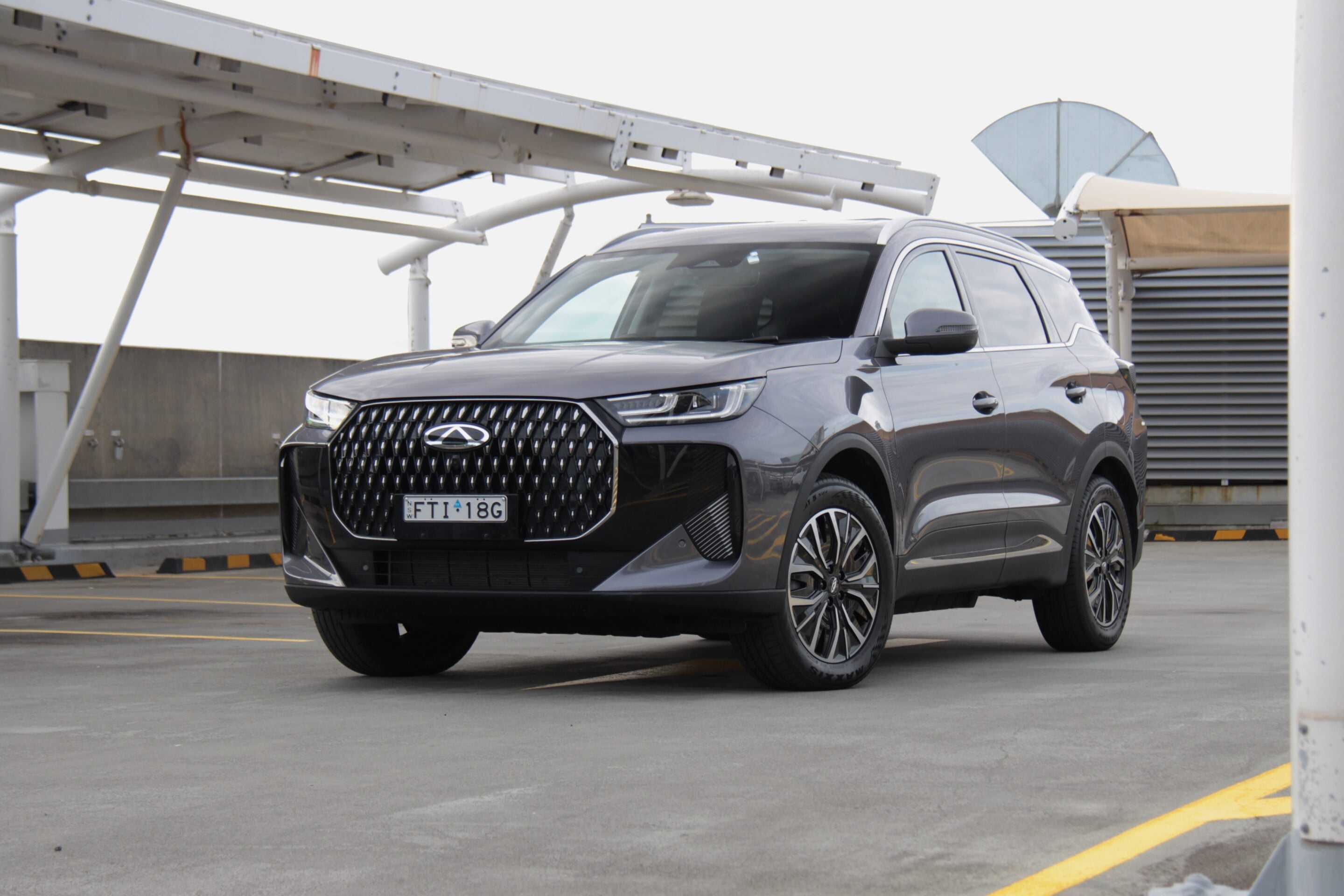
A bonus of $5000 applies to the Tiggo 8s, with the petrol Urban now costing $33,990, and the Ultimate cut to $38,990. The Super Hybrid has been reduced to $40,990, and the Super Hybrid Ultimate will now cost $44,990.
The largest offer, worth $7000, applies to the Tiggo 9 Super Hybrid Ultimate AWD. While it doesn’t have a national drive-away price, the reduction should see it cost approximately $58,430 in NSW, $58,469 in Victoria, and $57,062 in Queensland.
Traditional carmakers will be involved in a survival fight in little more than three years thanks to the Chinese brands that are winning new friends every day in Australia.
The tsunami of new Chinese makes and models will leave existing brands fighting for little more than half of their current sales, according to the outgoing chief of Kia Australia.
Damien Meredith believes the Chinese onslaught will hit its first showroom target at least three years early, placing growing pressure on existing makes as their share of local sales drops rapidly.
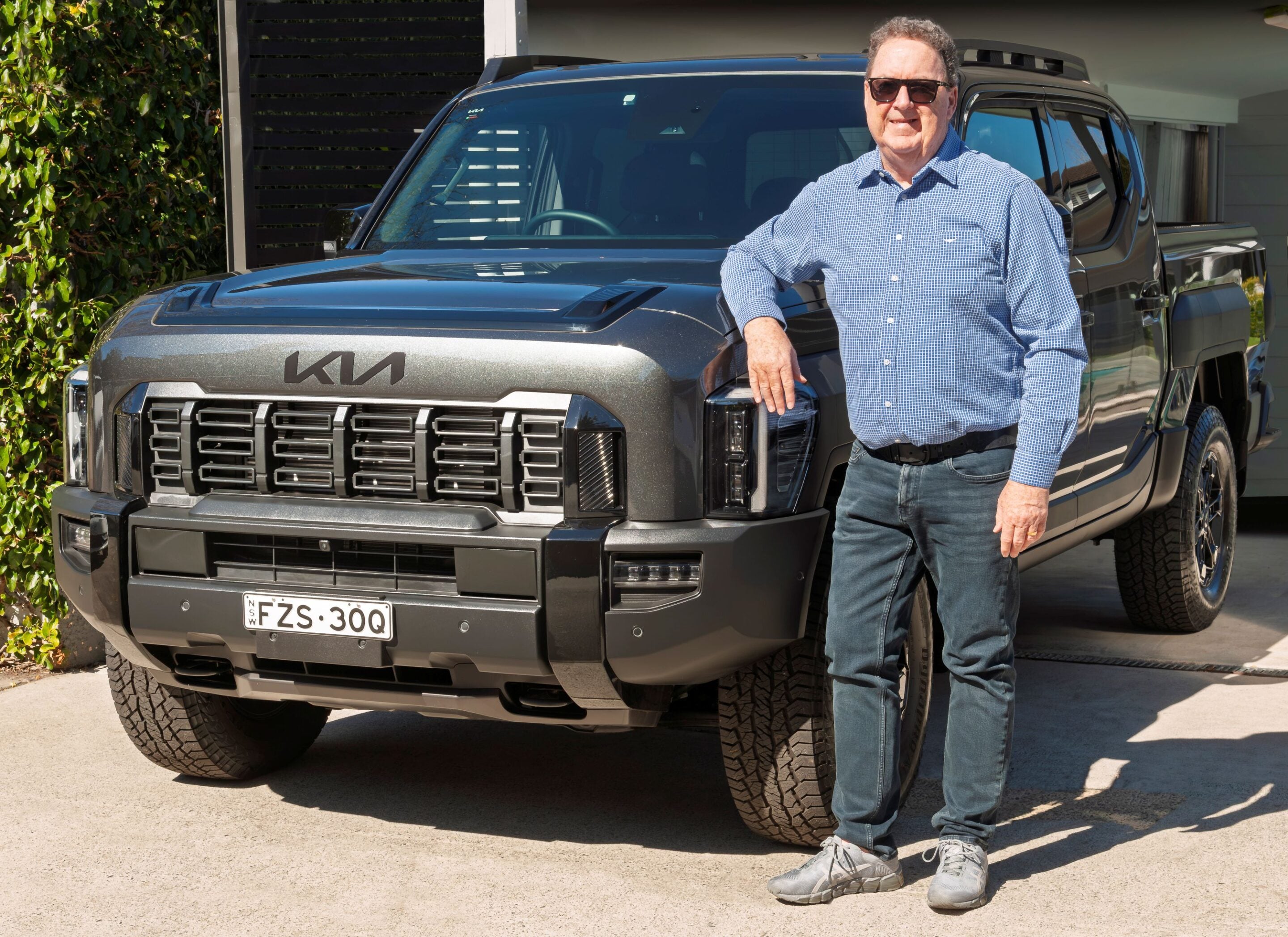
Meredith has made some inspired – and inspiring – moves on the automotive chessboard, but he is still looking to the future and preparing for the biggest shift in living memory.
Surprisingly, he’s not forecasting any sort of implosion or decimation for existing brands. He even believes there is a way for non-Chinese brands to survive. The key, he said, is to re-cut their businesses to cope with a massive drop in numbers. Meredith believes that could be as little as half the current totals, even for market leader Toyota.
“The facts are the facts, and here we are. It looks like within the end of this decade, 60 per cent of sales will be Chinese,” Meredith observes. “They are saying it’s 2032, but I think it will be sooner than that.
“It’s not armageddon. It’s competition. It’s opportunity. Is it going to take a lot of work? Bloody oath it will.
“If it’s a 1.2-million market, and the Chinese have got 720,000 cars, what you have to do is look at the segment that’s left. Say 500,000.
“You’ve got to set your strategy to that. You know what the Chinese are going to do. There is still a pool of cars – so you have to ask yourself how to get your share. It’s not the death of other brands from other countries.”
His view is supported by the president and CEO of Ford Australia, although there is far less detail.
“He is probably right,” Fadi Mawal told WhichCar by Wheels during the company’s recent Ford Uncovered event in Melbourne.
Looking beyond Kia, Meredith had thoughts on many things around motoring in Australia. And the triggers for change.
“I think it’s two things – the NVES (New-Vehicle Efficiency Standard) and the surge of the Chinese in the last five years. They are the two major things,” he said.
“The third would be the decline of manufacturing in Australia. I think it’s sad that a country can only have civil engineers rather than an array of engineers.”
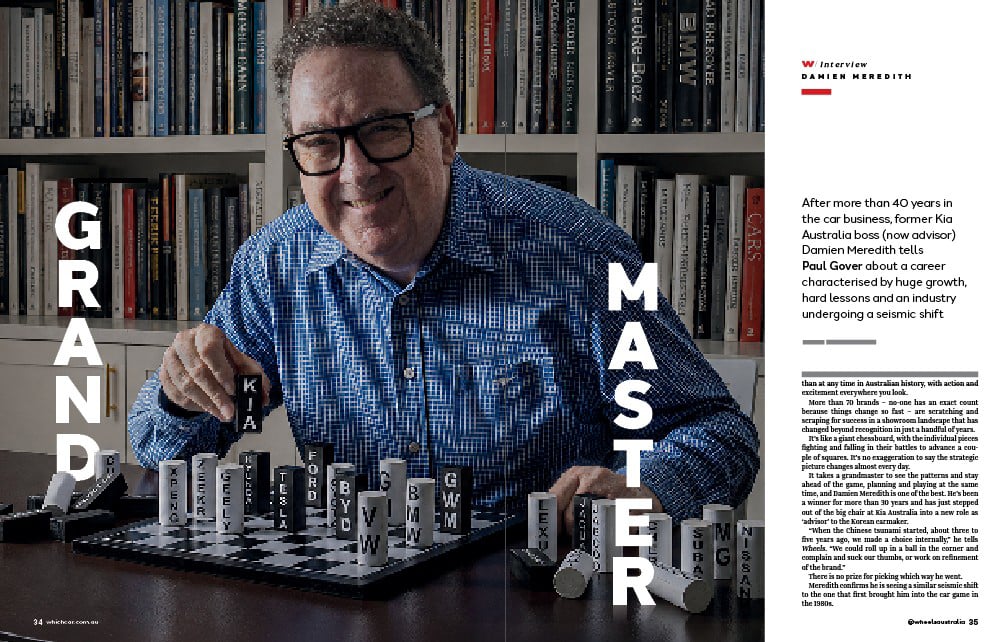
Read Paul Gover’s full interview with Damian Meredith in the new October 2026 issue of Wheels (above), on sale now.
Nissan president Ivan Espinosa has confirmed the next generation of the legendary Skyline sports sedan will be launched in December and will become an “icon of the renaissance” of the brand when it gets its first overhaul in 13 years.
Known and loved by Aussies thanks in large part to the R32 GT-R’s touring car heroics in the early 1990s, the upcoming model will be the 14th generation of the Skyline and will be Nissan’s first car to utilise AI in its production.
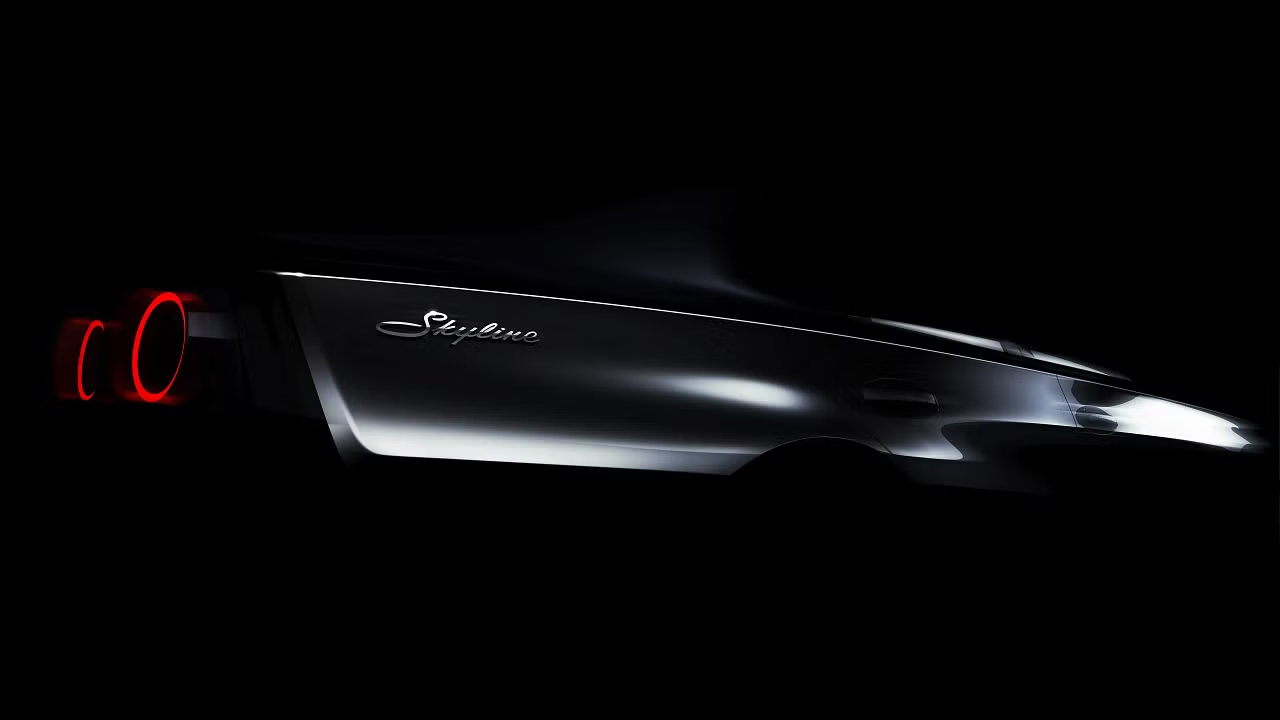
Espinosa told Japan’s Asahi Shimbun newspaper that the Skyline is a big part of the brand’s efforts to “change the narrative of the market” as it tries to come back from “many, many months of bad news and negative news cycles” due to the company’s sales struggles.
“We have great nameplates like the long-awaited, all-new Skyline, which is coming as well and will be one of the icons of the renaissance of Nissan, of a comeback that we have been working on,” he said.
“It’s an icon of speed, it’s an icon of speed as a car, but it’s an icon of the speed of Nissan, because this car is the first that is running under the new accelerated development process. It’s a car that is proof that our engineering capabilities are not only about making great cars, but also making them with speed. We will be having a launch event in December.”
Espinosa added that the next-generation Skyline will be “completely developed within the next 26 months” as it joins a list of other new products from the brand.
Nissan has sped up its development cycle through the use of emerging technologies, with Espinosa previously explaining, “A big part of this is built on AI capabilities and the utilisation of new tools, more digital tools in the design phase, in the manufacturing phase.”
The brand announced a major restructure to return to profitability in 2025, pledging to trim average vehicle development timelines from 37 months to 30 months. It has been reported that the 55-month development process for the previous Skyline model has been cut to just 26 months.
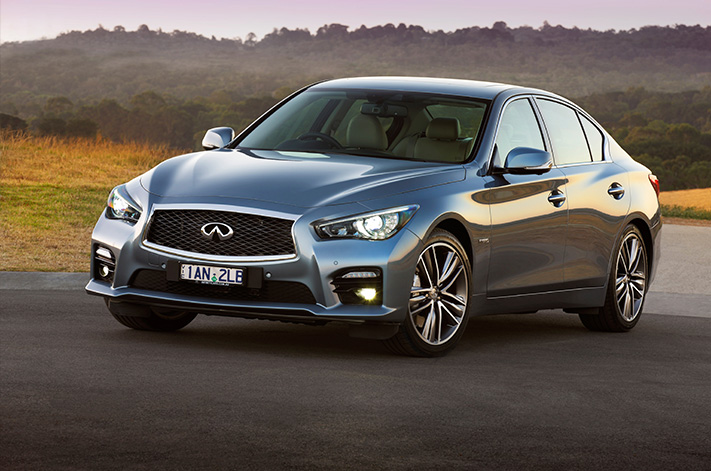
Sold in Australia as the Infiniti Q50 (pictured, above) from 2014 to 2019, the outgoing Skyline has now been in production for 12 years. Its replacement has been rumoured to run the Nissan Z coupe’s twin-turbo V6.
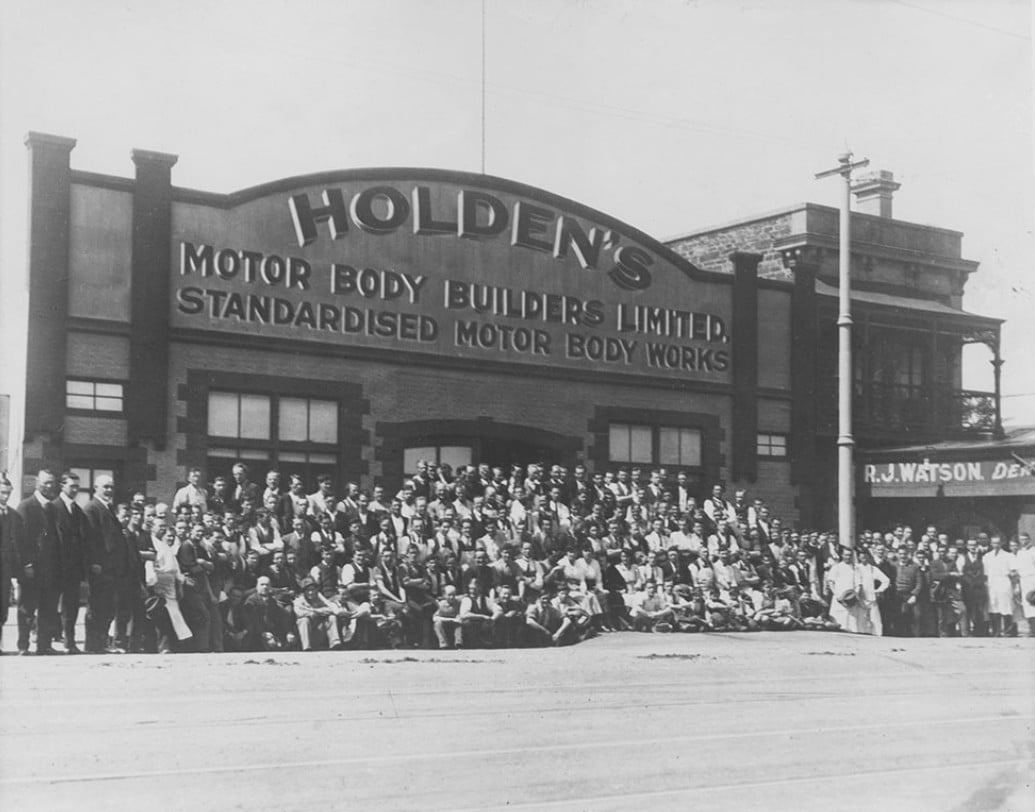
Holden’s journey from a 19th-century saddlery to one of Australia’s most recognisable automotive brands is currently being explored in a free exhibition at the National Archives of Australia in Canberra.
Rear vision: the Holden collection brings together historic vehicles, components, documents, photographs and other memorabilia charting the rise and eventual closure of the Australian manufacturer.
Originally developed by the State Library of South Australia in partnership with Adelaide University, the exhibition has travelled to Canberra with material drawn from the library’s extensive Holden archives and has been on display – forgive our tardiness – since June.
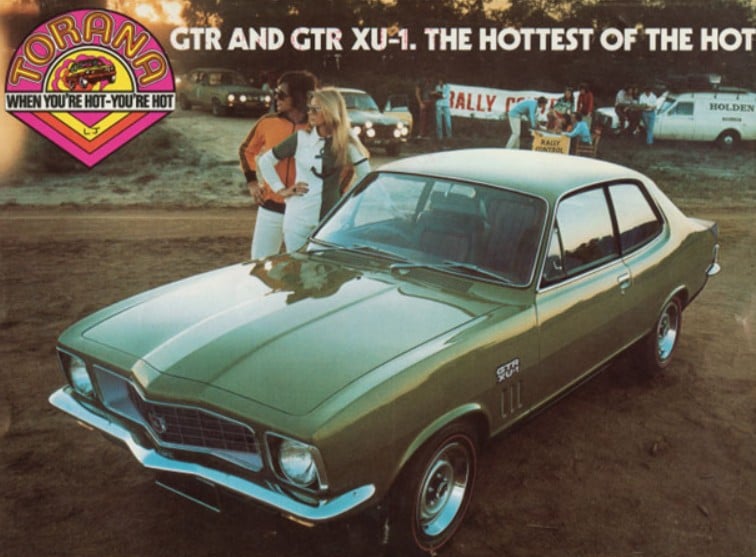
It traces the company’s beginnings as a saddlery business in Adelaide, its involvement in military production during the Second World War and the development of the first Holden-badged Australian car.
The story continues through Holden’s decades as a major local manufacturer and cultural fixture, before local vehicle production ended with the closure of its Elizabeth factory in South Australia in 2017.
Among the rarities on display are the first and last engines produced by Holden, a Monaro Tri-Matic gearbox, custom paint and trim samples, fibreglass and Lego model cars and the original bronze Holden lion statue that once stood at the entrance to the Elizabeth plant.
The Canberra exhibition also incorporates material from the National Archives collection, including patents, advertising, industrial relations records and documents examining the campaign by female employees for equal pay.
National Archives Director-General Simon Froude said the exhibition demonstrated how historical documents could continue to capture public interest and help tell stories that have shaped Australia.
Contributions from former Holden employees provide another perspective, offering personal insights into the people behind the company and its changing fortunes.
Rear vision: the Holden collection is free and open daily at the National Archives of Australia, Kings Avenue, Parkes, Canberra.
The exhibition runs until January 31, 2027, with daily gallery talks and a program of associated events and activities.
NSW and Queensland have taken drastically different approaches to changing the way they deal with drivers who test positive for drugs under new measures that are in the process of being brought into effect.
Queensland motorists who are caught with a drug present in their blood or saliva will have their penalties doubled under legislation that was passed last week. The changes apply to methamphetamine, cannabis and cocaine, the presence of which will now attract a fine of up to $4385 and a loss of licence for at least two months.
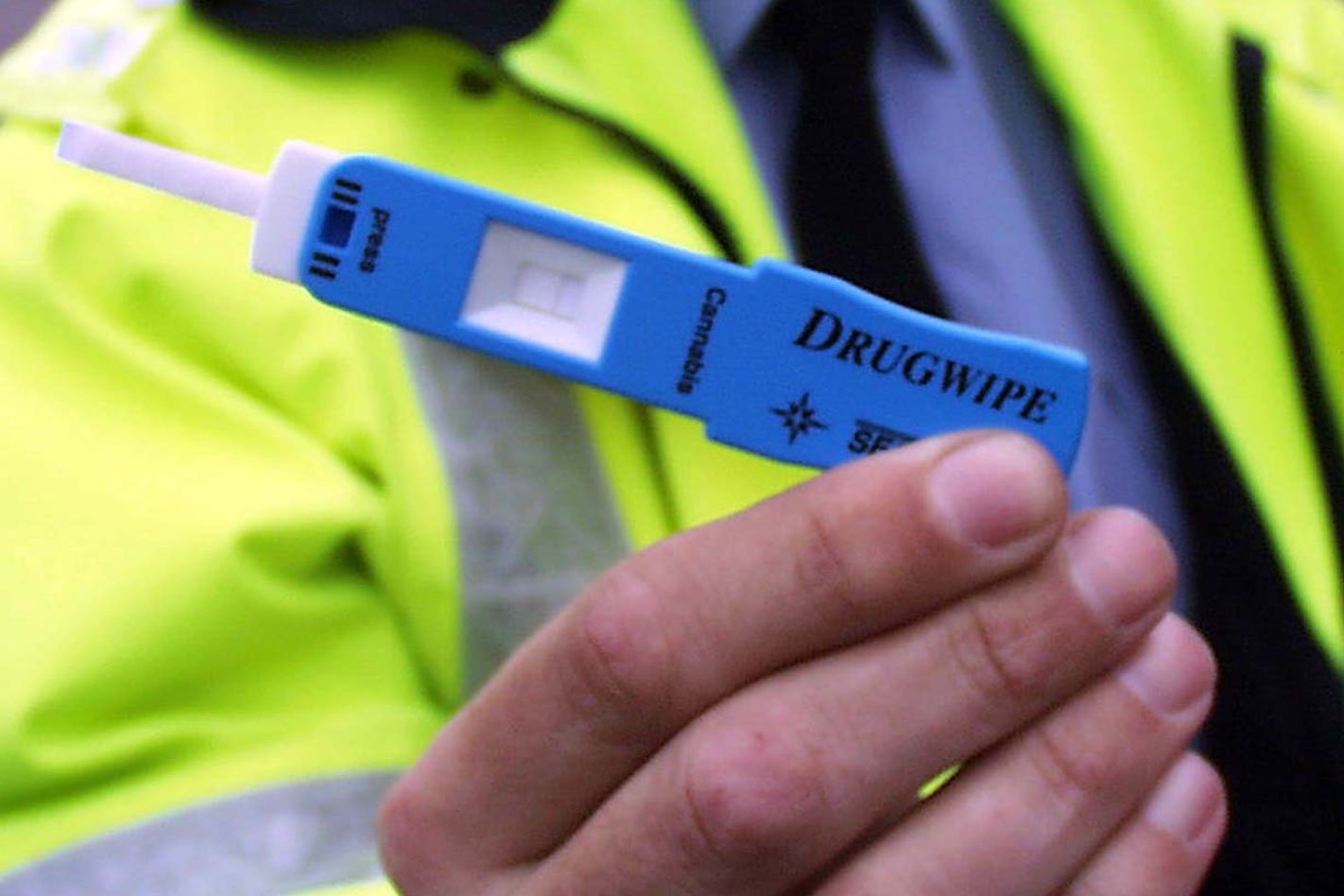
Drivers in the Sunshine State who test positive to drugs and have an illegal blood-alcohol concentration will now be fined a maximum of $5699 and lose their licence for at least three months.
Queensland’s new laws also include the framework enabling authorities to hit drivers with an immediate six-month licence loss if they are caught exceeding the speed limit by more than 40km/h. There will also be minimum court-imposed fines for drink and drug driving, which was not the case before the legislation passed.
The changes will take effect from December 1 this year and also include an increase in the maximum penalty for road offences that result in death or grievous bodily harm from 16 years to 25 years.
NSW is going in the opposite direction with drug-driving by passing legislation that means some drivers who are found with cannabis in their system will no longer be automatically penalised.
Motorists who use lawfully prescribed cannabis used to face an immediate loss of their licence for three months, but the new laws allow them to dodge that fate as long as they meet several conditions.
Only drivers with a lawful prescription for cannabis and an unrestricted licence fall under the legislation. They must also complete an online education program about cannabis use and driving, and they must not be impaired by the drug while they are in charge of a motor vehicle.
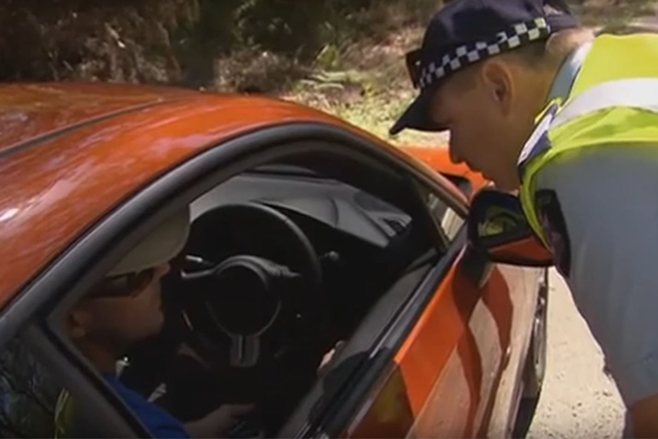
There will be no change to the state’s drug-testing system, or threshold for detection of tetrahydracannabinol (THC) – the psychoactive ingredient in cannabis – under the changes.
Registered medical cannabis users will keep receiving an immediate 24-hour driving ban while their sample is sent for laboratory testing. If their results show a concentration of 50 nanograms per millilitre of saliva or 3.5 nanograms per millilitre of blood, penalties will apply.
The online course is currently being developed and the changes are expected to be implemented later this year or in 2027, as while the legislation has been passed by the NSW Parliament, it is still waiting for assent and proclamation.
A mechanic is facing charges after he was caught red-handed drag-racing a police car he was meant to be test driving. The 22-year-old was captured on video taking off in a Ford belonging to the local sheriff’s department and has admitted his guilt, according to a report.
Matthew Means, 22, was testing the vehicle for the repair shop he works for when he was filmed racing a Dodge Challenger off the lights in Toledo, Ohio on September 8. He has been charged with unauthorised use of a vehicle.
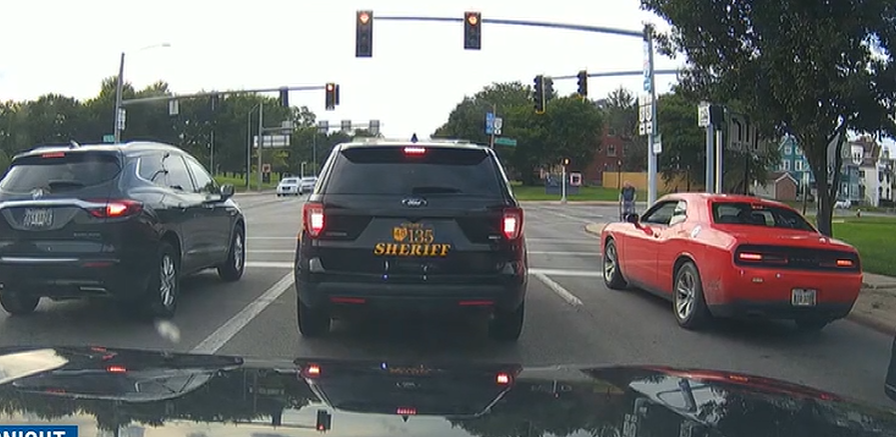
The video, which was taken by a driver positioned behind the two drag-racing cars, shows the marked cop car revving at the red light as it prepares to face off with the Dodge.
The woman who filmed the clip was hoping the police vehicle would stop any dangerous driving, only to get a nasty shock when the lights turned green. She filed a complaint with local officers, and a detective traced the police vehicle back to the workshop.
“Prior to a light, she noticed a car driving recklessly and then felt relieved when she saw a marked sheriff’s office unit sitting at the light and thought, ‘Well, I’m gonna see if this guy is going to keep driving reckless,’” said Captain Robert Chromik of the Lucas County Sheriff’s Office.
“Once he [the detective] went to find out who during this time frame may have had that vehicle, unfortunately it was one of their youngest repair techs.”
Chromik explained that Means’ behaviour was especially concerning because it occurred close to a museum that is frequented by families and kids.
“The museum caters to all members of our community, including children who are going to be crossing the street, and you decided you’re going to drag race with this other vehicle? That’s a problem. Thankfully, nobody was hurt,” Chromik said.
“We sent it in for maintenance and he decided he was going to do qualifying laps on Monroe Street like it was Talladega, and that’s dangerous.”
