Reviews

Gallery 1
8.0
/10
Score
Score breakdown
7.5
Safety, value and features
8.0
Comfort and space
9.0
Engine and gearbox
7.5
Ride and handling
8.0
Technology
Things we like
- Improved efficiency and performance
- High quality cabin materials
- Loaded with standard features
Not so much
- Expensive to buy
- Ride on 20s a bit too firm
- No spare wheel in Ti-L model
Nissan’s e-Power hybrid system has always been unique in the Australian new car market because it delivers an EV-like driving experience without the need to plug in and because the engine never drives the wheels, delivering superior refinement to many other hybrid drivetrains.
Now the updated Qashqai e-Power has arrived in Australia with improvements aimed at boosting efficiency, reducing emissions and adding performance, which Nissan hopes will keep it competitive in an increasingly crowded hybrid small SUV market. Here’s a look at whether the updated Nissan Qashqai e-Power is worth consideration for compact SUV shoppers.
How much does the Qashqai e-Power cost to buy?
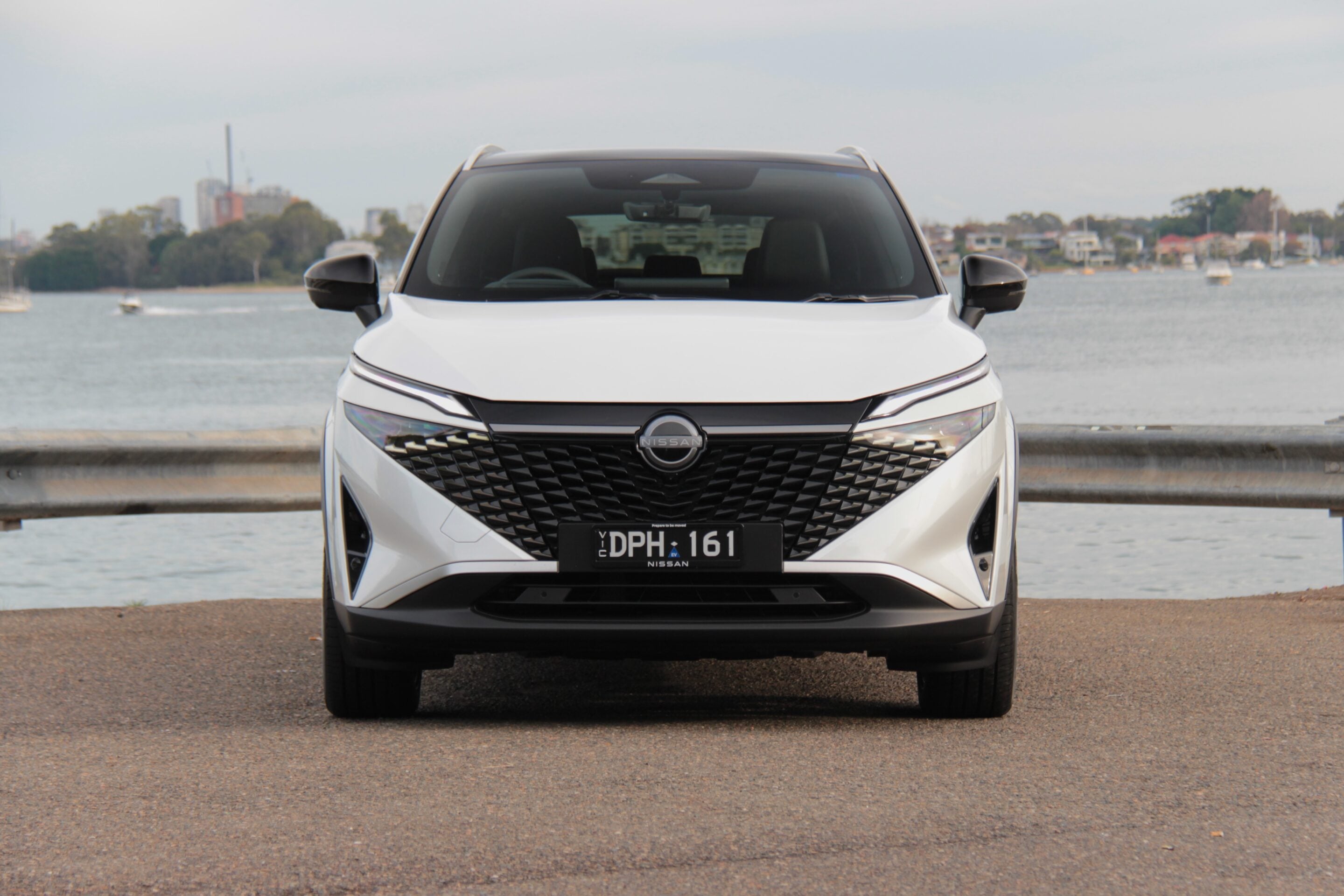
Pricing for the updated Qashqai range starts at $45,640 plus on-road costs for the entry-level ST-L and tops out at $54,140 +ORC for the top-spec N-Design (in name at least, it strangely doesn’t get all the fruit of the one-rung-lower Ti-L tested here). In the middle are the Ti and aforementioned Ti-L tested here, and unlike the pre-updated Qashqai, there’s no longer a pure petrol model on offer. The whole line-up now uses the updated e-Power hybrid system, helping Nissan achieve NVES compliance by emitting just 92g/km of CO2.
4
2026 Nissan Qashqai pricing (excluding on-road costs):
| ST-L | $45,640 |
|---|---|
| Ti | $49,640 |
| Ti-L | $53,640 (tested for this review) |
| N-Design | $54,140 |
There’s plenty of competition for the Qashqai e-Power, including the Toyota Corolla Cross, Mazda CX-30, Hyundai Kona, Honda ZR-V, Subaru Crosstrek, Volkswagen T-Roc, Skoda Karoq and Kia Seltos. Most of them offer hybrid power at least optionally, while there are also fully electric options such as the BYD Atto 3, MGS5 EV, Kia EV3 and Skoda Elroq.
The Qashqai is one of the pricier options in the small SUV segment. Including driveaway costs and depending on location, it’s almost $50,000, which is around $8000 more than the Corolla Cross. Like-for-like, yep, the Qashqai is definitely better equipped, much higher quality and it’s also built in the UK, which is more expensive to source cars from for the Australian market compared with Japan where the Corolla Cross is built.
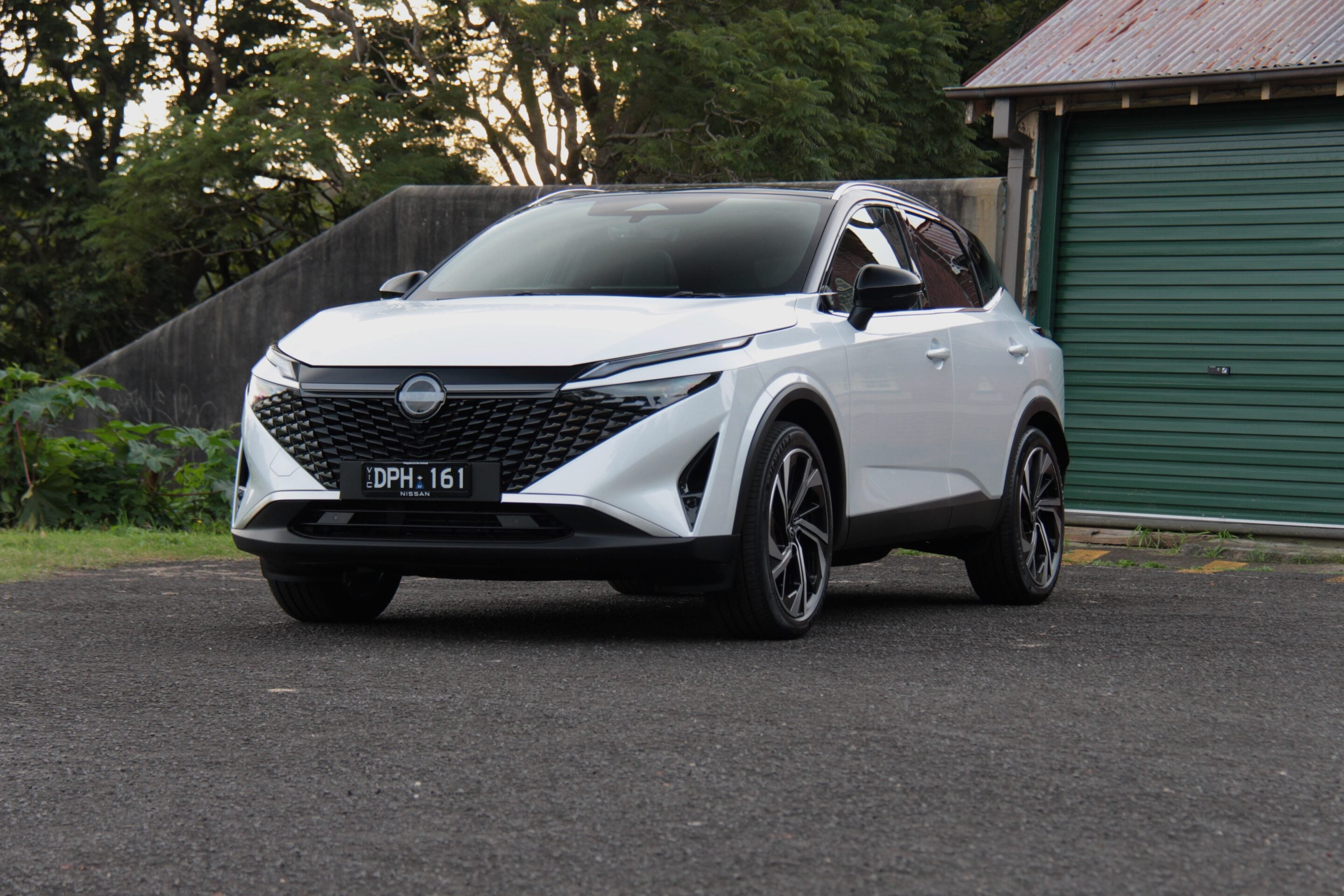
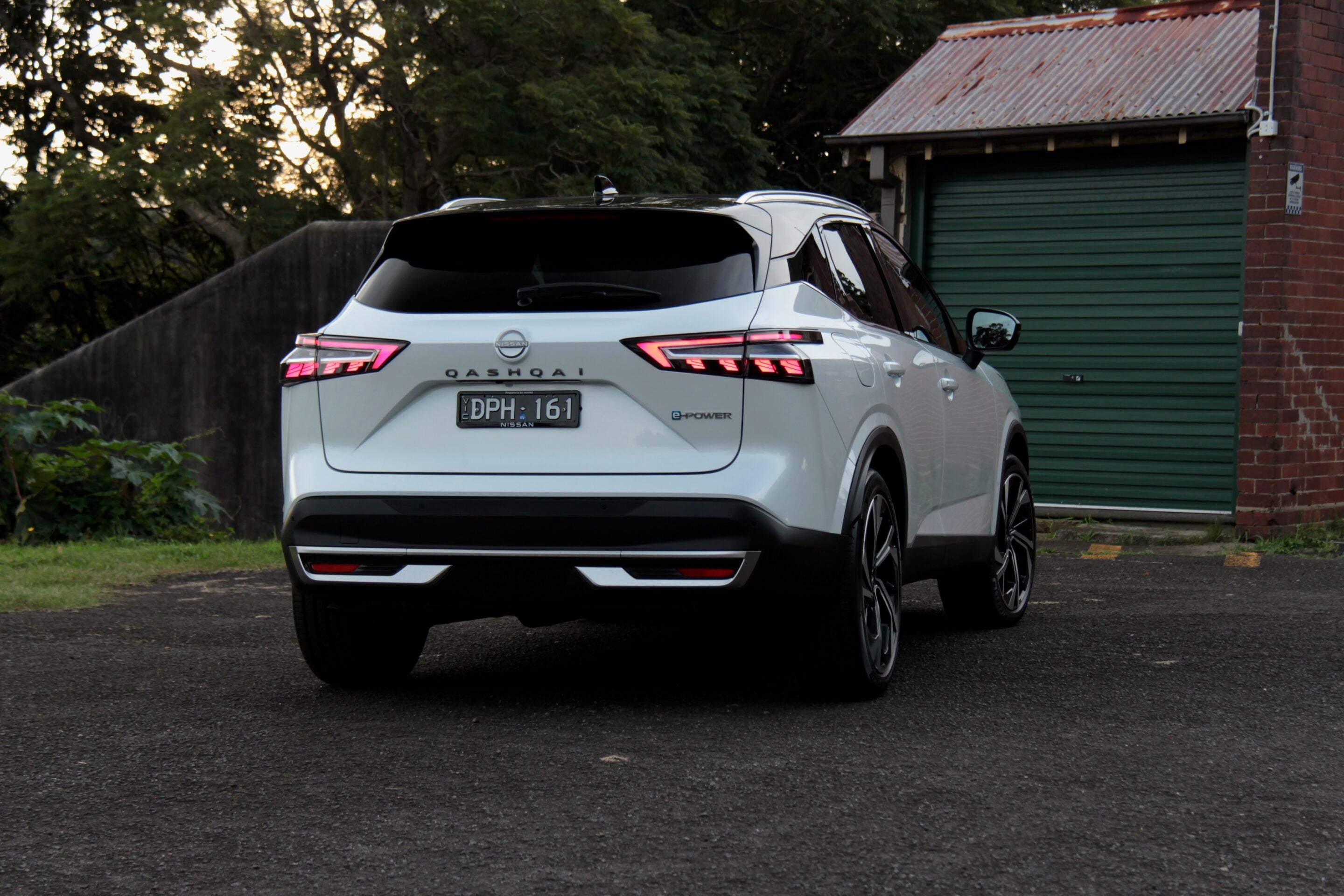
While it isn’t the cheapest in the segment, the Ti-L grade of the Qashqai is at least quite well equipped, including features such as 20-inch wheels, a panoramic glass roof, quilted leather upholstery, heated and massaging front seats, 12.3-inch displays, a 10.8-inch head-up display, 10-speaker Bose audio, a wireless phone charger and a full suite of safety features, including adaptive high beam, a 360-degree camera and Nissan’s ‘ProPilot’ semi-autonomous adaptive lane guidance and adaptive cruise control driving capability.
How fuel efficient is the Qashqai e-Power?
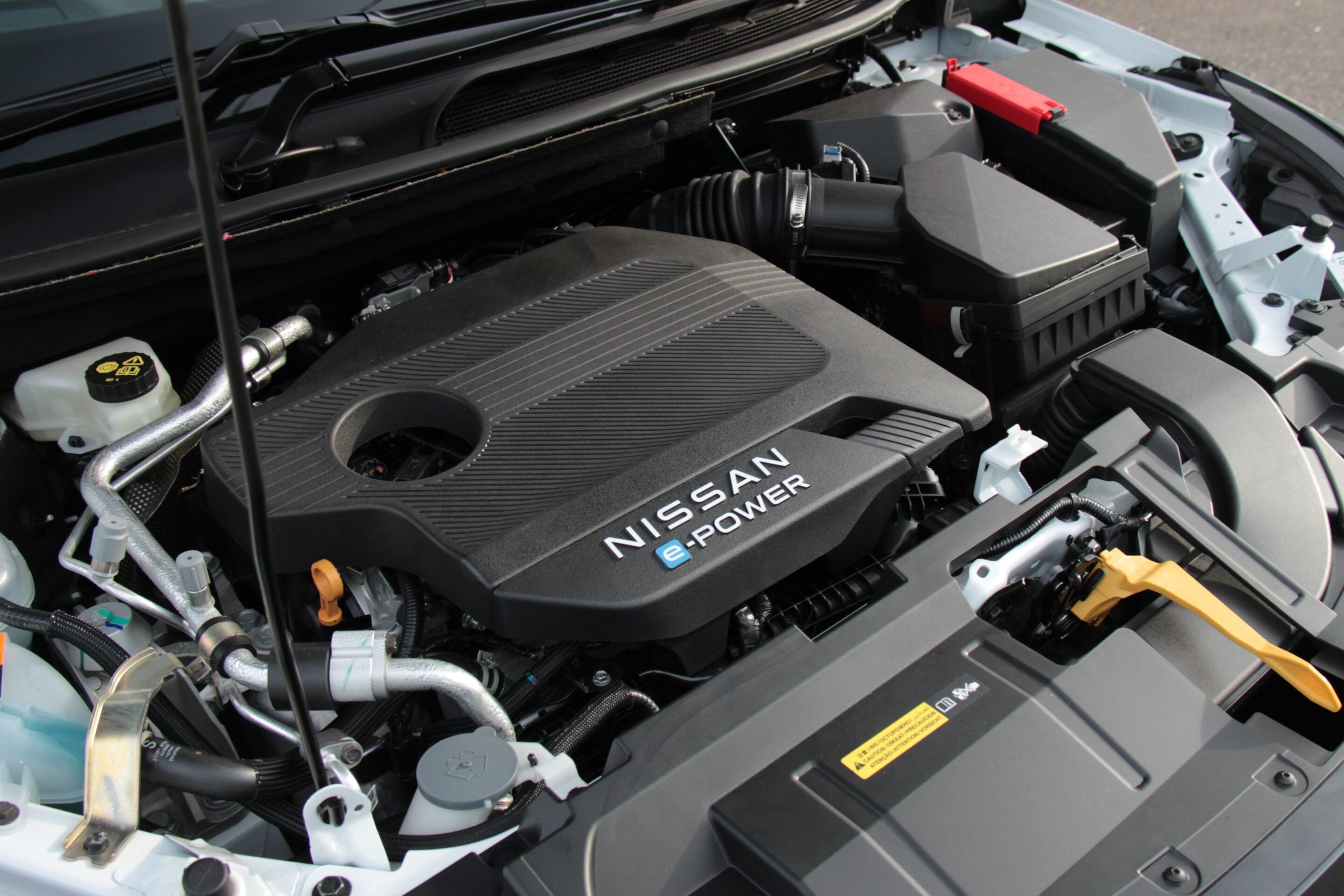
The e-Power system is unique in the Australian market in that the 1.5-litre turbocharged petrol engine is used purely as a generator for the battery. Unlike a Toyota or Honda hybrid system, it never powers the wheels, leaving that job to the electric motor. This means that aside from the quiet hum when the engine is switched on, the Qashqai e-Power feels more like an electric car to drive because it’s not switching between fuel sources.
It’s also punchier than you’d expect, with the full 311Nm of torque hitting from 0rpm (and now with 11kW more power in sport mode at 151kW). Nissan doesn’t quote a 0-100km/h time, but we guesstimate it in the 7.5-8.0 second bracket, which is quick for the segment.
4
The Qashqai e-Power used to be rated at 4.8L/100km on the combined cycle, but thanks to improvements to the e-Power system, its rating has been lowered to just 4.1L/100km, which is 0.1L/100km less than an equivalent Corolla Cross and only 0.2L/100km above the smaller/36kW less powerful Kona Hybrid.
In the real world, we ended up on 4.9L/100km, including a decent amount of highway driving, which is at least 1L/100km less in the real world than the pre-updated model. It’s great to see a car maker genuinely improving its drivetrain for real world fuel consumption but not taking away any performance in doing so.
What is the Qashqai e-Power like to drive?
The Qashqai has always been a product designed in Europe for European tastes, and because of that and the Ti-L’s standard fit 20-inch wheels, it’s a bit firm when it comes to Australia’s mixed road quality. It’s far from uncomfortable and settles nicely at highway speeds, but around town, the ride is constantly fidgeting and making noise.
That said, the wheels themselves look fantastic, so it’s up to you whether you think that’s a fair trade – cheaper Qashqai models use smaller wheels and would likely ride better, but don’t look quite as sharp. Otherwise, the Qashqai is refined in terms of road noise, while the engine generating power for the battery is also quiet.
5
The Qashqai is not a sporty handler like a CX-30 or even a Corolla Cross, but it does drive well. Its 1701kg kerb weight makes it one of the heavier small SUVs, but its grippy tyres mean that you can chuck it into a corner at reasonably high speeds and it will recover well. The steering isn’t as direct or connected as a CX-30, but it’s nicely weighted for urban use, and makes parking and manoeuvring easy.
Nissan’s active safety features are also quite well tuned and barely reacted in our week with it – a nice contrast to some models that it will be compared with, which seemingly do not trust your ability to drive.
How practical is the Qashqai e-Power?
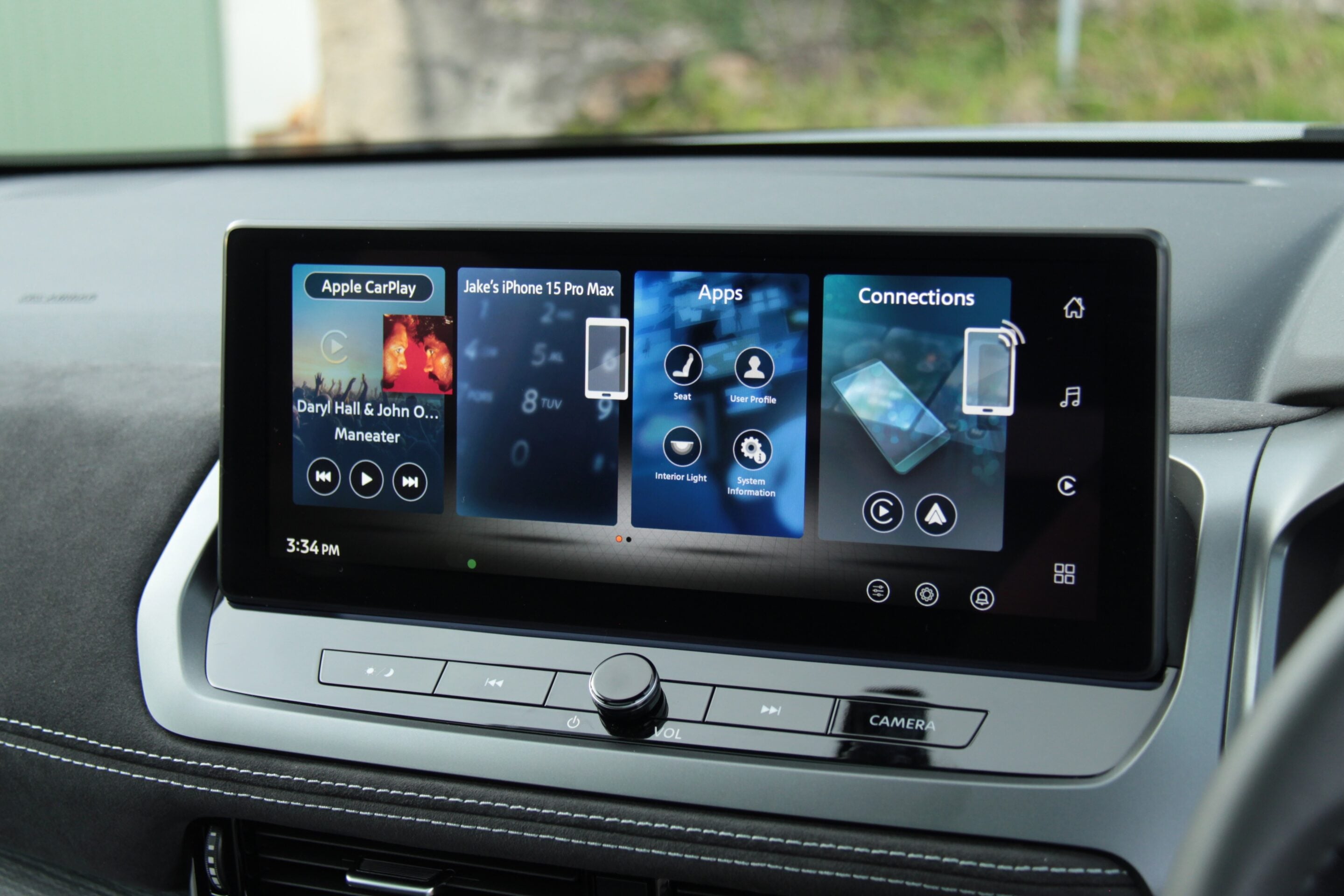
One way where the Qashqai might prove its cost is inside because it feels far more expensive than something like a Corolla Cross. That’s thanks to its lovely material choices, from the quilted leather on the seats to the suede on the dashboard and doors, and even the depth of the plastics. You can tell that Nissan has been putting more effort into its interiors of late and the Qashqai – plus the X-Trail, it must be said – is a great example of that. By comparison, the materials in the aforementioned Corolla Cross feel quite cheap, though it does cost a lot less.
4
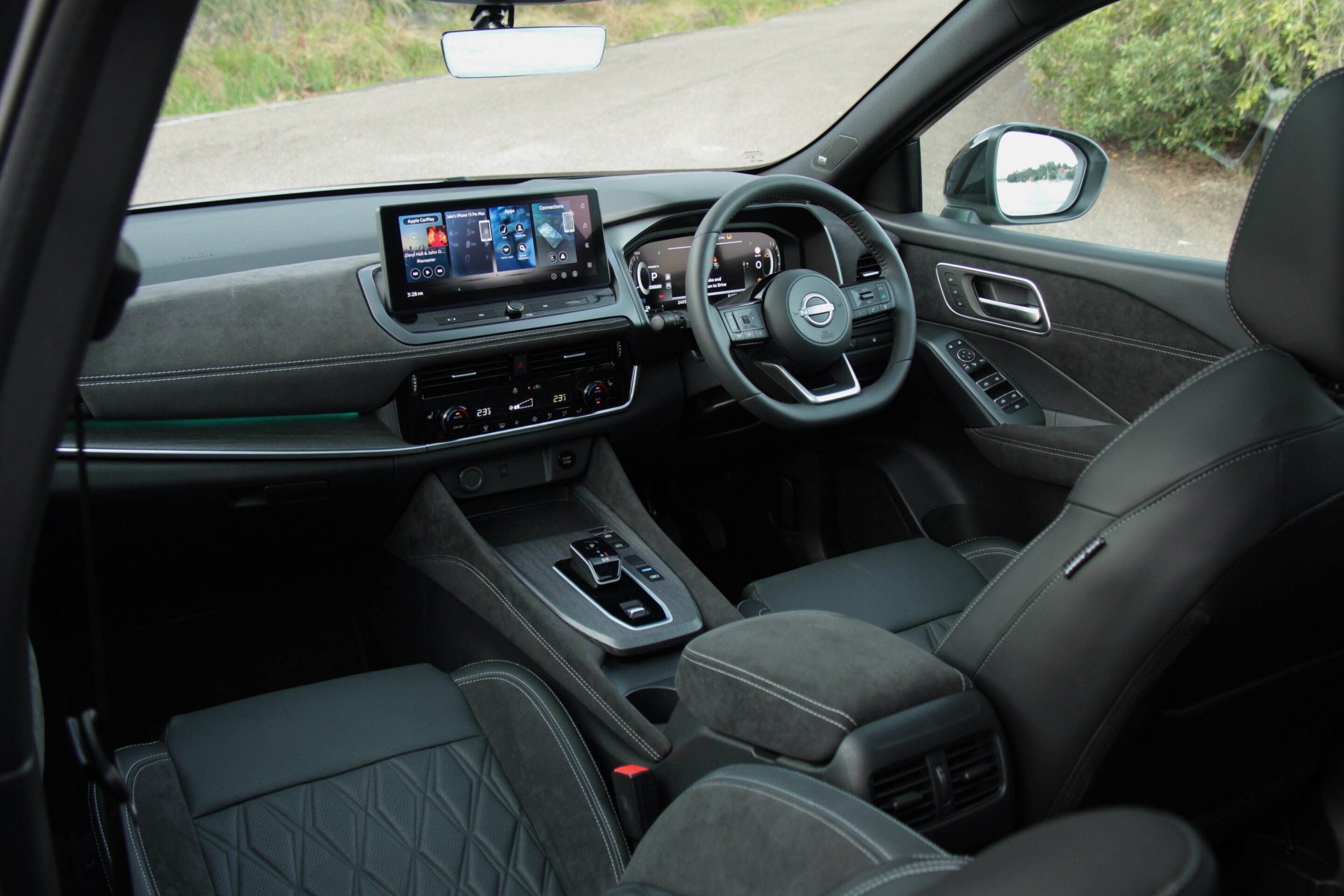
A 12.3-inch touchscreen is fitted as standard across the Qashqai range and it’s quite easy to use, though feels a touch dated in that it is a bit slow. Australian Qashqai models also miss out on the inbuilt Google features of the European model, so we don’t receive any inbuilt navigation or access to an app store to download more. Wireless Apple CarPlay and Android Auto are standard, easy to connect and proved reliable in our time with the car. A 10-speaker Bose sound system provides punchy audio quality.
There could be more storage space inside the Qashqai though, it must be said. The cup holders are a good size, as are the bottle holders in the door, but thanks to the large transmission selector panel and wireless charger tray, the only centre console storage is the reasonably-sized bin under the suede-covered central armrest.
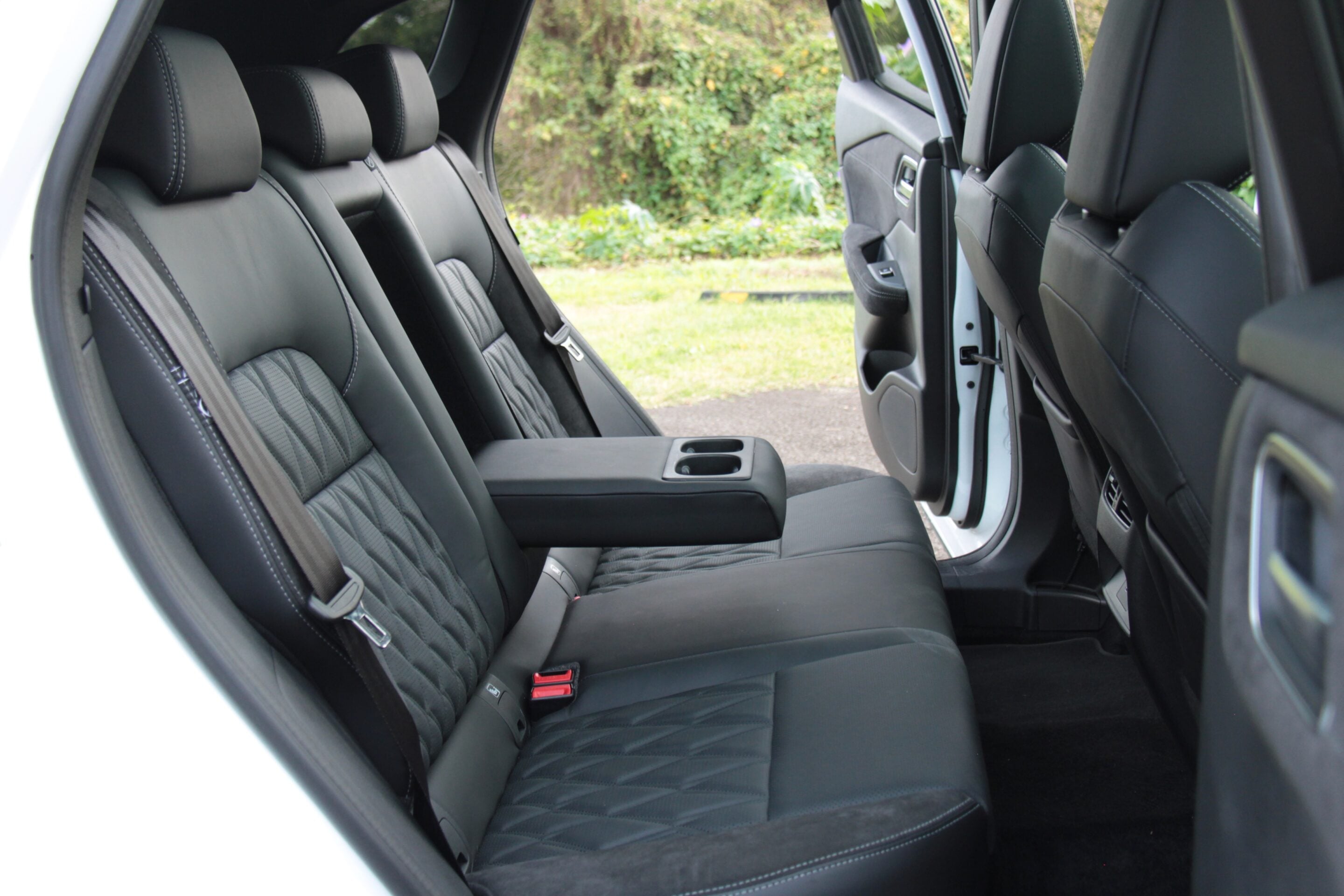
Two taller adults will be quite comfortable in the rear seat of the Qashqai thanks to comfortable seats, a good amount of space and plenty of amenities. The panoramic glass roof adds extra light and space into the rear cabin as well. Features include map pockets, bottle holders in the doors, a centre armrest with cupholders, two USB-C charging ports and air vents, though no heated seats. The Qashqai’s ISOFIX points are easily accessed, and like the larger X-Trail, the rear doors open 90-degrees, which is quite helpful in entering and exiting the rear cabin.
4
The boot in the Qashqai e-Power Ti-L specifically measures 452 litres with the rear seats up and 1376 litres with the rear seats folded, which sits it in the middle of the range for capacity (the base ST-L can carry 504/1440L and the Ti and N-Design 404/1328L respectively). That’s because it features a subwoofer in the lower boot floor as part of the Bose set up, but the Ti-L is also the only model not to feature a spare wheel of any kind. It’s an otherwise practical space with a dividing boot floor, hooks to hang bags off and the seats lie almost flat when folded.
How much does the Qashqai e-Power cost to service?
The entire Nissan range features capped price servicing and the total cost for the first five years/75,000km of servicing is $1995, or $399 per year. That’s affordable in the segment, and if you service at a Nissan dealership, its warranty is one of the best in the industry.
The standard warranty is five years/unlimited km for the car and eight years/160,000km for the hybrid battery, but again, if you service through a Nissan dealership, you can unlock up to 10 years/300,000km of warranty coverage.
Should I buy a Nissan Qashqai e-Power?
If you can swallow the price, the updated Qashqai Ti-L e-Power is a strong option in the small SUV segment. It does everything at least reasonably well, from its high quality and practical cabin to its long standard feature list, and appealing, potentially very long aftersales program. The updated e-Power system is also more fuel efficient than before, yet more powerful in sport mode too.
3
Some buyers may baulk at its pricing, being one of the more expensive options in the small SUV segment. Where the Corolla Cross starts at around $43,000 including on-road costs, the Qashqai starts at close to $50,000, and the Ti-L we had on test is around $60,000 driveaway, which is not only more expensive than the Toyota but not far off the top-spec larger X-Trail. But if you can look past the price, we think the Nissan Qashqai Ti-L e-Power is a worthy small SUV option.
Qashqai Ti-L e-Power standard features:
- 20-inch alloy wheels (with tyre repair kit)
- Dusk- and rain-activated automatic LED exterior lighting with scrolling indicators
- Rain-sensing automatic wipers
- Keyless entry with push button start
- Heated/auto-folding mirrors
- Roof rails
- Panoramic glass roof with power sunshade
- Rear privacy glass
- Electric tailgate with easy-open functionality
- Quilted leather upholstery with suede dashboard and door inserts
- 12-way electric front seats with driver’s memory
- Heated and massaging front seats
- Heated leather steering wheel
- Dual-zone automatic climate control with rear air vents
- 12.3-inch digital driver’s display
- 10.8-inch head-up display
- 12.3-inch touchscreen
- Nissan Connect live services
- Wireless Apple CarPlay and Android Auto
- AM/FM/DAB+ digital radio
- Bluetooth calling and audio streaming
- 10-speaker Bose sound system
- 4x USB-C ports
- Wireless phone charger
- 12x 12V sockets
- Colour-selectable LED cabin ambient lighting
- 7x airbags
- Autonomous emergency braking with pedestrian, cyclist detection and junction assist
- Adaptive cruise control with ‘ProPilot’ adaptive lane guidance
- Lane keeping assistance
- Blind-spot monitoring
- Rear cross-traffic alert
- Automatic low-speed rear braking
- Traffic sign recognition
- Driver attention monitoring
- Adaptive automatic high beam
- Front and rear parking sensors
- 360-degree camera
- Tyre pressure monitoring
- Anti-theft alarm
Qashqai Ti-L e-Power specifications
| Price | $53,640 plus on-road costs |
|---|---|
| Drivetrain | 1498cc turbocharged three-cylinder range-extender hybrid |
| Combined peak power | 140kW (@ 4900 – 5900rpm) (151kW in sport mode) |
| Combined peak torque | 311Nm (@ 0 – 3600rpm) |
| Transmission | Single-speed, front-wheel drive |
| Claimed 0-100km/h time | 7.5 – 8.0 seconds (est.) |
| Claimed combined fuel consumption | 4.1L/100km |
| Claimed CO2 emissions | 92g/km |
| Fuel type/tank size | 91 RON regular unleaded, 55 litres |
| Dimensions (l/w/h/wb) | 4425/1835/1625/2665mm |
| Boot capacity | 452 litres (rear seats up), 1376 litres (rear seats folded) |
| Kerb weight | 1701kg |
| Warranty | Five-year/unlimited km (car – extendable up to 10 years/300,000km with dealer servicing), eight-year/160,000km (battery) |
| Five-year service cost | $1995 ($399 per year) |
| On sale | Now |
8.0
/10
Score
Score breakdown
7.5
Safety, value and features
8.0
Comfort and space
9.0
Engine and gearbox
7.5
Ride and handling
8.0
Technology
Things we like
- Improved efficiency and performance
- High quality cabin materials
- Loaded with standard features
Not so much
- Expensive to buy
- Ride on 20s a bit too firm
- No spare wheel in Ti-L model
Follow WhichCar/Wheels on Google
Click the button below to make WhichCar by Wheels a preferred source for your news.

We recommend
-
 Comparisons
Nissan X-Trail v Mazda CX-5: Medium-size SUVs go head-to-head in hard-fought segment
Upgraded for 2026, the Nissan X-Trail is primed to take the fight to one of the segment favourites, the Mazda CX-5, which is nearing the end of its life as a new model looms on the horizon
-
 Best Small SUVs
Best Small SUVs 2026: Hybrid
Hybrid small SUVs are drawing more attention from Australian new car buyers through a combination of improved efficiency, lower running costs and greater flexibility for everyday driving.
-
 Comparisons
Powertrain battle! Nissan X-Trail v Tesla Model Y v MG HS Hybrid+
Australian buyers love medium and large SUVs – and the choices have never been more broad than they are right now. The question is, which powertrain suits you? best? Regular hybrid, petrol generator electric, or full electric? Three very different combatants duke it out