December 2023: Book a stay at the Fuji Speedway Hotel, enter Supra paradise
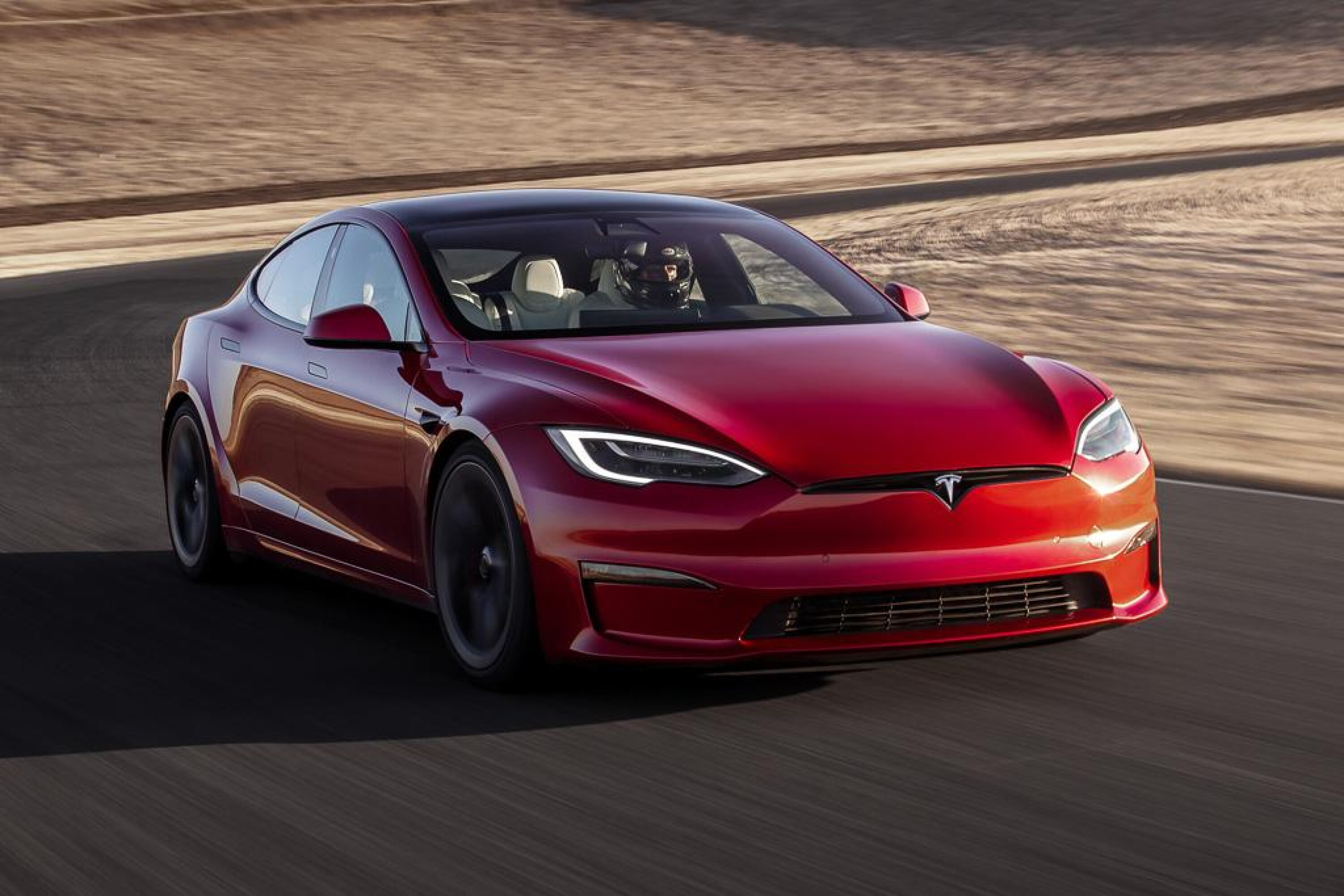
Toyota has partnered with the new Fuji Speedway Hotel in Japan to give guests access to the entire history of its legendary Supra line.
There are some catches and conditions, of course.
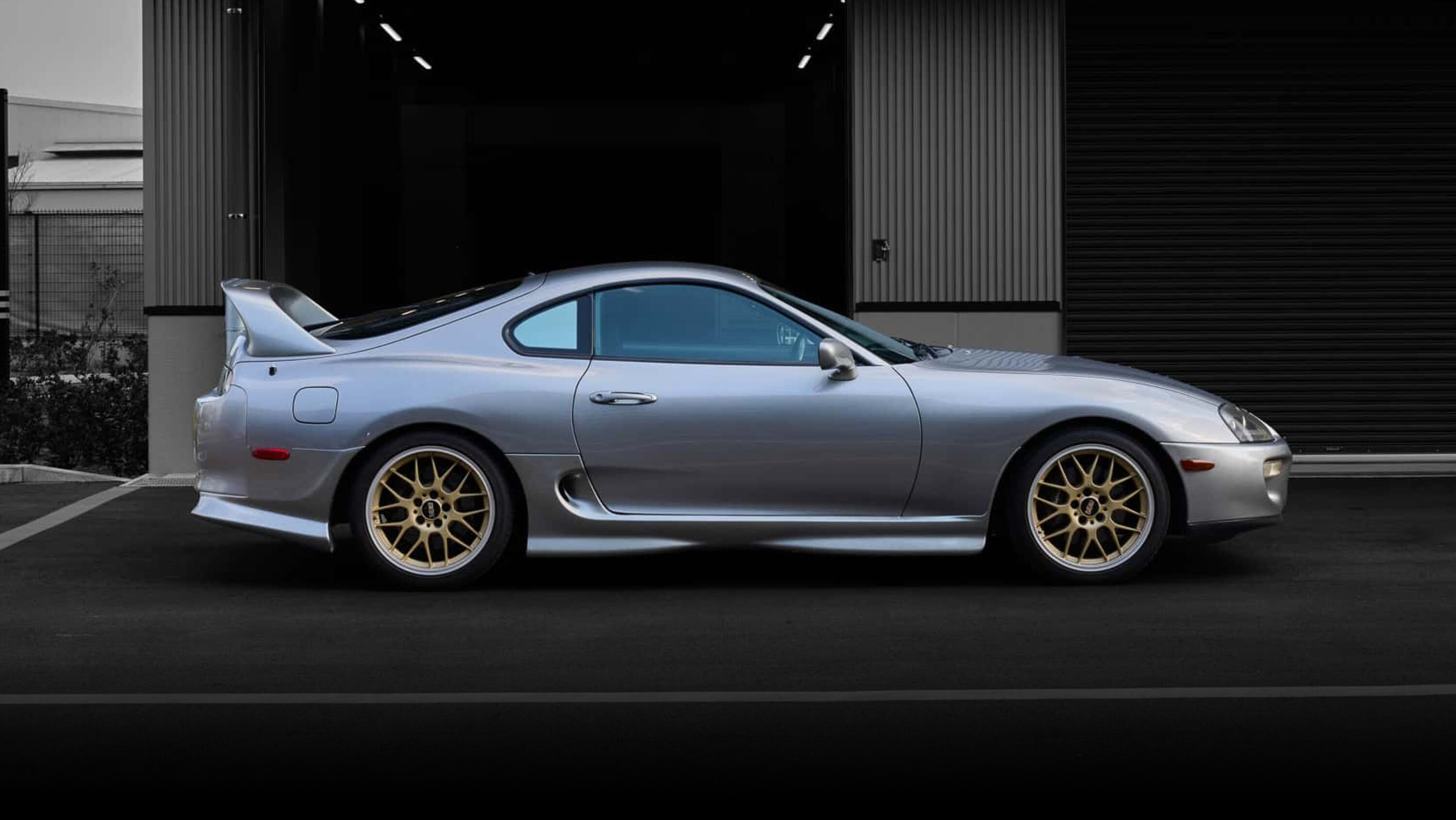
Available from January 15 to June 30, 2024, the main offer is the opportunity to spend an hour with an auto-equipped, TOM’S-tuned 2020 Supra or a 2022 example with a manual – but you’ll only be able to drive the latter if you’re already licensed to row your own.
1
Now, here’s the one you should really want…
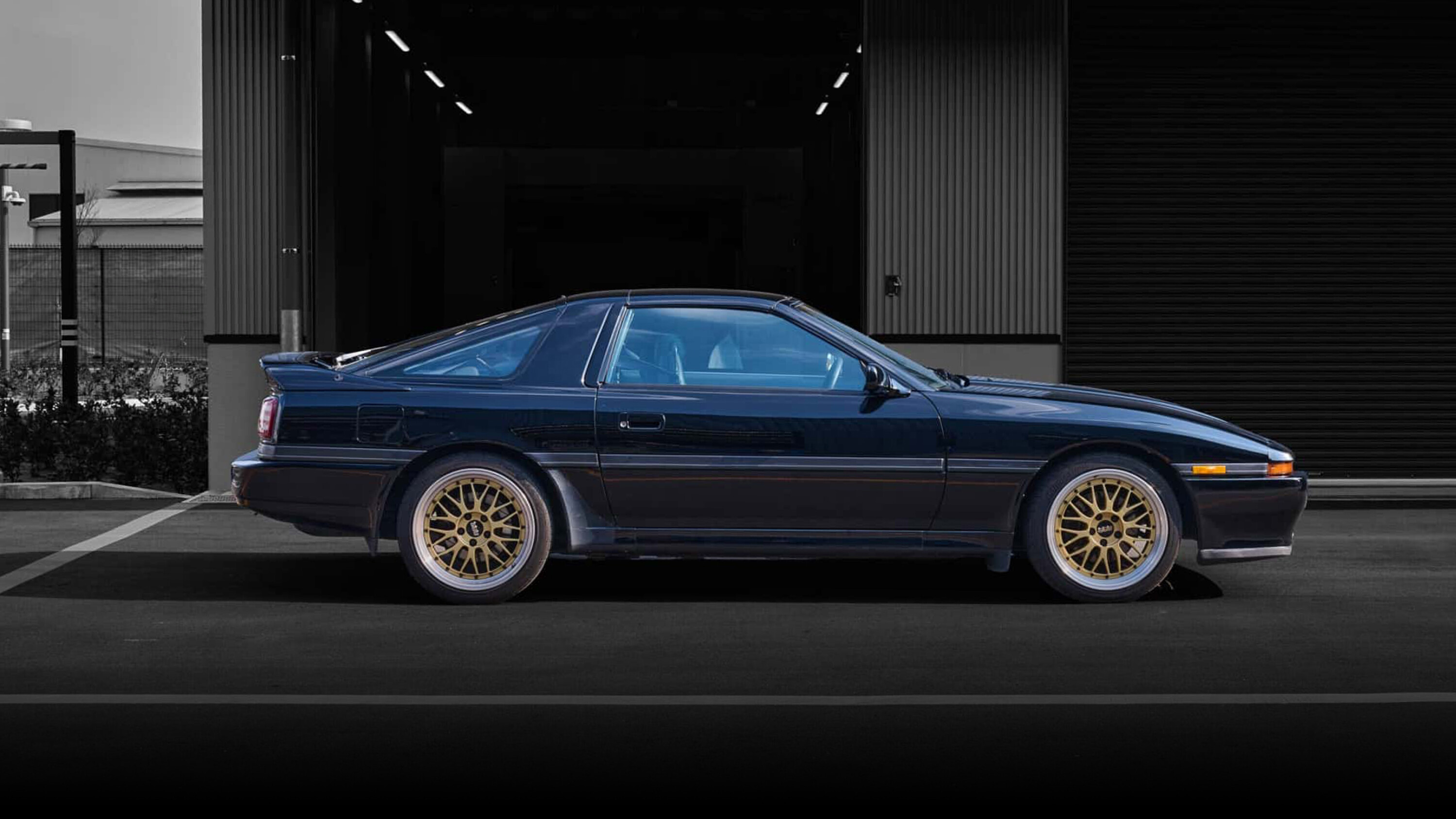
Book a stay over January 21-22 for the Supra Winter Festival and you’ll have the chance to book 30-minute drives in not only the current A90 generation, but also the the ‘MkIV’ A80 Supra, 1992 Supra 2.5GT Twin Turbo Aerotop, and a 1985 Celica XX 2000GT.
The final catch is, sadly, a doozy: You can drive them on the public roads around the Speedway, but not on the track itself. Boo. Still, it’s a bit of a treat either way!
Now if you’ll excuse me, I’ve gotta go look at some flights…
April 2022: Toyota to develop a new motorsport park at Fuji Speedway
Toyota has announced Fuji International Speedway in Japan will undergo a major redevelopment.
Snapshot
First stage of the Fuji Speedway redevelopment slated to open later this year
New additions include a luxury hotel, motorsport museum, and hospitality venues
Previously restricted garage areas to be opened to the public
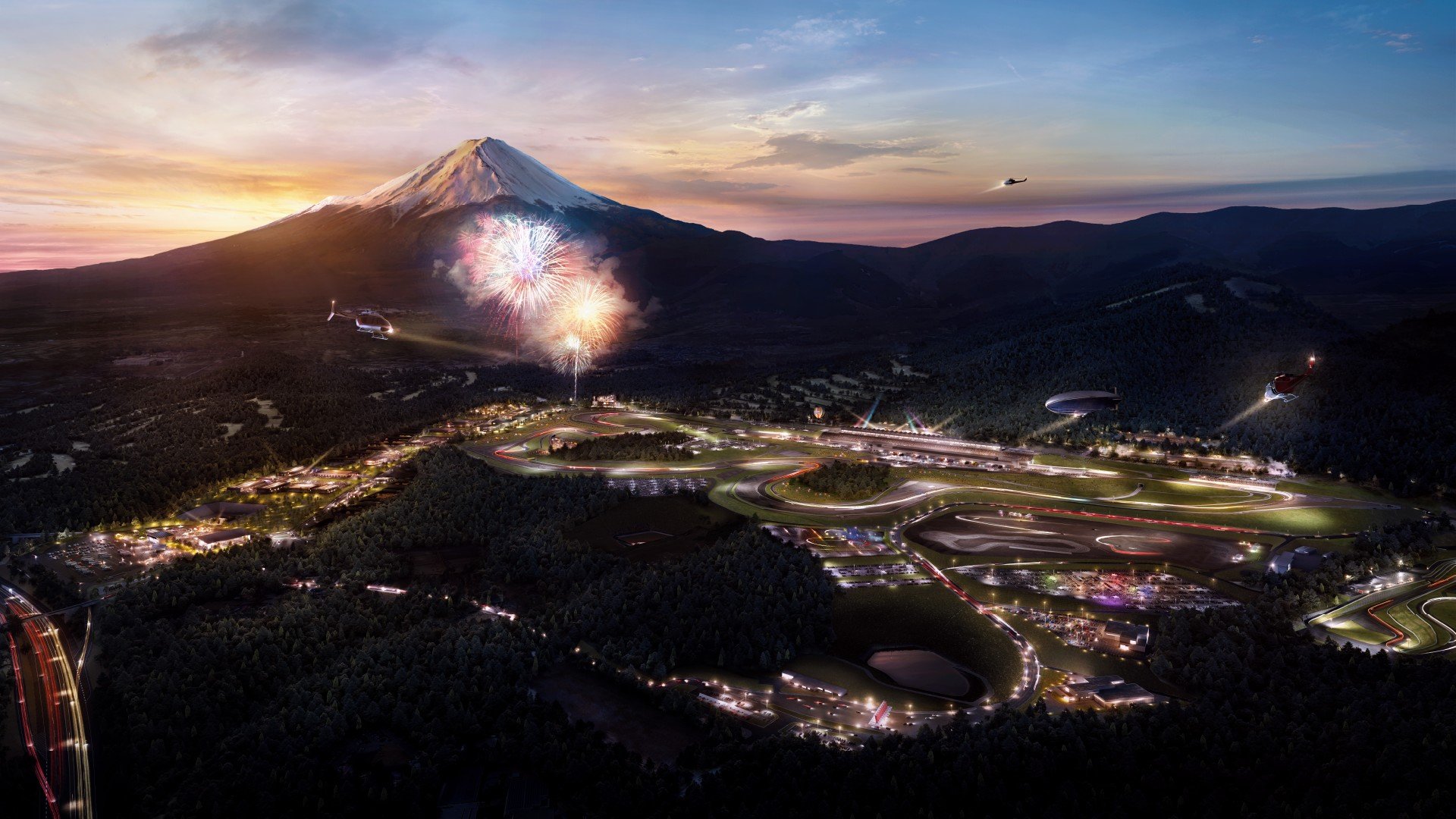
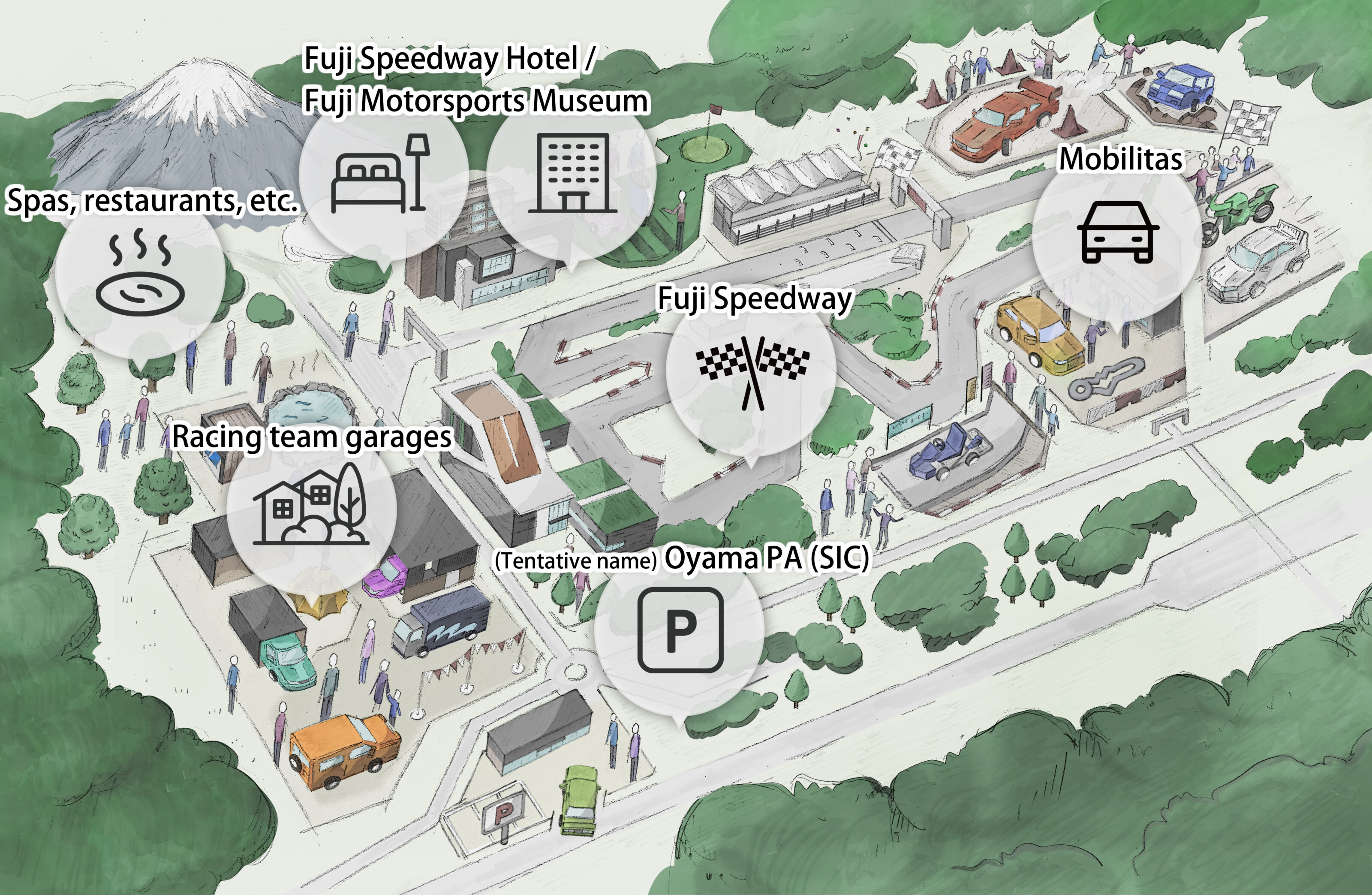
Developed in conjunction with Towa Real Estate, the updated facility – called ‘Fuji Motorsports Forest’ – was showcased earlier this week, providing an expansion to the current Fuji Speedway track in Oyama, Shizuoka Prefecture.
The complex will open in stages to racing fans later this year, with the project set to bring additional services to the motorsport park – in a similar fashion to The Bend in Tailem Bend, South Australia.
1
Billed by the marque as a ‘motorsport forest’, the redevelopment of Fuji Speedway will see the construction of a new luxury hotel, motorsport museum, hospitality and leisure venues, such as spas and restaurants, and a publicly available race team garage area.
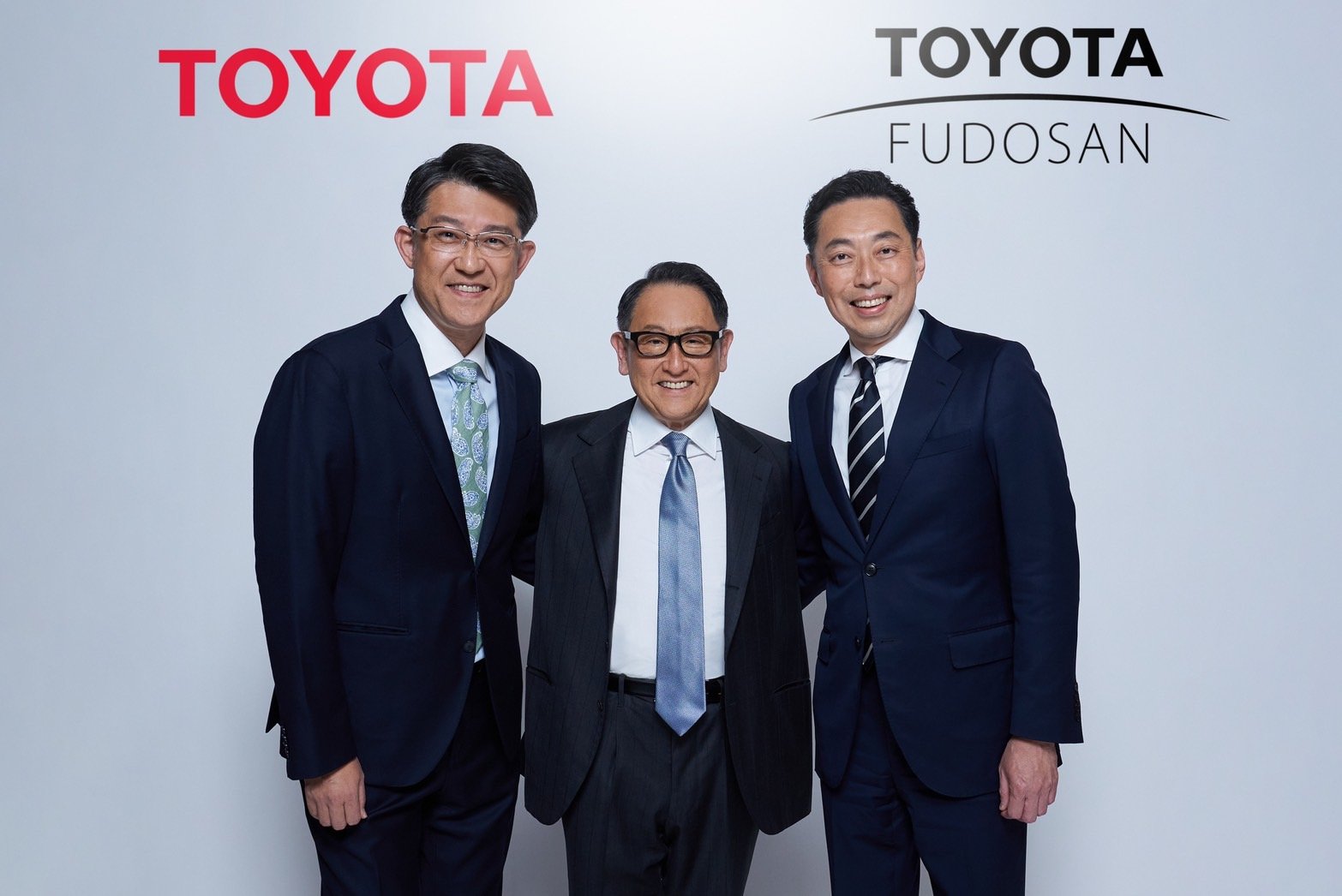
Toyota CEO Akio Toyoda said the inspiration for the expansion stemmed from his personal experience at the track as a child.
“We want it to be a place where people who work in the field of motorsports can do so more energetically. We also want racing teams to gather here with that same thought in mind.”
9
“We will turn this area in Fuji into a place where those who enjoy motorsports, those who work in motorsports, adults and children will want to come,” added Toyoda.
The Fuji Motorsports Museum, created under the supervision of the Toyota Automobile Museum, will include a number of historic racing vehicles to “symbolize each era”.
Alongside Toyota, a collection of manufacturers from Japan and abroad are expected to feature vehicles within the museum.
1
Meanwhile, the Fuji Speedway Hotel, operated by Hyatt Hotels and Resorts, will be the first of the company’s ‘Unbound Collection’ to open in Japan, offering 120 guest rooms with panoramic views of the speedway circuit and Mount Fuji.
It will commence operation in the northern autumn, with other facilities set to open from 2023.
A dedicated motorsport park exists in Australia, with The Bend Motorsport Park – situated about 100 kilometres south-east of Adelaide – offering a bitumen circuit, drag race strip, drift racing circuit, hotel accommodation, 4×4 adventure park, caravan park, and a service station.
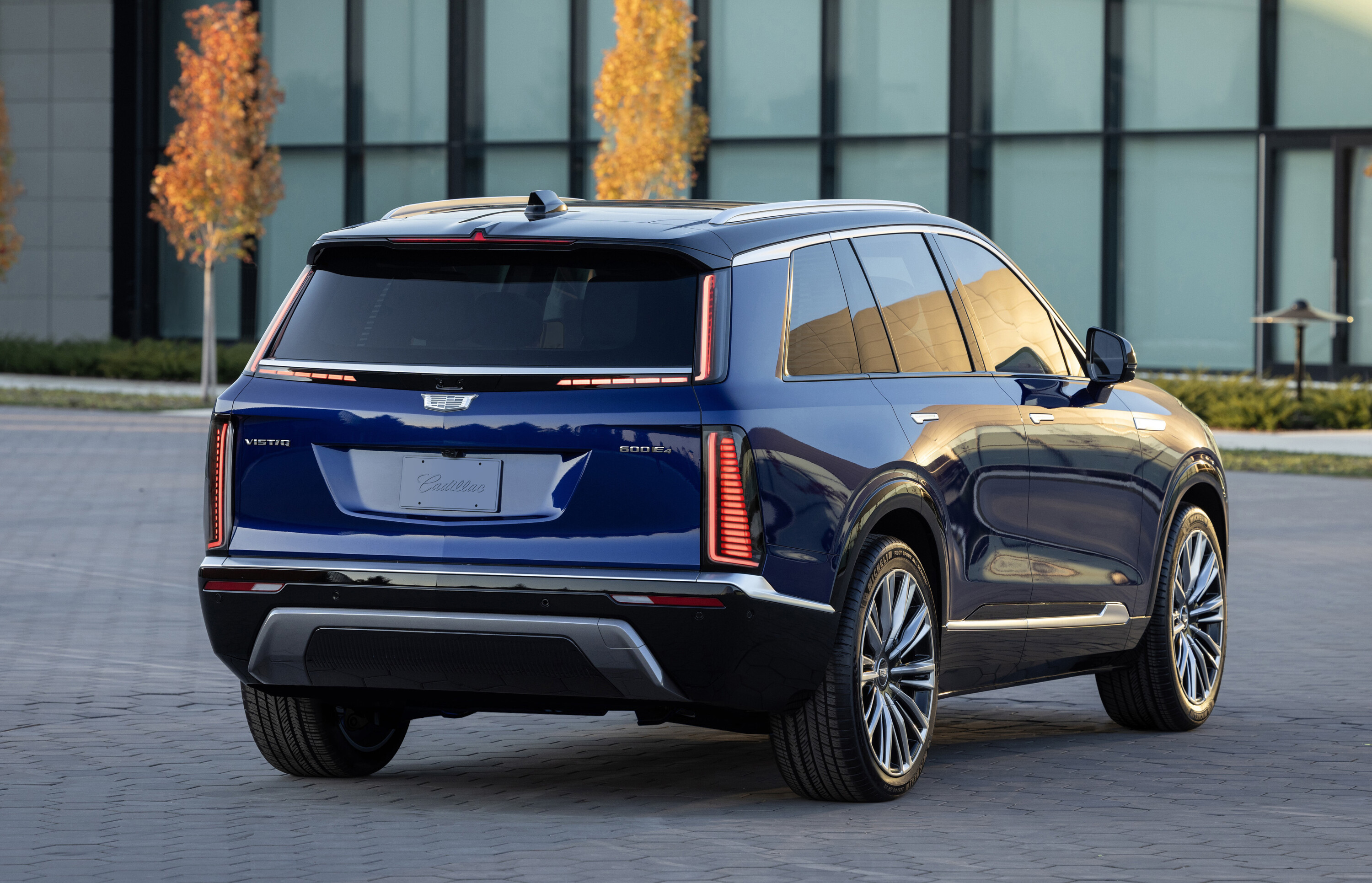
The Cadillac Vistiq has been unveiled in the US as a three-row electric SUV that will be on sale in North America in 2026 – and is a near certainty for Australia showrooms shortly after.
Earlier in 2023, Cadillac announced its return to Australia with the brand’s
model roll-out to be exclusively electric in this market.
Globally, Cadillac is aiming to offer an all-electric model range by 2030.
1
“Vistiq adds another compelling EV to the Cadillac line-up, reinforcing our
commitment to an electric future,” said John Roth, Cadillac’s vice president of global.“Our brand now has an EV entry in most luxury segments, offering customers a range of choices, and Cadillac EVs will cover most luxury SUV segments across critical global markets in the next two years.”Cadillac revealed little else about the Vistiq, but its versatile Ultium platform will be used to manufacture the Lyriq in right-hand drive in the US for Australian consumption.“We consider everything from our global model portfolio, but we have nothing to share at this stage,” a spokesperson for Cadillac Australia and New Zealand told Whichcar.com.
Yet it’s a strong possibility as the flexibility of its modular electric architecture to be left- and right-hand drive was one enabler of the brand returning to Australia after several previous false starts.Cadillac says the Vistiq is smaller than the Lyriq, which is around five metres long, 2.2-metres wide and 1.6m tall. The vehicle in the early images from Cadillac show 22-inch alloy wheels.The also reveal ‘600e4’ badges – the same as on the Lyriq shown in Australia – suggesting the Vistiq may use the same all-wheel drive electric powertrain.That spells dual electric motors delivering 373kW/610Nm paired with a 102kWh lithium-ion battery for an official WLTP 494km range.Cadillac will release more details before the Vistiq goes into production in 2026.
Last week’s news of the worst safety test result in years has sent MG back to the parts room, promising a number of important updates to its MG5 sedan for the 2024 model year.
December 14: Zero-star ANCAP score
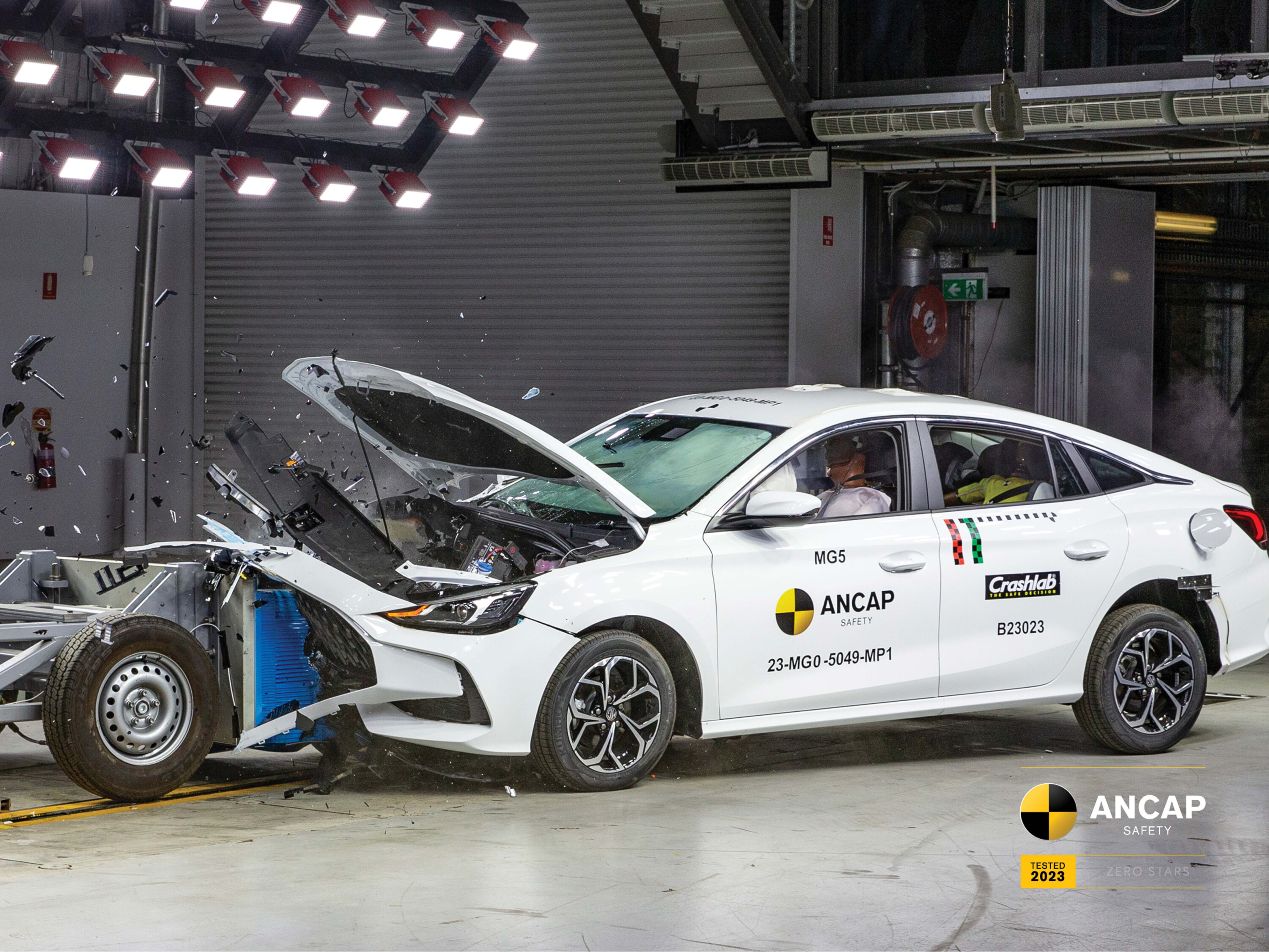
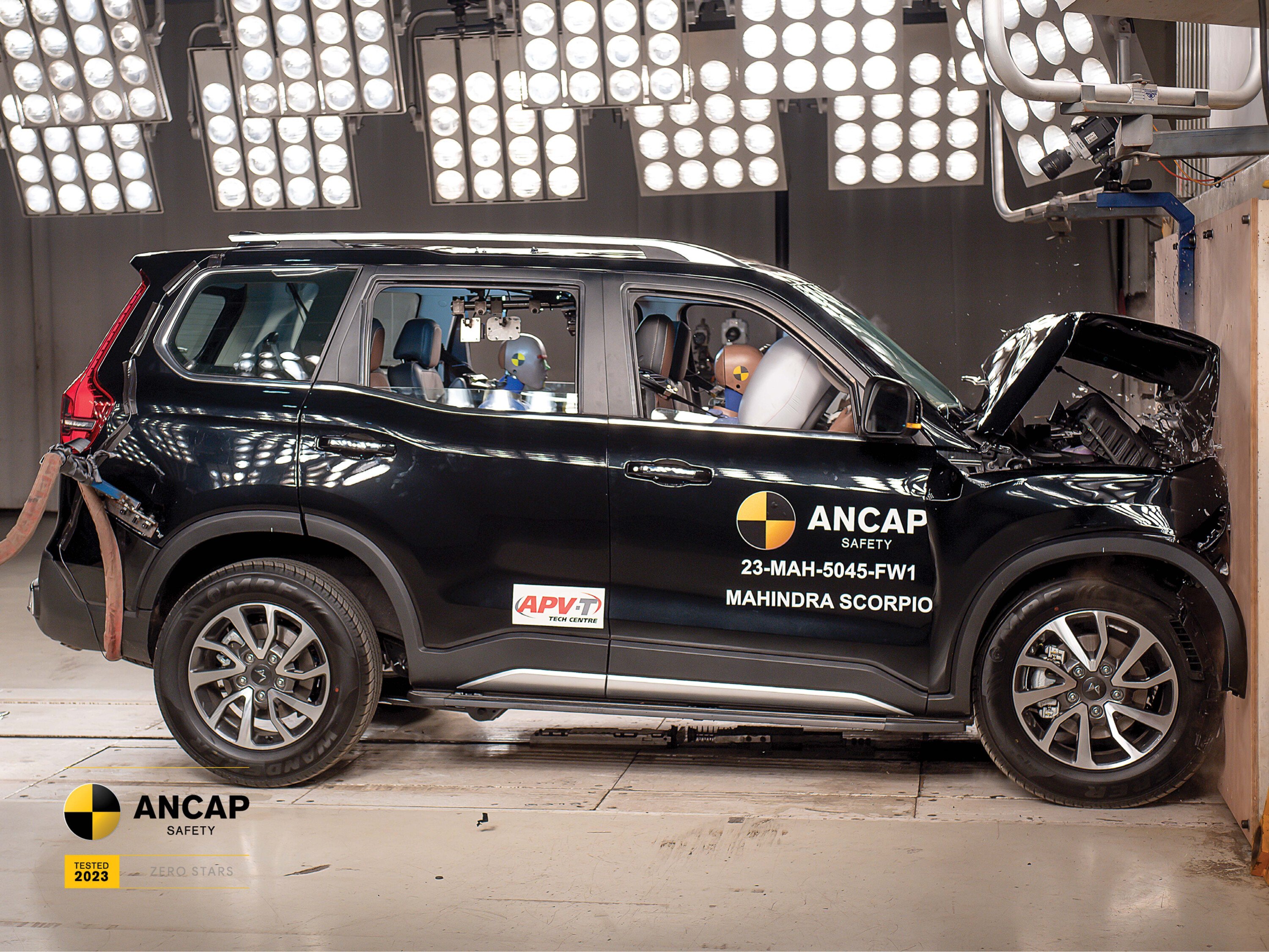
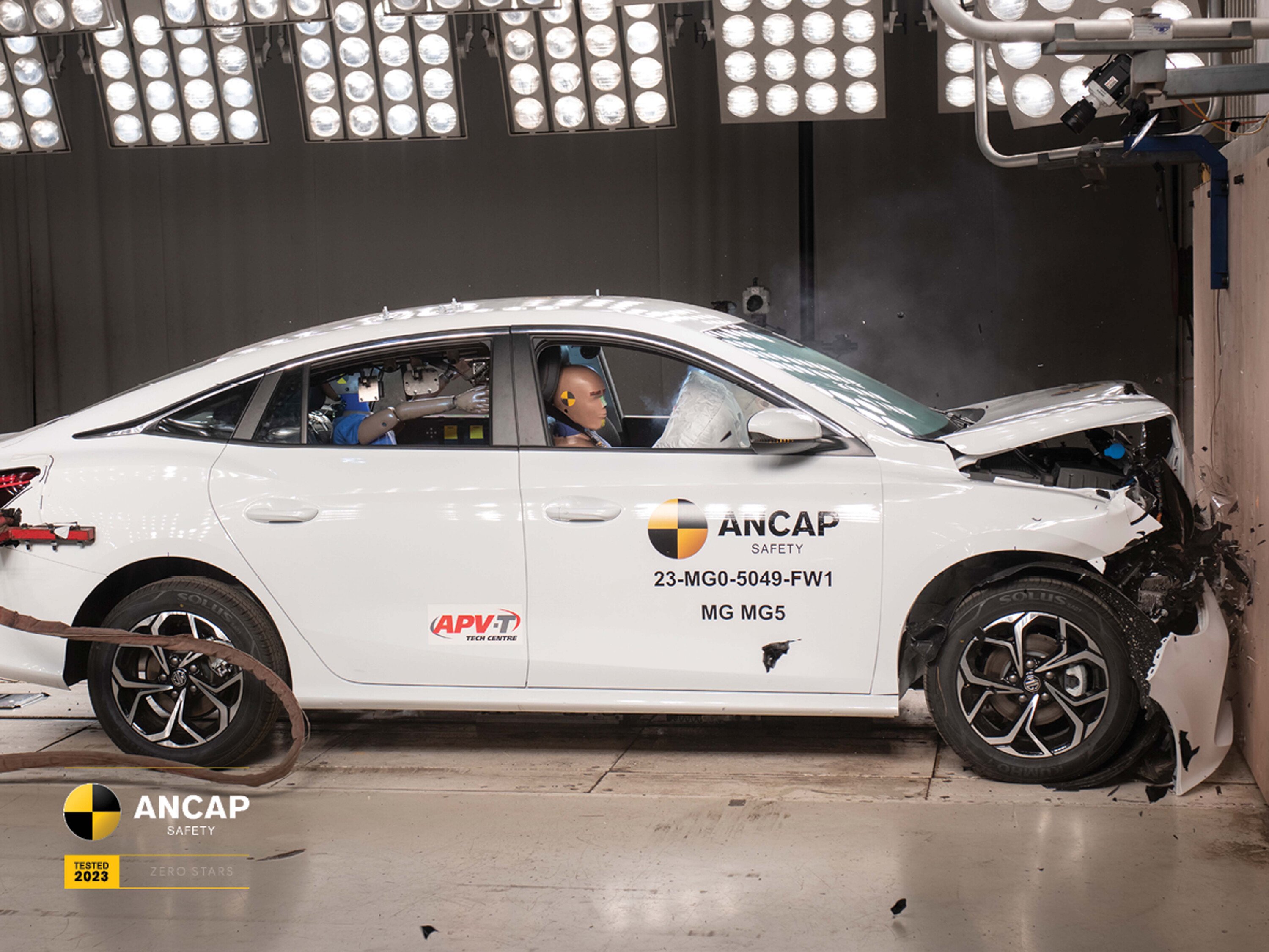
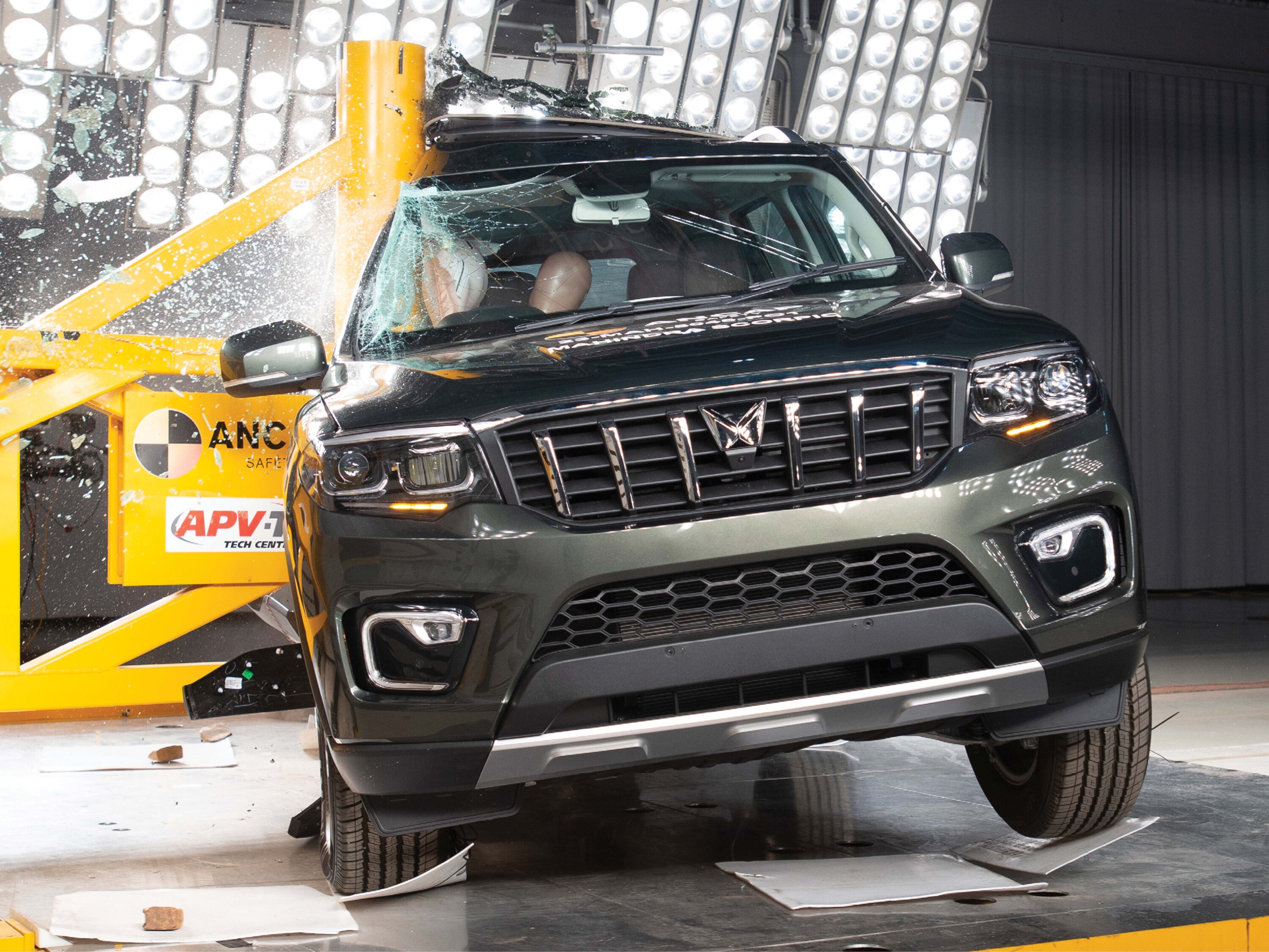
The Mahindra Scorpio SUV and MG 5 sedan scored zero stars from local independent crash-test body ANCAP.
They become the lowest scores of any new car currently on sale, and the first zero-star result since the Mitsubishi Express van in 2021.
ANCAP said it wasn’t able to award any stars to the vehicles “due to a range of limitations – in both physical crash protection and active collision avoidance performance”.
Both vehicles scored below 45 percent for Adult Occupant Protection – 44 per cent for the Scorpio and 37 percent for the MG 5. The Mahindra scored well for Child Occupant Protection with 80 percent; the MG 5 was given 58 percent.
Across ANCAP’s Frontal Offset test and Full Width Frontal tests, the crash-test body said it recorded “significant injury risk measurements” in the MG 5 for the driver’s and rear passenger’s chest and legs.
The Scorpio performed relatively well in the Frontal Offset, though ANCAP rated protection Weak for the driver dummy in the Full Width Frontal and Poor for the rear passenger head, neck and chest in the same test.
1
ANCAP noted that the MG 5 Vibe base model lacked seatbelt pre-tensioners and load limiters on any seat positions, while the Essence didn’t feature them on the rear seats. It added that the loading on the head and neck of child dummies “was significantly higher than seen in most current generation vehicles”.
Neither model includes a centre airbag to help avoid head injuries in side-impact crashes, while ANCAP said the Scorpio’s side curtain airbags that don’t extend to its third row that the absence of top-tether child-restraint anchor points in the third row made the SUV unsuitable for carrying children there as a result.
ANCAP criticised the MG 5 for its limited active driver aids – scoring it just 13 per cent – while it scored the Scorpio zero per cent in the same Safety Assist assessment area owing to no form of active collision avoidance features.
“Both brands have misjudged the safety expectations of today’s consumers,” said ANCAP CEO Carla Hoorweg.
1
“The MG 5 and Mahindra Scorpio were both released into the Australian and New Zealand new car markets for the first time this year, yet it’s clear that their safety offerings are some generations behind what we see with almost every new car on sale today.
“This is a stark reminder that not all cars offer the same level of safety – even when they’re brand new models.
“With our independent test results now to hand, we hope to see significant improvements made to these models to have them more closely align with the safety credentials offered by their competitors”, she said.
In an official statement responding to the ANCAP result, a Mahindra Automotive Australia spokesperson told Whichcar it is committed to building safe vehicles and pointed to the Scorpio’s five-star rating from Global NCAP.
Global NCAP is a UK-based charity that chiefly rates vehicles destined for Indian and African markets and is involved in promoting road safety outside Europe and the United Kingdom.
2
“At Mahindra, we are dedicated to providing our customers with SUVs that are safe, authentic, and reliable. The Mahindra Scorpio stands as a strong testament to this commitment.
“At its launch, the Scorpio fully adhered to the Australian Design Rules (ADRs), demonstrating our dedication to meeting rigorous standards while also excelling in robust 4×4 capabilities and steadfast reliability.
“Equipped with comprehensive safety features, including 6 airbags, ESP, ABS, a crashworthy ring structure with multiple load paths and extensive use of high-strength steel, it reaffirms our focus on the structural safety of the vehicle and the protection it offers to the occupants.
“Scorpio’s Global NCAP 5-star safety rating highlights its high safety standards while demonstrating its strong structural integrity and the effectiveness of its inherent safety features.
“The Australasian New Car Assessment Program (ANCAP), updated on 1 January 2023 has specific requirements that include certain additional features.
“We at Mahindra are committed to our promise of safety and are working towards meeting unique safety regulations and these requirements for Australia as part of our product mid-cycle update”, the spokesperson said.
1
MG also emphasised the MG 5’s compliance with Australian Design Rules that govern vehicle design.
“MG has worked closely with the Australian Government to ensure that the MG 5 has met the relevant Australian Design Rules (ADRs) for vehicle design when they are first supplied to the Australian market”, an MG Australia spokesperson told Whichcar.
“The MG 5 was certified and approved for sale in Australia and has met the [ADRs] to be sold. The current MG 5 is offered to the Australian market as an affordable car in the sedan segment.
“We are always striving to do the right thing by our customers in terms of affordability, form and function. Where and when possible, we will add improvements to our products for our models during their life cycle. In 2024, the MG 5 will receive a safety pack upgrade which will increase the overall safety of this model in line with ANCAP’s rating system.
“These planned enhancements for the MG 5 will reiterate our commitment to customers and ensure further passenger safety with more advanced ADAS systems including Autonomous Emergency Braking, Speed Assist systems, Lane Assist systems and Pedestrian Protection safety systems as seen in some of our other models.”
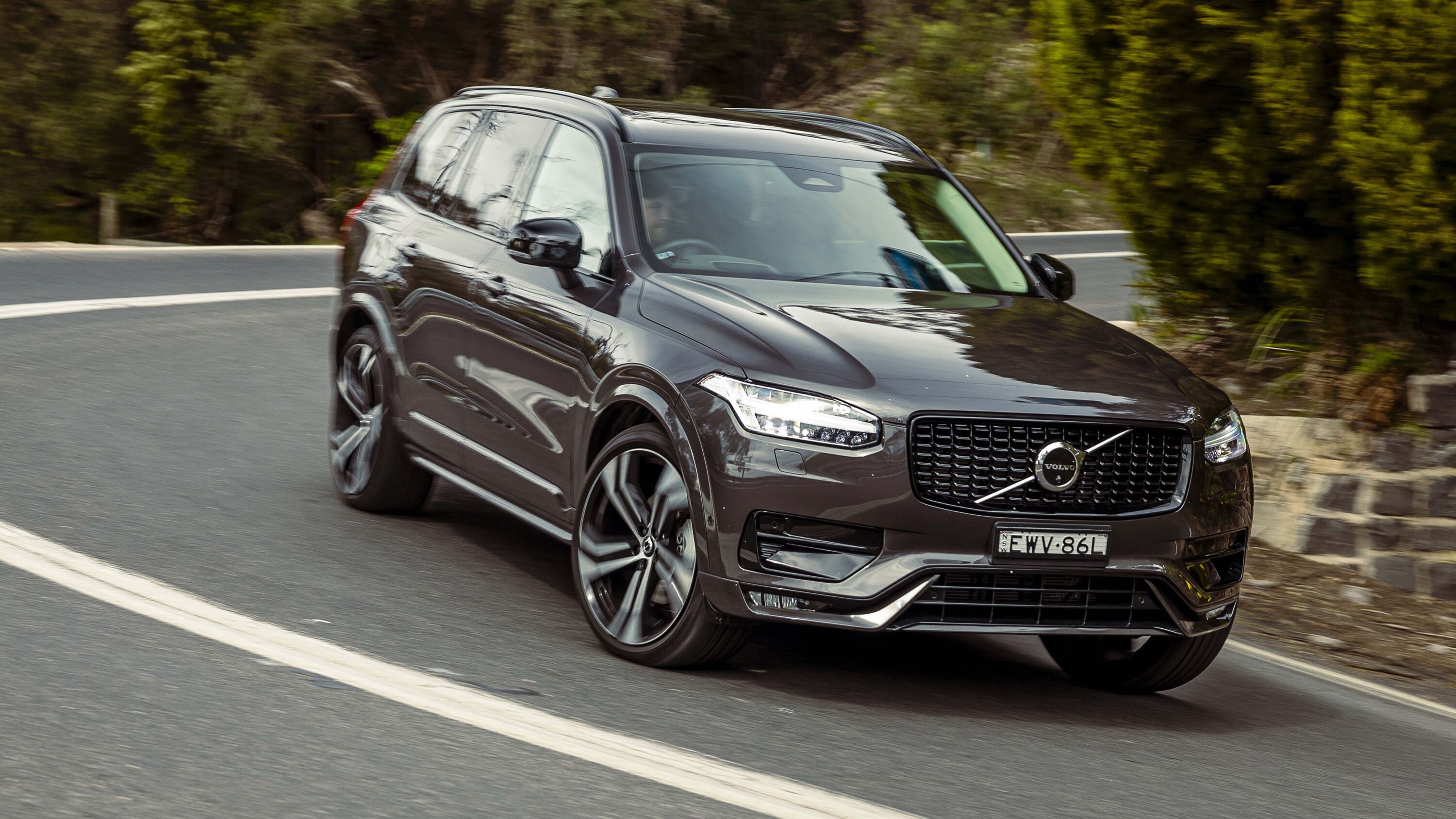
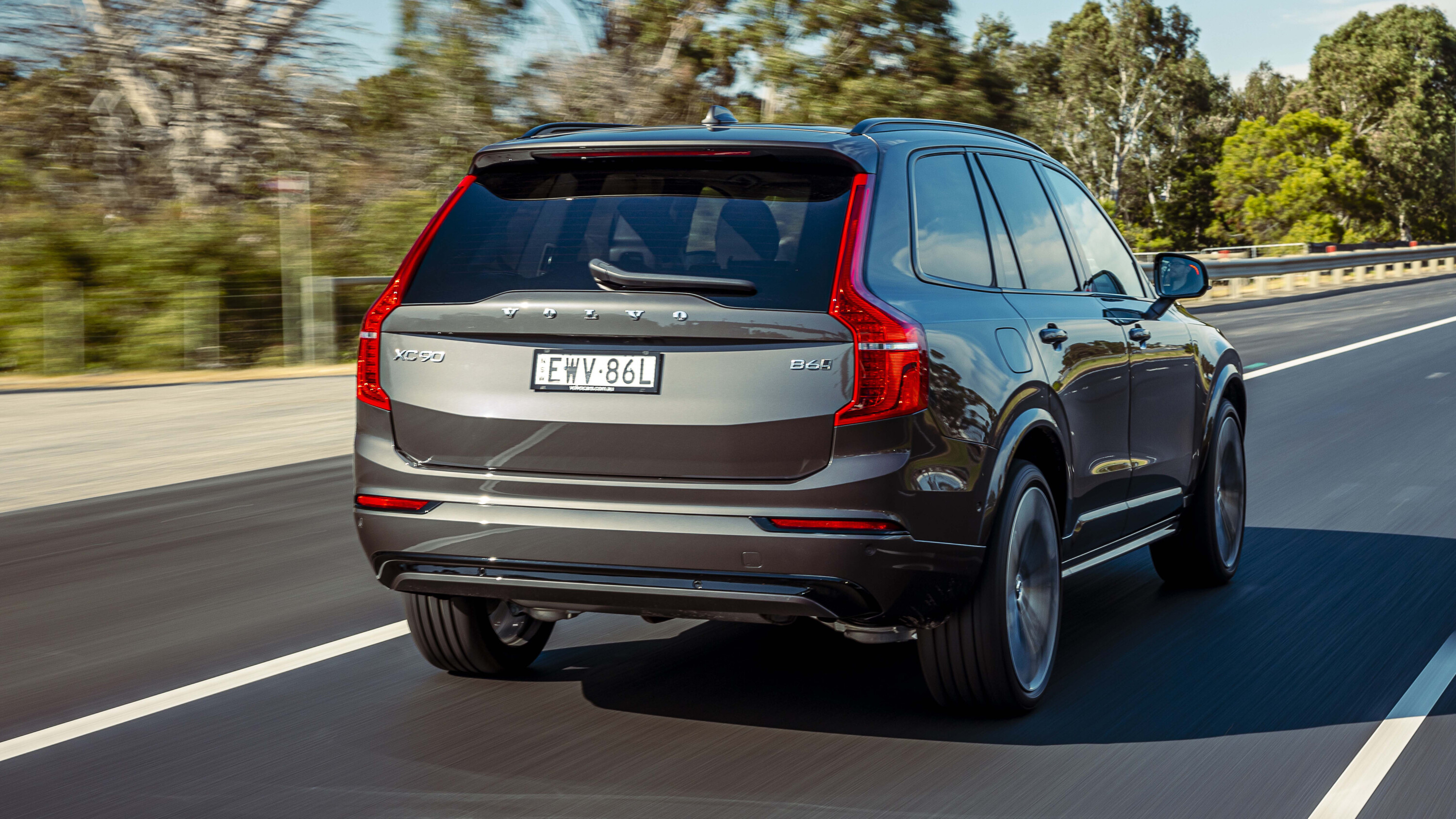
The Volvo XC90 has consistently been celebrated as an emblem of luxury and safety within the large SUV segment.
The 2024 XC90 Ultimate upholds this esteemed tradition, delivering a polished and elegant driving experience. As Volvo’s premier SUV, the XC90 melds the company’s dedication to safety with unmatched luxury and comfort.
With Volvo’s aim to transition to all-electric vehicles by 2030, the journey begins with a series of mild-hybrid powertrains in the XC90.
And almost 10 years after it launched, the amount of finesse in the vehicle continues to carry on the Volvo legacy. The XC90 even won our 2023 Best Large Luxury SUVs comparison.
1
Pricing and Features
The Volvo XC90 Ultimate is a luxury 7-seater SUV available in two grades – Plus and Ultimate . The range-topping Ultimate is priced from $108,990 before on-road costs.
There’s a substantial 220kW and 420Nm available via the ‘B6’ 2.0-litre four-cylinder turbo is aided by an electric supercharger and a 48-volt sub-system.
A less powerful ‘B6’ mild-hybrid engine is available for the Ultimate variant.
1
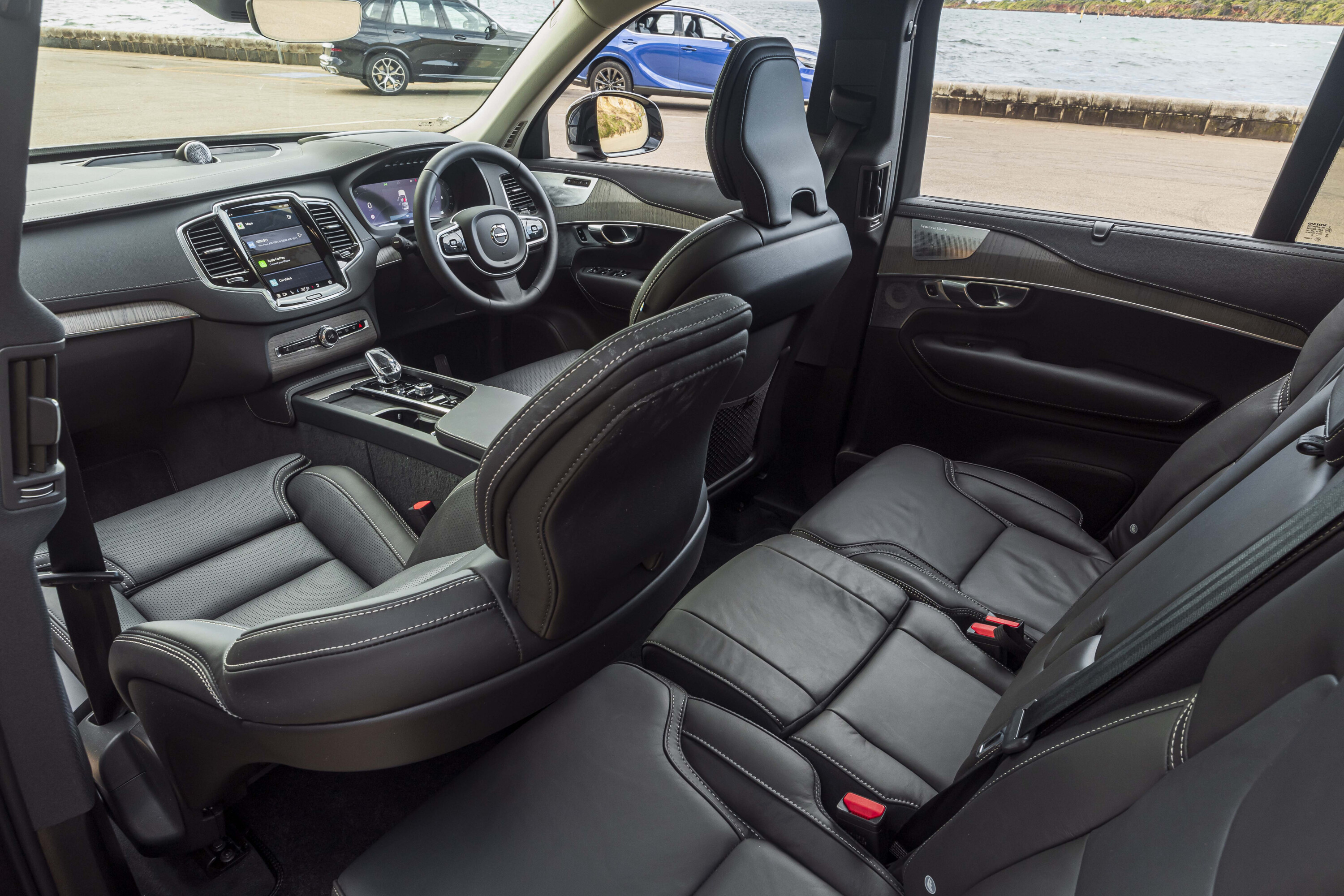
The minimalist cabin’s design echoes that of an upscale Scandinavian furniture boutique, radiating luxury and demonstrating impeccable construction quality.
The sole feature that hints at the Volvo’s age is the 9-inch, portrait-style touchscreen. While smaller than many of its rivals, its functionality remains top-notch.
The Ultimate is available in two styles: Bright and Dark.
1
Features that are standard on the Plus variant include:
20-inch alloy wheels
Heated front seats
360-degree camera
Leather accented seats
9-inch infotainment screen
LED headlights
Apple Carplay and Android Auto (wireless)
Power adjustable front seats
Auto dimming rear view mirrors
Power hands-free tailgate
Blind spot monitor
Rain sensing wipers
Dual-zone climate control
Retractable door mirrors
Front and rear parking sensors
Wireless charger
Heads up display
Moving up to the Ultimate Bright adds:
21-inch alloy wheels
Heated rear seats
Body-coloured door handles
Heated steering wheel
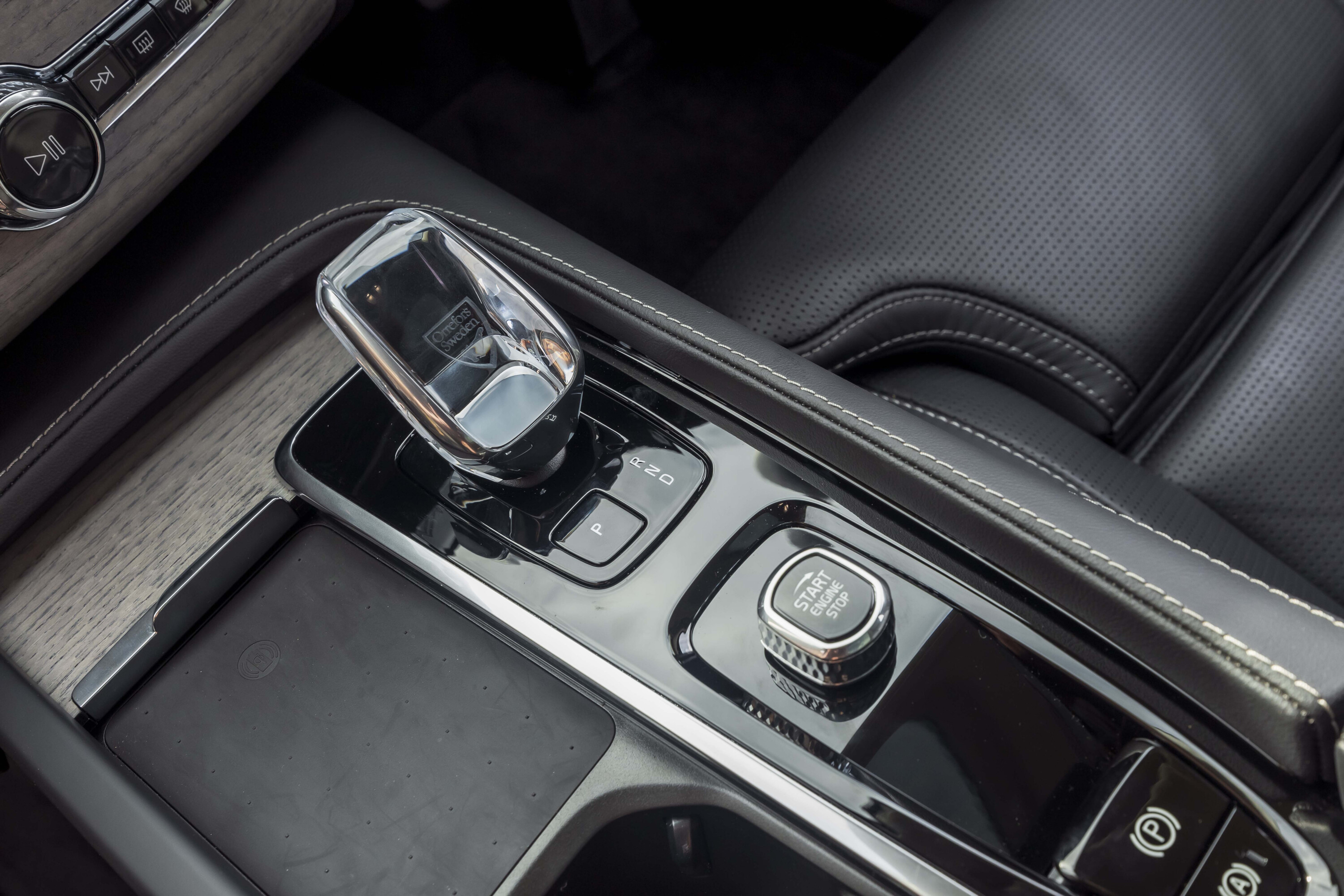
Crystal gear knob
Tailored dashboard and door top panels
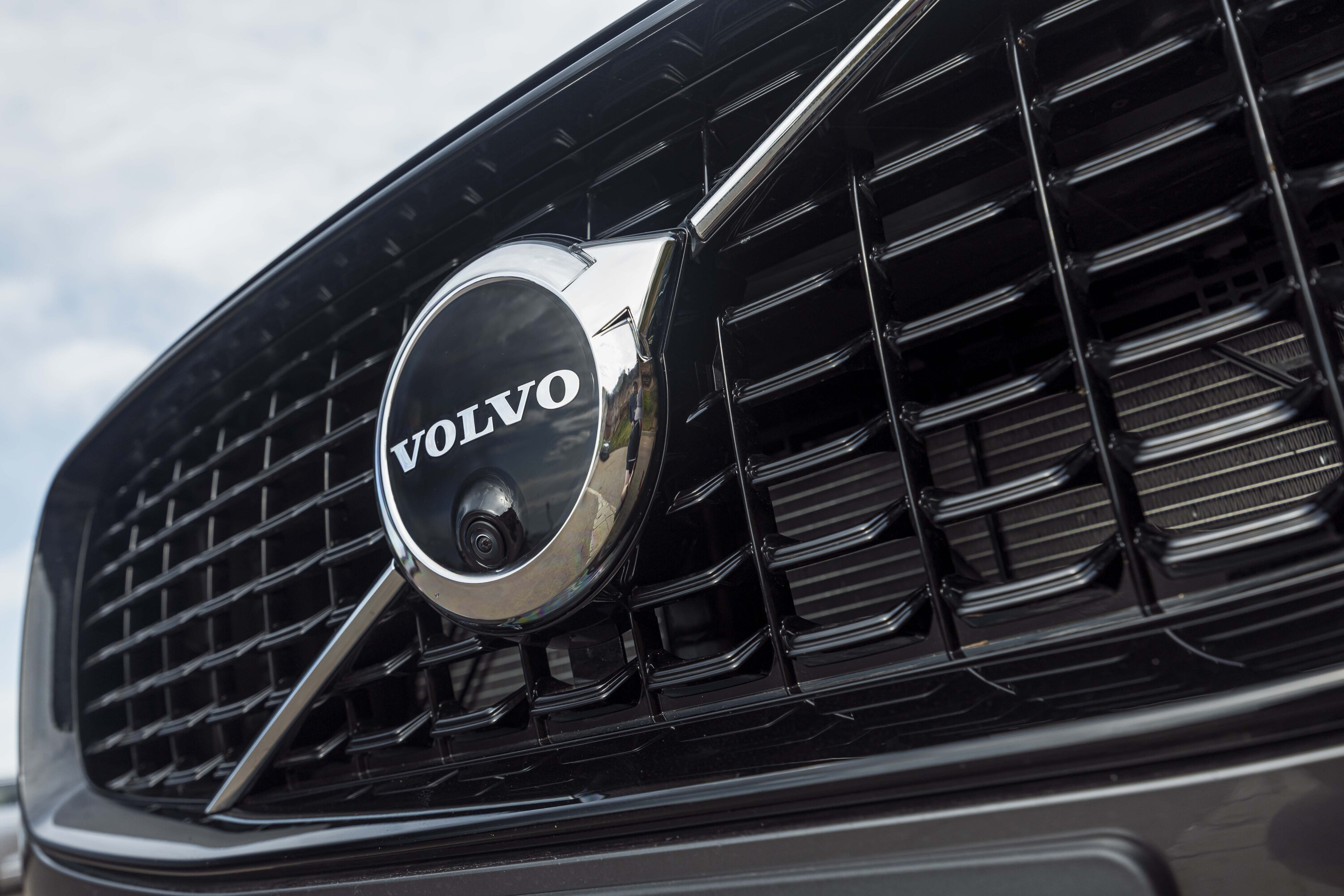
Front grille in Matte silver with chrome frame
The Dark option offers 22-inch alloys, gloss black accents throughout and more for an extra $2140.
1
Safety
The XC90 is currently not ANCAP rated but did receive 5-stars when the same generation was assessed back in 2015.
However safety inclusion are evident in the XC90, with some of Volvo’s latest suite of safety technologies and driver aids.
This includes advanced features like Pilot Assist, a 360-degree camera, and numerous active safety systems designed to protect passengers and pedestrians alike.
Standard on all XC90 grades are safety features such as blind spot monitors and rear cross traffic alert.
The 2023 Volvo XC90 Ultimate shone through our best luxury SUV test as a vehicle full of poise and luxurious merit.
Its focus on advanced safety features, along with a luxurious and spacious interior, makes it an ideal vehicle for families and those looking for Scandanavian style.
If you’re in the market for a premium SUV that offers more than just status, the XC90 Ultimate is certainly worth considering.
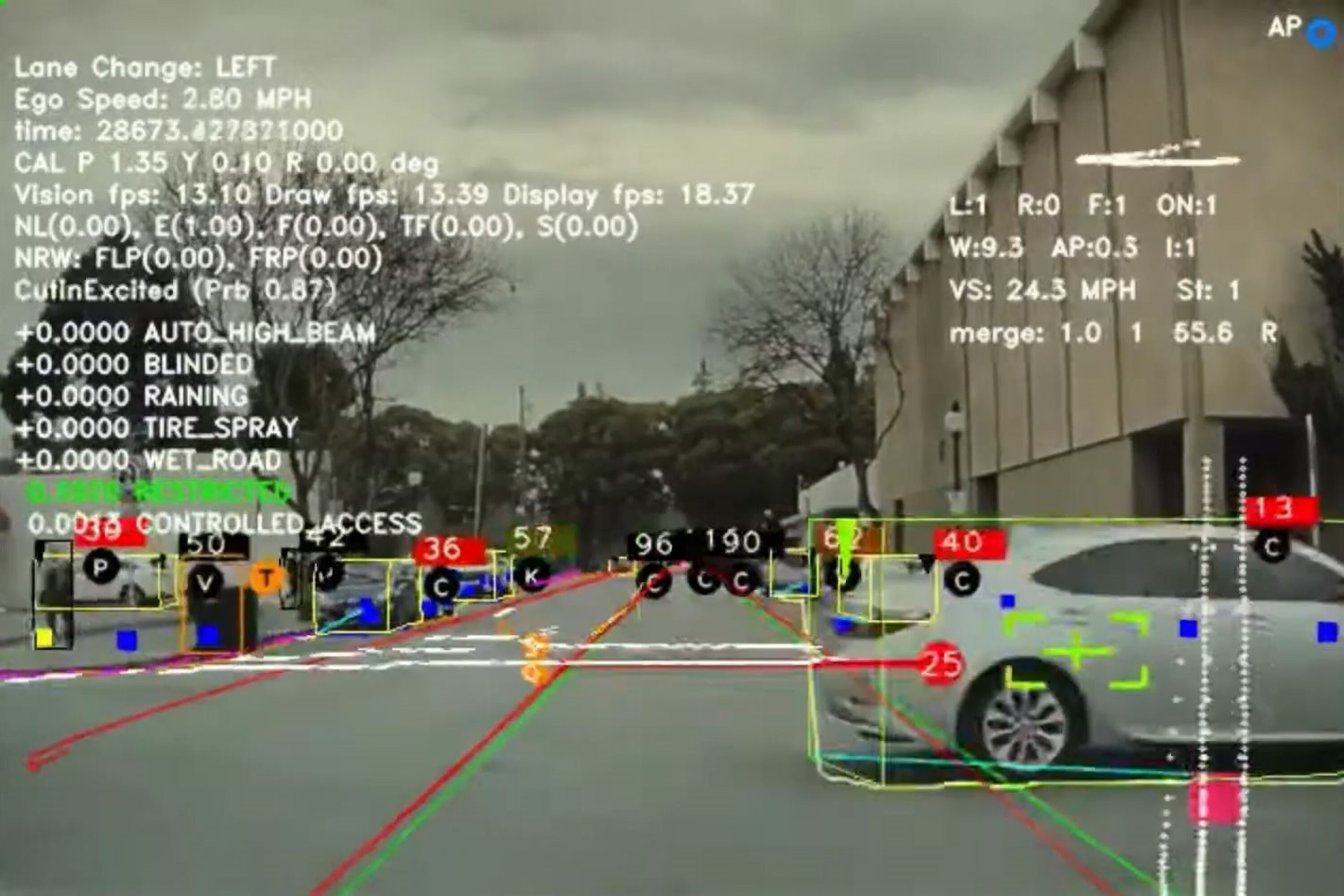
“In certain circumstances when Autosteer is engaged, the prominence and scope of the feature’s controls may not be sufficient to prevent driver misuse of the SAE Level 2 advanced driver-assistance feature,” said the recall report.
“Specifically, the investigation found that Tesla’s unique design of its Autopilot system can provide inadequate driver engagement and usage controls,” a spokesperson from not-for-profit US safety body NHSTA (National Highway Traffic and Safety Administration) said.
At the time of publication, there has not been a recall issued for Teslas sold in Australia, with the FSD software not legal on Australian roads.
1
The recall comes after NHSTA recalled 363,000 Teslas in February 2023 over issues with the Tesla FSD software.
That recall was prompted by safety issues at intersections, while the FSD software also ignored posted speed limits on occasion.
Tesla has said it will rectify the latest issues with an over-the-air software update.
NHSTA had already announced a probe into the Tesla FSD in August 2021, with its deeper investigation resulting into the latest recall. It initiated a second probe in August 2022, with both pending.
The probes came in response to Teslas with Autopilot crashing into first-responder vehicles as well as random sudden braking – known as ‘phantom braking’ – from considerable speed on highways.
1
The latest recall comes only weeks after a former Tesla employee, Lukas Krupski, was interviewed in the UK’s BBC describing the system as unsafe.
Krupski allegedly leaked confidential Tesla documents to a German newspaper while he was employed by the car maker in Norway earlier this year, telling the BBC that the system is not ready for use on public roads.
Tesla autonomous functions were first introduced in 2012, although they were not necessarily operating immediately.
Tesla’s ‘Autopilot’ function was available for ‘pre-purchase’, meaning the capability was included prior to the system becoming functional, in late 2014.
1
In 2015, Version 7.0 of Tesla’s FSD software included Autopilot for the Tesla Model S, which combined adaptive cruise control and Autosteer, a lane centreing capability.
Multiple collisions as well as several deaths have been recorded, including 23-year-old Gao Yaning who was killed in 2016 at the wheel of his Model S in China while allegedly using Autopilot.
The death of Joshua Brown, the first person killed in the US after his Tesla drove over a railway crossing as it was in use, saw a software update that required drivers to contact the steering wheel more often while using the system.
It also promoted NHSTA to examine the technology more closely.
The latest Version 12 software was launched in the US in late November 2023.
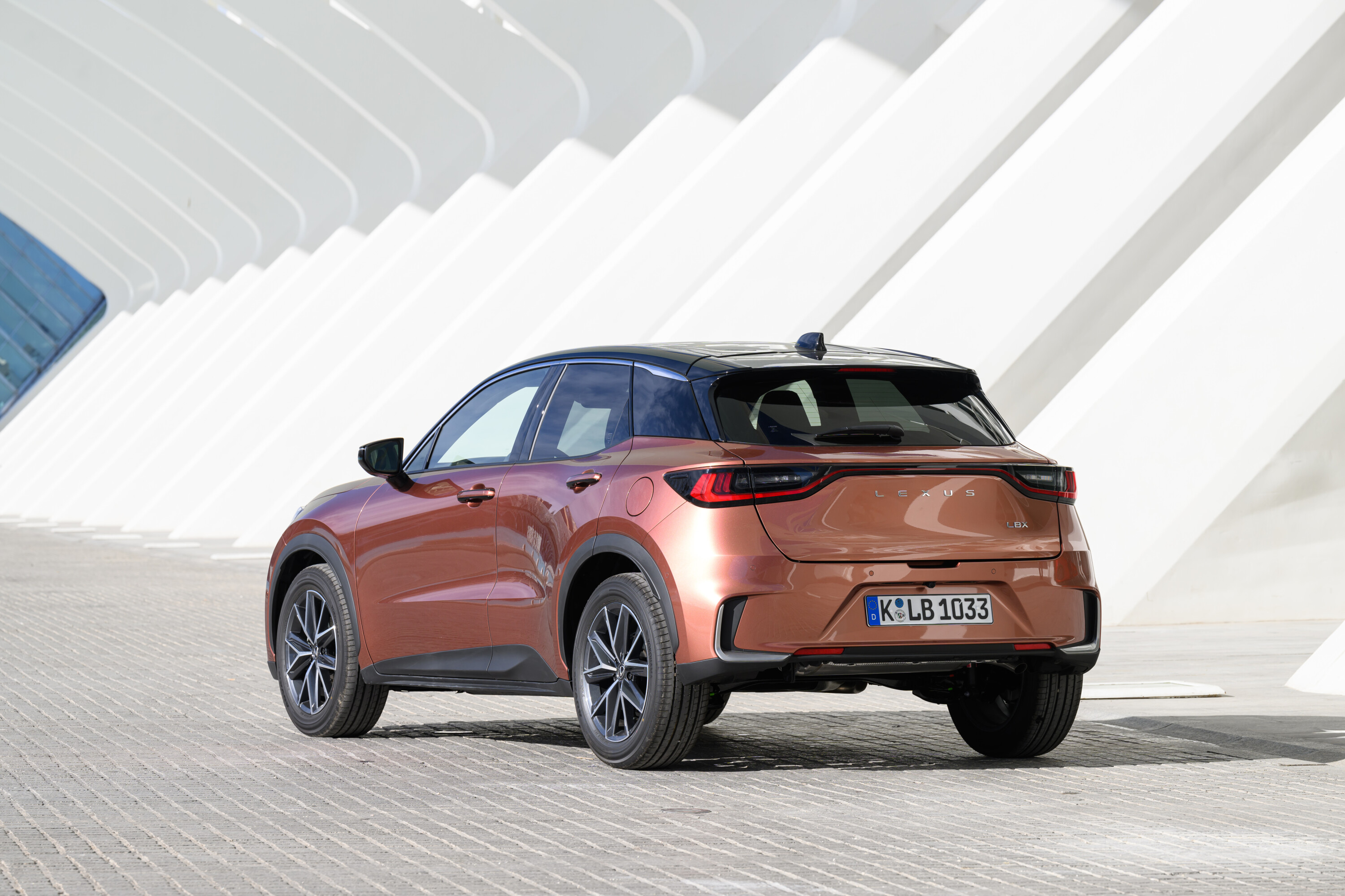
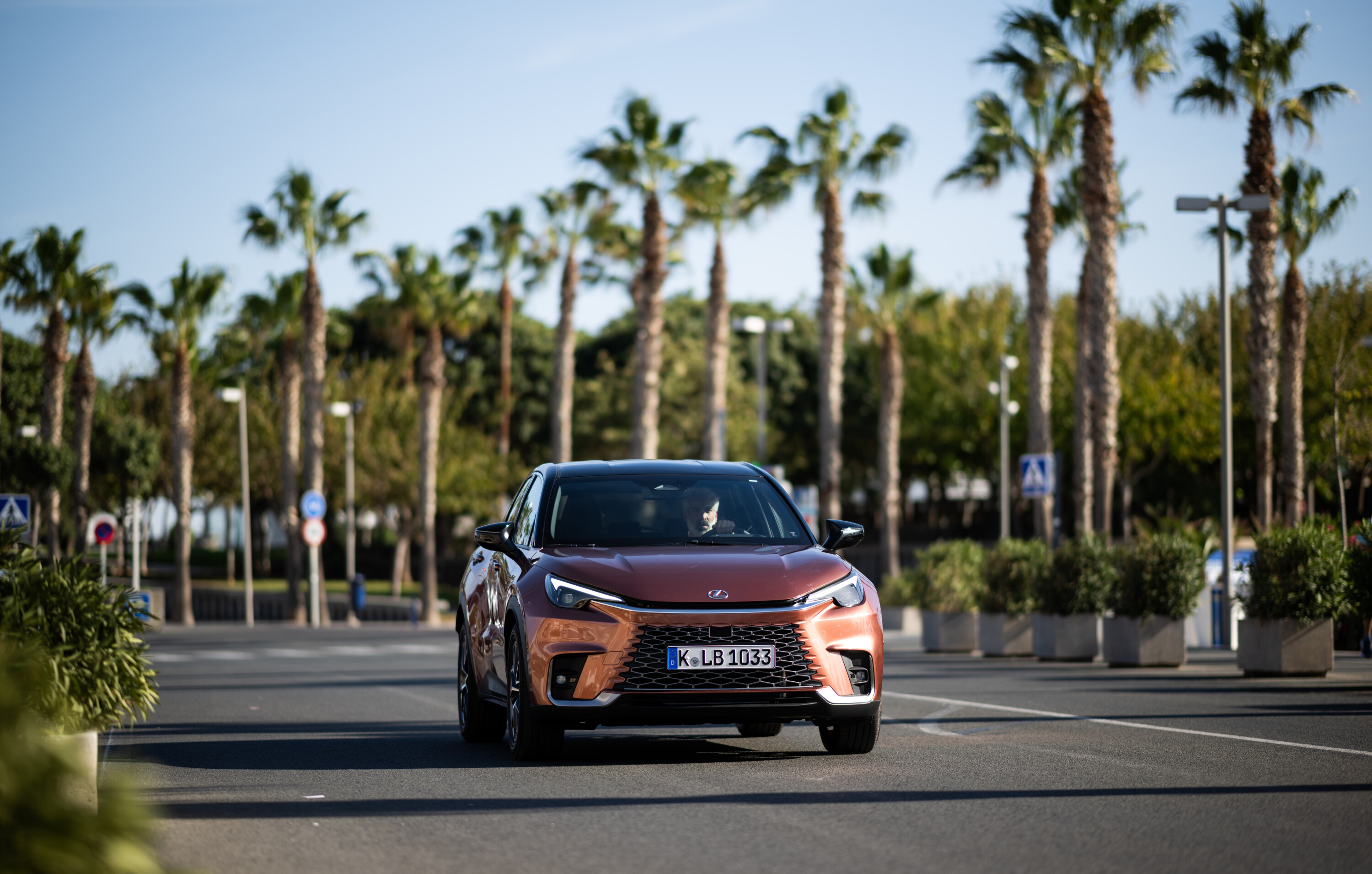
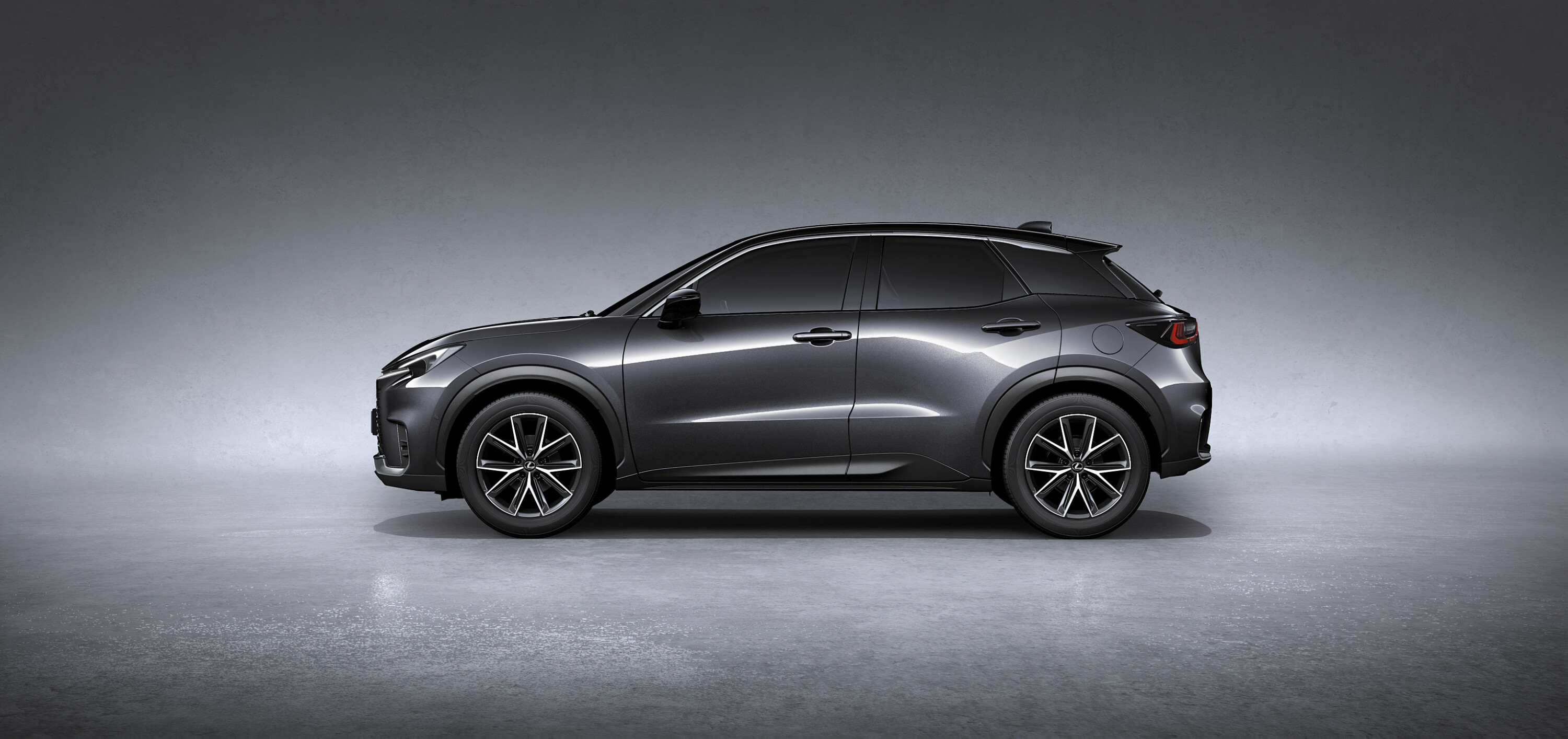
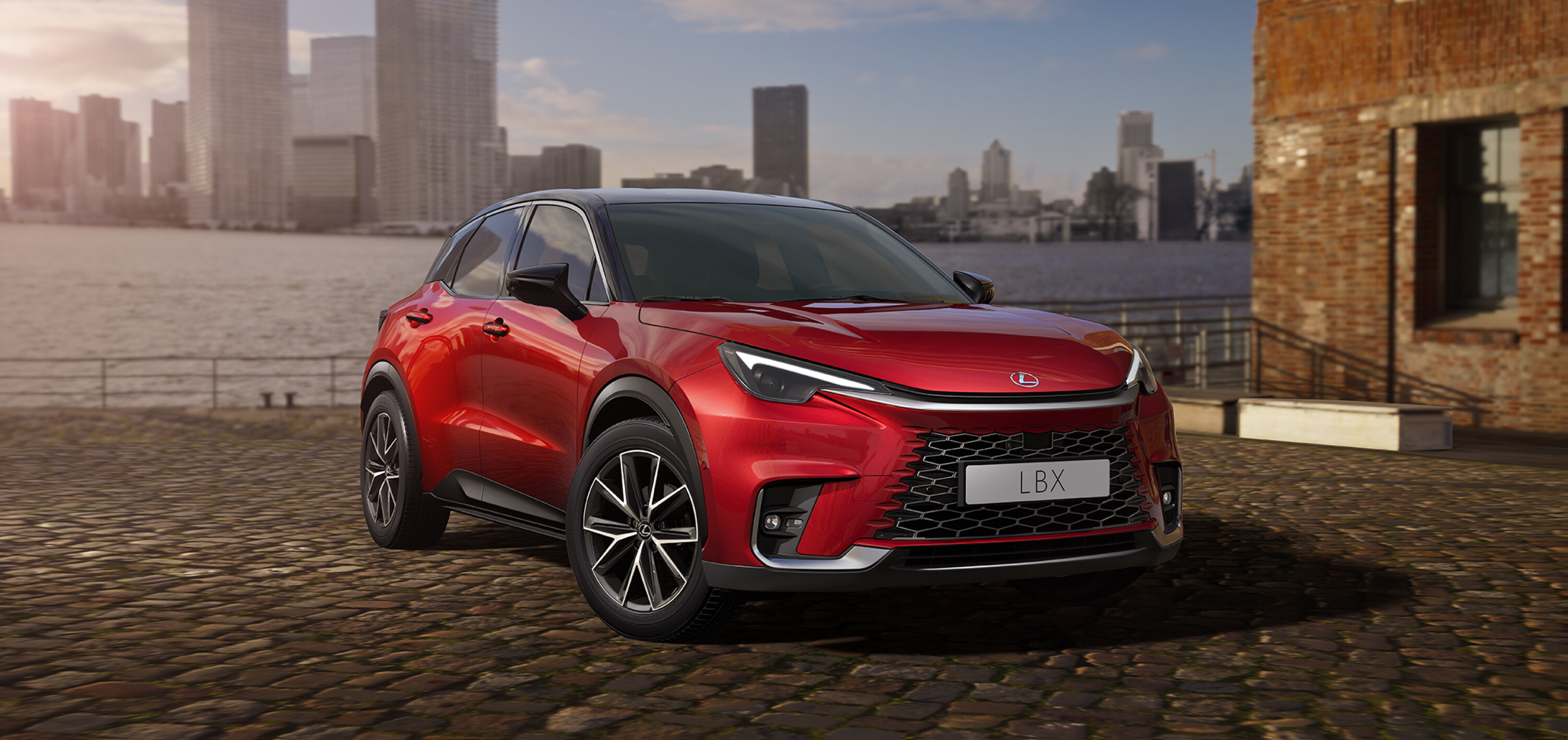
Lexus has confirmed the new LBX small SUV will arrive at Australian dealers in the first half of 2024.
Based on a modified version of the GA-B platform used by Toyota’s Yaris Cross, the LBX will likely become the smallest and most affordable Lexus available when pricing is confirmed.
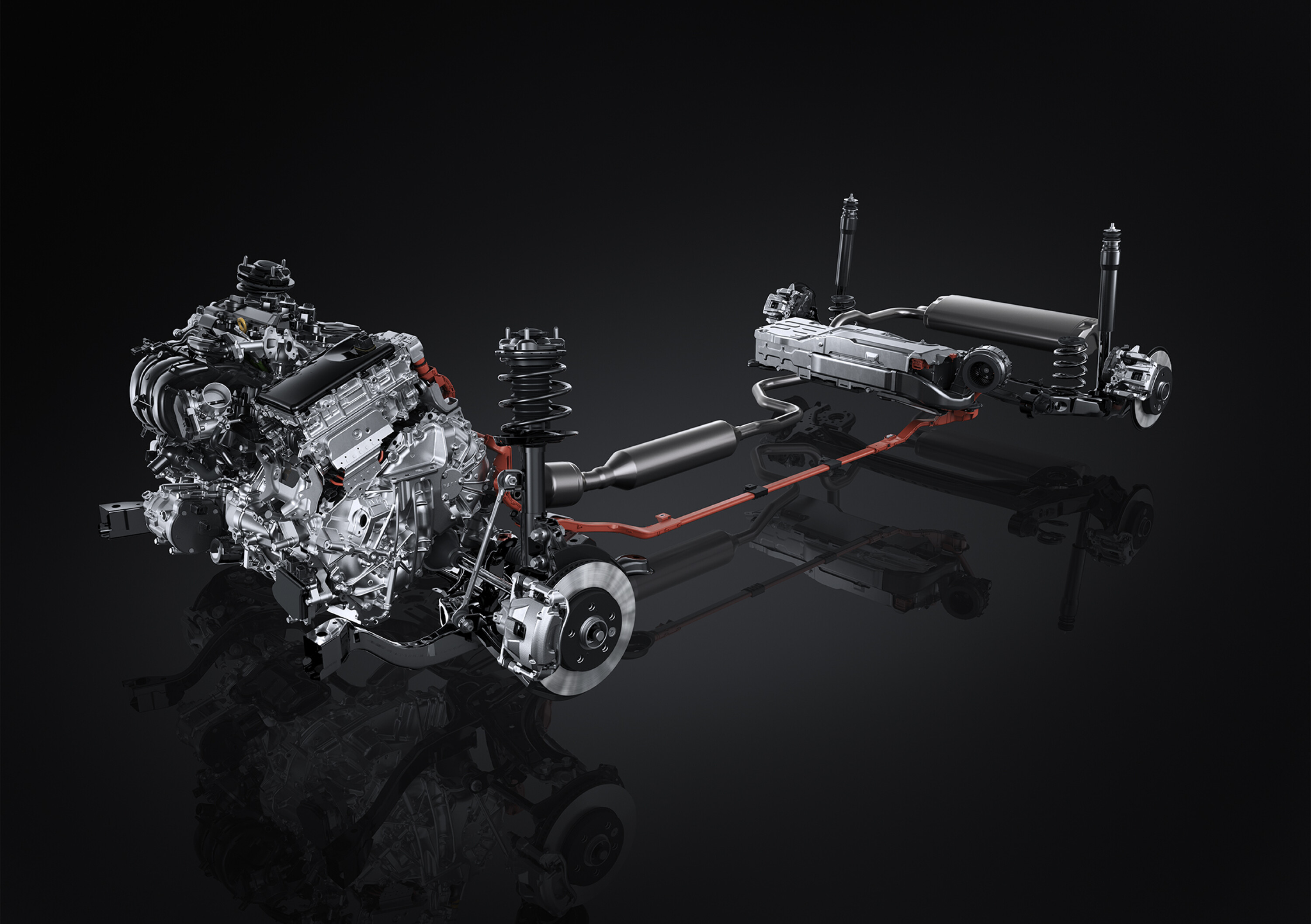
Using the same M15A-FXE petrol three-cylinder combustion engine as the Yaris, the LBX gets a more powerful electric motor with a larger battery for more performance and enhanced EV-only driving range.
We’ll receive both front- and all-wheel drive hybrid models in two trim levels and both powertrains will produce 100kW.
1
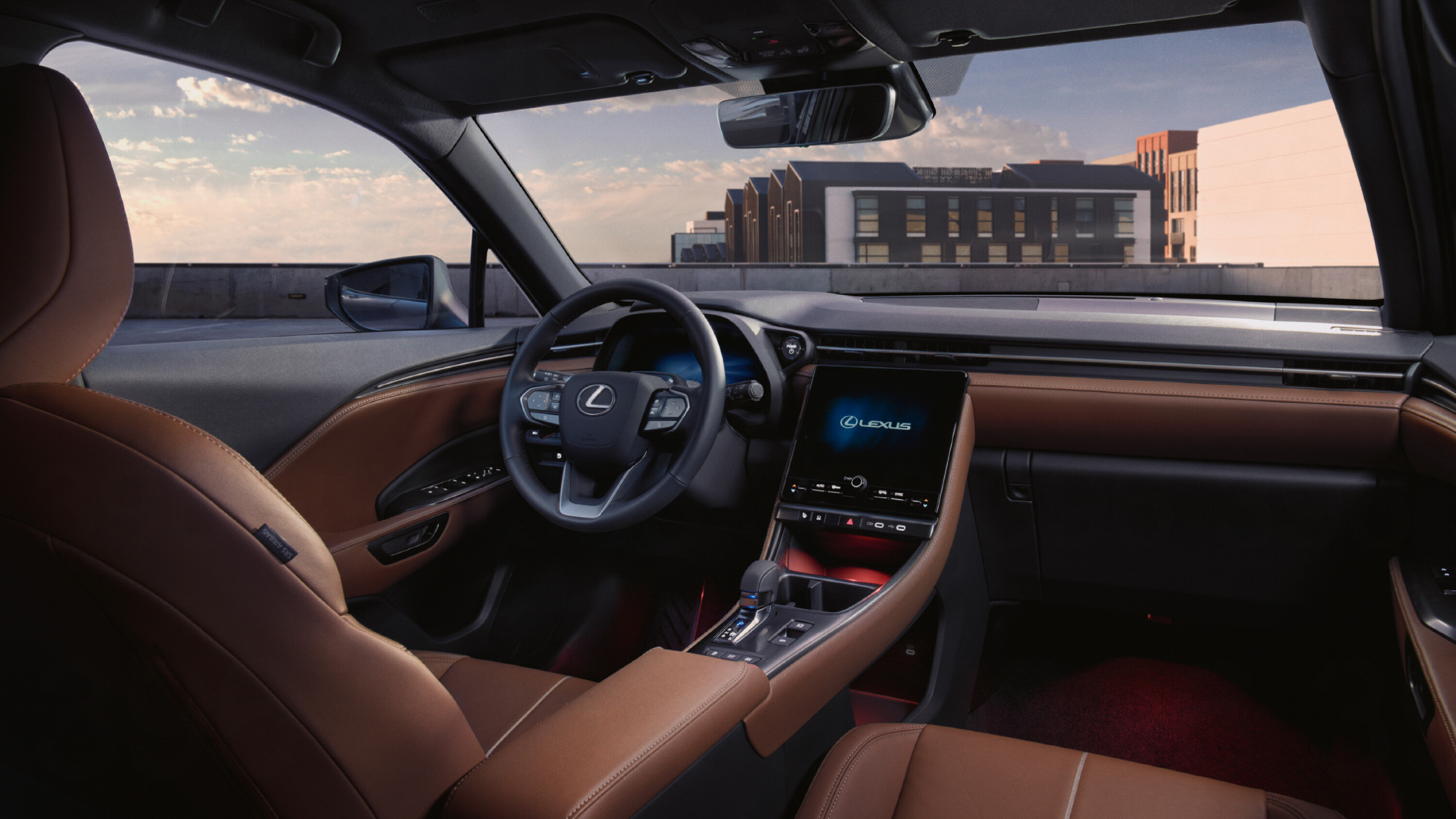
Inside, the LBX has different materials, design, and dash shape, making it much more than just a leather-bound Yaris Cross.
The range opens with the LBX Luxury, featuring ‘NuLuxe’ synthetic leather-upholstered powered front seats with heating and driver’s memory, 12.3-inch central display, a power tailgate, rain-sensing wipers, 360-degree camera, 18-inch alloy wheels, and torsion beam rear suspension.
While the Luxury is front-wheel drive only, the Sports Luxury offers AWD with a second motor on the rear axle. All-wheel drive models are fitted with a more sophisticated multi-link rear suspension.
1
The LBX Sports Luxury scores a 13-speaker Mark Levinson sound system, ‘Ultrasuede’ and leather-accented seats, and automatic parking.
Lexus is yet to confirm pricing for the LBX. Given its compact 4190mm length, it’s 30cm smaller than the UX and therefore doesn’t have direct competition from the usual suspects such as Audi, BMW, or Mercedes-Benz.
As for a price estimation, The range-topping Yaris Cross Urban AWD lists at $39,000 before on-road costs and the UX250h Luxury $54,320 giving the unique LBX space to play with.
1
We expect the LBX Luxury to start from around $45,000, with the flagship Sports Luxury AWD pushing towards $55K.
“The all-new LBX breaks new ground for Lexus. It is proof that luxury is not dictated by vehicle size”, said Lexus Australia chief executive John Pappas.
“With LBX our designers have created a modern and compact urban SUV that delivers big on Lexus fundamentals of quality and craftsmanship, while offering responsive performance and great dynamics.”
Following its unveiling in June, the compact 2024 Lexus LBX is now confirmed for Australia – as though there were ever any doubt.
The LBX can be said to have its roots with the Toyota Yaris Cross, but the two share no panels or interior components, making them twins by way of platform and powertrain only.
When it was revealed, Lexus described the LBX’s platform as a “modified version” of the GA-B architecture shared with the Toyota Yaris hatch and Yaris Cross light SUV, gaining a lower centre of gravity, wider tracks, shorter overhangs, and more body rigidity.
The company insists the LBX “looks, feels and drives like a Lexus should”.
1
Full Australian details and pricing won’t be revealed until early next year, but we can expect the LBX to enter below the brand’s current entry range – the small UX SUV, which kicks off from around $46,000 before on-road costs.
Pricing for the Yaris Cross ranges from $26,990 for the GX Petrol FWD to $37,990 for the Urban Hybrid AWD – so a starting price of just over $40k, if not a touch below, could be about right for the LBX.
Before it arrives, Lexus will use its long-running sponsorship of the Melbourne Cup Carnival to show off the LBX. What’s more, the company added, cryptically, that “it won’t be alone as a showcase vehicle”. ?
Lexus might use the occasion to show off the incoming LM people mover, or even the Lexus GX – the brand’s new Prado-based luxury off-roader.
Learn more about the LBX in our evolving story below, and watch for more details to come in the months ahead.
The 2024 Lexus LBX – a hybrid light SUV based on the Toyota Yaris Cross – has debuted in Europe.
Snapshot
2024 Lexus LBX revealed
New hybrid-only light SUV not locked in for Australia
Production to commence later this year
While it is unconfirmed for our market, Lexus Australia said the LBX would be assessed to determine its suitability, with a final decision to “be made at a later stage”.
If it arrives in Australia, the LBX – meaning ‘Lexus Breakthrough Crossover’ – will serve as Lexus’s entry-level model, slotting below the UX small SUV and acting as a spiritual successor to the CT hatch axed in 2021, with a circa-$40,000 starting price likely.
1
The most affordable Lexus currently available in Australia is the non-hybrid UX 200 at $46,085 before on-road costs.
Lexus claims the LBX is based on a “modified version” of the GA-B architecture found underneath the Toyota Yaris hatch and Yaris Cross light SUV, with a lower centre of gravity, wider tracks, shorter overhangs, and more body rigidity.
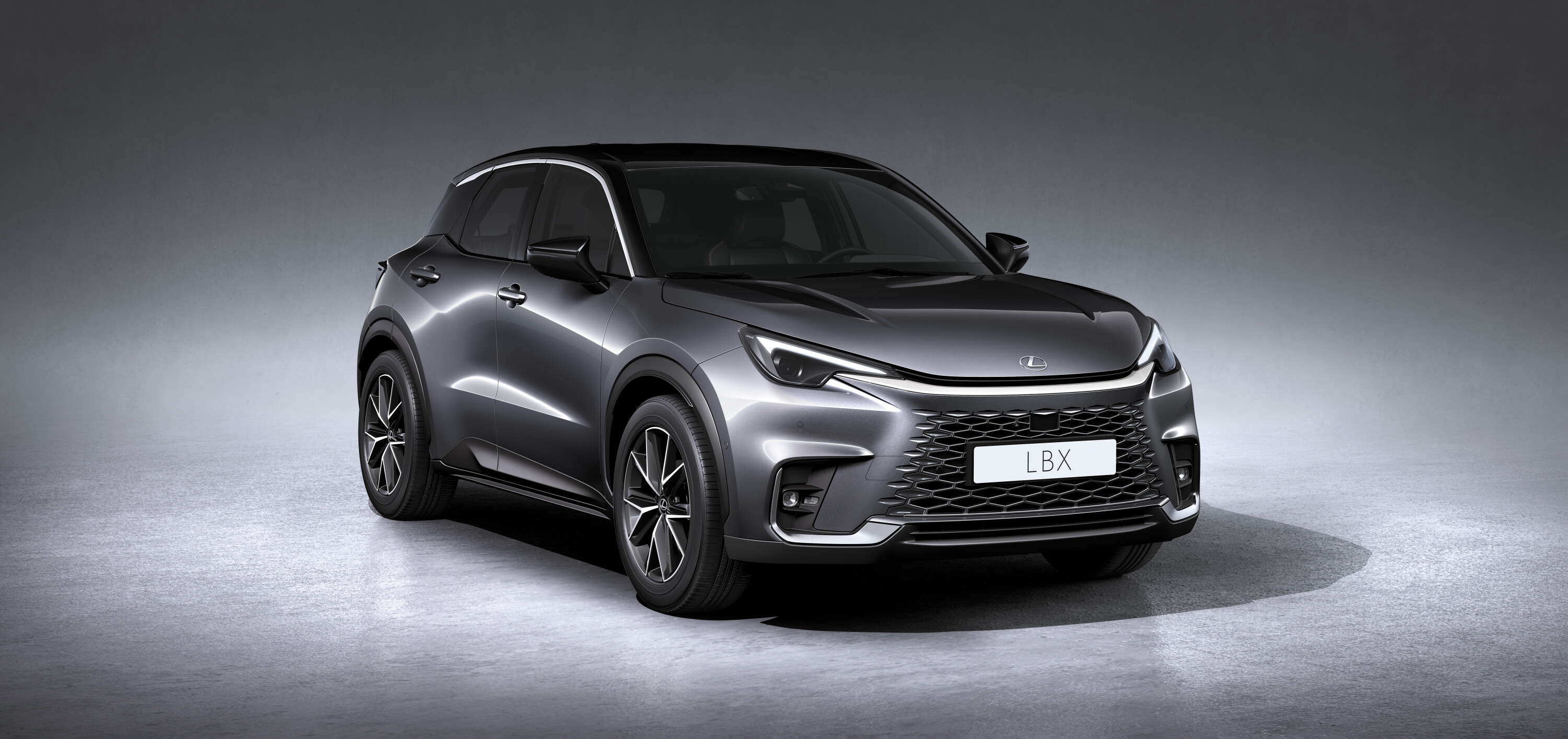
Measuring 4190mm long, 1825mm wide and 1545mm tall, the LBX is 305mm shorter and 15mm narrower, but 25mm taller, than the one-size-up UX. It rides on a 2580mm wheelbase, with 60mm less between the front and rear axle than the UX.
1
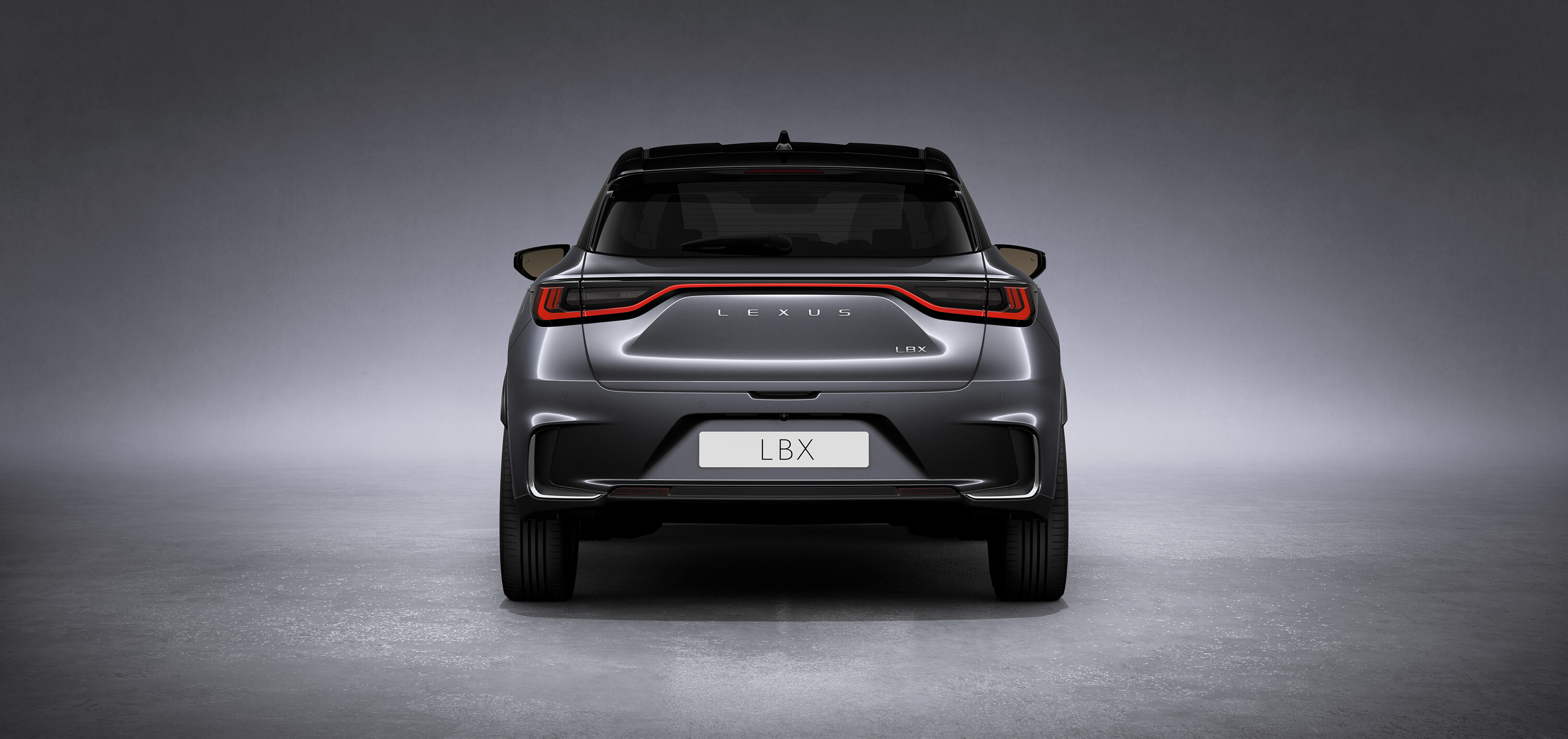
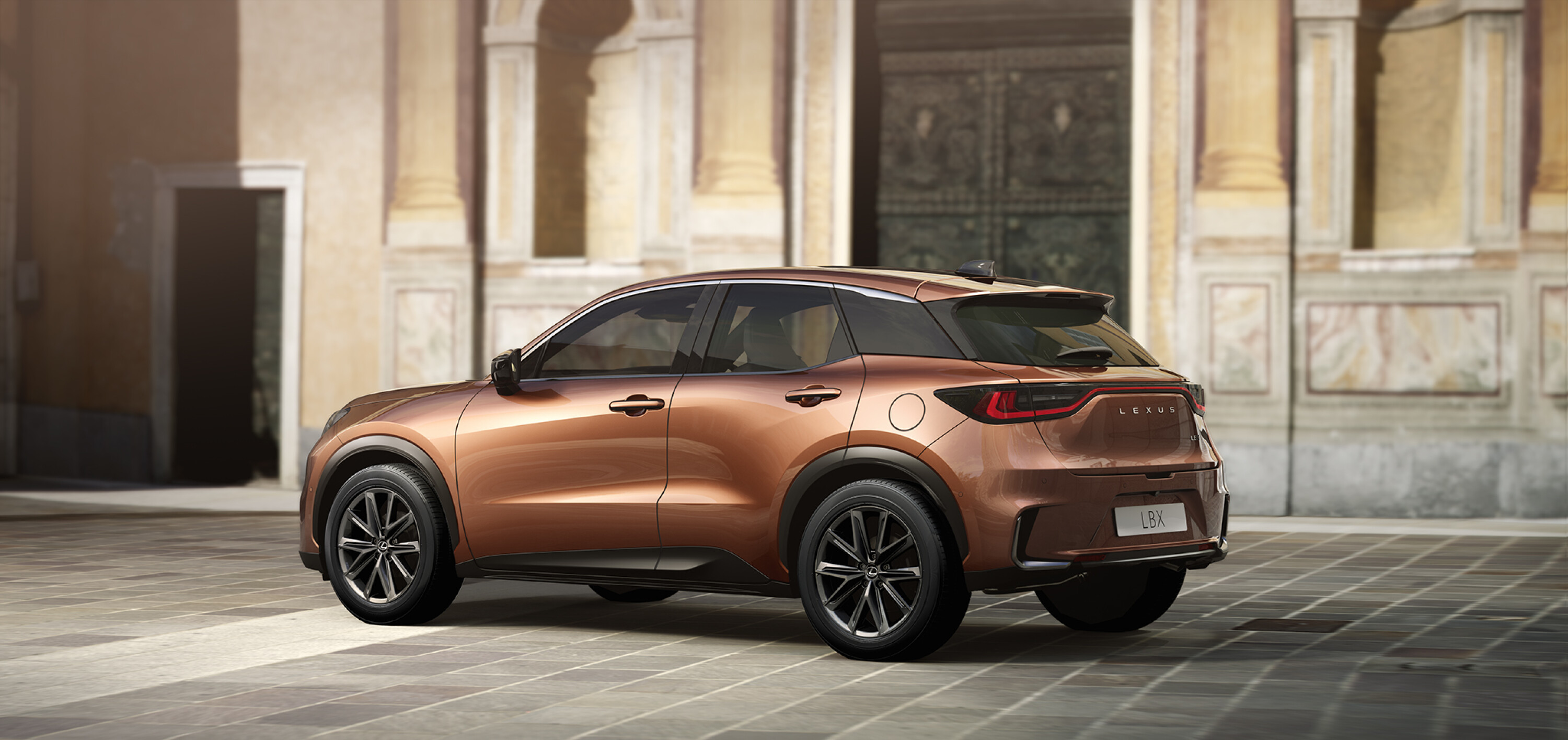
It follows Lexus’s latest design language, with the brand’s spindle grille design, slim LED headlights, 17- or 18-inch alloy wheels, a black-painted roof, and a full-width light strip connecting the L-shaped tail-lights.
Under the bonnet, the hybrid-only LBX is powered by a 1.5-litre three-cylinder petrol engine borrowed from the Yaris range, but with a more powerful electric motor motivated by a “low resistance” nickel-metal hydride battery.
1
It has a 100kW and 185Nm total system output, with a claimed 0-100km/h sprint time of 9.2 seconds.
The hybrid system’s all-electric drive mode is said to be available “at higher speeds and over longer distances”. Lexus has yet to announce a WLTP-rated EV-only driving range.
As standard, the LBX is front-wheel drive with torsion-beam rear suspension, with the available all-wheel drive adding independent double-wishbone rear suspension and a second electric motor powering the rear axle. It has a tight 10.4-metre turning radius.
1
All-wheel-drive variants feature Lexus’s four-wheel ‘drive force control’ system to automatically adjust acceleration and deceleration in certain driving conditions, such as when travelling uphill or downhill, or when cornering on twisty roads.
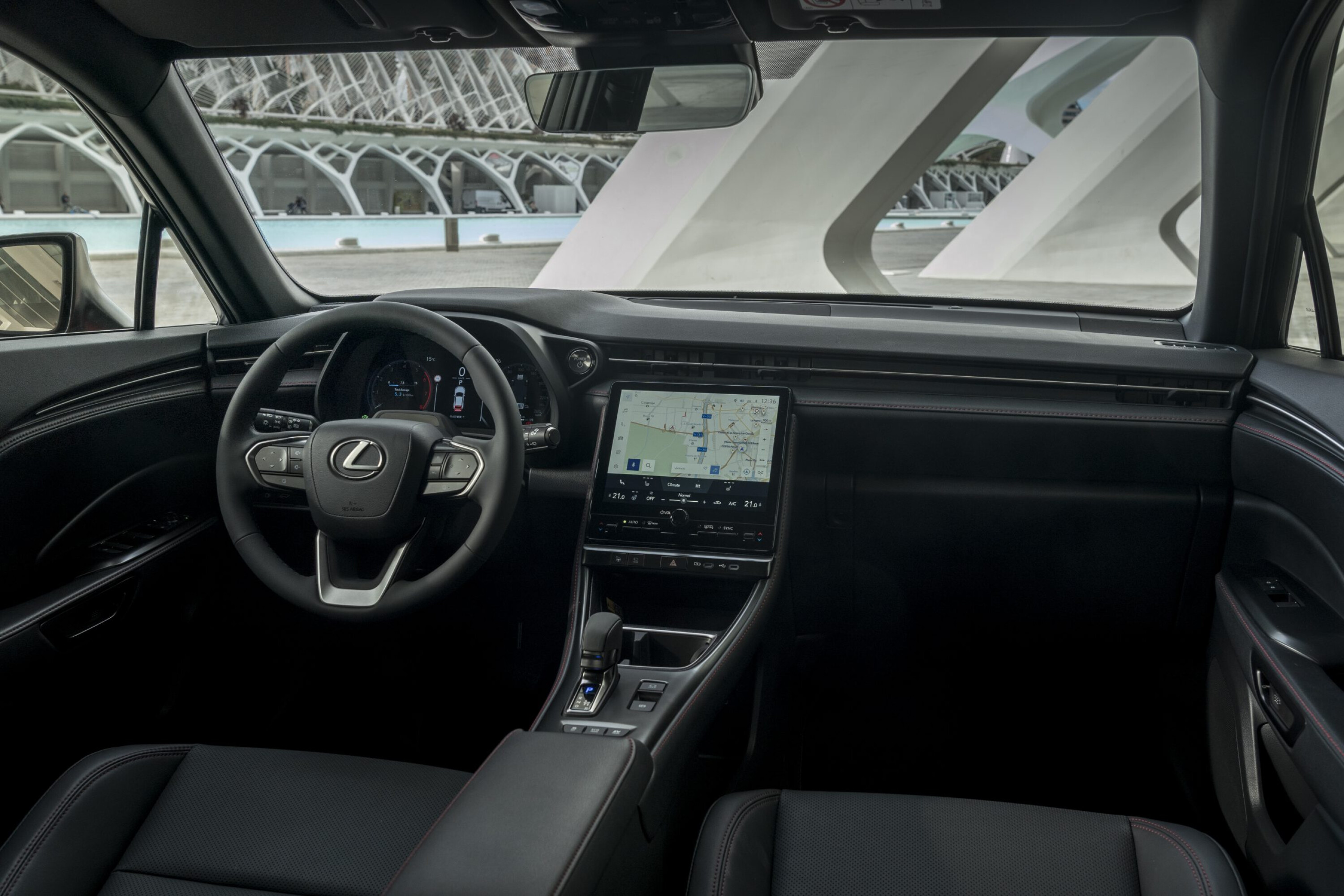
Inside, the LBX has the brand’s ‘Tazuna’ design theme from the latest NX, RX and LX, with standard electronically latching doors and a shift-by-wire gear selector.
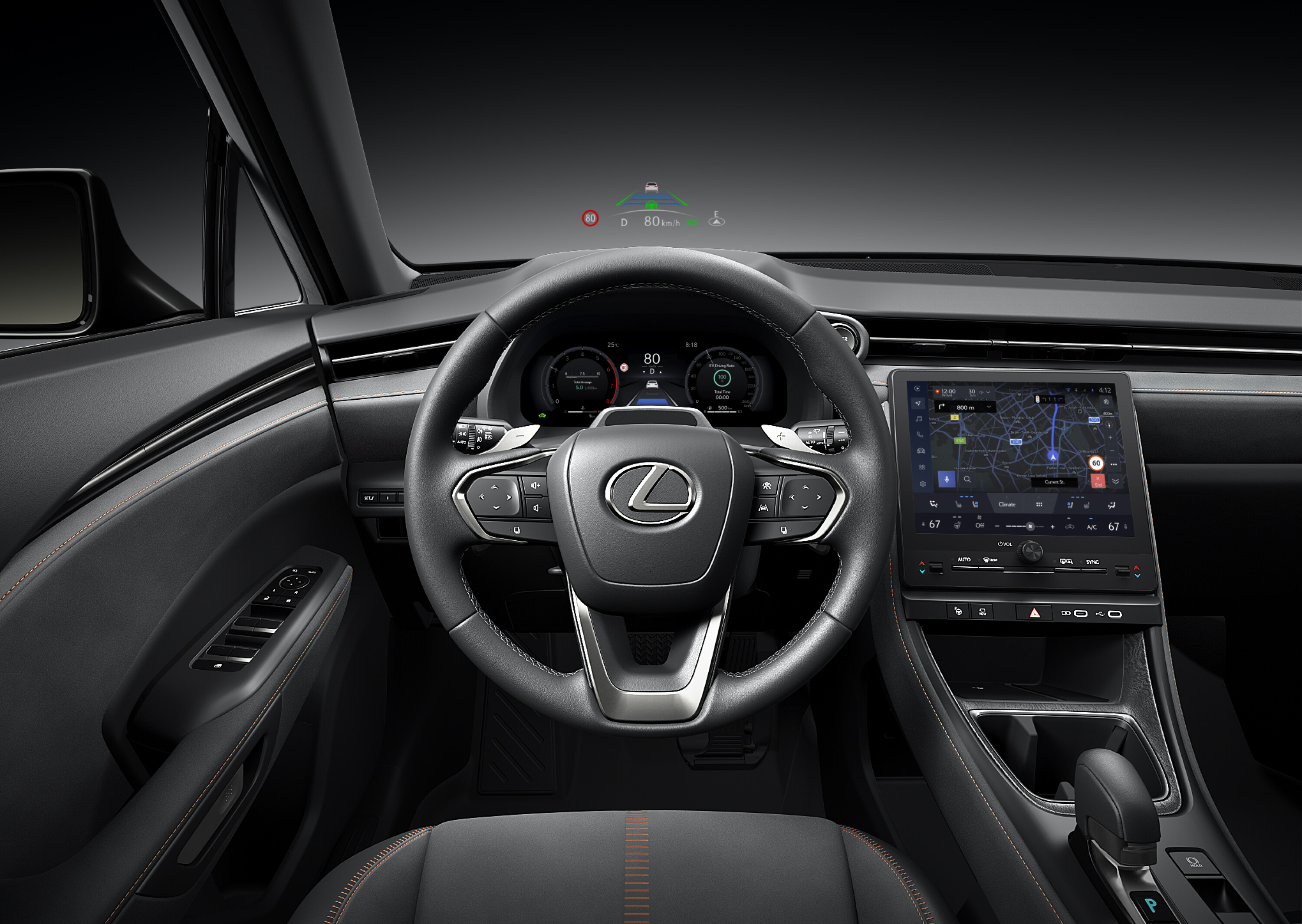
It debuts Lexus’s largest-ever all-digital instrument cluster, measuring 12.3 inches in diameter, and a new portrait-orientated 9.8-inch ‘Link Connect’ infotainment system.
It supports wireless or wired Apple CarPlay, wired Android Auto, an optional digital key supporting Apple and Android smartphones, and over-the-air software updates.
A 13-speaker Mark Levinson surround-sound audio system is available, with the subwoofer “integrated in the back door [to avoid] any loss of space in the load compartment”.
1
Luggage capacity is rated at up to 332 litres for front-drive variants with the second-row in place.
Other available features include; a head-up display, remote parking functionality, an electric tailgate, and a Panasonic-supplied air purification system.
The LBX features the brand’s latest active safety suite, with autonomous emergency braking with junction-turning and reversing detection, adaptive cruise control, lane-keep assist, lane departure warning, traffic sign recognition, safe exit assist, driver attention monitoring, and blind-spot and rear cross-traffic alerts.
2
Front cross-traffic alert and a 360-degree camera system are available on flagship variants.
Lexus said it has taken technology from its flagship LS limousine and LC coupe, with washer fluid distributed from the wiper arm – but other vehicles, such as the Mazda 3 and CX-30, also offer this.
Perhaps more important is the new ‘Lexus Bespoke Build’ program, which allows buyers to option “tailor-made details”, including unique seatbelts and aniline leather upholstery previously limited to the LS.
1
The 2024 Lexus LBX light SUV will commence production later this year, with sales to begin in early 2024.
Lexus Australia said it “continues to assess models that may be suitable for the needs of local customers, with the LBX no exception. A decision on LBX will be made at a later stage.”
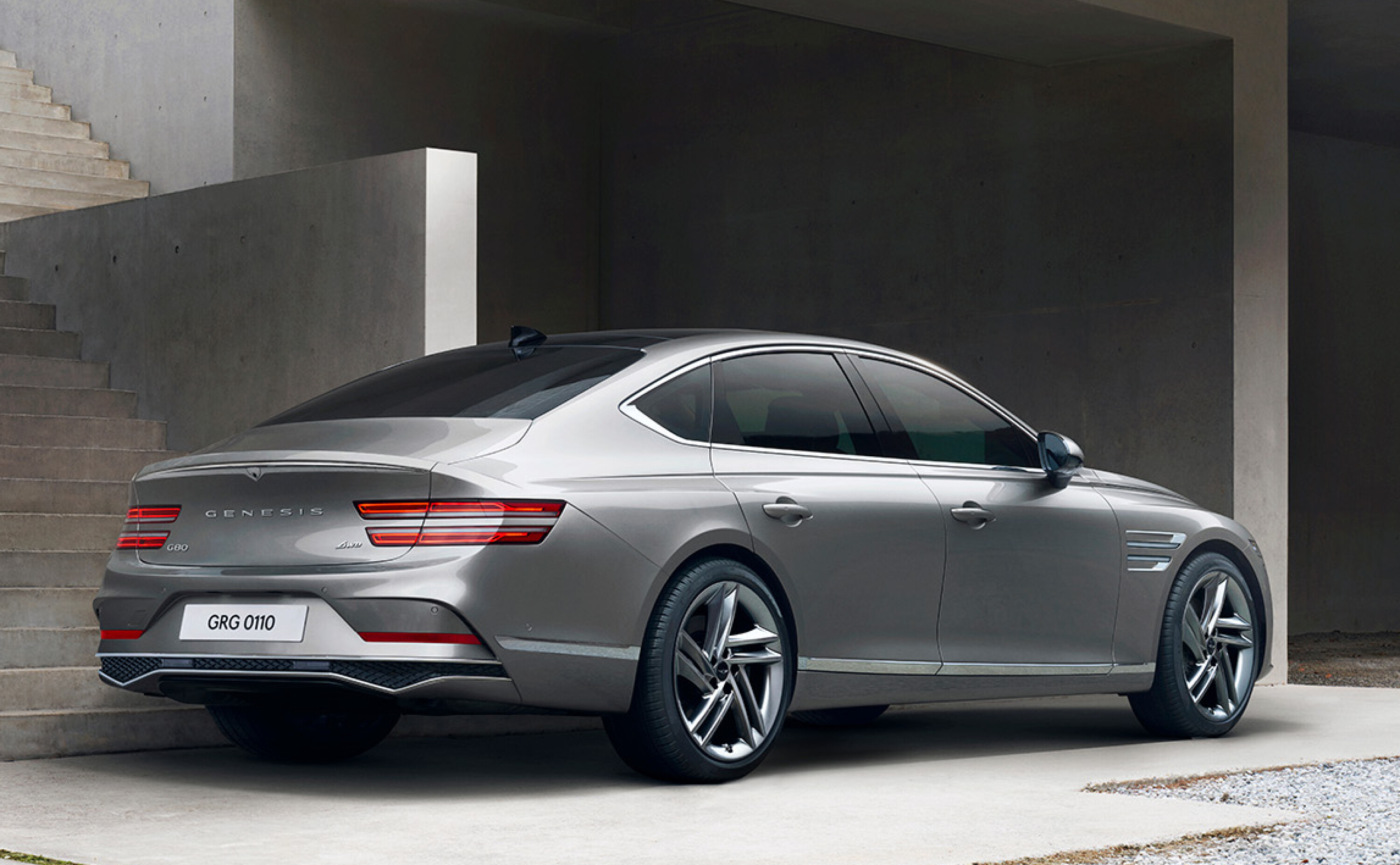
The rear bumper now features hidden exhaust outlets with “V-shape” chrome trim, mirroring the all-electric G80 variant.
1
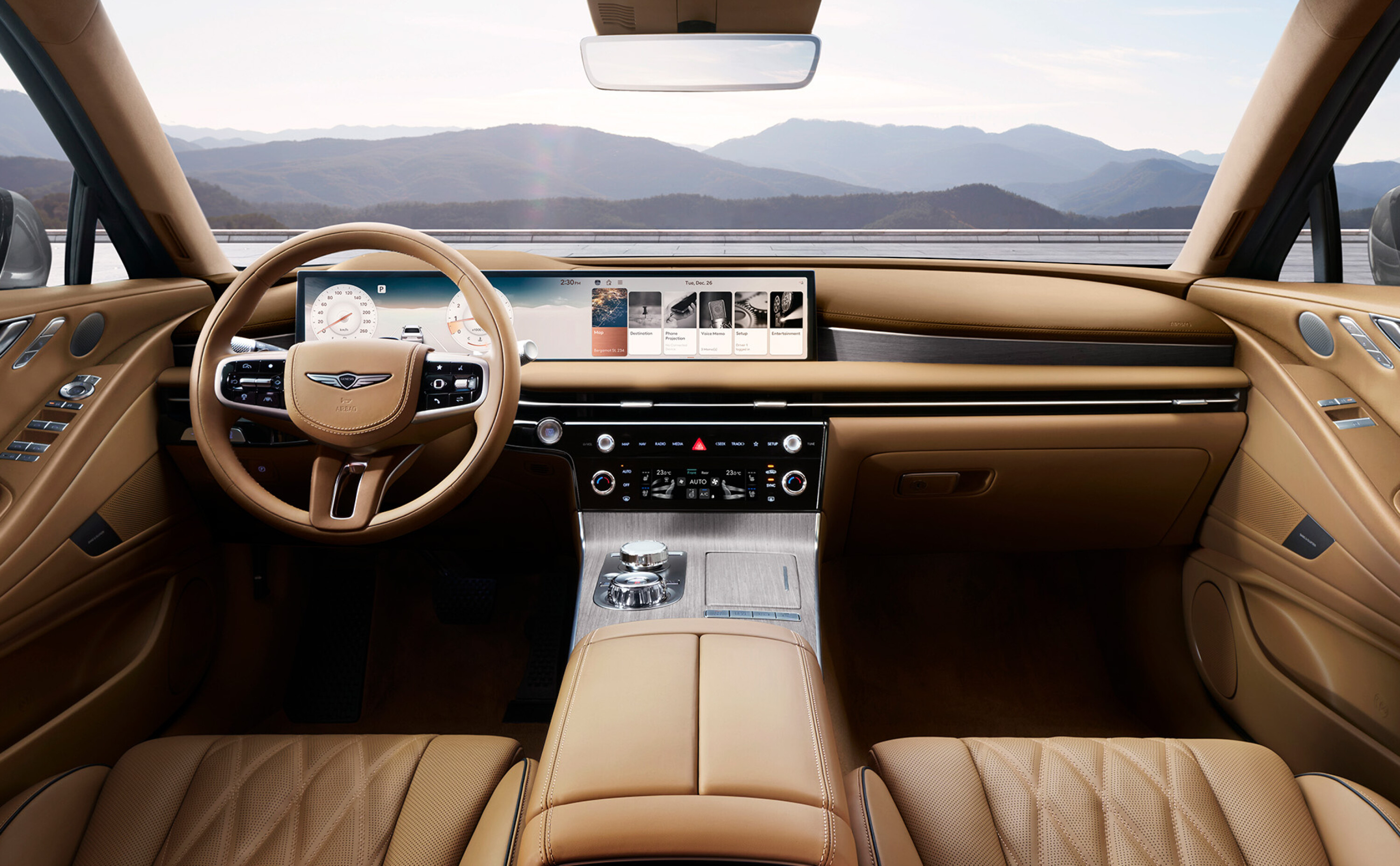
Inside, the changes are more noticeable, with a new 27-inch OLED display, which replaces the separate 12.3-inch digital instrument cluster and 14.5-inch infotainment system, running the brand’s latest CCIC software first seen in the GV60 electric SUV and flagship G90 limousine.
It also adds a “crystal-like” shift-by-wire gear shifter, a touch-based climate control panel, revised trim, and a new steering wheel.
The G80 Sport has a unique “double-layered G-Matrix pattern” grille, larger air outlets, different front and rear bumpers, a D-cut steering wheel, and two carbon-look interior garnishes.
Globally, the updated G80 will be available in 10 exterior colours, including the newly added Brooklyn Brown, and four interior colour options.
1
Genesis said it’ll announce technical specifications “closer to the official launch date”, though no significant changes are expected for the existing 224kW/422Nm 2.5-litre turbo-petrol and 279kW/530Nm 3.5-litre twin-turbo V6. The facelifted Electrified G80 will be unveiled at a later date.
VFACTS new-car sales data reveals 47 examples of the Genesis G80 have been registered in Australia year-to-date – down from 81 units at the same time in 2022 – compared to 455 BMW 5 Series, 381 E-Classes, and 236 Audi A6s. The all-electric version has accounted for 10 G80 sales so far in 2023.
The 2024 Genesis G80 sedan is due in local showrooms mid-year.
“More details specific to the Australian market will be provided closer to launch,” said Genesis Australia.
It’s time to get yourself a new set of wheels, but in today’s market with prices climbing and ever-extending wait times – is it worth considering a second-hand option?
It seems like a leap of faith when there are now so many, simple ways to buy a new car both on or off-line, and the ability to get the exact car you want without putting up with the previous owner’s boogers coating the dashboard.
The world of second-hand car sales hasn’t been immune to price-gouging either – especially in the collector’s market – but you may be able to grab yourself a much better deal on a used vehicle than a new one.
So, if you’re open to suggestion in regards to buying a new vehicle, here’s an objective look at the pros and cons of buying new vs used.
A major advantage of buying new is the ability to choose your preferred spec level, paint colour, options and engine.
If you’re someone who knows what they want and is happy to pay (and wait) for it, buying a new car from a dealership allows for a multitude of options and a personalised buying experience. The car you buy will be exactly what you want.
Latest technology
Having the latest technology like wireless smartphone mirroring and up-to-date navigation systems means no extra spend later on.
Given our lives are so tech-heavy now, it makes sense to keep up with the times. Plus, the latest engine technology will save you money at the fuel bowser.
1
Peace of mind
This is possibly the biggest drawcard: Manufacturer warranty.
Many carmakers now offer five-, seven- or even 10-year warranties, meaning the car may be covered for your entire ownership. The rise of capped-price servicing plans that paint a photo-realistic picture of ongoing costs makes it easier to budget.
Financial freedoms
Manufacturers want you to buy new cars, and they work hard to make it easy.
Getting finance for a new car is a hell of a lot cheaper than used cars, with much lower interest rates, pre-paid servicing rolled into finance packages and guaranteed future values. It’s an ecosystem that makes new cars cheap and easy in the long run.
A new car has typically been more expensive than used, though the gap is now closer than ever.
But, you still have to take into account depreciation. It’s not as bad post-pandemic – and clever speculators who bought a Toyota GR Yaris are now laughing all the way to the bank – but for your average family car it’s still a factor to consider.
You’ll probably be waiting a while
…or you’ll have to compromise on spec.
Brands in Australia have rolled out tech-light specials, notable inclusions being the Subaru Forester 2.5X and Volkswagen Tiguan Allspace Adventure, and for a few months BMW was selling cars without touch screens. This is because full-fat cars are hard to come by, with wait times from three-18 months across the industry. At that point, a lightly-used option looks pretty good.
Limited servicing options
You might be limited to servicing the car at the selling dealership if you want to maximise your warranty, meaning you’re at the mercy of their service pricing.
For some brands – Toyota and Honda – that’s a good thing, but some brand’s service schedules are expensive, and a good independent offers a better deal. Mitsubishi is one company that will extend its warranty 10 years/200,000km if serviced at a dealer.
According to the Australian Competition and Consumer Commission (ACCC), all carmakers must honour their vehicles’ standard factory warranty regardless of whether servicing was carried out at a brand-associated dealership or not, as long as servicing is performed according to the schedule by a qualified mechanic and using quality (preferably genuine) parts.
? The pros of buying used
It’s cheaper …most of the time.
Lightly-used cars, up to three years-old, are holding value extremely well – thanks to a market full of buyers eager to avoid new-car delivery delays.
However, practical cars over five years-old generally offer much cheaper purchase prices. Certain brands are depreciation monsters, meaning you can pick a car up cheap. There’s also greater bartering potential, especially with a private sale.
Shorter wait times
Almost any used car listed for sale in the classifieds will be available, right now.
A swift morning phone call to the seller could have you in new wheels by the afternoon. Of course, this ignores some of the endless searching to find a perfect example, but you’re unlikely to wait 12 months for the seller to supply the vehicle.
A private sale means no dealership tactics
Ever been pushed into making a purchase you aren’t 100 per cent happy with by a shiny-suited salesperson?
It’s not exactly a pleasant experience, and it’s one that’s less likely to happen with a private used-car seller.
The market is your oyster
Don’t like the colours on the latest Mazda CX-5 range?
Well, there’s probably an almost identical variant from three years’ ago you can get in soul red crystal instead.
That’s a very practical example, but you can literally buy any car that was sold new in Australia from the second-hand market – everything from Bolwell Nagaris to Toyota Corollas.
Anything is available, but maybe not at the right time.
You could have found an immaculate, well-maintained 2010 BMW 135i coupe with the dual-clutch transmission at the right price – much better value than a new Nissan Z – but it doesn’t have iDrive, and you don’t like silver paint. It’s either buy it and learn to love the German rainbow, or pass and wait another six months for the perfect example.
Reliability and maintenance
For all the service history, JD Power surveys and research you’ve done, you can still end up with a lemon.
And with a used car, there’s little recourse unless it’s covered under the manufacturer warranty. All dealerships must cover their cars with a three-month statutory warranty, and some certified pre-owned programs extend factory warranties, but private sales? You’re on your own.
Old technology
You’ll be stuck with older and outdated technology from the get-go, not having the latest safety technology, newest features and driving aids can make or break the ownership experience of a car.
There are some great options for older cars, such as aftermarket head units with phone-mirroring, but the newer the car and more integral the infotainment system, the harder it is to replace.
Wheels Media thanks Tom Fraser for the original version of this story.
Mitsubishi has been cleared after it appealed a decision that found it had breached consumer law.
The High Court of Australia unanimously found the Japanese carmaker had not engaged in misleading and deceptive conduct after a customer became dissatisfied with the real-world fuel consumption of their 2016 Mitsubishi Triton ute.
Mitsubishi Motors Australia and Northpark, the dealer trading as Berwick Mitsubishi that sold the vehicle, were taken to the Victorian Civil and Administrative Council (VCAT) by owner Zelko Begovic after a discrepancy in the real-world figures between his 2008 Triton and newer 2016 model – despite a lower number on the newer vehicle’s fuel consumption label.
1
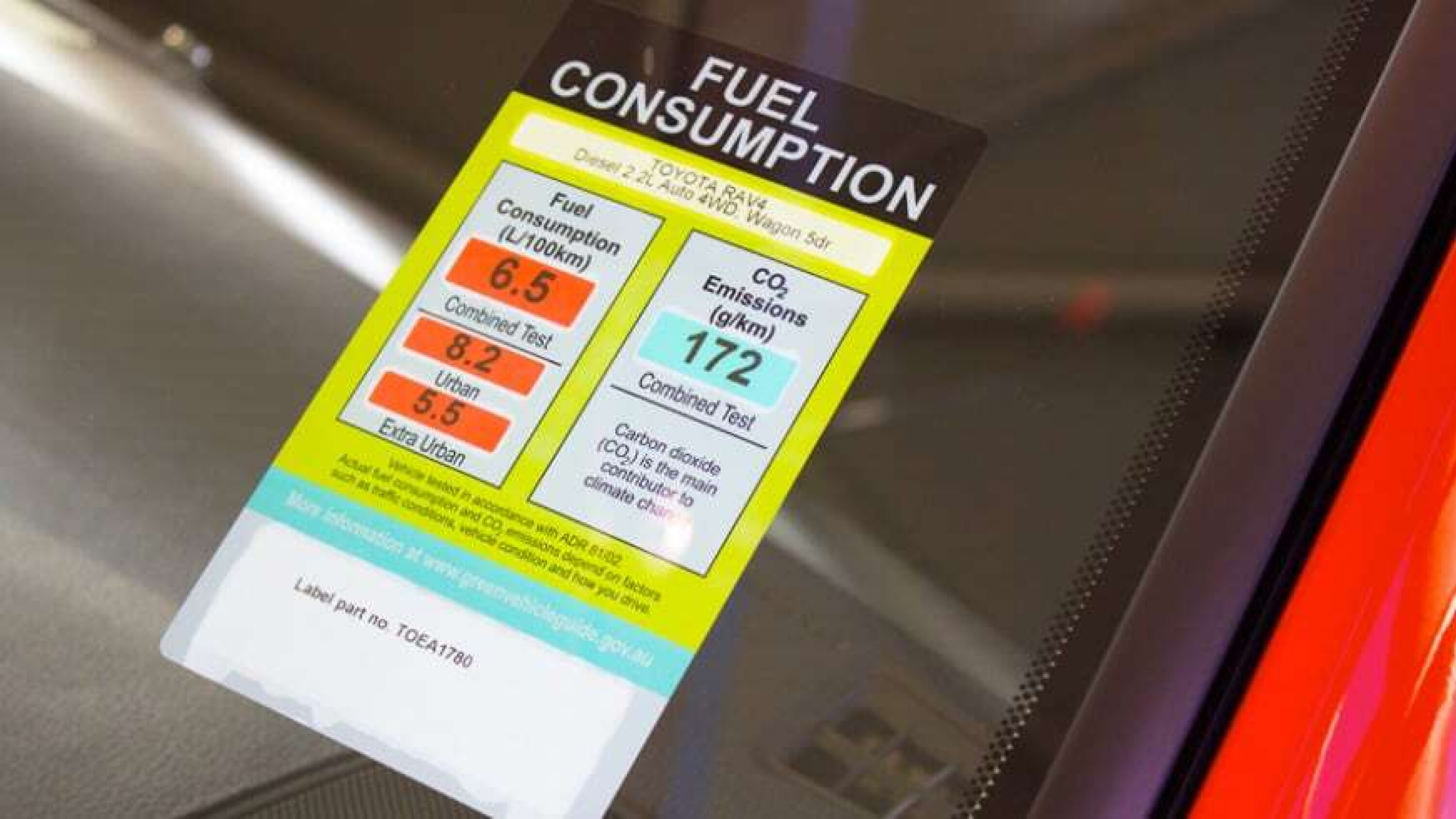
The Motor Vehicle Standards Act 1989 requires a label to be affixed to the front windscreen of all new cars sold in Australia, displaying a vehicle’s fuel consumption – in ‘urban’, ‘extra-urban’ and ‘combined’ environments – and carbon dioxide emissions based on a standardised test.
In 2019, the brand was ordered to refund Mr Begovic for the $39,500 purchase price of the Triton after an independent tester and one of its own technicians were unable to match the claimed economy ratings.
Mitsubishi appealed this verdict in the Supreme Court of Victoria, but the court upheld the VCAT decision in 2021. The brand then appealed this decision to the High Court of Australia.
“Mitsubishi Motors welcomes the High Court of Australia’s judgment,” said the brand. “Mitsubishi Motors is committed to compliance with the law and the highest standards of ethical behaviour, and we will continue to do so.”
The Federal Chamber of Automotive Industries said the High Court judgment provides “much-needed clarity and certainty” for the car industry.
“The judgement is a victory for common sense and backs in government-mandated fuel consumption labels,” noted FCAI chief executive Tony Weber.
The Australian Automotive Dealer Association (AADA) said it welcomes the High Court’s decision to uphold Mitsubishi’s appeal.
“This decision is excellent news for Australia’s more than 3000 franchised new car dealers and will bring certainty to the process of selling new cars in Australia,” said AADA CEO James Voortman.
“Federal regulations require all new vehicles to be affixed with a fuel consumption label listing the results from a government-specified laboratory test. The High Court has found that by complying with the letter of the law dealers and manufacturers are not in breach of Australian Consumer Law.
“This is a victory for common sense which will allow Australian dealers and manufacturers to continue to service the needs of their customers without fear of inadvertently breaching the law.”
The Federal Government has halved the fuel consumption figure needed for a ‘fuel-efficient’ vehicle to be exempt from the Luxury Car Tax (LCT) from 7.0L/100km to 3.5L/100km.
To be enacted from 1 July 2025, this figure is only realistic for pure EVs or plug-in hybrids and is one of the main talking points from the government’s Mid Year Economic and Fiscal Outlook (MYEFO).
The difference in the LCT threshold between normal and ‘fuel efficient’ vehicles became $13,282 last financial year – more than ever before – with the intent of increasing EV and PHEV uptake ahead of incoming fuel efficiency standards.
The increased threshold, though, means efficient European petrol and diesel-engined vehicles (yep, the very ones the LCT was designed for in the first place) such as the BMW 320i ($80,200 and 6.5L/100km) are exempt from the tax.
Meanwhile, a seven-seat Toyota Kluger Grande Hybrid ($80,230 before on-road costs) which is remarkably efficient for its size will be hit with LCT at 33 per cent for each dollar over $76,950.
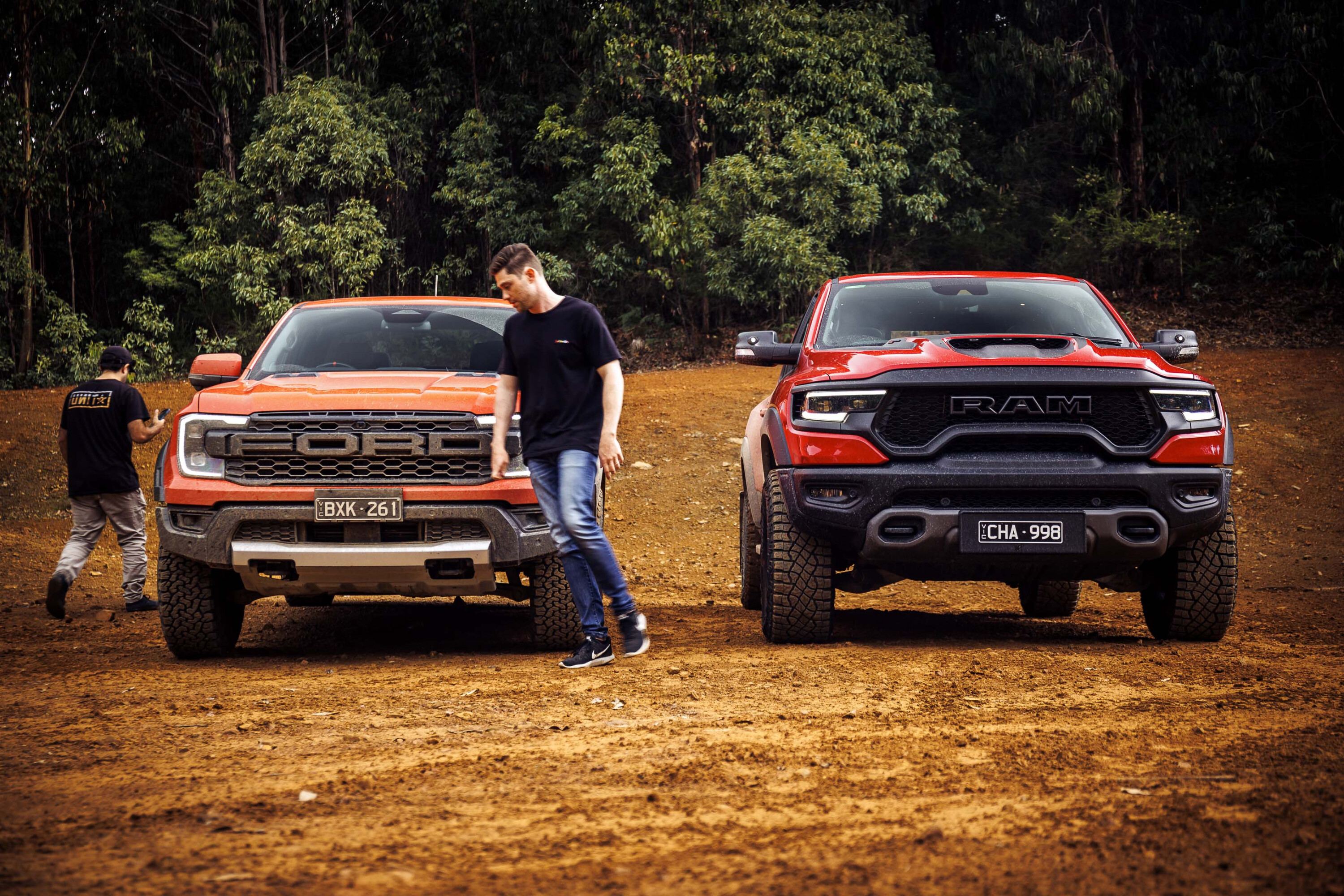
All utes – Australia’s best-selling vehicles – remain exempt from LCT. This includes the $87,990 Ford Ranger Raptor which returns 11.5L/100km in the ADR combined cycle and the $87,250 Jeep Gladiator rated at 12.4L/100km.
The government’s fuel efficiency standards – expected to arrive sometime in 2024 – will aim to incentivise buyers to make more efficient choices.
1
The industry responds
Since the end of Australian manufacturing, the LCT (introduced in 2001 by the Howard government) has come under intense scrutiny, and the latest change is no different.
Automotive industry bodies and figures have waded in with their views, and they range from positive to downright damning.
AADA CEO James Voortman said “Changes [to the LCT] have made a bad tax even worse… The LCT is an outdated tax meant for a time when Australia still manufactured cars – it should have been abolished years ago, but now it’s being used to further tax fuel-efficient cars”.
Mr Voortman pointed out that the LCT costs motorists over $100 million each year, and that the way to encourage greener purchases is to abolish the tax altogether.
1
However, Electric Vehicle Council CEO Behyad Jafari approves of the change.
“Whatever your view on the LCT, this change represents two things. First, a recognition that auto tech has changed considerably since the thresholds were first designed and recognises that our expectations of ‘fuel-efficient vehicles’ today are rightly quite different”, Jafari wrote on LinkedIn.
Meanwhile, FCAI CEO Tony Weber labeled the LCT archaic. “The LCT penalises Australian consumers, as it imposes unnecessary additional taxes on many low-emission technology vehicles,” he said.
“The changes announced today in MYEFO slug Australians with more taxes and make vehicles less affordable…. If the Australian government wants to modernise the LCT, they should remove it as part of true tax reform for the transport sector including consideration of a road user charge”, Weber added.