Fire and Rescue NSW are investigating the cause of a battery fire at a Sydney Airport car park on Monday night that destroyed five vehicles.
Key Points
Multiple cars damaged in car park fire
Battery out of vehicle at time of blaze
Investigations ongoing
Firefighters were called to a parking lot on Airport Drive, Mascot, where flames had engulfed an electric car – identified as an MG ZS EV – before spreading to another four other motor vehicles.
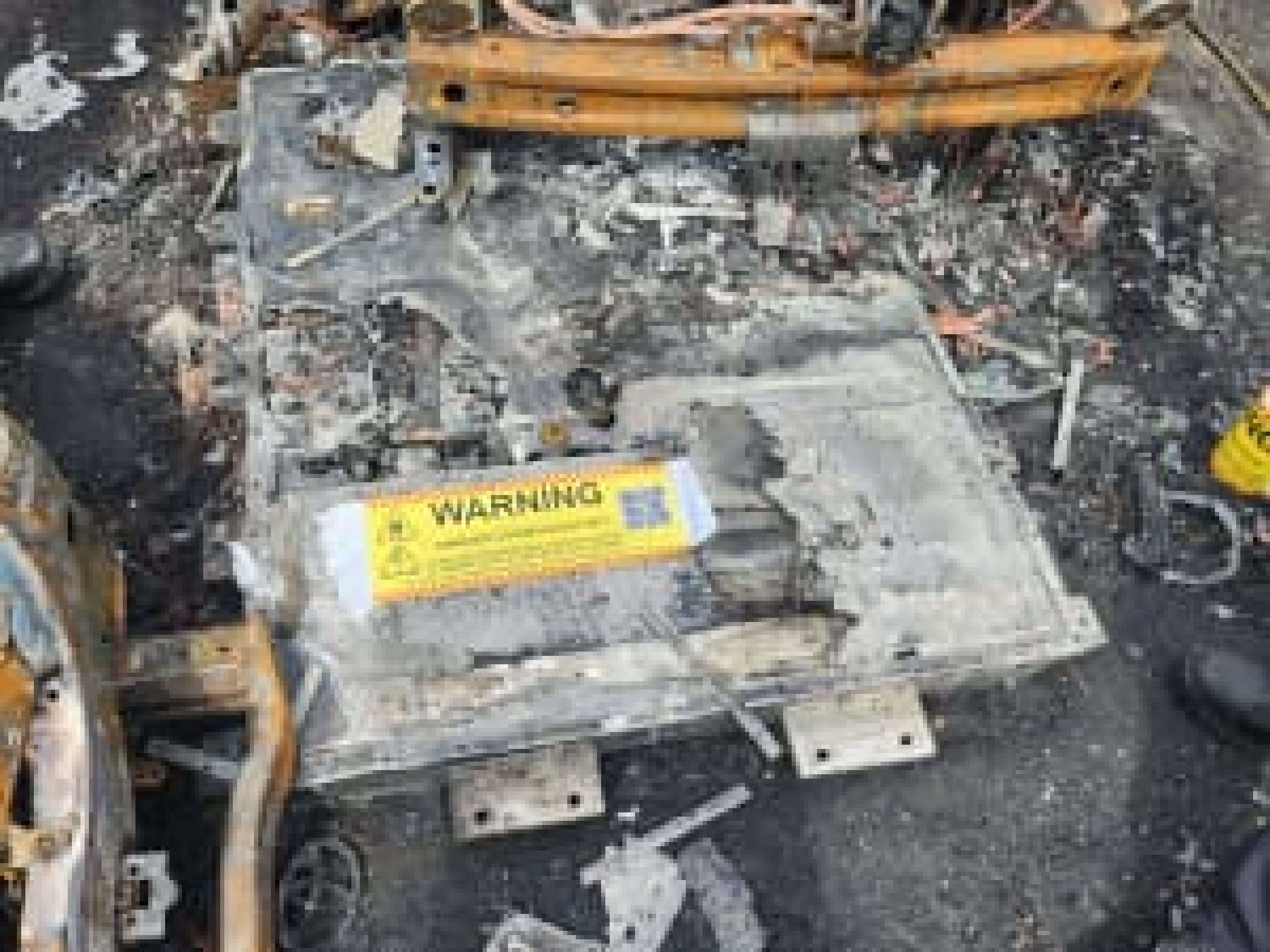
Fire authorities have pinpointed a high-voltage battery pack located on the ground in front of the MG as the source of the fire.
2
“A battery, which had recently been detached from the luxury car and stored in the lot, was quickly identified as having sparked the blaze,” read a statement from Fire and Rescue NSW (FRNSW).
The circumstances around the blaze are unusual, to say the least.
Vision from FRNSW clearly shows the battery pack lying on the ground in front of the vehicle, which is located in a vehicle holding yard at the base of Sydney Airport’s control tower.
It is understood that the battery had been damaged before it was removed from the vehicle and had been exposed to the elements for some time.
Given the close proximity of the vehicles in the parking compound, several have been badly damaged by the fire.
However, the fire damage is not as comprehensive as it could potentially have been, with the structures of the cars still visible and the battery pack of the MG still recognisable.
1
It’s not known if the MG’s battery was a later-model lithium iron phosphate type, which is less prone to what is known as thermal runaway than lithium-ion batteries.
However, the circumstances around the battery being removed from the car and stored in such a haphazard and unsupervised way will require considerable investigation.
The Fire Investigation and Research Unit (FIRU) are piecing together the circumstances surrounding the incident, according to the FRNSW.
Research officers from FRNSW’s Safety of Alternative and Renewable Energy Technologies (SARET) team have also inspected the scene.
MG Australia has been working with the fire department since the incident yesterday.
“MG understands the customer’s vehicle and battery were already damaged and the battery was not in the vehicle. We understand the vehicle was being stored at an airport holding yard and also not in a driveable condition,” the company said in a latest statement released Thursday.
Electric vehicle fires are very rare in Australia, though the damage they can potentially inflict can be catastrophic.
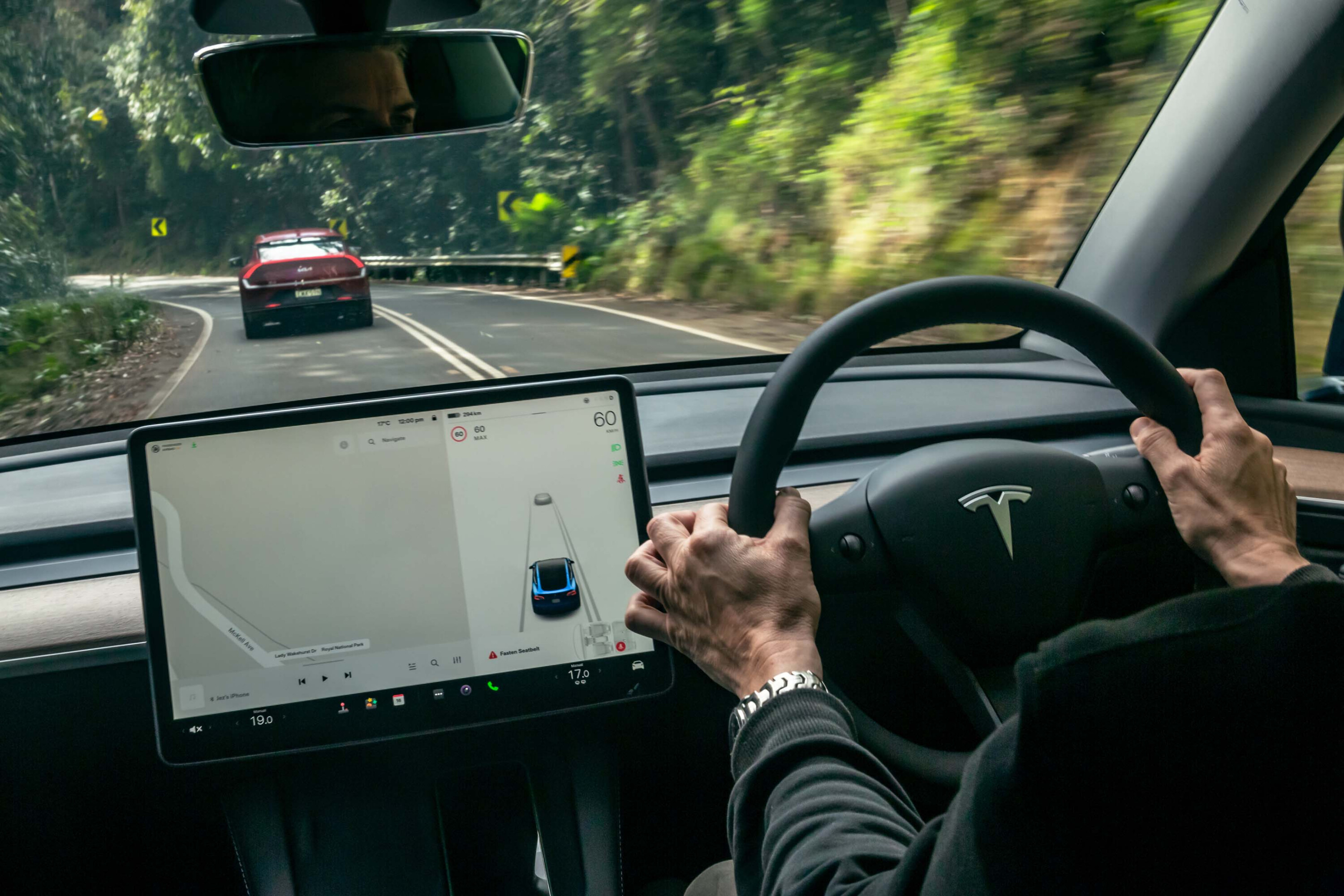
A recent fire – also on Monday night – aboard a Tesla Model 3 sedan, captured by fire crews in Penrose, NSW [↗], resulted from debris hitting the car’s underside while travelling on a freeway. No one was injured in the incident.
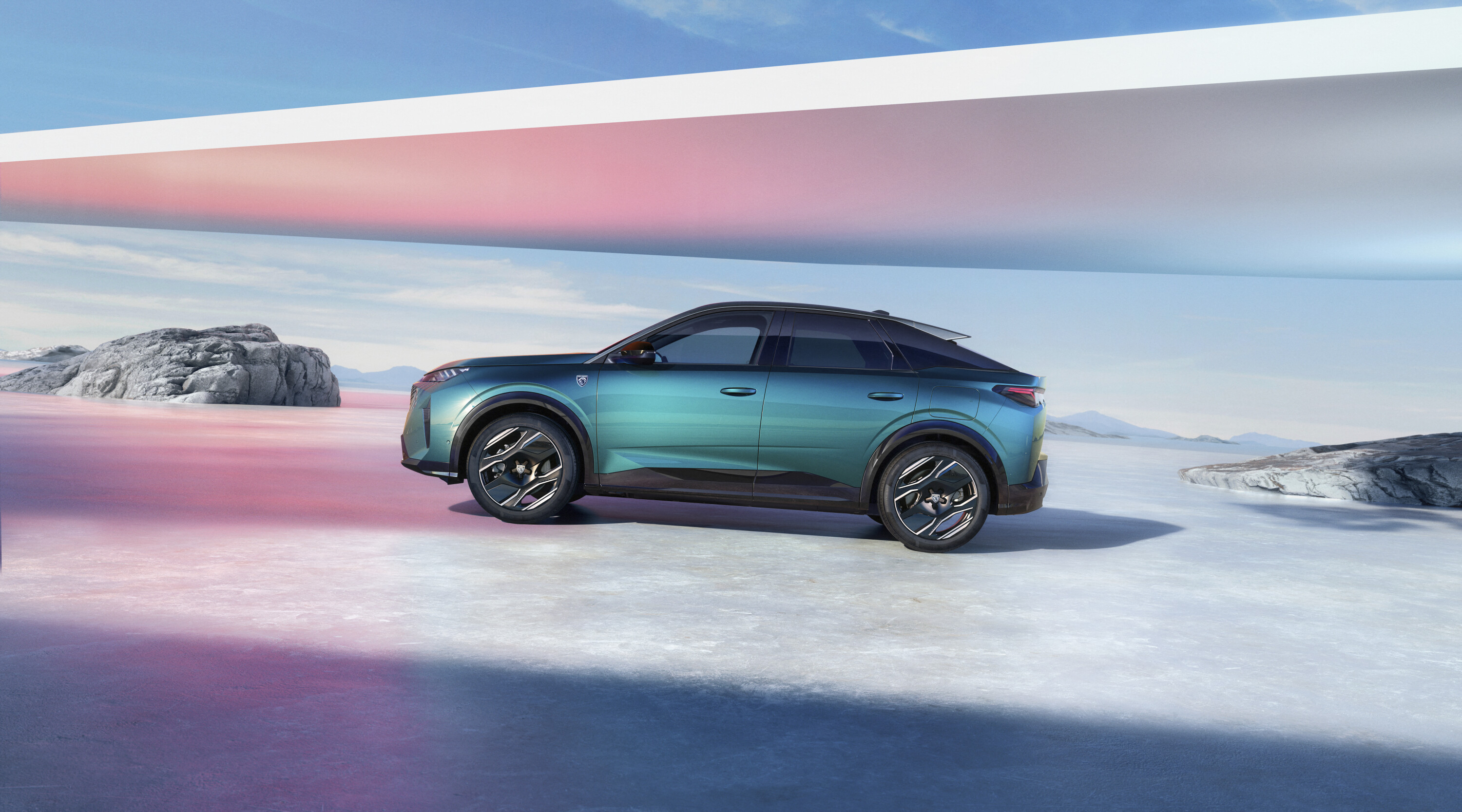
Replacing the existing 3008 medium SUV, the 2024 E-3008 is coming to Australia!
Snapshot
All-electric E-3008 confirmed for Oz launch
700km driving range from a near-100kWh battery
400V battery architecture means 20-80% charge in 30 minutes
As the first vehicle in the Stellantis portfolio to use the automotive supergroup’s STLA Medium architecture – that promises over 700km WLTP driving range – the E-3008 is a crucial model.
The Peugeot E-3008 will be released in Australia, though timing and pricing are yet to be confirmed. It will hit European showrooms in February 2024.
“On the back of launching Peugeot’s first all-electric vehicles in the Australian market – the e-Partner van and e-2008 SUV – we’re pleased to confirm the Next-Level E-3008, revealed globally today, will launch in Australia”, said Peugeot Australia managing director Kate Gillis.
This is the latest and most comprehensive part of the French carmaker’s goal to offer BEVs in every segment by 2025 on its way to selling only electric cars in Europe by 2030. The Australian arm is yet to make a commitment to ending piston-engine sales.
The most important part of the E-3008 is its STLA Medium architecture – it becomes the first vehicle in the portfolio to use these underpinnings.
In Europe, the French-built E-3008 is offered in three powertrain configurations with two battery sizes. The smaller 73kWh can be paired with single or twin motors, both with a targeted driving range of 525km in the WLTP combined cycle.
The Long Range steps up to a 98kWh pack good for 700km driving range – that would be enough to make the E-3008 the longest-range EV on sale in Australia today.
For comparison, the longest-range Tesla Model Y is capable of 533km from a single charge in WLTP testing. Peugeot’s 700km target figure is yet to be homologated, however.
Charging is capped at 160kW DC for a fast charge from 20-80 per cent in 30 minutes. Home and slower charging can be done at up to 22kW AC when the option box is ticked.
Power levels are moderate, with even the quickest dual motor variant boasting 235kW, adequate for a family SUV. The Long range and single motor get 155kW and 170kW motors.
Although released as a BEV-only proposition initially, Peugeot mentions that hybrid versions of the third-gen 3008 will be added for select markets in the future – perhaps this includes Australia.
1
New cabin direction and fastback design
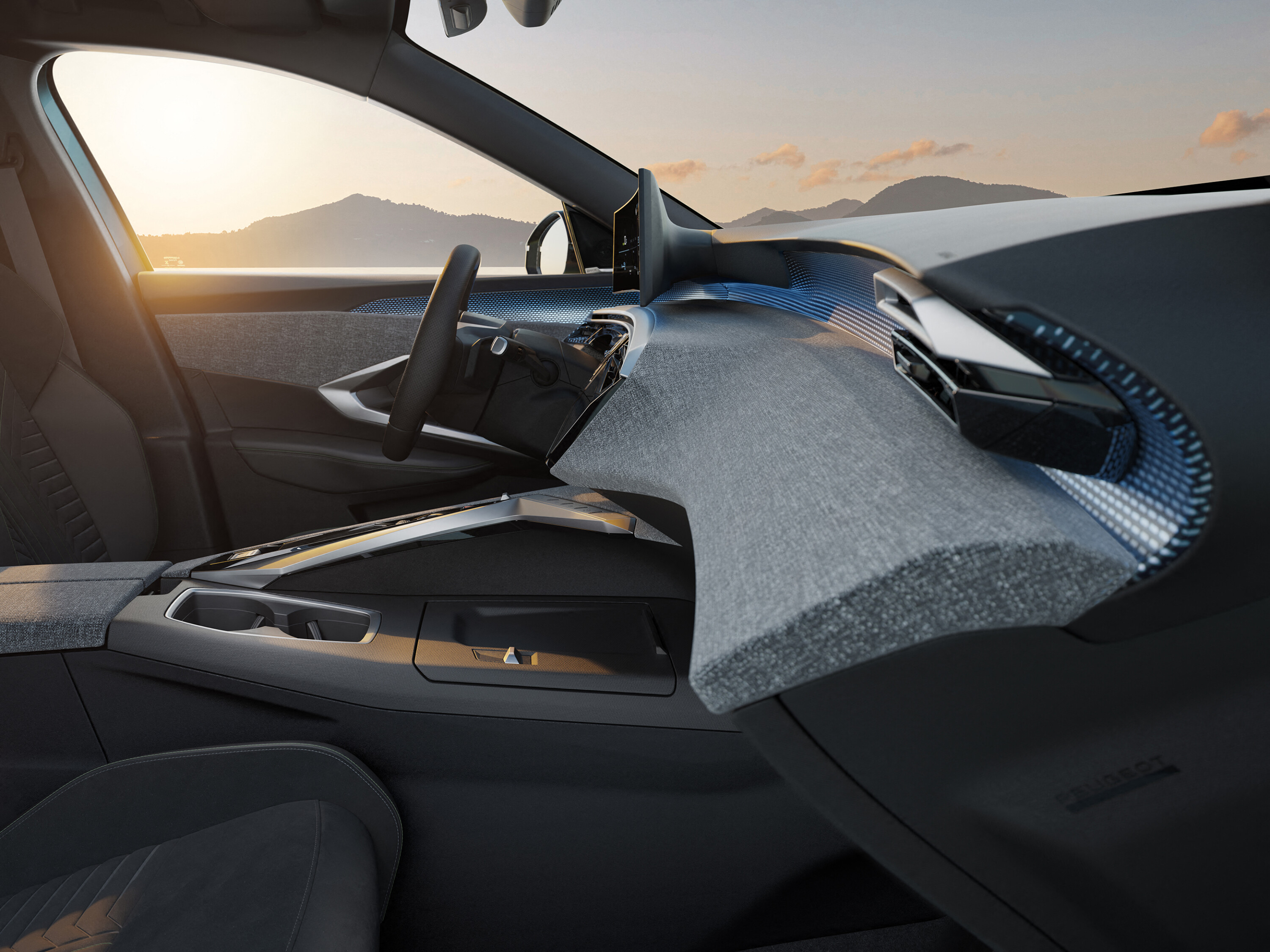
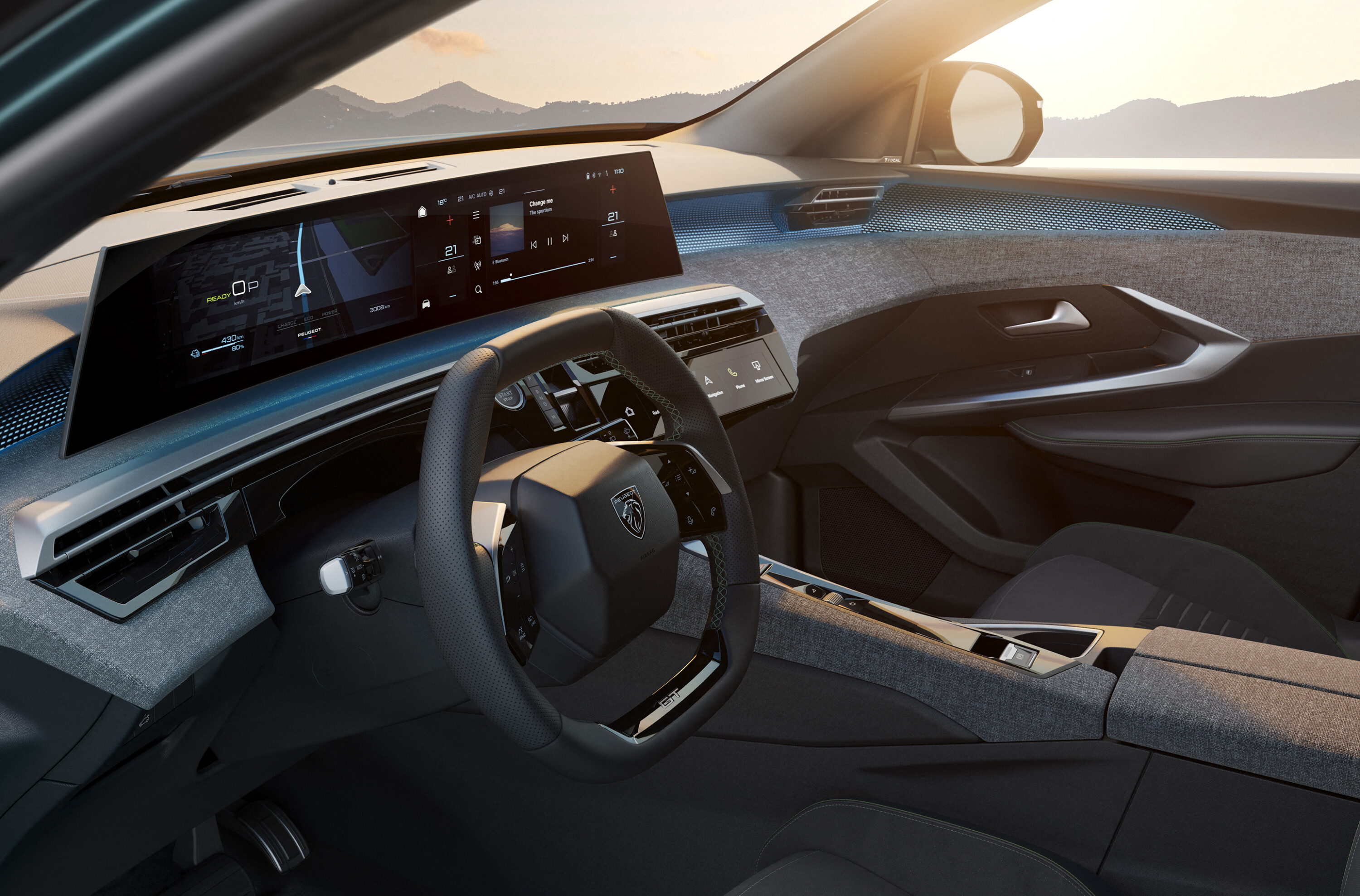
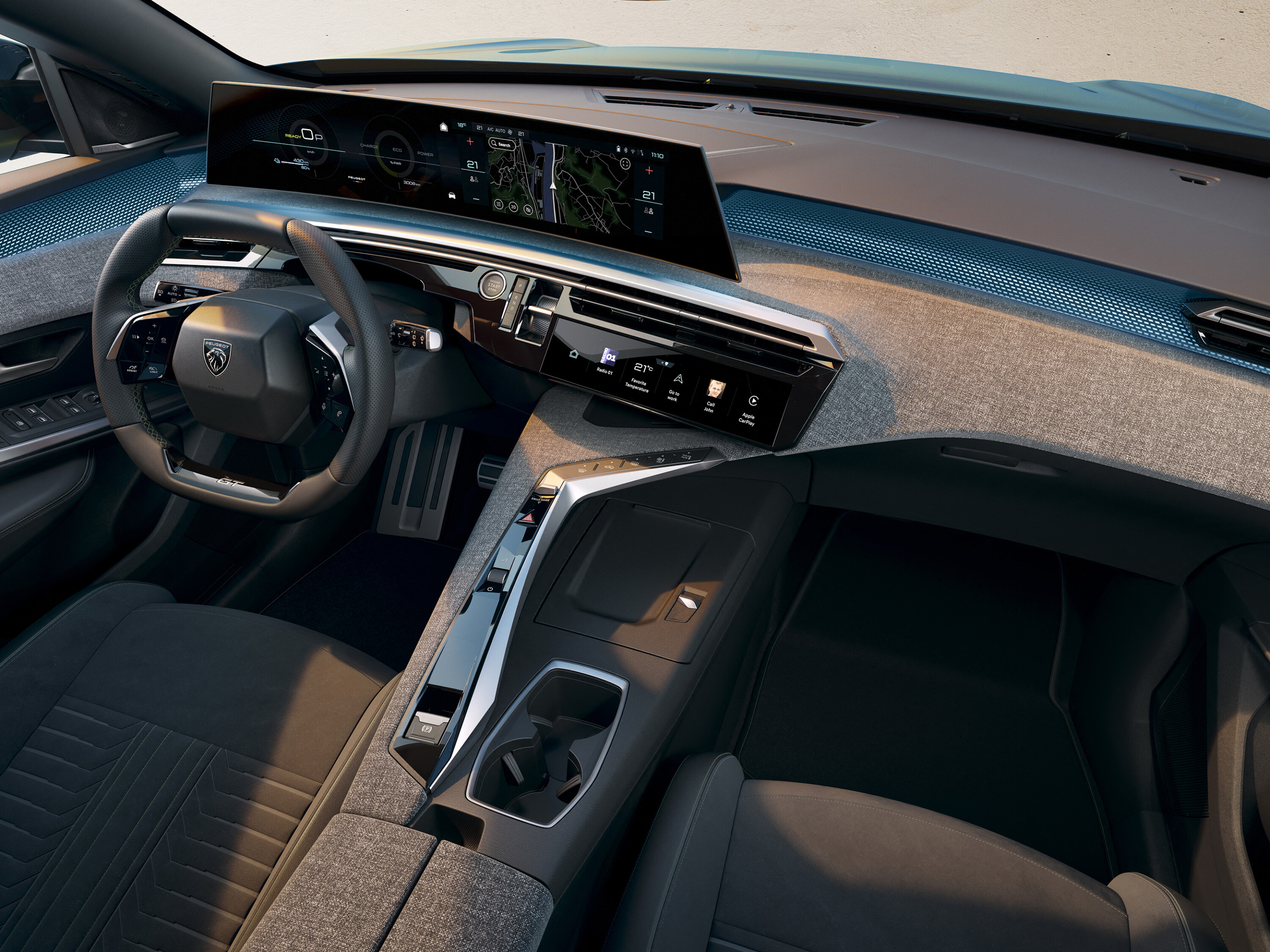
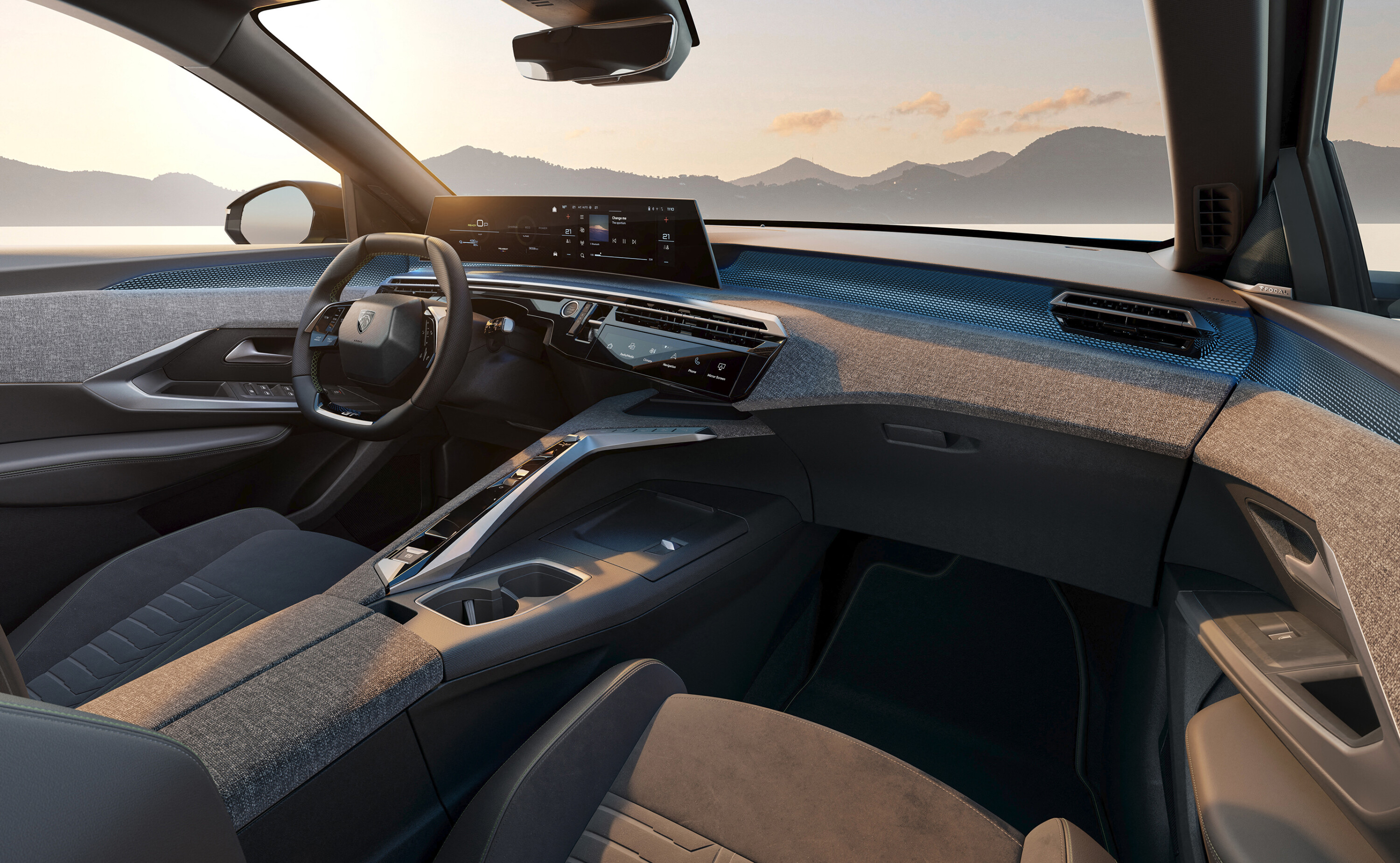
Peugeot had already revealed key details of the E-3008’s cabin, including the 21-inch infotainment and driving info screen.
Wireless Apple CarPlay/Android Auto connectivity has been confirmed, as has in-car connectivity with Peugeot’s latest live traffic navigation and must-have connected services technology.
There will be just two trim levels offered at launch, Allure and GT. Allure actually gets a pair of 10-inch screens rather than the GT’s single 21-inch item. It’s also fitted with 19-inch alloy wheels, fabric/leather upholstery, and single-tone paint.
1
The GT trim levels up the luxury with two-tone paint and contrasting roof colour, 20-inch alloy wheels, active LED headlights, power tailgate, seat heating, quilted leather upholstery, customisable ‘i-Toggle’ switches, and more advanced infotainment software.
A medium SUV, the E-3008 measures 4.54m long, 1.89m wide, and 1.64m tall. It’s about 100mm longer, 50mm wider and 20mm taller than the existing 3008, boding well for improved cabin space.
Peugeot has prioritised sustainability in the E-3008’s construction. Over 500kg of the car’s construction is ‘green materials’, including carbon-friendly aluminium and steel in the body and chassis.
Parts inside are produced using eco-friendly polymers, while the bumpers, spoiler, storage bins, and carpets are constructed from recycled plastic.
To get rid of harmful processes in production, the E-3008 does without any chrome exterior highlights. peugeot has also drastically reduced decorative inserts to lower the use of plastic.
1
Pricing and availability
As before, a larger 5008 will be spun off the 3008 – likely with three rows of seating. Expect a reveal in early 2024.
With European deliveries to begin in February 2024, Australian arrivals are likely to ramp up towards the end of next year. Pricing is hard to predict with Peugeot Australia’s current strategy, but we expect a high-spec entry model to be priced beyond $75,000.
Our original story, below, continues unchanged
September 2023: Peugeot E-3008 revealed ahead of launch
Peugeot has released images revealing the all-electric E-3008 medium SUV ahead of its official launch this week.
Snapshot
Will sit on the new Stellantis u2018STLA Mediumu2019 platform
Two- and all-wheel promised with up to 700km driving range
Three-row all-electric 5008 expected to follow
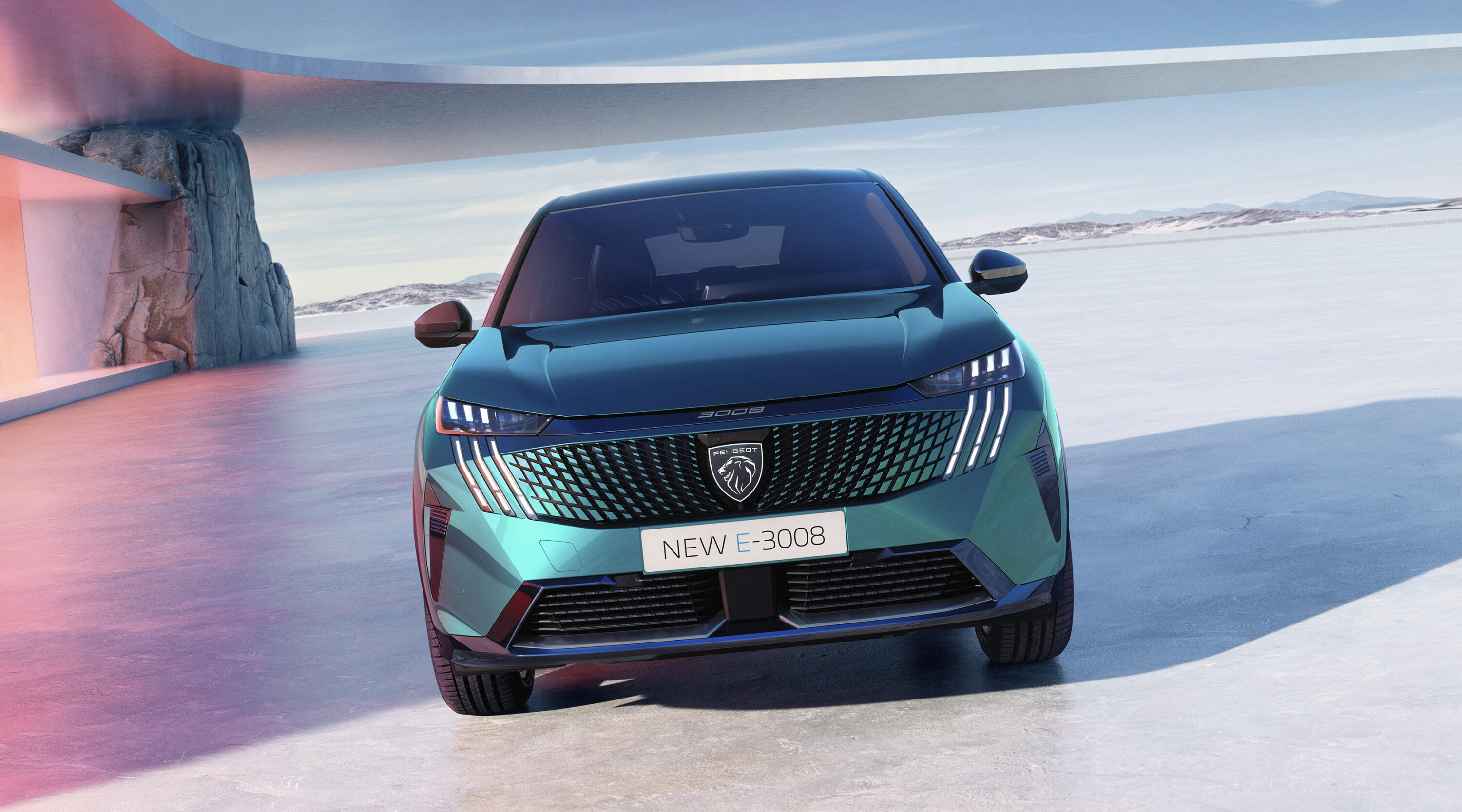
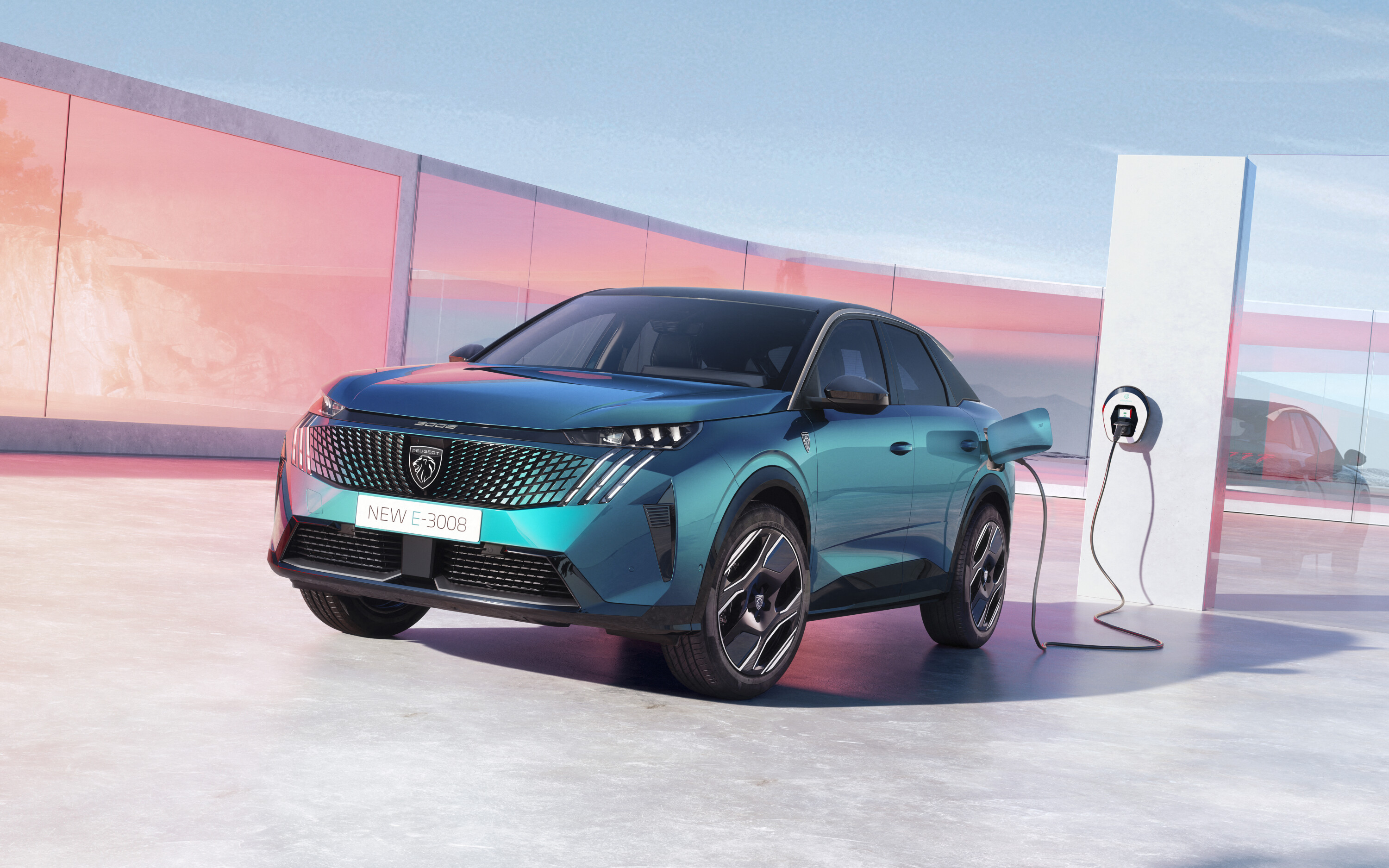
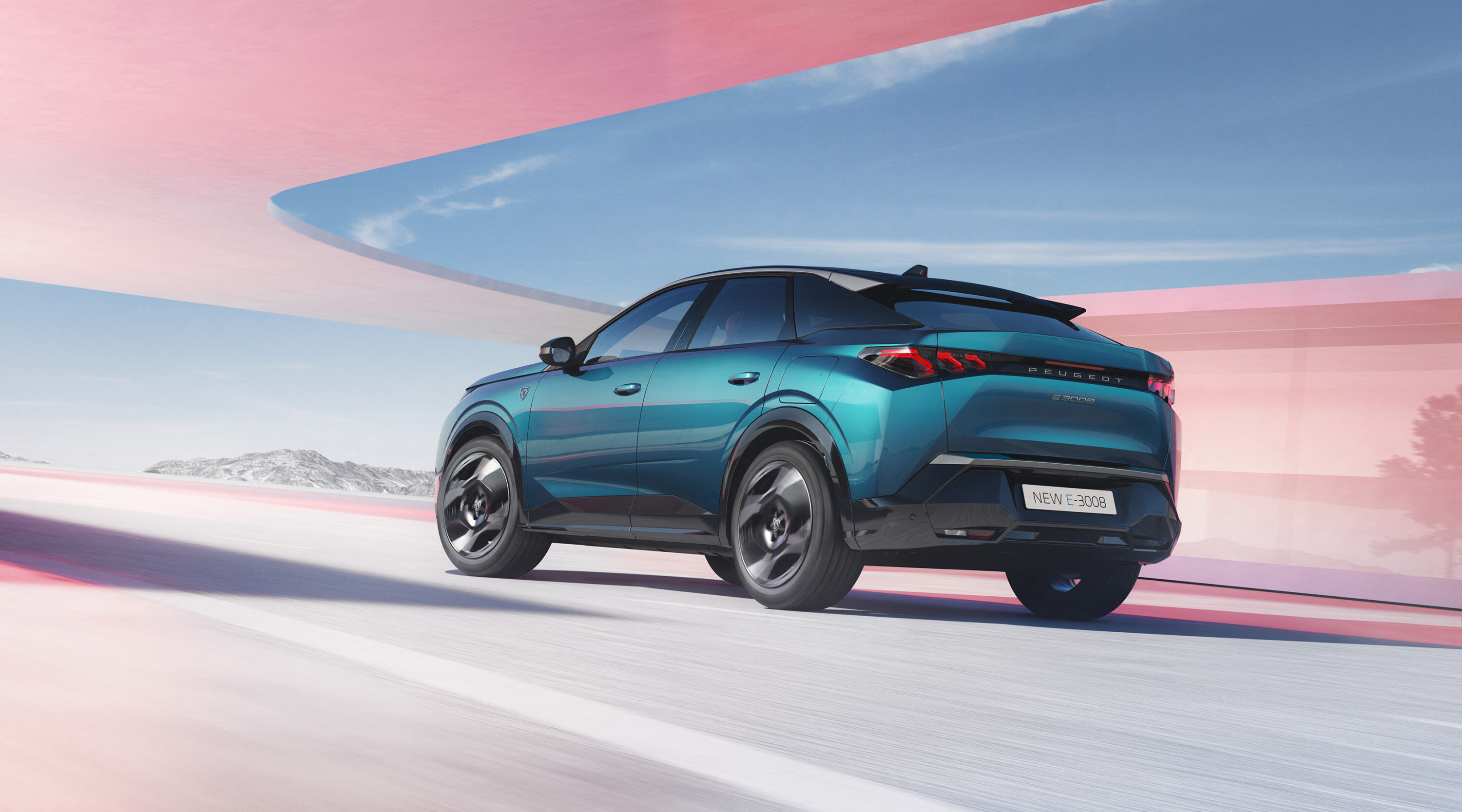
The images show the E-3008 in full, with no camouflage or tricks hiding the design. The sloping coupe roofline takes inspiration from the 408 coupe crossover, rather than referencing Peugeot’s more boxy second-gen 3008.
There are very bold exterior details, too, including those extremely unconventional aerodynamic alloys, Lambo Urus-like high rear deck and futuristic cabin styling. We’ll reserve judgement until our eyes have graced a production model but in the meantime let us know your thoughts in the comments section.
Beneath the all-electric E-3008 will be Stellantis’s new STLA (pronounced ‘Stella’) Medium platform, promising a leap ahead of the existing car’s EMP2 underpinnings.
The new platform obliges two- or all-wheel electric drive with a potential driving range of up to 700km for the longest-range variant thanks to the STLA Medium platform’s ability to package a 98kWh lithium-ion battery pack.
Unlike the existing 3008 SUV there seem to be no plans to offer combustion-engined or plug-in hybrid variants of the third-gen E-3008. The existing car may instead live on to serve markets such as Australia, the Middle East and Asia.
5
Inside, the design references existing Peugeot language but is much closer to concept car in execution. Swathes of tactile-looking fabric coat horizontal surfaces (not unlike the Renault Megane E-Tech), while the French brand says there are 21 inches of screen within its new ‘i-Cockpit’ that seamlessly combines the digital driver’s display and infotainment touchscreen.
We expect nothing less than the wireless Apple CarPlay and Android Auto connectivity that’s quickly becoming the norm. Peugeot is likely to introduce more advanced phone connectivity to compete with Tesla’s Model Y, Ford’s Mustang Mach-E, and Renault’s Scenic E-Tech.
Peugeot will release final details including the nitty gritty on driving range, dimensions, and likely European pricing of the E-3008 on September 12.
The Ferrari Roma Spider is now available to order in Australia from $520,300, with customer deliveries of Maranello’s most affordable drop-top beginning in Q2 2024.
Snapshot
Roma Spider joins Ferrari Oz lineup
$110K premium over fixed-head Roma
Same turbo-petrol V8 and dual-clutch powertrain
“We’re thrilled to be sharing the Ferrari Roma Spider with our clients here in Australia”, said president of Ferrari Australasia, Dr. Jan Hendrik Voss.
“This timeless soft-top is attracting attention from those who already love the open-top experience of our cars, and from clients who are now looking forward to their first open-air Ferrari.”
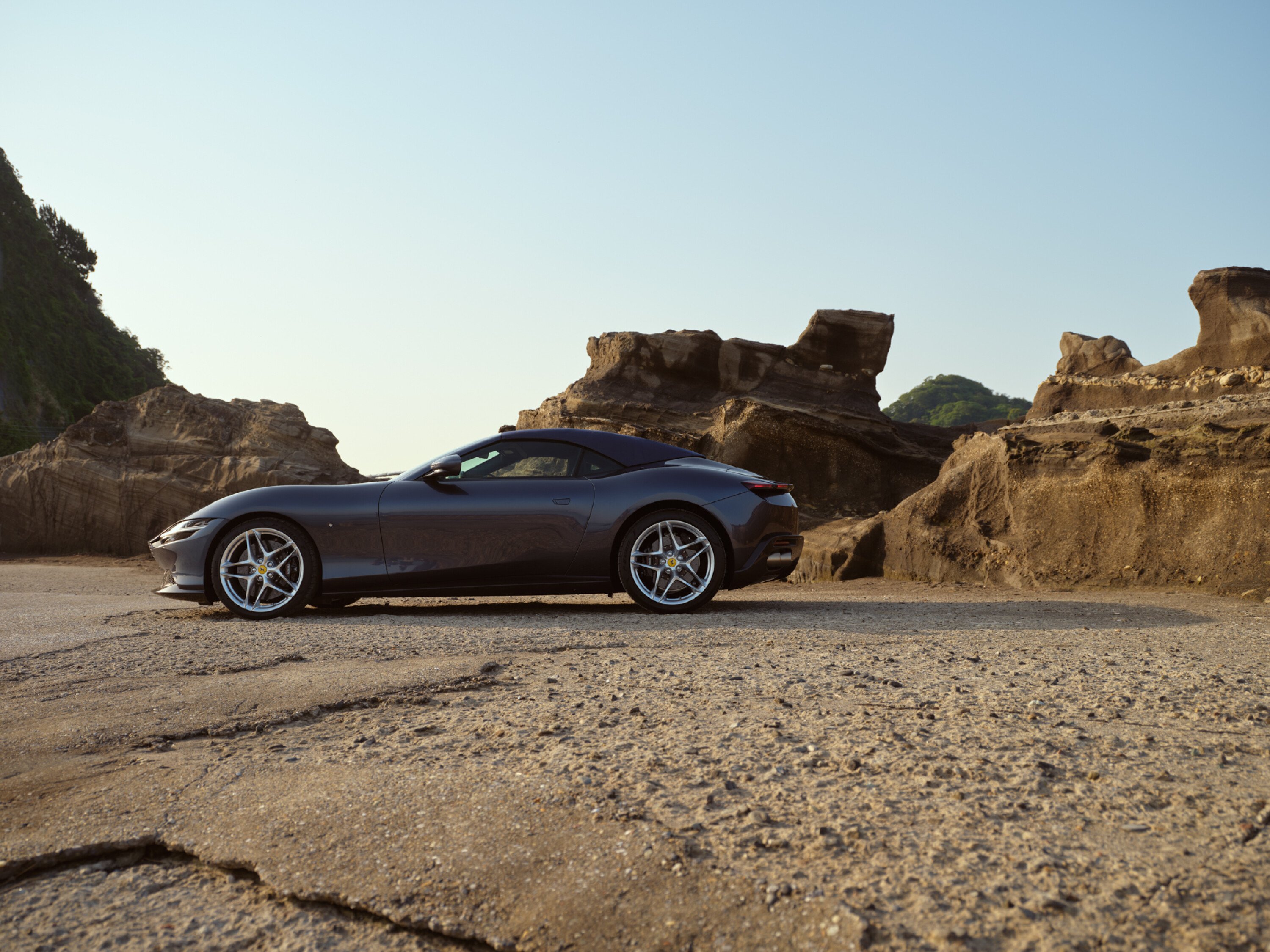
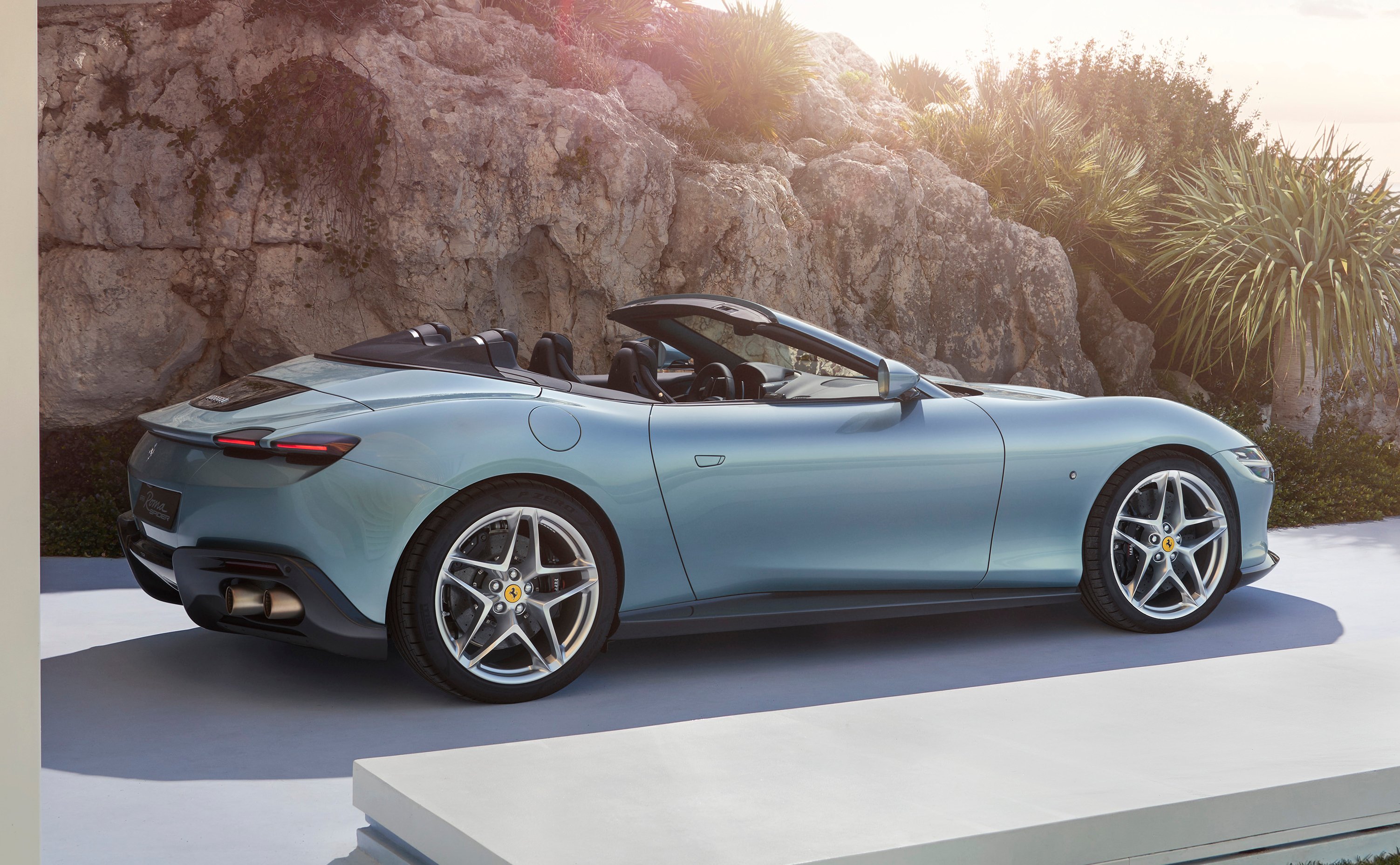
A full $110,000 dearer than the Roma coupe, the Spider is equipped with a power-retractable soft top that can open in 13.5 seconds at speeds of up to 60km/h. It also becomes the first rag-top ‘Rari in more than half a century.
With 456kW and 760Nm sent from its 3.9-litre turbo-petrol V8 to the rear wheels via an eight-speed dual-clutch automatic transmission, the Roma Spider (with its 85kg weight penalty) can reach 100km/h from rest in 3.4 seconds and boasts a 320km/h top speed.
Available to order from Ferrari dealers now, the Roma Spider will arrive in the second quarter of next year following the brand’s first four-door vehicle – that it won’t call an SUV – the V12 Purosangue. Wheels will experience the Roma Spider for the first time next week.
9
2024 Ferrari Roma pricing
Variant
Price (before on-road costs)
Roma
$409,888
Roma Spider
$520,300
Our original story, below, continues unchanged
March 17: Ferrari Roma Spider unveiled
Ferrari has lifted the cover on its first front-engined soft-top in more than half a century.
The 2024 Ferrari Roma Spider replaces the coupe’s fixed roof with a retractable soft-top that can be opened in 13.5 seconds.
US publication Road and Track reports it will replace the Portofino M in the Italian marque’s lineup, with the Roma featuring a more-potent version of the 3.9-litre F154 twin-turbocharged V8.
It is the first front-engined Ferrari fabric-top since the 365 GTS/4 – also known as the Daytona Spyder – ended production in the early 1970s.
1
To create the Roma Spider, Ferrari’s engineers added a five-millimetre nolder to the top of the windscreen for aerodynamics, an automatic “patented” wind deflector, and modified the active rear spoiler.
Under the bonnet, the Roma Spider retains the familiar 3.9-litre twin-turbocharged V8 producing 456kW and 760Nm, with power sent to the rear wheels through an eight-speed dual-clutch automatic transmission.
Despite an 84-kilogram weight increase, it has an identical 3.4-second 0-100km/h sprint time, with a 320km/h top speed.
1
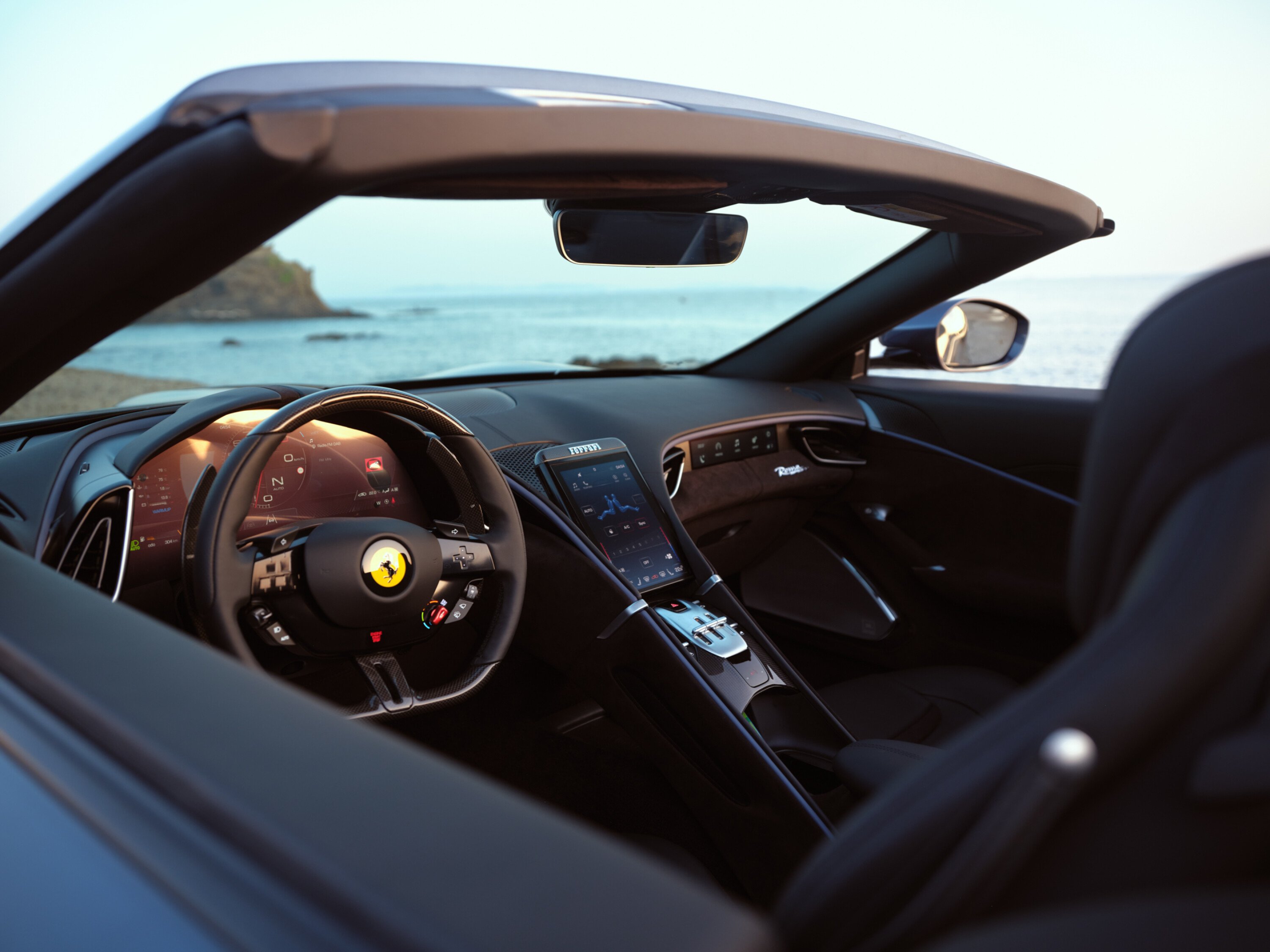
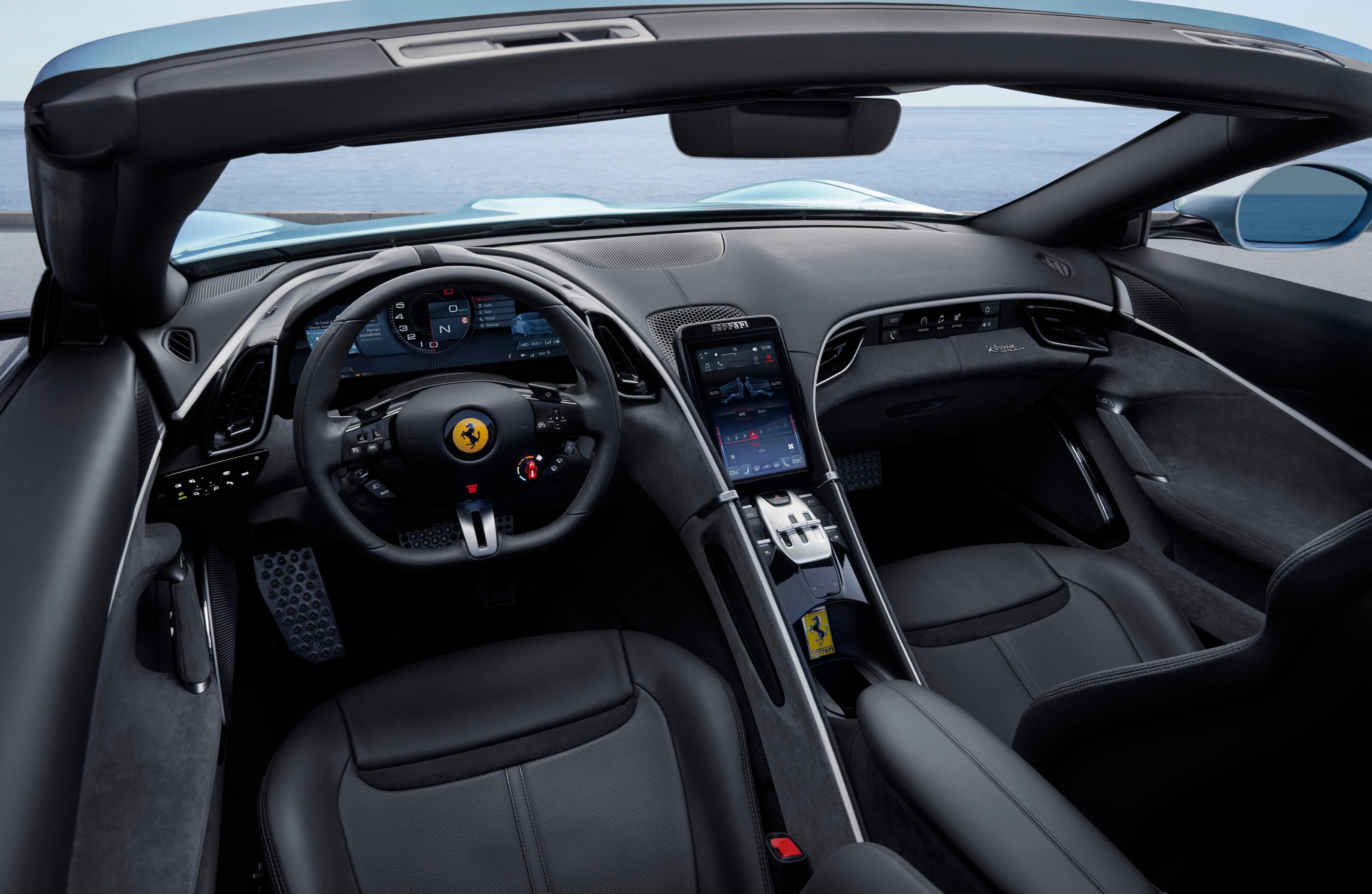
Inside, the Roma Spider is again familiar, with a digital instrument cluster, a portrait-orientated 8.4-inch infotainment system, optional passenger display, and a centre console bridge separating the driver and front passenger.
The 2024 Ferrari Roma has been confirmed for Australia, with local pricing and details to be announced closer to its launch.
Currently, the 2023 Ferrari Roma hardtop is priced from $409,888 before on-road costs in Australia, with a price increase likely for the Spider.
Well, not quite – there are no bargains on offer here, unless you get it into your head that the one-run Kona N will be a collector’s item some day.
With the bigger and more family-focused second-generation Kona now on the market, and no plans for a hot version (well, no announced plans), the company’s local arm there are just 26 examples left of the outgoing Kona N.
The 26 Ns are spread across New South Wales, Victoria, Queensland and Western Australia.
‘Hot SUVs’ have been a polarising concept since the Grand Cherokee SRT appeared, and that was only stoked by the blasphemous launches of the Cayenne and X5 in increasingly hot forms. Now you can scarcely find an SUV line-up without a fast hero model.
The type has become wildly capable over the years, however, and few more so than the Kona N. At its Australian launch, tested on road and track, we scored it an 8.5 out of 10. Not a perfect car by any means, a little compromised here and there – but handy steerer Cam Kirby praised its personality and “duality of character”.
Duality of character? Yeah, it’s not bad to live with, Alex Affat decided after a few months commuting to and from the Wheels Media office in a Kona N. (He named it KonaN O’Brien. Affat no longer works here.)
Is it really the last performance-focused Kona?
They say it is, mainly because they’ve forsworn any future petrol-powered N models, and the new 400V-based Kona Electric doesn’t meet the brand’s criteria for a go-hard EV that can go hard… well, not all day, but longer than an hour before needing another hour to charge. (The Ioniq 5, and its N flagship, are built on an 800V architecture.)
So, until we know what the ? holds, you’ve got 26 chances to pick up a new old Kona N. (Or, you know, just buy a thrashed “one elderly owner, never tracked” one. I too like to live dangerously.)
September: New Tiguan imagined – and we reckon it’s spot-on
We were pretty close with our previous speculative artwork, thanks to the spy photos available at the time. Now, though, there’s little left to wonder at.
September: New Tiguan will be a petrol-only affair
The incoming new 2025 Volkswagen Tiguan will be a petrol-only proposition when it reaches Australia, the brand has confirmed.
Speaking with Wheels Media, Volkswagen Group Australia spokesperson Daniel DeGasperi confirmed that while the brand initially wanted the plug-in hybrid EV Tiguan, it is now mindful that the market’s interest in electrification has quickly shifted towards pure EVs.
“We were very interested in PHEV, particularly in Golf and Tiguan, but the reality is the market shifts very quickly and no doubt the entire industry has observed the rapid increase in electric vehicle sales,” he said.
“The timing of this was really such that all-new Tiguan and ID.4 will launch quite closely together – so the gap between internal-combustion engine and EV won’t be as significant as it once was.”
Mr DeGasperi said that while PHEVs have been important differentiators for its Cupra and Audi cousins, “doing an outstanding job with PHEV”, Volkswagen’s role as the volume brand is to focus on the types of cars most Australians want.
“Potentially, if we could get PHEV much earlier than the ID.4, it would make greater sense,” he added – giving buyers an at-least partly electric medium SUV in the VW range.
He noted that with the new petrol-only Tiguan’s late 2024 or early 2025 Australian debut landing closely to the launch timing for the all-electric ID.4, the one will “perfectly complement” the other.
“For Volkswagen, the focus has to be sheer volume,” Mr DeGasperi said. “We are the volume brand of the group and, particularly when we’re gifted with an all-new Tiguan and ID.4 in the same year, we really need to be laser-focused on what customers want and what will be the most compelling.”
“PHEV definitely has a place, and it’s a technology that will be introduced globally into both the all-new Tiguan and Passat,” he said.
Clearly, Volkswagen’s local arm sees this as an ideal ‘choose your own adventure’ offering for buyers on both sides of the electric fence.
But, for the fence sitters (please, dear reader, do not sit on an electric fence), is there no place for plug-in hybrids – if only to win the road-tripping buyers who can’t overcome their range anxiety?
“The simple reality is that we’re not seeing that in the Australian market – we’re not seeing that in meaningful numbers for PHEV sales,” he said.
“Particularly when you consider that ID.4 has a 500-kilometre-plus range, we think that (range anxiety) is quite a non-issue and that Australians are voting with their wallets to go straight to BEV.”
Above: Cupra is doing “an outstanding job” with PHEV, VW feels
We checked in with Mitsubishi, which offers PHEV options in its Outlander and Eclipse Cross lines.
“To date, we have sold every car (Outlander PHEV) we can get our hands on,” Mitsubishi PR boss Adam Davis said, noting that its record sales in the US and “consistent demand” in Japan, along with delivery delays, have made it difficult to meet demand here.
He confirmed that 12.9 per cent (673) of the Eclipse Cross’s 5207 sales year-to-date went to PHEV, while the supply-constrained Outlander PHEV has made up 402 of the line’s 14,748 YTD sales.
Back to Volkswagen, Mr DeGasperi reiterated that buyers seeking a combination of petrol performance and commute-friendly, shorter-range EV driving and hybrid-like fuel efficiency besides, “we have vehicles like the Cupra Formentor that can fulfill that, and Audi has just released the Q5 PHEV (Q5 55 TFSIe)”.
Of course, you’d be unlikely to see a Volkswagen dealer franchise direct buyers to a Cupra or Audi showroom unless they also own that franchise…
They may not need to, however, with most Tiguan buyers already going for the more expensive variants – powerful 162TSI models and the hero Tiguan R – suggesting the cost of an ID.4 won’t be much of a deterrent.
Above: The hero Tiguan R has proven compelling for Aussie SUV buyers
“I think when the [new Tiguan and ID.4] ranges come out, it will make sense. The buyers are already going for top-end Tiguans, and the step won’t be huge to the ID.4,” DeGasperi said.
“So in terms of volume, again, even the way the ID.4 will be priced, Volkswagen are fortunate that we have a customer base that is willing to vote with their wallets and buy the top end models. That’s a huge vote of confidence in our product. Tiguan R, since its supply has been relatively unconstrained in the last six months or so, has soared in sales and deliveries.
“So we think that the the combination of turbo petrol and all electric, that will be the focus in the medium SUV segment for us next year,” he added.
The new Tiguan will be revealed in the coming weeks, but there’s little left to know as far as design goes, with a number of official images surfacing online in late October. See our evolving story linked below.
Analysts predict Tesla’s new ‘Dojo’ image-learning supercomputer could boost the electric car company’s market value by almost AU$1 trillion.
Snapshot
Morgan Stanely predicts Teslau2019s new supercomputer will drive up companyu2019s value
Only uses Tesla ownersu2019 video recordings to train Full-Self Driving Beta
Will ditch 300,000-plus lines of code
The prediction comes from financial firm Morgan Stanley [via Reuters ↗] – which catalysed a 10 per cent spike to Tesla’s stock price overnight, adding more than AU$100 billion to its market valuation, according to Markets Insider [↗].
What is Tesla Dojo?
Tesla’s Dojo supercomputer only uses video data recordings from Tesla owners’ real-life driving situations to train its machine-learning model and improve its camera-only ‘Tesla Vision’ safety assistance systems. The camera-only Dojo will ditch 300,000-pluslines of code.
Ultimately, it aims to fast-track the development of the company’s full-self driving (FSD) beta software, which will be enabled when it’s updated to version 12.
Production of the Dojo supercomputer started in July and Tesla’s chief executive Elon Musk live-streamed a demonstration on X last month teasing the human-like driving behaviour of the new image-based learning model.
Tesla plans to spend more than AU$1.5 billion in the next year on Dojo and Morgan Stanley analysts predict it could open up revenue opportunities for the company beyond selling electric vehicles and energy products.
The company hovered around AU$400 per share last week and is currently trading at about AU$426.
In April, Reuters [↗] revealed groups of Tesla employees internally shared invasive and private videos of recordings from owners’ cars.
They were allegedly part of the FSD Beta team, where data image labellers – who train the software to detect objects and signs – could access customer vehicle recordings.
In Australia, new and existing Tesla electric vehicle owners have the option to purchase a ‘Full Self-Driving Capability’ software package for $10,100 – but only ‘promises’ FSD.
In typically controversial BMW style, the introduction of the X1 in 2009 caused a bit of a splash.
Some hated it, others were more admiring but said a premium compact SUV would never work. Either way, BMW’s rivals immediately followed suit and the segment took off.
Also in classic BMW form, the pioneer didn’t necessarily become the victor. But that was three generations ago and the innovator is having another crack at small SUV domination, this time bringing a gun to a knife party.
1
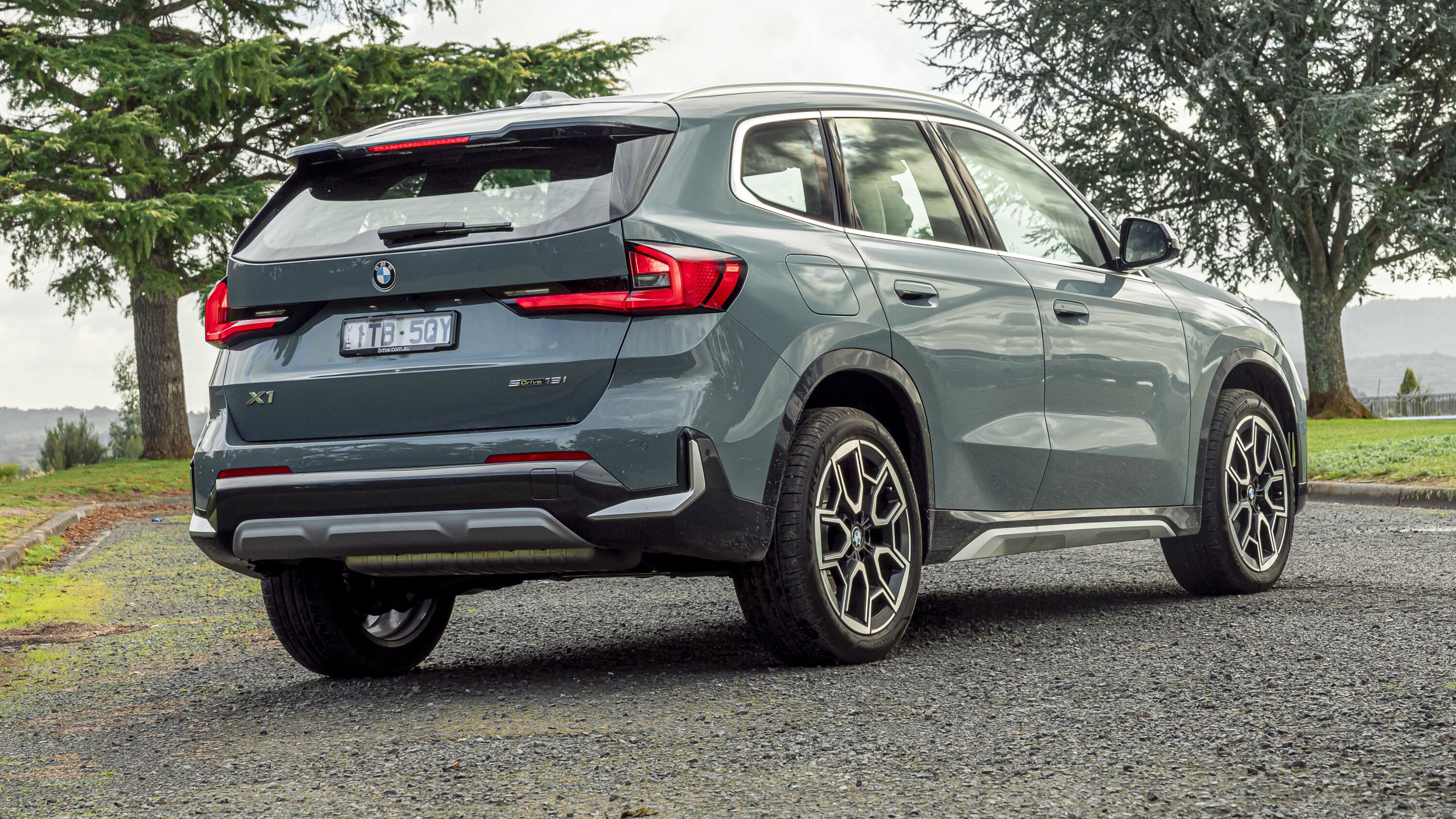
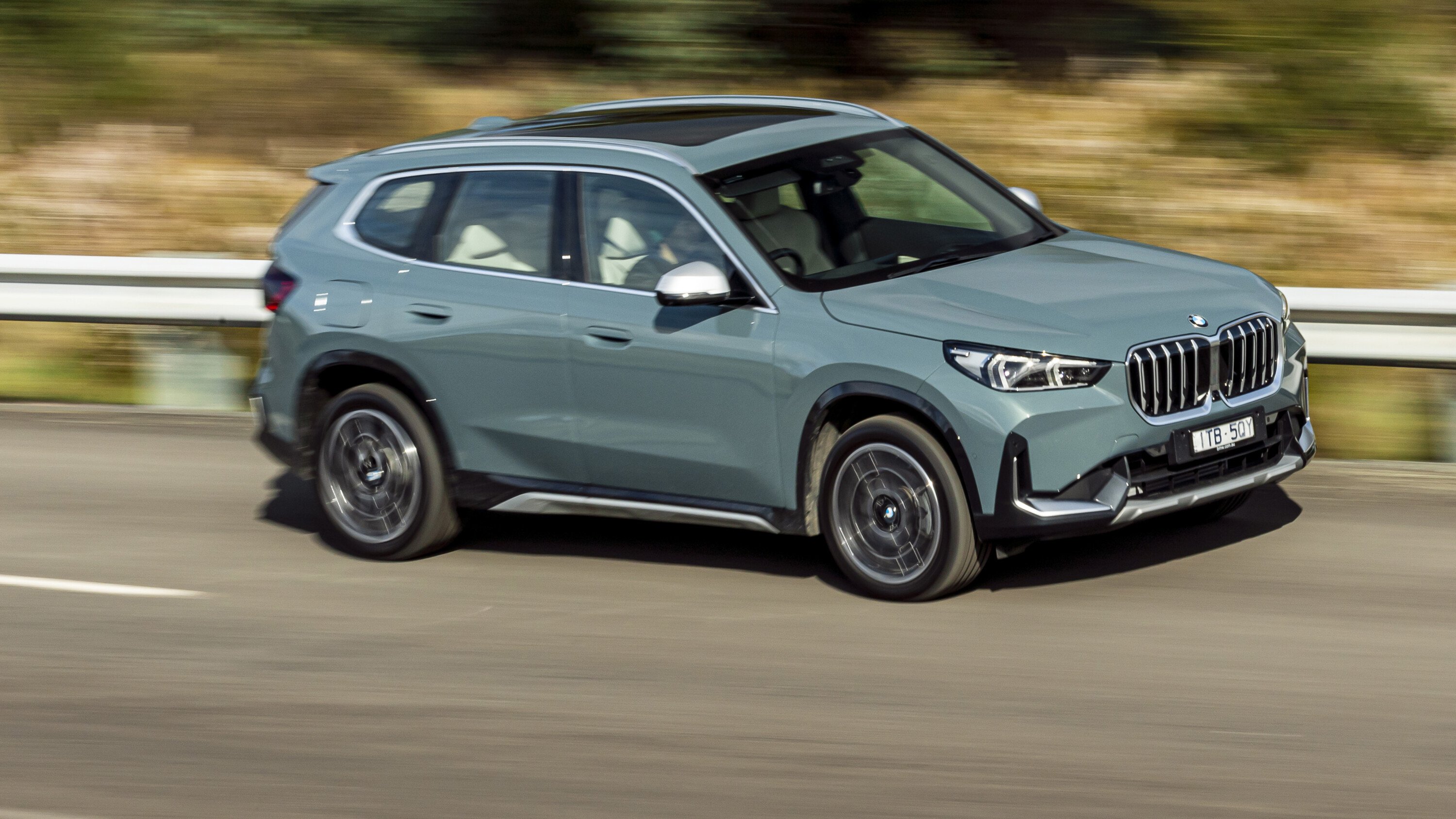
Styling has grown up and is more handsome in alignment with other big BMW high-riders
An all-wheel drive, four-cylinder X1 looks after the pointy end of the new range, straying close to $70K territory when hopped-up with the M Sport pack but at the entry point, the X1 sDrive 18i tested here is $53,900 before on-road costs. That’s still about $6000 more than the most affordable second-gen version but the new model brings a lot to justify its inflation.
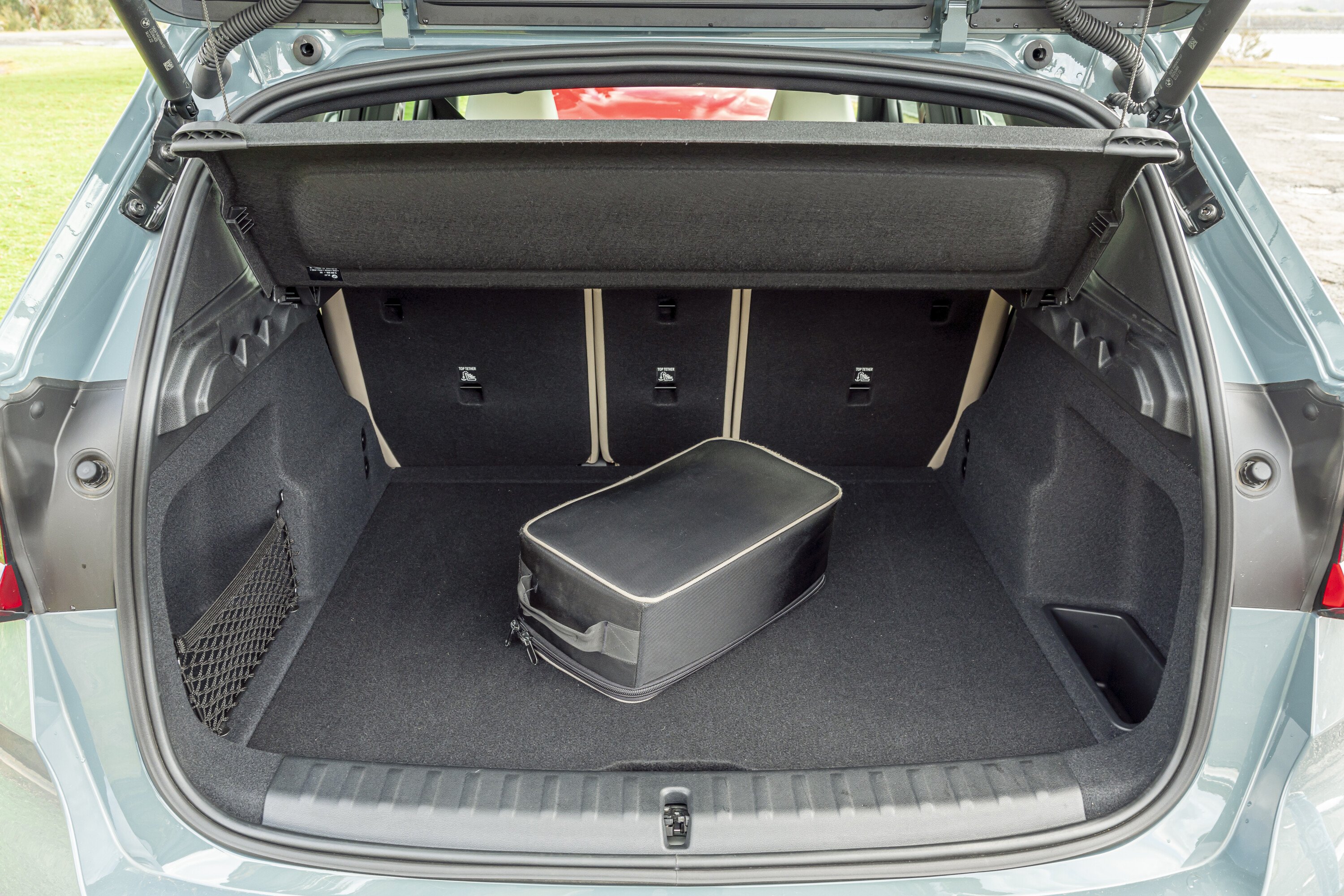
For a start, it’s bigger with exterior dimensions growing as much as 53mm (in length) while a 22mm stretch of the wheelbase has helped increase interior space including the boot which, at 540 litres, is 35L bigger – although you’ll not even find a space-saver spare in there.
Styling has grown up and is more handsome in alignment with other big BMW high-riders, and it’s filled with more technology.
1
Step inside and you’ll immediately want to jump back out to check the badge and make sure this really is the ‘baby’ of the family.
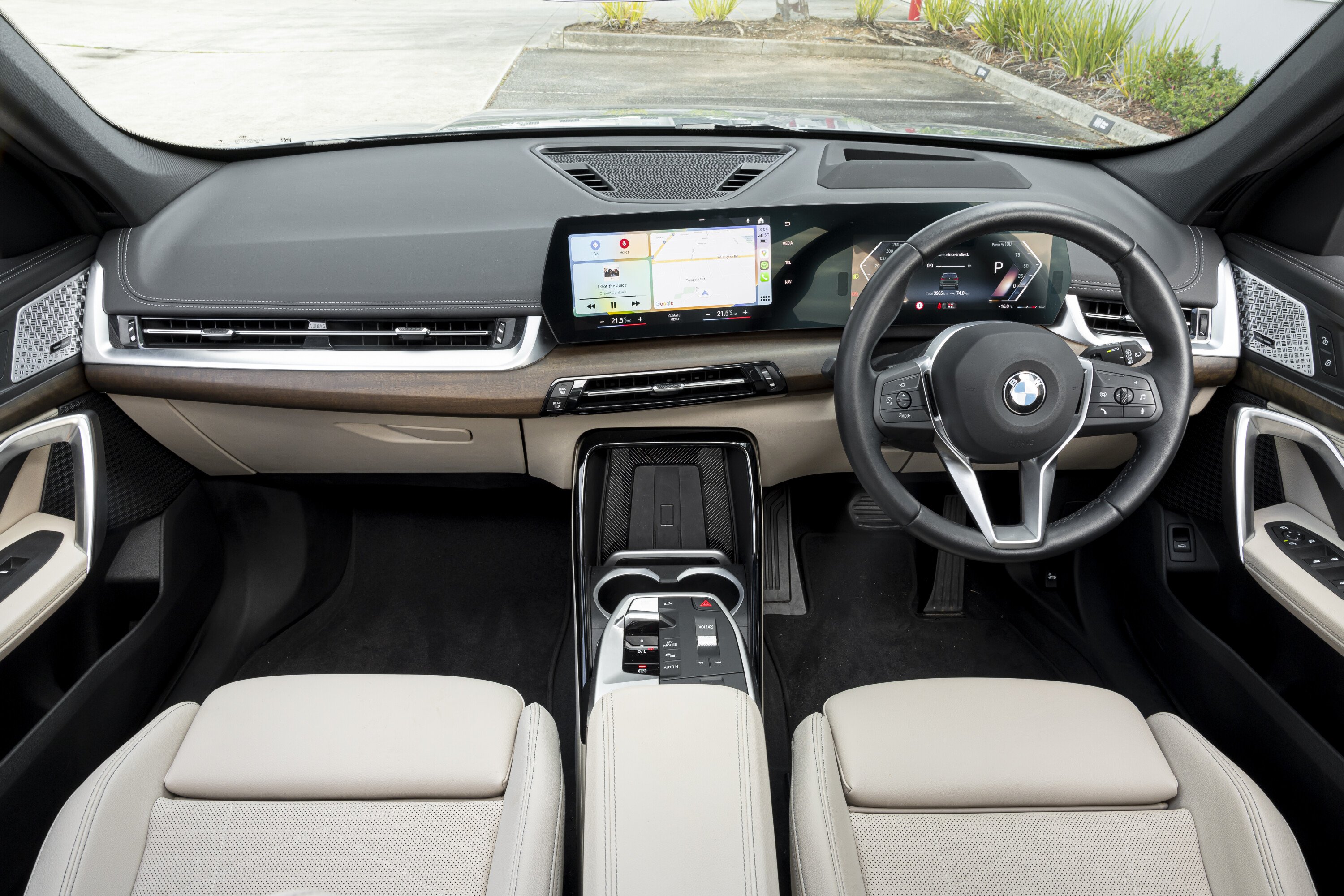
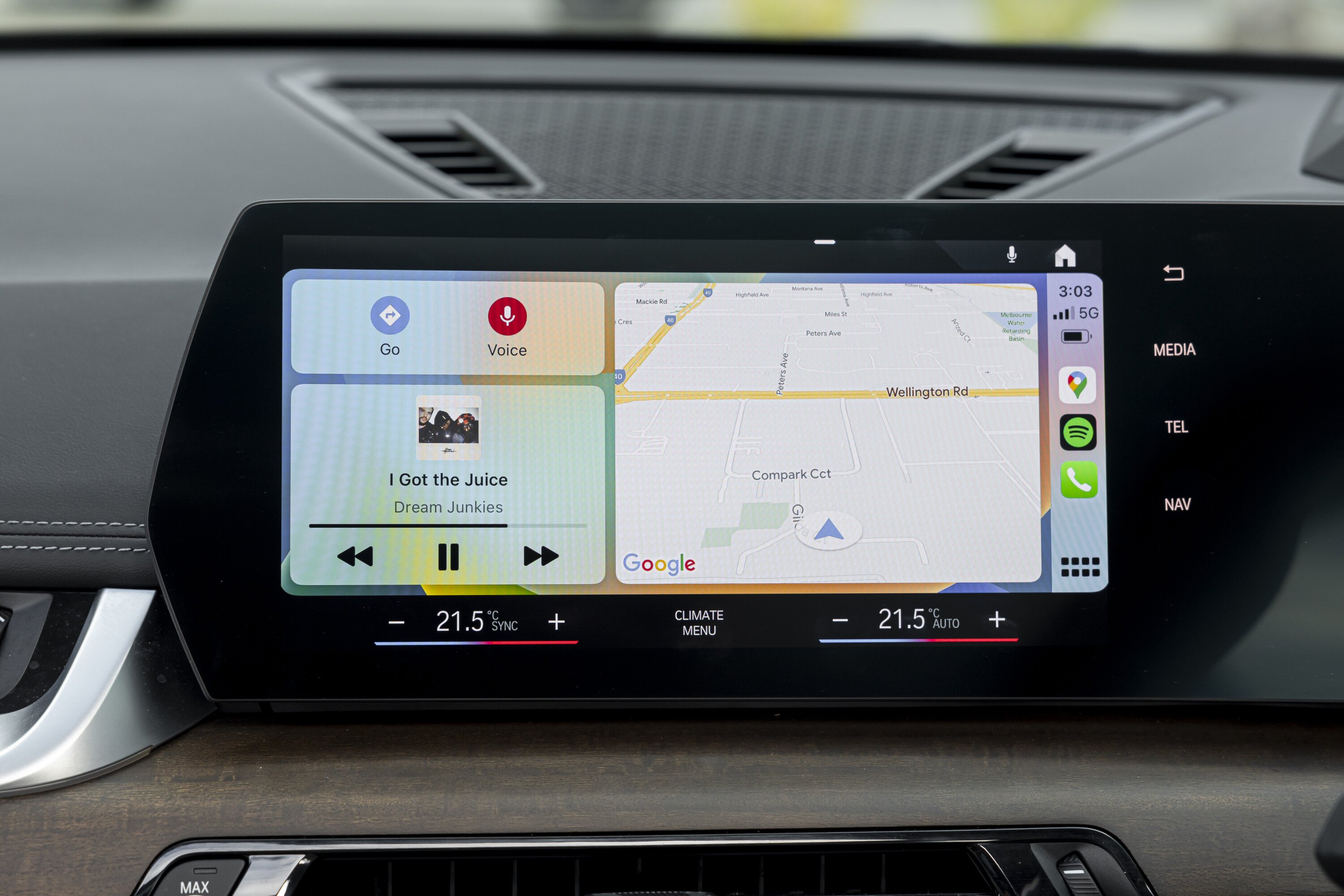
A beautiful curved central display measures 10.7 inches and lifts the entire space into new territory, enhanced by and connected to a 10.3-inch fully digital instrument cluster and head-up display – very uncommon at the entry point of this segment.
The impressive displays offer access to BMW’s very cool augmented reality navigation technology that works brilliantly, a suite of effective voice-controlled functions, and a system start-up sound that is reminiscent of an early 2000s Mac laptop.
1
Retro sounds aside, the various screens are deeply attractive with the My Modes feature enabling you to change the way the X1 drives and feels.
Our favourites are the Expressive and Digital Art modes that use works by artist Cao Fei and are endlessly mesmeric.
While the impressive new technological interface works a treat in practice, there is a virtual fly in the pixellated ointment as this OS8 operating system is among the first to introduce subscription services, which BMW says allows better “comfort and flexibility” but will also be a handy earner for the German giant as well. Want heated seats in the entry-level X1? That’ll be from $29 a month or $589 for life.
2
The wireless phone charging dock has a clever strap to brace the device visibly upright and against a cooling fan
What is included in the price is a comprehensive suite of safety gear, Android Auto and Apple CarPlay connectivity, native navigation, DAB+ digital radio, 18-inch alloy wheels, keyless entry and start, adaptive LED headlights and cruise control, power tailgate, and wireless phone charging, which has a clever strap to brace the device visibly upright and against a cooling fan.
This particular test vehicle has been treated to $4615 worth of Enhancement Pack, which adds niceties such as a panoramic roof, Cape York Green paint (normally $1385), electric adjustment for the front seats and a nicer Harman Kardon stereo.
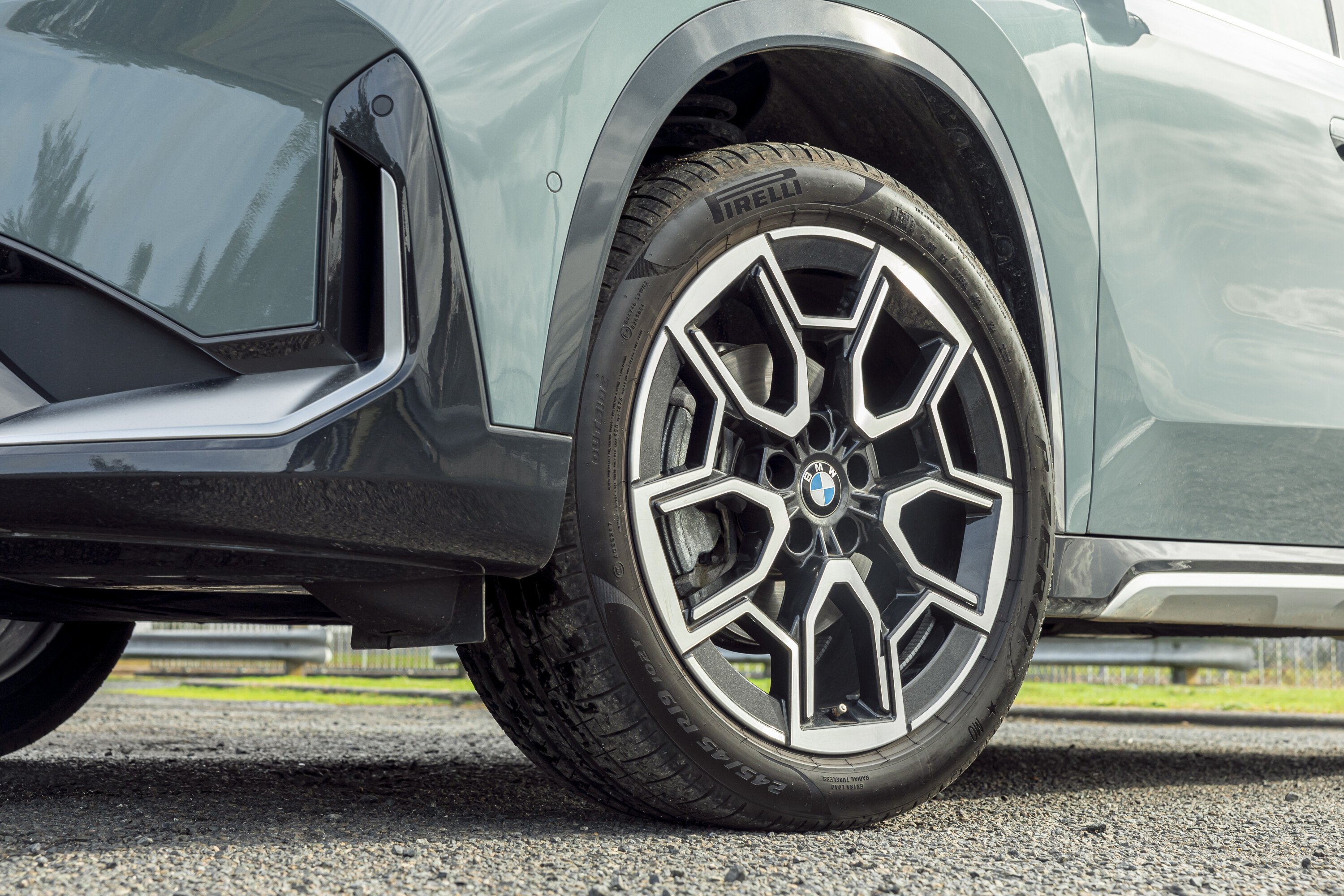
Our car also has a $1539 set of 19-inch alloys with P Zero rubber. If this version is looking pretty and premium it’s because it has a pretty premium price of $60,415 (excluding on-road costs) as tested.
Unchanged with the significant options however is the way the X1 drives (perhaps aside from its larger wheels).
A 1.5-litre three-cylinder turbo-petrol engine produces 115kW and 230Nm, which is not exactly M-territory but thanks to a surprisingly light kerb weight, translates to more meaningful performance than expected. Sprinting from rest to 100km/h is said to take nine seconds but thanks to peak torque delivery between 1500rpm and 4600rpm, the entry X1 feels more urgent than the figures suggest.
Its engine is eager and sounds sweet with a classic three-pot hum and makes a nice pairing with the seven-speed dual-clutch automatic transmission, although the latter does need a bit of waking up when pinning the throttle from a standstill.
1
When up and about though, the pairing works well to produce pace and for not much investment of fuel either. BMW claims its X1 asks for just 6.5L/100km, although we managed a still-respectable figure closer to 7.5L/100km.
BMW’s littlest SUV has also been given a good ride revision, with most of the suddenness distilled out of the previous generation model despite this one running on the largest wheels available.
There’s a bit of crash on larger imperfections but its cabin remains quiet and the steering well insulated for bumps without removing the light but pleasant feedback.
1
Completing the veritable X1 maturation process is a cabin design and execution that stands out for all the right reasons.
BMW really is nailing the alternative materials game without looking too try-hard or tacky and its X1 continues the advance into beautifully bohemian and sustainable.
With soft-touch and interesting textures, an interior of this calibre would be expected at the pointy end of the line-up, not at the most affordable point. It’s bolstered with practicality and clever storage under and in the centre console and armrest along with the usual USB-C modern car calling cards.
BMW’s third-generation X1 comes at a cost, but what the German car-maker has identified is that beating its rivals to the top of a premium pile required a premium fight. By avoiding a cheap entry-level version that’s hard to recommend, the new X1 is more money yet better value than ever.
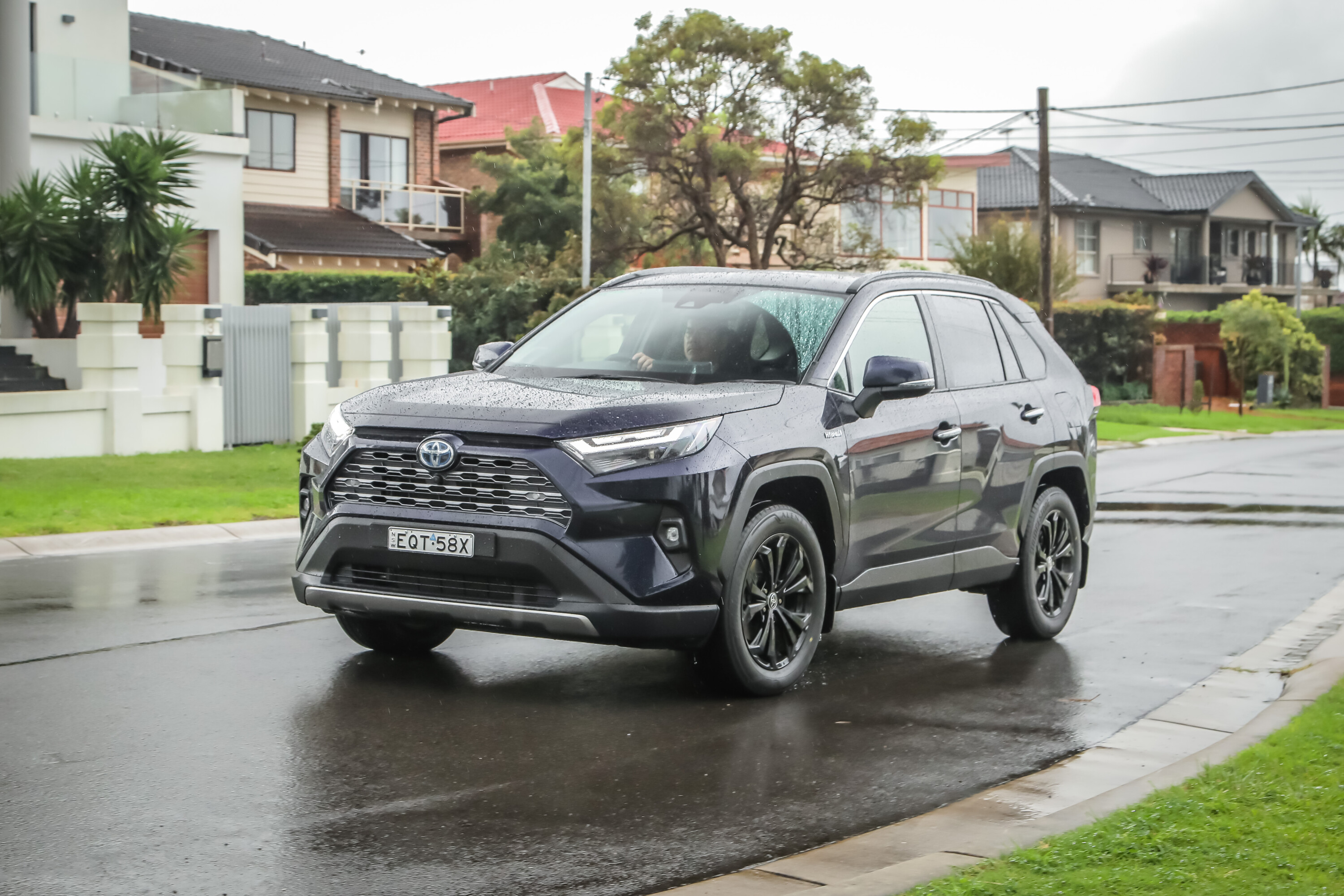
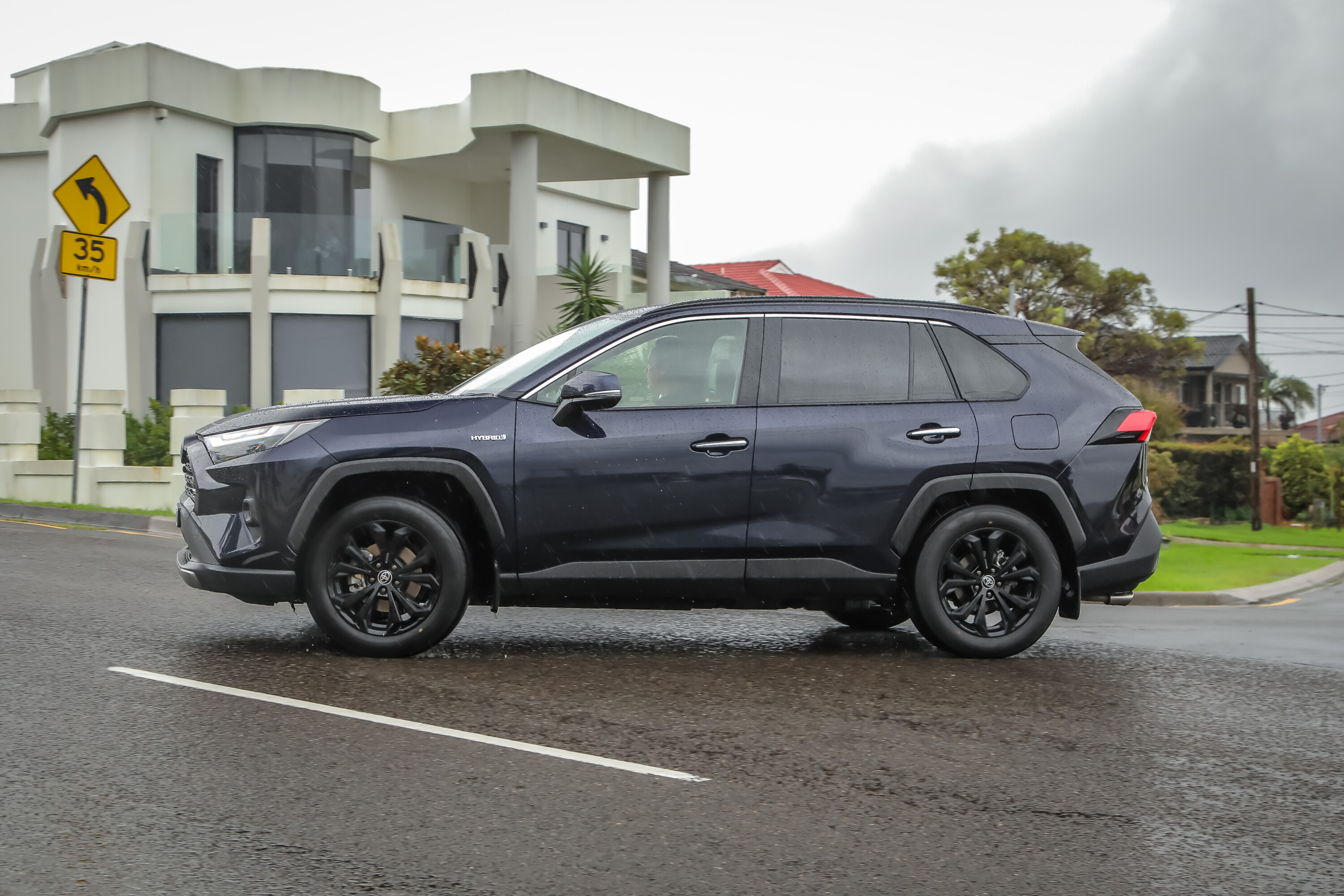
I reckon the Toyota RAV4 follows the six degrees of separation rule: that you’re always six people or less away from a RAV4 owner.
After all, the car is consistently one of Australia’s most popular models, having been the third best-selling model of 2022.
Wait times today continue to reach 18-months for some hybrid models, proving the demand for the SUV remains strong.
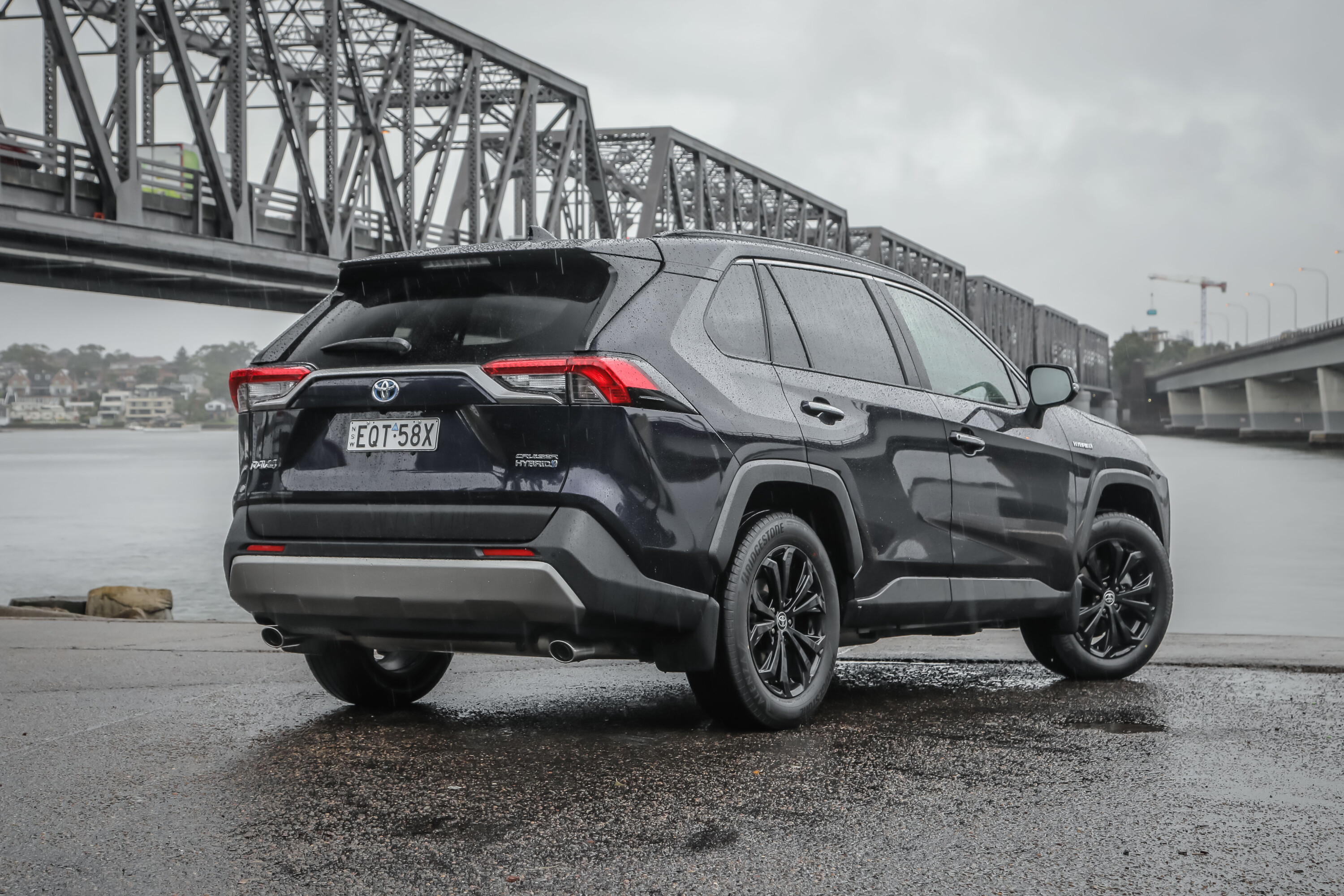
The Toyota RAV4 has long been a staple in the medium SUV segment, and the 2023 update continues that legacy.
But in a segment that’s more competitive than ever, how does the Cruiser hold its ground?
1
Pricing and features
The Cruiser, once the pinnacle of Toyota’s RAV4 lineup, is a luxury grade tailored for the road. However, the Edge has since claimed the top spot with a focus on off-road-centric features.
Priced at $48,910 before on road costs for the 2.0-litre petrol four-cylinder 2WD version developing 127kW of power and 203Nm of torque.
Buyers also have the choice of a front or all-wheel drive hybrid powertrains.
RAV4 2WD Hybrid versions combines a 2.5-litre naturally aspirated petrol engine with an electric motor, delivering a total output of 160kW – and comes for an extra $2500.
An additional $3500, the the AWD Hybrid introduces an additional e-motor on the rear axle, raising the peak power to 163kW.
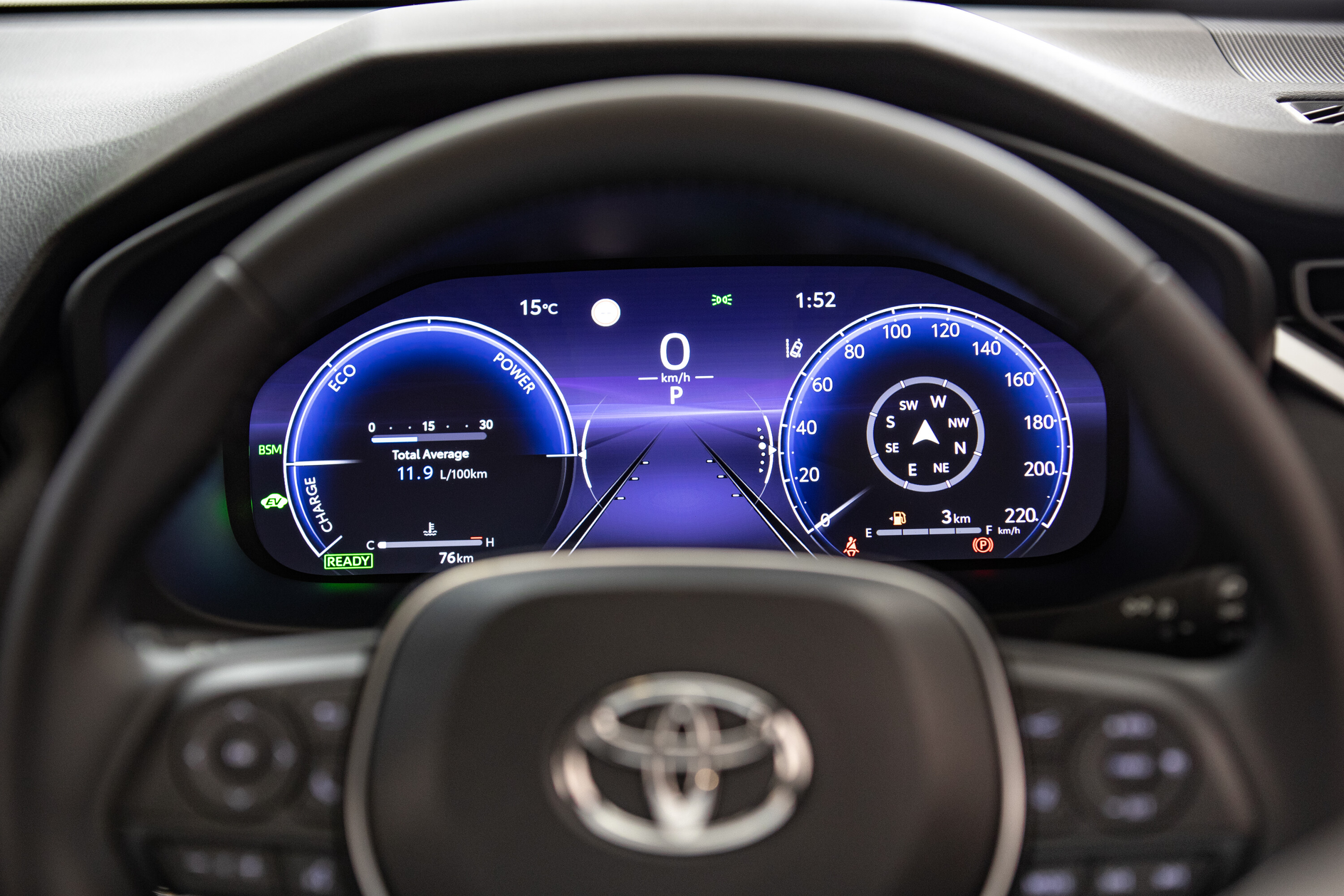
Fuel consumption on 2WD hybrid variants is particularly impressive, getting as low as 4.7L/100km.
2
All paint colour options besides the standard Glacier White carry a $700 price tag. The cabin is styled with synthetic leather trim on the seats, as well as a leather accented steering wheel and shift knob.
1
Safety
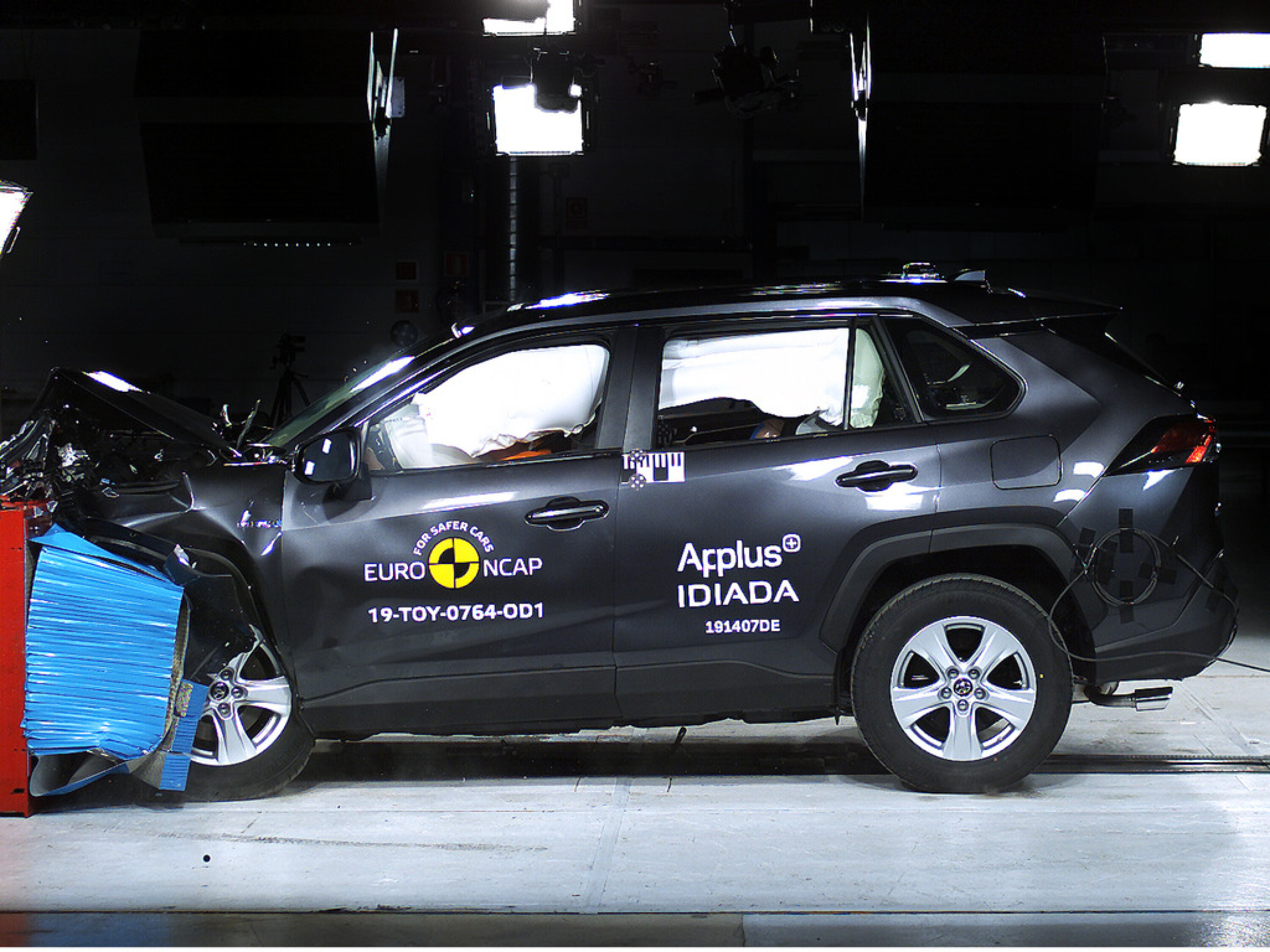
The RAV4 was awarded a five-star ANCAP safety rating; valid for all its models and powertrain options when it was rated in 2019.
It achieved a 93% rating for adult occupant safety, 89% for child occupant safety and 83% for its safety assist features.
1
Every model in the lineup comes equipped with seven airbags, including dual front, side, curtain and driver’s knee.
The RAV4 boasts a comprehensive list of safety features across all its variants through the Toyota Safety Sense package incorporated into the vehicle.
You’ll also enjoy one year of free access to Toyota Connected Services, which encompasses safety and security features and remote capabilities through the myToyota Connect app.
Key rivals
There are no shortage of popular options when looking for a family SUV. The RAV4 continues to be a winning package but there are plenty of worthy competitors that may tick similar boxes, including:
The 2023 Toyota RAV4 Cruiser is a solid choice for those seeking a reliable and practical compact SUV, with a touch of luxury.
Its blend of space, safety and Toyota’s reputation for reliability make it a strong contender in its segment.
If you’re seeking a family-friendly and economical SUV then you can’t look past the hybrid RAV4. I mean, it’s ended up in so many Australian driveways for a reason.
What would an electric successor to the cult Volkswagen Passat R36 performance sedan (and wagon) look like?
Snapshot
411kW dual-motor, AWD drivetrain
Carbon fibre splitter, diffuser and rear wing
Could preview a future ID.7 R flagship model
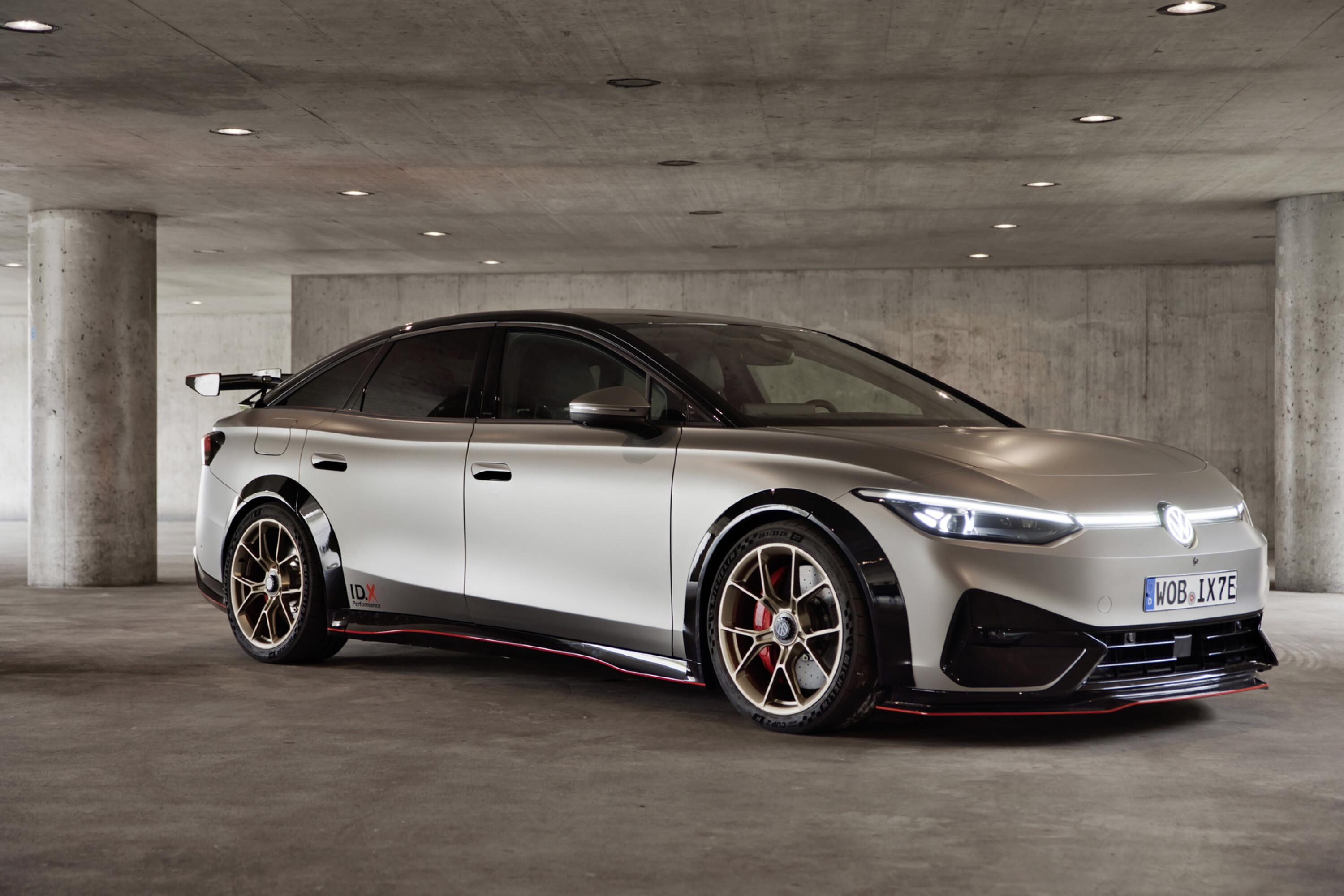
Well, try this – the ID.X Performance four-door concept that previews the sporty potential of the German brand’s future electric cars.
Unveiled by the German brand at an annual event organised by the passionate ID Driver’s Club, the X concept is based on the upcoming, Passat-style ID.7 electric sedan but taken to sporty extremes with all-wheel drive and 411kW of power.
1
The ID.X Performance has almost double the power of the 210kW regular rear-drive ID.7, though a sportier ID.7 GTX is confirmed for the near future – with more power and all-wheel drive.
The X is dramatically differentiated from the relatively conservative standard ID.7 with a 60mm-lower sports suspension, 20-inch gold alloy wheels, and front splitter, rear diffuser and rear wing all made from carbon fibre.
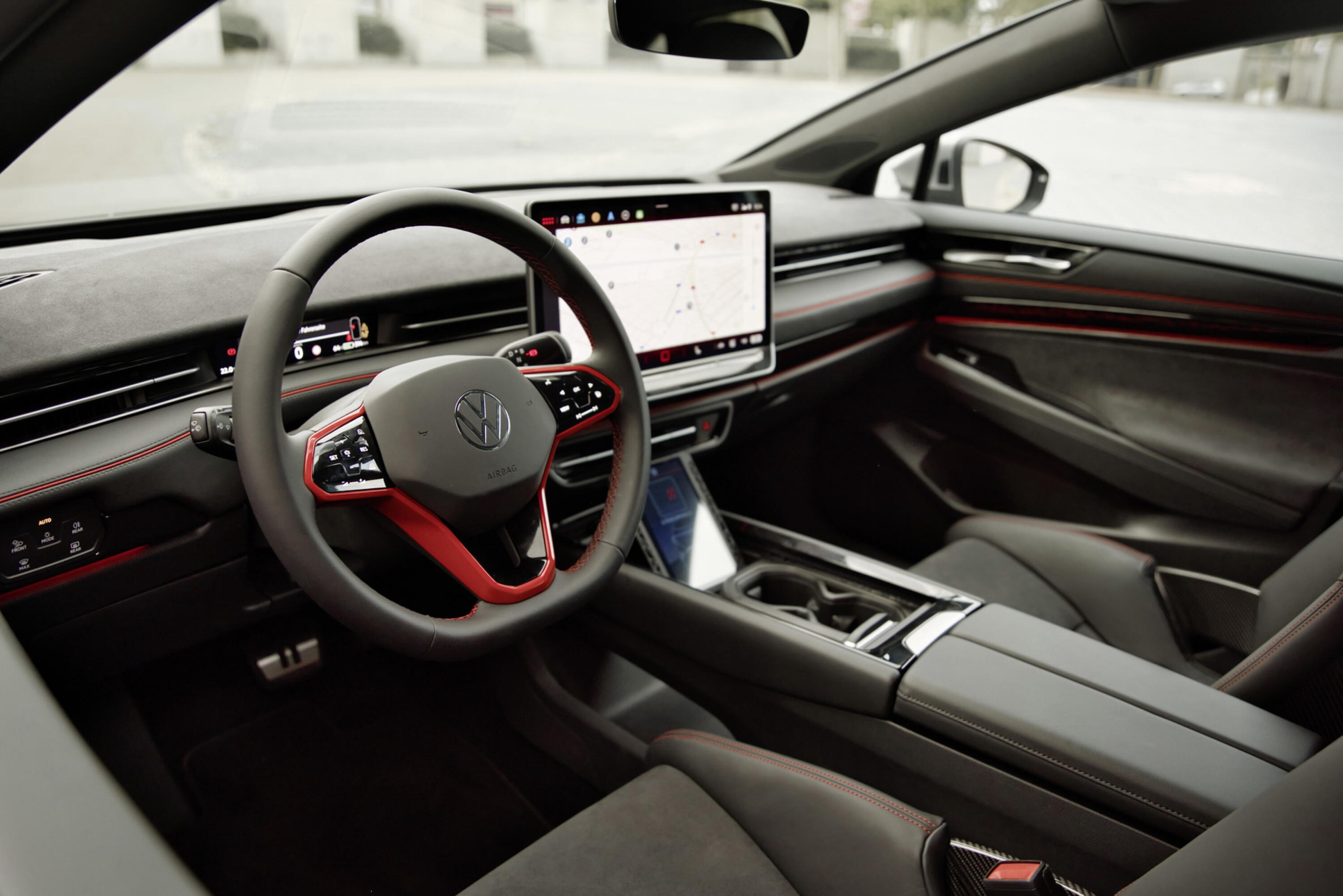
Inside, the cabin features red stitching and accents long associated with VW’s GTI models, while front passengers sit in carbon fibre bucket seats.
1
GTX variants of VW’s ID models, such as the ID.4 GTX and ID.5 GTX, don’t look significantly sportier than the regular models, suggesting Volkswagen’s “vision of an all-electric sports limousine in the upper mid-sized class” hints at the potential for an ID.7 R model.
VW has confirmed it will offer a range of electric R models in the future.
The company last week unveiled the ID.GTI concept that previews its future electric hot-hatch.
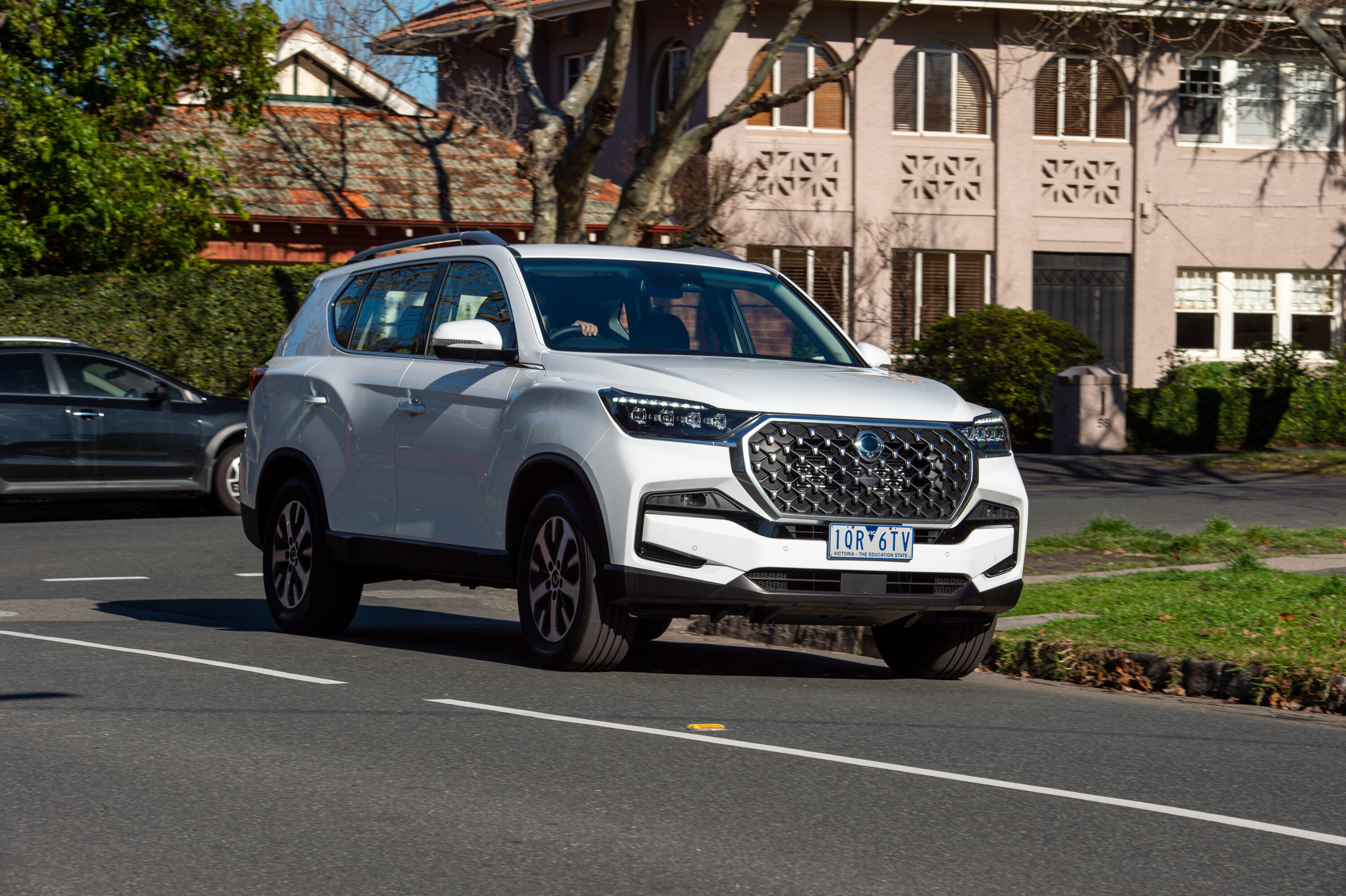
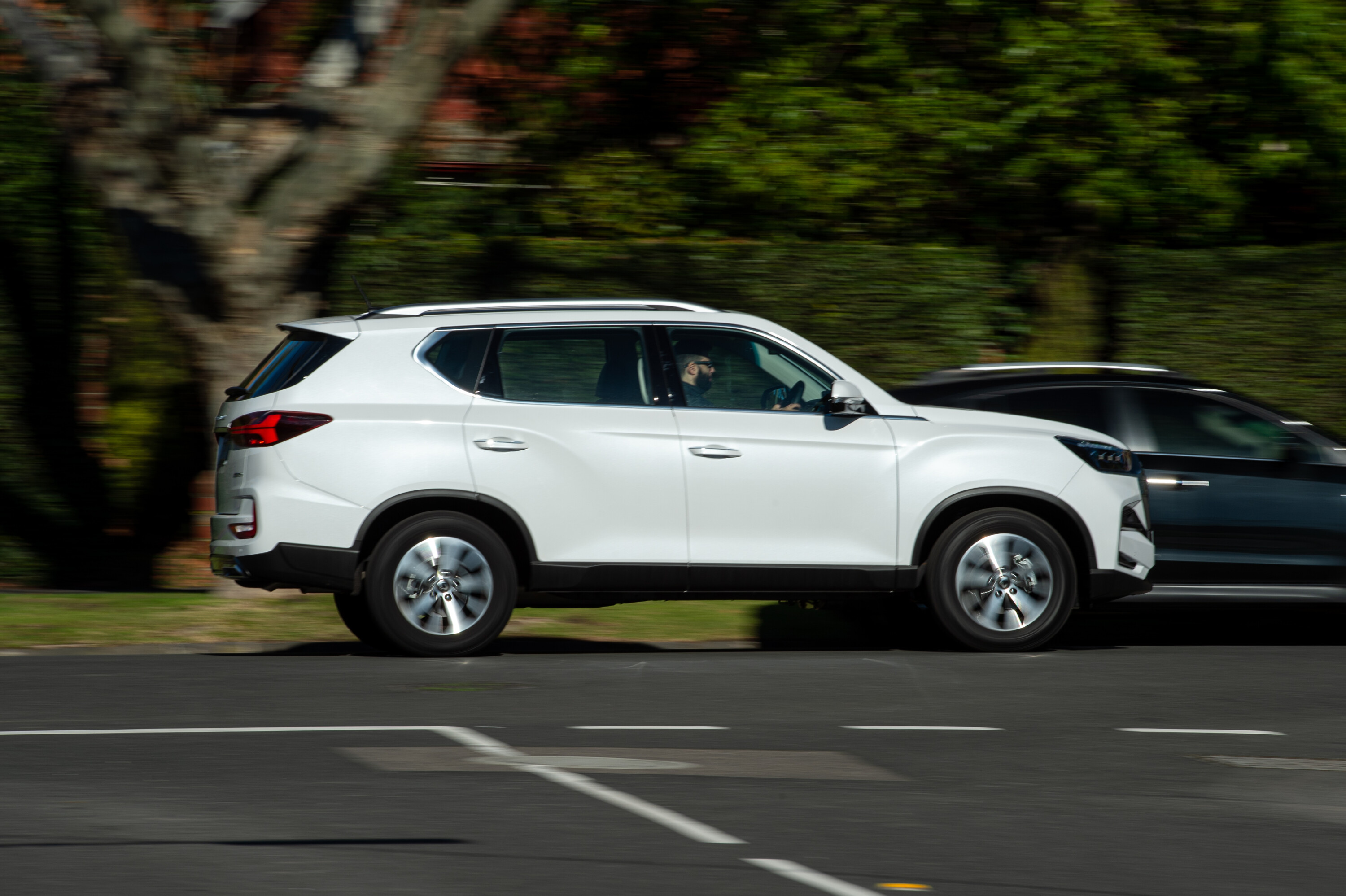
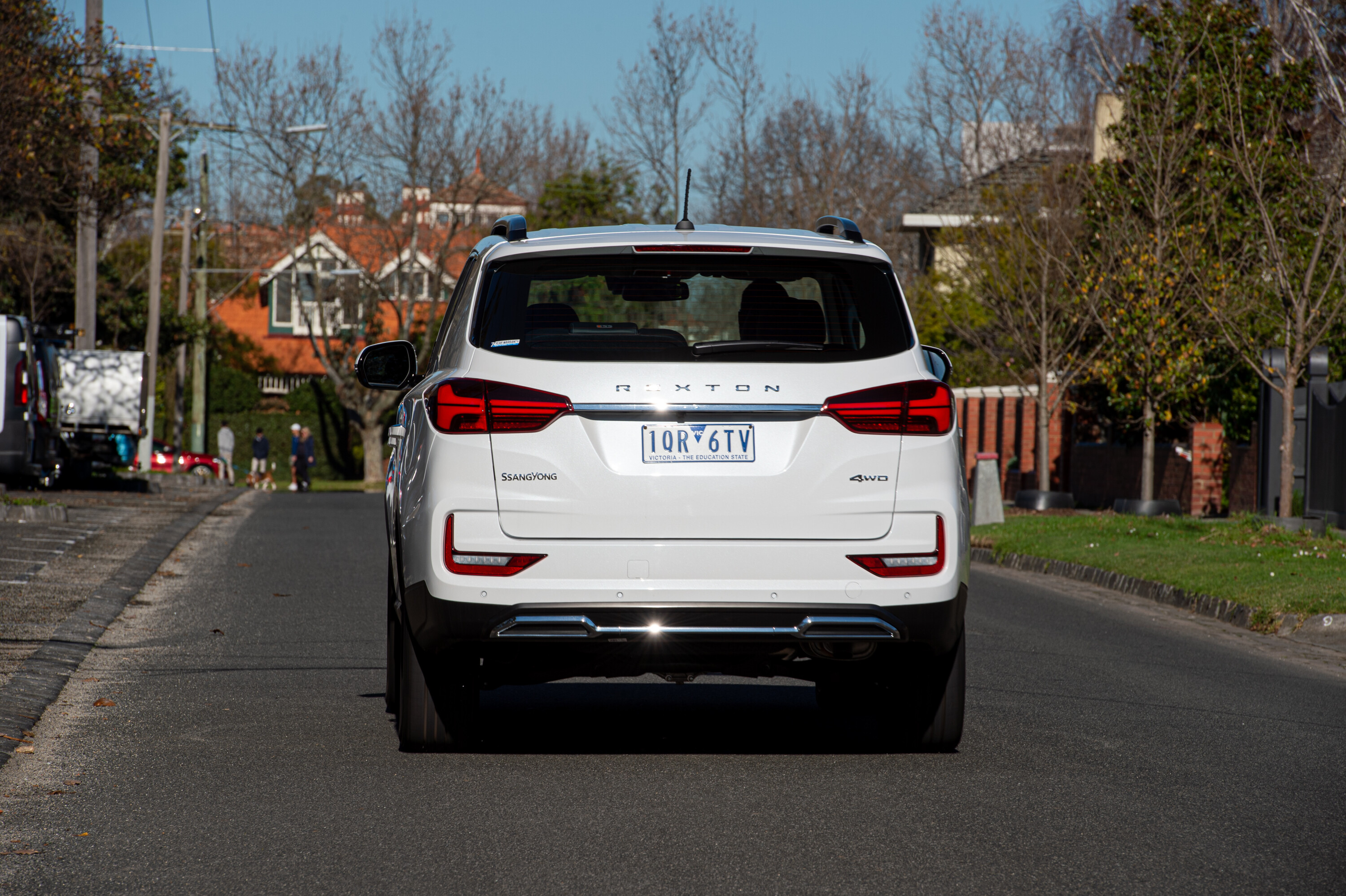
In the realm of large SUVs, the SsangYong Rexton stands as a testament to the brand’s ambition to offer comfort and luxury at an affordable price point.
Sharing underpinnings with the SsangYong Musso , the current-generation Rexton has been around since 2017 and is a 7-seater large SUV.
1
Pricing and features
The Rexton’s allure begins with its wallet-friendly price tag, challenging the notion that luxury demands a premium.
The range starts at $48,990 drive-away for the entry level ELX, and an extra $7000 will have you driving home in the range-topping Ultimate.
Both grades share the same 2.2-litre turbo engine producing 148kW and 441Nm– paired to an 8-speed automatic transmission sourced from Hyundai.
The Rexton range is all part-time 4x4s and have a braked towing capacity of 3500kg.
1
Inside, the Rexton impresses with its spaciousness and quality. The entry level EX comes with standard strong features, including:
18-inch alloy wheels
Synthetic leather seats
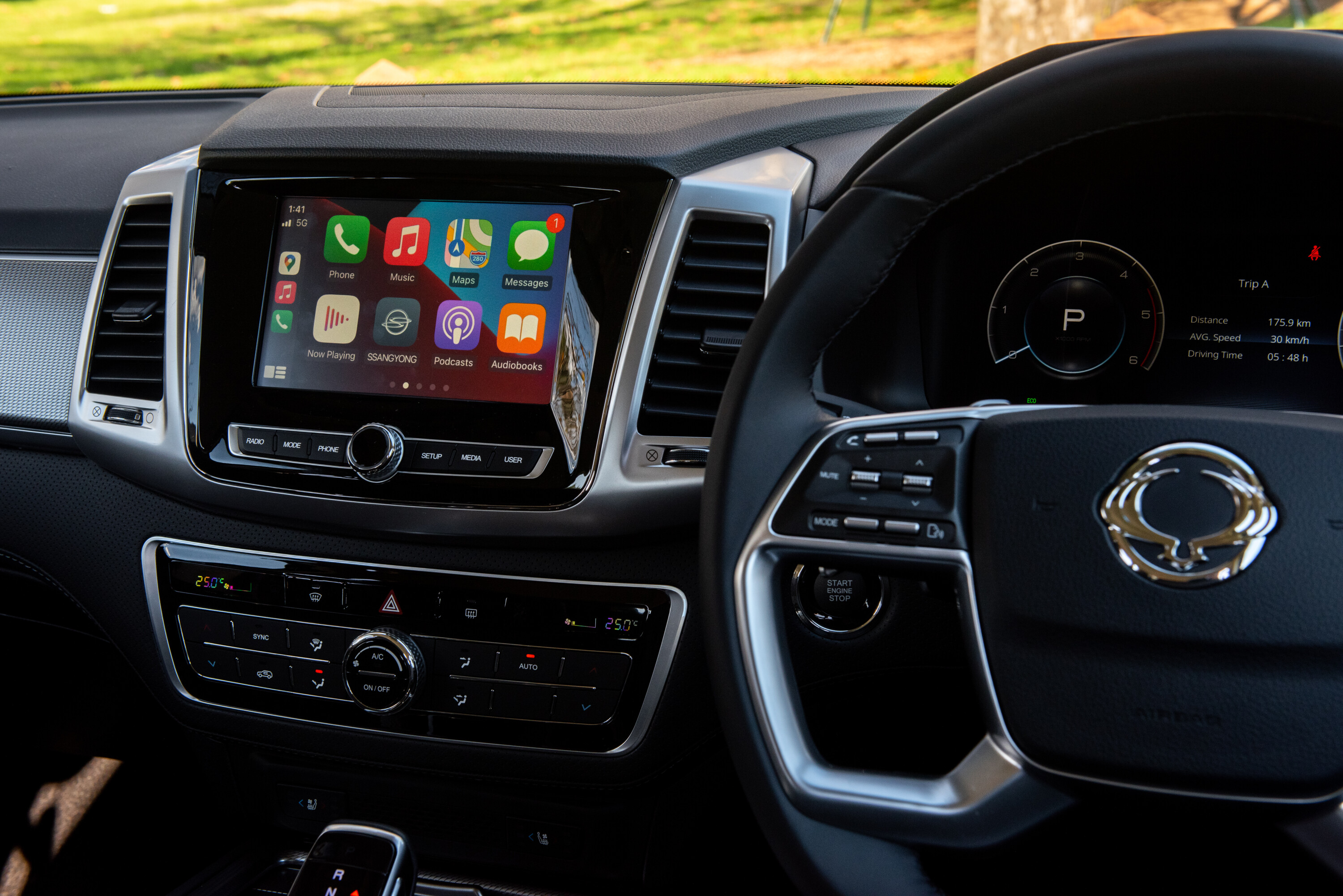
12.3-inch digital instrument cluster
8-inch touchscreen with Apple CarPlay and Android Auto
Dual zone climate control
Heated front and rear seats
Ventilated front seats
Leather steering wheel
Power seat adjustment
Tyre Pressure Monitoring System (TPMS)
1
Moving up to the range-topping Ultimate adds:
Sunroof
Second row A/C vents
Heated leather steering wheel
Driver’s seat and door mirror memory system
Power tailgate
Wireless phone charger
Privacy glass
Ambient interior lighting
360-degree camera
An optional Sport Pack for $2000 is available that packs in exterior chrome trims, black 20-inch alloy wheels, black roof rails and unique LED front fog lamps.
1
Safety
The Rexton has not received an ANCAP rating however the vehicle is equipped with standard safety such as 9 airbags, AEB with forward collision alert, blind spot warning, rear cross traffic alert, trailer sway control and lane-change collision alert.
Key rivals
The large 7-seater SUV segment is filled with established marques including:
The 2023 SsangYong Rexton is a refreshing take in the large SUV segment. While it may not have the extensive legacy of some competitors, it brings to the table a unique blend of luxury, features, and value.
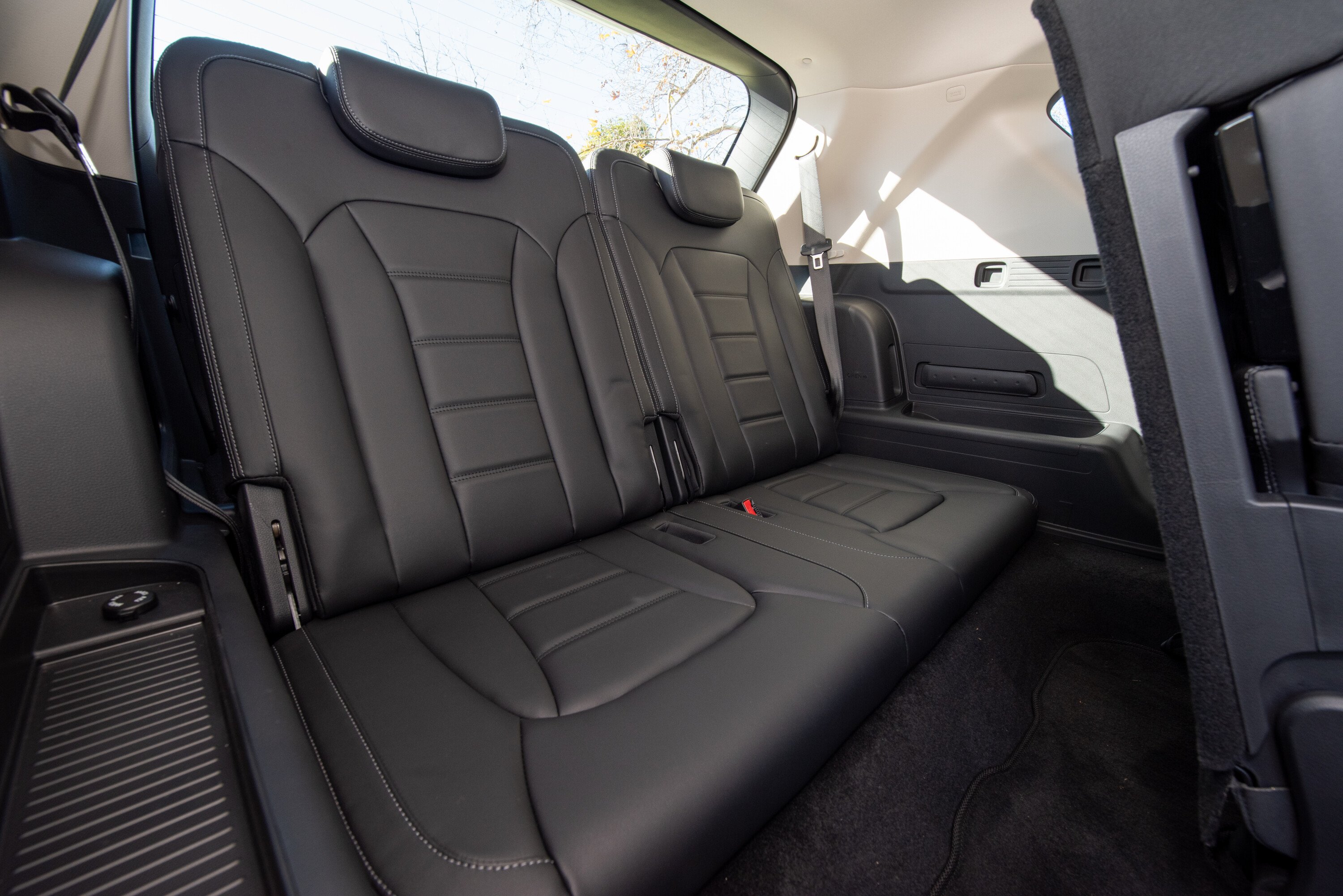
Because of its claustrophobic third row, the Rexton may not be the ideal choice for younger families. However, for those seeking an affordable large SUV with impressive towing capacity, ample boot space, decent fuel economy, and off-roading capabilities, the Rexton stands out. The more economical ELX variant, however, offers significant value and we reckon might be the best bang for your buck of the two.