
Americans can do it, and so can the English. Germans, too, are very capable of doing it, even at top speed.
Australians, though, are absolutely no good at it at all – and it’s getting us all a bit hot under the collar.
According to Insurance Australia Group (IAG)’s archived research, over half of Australian drivers admit that they don’t like merging with traffic.
Another 83 percent claimed to have experienced another driver’s poor merging technique. We’re assuming the remaining 17 percent don’t drive very much…
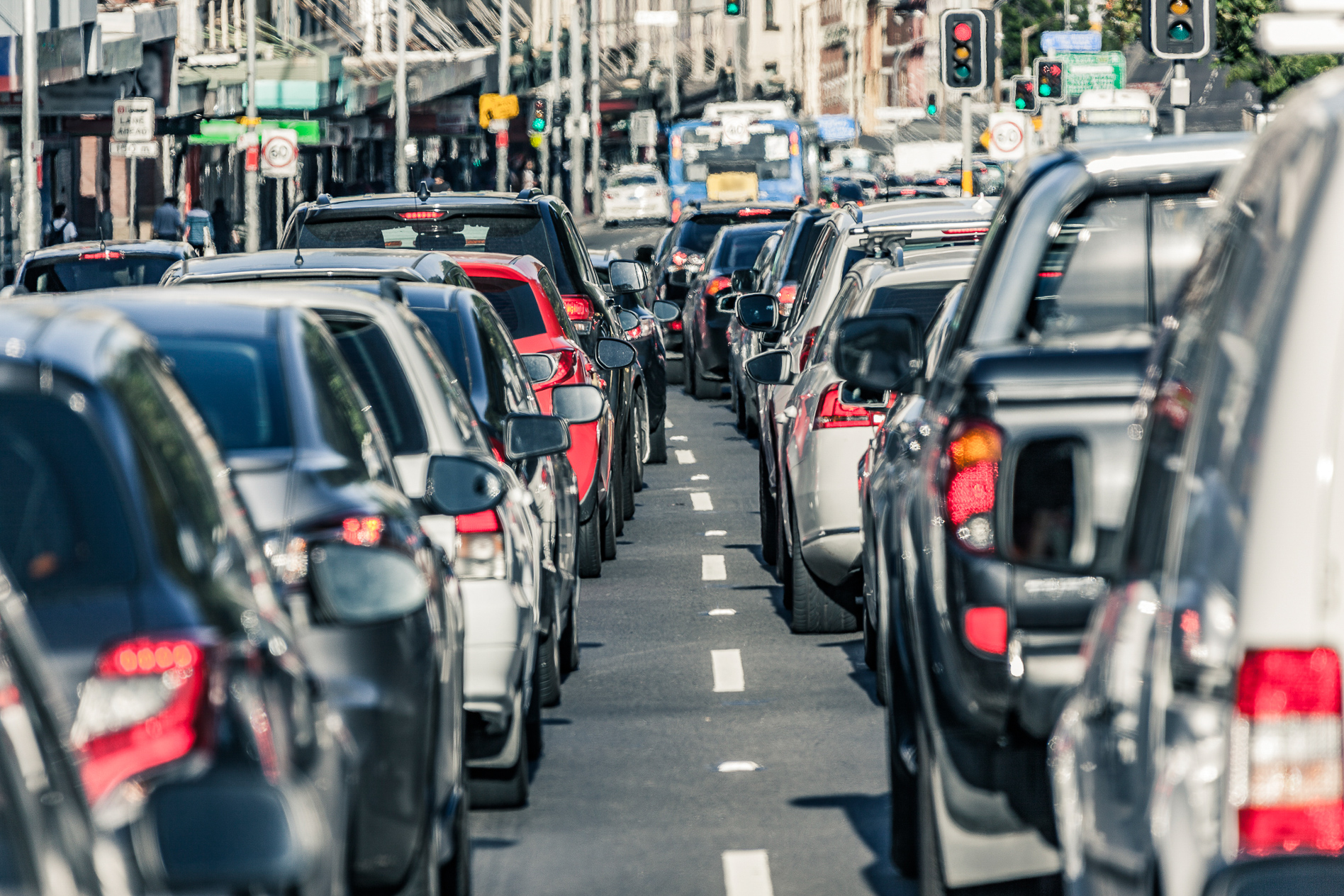
Let’s face it; a lot of Aussie drivers aren’t great at merging, which is why some cities rely on ridiculous traffic signals to separate cars.
But it’s not just freeway on-ramps where trouble occurs, with bottlenecks along main roads as traffic tries to feed right or left becoming hot spots for merging-related collisions.
According to IAG, the worst spots in Australia for merging related accidents include:
- Commonwealth Avenue in Canberra
- Main Road, Sunnybank near Brisbane
- South Road, Edwardstown in Adelaide
- Bell Street, Preston in Melbourne
- Albany Highway in Cannington in Perth
- Sydney’s M4 motorway at Flemington, Parramatta, Wentworthville and Silverwater
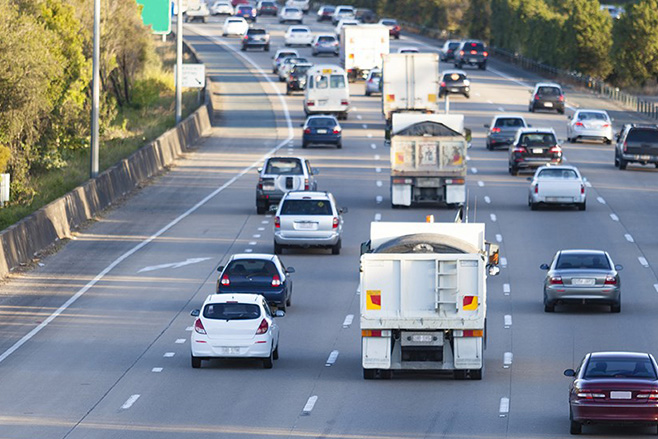
The biggest issue is drivers being too slow when attempting to merge, says IAG’s Robert McDonald. So what can we do better?
“Merge at a similar speed to the traffic you are merging with – this will make merging easier and assist with traffic flow,” says McDonald. “Avoid stopping in the merging lane, particularly when entering freeways. If you stop, you’ll lose speed and it’ll be difficult to find a gap large enough for your car to get momentum.
“When turning left into a multi-lane road that has a merging lane, use it. Don’t wait to cross over to the lane you want to be in.”
Drivers should never merge into another lane by crossing a solid line or a painted traffic island, and when a lane is closed because of a car accident or construction, move into the moving lane as soon as possible, so traffic doesn’t have to stop to let cars trying to merge at the last minute.
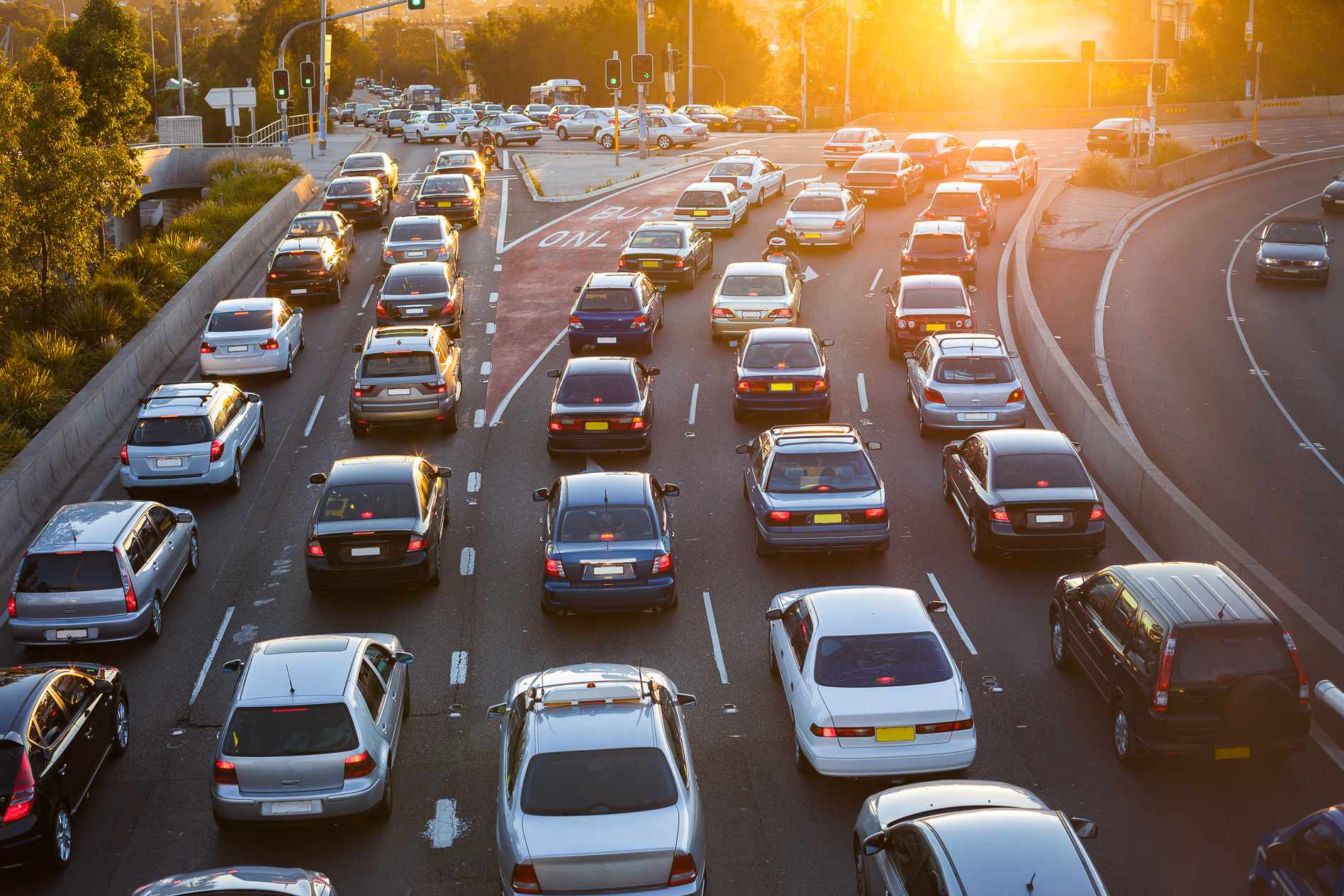
For us, the notion of merging like a zipper is probably the single best piece of advice anyone could offer. It’s also known as one-for-one, where cars in the traffic flow allow enough room for a single merging vehicle between them.
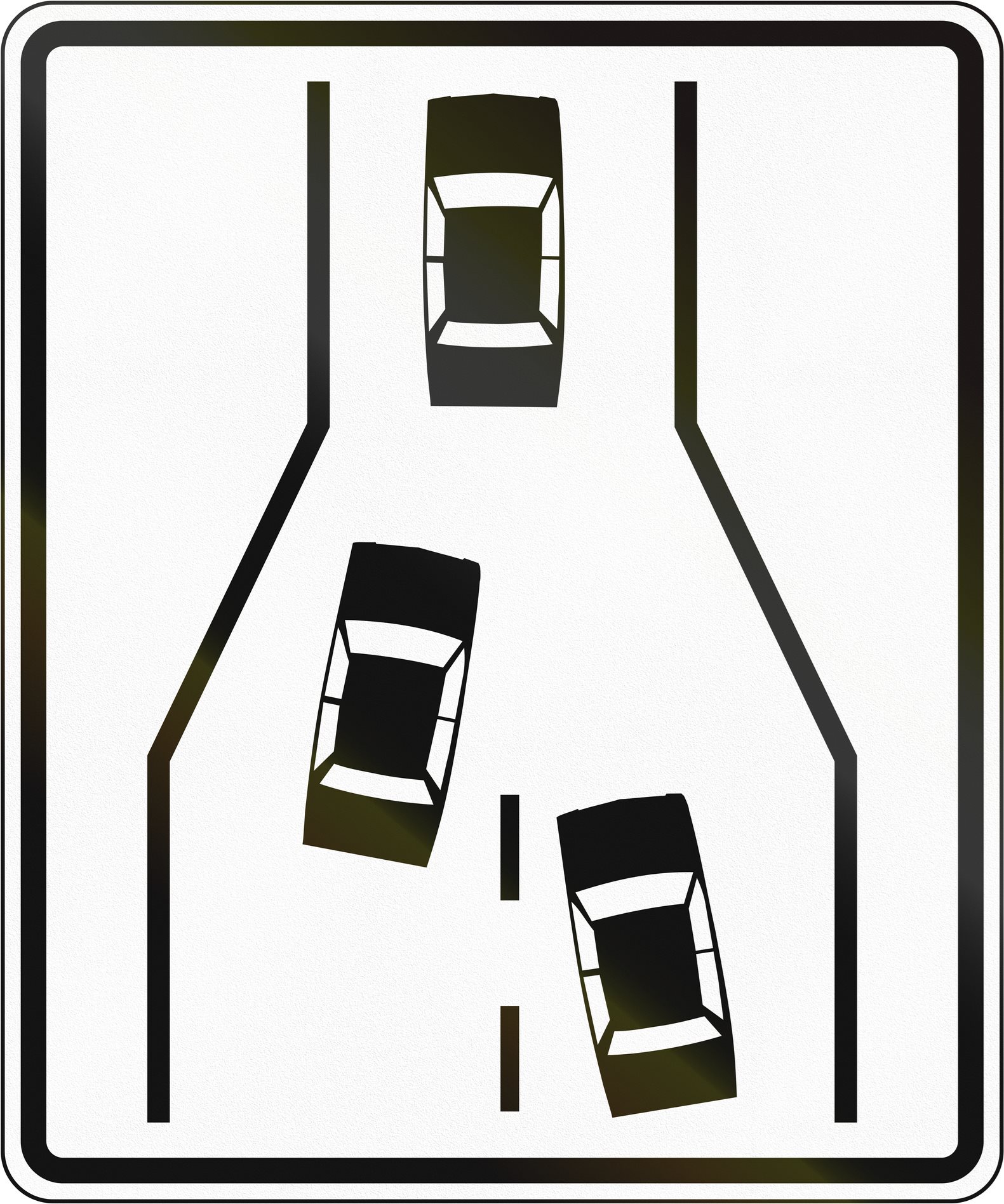
Trailing car eases off the throttle, leading car merges one-for-one. Easy!
“Have your mirrors set so that you don’t have a mirror blind spot,” adds professional driving instructor Ian Barratt. “At least match the speed of traffic you are merging with and pick your gap and stay with it.”
AUSTRALIA’S WORST MERGES: A NATIONAL ROUND-UP
Australian Capital Territory
Commonwealth Avenue in Canberra
Canberra Avenue in Fyshwick
Belconnen Way in Belconnen
New South Wales
M4 Motorway in Flemington
M4 Motorway in Parramatta
M4 Motorway in Wentworthville
Queensland
Main Road in Sunnybank
Anne Street in Fortitude valley
Gold Coast Highway in Broadbeach
Western Australia
Albany Highway in Cannington
Nicholson Road in Canning Vale
Mitchell Freeway in Perth
South Australia
South Road in Edwardstown
Grand Junction Road in Gepps Cross
South Road in St Marys
Victoria
Bell Street in Preston
Plenty Road in Bundoora
Warrigal Road in Chadstone
Any areas we’ve missed? And how do you rate your own merging form? Let us know below!
Wheels review
The Wheels Verdict: Never before has choosing between a BMW and an Alpina been so tough. The XD3 is more expensive than the X3 30d and M40i, but you’re paying for increased performance over the former, extra fuel economy in comparison to the latter and an added layer of cool factor neither fully achieves. It’s not cheap but we have a feeling those who want the XD3 will be more than willing to pay the premium.
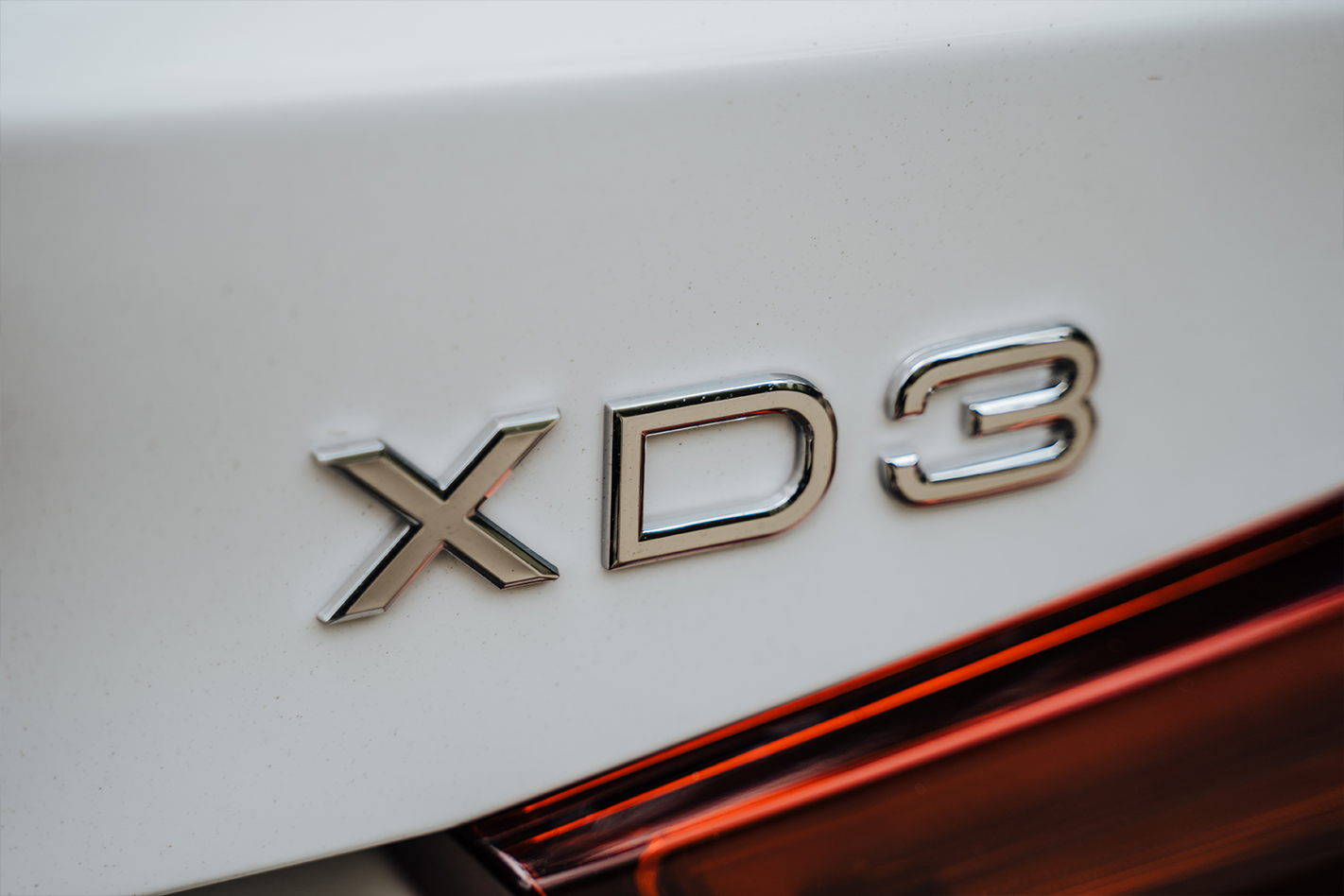
WHAT IS THE ALPINA XD3?
The Alpina XD3 begins life alongside other BMW X3s in Spartanburg, South Carolina. It’s then shipped to Germany for a hefty dose of Buchloe’s magic, gaining styling tweaks and mechanical upgrades before landing here in Australia. The XD3 sports a twin-turbo diesel straight-six engine and all-wheel drive in a practical SUV body. It fills a niche within a niche but, given Alpina’s modest sales aspirations, it’s certain to be a success.
WHY WE’RE TESTING IT?
Alpinas are often quite discreet. It’s that ‘those who know, know’ mentality. The XD3 SUV is something new for the brand and if what Alpina proclaims turns out to be true, it will be its most popular model. So we’d better check it out then.
THE WHEELS REVIEW
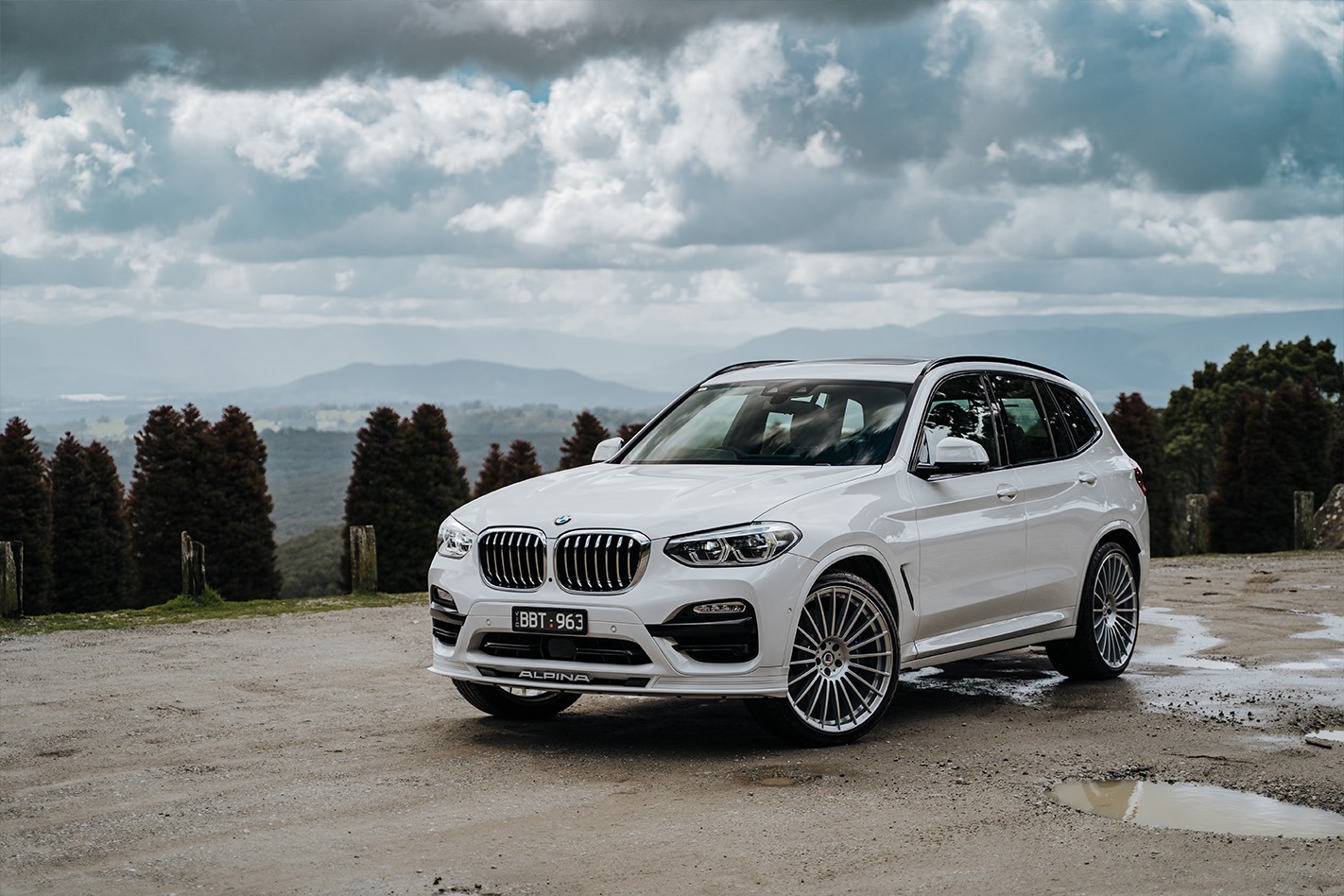
Putting a price on exclusivity is becoming a sure-fire way to make money within the car industry. However, informed punters often see through thinly veiled cracks quite quickly. Essentially a BMW that’s gone to a further finishing school, Alpina has always played in this price-premium space. Sometimes it works, sometimes it doesn’t. If you’re not a fan of spoilers skip this next bit – the Alpina XD3 is firmly in the former category.
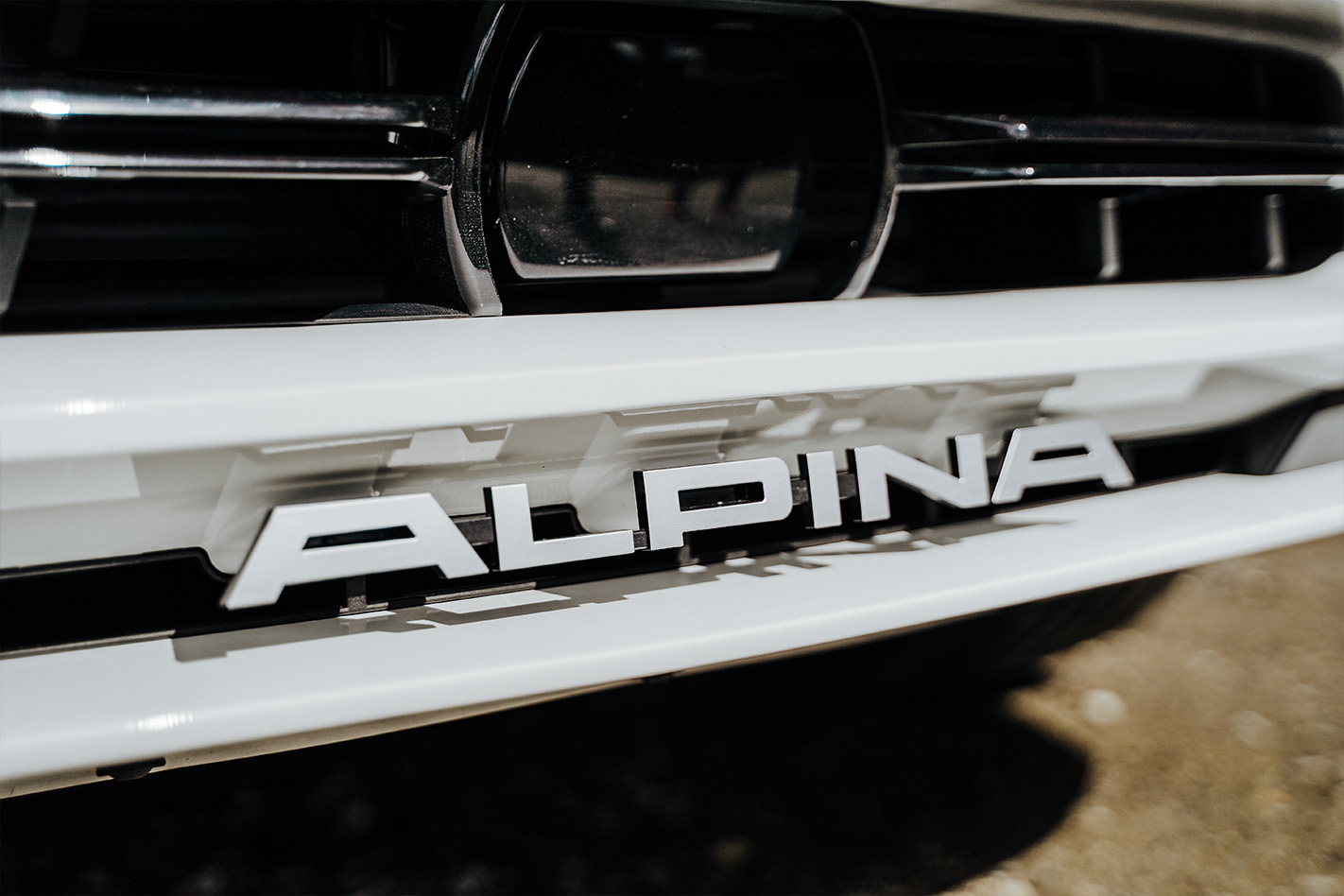
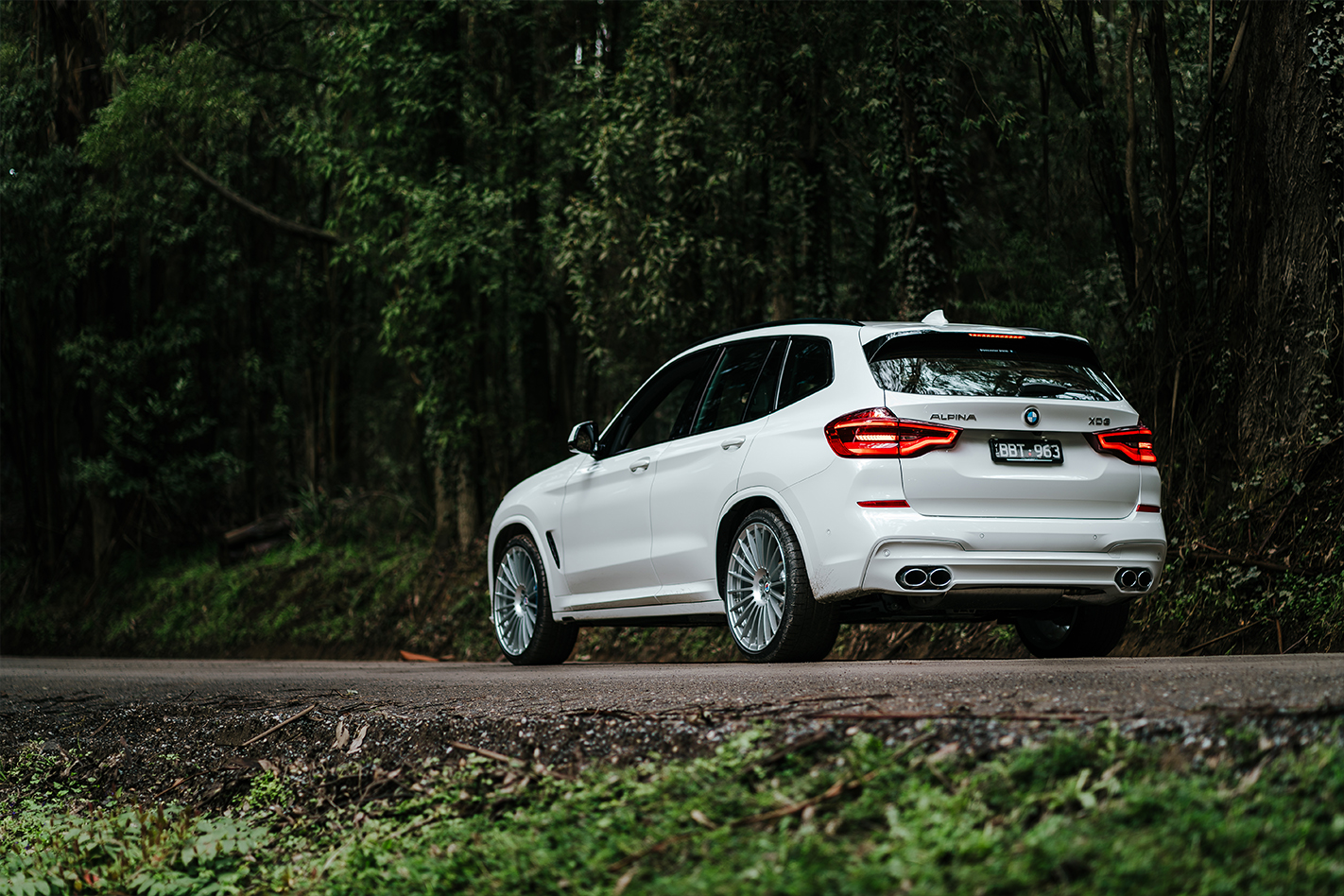
Why should you fork out an extra $10,000 over the B58-powered BMW X3 M40i or a whopping $26,000 more than the torquey X3 30d? Beauty is in the eye of the beholder, but the exterior design is stylish and flush with heritage. The standard wheels are 20-inch items, but we expect virtually all buyers to tick the box for the optional 22-inch Alpina Classic alloy wheels which fill the colour-coded flared wheel arches. At the rear is a custom valance, while the Alpina script sits proudly in the lower chin spoiler.
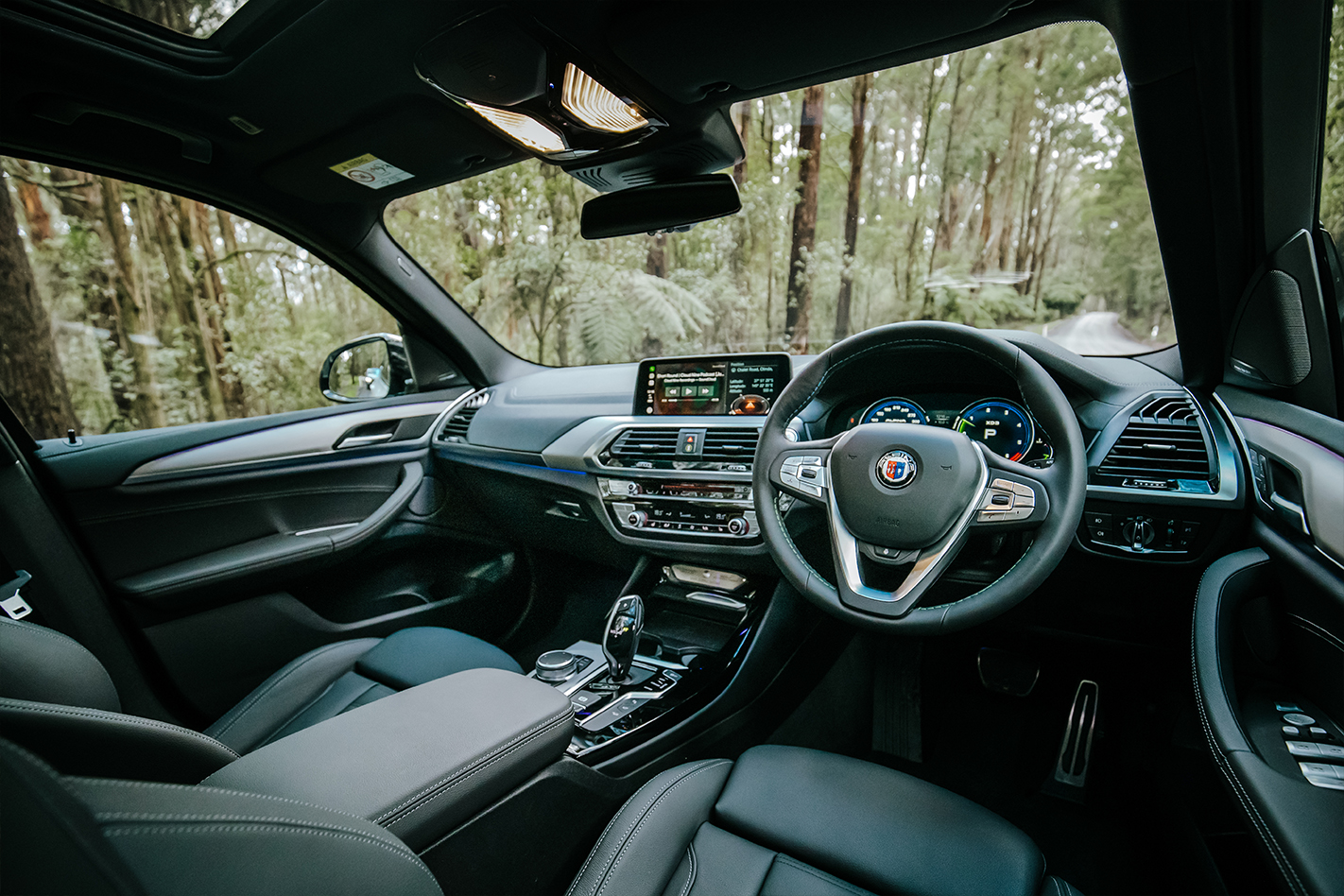
Inside the Alpina treatment is restrained, but you can feel rather than see the added luxury thanks to the upgraded materials. The Alpina piped sports seats, blue-faced dials, blue-and-green stitched steering wheel leather, Alpina sill badges and a build plaque help differentiate the cabin from the X3 norm. Of course, that’s no bad thing. And the latest iDrive system (with touchscreen) works a treat.
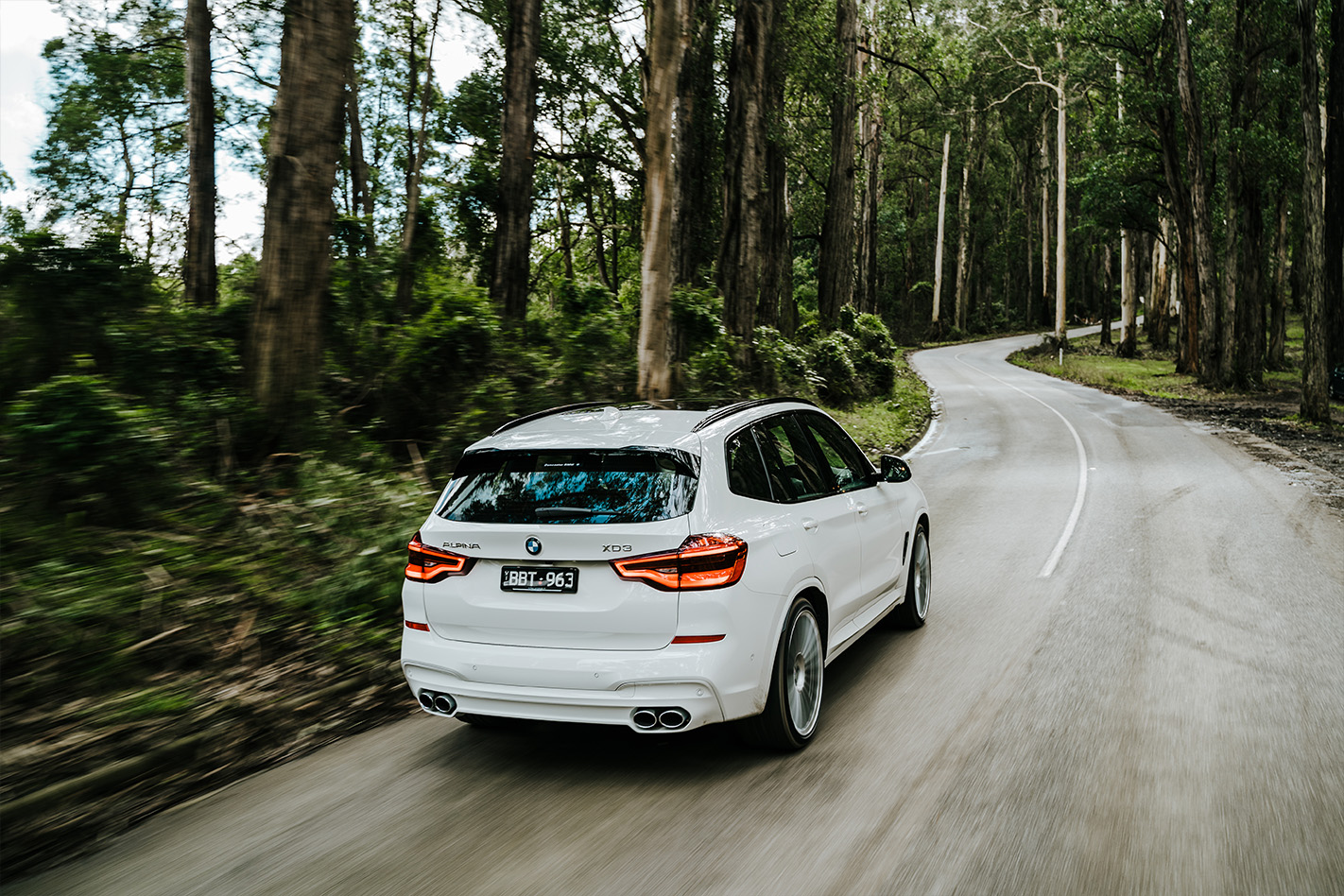
What doesn’t is the Alpina instrument cluster, which isn’t any great improvement over the BMW item, while the steering wheel-mounted shift buttons are an Alpina tradition but an ergonomic failure. It’s also strange to fit a Harmon Kardon sound system and not get crisp digital radio. Although we’ve been informed that DAB is now standard for all XD3s despite not being fitted to our test car.
The pragmatic-performance ethos is accounted for with a capacious 550L boot (which expands to 1600L with the 40/20/40-split rear seats folded), while there’s ample room for adults to sit comfortably in the back. Tri-zone climate control is an added bonus, especially with the huge panoramic glass sunroof, while the ambient lighting brings the cabin to life at night with selectable colours.
The 3.0-litre straight-six oiler is an impressive unit and endears itself in a way any diesel worth its weight should – via its mountainous torque. That’s 700Nm from just 1750rpm to be exact. Alpina has bolted two turbos down the driver’s side of the common-rail engine to afford 245kW (4000-6000rpm). Thanks to the stonking Newton count and tuned ZF eight-speed auto, the 2015kg XD3 can hustle to 100km/h in 4.9 seconds (with launch control). That’s just a tenth slower than the X3 M40i, but the Alpina can return 6.4L/100km on a combined cycle.
The ample, relaxing torque and supple ride quality combine to make the XD3 feel like a true luxury experience. Alpina has masterminded its own suspension setup, but how it has managed to get such compliance from an SUV riding on 22-inch wheels and skinny-profiled Pirelli P Zero rubber is deeply impressive. And there’s little NVH to speak of at highway speeds, either.
Initial answers can be found in the drive modes, where you’ll find not only Comfort mode, but Comfort Plus. This Alpina-specific tune is wonderfully cosseting, with a pleasing sophistication to its damping, and it’s the default for long journeys. However, switching to Comfort for the dampers is preferable to sharpen body movement, while Sport Plus is best left alone as it doesn’t really fit with the XD3’s undemanding persona.
Handling is up to the X3’s high standards. The all-wheel drive system is rear biased and there’s an electronically controlled active limited-slip diff on the rear axle. Grip isn’t an issue, especially with 295-section rear boots, and the overall dynamic balance is remarkable for an SUV. The steering is definitely best left in Comfort mode as Sport Plus just adds unwanted artificial weight.
Ultimately you’re not just paying for the exclusivity or uniqueness. There’s genuine mechanical, comfort and design benefits with choosing the XD3 over its donor BMW. Unlike some Alpina models, you’re not choosing it just for the sake of being unique.
MAIN RIVALS
BMW X3 30d; BMW X3 M40i; Mercedes-Benz GLE 400d; Audi SQ5 quattro.
Price and specs
- Model: Alpina XD3
- Engine: 2993cc inline-6, dohc, 24v, twin-turbo diesel
- Max power: 245kW @ 4000-4600rpm
- Max torque: 700Nm @ 1750-2500rpm
- Transmission: 8-speed auto
- Weight: 2015kg
- 0-100km/h: 4.9sec (claimed)
- Economy: 6.4L/100km (claimed)
- Price: $109,900
- On sale: Now
Second opinion: MOTOR review

Motor focuses exclusively on high-performance cars, offering a heart-stopping, hair-raising blast into the world of prestige and performance culture.
Powered-up diesel SUV vaults Alpina into the mainstream By:Scott Newman
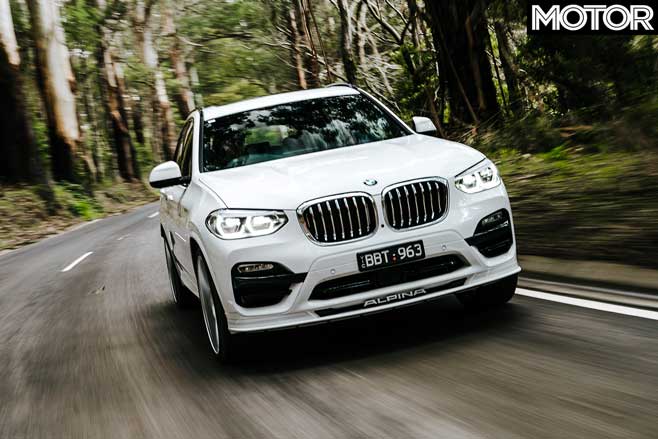
Having served up a number of appetisers to the Australian market, Alpina has now prepared its main course, the XD3 SUV.
Like most appetisers, its early offerings – a variety of sports-luxury sedans, wagons and coupes – were an acquired taste and very expensive, an unavoidable consequence of low-volume importing. The XD3 is a very different proposition. It’s competitively priced, starting at $109,900, lands in the extremely popular mid-size performance SUV segment and yet fills a niche ignored by all the main players – yes, such a thing does still exist.
The previous Audi SQ5 proved the popularity of the performance diesel SUV concept, but contenders are few and far between, providing a neat gap for the XD3 and its 245kW/700Nm 3.0-litre twin-turbo six-cylinder diesel to drive into. Left-hand drive markets score a 286kW/900Nm quad-turbo monster good for 0-100km/h in 4.6sec, but right-hook territories sacrifice a pair of snails and 0.3sec.
While it would be nice to have access to the full gamut of grunt, it’s not really missed. It’s a fine engine, with response, smoothness and a spread of power not often found in a diesel. There’s a useable powerband from around 2000-4500rpm and the huge torque means it doesn’t really matter if you’re in third, fourth or fifth gear exiting a corner, the resultant acceleration is roughly the same. It’s not going to pin your head back, but gathers pace at an impressive lick nonetheless.
Unsurprisingly, the XD3 handles very similarly to its BMW brethren, but then there wasn’t much point Alpina toiling away on something that didn’t need improving. It’s tall and heavy but Pirelli P Zeros measuring 255mm and 295mm-wide front to rear respectively ensure decent purchase and adopting a slow-in, fast-out approach even opens a window to some gentle oversteer on slippery surfaces.
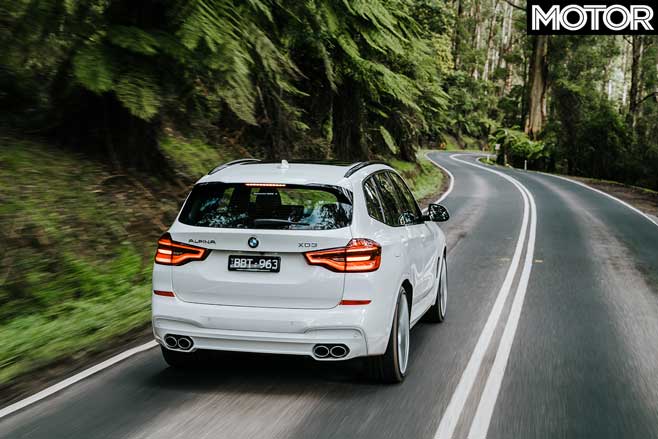
The XD3’s true strength, however, is in everyday motoring. Its trump card is its fuel economy: the official combined claim is just 6.4L/100km and even driving like motoring journalists we couldn’t push it above 9.6L/100km. Generally the ride is very good, but those giant (and stunning) 22-inch wheels do like to transmit sharp edges; the standard 20s would undoubtedly improve matters but the bigger wheels look so good…
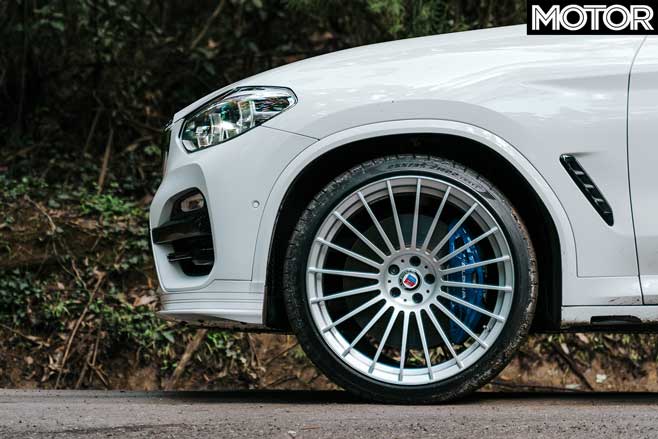
Inside it’s pretty much standard X3, though to my tastes the Alpina digital instruments are more attractive and the thinner steering wheel is much nicer to hold. In summary, the XD3 is a nice car, but tricky to assess from a MOTOR perspective – will anyone actually ever want to take it for a spirited drive?
Unlikely. As such, the $25K cheaper X3 30d makes more sense, but for those who like the idea of an X3 but want something a little quicker and more exclusive, dinner is served.
ALPINA XD3 SPECS
- Engine: 2993cc inline-6cyl diesel, DOHC, 24v, twin-turbo<
- Power: 245kW @ 4000-4600rpm
- Torque: 700Nm @ 1750-2500rpm
- Weight: 1940kg
- 0-100km/h: 4.9sec (claimed)
- Price: $109,900
Rating: 3.5 out of 5 stars
The most advanced Golf that Volkswagen has ever produced will get inferior engines in Australia due to lower quality petrol.
Volkswagen has confirmed the eighth generation of the brand’s iconic small hatchback will get less advanced engines than those offered in Europe, where reducing CO2 emissions and lowering fuel use is a priority.
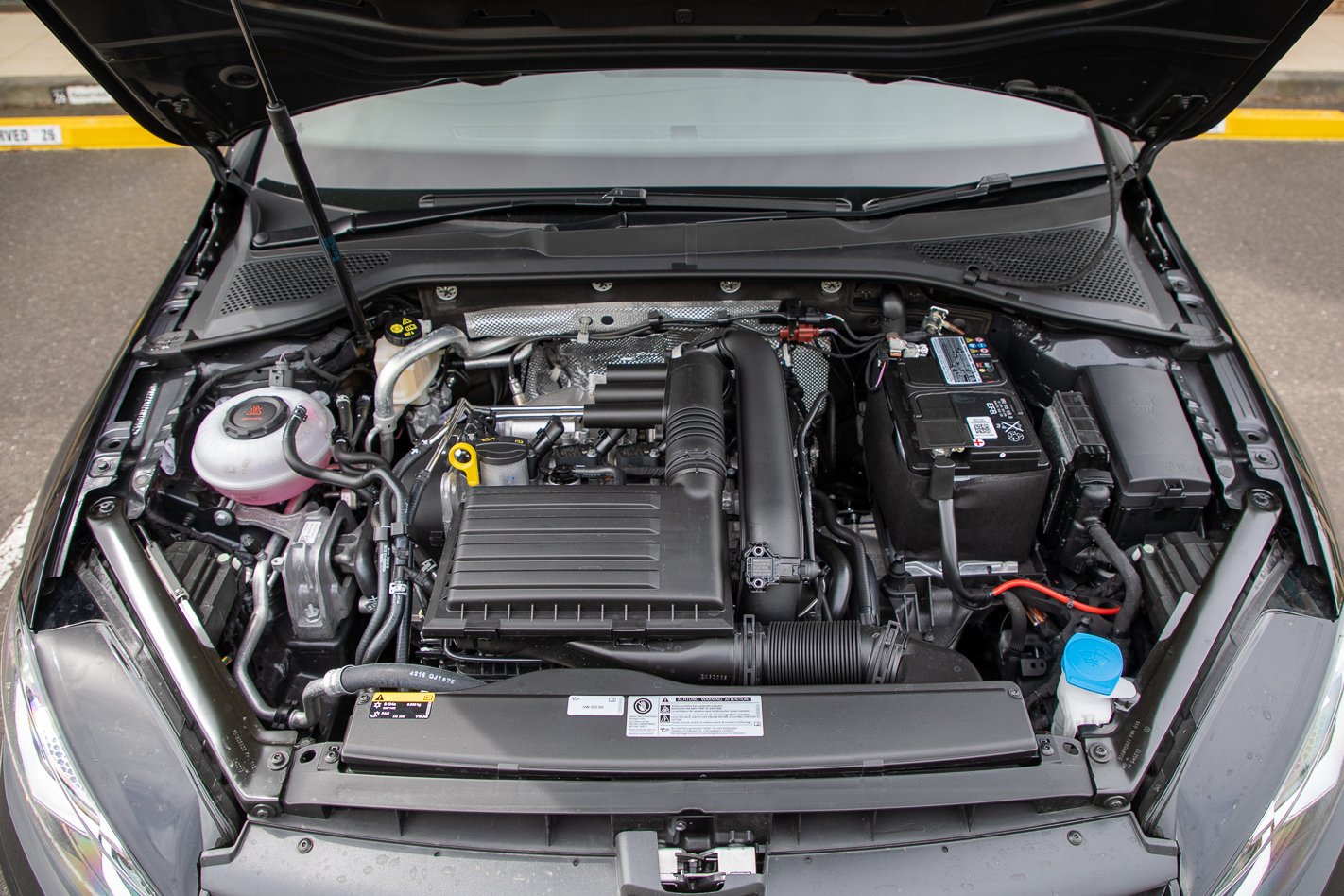
“Our engine range will be different to Europe,” said Volkswagen Australia product marketing manager Jeff Shafer.
Specifically, Australia will miss out on some of the more efficient modern engines that rely on petrol particulate filters, which reduce harmful emissions by trapping soot.
We’ll also initially do without the petrol-electric hybrid models that promise to significantly reduce fuel use.
Earlier Shafer admitted “fuel is an issue still for our marketplace”, referring to the higher sulphur content in Australian unleaded petrol; while many markets stipulate a maximum sulphur level of 10 parts per million, in Australia even the more expensive premium unleaded can contain up to 50ppm.
Shafer said Volkswagen was “getting much closer to the point of being able to offer some engines with a particulate filter on our fuel” but that “some technologies … still have issues with the fuel quality”.
Volkswagen says internal tests have shown that more than two tanks of regular unleaded petrol – which has as much as 150ppm – can damage the particulate filter, which would cost about $1500 to replace.
Shafer also said the brand was considering better education for customers surrounding potential damage to petrol particulate filters by using regular unleaded.
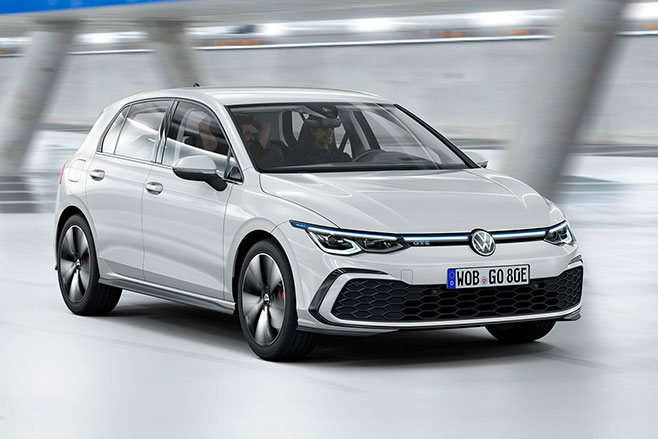
Golf Mk8
He said the company was considering whether to get dealers to make customers aware or ensure there was documentation that stipulated the risks if people used inferior fuel.
“It could be additional material that they’re given at the time of purchase.”
The new Golf 8 is due in Australia late in 2020, bringing a digital instrument cluster and wireless Apple CarPlay as part of a technology push.
Before then, Volkswagen will sell “a few hundred” Golf TCR versions of the outgoing Golf Mk7.5 (below)
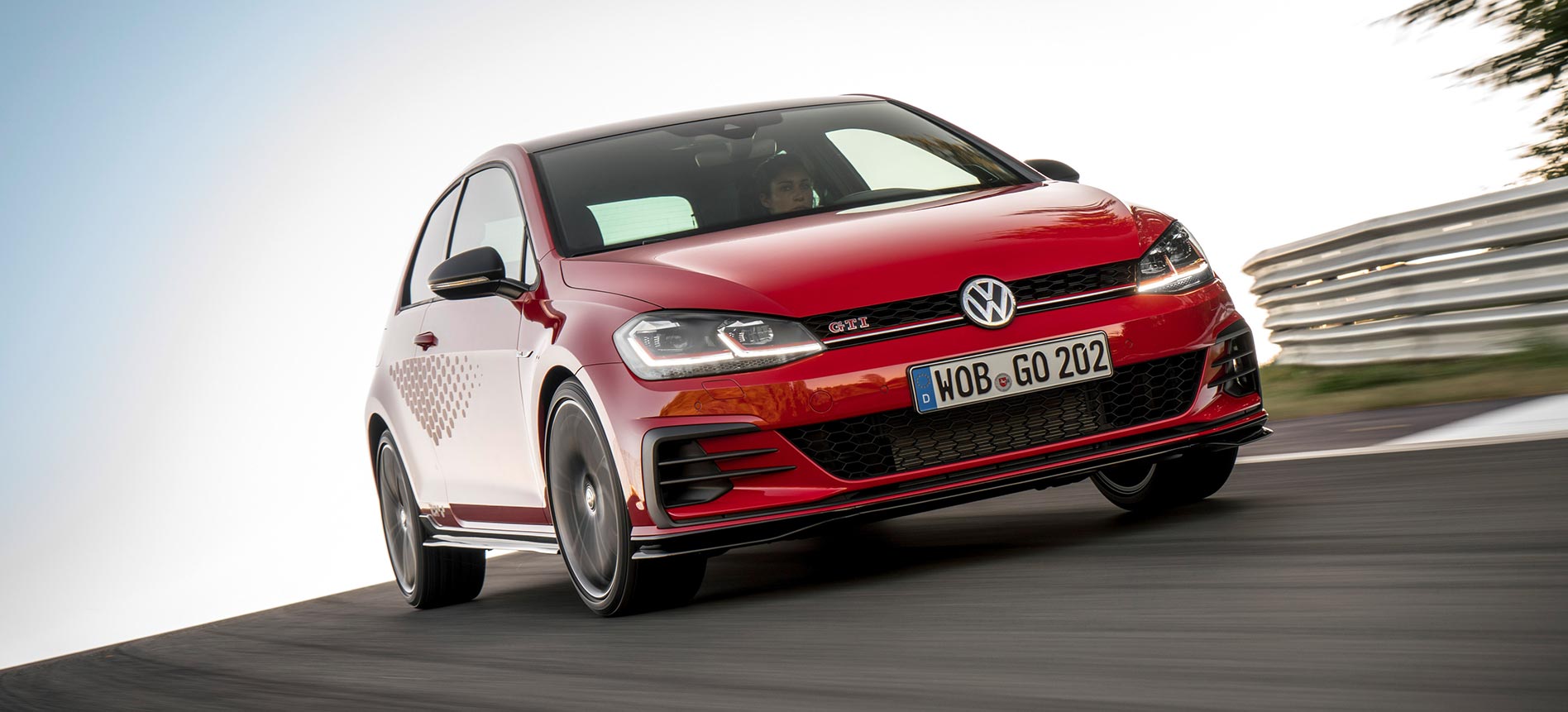
With a DSG auto-only transmission and a more powerful 213kW version of the 2.0-litre turbocharged engine, it will be the most powerful Golf GTI to date.
“There’s been a lot of interest … customers coming in asking a lot of questions,” said Shafer.
It’s expected to be priced around $50,000, sitting between the $46,190 regular Golf GTI and the $54,990 all-wheel-drive Golf R.
Ferrari Australasia has announced a driver’s programme inspired by its Challenge racing series, called the ‘Passione Ferrari Club Challenge’.
Ferrari calls it “a special driving programme inspired by the Ferrari Challenge Series and is dedicated to Ferrari Challenge car owners who want to enjoy the thrill of circuit driving or wish to develop their skills and experience to eventually become involved in racing.”
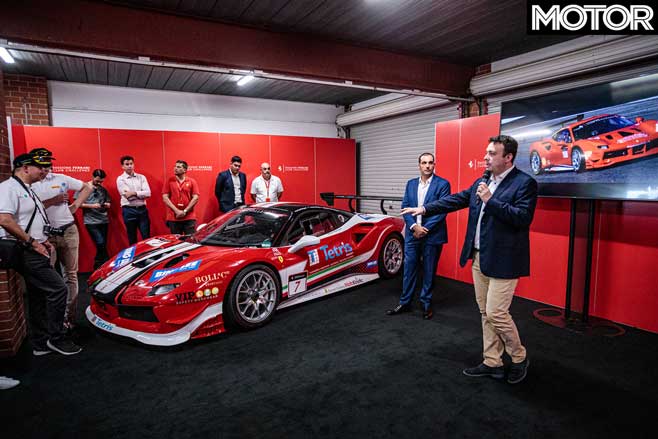
Essentially what this means is that Ferrari 458 Challenger and 488 Challenge owners are able to take their cars to five tracks around Australia and NZ with Ferrari support and training from professional instructors.
“Ferrari instructors will train each club member at their own pace, including 6 hours of track time per event, gradually improving their skills to a point where one may wish to participate in the Ferrari Challenge Asia Pacific, Europe or US.”
So, the program isn’t just a ‘drive experience’, and the pricing reflects that. Membership into ‘Club Challenge’ is $7500 plus GST for a Challenge owner, while the package for all five rounds of the programme costs $60,000 plus GST.
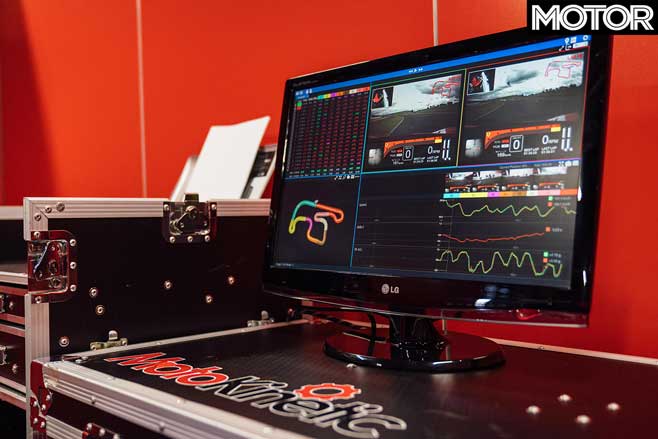
With that comes not only entry into the programme but also free laps for the full day, up to six hours, plus the tutoring, driving analysis with an instructor and an engineer, access to the hospitality lounge with an open bar and catering (though we assume drinks are off the menu for drivers), and a personalised set of equipment: suit, boots, gloves, helmet, fireproof underwear, and HANS device.
The five locations on the schedule are Sydney Motorsport Park in April 2020, The Bend Motorsport Park in June, Perth’s Barbagallo Raceway in September, Phillip Island in October, and Hampton Downs Motorsport Park in New Zealand in early December.
Hopeful entrants, limited to 20 people, must have their car pass a safety inspection from an official Ferrari dealer prior to entry.
Yasser Shahin, racer and part of the family that runs The Bend Motorsport Park in South Australia, has taken victory in the final year of Audi’s one-make Audi Sport R8 LMS Cup.
Audi has announced that, after this year’s final round at the Sepang International Circuit, the one-make series will become the Audi Sport Asia Trophy, with 100,000 Euro prizes up for grabs for top drivers, and the chance to drive at the 2021 Suzuka 10 Hours fully funded by Audi.
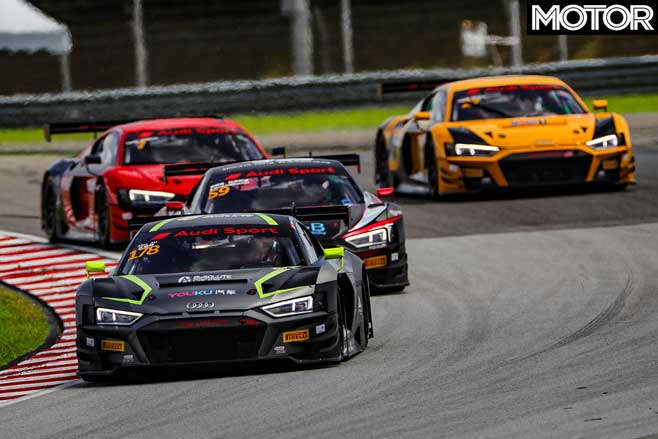
“After eight successful years, the final title decision in the Audi Sport R8 LMS Cup was produced in Malaysia,” Audi said in a statement.
“Audi Sport customer racing Asia is responding to the fundamental changes the highly varied GT motorsport scene has seen in Asia with a new program beginning in 2020. The Audi Sport Asia Trophy will reward all privateers for their successes achieved on all levels of racing.”
This makes Shahin not only the first Aussie to take the one-make series title, but the last person to do so overall.
Though he didn’t win the final race, fifth place was enough to keep him on top of the leaderboard.
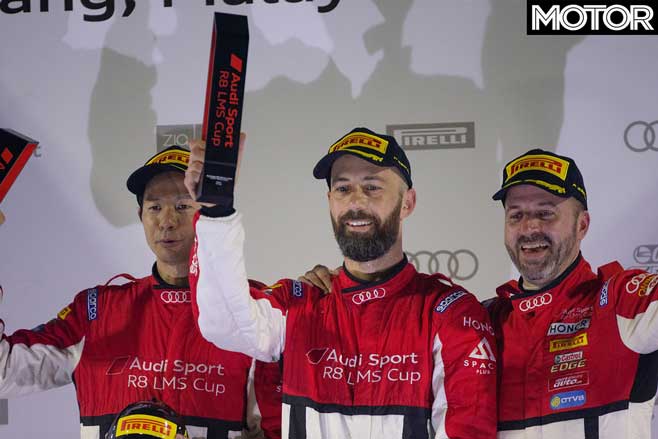
“It hasn’t sunk it yet, but it will shortly. It feels fantastic to be champion. The truth is, they’re all exceptional drivers. We’re all gentleman drivers but the standards, I can say that from wherever I’ve driven, the pace isn’t what it is here.
“As Daniel [Bilski, another Australian] said yesterday, the pace just keeps getting faster. I drove my heart out yesterday to put myself in a position where I could be comfortable today and it paid off.”
Shahin only won two of the ten rounds, but was consistently scoring enough points to remain at the top end of the points.
Martin Kuehl, director of Audi Sport customer racing Asia, says the series ends on a high, with the participations from driver a key part of the series’ success.
“We close the Audi Sport R8 LMS Cup chapter as it began in 2012, with every driver fighting hard and fair all the way to the flag” says Kuehl.
“Congratulations to our champions Yasser Shahin, [Challenger class champ] Vincent Floirendo, and [GT4 champ] Sheng Yanwen. And our thanks to everyone who has contributed to the success of the Cup over the last eight seasons. We set out to support the development of the GT segment in Asia.
“Today, we have Audi teams and drivers in championships all over the region. Now we look forward to opening an exciting new chapter with the Audi Sport Asia Trophy in 2020.”
The Concorde passenger jet might be one of the most recognisable planes of all time, and on the 50th anniversary since its inaugural flight, Aston Martin has revealed a car to celebrate its impact on aviation.
In “a unique piece of Anglo-French co-operation,” the Gaydon carmaker has revealed the Aston Martin DBS Superleggera Concorde, a limited edition which not only celebrates the jet itself, but happens to debut in the year of British Airways’ centenary.
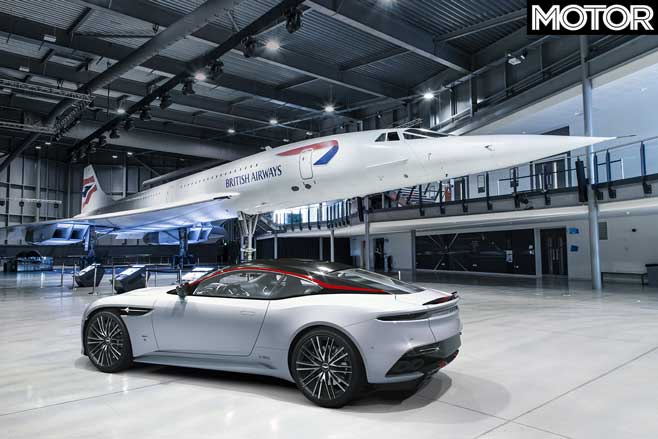
Of course, British Airways was one of the two airlines operating Concorde jets, alongside Air France.
This version of Aston Martin’s 5.2-litre twin-turbo V12-powered flagship isn’t the first aeroplane-inspired Aston, the Vanquish S Red Arrows Edition, Vantage Blades Edition, and the V12 Vantage S Spitfire 80 are all also part of the brand’s ‘Wings’ series.
Only 10 units of the Superleggera Concorde will be built, and it’s likely we won’t know where they end up.
The distinction between a standard DBS and the Concorde is quite clear, as Aston’s ‘Q division’ added exterior features like solid aluminium strakes, a livery with British Airways colours on the roof strake, rear blade, rear diffuser, and splitter. The British Airways ‘Speedmarque’ logo is also present, as is a Civil Aviation Authority aircraft identifier number, unique to each car.
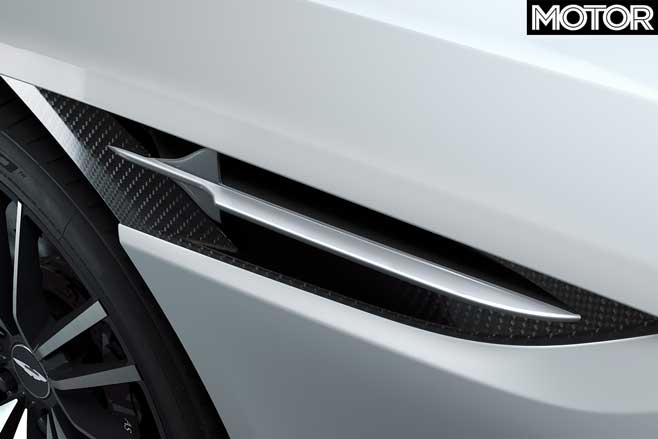
“It’s only fitting that our great British sports car brand marks the achievement of the incredibly dedicated, talented and ambitious teams of British and French scientists, engineers, designers and aircraft workers who made Concorde, and supersonic air travel, a reality in our skies 50 years ago,” says Aston Martin VP and chief creative officer Marek Reichman.
“Using the DBS Superleggera as our starting point, and with the support of the talented personalisation experts in the Q by Aston Martin service to draw on, we have been able to subtly and sympathetically enhance and highlight some of the car’s most notable features while preserving the elegance, style and sheer brutish road presence for which the Aston Martin DBS is rightly known.”
Aston Martin says a portion of sales for each car will go to the Air League Trust, a charity teaching disadvantaged children how to fly, and offering support for them to work in engineering.
As final stocks of the Touareg Launch Edition model make their way out of dealerships, Volkswagen has unleashed the 190 TDI and 190 TDI Premium models that reduce the initial price of entry while taking away some of the equipment.
Priced from $79,490 (plus on-road costs) the Volkswagen Touareg 190TDI promises the same luxury-focused experience but without some of the bells and whistles of the Launch Edition; think things such as quad-zone ventilation and tyre pressure sensors, as well as some design and trim items.
The wheels also drop down from 20-inch units to 19s and suspension reverts to standard steel springs rather than air on each corner.
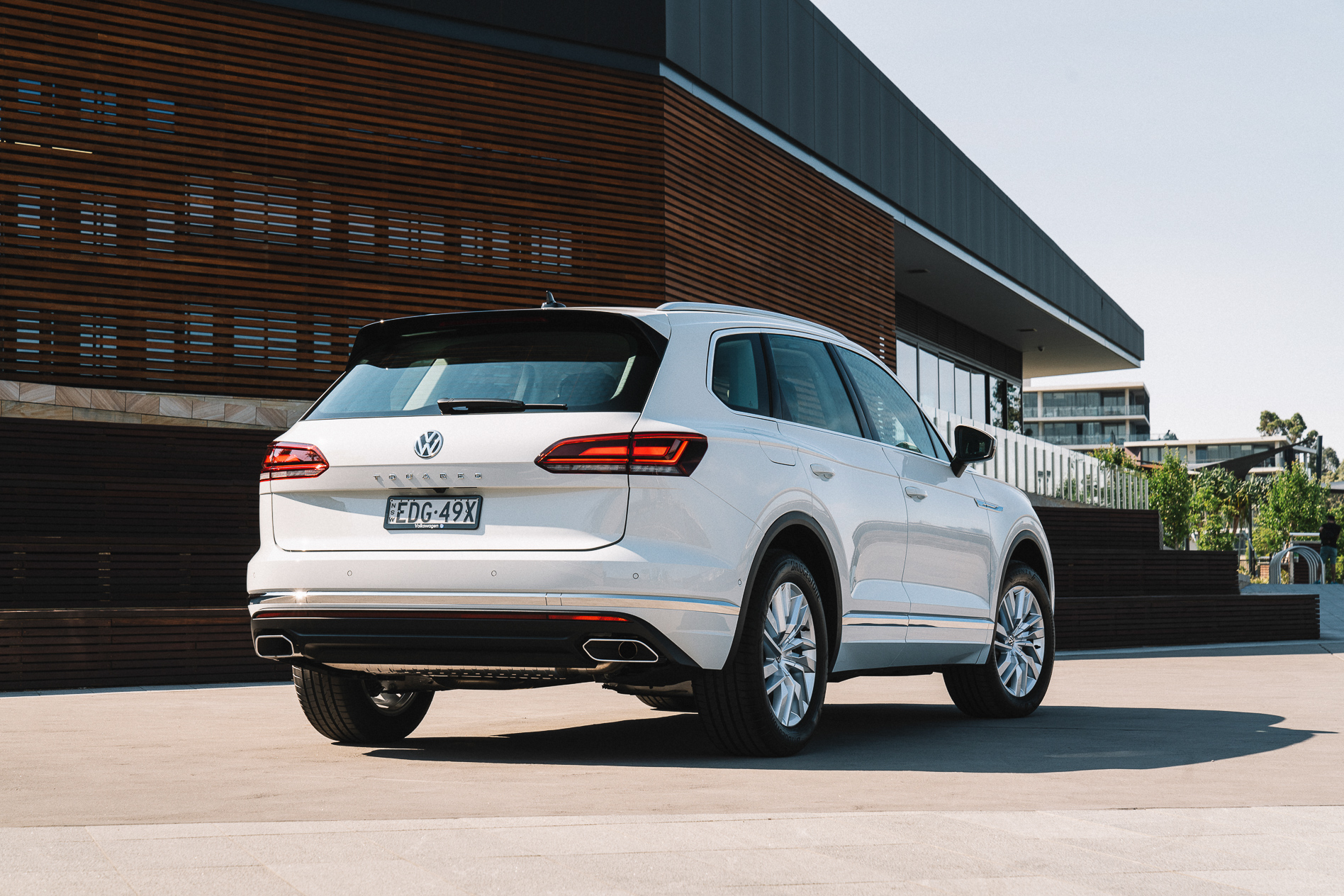
For another $6000 the 190TDI Premium adds back those 20-inch wheels as well as headlights incorporating 128 LEDs each (for active high beam functionality), LED tail lights, that air suspension and massaging front seats with heating and cooling functionality.
Plus, many of the features once reserved for the Launch Edition – and more – are part of various packs that bundle items together.
Between the $8000 Innovision Pack (a 15-inch touchscreen is the highlight), $8000 Sound & Comfort Package (14-speaker sound system and quad-zone ventilation are the standouts), $3000 sunroof and $2000 metallic paint you can easily create a $100K-plus Volkswagen.
Some, including the $8000 R-Line pack, bring features never before see on the Touareg – or indeed on a Volkswagen. Four-wheel steering is one such system, providing rear wheels that turn in the opposite direction to the fronts below 37km/h and in the same direction above that speed.
There are also active stabiliser bars, which help resist leaning through corners.
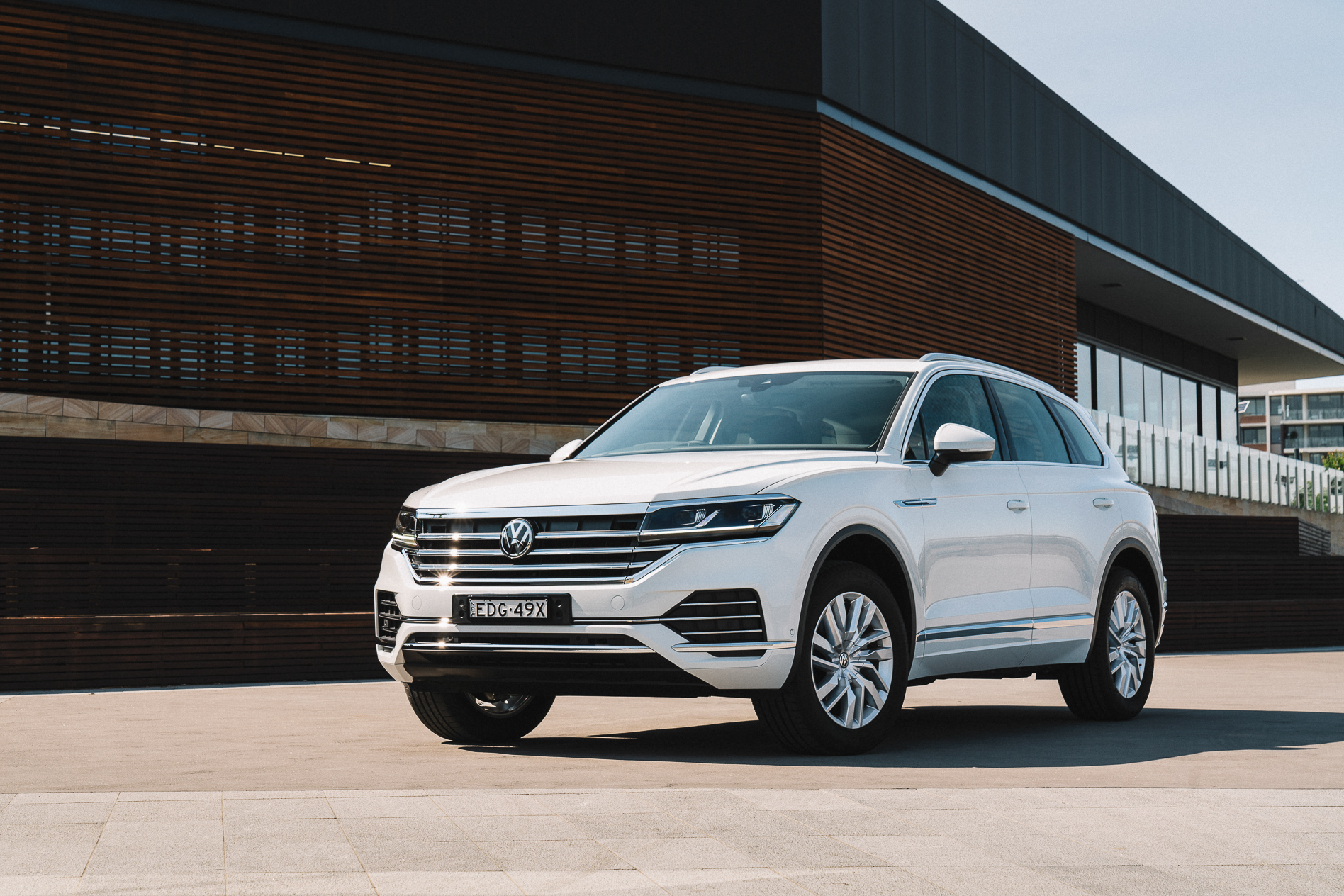
It works beautifully, too. While the standard Touareg is a wonderfully adept car through corners – its basic underpinnings are shared with Porsche, Bentley and Lamborghini – the Electromechanical Active Rolls Stabilization adds a new level of control that virtually eliminates leaning through corners.
Elsewhere, the 190TDI gets the same 3.0-litre V6 turbo diesel matched to an eight-speed automatic.
It’s a smooth combination and with 190kW and 600Nm makes for hearty acceleration, the solid swell of torque easily shifting more than two tonnes of SUV.
The highlight with the Touareg 190TDI, though, is its impressive refinement. The cabin is serenely quiet, with a gentle hum the only clue an engine is huffing away beneath the bonnet.
Riding on the steel-sprung suspension isn’t as plush as the air setup with more bumps and jostles obvious at lower speeds, but the same surefooted feel, something on display at highway speeds.
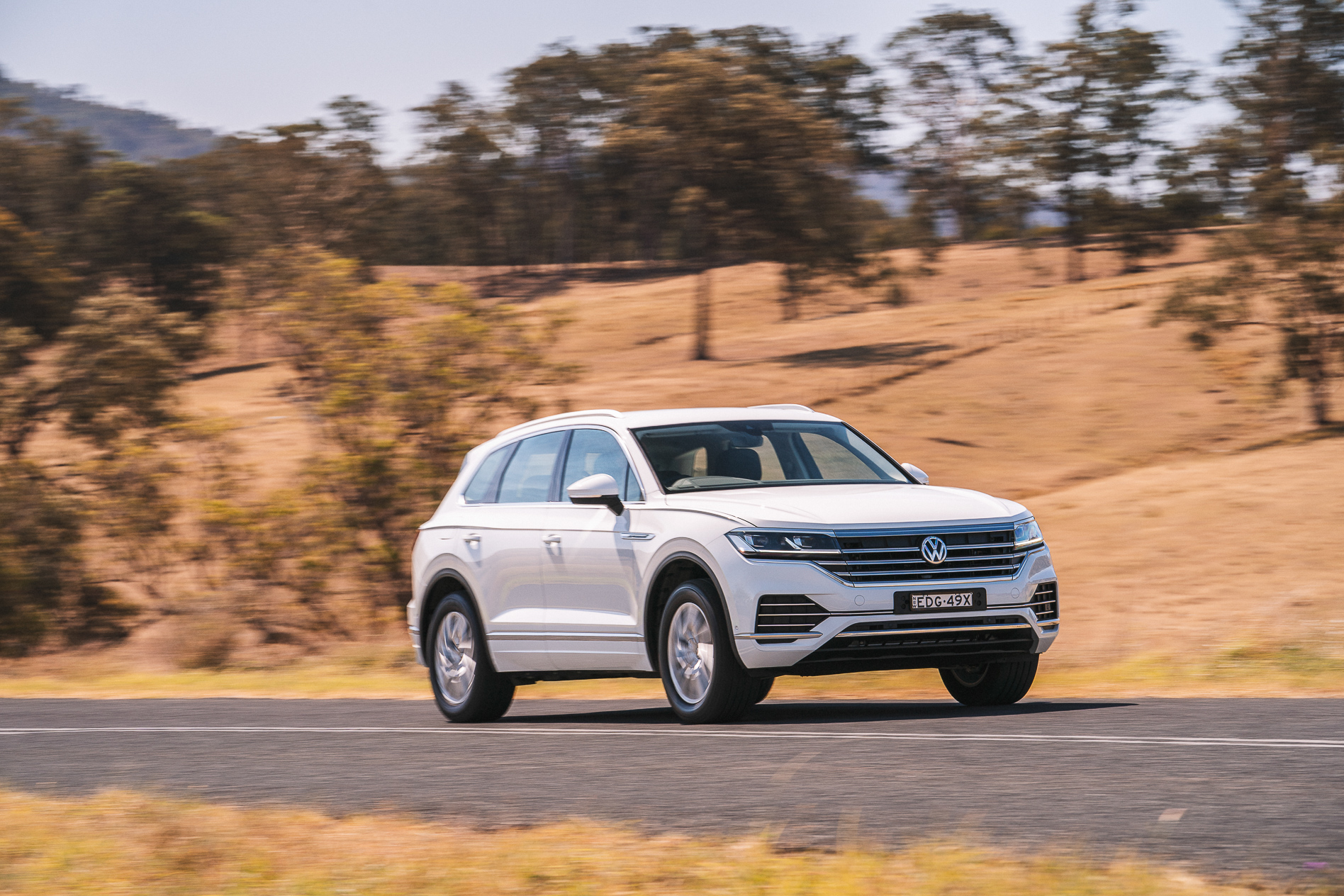
The Touareg is also impressively spacious, the back seats easily accommodating large adults and the boot swallowing 810 litres of gear if you slide the back seats to their forward-most position.
However, the Touareg misses out on a third row of seats, something offered in rival luxury options such as the BMW X5, Audi Q7 and Mercedes-Benz GLE.
While that rules a set of buyers out, Volkswagen sees the hefty boot capacity as a bonus, particularly for grey nomads and others planning to cover big distances.
There are omissions in the 190TDI; no digital radio tuning, for example, and no volume dial for the radio, instead diverting you to buttons on the steering wheel or inferior touch pads on the dash.
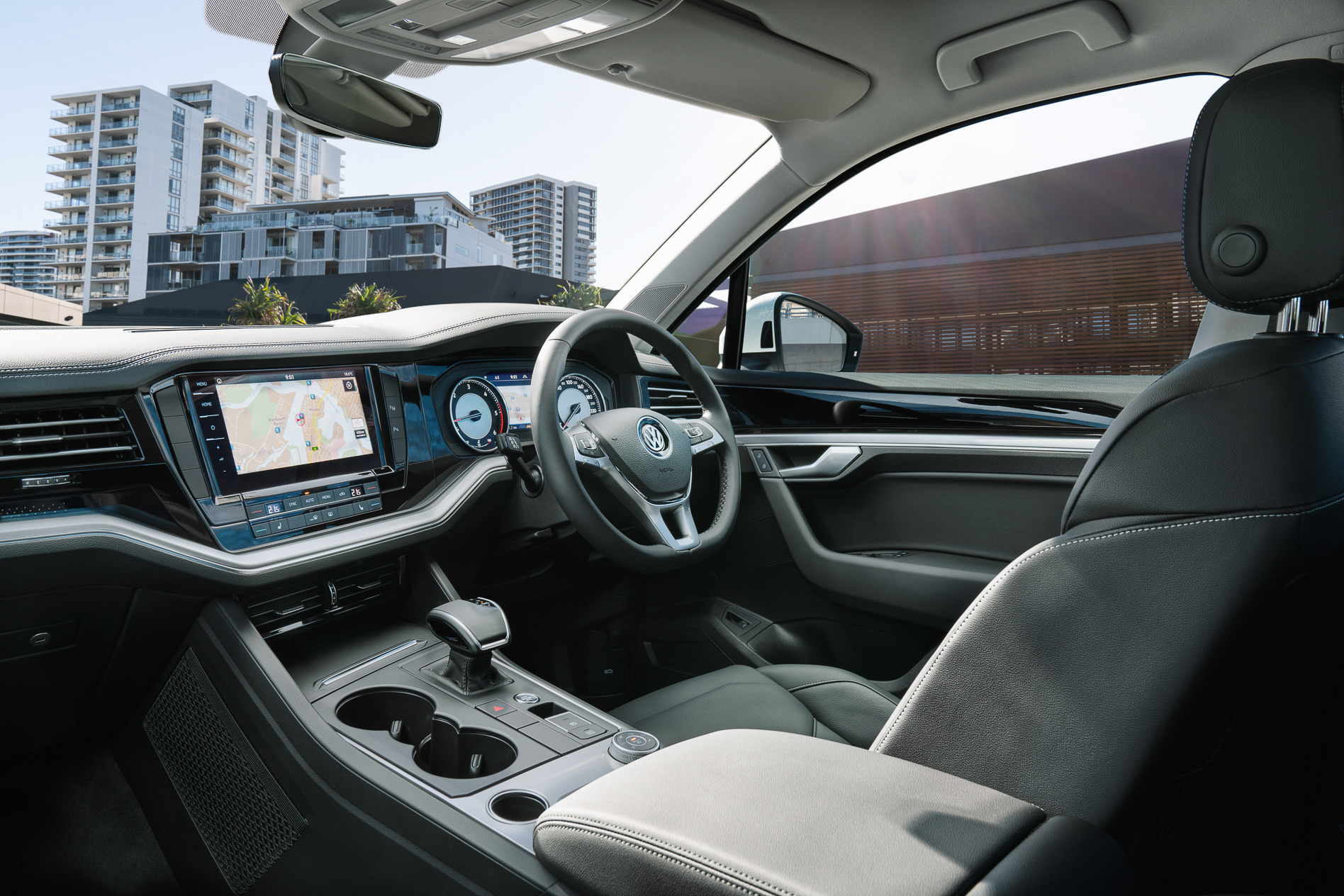
But there’s a much longer list of tempting items to justify the price tag, including leather, navigation and an impressive suite of safety equipment.
What the Touareg lacks in a luxury badge it makes up for in luxury flair and fare.
While some may see it as an expensive mainstream car, others will appreciate the substance on offer for a price that undercuts rivals from more upmarket brands.
Does the Volkswagen Touareg’s increased tech content offset its relatively high sticker price for you? Let us know below!
Big, bold and brash – that’s the updated Nissan Patrol. Petrol only and aimed at the oil-ich United Arab Emirates, the V8-powered off-roader is a totally different beast to the much-loved Y61 generation. For roughly the same sub-$100K price you could get into a used Land Rover Discovery with a frugal turbo-diesel powertrain. Which would you choose?
NISSAN PATROL
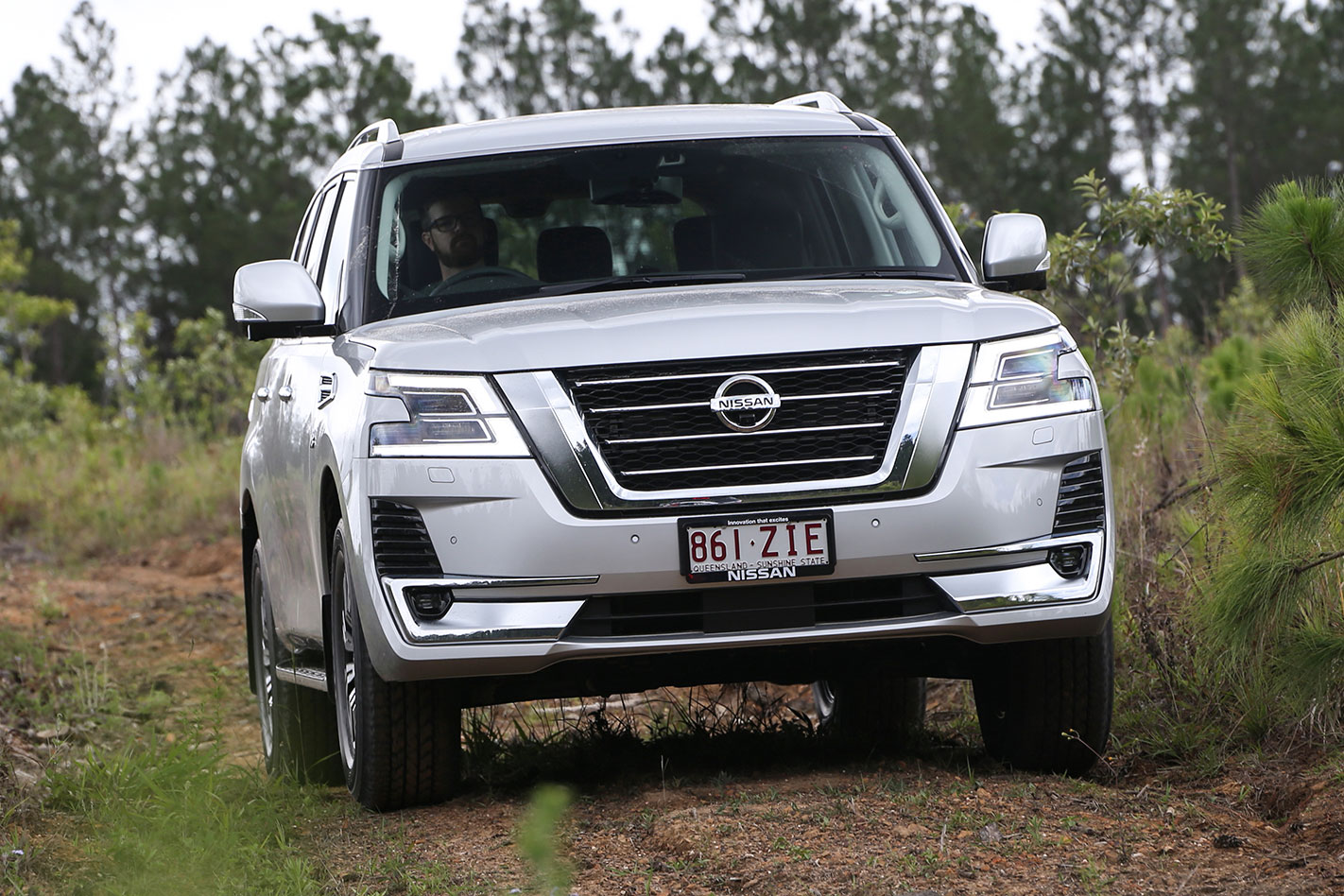
With a fresh design, new safety tech and an improved ride quality, the updated Nissan Patrol has taken the tried and tested Y62 ethos and modernised it. Two variants are available. The entry-level Ti costs $75,990 while the top-spec Ti-L comes in at $91,990. It’s the latter we’re focusing on here.
Mechanically, the Patrol remains untouched, with the 5.6-litre V8 developing a significant 298kW and 560Nm – remember, this is the VK56 unit which formed the basis for the engine used in Kelly Racing’s Nissan Altima. With abundant performance on tap, and a circa 2.7-tonne kerb weight, it’s no surprise that the Patrol’s combined fuel consumption is 14.4L/100km. Ouch.
The refreshed Y62 now, according to Nissan, rides better on-road with improved dampers and suspension retuning. For those who actually want to exploit its off-road prowess, the Patrol features an electronic rear diff lock, hill-descent control, hill-start assist and an off-road monitor. The braked towing capacity is 3500kg.
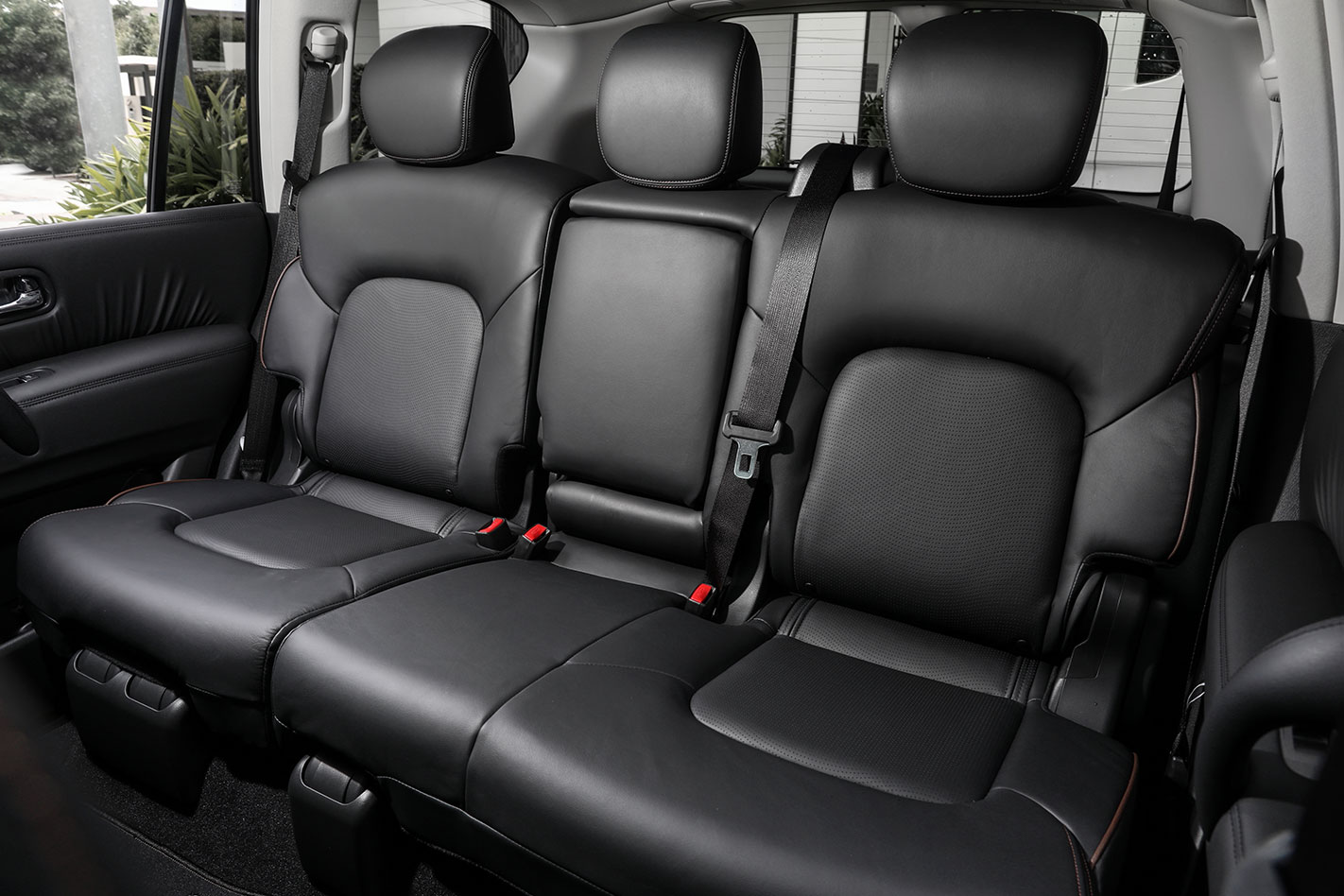
Inside, the Patrol remains largely unchanged – and it shows, with a dated design and antiquated graphics within the infotainment system. There’s no Apple CarPlay or Android Auto for Australia, however, the Ti seats eight and the Ti-L has room for seven. The air-con and ventilation system has also been upgraded to better cool or heat rear-seat passengers.
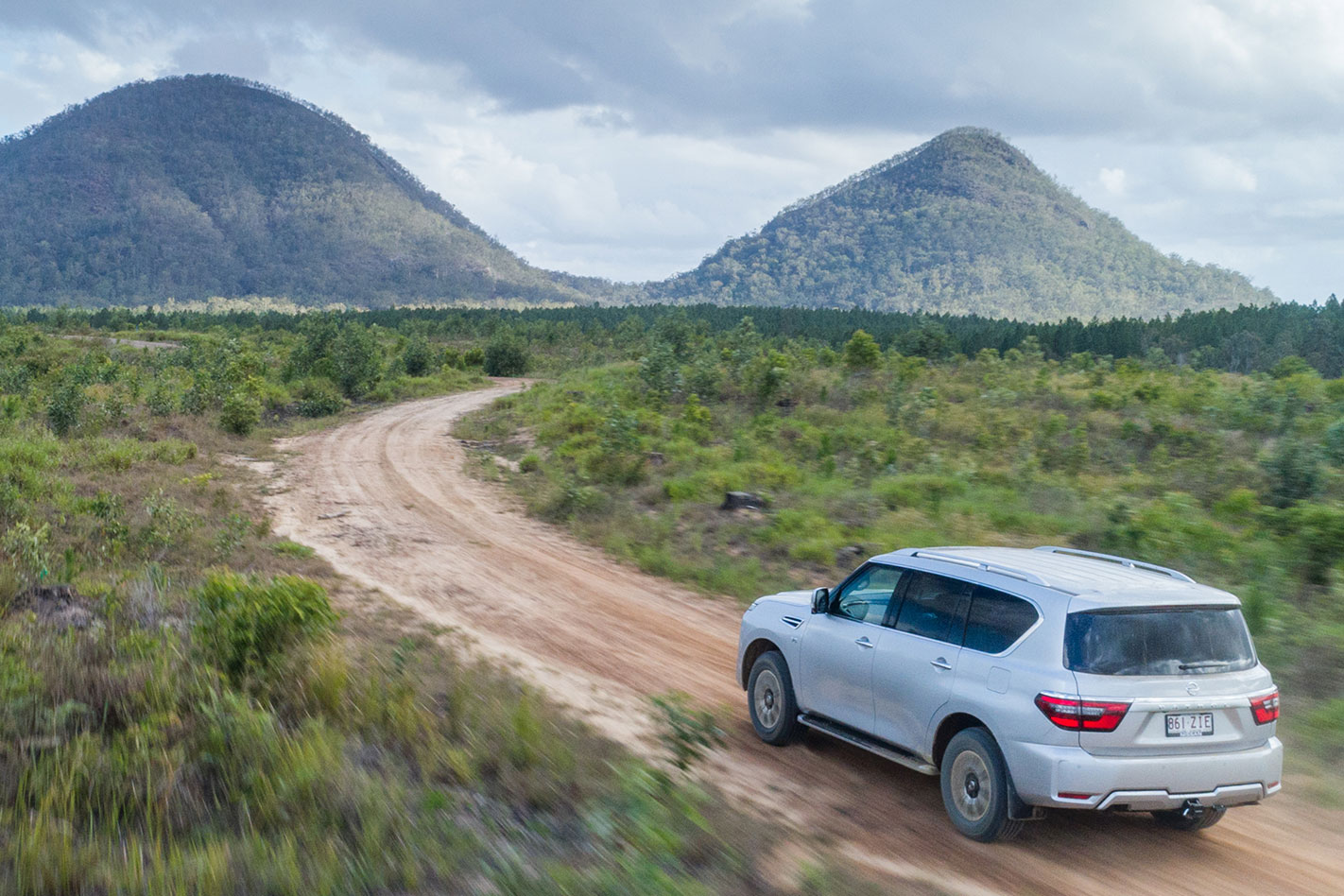
The safety systems have been increased with AEB, forward collision warning and rear cross-traffic alert standard on both variants. The Ti-L gains intelligent cruise control, lane-departure warning, lane intervention as well as blindspot warning and intervention.
LAND ROVER DISCOVERY
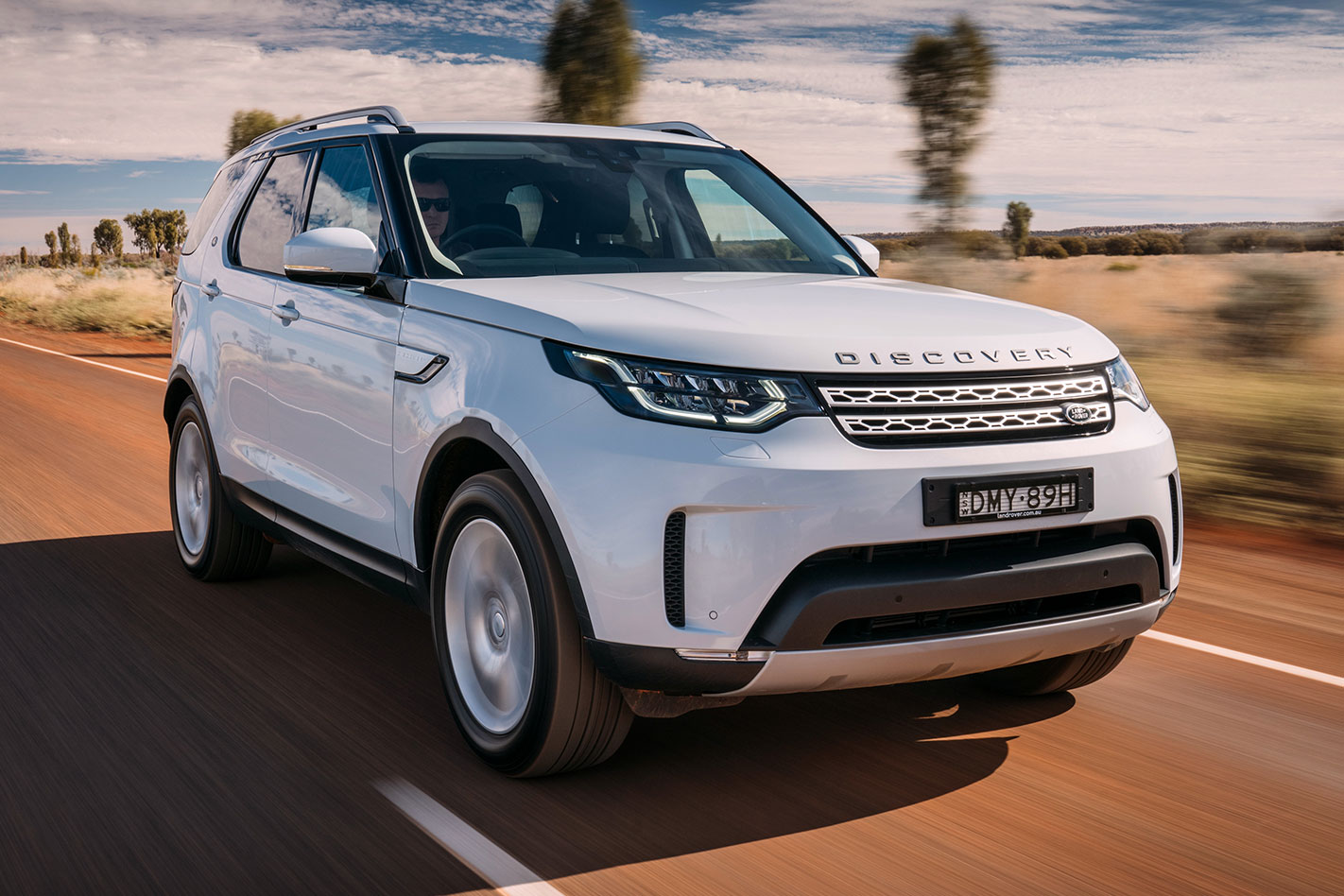
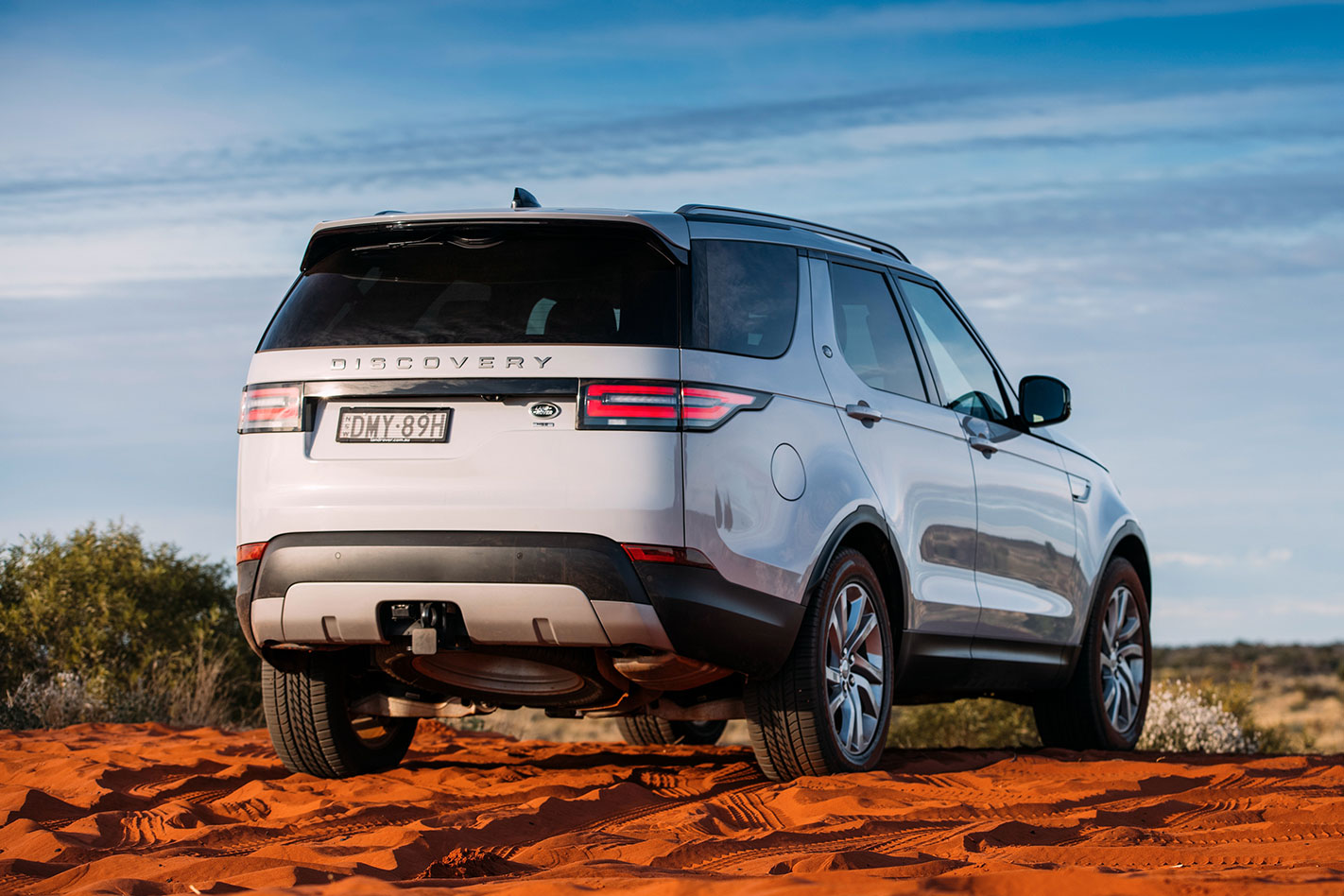
According to Land Rover, this generation of Discovery is the first all-new version in the icon’s 30-year history. And it went all out, too, with a monocoque construction replacing a traditional separate chassis. There’s also a heap of aluminium in its construction to make it lighter – around 400kg depending on the variant.
In raw figures, the Disco’s 3.0-litre V6 turbo diesel is lacking compared to the burly V8 found in the Patrol. Still, 190kW and a hefty 600Nm of torque is enough to motivate the 2.2-tonne SUV to 100km/h in 8.1 seconds with the potential of returning a combined 7.2L/100km. So it’s a grunty unit with the added benefit of relative frugality – especially compared to the thirsty Patrol. An eight-speed ZF automatic takes care of gear changes.

Height-adjustable air suspension, dual-range gearing and an e-locker rear differential form part of the off-road armour, meaning the Disco is capable when the going gets tough. It displays competent on-road manners, too, although it’d be worth seeking out heavier-duty tyres if you do plan to turn off the tarmac. If not, the 3500kg towing capacity should handle caravan/boat duties with ease.
Inside, the Disco is an altogether more luxe experience, with a large touchscreen, modern graphics and an overall premium ambience. Essentially it feels very Range Rover. Five pews come as standard, with the option of a third row to create a seven-seater. If you do opt for the extra seats, the legroom in the additional row is up there with the best in class. Some won’t be happy that the split tailgate is no longer offered.
Specs comparison
| u00a0 | NISSAN PATROL Ti-L | LAND ROVER DISCOVERY TD6 HSE |
| Price (new) | $91,990 | $100,261 (2017) |
| Engine | 5552cc V8, dohc, 48v | 2993cc V6, dohc, 24v, turbo-diesel |
| Output | 298kW/560Nm | 190kW/600Nm |
| Transmission | 7-speed automatic | 8-speed automatic |
| 0-100km/h | 8.5sec (claimed) | 8.1sec (claimed) |
| Economy (combined) | 14.4L/100km | 7.2L/100km |
| Drivetrain | AWD | AWD |
| Doors | 5 | 5 |
| Seats | 7u00a0 | 7 (optional) |
| Wheel size | 18-inch | 19-inch |
| Country of origin | Japan | UK |
Wheels staff picks

Trent Giunco
Staff Journalist
If I’m going to be spending close to $100K, I want a bit of luxury. And while the Patrol gains new clothes, it’s still much the same on the inside. I dare say I wouldn’t be off-roading much, either, so kerbside appeal means a lot. I’d make sure the Disco still had some dancing left in its warranty period, though. However, if Nissan sold the Patrol Nismo with 319kW down under…

Andy Enright
Deputy Editor
While a 2017 Disco is a prodigiously talented thing, there’s something about the more utilitarian Patrol that appeals to me. Were I taking something out into the wild red yonder, I’d certainly choose the Nissan. That’s not to say I’ve got anything against Land Rover products. I’d just prefer to wait for the new Defender. So, for the time being at least, the Patrol gets my vote.

Cameron Kirby
Staff Journalist
I’m actually a big fan of the Disco (yes, even of the styling), but in this instance I’ll be opting for the Japanese workhorse. The new facelift makes the Patrol a rather attractive beast from a visual standpoint, and mechanically the Nissan is a solid, reliable unit, with ample grunt. Time to hook up the ski boat and haul it to the best spots struggle-free.
Reckon we’ve got it right? Or are we way off the money (literally)? Find your best and let us know in the comments what you’d buy.
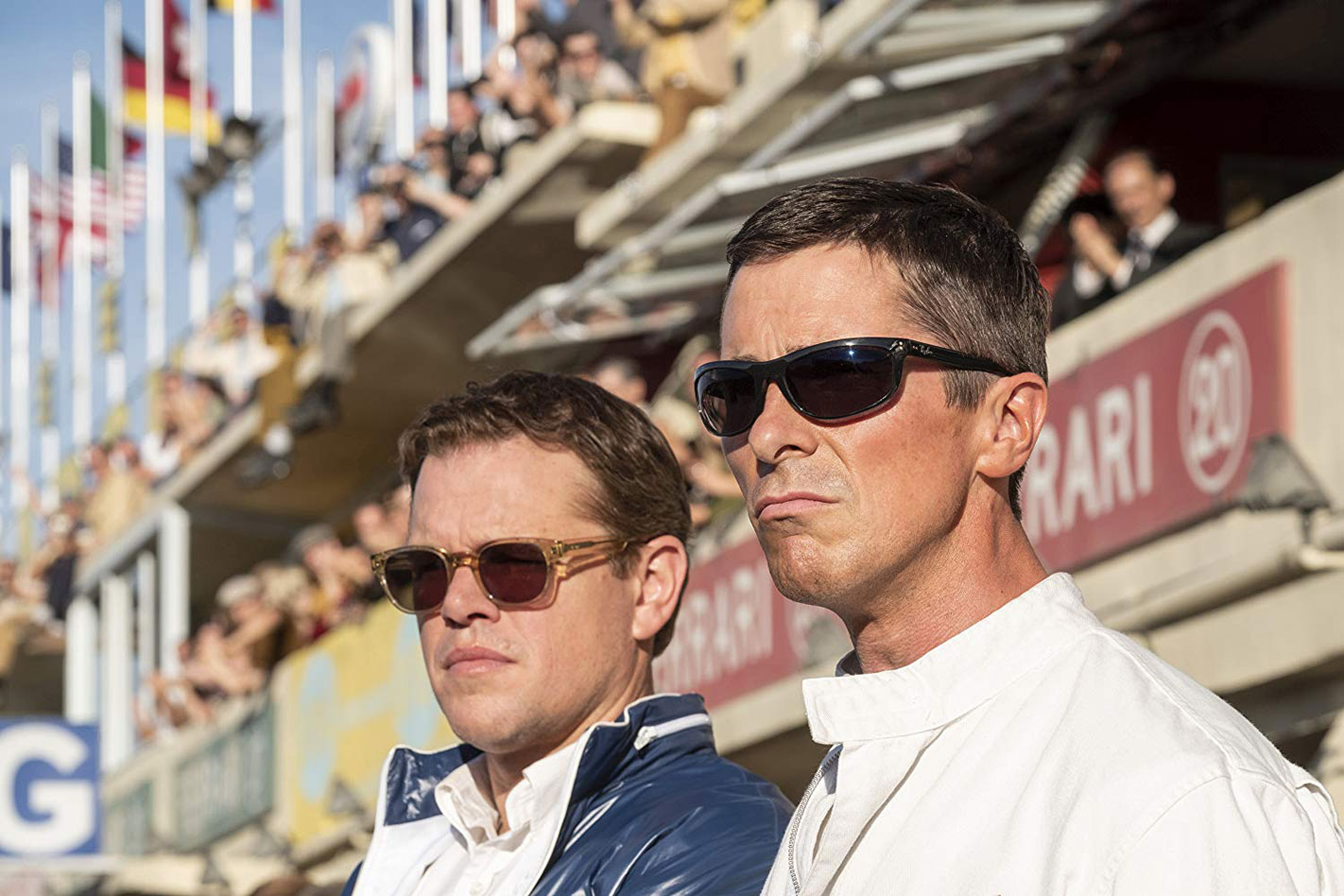
Here at Wheels HQ we love a good car flick, and the new Ford vs Ferrari film is no different.
It has plenty to keep a car enthusiast engaged, while remaining enjoyable for those that don’t have oil in their veins.
However, being a big-budget Hollywood production, there is more than a little silver screen fairy dust sprinkled on the story.
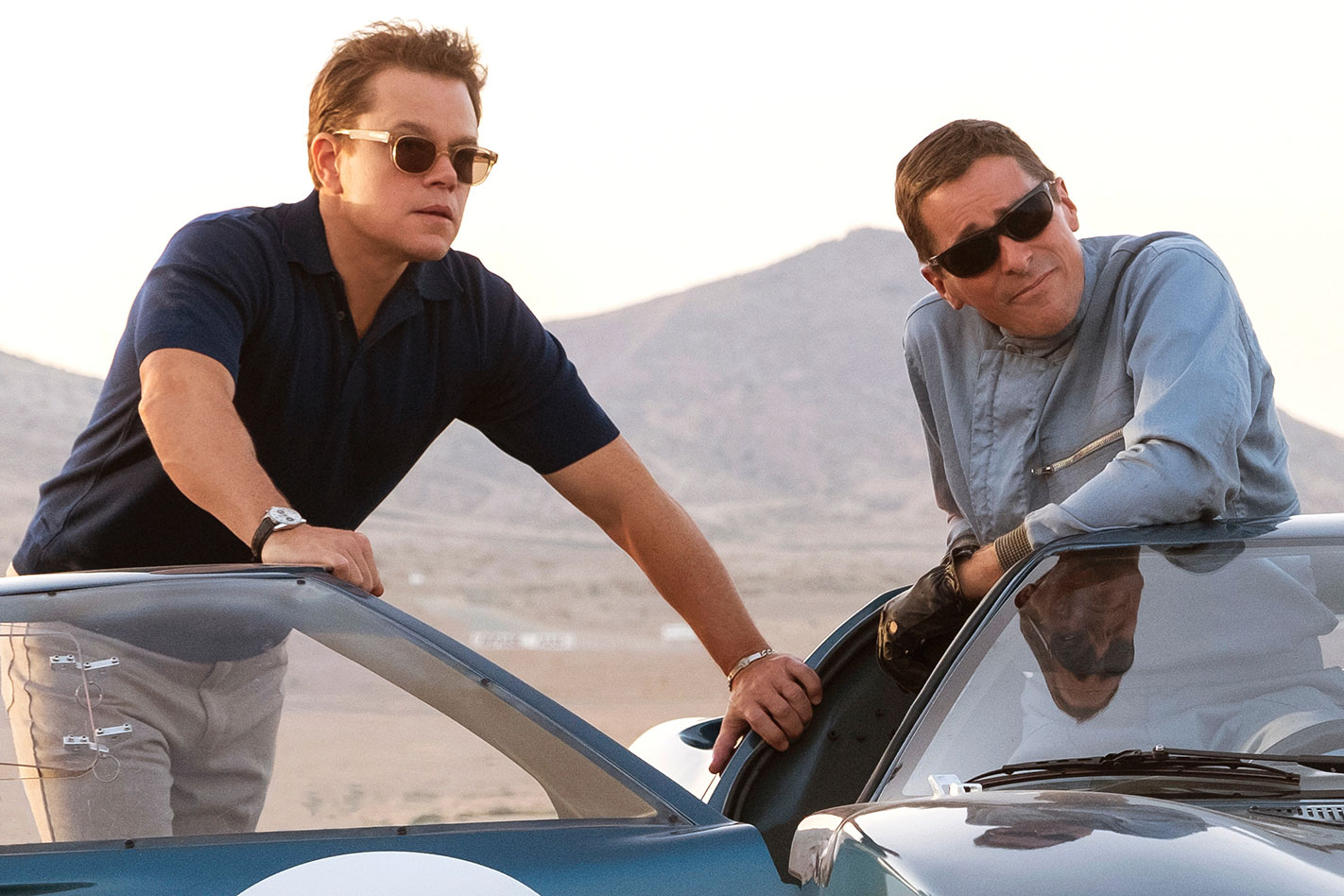
There are plenty of things the movie did get right, but we couldn’t let some of the factual mistakes go unnoticed.
While what happened at Le Mans 1966 is history, along with the lead up to the iconic race, some readers may not appreciate us ruining the film for them. So, here it is, your official spoiler warning for things that happened over five decades ago.
While the filmmakers embellished certain aspects, they probably didn’t need to. Most of the film’s more outlandish moments actually happened, which is what makes the story of Le Mans ’66 so compelling.
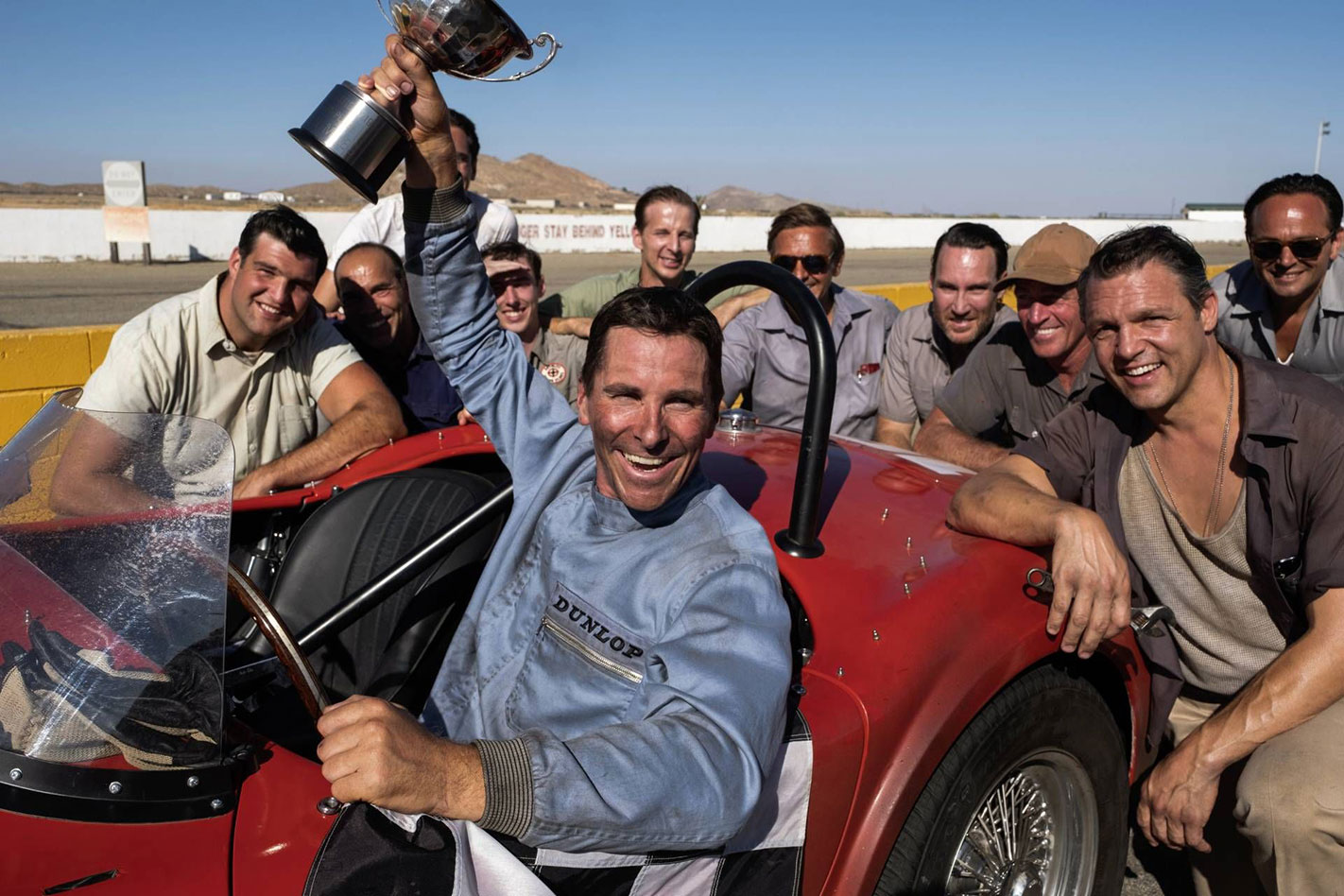
So here are just some of the errors we spotted in Ford vs Ferrari. You may have more:
1. They left out an entire year of Le Mans
Perhaps the biggest omission in Ford vs Ferrari is an entire year of competition. The film depicts Ford losing in its first attempt at the great endurance race, before returning for the ’66 triumph. Fact is that the Blue Oval stumbled twice, in both ’64 and ‘65, meaning the filmmakers chopped out an entire year of development altogether.
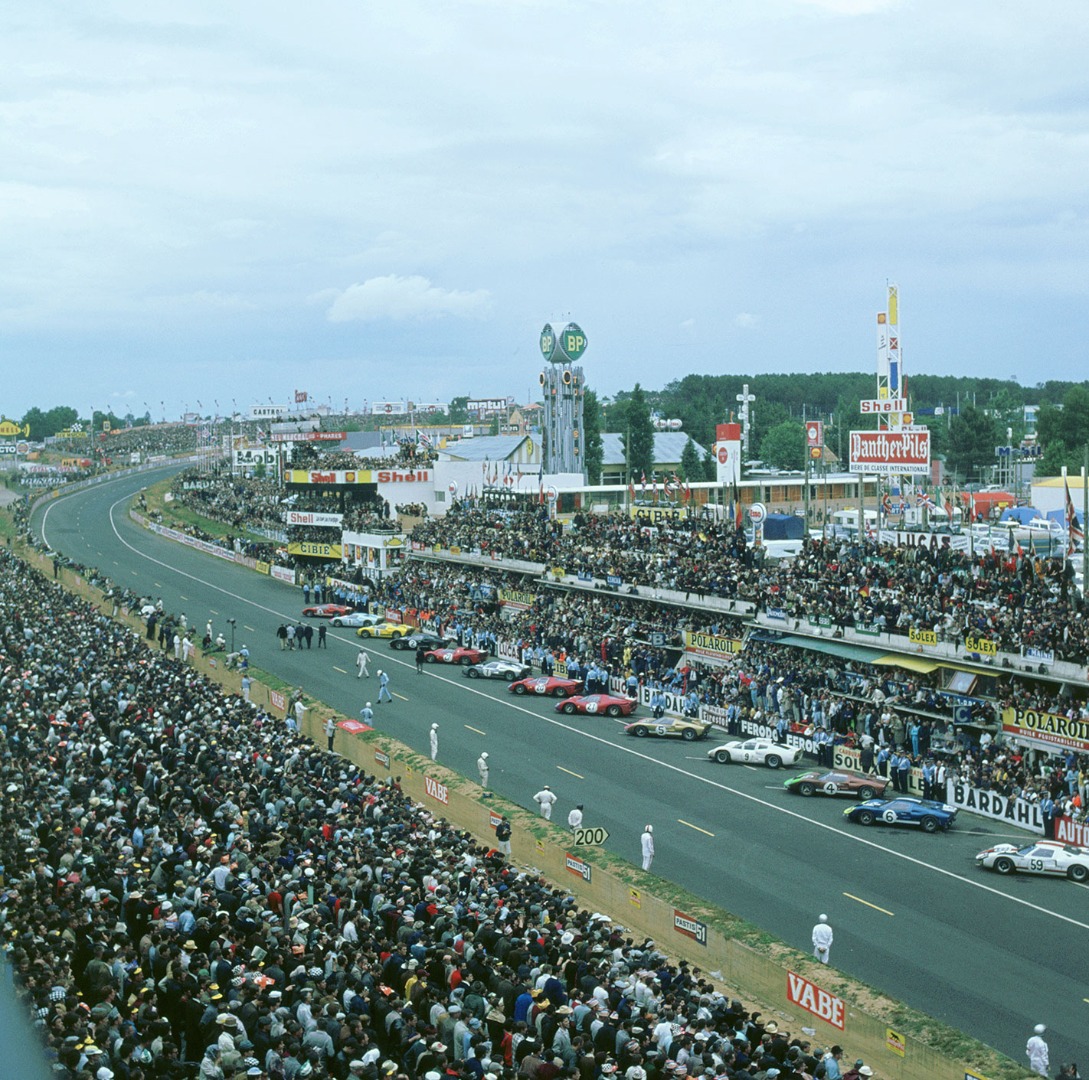
2. The on-track battle at dawn never took place
The climax of the film is punctuated by a tense on-track battle between Ken Miles and his Ferrari rivals. In the film, Miles must fight back from being a lap down on Ferrari driver Lorenzo Bandini throughout the night, and pass him on track in daylight hours.
However, in the actual ’66 race, the #21 Ferrari was limping around in 12th place by 3am.
It was actually the #3 Ford GT40 of Dan Gurney and Jerry Grant that led the race come morning, engaging in a dogfight Miles and Hume, against Ford’s strict team orders. In the 18th hour the #3 blew a head gasket, leaving Miles in charge of the race, two laps up on his nearest rival and teammate.
3. Ken Miles and Carroll Shelby never got into a fist fight
Throughout the film Miles and Shelby get into a bunch of physical altercations, but as far as anyone that worked on the team can recall, these never happened. These were likely added to bring some tension into the relationship for the film, but we think they were a tad unnecessary.
4. Ford didn’t object to Miles driving at Le Mans ‘66
Much of the film centres around a theme of Men vs The Man, with the renegades of Shelby and Miles in a constant strategic civil war with the suits that run Ford. However, this is largely overblown.
In Ford vs Ferrari the Blue Oval objects to Miles taking part in Le Mans ’66 on account of his brash nature. The truth is that while Miles missed out on taking part in the ’64 running with Ford, he raced in ’65 (failing to finish due to a gearbox failure), and was a sure thing for the ’66 event.
Oh, and Shelby never bet his business on Miles winning Daytona as part of a wager with Henry Ford II that would allow Miles to race in France.

5. Carroll Shelby never took Henry Ford II for a joyride in a GT40
As much as we wish this was true, it just never happened. In the film, Carrol Shelby takes Henry Ford II for a joyride in his creation, which results in the industry giant bursting into a mixture of sobbing and laughter. It’s depicted as part of a ploy intended to secure Miles a race seat for Le Mans ’66. But as we mentioned above, Ford didn’t oppose the British driver taking part, making the scene unnecessary.
Secondly, it is highly unlikely that the executive of one of America’s largest car makers was taken for a joyride in a race car sans helmet. Safety regulations were pretty loose back then, but not that loose.
The final nail in the factual coffin for this scene is there is no record of it ever happening. You’d think if Henry Ford II jumped into a GT40 someone would have noted it.
6. Much of the technology used to build the GT40 is overlooked
If you took Ford vs Ferrari as wholesale truth, you’d probably believe that the GT40 was almost exclusively developed on an American airfield.
But this misses much of the cutting-edge technology of the time that was used to develop the legendary racer. This included engine dynamometers that ran motors through simulations of the race, which at the time was something straight out of science fiction.
7. Lee Iacocca didn’t negotiate the deal with Ferrari
While Ford did attempt to buy Ferrari at the start of 1963, it didn’t happen quite as the film depicts. Firstly, Lee Iacocca wasn’t part of the team of lawyers sent to Italy to ink the deal.
Secondly, there was no cunning espionage that resulted in a counter bid on Ferrari by Fiat. While the Italian company did eventually buy Ferrari, that wasn’t until 1969. At the time of the film Fiat granted Ferrari a cash stipend as thanks for elevating the stature of Italian cars internationally.
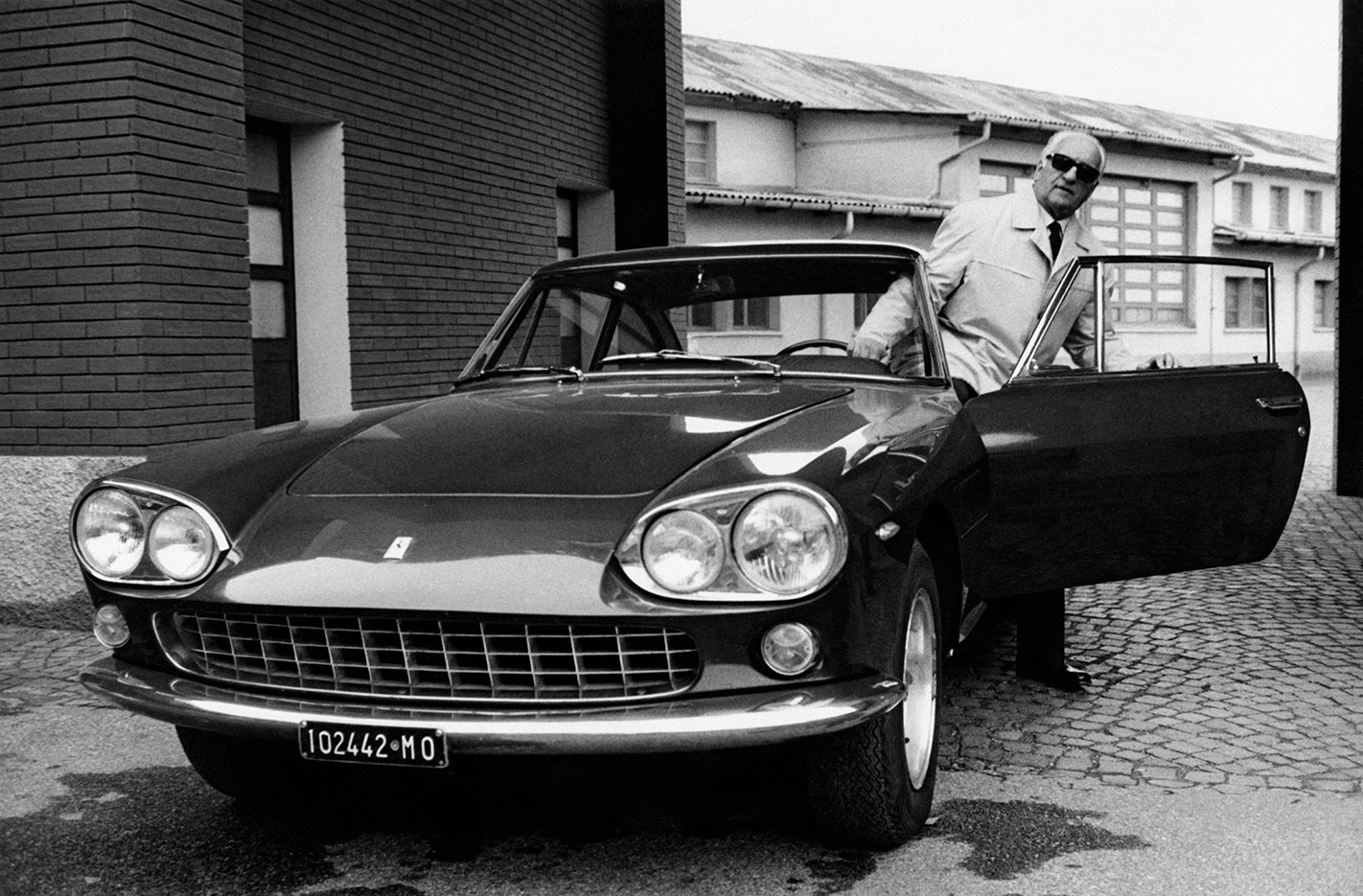
What prompted the deal with Ford to be torpedoed was simple, Enzo Ferrari didn’t want to give up control of his race team. Legend has it; he circled the clause in the paperwork, wrote ‘this will not do’, walked to lunch with his solitary lawyer, and never returned.
8. Enzo Ferrari didn’t attend the race
As the patriarch of Maranello, it would make sense for Enzo Ferrari to be a Le Mans in 1966 to watch his team defeat Ford once more. In the film he is depicted as stoically overseeing proceedings in pitlane, even having a verbal jab at his American equivalent Henry Ford II.
But this is a glaring historical mistake, as Enzo Ferrari didn’t attend Le Mans ’66, meaning he wouldn’t have been present to give a gracious tip of the hat to Ken Miles come race end.
9. Changing from second to fourth gear probably isn’t a strategy that’ll win Daytona for you
One of the more gripping action sequences shows Ken Miles on the final lap of Daytona, attempting to overtake Dan Gurney, also in a GT40. Aside from the fact that he won the ’66 race by eight laps and the stadium floodlights depicted weren’t installed until 1990, Miles’ winning strategy appears to be to shift up to gears to pip his rival Ford on the line. Given that a 7-litre GT40 has a four-speed gearbox, he’d clearly made his way to the head of the pack by driving the thing in second gear. Unlikely.
10. An inconvenient truth?
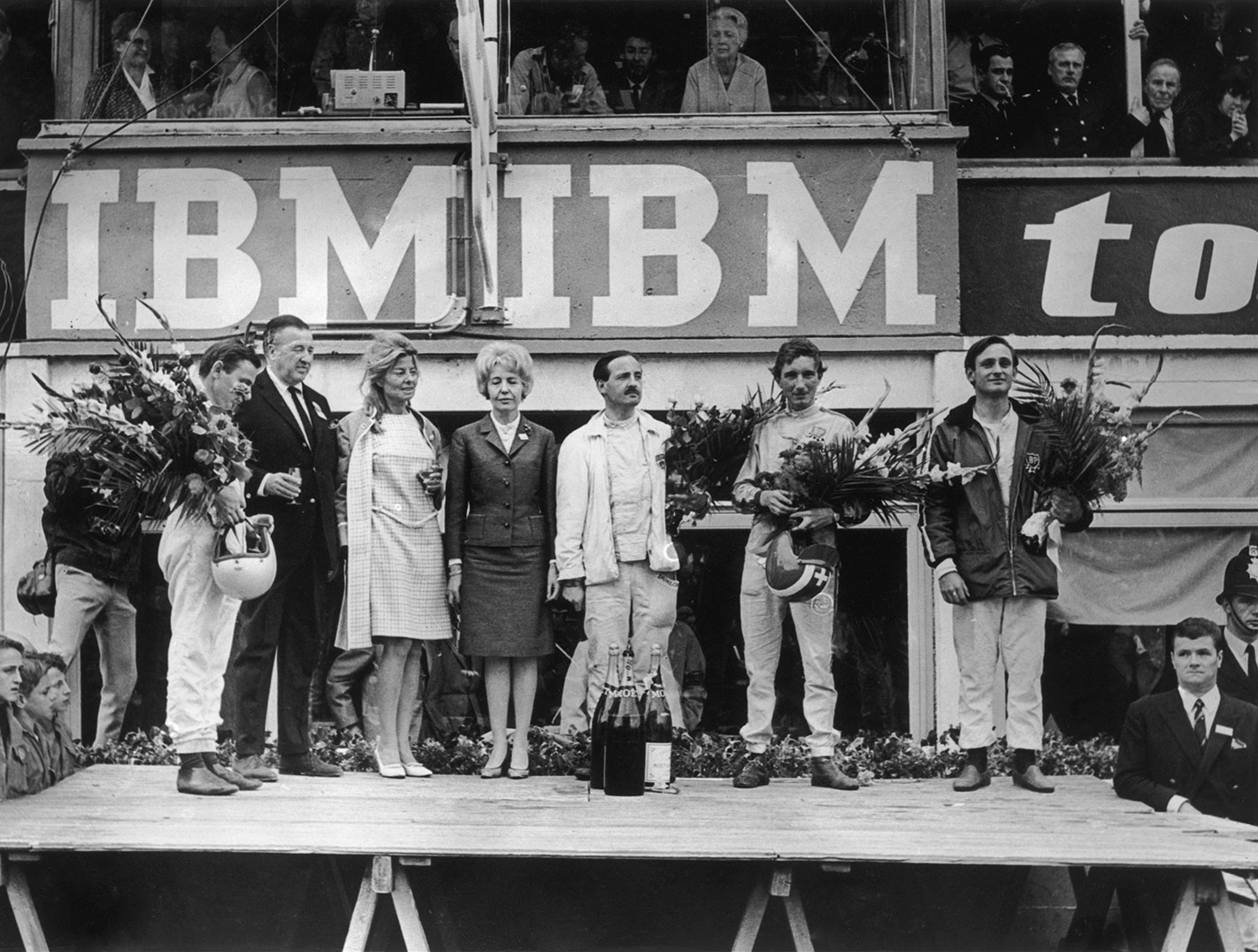
The movie claims that that Shelby was the first American to have won Le Mans. While he did win the 1959 race in an Aston Martin, both Phil Hill and Luigi Chinetti were American who had previously stood on the top step of the podium at La Sarthe, in 1958 and 1949 respectively. The reason they were both erased from history for the movie? Maybe because both drove Ferraris to victory.
The Reader: Peter Salera The Car: 2016 Ford Mustang GT The Mileage: 13,000km The Ownership period: 2 years
This feature was originally published in MOTOR’s September 2018 issue
You’re a Ford guy? My grandfather worked at Ford for 35 years and I’ve been a Ford boy my whole life. I had a Ford Mondeo GLI, then a BF XR6 brand new, an Audi, an FG XR6 Limited Edition, FG X XR8, a Ford Fiesta XR4, then the Mustang now with a daily BA XR6.
The Audi and XR4 are odd picks, aren’t they? If I could go back in time I wouldn’t have sold the XR4. It’s cheaper on fuel than the BA and a great driver’s car. I bought an Audi A4 S-Line because I was doing a stint in real estate and my boss said I look like a hoon in my Falcon. That’s the only car I regret owning because they don’t hold their value that well.
How did it feel swapping a Falcon for the Mustang? When I heard that they were going to go, and being a part of my family – my dad’s always had them, my uncle’s always had them – it was just weird. Having the XR8 was an awesome car. I was in two minds when the Mustang came out. I didn’t want to get rid of it. The Mustang’s more fun and more visually appealing. But in terms of overall build you can’t go past the Falcon, it felt like a sturdier car.
You’ve subtly tweaked the Mustang… Pretty much every car I’ve had I’ve changed the wheels. It’s an addiction. I’ve never delved into superchargers – not yet. The wider tyres on the back has made it a little stickier. I find the rear-end’s a little leafy, especially the manuals, when you click it into second you can get a little slip.
What’s the most memorable moment with the Mustang? Just getting one in general. Growing up I’ve always liked the Mustangs. I have that old-school mentality to work, work, work, and it’s nice to reward myself. It was fulfilling. It was nice to get one, they’re a working class man’s hero car.
