
You can now buy a used Macan S for roughly the same price as a new Volkswagen Golf R. However, can the Porsche be a hot hatch on stilts, or is the venerable Golf really all the car you’ll ever need?
VOLKSWAGEN GOLF R
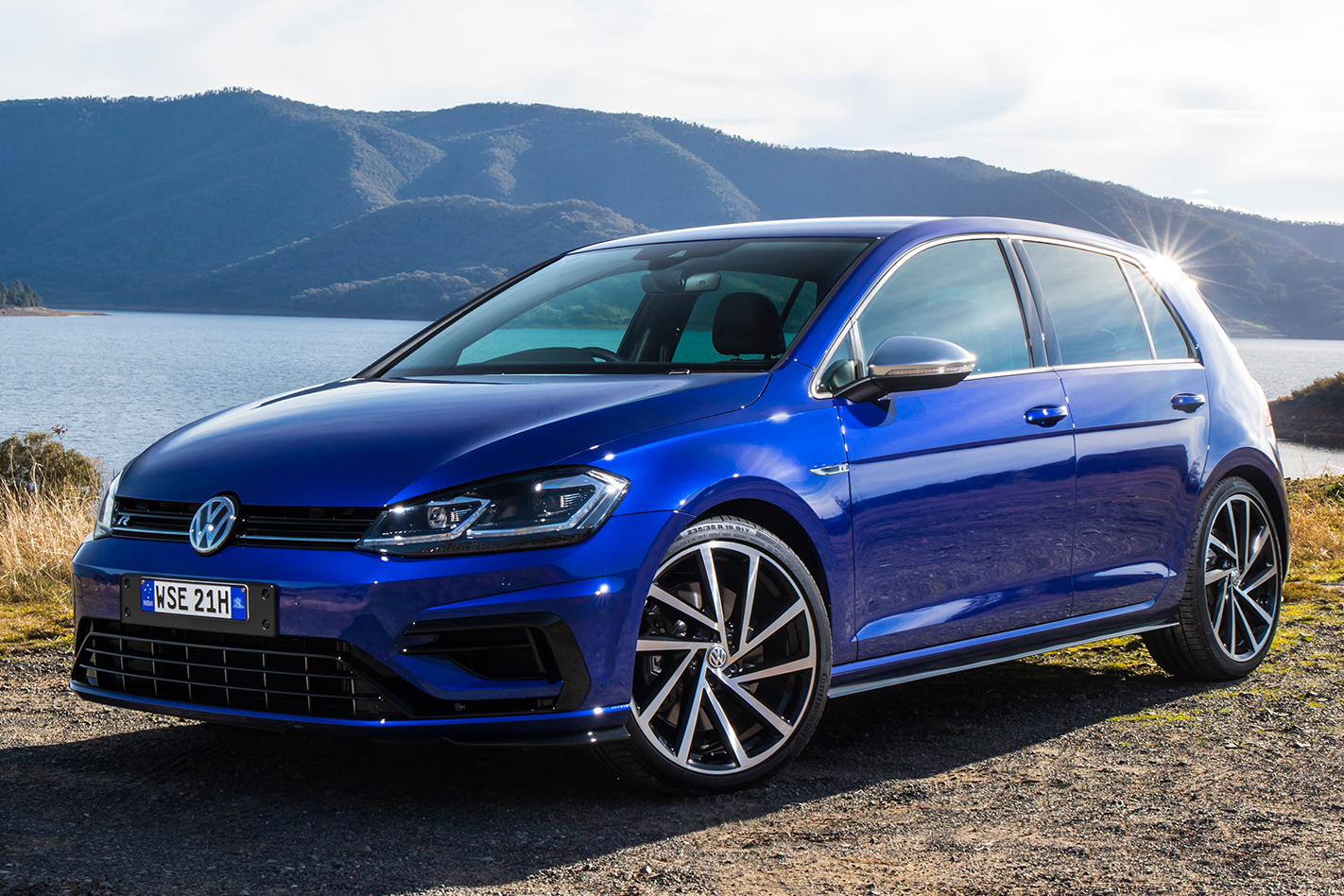
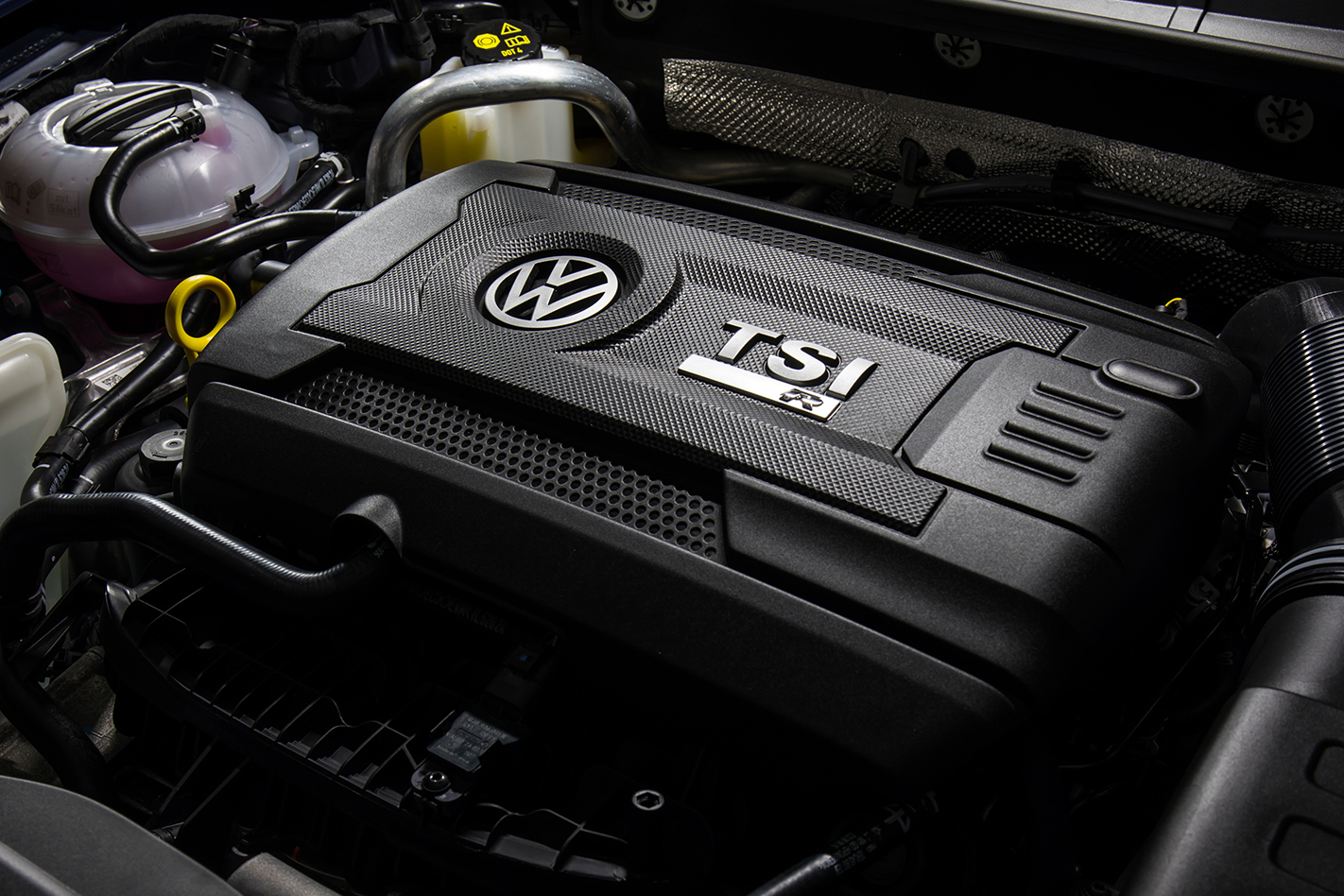
The Volkswagen Golf GTI is a very good thing. As an all-rounder, it’s hard to go past. So much so, that some see little point in gaining drive to the rear wheels, adding 33kW of grunt and slapping an R badge onto a Golf’s rump. The EA888 2.0-litre four-cylinder turbo might not sound the same as the creamy V6 in the R32 of old, but with 213kW and 380Nm (from just 1850rpm), it’s a rapid little thing. Plus, traction is rarely an issue with the Haldex-based all-wheel drive system.
Despite its relatively demure exterior, the R knows how to have fun. And crucial to that is the fact you can turn the ESC completely off. Additionally, Volkswagen claims 100 percent of torque can be distributed forward or aft under severe provocation, while the wet-clutch seven-speed DSG keeps things on the boil.
Dynamically you can induce rear movement under brakes to keep things interesting, yet it’s also easy to access an inherent neutral balance. There’s an enjoyable compliance to the suspension tune and overall, the R covers ground at an astounding rate while never making you feel uncomfortable. Although a proper mechanical front diff would make the experience even better.
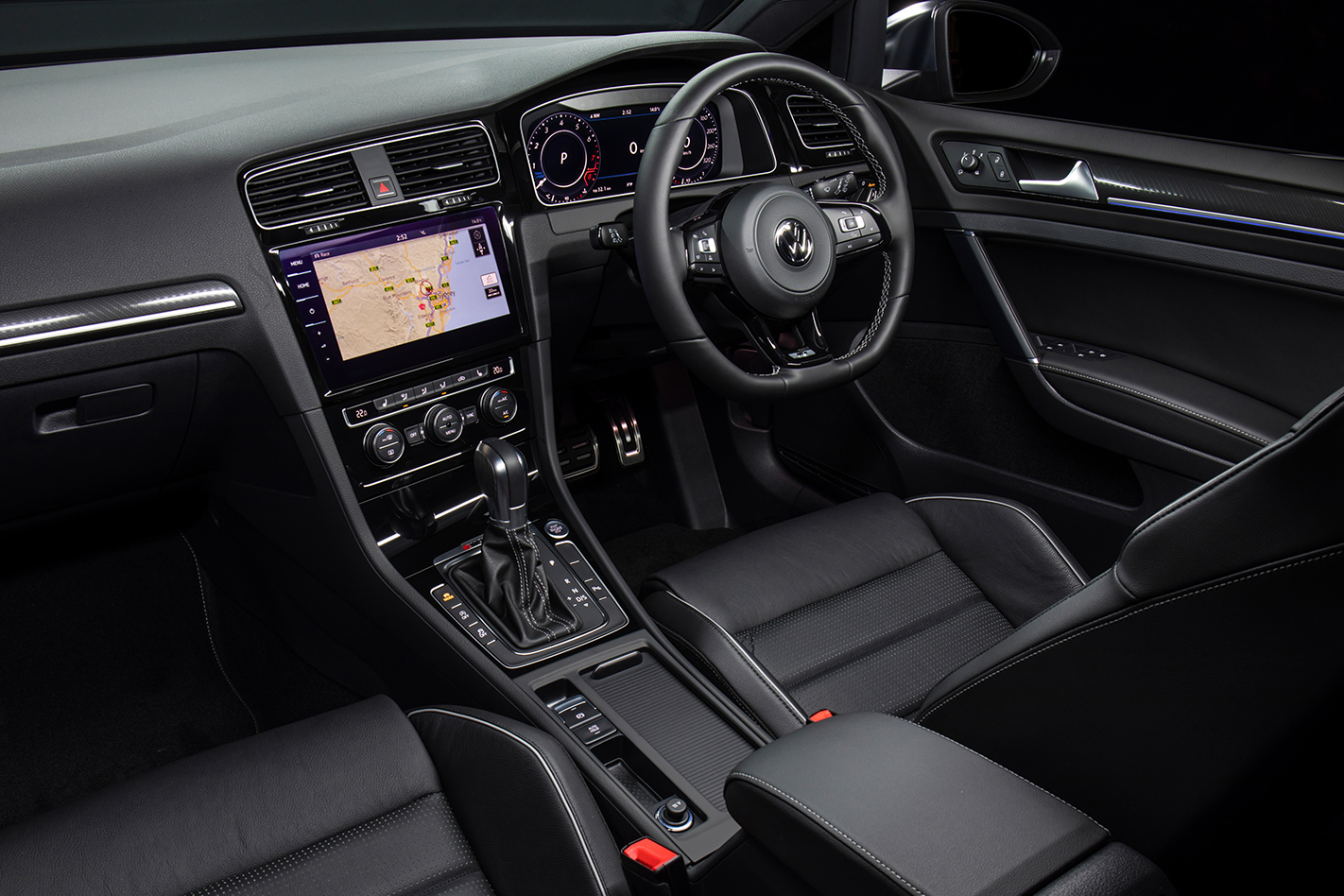
Inside the cabin is another area where the Golf package shines. It’s a premium place to be with plenty of infotainment firepower and door ‘thunks’ aplenty. The all-wheel-drive system cuts the boot space over a front-wheel-drive Golf by 37 litres to 340, but there’s a wagon version if you need more space. Overall, the R has adequate levels of cabin space for heads, knees and toes.
PORSCHE MACAN S

If Porsche decides to emblazon a car with its prestigious badge, we can assume it’s going to cut the mustard. Yet, even with that knowledge, when the German marque turned its hand to SUVs, well, let’s just say there was some bated breath. Hindsight proves there was nothing to worry about – especially with the smaller Macan. It genuinely puts the ‘Sports’ in SUV like few other offerings can.
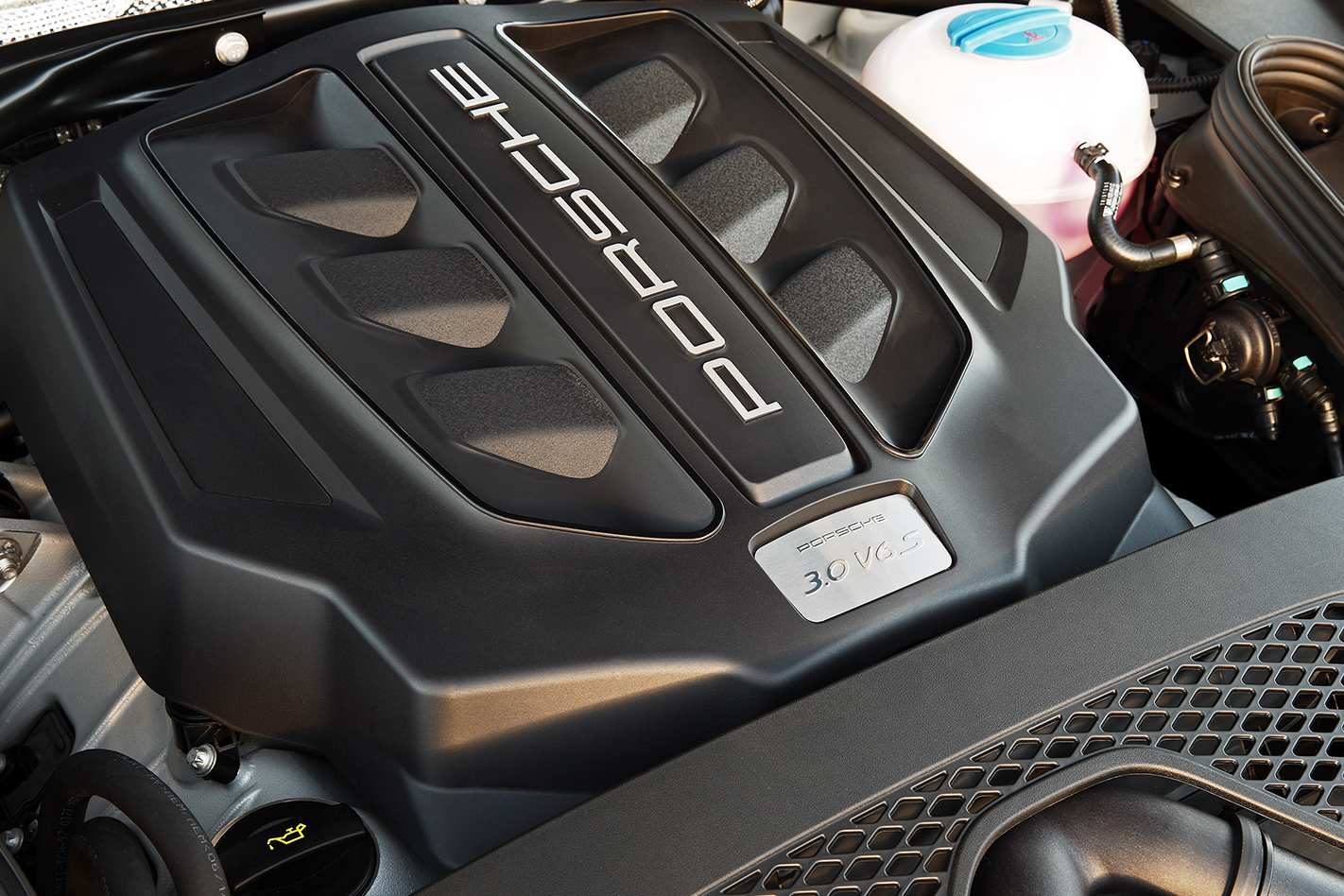
Thanks to the depreciation gods, you can now get a Porsche Macan S for around the same price as a brand-new Golf R. For a circa $60,000 spend you’re afforded a 3.0-litre turbo V6 with 250kW and 480Nm. That translates to a 0-100km/h time of 5.4 seconds – or, more to the point, you’ll arrive at 100 klicks 0.6sec slower than the Golf R. The Macan still feels properly quick in the real world and the S can pile on speed quicker than it has any right to.
Despite weighing in at 1865kg and having a higher centre of gravity, the Porsche attacks corners with a level of finesse that warrants its performance cues. Body movements are well controlled and the brakes arrest the substantial speeds with aplomb. Taking control of the seven-speed PDK with the steering wheel-mounted paddles increases the engagement.
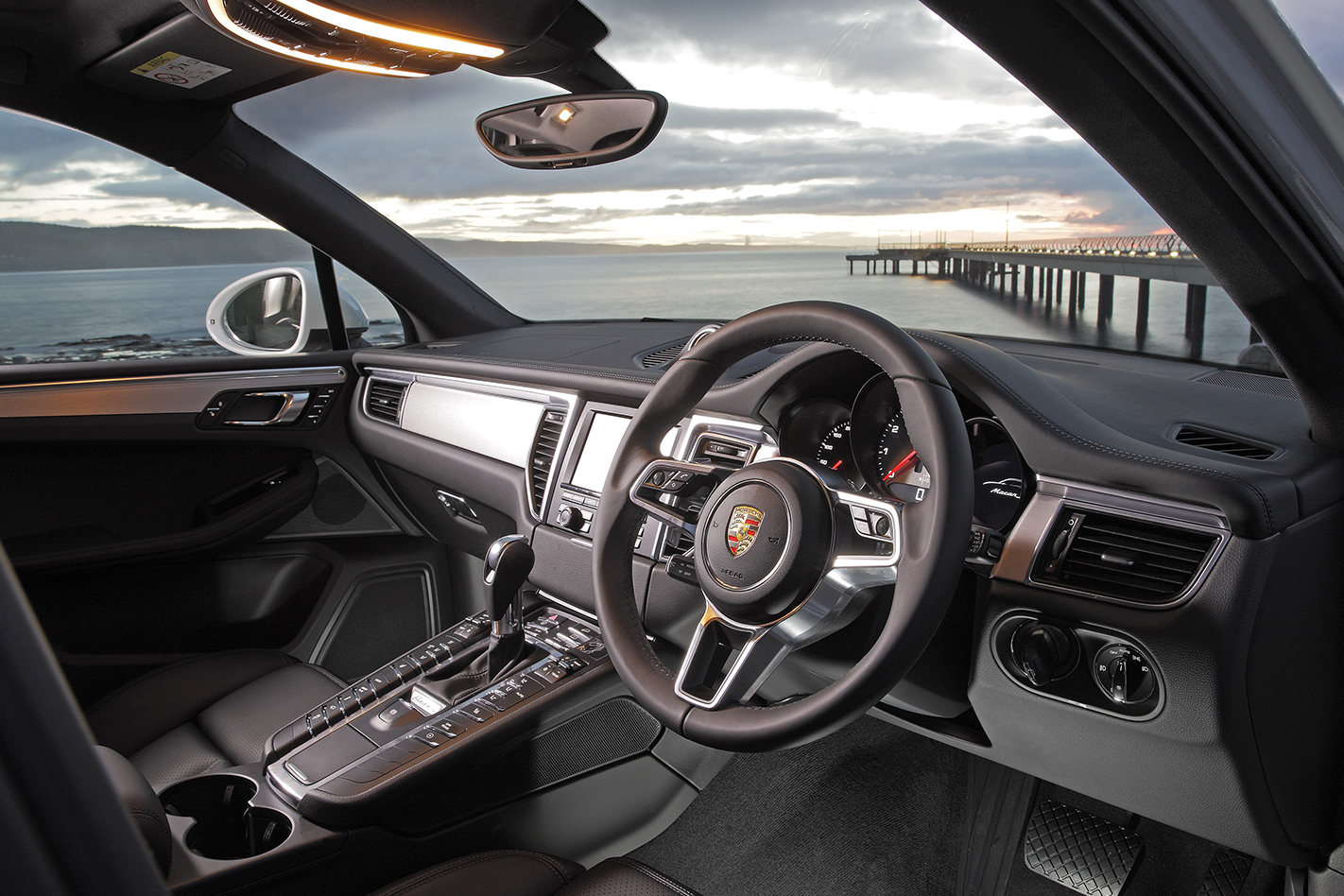
Inside, the S variant remains up to date in terms of tech, but current-generation Porsche interiors have dated the Macan’s dash. The centre console is littered with buttons, however, everything is clearly laid out. Overall space is more accommodating than the R, with enough room for adults to sit comfortably in the four main pews, while the driving position is nice and low for an SUV. The boot offers 500 litres of cargo capacity, which is significantly larger than the Golf.
Specs comparison
| u00a0 | VOLKSWAGEN GOLF R | PORSCHE MACAN S |
| Price (new) | $57,190 u00a0 | $95,500 |
| Engine | 1984cc 4cyl, dohc, 16v, turbo | 2997cc V6, dohc, 24v, twin-turbo |
| Output | 213kW/380Nm | 250kW/460Nm |
| Transmission | 7-speed dual-clutch | 7-speed dual-clutch |
| 0-100km/h | 4.8sec (claimed) | 5.4sec (claimed) |
| Efficiency (combined) | 6.9L/100km | 9.0L/100km |
| Drivetrain | AWD | AWD |
| Doors | 5 | 5 |
| Seats | 5 | 5 |
| Wheel size | 19-inch | 19-inch |
| Country of origin | Germany | Germany |
Wheels staff picks

Trent Giunco
Staff Journalist
Initially I picked the Golf R straight away without even needing to think. However, it’s not that cut and dry, such is the Macan S’s competence as both a practical SUV and a performance offering. The divide is muddied further by the fact that the Golf R is now a DSG-only proposition. Having said that, the VeeDub hot hatch is still the winner for me as there’s something about its do-it-all nature I can’t ignore. And it’s far from placid, with an underlying cheeky character if you scratch beneath the surface. It’s also worth noting that the used Macan S is going to be out of warranty and I wouldn’t like to be facing an expensive repair bill should anything go wrong. It’s the Golf R for me, but I wouldn’t disagree with anyone who chose the Porsche.

Andy Enright
Deputy Editor
I’ve long had a bit of a soft spot for the Porsche Macan, but this is a really interesting comparison. That’s, largely because I’ve always rated the Porsche for the way it drives, not generally because of other more practical SUV-type things. The Macan has a bigger boot than the Golf (500L vs 380L) but the Golf counters with superior rear passenger space. And as good as the Macan S is on a challenging piece of road, the Golf R is better. In fact, on a twisty circuit like Hockenheim’s stadium section, a Golf R records a 1m14.5s lap whereas the Macan S’s punchier siblings, the Turbo and the GTS both log identical, 1m16.1s times. So the Porsche wouldn’t see which way the Golf had gone on any stretch of bitumen that involved steering. The Golf’s superior power-to-weight ratio, lower centre of gravity and superior braking abilities would soon see it dance away from the Porsche. With the latest 7.5 generation car, you don’t even lose anything in the way of cabin ambience to the far more expensive Porsche either. The badge cachet of the Macan is always going to be a tempter, but there’s just too much substance to the Golf to deny it this time round.

Cameron Kirby
Staff Journalist
For someone who just last week stood atop a soapbox declaring I’d buy a wagon over an equivalent SUV every day of the week, this is a harder choice than I first thought. It’s hatch vs SUV this time around, so I’ve got one excuse prepared already. Thing is, the Golf R just doesn’t thrill me. It’s competent and accomplished, but doesn’t have any real allure. While the Macan S isn’t exactly an object of desire either, the prospect of owning a Porsche is a tantalising one – it’s easy to understand why this is the most popular model in Porsche’s range. Being outside warranty is enough to warn me off for now though, and I’ll be throwing my cash towards the hatch.
Reckon we’ve got it right? Or are we way off the money (literally)? Find your best and let us know in the comments what you’d buy.
Renault Australia has confirmed local pricing for its limited-edition Megane RS Trophy-R, and it’s perhaps a little more than most expected.
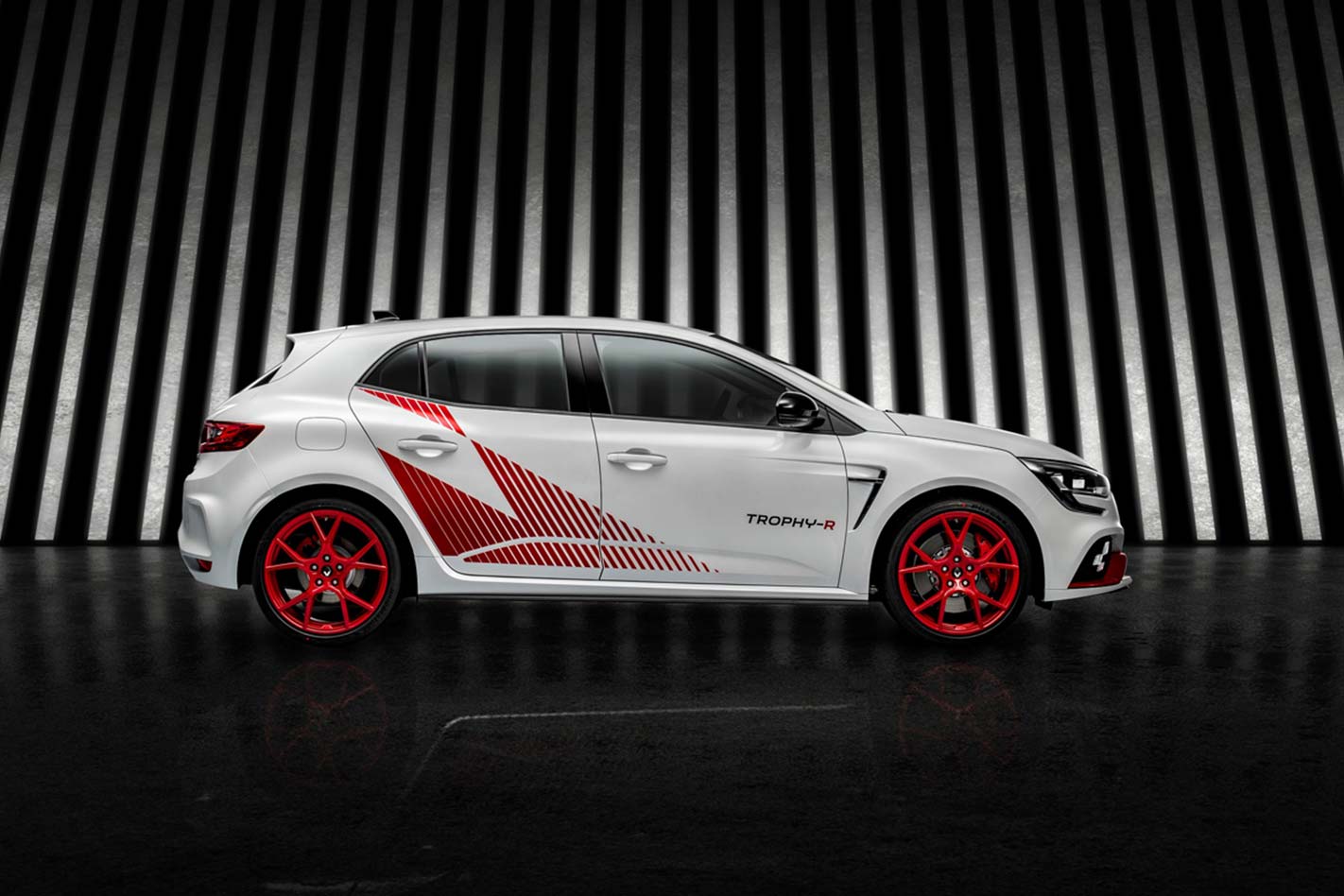
While Aussies will be able to get their hands on a standard RS Trophy in manual for $52,990 before on-roads, or one fitted with an EDC for $55,990, the Trophy-R will be priced north of the $70K-ish estimation MOTOR was given upon the model’s international announcement.
At $74,990, the Megane RS Trophy-R will be eye-wateringly expensive in Australia, but Renault Australia says that actually places is as “one of the most affordable Megane R.S Trophy-Rs in the world,” compared to how the car is priced in other markets.
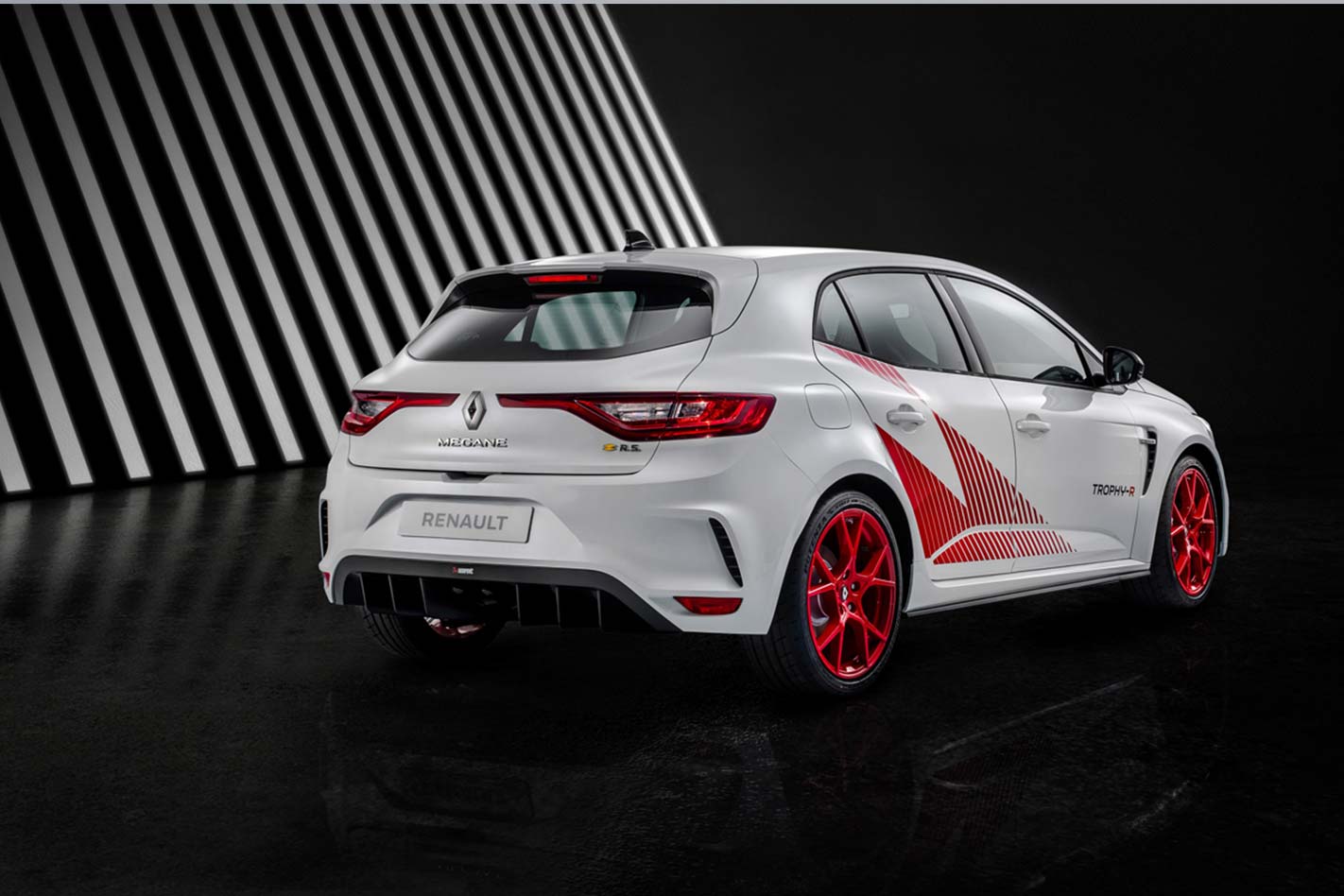
In addition, Renault Australia will also auction one of thirty (worldwide) Trophy-R Record Editions, which will feature carbon fibre wheels from Geelong-based Carbon Revolution.
“The strong customer interest in the Megane R.S. Trophy-R is testament to the place this Renault Sport prepared vehicle has within the Renault family and in the hearts of car enthusiasts across Australia,” says Renault Australia MD Anouk Poelmann.
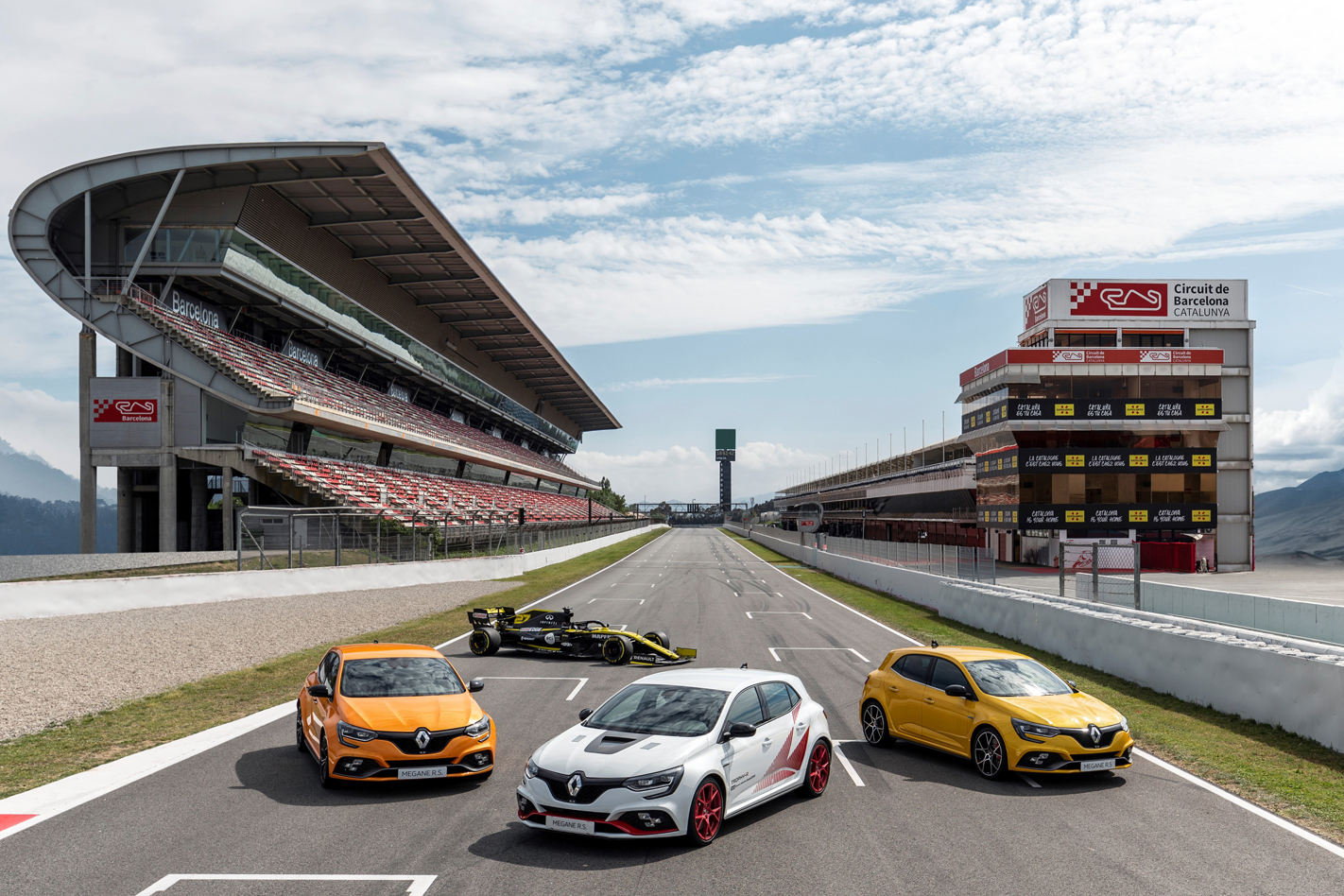
Renault Australia has secured a handful of 20 Trophy-Rs to sell across the country, of a total 500 worldwide. One such car is a contender at MOTOR’s Performance Car of the Year 2020.
“The Renault Megane R.S. Trophy-R is the next chapter in Renault’s extensive history in world motorsport and brings to the Australian roads the technologies and expertise Renault Sport has developed on the racetrack,” Poelmann adds.
Despite our bad behaviour and terrible manners, the WhichCar Weekly team were allowed back into the gorgeous Hotel Esplanade podcast studio for another special off-site recording special!
Lubed by another excellent ale, Scott opens the chat with another look at Tesla’s latest model – the Model 3. Not only is it a true driver’s EV, but it now appears to have the potential to turn the Californian tech firm’s fortunes around.
Then it’s on to Japanese performance heroes. The recent arrival of Toyota’s Supra has reminded us that all the major performance heavy hitters from the land of the rising sun are getting seriously long in the tooth.
Can the eagerly awaited Supra take the baton from the ageing GT-R, WRX and 86/BRZ twins?
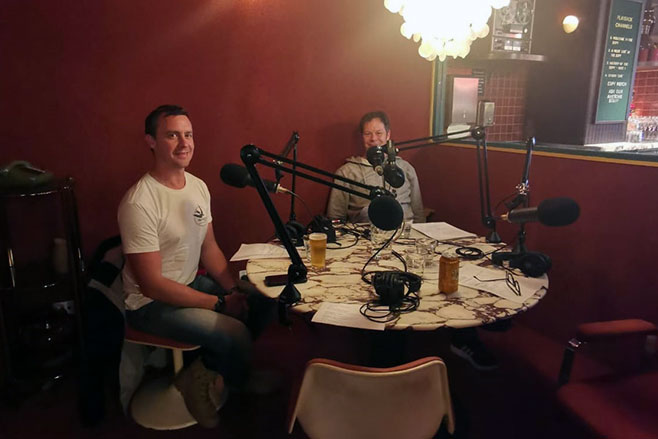
Rounding out our second recording at the Espy, the chaps chat about awesome autos. While diehard petrolheads are almost obliged to champion manual gearboxes for every model, Andy takes an unexpected and controversial angle.
If you’re on the go, you can find WhichCar Weekly on all manner of podcast apps including iTunes and Podbean. Please rate, subscribe and leave a review! You can also follow the day-to-day happenings of the WhichCar team on Facebook, Twitter and Instagram @whichcarau.
Listened to the show? Help us out:
- Leave a note in the comment section below.
- Leave a review on Apple Podcasts/iTunes
- Subscribe to our podcast
Elise has been a journalist across the trifecta of TV, radio and print for more than twenty-five years. When not shackled to her computer or beloved kid, you’ll find this working mum indulging her other passions — skiing powder off piste or trying to catch a wave on her 8’ Mini Mal.
WHAT IS IT?
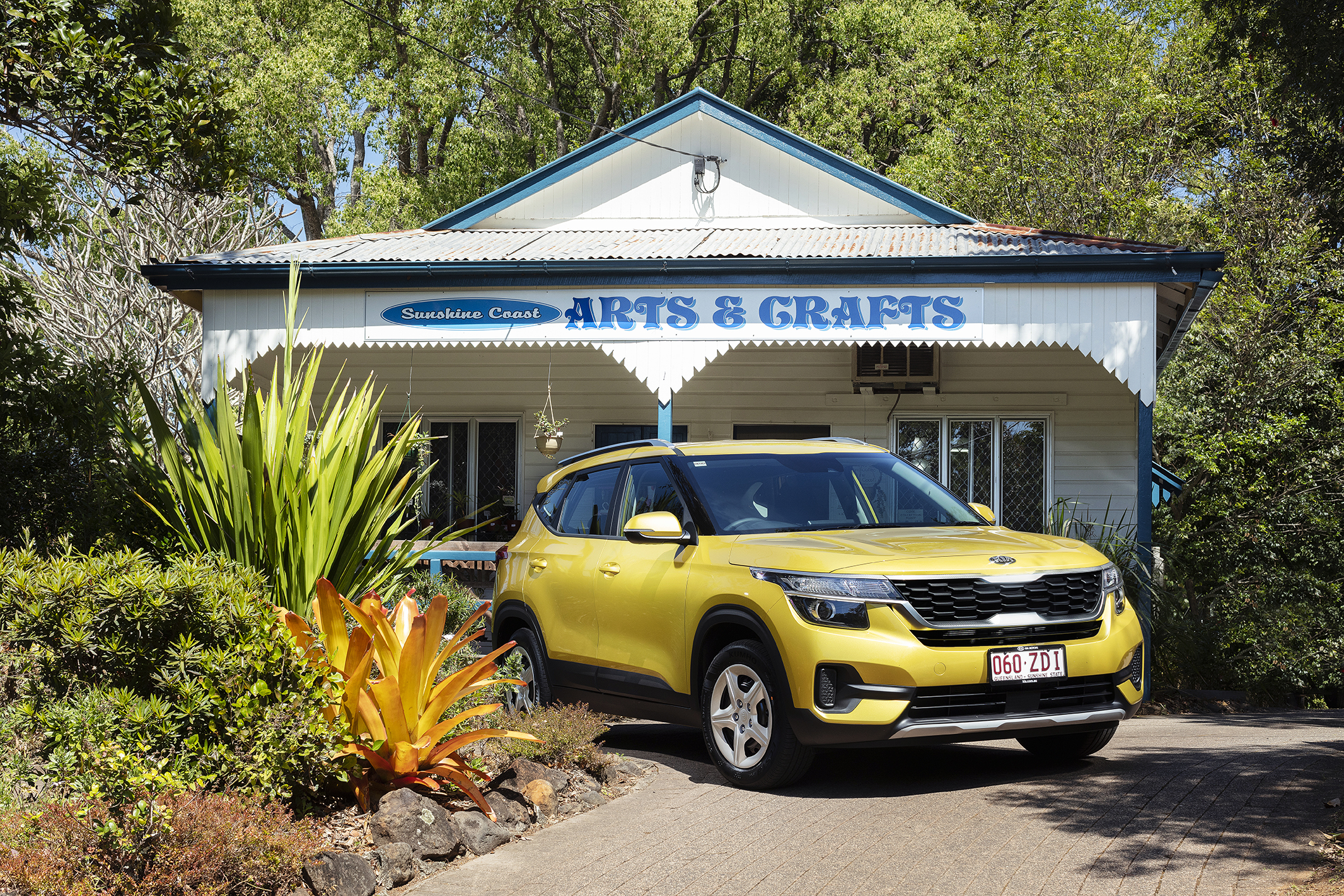
Finally Kia has a small SUV offering; and it’s about time.
Arriving on October 25 with a heap of features that we’re yet to see in a Kia, the Seltos comes with four spec levels: S, Sport, Sport+, and the range topping GT Line.
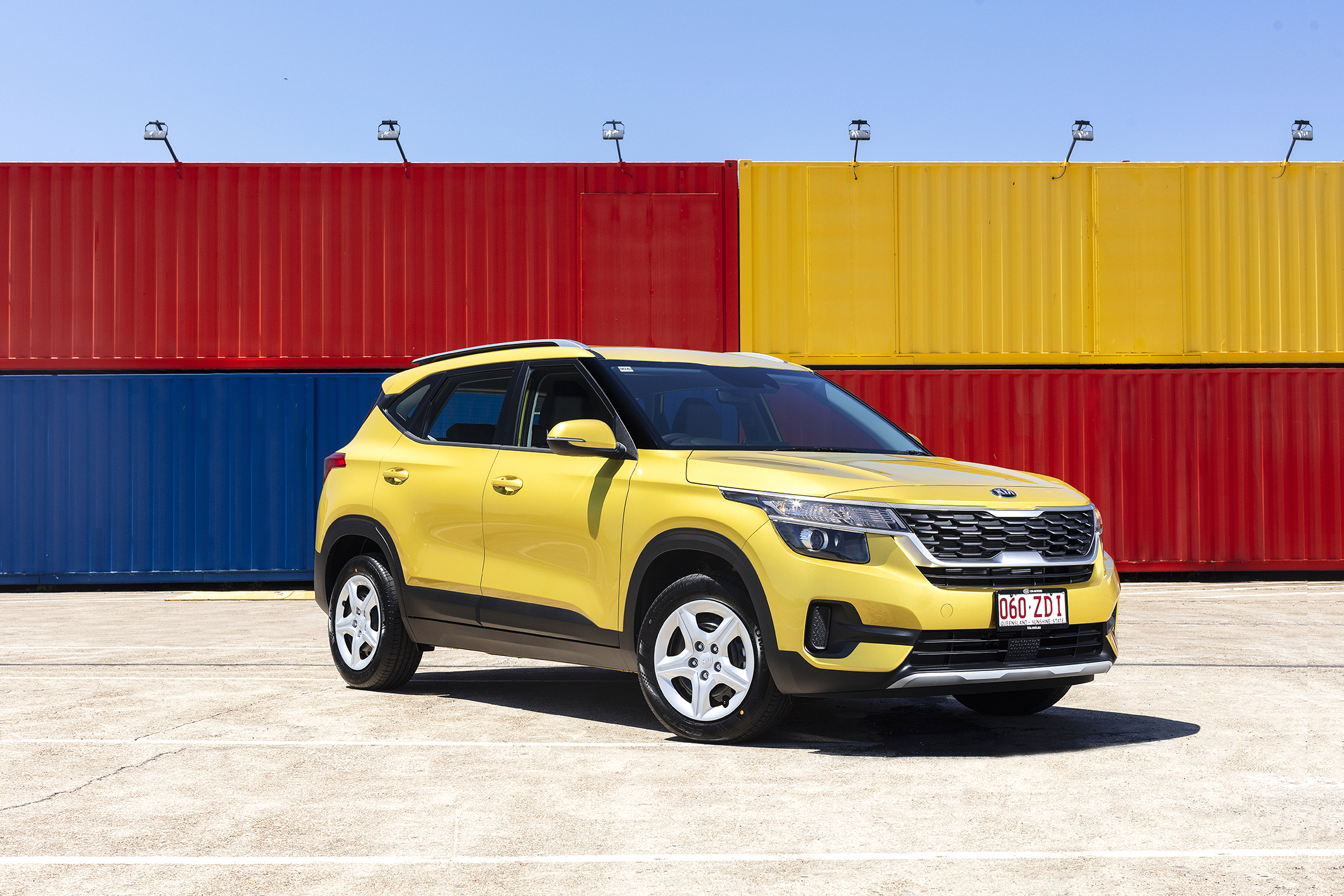
The S and Sport are 2.0-litre FWD only and feature a continuously variable transmission (CVT), while a 1.6-turbo all-wheel drive with seven-speed dual-clutch auto is the only option in the range-topping GT-Line. The mid-spec Sport+ can be had with either drivetrain.
Seltos’ new advertisement is accompanied by the blaring brash track “Bad Guy”, sung-spoken by current It-Chick-teen-with-attitude, Billie Eilish. The target market is clear from the get-go – tech-savvy buyers, AKA “night-clubbers with minimal responsibilities”.
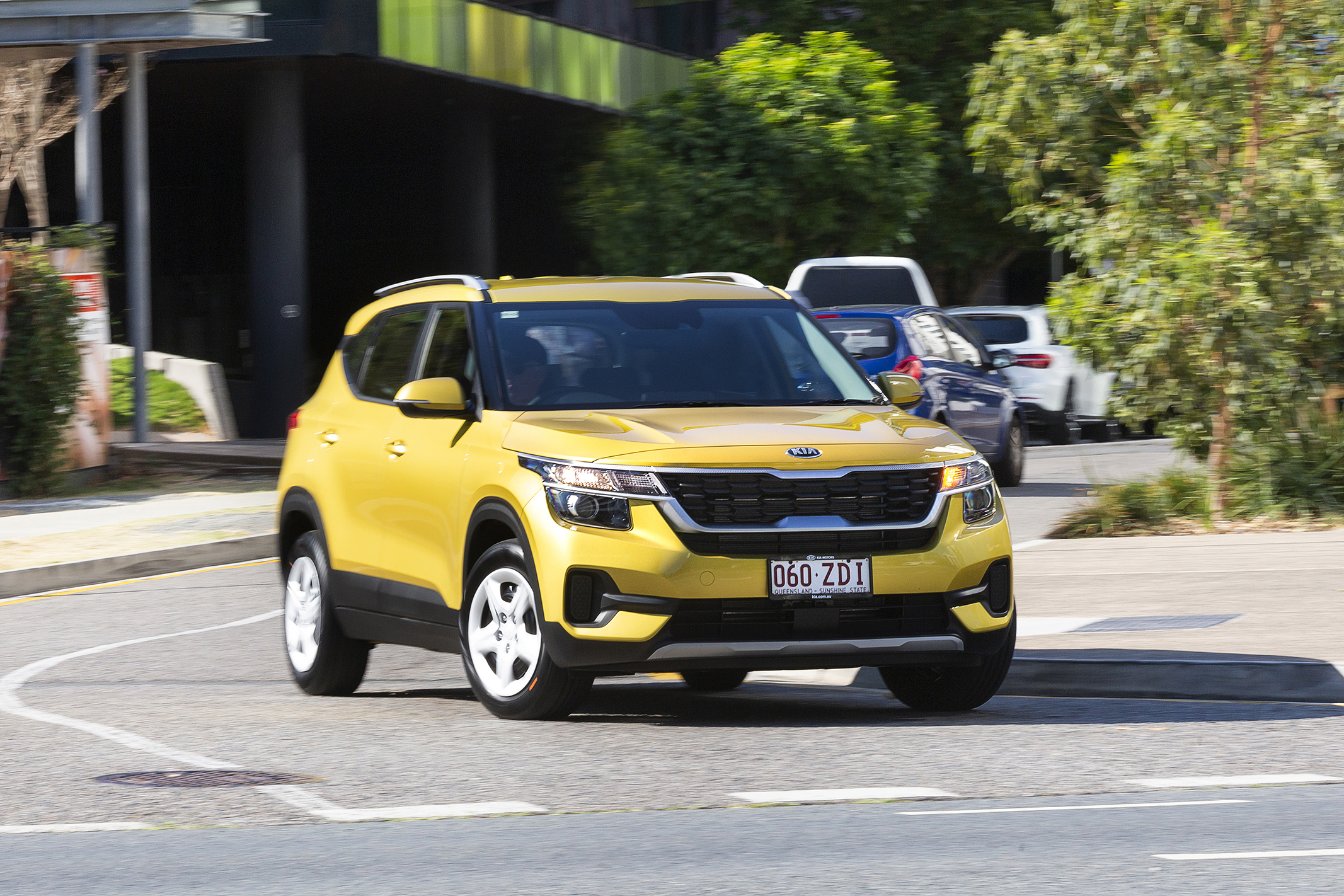
I test the base-model S, driving from Brisbane to Noosa and back via the winding and undulating Hinterlands, hoping to clarify two questions:
Could this small SUV range indeed have broader appeal? Like, you know, cool middle-aged peeps as opposed to carefree clubbers? And is the Seltos deity-worthy? It is, after all, named after the son of Hercules, Celtos (spelt with a “C” instead of KIA’s ‘S’); was that a typo? No, apparently; the S signifies the car’s speed and sportiness, and fits in with the other Kia SUV monikers like Sportage and Sorento.
WHAT’S IT LIKE TO LIVE WITH?
The Seltos is equipped with high-tech gadgets and plenty of swipe and scroll touch inputs that will appeal to its target audience. The S comes with Android Auto and Apple CarPlay and the ability to sync two phones at once via Bluetooth.
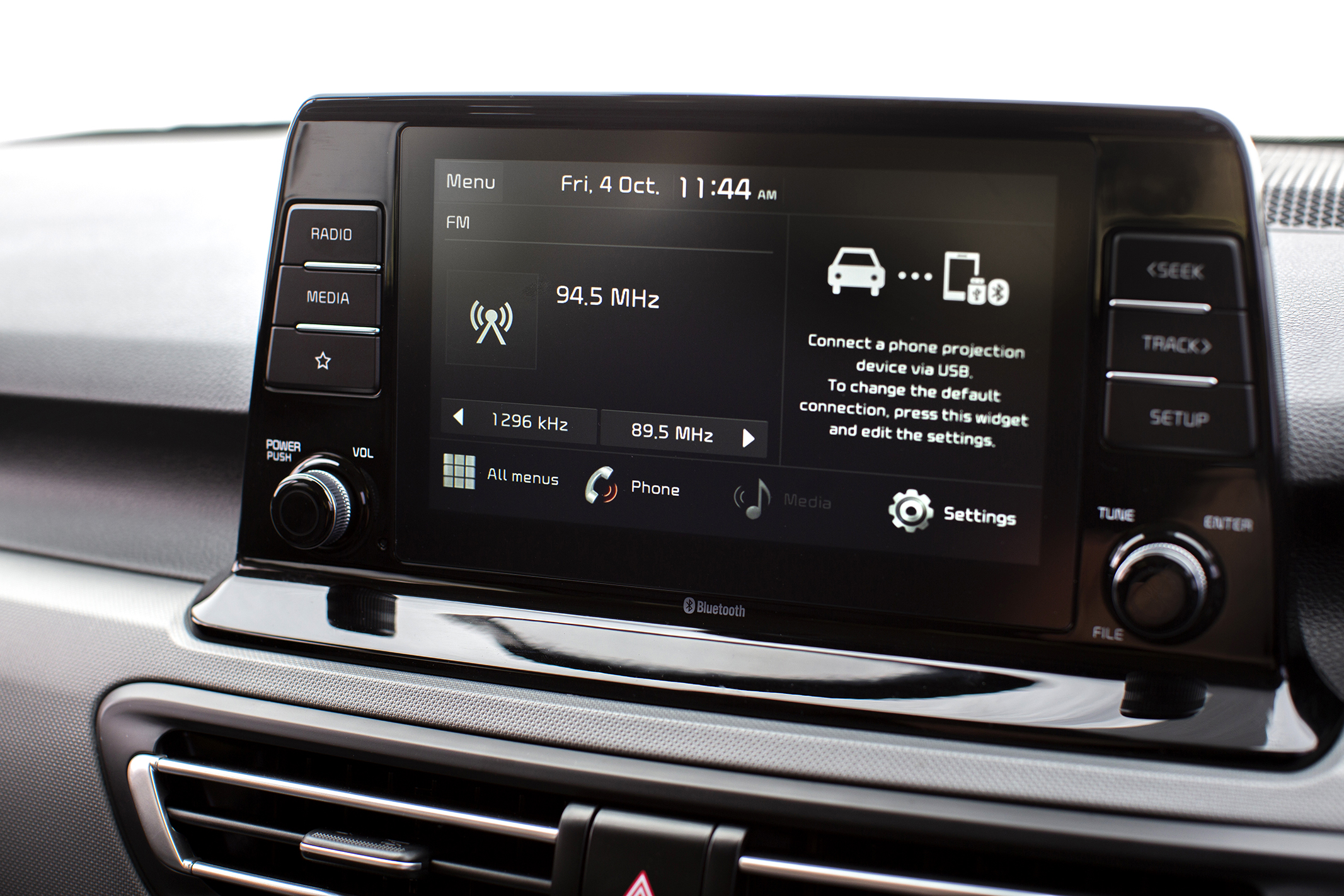
The Seltos S, however, does miss out on passive luxuries. It only comes equipped with an 8.0-inch touch screen, one USB charger in the front console and manual air conditioning. The finishes, including the steering wheel, feel plasticky and the small 16-inch wheels have plastic hubcaps.
Trade up to the next-level Sport and you find lots of luxe goodies including: a 10.25-inch touchscreen, two USB chargers in front, a more premium faux-leather wrapped steering wheel and 17-inch alloy wheels and a full-size spare.
With regard to storage there are two cup and four bottle holders and a deep centre console bin.
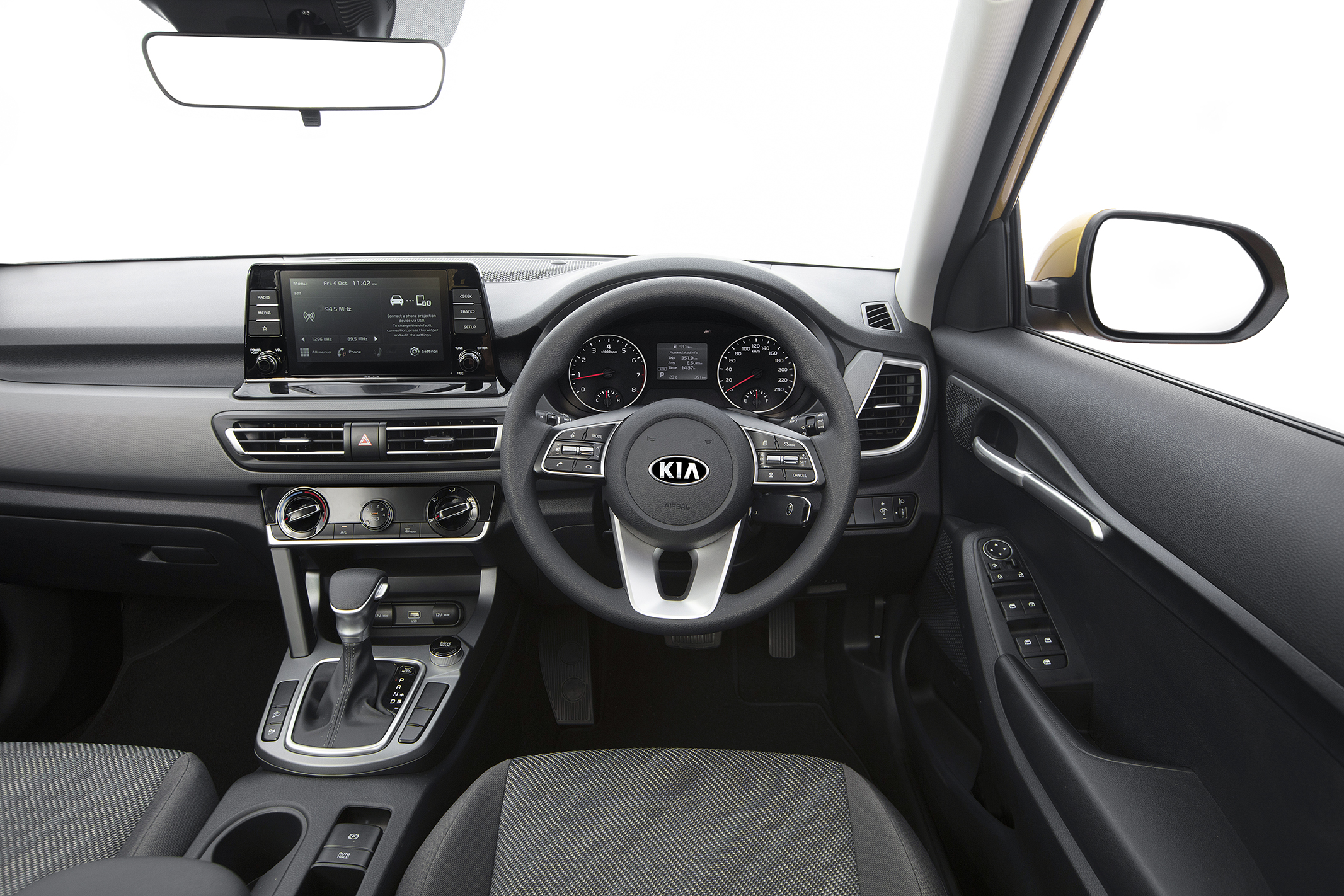
The S’s boot is a massive, class-leading, 498 litres thanks to the narrower space-saver spare wheel under the floor. The other variants, with full-size spares, have a still handy 433 boot space.
The sound system is adequate. Only the top-spec GT Line comes with the BOSE Premium audio, which according to Kia “is designed for drivers who enjoy waking up to non-existent kids”. Not sure what this means for parents of existent kids?
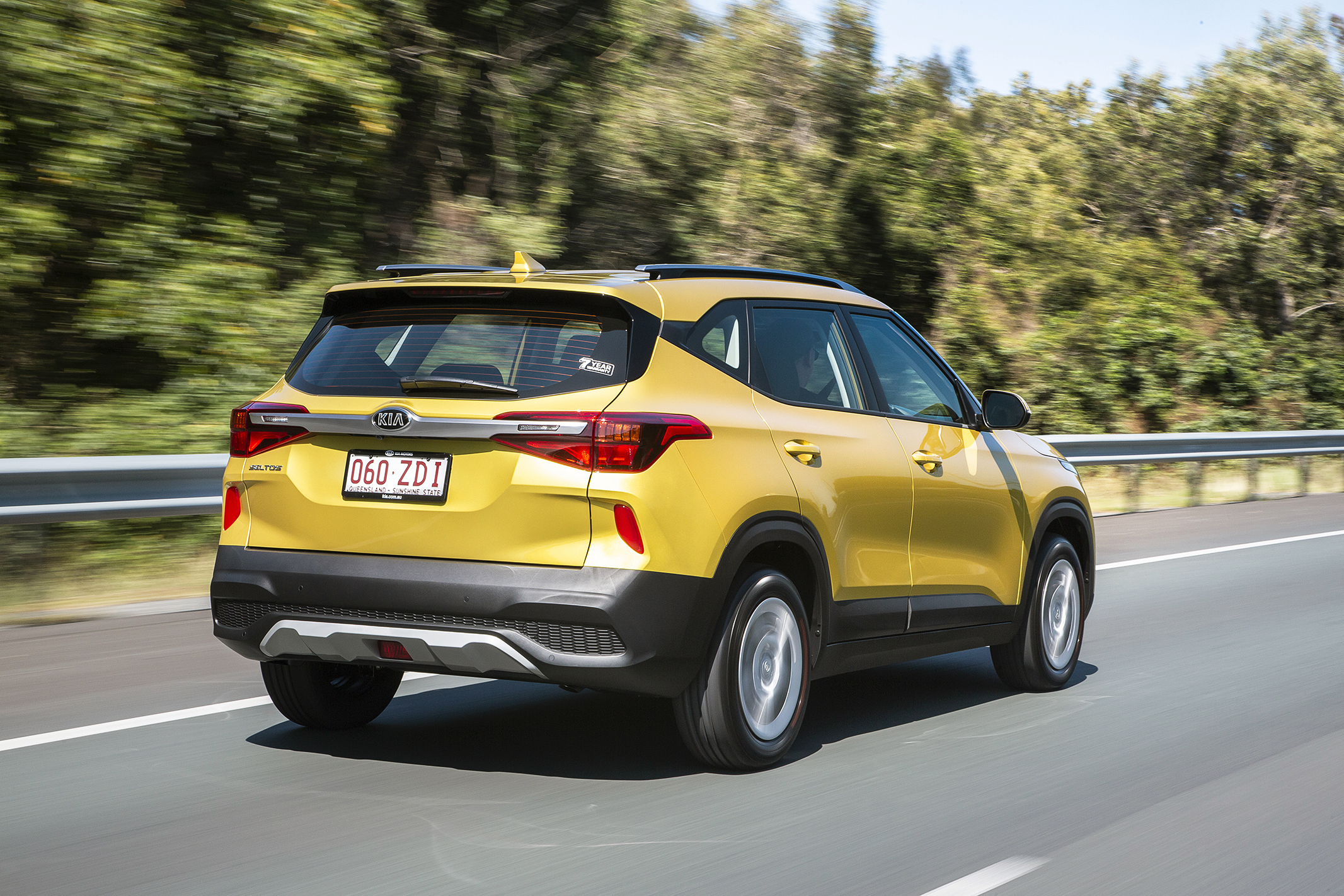
In another nod to its youthful demographic, the Seltos has moved away from the sober Melbourne palate of black, grey and white. Seven “fashionable” colours are on offer including Mars Orange, Neptune Blue and Gravity Grey, all for an extra $520. Unusually, the standard (free) shade is a blinding Starbright Yellow. A quick scan of current Red Carpet trends reveal citrus is hot right now. But that’s a risk; too on trend today means out of fashion tomorrow.
Kia reckons the Seltos’ exterior has “the face has menace and attitude” in keeping with its name. That’s a stretch, though the Seltos does look bold and strong with its wide tiger-nose grille and wide rear stance.
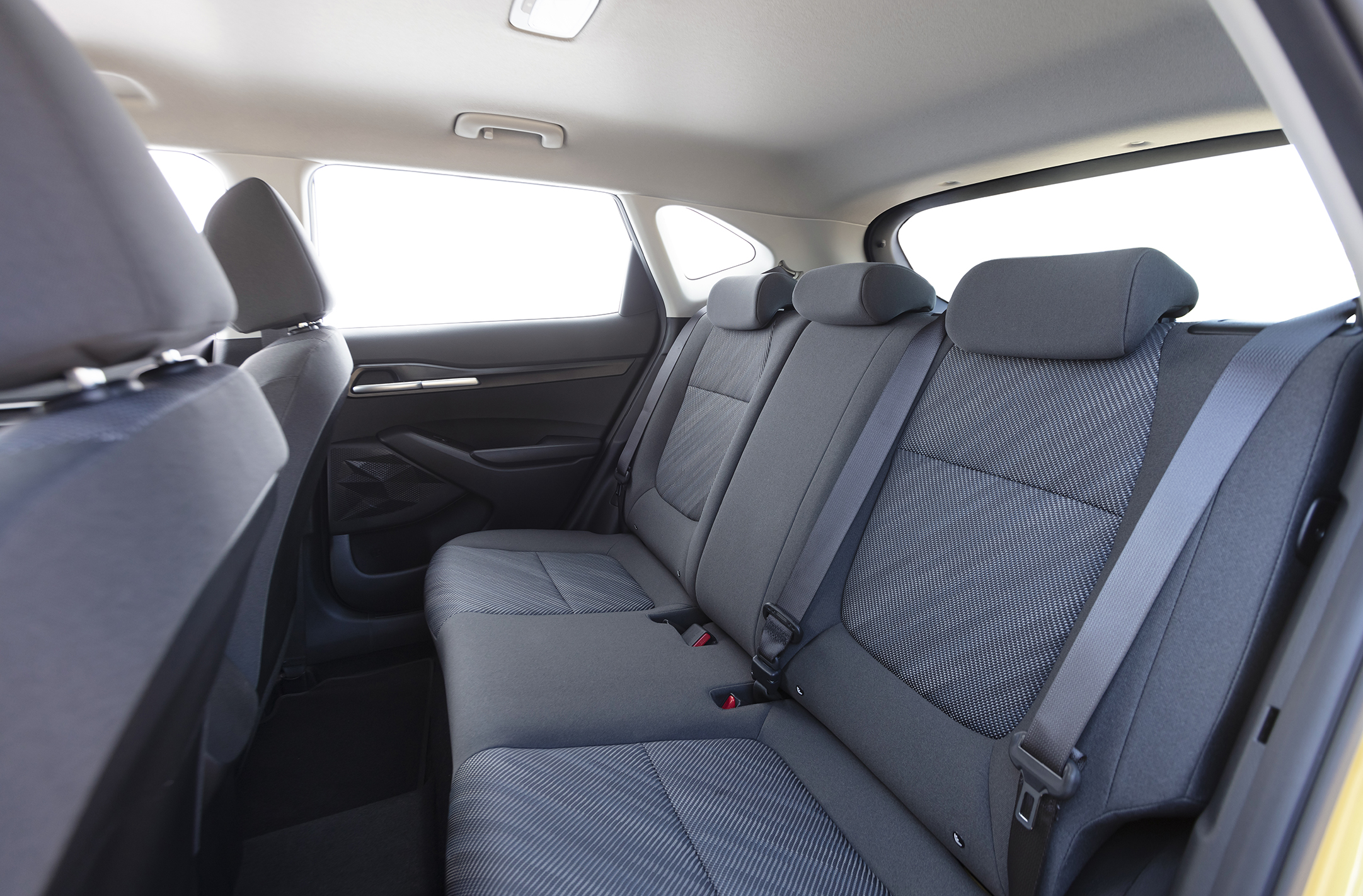
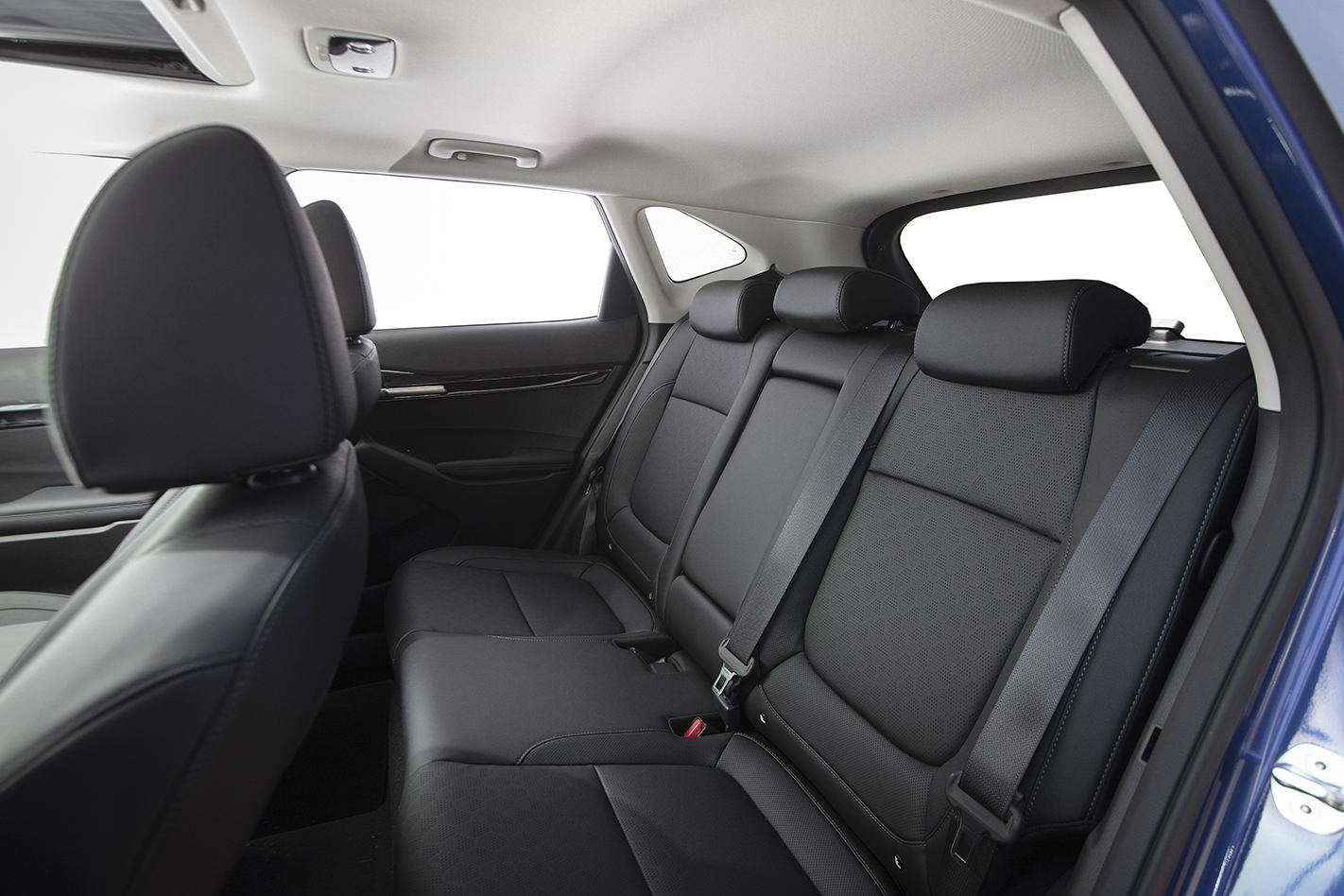
The rear seats are comfortable even with the S’s cheaper fabric and there’s plenty of legroom. Both the S and Sport miss out on air vents and USB sockets for rear seat passengers.
The cabin is quiet thanks to sound absorbing materials, including a thicker windscreen, to minimise noise, vibrations and harshness.
WHAT’S IT LIKE TO DRIVE?
Like most Kia models, the Seltos has had its suspension re-tuned for harsh Aussie conditions. The theory is the Australianised product ensures a better ride on our tough, bumpy roads compared to the Korean versions which have a more floaty feel.
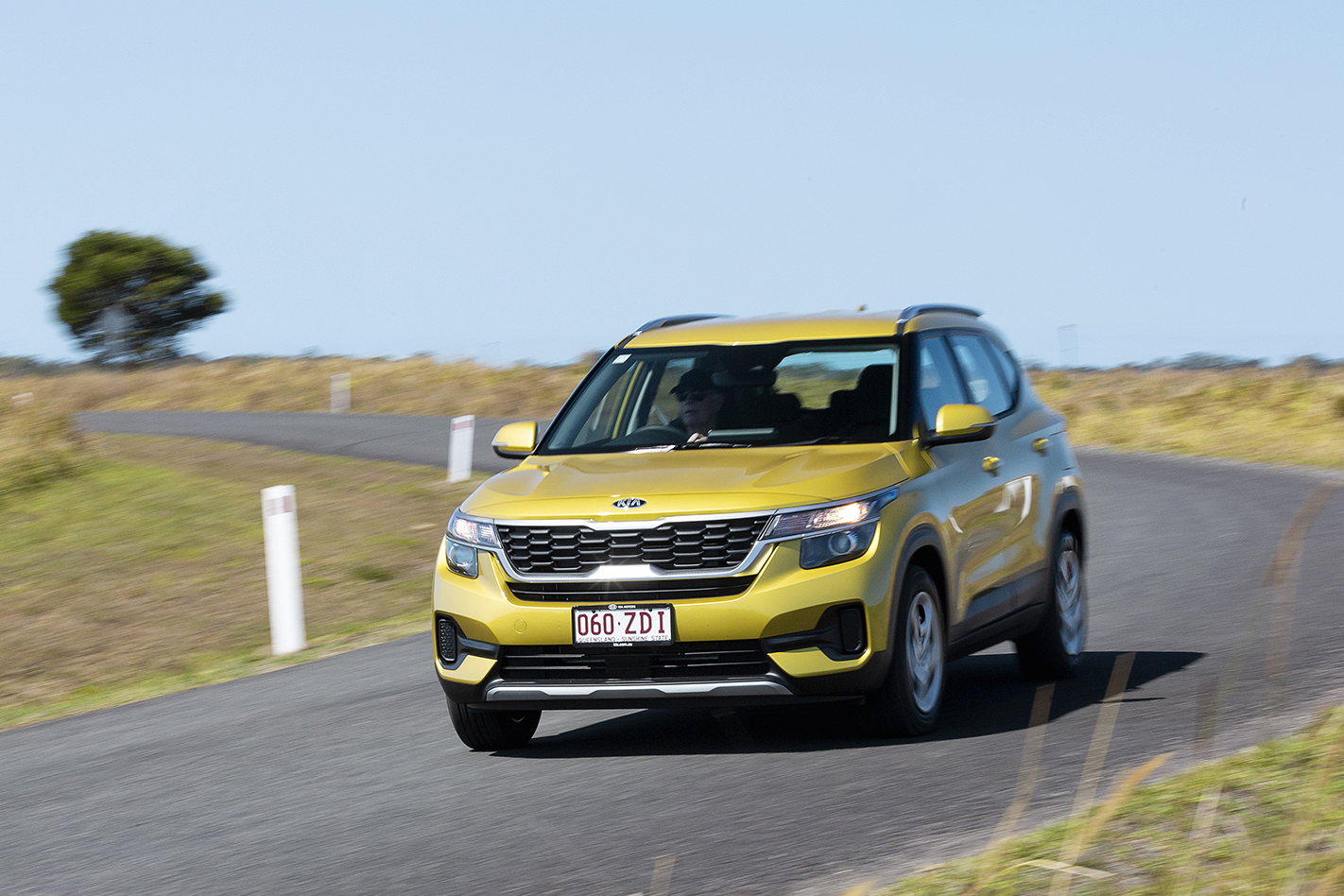
It absorbs the bumps well as I hurtle through the backroads of the Noosa Hinterland, with the deeper 16-inch rubber absorbing road imperfections better than the bigger wheels on the more expensive versions.
The S is a pleasant enough drive once I arrive in Sunshine Coast suburbia. It adequately handles Noosa’s many confounding roundabouts with ease. This would be an okay car if you’re just commuting a short distance to work every day.
This is the first Kia in Australia with a CVT. The company says this decision was driven by an American-led push for fuel economy and lowering of emissions. The S is indeed fuel efficient with an official combined 6.8L/100KM. I actually clock under this with just 6.0L/100km with a combination of back-road and suburban driving.
Unfortunately, the entry level S and Sport do not come equipped with the full safety suite, though city-speed autonomous emergency braking is included. A $1000 optional safety pack, which brings more advanced radar- and camera-based ‘Fusion II’ AEB, Advanced Smart Cruise Control, Driver Attention Alert+ and electronic parking brake, is available for both models; an irritating, if worthwhile investment.
IS IT WORTH THE COST?
The entry level S is clearly for the budget conscious and costs $25,990 (driveaway). It has the basics you need without the exciting stuff you want. It’s worth coughing up the extra $3.5K for the Sport at $29,490 (driveaway). It handles a little better and comes with those worthwhile extra luxuries. At the very least spend the extra $1000 on the safety pack.
Seltos comes with Kia’s generous seven-year warranty, seven-year capped-price servicing and seven-year roadside assistance program.
In a congested market does the Kia soar above its competitors with Herculean powers? Not really. But it is a car with broad appeal; one that should not be reserved solely for hip, young things with minimal responsibilities. Ageing Gen Xers and Baby Boomers will love this small SUV, too.
Kia’s belated entry in to Australia’s competitive small-SUV market has finally arrived, priced from $25,990.
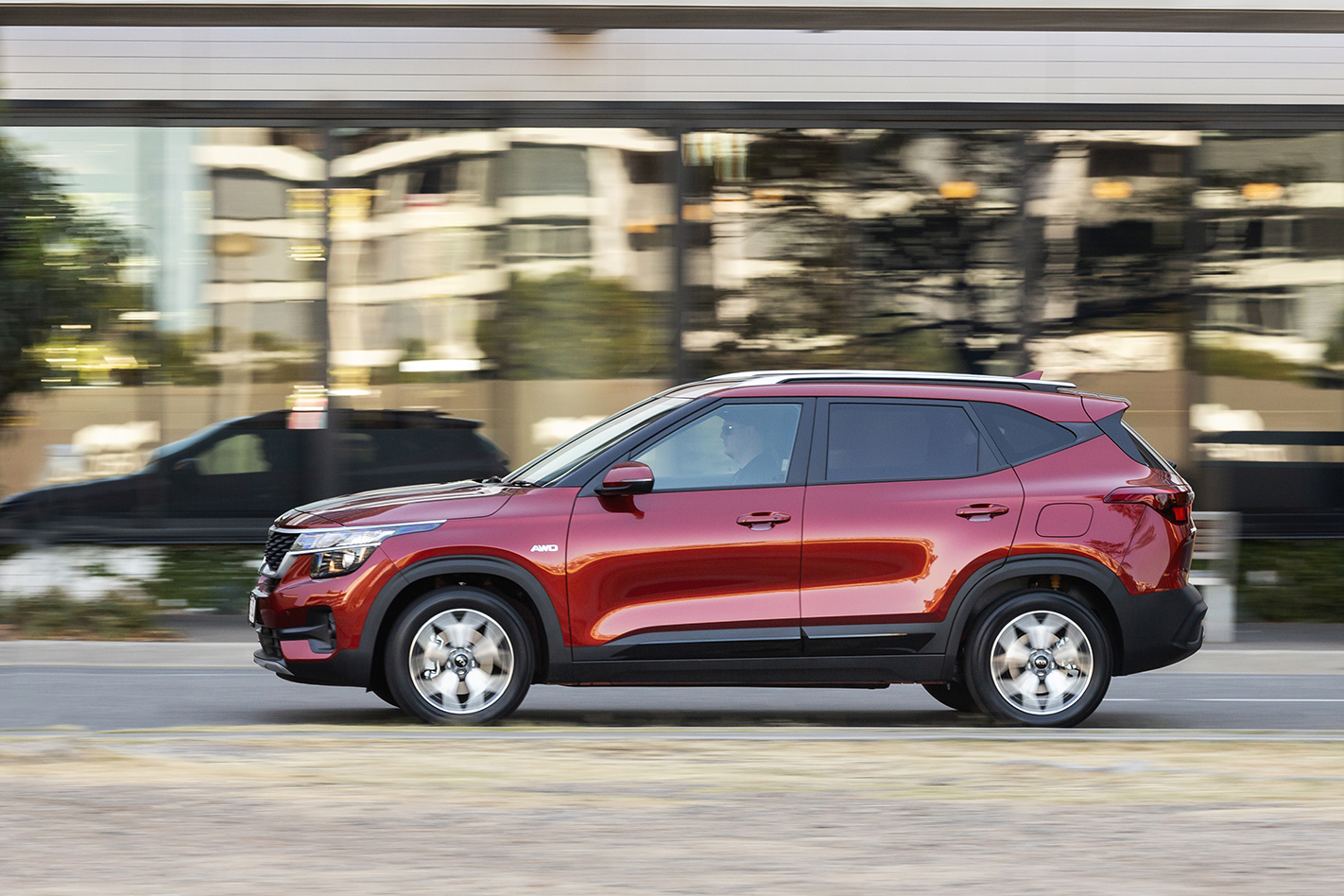
The Kia Seltos will be available in four specification grades: S, Sport, Sport+ and GT-Line. The S and Sport are 2.0-litre FWD only, while a 1.6-turbo all-wheel drive is the only option in the range-topping GT-Line. Meanwhile the mid-spec Sport+ can be had with either drivetrain.
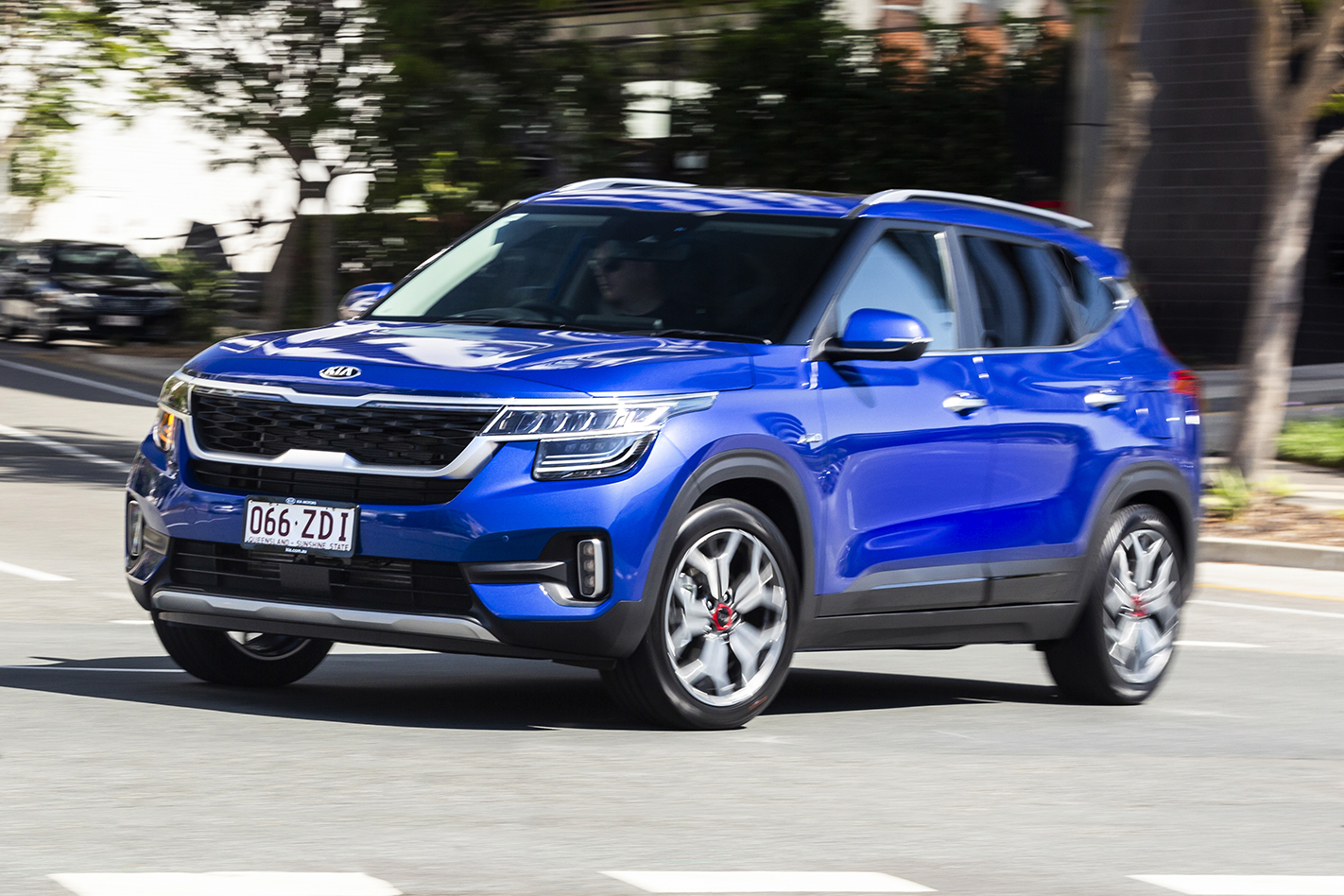
Each powertrain is similar to what’s available in the Seltos’ cousin, the Hyundai Kona, however the 110kW/180Nm 2.0-litre version ditches the Kona’s six-speed automatic for a Kia-first continuously-variable transmission (CVT). The 130kW/265Nm 1.6 turbo comes with a seven-speed dual-clutch automatic by default.
Driveability is a key Seltos selling point, with Kia Australia putting the Seltos through a suspension tuning program to make it ride and handle better in Australian conditions. This has included adding bespoke equipment such as strengthened suspension arms, and tightening the electronic power steering for a more direct steering feel.
With a fresh look that includes a broader version of Kia’s tiger nose grille, the Seltos comes with a choice of seven colours, six of which cost $520 extra. Unusually, Kia has selected a bold ‘Starbright Yellow’ instead of white as the ‘standard’ colour.
The GT-Line is also available with no-cost optional two tone paint that adds a black roof to either Starbright Yellow or Clear White.
The roomy cabin features fresh interior design that’s sleeker than other Kias currently on sale, the highlight being a large 10.25-inch infotainment screen that comes with all but the entry-level Seltos S. The rear seats benefit from generous 965mm legroom, and the 433-litre boot space is one of the best in its class.
The Seltos is one of the best-equipped Kia models to enter the country, and brings some technological firsts to the brand including Rear Cross-Traffic Collision Avoidance Assist, which detects a car coming from the side when you’re reversing and automatically stops the Seltos if necessary.
Safe Exit Alert warns occupants of traffic (including bicycles and motorcycles) before they open their door into the road, and Driver Attention Alert+ detects signs of fatigue and alerts the driver if the vehicle in front moves away from a stop situation, such as a set of lights
Then there’s Lane Following Assist which controls acceleration, braking and steering and can track vehicles and road markings ahead to keep the car in-lane and a safe distance from any cars in front.
Rear Cross-Traffic Collision Avoidance Assist is standard in the Sport+ and GT-Line, with the rest exclusive to the range topper along some creature comforts not previously seen in the Kia range including an eight-speaker BOSE premium audio system, interior mood lighting that changes colour based on your music, and a fast wireless phone charger.
Here’s a variant-by-variant breakdown of what you get:
The lower spec Seltos variants are also relatively well equipped, with the entry-level Seltos S coming with:
- 8.0-inch touchscreen with Apple CarPlay/Android Auto
- City-speed autonomous emergency braking (AEB) with pedestrian detection
- Forward Collision Warning System
- Driver Attention Alert
- Lane Keeping Assist
- Cruise Control
- Halogen Daytime Running Lights (DRLs)
- Auto headlights
- Reversing camera with dynamic guidelines
- Rear Parking Sensors
- Six speaker audio
- Six airbags
- Cloth seats
- Manual air-conditioning
- 16-inch steel wheels
- A larger 10.25-inch touchscreen
- Satellite navigation with SUNA Traffic and 10 year MapCare updates
- Single zone climate control
- Premium steering wheel and shifter
- Electric Folding Mirrors
- Front Halogen Fog Light
- Tinted Windows
- 17-inch Alloy Wheels
- Full Size Spare Tyre
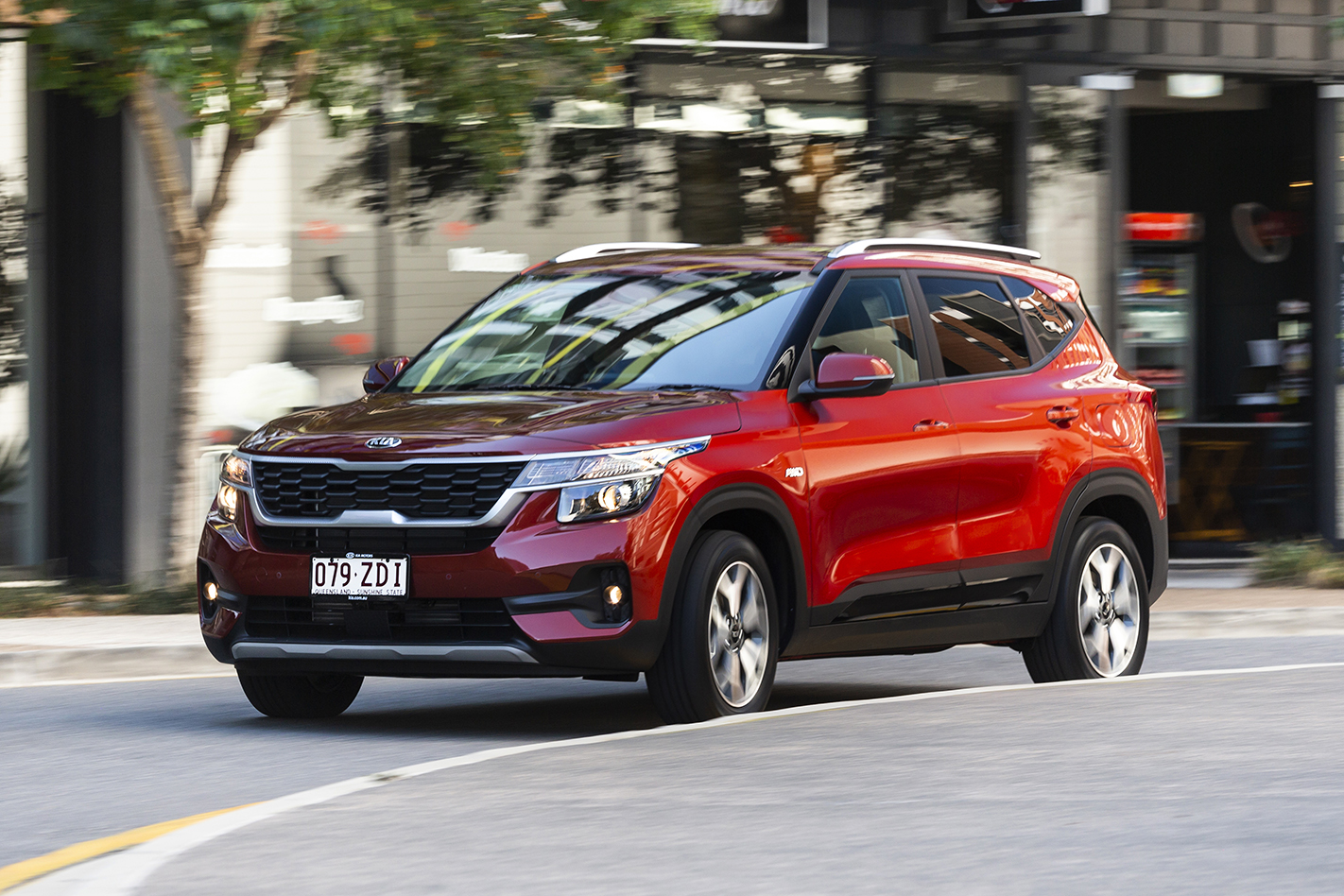
The Seltos Sport+ gains the option to upgrade to the 1.6-litre turbo AWD drivetrain and brings the Safety Pack as standard, along with other advanced driver assist features including blind-spot detection, and new rear-cross traffic alert with auto braking. Other Sport+ features include:
- Smart key with push button start
- Smart remote start
- Heated side Mirrors
- LED Interior Lights
- Auto-dimming rear view mirror
- Front Parking Sensors
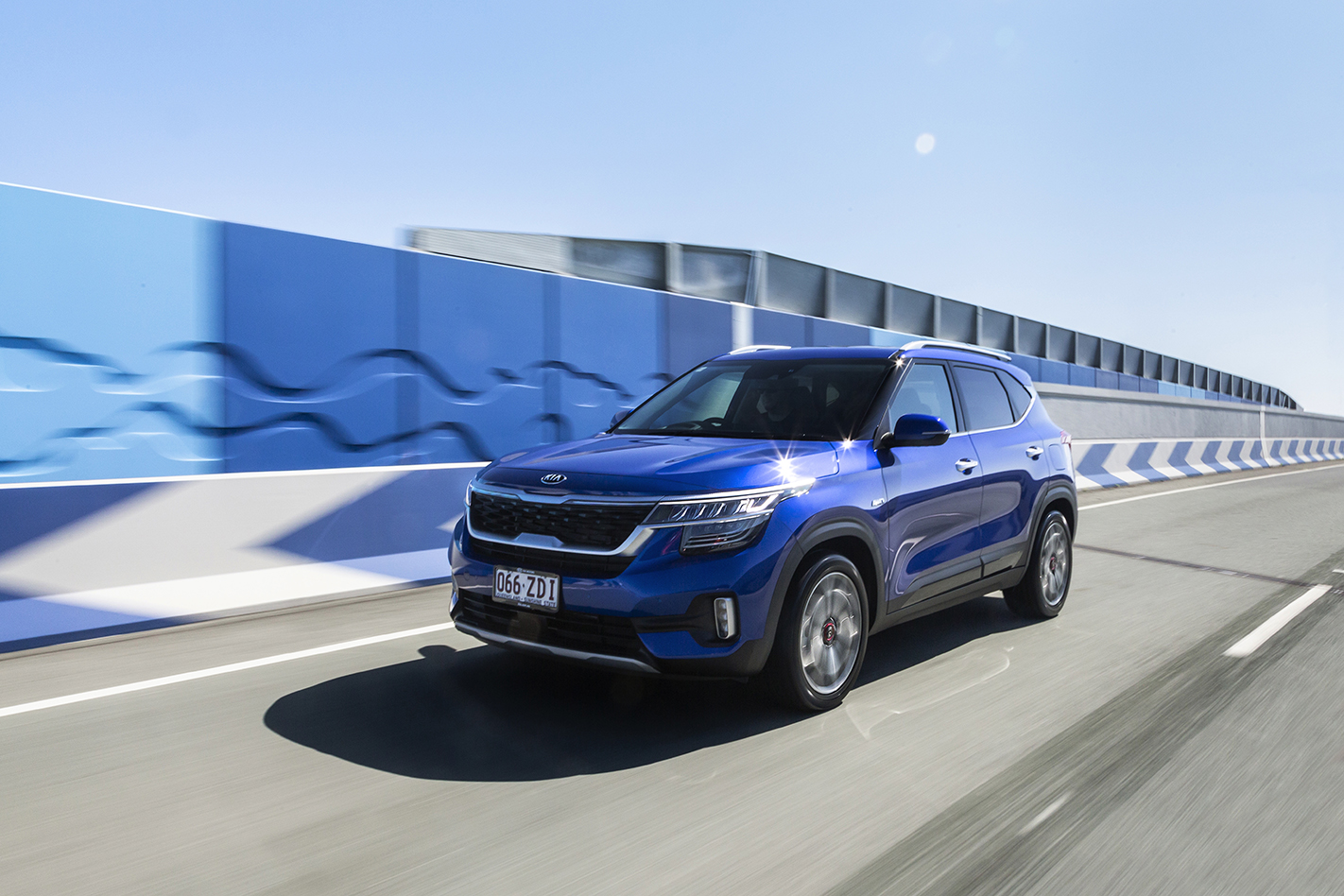
The range-topping Seltos GT Line brings a host of additional features over the Sport+ including:
- Sunroof (not available with two-tone roof)
- Interior sound mood lighting
- Eight-speaker BOSE premium sound system
- Fast wireless phone charger
- 7.0-inch driver’s instrument cluster
- Head-Up Display
- Premium (artificial leather) seats
- Powered 10-way driver’s seat
- Powered 8-way front Passenger Seat
- Heated and ventilated front seats
- LED headlights
- LED DRLs
- LED front fog light
- Rain sensing wipers
- Lane following assist
- Safe exit alert
- Aeroblade Wipers
- 18-inch alloy wheels
2020 Kia Seltos driveaway pricing
- Seltos S, 2.0L FWD: $25,990
- Seltos Sport, 2.0L FWD: $29,490
- Seltos Sport+, 2.0L FWD: $32,990
- Seltos Sport+, 1.6L AWD: $36,490
- Seltos GT Line, 1.6L AWD: $41,990
- Safety Pack (available on S and Sport): $1000
- Premium Paint: $520
THERE is a tree that guards the entrance to Holden’s vast Elizabeth factory on the outskirts of greater Adelaide. It’s a sprawling ghost gum, at least 20 metres tall, that nobody seems to remember being planted. It was just there.
The oldest workers at this factory have spent half a lifetime watching that tree slowly grow, transforming over the decades from a weak and spindly sapling to the stout, thick-trunked thing it is today. There’s not much in the way of notable landmarks in this unremarkable part of Adelaide, with Holden’s facility surrounded by shabby single-storey buildings, a discount grocer and concrete forecourts filled with second-hand goods. And so they had the ghost gum.
In the cruelest of twists, the opposite transformation has been occurring on the other side of the factory gate, only sped-up over the past few years as if it’s being played in fast-forward. Holden’s manufacturing operations have withered and shrunk, production has slowed, numbers rationalised, as three daily shifts became two, and then one.
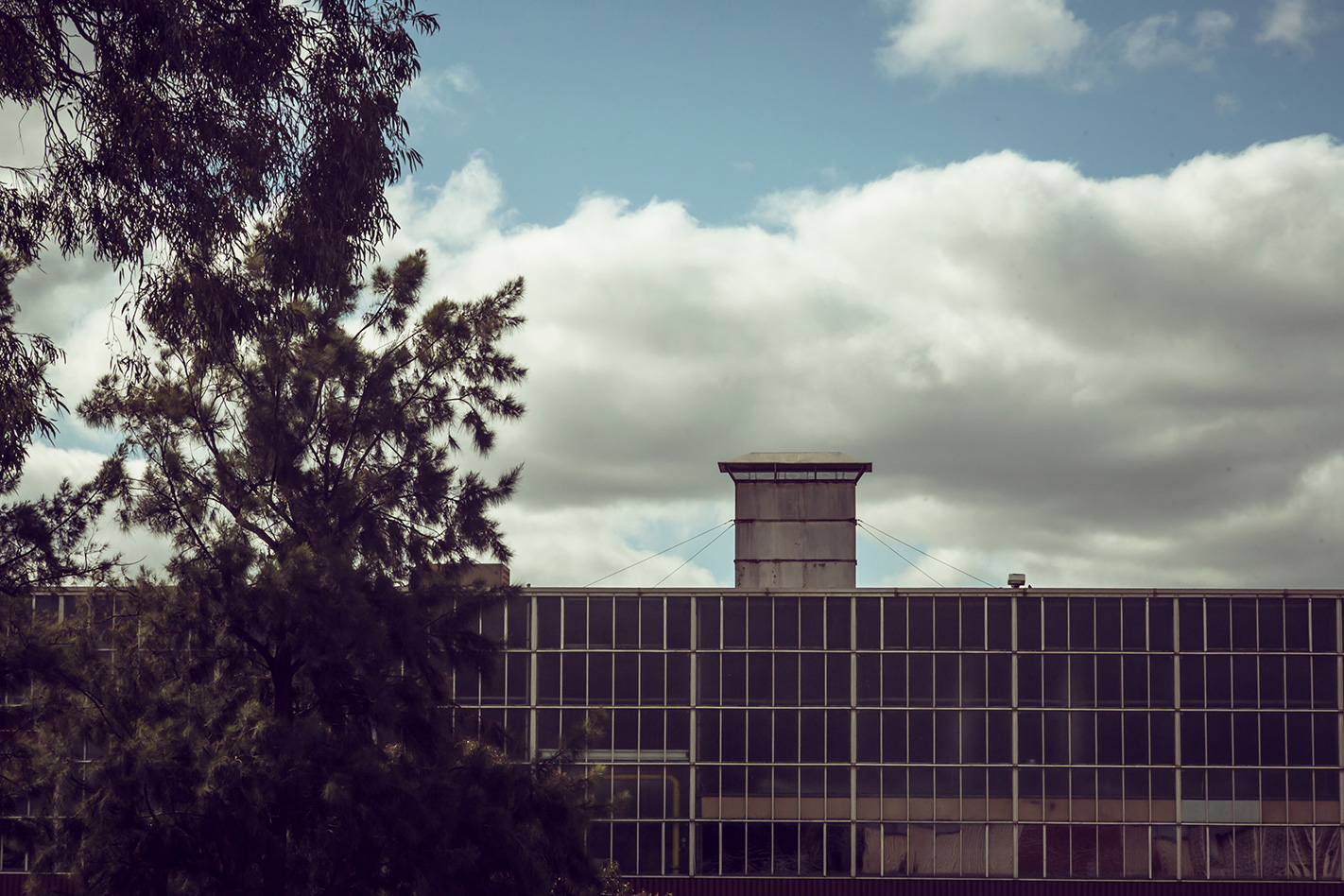
Peter Matthews is one of those workers. A 34-year veteran of Holden’s Elizabeth facility, and a gloriously moustachioed 66-year-old who doesn’t seem the type often overcome with emotion. You can picture him, I’m sure; a big and burly bloke, almost impossibly jovial. He says he’s happily fighting the wrinkles of old age by simply putting on more weight; a kind of pie-based Botox he reckons is working. But there’s no hiding the cracks that appear in his voice when he thinks about driving past that tree for the final time.
“I was telling someone about six months ago how every morning for the past bloody 30 years, when I’d come to work I’d look at that tree and think how amazing it is. I’ve watched it grow,” he says, his voice quivering a little, and dropping in volume.
“And that was it. I lost it. Over a tree. But I’d stop all the time and look at it. But that’s come to the end of an era, too.”
The end of an era. We won’t recap the full and bloodied history here, but the battle for Australian automotive manufacturing has been waged and lost. Ford, Toyota and now Holden have all shuttered local operations. We point fingers at the manufacturers themselves, or the government, or even the changing automotive tastes of car-buying Australians because the truth is far less satisfying: the business of building cars here is simply unsustainable.
And so Holden’s factories have fallen like dominos: first went Cruze production on October 6 last year, which has left a vast chunk of the Elizabeth facility sitting silent and empty, already looking like a fenced-off museum exhibit of what Australian manufacturing was once like. Hundreds of workers walked out the front door for the final time that day.
The company’s Fishermans Bend engine factory in Port Melbourne, which had pumped out a staggering 10 million engines since 1936, was next to fall, with 175 more workers laid off.
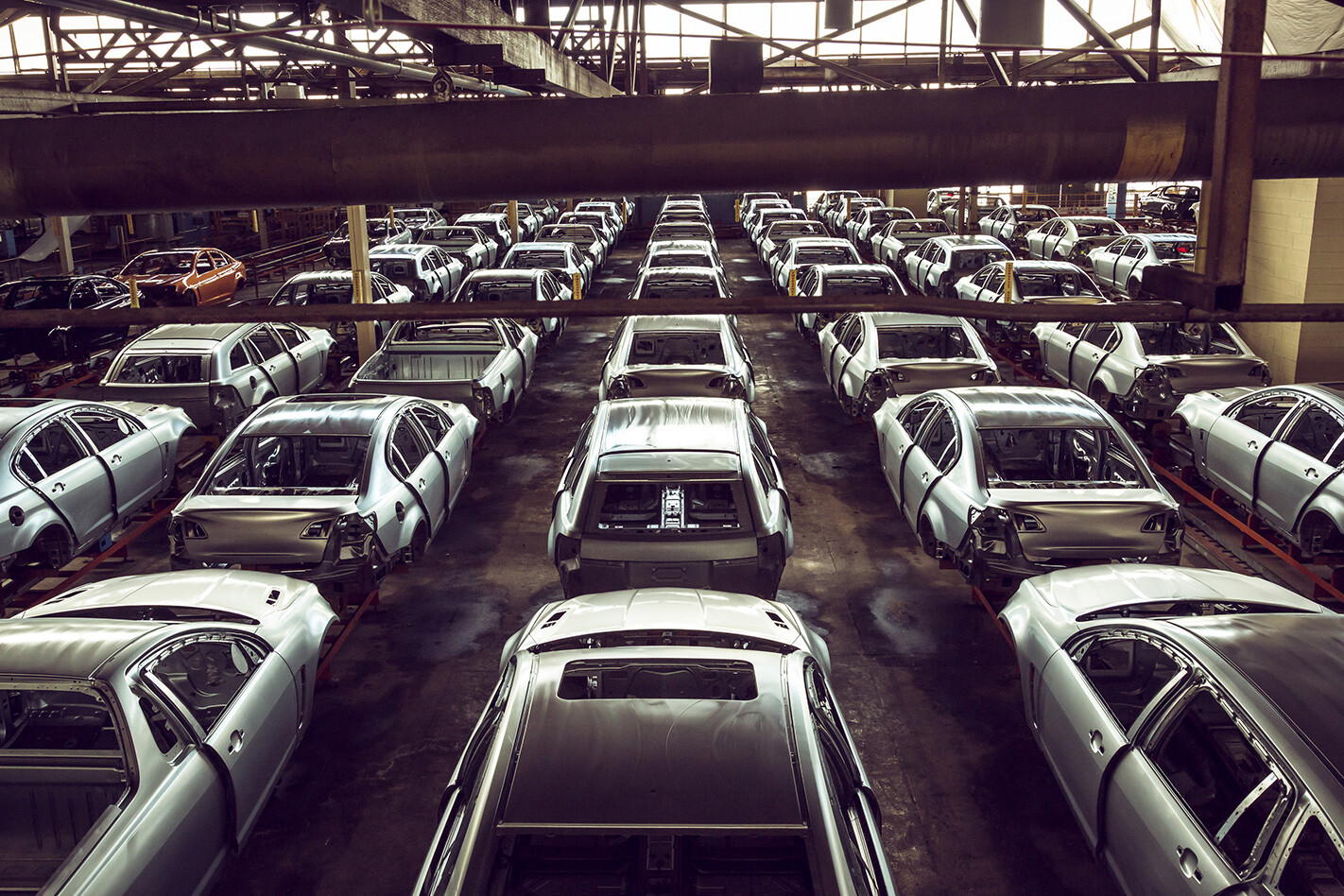
It’s fitting, though, that it should be the Commodore – the company’s most successful nameplate – that’s the last to go. But even it couldn’t hold on forever in its current incarnation, and the lights will be switched off for the final time in Elizabeth on October 20. Another 950-odd workers will finish up that day.
And so big Peter’s emotion is real, but fleeting; forced down with stoicism and replaced immediately by a joke, a way of lightening a mood that would weigh on you constantly if you let it.
“Oh well. I guess I’ll just have to drive over here sometimes and see if I’ve still got visitation rights,” he chuckles.
It’s a scene played out on repeat as we take a final tour of Holden’s massive 123-hectare mega-facility, opened in 1963 and once responsible for producing more than 800 cars a day, but which now churns out just 175 Commodores every 24 hours.
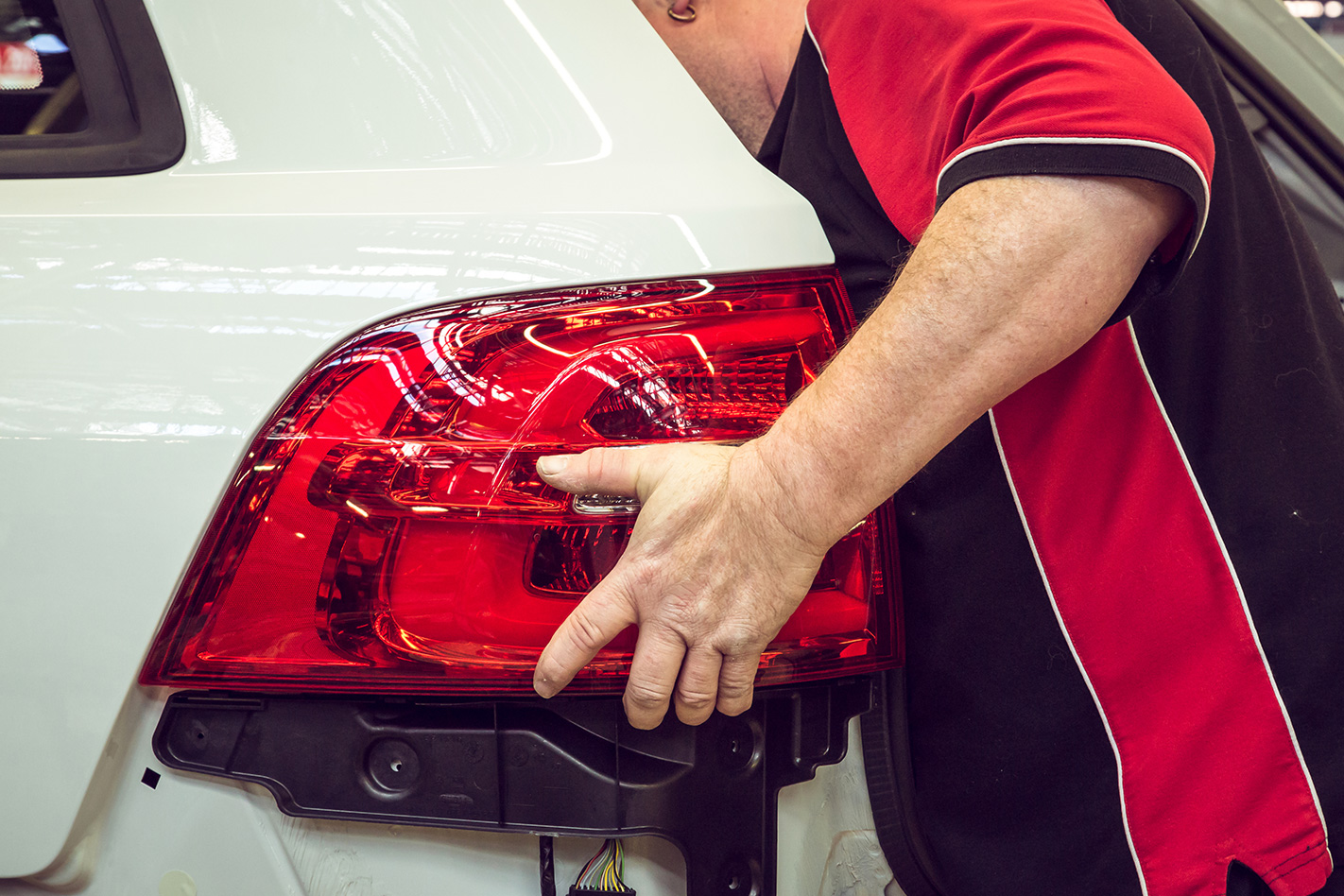
The hard moments are now occurring here daily – the final goodbyes, the kaleidoscope of coloured names on a white board in the Transition Centre that celebrates the people who’ve found new work, the many more, less fortunate names that are yet to appear on it – but there’s an undeniable sense of resilience among the workers still here.
It’s all too easy to sit in Australia’s major cities and either not care, or dismiss: “Holden should have seen Australia’s tastes changing and built different cars; Holden should have introduced stronger export programs; Holden should have made cars that were cheaper, faster, better.” But to do that is not only misguided, it’s callous to the hundreds of men and women whose livelihoods depend on these facilities.
Men and women who will find themselves competing for jobs in a suburb that has a staggering unemployment rate of 32 percent, and in a broader council area where 15.5 percent of people are out of work. It’s testament to Holden’s transition teams that, of the 800 people who have so far left Elizabeth, more than 75 percent have found new jobs. But they’re still not the same jobs, the ones they chose and stuck at for years.
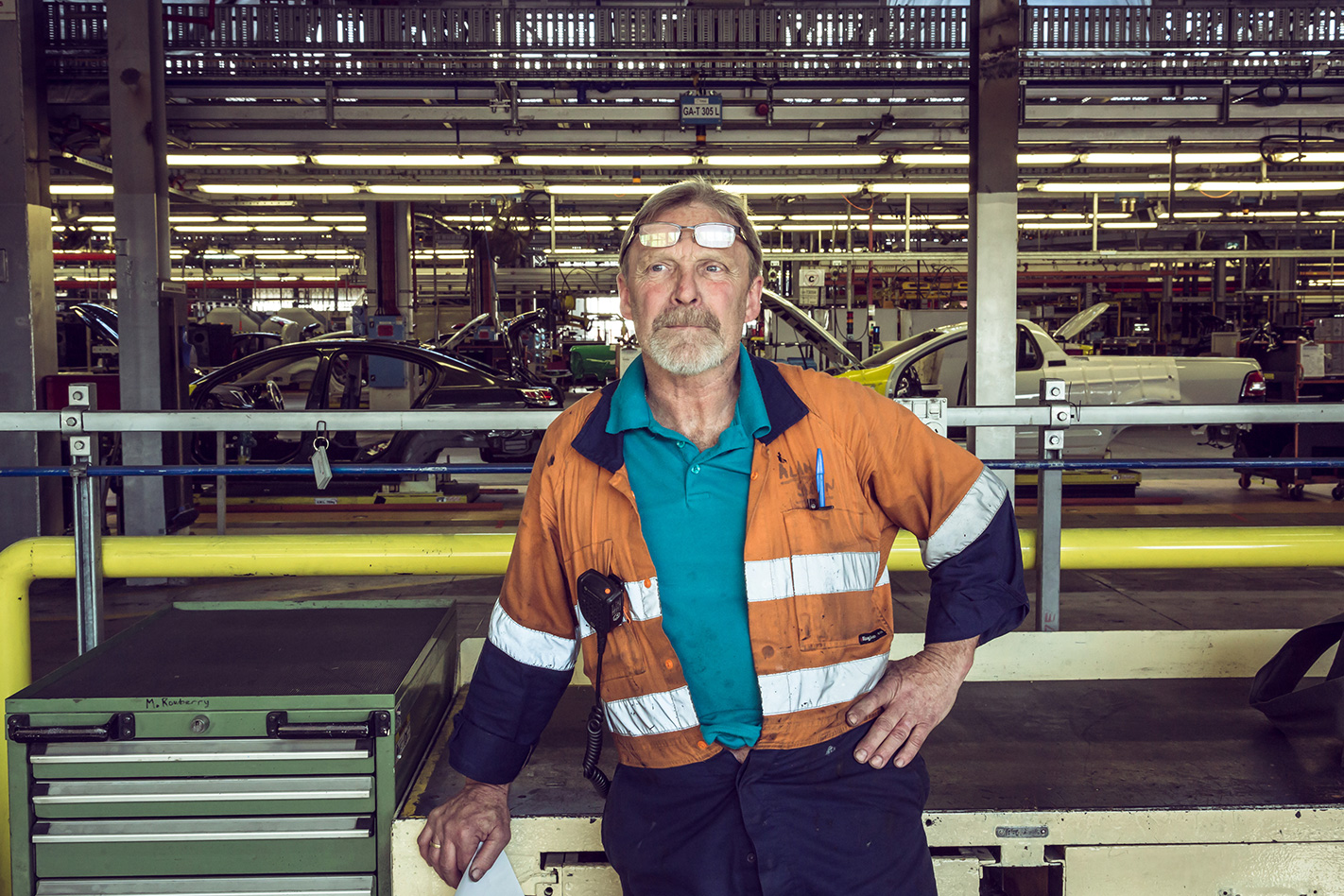
For the people left, though, it’s been more than just work. Plenty of people here count their tenure in decades, not years. It’s their social circle, their support network. Almost every worker we spoke to talked about it being like a big family; one that’s being involuntarily split up.
Perhaps nobody embodies the Elizabeth workers like Tim Lane, a 23-year veteran whose blood isn’t just Holden red, it’s likely high octane. Tim has never owned a car that was not a Holden. Neither had his father, or his grandfather.
“I started at Holden in 1994 as an apprentice electrician. Halfway through that, I started a degree in electrical engineering, and that’s what I’m doing today,” he says.
“My grandpa started back in the Birkenhead days [an earlier factory in Port Adelaide] in the mid-1930s… he left after 40 years. My dad started working at the Woodville plant [also in Adelaide], and he completed 48 years service.
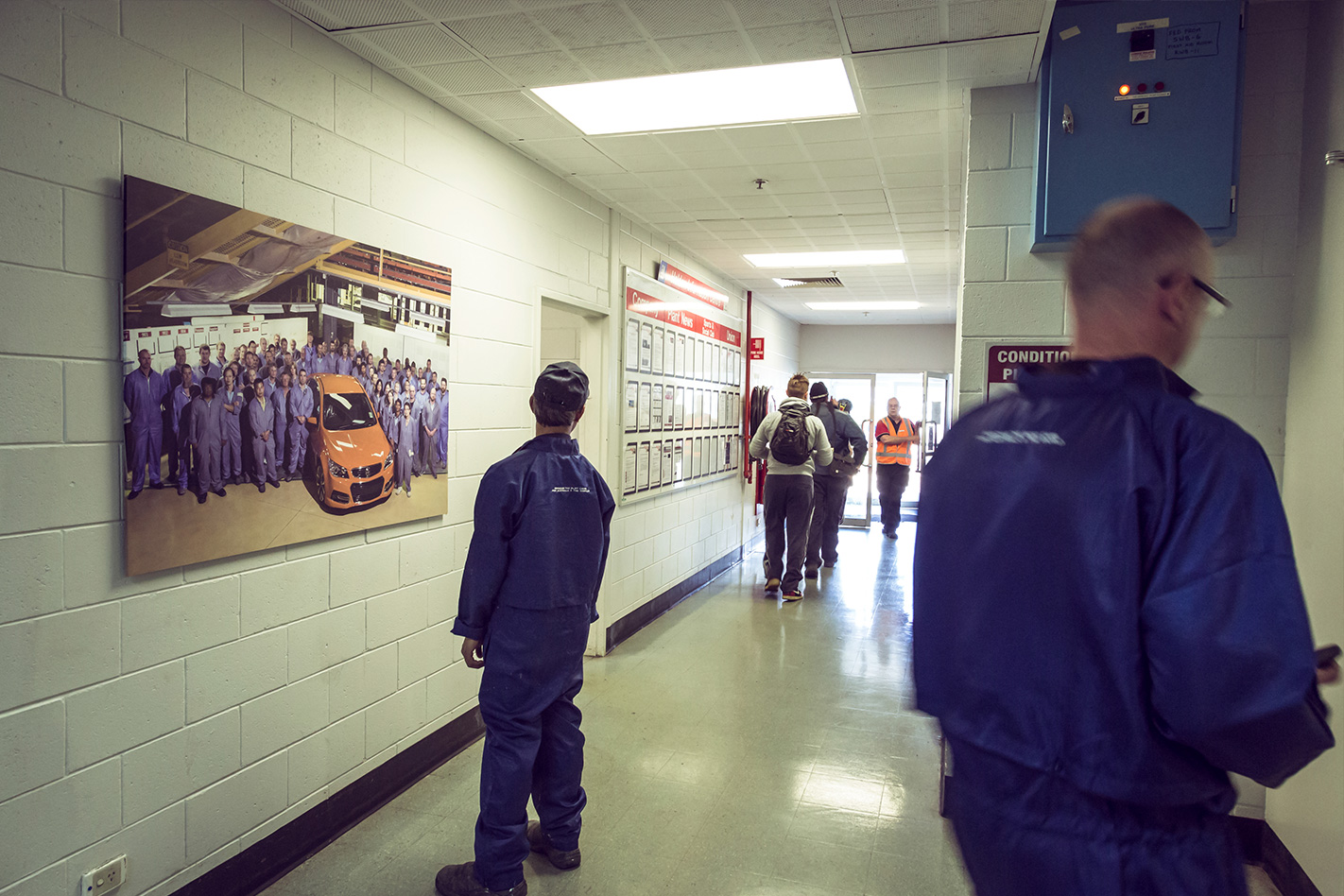
“My grandpa met my nanna, who was a receptionist to two of the directors, so they met here, too. So there’s definitely a family history. I was even conceived in the back of an FB…”
Some of Tim’s fondest memories are of when he and his father would drive to work together in his dad’s FB Holden (yes, that FB Holden). While Tim knows the end has come, his father refuses to believe it.
“I think he’s in denial. He keeps saying “they won’t close, someone will bail them out”. But we’re well past that point now,” Tim says.
“Of course it’s sad; really sad. But I’m trying to stay positive and look to the future.”
Paul Sakovits is the plant’s body shop manager, where he’s worked for the past 23 years. He speaks with a swelling pride about what’s been achieved in this facility, the rolling monuments to Australia’s automotive ingenuity that have been built, trucked away and sold to millions of Aussies over the decades. And exactly what will be lost when it closes.
“It’s a time to savour what we’ve accomplished over this journey,” he says. “We want to go out with our heads held high. We want our last car to be our best. This is our legacy. And we’re very proud of that fact.”
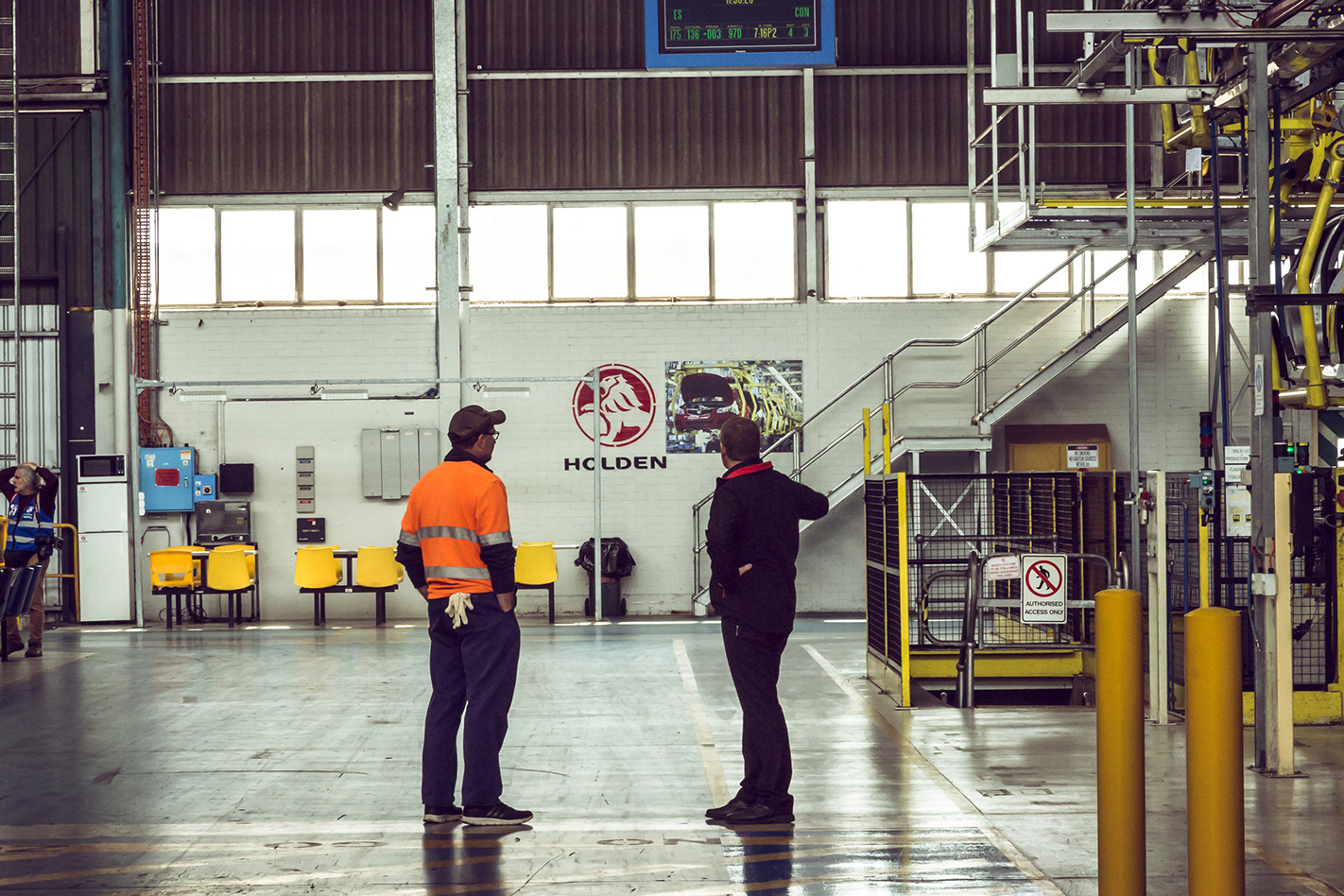
Asked if the people of Australia understand what they’re losing, Paul doesn’t hesitate: “I don’t think people really do understand what it means. The skills, the abilities, the technology that goes into this place. I think we’re losing something that we won’t get back.”
But it’s the next question that allows the emotion simmering just out of sight to surface: what does this organisation mean to you? Paul quickly turns away, his red-rimmed eyes filling slightly. He quietly composes himself for a second or two before turning back to answer the question, his words now running together a little.
“I’m sorry. It’s hard to actually put into words. I mean, having been here 23 years, just the people, how much it means to everyone is one of the things that strikes me,” he says. “I’m amazed at just how dedicated and loyal people are to this place; what it means to them. That’s the biggest thing, when I see how passionate they are, that overwhelms me.
“Obviously everyone is very sad, but on the other hand, for some people it’s a good chance to start a second career.
“But it varies every day, because you start to come to the conclusion that one day you’re going to drive in here and it will be the last time you ever even drive that route to work. Or it’s going to be the last time I see Megan, who I’ve been working with for 20 years. We’re going through all these ‘lasts’. On a day-by-day basis, you’re going through this real rollercoaster of emotions.”
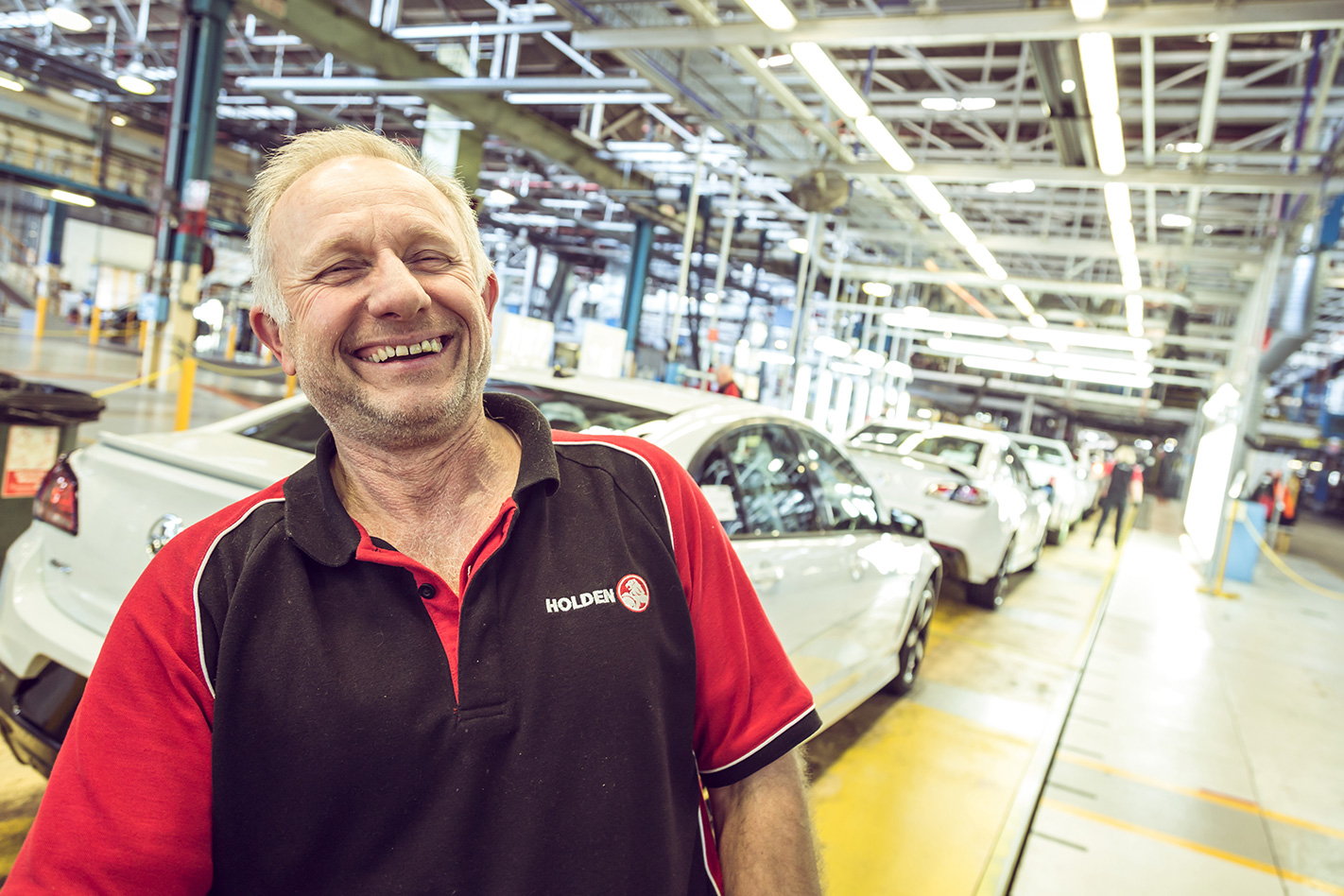
Of all the cars rolling slowly down the lines on the day we visit, the majority are V8-powered, and some of those will wear an unusual stamp. They’re called the Employee Pack cars, which are based on the VFII Reserve Edition, and have been made available to Holden employees at a generous discount. Each will have the staff member’s Holden employee number stamped into the metal, and will have the car’s ‘broadcast sheet’ (the slip of paper that tells the line workers what parts to fit) framed inside, too.
“There’s just so much pride to be a part of it,” says the plant’s manufacturing and engineering manager, Jed Carmen. “There’s been a long history, and I know my 13 years here sounds a long time, but in this place, I’m a relative newbie.
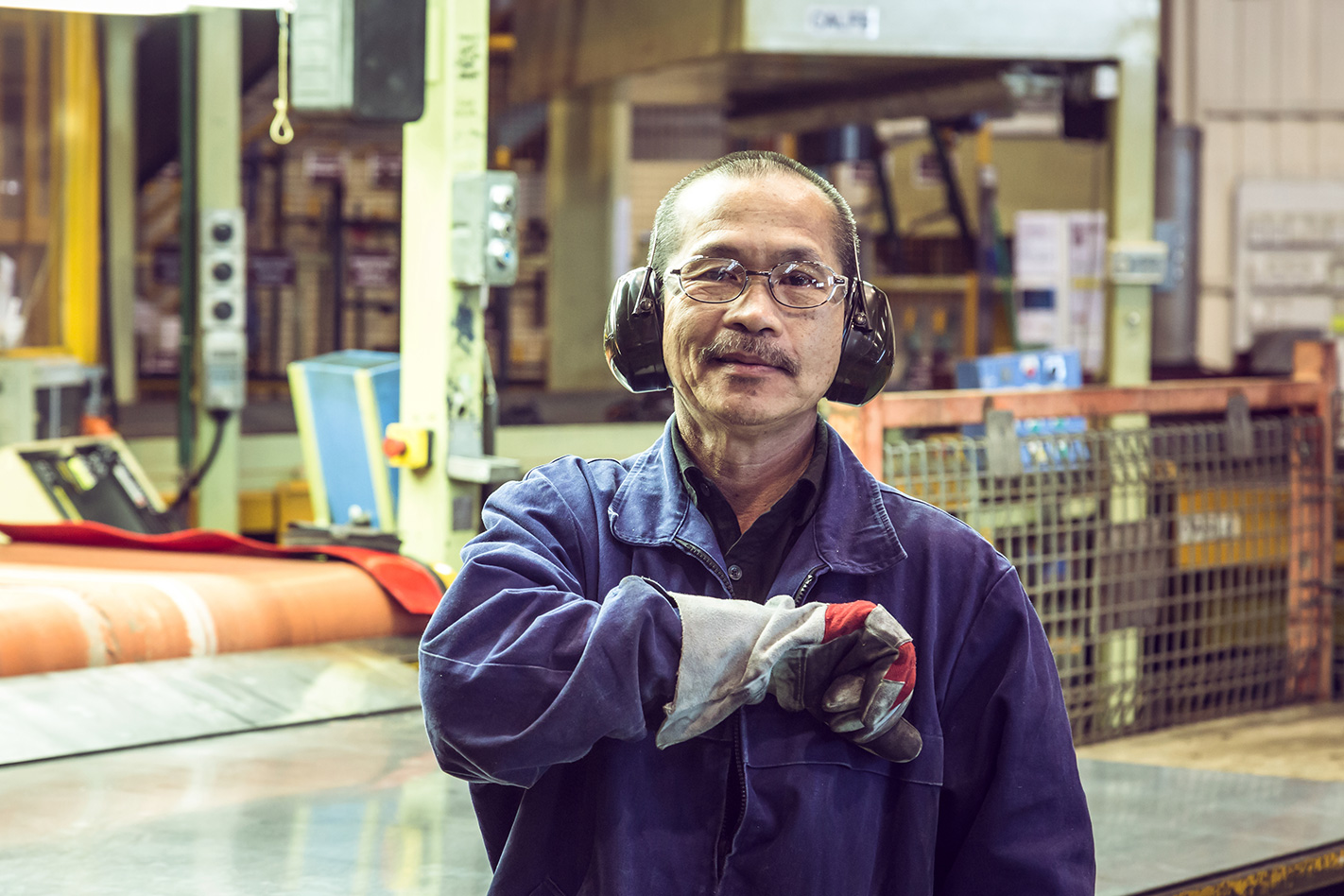
“But to be part of this product, and to be able to drive away in your own car with your own personal stamp on it; that’s such a great way to leave it.”
Those employees will drive out of a gate belonging to a factory that will have likely already been sold. In some of the last Commodores to ever be built. And they’ll pass a sweeping gum that’s been there for as long as anyone can remember. And will be there for some time yet.
What stands out?
The Isuzu MU-X is a robust wagon that can take you well off the beaten track with up to seven people on board. It is available in high-clearance rear-wheel drive form, and as a four-wheel drive vehicle that is good off-road. The MU-X is based on the D-Max ute, sharing its strong diesel engine and excellent six-speed gearboxes – all freshly designed. It is smaller and easier to manoeuver than some 4WDs.
What might bug me?
Handling on bumpy, sealed roads – especially if you are expecting it to steer like less rugged SUVs designed mainly for tarmac use.On the less costly versions, staying comfortable behind the wheel – especially if you’re tall. The manually adjustable seat has a shortish base and the range of adjustment is small. However there is height adjustment. The steering wheel also adjusts for height, but not for reach.Keeping tabs on the scene behind you: a smallish rear window restricts rearward vision.
What body styles are there?
Five-door wagon only.The MU-X is available with rear-wheel-drive only, or as a four-wheel-drive vehicle.Four-wheel drive D-Maxes use a part-time 4WD system, which means you can operate them only in rear-wheel drive on sealed roads but may switch to 4WD on loose surfaces. In 4WD you can choose high-range or low-range gears – the latter allowing you to drive comfortably at very slow speeds, which helps in difficult conditions.The MU-X is classed as a large SUV, lower priced.
What features does every Isuzu MU-X have?
Bluetooth connectivity for phone calls and audio streaming. An MP3 compatible sound system with an AM/FM radio, a CD and DVD player, AUX and Micro USB inputs, and eight speakers.Cruise control. A reversing camera, and rear parking sensors (which tell you how close you are to obstacles).A leather-wrapped steering wheel with buttons for operating the cruise control, the sound system and your phone. Air-conditioning.Seven seats. Three USB ports for charging mobile devices – including one for rear passengers. Wheels made from aluminium alloy.Self-aiming headlights that use very bright and long-lived LEDs rather than conventional bulbs, and LED daytime running lamps.Self-aiming headlights that use very bright and long-lived LEDs rather than conventional bulbs, and LED daytime running lamps.Hill start assist, which helps you take off on uphill slopes (by controlling the brakes automatically). Hill descent control, which looks after the braking as you negotiate steep and slippery downhills.Electronic Traction Control, which helps 4WD models go further off road. It also helps 2WD models on slippery surfaces.Six airbags. Electronic Stability Control, which can help bring a skidding car back under control. (For the placement of airbags, and more on MU-X safety systems, please open the Safety section below.)Every MU-X comes with a five-year, 130,000km warranty.
Which engine uses least fuel, and why wouldn’t I choose it?
Only one engine is available in an MU-X, a 3.0-litre four-cylinder turbo-diesel. (The same engine powers the D-Max ute.) Isuzu says this engine, introduced in February 2017, was developed explicitly for Australia.The new engine is the same size and layout as the engine it replaced, which had powered the D-Max since its arrival in 2013. But under most driving conditions, you feel more thrust sooner. (Peak power is the same as before, but better fuel injection and a more efficient turbocharger have spread the power over a broader range of engine speeds.)An MU-X consumes about 8.1 litres/100km (urban and country combined) in official tests, with little difference between two-wheel drive and four-wheel drive versions, or manuals and autos.In the real world, you can expect to average about 9.5 litres/100km – still thrifty for a relatively big and heavy vehicle. It will use less than that on the highway, but more around town.The MU-X comes with manual or automatic gearboxes, both with six speeds. Both give you a taller top gear than the five-speed gearboxes of the previous MU-X, which means your wagon feels a bit more relaxed when cruising along.In an LS-M 4WD or LS-U 4WD, you get a choice of gearbox; with any MU-X 2WD or the LS-T 4WD, it is auto only.(Power outputs and all other Isuzu MU-X specifications are available from the Cars Covered menu, under the main image on this page.)
What key features do I get if I spend more?
The least expensive MU-Xes have rear-wheel drive only. By spending more money, you can get a better equipped rear-wheel drive MU-X, or a more versatile 4WD with significantly more off-road ability.With either drive layout, the MU-X comes in three equipment levels. The least costly is the LS-M, which has cloth-covered seats, a 7.0-inch central touchscreen, and 16-inch wheels.Spend more money on an LS-U and you gain an 8.0-inch touchscreen, and satellite navigation. The air-conditioning maintains your desired cabin temperature, and dedicated ducts supply cooling to rear-seat passengers. There are front foglights, and side steps (which help you get in and out of the vehicle).Wheels on an LS-U are bigger at 18 inches, and will look sportier to some eyes than those on the LS-M. The LS-U’s spare wheel is an alloy item as well, whereas the LS-M’s spare is steel.The most expensive MU-X is the LS-T. You get quilted leather on the seats, with power adjustment for the driver. You can unlock and start an LS-T without removing its smart key from your pocket or bag. There is also interior ambient lighting, and a DVD entertainment system for rear passengers (with a 10-inch roof-mounted screen).Roof rails make it easier to fit roof-mounted luggage systems.
Does any upgrade have a down side?
Replacement tyres for the 18-inch wheels on the MU-X LS-U and LS-T will cost more than tyres for the 16-inch wheels on an MU-X LS-M, and are generally less effective and less comfortable off road. In rocky off-road conditions, the 18-inch tyres can also be damaged more readily.Basic white is the only colour that’s available at no extra cost.
How comfortable is the MU-X?
Climbing into the tall-riding MU-X is made easy by well-located grab handles on the inside of each windscreen pillar.Once inside you’ll find a roomy cabin with a simple control layout.This revised MU-X feels a lot nicer inside than the original. Its extensive use of softer, leather-like, trim materials feels much more welcoming.The driver’s seat supports your shoulders and upper back well, but you might wish for more support and adjustment from the seatbases in the less costly models – especially if you’re long-legged. The power-adjusted, quilted leather seats in an LS-T are much better. In any MU-X, the steering wheel adjusts for height only, which can limit your ability to get comfortable.On start-up the engine’s characteristic rattle lets you know it’s a diesel. Once under way it is surprisingly quiet under most driving conditions. It gets noisy if you put your foot down, but it’s not often you need to do that as the engine has plenty of power for most driving.The six-speed automatic gearbox works nicely too, changing gears at the right time and generally very smoothly.The MU-X has a comfortable and very quiet ride, even on bumpy and unsealed roads.
What about safety in an Isuzu MU-X?
Six airbags, a reversing camera, rear parking sensors, LED daytime running lights, and the mandatory stability control, provide solid safety basics on every MU-X.There are two airbags directly in front of the driver and front passenger; one alongside each front occupant to protect the upper body; and full-length curtain airbags down each side of the car.The side-curtain airbags extend past the third row of seats, offering head protection to even the rearmost passengers.No MU-X offers active driver-assist features such as autonomous emergency braking (which scans the roadway ahead of you and can apply the brakes automatically to mitigate a crash), forward collision warning or lane-departure warning.However, you can add blind spot monitoring, rear cross traffic alert as an extra cost package for about $955. You can also add this to 2017 AND 2018 models.Another optional extra is front parking sensors, ($545), which can also be retrofitted to 2017-onwards MU-X models.The Australasian New Car Assessment Program (ANCAP) has awarded the MU-X five stars for safety, its maximum score, most recently in May 2017.
I like driving – will I enjoy this car?
The MU-X is designed to be capable off road – and not just on gravel or dirt roads. As a result, it does not feel as sharp and precise on sealed roads as less rugged SUVs.Your MU-X will not handle badly, but keen drivers won’t take much pleasure from attempting to push it along. Nevertheless, body roll is reasonably well controlled, and steering is predictable even if a little vague.Highway performance is comparable with many vehicles of this sort – much the same as you would expect from a Toyota Prado or Fortuner, for example. You can overtake slower vehicles if you are patient and allow yourself plenty of space.As a touring vehicle, the MUX is quiet, comfortable and relaxed, thanks in part to the very useful power from at low engine speeds and the tall gearing. The excellent highway fuel economy is also a positive.Off-road, a 4WD MU-X can take you quite a long way – helping you and your family enjoy hard-to-reach camping locations and the like. Tough, ute-like underpinnings mean it is less likely to be damaged off road than SUVs built more like passenger cars.Any 4WD MU-X has plenty of ground clearance, and on particularly rough ground, low-range gears make it easy to drive very slowly. The long suspension travel also helps in rough going, by allowing the wheels to comfortably follow the ground without bucking the car up and down. Those wheels are placed relatively close to the bumpers at each end of the car, for short overhangs that are less likely to hang up on steep obstacles.In an auto MU-X, a sequential shift mode allows you to select and hold a preferred gear in challenging going. The electronic traction control works quite well off-road also, but no rear diff lock is available on an MU-X, even as an option.
How is life in the rear seats?
The rear seat is good for two adults and a child but is on the tight side for three adults. The second-row has attachment points for three child seats.The third-row seats can accommodate bigger kids and even small to mid-size adults, although there’s little room to put your legs out in front. Getting in and out of the third-row seat is easy for kids and agile adults.The MU-X is also a good height for getting small children or elderly people in and out.
How is it for carrying stuff?
The luggage area, which is accessed via a single top-hinged tailgate, is not as big as it seems from the outside of the car because the third-row seats, even when folded down, eat into the available space.With the third row in use, there is room behind them only for a few soft bags.On a more positive note, the three-person middle row of seats folds 60/40 and the two-person third-row folds 50/50. That adds versatility, allowing you to tailor the car’s interior for carrying people or gear or both.The MU-X has a 3000kg maximum tow rating, which is average for a medium-sized 4WD wagon. This is sufficient to legally tow a two-horse float or a large, tandem-axle caravan. The diesel engine’s strong pulling power and good economy are positives attributes for towing.
Where does Isuzu make the MU-X?
Every MU-X is built in Thailand.
What might I miss that similar cars have?
A locking rear differential, for better drive in difficult conditions off road. The Toyota Fortuner and Ford Everest have this, for example.Autonomous emergency braking, and other advanced driver-assist features. Auto-braking is available on the Mitsubishi Pajero Sport, for example.Support for Apple CarPlay or Android Auto, which would let you display compatible smartphone apps on the car’s central touchscreen and control them from there. The Everest, Pajero Sport and Holden Trailblazer offer this, for example.No MU-X has automatic wipers or dusk-sensing headlights. Many alternative 4WD wagons offer both.Alternative SUVs based on passenger car designs, such as the Mazda CX-9 and Toyota Kluger, offer better on-road ride and handling.
Are there plans to update the MU-X soon?
The MU-X was released in 2013. In November 2015 Isuzu added a rear-wheel drive variant of the best equipped, LS-T, model, which had previously been available in 4WD only.In February 2017 the MU-X was upgraded significantly. The diesel engine gained a much broader power spread, gearboxes both got six ratios, and Hill descent control was added. Cabins were isolated better from road and engine noise. Touchscreens and reversing cameras were extended to all versions, LS-Us gained satellite navigation, and LS-Ts picked up smart-key entry.In May 2017 the MU-X received a new-look nose, LED headlights and daytime running lights, a more welcoming interior fit-out, and even more noise abatement. Wheels on LS-M and LS-T versions grew an inch to 18 inches.The range received a slight upgrade in May 2019 that brought exterior and interior design enhancements, and improvements to the steering system for easy manoeuvring around town and in car parks.
I like this car, but I can’t choose which version. Can you help?
The MU-X LS-U 4WD is the pick of the range – unless you don’t want the versatility of 4WD, in which case it’s the LS-U 2WD.Either LS-U adds many useful features over an LS-M for not a big price hike.
If you were planning on assembling your sim rig and pulling that racing wheel out of the closet in anticipation of Need For Speed Heat’s release next month, then we have some bad news. The latest instalment of the NFS franchise won’t offer support for wheel peripherals, at least not at launch.
As reported by Norwegian site ulvespill.net, NFS senior game designer Yoni Rabinowitz confirmed without elaborating that “we don’t have any wheel support for the launch”.
That’s not exactly without precedent. Need For Speed 2015 launched without wheel support either, and its 2017 follow-up, Need For Speed Payback, only brought wheel support after a running update – largely brought about after negative user feedback.
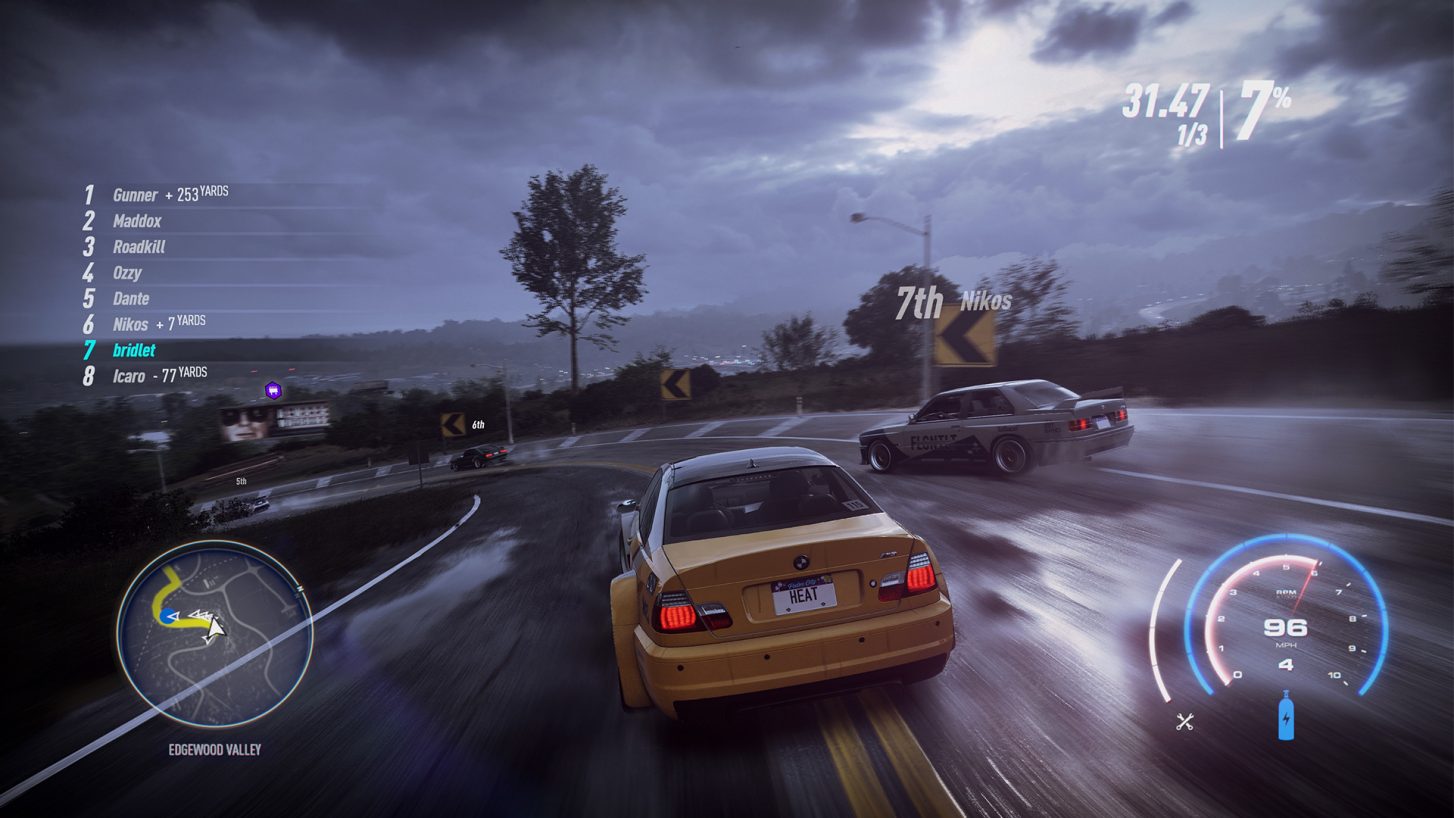
In its development blog, the Ghost Driving Experience Team has promised numerous approaches to addressing the biggest point of criticism of both NFS 2015 and Payback. The language is convoluted and doesn’t always make sense to those of us who understand how an actual car works, but read on for our key takeaways.
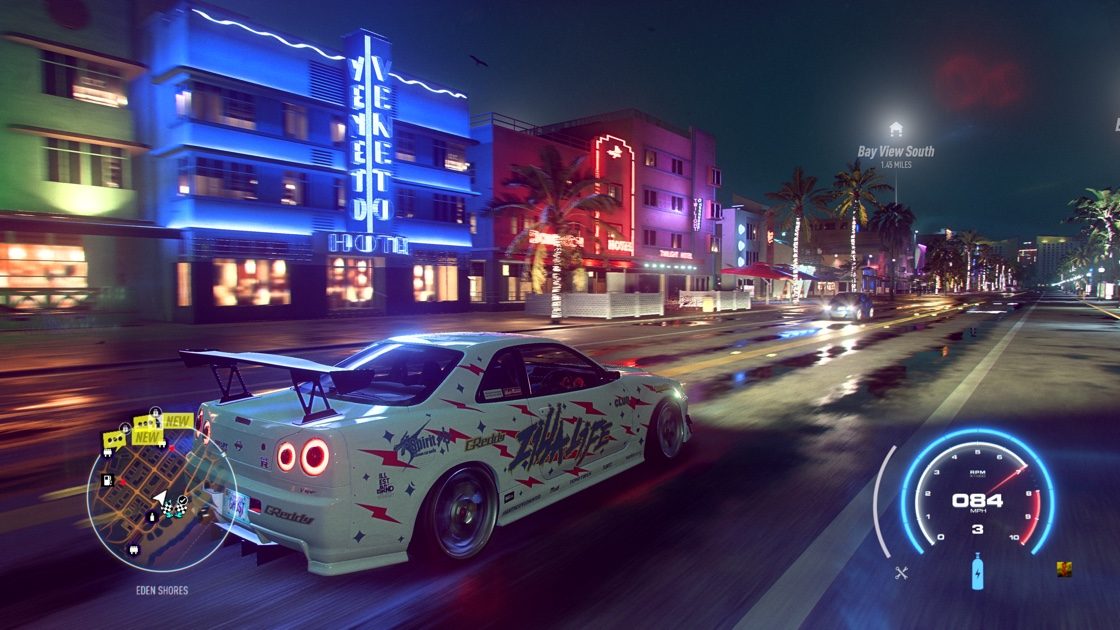
The team at Ghost explicitly mention the much-critiqued “brake-to-drift” effect; where in recent titles players have been forced to take every corner sideways – and had the experience dumbed down to a simple ‘stab brake, turn, mash accelerator’ process – even in front-drive cars like the starter Civic.
If you’ve used the ‘slide’ button on Mario Kart, you’ll know the feeling well…
In response, Ghost have worked over the drifting mechanics with particular attention to steering input, differential tuning, clutch, brake bias and the tyre model.
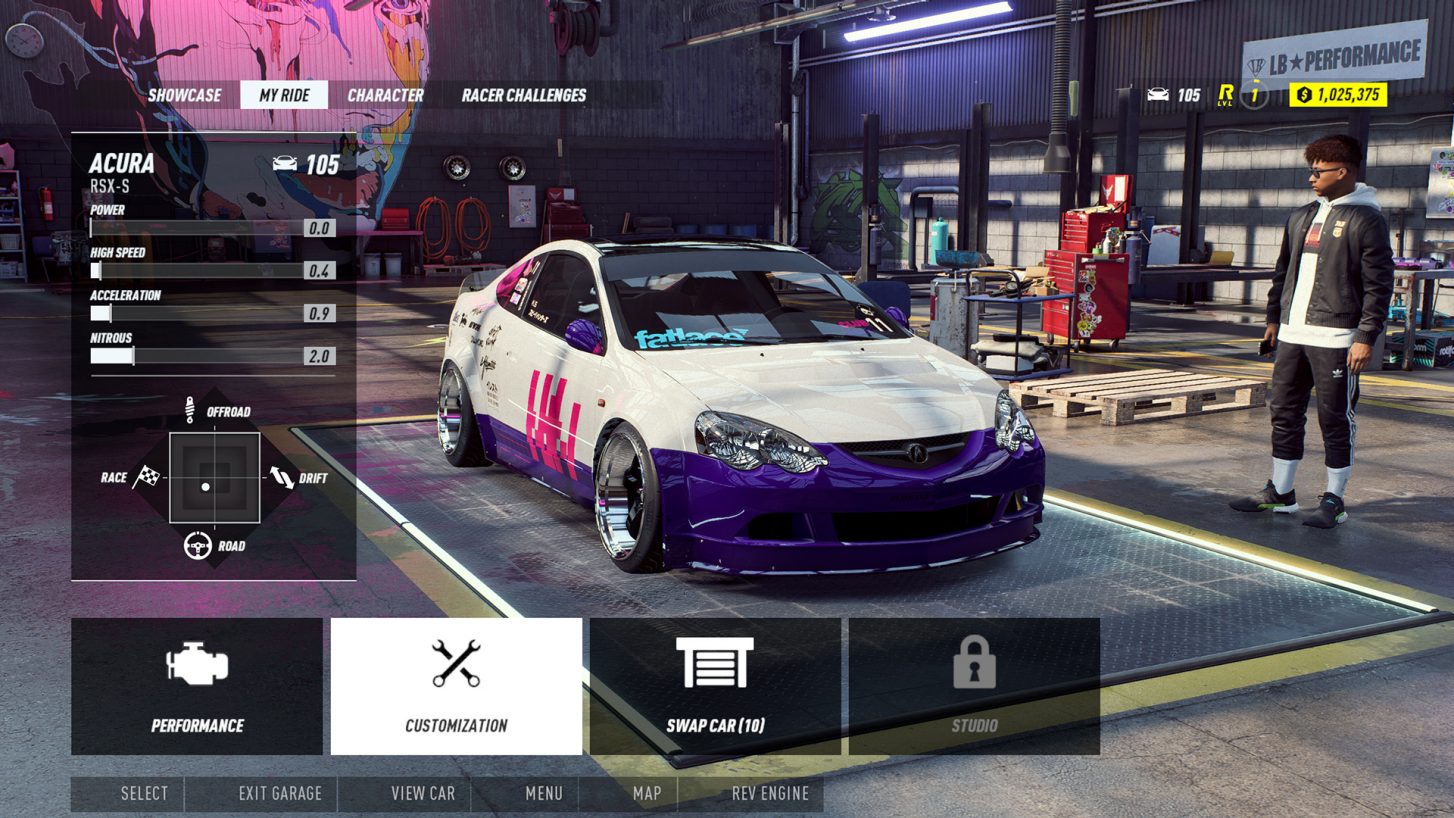
Throttle inputs will now have a tangible effect on oversteer situations (rejoice!), and you can even initiate drifts with only throttle and steering inputs. Ham-fisted inputs won’t be forgiven either, and you will spin out should you be too liberal with the go-fast pedal.
The fixed “archetype” system of building your cars in NFS: Payback has also been binned, in favour of a more free-flowing and versatile way of tuning your car. Three distinct categories (suspension, differential and tyres) are able to be adjusted individually, and will shift your car’s handling style between Race, Drift, Offroad or Road-oriented characteristics.
Ghost also welcomely state that different vehicles’ drivetrains, be they FWD, RWD, or AWD; will have a greater effect on how they react to inputs and “handling styles”.
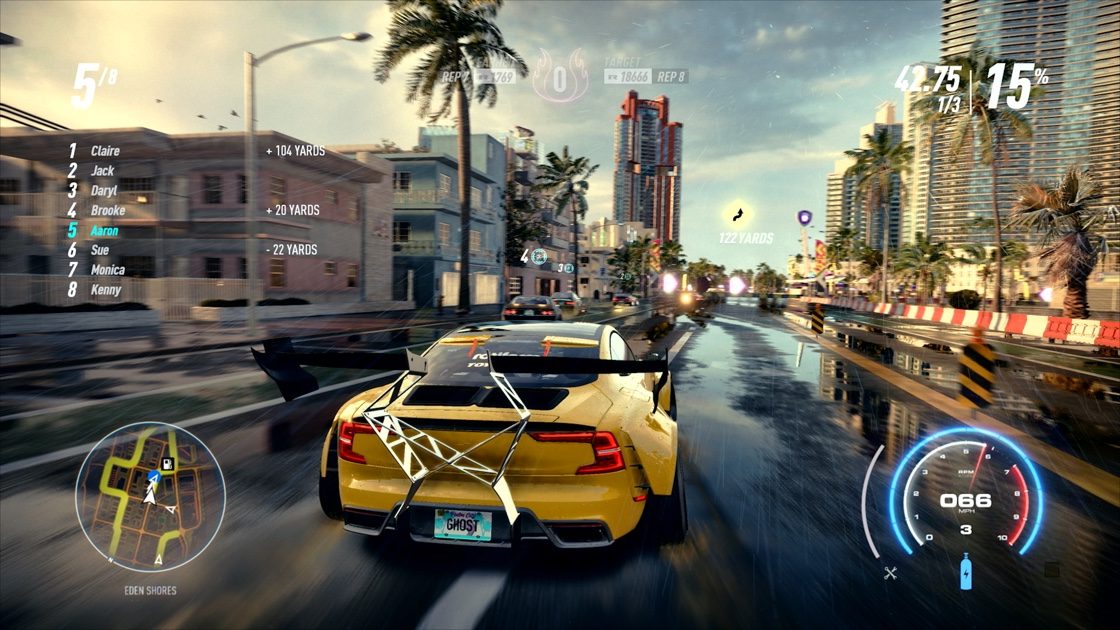
Overall; Ghost are promising more freedom for players to more finely tune their cars “towards a more realistic grip handling or drift handling” tendency, whichever the player should choose.
The team at Ghost are confident that they’ve created a “Race handling style that is faster in corners, satisfying and feels amazing” whilst conversely “creating a new way of initiating drift with multiple layers of mastery”.
Whether the team at Ghost have succeeded is yet to be seen. We’ll remain quietly confident; as this isn’t the first time we’ve been excited about the promise of improved in-game vehicle dynamics.
Stay tuned to Whichcar.com.au as we’ll have our full review once the game is launched on November 8.
Compact performance SUVs packing outputs in the 300kW range and 0-100km/h capability under 5 seconds aren’t exactly thick on the ground, but Volvo is about to join that exclusive club with the announcement of the XC40 Recharge.
Yes, well played if you spotted the clue in the name: Recharge is the branding suffix that will now be applied to any Volvo EV or plug-in hybrid.
In this instance, the BEV XC40 Recharge uses two electric motors to provide a very healthy 304kW and 660Nm to all four wheels.
A 78 kilowatt-hour battery (capable of charging to 80 percent of its capacity in 40 minutes on a fast-charger) provides a range of more than 400 kilometres according to the WLTP rating, which should equate to a real-world range of around 330km.
The strength of the powertrain is sufficient for a claimed 0-100km/h time of 4.9sec.
Visually, the Swedes’ new EV follows a fairly predictable path of terms of differentiation from the ICE models in the XC40 line-up: a closed-off grille, new alloy wheel design, and Recharge badges.
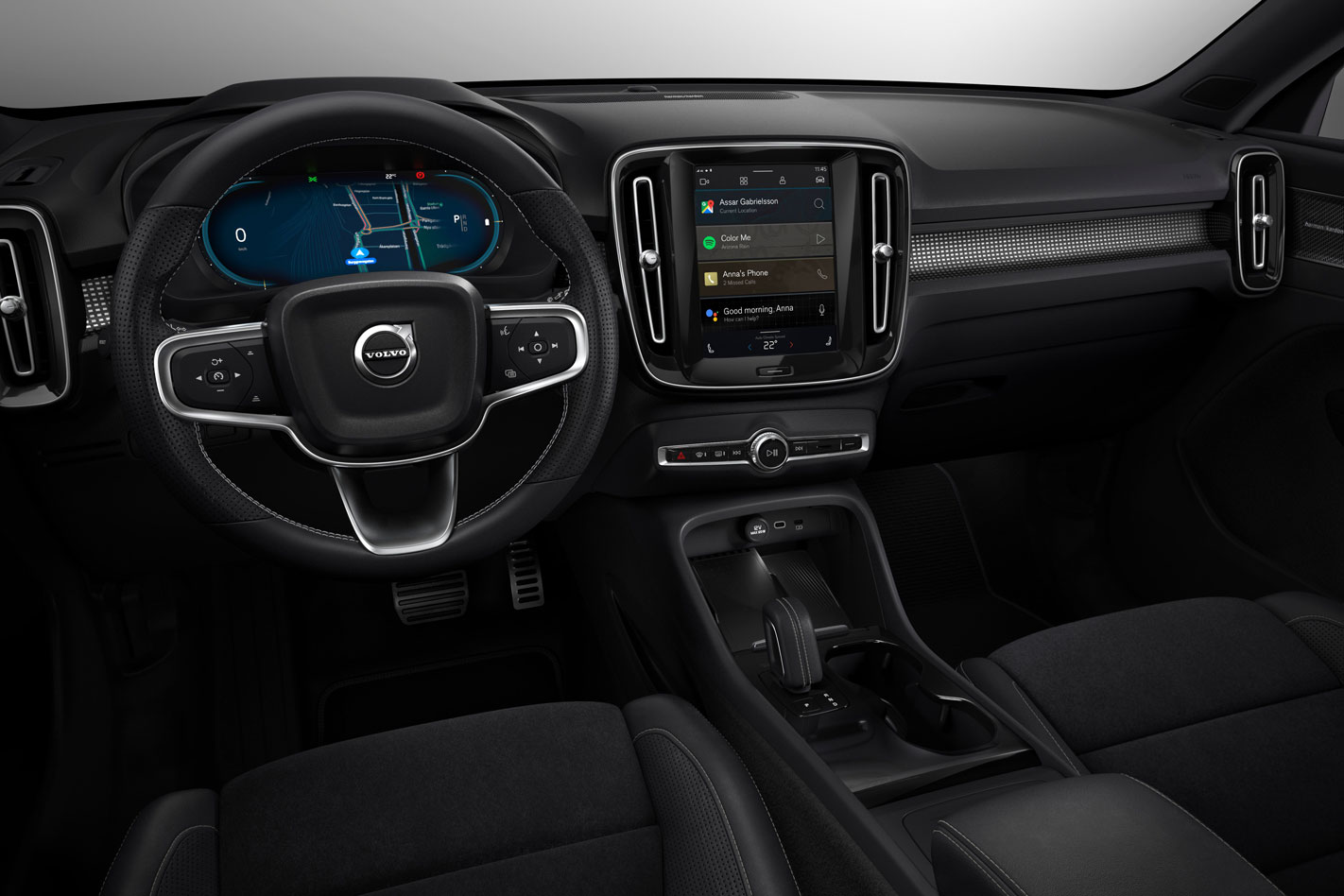
No word of what battery packaging has done to rear-seat accommodation or boot capacity, but there is a ‘frunk’ large enough to swallow a generous overnight bag.
As for connectivity, Volvo is trumpeting that the XC40 Recharge will debut a new Android-based infotainment system capable of over-the-air updates and app store access, as well as a new Advanced Driver Assistance System (ADAS), the details of which are yet to be announced.
No word on Australian pricing, but we’d expect it to be in the $70,000 bracket when it launches here in the fourth quarter of 2020.
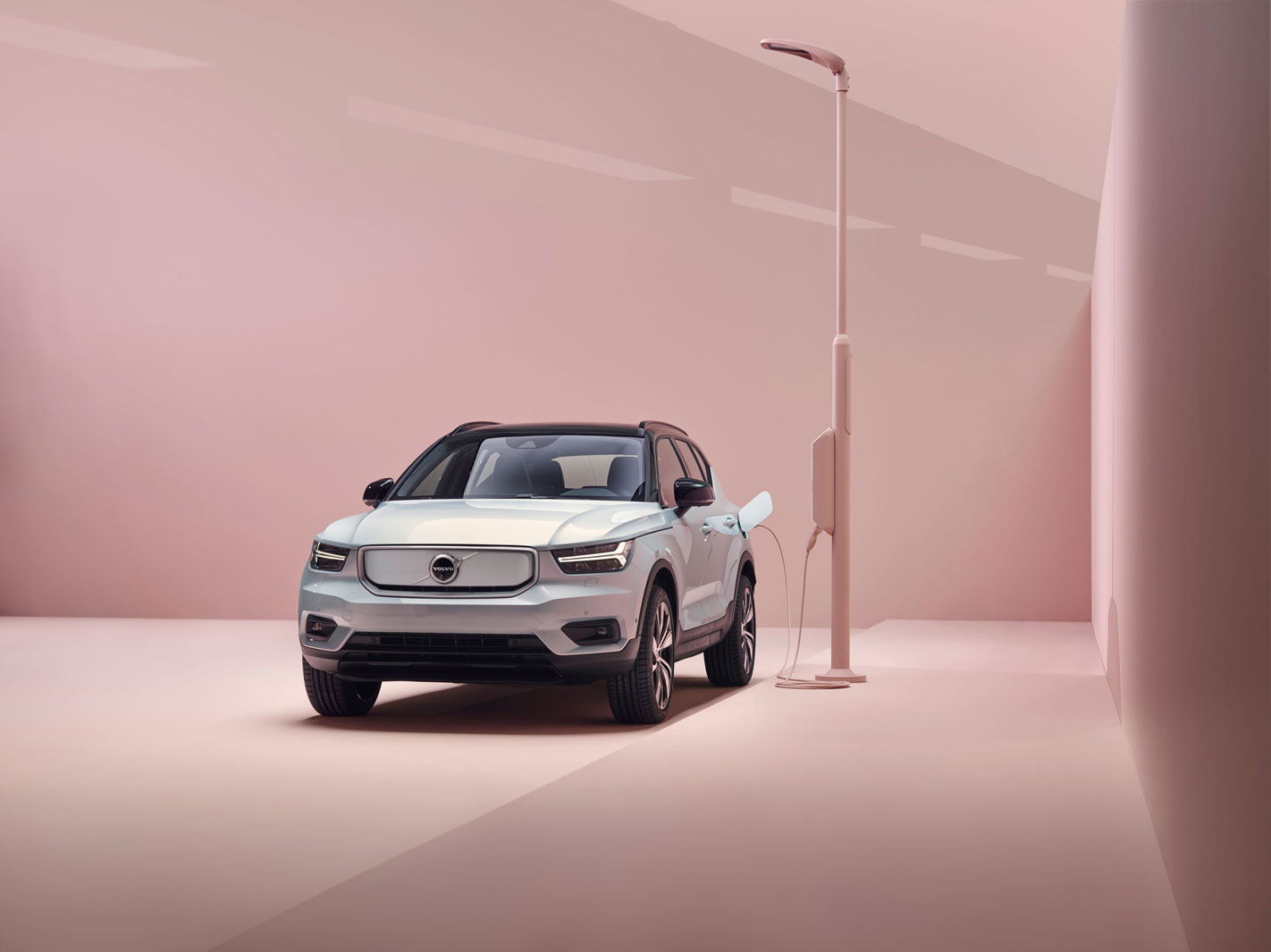
Volvo remains bullish on its EV roll-out strategy, claiming it intends to introduce a new electric vehicle every year for the next five years. The goal is for EVs to account for 50 percent of global sales by 2025, with the other half made up of hybrids.
Toyota has pulled the covers back on an all-new Yaris compact hatchback, revealing a number of firsts for the light hatch segment and the Japanese manufacturer.
New engines, more safety and Toyota’s excellent new global platform are the key gains for the five-seat, five-door hatch, which – despite the drop in popularity of the compact hatch segment – is still a popular car for Australian buyers.
Headlining the long list of updates, Toyota will bring hybrid technology to the Yaris for the first time via a new 1.5-litre three-cylinder engine matched to a lithium-ion battery.

The ‘Dynamic Force’ petrol engine is new to Toyota, and will also be available without the hybrid technology. Much like its bigger Corolla brother, the engine will be matched to a continuously variable transmission equipped with a mechanical first gear for a more natural-feeling take-off.
The duo of engines is closely related to those in the Corolla, RAV4 and Camry models, albeit smaller.
The updated looks are now much more synonymous with the rest of the current range, introducing a sportier front apron, subtly pumped guards and a more tapered roofline.
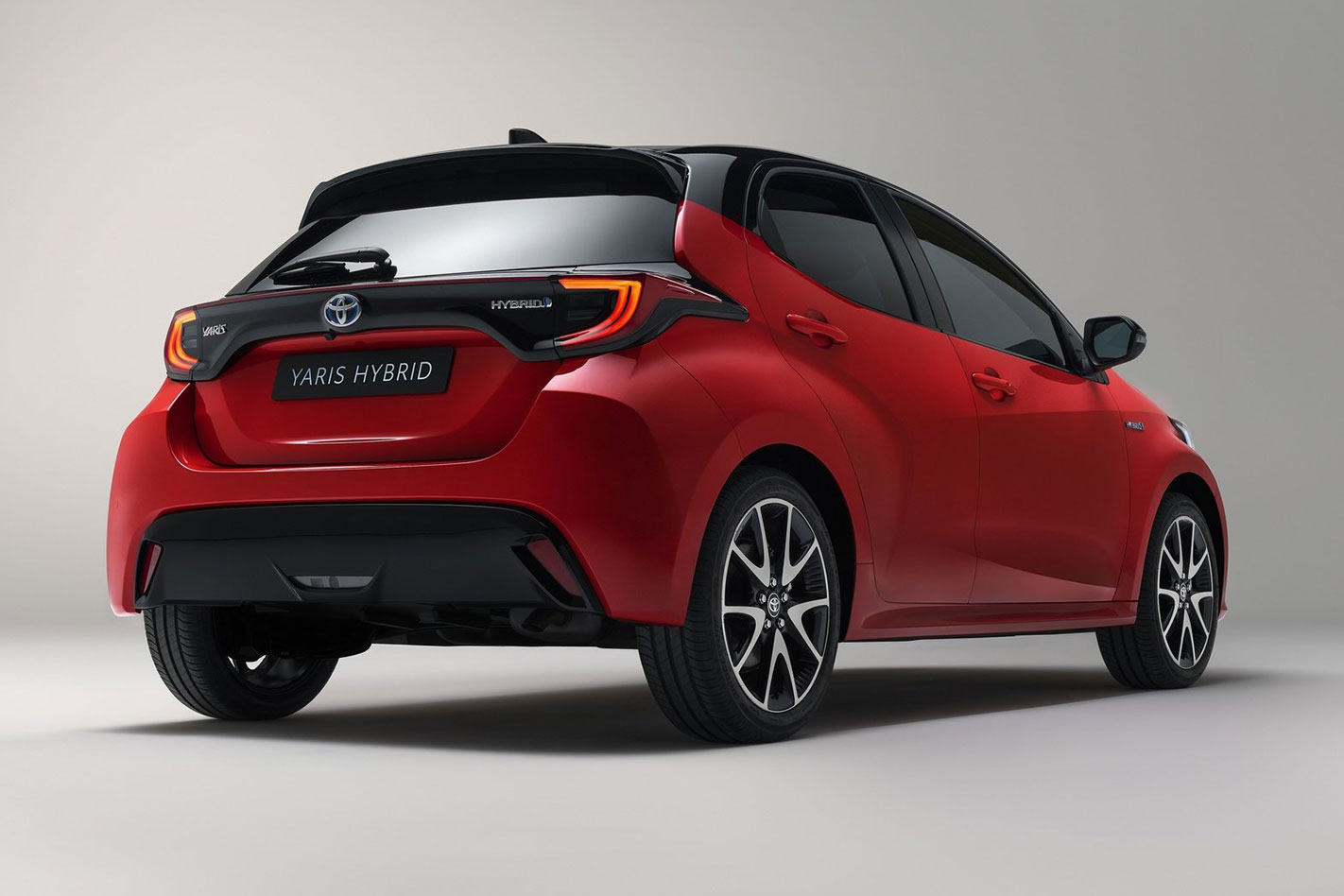
The Yaris will receive a plethora of new advanced safety features, one of which is a centre airbag which sits between the driver and passenger to prevent occupants from striking each other in the event of a side impact.
Additionally, Toyota says its new pre-collision safety system will go above and beyond current technology by preventing accidents when turning at intersections and detect pedestrians crossing the road.
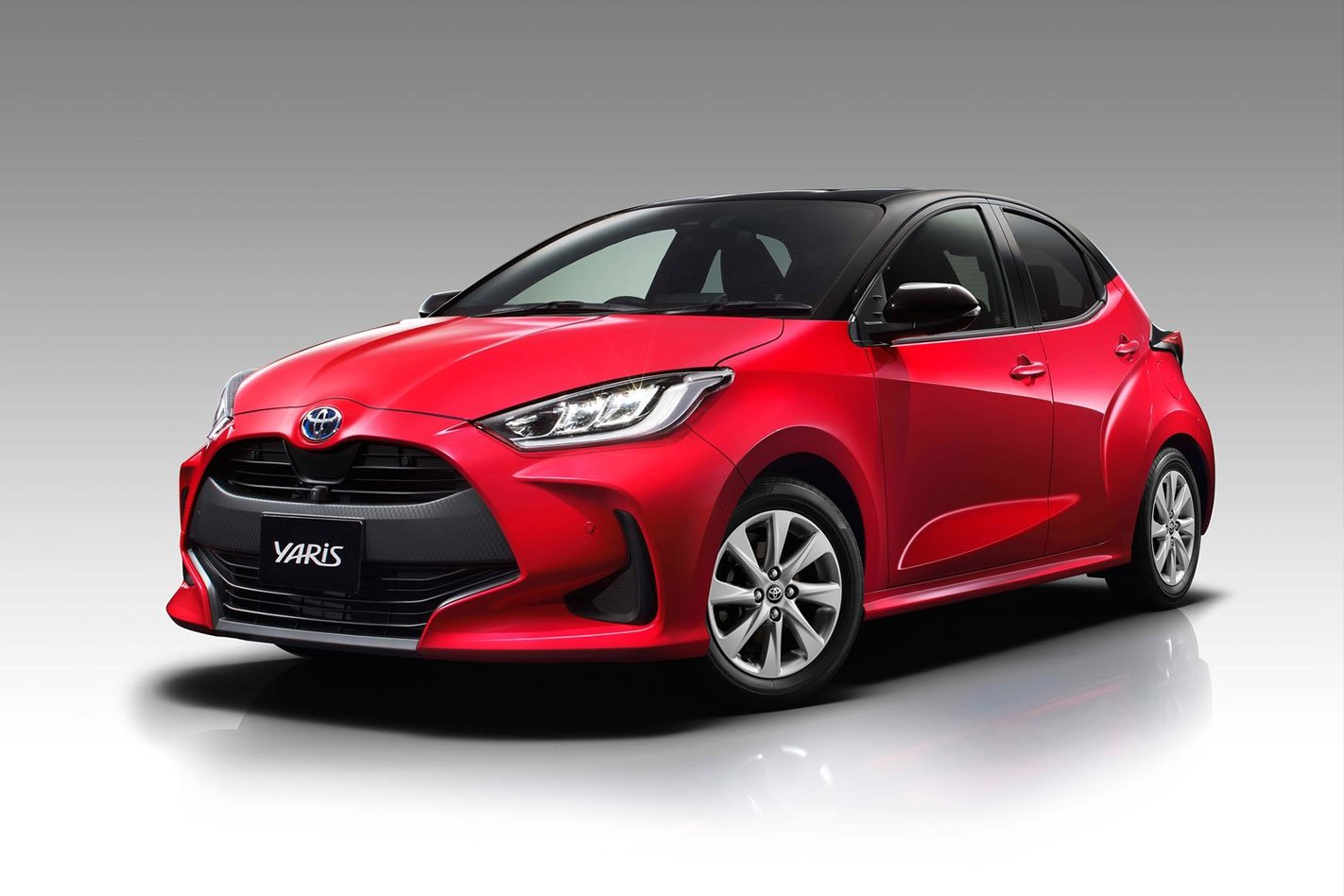
The Yaris will also receive adaptive cruise control, autonomous emergency braking and lane-keep assist at no cost.
Other items included as standard are a set of LED headlights, a tablet-style infotainment system, a multi-information instrument cluster screen and a 10.0-inch head-up display is available as an option.
Toyota’s plans to rival Porsche and Aston Martin
Buyers who have been hanging out for the new Yaris will be pleased to learn the new car is based on a variant of the TNGA platform that underpins much of the new Toyota range including the Corolla, Camry, Prius, RAV4 and C-HR.

This means much-improved use of space compared to the previous car, with a 5mm reduction in length and a 40mm reduction in height still representing uncompromised headroom overall. Occupants are sat lower, which in addition to a lower cowl height aids outward visibility.
The wheelbase is now 50mm longer too, which Toyota suggests will make the Yaris “agile and manoeuvrable in city driving and parking while contributing to generous occupant space.”

Toyota wants this car to win in the around-town environment, with Toyota Australia’s vice president of sales and marketing Sean Hanley saying the “all-new Yaris has been designed to be Australia’s safest compact car while meeting the increasing challenges of everyday urban life.”
We’ll know more about the Toyota Yaris (including pricing) closer to its Australian arrival but for now, click through the gallery above to familiarise yourself with the new car.
