
The European Union’s Court of Justice Test-Achats case (C‑236/09) of 1 March 2011 is unambiguous. It states that car insurers must change their pricing policies in order to treat individual male and female customers equally in terms of insurance premiums and benefits.
But is equality actually fair?
Before we delve into that, it’s worth noting that there’s been an unintended consequence of this ruling. Prior to the ruling, UK men paid £27 more for a year’s car insurance than women, but within five years that figure had blown out to a gulf of £101. That’s almost a fourfold increase.
The reason? Rather than just tack on a premium for men and a discount for women, insurers started to inspect claims more carefully. If you’re a bricklayer who drives a Toyota Hilux your claim would probably be weighted. Were you a midwife who drove a Honda Jazz, insurers’ algorithms would come to a very different conclusion.
In short, by forensically inspecting many of the other risk factors involved in your submission of information, European insurers can arrive at the root cause of your risk.
If I changed the name on a UK insurance application from Andrew to Andrea, the price would stay the same, but the software would be able to figure out that I’m only a marginally safer risk than Pastor Maldonado.
But back to that question of whether women really are safer than men. Yes, of course they are. The insurance industry isn’t in the business of giving away freebies and years of data supports the argument.
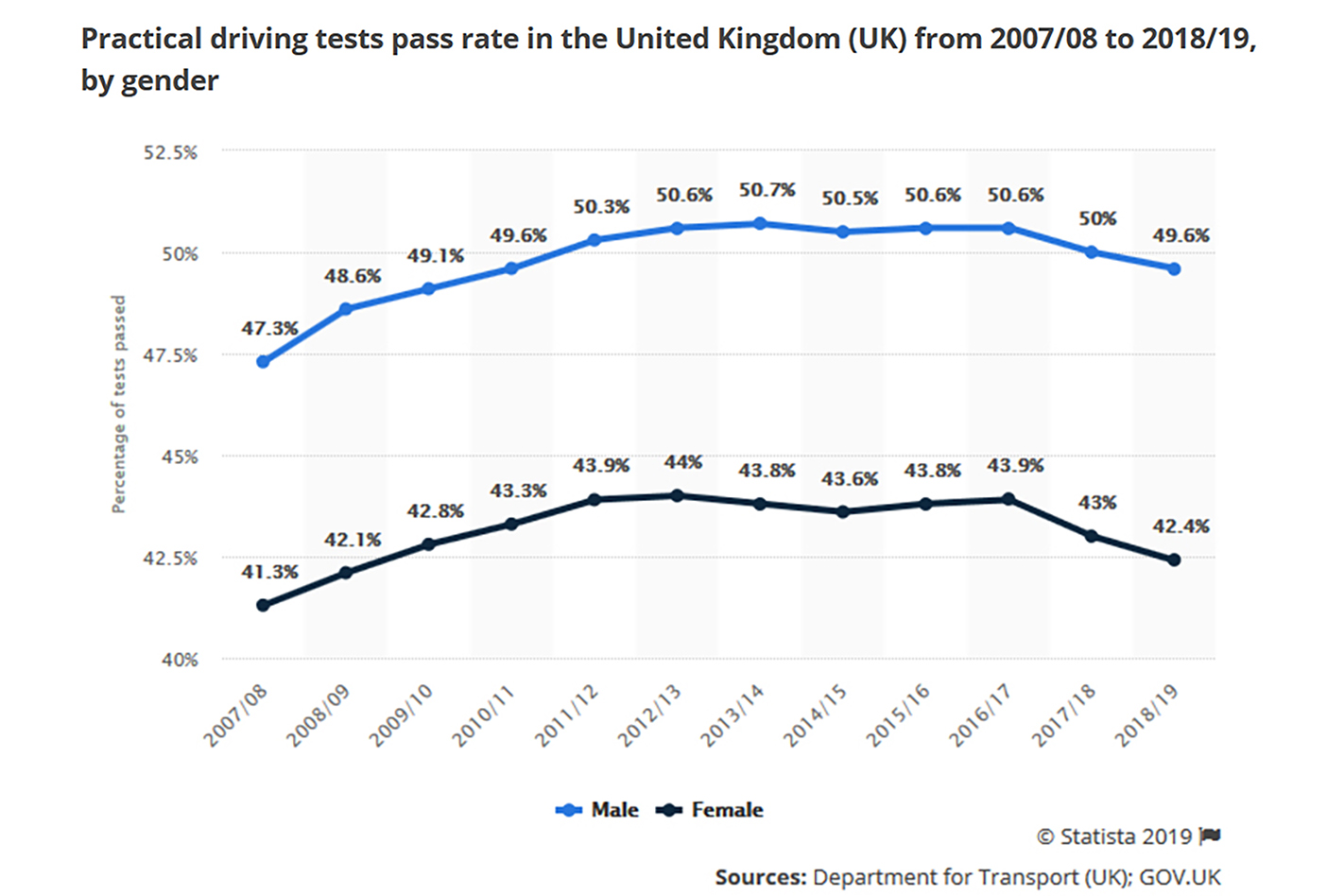
Women are typically less skilled drivers than men – look at gender-split driving test pass rates in any developed country for proof of that – but that data is more than overwhelmed by that chemical C19H28O2, or testosterone to you and me.
Aggression and overconfidence in male drivers accounts for the fact that men are much more likely to cause a death or injury while driving and are around four times more likely than women to drive under the influence of drugs or alcohol.
Men also account for 73 percent of all worldwide road traffic deaths, three times the rate of women. In the EU, more than 90 percent of convictions for deaths caused by dangerous driving are against men.
But men also drive more kilometres than women—a lot more. According to the Federal Highway Administration, men drive around 40 percent more kilometres per annum. Yet the NHTSA states that men cause 6.1 million accidents per year and women cause 4.4 million per year. Therefore on a kilometre per claim basis, men are considerably safer than women.
That ignores the fact that when men do have accidents, speeds are usually higher, consequences more significant and costs considerably greater than the sort of accidents women typically claim for.
So the answer isn’t straightforward. Women are more likely to file an insurance claim than men given similar distances travelled, but their lifetime claim value is also likely to be less. So is charging them the same amount fair? Clearly not.
Guys, we’re going to have to swallow our pride on this one…
AUSTRALIAN-BUILT. V8-powered. Mid-engined. Dreamed to vanquish the competition at Le Mans, but also intended to stalk the streets as a road-registered car. These features formed the blueprint for the Joss supercar project that could have been Australia’s very own McLaren F1.
Started in 1998 by Matt Thomas and built on weekends in between his time as a clay modeller at Ford, the Joss finally appeared in prototype form at the 2004 Melbourne Motor Show as the JT1.
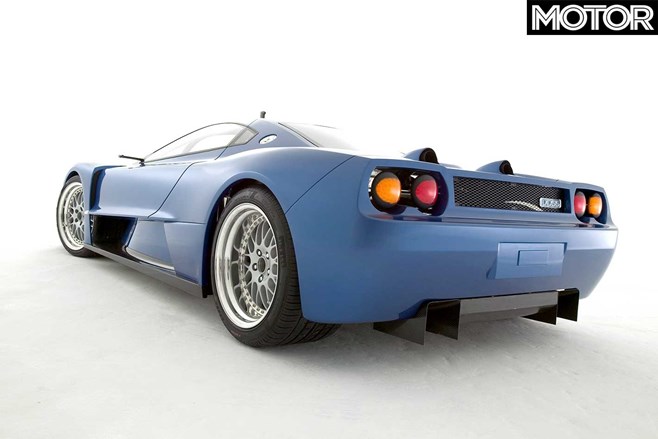
The product of 17,000 man-hours, thanks to a team of skilled friends and colleagues who also helped create it, the aim was bold and far from original: take on the world’s supercars and win.
The JT1 employed unequal-length double wishbones front and rear, a spaceframe tube chassis and kevlar/carbonfibre body that housed a GM-based pushrod V8 with custom specs.
The V8 produced 360kW and 650Nm, the latter delivered from just 2500rpm, and only needed to push 940kg.
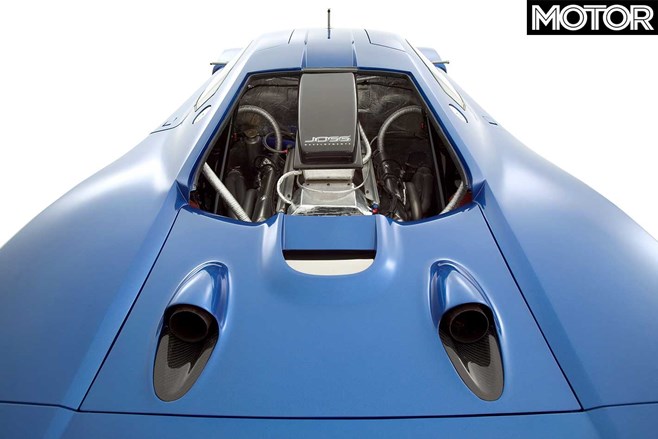
With an LSD in its rear-drive manual transaxle, testing revealed it did 0-100km/h in 2.9sec. The cabin was fairly spartan but Thomas assured this would change, along with the chassis (which would become a carbonfibre tub), once the project found the backing it surely deserved.
The thing is, that money never came. There were glimpses of hope, the first being some crowdfunding cash that financed a clay model of the updated JP1-spec design. And then there was the now unfortunately infamous $35m Alex Hatzmihail investment, which fell over shortly after it was announced for reasons Thomas can’t legally reveal.
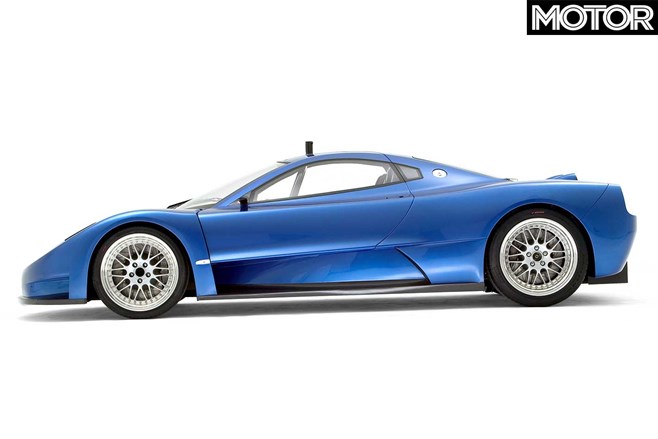
Then, finally, after so many dead-ends, Thomas sold the project. Again, he can’t share who bought it, but tells MOTOR it went interstate and “started the heart of the supercar potential in Australia”.
The thing is, our only current supercar is the Brabham BT62. Which is built interstate, is V8-powered and will race at Le Mans. Coincidence? Maybe.
2004 JOSS JT1 SPECS Engine: 6.8-litre V8, OHV, 16v Power: 360kW @ 5,750rpm Torque: 650Nm @ 2800rpm 0-100km/h: 2.9sec (claimed) Price: You could never buy one. Sob.
The Toyota Corolla hatch family has been given its first running update, with the company’s Australian operation bumping up infotainment and safety technology, along with some moderately enhanced visuals for the range-topping Corolla ZR.
Smartphone mirroring tech for the car’s built-in infotainment system becomes a range-wide standard, allowing Toyota Corolla drivers to integrate their phones with the car’s screen through Android Auto or Apple CarPlay.
That smartphone mirroring capability is slowly rolling out across Toyota Australia’s broader stable of vehicles, with the Hiace and Granvia being the most recent recipients of the company’s latest infotainment software.
Owners of the new generation Toyota RAV4, which launched earlier this year, will be able to gain the same capability as a retrofit sometime in the fourth quarter of 2019.
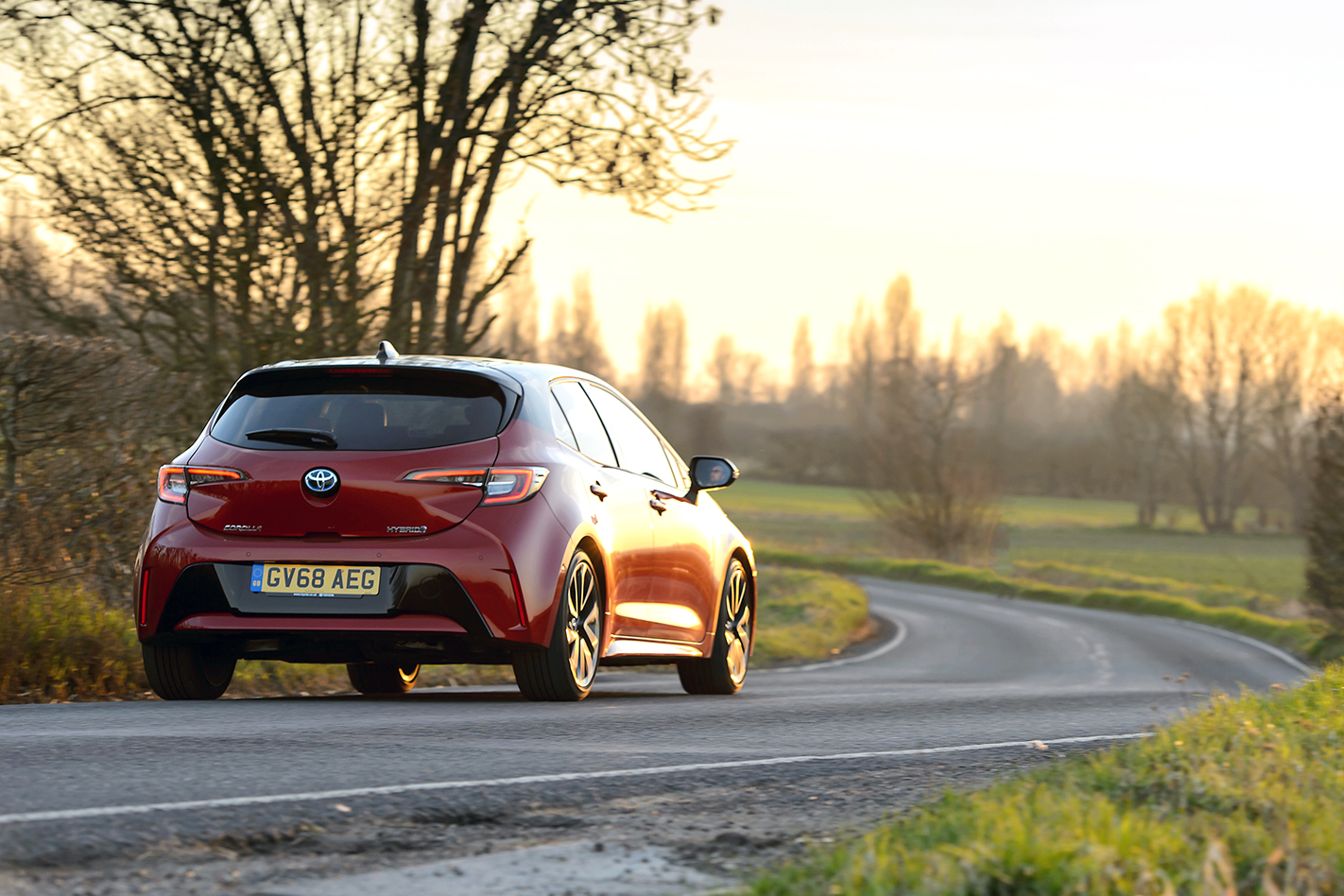
Safety equipment also gets a boost, with the mid-range SX and ZR grades receiving a parking-speed AEB system that can detect both static objects and vehicles approaching from the rear and apply the brakes to avoid scuffing paint.
Rear cross-traffic alert also becomes standard on those grades as an extension of the existing blind spot monitoring system.
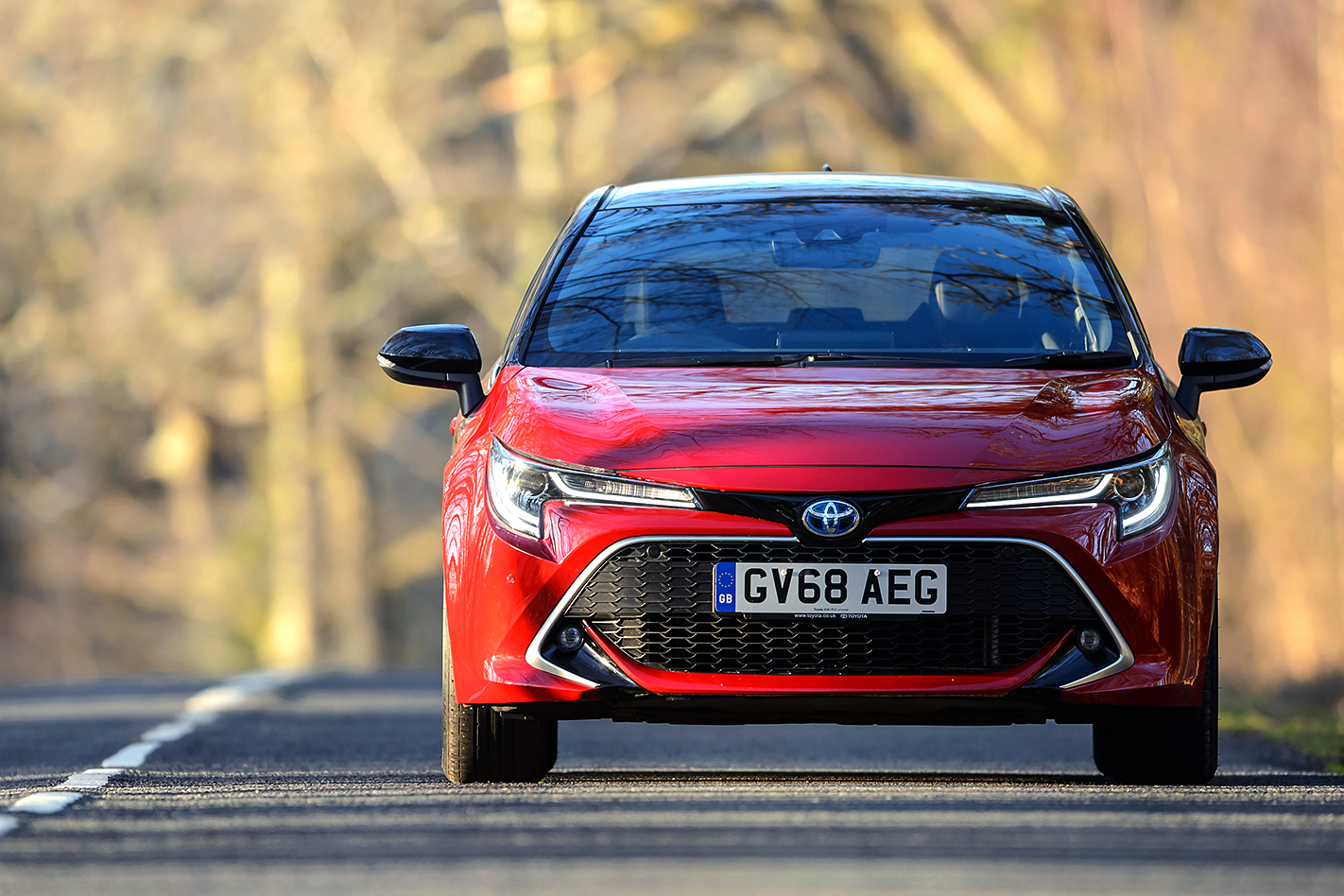
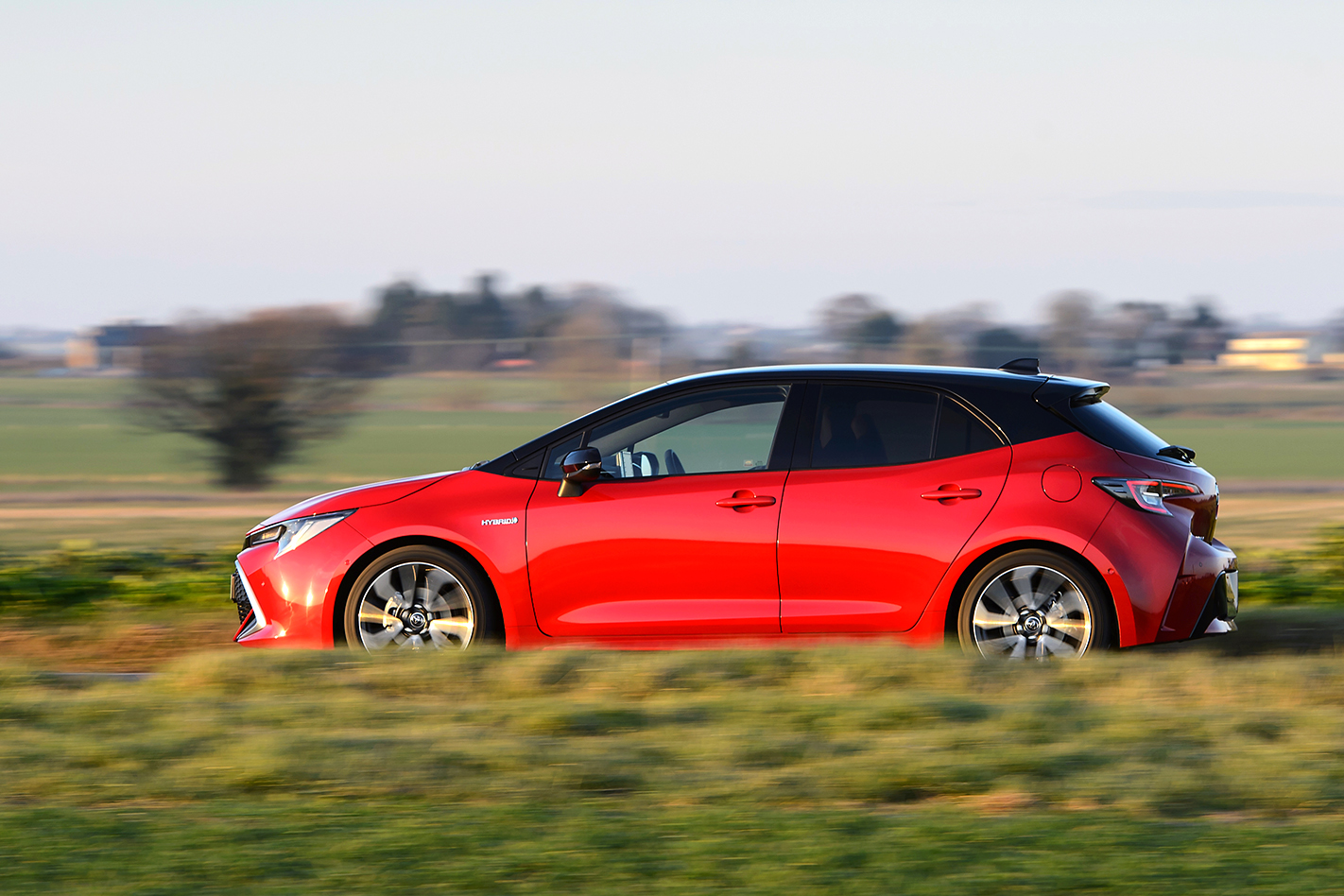
For the range-topping Corolla ZR, an eight-way power adjustable driver’s seat with adjustable lumbar becomes standard-issue, while a bright new red paint colour and the option of a two-tone colour scheme being added to the spec list.
There are no mechanical changes to the 125kW natural-aspirated 1.8-litre petrol or the 2.0-litre petrol-electric hybrid, though prices have gone up for all Corolla hatch variants to accommodate the rise in equipment – most notably for the high-grade Corolla ZR, whose retail cost jumps nearly $2000.
2020 TOYOTA COROLLA PRICING
The 2020 Toyota Corolla hatch range is available now with pricing as follows:
- Toyota Corolla Ascent Sport petrol manual – $23,335
- Toyota Corolla Ascent Sport petrol CVT – $24,835
- Toyota Corolla Ascent Sport hybrid CVT – $26,335
- Toyota Corolla SX petrol CVT – $28,235
- Toyota Corolla SX hybrid CVT – $29,735
- Toyota Corolla ZR petrol CVT – $32,135
- Toyota Corolla ZR hybrid CVT- $33,635
You are 28 percent more likely to kill the driver of a passenger vehicle if you are involved in a multi-car crash while in an SUV according to a report out of the US.
The report comes from the Insurance Institute for Highway Safety (IIHS), a US non-profit organisation which is funded by insurance companies.
Deaths from crashes involving passenger vehicles that were one to four years old between 1989 and 2015 were examined, in an effort to better understand what the IIHS describes as ‘incompatibility’ between vehicles on the road.
While SUVs are still more likely to kill another driver in a crash than a passenger vehicle, the number has reduced dramatically since the study began in the late ‘80s.
Between 1989 and 1992 SUVs were 132 percent more likely to kill the driver in a passenger car compared to a crash that included another car. For the period between 2013 and 2016 this had fallen significantly to 28 percent.
This can largely be attributed to the addition of smaller, lighter, and lower crossovers and small SUVs, and their booming popularity.
The same cannot be said for pick-ups, which have remained the vehicles most likely to kill another driver in a crash, with almost no decrease since 1989.
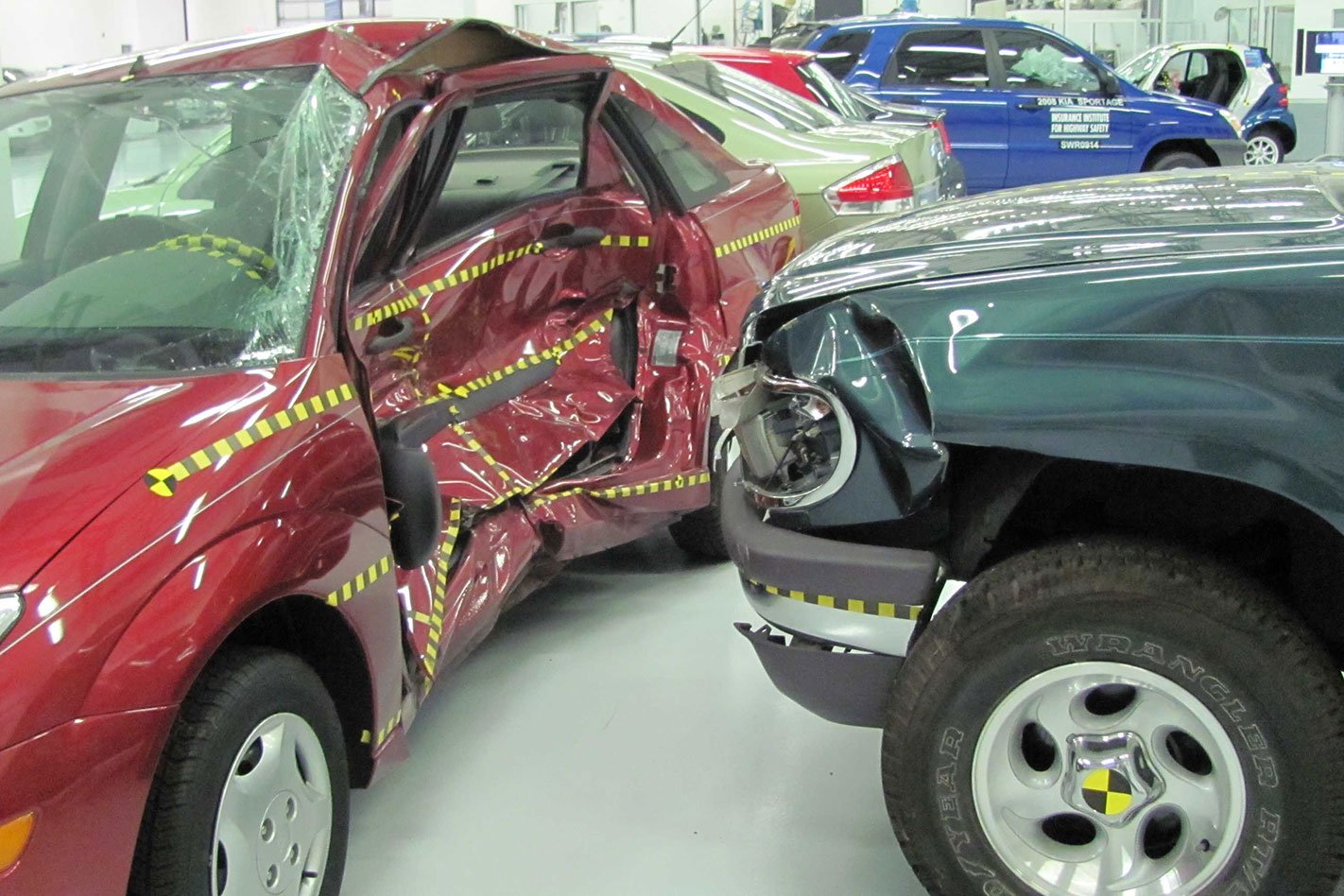
When the study began a pick-up was 159 percent more likely to kill the driver of a passenger car, while in 2016 the figure stood at 158 percent.
In its conclusion, the IIHS study describes pick-ups as remaining “disproportionately aggressive toward other vehicles”.
In order to combat this, the IIHS recommends “reducing the weight of some of the heaviest vehicles and making crash avoidance technology fitment more widespread”.
It should be noted that dual-cab utes like the Ford Ranger are classed as a light pick-up, and were rated as 23 percent more likely to kill a driver of a passenger car.
Large American trucks like the Ram 1500 and Chevrolet Silverado 2500 are classified as pick-ups in that region.
The reason why SUVs and pick-ups pose a greater risk to passenger car drivers is two-fold. Those types of vehicles are often heavier, meaning they carry and transfer more energy in crash. They are also higher, meaning they are more likely to miss the strongest parts of a passenger car’s crash structure, instead making contact higher up where the driver is less protected.
If you don’t wear a seatbelt, you are far more likely to die in a car. There. We can’t make it much simpler or clearer than that.
And yet, an unbelievably high number of Australians are still ignoring the obvious statistics and plain common sense, and taking their chances in cars every single day by not buckling up.
Occupants who don’t buckle up before hitting the road are 30 times more likely to be thrown from a vehicle in a crash, and are twice as likely to be killed in a collision compared with those who wear a seatbelt.
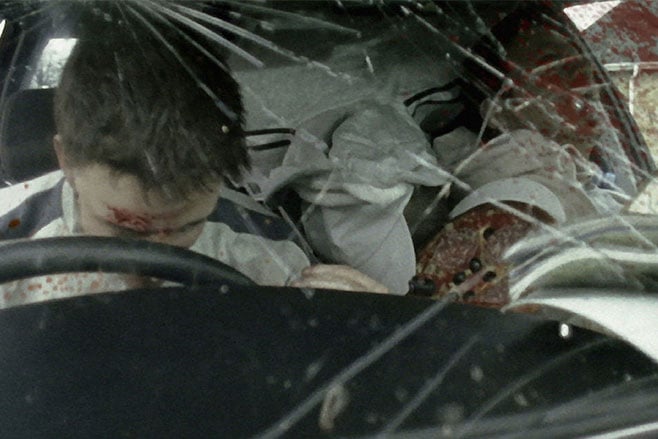
But a report by The Age has found that, incredibly, one in five victims of car crashes in Victoria this year was not wearing a seatbelt. Of the 133 people killed in 2019 on Victorian roads, 27 were not buckled in and in 40 cases, it was not possible to determine if they were restrained or not.
The sums are not hard, therefore – if every driver in Victoria had been wearing a seatbelt, the 2019 road toll would likely be under 100 right now. So what’s going wrong?
Even more alarmingly, the rate of people choosing to not wear a seatbelt appears to be on the rise. In 2018, 14 percent of victims were not wearing a seatbelt, compared with 20 percent to date this year, the report finds. If that trend continues, it will be the bleakest result since 2013.
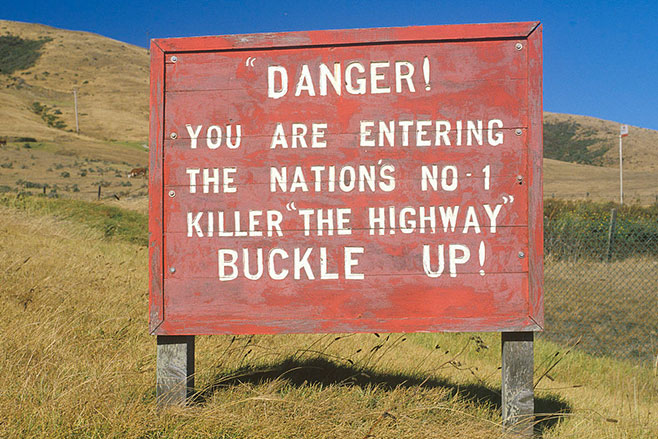
According to the report, a majority of the deaths occurred in rural areas, with many drivers feeling less scrutinised by the law and more complacent as a result. Chillingly though, outback roads are where the statistics are even more grim and more care at the wheel is advised – including the simple act of putting on a seatbelt.
Watch a zero-star car crash in safety tests
There are plenty of ways to increase your chances of serious injury or death on the road including driving under the influence of alcohol and drugs, using a mobile phone or excessive speed, but simply not wearing a seatbelt seems like the most perplexingly stupid and unecessary way of dramatically increasing your risk.
If you are one of the worryingly high and growing numbers of Australians that decide to save yourself two seconds by not clipping in – or you know someone who doesn’t – ask yourself why, and is it really worth it?
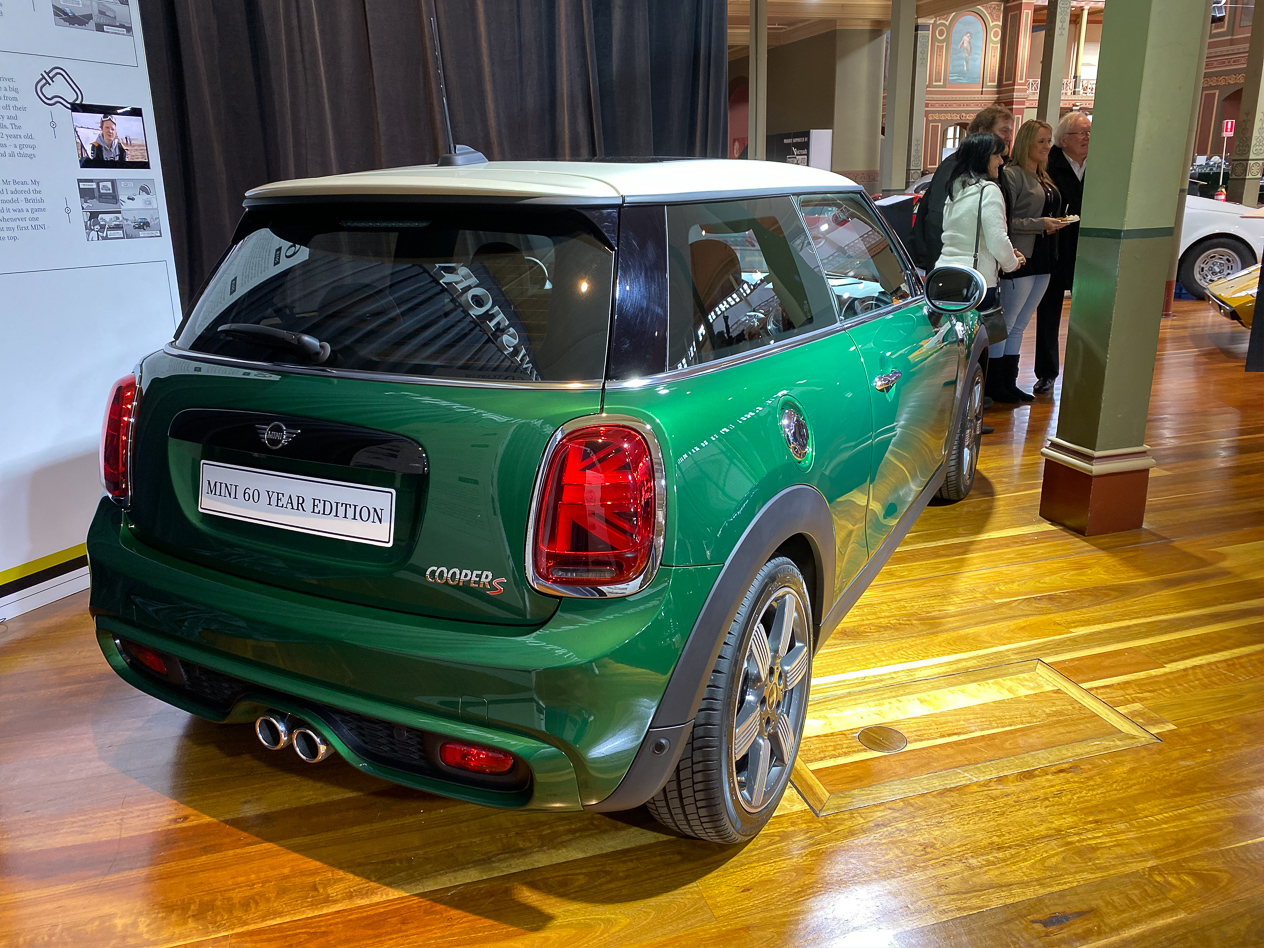
Mini is celebrating its big 60th anniversary in 2019 and amid a collection of worldwide celebrations, Mini Australia marked the occasion at the 10th annual Motorclassica exhibition.
And what better occasion than this to examine just why the quintessentially British brand has endured for so long, and become the compact car specialist that it is today.
A true cornerstone of automotive history, the humble Mini was first designed in retaliation to fuel shortages in the United Kingdom. Sales of fuel efficient small cars boomed, prompting the British Motor Corporation to get creative and introduce a competitor to the likes of the Fiat 500, BMW Isetta and Messerschmitt KR200.
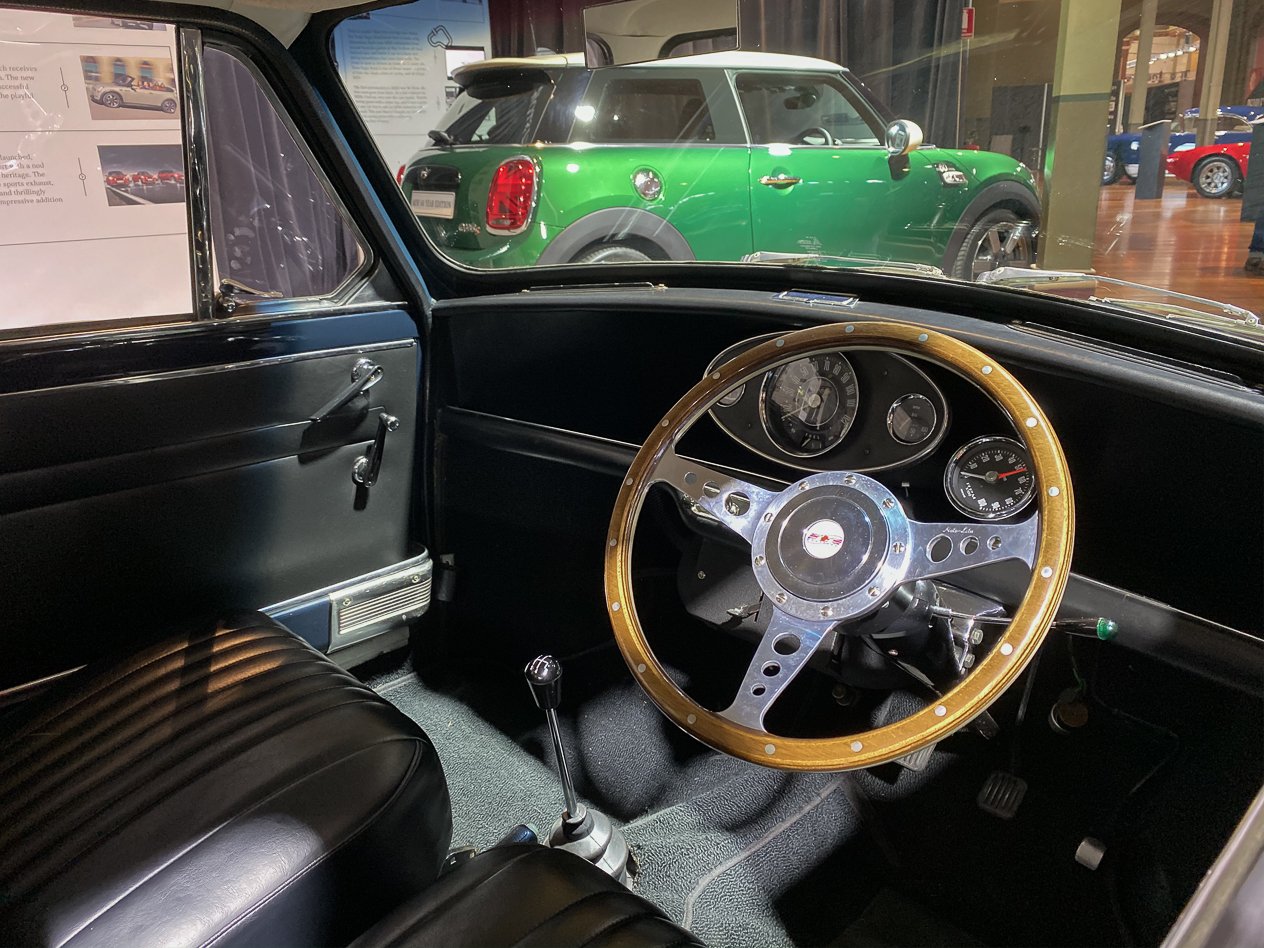
The Mini was first designed in 1959 and rushed to market shortly thereafter, quickly exploding in popularity and becoming the pop culture icon as we know it today.
One of the first models all of us would have noticed however was the Mini Cooper, created by British racing legend John Cooper by stroking out the engine, fitting a close-ratio gearbox and disc brakes. The Cooper was designed for performance rather than outright people carrying and set the scene for a David-vs-Goliath theme on the world’s racing circuit, thoroughly trouncing much more powerful rivals.
Mini also should feel familiar to Australia, as they were made locally from 1961 onwards in the Sydney suburb of Zetland. Its popularity quickly grew Down Under thanks to its reliability and affordable price tag, growing from 20 models produced per day to around 100, climbing to third on the Australian sales charts in 1963.
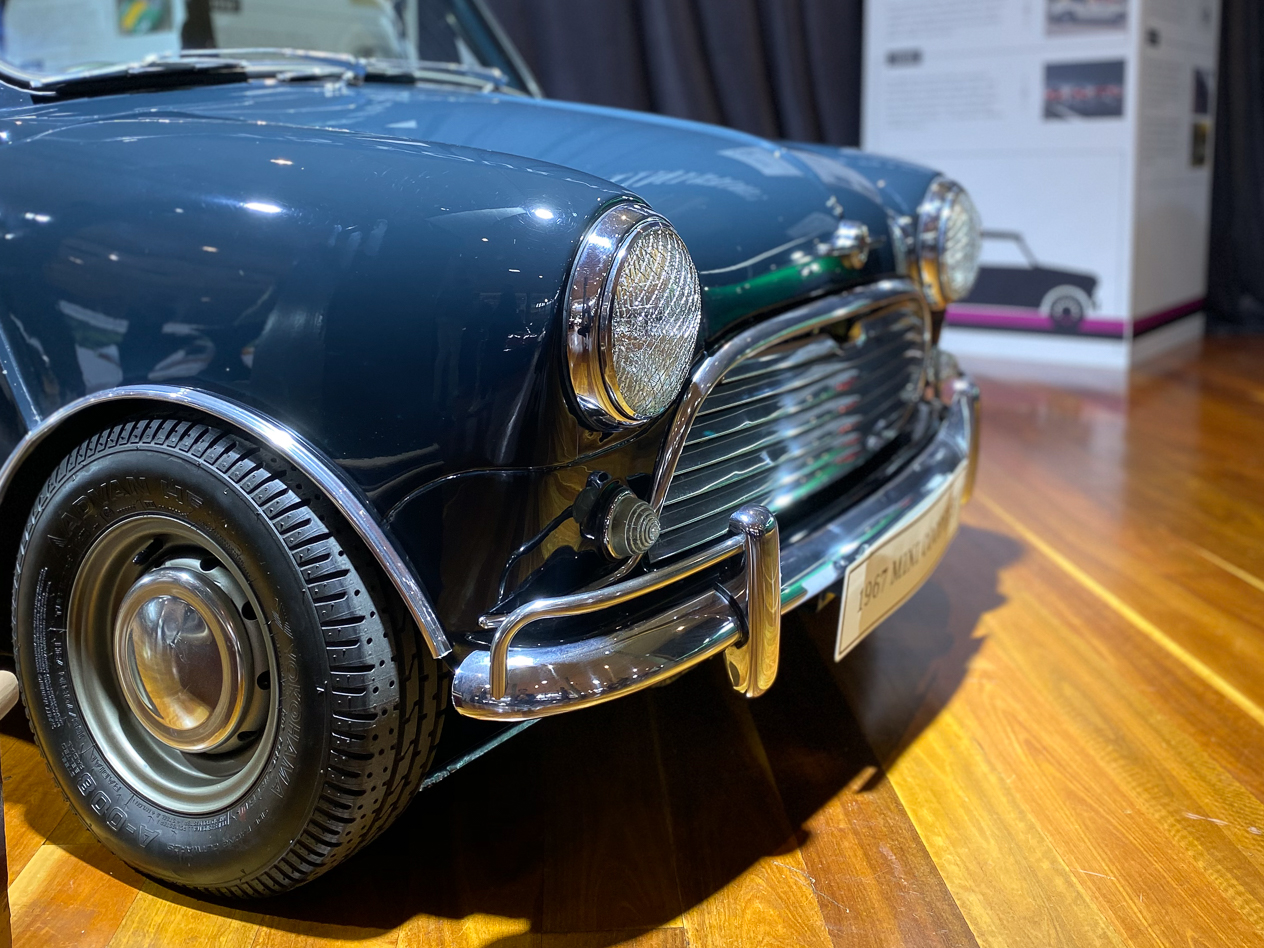
You’d be hard-pressed to find anyone who hasn’t heard of the Mini, and there’s a reason why its legend has stood the test of time to this day.
To help mark the milestone, Mini Australia invited Rauno Aaltonen, Bob Holden and Linda Devlinor to Motorclassica to share what made the brand so special.
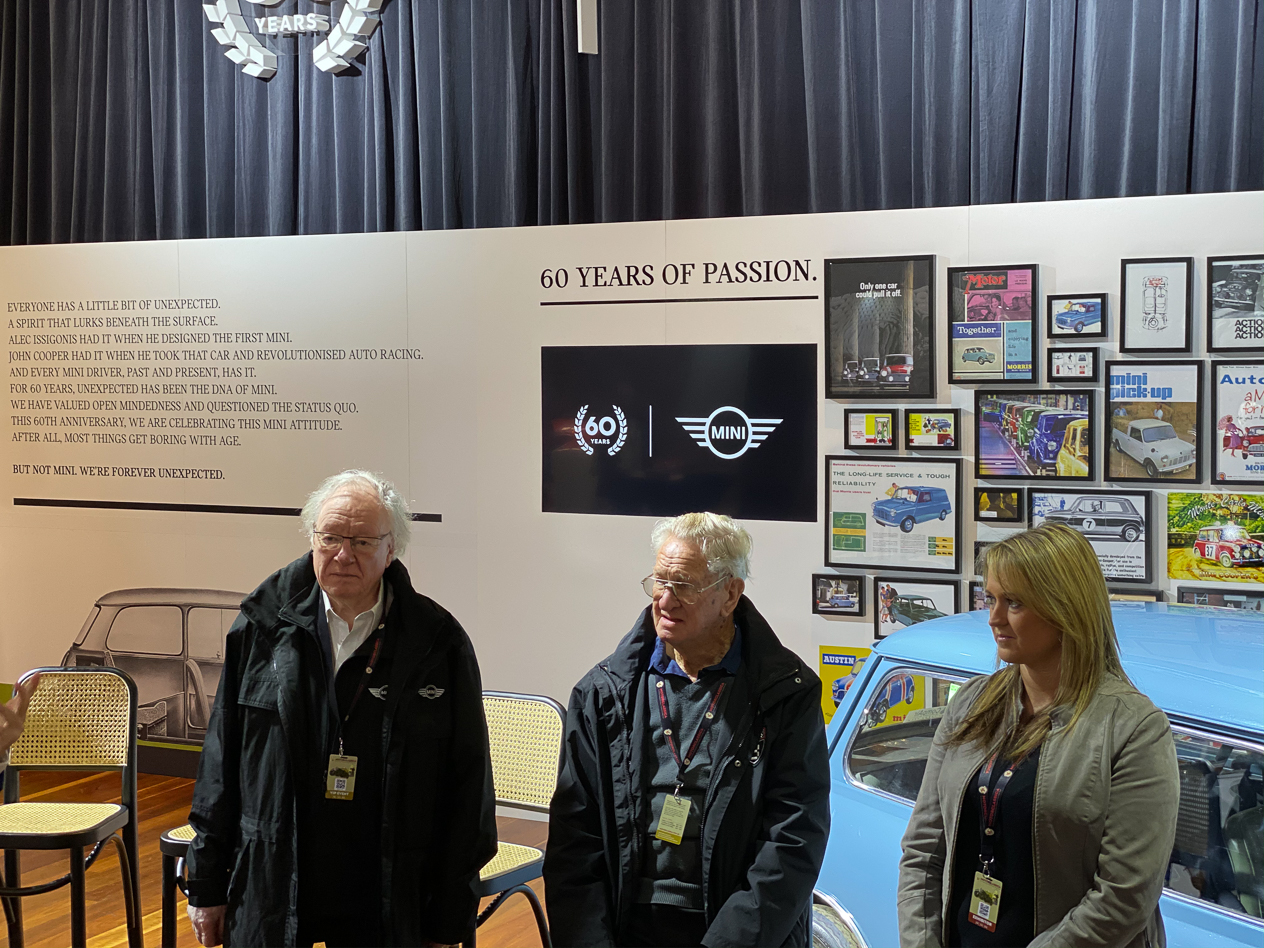
Aaltonen, the legend of rally that he is, first came to the Mini brand in the early 1960s. Praising the Mini’s short, squat stance, Aaltonen moved to the Mini due to his disdain for long overhangs causing understeer, saying “it was like poison [for fast driving]”.
Conversely, the Mini presented a compact driving package that featured a wheel in each corner. Sure, it might have been underpowered in relation to other competitors of the era, however, where other teams had to tread carefully in terms of putting the power down (especially on gravel or snow during a rally), the Mini was able to zip out of a corner thanks to its lightweight body and tractable power delivery.
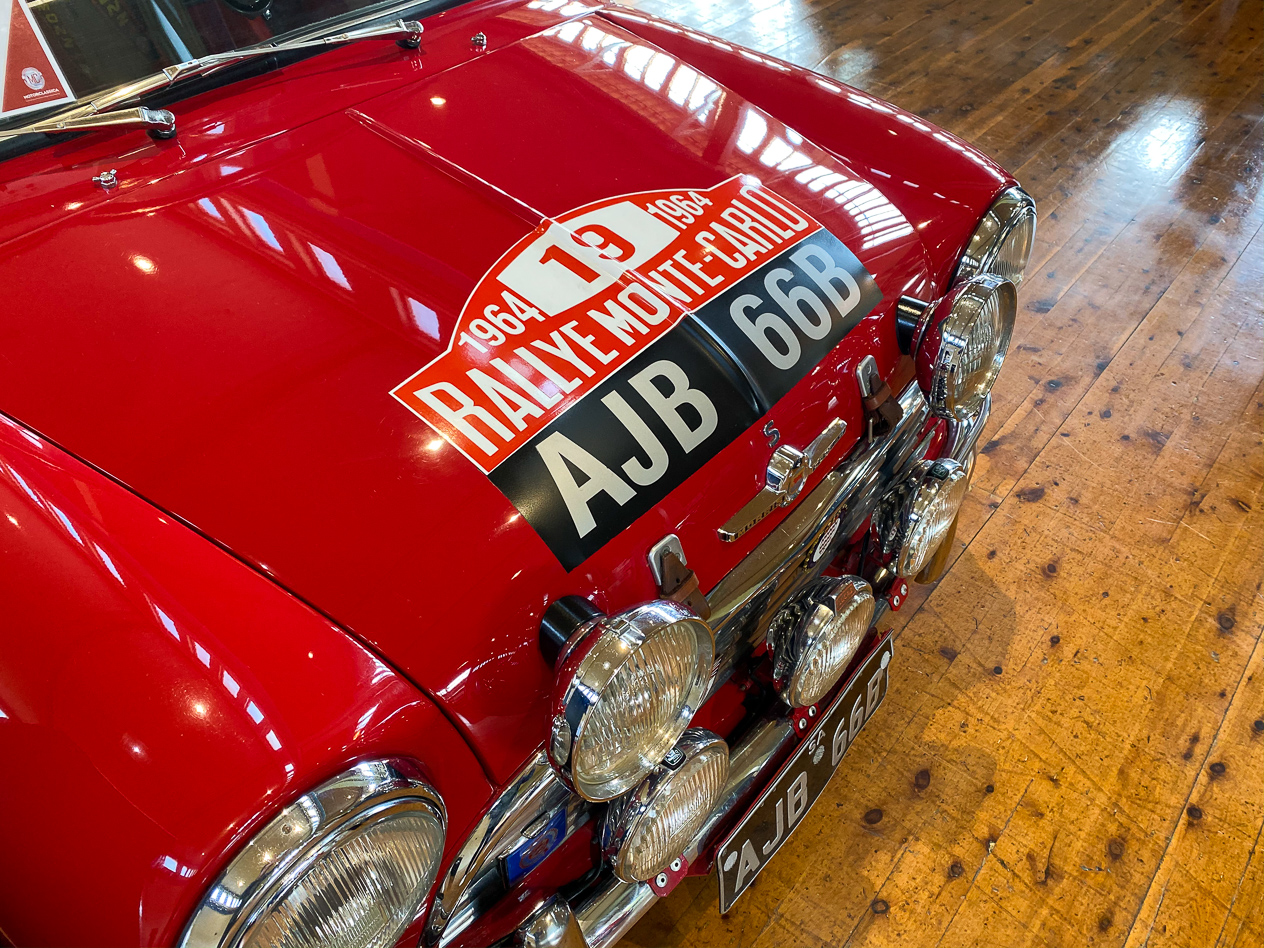
Mini cemented its reputation as a motorsport underdog through the 60s and 70s, famously winning the Monte Carlo rally in 1964 and again in 1965 and 1967. Closer to home, Rauno Aaltonen and Bob Holden won the effective Bathurst 1000 of the era, the Gallagher 500 at Mount Panorama.
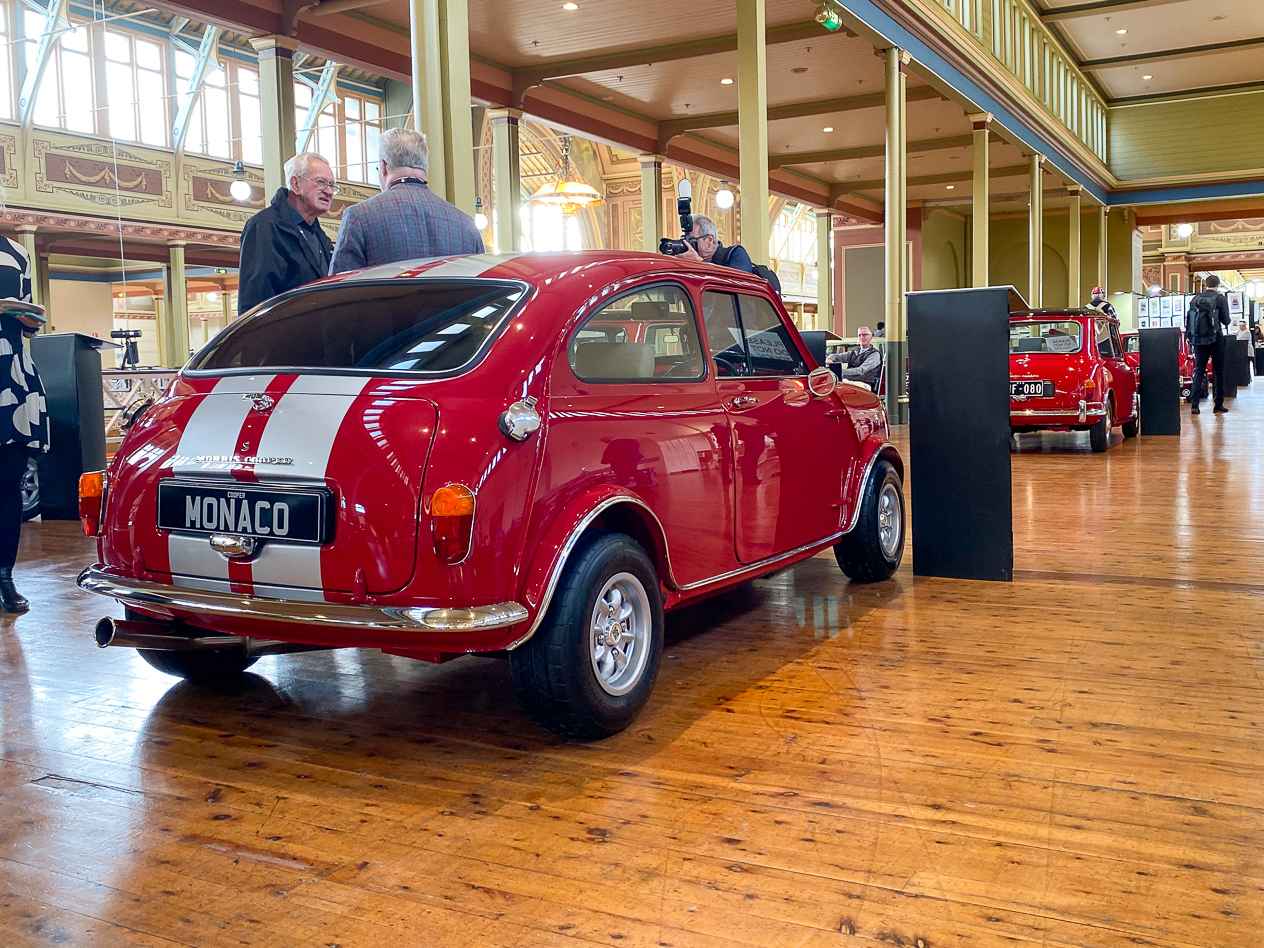
More than motorsport, the Mini was embraced by all walks of life. On display at Motorclassica was a highway patrol Cooper S, a hunch-backed Cooper S Monaco and even a wood-panelled Mini station wagon.
The Mini carried on well into the 90s, when it was inherited by the BMW brand – which developed the idea into a new model in 2001.
From there, the humble hatch has spawned into a number of spin-offs over the past 20 years including a convertible, the estate-like Clubman, the high-riding Countryman, a Paceman two-door crossover and the Coupe and Roadster sports duo.
But, where to next?
Charlie Cooper: how BMW kept Mini alive
If nothing else, future-wise, Mini wants to preserve the heritage it has built over the past 60 years while simultaneously slingshotting into the future armed with the latest electrified technology. A move toward electrified models will no doubt play a large role in the re-shaping of the brand, meaning a new era of Mini is upon us.
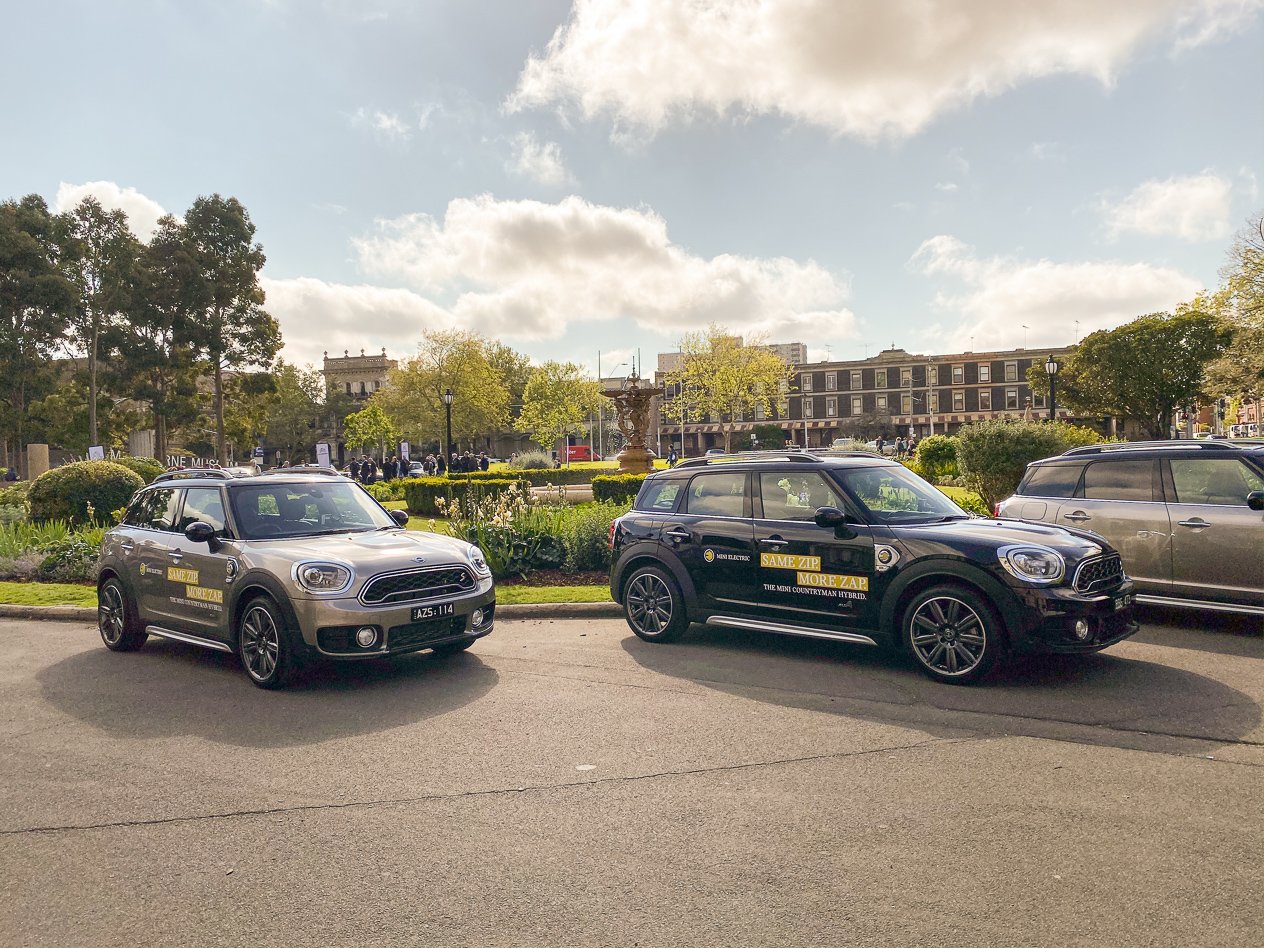
In 2020 we will see Mini’s first ever full-electric hatchback, while also staying true to its sports origins by intending the next Mini JCW GP for a mid-year release.
But for now, Mini bridges the gap between full-EVs and petrol powered cars with its Countryman S E plug-in hybrid which we drove after visiting Mini at Motorclassica. More on that soon…
Click through the photo gallery at the top of this story for more photos of Mini at Motorclassica 2019

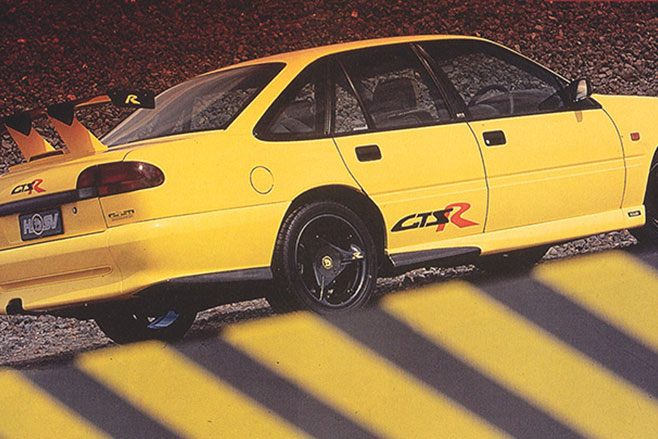
Ian Callum isn’t an easy man to pin down. After a number of attempts, I finally catch him as he waits for a guy to arrive and fix his washing machine. Unusually for Callum, he’s got time to kill, so what happened next is a rare privilege, one of the world’s premier car designers riffing at will on the state of the industry.Famous for designs such as theJaguar I-Pace, Aston Martin DB9, Nissan R390 GT1, Ford RS200 and, yes, parts of the 1996 HSV GTSR, Callum’s four decades in the business have cast a long shadow. That’s why when we were drawing up a shortlist of guest editors for the Wheels’ special Design, there was one name that kept being mentioned.
So here’s the full interview with Callum. It’s a big read, but if you ever wanted to get the fast-track on the design process and how it applies to modern cars, set yourself some time and dig in.
WHEELS: What are the key challenges in car design today?
CALLUM: Nobody really knows where the car industry is going to go at the moment. The whole industry, I wouldn’t say it’s in turmoil, but certainly it’s finding life very difficult because of the unknowns; because of the politics. There are two levels there. The politics are transient. The politicians need to understand the pains the car industry is going through in order to help it survive. It frustrates the hell out of me when you look at the ignorance of politicians around the world. They don’t understand the complexity and importance of the car industry and how it’s fundamental to not just our manufacturing society but our society itself.
I’ve worked 40 years in the business. It feels about four years. Let’s talk about the processes. I started out drawing cars with Ford, we were doing the Mk2 Escort. Cars were styled with magic marker, crayons, chalk, full-sized renderings on boards with ink and airbrush. All the artistry we learned was put to full use in order to communicate what we wanted this car to look like.
Fundamentally the big change for Ford came with the Mk3 Escort. It was forward transverse engine, and it was a marked change in both layout and possibly features and technology. Prior to that, cars were very much styled almost in isolation of what was happening beneath them. That was a throwback from American cars of the ’50s, where the body changed according to fashion each year and what was underneath was basically the same chassis.
Styling was about the shape of the car. We rendered these things up and made them look the way they did. We worked with the package engineers and we tried to make sure the lines we wanted fitted the engine below it. That was unnegotiable. If you want to set out the package of the car, you start out with the position of the cowl (x and y). That’s the pivotal point of any design and sets up the position of the engine. It was always suspected that the style of the car, like fashion, was very important. That choice still prevails. The car industry – through the Italians and Americans in the ’50s – recognised that style and design was very much part of the culture of the car world and were respected for it.
So as we move forward, that respect very much varied on who was running the business at the time; whether it was the CEO, the chief engineer (because design historically worked with engineering – it certainly did at Ford). It became more and more respected as people better understood the importance of branding; how a vehicle could look and tell the story of the car company it stood for.
The process stayed pretty much the same until the computer came along. What were sketches in magic marker became, if we skip forward a few years, renderings in Photoshop. Having said that, most designers still sketch. I still do it every day, even as a director. It’s the most expedient way of getting your ideas across to others. It’s a form of language in many ways. From that point on, the computer process took over.
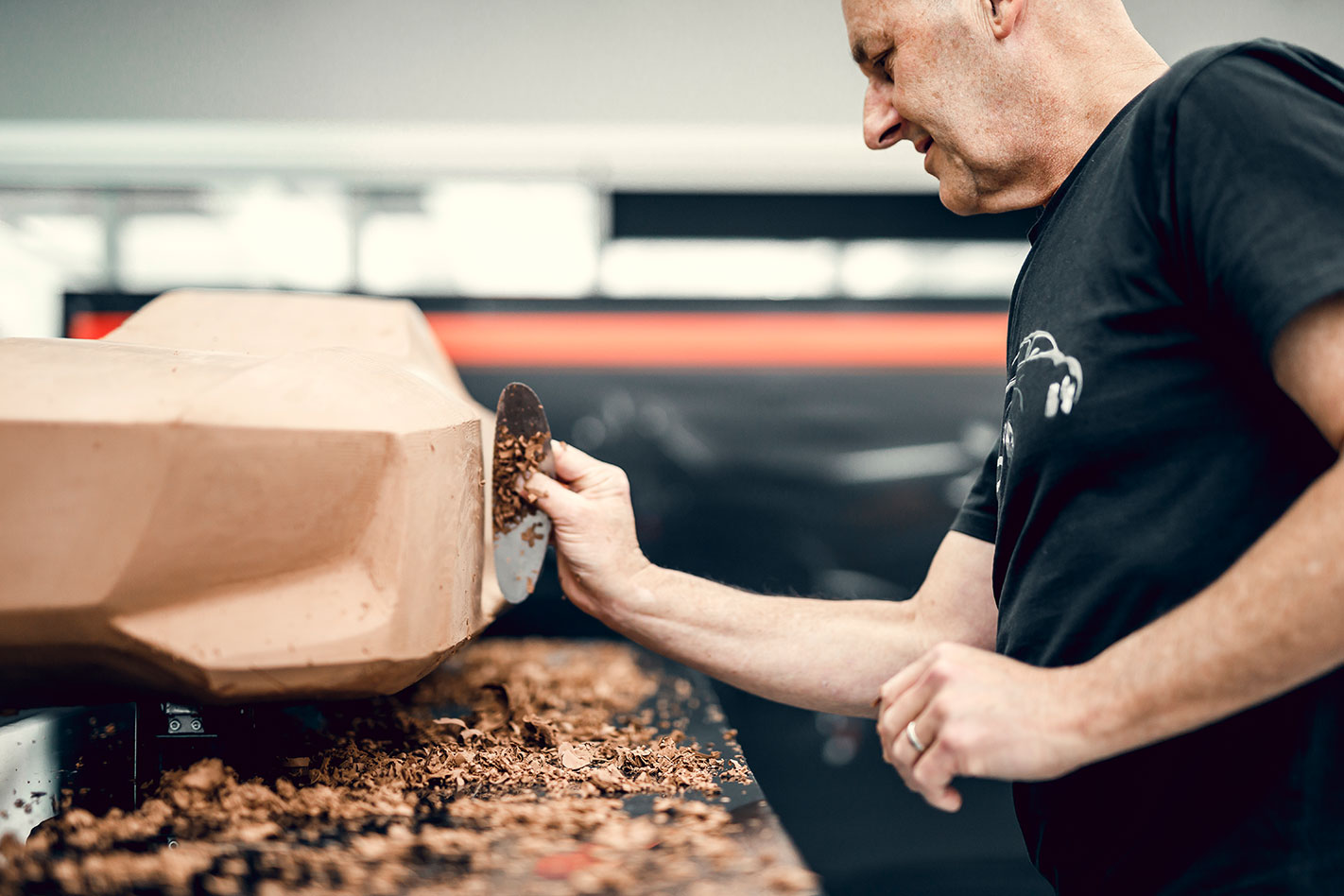
From that we went on to 3D modelling quite quickly. Once we did full-time tape drawings in sections and that went to clay modellers who would cut the clay. What came out of that in the first few days was completely unknown until you got there and had to manipulate the clay to shape the car from your own mind, with the team of expert clay modellers. Now you digitise the car and render it up and you can see the car almost complete before you cut the clay. Every car company still works with clay. They might say that they don’t but nobody’s prepared to go straight from the digital world into manufacturing tools without seeing what they’re going to get. To cut a clay model is not a difficult thing to do these days, it’s just that the process to arrive there is different. Your choices are much more abundant.
It used to take me half a day to render a car, then the boss would say, “Can I have it in a different colour”, or “Can I have different tail lamps” and the only option was to start again and re-render it all. Now we can add three or four features in minutes. After the respect for design became greater in the business, designers got a lot more say in how the cars came about. It was no longer a case of ‘here’s a package, draw around it’. I suspect that some companies are still a bit like that, but certainly none that I’ve worked for.
In the TWR, Aston Martin and Jaguar days, we were given much more say in how this car should evolve. What does it stand for? What does it mean? We were part of the storytelling of the car, which became a very important part of the decision making as to whether the car is designed or not. Nowadays designers are acutely aware of the engineering that goes into the car, they’re aware of the marketing. The branding is very much part of their domain as much as it is marketing.
It’s a far more complicated job now. Before I left, I had Julian Thomson, who’s in charge of future strategy and design at Jaguar, and he works almost daily with the strategic departments deciding what should and shouldn’t be made. Those decisions are now part of the design department. And because they’re so passionate as designers, they push very hard to get what they think is right. The energy you see coming out of the design department for future product is huge.
A designer now is really someone whose view is quite holistic about what a motor car is. It’s not just stylists with pens and paper and that’s a fundamental difference, not just in the process, but in the need for design.
I will get challenged on this and perhaps you can make a case for the chief engineer or the vehicle line director, but there’s nobody else in the business who knows more about the car. Take any exterior or exterior part and ask them about the story of that part. Nobody knows the backstory of that part more intimately than the designer. They have to go through the whole process of making sure the design gets made the way they want it to be. And it’s not just a simple door card or a round headlight like it was in the Mk2 Escort. These parts are now incredibly complex. Pricing, weight, costing – the designers know these details intimately and they have to in order to protect their work or come up with alternative ideas. If you want to know about any component that you can see, feel or touch in a car, ask the designer.
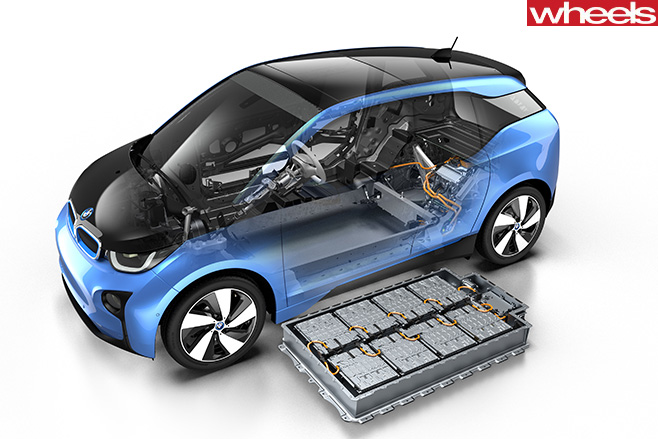
That said, electrification of cars is making our jobs a little easier. Let’s consider exterior design. When we get back to the overall package of the car, the fulcrum of the car is the cowl height and position. That will set up the shape of the car. If you have an electric car, you suddenly have more freedom. In an ICE with an engine in the front, the cowl’s going to be the same height as the engine and that sets up the shape of the car. That’s why cars have ended up with a very similar profile for a number of years. The physics behind it, the geometry is all the same. With electrification, that freedom startsto open up.
Yet despite that, with electric cars we started out with something fundamentally simple and now there’s a demand for bigger inverters, bigger transformers, bigger electronic accessories, so that space in the front is now being used up almost by default with components the electric car needs. The dilemma the designer has is that he comes in and says, “I don’t want these components. I want to get the cowl height down.” Do that and you get the freedom to go cab forward and get the sightlines down so you get better visibility of the road. That’s all good stuff. But all too often, before you know where you are, somebody has set up this front package with all this stuff in it and you’re back to square one again. It’s a bit of a dilemma and the designers have to get in there early like we did with the Jaguar I-Pace. We needed to influence the height of that cowl. So it only gives you the freedom if you allow that freedom to happen. I look at some electric cars and you’d be hard-pushed to figure out whether they were electric or internal combustion. It’s a missed opportunity. Where you put a transformer is much more flexible than where you put a gearbox.
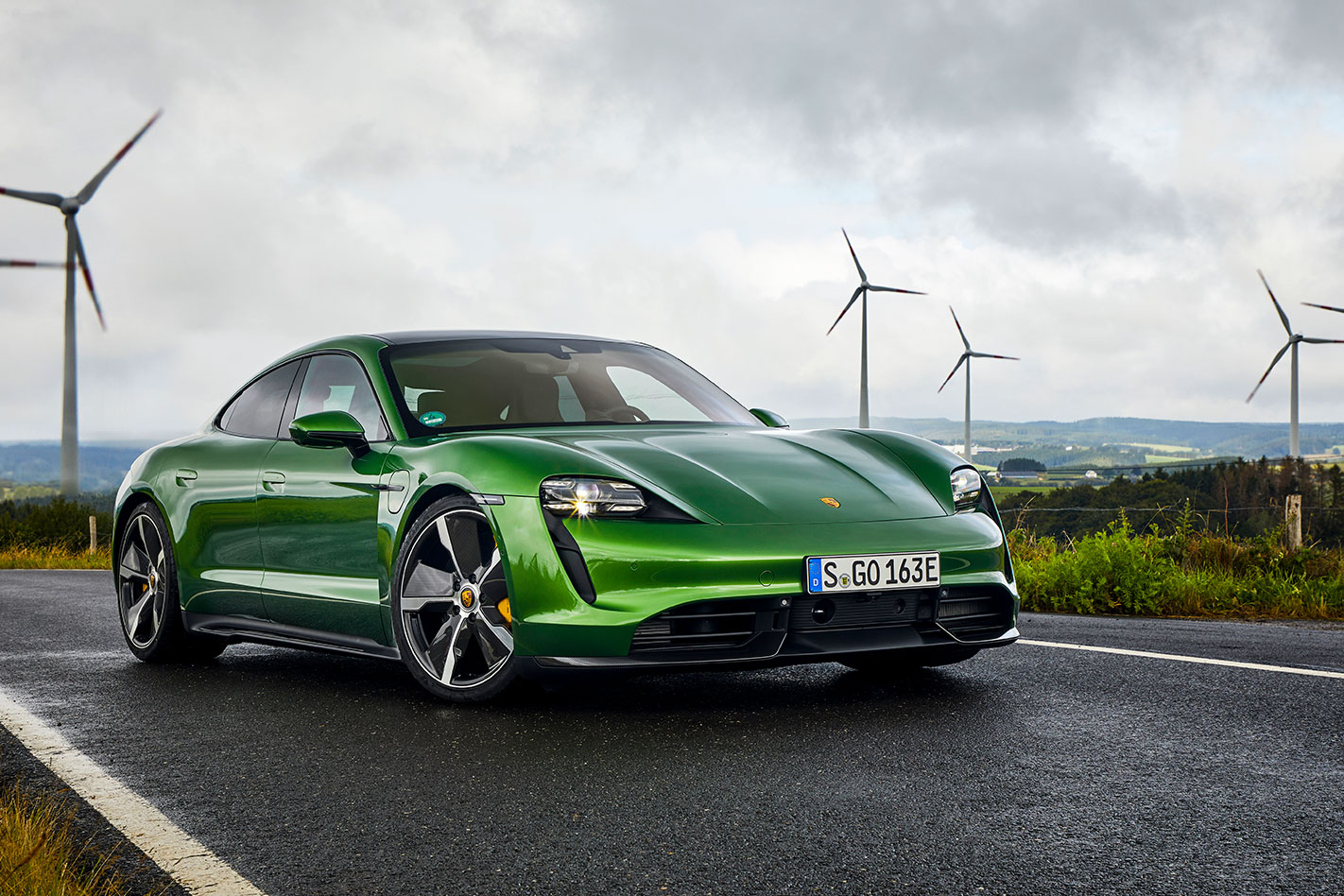
Design led: Porsche Taycan
I can think of some German electric cars like that. People say, well, that’s because they don’t want to frighten people off, by building it more conventional, but the fact is it’s because the front end is just full of stuff that could just about go anywhere. Whereas if you look at something like the new Porsche Taycan, that’s a car driven early by design. I’m sure the design department were there to protect the design as best they could.
The other frustration with electric cars – especially with sportier cars – is if you by default have got a skateboard platform, you inherently end up with about 125mm of height that you don’t necessarily want. If you’re dealing with SUVs or sedans you can learn to live with that. The offset of that is that you need to put different wheels on the car, to scale it differently. Of course, with SUVs you can do that quite readily. For some reason, the engineering and marketing teams accept that the wheels can be bigger on SUVs without question, whereas on a sports car it has more of a bearing in weight, but cost as well. The one challenge on an electric car is the skateboard platform in terms of height. When we go to a generation of pure sports cars, we need to find another way around that, and it could end up in a ‘mid-engined’ configuration for the batteries for that reason.
WHEELS: Do you feel there is a move back to more conservative rather than radical design?
CALLUM: It gets back to where the design team get involved in the make-up of the car. A lot of people feel that the whole strategy of a car, in terms of aesthetics and design, starts at the boardroom level and they see the design team asking for something more conservative or something more radical. I don’t see that really happening. I think what happens is there’s a domino effect that starts off and it’s a matter of trying to control those dominoes as they rattle off through the company.
“Okay, we’re gonna build a car. It’s going to be electric. Right, Design – get in there quickly and make sure you get what you want out of this. If you don’t get in there quick enough it’ll be too late and you’ll end up with the package that you’re given.” I have to say that the German brands are more prone to do that than we have been at Jaguar or Land Rover, and the net results are the results of circumstances rather than any conscious decisions to be conservative or otherwise.
I may be wrong in some areas of design. In Japan, they tend to go with more radical in some people’s eyes and wacky designs in order to get people’s attention – and I’m thinking Honda at this point. I don’t think it’s a conscious deliberation of whether something should be conservative in most instances, it’s just people trying to get the best out of what they’ve been given to work with.
WHEELS: What is it that excites you about the future of car design?
CALLUM: I reflect on this a lot. I feel a sense of huge challenge for younger designers now. Not only do they have to know what’s happening physically, in terms of geometry and engineering, but they need to be more politically astute in order to get that through the system. It’ll be difficult for them because the car industry is in a state of unknowing and that dissipates right down through the business. That offers up a state of confusion or a state of opportunity. The smarter designers will see the latter and that comes back to my point on how they can actually influence the future.
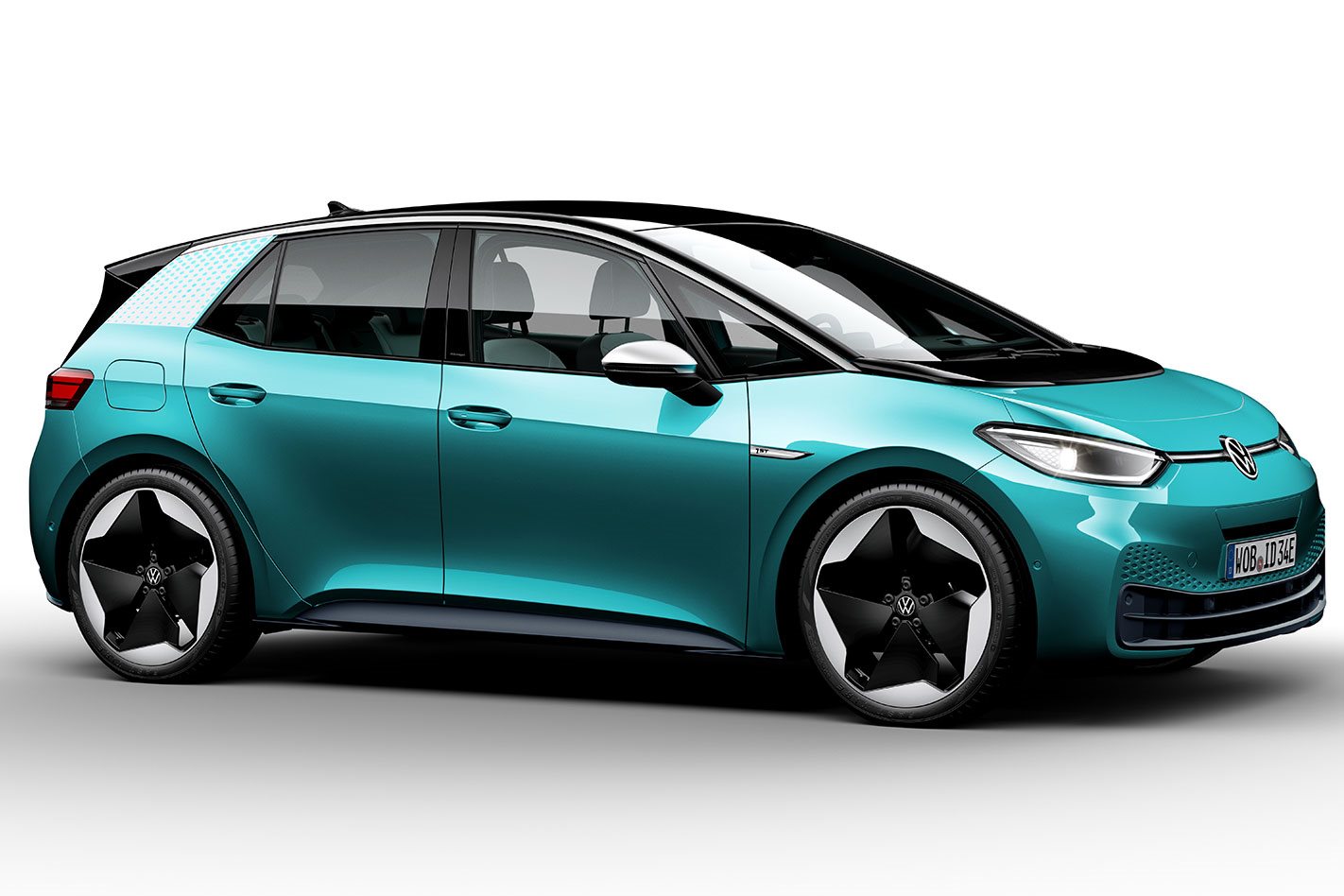
The first of many: Volkswagen’s ID.3 EV
I think electric cars are inevitable. There’s enough pressure on the ecology of the world to move this forward. The rate of change that it moves forward is causing the disruption in the car industry. If somebody said, “Every car you build in 10 years’ time will be electric”, it’d be a very queer decision but we’d know what to do. The thing is, we don’t know what to do. In 10 years’ time, will we build internal-combustion engines? Will they be diesel, hybrid or hydrogen? The world is struggling to understand what to do.
There’s a state of opportunity, where the design team need to become crystal ball gazers and make some fundamental choices. It’s betting the farm. Volkswagen has been quite clear about this as a result of their Dieselgate fiasco. They’re going to go electric big time. Is that the right choice or is it an overreaction? Truth is, we don’t know.
It’s a gamble but it’s a PR gamble, holistically too. It offsets some of the damage it caused to their PR. I don’t know if it’s the right decision. I like to think that it is because I’m a great believer in these sorts of products. I don’t know if the world’s ready for it but the world needs it. But can the infrastructure cope with it?
WHEELS: Is design an increasingly important aspect in the process?
Absolutely. The aesthetic of the car is very important. There are two parts to this. One is because the inputs – I had a discussion with a BMW designer about this – their inputs are much more rigid than those at Jaguar. They get set dimensions to work with. They work these dimensions. The profile of the car, the shape of the car is dependent on the input that they get based on people package, aerodynamics, cost etc. We get the same inputs because the world is the same, people are the same, physics are the same, but what we do at Jaguar is we challenge these inputs for the sake of shape and style. Fact. We do. We want a better looking car. Of course, you can then say, “Okay, it’s a better looking car, but what does it offer?” Well, it offers a better looking car. That to me, and the buying public, is still important. What the car looks like is still very important to the consumer. In the niche market that is Jaguar, we depend on that difference. The BMWs and Mercedes of this world don’t have to do it as much as Jaguar.
It’s also important from the perspective of designers having an influence on what the car should look like in the first place. The whole notion of I-Pace was dreamt up through some very innovative engineers and the design team. We decided that we were going to have a cab-forward car with a short bonnet. This didn’t come out of some marketing research or some diktat from the top of the business. This was what designers wanted and this was the opportunity we had to do it. If they can understand what’s happening inside the car, how the company works and how the car is built up, designers have a much greater opportunity now to go and influence that.
The other point is that designers also understand the idea of the motor car better than anyone else in the business. And when I say the idea, I mean they understand the product holistically in terms of enthusiasm, its place in the world and its artistry better than anyone else in the business.
You won’t print this, but I’m sure you’d rather go for a drink with a bunch of designers than product planners wouldn’t you? If you take a business nowadays that’s based on historic fact, designers don’t base their lives on historic fact, they base their lives on the future. That’s why design is so important, because they look to the future rather than the past. You have to learn from the past of course.
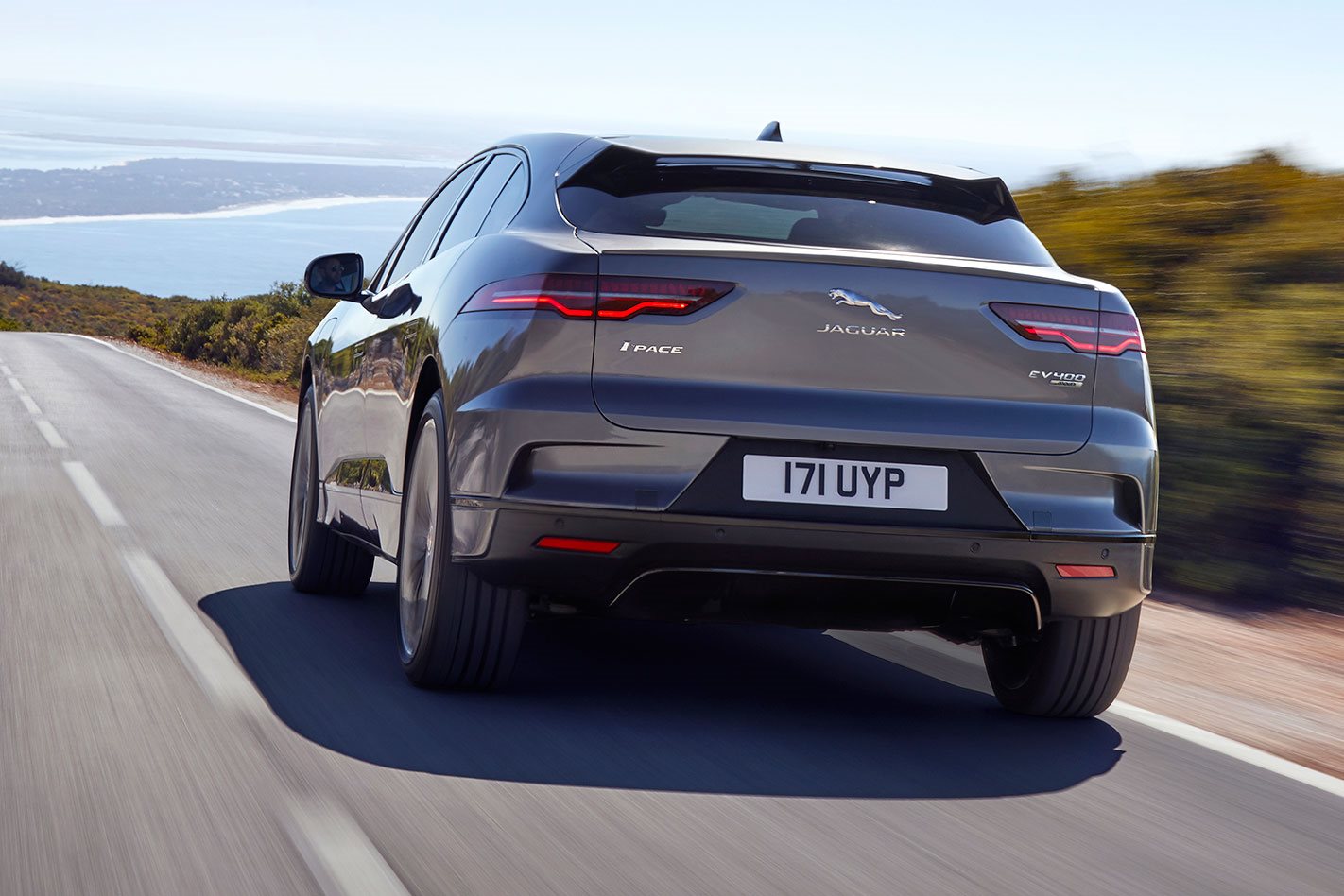
The other great challenge with electric cars is the mass of the car. Although the I-Pace defies its weight and feels quite an agile car, it is over two tonnes, and that’s something we feel very uneasy about. That’s the nature of the beast. Because of that, the crash requirements then become that much more demanding. It means that the crash structure at the front can become larger and larger and that takes away the opportunities you might have had with a less heavy car. Lighter batteries are something that you might have to push hard for.
WHEELS: What’s in your immediate future now that you’ve left Jaguar?
CALLUM: I’m working on a small project to begin with. Ultimately, of course, I would like to do a car – not saying that I’m going to, because that’s going to be in the realm of who can help do it. I certainly can’t afford it, but I like to think that we can get involved in the greater parts of car design on a bespoke and individual basis. I don’t really want to go in and do mass-produced cars for the foreseeable future. Again, I’ve done that over 40 years and I’d rather just focus on stuff that may be a little indulgent, but I like to think I’ve earned it.
I want to focus on the artistry of the car now; enjoying the aesthetics and the design of it in a much purer form, and the only way to do that is perhaps through a limited-edition vehicle, albeit they’re probably going to be quite expensive. That’s what I’d like to do. Not just cars, either. I want to look at other things too. Once you can design a motor car – and product designers might not agree with me on this- but once you’ve been through designing most aspects of a car, you can probably turn your hand to most things. Including boats, interiors, architecture, watches…
WHEELS: Do you see a role for yourself mentoring younger designers?
CALLUM: Yes, I would like that. The thing is, my experience will become less valid. The car industry is moving so fast, that even in five years I might not be able to recognise it. I would like to take the opportunity to guide people in the right way. The one aspect I had at Jaguar as Chief Designer was as a catalyst. Young guys would try something and I’d say, “Don’t bother doing that. It’s not going to work.” They might persist, and the next time they’d listen to me a bit more readily. That was always the humorous part of how we worked. One of my associates would say, “Well, I don’t think Ian’s going to like that” and I’d come in and say, “I don’t like that.” And I don’t like it because I know it’s not going to work. It was never a case of suppressing ideas, I just figured that instead of going down a blind alley, I might as well tell them now rather than later.
WHEELS: What’s changing in the process of car design right now?
CALLUM: Designers need to be more holistic, there’s no doubt about that. They need to use this opportunity of change to make it happen: to suit what they feel to be correct in terms of the motor car. Autonomous driver is going to take on a completely different stand. There’s a slightly negative view in terms of design. Maybe it’s a more democratic view that the motor car will suddenly become this mobile box. I call it ‘anonymous autonomous’ where the design of the box is very much about function and the aesthetic doesn’t matter. I don’t believe that should be the case. I think anything that has to be designed has to be designed properly. I also believe that no matter how autonomous the world becomes, there will always be people out there, particularly in the luxury market, who want their object of transportation to be a bit more desirable, a bit more exotic and a bit more luxurious than everything else.
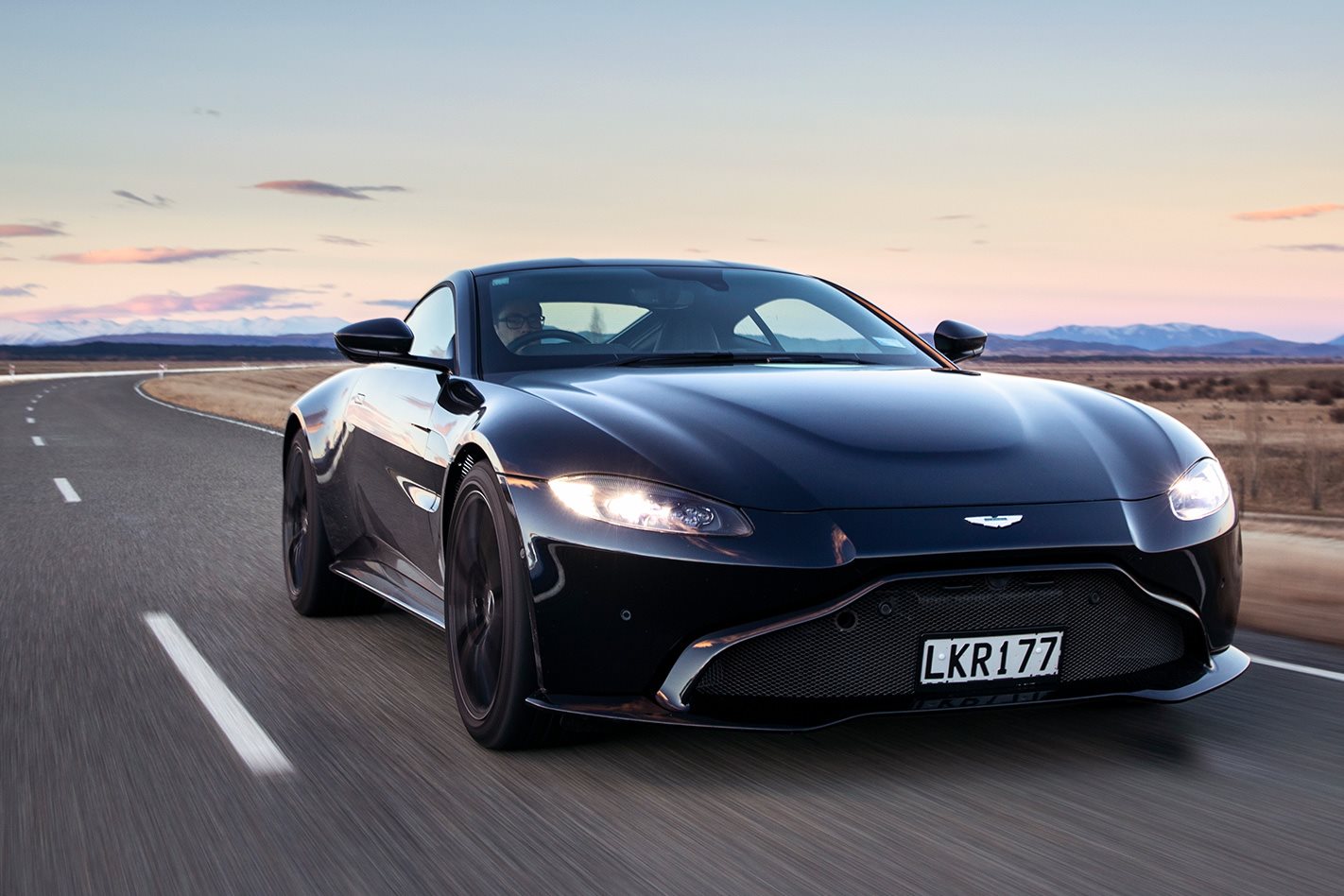
There’ll always be a place in this world for drop-dead sexy design, Callum believes
I think people will always want something special, no matter how different the process of using it might be. If you’re renting, hiring or whatever, I still feel people will still want to get into objects of desire. And that gets right back to branding. Otherwise we’d just all have fairly bland watches on our wrists, wouldn’t we?
WHEELS: Are car buyers more design literate these days?
CALLUM: Oh yes, absolutely. And that varies. They’re very design literate, but whether their taste is in keeping with where I think their taste should be or where other people think their taste should be is another matter. What might be bad taste to me is acceptable to somebody else. What’s important is that they’re very much aware of what they’re doing, what they’re seeing and what they’re doing and how they’re portraying themselves. They see motor cars or transportation as an extension of their own character. When people put their clothes on, they’re very aware of what they’re wearing.
I remember one person saying to me, “I’m not interested in the design of what I drive.” I said, “Really, what do you drive?” And he said, “I drive a Volvo.” Well there you go, you’ve made your statement. That statement to drive a Volvo is a very deliberate one. There was a time when Volvo was less exotic than they are now. It was an explicit statement of “I don’t really care what I’m driving.” A statement of non-statement is still a statement.
I think most people around the world – especially in emerging markets – are becoming hugely design literate. They know what they want and that goes right through everything they buy. They have choice like never before.
The Chinese market will have a huge influence on the rest of the world. I see a very positive effect on the young Chinese design fraternity in building their own aesthetic. That’s more based on the traditional Chinese design ethic of simplicity and purity. That’s their history. They’ll influence things over and above the visibility of wealth. A sense of good aesthetic will come through.
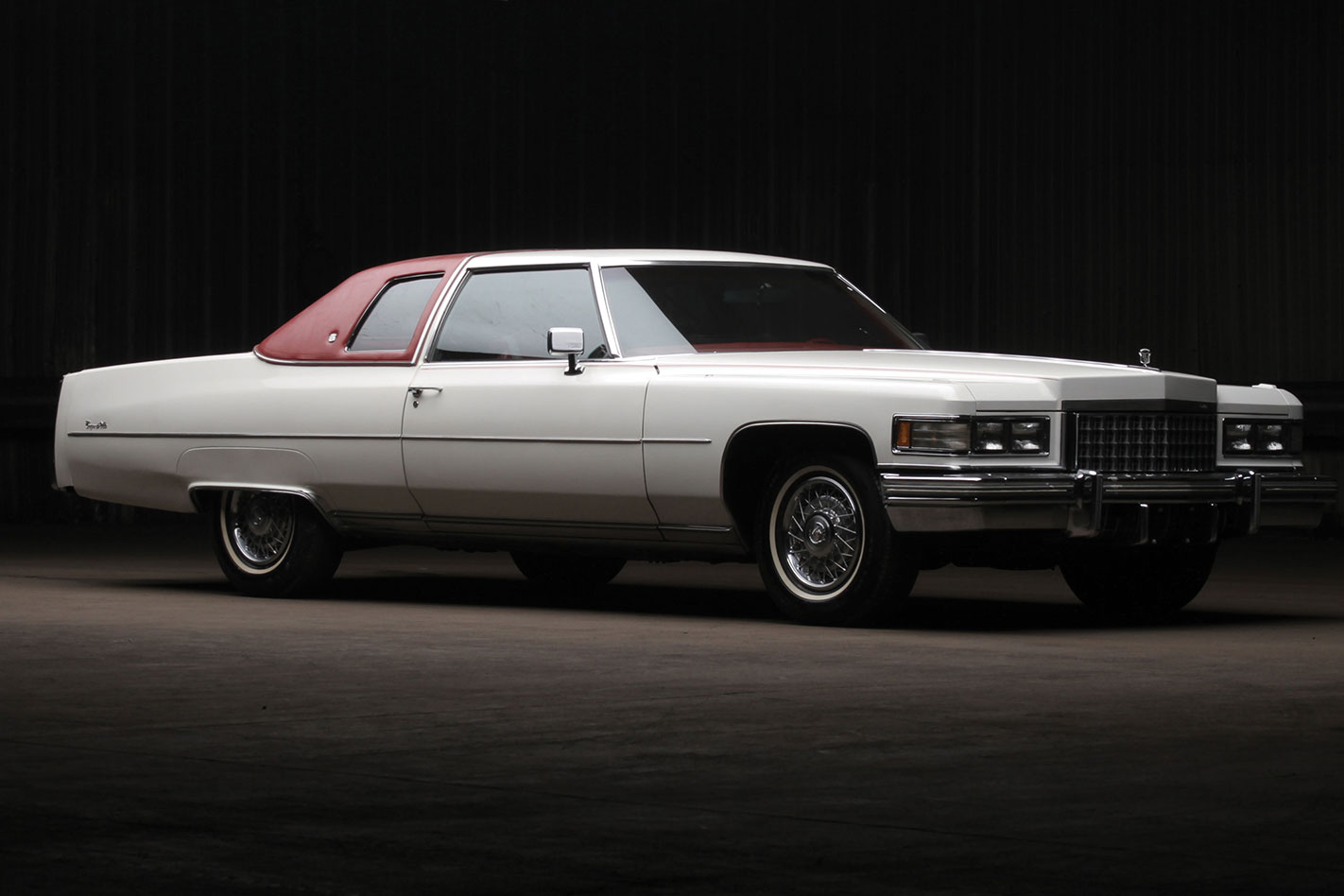
Super size me: the 1976 Cadillac Coupe deVille illustrates Ameicans’ love of big cars
These emerging markets develop their own design maturity. We’ve seen that process happen in Japan. Theirs, for instance, is a culture of detail. There’s no space to stand back and look at anything. You laugh but it’s true. You can’t stand back 300 metres to look at a car you’re designing because there just isn’t the space to do so. That’s why American cars and Australian cars became so big. Geography has a huge effect but mass global digitalisation will have a bigger one.
WHEELS: We don’t have too much good news about Australian manufacturing…
CALLUM: The loss of the Australian car industry is a crying shame. I worked in Australia and did a lot of work in Melbourne. It’s such a great place to be. I think my brother Murray’s insisting on keeping the Ford design studio there, so I’m glad to see that. They won’t go away. You guys need a car industry back again. The population’s big enough to justify it. The world’s a poorer place without a Holden or a ford ute with a thumping great V8 in it.
The Design Issue of Wheels is on sale now in all reputable outlets and online at magshop.com.au
Unless you’ve been living under a rock – and no disrespect to the residents of Coober Pedy – you’ve probably spent at least part of this last week reading reviews of the new all-electric Porsche Taycan. Some have been pretty complimentary, while others have struggled to get under the skin of Porsche’s first modern EV. But if there’s one thing that has united reviewers, it’s the sharp intake of breath when the prices were announced.
The Turbo model costs around $300K and the Turbo S flagship a cool $350-odd grand, so pitching these as some kind of rival for a Tesla Model S looks way off beam. Fortunately, help is at hand for those who want a Taycan but aren’t willing to fork out quite such a fat stack of cash. The Taycan 4S is being added to the range and the price is likely to come in somewhere around $200K. That’s cheaper than any Panamera or 911, albeit still a bit spendier than any of Mr Musk’s current wares.
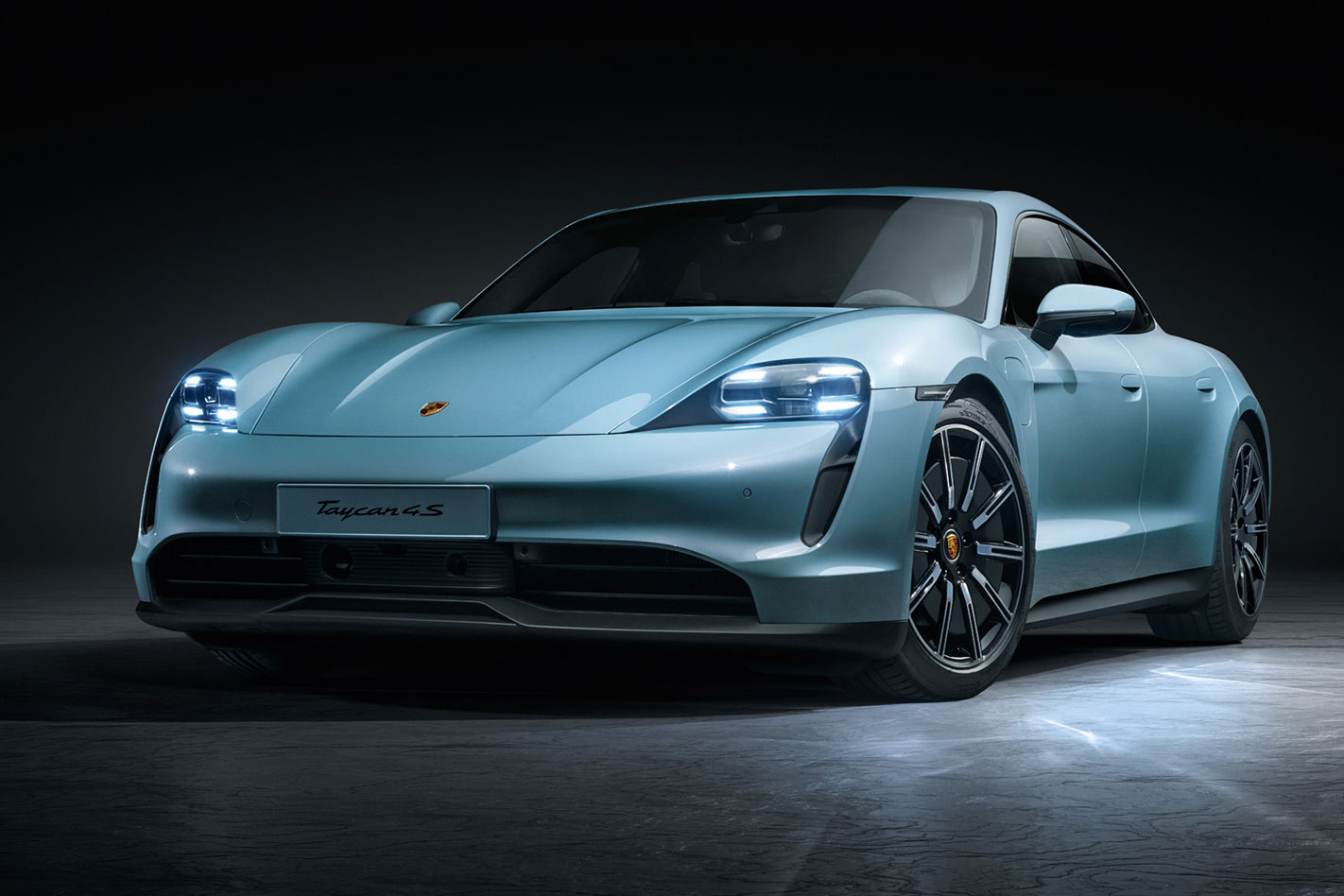
The Taycan 4S also comes as a welcome relief to those who were getting a bit aerated about an electric car being fitted with a Turbo badge. We have no great issue with it given that putting the words Sport and Luxury on the back of a Lexus ES has to be an exercise in the driest of Japanese humour. Anyway, I digress.
The erstwhile entry-level Taycan is offered with a choice of two battery sizes. The so-called Performance battery delivers up to 390kW (530hp), or you can opt for the Performance battery Plus that wicks things up to 420kW (570hp).
The single-deck Performance battery, with a total capacity of 79.2kWh, comes as standard. Opt for the peppier 93.4kWh dual-deck Performance battery Plus and you get the same set-up seen in the Taycans with the Turbo badges.
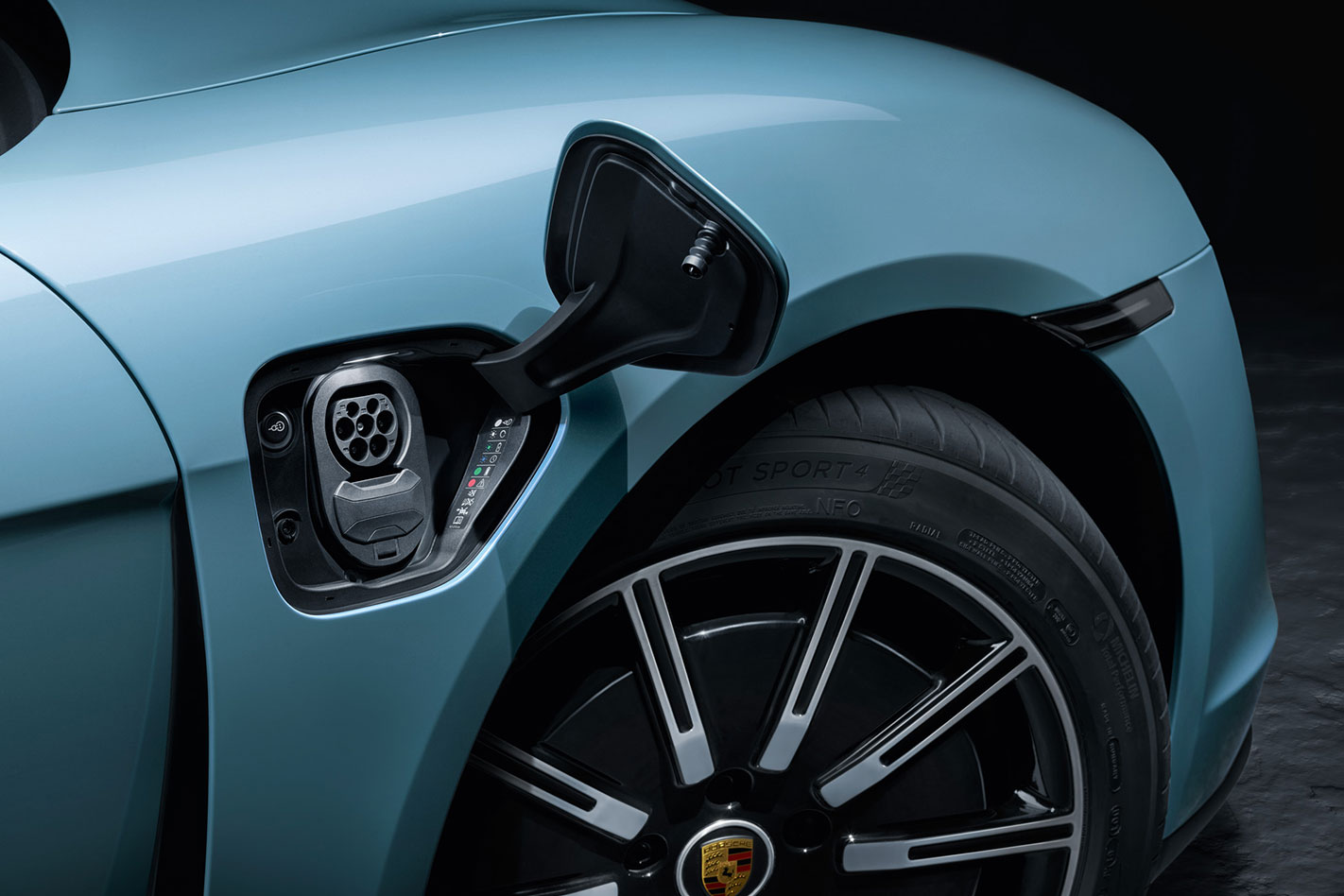
Like those cars, drive goes to all four wheels, and in both variants 0-100km/h disappears in a claimed 4.0 seconds. Given what we’ve seen with the other models, that claim is conservative. What’s more, the 4S shares the Turbo models’ repeatability of performance, that being a key Taycan design criterion. The top speed is also 250km/h in both cases.
So what differs between the two batteries? In a word, range. The range is pegged at 407km (WLTP) with the Performance battery and up to 463km with the Performance battery Plus. Because of the more modest power draw, that range is the best of the entire Taycan range, so if you’d shunned a Turbo model on the basis of range anxiety, it might well be time to reassess. The other key difference between the two 4S variants is the maximum charging capacity, which is rated at a peak of 225kW for the Performance battery or 270kW for the Performance battery Plus.
Apart from the badge on the pert rear end, you’ll spot a Taycan 4S due to its standard-fit 20-inch Sport Aero wheels and red-painted brake calipers. A revised front apron, sleek side sills and a rear diffuser finished in black also differentiate the 4S.
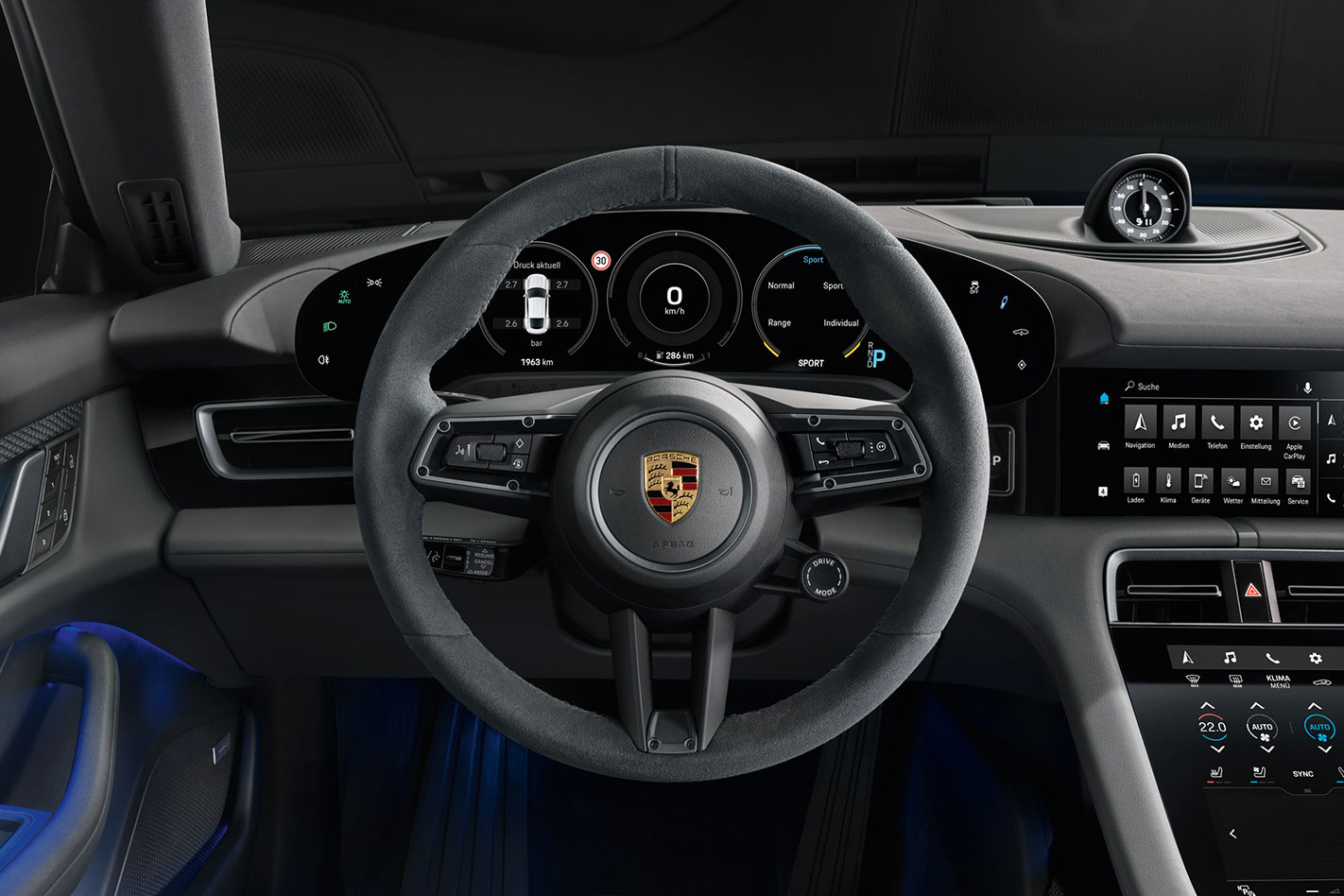
Jump inside and you get the same cowl-free dashboard, robotised HVAC and digital clusters, and the 4S is fitted with a part-leather interior with 14-way adjustable front comfort seats with memory function.
In fact, most of the big-ticket items that have impressed testers in the Turbo models are fitted to the 4S, most notably the adaptive air suspension with three-chamber technology and electronic damper control PASM (Porsche Active Suspension Management). There’s also that fiendishly clever regeneration system through the brake pedal, where the actual brake pads aren’t used for 90 percent of brake pedal requests. Should you really mash the stoppers, you’ll be glad of having a set of six-piston, fixed-calliper brakes biting down on 360mm discs on the front axle. At the back there are four-pot units and 358mm discs. The discs are cast iron rather than carbon ceramic, to help keep a cap on cost.
As you might have spotted, all of the prices are currently what we think are pretty accurate estimates. Porsche isn’t going to reveal its hand on pricing until early next year, at which time it’ll formally open the order book, with first deliveries down under expected at the end of next year. If the quantity of expressions of interest are anything to go by, you’ll need to move extremely fast to get an early build slot on a 4S. What are you waiting for?
Even if you snapped up one of the final V8 powered Holden Commodore utes or equivalent Ford Falcon. It’ll be at least two years old today and you might be looking to replace it.
But if you wandered into one of the thousands of dealerships dotted about the country, the closest thing you could roll out in is a high-riding, four-cylinder diesel-powered Colorado or Ranger.
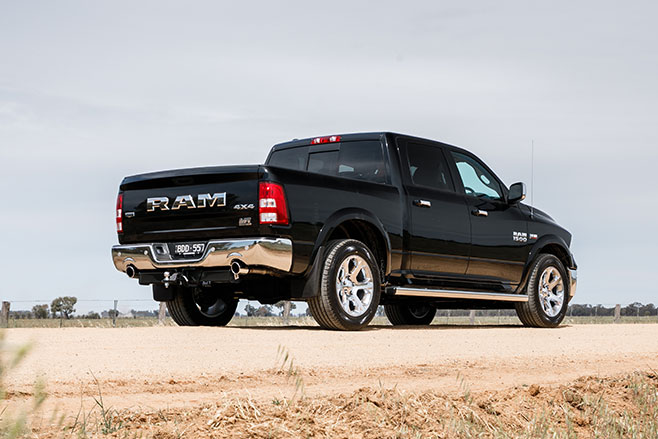
If, like many Aussies, a true ute is only found with the pairing of a pick-up tray at the back and a pounding petrol V8 at the front, then there’s currently only one machine on sale right now that will fit the bill.
WHAT IS IT?
Don’t be put off by its arguably lame Laramie moniker which, depending on the interpretation, translates as either ‘from the leavy grove’ or ‘tears of love’. This hulking American-made truck is one tough beast that commands respect.
The Ram 1500 offers the only V8 petrol engine in its class, delivering 291kW of power and 556Nm of torque, and with its massive 4.5 tonne max towing capacity, nothing quite compares.
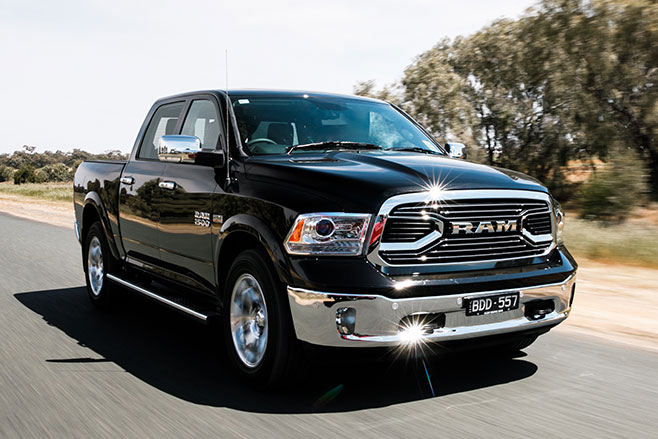
The Ram trucks line-up includes the heavy duty diesel-powered 2500, and the ‘light duty’ 1500 which is available with either a turbo V6 diesel or the V8 petrol we snatched the keys to. Only the Americans could describe a monstrous 5.7-litre truck that can tow two Ford Rangers as light duty.
Ram Trucks Australia imports left-hand drive vehicles direct from the factory in the US, and the conversion to right-hand drive is completed under contract with Walkinshaw in Melbourne’s east.
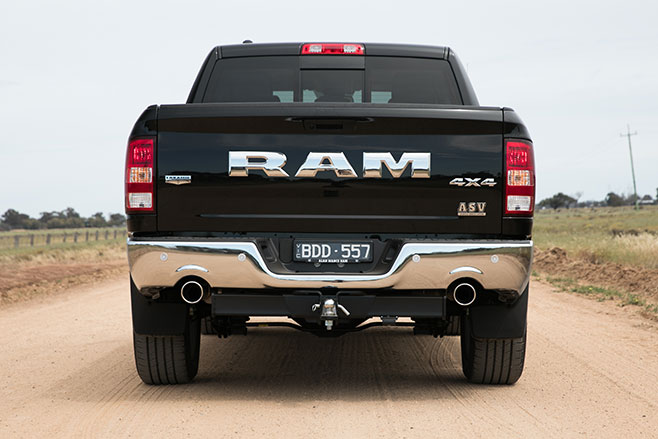
As such, Ram Trucks Australia claims “It’s built by Aussies, for Aussies”. Really? Can this American pickup truck ever replace the home-grown Aussie ute?
WHAT’S IT LIKE TO DRIVE?
Laramie and I head North, straight up the guts of Victoria, bound for the rural NSW town of Deniliquin. Our destination: The Deni Ute Muster — AKA “Ute Utopia”. Our aim: To see if those true-blue, iconic, Aussie ute lovers would accept a Yank Tank.
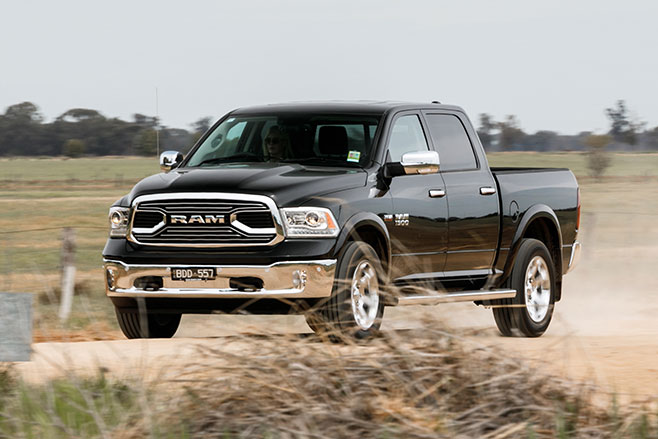
The first thing I notice is the unmistakable V8 rumble which, unlike many American models, is not just theatrics and little substance, and provides awesome pulling power despite its massive size and 2.6-tonne kerb weight.
The multi-link coil rear suspension provides both competent stability control, as well as a comfortable ride. This is noticeable on both the long freeway haul and the bumpy, dusty road to Deni.
As expected The Ram feels monstrous in the inner city, and parallel parking is not for the faint-hearted. Out on the freeway, however, it has the space it needs along with a smooth cruise and a cabin that is so very quiet.
The Ram has a stellar view thanks to its altitude. No one is going to mess with you driving this thing. Everyone stares before giving way.
I’m ashamed to say I’m carrying nothing in the tray. Even so there was little, if any, jittery roll often felt in an un-laden ute.
Perhaps my only grievances are: 1. The quintessentially American foot-operated park brake, which is released by hand (go figure); and 2. The reversing camera display, which could be bigger and clearer, especially if you’re hooking up a trailer, boat or caravan.
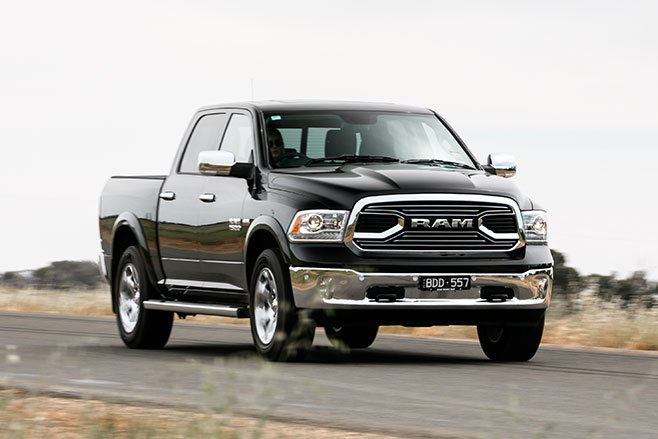
There’s also another bugbear when it comes to safety tech. Aussie ute buyers — except those doing circle work at Deni — are increasingly demanding modern driver assistance equipment (including forward collision mitigation tech) which is lacking in the Ram. You might forgive this in a budget one-tonner but it’s harder to overlook in a truck with otherwise decent equipment levels and a price tag that breaches the $100k mark.
WHAT’S IT LIKE TO LIVE WITH?
From hamburgers to TVs, Americans love to super-sizeand the Ram is no exception. To Australian eyes, this is a monster pickup truck. The massive front grille and lashings of chrome ensure the Ram cannot be mistaken for anything other than “Born in the USA”.
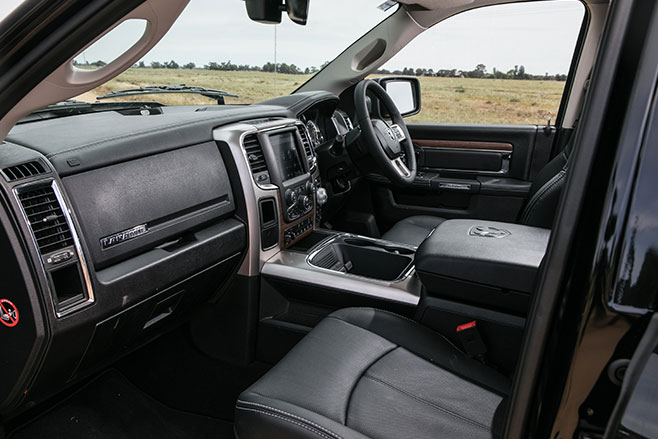
According to its maker, the cabin is fit for a King. Or in my case, a princess. It’s much more luxe than you might be expecting.
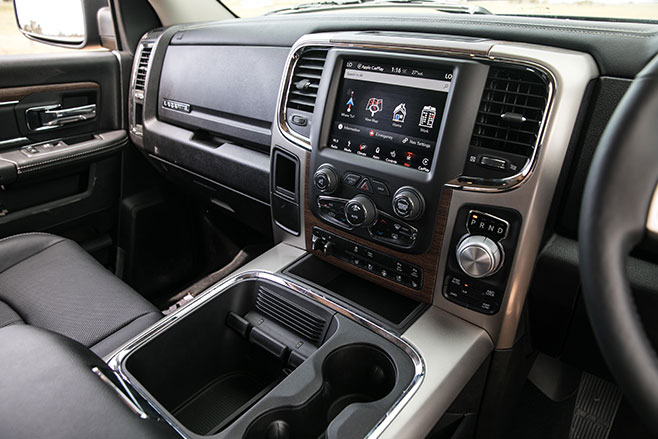
The front and rear seats are heated. And, wait for it, so is the steering wheel; a must for those chilly dawn starts, but as the temperature climbs in Deni I’m more excited about the ventilated cooling seats to prevent your Wrangler-clad booty heating up.
It’s easy to keep finding unique functional touches throughout the 1500. Remember before aircon you had to wind-down the windows? The Ram has a neat, electronic sliding rear hatch in the back window that allows a refreshing breeze to blow through the cabin. Also a clever idea if you’re shouting instructions regarding hitching up stuff or just want to keep the dog happy.
Inside the dual-cab there’s heaps of room for five adults. A split folding rear seat reveals a flat floor in the back. It even rivals many large SUVs for interior space.
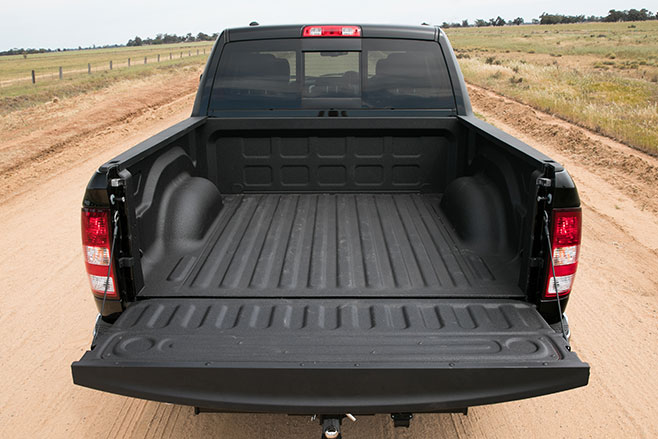
The standard tub impressed the locals at Deni: Five foot, seven inches long in the old language – or 1,712m long by 1,295m wide as measured between the wheel arches. This works out to be 1400 litres. As the fans pointed out, when the tray is folded down there’s even a cup holder divot for your Bundy and Coke. Thoughtful.
IS IT WORTH THE MONEY?
The Ram 1500 Laramie costs $109,950 (plus on-roads) which might seem like a lot to the average one-tone-ute customer, but you get heaps of vehicle for your money.
The 5.7L ‘Hemi’ engine is equipped with fuel saver technology. Fuel consumption is not as horrific as expected; stated combined is 11.9L/100km. We clock a still reasonable 13L/100km.
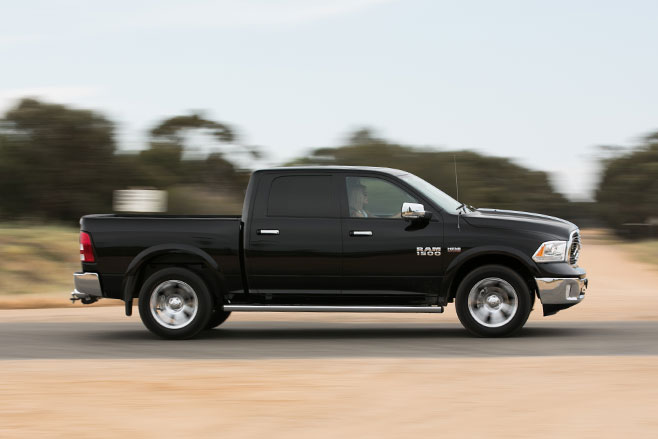
The Ram comes with a three-year/100,000km warranty which is so-so when you look at virtually any rival.
This huge pickup will never be a you-beaut Aussie. Let’s face it, with a name like Laramie it’ll get teased at the pub. But this piece of Americana is well received at the Deni Ute Muster by hard-core locals.
With Ford and Holden having shuttered their production lines, an ardent traditionalist audience will have to look to the future. And the Ram might just be it.
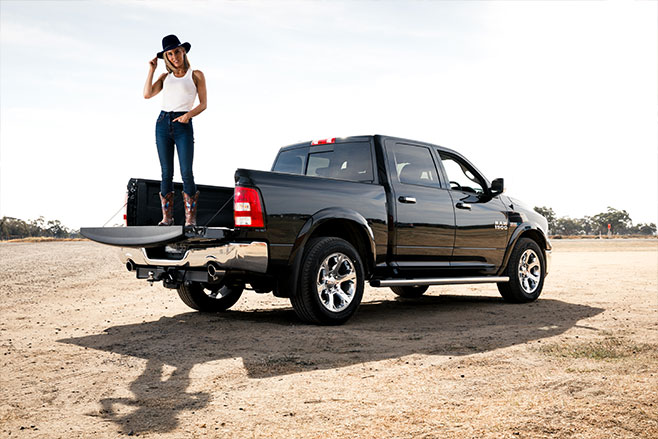
PROS: Massive presence; only V8 in its class; 4.5 tonne towing capacity; luxurious interior
CONS: Might be too big for some; lacking modern safety equipment; reversing camera could be better; fuel consumption
Elise has been a journalist across the trifecta of TV, radio and print for more than twenty-five years. When not shackled to her computer or beloved kid, you’ll find this working mum indulging her other passions — skiing powder off piste or trying to catch a wave on her 8’ Mini Mal.
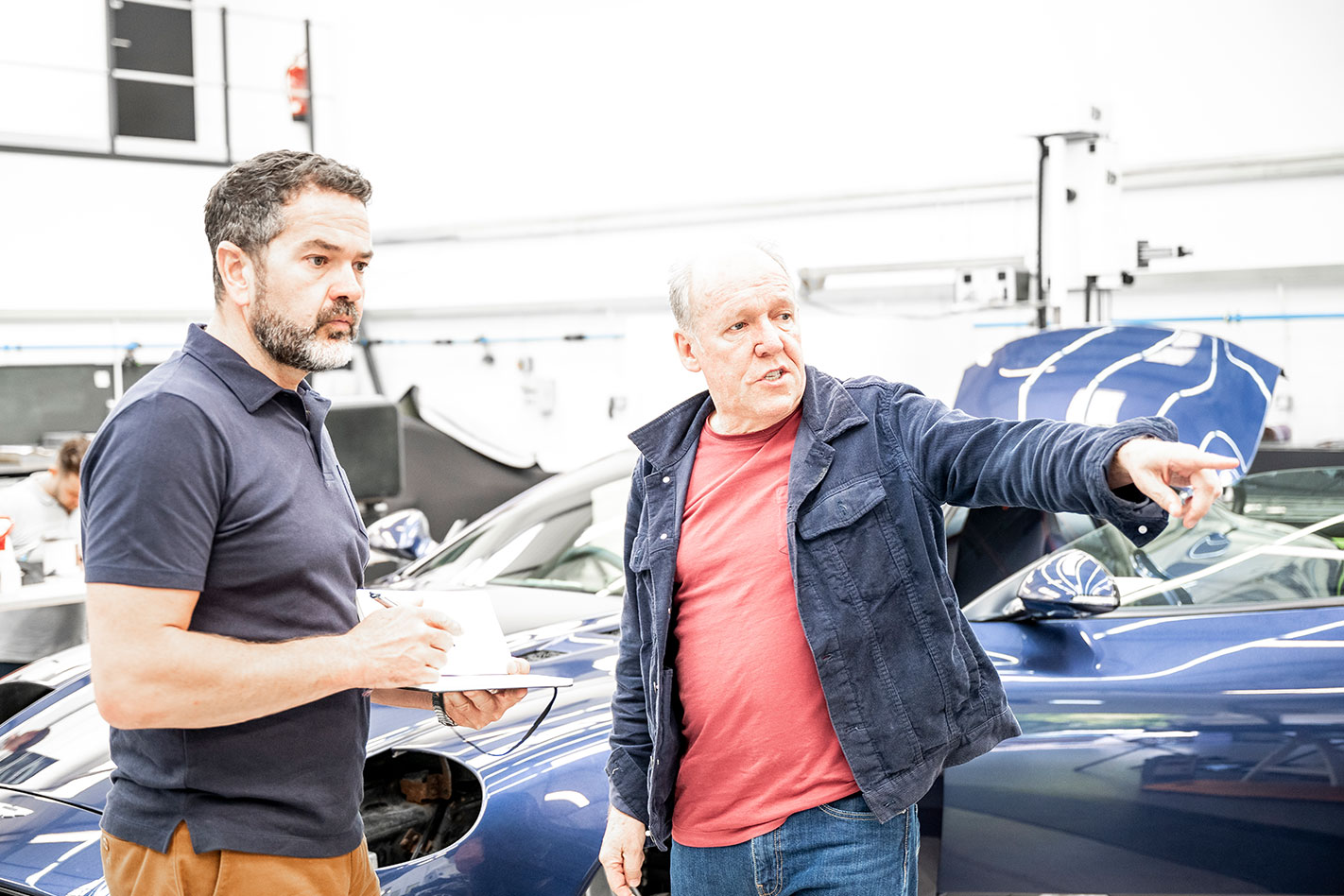
You know Ian Callum. He’s been responsible for shaping the face of modern car design through cars like the Aston Martin DB9 and the Vanquish. His F-Pace was Jaguar’s first SUV and was such an elegant fit that nobody raised a sniff of a complaint about it. The all-electric I-Pace, Ford’s bonkers RS200 Group B rally car, the Nissan R390 GT1 racer, even the detailing of HSV’s iconic 1996 GTSR all flowed from his pen. So we were understandably delighted when he agreed to guest edit the latest instalment of Wheels magazine: The Design Issue.
We have Callum at his most expansive, talking about the state of modern car design and the way forward. He helps us nominate the 10 most influential designers currently working in the industry, but we banned him from nominating himself. He’s a pretty modest guy, so I don’t think that was strictly necessary. Sorry, Ian.
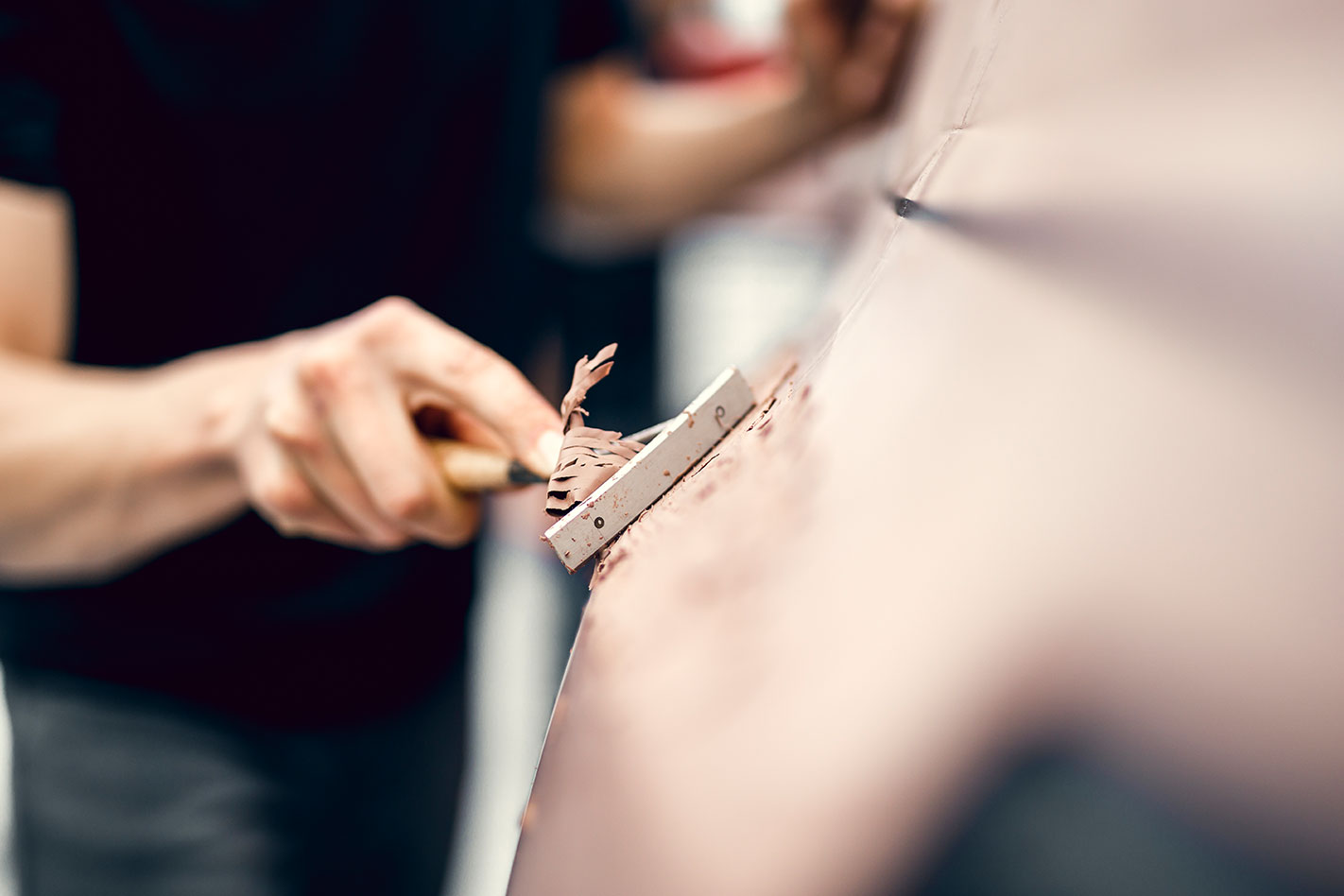
Alex Inwood gets access to GM’s secret design studio in Melbourne to document the art of clay modelling and talks to GM’s local design guru Richard Ferlazzo to understand why, in today’s virtual world, there’s still no substitute for sculpting two-tonne clods of clay.
Callum walks us through the steps in designing a car, and we sent Ash Westerman to Turin to visit one of the most outrageous design houses of them all, Zagato. His interview with Andrea Zagato as the company celebrates its centenary is well worth a look.
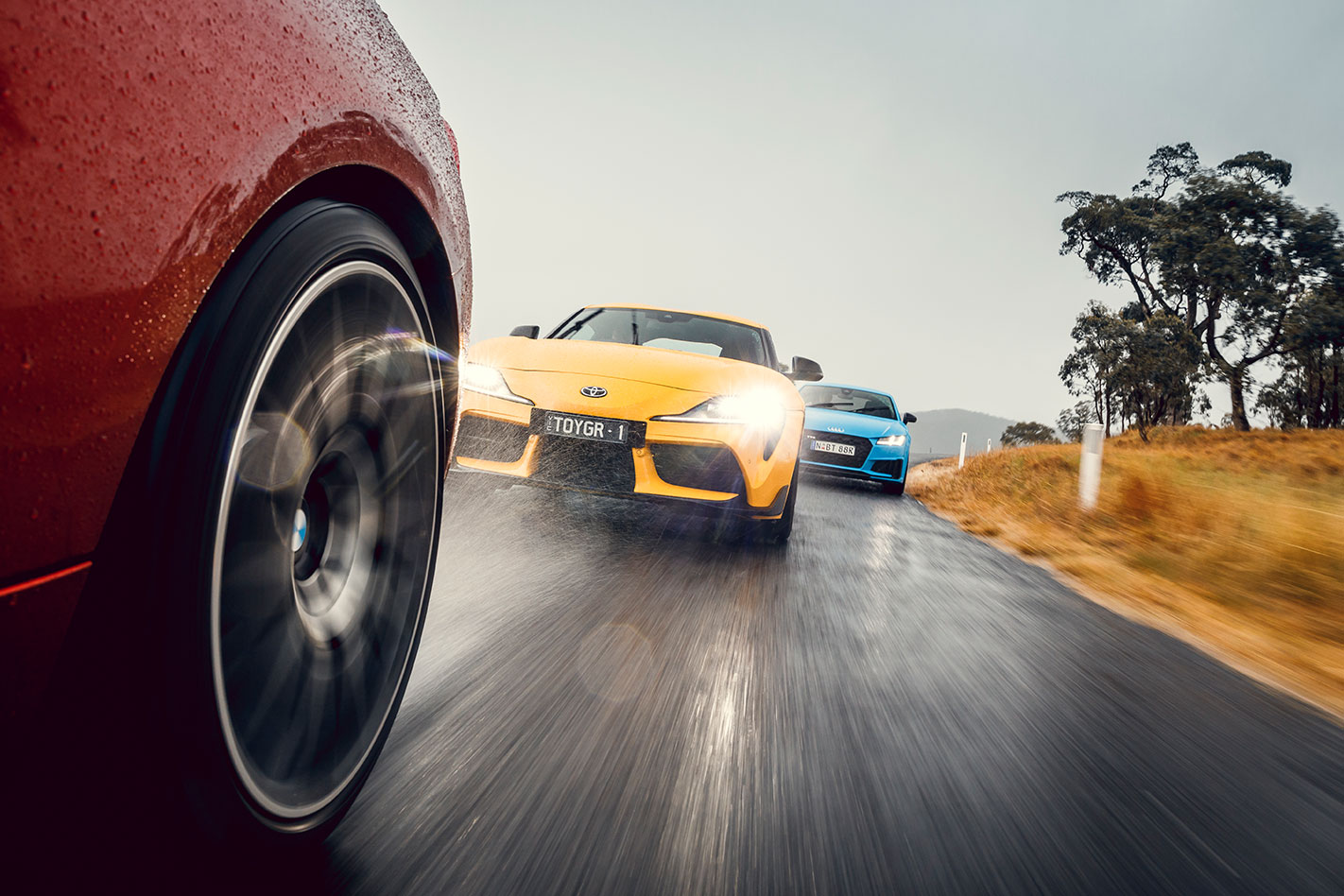
We’ve packed the issue with other features if wielding crayons isn’t your thing. The Supra finally fronts up to some of its fiercest rivals in the shape of the BMW M2 Competition Pure and the revitalised Audi TT S quattro.
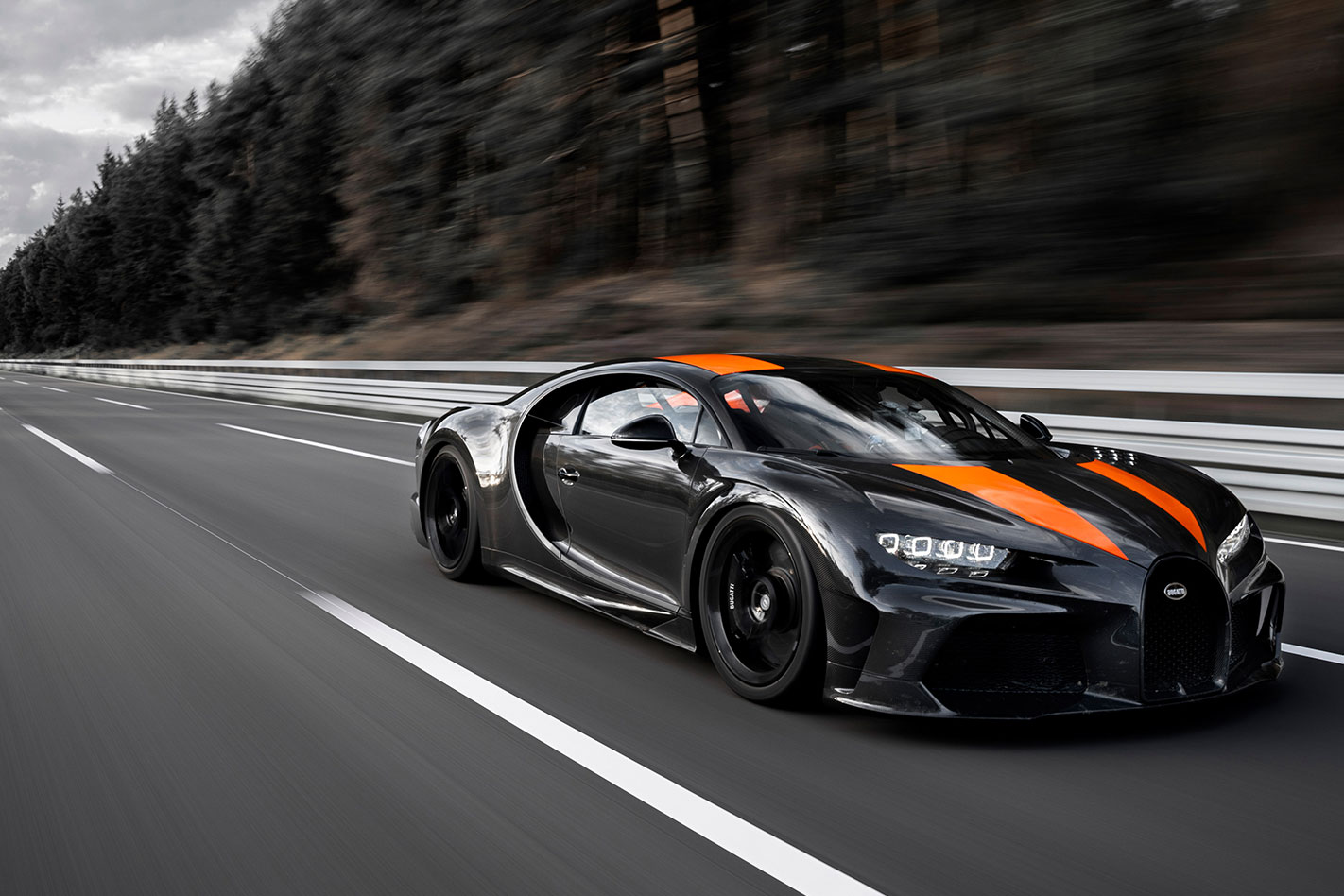
We sit down with Le Mans legend Andy Wallace to discover what it’s like getting air at nearly 500km/h in a Bugatti Chiron, and we run the rule over the forthcoming Volkswagen ID.3, Land Rover Defender, Lamborghini Sian FKP 37 and Mercedes-AMG GT Black Series. Our Modern Classic is the quirky but delightful Honda Insight Mk1.
We have drives of the new Hyundai Venue baby SUV, the lovely Peugeot 508, the refreshed Land Rover Discovery Sport, the Volvo S60 T5 and the ball-tearing Ferrari F8 Tributo. You’ll need to check the mag for a famous face from Wheels’ past in the Fez. But plugging the latest mag actually isn’t hard. It’s a cracker.
Anyway, that’s enough from me. There’s a whole lot more in Australia’s car magazine. Hell, just buy it for the cover, lovingly created by designer Felipe Ubilla with original sketchwork by artist Romeo Varga of the ID.3, Defender and the astonishing Lamborghini Sian. Get after it!
