
The Wheels Verdict: The CX-30 represents a formidable take on the ‘next-gen’ compact SUV by Mazda. Granted, the competition in this category isn’t the strongest, but the CX30 nevertheless makes a wholly convincing case.
WHAT IS THE MAZDA CX-30?
Think of this one as a CX-4, a vehicle that’s between the CX-3 and the CX-5 in size. Mazda can’t use that nameplate as it’s already fixed to the rump of a Chinese-market SUV, so had to come up with a Plan B. The CX-30 is the second ‘next-gen’ product on the Sky-active platform after the latest Mazda 3 and, even after a short drive, it’s clear that it’s a step on in terms of refinement and polish from what went before. In other words, it’s off to a good start.
WHY WE’RE TESTING IT
We were invited to Germany to geek out over the latest SkyActiv-X engine, but Mazda also had early examples of the CX-30 available for us to have a quick pedal in. The drive route wasn’t ideal, but it was enough to get a taste of what Australian buyers can expect when it lands in dealers early next year.
MAZDA CX-30 REVIEW
Imagine you’re a car designer. Where do you start when coming up with a new model? Maybe with assessing what engineering platforms you have, what the hard points are for that chassis and then getting busy with some Play-Doh to sculpt a sexy silhouette. Or possibly by guest lecturing on a university car design course and plagiarising your students’ dissertation submissions. Ryo Yanagisawa and his team at Mazda, tasked with creating the CX-30 compact SUV, instead took a novel tack – they started by considering your pelvis.
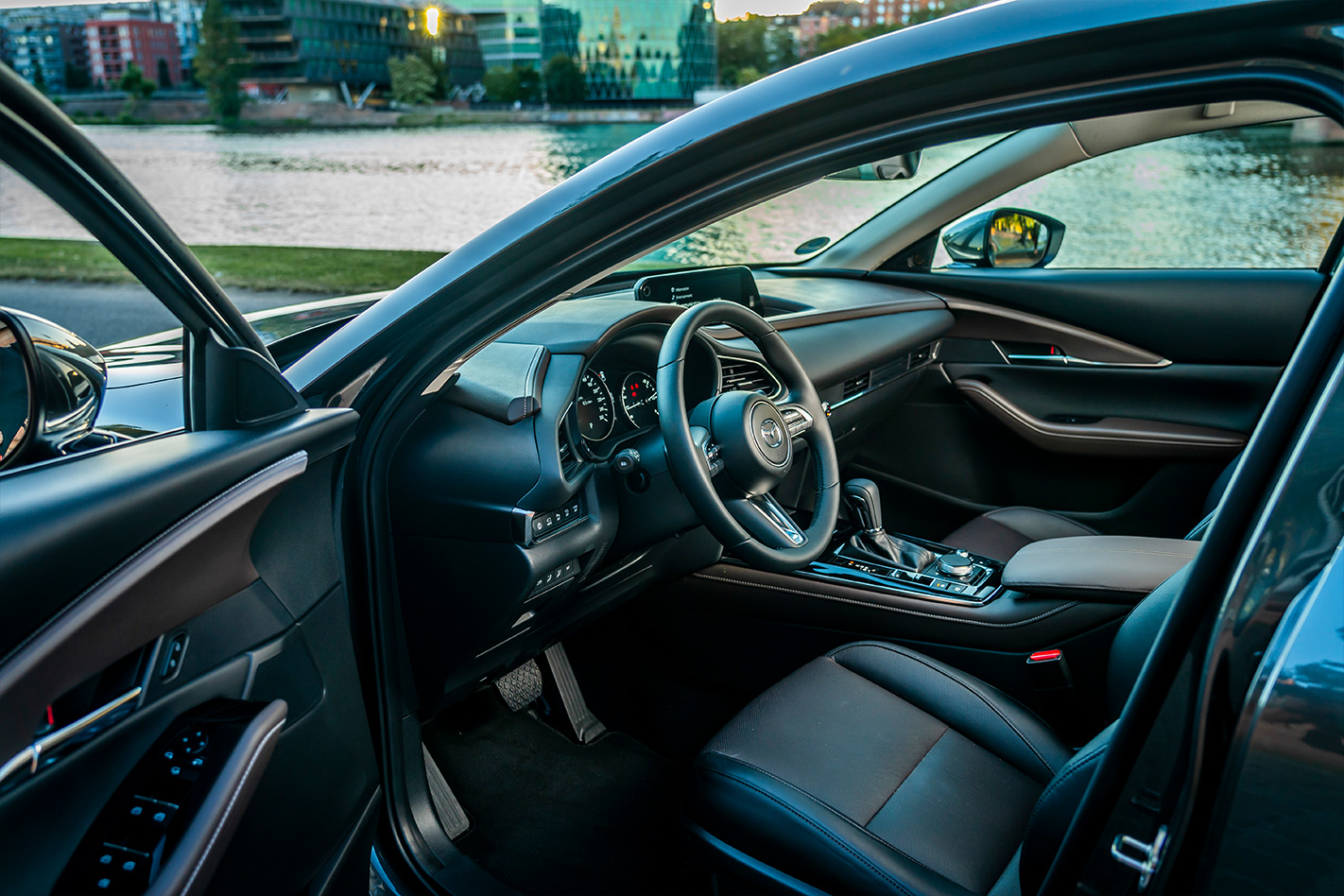
More specifically, they became fixated on the angle your pelvis adopts when it’s sitting in a car seat. Get that right, they argue, and a whole cascade of benefits falls into your lap, so to speak. Your spine has quite amazing shock absorption benefits, provides a natural balance to your core and keeps your head steady in the process. In order to do that, it needs to be in much the same alignment it is when you’re standing and to do that the pelvis needs to be upright. In most cars, the pelvis is angled backwards, your spine is therefore slumped, and you lose the feeling of balance and control. Mazda is very keen on balance and control.
That’s apparent in the first few hundred metres of driving the CX-30. About the biggest compliment you can give it is that the cabin doesn’t feel too different to a hatch like a Mazda 3, despite the centre of gravity being 45mm higher. The old CX-3 pulled off that trick, but then it was based on the tiny Mazda 2 underpinnings. More pertinently the CX-5 doesn’t. There’s a heft and delay to its responses that makes it feel its size. This gives rise to a gradual impression that Mazda has managed to ‘right-size’ the CX-30.
Clearly a lot of work has gone into the practical considerations of size. The wheelbase is actually 70mm shorter than the Mazda 3 hatch, but clever orientation of the fuel tank, allowing toe room under the front seats, canting the foot area to an advantageous angle, creating deep cutouts in the back of the front seats and making the rear seats more upright means that the rear feels more spacious. Its designers worked to ensure that 184cm adults could sit comfortably in the back. I’m a good deal taller than that and didn’t feel pinched in the rear.
It’s hard to fault the attention to detail in the design process. Take the luggage bay for instance. Mazda went into forensic detail regarding baby strollers, obtaining just about every possible design of stroller and figuring out how combinations of handle shapes, wheel sizes and just about every other stroller criterion you can imagine would fit into the 430-litre boot. Or the fact that the loading lip of the boot had to be less than 735mm high so that the average-sized woman could use straight arms to load the boot with heavy goods.
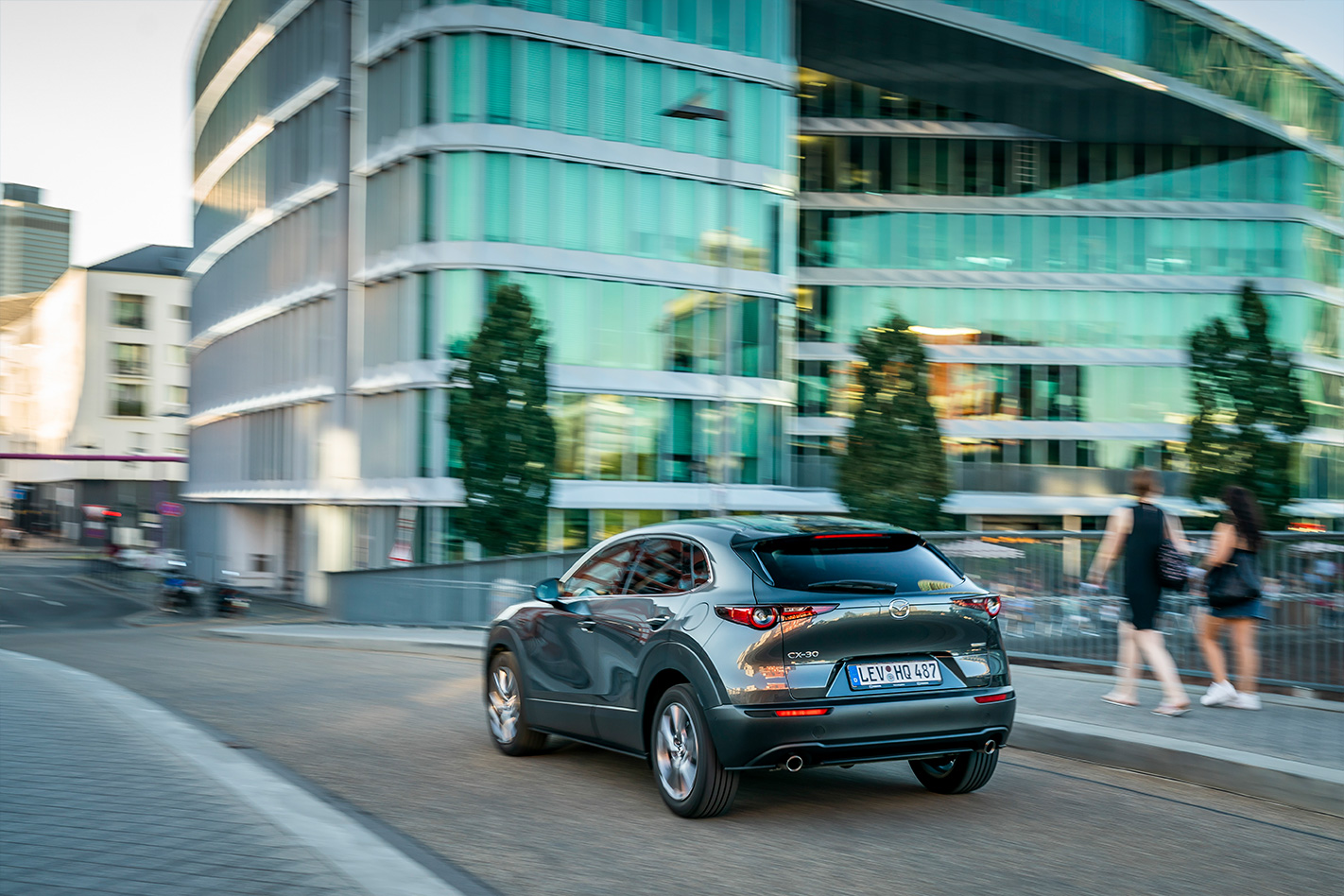
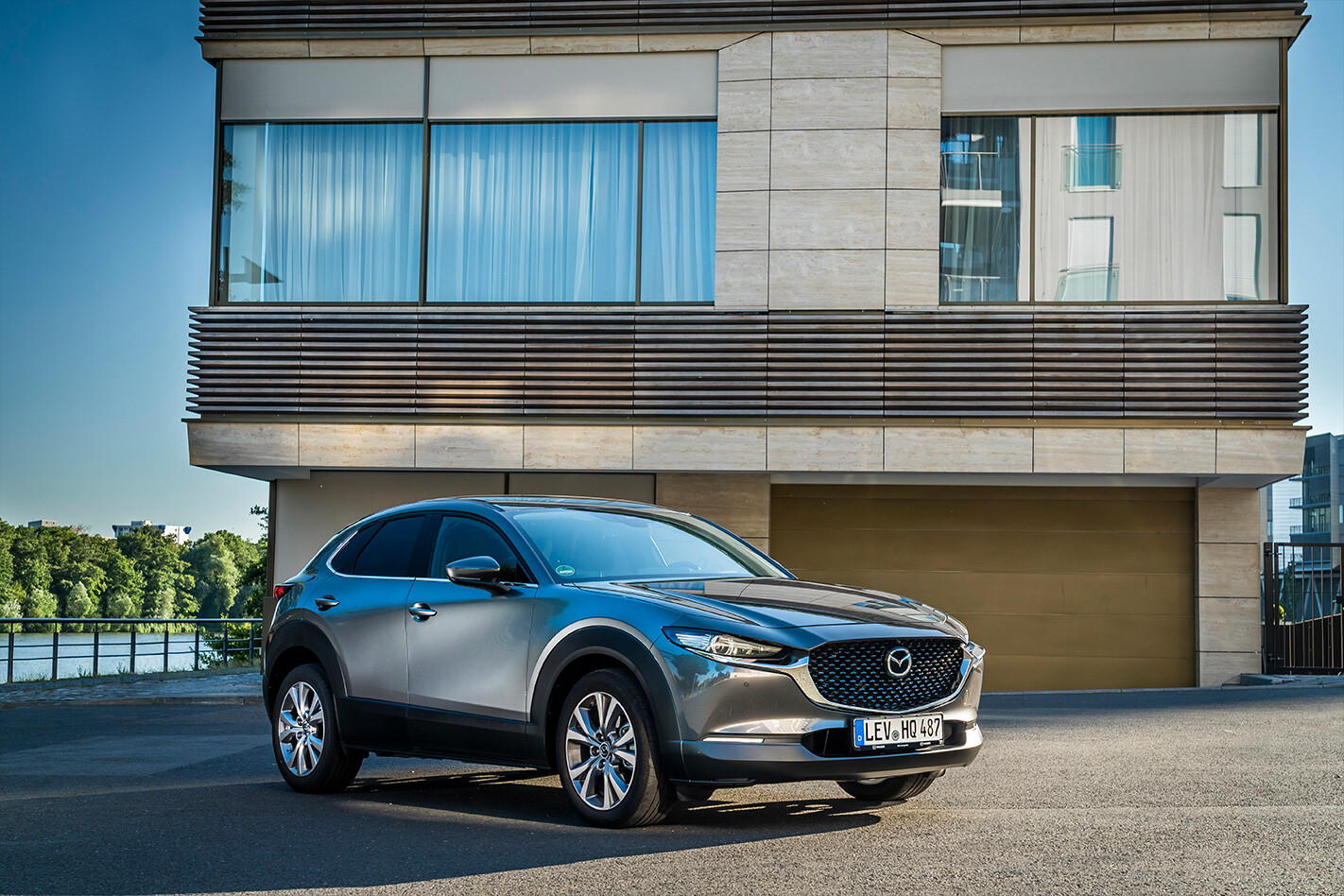
The exterior styling is, to this eye at least, a very respectable stab at the target of ‘sleek and bold’ that Mazda was aiming for. The black plastic cladding around the wheels and sills helps take visual bulk out of the car’s body, creating a sleek profile that features a distinctive S-shape of light and shade in the flank surfacing. Mazda has latterly become a market leader in the way it can create these subtle sheet metal lighting effects and the CX-30 moves the game on a step further. The angle of the C-pillar and rearmost side window gives it a coupe-like profile despite the actual roof maintaining its height for practical purposes.
On the road, it feels light and manoeuvrable, hardly surprising given that the turning circle is at 10.6m, the same as the minuscule Mazda CX3. The electrically-assisted steering is light but allows you to easily place the car. Ride quality was more than acceptable on some very smooth German roads, although we’d need to get the CX-30 on some seriously scabby Aussie bitumen before making any definitive pronouncements there. The test cars were riding on hefty 18-inch alloys and a smaller rim would probably pay dividends in terms of ride quality. I asked Yasuyoshi Mushitani, the CX-30’s vehicle dynamics guru, which tyre he preferred on the car and there was no hesitation. “It works best on 195/65/15 tyre,” was the response. Mazda’s marketing people died inside at that one.
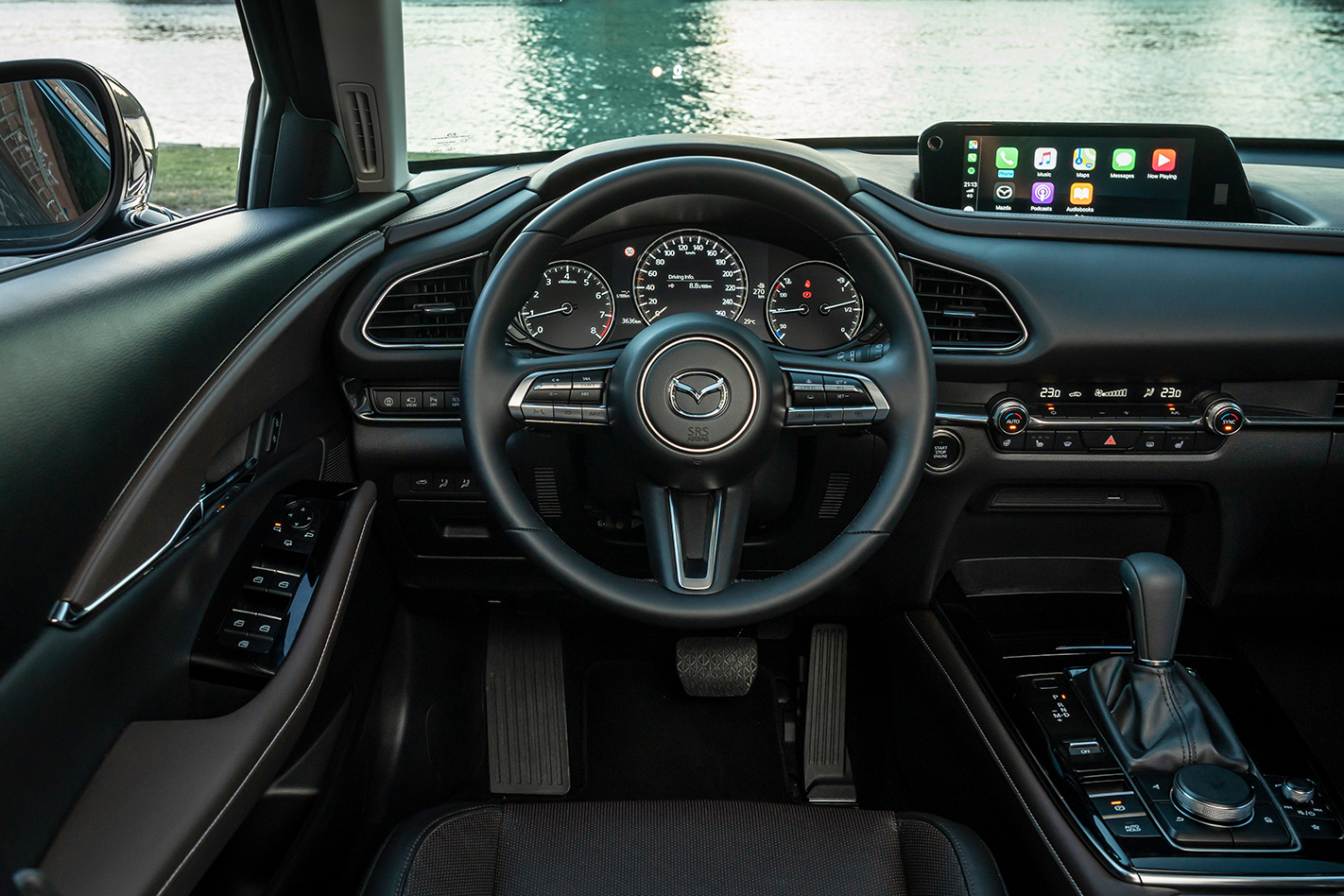
Body roll is extremely well controlled, adding to that impression of agility. The automatic gearbox shifts cleanly but, like the CX-5, retains an annoying propensity to hold onto gears for too long. A subtle lift of the throttle pedal or a flick on the right-hand gearshift paddle rectifies this. That and a slight wind rustle around the door mirrors are about the only gripes you’d make respecting the overall refinement. Mazda has relocated the door speakers, realising that these represented a noise pathway and also sought to plug up any crevices in the chassis members where unwanted noise can creep into the cabin. As a result, it’s easy to converse in the passenger cell, the couple distance – or space between the two front passengers – is, at 740mm, the same as the bigger CX-5. Should you not put too high a priority on quality conversation, an excellent optional 12-speaker Bose stereo is available.
All up it’s an extremely easy car to drive, helped by Mazda’s commitment to designing the cabin to help maintain your focus on the road. The infotainment system is mounted high on the dashtop, so you’re not perpetually adjusting your vision to look down at a touchscreen set against a dark fascia panel. That infotainment screen can be controlled by a tactile rotary controller and there’s now an excellent head-up display to further preclude the need to avert your gaze from the windscreen. The instrument binnacle houses a 7-inch screen and on the dashtop is an 8.8-inch TFT LCD display that features Apple CarPlay and Android Auto smartphone mirroring.
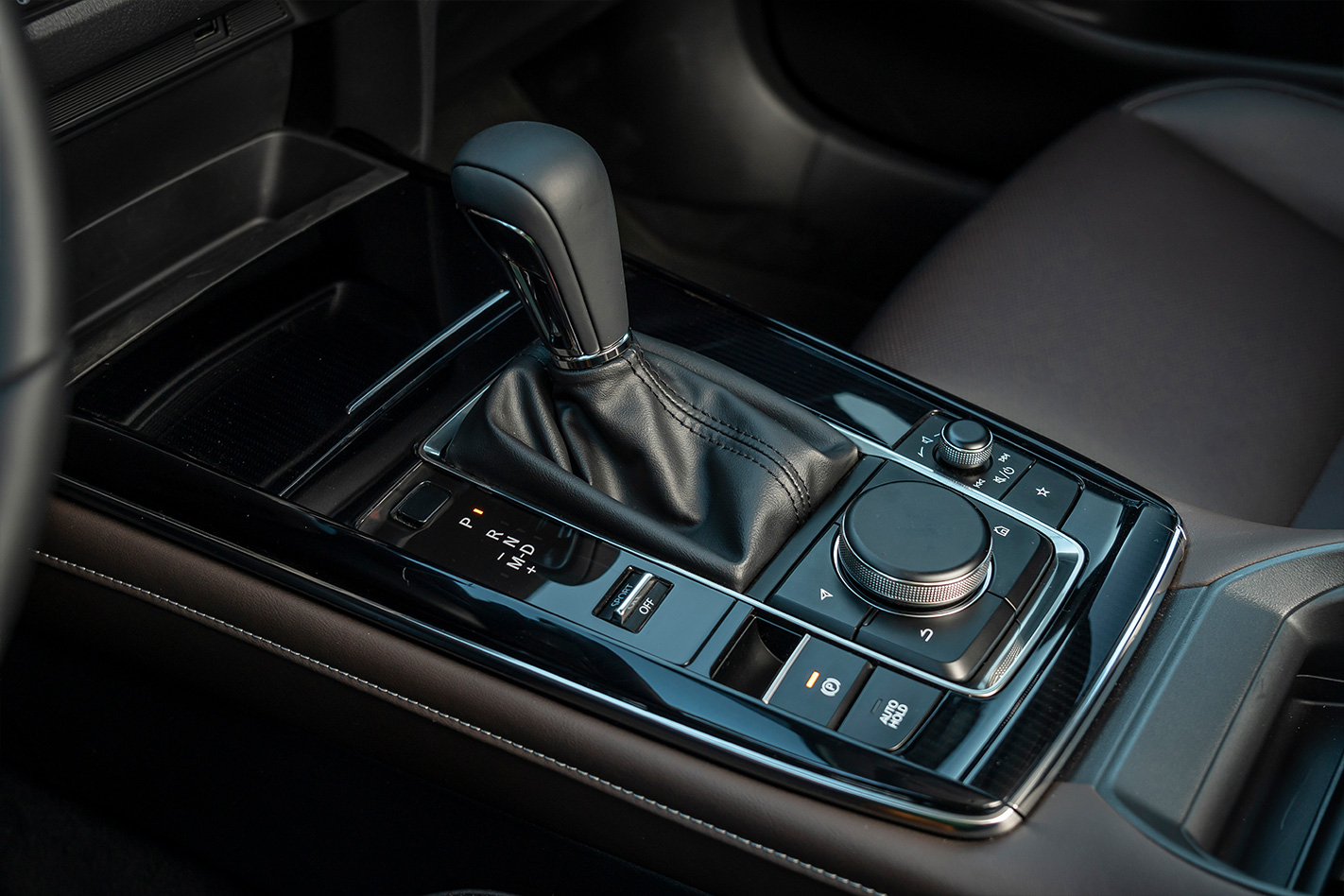
I wasn’t completely sold on the positioning of the door mirrors though. They’re big and set well back, and, as such, when you look into them it’s like suddenly watching an OLED television for the first time. The detail you pick up is amazing. What’s more there’s space to see ahead of the mirror, which means that when you’re negotiating something like a curving multi-storey down ramp, you can clearly see where the inside kerb is instead of having to guess. The downside of the mirror positioning is that it’s not so easy to just flick your eyes to it. Because it’s so far back, you’ll need to make a conscious turn of your head, the problem being exacerbated for shorter drivers who sit closer to the wheel.
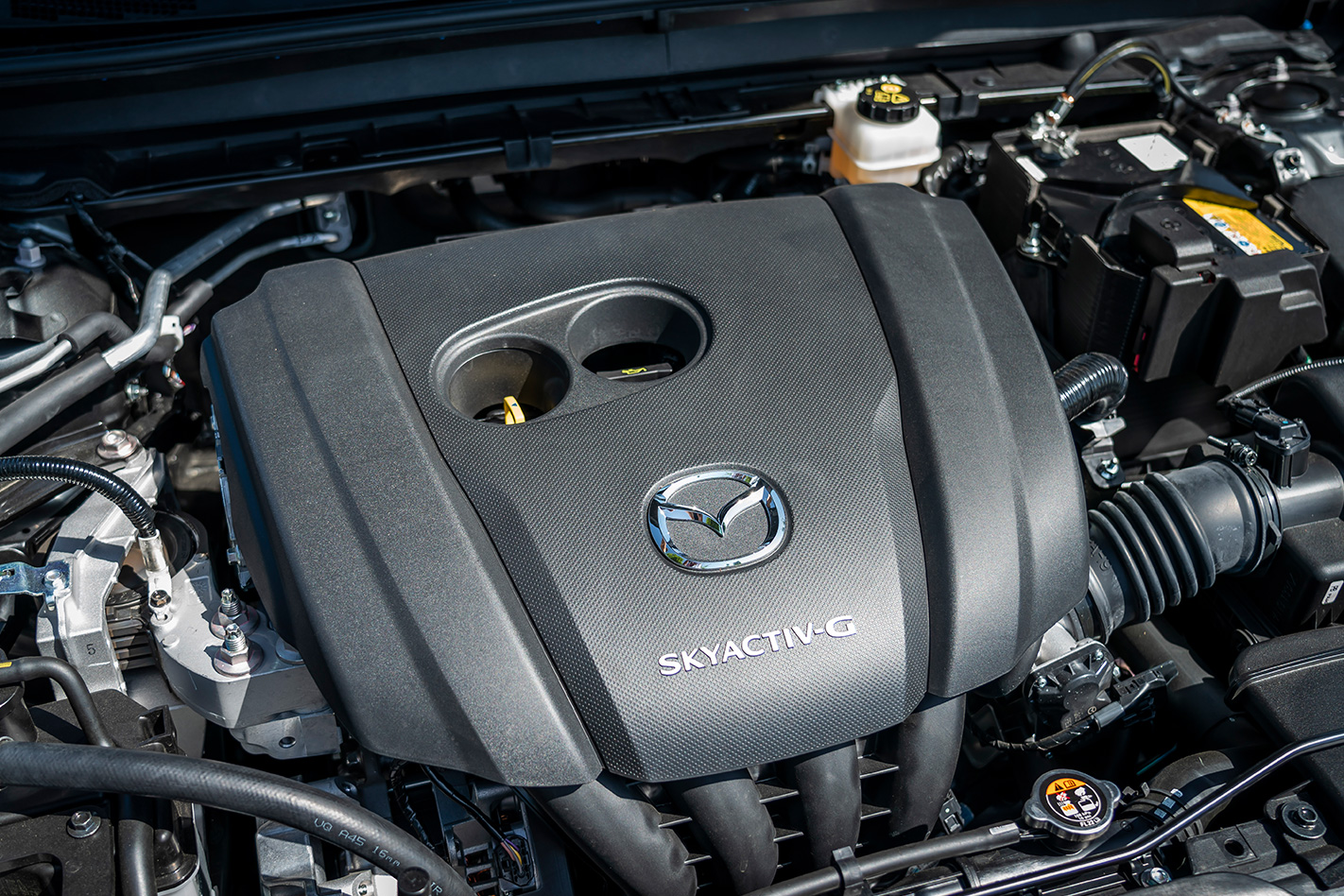
Australia is set to get a choice of three engines. We drove the 90kW SkyActiv-G 2.0-litre petrol engine and the 85kW 1.8-litre Skyactiv-D diesel, the latter of which won’t be coming to these shores. The other two powerplants that look likely to appear are the fiendishly clever 132kW SkyActiv-X 2.0-litre compression-ignition petrol engine and the 140kW 2.5-litre normally-aspirated SkyActiv-G engine as seen in the CX-5. The 2.0-litre SkyActiv-G is a decent powerplant, its smoothness helped by a 24v mild hybrid system on the test car. This setup has not been confirmed for the Aussie market, so in the event that we don’t get the clever electricals, it’s likely that our power outputs will be boosted a little in recompense. Although these were pre-production versions not necessarily representative of what we’ll get next year, from our initial drive, I’d probably be tempted to hold out for the superior SkyActiv-X unit.
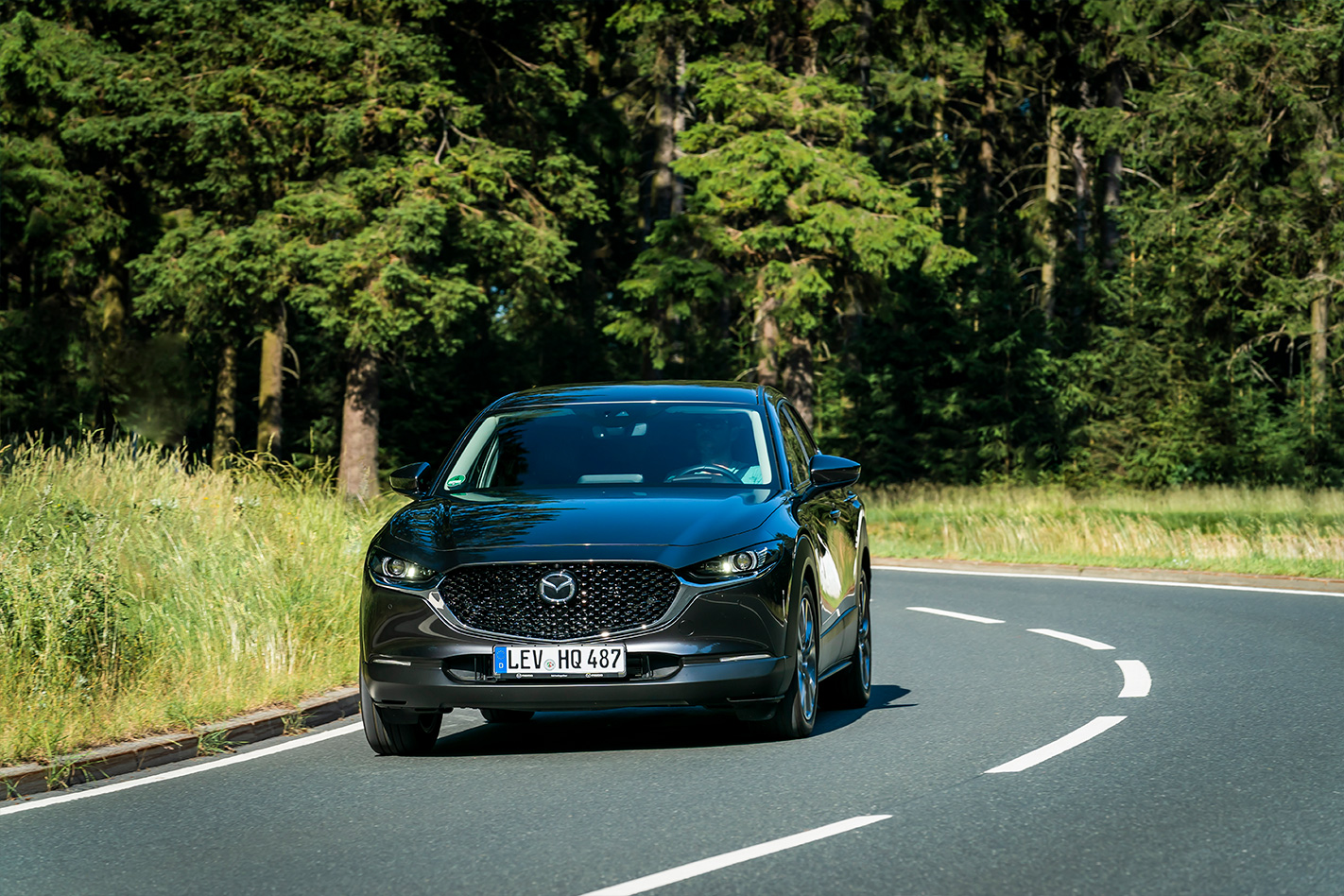
It’s also not certain whether manual transmissions will make the boat, but the six-speed automatic is a shoo-in. Both front- and all-wheel drive versions will be offered, so there will still be quite a broad selection of permutations available to Australian customers.
They’ll be rewarded with a vehicle that feels mature and extremely considered inside and out. Final equipment levels have yet to be inked in, but the fit and finish was excellent. The fascia design was particularly confident, Mazda resisting the urge that so many Japanese manufacturers succumb to of information overload. The dash is quietly styled and features some beautiful materials choices. The CX-30 genuinely does feel a class removed from cars like the Honda HR-V or Hyundai Kona.
The Mazda CX-30 is a quiet achiever. Its program manager Naohito Saga stressed the fact that he wanted it to be a desirable thing in its own right, not a distress purchase for families who might have grown out of a hatch. In that regard, it ought to be judged a success. There’s a vein of driver focus that runs throughout the car without overly compromising its practical considerations. Sometimes radical change is needed to move the game on and sometimes just doing the simple things well achieves the same end. The CX-30 doesn’t rewrite the rules. It merely understands them better than most.
MAZDA CX-30 VS RIVALS
Honda HR-V, Hyundai Kona, Mitsubishi Eclipse Cross, Peugeot 3008
MAZDA CX-30 PRICE AND SPECS (EUROPE-SPEC)
- Model: Mazda CX-30 AWD
- Engine: 1998cc 4-cyl dohc turbo petrol
- Max power: 90kW @ 6000rpm
- Max torque: 213Nm @ 4000rpm
- Transmission: Six-speed automatic
- 0-100km/h: 9.5s [est]
- Price: from $31,000[est]
- On sale: Q1 2020
The Wheels Verdict: The Mazda 3 SkyActiv-X compression ignition petrol engine promised a revolution, so perhaps when it gets that huge billing it’s inevitable that the reality is a little more prosaic. Does it offer the economy of a diesel combined with the response of a petrol engine? Not quite, but it’s a big step towards that goal.
WHAT IS THE MAZDA 3 SKYACTIV-X?
You probably know the latest Mazda 3. We’ll save you the homework by stating that it’s good. Very good, in fact. But what had us really excited was the promise of this SkyActiv-X petrol engine. In simple terms, instead of using spark plugs like a normal petrol engine it uses compression to ignite the fuel, much like a diesel. Mazda promised diesel-like economy with petrol-style cleanliness and response. Sounds almost too good to be true, doesn’t it?
WHY WE’RE TESTING IT
We flew to the other side of the globe for just over 30km in a Mazda 3 SkyActiv-X, sampling both the manual and the automatic versions. An engine like this doesn’t come along every week, so it was more than worth the trip to Germany.
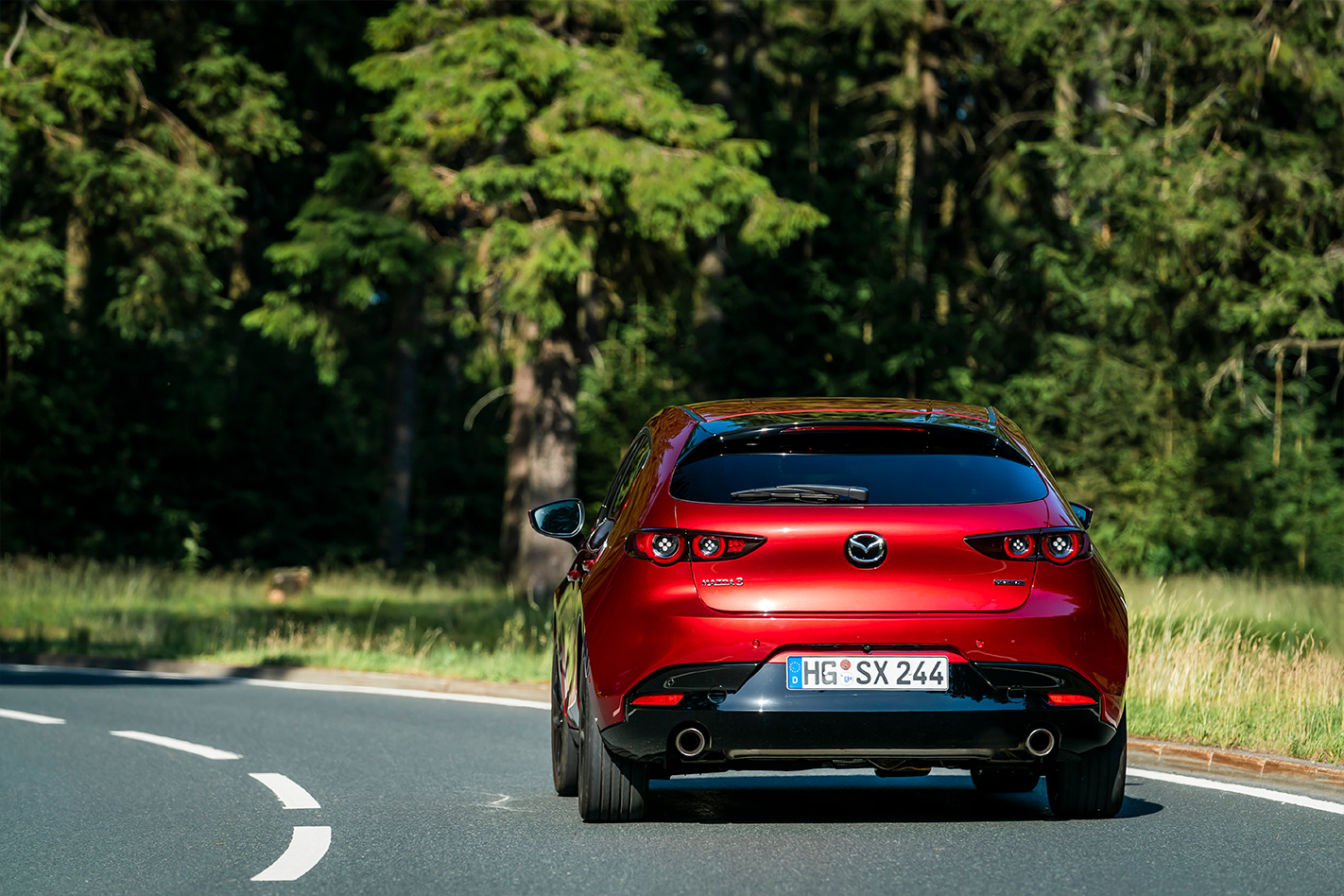
MAZDA 3 SKYACTIV-X REVIEW
YOU KNOW this stuff already, but it’s worth briefly reiterating. A petrol engine uses a spark plug to ignite the fuel/air mix in its cylinders whereas a diesel engine squashes that mix to the point that it spontaneously combusts. So far so conventional. What Mazda has done with its SkyActiv-X engine is a sort of technical voodoo that results in diesel-style compression ignition of petrol. So, Mazda claims, you get the best of both worlds: the high-rpm zing and clean exhaust emissions of a petrol engine combined with the low-end response and fuel economy of a diesel. It sounds too good to be true, doesn’t it? That’s what we thought too.
Then we drove Mazda’s Skyactiv-X prototype back in 2017 and, a few minor teething issues aside, the concept seemed to have legs. It’s now in production-ready guise plumbed beneath the bonnet of the voluptuous Mazda 3 and it’s clear that Hiroshima’s engineers haven’t been idle in the intervening period.
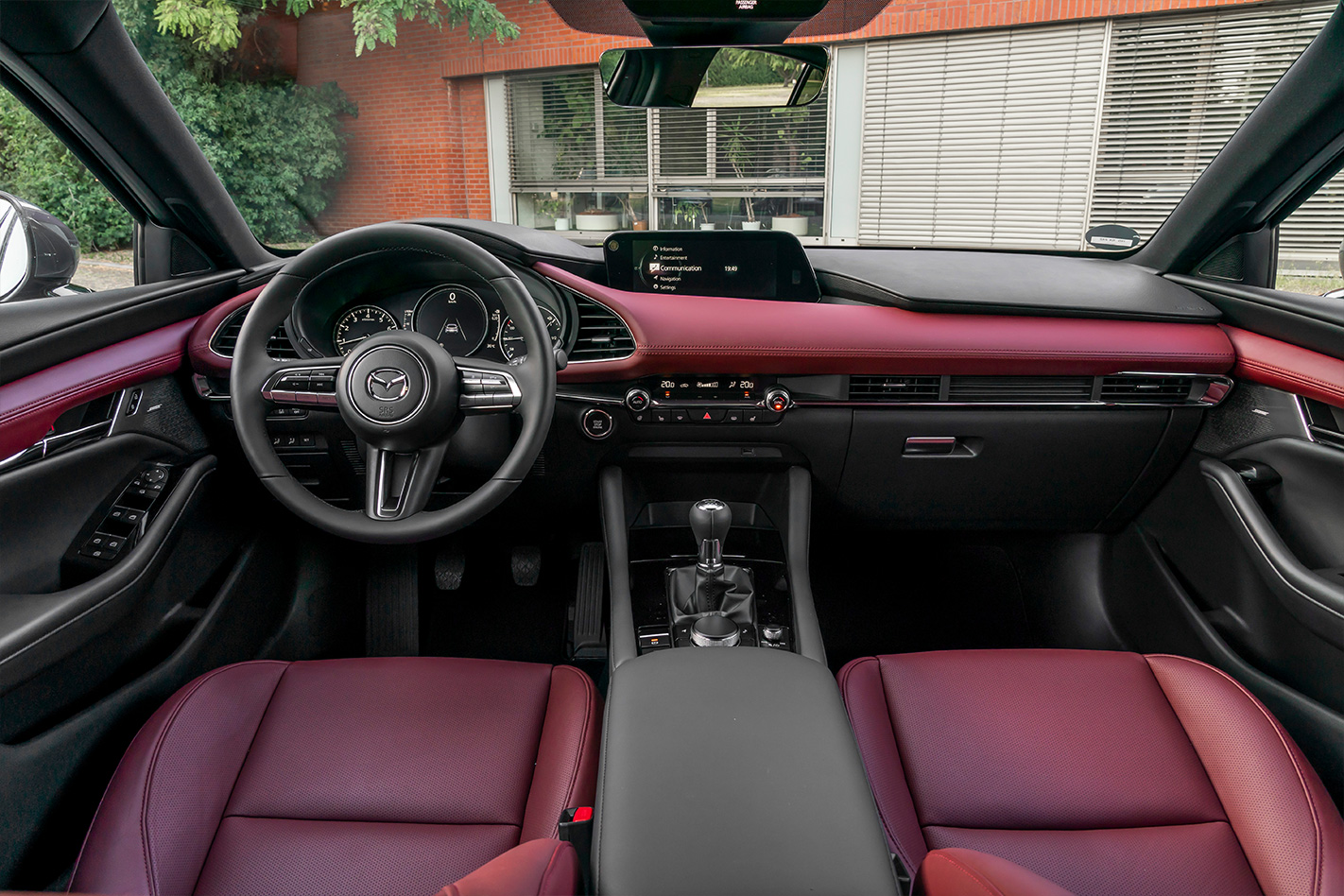
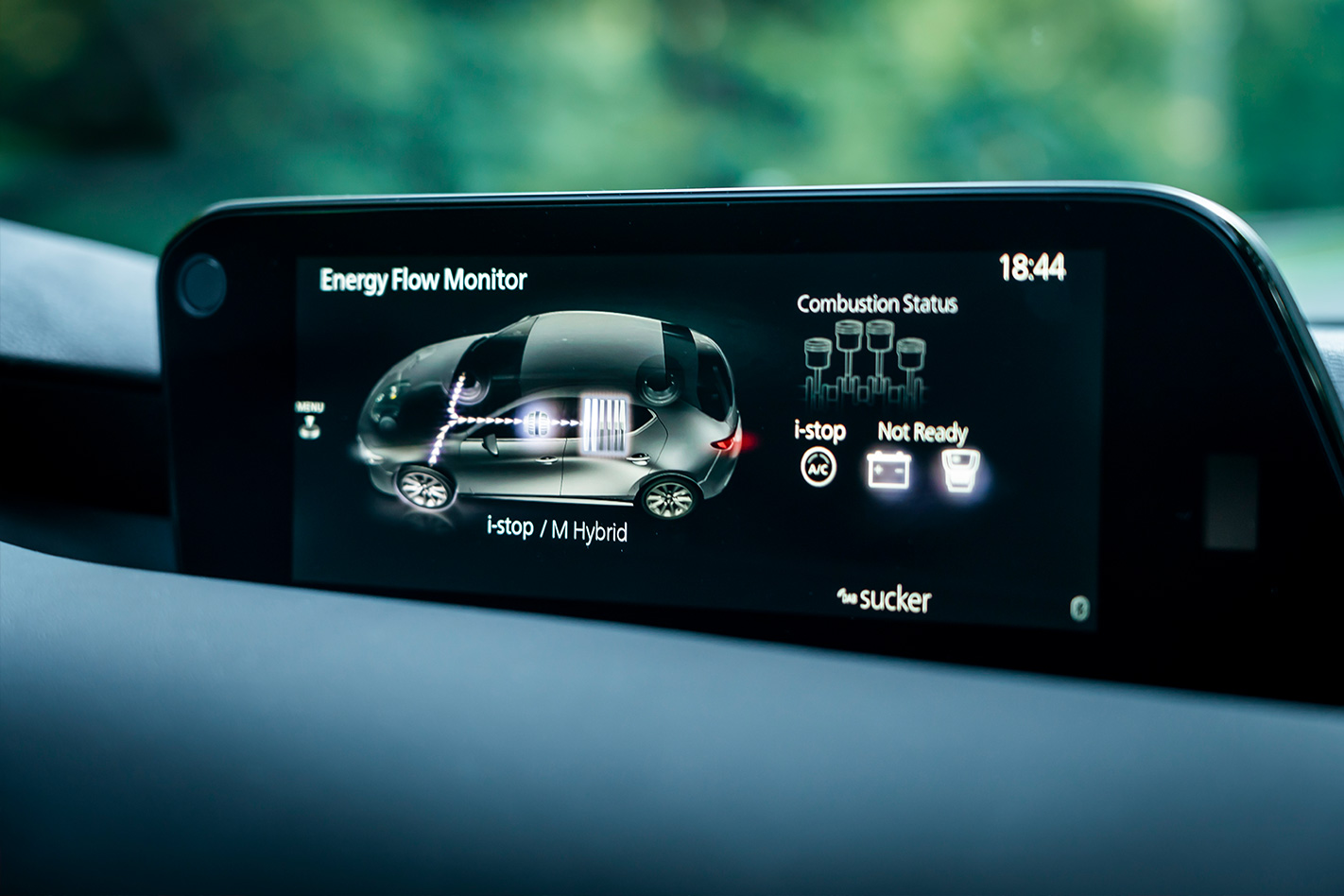
The biggest surprise is how normal this revolutionary technology seems. It doesn’t quite feel like 132kW at your disposal, but that’s about the only gripe. The 2.0-litre engine is supercharged and also features a 24v integrated starter generator and a Toshiba battery pack. The ISG not only fires the engine up quickly and with butter smoothness but, if you opt for the lovely manual transmission, it also gently keeps the revs up as you clutch in to finesse the gearchanges still further. Mature is the word I’d use to describe the feel of this engine. Mazda worked hard at improving the sound signature, fitting a sound absorbing capsule over the engine and filtering out atonal frequencies between the harmonic second, third and fourth orders.
Of course, the tech is brain-bendingly complex. Mercedes-Benz tried for years to crack the solution to compression-ignition with a petrol engine, but never managed to make the process stable. Mazda’s trick is to use a spark plug. As the piston comes up, there’s a spark that creates a small fireball that, in effect, acts as a second piston coming down, squashing the fuel air mix between until it goes bang. The control of the spark is the key to making the SkyActiv-X engine work.
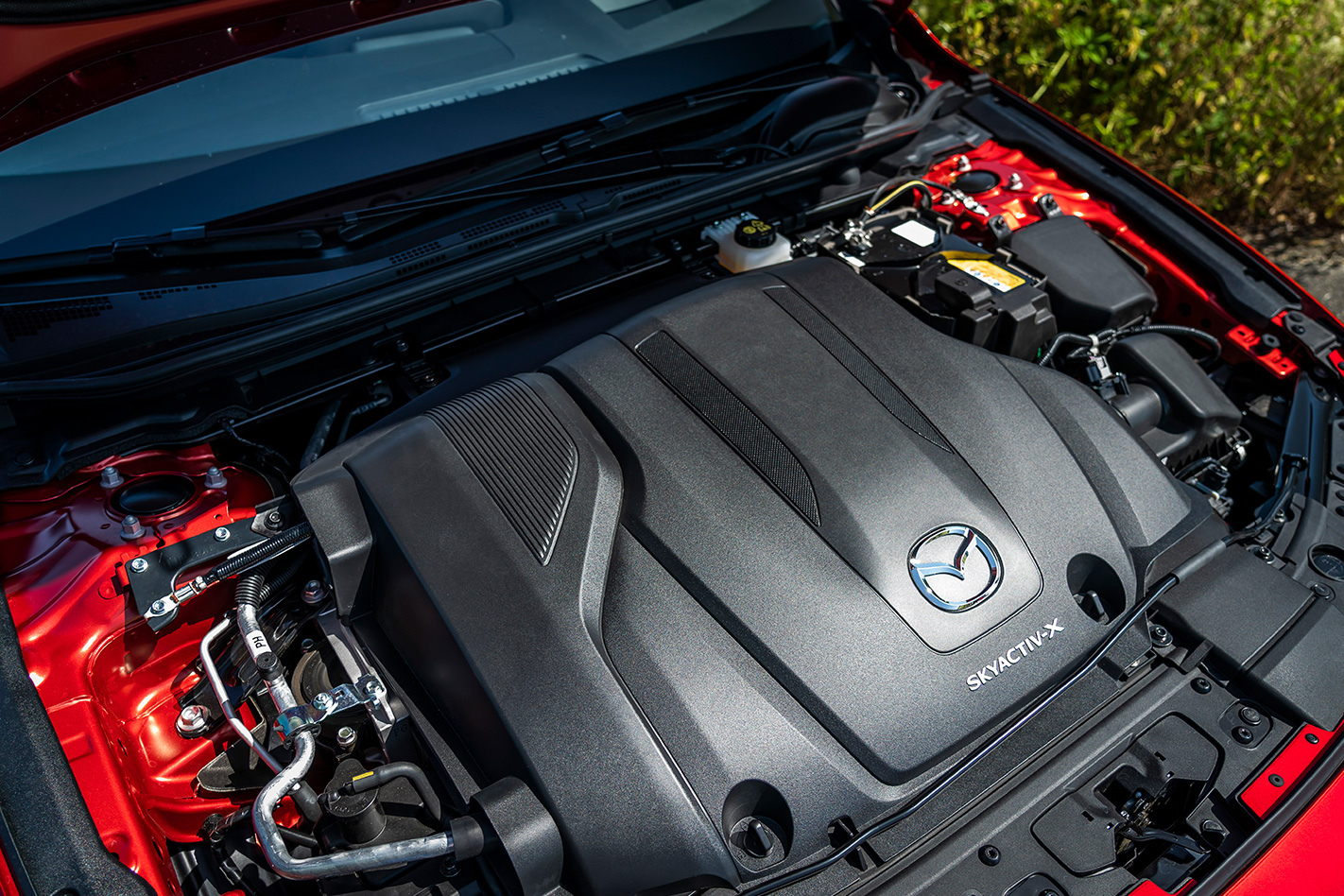
So smooth is the 2.0-litre engine that you’ll often find yourself driving it at between 3000 and 4000rpm without the rounded-off granularity of its sound signature prompting you to upshift. Minus a turbocharger, there’s not that low end shove that turbodiesel buyers are accustomed to, the torque building in a linear fashion. Driven enthusiastically, we saw 7.5L/100km in the manual car, but when piloted in a more normal fashion on a very hilly test route, the six-speed automatic managed 6.2L/100km, this including a 170km/h autobahn section. Not quite diesel engine torque and economy then, but certainly nudging closer, Mazda claiming a 15-17 percent improvement over the conventional 2.0-litre SkyActiv-G lump. What’s more, NOx is well down on the SkyActiv-D diesel unit. It’s a lovely powerplant and one you could conceivably buy just for its refinement and response.
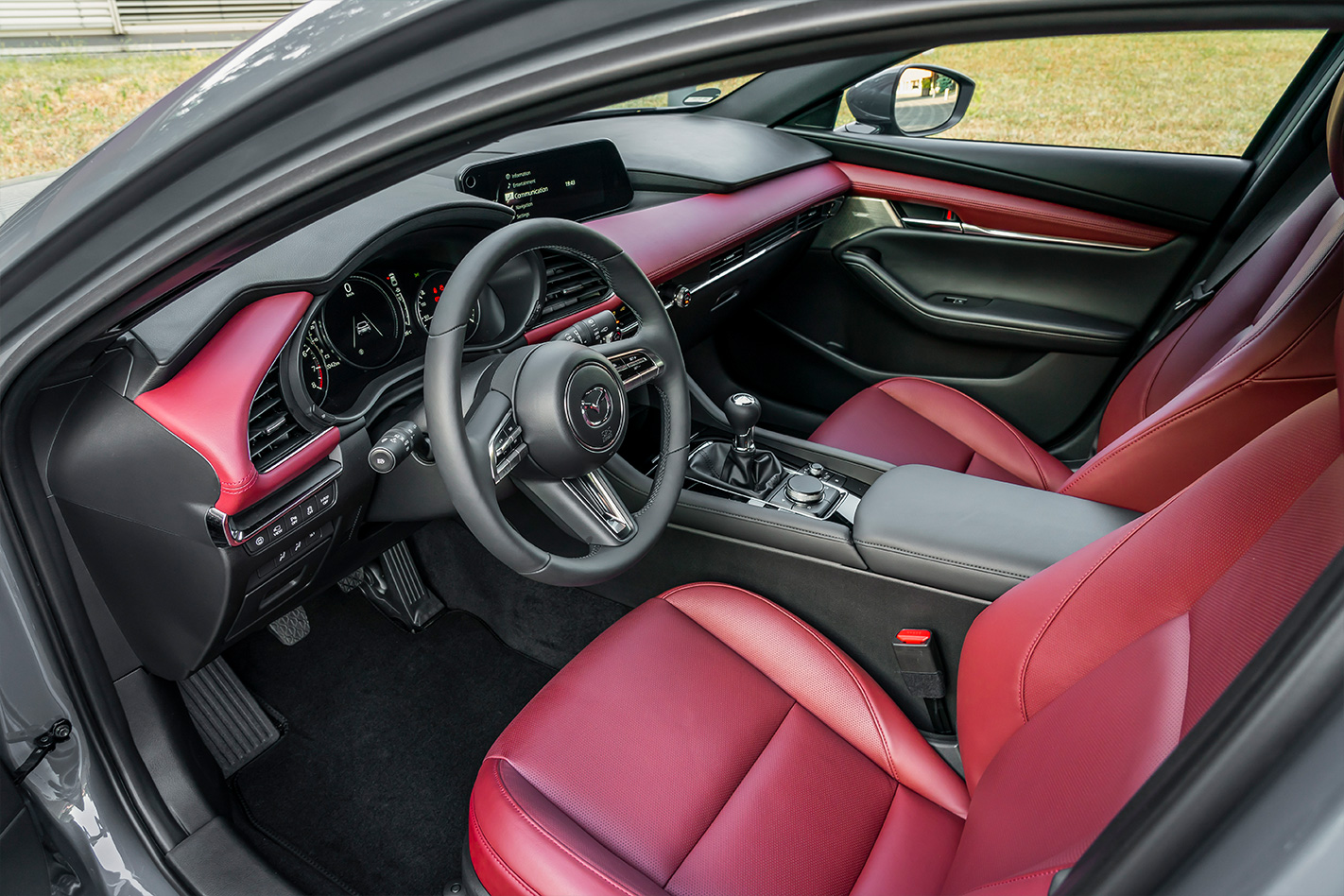
Much the same goes for the rest of the Mazda 3 package. Hiroshima has crafted a fine family hatch and the SkyActiv-X engine is the cherry on top. The issue that this engine faces is cost. It’ll be pitched as a high-end motor to Mazda customers who may not be particularly cost-sensitive regarding fuel savings. A few early adopters may be seduced by the tech – and it is indeed lovely in both concept and execution – but the Australian importers conservatively estimate it’ll make up less than five percent of the Mazda 3 product mix when it appears early next year. It will subsequently filter throughout Mazda’s range, first to CX-30 and then onwards into next-gen and not midlife facelift models, becoming more accessible in the process. For the time being at least, there remains a risk that 2020’s most technically intriguing powerplant could be relegated to a mere sideshow.
MAZDA 3 SKYACTIV-X VS RIVALS
Volkswagen Golf, Lexus CT200h, Peugeot 308
MAZDA 3 SKYACTIV-X PRICE AND SPECS
- Model: Mazda 3 SkyActiv-X
- Engine: 1998cc 4-cyl dohc turbo petrol
- Max power: 132kW @ 6000rpm
- Max torque: 224Nm @ 3000rpm
- Transmission: Six-speed manual
- 0-100km/h: 7.5s [est]
- Price: from $32,000 [est]
- On sale: Q1 2020
Logic would dictate that we test the Alfa Romeo Stelvio Q, the storied Italian brand’s attempt at the burgeoning super SUV segment, on the road that provided inspiration for its name. There are a couple of problems with this.
The first of which is that the Stelvio Pass is located in far northern Italy, almost kissing the Austrian border at its summit, whereas MOTOR is based almost 16,000km away in Melbourne. Secondly, and perhaps more importantly, the ‘Passo dello Stelvio’ is not an ideal place to road-test anything, especially a 375kW SUV that’s nearly two metres wide.
Much of the 35km between Bormio at its southern end and Trafoi in the north is treacherously narrow, the thin ribbon of tarmac sandwiched between craggy rockfaces and unyielding stone walls on one side and a mixture of low stone blocks, armco or fresh mountain air on the other.
There are plenty of turns, but the majority are first-gear hairpins with the ever-present possibility of facing a bicycle, motorbike or tourist bus around each one. No, while the Stelvio Pass is staggeringly, breathtakingly scenic and an incredible feat of roadbuilding, it’s not the place to explore the performance envelope of a machine that can lap the Nürburgring in 7min51.7sec.
Our test route is a bit more comprehensive and aims to answer the question: can one car do everything? Essentially, that’s what the Stelvio Q – indeed, all performance SUVs – is trying to be, all things to all folks.
There is little point in just tackling our favourite test roads and calling it a day, for approached purely as an on-road performance car these high-riding hatchbacks will always come up short compared to a standard vehicle. For that you can thank the pesky phenomenon called physics.
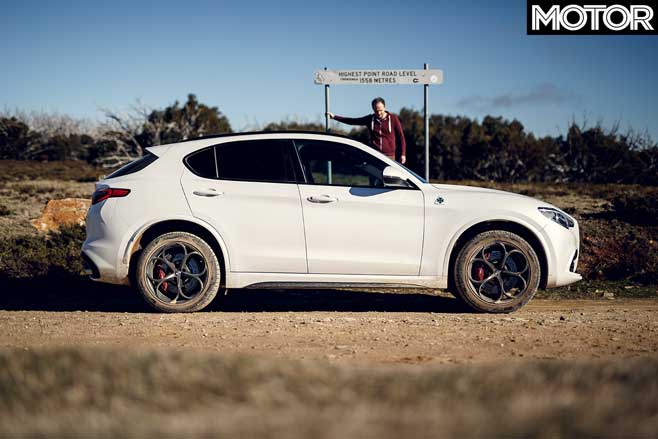
In the case of the Stelvio, it’s not going to surprise many to learn that on a twisty stretch of tarmac it isn’t as capable or as engaging as the Giulia Q it is based on. No matter how talented Alfa’s engineers may be, they can’t overcome the effects of an extra 250kg and 260mm of height.
But the Stelvio’s make-up has its virtues: the security of all-wheel drive, 200mm of ground clearance and hatchback practicality. Actual boot space isn’t markedly superior to the Giulia sedan (525L vs 480L), but the extra height is welcome with plenty of camera gear, bags and a jerry can to accommodate.
The latter isn’t standard road test fare, but could well be needed where we’re going. Our 700km round trip encompasses virtually every imaginable type of road and surface, from rocky quasi-4×4 trails to Targa-style tarmac stretches and everything in between, but it begins by wending its way through Melbourne’s north-eastern suburbs and the Yarra Valley to Healesville, which marks the beginning of the Black Spur. This is usually an irresistible invitation to up the pace, but with hundreds of corners ahead the urgency isn’t there and we’re content to meander through admiring the scenery.
Golden beams of early morning sunlight filter through the proud, rod-straight mountain ash trees that make the Spur a destination for tourists, only for the clouds to close in again as we crest the mountain and pass through Taggerty, thick fog clinging to the ground and resulting in a rather creepy ambience. It thankfully lifts again as we approach our first stop of Eildon and life in the Stelvio is peaceful.
Arguably the Giulia Q’s greatest asset is its superb touring ride quality; its bigger brother isn’t quite so plush, presumably as a result of the need to control the extra weight, but still cushions its occupants from most blows.
The sexy carbon-backed seats are very comfy, but then they would want to be for $7150. They’re set quite high for that commanding SUV outlook, but the steering wheel either couldn’t or wasn’t raised to the same degree so the driving position is compromised – even at its highest, the wheel sits closer to your lap than your chest.
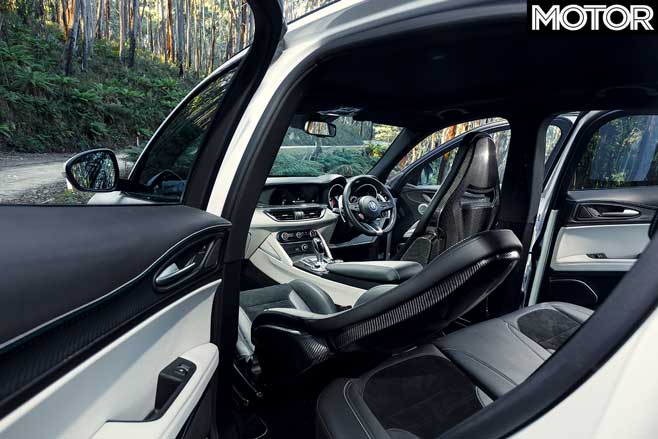
The interior is a curious mix. The highs are very high, particularly the beautiful aluminium shift paddles, Ferrari-esque starter button and splashes of carbon trim, but in general there isn’t the same premium feel as you’ll find in the Stelvio’s German competitors.
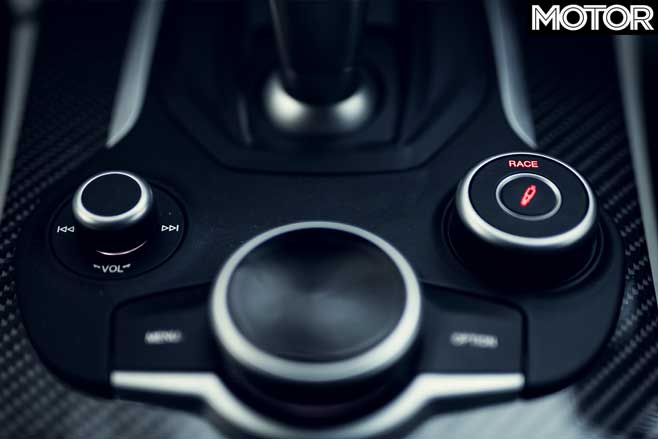
It’s most noticeable in the components you use regularly, such as the drive mode knob and gear selector; how big a deal this is will depend on the preferences of the buyer. What’s more annoying is the incessant buzzing from somewhere in the dash – Nathan thinks it’s on my side, my ears tell me it’s on his, but we never discover the source.
Eildon-Jamieson Road is an amazing piece of tarmac, one of those roads that’s almost too much of a good thing. Google Maps says that taking the highway route only takes 10 minutes longer despite being exactly double the length at 132km, but Google Maps doesn’t have 500bhp.
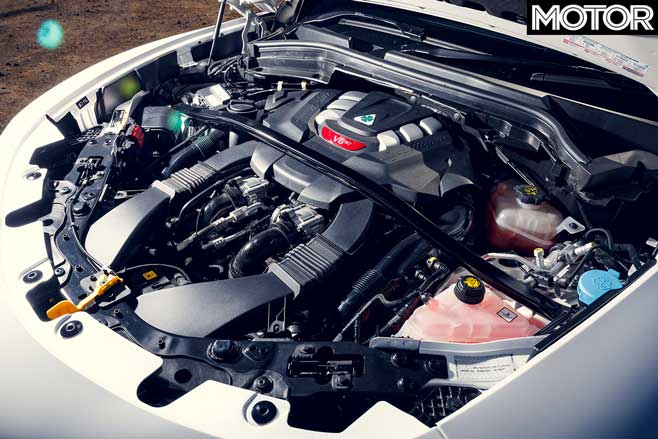
Switching to Dynamic mode wakes up the throttle, switches the suspension to its middle setting and enables the Stelvio to do its best hot hatch impersonation. The 2.9-litre twin-turbo V6 isn’t particularly taxed by the extra quarter of a tonne – the Stelvio is still relatively light at 1830kg – and the eight-speed auto does a good job of selecting the appropriate gear for each corner when left in charge. The 3.8sec 0-100km/h claim gives some clue as to its potency, which is actually 0.3sec quicker than the Giulia thanks to all-wheel drive.
As the road narrows and the corner frequency increases, another click to Race firms the suspension again, deactivates the ESP and injects a shot of adrenaline straight into the cylinders, the exhaust note altering from a smooth purr to a deep-chested roar.
Race suspension is a bit much on the road, but a press of the damper button softens them back to the middle Dynamic setting – a trick nicked from Ferrari and a very welcome one. On this particularly testing road the Stelvio’s Achilles’ heel quickly becomes apparent. Front end grip.
Like in the Giulia, the steering is extremely direct and results in very sharp turn-in. At first it can feel darty but you soon learn to slow your initial input and revel in the immediacy of the response. It makes the Stelvio feel eager and agile, but only delays the moment at which weight takes over and the 255/45 front Pirellis start to scrub wide. Countering this is as easy as reducing corner entry speed, but do so and it doesn’t feel as though you’re fully exploiting the Stelvio’s potential.
Keeping the nose in check does open up options in the second half of the corner. Alfa’s Q4 all-wheel drive system sends 100 per cent of the drive rearward until slip is detected, at which point in can send up to 50 per cent forward, while a pair of electronically-controlled clutches in the rear differential split the torque left and right.
Thankfully, the theory delivers in practice, the Stelvio feeling predominantly rear-wheel drive and capable of antics you wouldn’t expect from an SUV. Accelerate early and decisively and the 285mm rear tyres break free and smear themselves across the road.
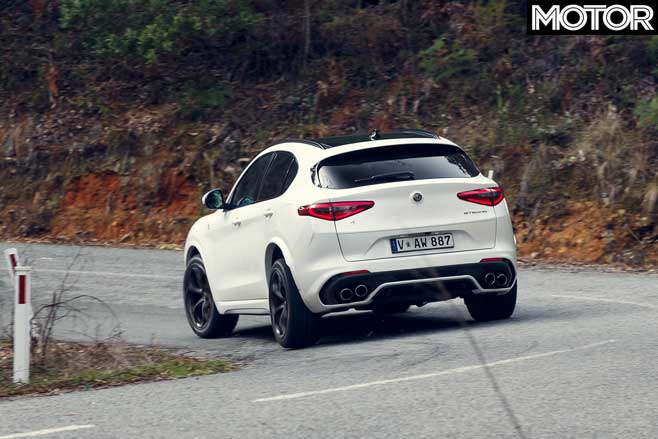
Oversteer feels a little strange when you’re perched so high but some corrective lock gathers it up easily. An acrid smell in the cabin betrays the workload of the brakes, but they refuse to fade and provide better feel than early Giulias, often a problem with by-wire systems where there is no physical connection between the pedal and the rotors and calipers.
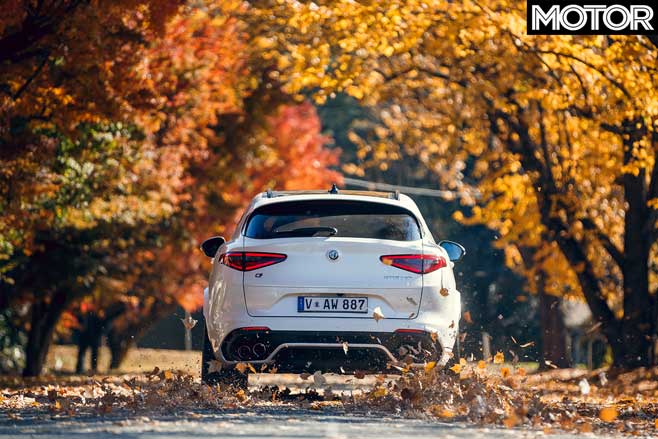
Arrival in the quiet town of Jamieson completes the first leg of the journey. Autumn is in full swing, star-shaped leaves raining from the trees as we watch and laying a thick carpet of red and orange on the town’s streets. The Stelvio needs another drink and so do we.
Curious locals gather at the thankfully 98RON-equipped service station. Curious and knowledgeable; one is a regular tarmac rallyist, the other an elderly gent who is very much enjoying his Hyundai i30 N. They provide handy information on the route ahead, as we won’t drive on a sealed road again for almost 100km.
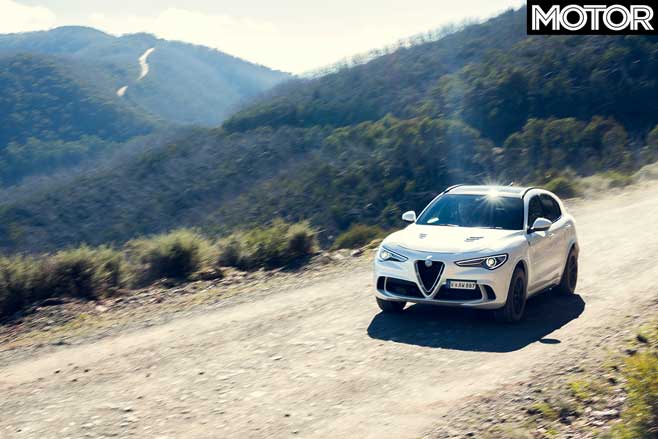
Jamieson-Licola Road scales Mount Skene, crosses the Victorian High Country and links the doorstep of the Alpine region with Gippsland around 150km to the south-east. It should be amazing, but it’s also a bit of a stab in the dark, my research limited to watching a motorcyclist’s helmet GoPro footage – still, it’s not like we could be stranded with a puncture hours from civilization, right? We assume the 41km/h average speed suggested by Google is deeply conservative and to begin with it is as we surf along well-surfaced farmland roads.
The terrain quickly changes as dense bushland crowds in on either side and the surface becomes rougher and rockier. Our speed drops dramatically both to prevent our teeth rattling out and to keep the tyres in one piece – at our request Alfa Romeo supplied two spare Pirellis but didn’t mount them on rims, so given we’re short a tyre-changing machine they were left behind. It’s on roads like this the performance SUV begins to make sense; an hour ago we were tearing up one of Victoria’s best driving roads, now we’re climbing a mountain.
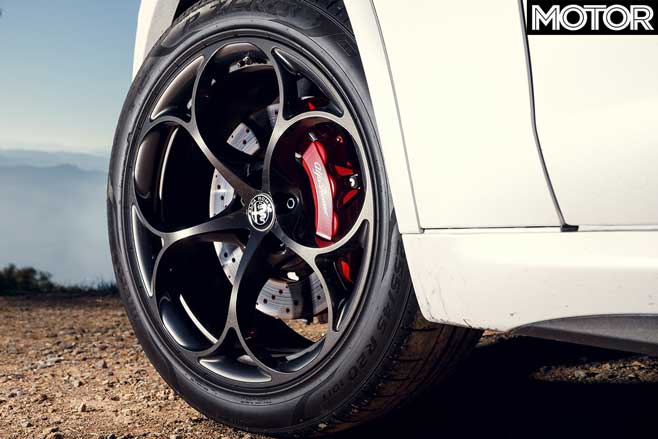
We relentlessly ascend through countless switchbacks, constantly hoping the road will smooth out and we can up the pace. The Stelvio Q isn’t as much fun as expected in this environment, feeling more all-wheel drive than it did on the road, presumably because the rear is always detecting a certain degree of slip and shuffling power forward.
After around 30km – which take more than 45 minutes – the leafy canopy overhead disappears, the tree line thins and we crest a rise to discover a vista that defies description. Hazy mountains stretch off as far as the eye can see, the road a caramel-coloured ribbon intermittently visible as it snakes in and out of view over the next half a dozen hills.
Every time we think we’ve taken in the scope of the scenery we round another corner and it expands again. A peak altitude of 1558m seems as good a place as any to stop for lunch, the complete stillness broken only by the sound of chewing and the click-click-click of Nathan’s camera as he continues to capture frames.
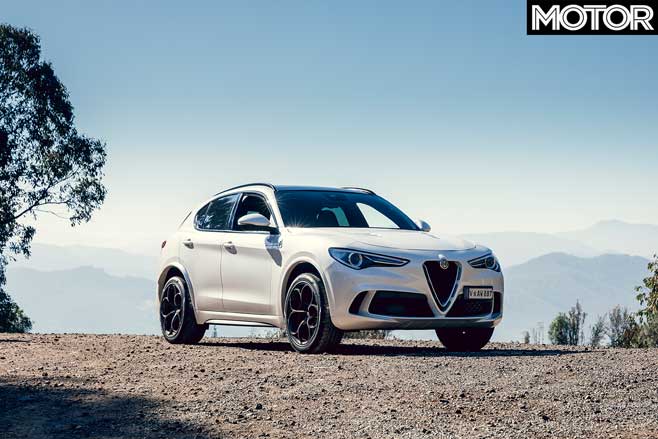
Shortly after our descent begins Jamieson-Licola peels hard left, the road straight ahead signposted as “4WD Vehicles Only”. The flora also does a u-turn, densely packed shrubs and dead trees giving way to lush, ferny forest, while the surface becomes softer, smoother and sandier.
Finally our speed can increase and the Stelvio roars its approval, doing its best Lancia Delta S4 impression – a car with the same power but half the weight – as it slithers through corners and charges down the straights, the crack of every full-throttle upshift echoing through the trees. This is fun, the rear edging out under brakes and the throttle holding it there while the all-wheel drive system still ensures forward motion – does Pirelli make rally tyres in 20-inch sizes?
There is a surprising amount of traffic out here in the middle of nowhere. A couple of five-car convoys rattle past, the Hiluxes, Rangers and Rodeos heavily laden with camping gear a stark contrast to the pearl white Alfa Romeo, like coming across somebody wearing Nike active wear while hiking in the Himalayas.
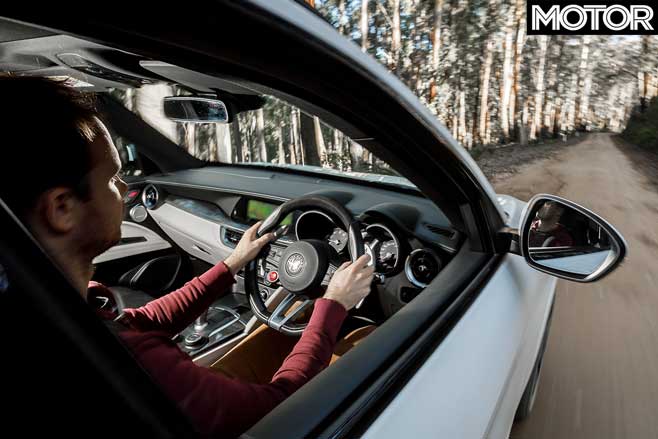
As we continue to lose altitude the road becomes unbelievably smooth, like a gravel highway. The reason for this is soon apparent as we hit tarmac once again; clearly there are plans afoot to extend the black stuff.
It’s now late afternoon but this epic journey has one more surprise in store as we round yet another bend and look out across an enormous valley, the road cut into the hillside as it slowly descends. You can see many corners ahead, but while they’re within throwing distance to reach them by car takes much longer as the road clings to the cliff, following its every nook and cranny.
Nathan and I can’t believe it; it’s like someone has used one of those video game track builders to create motoring journalism paradise – even the light is stunning. It’s a perfect place to let the Stelvio off the leash one last time.
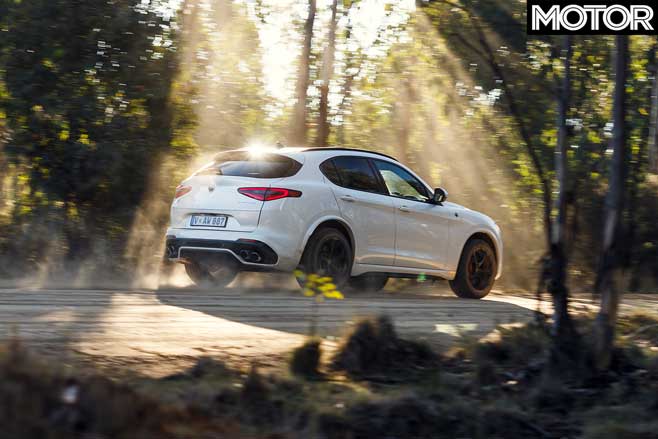
With hundreds of kilometres behind us there’s now an instinctive feel of how much speed the front tyres will accept and the confidence to drive through the initial understeer and exploit the rear-biased drive system. As long as there’s sufficient space, familiarity allows the throttle to be used to overcome the gentle front-end push and transition to neutrality or even slight oversteer.
It’s truly remarkable how hard this high-riding family bus can be driven, though I don’t know if I’d be signing up to emulate that record-setting Nürburgring lap – at least it was until the Mercedes-AMG GLC63 S stole Alfa Romeo’s thunder – in a hurry.
Compared to most of its competitors, the Stelvio offers more control and can be bullied to a greater degree, but it’s when the limit is transgressed that you become acutely aware that almost two tonnes sitting up high is travelling very quickly.
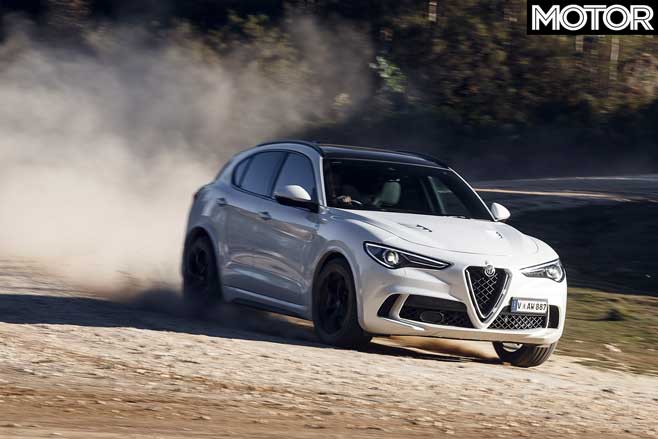
Other issues are a lack of mid-corner steering communication – it’s not bad, but you tend to drive on trust and reaction rather than information – and ultra-short gearing, the latter really just requiring a re-think as to how corners are tackled. In order to sharpen that 0-100km/h claim, first runs out at 52km/h and second disappears at 82km/h, making it suitable for only the very sharpest turns.
But there is far more positive than negative: a cracking powertrain, entertaining chassis, decent ride quality and room for the family. Whether it’s better than a Mercedes-AMG GLC63 S would require a back-to-back comparison, but the Stelvio Q is certainly good enough to make a strong case for itself. With the Jaguar F-Pace SVR, BMW X3 M Competition and facelifted Porsche Macan Turbo not far away, I feel a group test coming on.
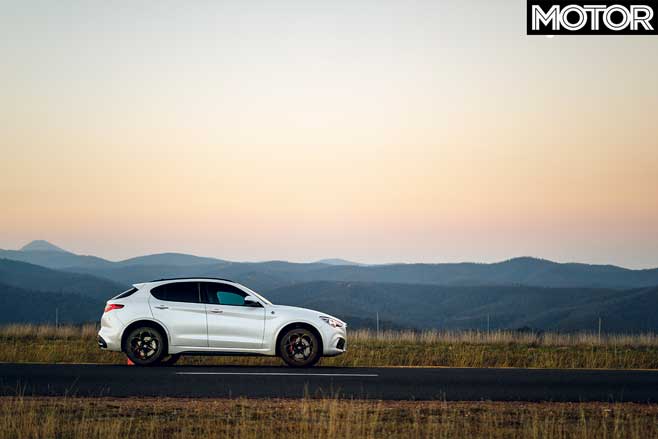
As for the question of can one car do everything? If you’re prepared to make a slight compromise in terms of ultimate handling ability, then yes it can. Of course the Giulia is a more involving, capable steer in the right circumstances, but the Stelvio handled everything that was thrown at it with a minimum of fuss. If there’s only room for one car in your life, the performance SUV has its merits, and it’s difficult to think of a two-car garage within the Stelvio Q’s $149,900 ask that could match its talents in such a wide array of disciplines.
It’s not perfect, but when it comes to driving entertainment this Stelvio gets an easy pass.
FAST FACTS 2019 Alfa Romeo Stelvio Q BODY: 5-door, 5-seat SUV DRIVE: all-wheel ENGINE: 2981cc V6, DOHC, 24v, twin-turbo BORE/STROKE: 86.5 x 82.0mm COMPRESSION: 9.3:1 POWER: 375kW @ 6500rpm TORQUE: 600Nm @ 2500-5000rpm WEIGHT: 1830kg POWER-TO- WEIGHT: 205kW/tonne TRANSMISSION: 8-speed automatic SUSPENSION: double wishbones, adaptive dampers, anti-roll bar (f); multi-links, adaptive dampers, anti-roll bar (r) L/W/h: 4701/1955/1681mm WHEELBASE: 2818mm TRACKS: 1622/1675mm (f/r) STEERING: electrically assisted rack-and-pinion BRAKES: 360mm ventilated/drilled discs, 6-piston calipers (f); 350mm ventilated/drilled discs, 4-piston calipers (r) WHEELS: 20.0 x 9.0-inch (f); 20.0 x 10.0-inch (r) TYRES: Pirelli P Zero, 255/45 R20 (f); 285/40 R20 (r) PRICE: $149,900 ($162,250 as-tested)
PROS: Fast, entertaining, practical; decent value CONS: Thirsty; compromised ride; some cheap interior bits RATING: 4 out of 5 stars
The Road: Eildon to Licola, Victoria
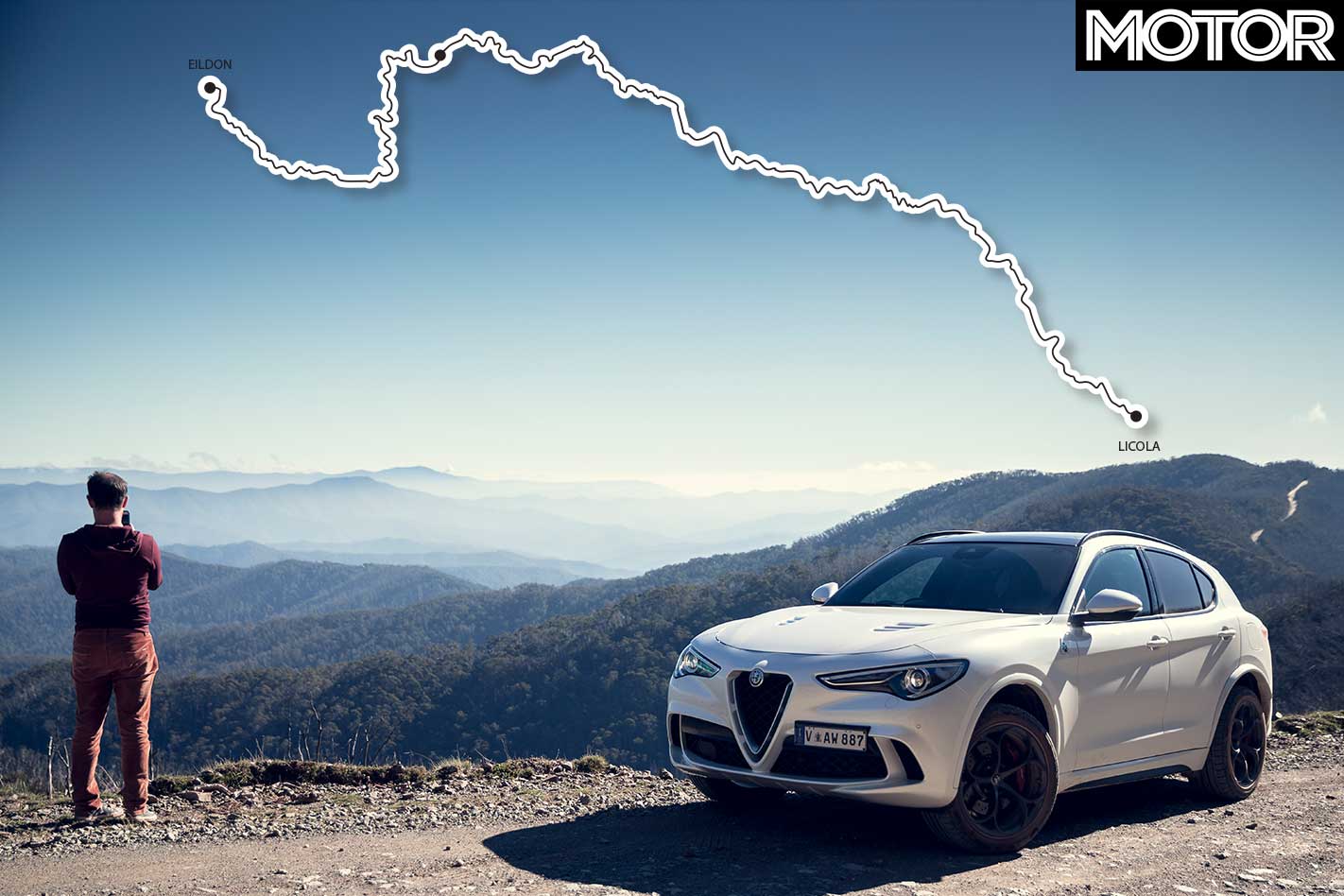
This one’s an epic. Starting in the lakeside town of Eildon head back towards Melbourne and turn left at the sign post for Jamieson. More than 60km of constantly twisting mountain road awaits you, but be careful of over-enthusiastic bikers.
Jamieson provides an opportunity to refuel both man and machine while the entrance to the Jamieson-Licola Road is located on the east side of town. The road is reasonably well surfaced, rocky at times, posing no great difficult to the Stelvio on its 20-inch rims and relatively low-profile tyres.
Punctures are possible and the upper section of the road is closed between June 13-October 31 inclusive unless permission is granted by Four Wheel Drive Victoria. Our story ends at Licola but from there to Glenmaggie is an unbelievable section of road, but that’s a tale for another day.
STATISTICALLY, in Australia, you are more likely to live next door to a redhead than you are to the owner of an electric vehicle. Actually, let me crunch those numbers a bit harder: you’re more likely to live next door to a redheaded bloke named Mike who hates cats than you are an EV owner.
For all the airtime EVs generate; for all the discussion about charging infrastructure, environmental benefits, and whether or not they should make bleeping sci-fi noises to avoid skittling distracted pedestrians, the reality is that the take-up of EVs in this country has been minuscule.
Part of that, of course, has been lack of affordability. Our COTY winner of 2014, BMW’s i3, while excellent in many ways, is really an urban runabout. And a premium one at that, courtesy of a $64,000 sticker. Tesla, meanwhile, has focused even further upmarket, meaning the ‘affordable’ end of the EV segment has pretty much been a black hole, with the only pinpricks of light being the 635 sales since 2012 of the first-generation predecessor of this car – the Nissan Leaf.
Now, with an August on-sale set for the ZE1 Leaf II, and other rivals rolling out from Hyundai and Kia, the talk of the impending EV wave continues to gather volume from both industry and observers. But is Australia ready to surf it? According to what we found in our EV and hybrid megatest in our 2018 Yearbook edition, the answer from dep ed Andy Enright was a flat no. The cover line of that issue – ‘The truth about electric cars, and why Australia isn’t ready’ – struck a chord with you, our readers, and saw us cop plenty of sprays from those in the business of pushing the EV bandwagon.
So why are we back again now?
Two reasons. The Leaf is the world’s best-selling EV, and Nissan, in partnership with energy provider ChargePoint, reckons that by the time it’s on sale mid-year, there will be sufficient charging infrastructure to make range anxiety a hiccup from yesteryear. But while we knew we were jumping the gun on that, this was still a chance to take the Leaf out of its urban comfort zone well ahead of its official launch.
In terms of destination, a visit to a couple of renewable energy providers seemed logical. It’s all fine to wear ‘zero emissions’ badges, as the Leaf does, on its flanks and rump, but if the energy used to charge it is coming via the burning of fossil fuel, surely those decals need an asterisk: *at least not at the tailpipe.
But beyond that is the true big picture; one where the debate about delivering on Australia’s energy needs and the reality of what our politicians are doing actually intersect. So first stop for us would be the Taralga Wind Farm in the southern tablelands of NSW, to check out the 51 wind turbines that have been producing zero-emissions energy since the massive blades started turning in 2015.
From there, we planned to drive into the ACT to visit Australia’s largest solar farm, in Royalla, around 30km south of the nation’s capital. Wouldn’t it make a great drone photo, I thought, to picture the white Leaf nestled in among some of the 83,000 photovoltaic panels staring hungrily up at the sun?
But more important was to try to better answer the core question: are these two renewable sources, as trumpeted by the environmental lobby, really the low-CO2 solution to Australia’s increasing energy demands?
All we needed was a basic itinerary that linked recharging stops in a loop out of Sydney and back, and of course a schedule that allowed the required time for those electrons to flow. How hard could that be?
ANALYTIC THINKING and strategic planning have never been my strong suit. If you’re looking for someone to plot, say, an invasion of Indonesia, then I’m probably not your guy. Even when it comes to road trips, a large part of the enjoyment for me comes from being unplanned; to just wing it, follow your nose, enjoy the route that life throws at you, and figure out the eating and sleeping stuff on the fly. This is not an ideal mindset to bring to an EV road trip, especially, as we’ve established, the fast-charger ‘network’ outside the Sydney metro area is more like a bunch of random dots on a map, as opposed to a neat and logical trail of breadcrumbs.
Anyway, when we collect the Leaf near Sydney’s Mascot airport, it’s fully charged and indicating a range of 288km. This should be ample to get us to our first recharging point – a fast-charger in Mittagong, 110km away – then we’ll have no trouble for the 127km run to Taralga via Goulburn.
First impressions, then. The wheel doesn’t adjust for reach, so my optimum driving position will remain elusive for the duration. Also, this is a UK-spec evaluation vehicle, so the sat-nav thinks we’re on the edge of the Irish Sea. Australian spec cars will know exactly where you are, but you’ll need an app, via Apple CarPlay or Android Auto, to assist with your journey planning in terms of range and recharging options.
As we creep almost silently into Sydney traffic, I’m reminded again why the doubters really need to drive an EV in an urban environment before throwing around the dismissive ‘glorified golf-cart’ quips.
While there’s little pleasure to be had from an ICE powertrain in stop-start driving, the inverse is true of an EV. The Nissan’s torque of 350Nm is ample for the car to be stealthily alert, eager to zip up to speed or lunge to grab a gap in traffic, provided you’re happy to kick past the throttle indent that would seem to be there to discourage this and conserve charge.
But two other points are almost as noteworthy as the lack of engine noise: the absence of a shifting transmission, and the effects of regenerative braking. If you’ve never driven an EV, the combined effects of these two elements may be enough to sway your thinking, and convince even a hardcore ICE addict of an EV’s merits in the urban jungle. It’s the very epitome of point-’n’-shoot driving, except the shooting part happens in an aural vacuum, and you barely have to bother braking after you’ve taken the shot.
No matter how good a modern transmission is – CVT, dualclutch, torque convertor – it’s no match for no transmission at all. Okay, that’s not technically correct (EVs have a singlespeed reduction gear) but the smoothing effect of not having to kick down a gear, and eliminating the flaring of revs on an upshift, is transformational. Likewise regenerative braking, activated here by selecting the Leaf’s e-Pedal button. The system delivers up to 0.2G of retardation, meaning easing off the throttle is like a progressive application of brakes in a conventional car. Step back into an ICE car after a drive in a well-sorted EV like the Leaf – at least in an urban environment – and it feels a bit like going back to a regular toilet after using one of those clever Japanese ones that take care of all the hygiene chores.
The ride of the Leaf has a cushy compliance at urban speed, and the steering is agreeably direct and slack-free. The selectable driver information system feels logical and comprehensive. Apart from the slightly quirky toggle gear selector, it all feels as if it’s been designed to appeal to a fairly conservative mass-market audience, rather than push the buttons of tech-savvy early adopters.
As we feed into the M5 tunnel, and join the conga line of lumbering trucks and various diesel belchers in one of the most air-polluted tunnels in Australia, I hit the climate control’s recirc button like a professional fly-swatter, and take a moment to bask in the smugness that comes with the thought of not contributing to the problem. Well, not at the tailpipe, at least. But there’s potentially even more smugness for the EV owner who drives past an automotive service centre and thinks about the oil changes, new spark plugs, valve adjustments and muffler replacements they won’t ever be hit for.
A little of the smugness evaporates as we aim to sit at the 110km/h speed limit, climate control running, on the expressway headed south. As with other EVs in our experience, the predicted range doesn’t have a particularly robust grasp of actual operating conditions, so that figure and the actual distance travelled on the trip computer appear locked in a silent squabble, like a cranky old married couple over the breakfast table.
It’s clear in these driving conditions, especially as the overall gradient rises over 1000 metres in the run from Sydney to Goulburn (meaning regeneration opportunities are negligible), that the actual range is a bit less than 200km. The display on the multimedia screen helpfully suggests we’ll do about five percent better without air-con, so as it’s a mild day, we comply, and make do with cracking the windows every 15 minutes or so.
It’s a reminder that unlike ICE cars, which are at their most efficient at a highway cruise, EVs are not. Still, as we seek out the charger listed online as being at the Mittagong Visitor Information Centre, we still have 47 percent battery power remaining, having travelled 102km, so no problem. At least until we try that charger, only to find it’s not compatible with the Leaf’s CHAdeMO plug.
Salvation comes at the Mittagong RSL Club, where the shiny white 50kWh NRMA-provided DC fast-charger stands in the parking lot, like a proud soldier poised to conquer an untamed future. The two bays on each side are free, so I dig out my credit card, curious to learn how this electron-pumping saviour wants to be paid for its mobility-providing service.
What!? Not a cent? That’s right; for now at least, this particular fuel is free, as the NRMA does its bit to persuade the motoring world to consider switching to an EV.
A juicy power war at the top end of the premium hot hatch segment will have to be fought without the presence of BMW, which has officially scotched any plan to build a rival to Mercedes-AMG’S new and uber-powerful A45.
“There is no war,” said Christian Bock, who oversees BMW 1 Series powertrain development. “What we think about is a good relationship between customer expectations and driving performance, and of course cost.”
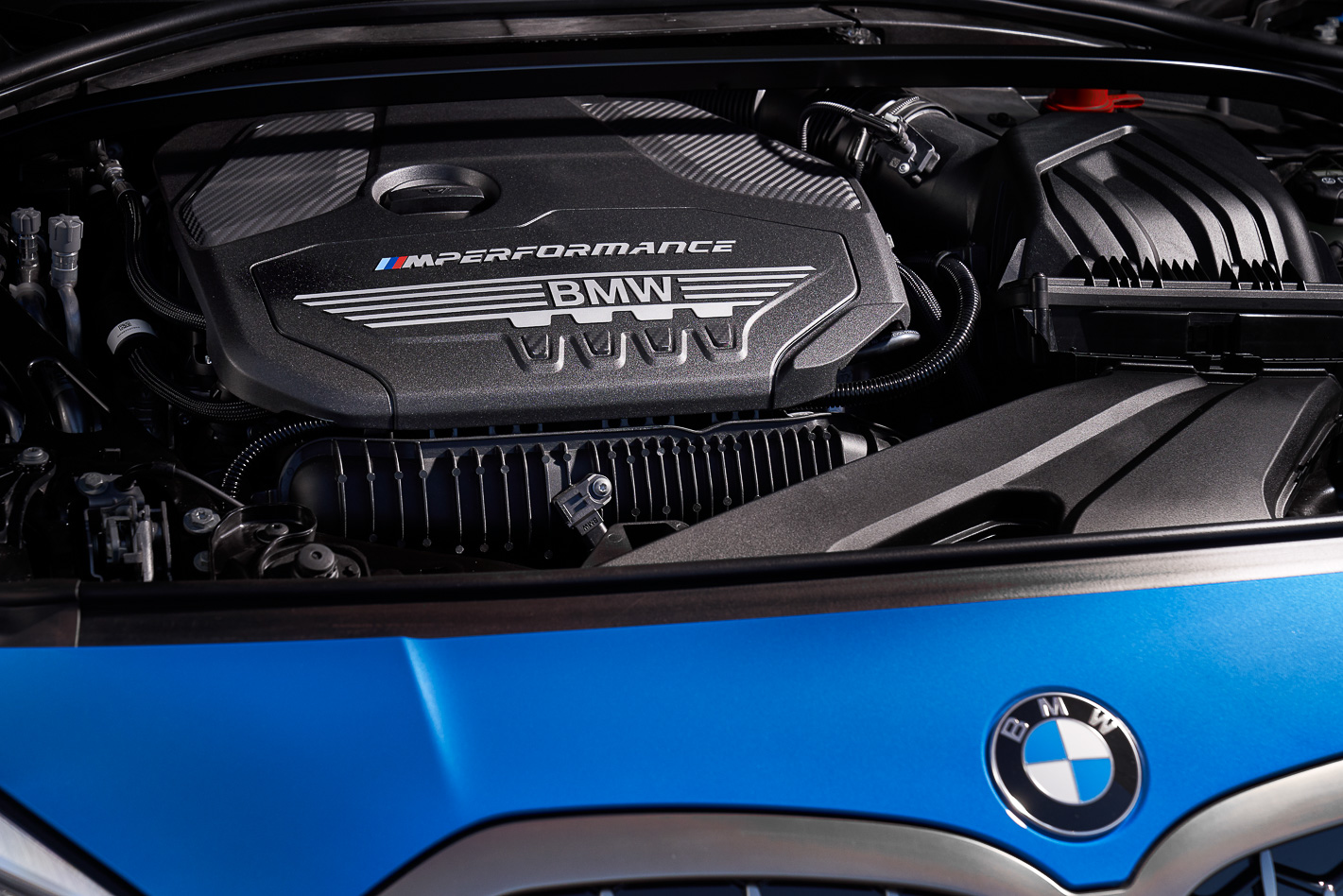
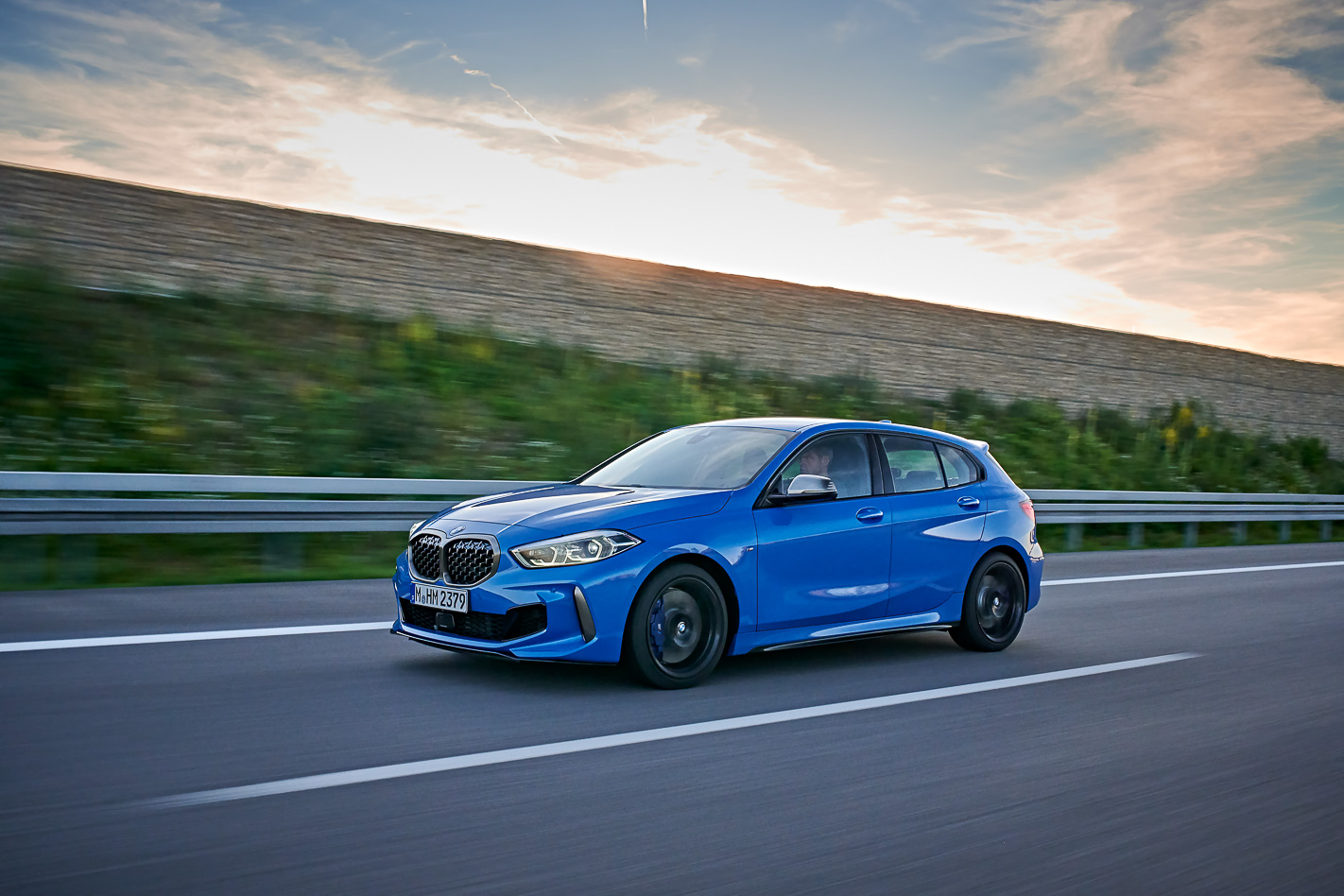
The new five-door BMW M135i xDrive will offer 225kW and 450Nm in conjunction with an all-wheel-drive system and an eight-speed automatic gearbox when it lands locally in late 2019.
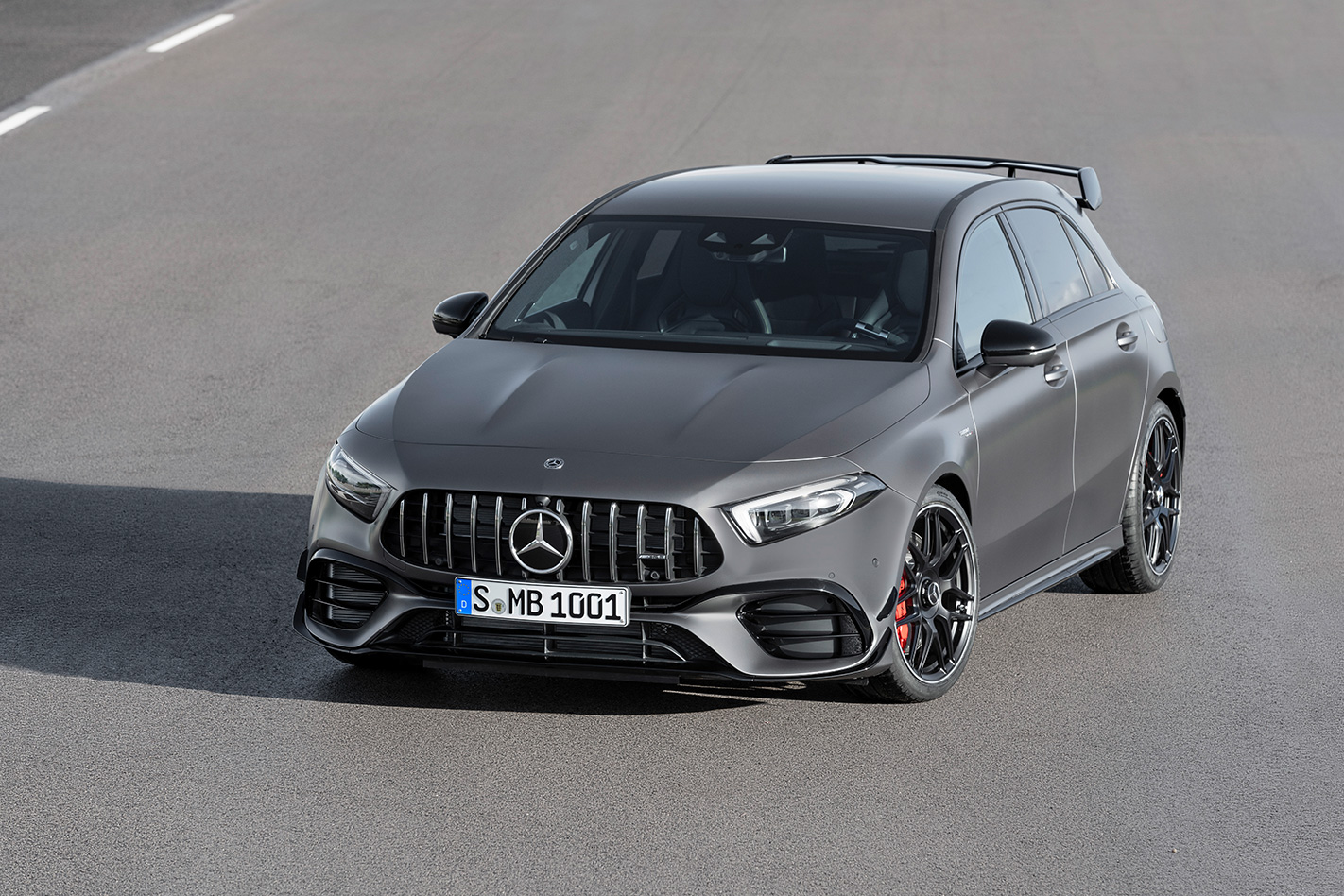
The numbers pale when compared to the overt 310kW/600Nm headline numbers of the A45’s top spec tune (below). It also falls below the Audi RS3’s 294kW and 480Nm figures from its five-cylinder, 2.5-litre engine.
However, BMW’S 1 Series press spokesperson Florian Moser said that the M135i is aimed at more affordable foes.
“Our competitor is the AMG A35, not the A45,” he said. “That’s our target and their outputs are the same.”
The 213kW/380Nm Audi S3 is also a logical rival to the M135i, as well as more affordable cars like the mechanically similar but significantly cheaper all-wheel-drive Volkswagen Golf R.
Moser said that the BMW M2 (below) – which has been confirmed for another generation – serves as the company’s entrant into the hyper-hot small car class.
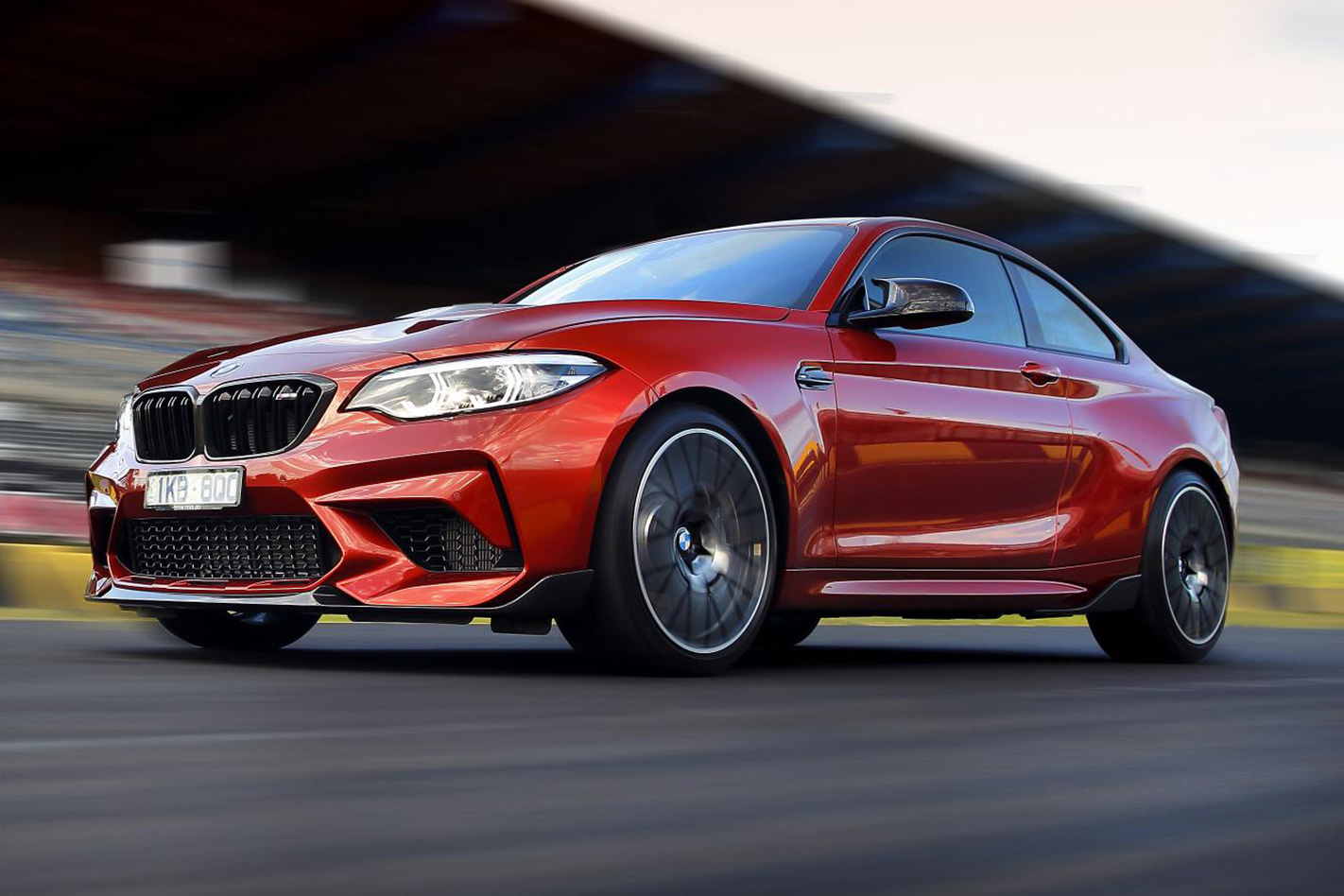
“We have already a very powerful car in the compact segment,” he said. “So we see, at the moment, no need for more. The take-up [for the outgoing M140i] we found is about five percent, so it’s not in the core of our target group to have really such a really narrow-focused car.
“With the M2, we offer a really nice compact, really powerful car. At the moment, that’s our strategy.”
The new Porsche 911 Targa has everything you would expect from a Porsche – stunning acceleration, heroic handling and impeccable build quality.
This review was originally published in MOTOR’s December 2001 issue
The Targa was part of the present 911’s development program from the start something that couldn’t be said of its predecessor. The roof has been redesigned, with better integration into the body, and rates an 0.30 drag co-efficient the same as its fixed roof siblings.
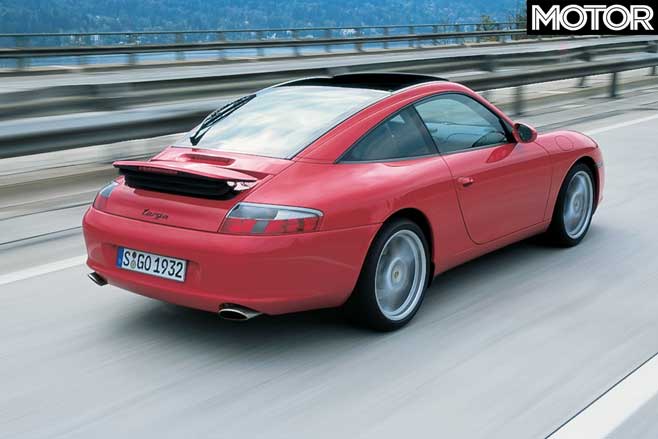
For bonus kerbside cred, you can peel back the Targa’s roof via a remote control key fob. Porsche has also retained the previous model’s full-length roller blind.
The biggest change over the old Targa, however, is the inclusion of a hinged rear window the first to appear on any 911. Hit a button and the rear window and the rear wiper assembly lifts up with the help of gas-pressure springs.
It might sound gimmicky, but the Targa’s opening rear window is a great asset for those who use the tiny rear seats as luggage space, easing loading and adding to the car’s practicality. There’s no need to slam the rear window shut, either, as an electric motor helps to seal the glass.
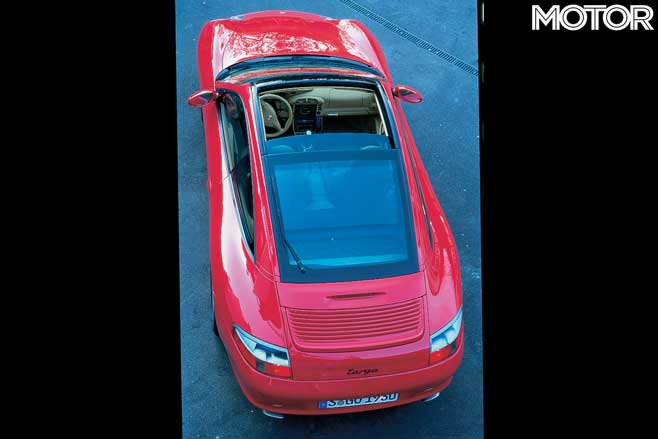
The Targa shares its mechanical package with the recently facelifted Carrera 2, including the brilliant 24-valve 3.6-litre flat-six engine. The water-cooled unit delivers 235kW at 6800rpm with 370Nm at 4250rpm.
The Targa’s extra 70kg over the Carrera 2 is hard to detect. Porsche claims the manual will do the 0-100km/h lunge in a gut-wrenching 5.2 sec – just 0.2 seconds slower than the coupe and exactly the same as the Cabriolet. Top speed, like most 911 models, is quoted at 285km/h.
The Targa’s extra beefmess is largely a result of using the reinforced platform of the Cabriolet. Porsche claims the torsional rigidity of the Targa falls roughly halfway between the Carrera 2 and Cabriolet.
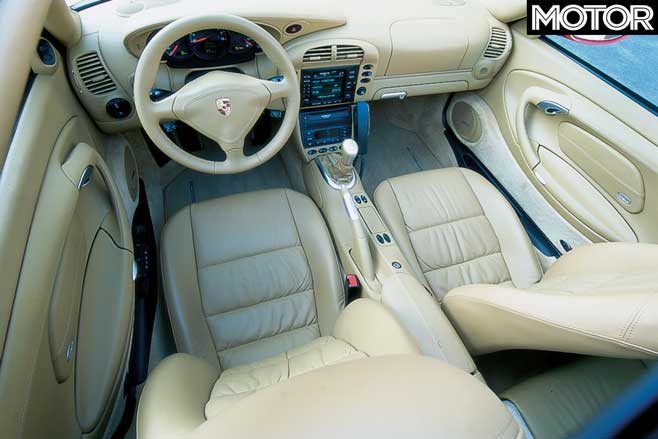
Inside, the new Targa feels as impressive as the Carrera 2 exceptionally solid and superbly sorted. Throw it at a series of tricky corners and it behaves just like one, too. Stiffer roll bars and firmer springs give a slightly harsher ride, but only the most astute of judges would be able to pick the differences between a Targa and a Carrera at speed.
There remains, however, one minor flaw; retracting the roof all the way back greatly reduces rearward visibility, with the tinted, safety glass allowing just 35 per cent light transmission.
Any way you look at it, this latest incarnation of the 911 makes good sense. Where the Carrera 2 delivers ultimate dynamic ability, and the Cabriolet-traditional wind-in-the-hair enjoyment, the Targa is an accomplished all-rounder, adding a degree of practically thanks to its clever hatchback-style rear window and much improved levels of refinement.
2001 PORSCHE 911 TARGA SPECS Engine: 3.6-litre flat-six, DOHC 24v Power: 235kW @ 6800rpm Torque: 370Nm @ 4250rpm Price: $203,600
THE IDEA OF a decade-old startup seems an oxymoron but that’s an apt description of electric vehicle manufacturer Rivian. Based in the western Detroit suburb of Plymouth, Michigan, as ferrous a location in the US rust belt as you could possibly imagine, Rivian aims to disrupt the traditional Motown mass-marketing model – but whereas Tesla was the tech company outsider, Rivian has solid car industry backing. And that expertise pool in the physical manufacture of vehicles should be enough to put Elon Musk on notice.
To fund his startup, Rivian founder RJ Scaringe (see below) initially raised US$450m (A$645m) from three major investors: the Saudi investment group Abdul Latif Jameel, Japan’s Sumitomo Corporation and Britain’s Standard Chartered bank. In February, an Amazon-led consortium poured in US$700m and Ford subsequently took a US$500m stake in the company in April.

A joint press release from Ford and Rivian highlighted how the two companies would co-develop an “all-new, next-generation” EV platform for a range of models. With electric versions of its F-150 pick-up and Mustang-inspired crossover already in the works, Ford has all manner of options with the modular ‘skateboard’.
This chassis unit that underpins the US$72,500 R1S family SUV and the US$68,000 R1T dual-cab ute (vehicle families with 91 percent parts commonality) features strut front and multi-link rear suspension with air springs, a 147kW electric motor at each corner and three different underfloor battery packs, currently ranging from a 105kWh battery with 370km range to a massive 180kWh power pack that pushes range out to 645km. Short-wheelbase platforms are planned, with no fewer than six bodystyles in the works.
Rivian spokesman Chris Wollen confirmed that Australia is in the product plan. “Right-hand drive is coming; it’s been in the plans from the beginning,” he said. “We know that there are markets that will be into these vehicles and the adventure positioning, and Australia fits that perfectly. We know we’re nicely suited for Australia, so it’s an important market for us.”
The first production vehicles, destined for North American markets, are set to roll from the lines in Normal, Illinois next year. Mitsubishi, the former owner of the plant, could produce 250,000 vehicles per year on these lines but Rivian’s initial forecasts are somewhat more modest: 20,000 units in 2021 and double that in 2022. Sales are forecast through a Tesla-style direct marketing platform.
It’s been a long time in gestation but Rivian could well be the real deal.
Like so many good ideas, it just sort of happened. Working on last month’s Monaro issue with Holden PR, Tim ‘Plastic’ Pemberton, l mused how great it would be to drive an old Holden HT Monaro to this year’s Bathurst 1000. mere days before the launch of the new Monaro.
This feature was originally published in MOTOR’s December 2001 issue
“Nally,” Plastic replied in his inimitable deadpan rasp, “I’ve just bought a mint HT GTS 350; it’s all yours. Just don’t bend it.” Bewdy!
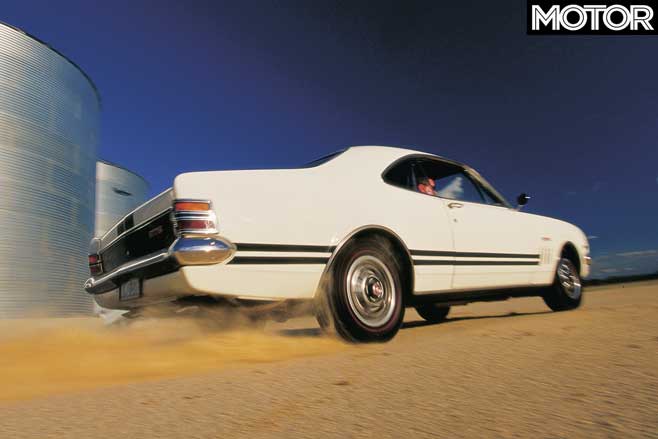
Legendary team manager, Harry ‘The Silver Fox’ Firth, decreed the team would run-in its racecars by driving to Bathurst, so we decided to follow the same route the team took in 1969, leaving from the former HDT workshop in Auburn, Melbourne.
I heard the Monaro pull up outside my place before I saw it. Plastic was right; it was in beautiful nick. HG Wells had his Time Machine and Doctor Who had the Tardis, but here was my time travel capsule, warmed up and waiting.
Inside it’s all Sixties sportscar style with a large, thin-rimmed steering wheel, a deep-set tacho red-lined at 5500rpm and a 140mph speedo. Black vinyl is everywhere, save for chic houndstooth check seat inserts, and there’s stacks of headroom and legroom, with seating for five ample Aussie arses.
Brock had briefed me on the HDT route, but after checking a map, it appeared either his memory was failing or HDT had gone the long way.
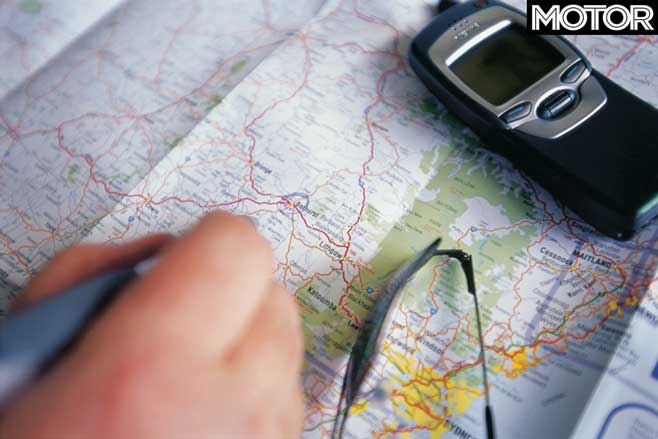
After taking back roads out Melbourne, the HDT convoy veered off the Hume towards Shepparton on the Goulburn Valley Highway, then followed the Newell and Mid Western Highways before finally joining the Olympic at Cowra. It added another 200 kays to the 970km trip. Why go the long way? “It was a pleasant drive,” Brock said. HDT did the trip in “around eight hours”, but we would spread the journey over two days.
I had never driven a Monaro before and Brock cautioned me about the heavy shifter, heavy clutch and even heavier non-assisted steering. But how bad could it be? A prod of the short-throw throttle and the big Chev growled easily into life, settling down to a basso profundo idle. The sloppy linkages in the four-speed Saginaw gearbox clanked as I rammed (you have to) the shifter into first and we were away. Easy.
I wasn’t prepared for the first 90-degree corner and the strength required to pull on three turns of lock, though. Now I know why they call these things muscle cars you need ‘em. By the time we reached the old HDT workshop, I had tennis elbow from manhandling the Monaro through the peak hour shuffle. The low-backed bucket didn’t help either, and my neck ached like buggery. God help me, I thought. If I get Liberace’d in this, my head will end up in the back seat.
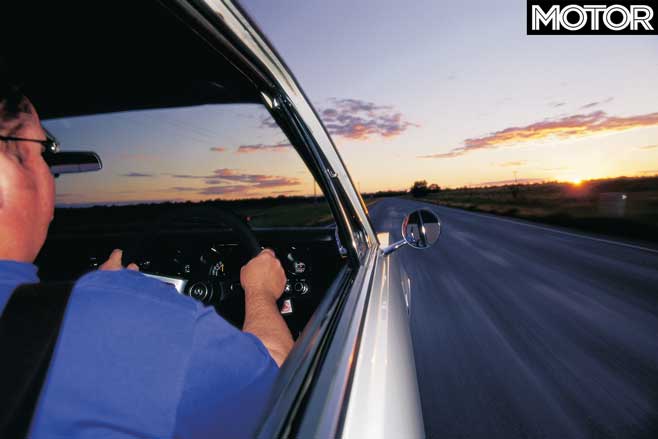
The historic HDT workshop is now run by ex-Formula 2 racer Ray Boys. Boys recently took it over from ex-Firth/HDT alumni Ian Tate, who ran his race engine business from the premises from 1978. Tate also drove one of the three GTSs to Bathurst in ‘69. Still a good mate of Brock’s, Tate remembers him as “young and timid, but a hoon in the street”. “Bond was the lead driver in those early days,” he said, “Brock was nothing special it took him three years to come good.”
After a quick once~over from Boys, we set out, along Melbourne’s congested, tram-track laced streets. Finally, we escaped the suburbs and I gave the Monaro its head. The owner’s manual claims 300 horsepower at 4800rpm and 380 ft lbs of torque at 3200 and, with the tall 3.36:1 diff and a low fourth cog, it felt like it. At 60mph, the engine was spinning at 2750rpm, about 1000rpm more than the Gen III in our SS chase car (albeit in sixth).
Overtaking was a cinch, with the brawny Chevy just a restless big toe away from train-like pulling power. In fourth, it thundered from 40mph to the old ton (sorry, Plastic) in no time; and from 70mph on the big coupe was up on its toes, dancing like a heavyweight champ. The power delivery was a politically incorrect, brutal shove, accompanied by an exhaust throb that sounded like a cross between a diesel locomotive and a death metal singer.
At highway speeds the steering lightened up and needed only small amounts of lock for most comers. And you could easily adjust your line by leaning on or lifting off the throttle. Basically it’s an understeerer but it didn’t take much to break the skinny rears loose. The suspension was surprisingly stiff and corrugations would cause the rigid front end to judder. There was no hint of float or body roll though; not were there any rattles or squeaks. What a good car!
Around town, the HT was surprisingly quiet, but on the open road, the noise from the modem 14×6 Dunlop Monzas was deafening. The 270mm disc/254mm drum brakes had good initial bite and felt like they would haul you up from high speed – at least a couple of times. But if you gave the firm pedal a hard squeeze, the nose tends to wander as the rotors squealed in irritation. Jabbing them just locked the rear tyres solid.
As dusk approached, ghostly mobs of roos started gathering just off the road so we decided to stop at Narrandera. This was timely because when I turned on the headlights the tail lights failed, and the only illumination at the rear was from the dull glow of the number plate bulb.

The next morning we were Bathurst-bound. From Jerilderie on, the Newell was flat and fast with long sweeping curves. Traffic was sparse and must have been even thinner in ’69. These roads were made for opening up the Rochester four-barrels and there are stories, perhaps apocryphal, of the HDT Monaros running three-wide at high speed. Brock wasn’t saying.
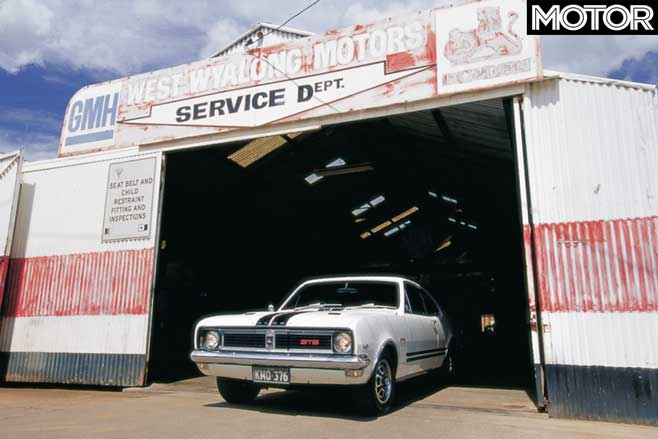
Rolling into West Wyalong, we spotted the modern facade of the local Holden dealership, but in the lane behind we found its old corrugated iron workshop entrance. Gordon, the manager, was suspicious at first (“Are you setting me up?”) when we asked to take photos, but he relaxed when he saw the Monaro.
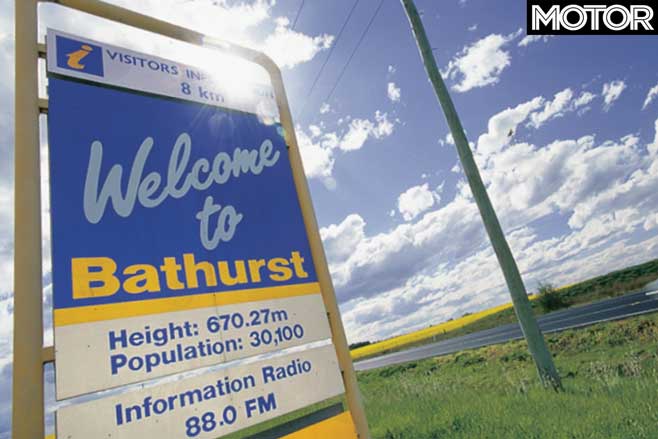
We pushed on. With the speedo pointing straight up to 70mph (okay, maybe more), we flashed past massive sunlit canola crops and purple paddocks of Patterson’s Curse, through Cowra, and into Bathurst.
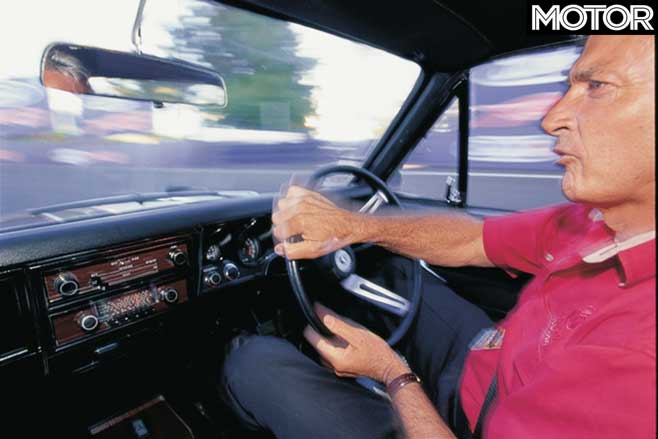
We arranged to pick up Brock at 5.30 for a nostalgic lap of the track. Right on cue, Peter Perfect vaulted the pit wall and settled in behind the wheel. He found first and we took off, hard. To go racing in 1969, all HDT did was blueprint the engine, pump up the tyres and fit better pads, a four-point harness and rollover hoop, so this car was close to race fettle.
Griffin’s Bend was coming up at 90mph. “Brakes?” Brock yelled, “Have we got any? Doesn’t matter, I’ll float her in.” Banging it into third, he tipped into the right-hander, the Dunlops complaining loudly. It was about then that The Time Machine took hold of The King of the Mountain, catapulting him back three decades. He was 24 again, and loving it.
“I’m in a time warp,” he grinned as we skimmed the concrete wall through The Cutting before Brock buttoned off for traffic. “I’d love to unleash this thing,” he sighed, right arm out the window giving the royal wave. How does the car feel? “It feels right. We weren’t allowed to change the suspension in those days and the standard suspension was very stiff. We ran Michelin XAS tyres at 45 or 50psi. You had to; the things weren’t d signed for ripping around a racetrack.”
After an impromptu 20-minute autograph session, I managed to prise Brock away from his adoring public and we blasted off again as a little kid yelled: “Do some doughies Brocky!” We screeched into Forrest’s Elbow, Brock’s line millimetre perfect. “This car always had more understeer here than the HO but we didn’t mind because you used the understeer to wash off speed.”
The tight left-right Chase loomed large. It wasn’t there in 1969 and Conrad ran in a scary straight line down to Murray’s Corner. “We’d hit around 130mph on Conrod, I suppose,” Brock said, right elbow on the door. “We’d lift off after the second hump so as not to abuse the brakes before Murray’s. If you did, you’d have no brakes for Hell Corner, which was worse”.
We jumped out at The Chase so photographer Brunelli could take some shots. Brock roared back up Conrad, did a U-ey, and then took aim. How was that? “Magic!” Brock bubbled. “Doesn’t it sit beautifully through there? It doesn’t get any body roll; it’s not a big lurch-mobile. This is good, isn’t it? THIS IS GOOD! This car is 32 years old and it’s a I think I’m going to have to get one.”
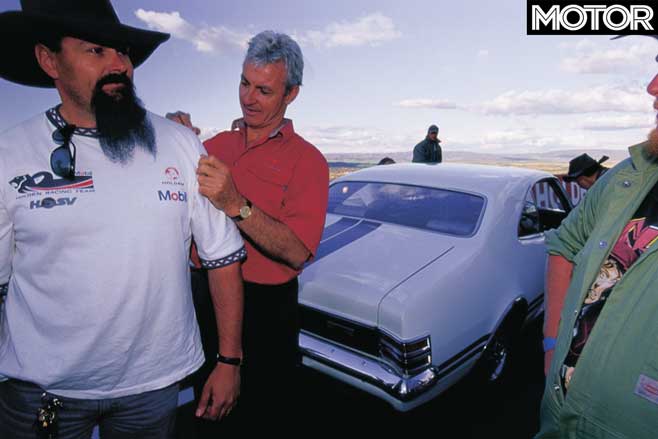
Clerk of Course Tim Schenken, pulled up in the CAMQ course car, with Colin Bond in the back seat. “It suits you, Brock,” he hollered, and good-natured jibes about the old days flew thick and fast. “You were a bit of a ratbag in those days, weren’t you Brocky?” I ventured.
“Totally! I was rebellious,” Brock laughed. “After the race we got up to some shocking, shameful activities involving alcohol and women. There were some big headaches on Monday morning.”
Brock was besotted with the car by now, and set off on another lap. “This thing’s liking it now, it’s got the vibe. This is sensational, it’s doing it easy. We’re talking ace-ness.” Ace-ness? The next day, Plastic told me Brock wanted to drive the car in the pre-race Monaro parade. Hang on, I was going to do that! “Don’t worry, Nally,” Plastic said soothingly, “Brock won’t show up.”
At 8.20 am Sunday, 85 Monaros gathered for one glorious tribute lap in front of 50,000 fans. With minutes to go, Brock still hadn’t shown. Beauty. Then, with seconds to spare, he rocked up and consigned me again to the back. Bugger!
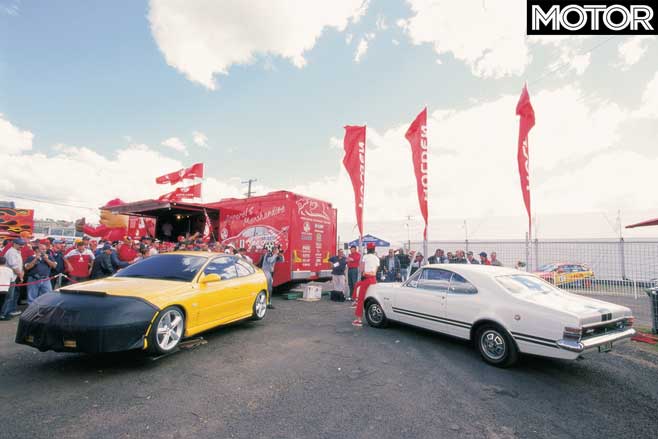
Still, it’s a bit hard to argue with The King on his home territory. Seven hours later Mark Skaife and Tony Longhurst won the Bathurst 1000 for Holden, 32 years after Bond and Roberts gave the Monaro its second and last Bathurst victory. The following year, Toranas replaced the big coupe.
The next day I took the quick way back to Melbourne, with a better understanding of how the Monaro got its reputation. The new Monaro has some very big boots to fill, to be sure. Sleek and sexy as it is, who’s to say it’ll be a bona fide classic in 32 years? Check with us in 2033 for the verdict.
How Brock went to the Mountain
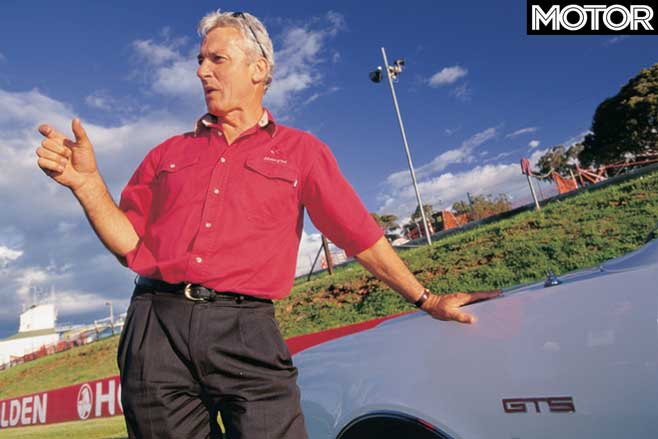
Peter Brock recalls that it was Harry Firth’s idea to drive the HT GTS 350 Monaro race cars to Bathurst. ”Harry was looked on as quite idiosyncratic, but he was very clever and knew it was very good for the car and suspension to get a gentle workout on the highway. Driving to Bathurst gave them a nice kiss and a cuddle and you’d get a good feel for the car.
In Victoria, the speed limit was probably 75 to 80mph (120-130km/h) but there weren’t any speed limits in NSW and, of course, we found it difficult to stay in running-in mode.
Those Monaros were weapons. We tried to keep to about 3000rpm, equating to around 70mph (110km/h) but every now and then you’d have to hear the second barrel on the carby Open up so you’d flatten it a bit before backing off. You’d tell yourself you were bedding in the rings.
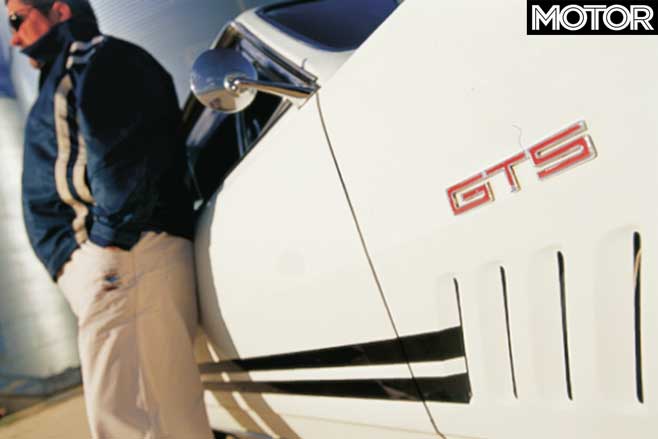
We had the big 26-gallon (118 litre) tank and we’d damn near get there on one tank but I remember filling up and grabbing a bite to eat at West Wyalong; there was a 24-hour place there.
We’d get into Bathurst around 10.30pm, head straight to the Abercrombie Motel and hit the sack. The next morning we’d wash the cars in the street, then go to scrutineering. When I drove up to the track for the first time I was just tingling. I was 24 and this was the best thing that had happened to me. I was overawed. I thought ‘God, you can’t drive fast around here, it’s a country road.” The sense of anticipation was incredible.
The night before the race there was always a lot of driving between Bathurst and Blaney, bedding in brakes and discs or some damn thing. Harry would say ’Bed those brakes in, cock.’
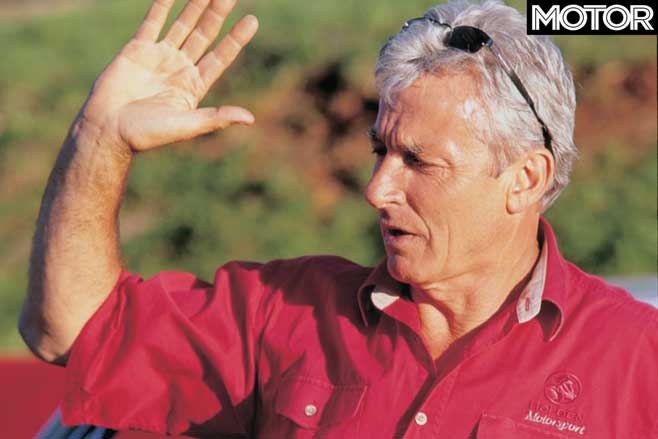
We were in line to win the race but we popped a cam lifter. 5500 to 5700rpm was the magic number and if you went above that the lifters didn’t like it. The car went onto seven cylinders. It’d idle okay, but once the revs got to 3500-4000 it’d be lumpy. We probably ran a third of the race like that and still only finished about 30 seconds behind Bondy.
The cars were impounded after the race and we’d drive down the main mad to Gundon’s Garage where the cars would be scrutineered on the Monday. After scrutineering the cars would be put back together and we’d drive them back to Melbourne.
We drove to Bathurst up until ’72 but that first Bathurst in 1969 in the Monaro was such an important part of my life. It was what I dreamt of doing.”
There’s nothing more Australian than a long-weekend road trip. And while plenty save their trip for summer time, there’s plenty of fun to be had even during the wet, cold and stormy months.
Here are a few tips to take away the chill on a winter road trip:
1. Check the weather before you go. Winter is notorious for changing its direction: one second it’ll be sunshine and rainbows, and the next your car will be pounded by thunderstorms and hail. Give Mother Nature a call (or just check the forecast) and be prepared.
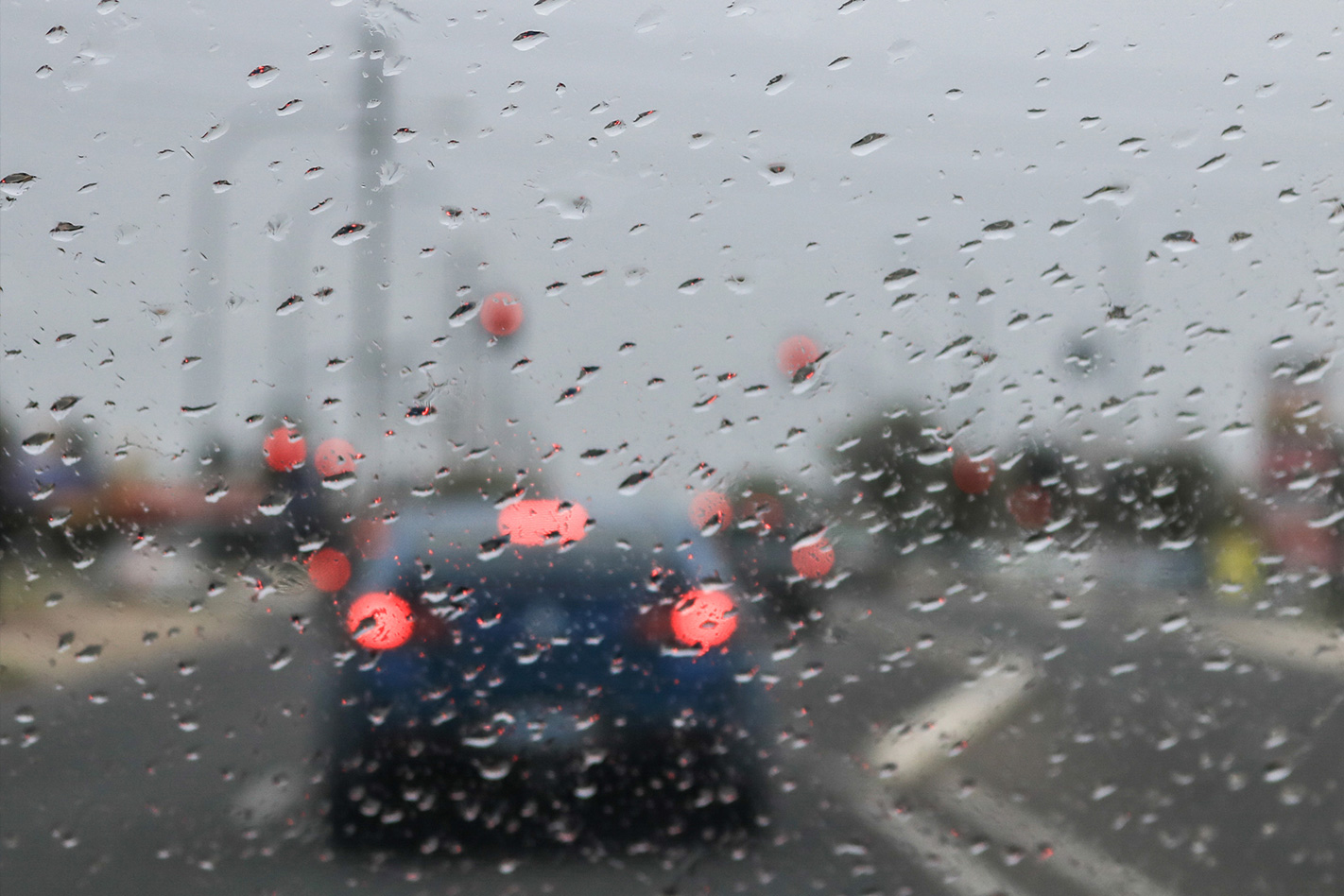
2. Your idea to escape for the weekend isn’t a unique one, and chances are the rest of the population probably have the same plans. It’s not a road trip if you’re stuck in traffic (more of a road crawl if you will), so either set yourself a realistic arrival time by taking traffic into account, or find the alternative road-less-travelled route.
3. Make a good playlist. You’ll probably spend more time in the car during winter than you will in summer, so have a timed-playlist to keep you sane. Better still, pack it with summery songs to remind you of bluer skies.
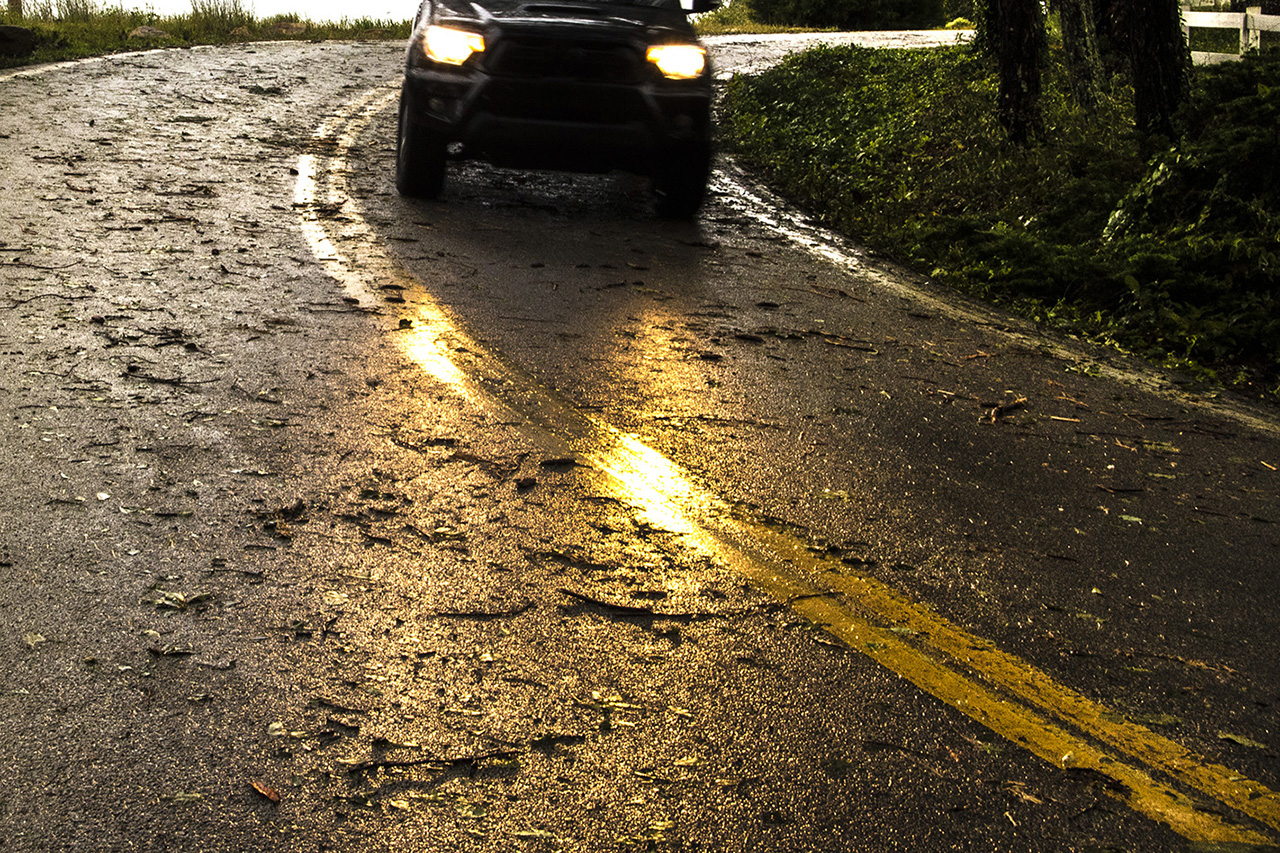
4. Don’t be in a rush. You have two to three long days to get to where you’re going, or four if you were smart enough to take an extra day off either end of a public holiday. Take your time, lower your speeds and enjoy the drive. It’s a ‘road trip’ after all. It’ll make traffic less frustrating and keeps you safer on winter’s slippery roads.
5. Prepare your cars for the right tools to match your destination. Heading to the snow? Pack a shovel, snow chains, something to scrape the ice away and warm clothes. Heading seaside? Then pack your blankets, fire wood, and some gumboots.
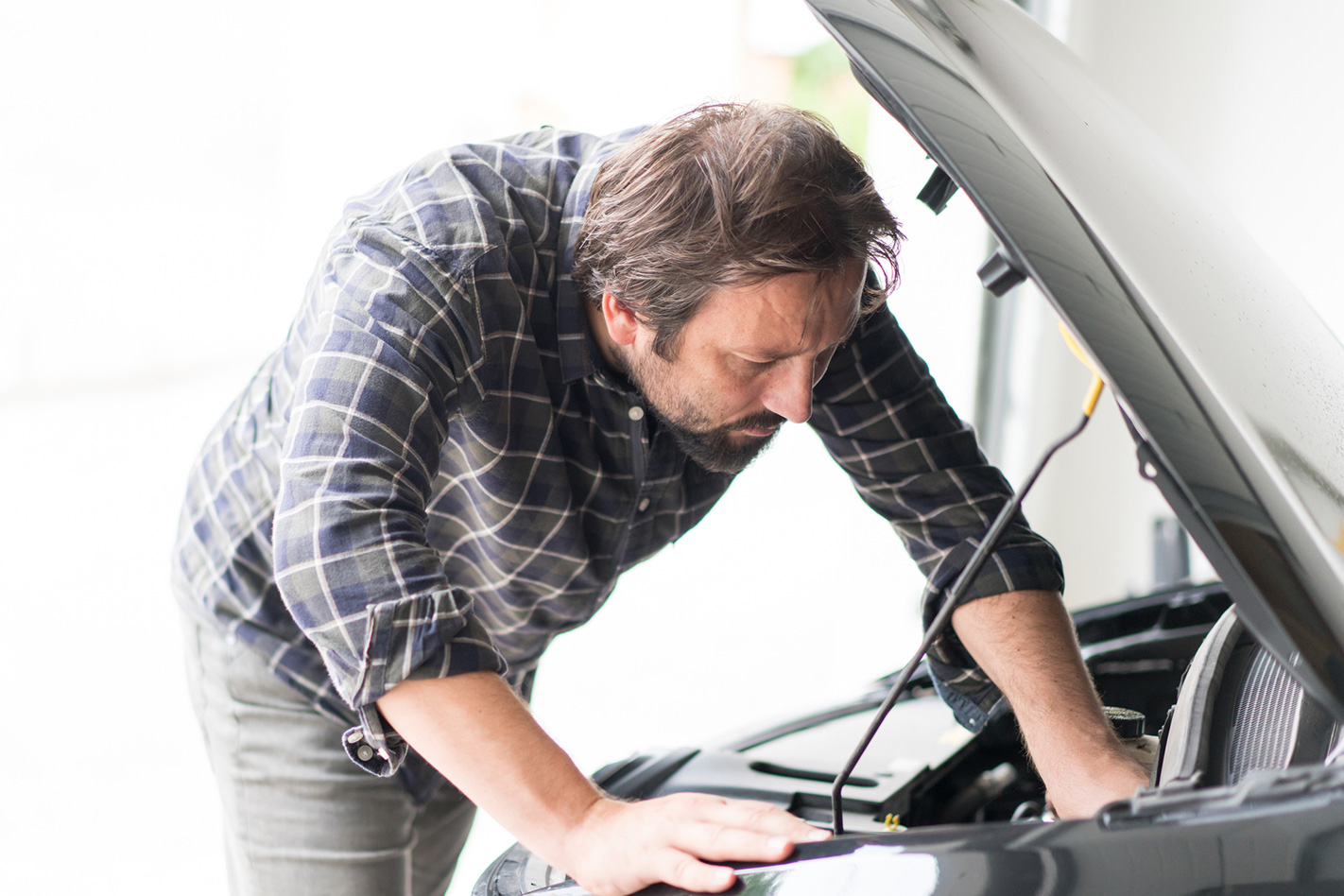
6. It’s a standard road trip tip, but give your car a check over before any long drive. Tyres, oil, transmission fluid, coolant, battery, brake fluid, lights and windshield wipers should be checked to ensure they’re in working condition. Also check your spare tyre is properly inflated and is roadworthy, just in case you get a flat.
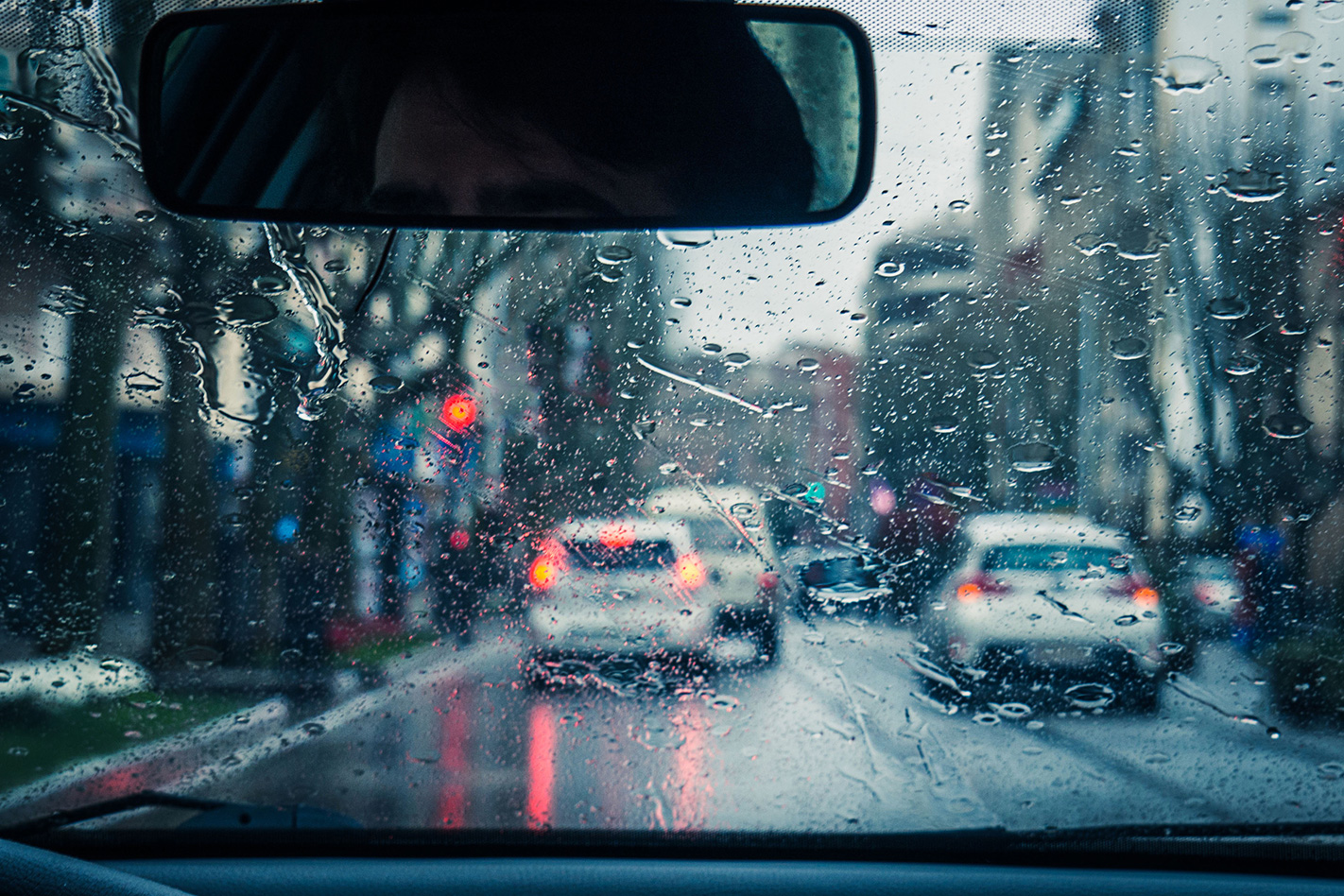
7. Get a good night’s sleep before you take off. Driving in poor weather can be fatiguing, as can sitting under a heater, so only drive when you’re feeling alert. You’ll need extra concentration to cope with slippery roads and poor visibility.
8. Plan your sights. Try to plan your stops around undercover sights, and avoid focusing on things outdoors. You’ll be disappointed if it starts to pour with rain and you have to miss out.
9. If you’re travelling with kids, make sure you have plenty of in-car games on hand. Chances are you won’t be able to stop as regularly as you would in the warmer months to let the kids run around and burn energy, so bunk the boredom with some fun games.
10. And for our best advice… drive somewhere sunny.
Some news that came out of the recent Geneva Motor Show had a surprising effect on me, as it just might on you too. There’s plenty to think about in the sale of a majority stake in the Morgan Motor Company to an Italian venture capital firm.
Yeah – Morgan, the 110-year-old British company that still builds cars with wooden floorboards, wooden body frames, some kind of weird dunny-plunger front suspension … and that’s their newer models. They also still build a three-wheeler, and another model, the 4/4, that’s the longest-running production car in the world, little changed from its 1936 launch version.
For context, in 1936 a prototype known as the Kraft durch Freude wagen was still two years away from its intended launch date. The ubiquitous Volkswagen ceased production more than 15 years ago, but the Morgan 4/4 is still plodding on at its elf-inhabited workshop in Bonking-Upon-Ethel, Chundershire.
Okay, I made up some of that last part.
But plodding is about right. The factory (actually in Malvern, Worcestershire) builds up to 850 cars per year, its 170-or-so workers still doing nearly everything by hand. A Morgan is basically a steel ladder-type chassis, on top of which is mounted a laboriously crafted skeleton of ash timber, skinned in hand-formed aluminium panels. There’s no assembly line; the cars are built on wooden trestles, then on their wheels.
A mate once told me about a British television series in the early-1990s, a sort of Shark Tank thing wherein some genius entrepreneur told various ma-and-pa Pommy businesses how to shape up. Morgan – then still literally a family business, with Charles Morgan, the grandson’s founder, as managing director – had a nine-year waiting list at the time. The entrepreneur shouted at them to ramp up production, adopt just-in-time technology. Morgan shrugged and went back to its tea and Malvern pudding.
Of course, a few years later the Global Financial Crisis struck. Car makers’ order banks were slashed. Which, at Morgan, meant maybe only a three-year waiting list. They just kept on building cars. So what’s this got to do with me, or you? Maybe very little. And a lot.
I can’t recall ever having driven a Morgan. I’ve certainly never imagined myself owning one. But I would really like to – in the same way I’d like to own an Eames chair, a Rolex Cosmograph Daytona, a Harley-Davidson motorcycle and plenty of other things that I don’t really have any use for and in some cases don’t even like very much, but that are so iconic, I just revel in the fact of their ongoing existence.
The Morgan family hasn’t directly run the business since Charles was punted by the company’s board in 2013, but he and other family members have maintained shareholdings. And so they will under the new owner.
Investindustrial is a venture capital group headed by the Benetton and Bonomi families, names that roll like Agnelli and Pirelli when talking about Italian industrial dynasties. Benetton you’d know via its ownership of the F1 team that brought Michael Schumacher the first two of his seven world championships, in 1994 and 1995, or perhaps through its global fashion brand. It’s also the biggest operator of Italy’s autostrade tollways.
Working in partnership with Alessandro Benetton is Andrea Bonomi, a former offshore powerboat racing champion. In 2006, Investindustrial bought motorcycle maker Ducati and further perpetuated a turnaround already well under way by its previous venture capital owner. When, in 2012, Ducati was sold on to Audi/Volkswagen (at a reported $1.58bn), its market share had doubled and profit margins increased by 40 percent. Investindustrial then turned its attentions to Aston Martin, taking 37.5 percent of the company in 2013.
So along with its money, Morgan’s new owner also has a heart, and it seems to be in the right place to preserve this living link to motoring’s early history.
