
From the days of primitive incandescent globes and the dim yellow glow of sealed-beam lamps, illuminating the way ahead of your car has, quite literally, become a brilliant science.
Among the many technologies available in the modern cars of today, dusk-sensing automatic headlights, self-dipping beams and anti-dazzle high-beams are not just keeping you safer on the road but others who, even today, still forget to flick the lights on after dark. But the different lighting sources available in a new car options brochure can be confusing.
There’s more than a few lighting technologies currently on sale, each with their own unique advantages and drawbacks. Here’s the lowdown on headlamp tech to help you pick the right light when specifying your next new car.
Halogen headlights
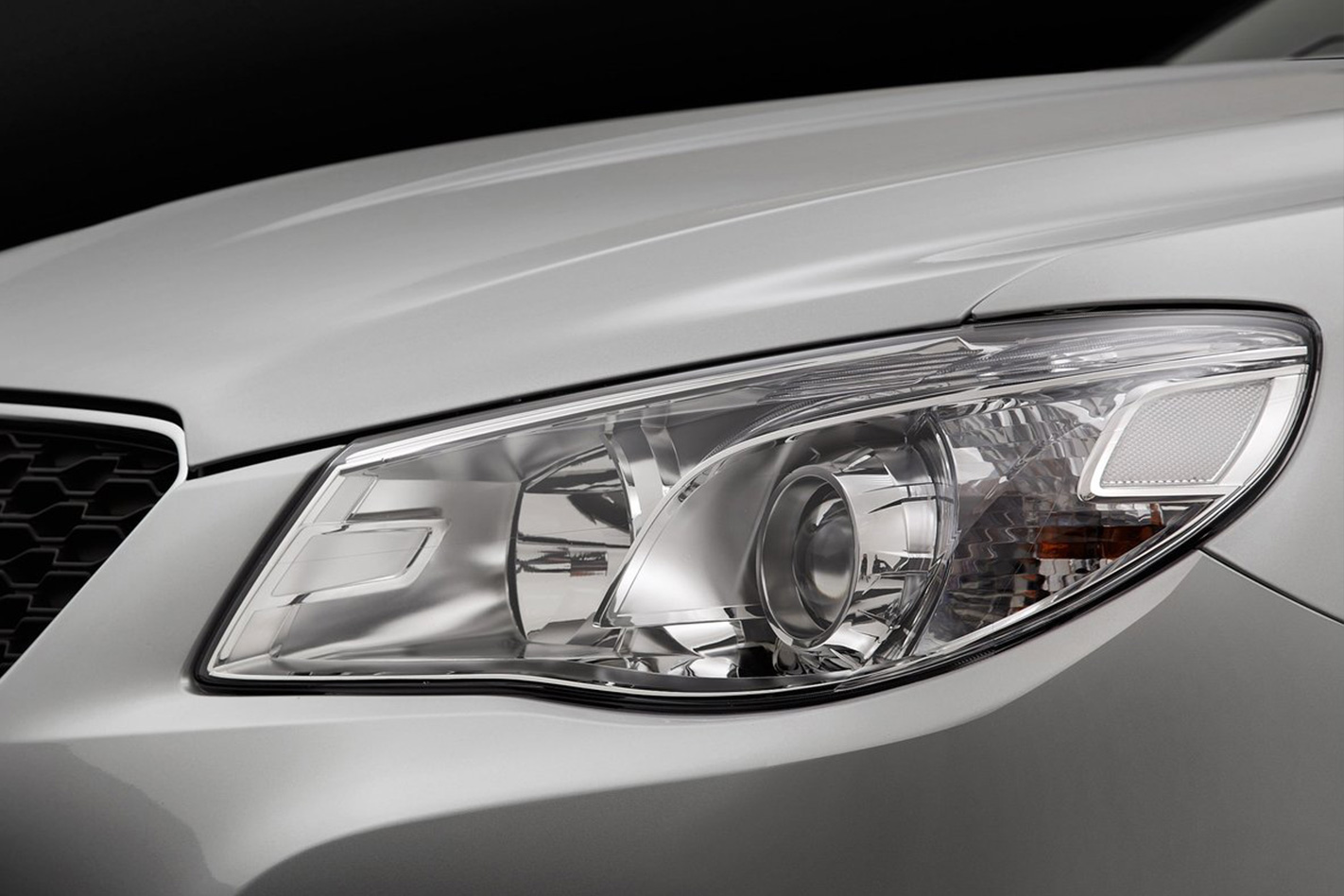
Currently found in a majority of the cars on our road, halogen headlights are used for their simplicity and cost effectiveness. Halogen light bulbs are fairly easy to replace and tend to output about 1000 hours of light before the globes expire and need to be swapped.
Halogen bulb technology has been around for some time, evolving from traditional incandescent bulbs. The key difference though, is that a halogen gas is used to protect the filament within the fixture instead of a vacuum, allowing for a brighter glow from the same amount of energy.
Halogen lights are being phased out in favour of alternatives because they are no longer the most efficient or brightest form of lighting, but they are still one of the cheapest. You can still find the technology at the most affordable end of the new car market.
HID/Xenon headlights
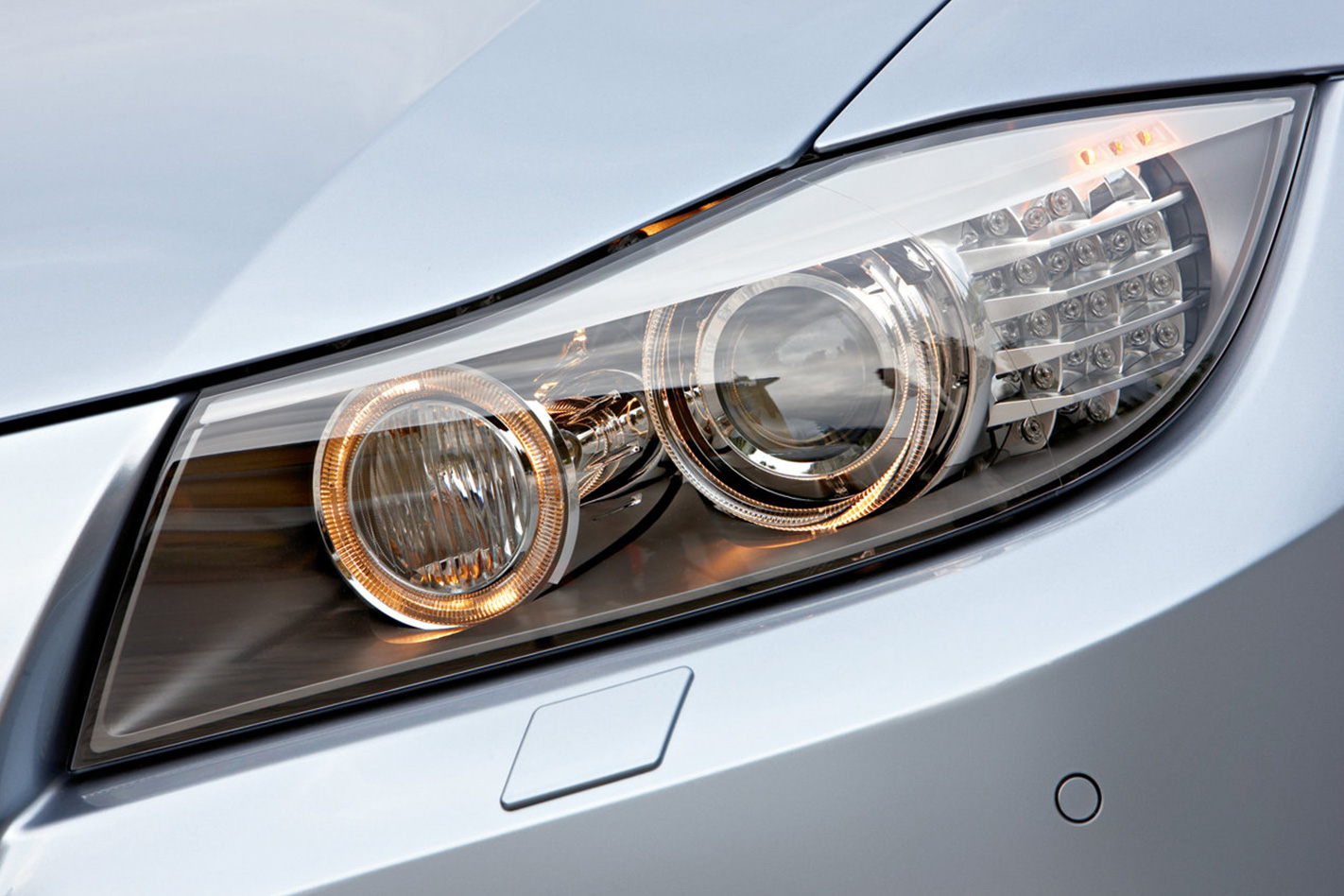
High-intensity discharge lamps (HID or Xenon) have been in use since the early 1990s, but are generally only offered as standard on prestige cars, or available as an option on more affordable vehicles.
They operate similarly to the fluorescent tube lighting found in offices and other large buildings by passing an electric current through a mixture of gases within a glass cylinder.
They’re preferable thanks to their longer lifetime compared with halogen headlights and are more efficient as they create more light from less energy (thereby reducing the load on your alternator).
They also produce a whiter light which is easier for the human eye to see, increasing the effectiveness of the headlight in low-light situations. As a downside, these lights cost more to replace.
LED headlights
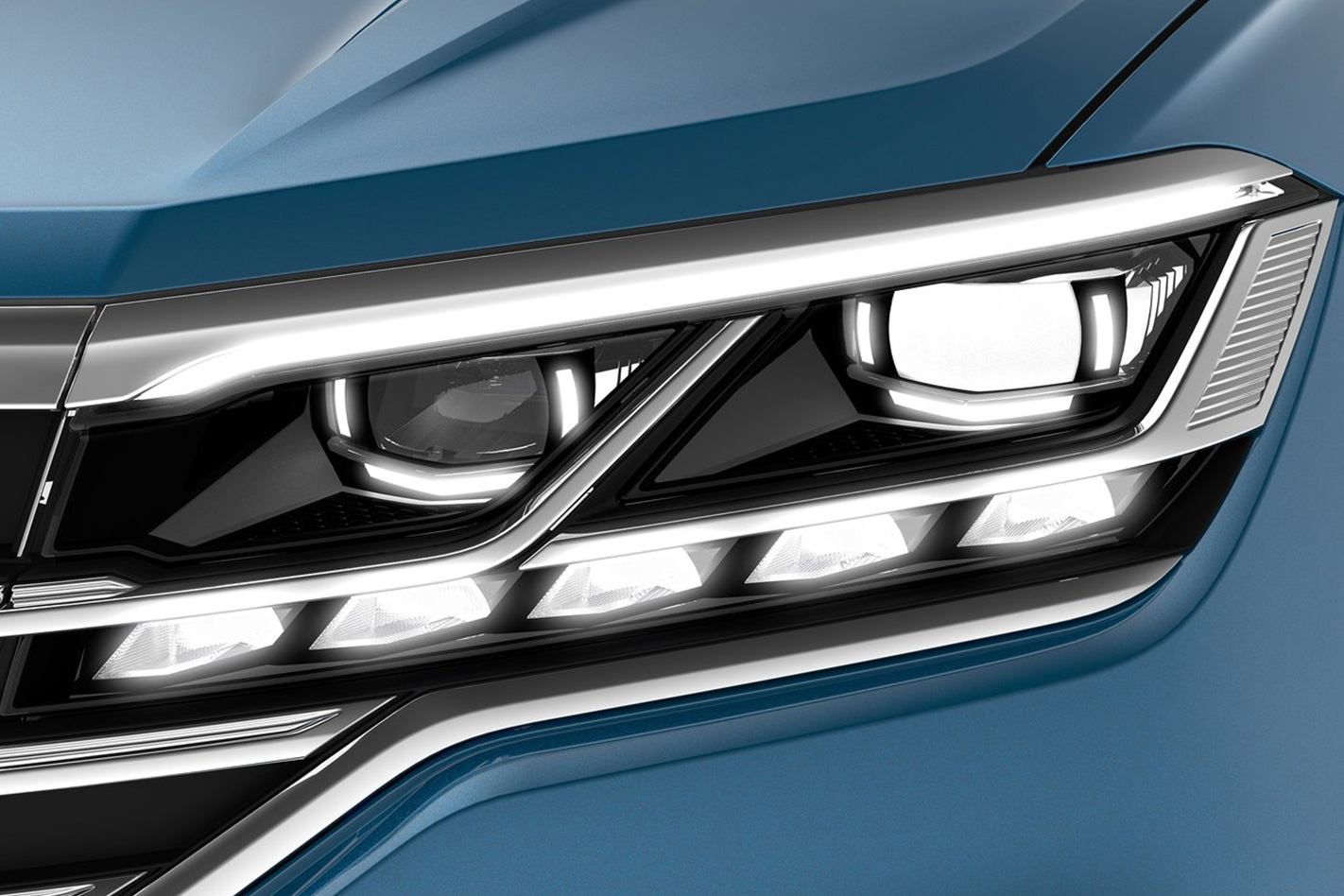
Light-emitting diodes are small solid-state electrical components that do not produce light by heating a metal filament as incandescent globes do, nor through exciting a gas with an electrical current. Instead, they produce light through a far more efficient process called electroluminescence. Only one or two of the most powerful LEDs are required to equal xenon light output but, increasingly, many smaller LEDs are being grouped together to create a more substantial and variable field of light.
LEDs have been around since the early 1960s in a variety of colours, but it wasn’t until the advent of the blue and white LED that the technology became suitable for vehicle headlights. Such was the significance of the invention and its effect on the world’s energy consumption (not just in vehicles, but all lighting) that its three Japanese pioneers were awarded the Nobel prize for physics.
The early units were very expensive however, and LEDs are only just becoming commonplace due to the unit cost decline with increased volume production.
A major advantage of LEDs is that each one in a headlight array can be energised independently, allowing different shaped light beams which is useful for reducing glare to oncoming motorists or providing a more intense focused beam.
Laser headlights
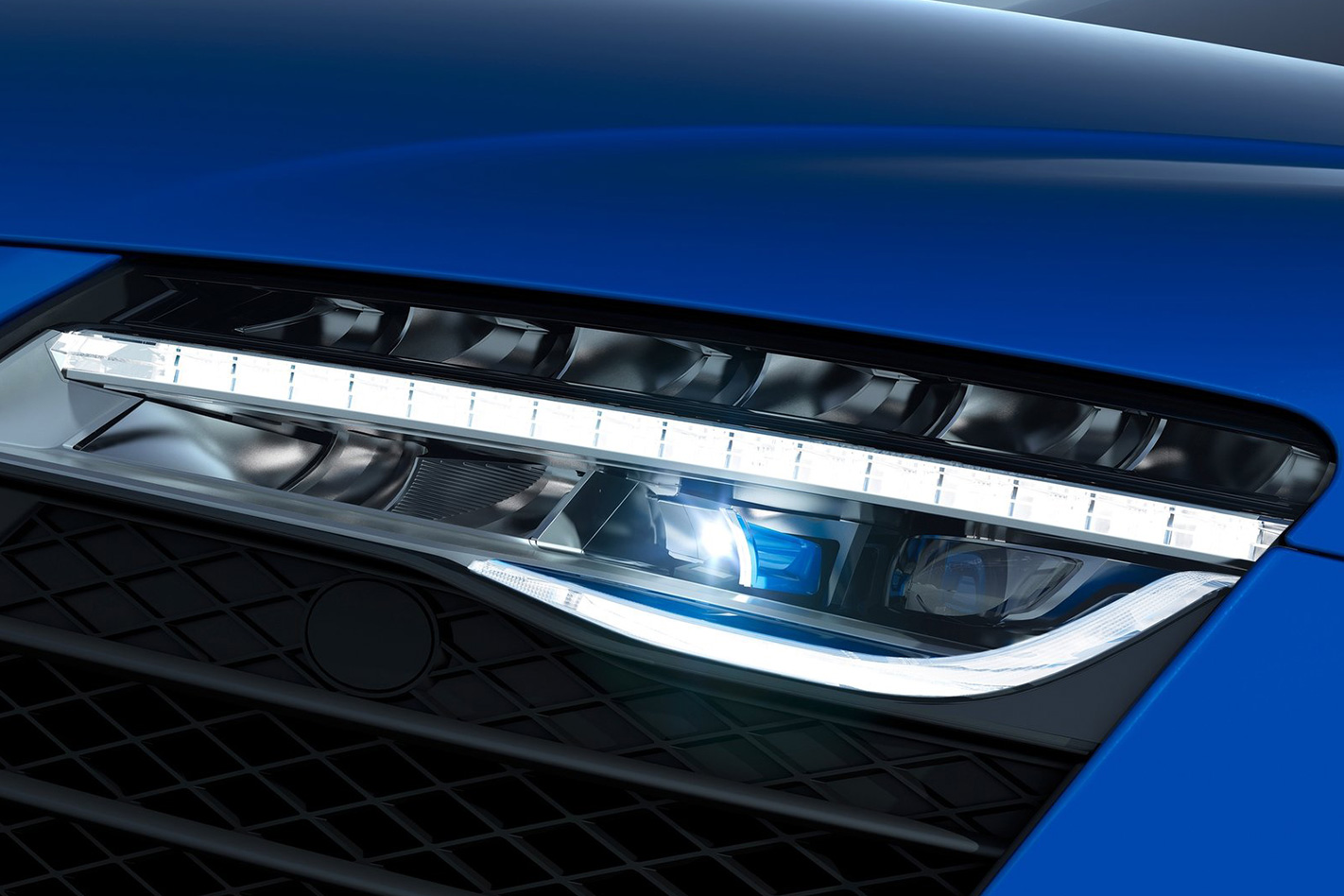
Laser headlights – sounds cool, but in reality, the laser beams themselves only go part of the way to lighting up your surroundings. A blue laser is focused into a phosphorus gas which fluoresces and emits an extremely bright, almost daylight-like colour temperature.
BMW and Audi were among the first manufacturers to introduce laser headlights with the i8 sports car and R8 LMX respectively. BMW says that the tech is capable of producing light 1000 times more powerful than LEDs while using less energy. Their brightness also extends further than any other reach, up to 600 metres. Unfortunately, this lighting technology is still very expensive and is generally only available as an option, costing up to $5100 in the new BMW 7 Series. Just hope that you never have to replace them.
Like all lighting technology over the ages, the cost of the latest systems will decrease over time and find its way into increasingly affordable cars, making way for the next brilliant innovation.
The Renault Megane RS Trophy-R has been confirmed for Australia, with 20 units up for grabs from today.
The short-notice announcement comes with Renault Australia’s reveal that the Trophy-R is already available to the general public from midday.
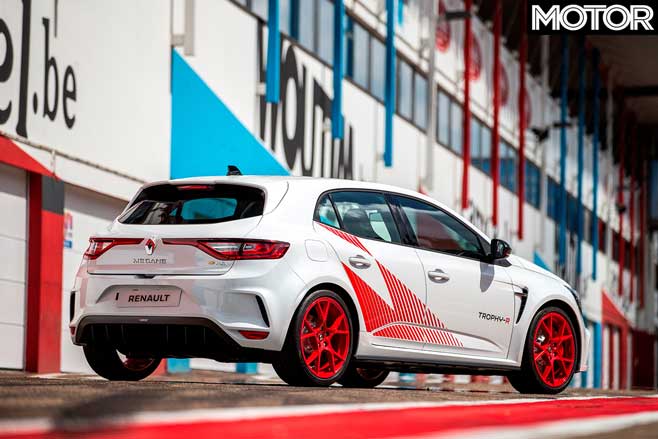
Similar to Toyota’s method with the new GR Supra, Renault has developed an online platform to secure deposits from those who are looking to purchase one of the 20 Megane RS Trophy-Rs coming to Australia.
On top of the 20 Trophy-Rs, one unit of the even more kitted-out Megane RS Trophy-R Record Edition will come to Australia to be auctioned off. It features carbon fibre wheels from Carbon Revolution as well as Brembo carbon ceramic brakes, just as the car that set the 7:40.1 lap at the Nordschleife.
The Trophy-R will arrive with a kerb weight of approximately 1290kg, 130kg lighter than the Megane Trophy it’s an evolution of, while the parts that helped it to its record (Ohlins dampers, Bridgestone Potenza S007s, and an Akrapovic exhaust) are all standard.
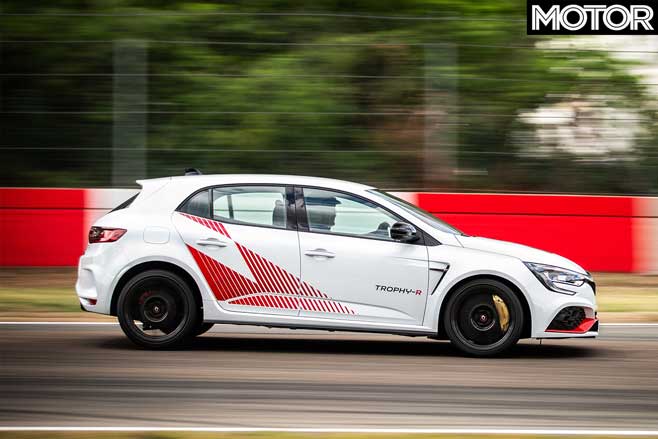
Available only in pearl white with red highlights, the Trophy-R is due to arrive locally in early 2020, though it’ll be preceeded by the arrival of the Renault Megane RS Trophy 300, the most focused version of the Megane short of the Trophy-R.
The RS Trophy 300 boasts 220kW from the same 1.8-litre turbo four as the Trophy-R, though features more daily-friendly comforts, less light-weighting, and less focused suspension, brakes, and tyres.
Renault Australia is yet to announce pricing for the Renault Megane RS Trophy-R, though tells us it expects pricing to land near the $70,000 mark.
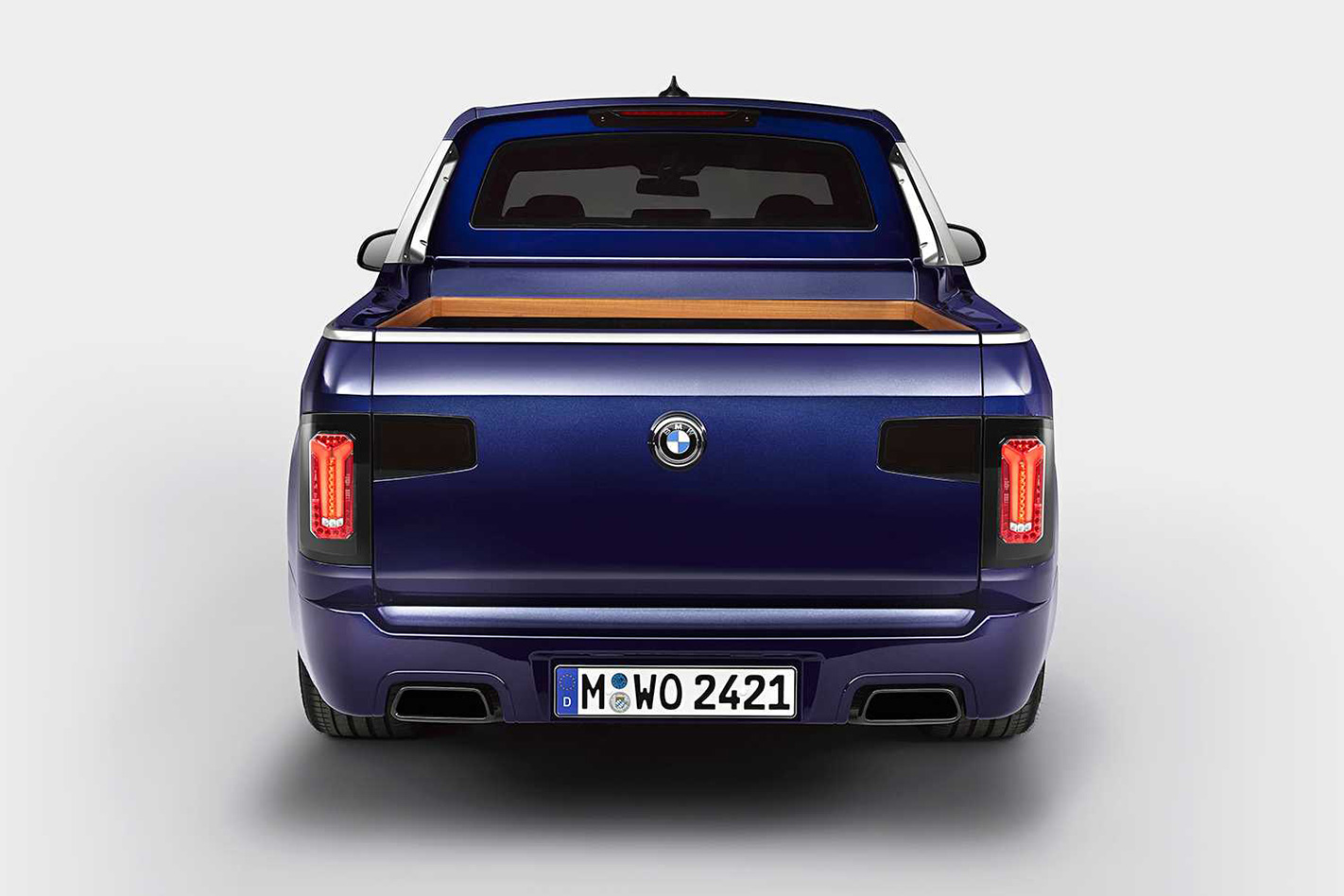
Despite BMW vowing it has no interest to build a ute to take on the Mercedes X-Class, young boffins in the tech department clearly think otherwise.
Utilising an old test mule X7 SUV, 12 trainees from the mechatronics, body modeling, and engineering departments in Munich have built a hulking bespoke ute for BMW Motorrad events.
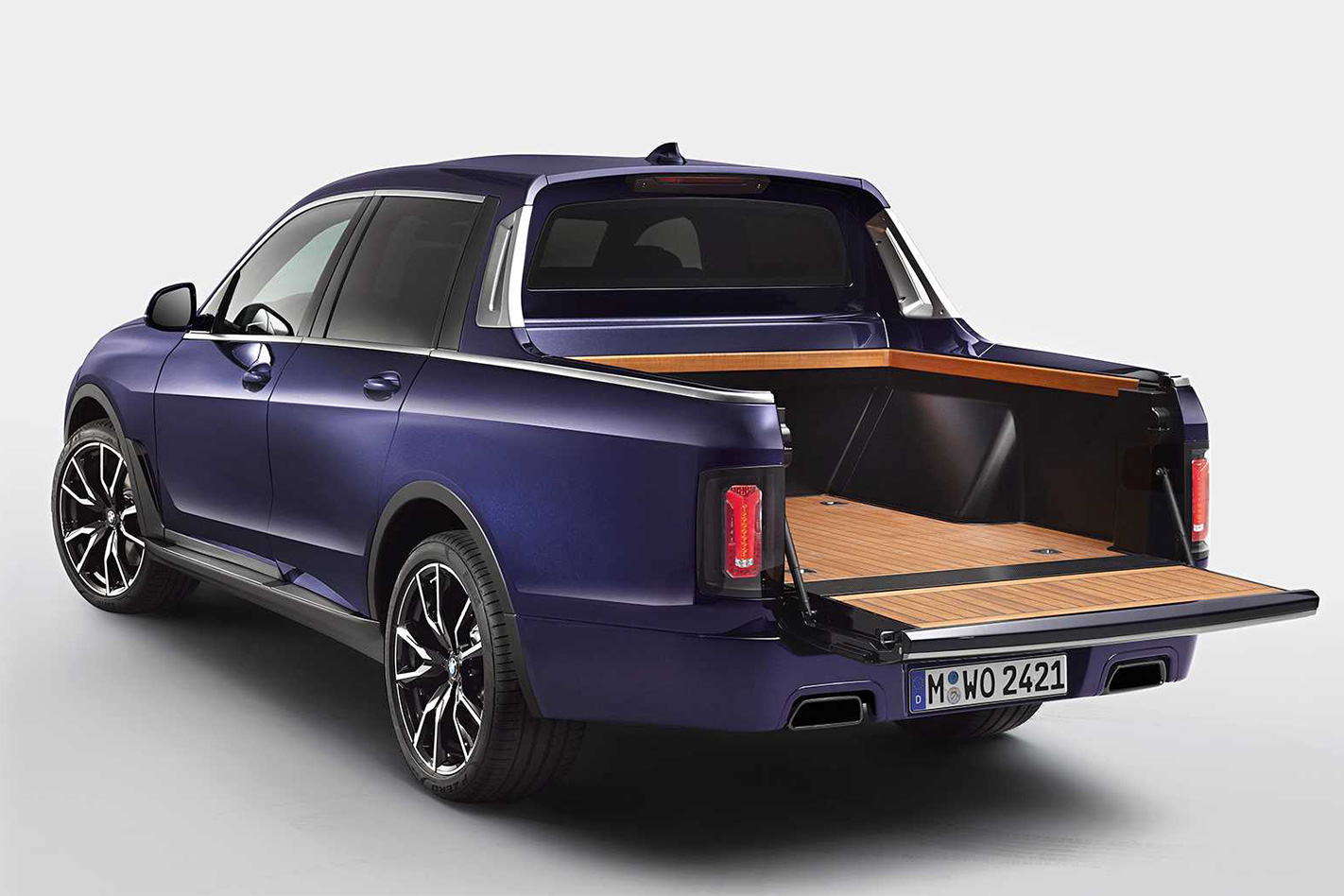
Unlike the Nissan Navara-based X-Class, the one-off Beemer utility rides on BMW’s latest CLAR platform, motivated by the X7’s all-wheel drive xDrive40i straight-six petrol drivetrain producing 250kW and 450Nm through an eight-speed automatic. It also gains specially-tuned two-stage air suspension tailored for both comfort and hauling a load.
Cutting the wagon off the back, the third-row seats were removed and the new rear tray extends 100mm longer than where the hatch previously sat. Adding a touch of class in the tub is teak slat lining and puddle lamps to illuminate the precious cargo – a BMW F 850 GS Touring bike.
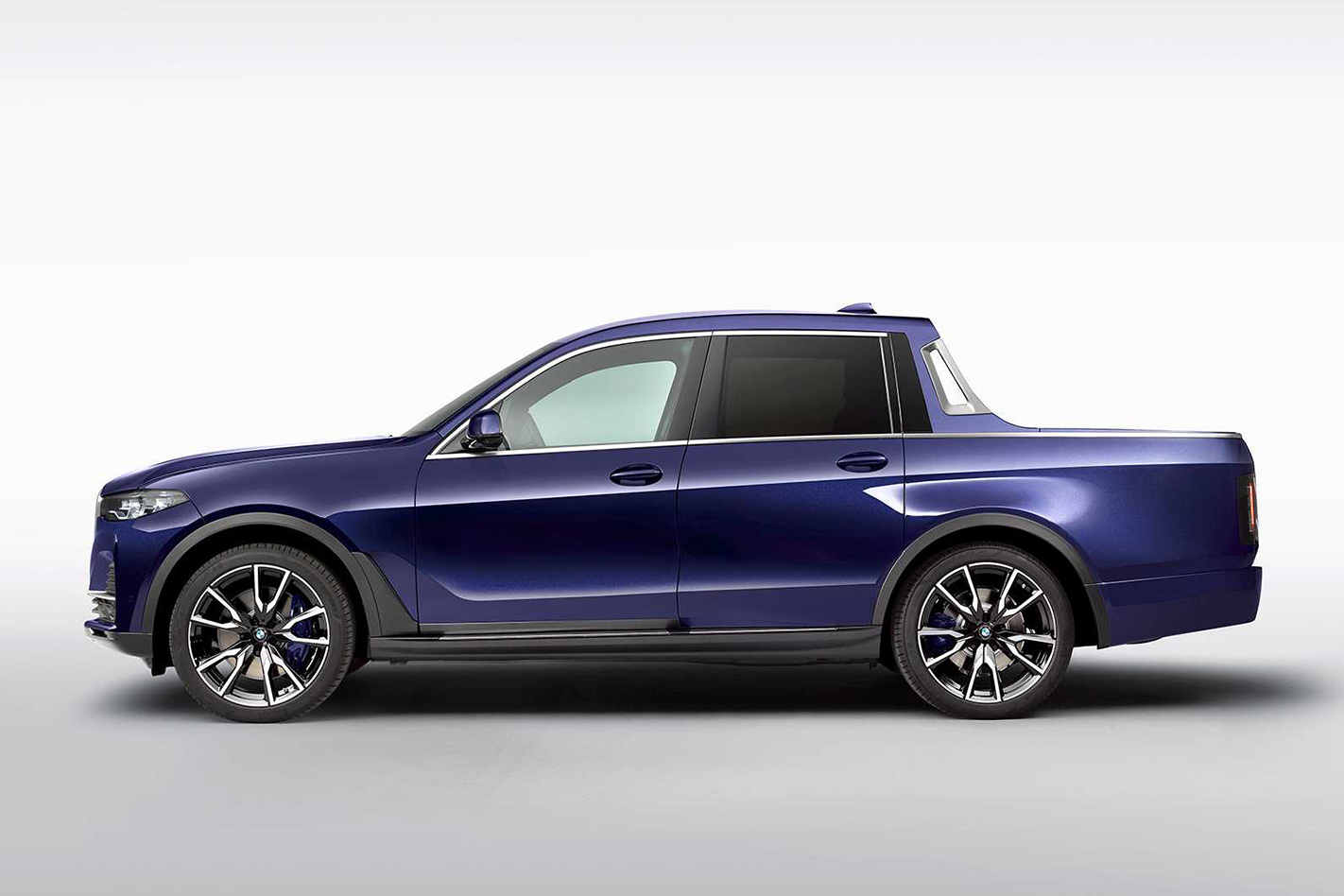
Using 3D SLS printing and CFRP parts, the ute weighs a huge 200kg less than the X7, though it still carries that huge set of teeth upfront.
It’s not the first parts hauler to come out of BMW, with the M division creating an E30 ute in 1986, and an E92 M3 ute in 2011. Is this new luxo ute a case of third-time lucky for us to see a production BMW pick-up? Not a chance, according to BMW, which says it has no interest in the dual-cab market.
All you can do is play the hand you’re dealt. Lotus has endured some tumultuous times in the decade since the Lotus Evora was first released.
CEO Dany Bahar came and went, having promised the world and delivered nothing; dire sales and no product plan threatened the company’s very existence but the arrival of Jean-Marc Gales in 2014 righted the ship. Lotus reported a profit in 2017 and Geely’s purchase of a 51 per cent stake in the iconic brand secured its short-to-medium-term future.
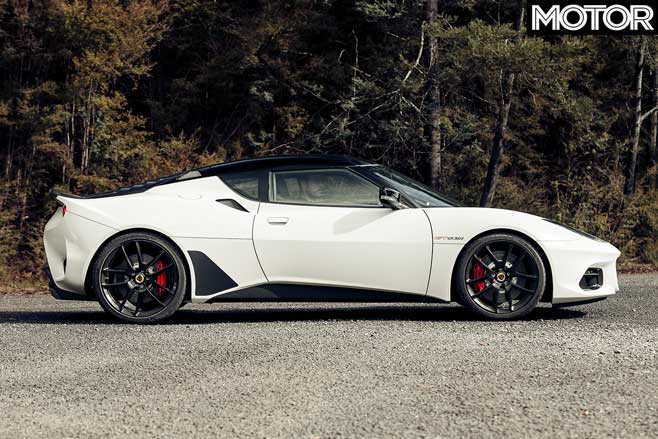
Throughout it all the Evora has adapted, survived and is now healthier than ever. With insufficient funds to create new models, Lotus has focused on optimising what it has and transformed the Evora from a superb chassis with a dodgy interior and a Camry engine to a speedy, snarling sports car that, on the right road, can deliver a driving experience few other manufacturers can match.
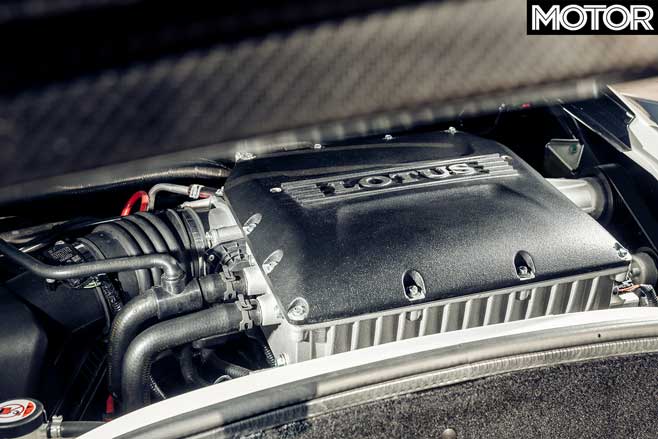
The Sport 410 is the range-topper (now that the limited-edition GT430s are spoken for) and makes 306kW/420Nm, a healthy 100kW/70Nm more than it started with a decade ago. In everyday driving it’s completely unstressed, murmuring away in the background overlaid with a subtle whine from the supercharger.
Slight rev hang is a small annoyance but easy enough to drive around, while the six-speed gearbox also requires a certain rhythm – get it right and each gear slots away beautifully, but it can be a bit fussy.
Nothing about the Evora would preclude it from being used day-to-day. The ride is firm but supple, the back seats are useless for humans but handy for storage and road noise only becomes an issue at highway speeds.
Despite Lotus’s best efforts and recent strides forward, build quality is still far from the level you’d expect in a $200,000 car. The plastics in certain areas (the back of the steering wheel, for example) would feel cheap in a $15K city car and closing the door with the window down in our test example made the glass rattle.
There are further ergonomic quirks: the initial softness of the brake pedal makes heel-toe downshifts tricky, and its location would be perfect for left-foot braking if the clutch wasn’t there. You could rightly view these complaints as nit-picking, but they aren’t the kind of issues you find in, say, a Porsche Cayman. Then again, the Evora has something the Cayman doesn’t: an intoxicating exhaust note.
Unlike in the similarly-engined Exige, the Evora has no bimodal exhaust actuation point at 4000rpm. Hit the Sport button and you get all the noise, all the time. It’s unbelievably raucous. Possibly too raucous. Enthusiastic driving will be telegraphed to anyone within about five kilometres and you’re likely to run into a few issues with racetrack noise limits, too. It’s that loud.
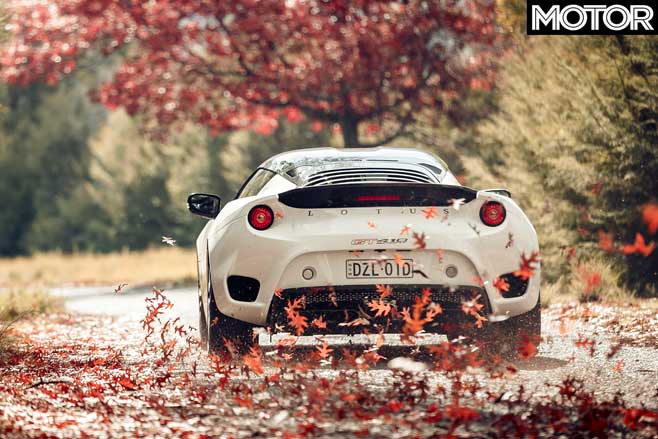
The exhaust is switchable, but even in ‘quiet’ mode it opens its lungs again at around 4000rpm under full throttle. Still, it does sound incredible.
It doesn’t hang about, either. Despite an impressive 0-100km/h claim of 4.2sec, the Evora won’t knock your socks off with its pace, the linear way the supercharged engine delivers its power disguising its speed somewhat.
It’s nicely quick, by which I mean the speed isn’t intimidating or of a quantity that can’t be explored on the road, but it’s still a very potent machine.
Despite the injection of attitude, the Evora’s defining quality remains its chassis. The steering is outstanding, not super sharp but beautifully measured in its response and perfectly weighted, without the kickback that afflicts McLaren’s similarly talkative racks.
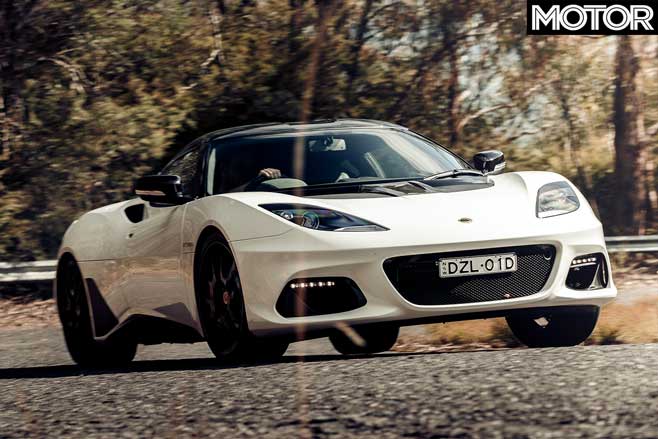
It provides ample information about the behaviour of the front tyres, which is particularly important as that’s the end that’s going to let go first.
Shod with sizeable Michelin Pilot Sport Cup 2s, there isn’t the power to unstick the rear on dry tarmac, so with an appropriate entry speed the throttle can be nailed early, slingshotting the Evora towards corner exit like there’s an active diff involved.
It’d be interesting to sample the Sport 410 on less sticky rubber; the Cup 2s provide incredible cornering speeds but the sheer grip possibly dulls the car’s personality a little on the road. On track the Cups would no doubt come into their own.
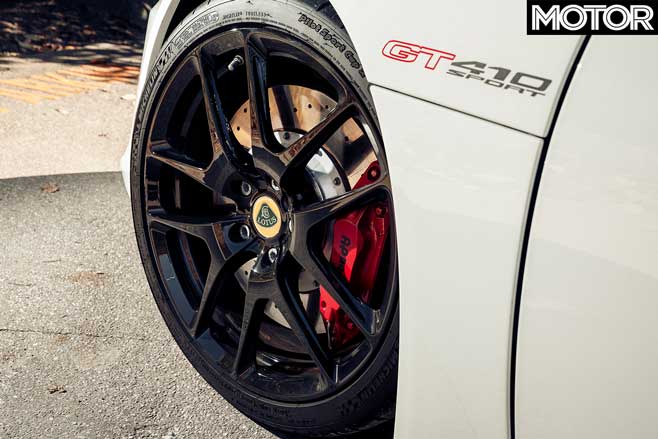
The Evora won’t be for everyone, as allowances do have to be made for a low-volume sports car built by a small company.
Some would argue that allowances shouldn’t have to be made when you’re spending north of $200K, but when it comes to the driving experience there is no compromise required.
It’s an extremely talented, involving sports car with everyday manners, which isn’t a bad hand to play.
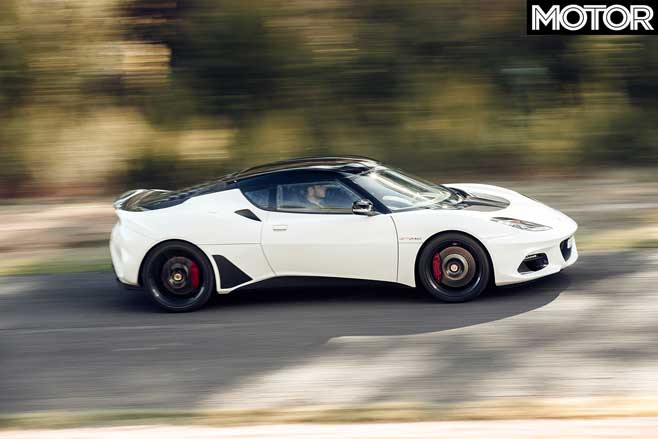
2019 LOTUS EVORA GT410 SPORT SPECS Engine: 3456cc V6, DOHC, 24v, supercharged Power: 306kW @ 7000rpm Torque: 420Nm @ 3500rpm Weight: 1361kg 0-100km/h: 4.2sec (claimed) Price: $209,990
Like: Chassis, communicative steering, engine, grip, docile to drive around town Dislike: Build quality, brake pedal feel and position, exhaust too loud for some, price
Rating: 4.5 out of 5 stars
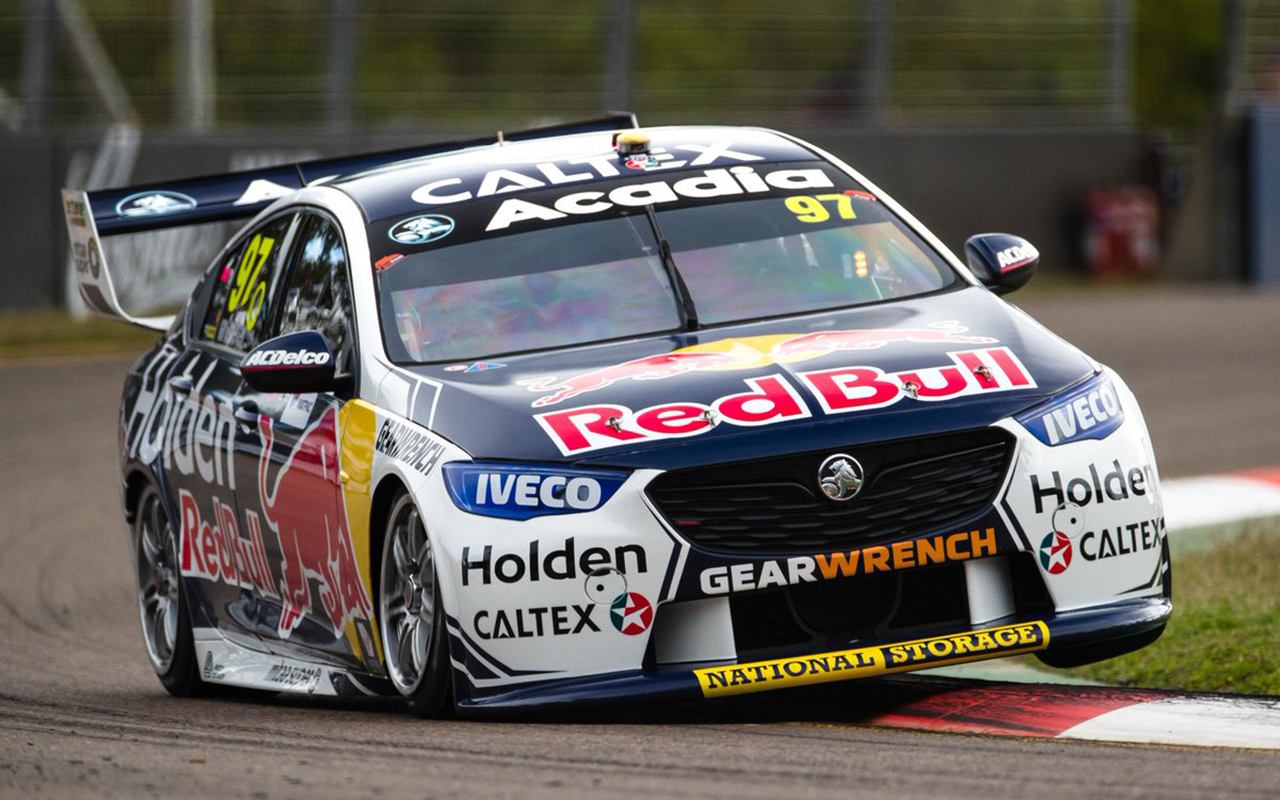
Holden has renewed its support for Supercar racing in Australia until 2021, with the Commodore chosen as its car of choice.
The initial announcement itself was almost hidden in a Foxtel interview with the commercial operations manager of Triple Eight Racing, Jess Dane ahead of last weekend’s Townsville round of the series.
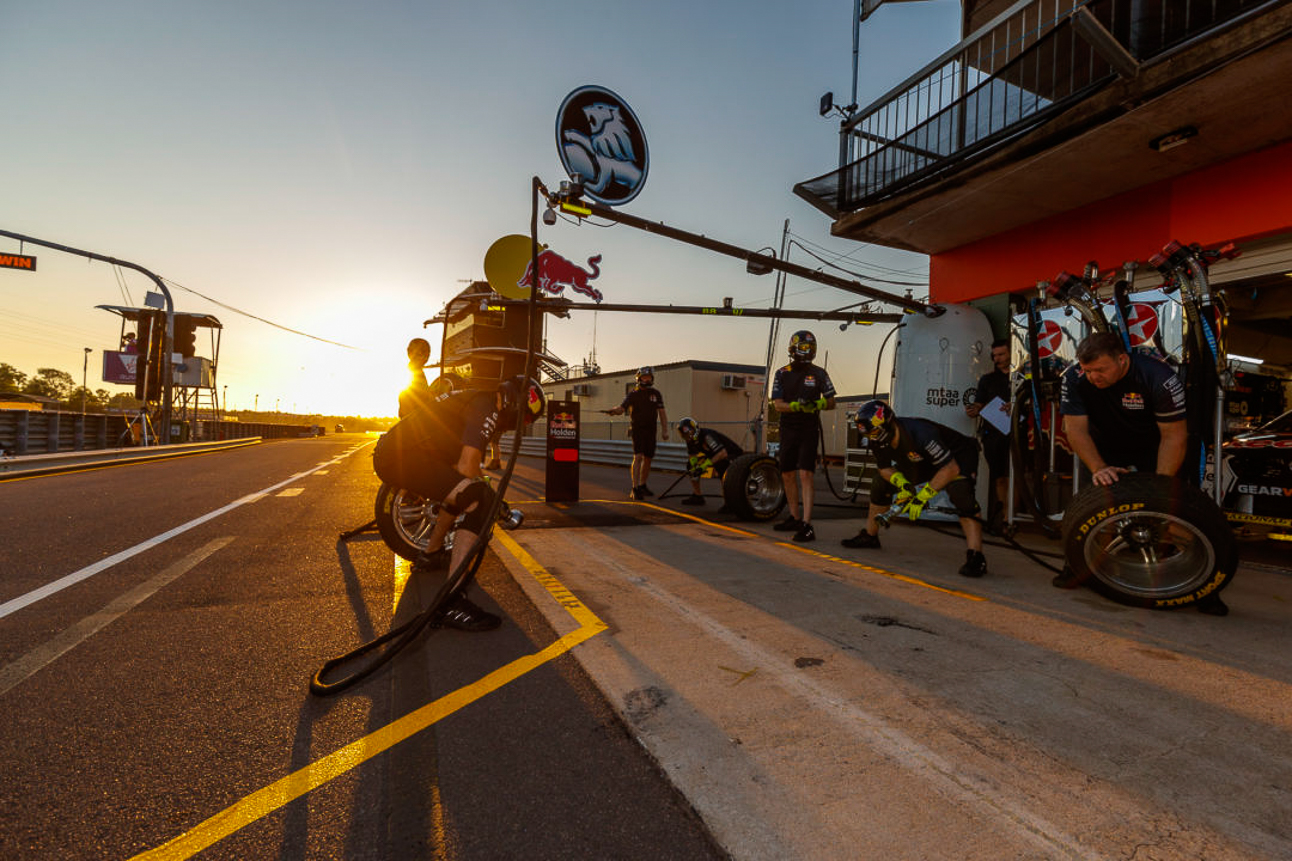
“Red Bull and Holden have both confirmed that they’re extending their partnership for another two years with us,” Dane (below) said.
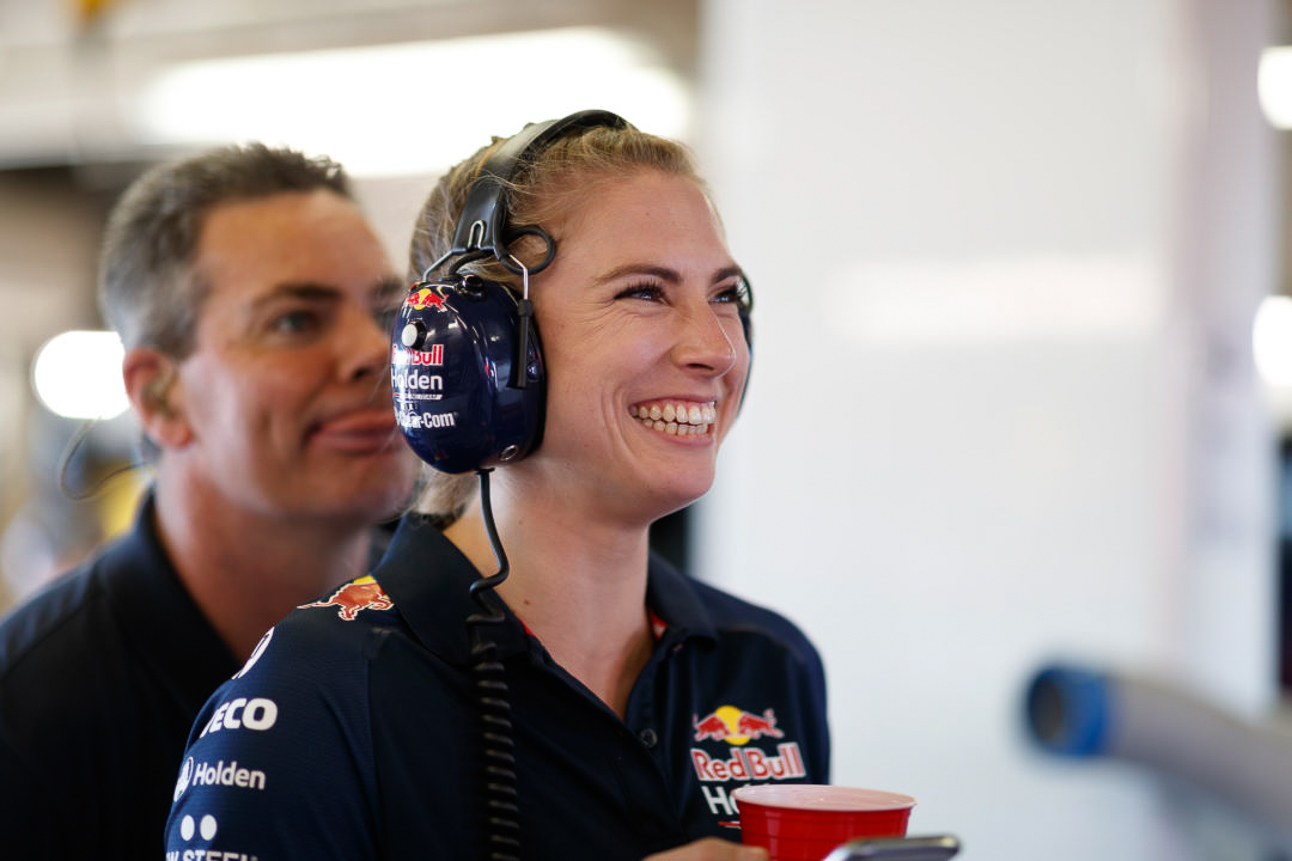
“So the Red Bull Holden Racing Team will be on the grid as you see it until at least the end of 2021, which is fantastic.”
The Queensland team has acted as Holden’s factory racing squad since 2017 after the manufacturer decided to split with its previous partner Walkinshaw Racing.
The news means that Holden will not push forward with any factory-backed plans to introduce the Chevrolet-badged Camaro into the series over the Commodore in the short term, in response to Ford’s new Mustang.
Rival Holden team – and the former Holden Racing Team – Walkinshaw Andretti United (WAU) Racing actively investigated bringing the Camaro to the series earlier this year before shelving the idea.
Walkinshaw’s road car business Holden Special Vehicles imports and converts both the 2SS and ZL1 Camaros. However, the Camaro was ultimately ruled out as a viable alternative to the Commodore due to restrictive rules surrounding Supercars’ control chassis.
Holden’s marketing director Kristian Aquilina told media at the event that the timing of the announcement wasn’t perfect.
“The timing of it was not necessarily optimal for us,” he admitted. “We’d like to celebrate it sometime down the track, particularly as we draw closer to our 50 years of involvement in the sport.
“But I thought it was important that the team be able to concentrate on doing what they do, rather than responding to questions about our ongoing involvement.”
It also means that Holden will persist with the 5.0-litre pushrod V8 engine, rather than switching to a turbocharged V6 that would better reflect its road car range.
“We’re only interested in the Commodore with the V8,” Aquilina said.
“That’s really what we’re here racing for and with. That’s our hardware, it’s what we’ve built our plans around.”
Holden last year axed plans to introduce a twin-turbo V6 into the series, despite more than a year’s worth of work and a test unit running on board a Triple Eight test car.
Development of the Cadillac-sourced 3.5-litre unit was moved from Melbourne to Triple Eight Engineering’s Queensland headquarters when Walkinshaw lost the contract as Holden’s factory team.
The decision for Holden to stay in the series with the Commodore is linked to a proposal to introduce sweeping changes to the Supercars series from 2021.
The series is at a crossroads, with teams complaining of excessive costs, and new entrants and commercial partners increasingly hard to find in a tightening economy.
Costs soared following the introduction of the Car of the Future (CotF) regulations in 2013, which regulated the use of a control chassis used across all teams, with bodystyle dimensions locked into an aerodynamic ‘box’. to promote parity across the field.
In December 2014 the sport announced Gen2 rules, which would allow Supercar teams to compete with alternative engines to the V8, along with two-door coupe bodystyles instead of the traditional four-door sedan of the Commodore and Falcon.
The Gen2 rulebook allowed Ford to introduce the Mustang to the grid. However, the dimensions of the CotF chassis, in particular the mandated height of the front roll hoop resulted in the now much-maligned profile of Ford’s two-door racer.
However, Aquilina didn’t rule out investigating alternative cars if the series announces sweeping changes to its requirements in the next two years. It’s thought that Supercars could adjust the dimensions of the CotF chassis in the future to allow two-door coupe racers to have a profile that better reflects that of their road-going siblings.
“Well, if the rules do change in that timeframe, we’ll have to obviously assess those and respond to them,” he said.
“We obviously need enough time to be able to do that, too, so on that front I think we’d need to have that discussion with Supercars and the team through our homologation partner [Triple Eight] as some of that becomes clearer, but we’ve certainly got no line of sight on that at the moment.”
The Holden news comes as Ford only needs one more good result from the 2019 season to secure an unassailable lead in the 2019 Supercars manufacturer’s championship, despite having fewer Mustangs in the series than Holden has Commodores.
My bible is putting on weight. For decades I’ve kept a copy on my desk, and it’s been a frequently used and unfailingly reliable guide to car-related truth. It’s the Bosch Automotive Handbook.
The new edition, published late last year, is a hard-bound brick of 1778 cigarette-paper-thin pages. “In this the 10th edition in English many subjects have been included for the first time, completely revised or enhanced,” promises the foreword. “More than 200 pages have been added.” Some of these are devoted to hybrid drives, but the internal combustion section has also expanded. The coverage of operating fluids has grown, and there’s an entire section covering seals.
Like the Christian bible, the Bosch Automotive Handbook is the work of many authors. Around 240 experts contributed to its creation. Many are academics. Others work in the car industry, for manufacturers including Porsche, Volkswagen, Audi and Daimler, the parent of Mercedes-Benz. Some are employed by component suppliers like ZF, Michelin, BASF and, of course, Bosch.
It begins at the very beginning, with definitions of the quantities and units used in subsequent chapters. Next come outlines of mechanics, acoustics, optics, fluid mechanics and thermodynamics. Then it’s on to the basics of electrical engineering, electronics, chemistry, electrochemistry, mathematics, statistics, finite element analysis, and more.
The real meat of the Bosch Automotive Handbook are the chapters that follow. These describe and discuss every aspect of automotive technology in principle and in practice.
This is not a book to read for entertainment, another thing it has in common with the bible. The writing style is desert-dry, but the columns of text are lightened at least a little by a multitude of tables, graphs, equations, schematics, cross-sectional diagrams and beautiful cutaways, all in glorious black and white.
No-one will dip into the Bosch Automotive Handbook seeking spiritual solace or moral guidance, but, Lord, it has the answers to so many questions…
Some of them are simple and practical. Convert US mpg to L/100km? The equation to calculate kinetic energy? The melting point of aluminium? The weight of a litre of unleaded? Hooke’s law? How much does a tyre’s grip typically decline on a wet road compared to dry bitumen?
Even more useful for someone trying to keep up with a rapidly evolving industry are the summaries of the current state of the automotive art. Need a quick grounding in driver-assistance systems? What are exhaust emission limits, present and planned, around the world? What makes a switched reluctance electric motor different? And more. Oh so much more…
But in one very surprising way the Bosch Automotive Handbook has failed to keep pace with the march of technology. When I learned the new and updated edition had published, I headed straight to Amazon to buy it. The new content on hybrids and electric drives alone made it, for me, irresistible. Plus, loaded on my Kindle, I’d be able to have the Bosch Automotive Handbook with me everywhere I work, not just at my desk.
I was, to put it very mildly, astonished to find there was no e-book option. After I’d sighed, shrugged and ordered the paper version, Amazon had a question. Would I like to be able to buy this book in Kindle format? Sure would, I responded…
So I guess that demigod of e-commerce, Jeff Bezos, will soon be sending some disciples to Stuttgart to give Bosch a bit of a smiting, bible style…
PERHAPS IT’S a little premature, but an apology is required for the conclusion of this comparison. It’s deeply unsatisfactory given that here are two of the very finest sports coupes that halfway sensible money can buy. The Alpine A110 and the BMW M2 Competition represent wildly divergent means to a common end and their differences are so profound that pronouncing a winner seems invidious. At the moment it also seems unnecessary because we’re about to drive both cars off a cliff.
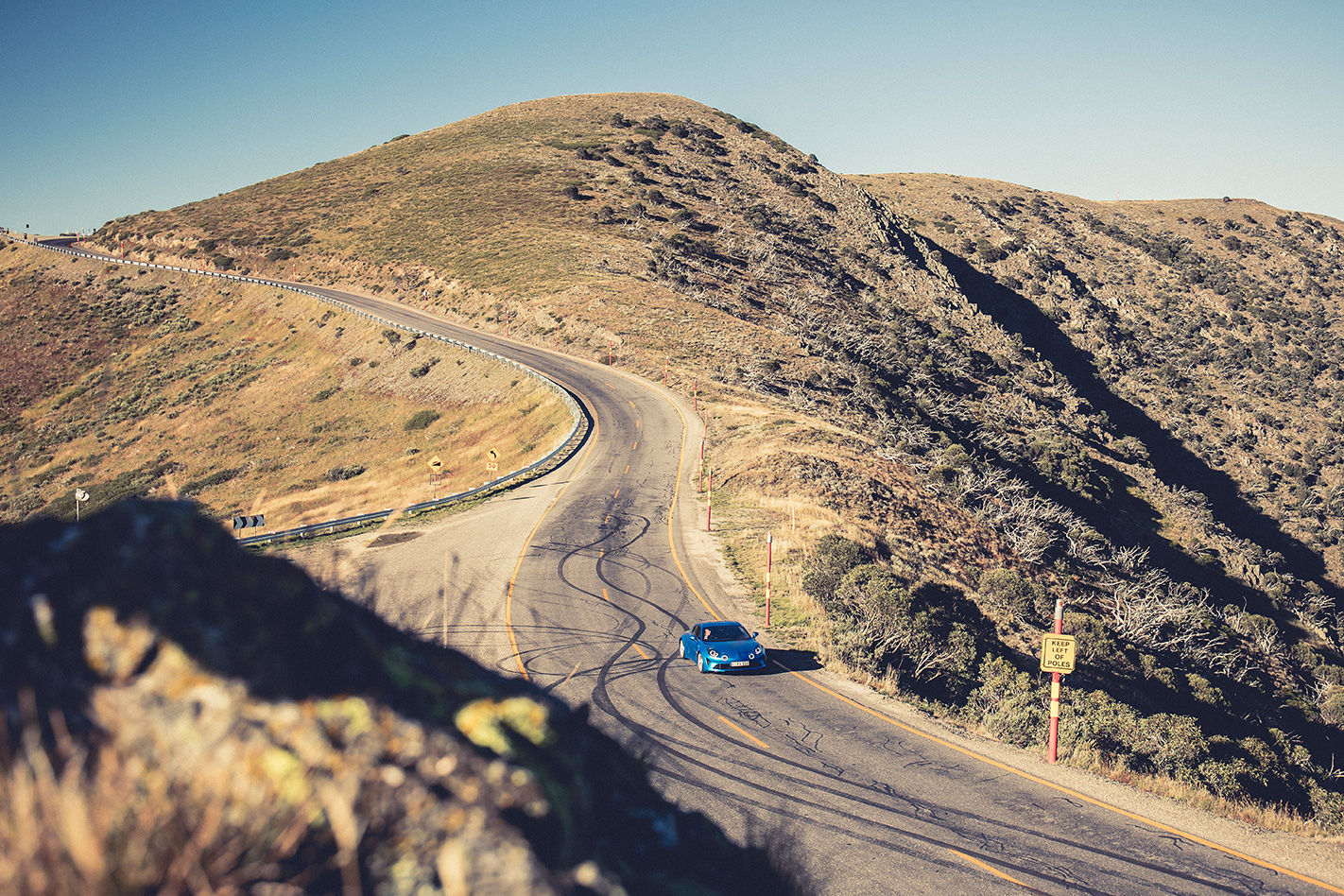
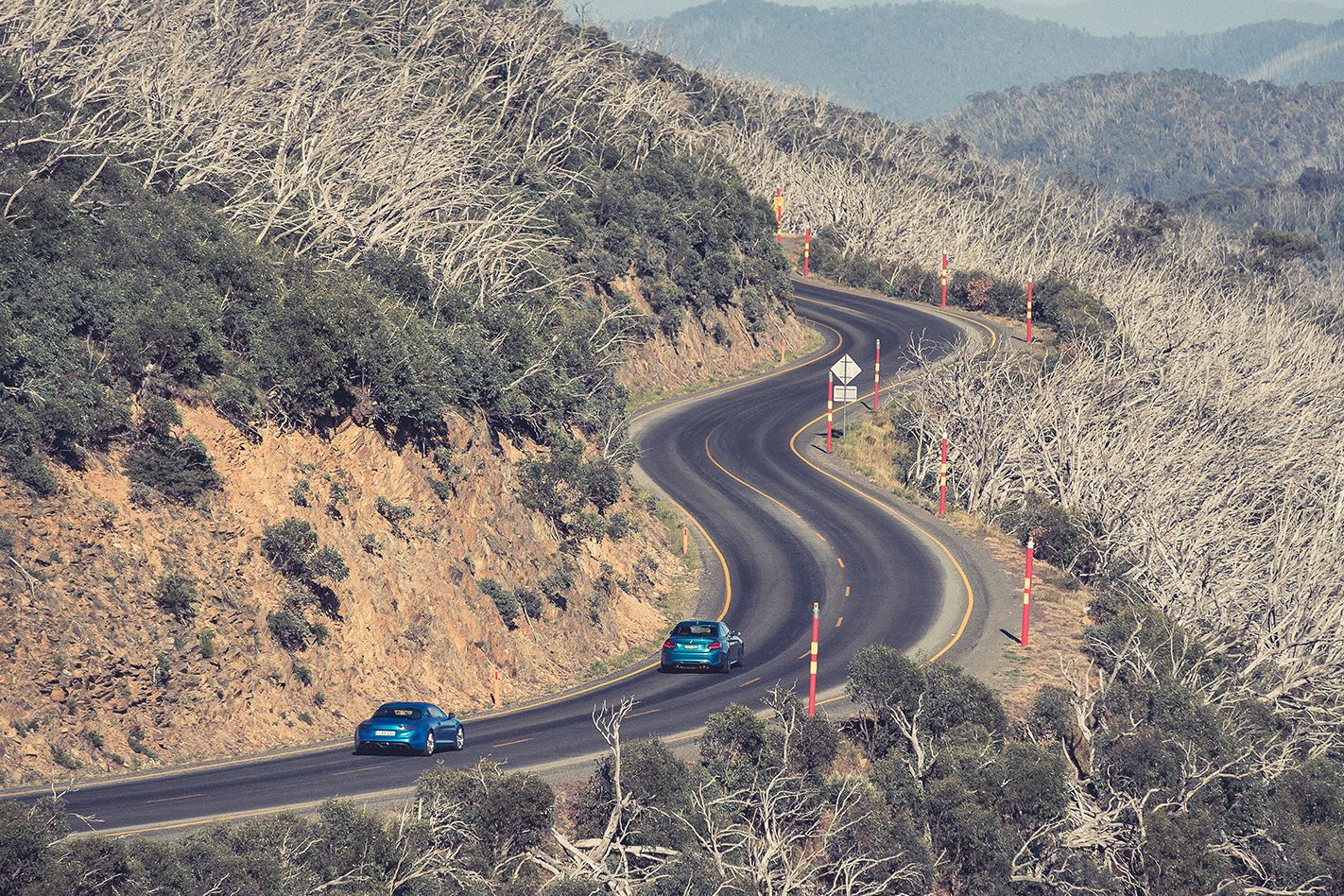
It’s a fair old way down. There’s a moment to speculate just how far as the car skates towards the visible horizon, about 20 metres distant. Beyond that are treetops and then blue. In the foreground, the Alpine A110 is understeering towards the unprotected precipice. The BMW M2 Competition is, predictably, doing something different, namely oversteering, but is otherwise in lockstep. Flagging that the Great Alpine Road from Harrietville to Hotham would turn from bitumen to a carpet of freshly laid grit just before an unprotected hard right would have been helpful.
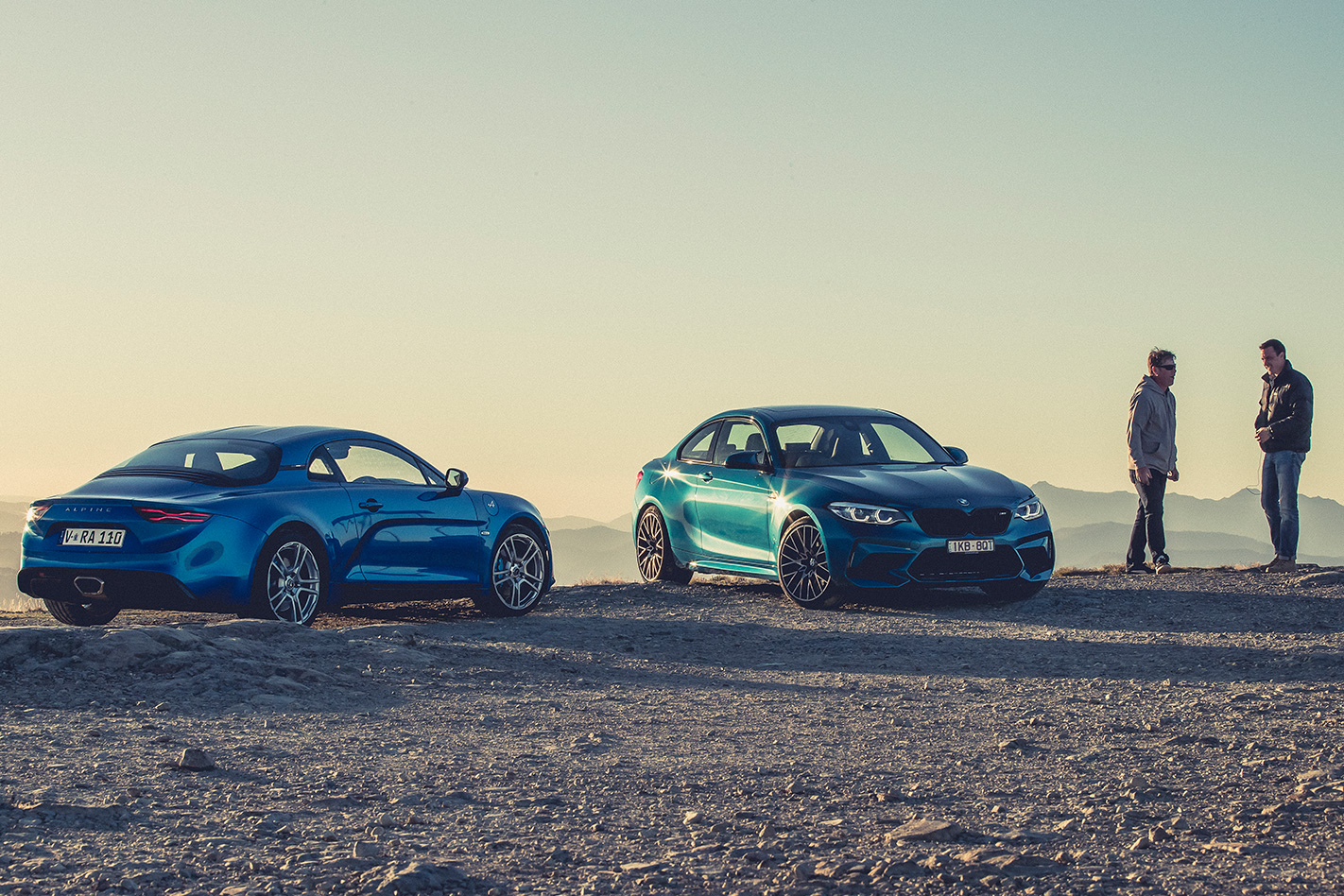
Dan Gardner’s up front in the A110, and he’s relying on the good offices of his electronic stability control. The M Dynamic Mode of the BMW has yet to register any incipient danger, just a modest slew of opposite lock. Titanic-like, the prow of the French coupe starts deviating a few degrees from the straight-ahead, but then it grips and goes. The M2’s rear boots nerf the built-up berm of gravel on the outside of the corner, there’s a nip of brake from the inside rear and around it scuttles. We park up, ashen-faced. Having just witnessed the depth of this pair’s brilliance when provoked to an extreme degree, we’re not overly keen to experience it again.
It’s a shame the middle third of the climb is plastered in loose chippings because it’s an otherwise excellent road. A local explains how the oil content in the bitumen was misjudged and that the surface was melting, and that it’ll be a month or so before the gravel is absorbed into the surface. Bikers arrive at The General bar atop Hotham, shaking their heads and cursing, one BMW S 1000 RR now bearing an exhaust that’s a medley of cratered dents and ragged swarf. If you’re thinking of visiting, give it until May, just to be on the safe side.
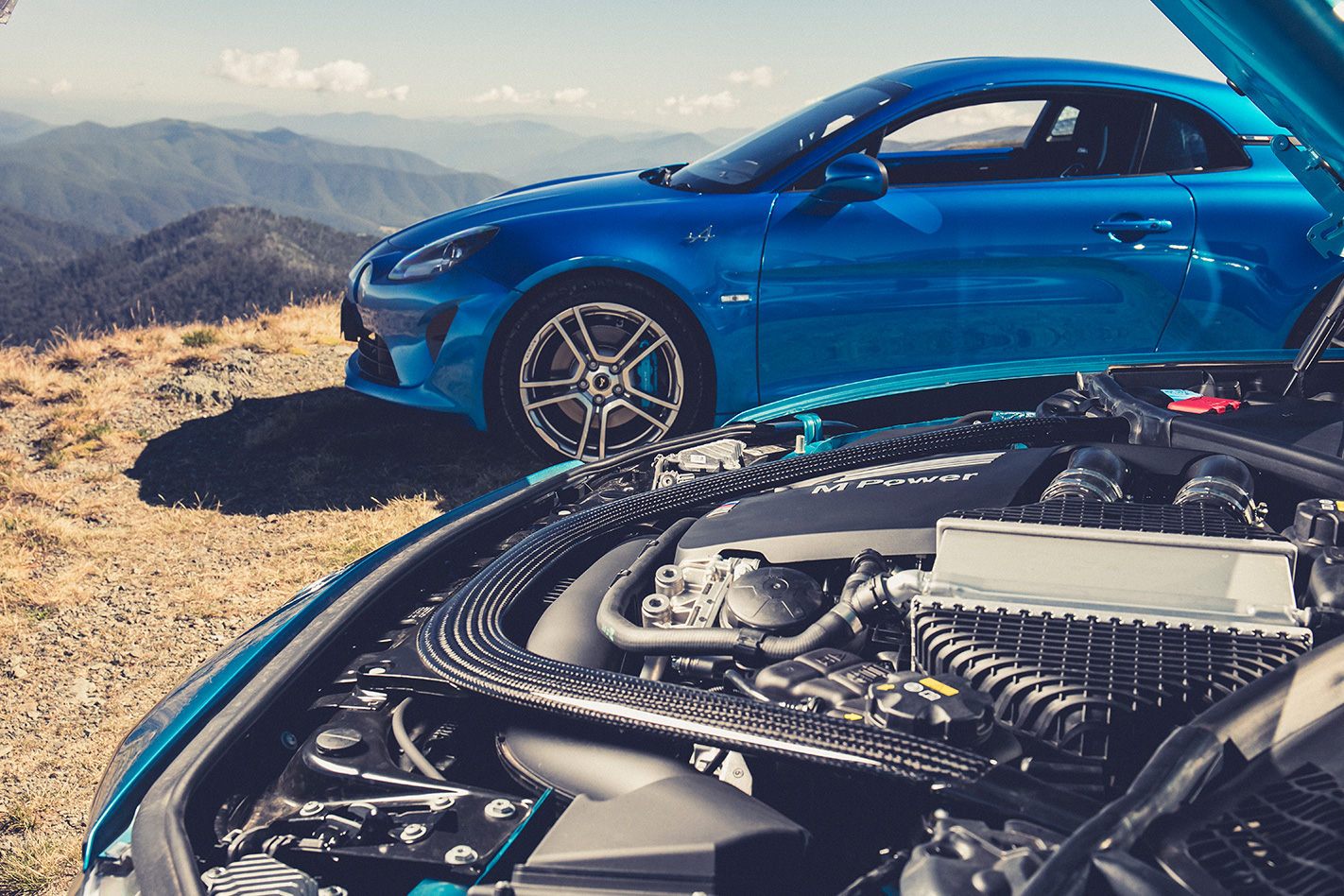
While an Alpine on the Great Alpine seemed a neat premise, bringing the cars here for a head-to-head conforms to a tried and tested road-test trope. Great cars on brilliant roads, or at least those sections without the frictional coefficient of a rug on waxed laminate, is a formula that never really gets old. And make no mistake, both of these coupes are liberally daubed with greatness. Both will run you a breath over $100K, the Alpine being a mid-engined lightweight that’s all about delicacy and doing more with less. The M2 Competition, on the other hand, uses a tactical nuclear device to crack a nut. One fronts up with 185kW and suspension components that look as if they’ve come off a kid’s toy, while the other packs the 302kW straight-six twin-turbo lump from a BMW M3 and front tyres that are wider than the Alpine’s rears.
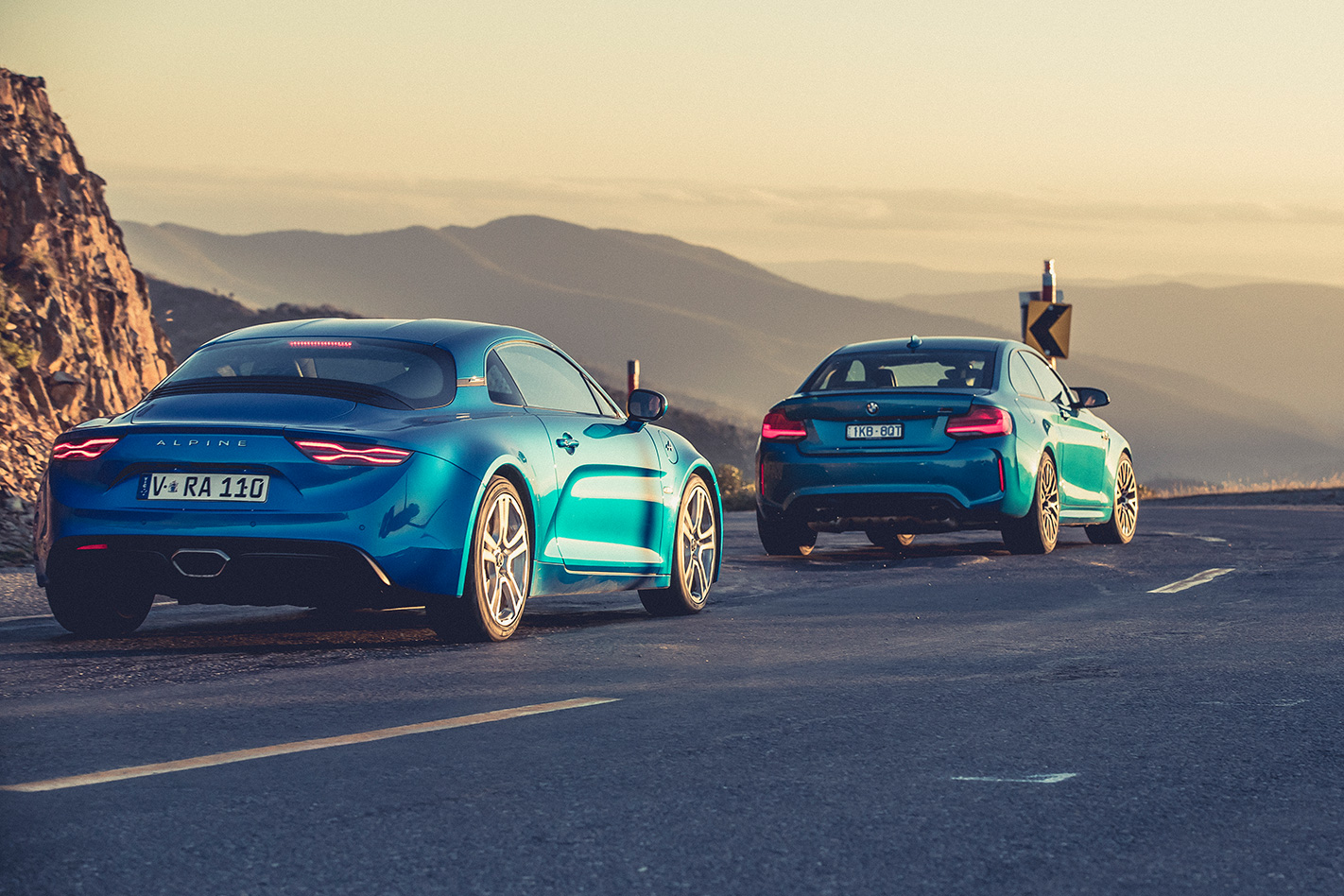
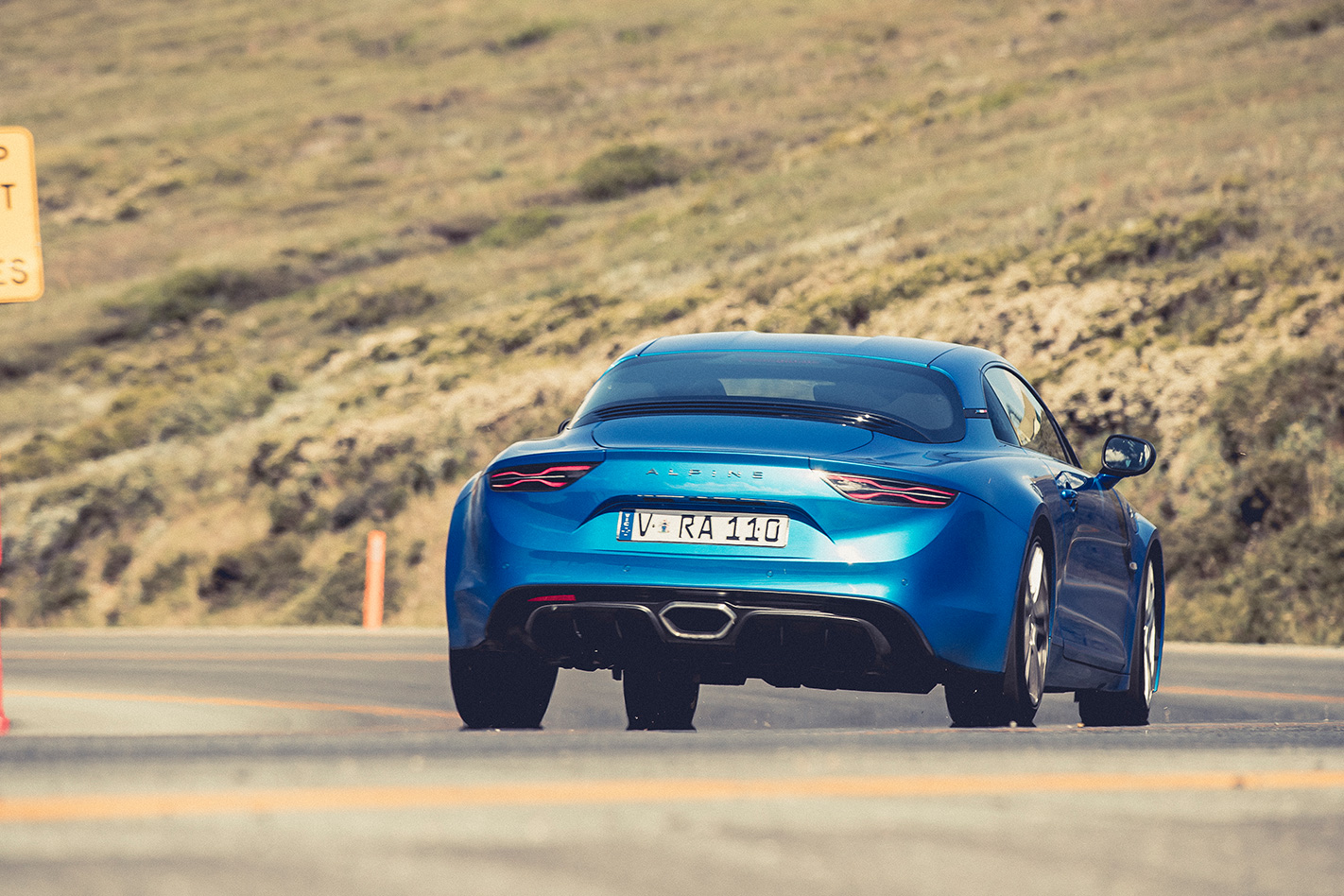
Because of this fundamental variance in engineering focus, the way the two cars dissect a challenging piece of road is instructive. Everything prepares you for the fact that the M2 will bludgeon the A110 to a pulpy mess, and in a straight line the Bavarian is the marginally quicker car (4.4 vs 4.5sec to 100km/h). Throw some challenging corners into the mix and its advantage isn’t anything like so clear. Viewed from behind, the Alpine seems to almost float from corner to corner, breathing with the cambers and ruts, all sympathetic weight transfers and high-definition feedback loops. The M2, by comparison, appears to be smashing the road into submission just to keep pace. Delicate it is not. The engine yowls, the rear suspension careens into surface changes with a thunderous boom, and underlaying all of that is the bassline provided by 19-inch Michelin Pilot Super Sports.
Drive the Alpine hard on road and it’s all about managing the front end into corners. The M2 Competition requires managing torque to the rear on corner exit. In other words, in both cars you need to be conscious of the end where the engine isn’t. On track, with the electronic assistance switched off, the A110 can be hilariously taily, but it instils some welcome discipline to its rear with the single-stage stability control switched on. Its yaw response is matched well to its roll stiffness, so when you feel the car gently transition to its outside rear, it feels as if it’s just smudging its skinny 18-inch Michelin Pilot Sport 4s.
The M2 undoubtedly feels quicker because you’re working harder and the engine is more melodic in the upper registers. The Alpine is probably louder in the cabin, the M5PT Samsung-built lump lacking any great musicality but delivering an addictively elastic muscularity.
Power-to-weight ratios aren’t too far apart, the BMW registering 192kW/tonne and the Alpine, which tips the scales around 500kg lighter, 171kW/tonne. Both drive through seven-speed dual-clutch transmissions, but the BMW enjoys the advantage of a proper mechanical limited-slip differential which certainly helps when scruffing the thing out of hairpins.
If there’s one relatively disappointing thing about the M2 Competition it’s the 3.0-litre S55 engine. It’s a gutsy motor but whereas the suspension refinements make this model feel far better resolved than the endearingly wayward old car, the engine isn’t a night and day improvement. In fact, when a 55kg weight gain is factored in, the power-to-weight ratio of the M2 Competition hasn’t taken a massive step on from the original M2.
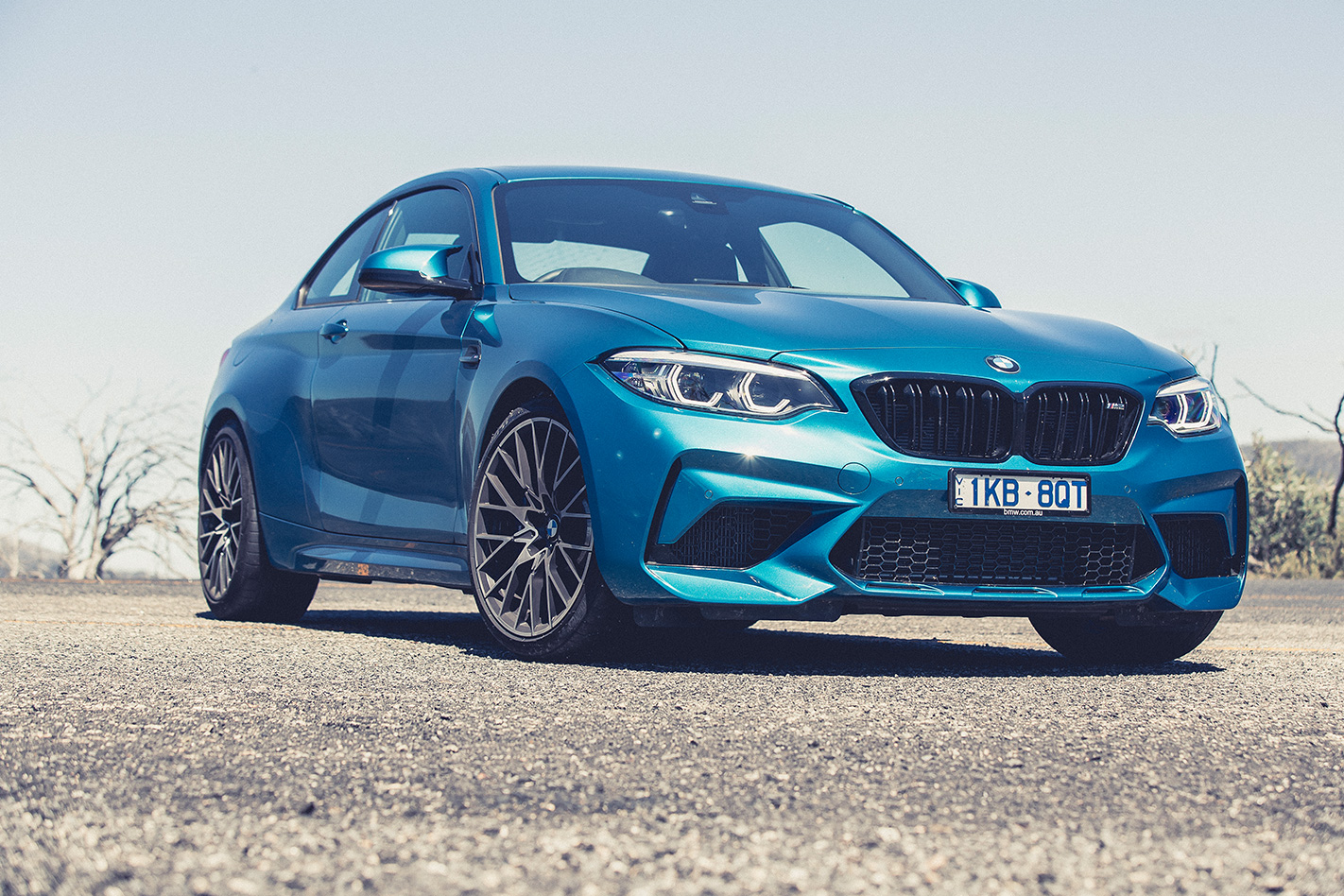
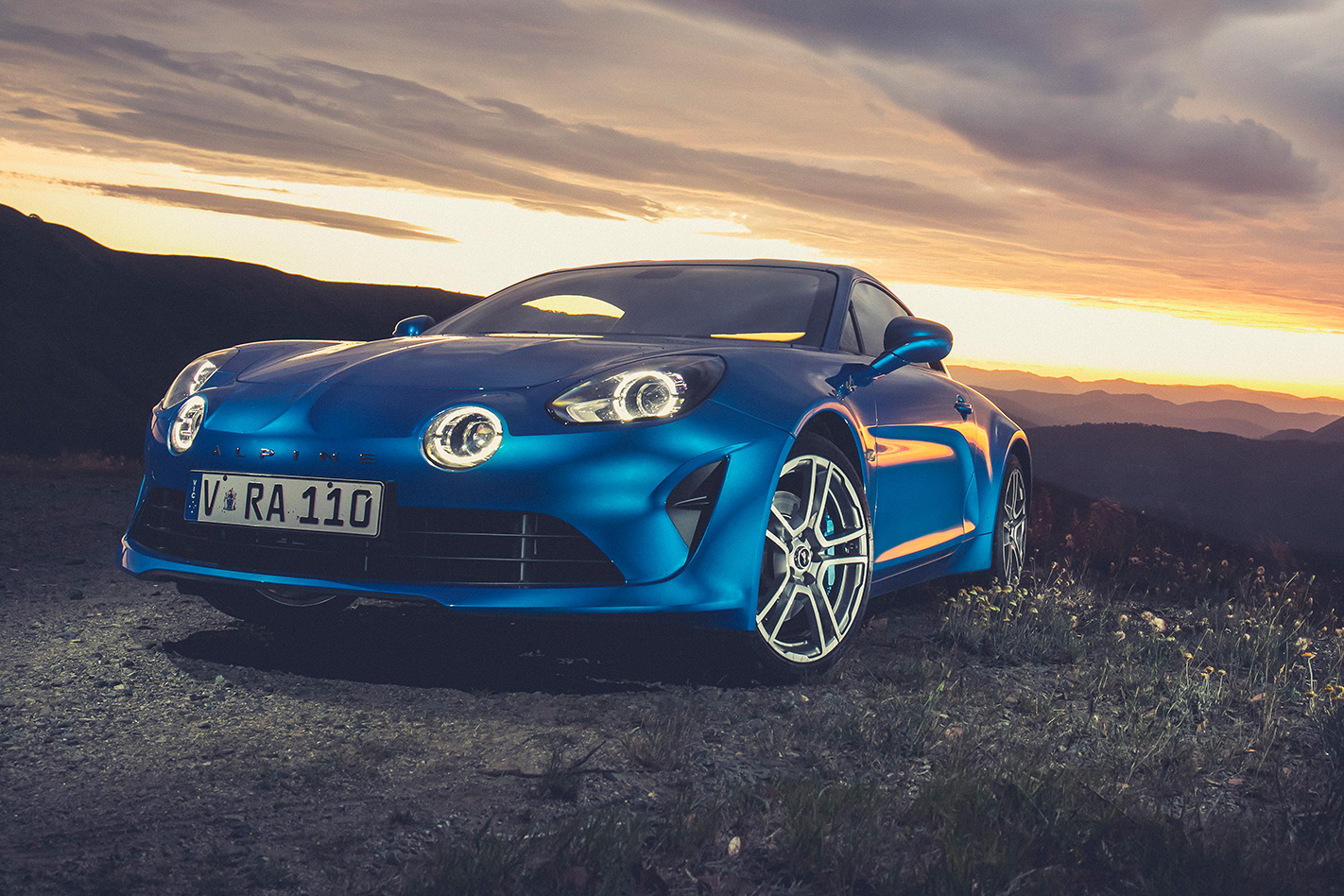
Park both of the cars on the moonscape car park atop Hotham and it’s as if one is wearing a cloaking device. Everybody wants to know about the Alpine, roundly ignoring the German car. “Al-peen? Are you European?” asks one puzzled grey nomad. The M2’s launch colour of Long Beach Blue probably isn’t doing it too many favours here, the similarity to the Alpine Blue of the A110 making the wide-hipped M2 look like its slightly frumpier friend playing matchy-matchy.
Whenever Gardner sets off in the Alpine, it’s hard to resist the M2’s chase reflex. Yes, you can assign favourite drive modes to the M1 and M2 tabs on the steering wheel, but there’s just some delightful tension about that click-click-click of powertrain and steering to Sport Plus and ESC to M Dynamic. It’s like that moment in Jaws when the reel starts clicking as the shark nibbles the bait. You enjoy that anticipation of all hell about to break loose.
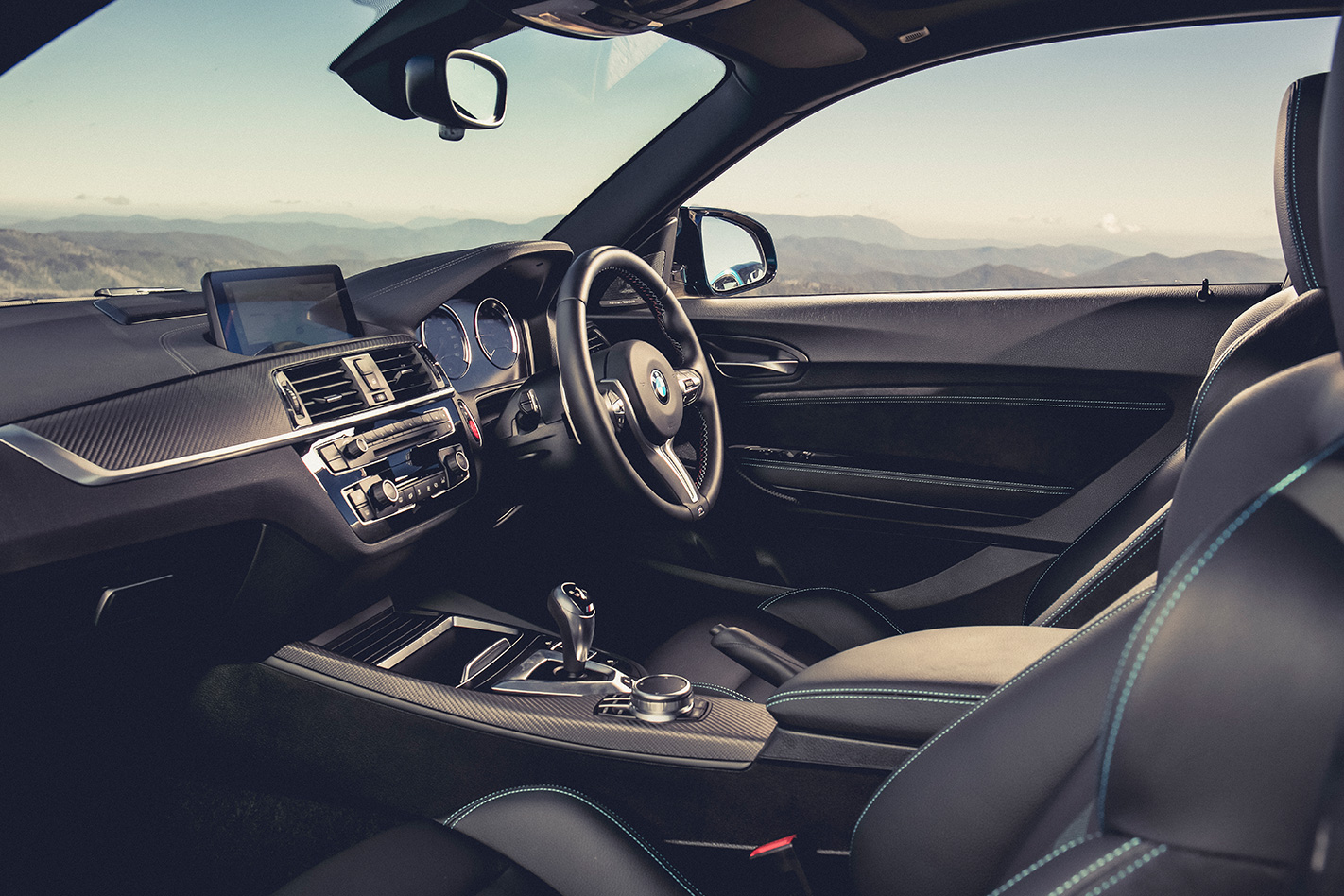
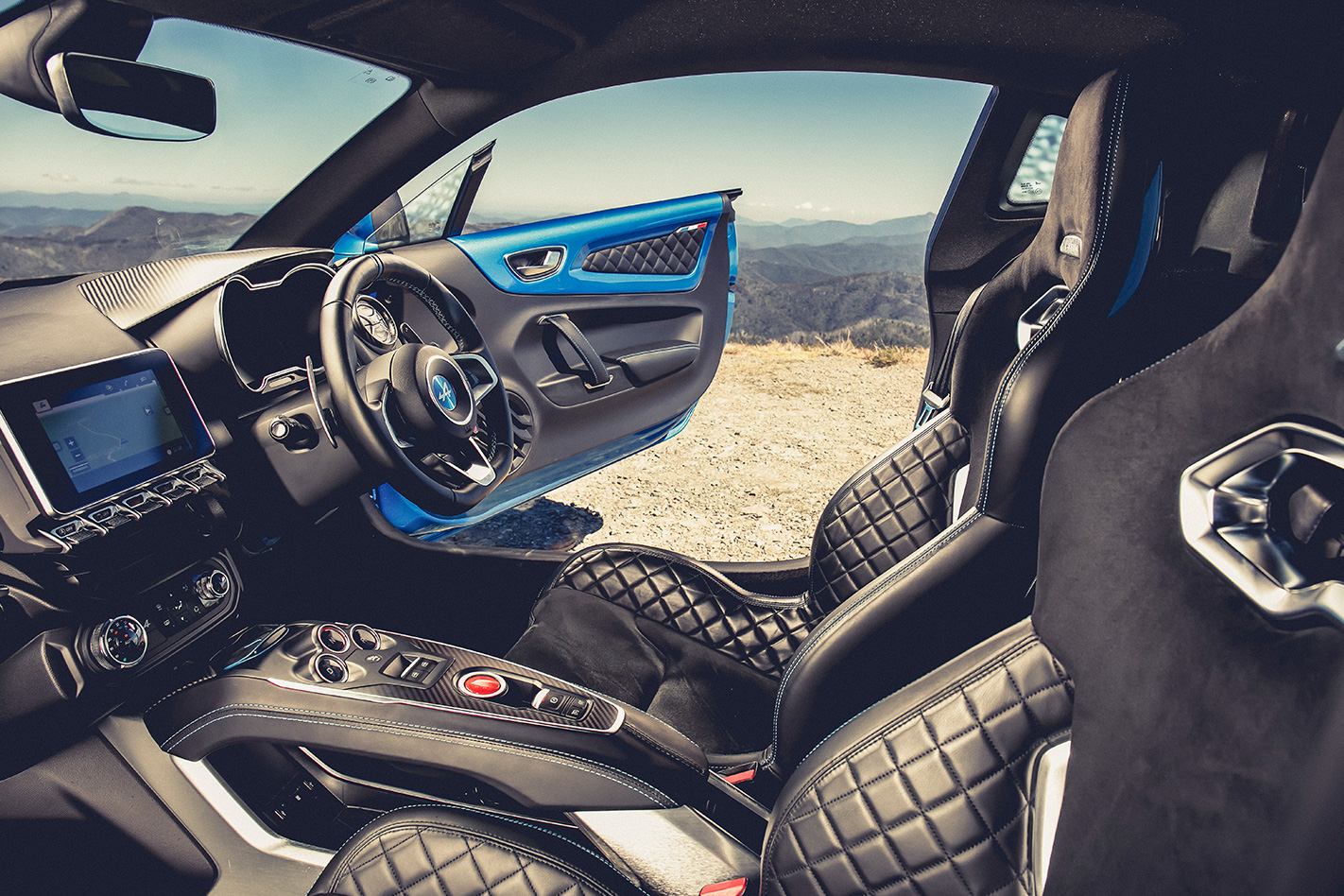
Of course, you don’t need to dial the M2 to 11 to appreciate it. The cabin is a testament to pragmatic design and the fitment of the seats with the illuminated inset M logos adds a much-needed touch of glamour. It still feels a bit mass market compared to the A110, though. Hunker down in the Sabelt seats of the Alpine and your gaze will be drawn to the custom architecture of the dash and the cool metallic highlights. It’s an ergonomic catastrophe if you want to carry any oddments, though, and you’ll also get the world’s most inaccessible USB ports and a vast footrest that features one raised Allen-head bolt that’s inexplicably positioned right beneath the ball of your foot.
What you don’t get are autonomous emergency braking or side airbags, the latter omission meaning that its importer, Renault, is observing a voluntary agreement with the FCAI and only bringing in a maximum of 100 cars per year. The reason cited for a lack of lateral inflatables is weight, although that seems a wholly idiosyncratic decision.
One of these cars is an extremely good sports coupe but the other is tinged with genius. Every time you drive a BMW M2 Competition, the grin on your face will always be tempered by the fact that the Alpine A110 is a more magical thing, a vehicle that, on the whole, works its dynamic compromises more smartly and which reaps the full benefit of the virtuous circle of weight reduction. Simply put, it negotiates a road more adeptly.
Perhaps we have dullard hearts of shabby brown coal but we wouldn’t buy one over a BMW M2 Competition. While its highs are stratospheric, the Alpine A110 can be high maintenance. At those times you’ll pine for the no-nonsense German car, where you can fling a hefty bag of gear into the boot, mirror your smartphone, plonk a bottle into the door bins, cart two or three friends and feel slightly reassured that should you find yourself in the regrettable position where driving off a cliff is in your immediate future, you’d be in something with a five-star ANCAP rating.
Should these prosaic considerations sway your decision from the fantastic Alpine? We could certainly make a case for the French coupe if it’s a second or third car and you can’t or won’t manoeuvre yourself across the sills of a Lotus Elise, but that seems but the tiniest sliver of the Venn diagram. The M2 Competition has broader appeal now and will have when the time comes to sell it. Practicality might not be a word we associate readily with performance cars but once the initial novelty has worn off, the easier a car is to use, the more you’ll get from it. Or, to put it another way, this isn’t Hollywood and the handsome stranger doesn’t always win. Once again, sorry about that.
Like anybody with an unhealthy interest in tearing up dosh on cars, I spend an embarrassingly high proportion of my time trawling through online classifieds. Sometimes I’m actually even in the market for a car of some sort. Which is when I truly shake my head in disbelief.
See, if I’m just messing about wasting time idly looking at cars for sale, that’s one thing. But when I’m genuinely looking at things for which I might swap otherwise useful cash, well, that’s when I really wonder about the nation’s collective intelligence.
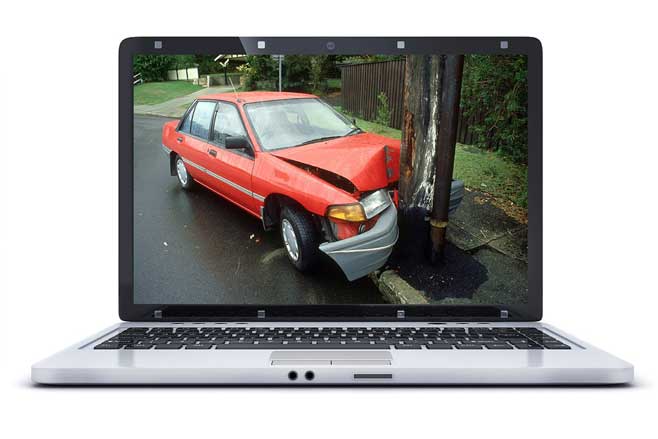
Like anything else, the internet has made us all professional car salespeople. But like anything else on the web, the content can’t always be trusted. So here’s what I’m going to do, kids: Speaking as a car-buyer with decades of experience, here’s a little pocket guide on the dos and don’ts of how to construct the all-important advert. Let’s start with an easy one.
DON’T photograph the car with skidders on the back Maybe you really have been unlucky and had two flat tyres this week. But get them fixed and get all four rims matching for the photo shoot. Otherwise I’m going to assume the diff is still cooling from the last suburban expression session.
DO clean out the interior
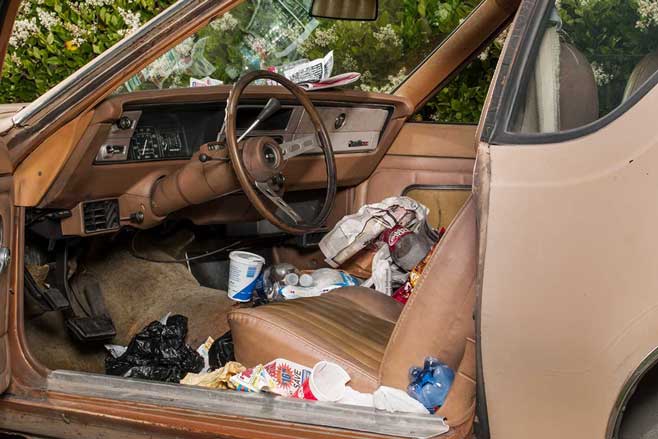
If I see an interior shot with so many Maccas wrappers on the floor that I can’t see the colour of the carpet, I’m pretty much going to click the back button right now. Same goes for the ashtray overflowing with butts, blobs of dead chewy and balls of navel lint. Should I even have to mention this?
DO wash the bloody thing The buyer wants to see what the car will look like when they own it. Not what it looks like after just finishing the Le Mans 24 Hour. Maybe the guy that buys it will be as big a grub as you are. But probably not. Get the bucket and hose, dummy.
DON’T show it in a cluttered, hoarder’s driveway
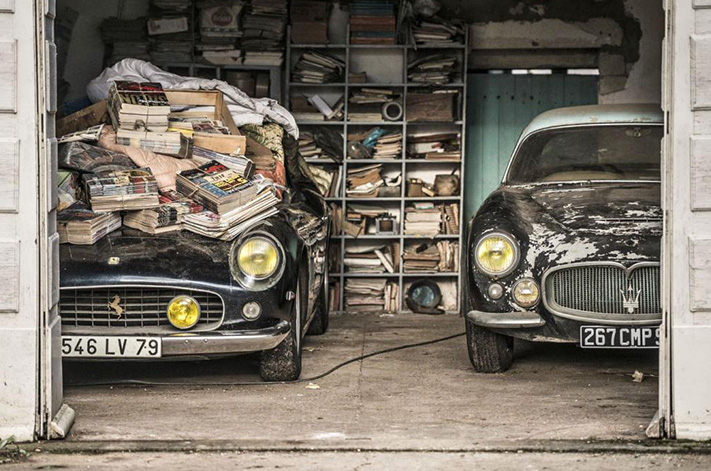
Nothing says ‘My owner is a weirdo’ quite like a shot of the car beside a stolen shopping trolley, three dead cats and the back half of an old wooden boat.
DO tell the truth about the car Sure, it’s up to the seller to do their due diligence when inspecting the thing, but if it’s damaged, don’t photograph the good side and keep a secret from me. I’m not going to be best pleased having driven three hours to look at a car that featured in Jackass 8.
DON’T speculate on what it needs for a roadworthy ‘Won’t need much for RWC’ is code for ‘I have no idea what’s wrong with this bucket. Probably everything’. If you weren’t terrified of taking it in for an inspection, you’d have done so and you’d have the all-important roadworthy. Stop greasing my tracks.
DO explain any registration issues Make clear of why the car has interstate plates/is a non-standard colour/isn’t registered/has a defect on it/can’t be legally registered/is a statutory write-off. Just so I know, yeah.
DON’T photograph it on a road covered in chalkies Yep, a nice uncluttered cul de sac can look real smart, but if it’s covered in molten Yokos, I’m going to assume you’ve just laid them in my next car. Again, I know I shouldn’t need to say this, but the number of advert shots of a car surrounded by more black marks than my church attendance record, would amaze you.
DO remove your P plates before photographing the thing I have nothing against P-platers – was one myself once – but you aint doing yourself any favours leaving them on for the photos.
DON’T shoot it in a wash-bay with a just-cleaned engine-bay Great, you washed it. But why is the bonnet up? Ah-ha! It has oil leaks, right? Next.
DO word the advert carefully. Try to use English and don’t get off on the wrong foot with me by getting all antsy about something I haven’t even done yet. Ads with phrases like, ‘Don’t bother low-balling me. I know what it’s worth’ and ‘I will only respond to phone calls. All SMS and messages will be ignored’ just make me think you’re a dick.
For a start, I haven’t low-balled you yet and secondly, if you only have access to a phone through the day, say so. Don’t get upset with me before we’ve even met; there’ll be plenty of time for that once I’ve spotted the oil leaks and bald skidders.
And finally… ‘Rust in usual places’ and ‘Ran when parked’ are NOT selling points.
I have a favourite mountain pass, which I suppose is the same for everyone else who likes a drive.
This review was originally published in MOTOR’s December 2001 issue
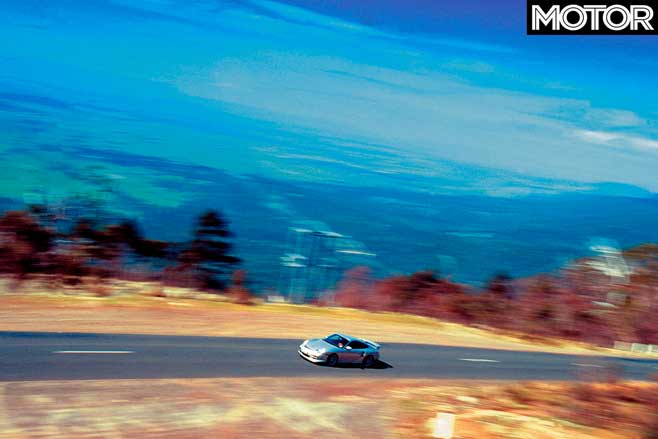
There’s also a good chance the surface will be slippery, given the micro-climate on the far side gets twice the average rainfall of the Mekong Delta. So I’m still wondering whether, after all, this was the best place to take the GT2.Don’t get me wrong: this isn’t the intro to the world’s most embarrassing “honey, I crashed the Porsche” story. It’s just that when you’re talking 340 kW, rear-drive and gearing good for 315 km/h. what’s normal in the real world suddenly takes on a new and significant meaning. That is, the word “performance” as it is applied to 99.9 per cent of the car world suddenly needs re-definition. This is a very fast car, and your average Australian goat track is not its natural hunting ground.Haven’t heard of the GT2? Maybe you should go back to reading Stamp Collector Monthly. This is the car that takes the mantle from the 911 Turbo as the fastest production Porsche. Put simply, it takes the Turbo’s basic premise of a twin-turbo, 3.6-litre flat six in a 911 body, strips out unnecessary kilogram caused by all-wheel-drive and luxuries like the back seat, pumps power up by 31kW and adds more rubber underneath and a slightly more wicked aero kit. That’s not the totality of the GT2’s curriculum vitae, but you’re probably getting the picture. This is not a car for sissies.
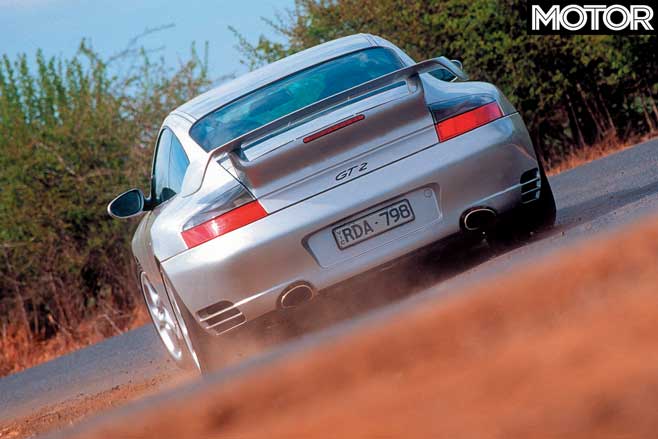
Want some more specifics? As with the Turbo, the compression is high at 9.4:1, but the GT2’s new intercoolers reduce the chance of detonation. Boost has been lifted over the Turbo by 0.2bar, resulting in maximum power output of 340kW at 5700rpm, and a truly massive torque peak of 620Nm at 3500. All this through the rear wheels with no traction control but the 315/30R18 rear Michelin Pilots are a little wider than the Turbo’s.And thanks to horrible weather, we didn’t run performance numbers. So until we do, Porsche’s figures give a guide. How do zero to 100km/h in 4.1 seconds, 0-160 in 8.5 and 0-200 in 12.9 sound?I can tell you how they feel, or at least the first part of it. We thought the 911 Turbo was about as good as it got in terms of sheer acceleration, but the GT2 takes that up another notch. Sure, there’s the extra power, but at 1440kg the GT2 is also 100kg lighter, so it’s got physics on its side.
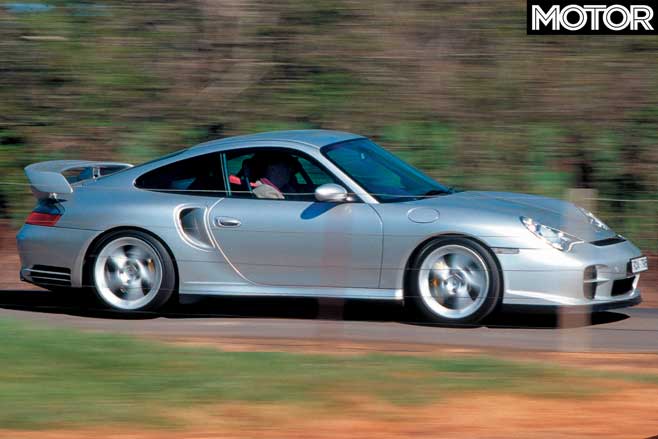
The result is a car that is very, very hard to keep at legal speeds. By the time first gear has been dispatched, even after what seems a moderately slow take-off, you can wave goodbye to 60km/h, and 100km/h disappears in a blink. The expected tyre-smokin’ wheelspin isn’t there, though: the fat rubber, and the 911’s inherent traction thanks to the rearward weight bias means it takes a concerted and very socially irresponsible big-rev clutch-dump to break the Michelins loose.
The acceleration is phenomenal, as is this engine. There’s a hint of off-boost lag at low revs but get past that and the GT2 is on an express elevator to some amazing speeds as the turbo winds-up and pulls the car like a giant rubber band into the horizon.There’s no doubting that large numbers of the GT2 are destined for the race track. Amazingly enough, 20 examples have headed for Australia at a price of $400,000 a pop and all have been sold. Of those, some like the car here have a Clubsport option fitted that takes care of track-safety items such a half-cage, fire extinguisher and race seats.
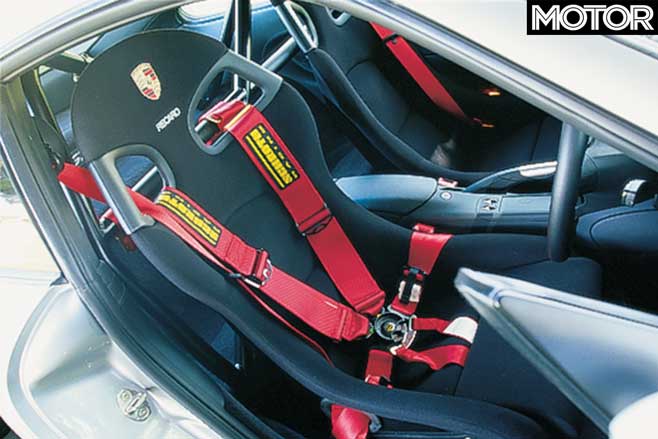
Race cars don’t often translate well to road use, although the GT2’s suspension is the same in standard or Clubsport guise. That doesn’t mean it’s a limo; quite the opposite. The suspension has been fully worked over and lowered by 20mm compared with the Turbo. The result, along with the high, rear wing and air intake ahead of the bonnet opening is one of sheer testosterone, and pure purpose.Unfortunately it also means the front airdam is about a wombat’s whisker away from the tarmac and will scrape over the most innocuous looking driveway or hump. Even at Porsche’s Melbourne headquarters. where the entrance was specially designed to allow entry to low slung Turbos and GT3s, it is almost impossible not to grind away the protective black strip at the bottom of the spoiler.It’s a two-seater, with the roll cage negating any idea of filling up space left over with golf clubs. And the race-style one-piece seats might be good for locating shoulders and hips, but there’s no recline function and getting in and out can be tricky.
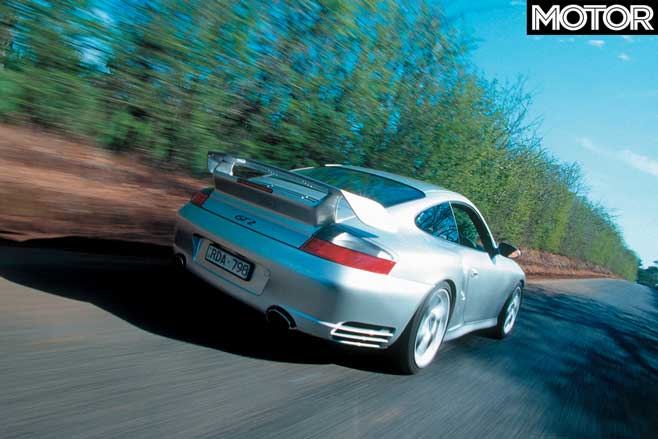
For all that the ride isn’t as rocky as you’d think. Firm, yes and with massive damping rebound in particular but you get the feeling Porsche has backed off on the spring rates more than it would if it was purely a racer. That said, there’s adjustment for ride height, camber and caster if you want to get seriou5 about springs and slicks and go racing.You can’t imagine many road cars would get close to a GT2 on the track. On the road it is potent enough, although getting back to my mountain road, you have to choose the scenery reasonably carefully. There’s feedback from all sources: steering, brakes, suspension, seemingly every block of the tyre tread. Feed the power on through a sweeper and there’s not so much as a squat or a stammer, but the GT2 just hooks in and goes.Throw in bumps and wet patches and things slow down. It doesn’t take much to get the rear wheels a-squirming, and there’s not much warning of all that engine weight in a wheelbase shorter than a WRX coming around to say hello. The limits are there, but in these conditions I’m not about to find them.
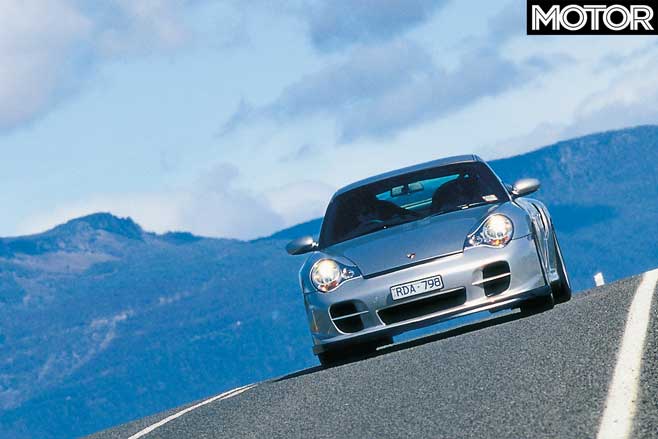
A German autobahn would be a different story, and of course we’ve got roads like that except for two vital differences: speed limits, and galahs with Camrys and caravans. To get the best out of GT2 you’re going to end up breaking rocks or With a saucepan in the neck.But then, the GT2 is not really a car. It’s a destructive force, a machine of vengeance and a nice piece of one-upmanship over the next bloke in a common 911 Turbo. I’d actually rather have the Turbo, Which is already quicker than anything else plus it is comfortable and a hundred grand cheaper. Or just as happy in a 911 Carrera that’s $220,000 less. Or a Boxster S is not too shabby either. But then, maybe I’m just too easily pleased.
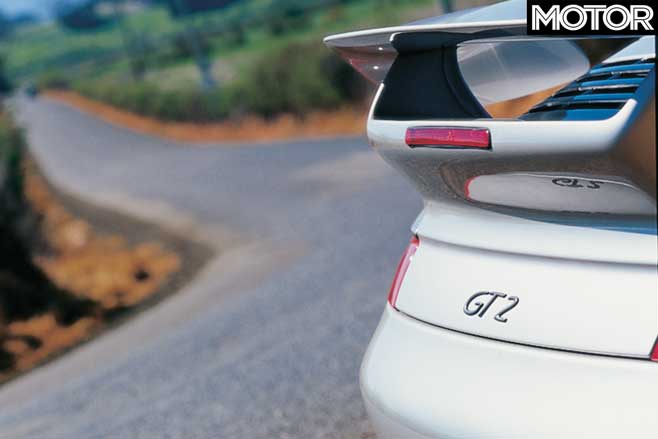
FAST FACTS 2001 Porsche 911 GT2 BODY: 2-door coupe DRIVE: rear-wheel ENGINE: 3.6-litre flat-six, DOHC, 24v, twin-turbo BORE/STROKE: 100.0 x 76.4mm COMPRESSION: 9.4:1 POWER: 340kW @ 5700rpm TORQUE: 620Nm @ 3500rpm (est) WEIGHT: 1440kg POWER-TO- WEIGHT: 236kW/tonne TRANSMISSION: 6-speed manual SUSPENSION: MacPherson struts with anti-roll bar (f); multi-links with coil springs, anti-roll bar (r) L/W/h: 4446/1830/1275mm WHEELBASE: 2355mm TRACKS: 1485/1520mm (f/r) BRAKES: 350mm cross-drilled ventilated ceramic composite discs, 6-piston calipers (f); 350mm cross-drilled ventilated ceramic composite discs, 4-piston calipers (r) WHEELS: 18.0 x 8.5-inch (f); 18.0 x 12.0-inch (r) TYRES: Michelin Pilot Sport Radial X, 235/40R18 (f); 315/30R18 (r) PRICE: $399,000
PERFORMANCE (claimed) 0-100km/h: 4.1sec 0-160km/h: 8.5sec 0-200km/h: 12.9sec
TOP SPEED: 315km/h (claimed)
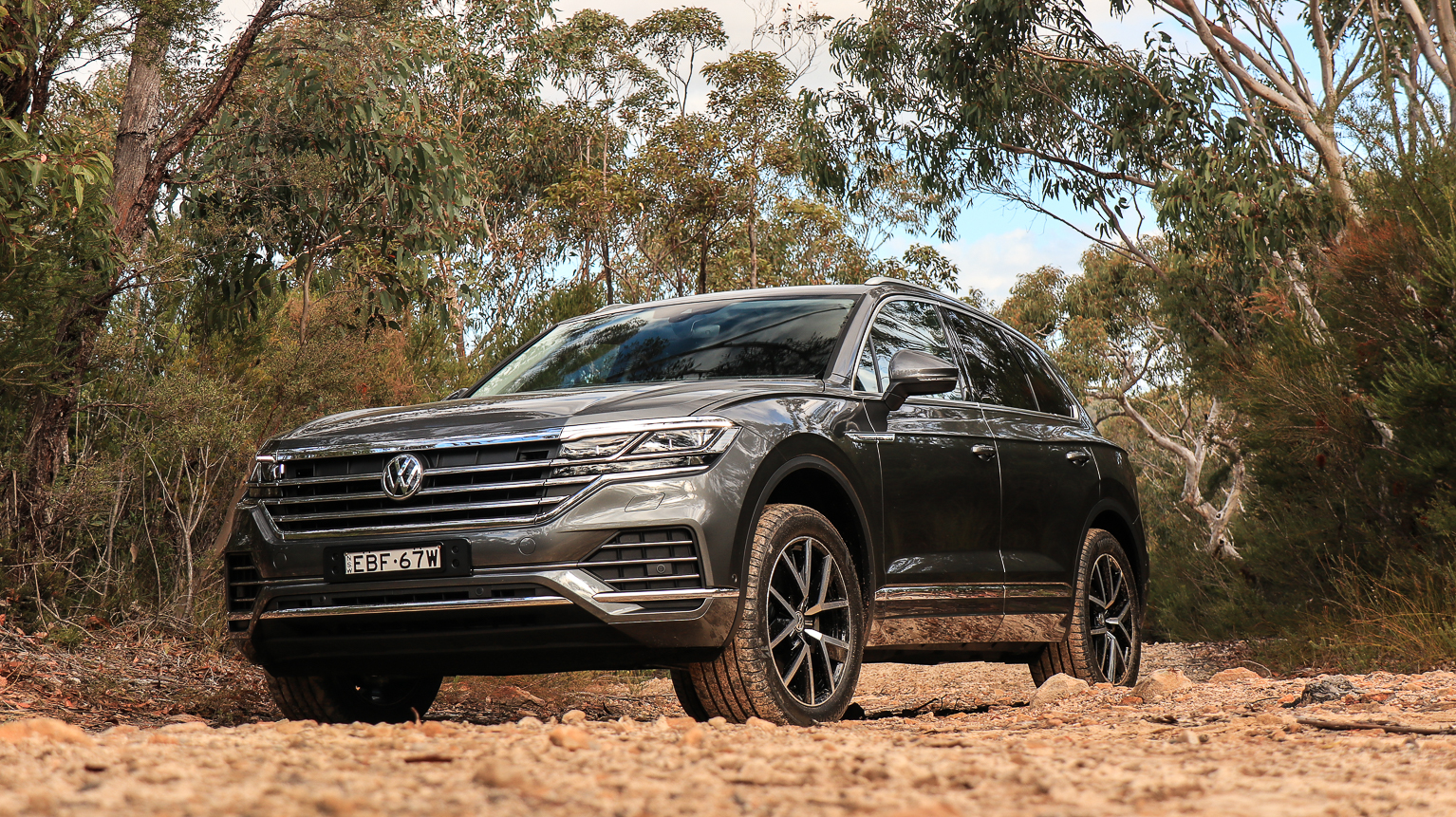
Check out our video ABOVE for an insight into the Innovision set-up aboard the new Volkswagen Touareg, and listen in to our chat with product manager Marcus Hofmann below.
You can read all about the Touareg here, and check out our awesome trip through Morocco on WhichCar TV.
(transcript)
TR: Yeah, so looking at a pair of dials on the centre console there. So all right mate, should we jump and have a quick look at the technical onboarding [crosstalk 00:05:03]. I’ll jump in the driver seat. You’re going to jump in the passenger seat. This is our new Volkswagen Touareg.
We’re going to run this for about six months, pretty similar to the Tiguan all space programme that we did, videos and we’ll do stories and we’ll do photos. But now we’re onboard with this awesomely huge system. The multimedia system looks like a large screen television.MH: It’s definitely a massive step forward in terms of that digital and that innovation that we have. In this case here, we’re looking at the innovation cockpit, so to speak, where we have not only the dials and the gauges, but then also your entertainment system as well.
Biggest change is where the dial, so your air conditioning, your climate control have been taken away from hard dials, and now incorporated into this system here. And again, air conditioning is still down the bottom. The ability that you do have, is you had a little bit of that flexibility around programming and customising it to your own likes and desires.
A little quick example, if here’s your home screen, I think you can call it. If you then hold one of these down, it gives you that ability through this menu here to choose, “Okay, well I’m going off road.” As an example. I can choose off road.MH: It will then adjust that particular screen for you. At the same time you’ve got these things on the side as well. What you can see with the star, it means you can put them as your favourites at the same time.
So you’ve got the home button down here, very similar to your smartphone. And you’ve also got your menu function up here as well. You still got things like your gesture control, all part of it, it’s all integrated. It does take a little bit of getting used to. But again that’s the way technology’s going. But again, it is very simplistic to use as well to understand.TR: So the two screens, it’s obviously got a digital dash as well. Your active dash display, I think you guys call it?MH: Yeah. So we’ve got the heads up display as well. So again, it’s first one of Volkswagen where it’s actually projected onto the screen. If you look in terms of the distance, you may see in some other cars where it’s really close, and your focal point for your eyes, you’re actually it’s too close, and you have to focus.
And you can see it quite clearly, but then you’ve got obviously focus ahead as well. So that focal change in your eyes, it’s actually quite tiring. Whereas we’ve designed it around 2.3 metres ahead, which then means as far as your focal point, it’s actually really easy when you’re driving, to see your information and also concentrate on the road. So there’s some real innovations that I think we’ve incorporated in the car.TR: Definitely going to have to bring you a video of this, because this is pretty awesome. Even things like the ambient lighting throughout, there’s a lot of light signature stuff that just is, I’ve never seen this in a Volkswagen product. I’ve seen lights in the foot well, I’ve seen a little bit of led lighting on the doors, but this is next level.MH: You’ve got 30 colours that you can choose from. So depending on what your mood is, Robo, you can change it to blue, of course, Volkswagen colours, or red, whatever you desire.TR: I love it.MH: You’ve got the spectrum to choose from. The other real cool inside the car is in terms of the seats. Now firstly from the leather that we’ve selected, it’s a big change. We used to have Vienna leather, then we have Napa, and now we’ve gone into a Savona leather. Which is again another step up in terms of quality. So it’s a little bit softer in terms of imperfections, you know there’s barely any there. I’m not sure what they do with those cows, better.MH: Very well looked after, and nurtured and pampered, but you can really feel that in terms of the softer. And that gives you that comfort in a seat from the leather throughout the car. But the other big thing is in terms of in the seats itself, you also have ventilation. So from the base of the seat and also the back of the seat.TR: Back of the seat?MH: Yeah, so from this section here and also the bottom. In addition to that, then we’ve got multiple massage functions, different settings. So I’m sure you’ll enjoy that on your own drives.TR: This car is going to be awesome. I love it already.MH: But it actually has 10 air pillows that are in the seat. And they basically expand about six centimetres. So they blow up and then they blow down, whether it’s the top part of your back or your lower part of your back, you got to try not to fall asleep. But quite comfortable at the same time.TR: This is interesting though. This is taking luxury … Volkswagen has always talked about itself as a premium for the people. One of those flagship phrases I suppose. But this truly is next level. Is this a direction that you guys are going to do for other stuff?MH: Definitely for this car, without a doubt. This is the flagship of Volkswagen now, and it is sitting in that value proposition, especially with all the equipment that we have. And certainly where we want to position ourselves overall.
And again, you can see that in terms of the appointments, the features that we have as part of the car. It is definitely leaning towards that luxury element as well. But also it’s that value. That’s really what we’re trying to push as well too. You get all the bits and pieces. It’s a Volkswagen.
