
The updated R35 Nissan GT-R has been unveiled at the New York International Auto Show, and with it comes the 2020 Nissan GT-R 50th Anniversary Edition to celebrate its coincidental birthday.
With redesigned bodywork and three colour schemes inspired by the GT-R’s history, the Anniversary Edition will come in two performance specifications.
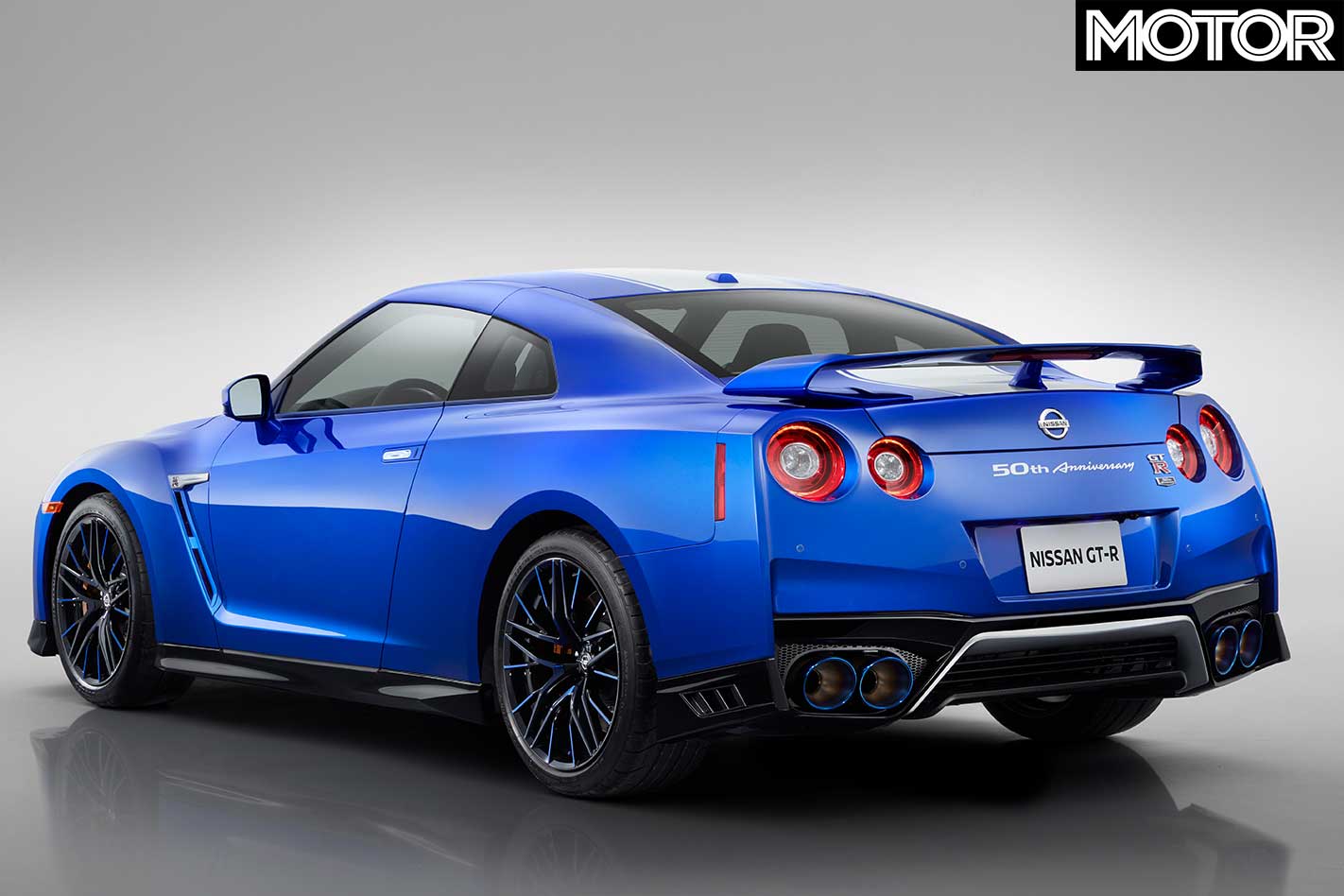
Much like the ‘current’ GT-R, a ‘Premium’ and ‘Track Edition’ tune of the twin-turbo 3.8-litre V6 will be available, with U.S Specifications revealing a slightly uprated 421kW/633Nm and 447kW/652Nm respectively. The Track Edition has essentially moved into MY18 Nismo power outputs.
But it’s the styling changes which should draw most interest for the Anniversary Edition, with loyal GT-R fans likely to immediately recognise the hero colour of Bayside Blue, a hue not seen on a GT-R since the R34 Skyline.
Nissan says four-coated paint with a heat treatment produces the perfect blue, sometimes known as Wangan. White racing stripes and colour-matched wheels also feature.
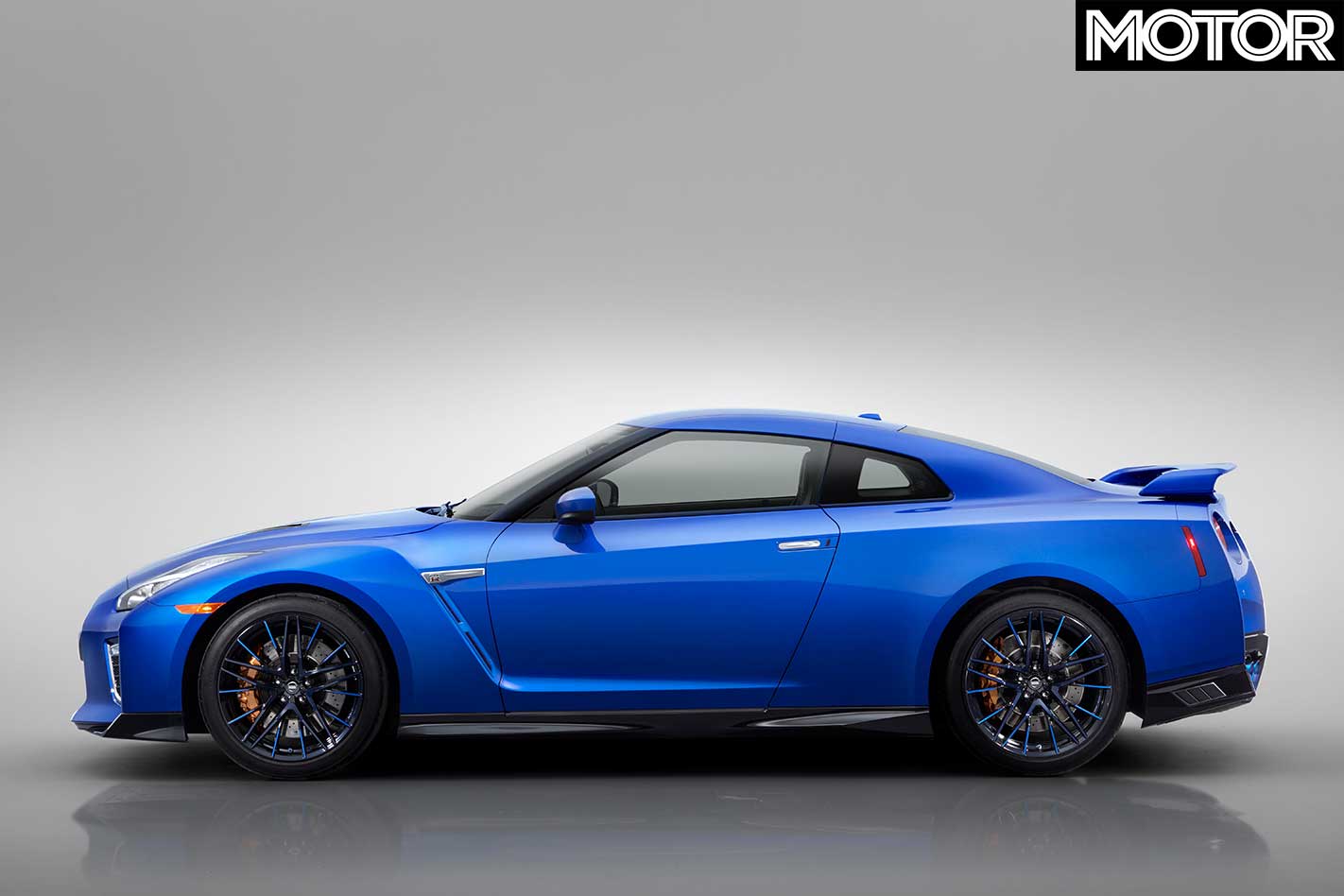
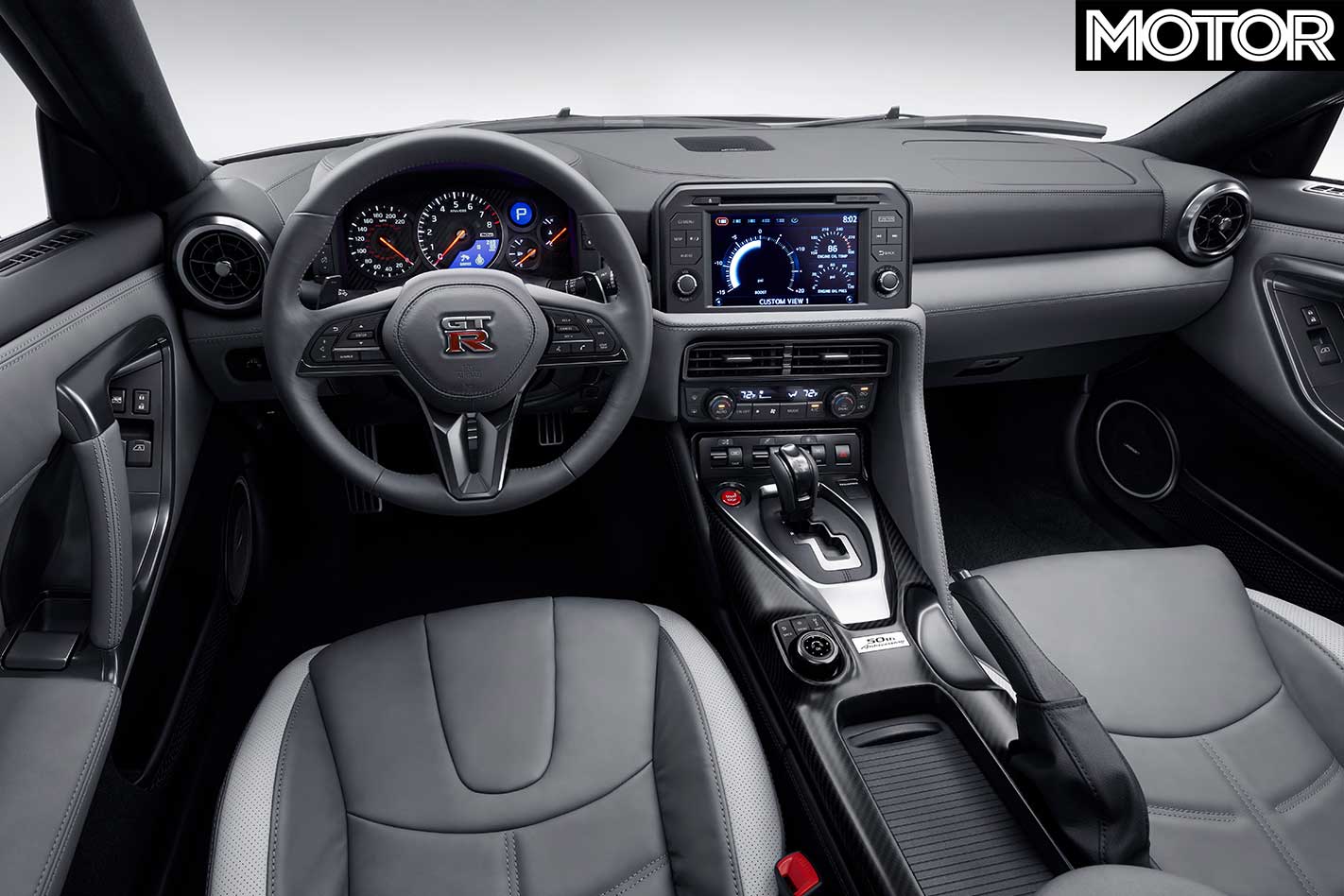
Also available is Pearl White with red stripes, or Super Silver with white stripes, while the interior is, as Nissan puts it: “a special gray colour, which gives the cabin a sense of luxury, reminiscent of the atmosphere of the night sky after the twilight hour.”
Shinichiro Irie, program design director for the GT-R, says the visual changes that adorn the Anniversary Edition weren’t supposed to be blatant, but just enough to be an obvious nod to the past for those in the know.
“The Nissan GT-R has been the icon of our company’s driving performance for the past half century,” says Irie.
“We were highly motivated to ensure that the GT-R 50th Anniversary Edition stands out.
“While the exterior and interior changes may seem subtle at first glance, they’re still impactful, especially with the new paint schemes, keeping the car’s lines and overall presence modern and edgy.”
Australia will receive the 2020 Nissan GT-R 50th Anniversary Edition, along with the updated GT-R Nismo, in the second half of 2019.
MERCEDES-AMG has pulled the covers off a facelifted GLC 63, in both SUV and coupe guises, to match the rest of the recently refreshed GLC-Class range.
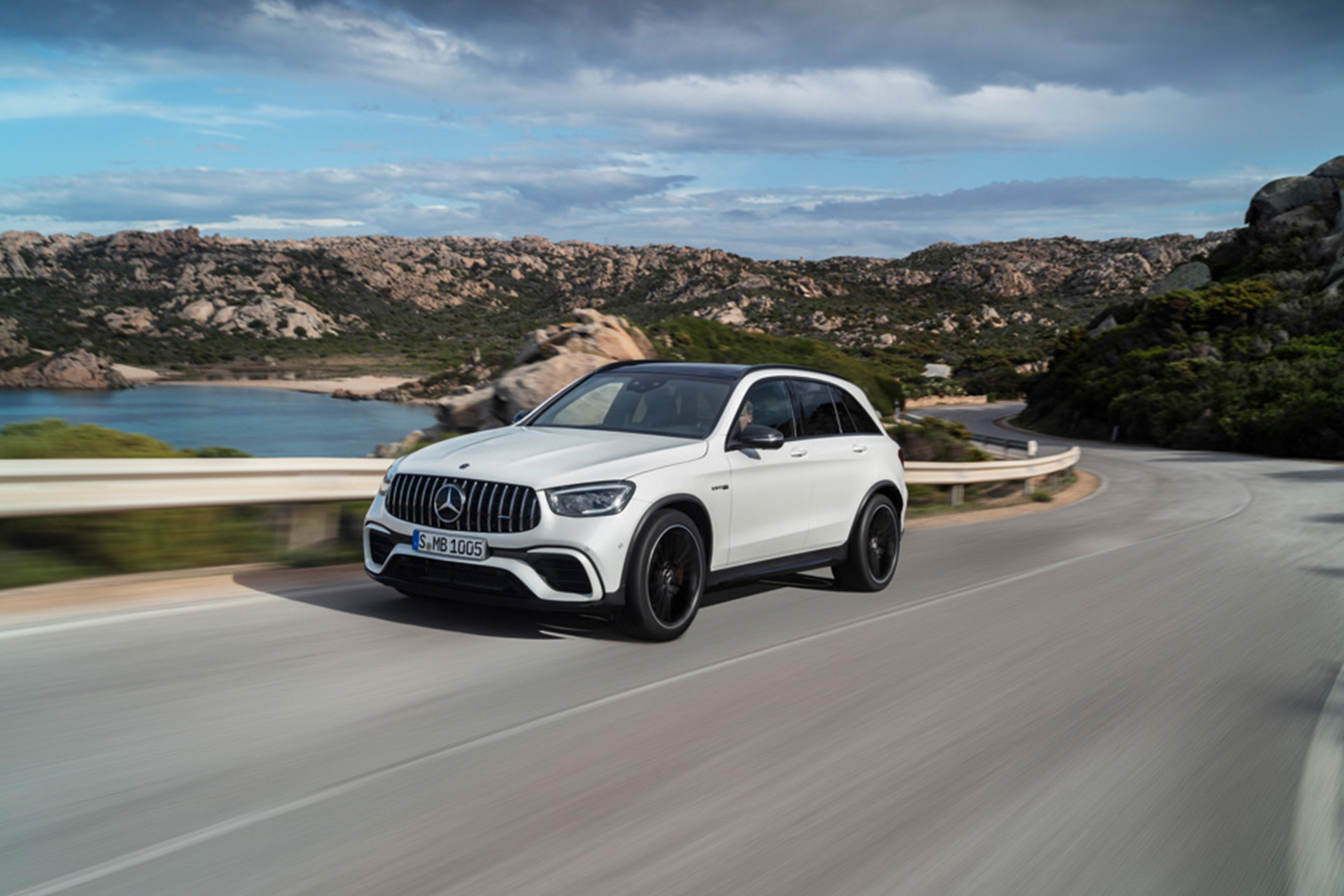
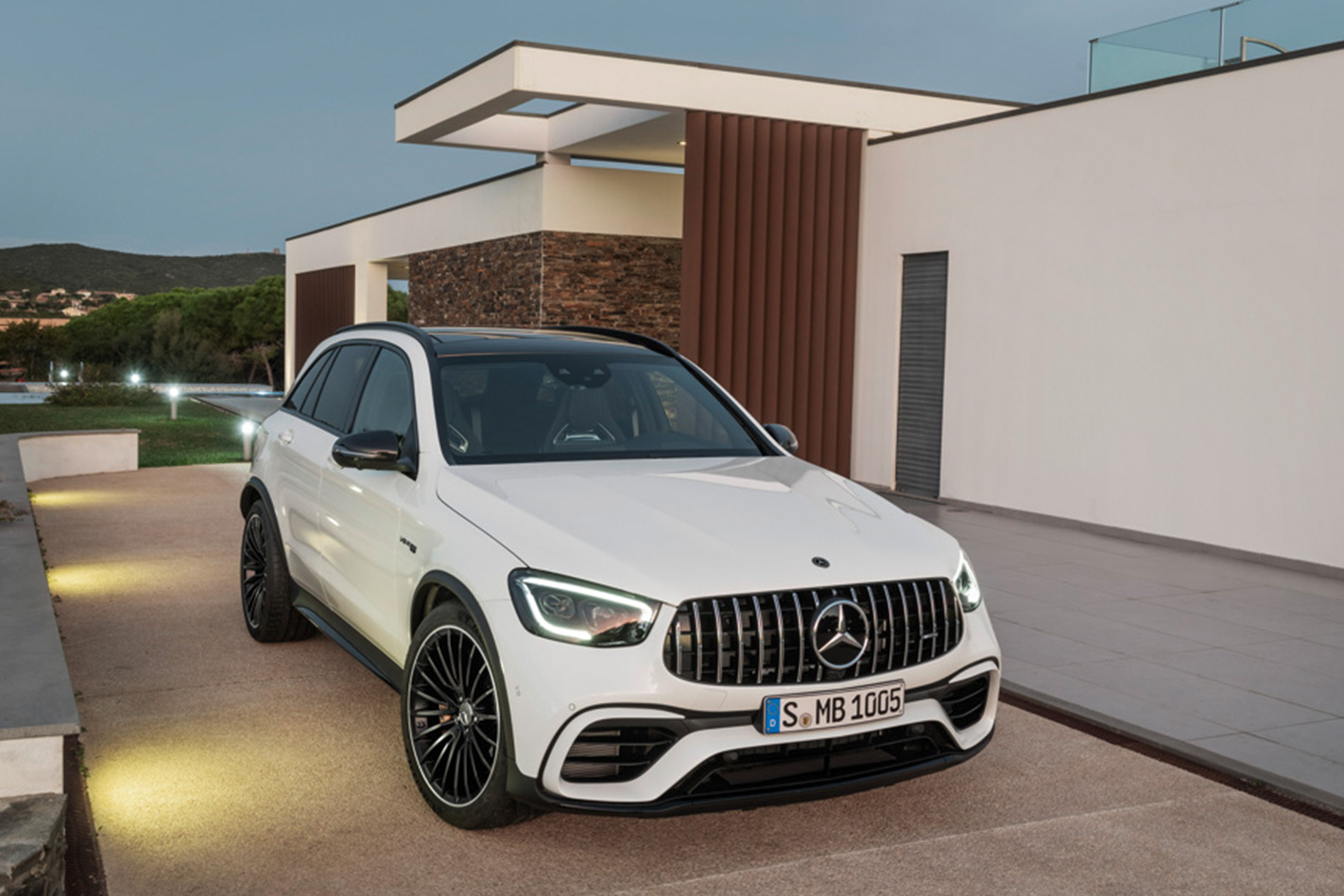
Debuted at the New York Auto Show, the GLC 63 has received the same style updates that now grace the updated GLC-Class, while retaining its stonking bi-turbo V8 powerplant, which by way of reminder produces 375kW and 700Nm.
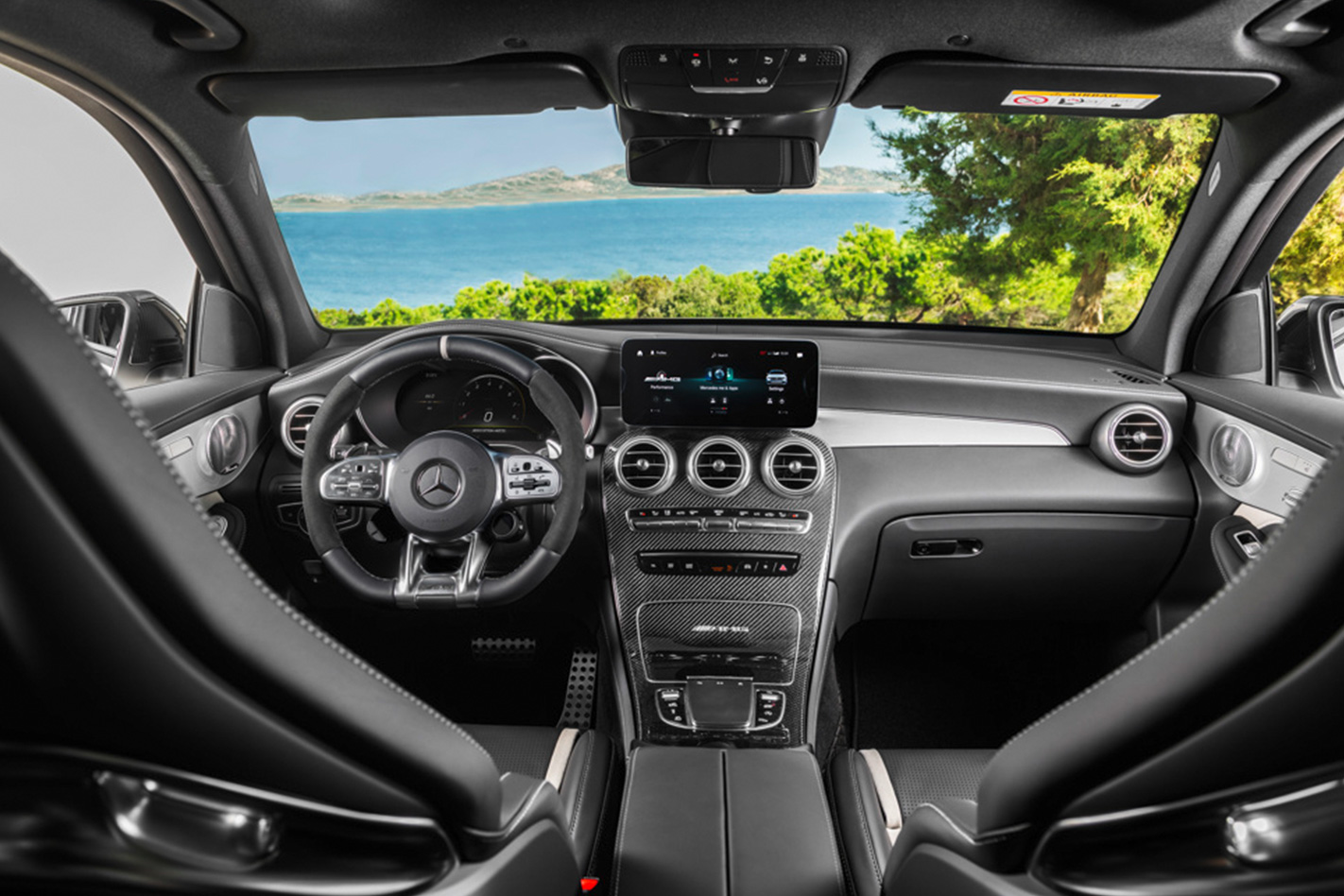
Headlining the GLC 63’s new style is a pair of new head and tail lamps, new optional 21-inch lightweight alloy wheels, trapezoidal quad tailpipes, updated MBUX infotainment system with AMG-specific functions and displays, and a new AMG steering wheel.
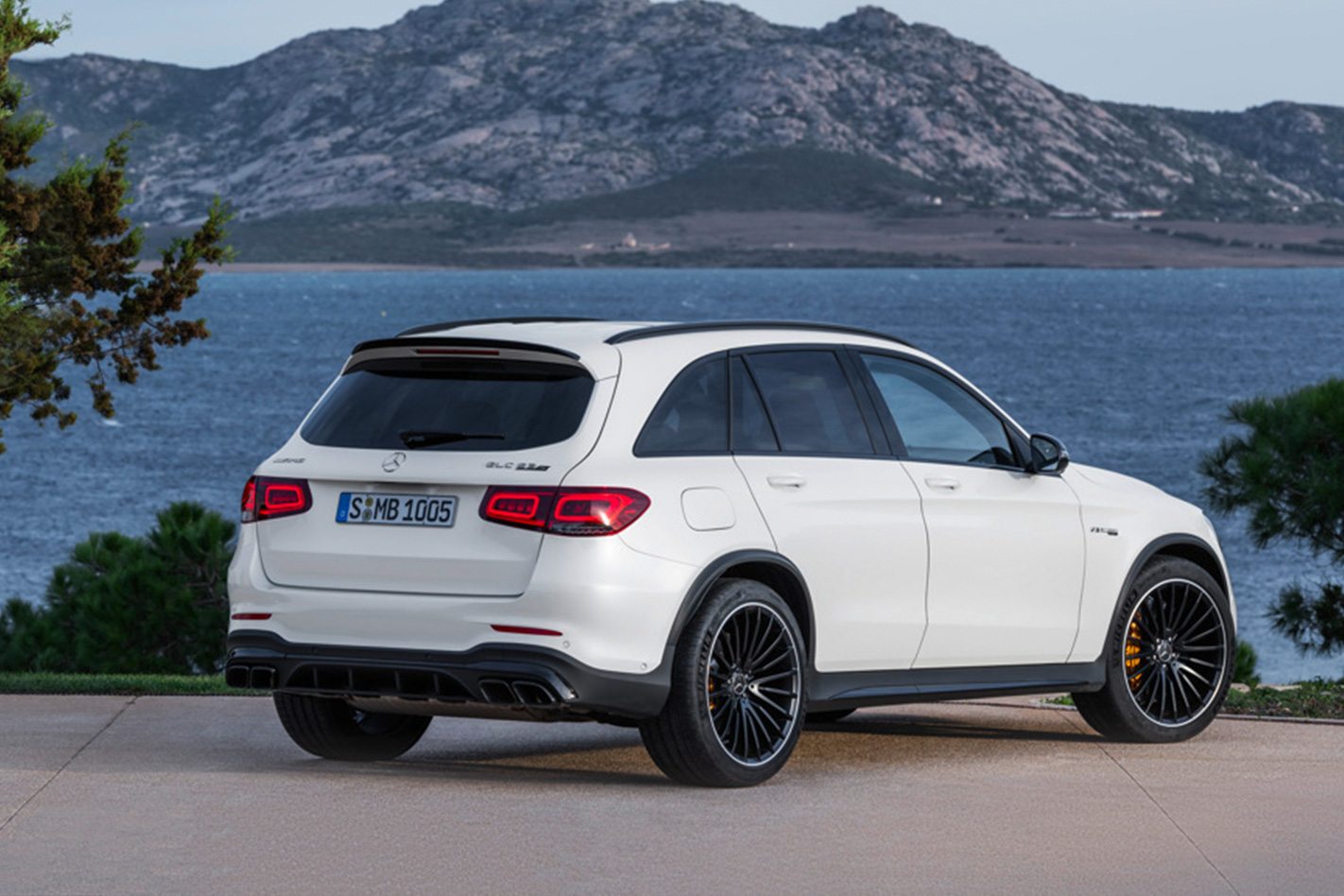
It’ll also get electronically-controlled locking differential and AMG Driver’s Package as standard for the first time as well as a new ‘Slippery’ drive mode.
While the refresh emphasises updated looks rather than mechanical changes, let’s not forget that the twin-turbo V8 engine propels the all-paw super-SUV from a standstill to 100km/h in 3.8 seconds, toward a top speed of 280km/h.
The Mercedes-AMG GLC 63 retains its claim to fame of being the fastest SUV to lap the Nurburgring.
Locally, the new GLC 63 will be offered in the more powerful ‘S’ variant exclusively, while the choice of SUV or coupe body style remains. Cars are expected to arrive in Australia from October this year, with pricing to be confirmed closer to the date.
Nissan has unveiled yet another special edition of its ageing 370Z sports coupe ahead of its public debut at the New York motor show later this week.
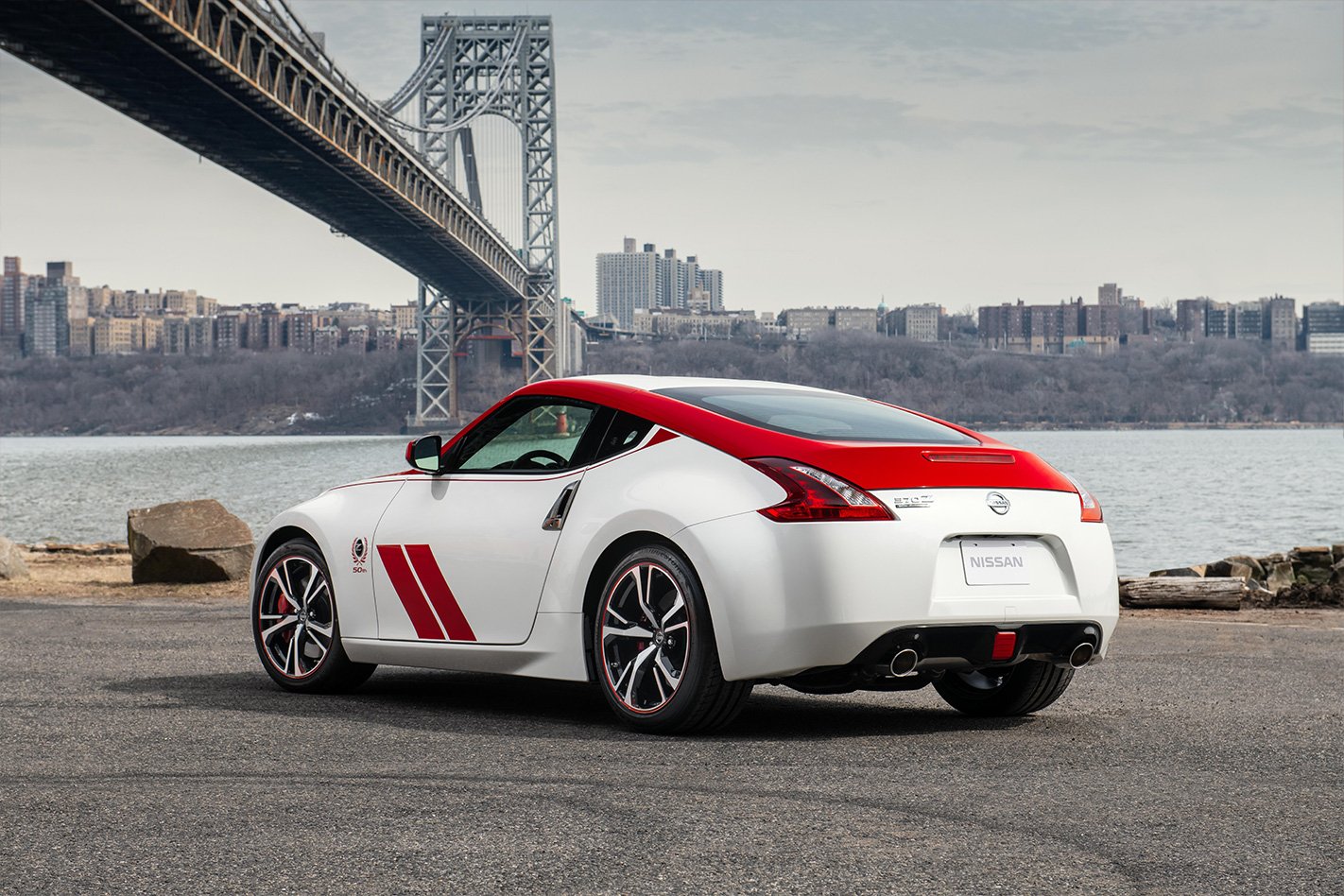
The iconic Z car hits the ripe old age of 50 this year, enjoying a healthy life span of six generations since the 240Z was born in 1969, which also held its debut at the NY show. A popular option for racing in the 70s with a 2.0-litre straight-six engine, lightweight body and good dynamics, the Z was the perfect recipe for hitting the track.
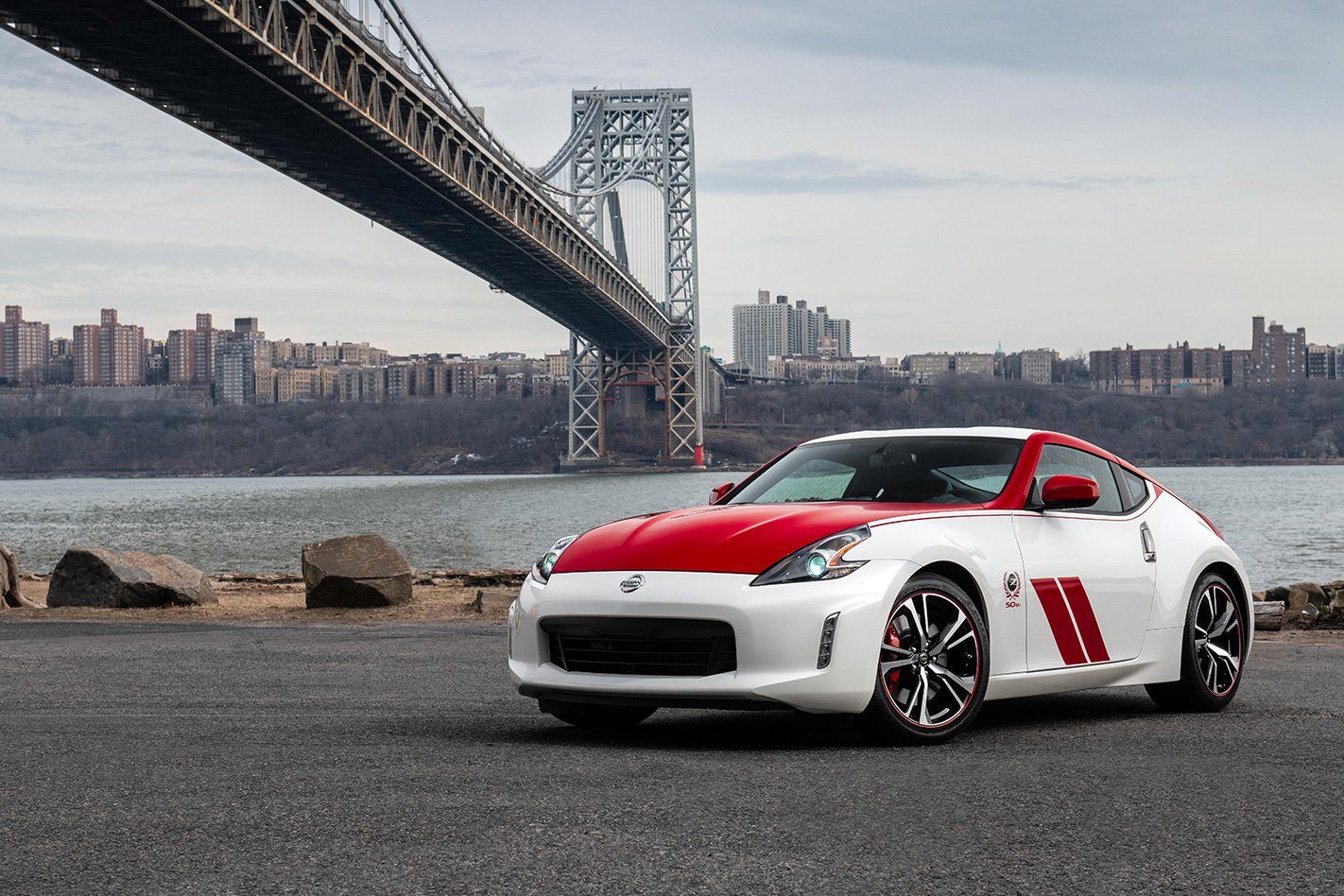
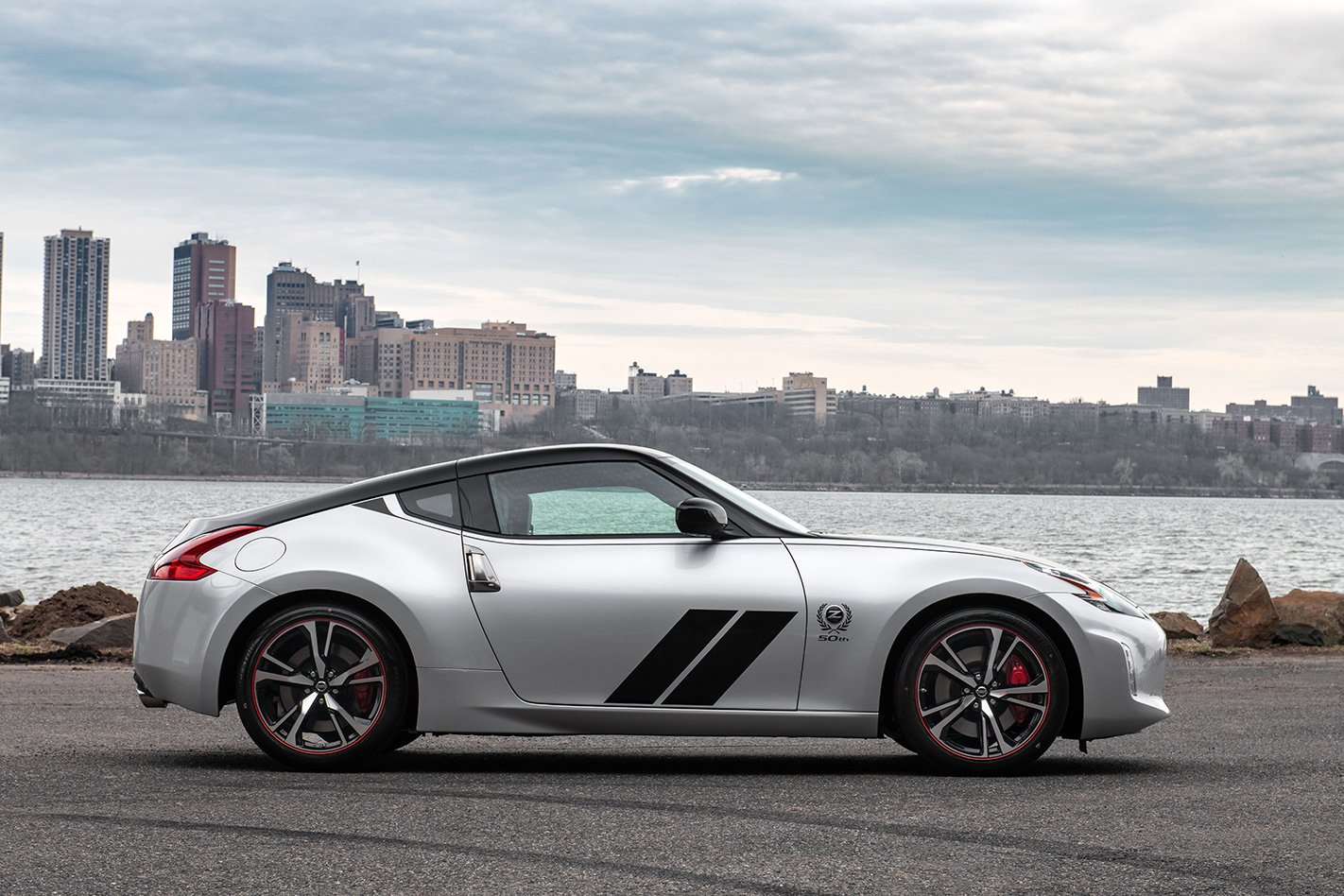
US automotive icon Peter Brock (not the Aussie legend with the same name), famed for designing the Corvette Sting Ray, won multiple SCCA National Championships with his BRE (Brock Racing Enterprises) team 240Z and driver John Morton. BRE’s original #46 race car’s livery inspired the unique regalia for the 2020 370Z 50th Anniversary Edition.
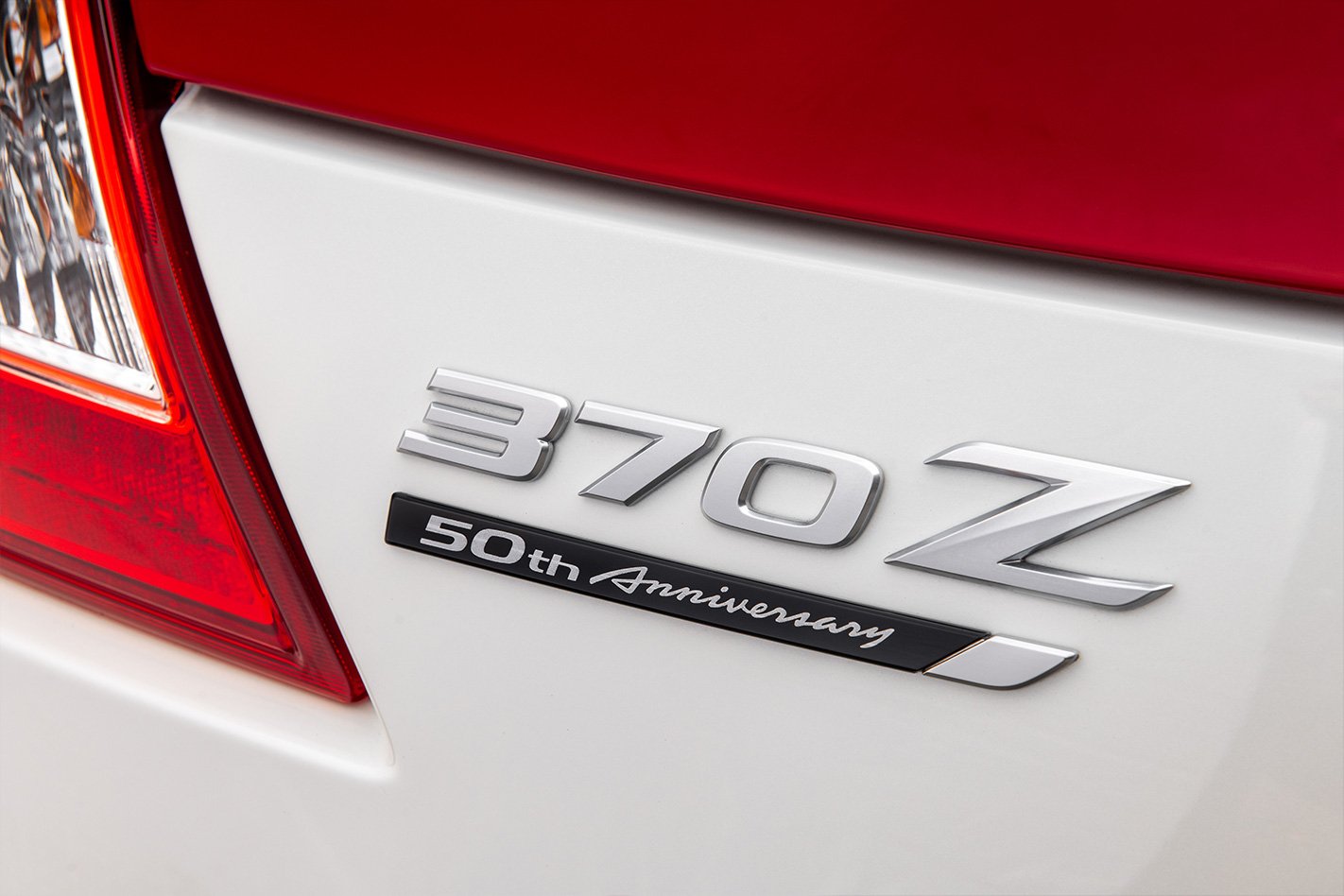
Sporting 19-inch alloys with red accents, the 50th Anniversary is available in two schemes: white with red highlights, or a silver base with black accents. Both receive an Alcantara steering wheel with red noon marker, heated leather seats and 50th Anniversary logos placed around the cabin.
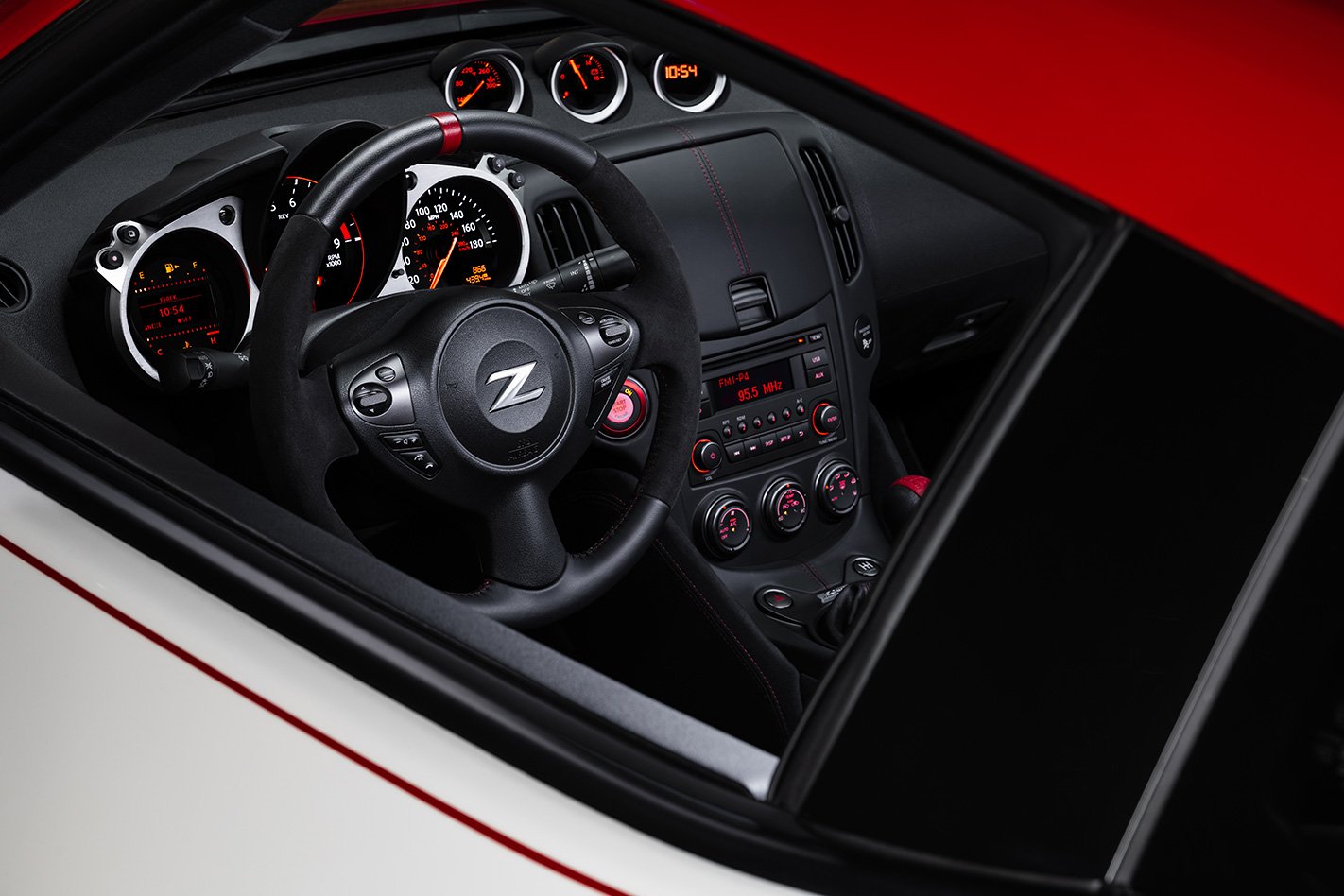
Under the bonnet is the same 250kW/366Nm V6 engine, mated to either a six-speed manual or seven-speed automatic transmission feeding power to a limited-slip differential on the rear axle. The ageing sixth-generation coupe turns ten years old this year, providing a basic but engaging analogue experience to drive during an era of increasing digitalisation.
“The 370Z is a true icon for Nissan,” said Nissan corporate vice president of product strategy and planning, Ivan Espinosa.
“It’s no secret that the Datsun 240Z started the ball rolling for Japanese sports cars in the U.S.”
“This car has defined its segment for the past half century. The 370Z 50th Anniversary Edition celebrates the history of the model and its racing heritage, both of which have played a vital role in helping make Nissan what it is today.”
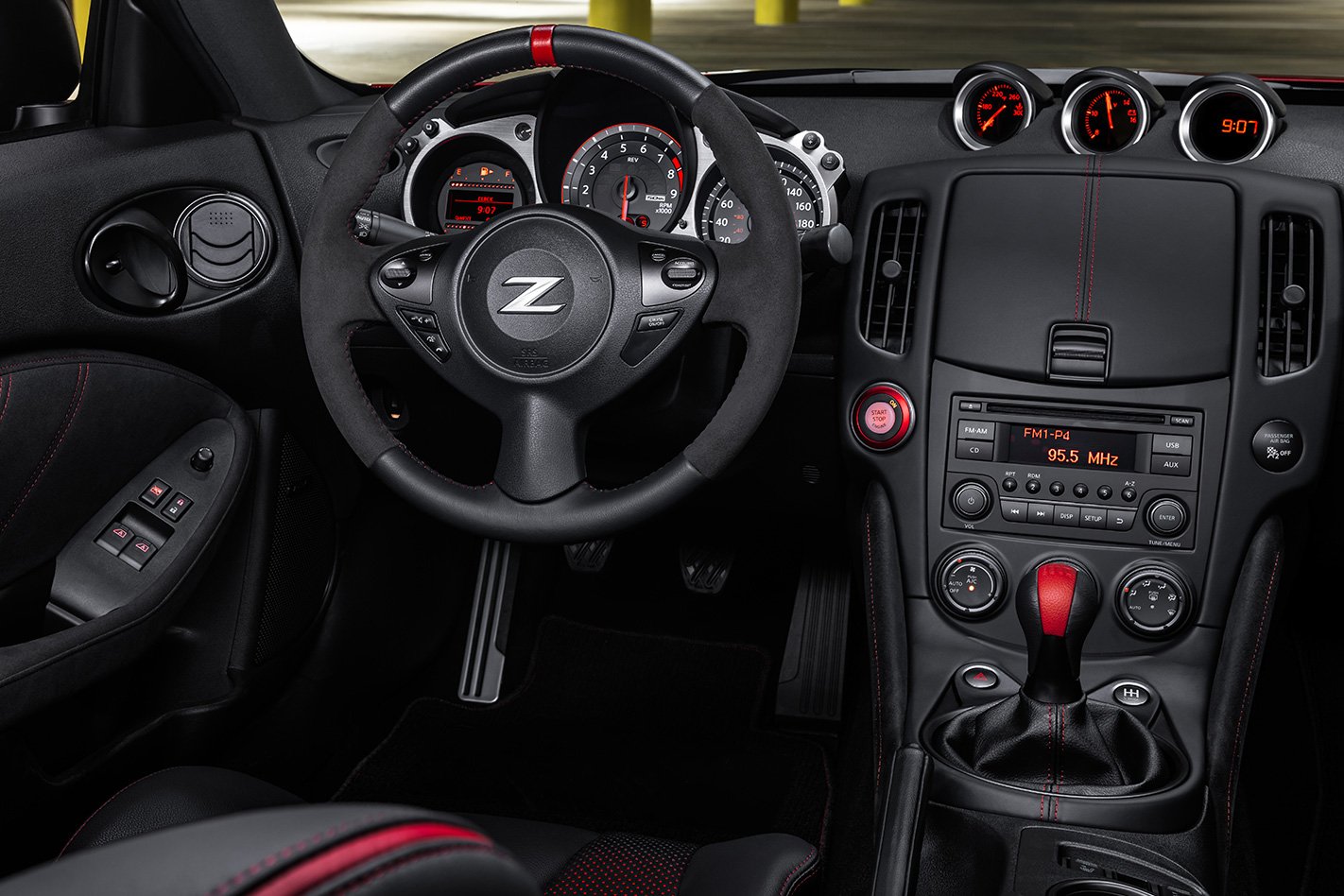
Nissan Australia has confirmed a limited number of the 50th Anniversary Edition 370Zs will land in Australia later this year.
The Wheels Verdict: From a relative bit-part player, the CLA has emerged as one of Mercedes’ quiet stars. The latest model is bigger, prettier and a lot more assured and, for the time being at least, makes a lot more sense to us than a C-Class.
WHAT IS THE MERCEDES-BENZ CLA?
Introduced in 2013, the original CLA used the A-Class’s platform to spin off a four-door sedan that overachieved beyond its proposed niche. The second-generation car has some big boots to fill, but now that Mercedes understands this car’s value, they’ve thrown everything they know at it.
WHY WE’RE TESTING IT
Mercedes flew us to Munich, the home turf of its rival BMW, to demonstrate that the CLA could hold its own even on away ground. It’s been a big success in even more distant climes, Mercedes having shifted more than 15,000 units here in Australia. We wanted to see if the latest car could continue that fine form line
MERCEDES-BENZ CLA REVIEW
YOU MAY well be wondering why Mercedes-Benz needs two four-door sedans spun off the A-Class platform. On the face of it, it seems like overkill, offering both an A-Class Sedan and a CLA when both share the same wheelbase, run off the same chassis, use the same engines and feature the same interior tech. So why would you opt for the CLA?
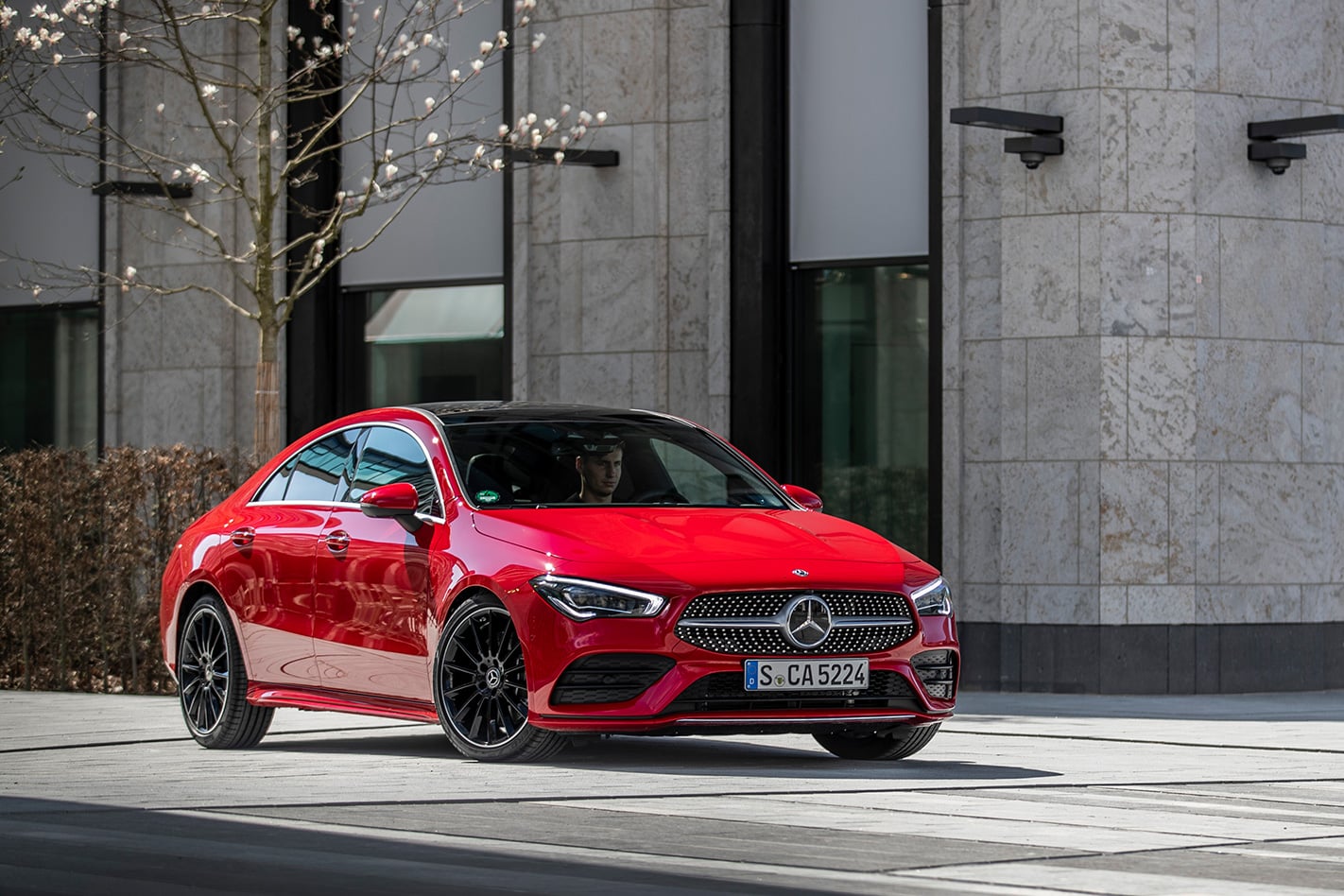
The car’s footprint seems as good a place as any to start. Compared to the more upright sedan, the CLA has a 45mm wider front track and a 55mm wider rear. That might seem an esoteric statistic but it underlines how this car is positioned. Mercedes calls it the athlete of its compact-car range and there’s more to that than just niche marketing spin.
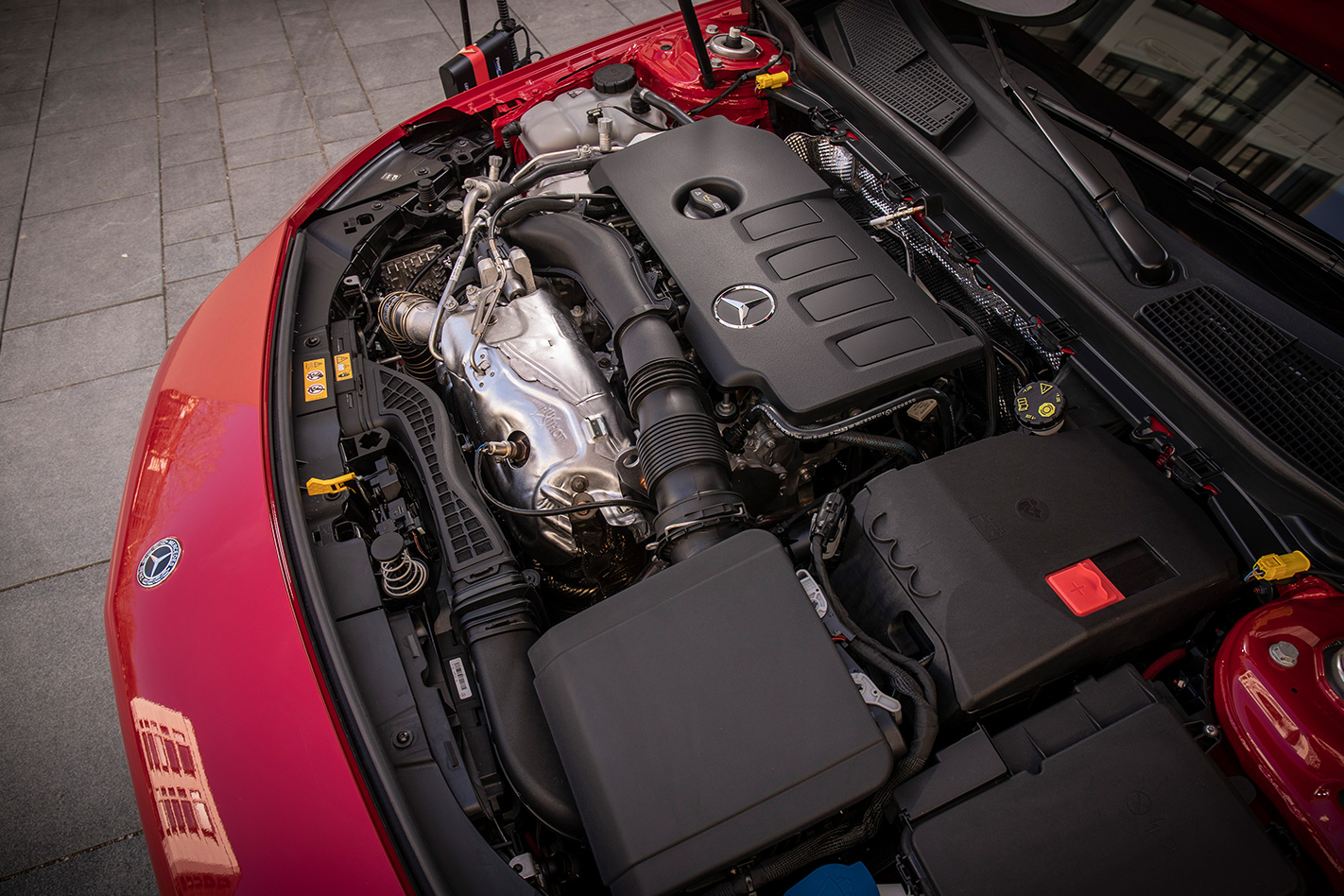
Australia’s set to receive the front-drive 120kW/250Nm CLA 200 first, closely followed by the all-wheel drive 165kW/350Nm CLA 250 4MATIC. The CLA range always top-weighted in the past, with CLA 45 AMG being a particularly big part of the Australian product mix, and the local importers expect that form line to continue, with the CLA 250 4MATIC initially being the most popular version. No diesels or wagons are scheduled for our market, but since we drove the car, Mercedes has shown images of the 225kW/400Nm CLA 35 AMG. The existence of the 35 allows for an even more extreme version of the CLA 45 AMG range topper, rumoured to boast at least 310kW.
There’s something very right-sized about the CLA 250 4MATIC, however. It’s certainly brisk enough, stepping crisply off the line to 100km/h in just 6.3 seconds, the seven-speed dual-clutch transmission squeezing the most from the 2.0-litre four-cylinder engine. All Aussie cars will arrive in AMG Line trim with 18-inch alloys, and one box you probably ought to tick is that for the adaptive damping system which, when set to comfort, takes the edge off the amount of bump and thump from the wheels on poor surfaces. It feels planted, with strong body control, and the additional 60kg of the all-wheel-drive system doesn’t seem an unreasonable impost.
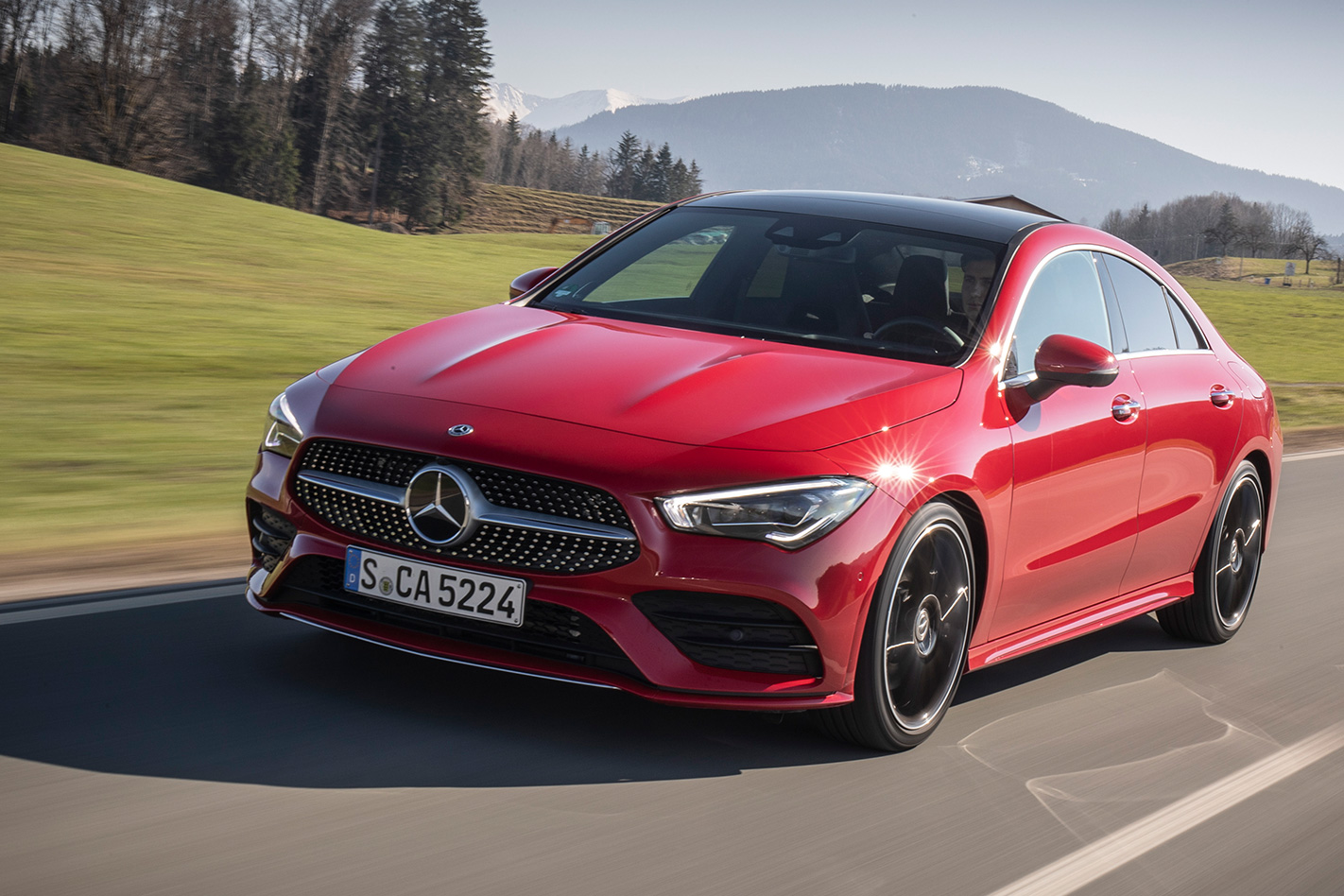
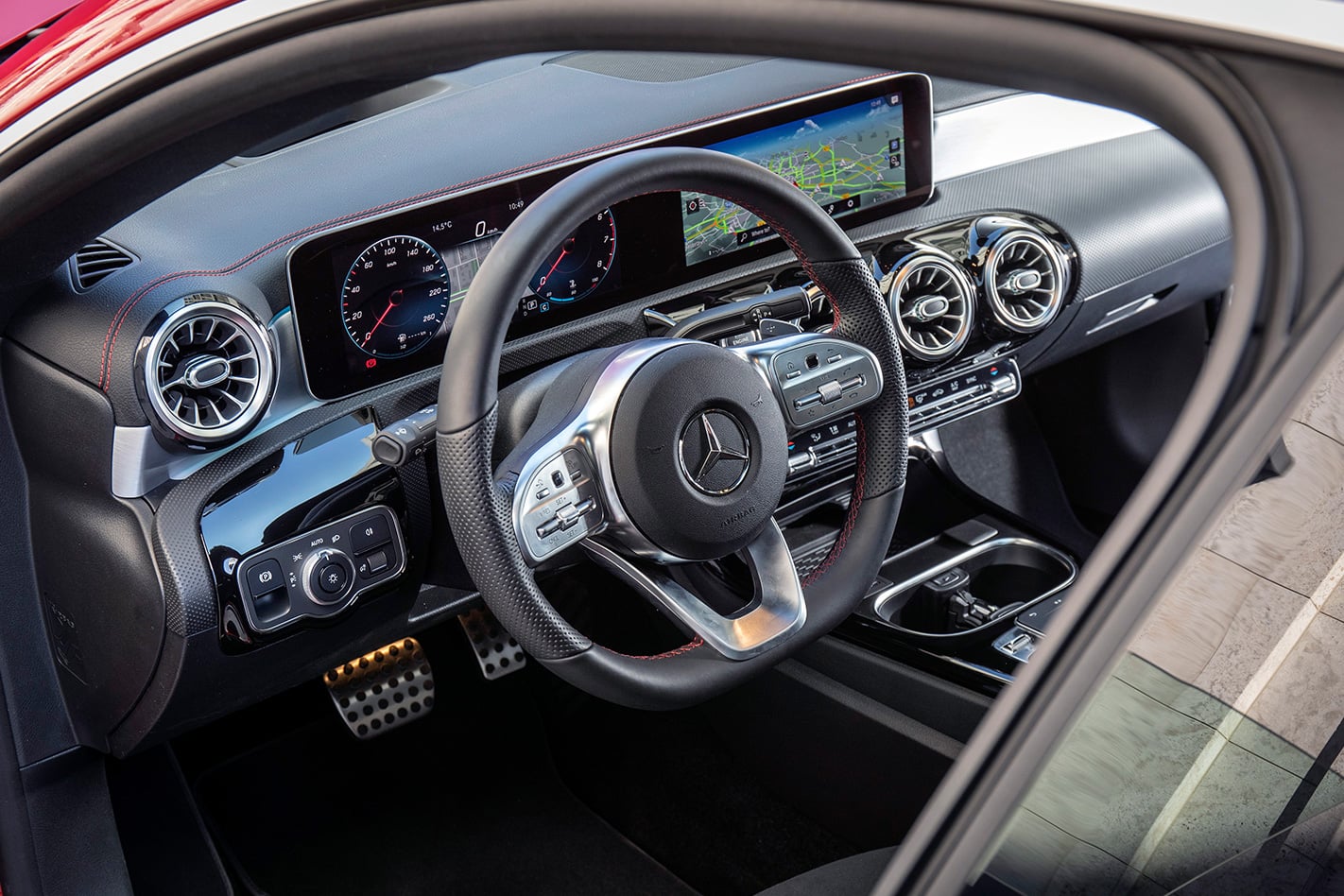
The electrically assisted steering is relatively crisp, the brakes are punchy and the driver assist systems top drawer. Quite why Mercedes can’t find a better solution for gear selection than a column stalk, however, is a perpetual mystery. A sound symposer beefs up the engine note in the cabin, although it’s still not particularly inspiring. If you can make your engine sound like anything, why plump for ‘atonal four pot’?
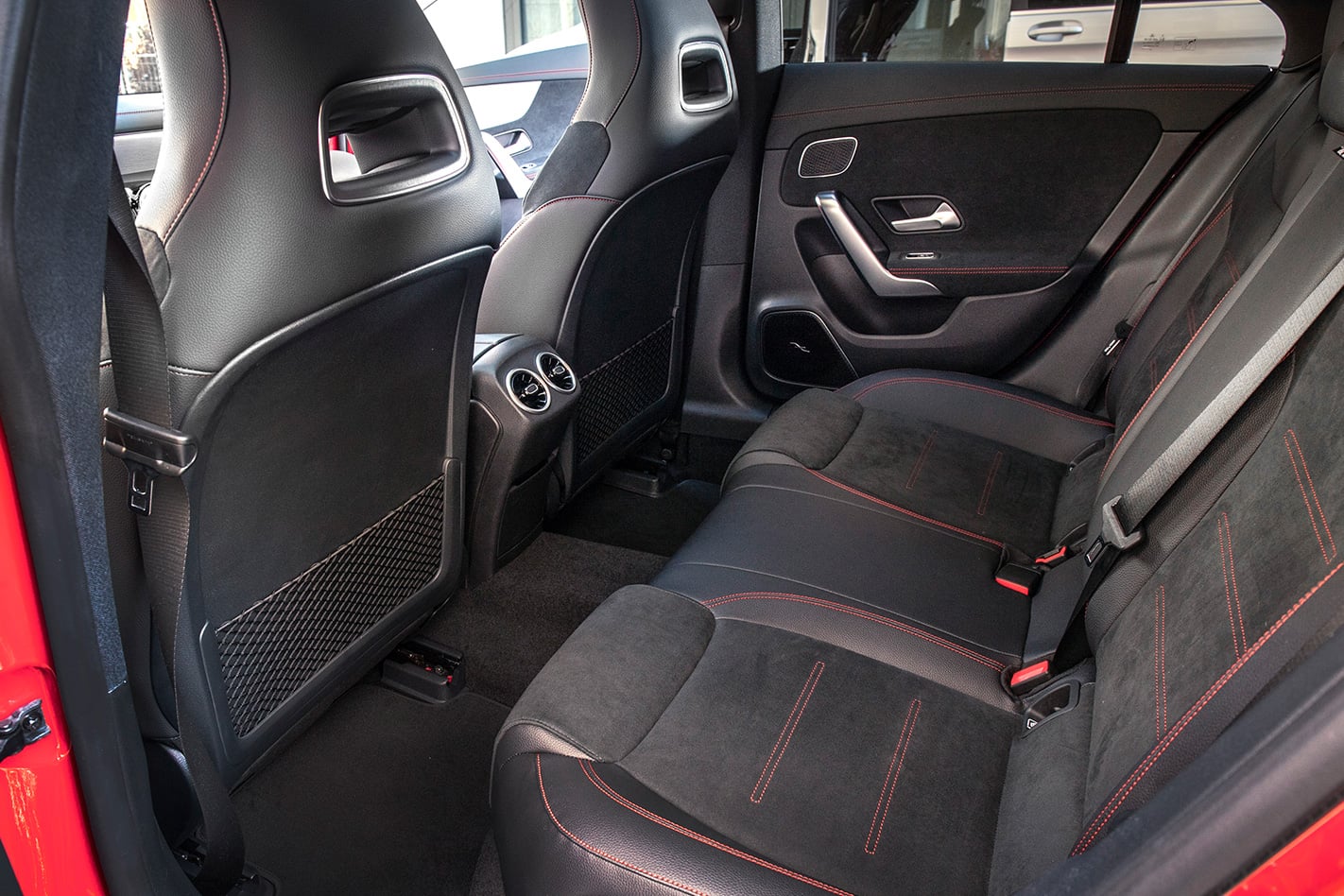
The more observant among you may well have already twigged that the asking price for the CLA 250 now overlaps with that of the C-Class range. There are a few reasons why the junior sibling is the better buy. Firstly, it’s now bigger than a C-Class. It’s fully 48mm longer and 53mm wider than its predecessor, and that also makes it 2mm longer and 20mm wider than a C-Class. It’s also a good deal more modern inside with its clever MBUX infotainment system and clean styling, which makes the facelifted C look a bit dated and gaudy in comparison. It makes an A-Class sedan look a bit muted too.
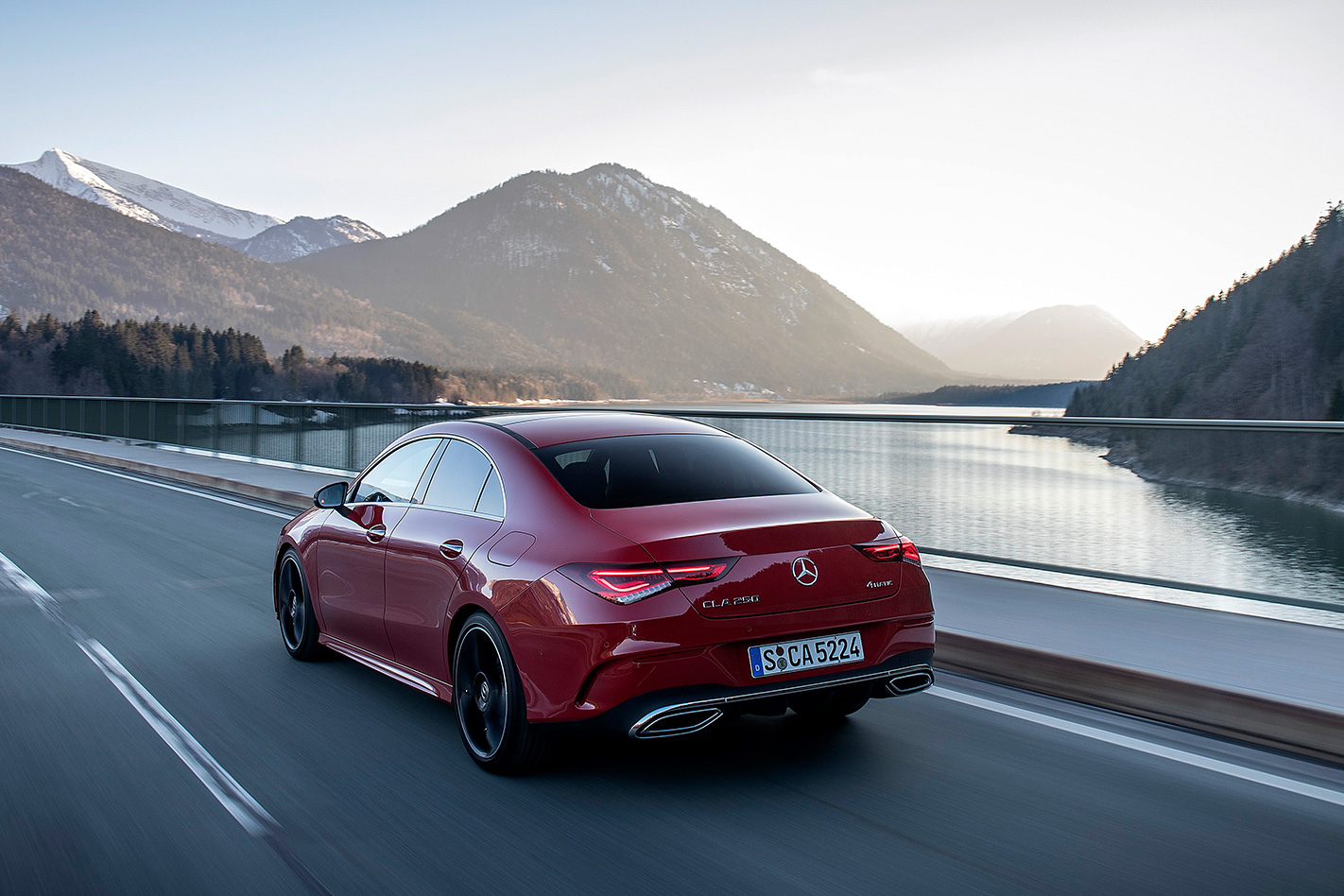
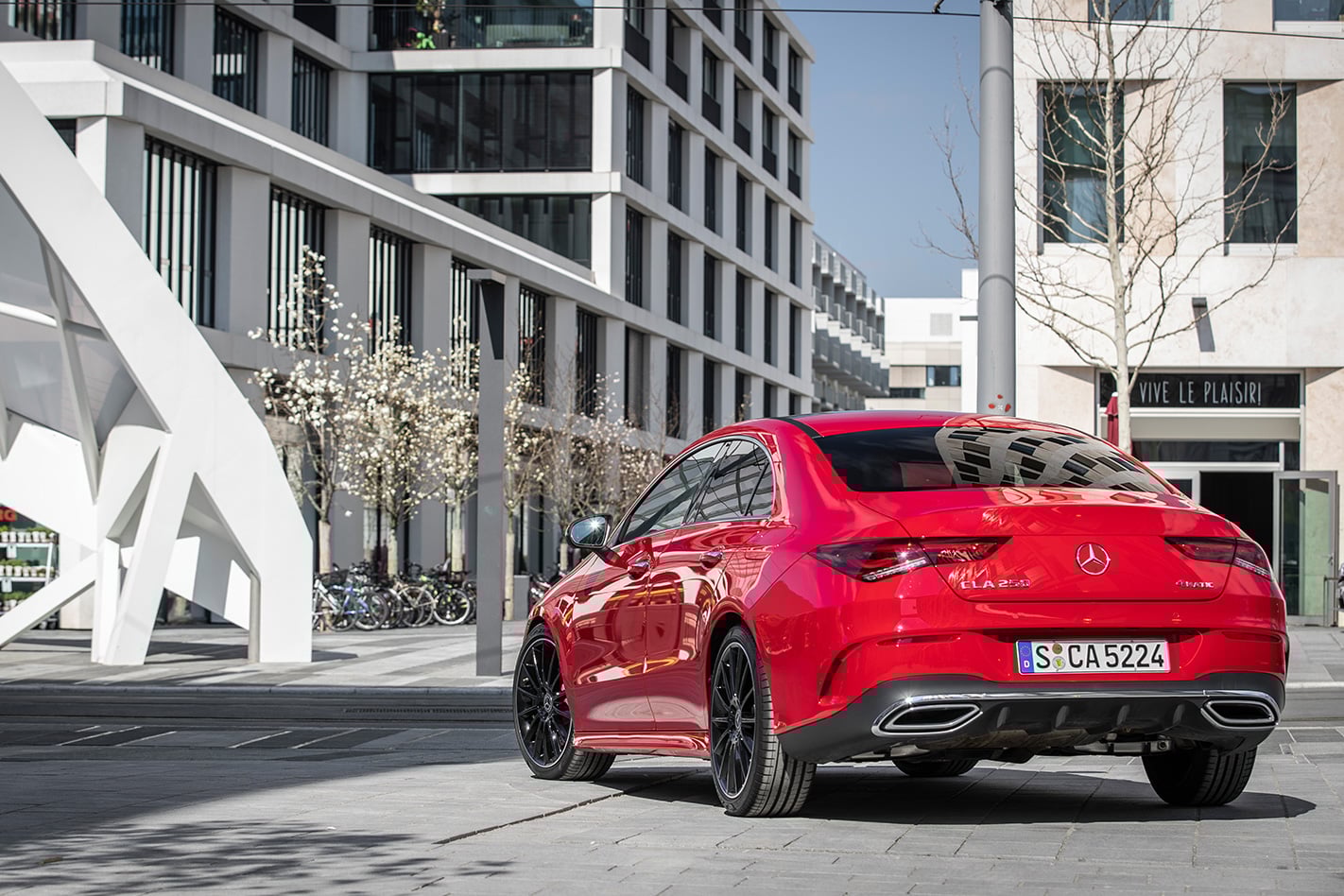
Finally, there’s the exterior design. Clearly we’re creeping into the realms of the subjective here, but can we talk a little about the shape of the old car? Most pertinently, its derriere? There was always something a little droopy about the old CLA’s rear end, something a little apologetic, unresolved and, to a small corner of the southern hemisphere, AU Falcon Forte about it. Designer Achim Badstübner has clearly sent the CLA for a Brazilian butt lift because the latest car raises the rear deck by 10mm to give it a perter, more confident look.
For almost everything else about the styling, 50mm is the magic dimension. That’s how much thinner the front and two-piece rear lamps have become, how much lower the leading edge of the bonnet is, how much wider the width across the front wheelarch flares is, the latter allowing for a more Coke-bottle shape in the flanks. As is the vogue with current Mercedes designs, extraneous swage lines have been chamfered away, leaving one rising character line on the flanks and a lot of subtle surface contouring to work the light and shade when the car’s moving.
As well as the aesthetics, a lot of work has gone into aerodynamics. Its broader frontal area means the CLA can’t quite equal the record-setting A-Class Sedan’s aero efficiency, but the Cd figure of 0.23 is excellent and noise suppression is especially good for a car with coupe-style frameless glass.
That slippery shape also translates into excellent fuel economy, the CLA200 with 7G-DCT ‘box managing 5.5L/100km and the CLA 250 4MATIC with the same transmission 6.3L/100km. That’s just as well, because the fuel tank measures meagre 48 litres, which could be an issue for the forthcoming AMG variants.
The CLA puts in a strong performance. Badstübner referred to the car as ‘the punk’ during its development, citing the fact that the design team could get away with all sorts of things that would never fly on more buttoned-down C- and E-Class models. Its designer is not in any way conflicted about these models treading on each others’ toes. “The C-Class is now an old car, it’s on its facelift,” chuckles Badstübner. “I would buy the CLA, no question.” I’m with the guy with the crayons on that one.
SPECS
- Model: Mercedes-Benz CLA 250 4MATIC AMG Line sedan
- Engine: 1991cc 4cyl, 16v, dohc, turbo
- Max power: 165kW @ 5500rpm
- Max torque: 350Nm @ 1800rpm
- Transmission: 7-speed dual-clutch
- Weight: 1490kg
- 0-100km/h: 6.3sec (claimed)
- Economy: 6.3L/100km (claimed)
- Price: $70,000 [estimated]
- On sale: October 2019
Brothers Ben and Michael Kavich aren’t two of Australia’s most famous racers, but their presence will be noticed this weekend at the Bathurst 6 Hour, as their Mitsubishi Lancer Evo X will be decked out in pink and white to support breast cancer research.
Not content with just a show of support, the brothers are also raising money b offering sponsors a place on the car for their name, or the name of a loved one, to be displayed.
“It can be hard to know what to say to someone experiencing breast cancer so this is a way to show your loved one you’re thinking of them” Michael says.
“Despite wonderful advancements in medicine, too many people still die from breast cancer or endure painful treatments and we want to do our part to change this”, Ben adds.
“It’s trials research that leads to more lives saved.”
The Kavich brothers will also be joined by World Time Attack champion Garth Walden for the weekend, with Walden to take to the wheel for some of the six hours.
“With the strength of Garth Walden Racing’s car preparation along with solid driving and pit strategy, we hope to achieve a podium finish this year” Michael says.
Tax-deductible donations to the team, and therefore to Breast Cancer Trials, can be made at the website.
Chief Operating Officer for Breast Cancer Trials Julie Callaghan says the effort the team has gone to in support of the helping save lives.
“We’re truly grateful for the support of all those involved in Race for a Cure and we know it means so much to those who will benefit from the research this initiative is helping to make possible.”
Following the international debut of the 2020 Peugeot 208 hatchback at the Geneva Motor Show last month, Peugeot Sport has revealed details of the R2 rally-spec version, which has begun dynamic testing in France’s Vosges region.
Based on the new 208, Peugeot Sport says it has been working on the 208R2 since the middle of last year.
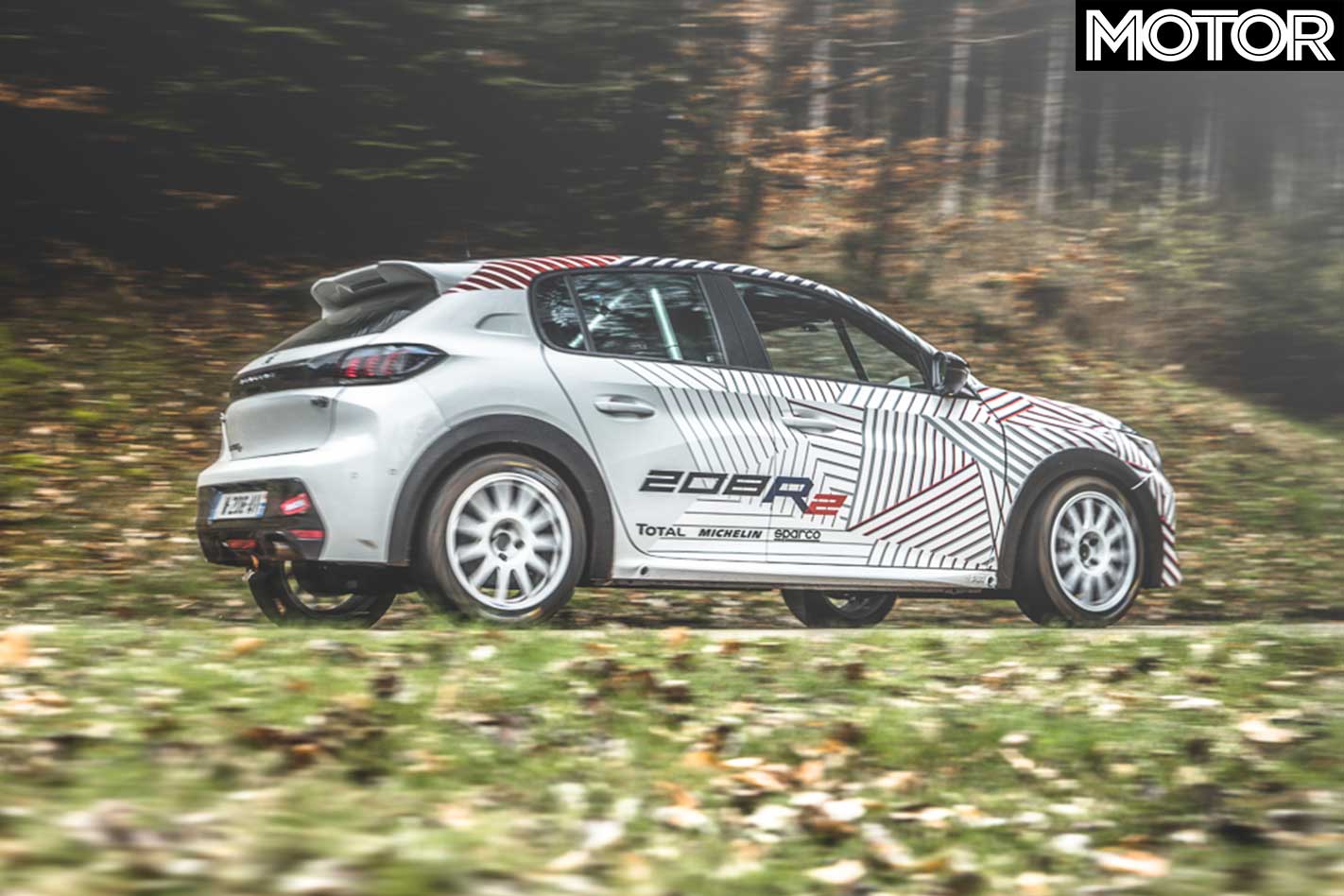
Built to meet FIA’s R2C regulations, the rally-bound 208 uses Peugeot’s new 1.2-litre three-cylinder turbocharged engine, which has been tweaked for competition with the use of bigger turbos, a motorsport engine management system, and a new gearbox.
Peugeot Sport hopes that the 208R2 will be able to live up to the success of its rally-spec predecessor, which they claim to be the most popular rally car Peugeot has ever made and the most popular car in its category, with more than 450 examples built.
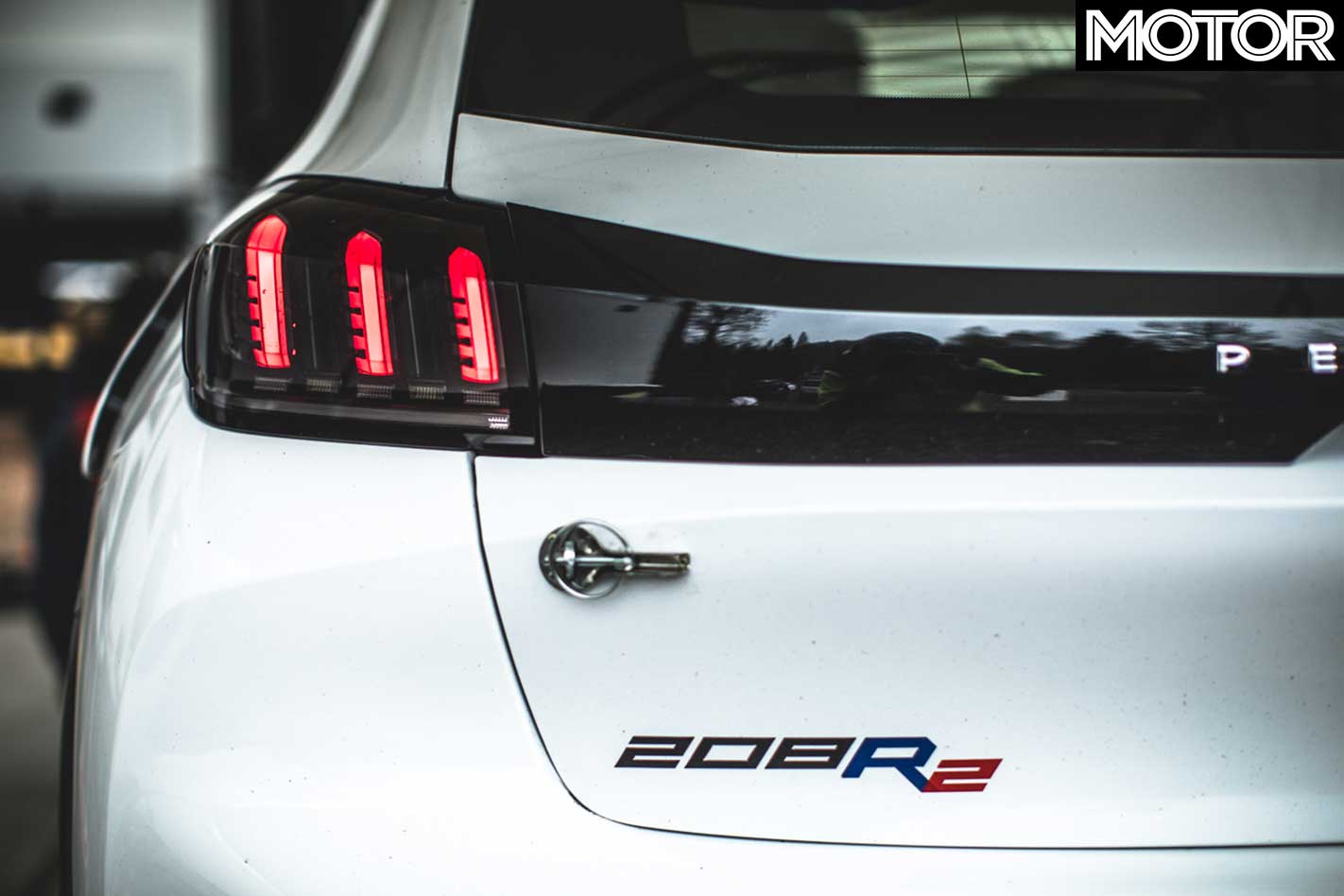
“With the new 208R2, we wanted to offer our customers a competitive and reliable car that’s a lot of fun to drive yet with minimal running costs, there’s no reason to change the winning formula in the R2,” says Bruno Famin, Peugeot Sport’s director.
“The improvement comes thanks to the new 1.2-litre PureTech engine, which will lead to a substantial increase in performance.”
Peugeot Sport will continue testing and development of the 208R2 over the next few months before confirming the car’s final technical specification, while deliveries expected to start in time for the 2020 season.
- All-new Great Wall ute expected to land in 2020
- Level 3 autonomy and 5G connectivity included
- Petrol and diesel engines available
- Expected to start from below $30,000
- Gallery above
Despite a few false starts in Australia, the company – which sold 800,000 SUVs in China last year – believes its next generation of ute will able to compete with established players like the Toyota Hilux, Ford Ranger and Mitsubishi Triton.
Offering three main variants – Commercial, Passenger and 4WD Recreational – the 2020 Great Wall Model P rides on the Chinese carmaker’s new P71 platform, which it will share with the next generation Haval H9 large 4WD SUV, and features multilink rear suspension in the Passenger and 4WD Recreational model, with leaf springs underneath the Commercial.
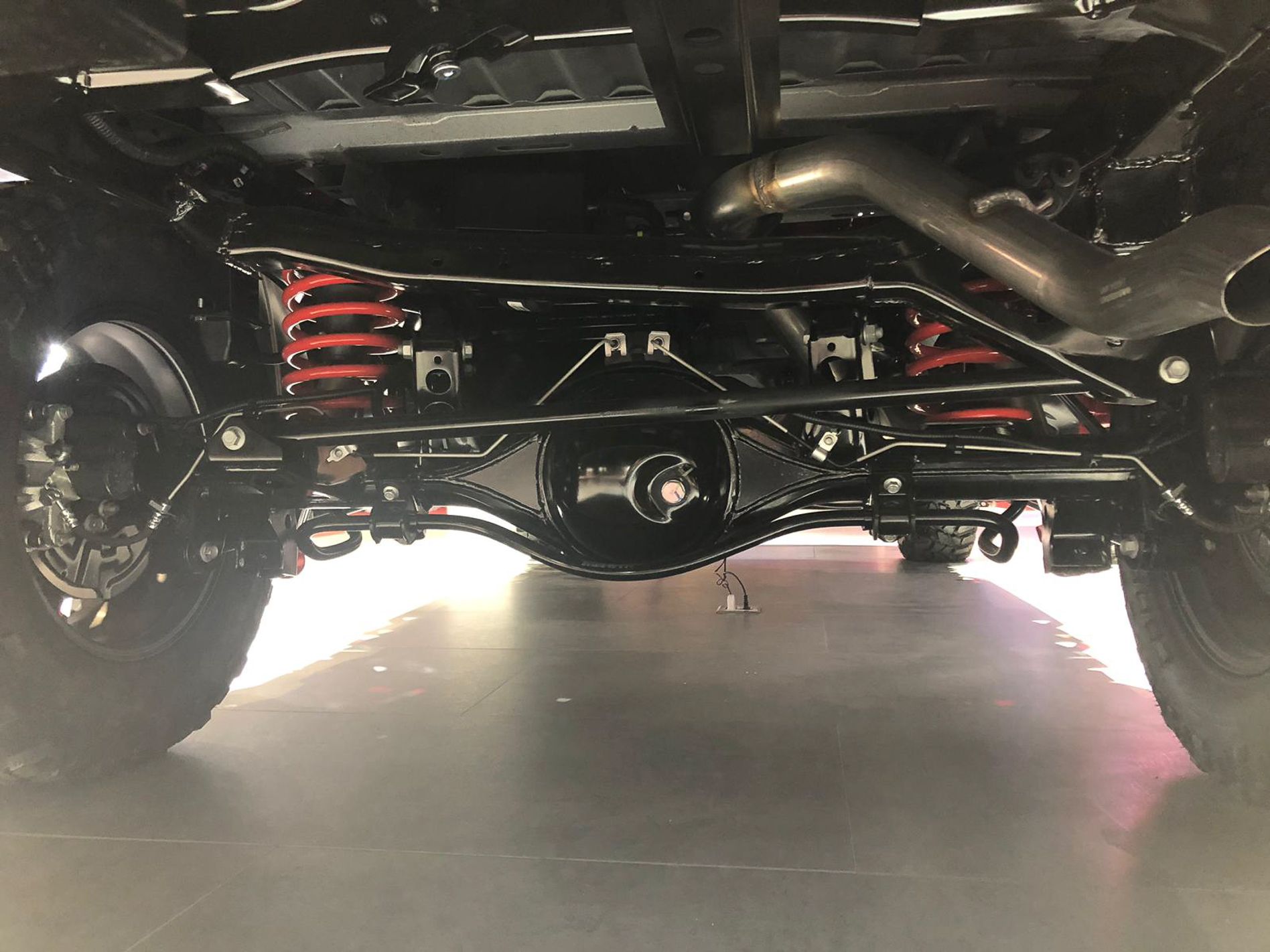
New ute is expected to switch to coils and multilink on some model
Power will come from a choice of 120kW/360Nm 2.0-litre turbo petrol and 145kW turbo Diesel engine which will produce up to 400Nm of torque. They’ll be coupled to a manual gearbox or eight-speed auto.
Great Wall’s platform director Jiaming Zhang said the company is also working on bigger petrol and diesel engines, with the latter producing up to 500Nm.
Great Wall hasn’t revealed fuel economy figures, either, but Zhang said it meets Euro 6D emission standards, while the 80-litre fuel tank will help ensure a decent range.
The company has also revealed a pre-production version of an all-electric ute (below) for the Chinese market that will go on sale later this year with a claimed 500km range, though there is no detail on how payload will affect that range.
The EV ute will eventually be available in overseas markets and is already under consideration for Australia.
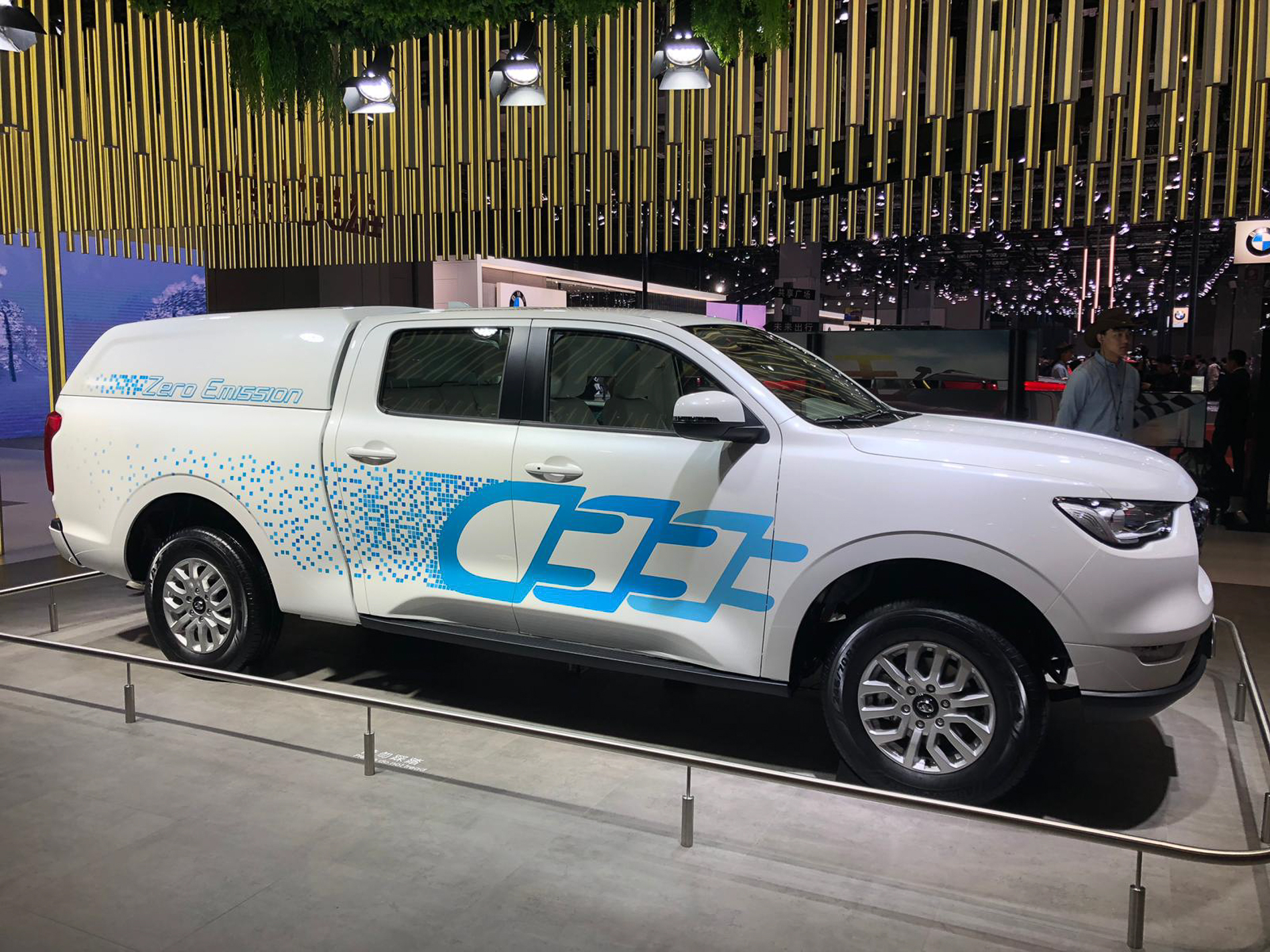
A hydrogen version for the commercial variant is also in the works.
The Model P – which will likely have a different name in overseas markets, including Australia – also features what Great Walls says is level 3 autonomy, as well as 5G-capable connectivity with voice recognition.
The Model P range will include long and short wheelbase dual cab versions, as well as a single cab model. Payload on the multilink suspension versions will be just 500kg, with towing capacity at 3500kg across the range.
The 4WD Recreational pick-up revealed today (below) is also a pre-production concept. However, Great Wall design director Morio Ikeda told WhichCar that the car on display at the Shanghai show is about 95 percent of the finished product, apart from a couple of minor design tweaks.
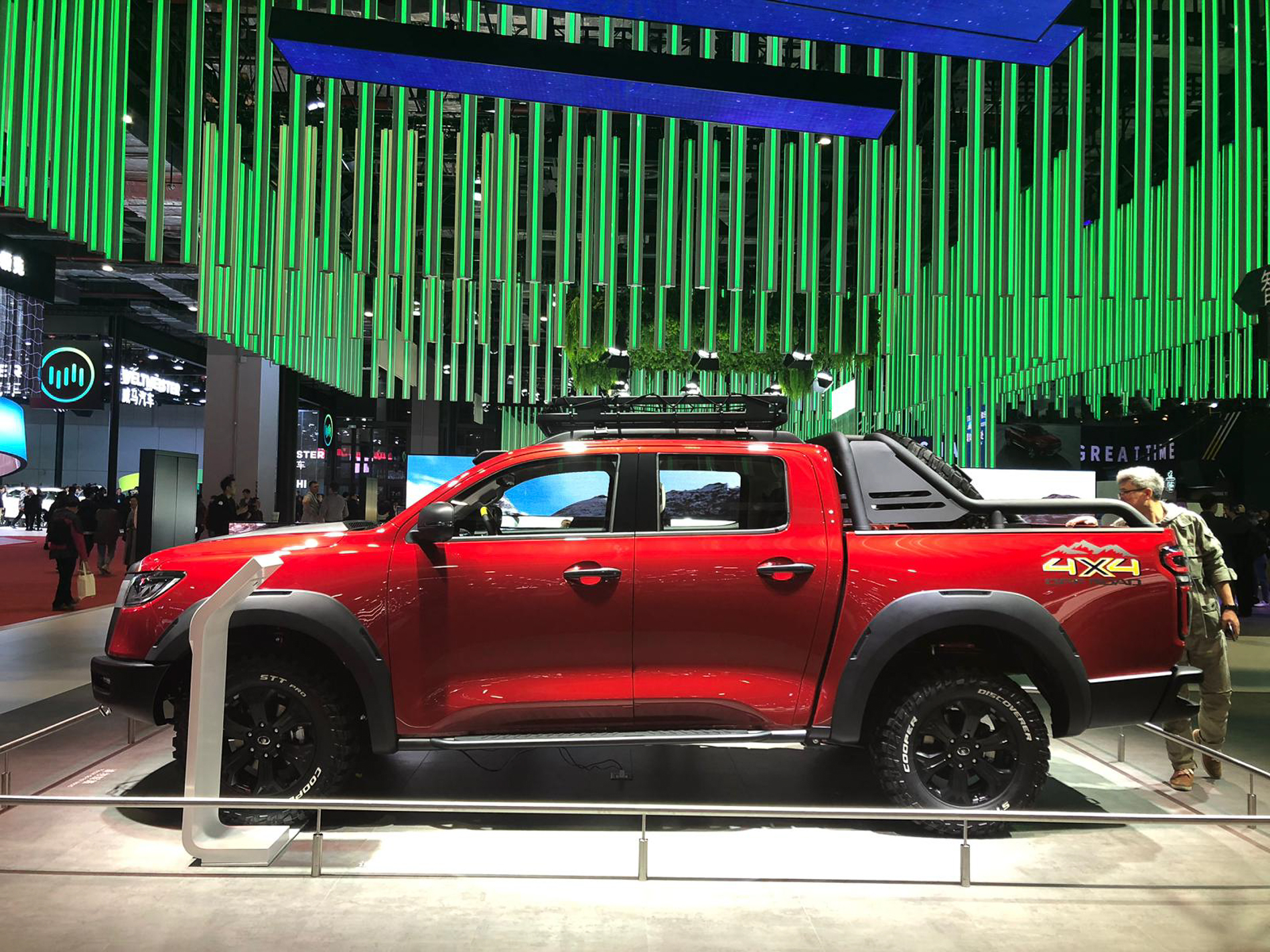
It will arrive standard with all the garnishes, too, including a roof rack, winch and snorkel which have all been produced in-house.
The 2020 Great Wall Model P will go on sale in China in September this year. It’s not expected to arrive in Australia until late in 2020. Pricing and specifications will be revealed closer to launch, with the mid-spec but plush Passenger variant expected to start at $35,000.
Talking points:
- Lotus reveals $3 million electric hypercar
- Type 130 name confirmed, first silhouette
- Chinese owner Geely backs new initiative
At an exclusive dinner on the eve of the Shanghai show’s first press day, legendary British sports car brand Lotus formally confirmed the rumours that had been circulating for some time: it is in the advanced stages of developing an all-new, all-electric hypercar.
The first official rendering above reveals an elegant, low-slung, cab-forward silhouette with a long-ish tail optimised for aero and aesthetics, and which looks poised to take on the Pininfarina Battista and other ultra high-end electric hypercars. It will cost similar money too: unofficially, Lotus PRs project up to around $3 million.

What’s the Lotus Type 130 name about?
Called the Type 130, Lotus is positioning the vehicle as the latest in a long line of ground-breaking sports and motorsports cars from the Norfolk-based manufacturer that have all started with the famous ‘Type’ prefix.
These include the Type 14, the world’s first composite monocoque production road car (the 1957 Elite), the Type 72, the most successful F1 car of all time and the Type 111, otherwise known as the 1995 Elise (above) and the world’s first aluminium and bonded extrusion construction production car.
Wheels’ sister mag CARwas in attendance in China when the announcement was made and talked exclusively to Lotus CEO Phil Popham about the car’s significance.
“The Type 130 is important to illustrate capability, intent and design direction,” he said. “Those three things. It’s not a false dawn, there’s substance to the idea. Not only in terms of our ability to engineer a product but to actually engineer a product with new technology. It really showcases what Lotus could be, will be, and how much support we have from Geely.”

What about a few more affordable new cars from Lotus?
The Type 130 effectively re-launches the historically much-loved but currently under-performing sports car brand with a new halo model but there is more to come.
“The Type 130 is not going to be a volume car clearly, that’s just the start,” Popham continued. “You’ll see another sports car next year which will be more volume-oriented, our focus is actually on sports cars short-term, but we will move into other segments as time moves on.”
Any other hints about the Type 130’s design and when we’ll see more?
Lotus’s design director Russell Carr told CAR this extra nugget of info on the Type 130’s form: “We spotted a trend in a lot of LMP [Le Mans prototype] cars where the airflow is managed not only over the car’s surfaces but also through the car too. That gave us a really interesting sculptural opportunity. This is an elegant and fluid car with some cues from the past and also a lot of modern detailing too.”
The official reveal of the final car with specification and full details is set to be in mid-2019, appropriately in London, the birthplace of Lotus 71 years ago.
The first eight units of the new 8 Series to be sold in Australia will be 2019 BMW M850i First Editions, as confirmed by the Bavarian carmaker’s local arm this morning.
Of the 400 units to be built in total for the world’s markets, the eight heading Down Under make up just 2 per cent of the global share of First Editions.
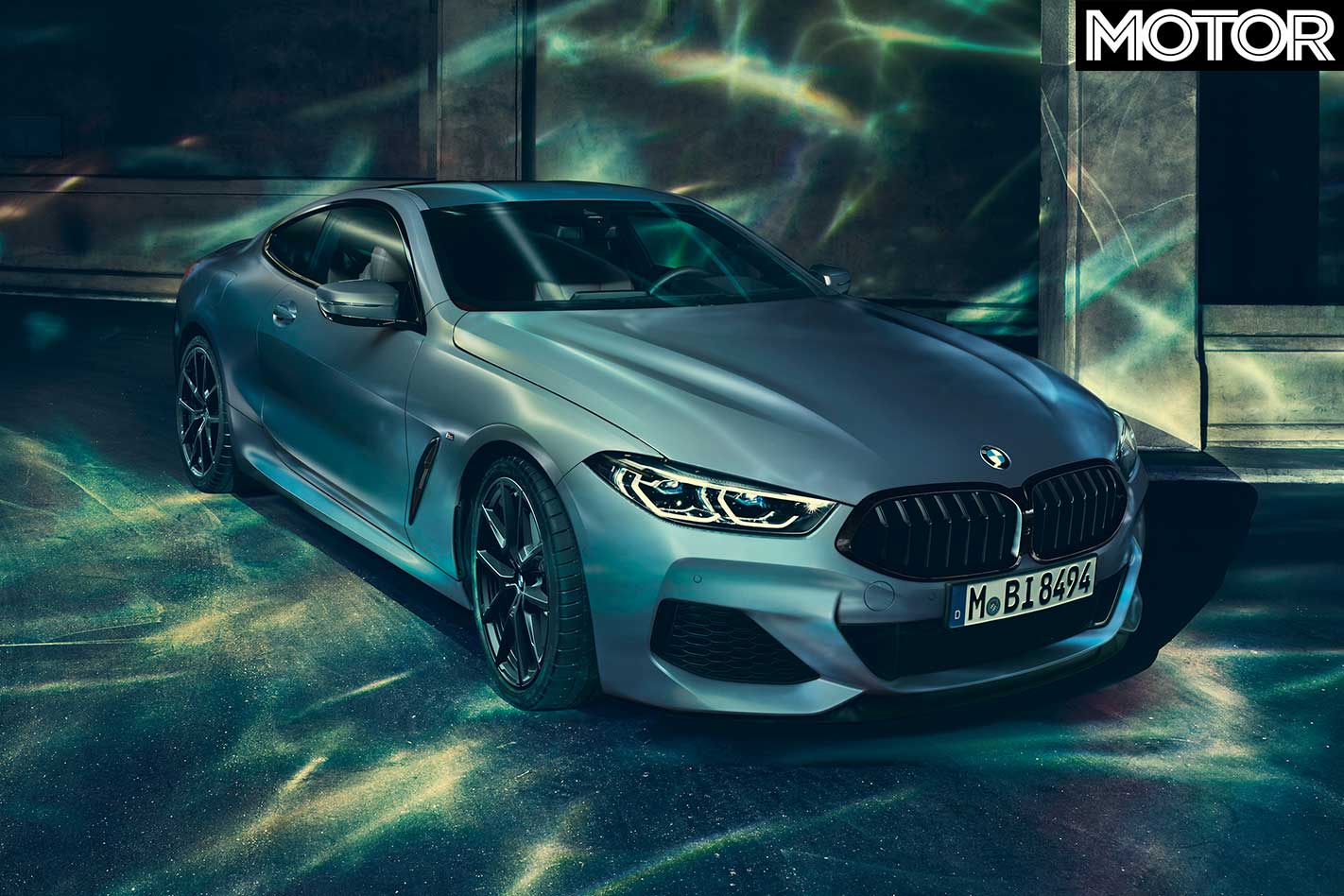
Priced at $295,900, the M850i First Edition sets a $23,000 premium over a standard 8 Series Coupe which is to be priced at $272,900. The Convertible will come in at a starting point. $281,900
All will feature a 4.4-litre twin-turbo V8 producing 390kW and 750Nm but with several features coming in standard that would otherwise be options, the First Edition should provide the ‘bang for buck’ that the first eight buyers will hope to gain.
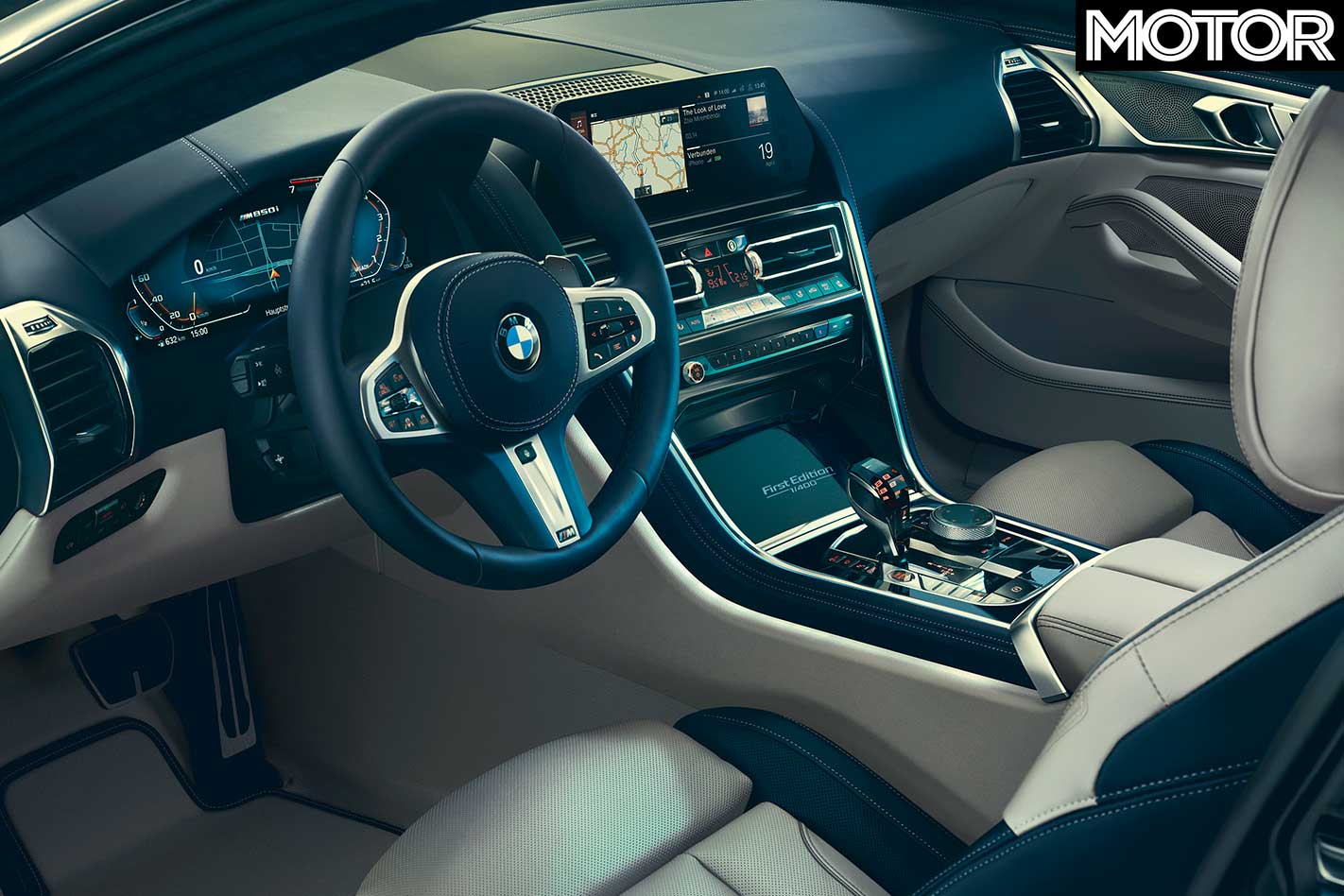
A 16-speaker Bowers & Wilkins surround sound system and a set of 20-inch M light-alloy wheels are two of the highlights, with a host of M Sport parts and a comfort pack also coming standard.
Vikram Pawah, BMW Australia CEO, says the high-spec First Edition is an excellent way to kick off sales of the new M850i in Australia.
“The BMW M850i xDrive Coupe First Edition epitomises what the all-new 8 Series is about: commanding road presence, strong performance and amazing grand touring capability,” says Pawah.
“Where the First Edition steps up even further is in exclusivity. With its distinctive Frozen Barcelona Blue exterior, Bicolour full leather interior and the Carbon Package fitted as standard, this is truly a top-of-the-line 8 Series experience… and it’s only available to eight lucky Australian customers.”
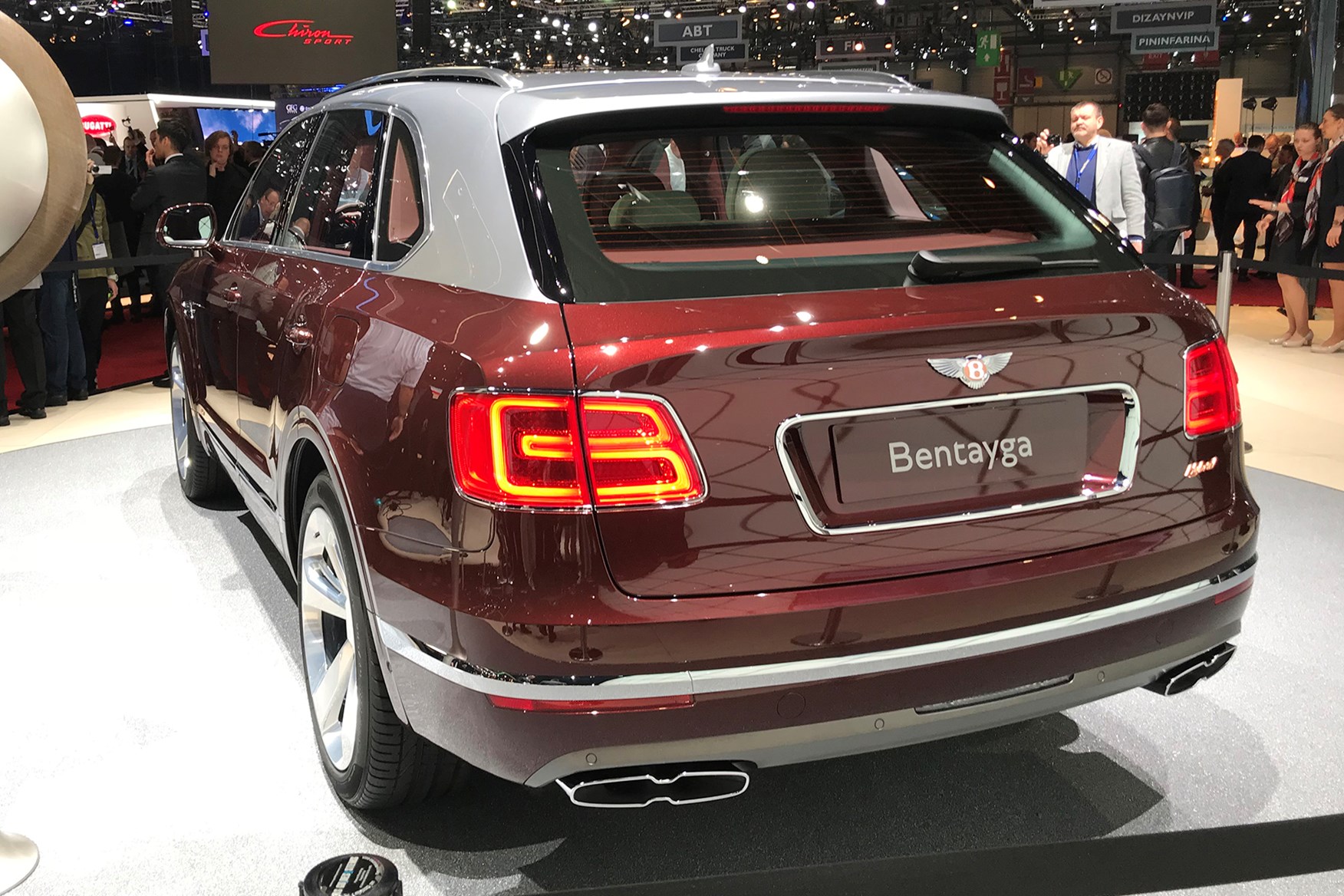
The new Bentley Bentayga Hybrid has taken its time coming – it was unveiled in March 2018 and won’t arrive to European customers before the third quarter of 2019 – but it kicks off a new electrified era at Crewe, according to the global sales chief.
Speaking exclusively to Wheels’ sister mag CARat the 2019 Shanghai motor show, sales and marketing board member Chris Craft said Bentley intended to accelerate its electrification programme.
“There’s no question that our focus is to electrify our range,” he said. “The Bentayga Hybrid comes first in Q3 2019. We intend to produce a PHEV in every model range we have by 2025. And, yes, it could include a full electric vehicle (EV).”
The new Bentayga Hybrid was first revealed at the 2018 Geneva motor show (above). At the time, Bentley claimed that its new plug-in Bentayga variant was the “world’s first luxury hybrid” – something Land Rover won’t be pleased to hear, given that it recently added a Range Rover PHEV and Range Rover Sport PHEV into its range.
Gimme some specs!
The new hybrid Bentayga uses a new-to-Bentley 3.0-litre V6 petrol engine mated to an electric motor. Back then, Bentley neglected to mention how much power it produces, but did say that its emissions are rated at 75g/km on the NEDC cycle.
All-wheel-drive is standard, and like the rest of the Bentayga range, it comes with a smorgasbord of driving modes depending on what you want from it. There are four on-road modes – Sport, Bentley, Comfort and Custom – and a separate set of modes to make the most of the electrified powertrain.
EV Drive allows for up to 50km of full-electric driving, Hybrid Mode allows the engine and motor to seamlessly work together, while Hold Mode keeps charge in the battery, so you can save silent e-running for urban use later in your journey.
To help keep the Bentayga Hybrid as efficient it can be, it uses navigation data to guess which drive mode is best for the current driving situation. Otherwise, it’s business as usual inside, with the same suite of controls, pleats and wood that you find in all other Bentaygas.
Since it’s a PHEV, what’s the charging time like?
Bentley claims the battery pack can be charged in 2hr 30min via a fast-charger, or around 7hr 30min from a regular household socket.
Bentley has also teamed up with designer Philippe Starck to design a Power Dock for Bentley Hybrid buyers. The charging station is a “statement piece” that “showcases exquisite attention to detail.” The charger’s surround uses “eco-linen” mixed with resin and aluminium casting.
The infotainment system displays charging points and allows you to set your destination to them. Pretty standard stuff for a plug-in car in 2019.
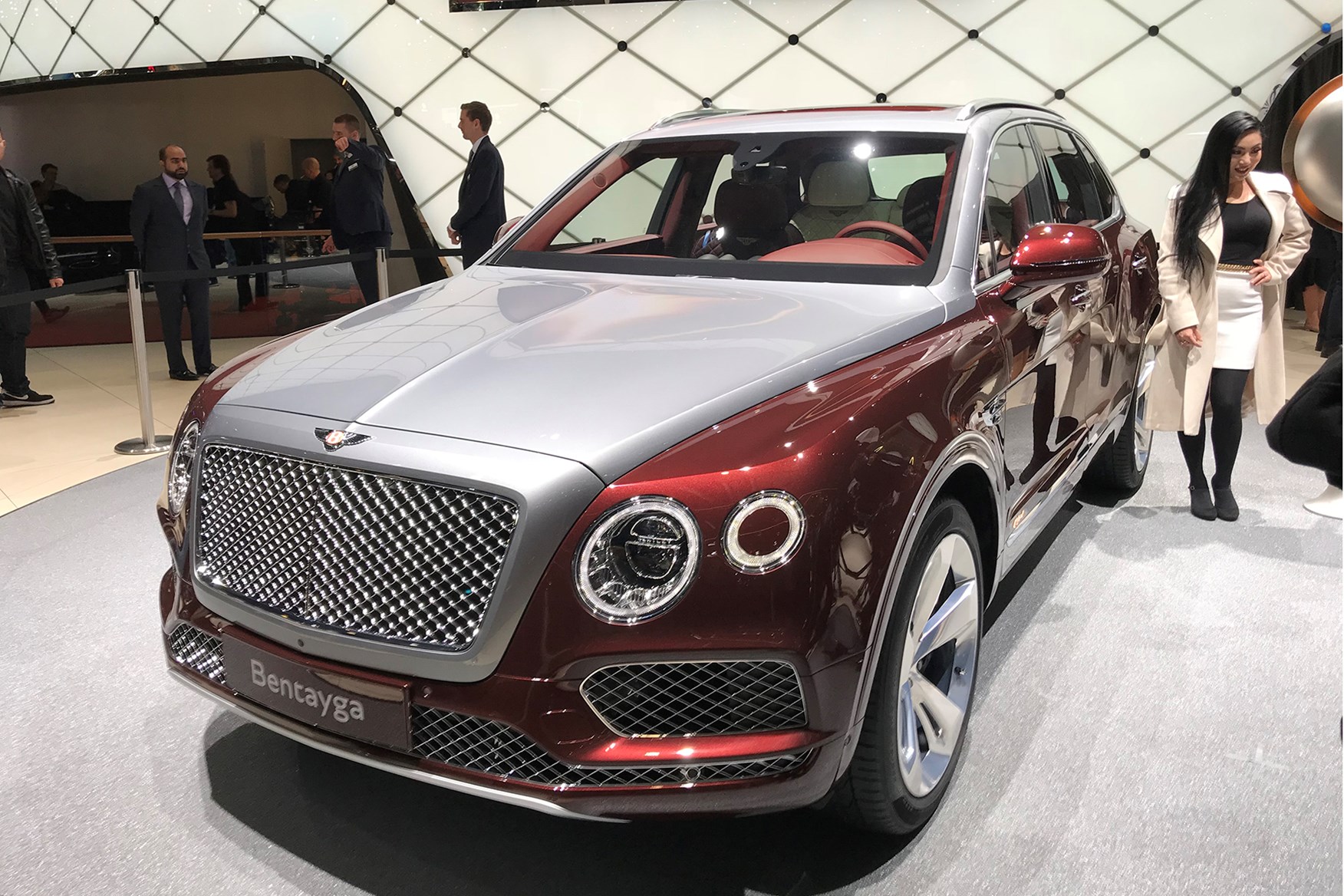
Anything else new on the 2019 Bentley Bentayga Plug-in Hybrid?
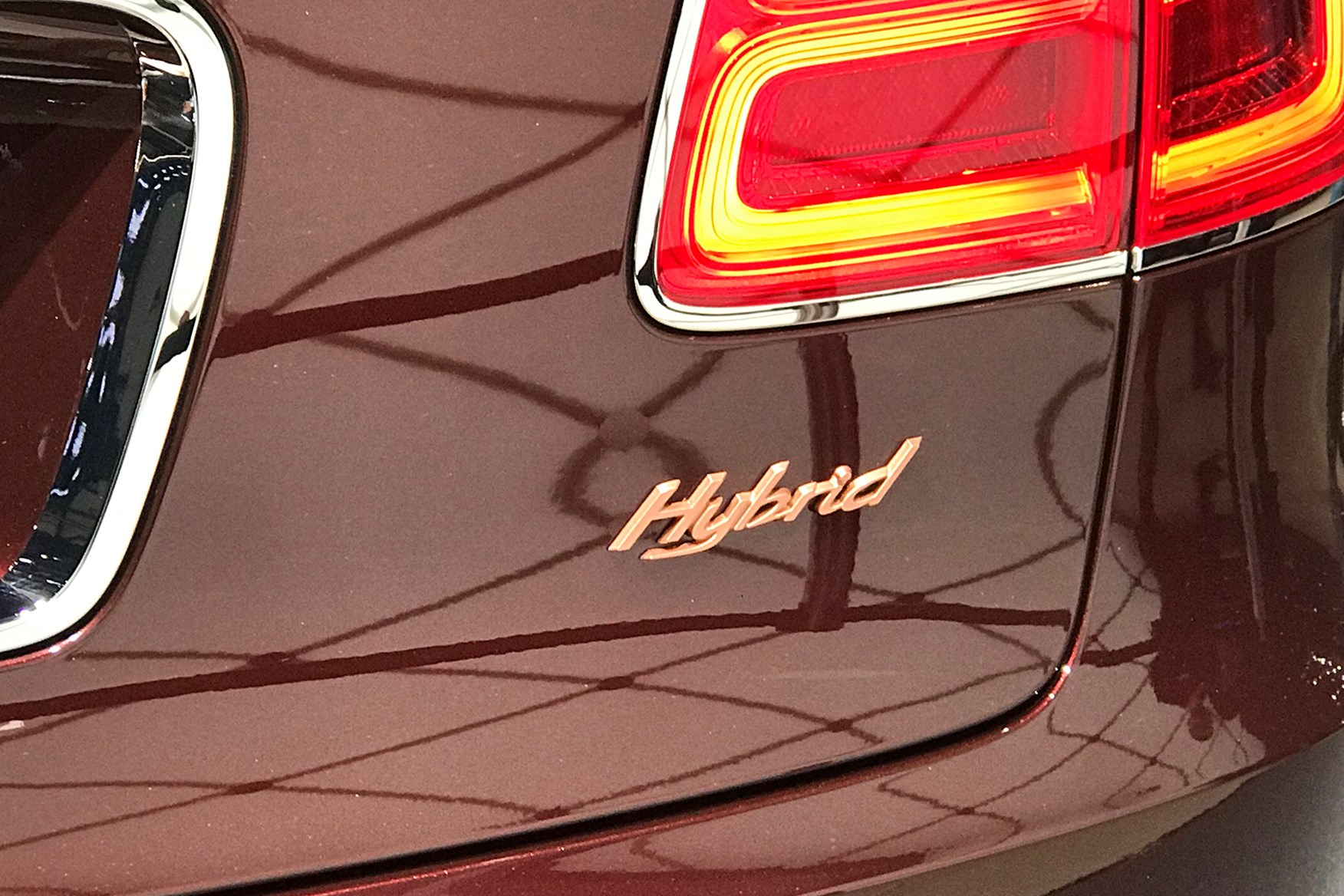
And to show the world you’re going electric with your choice of Bentayga, the Hybrid badging and wheel centres come in a very fetching shade of copper.
The socket for the charger is subtly hidden on the opposite side to the fuel filler cap but there’s little else to differentiate the PHEV from the rest of the range. Inside, it’s subject to much the same finish as any other Bentayga. Which is to say, it’s mega opulent…
Bentley Bentayga Hybrid: price and specs
An official price is still to be confirmed, but Bentley says its new hybrid SUV will be available to order in the UK from the second half of 2018, with first deliveries in the third quarter of 2019. Expect it to be… expensive.
