
Design sketches of the 2020 Aston Martin DBS GT Zagato, which is to comprise half of the DBZ Centenary Collection, has been revealed.
Set to be built alongside the classically-styled Aston Martin DB4 GT Zagato Continuation, the DBS GT represents the latest in the relationship between Aston and the Italian design house.
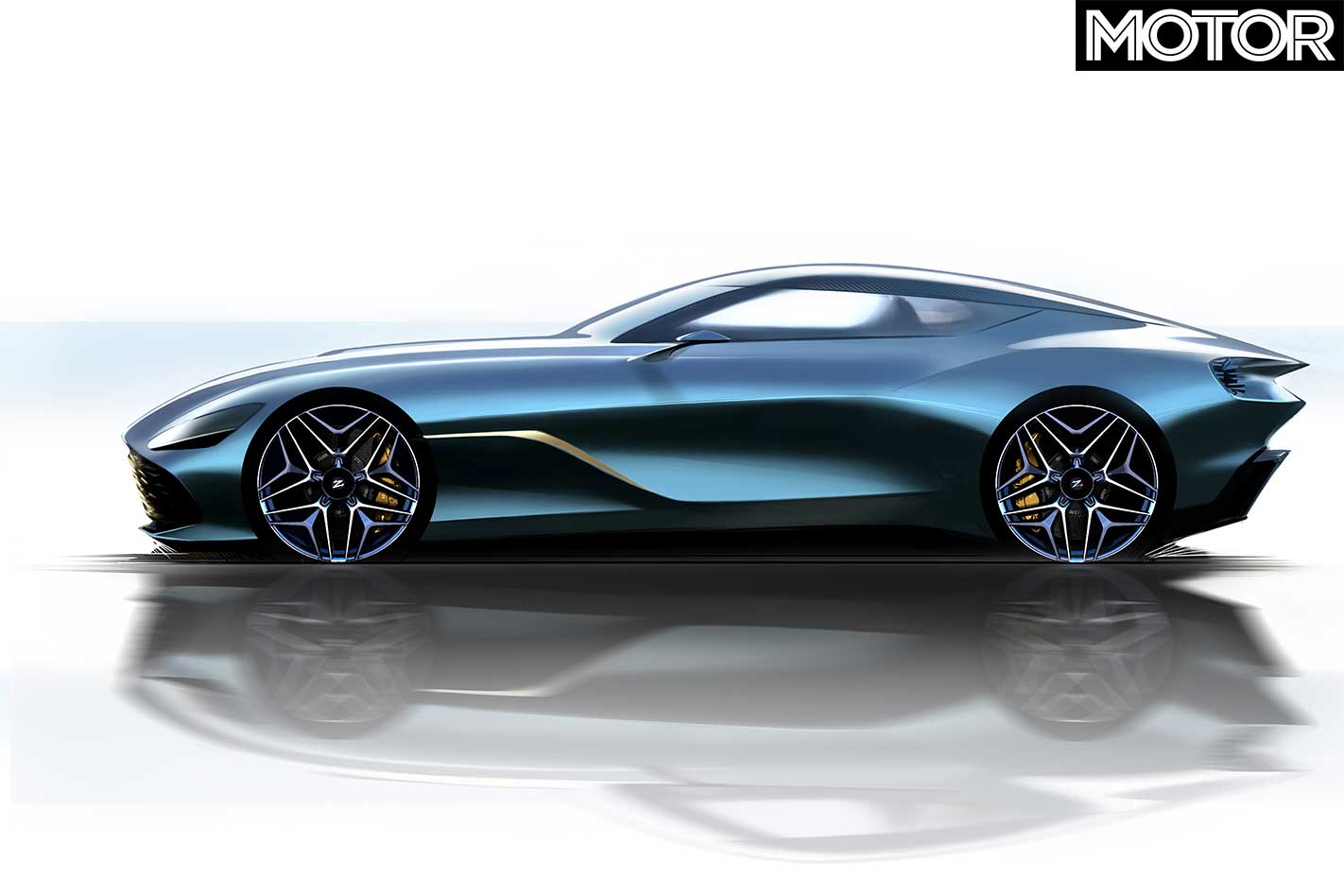
Based on the V12-powered Aston Martin DBS Superleggera ‘super GT car’, the new Zagato-designed car is set to look similar, if less extreme, to the design concept released by Aston.
While the ‘continuation models’ of the DB4 GT Zagato will be built at the original DB4’s home at Aston Martin Works in Newport Pagnell, the DBS GT Zagato is set to come from the Gaydon HQ.
Aston’s chief creative officer Marek Reichman says the DBS GT, each of which will be paired with a DB4 GT Zagato Continuation, had to match its counterpart’s status as a design icon.
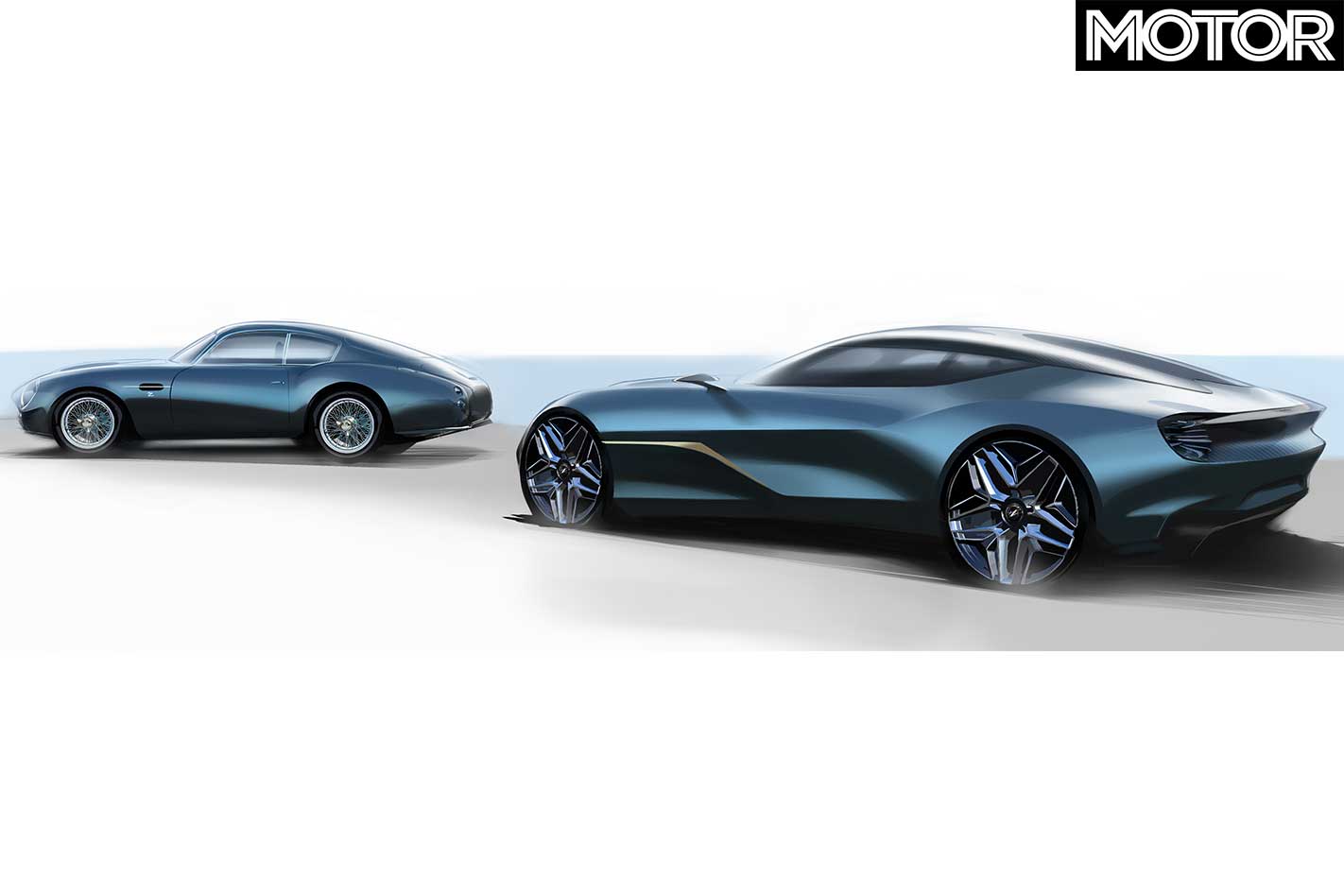
“In the DB4 GT Zagato Continuation we have one of the world’s most beautiful and instantly recognisable pieces of car design,” says Reichman.
“Creating a car fit to stand alongside it was always going to be a formidable challenge, but also a great motivation.
“Both design teams at Aston Martin and Zagato have together risen to the task magnificently; taking the already fabulous DBS Superleggera and shaping something which retains its identity as an Aston Martin, but expresses itself as only a Zagato can.
“Sensational-looking and extremely rare, it is the modern incarnation of a timeless icon.”
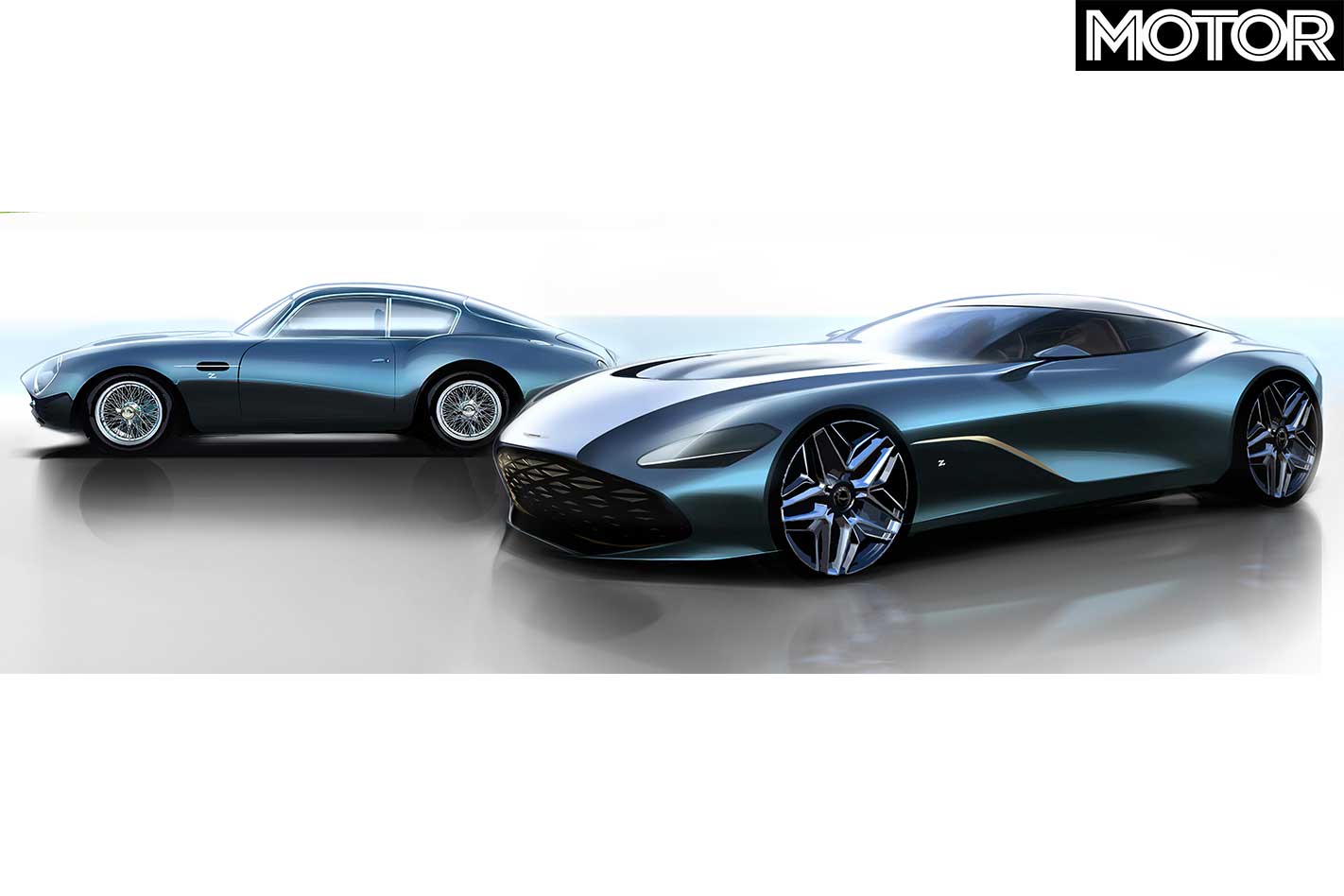
For £6m before taxes, buyers can own one of 19 pairs of the celebratory Zagato cars.
Aston expects Q4 2019 deliveries for the DB4 GT Zagato Continuation, with the DBS GT Zagato coming one year later.
See the video above for an explanation on how to change a flat tyre
See the video above for an explanation on fitting bigger tyres to your car
Jaguar Land Rover (JLR) has issued a recall for certain XE, XF, F-Type, F-Pace, E-Pace models manufactured between 2018 and 2019 to rectify irregularities in the engine’s CO2 output.
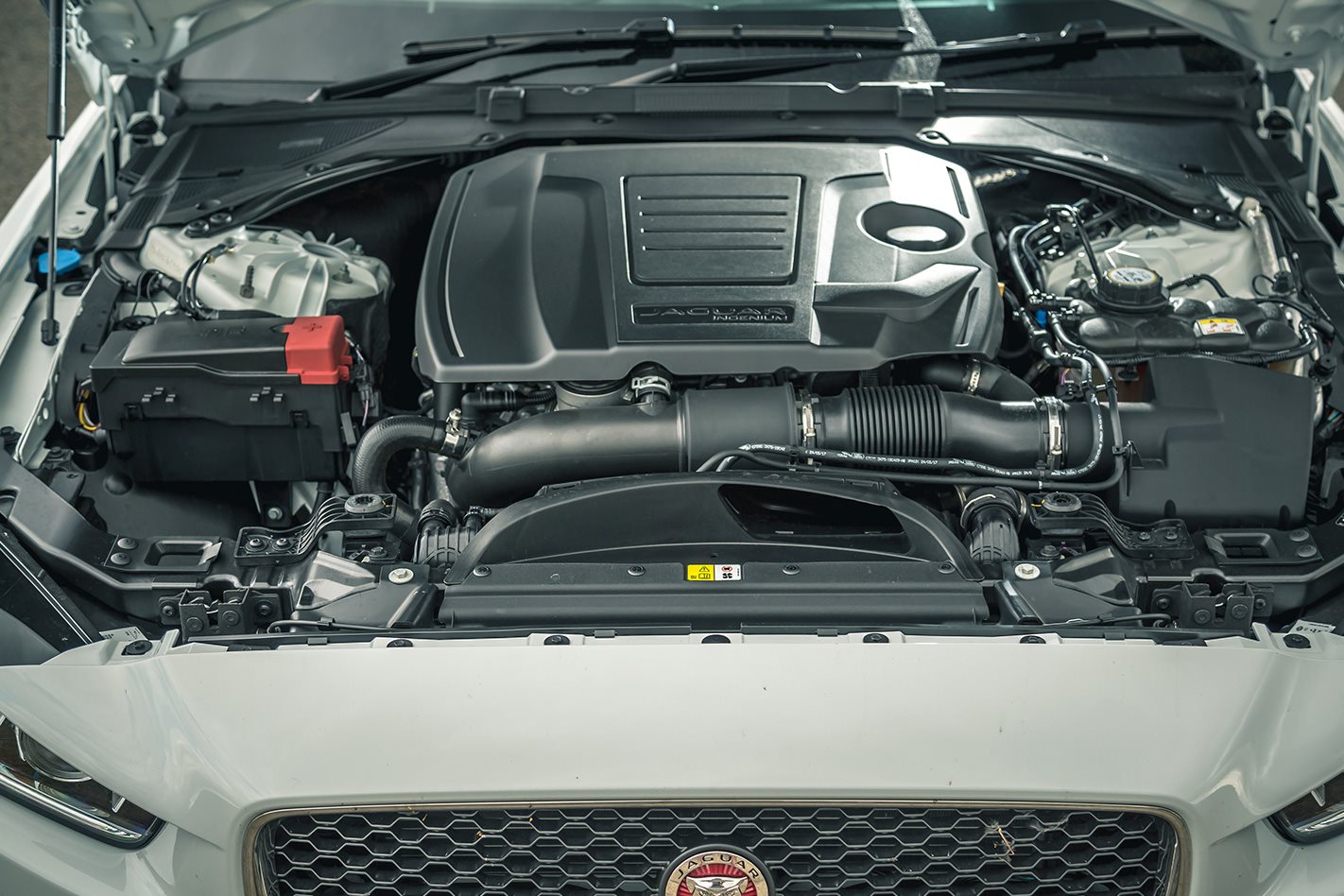
Specifically, cars fitted with the 2.0-litre turbocharged four-cylinder petrol ‘Ingenium’ engine may not meet the required Australian emissions standards.
During testing, some vehicles were producing greater than expected variations in CO2 outputs.
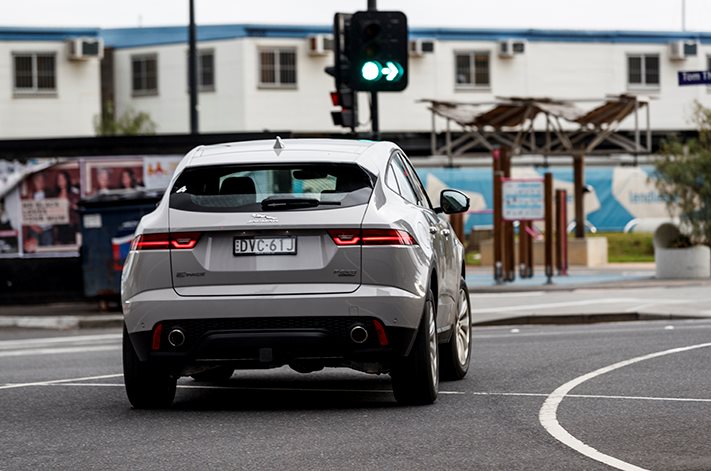
Jaguar will notify the owners of 468 vehicles by letter to insist that their cars are brought in to receive a software fix.
This recall follows on the back of a large European recall for the same matter. Automotive News Europe reported 44,000 cars were affected by the same issue relating to the 2.0-litre engine earlier this month, of which 9653 engines were petrol-powered.
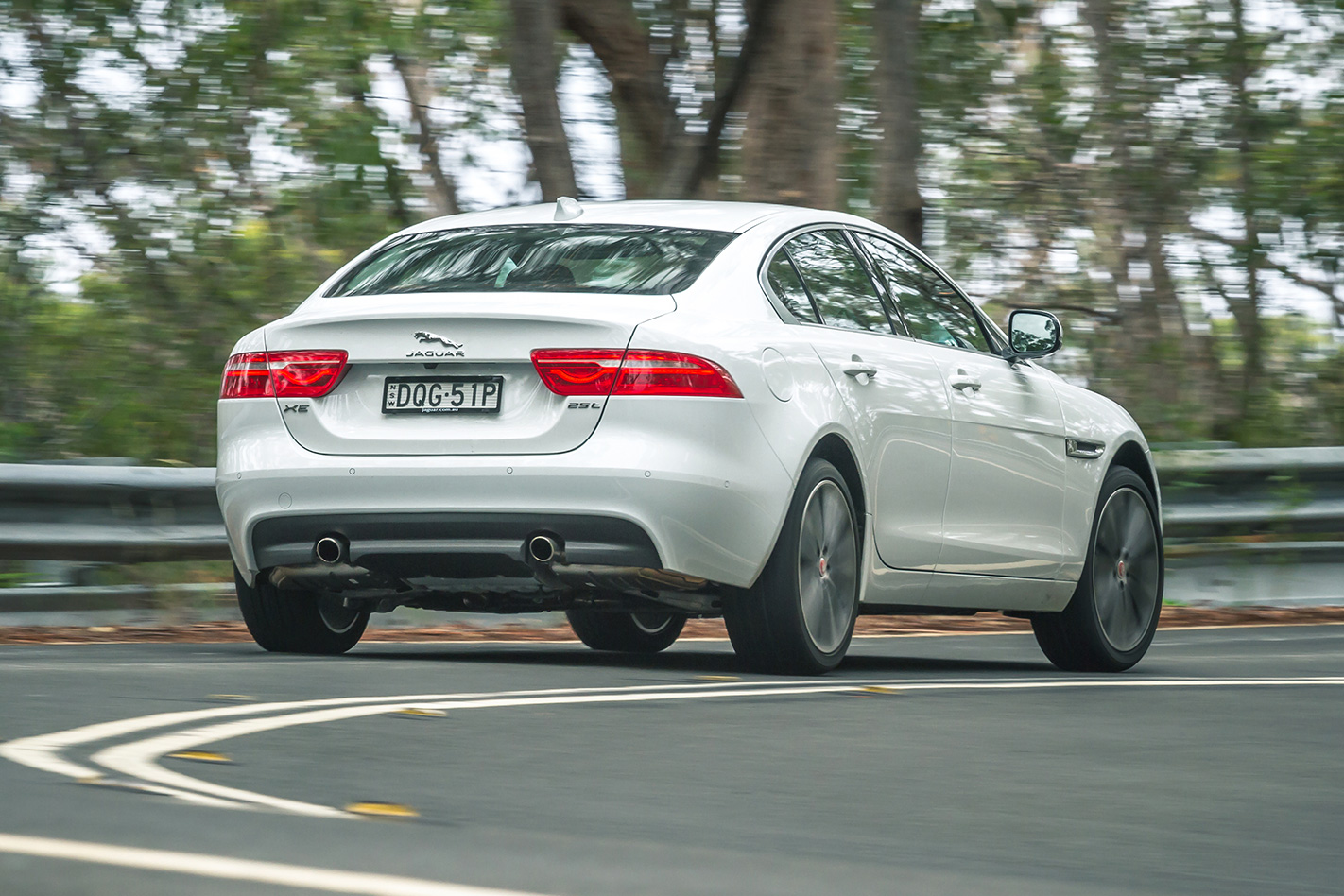
In a statement to Automotive News Europe, JLR disputed that the cars produced “excessive” CO2 levels, stating that the change in recorded CO2 levels is around 2 percent on average, among affected cars. JLR denied it was a “cheat”, like the system at the centre of the Volkswagen Group’s Dieselgate saga, saying the issue was detected through statutory conformity of production testing.
The recall affects engines produced between 2014 and 2018, before the changeover from NEDC to WTLP emissions regulations late last year.

The recall comes at a rough time for the manufacturer, with a downturn in sales in Europe and China resulting in losses of some 4500 jobs at the UK-based factory.
Ferrari has revealed the latest in its line of one-off builds for its wealthier customers, and it’s called the Ferrari P80/C.
Inspired by both the Ferrari 330 P3/P4 and the similarly-proportioned 1966 Ferrari Dino 206 S, the P80/C is for the track only, meaning Ferrari’s engineers could make it as wild as they – and the buyer – wanted.
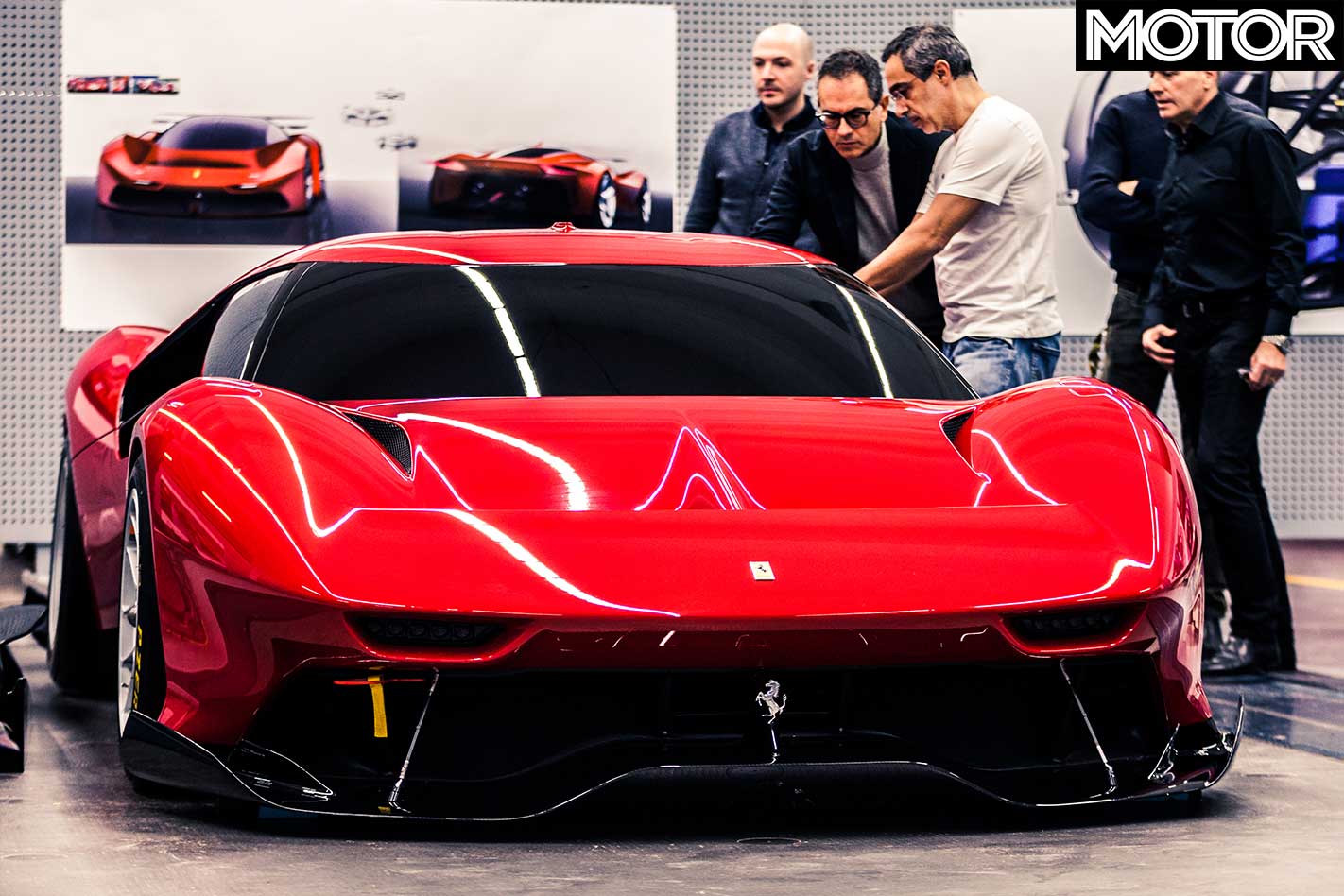
As such, the car began development in 2015, making this the longest development for any one-off Ferrari, with a 488 GT3 race car serving as its base.
“With respect to the Ferrari 488’s classic layout in which the cockpit tends to be placed centrally, the GT chassis allowed the designers to emphasis a cab forward-effect in which the rear is elongated, lending the car a more aggressive, compact character,” Ferrari says.
“This was one of the cornerstones of the P80/C’s styling from the early stages of the design process.”
This allowed Ferrari to better ‘reinterpret’ the 330 and Dino racers into a modern car, albeit one powered by an unrestricted race-built twin-turbo 3.8-litre V8.
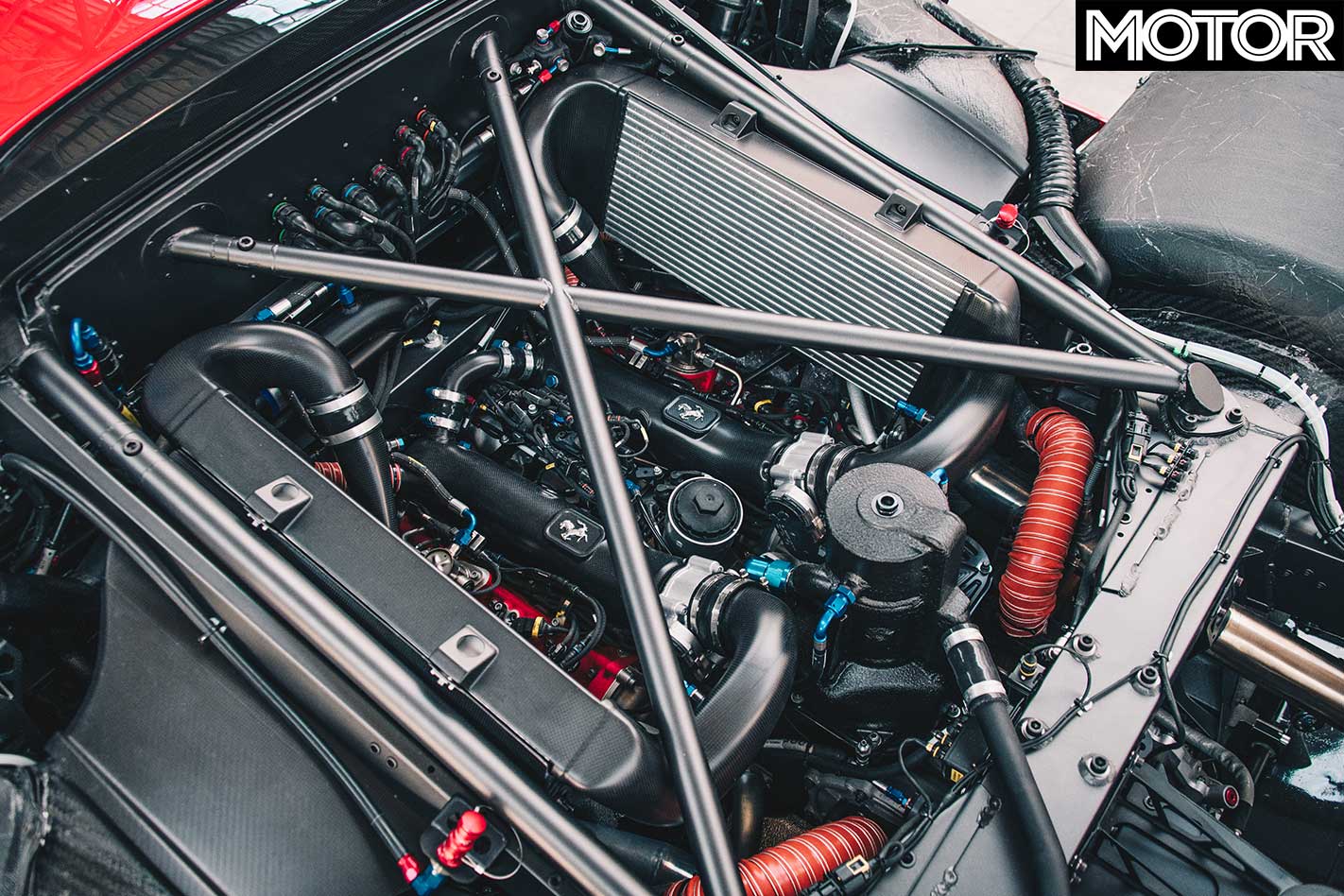
According to Ferrari, the P80/C’s front ‘wedge’ and several design elements are direct references to the racing cars it was inspired by.
“The muscular forms of the front and rear wings with the cockpit set in between are emphasised by very broad buttresses that expand towards the side air intakes.
“This gives the impression that the cabin is completely fused with the body, and is accentuated still further by the wrap-around windscreen which references the iconic look of sports prototypes of the past.
“The flying buttresses converge towards the roof underlining the visor effect of the greenhouse.”
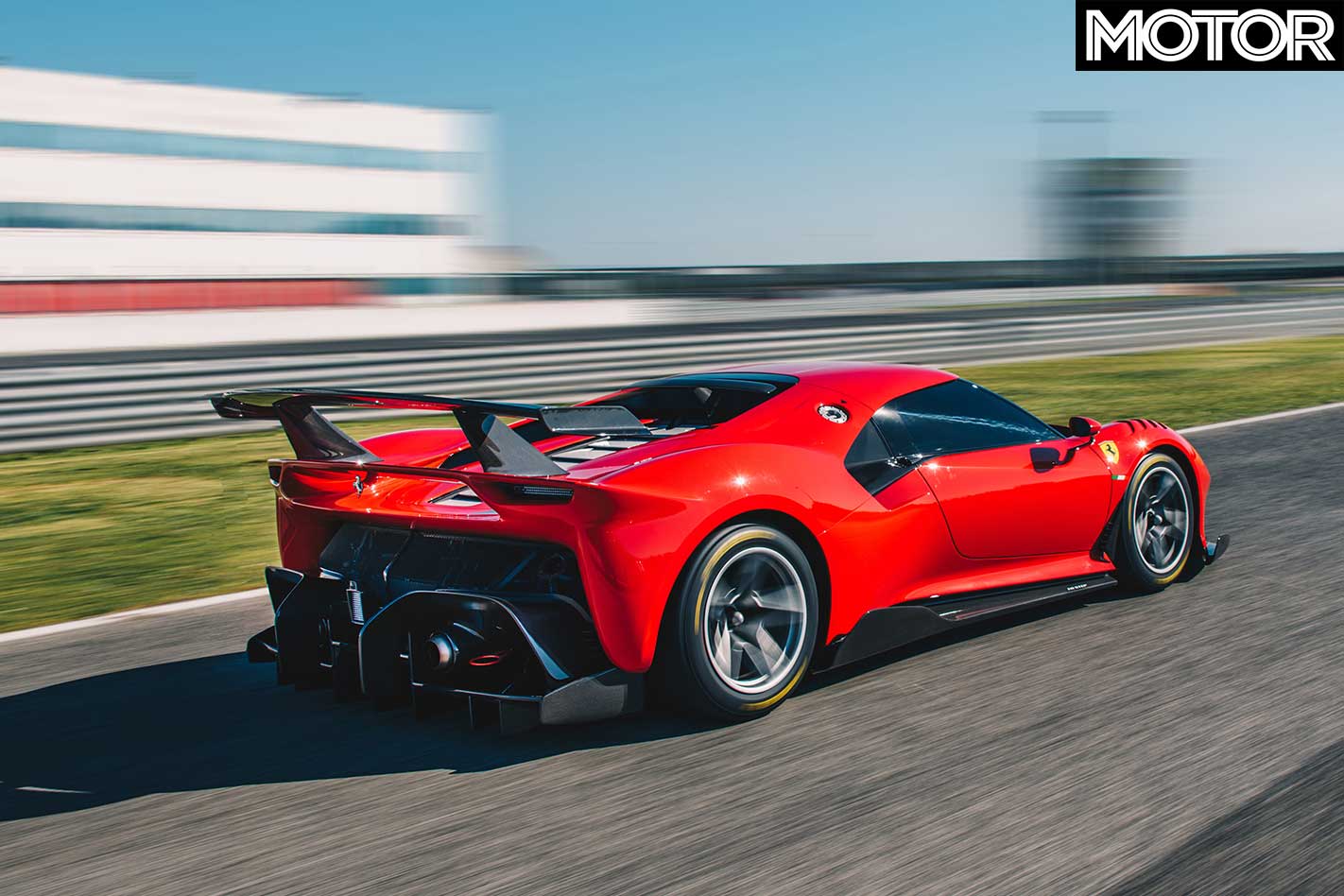
As for the prominent lights which were seen on the 330 and Dino, the P80/C’s lights are actually set into small niches above the main grille, 330 P3/P4-style.
“Unlike the 330, however, in the P80/C, said housings are not set into an oval grille but look more like two pockets carved out of the front of the car.”
The client has requested Ferrari create two different setups for the car, one for track driving with all of the aero and fitted with a set of 18-inch racing wheels, and the other an “exhibition package complete with 21” wheels but devoid of aerodynamic appendages.”
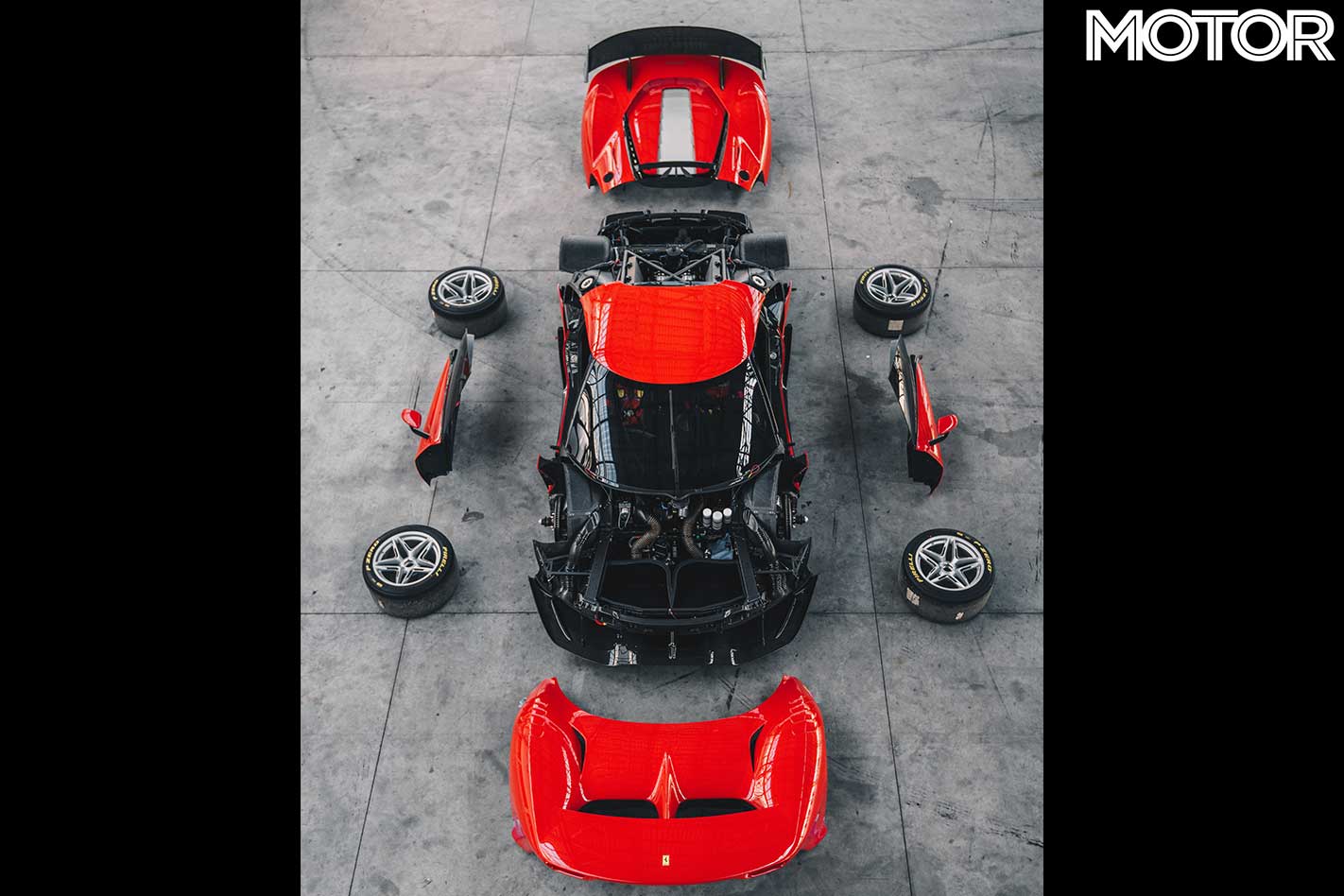
As the car is part of Ferrari’s ‘Special Projects’ program, we’ll likely never know exactly how much the buyer paid for the privilege of owning a one-off Ferrari, nor exactly what the car is capable of. We imagine both are on the extreme end of the scale.
Holden engineers are helping develop the GMC Canyon, the General Motors-owned brand’s smallest ute in the line-up. It is currently available exclusively to the US and Canada where it sells alongside its GM sibling, the Chevrolet Colorado.
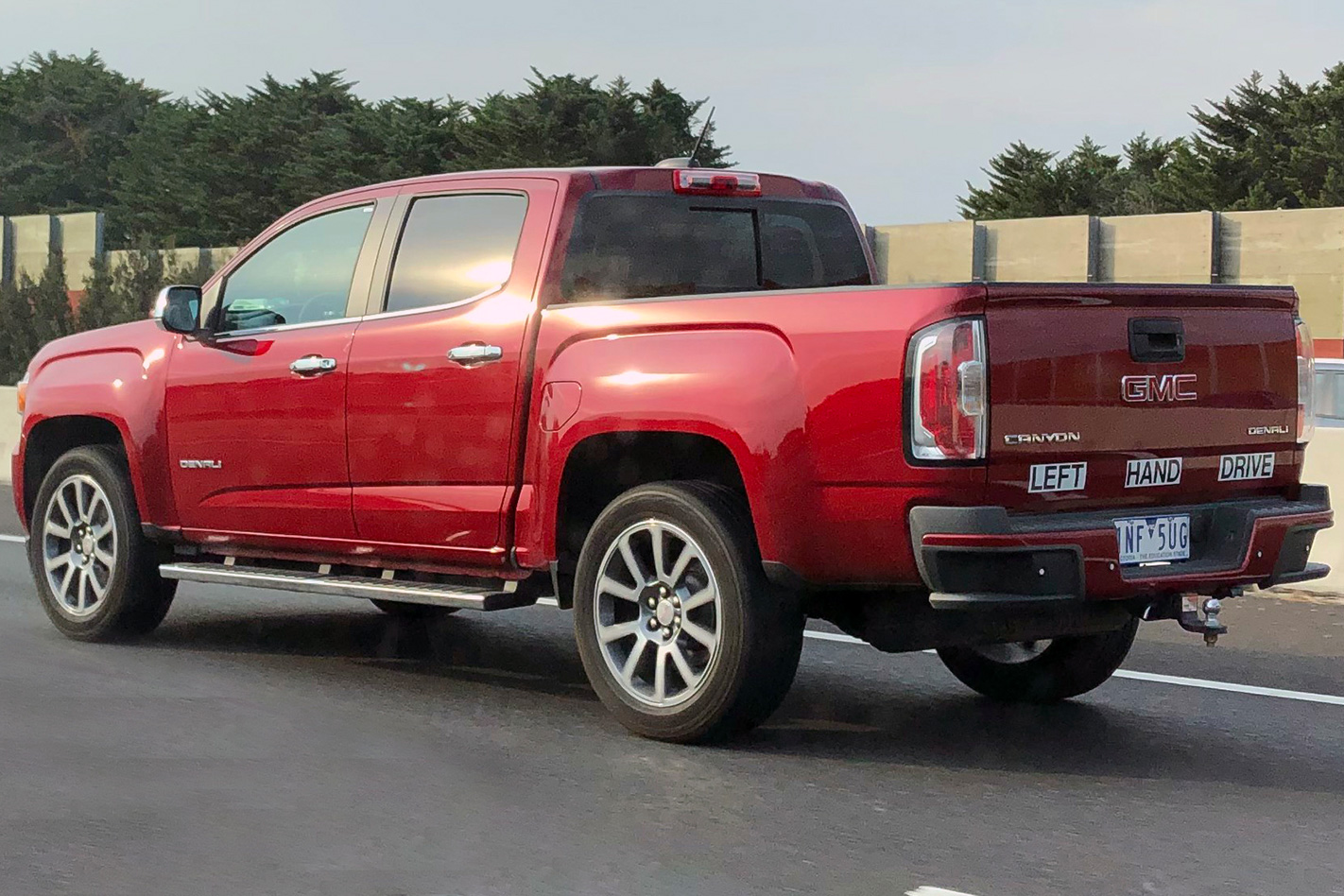
Spotted without camouflage on public roads near Holden’s Lang Lang testing ground in Victoria, the left-hand drive pickup joins a fleet of GM product housed there. Holden evaluates both local and overseas models as part of its global development role that makes use of the almost 900 hectare facility. Just last week, Wheels reported on the lion brand’s involvement with the new Cadillac CT5.
A spokesperson for the company explained to Wheels that the GMC Canyon Denali model seen on the highway was undergoing transmission calibration and emissions testing. The work performed by Holden will likely lead to changes in an upcoming 2020 model year update.
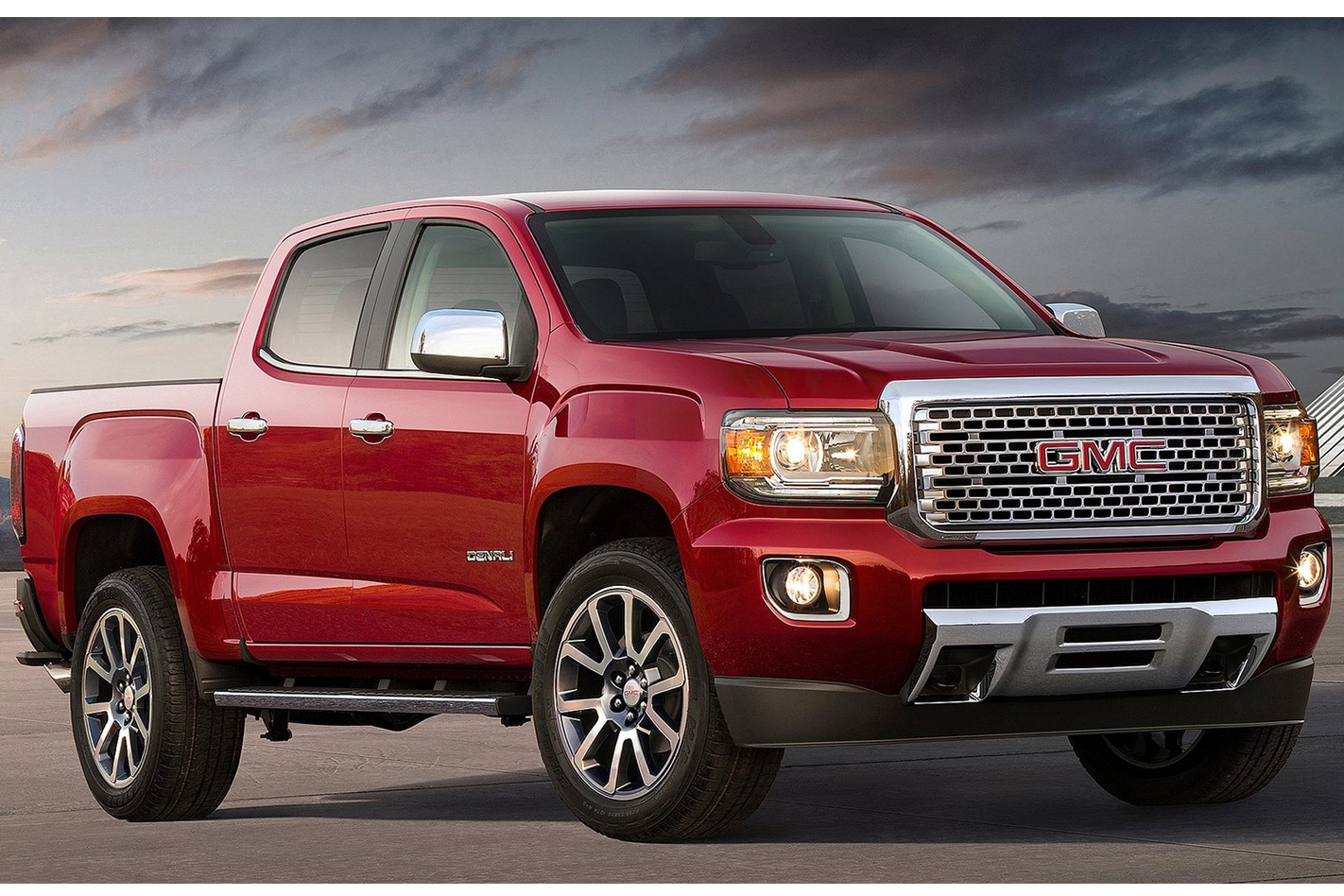
Built on the same GMT-31XX platform as the Colorado, the two utes compete in the same segment in North America, against rivals such as the Australian-developed Ford Ranger and the Toyota Tacoma. The Denali model represents a more luxurious top-spec variant and there is no off-road-focused model – a differentiating factor between it and the Colorado, for now.
When asked directly if Holden has plans to introduce the second-generation model into its line-up, a spokesperson said it could not comment on future product plans. In all probability, it seems unlikely.
Holden has introduced GMC product already though, with the new seven-seat Acadia SUV. The Canyon is almost due for a generational update and would join Holden’s Colorado and HSV’s factory-converted Chevrolet Silverado for added flavour, were it to be considered. It could also neatly fall between the pair in Denali trim, a road-focused and more luxurious ute than the Colorado but smaller (and more affordable) than the Silverado. In the US, it is fitted as standard with a 3.6-litre V6 petrol engine and eight-speed automatic transmission – the 2.8-litre diesel turbo found in the Colorado is optional. As Wheels understands, a petrol Colorado had been mooted, though a diesel-dominated market in Australia, coupled with emissions and fuel consumption considerations have put the idea on ice.
RYO Yanagisawa has a big book of laminated design sketches in front of him. He’s just shown us the contrasts between the Mazda 3 exterior and that of its crossover sibling, the new CX-30. Now he flicks to the interiors. I squint at the two images, trying to tell one from another. Apart from the colour, I’m struggling to tell the difference. I ask which one is the 3 and which is the CX-30. “They’re both CX-30, just in different colours,” he deadpans. I think Ryo Yanagisawa is trolling me.
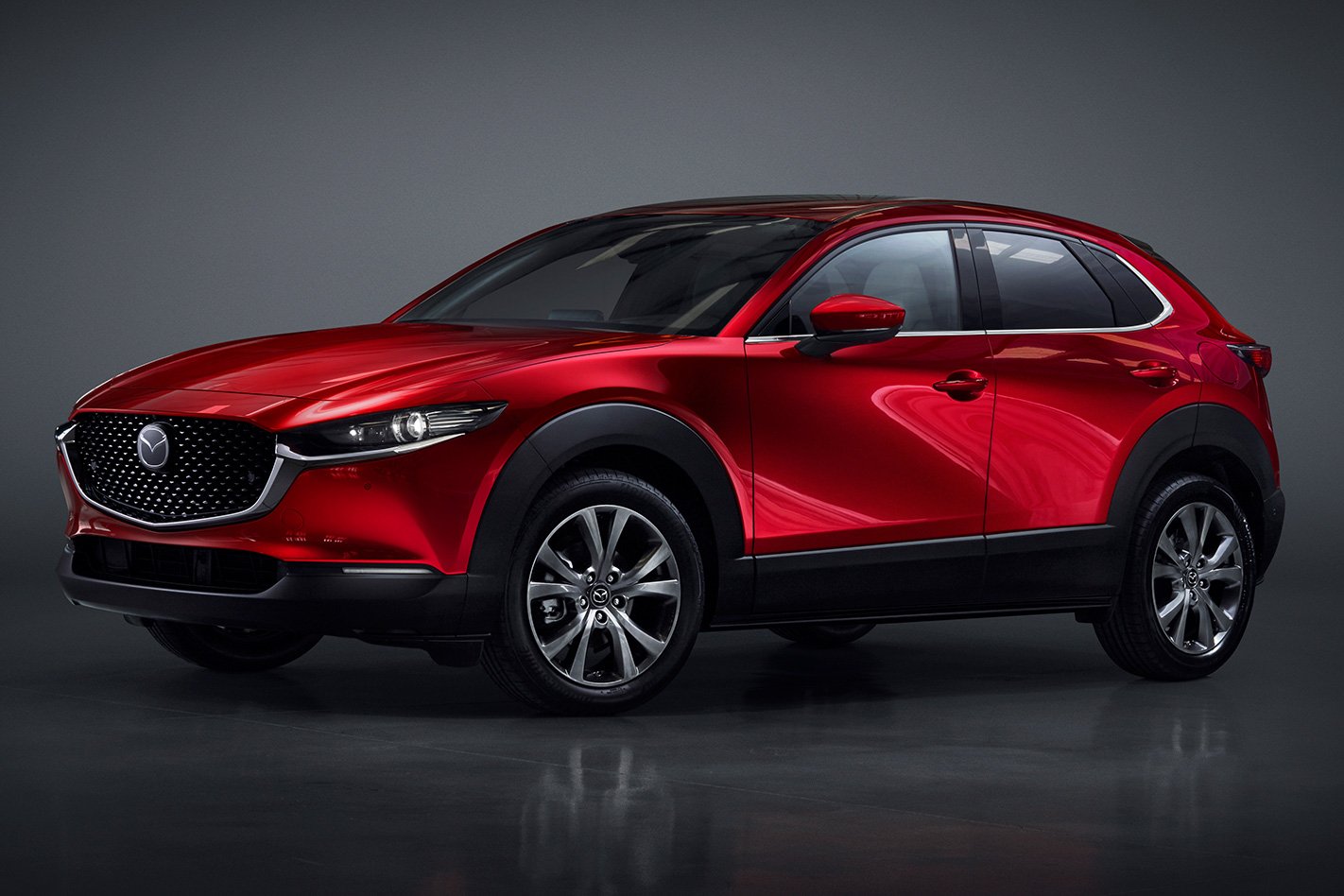
I’d hoped Yanagisawa would be able to explain the new car’s design language in terms we could understand. He launches into some advanced-level designer-speak but I get him to rewind and show some concrete examples. The man with the Mazda 2 and the BT50 on his resume breaks out the sketch book again.

“Kodo design started in 2010,” he explains. “The next stage of Kodo design started with the new Mazda 3. It used to be focused on sharp lines to express emotion but with the matured Kodo design we applied the idea of one smooth curve under tension from front to rear.”
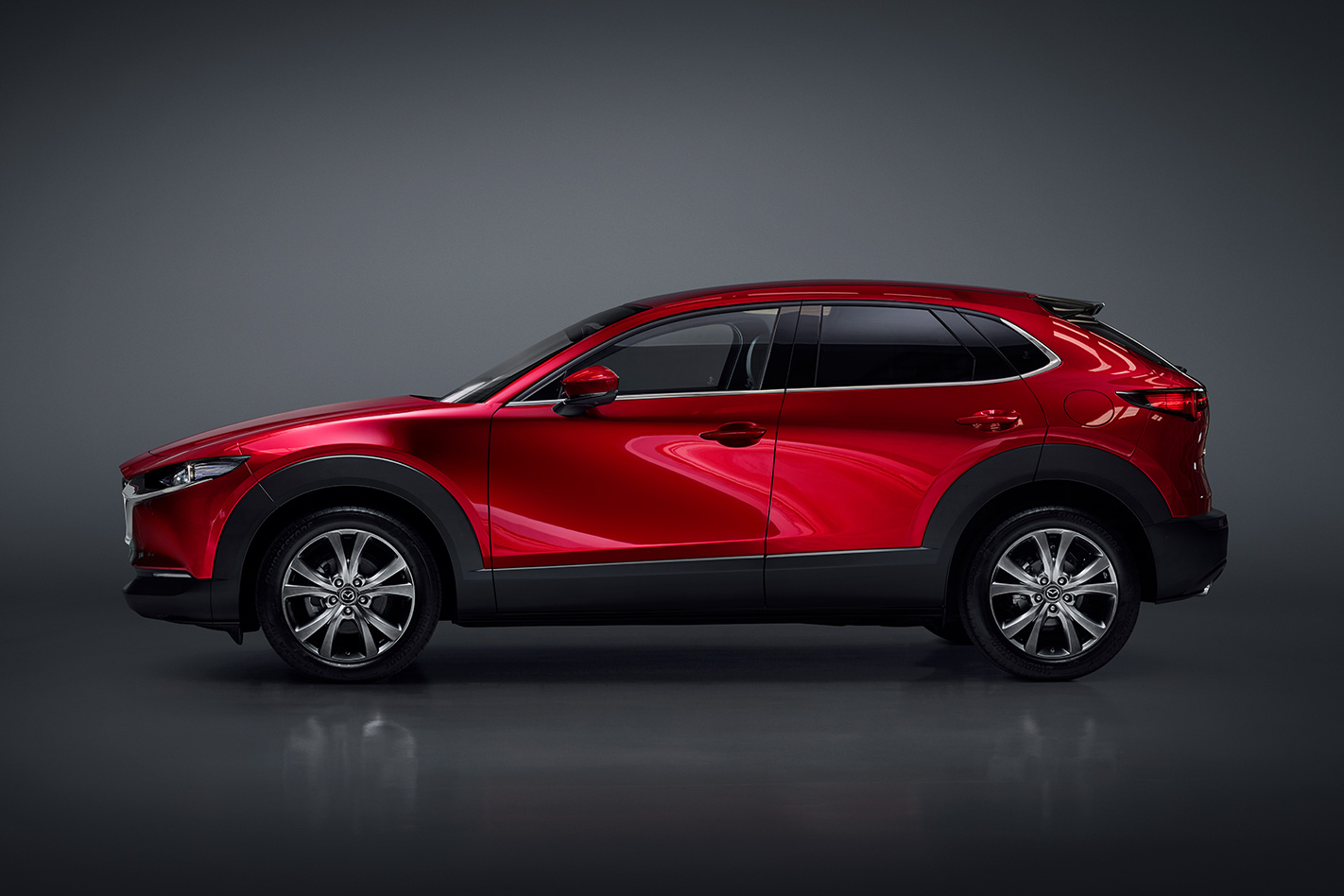
“The interplay of light and shadow, the way the reflection moves on the side of the car, this is common between 3 and CX-30,” he says. Sure enough both cars exhibit a Z-shaped reflection when lit in a certain way. It is indeed striking and dynamic. “But how we interplay light and shadow is different. In Mazda3 the power coming from the front reflection is on the rear wheel arch. On the CX-30 the power is charged at the front of the front fender. In a way, the energy is reversed.”
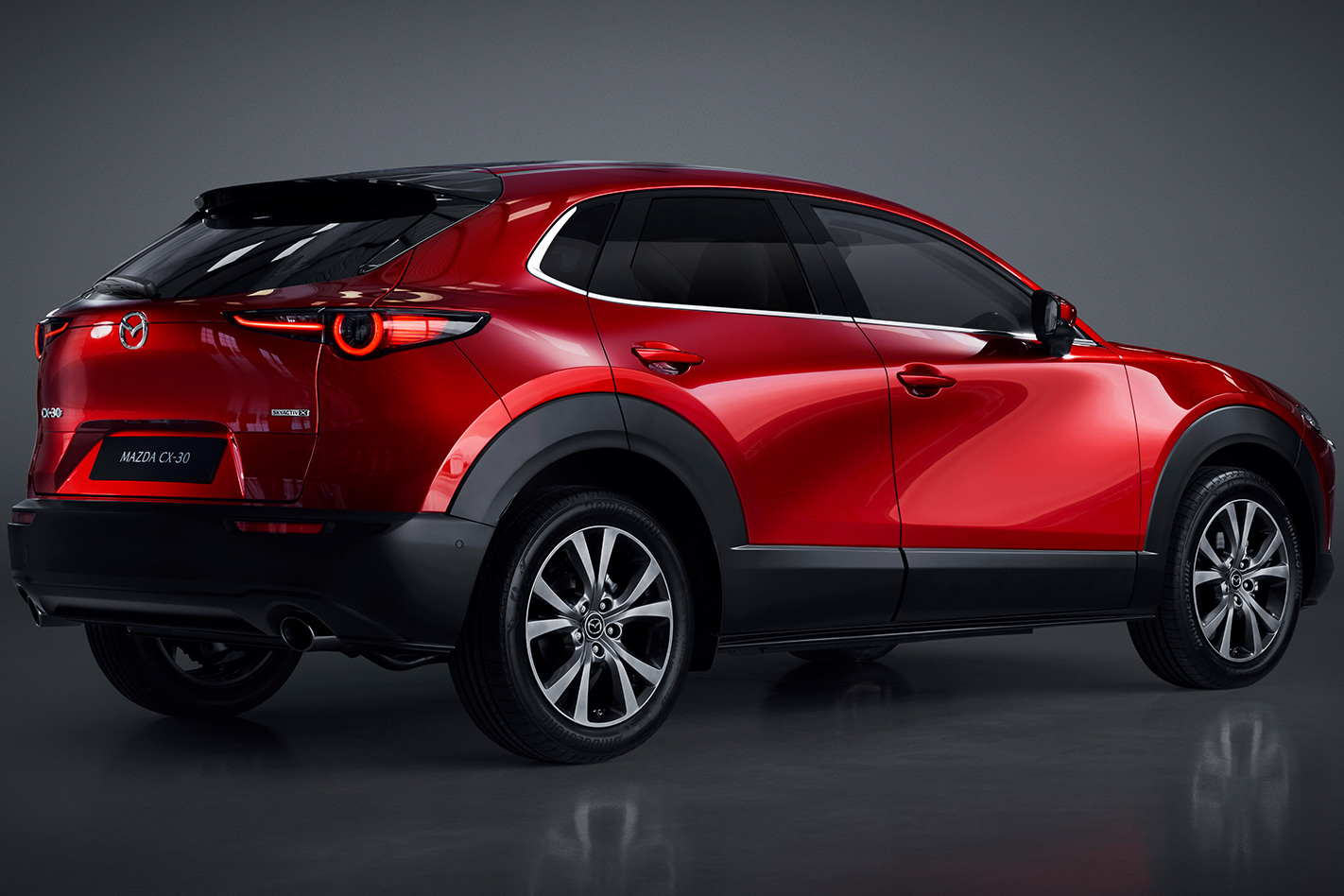
“The main difference between the two cars is obviously proportion. The CX-30 is a crossover and the overall length is short at 4400mm, so if we don’t design it carefully it could look bulky,” says Yanagisawa, making sweeping motions in the air with his pen. “We wanted to make it sleek and elegant so we separated the upper and lower bodies. We used the black thick cladding on the lower body, blacking out the lower so that the sleek upper body looks as if it’s floating and the lower body expresses the strength and power,” he says. I feel he’s veering back into black polo neck territory so I attempt to steer him onto talking about the cabin.
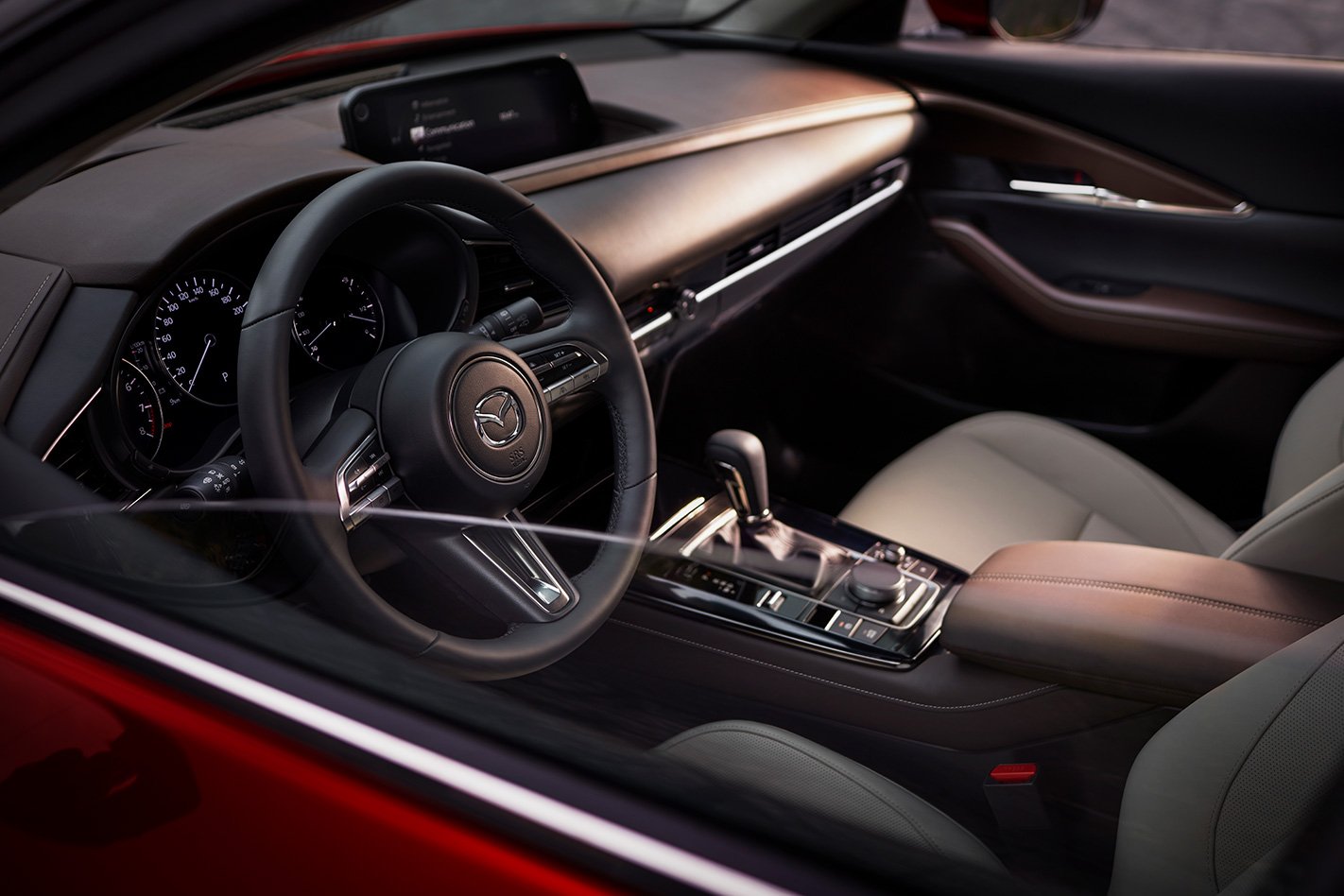
“We are concentrating on the human centric approach. The driver seat is centred around the driver. You extend both legs and you find the pedals. The steering is centred on the middle of the driver’s body. The display is symmetrical and oriented towards the driver. This philosophy is common between 3 and CX-30 but they have different hip points. How we approach the passenger seat is different. The 3 is more vertical, with the CX-30 dash wraps around like a wing,” he says.

When asked why Mazda opted for a screen that’s operated by a rotary controller rather than a prodded finger, he’s quite clear about the advantages of the former approach. “We want a safety philosophy. We want the driver’s eyepoint as far up and out as possible. If we put the screen in an approachable distance, it takes time for the driver to adjust the focus, especially for elderly drivers to make adjustments. We intentionally put the display far away. We evolved the Mazda Connect interface to be more intuitive,” he says.
There’s no doubt that some people do find the CX-30 a slightly confusing proposition and don’t recognise that there’s space between the CX-3 and the CX-5 to slot another car. Mazda is all about extending choice and building on the foundations of the new 3 hatch. The CX-30 also marks an opportunity for the Hiroshima company to stretch things a little further upmarket.
“Mazda’s presence globally is still small,” admits Yanagisawa. “We only have two percent globally market share. We recognise ourselves as a small player and production volume is limited, so if we keep competing in non-premium it will be a constraint for us. We’d like to push up the brand image. By doing so we’d like to keep being successful as a brand. We’d like to see how far we can push up the brand identity. It’s all about the perception of the customer. We could price our cars fairly high, but customers wouldn’t accept it,” he says.

The CX-30 marks a new chapter in Mazda’s SUV portfolio. It’ll doubtless cannibalise sales from CX-3, CX-5 and 3 hatch but the company sees a net gain. It could well be Mazda’s biggest selling vehicle within a couple of years. Then we’ll probably all wonder what needed explaining.
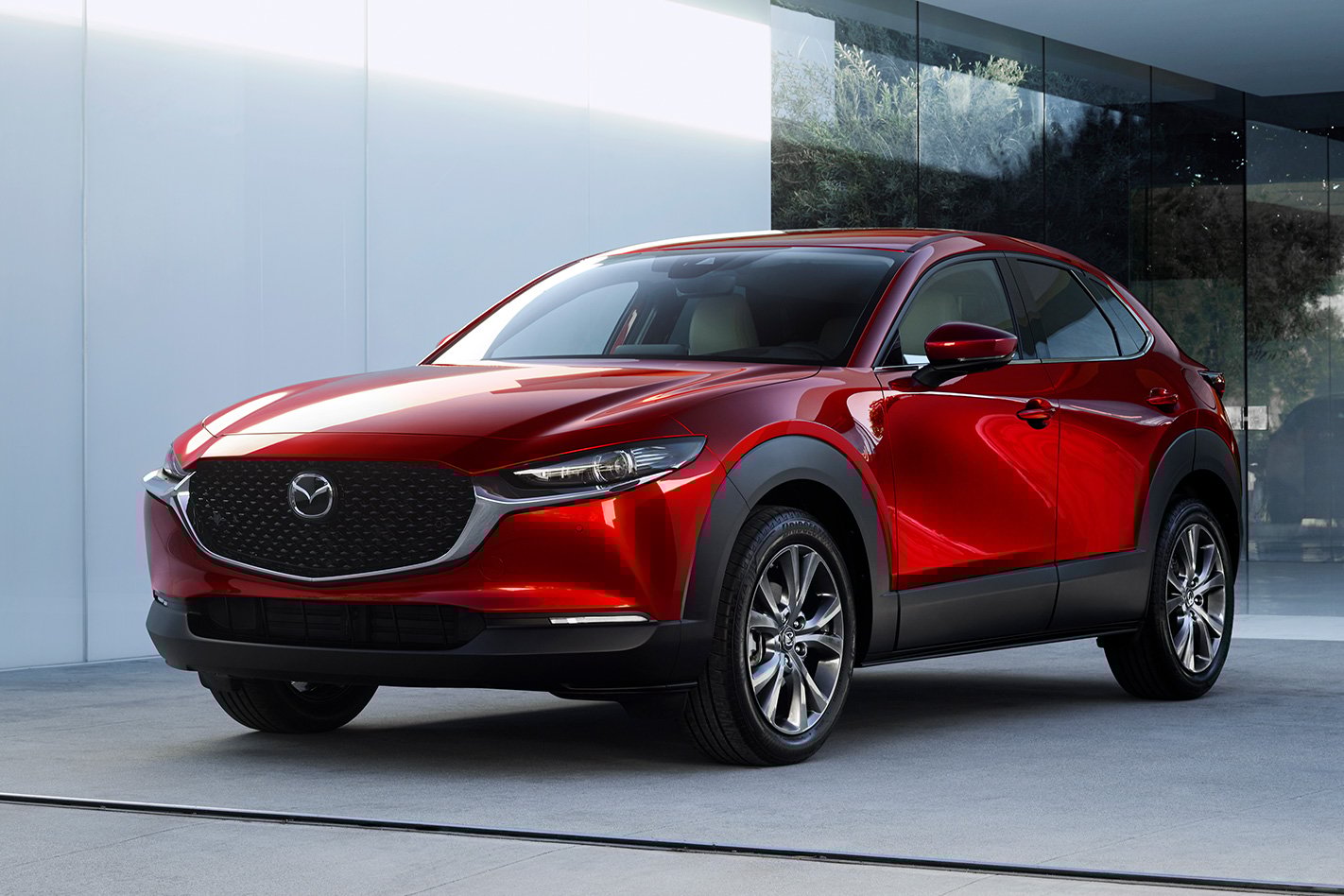
Mazda unveiled one of its most important new vehicles this year at the 2019 Geneva Motor Show. A crossover that sits between the CX-3 and CX-5 dimensionally, the CX-30 is a small SUV brimming with the latest design and refinement found in the new Mazda 3. Our man Andy Enright was live on the ground to bring you as detailed a walk around as we could before the show’s doors swung open.
Mazda Australia has confirmed it will arrive on local shores but exact details and specification for our market are yet to be confirmed – watch this space.
MAZDA CX-30 PRICE AND SPECS
Model: 2020 Mazda CX-30 Engine: 1998cc 4cyl, dohc, 16v Power: 115kW (estimated) Torque: 200Nm (estimated) Transmission: Six-speed automatic 0-100km/h: 10.0sec (estimated) Fuel economy: 6.5L/100km (estimated) Price: $28,490 (estimated) On sale: TBC
FCA gave Chrysler and Dodge fans a treat at the 2019 Spring Festival in Southern California where it rolled out a Dodge Charger Widebody concept.
Though plastered from nose to tail in an SRT livery, there was little in the way of distracting its audience from the concept’s swollen wheel arches, which are suitably filled by wider wheels similar to those fitted to the Challenger SRT Hellcat Redeye Widebody, and a new front bumper sporting a subtle opening beneath the front grille.
https://www.instagram.com/p/BvctjjTFLgw/?utm_source=ig_embed&utm_medium=loading
Aside from its exterior treatment, FCA hasn’t revealed any details of what sort of hardware the concept is packing beneath its pumped-up body, as it was primarily built as a design concept for FCA’s Drive for Design program to gauge public feedback.
Dodge’s “Widebody” treatment was first offered on the 2018MY Dodge Challenger SRT Hellcat as a new variant for Hellcat customers to cop the extra wide 305/35ZR20 tyre setup from its aggro-sibling, the Challenger Demon.
The extra rubber afforded with the Widebody variant not only allows the Hellcat to better utilise its supercharged V8’s 527kW, giving it a quicker 0-100km/h time of 3.4sec over the standard Hellcat’s 3.5sec and squeezing a 0.3sec advantage on the quarter-mile, it also delivers better lateral grip – as tested in our Hellcat Widebody review – with a peak of 0.97G over the narrow-bodied Hellcat’s 0.93G.
https://www.instagram.com/p/BvcmjEKh-js/?utm_source=ig_embed&utm_medium=loading
While the Widebody variant was carried forward to the facelifted Challenger range last year and offered for the 594kW Hellcat Redeye and the 527kW Hellcat, there was no similarly widened package for the updated Charger range, despite the range-topping variant sporting the Challenger Hellcat’s 527KW supercharged V8.
As a design concept, there isn’t any mention of any production plans for the Widebody concepts at this stage, though considering the market for performance sedans, it won’t be surprising if Dodge follows the concept up with a proper Widebody variant for the Charger.
See the video above for an explanation on original equipment tyres
