
There’s an unwritten rule in motoring journalism that you should never describe a car as ‘nice’. It’s a nothing adjective that says little about the product. Nevertheless, it’s the word that most frequently burrows its way into your mind when driving around in the new Mercedes-Benz A250.
Every premium hatch should offer an undemanding day-to-day drive experience and the A250 absolutely delivers on this brief. It shares its benchmark interior with its A200 baby brother, the combination of cutting-edge technology – MBUX infotainment, twin 10.25-inch digital displays, a wide array of active safety aids – with generally premium materials.
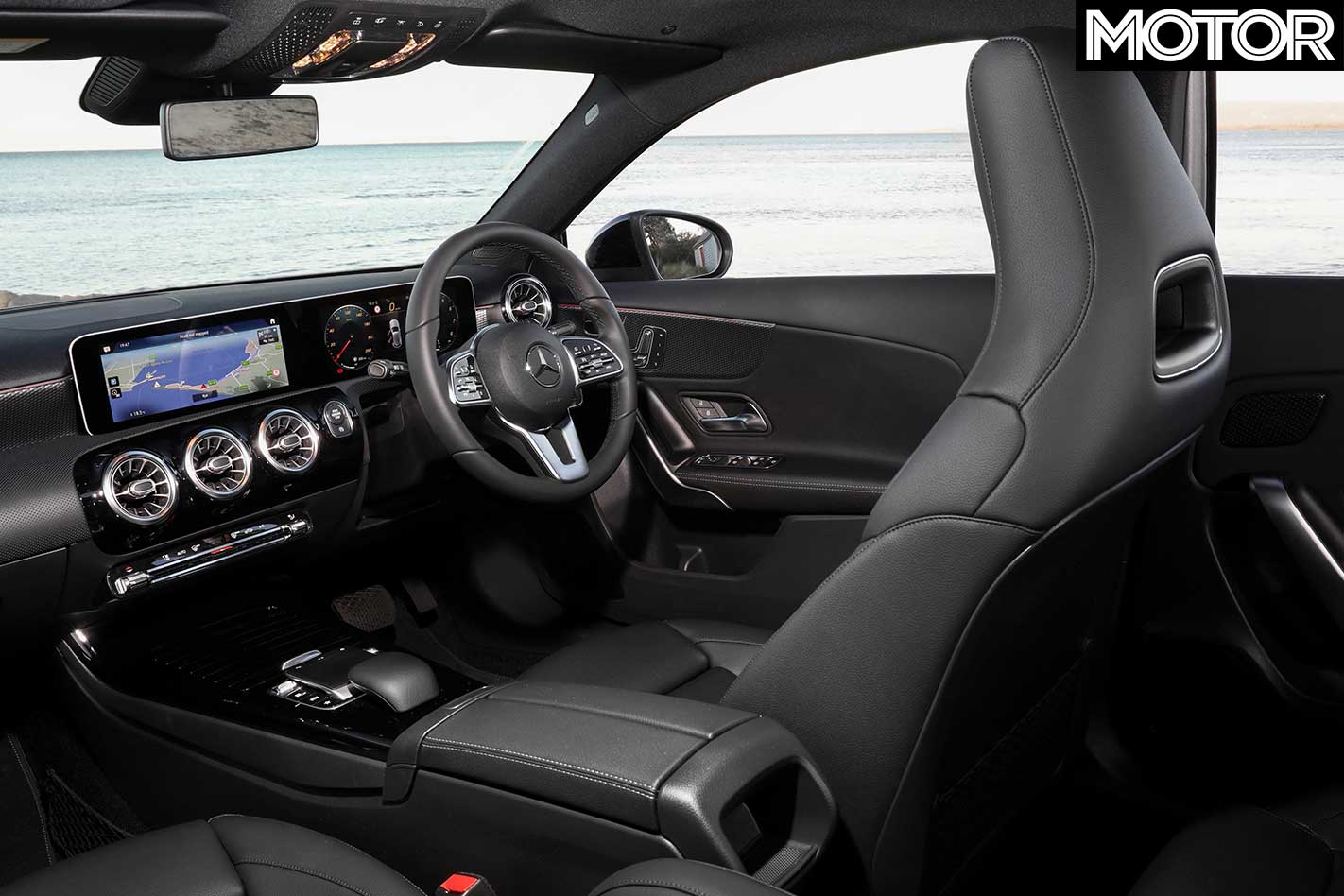
It builds on this by offering a much more persuasive mechanical package. The A200’s underwhelming 1.4-litre turbo engine is replaced by a larger 2.0-litre unit delivering a handy 165kW/350Nm for a hot hatch-like claimed 0-100km/h time of 6.2sec.
Furthermore, the optional multi-link rear suspension that transforms the A200’s ride and handling is standard on the A250, as is traction-enhancing all-wheel drive. That all this is offered for a mere $2300 premium makes choosing between the two a no-brainer in favour of the A250.
But it isn’t all roses and champagne. Mercedes loads local AMGs to the hilt but isn’t quite so generous with its more mainstream models, our A250 test car including $990 worth of keyless start and $490 for ambient lighting.
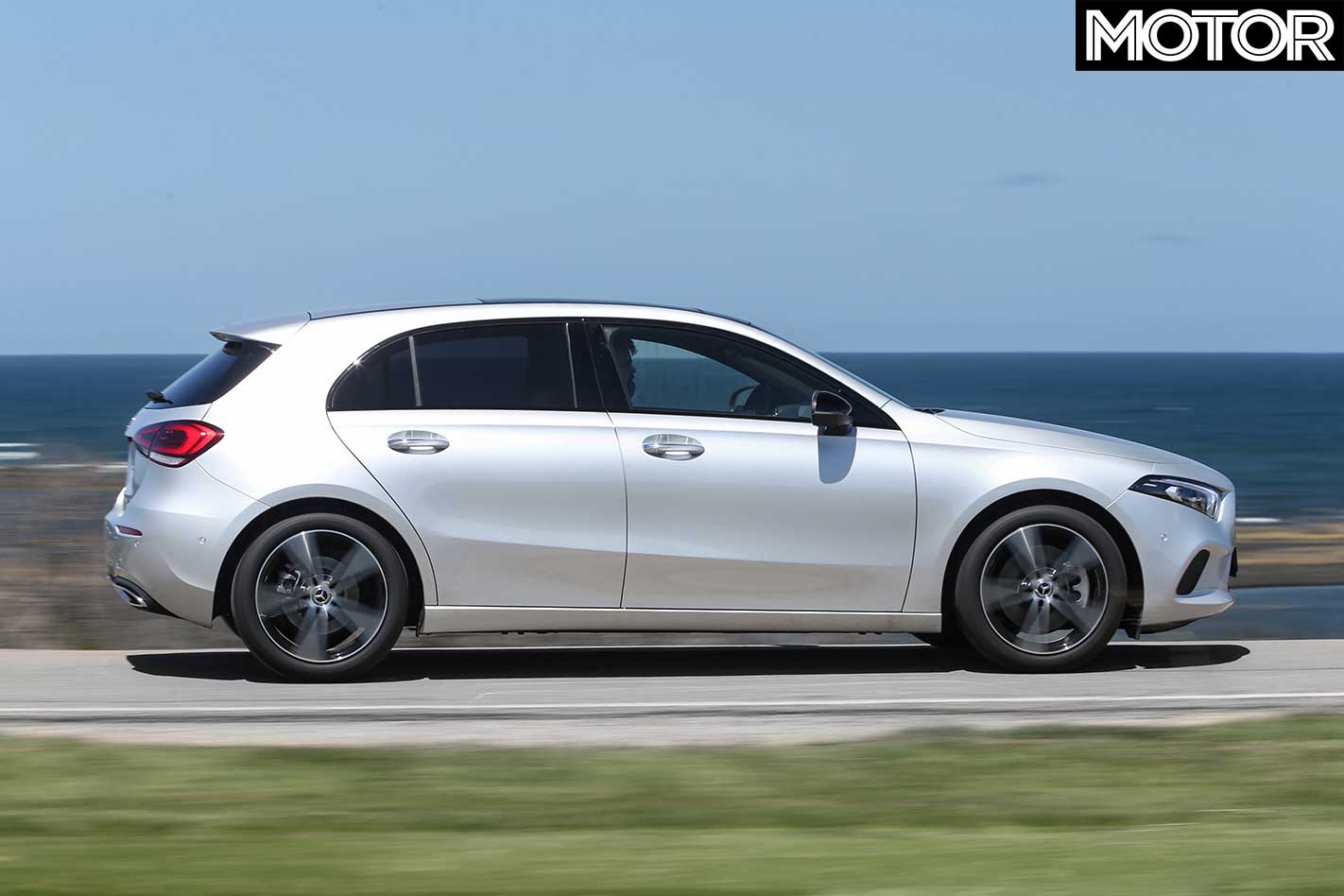
Still, the base price is such that adding a couple of the carefully crafted options packages is unlikely to break the bank. This is just as well, as like its slower sibling, one option the A250 definitely needs to deliver its best is the adaptive dampers.
Unfortunately, you can’t just option the dampers. For some reason, you first need to tick the $1290 Seat Comfort Package (heated electric front seats with memory function) and the AMG Exclusive Package, which in addition to those dampers adds ambient lighting, ventilated front seats, two-tone leather upholstery and dual-zone climate control.
Full disclosure: we have not driven an A250 fitted with adaptive dampers, but from experience in our passive test car and adaptive-equipped A200, we’re confident in making the recommendation that it is money well spent. The fundamentals are there in the standard A250: the steering is fluid and accurate, the balance neutral and the engine is potent enough for an impressive pace to be achieved.
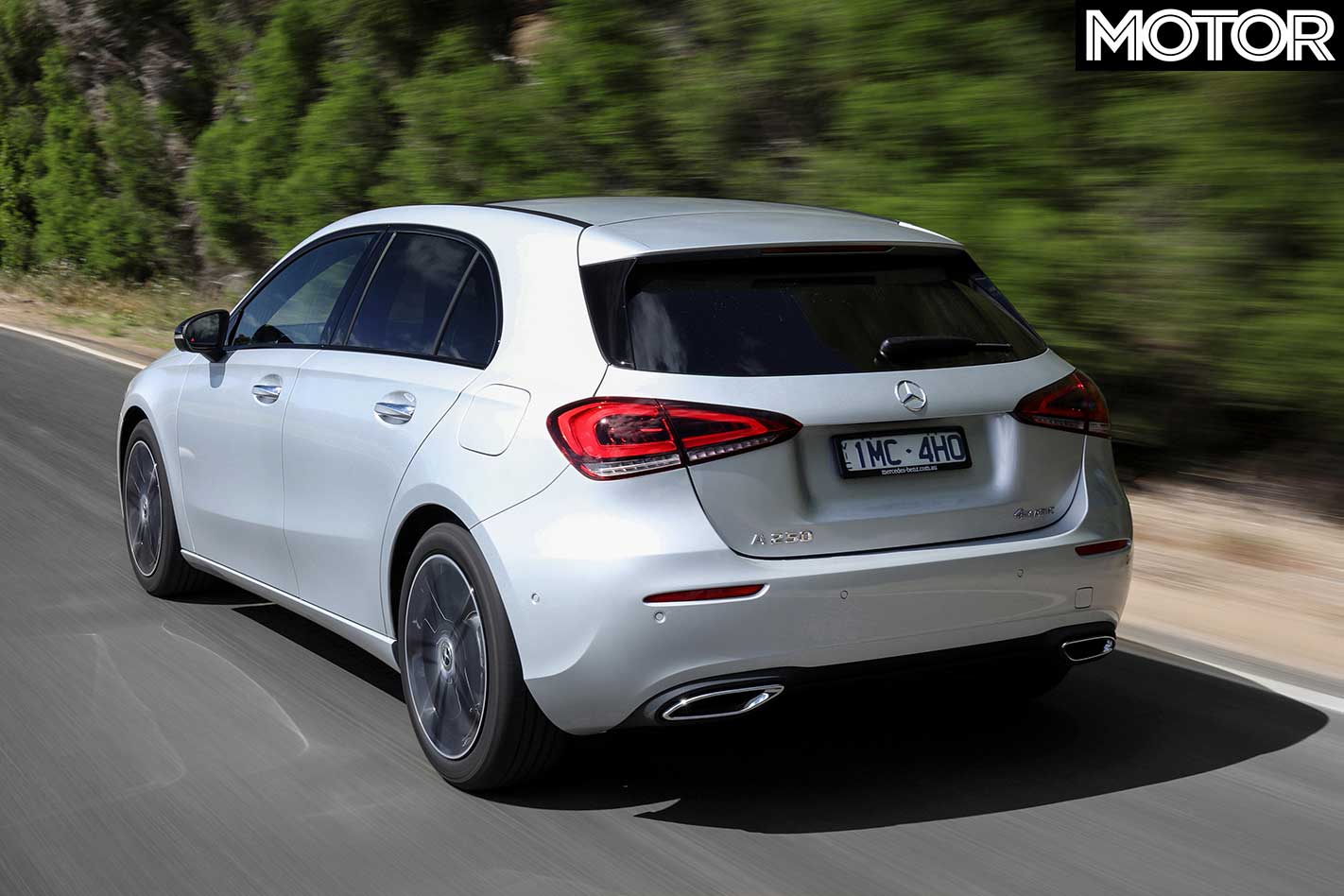
Two things let the side down. The passive dampers get a little choppy on poor surfaces, yet struggle to rein in body movements as effectively as they should; for most A250 customers, the former will probably be a bigger issue than the latter. Secondly, the Hankook tyres protest early and vocally during enthusiastic cornering.
Appropriately optioned, the A250 is a talented, well-rounded premium hatch, but if you’re a keen driver, the A35 AMG will be worth both the wait and the extra spend.
2019 MERCEDES-BENZ A250 4MATIC SPECS Engine: 1991cc inline-4cyl, DOHC, 16v, turbo Power: 165kW @ 5500rpm Torque: 350Nm @ 1800rpm Weight: 1455kg 0-100km/h: 6.2sec (claimed) Price: $49,500
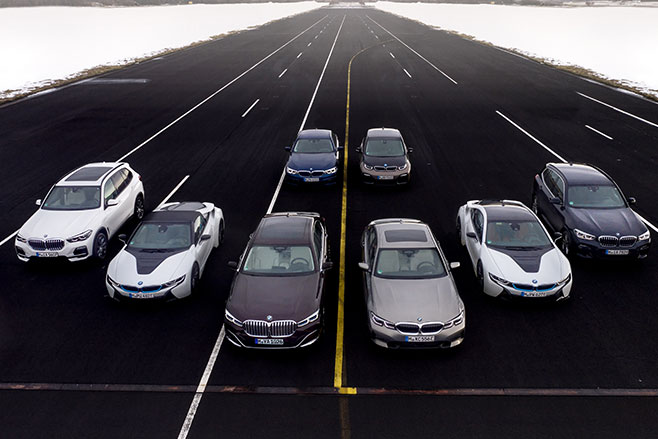
A quartet of all-new plug-in hybrid (PHEV) BMWs are set to arrive in Australia over the next two years, broadening the German automaker’s range of electrified offerings and making true zero-emissions motoring a possibility for more drivers.
While BMW’s current range (pun fully intended) includes electrified versions of the 3 Series mid-sized sedan, 7 Series limousine and X5 large SUV, the new-generation of PHEVs will offer a significantly increased pure electric range.
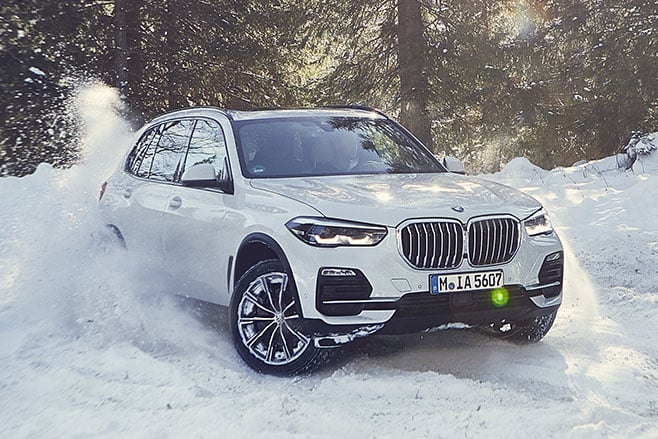
Not only that, but the line-up will be further bolstered by a new iPerformance variant of the X3 small SUV, taking the total number of PHEV BMWs to four locally, plus the i3 and i8 BMWi offerings.
Speaking at the launch of the 2019 3 Series, BMW Australia CEO Vikram Pawah confirmed the quartet of plug-ins and reiterated the company’s promise to introduce 20 electrified offerings globally by 2020.
“We’ve raised our hand and said we will be interested,” he said. “Whether we bring all of them or not will depend on each segment that we evaluate as we go along. We will be bringing the X5, the 7 Series, the 3 Series and the X3.”
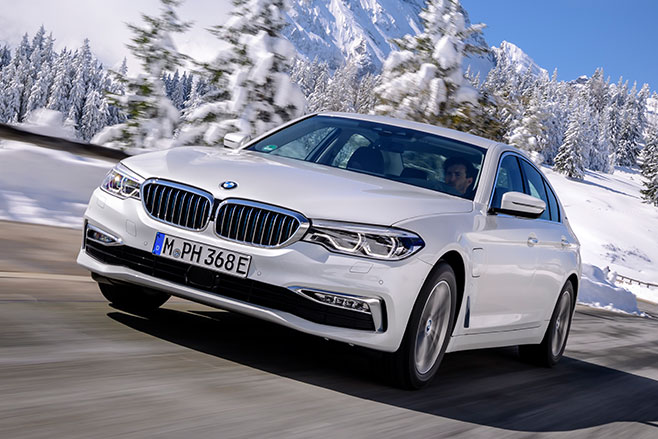
While the existing 330e, 740e and X5 40e offer pure electric drive, the new generation of hybrid drivetrains have adopted more advanced battery technology, packing more energy capacity – and thus range – into the same package.
“A lot of people won’t know that an average daily commute is 32 kilometres. A lot of people get surprised when you say that.
“A new generation of electrics that are coming and were showcased at the Geneva motor show all have a pure electric range of 50 to 60 kilometres.”
But while offering more choice in Australia’s unique market is part of the battle to win over an as-yet small EV audience, infrastructure will become crucial.
Unlike Tesla, for example, which has its own bespoke network of charging stations, Pawah said the BMW approach to infrastructure will be more cooperative.
“We are looking at that but I don’t think it can be done alone by any manufacturer,” he said. “Experience tells us that it’s a collaborative model between the government, energy providers and the manufacturers. Then it becomes a self-sustaining solution.”
The German manufacturer’s strategy will be closely monitored by arch rivals Audi and Mercedes as they develop their own fleets of PHEVs and pure electric vehicles.
From the three-pointed star, a pure electric EQC mid-sized SUV will arrive later this year joining the plug-in GLE 500e and E350e large sedan.
Meanwhile Audi will lob its pure electric E-Tron mid-sized SUV mid-year to join the Q7 e-tron large SUV PHEV.
BMW has yet to announce a direct rival to Audi and Mercedes’ pure EV SUVs, however, leaving the i3 small hatchback to carry the mantle as the company’s sole battery-only offering for now.
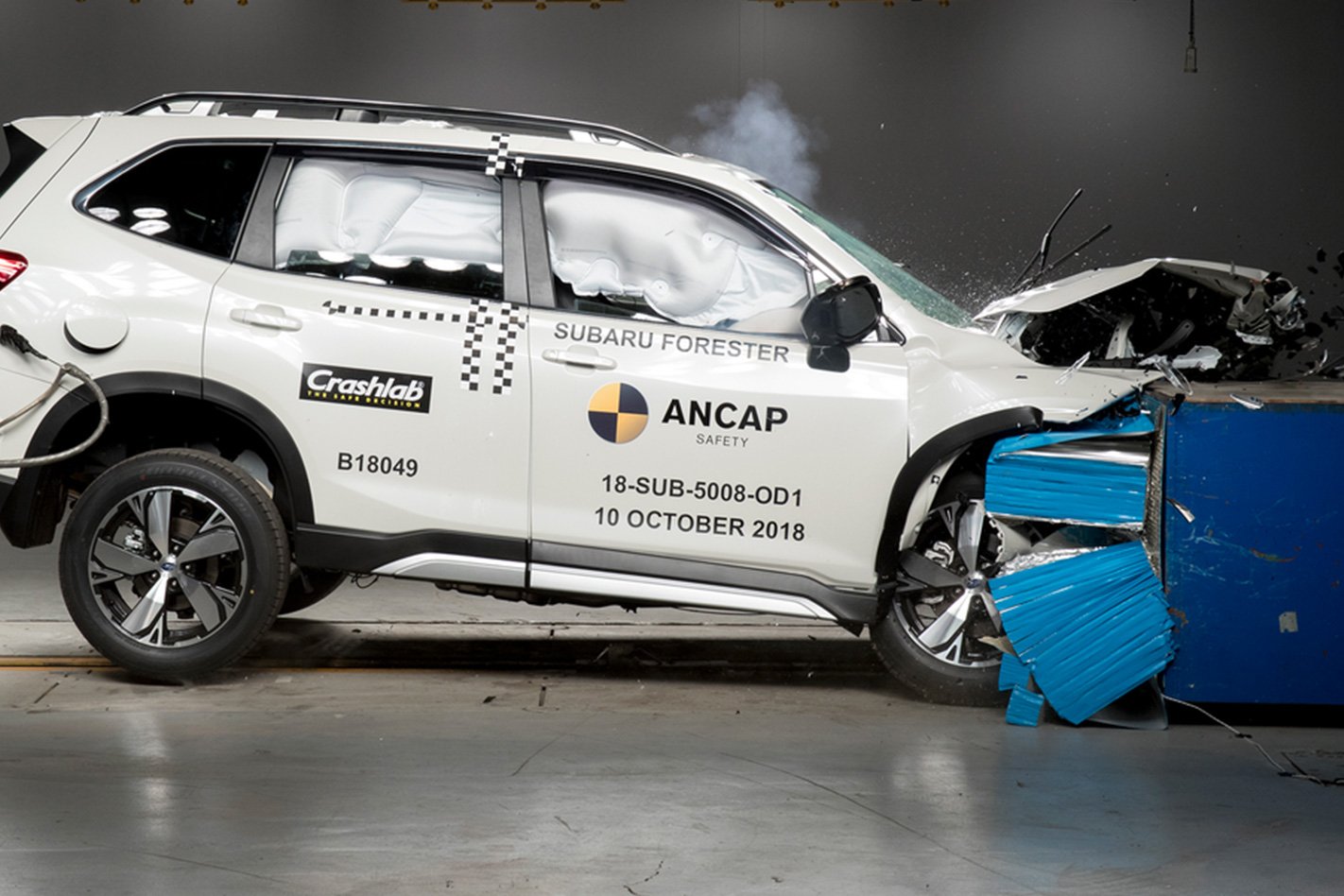
The fifth-generation Subaru Forester has achieved a full five-star safety score from the Australian New Car Assessment Program (ANCAP), delivering high marks in local crash testing and earning praise for the high level of standard electronic safety aids.
Perhaps most crucially for family-bound buyers, the Subaru Forester received full marks for child occupant protection in both side and frontal impacts. However, some difficulties related to fitting child seats in the rear centre position saw its overall child protection score knocked down to 86 percent.
Adult protection fared better, with an overall score of 94 percent. Driver’s leg protection in the offset frontal crash test was described as ‘marginal’, however it aced the side impact and pole tests, and returned solid scores in other areas.
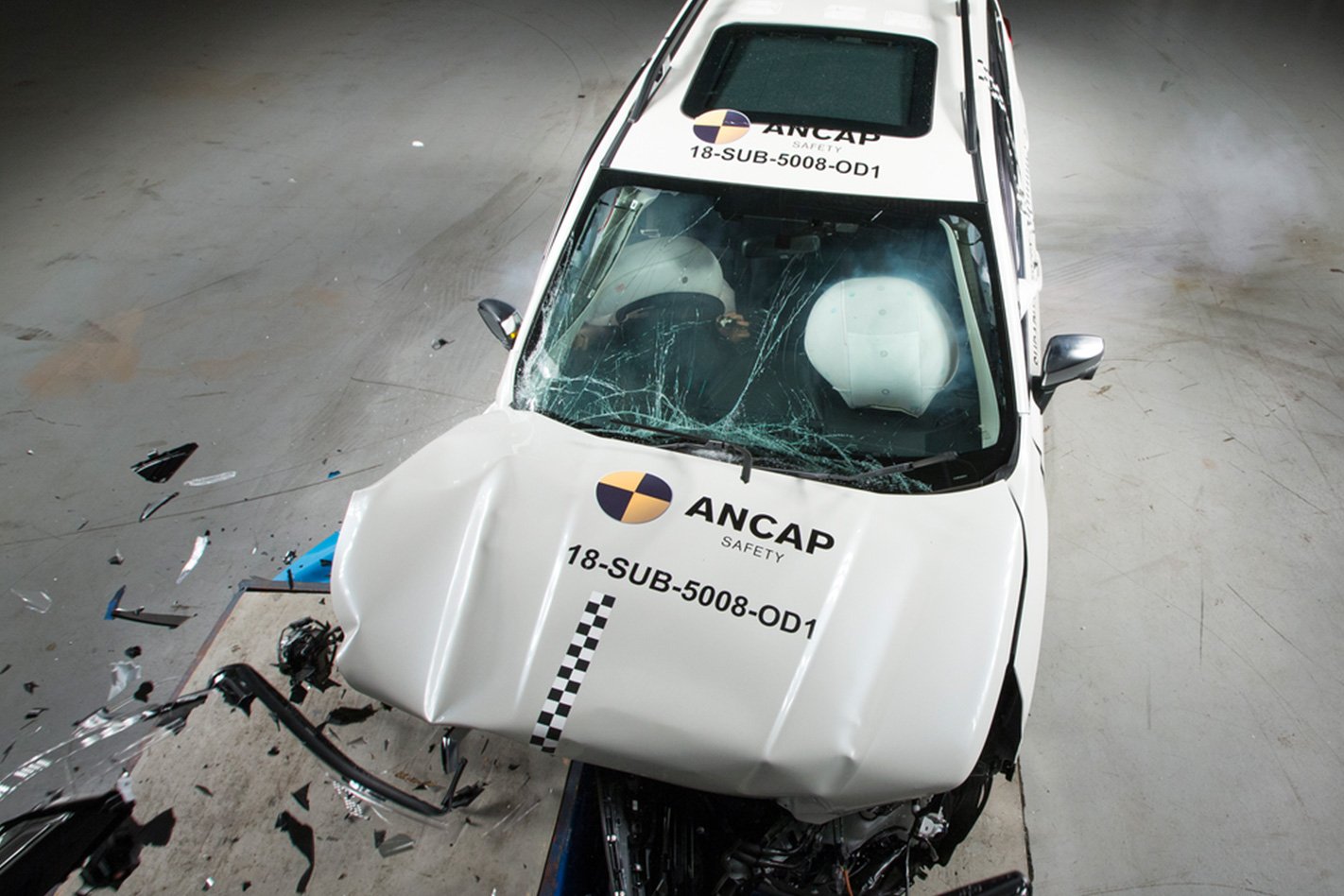
Pedestrian impact protection was found to be good, while some deficiencies were noted in the autonomous emergency braking (AEB) system’s ability to detect cyclists crossing the road from an adjacent footpath. That said, ANCAP noted the Forester’s high level of standard safety equipment – which includes lane keep assist, lane departure warning and blind spot monitoring, along with seven airbags – and commended Subaru for prioritising safety.
“It is encouraging to see brands like Subaru prioritising and progressively increasing safety for its customers,” said ANCAP’s chief executive, James Goodwin.
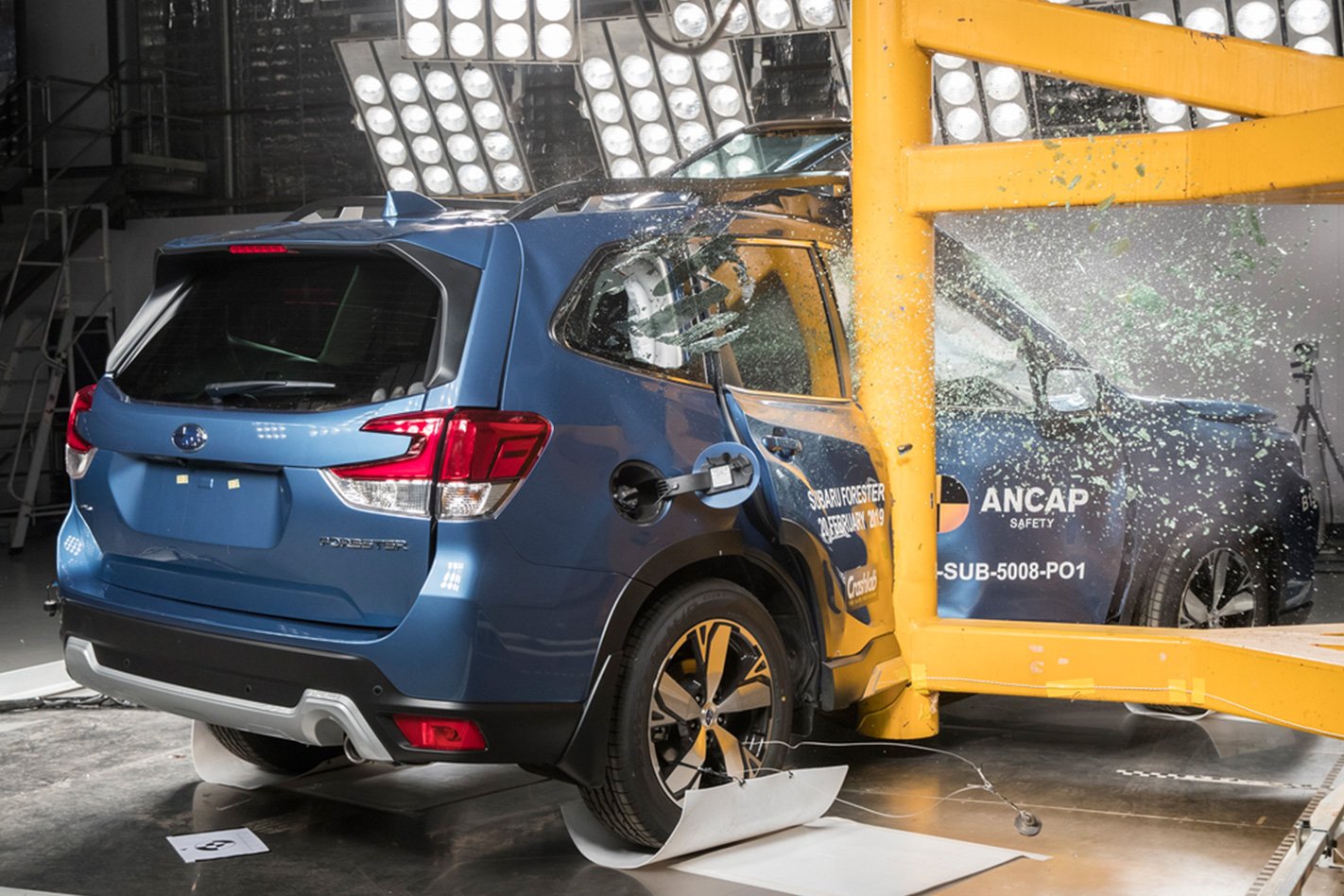
Want to get a more intimate idea of just what’s involved in crash-testing a car? WhichCar TV followed the Forester for part of its ANCAP assessment, witnessing the work involved in preparing and crashing the 2019 Subaru Forester earlier this year.
To describe the process as painstaking and exacting is an understatement, and we’ve got a quick clip above to show you exactly what happens when ‘crunch time’ comes. To learn more about what happens when a car gets sacrificed in the name of safety, tune in to WhichCar TV on Channel Ten on 28 April or stream later on TenPlay.
This year marks the 25th anniversary of Koenigsegg’s inception, with the Swedish brand having since become one of the foremost builders of fast metal.
In 1994, a 22-year-old Christian started working on a prototype based on a sketch he created with Microsoft Paint – the Koenigsegg CC.
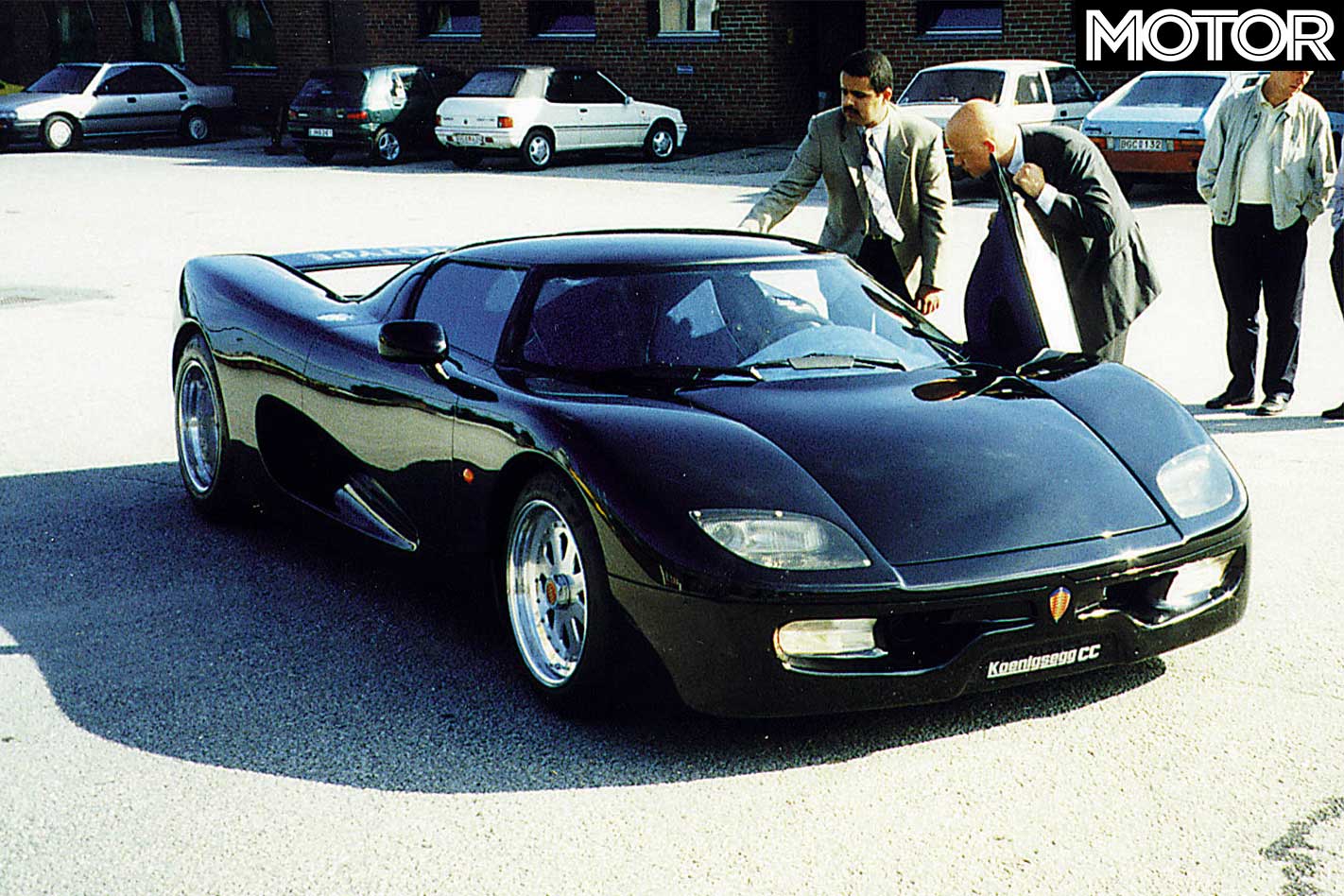
The CC wouldn’t be complete until 1996, with six more years of testing and tweaking passing before the first customer cars – the Koenigsegg CC8S – were completed.
Before it was handed over to the first customer at the 2003 Geneva Motor Show, the 448kW CC8S had already earned a Guinness World Record for ‘World’s most powerful production engine’.
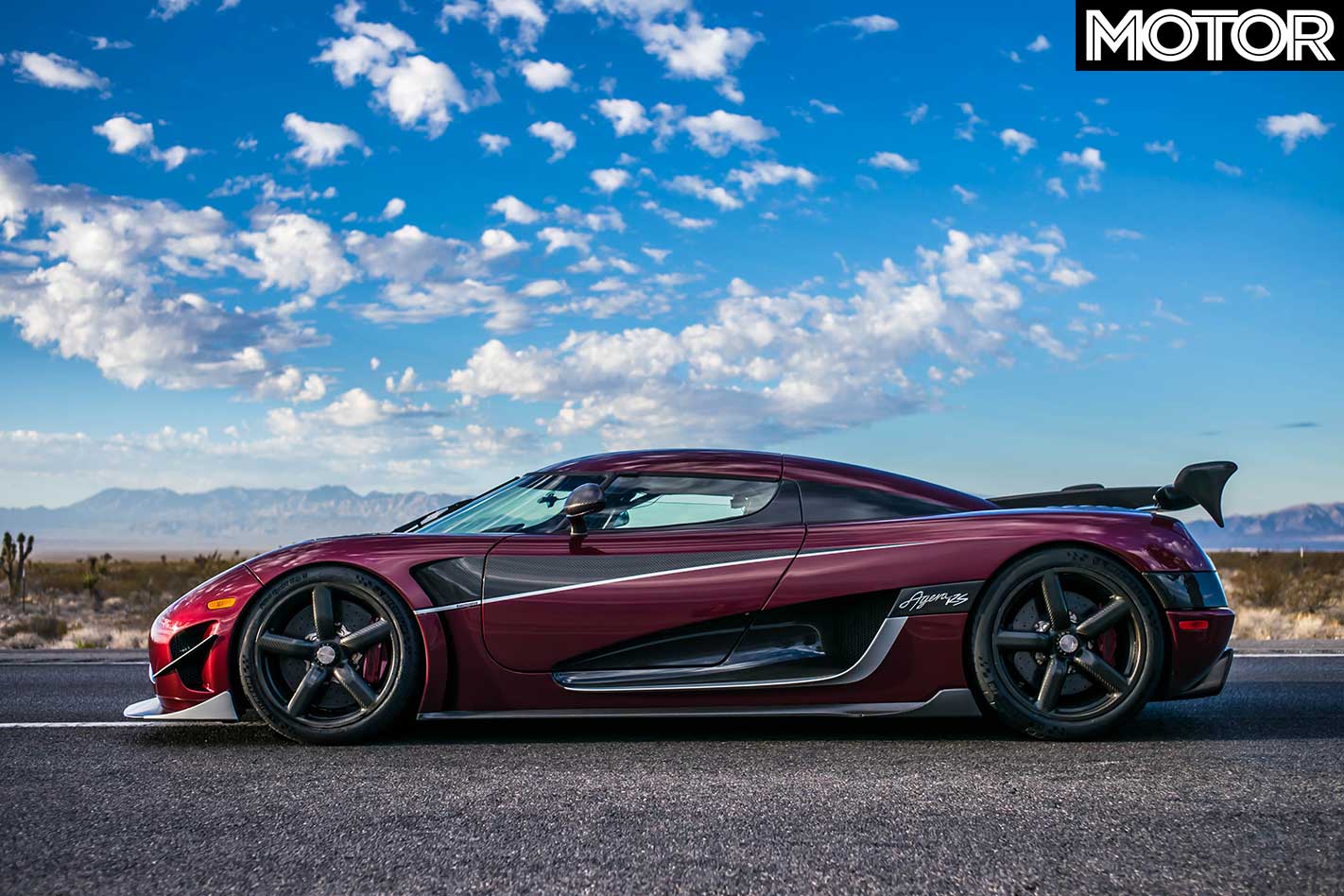
That first world record sparked the onslaught of accolades which Koenigsegg seems to attract effortlessly, the most recent slew of records having been awarded to the Koenigsegg Agera RS which laid claim to eight of the things in 2017.
“Koenigsegg has grown stronger every year,” Koenigsegg says, “designing new solutions that re-define what the world knows about the limits of automotive performance.
“Every model the company has released has raised the bar, either by setting mind-bending performance records or by introducing new, industry-first technologies.”
Since the CC8S, Koenigsegg has built 10 more models with another planned, the Jesko, named for Christian’s father.
It draws on the brand’s heritage from CCR to Regera, and incorporates several wild and clever advancements in automotive technology. There’s no doubt it will be mind-bendingly fast.
Perhaps one of the brand’s most notable models is the Koenigsegg One:1, named as such for its 1:1 power to weight ratio in metric horsepower. It boasted 1360PS, and 1360kg. Conveniently, 1360PS also converts to one megawatt.
With Koenigsegg now looking to the future, more employees and more numerous model runs are on the cards, it says.
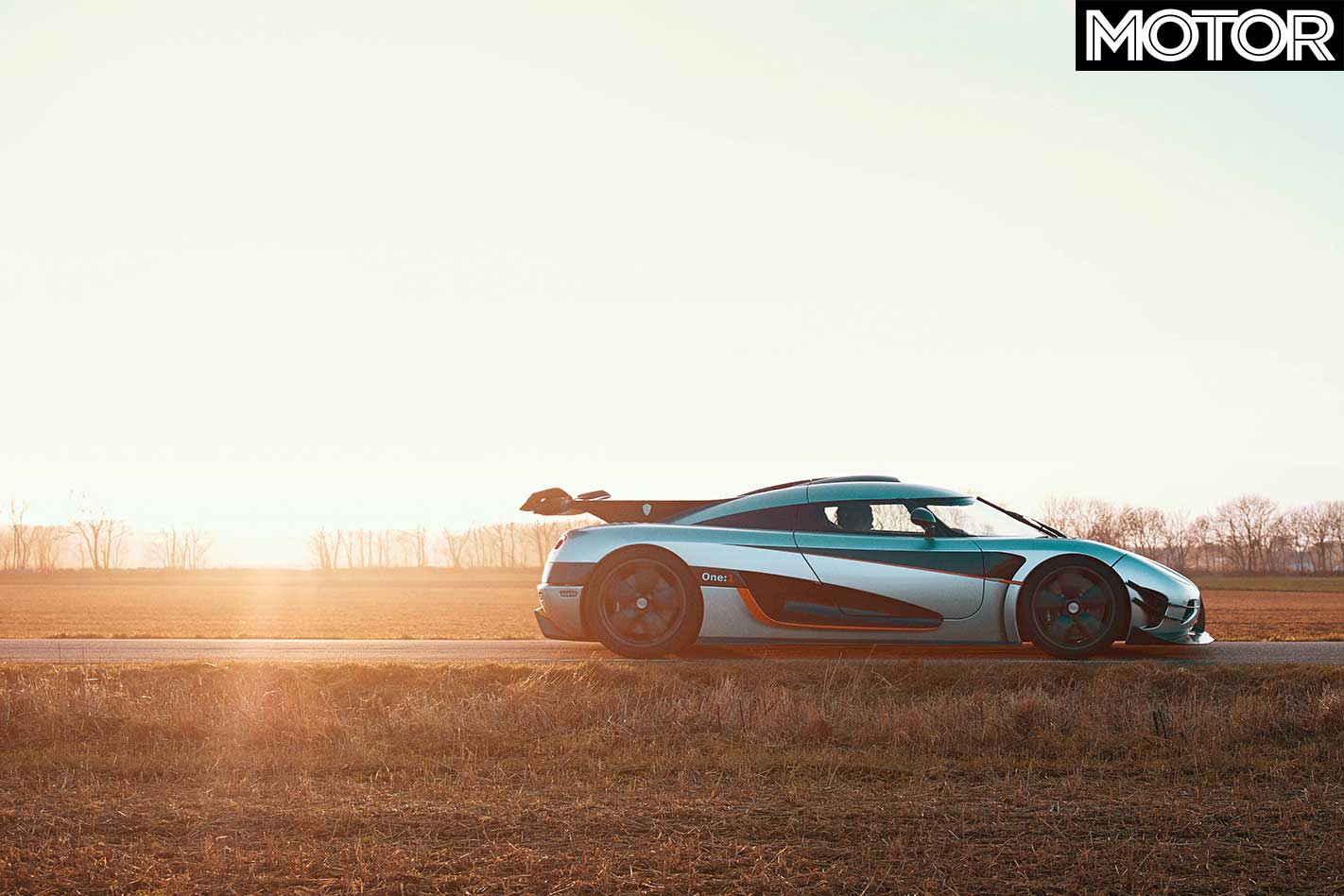
“The Agera RS was a series of 25 vehicles. The Regera is a series of 80 vehicles. Koenigsegg’s new model – Jesko – will be produced in a series of 125 vehicles, reflecting the increased demand for Koenigsegg vehicles, worldwide.”
In the last few years, Koenigsegg has increased its staff from 70 to more than 200, and has been consistently increasing the footprint of its workspace.
Just last year, the brand opened up its first Australian dealership – a section of the well-established Lorbek Luxury Cars in Port Melbourne.
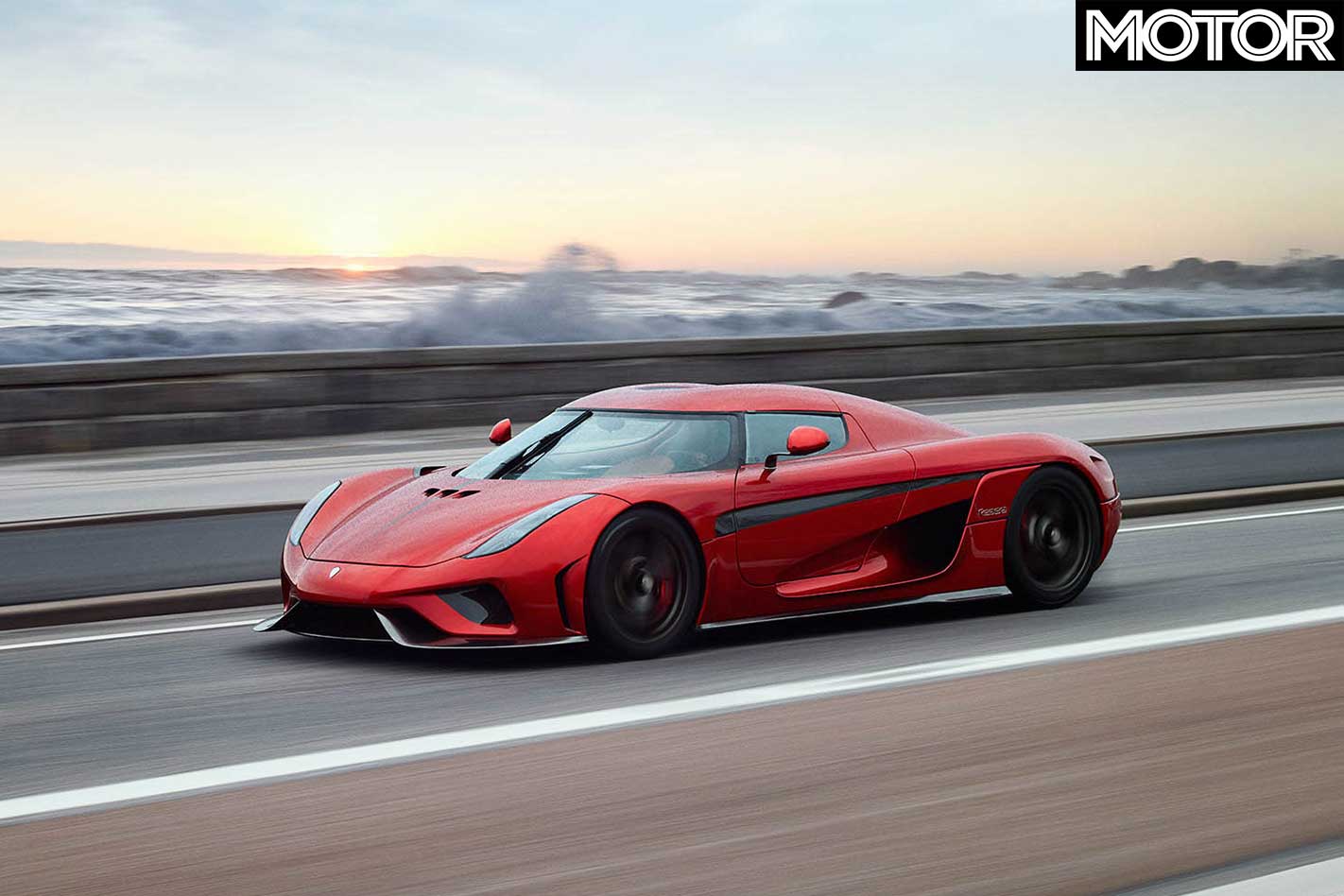
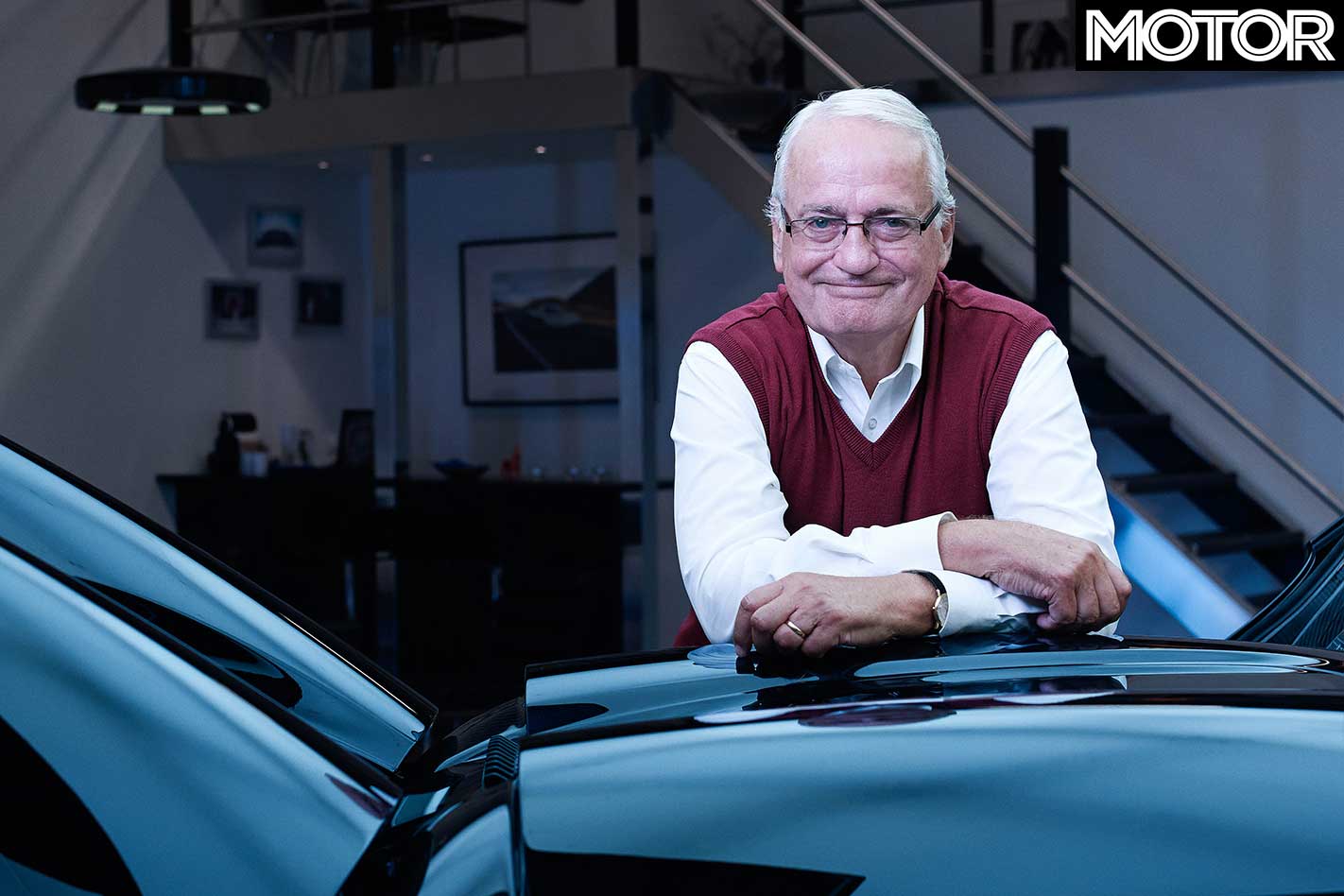
Koenigsegg marks its 25th anniversary specifically in August, when Christian von Koenigsegg set off on his hypercar journey.
Here’s to another 25 years of ridiculously fast cars.
But if all that alternative energy seems like too much sensible, emissions-free fun, Alex takes three exotic supercars for a blast to see which is the best hyperbolic convertible money can buy – for now. Can a pair of German drop-tops compete against arguably the most famous supercar name in the business?
See the full episode: Watch at tenplay.com.au (AU) or primetv.co.nz (NZ)
We take a look at one more option — a hydrogen fuel cell powered Hyundai that’s coming to a showroom near you.
See the full episode: Watch at tenplay.com.au (AU) or primetv.co.nz (NZ)
In this alternative energy special, Tony delves into the fascinating world of electric power for your car.
See the full episode: Watch at tenplay.com.au (AU) or primetv.co.nz (NZ)
Wheels/WhichCar jointly explore the world of combustion-engine alternatives on offer in Australia in this segment of WhichCar TV Episode 8
See the full episode: Watch at tenplay.com.au (AU) or primetv.co.nz (NZ)
Opening the show this week, Dan takes the iconic Range Rover on an alpine escape above the snowline. There aren’t many vehicles that can tackle deep drifts of snow like the Range Rover and Dan discovers that one particular alternative is fast, a little bit scary and smelly.
Later, and with his feet firmly back on the lowland, Dan takes you behind the scenes of the 2019 WhichCar Style Award. Meet the panel of judges from a wide range of backgrounds and discover how they decide on a winner. There’s good engineering and then there’s good design.
On-air: Channel Ten, Mar 24 (AU) / Mar 31 (NZ)
Catch-up: Watch at tenplay.com.au (AU) or primetv.co.nz (NZ)
WHAT IS IT?
The BMW 3 Series sedan has a lot of convincing to do. Two so-so generations have seen it cede its lead in this class, but the early signs are that this ‘G20’ generation has the chops to get back on the top step of the podium. We find out.
WHY WE’RE TESTING IT
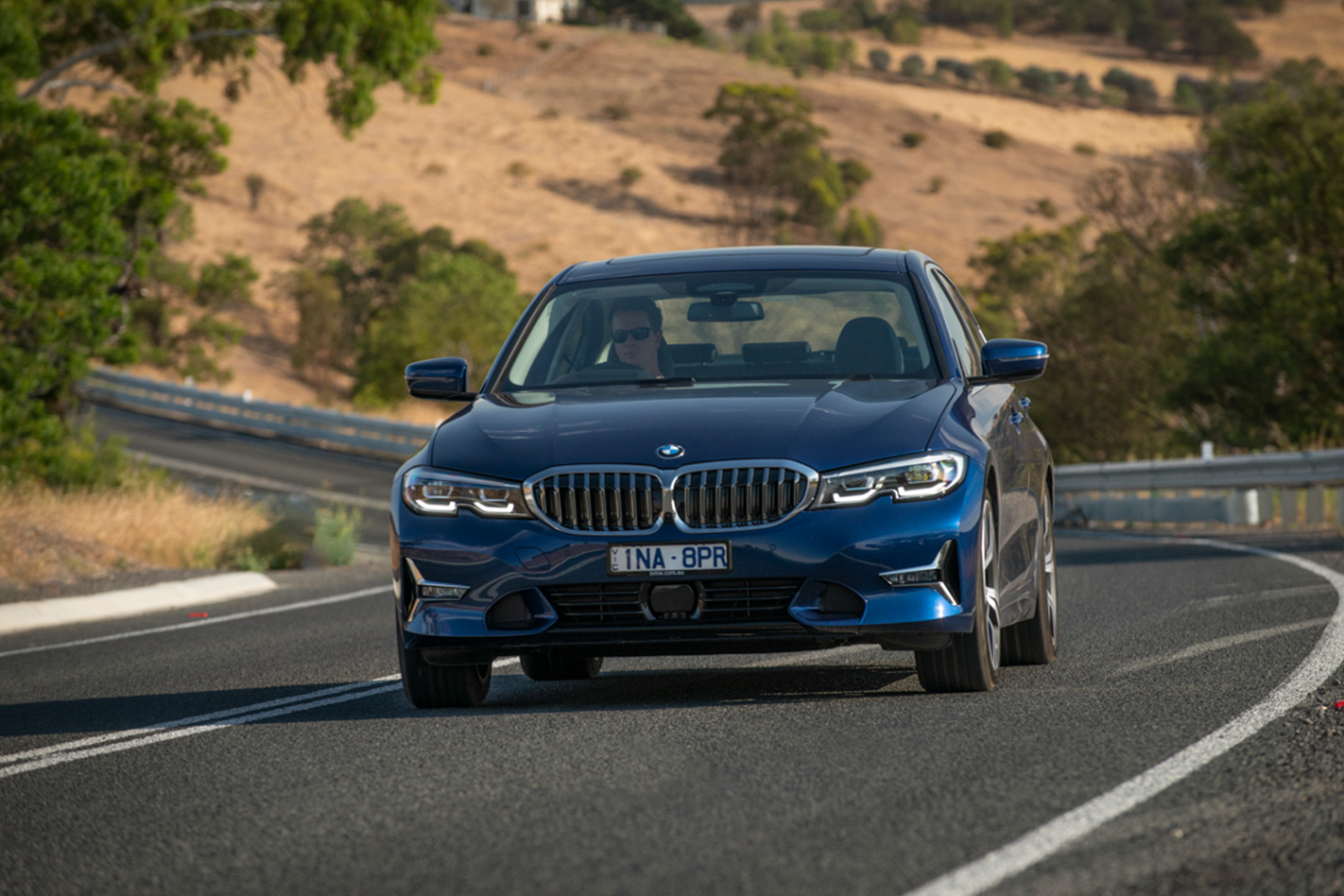
An all-new BMW 3 Series is big news and this 330i delivers, on paper at least, a hefty slug of power, great fuel economy and a list price that’s aggressive to say the least. Can something finally put a dent in Mercedes C-Class sales? We go on a monster drive to establish the 3 Series’ bona fides.
MAIN RIVALS
Audi A4, Jaguar XE, Lexus IS300, Mercedes-Benz C-Class
THE WHEELS REVIEW
YOU CAN tell a lot about a car in the first hundred metres. Driveline refinement, consistency of control weights, driver’s seat accommodation, an initial handshake with the steering, sightlines out of the cabin and so on. On every one of those measures, BMW’s 330i scores an instant win. It’s the equivalent of the person who walks into the interview room and has landed the job even before their clacker hits the chair. Some of us live to regret superficial hires, however, and in order to assess whether the latest G20-generation 3 Series was more than just a shiny smile and a firm handshake, we decided to take it on a road trip. A genuine horror show of a road trip.
The initial brief called for the 3 Series to hit three states and be compared with three key rivals over three days. Responsibility for the comparison landed on Byron Mathioudakis’ lap, leaving me with 48 hours to put almost 1500km onto the odo. From pickup in Mulgrave in Melbourne, we had to tick off another two states. NSW and ACT seemed a bit pedestrian, so we plumped for NSW and SA, stocked up on Haribo and Kombucha and pointed the 330i’s nose north up the Calder.
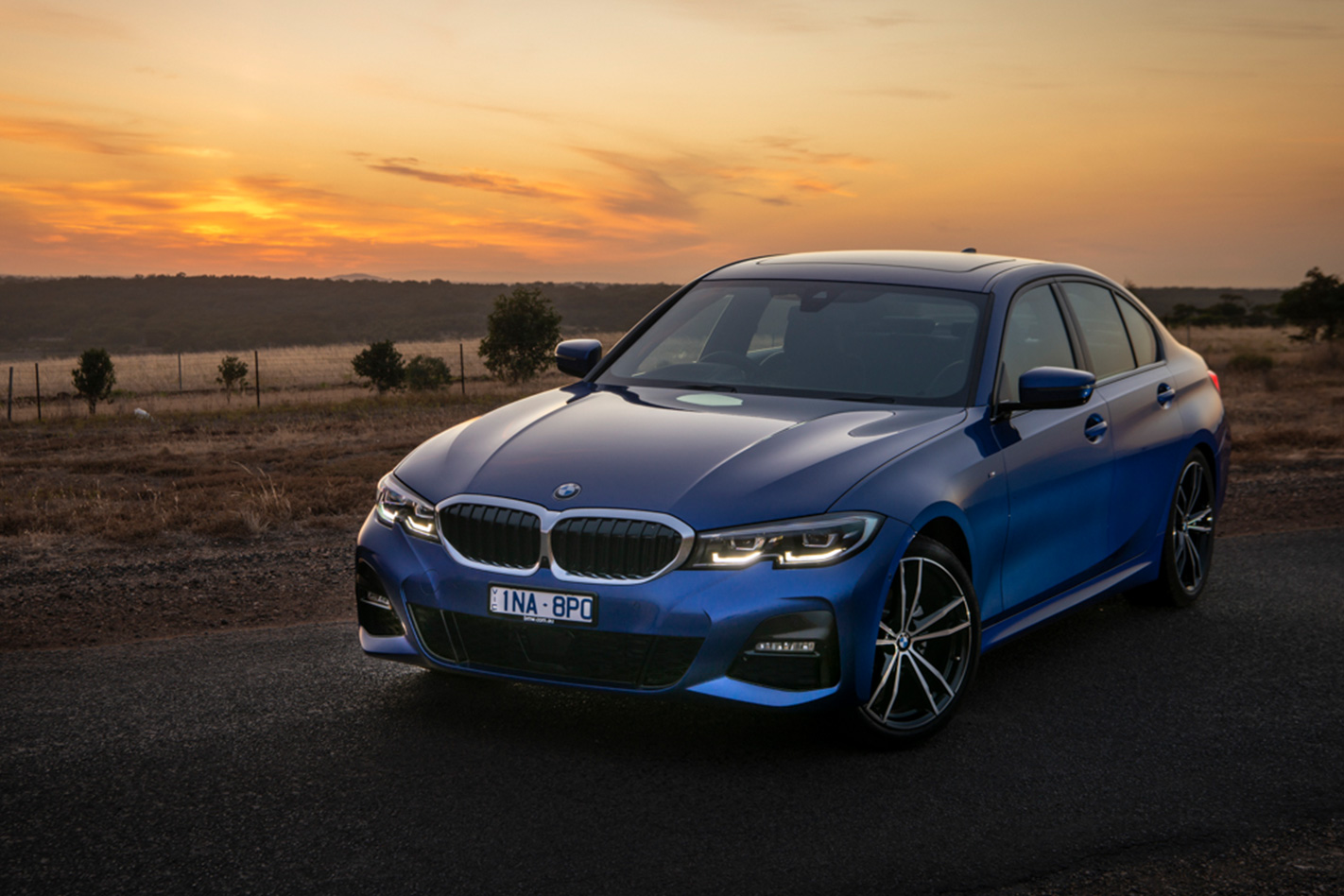
Some context first. This is the seventh generation of 3 Series. For a really quick primer on the prior models, see the breakout below. The cliff note version is that the 3 Series’ star was in the ascendancy all the way to the fourth-gen model, the E46, after which it seemed to lose its focus somewhat, becoming bigger, heavier and increasingly outshone by rivals. In developing this G20 version, BMW set out to reimpose the Dreier’s superiority as a driver’s car, widening the track, concentrating on superior weight distribution and sharpening its responses.
Heading out on the wholly crummy blacktop on the way to Bendigo, I’m wondering if BMW has sharpened it a little too enthusiastically. The ride never quite settles into much resembling a waft, even with hydraulic bump stops and the M Adaptive suspension in its softest setting. Much of that comes down to the tyre, a vaguely unimpressive Bridgestone Turanza T005 runflat which is both noisy and of modest tenacity when lateral G is thrown at it. This car deserves better. Still, it’s debatable whether any of its key rivals would settle into a syrupy glide here. The last Mercedes C-Class we threw into a group test lost its composure markedly on roads like this, yet it’s the biggest seller in the class by a country kilometre or two. Go figure.
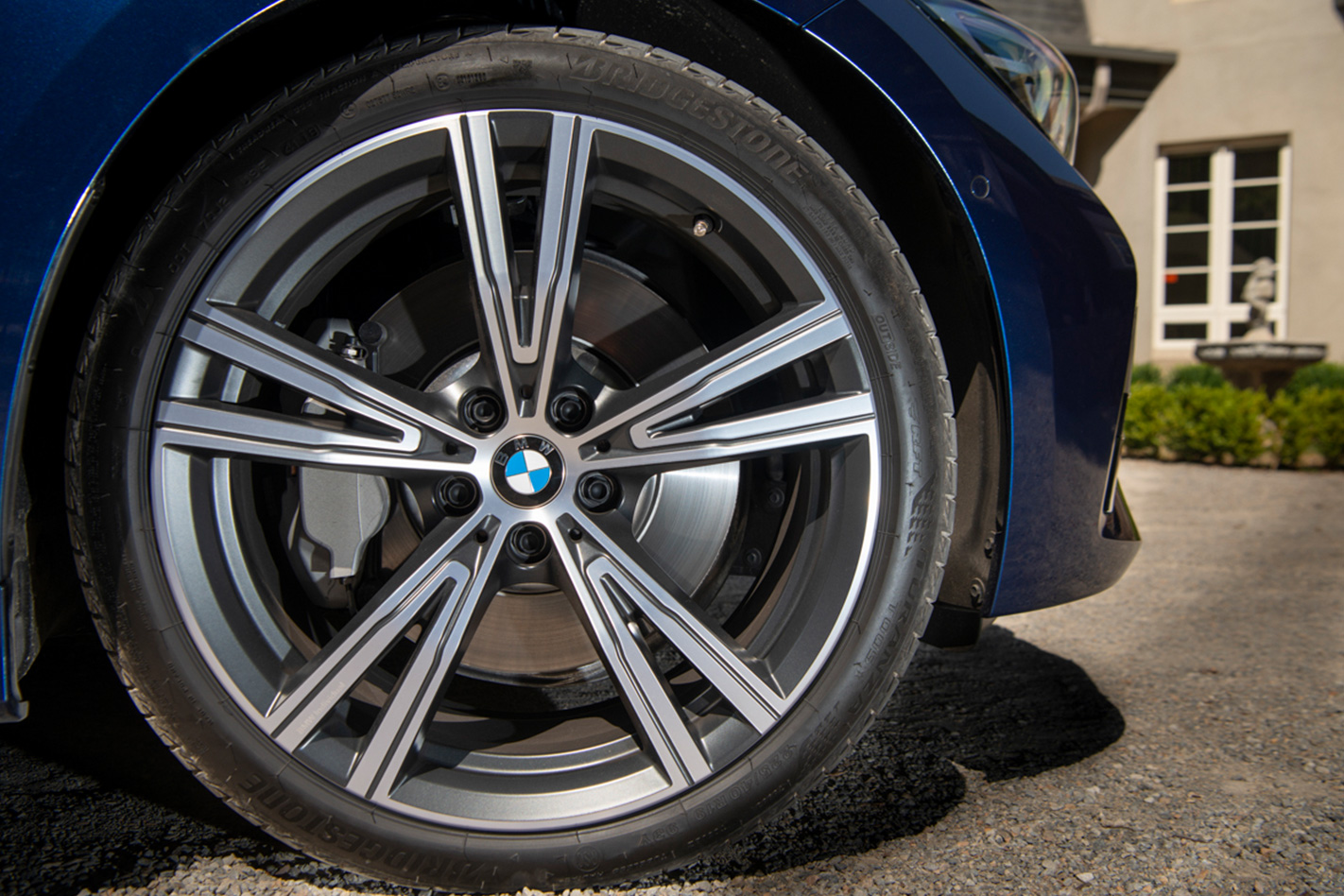
The steering feels well-oiled and, for an electrically-assisted system, does a reasonable facsimile of feedback. At 2.3 turns lock to lock, it’s reasonable quick, but never nervous. The eight-speed automatic transmission is a gem of a unit and not once did we hanker after the additional incisiveness of a twin-clutch. The brakes (348mm ventilated discs up front and 345mm rotors at the rear) are decently specified and the drive modes have a sensible and appreciable difference between them.
That B48 2.0-litre powerplant is also genuinely hard to fault. The days when BMW delivered you six cylinders of the good stuff when you bought a 330i are long gone, but aside from the soundtrack, this turbocharged four-pot has the old M54 covered in virtually every regard. For a start, at 190kW, it’s up 15kW on the best the six-cylinder could ever muster and its 400Nm torque figure knocks spots off the old six’s 301Nm. It’s a lighter powerplant too and its keenness to turn into a corner and – tyres notwithstanding – its relative composure when clouting mid-corner bumps give it an effervescent feel. The engine pulls cleanly all the way from 2000rpm to the redline without becoming harsh. About the only caveat I’d mention is that when you’re really punting the thing through a corner, the stability control and e-diff can occasionally have a moment of discord, bringing power in and out in a discrete series. Switching the ESC off fixes this and allows you to explore the delicacy of the chassis and throttle responses. Time and a place for all that, though.
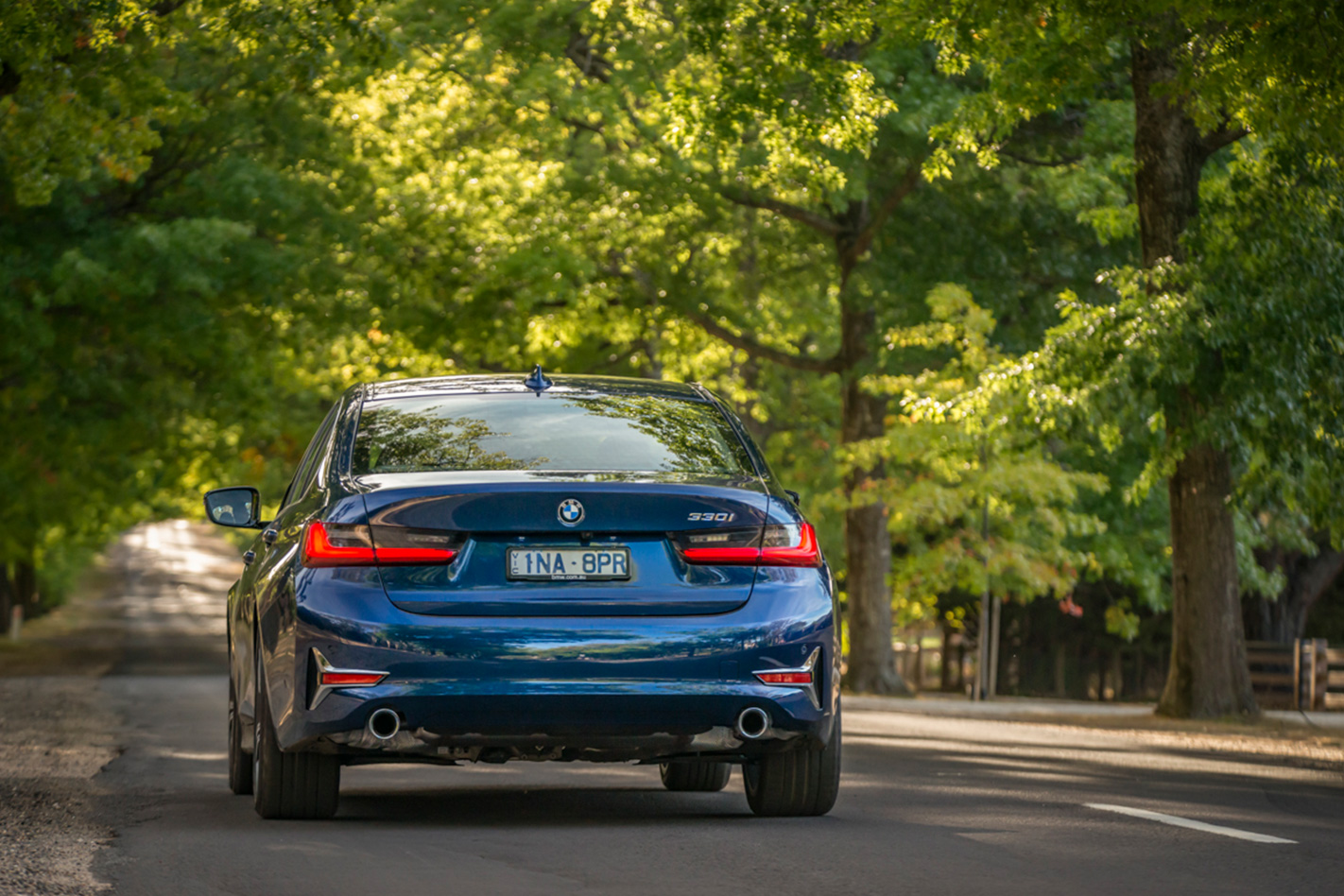
Finding a corner on the way to Mildura can be tough. Beyond Bendigo, the landscape becomes infinitesimally more desiccated with every passing kilometre. Dusty truckstops and agri-towns which have changed little in the last half century punctuate your route, allowing you to pause and take in catering that has yet to be hipsterised. We stop in Charlton for a huge serving of hearty roadside fare, chock-full of gristle and big-hearted ineptitude.
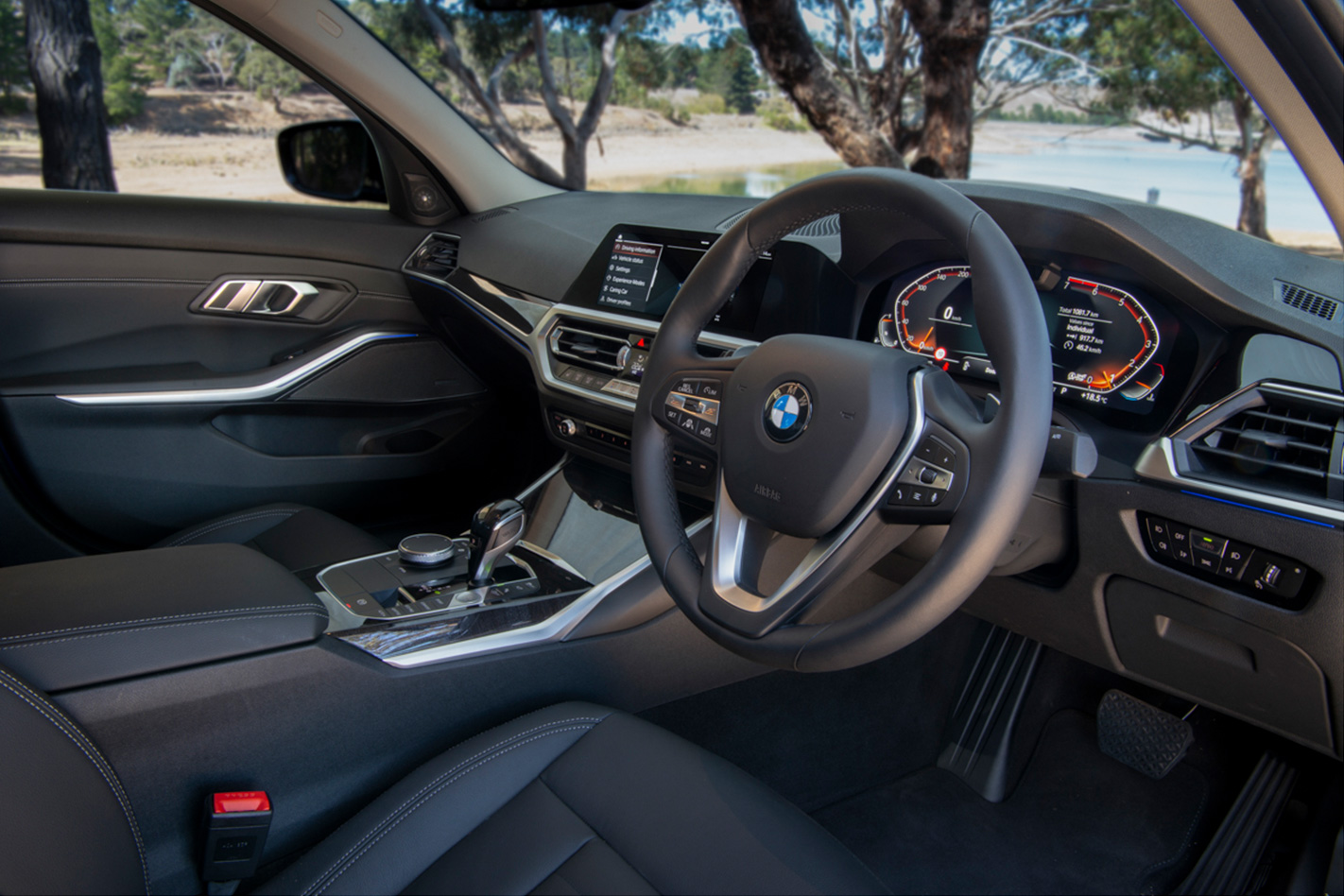
Dry lakes start to dot the horizon, all arc-light white soda shimmer. The 3 Series is making decent progress. The cabin report is good. The digital dial pack is neatly integrated, updating the existing design language for a new milieu. Thankfully the silly chrome bezels of the old clocks have gone. Some might baulk at this fully digital representation and the tops of the speedo and rev counter are obscured by the ridiculously chunky steering wheel rim, but this is just software, so that can change with an update. One small moment of concern came when the 330i wouldn’t start while in a remote location, detecting no key in the vehicle. After working ourselves up into a bit of a sweat, the solution was to hold the key fob against a key logo on the side of the steering column which, we assume, houses some sort of RFID chip and the handshake is re-established.
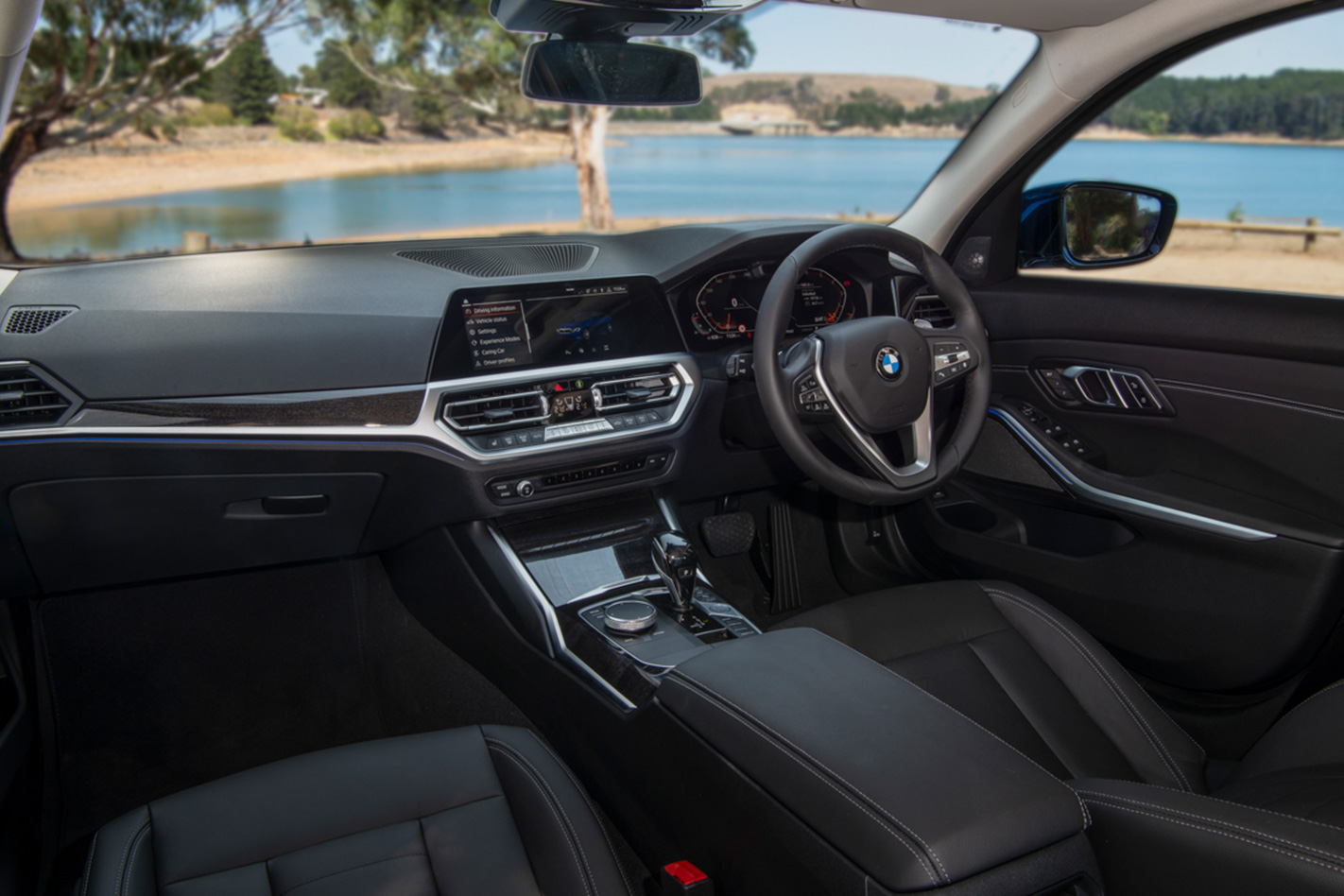
Space inside the car is good, with decent legroom behind a six-foot plus driver and no shortage of stowage space for oddments. The hefty 10.25-in iDrive 7.0 display look slick and the semi-autonomous drive assists work well. We fill up and the 3 Series has clocked 6.9 Litres per 100km, with a range of over 800km showing on the binnacle. That ought to see us to the South Australian border easily.
The approach to Mildura begins with a few scratchy orange groves before bursting into fields of vines. I’m not sure if I’ve ever spotted signs that warn of ‘Grape Spills On Road Ahead’ but in the fruit bowl of Victoria, it’s apparently a fairly common occurrence. The one thing we notice as we roll through town is that nobody notices. Not one person has clocked that this is a new 3 Series. It used to be a real event, but even in car-mad Melbourne, the only G20 in the country slips unobtrusively out of town.
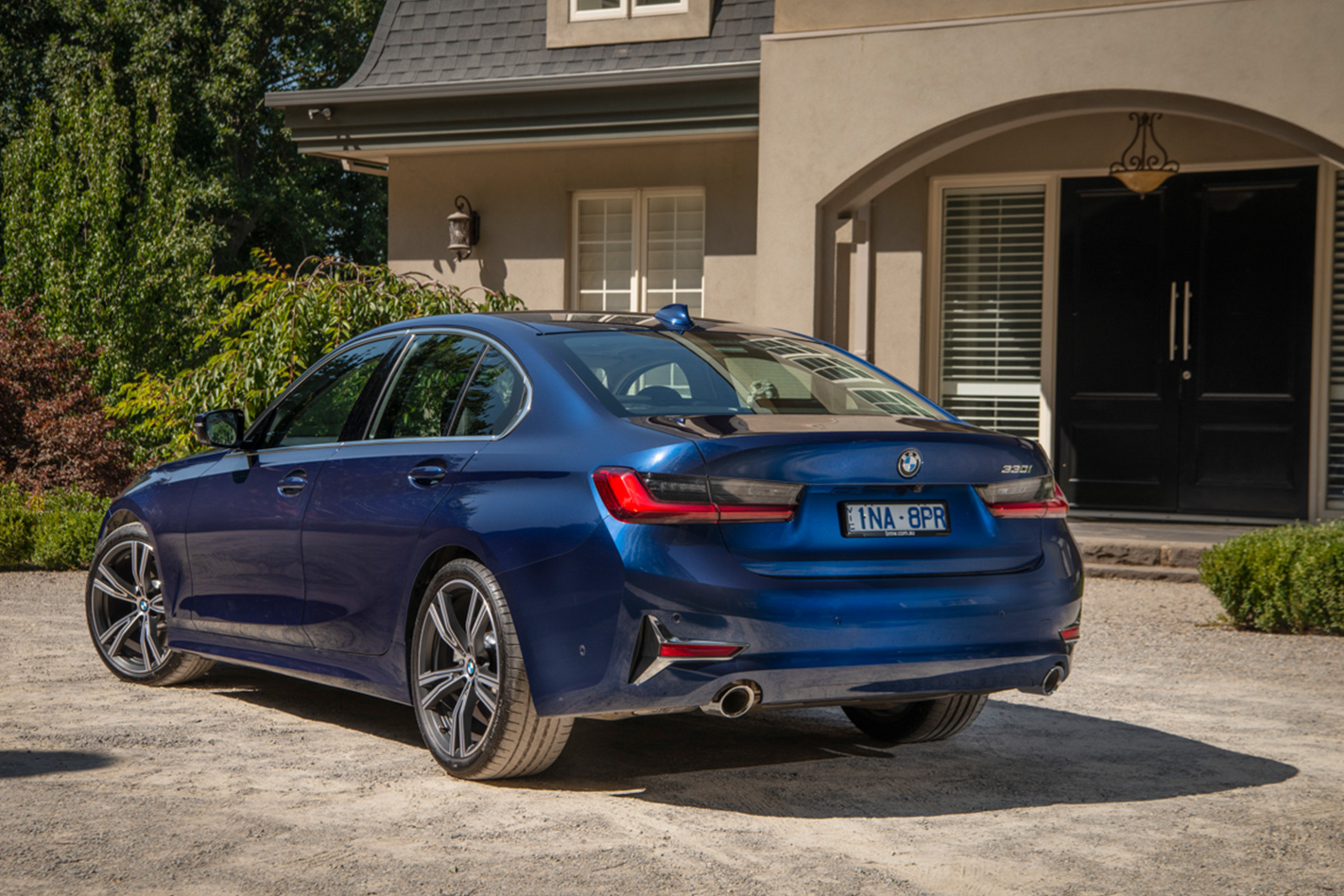
Photographer Alastair Brook seems quite taken with the low-key G20 shape, although perhaps it’s a little too refined for its own good. Whereas once a new 3 Series was quite the event, nobody has glanced twice at, much less commented on this newcomer. Has the detailing become a little too derivative, a little Peugeot front, Lexus rear? The plastic trims that now accentuate the trademark Hofmeister kick of the rearmost side windows are a heavy-handed trompe l’oeil, but otherwise it’s a discreet and handsome thing. The way the horizontals at the rear accentuate its added width only serves to improve the optics. The M Sport kit drops it by 10mm, the wheelarches now shrouding the tyres nicely and we can but wonder what a G20 M3 would look like. Stunning, probably.
Turn left in Mildura and drive west and you’ll enter a gently rolling arid country, the Mallee to your left and the Murray River valley occasionally punctuating the horizon to your right. Hundreds of emus stand at one dry lakebed, contemplating their options, the heat haze distorting their forms into Lowry matchstalks. There’s little to see at the border, just short of Renmark, other than a sign and a genuinely impressive quantity of flies. Back in Mildura that evening, we nip across the Murray to another scenic disappointment, the New South Wales border appearing on a truck-choked arterial out of town.
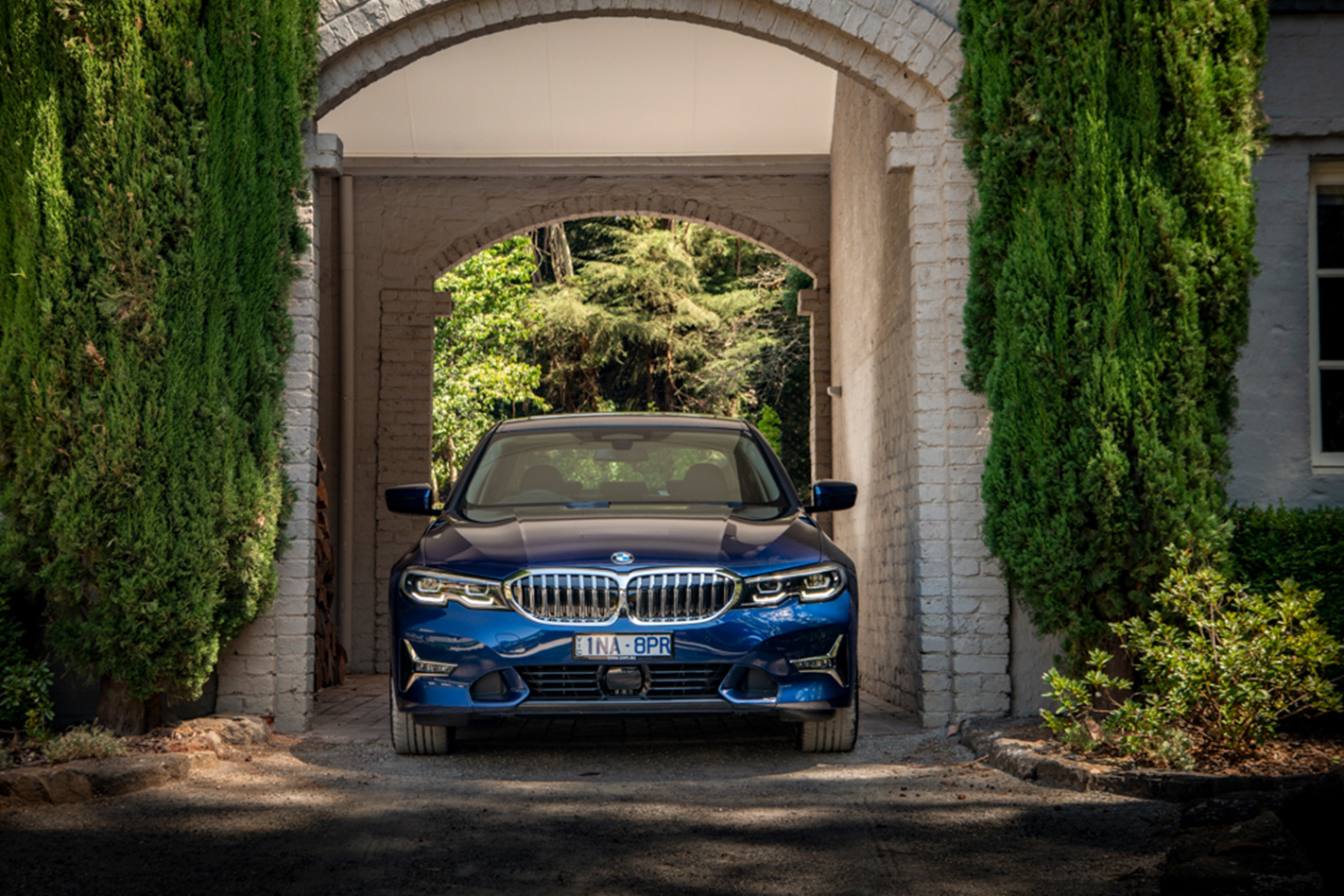
The long drive south gives the 330i time to convince. It’s such a likeable thing. It drives well and its styling is handsome and refined enough not to date rapidly. The additional width in the car has given it a far happier stance than either the E90 or the F30 that preceded it. The pricing is an eye-opener too. True, $70,900 isn’t something you’re likely to find with a furtive dig down the back of the sofa, but that includes leather trim, adaptive LED headlights with auto high beams, sat-nav, digital radio, digital instrumentation with head-up display, surround-view camera, three-zone climate control, wireless smartphone charging, powered front seats with memory, keyless entry/start, adaptive cruise, AEB, lane departure warning, lane-keep with steering assistance, blind-spot monitor, front and rear cross-traffic alert, speed limit recognition, park assist, powered boot lid and 19-inch alloys. That’s quite some list.
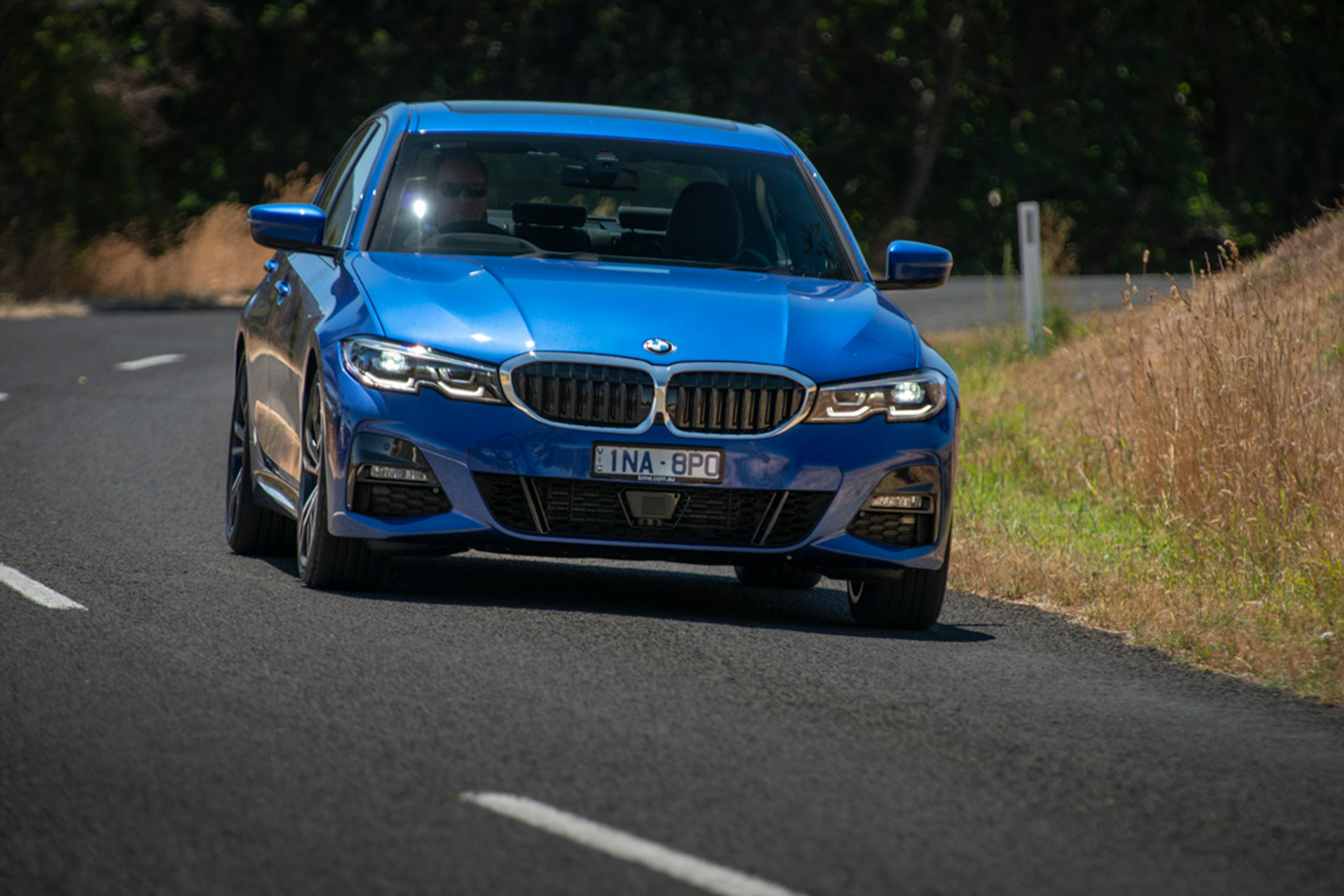
This M Sport model also gets 10mm-lower sports suspension, adaptive dampers, beefier brakes, a bodykit, questionable interior fascia trim and an even chunkier steering wheel. Metallic paint is $2K on top, and the sunroof, M Sport differential and other options brought that figure up to $80,100. Try speccing a Mercedes-Benz C300 to this level and it’s doubtful you’d get any change from $100k.
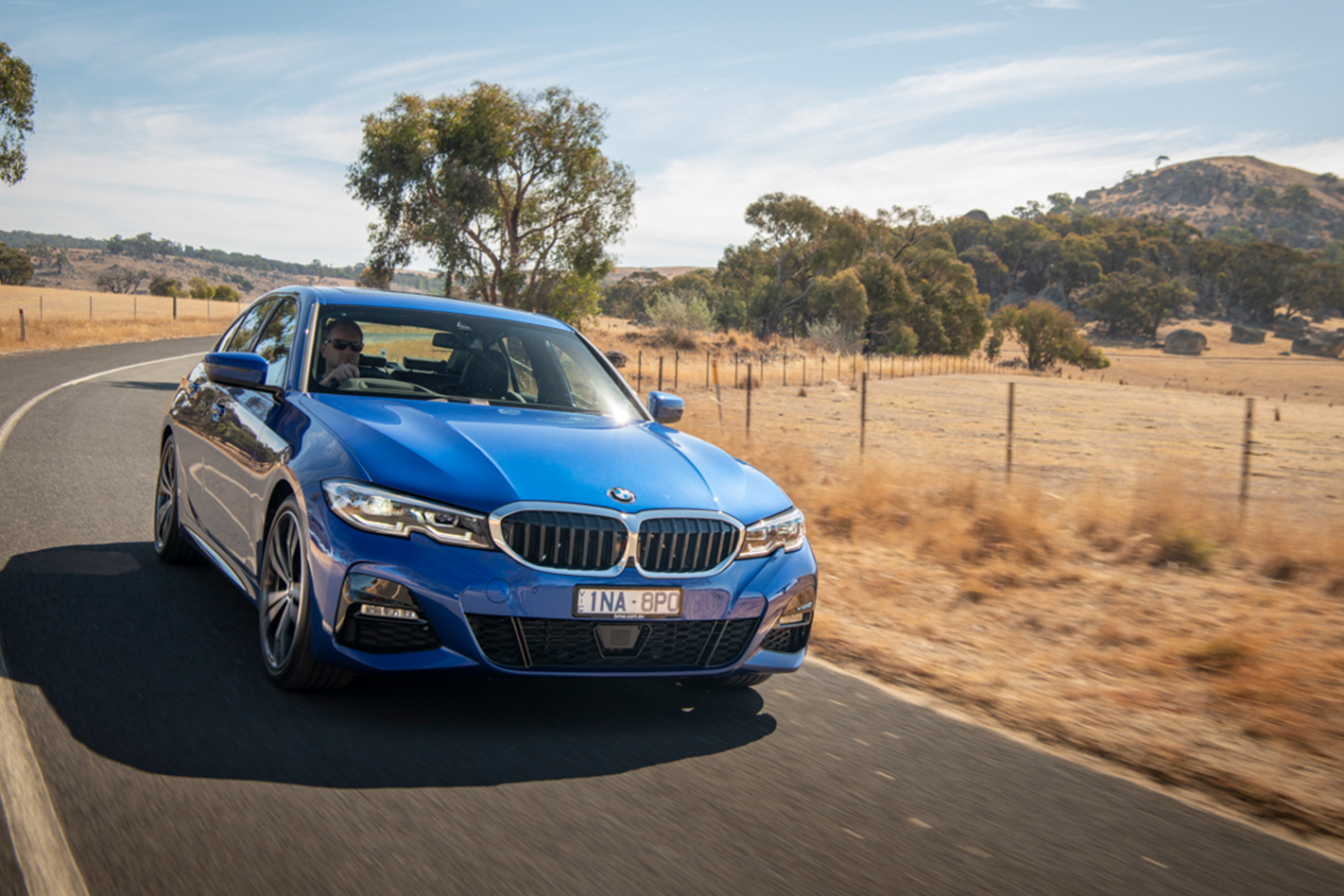
So is this the BMW we’ve all been waiting for? It’s probably just a decent set of boots away. The 330i gets so many of the fundamentals right that it would go straight to the top of our shortlists in this class. Sometimes it takes a very long road to answer a short question and on other occasions it pays to trust a first impression.
THE WHEELS VERDICT
The brief for the G20 BMW Series ought to have been easy. It needed to be more elegant than that which went before, of better quality, and the best fun to drive in its class. It’s hard to contend that the Bavarians have failed on any of those counts. Does that make the Three the best in class? That depends on how much of a priority you put on driving. We reckon the 330i will prove the sweet spot in the range and that the 3 Series does so much right, it’ll become the default choice in this class for those who look for the road less travelled. In which case, mission accomplished, Munich.
PLUS: Willing engine; planted chassis; classy interior; decent packaging; good value MINUS: So-so tyres on test car; some odd trim choices; styling may be too low-key for some
SPECS
Model: BMW 330i sedan Engine: 1998cc 4cyl, dohc, 16v twin-scroll turbo Max power: 190kW @ 6500rpm Max torque: 400Nm @ 1550-4000rpm Transmission: 8-speed automatic Weight: 1535kg 0-100km/h: 6.0sec Economy: 7.0L/100km (test average) Price: $80,100 (as tested) On sale: Now
