
PARIS is a hotbed of hustle and bustle right now. Fashion Week and the Mondial de l’Auto are simultaneously drawing visitors to the city by the thousands, and filling it with as many cameras as people in the process.
But it’s the cars that really matter to us, and anybody fearful about a lack of interesting new metal should be feeling pleasantly at ease. The 2018 Paris Motor Show has delivered a generous helping of key reveals, despite several significant manufacturers choosing to stay home with their feet up.
Wheels is on the ground in the French capital walking the exhibition pavilions to see everything as it happens, so here are five highlights from the 2018 Paris motor show, so far.
Skoda Vision RS
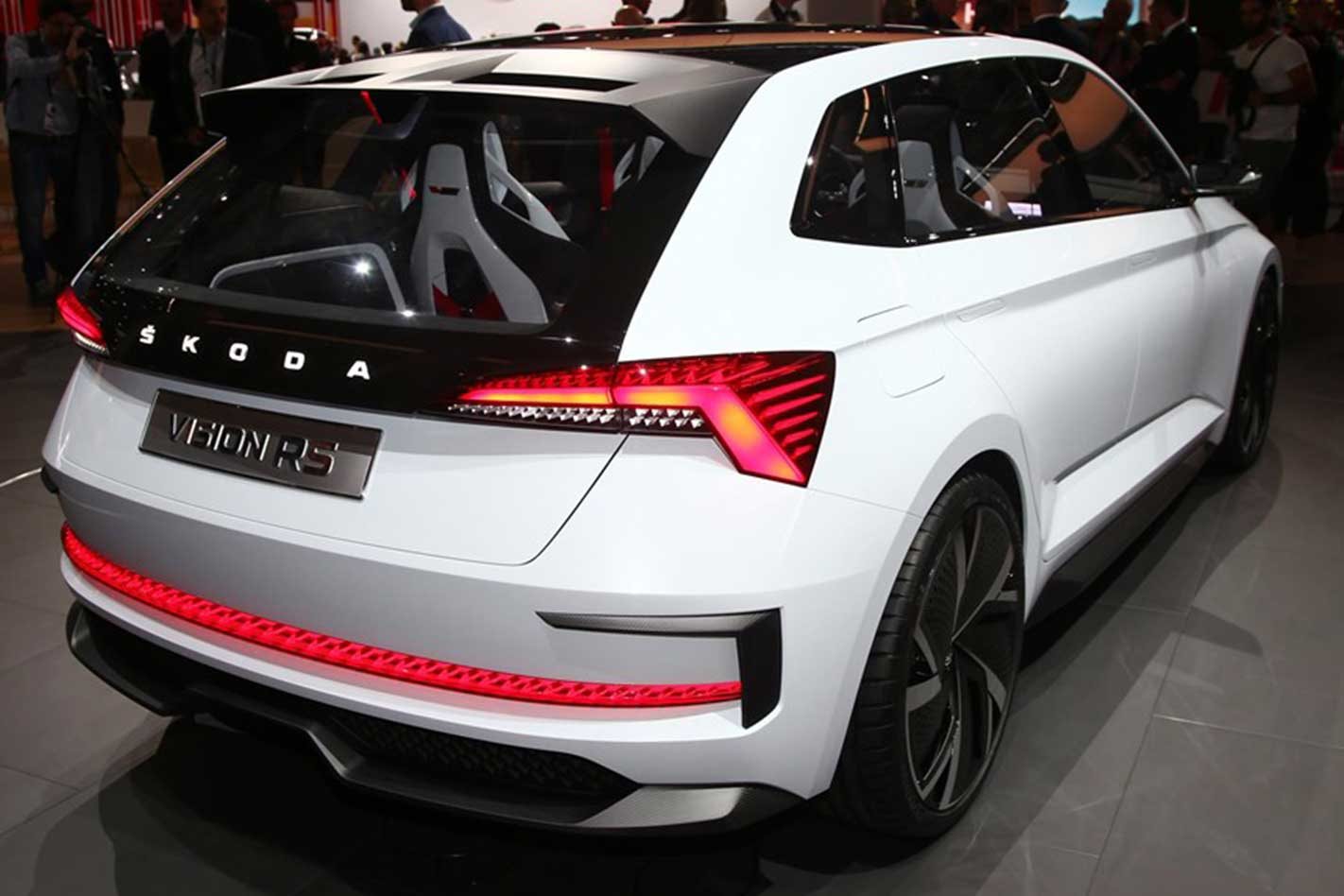
Hybrids make potent performance weapons. Fact.
Those that disagree need only look at the ‘Holy Trinity’ of the McLaren P1, Ferrari Enzo, and Porsche 918 as examples.
However, hybrid performance heroes are often, like the aforementioned trio, the exclusive domain of the ultra-rich.
Enter Skoda, which is hoping to democratise hybrid performance, and make it available to the average enthusiast.
The Vision RS concept is a near-production-ready indication of how it intends to do this, previewing a possible replacement for the outgoing Rapid.
It’s powered by a 1.5-litre petrol engine and electric motor that work together to produce a healthy 180kW.
Porsche 911 Speedster
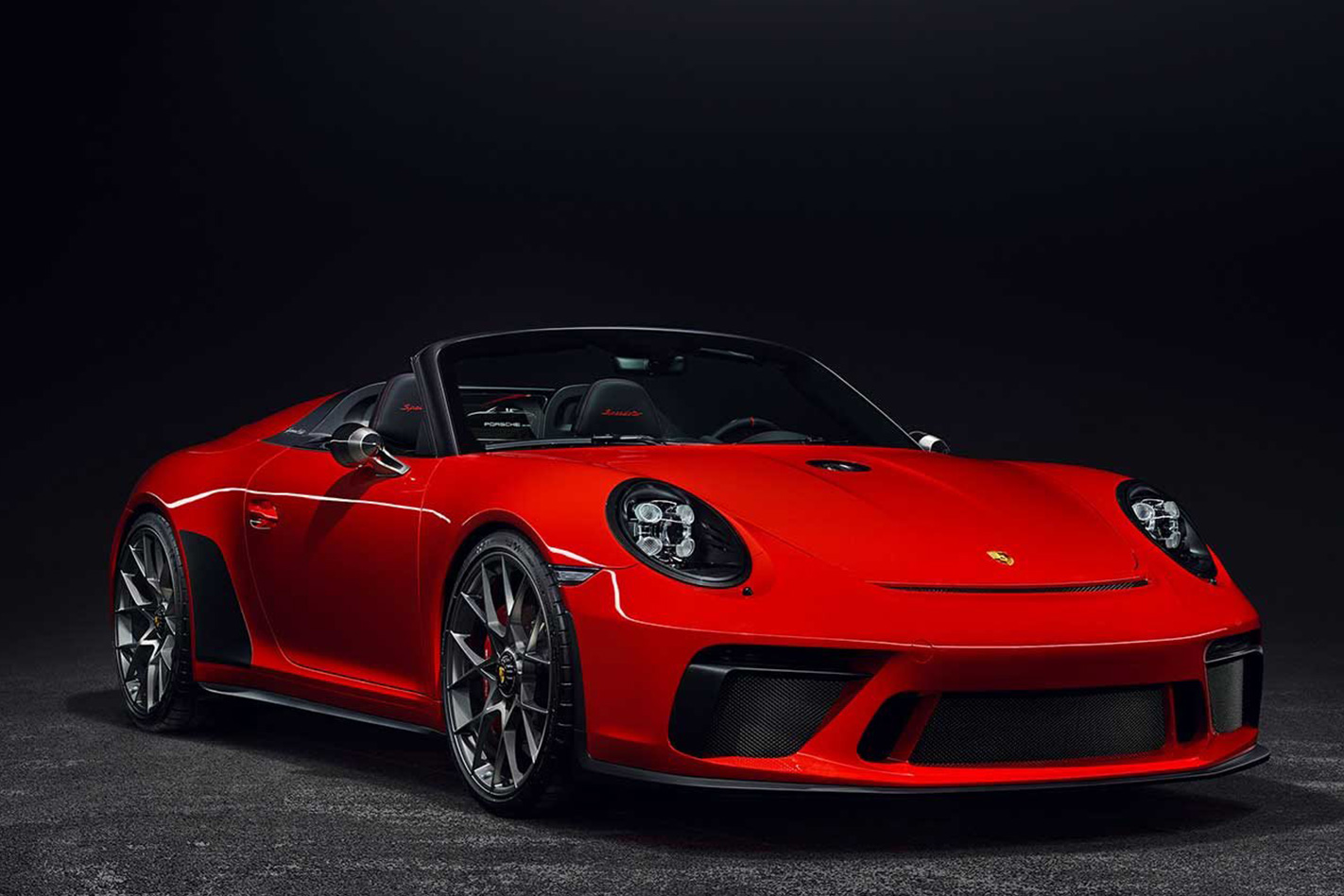
As has become tradition, the 991-generation Porsche 911 is being sent off with a Speedster swansong.
Revealed in Paris in production form, just 1948 cars will be built – a hat tip to the year Porsche 356 ‘Number 1’ received its operating license.
The dramatic-looking drop-top features an equally inspiring drivetrain, with each 911 Speedster sending power exclusively to the rear wheels.
Wedged behind the rear axle is the 4.0-lite naturally-aspirated flat-six from the 911 GT3, producing 368kW while revving to a sonorous 9000rpm, and is mated to a six-speed manual transmission.
Resale values won’t be an issue, then.
BMW 3 Series
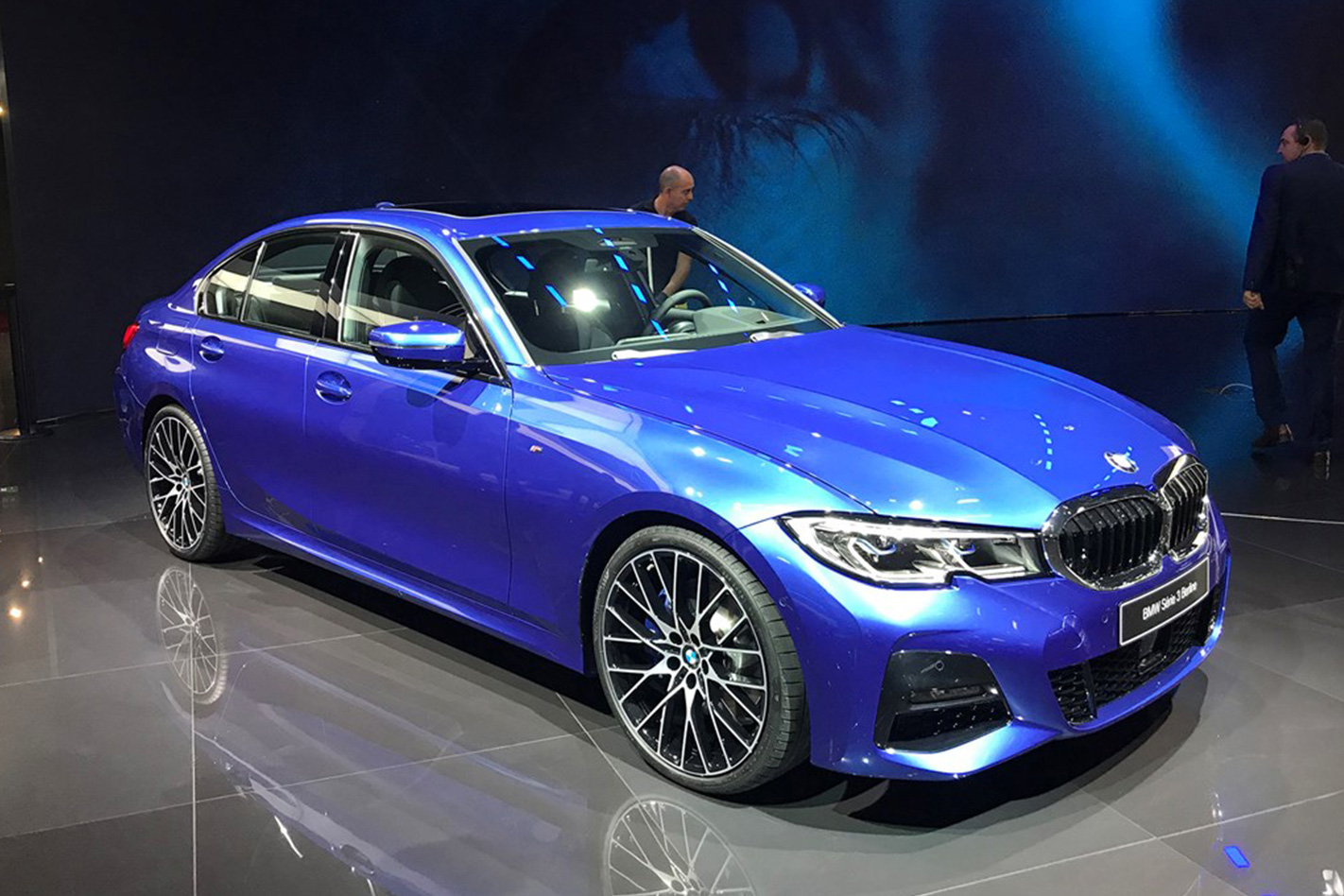
The seventh-generation of the world’s best-selling premium car was revealed in Paris, with the G20 BMW 3 Series appearing in the flesh. More than 50 million 3 Series models have sold worldwide since the E21 debuted in 1975.
This new model is wider, lighter, and designed to be a more enjoyable drivers car, says its maker. We’ve got the full details from the reveal.
Want to know how it drives? We’ve been for a ride in a prototype to get a better understanding.
Peugeot e-Legende
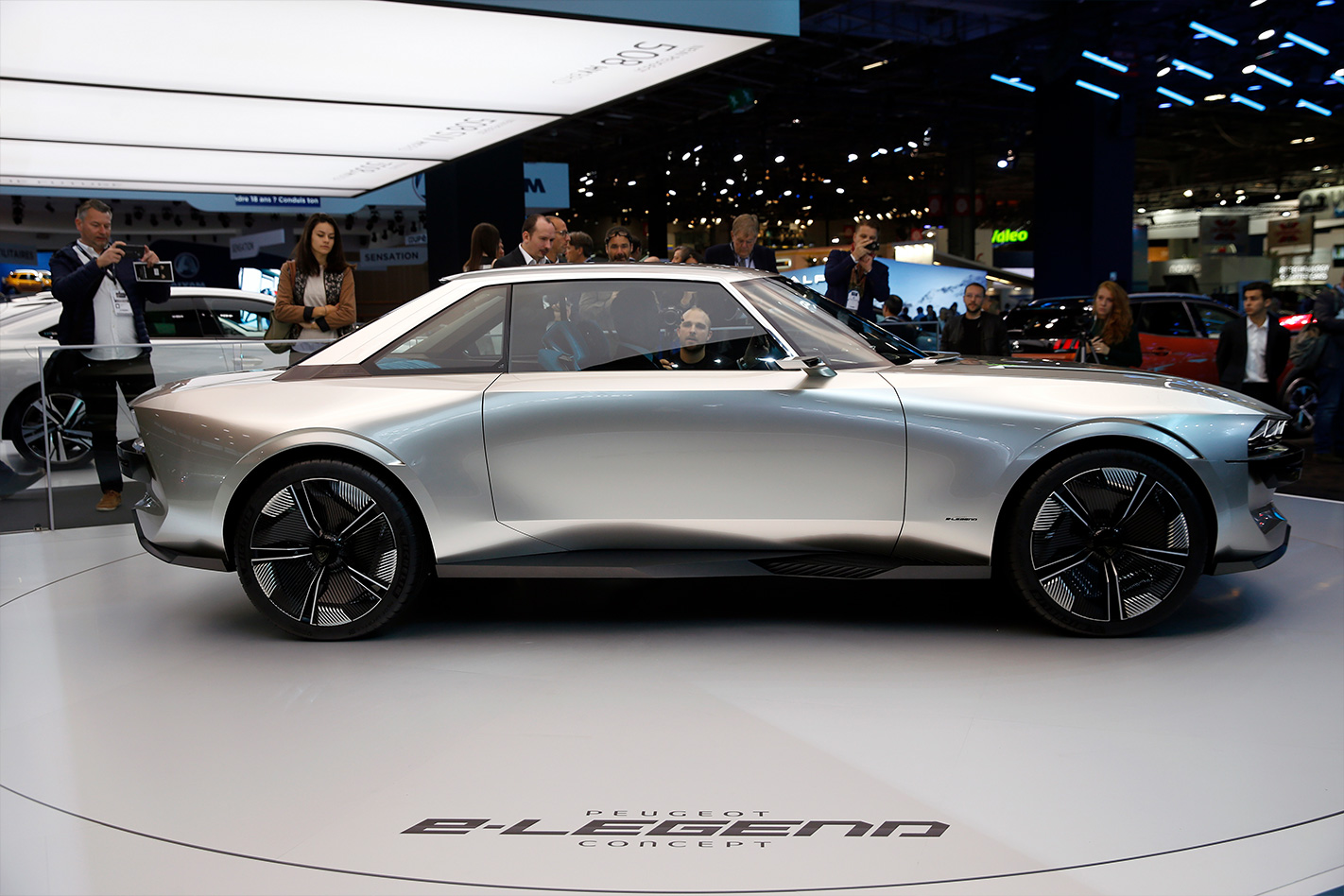
Retro-inspired concepts have been all the rage for the last few years, and Peugeot has got in on the action with its e-Legende.
Inspired by the iconic Peugeot 504 of the 1960s, the e-Legende looks both to the past and future with its styling.
There are concept car clichés like a fold-away steering wheel and electric drivetrain, as well as beautifully unique blue velour interior trimming.
Ferrari Monza SP1 & SP2
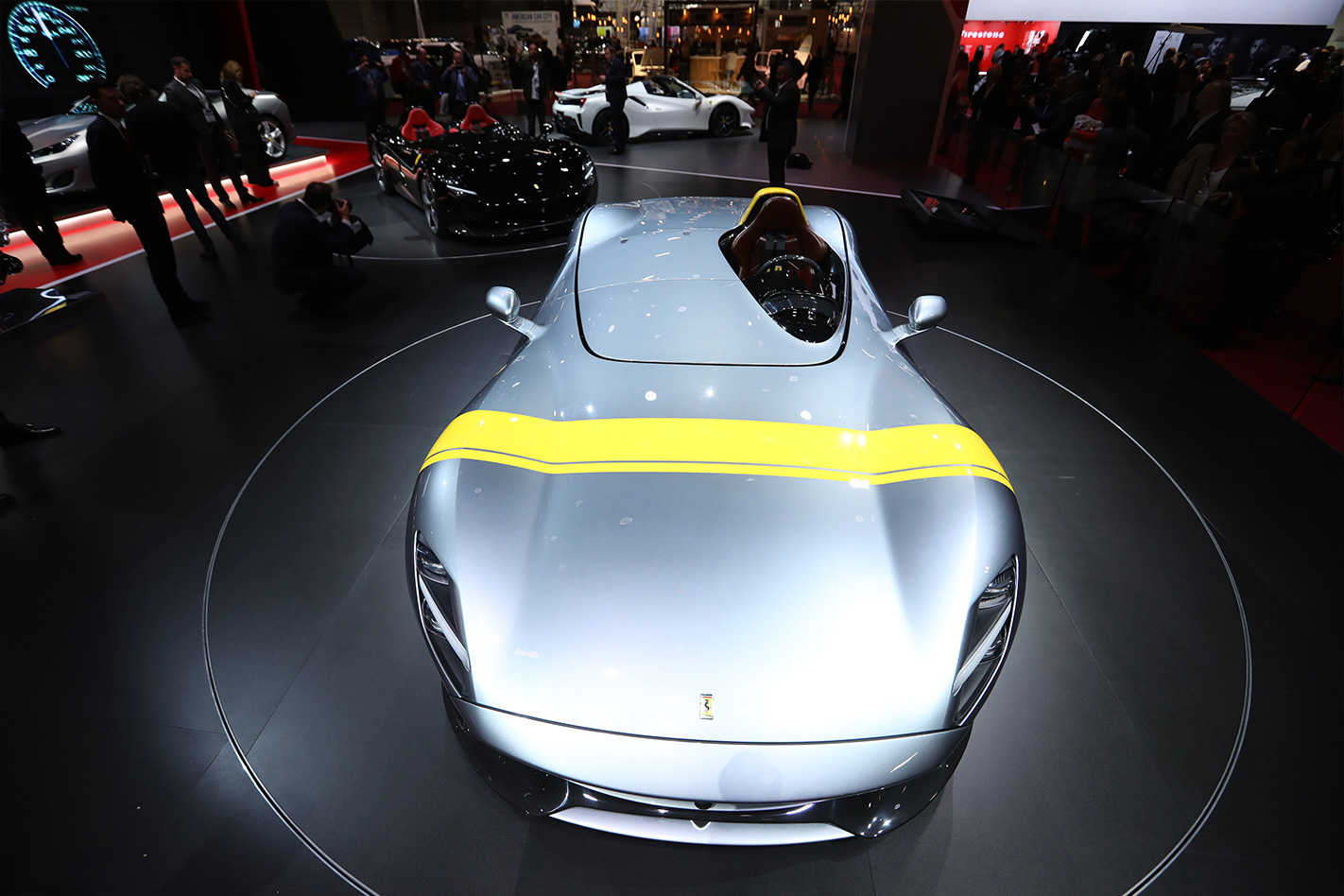
The Ferrari 812 Superfast was already crazy enough for us, with its superb 6.5-litre V12 producing a raucous 588kW and 718Nm.
Well, the good folks at Maranello didn’t want to leave it at just that, producing the Monza SP1 and SP2 twins as a pair of truly unhinged special editions.
The Monza pair draw inspiration from Ferrari’s racing Barchettas of the past, with a radical design that deletes the roof and windscreen and adds a roll-hoop behind the occupants.
Don’t mind us; we’ll just be at the Ferrari stand for the rest of the afternoon trying not to drool too much.
The Skoda Vision RS concept car is a dead giveaway as to what will replace the Rapid in autumn 2019. Although purportedly a show car, this in fact is the evidence that the hard-to-pigeonhole Rapid will give way to a more conventional Golf rival.
The new production car will follow soon after; we’re anticipating seeing it in autumn 2018, and it will wear a brand new name – neither Rapid nor another archive badge will be used, we hear.
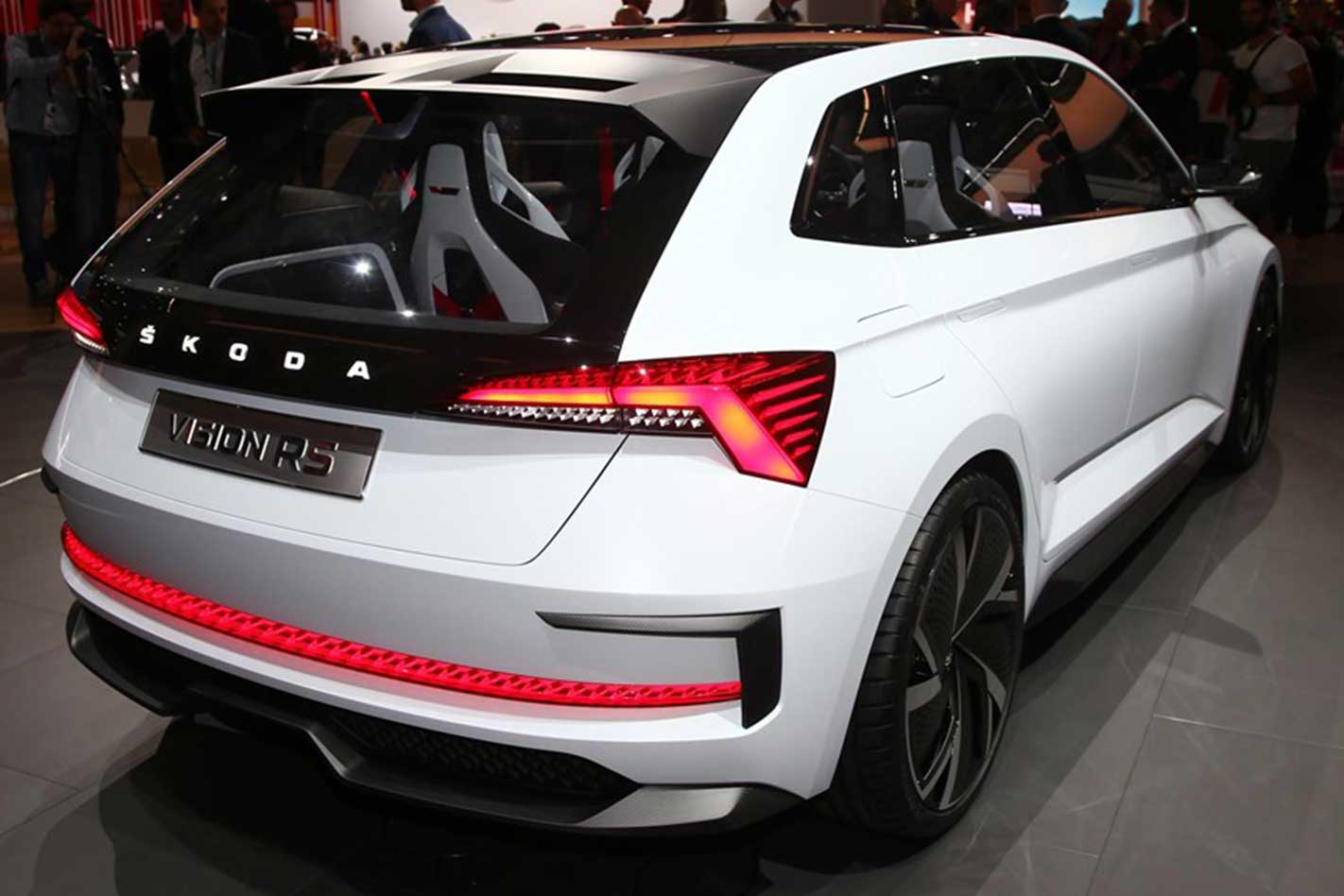
The background to the Skoda Vision RS concept car
When Skoda told us it had built a vRS concept car with Ferrari F40-style fabric door pulls, a fully fleshed-out hybrid powertrain and vegan-friendly cabin materials we couldn’t wait to see what they had up their sleeve.
We’ve now seen the Vision RS twice – at a sneak preview event near Prague and now at the Paris show, too, and it’s no less striking than that rather concise description suggests. The show car is a plug-in hybrid.
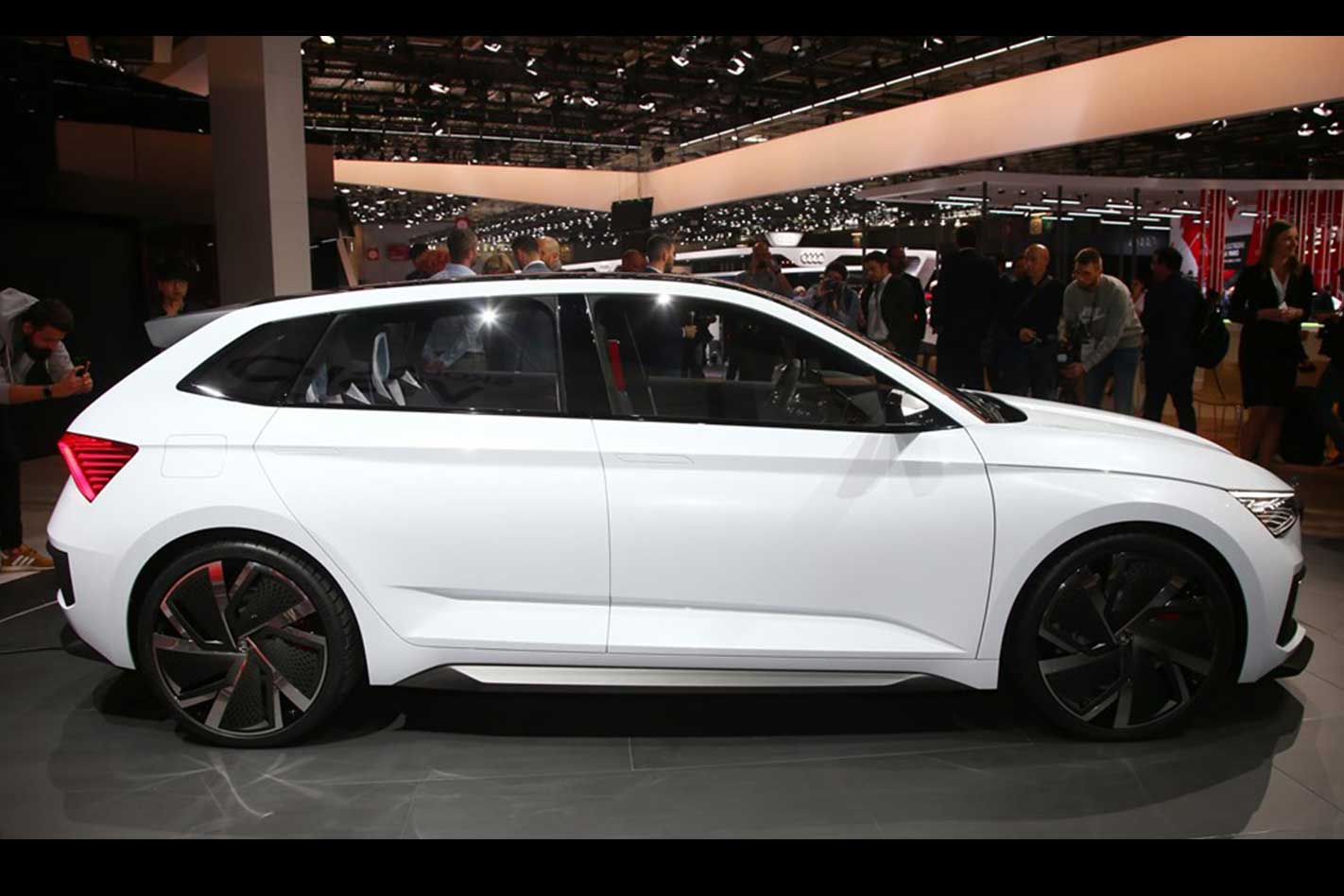
What’s really cool though is that quite a lot of this futuristic design is expected to find its way into production, as Skoda gears up to rolling out 10 new plug-in hybrid electric vehicle (PHEV) or battery electric vehicle (BEV) models before 2025.
Tell me more about the engine…
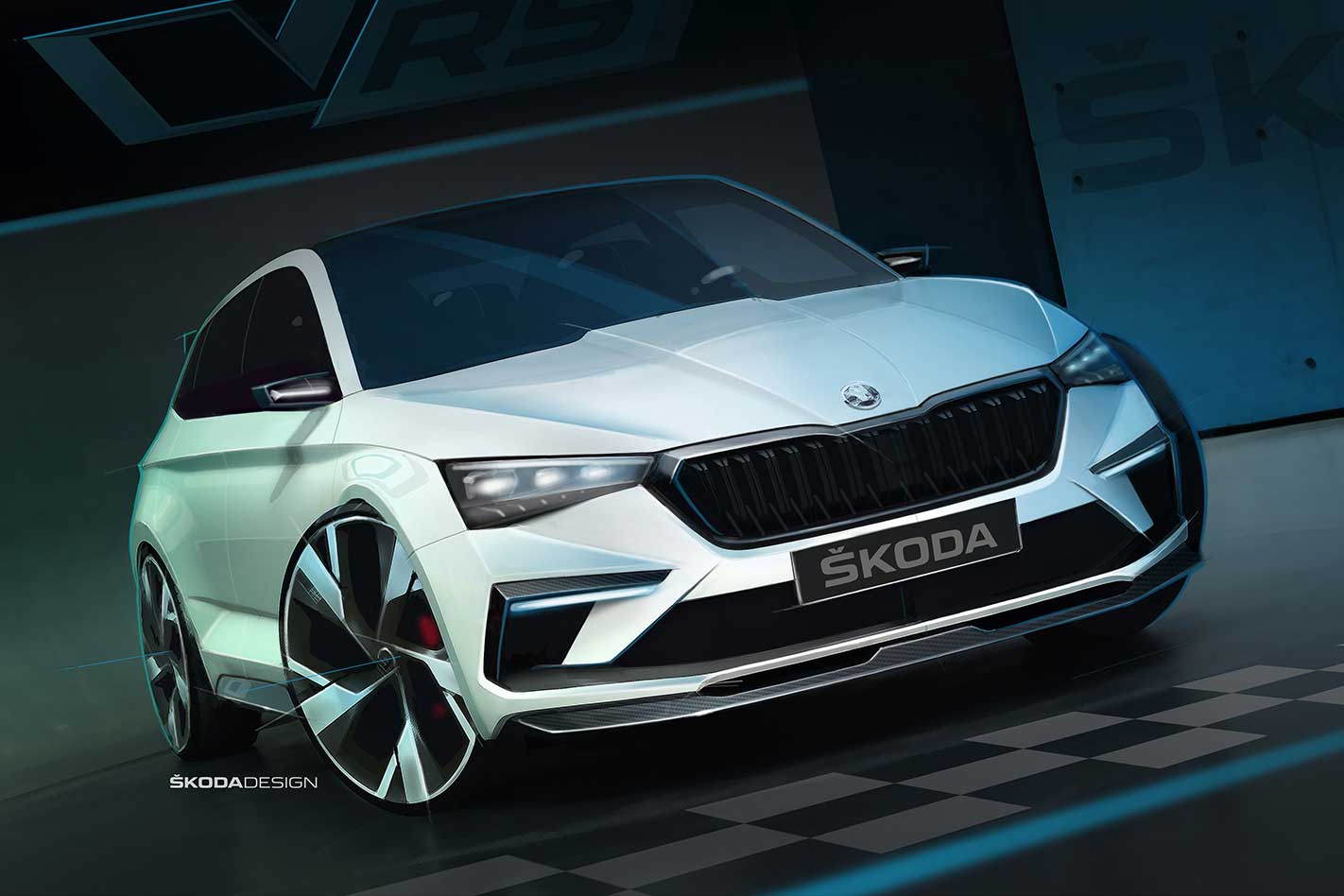
No firm answers on which vRS model will get hold of this drivetrain, or whether it’ll be sold alongside petrol and diesel versions, as is the current norm.
It’s broadly similar to the current VW Golf GTE and Audi A3 e-tron – a 1.5-litre petrol engine and electric motor working together to produce 180kW.
Expect 0-100km/h in 7.1 seconds, or driven more sensibly, about 65km of electric only range and CO2 emissions of 33g/km. The 13kWh lithium-ion battery can be charged in two and a half hours at a fast charger.
Why doesn’t Skoda make a PHEV already?
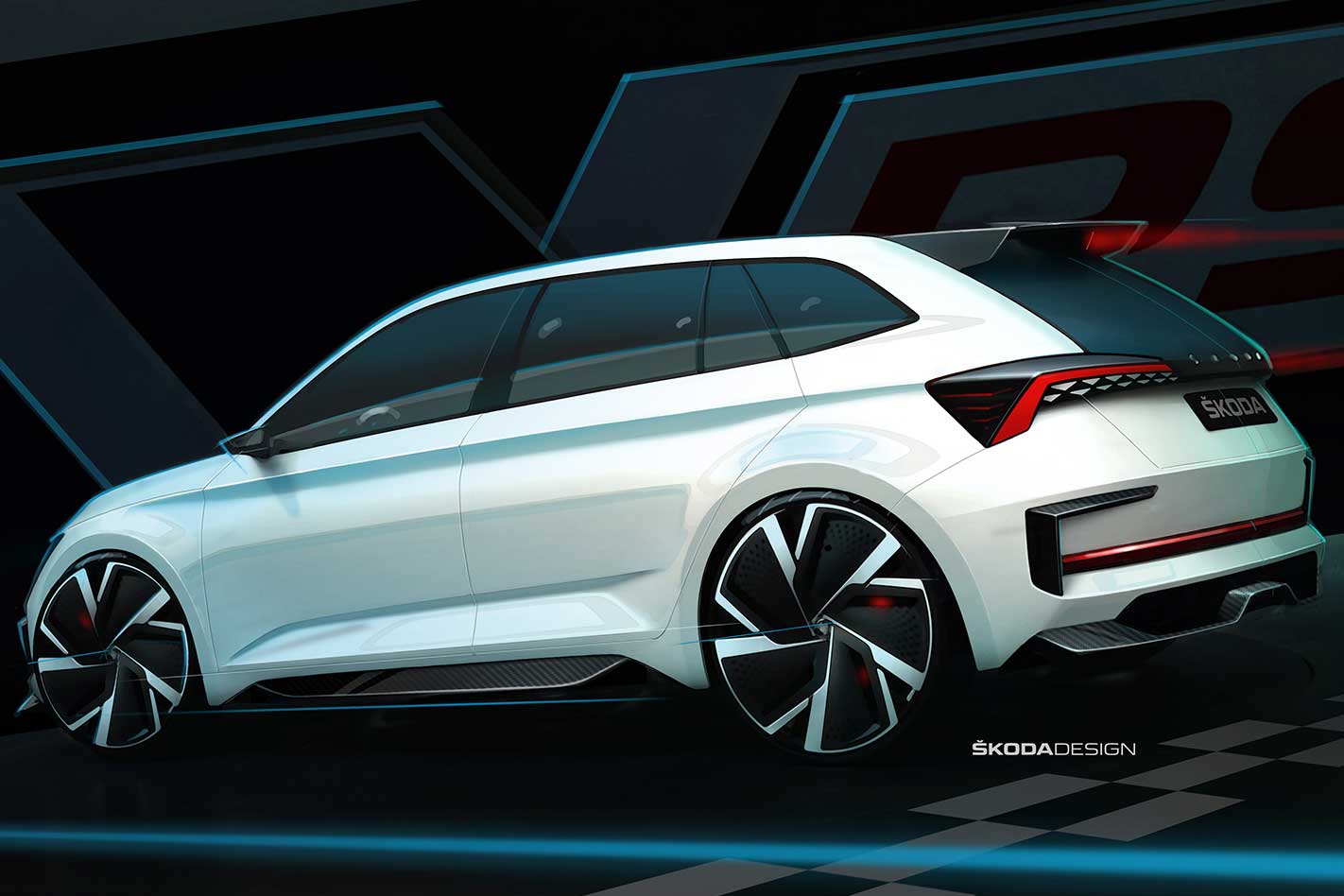
Bjorn Kroll, head of product marketing, said Skoda was waiting for the tech to mature, the cost to come down enough, and the opportunity to make a fun-to-drive model.
He said: ‘Whatever we do Skoda needs to stand for value for money. We want to be the best in the industry while keeping that promise of value for money – this is e-mobility for the masses, not exclusive customers.
‘We looked at today’s offer and most are not [fun to drive]. We have to bring emotion to electric cars, we have to make them sexy.’
Tell me more about the car…
Skoda says the vRS gives an insight into the design of a future compact vehicle. Which future vehicle? Well, it’s about the same size as the current Rapid and Rapid Spaceback, so draw your own conclusions…
We know the Rapid will be replaced in autumn 2019 and the rebrand should help distance the new car from what is far from the most desirable model Skoda makes.
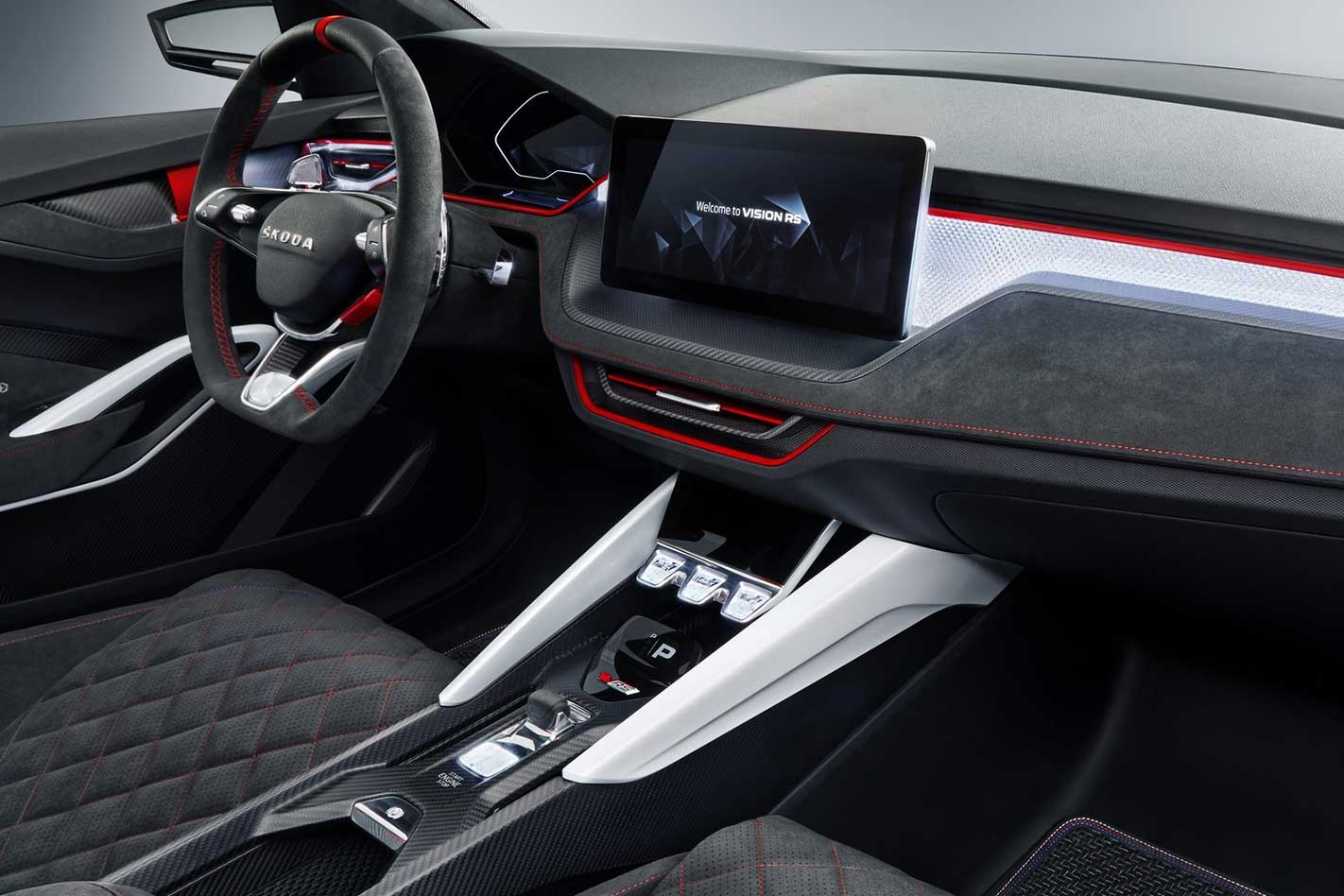
Sustainable materials make up the interior, including carbon textile made from 100% recycled polyester thread and Piñatex floor mats. That’s made of fibres from the leaves of a pineapple tree, in case you didn’t know.
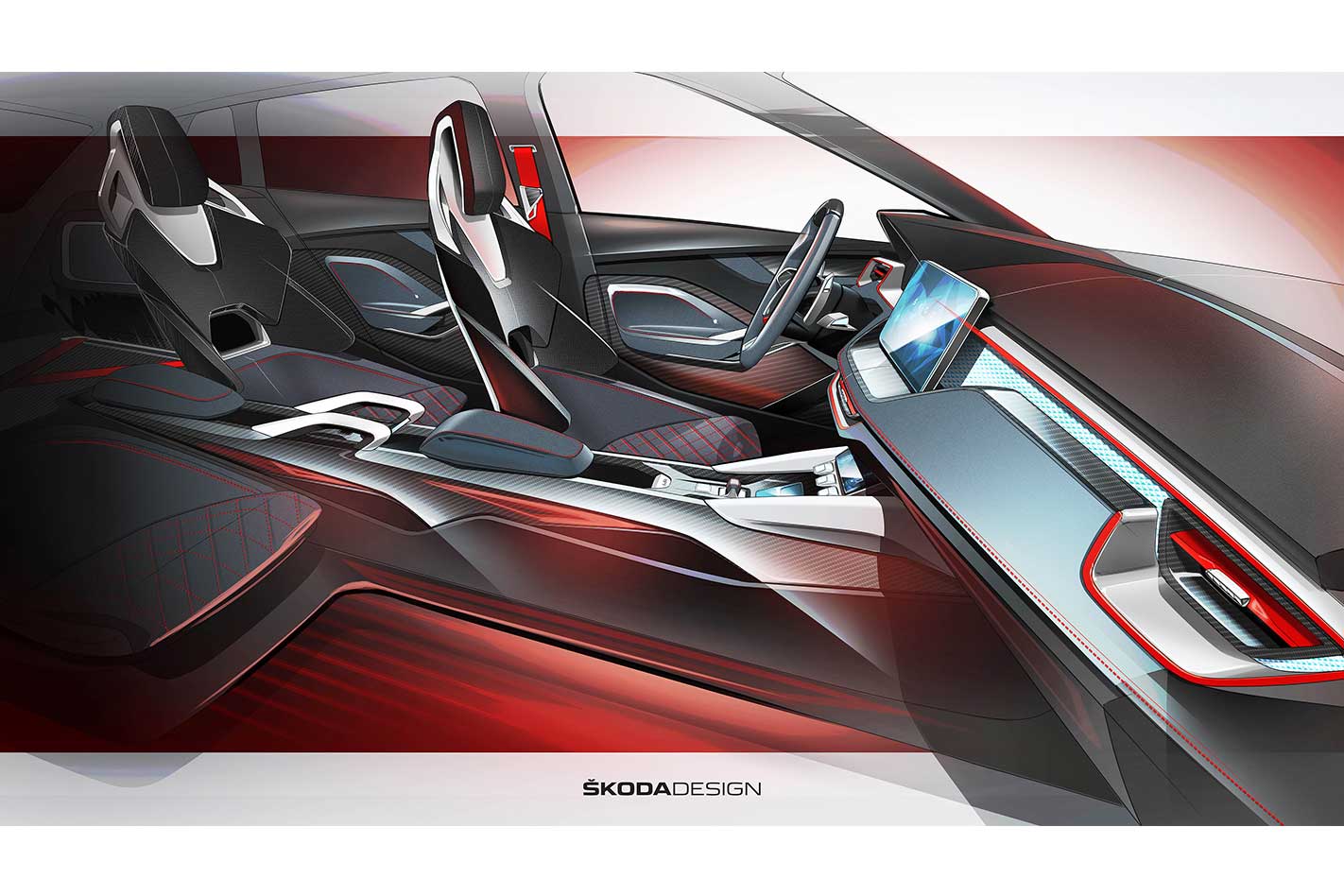
The concept has four individual bucket seats although production cars will have five, and sporty elements include fabric door pulls, Alcantara everywhere and a light up panel stretching the width of the dashboard, which changes colour depending on drive mode.
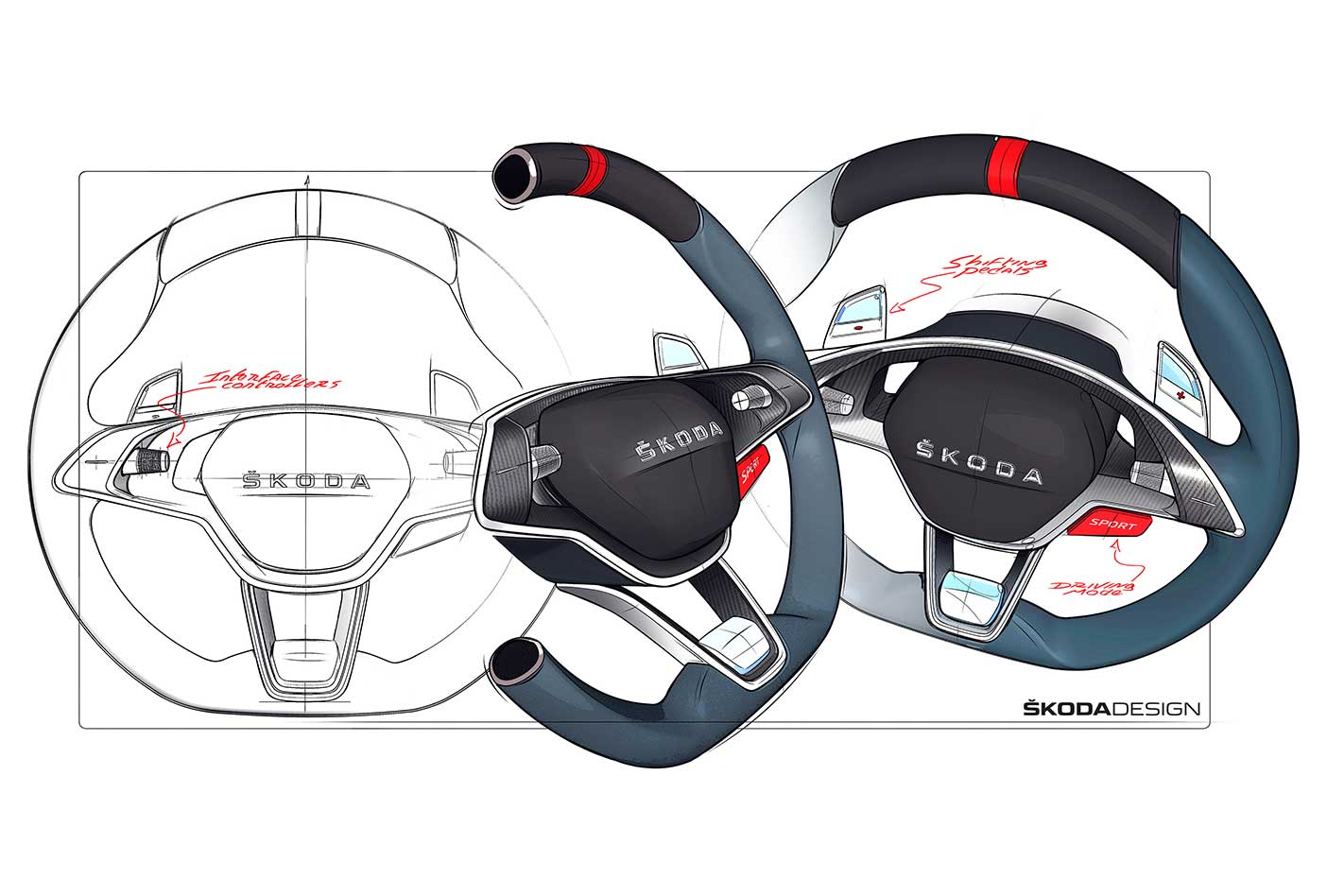
A flat bottom wheel features rotary knobs to control the two 12-inch digital screens. A third on-demand screen for things like the climate control, folds away when you’re in sport mode and need to concentrate.
This being a Skoda means while the transmission tunnel is a cabin-length carbon monocoque item, it’s full of storage pockets, and the boot measures 430 litres.
What’s the best bit of the concept car?
Most eye-catching of all the details are the light-up badge and grille, plus Skoda lettering on the bootlid. The latter features full-length glass like the current Rapid Spaceback, while the strong shoulder line connecting the head- and tail-lights looks just like a Superb’s.
PEUGEOT and Citroen Australia have taken a number of steps to reduce the complexity of their respective ranges Down Under.
“The requirement for us is being laser-focused on what the market requires and what we can deliver to satisfy that demand. It’s more from less,” explains Tyson Bowen, spokesman for Peugeot Citroen Australia.
“Over its early life, there were about 23 different variants of 308 across drivetrains, trim levels, and bodystyles. That was for a car that enjoyed a 0.1% market share.
“The goal is to offer a more focused model line-up that delivers better value, with drivetrains more appropriate to local customers. The path to purchase must be a lot easier to understand, both for customers and dealers.”
In addition, new models which are not envisaged to play a significant role in local sales growth are being re-assessed. The latest C4 Cactus is one such example.
Since being recast in second generation guise as a hatch rather than a compact SUV, the Cactus now finds itself in a far more crowded corner of the market, and one in which the local importers feel it may struggle to distinguish itself and are reassessing its role in the local lineup.
With the C3 Aircross, due in Q1 next year, set to fulfil the compact SUV brief, Citroen looks to have that more profitable sector covered, not to mention a more readily understandable upgrade path to new C5 Aircross to boot.
PSA Australia has spent the last year streamlining its back office processes after the switch in local distribution from Sime Darby to Inchcape, and the first tangible sign of that process is a rationalisation of the dealer network.
Whereas there were 74 Citroen and Peugeot dealers sites at the time of Inchcape’s acquisition of distribution. Today that number stands at 34 co-branded Peugeot and Citroen for sales and service.
While there are obvious cost-saving benefits of doing so, it puts an increased focus on Peugeot and Citroen models complementing rather than competing against each other.
“It’s about being more efficient all the way across the board,” said Bowen. “Combined, we’re stronger.”
LINDA Jackson would probably make a bad politician.
When asked how some of Citroen’s more lacklustre products of the last twenty years squared with the brand’s stated values of comfort, design and audacity, the usual response would be to attack the questioner with figures underscoring sales successes.
Instead, we get a refreshing mea culpa. “We lost our way,” she admits, hands up.
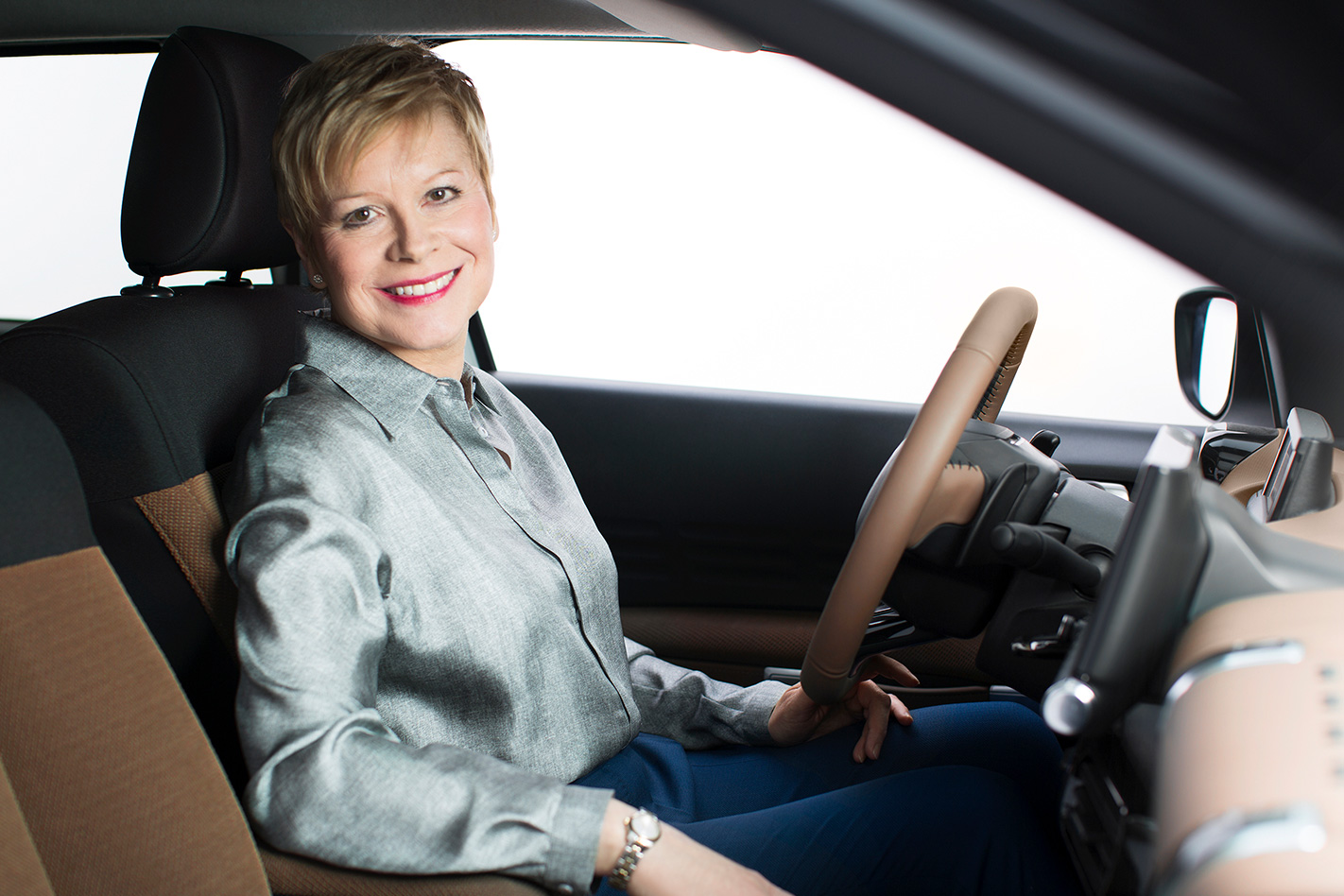
“When we tried to be like everyone else, we were least successful. When we tried to be different, we are at our most successful.” she said.
Jackson is explicit in what she wants from the brand. The 59-year-old straight-talking Brit has been at the helm of Citroen since 2014 and is overseeing a renaissance in this historically perplexing marque.
Last year was the first full year for the new C3, the new Jumpy van and the SpaceTourer, but also the year Citroen launched the C3 Aircross SUV in Europe and the C5 Aircross SUV in China. Excluding China, worldwide sales rose 7.5 percent.
“I have three objectives,” she states. “The first is to grow volumes, from 1.1 million global sales now to 1.6 million in 2020.
“The second is to be the benchmark in comfort. We need to be renowned for comfort.
“The third is to be in the top three brands most recommended by our customers wherever we are. We’re on a trajectory to get there by 2020,” she smiles.
“Comfort is the absolutely number one design priority, the number one differentiator, but don’t get old-fashioned way of comfort stuck in mind. It’s more than just suspension and seats. It encompasses air quality, storage space, modularity, connectivity. We believe in a wider approach to comfort and that will be introduced as we go through the core strategy.”
That core strategy calls for eight international vehicle silhouettes across small, medium, large, SUV, and commercial sectors.
Since taking office four years ago Jackson has separated DS from Citroen as part of this plan, and the next stages are to replace C3, introduce a broader portfolio of SUVs, with the replacement of hatches and big saloons to come. She’s keen to stress that there’s still a place for ‘conventional’ bodies. “We can’t just concentrate on SUVs. We need a broad portfolio to work across the world.”
The roadmap also features a phased approach to electrification.
“Where are we going with electric and plug-in hybrid? The C5 Aircross will be our first plug-in hybrid in 2020. Every vehicle that we launch after that – as well as having a diesel and petrol – will also have either an electric or a plug-in hybrid. That means that by 2023 80 percent of our vehicles will have a version that’s electric, and by 2025 100 percent will have a version that’s electric or plug-in hybrid. E-CMP platform will have electric, EMP2 will have PHEV. All technology within the group is group tech. Each brand then chooses which technology they want,” she explains.
Jackson is keenly aware of Citroen’s historic shortcomings in Australia.
“No manufacturer is perfect. We all make mistakes because we’re human. But if we make a mistake and we can correct it, we can satisfy the customer. It’s not rocket science. We need to get quality right. I can have the most fantastic cars but if I don’t have the quality and the right [customer] experience, I’m dead. That’s as true for Australia as it is for every single market”
The world’s oldest startup is anything but slowing down as it approaches its centenary next year.
On its prospects Down Under, Jackson is bullsih. “We are very modern, very fresh and we want to come back to the Australian market with a real freshness. History is nothing if you don’t have a future.”
PHILIPPE Imperato is just getting warmed up. “We would never make a stand alone electric car. Never,” he booms.
“I. Sell. A. Peugeot”, he says, stabbing his forefinger for emphasis. “I spend hundreds of billions in energy of design to provide something, I hope, sexy. I will not waste that selling you a Googlebox, a shitty car. I must have fun.”
Perhaps he’s a bit peeved at watching crowds flock to Renault’s stand opposite this year where what might be described as Googleboxes, the EZ-Go concept and EZ-Pro shoebox, seem to be attracting a fair portion of the limelight. One thing’s for sure, when you light the blue touch paper with Peugeot’s firebrand CEO, it’s best to stand well back.
“We don’t want to bored at Peugeot. That is not part of our DNA,” he says. “When we see some of our competitors, illustrating the change in time with Star Wars, Alien, Space Odyssey, we don’t want to have this anxiety vis a vis the future. We want serenity, pleasure and simplicity.”
Those three themes are woven throughout his always entertaining 45 minute state of the union address, tucked away in a stifling room in the bowels of the Paris Show.
“You want to hear about serenity? We have 208 years of history. We have seen and gone through technological and political revolutions and we are writing the next 200 years ahead of us. Technology is not an issue,” he blusters.
“When all the European countries in Europe had to register the cars, we had no inventory problem.”
This future proofing and planning ahead is something he takes very seriously.
“Pleasure is important. Our passion for cars doesn’t disappear with electric or autonomous cars,” he continues
“The E-Legende [Peugeot’s showstopping 504 Coupe electric tribute] is not seven metres long, it’s not like a train car, no rotating seats; it’s a real object, a realistic, desirable object.
“We could produce it if we wanted to. I would dream of a car like that. It’s elegant, it combines our history with all the features of French high end craft and at the same time you have all the technology related to autonomy and connectivity,” he adds.
Pausing for a moment he smiles. “You want to go on living pleasurable experiences in the future.”
But what of simplicity, something the Peugeot has, for quite some time, seemed notably short on.
“Simplicity – you know about NEDC, WLTP – this is something journalists read about every morning. But the market? No. The market doesn’t understand, the sales people don’t understand,” he says.
“Wherever you come from whatever your personal convictions, at Peugeot we have a simple answer for you. Buy a Peugeot and you just choose your powertrain, petrol, diesel, hybrid, electric. All available to end of 2019.
“Australia is not like England. We sell 3.6m cars worldwide with the four brands. What we sell is the brand. The brand is more important than the engine. The style of the 208, 308, 508 is more important than the powertrain. The design goes beyond the powertrain. At Peugeot you buy the car and then choose your powertrain. We have a multi energy platform on the same production line. You can have the car you have chosen and put the powertrain you want in it. This is why I talk about simplicity.”
Managing the brands under the PSA umbrella requires a certain staking out of territory. Imperato expounds on the differences between marques.
“Citroen is a much more people-minded brand, inspired by you. DS is building the road to premium. This is a 30 year battle, starting in 2015. Opel; German affordable brand. Completely different, and I would say it is complementary. These guys, Opel/Vauxhall are very strong in UK, I am weak, to be clear. I am very strong in France and Spain, they are weak. But the differences between the brands exists now. Each brand in this group has its own design territory; product matrix I would say.
“For Peugeot, I would say, nobody touches i-Cockpit. Second point is Peugeot lighting. Third point is road handling. Each brand has developed three to four key product matrices and the R&D department is developing that in order to have the complete coverage of the maximum of countries. Opel has clear territory for their brand. It is not the French that will compete with that. So many countries just want German brands. OK, no problem. I will not go there. We do not want to waste money and waste resources. Peugeot can be free to go to other countries.”
When asked when he envisages EVs and PHEVs will outsell conventional combustion-powered cars, he’s frank with his response.
“I don’t know,” he deadpans. “It depends on so many factors. Regulation, plugs, total cost of technology. The day that Paris says you cannot enter with any ICE car, you will be entering with electric. But the rhythm will not be the same between countries and city. Everything is linked to CO2 and diesel mix. We have a 38 percent diesel mix in Europe. We wrote three [future] scenarios, with 30, 20 and 10 percent diesel mixes and we adapt commercial strategy and industrial footprint to these scenarios.
“PSA has not stopped developing diesel. We are putting our weight behind EV and hybrid, but the only guy stopping diesel is the customer. In North Africa you must sell diesel. Light commercial vehicle, you must buy diesel. We are maintaining a high level of technology because diesel is very important for us. Regulation or the customer – they are the only ones who decide. We will be ready. We are selling Peugeot, not selling powertrains.
“We have the chance to have a modular strategy. We forecast 10 percent EV, 20 percent hybrid in the coming 5 years. It will be disruptive. Don’t expect the trend will be like this (flat line). You can switch from nothing to mainstream in months and we will be ready because we are modular. We are ready to go the way the customer goes and the regulation goes. We will adapt our industrial footprint in order to cope with that. We will be compliant. As Peugeot, we will be compliant without any trade off between pollution and profitability. I want to be very clear on that. It’s like autonomy. I will never accept to kill anybody making marketing.
“So, to be compliant, I will never organise any tradeoff between EV and pollution. I will never accept to lose 20k Euros per car to give you an EV for free in order to finance bad boys with 200 or 300g/km emissions. Nobody would understand that I would make money polluting the planet. It couldn’t be explainable to anyone in Europe. We will fight to catch TCO (total cost of ownership) on electric that is on the same level as diesel first and second, that we will have to monitor our CO2 each day.” he says. While this fixation on CO2 might seem obsessive to the average Australian buyer, when key models like the new 508 will sell around 80 percent of their volumes to fleets and the company gets fined for every gramme of carbon dioxide over fleet averages, it’s serious business.
Despite all this gimlet-eyed talk of total cost of ownership and carbon emissions data, Imperato hasn’t lost sight of what Peugeot has been and needs to continue to be. “We will not forget the performance powertrain, BUT, at the same time I will not sell bad boys compensated by EV versions. We will first cope with the 2020 threshold and at the same time develop hybrid or EV performance solutions. 93, 92, 91 grammes by 2020, therefore we put on the table what is the Peugeot of sporting performance,” he says. “We want to have pleasure driving. I’m proud of our history. I entered this company some years ago because of the 205 GTI 1.9.” That still needs to be tempered with realism and a little ambition.
“I’m not premium. I’m top mainstream. What is my benchmark? I want the pricing of Volkswagen and the volumes of Renault, to be clear.”
PEUGEOT designer Gilles Vidal is definitely more an Event Horizon guy than a Wall-E fan. “There is no happy science fiction movie,” he states, hands up, brooking no argument. Hang on. Weren’t we discussing the Peugeot e-Legende concept just a moment ago? Time to press rewind.
Admitting that the buzz around the throwback-styled 504 Coupe tribute has been “unbelievable – we didn’t expect the craziness,” Vidal starts talking through the rationale for the warmly familiar form factor.
“All car manufacturers when they talk about autonomous driving and electrical cars, they try to do something super futuristic, eventually science fiction-esque, you know? Which is fine, but we say at Peugeot, let’s not fall into that because it’s easy and we can do it when the time is right.
“Meanwhile, science fiction always shows us a scary future. By the way, there’s no happy science fiction movie! I looked actually. There’s no enthusiastic. They’re all dark in one way or another. All scary in one way or another. The future delivered to us in this way is always a bit weird. The future can be super-emotional, interesting, bright.
“Let’s not fear autonomous driving as a loss of something because it will be delightful in many ways. Let’s create a concept that pushes this philosophy.
“By luck it’s the 50th anniversary of 504 coupe. Let’s give it the shape of a heritage car. The form language is not retro in any way, if you look at the shape of the body, the surfacing, there’s nothing retro about it,” he says, perhaps a little predictably.
Retro styling has almost become shorthand for lazy design and no matter how much he’s prodded, he won’t admit to cribbing another’s styling.
“Despite the silhouette obviously being the shape of the 504 Coupe, with some graphic gimmicks on the car that are links to the past, but their function is futuristic. The interior has huge screens and super connectivity, a steering wheel that collapses completely, yet we have velour seats that are very colourful like in the late 60s, and the wood and brass instead of chrome.”
Earlier senior Peugeot product planner Bernard Hesse had reckoned that there was ‘maybe 20 percent’ chance that the e-Legende would make production. When asked what elements of the show car could make production Vidal was more forthcoming.
“There’s a lot of things we can take into production,” he said. “External design. The surface treatment, the form language of the car. You see a very crisp line on the body sides, on the door and it fades to nothing in front and rear. The way this line fades into nothing is quite magical.
“This takes a lot of experimenting with the stamping guys in the factory. We started talking to them 8 months ago and said that it would be easy to make on the concept car because it’s carbon fibre and you make it by hand, but how could you do this with metal? Can it be feasible in production? It might seem a tiny little detail, the way this line disappears, but if you manage to achieve this all around the car in terms of how you creates lines and surfacing and graphics– this execution in terms of design – then the whole car will look so much more modern than whatever is on the road around it.
“What’s at stake, if you achieve this properly and apply it everywhere is a tremendous gap in terms of modernity. Done correctly, it’s changing your perception of the car itself. Things like this we might push into production.”
The clever surfacing isn’t the only thing that can be readied for production. “There’s also the light design in the rear,” says Vidal.
“We already have the three claws at Peugeot but we wanted to create a three dimensional light more and more. We experiment on concept cars and work with specialists and suppliers to make it feasible.”
Then the conversation makes a screeching turn in a different but perhaps even more fascinating direction.
“You will see in the future the biggest revolution in autonomous driving where you remove the architecture of the interior,” Vidal says.
“You remove the air conditioning box, put it elsewhere. If we do the history of dashboards – we call this planche de bois in French which means ‘plank of wood’ – and it started like this. It was a plank of wood with holes. We made a hole to create the glovebox, and so the dashboard became bigger and bigger and longer and longer. There’s now an airbag, there’s now tubing for the air vents and we put a lot more things in, little by little. The dashboard, as an object, became the main thing to design in an automobile. It should be beautiful. The Audi one should look like an Audi dashboard and so on, but really what’s at stake today is to make it disappear,” he adds.
“We look to give room, to give emptiness back to the clients so they can do something else. So where do we put the airbags, the AC box, all that stuff that’s still useful? To give room to put physical objects in the car. People will bring a lot more physical things into their cars than today.
“They’ll have more time in their cars to do things. So we need to not just put bigger screens but put more storage, create more space, more room in the car,” he says.
“That’s what we have in the e-Legend. We have a huge screen from your toes up to the windscreen, almost the whole width of the car. It’s like a TV on your carpet with you sitting on your super low chair.”
When asked how it would be possible to hide items such as air conditioning units, Vidal admits that there are challenges. “Nowadays with thermic engine and gearbox, it’s a bit tricky. With electric cars you can push things under the bonnet.
“The airbags can go in the roof for the passengers. There’s step by step, item by item, you can get rid of these things and then you can get rid of the dashboard altogether. Really they will spend a very interesting life inside when they are not driving, keeping their attention on the traffic.”
Vidal is nothing if not optimistic about the future direction of vehicle design. “People want emotional, desirable objects. In 2025 or 2030 there will be many cars like this, cars like Renault with their pods, very beautiful. They can co-exist. They can have a super crazy futuristic box or something very different. The variety and span of objects will be crazy,” he enthuses.
“We need to dare more: deliver more innovation in design. If you look back 15 or 20 years ago it was very hard to buy a daring looking car. Now people are demanding special looking cars. A good example is the Nissan Juke. Some find it nice, some find it ugly, but it’s special, it’s particular. For Juke lovers, beautiful or ugly is not a parameter of choice. Special is a parameter of choice.
“Line up the Peugeot range and you will see brand logic, but they are not like Russian dolls. The 308 and 508 are very different but they belong to the same brand. Buyers have a different lifestyle so it’s not a matter of age.
“We will find a certain lifestyle, a certain spirit, whether it’s in young people, 40s or 50-year-olds. We don’t use the old way to split clients. A 20-year-old may have the same vision as me, a 46-year-old. It’s not an age thing anymore. You don’t target an age group. Marketing is tricky these days.”
Vidal demurs when asked whether there’s a conscious effort to inject a French flavour into his work. “No, there’s not any special element of Frenchness injected into the design. If it feels that way, then it’s cultural and it happens naturally. Union Jacks, Italian colours, the two cool national things. The Tricolore; blue, white red, is it cool or is it tacky? I think these days it’s becoming cool. Volvo can do it now because Sweden is desirable as a country. They can do it because they can cultivate their culture,” he says, before pausing and laughing. “But since they became Chinese, they’ve never been so Swedish.”
Following its global debut at the 2018 Paris Motor Show, Citroen Australia has confirmed that it will introduce the C5 Aircross SUV to local showrooms in the second half of 2019.
The C5 Aircross compact SUV measures 4.50-metres in length, sitting between Peugeot’s 3008 (4.36m) and 5008 (4.64m) with which it shares many of its underpinnings, and being a little more generously cut than the 4.37m Nissan Qashqai.

The C5 Aircross utilises the marque’s proprietary Progressive Hydraulic Cushion suspension system, in effect a pair of hydraulic bump stops that help the conventional springs and dampers control compression and rebound respectively.
Unlike a conventional mechanical stop, which absorbs the energy then partially returns it, the hydraulic stop absorbs and dissipates the energy. As a result, there is no rebound.
Everyday practicality for this five-seat SUV is well catered for, with three individual sliding, folding and reclining rear seats, each with an Isofix child seat fixing. Resisting the temptation to shoe-horn another pair of seats into the back results in a best-in-class boot capacity of 580-litres, which expands to 720-litres if the rear bench is slid to its forward-most position.
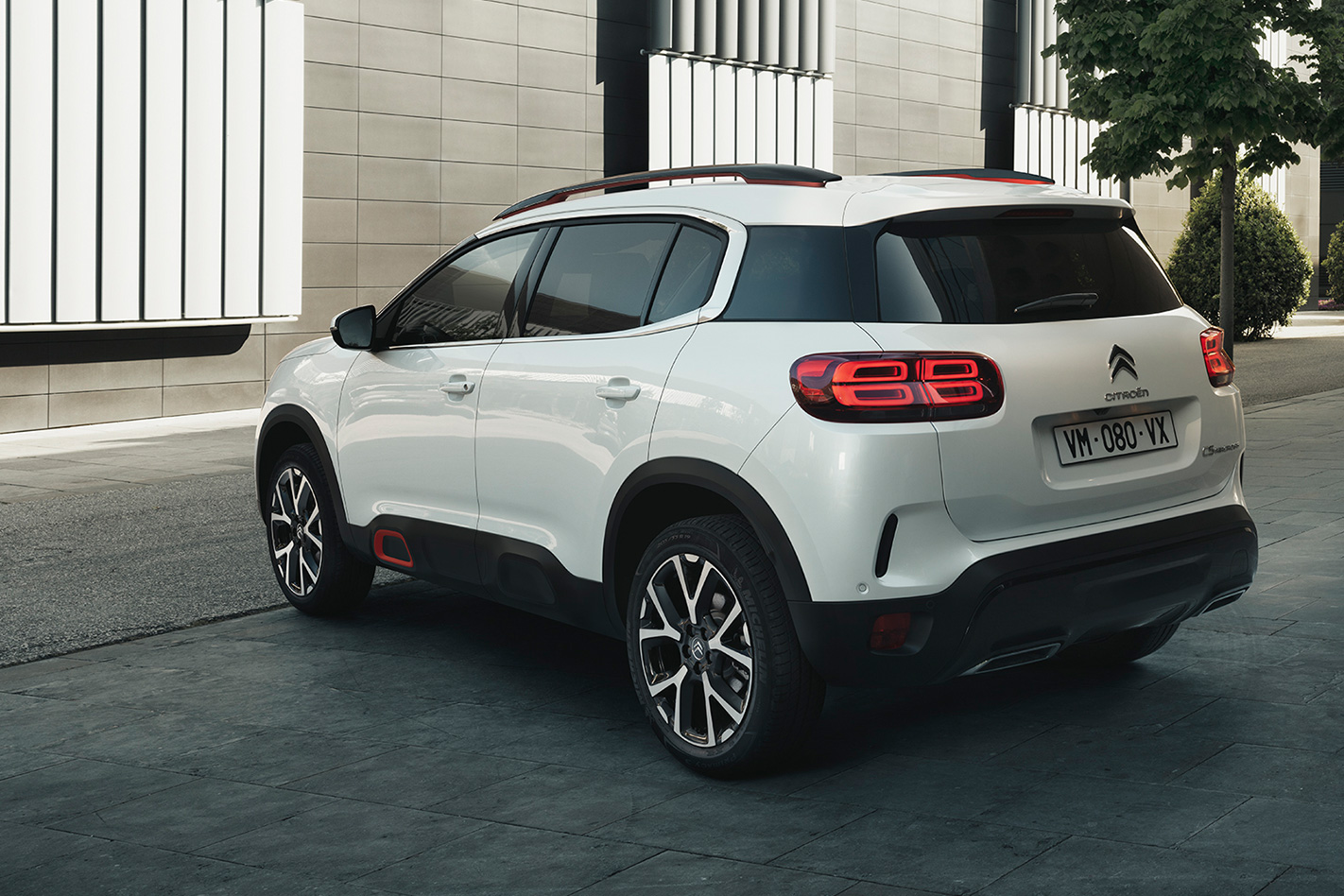
Given that its local introduction is still a year out, there’s no firm word on specs or pricing as yet, but the C5 Aircross lists a huge array of driver assistance systems including Autonomous Emergency Braking and Active Blind Spot Monitoring. Many of the interior fitments that we’ve come to expect from 3008/5008 will see their way into the C5 Aircross including wireless smartphone charging.
The seats gain a huge amount of additional memory foam padding, using state of the art bedding tech to integrate polyurethane foam and viscoelastic or textured foam to really isolate you from the road and European models have been shown with an 8in central tablet, a 12.3in TFT instrument cluster and voice recognition.
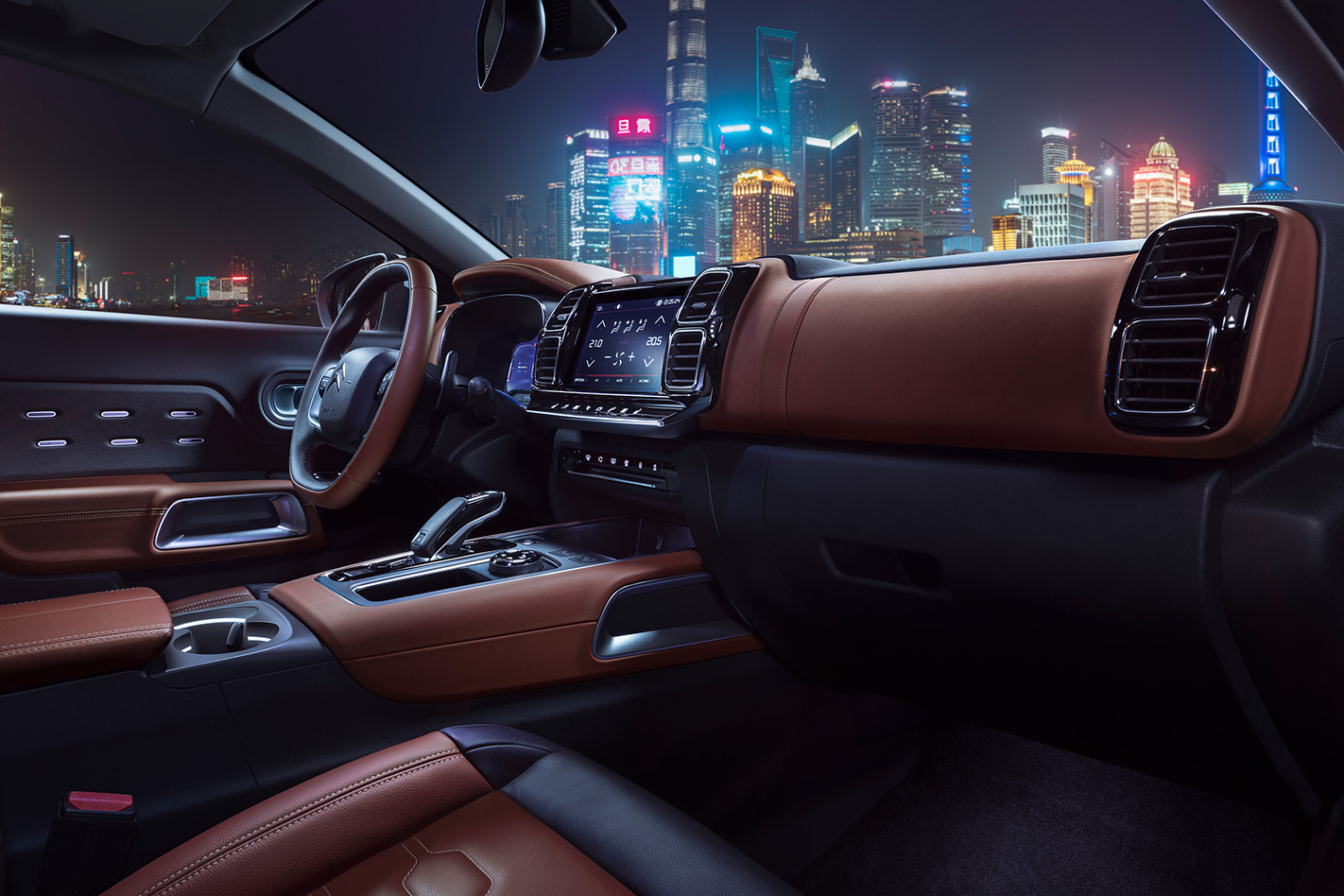
The oily bits are intriguing. Like the EMP2-based 3008 and 5008, drive for conventional petrol and diesel-engined models goes exclusively to the front wheels, despite that generous 230mm ground clearance.
European markets are set to receive a wide range of Euro 6.2-complaint powerplants. The petrol models comprise PureTech 130 S&S six-speed manual and PureTech 180 S&S EAT8 eight-speed automatic.
Three diesel models are also offered: BlueHDi 130 six-speed manual, BlueHDi 130 S&S EAT8 and BlueHDi 180 S&S EAT8.
If this little lot doesn’t float your boat, there’s the tantalising option of a 165kW petrol-electric plug-in hybrid version set to debut shortly after launch. The marque’s first ever PHEV, it has a battery-only range of 50km and a full recharge of the batteries takes approximately two hours with a 32 Amp wall socket.
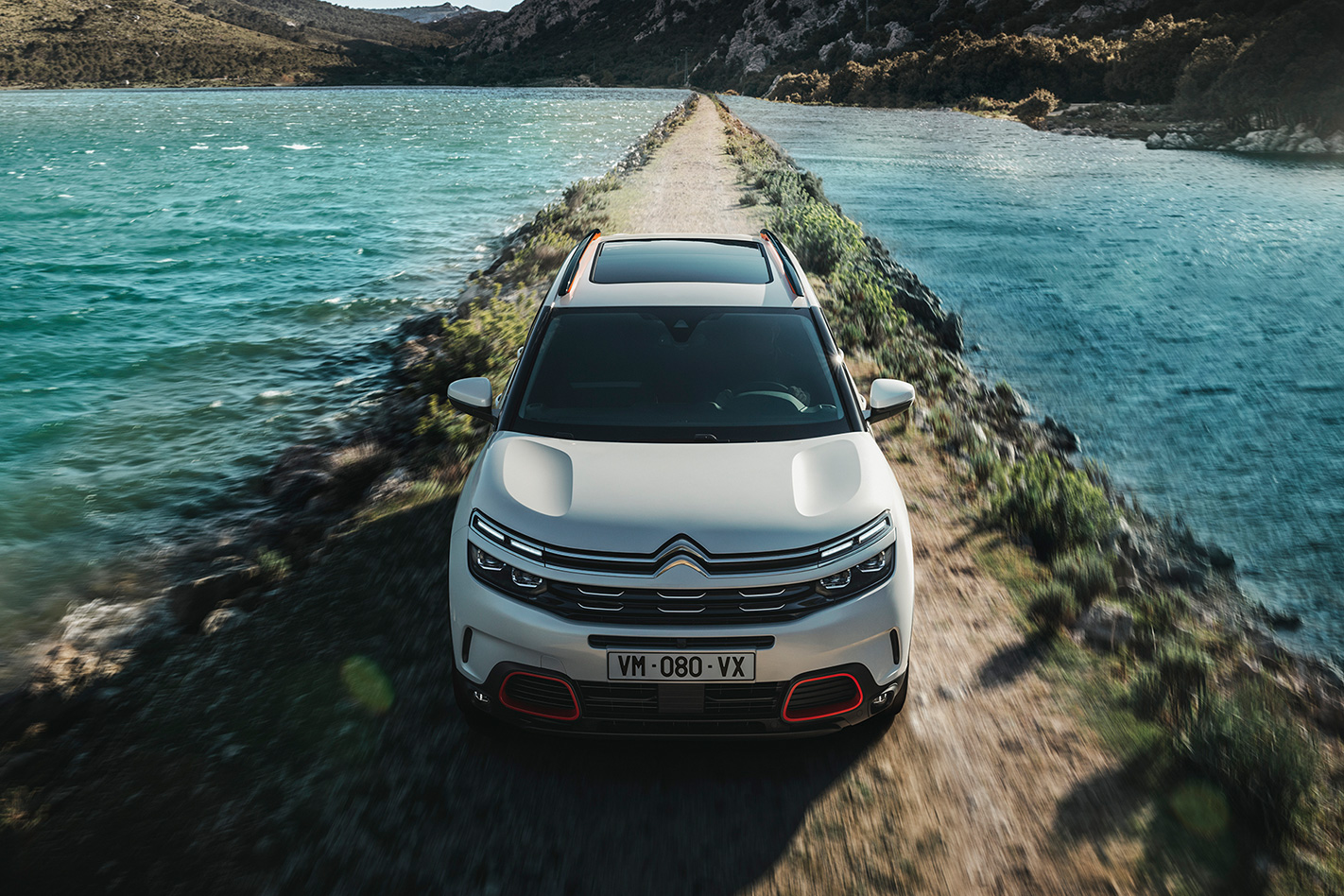
“The all-new C5 Aircross is a return to Citroen’s comfort credentials and, symbolically, arrives in time for the marque’s 100th anniversary,” Citroen Australia’s Managing Director, Ben Farlow, said.
“Citroen has long been synonymous with comfort and the all-new C5 Aircross will see us return to this territory, supported by the rest of the Citroen range,” Mr Farlow added.
PEUGEOT has announced that the wagon version of its 508 will be coming to Australia in the second half of 2019.
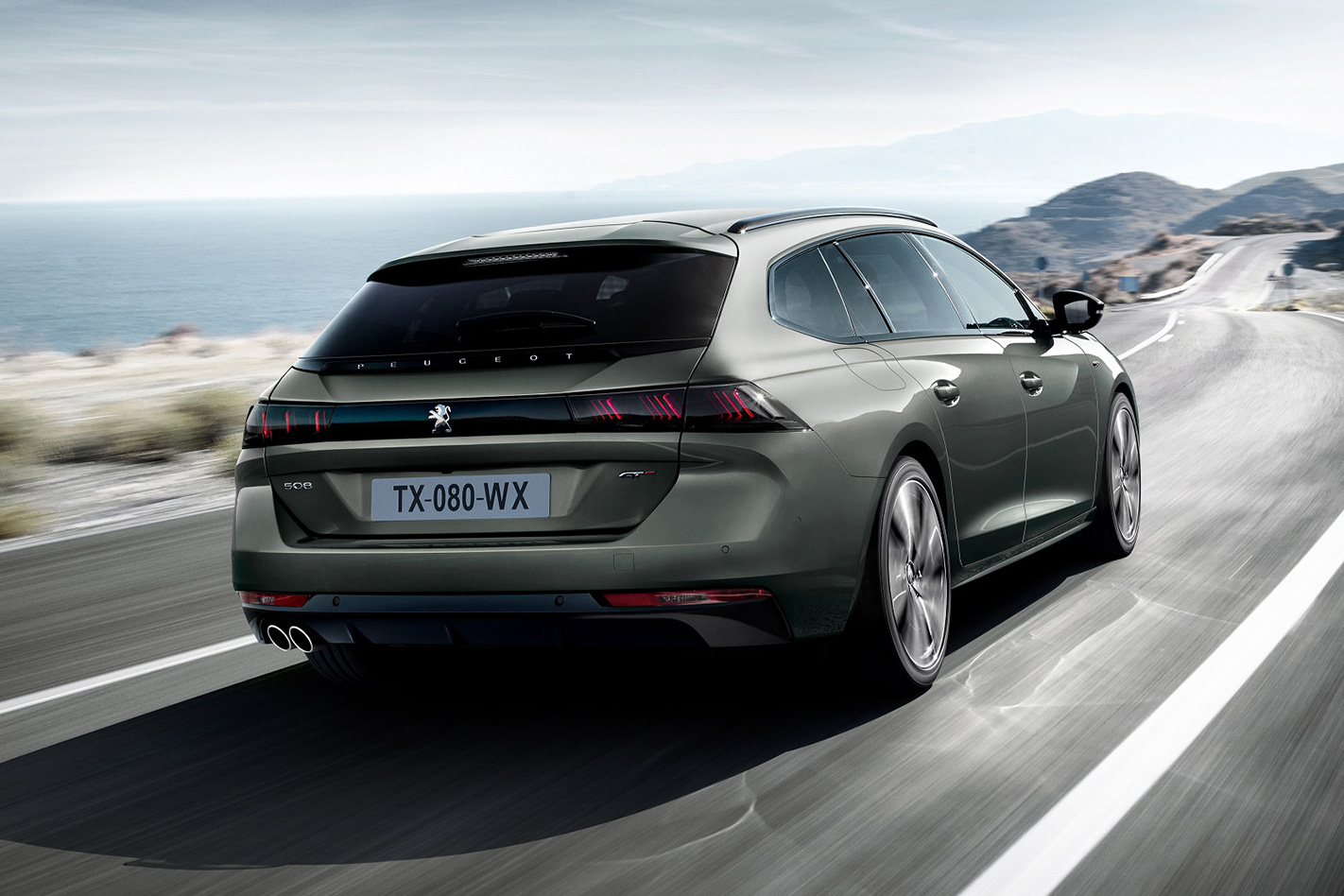
Unveiled at the Paris Motor Show, the 508 Touring marks a welcome addition to the market for those unenthused by the glut of SUVs on offer.
Long, low and sleek, the Touring rides on Peugeot’s lightweight EMP2 platform, and with the company’s 3008 and 5008 SUVs already available, its designers have been allowed to create a genuinely expressive shooting brake-style design. Compared to the previous 508 iteration, this version is around 70kg lighter and the silhouette is lower and more tightly packaged around its wheelbase.
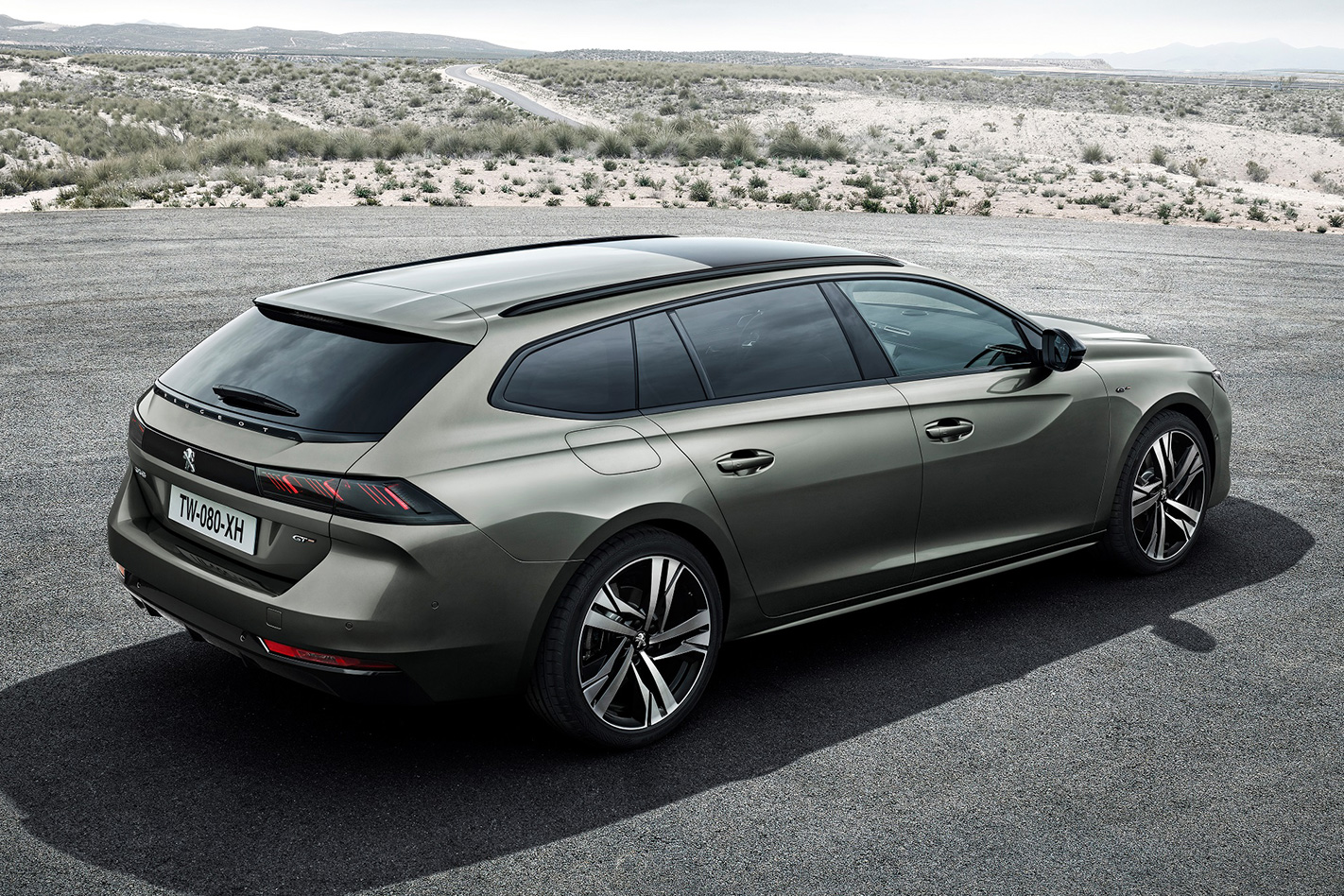
This far ahead of launch, pricing and specifications are still yet to be confirmed, but the 508 will feature the sort of high specification levels demanded by Australian buyers and include standard safety features such as Autonomous Emergency Braking (AEB).
The car’s interior includes the third iteration of Peugeot i-Cockpit, with the now-familiar tiny steering wheel and compact main instrument binnacle.
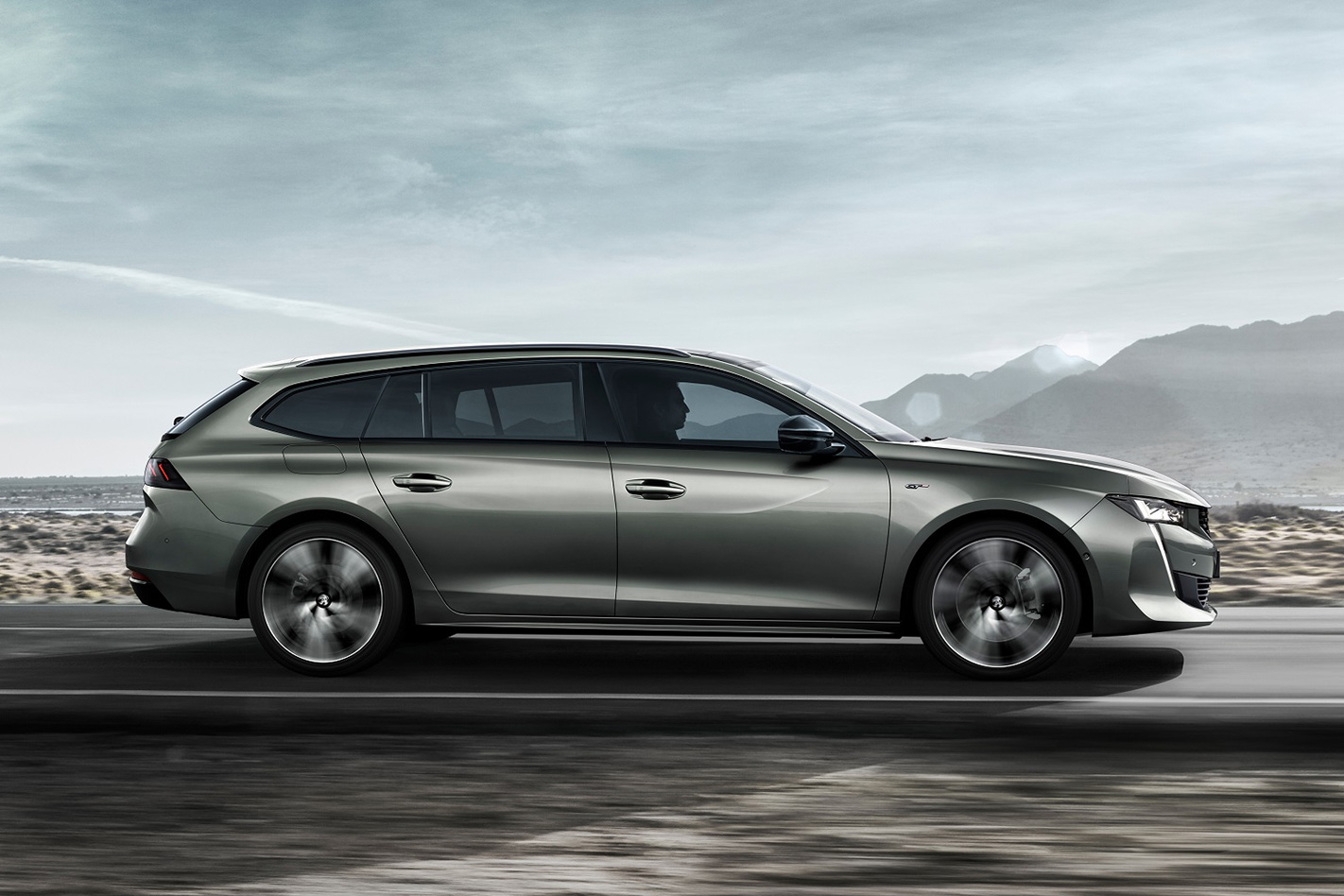
Like its sedan counterpart, the 508 Touring range toppers will feature a 169kW 1.6-litre, turbo-petrol engine paired with an Aisin-designed, eight-speed automatic transmission. Providing a more accessible entry point to the range is a 135kW version. Tipping the scales from just 1420kg, the 169kW variants deliver a power to weight ratio of 119kW/tonne with the 133kW cars managing 94kW/tonne.
Lift the tailgate, and the 508 Touring will swallow 530 litres when filled up to the level of the parcel shelf, which expands to 1780 litres once the rear seats are tumbled forward. That’s more than 110 litres roomier than the Holden Commodore Tourer’s cargo bay.
“Over the past five-years, Peugeot has completely reinvented its product range and the all-new 508 will challenge segment norms, while delivering a vehicle that is not just enjoyable to drive, but great to look at,” said Peugeot Australia Managing Director, Ben Farlow.
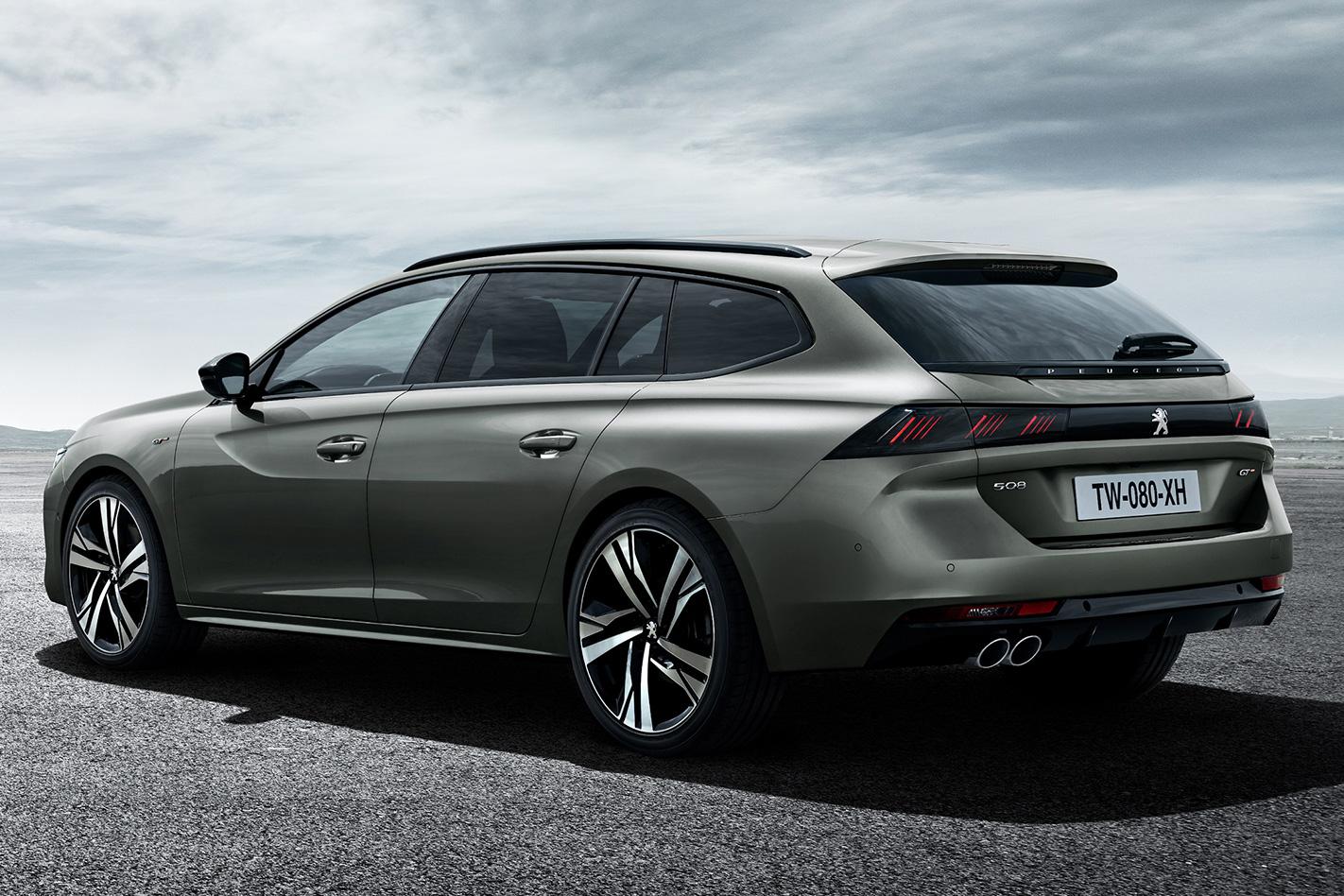
“The Peugeot ‘5-series’ has always held a fond place in the hearts and minds of generations of Australian motorists,” he added. “This all-new 508 is set to reignite the passion for Peugeots that stretches back almost 100 years locally.”
Mazda has announced its electrification game plan for the next 11 years, and in doing so has confirmed that it intends to bring at least one exclusively-electric Mazda model to market by 2030.
Furthermore, the company also aims to have every single vehicle it produces equipped with some form of electrification by 2030.
Unlike some manufacturers who’ve made similar electrification plans, Mazda doesn’t mean there will be just an electrified powertrain option available within all model lines – it means every single Mazda built will, at the very least, be a hybrid of some description, if not entirely electric.
One of those hybrids will be fitted with a compact combustion engine to drive a generator as a range-extender, and will be intended to run on battery power most of the time.
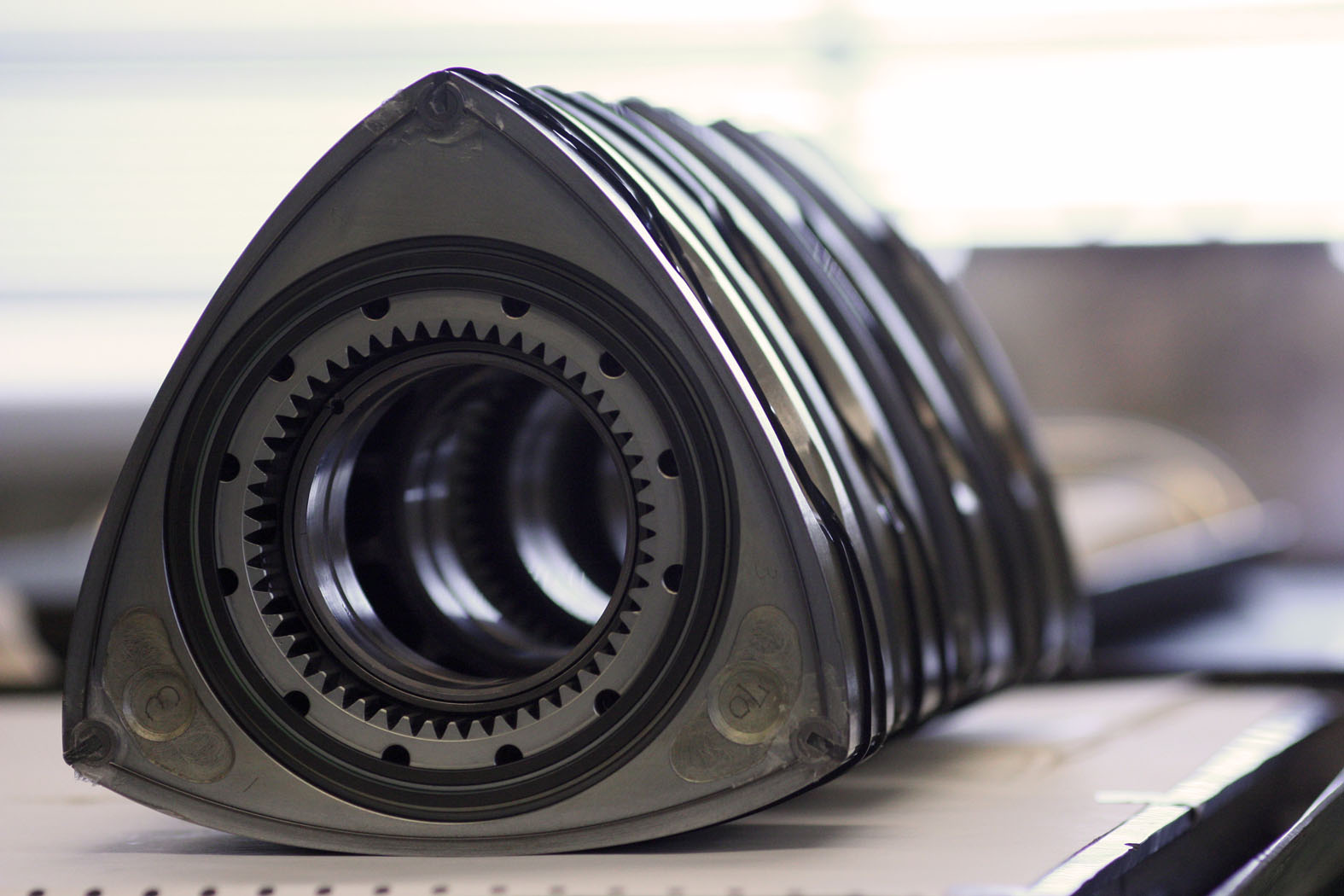
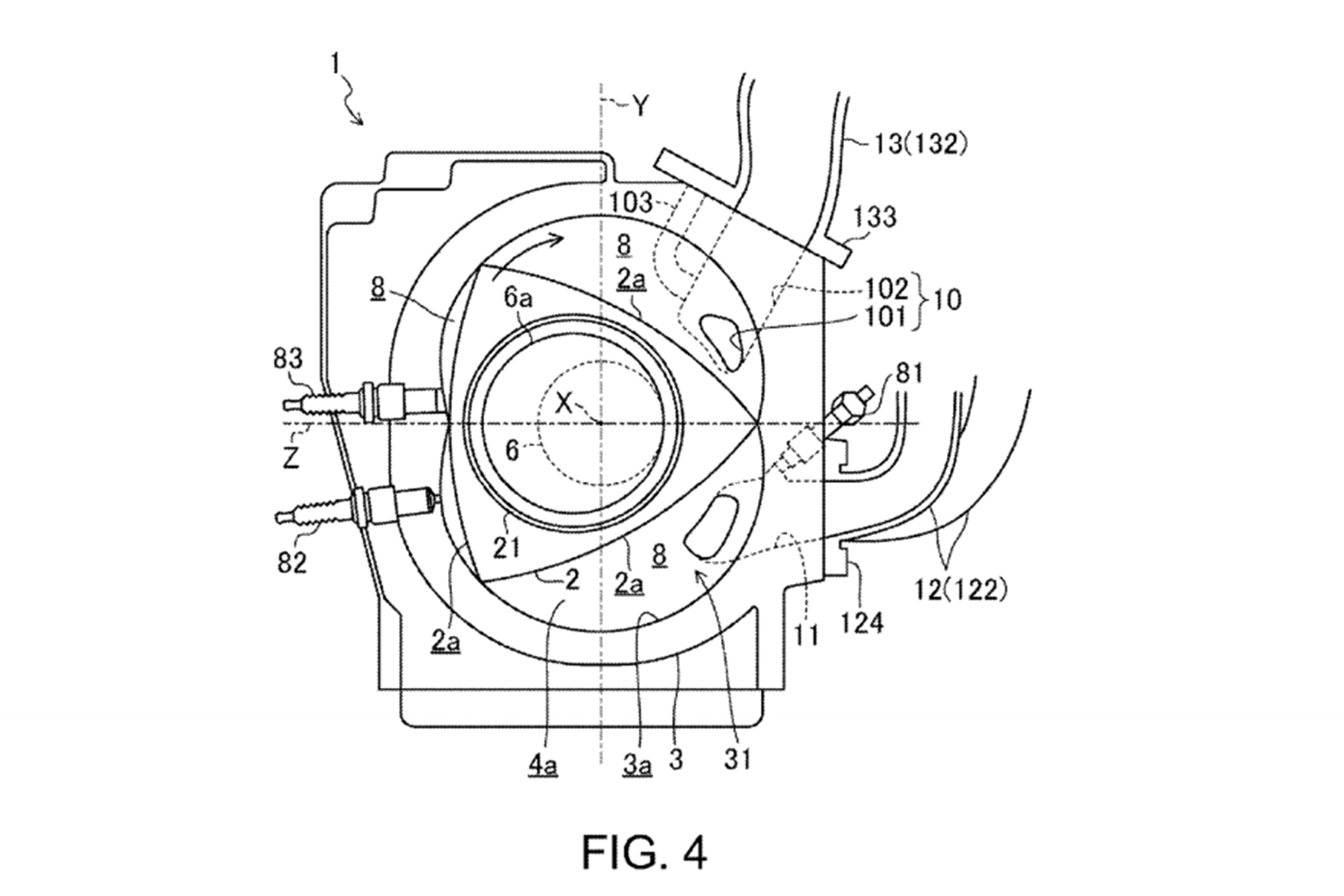
That engine will be a down-scaled version of the rotary engine that Mazda has traditionally used as a sports car powerplant – this time optimised to operate at a single RPM to generate power when the car’s battery runs low.
The use of the rotary engine, which differs dramatically from the piston engines that power nearly all other road cars, was driven by the type’s compact size relative to its power output – not to mention Mazda’s extensive experience with the unconventional technology.
What’s more, Mazda says the rotary-powered hybrid will be able to run on LPG and also function as a mobile generator in emergency situations.
Details on the size, shape, price range and design of its future pure electric car and range-extended plug-in hybrid have yet to be announced, and given the long timeframe involved it’s unlikely we’ll get further clarity on either in the short-term.
However, Mazda says it will introduce its pure electric models mainly in “regions that generate a high ratio of electricity from clean energy sources or restrict certain vehicle types to reduce air pollution”.
Given the current state of Australia’s fossil-fuel-heavy power generation network and vehicle tax structure, it’s unlikely we’ll be among the launch markets unless some seismic shifts occur in between now and then.
The combustion side of the hybrid equation won’t be ignored, though, with Mazda acknowledging that conventional internal-combustion powertrains will continue to power the majority of cars “for many years to come”, and that it aims to continue eking out further efficiency gains from its ‘regular’ powertains.
That said, the intent to electrify its full model portfolio by 2030 is a core part of Mazda’s plan to reduce its fleet-wide ‘well to wheel’ carbon dioxide emissions by 90 percent (relative to its 2010 levels) by 2050, and that ambitious figure suggests that the bulk of its hybrid offerings will be of a more emissions-friendly wall-chargeable plug-in type – albeit perhaps with a regular piston engine in place of a rotary range-extender.
Porsche has brought its latest Macan mini-SUV to the Paris motor show, and it promises a marked improvement design, comfort, connectivity and handling.
Featuring a tweaked, cleaner design and uprated chassis, the new Macan comes after 350,000 orders of the SUV since its release in 2014 – it’s a hugely important model car for the sports car brand.
Latest news from the 2018 Paris Motor Show
This isn’t the Porsche Macan’s world debut; it was shown at the 2018 Shanghai auto show, tellingly just hours after the unveiling of another new Volkswagen Group SUV – the new Audi Q3.
So what’s new on the 2019 Porsche Macan?
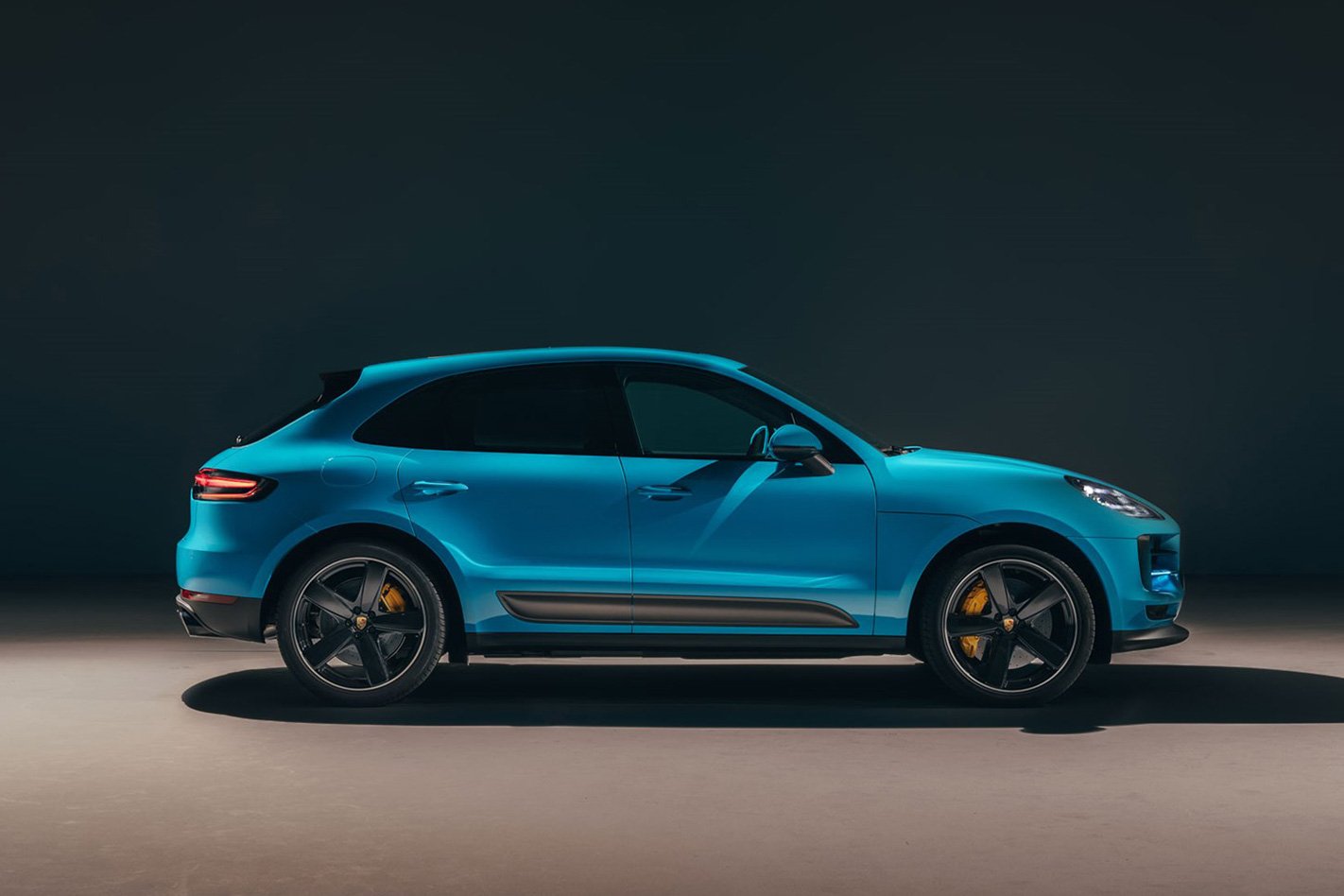
As you’d expect from Stuttgart, the design of the facelifted Porsche Macan represents a ‘light tidy-up’ more than a sweeping redesign.
The overall look of the car is pretty similar, though Porsche says it’s carried over elements of the 911 and 918 design to make the Macan look a little sportier. We’d say it’s a pretty modest refresh.
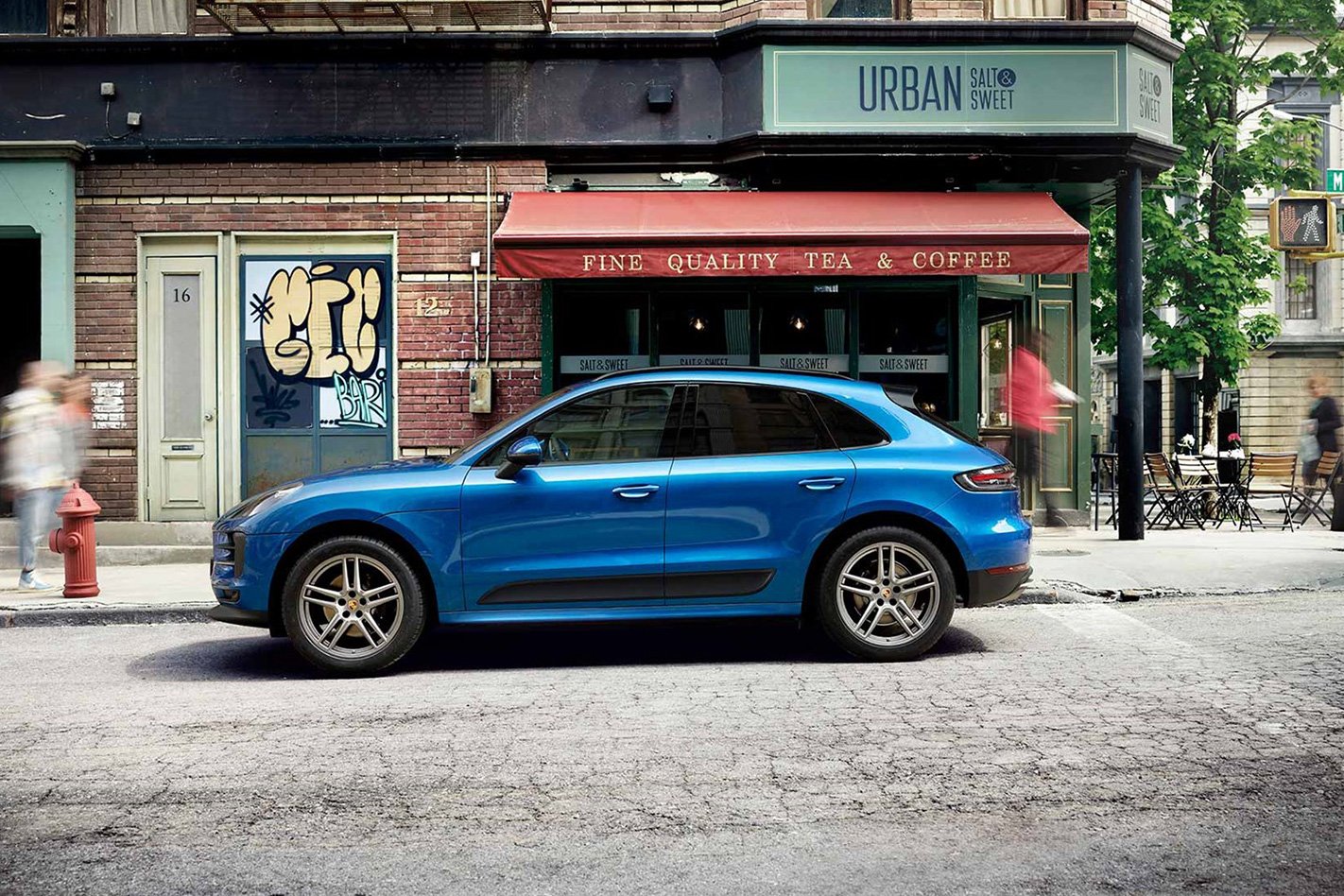
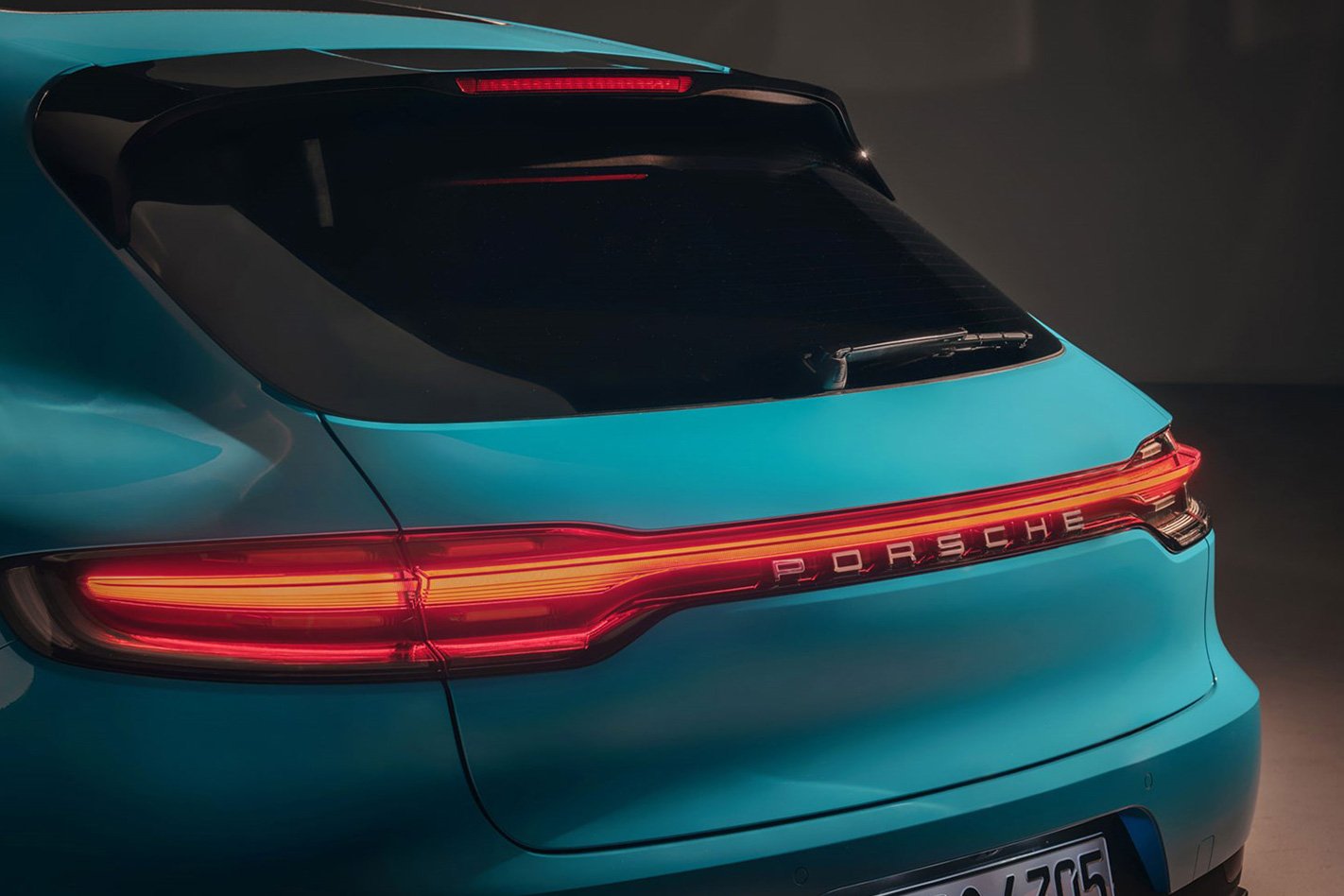
With that in mind, you’ll find LED headlights as standard, and at the rear the new model retains the three-dimensional LED light strip that’s becoming a hallmark of the current Macan. As expected, all lights use the four-point design we’re seeing sweep through the company’s road and race cars.
By changing the placement of the air intakes, Porsche has made the front of the Macan look wider than before, helping to give it a squatter, sportier look.
It’ll come in four new colours, too: Miami Blue, Mamba Green Metallic, Dolomite Silver Metallic and Crayon. Suitably silly paint names? Check…
Finally, 20- and 21-inch wheels are now on offer, to lend that gangster swagger.
And inside the cabin of the facelifted Porsche Macan?
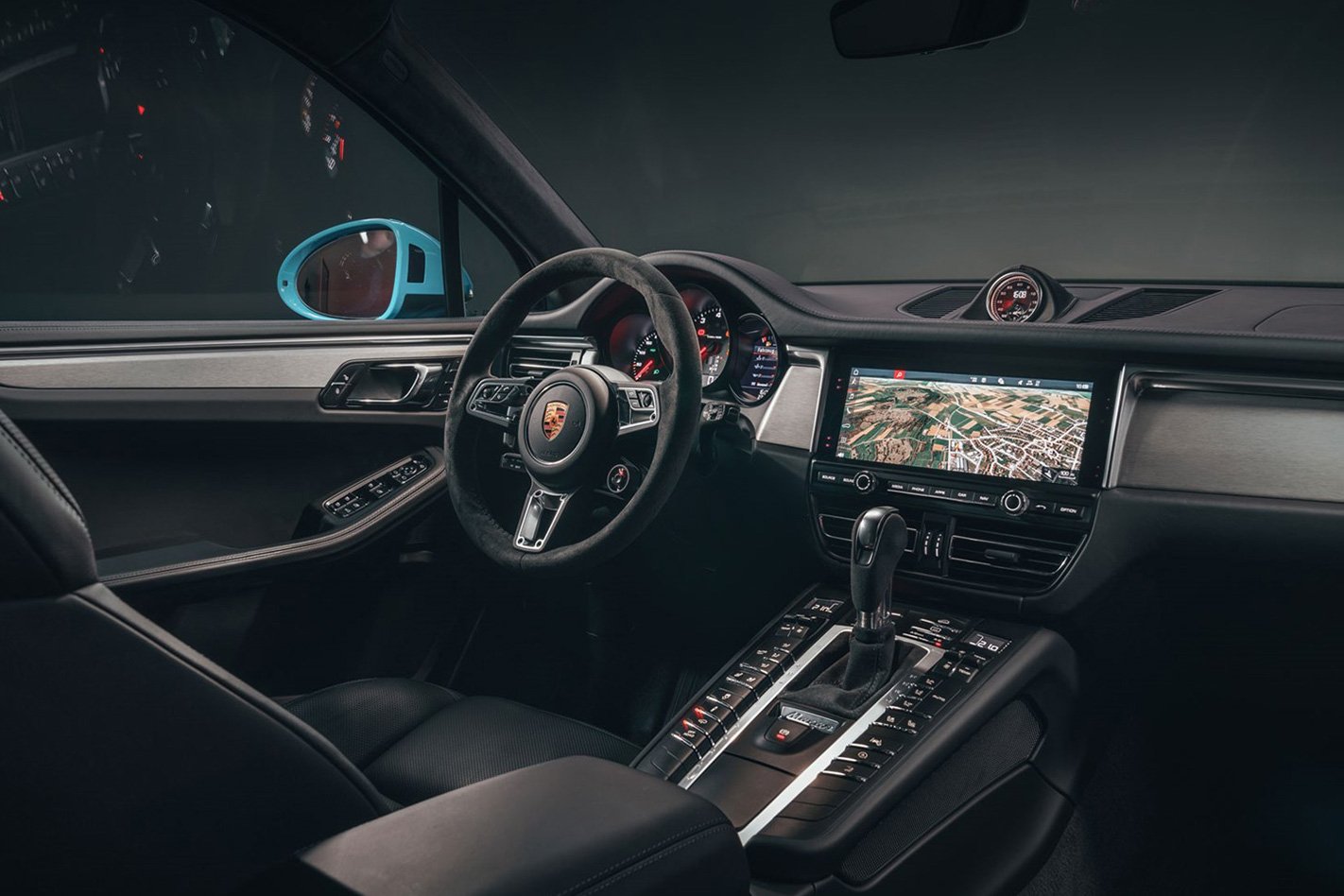
The interior of the Macan sees a similar amount of change, with new styling updates designed to bring the car slightly closer to Porsche’s halo 911 sports car range.
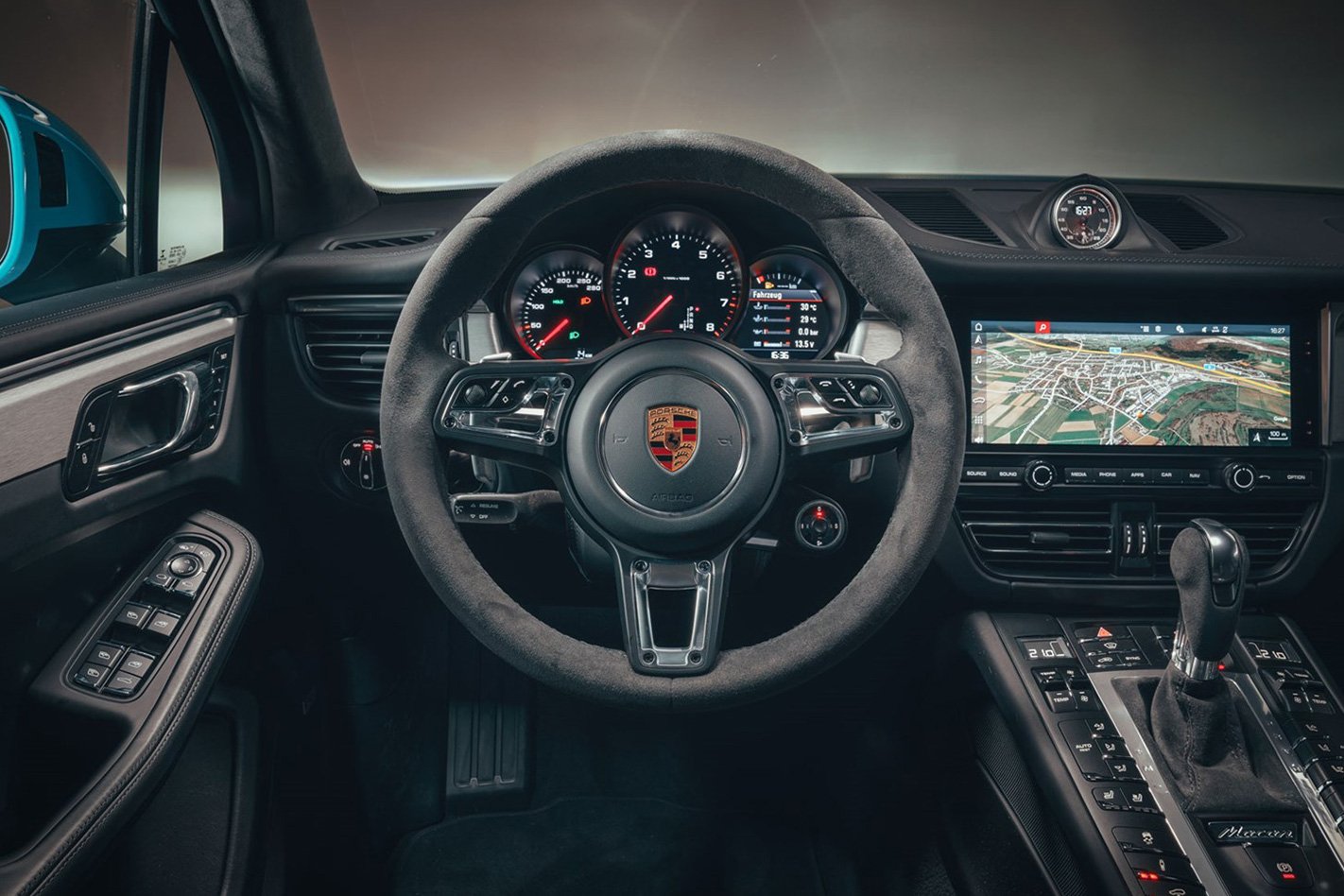
An optional GT sports steering wheel is the most obvious nod to Stuttgart’s most iconic sports car, while an integrated Sports Response Button mirrors the one you’d find on a the latest Cayenne SUV.
Porsche has hiked up the levels of comfort, so this time you’ll find a heated windscreen and air-improving ioniser on the options list. A traffic jam adaptive cruise system has finally arrived in the Macan too, though it’s only functional at speeds up to 37.2mph (60kph).
That screen!
The most striking thing in the new Macan interior – besides the swarm of switches by the gear selector, which we’ll get to later – is a new full-HD infotainment system. Measuring a massive 11 inches corner-to-corner, the new screen features the same tile-based user interface as the Panamera and Macan. Such is the size of the new screen that Porsche has redesigned air vents around it, so they’re now below it.
Just like the current model, the new Macan will ship with a Connect Plus module, allowing for a more connected driving experience. That means you can expect voice control, and real-time traffic information powered by BMW, Daimler and VW Group’s Here maps service.
As you can see from the pictures, there’s also a tonne of switches, which is a change from the smudgy glass surfaces we’re now seeing dominate most VAG cars’ dashboards…
What’ll the new Macan be like to drive?
Porsche says the new Macan has an optimised chassis, so it should feature an even more engaging ride than the current model. As with the current car, the new 2019 Macan will feature mixed tyres to bolster its handling, and a new all-wheel drive system should increase the levels of grip – especially mid-corner.
