
If you’re ever wanted to own a Bond car, your closest chance is coming up.
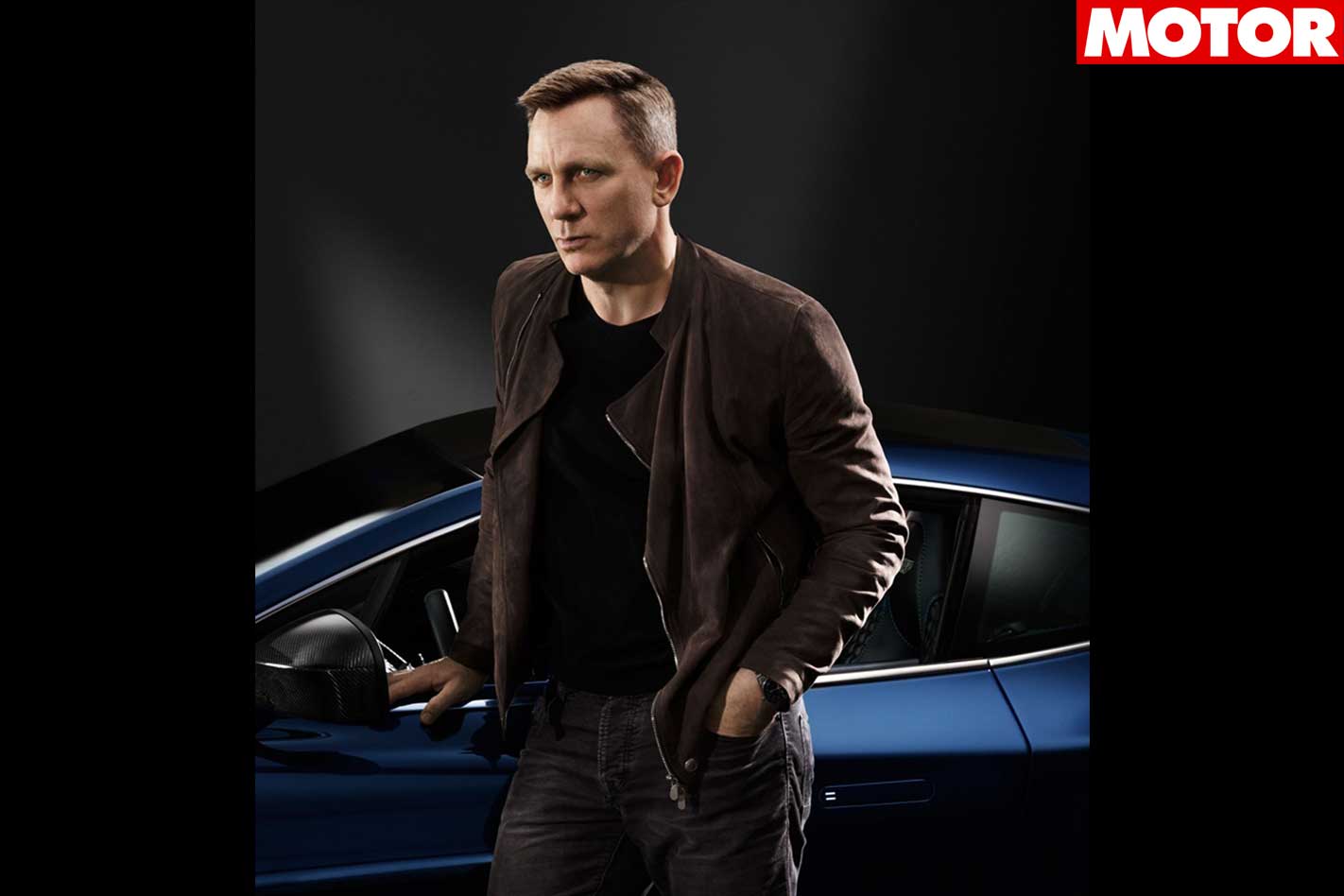
Current 007 actor Daniel Craig is putting his personalised 2014 Aston Martin Vanquish ‘Centenary Edition’ in an upcoming Christie’s auction in New York.
The car in question – numbered 007 – was customised by Craig with input from Aston’s chief creative officer Marek Reichman, though it’s still got the standard 6.0-litre V12.
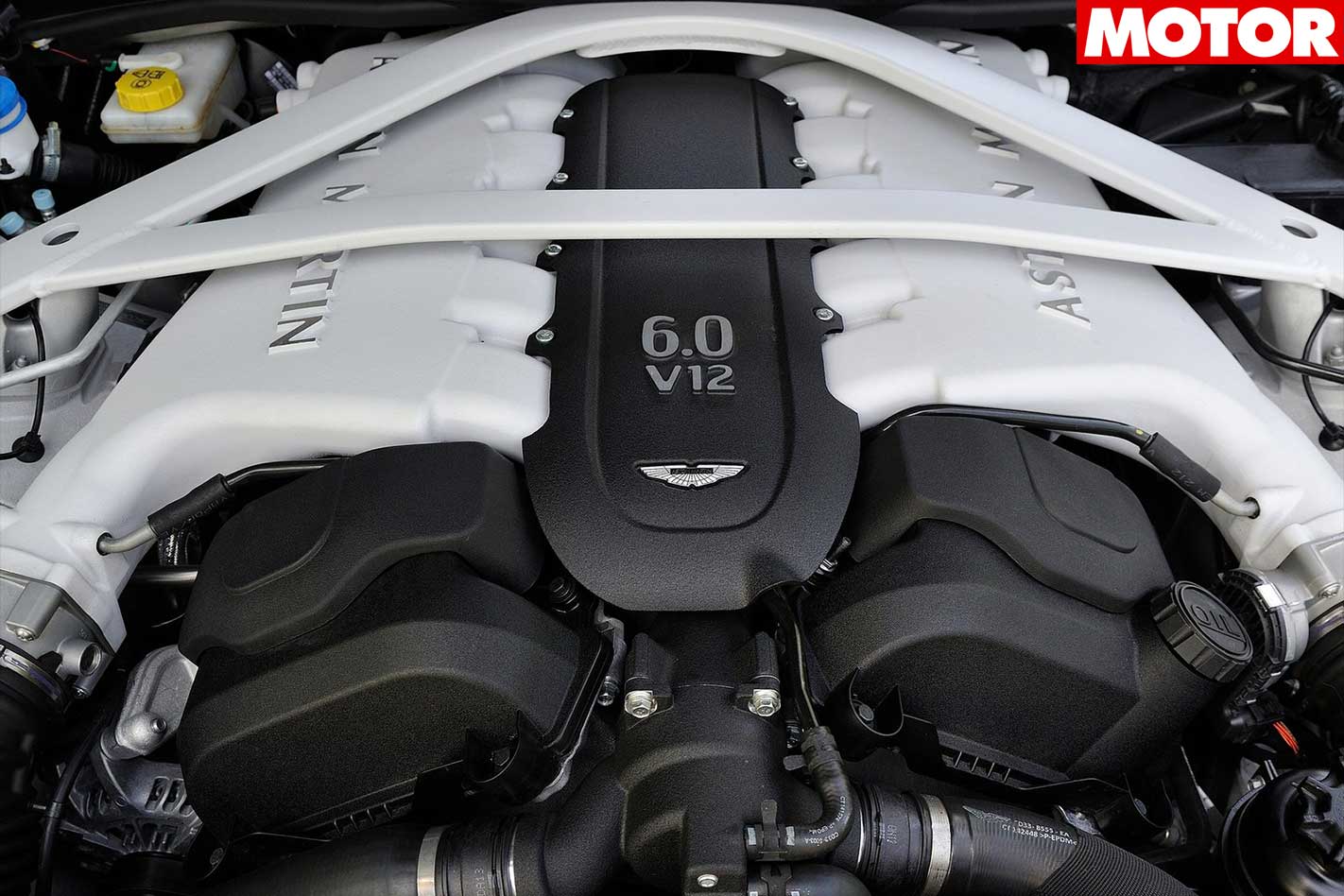
Craig’s particular car has been upholstered with inspiration from his preferred clothing material -denim. The midnight-blue exterior paint and blue leather interior is unique to his car.
Daniel Craig says he will donate the proceeds of the sale to a charity called The Opportunity Network, which assists young people with finding careers and employment.
“While I will miss it, I am keen to further the very important work of The Opportunity Network with its sale.”
Sale director Becky MacGuire says the event will be exciting not only for the charitable nature, but also simply to have the car present.
“With its pristine condition, exceptional craftsmanship and impeccable provenance, the Aston Martin fits perfectly into Christie’s masterpiece sale.
“It’s like a 21st-century sculpture that comes equipped with an incredibly fine engine.”
A GRAIN of salt is always on hand here at Wheels HQ.
It’s ready to be taken whenever an outlandish claim is broadcast by an unknown car maker, extolling the virtues of its hypothetical vehicle that it says will change the shape of auto manufacturing the world over.
It almost never comes to fruition, but then every once in a while one of these start-ups will do something that delivers on a spurious promise and makes enthusiasts, like us, stand up and take notice. Aspark falls into the latter category. From the very start the Japanese engineering outfit has gone about things differently.
Aspark revealed a street-legal electric hypercar – called the Owl – at last year’s Frankfurt motor show with the promise of truly otherworldly performance; most notably a sub-2.0sec 0-100km/h acceleration claim. It would’ve been all too easy to dismiss it as baseless hype if Aspark hadn’t also filmed video of its road rocket – sans carbonfibre cladding – in testing, looking very much on track to deliver.
We even wrote about it (see below), which we often choose not to do when something like this crops up. And now, Aspark has vindicated that by saying it has achieved what it set out to do.
Video released in the last few days shows an outwardly complete version of the Owl performing that same 0-100km/h lunge in the back of an industrial facility somewhere in its home country. The time? 1.92sec.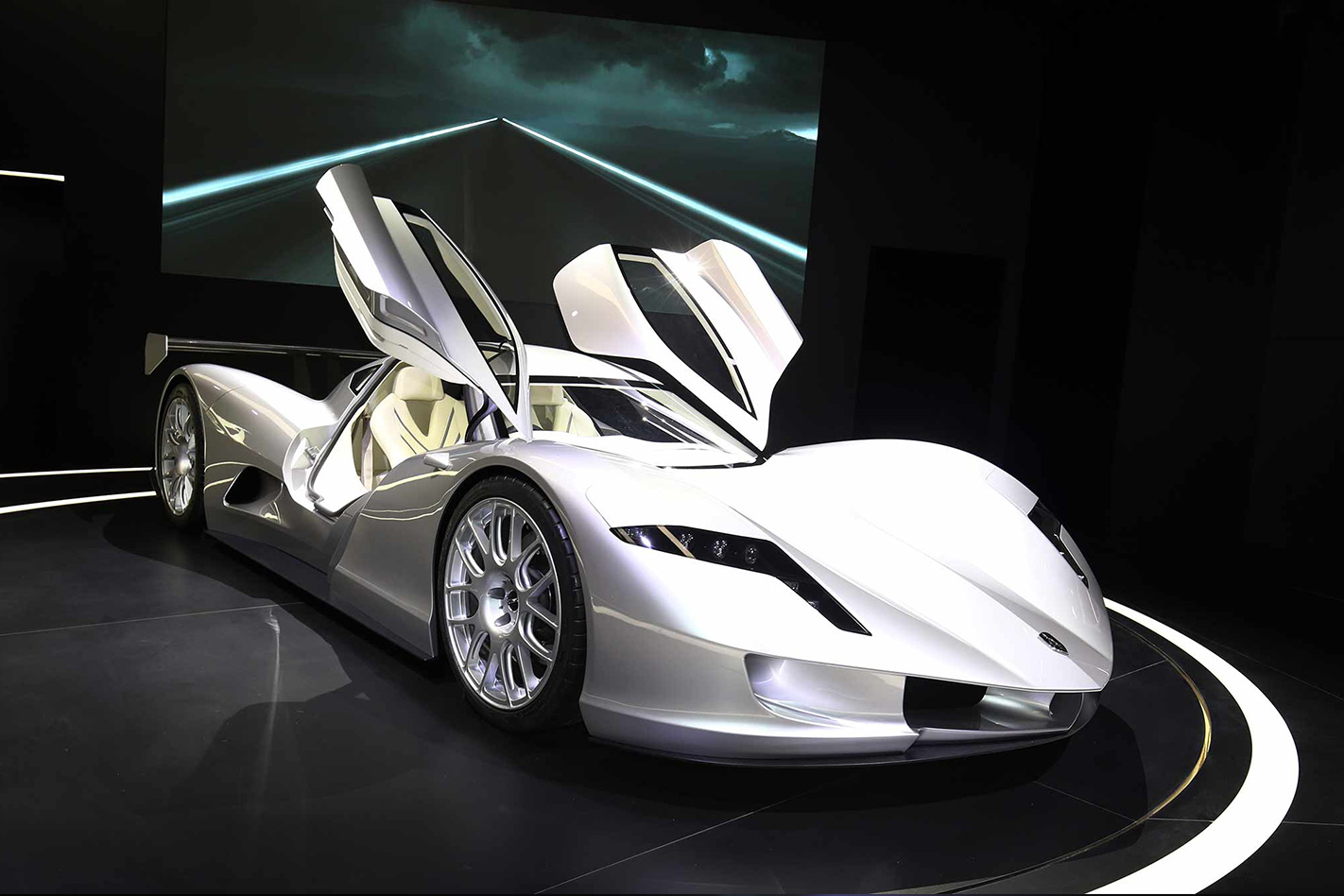
There’s even footage of an electric burnout, which the Aspark team used to warm up the rear tyres for maximum initial launch grip. The front of the Owl was ratchet-strapped to some big and heavy things to stop it spearing into anything hard.
Who will buy the 50 examples that Aspark says it will build is something we will have to wait to find out, especially if each one carries the $A5 million-plus price tag that’s anticipated. Nevertheless, a bar-raising engineering feat like this is worth at least a few minutes of our time.
WHEN it comes to edge of your seat racing finishes, they don’t come closer or more thrilling than this.
Tyler Reddick and Elliot Sadler recorded the closest race finish in NASCAR history over the weekend, in the PowerShares QQQ 300 (catchy) race at Daytona. Reddick timed an aerodynamic trick known as the side-draft to sneak past Sadler at the perfect moment.
A photo finish was necessary to determine the winner. Reddick and Sadler crossed the line so close together that the official timing difference was shown as 0.000 seconds, as the timing boards only display enough digits for thousandths of a second. There hasn’t been a closer finish since electronic timing was first introduced for NASCAR races in 1993.
The previous closest finish in NASCAR history was a 1995 Truck series race at Colorado National Speedway.
NASCAR is also responsible for one of the most famous photo-finishes in motorsport, between Kurt Busch and Ricky Craven at Darlington in 2003. Victory was split by a margin of 0.002 seconds.
While Reddick celebrated with a lovely, smoky burnout, Sadler had to walk away with the unfortunate privilege of having lost a race at Daytona by the smallest recorded margin. Watching replays in real-time it is nearly impossible to visually identify which car crosses the line first.
The Xfinity series of NASCAR is a feeder-category for the Monster Energy ‘Cup’ championship, and its 300-mile prologue to the big-daddy Daytona 500 was a carnage-filled slug-fest between the front-runners, which included a bevy of big names like Kyle Busch and Joey Logano.
One man who won’t be disappointed by the finish is the recently retired Dale Earnhardt Jr, who owns both the first and second placed cars.
GIVEN the ever-expanding footprint of the medium-SUV category, the importance of the Equinox to Holden’s fortunes in this country cannot be overstated.
If this Astra/Cruze-derived front- or all-wheel-drive wagon manages the expected 20,000 sales per year, the Equinox will become Holden’s best-selling vehicle. And if not, someone at GM needs to take a long, hard look at the opposition.
Against two core COTY criteria – Value and Function – the Holden Equinox punts the ball directly between the goal posts. The $28K LS manual solidly nails the equipment brief for its modest outlay, although you need to stretch to the auto-only LS+ ($33K) to ensnare a full safety suite of AEB, forward collision alert (with your choice of a near-deafening audible warning or a mildly titillating driver’s seat that vibrates), along with other family-protecting electronics.
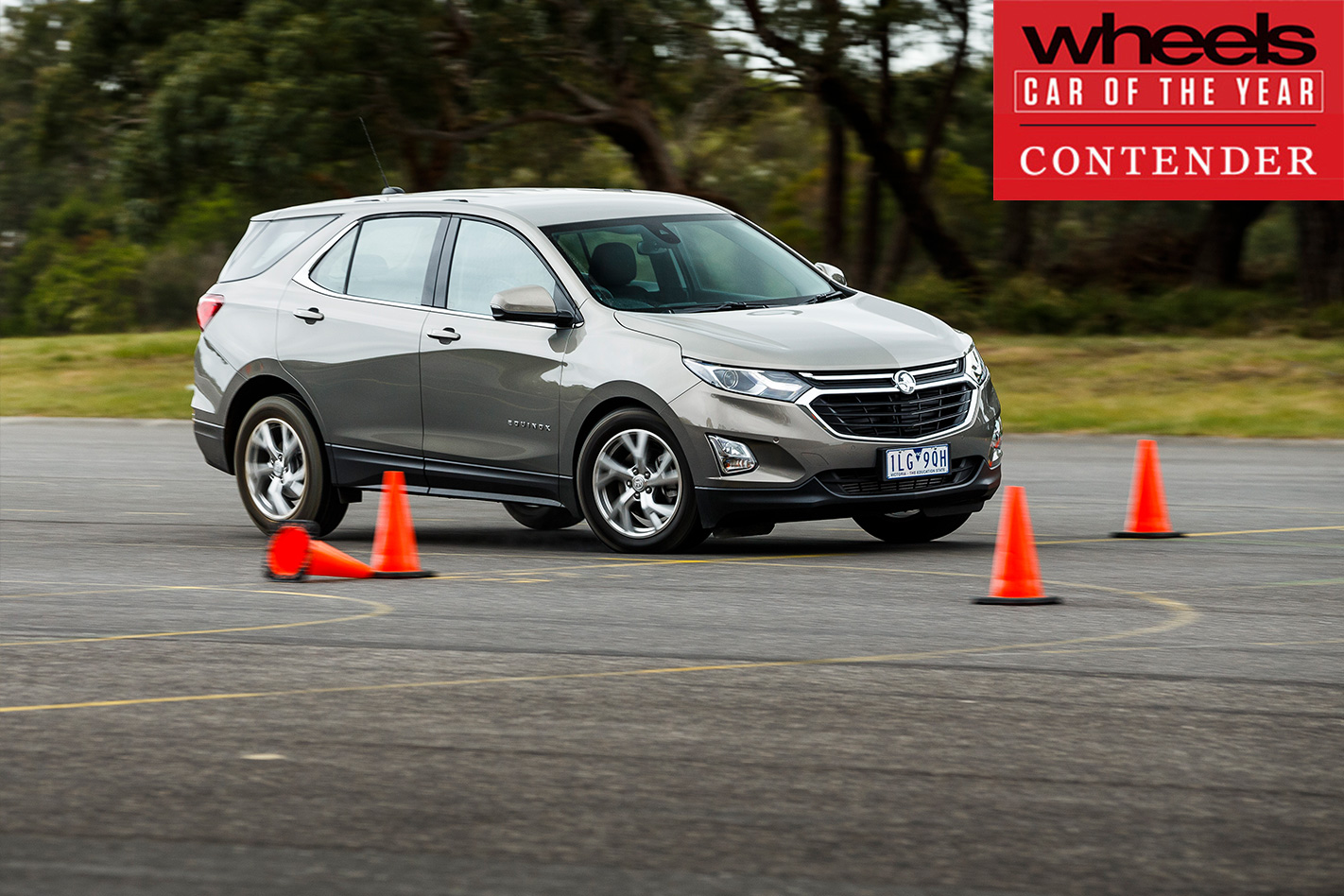
An excellent ESC calibration – far better than that of any European SUVs at COTY – strong dirt braking, fluid handling, crisp steering and taut body control all highlighted the success of Holden’s input when tuning the Equinox. Once everyone had lapped Lang Lang’s challenging course in the Equinox range, “not really noxious at all” became the consensus. But further investigation exposed a surprising lack of cohesion.
It seems Holden’s Mexican-built SUV is either Cinderella or the ugly stepsister.
First, its interior. Expansive, yes, but the LS’s blanket-grey cabin screams ‘austerity’ and its (nicely shaped) plastic steering wheel and core plastics look and feel like they’ve been ripped straight from a 2001 XC Barina.
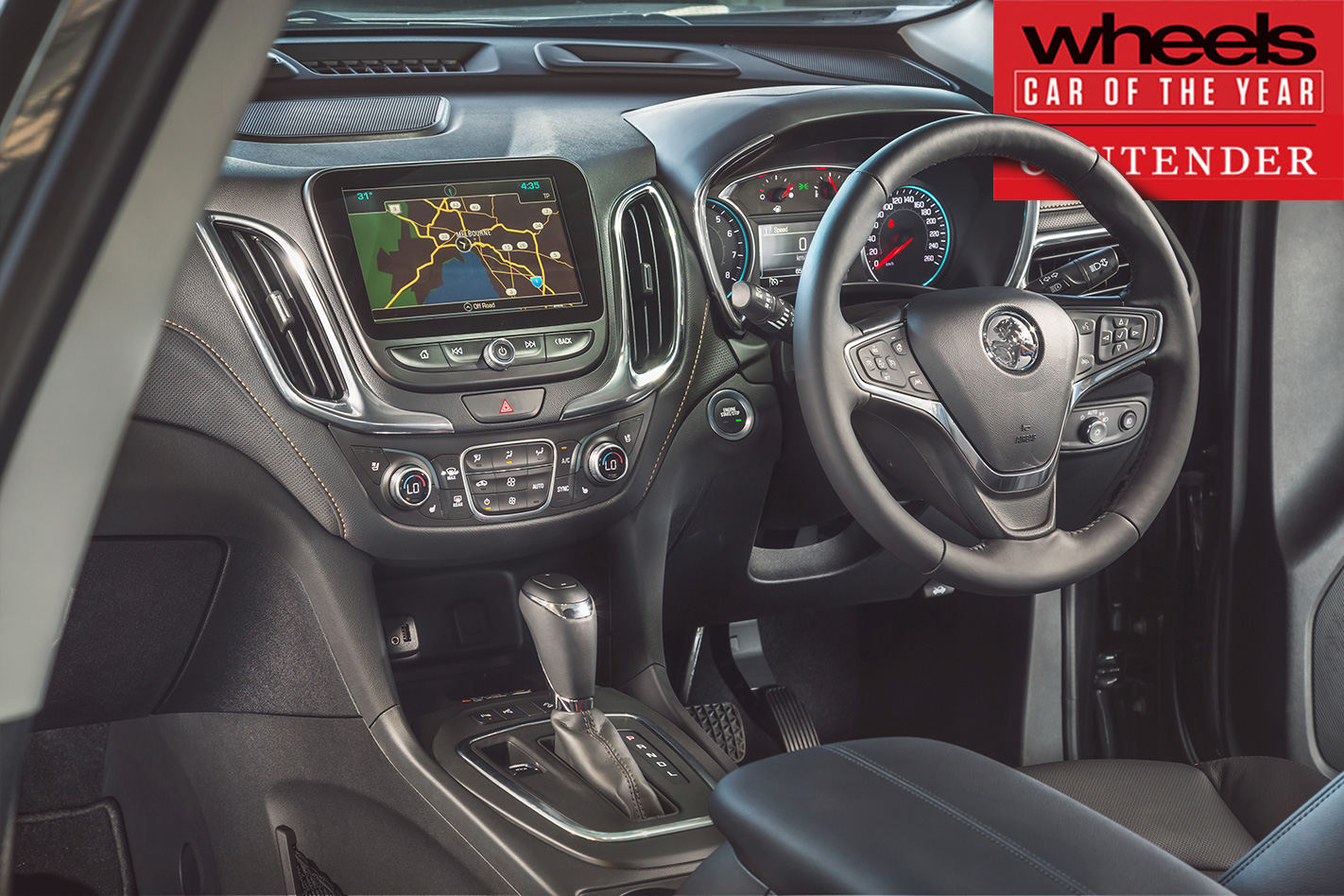
Moving up the Equinox ladder does little to brighten its visual appeal – “not costly, and looks it”, noted Carey – unless your concept of expense is chrome chintz. Equinox may drive like an Aussie-accented European but it remains firmly rooted in middle America when it comes to trim tactility and design aesthetics.
It also stumbles in the function department. You get an exceptionally strong 2.0-litre turbo-petrol engine tied to a well-calibrated nine-speed auto, but it really needs AWD (a $4300 option on the $39,990 LTZ, standard on the $46,290 LTZ-V) to properly channel its muscle.
The auto shifter’s top-mounted ‘manual’ switch is sheer idiocy in its inept operation, and while the 19-inch wheels of the LTZ and LTZ-V raise the showroom sparkle, they also expand Equinox’s turning circle to a laborious 12.7 metres and tarnish its low-speed ride.
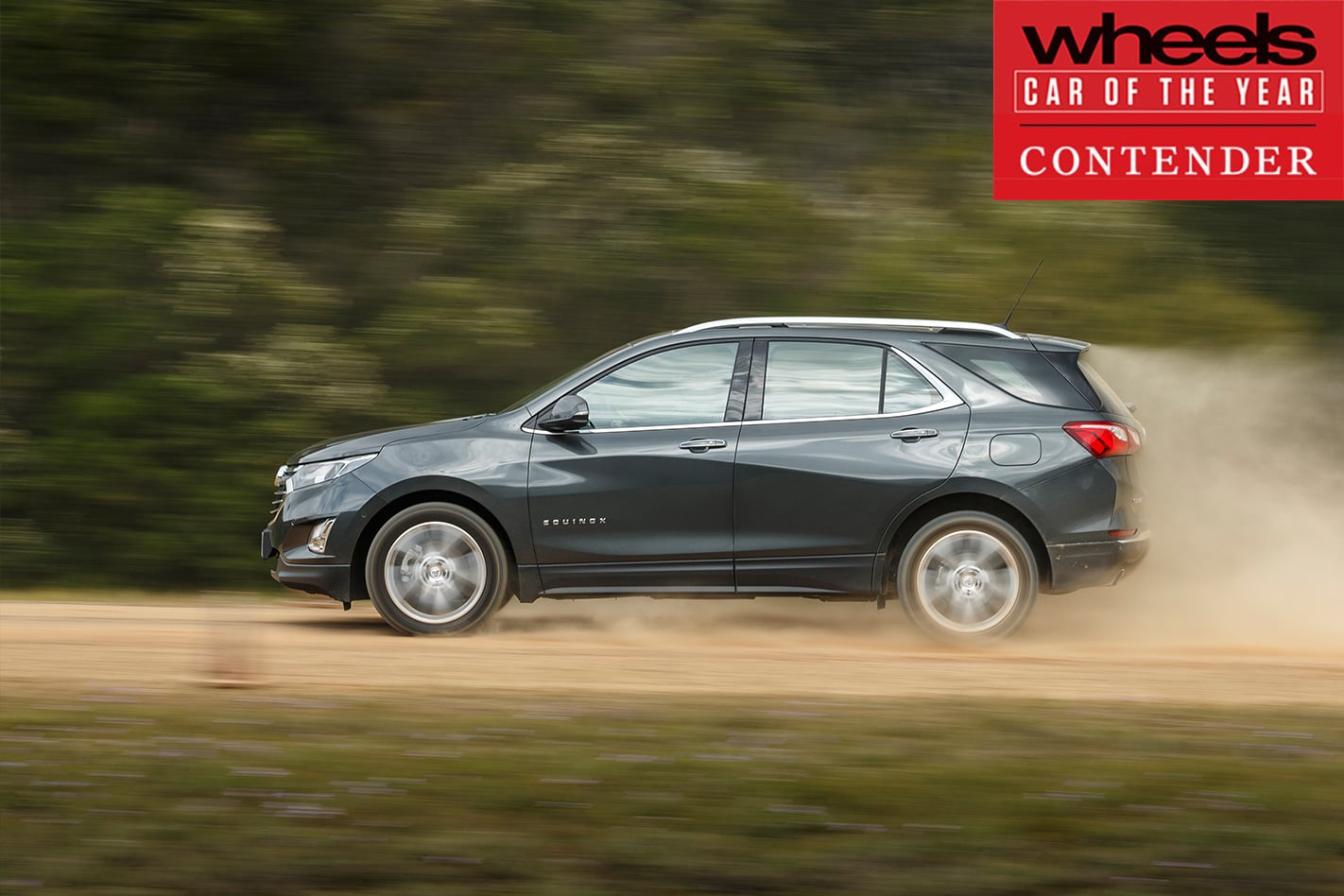
Core stuff, like the Equinox’s groaning ABS operation on wet surfaces and its inability to change direction briskly enough to nail our lane-change manoeuvre – point to the fact that this is a middle-of-the-road SUV packing a handful of star qualities.
Sadly, the Equinox has X-factor in name only.
Global genesis
Development work began on Equinox five years ago, with Holden involved from the beginning. Unique suspension hardware, damper tune, electric steering and stability-control calibrations all feature on Oz-bound cars.
The new BMW X3 is the first to break the link to the 3 Series that’s implied in its name.
Instead, the third generation of BMW’s mid-size SUV uses the same building blocks that provide the foundations for the new 5 and 7 Series. It’s a change that brings increases in both size and sophistication.
Its growth makes the new X3 larger in every key dimension, with the exception of height, than the first X5. Naturally enough, the new X3’s interior is roomier than the model it replaces. In answer to persistent carping by critics, BMW chose to invest the extra centimetres in the rear seat. It’s now spacious back there, but the size of the X3’s cargo compartment remains unchanged.
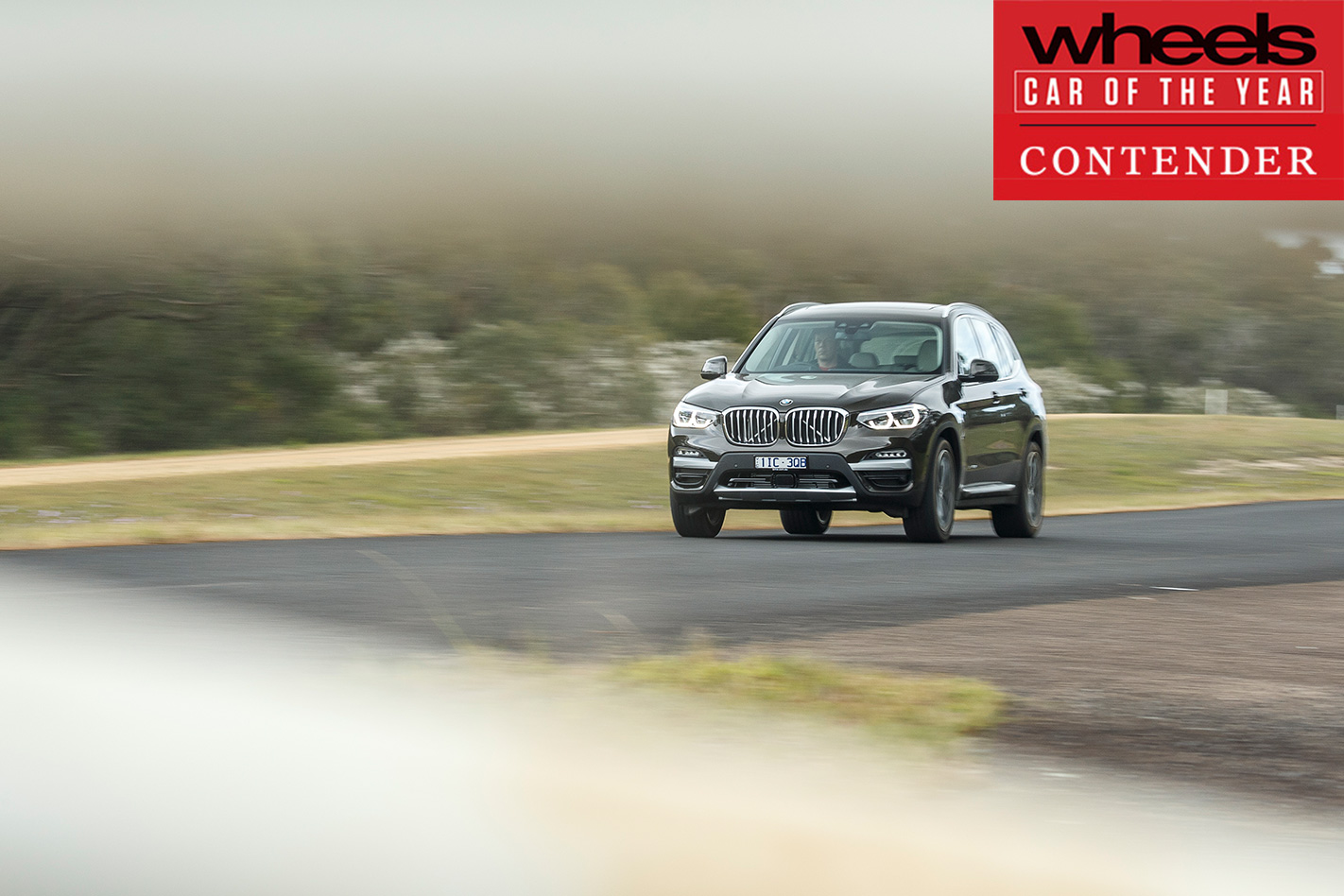
As it utilises the same electrical architecture as BMW’s big sedans, the X3 comes equipped not only with an impressively flexible infotainment system, but also the latest generation of the company’s advanced safety and driver-assistance technology.
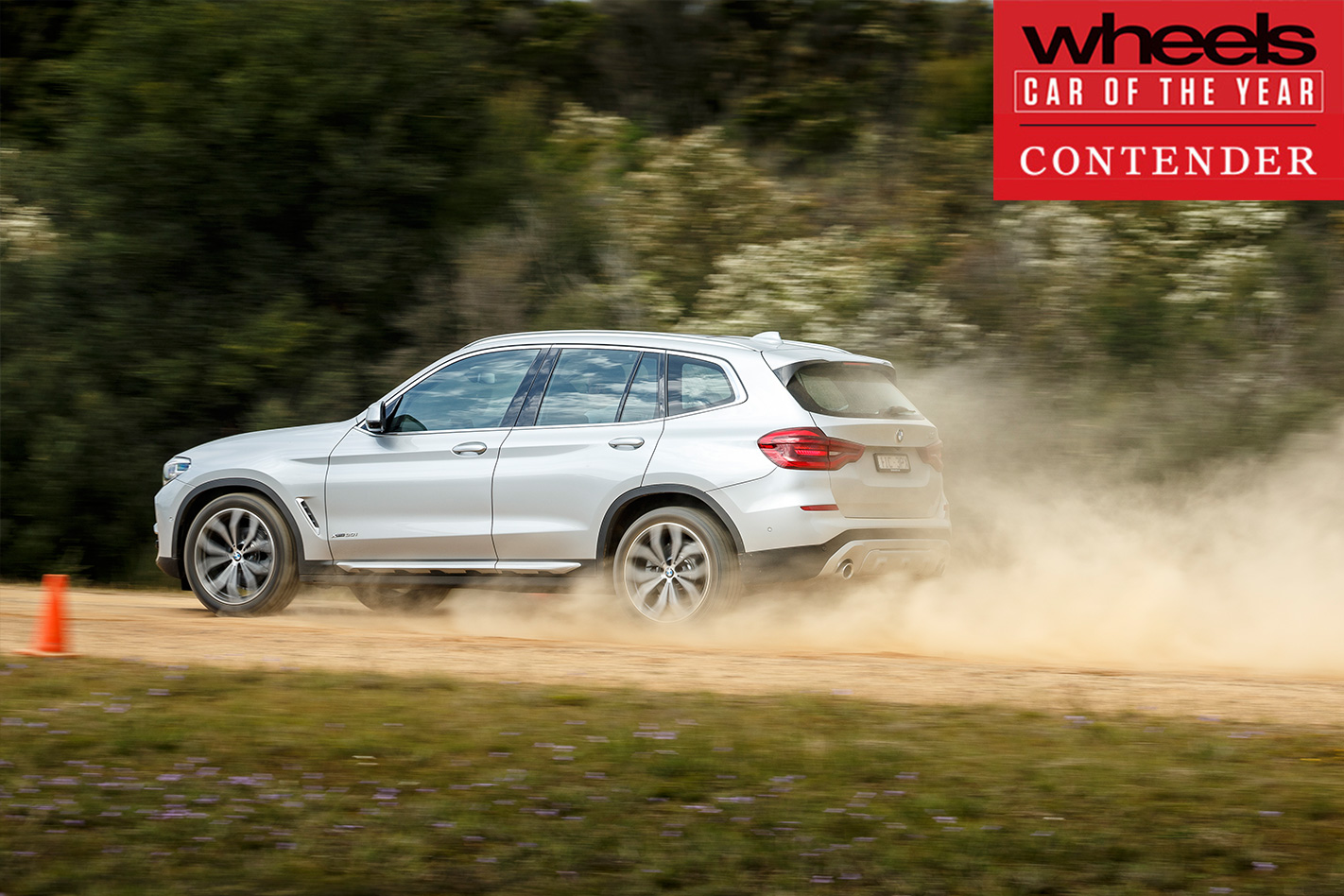
BMW’s AEB passed the tests conducted during COTY, which involved driving at sedan and ute rear ends at a variety of speeds. The X3 also stopped well, although its ESC was sluggish in reacting to some dirt road slides.
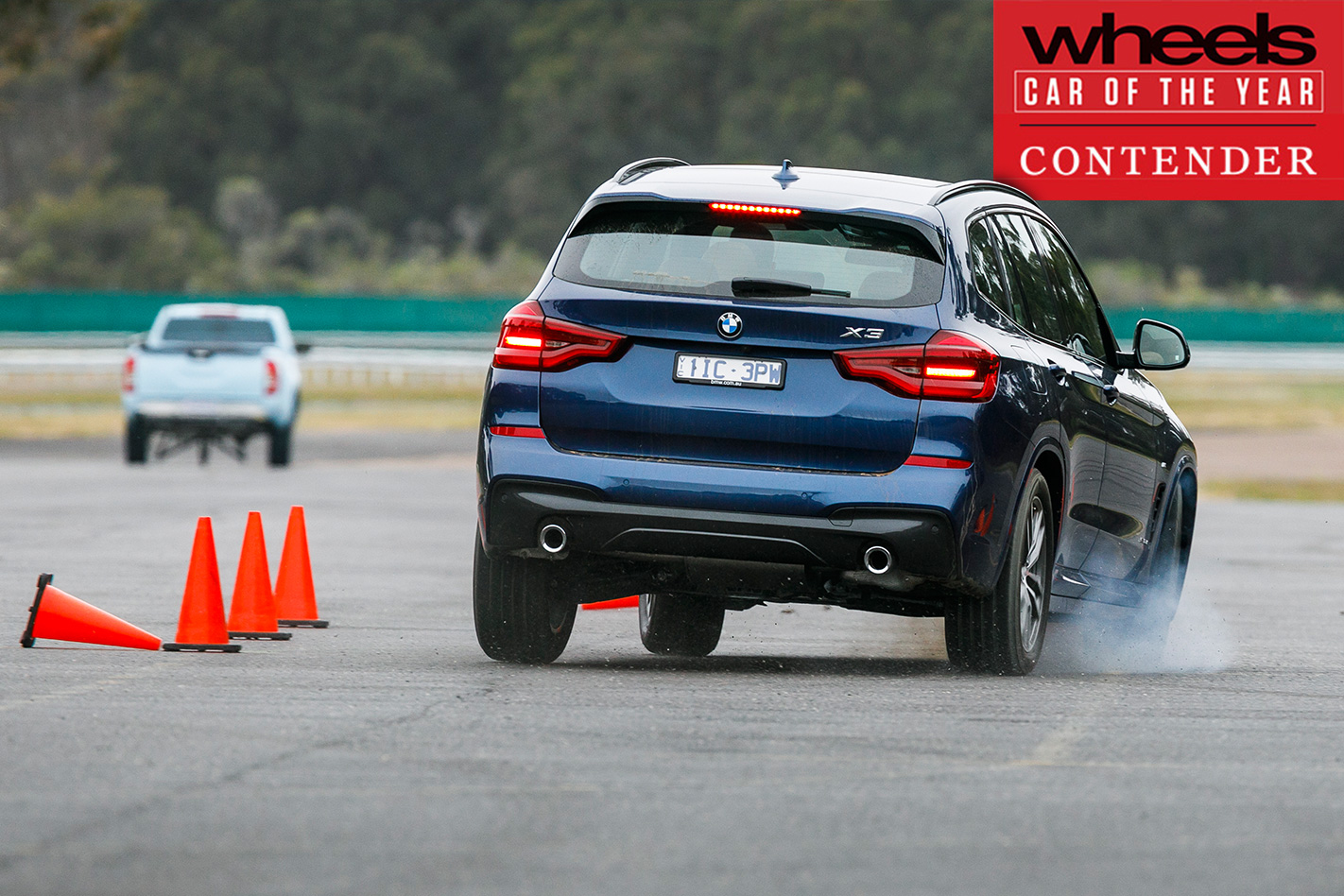
Only two of the seven COTY judges had driven the four-cylinder turbo-diesel 20d when its check-engine warning light came on. BMW advised it shouldn’t be driven, so it was withdrawn from further participation.
Each of the COTY-participating X3s came heavily optioned, with around $15,000 of extras on top of already hefty basic price tags. Adaptive dampers were included on all three. This optional technology helps deliver capable, if not especially involving, handling. For an SUV. But some judges felt that the ride quality in Comfort wasn’t comfy enough, and that the steering felt a bit too remote.
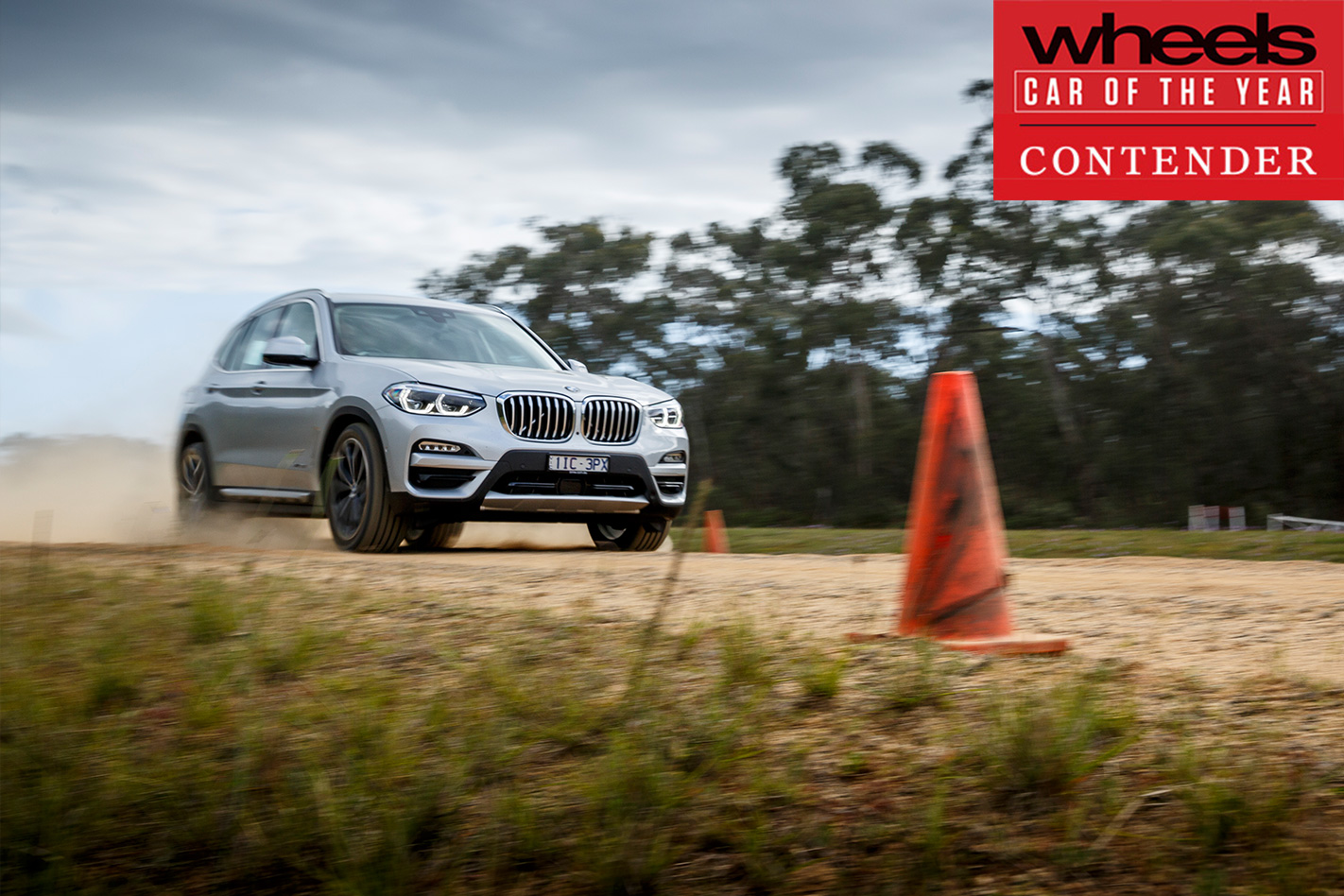
In a world where premium SUV is another way to spell high profit margins, the new X3 is a hugely important model for its maker. The newcomer is a definite improvement over the version it replaces and, at long last, genuinely competitive in its market segment. But other brands are also doing their best to win the premium medium SUV race and one, at least, is doing better than BMW.
X-pansion plans
The X3 family will grow quickly, starting early this year with the high-performance M40i. It features a 265kW turbocharged version of BMW’s lovely 3.0-litre in-line six petrol and uprated suspension and braking systems.
COTY CONTENDERS don’t get long to make a favourable impression during the first few days of COTY and that’s exactly how it should be, in a way replicating the time spent during the test drive experience of a paying customer.
If a car can’t shine in that first 20 minutes at Lang Lang, it’s almost a guarantee it will struggle to progress – a quandary in which BMW’s 5 Series finds itself.
So technologically dense is the G30 generation that it takes quite a while to appreciate its breadth of talent. Unfortunately it seems that a focus on driver aids and infotainment has come at the expense of the sort of driving dynamics we associate with the BMW 5 Series. In short, it no longer feels like the keen driver’s choice in the segment.
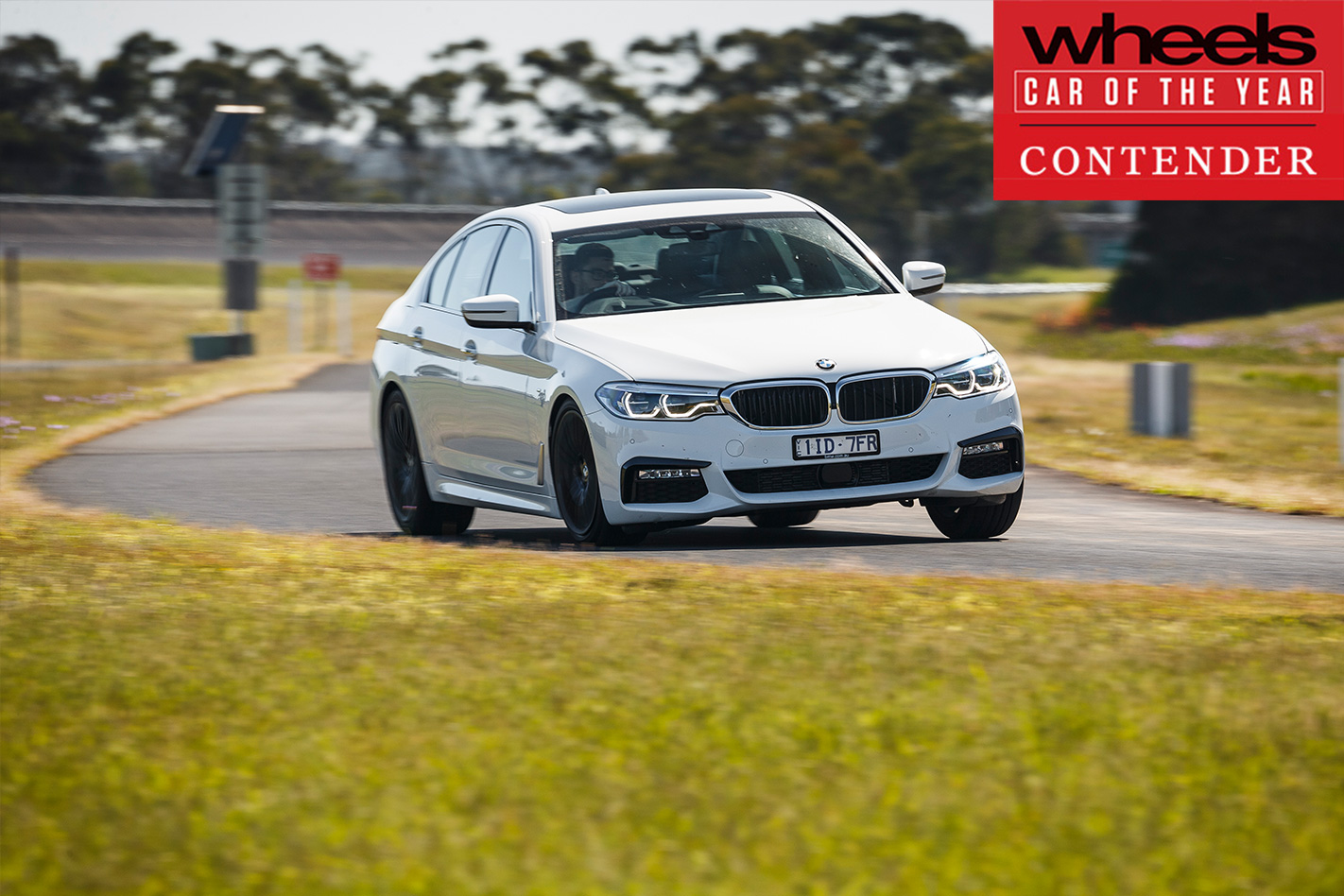
Carey was even-handed enough to give the 5 Series a certain benefit of the doubt. “It’s one of those cars, I suspect, that feels much more at home – and impressive – on the road, not a proving ground,” he noted.
I never felt that charitable. Looking back at my notebook it’s fairly vitriolic stuff, but that’s largely due to the high bar that BMW has set itself with previous iterations of the legendary 5 Series.
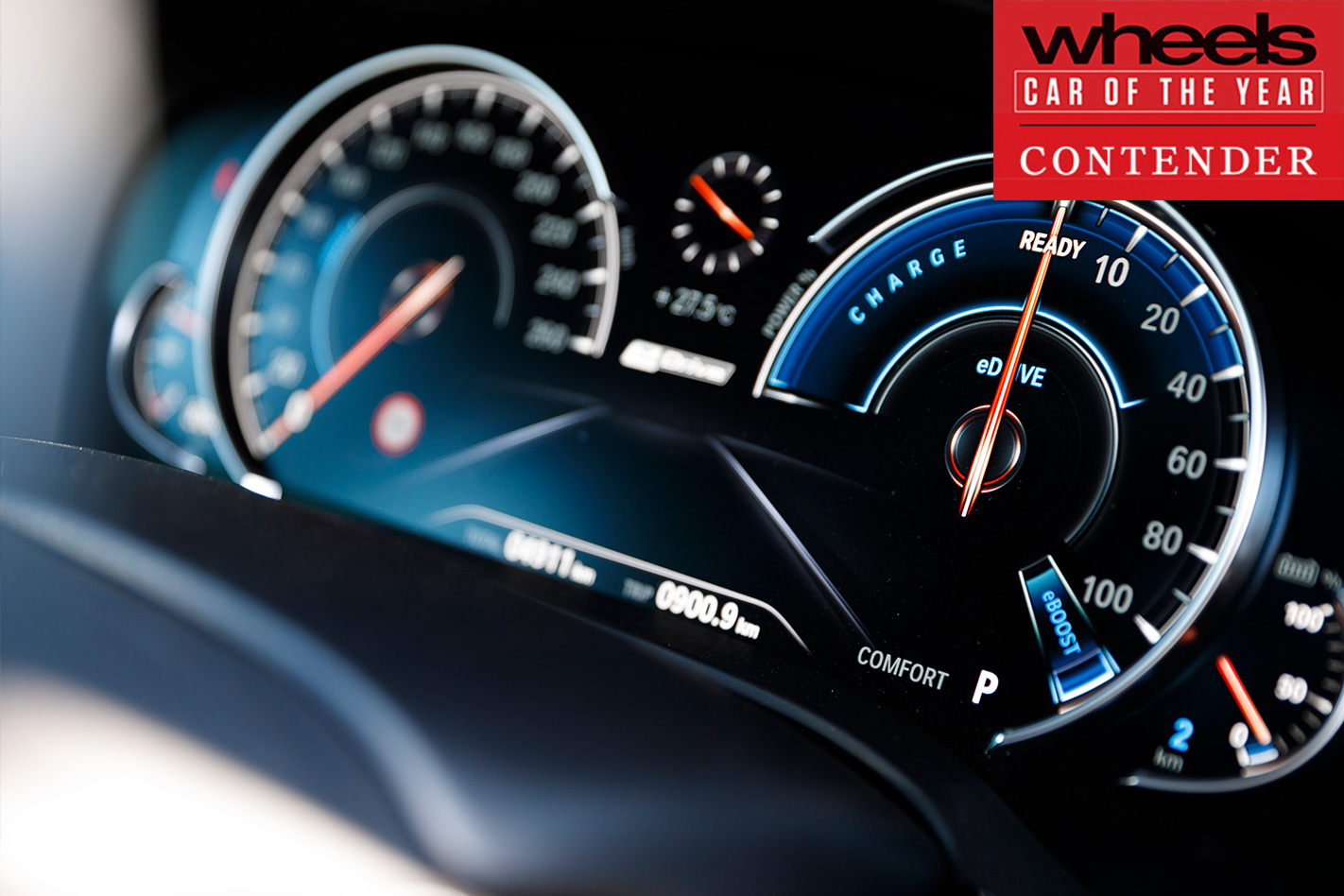
“ESC everywhere, throttle denial everywhere,” was another. We laud BMW’s commitment to bring the BMW 530e to market for the same price as the 530i, but it can’t match its conventionally powered sibling for reassuring consistency of powertrain response.
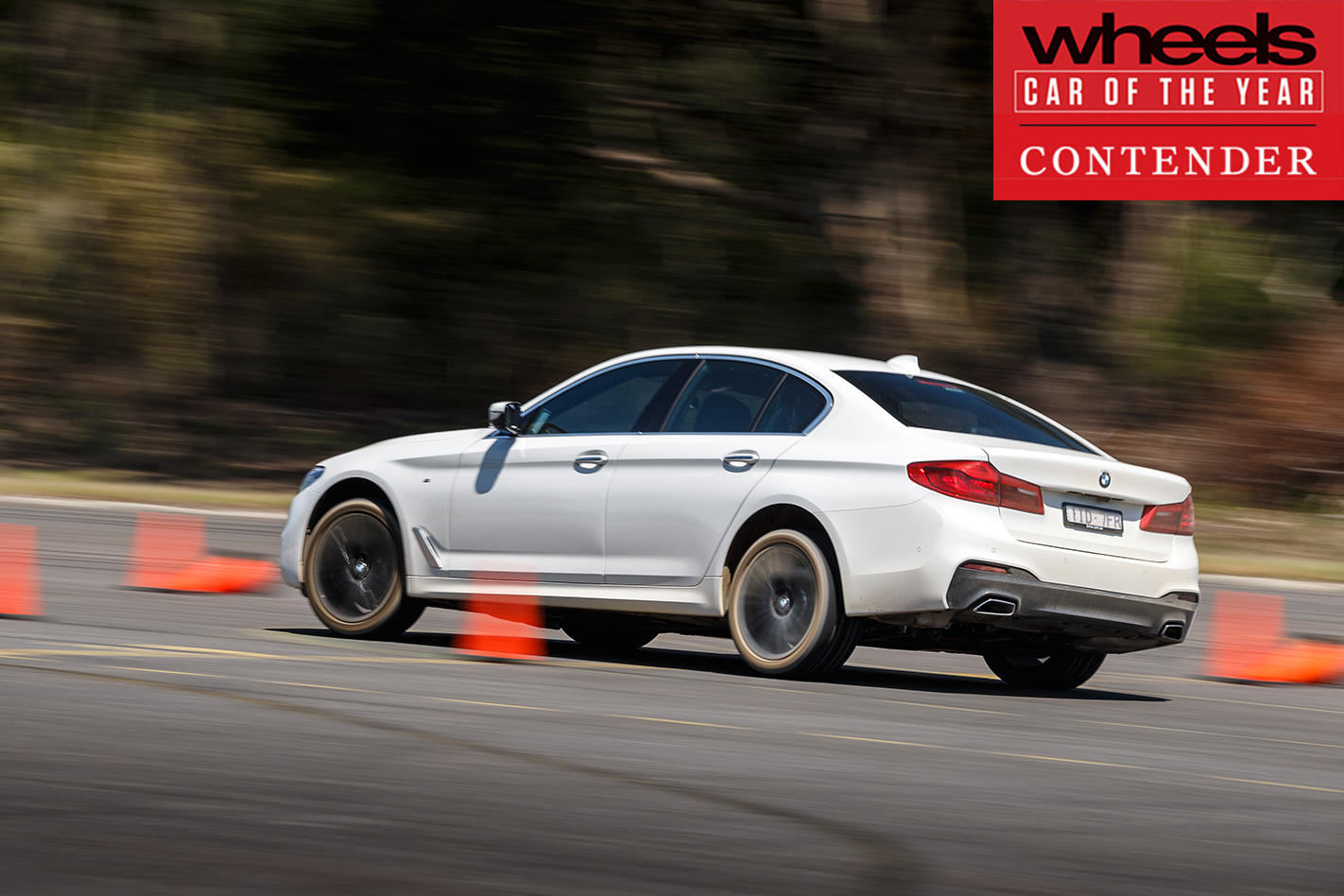
All suffered an odd combination of muted, floaty ride interspersed with surprisingly flinty interjections over harsher bumps. Much of that was down to tyre choice, the 530i riding on 20-inch Goodyear Eagle F1s that sent a crashing shudder through the body when negotiating Lang Lang’s cattle grid at even modest speeds. One judge reported that the stability-control light of the 530d was illuminated virtually all of the way round the loose surface course, without applying an extravagant ladling of right boot.
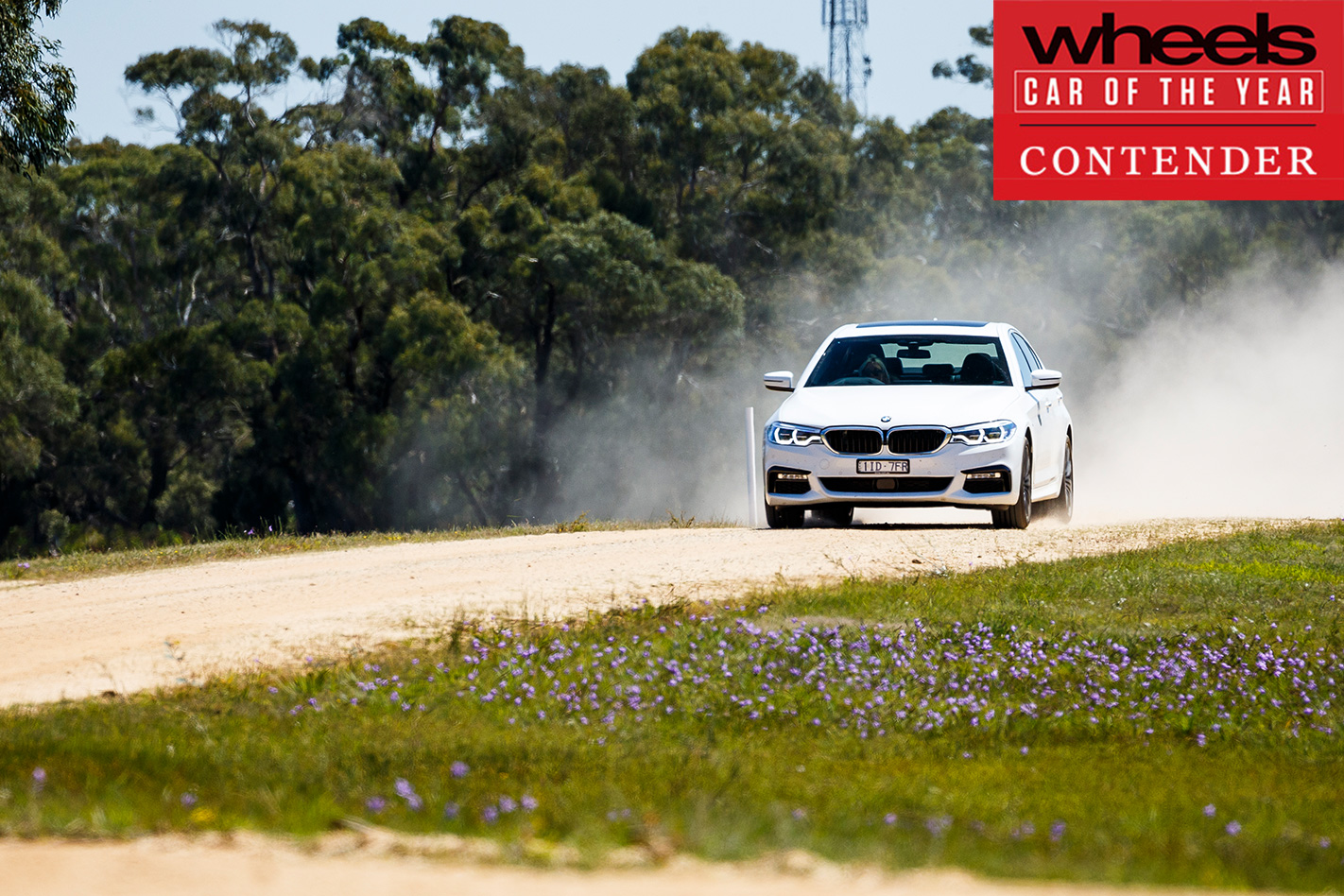
BMW has openly admitted that this G30 5 Series is more a luxury car than a sports sedan, and it’s easy to see the Germans’ viewpoint. A current 3 Series occupies virtually the same road footprint as the revered E39 Five, with this latest 5 Series spun off the same modular Oberklasse platform as the current G11 7 Series.
Even taking this into account, the 5 Series didn’t do enough to progress. It lacked the velvety isolation of a top-notch luxury car, the feedback of a sports sedan and the talent to carry off both roles convincingly. Maybe it would show its best as a bit of a slow-burner, a car you’d grow into, particularly when optioned selectively.
THE TYRANNY OF CHOICE
BMW Australia apparently has an instruction sheet guiding staff through the opaque combinations of dynamic options covering steering systems, damper set-ups, active anti-roll bar choices and varying wheel sizes available on each 5 Series model.
Given the dizzying permutations of variations available, it’s easy to see how some testers have loved the G30 Five while others have come away crestfallen. It shouldn’t be a lottery to land a 5 Series that drives with a panache that matches the brand’s DNA.
THERE’S a certain calculated conservatism to Audi’s Q5 that, were you of a cynical persuasion, could be described as vehicle development by numbers.
It’s hard to shake off the feeling that plug-and-playing parts from the Volkswagen-Audi Group’s existing platform and componentry catalogue to form a cohesive end result can’t have been overly taxing.
Despite this circumspection, the Mexican-built Q5 initially seems greater than the sum of its parts bin. In fact, it’s a thing of quiet loveliness in the way that it draws a bead on its target market and then coolly ticks boxes until it appears folly to consider anything else. Audi does button-pressing with a truly opaque guile.
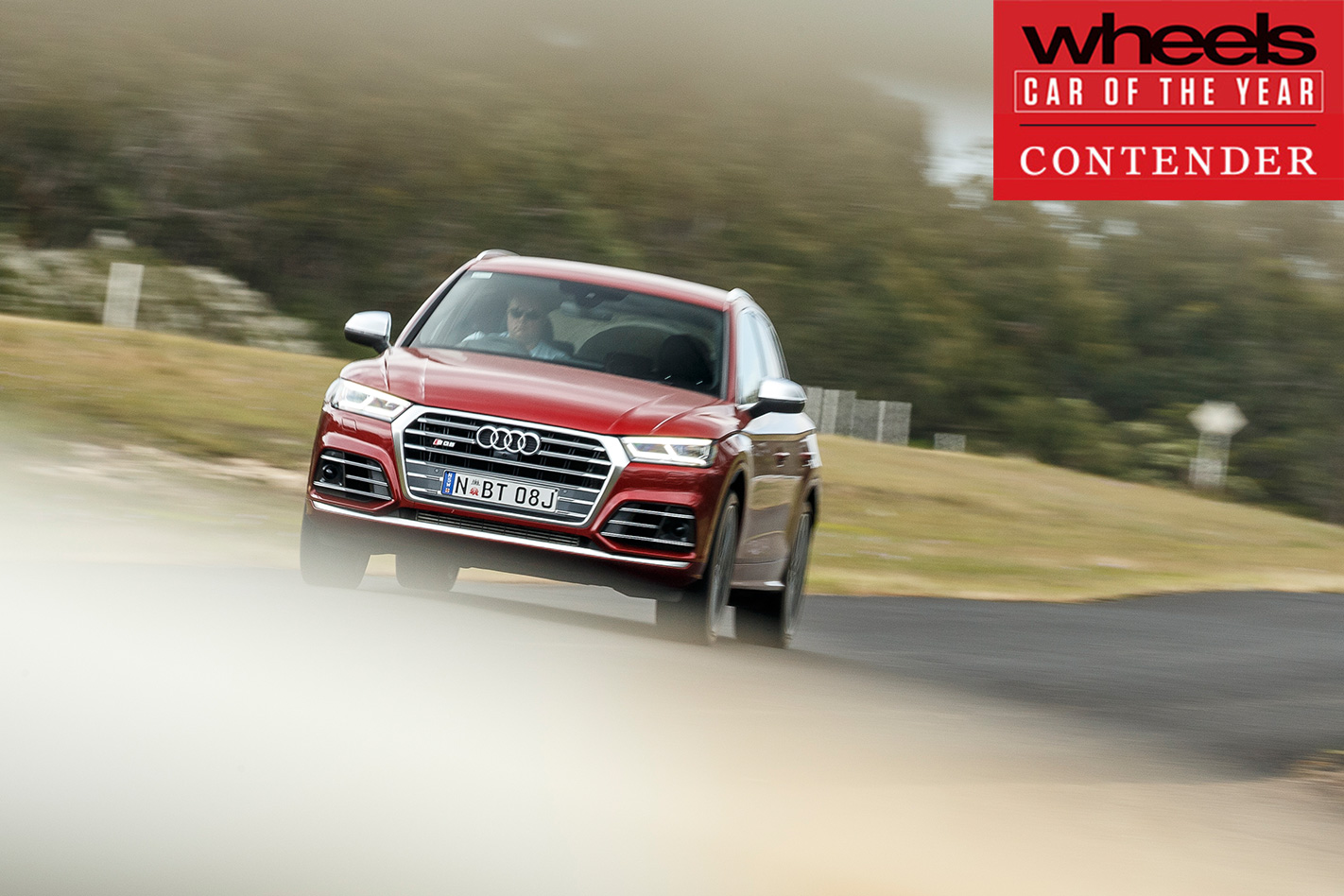
Both of these vehicles ride on the quattro ultra chassis, which uses a fiendishly complex set of predictive algorithms to direct drive to the rear wheels only when required, promising better fuel economy as a result. But on the gravel at Lang Lang, it was soon apparent that quattro ultra has its limits, applying a big clamp of traction control under acceleration due to the fact that it can never send more than 50 percent of available torque to the rear axle.
Driven solely on bitumen it would rarely prove an issue, but demand too much away from the blacktop and the Q5’s shortcomings soon become apparent.
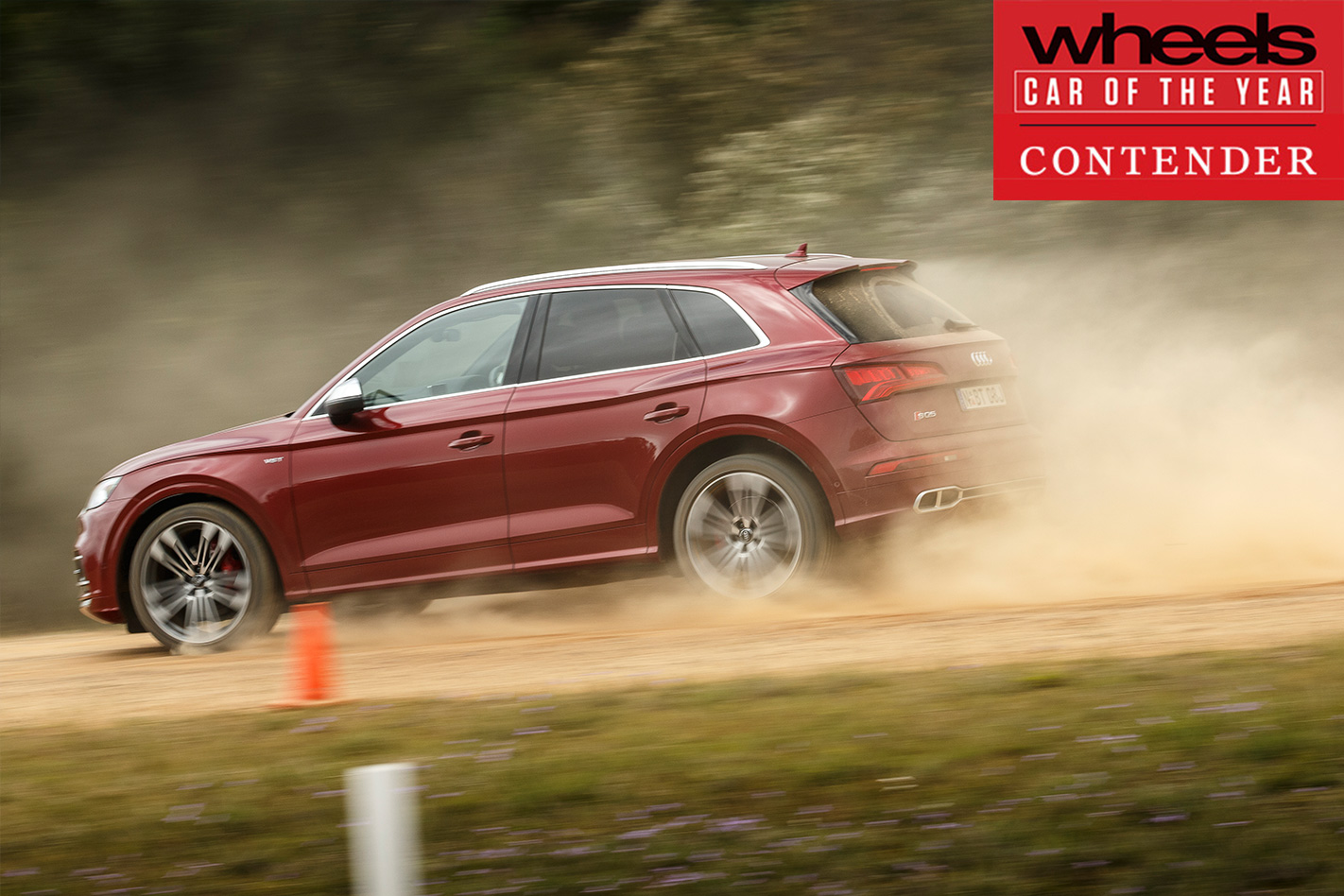
Nevertheless, the SQ5 served as a telling reminder that software sleights of hand only get you so far. This 260kW hot tamale features a more traditional centre-locking differential and, as a result, featured none of the axle-tramp of quattro ultra when accelerating on the loose surface, the nominal 40:60 initial front/rear torque split capable of sending up to 85 percent rearwards. The SQ5’s optional quattro sport diff on the rear axle also delivered a rewarding and well-dialled smearability out of fast corners.
The Q5 emerged as unadventurous, inoffensive but pleasantly executed; a combination rarely sufficient for an extended innings at COTY.
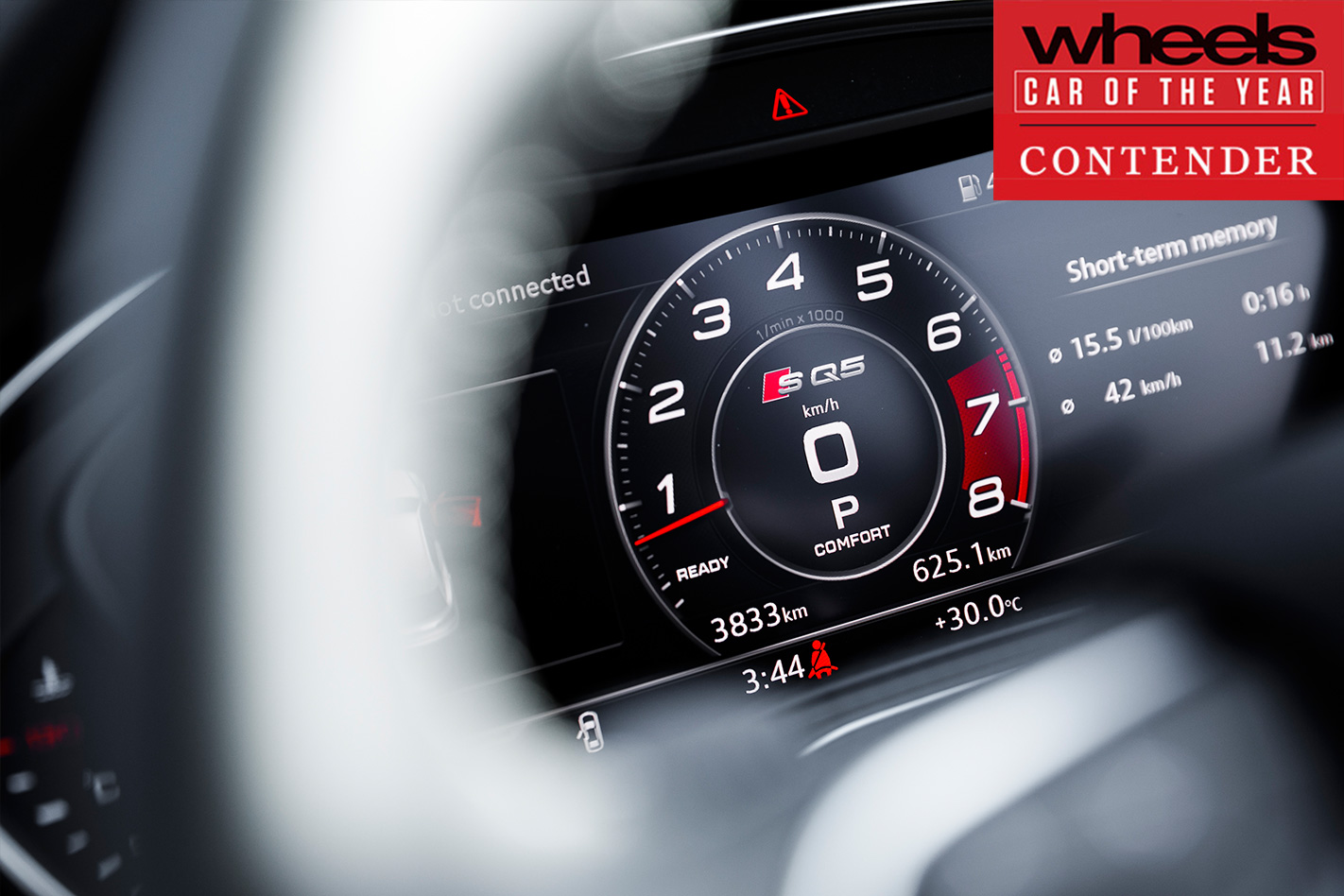
That issue didn’t affect the SQ5, and had we left the cooking Q5s at home and only brought the SQ5 along, it could well have claimed some notable scalps.
THEM’S THE BRAKES
The Q5s raised eyebrows at Lang Lang when judges consistently reported severe corner exit braking interventions in both of the non-S cars. It was enough to heavily weight the nose to the extent that the vehicles would lurch wide by around half a lane’s width.
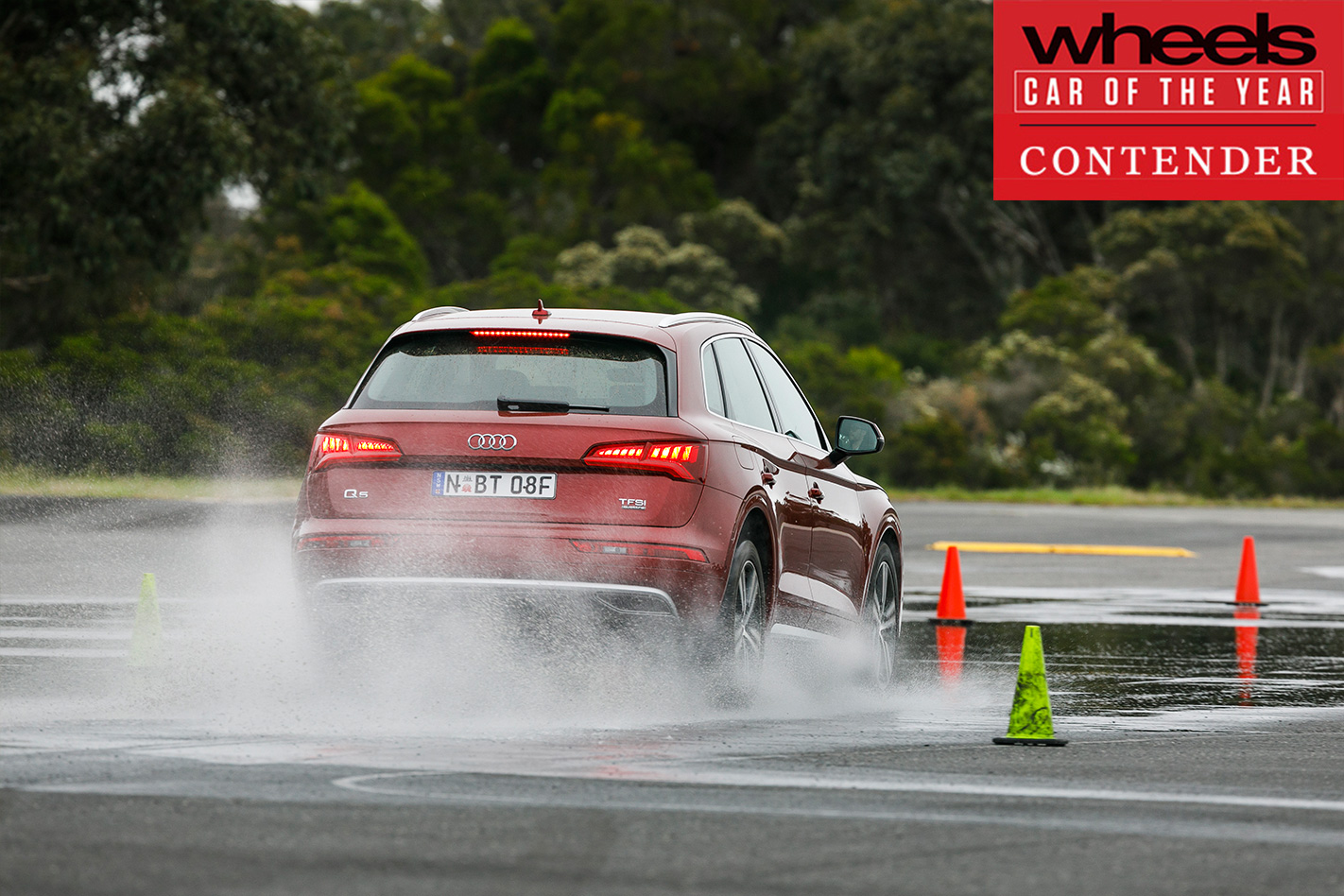
After discussing the symptoms with Audi, an investigation into the cause of this issue is under way. Stay tuned…
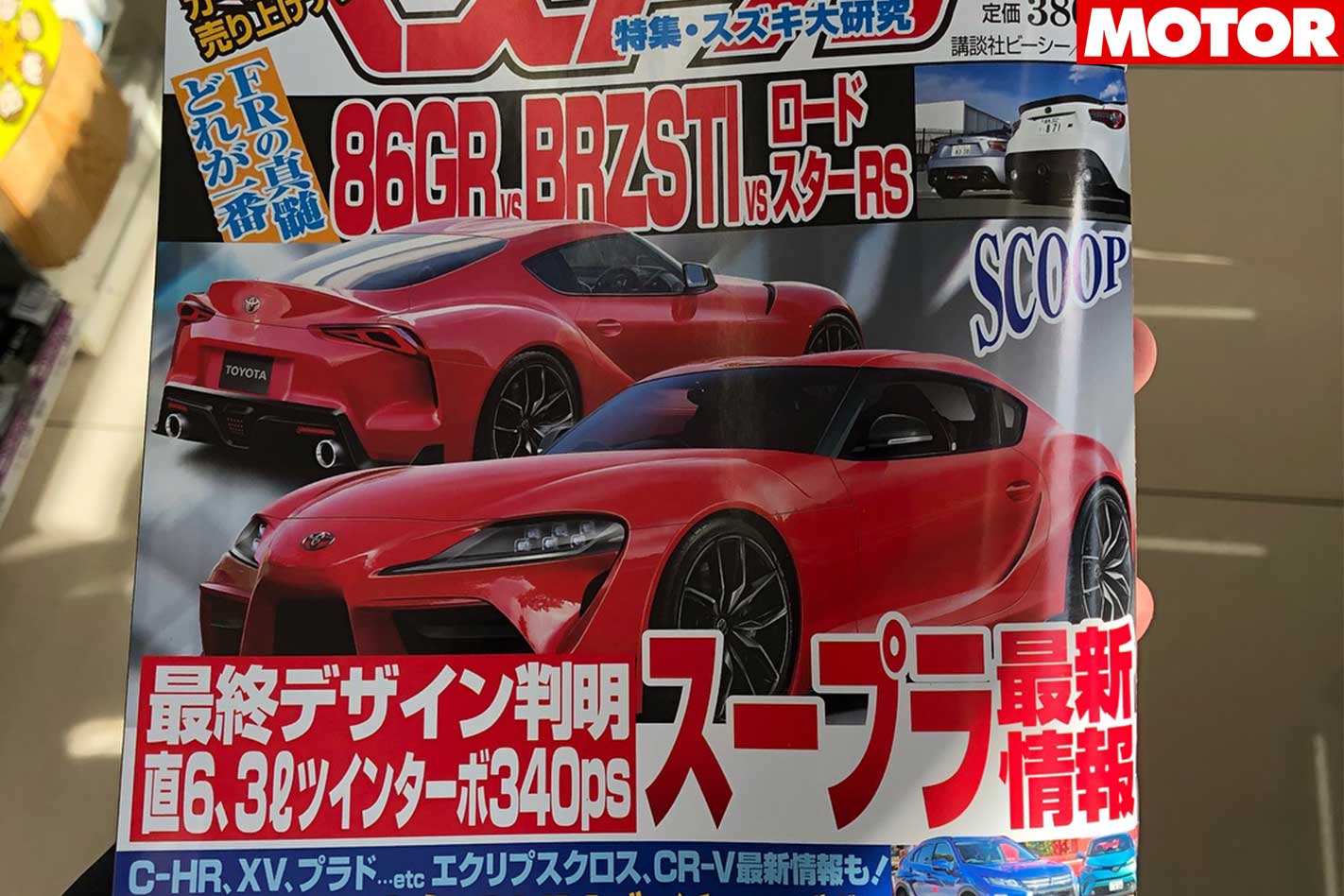
Japanese magazine Best Car has reportedly gathered a new set of specifications for the much-anticipated new Toyota Supra.
The car, which is expected to be confirmed at the upcoming Geneva Motor Show (along with a race version of the car), had first been reported on by MOTOR in mid-2017 as a 300kW (or thereabouts) 3.5-litre V6-powered hybrid.
But details leaked on a Supra Forum from a hard copy of Best Car reveal a new set of specs which contradict those we were given from an insider last year.
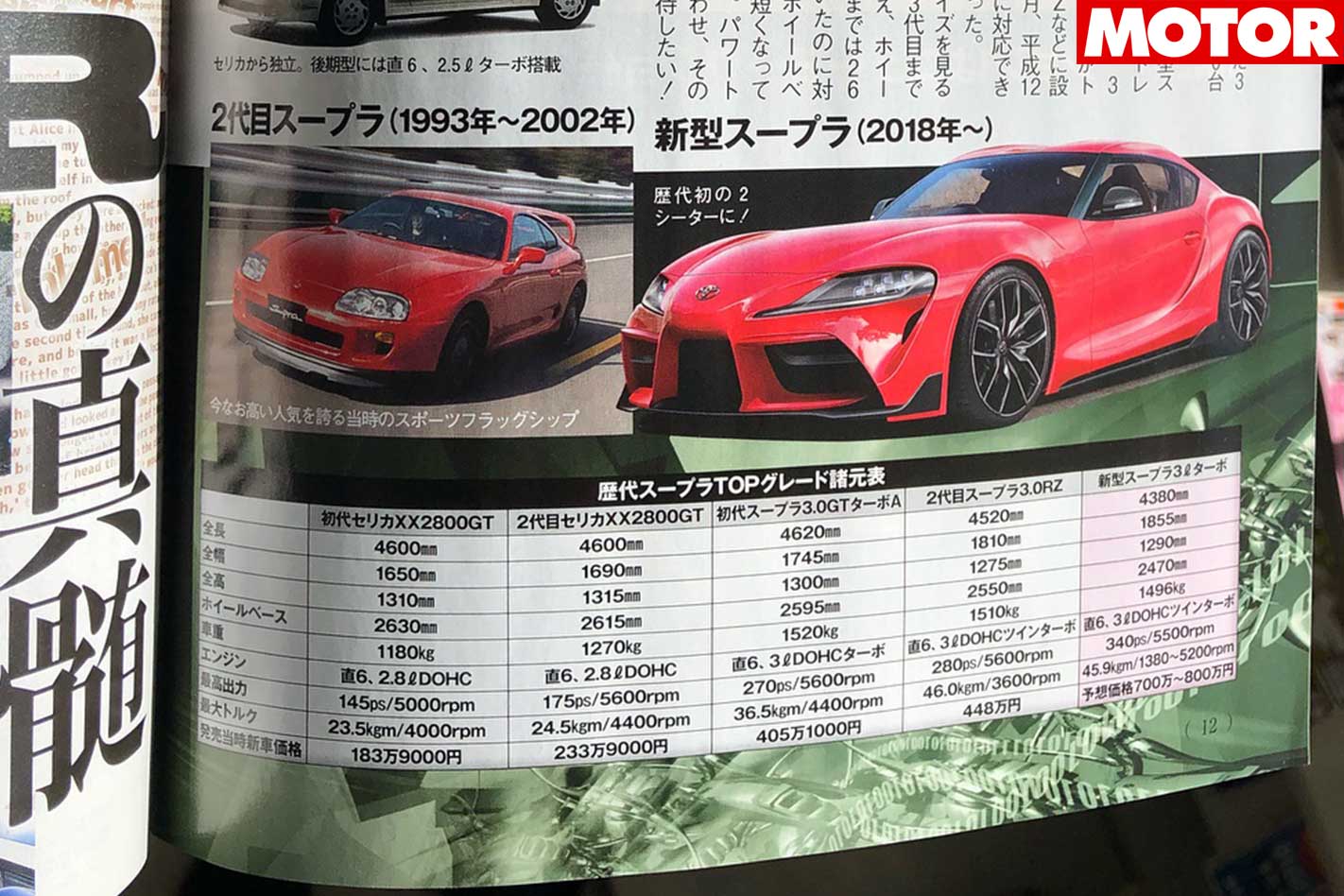
The inside information MOTOR received also claimed the Supra will produce 450Nm, which Best Car corroborates with a matching figure seen on page as 45.9kg-m.
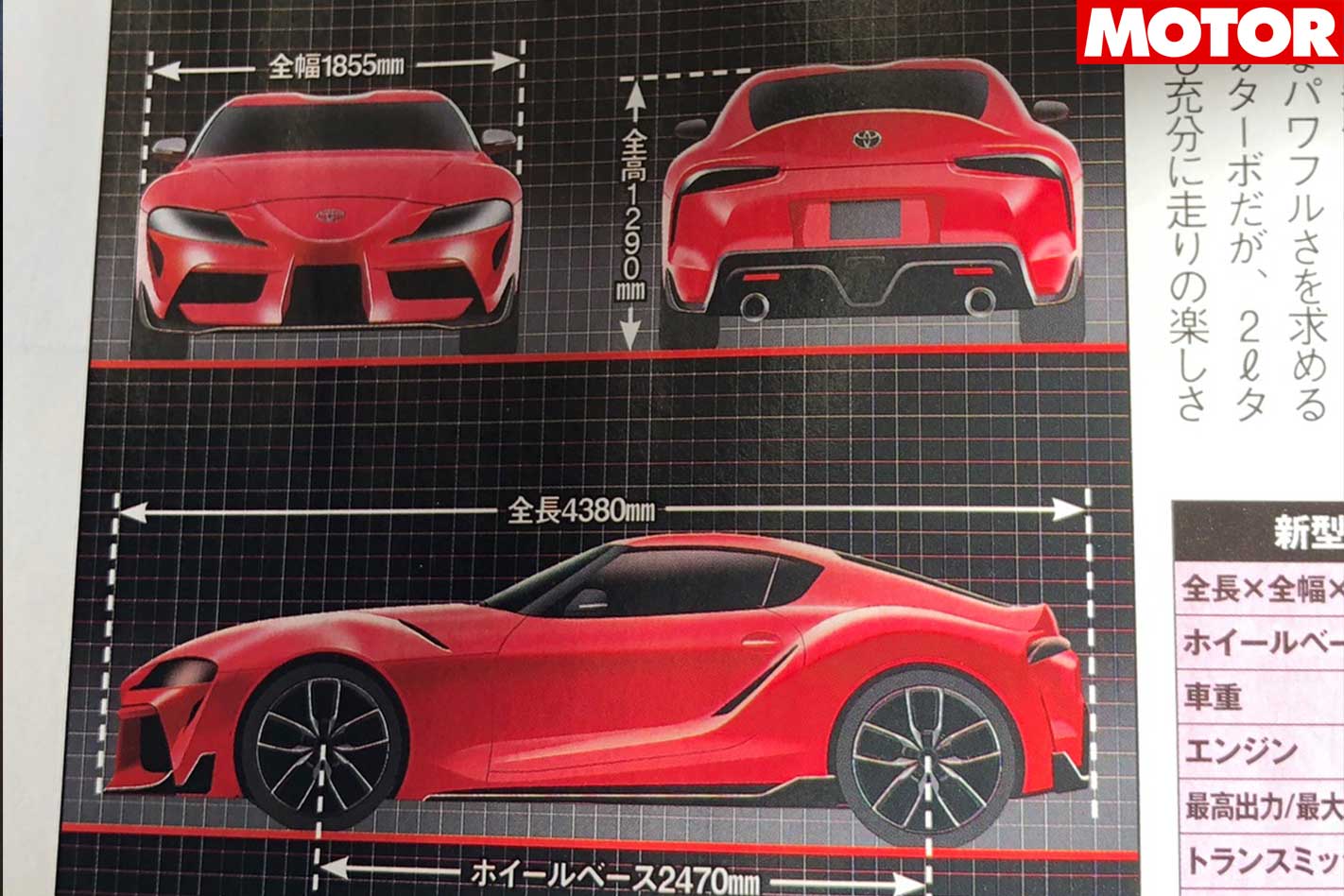
Visually, the apparent images seen in the Japanese magazine appear very similar to Toyota’s FT-1 concept, and not too far from MOTOR’s own rendering.
So how can the engine and power difference be explained?
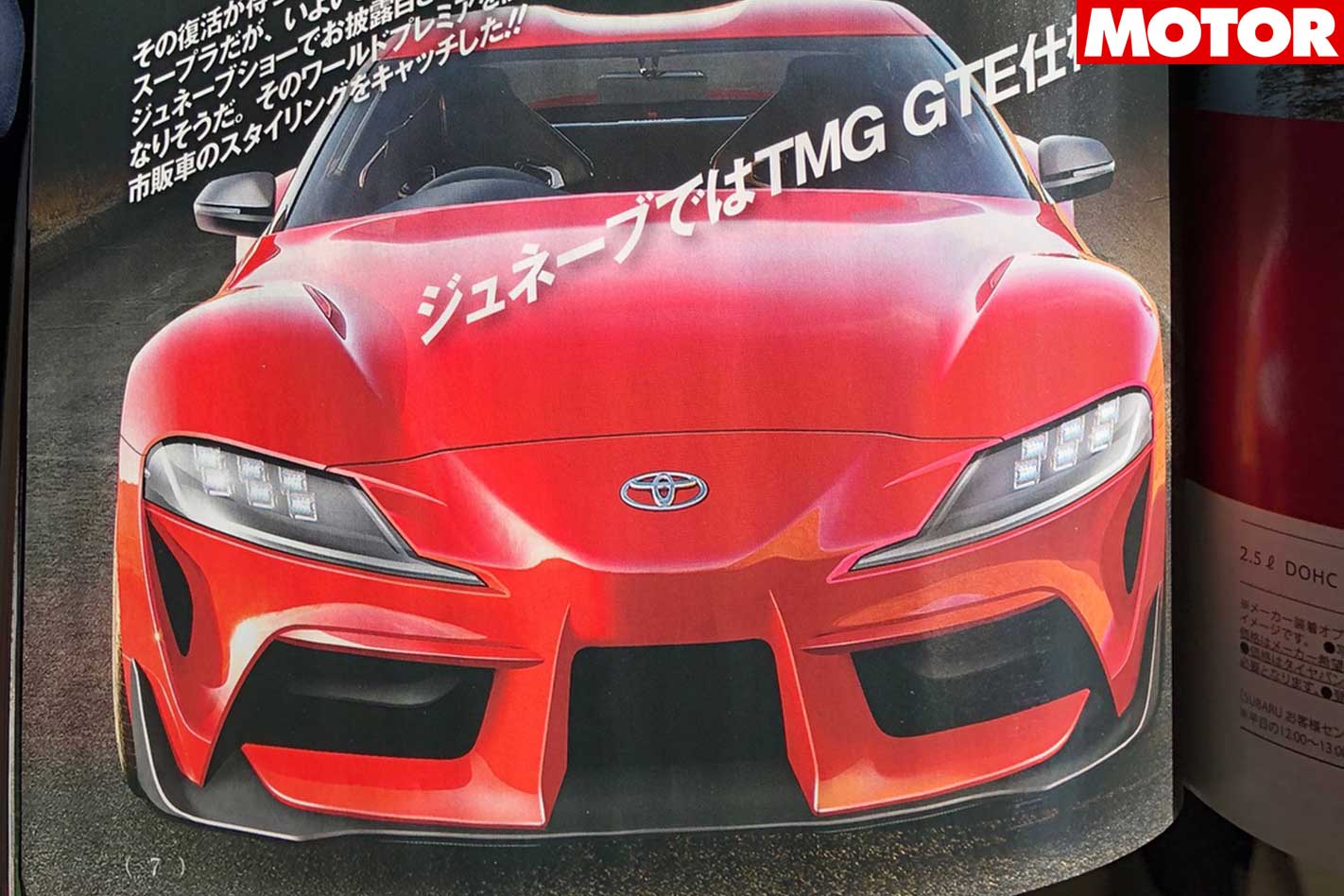
Right now, all Toyota says is that a track version of the ‘upcoming Toyota sports car’ is due to be revealed, so we’ll bring you the confirmed details of the new Supra from the Geneva Motor Show on March 6.
LAST PLACE sounds like a fail, doesn’t it?
But don’t be misled by the arithmetic here: not only is the Stinger the first Kia ever to grace PCOTY, it did so by offering one hell of a performance package at a super-competitive price. In fact, had this been Bang For Your Bucks, there’s a fair suspicion that the Kia would have been considerably higher up the ladder.
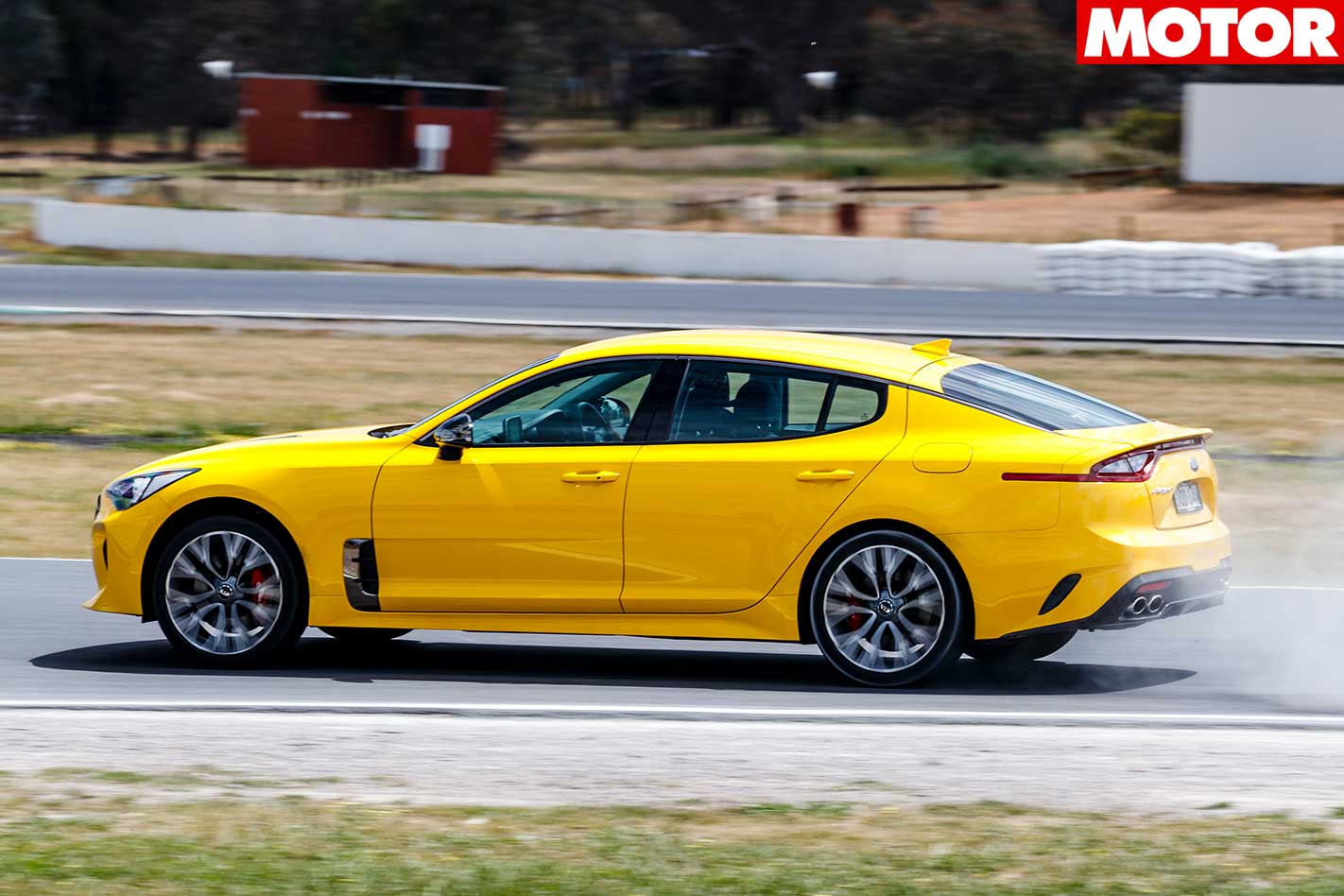
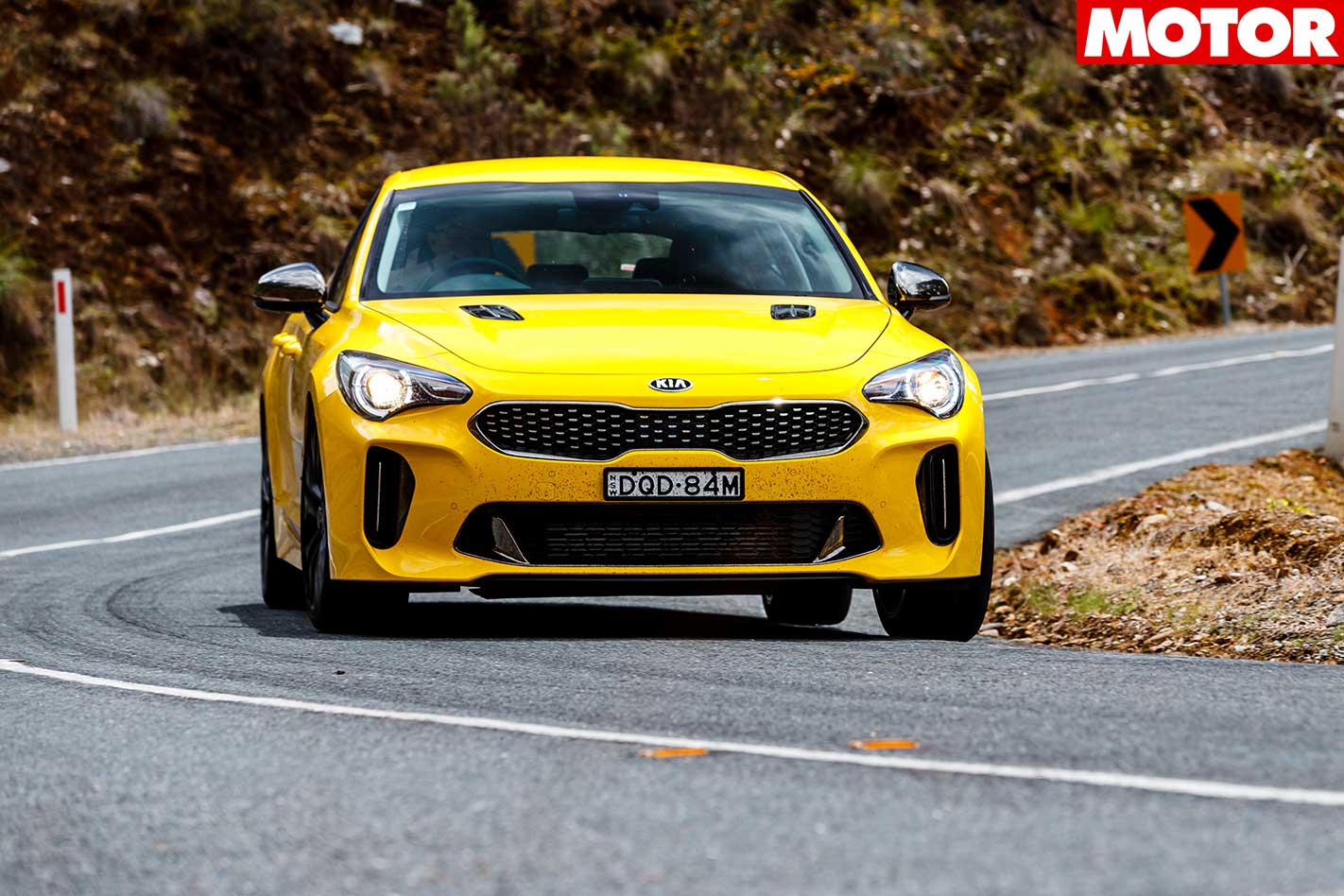
Nevertheless, it sizzles. And when you get to a corner, it doesn’t fall in a heap, either.
Okay, right at the limit, it starts to get a bit sketchy, but that long wheelbase is its saviour. And, true, the steering doesn’t telegraph much in the way of useful information and feels over-assisted. But the truth is that you can really scurry along in most situations and, as a big rear-driver in a world where that sort of thing seems on the nose, the Stinger is a real breath of fresh air.
Our main complaint would be with the transmission. Eight gears is fine by us, by why is there no Sport mode for the tranny? And why is there no way to lock it into a manual state of mind for more than a few seconds (via the paddles)? Feels like an oversight.
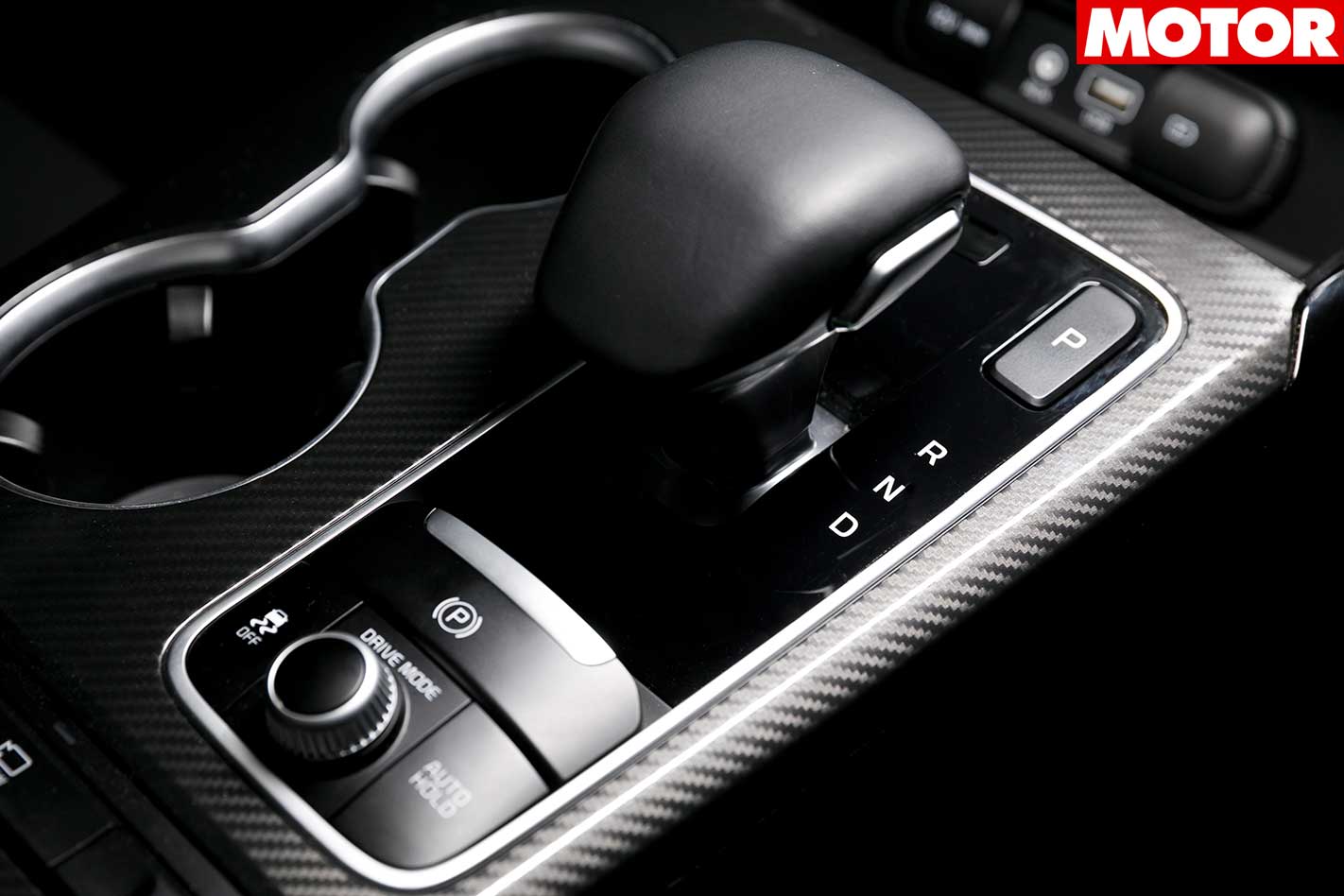
Maybe the next model will be an improvement. Even then, if you don’t want to drive your five-door family car like your pants are on fire (and there are plenty of us who would be nodding wisely about now) then the Stinger 330 Si starts making an awful lot of sense. And there’s no need to wait – that optional bi-modal exhaust will be a dealership retro-fit.
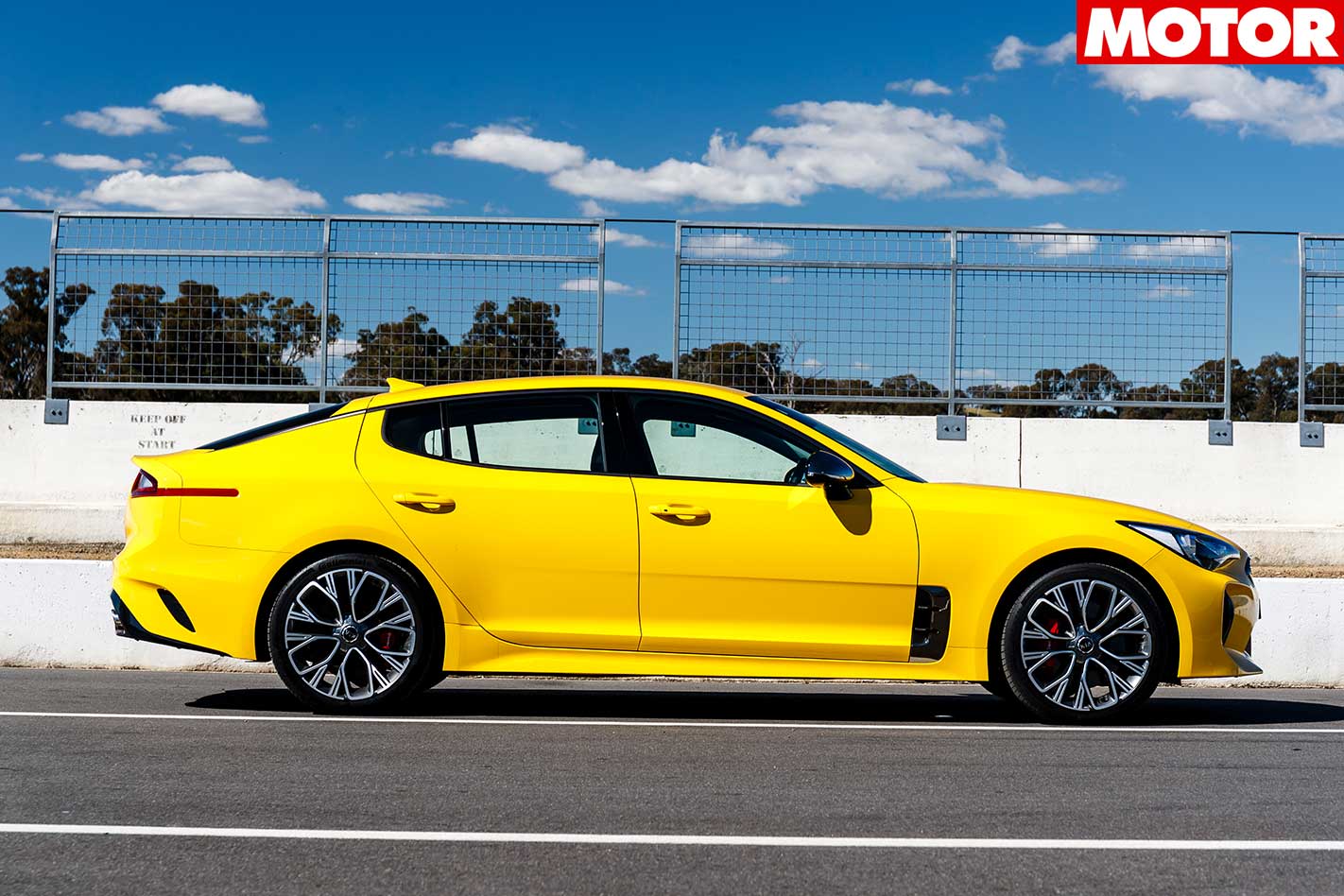
0-100km/h: 4.82sec (8th) 0-400m: 13.01sec @ 176.63km/h (8th)
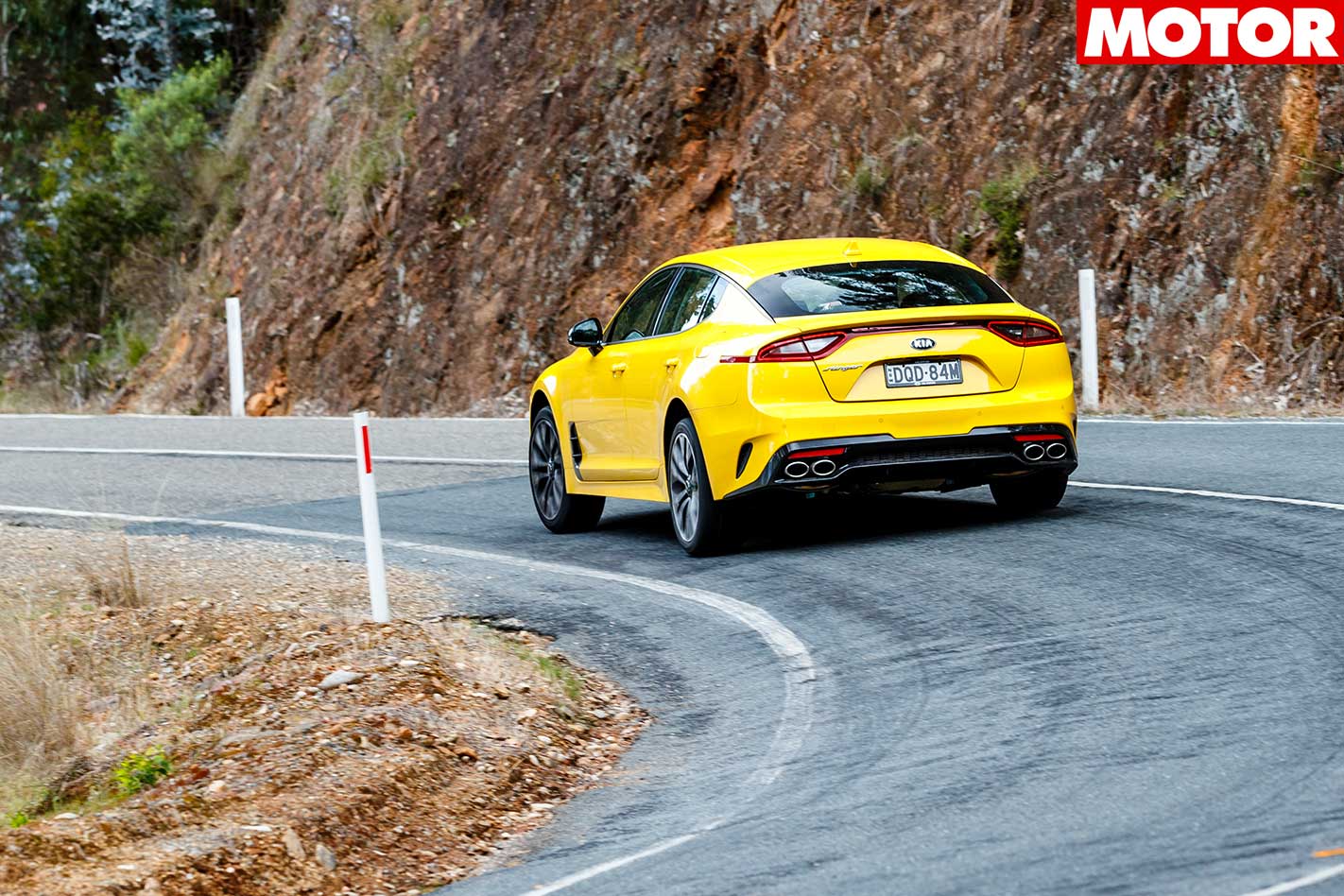
Morley – 6th A Kia at PCOTY? About time. And the Stinger made a good fist of this.
Campbell – =8th Good grunt, nice interior, but the handling deteriorates beyond eight tenths.
Newman – 10th Great engine, but chassis feels unfinished. Potential exists to be excellent.
Robson – 10th It’s the Stinger’s first day at performance school, and it’s all at sea. Has potential.
Reynolds – 10th Ugly! Nice road ride, engine not bad, but horrible at speed
JUDGES’ SCOREBOARD
| u00a0 | Campbell | Morley | Newman | Reynolds | Robson | Total |
| Performance | 8 | 6 | 8 | 6 | 5 | 33 |
| Dynamics | 5 | 5 | 4 | 3 | 6 | 23 |
| Accessibility | 8 | 8 | 7 | 3 | 7 | 33 |
| Liveability | 7 | 9 | 8.5 | 8 | 8 | 40.5 |
| Value | 8 | 7 | 7.5 | 9 | 7 | 38.5 |
| X-Factor | 5 | 3 | 4 | 1 | 6 | 19 |
| Total | 41 | 38 | 39 | 30 | 39 | 187 |
THE Peugeot 508, the car that will spell the end for the Holden Commodore as we now know it, has leaked online ahead of its official Geneva Motor Show reveal.
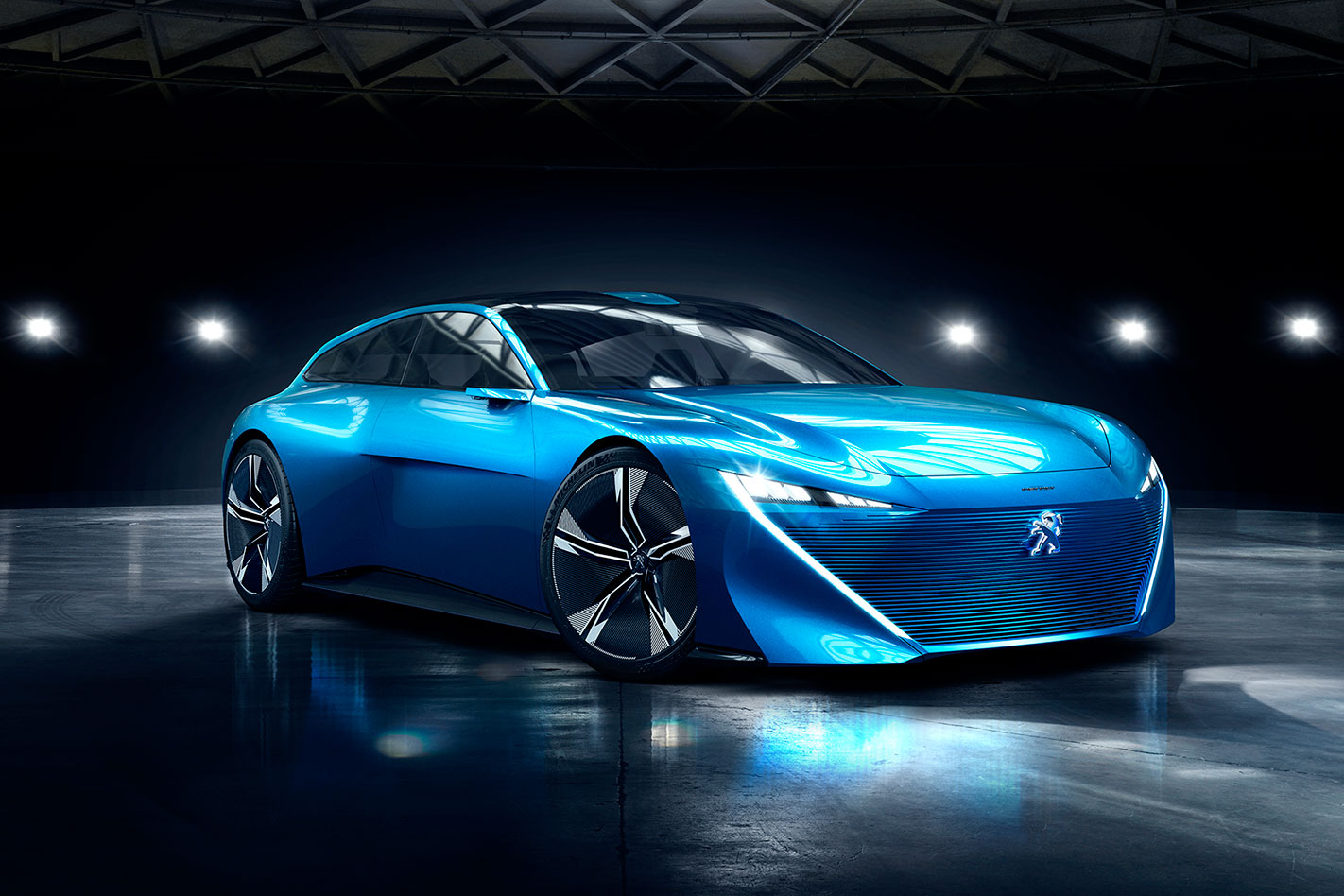
The single image of the MkII 508 sedan’s rear, posted on a Peugeot enthusiast page on Facebook, shows the Holden Commodore rival will adopt the three-claw tail-lights first flagged in last year’s Instinct Concept, a futuristic self-driving wagon.
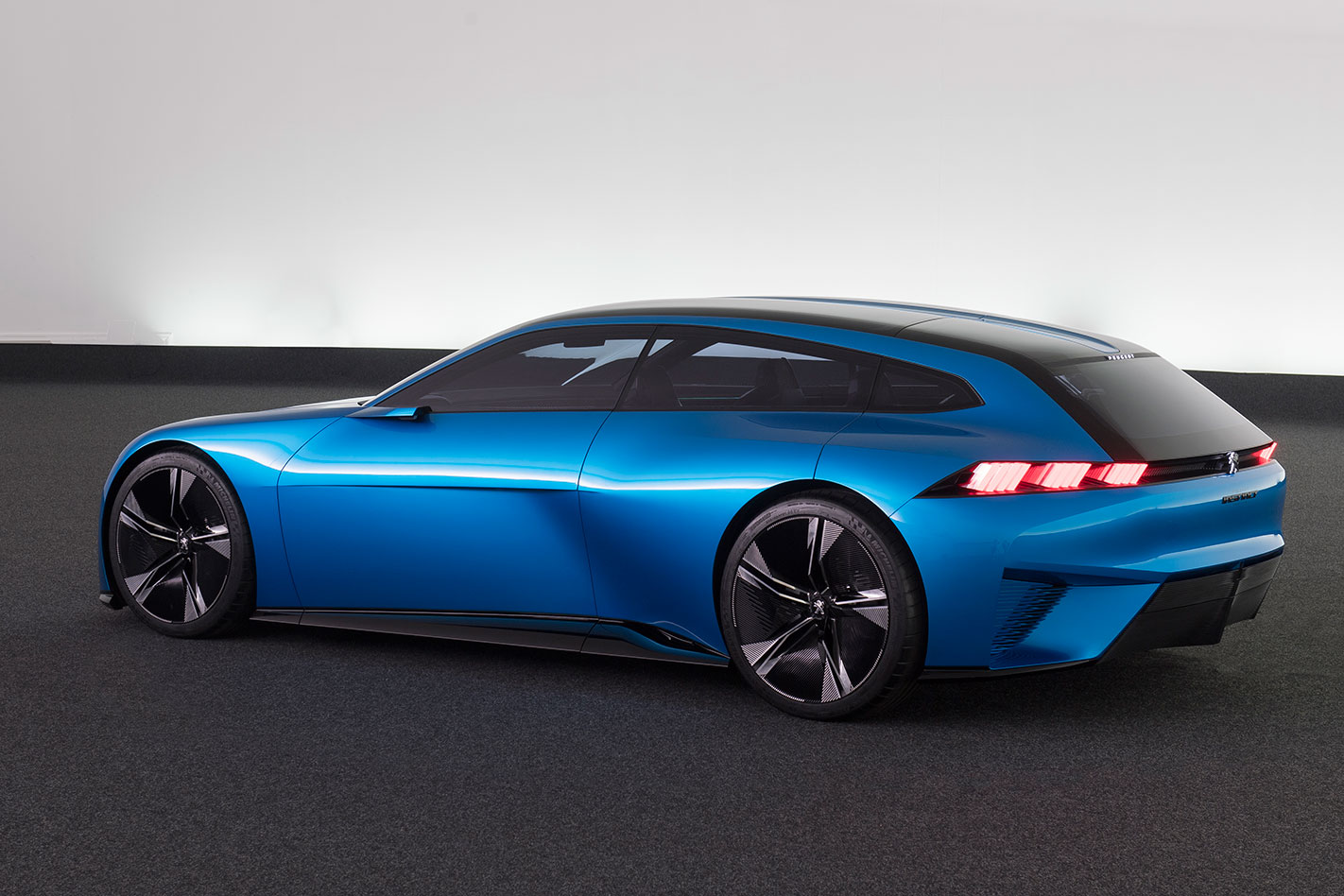
Some of the traditional 508 hallmarks remain, though, in the short boot with its integrated lip spoiler on the trailing edge.
The new 508 is also expected to have its interior overhauled to add the i-Cockpit digital dashboard similar to that introduced to the 3008 small SUV.
Spy images show the 508 could also adopt a toned-down version of the headlights previewed on the Instinct Concept, although it appears Peugeot plans on replacing the LEDs used on the concept with more traditional lenses.
Last year, Holden’s owner General Motors sold its struggling Opel European car-making division to Peugeot’s owner, Groupe PSA. Groupe PSA has recently announced that it will need to accelerate its plans to move Peugeot, Renault and Opel models to common platforms and engines in response to concerns over meeting tough new emissions standards with Opel’s current mix of products. The move has also flagged that it will need to quit Insignia production early to make the switch.
It means GM will need to find a new source for Holden Commodore-badged vehicles within about five years.
The 88th Geneva Motor Show starts on March 6. Visit WheelsMag.com.au for all the latest new car news and reveals as they happen.
