THE PROSPECT of a Holden Commodore powered by an imported Japanese engine was greeted with derision when it was first mooted early in 1983.
We won’t let it happen, said the unions; who’s going to buy one, scorned long time Holden customers; even the specialty press wondered if it could possibly be true.
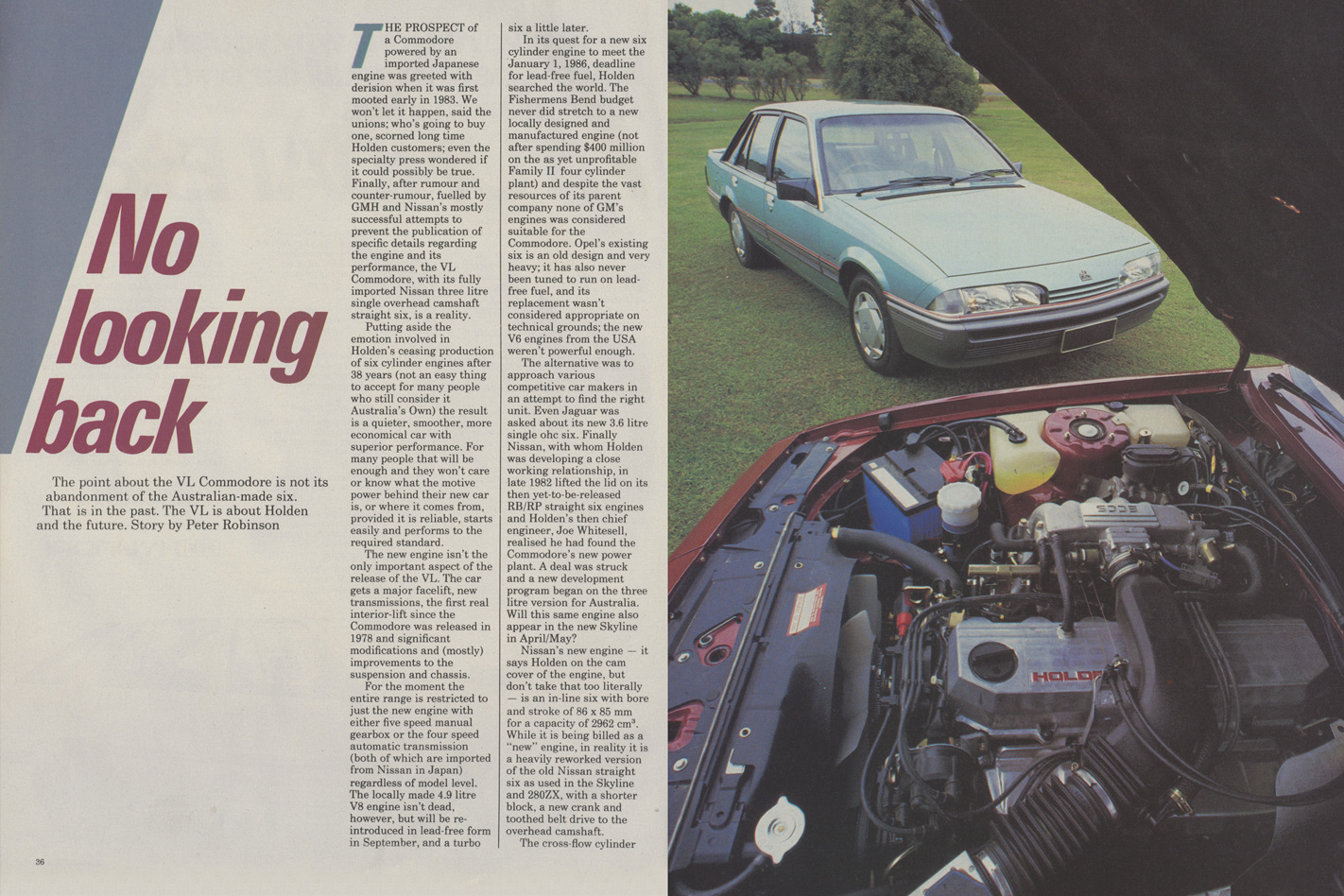
Putting aside the emotion involved in Holden’s ceasing production of six cylinder engines after 38 years (not an easy thing to accept for many people who still consider it Australia’s Own) the result is a quieter, smoother, more economical car with superior performance. For many people that will be enough and they won’t care or know what the motive power behind their new car is, or where it comes from, provided it is reliable, starts easily and performs to the required standard.
The new engine isn’t the only important aspect of the release of the VL. The car gets a major facelift, new transmissions, the first real interior-lift since the Commodore was released in 1978 and significant modifications and (mostly) improvements to the suspension and chassis. For the moment the entire range is restricted to just the new engine with either five speed manual gearbox or the four speed automatic transmission (both of which are imported from Nissan in Japan) regardless of model level.
The locally made 4.9 litre V8 engine isn’t dead, however, but will be reintroduced in lead-free form in September, and a turbo six a little later. In its quest for a new six cylinder engine to meet the January 1, 1986, deadline for lead-free fuel, Holden searched the world. The Fishermens Bend budget never did stretch to a new locally designed and manufactured engine (not after spending $400 million on the as yet unprofitable Family II four cylinder plant) and despite the vast resources of its parent company none of GM’s engines was considered suitable for the Commodore. Opel’s existing six is an old design and very heavy; it has also never been tuned to run on lead-free fuel, and its replacement wasn’t considered appropriate on technical grounds; the new V6 engines from the USA weren’t powerful enough.
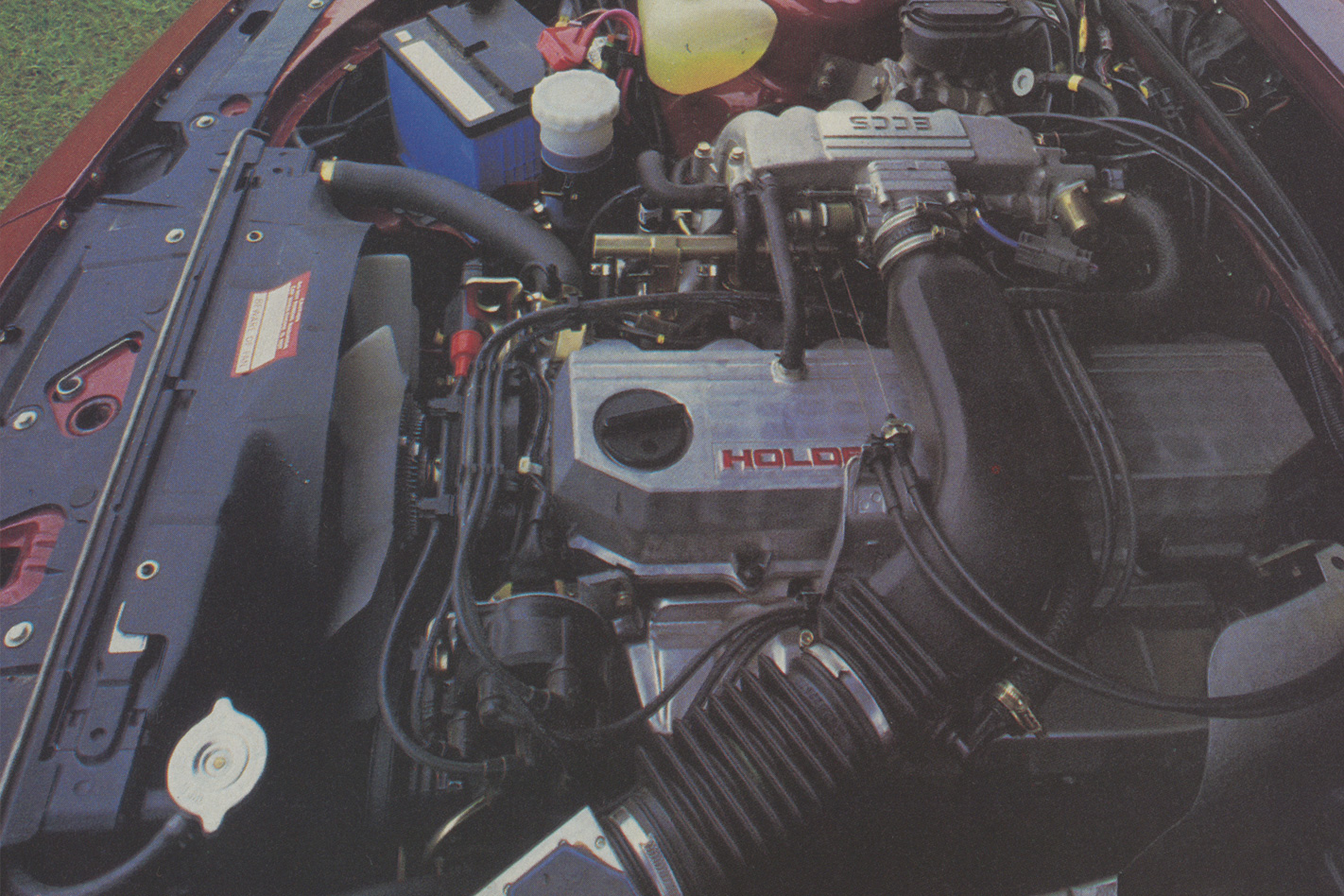
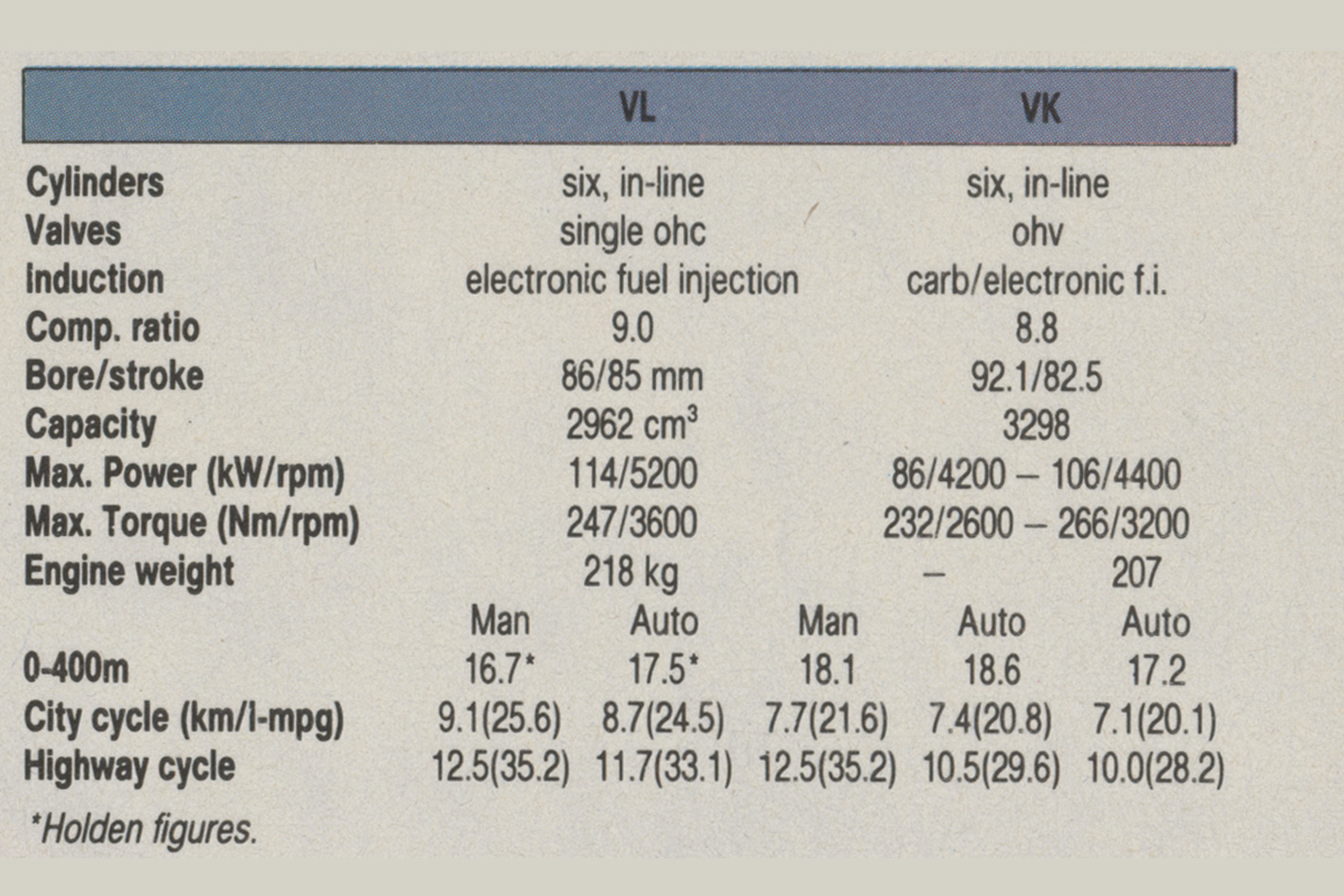
Nissan’s new engine- it says Holden on the cam cover of the engine, but don’t take that too literally – is an in-line six with bore and stroke of 86 x 85 mm for a capacity of 2962 cm3.
While it is being billed as a “new” engine, in reality it is a heavily reworked version of the old Nissan straight six as used in the Skyline and 280ZX, with a shorter block, a new crank and toothed belt drive to the overhead camshaft. The cross-flow cylinder head is alloy (but the block is iron) and it uses Nissan’s version of Bosch electronic fuel injection. Despite its apparent new generation specification the engine weighs 218 kg, or 11 kg more than the old injected six when both are fully dressed and ready to run.
An engine management system using a sophisticated microcomputer controls the fuel injection, ignition timing, idle speed control, fuel pressure control, fuel control and self diagnostics. The result is an engine that develops 33 percent more power than the old carby six and yet uses 15 percent less fuel. The VL Commodore develops 114 kW at 5200 rpm and 247 Nm of torque at 3600 rpm, compared to the previous carburettor engine’s 86 kW at 4200 rpm and 232 Nm at 2600 rpm, and the injected engine’s 106 kW/4400 and 266 Nm/3200.
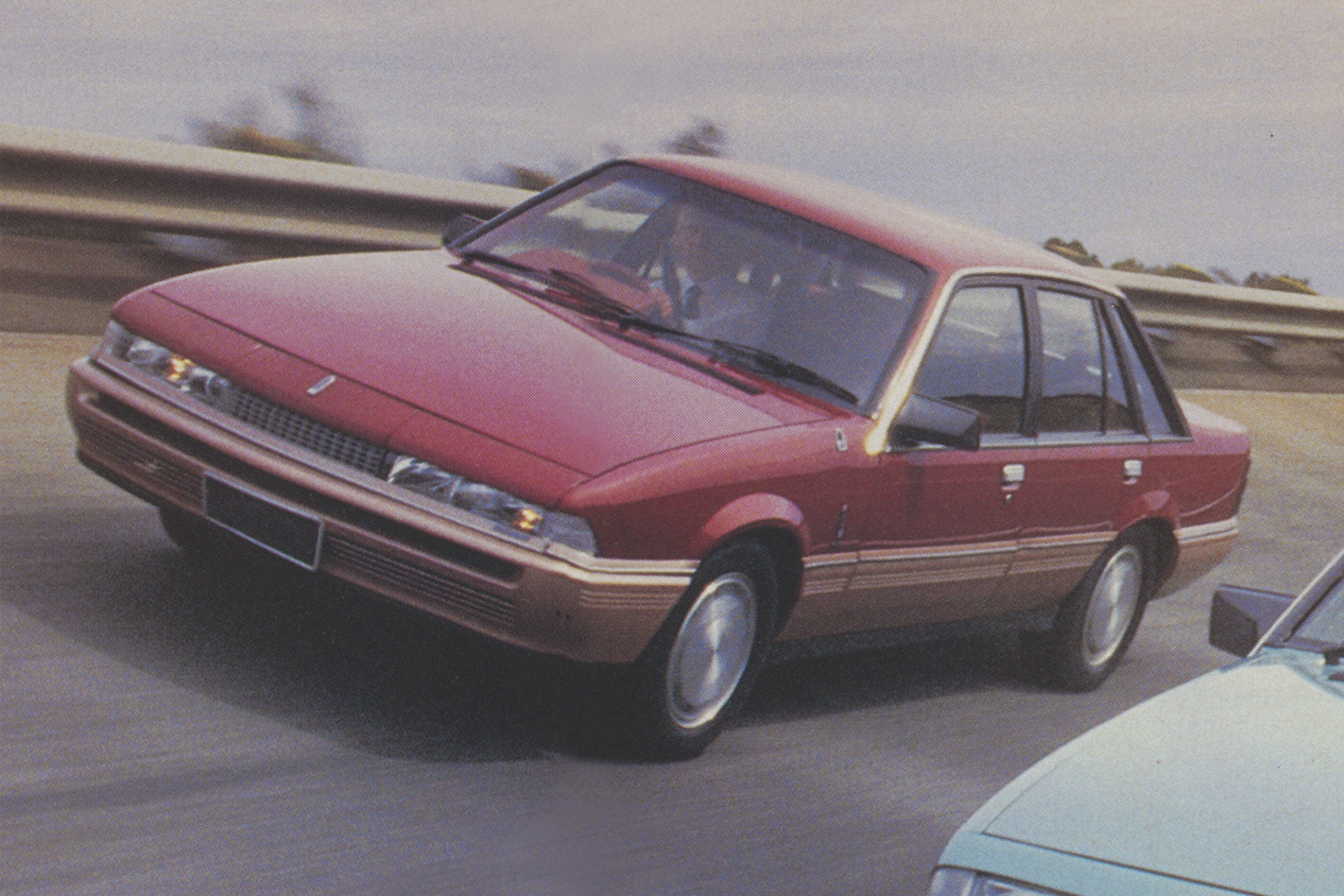
The result, however, is a high performance sedan that is going to blow most coupes and European sedans into the weeds and will give Ford cause to ponder an effective answer to Holden’s fuel injected challenge. The engine is flexible and responsive and pulls strongly from 1000 rpm in a gutsy manner that will please long time Holden owners who want to believe this is the way all cars should behave. What is very different about this Holden is that the engine will then it pull cleanly, effortlessly to the redline that is a BMW-like 6200 rpm. There is an cooling is provided through if the bumper bar.
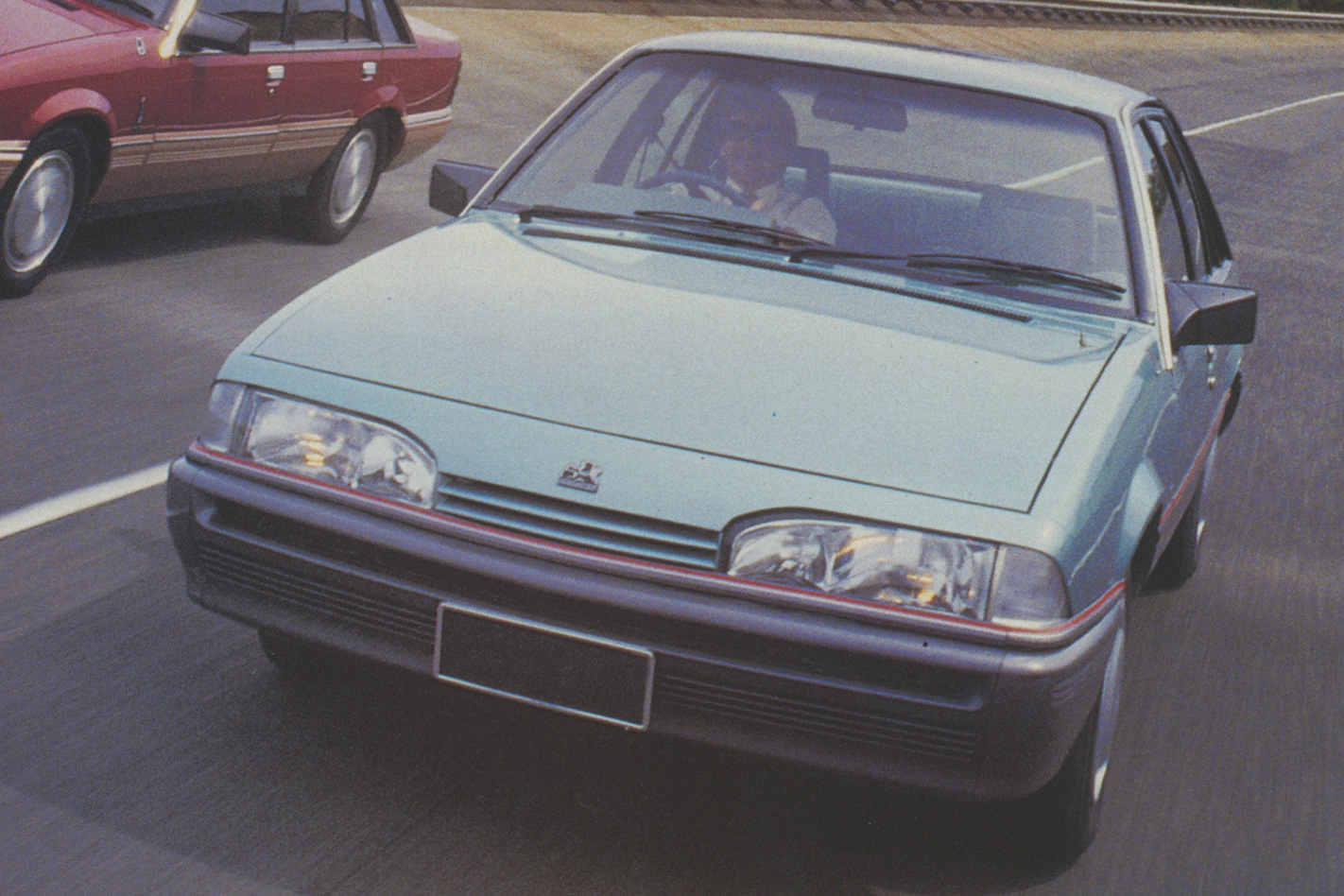
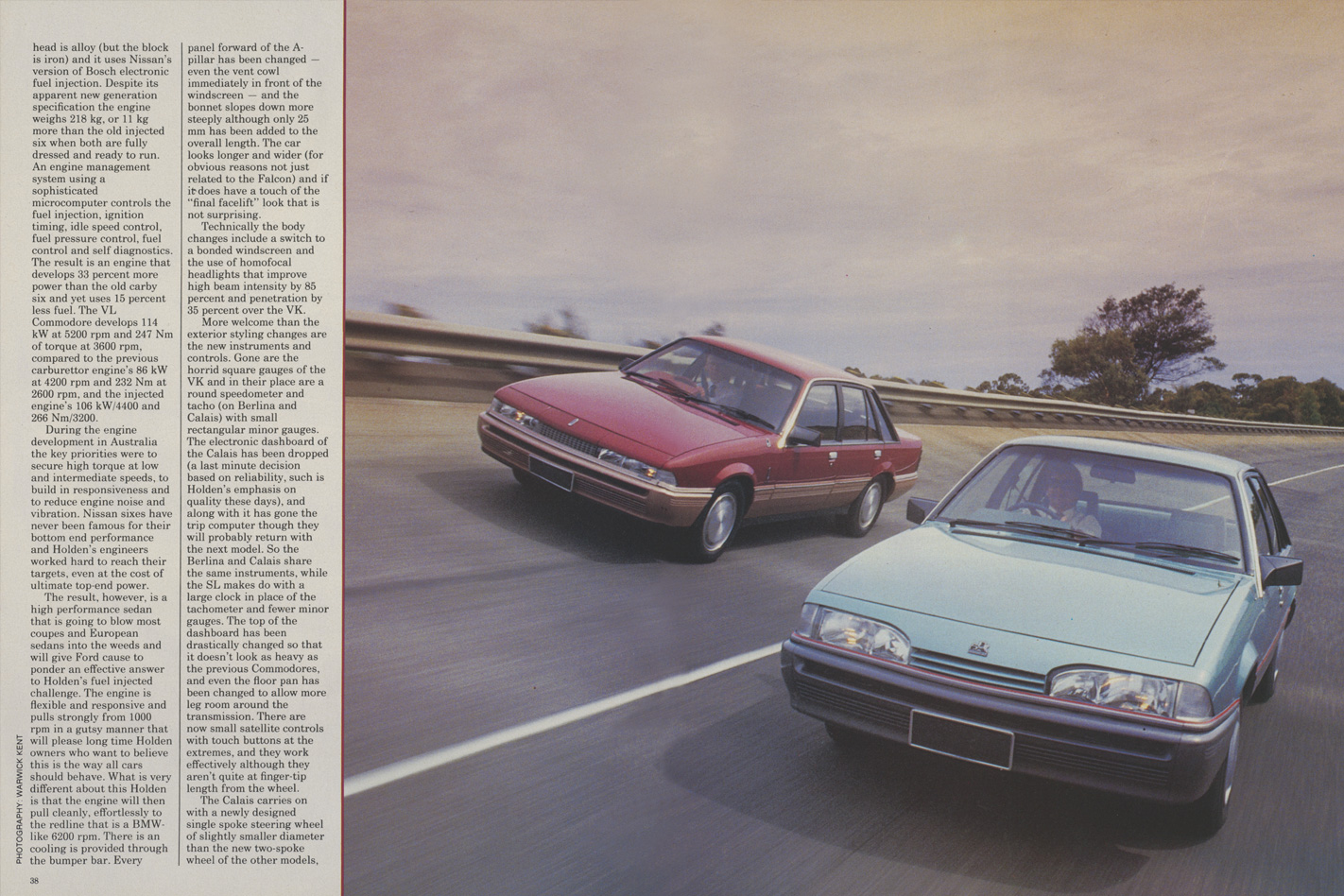
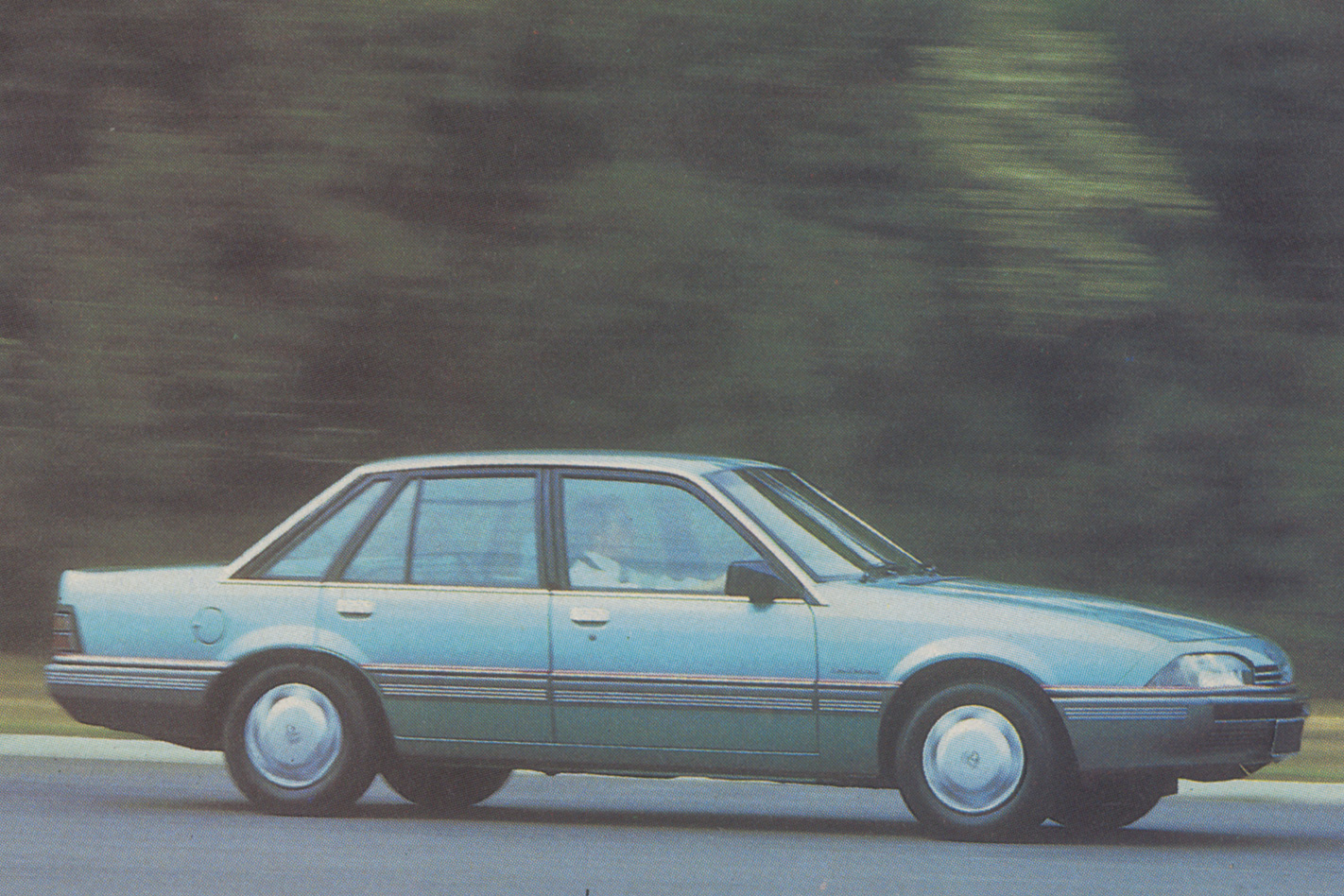
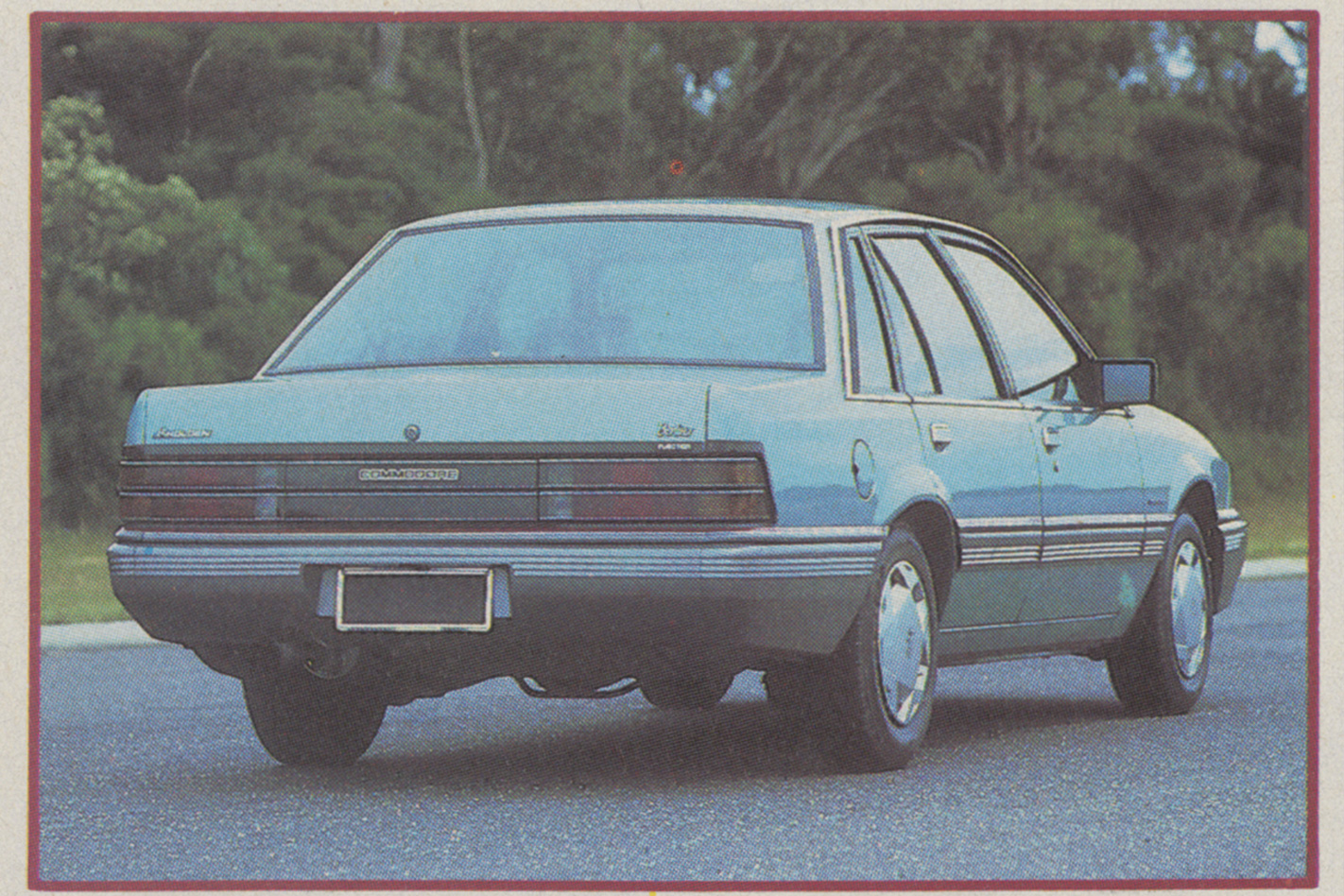
Every panel forward of the A-pillar has been changed – even the vent cowl immediately in front of the windscreen – and the bonnet slopes down more steeply although only 25 mm has been added to the overall length. The car looks longer and wider (for obvious reasons not just related to the Falcon) and if it does have a touch of the “final facelift” look that is not surprising.
Technically the body changes include a switch to a bonded windscreen and the use of homofocal headlights that improve high beam intensity by 85 percent and penetration by 35 percent over the VK Commodore.
The top of the dashboard has been drastically changed so that it doesn’t look as heavy as the previous Commodores, and even the floor pan has been changed to allow more leg room around the transmission. There are now small satellite controls with touch buttons at the extremes, and they work effectively although they aren’t quite at finger-tip length from the wheel.
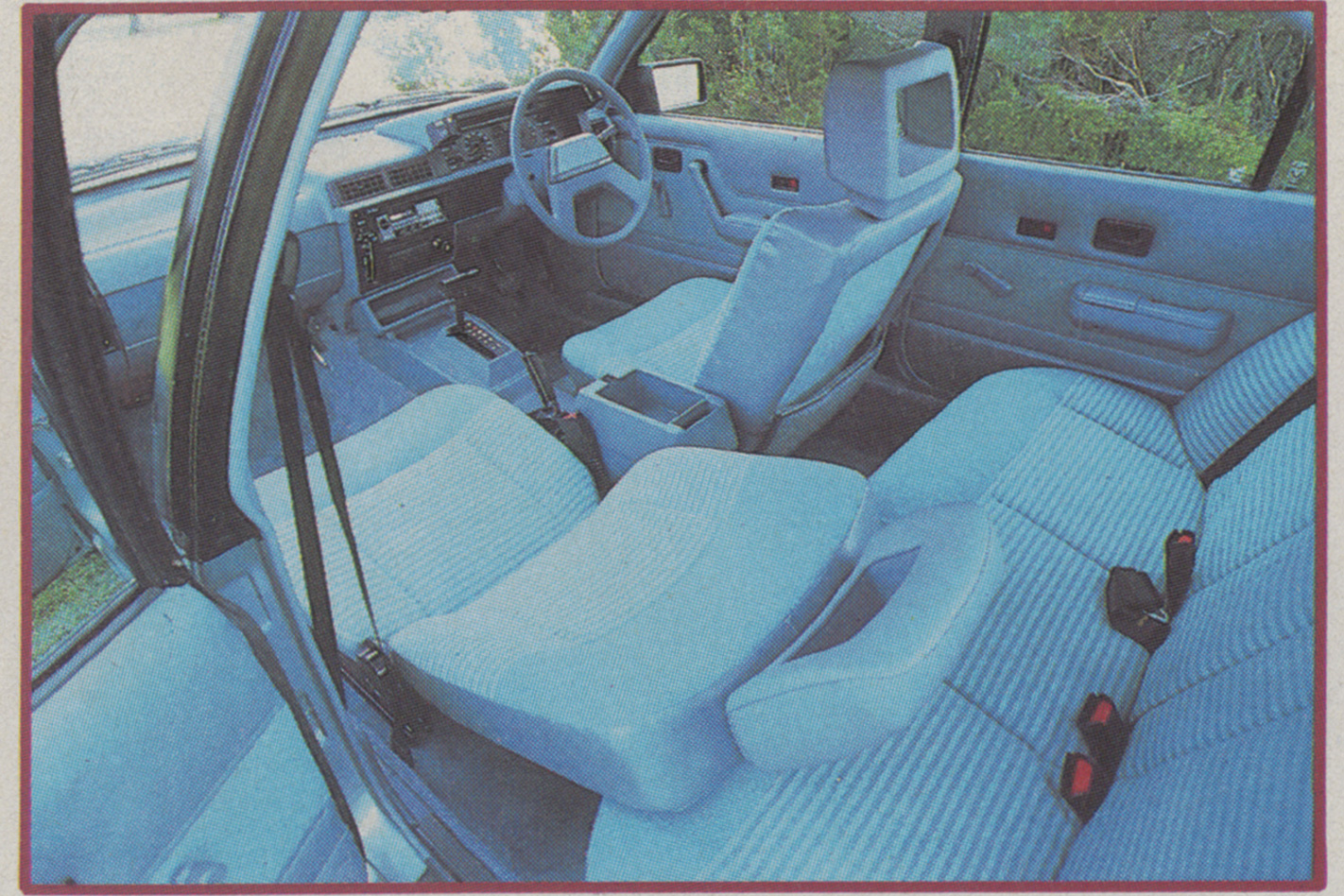
The front bucket seats are new in the Calais and orange warning zone at 5600 rpm but it is a warning only and the 6200 is there to be used (there’s an electronic cut-out at 6300 rpm). On Holden’s speed bowl the VL Commodore – and remember this is the base fleet owner’s car — proved it was capable of over 190 km/h …
Equally, the quality of the gearchange, with its hydraulic clutch, ensures another side of the car has been dramatically improved. It’s much slicker and more precise, and far easier and more enjoyable to use. The ratios are tall in the extreme, even by today’s standards – second will pull to over 100 km/h and third almost to 160 km/h. But the engine is able to cope so efficiently you come to the conclusion that the gearing is close to perfect. The direct fourth gear ratio gives 32.9 km/h per 1000 rpm while the overdrive fifth with the 3.45 final drive ratio produces 43.4 km/h per 1000 rpm.
The Nissan automatic is even taller in its gearing, the lock-out overdrive fourth gear – its button very conveniently located on the right of the console mounted selector – giving a massive 47.9 km/h per 1000 rpm using the same final drive ratio as the manual cars. Cruising is effortless and quiet, hardly surprising since at 100 km/h the engine is only turning over at 2100 rpm, while even the direct third gear at the same speed only has the engine working at a lazy 3000 rpm.
The automatic is set to change up at 5200 rpm, and while there is some hunting, especially when the overdrive is switched in, it changes up smoothly and complements the engine perfectly. There are two shift patterns controlled by another button for normal and power modes; these alter the part throttle change-up points by about 10 percent.
We’ve timed the old injected VK auto at 17.2 seconds and fully expect the VL to beat that, while a 16.5 second 400 m time is highly likely from an SL manual. With its crisp exhaust note, sharp responsiveness and quiet, easy manners this car is going to appeal both to the enthusiast and to the tired company man who has to struggle home in the commuter traffic.
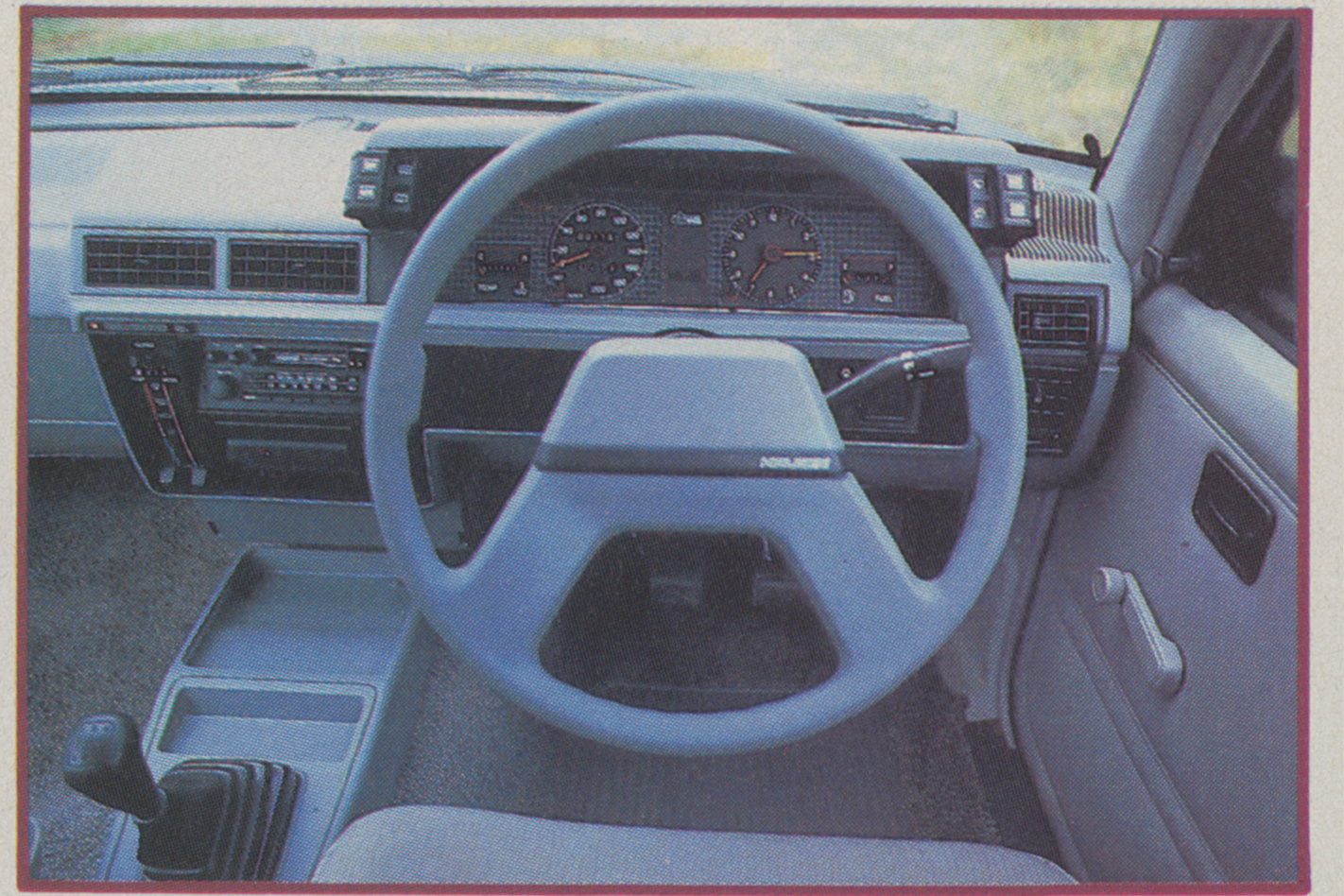
The changes to the chassis include switching from linear rate front springs to progressive, while the front geometry has been reset. At the same time the manual steering gear is now of the variable ratio type and the linkages have been relocated forward and down to reduce toe-out and roll steer and make the car more predictable on loose surfaces. There are 4.6 turns lock to lock with an on-centre ratio of 19.7:1 which goes out to 24.5 on lock. The old rack and pinion system was 19.9:1. The power steering, too, has changed to a variable ratio set-up and is now engine-speed regulated. The on-centre ratio is 17.2:1 reducing towards full lock to 11.8:1 while the previous power steering had a ratio of 15.8.
The ride is softer, too, and there is more body roll, but the handling is now so predictable that even people raised on manual steering Falcons will find it relaxing to drive. There is perhaps marginally more understeer in most conditions, but a final judgement will have to wait until we can put it over our road test course.
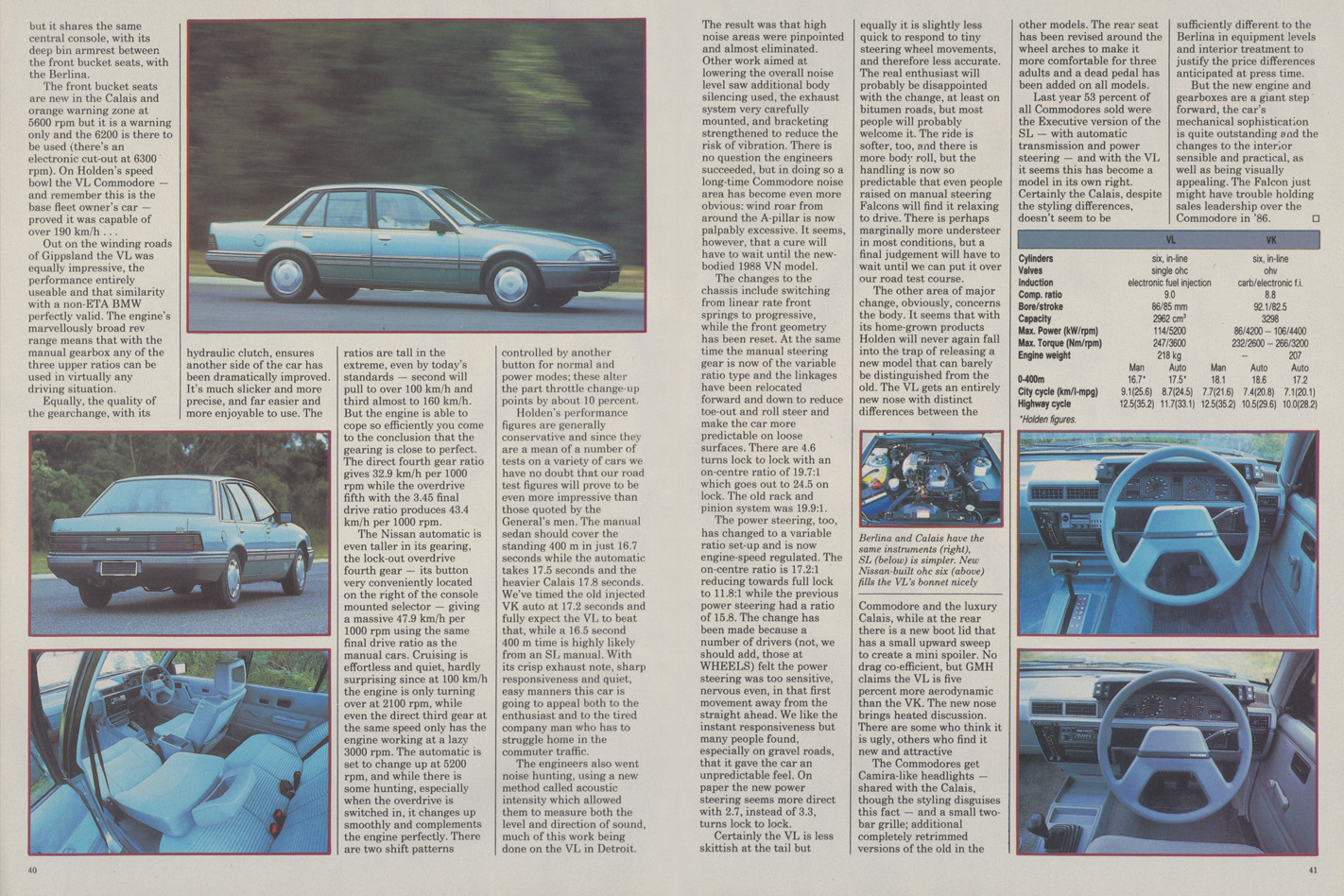
The Commodores get Camira-like headlights – shared with the Calais, though the styling disguises this fact – and a small two-bar grille; additional completely retrimmed versions of the old in the other models. The rear seat has been revised around the wheel arches to make it more comfortable for three adults and a dead pedal has been added on all models.
But the new engine and gearboxes are a giant step forward, the car’s mechanical sophistication is quite outstanding and the changes to the interior sensible and practical, as well as being visually appealing. The Falcon just might have trouble holding sales leadership over the Commodore in ’86.
IF LOOKS could kill, you’d pick BMW’s unassuming M140i last from a line-up.
Maybe it’s the lack of wings, or badges, but when bets were placed on how this overall order would wash out, most went to our RS-, AMG-, and GTI-badged entries. Yet, when the starting gun fired, the BMW tore off like a rabid fox in a hen’s shed, ripping apart just about every other contestant on the drag strip and circuit tests with ease.
BMW has form in this speed-versus-cents thing. The M135i claimed last year’s $50K-$100K category win. And years ago, in 1996, BMW’s 328i pocketed the overall gong. Consider all that and suddenly our M140i rises to an odds-on favourite. Punching the numbers into the formula, though, was puzzling.
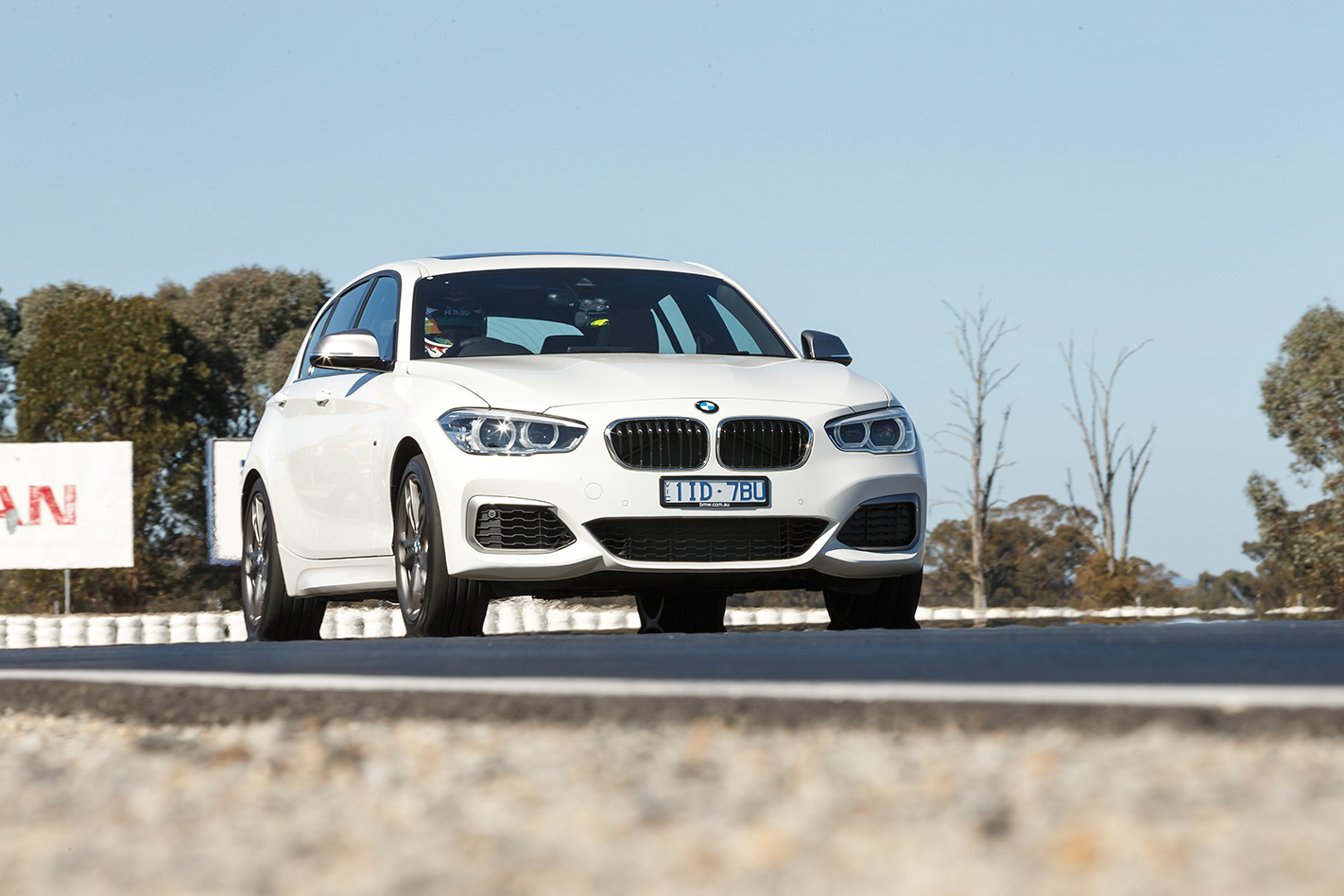
Would its absence hypothetically bump the M140i to second? Nope. Even if it topped six disciplines, the M140i would still wind back up here, with a bronze medal on its nose. Knocking a couple thousand off its price wouldn’t lift it up the charts, either – the competition’s just too stiff.
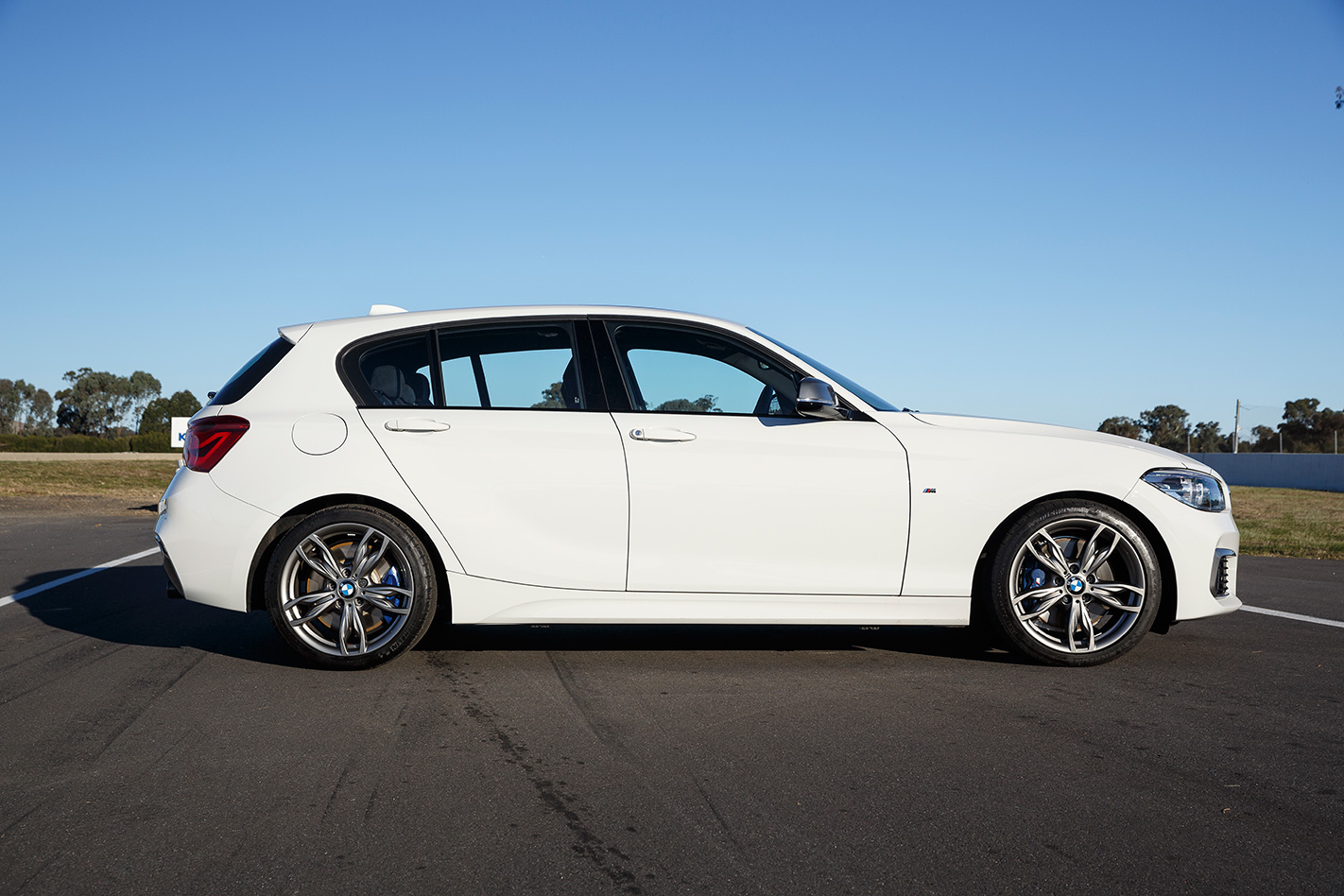
Even if it’s a little more expensive than a Volkswagen Golf R. It’s also enjoyable to drive when you’re not trying for a front-row qualifier, that supple chassis and solid interior gifting it excellent road manners.
And making it a much more obvious pick when scrambling for the keys at the end of the day.
What stands out?
The new-generation Land Rover Discovery can seat seven people in comfort but feels easier to handle, and more nimble, than its size and tall stance suggest. This big four-wheel drive wagon is also very smooth and comfortable – it feels like a luxury car to ride in – and yet it remains extremely capable off-road, and can carry and tow heavy loads. Auto braking is standard.
You can also read our review of the Discovery that this car replaced in August 2017.
What might bug me?
How much you paid for your Discovery by the time you had added the features you wanted. Even the third seat-row is an option costing thousands of dollars.That you cannot control smartphone apps from your touchscreen via Apple CarPlay and Android Auto. At extra cost however, you can add Land Rover’s InControl Apps, a smartphone integration system which works in a broadly similar way.
What body styles are there?
Five-door 4WD-style wagon only, with seating for five or (optionally) seven people.Every Discovery drives all four wheels at all times.Discoveries with the least-powerful engine have single-range four-wheel drive. All others are available with dual-range 4WD.Dual-range Discoveries give you a second set of gears that allow you to drive comfortably at very low speeds, so that you can tackle rough off-road terrain.The Discovery is classed as a large SUV, higher priced.
What features do all Discoveries have?
A sound system with a radio, USB input, Bluetooth connectivity for phone and audio streaming, and at least six speakers, controllable from a colour touchscreen.Leather wrap on the steering wheel, which carries buttons for operating the cruise control, the multimedia system and your phone. Paddle shifters for the auto gearbox.A reversing camera, and rear parking sensors. Automatic transmission.Dual-zone air-conditioning, which lets the driver and front passenger control ventilation independently.Twelve-volt power outlets in the centre console, the second seat row and the boot area.Aluminium alloy wheels, and a full-sized spare. (You can substitute a space-saver spare at no cost.)Traction control, which resists wheelspin in slippery conditions and is a great help off road.Hill Descent control, which can automatically hold down your speed on rough or slippery downhills.Terrain Response, which lets you optimise the traction control, accelerator response, and several other mechanical functions, in concert, for different conditions on-road and off – with the turn of a dial.Trailer Stability Assist, which helps prevent an oscillation developing when you are towing.Auto emergency braking, and lane departure warning.Six airbags. Stability control, which helps you avoid and control skids. (For the placement of airbags, and more on Discovery safety systems, please open the Safety section below.)Five seats are standard, but in any Discovery you can pay more for seven.If the list of standard features looks skimpy for such an expensive vehicle, that’s because it is. Just about everything else is an extra-cost option, or is standard only with the more expensive Discoveries.Land Rover warranties the Discovery for three years or 100,00km, whichever comes first. There is also a six-year warranty that covers the body against corrosion.
Which engine uses least fuel, and why wouldn’t I choose it?
Three engines are available in a Discovery, all of them turbocharged diesels. Two are 2.0-litre four-cylinders, and the third is a 3.0 litre V6.The 2.0-litre fours use less fuel than the V6, and there is little between them: both use less than 6.5 litres/100km on the official test (city and country combined), which is an extraordinarily good figure for such a big 4WD vehicle.Choosing your four-cylinder diesel therefore comes down to how much you want to spend, how hard you want your Discovery to go, and how far off the beaten track you want to get.The less costly of the fours is also the less powerful, relying on a single turbocharger. This is the Td4 engine, and it is not available with dual-range gearing.The more powerful four-cylinder uses two turbochargers and is designated the Sd4. It makes about 30 per cent more power than the Td4.Both four-cylinders are newly developed by Land Rover, using its latest Ingenium technology. With a Td4 engine, this much lighter new car will accelerate about as well as the less powerful of the previous Discoveries, the six-cylinder TDV6. With an Sd4 engine, the new car performs much like the more powerful, SDV6, versions of the previous Discovery.Indeed, a Discovery with the Sd4 engine gives little away to a Discovery fitted with the third engine available, the Td6. This V6 is a revised version of the SDV6 from the previous generation. While it offers more power on paper than the Sd4, performance feels about the same in general driving. You might notice the strength of the Td6 more with a significant load on board or when towing, however.The Td6 uses 7.2 litres/100km on the official test. That figure is a lot lower than its predecessor recorded in the superseded Discovery, in part because the new car is much lighter.You can have dual-range gearing with any Discovery Sd4 or Td6.Every Discovery uses an eight-speed auto gearbox from German maker ZF.(Power outputs and all other Land Rover Discovery specifications are available from the Cars Covered menu, under the main image on this page.)
What key features do I get if I spend more?
Land Rover offers the new Discovery at four increasingly lavish equipment levels, each available with any engine. In addition, most equipment can be added at extra cost to less expensive Discoveries.Spending as little as possible on a Discovery will get you a Discovery S, with cloth seats, an 8.0-inch central touchscreen, 19-inch wheels, the least powerful (Td4) engine, single-range 4WD, and the features of every Discovery. You can spend more for an Sd4 or Td6 engine, which allows you to choose dual-range gearing.Having chosen your engine and drivetrain, you can pay more again for a Discovery SE. That will get you leather-trimmed seats, with power-adjustment up front, and headlights and windscreen wipers that switch themselves on when required. There is satellite navigation, and the dual-zone ventilation will maintain a set temperature. The sound system has more power, and the cabin can be illuminated softly at night.There is also a very significant mechanical change: the SE introduces Land Rover’s air suspension, which replaces steel springs with pneumatic support for the car. This allows you to adjust how high the car rides. It can lower the Discovery when you want to get in or out, and it can add under-car clearance when required on rough ground.Spending more for a Discovery HSE gets you a memory for driver’s-seat adjustments, and three-zone climate control (rear passengers too can set their own temperature). The central touchscreen is bigger at 10 inches, the satellite navigation is better, the tailgate power-opens, and a smart key can be left in your pocket or bag while you unlock the car. The sound system is Meridian-branded and louder again. Headlamps switch automatically to low beam when necessary, and the wheel size grows an inch to 20 inches.The HSE also brings you an inner tailgate that can be power-lowered to form a picnic seat or table. And it introduces power-folding rear seats as an extra-cost option. You can also order rear seats with remote-control, so that you can fold them from your phone to prepare the car for big loads. (This extends to third-row seats if you have them.)If all this seems insufficiently pampering, you can pay a lot more for an HSE Luxury. A good chunk of that extra change will go on a finer grade of leather for the interior trim. The front seats are heated and cooled, and have more dimensions of adjustment, and you can power raise or lower the headrests. The mood lighting inside is more extensive and you can select from a palette of colours. The centre-console contains a cooled compartment, the sound system is yet more highly specified, the tailgate opens to a gesture from your foot, and the reversing camera can provide views in any direction. There is a two-panel glass sunroof, whose front panel power-opens, and a digital television receiver.Among off-road specific features available at extra cost on most Discoveries are All Terrain Progress Control and Terrain Response 2. The former is an off-road cruise control, which will maintain very slow speeds – allowing you to set your speed in difficult going and just steer the vehicle. The second adds automation to the standard Terrain Response system: it seeks to gauge the driving conditions and automatically adjust the traction control and suspension (among other elements) to optimise progress.In addition, you can specify a locking rear differential on almost any Discovery that has dual-range gearing.Among other luxury and cosmetic options are heated rear seats (including the third row), four-zone climate control, additional 12V and USB power sockets, and (on the HSE Luxury) massaging front seats. On all versions but the Discovery S you can have an Activity key, which is a waterproof wristband that can unlock the vehicle, allowing you to secrete the usual key somewhere inside.Among driver-assistance options are adaptive cruise control (which also extends the auto-braking to high speeds), lane-keeping assistance, blind-spot monitoring, and rear cross-traffic alert. You can also order Advanced Tow Assist, which is an automatic parking system designed to work with a trailer.
Does any upgrade have a down side?
Larger wheels have lower-profile tyres, which diminish ride quality on bumpy roads. Lower-profile tyres are also more vulnerable to damage and less effective off road. And generally, they cost more to replace.Adding features like third-row seats or a sunroof adds weight, which reduces the load you can carry. The extra weight also diminishes performance and handling.Third-row seats reduce the available luggage space.Solid white is the only colour that doesn’t attract an additional cost.
How comfortable is the Discovery?
It is a tall step up into a coil-sprung Discovery S, but less so if you option the height-adjustable air suspension that’s standard on every other Discovery. Once on board you’ll find a large and spacious cabin that offers a very comfortable and commanding driving position.Compared with the previous generation Discovery the cabin isn’t as tall or as airy, however, and you feel more closed in. On the plus side, the lower roof reduces drag and improves fuel economy.The general presentation is of subdued luxury, with lots of black interspersed with polished metal highlights. Simple, logically grouped switchgear and intuitive touchscreen controls make it easy to feel at home.Where the previous Discovery was built on a heavy truck-style chassis, this new vehicle is based on the current Range Rover, using a much lighter one-piece body and chassis made mainly from aluminium. It is not a great deal heavier than most big luxury sedans, and you feel the reduced bulk immediately from behind the wheel.All three diesel engines are very quiet, so much so that you may well mistake them for petrol engines. Even the least powerful engine provides effortless performance for city and urban driving, and has enough power for relaxed highway driving. The eight-speed automatic provides exceptionally smooth – indeed, all but undetectable – gear changes.On most road surfaces the Discovery’s ride feels supple and absorbent, and there’s very little wind and road noise to detract from a very serene driving experience. Very little steering effort is needed, even at parking speeds.
What about safety in a Land Rover Discovery?
Every Discovery has anti-lock brakes, stability control, six airbags, a reversing camera, rear parking sensors, seatbelt warnings for all seven seats, auto emergency braking, and lane departure warning. It is a comprehensive package aimed at helping you control the car, avoid a crash, and survive a crash, while reducing the risk that you will endanger bystanders when manoeuvring at low speeds.The airbags are placed in front of, and alongside, the front occupants, and at head level down each side of the car. The side-curtain airbags extend far enough to protect passengers in the third seat-row from side impacts.The Autonomous emergency braking uses a camera-type sensor to scan the roadway ahead, and can detect pedestrians as well as bigger obstacles. It warns you of hazards (typically a sharply slowing car), and will initiate an emergency stop if you do not react – at speeds up to about 80km/h.The Discovery also monitors your position on the highway in relation to lane markings, and if you show signs of drifting into an adjacent lane – possibly from distraction – it will vibrate the steering wheel to attract your attention.At extra cost you can add to any Discovery Adaptive cruise control and Lane keeping assistance. The Adaptive cruise brings an additional radar-based auto-braking system called Advanced Emergency Brake Assist, which works at highway speeds. The Lane keeping assistance augments the standard lane departure warning, attempting gently to steer the car out of trouble.On any Discovery but the S you can add a suite of rear-facing driver aids also, namely a Blind spot monitor (with Closing vehicle sensing), and a rear cross-traffic alert. The former alerts you to adjacent vehicles near your rear corner that might not appear in your mirrors (also warning you if a car is closing fast from behind, perhaps in an overtaking attempt). The latter helps when you are reversing from a car park, telling you if another car is about to cross behind you.The Australasian New Car Assessment Program (ANCAP) awarded the Discovery five stars for safety, its maximum, in June 2017.
I like driving – will I enjoy this car?
The Discovery is a very enjoyable car to drive, even if the least powerful engine, the Td4, does not provide spirited highway performance. A Discovery Td4 will get you effortlessly from A to B, but overtaking is more workmanlike than entertaining.Driving appeal starts with the Discovery’s responsive, even agile, steering and handing. Compared with most other vehicles that offer as much off-road ability, it is as though you have got into a sports car.The Discovery builds on this surprisingly sporty feel with luxury-car refinement. It is extremely quiet and extremely comfortable, even on poor roads.Those wishing to enhance the experience will find the Discovery Sd4 and Td6 go much harder. These are brisk cars, even if they won’t match explicit – and more road-oriented – high performers such as Jeep’s V8 Grand Cherokee SRT or Land Rover’s own Range Rover Sport SVR.The Discovery’s on-road finesse does not come at the expense of its formidable off-road ability. It is the complete package, very capable on road and off.There are some prerequisites for rough off-road use, however. These start with dual-range gearing (implying an Sd4 or Td6 engine) and the height-adjustable air suspension.On top of that you’ll need the optional self-locking rear differential, and wheels no bigger than the 19s that are standard on the Discovery S and SE (and can be fitted to other models). The 19s aren’t ideal for off-road use (18s or 17s would be better), but they are as good as you can get from Land Rover on a Discovery.If you’re not after extreme off-road ability then even a Td4 Discovery S, with standard coil-spring suspension and single-range gearing, will cope with general 4WD use – unsealed roads, farm tracks, easy fire trails and even most beach and sand driving.
How is life in the rear seats?
Second-row passengers, even tall adults, will be happy in the Discovery. There’s good headroom and plenty of leg room, thanks in part to the seat having 160mm of fore-aft adjustment. Three adults can fit quite comfortably, too.The third-row seats are also very spacious. They can accommodate average-sized adults and are surprisingly easy to get into and out of.Four ISOfix child-seat anchor points are also provided, two in outside positions of the second-row seat and two in the third row. The lower Access mode provided by the air suspension helps when lifting small children in and out.
How is it for carrying stuff?
The Discovery is very good at carrying stuff. It is rated to carry very heavy payloads – not much short of popular dual-cab utes. Most Discoveries are also rated to tow 3500kg – a very big boat or caravan, or a loaded three-horse float.Surprisingly, the Discovery is rated to carry and tow a bigger combined load than the best of the popular dual-cab utes.Its body also has plenty of cargo room. With the second and third row seats folded it has more than 2400 litres of luggage capacity and a load length exceeding 1.9 meters – as long as a standard mattress. Even with the second row upright you get 1100 litres of space when the third-row is folded.With all seven seats upright the luggage capacity is reduced to 258 litres, however – a fairly typical figure for big seven-seaters, and about the size of the boots in city hatchbacks.The second-row seat folds 60-40 and the fore and aft adjustment can give more luggage space if second-row leg-space is not a priority.Discovery HSEs have an interior tailgate to stop stuff falling out when you open the top-hinged single rear door. And if you option power-folding rear seats, there’s even a smartphone app available to pre-fold them if you have something big to carry in the car.
Where does Land Rover make the Discovery?
All Discovery models are made in the UK.
What might I miss that similar cars have?
A longer range for touring remote areas, from a much bigger fuel tank – as fitted to the Toyota LandCruiser 200 and Toyota Prado, for example.A wide choice of tyres suitable for Outback touring and off-road driving, which you can get for most other 4WDs.Apple CarPlay and Android Auto smartphone integration. This is standard on the Ford Everest and even the cheaper Holden Trailblazer, for example.A CD player, as fitted to LandCruiser and Prado.Other cars you might consider include the Jeep Grand Cherokee, the Nissan Patrol, and the Range Rover Sport.
I like this car, but I can’t choose which version. Can you help?
The Discovery comes in a mind-boggling array of engine, trim and option configurations, but as an all-rounder the Discovery SE Sd4 looks the pick. The SE Sd4 comes standard with air suspension and dual-range gearing, which make it easier to live with and transform its off-road ability. It goes nearly as hard as the more expensive Td6, and brings significantly more equipment than the bare-bones S.The SE Sd4 won’t suit everyone, especially those looking for the extra equipment of the HSE or HSE Luxury, or the heavy-duty towing power of the Td6 engine. At the bottom end of the price range, the Discovery S Td4 offers a lot of core vehicle for the money, even if it’s light on equipment.
Are there plans to update the Discovery soon?
Going on the life cycles of previous Discoveries, don’t expect a new-generation car before 2023.What will arrive before that – at a date to be confirmed – is a new generation six-cylinder diesel, which will be an inline engine rather than the V6 now available.The new diesel straight-six will likely be offered in two variants, one with roughly the same power as the current Td6 and one with considerably more power and tagged Sd6.In September 2017 at the Frankfurt motor show, Land Rover showed for the first time a supercharged V8 petrol Discovery named the Discovery SVX. Claiming extreme all-terrain capability for the SVX, Land Rover said the high-performance Discovery would arrive in Australia in the second half of 2018.
This is your inside look into a Subaru that laps The ’Ring faster than a Lamborghini Aventador SV.
It’s also is the first piece of evidence Subaru has released to the public to prove the fact.
Last July Subaru America unleashed its WRX STI Type RA NBR at the Nurburgring Nordschleife to knock off the Alfa Romeo Giulia QV as the fastest four-door.
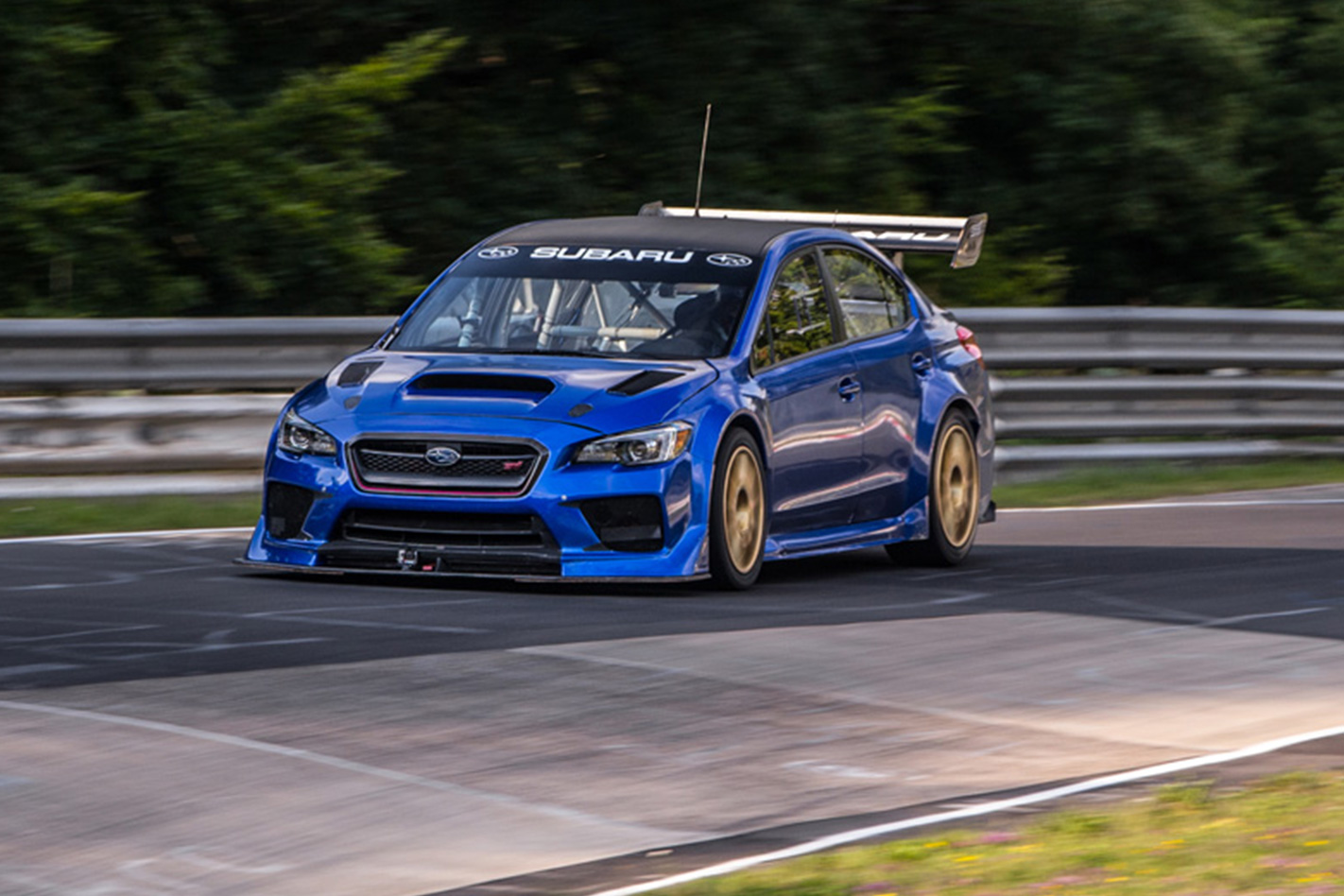
Its 6min 57.5sec lap was a full second quicker than a Lamborghini Aventador SV, and a sniff within Porsche’s 918 Spyder.
But neither manufacturer were up in arms about a little ol’ WRX joining them in the rarified air of sub-seven minute times. Partly because it was verified by the track’s official.
But also while the Type RA NBR shares three quarters of its name with Subaru’s road going WRX STI Type RA, it shares much fewer components.
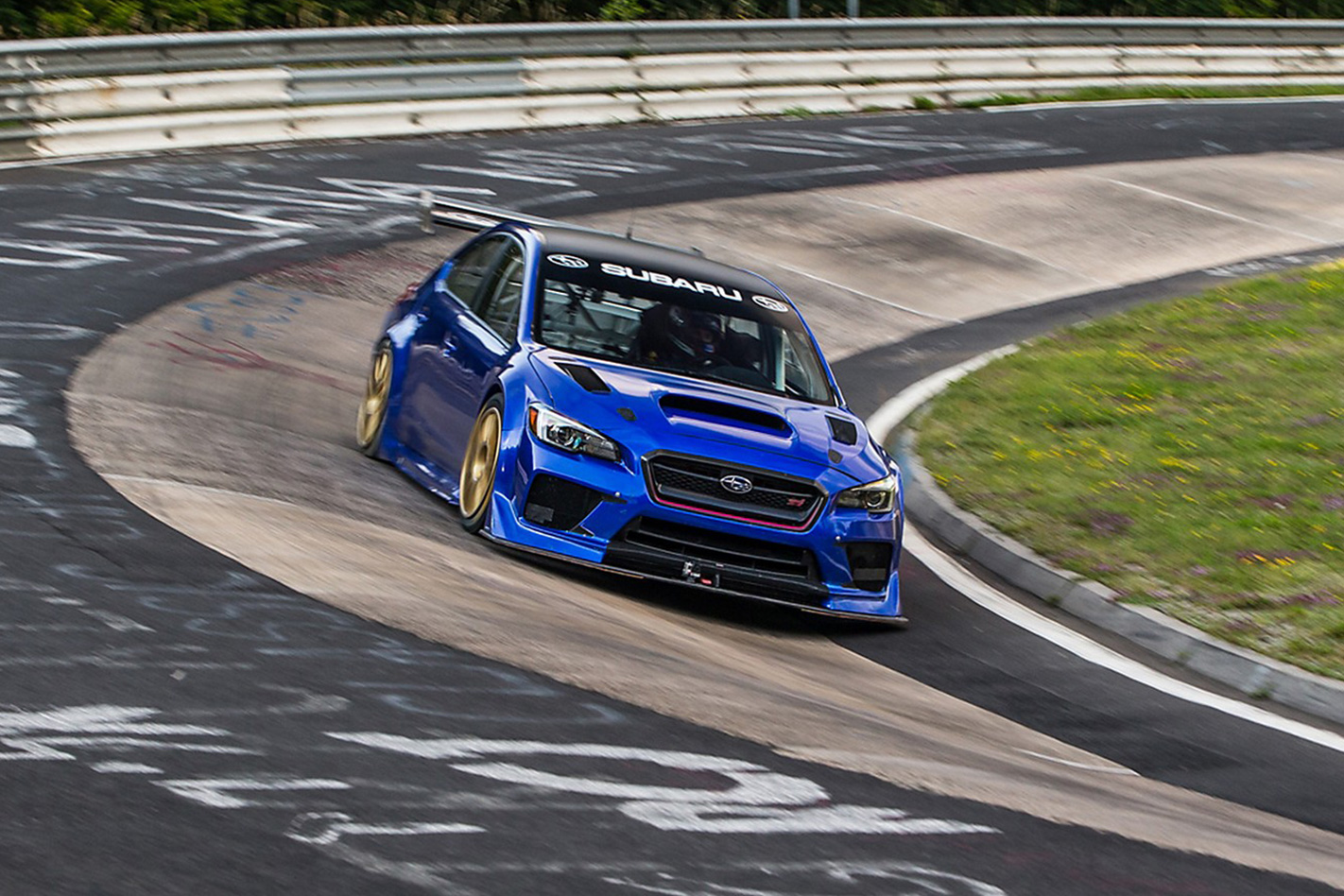
It’s also plugged with a rear air diffuser, paddle-shift transmission, and barrel-sized racing slicks under its guards.
“We brought the WRX STI Type RA NBR Special here to set a record and call attention to the WRX STI Type RA that we will launch later this year,” Subaru product comms manager Dominick Infante said earlier this year.
Don’t let that take away from the spectacle on show. Stanaway’s driving is smooth, committed, and unflappable.
The car looks and sounds extremely fast. That turbo flat four making all the right noises. At one point it even hits 288km/h on the Dottinger Hohe straight.
This is the WRX STI taken to its most extreme. Turn it up and enjoy.
In yet another case of some members of a global dealer network neglecting the memo, Volvo’s Hungarian arm has leaked a video of the all-new XC40 small SUV a few days before its official launch on Thursday.
Screenshots from the now defunct video show that the XC40 will ditch the conservative elegance of its bigger XC60 and XC90 siblings in favour of more youthful package, while maintaining key Volvo design elements such as the ‘Thor’s Hammer’ headlight signature, trademark grille and cascading taillights.
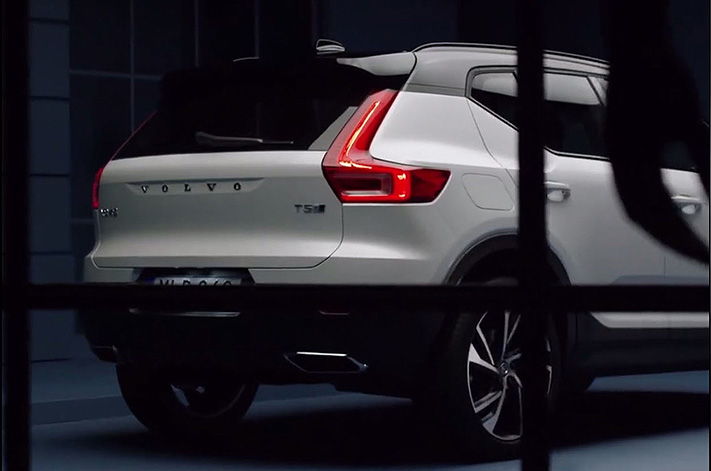
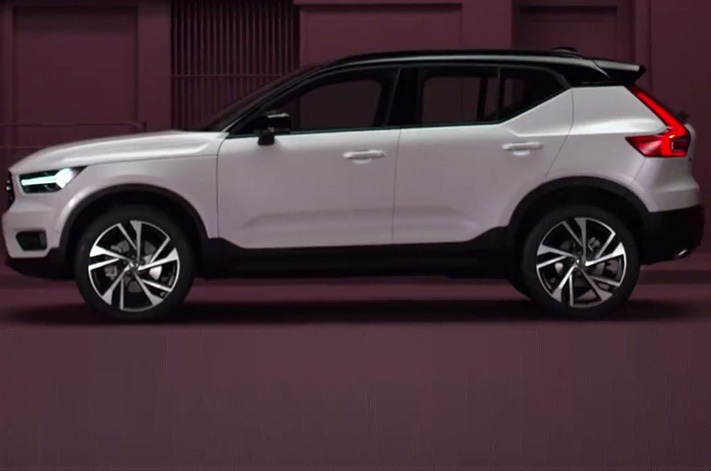
The side view is dominated by a 30-degree kink rising up from the rear door shoulder line to the C-pillar and black floating roof, which gives the rear end some chunk to compensate for the low rear overhang. The front end is unmistakably Volvo.
Black trim along the lower bumpers, side skirts and wheel arches add to the sporty aesthetic, though it’s yet to be seen whether this will feature beyond the R-Design model shown.
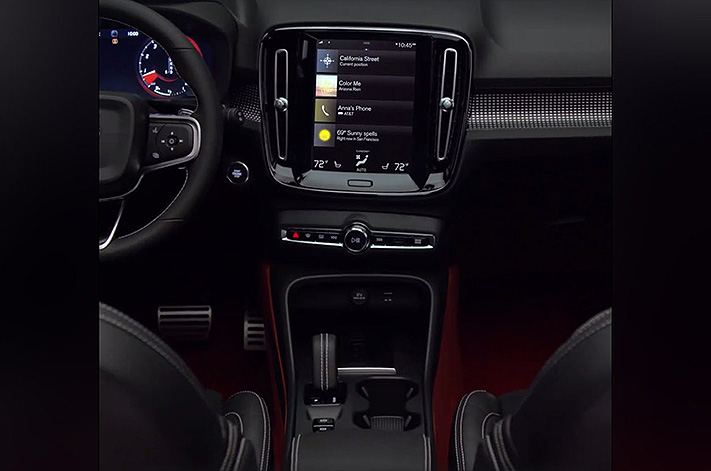
The high-end interior is decked out in-kind with white stitched black leather, aluminium pedals, sports steering wheel and macho digital gauges, and also features a wireless phone charger and squarish 9.0-inch infotainment screen similar to the XC60’s.
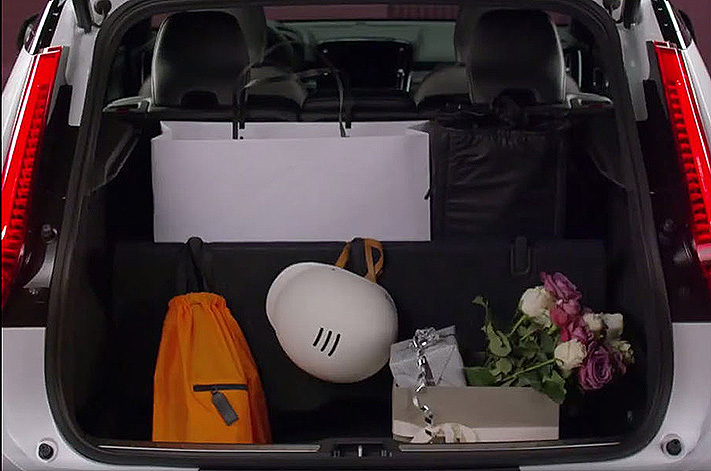
The pictures suggest Volvo has made good on its promise that the all-new XC40 will be big on features including high-end interior design and increased practicality.
It’s also expected to come through with its pledge of advanced driver assist technology as featured in larger, more expensive models, including semi-autonomous Pilot Assist, and automatic emergency braking across the range.
One thing that’s still a secret of sorts is the engine line up, though expect a selection of Volvo’s current four-cylinder petrol and diesel turbo powertrains, a three-cylinder petrol turbo and plugin hybrid T5 variant.
The 2018 Volvo XC40 is expected to go sale in Australia around the middle of next year.
New South Wales will introduce changes to the Graduated Licensing Scheme (GLS) that mean recently licensed drivers will be subjected to the same conditions as those in Victoria.
From November 20 this year all new or novice drivers under the GLS will have to complete the hazard perception test before progressing on to the driving test, while P1 drivers will not have to take the test to get their P2 licence.
The third change affects the driver qualification test which P2 drivers no longer have to take but, under the new structure, P2 drivers that receive a suspension for unsafe driving will have to remain a P2 driver for a further six months.
According to the minister for roads, maritime and freight Melinda Pavey, the revision will allow young or inexperienced drivers to gain the vital experience they need to be safer road-users behind the wheel.
| NSW to trial digital drivers’ licences
“We know that the first six months of driving solo is the highest risk period for novice drivers so it’s important we continue to look at ways to improve licensing of young drivers to ensure they get the training and experience they need to be safe on our roads,” Mrs Pavey said.
“Young drivers continue to be over-represented in road crashes. P-platers make up 8 per cent of all driver licence holders, yet their crashes account for 15 per cent of all fatalities on NSW roads.
“Last year was a horror year for road crashes, with 100 fatalities and 1,684 serious injuries involving a 17-25 year old driver on NSW roads. It’s vital we continue to adapt and improve our approach to reduce this tragic loss of life and serious injuries involving our young drivers.”
Since the Graduated Licencing Scheme was introduced in 2001, the number of young driver fatalities has halved on NSW roads, although that improvement to road safety is partly attributable to a number of factors including a significant improvement in vehicle safety standards.
TELL ME ABOUT THIS CAR
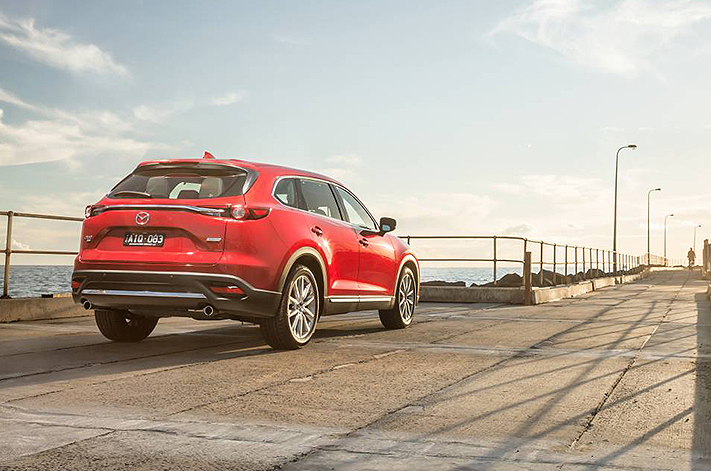
Sitting just below the range-topping CX-9 Akari variant, the Mazda CX-9 GT isn’t short on features and provides a compelling mix of elegance and functionality that rivals luxury models priced well beyond its $61,390 price tag.
The big seven-seater has been updated for the 2018 model year making it even better than the initial second-generation version which won a string of awards including Wheels Car of the Year.
STRENGTHS
- It looks striking, especially in the new Soul Red Crystal Metallic paint which is tastefully highlighted by chrome trim and polished alloy wheels and stood out wherever it was parked.
- It’s quiet. Cabin noise wasn’t really a problem with the CX-9, but Mazda further improved its relatively quiet ride in the recent upgrade by bolstering sound insulation throughout the cabin and rear cargo area to reduce tyre noise and sound reverberation.
- Driver assistance includes smart city brake support, which now operates up to 80km/h instead of 30 kays, blind spot warning and traffic sign recognition that reads speed signs and displays them in the head up display.
- The CX-9 feels agile for a big SUV and handling has been further improved with the addition of G-Vectoring Control which adjusts engine torque in response to steering input to better control the load on each wheel, which in turn improves its vehicle dynamics.
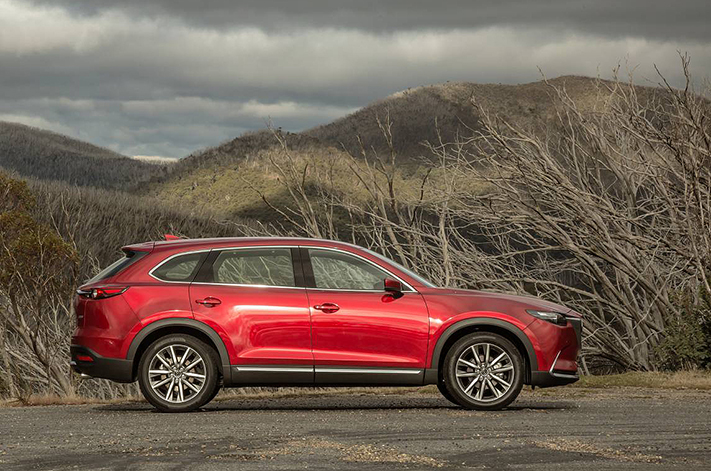
- The CX-9 GT now has automatic wing mirrors which fold in when you lock the car, which is a handy feature for such a wide vehicle.
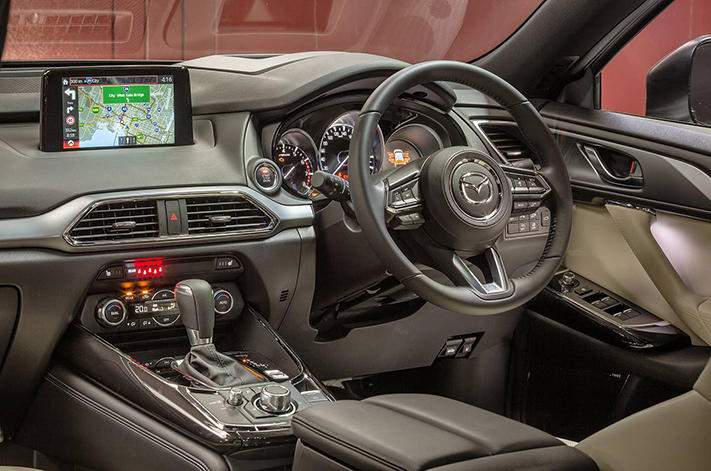
- The front seats are a nice place to be with power adjusted heated seats, soft arm rests, separate zone climate control and a chunky centre console with attractive chrome highlights and switches, deep storage bin and a large space under the dashboard to store phones and sunglasses.
- The middle row is also roomy and comfortable with heated seats and separate climate control zone with separate digital controls. The seats are raised for excellent front and side vision and headroom isn’t compromised by the sunroof. The back door windows also have built in sunshade that slides up from inside the door.
- The third row seats are also comfortable and wide enough for two adults but legroom is pretty tight though helped by the second row seats able to slide forward.
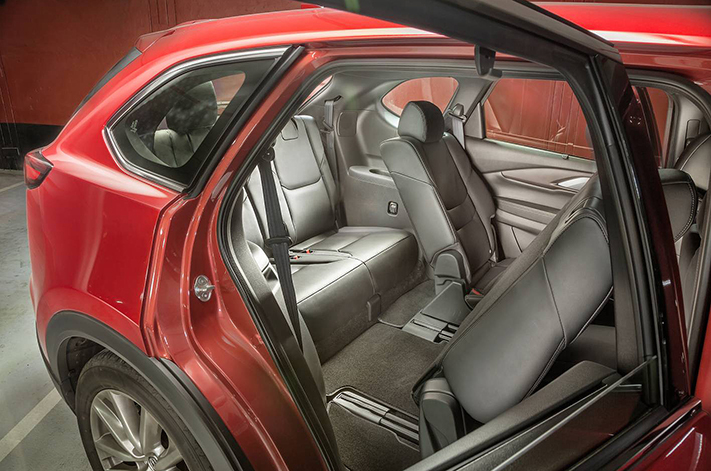
- The cargo area holds 230-litres with the rear seats up which is more than enough to hold a pram and some shopping or a few small travel bags. That can be expanded, by folding one or two of the 50/50 split third row seats, up to a considerable 810 litres.
- The 2.5-litre four-cylinder petrol turbo engine does a good job in pushing the CX-9’s bulk around. Official combined fuel consumption is 8.8L/100km but we averaged 10.8 which is still a fair return for avehicle this size. The fact it happily drinks Ethanol E10 will help reduce fuel bills.
- The infotainment system includes inbuilt satellite navigation and digital radio (DAB+) which sounds great through the excellent sound system.
WEAKNESSES
- While it’s easy to drive, the CX-9 can be difficult to park because of its width. Getting in and out can be a tight squeeze in smaller carparking spaces and avoiding gutter rash on the 20-inch alloys usually means having to park over the line.
- Infotainment system lacks a CD player and AppleCarPlay/Android Auto Connectivity.
- The 20-inch wheels and low profile look great, but you lose the noticeably smooth ride in the entry-level CX-9 Sport which has high-walled rubber on 18s.
ANY RIVALS I SHOULD CONSIDER
Other similarly priced and equipped large seven-seat SUVs include the Kia Sorento GT Line and Toyota Kluger GXL or Grande
The Supercars Sandown 500 was somewhat of a wild event, with TCM being cancelled early on Saturday following a crash at the end of the back straight, on the same day as Todd Hazelwood narrowly avoided serious injury after another horrific crash at turn 6.
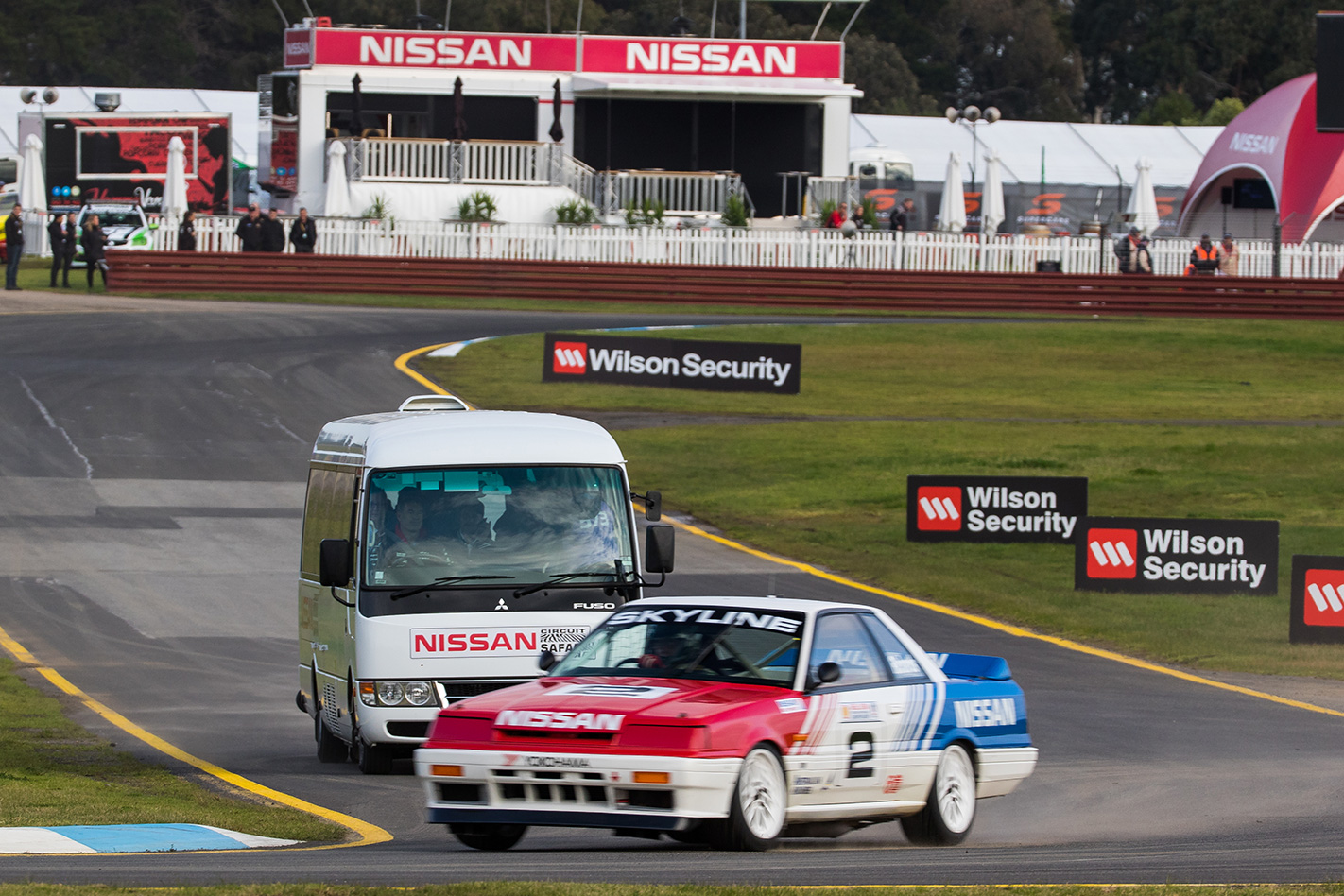
But not all was doom and gloom at the weekend – that morning saw a rather spirited thrash from some of Nissan’s most iconic Aussie racers while fans and VIPs watched on from a small ‘safari’ bus lapping the track.
Joining the bus for Nissan’s ‘circuit safari’ were two of its R31-based Skyline GTS-R racers built by Gibson Motorsport, one being the car driven by Jim Richards in the the 1990 Australian Touring Car Championship.
The stars of the show, however, were the two 1991 R32 Skyline GT-Rs which became famous for absolutely dominating the competition.
And one of them was the ‘Godzilla’.
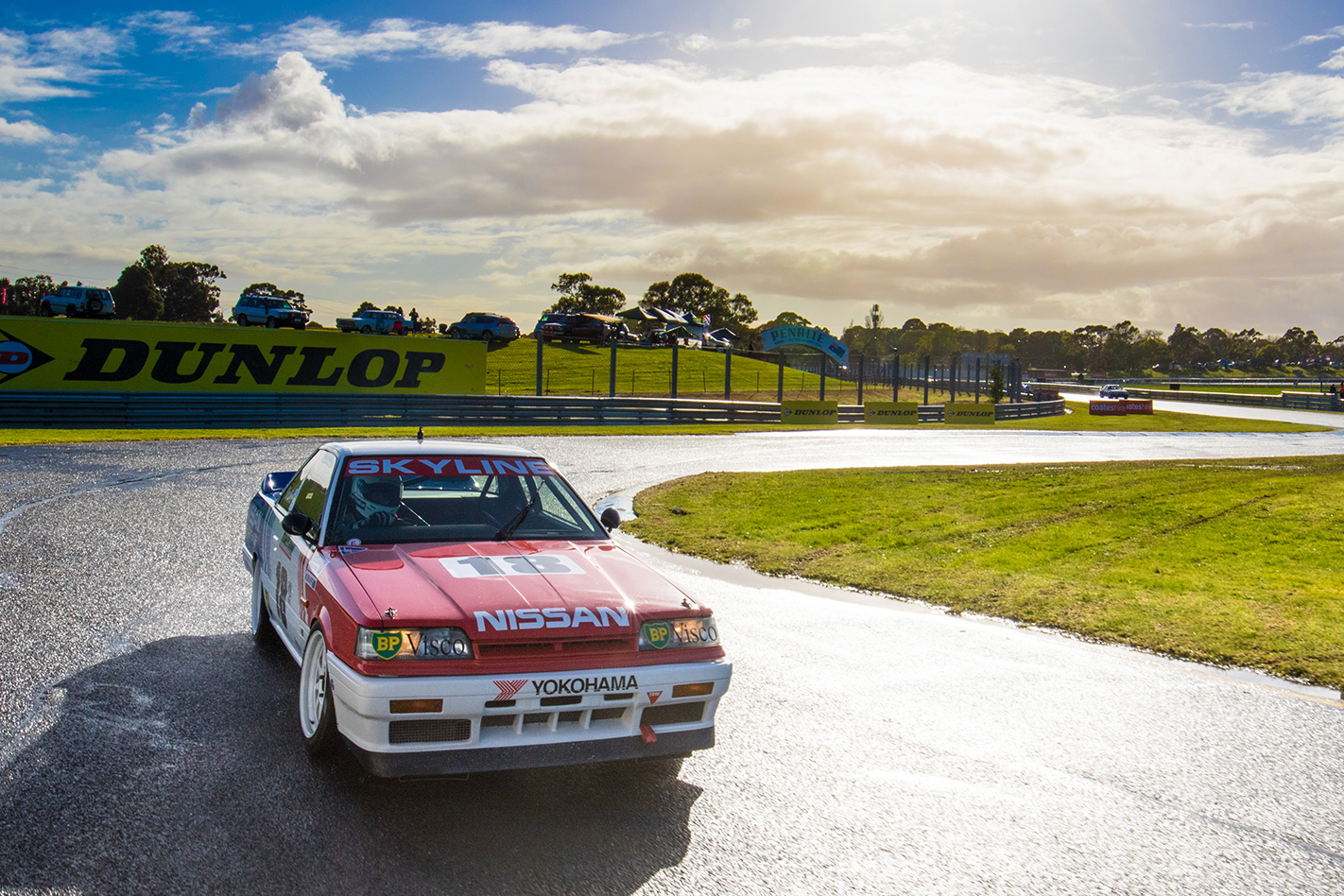
It won seven of the nine rounds of the championship in 1991, and became the first Japanese car to win at Bathurst.
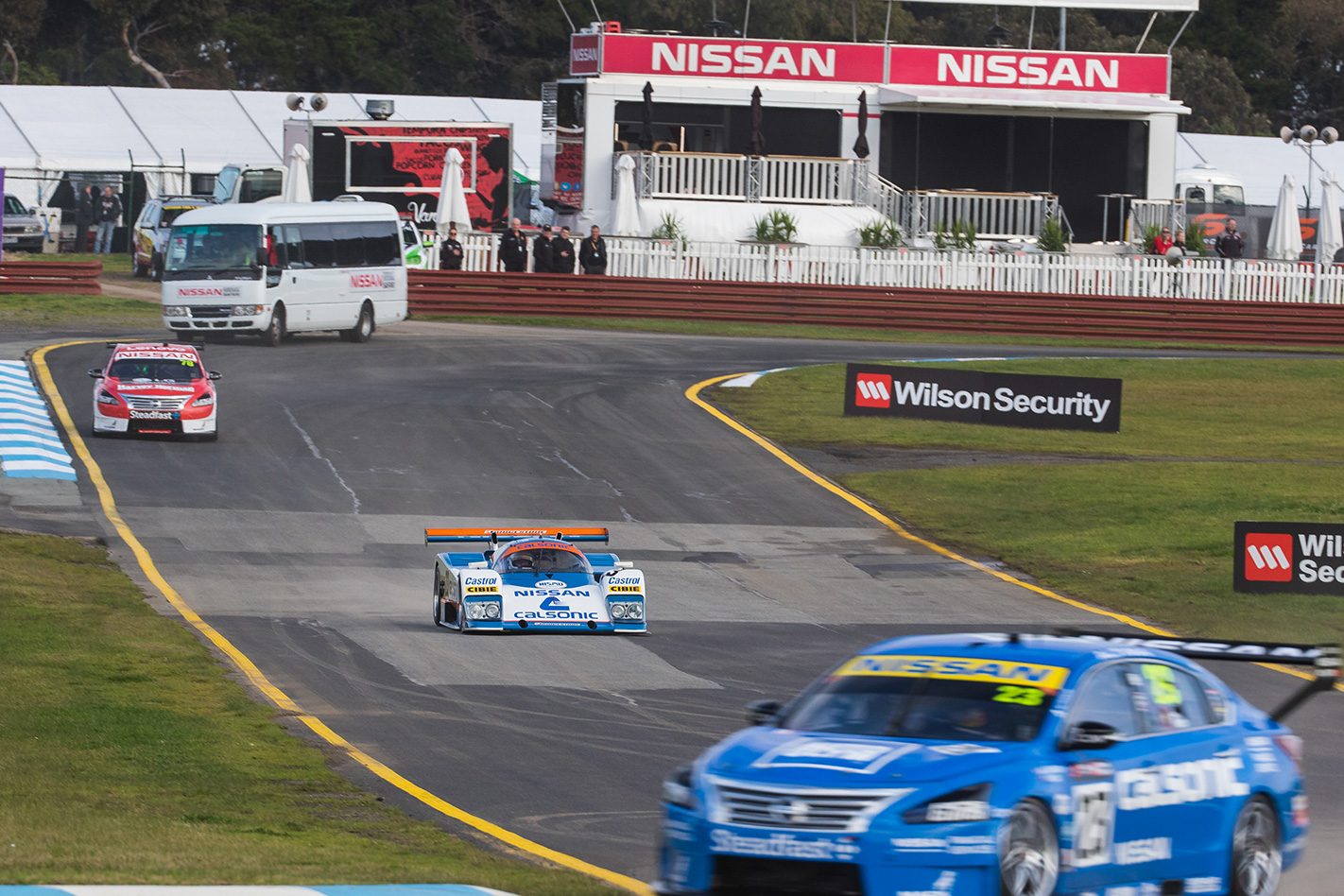
Also present at the safari was one of Nissan’s international racers, a prototype that most Australians wouldn’t be too familiar with.
Nissan Australia’s senior marketing manager Mitchell Wiley said the event has been included in the NISMO festival for a long time, but this was the first time it had been brought Down Under.
“The Nissan Circuit Safari is a unique way for Nissan to bring its motorsport heritage to life, and the Sandown retro round is the perfect place to do this.”
ASTON Martin looks poised to ramp up its Formula 1 involvement from next year, with a view to supplying its own engines by 2021.
The British manufacturer’s CEO, Andy Palmer, was on the ground in Singapore for the weekend’s Grand Prix, holding meetings with Formula 1 management, as well as the Red Bull Racing Team, which it sponsors in a limited capacity.
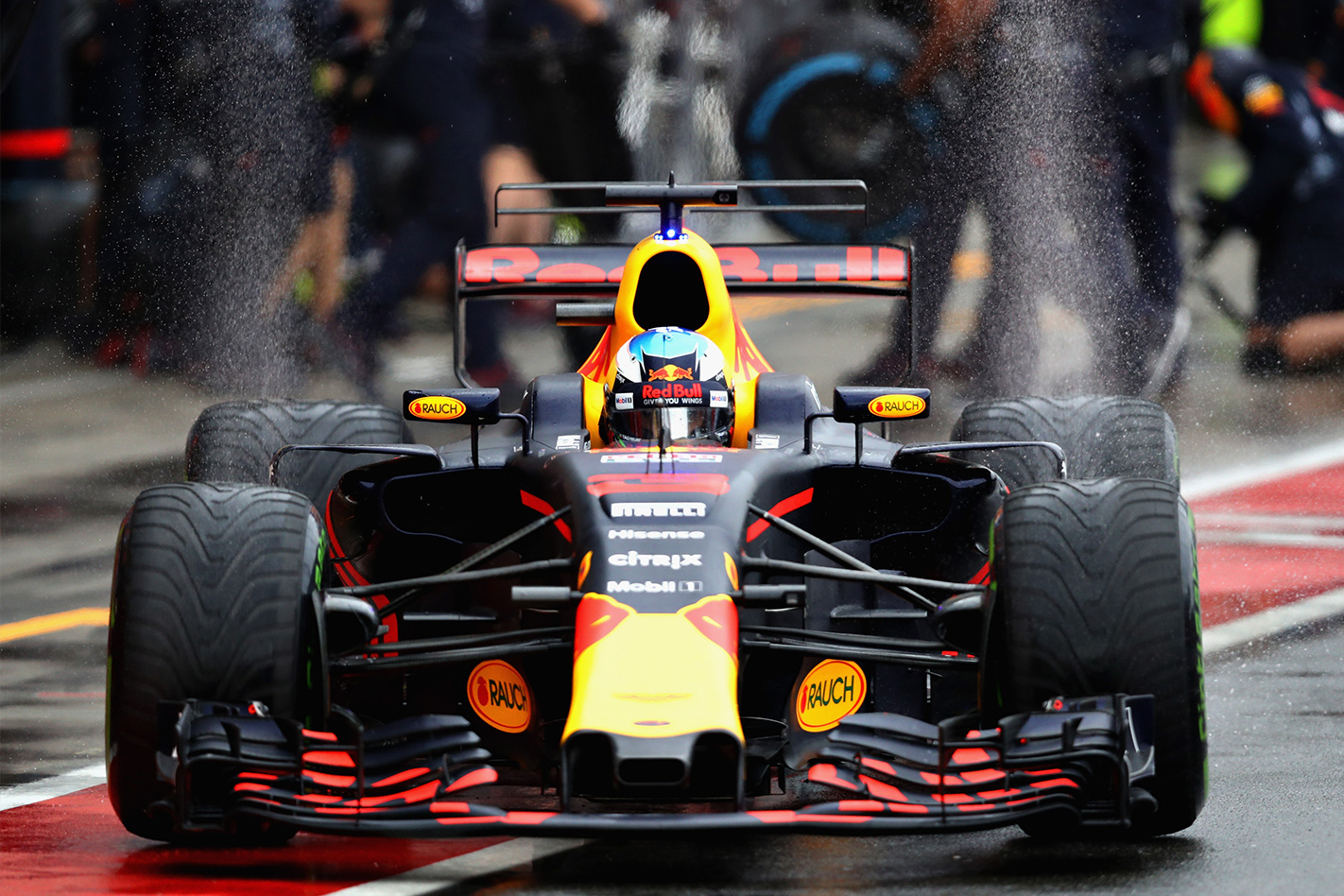
Speaking to Martin Brundle as part of Sky Sports’ race broadcast, Aston’s chief shed some light on the discussions, and what the brand is looking for from new regulations.
“I’m over here negotiating what we look like in the sport for next year but it’s somewhat predicated on what the 2021 engine regulations look like,” Palmer explained.
“If we can get more theatre back into the sport and if we can reduce the cost of the engine then Aston might be interested in producing an independent engine.
“And with that independent engine – with that destination in mind – obviously it would make sense for us to increase our participation even as soon as next year.”
Speaking to F1 racers turned TV hosts Mark Webber and David Coulthard, Palmer reiterated Aston Martin’s position in ongoing negotiations regarding its partnership with the Red Bull Racing Team.
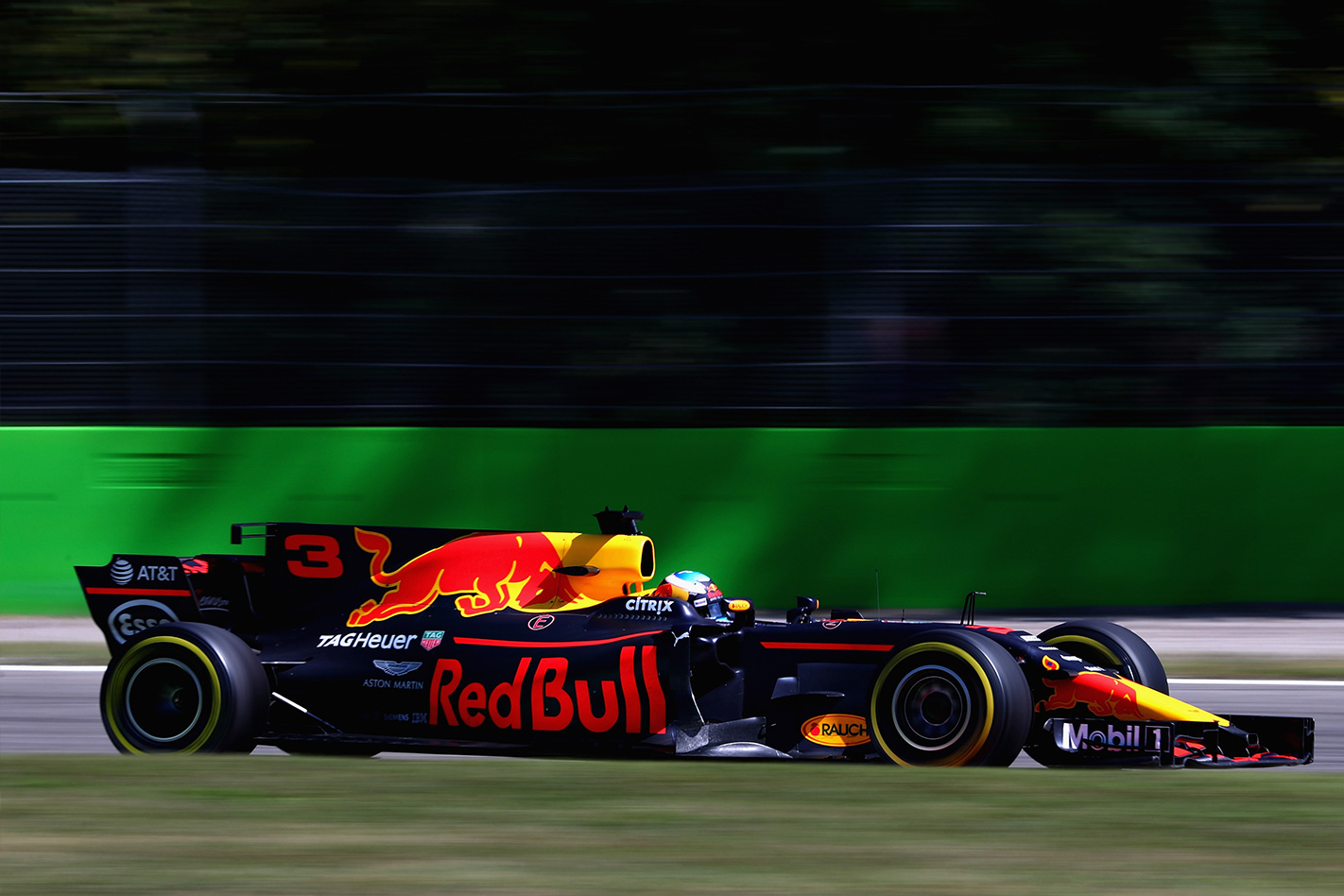
“We’re currently studying the 2021 engine. If we get a reasonable regulation that brings down the cost, Aston would like to be involved. And then of course we’d like to be a little bit more involved next season and then join the dots, but it really depends on what happens with the engine regs [sic].”
Red Bull currently has engines supplied by Renault, however these are branded by Tag Heuer following a tumultuous relationship between Red Bull and Renault in 2015.
Renault confirmed over the weekend it will end its partnership with Red Bull following 2018, leaving the team high and dry for the 2019 season.
Both Ferrari and Mercedes have ruled out a supply deal for the Red Bull squad, with Honda the only other engine manufacturer available. The Japanese engine supplier recently cut a deal to supply engines for Red Bull’s junior squad, Toro Rosso, instead of McLaren, from next year.
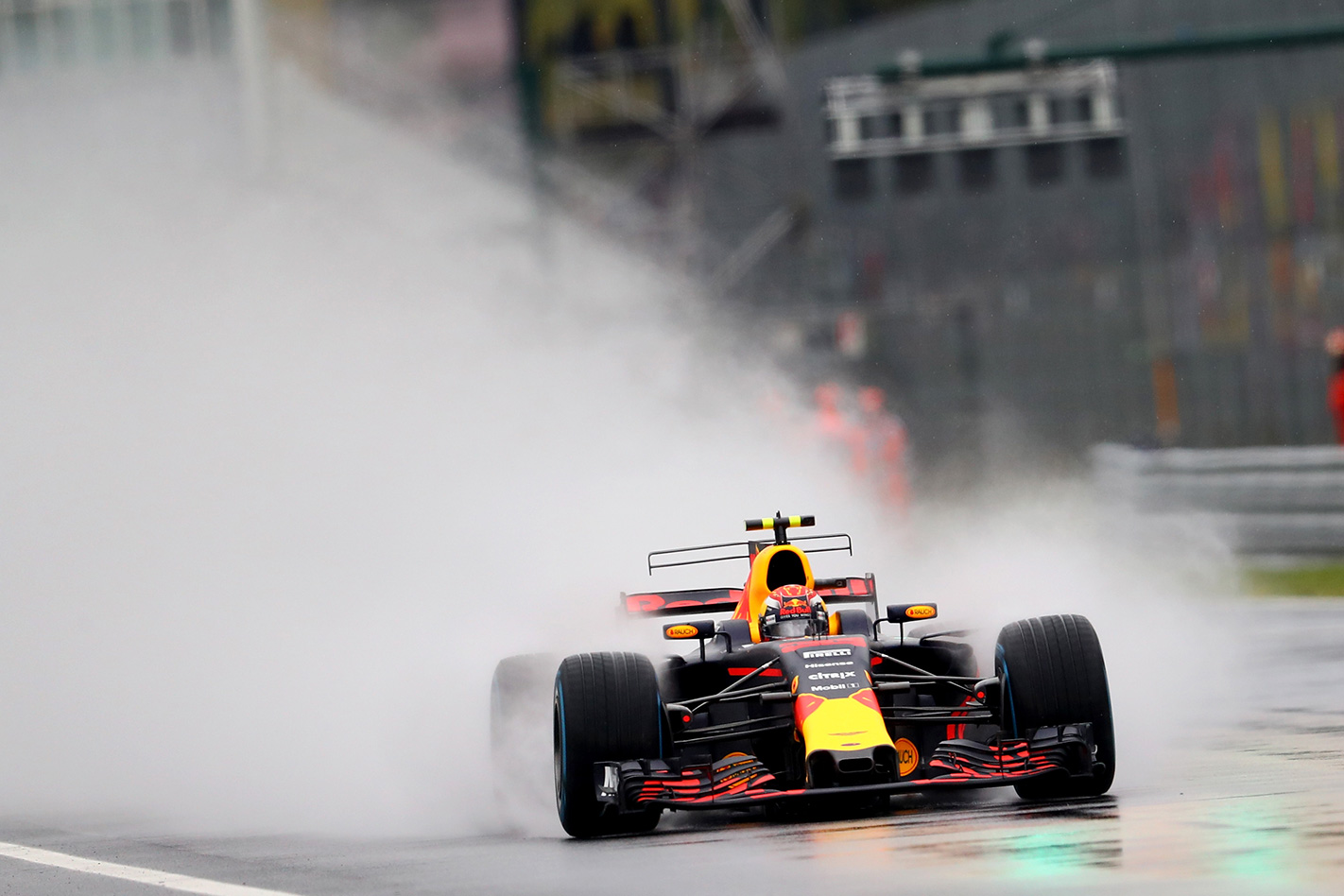
This leaves the Red Bull squad in the lurch for 2019/2020 without a locked in engine deal, before either Aston or Porsche may enter the fray from 2021. Even then, both potential newcomers could decide against joining the ultra-expensive F1 circus.
Palmer said he hopes the 2021 engine regulations – which many hope could bring back noise, drama and excitement to Formula 1 – to be finalised as early as the end of this year.
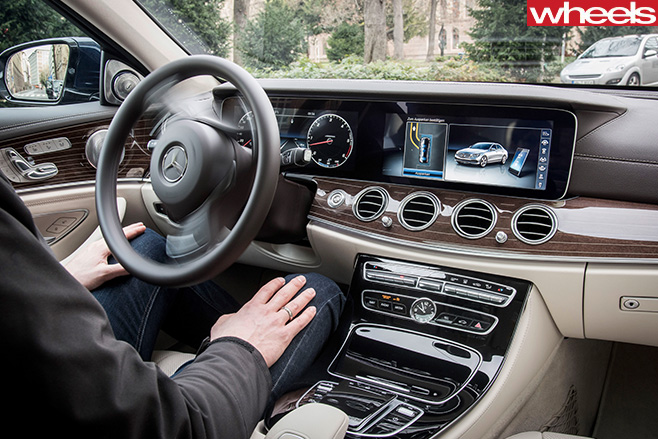
ALL eyes are on the safety of emerging autonomous car technology after a recent NTSB investigation concluded Tesla’s Autopilot system contributed to a driver fatality in the US last year, leading Audi and Mercedes to respond with reassurances they are leaving nothing to chance.
The Tesla Model S in question failed to prevent a collision with a truck while in the company’s Autopilot mode. Addressing resultant media scrutiny, the two German carmakers have independently insisted that any system assuming control of their cars will be completely ready for consumer use and not in a beta testing phase.
Speaking at the Frankfurt motor show, Audi AG board of management member for technical development Peter Mertens told Australian journalists that the company is taking every measure to ensure its systems will not fail under similarly challenging conditions as the Telsla incident.

“We don’t do things like others do and we would never ever accept something that we haven’t fully validated.”
If Audi manages to negotiate the tricky landscape of autonomous legislation, its new A8 luxury sedan will be the first production car to offer level-three self-driving capability, but while the hardware, software and legal hurdles are all but leapt, Mertens said consumers still need time to adjust to the radical new features.
“There is a bit of skepticism at the beginning and people don’t feel comfortable in letting the steering go and letting the car take over.
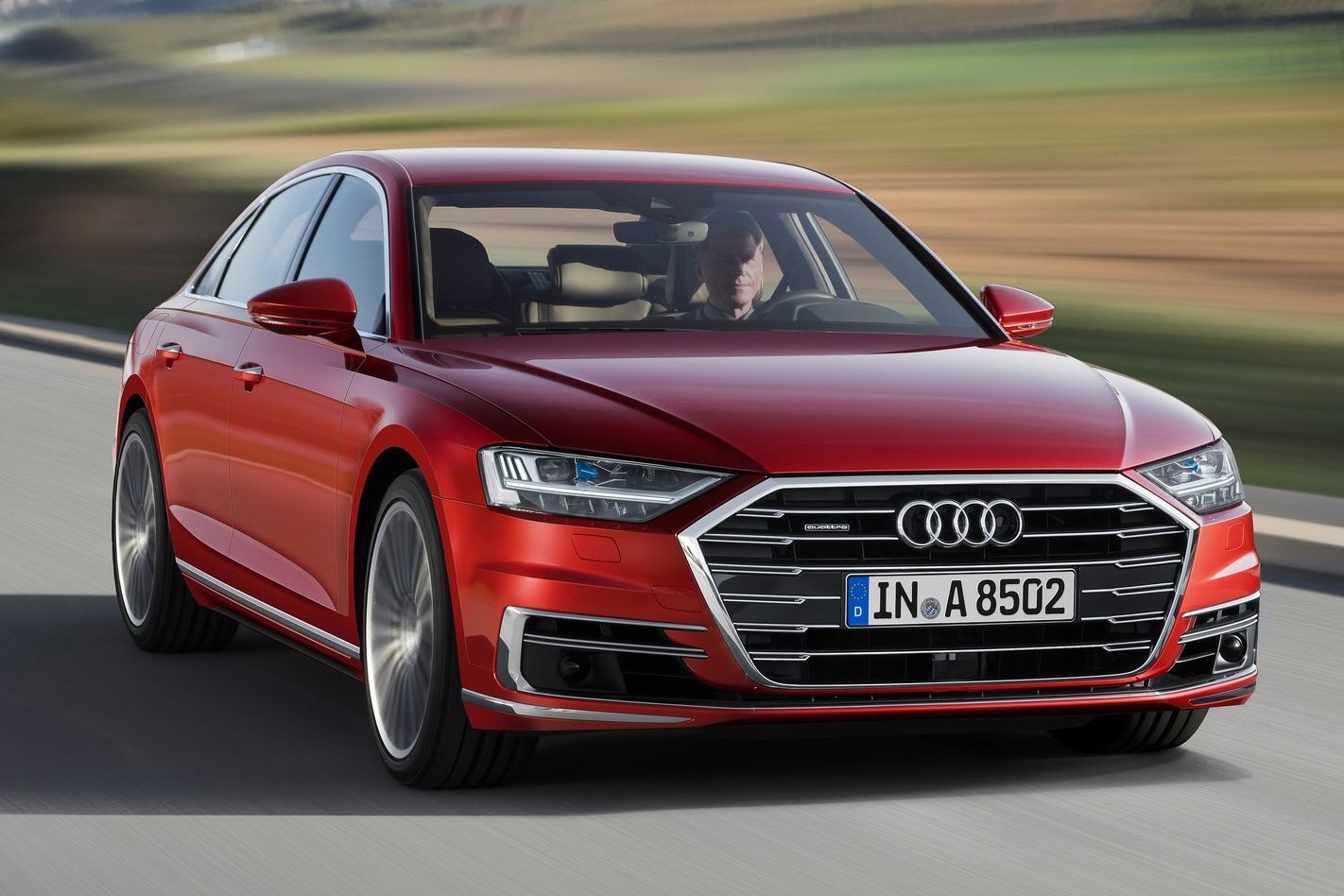
“If you can’t trust the system working 100 percent it’s stressful. We want the opposite. We want trust, relaxation and fascination in the technology.”
A number of other brands have confirmed that if an autonomous car contributes to personal injury while in control, the manufacturer will accept responsibility and Audi has weighed in with the same agreement.
“If there’s anything that happens and leads to an accident which is caused by a failure in the vehicle, it’s our responsibility. It’s very clear,” said Merten. “The car takes over responsibility which means we take over liability for that case.”

Daimler AG board of management member for group research and Mercedes-Benz cars development Ola Kallenius said Mercedes was working hard to get self-driving technology to the road but not at the cost of dependability.
“Safety is paramount,” he said. “Neither we nor the regulator want to have any incidents where an autonomous system is not safe.
“The good news is that the sophisticated sensing technology that you need to replace the eyes and the ears, the computing chips and also the software and the algorithms using artificial intelligence, all that is coming together.

“We’re working very closely with regulators so as technology develops and becomes available the legislative side of this to make sure exactly what is allowed in each driving situation is coming together. That dialogue is extremely constructive. We’re showing what is technically possible and the legislator looks at what is sensible.
“It feels like now the tools are becoming available but we still have to do the job.”
While Audi claims to be the first manufacturer with level-three autonomous capability, Kallenius said the road to level-four was not a one-horse race.
“Google has put an enormous effort into this over a number of years. Perhaps they can be there quicker. Who knows?”