
BMW will use its strong SUV sales to help fund a push for a larger stake in the high-margin upper luxury segment, the German carmaker says.
As well, the company has flagged it is about to roll out even more electric and hybrid fuel cell models as it plans for changing global emissions laws and shrinking fossil fuel supplies.
Speaking at the group’s annual results announcement in Munich last night, BMW chairman Harald Krüger said the BMW X7 (spied testing at top) would be the first of a number of “new and emotional models” the carmaker would roll out aimed at earning better margins for the brand.
It would also leverage its “i” sub-brand and M Performance division to grow sales in the segment, Kruger said.
The announcement comes as the BMW Group, which owns brands including BMW, Mini and Rolls-Royce, posted an after-tax profit of €6.4 billion in 2016, up eight percent on the previous year’s result.
Kruger also used the annual results announcement to reinforce the carmaker’s battery-powered strategy, saying that similar to how the cars it builds today are designed to take either conventional or hybrid drivetrains, all its future ones will be able to have either an electric motor or conventional engine powering them.
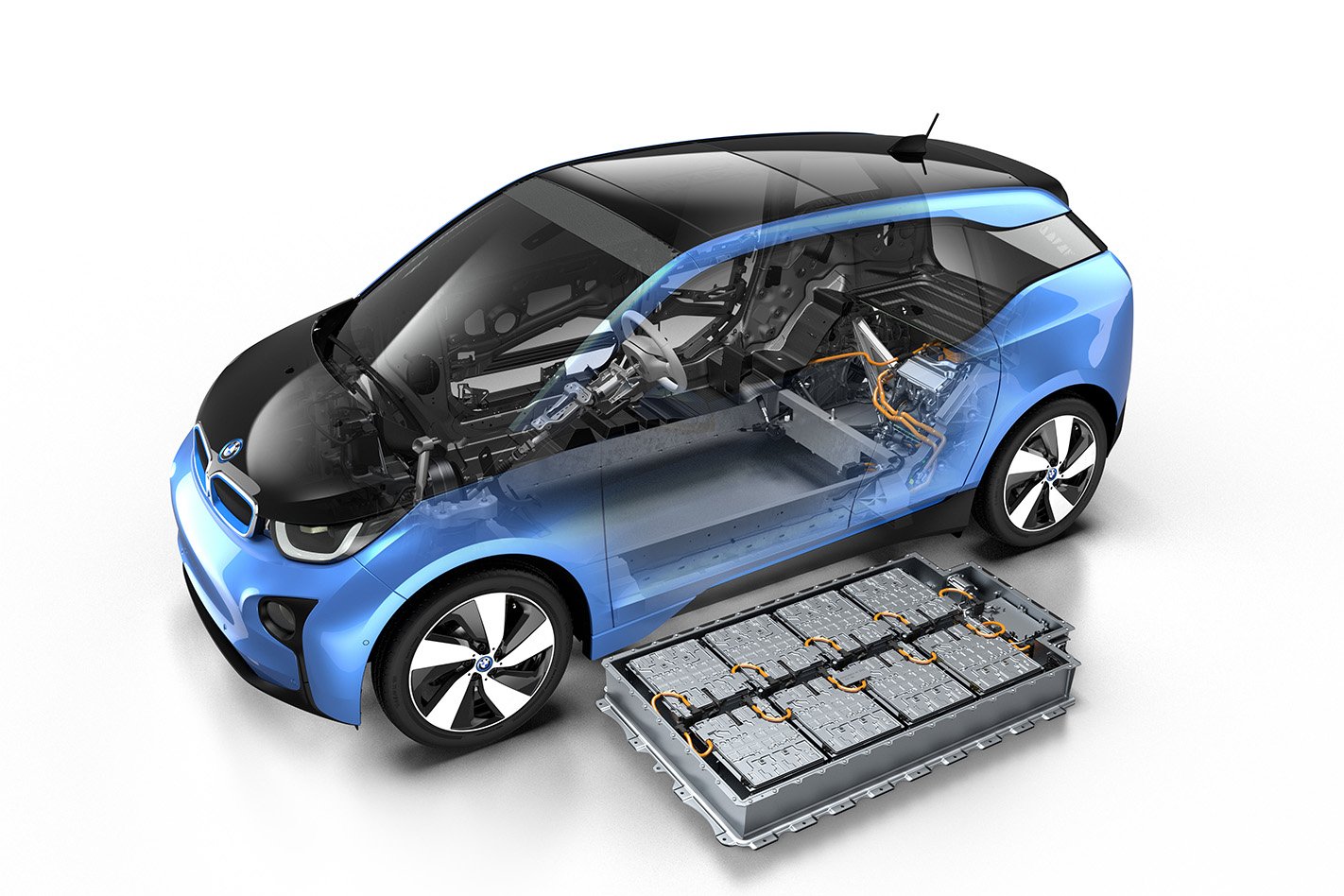
“The fully electric drivetrain will be integrated into our core brands, with an all-electric Mini in 2019, and an all-electric BMW X3 in 2020,” he said.
“Soon, range will no longer be a differentiating factor. We are already concentrating on achieving an optimum balance between all relevant features: safety, range, and duration and life of the battery.
“At the same time, we are also working on fuel cells. These are particularly well-suited to larger model series and long distances. We plan to produce a low volume series in 2021, and we will be able to offer vehicles with fuel cells from 2025,” he said.
“Also by 2025, all our vehicles with combustion engines will be fitted with 12 and 48-volt energy recovery systems.”
According to Kruger, the ability to fit future models with either a conventional engine or electric motor was “a result of our project i”.
“From 2020, project i 2.0 will enable us to introduce a pure battery-electric model for our model series,” he said. “To achieve this, we are now gearing our architectures towards combustion engines and pure battery-electric drivetrains.”
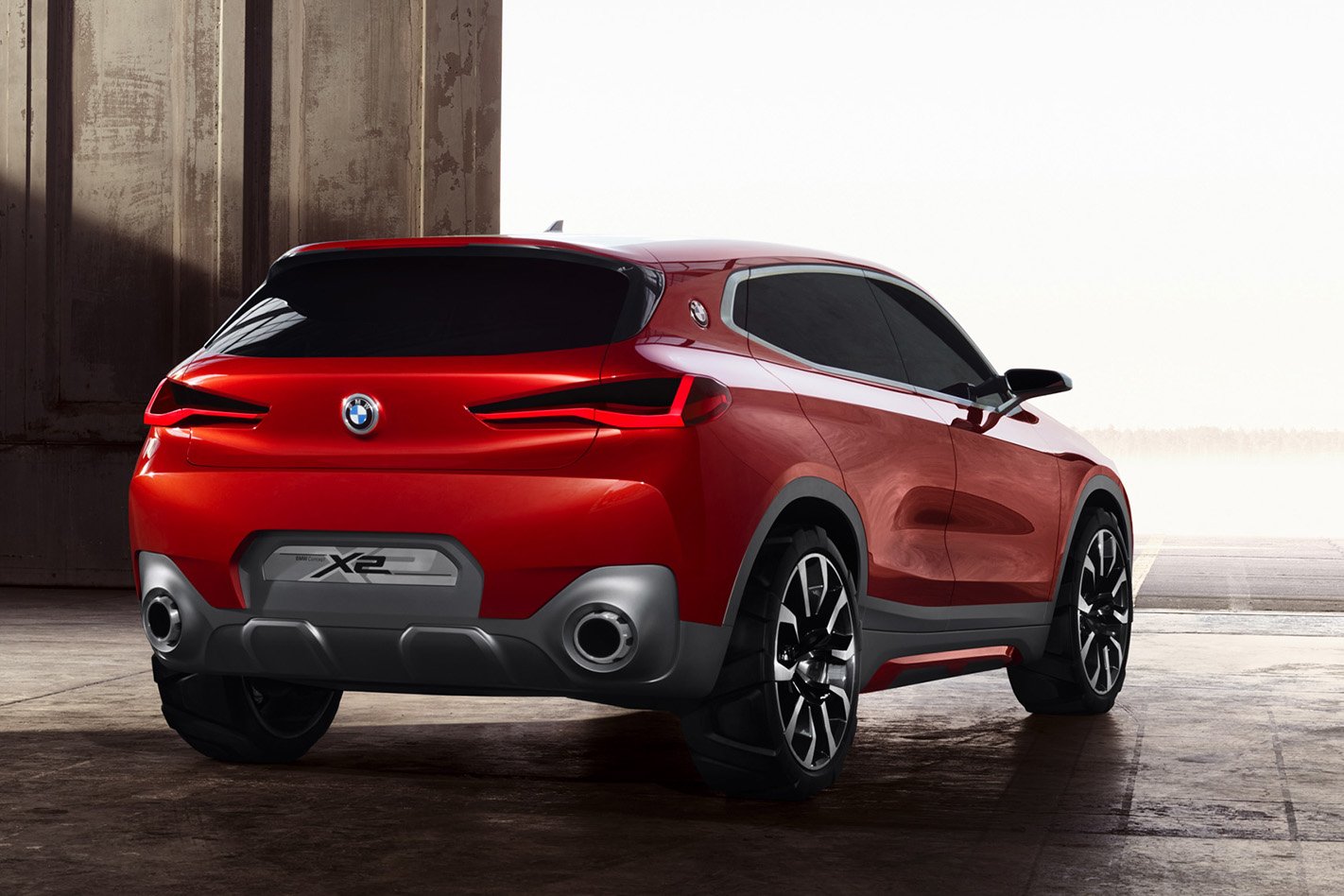
BMW plans to launch the Audi Q2-fighting X2 compact SUV next year, the same year as the X7, a large luxury SUV to take on the likes of the upcoming Audi Q8 and the Mercedes-Benz GLS-Class, is expected to arrive.
The X2 (previewed in concept form above) is another fastback coupe-style SUV in the mould of the BMW X4 and X6, but differs in that it is built on the German carmaker’s UKL front- and all-wheel-drive architecture, and not a rear-drive platform.
The BMW X7, meanwhile, is expected to have its premiere this year ahead of a global rollout in 2018 – including Australia. It will be built in the US as BMW’s South Carolina plant alongside all of the brand’s other crossovers bar the German-made X1.
A significant update to the X3, the brand’s fourth best seller last year only a handful of sales behind the 3 Series sedan range and what will become the foundation for BMW’s first all-electric SUV in 2020, is due later this year.
In Australia, one in every two of BMW’s sales for the first two months of this year have been SUVs.
SCRATCH a successful Australian race car driver and chances are they’ve had some sort of experience in one-make competition.
Take multiple championship and Bathurst 1000 winner Mark Skaife, for example, who landed his drive with the all-powerful Nissan Motorsport team in the mid-’80s off the back of a one-make Ford Laser series.
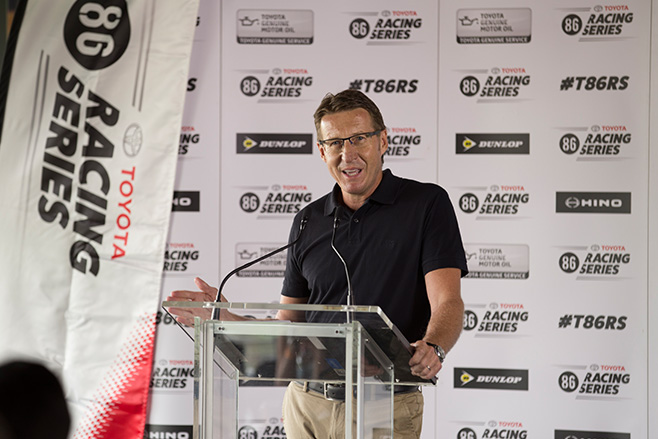
“A lot of genuine talent evolves from these series, which have to be cost effective, offer a level playing feel that promotes healthy challenging racing, and provide genuine opportunities for young drivers to show their skill not just at racing, but the work ethic that‘s required to go well. On and off track preparation is the key to going well in these series.”
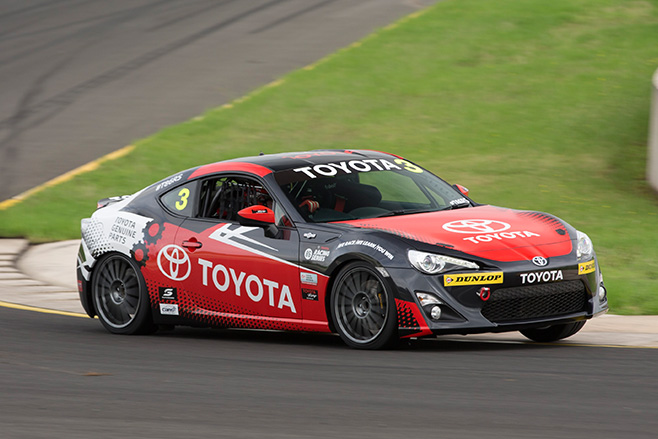
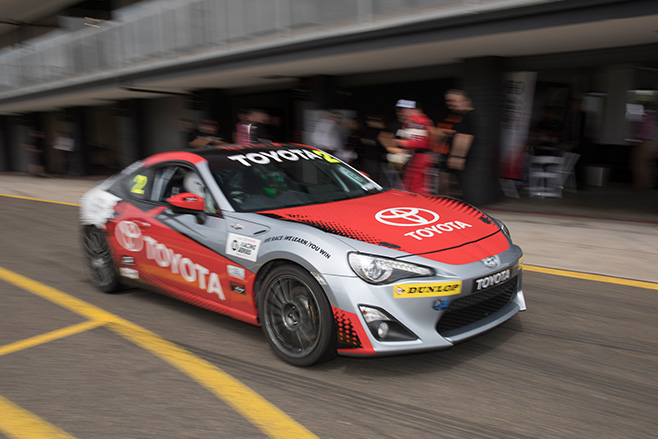
And while no motorsport can ever be called ‘cheap’, some 86 competitors kept costs to an absolute minimum. With a typical car costing between $40,000 and $50,000 to build up front (including the $25,000 control parts package), and entry fees of just $1500, some racers got away from a weekend spending less than $5000.
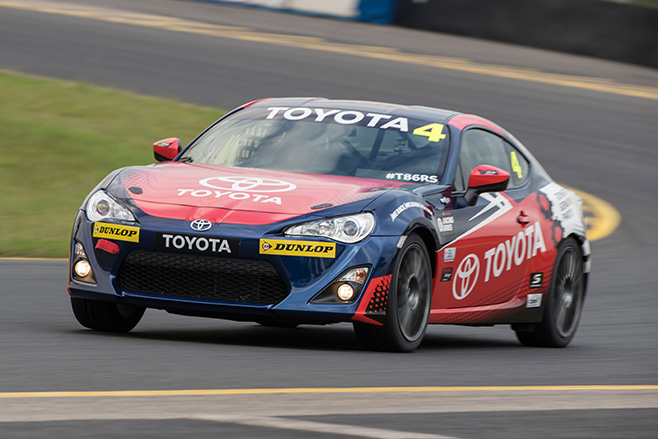
With 2016 series winner Will Brown moving into Supercar’s feeder series – now known as Super2 – for this year, the winner of the 2017 86 Racing series could walk away with a prize of $50,000 at the end of the five-round series, from a total pool of $125,000.
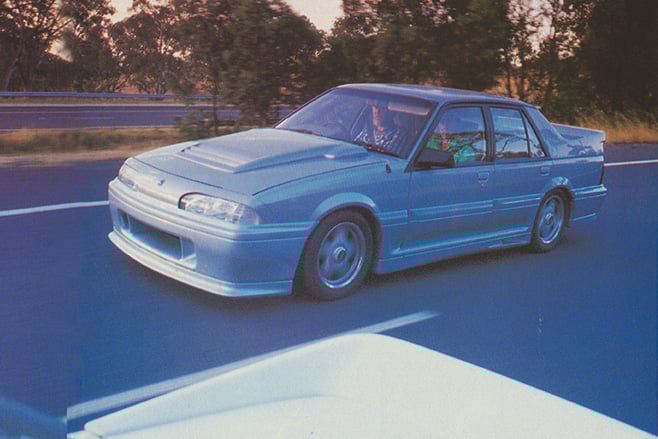
The blokes at Fishermans Bend, Victoria, and Kidlington, England, have built easily the most effective weapon for road and track use since the legendary Phase III GTHO Ford Falcon of 1971.
Battle of the Bruisers was first published in Wheels in March 1988
That’s not PR hype but cold fact. Holden’s new Commodore SS Group A spells the end of Brock’s HDT operation, at least when it comes to building modified Holdens. Good as the Brockmobiles have been, there’s no way the HDT can match the engineering skill, wind tunnel expertise, sheer dollars and marketing muscle that is going to build and shift 750 Group As in ’88.
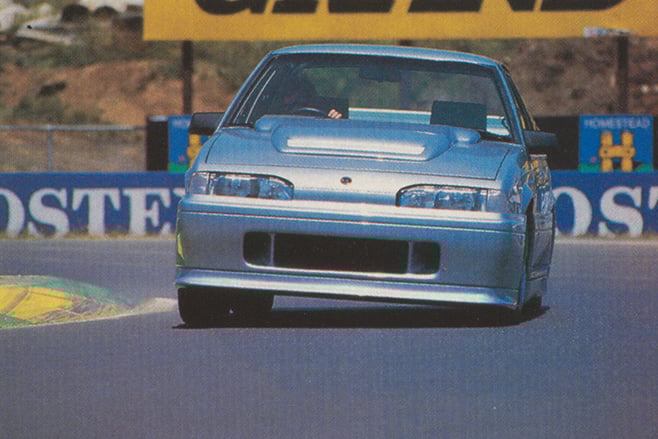
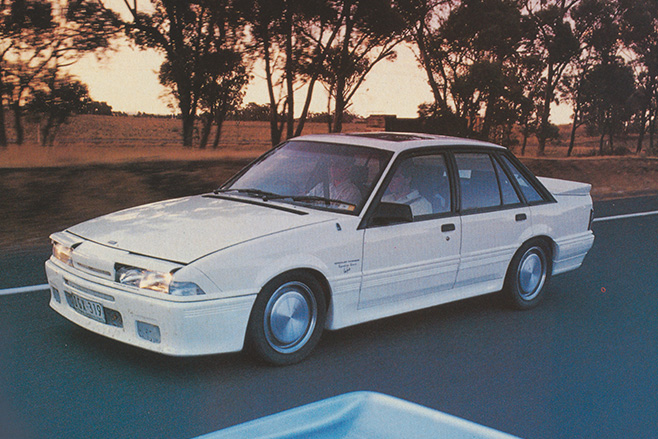
Lined up against the Group A is Brock’s Group Three Signature series of HDT Commodores (the Holden name doesn’t appear on the car). There’s still the old carburettor V8 engine, and the now discredited body kit, yet the magic touch of Peter Brock remains evident in the Group Three’s dynamics.
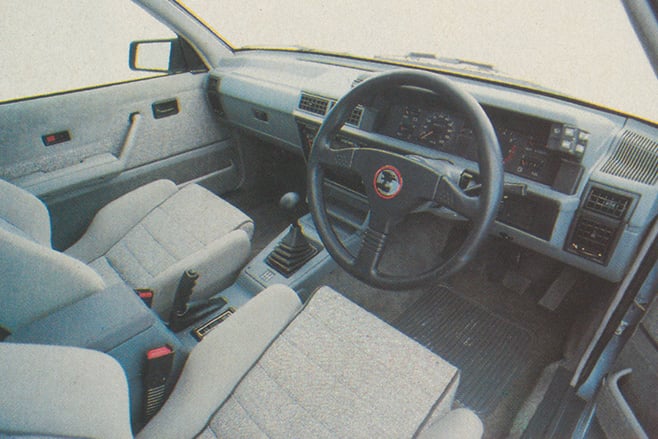
For starters, there’s the totally over-the-top body kit on the Group A. If it didn’t work so brilliantly in the wind tunnel it would be laughed off the street as an exercise in fibreglass foolishness.
From the deep tail section that sits atop the boot lid like a giant bird bath to the formidable front air dam, everything is targeted at lowering the drag factor and improving downforce for the track. From close up it looks mean and aggressive, clumsy and even bizarre, distinctive enough to hide its origin from many who see it for the first time.
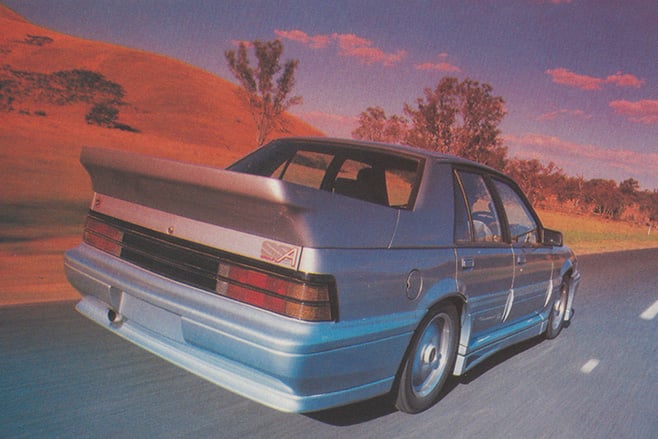
In contrast, Brock’s Group Three looks mild, though not so long ago it was regarded as the essence of potency. There’s no hiding its Commodore beginnings, and its drag co-efficient is around 0.43 compared with the 0.32 of the Group A. The Group A’s aerodynamic advantage is considerable and benefits performance, roadholding and fuel consumption.
When we asked the HDT for a Group Three for this comparison we never expected to be given an automatic, but since 80 per cent of the Signature Series cars sold last year came with the three-speed auto it seems fitting enough.
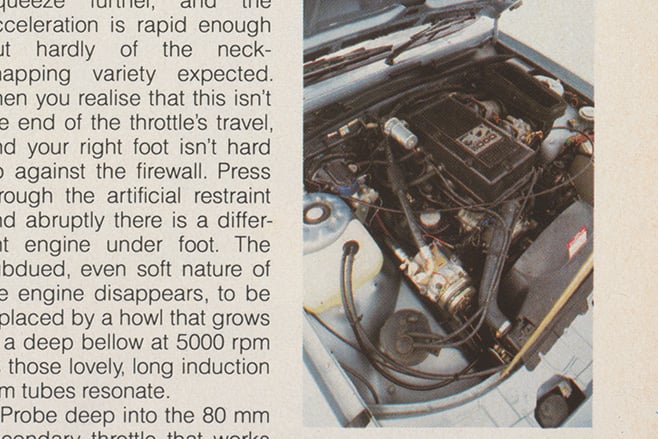
Crank the engine over and it fires almost instantly. The idle is a smooth and quiet 500 rpm, and gives not even a whisper of what is to come. The clutch that felt strong and springy when the car was stationary is firm and beautifully positive on the move, and is stronger than the soft clutches fitted in previous manual V8 Commodores we’ve driven. The specs tell us the clutch has been improved to accept 15 per cent more torque, and that feels about right. Clutch and gearbox work superbly together. The short, precise gear change is perfectly matched to the robust character of the clutch. Swapping cogs is a pleasure.
Prod the accelerator timidly and the V8 responds promptly. Squeeze further, and the acceleration is rapid enough but hardly of the neck-snapping variety expected. Then you realise that this isn’t the end of the throttle’s travel, and your right foot isn’t hard up against the firewall. Press through the artificial restraint and abruptly there is a different engine under foot. The subdued, even soft nature of the engine disappears, to be replaced by a howl that grows to a deep bellow at 5000 rpm as those lovely, long induction ram tubes resonate.
At 1000 rpm in fifth gear it will happily accept full throttle and pull away briskly, the exhaust note growing deeper from 2000 rpm. For all this impressive, tractable nature it is an engine that wants to rev to the cut-out.
Relaxed cruising calls for no more than an upward gear change – at 160 km/h the engine is turning over at just 3150 rpm in fifth gear – while a downward change turns it into a machine of rare capability.
The gear ratios match the engine perfectly, second is good for 106 km/h, third a marvellous 155 km/h that simply blows everything else into the weeds, while fourth will run to the cut-out at 207 km/h. Top speed, well, we don’t know. At the time of writing nobody had run the production car out to a true maximum speed. We do know it will go to 230 km/h or 4500 rpm in fifth. Holden estimates it will pull in 233 km/h – 146 mph in the old language.
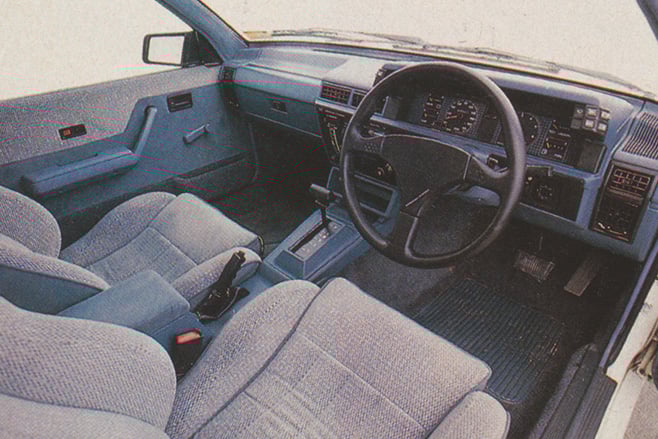
And there’s more power to be had. Holden’s brilliant engine man, Warwick Bryce, says 250 kW at 6400 rpm and 430 Nm at 4000 rpm is entirely possible. How good is the VN Group A going to be?
An automatic HDT Commodore can’t hope to generate the same acceleration times. Look beyond the standing 400m time, however, and you will find Brock’s car is also a magnificent performer. Any automatic that takes just 15.8 seconds over the quarter is rapid indeed, and once the Group Three has overcome its relatively leisurely initial acceleration it virtually matches the Group A all the way to 120 km/h. There’s 1.2 seconds difference to 50 km/h, but this has grown by only 0.1 second to 120 km/h. Above this speed the superior aerodynamics of the Group A begin to have an effect and the Brock car can’t keep up.
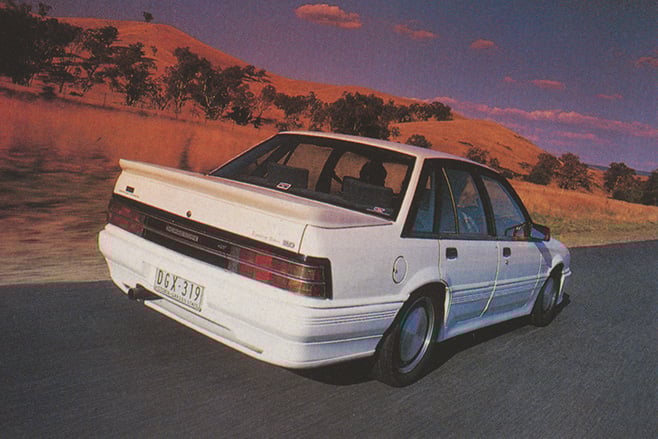
Comparative figures reveal the Brock Group Three matches the Group A across the 400 m, while the old carburettor Group A was more than half a second slower. The HDT car lacks the wail of the Group A, struggles through valve train noises above 5000 rpm, and doesn’t have the crisp, free-revving ability of the injected engine. And it can’t hope to match the official car’s top speed.
Comparing the fuel consumption of an automatic with a manual car always works to the disadvantage of the auto. Never more so in this case. Over a hard 220 km on the road the Group A returned 6.0 km/L (16.9 mpg) while the automatic HOT car gave a disappointing 4.0 km/L (11.2 mpg). The Holden comes with the long-range 84-litre petrol tank where the Group Three must make do with the standard 63-litre tank.
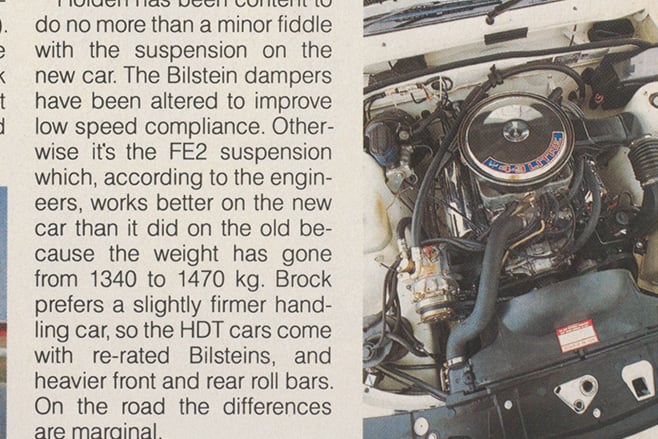
On the road the differences are marginal. Brock still insists his cars run 22 psi for road use. This made valid comparisons difficult, for the Holden men recommend at least 30 psi. The day we did this head-to-head shoot-out we had representatives of both companies present, making it impossible to run equal pressures.
Across the blacktop these cars are impressive by any standards, their sheer power and roadholding combining to flatten the steepest hills and straighten the tightest corners. The softer tyres of the Brock cancel out any advantage it might gain with its firmer suspension, so the relative lack of roll stiffness of the Group A must be balanced against the sidewall movement of the Brock car. Both still suffer from the performance Commodore’s long history of rear axle problems which induces bump steer from the rear over undulations and bumps. Only an independent rear suspension will provide an effective solution to this dilemma. At very high speeds the Group A’s outstanding aerodynamics improve stability, for above 160 km/h you can feel the body being pushed down into the road, where the Group Three becomes a touch floaty. The advantages in racing must be considerable.
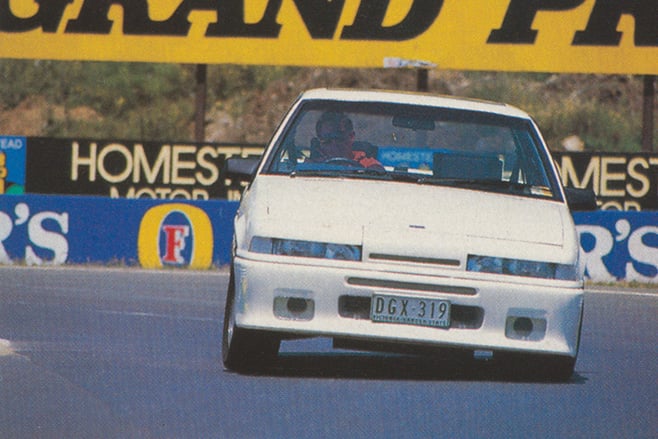
There’s no doubt we have a new quintessential Australian muscle car. Holden’s Group A deserves to be ranked with the finest. Its engine’s versatility and the body’s aerodynamics have created an instant classic. There’s no argument. At around $46,000 you must buy the Holden. A Brockised Group A? Maybe the General can still learn a thing or two from its once favourite son, though you get the impression Holden made up its mind the Group A was intended to show the world, and not least Peter Brock, that when the General got serious no racing driver-turned-car builder could ever hope to meet the challenge.
Skoda’s plans to dramatically expand its SUV line-up has been laid bare by a leaked image out of China, where Skoda expects to eventually offer four distinct SUV models.
According to photograph of a slide presentation that was posted to CarNewsChina.com, Skoda will add three new SUVs in the Chinese market in addition to its already-revealed Kodiaq large seven-seater.
The image shows the Kodiaq lined up next to three silhouettes, two of them labelled cryptically as “Model K” and “Model Q”. The third is unambiguously titled “Kodiaq Coupe”, a model which was confirmed by the Czech brand at last year’s Paris Motor Show as a Chinese exclusive – though a global roll-out is possible.
The Model Q is expected to refer to the next-generation Yeti, which will grow in size to put it squarely into the mid-size SUV segment. Meanwhile the Model K silhouette represents what is likely to be a whole new sub-Yeti model, giving Skoda an entrant in the steadily growing compact/small SUV market.
As for the coupe version of the Kodiaq, details are sketchy but we’re expecting to see a sportier, fastback-styled five-seater version of the large SUV, similar in concept – if not size – to the recently-launched Toyota C-HR.
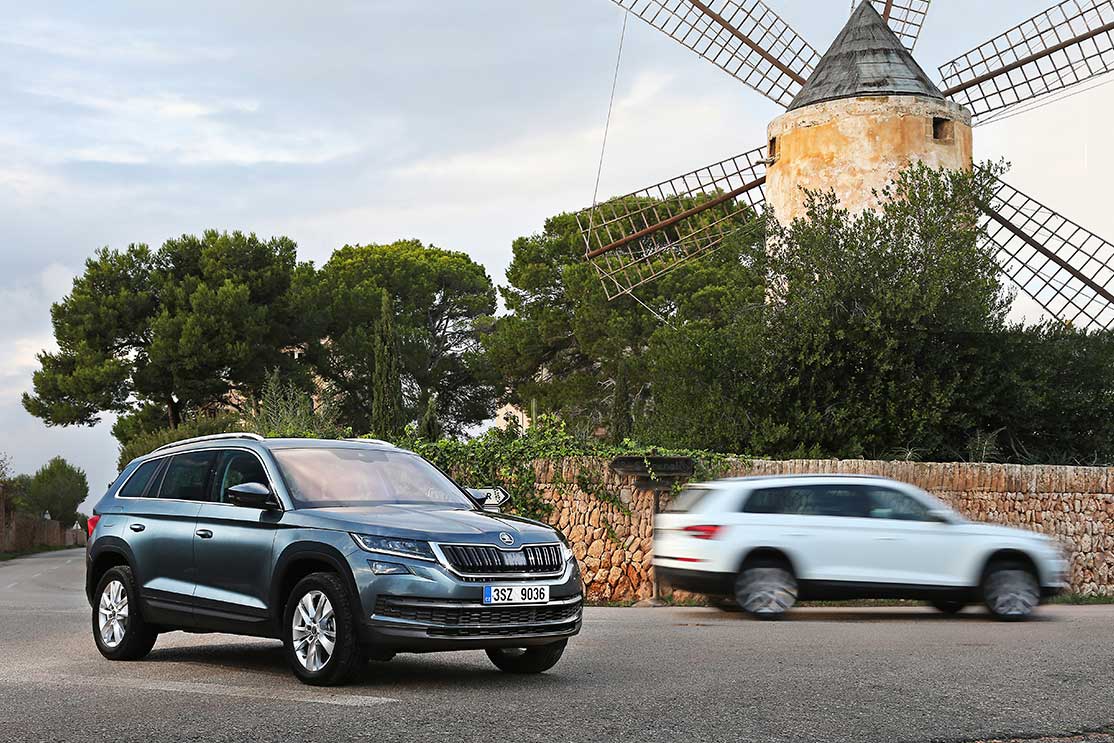
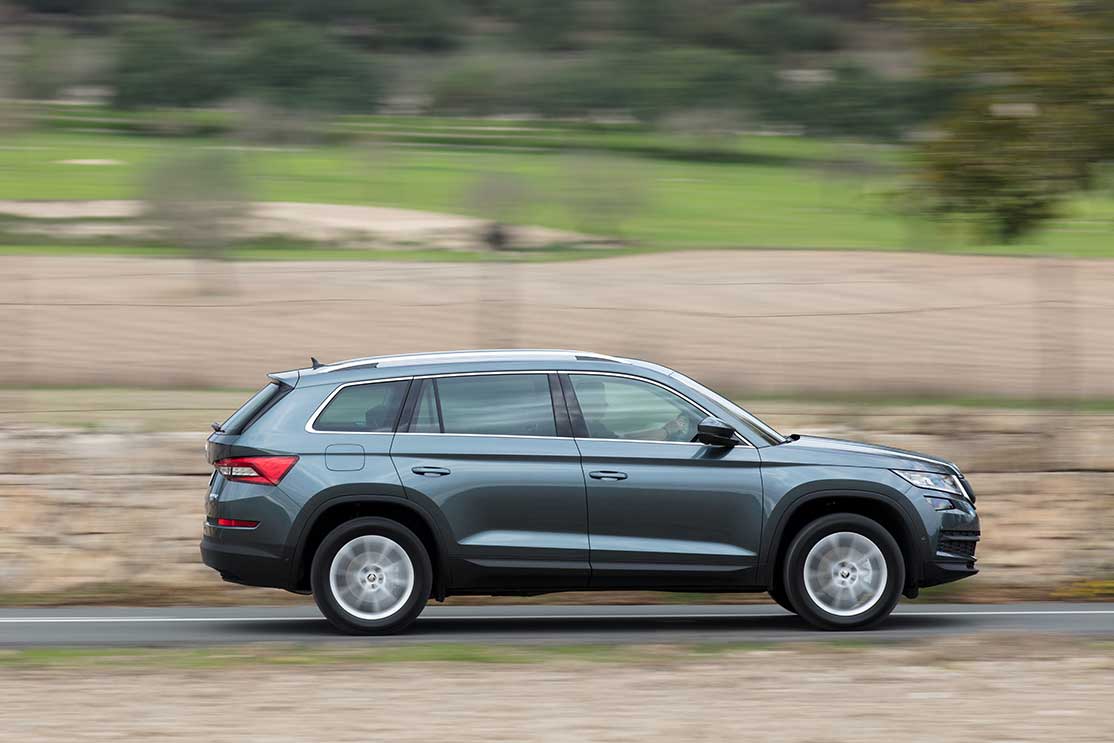
The Skoda Kodiaq is due to arrive in Australia later this year, offering front and all-wheel drive options and using parent company Volkswagen Group’s modular engine platform with five engine choices.
Meanwhile the new Skoda Yeti is due to be revealed in late 2017.
ONE of the biggest perks an electric vehicle has over a combustion-engined equivalent is it can be charged at home while everyone else has to go line up at a servo like a chump.
This convenience is a large selling point, and something Wheels has covered extensively (we even had a long-term Holden Volt and a Nissan Leaf back when they were fresh). But what if you don’t have that luxury? According to the Australian Bureau of Statistics, in 2015 almost one in three Australians – 31 percent – rented their home. I count myself among that lot, and if current trends in housing affordability continue, that percentage will only rise.
The high number of renters versus owners poses a difficult question for the implementation of EVs in Australia: how do people in some rental properties home-charge an electric vehicle. Some will have few issues – namely those renting detached or semi-detached houses with garages – but others may struggle if their landlord isn’t sympathetic to electron-based motoring.
Even homeowners with street-only parking or those in high-rise apartments will have issues with charging at home.
Which brings us to the Model S P100D we are testing.
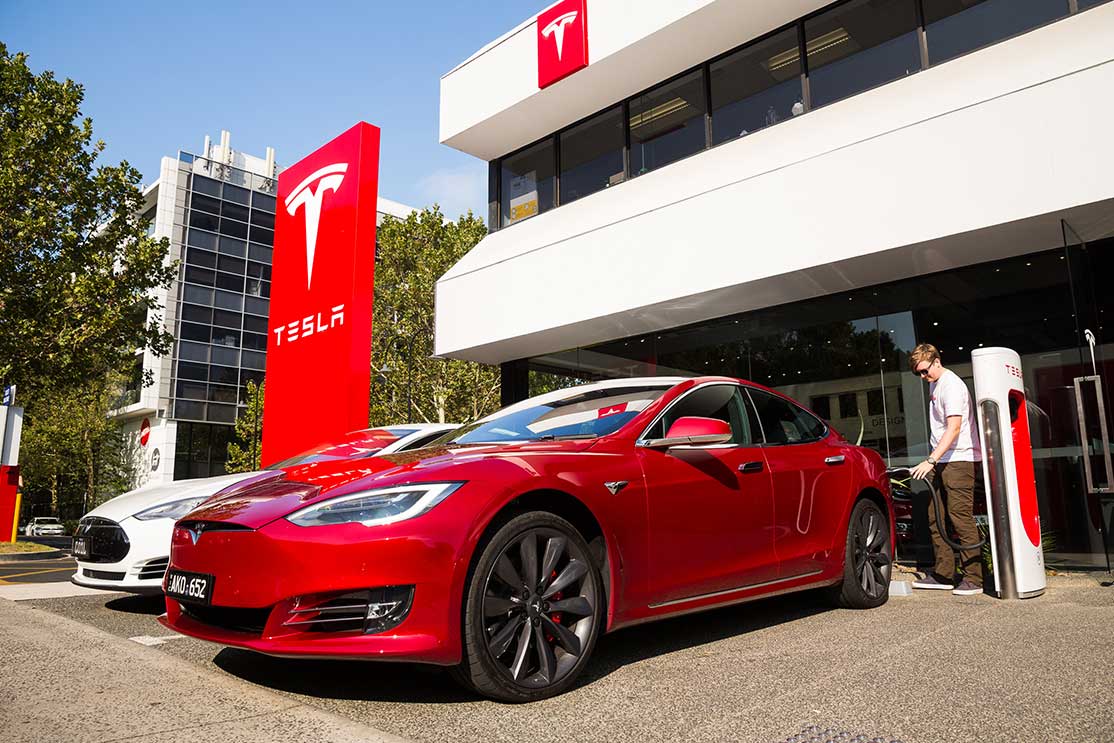
Tesla offered to install one of its home wall chargers at the Wheels office so we could sample something approaching the ideal ownership experience. The people paying more than a quarter of a million dollars for this car will doubtless have a home charger installed, but this Tesla is, for us, a stand-in for all EVs. Soon, not all electric cars are going to be megadollar luxury items, and regular Joes and Janes will have EVs within their lower-income grasp – even those who rent their houses. They, like me, will be at the mercy of public charging infrastructure.
Of the manufacturers offering fully electric vehicles, Tesla owners have the best support. The brand’s Supercharger system is available to use (free for early adopters, a small fee for new owners) and pump juice into the batteries at a relatively quick rate. It is nowhere near as swift as refuelling a conventional petrol or diesel car – not even in the same league – but is it fast enough to not be a drag on your everyday life?
After two weeks, in the two most congested and populous cities in Australia, yes. The more-than-500km range of the P100D means it could easily have done a fortnight’s worth of my regular commute on a single charge. But this wasn’t a regular commute, and I was averaging 200km a day. Despite all that, it wasn’t an onerous experience having to visit charging stations and spending anywhere from 15 minutes to an hour to top up the batteries.
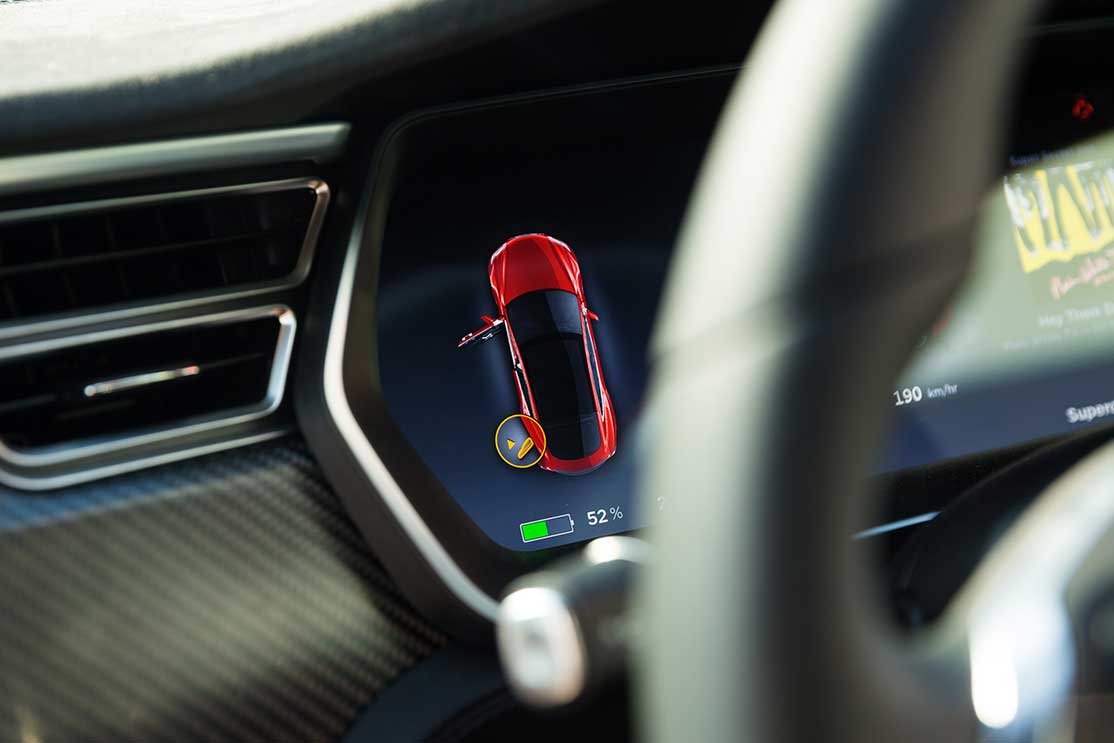
What did require effort was planning. Each day I would have to figure out where I was travelling, how much charge I would have left at the destination and whether I’d have time to drop by a Supercharger. Each day’s movements needed to be carefully thought out to ensure I didn’t find myself out of charge and stranded. Thankfully, the Tesla’s satnav calculates how much charge is left at the end of a trip, and knows the location of every destination charger and Supercharger station in Australia. Without this, the process would be a headache.
But in the real world, owning a Tesla and charging exclusively with a Supercharger wouldn’t be a deal breaker, for myself at least. There were always spaces available, and it was nice to plug the car in and either go for a walk, sit in a park and read a book or get a bite to eat. On the flip side, you can’t charge a Tesla through a non-Supercharger public charging station: the plug simply won’t fit unless you spend more to buy a special adapter.
While it is less convenient than refuelling a conventional car, living without a home charger and owning an electric vehicle aren’t mutually exclusive. However, when EVs do become more attractive to mainstream buyers, it will be paramount that the infrastructure is ready, and Tesla hopefully won’t be the only manufacturer with a convenient quick-charge option. Without that, EVs will struggle to find favour among the renters, apartment-dwellers and street parkers of Australia.
HYUNDAI is unable to confirm timing and details for a local release of Ioniq, its sub-brand of electrified vehicles, even though other markets around the world – including our neighbours in New Zealand – are already buying them.
Three variants of the Ioniq exist elsewhere, including a hybrid, a plug-in, and a full electric vehicle. Hyundai is the only manufacturer to offer a vehicle with all three powertrain options.
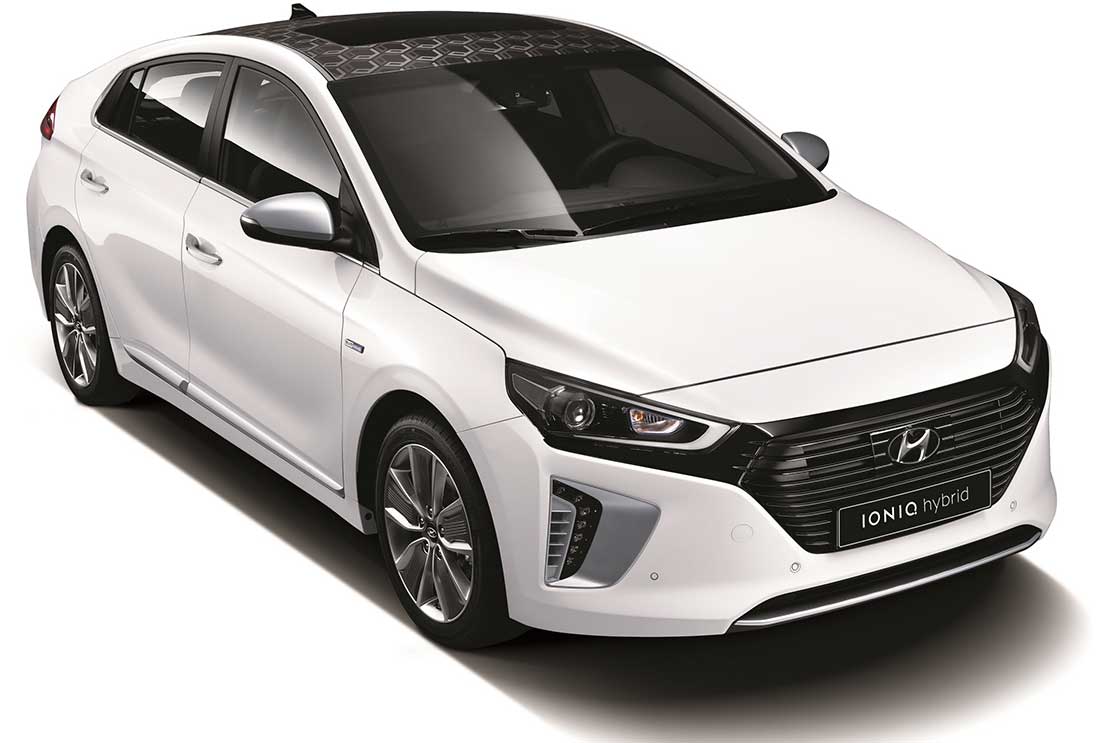
Hyundai Australia has confirmed its interest in the Ioniq line-up, though it is still unclear when the different models will be ready for Aussie showrooms, and when they are, which ones the local branch will choose to bring in.
HMCA boss Scott Grant previously attributed the delay to the Ioniq’s ‘basic’ audio-visual and navigation system in overseas models, describing it as a hurdle that needed to be overcome before the Ioniq would be acceptable for Aussie buyers, and that he did not expect Ioniq to arrive until late in 2017.
| 2016 Paris Motor Show: Top 5 electric cars
Speaking to WhichCar, a local spokesperson for the brand could not go into detail about the infotainment troubles, but did say it was still “too difficult to tell” when Ioniq may arrive, adding that “it could be this year or early next year.”
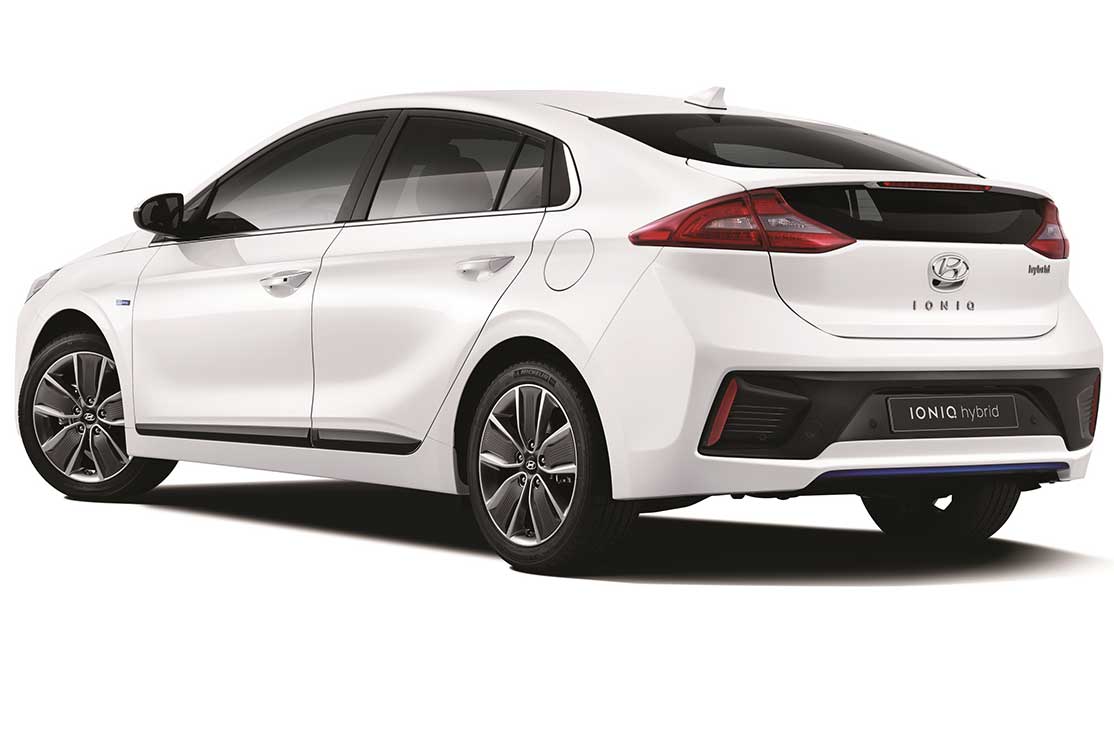
Oddly, the Ioniq already has an ANCAP safety rating of five stars following crash testing carried out in Australia for New Zealand market vehicles, a score that will also apply to cars when they are eventually delivered to Oz.
The Ioniq is unique in the electrified vehicle space for its styling, which is more accessible than the polarising Toyota Prius, and also for its technology, which makes the Prius look a little last-gen.
| Electric cars take charge at the Paris Motor Show
Hyundai is using modern, lithium-ion batteries in Ioniq vehicles, rather than the less advanced nickel-hydride type used by Toyota.
Conversations with government organisations such as local councils may yield orders of Ioniqs that could accelerate the process of bringing these cars to Australia, but at this stage it is still a waiting game.
PORSCHE may have recently plugged a gap in its 911 line-up with its more powerful and agile GTS model, but the rest of the range may have caught up thanks to a just-announced power upgrade.
Customers looking at the 911 Carrera S can now order what Porsche calls a power boost option that will increase the power of the 3.0-litre turbo flat six by 22kW from the S’s existing 309kW peak output.
Achieved by fitting a larger pair of turbochargers and a re-mapped engine management computer, the upgrade means the Carrera S will match the GTS’s 331kW maximum: perhaps not too surprising, given those modifications sound exactly like what it took to produce the GTS’s beefier lower curve in the first place.
The upgrade also includes Porsche’s Sport Chrono package with dynamic engine mounts, modifications to brake cooling, and a twin exhaust system that exits from the centre of the 911’s rear end.
It all gets a bit more intriguing when you start to look at pricing. The upgrade package will cost at least $24,580 in Australia which, when you add it to the entry level Carrera S’s price – that’s the manual rear-drive coupe – takes it to $280,880 without any other options.
Given the GTS (pictured, below) in the same body and drivetrain spec arrives in Australia costing from $279,000 it seems that deciding whether to buy the S with upgrade or the GTS is another version of Hobson’s choice.
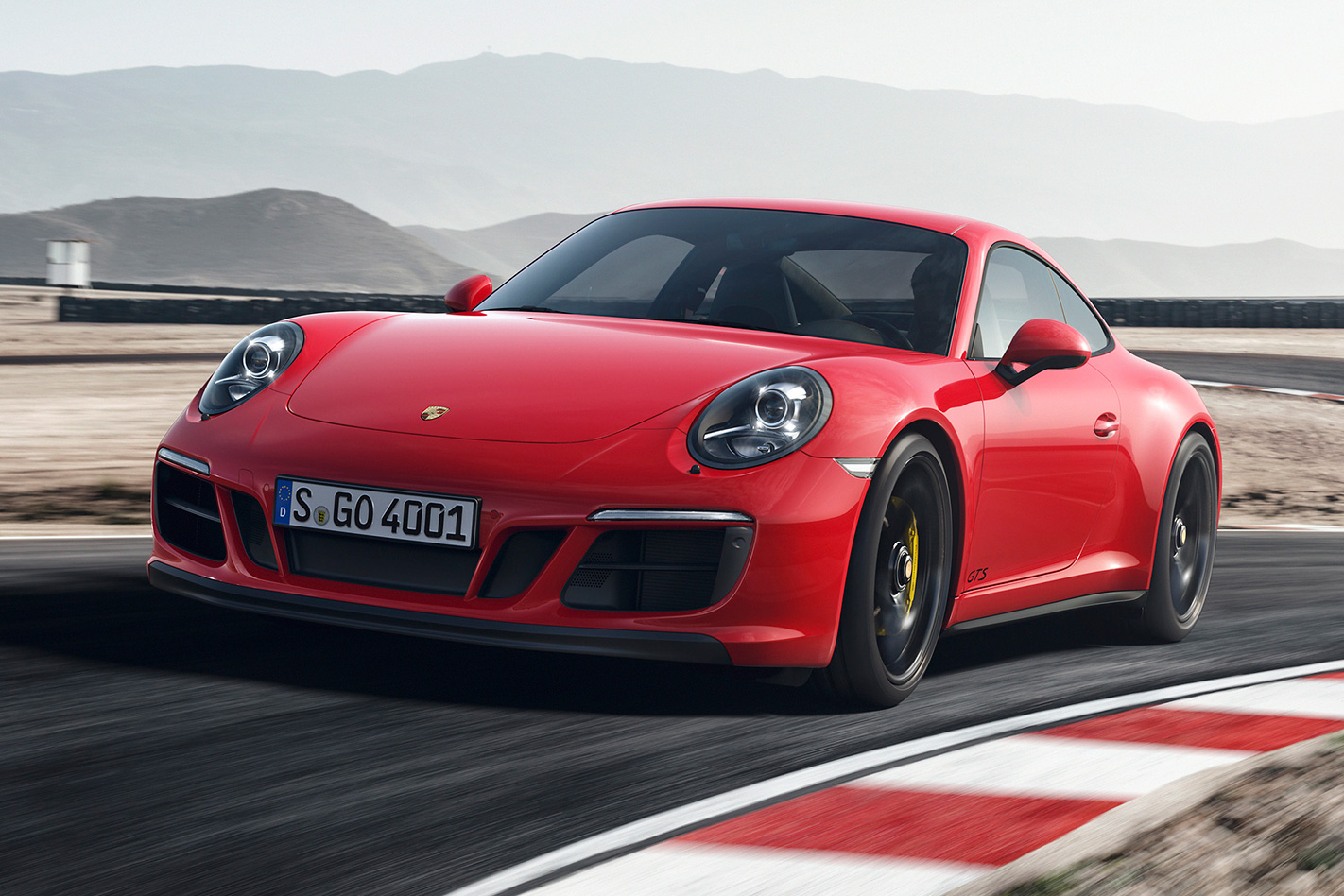
In other words, if you already have an S and wouldn’t mind boosting its horsepower to GTS levels, drop the car off at your friendly Porsche dealer along with a bundle of cash and it’s yours for more than $1000 a kilowatt.
On top of the 911 S power upgrade package, Porsche has announced it has extended its Connect Plus connectivity system for smartphones across the entire model range, offering greater access to apps via the car’s display and communications hardware.
It has also added a suite of new exterior and interior trim colours across the range. While these include the relatively subtle – brown and burgundy metallics with a black or beige interior on the Panamera, for instance – Porsche’s more extroverted customers can now get a 911 Turbo S with metallic yellow exterior and a black/yellow-gold interior.
Ferrari turns the ripe old age of 70 this year.
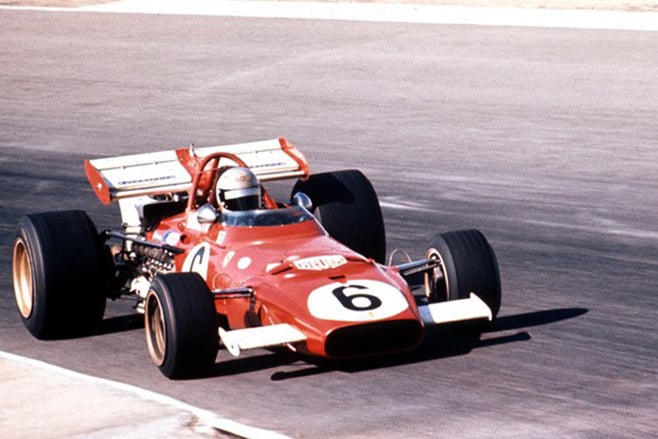
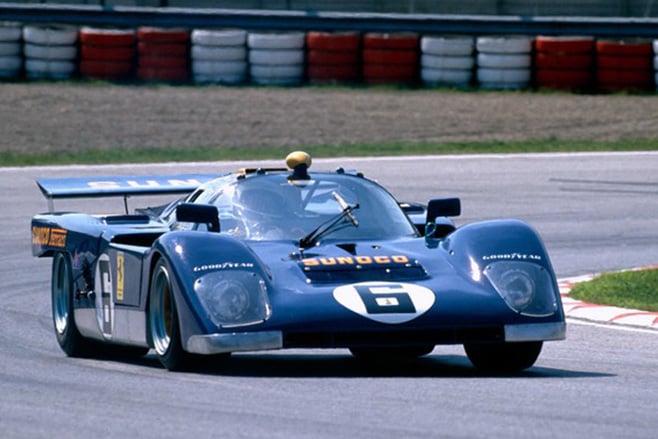
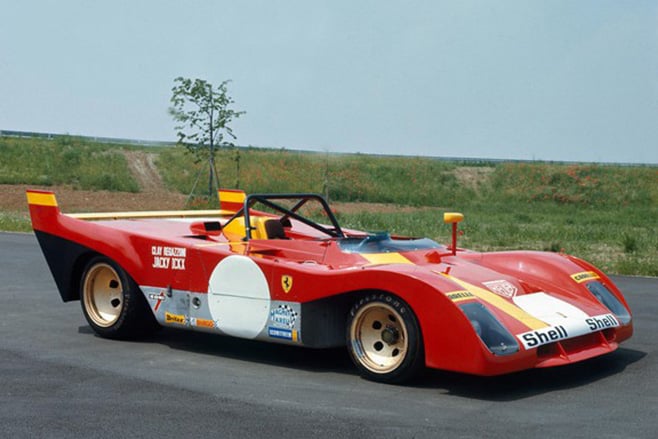
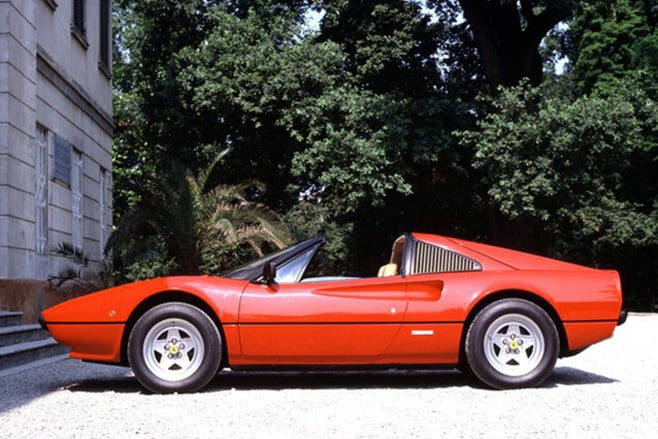
To celebrate the occasion, the most famous of all car makers has released 70 liveries which will be applied just once to each model in the current range: California T, 488 GTB and Spider, GTC4 Lusso and F12 Berlinetta.
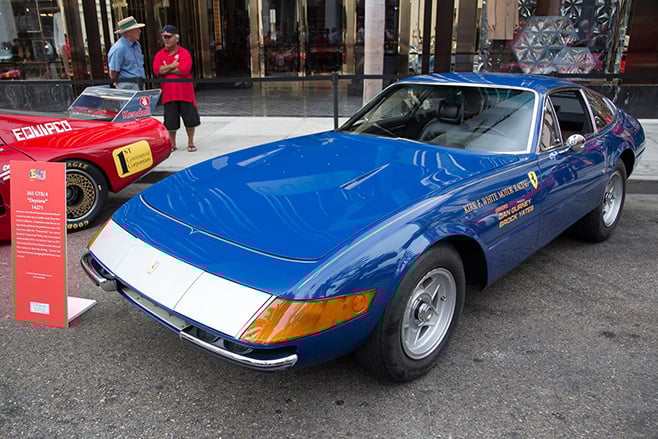
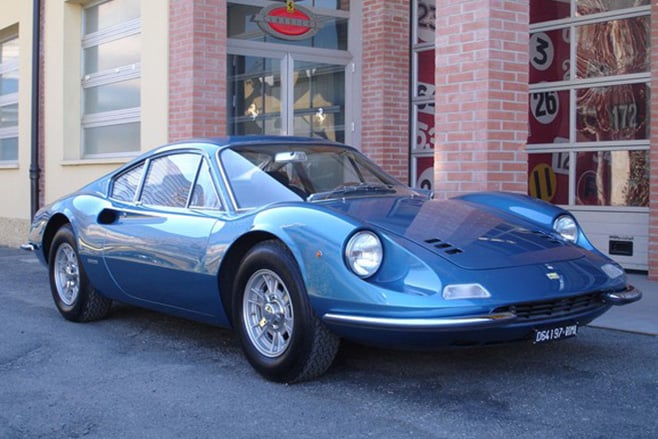
There are no mechanical modifications, with each car identified by its unique paintwork, 70th Anniversary logo and ID plate with the name of the model that inspired it. Nonetheless, in the current collector car market, no doubt Ferrari aficionados will be clambering over one another in an effort to secure these models.
Below you’ll find the 10 liveries inspired by Ferrari models from 1967-1980. Let us know your favourite in the comments below.
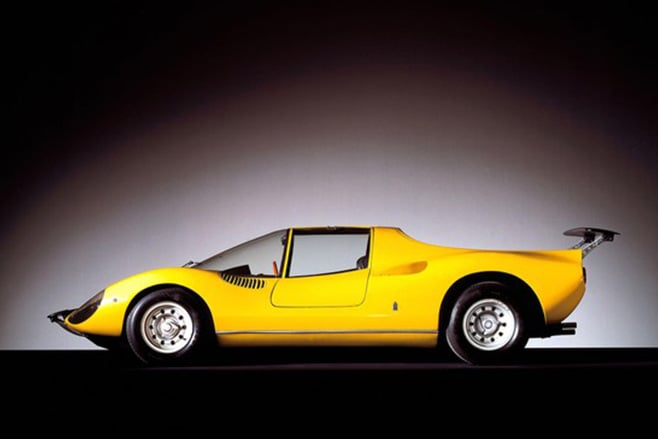
41. Ferrari Dino 206 Competizione
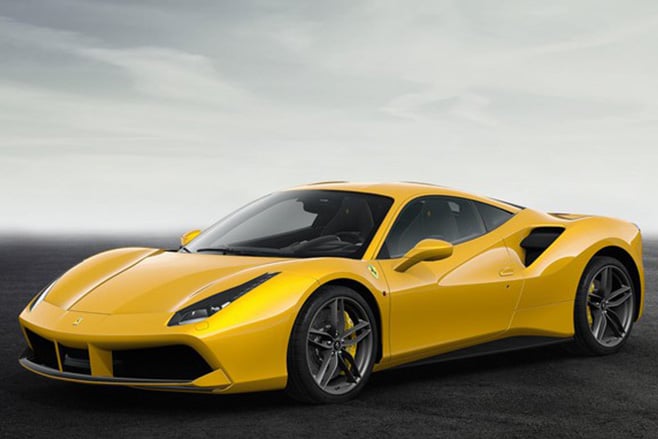
42. 1970 Ferrari 365 GTB4 ‘Daytona’
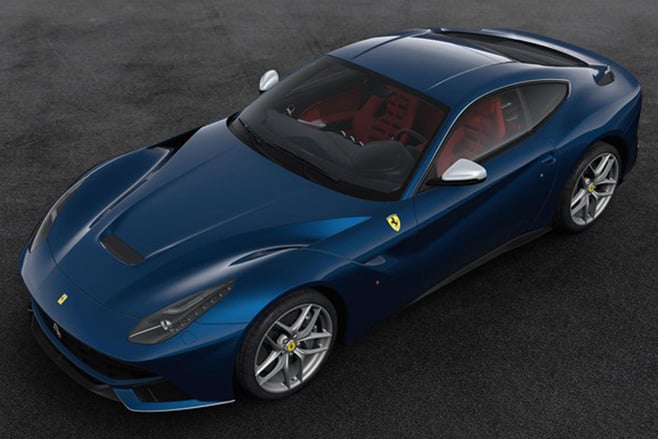
43. 1971 Ferrari Dino 246 GT
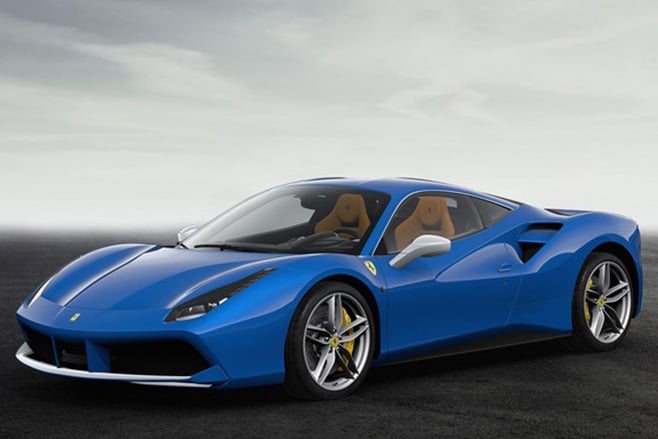
44. 1971 Ferrari 312 B F1
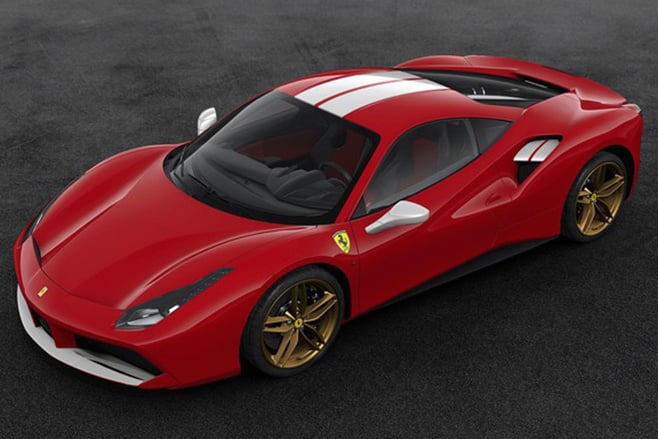
45. 1971 Ferrari 512 M ‘Sunoco’
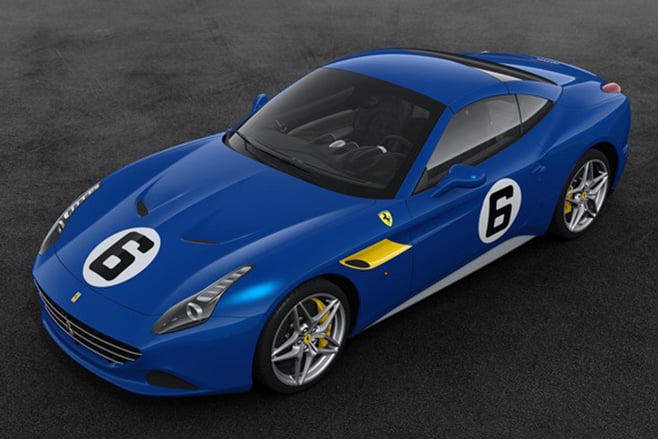
46. 1971 Ferrari 65 GTC4
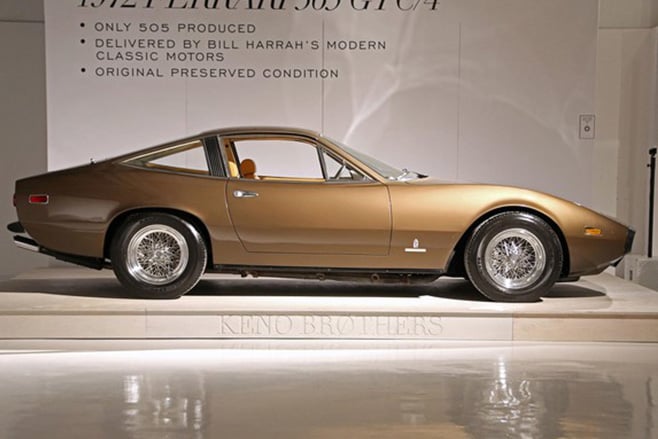
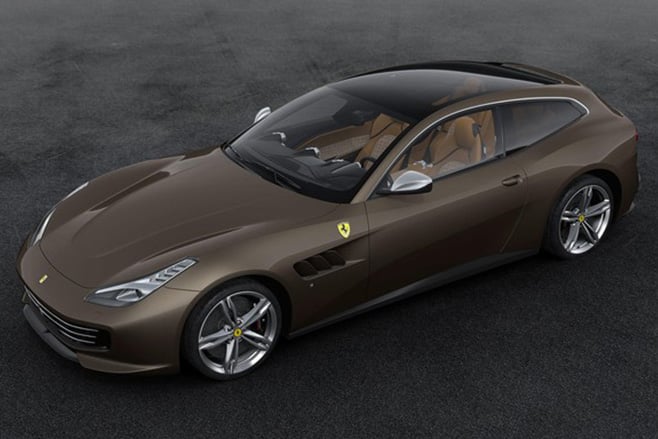
47. 1971 Ferrari 365 GT4 BB
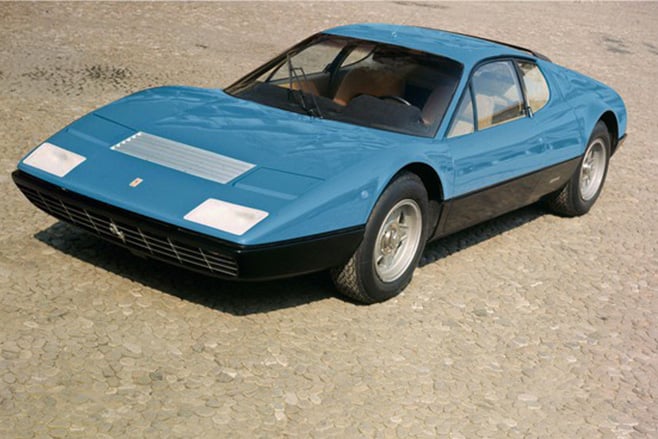
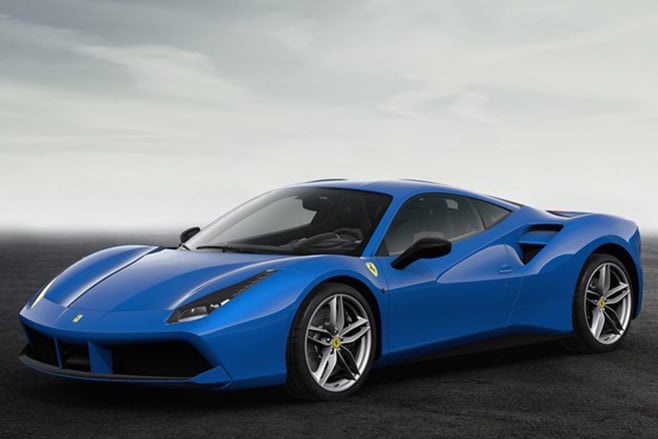
48. 1972 Ferrari 312 P
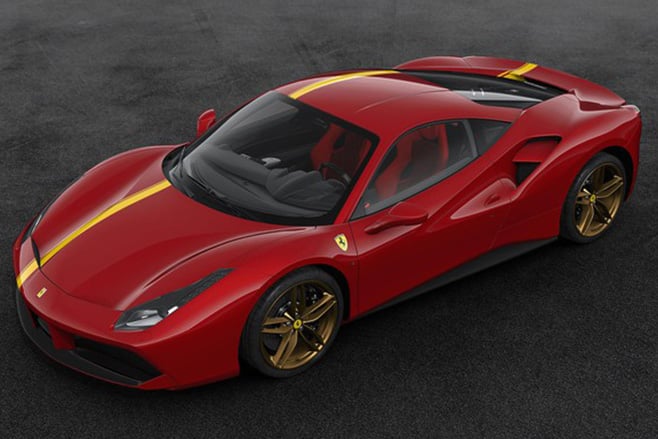
49. 1975 Ferrari 312 T
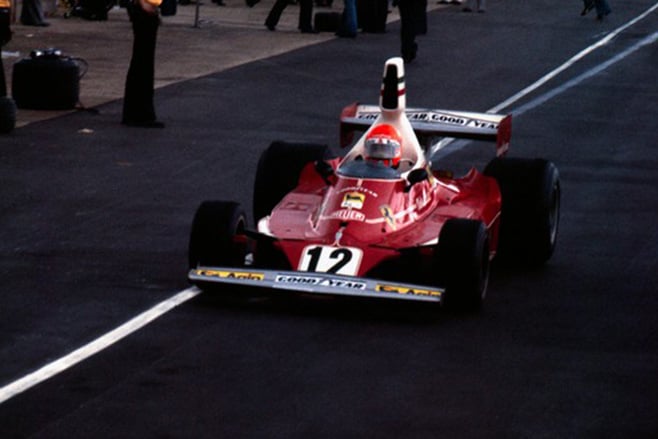
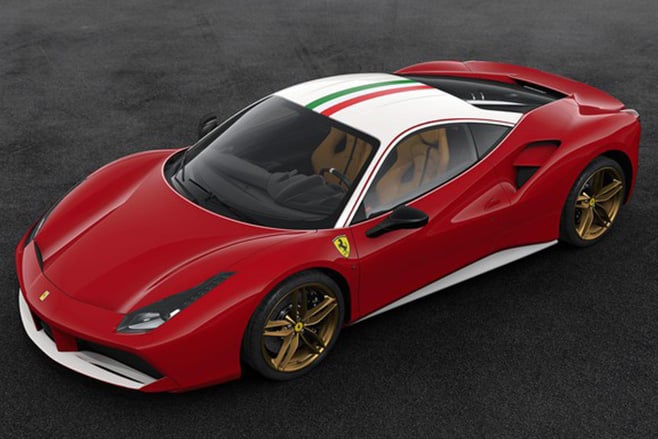
50. 1980 Ferrari 308 GTS
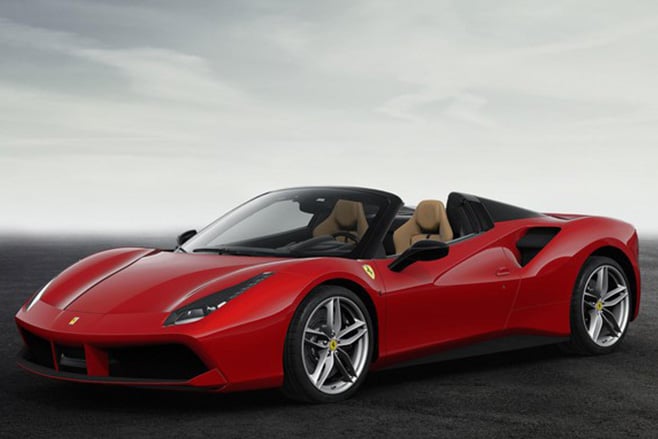
View more 70th Anniversary limited edition liveries inspired by past Ferrari models.
The Australian sales chart may not reflect it, but ask any WhichCar or Wheels reviewer to name the dominant vehicle in the small-car segment and the answer will be the same as it has been since the mid-2000s: Volkswagen’s Golf.
No other car in the class combines such a persuasive blend of perceived quality, interior finish, refinement, dynamics and efficiency.
We’re now at the mid-point of the lifecycle of the Mk7 model, and a raft of upgrades stamp this is as the most comprehensive update ever applied mid-cycle to a Golf – this is very much Golf Mk7.5.
In terms of engine and power, the most significant movement comes at the entry point of the range.
Gone is the entry-level 92TSI model; the line-up now opens with the 110TSI, powered by a 110kW version of the 1.4-litre four-cylinder petrol-turbo engine, with either a six-speed manual or, more commonly, a seven-speed dual-clutch (DSG) transmission.
The jump of 18kW is significant, but more noteworthy, in terms of general driveability, is the torque leap: the 92TSI engine made 200Nm; the 110TSI cranks out 50Nm more.
Key equipment upgrades to this model include 16-inch alloy wheels, and automatic emergency braking, with multi-collision braking (which applies the brakes if the car is hit from behind, stopping it from ramming into the car in front.) Also standard are VW’s App-Connect and Bluetooth, rear view camera, driver fatigue detection system, LED tail lights and daytime driving lights.
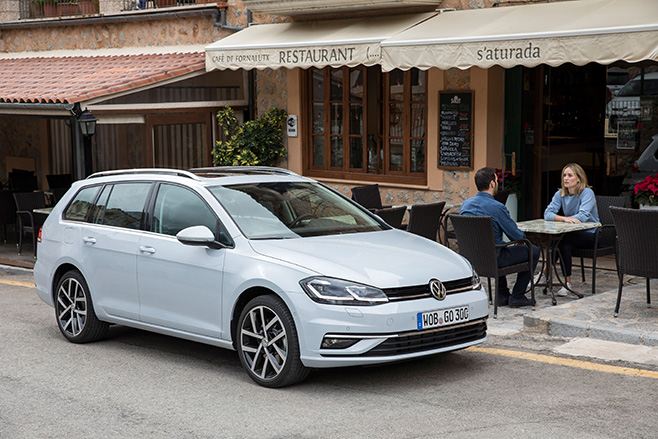
Above the 110TSI is the 110TSI Trendline, also available with six-speed manual or a seven-speed dual-clutch (DSG) transmission. Importantly, it’s at this Trendline level that buyers can opt for the wagon variant, offered with the seven-speed dual-clutch gearbox only.
Most significant equipment upgrades that come with Trendline are automatic headlights and wipers, auto dimming rear-view mirror, front and rear parking sensors, front seat lumbar adjustment, and rear seat centre armrest with load-through and cup holders.
Step up to the next level above Trendline and, as per the outgoing line-up, you’re at Comfortline. Again, a wagon variant is offered, but transmission for both hatch and wagon is the seven-speed dual-clutch only.
This is the spec level you need to choose if navigation is required. You’ll also get 17-inch wheels, improved front seats, dual-zone climate control, and a handful of other upgrades.
Comfortline is also the spec level at which the optional Infotainment package can be included. This provides Active Info display, which is a 12.3-inch customisable instrument display that can be configured into one of five different profiles, including Classic, Performance, Efficiency and Navigation.
It’s especially useful in the latter Navigation mode, as it reduces the size of the speedo and tacho dials and puts the map and directions just below your line of sight.
Also part of the Infotainment package is the Discover Pro 9.2-inch media display, with gesture control (limited usefulness) and voice control.
The sound system is upgraded to a Dynaudio Excite 400W premium audio system with 10-channel digital amplifier and subwoofer.
Optional for the Trendline, Comfortline and Highline is the Driver Assistance package, which includes:
- Adaptive Cruise Control
- Lane keeping Assist
- Blind Spot Monitor
- Rear Traffic Alert
- Park Assist
Main equipment upgrades over Comfortline include: leather appointed upholstery, heated front seats, electrically adjustable driver’s seat with memory function, keyless entry and start, power folding door mirrors, LED headlights, colour infotainment display (MFD Premium), and glass sunroof. The 17-inch wheel are a different design, there’s an extra splash of exterior chrome, the interior gets ambient lighting strips, and front fog lights are fitted.
Highline customers can also option the R-Line Package which brings:
- R-Line exterior styling
- R-Line interior styling
- 18″ (Sebring) alloy wheels
- Progressive steering
- Sports suspension
- Tinted rear and rear side window glass
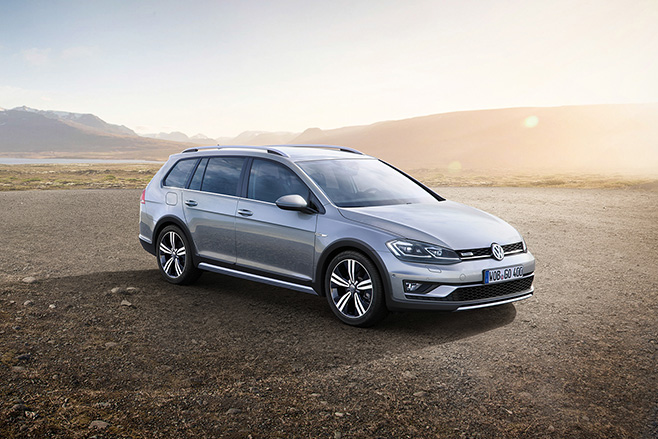
The Alltrack is now offered in three variants: Alltrack 132TSI, Alltrack Premium 132TSI, or Alltrack Premium 135TDI.
The first two are powered by the existing 1.8 turbo-petrol engine making 132kW/280Nm. The latter is your only way to have a diesel engine in the wagon body; the 2.0-litre diesel producing 135kW/380Nm, and driving all four wheels via a seven-speed dual-clutch transmission.
Three option packages are offered for Alltrack: Driver Assistance and Infotainment, as per the regular Golf line-up, as well as a Sport Luxury package for Alltrack Premium. Key inclusions of this are:
- 18-inch alloy wheels
- Steering wheel mounted gearshift paddles
- Panoramic electric glass sunroof
- Electrically adjustable driver’s seat with memory
- Electrically adjustable driver’s lumbar support
- Power folding door mirrors with memory function
- Dark tinted rear and rear side windows
Honda has announced pricing of its new Civic hatch range five weeks ahead of its arrival into Australian dealerships.
The five-tiered range will have a starting price of $22,390 for the entry-level VTi and as much as $33,590 for the range-topping VTi-LX and, like its recently released sedan counterpart, represents the 10th generation of the Japanese firm’s contender in the popular small hatch segment.
Due to hit dealerships in May, the new range will come standard with a colour-matched upper tailgate spoiler as well as a black lower rear spoiler, while the front grille and b-pillars both receive the piano black treatment.
The sportier RS variant gains a full lower body kit, also in piano black. It gets dark chrome door handles as well as a centrally mounted chrome twin exhaust outlets which mimics the firm’s new RS-badged sedan.
The updated hatch is powered by one of two engines, the two base-model variants (VTi and the VTi-S both employing a naturally aspirated 1.8-litre four-cylinder engine, while the higher-spec VT-L, RS and VTi-LX models all employ Honda’s 1.5-litre VTEC turbocharged engine which is new for the 2017 model year. All five variants are front-wheel drive and will come equipped with the firm’s continuously-variable transmission (CVT).
“The development of the 10th generation Honda Civic was one of the most ambitious and comprehensive new model programs ever undertaken by Honda Motor Co. Ltd.,” said Honda Australia’s Stephen Collins, who revealed the Australian-based operation and dealer network had “significant input” towards the new range.
It’s worth noting the pricing structure of the hatch range mirrors that of the firm’s five-tiered sedan line-up, with the only difference being the RS-badged hatch gaining a $500 premium over its four-door counterpart.
Pricing structure
VTi $22,390 (plus on-road costs)
VTi-S $24,490 (+ORC)
VTi-L $27,790 (+ORC)
RS $32,290 (+ORC)
VTi-LX $33,590 (+ORC)
