
MORE poise for Mercedes-Benz’s mid-tier coupe is matched with a spacious cabin that is dripping with elegance.
WHAT IS IT? A two-door version of Mercedes-Benz’s W213 E-Class sedan. The E-Coupe is also the middle ground in Mercedes-Benz’s four-seat coupe market, slotting in between the C and the S.
WHY WE’RE TESTING IT To see if the E Coupe really is required when Mercedes-Benz already has so much to offer in the two-door space. The E-Class Coupe arrives in Australia in June, 2017 and our drive took place in Europe.
MAIN RIVALS You could argue that the biggest rival would be a C-Class Coupe, given it shares many styling cues and engines, albeit with a smaller back seat. Then again, the S-Class Coupe could also rate a second glance for those shopping an E two-door.
In terms of direct rivals, the closest is BMW 6-Series, a car with a bigger price tag. Otherwise check out the BMW 4-Series or an Audi A5. Those simply wanting two-door style with four seats could look at everything from a Ford Mustang to a Lexus RC or, at a stretch, a Maserati Gran Turismo.
THE WHEELS VERDICT Closer to S than C in its cruisy, big four-seat nature, the new E-Class Coupe provides decent middle ground for those wanting a Mercedes-Benz two-door.
PLUS: Spacious cabin; beautiful interior and attention to detail; supple ride; competent grand tourer MINUS: Weight dulls performance, especially with four-cylinder E300; lacks cornering sizzle; semi-autonomous tech overhyped
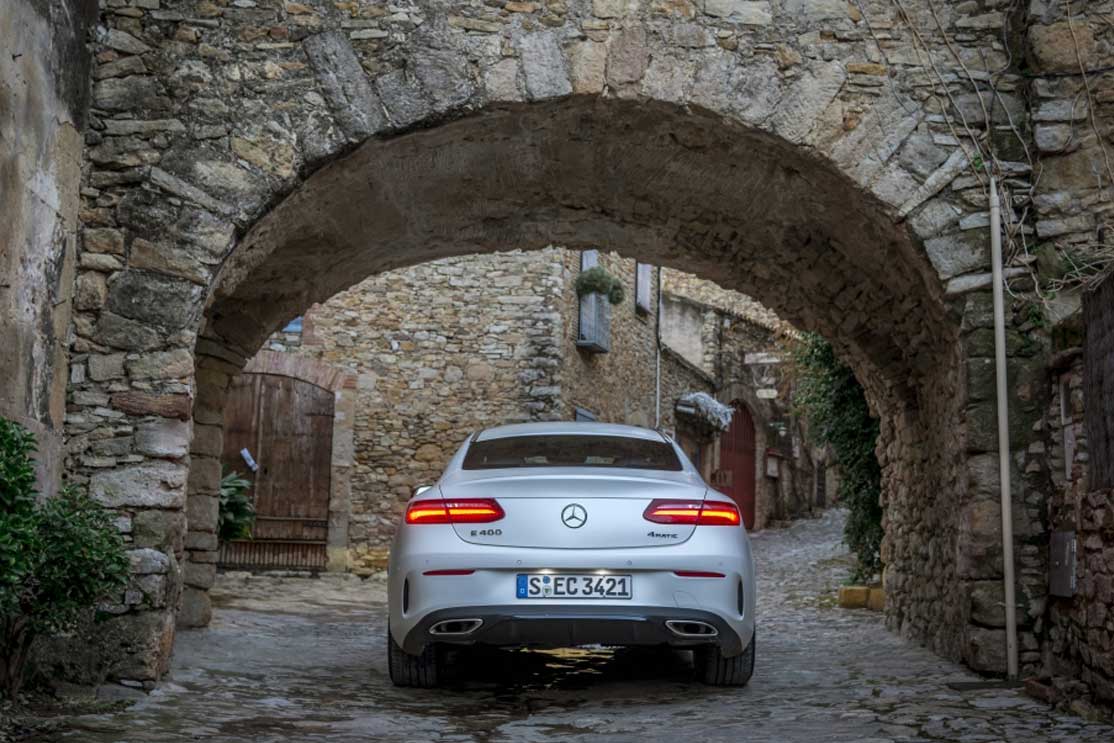
GOLDILOCKS would love the Mercedes-Benz E-Class Coupe. Or, at least, she’d love the premise of the latest iteration of Benz’s four-seat two-door.
Slotting between the C-Classand the S, the E Coupe dishes up more comfort and space than the C at half the price of an S.
Perfect, then, for those who don’t need back doors but who do yearn for two-door style with some semblance of space.
That’s the theory, and it’s one that gets more serious with the latest iteration of the E two-door.
Riding on the W213 E sedan’s architecture (the previous car used a stretched C platform), a clear sales pitch with the Coupe is space. There’s an extra 74mm of rear legroom and 34mm extra shoulder room.
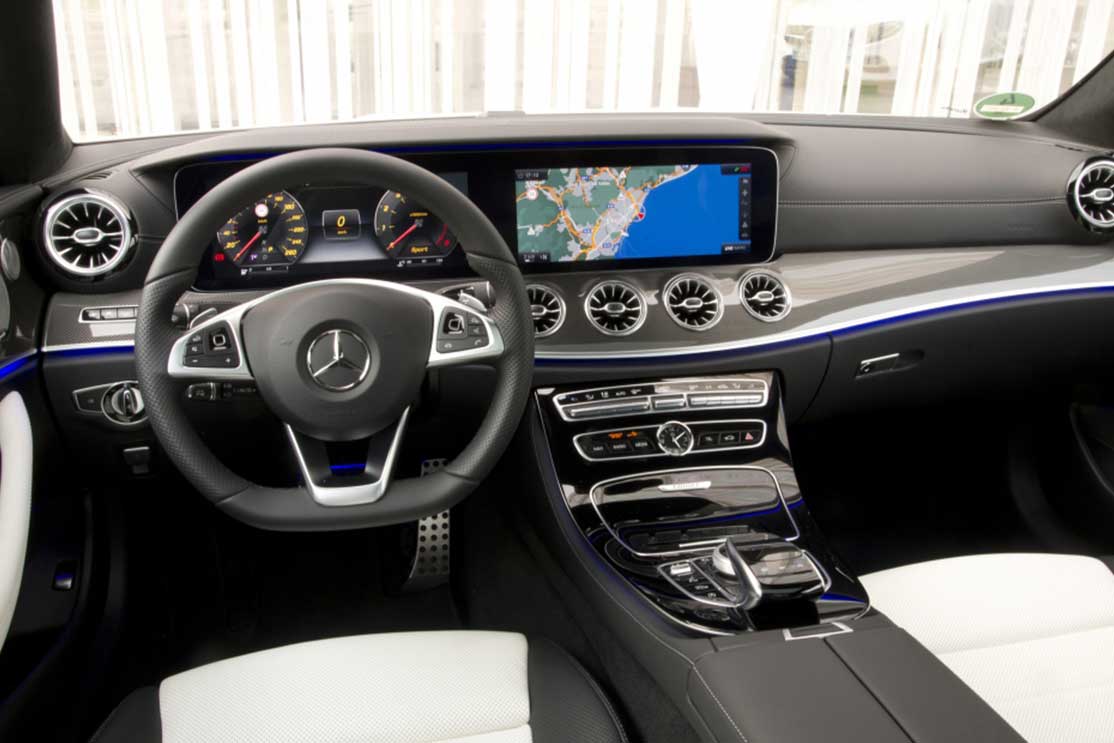
Cocooned in the sculpted seats there’s loads of knee space and ample head room for all but six foot-plussers.
And those in the rear get the same matte metal window switches and Burmester speaker grilles, ramming home the attention to detail throughout. Dual circular air vents with separate controls complete the luxury back seat package.
Those vents are the same as those up front, an intricate turbine-inspired design that gives the Coupe a distinct appearance from the sedan it’s based on. They’re a small but significant change, although it’s a shame the touch doesn’t match the wonderful look; they feel plasticky and cheap.
But the E’s broad cabin creates a feeling of openness up front, one amplified with the panoramic sunroof and expansive (brilliant) wood dash.
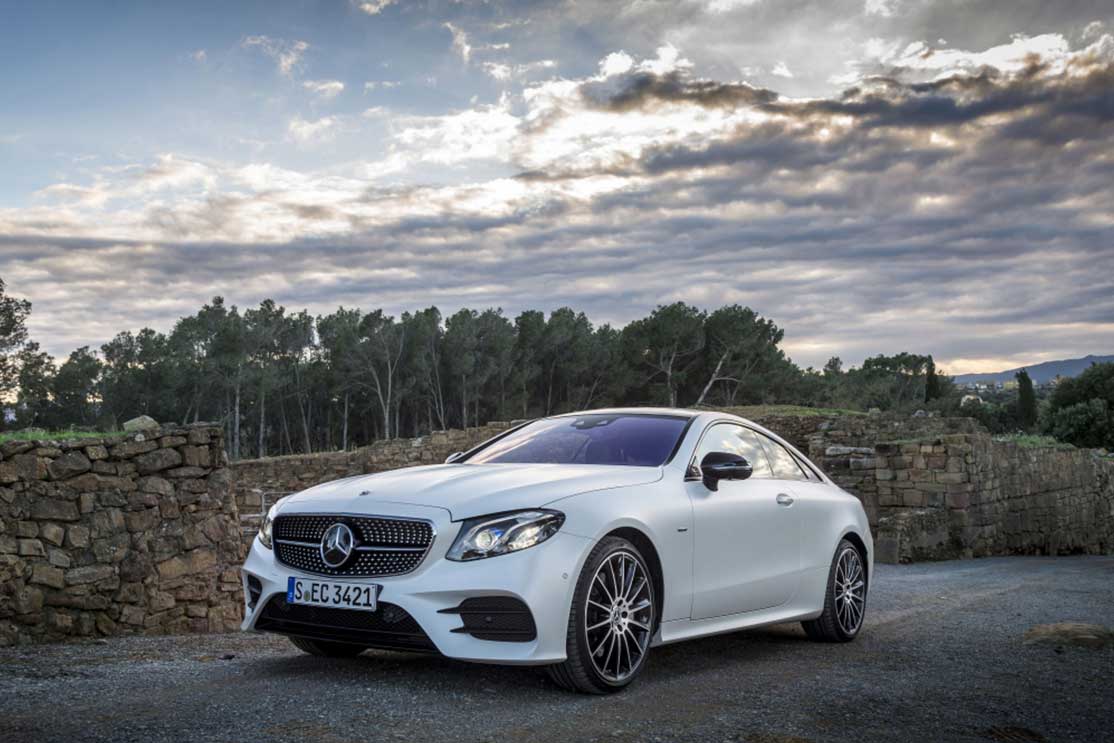
At 1610kg it’s not particularly light. But precise steering and broad 20-inch Pirelli P Zero boots (standard on the E300 and E400) ensure it points sharply, only tempting understeer when chucked in hard.
The 4Matic of the E400 (complete with its V6) adds 160kg to the equation, taking the total to nearly 1.8 tonnes. That translates to more weight over the nose, although it still points with assertion.
And the extra traction of the 4Matic eliminates the occasional rear-end wiggle of the E300, upping confidence and pace out of hairpins.
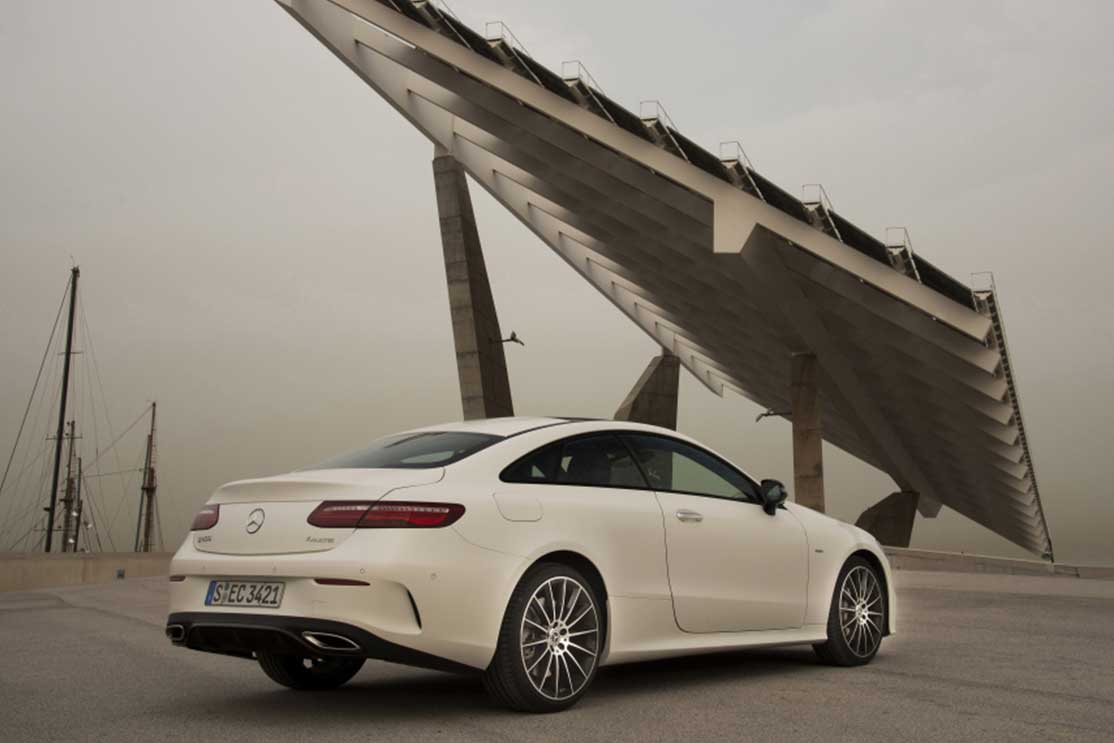
But on smooth Spanish bitumen it’s no issue. The Comfort suspension setting suits the nature of the car, albeit without the sharper full-throttle upshifts of Sport+ (less impressive is the jumpy throttle response). Even in Sport+ the ride is unfazed by the welcome additional stiffness.
Sport adds some welcome alertness to the throttle and a hint more feel to the tiller, along with more eagerness to use one of the nine-speed auto’s lower ratios, albeit with some occasional abruptness to a downshift.
The trio of E Coupe drivetrains is identical to those in the sedan.
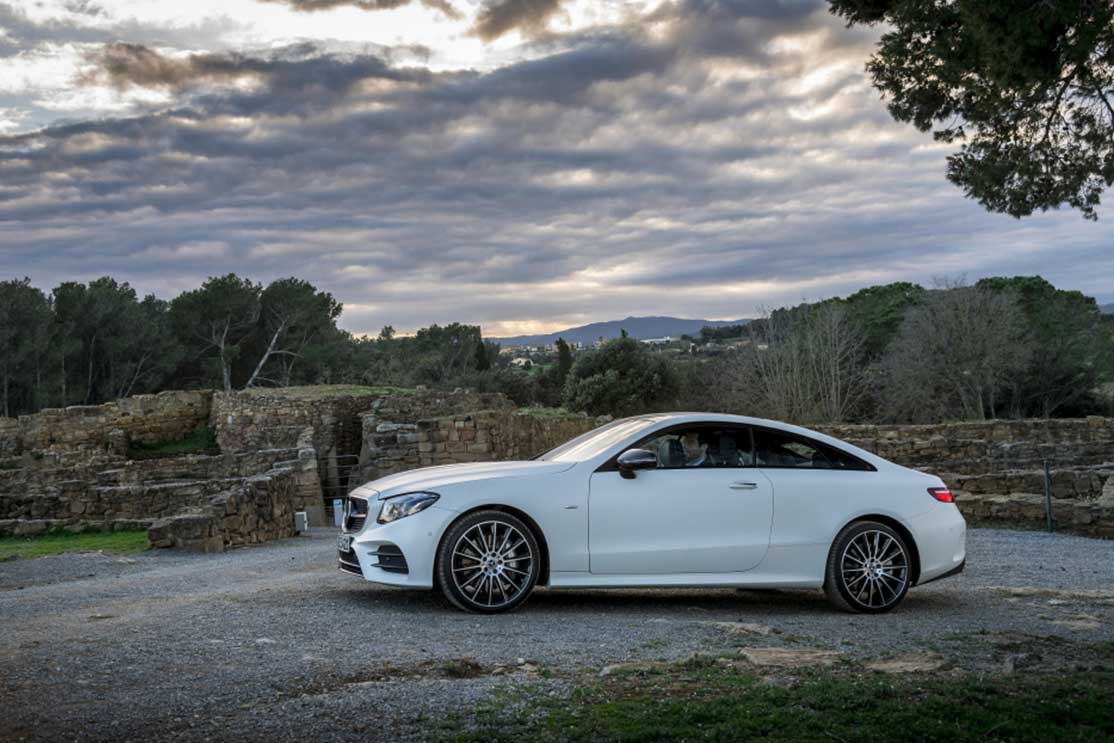
Despite the extra kilos the 400’s more plentiful 245kW/480Nm outputs make acceleration more in keeping with the sleek look. Aurally there’s more character, too, although more of Sport+’s subtle high rev burbles at it approaches its 6400rpm shifts would seal the V6 deal.
Depending on your viewpoint the E Coupe’s competence is diluted by the Merc coupes that bookend it within the range. Or it’s the perfect “just right” combination of space and relaxed touring elegance for those who want some S-Class space at a more palatable price. If only it had more driving spice.
SPECS Model: Mercedes-Benz E400 4Matic Coupe Engine: 2996cc V6 (60°), dohc, 24v, twin-turbo Max power: 245kW @ 5200-6000rpm Max torque: 480Nm @ 1600-4000rpm Transmission: 9-speed auto, AWD Weight: 1770kg 0-100km/h: 5.3sec (claimed) Price: $145,900 On sale: June, 2017
2017 Subaru Levorg GT-S Spec B
Price & Equipment | 18/20
At $52,890, the Levorg costs $9700 more than its Czech counterpart, but justifies some of the cost with its standard CVT automatic, AWD, sunroof, heated front seats and metallic paint. You also get keyless entry and pushbutton start, and active safety such as lane assist and rear cross traffic alert as part of Subaru’s Eyesight system.
Interior & Versatility | 16/20
Both get leather trim, metal pedal covers and door sills, and infotainment systems with sat-nav and Bluetooth; the Subaru adds Pandora internet radio. There are seven airbags including one for the driver’s knees. The Levorg’s 30mm-shorter wheelbase translates into less rear legroom, and it can’t match the Octavia’s shoulder room.
Performance & Economy | 14/20
A stout 350Nm apiece sees the pair deliver equivalent real world performance, but the Subie’s 197kW 2.0-litre flat-four turbo lugs about 150kg more, so ultimate performance is similar too, despite the Levorg being 28kW meatier. Extra weight contributes to 8.7L/100km combined cycle economy, which is officially 38 percent more than the Skoda.
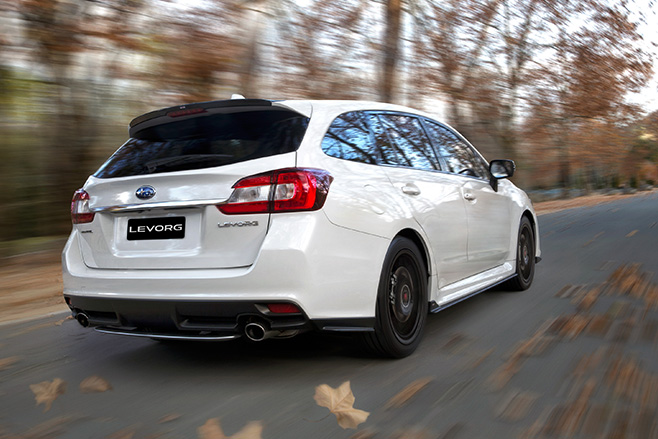
Ride & Refinement | 15/20
The Levorg is quiet inside – a bit too quiet in the engine compartment – and feels solid, though the doors don’t thud shut as satisfyingly as the Skoda’s. Spec B brings Bilstein dampers which help, but fail to completely fix the basic Levorg ride/handling compromise, which delivers low-speed jiggle with a lack of body control at high speed.
Steering & Handling | 15/20
Balance and grip are part of the package, but won’t smack you in the face on your drive to work. Steering remains aloof during normal driving, yet gets better at faster speeds, while grunt helps the torque vectoring all-wheel-drive make its presence felt. A lack of body control undermines Levorg’s hard-driven ability and the CVT saps involvement.
Skoda Octavia RS230 wagon
Price & Equipment | 19/20
The $43,190 six-speed manual-only Octavia matches the Levorg for much of its key equipment, including city emergency braking and fatigue detection systems, reversing camera, dual-zone air-con, dusk-sensing bi-xenon headlights and rain-sensing wipers. You also get tyre pressure monitors and power adjustment for the front seats.
Interior & Versatility | 17/20
The RS230’s 8.0-inch touchscreen is an inch bigger and features Apple CarPlay/Android Auto connectivity. Rich red-stitched trim and fine plastics top the finish, while the A-pillar ticket holder and chilled glovebox are a plus. You get a bigger cargo bay at 588 litres behind the seatbacks (or 1718 litres in van mode); the Levorg carries 522–1446L.
Performance & Economy | 17/20
The Octavia’s 2.0-litre turbo four wins out on every front. It sounds grunty, musters its 350Nm from 1500rpm (2400rpm in the Subie) and sprints just as hard, satisfying manual changes and all (though it’s officially a tenth slower to 100km/h at 6.7sec) while using 6.3L/100km. It will go 100km further on a 50L tank than the Levorg will on 60L.
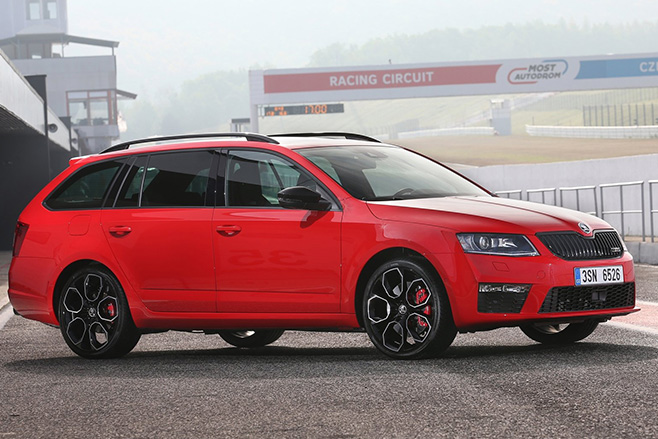
Ride & Refinement | 17/20
Solidity and refinement underscore good cabin finish and terrific long-haul seat comfort to make the Skoda the nicer car to drive and ride in. The ultimate Octavia RS – on even bigger, lower-profile tyres than the 162, or its rival – is tauter than any regular family wagon yet manages a better smothering of bumps than the Subaru, from the urban crawl up.
Steering & Handling | 17/20
With an electronically controlled LSD and a tweaked engine, the RS230 is the Golf GTI Performance of the Octavia line-up – it gets the same engine and diff. The extra weight compared with its hot-hatch donor conspires to remove a bit of agility, but this is a well-balanced, involving and fast front-drive family wagon that puts its power down.
Verdict
As buyers – and brands – flocked to the SUV, Subaru dropped the fast family wagon from the Liberty line-up, and Skoda took the baton and ran with the Octavia RS. This ensured that Subaru’s re-entry to the fast-family wagon realm would be bumpy. As it happens, a busy urban ride is one of the let downs in the Levorg – a sort-of WRX wagon by an odd name – as is a lack of high-speed body control, engine character, a manual option and, ultimately, driver involvement. The Octavia RS230 has each of these qualities – and a manual transmission – while offering superior value, space, perceived quality and a longer service interval. An RS-badged Subaru wagon defined this niche in Oz, but now it’s an RS-badged Skoda that has it stitched up.
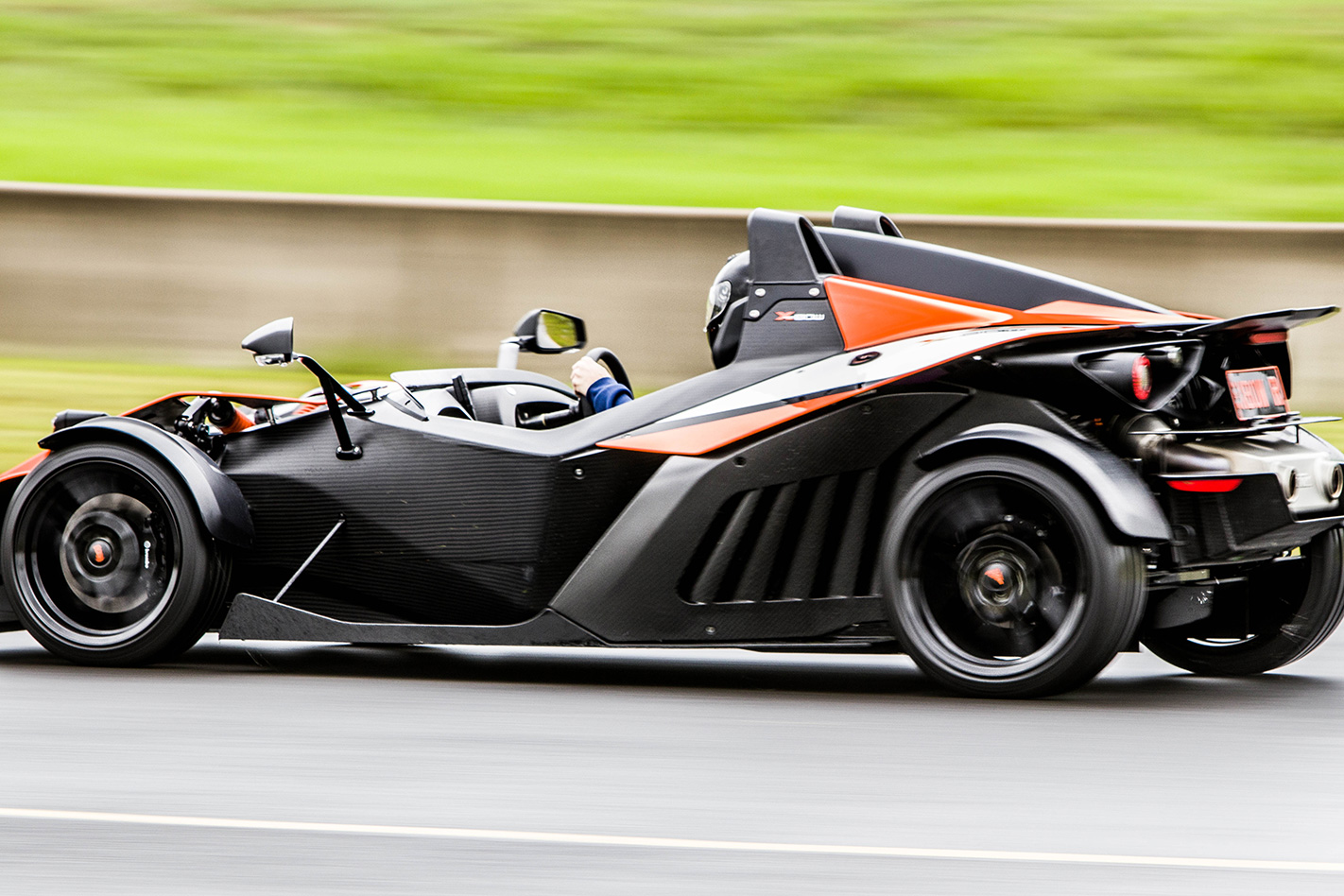
A ROAD-ready version of the KTM X-Bow sports car has launched in Australia after a four-year battle to have the open two-seater made road-legal.
It was a close call with the X-Bow’s importer, Sydney-based Simply Sports Cars, saying the race to gain Australian Design Rules approval came only after a last-minute break-through that helped the Gratz, Austria-built track specialist get over the line.
The rear mid-engined, rear-drive and hand-built X-Bow (pronounced “crossbow”) will cost from $169,990 – making it slightly more expensive than a Porsche Boxster S as well as its most obvious rival, the Caterham Seven 485 S – and will be brought to Australia under the Specialist and Enthusiast Vehicle Scheme that limits sales to 25 units a year – the same legal framework that allows Bolwell to build the reborn version of its Nagari coupe.
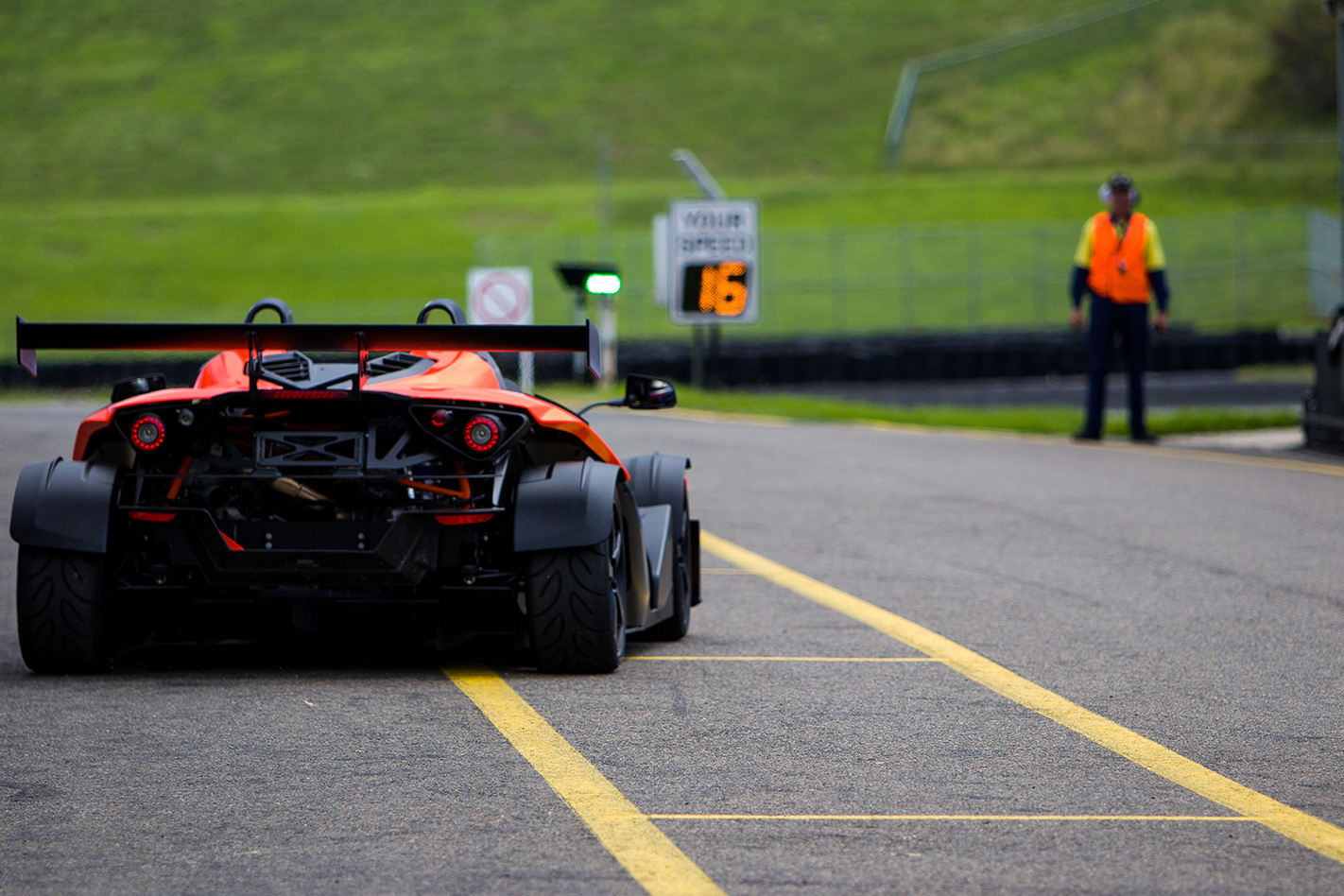
Weighing in at just 790kg, the X-Bow R features a Dallara-developed full carbon composite monocoque and is powered by an Audi-sourced 220kW/400Nm turbocharged 2.0-litre four-cylinder engine paired with a six-speed gearbox. The 0-100km/h sprint takes just 3.9 seconds, and it will wind out all the way to a top speed of 231km/h.
If you buy one, Simply Sports Cars – which also imports Lotus-badged cars to Australia – says you’ll also be buying into the X-Bow club. “We will be creating a lifestyle experience around owning an X-BOW R through creating access to track days, driver training, social drives & other exclusive driving experiences,” the importer’s chief executive, Lee Knappett, said.
“We will make sure this car is used by its owners on the road and track. We are even going to take the first five buyers to KTM’s factory and test track in Austria.”
The X-Bow draws heavily on race-bred technology. It uses a carbon-aluminium sandwich crash box in its nose, both the driver and passenger have four-point Schroth safety belts, and the pushrod suspension is a direct lift from formula racing. Drive to the rear is via a Drexler limited-slip differential.
The X-Bow R is only available through two dealerships, based in NSW and Queensland.
Be warned, though, that you’re essentially buying a four-wheel motorcycle. There’s no boot, roof or windscreen, the steering wheel pops off the column via a quick-release collar, and airconditioning and a stereo are both on the options list. The interior of the X-Bow R is designed to get wet, and you don’t need to wear a helmet, although its importers recommend the use of goggles or protective glasses.
An even more hardcore X-Bow RR, and a more daily driver-friendly X-Bow GT (with a windscreen, side windows and fabric roof) are available in Europe, but have not been included for KTM’s Australian line-up. However, SSC says it is considering putting the GT through the compliance process “sometime in the future”.
Love it or loathe it, the no-compromise M Coupe is a radical performer. As Peter Robinson discovers, its overt charm stacks up well against its pricier rival from the Porsche stable.
First published in Wheels in September 1998, Australia’s best car mag since 1953.
HALF of you are absolutely going to hate the way BMW’s new Z3 Coupe looks.
Does Munich care? Not at all. BMW understands perfectly that nobody, but nobody, is going to be indifferent to the new Coupe. This is BMW being controversial, outrageous, deliberately shocking. And totally unconcerned about your reaction.
“This car is not built to be everybody’s darling,” says an unrepentant Dr Wolfgang Reitzle, DMW’s product boss. “We see the buyers as real individualists who love the unusual styling,” says Jurgen Pawlik, the bloke in charge of product management at M GmbH, BMW’s specialty car division responsible for the Coupe’s creation. “I don’t think any (buyers) will ask if the neighbours like the car.”
The subject of this debate (and it was only after the all-powerful Reitzle gave the Coupe his blessing that internal arguments ceased, at least in public) is exactly as it’s clumsy Z3 M Coupe name implies – a Coupe version of the Z3 M Roadster.
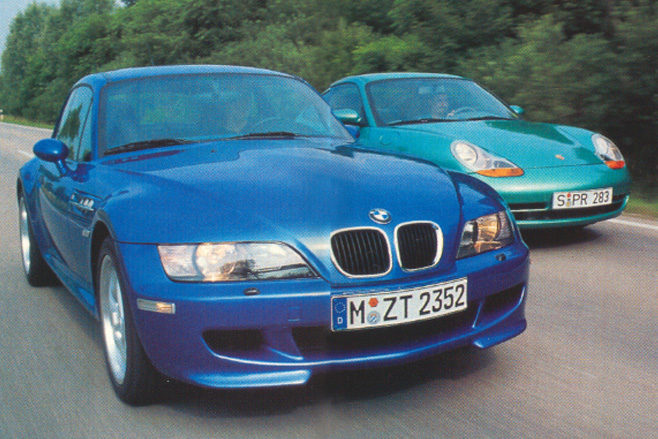
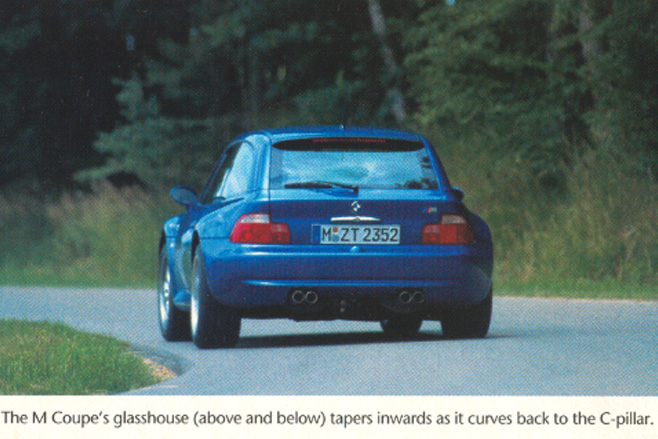
The bowed belt-line breaks every styling principle. The narrowness of the cabin only exaggerates the already brawny, bulging wheel arches over huge 245/40ZR17 Michelins. From behind, the combined width of the wildly protruding wheel housings seems as broad as the cabin itself in profile, the expansive bonnet looks at least as long as the roof. From three-quarters front-on, the Coupe hunches down over the rear wheels, ready to strike. The driver sits way back – just ahead of the rear axles – while the taper of the tail suggests rear overhang is virtually non-existent.
Forget cab-forward, this is cab-back design and intentionally so, producing proportions so dramatic they are utterly alien to the efficient packaging of most of today’s (and not just front-drive) cars. It’s hard to imagine any manufacturer seriously contemplating producing so fearlessly bold a car. The Z3 M Coupe is brutal, not elegant; exciting, not bland.
No way does it look as if it were designed from a clean sheet of paper; more that it evolved as a Californian custom car – a Boyd Coddington original.
And that’s exactly the way it happened. When the early Z3 prototypes reached the full-sized stage, the engineers immediately realised the potential for a genuine GT car. They knew a stiffer body would improve refinement and provide more responsive handling. In secret – for the Z3 was planned only as a Roadster – a five-man team met after normal working hours in the underground garage of the R&D centre and turned the ragtop into a coupe.
At first they didn’t bother to involve the styling department. Only after removing the rear fenders and boot lid, and as they began to cover the body with roof bars, foam plastic, wood and surface foil, was a single, friendly designer called in.
“It was like building a car in the old days,” admits one of the five. No full-sized computerised sketches, no detailed drafting drawings, just five men creating a new car in their own time, outside BMW’s normally regimented development process.
Should be more of it. Only when the wood/clay 1:1 mock-up was finished did they dare show the car to Reitzle. Once he gave the go-ahead for further development the arguments began.
Says Dr Burkhard Goschel, the project manager for special projects: “Some people saw it and were thrilled. Others were … let’s say, more reserved. There was a long debate on the car, with extreme opinions. There was nothing in-between. If you didn’t love it at first sight, you hated it. In the end, we decided emancipated navigators would buy the car.”
Munich’s example has inherited something of an American muscle car flavour, though this has nothing to do with the fact that, like all Z3 variants, it’s built in Spartanburg, South Carolina. For this first drive, we choose to compare the M Coupe to its closest current rival, Porsche’s new 911 Coupe.
Early on, BMW toyed with the idea of building the Coupe with the same four-tiered range (five if you include the American-only 179k W 3.2 M) of engines offered in the Roadster. Then it was decided a 1.9 Coupe didn’t provide sufficient performance to be sporting, happily ignoring the implications in such a statement for the ragtop. It was decided the two sixes – 2.8 and 3.2 litres – create true GT cars. For the moment, BMW Australia has decided not to import the 2.8 and will only offer the M Coupe. In Germany, M Coupe and Roadster are the same price and that’s our prediction for Australia – hence the $135,000 estimate. Munich won’t talk production figures, but suggests the Coupe could represent 20 percent of Z3 production, or around 10,000 a year. There’s the reason it can be so dismissive about your view of its appearance. An entry level Coupe? Maybe next year when the 1.9-litre four is replaced by BMW’s smoother and more powerful 2.0 litre six, in the Roadster.
Mechanically, nothing is changed for the M Coupe – at least on paper. There’s the same 236kW firepower of the 3.2-litre double VANOS inline six from the M3. Same astonishing tractability from 1800rpm; same unburstable lustiness to the 7400rpm redline. The extra 20kgs of weight – all that extra glass – and unchanged gearing (still through a five-speed box because the six-speeder won’t fit under the Z3 floorpan), mean BMW’s claimed performance of the Coupe and Roadster are identical. That means a tyre-shredding 5.4sec to 100km/h and an electronically limited 250km/h top speed.
Likewise the semi-trailing arm rear suspension from the now two-generations-old 3 Series models and, of course, today’s Compact. Even so, a transformation has taken place. Drive the Coupe on anything less than a billiard-table smooth road and you know something fundamental has changed.
Despite the best efforts of BMW to improve the body rigidity of six-cylinder Z3s over the shaky 1.9, the M Roadster’s dashboard shakes and the body shimmies and trembles on rough roads. Bump deflection is impossible to avoid, the steering feels heavy-handed and turn-in slower than you expect, disappointingly reducing the handling potential. The result, despite the awesome performance, is unsatisfying. Enter the Z3 M Coupe – an altogether more capable driving machine.
Crucial to this transparent improvement is body rigidity that’s more than double the Roadster. BMW is sufficiently sensitive not to reveal exact torsion figures, but the improvement is definitely discernible. And not just because it has allowed the engineers to subtlety fine tune the suspension by slightly finning up both springs and dampers (the anti-roll bars are unchanged). Although the steering itself isn’t changed, the Coupe feels more agile and more cohesive with front and rear suspension now working in unison.
Like the M Roadster, the Coupe has no traction control so no electronic gimmickry breaches a direct relationship between driver’s right foot and the massive rear rubbers. On a dry road your right foot dictates the cornering attitude, which varies from a mild understeer to power oversteer or, once you get the hang of it, a satisfying neutral stance, the driver balancing and varying the car’s cornering attitude via power inputs. Even the mighty compound brakes feel more powerful than those on the Roadster.
Park the M Coupe next to our 911 and it looks much smaller and wilder. It might be a significant 405mm shorter but, for on-road presence, it overshadows the more discreet Porsche. Few contemporary cars demand your attention like the M Coupe. Of course, it’s not really a coupe at all – not in the way of the 911. More sports wagon. Adding a long, fixed steel roof and an opening tailgate has created the ultimate hot-hatch. Except the longitudinally-mounted front engine drives the rear wheels.
With its long bonnet proportions the M Coupe couldn’t be anything but front-engine/rear drive. By siting the cabin, and especially its two occupants, in the rear half of the 2459mm wheelbase and locating items like the battery in the floor of the boot the BMW has retained the customary 50/50 weight distribution.
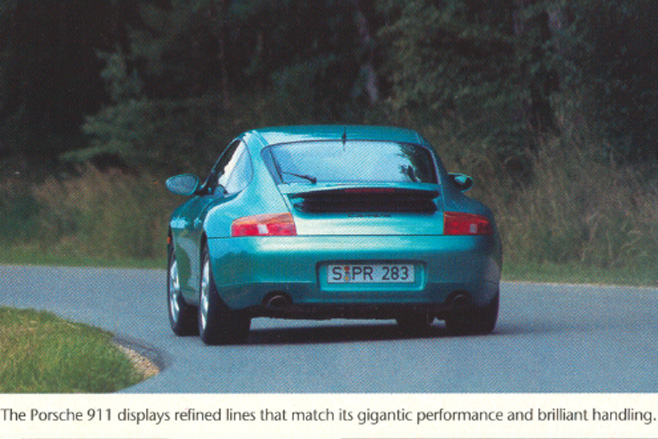
In Porsche’s 50-year history the standard engineering practice has been a horizontally-opposed, so-called Boxer, engine mounted in the rear. The 911’s all-new powerplant is water-cooled, of course, but it’s still stuck out beyond the rear axle line, so a seemingly unfashionable 61 percent of weight hovers over the rear wheels, so the Porsche remains tail heavy.
Weissach added four valves per cylinder and quad cams, but even so, and despite an extra 186cm3, the Porsche can’t quite match the output of the BMW. The M Coupe achieves precisely the once magic 100bhp (74.57kW) per litre. The 911s 87bhp per litre means it produces 221kW at 6800rpm with a 7300rpm redline, just 100rpm shy of the long-stroke BMW. Despite the disparity in their layouts, both engines pump out an identical 350Nm of torque, though the BMW peaks at 3250rpm and the Porsche at a rather higher 4600rpm.
The 911 has a number of small advantages over the M Coupe. Individually, they might not be so important; together they add up. First, the Porsche has a six-speed gearbox with a closer spread of lower ratios and a taller top gear; second, it weighs 70kgs less than the more diminutive BMW; third, the 911’s 0.30 drag co-efficient is significantly more slippery than the Z3’s 0.37. Finally, the 911’s 64-litre fuel tank provides a reasonable, if far from generous, touring range while the BMW’s puny 51-litre capacity is woefully inadequate, despite marginally better fuel consumption. Point out these flaws and BMW will ask the obvious. Are the Porsche’s advantages, and its bigger two plus two cabin, worth another 50 thousand when the performance is so close?
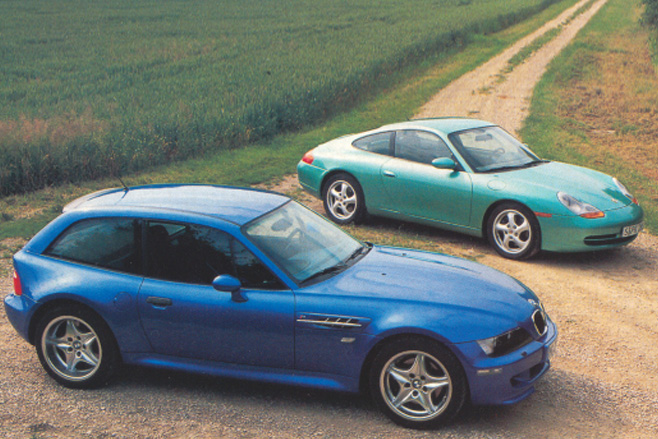
911-ness of character has been engineered out of the new car.
Maybe, in truth, such people were exactly those the BMW engineers had in mind when they developed the M Coupe. By the standards of the new Porsche, this is a raw beast, loud, aggressive and extroverted. Not quite as quick, it’s true, though in the real world the difference is minimal. The point, here, is that the M Coupe actually feels and sounds more explosive than the civilised 911. Does perception become reality? Not quite. Stir the Porsche and its supremely smooth and seamless engine produces an intoxicating howl from the tail that’s more than a match for the rumbling extravagances of the aurally more high-strung BMW.
Yes, the 911’s steering is lighter; the constant writhing that some people miss has been filtered out, leaving only the information the driver really needs. On the other hand, the M Coupe’s steering is heavier, less direct and communicative, despite the huge advance over the Roadster in feel and agility. It’s still the Porsche that’s the more nimble, coherent and accurate.
This is the first new Porsche 911 I’ve driven on the standard 17in rubber and wheels and the ride is predictably more supple and absorbing than on the optional 18s. The M Coupe, too, rides superbly for a car on such low profile tyres, but it can’t match the compliance or body control of its rival and is occasionally caught out over manhole covers or deep potholes.
Both 911 and M Coupe deliver huge performance, responsive handling, fabulous brakes and massive grip. The BMW can still spin both rear wheels exiting a tight first or second gear corner under full noise – even on a dry road.
Back off in the 911 and the tail still edges out, yet so benign is its behaviour that there will be those who prefer the M Coupe’s flagrant power oversteer. For both, 200km/h autobahn cruising is a doddle. At these speeds, and above, the BMW actually has a small but clear advantage in stability.
The M Coupe’s cabin is tiny and forward of the seats. It offers an awkward, cramped (for the tall) driving position with non-adjustable steering wheel and gaudy retro-instruments. Boot space has grown from the Roadster’s 165 litres to 210-410 litres (if you load the boot up to the roof and use the safety net) – just enough for two people on a weekend away.
Fortunately, the BMW has the better seats – beautifully comfortable and dished buckets that hold you in place and are fully supportive. In contrast, the seatbacks on the 911 are too narrow, especially at shoulder height. But the pedals and steering wheel are square to the driver, so the Porsche locates the driver more comfortably in an open, airy cabin that is (mostly) tastefully trimmed in leather. The exception being some cheap dashboard plastics which lower the tone.
These two sports cars provide enough drama for any well-heeled enthusiast, but that doesn’t stop the 911 from being the better car. More refined, yes – but also more multi-talented.
But you can’t ignore the overt appeal of the brutal M Coupe. To state the obvious, the Z3 M Coupe is not a car for the bashful. Before you choose between the Roadster and Coupe twins, remember that the hardtop offers a vastly more enjoyable and rewarding driving experience, combining brutal acceleration with a welcome layer of refinement. The bold in-your-face styling won’t appeal to everybody but, if you love the look of the Z3 M Coupe, you will love it beyond any other car.
THE Mini name is something of a misnomer in the case of the Countryman, which swells in size with this second-generation model to become the biggest ever vehicle to wear a Mini badge on its snout. Mini by name but definitely not mini in nature, the new Countryman actually shapes up as one of the brand’s better products in its present-day showroom.
WHAT IS IT? Mini’s second-generation Countryman ditches the “overgrown hatch” packaging of its predecessor for more sensible SUV proportions, stretching and morphing into the biggest Mini model yet in the process. Priced from $39,900 it ain’t cheap as far as midsize SUVs go, but Mini has high hopes for its biggest model ever.
WHY WE’RE DRIVING IT Luxury SUVs are steadily growing their slice of the overall SUV market, and Mini is keep to capitalise on that with the new Countryman. Though it’s “mini” in name only, the new F60-generation Countryman is actually a pretty compelling option now that Mini has refined its soft-roader formula.
MAIN RIVALS Mini lists a fairly broad spectrum of rivals for its all-new Countryman, from the thoroughly mainstream Nissan Qashqai to the Mercedes-Benz GLA. Realistically though, we’d expect punters to line it up against the likes of the just-launched Audi Q2 and higher-spec variants of the Volkswagen Tiguan.
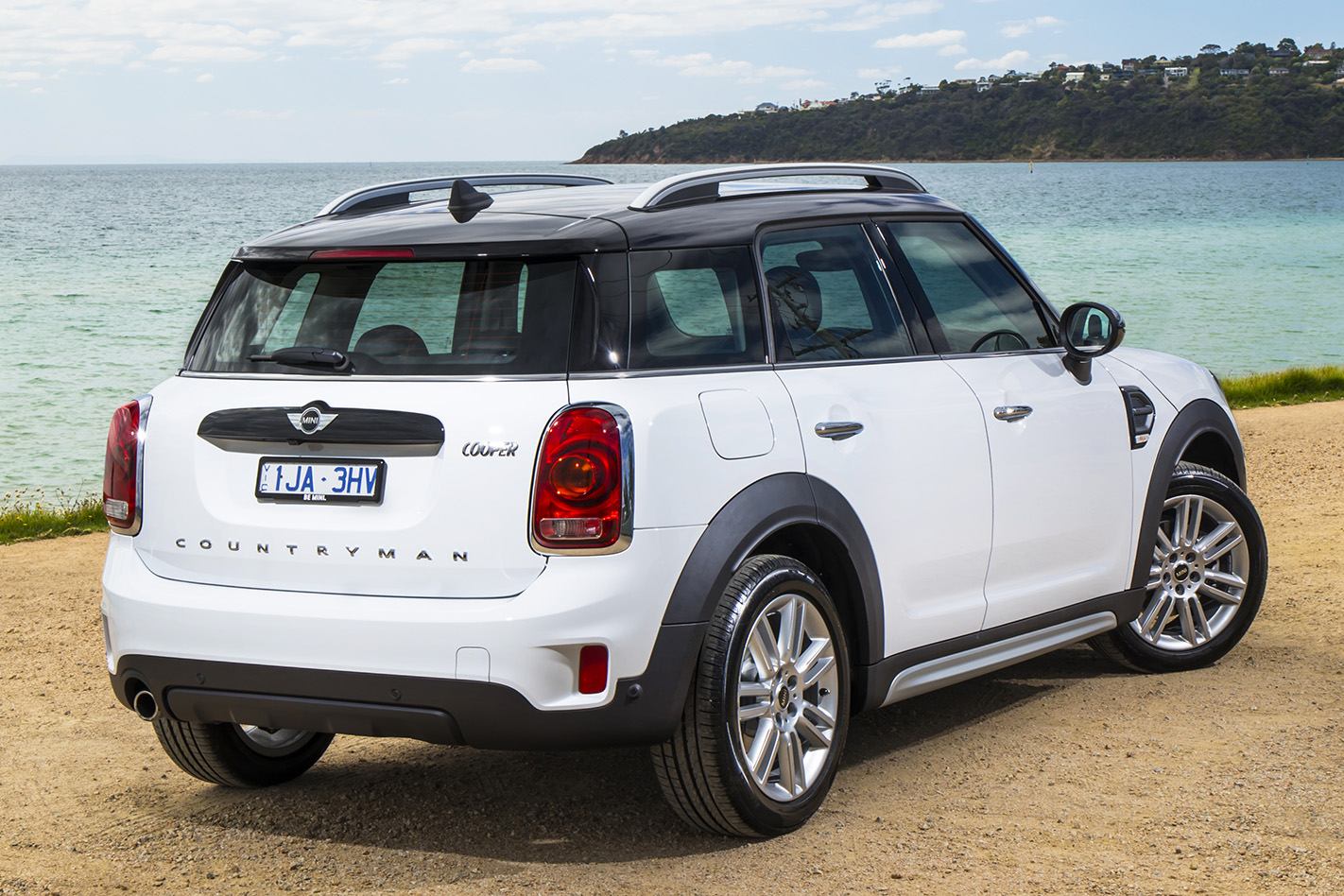
THE WHEELS VERDICT The Countryman, originally derided as the least “on brand” Mini model, is actually a pretty decent rig. In fact, out of the modern Mini stable it’s probably the most well-rounded offering – and arguably the most relevant to today’s new-car buyer.
The value equation has been nudged in the right direction and the 2017 Countryman is particularly keen buying at the lower end of the model range, but the further up you go the less compelling it becomes. Don’t worry, though – just stick to the base model and you’ll find much to love.
Plus:Engaging chassis despite the size; spunky three-pot; rear seat packaging finally makes sense; better resolved interior Minus: High-end navigation is a cost option on all models; suspension still a bit firm especially on big wheels; no spare tyre
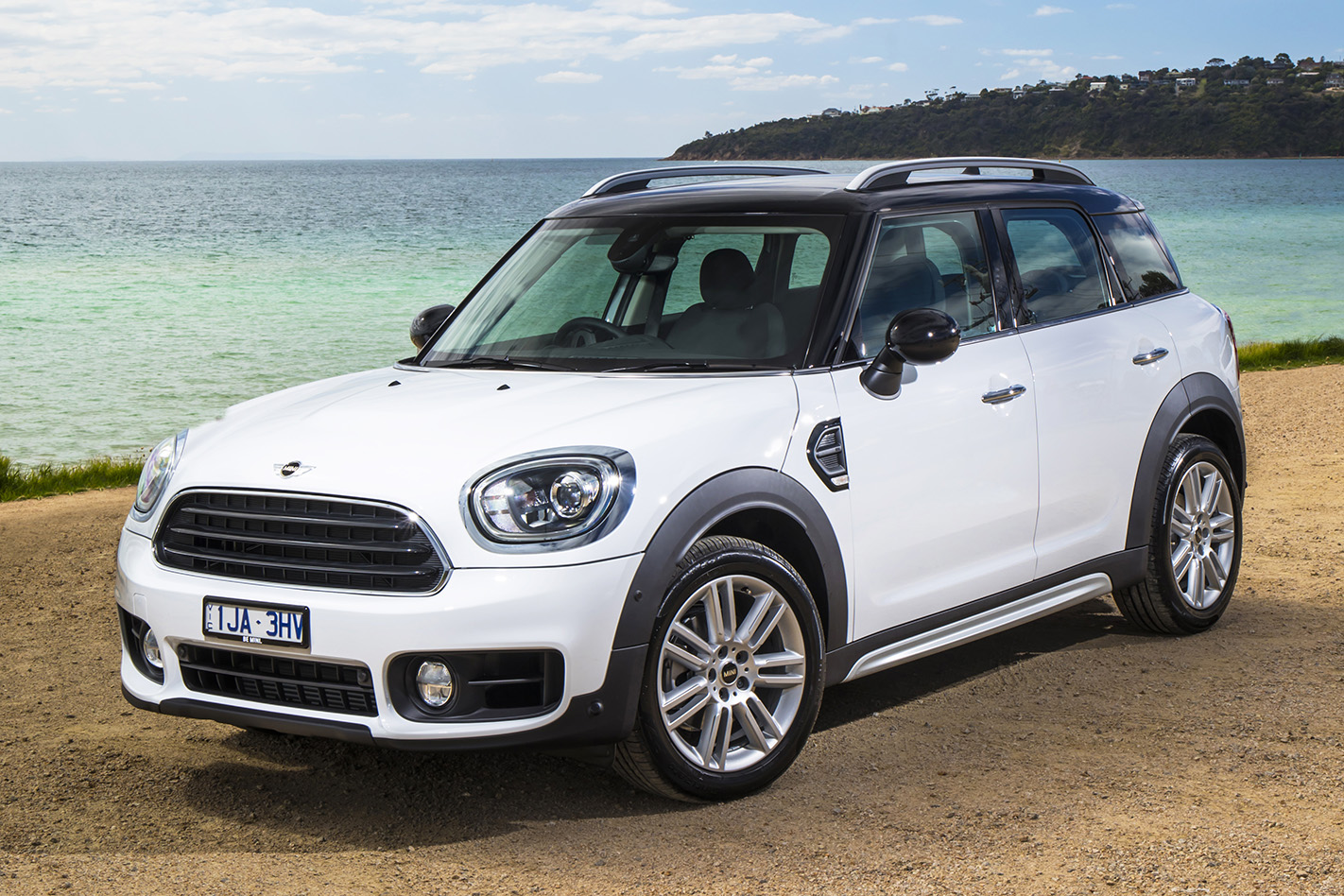
THE WHEELS REVIEW PINNING a “Most Improved” ribbon upon anything (or anyone) is something of a back-handed compliment, isn’t it. It is simultaneously an acknowledgement of growth, excellence and improvement, while also being an admission that the ribbon-bearer was previously, well, a little bit shit.
And that’s the situation we have here with the Countryman. The outgoing model was far from segment-leading thanks to nonsensical packaging that put an emphasis on style and little else, but its box-fresh replacement lands so close to the bullseye that Mini deserves praise.
For starters, it now represents a great deal more value when you balance its retail price against its spec sheet.
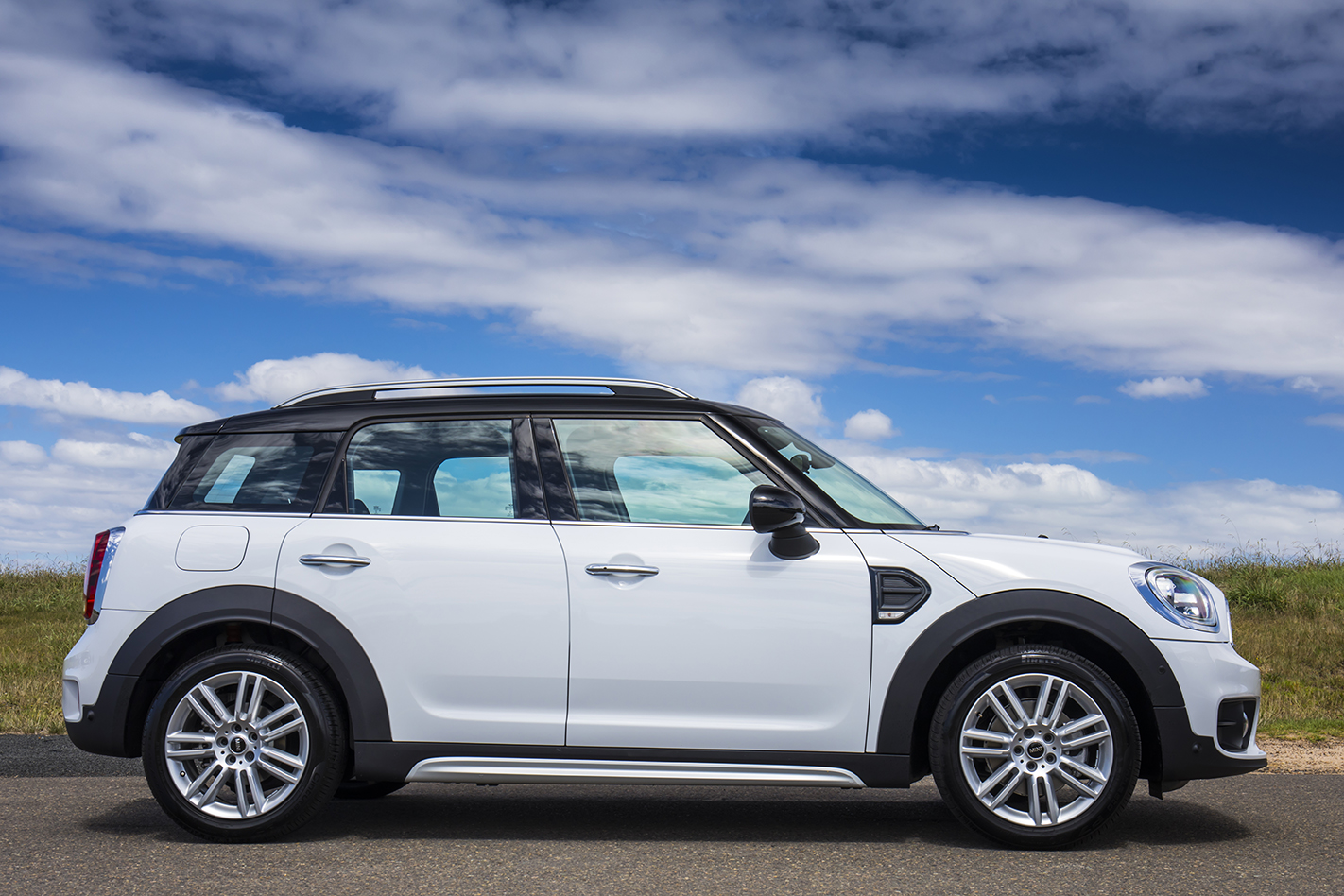
But the bigger news is the packaging. Thanks to a 75mm wheelbase stretch, a 33mm width increase and 11mm taller roofline, those in the back now enjoy plenty of sprawling space. The rear bench slides fore and aft as well, while the backrest reclines for extra long-distance comfort. The rear doors open wider as well, easing entry and egress.
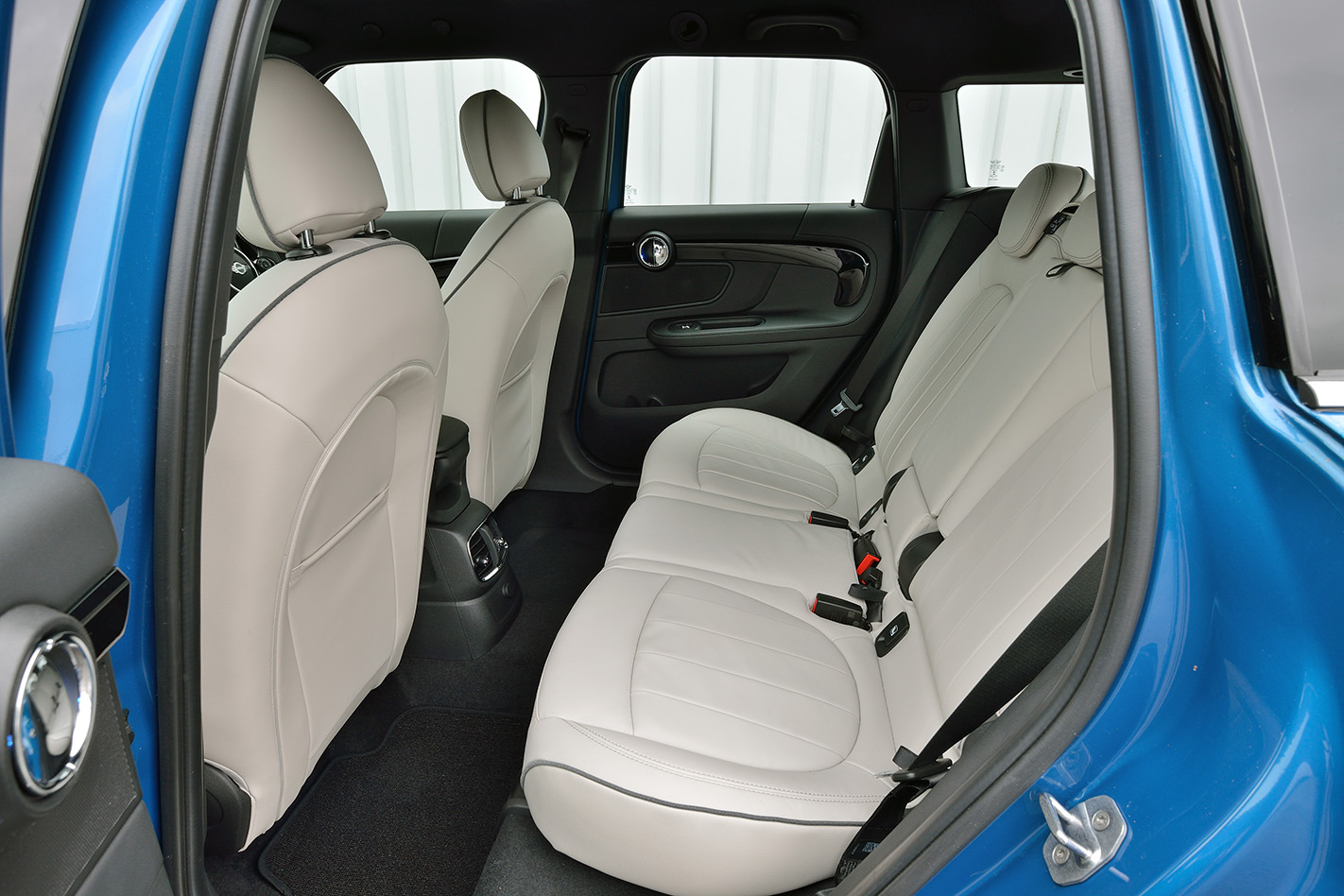
Front seaters aren’t ignored either, with even the base Cooper scoring a pair of well-bolstered and supportive seats clad in an appealing corduroy-esque fabric. The front hip point is also 90mm higher than the Clubman, which is nice if you like to perch over your fellow motorists.
Compared to other SUVs though, it’s still comparatively low-slung.
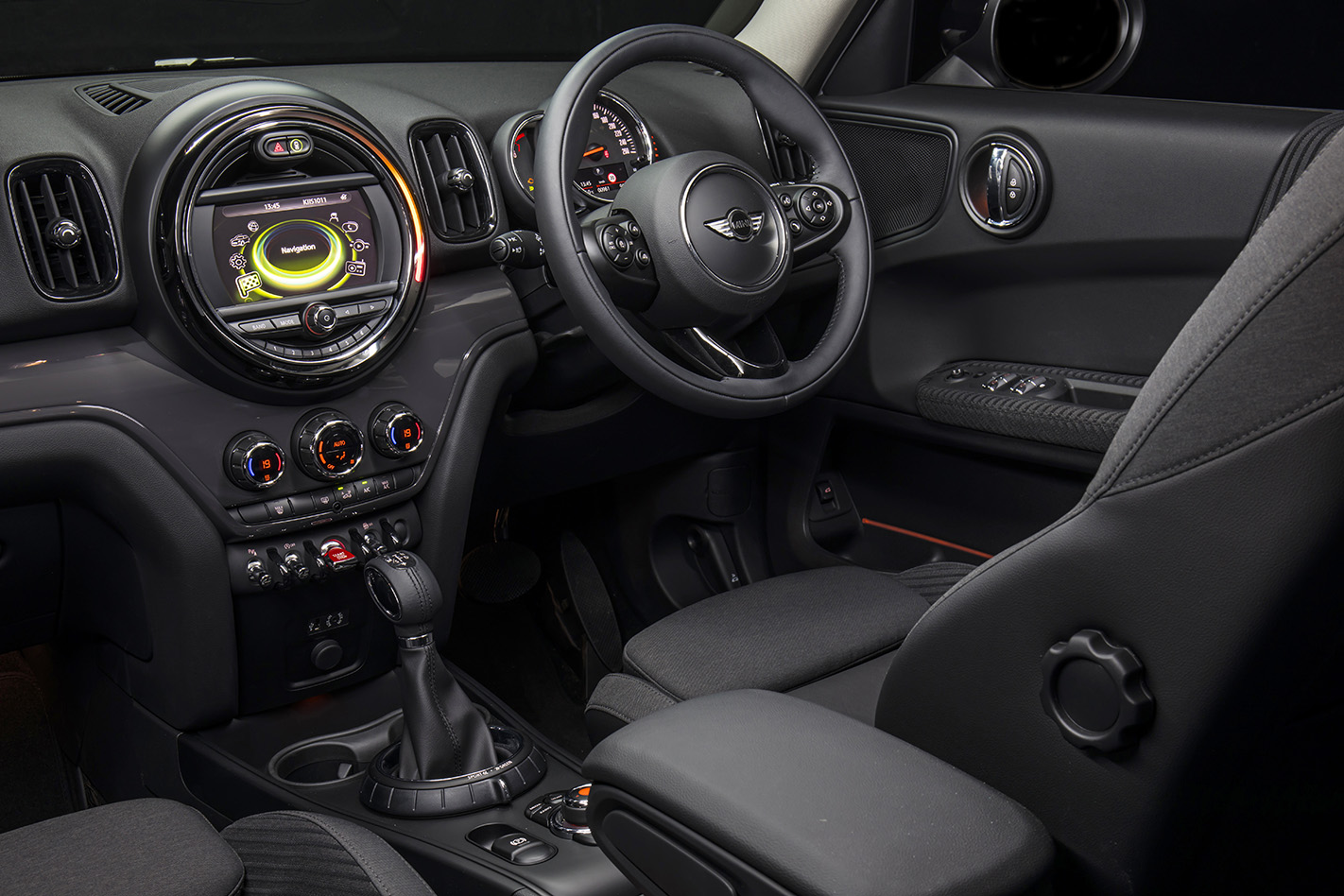
Venture inside, and the interior takes on a newer, more modern aesthetic than the self-consciously retro design of the outgoing model. There are more horizontal design elements, while the circular central infotainment housing still pays tribute to the Mini brand’s origins while the execution and material selection is more contemporary and high-end.
It’s a more mature look, and a nicer place to be. It’s lost the toy-like feel of the old Countryman.
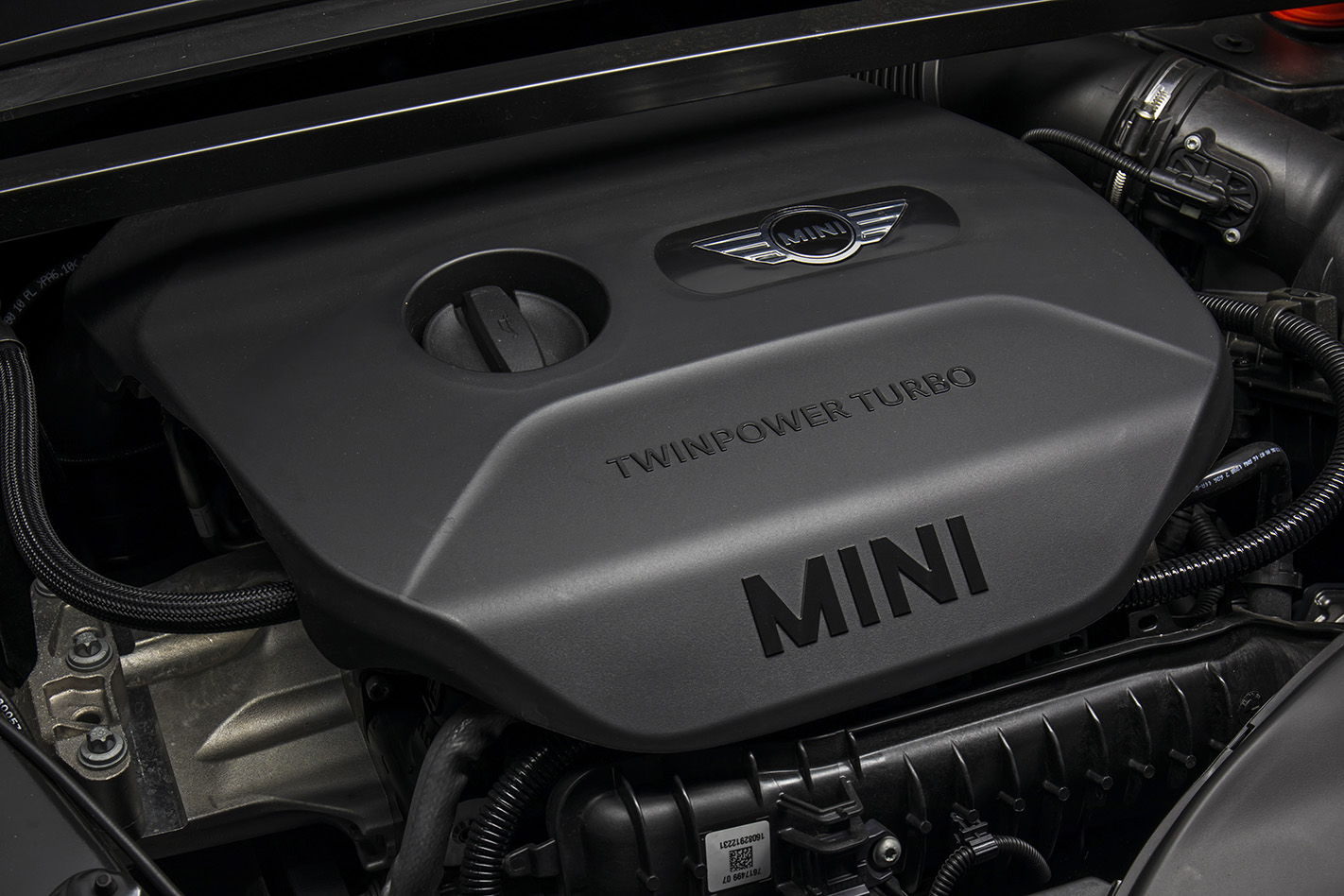
A six-speed auto is the standard shifter rather than an unpopular manual, and it works well with the three-pot.
Other models get an equally well-sorted eight-speeder, and your choice of a 110kW/330Nm 2.0-litre diesel, a gruntier 140kW/400Nm version of that same engine or a zingy 141kW/280Nm 2.0-litre turbo petrol. Only the high-output diesel of the Cooper SD Countryman gets all-wheel drive; the rest are bum-draggers.
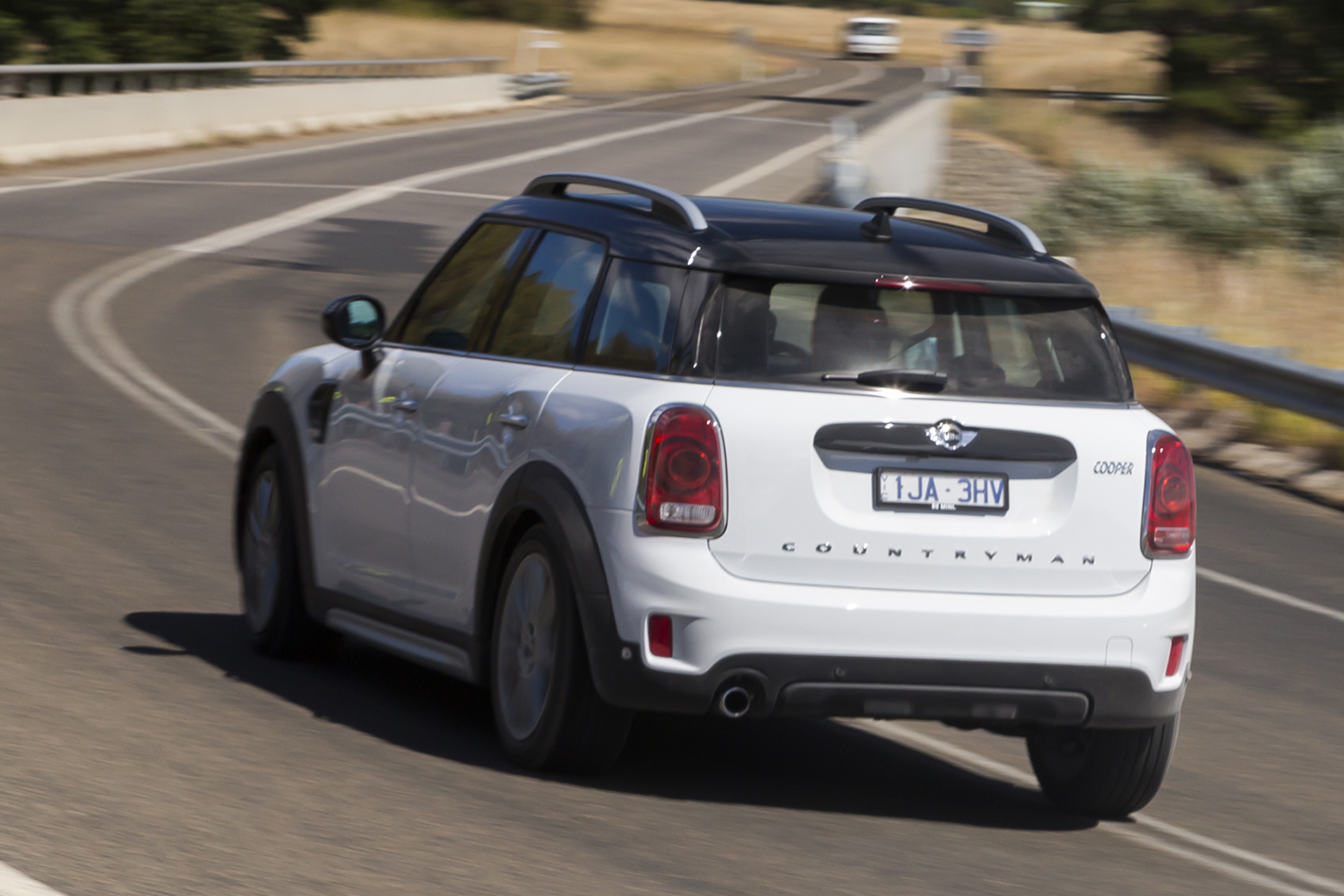
But the foibles are few, and the Countryman has, in its second generation, given Mini its best chance at shrugging off the “niche” stigma and becoming a brand with true mass market appeal. We’d take one over an X1, and that’s not a conclusion we were expecting to come to.
EVER wondered what a racing version of Kia’s new Stinger sedan would look like? Ponder no more, as SSMedia has done all the imagining for us.
This set of illustrations give us a glimpse at what the Stinger’s racing armour would look like if Kia’s rumoured plans for a Supercar assault come to fruition.
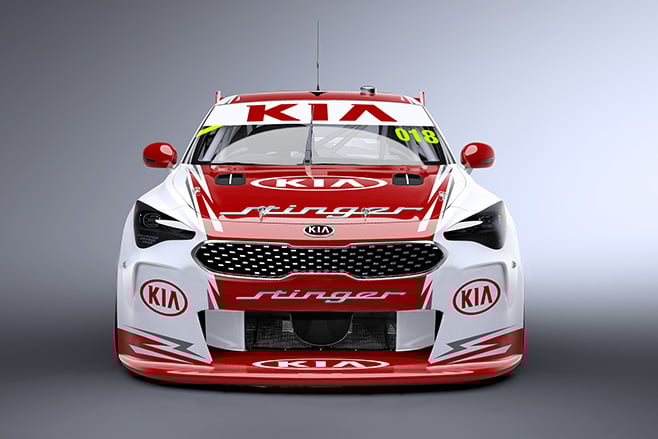
SSMedia told Wheels the renders you see before you aren’t just a blind stab in the dark, but instead are developed off official CAD data for Supercars’ Gen II regulations.
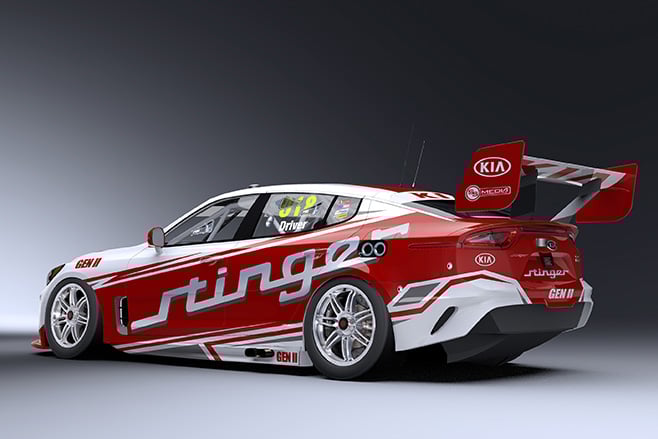
The Gen II regulations were developed to entice new manufactures to the sport, with Kia, along with Alfa Romeo, rumoured to be investigating potential entries.
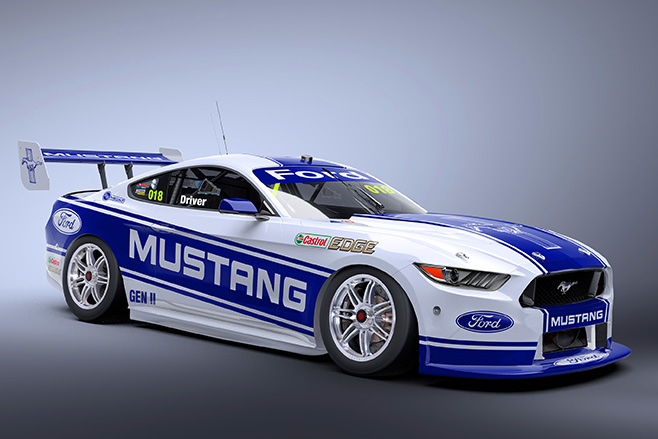
Joining the two sedans is a render of the Ford Mustang in Supercars trim – also built atop the official Gen II CAD data.
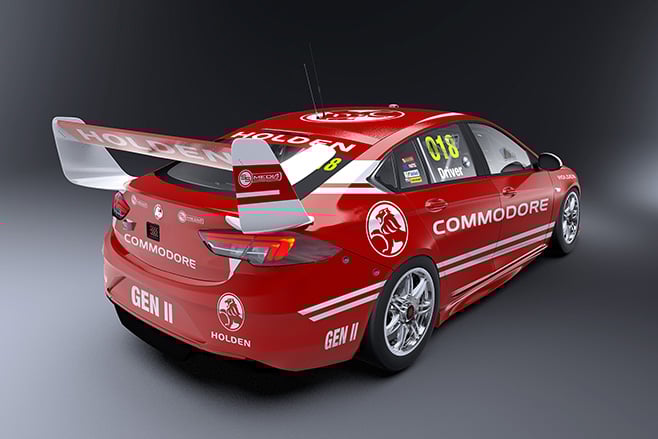
It’s taken longer than expected, but Austrian motorcycle experts KTM have finally worked out how to get its first four-wheeler, the X-Bow, into Australia.
Starting at $169,990 plus on-road costs, the Austrian-built X-Bow R is limited to 25 units a year under the Specialist and Enthusiast Vehicle Scheme (SEVS), and it’s coming through Sydney-based Lotus importer Simply Sports Cars (SSC).
Just two dealers will sell the car; SSC’s store in the Sydney suburb of Artarmon, as well as through Brisbane sports car retailer Motorline.
They’ll even have a two-year, unlimited kilometre warranty.
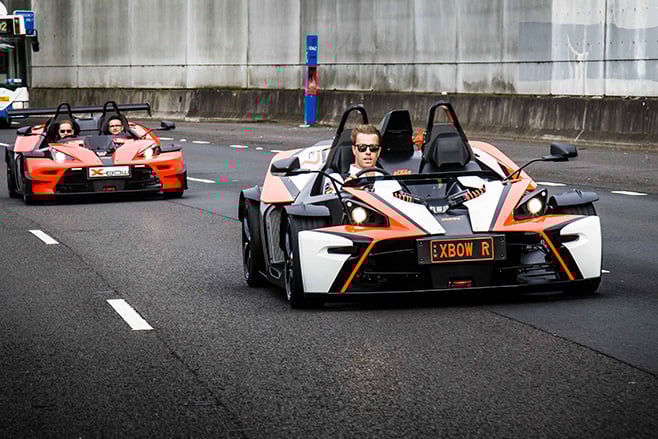
Price- and purpose-wise, the $189,000 Nissan GT-R and Porsche’s Boxster S at $143,100 are really the only serious competitors, though the incoming Lotus Exige 350 will also run it close.
The process to get approval for SEVS required SSC to crash-test a vehicle, but the biggest single change made to the car for Australia was the addition of a seatbelt warning light.
“There are certain criteria to meet before the car can sit the SEVS scheme, then it’s up to us to go and prove compliance,” said Lee Knappett, the founder of SSC.
“We’ve met all of these requirements, and this car has full European approval, including the more recognised ECE approvals. Unfortunately a couple of the ADRS didn’t match up with the ECEs, even though they are closely aligned, so we went ahead and did crash testing to ADR specifications.” Needless to say, it passed.
The crashed car was repaired after the test, and is actually still used by SSC as a demonstrator.
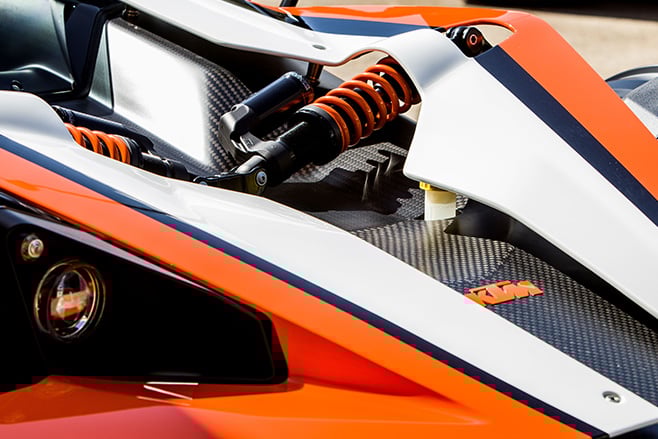
The X-Bow R is built around a carbon fibre tub with a deformable crash structure module on the front and adjustable A-arm suspension at all four corners. All body panels are carbon fibre, too, and can add 200kg of downforce at 200km/h. For ref, a Supercar adds about 140kg at similar speeds.
A small deflector screen acts as a windscreen, and there’s no way to fit a roof. SSC will supply the X-Bow with a pair of multi-use helmets equipped with Bluetooth intercoms. A helmet isn’t actually required by law, but it’s probably not a bad idea on a longer trip.
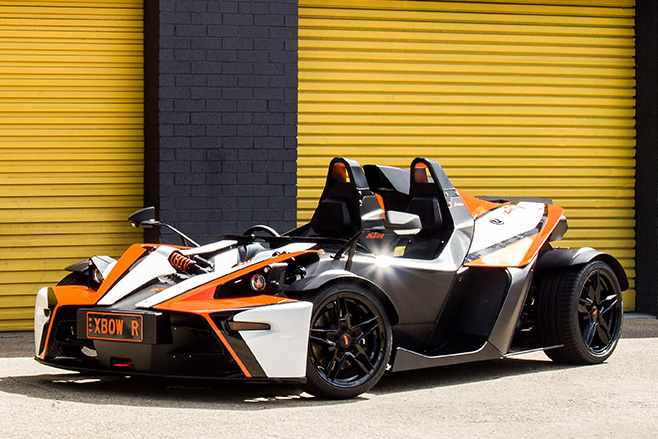
The front springs and dampers operate via a rocker arm arrangement, while the rear has a more traditional coil-over design. Fixed-rate anti-roll bars are used front and rear on the R, but adjustable items can be optioned. In fact, the options brochure is three times thicker than the actual sales version.
Brembo calipers on steel rotors, and 17-inch rims up front and 18-inch rims on the rear shod with Michelin Super Sport tyres, round out the chassis.
An Audi-sourced, mid-mounted EA888 2.0-litre turbocharged four-cylinder motor that makes 220kW and 400Nm supplies the grunt. KTM reckons the 790kg car can zip from rest to 100km/h in 3.9 seconds, brake back to zero in 32 metres, and returns 8.3 litres per 100km over a combined cycle..
A VW Group six-speed manual gearbox with a limited slip diff and a short-shift kit is standard, with an Australian-made Hollinger six-speed sequential gearbox on the options list.

Inside, the X-Bow has fixed seating for two, with Recaro-supplied seat padding. The steering wheel is detachable and is adjustable for both reach and rake, and four-point, three-inch wide fixed racing harnesses are supplied for driver and passenger.
In a patented design, the KTM’s pedal box can be adjusted easily via a lever on the flor that slides the whole pedal arrangement back and forth. Apparently McLaren is keen to buy the idea!
A wee dash displays a digital speed reading, engine parameters and gear position, as well as lap times that can be recorded via a button on the steering wheel.
The Volvo brand is synonymous with safety. The Swedish automaker has built its reputation on its innovation and research into protecting road users, and has long been an innovator when it comes to developing cutting-edge safety systems for its cars.
It’s virtually a given that Volvos like the new 2018 Volvo XC60 will be packed to the brim with the latest and greatest safety features, both active and passive, but just how safe will it keep its passengers?
We’re heading toward an era where human error is a shrinking factor in road safety, thanks to steady improvements in autonomous technology. Volvo has a stated goal that nobody will die in any Volvo vehicle by the year 2020, but we’re not quite there just yet – accidents will still happen, unfortunately.
The new XC60 was revealed in Geneva and comes loaded with an array of driver-assist safety technology. To prove just how far the carmaker is willing to go to ensure its vehicles maintain its sterling reputation for safety, Volvo has released videos of the arduous crash tests the 2018 XC60 had to endure to get ready for sale.
One video shows a rollover test for the XC60 at 48km/h, where it’s pushed off a platform, with crash dummies inside, and rolls several times before coming to a halt on its side. Another shows the XC60 smash head-on into a barrier at 56km/h and the third is a small overlap test at 64km/h where the driver’s side hits a stationary barrier.
All three videos are pretty unnerving. Watching a car’s exterior collapse around it, suspension break and sheet metal peel away is bound to make you wince.
What’s quite extraordinary about the video, however, is that there is little intrusion to the cabin. Thanks to the design of the XC60, the car keeps the passengers relatively safe – all of the energy being dissipated in the crash goes into breaking what’s outside of the cabin, not what’s inside.
LEXUS has launched a version of its LS luxury sedan featuring a high-performance “Multi-Stage Hybrid” powertrain that can propel it from rest to 100km/h faster than an entry-level Porsche Panamera.
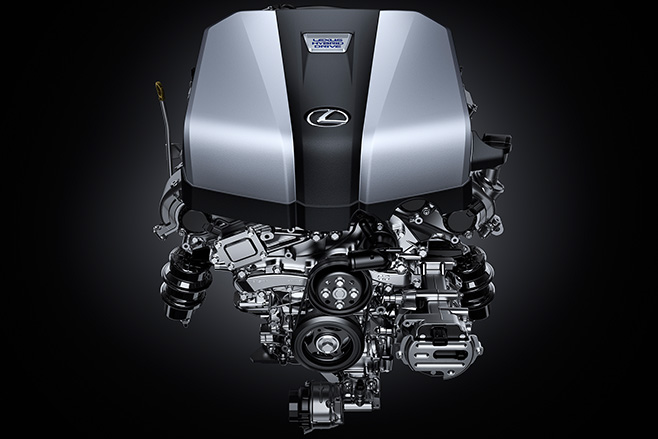
The Multi-Stage Hybrid version of the LS 500 sedan couples a 220kW/350BNm 3.5-litre V6 engine with two electric motors, allowing the saloon to produce a combined 264kW and an as-yet undetermined amount of torque. It will do 0-100km/h in just 5.4 seconds, but turn down the wick and Lexus says it will return what it says is “good fuel economy”.
The LS 500h is the latest addition to the luxury carmaker’s large sedan range launched at the Detroit Motor Show in January with all new underpinnings and a fresh 310kW twin-turbo 3.5-litre V6 petrol engine that makes the 0100km/h sprint in 4.8 seconds.
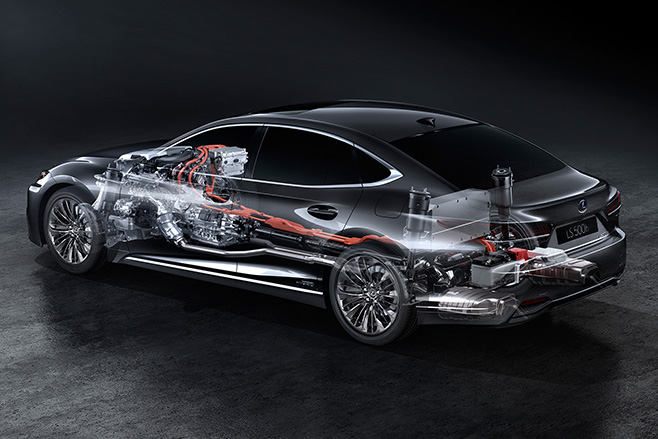
It’s powered by the same “Multi-Stage” hybrid system used for the LC 500h coupe, which shares the LS 500’s all-new GA-L (Global Architecture – Luxury) platform that will underpin a new generation of cars and SUVs ranging in size from the BMW 3 Series-fighting IS up.
Lexus chief engineer Koji Sato said the company wanted to change the way hybrid vehicles were perceived.
“In the past, people only associated hybrid with ‘eco’. We wanted to broaden that perception and create a true high-performance powertrain.”
Acceleration is managed by a four-stage shifting device – a second four-speed automatic gearbox that sits behind the continuously variable transmission – that quickly responds to driver inputs while maintaining a smooth ride enhanced by the car’s air suspension.
Although the unit has four speeds, it has a feel of a 10-speed gearbox for a direct and continuous acceleration without the “rubber band” effect associated with continuously variable transmissions (CVT). According to Lexus, it will shift through gears quickly while accelerating, and then stretch the gear changes out at higher speeds.
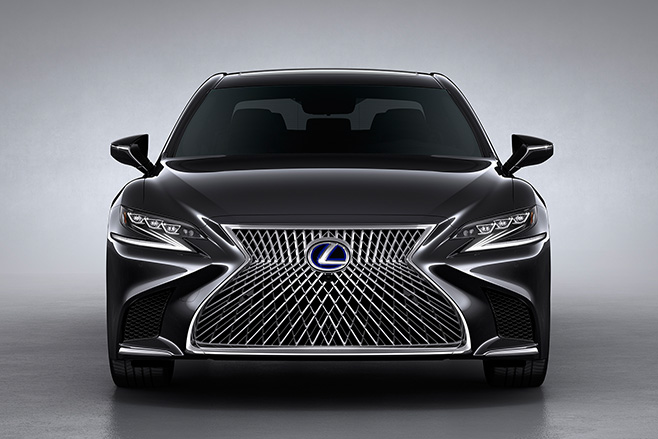
The LS 500h is fitted with a compact, lightweight, lithium-ion hybrid battery that’s 20 percent smaller than the cheaper, more bulky nickel-metal hydride unit featured in the current Lexus LS 600h, yet has a higher power density.
This allows the LS 500h to run at higher speeds – up to 140km/h – with the petrol engine shut off.
Hybrid performance aside, the LS500h shares most of the features as the rest of the all-new four-door LS range, which is longer and lower than the series it replaces.
Built on a dramatically extended and widened version of the GA-L platform, the wheelbase is 158mm longer than the existing normal-wheelbase modeland 35mm longer than the current long-wheelbase LS 600h L. This means a more spacious interior including the most legroom of any LS generation.
The luxury interior is inspired by Omotenashi, the spirit of Japanese hospitality, “that welcomes and envelops the occupants and treats the driver like a partner”.
This is exemplified by new seat designs, including 28-way powered front seats with heating, cooling and massage functions, and rear seats with an optional extending ottoman.
Up front, the dashboard is designed so the driver can operate all systems without having to change posture. It’s dominated by a 12.3-inch navigation display that complements a 24-inch colour head-up display – the largest in the world – that projects key vehicle information and performance data into the driver’s line of vision.
An already quiet ride is further softened by Active Noise Control while a state-of-the-art Mark Levinson premium audio system pumps out the noise you do want to hear in 3D surround audio via an infotainment system designed to mirror the way a smartphone is used.
Advanced driver assist technologies include the Lexus Safety System+, which combines information from sensors and cameras around the vehicle to assist with parking and activate automatic emergency braking when necessary.
LS chief engineer Toshio Asahi said while the LS 500h would compete against traditional upper-luxury German sedans, its design and technology were inspired by a relatively new kid on the block.
“All the main competitors in this segment were considered – obviously BMW 7 Series, Mercedes-Benz S-Class, and Audi A8 – but in addition to that, we also benchmarked the Tesla (Model S),” Mr Asahi told WhichCar.
The 2018 Lexus LS is expected to go on sale in Australia early next year, with pricing and features confirmed closer to launch.
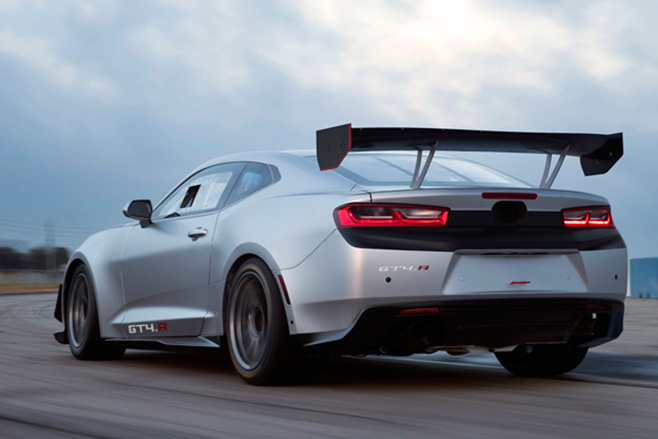
CHEVROLET has pulled the covers off the most hardcore version of the Camaro yet, revealing a GT4-homologated track monster that will rub panels in one of the world’s toughest race series.
The Camaro GT4.R – based on the Chevrolet Camaro ZL1 1LE production car unveiled last month – will hit the track for the first time this weekend as part of the North America-based Pirelli World Challenge production car season opener at the Grand Prix of St Petersburg in Florida.
Chevrolet said the all-new SRO GT4-homologated Camaro marked GM’s first global GT customer car, that would compete in both the World Challenge and the IMSA Continental Tire SportsCar Challenge.
“It is another great example of how Chevrolet transfers technology between our racing programs and our performance production vehicles.”
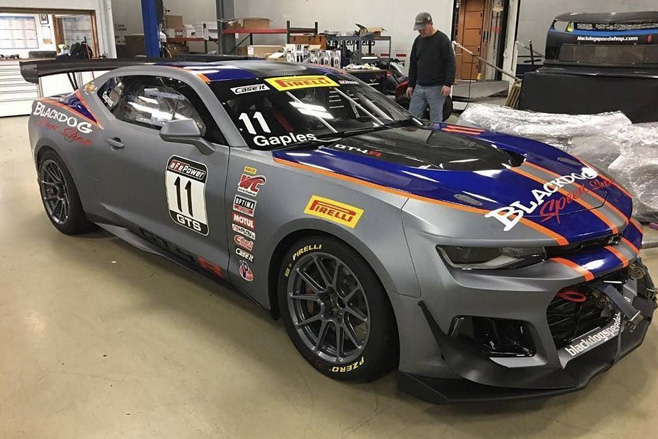
A pair of Camaro GT4.Rs will make their racing debut wearing Blackdog Speed Shop livery. Another car will make its debut wearing Stevenson Motorsports colours at May’s Continental Tire Challenge competition at Circuit of the Americas.
Under the bonnet is a 485kW/868Nm supercharged LT4 direct injection 6.2-litre V8 paired with a six-speed manual gearbox that can automatically rev-match the engine to gear changes.
Stopping power comes from six-pot two-piece calipers wrapped around the 390mm vented front rotors, and four-piston fixed calipers wrapped around the 365mm vented rears.

Chevrolet’s parent, General Motors, has tipped the next-generation Camaro will be coming to Australia as part of a global right-hand-drive development program greenlighted by the carmaker.
Aussie Mike Simcoe, who now heads up GM’s global design team, told Wheels that as the carmaker moved to consolidate the number of products it made, any new products would have to serve a worldwide audience.
“The reality is as we reduce the total number of architectures they are going to be more global,” he said.
