
Road trips are soul food for the Wheels reader, essential to demonstrating the joy of a long drive by car. Nobody better captured the spirit of the road trip’s appeal than Steve Cropley.
First published in the Summer 2016 issue of Wheels magazine, Australia’s best car mag since 1953.
Growing up in the outback of Broken Hill, Cropley quickly learned there was no alternative to a long drive if you were going to go anywhere. This was no chore, not even in his father’s Ford Consul, but rather to be gleefully anticipated.
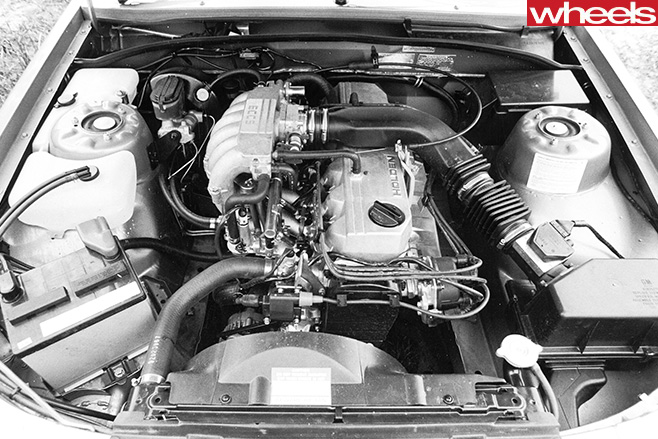
Cropley, who spent much of his five years as a Wheels staffer testing cars, loved nothing more than a busman’s holiday. He famously drove an LH Torana from Adelaide to Alice Springs before the road was finally sealed and declared that out there he’d rather drive the tough Holden than two Lancias or a Lamborghini. Nevertheless, Alfa Romeo provided a Bertone GTV, which was yet to be run-in, for a 5500km journey from Sydney to Cooktown and return.
In 1978 Cropley defected to Car magazine in the UK, eventually succeeding Mel Nichols as editor. In 1979 he returned to Australia to be my co-driver on our second Sydney-Perth record-breaking attempt in an Alfetta sedan.
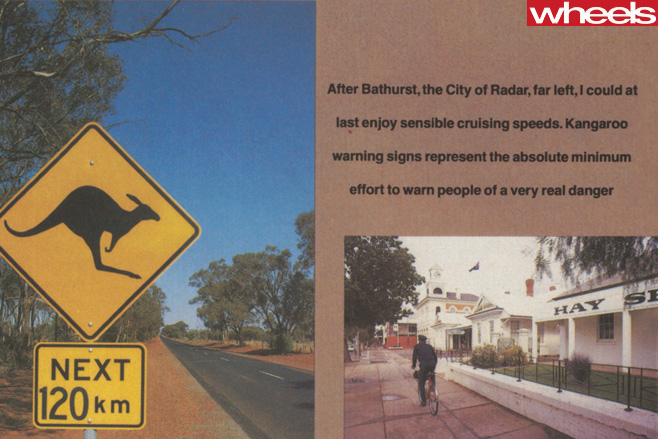
Extolling the virtues and (in those days of 57.5 percent import tariffs) the value-for-money of the Commodore, then Australia’s most popular car, he compared it to the Ford Escort, which at the time was Europe’s best-seller. The Escort – the same size as a Laser – came in 1.1-, 1.3- or 1.6-litre engine forms, while the Commodore enjoyed the benefits of 3.0 litres of overhead-cam grunt. Cropley’s test SL sold for $17,565, when the asking price for a Honda Accord sedan was $30,790.
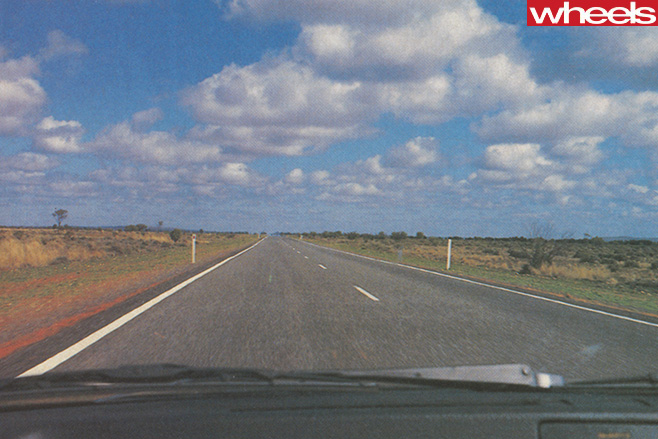
After cruising at 150-160 km/h on the lonely roads of far-western NSW, Cropley poetically enthused: “There are things out here you don’t know you miss until you experience them again: the space, the sky, the silence of all but the wind, the smell of the run on the air.”
Cropley decided you could go faster for longer in Australia than anywhere else in the world, including Germany’s overcrowded autobahns. “The road from Broken Hill to Sydney – as far as Dubbo anyway – will always be famous to me for the sheer, shimmering distance it allows you to put underneath a fit car’s wheels,” he gushed, remembering that it was here we had averaged 160km/h for three hours in the Alfetta.
Want to read more classic tales? Visit the Wheels Archive – simply log in here using your existing MagShop account or create a FREE account and select this article from the homepage.
Don’t have a MagShop account?

Have a MagShop account?

Hiroyuki Koba rearranges crockery and cutlery on the crisp white tablecloth of the Madrid restaurant. Having made room for his smartphone, the Toyota chief engineer sets it down between us. A video is already cued and he taps ‘play’.
It’s an over-the-shoulder GoPro view of Koba’s recent last lap at Suzuka, where he races in a series for little tubular-framed open-cockpit sports cars with a mid-mounted Yaris engine. The engineer had started from pole, but as the end of the race draws near he’s in second place. The sound is terrible, like a bug in a bottle, but the vision is excellent. Koba is all over the leader’s tail, but can’t quite engineer a passing move.
It’s on the final corner that he finally overdoes it. The race-leader’s car exits the frame of vision as Koba spins. There’s a glimpse of his own tyre smoke as the car goes round. As it comes to rest, rivals flash past in a colourful, distant blur. This isn’t the sort of thing that normally happens over dinner with Toyota chief engineers, and I speak from long experience.
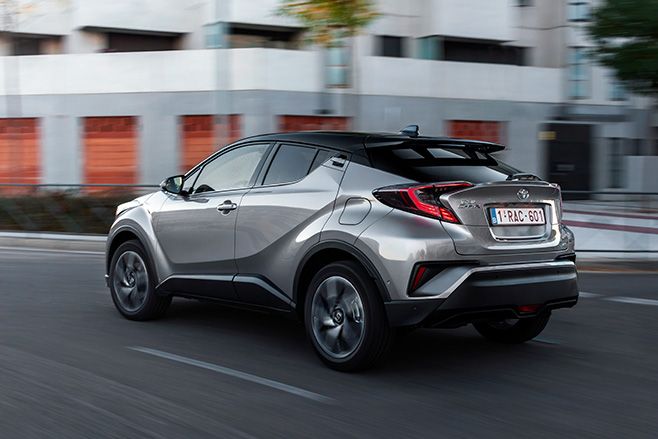
The new Toyota C-HR, being launched to the world’s media in Spain, is his work. Koba, now 54, has spent the last three decades rising through the ranks at Toyota, working on things like the suspension designs of various generations of Toyota Corolla.
At Toyota, where chief engineers have immense power, Koba wielded it. He won’t tell me exactly how advanced the C-HR program was when he insisted on a switch to TNGA, but it was late enough to delay its launch.
Those letters stand for Toyota New Global Architecture. Think of it as the Japanese giant’s reply to its German opposition. Like the Volkswagen Group’s MQB, TNGA is a flexible component set that incorporates advances in body construction and chassis engineering. The C-HR is only the second Toyota model, after the fourth-generation Prius, built on TNGA.
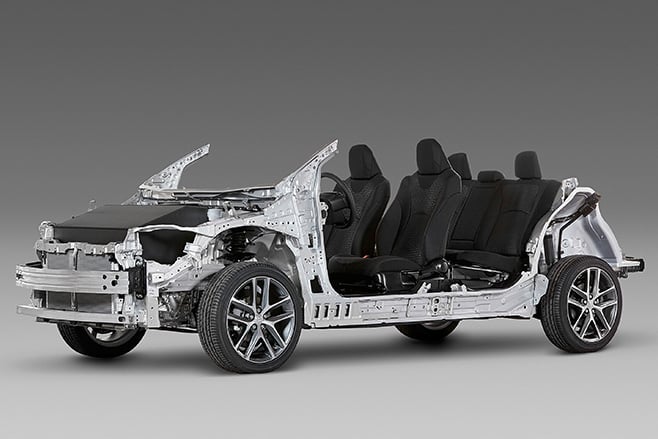
Specifically, the C-HR uses the GA-C version of TNGA. The coupe-ish crossover has a shorter wheelbase than the Toyota Prius, and a slightly modified version of its multi-link rear suspension. The latter was one of the key reasons why the dynamics-obsessed Koba wanted TNGA so badly. His objective was to create a crossover that handled as well as a good C-segment hatchback. Something like a Golf VII, in other words.
Koba then decided a great way to demonstrate the C-HR’s handling prowess would be to race it. At the Nurburgring. The engineer admits he had an ulterior motive here. “Honestly speaking, I wanted to drive the Nurburgring,” he says.
So Koba made himself a member of the four-driver team for the shorter qualifying race for the mid-year Nurburgring 24 Hour. The C-HR Racing he drove featured lowered suspension, a massive rear wing and a slightly larger version of the production car’s 1.2-litre turbo four, producing around 120kW.
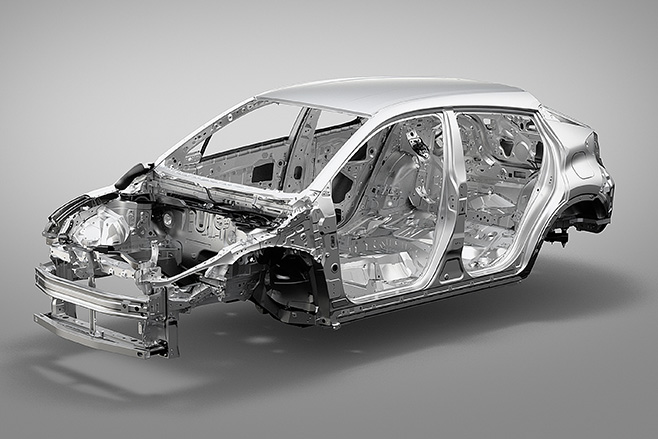
The roadgoing C-HR obviously doesn’t drive exactly like the Ring racer, but it does have excellent dynamics. It has a level of handling poise and precision that’s unexpected in something wearing a Toyota badge. Rides very well, too.
If Toyota keeps promoting talent like Koba, there’s a chance the brand might eventually earn a reputation for delivering driving pleasure to go with its hard-won quality image. And that would be a combination with unbeatable appeal…
Supraman
Hiroyuki Koba really is our kind of chief engineer. As if the racing wasn’t enough, his personal car is a silver fourth-generation Toyota Supra – the final facelifted version from the mid-1990s. Koba uses it regularly. In fact, it’s the car waiting for him at the airport when he returns to Japan.
This article first appeared in Wheels magazine January 2017.
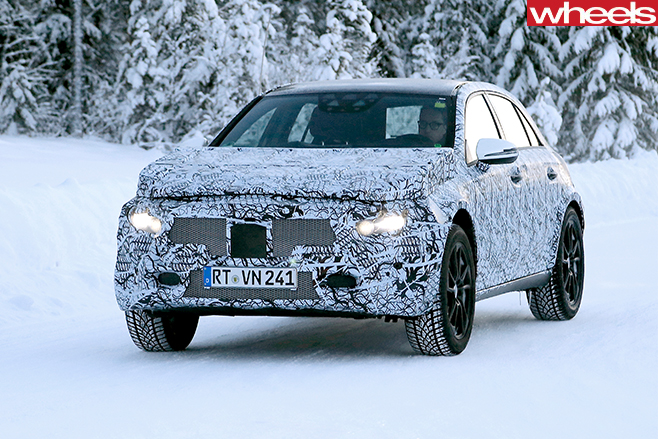
Mercedes-Benz has started testing the 2019 GLA-Class crossover under the skin of the next-generation A-Class.
Spotted being put through its paces in wintry Sweden, the test car looks just like the A-Class test car spotted last year, but has a higher ground clearance and wider track.
The length of the new-generation GLA will remain more or less the same, but will follow a new design language with a larger front grille, and swanky looking headlamps.
Like the current generation GLA, it will share the same MLA2 underpinnings as the all-new A- and B-Class, as well as the CLA, and CLA Shooting brake, which is an update of the current MLA platform.
This is why using the A-Class hatchback’s body over the crossover’s front- and all-wheel-drive drivetrain wasn’t difficult to achieve.
Like its platform siblings, the all-new GLA will shed weight through the use of high-strength steel and aluminium components.
New engines, including more powerful 2.0-litre petrol turbos, new generation 2.0-litre turbo diesels and a plug-in hybrid are also in the works.
The GLA is expected to have a slightly bigger sibling in the form of the GLB crossover, which will bridge the gap up to the GLC.
The as yet confirmed GLB will share the MLA2 platform but is expected to be a bit more radically designed with styling cues based on the less-than-subtle G-Class models.
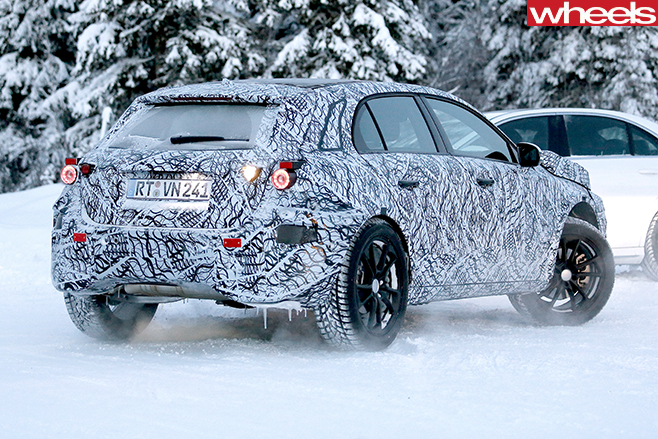
The GLA is expected to go on sale in Europe at some point in 2019, though it will probably launch here as an MY2020 model.
Meanwhile the facelifted current model Mercedes-Benz GLA is expected to arrive on our shores later this year.
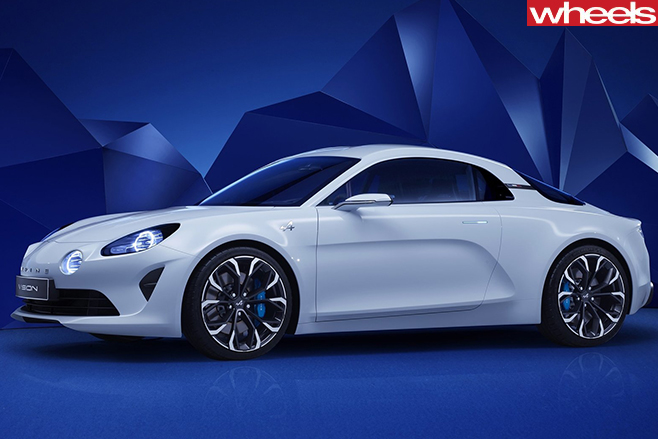
The resurrection of Renault’s Alpine performance sub brand is a step closer with a sports coupe based on the 2016 Alpine Vision Concept spotted in testing.
The mid-engined two-seat A120 contains “80 percent” of the Concept’s DNA and is expected to be revealed at October’s Paris Motor Show.
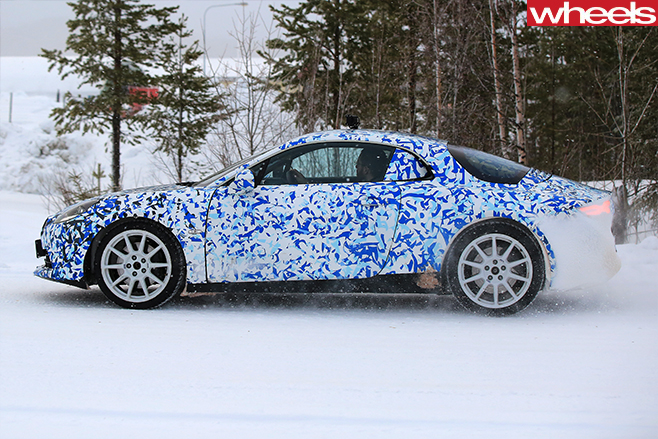
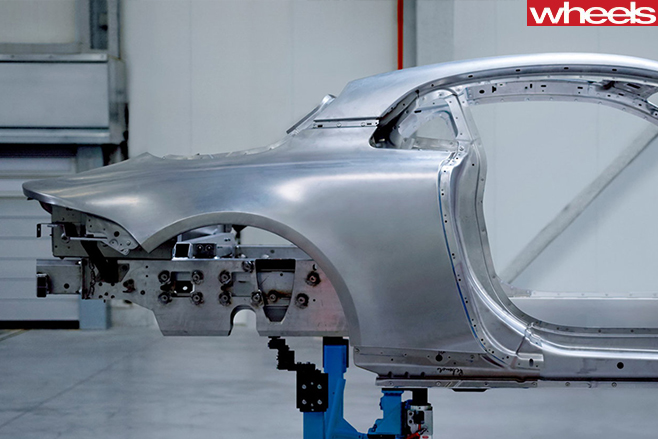
This includes the aluminium body work, which mimics the Vision Concept’s low, sleek profile and sculpted sides leading into pronounced rear haunches which narrow to give the illusion of an elongated tail,
Designed to take on the likes of the Porsche 718 Cayman and Lotus Exige, it has a lightweight aluminium chassis containing a mid-mounted 1.8-litre four-cylinder turbo petrol engine delivering around 190kW and taking it from 0-100km/h in 4.5 seconds – about half a second quicker than the standard Caymans.
It also has the same, centrally-located single exhaust pipe favoured over twin exhausts to help keep weight down.
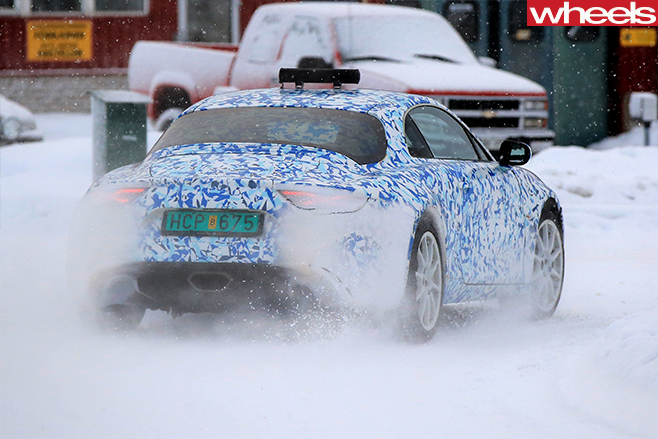
The interior is also set to be based on the Concept, with an eclectic mix of surfaces including leather, fabric, aluminium and carbon fibre to give the car a modern yet retro feel.
The doors get black leather trim with contrasting white stitching, while the quilted bucket seats are accompanied by race-inspired harness seatbelts.
The instrument panel comprising a customisable TFT display, is flanked by sporty carbon fibre.
The steering wheel is trimmed in thick black leather, framed by the automatic gearbox’s shift paddles.
The buttons and air vents are backlit in Alpine Blue.
The A120 is expected to go on sale in Europe in the latter part of 2017.
The launch will include a special Premiere Edition restricted to1955 cars, in reference to the year when Alpine founder Jean Rédélé first established the brand, which Renault subsequently purchased in 1973.
Last year the company expressed “strong interest” in the Alpine brand, and the outlook of it coming here is deemed “extremely promising” with a probable release not long after European-market launch.
Wheels has contacted Renault Australia for an update.
A pair of gold-infused Rolls-Royce Phantoms has been delivered to a hotel in Macau, officially claiming the title as the most luxurious cars ever created by the British manufacturer.
It takes a bold spec to become the most luxurious car from the most luxurious manufacturer in the world.
However, this pair certainly fit the bill with actual gold used to accentuate the interior and exterior of the cars.
Rolls-Royce defines the cars standout feature as “an exterior finish enhanced with the finest particles of 23.75 carat gold”.
Yes, actual gold. No, we can’t get over it either.
At the time of commission, the two cars were the most expensive Rolls-Royce Phantoms ever built. The undisclosed cost doubt aided by the fact the paint alone took three years to develop.
The cars are destined to become fleet vehicles for ultra-exclusive hotel, The 13, which will have 30 Rolls-Royce Phantoms set aside for its most important guests, with the two gold-infused cars becoming the flagships.
The fleet is the largest commission ever received by Rolls-Royce, with Joint Chairman of The 13, Stephen Hung, overseeing the project.
The way the bespoke paint was implemented on the cars is typically outlandish Rolls-Royce.
“The finish uses 250 percent more paint than other Phantoms, resulting in an impressive 10 layers, one of which consists of a 40 micron deep layer of Gold, combined with glass and aluminium to provide an alluring shimmer,” the release states.
Along with the paint are a 24-carat gold-plated Spirit of Ecstasy and an 18-carat gold painted badge and grill which was also plated in 24 carat. Inside, 336 pavé set brilliant-cut diamonds surround the iconic RR symbol.
As the final bit of luxurious extremism, the headliner inside the cabin was created to depict how the stars how they appeared in the sky on the night of The 13’s ground-breaking. Gold thread is handwoven into the star-scape and a gold plaque, engraved with the date and location, reminds the world’s elite of the position of this new centre of luxury in Macau.
Rolls-Royce Material Scientist, Nick Geehan, commented, “Only at the Home of Rolls-Royce would a team embark on such an ambitious project on behalf of one of our patrons. We accept nothing but perfection – the finish took eight attempts to mix the perfect colour; an apt number when considering the significance of lucky number eight in Macau, the home for these precious Phantoms.”
The Holden Astra sedan will be joining the already-launched Astra hatch later this year, though the small four-door is far from a booted facsimile of its five-door brother. Here are some details you may find helpful:
- The Astra sedan replaces the Cruze sedan in Australia. However, the same car is sold as a Chevrolet Cruze in other parts of the world, including America.
- Despite sharing its name with the Astra hatch, the Astra sedan has a unique body; every panel – from the doors to the bonnet and the roof – is unique to the four-door.
- The Astra sedan also has a different interior to the hatch, with a unique instrument cluster and some switches and controls, including the indicator stalk and steering wheel.
- The Astra sedan will be sourced from Korea and is aimed largely at the Chinese and American markets, whereas the Astra hatch comes from Poland and is pitched predominantly at European markets.
- The Astra hatch and sedan each have three models in their lineups, but they have different names. The hatch’s range comprises of the R, RS and RS-V while the sedan will utilise LS, LT and LTZ.
- Despite utilising the same basic architecture (codenamed Delta II) as the Astra hatch, the sedan is 280mm longer and there is an extra 38mm between the front and the rear wheels. That translates into more legroom in the rear as well as a larger boot compared to the sedan.
- The Astra sedan gets a different rear suspension system to the hatch. It has a torsion beam, which is a basic beaming connecting the left and right rear wheels. The Astra hatch, on the other hand, gets a Watts link, which is an extra connector on either side to better control the rear wheels, resulting in sharper dynamics and better cornering manners.
- Whereas the Astra hatch is offered with a 1.4-litre turbocharged engine or a sportier, more powerful 1.6-litre turbo, the sedan will only be sold with the 1.4 turbo. It will be available with a six-speed manual or six-speed automatic transmission.
- The Astra sedan will have a forward collision warning system on some models, similar to the system used in Commodores and other recent Holdens. It beeps and flashes if a frontal impact is imminent. However, unlike some rivals and the Astra hatch, the sedan misses out on autonomous emergency braking (AEB), which can automatically slow the car in an emergency.
- The Astra sedan uses the same basic electric power steering system used in other Chevrolets, including the sporty Camaro coupe.
- The Cruze/Astra is the best-selling car from General Motors in the world.
US INVESTIGATORS say they have not found any fault with the automatic braking system on the Tesla Model S involved in a fatal car crash last year.
The National Highway Traffic Safety Administration (NHTSA) announced overnight that its investigation into the May 2016 crash had closed after it failed to identify “any defects in the design or performance of the AEB or Autopilot systems … nor any incidents in which the systems did not perform as designed”.
However, it also said: “The closing of this investigation does not constitute a finding by NHTSA that no safety-related defect exists.”
The investigation relates to a Tesla Model S that ploughed at high speed – about 120km/h – into the side of a semi-trailer that was crossing the highway in front of it.
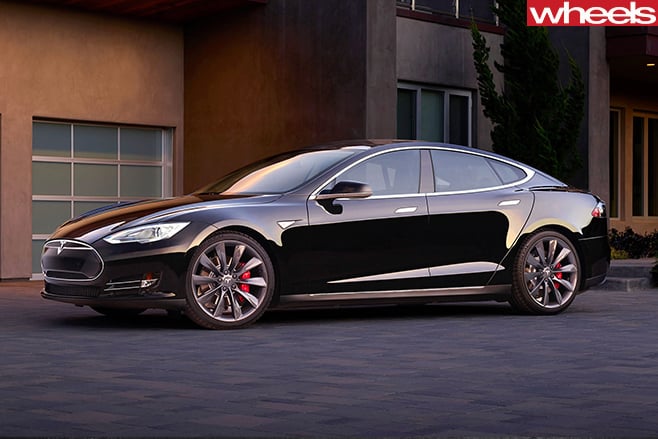
According to the NHTSA’s investigation, the Model S was using Tesla’s Autopilot experimental self-driving function at the time, and the AEB system – which is designed to greatly reduce the vehicle’s speed before a crash – failed to fire. Tesla says its AEB system works up to 140km/h.
“NHTSA’s examination did not identify any defects in the design or performance of the AEB or Autopilot systems of the subject vehicles nor any incidents in which the systems did not perform as designed,” the road safety watchdog concluded.
“[Tesla’s] Autopilot system is an advanced driver assistance system that requires the continual and full attention of the driver to monitor the traffic environment and be prepared to take action to avoid crashes.
“Tesla’s design included a hands-on the steering wheel system for monitoring driver engagement.”
The report notes that Tesla has introduced a much more rigid “strike out” strategy for its driver assist technology, switching off Autopilot functions if the driver does not respond to visual alerts sent via the car’s driver monitoring system.
Tesla also upgraded its AEB system to switch from being camera- and radar-based to using just the car’s radar in the wake of the crash.
According to the report, Tesla’s AEB system “requires agreement” from both the camera and radar systems to start braking.
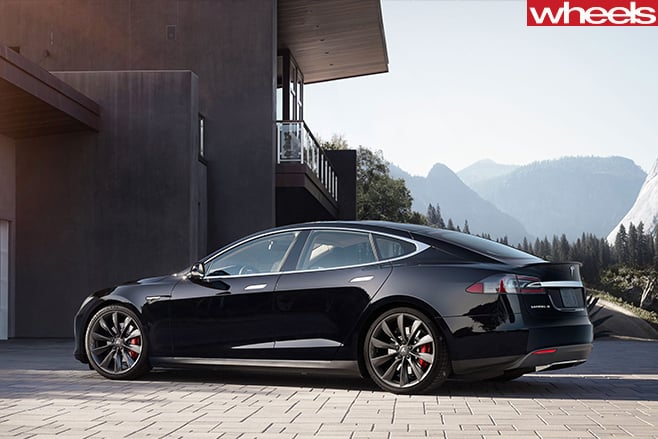
It said the camera system uses “a large dataset of the rear images of vehicles to make its target classification decisions”.
“Complex or unusual vehicle shapes may delay or prevent the system from classifying certain vehicles as targets/threats,” it said. Braking for a semi-trailer crossing in front of the vehicle was “outside the expected performance capabilities of the system”.
The NHTSA investigation ends with a stern warning to other carmakers and motorists: “While [advanced driver assistance systems] technologies are continually improving in performance in larger percentages of crash types, a driver should never wait for automatic braking to occur when a collision threat is perceived.”
As a kid, Paul Beranger always had a passion for cars. His childhood sketches eventually led to a distinguished career as one of Australia’s leading automotive designers.
Now retired, Paul established his reputation as a designer working with the likes of Holden, Nissan, and Toyota.
His career started with an opportunity to work as a cadet designer at Holden in 1968, before moving to Nissan where he relished the opportunity to work on the brand’s performance vehicles.
“In those days [when he entered the industry as a cadet], you didn’t need degrees; it was more talent-based than degree-based,” Paul says.
“I was passionate about cars. I had enough ability to be able to sketch and obviously enough talent to be recognised as an automotive designer at Holden. Since then, I’ve moved through the industry and… I’ve been able to study Japanese and western design cultures and business practices.”
A background in industrial design helped Paul, and by the time he joined Toyota Motor Corporation Australia in 2002, he had worked on local and international projects across China, Russia, Korea, South Africa and the US.
As Manager, Design and Development for Toyota Australia, Paul headed up a team of designers, CAD engineers and technicians, working on projects such as the mid-sized Camry Hybrid and the Toyota Aurion, as well as projects for the Asia-Pacific region.
Since 2012, following his retirement from Toyota, Paul has worked as a consultant and is now spending time writing a book on Australian automotive design. As an expert in his field, this was Paul’s second year judging the WhichCar Style Awards.
With a panel of judges from various magazines, Paul brought an experienced automotive design eye to the process, with some judges referring to him as the ‘contextualiser’.
“The fact there was so much variety in the cars gave us all options,” Paul said of the finalists.
“Obviously the Mustang is a strong image model for Ford, based on over 50 years of heritage. The Audi A4 represents an evolutionary design theme, which is probably one of the most refined of any car company. They manage their branding very well.
“Honda is reinventing itself as a brand, after struggling for many years with its styling and engineering and the latest batch of models are developing a unique design language.
“Holden’s Astra reflects GM’s global design direction, making a sophisticated design statement in its segment.
“All are quite different designs. It really is a matter of how you want to interpret each design’s attraction to its intended customer.”
Justine Cullen is one of those unicorn-like people who possess such an allure that heads turn from the moment she walks into a room.
Maybe it’s her articulate voice or unforced cool that draws people in or perhaps it’s more to do with her effortless stylishness that has earned her iconic status in the fashion world.
You don’t need to scroll too far down Justine’s Instagram feed to understand why she’s received such a reputation – at one point, she manages to make beige overalls look more stylish than a Paris catwalk.
Since entering the magazine world more than two decades ago, Justine is now fashion media royalty as editor-in-chief at ELLE Australia, fraternising with the likes of Vogue Australia fashion director Christine Centenera, author Zoë Foster Blake and former Cosmopolitan Australia editor-in-chief Bronwyn McCahon.
It took 14 years of talking lip-gloss and moisturiser as a beauty editor before Justine landed the editorship of SHOP Til You Drop in 2008. During her tenure at SHOP, Justine reached the highest ever circulation and revenue figures, and received awards for MPA Lifestyle Magazine of the Year (2011) and Publishers Australia Editor of the Year (2012).
Since joining ELLE in 2013, Justine has received global attention for building a brand known for its innovation and creativity. Justine, a mum of three, didn’t get her licence until aged 30 and confesses her knowledge of cars is limited. However, her expertise and panache for all things style earned her a spot on the judges’ panel for the 2017 WhichCar Style Awards.
“We do our own style awards at ELLE, and obviously it’s quite different! But there are similarities between motoring and fashion,” Justine says.
“They’re both about expressing yourself – whether it’s a car or an outfit, the goal is to find something that represents who you are and what you want to say about yourself.“We had some really interesting discussions about whether it was a style or design award, and something it felt like comparing apples and oranges. But clever or beautiful design is just that, and when we broke it down with the criteria it all started to become very clear.”
So what does one of Australia’s most stylish women drive? A BMW X5.
“I love it,” says Justine. “It’s a seven-seater. I have three kids and… I’ve always got children around who aren’t my own. I don’t think I’ve ever folded the extra seats away.”
Meet the 2017 Whichcar Style Award finalists.
Tell me about this car
The Astra sedan is the four-door version of the Holden Astra hatchback that went on sale late in 2016. It replaces the Holden Cruze in Australia, but the car is also known as the Cruze in America, one of its key markets. Unlike the Astra hatchback, the sedan will only be available with one engine (a 1.4-litre four-cylinder turbo) and it will be slightly cheaper, likely priced from close to $20,000, plus on-road costs. Strengths
Space. The Astra sedan has a longer body than the hatch and as a result there is more legroom in the back seats. It is also generously proportioned elsewhere, with good headroom up front and a big centre binnacle for storing items. The boot is also large.
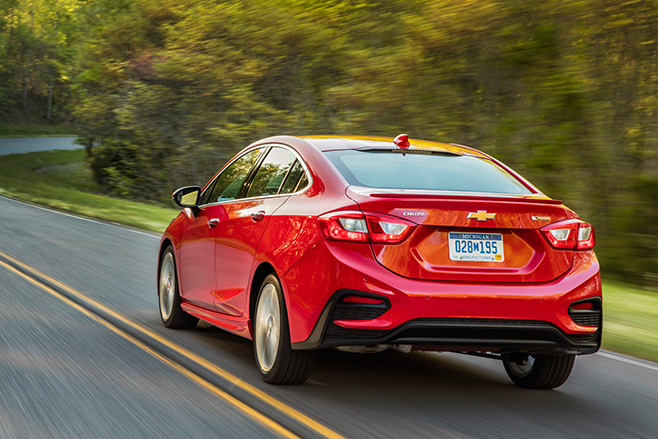
Quietness. The Astra sedan does an excellent job of keeping tyre and wind noise out of the cabin, something indicative of its refinement. It adds to the high levels of comfort for what is an easy car to live with.
Easy to drive. The 1.4-litre turbo in the Astra sedan isn’t particularly powerful but it is very flexible across its rev range thanks to the addition of a turbocharger. It makes for relaxed driving around town and is also quite punchy at freeway speeds despite its small displacement.Value. Pricing hasn’t been announced yet, but the Astra sedan is expected to start from about $20,000, with a roughly $1000 premium for the automatic. Even the base Astra LS will come with a reversing camera as well as Apple CarPlay and Android Auto, each allowing a smartphone to be connected and provide additional features such as satellite-navigation. There will also be an LT and LTZ, the latter adding leather seats as well as a forward collision warning system.
Weaknesses
Accessing the boot. The opening for the (large) boot is quite high and slim, making it difficult to load chunky items in. At least there is a split-fold function for the rear seats, permitting longer items to poke through into the cabin.
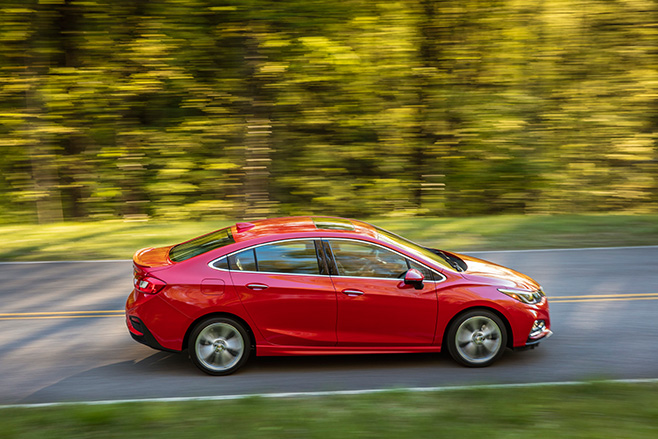
Active safety. While blind spot warning and forward collision warning are available, the Astra sedan will not initially be offered with AEB (or autonomous emergency braking). It’s an increasingly common safety feature that monitors traffic ahead and can automatically apply the brakes to avoid a crash. The feature is available on the Astra hatch and many of its rivals, but not the Astra sedan.Sportiness. Holden is positioning the sedan as being more practical and comfortable rather than sporty and exciting. As such it’s not available with the more powerful 1.6-litre turbo engine used in the hatch (the 1.4 is the only engine option). It also misses out on the hatch’s superior Watts link rear suspension system, instead making do with a torsion beam, which doesn’t hold the rear wheels as accurately during spirited cornering.
Any rivals I should also consider?
The popular cars in this segment are the Toyota Corolla and Mazda 3. Other cars to consider include the Hyundai Elantra, Subaru Impreza, Kia Cerato, Honda Civic, Mitsubishi Lancer, Nissan Pulsar, Ford Focus and Renault Megane.
