
The grunty Hyundai Elantra SR Turbo is now on sale in Australia, with the Korean automaker’s unassuming small sedan transformed by a new independent rear suspension and turbocharged 1.6 litre turbo engine.
And at $28,990 for the manual-equipped model ($31,290 for the auto) the Elantra SR Turbo is Hyundai Australia’s most affordable performance car, undercutting the quirky Hyundai Veloster SR Turbo three-door coupe by $660.
The Veloster donates its 150kW/265Nm 1.6-litre turbo engine for the Elantra SR Turbo, but unlike the Veloster, the Elantra SR Turbo is gifted with a proper multi-link independent rear suspension instead of the cheaper, simpler torsion beam axle used for regular Elantra models, improving handling.
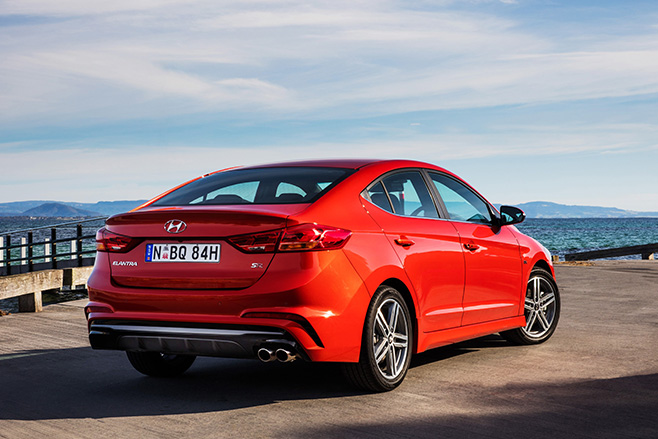
Essentially the same rear suspension hardware as used by the next-generation Hyundai i30 small hatch, the Elantra SR Turbo’s back axle has also been fine-tuned by Hyundai Australia’s local engineering team to tailor its ride and handling to local conditions.
Larger front brakes and a faster steering ratio round out mechanical changes for the Elantra SR Turbo, though it’s worth noting that auto-equipped Elantra SR Turbos come with a seven-speed dual-clutch transmission. Elantra models fitted with the 122kW/192Nm 2.0-litre non-turbo engine receive a conventional six-speed automatic.
Hyundai doesn’t mention performance numbers, but with the SR Turbo outperforming other “sporty” turbo small sedans like the 132kW Holden Cruze SRi-V and 140kW Nissan Pulsar SSS, Hyundai’s hot Elantra should be one of the quickest in its segment.
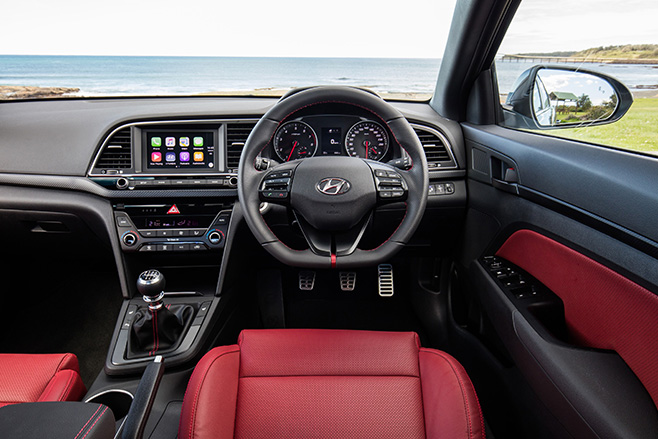
As the flagship model of the Elantra range, the SR Turbo also comes with a long list of standard equipment. Features such as blind spot monitoring, lane change assist and rear cross traffic alert are standard issue on the SR Turbo, as are bi-xenon headlamps, a sporty body kit, alloy pedals, black headliner, a flat-bottomed sports steering wheel and front parking sensors.
Both the SR Turbo’s front seats are heated and feature fatter bolsters, the driver’s seat has 10-way adjustment, there’s a sunroof, an extra USB outlet in the centre console, optional red leather upholstery and Apple CarPlay and Android Auto smartphone mirroring.
The only options are a red leather interior (which replaces the standard black cloth) for $295, and metallic paint at $495.
Though its local launch timing has yet to be announced, we can expect Hyundai’s next-generation i30 SR to take a near-identical feature set to the Elantra SR Turbo – 165kW engine and all.
Click here to the full review on the Hyundai Elantra range.
Ricciardo victorious in heated Malaysian Grand prix
Hamilton luckless as Merc engine blows chance of win
After a winless 2015, and a shocking team fumble which cost him a certain win in Monaco mid this year, good fortune dovetailed with a brilliant, aggressive drive by Red Bull’s Daniel Ricciardo to land him a much-deserved victory over team-mate Max Verstappen in oppressively hot conditions in a Malaysian Grand Prix thriller at Sepang.
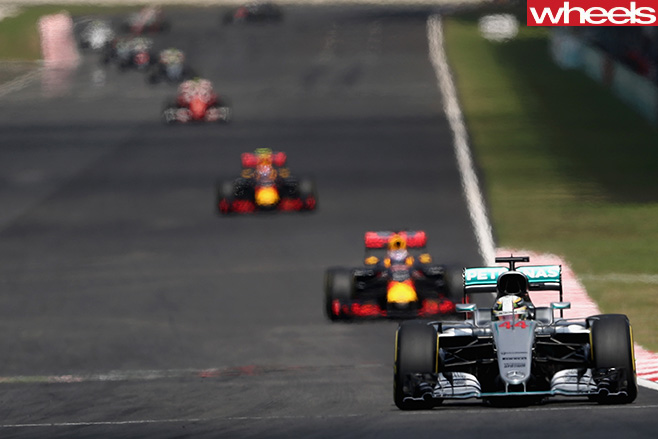
It was the race that Lewis Hamilton looked to have in his pocket. Then 15 laps from the chequered flag waving, the Mercedes engine erupted in a burst of smoke and flames. “Ah… no, no, no!” he exclaimed as he pulled the broken Merc to a halt.
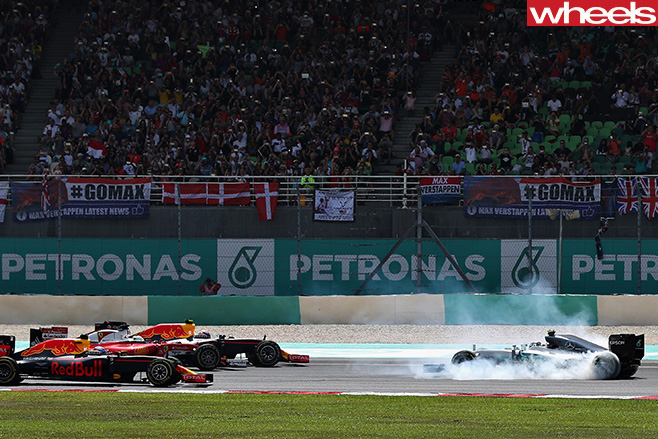
Instead of joyously reclaiming the lead in a world championship of changing fortunes, the shattered Briton went into something of a meltdown, a post-race outburst on television hinting darkly at conspiracies. Though perhaps understandable considering his appalling luck, his very public assertion that “there are eight Mercedes cars out there and mine is the only one that blows” got his team very agitated indeed.
It was an enthralling, perspiration-drenched race which fascinated from the moment the grid, led by pole man Hamilton fired into the tight turn one/turn two ess bends.
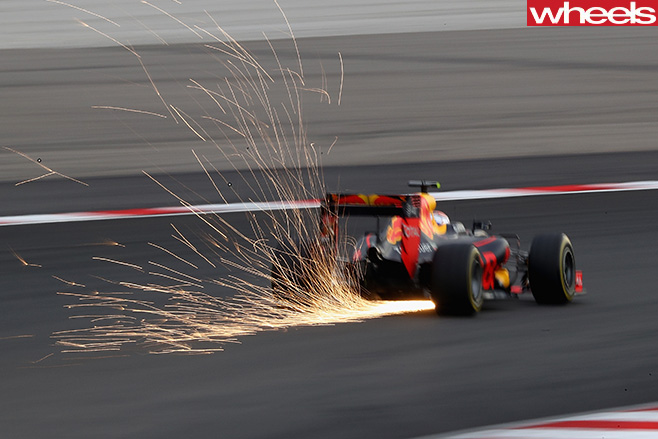
In any case, Hamilton skipped clear, Vettel retired with terminal steering damage, Rosberg had slipped to the rear, and Ricciardo emerged in second, ahead of Verstappen.
After the virtual safety car disappeared, Rosberg immediately began his fightback while the front trio all looked racy.
A fabulous mid-race duel between the Red Bulls, was a highlight, showing how team-mates should race, but also confirming that Ricciardo was not about to easily cede second to the Dutch teenage.
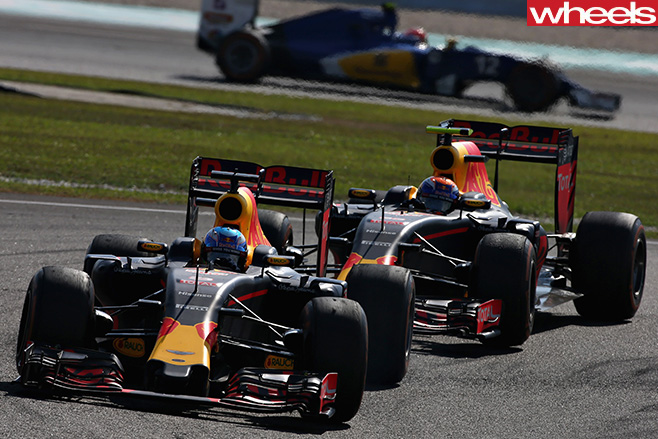
While one British commentator in particular continued to suggest Verstappen was following team orders not to overtake his team-mate, it was obvious that Ricciardo was using his nous to maintain the gap. Verstappen could never get quite within the one-second required before he could use the advantage of DRS to close and overtake.
The stewards bewilderingly hit Rosberg with a 10 second post-race penalty for his wheel-banging pass on Raikkonen but the German quickly got his gap back to the Finn out by enough to keep the final podium place.
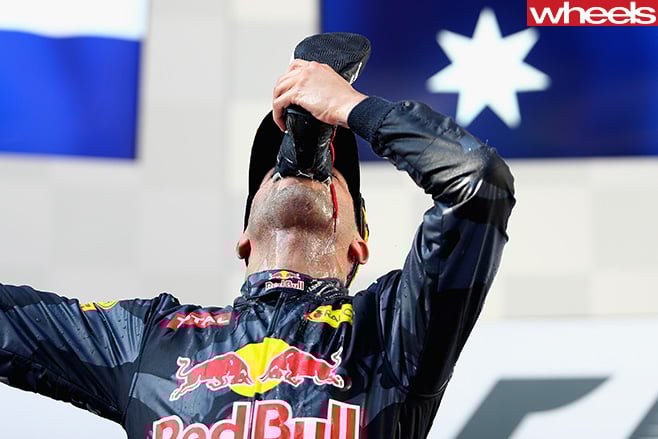
“We had an opportunity today that we needed to capitalise on and I was determined to not let it go. We had a good battle with Max; he is a hard racer and we have that in common. We fought hard and aggressive but I think we showed we can push to the limit but still keep it on the track.
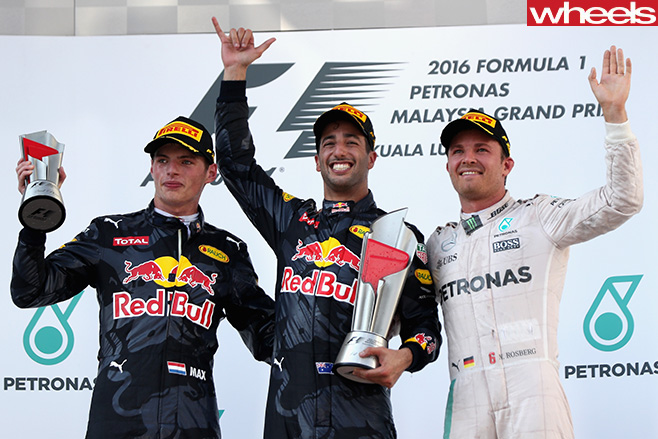
“I want to thank my parents and my sister as well for the support they gave me growing up. I also want to dedicate the win to Jules (Bianchi), I have been waiting for a victory to dedicate to him. My life definitely changed since that incident and I am extremely grateful and appreciative of everything I’ve got.”
The result was Red Bull’s first one-two in the hybrid car era and the first since 2013.
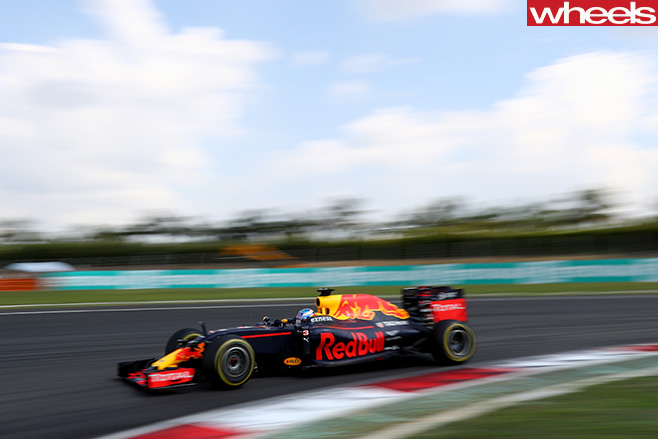
Horner went on to suggest that Ricciardo, with five podiums from his most recent six starts, is the form driver of moment. “He’s driving incredibly well.”
Rosberg was impressive too. “I thought my race was over [in Turn One] and never thought I’d be able to continue. It felt like an uncontrolled four-time world champion torpedo had hit me! I reported to the pits that it was a pretty hard hit. I was fortunate to be able to fight through the field. But I got the knife between my teeth and went for it. I fought my way through, with some great battles along the way which I really enjoyed, and was pleased to make it back up to the podium. To be honest, I can’t believe that I’ve just been standing up there from last!
Hamilton’s explosive comments after his retirement were later expanded upon in a Mercedes press release that gave some context to his remarks. A form of damage limitation. “As I said in the TV interviews, Mercedes have built 43 engines or however many it might be with the extra three I’ve had, and I have happened to have most of, if not all of, the failures. So, that is definitely tough to take. But I have 100-percent confidence in these guys. I love it here and without them I would not have won these two championships.
”There’s still five races to go and if I can perform the way I performed this weekend there’s still everything to play for. We will learn. The guys will take the engine back and they’ll understand what happened. Every time we’ve had engine issues they’ve gone away and found out why. It puts us potentially in a better position to make sure it doesn’t happen next year.”
Hamilton, perhaps borrowing from Ayrton Senna, even lapsed into spirituality: “I still have faith and hope. That’s a powerful thing. It feels a little bit like the man above, or a higher power, is intervening a little bit. But I feel like I’ve been blessed with the opportunity firstly to be here with so many great people around me, in this great team, to have won these last two championships with lots and lots of victories and records that I’m breaking time and time again.
“Whilst it does not feel great right now, I have to be grateful for all of that. If at the end of the year the higher powers don’t want me to be champion after everything I’ve given towards it, I will have to accept that. As long as I end the year knowing that I’ve given it everything, done everything I could possibly do and that we’ve done everything we could possibly do, that’s all you can ask for. Don’t forget that I’m world champion. I’ll be okay.”
Japan should be fun. But not for Vettel who was given a three-place grid penalty for his driving in Sepang.
Ogier/Ingrassia close on fourth WRC
Breakthrough win in Corsica for the rampant VW duo
A dominant drive to his first win in the Tour de Corse – the rally of 10,000 corners – has moved Sébastien Ogier ever-so-close to his fourth consecutive FIA World Rally Championship.
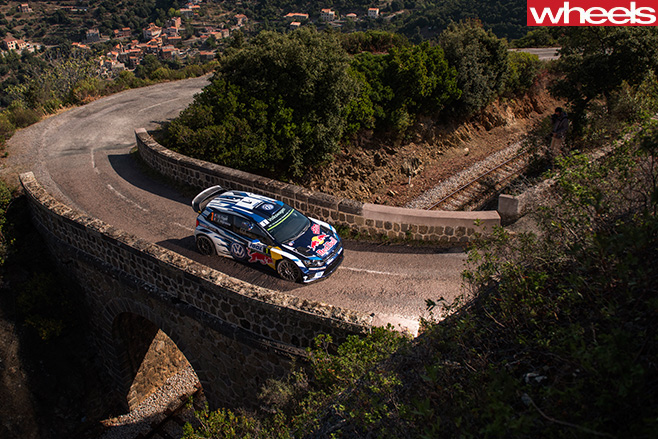
The Corse is one of the more challenging events in the WRC. It is said that, during the pre-rally recce, if a crew finds a straight longer than 150 metres then they’re on the wrong island. One corner leads straight into the next in the rally. The landscape is not the only thing that gives Corsica, also known as the “Wild Beauty”, its very specific character. With the exception of the closing Power Stage, every special stage is at least 30 kilometres long – a physical endurance test for the drivers and a mental challenge for the co-drivers, who must call out the pace notes with perfect timing.
Ogier and Ingrassia were the masters across three days and the French ace now needs just 16 points from the next round in Spain to become only the fourth person to win four drivers’ titles.
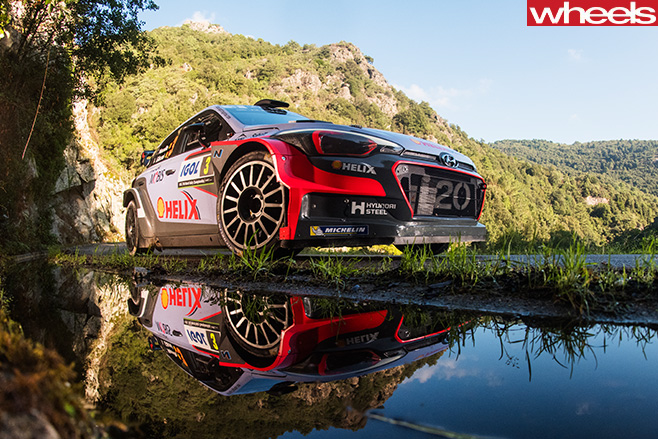
Ogier stamped his authority earlier winning all the competitive stages on Friday and thereafter measuring his pace cleverly through the final two days, when wet roads made conditions tricky.
“What I really wanted was to win this rally,” said Ogier. “It’s my first win in Corsica, on such a historic event. We showed strong pace on the first day and managed the rest of the weekend perfectly. The championship smells quite good for us.”
Despire misgivings about his car’s handling, the Neuville held second from midway through the opening leg, but Mikkelsen was pressing hard until improvements to Neuville’s differential enabled the Belgian in the pink specs to pull clear and climb to third in the drivers’ standings.
Mikkelsen was one of many to struggle with overheating tyres and brakes in the high temperatures, but the Norwegian eased to his first podium since winning in Poland in July.
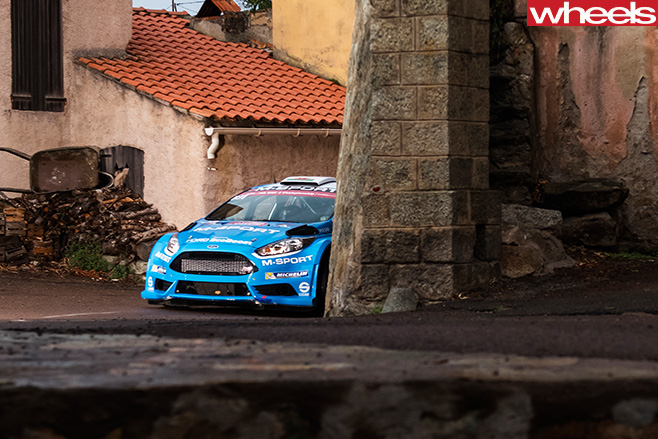
Impressive Craig Breen excelled on his asphalt debut in a World Rally Car to finish fifth in a Citroën DS 3 ahead of New Zealand’s Hayden Paddon in a Hyundai. The Kiwi, who is happier on gravel, was unhappy with his driving in Corsica and promised to go ‘back to the drawing board’.
Citroen’s Kris Meeke won both Sunday’s tests, taking maximum bonus points in the live TV Power Stage. But he finished a lowly 16th after crashing on Saturday, blaming inconsistent pace noting.
Aussie Mawson is German Formula 4 Champion
And he had to beat the son-of-a-gun to do it
Australian Joey Mawson has continued a tradition of Antipodean successes in European motor sport after winning the 2016 ADAC German Formula 4 Championship, claiming among his scalps Mick Schumacher, son of the former F1 world champion.
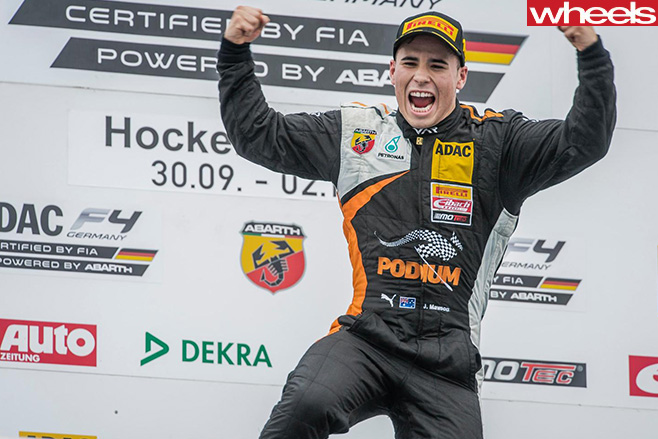
Mawson carried a 39-point lead into the decider knowing he would be champion if he finished fifth or better in all three races even if closest rival Schumacher was to claim wins in each.
After qualifying on the front row for the opening two races on Friday, Mawson was dominant on his way to victory in race one.
Then in the second race, rain-interrupted, the young Australian scored his 10th race win of 2016 to move out of reach of Schumacher in the standings.
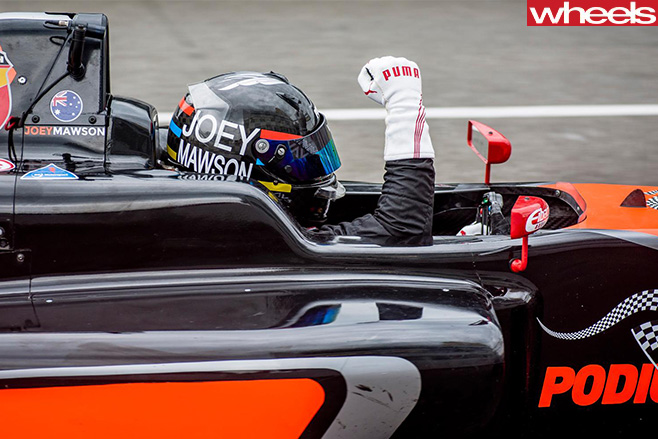
“While the final race today didn’t go to plan, it’s an amazing feeling to know that I’ve won the championship,” said Mawson.
“Mick and I had a great battle all year long,” added Mawson. “We’ve certainly pushed each other hard on the track to make sure whoever ended up with the title had earned it.”
Mawson thanked a group of supporters back in Australia for helping fund his championship campaign.
“If it wasn’t for Tom Warwick and Geoff Morgan and everyone else involved with PODIUM, this year would not have been possible. I can’t thank them enough for their ongoing support.”
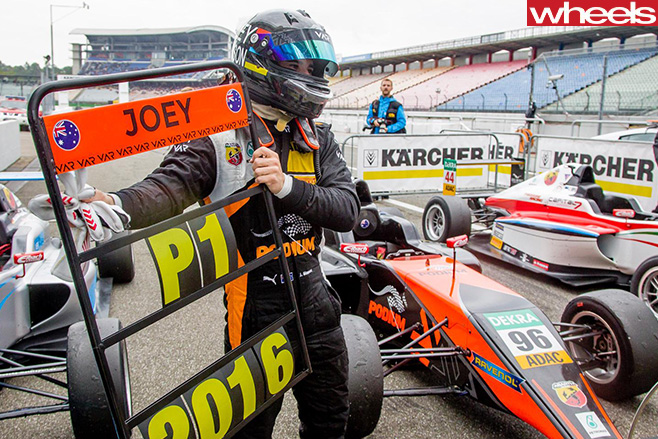
Mawson will remain in Europe until mid-December to finalise plans for 2017.
Mawson’s success comes soon after Ferrari-driving Queenslander Liam Talbot secured the overall AM category of Europe’s tough Blancpain Endurance Series for GT cars.
Talbot and his manager David Hardman are now working on a 2017 programme of racing in Europe and Australia.
Jason Doyle’s world championship hopes crash
Speedway GP leader suffers serious injuries in Poland
A frightening crash eliminated Australian Jason Doyle from his opening race in the Torun FIM Speedway Grand Prix of Poland, his injuries ruling him out of the rest of the night and possibly destroying his chances of winning the 2016 world championship.
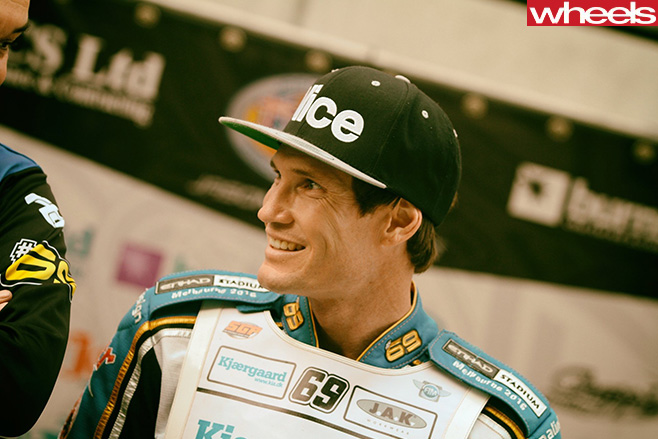
American veteran and triple world champ Greg Hancock capitalised by regaining the lead at the world championship summit.
All now hangs on whether Doyle can be fit for the final round in Australia in less than three weeks.
Danish champion Niels-Kristian Iversen won the Torun round, from Hancock, who is now just 11 points away from guaranteeing his fourth FIM Speedway World Championship in Melbourne. But the sporting American was gutted to overhaul Doyle in such tragic circumstances.
“I can feel for Jason because I have been there,” said Hancock. “He’s a tough guy and I hope his injuries are not so serious that he can’t come back in Melbourne. He deserves a fair shot. Seeing his accident hit me inside. I know he didn’t go in there very well.”
Lowndes and Whincup together again at Bathurst
But sharing a Ferrari rather than a Commodore
Craig Lowndes and Jamie Whincup have raced together – and won Bathurst 1000s before.
But next year the star Supercars pair will drive a Ferrari for Maranello Motorsport at the Liqui-Moly Bathurst 12 Hour.
They will also be joined in the squad by a yet-to-be-named factory Ferrari GT driver.
Lowndes and Whincup have between then won 10 Bathurst 1000 victories between them in Supercars competition, three of them together (2006, 2007 and 2008).
Lowndes joined Maranello Motorsport to win the 2014 Liqui-Moly Bathurst 12 Hour, but next year’s enduro will be Whincup’s Bathurst 12 Hour and GT racing debut. He’s looking forward to the task of learning to drive a left-hand drive, high-downforce turbo car.
Their regular Supercars squad, Triple Eight Race Engineering, will provide support in the form of an engineer and additional staff.
Maranello Motorsport team principal Mark Coffey said he intends to ensure Whincup and Lowndes get plenty of seat time
Renault’s hot hatch flagship wants its Nurburgring record back, and will come with rev-matching, more power … and a stick!
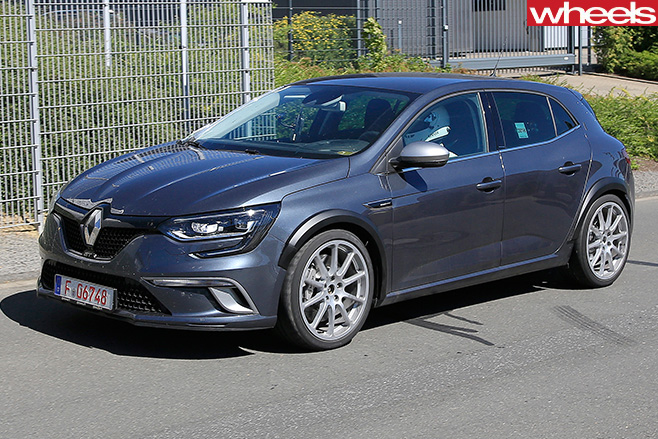
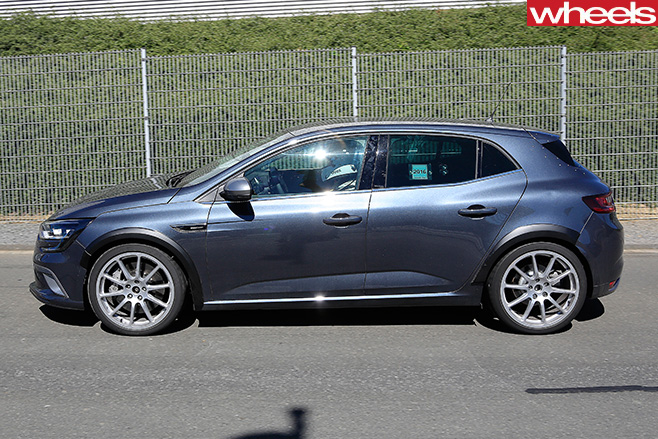
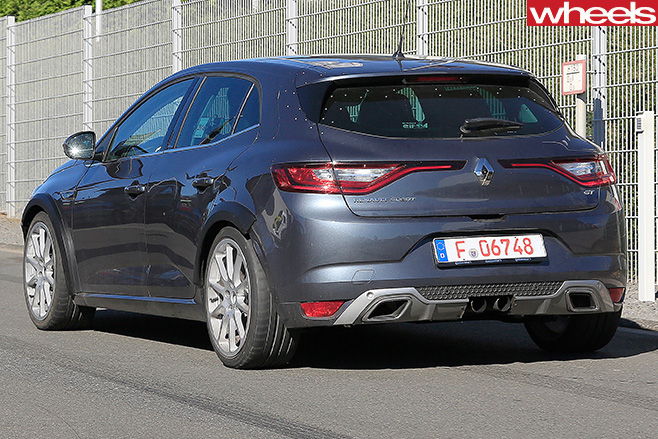
RENAULT’S next-gen hot hatch hero will boast four-wheel steering and – joyously – the option of a manual gearbox as it takes the fight to the Ford Focus RS and VW Golf GTI.
Renault Sport insiders have confirmed that while a final gearbox decision is yet to be made, the fourth-gen Megane RS will likely have two options: a seven-speed dual-clutch automatic and a six-speed manual, the latter of which could include rev-matching technology.
“There is a future for both DCT and manual, but it’s a question of economics,” Renault Sport boss Patrice Ratti told Wheels. “With each project you need to look at whether it is feasible or not to have one, or two, gearboxes.”
If two gearbox options are available, both will come to Australia according to Renault’s local boss, Justin Hocevar.
What’s more certain is that the Renault Megane RS will include the same segment-exclusive active four-wheel steering system as the new Megane GT that launches in Australia this week, to help improve low-speed maneuverability and high-speed stability. RS engineers confirmed the news to Wheels in Paris, but hinted the system would be available as an option.
Yet despite the commitment to more power, Renault Sport isn’t concerned with matching the outputs of its rivals.
“We’re thinking more in terms of performance than pure horsepower,” said Ratti. “You have to look at the torque curve, the weight, so it’s the performance that we’re targeting. In the end it’s how you accelerate, how you take corners, so it’s a global way of looking at the engine and gearbox.”
“You’ll see, you’ll see,” he said with a smile. “Just wait.”
The fact the new Megane will sit on a much larger platform and be offered solely as a five-door body style for the first time suggests it’ll be heavier.
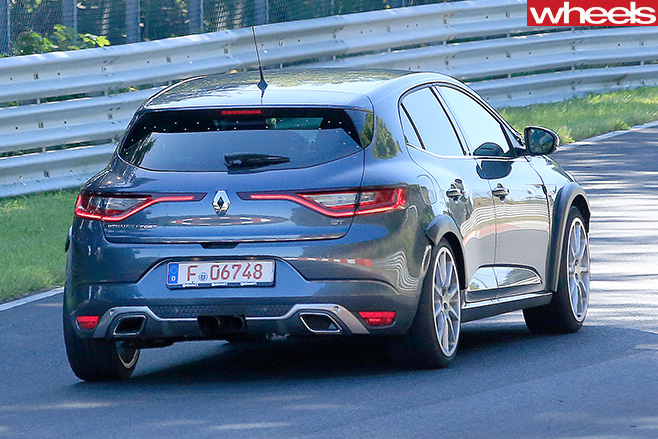
As for timing, engineers told Wheels the Megane RS would be revealed in late 2017, possibly at September’s Frankfurt Motor Show.
“Unfortunately at Renault we’ve always struggled to bring our new cars at the same time in Europe as the rest of the world,” said Renault’s general manager for sales overseas, Jean Calcat. “At Renault Sport we’re a very small team of dedicated guys and our engineers tend to give priority to European markets.
“That’s not good, but due to the very good sales on record in Australia and Japan, we’re looking to try and give priority to our top-selling markets.”
In terms of rivals, 2017 will also mark the reveal of Hyundai’s first hot-hatch, the Hyundai i30N. However, Ratti isn’t concerned about a threat from Korea.
“Honestly, I discovered it in the newspapers the other day, so I have no idea about it,” he said. “You maybe know more about it than I do.”
First published in the August 2012 issue of Wheels magazine, Australia’s best car mag since 1953.
In this latest address to Aussie drivers, Falcon and Camry come to the four with boosted incentives, while Commodore and Aurion set out to prove that a six still has clout at the polls.
FAIRER critics of the Australian automotive industry point first to its continued need for taxpayer-funded grants, then to the sales charts, and quickly call for factory closures. Difficult to argue with if a country is run only by its balance sheet. Harsher opponents tag the industry as a lumbering dinosaur, unable to compete in a global environment and unworthy of funds to prolong its inevitable extinction. That bit requires a correction.
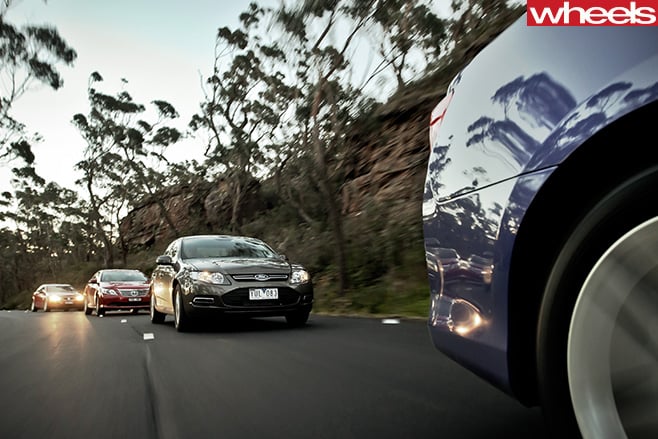
Official ADR consumption figures, and the waning popularity of large cars, is primarily what has driven changes to the old big-six formula. Bright spark of this group is the Camry Hybrid. The electric motor both takes a load off the 2.5-litre petrol four and helps boost combined outputs to 151kW and around 350Nm – properly six-pot competitive.
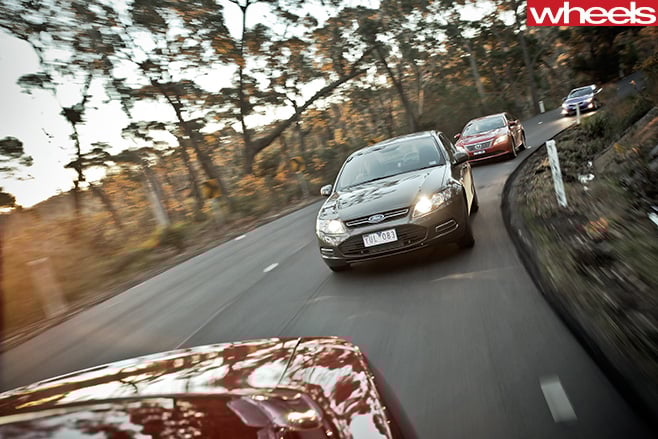
We’ve gathered a group of (mostly) base models. You recognise the badges – Omega, XT and AT-X. The Camry Hybrid HL is the luxury-grade exception, as a base H wasn’t available to test. However, although entry variants are fixtures on fleet and hire-car lists nationwide, there are a few reasons why base can be best. Without the fake carbonfibre or plastichrome inserts of sports and prestige variants (both are present on the Camry) the entry-level cars are attractively functional and utterly unpretentious. They also represent excellent value. Best to ignore their $37-42K recommended retail prices when ‘limited edition’ models are frequently flogged to private buyers, with more standard kit, for around $33K on-road.
Just as an LPG cylinder robs taxi boot space, a battery-pack steals room from the Camry Hybrid’s rear, reducing its cargo capacity to a small-hatch-like 350 litres. That’s 165-litres less than the petrol-only Aurion, which also adds a split-fold rear seat. The 496-litre Holden only gets a ski-port, to the 535-litre Falcon’s split-fold, though both utilise bootlid gas struts, a far more elegant solution than the Toyota’s dated, luggage-crushing goosenecks.
Ford’s entry-level FG is best for design and ergonomics, if not quality. Charcoal-grey plastics contrast nicely with the (optional and impressively intuitive) eight-inch colour touchscreen display, but there are brittle edges to its mismatched plastics, many of which don’t fit as well as they should.
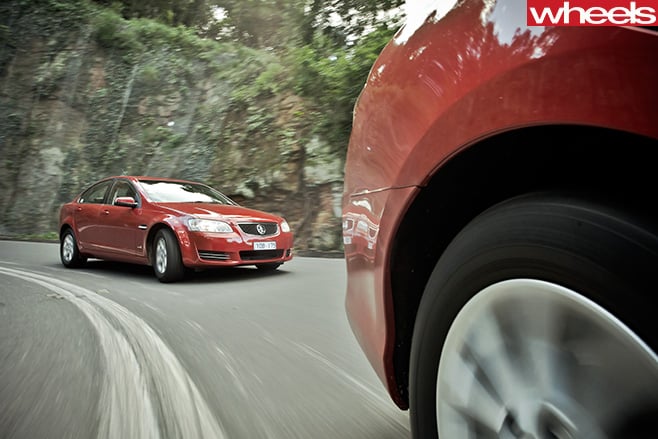
Meanwhile, the six-year-old VE Commodore dash blends rubbery plastics with similarly sub-par finish. Despite a belated Series II update – if this were the VT generation, the VZ finale would soon be arriving – the addition of a colour touchscreen interface and the door grabs from the Caprice hasn’t lifted a cabin that screams desperation for next year’s VF overhaul.
Get driving, and the initial largely level playing field quickly shifts. Clearly it’s a fight between a four and a six for the best drivetrain here.
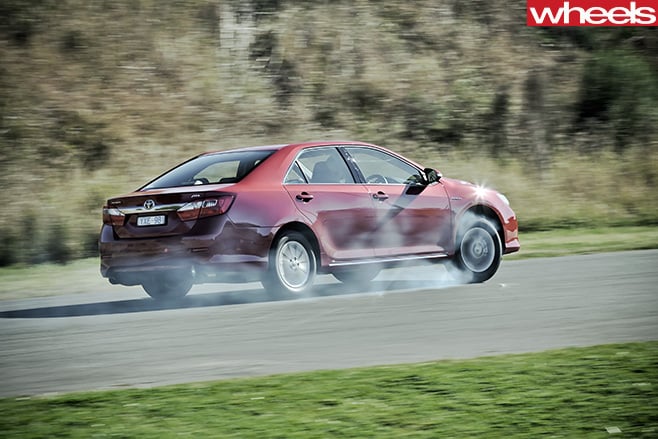
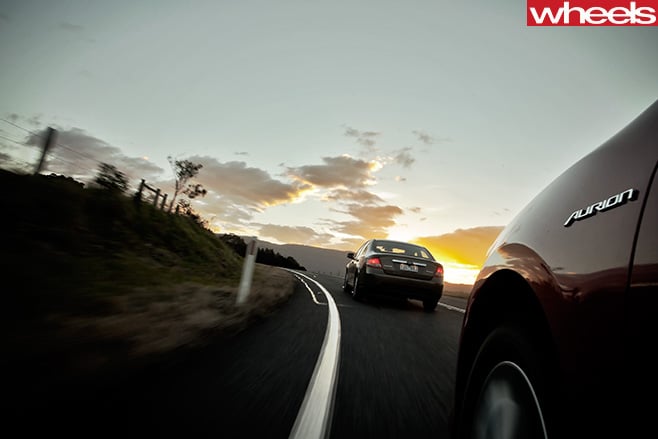
Only after driving the Aurion could you find the Falcon Ecoboost a fraction slow. The Toyota’s 3.5-litre/six-speed auto drivetrain is carried over from the 2006 first-generation, but this new model weighs 65kg less, at 1525kg. Forget comparing its performance with its rivals here – this humble entry-level sedan will frighten Subaru WRX and Commodore SS owners with its 6.1sec sprint to the 100km/h benchmark. But it’s only that brisk if you turn off the stability control and axle-tramp off the line (there are owners who will do this – see breakout). The V6 also has a lovely, raunchy engine note and a crisp-shifting auto that makes the Ford and Holden gearboxes feel slow. Surely you could safely bet on the Falcon beating the Aurion for consumption, though? Hold tight, Hansie Cronje.
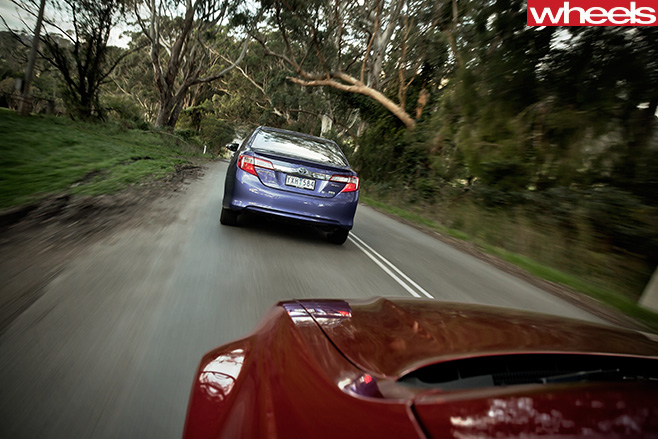
Ironically, those raised on a diet of effortless big sixes will feel more at home in the Falcon and Camry fours than the V6 Commodore. The all-alloy, 60-degree, direct-injected 3.0-litre isn’t what you’d call slow. It is, however, what you’d call harsh and hollow, an engine that struggles to propel this 1690kg sedan. The throttle needs to be treated like a cattle prod to urge the engine into its mid-range, necessary to maintain a set speed. The revised 6L45 auto is now keener to pick lower gears early, to help disguise the lack of torque, but it remains slow on the uptake; on one incline the engine couldn’t hold 80km/h in sixth, so the gearbox shuffled to fifth, but that necessitated easing the throttle to keep the same speed, which meant the auto immediately grabbed top again. Only after the gearbox hunted back and forth three times did it prudently hold the lower ratio, leaving the engine to spin (and presumably drink) hard.
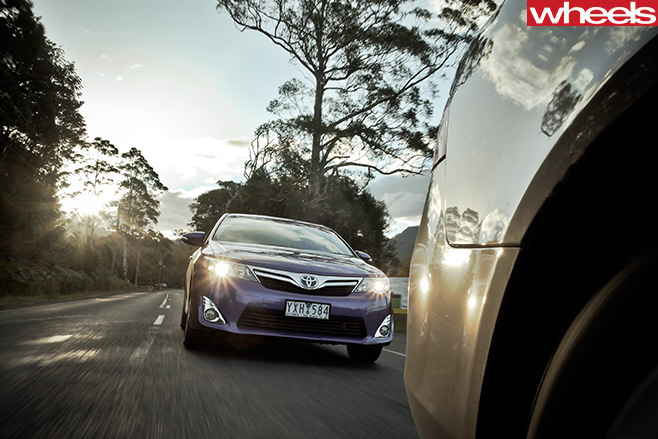
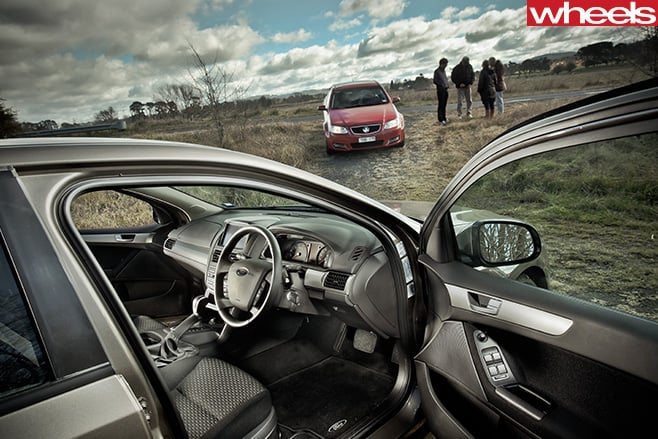
Yet, for outright cornering ability alone, the newly four-tified Falcon proves even better. Lifting 60kg off the front axle (compared with the six) has liberated the Ford’s front end. Where the VE is fluid, the FG Ecoboost is downright frisky. The immediacy of its turn-in surprises after stepping out of its more measured rival, the nose darting keenly towards the apex. That first tightening-radius corner approached at speed had my left foot hovering instinctively over the brake pedal mid-corner, expecting a trace of understeer. Instead, the Falc leans on its outside front tyre with commitment. Quickly spool-up the Ecoboost four and the rear boots pull the rope tight on your cornering line. The newfound agility, and lightness on its feet, feels incredible for a car this size.
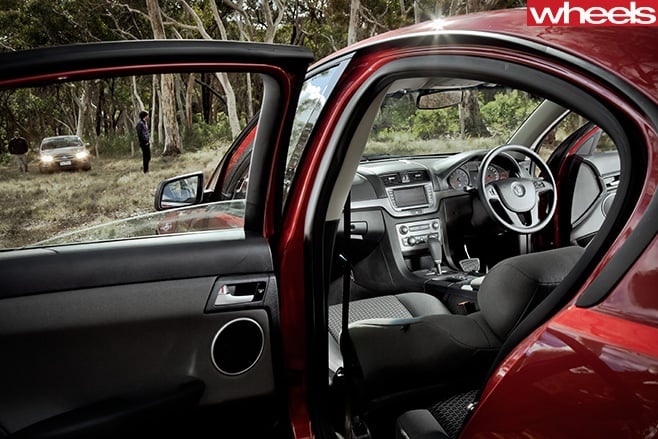
BA/BF generation has been reintroduced, the weight and connection of other FG variants has been lost.
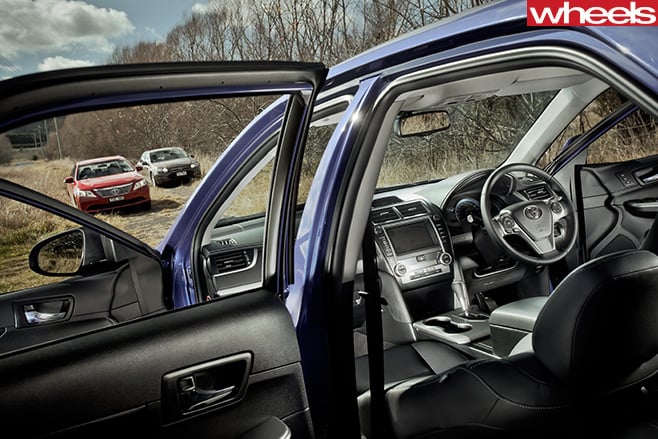
Swapping into the Camry Hybrid HL, which rolls on 55-aspect 17s, confirms the superiority of the Aurion on smaller hoops. The petrol-electric, mid-range Toyota is constantly restless, whether around town or on country backroads. Neither front-driver offers the tight-corner agility and verve of the rear drivers, succumbing early to understeer. However, the Camry demands its driver brake dee-e-e-p into a bend to maintain a cornering line, the rear unmoved to slightly slide with the fronts as the Aurion cooperatively does.
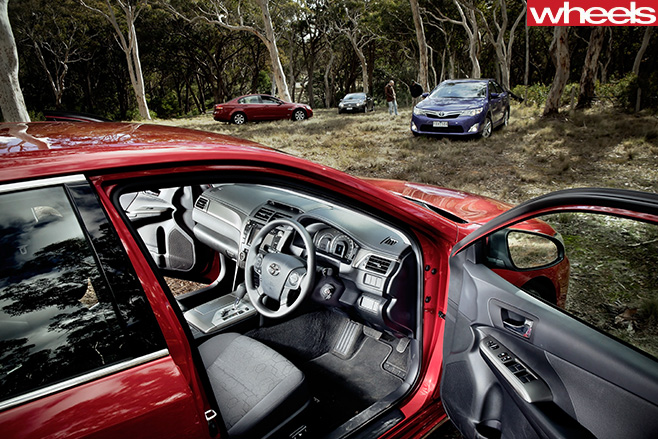
There are other reasons why the Camry is an inferior drive to its stablemate. Both electric steering set-ups share an on-centre vagueness and aren’t particularly quick; however, where the Camry’s is deadweight, the Aurion’s at least adds meatiness on rotation. The Camry’s regenerative braking feels wooden and touchy; the Aurion’s pedal is more progressive and natural.
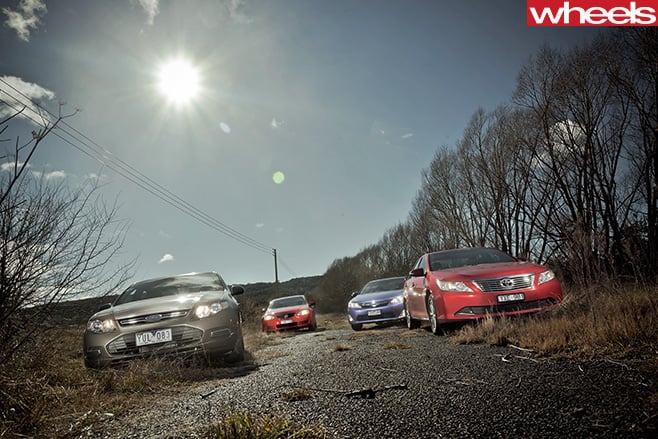
Swapping between the Aurion and Commodore serves to magnify their contrasting abilities – the Toyota V6 is a revelation after suffering the Holden donk, while the steering and handling of the Omega ousts the AT-X by a similar margin. The Aurion then steams ahead for cabin quality and quietness, and secures its silver medal at the bowser – its 3.5-litre engine slurped 9.5L/100km on test, just 0.2L above its combined ADR; the smaller 3.0-litre Commodore chugged 13L/100km, a full 4.1L above its offical figure.
The BMW M3 turns 30 this year and to celebrate BMW has let some of its M3-based one-off Frankenstein creations out into the sunlight.
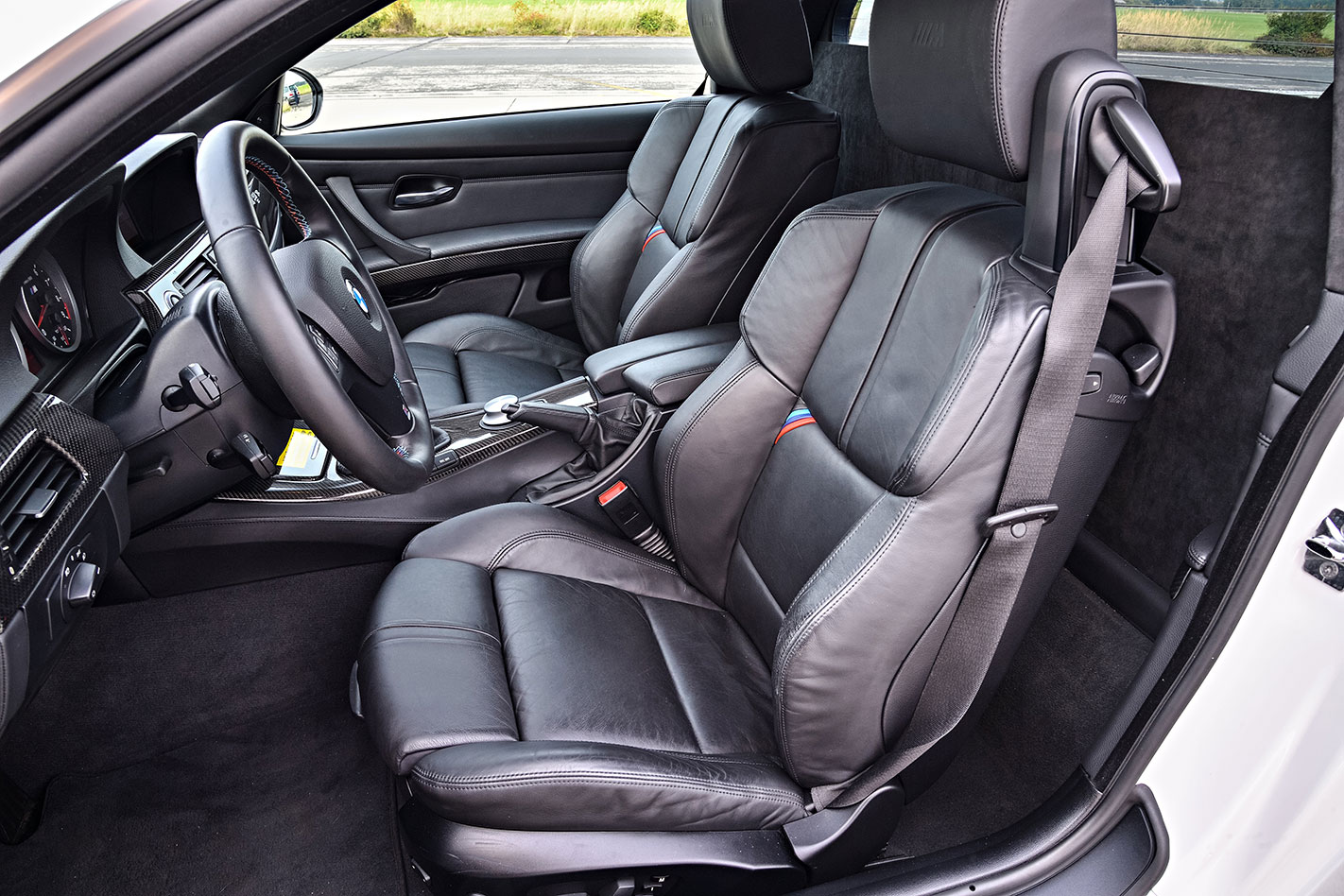
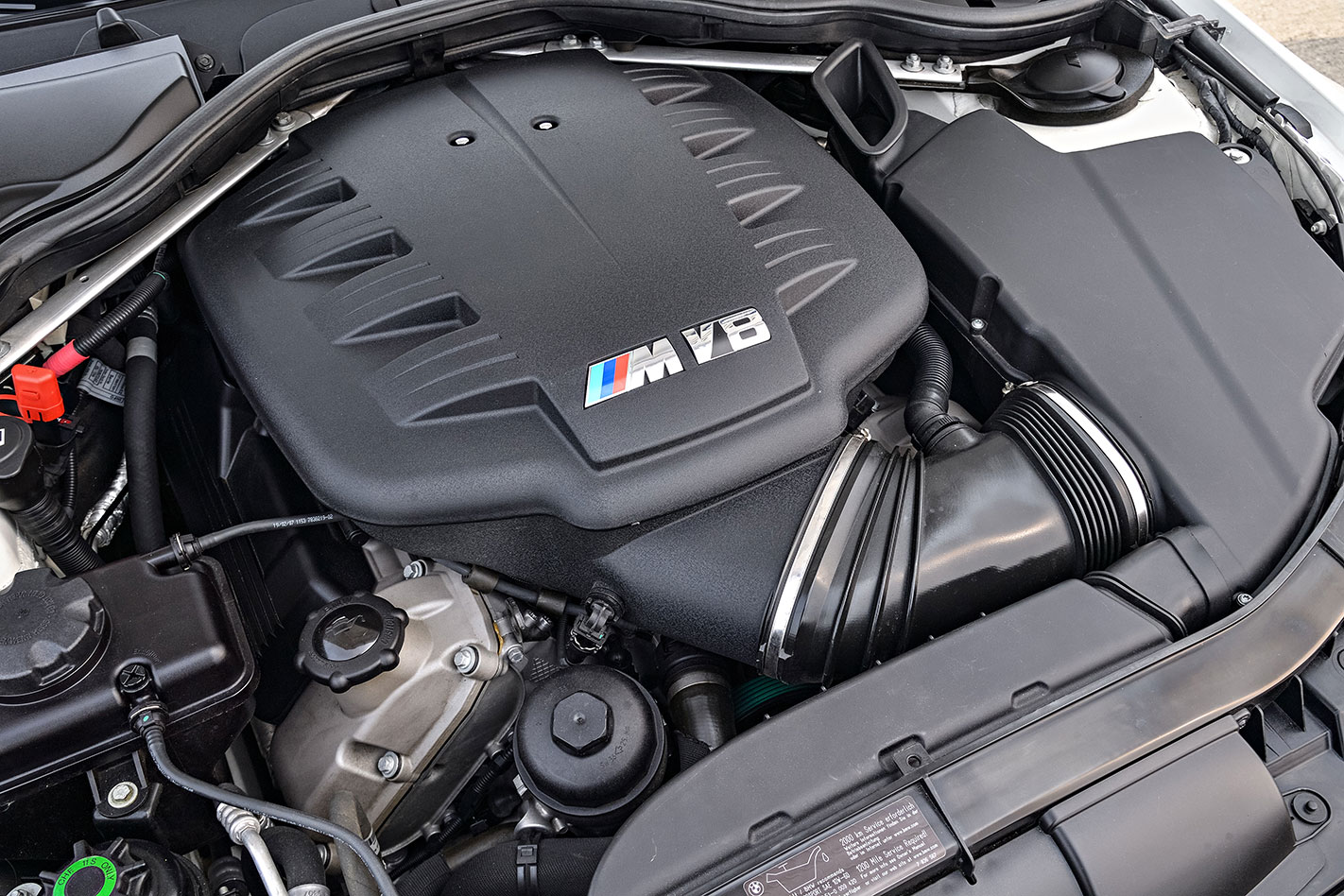
The rear-wheel drive V8 ute is a uniquely Australian recipe (though the Yanks have had a decent go over the years) but we have to say that BMW’s Bavarian take is very enticing.
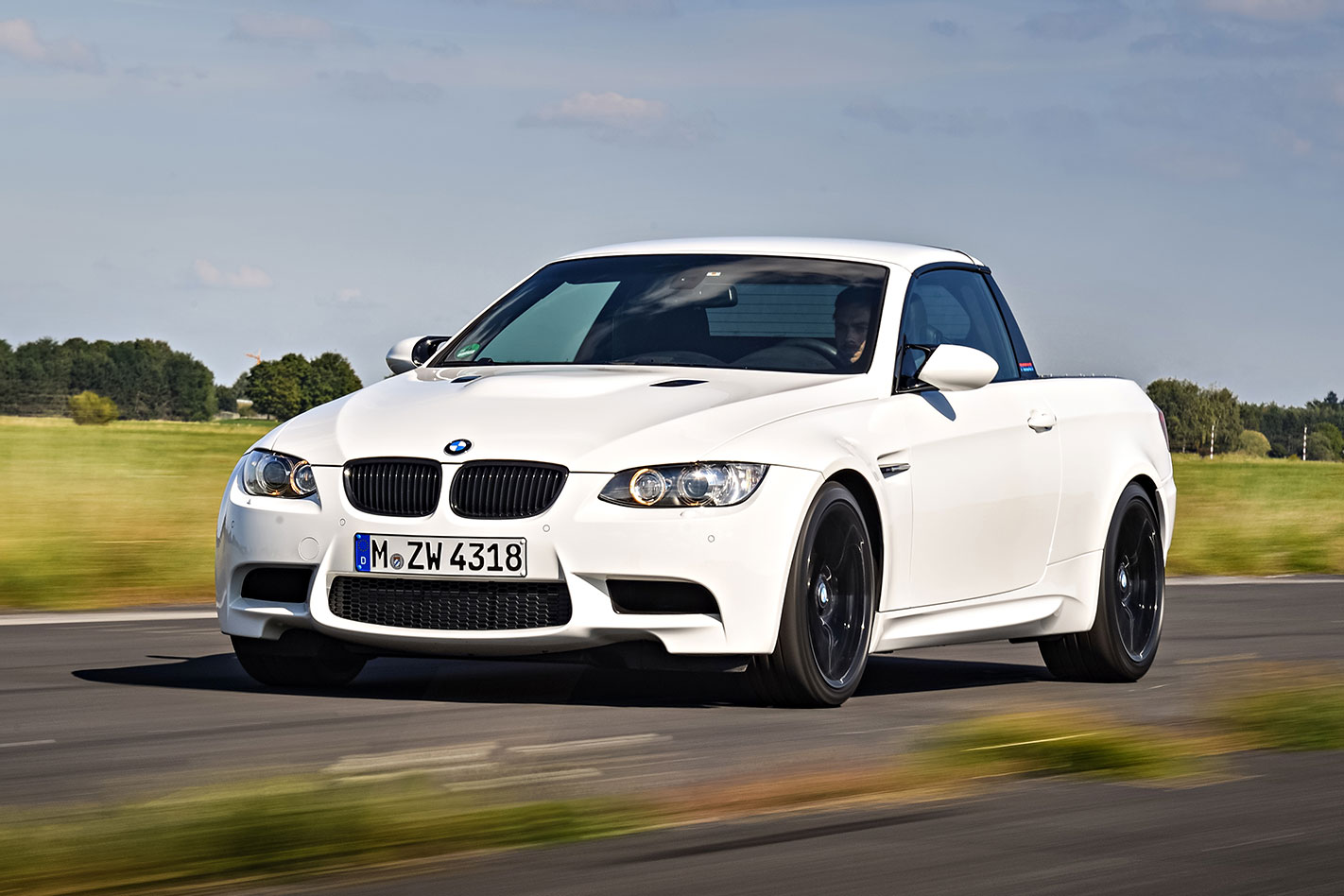
This time, however, those fun-loving Germans decided to take it one step further and cause a bit of a stir among the international motoring media.
The charade gained extra credence thanks to BMW shooting ‘spy shots’ of the car lapping the Nurburgring and referring to the ute as the fourth M3 model line in the E90 series. Unlike the E30 ute, the E92 is also licensed for road use.
BMW’s M3 ’30 Jahre’ anniversary model goes on sale later this year.
The BMW M3 turns 30 this year and to celebrate BMW has let some of its M3-based one-off Frankenstein creations out into the sunlight.
In an attempt to lure younger customers to the brand, BMW unveiled the Compact in 1993, a truncated hatchback version of the 3 Series. It was essentially a predecessor to today’s 1 Series, the car that more or less replaced it when the Compact ceased production in 2004.
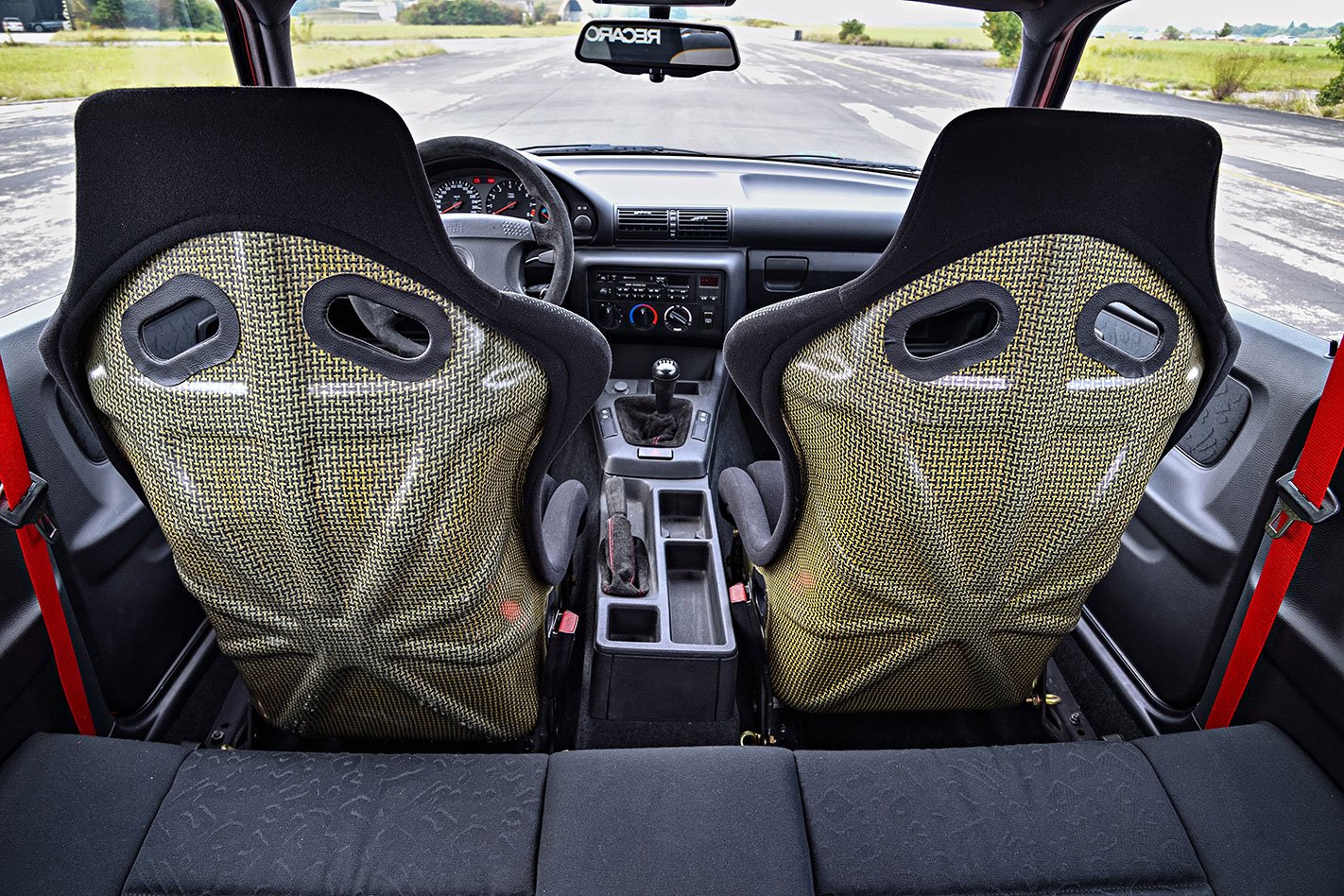
Its light 1290kg kerb weight meant 0-100km/h took around 7.8sec, which wasn’t bad for the day, but it was clear that the chassis was crying out for a proper engine.
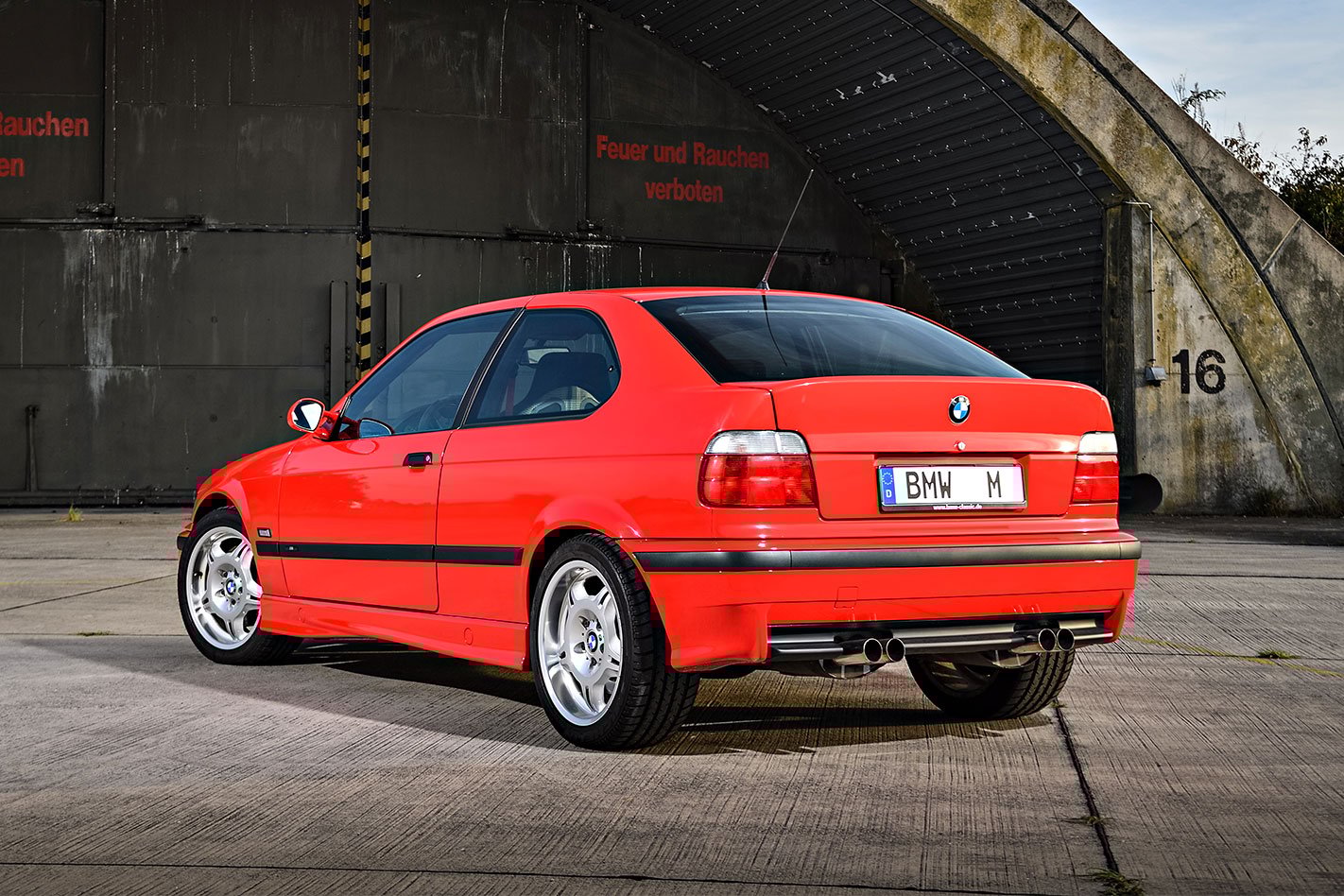
Weighing 150kg less than a four-door M3, performance was extremely impressive, though the Compact’s semi-trailing arm rear suspension could make for occasionally wayward handling.
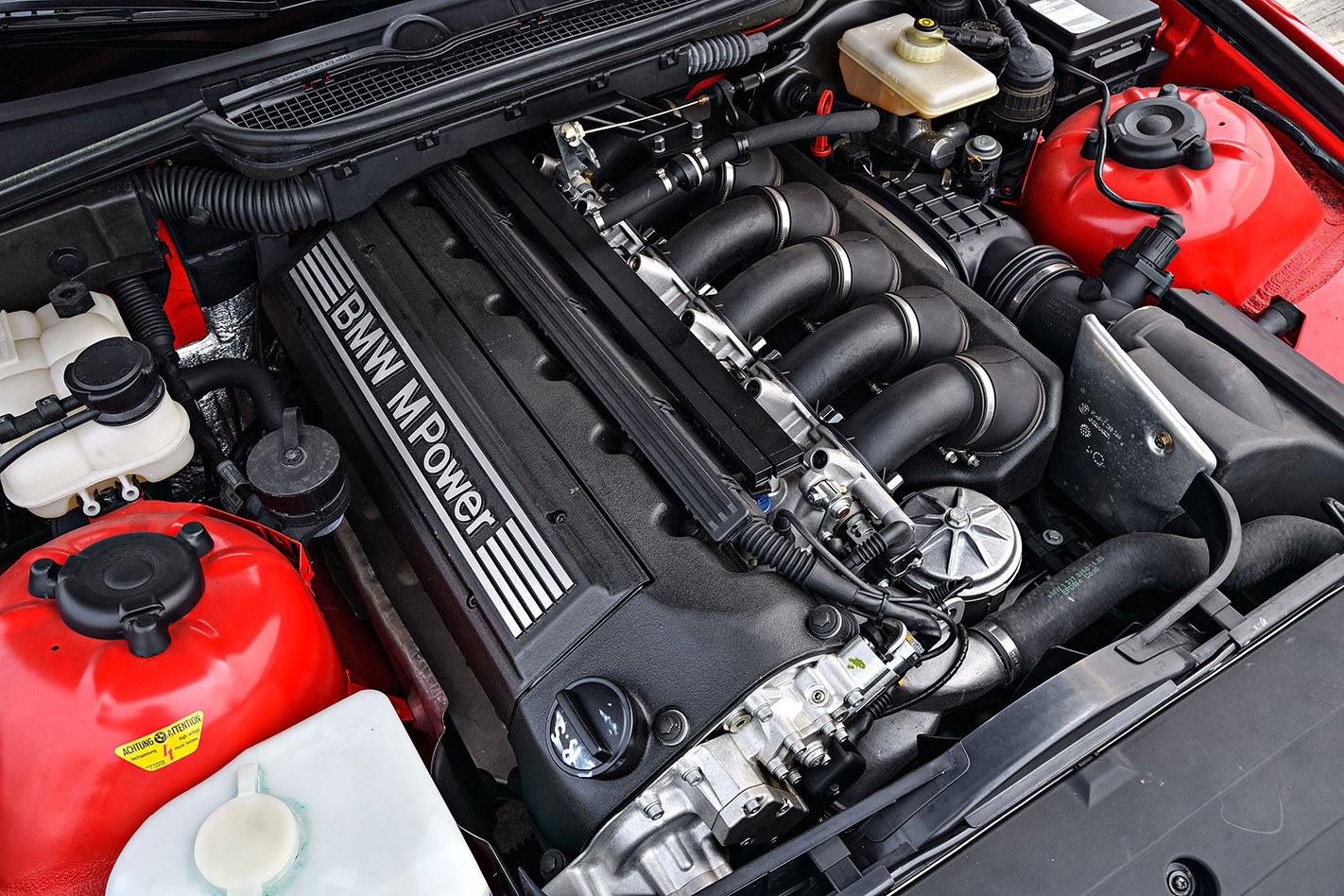
BMW’s M3 ’30 Jahre’ anniversary model goes on sale later this year.
It may be switching to all-wheel drive but the next-generation Mercedes-AMG E63 will still be able to slide thanks to the confirmed inclusion of a Drift Mode feature.
Mercedes-AMG chairman Tobias Moers confirmed to Australian media at the Paris motor show that the brand will even follow the Ford Focus RS and title its lairiest stability control and electronic differential settings ‘Drift Mode’.
Moers has said in the past he still wanted the E63 to be able to oversteer like the outgoing rear-wheel drive model, adding that it was critical for such a large car to be able to feel nimble. Now we’ve learned what the next large performance AMG sedan will offer when it debuts at the Detroit motor show in January.
“It’s really fast, it’s all-wheel drive standard as everyone knows, it’s right-hand drive as well and we’re going to have Drift Mode in that car,” Moers tells, before having a shot at Australia’s road ‘safety’ zealots who were outraged at the inclusion of such a mode on the Focus RS.
“Yeah maybe it’s banned in Australia,” he grins, adding that the variable all-paw system will be able to transfer up to 100 per cent of torque to the back boots.
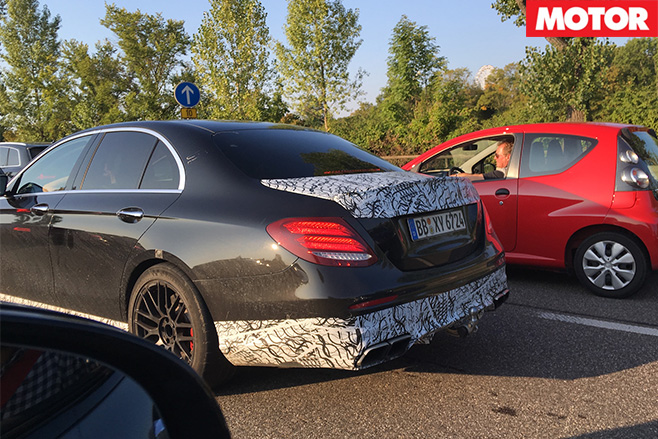
“It’s going to be 600bhp [447kW] around, below and above,” Moers says. Even beyond that power figure for the expected E63 S model would place the AMG sedan well beyond the 430kW of the current highest-output 4.0-litre used in the AMG GT.
Claimed 0-100km/h acceleration will be “three point something” according to the AMG chairman who also believes the next E63 will take a step up in other ways.
“It is the biggest step we’ve ever made with an E-Class to be honest, in terms of styling, visibility of the car, presence of the car, it’s totally different than it used to be, tyre sizes, drivetrain, suspension, everything,” Moers claims.
“We’ve never made bigger steps in generation changes in the past.”
Proving that power wars never end in draws, the Audi RS3 has been given the boot while also booting its Mercedes-AMG CLA45 rival off the compact sedan power throne.
The long-rumoured Audi RS3 sedan came to fruition in the halls of the Paris motor show packing a heavily upgraded and 26kg-lighter version of the 2.5-litre turbo five-cylinder engine found in the RS3 Sportback, and pinched fellow recent debutant, the TT RS.
It takes the RS3 Sportback’s 270kW/465Nm then strides past the 2.0-litre turbo four CLA45’s 280kW/475Nm to deliver 294kW between 5850rpm and 7000rpm, and 480Nm from 1700rpm until 5850rpm.
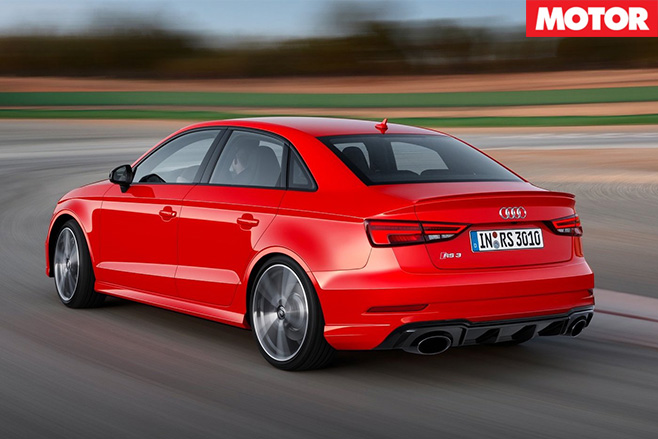
Given that MOTOR has already recorded a 3.95sec sprint for the Sportback, the sedan could shuffle further into serious supercar performance territory.
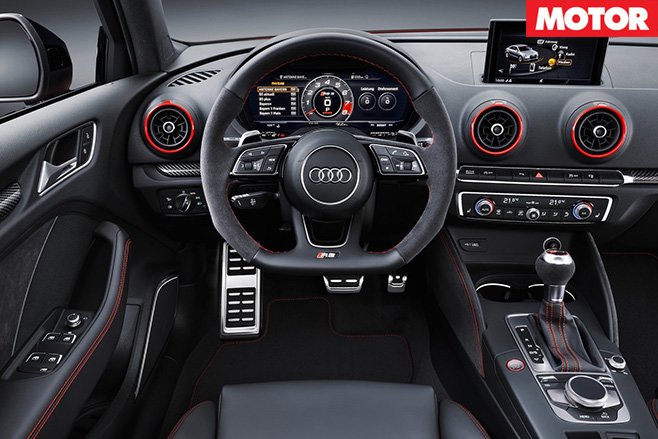
Audi’s superb 12.3-inch full-TFT ‘virtual cockpit’ speedometer and tachometer cluster makes its debut alongside a reconfigured leather/Alcantara tiller.
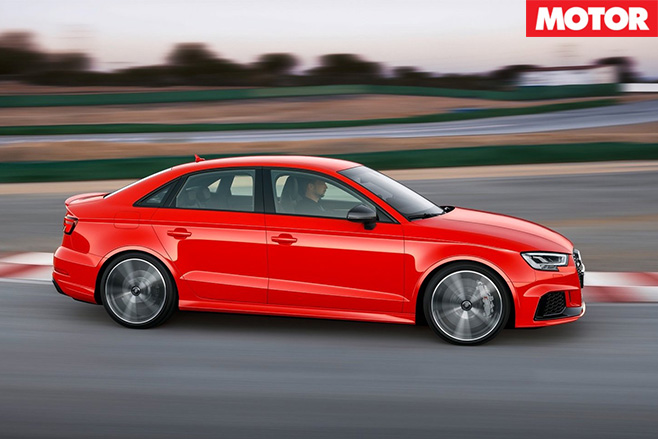
Audi Australia is targeting a mid-2017 launch for the RS3 sedan for an expected premium above its $78,900 Sportback sibling.
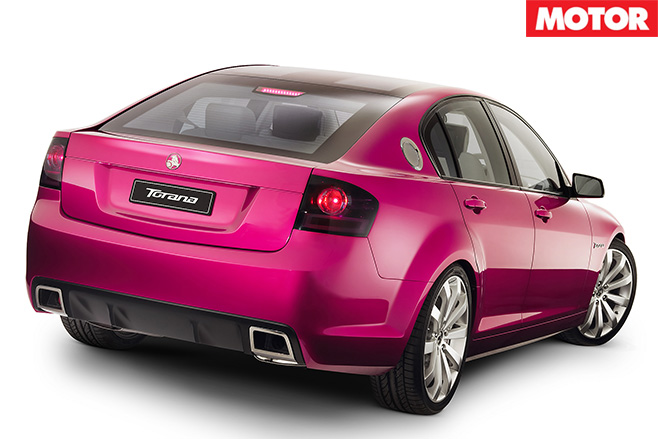
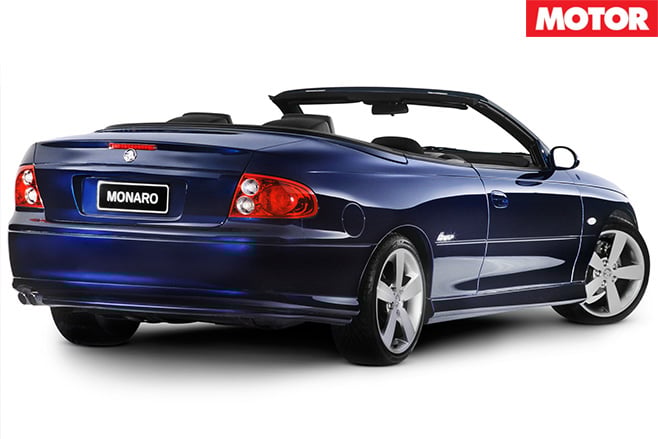
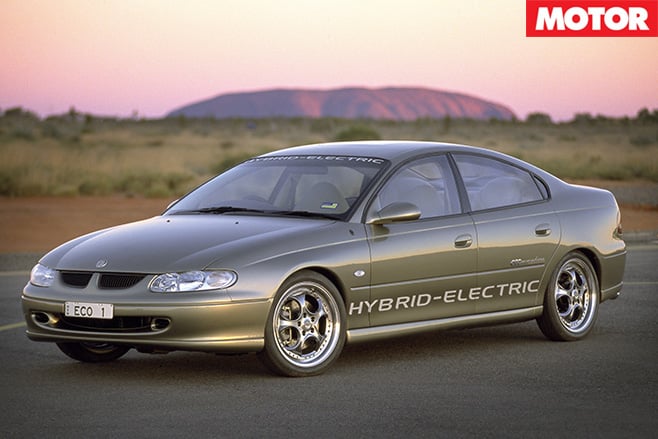
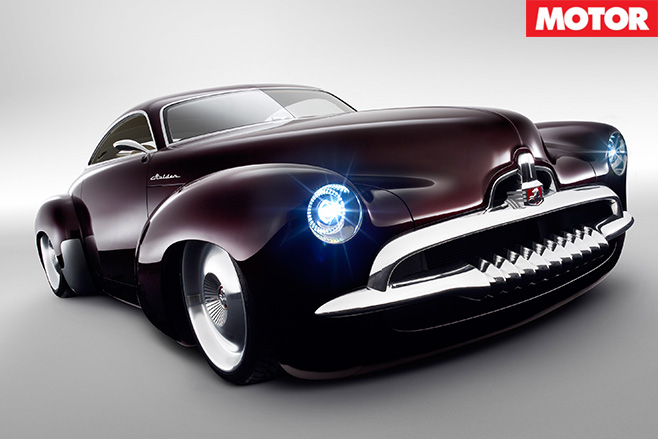
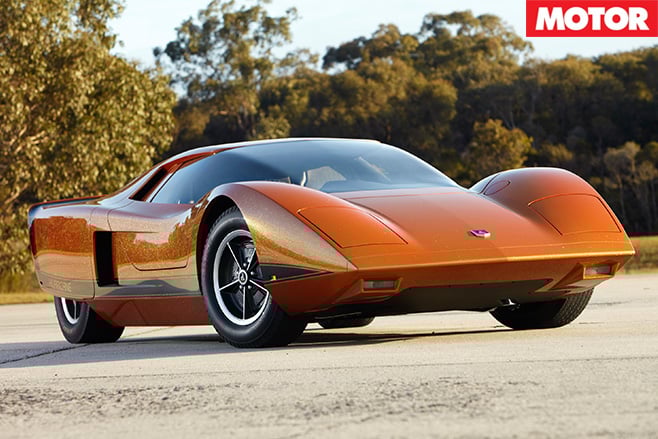
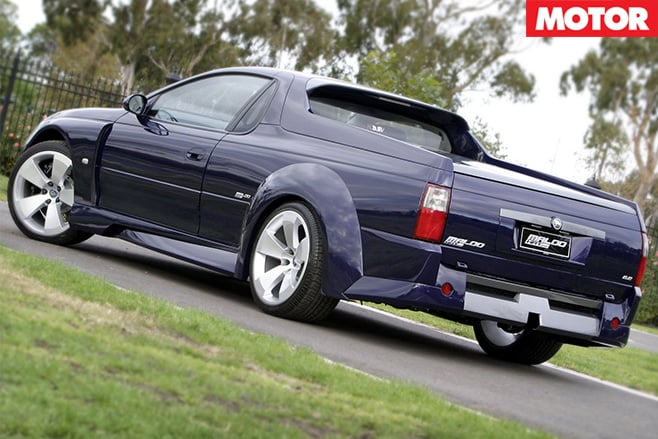
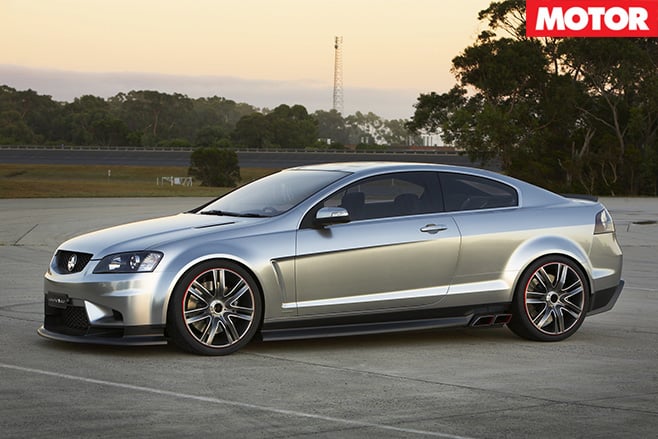
Nine one-off Aussie motor show-stoppers that kept us salivating
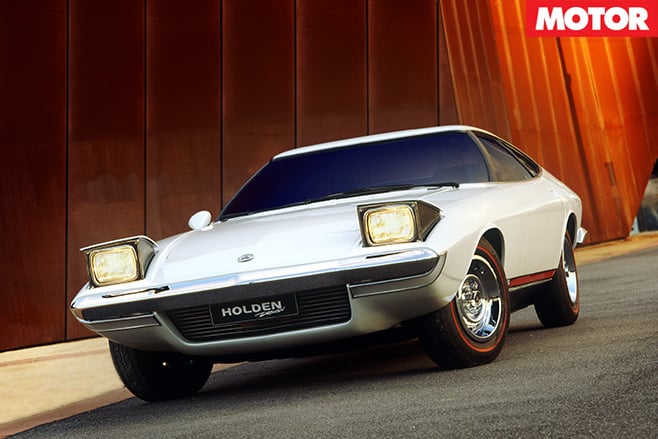
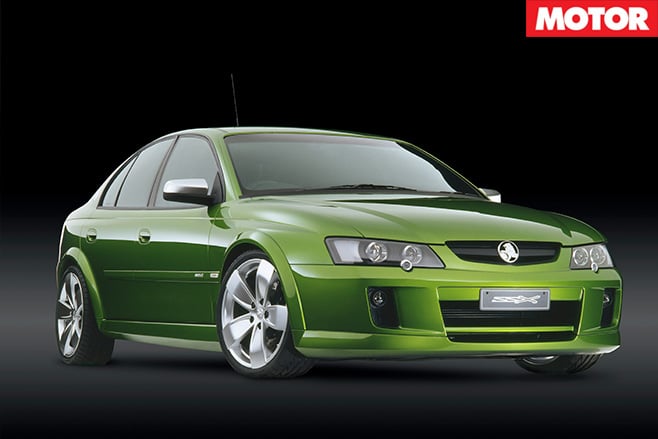
First published in the August 2011 issue of Wheels magazine, Australia’s best car mag since 1953.
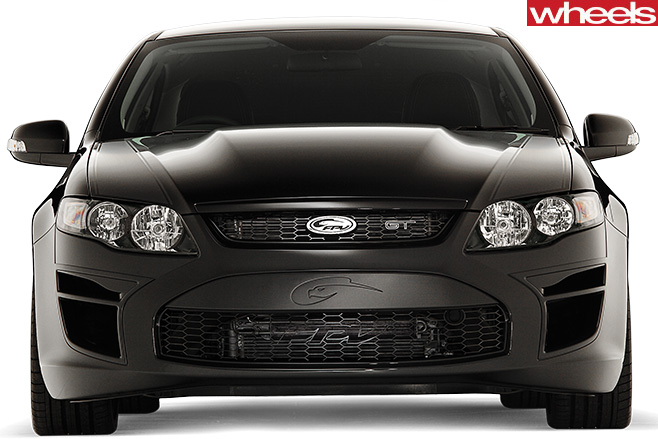
Sinister FPV show special ups grunt and grip – only 125 of these FPV black beauties were built.
The future of FPV’s GT flagship has been revealed with the unveiling of the dramatic, all-black Concept at the Melbourne motor show. FPV hopes its dark star has the gravitational pull to attract customer feedback and shape new-model development.
To that end, upgrades to the car’s suspension and wheel/tyre package are designed to address criticisms levelled at the current GT and GT-P.
When FPV bolted the supercharged ‘Coyote’ V8 into its flagship models last year, suspension tune was left untouched. And Wheels hasn’t been alone in criticising their front-end floatiness and insufficient rear grip.
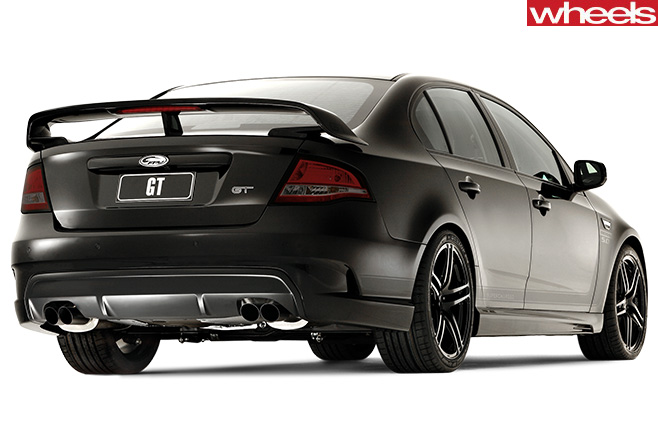
To better harness the Coyote’s grunt, the Concept scores new 46mm monotube adjustable dampers, progressive rate springs, fatter rear anti-roll bar, plus stiffer bushes in the front-end upper control arms and key rear suspension links.
It’s unclear whether FPV will introduce these changes to the regular range, reserve them as part of a Walkinshaw Performance-style aftermarket upgrade, or fine-tune the set-up for a GT-H or GT-HO flagship.
Power-wise, the GT-based show car’s 5.0-litre supercharged V8 is fitted with a Prodrive-designed three-inch exhaust to optimise gas flow and liberate an additional 10kW, lifting overall output to a substantial 345kW. Mid-range torque is also improved, although the 575Nm peak is unchanged.
FPV insiders report the exhaust delivers a “classic V8 muscle car note”, at the same time confessing the stainless-steel set-up would push the ADR dB meter beyond the certification zone.
The standard-fit 245/35 rear rubber has proved inadequate in transferring the extra grunt to the road; on the Concept, the rears are wider 265/35 Dunlops, while the fronts remain unchanged. Wheels are single-piece forged alloy 19s (8.0in front/9.5in rear).
The combination of higher output and improved traction is likely to substantially improve on Wheels’ 13.1sec (at 180km/h) 0-400m best for the GT. Expect mid-to-high 12s, and sub-5.0sec 0-100km/h.
Stopping power also has been stepped up, with Brembo calipers (six-piston front, four-piston rear) matched to larger ventilated rotors all round (two-piece 360mmx36mm front, one-piece 340x26mm rear).
Exterior changes are dominated by a custom front bar with monster brake ducts in place of the usual foglights. And a matt black graphics package includes unique pinstriping and badgework.
Production bound?
According to FPV chief Rod Barrett, “The Concept has the potential to become a production car”, confirming that feedback gathered following its display will be incorporated in the company’s future model strategy.
And while FPV says there’s currently no plan to change the Boss 335’s engine spec. history shows that won’t be the case for long. It’s worth noting this Concept was revealed on the 40th anniversary of the launch of the legendary XY Falcon GT-HO Phase III.
And given the Coyote engine’s known ability with the easy addition of an intercooler) to accept close to double the current 0.4 bat of boost delivered by the GT’s Eaton TVS blower, there’s definitely potential for a full 375kW/600Nm of go to further enhance this car’s show.
