
The BMW M3 turns 30 this year and to celebrate BMW has let some of its M3-based one-off Frankenstein creations out into the sunlight, including this E46 M3 Touring.
The E46 M3 was a favourite here at MOTOR. It won our 2002 Performance Car of the Year contest and was victorious in pretty much every comparison test it took part in between 2001-2006.
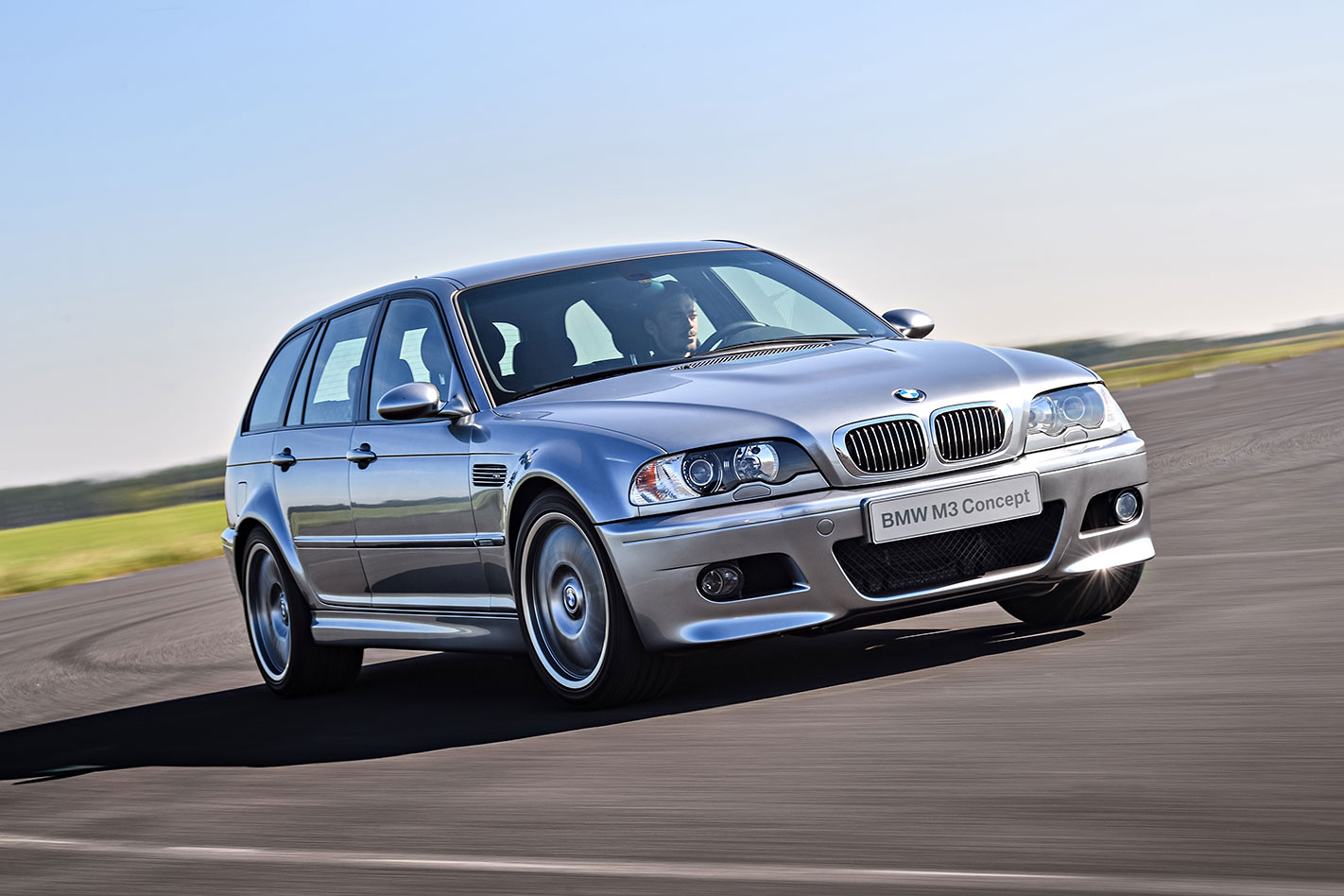
However, it did present a problem for the enthusiast with a family, as like the original E30 M3 it was only available as a coupe and a convertible, the four-door variant which appeared with the E36 range being dropped.
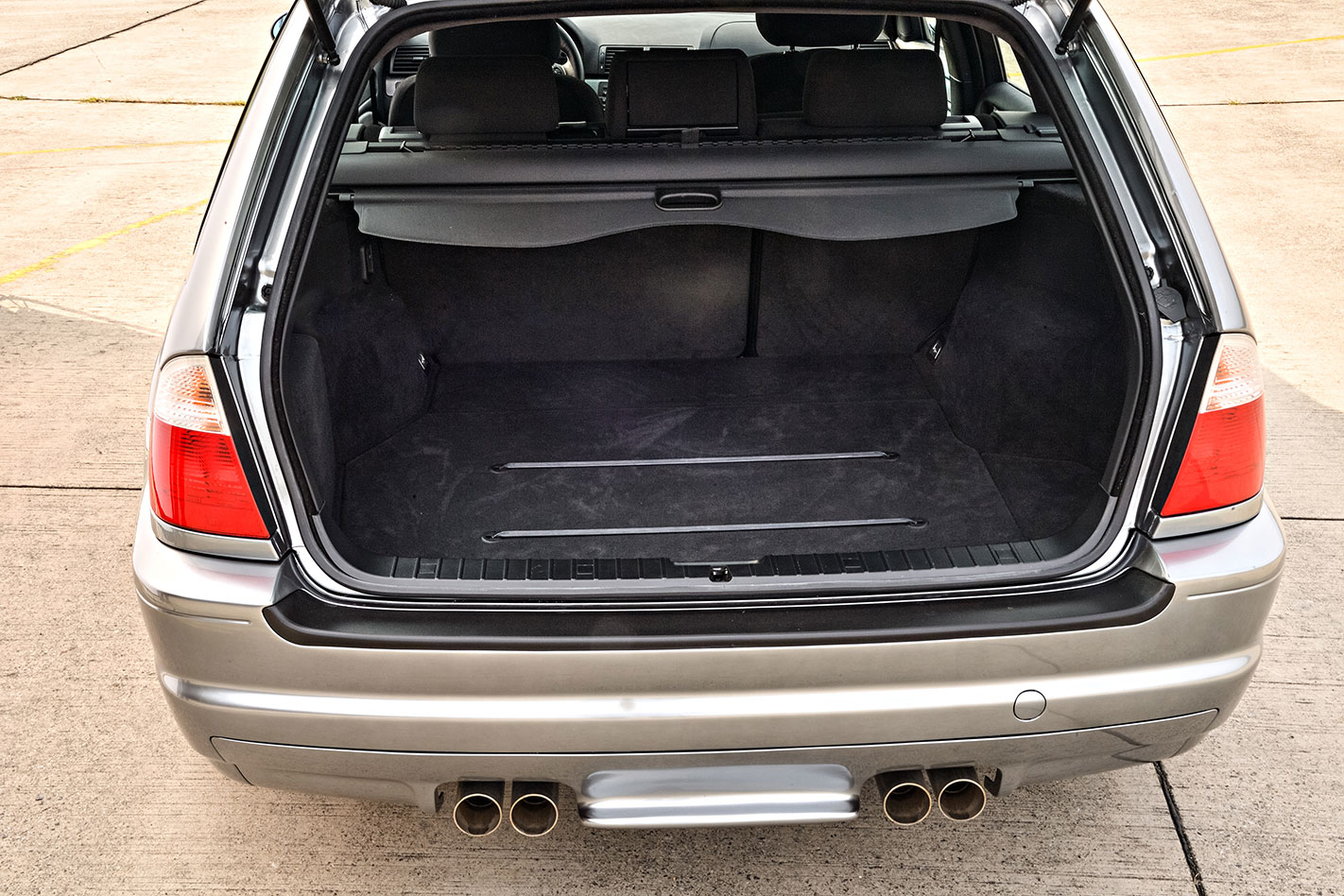
Specifically, the prototype was built to ensure that the standard 3 Series Touring bodyshell and its rear doors could incorporate the flared rear wheel arches of the M3 coupe without the need for expensive additional tooling.
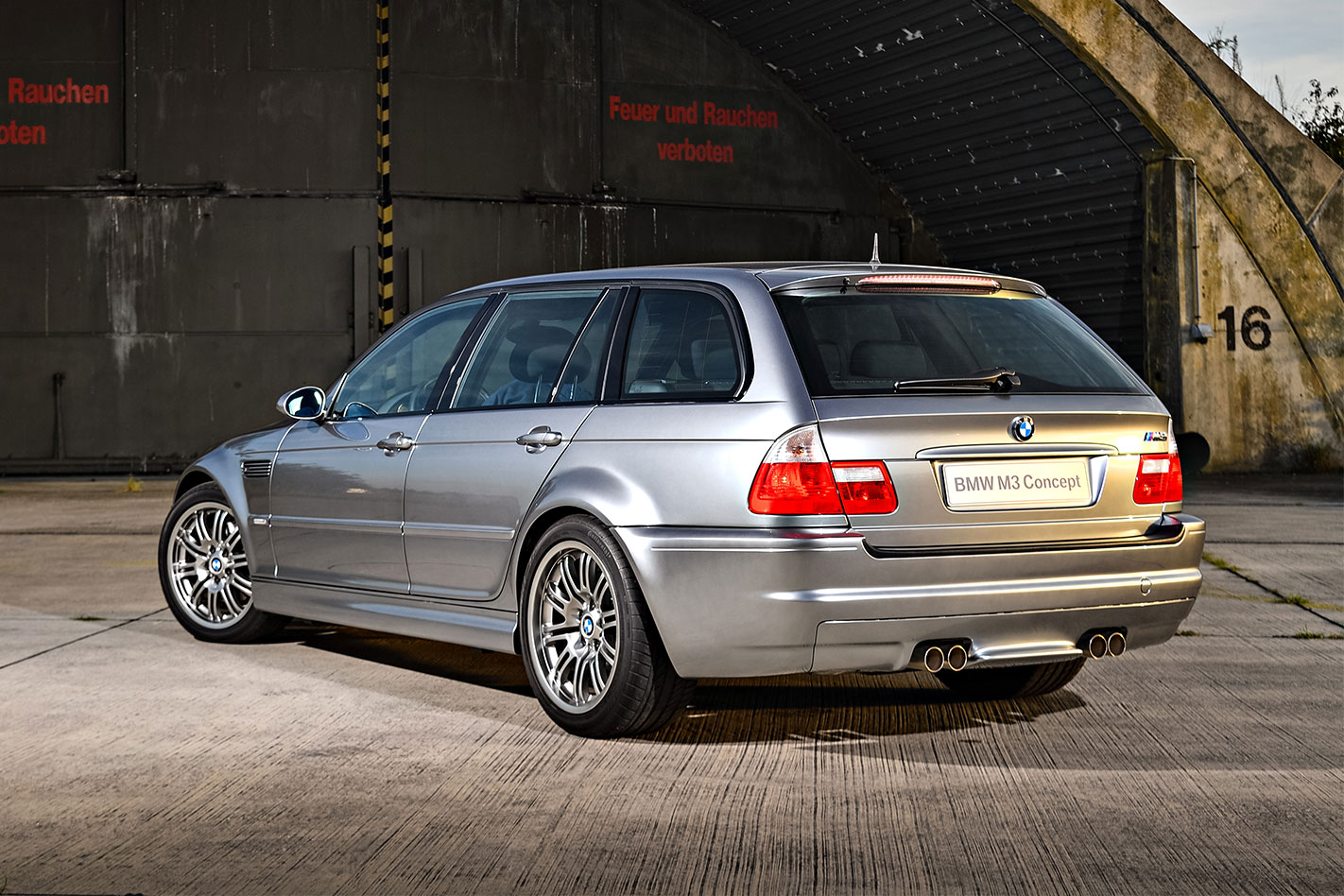
It did, however, create a ‘Touring’ version of the V10-engined E60 M5 and will produce a five-door M3 for the first time with the G81 generation!
BMW’s M3 ’30 Jahre’ anniversary model goes on sale later this year.
All-electric supercar concept ushers in sleek new design direction for Renault.
A TANTALISING first glimpse of Renault’s Trezor concept car has leaked on Twitter, revealing a stunning two-seater powered by a motorsport-derived electric drivetrain.
Set to star at tomorrow’s Paris Motor Show where it will take centre stage on the Renault stand, the Trezor also features autonomous driving tech and an electrically operated canopy than rises forward to give access to the cabin.
While exact details are yet to be confirmed, the canopy’s design and operation look remarkably similar to the one used on Holden’s 1969 Hurricane concept car pictured below.
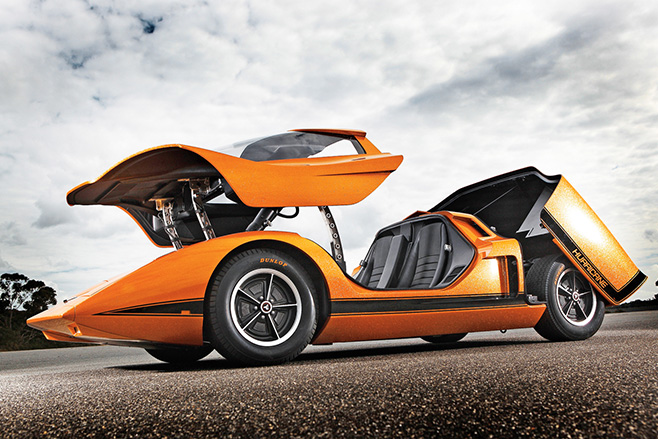
As such, you can expect the Trezor’s bold styling cues to trickle through the rest of the Renault range in the coming years.
In terms of propulsion, van den Acker revealed the Trezor uses “an electric engine that we developed with Formula E”, but didn’t mention power outputs or potential performance. We’ll have to wait until tomorrow’s show for more details.
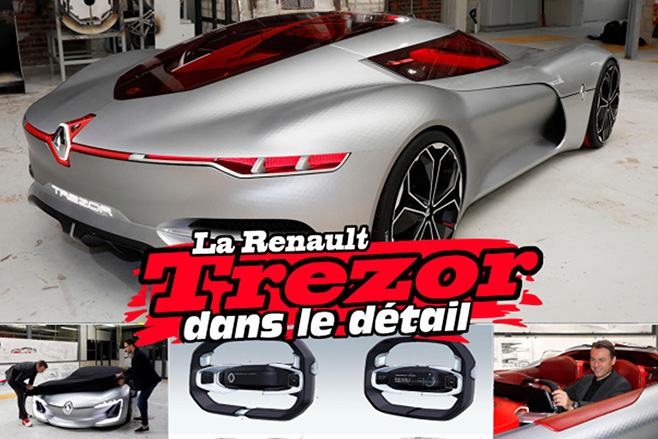
Van den Acker also confirmed the Trezor has “all of the connectivity technology that you’d expect, including autonomous drive”.
A short video showed that when autonomous mode is engaged, the Trezor’s steering wheel slides apart and the letter “AD” for autonomous drive appear on the dashboard.
Renault announced a new deal with computing giant Microsoft earlier this week to help drive its future range of autonomous and connected cars.
Stay tuned to wheelsmag.com.au for all the Paris Motor Show news as it breaks.
First published in the March 2008 issue of Wheels magazine, Australia’s best car mag since 1953.
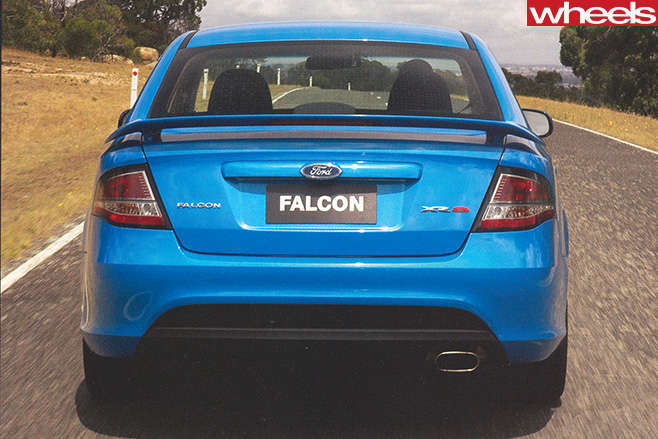
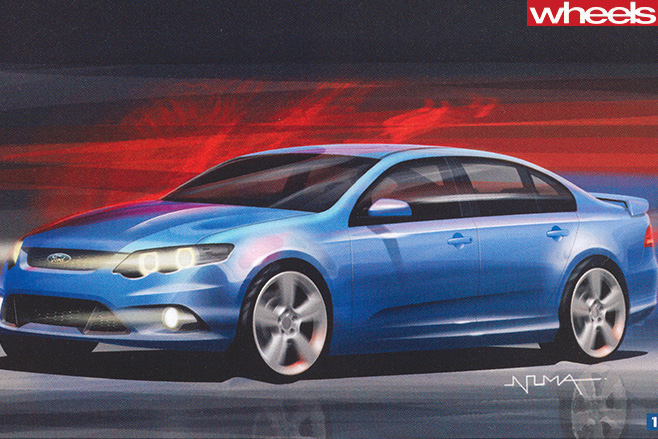
Car designers are experts at tricking the eye. First impression of the new Falcon that’s just been revealed exclusively to Wheels inside Ford Australia’s Broadmeadows design studio? It seems smaller than the car it replaces. But the car code-named Orion throughout its development is actually a little longer nose to tail, and its bodywork is broader to cover the car’s widened front and rear axle tracks. Yet, despite these increases, the new FG Falcon sedan seems more compact and muscular than the BA/BF generation it succeeds.
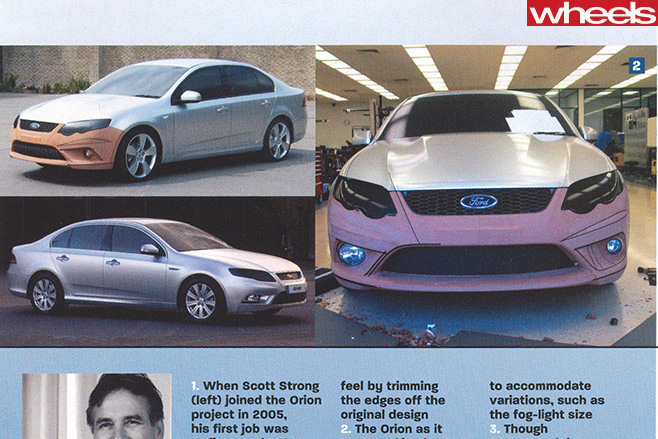
“Athletic and sporty” was the mantra from the start. These were the words used by former Ford Australia design chief Simon Butterworth when Wheels was shown a full-size clay model of the car in November 2004. “An air of European-ness,” he went on, summarising the look that early market research had found customers desired. “We want movement and direction in it, but to really look like a Falcon.”
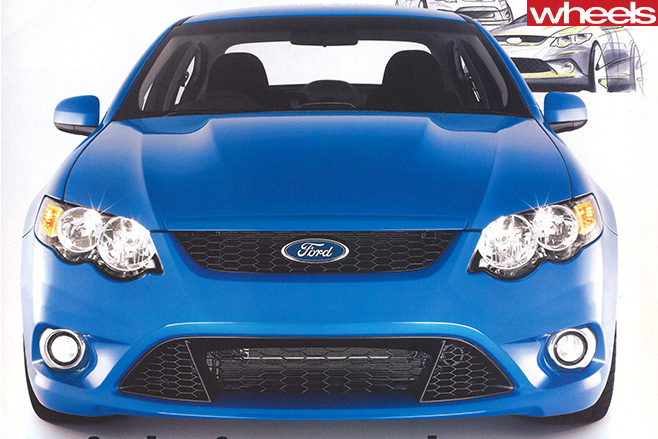
While it lacked the subtle surface sculpting of the final FG Falcon, the ‘European-ness’ was already evident and key features, like the shapes of the doors’ shutlines and the stretched headlights, were already there.
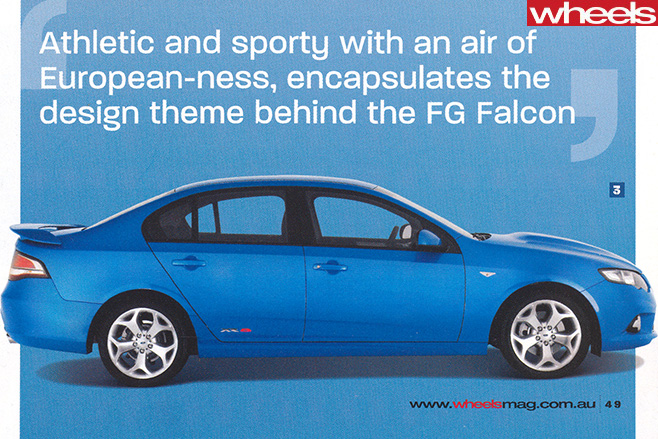
The Englishman’s team of designers had already been at work for months. They’d first produced loose sketches, before moving on to 40 percent scale models, which were photographed, and used in further rounds of market research. Only once these phases were complete did the designers move to create the full-size model on display to us that day.
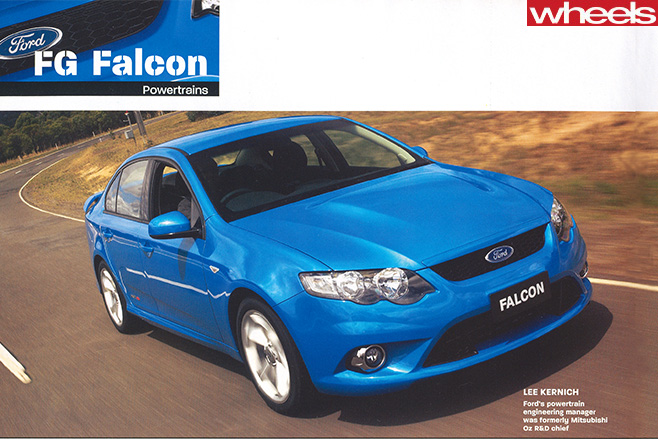
Not long after the Orion program passed through its major approval ‘gateway’ late in 2005, Butterworth was hauled back to Europe to take up a senior design role with Ford’s Premier Automotive Group. His place was taken by an American, Scott Strong (above), who returned to the familiar territory of Broadmeadows in early 2006.
Strong acknowledges that the FG Falcon’s design is mostly Simon Butterworth’s. Work was well advanced when he arrived in March 2006. “The base design was pretty much locked down,” Strong recalls. Working with chief exterior designer Steve Park, Strong says, modestly, that he contributed “a bit” to the XR models and the FPV derivatives.
Strong firmly believes obvious largeness is something designers should these days strive to avoid. “We’re in a time, geopolitically, where I think we don’t want to make cars that look bigger and heavier,” he says. “Sort of ‘right-sized athletic’ is probably the thing that customers are looking for.”
“While we wanted it to certainly fit the family photo, so to speak, we wanted to have unique Australian character.” This meant the Falcon couldn’t be a cookie-cutter replica of Mondeo.
“We’ve addressed some of the well-known issues that we have with the outgoing product, with an A-pillar that’s a little bit too fast and slightly too much tumblehome,” says Strong. He indicates the new car’s fuller turret, and continues. “We’ve got a much more dynamic and wedged beltline, and done everything we can to extend the DLO (daylight opening) and box the roof out a little bit.”
Explaining the techniques which disguise the FG Falcon’s size, Strong adds; “We’ve clipped the corners of the car. We like the long centreline, because we think that communicates a real engine under the hood, but we wanted, as you can probably appreciate, the car to read very snub and athletic from side and quarter views.
The FG also brings major changes to the Falcon model line-up. Known inside Ford as the ‘V strategy’, it creates an entirely new branch of the family. Three new, sports-luxury G Series models take the place of the Fairmont and Fairmont Ghia, and form one side of the V.
Strong’s designers were adjusting the degree of decoration applied to the FG line-up well into 2007. Some of the changes were in response to the 2006 launches of the VE Commodore and the Aurion. The arrival of these competitors led to the decision to add some chrome glamour to the XT, for example.
The softly spoken design chief believes the FG Falcon line-up’s exterior design will win large-car customers. “There’s a real nice car out there on the street now by our competitors,” Strong says of Holden’s VE Commodore. “We think that we’ve done a car that, as I say, dresses very nicely.”
He pauses for a moment before summing up the difference between new Falcon and recent Commodore. “It [VE] is a beautiful car that’s tough as nails … and isn’t as elegant.”
The BMW M3 turns 30 this year and to celebrate BMW has let some of its M3-based one-off Frankenstein creations out into the sunlight.
While the M3 made its name as an incredibly successful race car in championships like DTM and the BTCC, apparently BMW’s motorsport department also saw it as the perfect base for a parts transport vehicle and thus the E30 M3 ute was born.
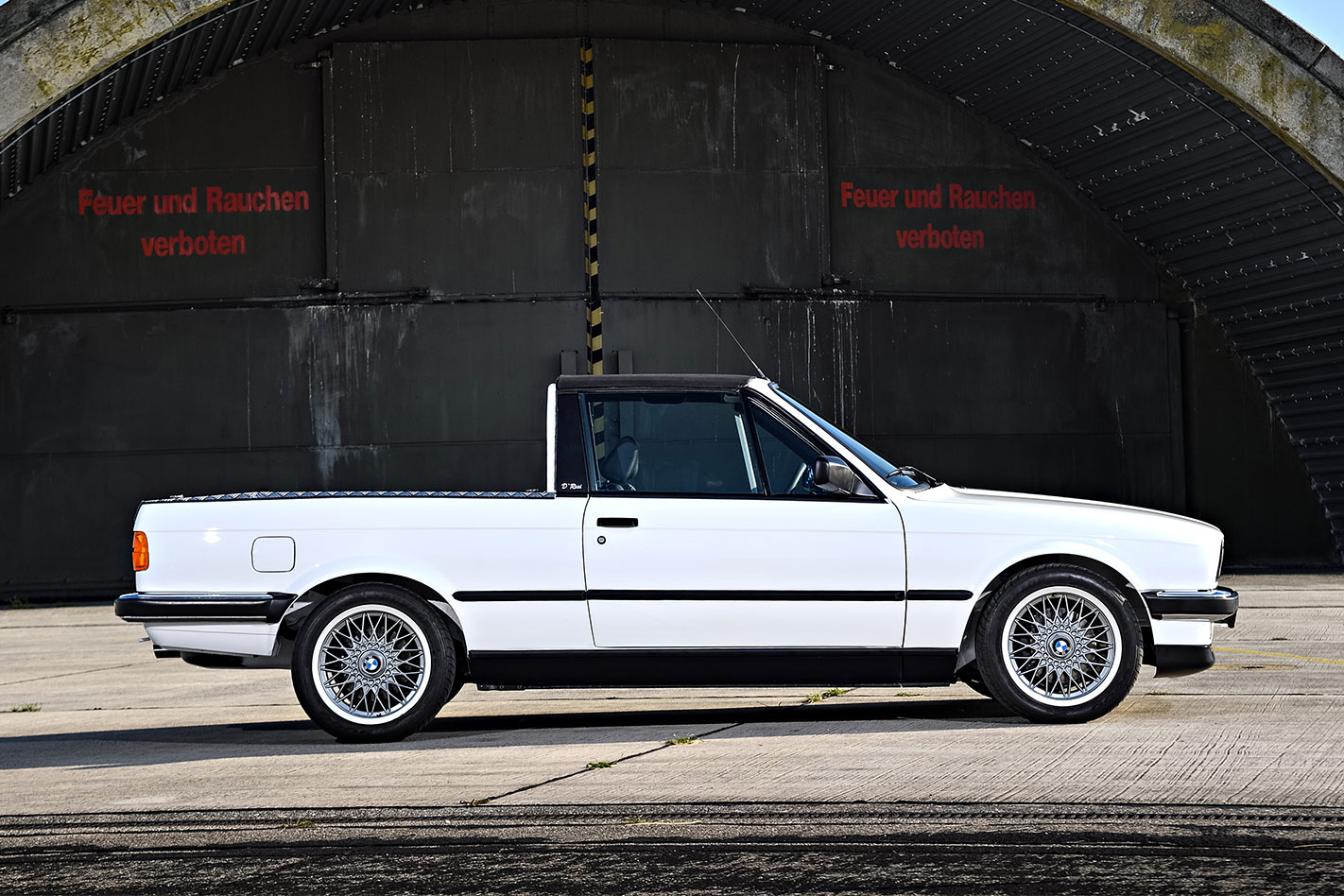
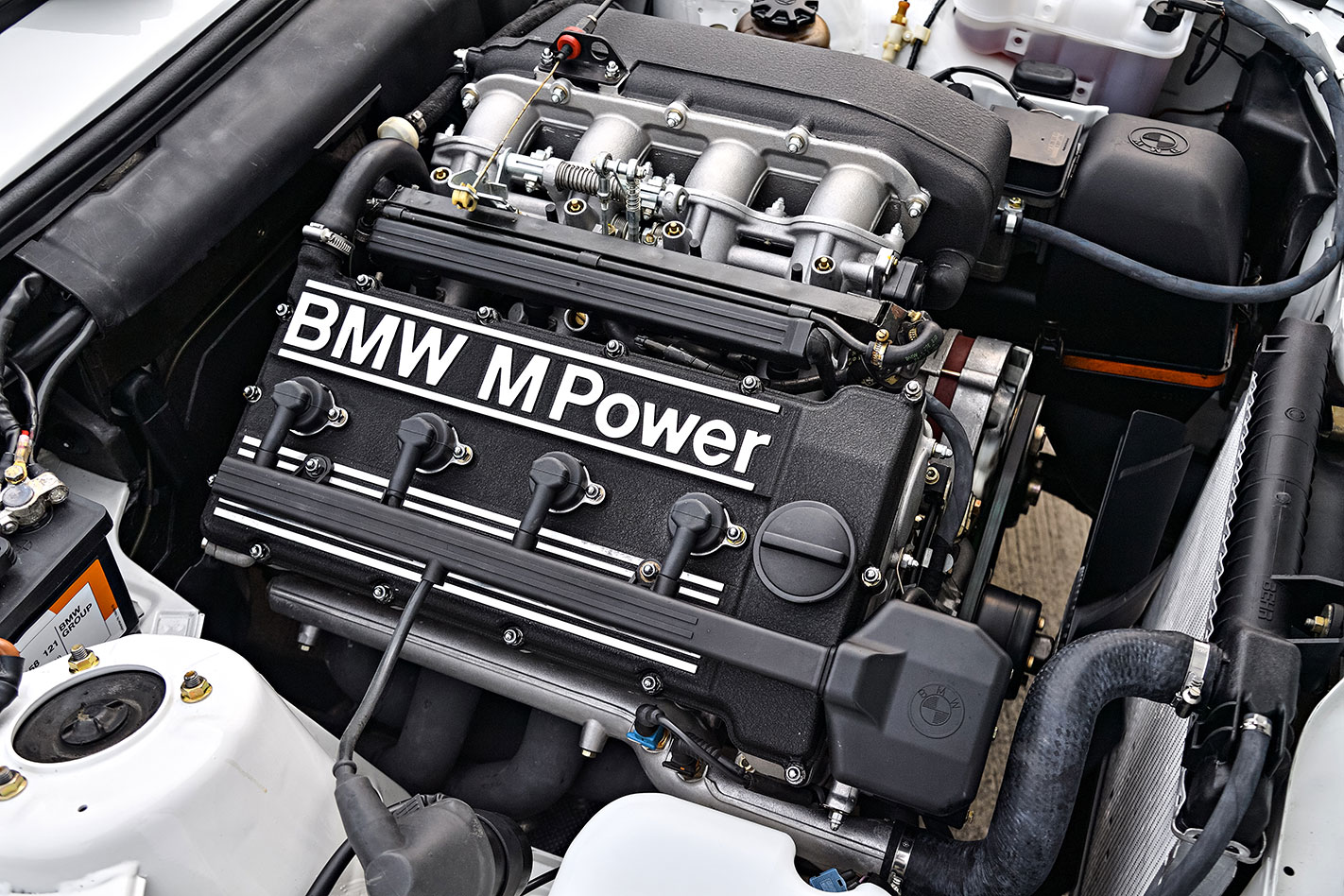
Initially the car was fitted with a 143kW 2.0-litre four-cylinder offered in Italian M3s for taxation reasons, however it was later upgraded to the proper 147kW 2.3-litre engine.
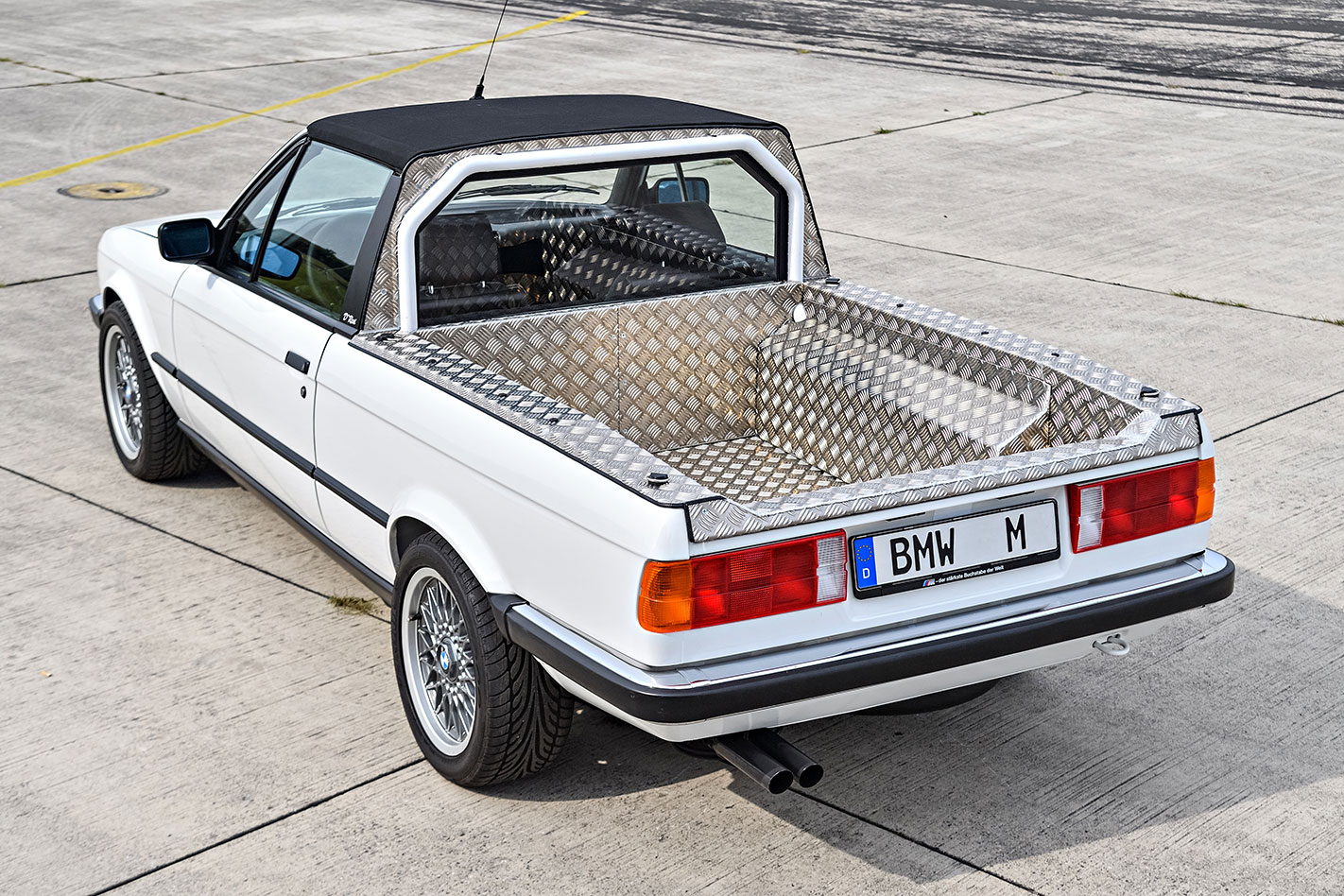
Despite its one-off status, the E30 M3 ute wasn’t just built for a laugh. It spent 26 years performing the role it was designed for, transporting parts around the factory premises before being retired four years ago, its life of toil recorded by the odometer reading of 26,637km.
BMW’s M3 ’30 Jahre’ anniversary model goes on sale later this year.
Could a $50k hatch really beat an M car in a straight-line drag?
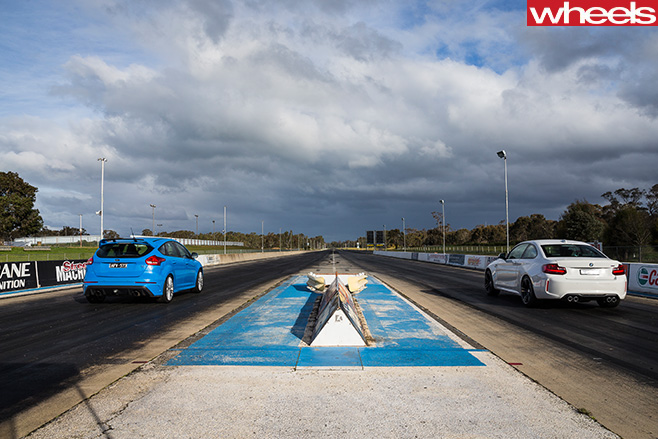
It might seem like a strange showdown initially, a $50k hot hatch that produces 257kw at all four wheels in the Ford Focus RS, against a $90k coupe which pumps out 272kw and only puts power down at the rear, in the BMW M2 Pure.
But it’s not as weird as it may first sound.
They both tip the scales at under 1600kg (1570kg for the M2, 1542kg for the RS), and both have turbocharged engines. However, after that, the two go down very different roads.
The M2 also has a power advantage, producing 272kW and 500Nm to the RS’s 257kW and 440Nm,
And while both transfer power through a good old fashioned 6-speed manual, the RS is a four-door hatch with all-wheel drive, and the RS is a two-door coupe which only powers the rear tyres.

So, for a bit of fun, we decided to take the pair to Heathcote dragway for an old-school drag race.
Why? Well, if you really need a reason, because it sounded like bloody good fun.
It was interesting to note the ways in which the two cars left the line.

The Bavarian had a tendency to smoke its rear-tyres, and while this makes for great fun, it’s not particularly great when you are trying to hunt down an all-paw hatch.
Watch all the fun in the video above.
Does a 2016 Mercedes-AMG A45 run the world’s most consistent times for a factory car?
We know the mighty little Merc has some impressive accolades, but recent performance data proves it might deserve another.
When Mercedes-AMG upgraded its A45 with 280kW/480Nm for 2016, we quickly arranged appropriate challenges to measure those tweaks.
The A45’s testing timeline played out like this. It first raced Audi’s RS3 in a head-to-head, then did numbers at Bang For Your Bucks 2016, and most recently logged times in a three car match.
Against the Audi RS3 the A45 shot to 100km/h from rest in 4.17 seconds, and then crossed the quarter mile in 12.41 seconds. You can watch this race here.
The same car then came to Bang For Your Bucks, and on Winton Raceway it sunk 0-100km/h in 4.16sec before ticking off 400 metres in 12.37 seconds. Quicker, but only by a mouse whisker.
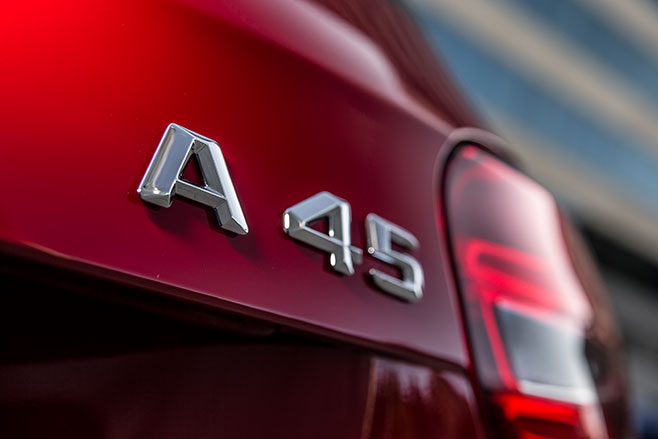
We’re hardly white coat types. Sure, we check tyre pressures, always use the same brand 98 octane, and rely on a Racelogic Driftbox for the figures, but it’s simply an arrive and drive affair.
Mind you, all three tests were completed on dry, cool days. But a difference (when there is one) of 0.01sec for the 0-100km/h sprint and 0.04sec over the full quarter mile would baffle bracket racers.
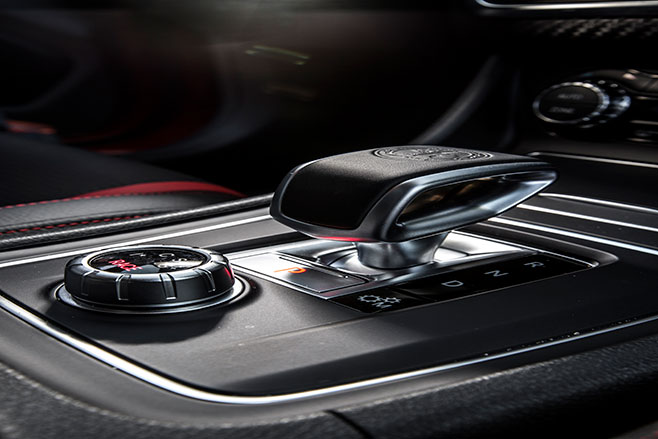
Instead, you have to consider the A45 for the piece of kit it is. The launch control system used by its seven-speed dual clutch can be a little picky about the car’s vitals, but this is proof it works, and bloody well too.
TIMES TABLES
MOTOR‘s peformance times for the 2016 Mercedes-AMG A45, in table form.
Issue tested | 0-100km/h | 400m | Vmax |
MOTOR February | 4.17 | 12.41 | 180.23km/h |
MOTOR September | 4.16 | 12.37 | 181.65km/h |
MOTOR December | 4.17 | 12.41 | 180.34km/h |
Private buyers are deserting electric and hybrid vehicles as Australia continues to trail other western countries when it comes to retail incentives.
The latest official figures for the Australian new car market reveal that private year-to-date sales of electric vehicles (EVs) fell 75 per cent compared with August 2015, while private hybrid sales dropped 17 per cent for the same period.
The overall EV segment also plummeted – to 179 units – albeit from a relatively low base of just 639 units.
Overall hybrid sales actually increased from 8232 to 8464 units, though this three per cent rise was driven by a 13 per cent lift in government and fleet purchases.
The entire family of the world’s most famous hybrid, the Toyota Prius, is also struggling. Year-on-year sales show significant sales decreases for the regular Prius which is down by 20 percent), Prius C city car (-27 percent) and Prius V people-mover (-20 percent).
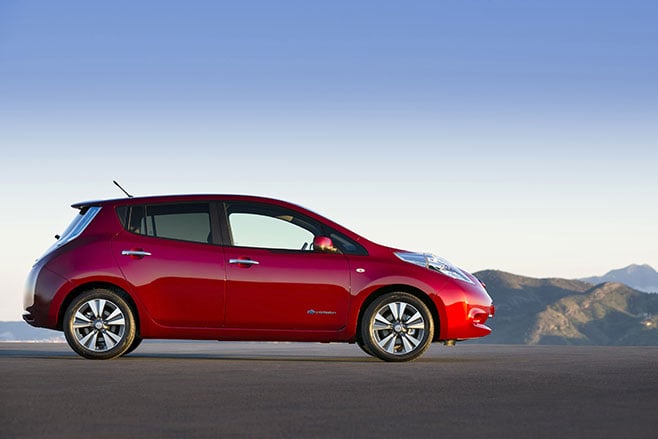
BMW’s 2014 Wheels Car of the Year, the i3, is also down 43 per cent, and Nissan’s electric car, the Leaf, is down 58 per cent.
BMW Australia told Wheels magazine earlier in 2016 that is has been continuing to lobby politicians to take action to incentivise environmentally friendly vehicles.
“We’ve been extremely active for at least 18 months in terms of speaking to government departments – federal, state, local,” said BMW Australia’s general manager of corporate communications, Lenore Fletcher.
“It’s something that’s an ongoing and very strong activity within BMW.
“We’re not asking for huge incentives, but if you look at European or USA models, the fact that Australia has nothing in place is quite distressing.
“We need to see the government have some say in what is going to happen going forward, to encourage consumer awareness. If we can get the government on board, talking about this outwardly, saying that it’s a good thing to be sustainable, it will definitely grow.”
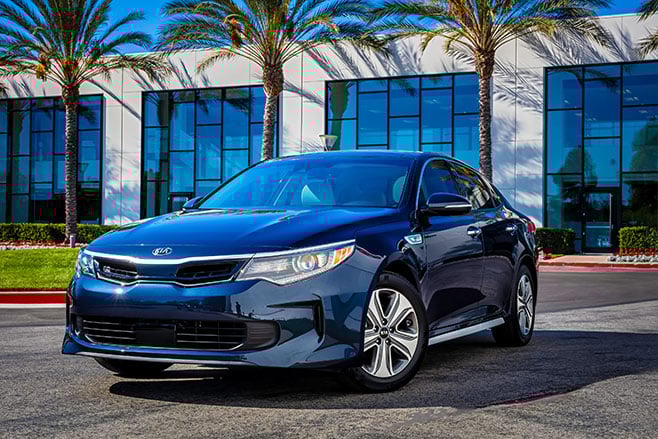
BMW is among a number of luxury car brands introducing a new wave of plug-in hybrid vehicles.
Mercedes-Benz, Audi and Volvo are also launching models that offer varying electric-only range from an electric motor that can be recharged via power outlets.
The models also employ a conventional internal combustion engine, which combines with the electric motor for all-round performance and also eradicates ‘range anxiety’ – the fear of running out of battery power.
When Mercedes-Benz Australia announced in 2015 it would introduce a range of plug-in hybrids, corporate communications manager Jerry Stamoulis acknowledged it would need to be patient regarding sales of the most fuel-efficient variants of its C-Class and S-Class sedans, and GLE SUV.
“This is a long-term strategy for us; this will be our future,” Stamoulis said. “Once government incentives catch up, once infrastructure catches up, we’ll be ready with the best possible product in the market.”
And Korean brand Kia has blamed Australia’s lack of incentives for its reluctance to sell a new range of hybrids in this country.
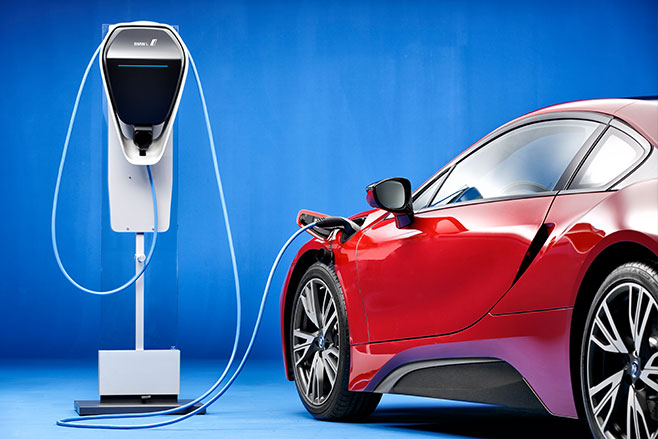
The International Council on Clean Transportation (ICCT) wrote in a white paper, published in May 2016, that: “Substantial fiscal incentives are the most important driver of EV uptake. Countries and cities with high fiscal incentives have been more successful at transitioning to electric mobility.”
The UK, numerous European countries and the US have all been pro-active in developing incentive schemes for EVs and hybrids.
The UK has extended its Plug-In Car Grant until 2020, this year changing to a tiered system that offered up to 4500 (about $7600) for a vehicle with CO2 emissions below 50 grams per kilometre and a zero-emissions range capability of at least 70 miles (113km).
And California, the most progressive – and even aggressive – of the US’s 52 states when it comes to environmental action, operates the Clean Vehicle Rebate Project.
The scheme provides rebates up to US$5000 for the purchase or lease of the cleanest vehicles. $1500 is available for plug-in hybrid models such as the Audi A3 e-tron, $2500 for battery electric models such as the i3 and Tesla Model S, with the maximum $5000 offered for hydrogen vehicles such as the Hyundai Tucson Fuel Cell.
There are no signs, however, that Australia is close to catching up with other parts of the world.
Only two of Australia’s eight states offer any semblance of an incentive for EVs or hybrids. Victoria offers a token $100 saving on its $284.70 annual vehicle registration fee, while the ACT is slightly more generous – waiving stamp duty on any vehicle that produces less than 130 grams of CO2 per kilometre.
Mitsubishi has shaken up its Outlander SUV range, with the base model receiving extra equipment, and new safety pack options for mid-range variants.
LS, LS Safety Pack and Exceed variants make up the 2017 line-up replacing the 2016 model’s LS, XLS and Exceed price points.
The entry-level, five-seat LS 2.0-litre four-cylinder manual goes up by $260 to $28,750 but gains dual-zone air-conditioning, digital radio and the latest Mitsubishi’s Smartphone Link Display Audio. The manual is the only five-seat LS version, with CVT versions now all having seven seats.
These include the 2.0-litre petrol CVT, priced at $30,500, which is just $10 more than the previous model despite the extra equipment and two extra seats. There is also a 2.4-litre, four-cylinder, petrol CVT with AWD for $33,500.
The LS Safety Pack variant features a host of active driver assist functions available in the top-spec Exceed, including forward collision mitigation, lane departure warning, adaptive cruise control, automatic high beam, rain sensing wipers, dusk sensing headlights and auto-dimming rear view mirror.
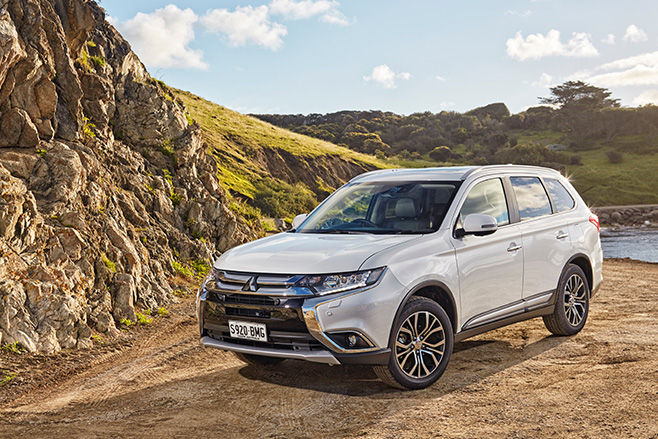
Prices for the LS Safety Pack variants range from $32,000 for the 2.0-litre petrol 2WD 5-seater to $39,000 for the seven-seat 2.2-litre, four-cylinder, diesel mated to a six-speed automatic transmission and AWD. LS Safety Pack pricing is generally in line with the previous XLS models (see below for full range and pricing).
All LS and LS Safety Pack AWD now come with electronic handbrake.
The AWD petrol and diesel Exceed models have gone up just $10 from the 2016 model, to $44,000 and $47,500 respectively.
Unseen changes across the range include suspension changes to enhance overall ride comfort, stability, body control and steering feel.
The 2017 Mitsubishi Outlander range is now available at dealers around the country.
2017 Mitsubishi Outlander variants and pricing
LS, 2.0L petrol, 2WD manual, 5 seats – $28,750
LS, 2.0L petrol, 2WD CVT, 7 seats – $30,500
LS, 2.4L petrol, AWD CVT, 5 seats – $28,750
LS Safety Pack, 2.0L petrol 2WD CVT, 5 seats, $32,000
LS Safety Pack, 2.4L petrol AWD CVT, 5 seats, $35,000
LS Safety Pack, 2.4L petrol AWD CVT, 7 seats, $36,000
LS Safety Pack, 2.2L diesel AWD CVT, 7 seats, $39,500
Exceed, 2.4L petrol AWD CVT, 7 seats, $44,000
Exceed, 2.4L diesel AWD CVT, 7 seats, $47,500
MORE: Mitsubishi Outlander Range Review MORE: Mitsubishi Outlander Specs, Range & Price
Tyres are not just black and round, they’re also a black art. But we’ve done the science to help pick the best replacement tyre for your SUV.
THE most effective handling upgrade you can give your sports utility vehicle is fitting a road-biased set of tyres in place of the all-surface rubber that carmakers specify as part of the light off-roading SUV promise.
And while the proliferation of the front-drive SUV has seen many makers take this measure into their own hands, the factory-issue boots on many soft-roaders still leave room for improvement.
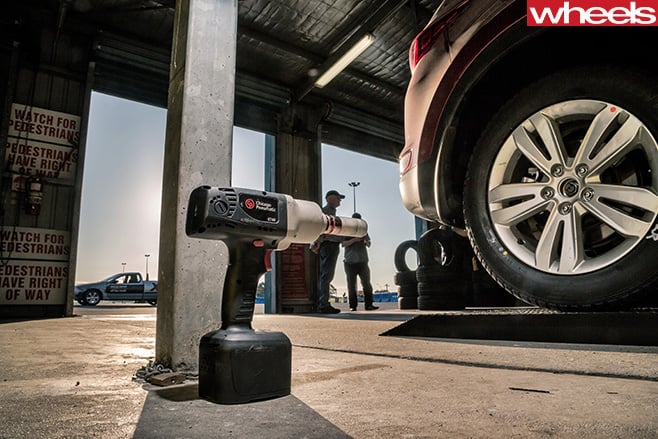
An SUV has a higher centre of mass than a regular sedan or wagon, but canny chassis tuning with electronic aids and safety systems means today’s breed is a decidedly safer – and more satisfying – steer than those of a decade ago. With a great set of tyres factored in, it’s a recipe for a safe family machine.
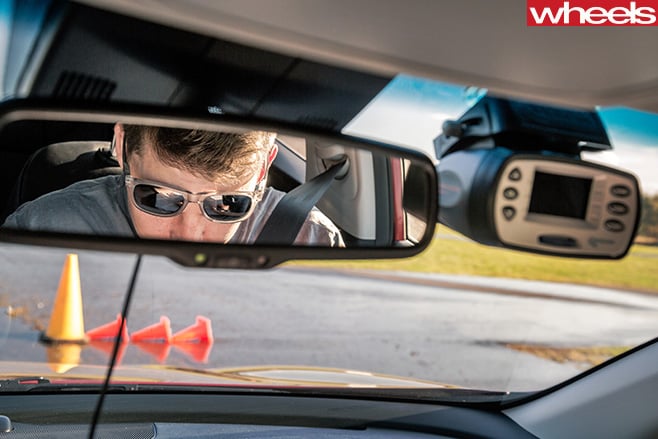
For those who see the value in putting a good quality product between their car and the road, which brand and pattern is best? The 2016 Wheels Tyre Test sets out to deliver the answer.
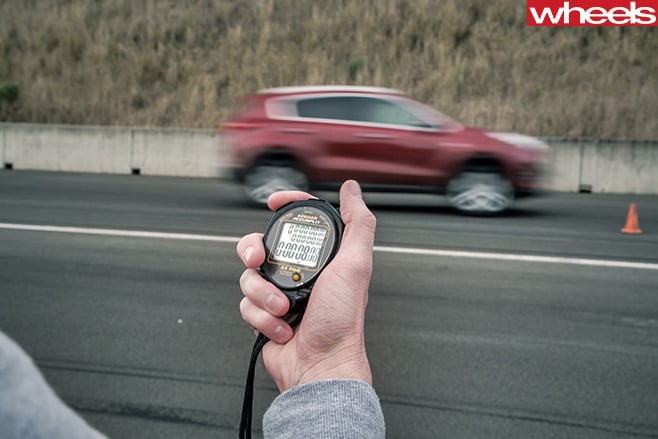
Loberto was flying blind, not knowing what brand he was on, which left him to provide insightful feedback uncoloured by brand perception or bias, while the stopwatches and Racelogic Performance Box spat out the data.
Testing began with a road loop to scrub the surface of the tyres and let us record a noise figure for each set. Loberto then rolled into the slalom and braking test elements at the grippy far end of the strip before taking to the handling circuit for a series of hot laps, and a second brake test, this time on a consistently wet surface.
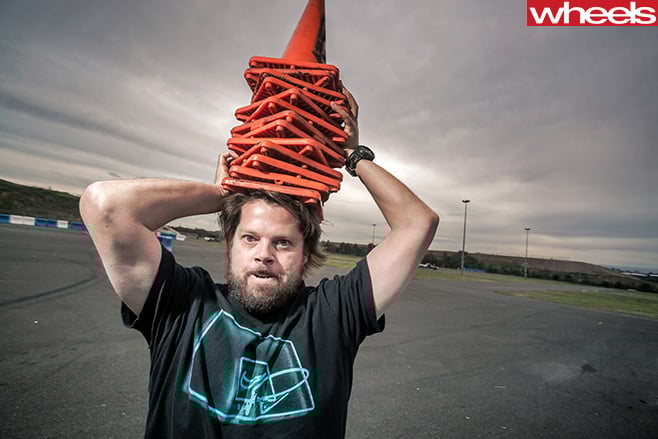
We measured track temperature and logged the time before each run and the control tyre was deployed on a regular basis to gather data on track and vehicle evolution, if there was any.
The results and analysis for each brand and pattern in 225/60R17 apply broadly to the other sizes in the range.
The field
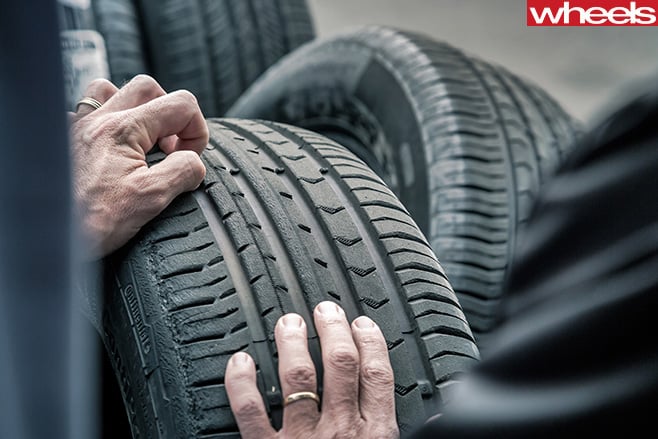
The car
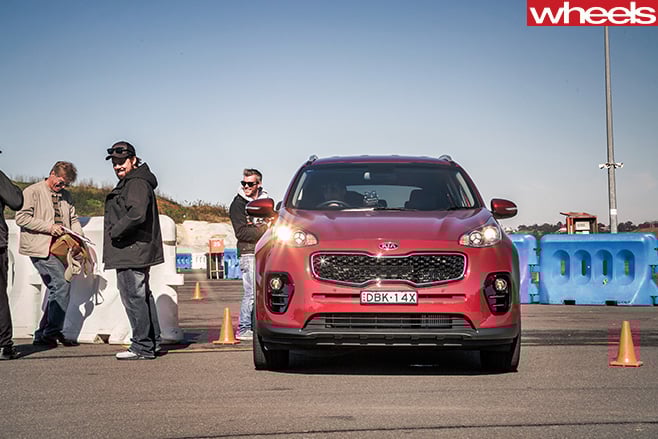
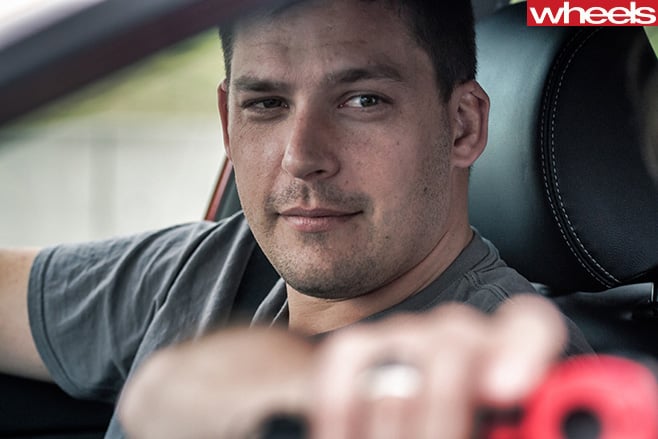
The driver
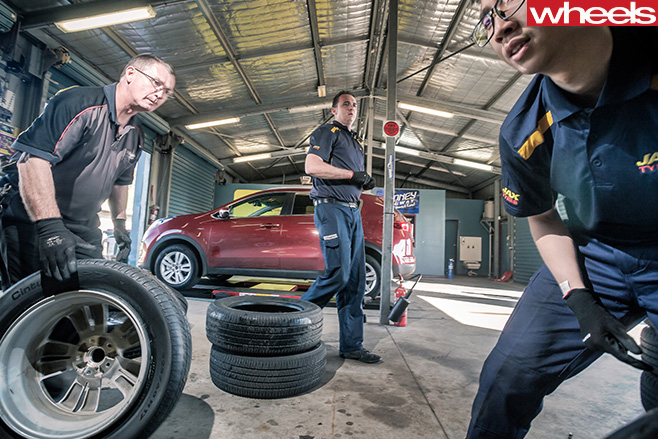
Jax Tyres and Eagle SMF
Ian Luff Motivation Australia
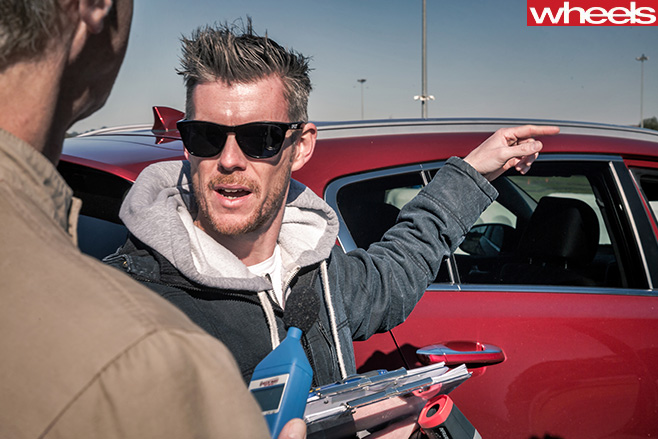
The ringmaster
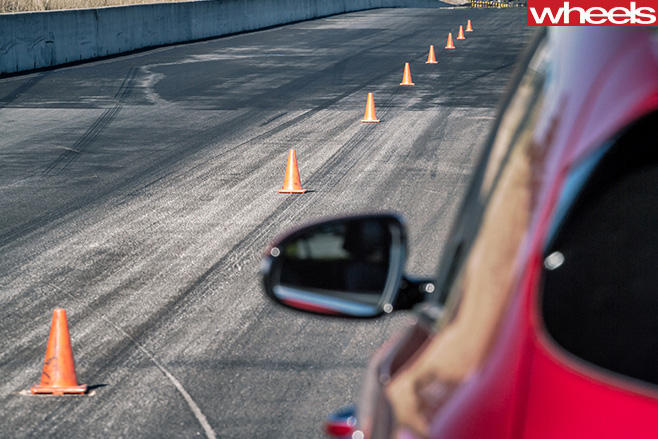
SLALOM DRY
THE capacity to safely swerve around an obstacle – and recover from it – is at the core of tyre safety. On a quiet piece of Sydney Dragway tarmac, that obstacle is a witch’s hat, but on the road a child running out from the kerb or another driver’s ill-judged manoeuvre could provide the sudden need to change your car’s course.
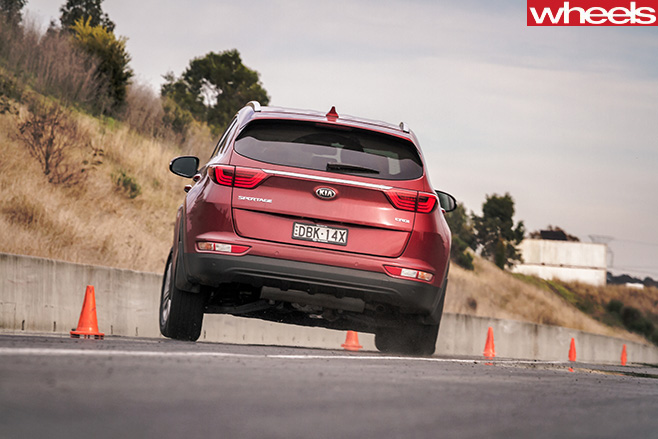
In this era of mandatory ESC, an oversteer moment following an avoidance manoeuvre is no longer; with ESC switched off, as it was for each test discipline, it’s encouraging that even our least polished players resist tail-sliding… most of the time.
The entry speed for the exercise is 60km/h, and we repeat the test until we have three consistent runs. As always, the car’s attitude provides more than a clue about each tyre’s performance, though the stopwatch is the arbiter – the quickest tyre through the slalom is the winner.
WINNER: Continental Premium Contact 5
Renato praises the Continental on first acquaintance. It’s first out of the blocks after the control tyre and exhibits demonstrably “better turn-in” and “less squeal” than the Hankook control, which is a decent performer in its own right. With the entire field through the test, a second run on the Conti helps put its performance into perspective: “Best feel and feedback,” comes the succinct summary. In terms of times, the Continental gets through the slalom a tenth quicker than the next-best (the Goodyear), 0.3sec quicker than the Maxxis in third, and 0.7sec – or about nine percent – quicker than the tail-enders.
BRAKING DRY
BEING able to perform a quick stop was once part of a skilled driver’s arsenal. Now it’s part of the car’s, because ABS means there’s little for the driver to do other than stand on the pedal.
However, the histrionics of the average ABS system means being familiar with how emergency braking feels – ideally at a defensive driving day like those run by Ian Luff – is an asset in a real crash-avoidance scenario. Thankfully Renato has done plenty of hard stops. So, with the driver removed as a variable and a car that pulls up with unfailing consistency, we can test tyres and nothing else.
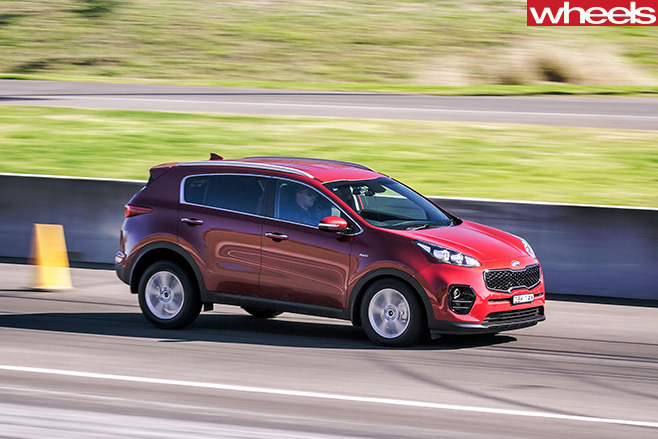
The measure of performance is stopping distance in metres, though we also log peak and average G, and stopping time. The stopping section certainly highlights stark differences in this critical area of tyre performance.
WINNER: Continental Premium Contact 5
“Brake confidence” on the Contis underlines their relatively short stopping distance, those at the other extreme “walked on ABS” (the Maxxis), while the Pirelli experienced “immediate ABS”. The capable mid-field don’t elicit specific comment, behaving predictably and recording stops within about a metre. The best-to-worst differential between the Continental and the Maxxis is 4.8m, or a bit more than a car length. That’s a lot. We know which we’d rather be rolling on if it all went pear-shaped. Even more impressively, the Conti pulls up a metre shorter than the next-best tyre (the Goodyear).
CIRCUIT LAP
IT’S an unwritten rule that testing tyres can’t be fun – it’s all about rigorous analysis – but it seems the Ian Luff crew missed the memo. The circuit layout they provided is much the same they use for driver training days, and more like a motorkhana than a device for punishing hapless tyre-test drivers.
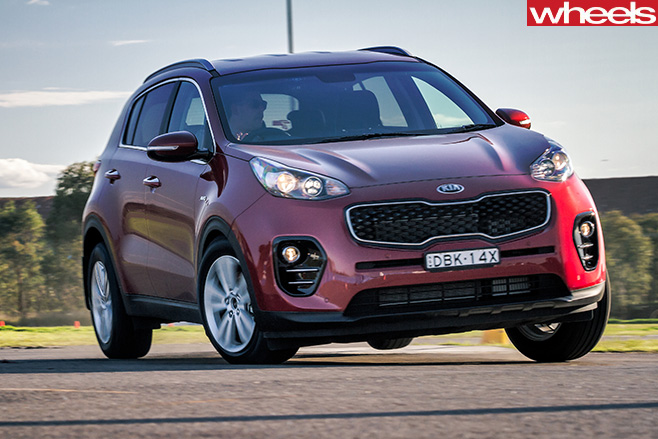
This year’s lap made the circle test redundant because the slalom and circuit laps provide all the lateral acceleration data we need to dissect a tyre. Three laps on each tyre also introduces heat into the equation, which we measure at the conclusion of each run. A lap contains a quick sweeper, a pair of hairpins, right then left, a short straight, a medium right and finally a chicane.
Time is the measure of performance (the average of three laps) and the results show less than a second covers the field. As it should be, the rank on the circuit is reflected by the overall rank – if you’re looking for a single indicative discipline, this is it.
WINNER: Continental Premium Contact 5
Having already proven to stop well and corner adeptly, the Continental was expected to triumph on the track. Renato quickly notes the Conti’s consistently crisp turn-in response, at least until the fronts get hot and he experiences mild understeer (though this could also be a side-effect of the extra corner speed they allow). In terms of peak lateral acceleration, the Continentals are equal-third with the GT Radial, behind the Goodyear (0.97) and Bridgestone (0.96), but over the course of a lap they ultimately help the Sportage get to the line faster.
MISMATCHED TYRES
IT’S not advisable to fit different tyres on the same axle – mismatched fronts, or mismatched rears, in other words – even if there isn’t a physical axle between them. It’s also less than ideal to fit different tyres at the front than the rear, or so we’re led to believe.
In either case, differences in grip and tyre circumference at each corner could have implications for the balance of the chassis, or the workings of the ESC or all-wheel-drive systems. But with 50 or so tyres lying around, we were in a position to experiment.
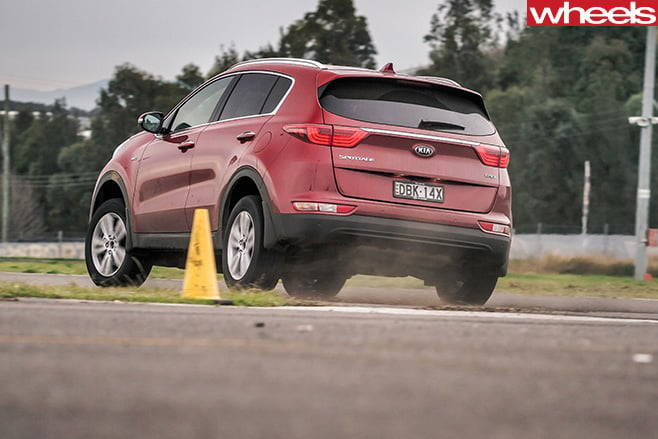
We didn’t know what to expect when Renato wheeled the Sportage onto the test circuit. Would the Kia handle diabolically, or would it be fine?
Well, if you consider the mix of tyres fitted, the fact its points tally would place it fifth overall perhaps isn’t a big surprise. However, the change in poise, and Renato’s feedback, suggest it’s worth avoiding mixing tyres.
Renato, unaware of the hijinks we’d gone to with the Kia, immediately noted that the car felt “inconsistent”, an observation he hadn’t made on any matched set. And we could see that the car didn’t stop straight in the brake test.
| Four-up wet braking | Wet stop | Extra stopping distance | Percentage increase |
| Average | 28.3m | 1.8m | 6.4% |
TYRE NOISE
TYRE noise invariably comes in a trade-off with ultimate performance; a tyre is often noisy because it has an aggressive tread pattern. High-grip, soft-compound tyres, on the other hand, can be a low-noise option, provided you’re not overly concerned with wear life. We’d like to measure wear life, but it’s difficult in two days of testing; it’s not that we don’t cause plenty, more that it’s done unevenly, in conditions that don’t represent normal road driving.
Measuring noise is quite straightforward, using an SPL meter set to store a peak figure in decibels over a straight section of coarse-chip road.
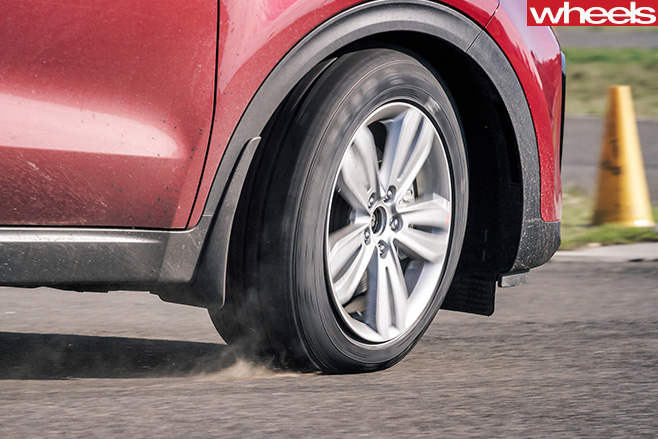
A hushed tyre can claw back ground on more performance-focused alternatives, though it’s scored at a quarter of the four dynamic exercises, so it doesn’t have as big a bearing on the final results. That said, you can apply your own weighting to tyre noise to arrive at your own outcome.
WINNER: Goodyear Efficient Grip
It stands to reason that the Goodyear Efficient Grip is a quiet tyre – fuel efficiency-focused tyres are designed for low rolling resistance, and one of the ways to do so is with a less-aggressive tread, which thrums up less noise. On the flipside, the aggressive patterns of some high-performance tyres, which can deliver big benefits elsewhere, convert some of their kinetic energy into noise. The Goodyear’s 68.5dB figure is 2.5dB less than the noisiest (Dunlop and Bridgestone), and on the non-linear logarithmic decibel scale that’s a more than noticeable difference in noise. The Kumho, Maxxis and Conti are quiet, too.
BRAKING WET
IF WE conducted just one tyre test discipline, it would be wet braking. Why? Because this is the area a tyre can really help the average driver get out of trouble. It’s where a tyre proves its worth when it goes wrong on the road. And while the average non-enthusiast might be reluctant to spend-up on tyres in search of crisp turn-in or tenacious traction, they might if they think they’ll save them in the rain.
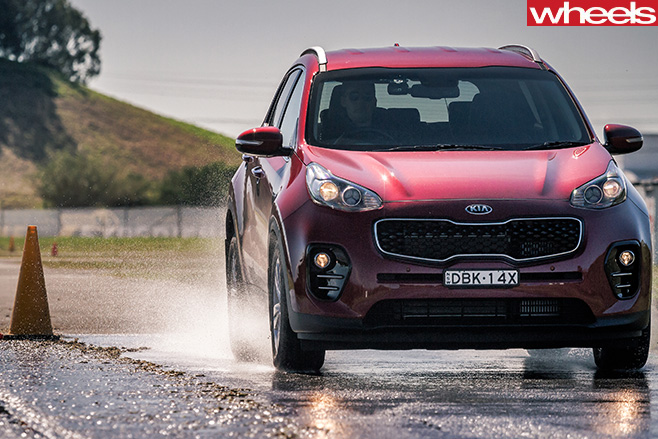
The test protocol doesn’t change for the wet test – Renato accelerates to 80km/h before standing on the left pedal – but the watered tarmac here is of a coarser chip than the dry road, which is more like hot-mix. We expected the unexpected, then, and we weren’t disappointed, our sole wet discipline mixing up the order more than any other.
WINNER: Continental Premium Contact 5
To complete a clean-sweep of the dynamic disciplines, the Continental stops shorter than all its rivals in the wet, just as it did in the dry. In fact, its average wet stop is little more than a metre longer than its average dry stop. The other big winners in the wet are the GT Radial (up three spots to snag another third place), Bridgestone (up a place to second) and Kumho (up two positions to sixth). The Dunlop is the disappointment, dropping four spots to eighth. To underline its dominance, the Continental stops 1.4m shorter than the second-placed Bridgestone and 3.5m shorter than the last-placed Maxxis.
FOUR-UP BRAKING
THOSE who think about their driving probably give at least a passing thought to stopping distances, and therefore their gap to the car ahead. Just as it does for the salty snack you just dropped on the floor, the old three-second rule applies to setting the space between you and the car in front; you’re leaving enough space to stop if you pass a roadside marker three seconds later.
But did you ever think that you might need a bit more room when you have a car-load of people and luggage on board?
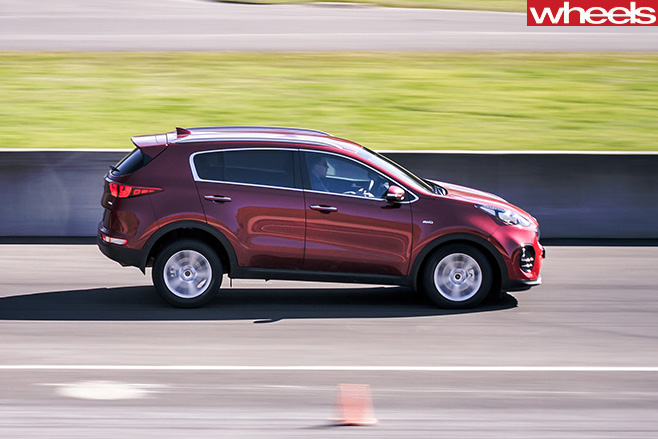
So we need to count to 3.3 seconds to maintain a safe following gap with the boys along for the trip. Five-up with luggage, it wouldn’t be crazy for holiday-goers to count to four on the freeway.
| # | Slalom | Braking | Circuit | Tyre Noise | Total | |
| # | Time (sec) | Dry stop (m) | Wet stop (m) | Lap (sec) | SPL (dB) | Score/100 |
| Mismatched tyres | 8.03 | 26.00 | 27.40 | 28.51 | 70.00 | 94.5% |
OVERALL WINNER
Continental Conti Premium Contact 5
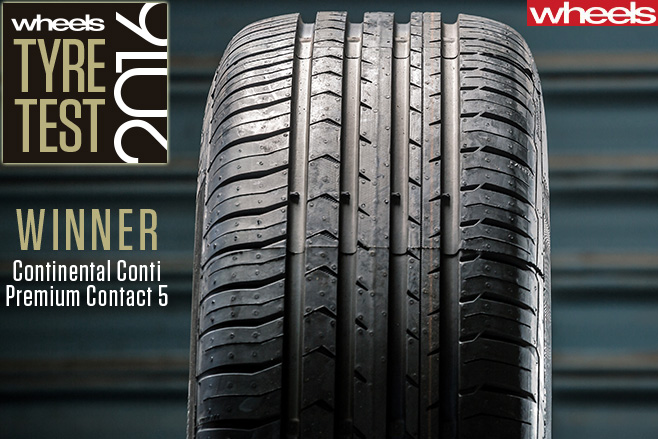
The only discipline the Conti didn’t win has zero safety or high-performance implications – tyre noise. And it hardly dropped the ball there, coming third just one decibel higher than the hushed Goodyear.
It’s almost impossible to fault the Continental’s performance, though part of the reason it performed better than its rivals was its lower treadwear rating. The 280 figure suggests it will shed tread more quickly than some of its rivals, which had ratings of up to 560.
At $241 a tyre in our chosen size, the Conti costs only $26 more than the average, and $62 more than our least-expensive contender (the Nexen, at $179), but less than the third-placed Bridgestone ($272). So it’s certainly within the realm of the OE-replacement options available on a realistic budget.
Make your own value call, but to us spending $248 extra over a set of tyres for almost 10 percent better performance across a range of driving conditions is wise buying.
Even if you’re not into hard cornering, the fact the Conti stops as much as a car-length shorter in the wet is alone worth the extra outlay.
First published in the April 2007 issue of Wheels magazine, Australia’s best car mag since 1953.
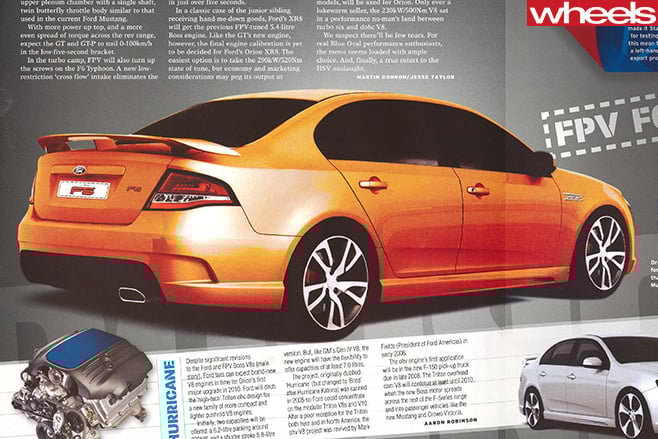
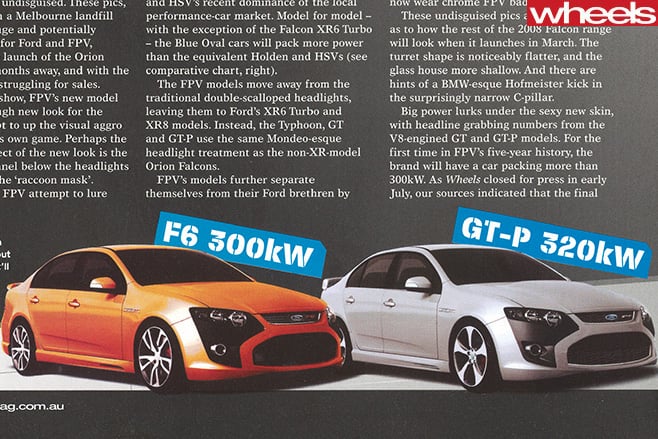
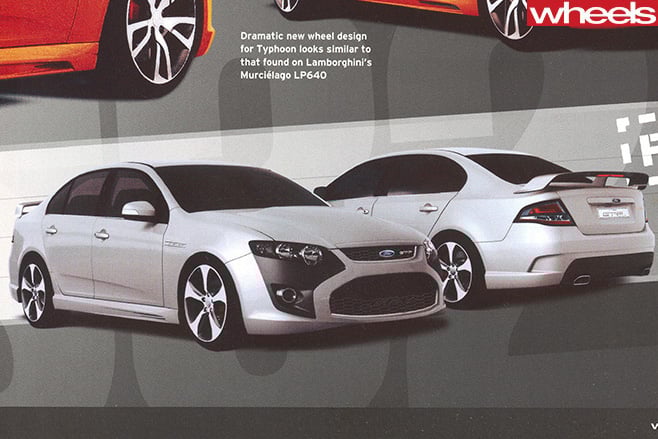
These are the photos FPV doesn’t want you to see – the company’s re-powered and redesigned 2008 Orion-based sports sedan line-up completely undisguised.
These pics, reportedly found on a Melbourne landfill site, represent a huge and potentially embarrassing leak for Ford and FPV, especially with the launch of the Orion Falcon still eight months away, and with the current BF Falcon struggling for sales.
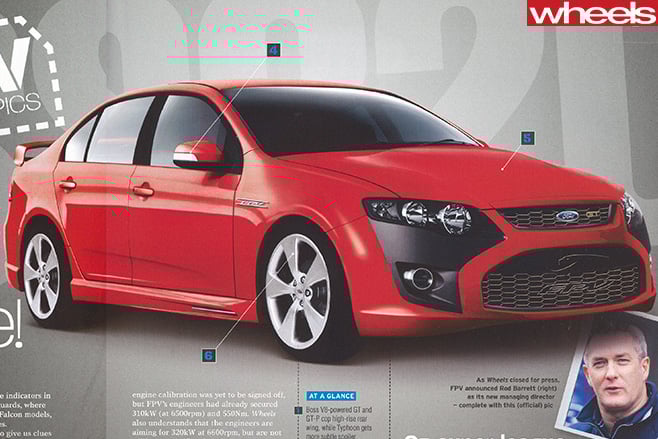
But not only will FPV attempt to lure buyers away from HSV with bold looks, the performance division, like Ford, will launch a power offensive to counter Holden and HSV’s recent dominance of the local performance-car market.
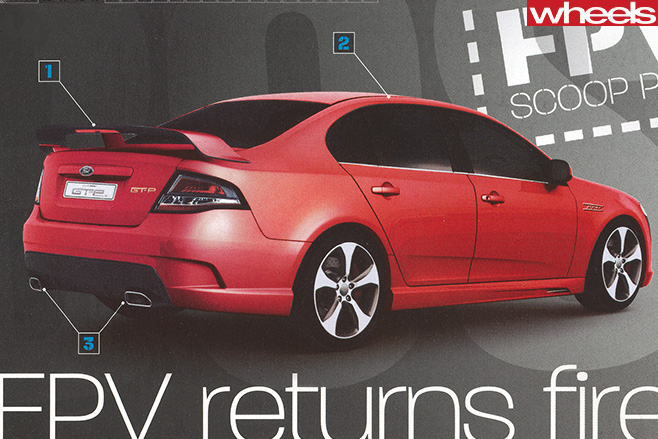
The FPV models move away from the traditional double-scalloped headlights, leaving them to Ford’s XR6 Turbo and XR8 models. Instead, the Typhoon, GT and GT-P use the same Mondeo-esque headlight treatment as the non-XR-model Orion Falcons.
As Wheels closed for press in early July, our sources indicated that the final engine collaboration was yet to be signed off, but FPV’s engineers had already secured 310kW (at 6500rpm) and 550Nm.
The final output will depend largely on drive-by noise regulations. The current 290kW Boss V8 already walks a fine line with the dB meter, but FPV’s engineers are looking to incorporate an Aston Martin-style bypass valve in the mufflers in order to chase 320kW.
Drawing on experience gained from his work on the DJR320 project, Ford tuning expert Rob Herrod of Herrod Motorsport explains the key to increased power is getting the V8 to rev past 6000rpm.
“When you do this, you then need to make sure the rest of the hardware is up to scratch. We replace the oil-pump gears in the engine straight away as the factory units can fracture – with catastrophic consequences.”
Aside from similar changes, expect FPV to fit larger inlet and exhaust valves to ensure the engine can meet the gas flow requirements associated with higher rpm.
To aid breathing on the intake side, the big-hitting V8 Boss engine gets a different upper plenum chamber with a single shaft, twin butterfly throttle body similar to that used in the Ford Mustang.
With more power up top, and a more even spread of torque across the range, expect the GT and GT-P to nail 100km/h in the low-five-second bracket.
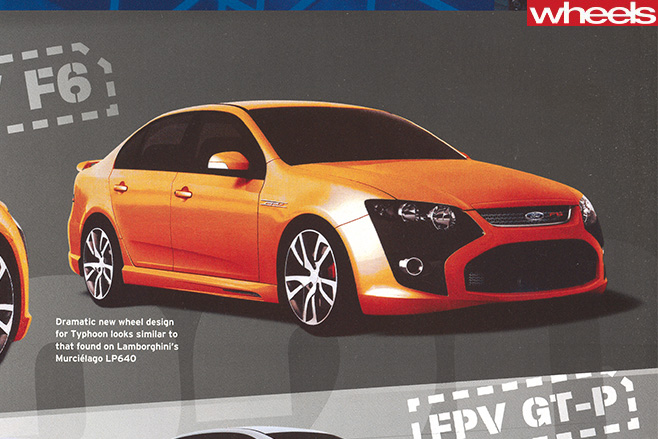
In the turbo camp, FPV will also turn up the screws on the F6 Typhoon. A new low-restriction ‘cross flow’ intake eliminates the messy plumbing that runs over the cam cover used in the current Typhoon.
To make the most of the improved plumbing, FPV has wound an extra 0.13bar of boost pressure from the existing turbocharger (to 0.77bar), and the turbo 4.0-litre straight six will now thump out at 300kW and around 575Nm. Like the GT, the Typhoon should thunder to 100km/h in just over five seconds.
In a classic case of the junior sibling receiving hand-me-down goods, Ford’s XR8 will get the previous FPV-tuned 5.4-litre Boss engine. Like the GT’s new engine, however, the final engine calibration is yet to be decided for Ford’s Orion XR8.
The easiest option is to take the 290kW/530Nm state of tune, but economy and marketing considerations may peg its output at 280kW, giving it a 20kW gap to the more expensive FPV typhoon.
The XR6 Turbo is expected to get a 15kW hike to 260kW, augmented by at least 500Nm – up 20Nm. All this engine work has brought about a rationalisation, however. Wheels sources indicate that the sohc 5.4-litre V8, offered as an option on XT, Fairmont and Fairlane models, will be axed for the Orion. Only ever a lukewarm seller, the 230kW/500Nm V8 sat in a performance no-man’s land between the turbo six and the dohc V8.
We suspect there’ll be a few tears. For real Blue Oval performance enthusiasts, the menu seems loaded with ample choice. And, finally, a true retort to the HSV onslaught.
