
First full test of Ford Motor Company’s ultimate sixty-niner …
First published in the November 1969 issue of Wheels magazine, Australia’s best car mag since 1953.
Cleverly disguised behind the cute term HO for Handling Option, Ford’s Super GT is actually a Bathurst race special, designed specifically to go up the Mountain and along the top, faster than any other car in the race.
FORCED into a corner by some Sydney daily newspapers, Ford attempted to ignore completely the existence of the new Falcon GT HO.
Some writers gave the impression the Super Falcon is capable of a top speed somewhere between 160 and 180mph.
Ford and every sane-minded motoring-conscious motorist know this is ridiculous. But Ford wasn’t about to prove it to anybody. The company refused point-blank to provide a test car for journalists in either Sydney or Melbourne, and in the early stages even denied the cars were available.
However, WHEELS lined up several privately-owned or dealer-owned cars to test, but most had insufficient miles up. Our test car finally came from a privateer, Trevor Meehan, well known up until a year ago for his spectacular, clean and successful record on the race-track, particularly in Cooper S type vehicles.
Meehan intended returning to the track in the HO in this year’s 500, but also cross-entered a Mini Cooper S. Disappointed at some aspects of the Falcon’s required preparation and trim for the race, and encouraged by better odds in Class C, Meehan withdrew the HO the day before our test and let the Cooper entry stand. With only a handful of rival Cooper S types in the class, he figured on a good chance at Class victory, with a possible outright win on the cards should it rain. Since this magazine will sell on the bookstalls throughout October as well as before the race, we aren’t going to speculate on that.
If we had driven the GT Falcon earlier than we did, we would have immediately assumed the existence of a Bathurst special well before its first publicised release, because the standard car just isn’t an improvement (race-track performance-wise) on the previous year’s model and clearly didn’t stand an outright chance at Bathurst against the 350 GTS.
The HO is different again. It is a pure, outright and unashamed Bathurst special. It is manufactured by Ford to a quantity of exactly 201 cars (Ford may tell us there will be a second batch, as they did with the GT 500 Cortina which never arrived, but frankly we don’t believe them).
The car’s engine and suspension were designed with a relief map of Mount Panorama in the Engineering Department, and the car was built around racing tyres.
Apart from conclusions drawn from gear ratios, we can’t tell you a great deal about the background to the Ford’s engine improvements.
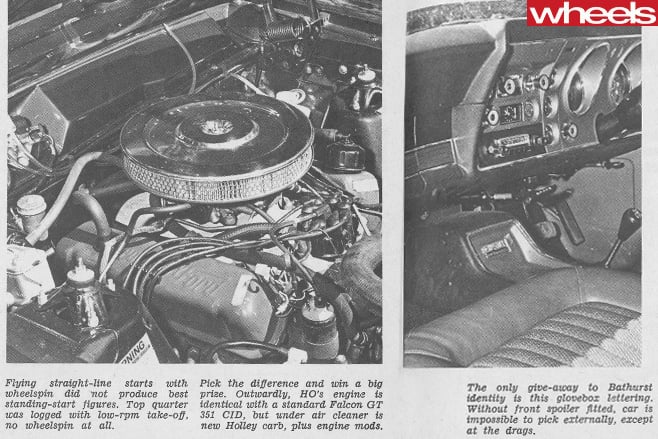
The factory states that “detail improvements” include a 600 cubic foot per minute Holley carburettor, aluminium inlet manifold, and improved camshaft and hydraulic lifters.
However we could not obtain specific power or torque output figures, or determine other factors like compression ratio, from the factory. For this reason we haven’t provided a specifications chart with our performance panel.
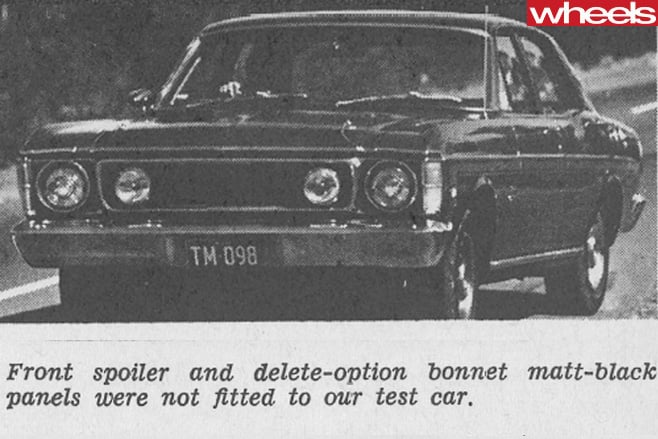
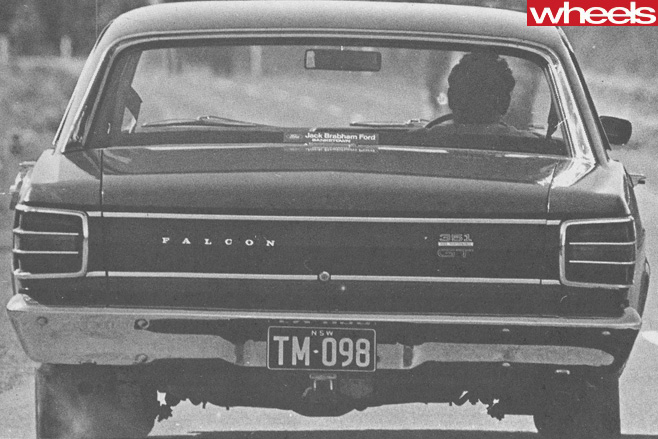
To look at, the car is identical with ordinary GTs. Our test car did not have the front spoiler fitted and could only be picked as a HO by the day-glo pink lettering on the glovebox – GT HO. There is nothing on the exterior to give it away, and the engine carries no special markings. It looks so standard that the car went through a full Motor Transport registration without anybody realising it was not an ordinary Falcon GT.
In most respects, the performance is also similar, and without the giveaway glovebox lettering you could put almost any driver in the steer seat and defy him to pick the differences from the Ford Falcon GT.
We got absolutely no indication until we looked at our watches, which was the ultimate build-up because we nearly did a double take when we read them. The car’s top end performance has been so accurately tuned to Mt Panorama’s demands, you would almost swear Ford had a simulated Hill somewhere in its proving grounds.
This car’s engine has been built solely to go up the mountain faster than any other car, and stay quicker along the top. This is the area which racing experts have claimed, ever since the first 500 was run at Bathurst, would win the race for the car tuned to it. Ford has tuned its car to go up that mountain first and fastest every time.
Top end torque is, quite frankly, almost unbelievable. We ran our times over and over, convinced we were making a mistake, but came back every run with. consistent figures.
We recorded a best standing quarter mile time of 14.4 seconds, and only once exceeded the 15.0 seconds mark – due to using wheelspin on the start. The GTS Monaro returned a best 15.6. Even more shattering was the 0-100 mph figure, which averaged out at 16.7 seconds, almost 10 seconds better than the same figure for the automatic Falcon GT, and a full two seconds up on the Monaro GTS. Similarly 0-90 turned up in 14.4 as against the auto GT’s 21.0, and the Monaro’s 15.2.
Starting from identical low-level acceleration times (0-30 2.8, 0-40 3.9) that puts the Holden at a definite disadvantage at the top end of the acceleration scale – or up the mountain.
For what it’s worth, the Monaro has better acceleration when held in the upper gears from 20-40, 30-50 etc, but this doesn’t count for much except general road performance.
Gearing and gear maximums are the really telling features of performance. The HO uses a 3.0 to 1 final drive compared with the standard GT’s 3.25 diff and the Monaro’s 3.36, though there was some speculation the Bathurst Monaros would run a diff as high as 2.7. However, the 3.00 ratio is the one the Fords will run at Bathurst and it has had a definite effect on the performance and the gear spacings.
Since the gearbox ratios are the same, there is a drop in their maximum speed at the same rpm compared with the standard car. The H0 runs to 40 in 1st (47 for the GT), 62 in second (68), and 90 in third (94), all at 5500 rpm, which enables the car to utilise the best features of the power and torque curves.
In top gear we read 130 mph on the speedo (which corrected to 128 mph) but showed 5500 on the tacho.
Clearly the tacho was inaccurate by 600 rpm if Ford’s mph-per-1000-rpm-in-top figure of 26 is to be believed.
Ford gives a maximum usable rpm limit of the engine as 6000, which means both that the car will probably accelerate even faster than our figures, and that the actual gear maximum and top speed capabilities are much higher.
We purposely didn’t exceed 5500 at any time and held that point at 128 mph all through our flying quarter-mile top speed run with well over an inch of throttle free-play to use.
It doesn’t take a slide rule to work out that 26 mph-per-thou at six grand is 156 mph, which probably explains where one newspaper got the story of a 160 mph GT Falcon. Obviously a car as big as that can’t push a solid wall of air rapidly approaching eight tons per square inch, and we’d put 135-138 mph as the sane limit, even on Bathurst’s Conrod.
The Ford’s front spoiler also comes into the top speed reckoning. Our test car was not fitted with the plastic (yes – plastic) spoiler and didn’t feel any worse for its omission, but two identical cars tried privately at Surfers – one with/one without the front spoiler – had a front end attitude down the straight of some six inches difference. Both on the road and on the track our test car felt safe and stable without it, but Conrod is a different place again.
However, we can’t help thinking that the Conrod humps, and the sudden surge of air they produce under a front end, could make an unhappy combination with such crude spoilers.
None of our staff actually put the car through its maximum track paces. We decided against this because we saw nothing to gain from it. Better men than us (including some of Australia’s top drivers) had been around Sydney’s Oran Park in a best of 59 seconds (which is not good) experiencing total brake fade at embarrassing points of the circuit on the way.
Our test car had actually recorded the top Oran Park time as this story went to press, and we were quite content to let this record stand. However, it is obvious the Falcon is not suited to such a course.
Fine on the open road, and apparently carefully suspension-tuned to Bathurst, the big GT is a fair bitch on a tight circuit like Oran. Every driver we know who has tried the car had either had a lose or been off the circuit, without bettering even standard GT times, or approaching Monaro GTS times, which have been set in the low 57s.
Bathurst again is different and the ultra-stiff rear roll bar which makes for a twitchy tail, excessive wheelspin and brute oversteer on tight Oran, may be just fine for running along the ridges at Panorama at over the ton.
In standard ex-factory trim, the big Kelsey Hayes ventilated discs just don’t work. They fade worse than any disc system we have tried, and are particularly ineffective after a series of high speed crash stops. However, we’re equally convinced this situation will be corrected on the Bathurst HOs.
Unconfirmed as yet by a dealer, we also hear some brake components have been modified. Impending brake modifications are hinted at in the Blueprinting Bulletin for the HO and we believe sintered metallic linings for the rear drums will be mated to the specially developed Hardie Ferodo new pad compound.
New roll bars may be homologated and a stiffer spoiler is being produced for Bathurst cars.
In the case of the HO, there was considerable competitor unrest among entrants of these cars, at the time of writing this article, as there appeared to be discrepancies between the works and private cars: Privately-owned cars apparently won’t accept racing tyres (Firestone has tried to fit them), although the factory cars are known to be running them (Goodyears). (However Michelin XAS were used at Sandown.) Factory-homologated options of the type issued late last year by GM-H are likely to become necessary before the cars will be running in full race trim.
As a direct contradiction, Ford provided a very comprehensive “Blueprinting Specifications” instruction bulletin. Among the items cited for recommended attention were: crack testing of pistons; pins, rockers/pivots, crankshaft, main bearing caps/bolts, camshaft timing gear, distributor gear, flywheel/bolts/pressure plate and clutch face; balancing (dynamic and static) of pistons/pins, conrods, crankshaft; pulley, flywheel, pressure plate; lining; adaptor; factory fine tolerance clearings to be blueprinted for everything from conrod side clearance to spark plug and contact point gap, including combustion chamber volume (milling if necessary) deck height, valve seat angles, valve spring pressures/height (shims necessary also listed) cylinder bore clearance and so on. The bulletin also covered all oils, lubricants and fluids, plus brakes, wheel bearings and roll bar settings.
The bulletin is marked “strictly confidential”, but is substantially elementary as far as dead-serious regular Series Production preparation is concerned. Fine tuning, detail preparation and all the other factors which play into race-winning competition are not elementary. Only with the right knowledge and combination of factors can you win. That is the story of Bathurst.
***
Ford scored a psychological advantage over The General with a one-two-three win in the Sandown Three Hours in mid-September. Moffat/French put their HO over the line a clear lap ahead of Roddy/Carter and McPhee/Mulholland-both privateers. The other two Ford factory team cars and the single Holden Dealer team entry suffered major troubles. The Geoghegan/Geoghegan car was pranged by Big Pete while working his way through the field from a rear-of-the-grid start, and the Setoni/Gibson HO suffered fractured tyre valves which put it back to fourth overall. The Holden 350 GTS driven by Spencer Martin went through the fence, flipped and caught fire after total loss of brakes on Shell. But Sandown is no lesson for Bathurst.
Check out Wheels Archive online now for other great Ford Falcon features and more from decades past!
Simply log in here using your existing MagShop account or create a FREE account and select this article from the homepage.
Don’t have a MagShop account?

Have a MagShop account?

The original Ford Thunderbird was a smash hit, then daddy took the T-Bird away.
THERE was always one glaring thing wrong with the Ford Thunderbird from Day One: the identity crisis. Launched at the end of 1954 as a “new kind of sports car”, the 4.8-litre V8 came a year after Chevrolet’s own confused Chevrolet Corvette, which paired a svelte two-seat body with a wheezy 3.9-litre six.
Both cars were Detroit’s response to the booming market for imported sports cars, fuelled by returned WW2 soldiers familiar with sleek British and European machines. If the hot-rod was the home-built American two-seater, the Corvette and the Thunderbird were the official issue.

“Oh, we have something like that in the works right now,” Walker lied… and found a telephone to tell designer Frank Hershey what was happening. The project got approval in February 1953, a month after Chevrolet revealed its Corvette.
In September 1953, again at the Paris show, Crusoe gave the nod. Over the following few months, however, Crusoe moved the T-Bird theme towards luxury, creating the term (and the segment) “personal car”.
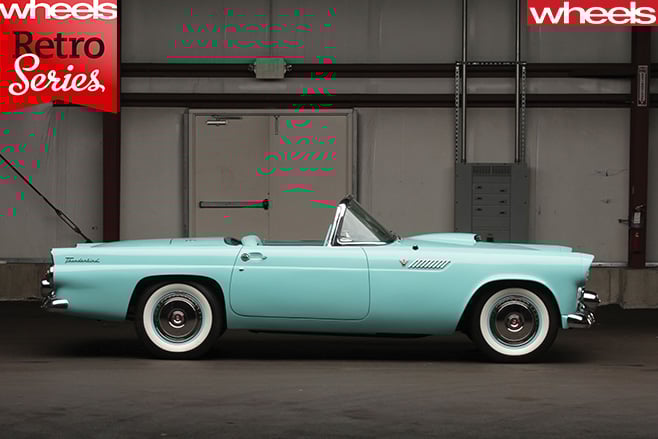
By the time the open two-seater with standard removable hardtop went on sale in October 1954, it had gained 300kg over its target weight and there wasn’t much chance of chasing Ferraris. But it was decently brisk, comfortable, nicely balanced and easy to drive. First-year sales of 16,155 units easily accounted for Corvette’s meagre 700 total.
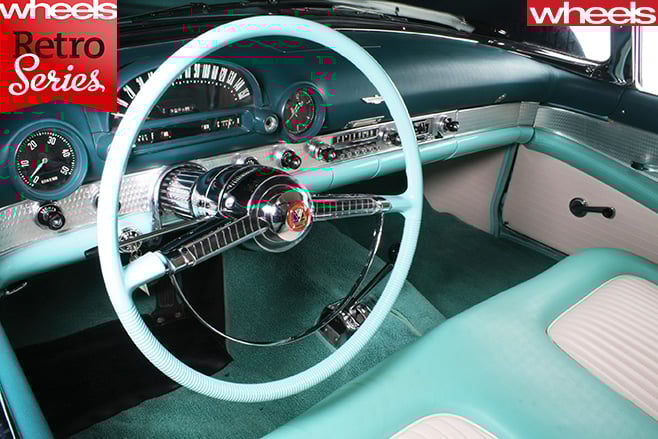
By then, Ford had identified that four seats would hugely expand the T-Bird’s potential market. As so often happens, it expanded everything.
Y to F for T
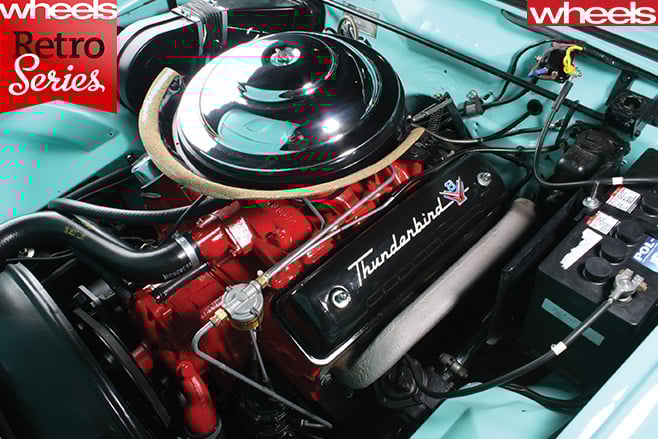
Beat the drums
The 2590mm wheelbase was 350mm shorter than the sister 1955 Fords. Overall length was 4445mm, while height to the door top was a slinky 868mm. Front suspension was by upper and lower control arms with coil springs, rear by live axle with semi-elliptics. Brakes were hydraulic drums, “double-sealed for all-weather action”.
’Bird of paradise
Thunderbird was a lot of car for $US2700 (about the price of an FJ Holden in Oz); almost 4000 orders were placed in the first 10 days. A nicely sculpted, vinyl-upholstered bucket seat with four-way power adjustment and telescoping steering column suited most sizes. ‘Astra-Dial Control Panel’ featured a tacho and clock as standard. Options included folding soft-top, power steering, electric windows, a $100 radio and a $25 engine chrome accessory kit.
Fast & factual

In 2002, after a seven-year break, Ford revived the T-Bird with a retro-styled two-seater, on Lincoln LS/Jag S-Type architecture. It lasted only three years
2. Blonde ambition
Notable Thunderbird owners were all-American, too, with Frank Sinatra, Debbie Reynolds, Marilyn Monroe and Jayne Mansfield all flying Early Birds
3. Name game
Ford rejected Hep Cat, Beaver, Detroiter and El Tigre before stylist Alden Giberson suggested Thunderbird. He got $95 and a new pair of trousers
4. Horse whisper
The egg-crate grille (revived with the 21st century model) was no accident; this Ferrari appropriation was incorporated at the clay model stage

T-Bird was often celebrated in song, including the Beach Boys’ Fun, Fun, Fun and Chuck Berry’s road-racing ballad Jaguar and Thunderbird
Eyebrows are raised around the MOTOR office. We’re falling for Chrysler’s big gunmetal grey oaf. It looks fat, sounds incredible, and it’s loaded with more gadgets than a Harvey Norman outlet. But we’ve so far avoided corners from fear of disappointment.
First, there’s its size. Stretching over five metres, loaded with an iron block V8, and rolling on big 20s, the adaptive dampers have to carry a rather-portly-indeed 1965kg.
All that mass sits on four 245mm tyre patches, which is like fitting remote-controlled car wheels to your skateboard. However, it’d be plainly unfair to judge AEZ-878’s cornering abilities without a proper trial.
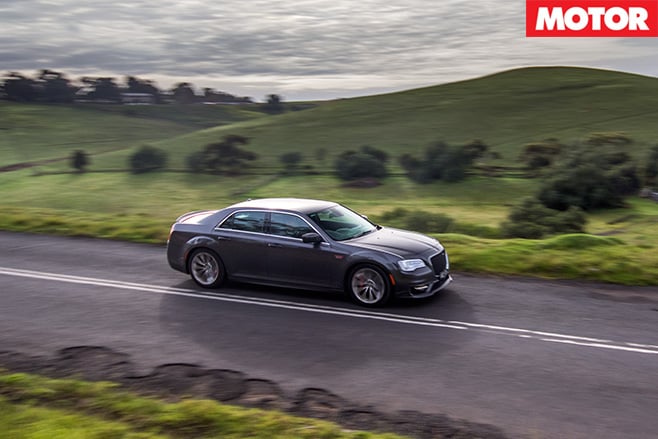
Before setting off, however, we check one crucial thing. Often press cars are delivered with wildly different tyre pressures to what’s recommended – it turns out our SRT is no different. Each corner is inflated six pounds over Detroit’s recommended 32psi – not a disaster, but better to level the playing field. And so it is fixed.
We reach Mount Macedon’s roads and our attention turns to the car’s electronic settings. As a sports sedan that must handle hard driving on top of being smooth-riding transport for five, Chrysler has split its transmission, ESP, suspension, and steering into three modes.
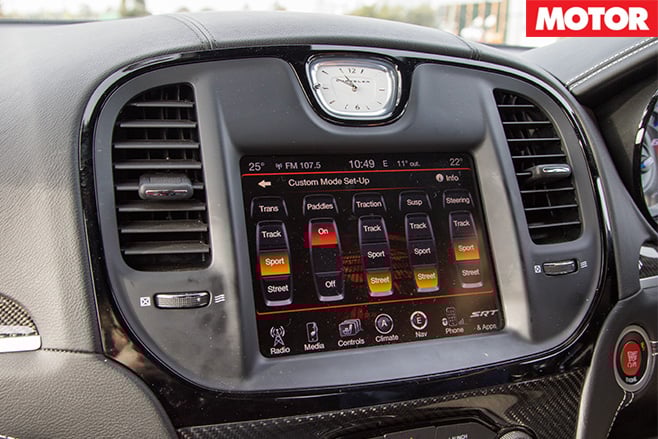
In ‘Default’ mode, the SRT’s most ‘street’ setting, the dampers are fully adaptive. They pay attention to throttle, G-loads, and steering angle to adjust their firmness. Meanwhile the transmission is its smoothest, the steering is at its lightest, and the ESP keeps a keener eye.
Mid-corner bumps are absorbed with nothing but a soft shrug, and the Chrysler remains tenaciously locked on its line. However, as you up the commitment, its weight feels hard to manage and the big brute becomes increasingly hard to place.
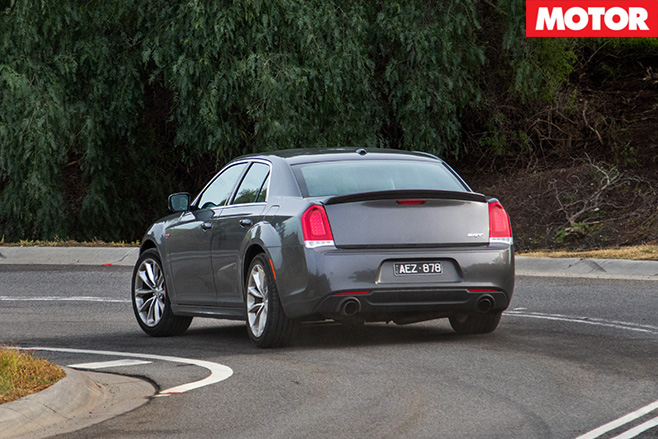
For our last runs, we lock the Chrysler into ‘Track’ mode. It takes few corners to reveal a personality switch from unruly soccer hooligan to heavyweight prize-fighter. Through long corners it hunkers down as you unfurl a god-like racket from its Hemi. As a wallaby confirms after appearing mid-corner, it’s more agile too. It wouldn’t be so lucky in ‘Default’ mode.
However, it’s the ‘Custom’ mode, where you can program each setting individually, that we like the best. We preferred the steering, transmission, and suspension in ‘Sport’ mode, but the traction in ‘Street’.
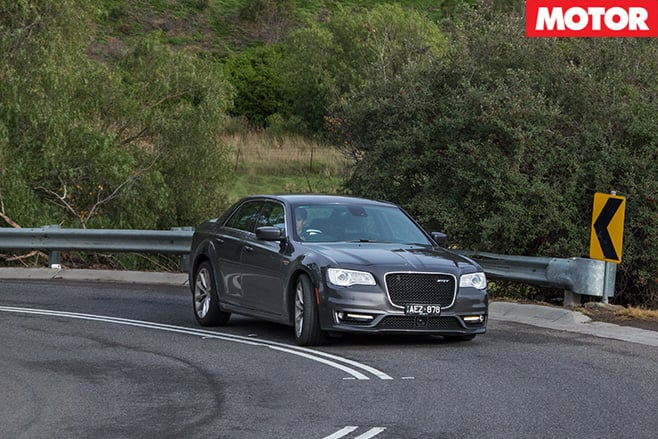
It probably won’t win gold at the Handling Olympics, either, but it’s better than we were expecting. Which, fast forward to anytime past 2017, may be all that matters. Lower your eyebrows, naysayers.
MONTH TWO
LIKED: Dodging a suicidal wallaby. DISLIKED: Meeting its ESP limits; filling the tank. FAVOURITE MOMENT: Being thawed by its heated seats on cold winter mornings.
Fuel This Month: 11.8L/100km Average: 14.2L/100km Distance This Month: 1054km Total: 10,931km
Want to see more of our Chrysler 300 SRT long-termer?
There are Ford people and Holden people. Youu2019re either a BMW man or a Mercedes man. Lambo or Ferrari. Mazda or Honda. Open-wheeler or sedan. Atmo or turbo. We all have our preferences and often we wear them as proudly as colours on a uniform.Frankly I’ve never bought into the whole tribal loyalty thing, possibly because it’s an indulgence you can’t afford as a journalist – something I have been since I was a teenager, when such bonds are usually formed. I simultaneously fell in love with Holden Monaros and GT-HOs, with Beechey and Moffat, with Geoghegan and Matich, with Sandown and Bathurst.
I’ve always loved diversity in cars, and motor racing and music styles, so the luxury of being one-eyed has largely been restricted to footy and a lifelong addiction to the usually less than mighty Dees.
Having said that, I confess to having indulged a guilty preference over the years for BMW and Ferrari, though the latter has been more than tested since Enzo’s passing. And my family has shopped with essentially two marques – both Japanese – so I do understand brand loyalty.
Conventional thinking among motoring enthusiasts, unimaginative and bigoted layabouts that they are, is that Lexi are bought only by fat nouveau riche businessmen. People who would watch The Real Housewives like it was a documentary if they weren’t so busy ripping off us overworked salary slaves so they could afford the bling that adorns their cosmetically enhanced trophy wives.
Surely that can’t be right, though. I recall being in awe of the original LS400, tempted by the ES300, excited by the IS200 and simply captivated by the towering ambition of the Lexus LFA and its howling V10. These were cars built with conviction. Surely there is a loyal following for such a passionate brand? Surely people don’t just buy them because the service guys come around with a replacement car, or you get to drink free coffee at the dealership while tapping into free wifi?
Yet people still don’t seem to know what to make of Lexus. So in starting out on this long-term test, I’m interested in learning more about what Lexus stands for as much as the merits of this particular car.
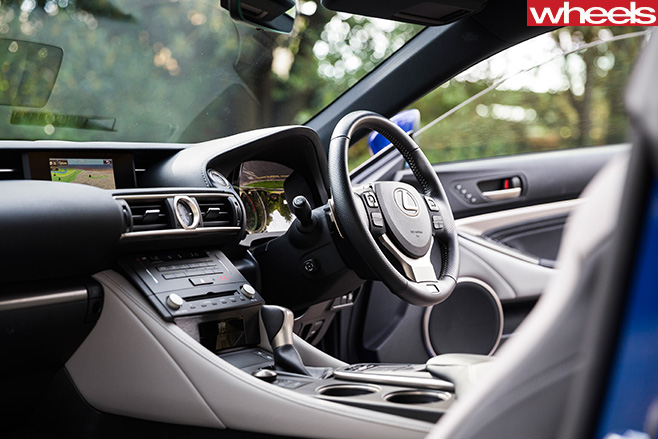
Solid doors reveal a classy interior that’s well-appointed, with plenty of functions to explore and adjust, largely via the now infamous Lexus touchpad controller, which has a huge task to win me over. But it hasn’t taken long to get comfortable in the well-shaped seats, which I reckon will be just as impressive on a long drive.
Ride quality is similarly impressive while the grip levels are so high that it might take some time to find the right environment and confidence to explore the RC’s limits and discover if it understeers or oversteers; at the moment it just feels like the electronics are humouring me into thinking I’m in control while they actually drive the car. Time soon to delve into the menus.
So lots to look forward to. I might even discover the key to the Lexus aura.
What the F-Sport
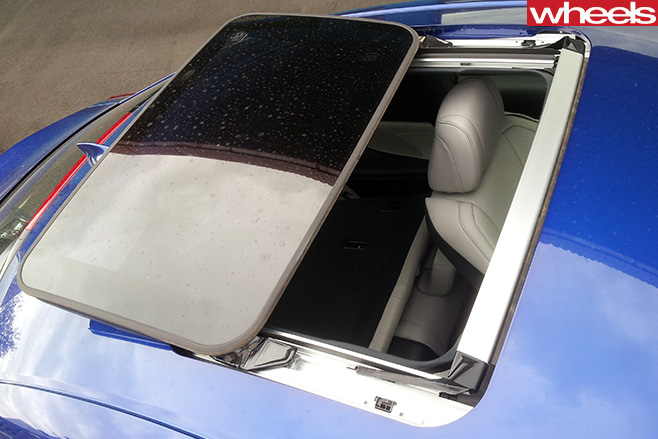
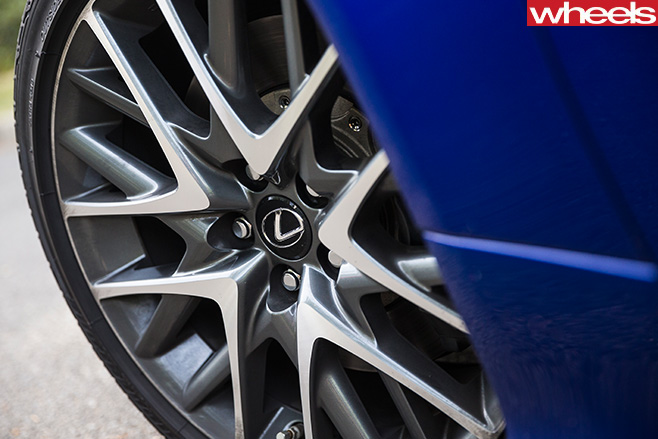
Our blue Lexus RC200t arrives in F-Sport spec, which adds $9000 to the $64K Luxury base model. The extra outlay brings 19-inch alloys, adaptive suspension, a 17-speaker Mark Levinson sound system, different steering wheel, sports seats with memory, LED headlights, blind-spot monitor with rear cross-traffic alert, limited slip diff and Acceleration Sound Control (artificial engine noise). Our car also gets a $3500 enhancement pack that adds a moonroof, lane-departure warning, auto high-beam and a smart key.
Full disclosure
About a decade ago I worked for five years for the public relations company that handles Toyota, and therefore Lexus. So I wrote plenty of press releases about the brand – though not of the gushing variety you might associate with the term PR. Does that colour my view of the brand and this car? Of course not. But I’d hate to think that anyone might consider that once earning a wage from an affiliated company might buy loyalty or colour my judgment.
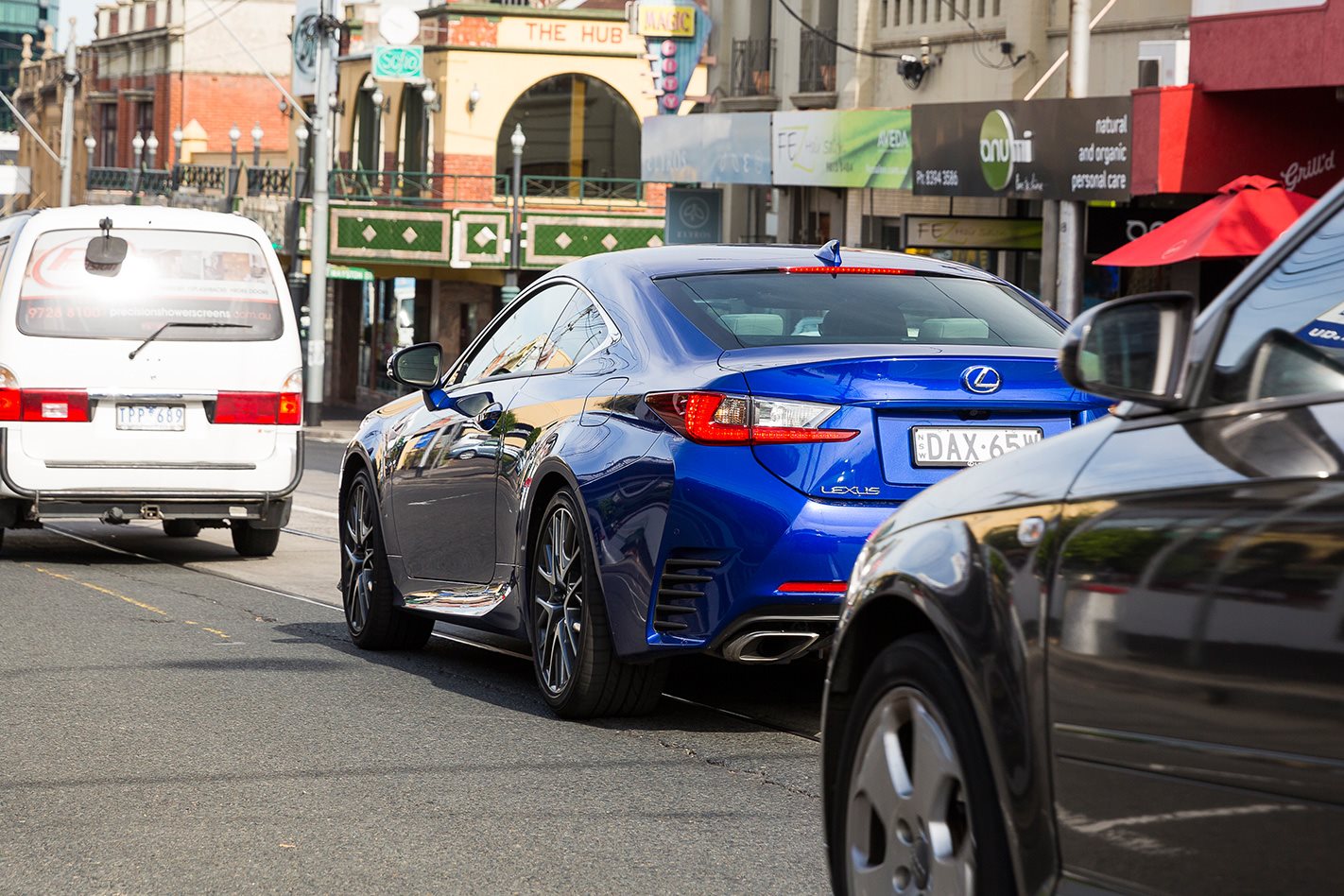
Update 1
Weekend getaway turns into a staunch test for car and driver alike.
I really should have known better. Having decided it was time to give the Lexus a gallop out into the country, my timing couldn’t have been worse. Friday evening before a long weekend is hardly the best time to be escaping the rat-race, especially when the weather has been ordered by Noah.
We’re going to the opening of an art show – I’m supporting an artist friend and trying to appear more sophisticated than I really am – but the traffic betrays my uncouth side. Why the hell are people heading for beaches in the middle of winter? Too late, my daughter advises that the traffic is so bad she’s bailed on a cross-town commitment. Smart girl.
Almost two hours inching along a so-called ‘freeway’ – for which we pay a princely sum, begrudgingly – is a test too far for my notorious lack of commuting patience. They’ve blocked a lane to ease the congestion, which simply extends the mayhem further back towards the office.
I invent a few new cusses.
Still, I’m determined to keep calm. We’ve allowed three hours to complete a one-hour drive, so the better half and I kick back to discuss the meaning of life over a packet of snakes in the vain hope I will calmly sit in just one lane. Of course I don’t, but each time I change lane the one I’ve just vacated suddenly gains pace and I’m left steaming inside while trying to maintain some level of dignity in front of the missus. How do people put up with this every day?
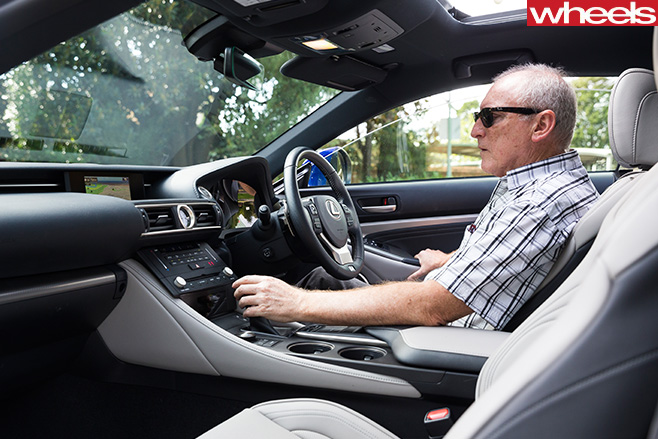
But it proves two things: firstly that the Lexus seats are wonderfully comfortable (and the heating function is greatly appreciated in weather like this, as would the cooling in summer); and secondly that you wouldn’t be without a modern automatic transmission. Manual gearboxes are for dopes. Yes, I’m talking to you Alex, and now that you’ll be travelling daily over the Westgate Bridge, only your Gen Y pride will stop you from agreeing within six months.
Once we clear the Geelong Rd and its salt-water junkies, we point towards Bacchus Marsh and clear the plugs. It’s clear sailing at last and we cover four times the distance in a quarter of the time. The Lexus RC200t is in its element now, cruising quietly, squat on the road, lapping up the miles. We step out after two and a half gruelling hours (at the end of a working week) feeling delightfully fresh and ache-free.
We park conspicuously outside the gallery and those sharp lines and front-end bling turn plenty of heads, but there will be no blue ribbons tonight. The Lexus is certainly eye-catching, but it’s no work of art.
Back seat blues
Twice now I’ve had call to use the rear seat for carrying people as opposed to stuff. The first time, I shoved my step-daughter and her lanky fiance through the tiny opening, where he in particular risked permanent neck damage from being jammed under that sloping roofline. The next opportunity was when we took the poor boy’s parents to dinner, but thought better of it and left the $75K Lexus parked forlornly at home while we schlepped it in their homely Korean SUV.
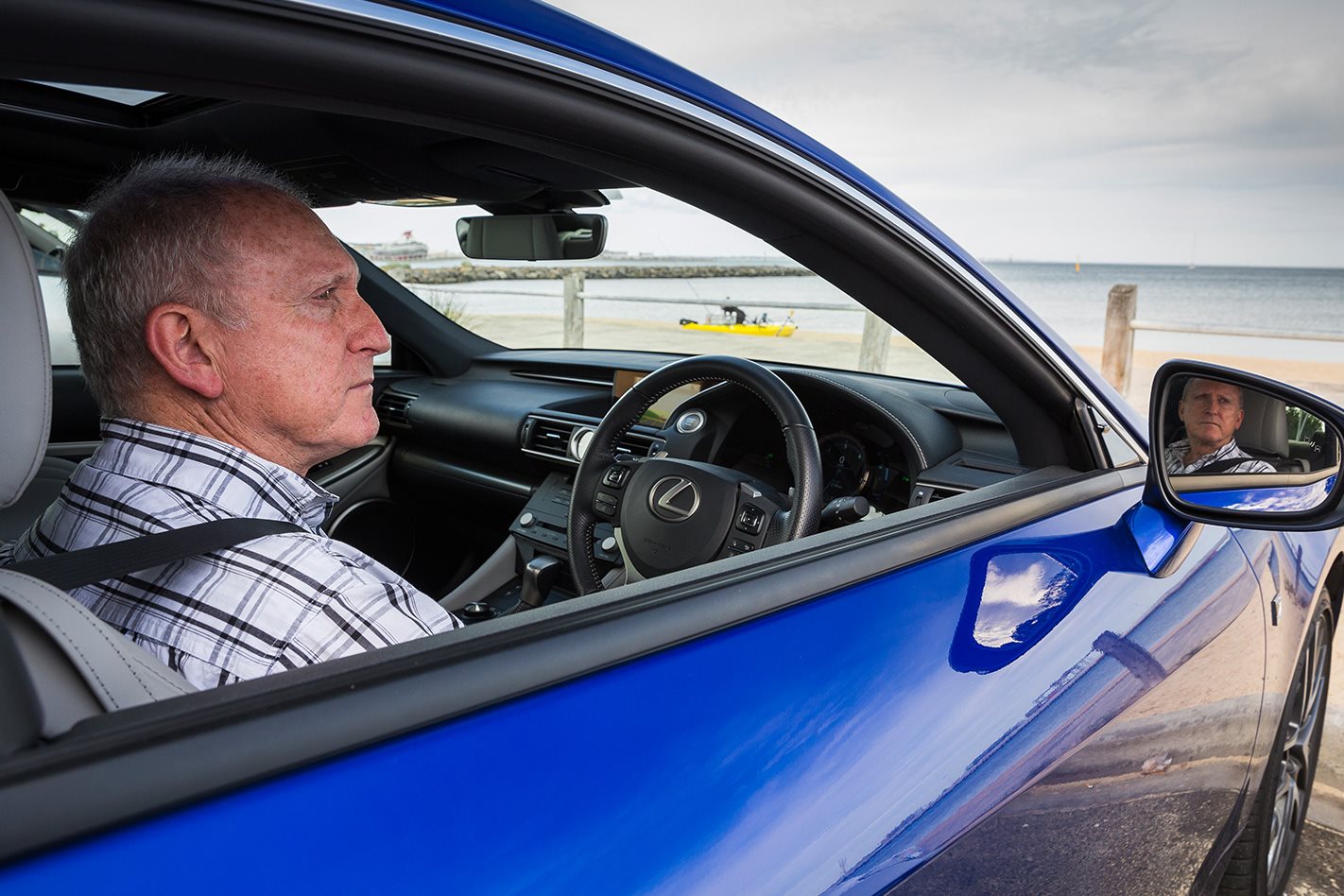
Update 2
Automatic braking is a step forward… and back.
The problem these days with automotive engineers, of the electrical variety at any rate, is that they seem to think they’re so much smarter than the rest of us. And that they need to save us from ourselves.
They seemingly won’t be happy until cars are completely autonomous, removing the one variable – the mug driver – from their otherwise perfectly organised world. And, as we all know, they are close to their automotive nirvana, though quite how that will actually work is another matter.
Now call me old-fashioned – you wouldn’t be the first – but I quite like driving a car. I enjoy being in control of it, going as fast as I choose, as close to other cars and the scenery as I feel appropriate, choosing how much throttle, brake and steering is required to get from point to point in the smoothest, fastest and most efficient way possible within the constrictions of the real world with all its unpredictable variables, like those other mugs on the road.
But auto engineers don’t seem to share my view. And I reckon they (and the legislators who seem determined to remove all variables from life) are simply dumbing-down motoring. Driving is no longer regarded as a skill you need to learn and hone, but an activity that requires us to switch off our brains and blindly follow the pack. No wonder standards have plummeted.
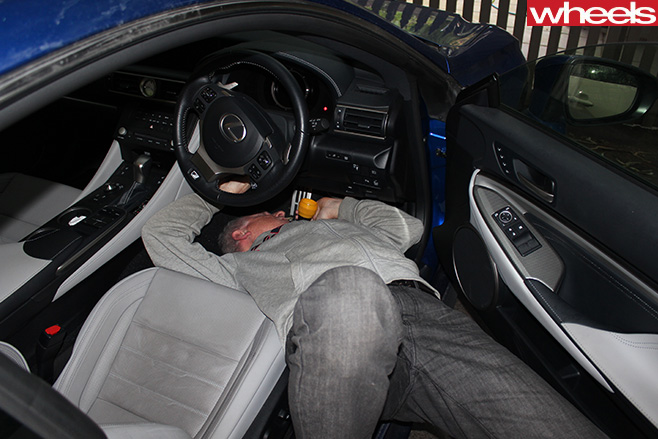
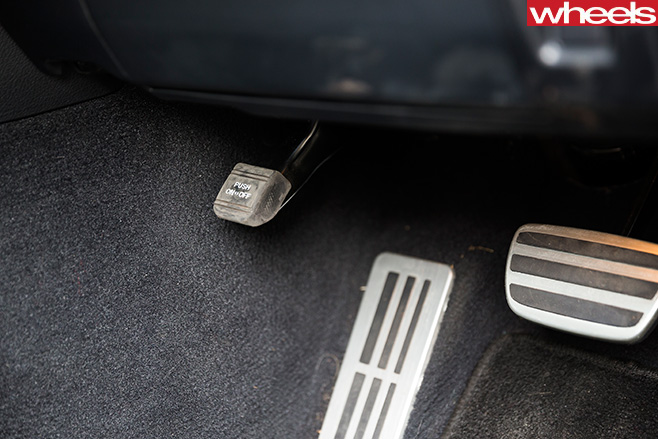
Most disconcerting is the autonomous auto braking, which Lexus embraces under the term Pre-Crash Safety System – and that’s important to know to find it in the 620-page owner’s manual (plus another 500-page volume just for the sat-nav!). I needed to find out how to turn it off, but the PCS button clearly illustrated on page 292 is somewhat hard to find in reality, being hidden under the steering column near your ankles.
Why would I want to turn off such a valuable safety device? Because it’s trying to cause an accident, that’s why. It simply doesn’t trust me. I know I drive to tighter margins than the average punter, but when I get a perfect run to overtake the car in front going up a hill, indicate and pull out, the last thing I need is for my car to have a hissy fit, shout at me and brake heavily while I’m out on the wrong side of the road.
Thankfully the kind man at Lexus told me how to find that elusive PCS button so it’s now turned off for good. But I’m sure they still think I’m a mug.
Response begins with a naughty word
The most annoying nanny in the Lexus on a regular basis concerns the throttle, which goes to sleep when you stop at the lights. Even with idle-stop turned off, it has no respect for your reaction time; predict the light sequence, gun it as soon as they go green and then… well, bugger-all for a second. As even little buzzboxes alongside surge ahead, you sit waiting for all that torque to kick in before suddenly whooshing away as if you’d been daydreaming. Seriously, what’s the point of developing all that turbo tech for instant throttle response only for the electronics to kill it completely?
Update 3
Downsizing not so tantalising, but DAB’s an evolutionary revelation
Human beings depend on five senses that prevent us falling out of the evolution tree, but the rockstar senses are sight and sound. They’re the lead singer and guitarist, and so score the hot groupies. Smell, taste and touch can make their own arrangements.
It’s the same with cars. What I really focus on are their looks and the noise they make. I’m not excited about a big-nosed SUV with a piddly exhaust, and I bet you’re not either. I want curves and presence, and a noise that makes me tingle and drives me. I want to hear a wailing V12, a snarling V10, a burbling V8.
But modern cars are increasingly powered by turbo four-cylinder engines, as in the Lexus RC200t. Powertrain engineers may prefer a big atmo engine, but the demands of economy and emissions requires downsizing. So, to appease us sporty types with the old-fashioned expectation of aural satisfaction from burning fuel, we get artificial ‘sound enhancers’.
Put the RC’s equally digital drive selector into Sport mode, or the even more promising Sport+, and the sound is amplified, but not from the mechanical bits under the bonnet. No, it’s coming from speakers inside the car.
Without going to the extreme of those aftermarket gadgets that can make a Fiesta sound like a Ferrari inside, Lexus can’t allow the turbo four to sound as satisfying as a V8 or even a V6.
At least the Lexus rewards the sonic sense in another way, courtesy of digital radio and a mighty 825w Mark Levinson surround-sound system with 17 speakers.
I’d always thought DAB was a con, but now I’m hooked. Digital radio is literally music to my ears, at least until they stuff it up by packing the dedicated channels with more ads. Not only do I get more music and less of those loathsome ‘zany’ morning crews, I get to drive home with Alice Cooper.
Just as I now wouldn’t want to live without cruise control, auto climate control and heated seats, I’m won over by DAB’s fabulously crisp sound and largely ad-free programming.
Beyond the mundane five senses, there’s an important sixth, and it has nothing to do with seeing dead people. I’m talking about common sense, which to me suggests that what I feel and hear should be authentic, not replicated. Otherwise I’m not really feeling it or hearing it at all.
Then again, what would common sense know? It’s not that common anyway.
Playing with our sense of touch
One of the downsides of digital radio (and the sat-nav) in the RC is the need to navigate all those stations via Lexus’s dreaded touchpad. I’m talking about the sense of feel, of which the pad pretty much has none. So I fumble about clicking all sorts of things by mistake. It’s worse for us right-hand-drive markets, because we sit on the ‘wrong’ side, for right handed people at least. Imagine using your left hand on a computer mouse with its sensitivity set on the fastest speed. That’s how the Lexus touchpad feels.
Update 4
Extra kilos blunt sporty aspirations.
Imagine having a sexy performance coupe that impresses your friends, but having to drive it around with three of them in the car. All the time.
That’s what the Lexus RC200t feels like, because it’s some 230kg heavier than the rival BMW 430i that also has a 2.0-litre turbo four and develops a similar 185kW and 350Nm. That’s a lot of extra weight to cart around, and it feels it. Even the equivalent Audi A5 has a 150kg advantage, and it has the added complication of all-wheel drive.
On the plus side, all that extra weight makes the RC feel really solid, as if the car has been machined from a billet of steel. Maybe it has. It certainly doesn’t feel like a glorified Toyota, no matter what the knockers say. Lexus has always prided itself on build quality and clearly doesn’t mind beefing up to achieve that aim.
Against the stopwatch and zipping around the suburbs, though, there’s no escaping that burden. Sprinting from 0-100km/h, the RC200t is an astonishing 1.7sec slower than the BMW 430i (7.5sec versus 5.8sec) despite being virtually line-ball in terms of outputs and ratios. Then the brakes have to work hard to bring it to rest again. It’s all down to those three porky virtual mates it has to haul around all the time.
Opting for the same package in the four-door IS200t saves about 45kg, which slashes half a second from the sprint time, as well as $7500 from the price. The sedan brings the convenience of smaller doors (with proper window frames so there’s no door-shut rattle that comes with the coupe electrically snapping tight the side glass), better rear-seat access and improved vision, though with a slightly less rorty exhaust, higher seating and less jetfighter-like cockpit. And, of course, less presence. The coupe really does catch the eye.
Seatbelt holder a simple joy
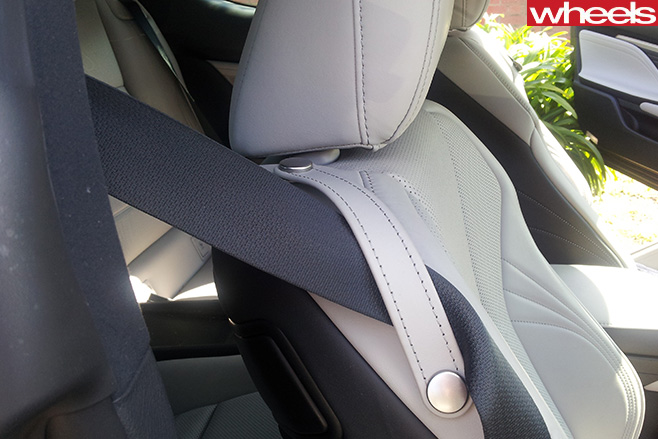
A nice touch is the design of the seatbelt holders located on each front seat. An annoyance with coupes for generations was having to stretch back to reach the belt, but this solution is both simple and practical. It’s just a leather strap, sewn in at the top and located at the bottom by strong magnets, so it holds the belt close to hand yet is easily moved out of the way when you need to flip the seat to access the rear seat. Not as flashy as Mercedes’ automatic stretching arm, but just as effective.
Update 5
Getting closer to the RC, but not much closer to clarity.
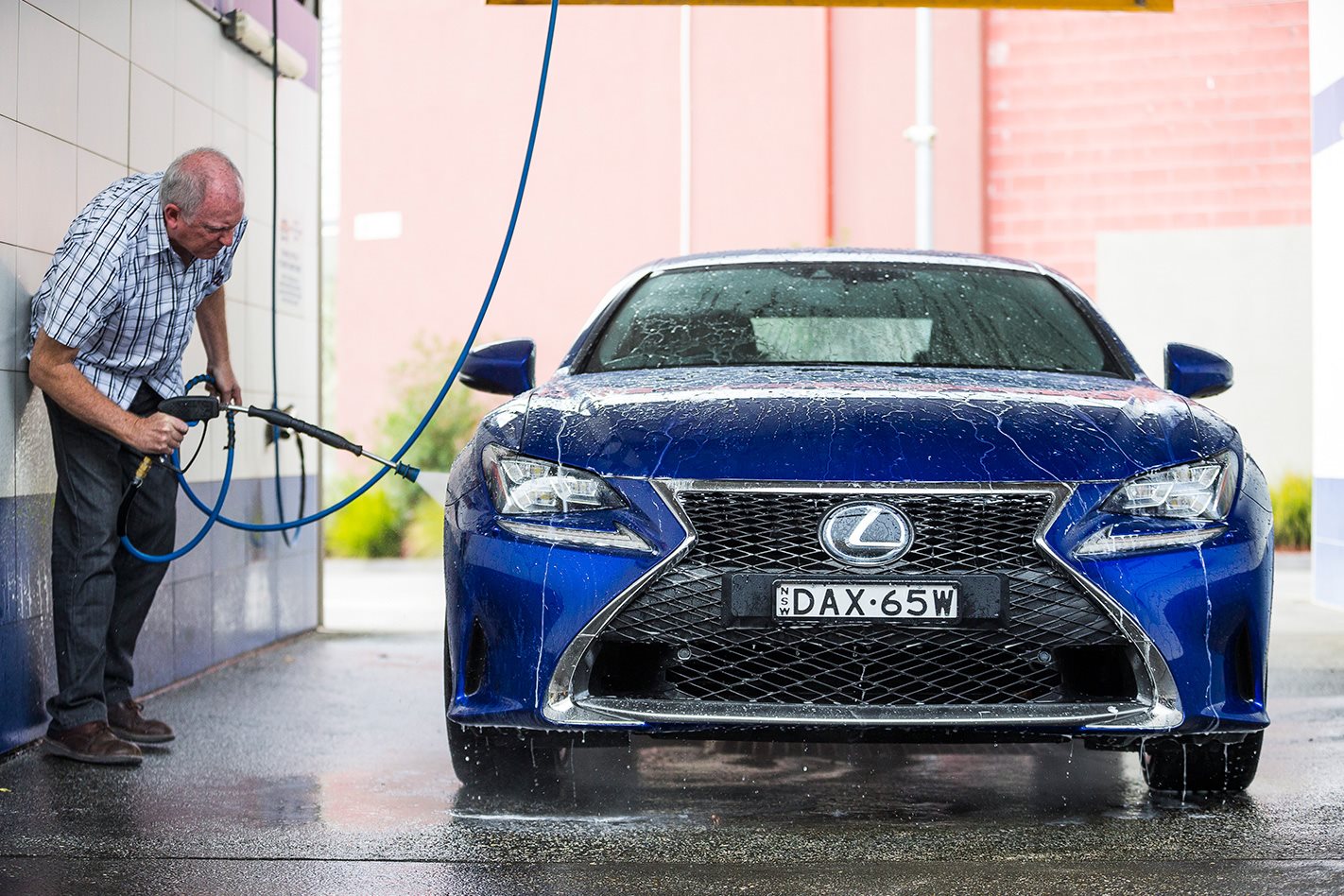
One of the best things about parting company with a long-term test car is the final tub. I like to do it by hand with a thin cleaning cloth, so you feel every sinew, curve and edge. It’s really quite intimate, and you get to appreciate things that might have escaped you in the hurly burly of daily life.
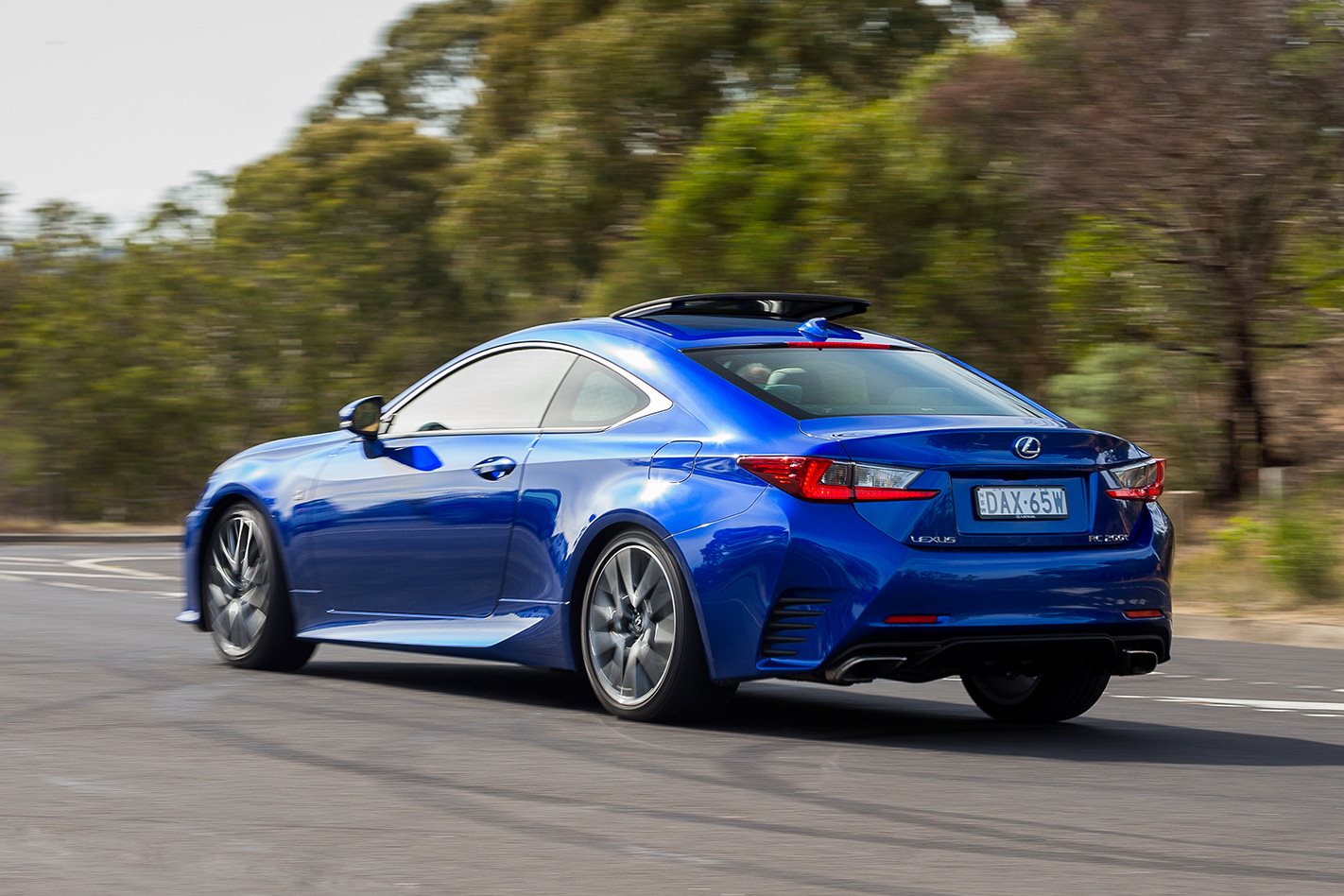
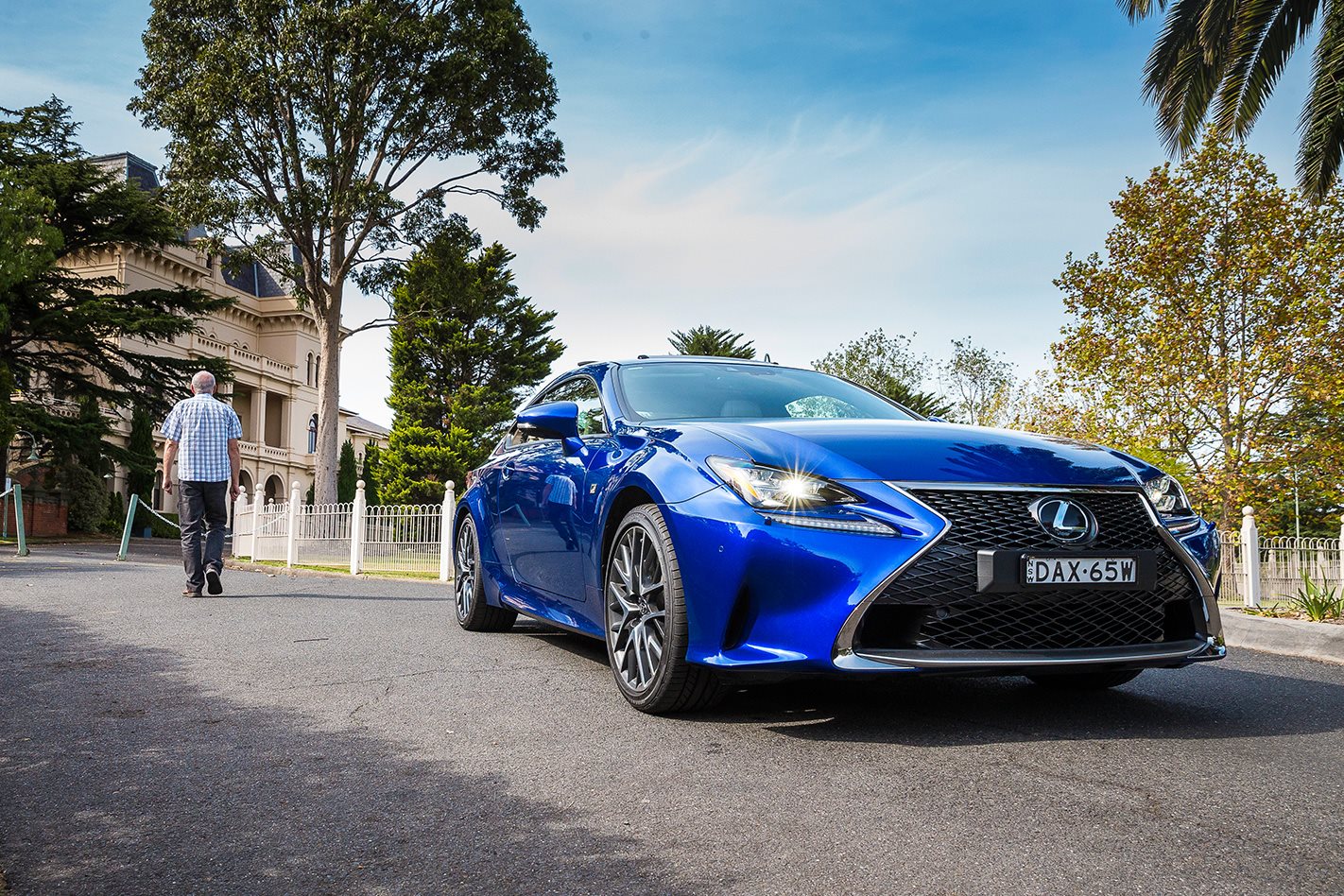
For example, I haven’t often stopped to appreciate the Lexus RC200t’s butt. Usually I only ponder the edgy front end, which never really won me over, but those sleek tail-lights, square exhausts and straked vents behind the rear wheels are the business.
Another thing that struck me as I worked my way down its flanks and over the bonnet is how small this coupe is. It shouldn’t have come as a surprise really because it’s low and short – shorter than the IS even – but as I discussed last month, the RC carries a couple of hundred kilos more than its major rival and therefore tends to feel big and heavy. Solid certainly, but hardly lithe.
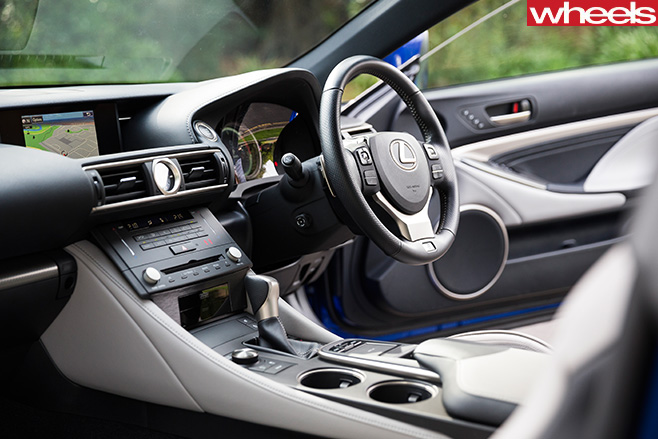
Moving into the cabin with a damp sponge, I was also reminded that I’d never opt for light-coloured leather upholstery. Just as the editor found with his Mazda MX-5, my Lexus seats were looking decidedly grubby after only six months as they accumulated dye residue from my black jeans. At least I hope that’s what it was.
To be honest, I’ve never been a fan of leather seats – they feel cold in winter and burn in summer after you’ve been parked in the sun, then continue to be sweaty – but the RC’s heating function through the cold months on our fleet were certainly appreciated by driver and passengers alike. Leather looks great, especially in a darker colour, but I’d still elect for cloth trim from a purely practical perspective.
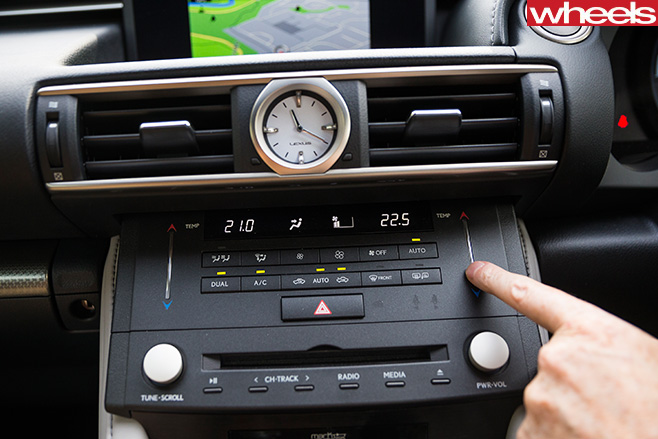
At the wheel, I’m also reminded of how snug the cockpit feels. It really does feel like a fighter jet with its low seating position, high armrest and equally high centre console decked out in thoroughly modern switchgear (aside from the ‘analogue’ clock, which is a classy touch and not just retro).
Maybe in hindsight I needed to experience Lexus’s renowned servicing and customer relations to fully appreciate the brand. Or do people just buy a Lexus to be different, to avoid the predictable European brands, or because they like some flashy bling?
I’d be more inclined to the RC200t if it was a lot lighter, lost the foot parking brake and infuriating touchpad, and became authentic instead of having the electronics influence everything you do, feel and hear.
Maybe a lack of authenticity has been Lexus’s problem all along and it’s yet to find its true passion. A sports coupe this heavy, which doesn’t allow you to drive it properly, is not an authentic sports coupe at all.
Turbo four versus atmo six
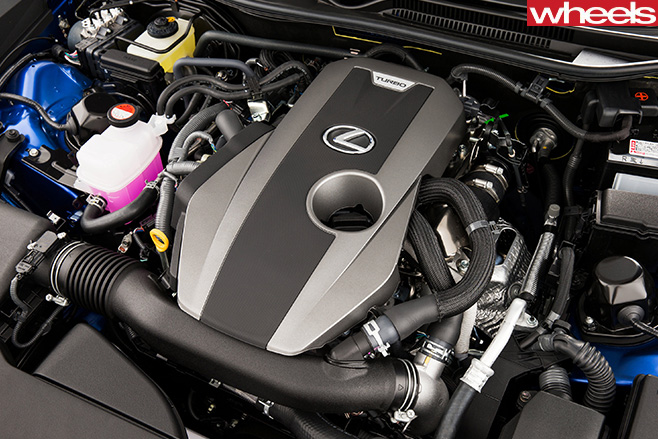
But Lexus still offers a 3.5-litre atmo V6 in the RC and I reckon it would be worth the extra $3000. It only adds about 15kg to the nose of the car, which is not a lot when the RC is already way over the odds, and you get an extra 53kW and 28Nm, slashing the 0-100km/h sprint time from 7.5sec to just 6.1. On paper, the RC350 uses an extra 2.1 litres for every 100 kays, but looking at our long-termer’s six-month average of 11.2L/100km, I’d bet the difference would be less than that in the real world.
You need hair on your chest if you want to realise the full potential of Ford’s new GT. lt lives up to the gran turismo image in the best way – like a gentleman.
First published in the September 1968 issue of Wheels magazine, Australia’s best car mag since 1953.
IF ever an Australian-built car deserved the title of GT it must be the latest Falcon GT. In the most grandiose, big, beefy way the XT series Falcon GT with its 230 bhp, V8 burble is a true grand tourer in line with the best British and Continental makers can dish up.
But just as the Falcon is a thunderous GT, it has an entirely schizophrenic nature which changes as the driver’s mood changes and can become the mildest and least obtrusive shopping buggy or commuter transport.
The XT GT is far more refined than the original Ford Falcon XR series yearFalcon GTs which took out honors for Ford in the 1967 Gallaher 500. The XT series does not subscribe to the hackneyed idiom of “any color as long as it is bronze” either. It comes in a wider choice of white and blue, as well as the ubiquitous gold. However, the GT stripes remain to distinguish the XT series.
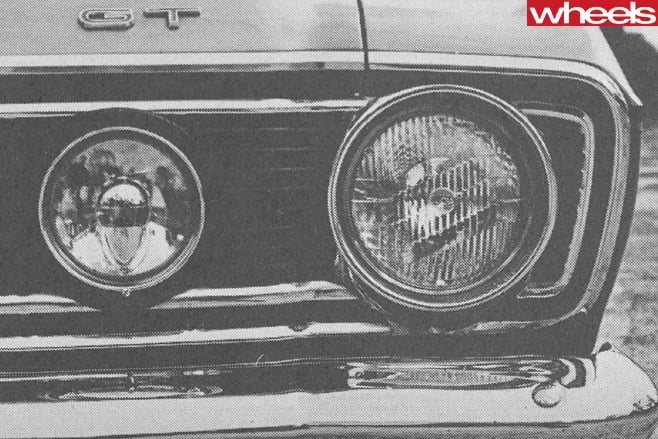
The first, and most lasting, impression of the GT is how completely quiet and docile it is from either the driver’s or passengers’ seats. The car is largely wasted for around town, commuter work – although very desirable just the same – and it is not until you try some fast, open highway driving that you can fully appreciate the GT’s capabilities.
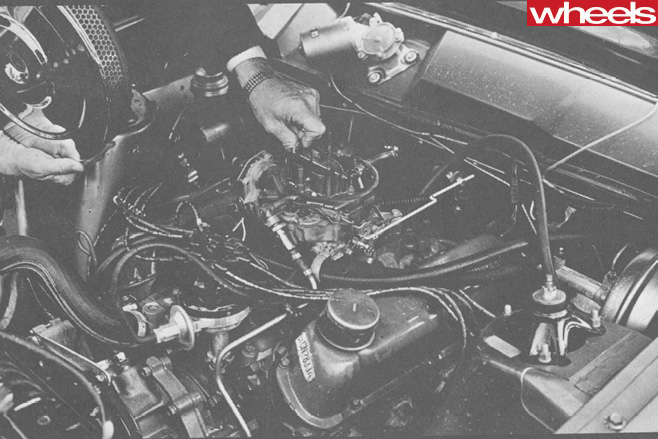
Using the new 302 cubic inch motor of the XT VS series, the Falcon’s power is up 5 bhp to 230 bhp which rates as 20 bhp more than the optional 302 ci engine used for the Falcon 500, Fairmont and Fairlane.
The torque band of the V8 is quite astounding and even with the few “hot bits” to extract the added power for the GT, the engine is absolutely smooth and will pull away from 500 rpm in top (12.5 mph or 400 rpm less than the GT’s idle) without the slightest hesitation and with more acceleration than any four-cylinder cars would have in second. The engine is in fact far smoother and has better torque than the comparable GM-H V8. From the dead low of 500 rpm it will just rush up to a limit of 5250 rpm (tacho redline) which in gears is equivalent to 47 mph in first, 69 in second and 97 in third. Above 4500 rpm there is a slight taper off.
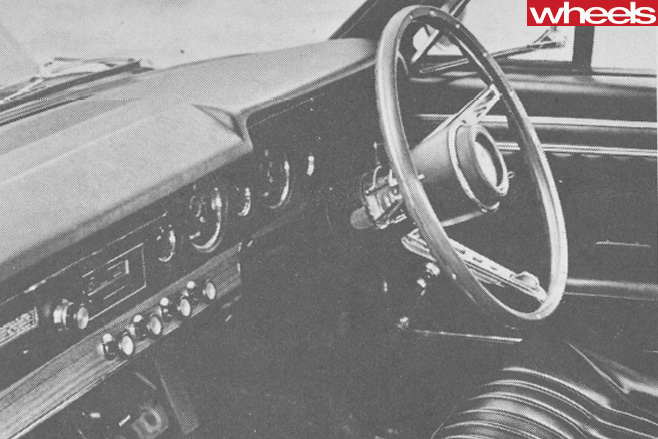
However, we found a rattle from the gear lever with power on most annoying. To control the power at the tail there is a limited-slip differential with a special 3.0 to 1 final drive which is exclusive to the GT – the other Ford VSs use a 3.23, with a 3.50 in the sixes. Wider-than-standard rims carried on normal 14-inch centres are shod with radials – Michelin XAS on the test car.
The GT has been lowered all round with increase rate springs for better handling. In the handling department the GT is quite exemplary for an 111-inch wheelbase car. Even in slippery conditions it has good reserves of adhesion of which we credit the tyres for a large part. But despite the big power only sheer hamfistedness or stupidity will get the tail dramatically sideways. On dirt the story is different as a tap on the loud pedal has you grabbing for opposite lock, albeit in a reasonably controlled manner. However, we feel that where the Falcon has been set-up tor a fast type of handling which can be “iffy” in the hands of novices the equivalent Holdens we have driven to date (and we imagine the Coupe will follow suit) are immensely predictable and for want of a better word “chuckaboutable” if somewhat slow when it comes to speed handling.
At speed the steering is ideal. A small wood rim, alloy spoked wheel which really requires the use of gloves gives precise control over just where the front wheels should be pointed and although the nonpower-assisted 16-to-1 ratio is too heavy for parking, it does let the driver have full feel over the steering to the extent that kickback will start when the alloy spokes dig into an unbegloved hand. Three horn presses are set into the alloy spokes, and the centre boss is heavily padded.
The GT rates highly as a fairly complete car on the equipment side. A heater-demister and the two fresh-air vents normally provided on a Ford Falcon are standard. Two Lucas Ranger driving lamps have been set into the all-black grille. Unfortunately only one worked on the test car, but with both going, and both well set, their worth is undeniable. They had been wired into the dipper circuit to extinguish on low beam with a further isolating switch similar to the wiper switch on the facia; certainly the best way of wiring. A boot light comes as standard even if a glovebox light doesn’t. The seat belts were of the lap sash type in the test car and were fiddly to operate. When you eventually adjusted the two sashes separately, they inevitably loosened themselves after 10 minutes’ driving.
One grave omission from a driver’s car of this calibre is a headlight flasher. The seating is very good and light in character with the luxury, effortless grand tourer that this Falcon is. The front squabs are fully-reclining with a further large vernier knob to give smaller adjustments for rake. Good support under the thighs means you step from the car after long distances quite fresh. The two-speed wipers and power washers work well until the top end of the speed range where, despite the best efforts of Ford’s engineers, the twin jet-per-wiper washers have their water blown off the screen and the wipers have a real struggle to move back and forth in contact with the screen.
Taking what we did see of the car, from its lusty but smooth V8 power to its taut suspension, from its precise gearbox, to its big, cushy seats and black trim the GT Falcon struck us as being one of the best integrated present day cars to follow in the true gran turismo tradition.
Check out Wheels Archive online now for other great Ford Falcon features and more from decades past!
Simply log in here using your existing MagShop account or create a FREE account and select this article from the homepage.
Don’t have a MagShop account?
Have a MagShop account?
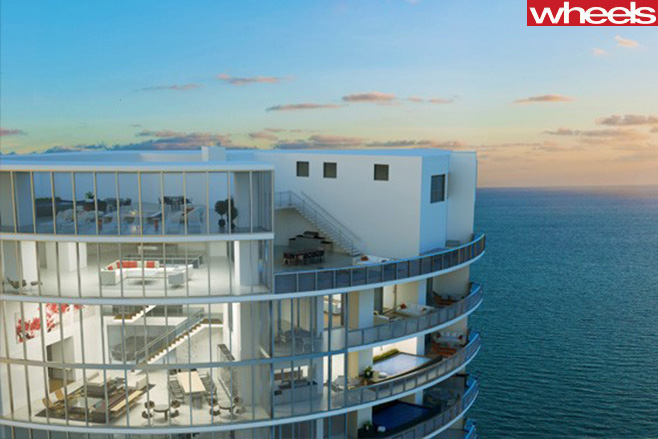
IMAGINE driving your dream car under a 60-storey building and into a large elevator that whisks you both up 50 floors to the ‘sky garage’ in your luxury apartment overlooking the Atlantic Ocean.
With the global financial crisis being so 2008, this will soon be a reality for mega-rich residents of Porsche Design Tower in Florida, a property venture involving the German brand that makes its iconic roadsters look a little humdrum.
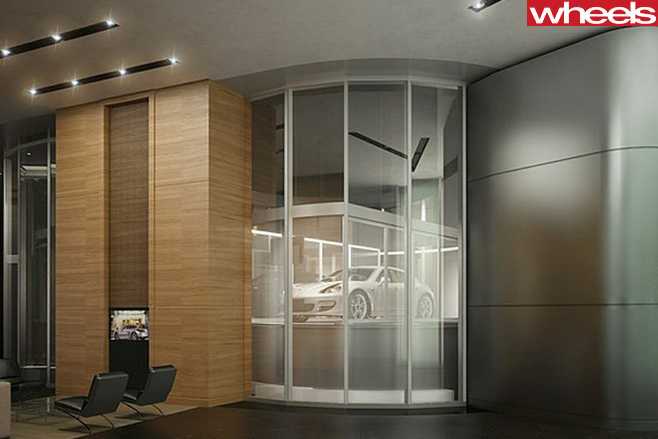
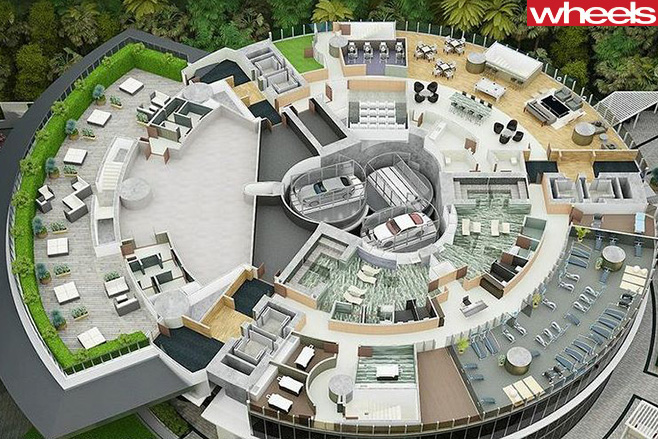
Dezer figures anyone who spends six-figure sums on a car probably wants to sleep with it, so each apartment has a car elevator and at least two parking spaces in a ‘man cave’ separated from the living area by a glass wall.

If for some reason you tire of checking out your ride – which, by the way, doesn’t have to be a Porsche – you can take in ocean views through the floor-to-ceiling windows; book the “car concierge” to change the oil and rotate the tyres, or head down to the multi-purpose clubroom to play virtual golf or race your rich buddies in a four-car race simulator.
Never has a car been more appropriately named than Koenigsegg’s Agera XS.
Equally appropriately, it’s heading to the land of excess as the first Koenigsegg to be homologated to be driven on US roads.
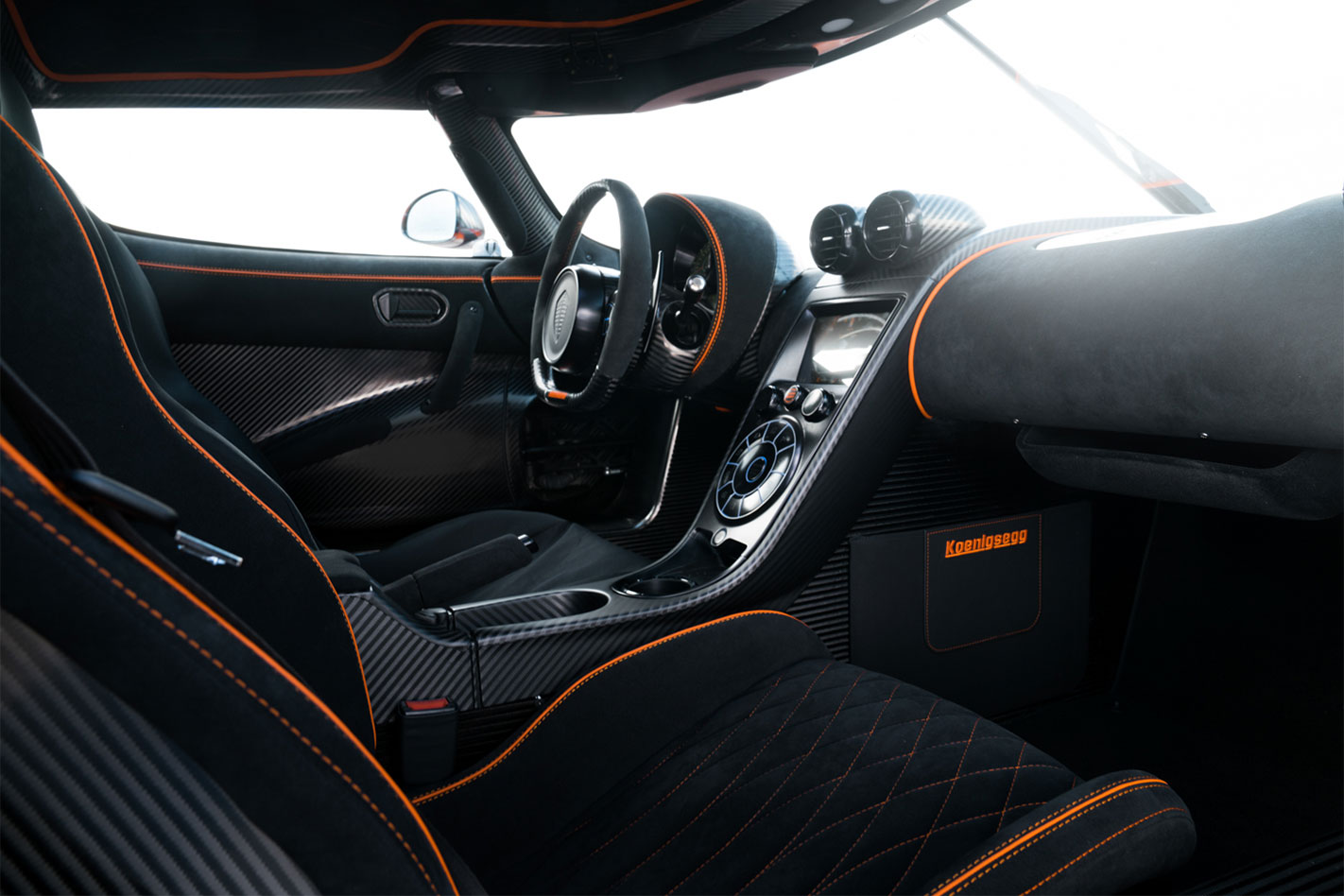
The Agera XS is more or less the same as the ‘regular’ Agera underneath, which means a 5.0-litre twin-turbo V8 sending 865kW to the rear wheels through a seven-speed automated manual transmission.
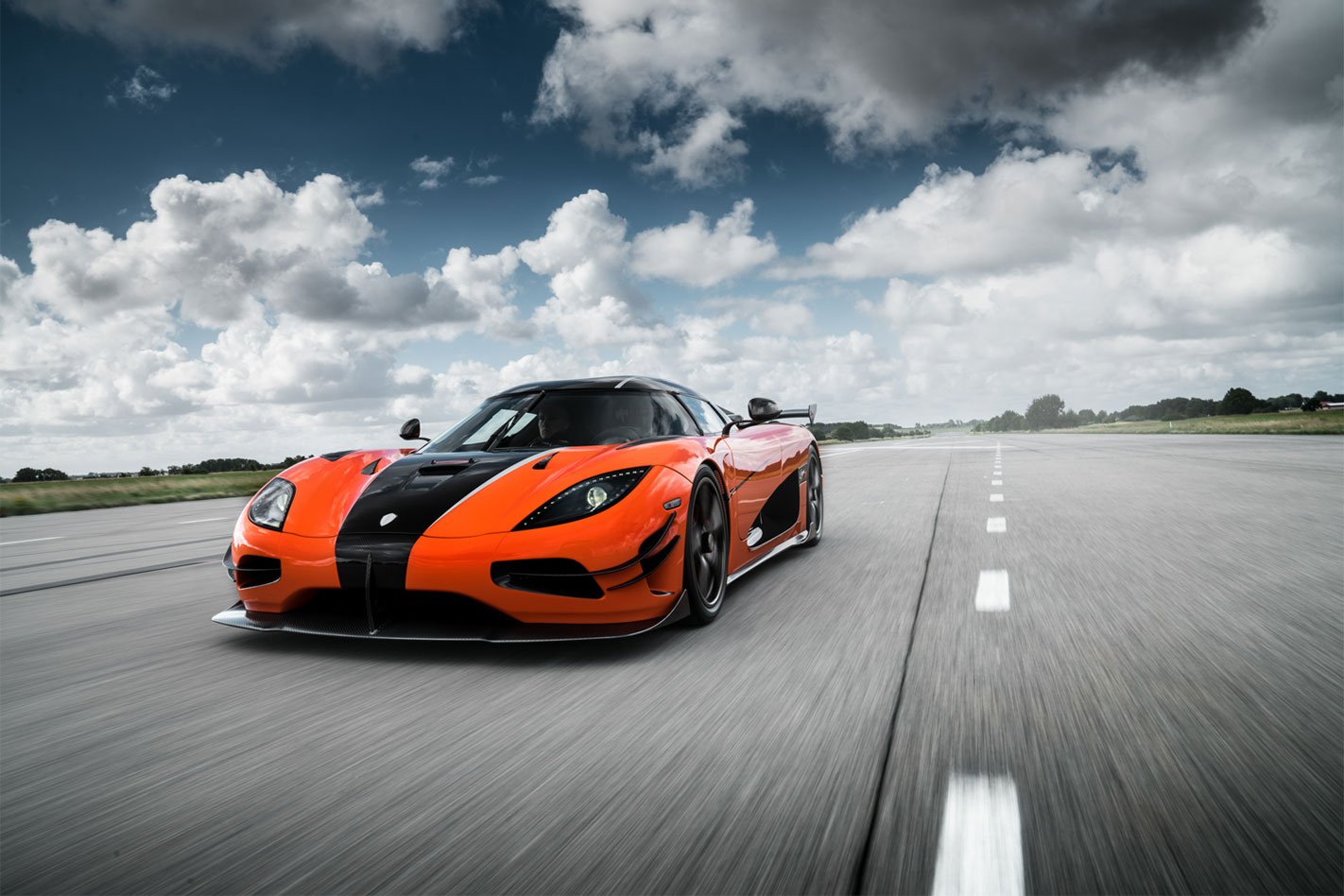
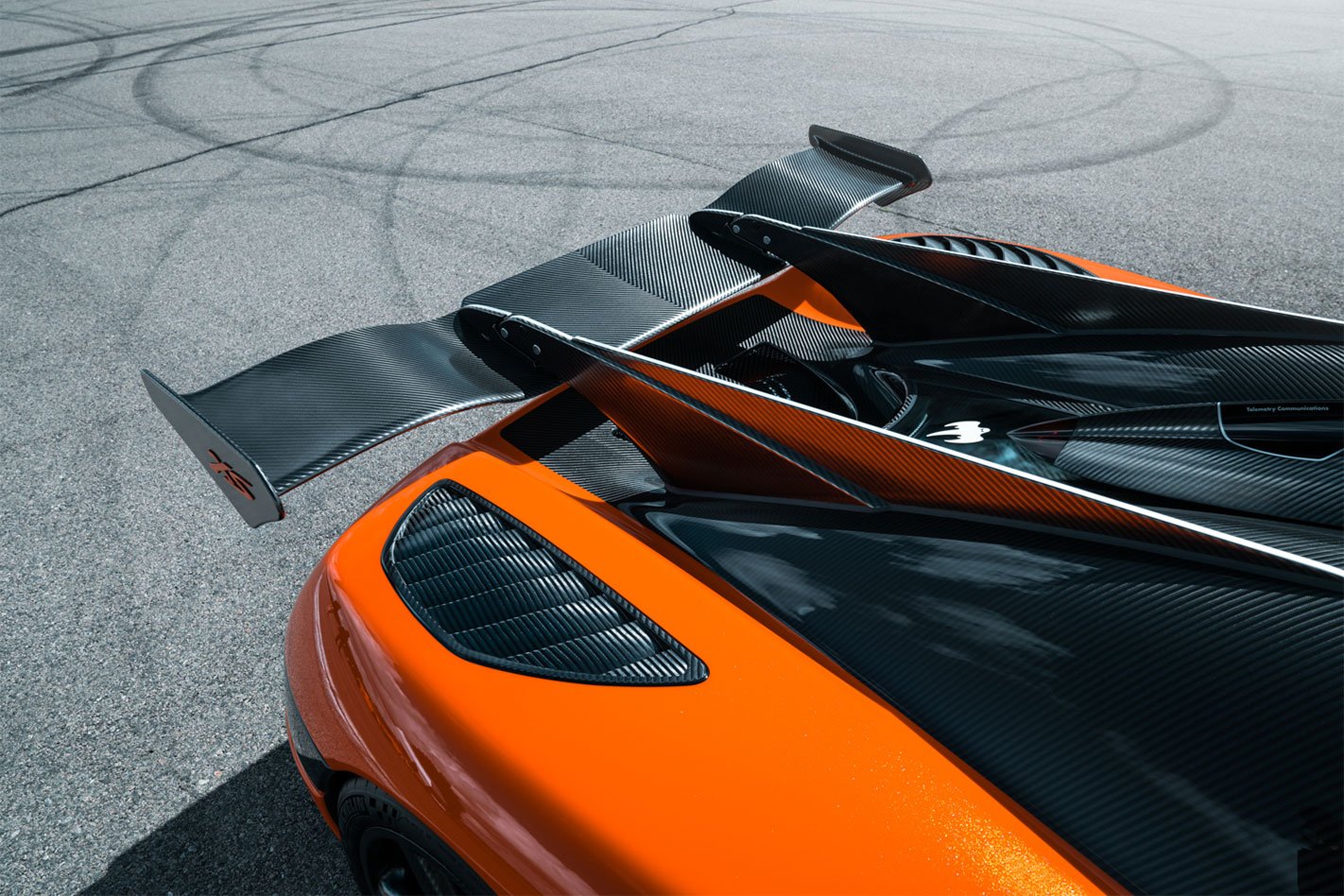
The XS features a bespoke aerodynamic setup inspired by the One:1, including the biggest rear wing ever fitted to a Koenigsegg at the request of the owner, because everything is bigger in the US.
1. The Colorado ute forms the basis of an SUV, the Colorado 7, with the 7 referring to the number of seats in its unique SUV body. However, the new model will adopt the Trailblazer name, helping distance it from the ute it’s based on.
2. The current shape Colorado (codenamed RG) first arrived in Australia in 2012. It was late to market because of the financial woes and bankruptcy parent company General Motors faced after the GFC. Insiders suggest corners were cut during development of that early car to contain costs for the struggling GM.
3. Holden continues to offer only a diesel engine with the Colorado. The last time Holden offered a petrol engine was with a 3.6-litre V6 engine sold up until early 2012.
4. A glance at the specifications would suggest Holden hasn’t updated the engine of the Colorado; it still makes the same 147kW and 500Nm (in automatic guise) it’s made since late 2014. However the engine now meets stricter Euro 5 emissions standards and has had major work done to improve refinement.
5. All Colorados now come with digital radio tuning and Apple CarPlay and Android Auto. The LT-Z and L71 get an 8.0-inch touchscreen, while other models make do with a smaller 7.0-inch screen.
6. The Colorado gets a new look from the front. But the windows, front guards, doors, roof and tray are unchanged from the model that arrived in 2012.
7. The Colorado is the only ute in its class that can be started remotely via the keyfob. Automatic versions of the Holden Colorado LT-Z and Z71 can be started automatically, allowing the car to be heated and cooled before the driver gets inside.
8. Like most work utes sold in Australia the Colorado is produced in Thailand. Much of the engineering work was done in Brazil, with Australian engineers playing a big role in development of this updated model.
9. When you open the front doors of the Colorado the windows lower by a few centimetres. It is designed to reduce pressure in the cabin when shutting the doors, making them slightly easier to close.10. Manual versions of the Colorado make slightly less torque than the auto models (440Nm versus 500Nm). The engines have been detuned slightly because the six-speed manual isn’t rated for the higher torque output.
11. Some of the switchgear from the Colorado is shared with the Holden Commodore. The stalks for the indicators and windscreen wipers, for example.
12. Holden’s work ute was previously called the Rodeo. However, that name was owned by Isuzu (with which Holden jointly developed the previous model) and following a split in business dealings between the two car makers it was no longer available to Holden. The Colorado first appeared in Australian in 2008.
13. The updated Colorado has more factory-approved accessories (bullbars, driving lights, snorkels, etc) than any Holden over the company’s 68-year history.
14. The Colorado gets electric power steering, which is more fuel efficient than the old hydraulic setup. It was tuned using learnings from the VF Series II Commodore that was released in 2015.
15. Holden no longer refers to the Colorado as a ute, instead adopting the more American “truck” descriptor. However, it was only a few years ago when a last minute marketing plan to call the Colorado a truck was dropped. At the time a senior Holden executive claimed Holden would never call the Colorado a truck.
The likely replacement for the Australian-made Holden Commodore is edging closer to completion, as the clearest shots yet of the next-generation Opel Insignia prove.
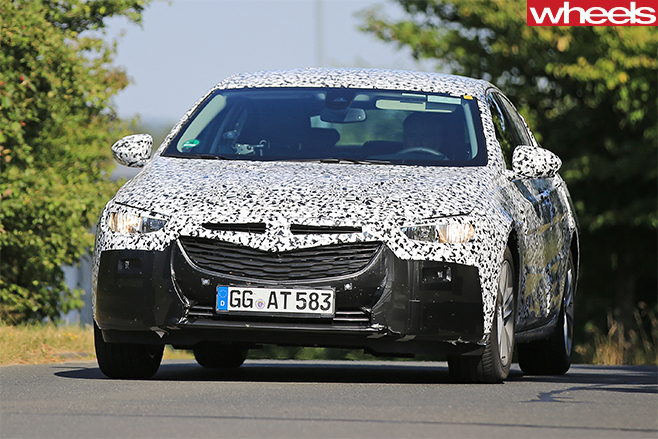
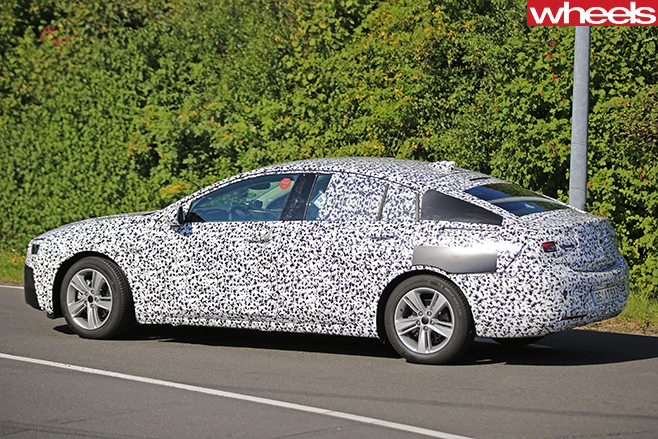
While there’s still plenty of disguise going on, the images do reveal front-end and side-flank elements in greater detail than ever, confirming the midsizer’s move towards a more angular shape compared to its 2008-vintage predecessor.
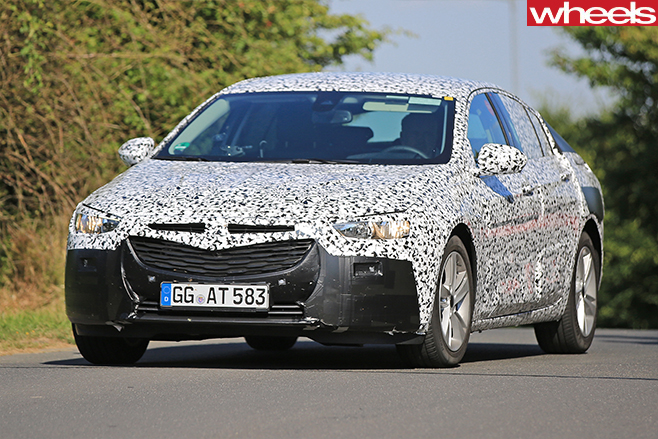
The production Opel (and possibly US and China-market Buick Regal) versions are expected to have their world premiere within the next three months or so, with the Holden iteration hitting Australian shores straight after VF Commodore manufacturing ceases in the final quarter of next year.
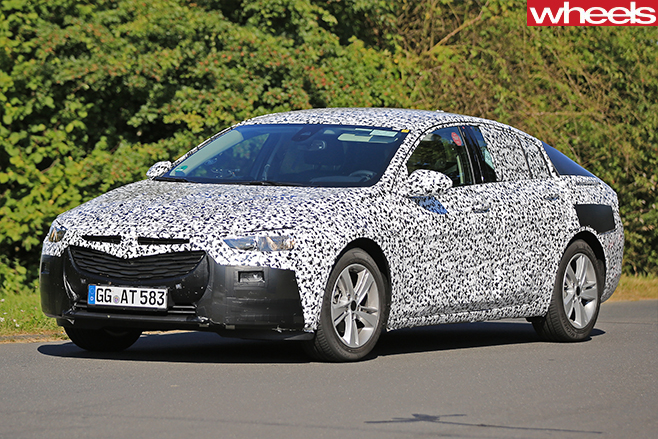
Also obvious from the prototype is the two-box hatchback silhouette, supporting speculation that there will be no Insignia sedan out of Germany this time around.
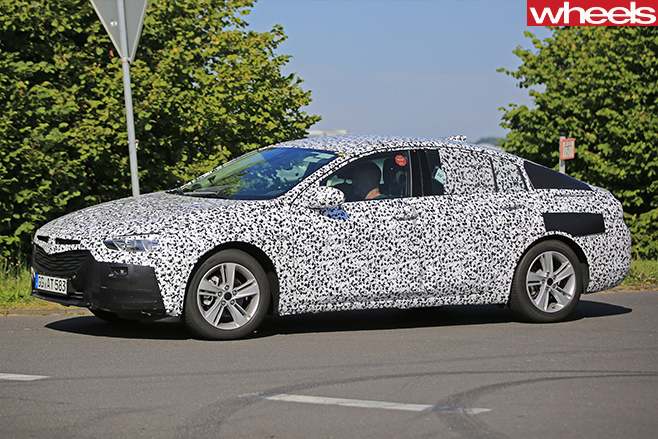
As we’ve previously reported, keeping in mind that the Holden will be built by Opel, that possibly spells the end of the four-door Commodore.
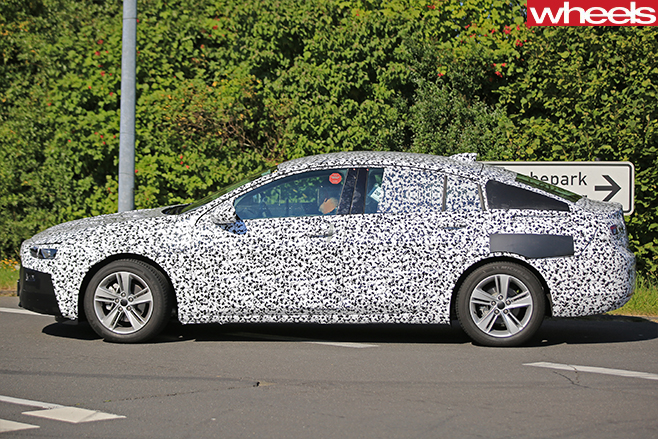
However, we hear that the Buick Regal that also uses the Opel hardware will be offered as a sedan, since North American and Chinese consumers demand four doors over five, so that situation may eventually change over time.
Ford currently employs the same strategy with the existing Mondeo, which is made and very successfully marketed in the US and Canada as a Fusion sedan (but not wagon).
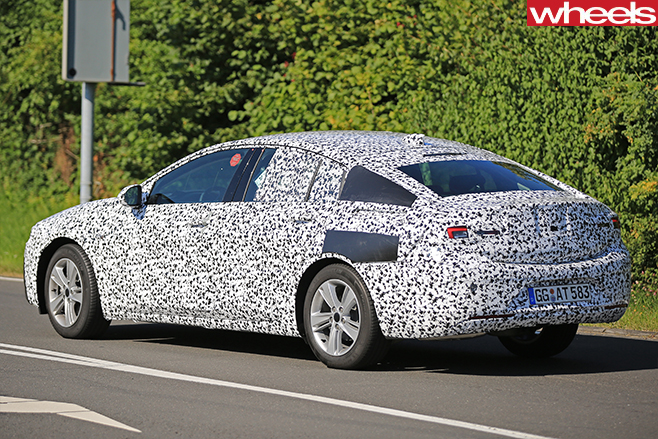
Speaking of which, there will be an Insignia wagon (the body style most preferred by Western Europeans), so expect that to also lob in late next year at the same time as the sedan wearing the Lion badge.
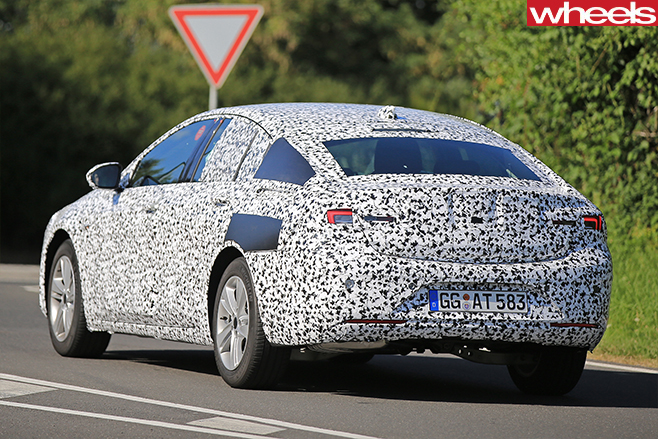
Judging by the modest wheels and lack of go-faster exhaust, this latest pre-production prototype appears to be a lowish-spec variant, probably with a turbo four-pot petrol or diesel engine driving the front wheels.
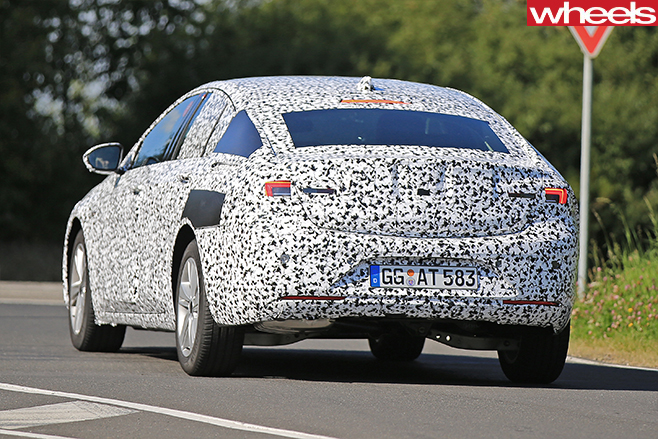
That said there have been OPC Opel Performance Centre all-wheel drive flagships also hitting the test circuits recently. Will these also feature V6 power as per the soon-to-be-discontinued Holden Insignia VXR?
That would most closely fit the gaping hole left by the demise of the outgoing Commodore V8s. All will be revealed over the next few months, so keep watching this space.
Have spy pics of your own? We’d love to see them. Just email them to [email protected]
When Croatian electric supercar maker Rimac unveiled its Concept S at this year’s Geneva Motor Show, we thought “that’s cool”, reported it and never expected to see it again.
Forgive our cynicism, but at every single motor show there’s always some supercar maker from an unusual country making outlandish performance claims, despite the fact that the car spinning on its dais is barely capable of moving, let alone entering production.
But the Rimac works, or at least its baby brother, the Concept One does, and it’s unbelievably fast. British race driver Archie Hamilton lined up the battery-powered bullet for a race against a Tesla Model S and a Ferrari LaFerrari and the Rimac smoked both of them.
The Rimac’s four electric motors produce a cmobined 811kW/1600Nm, which launches its 1800kg bulk to 100km/h in just 2.6sec and 200km/h in 6.2sec on its way to a 355km/h. Bold claims, but judging by the video above, they’re not too far from the truth.
