
Ford wants you, please, to reconsider its AUII XR8. There are 200 reasons why you should, writes Fraser Stronach.
First published in the June 2000 issue of Wheels magazine, Australia’s most experienced and most trusted car magazine since 1953.
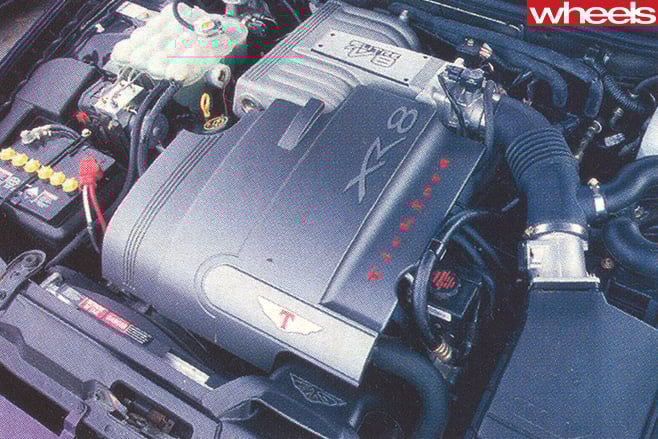
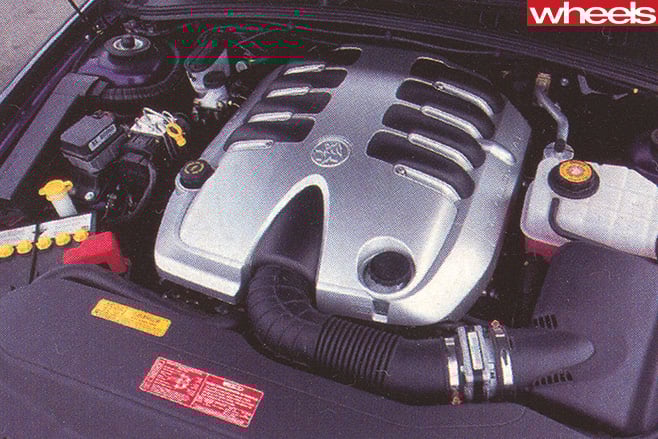
For Aussie V8 buyers pride depends largely on two things, power and time. Every kilowatt added, every tenth of a second subtracted. Already whipped once in a comparison test by the VT Series II SS, Ford has a new, smoothed-over and powered-up AUII XR8 to make up for lost time. Ford has beefed up its V8’s previous numbers, 185kW and 412Nm, to more satisfactory 200kW and 420Nm. The image makers have also been at work, the XR8 sporting a refreshed front-end, spoiler, 17in alloys and optional body kit.
Meanwhile, Holden has had its feet up. With 5.7litres and 220kW of alloy V8 happily ensconced under the SS bonnet, (and customers queuing to buy it) you can hardly expect it would do anything else. Power and time is on Holden’s side. But for how much longer?
In their last contest (Wheels, September 1999) the extra grunt of the 5. 7 litre Chev eight was enough to bury the 185kW XR8. A full second faster in the 400 metre sprint and a crushing 3.2 seconds faster to 140km/h, the SS was clearly the straight-line king. This should have been sufficient to produce a decisive knockout but the Ford responded with a hard and timely counterpunch in the form of its superior chassis dynamics. A points decision.
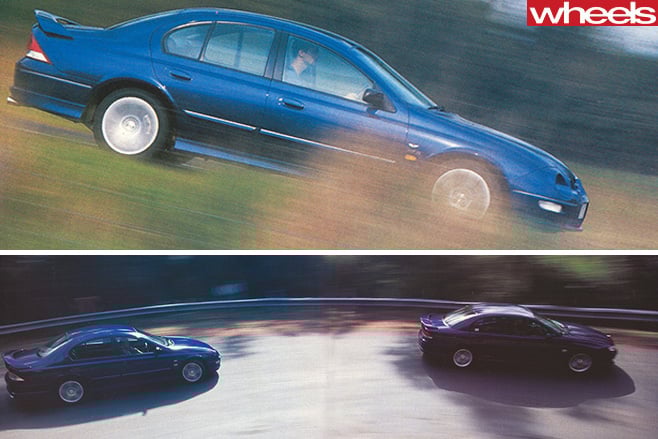
With a lower first gear and less axle tramp, the 200kW AUII jumped harder again, seeing 60km/h in just ‘ 3.3 seconds. Bit by bit, however, the Holden’s 20kW advantage starts to show. Both reach 80km/h in the same time but the Ford is 0.4 seconds slower to 100km/h and 0.3 seconds slower over the 400, stopping the clock at 15.3 seconds. Marginally slower it may be, yet the XR8 has made up much ground on the SS. In anyone’s language a 0.3 second shortfall over the 400 metres is better than a full second.
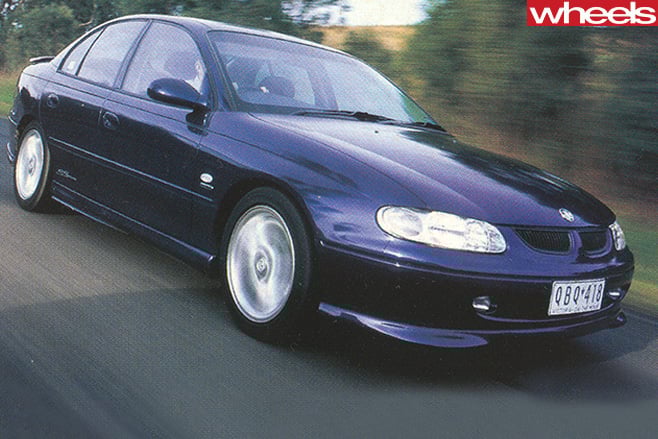
Neither gearbox is super slick. The Holden’s six-speeder is not a close ratio unit but more like a standard five-speeder with a moonshot sixth added. This is overdrive taken to the extreme and gives around 68km/h per 1000rpm. Yes, work it out. At the legal max in most states the engine is barely off idle. The SS box is notchy and the gate is not as well defined as it should be. The Ford has a more positive gate, a sweeter but still slowish shift, and outside of the Holden’s sixth, a wider spread of ratios.
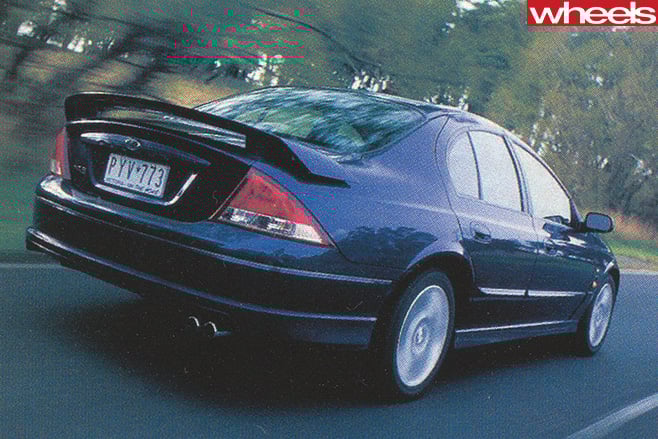
Both engines are silky smooth at low to middling revs, as only 90 degree V8s can be, but become a little harsh closer to their respective redlines. The Ford sounds like a ‘real’ V8, its exhaust note from both inside and outside the car an aural delight. Not so the Generation III Chev, which sounds muted and non-V8 like at times.
The Holden boasts the better straight-line steering. It’s more direct and not too heavy. The Holden turns in more crisply and quickly, but that quick steering soon translates to a slightly nervous and unsettled mid-corner feel. The Holden requires more work from the driver and takes longer to get to know. Exiting a comer, too, requires a more sensitive right foot.
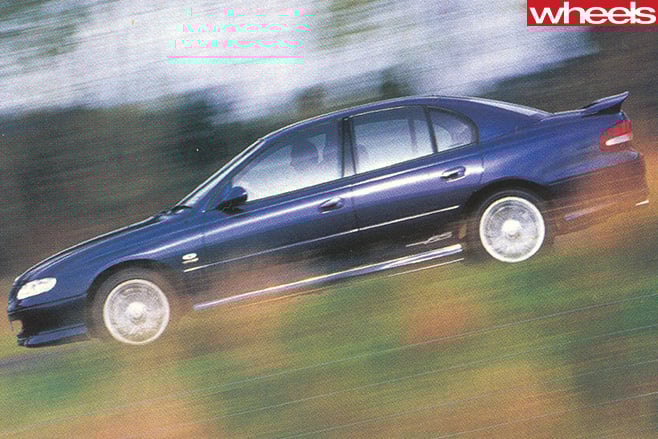
Both cars run on 235/45 rubber mounted on 17×8 inch alloys. There’s generous grip from both the Ford’s Dunlops and the Holden’s Bridgestones and the road shock isolation, too, is surprisingly good given how little sidewall separates road from metal. The Holden has the edge in overall ride quality, but there’s really little in it between the pair.
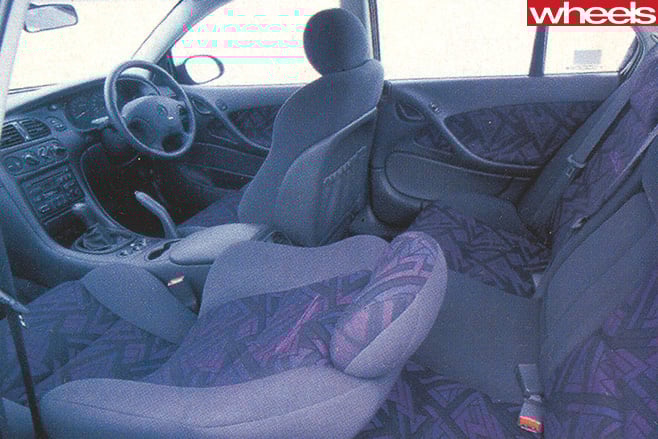
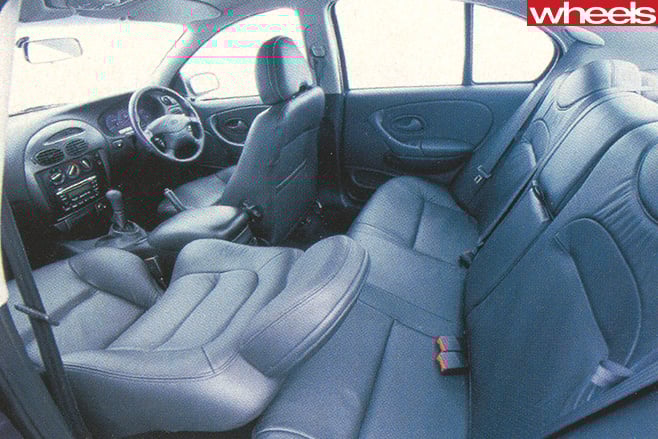
The XR8 was also fitted with optional leather making its interior an altogether more appealing environment than that of the Commodore. The Ford’s instrumentation extends to oil pressure and battery condition gauges while a CD player is standard in the Ford, optional in the Commodore. For its part the SS has equally comfortable seats with the bonus of electric height adjustment. The ‘SS’ emblem on each seat seems out of character, however, with the rather conservative style of the rest of the car. Interior dimensions are similar although rear seat passengers in the Ford are better catered for, even if it is at the expense of front seat adjustment. The Ford’s boot is also marginally bigger.
The SS starts out at $46,650 with our test vehicle adding side airbags ($480), CD player ($450) and metallic paint ($233) to bring the price up to $47,813. The Holden is cheaper to buy, more expensive to own.
Both these cars are enormously entertaining to drive. They have an undeniable presence on the road. Yes, they tum heads. Courtesy of their size and ancestry they also offer practical day-to-day family transport. The Holden has the grunt and the more conservative styling that will probably endear it to more people. The Ford feels sweeter on the road, but its love it or leave it front end styling may turn off some prospective buyers. The SS also felt tighter and better built, but the Ford had covered twice the distance with a hard-driven 8000km on its odo.
There’s barely a struck match between these two. The Holden still holds a marginal straight-line speed advantage, but the Falcon is the better drive. It’s not how much you’re got but how you use it.
Price
| u00a0 | Ford Falcon XR8 | Holden Commodore SS |
| Basic/as tested. | $48,965/$57,485 | $46,650/$47,813 |
Engine
| u00a0 | Ford Falcon XR8 | Holden Commodore SS |
| Layout | Longitudinal V8, ohv, 16v | Longitudinal V8, ohv, 16v |
| Induction | Fuel injection | Fuel injection |
| Capacity(litres) | 4.942 | 99.0/92.0mm |
| Bore/stroke | 101.6/76.2mm | 10.0:1 |
| Compression ratio | 9.1:1 | 6894 |
| Max. power | 200kW at 5000rpm | 200kW at 5000rpm |
| Max. torque | 420Nm at 3750rpm | 446Nm at 4400rpm |
| Redline/cut-out | 5750/6000rpm | 5500/6000rpm |
Transmission
| Ratios (km/h@1000rpm | Ford Falcon XR8 | Holden Commodore SS |
| u00a0 | 5-speed manual | 6-speed manual |
| First | 2.95 (11.5) | 2.66 (12.7 |
| Second | 1.94 (17.5) | 1.78 (19.0) |
| Third | 1.34 (25.3) | 1.30 (26.1) |
| Fourth | 1.00 (34.0) | 1.00 (33.9) |
| Fifth | 0.73 (46.5) | 0.74 (45.8) |
| Sixth | u00a0 | 0.50 (67.7) |
| Differential Ratio | 3.45 | 3.46 |
Suspension
| u00a0 | Ford Falcon XR8 | Holden Commodore SS |
| Front | A-arms, coil springs, anti-roll bar | struts, coil springs, anti-roll bar |
| Rear | Upper and lower A-arms, coil springs, anti-roll bar | semi-trailing arms, coil springs, anti-roll bar |
| Tyres | 235/45ZR17 Dunlop SP Sport 9000 | 234/45ZR17 93V Bridgestone B530 |
Brakes
| u00a0 | Ford Falcon XR8 | Holden Commodore SS |
| Front | Ventilated discs, ABS | Ventilated discs, ABS |
| Rear | discs | discs |
Steering
| u00a0 | Ford Falcon XR8 | Holden Commodore SS |
| Steering type | Power-assisted, rack & pinion | Power-assisted, rack & pinion |
| Turns lock to lock | 3.1 | 2.5 |
| Turning circle (m) | 10.9 | 11 |
Vital Stats
| Front track | Ford Falcon XR8 | Holden Commodore SS |
| Wheelbase | 2793mm | 2788mm |
| Rear track | 1566mm | 1569mm |
| Length | 1870mm | 1587mm |
| Width | 1547mm | 4884mm |
| Weight | 4907mm | 1636kg |
| Fuel tank | 68 litres | 75 litres |
Performance
| Standing start, time in seconds | ||
| 0-60 km/h | 3.3 | 3.3 |
| 0-80 km/h | 5.2 | 5.2 |
| 0-100 km/h | 7.3 | 6.9 |
| 0-120 km/h | 10.2 | 9.6 |
| 0-140 km/h | 13.9 | 12.4 |
| 0-400m (km/h) | 15.3 (145.3) | 15.0 (152.3) |
Fuel consumption
| Average (L/100km) | 13.5 | 13.7 |
The Koenigsegg Regera sure does one mean burnout.
Then again, it would, because its specification is basically tailor-made for turning rubber into smoke for as long as possible. Firstly, there’s the 1120kW/2000Nm+ hybrid drivetrain, which can use electric torque to turn the tyres from standstill until the twin-turbo 5.0-litre V8 takes over.
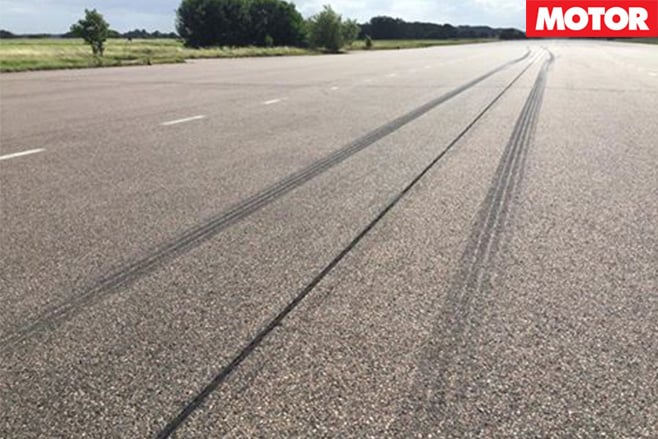
Koenigsegg gave a hint of the Regera’s powerskid potential in a video released on its Facebook page earlier this week, filmed on the runway adjoining its Angelholm factory. Bring on Summernats.
This question should be answered far more speedily than we as a nation took to find (deliberate, grin, bear…) a next PM, but picking a BMW M2 over an M140i could be tough.
You see the M135i hot-hatchback that we’ve known and loved for four years is about to switch to a new M140i designation that brings with it more torque and extra equipment for about the same price – from $64,900 plus on-road costs.
That is a long way down from the M2 Pure’s $89,900 starting sticker, but as they say while shifting steak knives, you’d better wait, because there’s more.
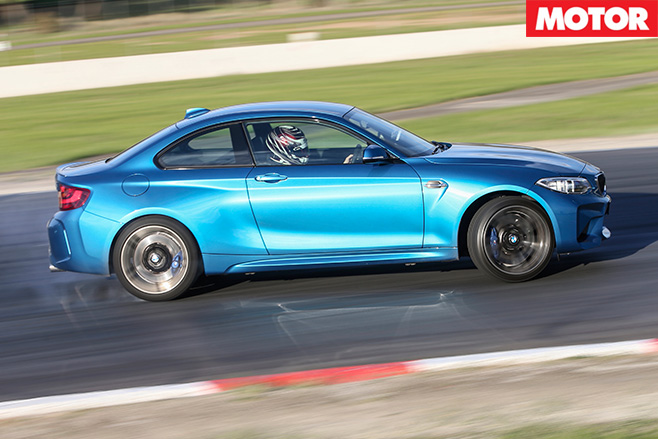
BMW claims a 4.5-second 0-100km/h for the M2 Pure manual, versus 4.6sec for the M140i eight-speed automatic, which is available as a no-cost option whereas a seven-speed dual-clutch auto version asks $99,900 in the M2 – stretching the difference to $35K.
The M140i gets more kit than the M2 Pure, with Harman Kardon audio system, keyless auto-entry (dubbed Comfort Access) and electrically adjustable leather front seats with heating, all of which is also standard only on the $100K manual or auto M2. Again there’s that $35K like-for-like gap.
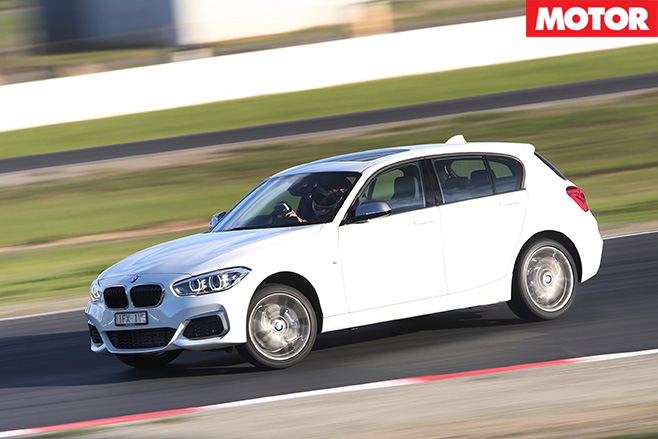
In MOTOR’s Bang For Your Bucks (see the September, 2016 issue out now) an auto-equipped, soon-superseded M135i auto took 4.92sec to reach 100km/h and lapped Winton Raceway (sans LSD, sadly) in 1:39.2 (99.2sec) – versus 4.55sec and 1:34.8 (94.8sec) respectively.
That lap time is particularly a stand-out for BMW’s latest baby M-car, being 4.4 seconds ahead of its hot hatch sibling. Put another way, in a race it would take the M2 just 22 laps of Winton to fully lap the M135i.
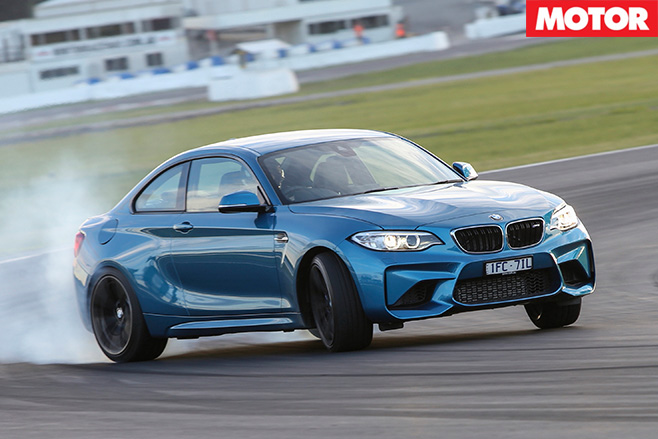
Completely subjectively, the M2 Pure is an absolutely cracking car and true return to form for BMW after the patchy M3 and M4. It is properly ‘next level’ on the road or racetrack compared with an M135i/M140i and worth every cent extra. But many may not have many cents extra.
The M135i/M140i is stunning value, but we’d try and stretch to an M2 every time.
Chevrolet has put to rest recent fears for the future of muscle cars with confirmation that the 2017 Camaro ZL1 will be even more powerful than anticipated.
Powered by a 6.2-litre supercharged V8 engine, it will produce 485kw (650 horses) and, if equipped with the optional 10-speed automatic transmission, will be capable of 0-100km/h in a Ferrari spanking 3.5secs.
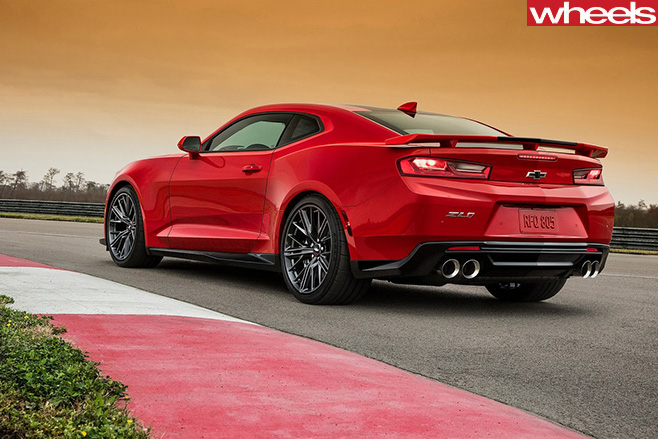
The good news is you’ll be able to get all this for US$62,135 for the coupe and US$69,135 for the convertible. The bad news is there will be no right-hand-drive versions so don’t expect to see it in Holden showrooms.
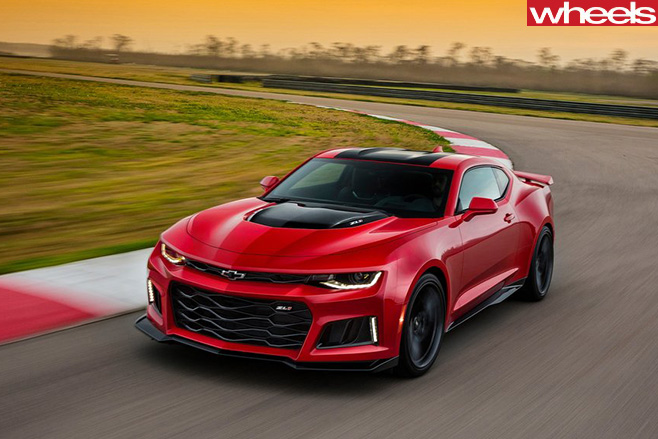
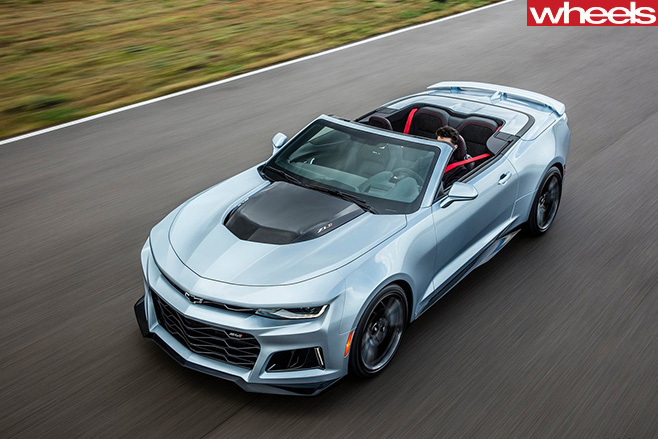
He reckons GM is clearly considering a right-hand-drive conversion of the Chevrolet Camaro, either later this decade at mid-life facelift time or when the all-new seventh generation arrives early next decade.
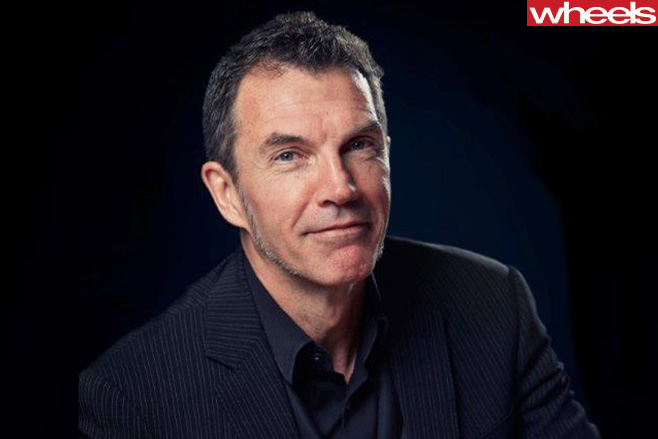
Fair to assume they’ll be asking a lot harder after seeing the Ford Mustang almost double Falcon sales here in July and top sports car sales for the month.
BMW’s latest petrol-electric BMW 7 Series can travel up to 48km and at speeds of up to 140km/h entirely on battery power alone. This compares with respective figures of 4km and 60km/h for the former ActiveHybrid 7.
On sale in Australia late this year, the 740e will retail for just $5000 more than the $224,200 petrol-powered 740i that shares much of its feature set.
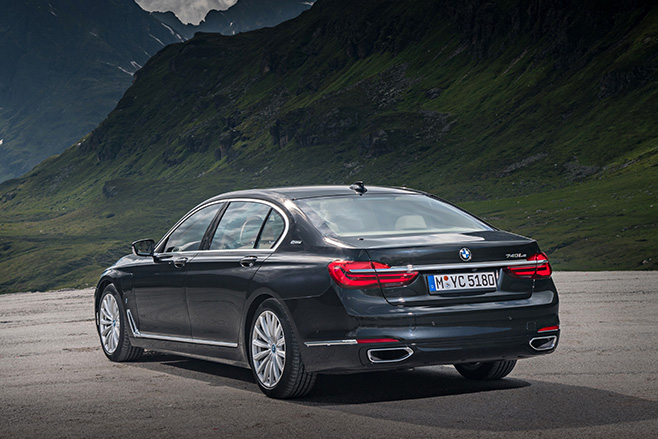
And compared to the 740i, which drinks 7.0 l/100km on the combined cycle, the 740e consumes an average of 2.2L/100km, with emissions rated at 50 grams per kilometre.
Keep its battery topped up and the length of your trips short, and it will consume no fuel at all.
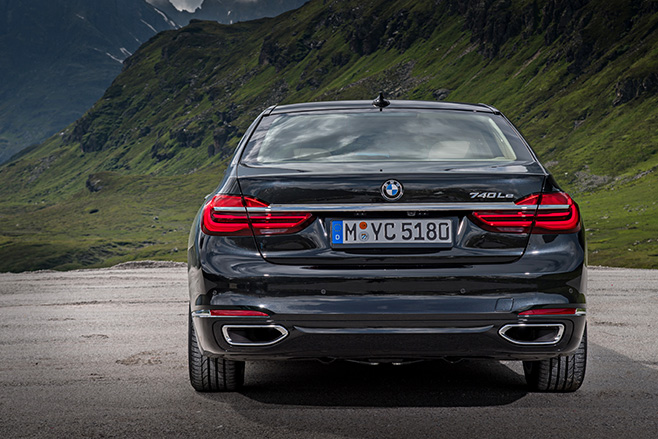
The BMW 740e iPerformance is also a tenth faster in the 0-100km/h acceleration sprint, at 5.4 seconds, and one of the fastest 7s despite employing the smallest engine in the range – a 2.0-litre turbocharged four-cylinder. Peak power from the turbo four and electric motor reaches a combined 240kW and 400Nm
The 190kW petrol engine is united with an 83kW electric motor and integrated into the 740e’s eight-speed automatic gearbox. An advanced lithium-ion battery keeps the motor supplied with electricity and regenerative braking tops up the battery when decelerating.
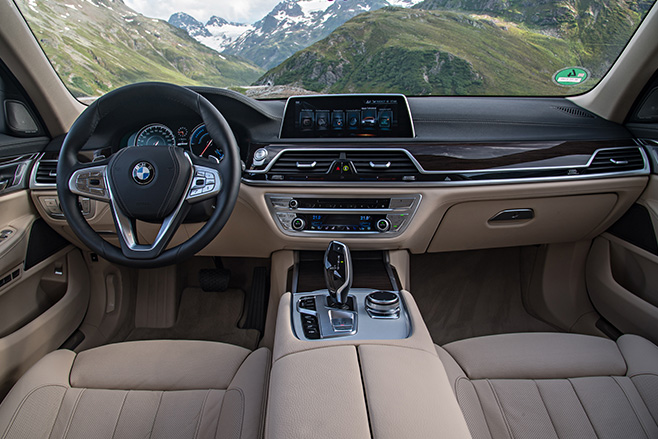
BMW says cabin space isn’t affected by the battery being positioned beneath the rear seats, though boot space is reduced from 515 to 420 litres.
The 740e’s battery can be charged in five hours on a regular household 230-volt power supply; that time can be halved by paying extra for the installation of a fast-charging i Wallbox.
Standard equipment largely mirrors that of the conventionally-powered 740i, with Nappa leather, Harman Kardon premium audio, retractable rear sun blinds, 19-inch alloy wheels, heated seats/armrests/steering wheel, Selective Beam headlights, soft-close doors, and lane change warning with steering assist all included in the 740e iPerformance.
Hold onto your drift mode buttons. An even faster version of the Ford Focus RS could be about to hit Australia.
Rumoured to be called the RS500, the beefed-up RS has been spied testing at the Nurburgring, with sources letting slip plans are underway for it to arrive Down Under.
The car hasn’t even been officially confirmed by Ford internationally, but a source close to Ford has let slip to Wheels that the RS500 is poised for an Aussie invasion.
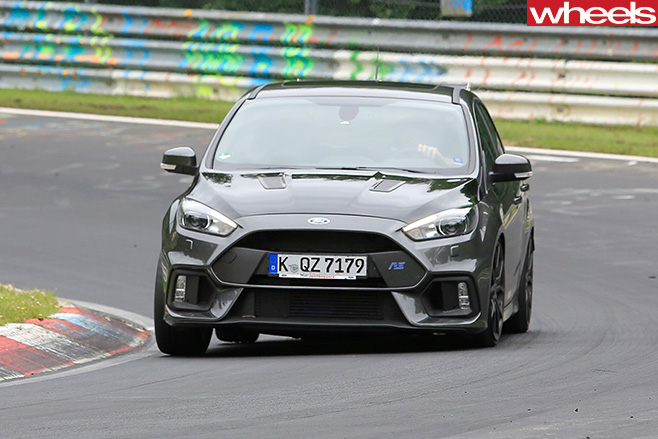
If that had the fun police riled up, imagine what a beefed-up, racier version of the car will do?!
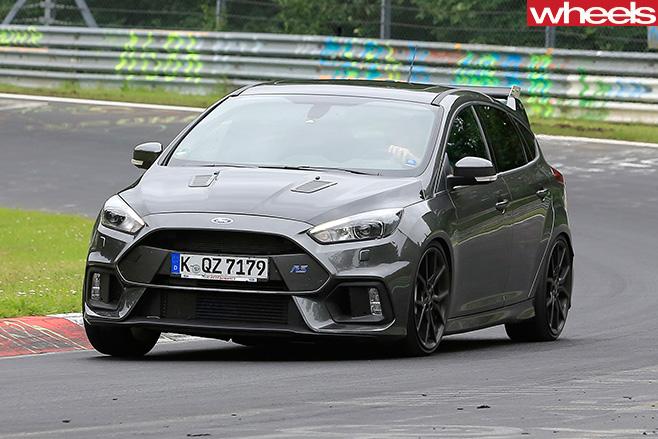
It is predicted polycarbonate windows, carbonfibre bodywork and a stripped-out cabin that could shave up to 100kg from the fast five-door’s kerb weight,
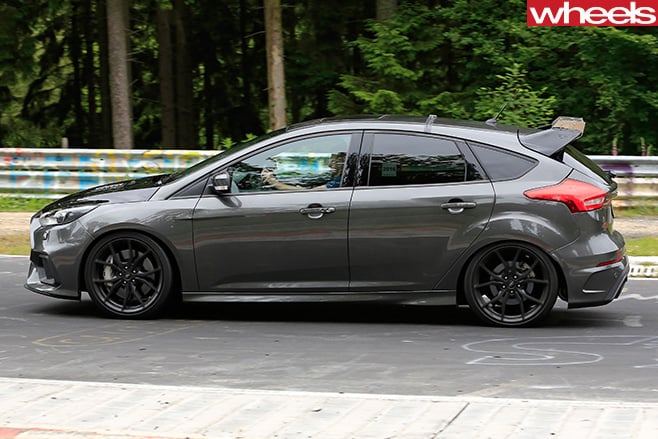
A limited slip front diff and dual-clutch gearbox are also potential additions for the RS500.
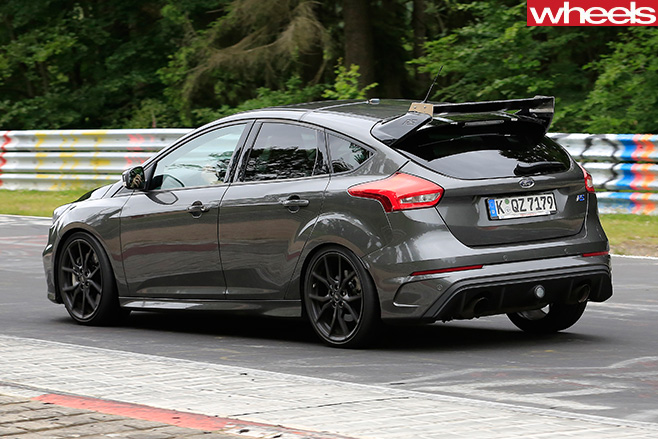
The waiting list for the current Focus RS already stretches well into 2017, with the first Aussie owners taking delivery last month.
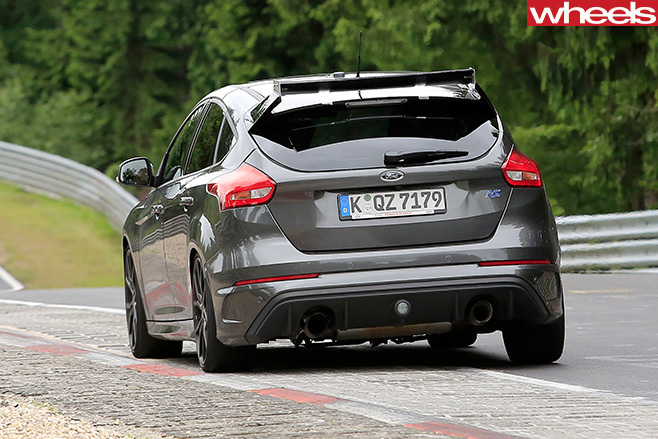
With Ford Australia wrapping up local manufacturing in October, the news hints at what the high-performance future of the Blue Oval could look like locally. Bring it on.
Ford says it will take about a year before a replacement for the Ford Territory – still one of the most family-friendly SUVs on the Australian market – will land in Australia.
The Ford Territory will end production, along with the Ford Falcon sedan, by October 7 as the carmaker reverses its position to become a full importer rather than a manufacturer with imported products.
A part of this “transition”, as Ford calls it, are plans to bring in the Ford Edge, a SUV sold around the world that’s slightly larger than the Territory, as a replacement for the home-grown product.
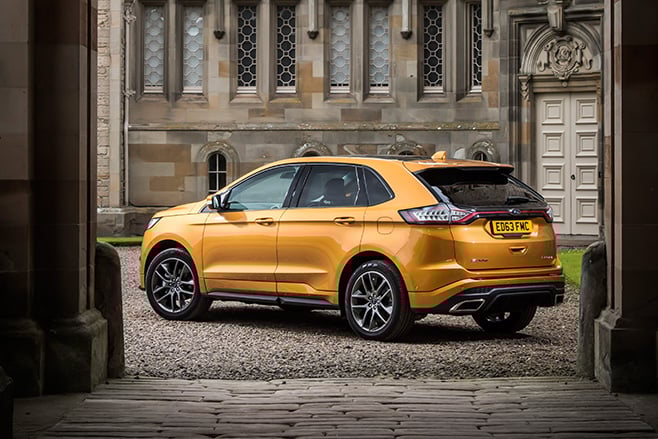
According to the carmaker, the Territory will take about six months to sell out after manufacturing ends, With the Edge now confirmed to arrive in early 2018, this means Ford will have about a year without a mid-size SUV in the market.
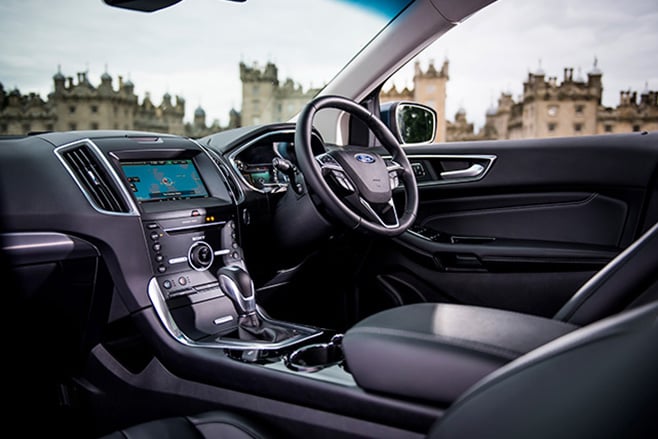
One of the reasons believed to be behind the decision to delay the Ford Edge’s introduction to Australia – a right-hand-drive version is already on sale in Britain – is the lack of a seven-seat version that would make it a true Territory replacement.
Ford does build a seven-seat version of the Edge. However, it is only built in China in left-hand drive, and only sold in China. In contrast, Britain’s right-hand-drive five-seat version of the Edge is built in Canada. Ford is yet to confirm if there will be a seven-seat version of the Edge, let alone where it will be built.
“We’re not confirming a manufacturing source at this point,” Ford Australia president Graeme Whickman said when asked where the Edge that will come here would be built.
“We have a view where it will be coming from, but we’ll confirm that a bit closer to [Edge’s early-2018] launch.”
Ford is placing more weight on its SUV line-up as it winds down more than half a century of local carmaking, starting with a limited-run version of the Ecosport compact SUV due late this year called the Ecosport Shadow. It will take the fight up to the likes of the strong-selling Honda HR-V and the Mazda CX-3.
A facelifted version of the Ford Kuga arrives early next year to take on the likes of the Hyundai Tucson and the Mazda CX-5.
Maserati and suv. The brand and the acronym are unfamiliar with each other – but once upon a time, Porsche and the SUV were strangers, too. And it’s into this same premium SUV market that Maserati has unleashed its Levante.
In an automotive market that has gone SUV-crazy, no premium brand (except Ferrari) can afford not to jump on the SUV bandwagon. The Levante’s not engineered to tackle the Simpson or the Rubicon, but it will happily haul you to the door of your ski chalet or holiday farm.
It has ample performance and most equipment-related must-haves but in Aussie-speak, it’s no proper four-wheel drive. What it does have is a large dose of the italianitá emotion that Maserati does so well, evident in its aggressively pretty design and courageous blend of wool, silk, and leather inside.

In its infancy, the Levante project was to be twinned with the Jeep Grand Cherokee – including, in all probability, US assembly. In view of the differing quality culture accepted by the big three, this would have almost certainly been a recipe for disaster for a Maserati product.
Instead, the Levante is derived from the Ghibli and Quattroporte platform. As a result, the new aluminium-intensive SUV is relatively light, weighing in at 2034kg. Thanks to its origins, this SUV feels agile, firmly planted and – on the right tyre size – quite comfortable.

It’s also a petroholic. Although the manufacturer (and the EU norm police) claim a perfectly acceptable average of 10.9 litres per 100km, we drained the 80-litre tank dry in less than 200km. But any trace of guilt is forgotten when you blip the throttle. The Levante is vocal and alive but – as elsewhere – the fake downshift blat-blat doesn’t seem right.
Among the Levante’s main claims to fame are the low drag coefficient of 0.31, the remarkably spacious rear passenger compartment, the tight turning circle (11.7 metres), the low centre of gravity (only 610mm above street level), the high-speed aerodynamic stability and the astonishing lateral acceleration (0.95g max).

The Levante S shows a nice set of performance figures: 0-100km/h in 5.2sec and 264km/h top speed. The 21-inch wheels and 265/40 and 295/35 tyres might look nice to some but they destroy the ride, tramline like crazy, and unless properly warmed up fail to produce proper grip.
Over the really rough stuff, the Levante bucks to the left and right, requiring constant adjustments at the wheel. The diesel’s smaller 20-inchers (that we also drove) showed far more composure and compliance.

The steel brakes are one of the Maserati’s major dynamic strengths and deserve full points for stopping power and pedal feel. And the claimed 0-100km/h distance is a sportscar-like 34.5 metres. Another asset is its all-wheel drive system; through the eight-speed auto, it drives only the rear wheels most of the time.
But when required the front wheels can, with the help of torque vectoring, be allocated 50 per cent of the available drive. Further assistance is provided by four driving programs labelled normal, sport, ice (for increased control and efficiency) and off-road.

There is no denying that some rivals can claim a softer ride, further reaching headlights, more assistance systems and superior refinement. But when it’s driving that counts rather than comparing it in the parking lot, you can forgive the Levante’s minor flaws for its character and charisma. So, SUV segment, make some room for a welcome stranger.
4 OUT OF 5 STARS
LIKE: Great mix of luxury and performance, snarling six-pot soundtrack DISLIKE: Thirst, ride quality on 21-inch wheels
SPECS Engine: 2979cc twin-turbo V6 , DOHC. 24v Power: 316kW @ 5750rpm Torque: 580Nm @4500-5000rpm Weight: 2034kg 0-100km/h: 5.2 sec Price: TBC
It’s Census time so we thought we’d look away from the boring stuff like privacy, population, and whether you’re an observing Pastafarian for more important stats and facts about vehicles from the Australian Bureau of Statistics.
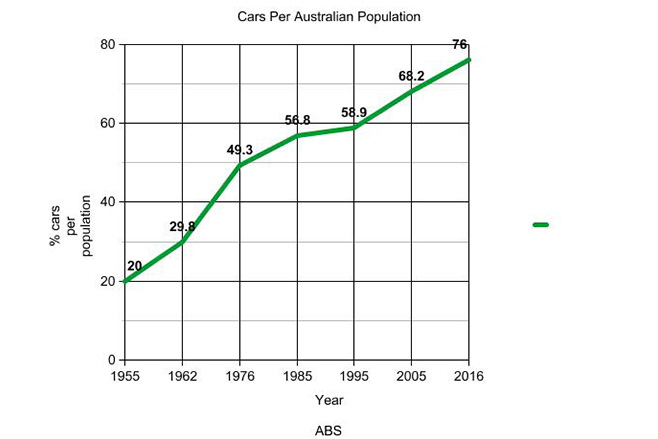
VEHICLES PER PEOPLE
It’s no surprise that the size of Australia’s “carpark” has risen steadily since 1955, but the rise is quite significant when put in terms of vehicles per capita. In 1955 there were 2,182,193 vehicles including “omnibuses, lorries and motorcycles”, which meant just 24 percent of the 9.2 million people surveyed by the census owned a car. By the beginning of 2016 there were 18,387,136 vehicles, meaning 76 out of every 100 Australians, on average, owned a car.
TOP 3 PASSENGER CAR BRANDS (NEW AND USED) BY REGISTRATION
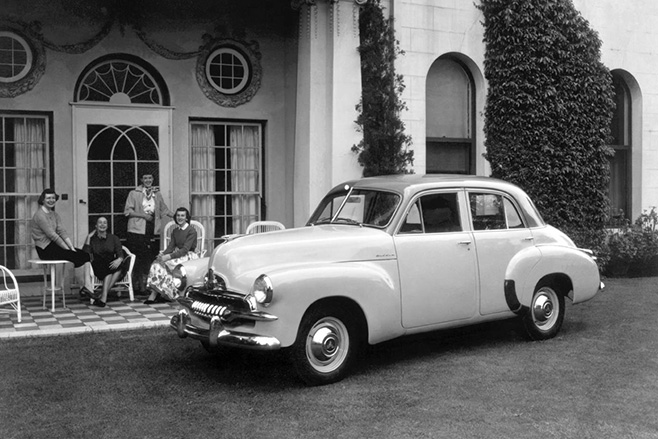
1955 Ford, Holden, Austin
Holden’s second place figure is noteworthy as it only includes 48-215 and FJ Holdens going back to 1948, as locally-sold GM cars such as Chevrolets and Vauxhalls were imported with their original badges intact. Meanwhile Ford’s numbers included local and international models from before 1930. Austin doesn’t include sister company Morris, which was fourth with 123,831.
1976 – Holden, Ford, Chrysler
In 1962 there were just seven Toyota passenger cars in Australia. By 1976 it was the fourth most registered brand with 314,657 cars on the road.
1995 – Ford, Holden, Toyota
By 1995 the Census only listed 21 significant car brands, compared to 74 in 1985.
2016 – Toyota, Holden, Ford
Toyota’s dominance of the Australian market seems like it will last into the foreseeable future, but will this be the last time the top three includes both Ford and Holden?
ON THE BEATEN TRACK
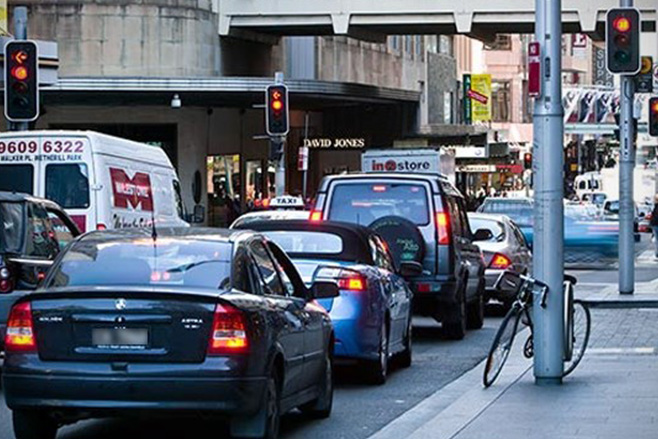
Motor vehicles of all types registered in Australia travelled an estimated 244,369 million kilometres in the 12 months prior to the 2014 census. This compares to 226,932 in 2010 and 209,405 in 2006.
Of the total kilometres travelled in 2014, more than 72 percent (176,805) were by passenger vehicles excluding buses.
Motor vehicles registered in Australia travelled an average of 13,800 kilometres per vehicle in the 12 months ended 31 October 2014. Victorian drivers travelled the highest average kilometres that year (14,500 kilometres). New South Wales (14,100) and Queensland (13,800) were also estimated to be above the national average, while vehicles registered in Tasmania travelled the lowest average kilometres (11,900).
HARD EARNED THIRST
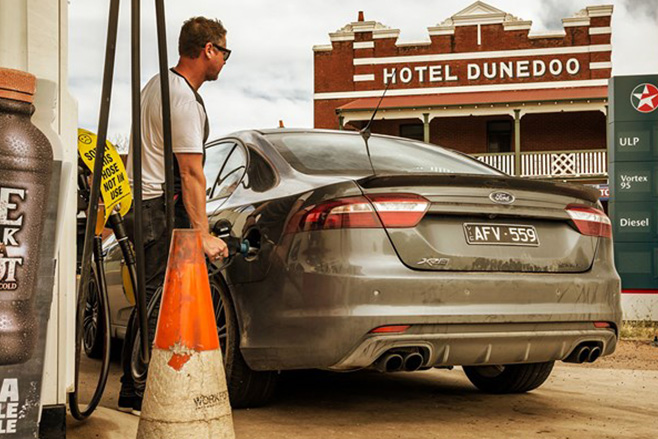
In the 12 months ended 31 October 2014, registered motor vehicles in Australia consumed an estimated 32,402 million litres of fuel. Of the total fuel consumed by motor vehicles in 2014, 54 percent was petrol and 40.5 percent was diesel.
Passenger vehicles consumed 18,893 million litres in this time, of which 80.6 per cent (15,234 million litres) was petrol.
THE RISE OF THE SUV
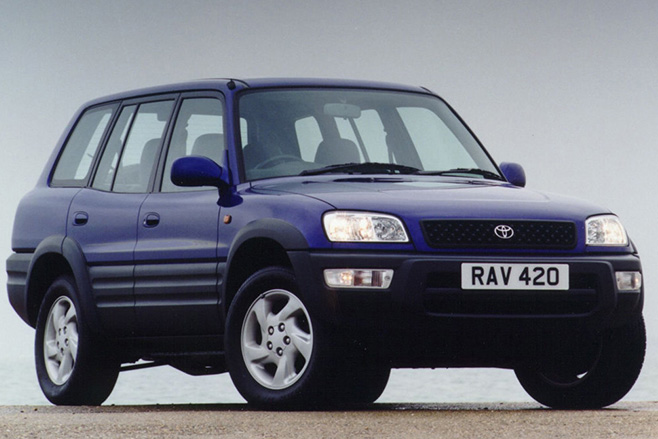
In January 1994 there were 2996 SUVs sold, representing 8.42 per cent of the market. This has grown steadily, to 18.93 per cent (13,251) in January 2006 and 35.8 per cent (46,011) at the start of this year.
THE GREY NOMADS MOBILISE
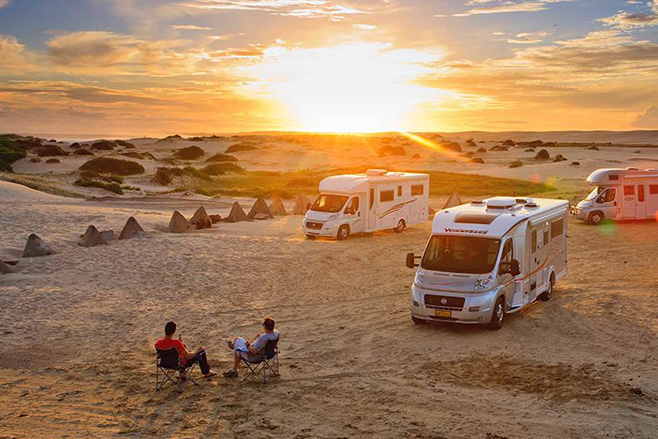
Next time you go on a driving holiday you may want to leave a little earlier. Recreational vehicles (RVs) reported the largest growth rate of any vehicle type, increasing by 4.5 per cent according to ABS figures released at the start of 2016. That number included 58,375 campervans and 528,210 caravans.
Holden has bumped up the value-for-money proposition of its Holden Barina light hatch, with the Barina R going on sale today with a number of equipment upgrades that make it one of the better buys in the range.
Available as either a manual or automatic, the Barina R costs a mere $1000 extra over the retail price of the base model Barina CD. It also addresses the Barina CD’s biggest spec shortcoming – its unavailability of a reversing camera. Though standard on the CDX and RS, the base CD-grade misses out on this key piece of safety tech.
As an added bonus, the Barina R also scores the MyLink touchscreen infotainment system of the upper-spec Barina CDX and Barina RS. Though it doesn’t have the Apple CarPlay or Android Auto smartphone mirroring capability of the 2016 Holden Spark, the Barina R’s MyLink system does at least feature a built-in sat nav capability – provided you have the BringGo navigation app running on a compatible iPhone.
It can also stream music off your smartphone via apps like Pandora, along with the usual Bluetooth phone and telephony features. Previously you’d have needed to spend at least $20,090 for the auto-only CDX model to get the MyLink hardware in a Barina.
Other features on the Barina R’s spec sheet include a set of front fog lamps, the 17-inch gunmetal alloy wheels of the Barina RS as well as that model’s sportier tailgate wing, though the more aggressively-sculpted front bumper of the RS remains exclusive to that model.
Mechanically, the Barina R uses the same package as the base Barina CD. A naturally-aspirated 1.6 litre petrol engine takes 85kW and 155Nm to the front wheels via a five-speed manual transmission or a six-speeda automatic. Fuel economy is a claimed 6.9 l/100km for the manual and 7.0 l/100km for the auto.
On sale from today, the Barina R is priced at $16,390 in manual guise and $18,590 with the automatic.
