
Call me a Luddite, but robotic cars should stay the hell away from track days.
So it appears some of our British friends are organising an autonomous vehicle track day.
Wait what?
As a fan of the occasional on-track blat, the idea of chucking a helmet and toolkit into my car and driving to a racetrack only to let a computer have all the fun of steering a car at full pelt is about as appealing as going to a strip club blindfolded.
Here’s an idea: if you consider yourself a bit of a thrillseeker yet the idea of being in control of your own destiny scares you, why not ride a rollercoaster?
Don’t favour an on-rails experience? Maybe take up bull riding instead – a metric tonne of pissed-off beef is the very definition of autonomous; just try and convince it otherwise.
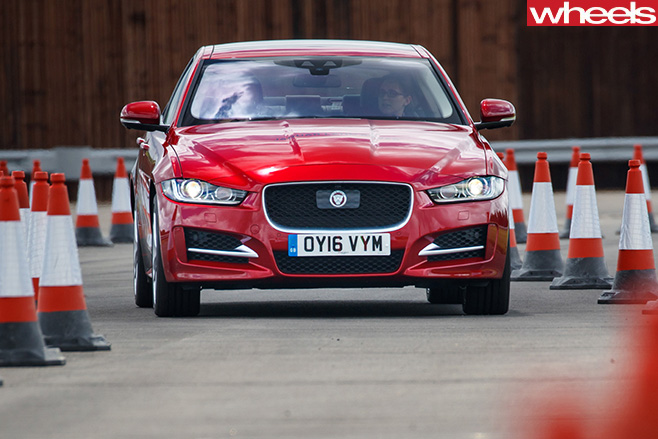
It might be engineering graduates testing out an anti-collision algorithm today, but what’s next? Autonomous drifting? Driverless time attack? Robo-burnouts at Summernats? Computers may think faster and cameras might see clearer than the average human, but track days are for humans to enjoy, not electronics.
My reaction is tongue-in-cheek of course, but Innovate UK could have avoided my wrath by simply not abusing the term “track day”. The proposed events (which will also take place in France and Austria) will involve pilotless prototypes slowly crawling through a maze of cones, not taking the racing line.
So it’s a “testing day”, then.
Would we ever see a true autonomous track day though? In a way, we already have. Audi has campaigned a driverless Audi TT Sport at the Pikes Peak International Hillclimb and wheeled out two RS7-based Piloted Driving demonstrators at a number of circuits in 2014. The cars are supposedly rather effective at recording fast laps, but is that as fun as driving around a track yourself?
The future is looking bleak for car fiends.
COLIN McRae never raced in the golden years of rallying that was Group B, but that didn’t stop him from joining in the fun.
After the youngest World Rally Champion ever ended his full-time racing career, he splashed out and bought a MG Metro 6R4, which has just been listed for sale on eBay of all places.
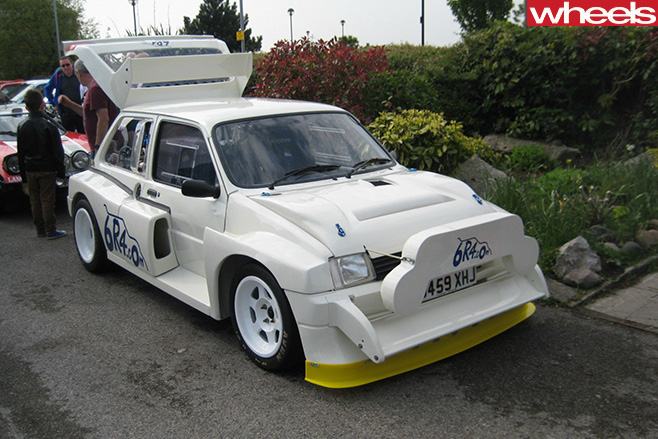


Tricked out in full rally spec, the 6R4 packs a punch that belies its diminutive package.

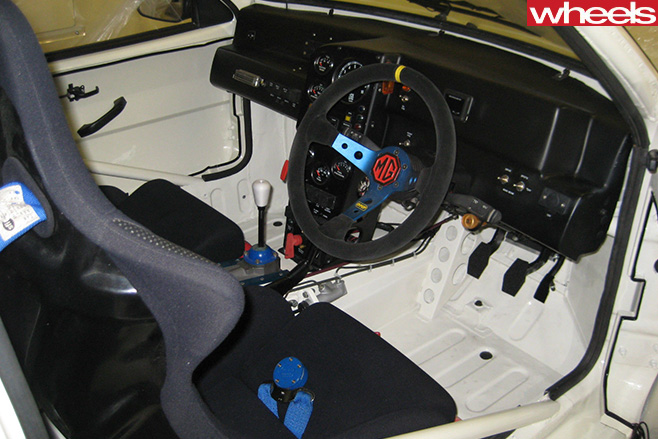
Actually, you don’t have to, as there is glorious video footage from the 2006 Donegal Rally.
If you don’t have the cash to stump up for the MG Metro 6R4 just yet, don’t worry. The current owner is willing to go swapsies, but only if you have a lesser 6R4, Group B car, or ex-F1 racer.
An animated depiction of Ayrton Senna’s first home Formula One Grand Prix victory has been commissioned by the Ayrton Senna Institute to motivate Brazilian athletes at the 2016 Rio Olympic Games.
Senna had seven Formula One seasons and two World Championships under his belt by 1991, without a win in front of his home crowd at Interlagos in Brazil. He had qualified on pole four times previously, but never managed to convert a front row start into victory.
The race in ’91 was to be Senna’s year, though not without significant hardship for the Brazilian native to overcome.
The result on paper doesn’t say much about the heroic effort from Ayrton Senna to get his McLaren-Honda MP4/6 over the line. Once again, he qualified first and got off to a perfect start. He led the race into the first corner and continued to run at the front until the finish.
In actual fact, Senna was suffering with tyre problems early on in the race and managing his pace as best he could. Then the car began to let him down. From the middle of the race it became difficult to select fourth gear then, with 20 laps to go, it became impossible.
“It was very tough for me to continue the race without fourth gear,” he said. “It took a toll on my arms and hands, as well as wasting time. I started to feel physical fatigue more than I should have.”
The lure of a home victory prevented Senna from retiring. He drove around the issue as best he could. Then, with seven or eight laps remaining, gears three and five failed as well.
Senna jammed the ‘box into sixth and had to leave it there for the rest of the race, all the while Riccardo Patrese was closing the gap from second place. And then it started to rain.
Manhandling the McLaren through slower corners required huge physical exertion from Senna. The 3.5-litre Honda V12 in top gear was working against him, constantly trying to push the car wide. In some footage of the final laps it’s possible to hear Senna kicking the clutch to maintain engine speed and momentum without letting the car stall.
Miraculously, Senna made it work. He reached the home straight and coasted over the finish line screaming through the radio: “I don’t believe it! I don’t believe it!” Patrese was less than three seconds behind.
Track marshals had to push Senna’s car off the straight and assist him with removing his gloves and getting him out of the car.
There was to be no lap of honour for the crowd, whose excitement levels had well and truly shifted into overdrive. Spectators and officials were dancing and embracing in the pouring rain at all corners of the circuit.
A visibly weak and exhausted Senna was driven to the podium in a medical car, where he fought back tears of pain and ecstasy as he strained to lift the Brazilian flag and winner’s trophy above his head. It was the fulfilment of a dream in the most dramatic of scenarios.
Senna described the pain of his neck, shoulder and arm spasms as “extremely consuming. I finished the race with nothing left.”
The Instituto Ayrton Senna (IAS) hopes the story of Senna’s triumph over adversity will inspire Brazil’s athletes to achieve greatness at the 2016 Olympic Games in Rio de Janeiro.
Senna’s family established the IAS in November 1994, six months after the racing driver’s tragic death at San Marino. The organisation named in his honour exists to support families and create opportunities for young people in Brazil, where the story of Ayrton Senna is the stuff of legend. He is still a national hero.
Cyril Abiteboul has said what many in Formula One have been thinking.
In a brutally honest assessment of F1, the factory Renault team‘s managing director has hit out at several key aspects of the sport, calling for changes. That, or forget the whole thing.
In a candid chat with the German press (including the influential Auto Bild and Auto Motor und Sport), Abiteboul insisted: “Formula 1 needs strong management and a strong FIA.” He has also dismissed the decision-making strategy group as “a joke”.
“It is a must to reduce costs, otherwise F1 will disappear,” Abiteboul warned, suggesting the commercial rights holders are chasing “short-term” financial returns via deals with pay TV broadcasters.
Abitetoul said that the teams were investing heavily and yet “fewer and fewer people can watch our sport”.
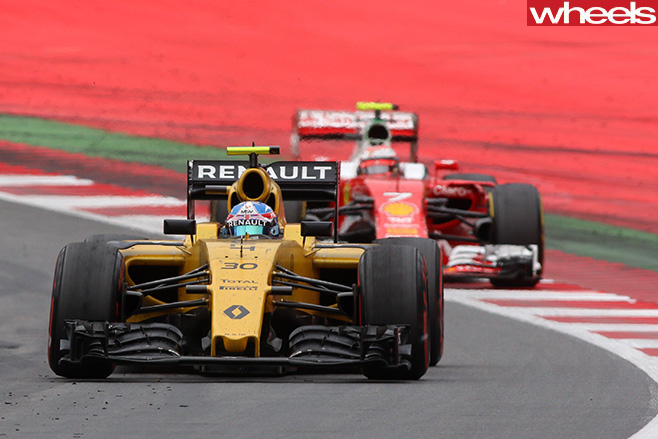
He went on to say that Renault was a French manufacturer looking first to French sponsors, but because F1’s profile in the French media had shrunk dramatically, it was impossible to bring local commercial support to the team.
Abiteboul pointed to the 24 Hours of Le Mans as an example of how to sell the sport with lower costs, cheap tickets and the race on free-to-air TV.
He believes budgets should be capped at 100-150-million euros and the income distribution system should also be changed, as: “It would be good if everybody got more or less the same.”
“At the moment we’re struggling to find sponsors at all, not because F1 is not interesting, but simply because it’s too expensive. And there are no new manufacturers who want to come in,” he concluded.
Sales of private (as opposed to fleet) diesel passenger cars have been slipping for nearly four years. The last time private diesel passenger car sales registered positive monthly growth was September 2012, when registrations jumped 10.8 percent against the previous year. Since then, diesel passenger car volumes have endured a long southward slide.
And we’re not talking a small reduction either. Two years ago, Australians bought 1031 diesel passenger cars in July. Last month, just 530 diesel passenger models found new homes in Aussie driveways. That’s a nearly 50 percent drop over the past 24 months.
What some may find surprising is that while the Volkswagen emissions cheating saga that’s been headline news since September 2015 certainly hasn’t cast diesel engines in the best light, Australian enthusiasm for diesel Golfs, i30s and Mazda6s has been waning for much longer.
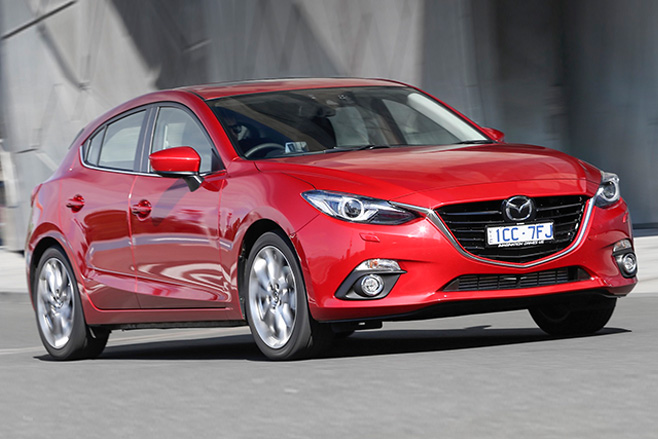
Mazda phased out its diesel-powered Mazda3 XD Astina in June due to slow sales (its huge $43,000 retail price certainly didn’t help its cause) and the Ford Focus lost its diesel variants in July when Ford’s local operation rationalised the engine range to just a single 1.5 litre turbo petrol four-pot.
Those were recent reactions to the steady reduction in diesel market share. Looking further back, Volkswagen dropped the Polo 66TDI from its light car range in 2014 and the Ford Fiesta diesel was binned in 2013. After flirting with offering Euro-style diesel mini hatches, the auto industry eventually cottoned on to the fact that Australia simply didn’t care about them.
Volkswagen also slashed the number of diesel models in its Volkswagen Golf range. Whereas previously the German automaker had three different diesel powertrains on offer in its volume-selling hatchback – the 77TDI, 103TDI and performance-oriented GTD – the present-day range includes just one diesel – the 110TDI Highline. Not a huge surprise, then, that diesels comprise just 7 percent of the Golf hatch and wagon’s year-to-date sales tally.
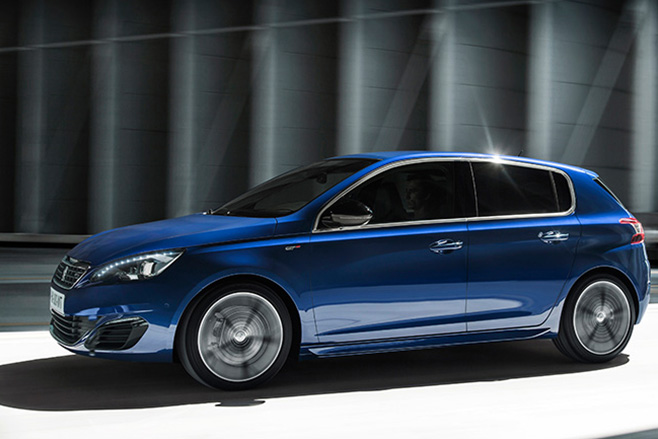
Peugeot, another manufacturer with a significant history with diesel power, has also experienced cooling demand for diesels – though some of that is attributed to the greater availability of petrol models – especially the arrival of automatic variants for the entry-level 208 and 308 hatch ranges.
Right now, 75.7 percent of Peugeot’s passenger car sales are for petrol models. In 2009, over 58 percent of Peugeots sold in Australia were diesel.
Curiously the Volkswagen Passat has a diesel sales split of 45 percent despite the sole diesel offering in the range being the 140TDI Highline – the most expensive Passat on offer at $45,990 for the sedan and $47,990 for the wagon.
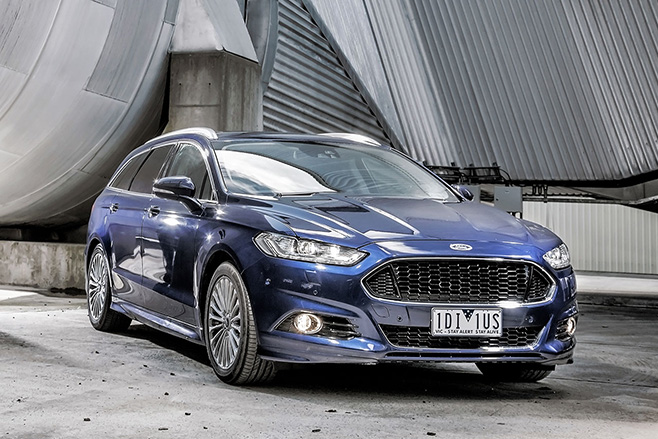
It’s a similar tale at Ford. The Mondeo diesel enjoys a whopping 77 percent share of overall sales, though a significant number of those are accounted for by efficiency-sensitive government and commercial fleets. Ford wasn’t able to give us a fleet/private breakdown for the Mondeo’s sales figures.
Conversely, the Mazda6 – which has virtually no fleet sales – currently only has a 10 percent uptake on its 2.2 litre diesel engine option. Two years ago that number was 20 percent. It seems midsize cars, like medium SUVs, are where consumers believe diesel power starts to make sense – but it’s still a minor share once you subtract fleet sales from the mix.
So what’s happening here?
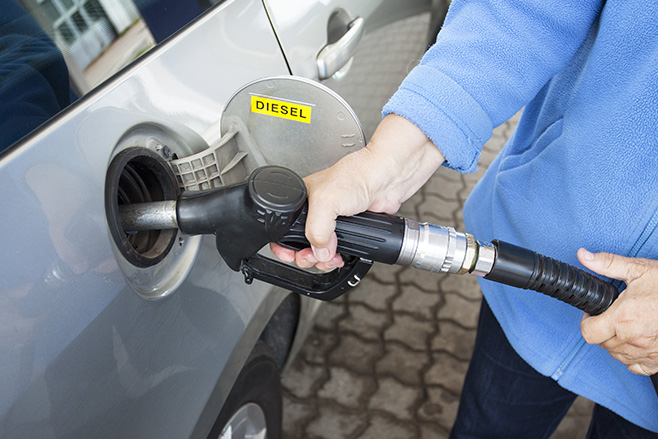
The price of fuel plays a huge part. After experiencing peaks approaching $1.60 per litre in early 2014, the cost of a litre of unleaded petrol has sunk to as low as a dollar per litre this year. Diesel has also come down off historic high prices, but is still more expensive per litre than petrol.
Diesel has greater energy density than unleaded petrol allowing a diesel-engined car to travel further on the same volume of fuel (which helps compensate for its extra cost).
However with diesel car ownership being accompanied by sticky fuel bowsers, noisy idling, added vibration and higher purchase cost compared to identically-equipped petrol models, it’s no surprise that consumers and manufacturers alike are shying away from oil-burning passenger cars.
What stands out?
HSV builds brash Australian muscle cars that deliver spectacular bang-for-buck, with terrific levels of convenience and safety equipment. The Gen-F2 Clubsport, Senator, GTS and Grange sedans, the Clubsport Tourer wagon and the Maloo ute offer a high-performance driving experience in a roomy, practical package that begins with a big V8 engine and rear-wheel drive.
What might bug me?
The prospect of coming to grips with the tyre repair and inflator kit. You don’t get a spare wheel and tyre in any HSV Gen-F2, although you can add a space-saver as an extra-cost option.If you choose a sedan, having to leave long items behind if they are much broader than a pair of skis. You can’t fit them in the boot, because the rear seatback does not fold down (you get only a ski-port).Keeping your HSV Gen-F2 in fuel and tyres. Every variant is a big, heavy, and very quick car that uses a lot of petrol and is equipped with expensive, and relatively fast-wearing, high-performance tyres.
What body styles are there?
Four-door sedan (Clubsport, Senator and GTS); long-wheelbase four-door sedan (Grange); five-door wagon (Clubsport Tourer); and two-door utility (Maloo).Gen-F2 HSVs drive their rear wheels, and are classed as large high-performance cars, lower priced.
What features do all versions have?
A smart key, which lets you unlock and start the car while the key resides in your pocket or bag.Dual-zone climate-control, which lets you set different temperatures for each side of the cabin.Cruise control. Windscreen wipers that turn on automatically when it rains, and headlights that turn on automatically when it’s getting dark.A reversing camera, and parking sensors front and rear. A parking assist system, which can steer the car into a parking spot.Leather upholstery (seats, steering wheel and gear lever handle), and a power adjustable driver’s seat.A multimedia system with satellite navigation, a CD player, iPod integration, Bluetooth connectivity for phone calls and audio streaming, and an eight-inch colour touchscreen. Controls on the steering wheel for the multimedia system.A head-up display, which projects a speedo and other helpful information onto the windscreen near the driver’s line of sight, so that you can read it without taking your eyes from the road.A Driver Preference Dial, which allows you to adjust simultaneously features such as the electronic traction control, the weight of the steering, the sound from the engine, and (on some models) how comfortably the car rides, for a more relaxed or more engaged driving experience.Wide, 20-inch aluminium alloy wheels, shod with grippy, low-profile, 255/35 tyres at the front and even broader 275/35s at the rear. A tyre puncture repair and inflator kit. A tyre pressure monitor, which warns you if a tyre has lost air.A limited-slip differential, which helps the tyres convert all that V8 grunt into thrust (by limiting wheelspin).Metallic paint: unlike many brands, HSV does not charge you extra for any of its available colours.Electronic stability control, which can help you control a skidding car. All new cars must have this feature.Six airbags, and an active safety suite that comprises forward collision alert, lane departure warning, blind spot detection, and rear cross traffic alert. (For airbag placement, and for more on HSV Gen-F2 safety systems, please open the Safety section below).Every HSV Gen-F2 carries a three-year, 100,000 kilometre warranty.
Which engine uses least fuel, and why wouldn’t I choose it?
Three engines are available in an HSV Gen-F2, and every one of them is a very powerful and thirsty 6.2-litre V8. So you’re going to use a lot of petrol no matter which one you choose.The engine that uses least fuel is the only one not assisted by a supercharger. That engine, designated the LS3, is available only in the HSV Grange, and it consumes 12.9 litres/100km on the official test (city and country combined).The main reason you would choose a different engine is that you don’t want a Grange. The Grange is a bigger and more lavishly equipped car than the other HSVs, and while it still has a high-performance focus, it may be that you want a sharper sports focus and even more power.Both of the other engines are updated – and supercharged – versions of the LS3, designated LSA, and both offer significantly more grunt from idle up. The less powerful of these – which still makes 400kW – is the most widely available engine in an HSV Gen-F2, and it comes with all but one of the remaining models: the Clubsport R8 LSA (sedan and wagon), the Senator Signature LSA, and the Maloo Ute. It uses about 15 litres/100km on the official test.The more powerful of the supercharged engines is available only in the HSV GTS – the hardest-hitter of all the F2 HSVs. It provides about 10 per cent more go, and without using any more fuel.Any Gen-F2 HSV is available with a conventional six-speed automatic gearbox, and the Tourer and Grange come only with this gearbox. The Clubsport sedan, Maloo, Senator and GTS are also available with a six-speed manual gearbox.
What key features do I get if I spend more?
A Maloo R8, Clubsport R8 or Clubsport Tourer R8 offers the features common to every Gen-F2.Stepping past these and paying more for a Senator Signature brings a more subdued interior, and an exterior treatment that strikes a middle ground between the overtly sporty Clubsport (and GTS) and the statesmanlike Grange.The Senator also brings extra comfort, thanks to heated front seats and a more sophisticated suspension that HSV calls Magnetic Ride Control. This suspension uses computer-controlled dampers that adjust automatically how firmly the car rides, softening in milliseconds to absorb sharp bumps and firming up again afterwards. You can also choose Touring (comfort) or Sport ride-settings manually from the driver’s seat. In addition, the Senator’s alloy wheels are forged (an alternative manufacturing process), and therefore are stronger and even lighter than the more common cast alloy wheels on less costly Gen-F2s.Paying more again for a GTS takes the styling in the other direction, with a wilder look than even the Clubsport, and brings you the more powerful of the supercharged engines. It also brings you an Electronic Driver Interface, which displays data helpful in track use such as your lap time. And it has a handling aid called torque vectoring, which adjusts helpfully which rear wheel receives most power in corners. Like the Senator, the GTS has front-seat heaters, Magnetic Ride Control and forged wheels. (The Electronic Driver Interface is optional on other GenF2 cars. For more on this and on torque vectoring, please open the ‘Will I enjoy this car?’ section below).In contrast, choosing instead the Grange brings you more room inside (it has a longer wheelbase), less power (the engine is the non-supercharged LS3), and more luxury. There are extremely bright xenon headlights, front foglights, and the most subtle exterior treatment on an HSV F2, which goes with a more restrained interior look. The driver’s seat can remember adjustments for up to three people (so that you can restore yours easily after companions have driven the car). The Grange too has forged wheels, Magnetic Ride Control, and front-seat heaters.
Does any upgrade have a down side?
There is no significant downside from upgrading, but manual and auto variants each have an additional unique feature.Manuals come with Launch control, which helps you maximise acceleration from a standing start. Autos do not.Autos have a remote-start feature, which lets you start the engine from outside the car. This could be handy if you want to let the engine warm up before you drive off, or let the climate control cool or heat the cabin before you get in. You don’t get this with a manual.
How comfortable is it?
The HSV Gen-F2’s locally developed suspension shines through in the way the cars ride. They soak up bumpy Aussie roads in a more relaxed fashion than many European executive-express sedans and wagons, which have been tuned for the typically smoother surfaces of high-speed autobahns.Gen-F2s offer enough compliance to soak up rough surfaces, along with the control to prevent the body – and occupants – from being pogoed when riding big bumps. These are big, comfy cruisers.The Magnetic Ride suspension in the Senator, GTS and Grange brings a comfort setting that relaxes the dampers, optimising them for a slightly more sedate country-road gait. However, it’s not the case that these are a must-have for a smooth ride, like similar systems are in some European cars.The broad, high-performance tyres worn by HSV Gen-F2 cars are more prone to drone than the average skinny passenger tyre on coarse chip surfaces. However through skilful sound deadening, occupants are well isolated from most tyre noise, as well as from wind rustle and suspension noise.
What about safety?
In addition to six airbags, a reversing camera, front and rear parking sensors, auto windscreen wipers and tyre-pressure monitors, you get as standard in every HSV Gen-F2 a suite of active safety systems.There are two airbags directly in front of the driver and passenger; one on the outer side of each front occupant to protect the upper body; and a curtain airbag along each side to protect heads front and rear from side-impacts.A camera-based forward collision alert scans the roadway ahead for obstacles – typically another car that has slowed suddenly – and gives you audible and visible warnings if it concludes a collision is imminent. It also prepares the brakes for an emergency stop. (It will not apply the brakes automatically, however.)Blind-spot detection warns when a vehicle is travelling next to you but out of view to the rear. Lane departure warning lets you know that you are drifting distractedly out of your lane (a sign of fatigue).When you are reversing, a rear cross-traffic alert warns if something is about to cross behind you. This could save you from car-park bingles.Autonomous emergency braking is not offered, either standard or as an option, in any HSV Gen-F2. AEB systems warn you of obstacles in front of the car – typically another vehicle that has slowed suddenly – and apply the brakes automatically if you do not react.The Australasian New Car Assessment Program (ANCAP) has not rated the HSV Gen-F2. However, the Holden Commodore, which is fundamentally very similar, achieved a five-star rating, ANCAP’s maximum.
I like driving – will I enjoy this car?
‘I Just Want One!’ went the long-lived HSV slogan, and for a certain breed of patriotic high-performance car fan, that sums up the powerful appeal of the Gen-F2, from the Maloo to the Grange.These cars are not about subtlety. They’re about having a good time and shouting about it, from their borderline-lairy exterior styling, via often chintzy interior detailing, to the booming, baritone V8 engine note.But despite the focus on acceleration and handling, and their seriously brash personalities, each Gen-F2 offers value, space, practicality and comfort by the bucket load, which makes them terrific all-rounders.So, if you get HSV – if you Want One, or even if you just appreciate a uniquely flavoured, talented, home-grown high-performance car – you’re not going to find yourself disappointed.Everything about driving the Gen-F2 is chunky. The comfy front seats are built for big bodies, so if you’re of small build you might find them a bit too broad between the deep side bolsters. The steering wheel is fat and sculpted, the clutch in manuals is on the heavy side, and the manual gearshift has a notchy action.While this means it takes familiarity and dexterity to find an easy, smooth flow in the Gen-F2s, it also adds an enjoyable feeling, at the end of a hard drive, that you’ve conquered the beast.An auto gearbox, of course, removes two elements from the mastery required to drive Gen-F2s hard. It works smartly and decisively, and it still lets you have your fun by way of manual gear-shift paddles on the steering column.While some of the controls require a bit of muscle, the accelerator is best operated with a light right foot. It is not that, with its broad rear tyres and traction control, there’s any risk your rear-drive HSV will send you off the road backwards. Not in the dry with ESC switched on, anyway. It’s just that you have to be careful not to lose your licence, because it’s all too easy to speed with a big, supercharged engine doing its effortless thing.The less potent engine in the Grange is still a ripper, with a beautiful, crisp, deep V8 note and straight line shove to impress anyone … who hasn’t driven a supercharged version. Make no mistake, despite the relatively demure exterior, the Grange remains a high-performance hoot to drive.Heading straight to the other end of the spectrum, the GTS, with the most potent iteration of the LSA V8 engine, is an immensely quick and characterful machine, with additional power from the bottom up and a subtle supercharger whine.Extra features add to the repertoire of this ultimate Gen-F2, among them the Electronic Driver Interface (EDI), which delivers performance data-logging and lap timing to the infotainment screen. The GTS-only torque-vectoring system cleverly splits power between the rear wheels, through the subtle use of either rear brake, to maximise drive while helping twist the car through the turn (diminishing the natural tendency to push the nose wide when you press the accelerator mid-corner).The GTS also adds a competition mode to the standard Driver Preference Dial. This takes steering beefiness, exhaust and intake blare, and engine responsiveness, to even greater heights than in the other cars, as well as loosening the electronic stability control’s safety net to allow skilled drivers extra fun on the racetrack.For a lot less money however, the Clubsport delivers a lot of the GTS’s speed and involvement. That it’s a little bit less powerful, does not have torque vectoring, and gives up some ride and handling polish through the absence of computer-controlled suspension, removes little of the fun it can provide as a road-going blaster.The one thing that doesn’t change across the diverse Gen-F2 range is the brilliantly honed handling balance, which brings front-end grip to dispatch the tightest set of twisty corners and the rear-end poise and tenacity to blast out the other side – with a disdain for all but the lumpiest of roads. This is even true of the Maloo ute, which has the same multi-link rear suspension as the sedans and wagons (but with a bit less weight over it, so if you’re looking for an ESC-off tail-slide machine, this is it).
How is life in the rear seats?
There’s not much that can match a Clubsport, Senator or GTS for back-seat space and comfort … other than a Grange, whose longer wheelbase gives you even more room to stretch your legs.The HSV Gen-F2, like the Holden Commodore and Caprice they’re derived from, have more space in the back than anything short of a large European executive express such as a BMW 5 Series or Mercedes E-Class.The Gen-F2 also has a more inviting, cushier, seat base and more supportive backrest than its Euro counterparts, with generous head and foot room.You could ride happily in the back of an HSV Gen-F2 for hours on a country drive – just as long as the driver wasn’t having too much fun.
How is it for carrying stuff?
The HSV Clubsport, Senator and GTS have huge boots that can hold 496 litres, and the long-wheelbase Grange sedan’s is even bigger at 535 litres. The Tourer wagon can carry 895 litres, and the Maloo R8 ute has a payload of 500kg in its generous tray.The sedans don’t have folding seatbacks, supplying only a ski-port that lets you carry relatively skinny items that are too long to fit in the boot. The cavernous Tourer can haul 2000 litres of luggage with its 60-40 rear seatbacks folded.
Where is it made?
All HSV Gen-F2s are built in Australia but their engines are imported from General Motors plants overseas. The LS3 engines are made in North America and the supercharged LSAs in Mexico.
What might I miss that similar cars have?
There is little on sale that’s similar to the HSV Gen-F2, as a big, relatively low-cost, rear-wheel-drive V8 high-performance car.Compared with the Holden Commodore and Caprice (on which they’re based), the HSV Gen-F2 is louder, brasher, better equipped and higher-performing. The flip side is that the high-performance Commodores are more subtle, less thirsty, less expensive, smoother to ride in, and perhaps easier to live with.Ford doesn’t do a direct alternative, now that Ford Performance Vehicles has closed its doors, but you could also consider the Falcon XR6 Turbo and XR8, which are pitched at the same level as the Commodore SS. The two-door, rear-drive, V8 Ford Mustang is another to keep in mind.You could also consider the American Chrysler 300 SRT, which is a similar-sized, rear-wheel-drive muscle sedan with a 6.4-litre V8 and an eight-speed automatic (only). It’s less costly than any HSV Gen-F2 and has autonomous emergency braking, but it isn’t as athletic as a Clubsport or GTS.A BMW M5 or Mercedes-Benz CLS63 AMG S are the nearest European alternatives, being big four-doors with high-powered V8 engines and rear-wheel-drive. But they cost twice as much as a Gen-F2.
I like this car, but I can’t choose which version. Can you help?
Our reviewers like the Clubsport R8 LSA manual. Now that the Clubsport has the supercharged V8 previously reserved for the GTS (in slightly detuned form in the Clubbie), it’s evolved into a weapon-quick, well-equipped Aussie sports sedan (or wagon) bargain.
Are there plans to update this model soon?
The HSV Gen-F range, which arrived in 2013, was subtly restyled and updated at the end of 2015 into the Gen-F2.The end of production announced for the Australian designed and built Holden Commodore and Caprice on which the HSV Gen-F2 is based means that, but for some tweaks for the 2017 model year, the current car will be the last of the rear-wheel-drive, all-Aussie V8 high-performance cars.However, there will be limited-edition variants. Clubsports and Maloos fitted with the formerly standard, unsupercharged LS3 engine have been announced, and a 450kW-plus GTS-R send-off model is widely expected.A replacement based on Holden’s imported next-gen Commodore is likely in 2018.
Right off the bat, I know what you’re thinking: You’d buy the Porsche, right? On what basis?
This story first appeared in the May 2002 issue of MOTOR
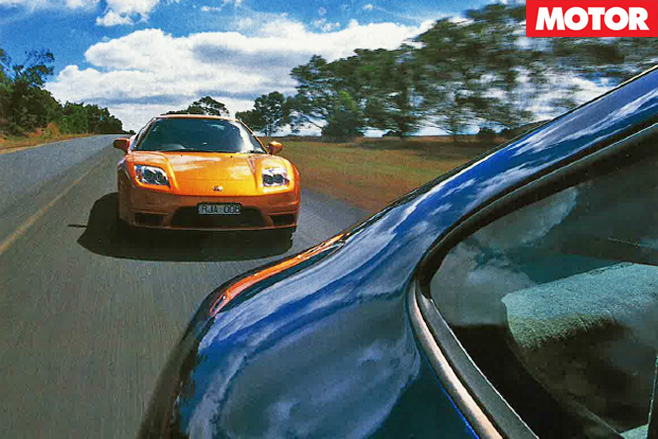
Because it’s a proper performance car? Believe me, Bucko, so is the other hot-rod being caned up and down Calder’s main straight right now. Oh, I see, the 911 has pedigree, does it? Why didn’t you say so?
Listen, if you ever had to name a Japanese car that had breeding, you’d be hard pressed to think of a better example than the Honda NSX. The sexy, alloy-bodied Honda was J-Inc’s first real foray into proper mid-engined exotica, and it proved the point that high performance didn’t necessarily mean duff interiors and dodgy ergonomics.
Now that we’ve got that lot out of the way, what’s really going on here? Without getting into a grinding justification of this unholy pairing, let’s just say that at $254,500 and $186,000, the NSX Targa (there’s a fixed-lid coupe for $11k less) and 911 respectively are, if not in the same ball-park, at least in the same suburb of a very rarefied place.
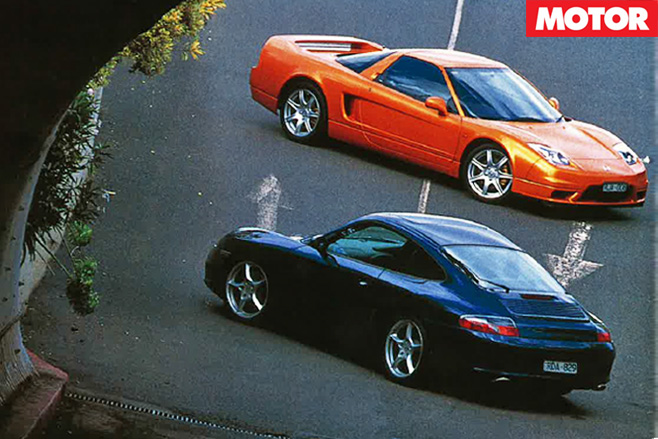
On one hand we have the establishment; the Porsche 911 with its rear-mounted flat-six, atmospheric aspiration and rear-drive. It’s a nominal four-seater, but unless you’re the cruel type, the rear seat is for soft luggage only.
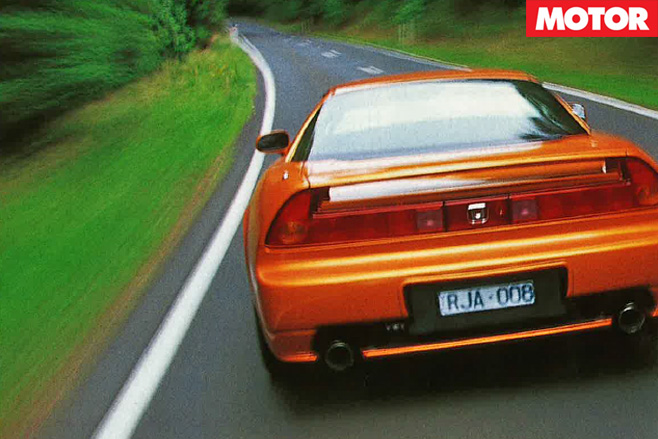
The Honda is also a six-cylinder, also atmospheric and also drives its rear wheels. It is, however, a V6, mounted amidships, and it’s strictly a two-seater. It also screams old-school EXOTIC, from its cab-forward proportions to its w-i-d-e rear track and swoopy glasshouse.
The 911 is utterly, utterly familiar provided you recognise the fact that the Zuffenhausen factory continues to take big steps forward without ruining the dream. Yet, as far as I know, it has never – water-cooling notwithstanding – taken a backward one (not in 911 history, anyway). The latest version of old faithful is improved to the tune of a bigger, 3.6-litre mill, and some sensitive fine-tuning across the board.
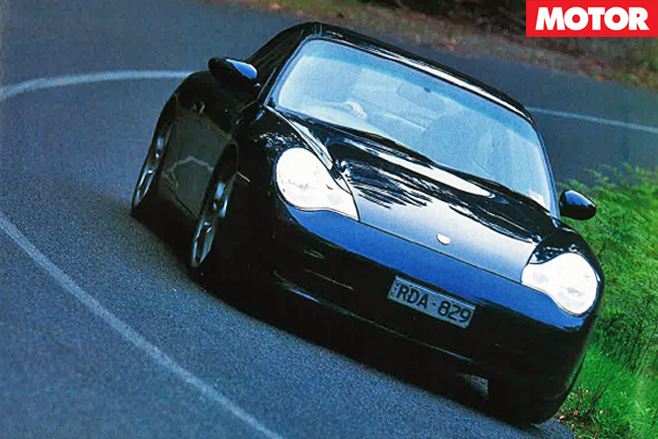
The 3.2-litre Vee in the NSX runs a lower 10.2:1 compression ratio but still gets variable valve timing (VTec, in this case) and, interestingly, only the six-speed manual gets the new engine with its 3mm bigger bore. The auto stays with the 3.0-litre version.
The end result is an artificial one in the sense that the Japanese safety-schneds insist that no vehicle built in Nippon shall have more than 206kW lurking at its flywheel. Keeping within the letter of that law (if not the spirit) the NSX boasts precisely that power figure, developed at 7300rpm, and 304Nm at 5300 rpm.
Compare those figures and you’ll see that the Honda makes less power at higher revs and a hefty 64 fewer Nms, also at considerably higher revs. And if you know your bench racing, that should translate to a slower car with less flexibility. You’d be half right. Yes, the 911 murders the NSX across the standing 400 metres by a full second and, yes, it’s also feistier gear for gear by a noticeable margin.
But that completely ignores the suppleness of the Honda engine which, thanks to VTec, manages to make useable power from 2000rpm all the way to about 7500rpm. So while it won’t actually stay with the Porker, in isolation it’s an amazingly flexible piece of gear, especially for something with a torque peak at 5300rpm.
The 911’s claim to that mantle extends to the aural treat in store for you, too. The Variocam gets serious about 5200rpm at which point the wail from the flat six changes from warm honey to bandsaw-through-Bonn-Scott as it tags the redline. The only time the boxer-motor feels a bit wholegrain is at idle when there’s a tiny amount of mechanical noise and vibration that disappears at the tiniest blip on the loud pedal.
The Honda just can’t match that act and while it’s smooth and composed, it just never gives that impression of being something truly special. There’s a rumble of vibration as revs pass through about 2000rpm that feels like a bit of rocking-couple (a secondary vibe inherent in most engines) combined with too-hard engine mounts. Ultimately, though, it feels contrived rather than a consequence of an engine with its nuts tuned off.
Either car is a lesson to other manufacturers on how to make a six-speed gearbox a viable proposition rather than a marketing plot. Top gear in both is completely useable, with the flexibility allowing the tackling of hills and even gentle overtaking without a downshift. More significantly, fifth gear is also appropriate for typical arterial roads with an 80km/h limit, which is not something you can say for all such high performance gearboxes.
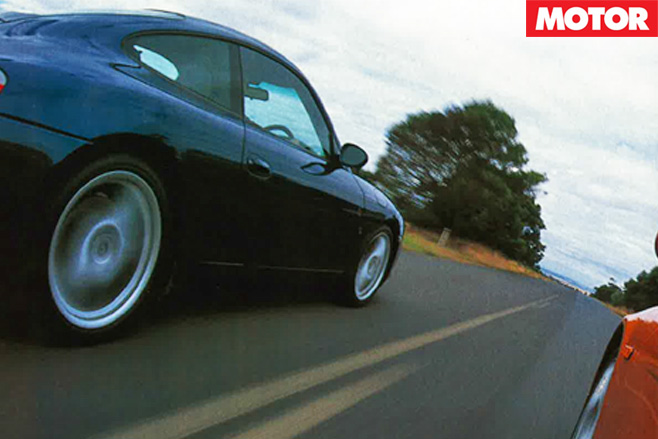
Back when we laboured over PCOTY I floated a theory that Porsche had deliberately engineered a bit of mongrel back into the car. Most particularly, that the white-coats had dialled in some of that old-fashioned throttle-off oversteer into the equation.
Why? Because there were some out there who reckoned the original 996 was just too benign. As if water-cooling wasn’t bad enough, Porsche then goes and makes the 911 totally neutral. Bastards.
Frankly, I can’t see what’s wrong with any of that, but my bet is that Porsche has taken it personally and decided to give the mob what they want. And that means a rear end that can – and will – take the lead in the right (wrong?) circumstances.
Okay, so in the 2002 car, you’ve got to be going at about 10-10ths and you’ve got to brake late as you turn into a (preferably off-camber) corner, but some will try it. And they will – in some cases – suddenly be granted a window-seat for a view of where they’ve just been.
That’s not to say that we’re back to the old rock-on-a-string days that defined the original 911, but unlike the 3.4-litre 996, the Carrera no longer feels dumkopf-proof. That contrasts with the NSX which is so neutral it’s almost other-worldly. In fact, even once you’ve run out of suspension travel and you clobber a big mid-corner bumper, all four wheels will skip sideways, which is an amazing illustration of how balanced it is.
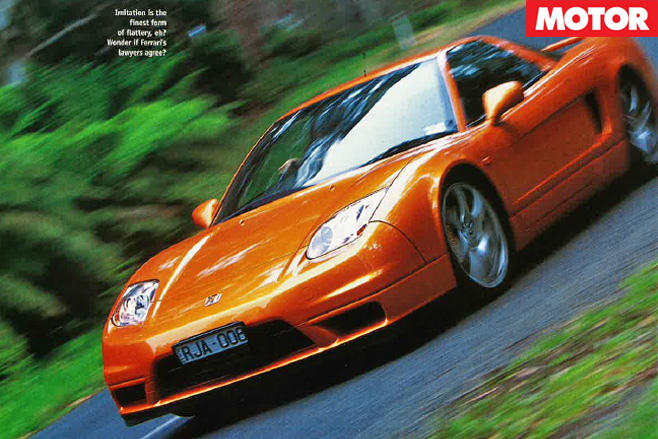
While the 911’s rear end is a potentially very active participant – and makes itself felt at even moderate speeds – the NSX makes use of its long wheelbase (a whopping 180mm more than the 911) and merely feels as if its just harmlessly dragging its arse around, leaving all the tricky stuff to the front end.
What’s even more amazing is that the bastion of handling with acceptable ride, the 911, gets a bit of a pasting in that very department. The NSX has better small bump compliance and at the same time, less body-roll. That’s partly due to the monster track (1540mm at the rear) that helps cancel out the roll, but it also feels better damped in most situations.
That’s not to say the 911 is a dray, far from it, and while my description of it as ‘jigglier than the Honda’ had Hawley in fits, I’m sticking with it. Trying to separate ‘lively’ from ‘tactile’ is never easy, but one area where the Honda just can’t match the German is in the way they convey info back to the driver.
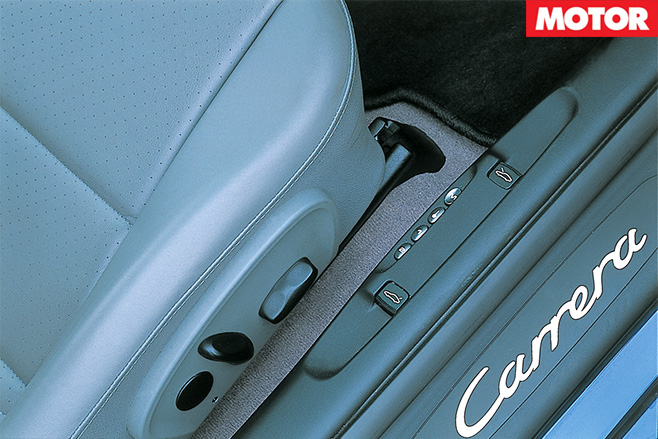
The Porsche just never stops feeding back quality info about what’s under the front tyres, which way they’re pointing and what you can expect to happen next. Accurate and quick though it is, the NSX’s steering lacks that level of communication. It’s worst at the straight-ahead and small wheel deflections reveal bugger all self-centring.
In fact, tug on a fraction of lock, take your hands off the wheel and the NSX will continue to scribe the same radius. It’s a bit spooky, to be honest, and I wouldn’t mind betting the electrically-assisted power-steering is the culprit.
Whether you value the clinical efficiency of the Honda over the three-ring circus that is the Porsche is up to you. But even women’s magazines recognise the fact that marrying for looks/money tends to be a short term solution, while relationships based on a mutual ability to provide laughs usually lasts a lot longer. (Where’d that come from?)
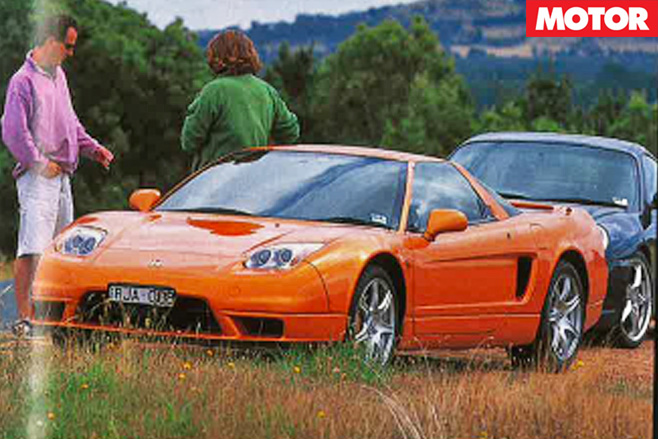
The Honda? Hmmmm. Can’t help but thinking that it’s starting to look a bit dated. Remember back in the ’80s and early ’90s when everybody was building ‘supercars’ (Bugatti, McLaren, Lamborghini et al)? Well, the basic proportions of the NSX ring too many bells from those days for me. Likewise the cabin looks like it’s pretty generic Honda of a generation ago.
It’s cramped, too, and anybody over about 180cm is going to find headroom tight. Even little things like the ignition key being too far away for taller folk start to get annoying. Oh, and how come the driver’s door, bootlid and engine cover need such a huge slam every time to shut them properly?
Despite having the same adjustable-for-reach-only steering column, the 911 boasts a more rational driving position and much easier entry/exit. There’s more room in every direction and while it doesn’t quite have the same boot space as the NSX, there’s always that back seat for extra storage. And you’ve gotta love that instrument cluster.
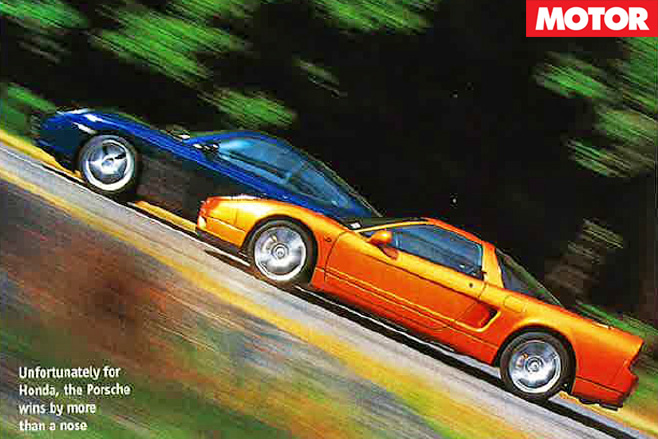
Only problem now is that the game has moved on and even the supercar establishment like the 911 (actually, especially the 911) is as civilised as anybody could ever want. The real magic of the 911 is that it retains all those elements that made it so fabulous back when dinosaurs roamed the Earth, yet it’s managed to adapt and evolve to the point where it’s still, by any standards, one of the most sensuous, involving cars you can buy at any money. That it’s a full 70 grand less than the NSX is the final nail in the Big H’s coffin.
So yeah, I know what you’re thinking… and you’d be right. You’d buy the Porsche.
Future Primitive
The trend spawned all sorts of lunacy, from the gothic-looking Bugatti EB110, right through to the aerospace-inspired Vector out of the US. Some made it; the McLaren F1 and Jaguar XJ220 stand out as examples worth owning, but of them all, only one was the sort of thing you’d stick granny in to do the shopping.
And wouldn’t you know it, it was Honda that managed to bridge the gap between mid-engined layout and real-world driveability. The first NSX lobbed in 1991 with a 3.0-litre V6 and 188 kW. There was a choice of four-speed auto or five-speed manual, although the manual was the clear performance leader since the engine wasn’t exactly a torque factory.
The wheels and tyres went from 15-inch front/16-inch rear to 16-inch front/17-inch rear in 1994, and the NSX-T (Targa) model lobbed in 1995. At the same time, the auto got a steering wheel-mounted paddle shift, and in 1997 the 3.2-litre mill was specified for the manual versions, along with the six-speed ’box.
What’s perhaps most interesting is that the latest version isn’t radically different to the original. Then again, since most of the other supercars are now landfill, the whole market segment hasn’t really moved on.
Meantime, the things that bugged the NSX then are the same things that make us groan now. Namely, the way it’s so drivable at the expense of a little excitement; and, of course, the monstrous price-tag. Even in 1991, it was a whopping $170,000. Mind you, a 911 Carrera was only about five grand cheaper back then, making the German car the real bargain these days.
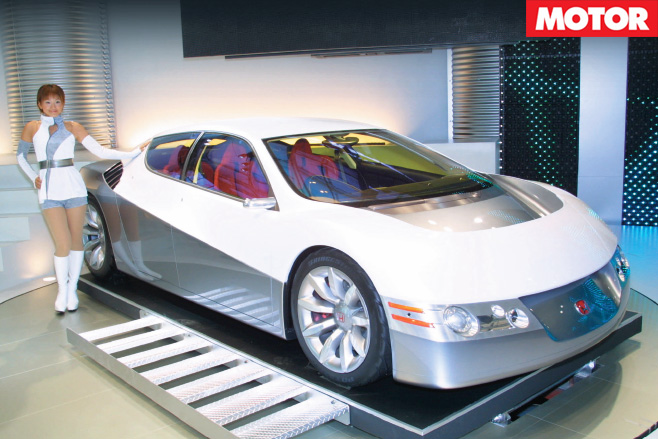
So where to now for Honda’s friendly supercar? The much touted V8 didn’t arrive in time for this update and may never happen. Probably the closest hint for NSX direction is the Dualnote concept car spotted on the Honda stand at the last Tokyo motorshow. The Hybrid get its primary motivation from a 3.5-litre V6. Apparently, it is quicker than the current NSX.
Don’t hold your breathe for production, though.
FAST FIGURES
| u00a0 | Honda NSX Targa | Porsche 911 Carrera |
| 0-10km/h | 0.43 | 0.30 |
| 0-20km/h | 0.81 | 0.65 |
| 0-30km/h | 1.18 | 0.98 |
| 0-40km/h | 1.72 | 1.31 |
| 0-50km/h | 2.29 | 1.76 |
| 0-60km/h | 2.87 | 2.19 |
| 0-70km/h | 3.76 | 2.98 |
| 0-80km/h | 4.29 | 3.60 |
| 0-90km/h | 5.12 | 4.22 |
| 0-100km/h | 6.04 | 4.98 |
| 0-110km/h | 7.23 | 5.74 |
| 0-120km/h | 8.27 | 6.88 |
| 0-130km/h | 9.53 | 7.88 |
0-400m | 14.24 @ 162.7 km/h | 13.17 @ 174.5 km/h |
FAST FACTS
| u00a0 | Honda NSX Targa | Porsche 911 Carrera |
| Body | two-door coupe | two-door coupe |
| Drive | rear-wheel | rear-wheel |
| Engine | mid-mounted 3.2-litre DOHC 24-valve V6 | rear-mounted 3.6-litre DOHC, 24-valve flat-six |
| Power | 206kW @ 7300rpm | 235kW @ 6800rpm |
| Torque | 304Nm @ 5300rpm | 370Nm @ 4250rpm |
| Compression Ratio | 10.2:1 | 11.3:1 |
| Bore x stroke | 93mm x 78mm | 100mm x 76.4mm |
| Weight | 1425 kg | 1345 kg |
| Weight/power | 6.9 kg/kW | 5.7 kg/kW |
| Specific power | 64.4 kW/litre | 65.3 kW/litre |
| Transmission | six-speed manualu00a0 | six-speed manualu00a0 |
| Suspension | double wishbone, coil springs,u00a0 anti-roll bar (f); double wishbone, coil springs, anti-roll bar (r) | MacPherson struts, coil springs, anti-roll bar (f); independent multi-link, coil springs, anti-roll bar (r) |
| L/W/H | 4430/1810/1175 mm | 4430/1770/1305 mm |
| Wheelbase | 2530 mm | 2350 mmu00a0 |
| Tracks | 1510 mm (f); 1540 mm (r) | 1465 mm (f); 1480 mm (r) |
| Brakes | 298 mm ventilated discs, four-piston calipers (f); 303 mm cross-drilled discs, two-piston calipers (r), ABS | ventilated and cross-drilled, four-piston calipers (f); ventilated and cross-drilled discs, two-piston calipers (r), ABS |
| Wheels | 17 x 7-inch (f); 17 x 9-inch (r), alloy | 17 x 7-inch (f); 17 x 9-inch (r), alloy |
| Tyres | Bridgestone S02 215/40 ZR17 (f); 255/40 ZR17 (r)u00a0 | Pirelli P Zero Rosso, 205/50 ZR17 (f); 255/40 ZR (r) |
| Fuel | 70 litres, PULP | 64 litres, PULP |
| Price | $254,000 | $186,000 |
DO you want to go for a tour of the Lamborghini factory in Italy, but can’t quite afford the plane ticket?
Never fear, for Google Maps is here!
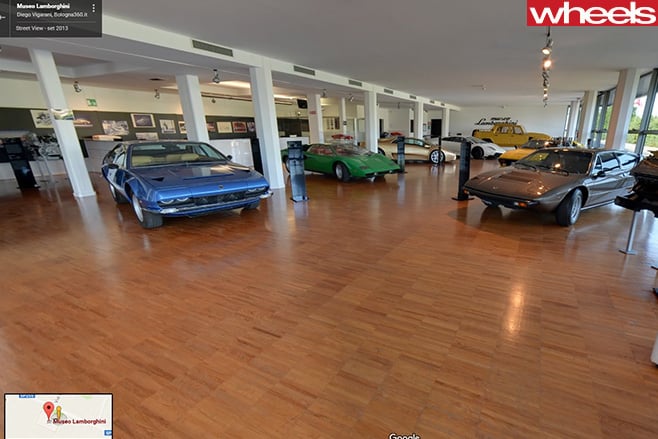
Thanks to the all-seeing eye that is Google, you can now go inside the Lamborghini factory – and more importantly, the collection of cars at its entrance.
The forecourt holds a group of cars which represent Lamborghinis lineage, stretching back to 1963.

Google Maps allows you to be your own tour guide, virtually walking around the collection from every angle.
If you get bored with the cars inside the entrance, head outside and revel in the beautiful countryside which surrounds the Sant’Agata Bolognese factory.
In your exploration, you can also venture inside a couple of cars, including a Lamborghini Murcielago SV, and the oddball LM002 SUV.
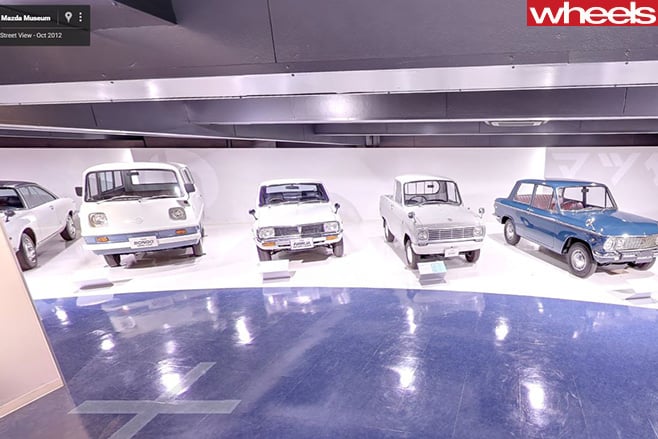
Here you can explore the history of the Japanese manufacturer through meticulously maintained vehicles.
Mazda’s museum also houses a number of concept cars, and test engines, letting you get up close with some of the most interesting cars to never make production.
Chrysler upped the ante last year, with a virtual tour of the Chrylser 200 factory in a partnership with Google.
Here, you can follow the 200 along the production line, and experience a number of 360 degree videos to really get a feel for what the inside of a car factory feels like.
Elvis Presley’s once-lost BMW 507 Roadster has been restored to its former glory by the German automaker, with the alloy-bodied V8-powered drop top meticulously repaired, renewed and rebuilt to brand-new condition by BMW Group Classic.
It’s also set to make a comeback tour later this month in California, where it will roll across the grass at arguably the world’s most prestigious car event, the Pebble Beach Concours d’Elegance.
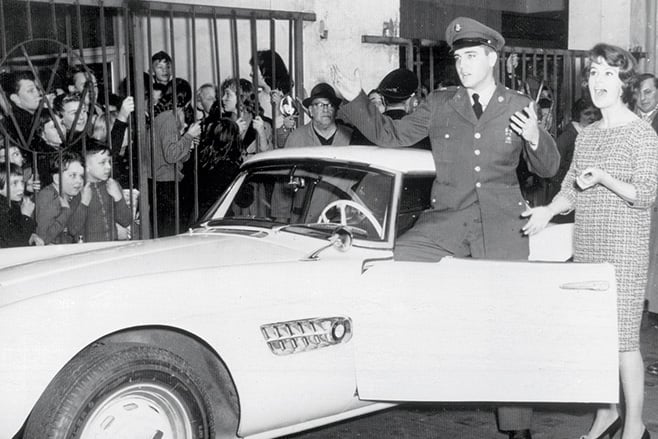
Owned and driven by The King while he was stationed in Germany with the US Army between 1958 and 1960, Elvis’ 507 was already notable for being BMW’s display vehicle at the 1957 Frankfurt Motor Show and the whip of hillclimb champ Hans Stuck (father of racing legend Hans-Joachim Stuck).
Only 254 examples of the 507 were ever built too, making any 507 – let alone Elvis Presley’s one – highly collectible.
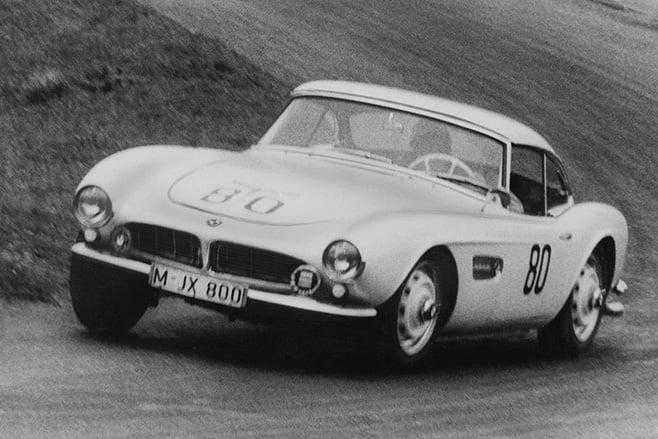
Elvis took the 507 back to the USA with him after his posting to Germany ended, but not before repainting the white car in red to camouflage the love notes frequently written on his car in lipstick by adoring female fans.
Not long after returning to the USA Elvis traded in the 507 to a Chrysler car dealer. Its next owner raced it, albeit with a Chevrolet engine under the bonnet and extensive modifications to the gearbox and rear axle. Two more owners came and went before it was bought by its final owner in 1968.
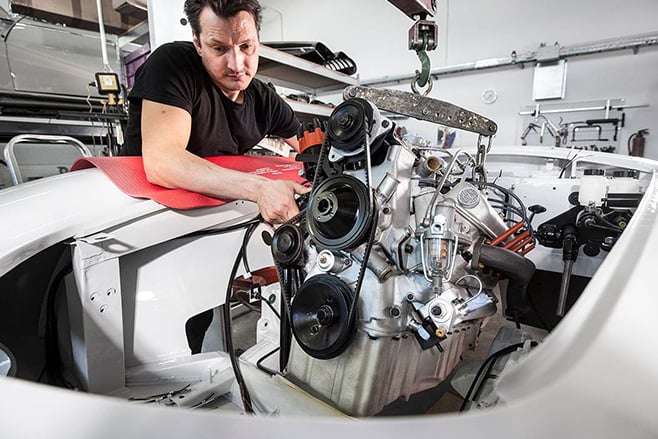
After spending roughly 45 years parked in a warehouse, the car’s provenance was unearthed and its link to Elvis established. With newfound celebrity status, BMW decided to sponsor the restoration of the thoroughly-dilapidated roadster and transported it to Munich to begin the rebuild.
The work required was extensive, and has taken roughly two years to complete. Its first owner after Elvis turfed the original BMW V8 engine (which BMW claims was the first production all-alloy V8) and hacked up the engine bay to fit that Chevy V8. It’s believed the original gearbox and rear axle also went AWOL around this time.
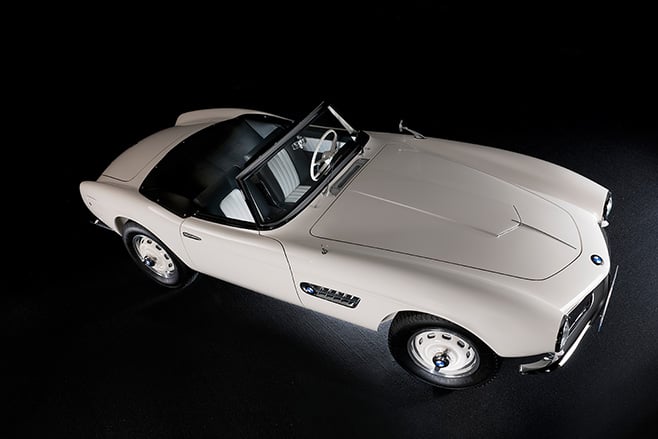
BMW Classic built a replacement 3.2 litre V8 engine from original spare parts and repaired the front end structure. Meanwhile, the car’s all-aluminium body was separated from its steel chassis and the red paint applied by Elvis stripped off and replaced with the cars’ original colour of Feather White.
BMW Classic has documented the full restoration process from acquisition to completion, and you can read all about it at the link provided. If you happen to be on the central coast of California later this month, you can check out Elvis’ former daily driver in person at the Pebble Beach Concours d’Elegance on August 21.
NISSAN has revealed a fuel cell-powered vehicle in Brazil that runs on bio-ethanol rather than the futuristic technology’s other fuel of choice – hydrogen.
Unlike other fuel cell vehicles that rely solely on hydrogen to generate the electricity needed to turn the wheels, the stubby-nosed Nissan test vehicle can use more recognised fuels including ethanol and natural gas – and because it is hard to do, the carmaker claims its system is is a world first.
It means fuel cell cars will not need a special tank to store hydrogen – the gas needs to be kept below minus 250 degrees Celcius – and can top up at existing petrol stations. However, there is still the issue of managing the furnace-like heat produced by SOFCs, which is probably why Nissan is using a van and not a small car.
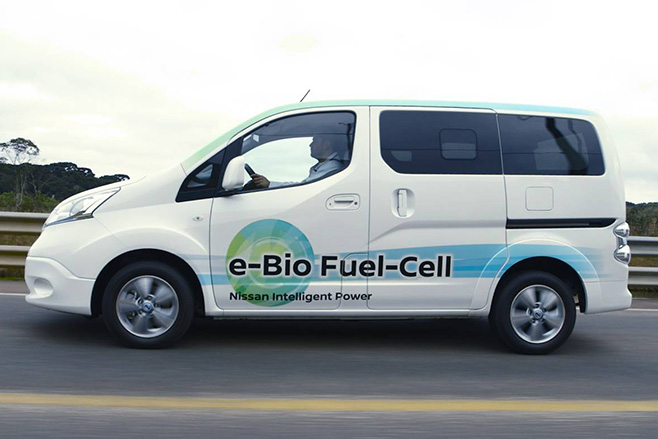
Nissan’s e-Bio Fuel Cell prototype uses ethanol to charge a 24kWh battery that enables a cruising range of more than 600km. While an ethanol-fuelled SOFC will create some carbon emissions, Nissan says it would be offset by crops grown to produce the bio-fuel.
Nissan will test the SOFC technology on public roads in Brazil, which is the world’s second biggest user of ethanol fuel after the US.
So how do SOFCs work?
Fuel cells work like batteries, but don’t need recharging. They are very efficient and produce almost no emissions. They create electricity and heat as long as fuel is supplied.
A fuel cell consists of two electrodes—a negative electrode (or anode) and a positive electrode (or cathode)—sandwiched around an electrolyte. The ethanol splits into carbon and hydrogen, the latter which is fed into the anode. The oxygen is simply taken from the air and enters via the cathode.
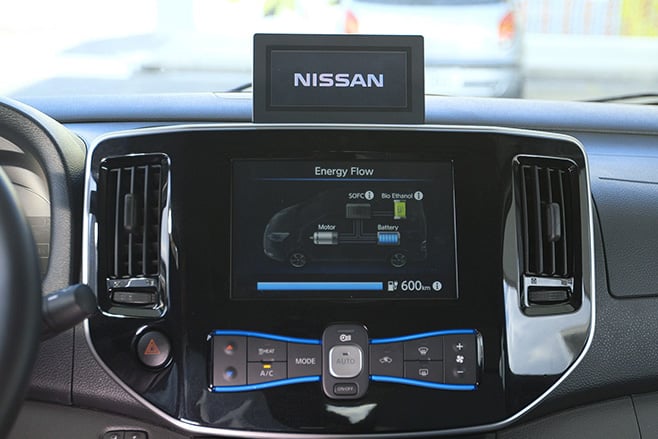
A chemical reaction occurs between the hydrogen and oxygen, creating water and the electricity that is used to power the electric motor, which drives the wheels.
So far most fuel cell development for vehicles has centred on hydrogen fuel cells that use hydrogen as the primary fuel.
SOFCs are different in that they can use hydrocarbon fuels, including petrol, diesel, jet fuel and biofuels, to create the hydrogen needed for the reaction.
They are also cheaper to produce because they don’t need to use expensive platinum metal.
However, until now carmakers have struggled with the high operating temperature of SOFCs, around 800°C.
Low-temperature SOFCs are being developed, though Nissan hasn’t revealed the operating temperature of its prototype.
