
Fiat Chrysler Automobiles has appointed a new managing director to head its Australian business.
FCA UK managing director and the head of Jeep for Europe, Middle East and Africa, Steve Zanlunghi (pictured above) has taken the reigns at FCA Australia’s Port Melbourne HQ, replacing Pat Dougherty (below) who has been redeployed to Shanghai as the company’s Head of Aftersales for the Asia Pacific region.
It is the second change at the top at FCA Australia in two years after Dougherty replaced former MD Veronica Johns. She is tangled up in claims that the managing director she replaced, Clyde Campbell, allegedly misappropriated millions of dollars in company funds.
Dougherty’s appointment in 2014 provided the company a clean break from the controversy, but FCA Australian sales have since slumped with a 50 percent drop in sales across its brands during the first half of this year alone.
With the company set to embark upon an ambitious new product roll out, it is hoped Zanlunghi will be able to replicate FCA’s recent success in the UK and Ireland markets, which thrived under his stewardship.
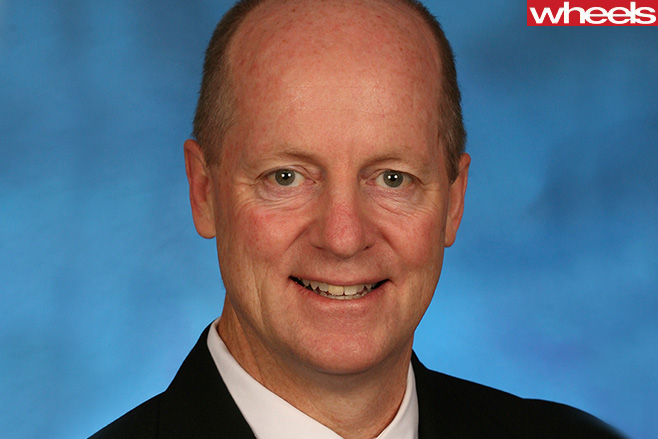
The Australian national was named FCA UK’s Managing Director in July 2012, while at the same time being appointed Chairman of FCA Ireland, overseeing a period of unrivalled growth for the company in the region.
In February 2015, he was named Head of Jeep Brand – Europe, Middle East and Africa. In this role, he developed the EMEA regional Jeep brand strategy, including product, sales, marketing and network development, while maintaining his responsibility for the UK and Irish markets.
In a statement released this week, Asia Pacific Chief Operating Officer Mike Manley described Zanlunghi as a capable leader with a solid understanding of the Australian market place.
“I’m delighted to be making this announcement, as it further strengthens our APAC team and sees one of our senior executives appointed to lead a key market for us,” Manley said.
Heavily based on the M4 GTS – Australia’s 25-unit allocation of which is sold out at $295,000 plus on-roads – the M4 GT4 will cash in on what BMW calls “a boom” in affordable motorsport activities worldwide.
Munich has released only a teaser sketch of its big-winged two-door coupe racer painted in classic M livery, as it completes testing throughout 2016 ahead of a 2018 season debut.
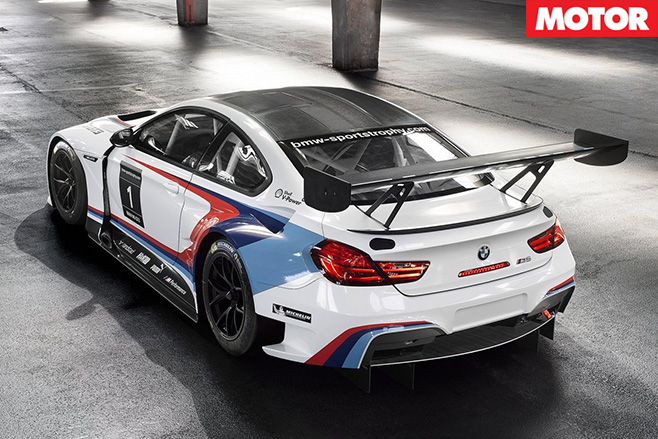
BMW tags the M4 GT4 as a “close-to-production” vehicle that “continues the long and successful tradition of BMW in customer racing” as a successor to the M3 GT4, and no doubt Porsche’s racing version of the Cayman GT4 is the target.
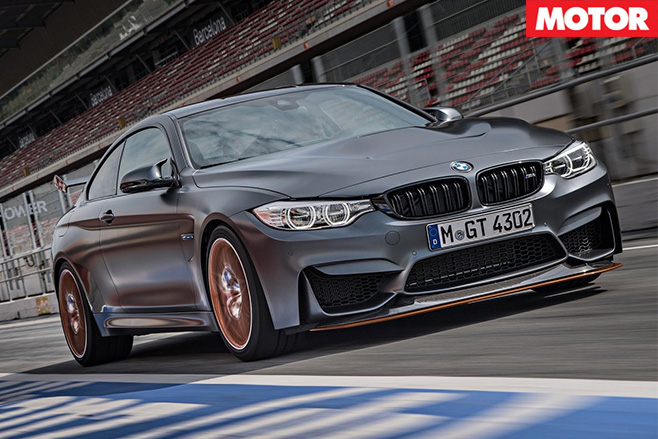
“It offers affordable motorsport with cars of technical high-quality and … we see enormous potential around the world for privateer BMW teams for whom the BMW M4 GT4 is an option.
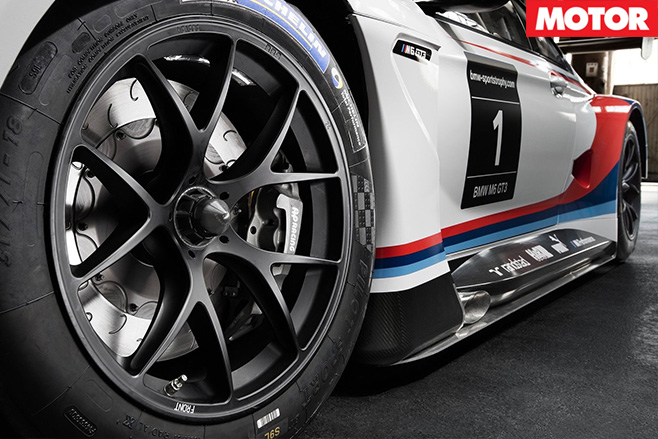
At this stage BMW predicts the M4 GT4 will make its racing debut at the 24 Hours of Dubai in January 2018.
HOW’S this for an exclamation point to mark the end of the local car industry?
Holden Special Vehicles is about to reset its own benchmark as the creator of the most powerful Australian-made car of all time. The epic 476kW LS9 supercharged 6.2-litre V8 from the previous Corvette ZR1 is coming to the Commodore.
While there has long been speculation about Commodore adopting the LS9, MOTOR can confirm the project only got the green light in recent weeks.
Most of the engineering work until then had been in theory and using computer simulation to see how the Commodore body could handle the LS9’s awesome 820Nm of torque – and how the engine might pair with the VF’s electronic architecture.
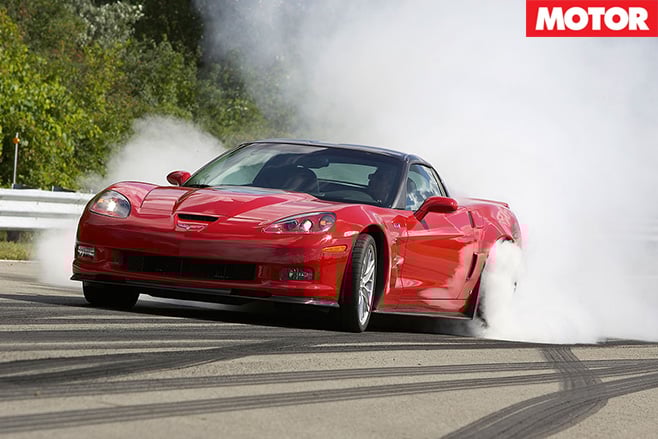
It was eventually decided the only way LS9 was going in a Commodore was if HSV installed it at Clayton. That’s in part why the LS9-powered HSV will cost close to $165,000 when it hits showrooms in 2017. Because it will get built with two engines, even though each customer only gets one.
HSV’s new supercar will initially be built as a GTS on the Elizabeth production line and then get transported to HSV in Clayton in its usual partially-complete form.
Although it seems a waste to get the car built with an LSA engine only to take it out again, HSV wanted all the other hardware the LSA brings, such as the stronger differential and axles, and extra cooling ancillaries.
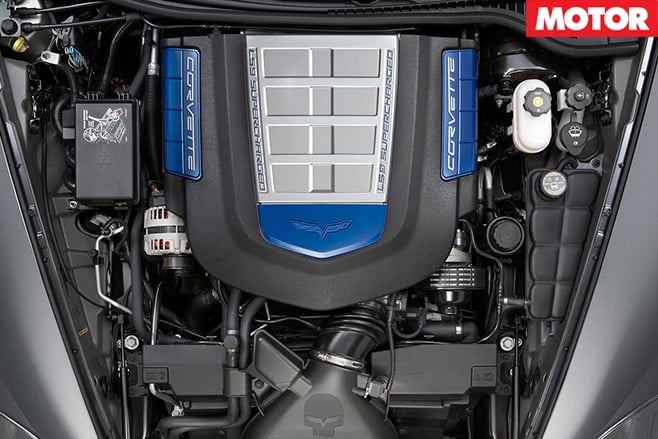
Don’t hold your breath for a power increase to 500kW; the LS9 is already so powerful, it’s understood HSV does not want to further stress the driveline. Maintaining the standard power and torque outputs (as HSV did with the LSA) means the LS9 will keep its GM-tested reliability standards.
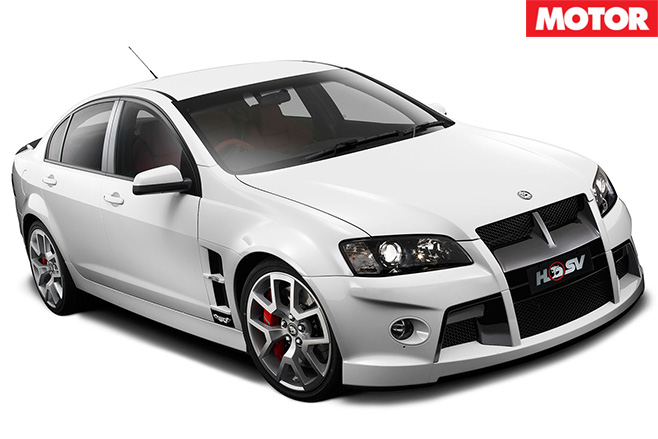
While HSV is understood to have developed a unique suspension calibration for its final supercar, appearance changes will be relatively limited. Cosmetic surgery is expected to extend to the front bumper, rear wing, rear bumper inserts, unique (but still 20-inch) wheels, and badging.
The front fascia is expected to have a dramatic appearance change (as with the W427), which may not sound like a big deal, but it is. Front bumpers cost a cool $1 million (or thereabouts) to tool up, test and produce because they must meet strict crash safety standards.
This adds massive cost to the development of any car, but even more so when only about 250 bumpers (plus some spares) will be made. Don’t expect a see-through panel in the bonnet (as per the Corvette ZR1) to show-off the LS9; the cost to re-engineer and re-test a new bonnet is also prohibitively expensive.
The cost to conduct validation and stability control testing on carbon ceramic brakes would have blown the budget. Same deal for carbon fibre wheels. These items alone would have added at least $60,000 to the cost of each car.
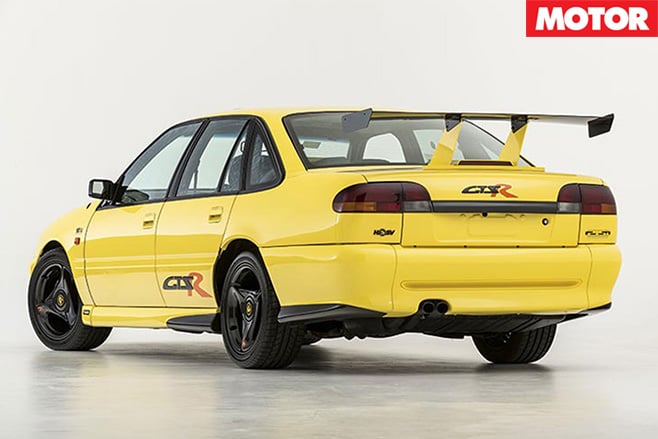
Contrary to speculation, the GTS-R badge won’t be used on this model; MOTOR understands it will get a unique name with a nod to the heritage of HSV. The new supercar is expected to bow next year, in the homegrown Commodore’s final year of production and as HSV begins its 30th anniversary celebrations.
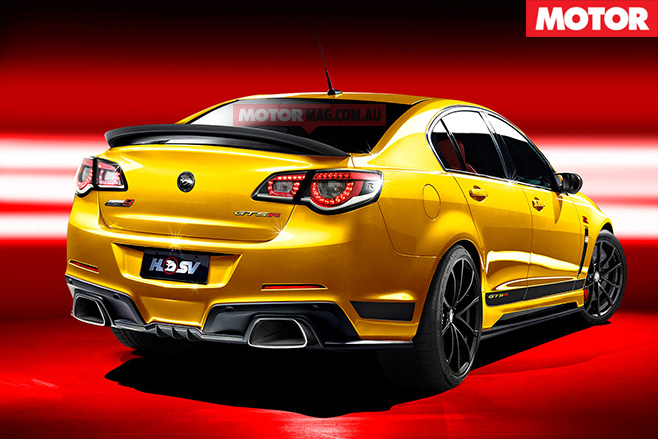
And in case you’re wondering about the “donor” LSA engine, they’ll be sold by HSV to performance tuners to help recoup some of the supercar’s development and build costs.
The high price – it’ll go down in history as the most expensive Aussie car of all time – may see some people cancel their orders. But all 250 are unofficially spoken for by dealers who now have the unenviable task of divvying up their limited remaining allocations among their best customers.
The story of the Mercedes-AMG GT Roadster unfolds – thanks to a fabric roof – later next year.
THESE are the first pictures of the Mercedes-AMG GT Roadster, a folding-roof version of the ferocious GT Coupe that is set to stun the cashed-up, sun-loving world sometime around next March’s Geneva Auto Salon, or perhaps a month later in New York.
The two-seat R190 Roadster convertible is somewhat reminiscent of the closely related Mercedes-Benz SLS AMG Roadster. It trades the sleek three-door fastback silhouette of the C190 Coupe for a more formal notchback design reminiscent of Benz’s line-up from earlier this decade, down to the two-seater configuration and electrically actuated folding fabric roof.
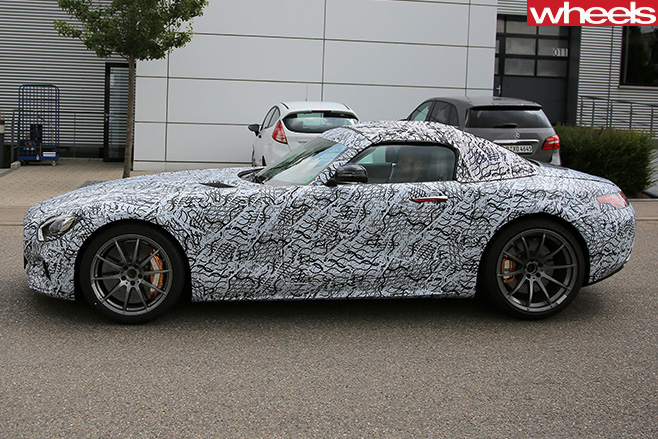
The 2018 model-year Mercedes-AMG GT range is also mooted to undergo a makeover at the same time as the extra bodystyle arrives, comprising of a minor facelift front and rear, updates to the interior, and potential boosts in performance and fuel efficiency.
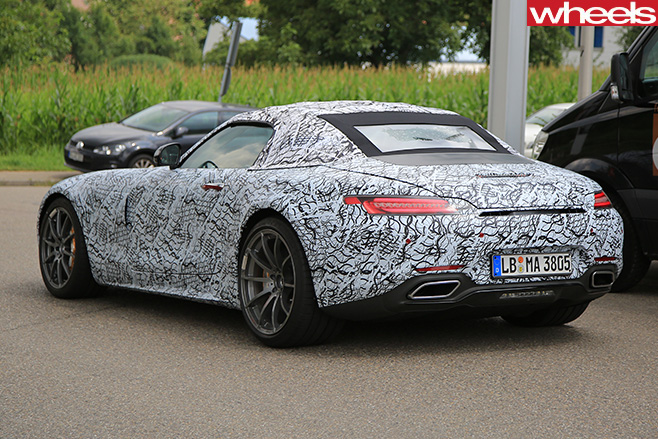
Whatever transpires, all are expected to be powered by revised versions of Mercedes-AMG’s ballistic M168 4.0-litre twin-turbo V8, found in the 350kW/650Nm GT S Coupe, mounted behind the front axle, and driving the rear wheels via a seven-speed dual-clutch transmission. With the weight of extra bracing adding a bit more ballast to the Roadster, expect the quickest versions to hit the 100km/h mark in around four seconds.
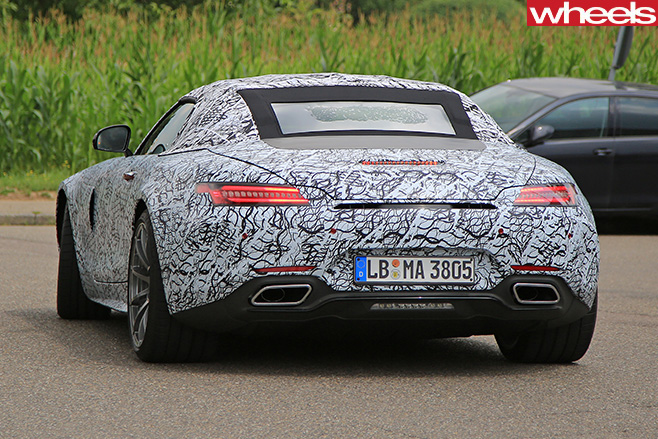
Pricing, of course, is still a secret, but count on the GT Roadster to range from about $250,000 to $350,000 when sales start in Australia from about the middle of 2017. That is a damned-sight less than the $490,000 (plus on-roads) demanded for the R197 SLS Roadster sold here from 2012 to 2014.
Have spy pics of your own? We’d love to see them. Just email them to [email protected]
Brabham car off to star at Goodwood
Part of major tribute to Australia’s triple world champion
A wonderful slice of Australian motor racing history is heading to the Goodwood Revival to form a key part of a Sir Jack Brabham Driver Tribute, honouring our triple world champion 50 years after he became the only driver in F1 history to claim the world championship in a car bearing his own name.
Brabham raced and tested at Goodwood extensively during his career, and developed a number of championship-winning cars at the motor circuit.
A huge gathering of single-seater, saloon and sports cars encompassing his career as a driver and team owner will take part in a number of on-track demonstrations during September 9-10-11.
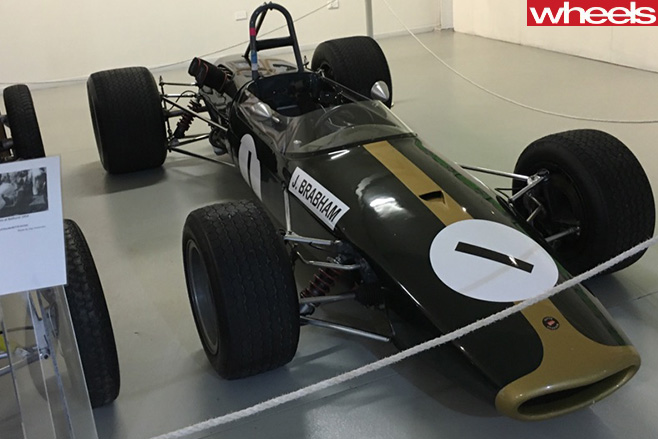
The 1.6-litre Cosworth DVA-powered car was then sold to Frank Williams who had Piers Courage and Picko Troberg as drivers.
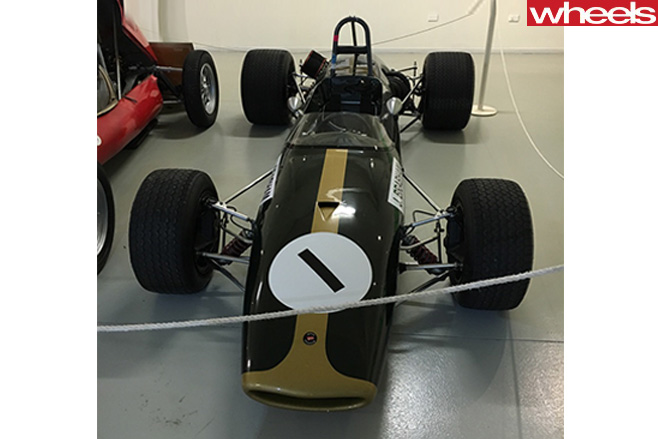
Based in Australia – it has been on display in the Bathurst Motor Museum – the Chad Parrish-owned Brabham is off to the Goodwood Revival for three-lap demos across each of the three days in the hands of Steve Webb, the former sports car champ (and father of Tekno Autosports V8 Supercar and GT team owner, Jonathon).
An Australian film crew is accompanying the car’s return to Goodwood and it and many other Brabham creations are destined to feature in a Documentary Australia Foundation-accredited -approved film project called Endurance, about the life and achievements of Sir Jack.
Before Gibson Freight loads it on Qantas QF1 for England, the fully restored BT23C will be thoroughly checked out by the car’s engine builder Superior Automotive and then serviced and pimped at the Webb’s Tekno Performance.
Webb admits he is somewhere between bemused and mesmerised by a 29-page You Will Do This manual from Goodwood on what he and his mechanics must wear. A few of the instructions… mobile phones are banned, and flat caps and white overalls are obligatory.
Period dress is de rigeur and the participants and spectators get right into the spirit of the occasion. Ladies in their furs and frocks, gentlemen in their tweeds and trilbies help create the uniquely stylish atmosphere that sets the Revival apart
The Australian Racing Drivers’ Club of which Jack Brabham was member #4 is enthusiastically supporting the BT23C’s appearance at Goodwood.
Round black things added to the Formula Thunder Sports recipe
The development of Australasia’s FT5000 project has taken another step forward with arrival of new test tyres
The ambitious dream to recreate the raw, rambunctious power and excitement of Formula 5000 cars in the form of a new category called FT5000 – FT, for Formula Thunder – moved ever closer to reality when the first test tyres developed specifically for the project arrived.
The Giti-branded tyres – the rears a massive 410mm in width – are all part of the unique concept being put together by former motorsport publisher/racer Chris Lambden.
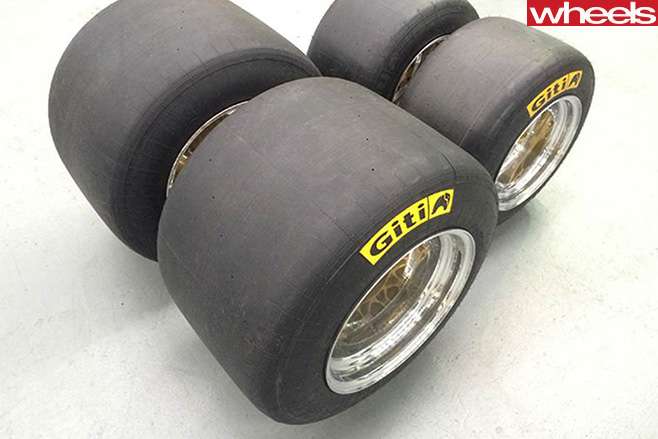
“Giti is a big company – Singapore based, with huge road tyre manufacturing facilities in both China and the USA – and with a growing presence in motorsport,” Lambden said.
“They decided they liked what we are doing and, in co-operation with their Australian agent Russell Palmer (Motorsport Tyres Victoria), agreed to develop the tyres for us – you only have to look at these first sets of tyres to see what a superb job they’ve done already.
Lambden brought us up to speed on what’s been happening with the prototype chassis. “Some of the external engineering involved has taken a bit longer than I’d originally hoped and we’ve also made a couple of small but significant changes since we revealed the basic car.
“The overall approach among all the technical partners involved has been ‘Do it once, do it right’ – that’s really the only way to go, even if it does take a little longer and holds back the introduction of our product.”
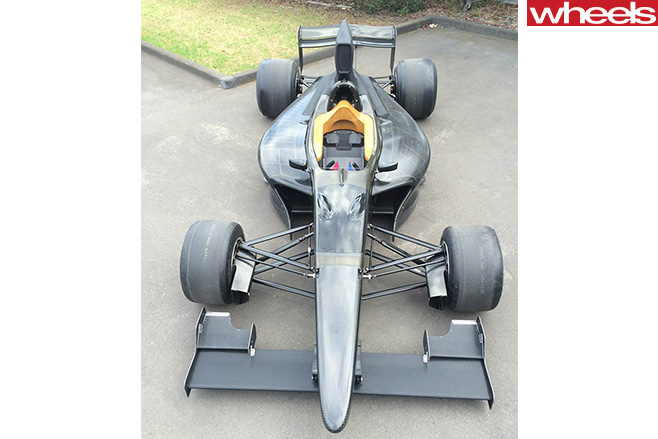
Lambden says the response to his project has been very positive and expects another surge in interest when the car is complete and given a shakedown run.
FT5000 plans to run a number of warm-up races at existing events through the middle of next year, before embarking on a Summer series of races both here and in NZ next December/January. In the meantime, the prototype is likely to run demonstration laps at selected events.
Newcastle poised to host Supercars’ finale next year
Council has given a tick to a Supercars street race in the second-largest NSW city
The Australian Supercars’ season finale is so close to being locked-in for next year on the streets of Newcastle after the city council agreed to officially endorse the much-touted event.
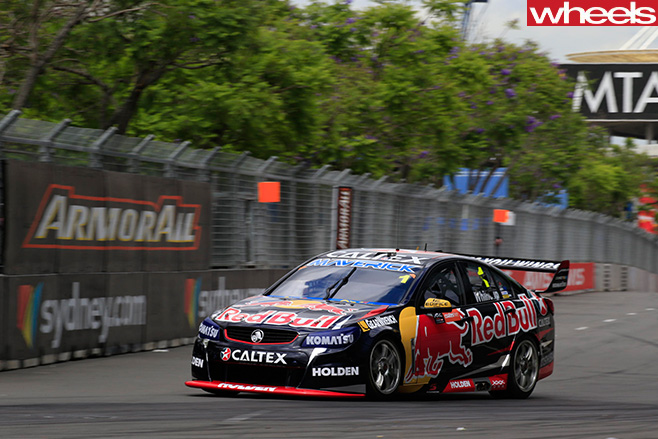
The newspaper story said the council’s Lord Mayor and interim chief executive officer will now formalise the bid and report track layout and consultation plans back to council.
A brace of different suggestions for the circuit have been presented already, one taking in Newcastle’s picturesque esplanade area and waterfront
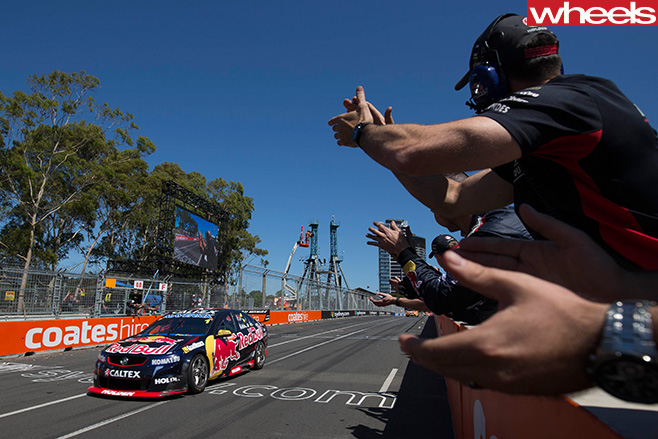
The Newcastle event would to replace and unsuccessful Destination NSW-backed Homebush venue, which won’t continue beyond this year’s finale.
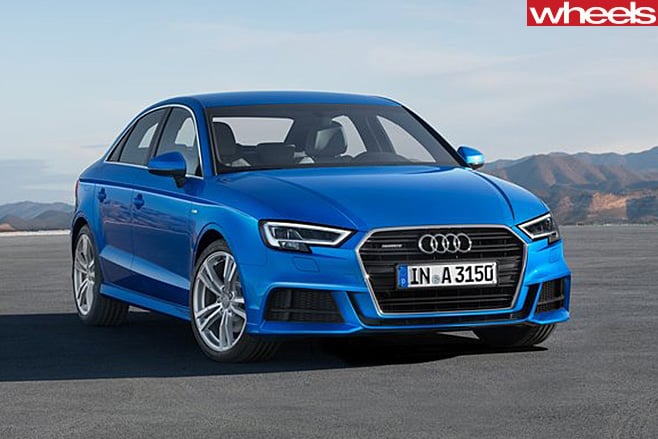
VOLKSWAGEN Group’s hopes of putting the ‘Dieselgate’ scandal behind it have received a boost with confirmation it led global sales table for the first half of 2016.
VW has nudged ahead of Toyota over the first six months of 2016 after delivering 5.021 million cars until the end of June, a 5.1 percent increase over the same period last year.
While it’s good news for the group a week after settling the $US10 billion Dieselgate compensation package in the US, it’s worth noting that Volkswagen passenger car sales, while still significant, fell 0.7 percent to 2,925,000 with Audi, Porsche and Skoda leading the group’s sales growth.
Volkswagen Commercial Vehicles, however, experienced a significant seven percent increase.
“This shows that the Volkswagen Group has high earnings power,” VW chief financial officer Frank Witter said in a statement. “But it will require continued hard work to absorb the significant impact from the diesel issue,” he said.
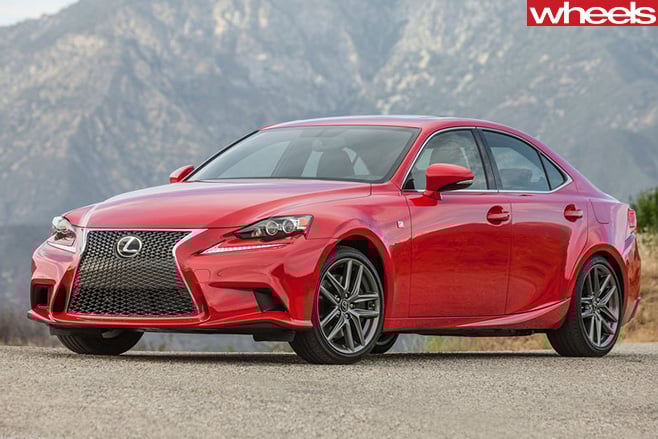
Toyota, which includes the Lexus and Daihatsu brands, said a series of unfortunate events had hurt it. This included an earthquake and unrelated explosion that temporarily halted the factories of key suppliers and resulted in a 1.1 percent decrease in sales of the Camry, Corolla and Prius.
A drop in Daihatsu exports to South America also led to the drop.
The news was better for Lexus, which posted a 10.2 per cent increase in global sales.
Both Toyota and VW are confident of a strong second half; Volkswagen expects full-year sales to come in slightly above last year’s 9.93 million deliveries as demand in China and Western Europe outweighs declines in the Americas and Russia.
In Australia, Toyota maintained its top spot in Australia for the first half of 2016 on the back of strong Hilux sales, with 102,344 cars sold, an increase of 0.6 per cent.
Mazda ranked second, up 7.7 per cent with 60,973 sales, while Hyundai benefitted from a spike in i30 sales to rank third overall with 54,350 units (up 8.5 per cent).
Holden was down 7.2 percent but held fourth spot with 48,010 sales. Ford has recorded a 16 per cent increase (40,383) — led by the Ranger ute – to secure fifth spot.
Nothing can flatten your spirits and deflate your mood quite like a flat car tyre, though this feeling is often followed by the vague sense of panic about the state of your spare.
The spare tyre is out of sight and out of mind until we get a puncture, then it becomes our everything, so it’s important to have the right spare tyre for your circumstances – and know how to use it.
FULL-SIZE SPARE
In a big country like Australia, with many motorists undertaking long commutes and car trips, the full-size spare is the best and safest option. While some car companies have recognised this and fit full-size spares as standard or as a no-cost option, many still list it as a cost option – or don’t offer one at all.
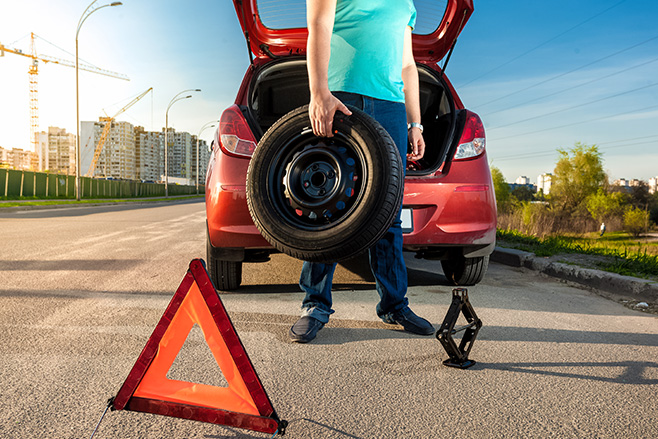
This is something to consider when purchasing your next car: if you travel to more remote locations far from tyre centres or garages or the fitted tyres are hard to source, it’s probably prudent to carry a full-size spare.
The knowledge that you have a failsafe offers great peace of mind. Your car can continue to be driven without compromising handling, acceleration or braking, and you have time to source a new tyre at a good price.
The main drawback of a full-size spare is a loss of boot space, particularly if the car normally comes with smaller space-saver spare. Optioning a full-size spare to some vehicles can even leave you with a bulbous protrusion in the boot floor, so be sure to check its fitment at the dealer and weigh up your options. You’ll also need to know how to change it yourself, or be forced to wait for roadside assistance or a kindly fellow motorist to help you.
Only run-flat tyres are more convenient at the time of the puncture as they do not require changing on the spot, though they also have disadvantages…
RUN-FLAT TYRES
As the name suggests, a run-flat tyre allows the car to continue at a reduced speed once it is punctured without the need to immediately change it. The harder, reinforced sidewalls of the run-flat tyre keep enough of the tyre rolling and in contact with the road at speeds up to 80km/h even with a puncture, so the driver can reach the nearest garage without stopping or getting stranded. Particularly with a slow leak it may be difficult to even feel the difference, hence why all run-flat equipped cars are also fitted with tyre pressure monitors to alert the driver.
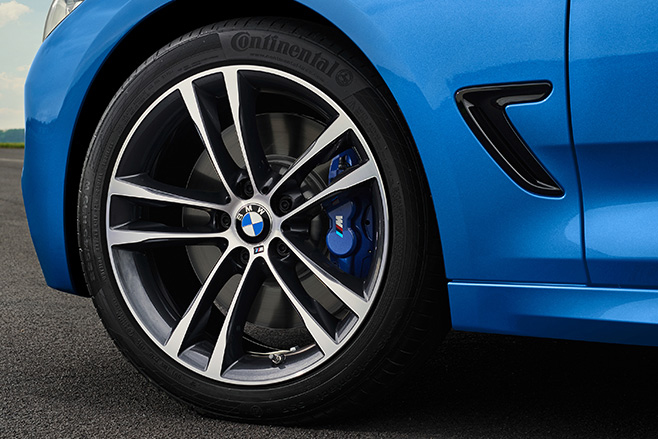
Motorists are tragically killed every year while trying to change a tyre by the side of the road, even if they are pulled well over to the shoulder. This factor is removed by the ability to keep moving.
There are some downsides; if you are unfortunate enough to have a major rip in the sidewall, the tyre will be too compromised to continue and leave you stranded by the roadside, and run-flat equipped cars have no secondary spare. However, this is a rare occurrence.
Many tyre centres have limited supply of run-flat tyres, and unless your size is popular and in demand, you may need to order and wait. While you do have about 80 kilometres of travel on a deflated run-flat up your sleeve, your speed and ultimately your safety are still limited. Plus, if you do drive on a deflated run-flat, it is not repairable so you will need to replace the tyre.
And finally, while the technology has made boundless improvements in the 20-odd years since their introduction (by BMW), a run-flat will still not offer the feel and precision of a dedicated sports tyre with flexible sidewalls – hence why you will not find run-flats on the top sports models or large-alloyed performance variants.
SPACE-SAVER SPARE
Also called a Temporary Use Spare (TUST), this is a smaller and lighter alternative to a full-size spare. They are usually about half the width of a normal wheel and tyre, and suit vehicles with limited boot space or performance cars where weight saving is a priority.
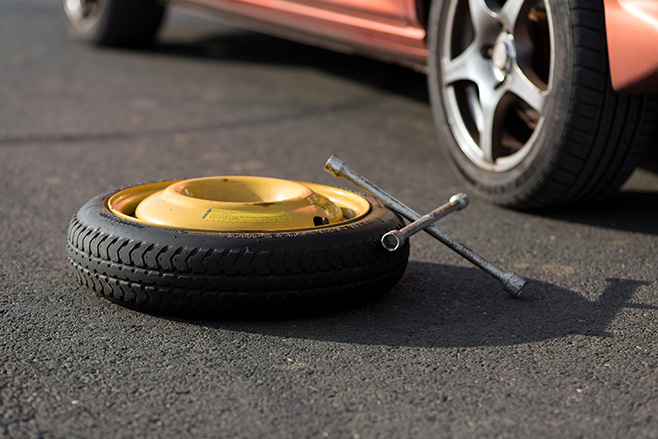
It is still better than having no spare at all, allowing a quick change and then getting you safely to a garage: albeit at a reduced speed.
As it is essentially half a tyre, it offers greatly reduced grip and handling and most are limited an 80km/h top speed. Don’t be tempted to leave it bolted up for long periods either– if driven on for more than 100km, it may also need replacing along with the flat tyre.
There is also a second safety issue – if you are unlucky enough to get a puncture on the front wheel of a front-wheel-drive car, the space saver should be swapped with the rear tyre, as the wheels that steer
In a rear-drive car, it’s a case of compromising steering at the front or drive at the rear, and in most cases a single jack will not lift the car safely or adequately to allow a double tyre change anyway. This means an extra-cautious journey straight to the nearest garage.
PUNCTURE REPAIR KIT
This kit, otherwise known as the “Can of Goo”, is made up of an air compressor and a can of tyre sealant.
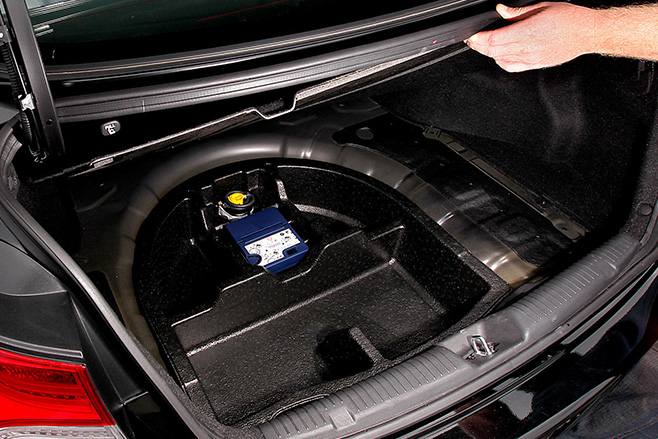
These kits are often found in vehicles that have small boots, performance cars or vehicles equipped with overly large alloys and specific tyre types.
Being the size of a shoebox, they are the ultimate space saver. However, the downsides of this kit are obvious: it’s fiddly and time consuming to use, and completely useless for large punctures – don’t expect any amount of goop to solve a blown-out sidewall.
The sealant is fed into the tyre via the inflation nozzle, coating the inside of the tyre and (hopefully) plugging the puncture. The car may need to be rolled a few metres back and forward after administering the sealant so the goo can reach the puncture. Then the compressor is connected, which is powered by your car battery or cigarette lighter port and restores the tyre’s air pressure.
Imagine doing all that on a rainy night by the highway… It is often better to simply purchase a can of goo with both the product and the means for inflation in one and carry it in the boot as well. Most will cost around $20 from any auto store.
Also, once the goo is in the tyre, it likely won’t be able to be repaired – garages hate trying to repair even mildly damaged tyres full of sticky goop – so a new tyre will need to be fitted. And fast.
Of all the spare alternatives, the puncture repair kit is the least effective and carries the highest likelihood of your vehicle needing an expensive tow.
Hopefully you will never need it.
February 1961 is when Ford Falcon Ute production started in Australia and 439,742 examples later it finished at 3pm on July 29, 2016.
The Ute has long been part of Ford’s three-tier Broadmeadows-built range, but the Falcon sedan and Territory SUV will continue until October 7 this year. A white FG X XR6 was the final Falcon Ute produced and will be retained by Ford Australia.

It wasn’t always that way, so let’s press rewind and farewell Ford’s own concept – a Gippsland farmer’s wife in 1933 wrote to Ford with the request for a car to go to church in on Sunday and take the pigs to market on Monday and so Ford’s 1934 Coupe Utility was born – with five of the Falcon ute’s finest moments.
1. Genesis, with V8s hot on its heels

The 1971 XY added the now famous ‘351’ or 5750cc V8 engine, but less than a decade later big cubes went with the 1978 XC as a new generation of Falcon Ute emerged in 1979 XD guise, which topped out at 4.9-litre V8 guise.
2. Return of the V8
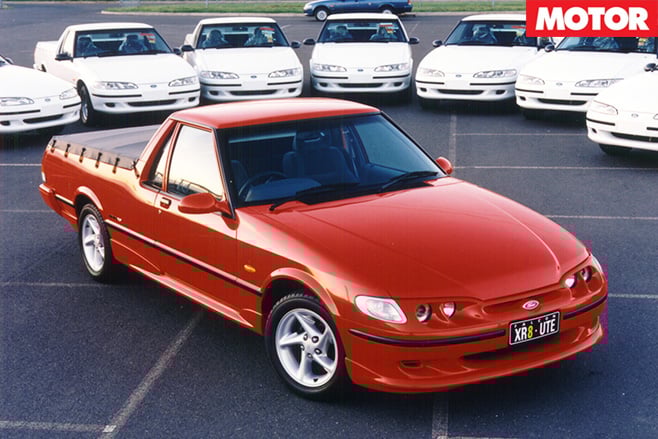
While the Blue Oval re-fired with V8 power in 1991 under the bonnet of the Falcon sedan, it would take until 1997 for the Falcon Ute to again be motivated by eight cylinders. Astonishingly, the XH II was still based on the XD of 15 years prior, sharing its chassis/body/interior architecture.
In the decade-and-a-half between the two V8-powered utes, the freshly minted XR8 more than tripled the last flagship ute’s price – at $37,305 – with a 185kW/402Nm 5.0-litre V8 under the bonnet.

The Barra 4.0-litre six-cylinder turbo was always hot on the V8’s heels, with today’s XR6 Turbo outputs (270kW/533Nm) unchanged since the 2008 FG, which back then challenged the 290kW/520Nm V8.

4. Beating the opposition
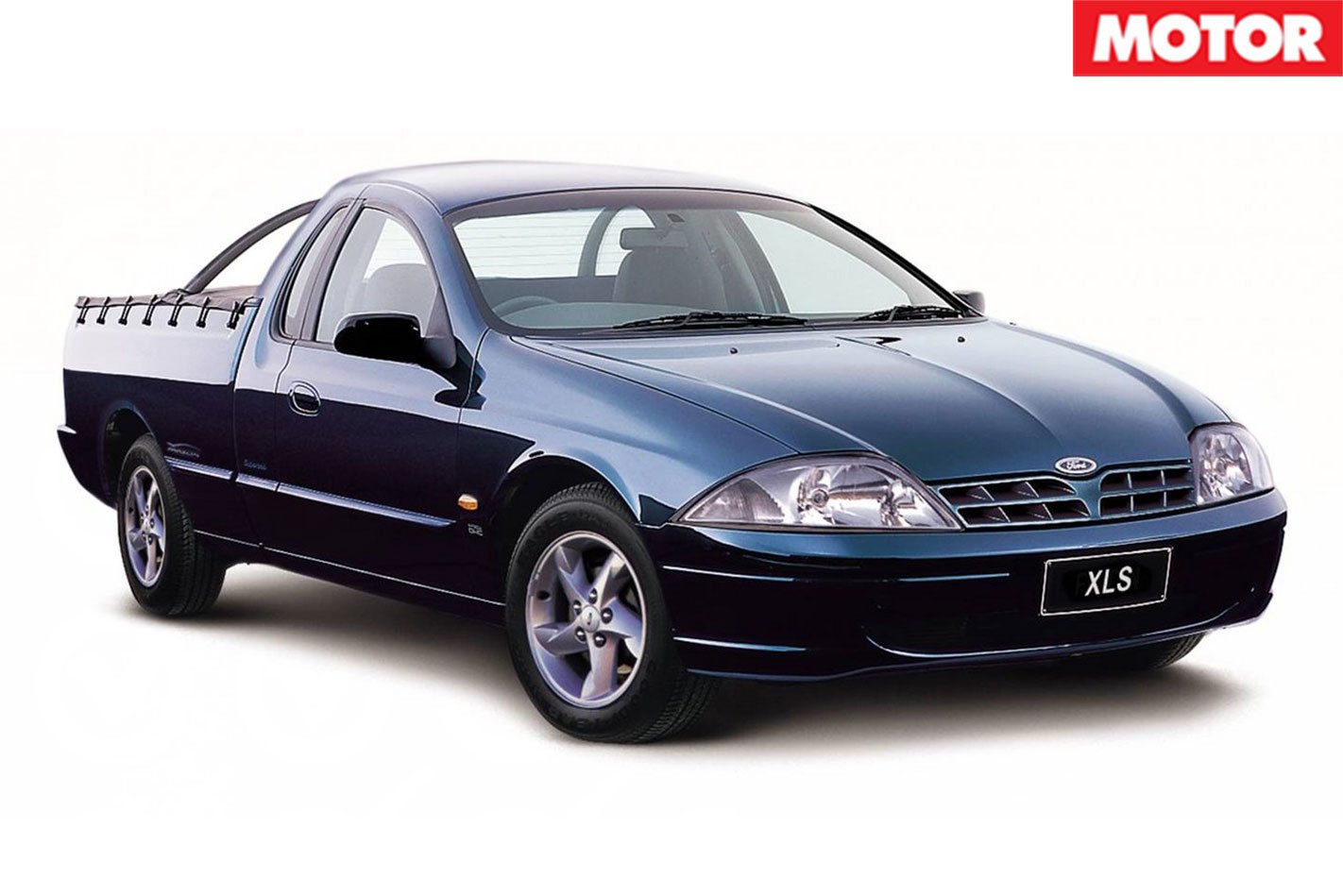
A full 13,698 Falcon Utes were shifted in 2000 compared with 6361 Commodore Utes. Even Holden’s VT-based VU of 2001 barely turned the tide, with Falcon Ute’s best ever sales year of 20,212 ahead of Commodore Ute’s 17,211 that year.

5. Expanding the breed
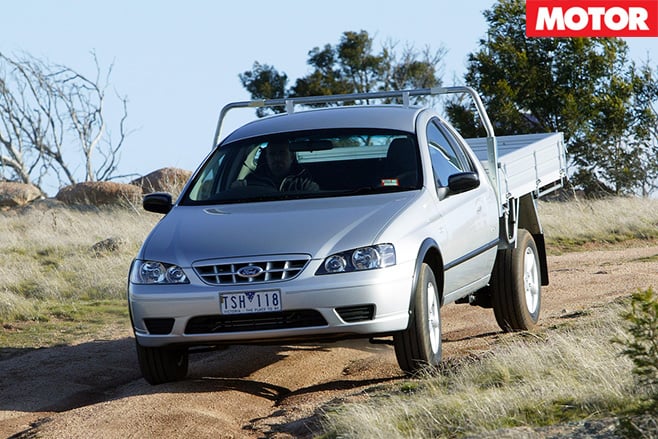
It forced Holden’s hand to make Commodore Ute a ‘one tonner’ for the VY, which also borrowed the Adventra’s all-wheel-drive system to (briefly) steal a sales lead in 2005 and 2006.
Ford’s clever RTV – Rugged Terrain Vehicle – lobbed in 2003 as a jacked-up Falcon Ute with bush-friendly tyres, raised ride height and (although it lacked AWD) a locking rear differential.
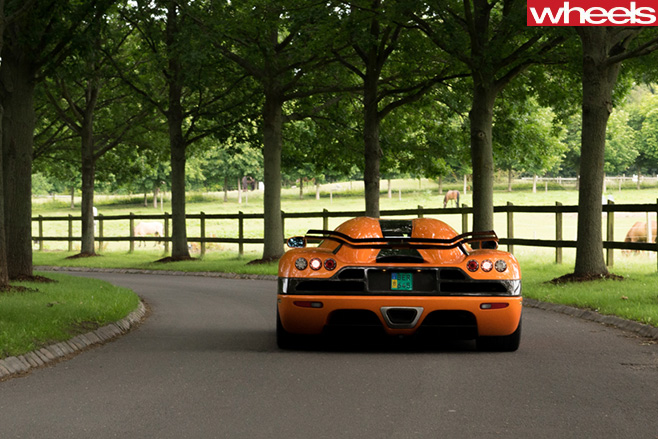
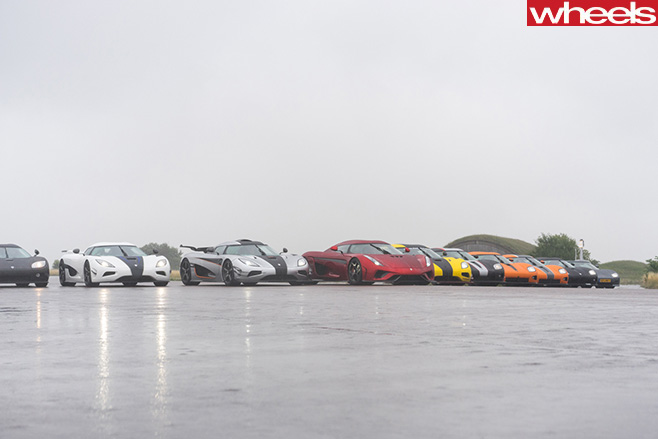
This has to be one of the most expensive road-trips in history!
A group of Koenigsegg owners got together last month for an inaugural gathering and cruise.
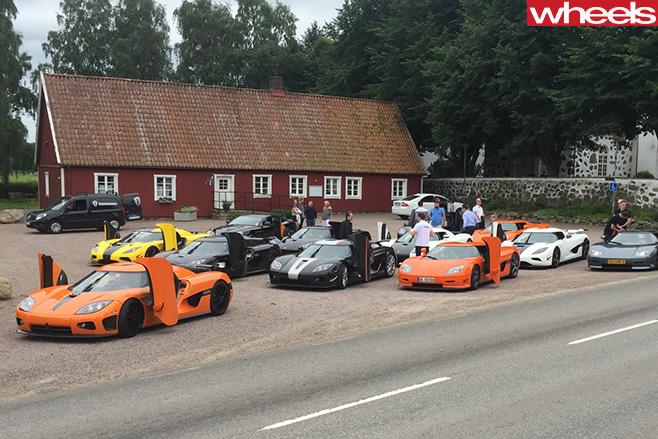
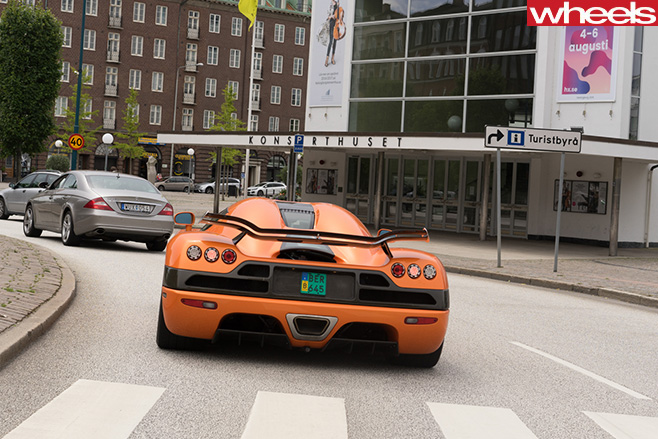
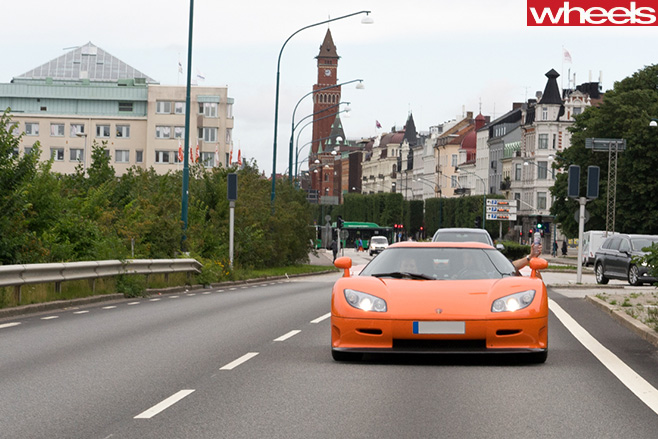
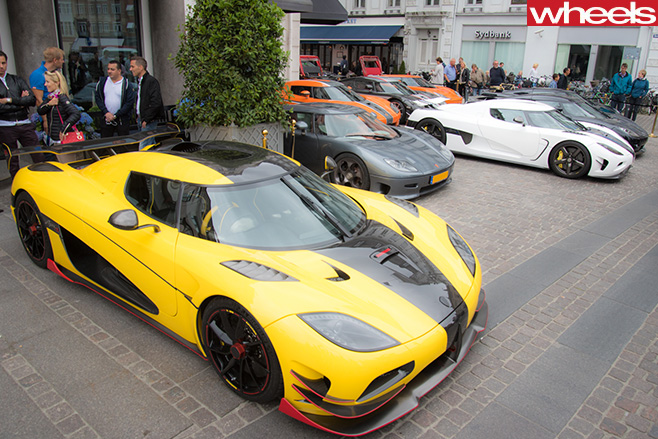
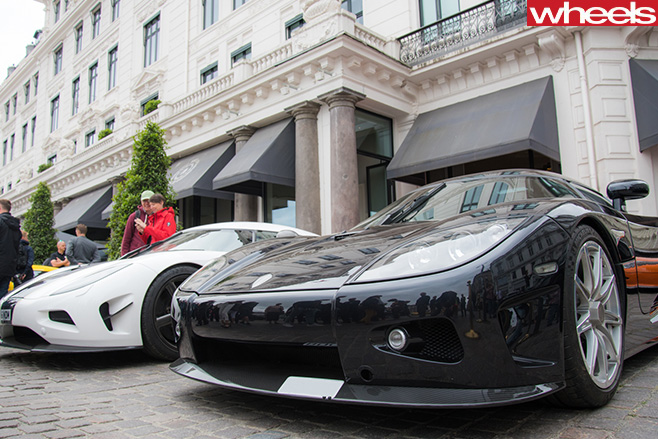
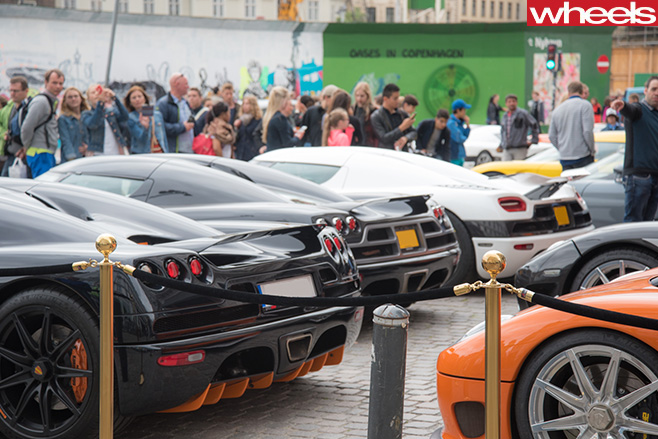
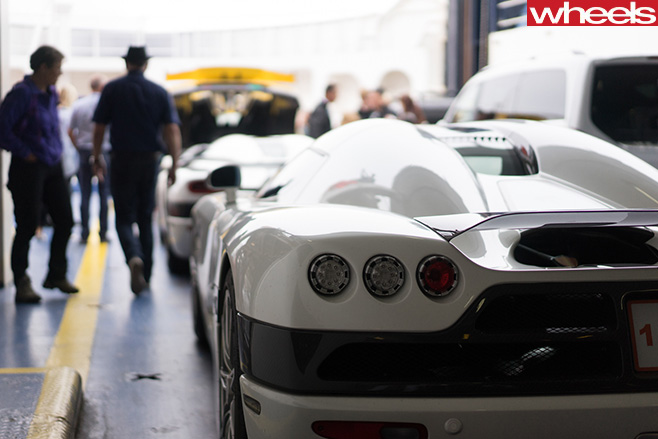
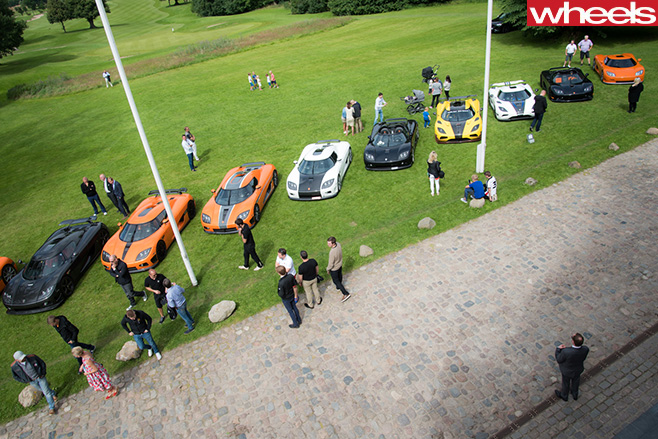
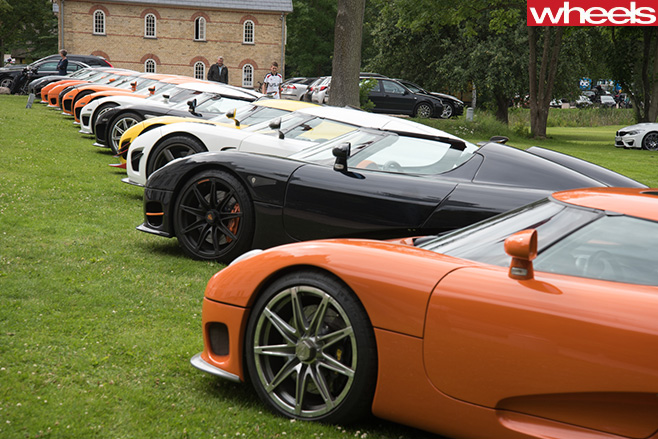
Your move, Christian.
A GENERATION after Honda’s game-changing late-’80s supercar followed the last great Civics to the afterlife, the Honda NSX returns with a completely new set of skills.
WHAT IS IT? The long-overdue replacement for Honda’s original NSX (1990-2005), and the halo model for Honda’s intended brand renaissance as a sort of ‘Japanese BMW’, the reputation it earned in the ’80s. These days, Honda struggles to compete with Toyota.
WHY WE’RE TESTING IT? We’ve joined the very last wave of the NSX’s European launch program – prior to its launch in Asia – centring on the famous racetrack at Estoril in Portugal and some tight Rally of Portugal roads in the surrounding hills.
MAIN RIVALS At the fully loaded NSX’s $420,000 price point, Audi R8 V10 Plus, Porsche 911 Turbo, and if you’re genuine tech nerd, BMW’s much cheaper (but also much slower) i8.
THE WHEELS VERDICT PLUS: Accessible supercar performance and dynamics; intriguing tech; handsome body and rear end; unexpected refinement; excellent carbon-ceramic brakes; promise of bulletproof reliability and serviceability MINUS: Can’t make up your own dynamic settings (mixing sport+ induction/exhaust/transmission with comfort damping); dorky front-end styling; flat seats; cabin hardware isn’t special enough for the price
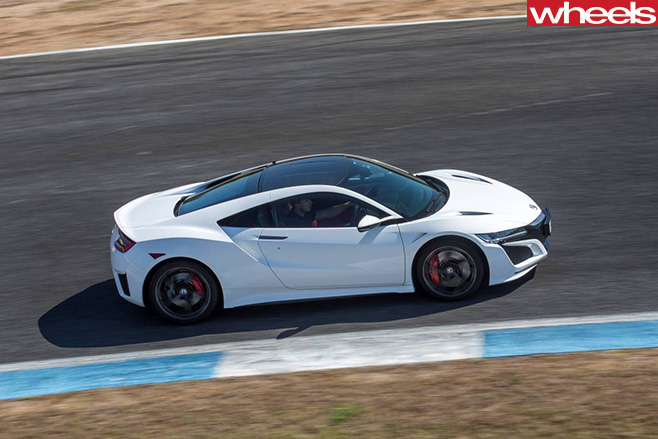
THE WHEELS REVIEW IT IS easy to be cynical about the new Honda NSX. The Japanese outfit’s regular line-up contains some depressingly mediocre product with barely a hint of sporting sparkle, yet here we have a $420,000 hybrid supercar, to be built at the rate of just 1500 a year, that appears to be about as relevant as a gym membership in jail. The last thing the world needed was yet another supercar.
But Honda did, even though this car’s presence will be so negligible you’ll be lucky if you ever see one. The new NSX is a glimmer of hope on the horizon for a brand that used to be seen as Japan’s BMW, a rallying point for a company mired in chasing sales numbers over building great cars. So this rare, expensive exotic is more than just a belated attempt at replacing the game-changing 1990-2005 original. It’s a signal that ‘Power of Dreams’ may soon mean something more than just an empty marketing slogan.
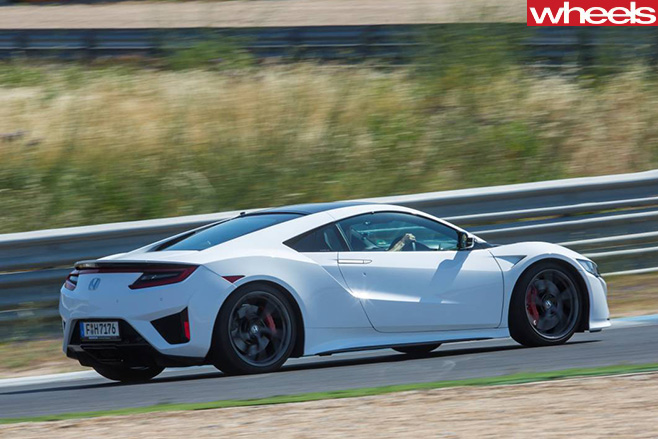
Based on the Acura (Honda’s upmarket US-only brand) NSX Concept that made its debut at Detroit in 2012, but promised since the Acura Sports Car Concept of 2007, it took Honda several attempts to decide exactly what the second-generation NSX was going to be. But they kept coming back to one thing – the “Advanced Sports Package” concept that drove the aluminium-bodied, mid-engined V6 original needed to live on in its new-millennium replacement.
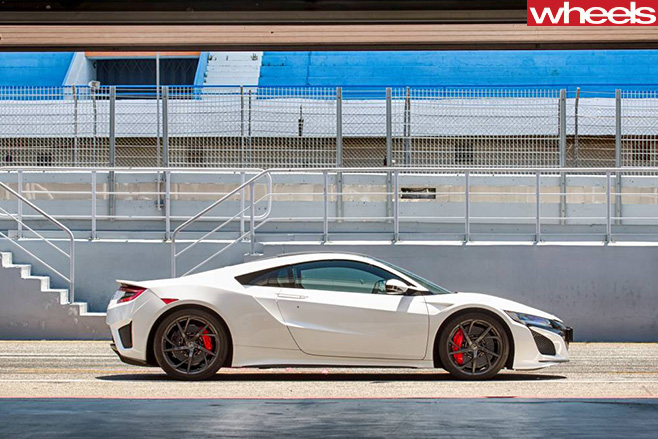
The result is a true global collaboration. Built around an aluminium-intensive spaceframe chassis, its sharply creased ‘Interwoven Dynamic’ exterior is the work of the Honda Design Studio in Los Angeles. Given the tough ask of managing both enough cooling air for the hybrid NSX’s 10 heat exchangers, enough aerodynamic downforce to support a 308km/h top speed, and enough presence to fulfil its supercar brief, the NSX is put together at Honda’s US manufacturing facility in Ohio, including its all-new, completely bespoke and hand-built 3493cc twin-turbo V6 engine.
Claiming best-in-class rigidity for both bending and torsional stiffness by a significant margin, the NSX employs extensive aluminium construction and some world-first construction techniques, as well as a carbonfibre front floor, aluminium side pressings, doors, bonnet and roof, sheet moulding composite (SMC) plastic front and rear guards, and rear bootlid skin (over an aluminium inner structure) to further bolster its exotic status. And while its suspension system – an all-aluminium double-wishbone arrangement up front and a sophisticated multi-link rear, with adaptive third-generation ‘magnetorheological’ dampers – might sound a bit more common, there’s nothing normal about its drivetrain configuration.
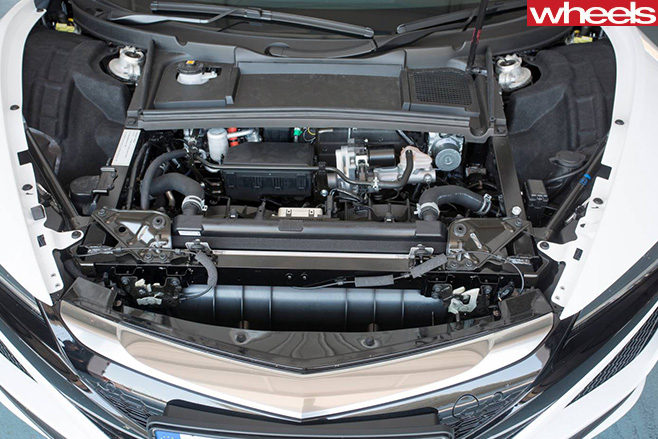
The combustion engine itself punches out 373kW from 6500-7500rpm and 550Nm from 2000-6000rpm, while the rear electric motor is good for 35kW at 3000rpm and 147Nm between 500 and 2000rpm. But that’s not all.
Up front resides a Twin Motor Unit (TMU), which uses two electric motors independently powering the left and right front wheels, good for 27kW at 4000rpm and 73Nm from 0-2000rpm.
Off the line, the electric motors provide that instant torque kick the twin-turbo engine can’t, while the TMU delivers not only front-wheel traction, it also supplies torque vectoring (in much the same way that a closely related system worked at the rear end of the last ‘SH-AWD’ Honda Legend). And if you plant the right pedal at cruising speeds, the electric motors provide supplementary power and yaw control for an instant kick in the slats that feels seriously supercar-rapid.
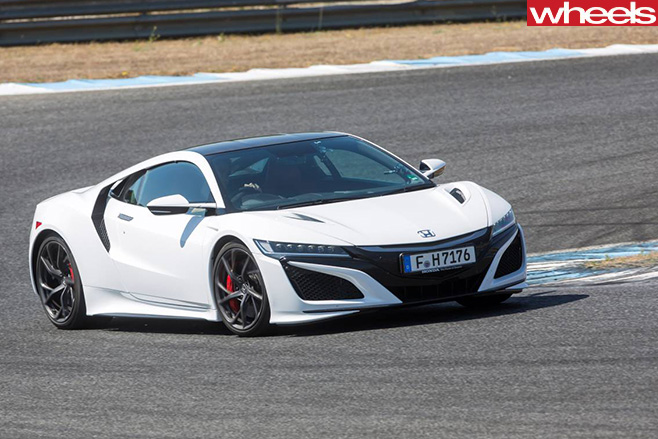
Our first test of the new NSX’s towering technical complexity is at the brilliant Estoril racetrack in Portugal. First stint out, we perform four laps, beginning in the first of four integrated dynamic modes (accessed via a large controller in the middle of the centre stack) which Honda has dubbed ‘Quiet’. Or, if you prefer, ‘Neighbour Pleasing’ mode.
In Quiet, the suspension remains in its default ‘Normal’ mode, the engine’s induction-sound enhancer (plumbed to the cabin behind each headrest) remains off, and so too does the active rear exhaust. It still clearly delivers acceleration in spades, yet there’s a seductive edge missing from its acoustics (engine revs are capped at 4000rpm) and the stability control makes its presence known if you ask for full thrust when exiting some of Estoril’s late-apex corners.
‘Sport’ (the NSX’s default setting at start-up) maintains soft-cock Quiet’s suspension tune, but tweaks the throttle and transmission mapping, and allows the induction and exhaust to open up more, particularly under full-throttle acceleration. It also enables closer dynamic analysis on the base chassis setting, which is pleasingly fluent, with impressively consistent steering connection given all the wizardry going on underneath, yet there’s probably a smidge too much understeer for racetrack purposes. Why would you bother, anyway, when ‘Sport+’ and ‘Track’ are merely the twist of a dial away?
Bodyroll is noticeably reduced, while the NSX’s chassis balance clearly favours the rear end more, with subtle oversteer drifts when powering out of corners both satisfying and effortlessly achievable when you trail a touch of brake into a corner, then quickly squeeze on the juice.
Track is the NSX’s final dynamic step, and, not surprisingly, the most flattering at Estoril. Not only does it activate launch control – settling the Honda’s digital tacho needle at just above 2000rpm before punching the car of the line – but it makes the 9DCT ’box’s upshifts scalpel-sharp, retunes everything from the pedal feel of the NSX’s regenerative brakes to its SH-AWD system and drivetrain acoustics, and broadens the ESC’s safety net. It even prioritises the lithium-ion battery state-of-charge to maintain a consistent level of torque delivery for the three electric motors. It’s also the only mode where you can fully disable stability control, though not for journalists apparently. That demonstration is still to come…
On Estoril’s back straight, the NSX easily touches 220km/h, while on the front straight, 250km/h and beyond is a relative doddle. In fact, while being quick with this car still requires placement, input progression and an understanding of balance, it’s an incredibly easy and effortless supercar to drive super-fast. Only when pushed too hard on the wrong line does understeer intrude, and even then, it’s only a subtle lift away from being back in the game.
At max-attack, its drivetrain sounds pretty serious. Honda’s nine-speed dual-clutch is a magnificent gearbox, pre-empting your every move far better than I manage on its slightly cheap-feeling wheel paddles, and somehow upshifting with both rapidity and subtlety. Benchmarked against Porsche’s PDK dual-clutch, Honda’s attempt is every bit as brilliant as the German’s marque’s best.
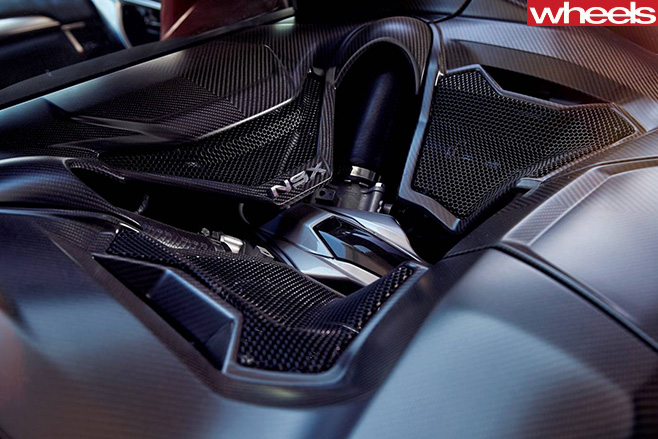
Finally, it’s the turn of English GT3 driver Nick Edwards to demonstrate what the NSX can do with its safety electronics sent to the naughty corner. In time-honoured all-wheel-drive fashion, it’s all in the trail-braking while turning in as Nick flicks the NSX into a corner and traces some beautifully smooth sideways arcs. For the first time, I can hear the NSX’s Continental ContiSportContact 5SP tyres (245/35ZR19 front, 305/30ZR20 rear) truly howling. It’s a noise that signals Honda’s choice of a ‘Super Hybrid’ all-wheel-drive set-up was a wise decision.
As Jason Bilotta, chief program engineer for the NSX, pointed out, the aim was to “focus on the driving experience rather than how to drive the car”. But I can’t help thinking that some track-savvy purists, particularly those infatuated with anything rear-engined, may find Japan’s new supercar perhaps a bit too effortless.
Out on real roads, the NSX’s multiple personalities shine in a different fashion. In limp-wristed Quiet mode, the car is a borderline embarrassment at low speeds because it’s so, erm, quiet. Not the battery part – that’s actual silence. More the whirring bit, as if there’s a twin or triple mounted behind your ears, yet without the velvety polish of the BMW i8’s turbo-triple.
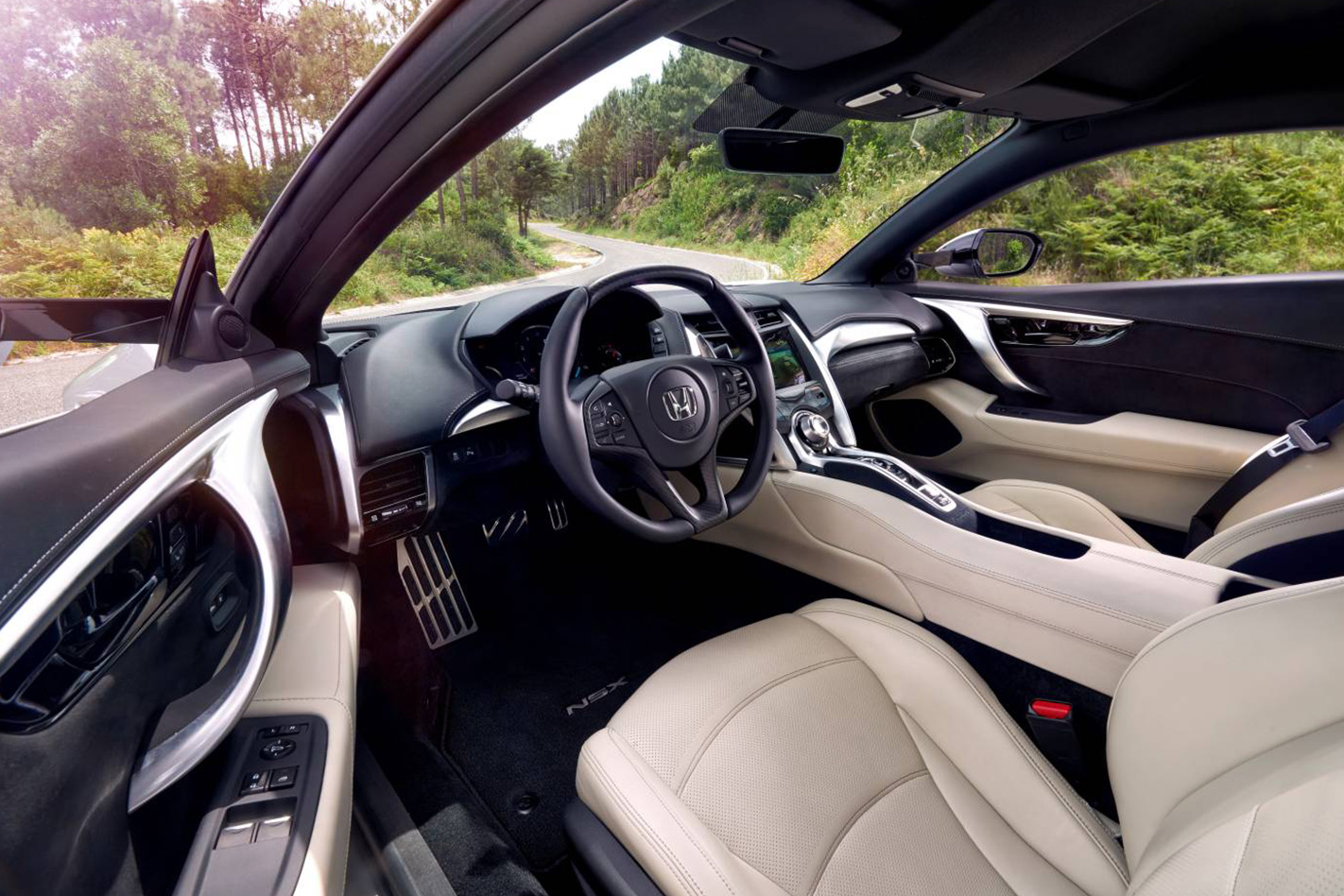
It’s out on the fast, 120km/h-signposted motorways surrounding Lisbon that the NSX starts to shine again. In the drive settings’ default Sport mode, the magnetic dampers favouring comfort, its ride is brilliant, and so is its refinement, especially considering it has a carbonfibre front floor. In really strong winds, the NSX carves its way through the bluster, sitting on a comfortable 2700rpm at the old imperial ton (161km/h), backed by an audible, if far from hardcore, V6 burble.
In Sport+, the NSX’s ride is much firmer, but still not unpleasant. Its engine note and thrust are clearly amped, and the only way you’ll get ninth gear is if you select it manually. But we keep coming back to the effortlessness of the NSX’s ride and waftability in Sport. This would be a great autobahn stormer.
It’s pretty impressive up in the hills, too. Hammering along some unpredictable old Rally of Portugal roads, the NSX again defies its 1780kg ballast by easily tracing tight cornering lines. While you can feel the front-end torque vectoring and yaw-control smarts working at times, it’s far better integrated and seamless than, say, similar set-ups used to be in Mitsubishi Evos. And the NSX’s steering continues to impress with its uncorrupted smoothness and effortless communication.
Belting back to the airport at a blissfully Portuguese pace (ie. well over the speed limit), a few chinks in the NSX’s driveability armour finally begin to show. Not its transmission, which is wonderful, or in the seamless union of its combustion engine and battery power, but in mundane things.
Its seats, for example, only have simple four-way electric adjustment and feel desperately lacking in under-thigh support after several hours behind the wheel. Then there’s some of its cabin switchgear, which simply isn’t special enough for $400 grand. Chief offender is the plasti-silver coating of the dash inlay and (excellent) door grips. If it’s metal, it does an amazing job of looking like plastic. Pity the 2012 NSX concept’s genuine carbonfibre inserts never made it to production. And the same sat-nav set-up as a Civic doesn’t belong either, particularly when it’s so annoyingly inept.
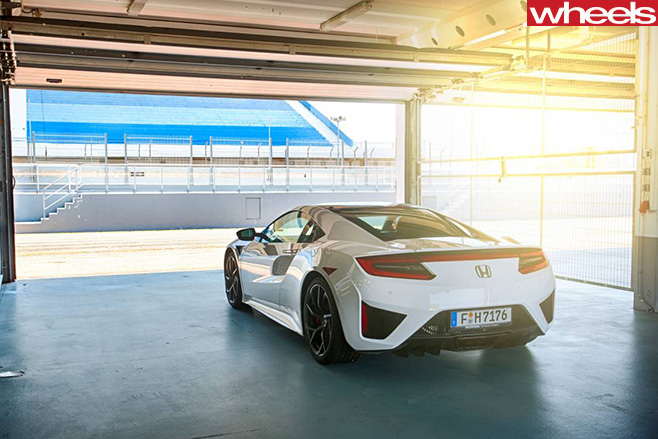
But these are relatively minor blemishes on the technical achievement that is the new NSX. It’s not a supercar for everyone, and in some ways, it’s almost the anti-supercar. Quiet when the others are crowing, calm when it could be challenging. Then there’s the look, which really works from some angles (the rear), and really doesn’t from others (the front). But I have a feeling Honda will have no trouble flogging 1500 NSXs per annum when production is in full bloom.
What really needs to happen, though, is for the NSX’s engineering and sporting focus to infuse its way back down the Honda line-up. That’s the promise. But if it doesn’t happen, cynics who envisaged the new NSX as nothing more than a vanity project will be proven smugly correct.
SPECS Model: Honda NSX Engine: 3456cc V6 (75°), dohc, 24v, twin-turbo + 3 electric motors Total system power: 427kW Total system torque: 646Nm Transmission: 9-speed dual-clutch Weight: 1780kg 0-100km/h: 3.0sec (estimated) Fuel economy: 10.0L/100km (EU) Price: $420,000 On sale: First half 2017
