
MAZDA reckons it listens, which is why the facelifted 3 is here with an emphasis on improving the popular small car’s ride, refinement, value, and functionality, while pushing safety and tech boundaries with standardised AEB and cornering-enhancing G-force Vectoring Control.
WHAT IS IT?
The third-gen Mazda 3 mid-life makeover runs deeper than expected, due to greater sound deadening, revised steering and suspension components and a big step-up in safety standards. Plus, new powertrain software known as G-force Torque Vectoring improves driveability. All up the Japanese car’s value, even if – base Neo apart – prices rise slightly.
WHY WE’RE TESTING IT
Dream runs don’t come smoother than the Mazda 3’s, residing at the pointy end of the sales charts for a dozen years. The third-gen version launched in 2014 has copped criticism for being noisy and rowdy compared to the Volkswagen Golf. But Mazda says it’s listening, and this is the result – the quieter, smoother, safer, better-value, and more dynamic Series II.
MAIN RIVALS
Ford Focus; Holden Astra; Holden Cruze; Honda Civic; Hyundai Elantra; Hyundai i30; Kia Cerato; Mitsubishi Lancer; Nissan Pulsar; Peugeot 308; Renault Megane; Skoda Octavia; Subaru Impreza; Toyota Corolla; Volkswagen Golf; Volkswagen Jetta.
THE WHEELS VERDICT
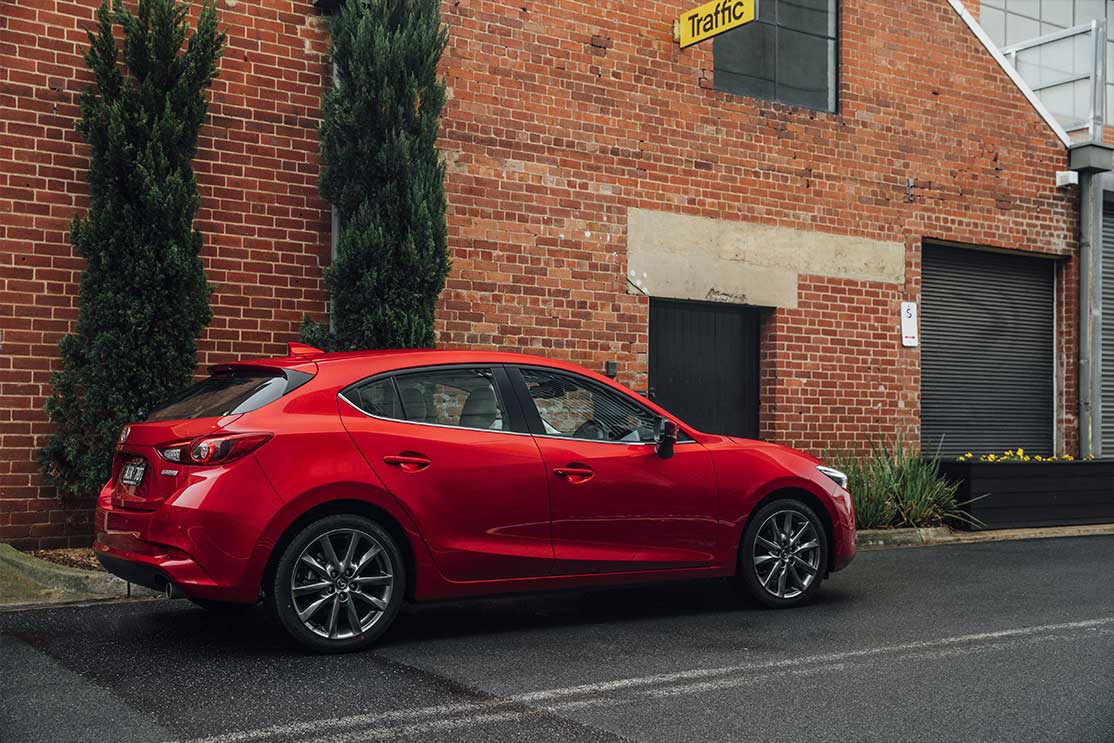
That’s better. The Series II goes some way to righting most of the original third-gen 3’s wrongs by being quieter, better riding, a little more fluid dynamically (partly due to G-force Vectoring Cornering), and actively safer with standard AEB. Bravo Mazda. We’re also glad that attention has been paid with larger door pockets and more pleasing instrumentation. But while the newcomer has progressed, it remains mechanically noisy under load, there’s still noticeable tyre rumble, and none of the poor side vision issues have been addressed due to no sheetmetal changes. With the impressive new Honda Civic gaining traction, and fresher rivals like the completely redesigned Hyundai i30 waiting in the wings, Mazda cannot afford to rest on its laurels.
PLUS: Safety; dynamics; performance; value; smoothness; efficiency; economy; choice
MINUS: Still a bit rowdy; dour rear-seat ambience; no more diesel; no hot-hatch option
THE WHEELS REVIEW
AUSTRALIA’S motoring sweetheart, the Mazda 3, has long been a likeably lusty little performer. But even brand loyalists would admit that the Japanese C-segment diva can get a bit mouthy – rowdy even – mainly due to excessive road noise.
Happily, Hiroshima has been listening, so welcome the Series II. Like so often with your partner’s haircuts, the changes need pointing out, so please notice the wider grille, “more horizontal” bumpers, and altered front air intakes and rear diffuser. Apparently.
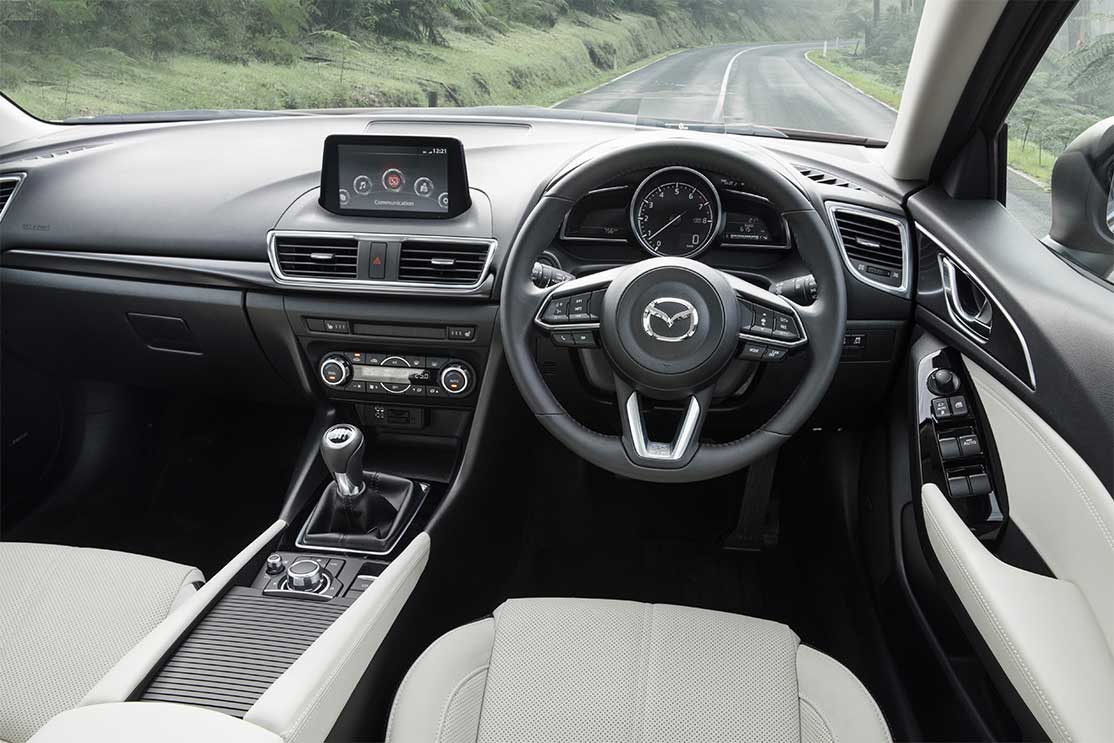
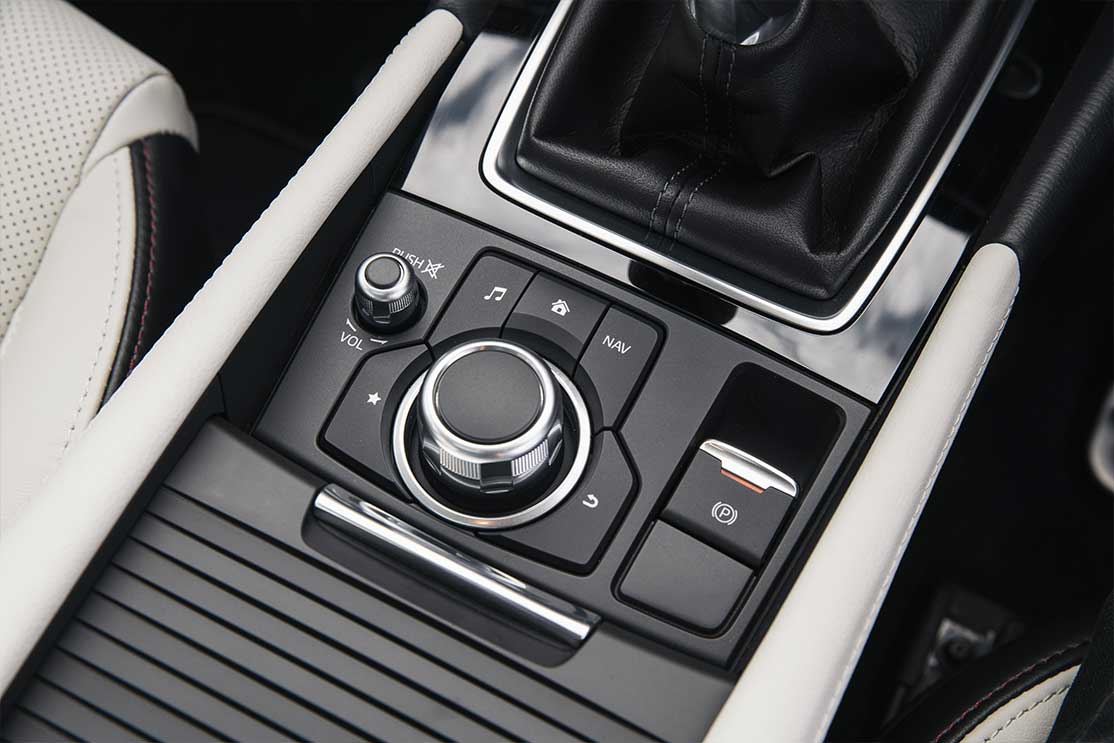
Yet the obvious mods are mostly so inside, since the slimmer-spoked wheel feels better, the redesigned instrument markings look better, and there’s more storage. From the mid-spec Touring model up, the handbrake gives way to an electronic toggle (sadly), the GT and Astina’s head-up display is clearer and more informative, and the CD player is history range-wide.
More importantly, there is less droning emanating from the rear, thanks to a significant boost in sound-deadening in the floor, roof, and pillars. And while the 91 RON unleaded-ready stop/start engine (unchanged in both 114kW/200Nm 2.0-litre and 138kW/250Nm 2.5-litre guises) can still seem vocal when extended, the overall experience is more peaceful.
Meanwhile autos gain ‘Sport’ mode, which alters the shift patterns, for livelier responses – another good move, as the 2.0-litre auto previously felt a tad lethargic low-down. Note though, it can hold lower ratios for too long, which is tiresome in traffic.
The electric power steering has been retuned for a more natural feel, aided by modifications to the dampers and rear suspension, mainly to boost ride comfort, but also handling confidence.
To demonstrate these as well as the benefits of the G-force Vectoring Control, which alters engine torque delivery to the front wheels for better and smoother traction, Mazda had us driving otherwise identical-spec old and new 3s through a series of slaloms; the more fluid, planted, and predictable handling of the latest model was clearly discernible. And on real roads, the cars continued to impress with their poise and control.
Following Volkswagen’s lead with the Skoda Octavia range revamp, Autonomous Emergency Braking is standard, meaning the old $1500 safety pack has been deleted, along with the slow-selling XD Astina Diesel. Pity.
The entry Neo remains the same at $20,490 (though no touchscreen means no integrated reverse camera – that’s what the popular Maxx from $22,890 is for), and most of the others cost only about $500 extra yet gain additional safety like blind-spot monitoring, Rear Cross Traffic Alert, and – on the SP25 GT – Traffic Sign Recognition tech, while the SP25 Astina is now $1500 less but scores Lane-Keep Assist and Adaptive LEDs.
All ought to help keep the better equipped, safer driving, comfier, and quieter 3 sweet with Aussie small-car buyers. This one deserves success.
SPECS
Model: Mazda 3 Neo Series II 5DR Engine: 1998cc 4-cyl, dohc, 16v Max power: 114kW @ 6000rpm Max torque: 200Nm @ 4000rpm Transmission: 6-speed automatic Weight: 1296kg 0-100km/h: 9.2sec Fuel economy: 5.8L/100km Price: $22,490 On sale: Now
MINI Australia has announced the return of its entry-level MINI Ray to the Australian market with a starting price of $29,000 drive away, replacing the MINI One as the brand’s starting point in the process.
Available in three- or five-door options and with either manual or automatic transmissions, the four-tiered range is powered by the same 1.2-litre turbocharged three-cylinder petrol engine (75kW/80Nm) as the outgoing car, with the manual option boasting a claimed fuel consumption figure of 4.9L/100km.
Like the One it replaces, the Ray comes optioned up with standard hands-free Bluetooth, which includes a USB audio interface, as well as heated mirrors and rear-park distance control. Safety wise, there’s six airbags and dynamic traction control including an electronic differential lock, while the ABS-actuated brakes include electronic brake force distribution, brake assist and cornering brake control.
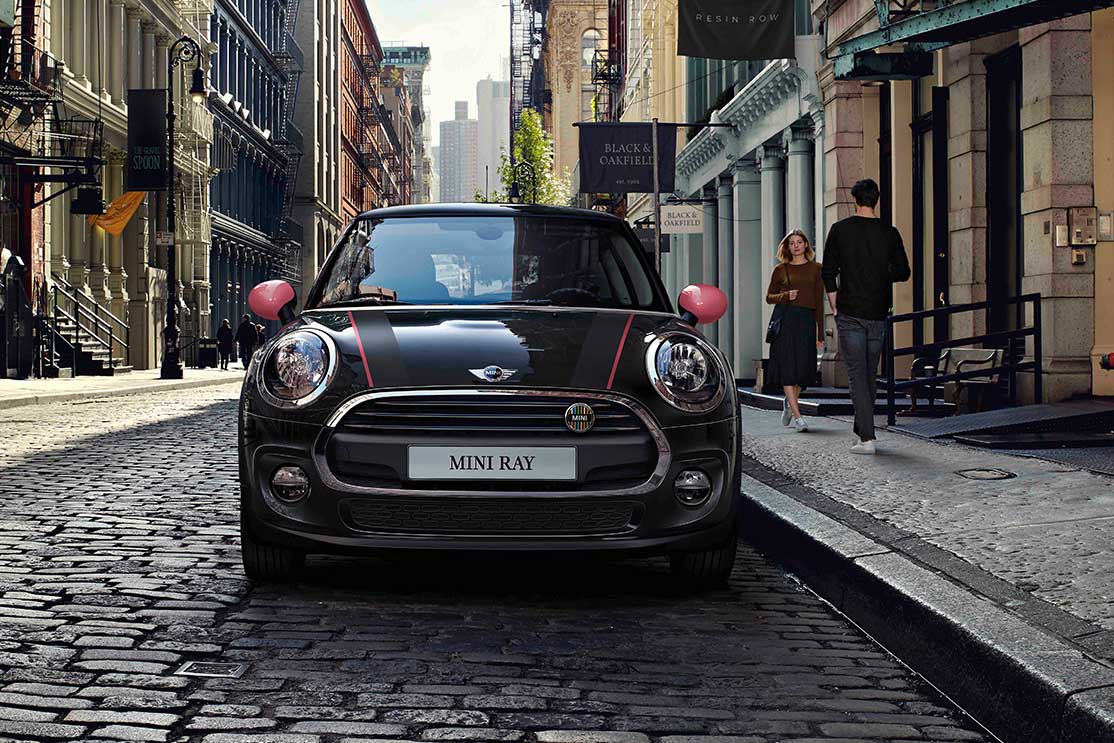
With a base colour choice of either white or black, would-be MINI Ray owners have the option of either pink, yellow or green contrasting highlights which are picked up in the mirrors, bonnet stripes and side-mounted light surrounds.
The three-door manual is the least expensive MINI Ray model. Selecting an automatic transmission adds $2500 to the driveway price taking out to $31,500.
Similarly, the five-door manual is priced at $30,500 with the automatic gearbox pushing the price up to the range-topping $33,000 (drive away).
“It represents strong value,” MINI Australia’s Tony Sartso said. “[And] a selected range of accessories enhancements offer the purchaser a chance to personalise, as per MINI tradition.”
Like the rest of the MINI range, the newly introduced Ray line-up is backed by a three-year, unlimited kilometre warranty.
Want more? Check out the Mini Cooper in a small car comparison.

WhichCar cuts through the new car jargon to deliver honest, easy-to-understand and authentic advice to help you buy a better, smarter, safer new car.
The Honda Civic is a household name in Australia. Civic hatchbacks and sedans have been faithful family members for many over the years, and the small car that could is now in its 10th generation.
This new model is a complete redesign with a new body, new interior, new engine, new infotainment and new safety tech. So let’s get to know it.
WHAT STANDS OUT?The last few iterations of the Civic saw Honda take its eyes off the road a bit. It’s only now that the Japanese brand has been able to spend money on redeveloping the Civic formula into something once again worthy of a home in Aussie driveways.
The new sedan has arrived first, with the hatch expected in early 2017, and it’s a much better car than before in just about every conceivable way. It’s bigger and more spacious inside, it’s quieter and more comfortable, its new turbo engine is excellent and its talented chassis is lighter, better to drive and safer.
WHAT’S INSIDE?You may notice the Civic has a strong European influence about it, which is definitely not accidental. Honda ambitiously set the Volkswagen Golf and Audi A3 as the targets for the Civic’s ride, handling and refinement, and its engineers have done a fine job in developing a smooth and solid-feeling car.
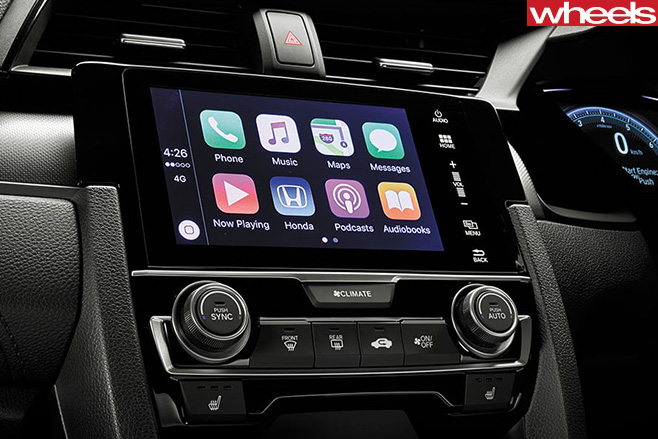
Standard equipment includes Apple CarPlay and Android Auto, and decent safety gear across all models consisting of auto emergency braking, tyre pressure monitoring, and extensive stability and traction control systems.
All models except the base VTi have front and rear parking sensors, and only the top-spec VTi-LX gets a the full suite of lane departure warnings, radar cruise and pre-collision warnings. It also gets heated leather seats as standard.
CHOOSING YOURSThere are five Civic sedan models to choose from. The two entry-level models are Civic VTi and VTi-S. Both use a 104kW/174Nm 1.8-litre four-cylinder engine that’s carried over from the old car. The other three are VTi-L, RS and VTi-LX. All of these feature a 127kW/220Nm 1.5-litre four cylinder turbo engine which is brand new.
We’d have the Civic VTi-L. It comes with a good level of included kit and the new turbo engine, which is more powerful and uses just 6.0L of fuel per 100km. It misses out on built-in satellite navigation, but having Apple and Android integration means your smartphone can handle that job.
If a sportier appearance is more your style then the Civic RS is for you, and if you really must have all the gadgets and the luxury of leather seats then the VTi-LX is the way to go. The CVT gearbox in the Civic is the only transmission available and stands out as one of the better CVTs on the market.
SUMMING UPHonda has really impressed us with its refreshed small sedan and we expect the same from the upcoming hatch. It’s an accomplished package that should reinstate the Civic on people’s shopping lists and win back those who have been long-time fans of the marque.

Wheels has been at the forefront of Australian motoring media since 1953, creating quality, credible content that consumers trust, and taking readers behind the scenes of the automotive industry.
TESLA has nothing on the Honda Civic as far as being a disruptor is concerned. Back when Elon Musk was still in elementary school, Honda’s original 1972 Civic brazenly broke ranks with major carmakers by exceeding proposed early emissions regs that others claimed were impossibly tough, with smooth, efficient, clean-revving ease. The rest begrudgingly fell into line and the green car movement was born. Elon owes a debt.
We all do. Although BMC introduced the template for modern front-drive small cars in 1959 with the brilliant but flawed Mini, the Civic democratised it by making everything work properly. Subsequent generations added innovations such as multi-valve engines and variable valve timing, double-wishbone suspension and eco-enhancing engineering, plus revered CRX and Integra coupe offshoots.
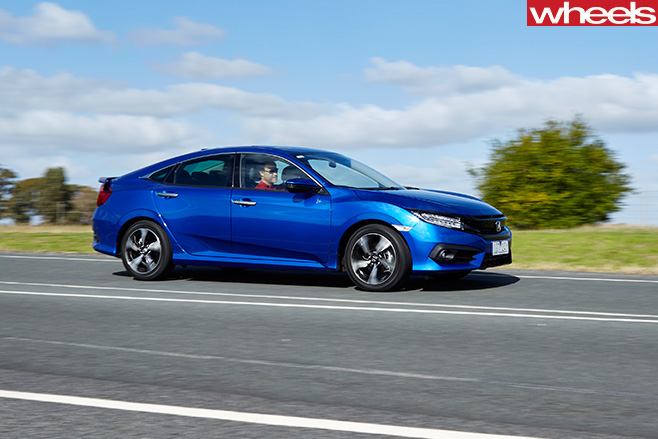
Cost-cutting made the last three Civic iterations interminably dull, and in the sedan’s case, downright depressing. The crisis culminated at the Tokyo motor show in 2011, when CEO Takanobu Ito made an astonishing apology for the outgoing Civic’s inadequacies. Last year, VW sold five times more Golfs and Mazda nine times more 3s in Australia. The disruptor was in disarray.
Such history is vital in understanding why this 10th-generation car carries Honda’s reputation on its fussy flanks, even if little has changed conceptually.
There are two petrol engine options – a carryover 1.8-litre single-cam unit in the entry VTi and VTi-S, and (at last) a box-fresh 1.5-litre turbo in the mid-spec VTi-L, sporty RS, and tech-heavy VTi-LX – each controversially tied solely to a CVT auto. While all mirror Mazda’s positioning strategy, the 10th-gen Civic’s creators set their horizons well beyond Hiroshima.
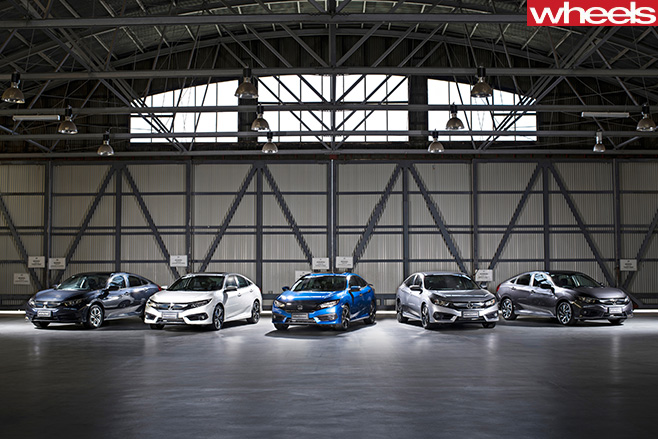
Welcome to Honda’s first ground-up, new-generation ‘Earth Dreams’ car.
No doubt styled to appeal to Americans – perhaps even overstyled – one could argue that the sedan’s 22 percent better aero-cheating fatback (sorry, fastback) silhouette pays lip service to the two-box ’72 original. Pleasingly thin A-pillars that aid vision and a bonnet line that’s 35mm lower hark back to Honda’s golden years.
Honda even hopes that the longer, wider and lower Thai-built newcomer will attract former Accord Euro buyers. Wishful thinking? Maybe, but that parallel certainly seems appropriate when you sit inside what is almost a Toyota Camry-sized cabin.
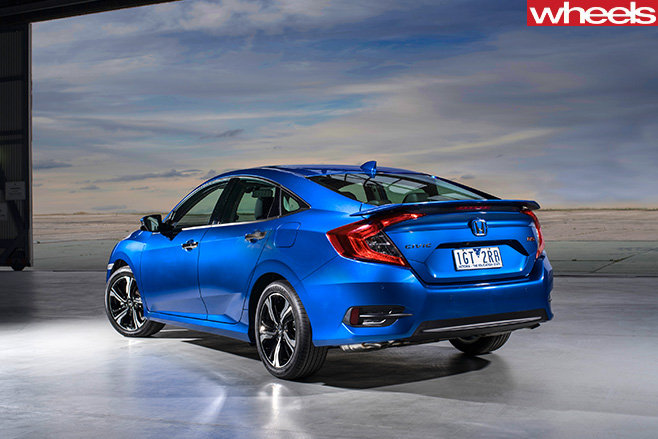
Foibles include side vision when reversing, fiddly audio volume control and a lack of face-level air vents in the back seat, but this is nit-picking considering how on-script the all-new Civic is.
The Germanic influence isn’t just inside, either. At the local launch, Civic program chief Tadashi Inazu revealed that the Golf and Audi A3 were the sole development benchmarks for ride, handling, refinement and noise suppression.
To that end, the body-in-white is 25 percent torsionally stiffer, thanks to high-tensile steels and advances in body-joining and welding techniques, yet it’s also 25 percent lighter. Backing this up in the name of quietness are new inner-frame structures, underbody covers, smarter insulation, one-piece carpet boot liner, triple door seals and thicker glazing.
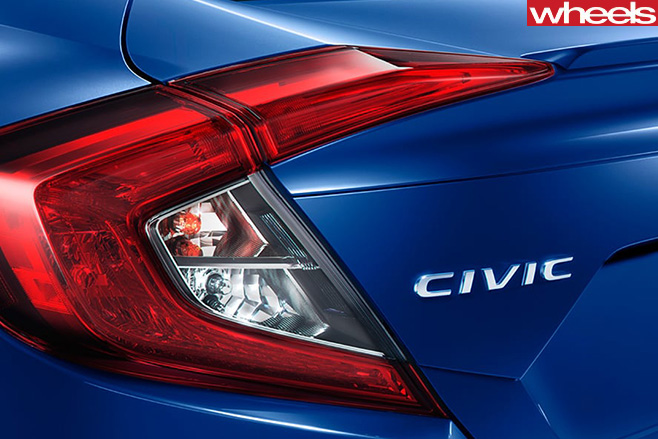
Progressively weighted yet engagingly responsive steering is another series first. Electric, of course, but with a variable gear ratio offering an extremely pleasing 2.2 turns lock-to-lock rather than 3.1, it equates to deft, involving and confident handling control, especially at high speeds.
Upping the ante to 215/55R17 rubber in the RS, the chassis gels in a similar, delightfully fluent and fun way as we’ve enjoyed in recent Peugeots and Renaults.
Prototype tuning in rural Australia has resulted in improved stability and traction tuning. If for nothing else, the chassis is worth the Civic’s price of entry. The Type R hatch due in 2018 should be a blinder.
What might be unforeseen is what a fine fit the new-gen CVT is, utilising a torque-converter and two variable-width pulleys To provide natural auto-trans responses. Gone is the slipping and flaring associated with CVTs, unless you provoke it.
Honda expects half of Civic sedan sales will be the new 1.5 turbo, and here the game gets more interesting. While the heavier-duty CVT application is equally laudable, aided by a deep well of low-down torque uncharacteristic of previous Civics, it absolutely cries out for a slick six-speed manual ’box, which – shockingly – isn’t coming. For the 5-10 percent of buyers who’d opt for a manual, this is deliberate and detestable discrimination.
Step-off acceleration is eager and largely lag-free in a way no dual-clutch alternative matches, and performance builds rapidly and deceptively thanks to the rock-solid chassis and hushed cabin that conspire to mask your actual speed. Spry point-to-point, you’d call the turbo Civic warm-hatch nimble. Perhaps the only false note is that Honda’s zingy VTEC sweetness gives way to an ever-so-slight gruffness.
It may not be the disruptor of old, but this 10th generation is a skilful amalgam of the C-segment leaders’ attributes – poise, performance, refinement, quality and packaging cleverness – propelling the series from latter-day also-ran to potential front-runner. Civic is back, folks.
A dash of class
The previous Civic’s cluttered and confused double-decker dash has been banished for a more conventional and coherent layout. Now even the base VTi offers a profound step up in quality and presentation. Removing the conventional handbrake for an electric item liberates space, too.
Appealing contrasting textures, clear instruments that include a handy digital speedo, ample storage, excellent ventilation, an easy-to-reach central touchscreen interface with Apple CarPlay/Android Auto connectivity, and a standard reversing camera strongly underline how serious Honda Australia is in lifting the Civic’s value.
Giving Civic the RS
Honda Australia was prepared to continue with ‘Sport’ rather than ‘RS’ for the Civic 1.5 turbo, as those letters are famous for signalling ultimate performance in models such as the Ford Focus RS and Porsche 911 GT3 RS. But the locals were forced to fall in line with global naming policy, which sees RS sit below Si and Type R in the Honda hierarchy.
Suspension of belief
Key chassis advancements include the implementation of subframes for the redesigned MacPherson strut front and multi-link rear suspension, with the latter also gaining liquid-filled compliance bushings to stop noise and vibration paths. Improved underbody aero properties also promote quietness. Considering how much the new Civic has grown, weight for the VTi rises only 53kg due to the use of lighter yet stronger steel.
SPECS Model: Honda Civic RS sedan Engine: 1498cc 4cyl, dohc, 16v, turbo Max power: 127kW @ 5500rpm Max torque: 220Nm @ 1700-5500rpm Transmission: CVT automatic Weight: 1331kg 0-100km/h: 6.8sec (claimed) Fuel economy: 6.0L/100km Price $31,790 On sale: Now
Wanna boost your Ford Mustang’s power? Well, Australian tuner Herrod Motorsport’s packing something that’ll more than double a V8 GT’s outputs.
Lurking on its shelves is a supercharged 5.0-litre V8 from Ford Performance that’s quite special. The crate motor’s been pinched before reaching a Mustang Cobra Jet – a factory-built drag car that’ll cut 8.5sec quarters all day.
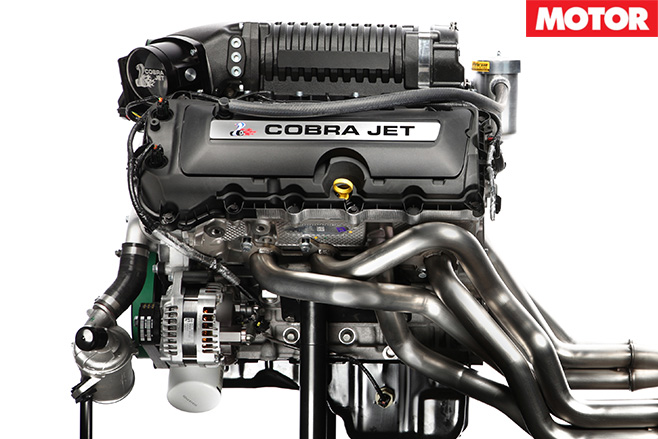
Personally, though, he’s seen one make much more power. “We supplied one for a jet boat, fitted a dry sump, and on the DJR/Penske [engine] dyno it made 1355Nm and 820kW on E85 fuel!”
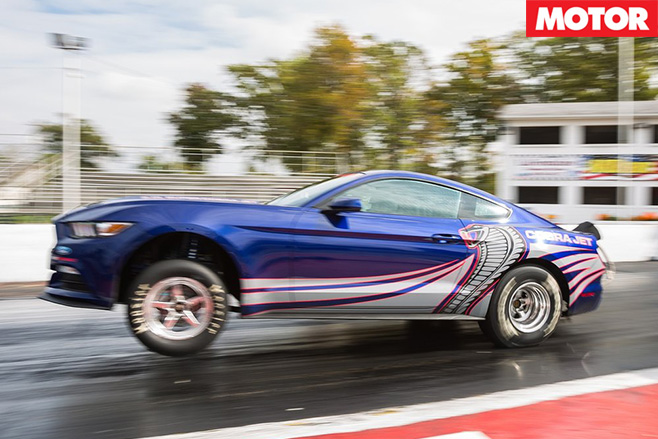
While you can’t buy a complete Mustang Cobra Jet here, all 50 have probably been sold, the engine’s the next best thing. Ford says it’s ‘75 per cent production parts’, but you can’t just build one yourself. A 2.9-litre Whipple blower nestles between its hand-built cylinder heads, while special components allow it to spin all the way to 8000rpm.
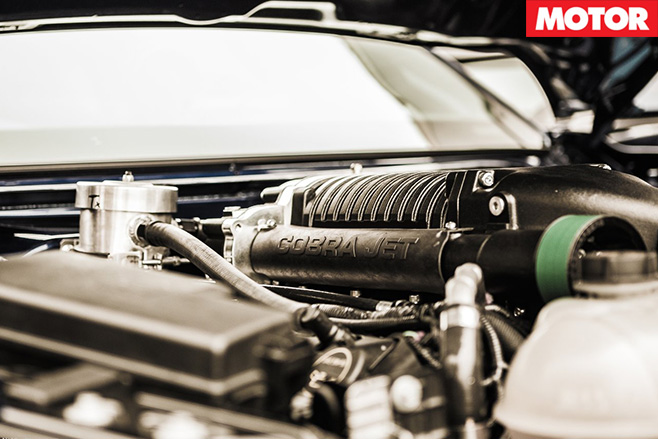
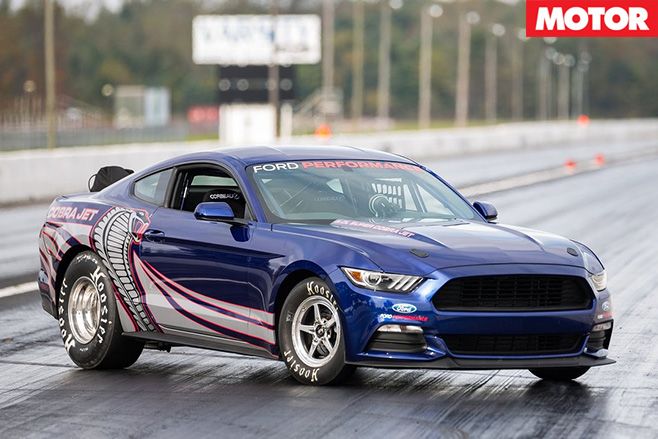
For a S550 Mustang, there are also the issues with engine fitment and management that’ll bob-up. But then again 735kW doesn’t scream ‘street use’. So keeping that in mind, the Cobra Jet engine just may be the wild you’re looking for.
LEWIS Hamilton may have had a shocking start to his 2016 world championship campaign but having turned a large 43-point deficit to Mercedes teammate Nico Rosberg into a 19-point advantage, the Briton is well on top mathematically and psychologically.
His win in the German Grand Prix at Hockenheim was Hamilton’s sixth in seven races. That’s serious momentum.
Rosberg’s self assurance has gone, while Lewis Hamilton has that stuff in abundance.
On Sunday, pole man Rosberg made a clumsy start, losing places to Hamilton and the Red Bulls drivers locking out the second row, Daniel Ricciardo and Max Verstappen.
In a sign of the increased pace of the Bulls, and a recognition that the Mercedes cars are great when out front but less so when chasing in dirty air, Rosberg spent much of the race pursuing but not really getting a chance to try to pass.
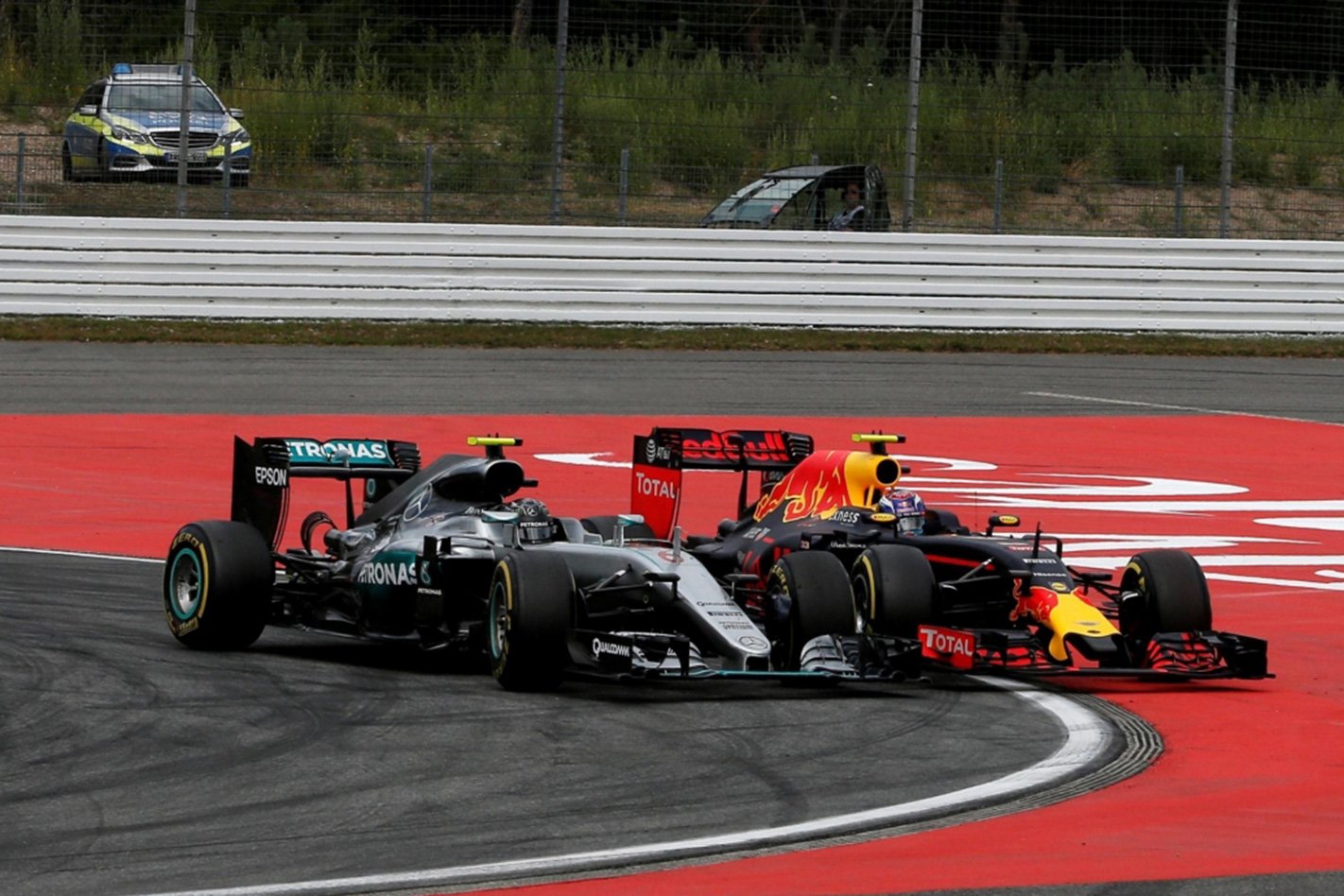
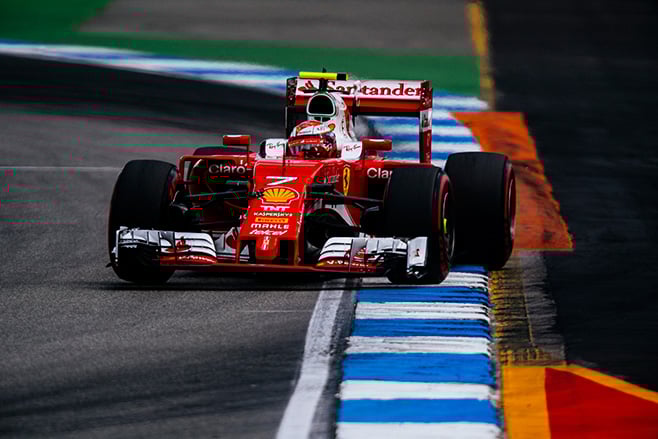
A revitalised Ricciardo took second place ahead of Verstappen, both importantly ahead of the two Ferraris thast seem to have lost their way – again – and look close to implosion.
“I’m very pleased with today obviously,” remarked Ricciardo who beat both his teammate and the red cars, celebrating on the podium with a traditional Aussie “shoey”. Only a victory would have been sweeter.
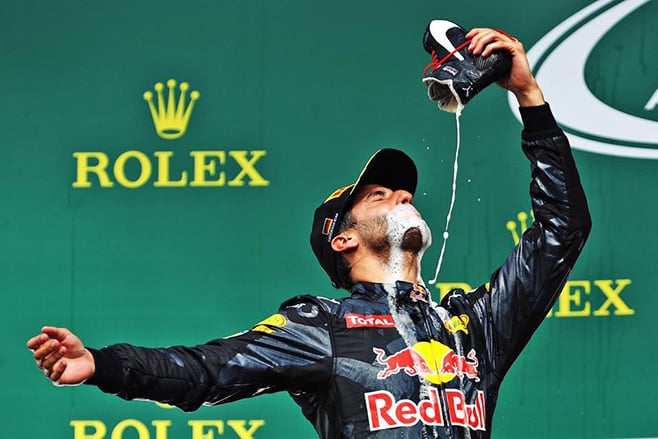
“It was the best we could do today and I’m now happy to go into the summer break with another podium in the bag.
“The last few races I got a bit more out of the race weekends and it’s nice to get a bit of momentum now before the summer break. Just to stand up there on the podium is the best feeling in the world.”
Red Bull is now second in the constructor’s standings after 11 races.
The decision to overturn the ban, taken at a strategy group meeting last week, received unanimous support from FIA president Jean Todt, F1 supremo Bernie Ecclestone and the six teams involved – Ferrari, Mercedes, Red Bull, McLaren, Williams and Force India.
Jenson Button’s penalty for receiving a message from McLaren despite an impending brake failure in Hungary was the catalyst for change, with most of the paddock – and fans – up in arms.
Red Bull’s Christian Horner and Ferrari team principal Maurizio Arrivabene have been strident in their criticism of the radio ban, calling for an application of common sense.
Ever mindful of the impact on fans, Bernie Ecclestone also suggested the lack of radio traffic was “not good for the [TV] show”.
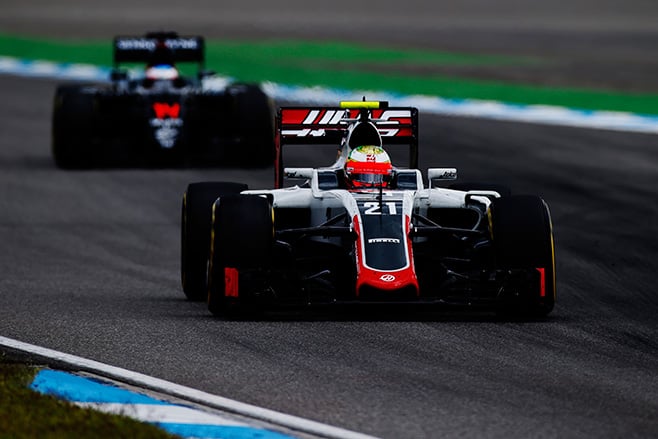
“With the exception of the period between the start of the formation lap and the start of the race, there will be no limitations on messages teams send to their drivers either by radio or pit board.
“This approach is aimed at providing improved content for fans and spectators, as teams will now be required to provide the commercial rights holder with unrestricted access to their radio messages at all times their cars are out of the garage.”
The only restrictions still in place relate to the formation lap when teams can’t pass info to drivers about clutch-bite points and mapping ahead of the race start.
Briton victorious in fastest WRC event ever
NORTHERN Ireland’s Kris Meeke – a mere part timer this season as he helps develop Citroen’s new world rally contender – has convincingly won Rally Finland on with a record-breaking drive that set a new mark for the fastest FIA World Rally Championship round ever.
His 29.1sec victory over Jari-Matti Latvala shattered the Finn’s hopes of a third consecutive success on home ground and established a new speed record of an average of 126.60km/h.Meeke, 37, became the first British driver to win the Finnish classic and only the sixth non-Nordic victor in its 65-year history.
He controlled the event from the outset, leading for almost every kilometre of the four-day gravel contest in a Citroën DS3.
It was Meeke’s first WRC outing since he won in Portugal in May.
Sealing a brilliant weekend for the Abu Dhabi Total team, which is tackling a restricted programme this season, Ireland’s Craig Breen scored a maiden podium in third.
After establishing a solid lead on Friday, Meeke took a firm grip on the Finnish classic with a stunning display in the legendary Ouninpohja stage on Saturday morning. He distanced Latvala by more than 13sec in the rollercoaster 33km test and thereafter had the margin o measure his pace to the Jyväskylä finish.
“It’s a little bit crazy!” said Meeke. “Finland is the home of rallying and Ouninpohja is the Holy Grail of stages and to win both the rally and that stage in the way we did is incredible.
“I enjoyed it like a little kid, just playing and having fun. It has been exceptional.”
Latvala was demoralised by Meeke’s Ouninpohja performance and settled for second to climb to third in the championship. His only error came on the first day when he punctured a tyre after swiping a bank with his Volkswagen Polo R.
Breen, a former WRC junior champion, netted a podium in only his fourth event in a headline World Rally Car.
Thierry Neuville held off Hyundai i20 teammate Hayden Paddon to take fourth by 2.3sec, both drivers unhappy with their car’s handling throughout the rally. Mads Østberg completed the top six in a Ford Fiesta RS.
World champ and this year’s points leader Sebastien Ogier went out of contention on Friday, ditching his Polo in the awkward road clearing role.
WHILE Lamborghini can never be accused of insipid design, there’s good news for anyone who wants a Huracan supercar but feels it’s lacking some apparent go-fast bling.
The company has released three official styling packs which include an aero kit boasting a big rear wing, side skirts, double rear diffuser and a sporty front splitter.
The aerodynamic package pays homage to the Huracan LP620-2 Super Trofeo racer – albeit in a cosmetic way. While Lamborghini insists it’s been wind tunnel tested for all conditions for safety, it’s not making any claims of improved performance.
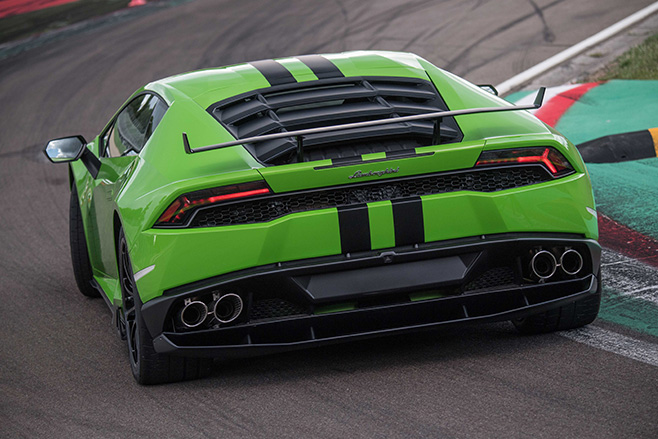
For more visual oomph you can add the aesthetic pack, which includes pre-cut vinyl racing stripes, available in matte black, glossy black or red that can be applied from front to rear while matching the rear wing mirrors. These can be easily removed without causing damage to the exterior paint.
To complete the racing look you can get the third add-on; centre-lock 20-inch rims which look good but again offer no performance advantages such as lighter weight.
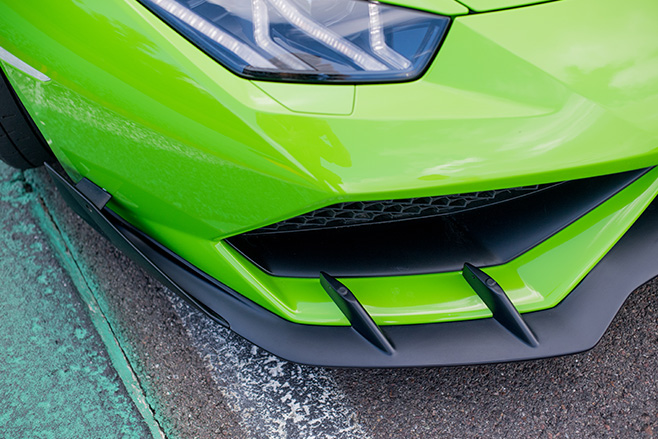
The kits are good for both the all-wheel-drive and rear-wheel-drive versions of the Huracán and are now available for installation by authorized Lamborghini dealers without affecting the vehicle’s warranty.
Lamborghini is yet to confirm pricing, but don’t expect much change from $40,000 for the lot.
Fancy a ride? Check out this Lamborghini Huracan Uber.
Mike Simcoe once pinned Holden Monaro posters to his bedroom wall. Now, as the new head of GM Design, he leads the global team penning GM’s poster cars of the future.
First published in the June 2016 issue of Wheels magazine, Australia’s most experienced and most trusted car magazine since 1953.
It’s the late 1990s and we’re in Detroit at the Renaissance Center, those incongruous silver tubes that house General Motors world headquarters. And it’s late.
Dinner for the media has been a long and liquid affair hosted by Holden’s brilliant, fearless and sometimes terrifying sales and marketing boss, Ross McKenzie.
Always forthright, sometimes brutal, McKenzie is euphoric tonight because Holden has topped Toyota in the sales race, riding high on the back of the mighty VT Commodore. He’s a big bear of a bloke, with a pornstache and beer drinker’s gut. By now he’s had more than just a few beers… and reds, too. Basically, he’s pissed.
We’re in a bar somewhere in the Ren Cen and Rosco – he was always Rosco, although maybe not to his face – is draped over a tall, thin, decidedly sober bloke dressed in black. It’s Mike Simcoe, Holden’s design chief. The man who led the VT design team.
“I love you, Mike,” repeats Rosco, slumped against Simcoe with one arm around him and another holding a drink. Simcoe sort of shuffles, smiles in his crooked, signature way. Clearly, he would like to be just about anywhere but here right now.
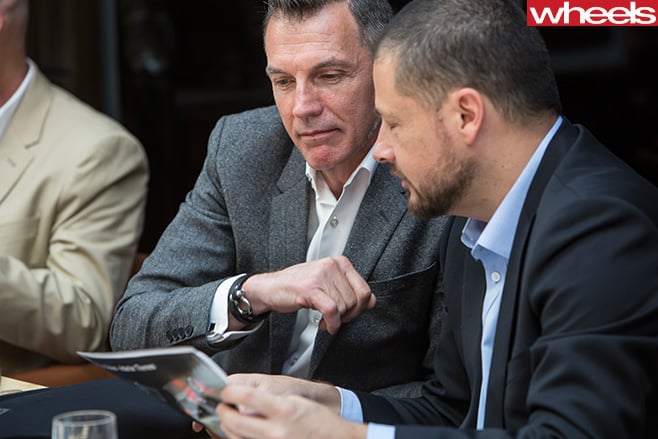
Simcoe is caught in the spotlight. Gently, he disentangles himself from McKenzie, offers another lopsided grin and says in his deep, serious voice, “I love you too, Ross”.
McKenzie seems satisfied and turns his attention elsewhere. Simcoe drifts the other way. Clearly he is relieved to no longer be the centre of attention.
***
NEARLY 20 years on and Simcoe remembers that moment vividly. “Uncle Mike,” he laughs at himself. There’s a lot of truth in that. Simcoe has always been the adult in the room, eschewing the trite, always seeking serious discussion, pondering the significance.
In a superficial world where the five-second grab rules, Simcoe offers in-depth analysis, interlacing it with the occasional dry-as-a-Khamsin joke (the wind, not the car, but he’d get both references), much of it self-deprecating.
And now the Melbourne lad who was discouraged by his RMIT lecturers from going into automotive design, who joined Holden in 1983 as an interior designer only with the intention of stocking up his bank account before heading back to conquer the UK, is taking on the biggest job in global automotive design. In fact, it’s the original job in global automotive design, overseeing the disparate brands of General Motors – Chevrolet, Cadillac (where his former Holden protege Andrew Smith is design boss), Buick, GMC, Opel, various co-ventures and, of course, Holden.
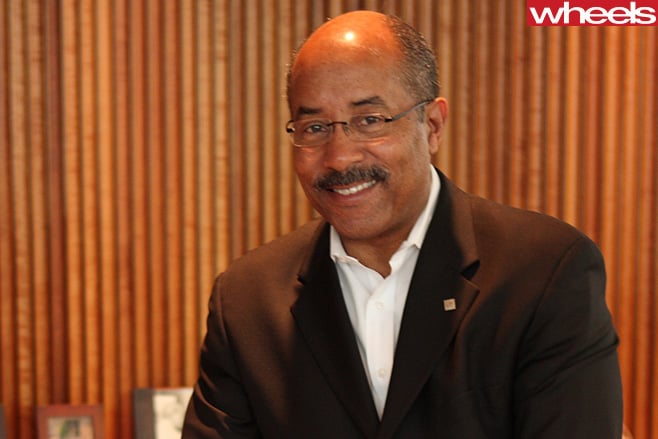
This isn’t just a big deal, this is the biggest deal. In terms of Aussie success in the global automotive industry, only Jac Nasser’s appointment to run Ford could be rated higher.
Simcoe looks uncomfortable as I reel all these headline stats past him. He is back in the spotlight and he knows it. But the spotlight is worth this job.
“There are some pretty amazing ghosts in that corner office, and in some ways this is regarded as the best job in the world if you are a designer,” Simcoe says. “So that is daunting.
“Do I see myself as a match for Earl or Bill Mitchell (Earl’s successor) or some of the ghosts past? I see myself as quite a different character to some of those and it’s for a different time. If I think too much about that – the scale of the job, the scale of the organisation, the impact – then this becomes a hugely daunting role.
“Like in all things, or the way I do things, I will break this down to the chunks I can handle. I’m old enough now to know I can’t do everything all at once and I will deal with the things I think are primary.”
He’s as lean as ever, still dresses in black, and that angular face, which at times has been styled with rocker sideburns, a waxed moustache and even a hipster beard, has aged well.
***
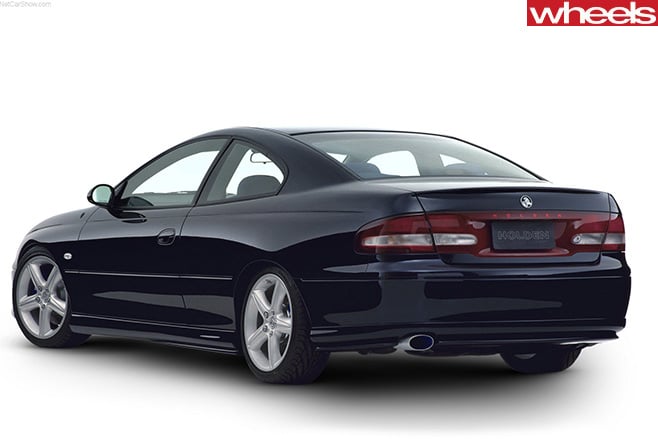
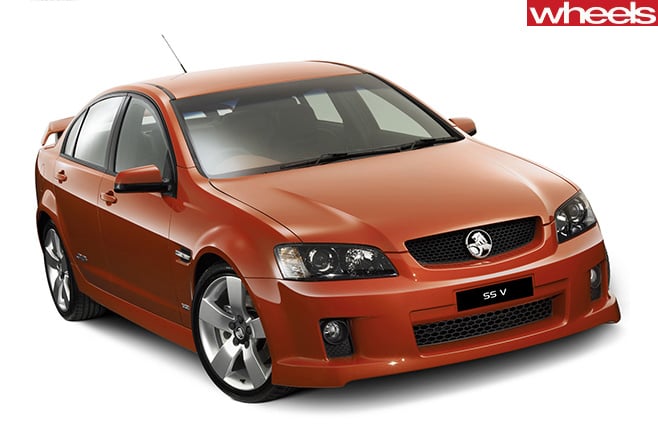
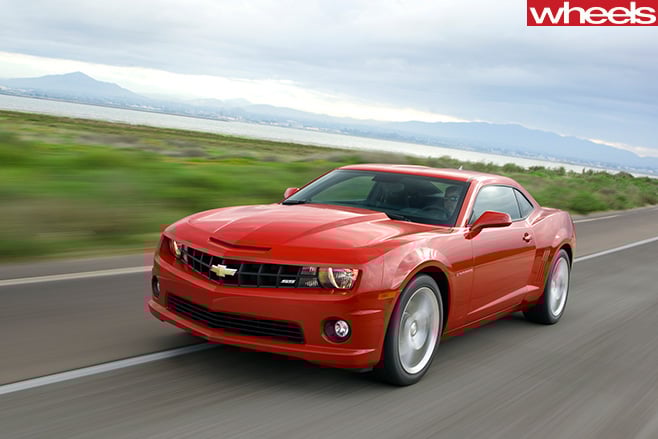
WE’RE sitting in Simcoe’s Port Melbourne office, overlooking Salmon Street and the low-rise industrial landscape that leads towards the city high-rise. There are open cardboard cartons being loaded with stuff headed for his new digs at GM’s massive design centre in Warren, Detroit’s largest suburb. But still sitting out on display are models of cars that are among the great achievements of his 33-year career – the Commodore Coupe that morphed into the reborn Monaro, the Holden VE Commodore, the fifth-generation Camaro.
But he was a car lover before he was a car designer and that love is still there. His current daily driver is a Commodore SS-V Redline. In his garage are a Lancia Aurelia (featured in Wheels last year), a 1961 Aston Martin DB4 and an original Elfin Streamliner (a revival was designed under his influence in the early 2000s). Even before getting to Detroit, he’s on the hunt for a split-window 1963 Corvette.
“If we’re doing a vehicle that might be a first-time purchase for someone in a country where transport is developing, you want that experience to be as visceral and emotional for those people as for someone in a developed market making the choice of buying a Corvette,” he insists. “Whether it’s a Spark or some unknown product that is someone’s first purchase moving from a moped or something like that to a first family vehicle, it’s powerful stuff.”
Dig into more detail and Simcoe manoeuvres carefully around the subject of his new job, like a tugboat captain circling the ocean liner he will soon be leading. He doesn’t want to sound shallow, he doesn’t want to sound disrespectful to his predecessor, and he doesn’t want to sound overconfident. Yet at the same time he doesn’t want anyone thinking he isn’t looking forward to the challenges and doesn’t have ideas about how he will make the job his own.
“They wouldn’t have asked me to do the job if they didn’t think I could do it.
“I will try very, very hard,” he offers, then stops. “No, that’s being trite. I trust the people who asked me to do the job, that they judged I have what’s needed, and I just need to do it well. I see my job as enabling a team of great people around the world and not getting in their road – make life continue to work for them because their design at the moment is pretty good.”
‘Team’ is a key word that keeps resonating throughout Simcoe’s career. He has deflected constantly to the people who have worked with and for him. It’s almost painful at times, but the tune never changes. In 45 minutes he says ‘team’ to me 10 times. It will undoubtedly be a constant in his time at Warren.
“I always consider myself as part of a total team. You have heard me a number of times drive credit back to the guys and girls who as I see it actually do the work. The women and men inside GM studios, whether they are designers, whether they are creating surface, whether they are modelling, they are the people who ultimately enabled me into this positon.”
***
THE best independent assessment of why Simcoe was selected to lead this team comes from Bob Lutz – Detroit royalty.
Now 84, Lutz was the veteran ‘product guy’ who after 30 years was recalled by then president Rick Wagoner for a second stint at GM in 2001 with the task of reinvigorating a stale vehicle range. ‘Maximum’ Bob toured the world, drove the various offerings under his charge and came Down Under to learn about Holden, a place he later described as a “microcosm of what we would like GM to be”.
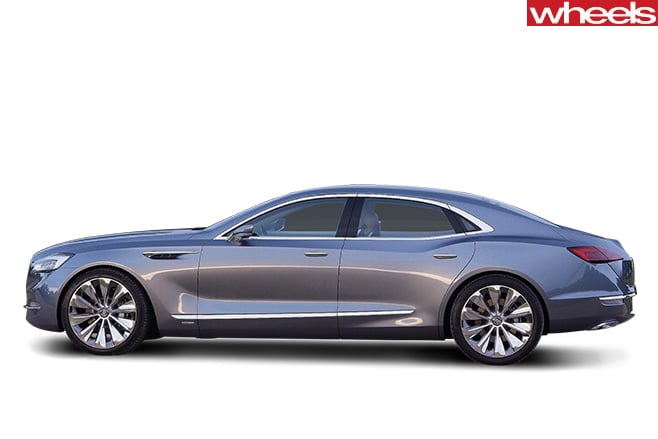
Simcoe stayed in the US in several roles for six years and with Lutz worked on cars such as the Zeta-based Camaro and the Pontiac G8, a rebadged left-hook VE Commodore that later became the Chevy SS after Pontiac was killed off.
Even a decade ago Lutz was telling people Simcoe should one day be the global boss of GM design.
“He knows the intricacies of load paths and body engineering,” Lutz told industry magazine Automotive News after his forecast turned to fact in April. “You could take him out of styling and put him in charge of body engineering and it would probably work out just as well.
“Engineers look at a clay model and say: ‘That’s not going to work. You can’t have the windshield touch-down point that far forward. It’s going to be too hard to meet crash standards, and we’ll need two or three more inches of overhang. You can’t do this and you can’t do that.’
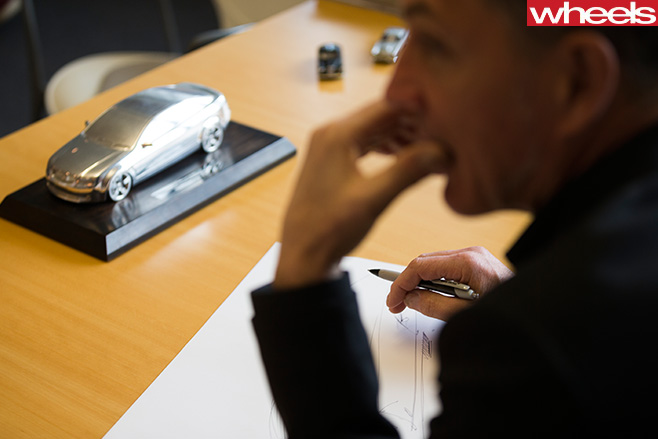
Simcoe is quite clear that he acquired this broad and deep knowledge in his time at Holden, where the process of car construction was taken from idea to dealership by a small group of designers, engineers and product planners who knew each other on a first-name basis.
THE 1990s into the mid-2000s were halcyon days for this group at Holden. Simcoe led design, the laconic, talented Tony Hyde led engineering, and German firebrand Peter Hanenberger drove the show as MD, determined to take Holden higher and farther than ever before, while sticking a metaphorical middle finger up at the Detroit bosses with whom he shared a mutual dislike.
The result was a profusion of models based off V-car Commodore architecture; sedan, wagon, coupe, ute, long-wheelbase sedan, all-wheel-drive wagon, crew cab and so on. Then it was the billion-dollar baby, the VE Commodore, with capability baked in to take on the world.
“I spent a lot of time in the early days with sculptors and modellers because realistically I didn’t know anything about surface,” Simcoe admits. “So engineers taught me about engineering and the modellers taught me about surface.”
And who taught him about proportion, the design mantra he has championed throughout his career? “That’s internalised. I had to bring something to the party.” Crooked grin.
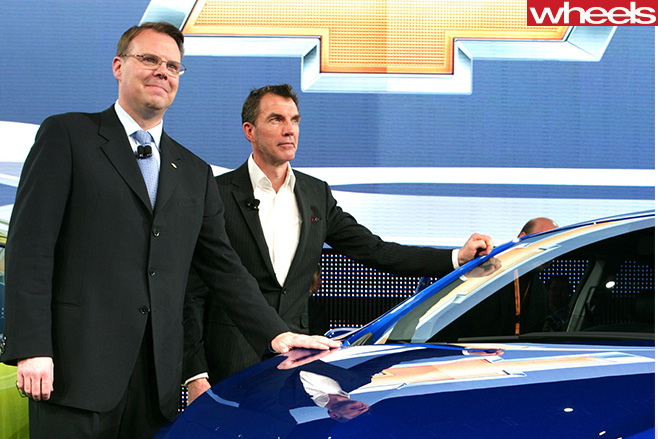
“The worst thing in the world is getting ahead of yourself because you fall down fairly quickly. I have never blown my own trumpet too much.”
Maybe not, but he will be playing his own tune. Lutz says Simcoe will be more confrontational than the mild-mannered Welburn, who began his career as GM’s first African-American designer and finished it with 13 years in the top job.
Simcoe has read Lutz’s assessment of him. “Lutz described me as a grumpy old bastard, I think,” he says, half laughing and half grimacing. But he doesn’t deny Lutz’s basic proposition.
“I am confrontational and I have an ability to upset people if they take me at face value. But I know how to put a car together, I know how the network works and in some ways I am able to sit down and have a logical argument with engineers and others who sometimes we are at odds with. It’s played off as confrontational, or black and white, but it’s not. My job is to be confrontational when I need to be, but also again make sure that I make the relationships as a whole work.
“The size of this role means I have some hugely talented creative people that we bring to bear on a program, so the level of creativity and skill involved is just unquestionable. I then perhaps have an ability to make sure that is focussed in the right way, and the compromises around that creativity – if there are any – are all good ones.
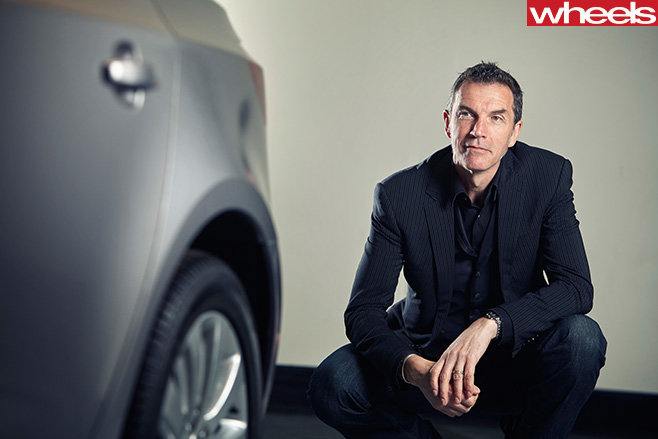
***
AND what of this place he leaves behind? Simcoe returned to Australia in 2012 after six years in Warren with wife Margaret and daughters Kathryn and Eleanor to resume life in his beloved leafy Melbourne east. His job was to run the Port Melbourne and Korean studios and be the official Holden champion within GM.
But the Australian automotive industry has since dissolved before his eyes. Ford ceases manufacturing this year, Holden and Toyota in 2017. GM will retain small elements of its footprint including the design studio and the Lang Lang testing ground. But by the end of next year the locally designed, developed, engineered and manufactured Commodore in which he and so many others invested so much passion and intellect will be dead.
Is it a relief that he won’t be in Melbourne at the death? I know him well enough to suspect the real answer is yes, but he won’t – can’t – say such a thing. Instead, he generalises.
“I hate the idea that in this country we won’t be manufacturing vehicles. I think that is incredibly short-sighted of everyone involved. I worry about the country as a whole, that we we have lost manufacturing. Not just automotive manufacturing, but we’ve lost manufacturing in a large way. The opportunity for engineers and designers and everybody else is diminished as a result and the country is not as rich because of it.”
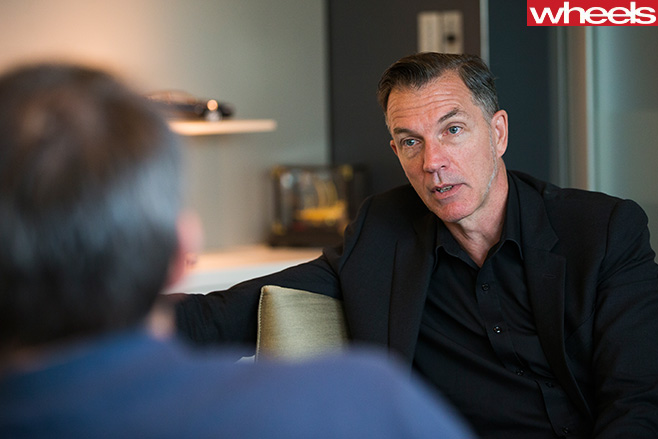
“A decision was made, there is no turning back now, so what do we do to compensate? We have in the design operation here people who are influencing products that ultimately come back into the marketplace. And to me that’s a great thing.”
Our silver lining as Simcoe departs and Holden reshapes is that the bloke in the biggest and most prestigious job in global design promises he won’t forget us.
“By the nature of me having grown up at Holden, I can’t ever forget what I came from, so I will always be interested and considerate of Holden.”
But the final word goes to Ross McKenzie, now retired to a less tumultuous – shall we say more sober – country life, but still as admiring as ever of Simcoe’s abilities and character.
“Michael Simcoe is the best designer I ever met, by a country mile,” Rosco says emphatically.
“He had great vision of what might be possible, well beyond practical constraints. Michael’s design work made my sales and marketing life so much easier.
“The VT Commodore was a perfect example; a great car for its time and allowed us to drive all-time sales records over many years.
“Thanks, Michael. Love your work.”
Why the famous British brand needs to realise following market demand isn’t a sign of failure or weakness.
First published in the June 2016 issue of Wheels magazine, Australia’s most experienced and most trusted car magazine since 1953.
Pun-loving headline writers have been describing new Jaguars as the company’s ‘last chance saloon’ for at least three decades. It’s a cliché, but one that reflects how close to insignificance Jaguar has become with its dismal market share.
Global sales numbers are scarily small. Last year Jaguar sold just 84,000 cars around the world, the highest number in a decade, with a derisory 1300 of those coming to Oz. For perspective, it’s now 60 percent smaller than Infiniti, one-seventh the size of Lexus and barely a boil on BMW’s 1.9m backside. If it wasn’t nailed to profit-making Land Rover, which outsells it five-to-one, it would almost certainly have sunk years ago. Even Saab was managing bigger volumes immediately prior to GM selling it.
Yet Jaguar is still struggling with its future, a situation that may well be exacerbated now that JLR has merged most management for the two brands. Talk to a senior exec about Land Rover and confidence practically overflows: new models, new markets, new opportunities. Discuss Jaguar and everything is hedged in uncertainty: we could do this, we might do that, it’s possible.
That’s because the numbers make it desperately hard to justify investment in niche models. Which, based on sales, is practically all of them.
Jaguar’s innate conservatism means it has been late to practically every party in the premium car segment for 20 years: diesel engines, station wagons, SUVs. The fact that the company’s first attempt at a compact executive saloon, the X-Type, bombed was taken by the company’s then leadership as proof it didn’t belong in the segment’s biggest sector. The alternative view – obvious to most outsiders – that the retro-styled, Mondeo-based X-Type was a woeful turkey didn’t get a look in. It has taken more than a decade to launch the XE into the same space.
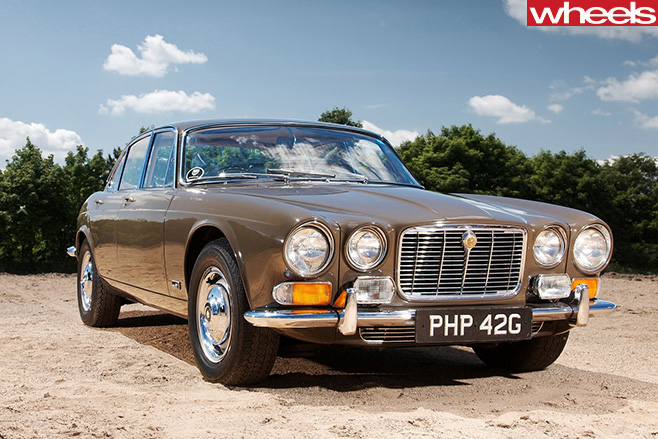
The F-Pace is sure to be a success, but the future of the XJ is now the subject of heated debate. Jag considers the big saloon to be its crown jewel, a direct descendent of the 1968 XJ that practically invented the upmarket sports saloon. But while sales of the current model have been increasing on the back of Asian demand, its 20,000 annual volume makes it hard to justify the massive costs of a replacement.
Senior insiders now say it will happen – most likely a V6-powered hybrid spun from the XE/XF’s modular architecture – but it seems another willfully contrary decision given the booming demand for luxury SUVs. Why not build a bigger crossover instead, spun off the Range Rover architecture, and aimed at the space where other luxury makers are concentrating their efforts, where rich buyers actually want to spend cash?
Jaguar needs to realise that following market demand isn’t a sign of failure or weakness.
Teenage children
Despite approaching its 50th birthday, there have only really been four generations of the Jaguar XJ (pictured above) so far.
The first survived through updates from 1968 until 1986 (and 1992 in Daimler form) – this despite the fact that development of the ‘new’ XJ40 that replaced it had begun as early 1972.
The XJ40 was famous for electrical meltdowns, but two substantial facelifts turned it into a good ’un.
The first alloy-bodied XJ, the X350, arrived in 2003 and only lasted six years, with its replacement – the X351 – now coming up to its seventh birthday with replacement still some way off…
ADVANCED technology that can read traffic signs has just been made available in the facelifted Mazda 3 Series II, making it one of just a small handful of models to do so in Australia.
According to Mazda Australia sales and marketing boss, Alastair Doak, the Traffic Sign Recognition system (TSR) has been honed in this country for well over a year in prototype testing.
A unique collaboration between the local outfit and its Japan-based parent company, Mazda Motor Corporation (MMC), the shakedown ensured reliability and dependability in our demanding environment.
As a result, the system has been especially designed to cope with our unique signage, as well as their positioning, in order to hopefully recognise these better than most systems in other vehicles.
“We had a prototype car here 18 months ago,” Doak revealed at the Mazda 3 facelift launch in Brisbane. “And we had a team of engineers here for two or three weeks.
“We drove up to Sydney and Brisbane (from our headquarters in suburban Melbourne), testing it the whole time and adjusting the system, and logging all the data points, and they made it work.”
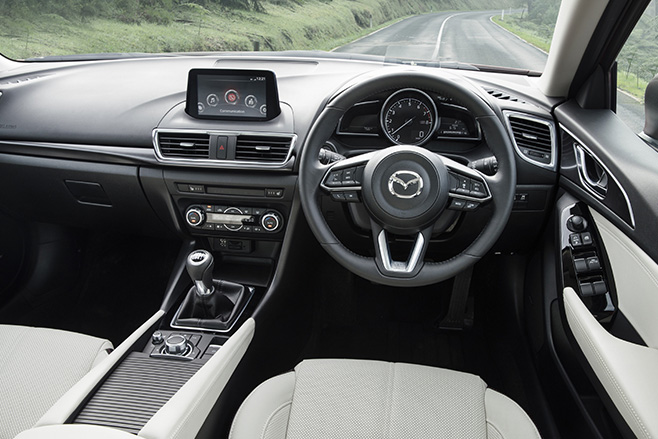
The information that the TSR system gleans is displayed in the Mazda 3’s newly revised instrumentation and head-up displays, as part of the satellite navigation system.
Doak added that the TSR system isn’t the only new tech that has had the Australianisation treatment.
“You know, it’s the same with the new Adaptive LED headlights – for those, another team from Japan was also out 18 months before that.
“And the suspension changes were the same too – yet again, a Japanese team were here last year and spent a week with us driving up and down challenging roads, logging all the suspension info, and that’s been implemented here in the new Mazda 3 Series II.
Mr Doak said that most of the learnings garnered from the Australian experience have been applied to 3s sold in other markets around the world.
“So the changes… are the same (for all 3s sold globally) but tuned specifically for Australia,” he explained. “We always have engineers out – it’s just we don’t make a huge song and dance about it.
TELL ME ABOUT THIS CAR
The E-Class is Mercedes-Benz’s large sedan and sits between the smaller C-Class and larger S-Class. It is one of the technology leaders in the Mercedes range and debuts more advanced crash avoidance technology that makes it the most advanced car produced by the German luxury carmaker. Prices for the E-Class start at about $90,000 for the four-cylinder models and will rise to beyond $200,000 for the flagship E63 AMG with its V8 engine. In between are more four-cylinder models, a V6 diesel and a plug-in hybrid.
STRENGTHS
- Elegant cabin that blends traditional elements – the circular air vents and sweeping dashboard – with modern features, such as the twin 12.3-inch high resolution LCD screens that make up the central infotainment screen and the driver’s instrument cluster.
- Clever touchpads on each side of the steering wheel. They are about the size of a small fingernail and were inspired by a smartphone’s screen. The left one controls the infotainment screen and the right one the instrument cluster. Between them all major functions of the car can be controlled.
- Frugal four-cylinder engines. Neither the diesel or petrol engines in the E-Class are particularly powerful for the car’s size, but each has plenty of pulling power in everyday driving; something that ensures they easily keep pace with city traffic. There’s also a V6 diesel on sale, although we haven’t driven it yet. The hybrid and V8 engines are yet to arrive in the E-Class in Australia.
- Comfort. Even with the basic steel spring suspension, the E-Class is beautifully controlled and comfortable – with the exception of the occasional sharp-edged pothole that can catch it out. The air suspension ups the ante with some extra plushness. It’s also quiet and refined, making for comfortable cruising.
- Safety. The E-Class has a serious safety artillery, covering everything from auto braking in forward and reverse, to lane-keeping assistance and blind spot warning. There’s also a system to help counter crosswinds and another to help push front seat occupants towards the centre of a crash to reduce injury in a side impact.
- The price. Entry to the E-Class range has increased by about $10,000, although Mercedes-Benz justifies it by pointing to the extra equipment, which is, it must be said, plentiful.
- Despite the generous spread of gear, leather trim is still optional on the most popular E200 and E220d models. Instead you get Artico, which looks like leather – and is generally accepted to last longer and wear less – but doesn’t quite have the suppleness of the real stuff.
- The Comand system and touchpad controllers generally do a good job of navigating the myriad electronics, but occasionally there’s one too many menus to change things.
- The Pilot Parking system is great in theory and superb when it works – accurately guiding the E-Class between parked cars – but it is not nearly as good as a human at spotting a parking spot in the first place.
The BMW 5-Series is one of the biggest competitors for the E-Class, with Audi’s A6 not far behind. Also worth throwing into the mix are the Lexus GS, Jaguar XF and upcoming Volvo S90. More expensive models are also shopped against the Porsche Panamera.
