
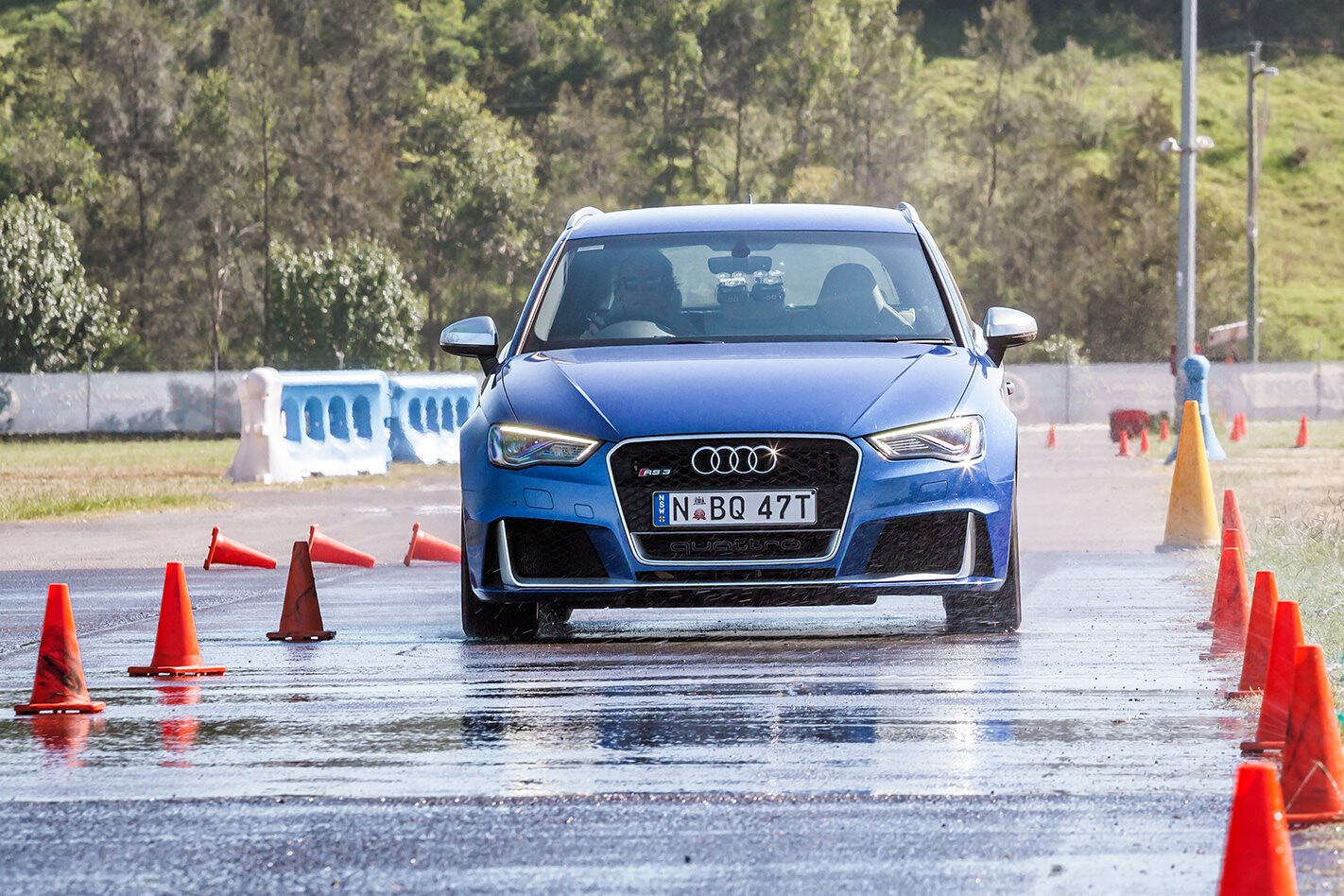
Our fifth and final discipline isn’t a foregone conclusion, regardless of the relentless success enjoyed by the Dunlop Sport Maxx RT so far. If our previous tests were ideal-world conditions, this one is real world.
A road tyre that can’t perform when dark clouds unleash their contents is of little use to any true enthusiast driver with a high-performance daily driver. If you’ve ever experienced aquaplaning, you’ll know it’s not as fun as it might sound. When you’re driving at speed, you don’t want your car trying to do an impression of a surf board that not even Kelly Slater could control.
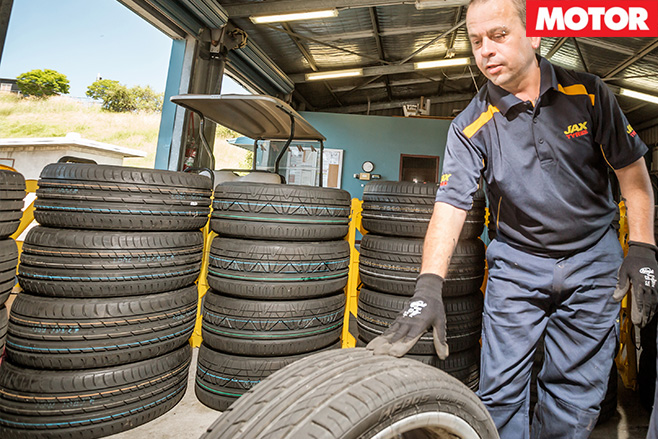
Fortunately, none of our 10 competing tyres could be accused of being semi-slicks. Virtually all are of the asymmetrical-tread variety – compromising optimum dry grip by featuring plenty of the deep grooves and smaller slits critical to channelling water away from the contact patch. Interestingly not one tread pattern looks alike, so it’s all down to their specific design and compound.
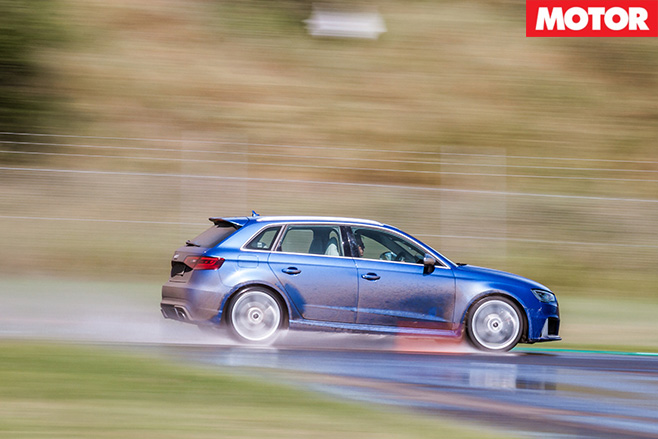
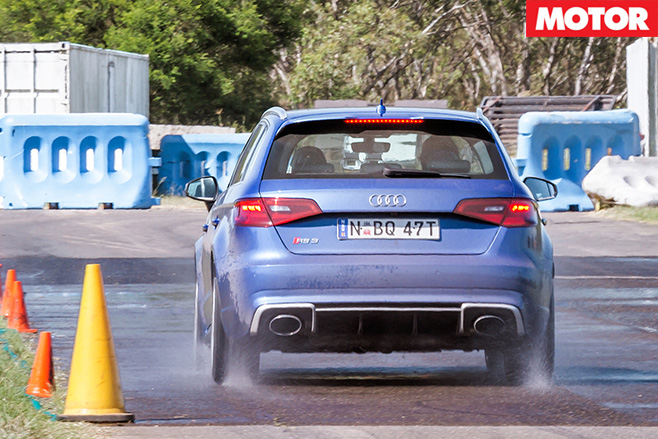
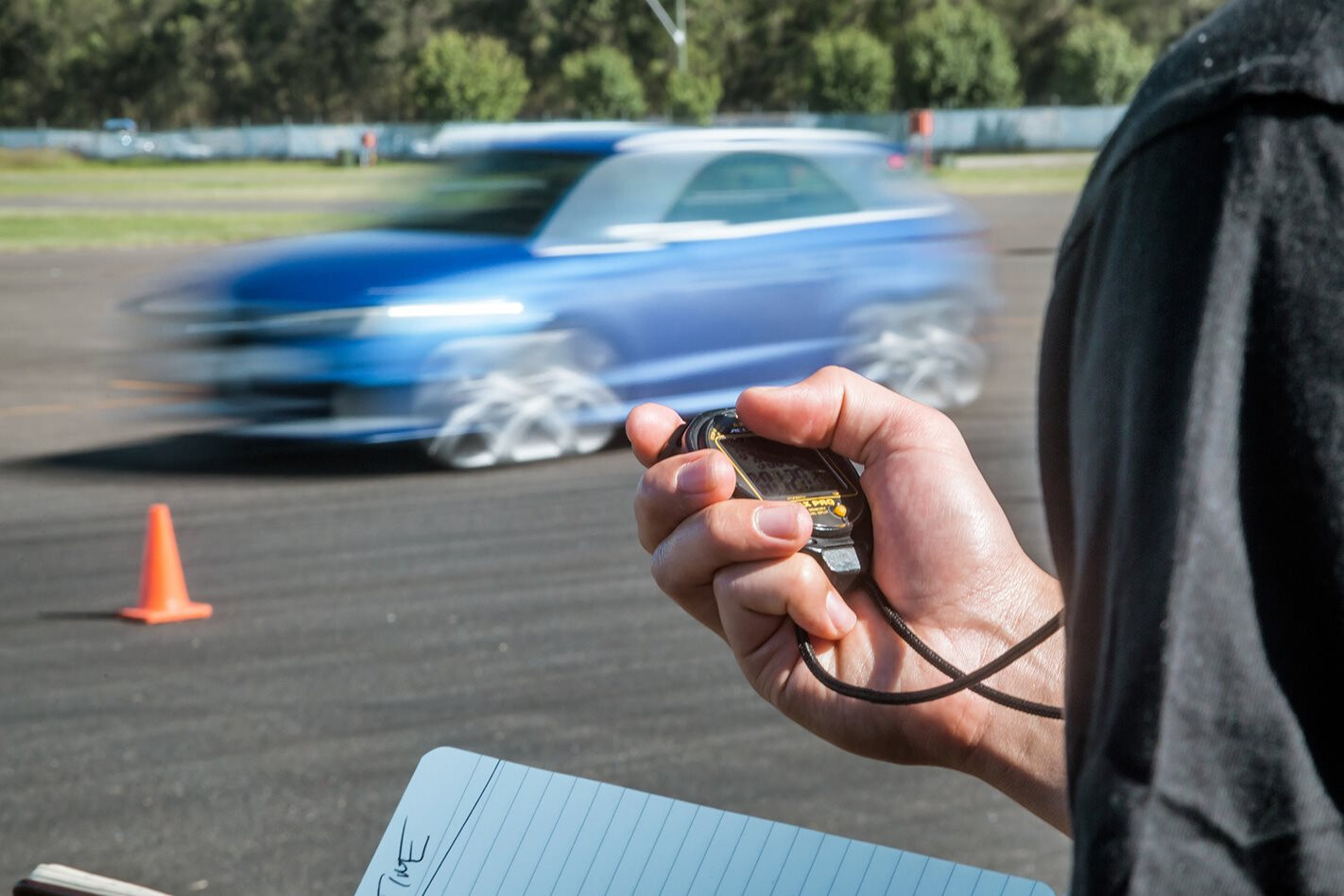
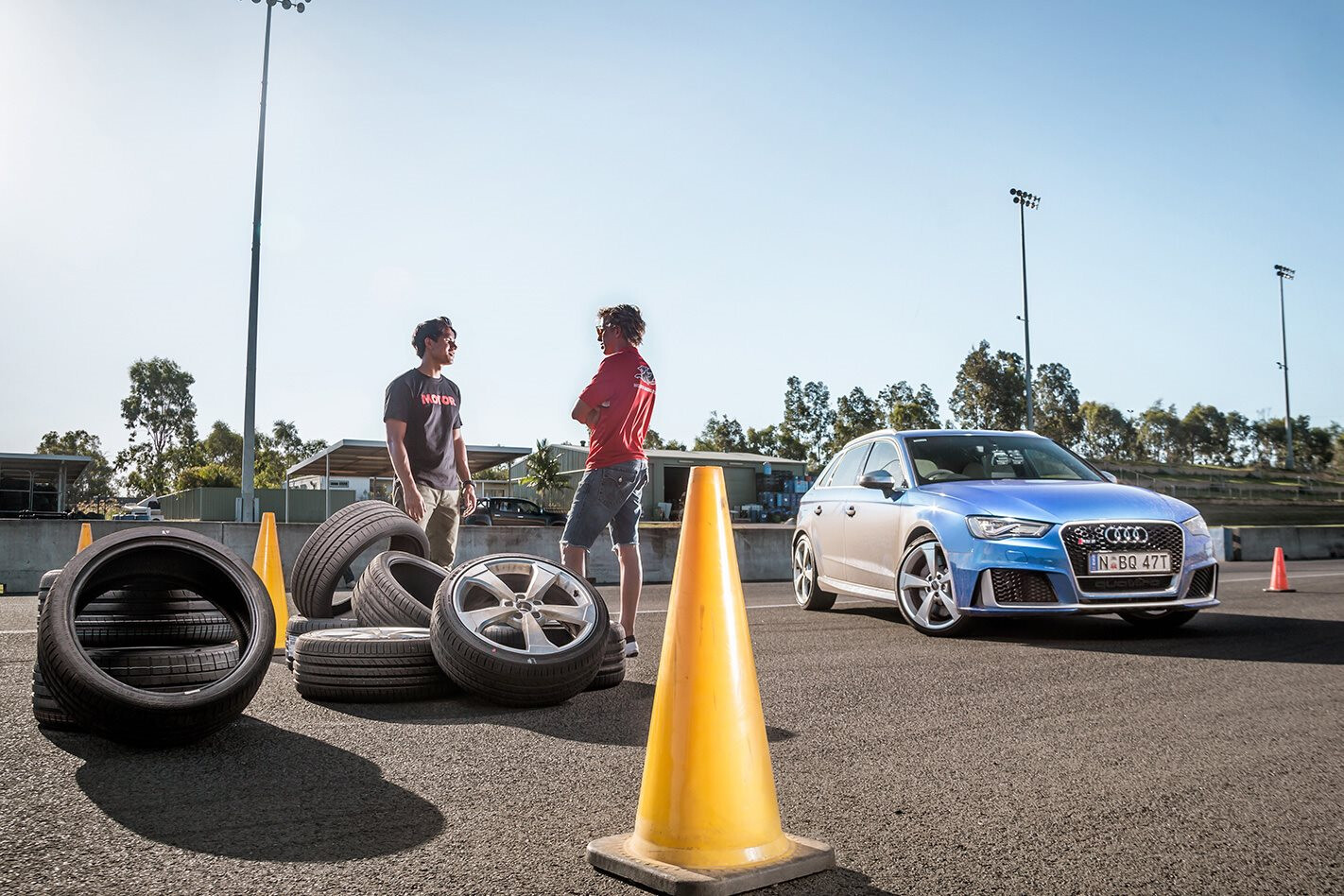
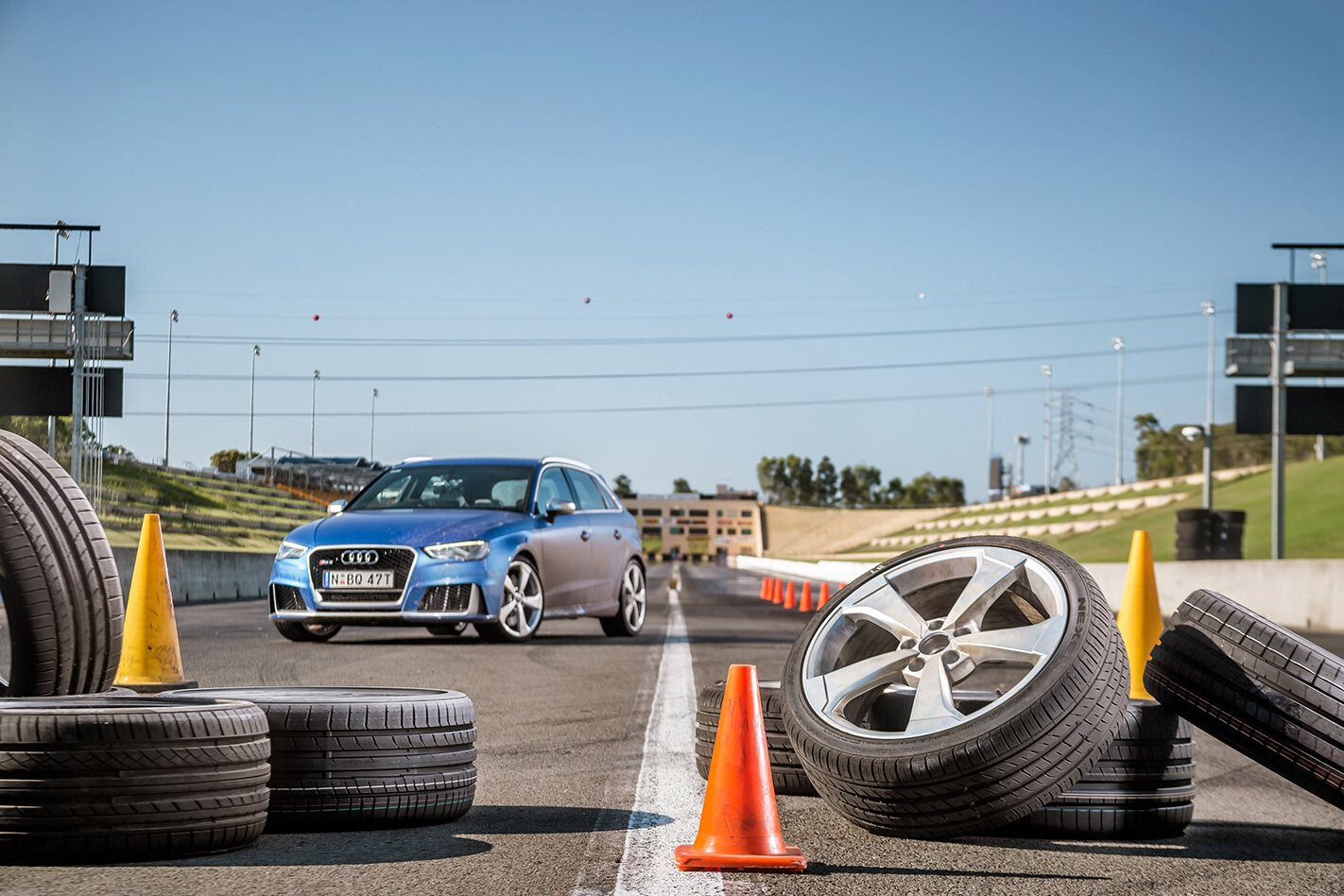
Luffy conducts the runs with third-gear approaches, dropping the anchors while cold at 70km/h. The Driftbox records the stopping distance from 60km/h to a brake-juddering halt.
With Australia’s harsh sun baking the bitumen at up to 55 degrees surface temperature at one point in the afternoon, our water tanker was kept busy – frequently unloading the water to ensure a consistently wet test section.
If there had been any thoughts the Toyo, Nexen, HiFly and Nitto tyres had sacrificed some dry-grip performance to be superb in the wet, they were soon dispersed once the taps had been turned on.
Pirelli, Michelin and Goodyear occupied the midfield, closely matched in a stopping range from 15.04 to 15.57m. Hankook halted just below 15m to register an impressive third place.
And just four centimetres separated first and second. As shown in the raw data on the opposite page, Dunlop scored the win on the day to make it a remarkable clean sweep, though after our linear regression calculations were made post-testing (see breakout) the Continental was established – by the numbers – as the adjusted wet-track victor.
WET BRAKING RESULTS
| Rank | Tyre | Metres |
| 1 | DUNLOP SPORT MAXX RT | 13.96 |
| 2 | CONTINENTAL CONTISPORTCONTACT 5P | 14.00 |
| 3 | HANKOOK VENTUS S1 EVO2 | 14.97 |
| 4 | PIRELLI P ZERO | 15.04 |
| 5 | MICHELIN PILOT SUPER SPORT | 15.37 |
| 6 | GOODYEAR EAGLE F1 ASYMMETRIC 3 | 15.57 |
| 7 | TOYO PROXES T1 SPORT | 15.73 |
| 8 | NEXEN N FERA SU1 | 15.88 |
| 9 | HIFLY HF805 CHALLENGER | 16.52 |
| 10 | NITTO INVO | 16.54 |
We regress
Levelling the field
How the control tyre’s performance changes gives us an idea how the playing field might also be changing. It’s called linear regression and it’ll finish off the battery in your calculator, but basically applied to the raw data to cancel out any advantages or disadvantages a given tyre might enjoy or suffer, the only change to our final line-up was a tying of the last three places for the HiFly, Nitto, and Nexen.
MORE MOTOR TYRE TEST 2016
 LATERAL G
Going around in circles doesn’t always mean you’re lost. MOTOR found the answers it was looking for in its final dry-bitumen discipline: the lateral G test. Or circle test/cornering test, by other names.
 THE VERDICT
A worthy winner sweeps the board in all categories.
 MOTOR TYRE TEST 2016
Finding the best high performance tyre in Australia
 MOTOR TYRE TESTS
The quest to find the best high performance tyres in Australia.
It’s a blackwash!
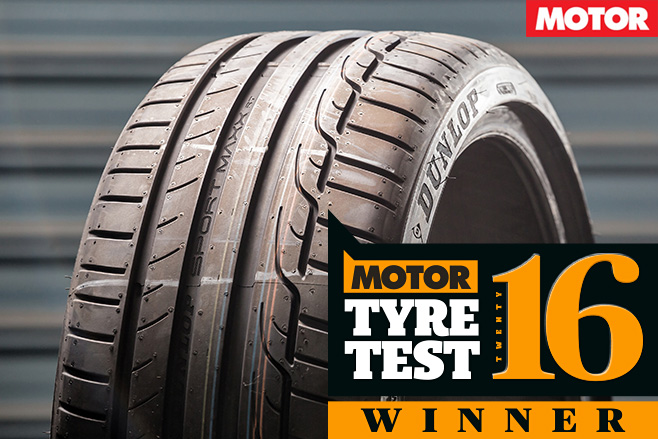
Even if our post-testing linear regression calculations knocked the Dunlop back one spot in the wet-braking, there was no changing the fact – or the overall final order – that the British rubber was stunningly dominant.
“It was a stand-out across the board for its performance in both wet and dry conditions,” said Luffy of the Sport Maxx. “This is just an excellent all-round tyre.” Its winning margin of 10 points was the biggest since MOTOR re-established its annual tyre tests in 2008.
The gap between the next four pumped-up protagonists, however, was more like the one between the 235/35 R19s and the RS3’s wheel-arches – all covered by just six points. Continental’s ContiSportContact couldn’t repeat the 5P’s 2015 Tyre Test victory, but was a valiant runner-up. And while it wasn’t quite three stars for Michelin, bronze is a bonza in (mostly) exalted company.
“All the tyres gave good feedback, but it’s the tyres’ ability to react to the driver that is the big difference,” says Luffy. “Especially when you’ve got a fantastic sports car like the Audi RS3, you want a tyre that’s a match for the car.”
And in our 2016 rubber war, no tyre was quicker or sharper to respond than the Dunlop Sport Maxx RT.
THE RESULTS
| Rank | Tyre | SCOREu00a0 | $u00a0 |
| 1 | DUNLOP SPORT MAXX RT | 5 | $371 |
| 2 | CONTINENTAL CONTISPORTCONTACT 5P | 15 | $379u00a0 |
| 3 | MICHELIN PILOT SUPER SPORT | 17 | $429u00a0 |
| 4 | PIRELLI P ZERO | 18u00a0 | $373u00a0 |
| 5 | HANKOOK VENTUS S1 EVO2 | 20u00a0 | $282u00a0 |
| 6 | GOODYEAR EAGLE F1 ASYMMETRIC 3 | 28u00a0 | $426u00a0 |
| 7 | TOYO PROXES T1 SPORT | 36u00a0 | $328u00a0 |
| 8 | HIFLY HF805 CHALLENGER | 43u00a0 | $139u00a0 |
| 9 | NITTO INVO | 45u00a0 | $321u00a0 |
| 10 | NEXEN N FERA SU1 | 46u00a0 | $173u00a0 |
MORE MOTOR TYRE TEST 2016
 WET BRAKING
Our fifth and final discipline isn’t a foregone conclusion, regardless of the relentless success enjoyed by the Dunlop Sport Maxx RT so far. If our previous tests were ideal-world conditions, this one is real world.
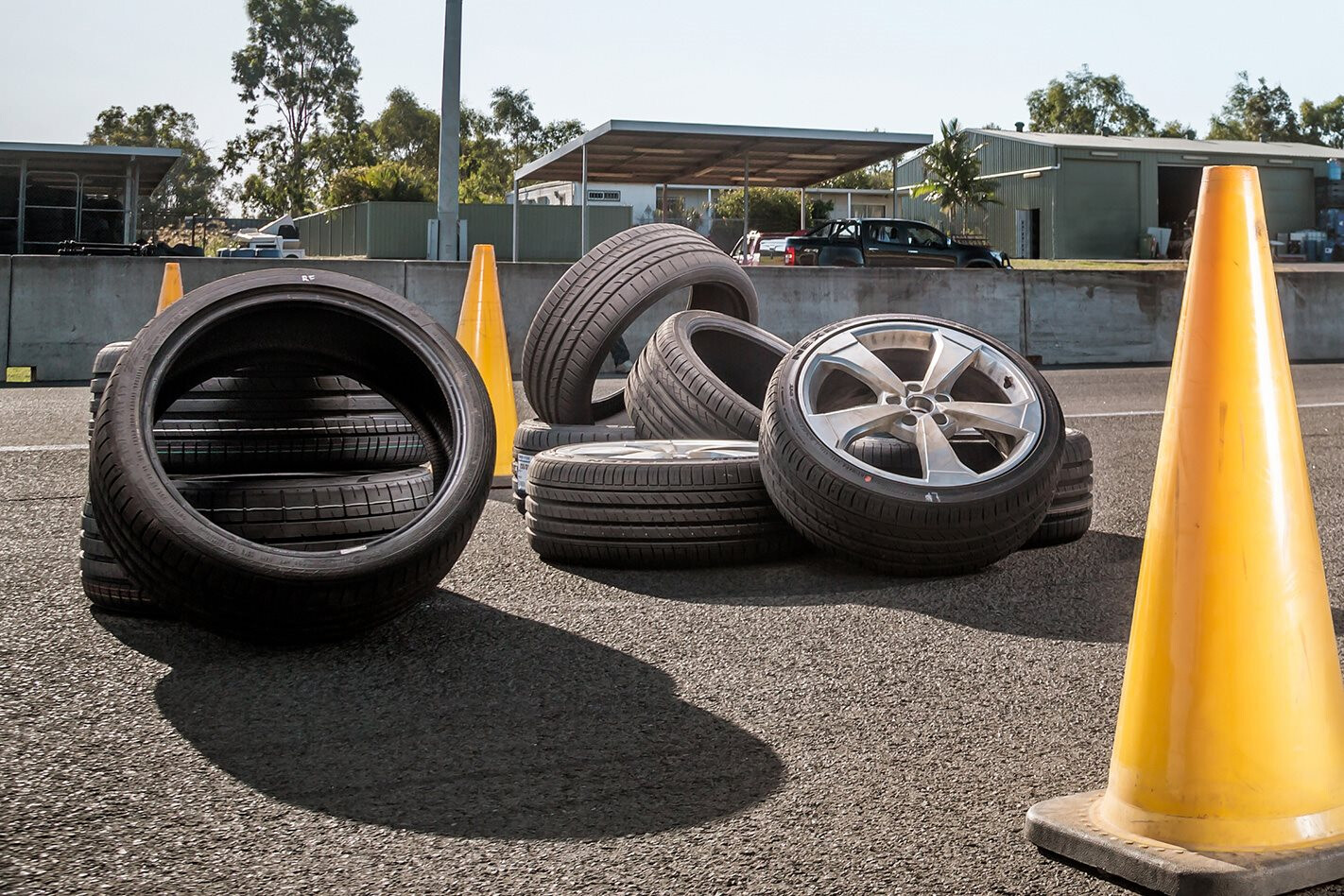 BANG FOR YOUR BUCKS
Which tyre offers the best performance for the least outlay?
MOTOR TYRE TEST 2016
Finding the best high performance tyre in Australia
MOTOR TYRE TESTS
The quest to find the best high performance tyres in Australia.
It’s not often you can have your cake and eat it too, but that’s exactly the case when it comes to choosing the best performance tyre of 2016.
We plugged the results from our 2016 Tyre Test into our Bang For Your Bucks formula to see which offered the best value and our outright winner, the Dunlop Sport Maxx RT, triumphed again.
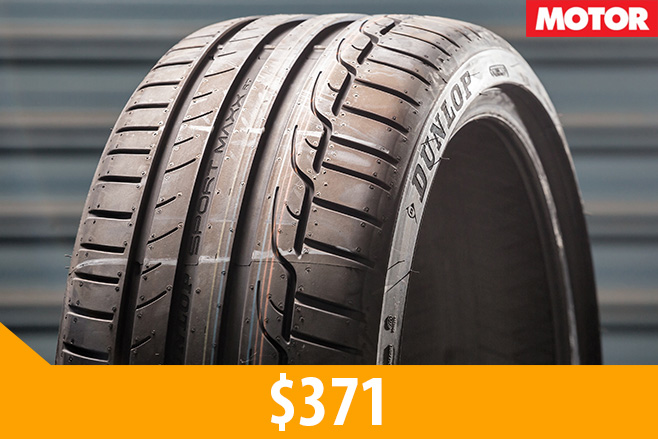
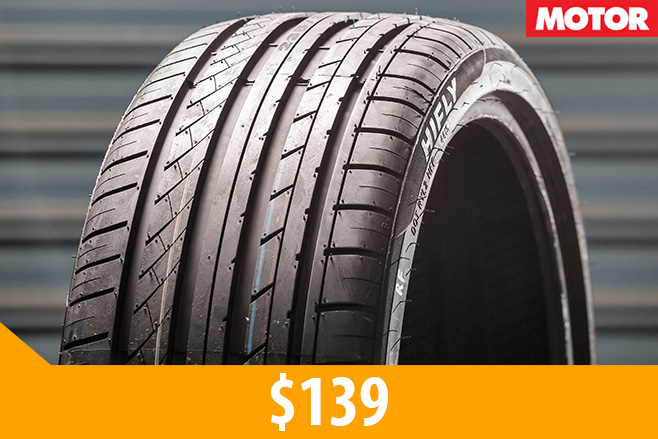
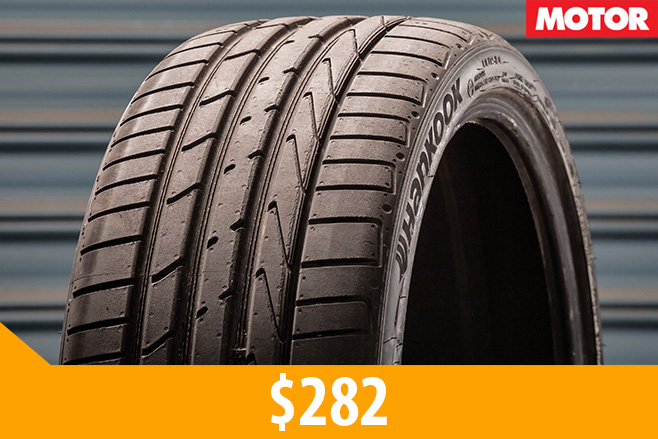
At $371 a tyre for our chosen 235/35 R19, it isn’t cheap, but it’s worth the extra. For those on a budget the $139 HiFly is worth a look, while Hankook’s Ventus S1 Evo2 is a decent compromise between performance and price.
DUNLOP SPORT MAXX RT
| Rank | Tyre | $u00a0 |
| 1 | DUNLOP SPORT MAXX RT | $371 |
| 2 | HIFLY HF805 CHALLENGER | $139 |
| 3 | HANKOOK VENTUS S1 EVO2 | $282 |
| 4 | CONTINENTAL | $379u00a0 |
| 5 | PIRELLI P ZERO | $373u00a0 |
| 6 | NEXEN N FERA SU1 | $173u00a0 |
| 7 | MICHELIN | $429 |
| 8 | GOODYEAR | $426 |
| 9 | TOYO PROXES T1 SPORT | $328 |
| 10 | NITTO INVO | $321 |
MORE MOTOR TYRE TESTS
THE VERDICT
A worthy winner sweeps the board in all categories.
MOTOR TYRE TEST 2016
Finding the best high performance tyre in Australia
 MOTOR TYRE TEST 2015
Our ultimate grip test again proves that while they may look the same, the levels at which these rings of sticky stuff perform are vastly different.
MOTOR TYRE TESTS
The quest to find the best high performance tyres in Australia.
Peter Perfect and a bellowing 300kW VK Commodore gatecrash British motorsport’s world-famous garden party – the 2km-hillclimb show they call the Goodwood Festival of Speed.
First published in the September 2005 issue of Wheels magazine, Australia’s most experienced and most trusted car magazine since 1953.
THREE Poms are leaning on a fence looking at a strange, day-glo orange and white racecar. They recognise its driver. “‘Ere, Mis-tah Brock, can you sign ‘is please?” Number One Pom asks, proffering an event program. “It’s no’ Mis-tah Brock; it’s Pee-ah Purr-feck,” corrects Number Two Porn. “Nah, it’s King o’ da Mountain, ipeternnit?” argues Number Three, and they all nod in agreement. “Don’t believe everything you hear,” Brock smiles, signing his six-trillionth autograph as cheerfully as he did his first, almost 40 years ago.
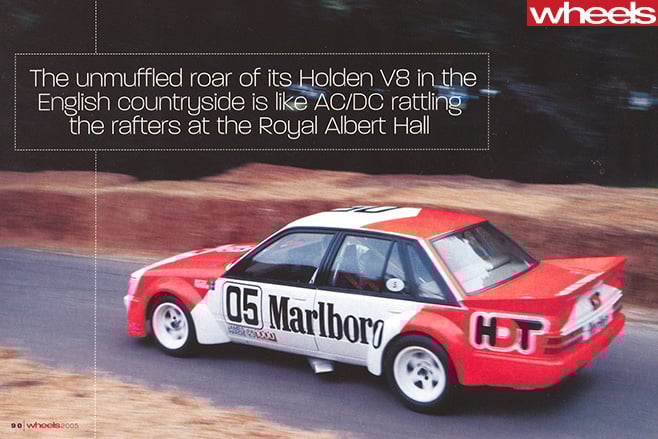
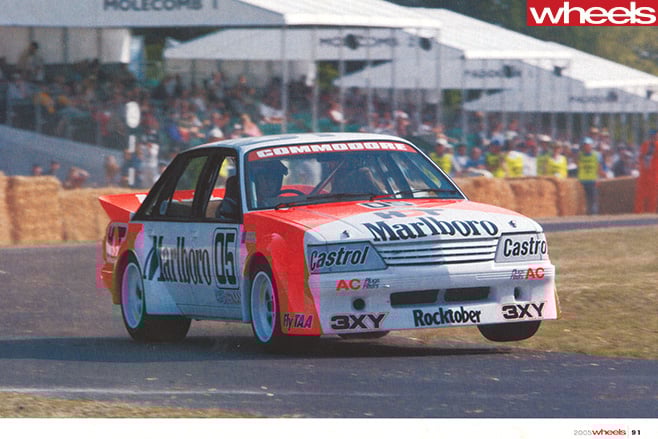
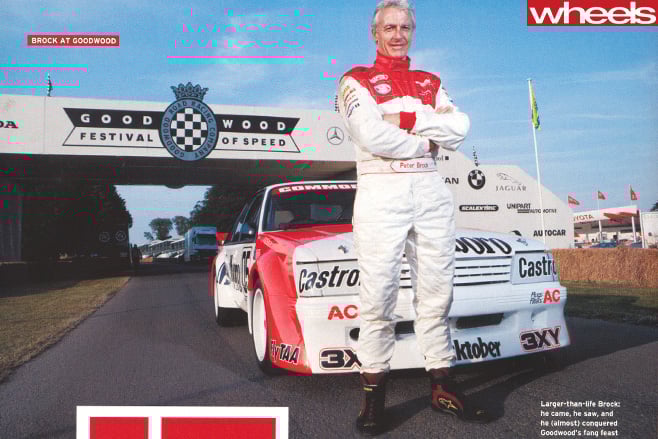
Mr Peter Perfect, King of The Mountain is ‘sat’ -to use a common, grammatically incorrect English expression – in his most famous racecar, the unbeaten 1984 Group C VK Commodore. The fabled Last of The Big Bangers, it’s the loudest, lairiest Holden of its day, and British buffs, who have only seen it and Brock on the telly, are in raptures.
This weekend’s activities, however, revolve around the hillclimb that takes place on what is normally the driveway to stately Goodwood House, the humble family pile. With such a glamorous setting and privileged patronage, the GFOS attracts the creme de la creme of historic and current racing cars and bikes, and more world champions and A-list celebrities than you can shake a chrome-handled walking cane at- all by gilt-edged invitation only, you understand. It’s a big deal; tickets are limited and it pre-sells out, attracting 150,000 people over three days.
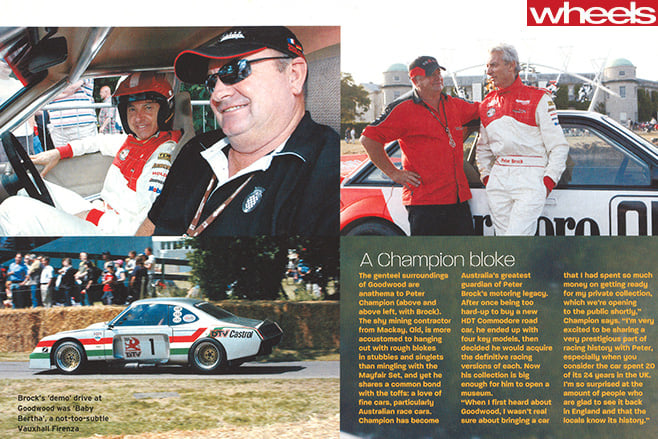
This year’s theme is national racing colours, like British Racing Green, French Blue and, er, Australian fag packet two-tone. In the program, Brock’s VK is lumped into the ‘Oversize and Over Here’ class, a heavy-metal menagerie that also includes a ’55 NASCAR Chevy, an IROC Camaro Z28, and an IMSA Mustang GTO. Brock has also been asked to demo a wild Vauxhall Firenza sports sedan, known as ‘Baby Bertha’, in remembrance of the late Gerry Marshall, a larger-than-life Porn who raced it (sideways, mostly) and drove for Bill Patterson Racing at Bathurst in 1977, and against whom Brock raced in the ’80s in the UK.
Actually, “ponce” may be a little harsh, because not all millionaires or their appointed aces meander meekly up the hill, despite driving vehicles that are priceless museum pieces and one-offs. Some of these well-heeled ‘pilots’ punt beautiful, irreplaceable cars with more gusto than a Western Suburbs car thief; well, I guess they can afford the repair bills.
The VK is a museum piece, too, or soon will be, and Champion has spent more than $250,000 restoring it to better-than-new condition. The three sets of rare Momo racing wheels he managed to track down cost him almost as much as the original purchase price of the car, which had been raced by British touring car legend John Cleland, and briefly owned by another Aussie collector, before Champion bought it. It’s a gorgeous car, and stands out like dogs knackers in a carpark of Ferraris, Jags, Astons, Porsches, et al. But while it might be iconic and exxy, Brock has Champion’s cautious blessing to cane it. As if he would do anything less.
The climb itself begins innocuously enough, turning through two open bends onto a long uphill straight past Goodwood House, grandstands with quaint names such as Pheasantry, and the Moss and Surtees pavilions- tents to you and me. That’s the easy part.
Adding to the ’50s charm and bucolic ambience is the fact that the track is lined with large hay bales, three deep in some areas, forming, literally, an agricultural safety barrier. You know hay; it’s the dried grassy stuff you feed to horses, or romp in with your girlfriend, looking for a needle … or something. Well, add rain, and these bundles of clippings become rock hard, and can stop an errant car as efficiently as concrete; just ask the red-faced Brit who totalled an S-Type Jag in front of us. I couldn’t help myself and yelled out that he should have left the traction control on. How uncouth.
It’s hot and humid when Brock has his first tilt at the hill, in Baby Bertha, which has similar performance to the VK, but more grip. Mechanically, it’s familiar too, with a 373kW 5.0-litre Chev and four-speed Muncie ‘Rock Crusher’ gearbox, just like the VK. Despite the car not running cleanly at high speed, and the driver not knowing the road, Brock does rather more than demo the Vauxhall, thrilling its owner, Joe Ward, and its many fans. “It’s a great honour to have Peter drive the car,” Ward smiles. “If Gerry couldn’t drive it, then who better than Peter Brock.”
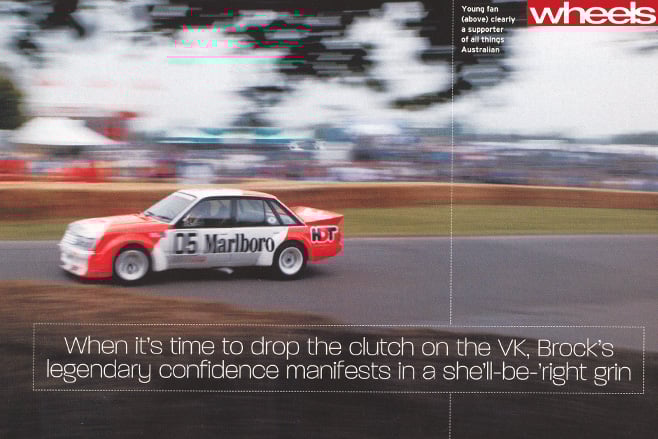
Seeing that pretty, but purposeful, Commodore come roaring up to the nasty left-hander, dart around under brakes, and then bellow up the hill is like manna to an Aussie a long way from home. The VK may be 21 years old, but it looks quite modern in the Goodwood carpark, and the unmuffled roar of its Holden V8 in the English countryside is like AC/DC rattling the rafters at the Royal Albert Hall. Rock on, Brocky!
And how was his first run in the VK? “They kept on telling me that left-hander is a difficult corner,” Brock says, rubbing his chin, “and I’m going, ‘Yeah, yeah, yeah’, but when you actually arrive over there at warp factor you can’t see the corner, and you think, ‘Whoops, it is tight, slippery and off-camber!’ It can be pretty hairy, but the track epitomises what the event is all about: bring beautiful cars, with some history, and have fun. I treated it a bit like Targa; get into it and, if you’re not too sure, back off.”
Brock’s 58.68sec first run is the fourth quickest of the day, only bettered by a Nissan Primera British touring car (57.80), a 1972 Tyrrell-Cosworth 006 Formula One car (56.88), and a 1990, 7.0-litre Jaguar XJR12 Le Mans prototype (54.04). He is seconds quicker than a 9.2-litre, 645kW 1970 March-Chevrolet CanAm sportscar, a 1986 Lancia Delta S4 rally car and a 1984 Lola-Mazda T616 sports prototype!
It’s a welcome culture change for Brock, who is used to being swamped by fans. At Goodwood, that dubious honour is left to the F1 stars of the day who have to push through a crushing human gauntlet every time they leave the safety of the drivers’ paddock club. Brock can walk around in relative anonymity, randomly stopped for an autograph, happy snap or a gushing “I saw you race at Bathurst in 1979” conversation. Yet he was recently rated by English mag Autosport as one of the top 20 most exciting touring-car drivers of all time, and by Motorsport as the second-best touring-car driver ever. Behind a Brit, Steve Soper, naturally.
The next day, Saturday, is overcast but still hot. Entrants are recommended to run ‘wet’ tyres at Goodwood because they heat up quickly for better grip on the short hillclimb, but the VK is on slicks, is too stiffly sprung, its diff is too tall, and it hasn’t really been dialled in for competition. That doesn’t stop Brock slashing his time to 56.9sec after another two runs and staying in the top five, which is still led by the rapid Jag, 2004’s quickest car. Champion is chuffed. Not one for the limelight, he stands back proudly as punters snap images of the man and his beast.
Today, the dramas continued, though, and a million-dollar Pagani Zonda is looped on the main straight and squared off by the hay-bale cordon. Need we say that its driver had a baleful expression? A motorcyclist also fails to stop at the top and goes straight through a wooden gate. Nasty. After each class runs, the course director’s car, a Rolls-Royce, no less, glides past signalling the all-clear for cars to come back down the hill.
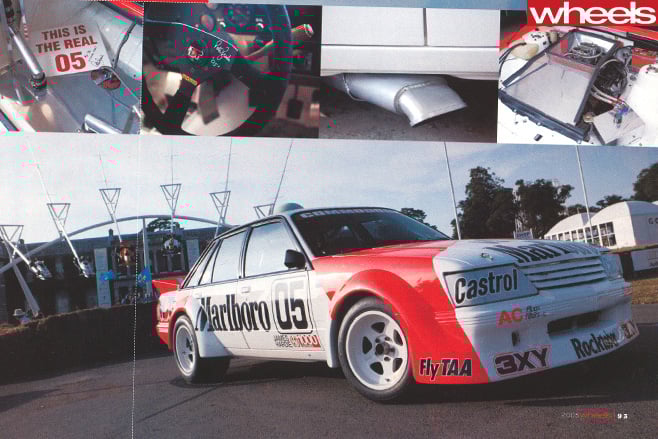
It’s unseasonably hot again on Sunday, and Brock, who has been to the official ball (Roxy Music played) and had a private dinner with the Earl and other luminaries, has fully relaxed into the Goodwood groove. A committed car fan, he wanders the various themed paddocks, drinking in a century’s racing history as thirstily as any man in the street. In the morning run, he wrings more speed out of the Commodore and lops 2.7sec off his best Saturday time as he attacks the track, three-wheeling through the infamous ‘Jaguar’ corner, his mouth set in his familiar ‘ooh’ of concentration.
His final run is at 6pm, but Champion is having kittens because Brock has gone AWOL and the marshals are calling for the car to go out. With only minutes left, I set off to find him and bump into him strolling through the crowd as nonchalant as usual, omnipresent mug of herbal tea in hand.
The ultimate just-in-time racer calmly changes into his new, replica ’84 racing suit- especially made by Aussie outfitters Revolution Racegear – turns the key in the VK’s ignition, bags ’em up on the start line, but is 0.4sec slower than his morning time on his last blast up the hill. Still, he’s fifth fastest, Champion’s baby is one piece, and Goodwood has had a taste of Bathurst.
Before the weekend is over, Champion and Brock have been invited to return for the Revival meeting with the replica of Brock’s first racecar, the rorty, Holden-sixpowered Austin A30, built by Brock’s son James. Champion’s keen, Goodwood’s keen and Brock is always keen; the Poms ain’t seen nothin’ yet.
First published in the September 2011 issue of Wheels magazine, Australia’s most experienced and most trusted car magazine since 1953.
Some of you reading this might be surprised to know that once upon a time, when Pterodactyl ruled the skies, cars didn’t have a radio. It was just the driver, the engine and the wind. Today, digital radios are starting to replace analogue systems.
Digital Audio Broadcast (DAB) is a form of transmitting radio signals via a digital modulation scheme (DM). Unlike analogue radio – which converts sound waves by amplitude modulation (AM) or frequency modulation (FM) and then sends those sound waves to your radio from a transmission tower – digital radio goes through a DM, which compresses the sound waves to create space and then transmits to a radio.
Basically, it’s a more resourceful way of transmitting sound waves to the airwaves.
Because the waves are compressed, it overcomes the limitation of AM and FM channels, and creates a new frequency that gives us more stations.
DAB+ may be replacing analogue (although there are no plans to phase this out in Australia), but even before this new format has gained wide-spread take up, we’re already seeing a new alternative hit the market in the form of data-sucking music streaming services. Spotify, Pandora, Apple Music and Google Play Music mean less ads, no talk back and greater flexibility in user sing-a-long choices. As long as you have access to internet and a connection from your phone to the car’s multimedia system, you have an endless supply of musical choices.
So what are the benefits of DAB+?
DAB+ automatically tunes your stations for you, so there’s no more fiddling with a seek button.
The demise of Shazam. Gone are the days of trying to find out what song is playing on the radio – DAB+ transmits more than just soundwaves, giving you access to the song’s information.
Don’t like talkback? Sick of the same old pop-music? Well, DAB+ offers more radio stations than your generalized FM and AM options. You’ll be able to drive along to Classical music for as long as you can stay awake (note: we don’t recommend classical music while driving if it puts you to sleep).
If you’re heading on a long road trip, don’t expect DAB+ to work everywhere. Without the satellite tower infrastructure in place in all parts of Australia, leaving major cities can leave your radio rendered useless. In which case, we hope you’ve stacked your iPod.
Many quake in fear at the mere thought of a road trip with children. Echoes from our own youth of sibling scuffles, sickness struggles and ‘are-we-there-yet’ on repeat come back to haunt us as parents – not to mention the absolute mess it makes of our beloved car. But there are ways to lessen the pain and protect the car, without breaking the bank. Here are our top five DIY tips for a happier (and hopefully cleaner) car trip.
1. Before you pack Allocate a labelled zip-lock bag per person for a full change of outfit, and have it handy in the cabin or right on top of the boot luggage. Spills, slips, and worse accidents can – and will – happen, and you don’t want to be on the side of the road rummaging through suitcases for more clothes. Parents often pack for the kidlets and forget themselves – things will get messy, so remember a change for mum and/or Dad as well.
And on long road trips, make up a small bag for overnight toiletries, medical supplies, and a car-sick bag full of feel-better bits and pieces as well as a clothes change. It’s so much easier to have the basics ready in a light and organised carry bag for those late-night motel stops.
2. Sheets on seats Spills, crumbs and much, much worse will happen when you mix children with cars, and rather than risk a smelly, stinky car, get a fitted sheet or two and use them as a catching mitt for any projectiles. You can run two old singles or a queen or kingsize fitted sheet between the first and second row headrests and under the car seats (be sure to fit and measure up the holes you will need to cut for the seat belts and anchors ahead of time). This also allows you to stow things in the footwell underneath the sheets without risk of them getting dusted in detritus.
Go one further with waterproof plastic-backed sheets, which are less than $25 at most stores, or buy a pet hammock. Designed to stop puppies from both ruining your upholstery and from jumping into the front seats, they work quite well as beefier barriers for crumbs, flying toys and the dreaded projectile vomit while ensuring your rearward vision is unobstructed.
Waterproof pillowcase underlays are also super useful, as pillows on roadtrips usually become makeshift trays as well as drool catchers.
3. Seat-back organisers You can buy car seat organisers from auto stores from about $20, or simply buy one of those cheap door frame shoe organisers or hanging bathroom bags and suspend it from the back of the driver or passenger seat. The pockets of shoe organisers are nice and deep, and bathroom bags usually have zippered compartments so things can’t fly out, and the essentials of toys, drink bottles, snacks, nappies/wipes and tissues will always be within easy reach. Remember; it should be secured top and bottom for safety, and to stop curious hands from pulling everything out.
4. Boredom busters Place toys, snacks, and – if you’re brave – some art supplies within an arm’s reach of kiddy car-seats, using suction-cup shower caddies on the windows. Be careful not to overfill it, or place anything heavy or sharp in it, and fit it well away from where curtain airbags would be deployed in an accident.
For older kids, a backpack hanging off the back of the seat can also work. They can reach their fave stuff, and then pack it up and take it with them on stops. A backpack will also fit a clipboard with pencils attached on strings as an extra boredom buster for the arty types, and you won’t need an extra tray, or be rummaging in the footwell for fallen pencils this way. Encourage the kids to keep the backpack closed when they aren’t rifling through them for safety reasons.
5. Snacks There isn’t really a tidy or safe way to feed kids in the car. However, children of most ages love being able to mix and match their food independently of their wise and knowing parents. Those really big monthly pill-boxes from $2 shops make for a great snack holder and double as a makeshift tray. You can creep healthy snacks – as well as treats – into the compartments. Where a bag of food can get ripped, rifled through without respect, and dropped or thrown, most kids seem to be almost protective of compartmentalised goodies. Hopefully, the way the pill-boxes open means less will be spilled if they do get thrown in the air. Or at another sibling!
Do you have a favourite travel hack or tip? Tell us on Facebook!
Discover our 10 top games to play on a road trip!
Hyundai’s fast future is taking shape ahead of the launch of its standalone ‘N’ performance brand later in 2016.
The first N model will be based on the i30 and while Hyundai is tight-lipped on specifics, it’s dropped a number of hints as to the car’s specification in a YouTube video released to coincide with its recent test run at the Nurburgring 24-Hour.
The Nurburgring prototype uses a 2.0-litre turbocharged engine, bucking the downsizing trend. The video above shows footage of the engine on the dyno and offers a glimpse of outputs of 195kW/310Nm.
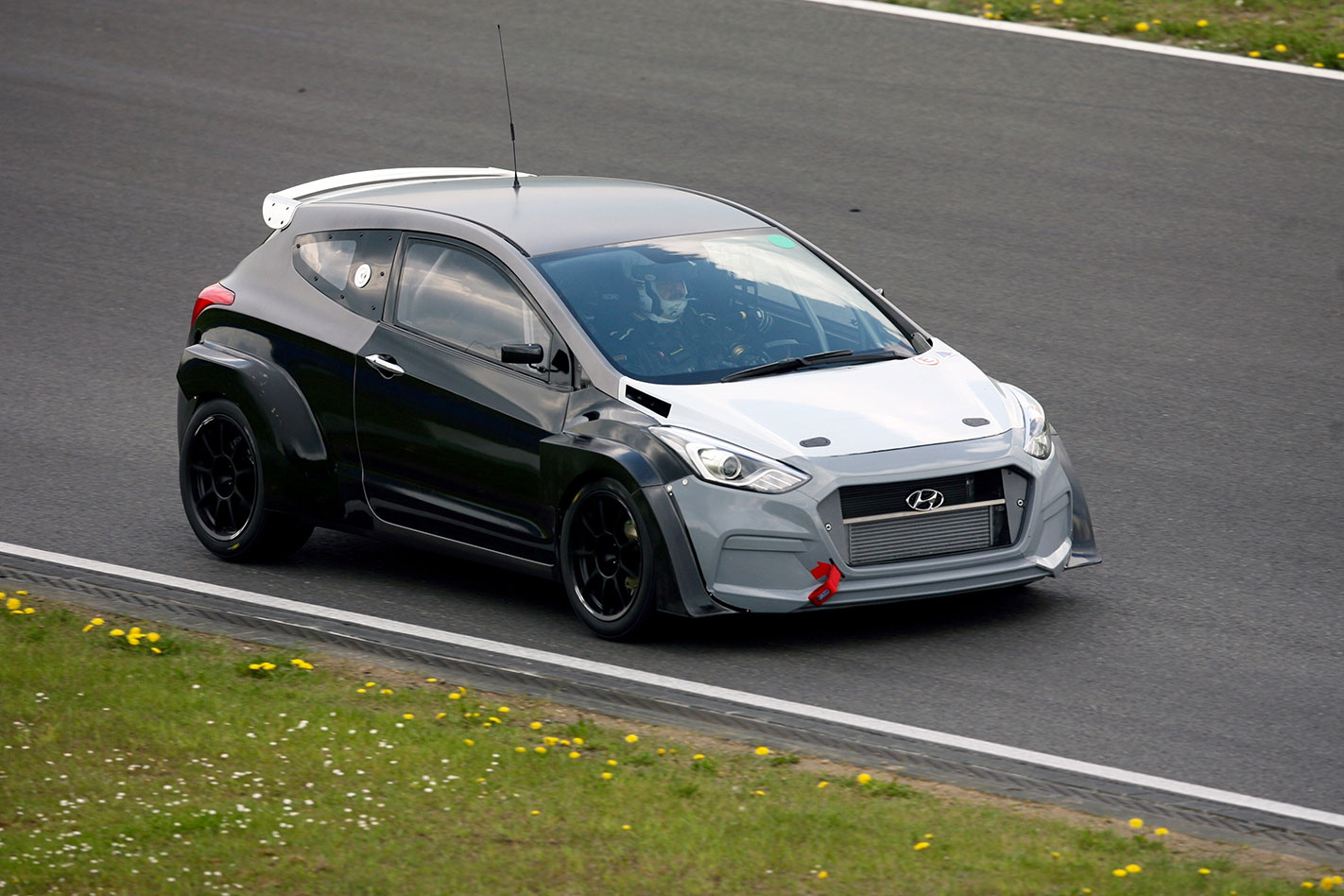
The development video also reveals the i30 N will use a dual-clutch gearbox, the aggressive exhaust blurts on upshifts a dead giveaway, though a six-speed manual is also expected to be offered. Power will be fed exclusively to the front wheels via an electronically-controlled limited-slip differential.
Radically widened bodywork appears on the Nurburgring prototype, however such extreme guards would be unlikely to appear on a car aimed at around Golf GTI money.

The i30 N is expected to makes its public debut later in 2016 ahead of a launch in 2017.
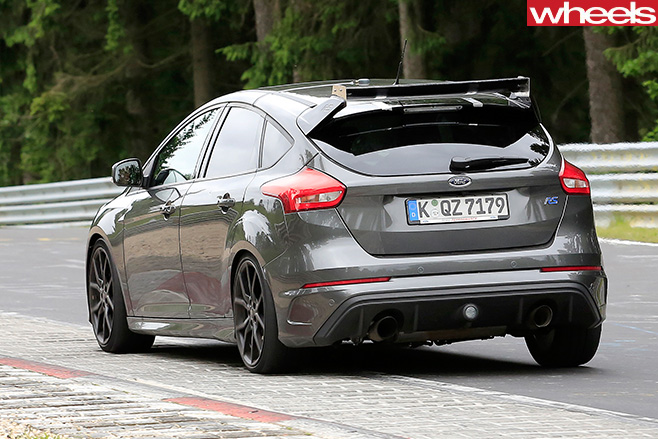
The Ford Focus RS500 has been caught venting its angrier performance at the Nürburgring.
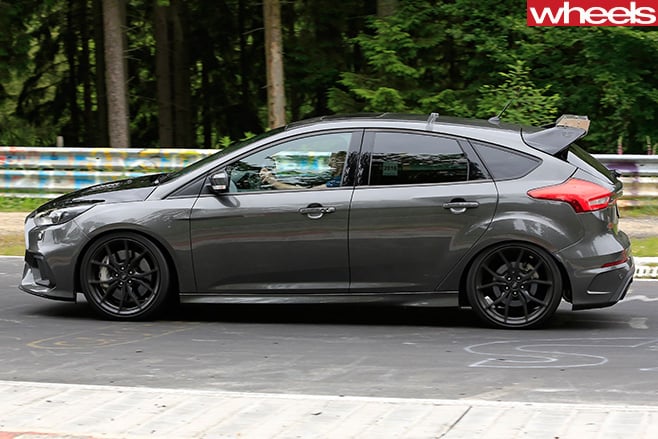
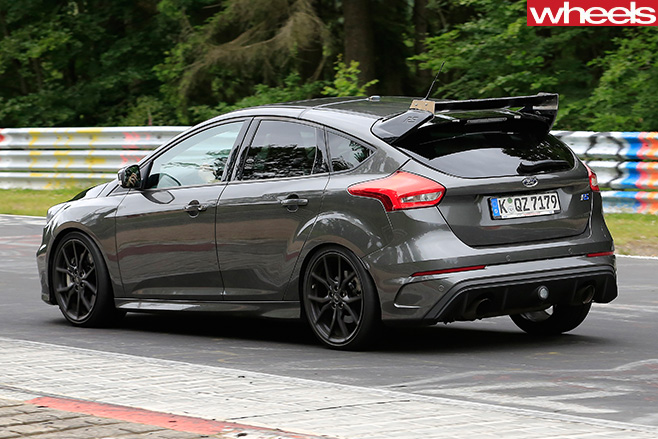
Bonnet vents on the Focus RS development mule photographed suggest the Blue Oval is planning to build an even faster version of its all-wheel-drive hot-hatch – the launch of which, in standard guise, is imminent locally.
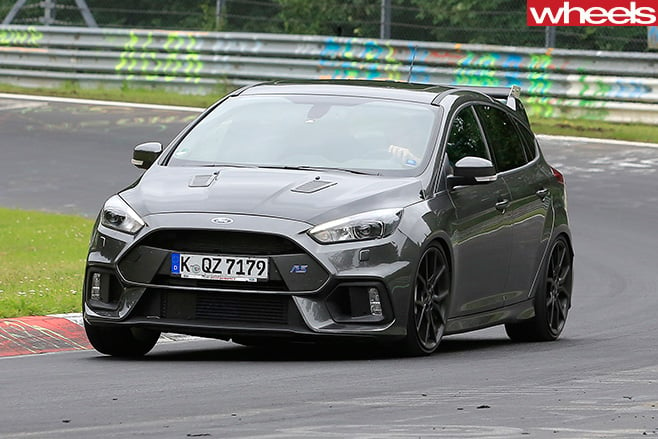
Speculation, however, suggests Ford may derive quicker acceleration and more nimble handling – courtesy of a lighter body, rather than dramatically increased engine performance.
Kiwi WRC driver Hayden Paddon is a man on a mission, that much is evident from this footage from his recent pre-event test.
Since his sensational debut win at this year’s Rally Argentina, the 28-year-old New Zealander has had a rough time, with his Hyundai i20 WRC burning to the ground at Rally Portugal before a big accident at Rally Sardinia wrote off another car.
Next up is Rally Poland and it is f-a-s-t; last year’s winner Sebastien Ogier completed the event with an average speed of 121.41km/h. Paddon loves fast, flowing roads and the NZ young gun will be keen for a good result.
Paddon and co-driver John Kennard currently lie fifth in the 2016 standings.
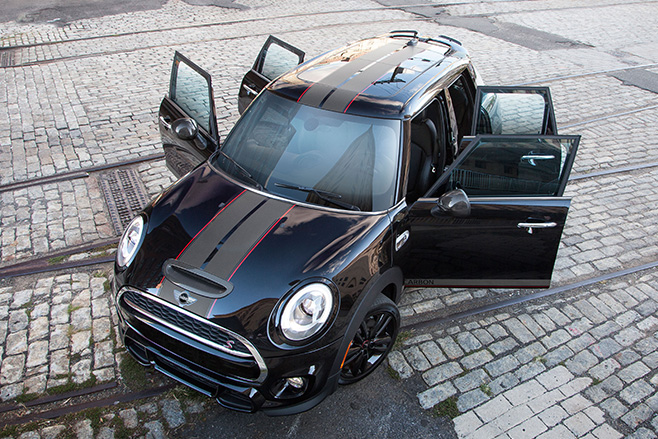
Mini has today announced the new Carbon Edition of its five-door Cooper S hatch is now available to order, with a limited run of just 40 units to be available in Australia.
Priced from $56,900 driveaway, the all-black Carbon Edition boasts a host of interior extras and performance upgrades as well as the unique black bodywork with carbon-fibre touches.
“It’s the ideal stepping stone for the customer who revels in extra performance, but also seeks a flexible and comfortable daily driver,” he said.
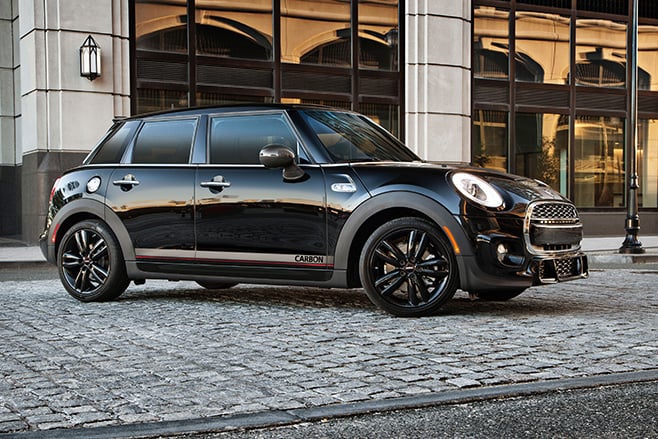
Achieved by adding top-shelf components and tuning from the firm’s racing arm – John Cooper Works (JCW) – the Carbon Edition boasts sports seats; a leather perforated steering wheel; gearshift lever and armrests, as well as stainless steel pedals and a navigation system with a 8.8-inch screen on the inside. A rear spoiler as well as bonnet scoop, mirrors and muffler caps — all made from carbon fibre — make up the JCW aerodynamics package applied to the exterior.
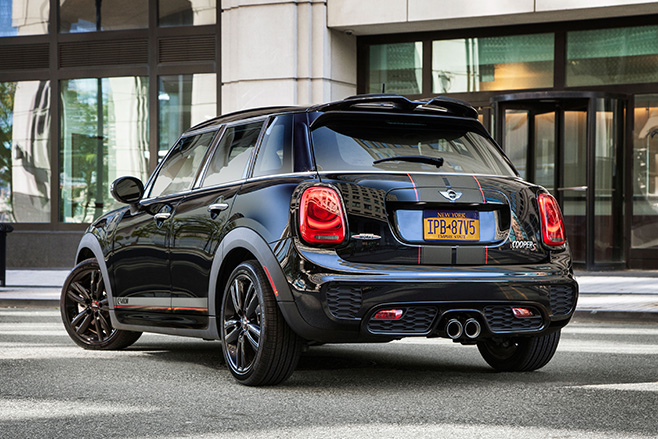
There’s a dual-mode sports exhaust which is operated via a bluetooth remote, a six-speed automatic gearbox with steering-wheel mounted paddle-shift functionality, but it’s under the bonnet that the JCW treatment comes into its own. The 2.0-litre, four-cylinder engine gains both more torque (20Nm) and power (14kW) over the standard Mini Cooper S model, which sees output capabilities rise to 155kW and 300Nm respectively.
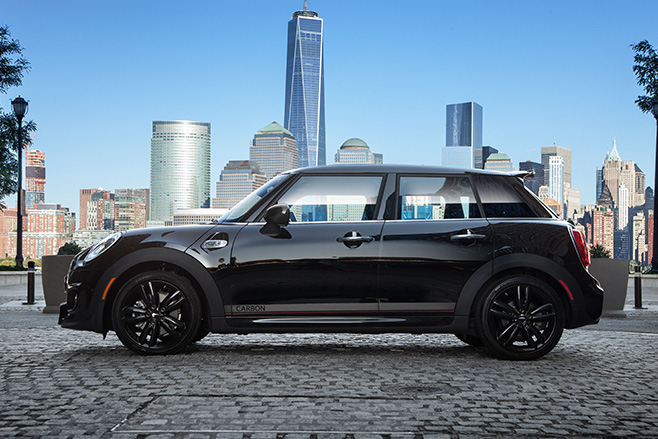
The car’s look is completed by lightweight JCW alloy wheels and edition-specific carbon decals applied to the front doors.
Purchasers will receive a unique numbered identification badge and ownership certificate.
