
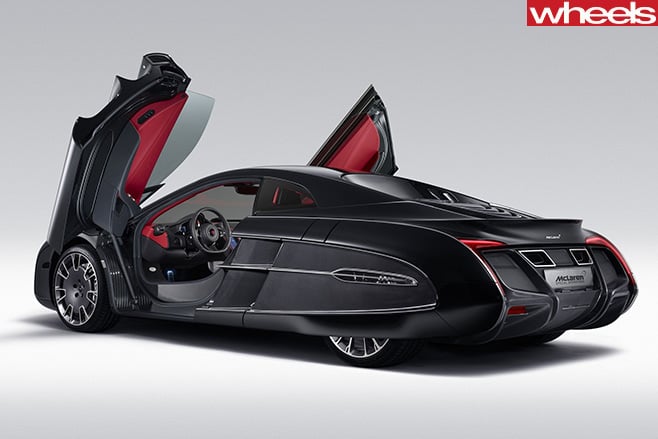
McLaren Special Operations has recreated the stunning McLaren 675LT supercar, giving it nothing but glossy carbon-fibre to cover its oily bits.
The beautifully raw result is enough to get the hardiest car lover weak at the knees.
Just 25 examples are to be built, and they’re all sold, but that won’t stop us from having a gander.
MSO started work on the Carbon Series LT after customers requested the 675LT be given the same treatment as the bare carbon McLaren P1 shown at the Geneva motor show last year.
Performance figures remain the same as the 675LT: 497kW and 700Nm from a heavily turbocharged 3.8-litre V8 engine. It takes 2.9 seconds to reach 100km/h from rest – 0-200km/h takes just 8.1 seconds.
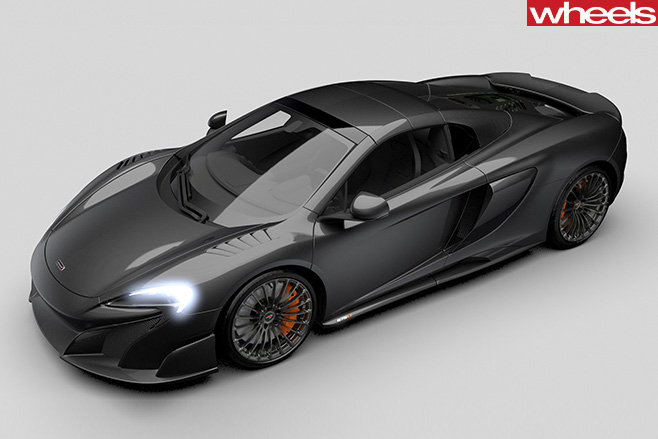
It’s not called the Carbon Series for nothing. MSO has employed the exotic composite for the retractable roof and tonneau, A-pillars, bonnet and rear deck, side blades, complete front and rear wings, and even fuel filler flap.
That’s on top of all the carbon in the regular 675LT, including the front bumper, front under body, side skirts, side intakes, rear fenders, rear deck, rear bumper, diffuser and ‘Longtail’ airbrake.
The Carbon Series LT gets McLaren’s Track Telemetry pack as standard, which includes three track cameras, and has front wings that feature GT3-inspired functional louvres.McLaren Special Operations is the outfit responsible for individualising McLaren vehicles. MSO will build anything from limited number special editions through to completely one-off designs. It also maintains the remaining McLaren F1s.
We’ve all tried limiting ourselves to ‘just one’ at some point.
But whether it’s hot chips, surfing a wave, or an episode of True Detective, indulgence, the moreish bastard, usually wins out. We gorge, splurge, upgrade. Cars offer no exception to this rule, even in the world of shrunken hatches.
In a segment defined by tight wheelbases, cheap trims, and tiny engines, there is still a niche for performance and price tags that aren’t so little. That’s why those with cramped car spaces and bigbank accounts will be shopping for one of the outliers we’ve brought along today.
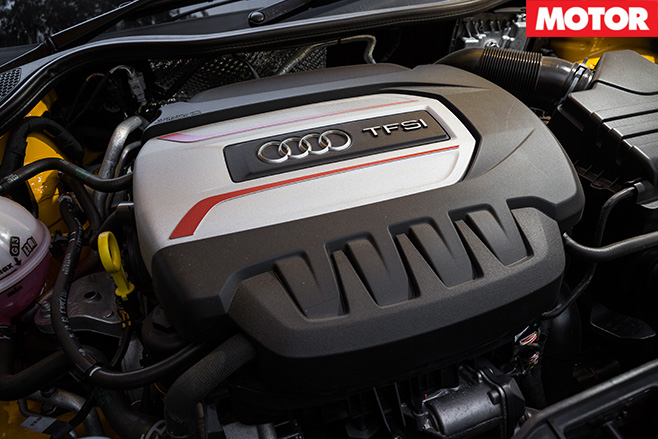
Up first is Audi’s S1. It’s the brand’s cheapest ‘S’ model and roams the small hatchback yard with some hefty knuckle dusters on its fists – specifically, the S3’s 2.0-litre engine and Haldex-based all-wheel drive system. Its wears a bloodied nose after losing to VW’s brilliant Golf R last year, but the fact it put up such a convincing challenge meant it deserves a fairer fight.
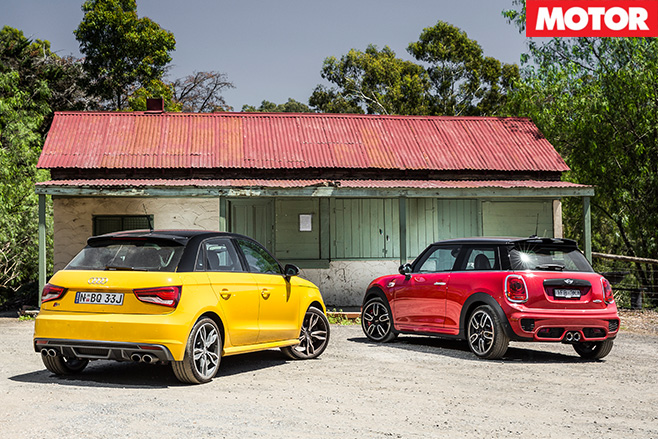
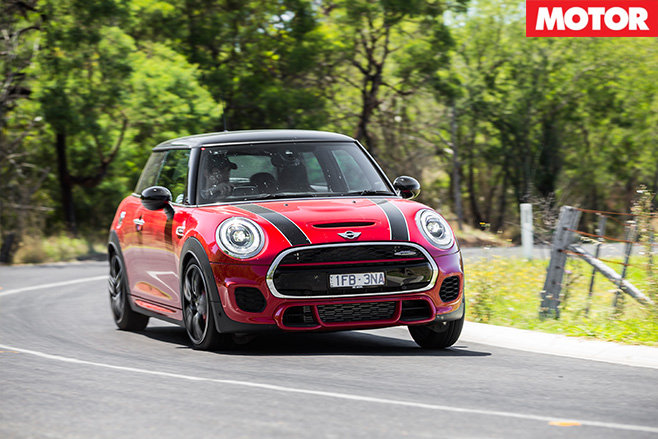
Luckily, MINI’s Cooper has recently welcomed its latest and most hard-core variant, the John Cooper Works. Based on the third-generation retro reboot, the longer and wider new JCW dive bombs into our comparison also with a six-speed manual and four-seat capability for only two grand less, at $47,400, bunkering in a trench right opposite the S1’s.
In terms of firepower, it too arms itself with a 2.0-litre engine. MINI’s engineers stole the Cooper S’s unit then slapped on a new turbocharger and dropped new pistons in its bores. With a bigger intercooler and new exhaust, the turbo helps it deliver 170kW at 5000rpm and 320Nm as soon as 1250rpm.
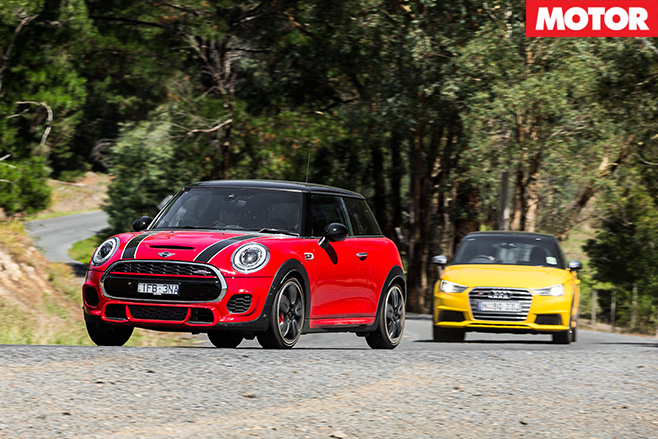
While the S1 makes the same power as the JCW, getting there requires coming from an entirely different direction. That is, from above, not below. Audi’s engineers bolted a smaller turbocharger to the S3’s EA888 to erase 40kW, no doubt to save it taking its bigger brother’s lunch money. Thankfully, though, torque is only 10Nm less, the muscular S1 flexing 370Nm at 1600rpm – 50Nm more than the MINI.
This torque advantage plays out in the S1’s favour at the strip. With its impressive torque peak harnessed by all-wheel drive, it distributes power across Heathcote’s sticky mix in a cleaner fashion. But with temperatures cranking to 31 degrees C, we could only manage a best 0-100km/h time of 6.3sec and 14.27sec across the quarter mile.
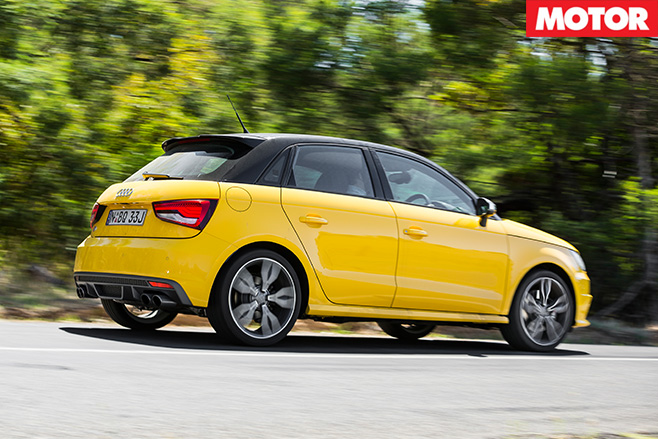
Despite four-piston calipers hiding behind the MINI’s front wheels, it’s the Audi’s humble single-piston jobbies and 310mm discs that pull up the shortest from 100km/h. It could be a tyre issue, with the MINI on Dunlop run-flats and the S1 using wider Bridgestone sport rubber, but the Audi pulls up 1.5m behind the MINI’s 39.97m effort.
While the JCW’s front-drive antics are no help against a stopwatch, the sounds it makes while doing so suggests drama is part of its appeal. The dual-tip exhaust poking from its rear bumper squeezes out a delicious note that sounds like a chainsaw blaring through a digeridoo. Or lift off the throttle and it’ll not only ignite unburnt fuel with a few juicy pops, but flush out a HKS-like sneeze from its compressor.
Having escaped Heathcote for Victoria’s open roads the S1’s still the reserved one, but to its credit. Over poor roads it doesn’t make imperfections disappear like a 7-Series – with such a small wheelbase it never would – but it pillows impacts better than the MINI and is less disturbed over bumps.
Meanwhile, MINI’s thrown dual-mode adjustable dampers under the JCW’s guards, but even they can’t calm the abruptness created by its 18-inch wheels and 205/40 run-flat rubber. As we fire both cars over a single-lane bridge, the entry lip almost makes the JCW’s dampers burst through the dash like a scene from Ridley Scott’s Alien.
The MINI’s gearshift, too, is far from satisfying. Its shorter throw needs more effort and slots with a smidge of reluctance. The fact reverse neighbours first and can be freely slotted from neutral without a safety mechanism is also a worry.
Contrastingly the Audi’s a friendlier companion. It doesn’t offer huge amounts of grip, but there’s enough that you can mash the throttle before charging down the road in a hissing fit of boost and quattro stick. Softer springs means it likes to lean more, but its steering rack feels so natural and bang on for speed, you can exploit this to your benefit, knowing you can catch whatever adjusted angle you choose with brakes or throttle.
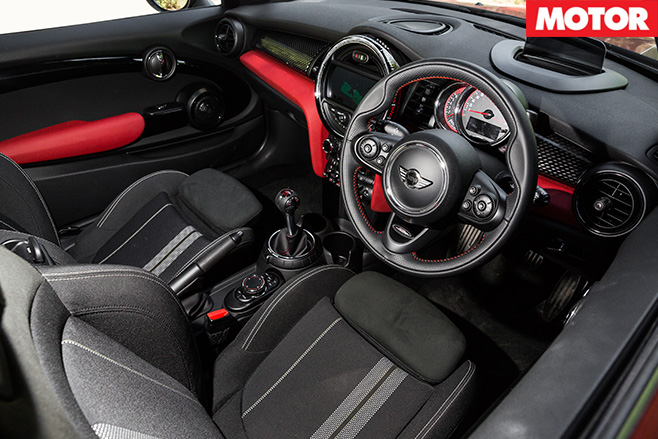
It’s as well put together as you’d expect, but even with all its verve and refinement, its functionality takes odd directions: accessing the brilliant iDrive-derived controller requires pulling up the armrest; the starter switch is hidden behind the gear stick. And while the speedometer has thankfully moved from the centre console to a smaller dial behind the steering wheel, the tachometer now sits offset in a half-moon dial. With the needle only needing to only travel a few inches from idle to redline (which is 6500rpm, like the S1), it’s hard to keep your eyes on when to shift.
Call it naff, or eccentric, but you can’t accuse MINI of not having fun. After you’ve got your head around its flaws, and flood the cabin with notes from the 410W Harmon Kardon system, you might even catch yourself feeling its good vibes.
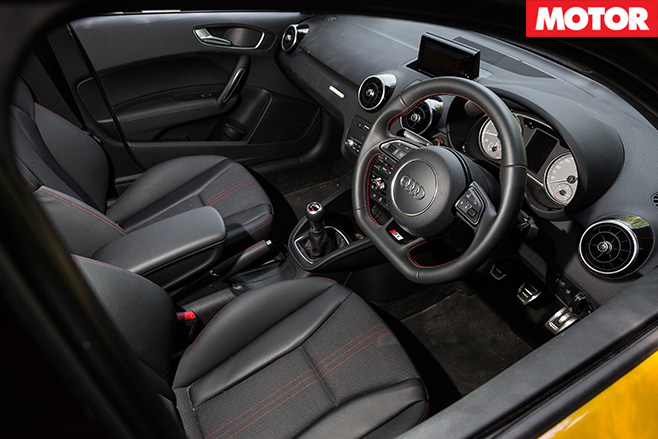
That said the cabin oozes with refinement and thoughtful design. Its armrest is similarly obstructive, blocking your elbows during gearshifts, but the touchpoints are spot on – the leather steering wheel is a particular highlight – the shift knob moulds to your palm and the door handles are less awkward to grab. Better yet, the instrument cluster’s speeds and rev readouts are easy to scan, and its big digital speedo in the centre screen is handy.
Looking at the cars from the outside suggests the MINI was designed for ADD sufferers – there’s so much going on. Its front bumper grabs at the air with multiple cooling cut-outs and a faux bonnet scoop is flanked by a power bulge. Big headlights dominate its face while black bonnet stripes ($200), a red stripe in its grille, and plastic wheel guards are eye-catching but rob it of any aesthetic refinement.
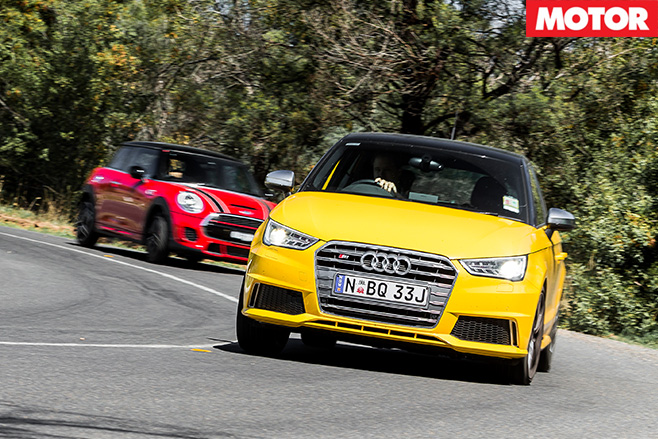
Unlike the Audi, a premium sound system, reversing camera, parking sensors, contrasting roof colour, and 18-inch wheels are standard on the JCW, which makes it a more full-fruit package. But that’s the larger problem. It feels like MINI’s thrown everything possible at the JCW. From the brawny engine and rock-hard suspension, to the feverish styling and loads of equipment, it’s a MINI Cooper with the lot, which only exaggerates it as less than the sum of its parts.
We could be to blame for that because MOTOR’s previously nailed the Cooper S for lacking sparkle in the last 20 per cent of its drive experience. This must have tickled MINI’s ears back in Oxford because we have no doubt the JCW would carve up a track, where there’s plenty of space for it to unleash its crazy. There’s no doubting it’s quick, but on the road, it feels one parole-check away from a straitjacket.
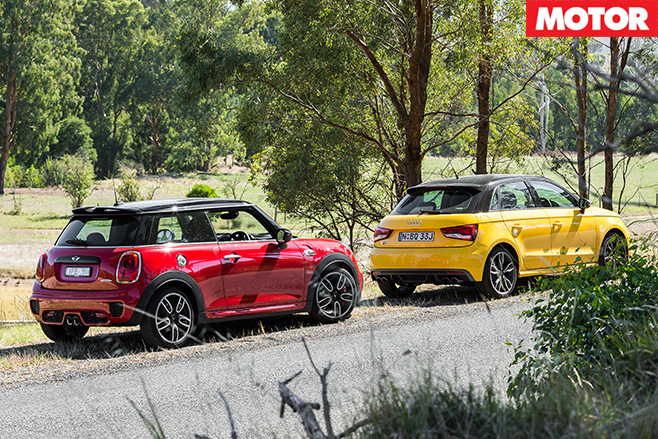
At the same time, to quote Morley, the S1 also manages to feel more grown up than the JCW. Its greater thirst at the bowser might not suggest so, and the cruise control might feel “calibrated by a cabbie” to quote him again, but the torquey engine and cushier ride means the S1 can also be driven at a more relaxed level, whereas the MINI bounces around you like a bored puppy, begging to be played with.
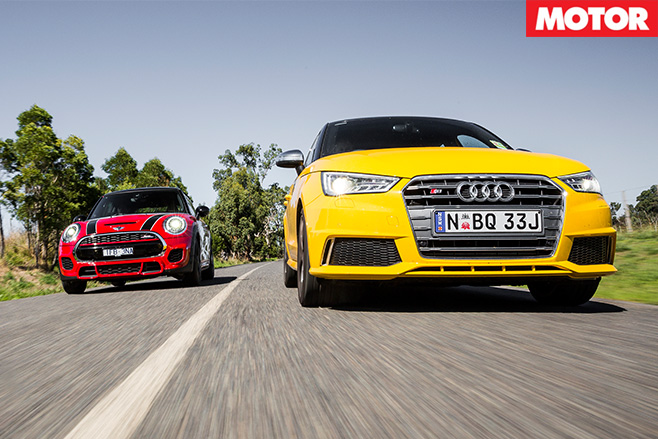
For that, the Audi’s the winner. Is it twice the car a Volkswagen Polo GTI is? Probably not. But there’s a genuine depth to its mechanical package and polish to its vibe that helps it feel like a ridiculously cheap S model rather than an A1 dialled up to 11. It also it injects the ‘super’ in to supermini.
| u00a0 | AUDI S1 | MINI JCW |
| Body | 5-door, 4-seat hatchu00a0 | 3-door, 4-seat hatch |
| Drive | all-wheel | front-wheel |
| Engine | 1984cc inline-4, DOHC, 16v, turbou00a0 | 1998cc inline-4, DOHC, 16v, turbo |
| Power | 170kW @ 6000rpm | 170kW @ 5200-6000rpm |
| Torque | 370Nm @ 1600-3000rpm | 320Nm @ 1250-4800rpm |
| Transmission | 6-speed manual | 6-speed manual |
| Weight | 1340kg | 1205kg |
| L/W/H | 3975/1746/1423mm | 3874/1727/1414mm |
| Steering | electrically-assisted rack and pinion | electrically-assisted rack and pinion |
| Price as tested | $52,490 | $49,350 |
| Pros | Entertaining; sure footed; refinedu00a0 | Extroverted driving fun; exhaust note; cabin spec |
| Cons | Boring interior; needs more power | Weird look; spooky grip limits; steering |
| Star Rating | 4/5 | 3.5/5 |
The Nissan GT-R is the fastest Japanese car ever produced, capable of launching to 100km/h in about 3.2 seconds on the way to a top speed of 315km/h. At about $180,000 it is an expensive Nissan, but its performance is often compared with the $400,000-plus Porsche 911 Turbo, earning it praise as a supercar bargain.
But what’s the GT-R like as an everyday driver? Forget autobahn blasts and cracking lap times – you can duck over to Wheels Magazine to learn about all of that – for this test we’re more interested in the GT-R’s credentials as a regular, everyday car.
OK, so opening the door you’re immediately reminded this isn’t an everyday car. The speedo ticks up to 340km/h, the seats snug you tight, and anyone wanting to chance their luck in one of the two rear seats ought to be very short and/or legless.
The boot, too, has a very small opening yet is quite deep, despite being short.
Press the red starter button and there’s a purposeful burble from the four Coke can-sized exhausts. Then it’s wrestling with the stepped gate on the transmission selector to get the car into first D for drive.
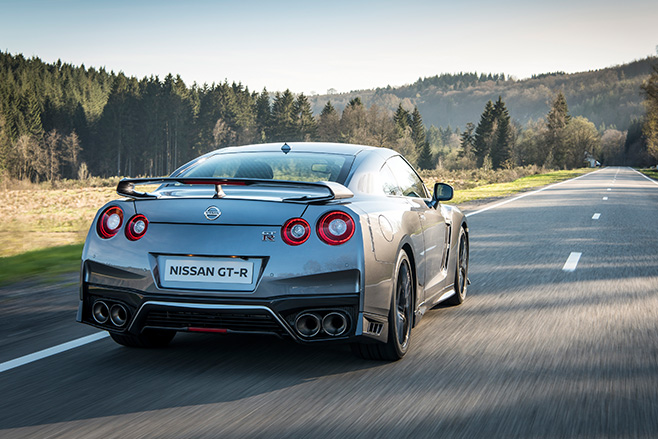
Taking off is very similar to many other cars, although the automatic transmission isn’t always seamless in the way it engages the engine; a Holden Commodore is smoother. Blame that on the twin-clutch setup; while it operated identically to an automatic transmission it’s closer in make up to a manual transmission, but with two computer-controlled clutches. It’s all about going fast.
Under way, and the GT-R is surprisingly comfortable considering its performance credentials. Sure, it jostles around on lumpy roads, but it doesn’t crash and bash as some supercars can.
You can also adjust the level of comfort with the button to adjust the dampers (or shock absorbers). In Comfort mode they’re surprisingly compliant, although the R (for race) setting is noticeably sharper, and the benefits that setting brings are primarily experienced on a race track.
Those wanting to adjust things can also tweak the differential that is part of the all-wheel drive system, although for road use it’s fine in its default setting. Having all-wheel drive is a bonus on the road in a car like this, making it easier to accelerate cleanly without wheelspinning, especially in the wet. Indeed that’s one of the GT-R’s biggest assets – its ability to be driven briskly and confidently on low-grip surfaces.
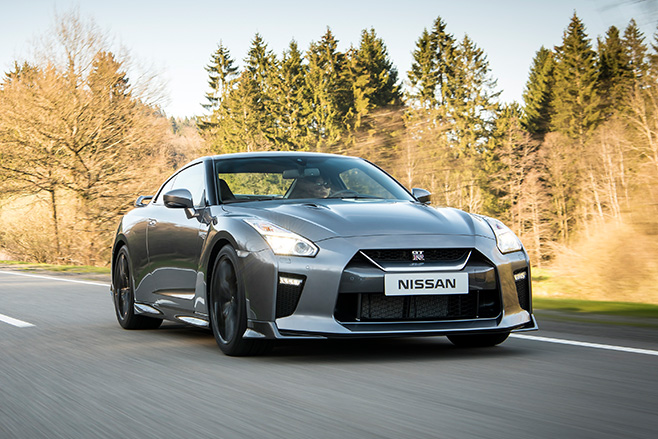
Steering is very accurate and with more weight than you’d experience in many city hatchbacks; engineers do that on purpose to ensure feedback to the driver is good, and to reduce nervousness, particularly at high speeds.
The engine itself is relaxed when driven gently, although it only needs a gentle squeeze of the throttle to elicit the sort of acceleration that would shade most other cars on the road. It is a 3.8-litre V6 with two turbochargers. Peak power is 419kW, which is about four times your average small car.
The automatic gearbox is generally cooperative, intelligently selecting ratios according to the conditions. But it will occasionally let out an unnerving clunk when reapplying the throttle below 20 or 30km/h.
It can also be slow to react if you are cruising at, say, 60 or 70km/h, then call on maximum performance. Instead of instantly selecting the appropriate gear, it will sequentially flick through each gear until it reaches the one it wants.
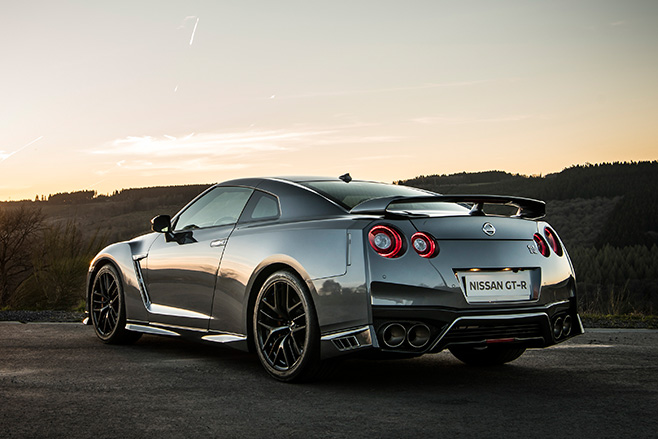
One thing you’re never short on is punch. The GT-R is supremely quick, and if you want to overtake or blast away from the lights, few cars will match its pace. The sensation of being thrust back in your seat is seriously addictive.
Vision, though, is not great, particularly over your shoulder when reversing out of an angled parking spot or checking your blind spot. The roof pillars at the rear are quite thick and can easily block your vision.
Speaking of which, it pays to be aware of the car’s extremities. Enormous 20-inch wheels will look far less swanky with a scrape from a gutter. And while the nose is nowhere near as low slung as a Ferrari or Lamborghini, there’s enough go-fast spoilers to require extra caution when tackling steep driveways.
That said, the GT-R is surprisingly normal in most driving. Once you’re used to not pressing the accelerator as much as you would in most garden variety cars – and once you get used to its finer details and occasionally interesting noises – there’s a car that is easy enough to tackle the peak hour challenge. Slowly.
The Volkswagen Golf GTI 40 Years is a special edition built to celebrate the 40thanniversary of fast Golf models. It’s based on the Golf GTI Clubsport model (pictured) sold overseas, but gets a different name in Australia due to a trademark conflict.
The 2.0-litre turbocharged four-cylinder engine found under the bonnet produces 195kW all day every day, but that output can jump as high as 213kW and 380Nm for 10 second intervals, using a unique function that pumps more turbo boost into the engine to give it a quick power-up when needed.
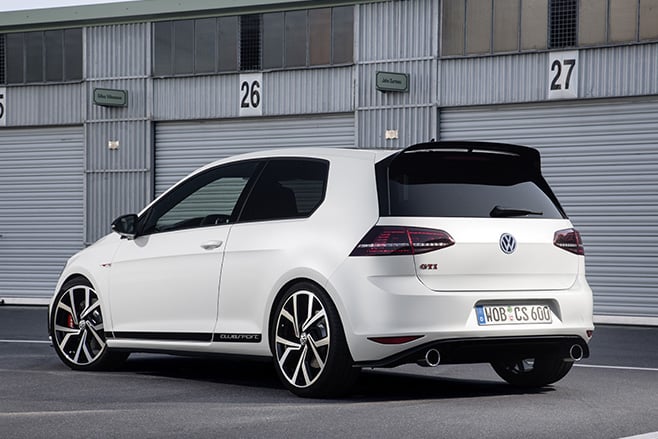
Pricing for the GTI 40 Years with a manual gearbox is $46,990 – a full $2000 less than the DSG auto version with its $48,990 price-tag.
Distinctive features for the 40 Years model include a new front bumper with larger air intakes, a unique rear bumper with diffuser, two-piece rear spoiler, tinted taillights, larger exhaust tips, black wing mirrors, ‘honeycomb’ upholstery, an Alcantara steering wheel and red interior stitching.
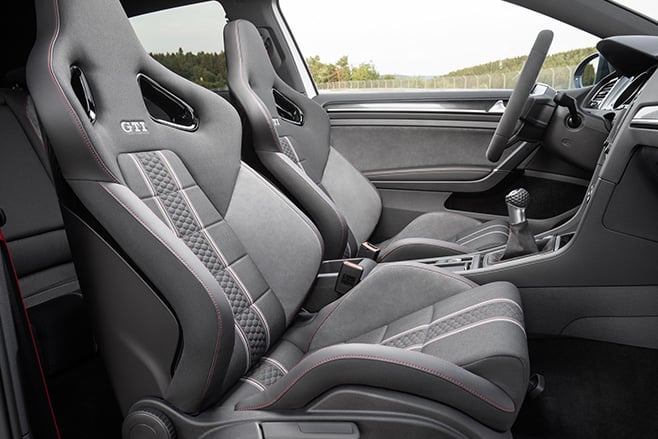
That’s on top of upgrades found in the Golf GTI Performance model that includes a tricky limited-slip differential, larger brakes, 19-inch alloy wheels and adaptive suspension.
Standard equipment covers more or less everything you can get in a Golf, including adaptive cruise control, auto emergency braking and blind spot monitoring. The only optional extra is a panoramic sunroof for $1850.
The Volkswagen Golf GTI 40 Years is available to order now through Volkswagen.
The upcoming Volvo S90 sedan and its V90 wagon twin have been given a performance boost by the Swedish brand’s racey Polestar division.
Volvo says the Polestar Performance Optimisation process involves a range of modifications to drivetrains, which aim for a more dynamic driving experience.
Engines are tweaked for greater mid-range torque and the throttle recalibrated for a swifter, more accurate response. Volvo says throttle-lift vehicle stability is also improved.
The eight-speed automatic gearbox has been engineered to deliver faster gearshifts, hold gears longer, and prevent shifts during fast cornering.
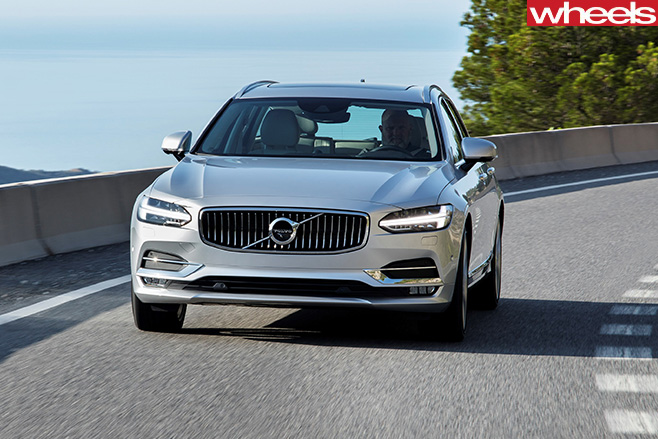
Polestar’s technical specifications for the S90 and V90 D5 models reveal that power increases by 4kW to 177kW, and torque fattens by 20Nm to 500Nm – produced across a wider range: 1500-2500rpm compared with the previous 1750-2250rpm.
Acceleration improves by a tenth as a result – to 6.9 seconds for the S90 sedan, and to 7.1 seconds for the heavier V90 wagon.
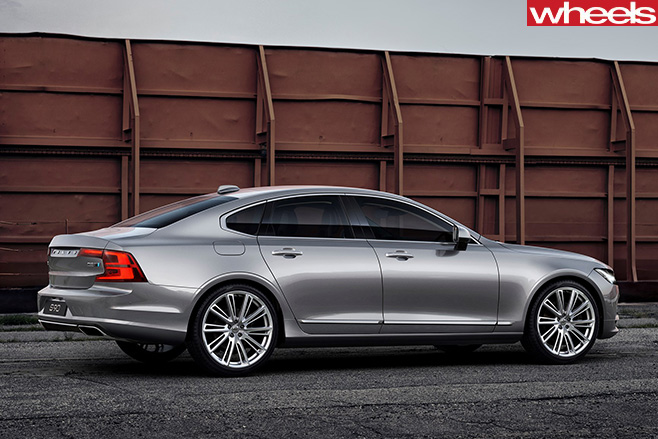
There’s speculation Volvo could produce full Polestar versions of the S90 and V90, following its return to high-performance models with the S60/V60 Polestar twins.
The regular Volvo S90 and Volvo V90 are due to go on sale locally from August 2016.
Want a small Hybrid Toyota, but don’t want to be seen in a Toyota Prius, or spend more than $30,000?
Well, WhichCar can confirm the price for the yet-to-be-released Toyota Corolla hybrid is expected to be $26,990 plus on-roads.
This places the petrol-electric hybrid firmly between the Prius C and Prius Hatch models, which start at $22,990 and $34,990 respectively.
The sub-$30k price also slots the Hybrid between the Toyota Corolla SX 7-Speed CVT Sedan ($25,240) and ZR Hatch ($28,990) in the Corolla line-up.
Aside from the hybrid powertrain, the new Corolla model also makes use of a double-wishbone rear suspension setup as a point of difference from the conventionally powered models – which utilise a torsion beam set up.
The car will be powered by a combination of a traditional 1.8-litre petrol engine and an electric motor, producing a maximum system output total of 100kW (73kw combustion/60kW electric).
Drive goes to the front wheels through a CVT automatic transmission.
Full specs and details are yet to be officially confirmed by Toyota locally, but the equivalent European model – Auris Hybrid – gurgles 3.5-litres of fuel per 100km.
WhichCar has contacted Toyota Australia for comment, and are awaiting a response.
The South Korean government is preparing to lay criminal charges against Nissan Motor Company’s Korean operation for allegedly cheating emissions figures on its Qashqai SUV.
The move is likely to subject the international automotive industry, and the integrity of some emissions figures to further scrutiny.
Nissan denies the allegations.
In an announcement by the South Korean Ministry of Environment in late May, the Qashqai SUV was found to be using a ‘defeat device’ to pass emissions testing. The government moved to ban the sale of the car in the country, and immediately ordered the recall of all 814 models already rolled out of showroom’s since last November. Nissan was also slapped with a ₩340million (A$393,364) fine for the breach.
But now the South Korean government appears to be doubling down on its punishment, with the environment ministry escalating the issue by calling on state prosecutors to conduct a criminal investigation into the matter.
Senior environment ministry official Hong Dong-Kon has told local journalists: “Today, we’re going to file a criminal complaint [against Nissan Korea’s President Takehiko Kikuchi].”
The call for a probe follows an investigation by the South Korean government into 20 diesel-powered cars that began last December
In a statement, Nissan denied fitting the defeat device. “Nissan Korea’s priorities are our customers, dealers and working closely and transparently with the Korean government concerning real-world NOx emissions of the Nissan Qashqai.”
“We maintain, as we have throughout the discussions, that we have complied with all existing regulations and did not use an ‘unjustified arbitrary setup’ or an illegal defeat device in the vehicle.
“This vehicle was certified by the Korean government last year under regulations permitting the importation and sales of vehicles that comply with these emission standards.
“We are now studying the conclusions reached by the (environment ministry) and are currently exploring our options. We will work to return the vehicle to sale as soon as possible, and will be in touch with our valued customers and dealers about next steps.”
Nissan is Japan’s second biggest car-maker, behind Toyota, and recently took over control of Mitsubishi after it admitted to botching their fuel efficiency figures for a number of years.
Volkswagen was also fined heavily by the South Korean government during the ‘Dieselgate’ scandal.
The German car maker was forced to pay ₩14.1 billion (A$ 1,6312,415) and recall more than 125,000 diesel-powered vehicles.
Like jumping out of a plane or diving with sharks, teaching your kids to drive can be a terrifying experience. It’s no wonder 30 per cent of parents aren’t in a rush to teach their kids to drive again.
But there are some steps you can take to make sure it’s an adrenalin-free experience for both you and the L-plater. Before you get behind the wheel with your inexperienced teen, here are some tips for surviving the journey:
1. Plan your journey. Before you even get in the car, make sure you’ve mapped your route so you can give your teen plenty of notice before they need to turn. It’s also important to have an agenda of what skills you plan to focus on: turning, highways, three-point turns, etc. Minimise the surprises so you can maximise the enjoyment.
2. Stay away from busy roads and intersections in the early stages, especially if driving a manual. Ease the driver into the more stressful situations to prevent the ‘frozen experience’ – a.k.a: sitting at an intersection, in a panic, unable to turn with a bank-up of cars behind you furiously pressing their horns.
3. Be clear in your instructions. Give the driver plenty of warning and explain what you want them to do. For example, instead of telling them to drive ‘slowly’, ask them to “reduce your speed to 20km/h”.
4. Be patient. This might be an obvious one, but patience is a virtue – especially when your 16-year-old is operating a huge metal machine. Just think how you’d react if your navigation started yelling at you to turn right; you’d probably miss the turn and end up in a fluster which can lead to costly mistakes. Avoid the stress.
5. Teach your L-plater the car’s capabilities. The best place to do this is at an empty car park or on an empty road. Use your judgement and make sure it’s safe and legal. Ask your teen to drive, and then slam on the brake. They’ll get a sense for the ABS’s pulsing stop and learn to keep the pressure on anyway. You’ll learn this on a defensive driving course too, which is highly recommended for experienced and beginner drivers alike.
As an added tip, if you don’t think your nerves can cope with the above, you should probably empty your wallet and drive your teen to an experienced driving instructor. Actually, you should probably just do it anyway.
Happy teaching!
The hi-po battle among the German brands is raging hotter and on more fronts than ever before. BMW’s most affordable M car ever opens both barrels on Audi’s TT RS and Porsche’s Cayman.
First published in the October 2011 issue of Wheels magazine, Australia’s most experienced and most trusted car magazine since 1953.
I’ve been salivating over this moment, yet part of me has also been secretly dreading it. First local drive of the BMW 1 Series M Coupe, a forced-induction game-changer from Munich’s masters of natural aspiration. Will the 1M’s turbocharged drivetrain enhance M’s reputation for peerless front-engine performance cars, or tarnish it by putting a veil between the driver and the action? Will the 1 Series M Coupe’s keen $99,990 tag make its rivals look overpriced, or has BMW diluted the driving experience to meet this surprisingly low entry fee?
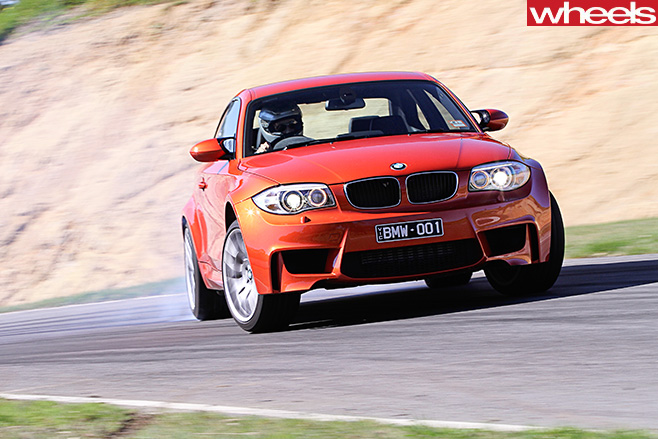
Dynamic, powerful, immersive. That’s what M means, and what the 1M must live up to. I hope BMW has delivered. To find out, I’ve got the first 1M in Australia for two days, and bookings at a dragstrip and a track, with 300km of my favourite backroads in between. Oh, and a couple of rivals: Audi TT RS and Porsche Cayman. One is the pinnacle of straight-line acceleration under $150,000. The other, the sharpest driver’s tool within cooee of the 1M’s price.
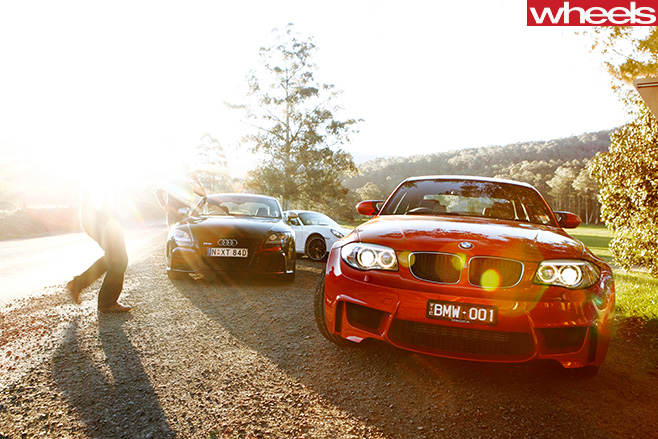
The 1M’s exterior also takes the M Division into new, more visually aggressive territory. Compared to the 135i coupe, the 1M’s wheel arches are pumped and packed with 19-inch BMW M3 competition rims. There’s a deep triplescoop apron at the front, a decklid spoiler, diffuser and signature quad tailpipes at the rear. It all combines to deliver a look that’s tough, tensed and chiselled, like a welterweight boxer strutting towards the ring. Looking at the 1M in the dragstrip staging area makes my heart race at the thought of actually hammering it. It also triggers a small dose of first-date nerves. I can’t wait to discover if it’s a brilliant driving machine, or a bitter disappointment. But not just yet. Now that I’m so close, I want to draw out the anticipation a little more. Let’s start with the Audi.
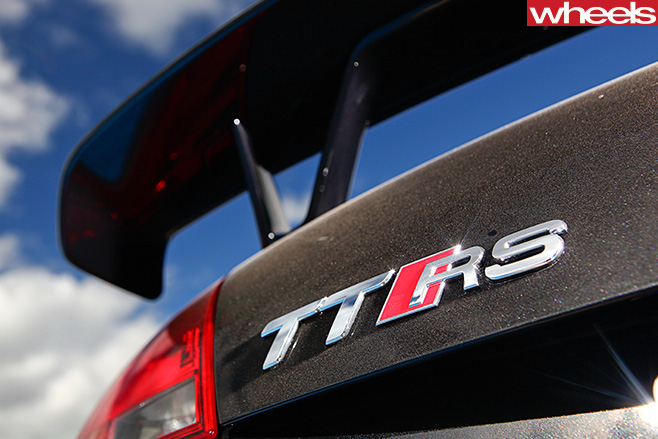
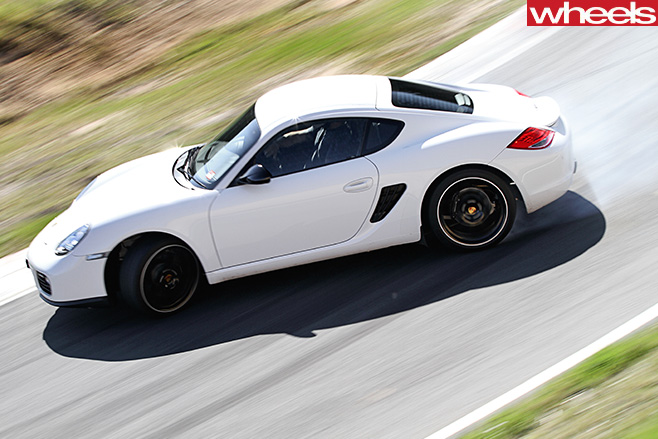
Okay, enough waiting. It’s M time. Launching is such a departure from the usual M-car antics where the instruction manual must first reveal the secret sevenbutton launch sequence. The 1M is a refreshing return to simpler times. Negotiate a smooth trade of clutch for throttle just on the flat torque curve at 1800rpm, and the BMW hits 100km/h in 4.7sec. The sense of accomplishment at getting the launch just right, at managing grip levels well into second gear, at quickly swapping gears just shy of the 7000rpm cutout makes the 1M more rewarding than the admittedly quicker Audi. In the BMW the driver is integral, in the Audi the driver is barely a factor (a problem easily solved by choosing the same-price six-speed manual TT RS).
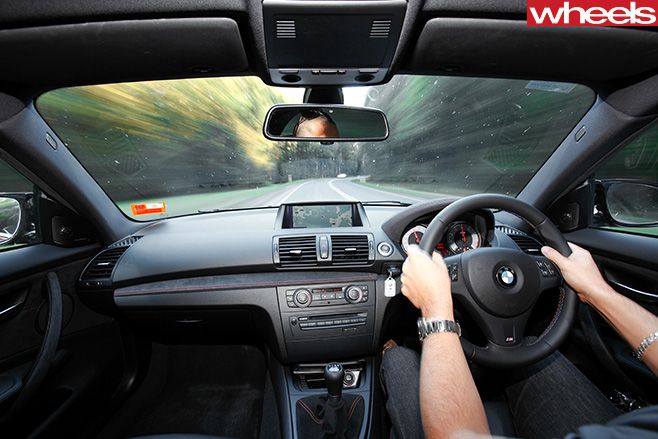
The BMW’s interior has a few nice M touches, like Alcantara door trims, gearlever surround and dashboard highlights, and the chunky M-sport steering wheel. But that’s pretty much it. The dashboard looks conventional 1 Series, even if it does have grey instrument dials and red stitching. Enough there to feel a little bit special, but by no means the same extroverted chest-beating as the exterior. The Cayman’s interior is the most functionally cohesive, even though it is let down by a plasticky steering wheel. The seat is low and supportive, and all vital controls ideally placed. It’s a great office from which to work. The Cayman may want for performance on the dragstrip, but it claws this deficit back noticeably on the road.
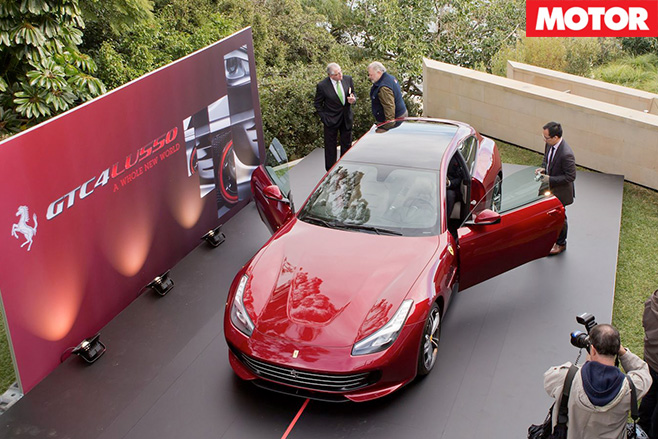
Ferrari’s second shot at a four-wheel-drive four-seater may no longer wear the FF name, but its latest GTC4Lusso is $46,000 cheaper than before.
Announcing a $578,888 plus on-road costs sticker, Ferrari Australasia anticipates many more buyers will choose the GTC4Lusso than the FF because, according to the local arm’s boss Herbert Appleroth, the new design “won’t polarise as many clients.”
While the long and wide dimensions of this Italian ‘shooting brake’ remain generally unchanged, the styling alterations are squarely aimed at appealing to a wider audience.
Ferrari’s four-wheel-drive system now adds four-wheel-steering pinched from the F12 tdf limited edition halo model, and the GTC4Lusso also scores a new F1 Trac 9.0 traction and stability control system.
A higher compression ratio of 13.5:1 (up from 12.3:1 previously) for the prancing horse’s 6.3-litre V12 raises power by 21kW/14Nm.
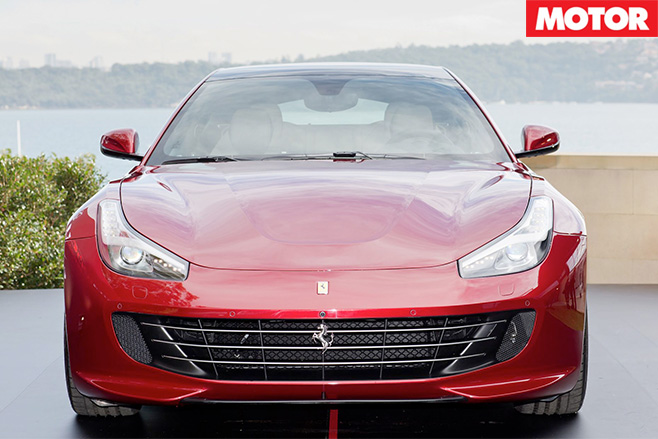
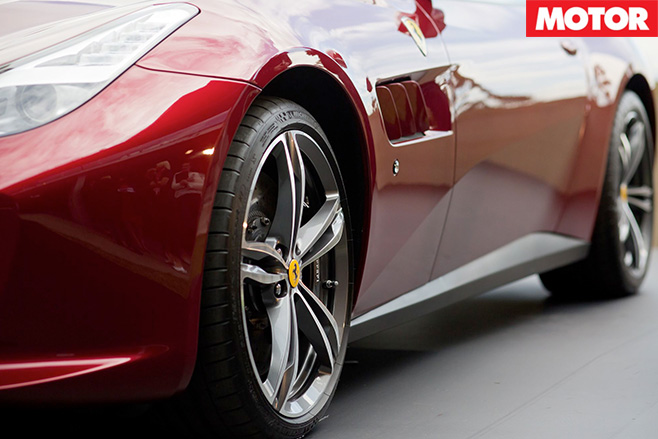
Continuing to drill its grunt through a seven-speed dual-clutch transmission to 245mm front/295mm rear 20-inch Michelin Pilot Sport Cup 2 tyres, the GTC4 Lusso claims a 3.4-second 0-100km/h – three-tenths faster than before.
Ferrari Australasia is targeting another record year of sales in 2016 following last year’s record tally of 167 units.
The company is down just five sales to May 2016 compared with last year, but Appleroth believes that with the wait list for the new 488 GTB growing, along with the imminent arrival of the GTC4Lusso and sold-out F12 tdf, the company can make up the ground.
