The Mini Seven follows design-focused variants such as the Mayfair, Baker Street and Bayswater that play on both the BMW-owned brand’s heritage and the model’s seemingly limitless array of customisation options.
The Mini Seven is available with a choice of four exterior colour arrangements. The version released in press images features the Lapisluxury Blue body colour featuring Melting Silver bonnet stripes (with optional Malt Brown surrounds).
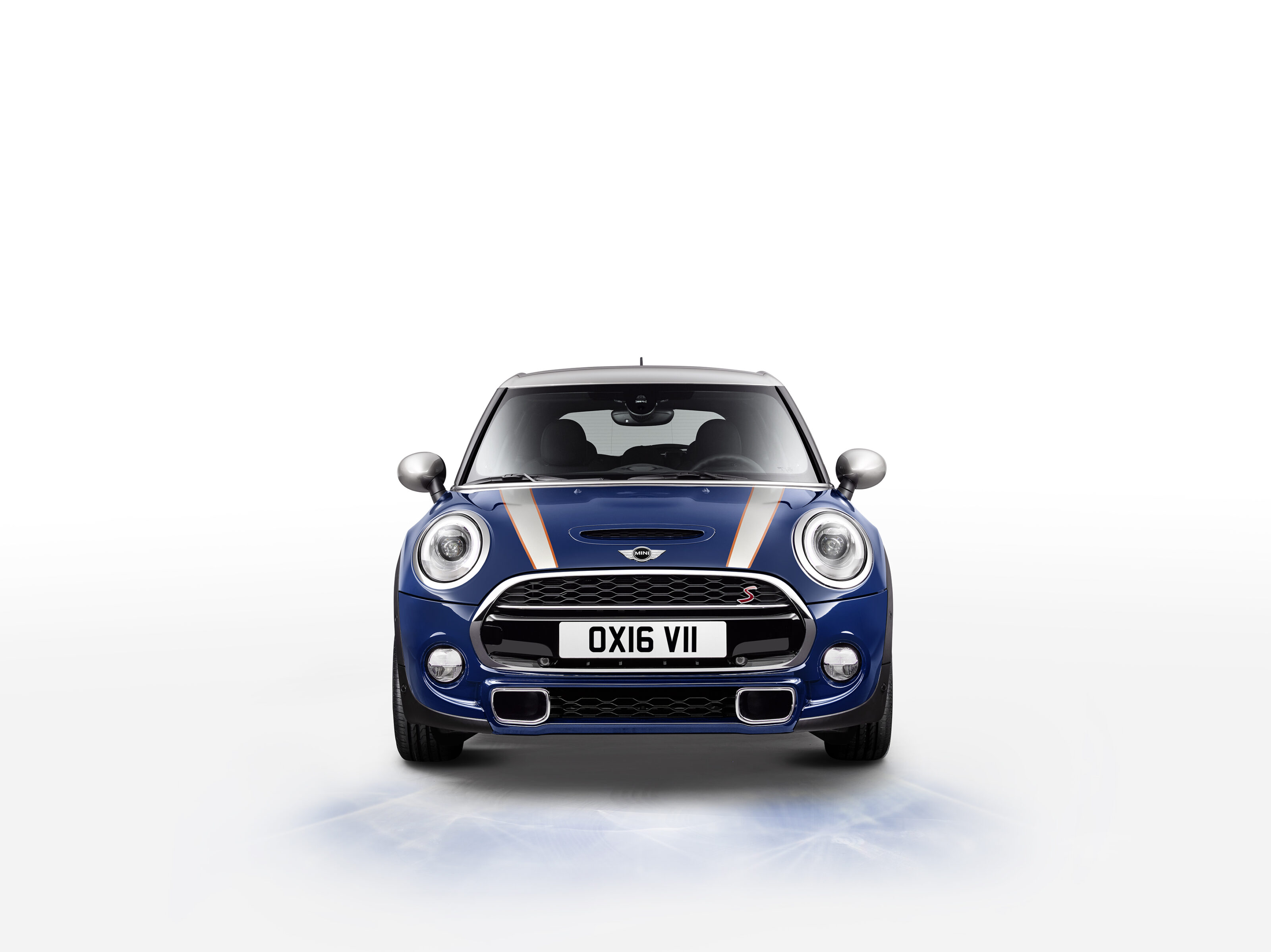
Its roof and mirror caps are finished in the same Melting Silver, and the side indicator lens surround features a ‘Seven 7’ logo that partially nods to the ‘Se7en’ branding that was sometimes used in 1960s marketing campaigns.
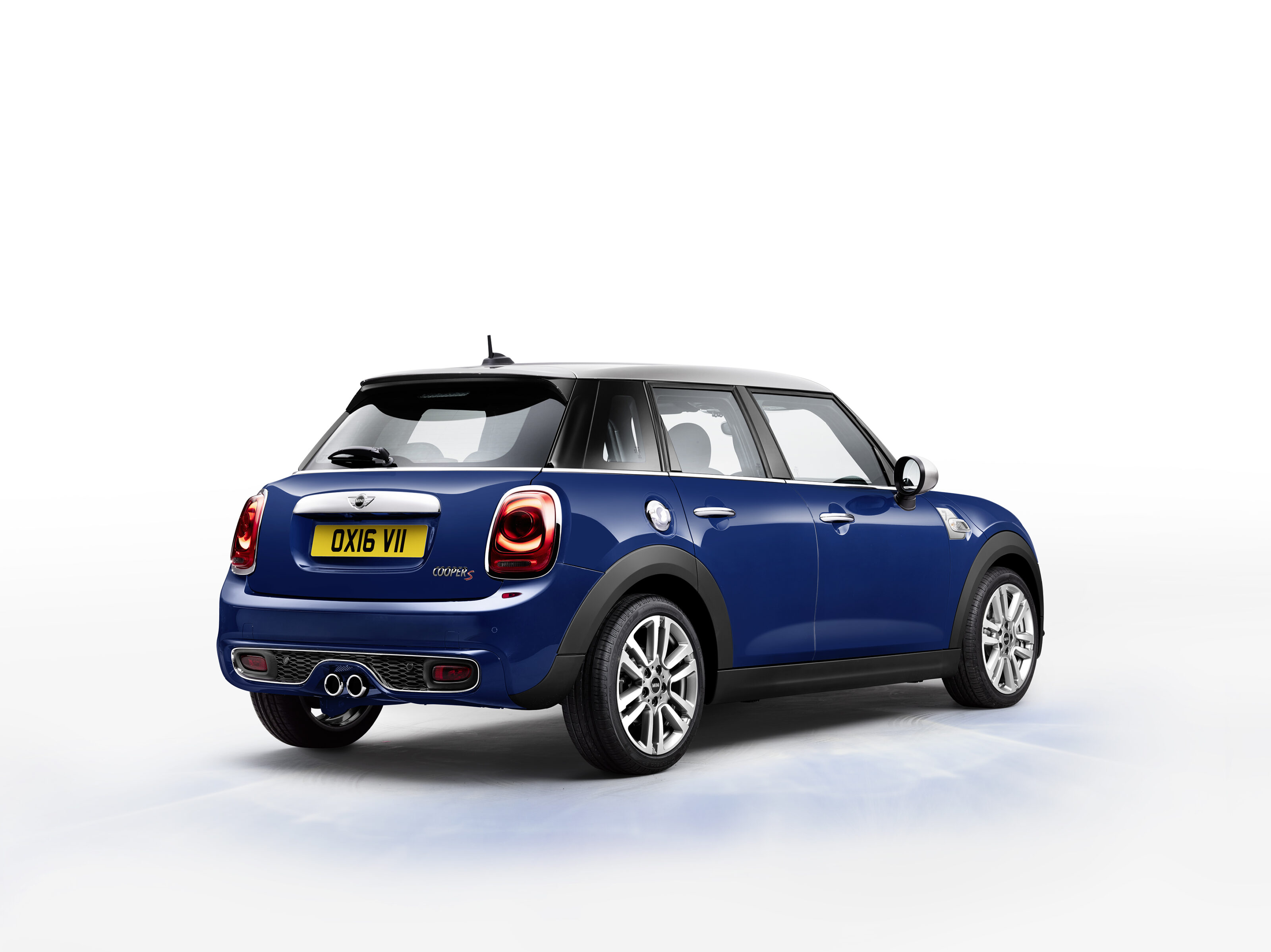
There are also exclusive wheels – 17-inch light alloy rims in a two-tone, multi-V-spoke design.
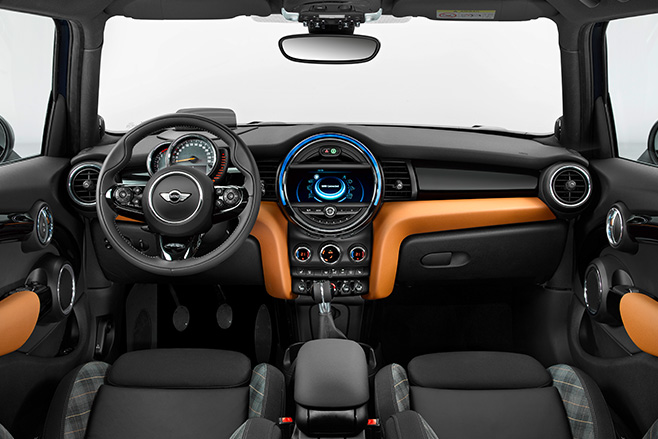
The Mini Seven cabin extends the model’s premium-small-car approach with seats that mix leather and tartan-style fabric and more extensive use of Piano Black surface trim.
There are still options for additional customisation, of course. A Seven Chili package includes LED headlights and foglights, white indicators, Driving Modes, rain-sensing wipers and a multi-function sports steering wheel.
As the Mini Seven is what the brand calls a design special, there are no mechanical changes.
The Seven is available in both three-door and five-door body styles, and with a choice of petrol and diesel engines.
Mini Australia is yet to confirm the Mini Seven for the local market but says timing would be early 2017 if the edition gets the green light.
Abarth used to translate as Italian for expensive. Not any more
WHAT IS IT? The cheapest Abarth ever offered in Australia. The Abarth 595 is the new entry point to Fiat’s performance-focused line-up, and is designed to bridge the gap between the regular 500 range and the existing, and more expensive, Abarth models.
WHY WE’RE DRIVING IT Because on paper the 595 has the potential to be the pick of the current Abarth range. It’s not only significantly cheaper, but promises improved comfort and usability thanks to a softer ride and smaller 16-inch wheels.
MAIN RIVALS Ford Fiesta ST, Volkswagen Polo GTI, Peugeot 208 GTI, Renault Clio RS
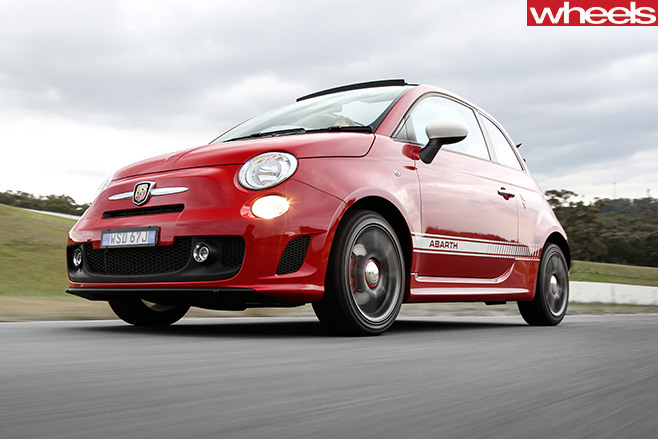
PLUS: Fun and funky; accessible price; improved comfort; dynamics MINUS: Interior plastics; no reversing camera; cabin ergonomics; noise
THE WHEELS REVIEW ABARTH versions of the Fiat 500 are, you can easily imagine, the Jack Russells of the motoring world. Small and cute, yet at the same time tough, they’re pint-sized bundles of energy and performance constantly pulling at the lead to mount your mate’s leg.
Now there’s a new one, and things aren’t quite so froth-at-the-mouth manic.
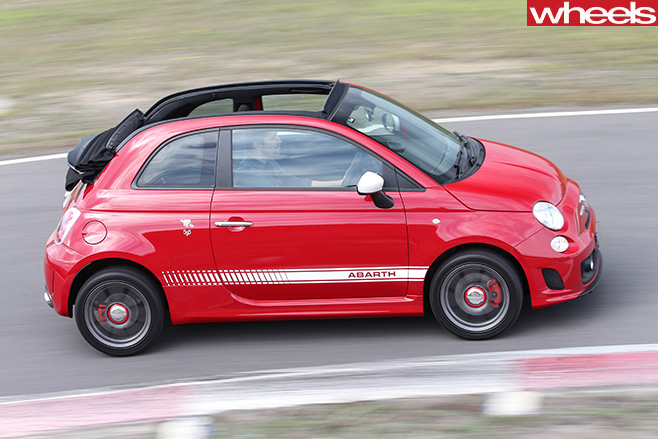
The biggest change is to the price.
Starting at $27,500 for the five-speed manual version (auto adds $2000), this is the cheapest Abarth ever offered in Australia, undercutting the previous entry point by a hefty $6500.
The performance is also designed to be more approachable. The 1.4-litre has been detuned slightly to produce 103kW and 206Nm (15kW/24Nm less than the $34K Abarth Turismo) and the sports suspension, which comprises Koni frequency-dependant dampers up front and a torsion beam rear, has been softened, while the 595 rolls on 16-inch wheels, not 17s like the rest of the Abarth range.
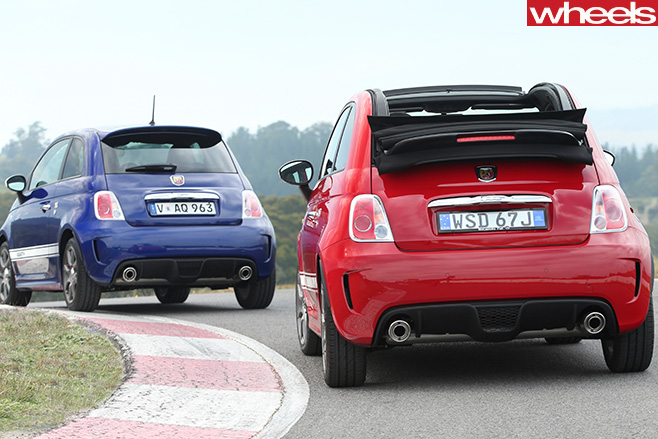
The ride treads a brilliant line between sporty tautness and everyday suppleness, the handling is sharp, chuckable and engaging, and the turbo four is rorty and eager, despite its diminutive-sounding outputs.
Is it as sharp as a Fiesta ST or as polished as a Polo GTI? No, but in isolation the 595 is a hoot.
What’s lacking is the crack and pop from the exhaust you get in other Abarths, and the seating position is too high for a performance car.
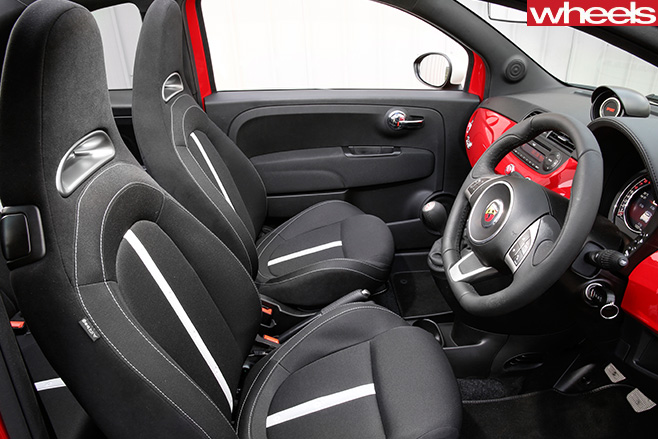
Interior design is typical 500 funky, but is showing its age. Abarth versions are based on pre-facelift versions of the 500, so there’s no centre touchscreen, no reversing camera or cruise control, and the infotainment system is outdated. The plastics on the dash and doors aren’t up to standard, either.
Yet somehow these faults aren’t enough to dull the 595’s sheen. Its blend of personality, pointy performance, greater compliance and improved value make it a hugely likeable hot hatch.
SPECS Model: Fiat Abarth 595 Engine: 1368cc 4cyl, dohc, 16v, turbo Power: 103kW @ 5500rpm Torque: 206Nm @ 2000rpm Transmission: 5-speed manual Weight: 1042kg 0-100km/h: 7.9sec (claimed) Fuel economy: 6.0L/100km Price: $27,500 On sale: Now
Far as supercars go the Audi R8 isn’t the most boastful choice.
But that’s changed with Audi’s release of the ‘V10 Plus selection 24h’ special edition. It’s been created in a hat-tip to the firm’s career in customer GT racing which has seen it rack up 323 race wins, three at the gruelling Nurburgring 24 Hours.
While the R8 LMS Ultra and LMS pioneering this success are heavily based on the road R8, as all GT3 machines are on their road going counterparts, you’d think Audi would borrow a bit of the racecar’s magic for this run of 24 cars.
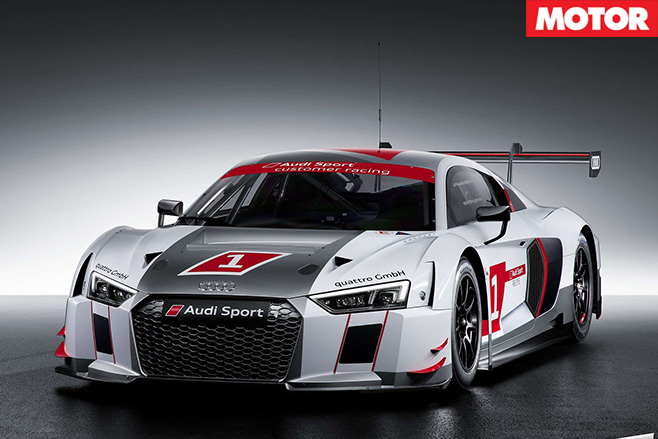
Where it differs from regular R8s is its dress, which has been styled to mimic the theme worn by the current Audi Sport cars with a white, grey, black colour scheme highlighted with red.
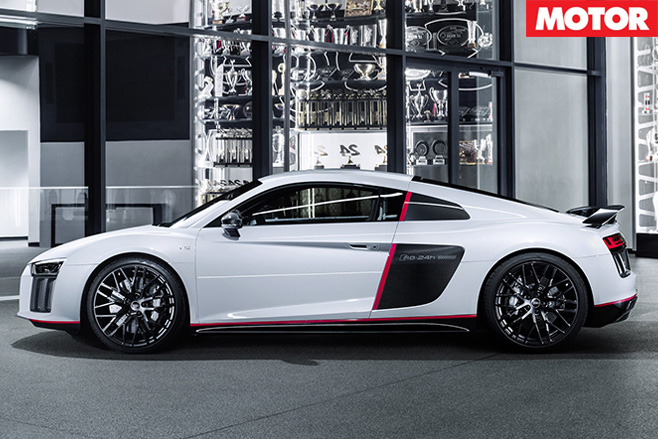
Helping to bolster its exclusivity will be ‘R8 24h’ logos projected by the door’s paddle lamps, printed on its side pods and stamped throughout its interior, while a plaque saying when your R8 selection 24 rolled down the line in comparison to others will do the same.
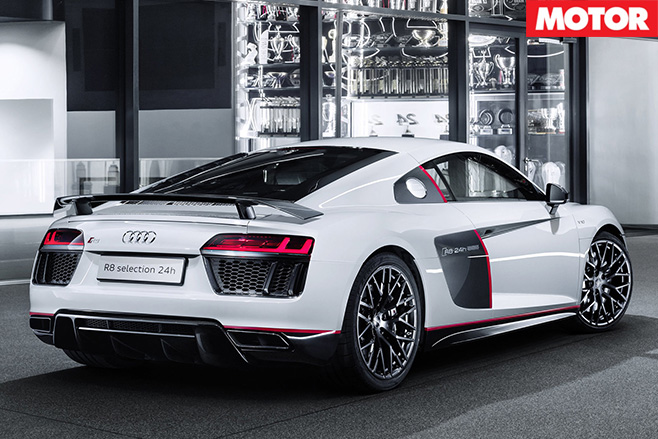
As mentioned just 24 examples will be built. But unless you plan on moving to Europe to own one there won’t be a chance to drive the selection 24h here, as all will be in left-hand drive.
Audi’s fastest seven-seater puts a different spin on the top end of the luxury SUV market.
WHAT IS IT? The high performance flagship of the Audi Q7 range and the quickest accelerating diesel SUV. Unlike some potential rivals, which use petrol-fuelled V8 engines, the SQ7 uses a V8 diesel.
WHY WE’RE TESTING IT The SQ7 is the first production car with an electric turbocharger, designed to eliminate turbo lag and boost performance. As we loved the regular Audi Q7 in our 2016 Car of the Year testing, we wanted to see if it lives up to its promise.
MAIN RIVALS BMW X5 M50d and Porsche Cayenne S Diesel are the most obvious. But some will no doubt cross-shop petrol models, including the BMW X5 M and Mercedes-AMG GLE.
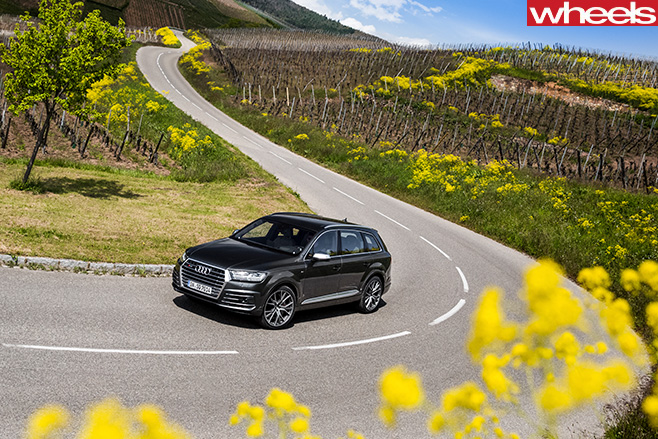
PLUS: Immensely flexible V8 diesel; refinement; brilliant body control and comfort; classy cabin MINUS: Some of the good bits (active stabilisers, carbon ceramic brakes) cost extra; sounds better outside than in
THE WHEELS REVIEW Motorway cruising in eighth gear is the best way to experience the effortlessness and newfound flexibility of Audi’s new SQ7, the fastest seven-seat SUV the company has ever produced.

Not even 2330kg of aluminium and steel can make the 4.0-litre twin turbo V8 diesel lumber.
It’s a seriously smooth engine, too, with a mild V8 rumble courtesy of the sound actuator tucked in the quad-pipe exhaust system. Pity those inside don’t get the full bark that characterises the Q7 range-topper from outside.
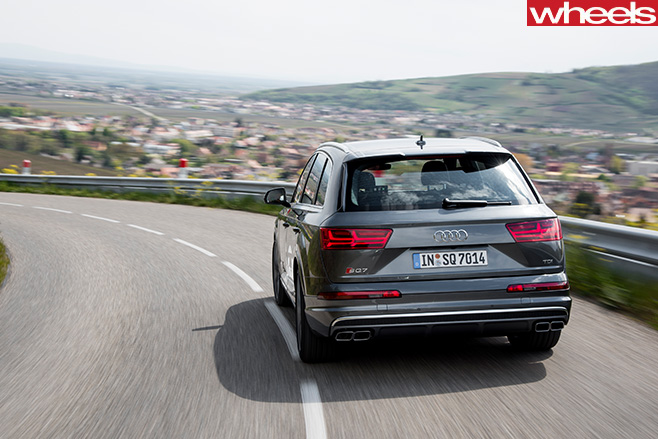
But there are subtle but noticeable improvements. Reapplying power out of a hairpin bend, for example, unleashes a luscious torrent of near-instant torque, making the blast to the next bend that fraction brisker. It’s not Tesla-like in immediacy, but it’s far better than any turbo diesel to date.
Where the SQ7 isn’t as convincing is in a full throttle standing start take off. Depending on what setting you’ve got the Drive Mode selector, and whether you’re in Sport or Drive, the big Audi still fumbles for a second before that brutal torque hit kicks in. And even the best stop-start systems – and the SQ7’s is up there – will shade any turbo lag when it comes to delays in getting going, making the fuel-saving method redundant for those who may decide to turn it off for the sake of better response.

But Audi’s latest go-fast SUV isn’t a one trick pony, and it’s arguably its dynamic smarts that separate it most from rivals.
The implementation of a second, 48-volt electrical sub-system (most of the standard electronics still use a 12V system) is reserved for items requiring plenty of power, such as the electric turbo. That also means the optional electromechanical roll stabilisation system. Working in tandem with the standard adjustable air suspension, it adds active stabiliser bars that decouple when more travel is required and stiffen when cornering.
The result is a car that is impressively supple in its bump absorption. Only sharp-edged lumps mildly fluster the low profile 22-inch tyres on our car.

Torque vectoring helps quell understeer; pitch in hard and the big SUV does a fantastic job of pointing where you’re telling it. Our car was running on Hankook rubber, delivering a punchy full stop on a great dynamic equation. The optional carbon ceramic brake package delivers great feel and potent stopping power, too.
The SQ7 isn’t as fiery as an AMG or M in a straight line, but it makes up for it with cornering nous few cars get close to. Plus, it’s so relaxed, so refined and so comfortable that it eats up country miles with ease. And it brings new seven-seat athleticism to the point where it feels wasted to do anything but drive it hard.
SPECS Model: Audi SQ7 Engine: 3956cc V8 twin-turbo diesel with electric compressor Max power: 320kW @ 3750-5000rpm Max torque: 900Nm @ 1000-3250rpm Transmission: 8-speed auto Kerb weight: 2330kg 0-100km/h: 4.8sec Price: $160,000 (estimated) On sale: October, 2016
1. This is the first time Aston Martin has produced a turbocharged engine for one of its road-going sportscars. The 5.2-litre V12 has two turbos and shuts down six cylinders under gentle loads to boost economy.
2. The engine is built at Aston’s plant in Cologne, which is part of the vast Ford factory there. The Vantage replacement that arrives next year will use the same 4.0-litre V8 engine as smaller AMG Mercedes.
3. James Bond drove what Aston called a “DB10” in his last outing, Spectre. It was a one-off produced for the film, but you can see strong similarities between it and the production DB11.
4. The turbocharged engine is reckoned to be around 25 percent more economical than the old V12, despite having more power and torque.
5. The car we drove was a development prototype and its chassis software hadn’t been finalised, meaning that starting it required the use of a laptop to upload the right settings every time it started.
6. The DB11 has a very advanced “aeroblade” system that directs air through pipes to the back of the tailgate, creating downforce and meaning it doesn’t have to have a messy pop-up spoiler.
7. The Bridgestone Potenza tyres fitted to the DB11 are called S007s. Very James Bond.
TELL ME ABOUT THIS CAR
The Aston Martin DB11 will go on sale in late 2016 and is powered by a turbocharged V12 engine – a first for Aston. With 447kW and 700Nm it’s far brawnier than the outgoing DB9, and with design that bears more than a passing resemblance to the so-called DB10 that Daniel Craig’s James Bond drove in his last outing.
The DB11 has an aluminium chassis and body and will have an eight-speed automatic gearbox as standard. The company reckons it will have a 0-100km/h time of just 3.9-seconds. We will have more details on price and specification ahead of the car’s on-sale date.
STRENGTHS
- Much faster than the DB9; the turbo engine provides effortless punch.
- Chassis generates huge grip, but it’s not hard to drive it fast.
- Beneath the ratty disguise of the prototype we drove it’s a stylish beast.
- Doesn’t sound quite as good as the current non-turbocharged V12.
- No chance to assess refinement in this development prototype.
- Certain to be seriously expensive when it lands here.
Despite its rarefied image and what’s certain to be a lottery win pricetag, the DB11 is set to be launched into a well-populated part of the market. It’s most obvious competitor will be the Bentley Continental GT, with the two British heavyweights likely to be close on both performance and price. The Mercedes S-Class coupe is also a serious challenger, or – for those looking for something slightly sportier – the Porsche 911 Turbo S.
Ahead of its Australian introduction in 2017, the facelifted C4 Picasso and Grand C4 Picasso has been unveiled by its French maker, Citroen.
For its first update since its release in 2013, the Picasso range will get revised front-end styling, new tail-lights and 17-inch wheels.
The C4 will also get three new colour scheme options — a new two-tone coloured roof and the option of silver roof bars.
Technology wise, the French people-mover gets an updated touch-screen infotainment system with the brand’s own Connect Nav with 3D maps and voice recognition. Hands-free tailgate, traffic sign recognition, adaptive cruise control, driver fatigue detection and lane departure warning are also on-board.
It has been confirmed that European customers will receive the option of an 81kW turbocharged PureTech engine. Also, the existing 96kW turbo engine will be paired with a six-speed automatic gearbox for the first time. Unfortunately, drivetrain details and specifications have yet to be released for Australia.

Locally, the current C4 Picasso and range-topping Grand C4 Picasso are available with 121kW turbo petrol and 110kW turbo diesel engines; both guises are equipped with a six-speed automatic transmission.
“For us, the New Citroën C4 Picasso is a showcase of our finest know-how,” explained Citroen’s CEO, Linda Jackson. “In addition to its unique, modern and dynamic styling, it offers an incomparable level of comfort. With its architecture and the EMP2 platform, it brings motorists spaciousness, modularity and on-road qualities that enhance the well-being of all passengers.
“Today we are equipping it with a set of new useful technologies that simplify everyday life and improve safety. The New C4 Picasso has everything it takes to be a leader in the European market,” Jackson continued.
We know that European customers will pay around A$2000 extra for the facelifted Picasso range, but unfortunately for us Aussies, pricing, specifications and full drivetrain details are yet to be released. Citroen though, says that this information will be confirmed closer to the car’s local introduction in 2017.
There’s something very un-Australian about flooring the accelerator at 150km/h and seeing it tick towards the double ton. It’s just not something done Down Under, at least not on a multi-lane freeway.
But it’s an everyday part of driving for millions of Germans who rely on the 13,000km of often speed derestricted autobahns for getting around.
As the speedo winds past 200km/h – or, at least, the digital speedo being projected directly into my line of sight in my Audi RS7 – the concentration levels increase exponentially.
It’s both hands on the wheel and maximum attention on the task at hand. Very different, in other words, to the lackadaisical one-handed driving style it’s so easy to slip into on some of Australia’s ridiculously slow freeways (Hume Highway, we’re looking at you!).
And the sound of the engine – in this case a beefy twin-turbocharged V8 – is getting drowned out by the rush of wind that intensifies with every additional kilometre an hour.
The steering has more weight, too, part of a deliberate move by engineers to ensure every tiny input from the driver doesn’t translate into a car unsettled by a sudden shift in momentum.
Indeed that’s one of the most important parts of high speed driving: ensuring you’re not making sudden lane changes or swerves. At this speed everything is stressed and it takes longer to make any changes; tyres run hotter and the car wants to keep travelling at whatever speed you’re doing in whatever direction you’re travelling.
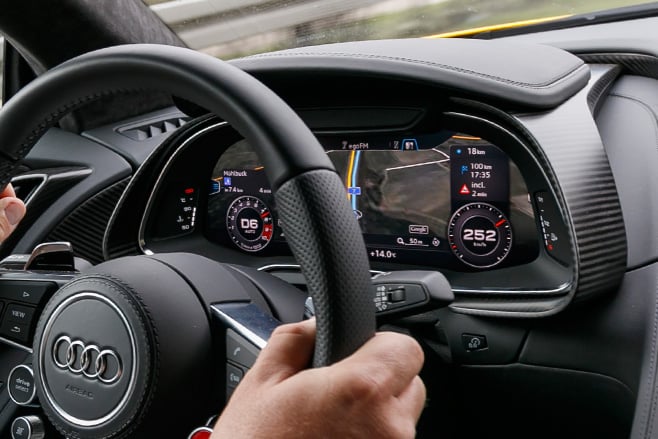
At 250km/h, for example, you’re covering almost 70 metres every second – almost 1.5 Olympic swimming pools in the click of a finger.
So you need to be looking ahead, in some cases a kilometre or more.
Braking distances quadruple when you double your speed, so the 40-odd metre stopping distances from 100km/h increase to around 160m at 200km/h. At 250km/h you’re looking at at least 250m to pull the car up – and that’s if you apply maximum braking from the moment you touch the pedal.
Indeed, brakes become a big part of the equation when the scenery is shooting past as quick as it is.
European drivers generally have very good lane discipline, so they regularly use their mirrors to monitor other traffic and only use the fast (outside) lane when they’re going fast.
But a car travelling at 130km/h may misjudge or not expect another car to arrive at almost double the speed.
So it’s up to the faster driver to plan ahead, and it’s crucial to factor in potential mistakes from other cars.
If you suspect something could go wrong, it pays to get on the brakes sooner, giving cars behind more time to react – and you a better chance of stopping in time.
When it all works – and it generally does – it’s a fantastic way to get somewhere quickly. Autobahns are safe and a great way to move a lot of cars effectively.
But expect to use more fuel doing it. Any car travelling upwards of 200km/h needs plenty of power to push all the air out of the way. That drag takes an enormous toll on fuel consumption, and it’s not unusual to use upwards of 20 litres per 100km when travelling briskly.
DOES New Zealand have the wood on Australia as a driver’s paradise? Could a more affordable alternative to Europe be right next door?
First published in the November 2010 issue of Wheels magazine, Australia’s most experienced and most trusted car magazine since 1953.
Before you execute this proposition at the altar of Antipodean rivalry, first consider the benefits. No more arduous and expensive trips to the Swiss or Italian Alps for a great drive. No more pouring hard-earned cash through an unfavourable exchange rate into a Fiat diesel renter or being overtaken by tourist buses on the Stelvio Pass. No more clumsy heel-and-toeing, narrowly avoiding head-ons and massively missing apexes because you’re sitting on the left and driving on the right.
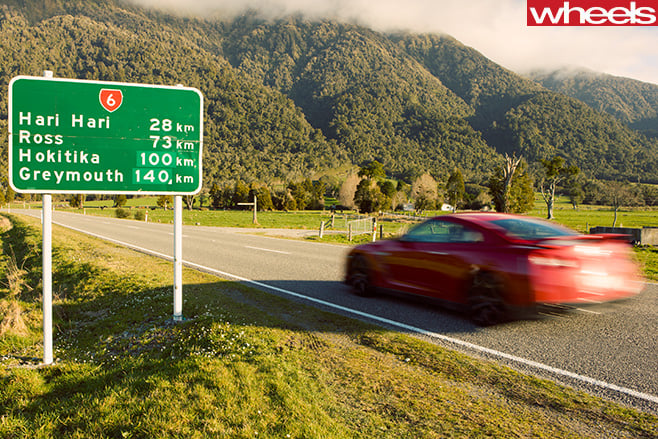
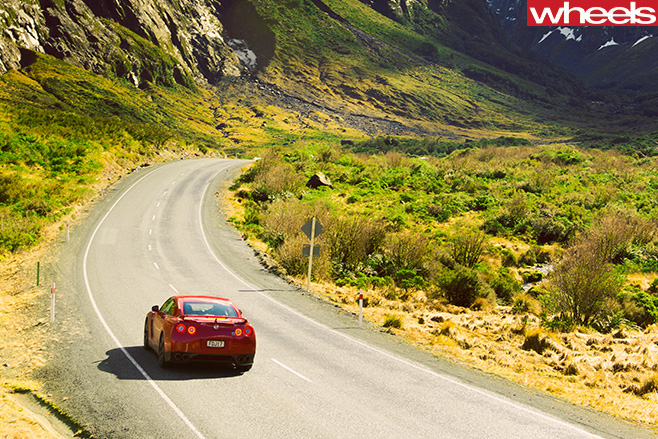
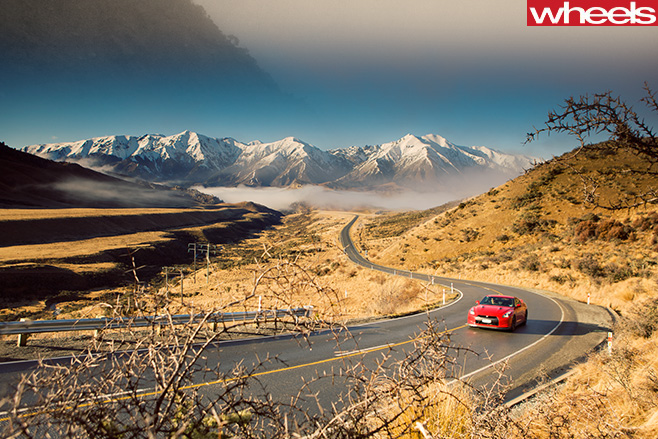
Point ‘A’ for this investigative expedition is Queenstown, a h0liday resort in the South Island’s Otago region. A bold red Nissan GT-R sits ready and waiting when photographer Chris Benny and I arrive.
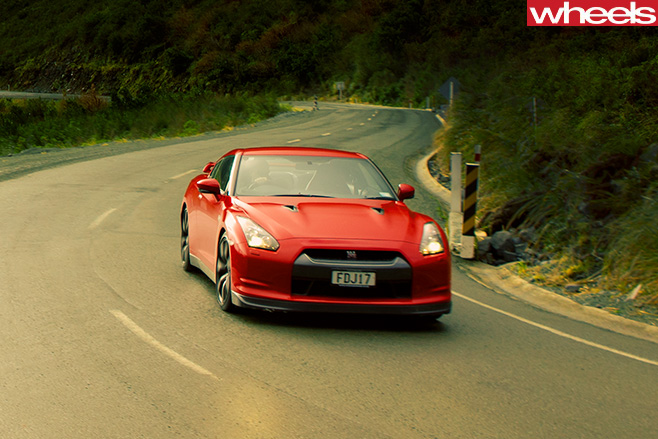
The mountainside is devoid of trees, so visibility is excellent and bends come into view stacked for attack. The GT-R laps it up, slicing around corners and thundering down straights. The ferocity of its twin-turbo 3.8-litre V6 is invigorating and easy to control, but our relationship is very much a tentative one. Even so, corners fall beneath its wheels as the car flows effortlessly.
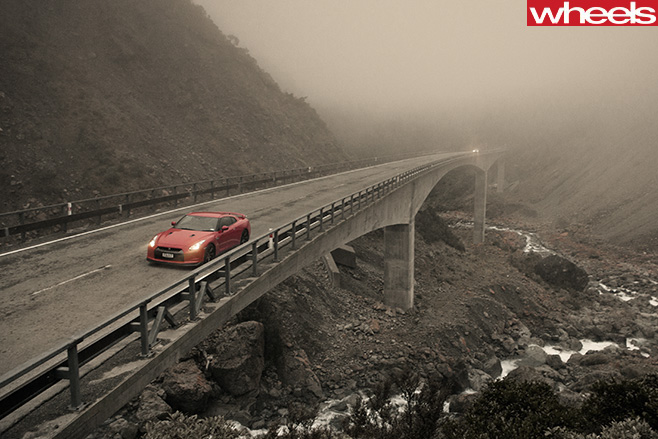
This lakeside ribbon of black sets a high benchmark first up. The transport stage from Kingston to Te Anau, where our next candidate starts, cuts through lush green farmland covered with livestock- none of it white or woolly. A farmer tells us New Zealand’s deer population is burgeoning because there’s more money in venison than lamb, cuz.
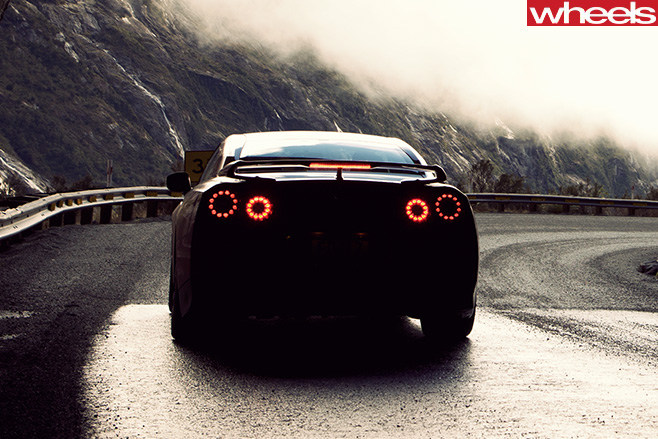
This R35 GT-R is my first Godzilla of any generation but I’m rapidly gaining an appreciation for the legendary abilities that led to its predecessor’s total domination of the Aussie touring car scene in the early ’90s. In the dry the R35 is a phenomenon, its 357kW/588Nm turbo-six a primal force of surging power and torque.
It rides the road with consummate ease at speeds that would have us tarred and feathered back home – here too, if there was anyone around to train a radar on us…
Welcome to the battle of the uber-hatches. No, this doesn’t mean that either the Audi RS3 or Mercedes-AMG A45 will transport you home after a big night out with a tap of your smartphone.
Instead, by offering supercar performance in a five-door body, they satisfy the true definition of uber: being a superlative example of its kind or class.
As premium manufacturers push downwards into new, volume-selling segments, yet customers demand ever greater performance from the go-fast variants, the hot hatch arms race is accelerating as fast as the cars themselves. But this speed comes at a cost.
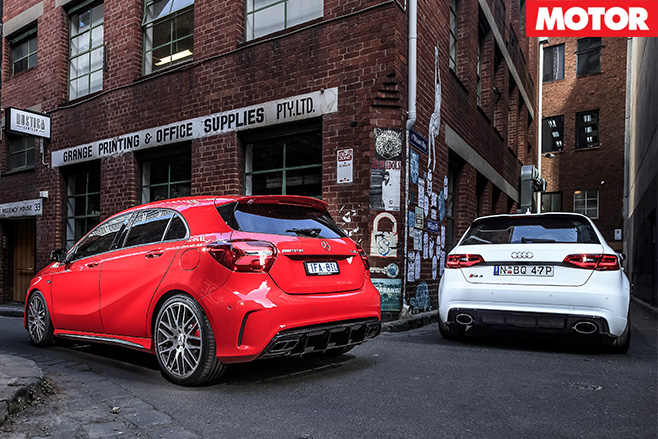
And you can spend plenty more than that, including $4500 for RS bucket seats and $8990 for carbon-ceramic brakes. Neither of these – nor the external bling – is strictly necessary, but the RS Performance Package is a must-tick option, for reasons that will become clear later.
Mercedes takes a more inclusive approach to pricing, the only option on our $77,900 A45 the $1990 Dynamic Plus package, which adds tyre pressure monitoring and the new mechanical front limited-slip differential. Aussie A45s come loaded with gear that’s optional overseas – metallic paint, climate control, sunroof, keyless entry-and-go, Recaro seats, leather, even the shift paddles – which gives it a handy $10K advantage before we even turn the keys.
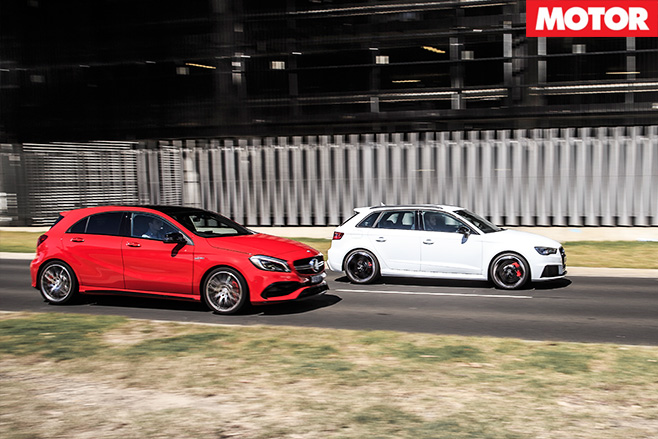
Which brings us to the business of those superlatives – these might be very expensive small cars, but they are also performance bargains. AMG claims the updated A45 can hit 100km/h in a ludicrous 4.2sec – that can’t be right, can it? That’s faster than an Audi R8 V8, a twin-turbo W12 Bentley Continental GT, or any Maserati.
Activating the AMG’s launch control is a bit of a process: select RACE on the new Dynamic Select controller, select Manual for the transmission and press firmly with your left foot on the brake. Now pull both paddles back towards you until “Race Start” appears on the central instrument display; pull the right paddle to confirm, floor the accelerator and revs rise to just shy of 4000rpm, the engine stuttering against a temporary limiter.
Lift off the brake and the A45 fires off the line, short-shifting into second and third despite the unbreachable traction offered by all-wheel drive. Do anything but sit there with your right foot welded to the carpet – lift slightly, change gear manually – and the program will cancel so there’s nothing to do but watch as 100km/h flashes up in 4.16sec and the quarter mile in 12.41sec at 180.23km/h.
Conventional thinking would have you believe a 2.0-litre turbo four-cylinder producing this much grunt would be a laggy, top-end monster, but nothing could be further from the truth. It takes a moment to gather its breath – all 26psi of it – but the mid-range is massive and it feels utterly unstressed at high rpm.
So unstressed that it’s easy to run into the 6700rpm limiter during hard driving, particularly as the new, slightly shorter gearing is a little awkward. On some roads you sometimes find yourself caught between two gears – usually third and fourth – and the seven-speed dual-clutch isn’t fond of delivering shifts in a timely manner.
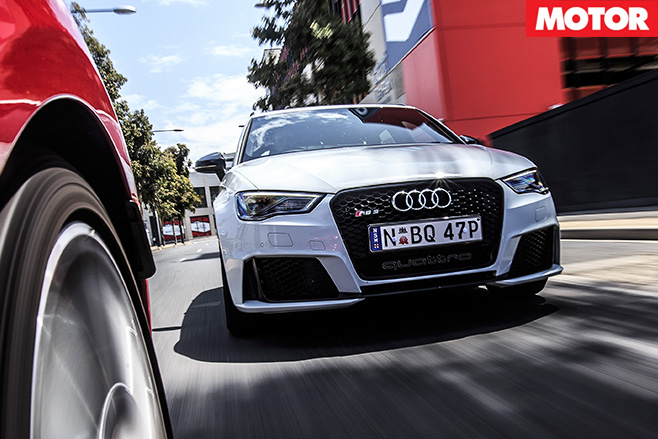
The RS3’s seven-speed dual-clutch is much slicker, with faster changes, more responsive shifts and longer ratios, which means you’re flicking paddles with less frequency. The only blot on its copybook is that manually changing from first-to-second under full throttle occasionally sends a fearsome shock through the whole car with a bang that sounds for all the world like the gearbox has just fallen through the floor.
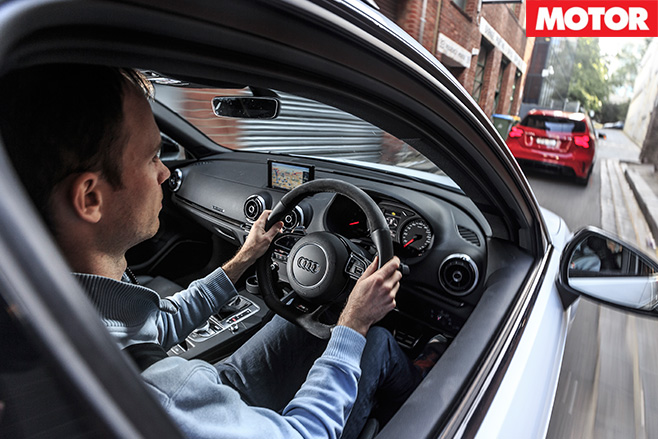
For rally fans, that note will act like an automotive Tardis, instantly transferring them 30 years back in time. Audi may have plonked an S1 badge on its hi-po supermini, but it’s the RS3 that best pays tribute to its famous WRC predecessors. One second you’re having a fang on your favourite twisty road, the next you’re Stig or Hannu attacking a Corsican special stage, swept away on a wave of nostalgia.
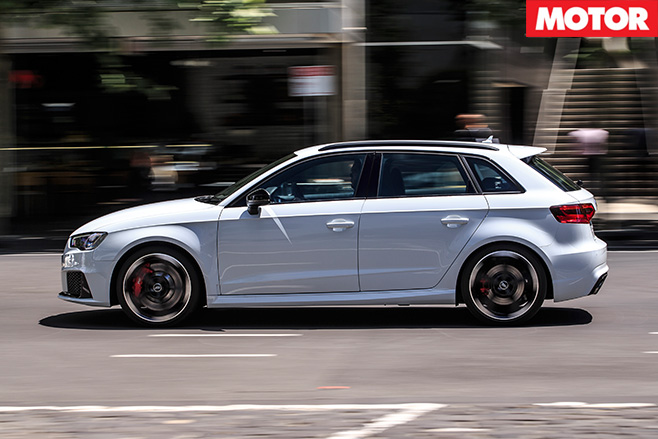
Its off-the-line punch is brutal, yet on the road the speed feels even more other-worldly. It charges down straights with relentless efficiency, not a single kilowatt wasted thanks to quattro traction. It’s an experience that can leave you breathless, so why is there a bright red Mercedes resolutely stuck to the RS3’s rear bumper, lights ablaze?
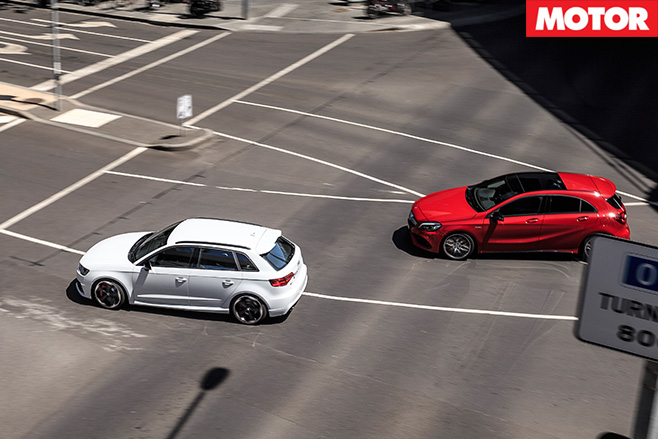
Mid-corner bumps that are summarily dispatched by the AMG’s excellent new adaptive dampers send the RS3’s optional magnetic dampers crashing into their bump stops. The trick suspension comes as part of the aforementioned RS Performance Package, which also brings with it wider 255mm front tyres (rears are 235mm). The extra front rubber helps, but ultimately fails to stop that big 2.5-litre five-pot slung ahead of the front axle from dragging the nose wide.
Oddly, it feels better on track, stable and planted but with just enough adjustability to keep you entertained or allow you to adjust your line if you get it slightly wrong. Unusually for a road car, it rides Sandown’s high kerbs well and punches out of its tight corners with furious anger. Acceleration slows markedly over about 170km/h – blame that longer gearing – but its biggest downside on track is its brakes.
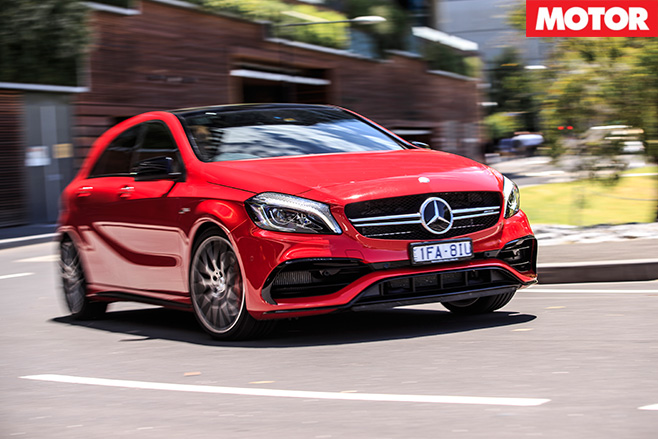
The A45’s stoppers also feel the heat on consecutive hot laps, however, after a short cool-down, recover quickly and are ready to go again. It stops so well the rear end finally starts to wander around under brakes, but from the moment you turn in, it relies heavily on its front end for purchase.
The optional mechanical front diff means there is a very definite technique to extracting the best out of the AMG, and it’s tricky to nail. Carrying too much entry speed pushes the front wide and accelerating only increases the problem; the key seems to be to slow the car more than feels natural and exit squarer, but it’s a delicate balancing act.
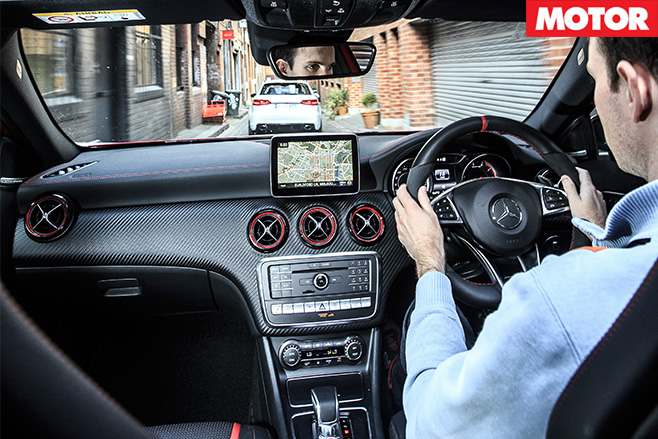
But it’s not. Despite the RS3 gaining time across the kerbs and feeling more fluid from behind the wheel, the A45 is eight-tenths faster, clocking 1:25.4 to the Audi’s 1:26.2. It neatly aligns with our findings on the road; the Audi feels faster, but it’s the Mercedes that’s delivering the goods. The only conclusion to make is the A45 reaches its limits with so much stability and so little drama that you’re actually going much faster than you realise. It’s a four-wheeled Terminator – a ruthless road-killing machine.
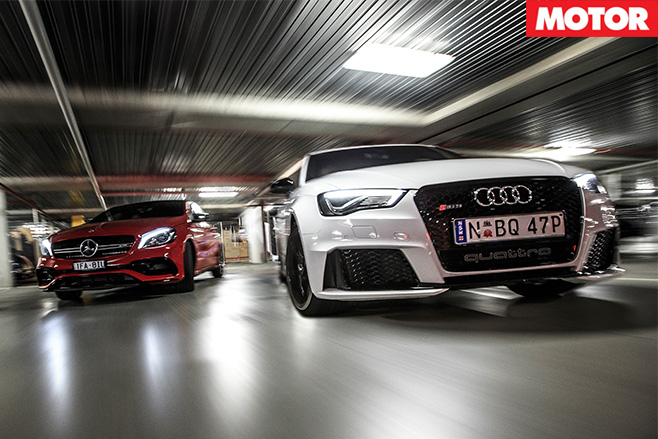
The Audi isn’t bad, but fidgets more than the A45 and there’s quite a lot of suspension noise, too, though its cabin is noticeably quieter in terms of tyre and wind noise. The Merc’s seats are superior in terms of lateral support, but can be wearing on longer trips, and it’s ergonomically not a match for the RS3.
Throughout this comparison, the two combatants have traded blows like Foreman and Ali in the Thrilla in Manila, which makes picking a winner a tough task. The updated A45 is faster on road and track, and if you take away the RS3’s initial launch advantage, just as quick in a straight line. It’s also significantly cheaper, however it seems unlikely that fiscal considerations will play a large part in the purchasing decisions of those willing to drop $80K on a hot hatch.
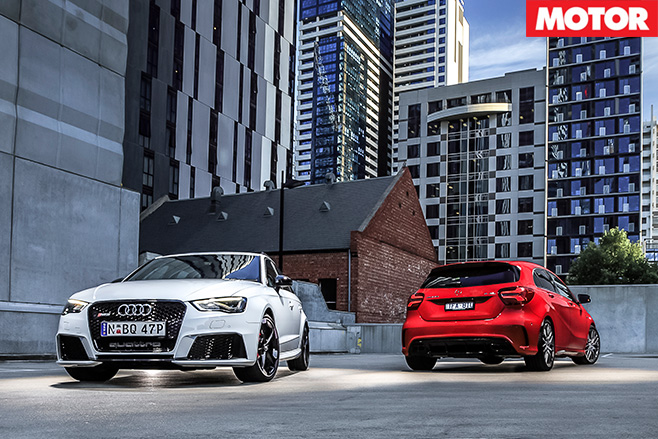
Both these cars are so quick and capable that it would take some very exotic machinery to stay with them in most circumstances, however the Audi has more of a sense of humour about it. If you’re a hard driver who likes to hit the track, the A45 is for you. For day-to-day use, take the RS3.
| u00a0 | AUDI RS3 | MERCEDES-AMG A45 |
| Body | 5-door, 5-seat hatch | 5-door, 5-seat hatch |
| Drive | all-wheel | all-wheel |
| Engine | 2480cc inline-5, DOHC, 20v, turbo | 1991cc inline-4, DOHC, 16v, turbo |
| Bore/stroke | 82.5 x 92.8mm | 82.0 x 92.0mm |
| Compression | 10.0:1 | 8.6:1 |
| Power | 270kW @ 5550-6800rpm | 280kW @ 6000rpm |
| Torque | 465Nm @ 1625-5550rpm | 475Nm @ 2250-5000rpm |
| Power/weight | 178kW/tonne | 189kW/tonne |
| Transmission | 7-speed dual-clutch | 7-speed dual-clutch |
| Weight | 1520kg | 1480kg |
| Suspension(F) | struts, coil springs, magnetic dampers, anti-roll bar | struts, adaptive dampers, coil springs, anti-roll bar |
| Suspension(R) | multi-links, coil springs, magnetic dampers, anti-roll bar | multi-links, coil springs, adaptive dampers, anti-roll bar |
| L/W/H | 4343/1800/1411mm | 4367/1780/1417mm |
| Wheelbase | 2631mm | 2699mm |
| Tracks | 1559/1514mm (f/r) | 1557/1561mm (f/r) |
| Steering | electrically-assisted rack-and-pinion | electrically-assisted rack-and-pinion |
| Brakes(F) | 365mm ventilated discs, 8-piston calipers | 350mm drilled ventilated discs, 4-piston calipers |
| Brakes(R) | 310mm ventilated discs, single-piston calipers | 330mm drilled ventilated discs, single-piston calipers |
| Wheels | 19.0 x 8.0-inch (f/r) | 19.0 x 8.0-inch (f/r) |
| Tyre Sizes | 245/35 ZR20 (f); 305/30 ZR20 (r)u00a0 | 255/35 R19 (f); 285/30 R19 (r)u00a0 |
| Tyre | Pirelli P Zero R01 | Continental ContiSportContact 5P |
| Price as tested | $89,265u00a0 | $79,890 |
| Pros | Awesome engine; great interior; the noise | So, so fast; improvements over predecessor; value |
| Cons | Expensive; nose heavy; average brakes | Needs to be more involving; slow gearbox |
| Star Rating | 4/5 | 4/5 |
Worth considering
…the other (other) German hatch
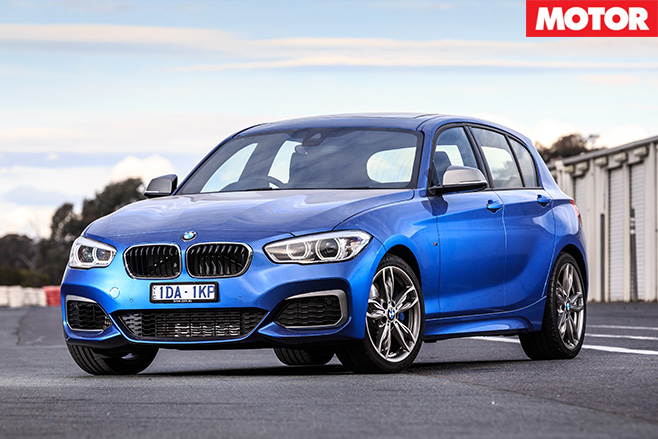
BMW’s M135i wasn’t included in this test, as at $62,900 it’s $15K less than a basic A45 or RS3. However, with one recently installed in the MOTOR garage, comparisons had to be drawn.
It’s mildly outgunned in standard form, however spend the money saved on a light tune and the optional LSD and you have a car that would be every bit as fast in a straight line and more involving thanks to its rear-drive chassis. Some will enjoy the security offered by the all-wheel drive Audi and AMG, but Bimmer’s little blue bullet is worth a look.